Home Blog Page 92

The Long and Short of Blades

Photo and story by Volker Nolte.

Newton’s first law dictates that the rower-boat-oar system can be propelled only by external forces. All forces within the system—be it on the footstretcher, the handle, the seat, or the oarlock—cannot change the movement of the overall system unless force acts on the blades.

From a stationary position in the middle of a windless lake, you can demonstrate the most beautiful rowing technique and generate huge forces on the footstretcher, handle, seat, and oarlock and the boat will not move as long as the blades do not touch the water. In other words, the all-important propulsive force—the resistance of the water—acts only on the blades, which is why they’re so important.

Blades have changed radically in recent years. So many blades are on the market that it’s hard to keep track of what’s out there and what’s best to use for all the different rowers in a club. Oar blades differ not only in shape, curvature, and edges at the top and front ends but also in face area.

Rowing blades used to be narrow and long before they became wide and short. Then they changed from a symmetrical, tulip-like shape to an asymmetric, more rectangular design as surface area increased. All things being equal, an increase in surface area leads to a linear increase in the force generated by the movement of the blade against the water. Simply put, the greater the surface area, the greater the force, which is what we want to achieve. Hence the advent of the Macon Blade, the Big Blade, the Slick Blade, and the FatBlade.

In designing the new generation of oars, other factors also were considered. For example, oars were made shorter to ensure that the end of the blade closest to the shaft does not move against the water, creating drag instead of propulsion.

Each new blade design has its theoretical advantages, but rowers must adapt their technique to get the best out of it, and for many athletes each new shape can present more challenges than potential improvements. It takes more effort and skill to get larger blades in and out of the water, especially with stroke rates that seem to be reaching new highs in racing, let alone in tricky wind and wave conditions.

In addition, larger blade areas, and the associated higher forces, require shorter outboard lengths, which present another technical challenge, namely balance. More complex rowing and rigging bring a whole new dimension to decision-making. Despite the well-documented advantages of FatBlades, most rowing programs have stuck with Smoothie and Slick-size blades.

We have reached the limit, it seems, in increasing surface area. The COMP and APEX-R designs, in shortening the blade length, actually reduce blade area and the force such blades can generate. This is the first time in many years that a new design has gone in this direction, which runs counter to achieving greater water force. Oar manufacturers are trying to compensate for the loss of blade area by increasing efficiency through a leading-edge design that improves hydrodynamic flow and curvatures of the blade surface that make rowing more comfortable.

As faithful readers know, I’m a big fan of increasing the blade area and simultaneously shortening the outboard. When the new COMP blades came onto the market, they seemed at first glance to contradict this idea. Testing showed that the larger surface area of the FatBlades remained an advantage, but the improved efficiency and comfort of the COMP design were intriguing. How would a blade with the new features and a larger surface area perform? This could be achieved only by increasing the width of the blade, since the length, determined by the permanent connection to the shaft, was fixed.

The obvious next step was to ask Concept2 to build such a blade, which I called COMPx because of its large width and surface area. This blade, with the necessary shorter outboard, worked as expected in terms of increased blade force, at least at low stroke rates. The limits—or rather my technical limits—became apparent at high stroke rates, such as a full-out start. I wasn’t able to square the extra-wide blade fast enough to get it into the water cleanly, and the result was some strokes that were very erratic. I guess I need to improve my technical skills if I want to keep up with these cutting-edge developments.

The bottom line is that with modern materials and know-how it’s possible to build blades that push the limits of the size of their surface area. But it’s another matter altogether to keep such blades rowable. It’s not just about pushing through engineering limits; we also need to devise new rowing techniques to make the most of these technological breakthroughs.

Saugatuck Rowing and Fitness Club in Westport, CT to Host Open House Event

Saugatuck Rowing and Fitness Club
Courtesy of Saugatuck Rowing and Fitness Club

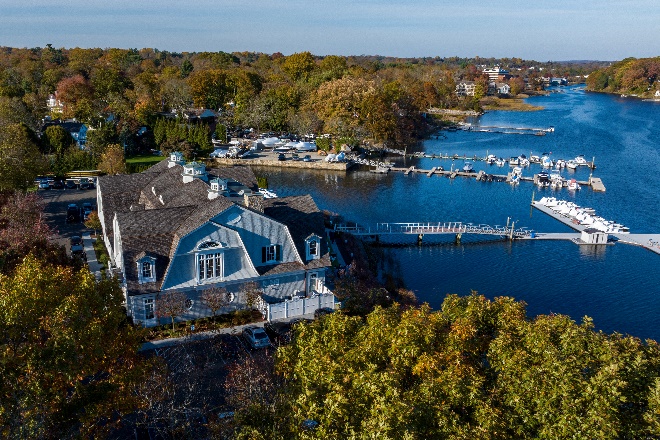
March 5, 2024, Westport, CT: Saugatuck Rowing and Fitness Club and the Boathouse Restaurant will host an Open House event on Saturday, March 16, from 11 AM – 1 PM, a common occurrence for this stunning lifestyle destination situated along the beautiful Saugatuck River in Westport, CT, to introduce the property and its offerings to the public. The event kicks off the property’s spring season and welcomes the public to tour the facility, learn about its world-class rowing program, visit the fitness center (membership incentives offered), meet the rowing coaches and fitness team, and experience the Boathouse Restaurant. Saugatuck Rowing and Fitness Club is not a private club, and all of its offerings are open to the public. Sign Up For Membership at the Open House, and the Rest of March is Free.

Founded in 1990 by renowned rowing coach James Mangan, the Saugatuck Rowing Club (Fitness was added later) is the realization of his vision, shared by Dr. Howard Winklevoss, Club Proprietor, whose twin sons learned to row at SRC under Mangan’s tutelage. The 15,000-square-foot facility was built on the site of an old freight station and has grown over the years to include a fitness center, additional training space (Boathouse) built in 2002, and an award-winning restaurant (Boathouse Restaurant opened in 2010). The state-of-the-art fitness center is a bright, open, and welcoming workout facility with gorgeous views of the Saugatuck River. Personal training and group fitness classes are offered. The Boathouse Restaurant offers a vibrant and seasonal land and sea menu, a curated wine list, craft cocktails, and waterside dining. Catered affairs run the gamut from breathtaking weddings and milestone celebrations to corporate outings and community events.

Today, Saugatuck Rowing’s junior programs (ages 11-18) continue to bring in new generations of rowers. Novice programs introduce rowing to men and women of every age, including senior rowers and both newcomers and experienced oarspeople alike, including National Master’s Championships and U.S. Junior National Team selectees as accomplishments.

Current SRC Rowing Stats and Standings:

  • The Saugatuck Junior Girls hold the record for most consecutive National Titles won in the Girls Varsity Eight (the most prestigious event), winning 5 times in a row, 2014-19.
  • 2023 Youth Nationals Results:
  • U17 Women Youth Four- 1st place
  • U17 Women Youth Four- 2nd place
  • U16 Men Youth Eight- 3rd place
  • U17 Men Youth Four- 3rd place
  • 2023 Head of The Charles Results (90 entries per race):
    • Women’s U17 Four- 1st place (only 26 entries in this race)
    • Men’s Youth Eight- 2nd place (fastest US Crew)
    • Women’s Youth Eight- 4th place
    • Women’s Youth Four- 6th place
  • Currently, over 150 athletes are on SRC’s competitive junior team, which practices 6+ times a week.
  • 100+ athletes are in SRC’s beginner/intermediate groups that practice 2-3 times a week.
  • Summer 2023 had 140 athletes participate in SRC’s two-week learn-to-row class.

“We are extremely proud of our 2016 junior alumnus Oliver Bub, who just placed 2nd, narrowly missing out to first place by .55 seconds, in the pair at the Winter Speed Orders for the National Team Hopefuls. This puts Oliver in a position to make an Olympic Boat, “says SRC’s Head Rowing Coach Dave Grossman.

Exciting 2024 races coming up include the San Diego Crew Classic, Chicago Rowing Foundation’s Chicago Scrimmage, Youth Nationals in Sarasota, FL, and the Henley Royal Regatta in England. This is the first time in SRC’s program history the SRC will be attending this race.

Recovering From a Substandard Row

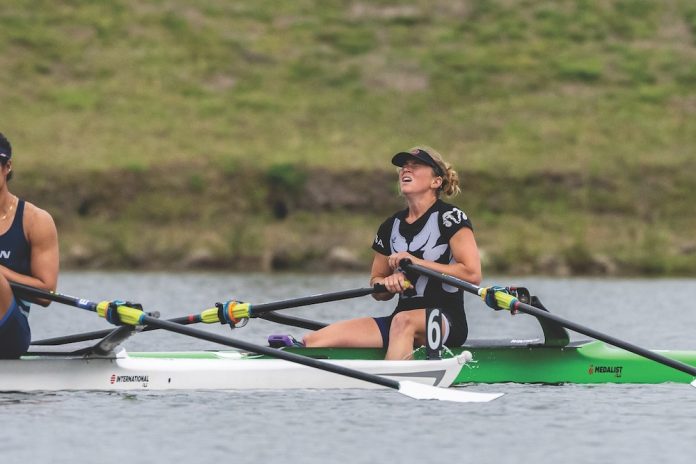
Photo by Lisa Worthy. Story by Marlene Royle.

After a winter of land work, getting back on the water is a welcome change. Teams are eager to row by sixes and for pause drills, spring seat racing, and the beginning of the competitive season. These early weeks are a time of experimentation as coaches juggle line-ups and tweak race plans with the goal of building the fastest crews for the championship races.

New boating combinations can render inconsistent results until the right line-ups take shape. The post-race recap of a successful row is far easier than that of a disappointing row.  Poor races can and will happen, and the important question is what to do about it.

To help your crew recover from a substandard row, first allow the team to recognize what they’re feeling and take time to process the disappointment, frustration, or anger. Then, reflect on the race and identify what they had control over and what they didn’t. For example, each teammate can control his or her nutrition, sleep, attention level, or ability to follow directions.

They cannot control the lane draw, water conditions, or a delayed start time.

Analyze what the positive points were and give the crew due credit. Analyze the negative points and urge the boat to identify a solution that can be put into action during practice to prepare for the next race. It could be a specific drill, changing the warmup routine, or more practice in rough water to build confidence.

Every race is not going to be perfect, but fostering a collective mindset of continual improvement demonstrates that each member of the crew is valued and able to contribute to what needs to be done to meet the team’s goals and build the confidence to succeed.

Rockland Rowing Masters Regatta: A Fusion of Speed, Strategy, and Socializing

Rockland Rowing Masters Regatta
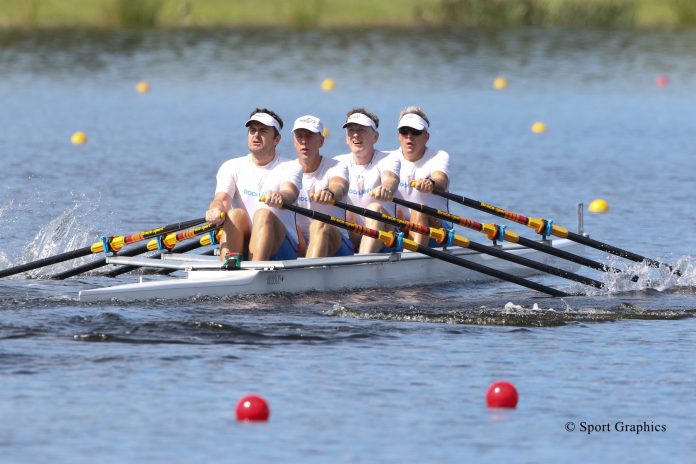
Photo and story courtesy of Rockland rowing

NYACK, NY – Get ready to experience the thrill of rowing competition amidst the natural beauty of Rockland Lake State Park. The Rockland Rowing Association proudly announces its second annual Rockland Rowing Masters Regatta to be held on Saturday, June 15, 2024.

Building on the success of last year’s event, this year promises an even more exhilarating and inclusive rowing spectacle, complete with traditional 1000m sprints, the unique Rockland Relays, and a vibrant beer garden to celebrate the spirit of rowing.

Event Highlights:
Professionally Designed Course: 1000m course features 10 buoyed lanes with stake
boats, promising fair and competitive racing.
Scenic Venue: Nestled within Rockland Lake State Park, the venue offers stunning
views and a perfect backdrop for both competitors and spectators.
Comprehensive Racing Schedule: Embracing the legacy of the Derby Sweeps &
Sculls, this event offers a full spectrum of events, ensuring a place for every masters
rower.
Professional Management: With expert timing and management, participants can look
forward to a seamless racing experience.
Accessibility: Excellent trailer access and ample parking make participation hassle-
free. Located just 20 miles from New York and minutes from the Tappan Zee Bridge, it’s
conveniently accessible.
Local Amenities: Enjoy the charm of Nyack and the broader Rockland County with its
array of dining and hotel options.
Innovative Rockland Relays: A test of strategy and team depth, these relay races add
a dynamic twist to the day’s competition.
Youth Engagement: The regatta includes 1000m youth quad races, fostering the next
generation of rowers.
Boat Rentals: Available for those in need, ensuring everyone has a chance to compete.

“Last year’s Rockland Masters Regatta was a tremendous success, drawing competitors from across the rowing community,” says Justin Bohan of the Rockland Rowing Association. “This year, we’re excited to offer all the races previously enjoyed at New Haven RC’s Derby Sweeps and Sculls, and to introduce even more opportunities for competitive and social engagement. We eagerly await the return of seasoned rowers and welcome new faces to what promises to be a memorable day of racing, camaraderie, and celebration on and off the water,” states Ivan Rudolph-Shabinsky, Rockland Rowing President.

There is no handicapping at this Regatta. The goal is to allow crews to get to experience being on the water with as close to a full 10-lane field as they can get in each event, while still awarding medals to winners in each age category represented in the flight. Online registration is currently open with a deadline of June 5th . For more information and to download a race packet with complete details, visit www.rocklandrowing.org.

Whether you’re aiming to test your speed against the best, enjoy the camaraderie of the rowing community, or simply soak in the scenic beauty and festive atmosphere, the Rockland Rowing Masters Regatta is the place to be.

2024 Preseason Pocock CRCA Coaches Poll

Pocock CRCA Coaches Poll
Courtesy of CRCA

DIVISION I

1 Stanford University
2 University of Washington
3 Princeton University
4 University of Texas
5 Yale University
6 Brown University
7 University of Pennsylvania
8 University of California, Berkeley
9 University of Michigan
10 University of Virginia
11 Syracuse University
12 The Ohio State University
13 Duke University
14 Rutgers University
15 University of Southern California
16 Indiana University
17 University of Tennessee
18 Southern Methodist University
19 Harvard-Radcliffe
20 Oregon State University

Others Receiving Votes:

Columbia University, Dartmouth College, Northeastern University, University of Alabama, University of California, Los Angeles, University of Iowa, University of Notre Dame, University of Tulsa, University of Wisconsin-Madison, Washington State University
DIVISION II


1 Cal Poly Humboldt
2 Seattle Pacific University
3 University of Central Oklahoma
T-4 Thomas Jefferson University
T-4 Western Washington University
6 Embry-Riddle Aeronautical University
7 Mercyhurst University
8 Barry University

Others Receiving Votes:

Rollins College

DIVISION III

1 Tufts University
T-2 Wellesley College
T-2 Wesleyan University
4 Trinity College
5 Bates College
6 Smith College
7 Ithaca College
8 Williams College
9 Hamilton College
10
US Coast Guard Academy
11
Worcester Polytechnic Institute (WPI)
12 Clark University
13 Pacific Lutheran
14 RIT
15 Rochester

See the full story here.

Follow the Money

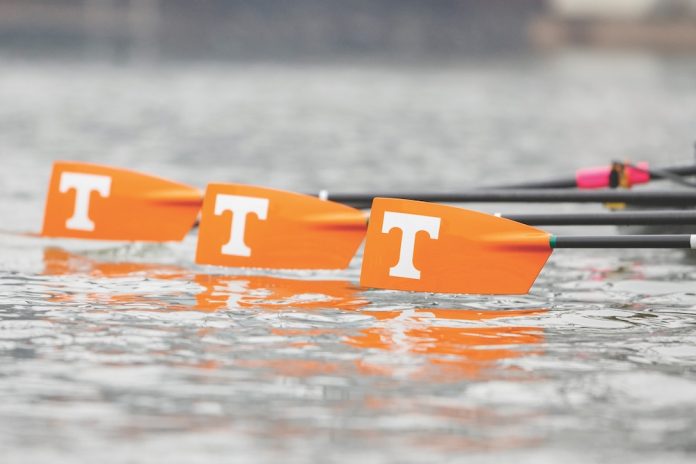
KNOXVILLE, TN - February 09, 2024 - The Tennessee Lady Volunteers taken at the Tennessee River in Knoxville, TN. Photo By Kyndall Williams/Tennessee Athletics

And just like that, they were gone. Less than two weeks after coaching Southern Methodist University to a historic top-10 finish at the 2023 NCAA Rowing Championships, Kim Cupini left Dallas for the University of Tennessee. But she didn’t just leave. A good portion of the SMU team—athletes and coaching staff—went with her.

In all, 17 student-athletes and three coaches went from Dallas to Knoxville to become the core of the 2023-24 Tennessee Volunteers women’s rowing program.

Unprecedented in size, it was the boldest mass transfer in NCAA rowing history, and it reflected how collegiate rowing at the highest levels operates now under the new and evolving reality of the transfer portal, extended Covid eligibility, and the trickle-down effect of NCAA rules on rowing.

Despite appearances and the teeth-gnashing of doomsayers, it was not, however, the beginning of an NCAA rowing transfer-portal apocalypse. Rather, it was the predictable result of a top athletic program demonstrating real support and directing major resources toward women’s rowing.

Behind Tennessee’s move is the same factor that for decades has powered top programs, from East Coast Ivies to West Coast state schools: institutional support.

Financial support for coaches’ salaries.

Admissions support for recruits.

Cultural support that makes student-athletes, coaches, and staff feel like what they’re doing matters—to the university, to the powers-that-be.

The annual migration of coaches, coaching staffs, and student-athletes among NCAA athletic programs has transformed big-time college sports, especially football. Beginning in 2021, the NCAA removed the requirement that student-athletes skip a year of competition when they transfer.

Transfers propelled the University of Washington’s quick rise to the top of college football. The Huskies had 26 transfers on their roster last year, and then 20 of 22 starters, The Wall Street Journal reported, left the program after the national-championship game.

Coaching staffs also move with head coaches. ClutchPoints reported that Jedd Fisch brought 21 staff members with him when he left Arizona to replace Kalen DeBoer as Washington head coach when DeBoer departed Washington after only two years to replace Alabama’s retiring Nick Saban.

Many of the same relaxed rules that enable such musical chairs in college football apply also to women’s rowing. The NCAA database of athletes eager to change schools is called the transfer portal, and it’s become, in effect, a free-agent marketplace.

“That’s what the NCAA wanted—to open the portal so athletes could move about and do what they want,” said Yale women’s head coach Will Porter. “For rowing, there’s always a trickle-down effect from the bigger sports.

“All of our transfers have been fifth-year kids, with an extra year of eligibility because of Covid, going to get master’s degrees.”

As a large state school with a more flexible academic program, Washington is in a different and advantageous position, though it shares the same goal: developing a championship crew.

“There’s been a lot of interest from people in transferring,” said UW women’s head coach Yaz Farooq. “We get contacted constantly, but we still have the same standards as for the rest of our team. We want to know that this person is a good teammate, that they’re interested in actively contributing to our squad.”

Tennessee’s sudden influx of talented and accomplished rowers and coaches was different from the way Deion Sanders achieved quick (and short-lived) success with Colorado’s football team. All the women transferring to Tennessee had committed to being coached by Cupini and her assistant coaches, while Coach Prime assembled a team of free agents essentially from a variety of programs.

By rule, Cupini couldn’t recruit her SMU rowers to join her at Tennessee. Her assistants who had not yet left SMU could say what they wanted until they, too, departed. As for the athletes, they were free to talk among themselves, something they did at home, and around the world, once they heard the news.

“I honestly think each person made their own decision,” said Hannah Richardson, a sophomore from Australia who transferred from SMU to Tennessee. “I didn’t feel any peer pressure to go either way. It wasn’t really, ‘My teammates are leaving, so I’m going to leave.’ It was more like, ‘What are the opportunities for me at Tennessee?’

“Doing a little bit of research into the way Tennessee Athletics treats their athletes and the setup here, it didn’t take me long to figure out that I wanted to transfer.”

Richardson was home in Australia and slept through the team Zoom meeting when Cupini’s move was announced.

“I must have turned off the alarm in my sleep. So I woke up to a bunch of messages on my phone. ‘What is everyone going to do?’ And I was like, ‘Do about what?’”

In total, 17 rowers went to Tennessee, something fifth-year captain Megan Hewison attributes to Cupini’s coaching, training techniques, and knack for breeding a winning team culture.

“I was a captain at SMU for three of the four years I was there, so I’ve got a close relationship with Kim and knew that I wouldn’t want to row my last year anywhere else. I also knew that a lot of the girls who had been in the eight and influential on the team at SMU would want to follow Kim as well.”

The transfer portal is open only for a certain period each year, but when a head coach leaves, the athletes in that program are granted a special window to enter.

“We need to get the ball rolling,” Hewison recalled thinking. “Not only do I want to go to Tennessee to be with Kim because she’s such a great coach but I also want Tennessee to be fast and I want all my teammates to come with me. That was the thought process.

“We had lots of Zoom calls without the coaches, just our SMU team talking through all the different reasons for people to stay or to go, and at the end of the day everyone made their own decision.

“The team understands that we’re not a Yale, we’re not a Washington or a Stanford. We’re not getting the best recruits, at least at the moment. We don’t have the best people coming in, so you’ve got to decide that you’re going to make the difference. You’ve got to make the best people through the training and the commitment.”

Hewison, who rowed out of Leander Club last summer as part of Great Britain’s national team, appreciates what Tennessee offers.

Unlike most other schools, Tennessee provides the maximum amount of so-called Alston money. Alston money is financial support for student-athletes that was allowed by the Supreme Court’s 2021 National Collegiate Athletic Association vs. Alston decision, which held that NCAA rules restricting certain education-related benefits for student-athletes violated federal antitrust laws. It’s $3,000 per semester, $6,000 per year, up to $24,000 over four years. Each school can choose how much is given to which sports.

“I’m not someone driven by money. I came here for the coaching and the resources,” Hewison said. “But I’ve rowed at a lot of very good clubs, and the Tennessee boathouse is phenomenal. It’s crazy.”

The Wayne G. Basler Tennessee Boathouse sits right on campus, where the Tennessee River flows past Neyland Stadium in downtown Knoxville. The three-story facility, now undergoing renovation, is full of boats, ergs, and exercise equipment, of course, but also features offices, a kitchen, a lounge, a recovery room, and laundry services.

For all that, the main reason Hewison came to Tennessee was to be coached by Cupini.

Why?

“The results.”

“All of the training that every team around the country does is hard. It’s going to be hard no matter what team you’re on, so you might as well make it worth it. It’s nice beating big teams that have five-star recruits. We don’t; we just put in the work.”

At Tennessee, sports have always been huge, and the Volunteer brand is strong far beyond Knoxville, stronger than the brand of most professional sports teams and energized by zealous booster clubs across the country.

Spyre Sports, the Tennessee-focused college sports collective, or unofficial agency, has raised its annual fundraising goal from single-digit millions to at least $25 million. “We think that goal is absolutely attainable,” Spyre president Hunter Baddour told The Athletic.

Tennessee’s athletic director, Danny White, who moved to Knoxville from the University of Central Florida, where during his time women’s rowing was the top-performing academic team in the American Athletic Conference, takes athletic success across all sports very seriously.

In 2023, the Volunteers finished sixth, their best place ever, in standings for the Learfield Directors’ Cup. This award is given annually by the National Association of Collegiate Directors of Athletics to the college or university that is most successful in 19 sports that hold championships sanctioned by the NCAA and the National Association of Intercollegiate Athletics.

In the Directors’ Cup contest, women’s NCAA rowing counts a lot. Stanford, last year’s Directors’ Cup victor, earned 100 of its 1,412 points by winning the NCAA rowing championship. The year before, 2022 NCAA rowing champion Texas won the Directors’ Cup. Even last place (22nd) at the regatta earns 30 Directors’ Cup points. After the 2021 Covid season, Tennessee qualified for the NCAA championship regatta for the first time since 2010.

White gets paid for climbing the Directors’ Cup ladder; for last year’s sixth-place finish he received a bonus of $184,400, The Knoxville News Sentinel reported. Tennessee was 12.75 points behind fifth-place Florida, which doesn’t compete in varsity women’s rowing, and 26.75 points out of fourth place. Just qualifying for the NCAA championship regatta could be very good for Tennessee’s Directors’ Cup standings in general and for White, the top athletic decision-maker, in particular.

“It’s been unreal,” said Cupini of the support and enthusiasm she and her team have experienced at the University of Tennessee.

“When we go to Florida for training trips, people run out onto the docks. Certain cities set up things so high-school kids can come out and watch. The fan base is insane—like nothing I’ve ever seen.”

A wholesale team transfer like the one that followed her from SMU to the University of Tennessee is an anomaly, Cupini insists, and unlikely to become the new version of recruiting in NCAA rowing.

“All of our transfers either rowed for me at SMU or already were transferring into SMU,” Cupini said.

More money at Tennessee has made a big difference for Cupini’s assistant coaches. After a career spent flipping rowing programs—first building up San Diego, then bringing SMU to new heights—Cupini now has the budget to pay her assistants well.

“I brought over people I’ve been working with for a while, including some people at SMU and then some people from other schools. We actually kept a gentleman on from Tennessee as well. So we have a really super, complete, diverse staff.”

Money for scholarships, however, is limited. Division I rowing programs are allowed a maximum of 20 scholarships, but minimum team size for the NCAA championships is 23 (two eights and a coxed four, not including spares and non-racing members of the team traveling for the experience).

That’s rare among NCAA sports. Basketball starts five players, but has 15 scholarships for women, and even football’s starting offense and defense combined number only 22, for which they can give out 85 full rides.

“Roster management is always a challenge,” Cupini understated.

“Because our sport is so new and unique, we need to educate the people who make the financial decisions about our sport, and the sheer numbers of our sport. We need to make sure that we’re treated the same [as every other sport] and that the women get what they need.”


Disappointing and Irresponsible

While Bill Manning’s column, “Talking Points,” is quite informative about effective communication with athletes, the penultimate paragraph is disappointing and irresponsible.

Coach Manning writes of athletes who “make excuses, complain, or criticize others,” and tells coaches to “consider ignoring their pleas by being visibly distracted” or “feigning indifference.”

Coach Manning further says that ignoring them shows that their concerns are “no big deal,” but the examples he cites often are big deals. In the preceding paragraph, he writes that “coaches show they care for athletes by giving them their full attention.” Are we to understand that he’s advising us to show an athlete that we don’t care?

Coaches should not be ignoring athletes who are criticizing others inappropriately. That’s not a culture anyone should allow to fester on their team and should be addressed in private. Athletes who makes excuses might not be cut out for whatever the standards are, or they may need help contextualizing the challenges they’re facing. Either way, this is an opportunity to teach them to rise to the occasion or guide them toward the reality that maybe their time would be spent better elsewhere.

When athletes complain, it can mean many things. Maybe they don’t like rowing in the rain. Or they could be complaining about a legitimate safety concern, a possible injury, negative culture, misunderstanding the direction of the program. None of these possibilities is mentioned in the column.

Coach Manning is well regarded in the rowing world, rightfully, and his words carry weight. What he’s recommending may be perfectly appropriate in some circumstances, perhaps when working with elite adult athletes at Penn AC, but it’s a tool that requires training and understanding when it should be used.

While I’m confident Coach Manning knows when and when not to ignore his athletes, I shudder at the thought of a young junior coach, just getting his feet wet and without a mentor, reading this article and ignoring an athlete who’s complaining about a teammate who says he isn’t good enough.

Nate Clark
Assistant Coach and Recruiting Coordinator

Trinity Men’s Rowing

Bill Manning Replies:

Coach Clark raises some good points in his comments about my column. I appreciate his sharing them and getting me to think more about what I wrote. I could have done a better job. 

Unfortunately, in 500 words, I can’t fit all the necessary nuance or address all types of rowing (juniors, club, collegiate, masters, para, National Team). Bold, simplistic statements sometimes get made, I regret to say. Often, more explanation and examples would be beneficial.

 That said, I stand by the core idea that occasionally the best approach with an athlete is benign neglect. I see two potential benefits.

By not engaging the athlete about the matter, he/she will see that it’s unworthy of attention; the coach’s inattention signals that the athlete should give it no attention, either. This is true of many excuses, criticisms, and minor complaints. 

When children stumble and fall, typically they look instantly to their parents for guidance about how to react. If parents show concern, children take it seriously and wail away.  If parents don’t fret about it, children often pick themselves up and carry on. The key, obviously, is parental judgement. It must be established first that the child is safe and that there’s nothing to worry about. Coaches must do the same. 

 The other benefit is that athletes are left to figure out things for themselves. It’s better coaching practice to recognize these learning opportunities and give athletes the space to figure things out on their own. More often than not, it’s necessary to explain things to athletes and guide their learning explicitly, but when the situation allows, it’s best to let them learn for themselves. 

Most athletes will solve problems on their own when given the opportunity to do so rather than being spoon-fed solutions. When they race, there will be no coach giving them advice or changing the race plan; the athletes need to take control and act independently. Sometimes, providing small opportunities to do so prepares them better for the independence they’ll have when racing (and when on their own without a coach’s caring presence). 

To stop athletes from making excuses, don’t entertain the excuses. Instead, stay focused on performance. Many instances of poor behavior are driven by an athlete’s desire for attention. Refrain from giving this attention and the athlete learns that the behavior doesn’t generate the desired response, and so is not worth engaging in. 

As Coach Clark highlights, the key is exercising good judgement. Coaches need to appreciate the difference between an excuse and a legitimate handicap. They need to recognize when bad behavior is rooted in a significant personal problem and when it’s just superficial and selfish. With seasoned good judgement, benign neglect becomes another useful coaching tool.

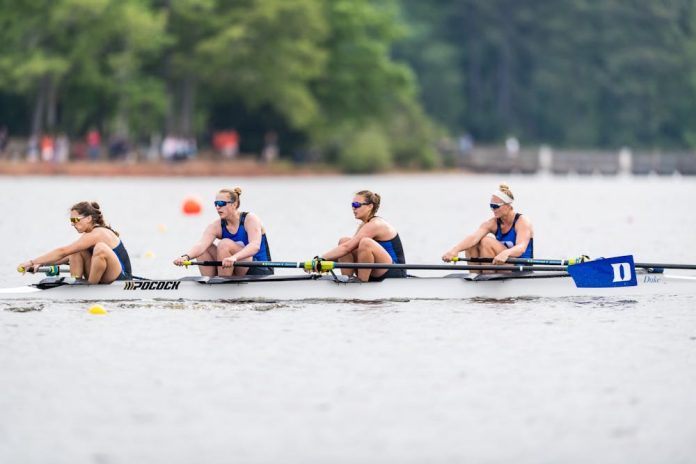
Duke Rowing 2024 Season Preview

Duke Women's Rowing
Courtesy of Nat LeDonne/Duke Athletics | The Chronicle/ The Chronicle

The Chronicle recently published their 2024 season preview for the Duke women’s rowing team. The media organization, run entirely by Duke students, predicts that the Blue Devils will finish second in the ACC and 11th at the NCAA Championships. Coach Megan Cook Carcagno has high expectations for the team, which finished in a program-best 14th place at last year’s NCAAs. “There’s a ton of reasons why this can be our fastest team that we’ve ever put on the water,” Cooke Carcagno said.


The Big Ten Invite, held April 19-20 in Sarasota, FL, is “a really important regatta for us,” Cook Carcagno highlights. Eight Big Ten teams will take on ten programs invited from other conferences, featuring six teams that finished in the top-15 at the 2023 NCAA Championships, including defending national champions Stanford. 

Read the full preview here