Home Blog Page 43

Lessons From the Paris Olympics

simon van dorp olympics paris dutch
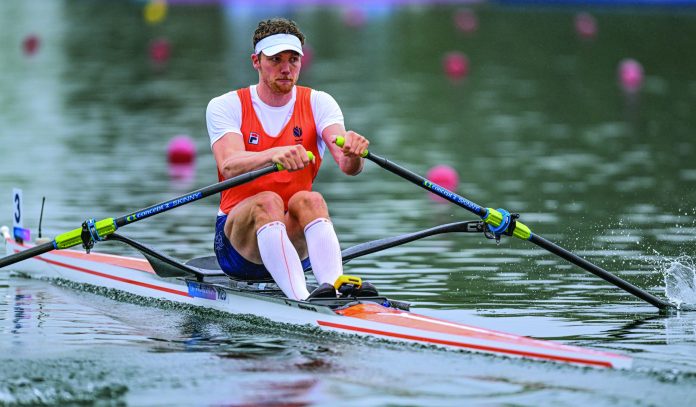
Simon van Dorp won the bronze medal in Paris. Photo by Julia Kowacic.

One could get philosophical when thinking about the constant cycle of training and racing. Compared to ball sports like baseball, where athletes often compete several times a week for months at a time, leaving little time for training, we rowers are known for putting a lot of time into preparing for our short races.

On the other hand, baseball athletes get a lot of feedback from their games—their strengths and weaknesses, what parts of their game worked and didn’t. They also get a lot of information about their opponents.

In comparison, we rowers get very little race information about ourselves and the competition. It’s very rare for teams to compete frequently against each other either on the national or international level. In fact, very few countries participate regularly in world championships, and in a given year, it’s unusual for countries outside of Europe to race in more than one international regatta outside of the world championships and the Olympics.

Club and college teams fare a little better, since they have the opportunity to meet certain opponents a few times during a season. If they’re preparing for a national championship, however, they may have the chance to meet competitors from their own region but rarely teams from the other side of the country.

In addition, every racecourse is different, and it’s often very difficult, if not impossible, to get detailed information from other crews. Usually, we have no information about the wind, water temperature, and current—all factors that can affect rowers during different parts of a race. In sum, there are many unknowns that can influence race strategy.

By analyzing training data, we can gather valuable information about ourselves outside of racing. We can run test pieces and time trials with and without other boats, measure times, stroke frequencies, even force and power, as well as technical measures such as “slip” and “wash” or the timing of individual crew members performing certain parts of the stroke. But it’s impossible to simulate fully a competitive 2,000-meter race.

So what can we learn from racing?

Something about ourselves.

Well-planned tests tell us how our training is going. Are we improving our strength, endurance, and technical and tactical skills? What specific measures are we confident we can achieve, such as a certain stroke rate or target speed? What weaknesses do we need to work on? Are our target stroke rates sustainable, and how does our speed compare to that of our opponents?

The most valuable learning is achieved by recognizing factors that have not gone well. Is the stroke rate too low or too high to achieve the best speed? Can we make some changes to the rigging to help us execute our race plan better?

It’s helpful also to study the top rowers in their most important competitions. With the Paris Olympics just over, let’s look at the performances of the best in our sport.

At first glance, the high stroke rates are striking. In his latest analysis, Valery Kleshnev calculated that the average stroke rate of all the finalists over the full 2,000-meter distance was 40.2 strokes per minute, and it was even higher over the first 250 meters. All teams explode out of the starting blocks with the highest possible intensity, and you have to be very skillful to achieve and maintain such demanding exertion.

Here are a few lessons from the Olympic finals:

* If you want to win a race at the highest level, you have to be in the lead at 500 meters or at least very close to the leading boat. The gold-medal winner was in the lead at the 500-meter mark in nine of the 14 finals. Of all the boats that were not in the lead at 500 meters but ended up winning the gold medal, the Croatian men’s pair was farthest from the lead at that point— but only by 2.54 seconds. All the other following teams that won eventually were less than half a length behind the leaders at 500 meters.

The lesson: If you’re not leading early in the race and want to win, you must stay close to the leaders the whole time. If you’re too far back, you won’t be victorious (see the men’s single below).

The few boats that sprinted into a much better position in the last 500 meters demonstrated unbounded effort. To do so, you must have a very special mindset, be physically and especially mentally strong, and able to overwrite the feedback from the accumulation of lactic acid.

* If you want to achieve the best result you can, it’s important to have a realistic idea of what place to aim for. If you’re too conservative in the beginning, the race will slip away. If you’re too results-oriented or think you can outdo better teams, chances are good you’ll be disappointed and will have to settle for a poor result.

* Of the 84 crews in the finals, only two sprinted to a medal from a fifth or even sixth place. The famous Sinkovic brothers worked their way from fifth place at 500 meters and fourth at 1,500 meters to their third consecutive gold medal. But they had several things working in their favor. They could draw on a wealth of experience. They never trailed the leaders by more than 2.54 seconds (which means they were always in contact with the leading crew). They rowed in what was probably the least-contested race and won with the lowest percentage of world-best times of all 14 races. And finally, they surged ahead when their strongest competitors took a very bad stroke only meters from the finish line.

* The second boat that worked its way to a silver medal all the way from sixth place at 500 meters from the finish line was the single sculler Yauheni Zalaty, who competed as an individual neutral athlete, having raced for Belarus at U19 and U23 Worlds. At 1,500 meters, he was 5.7 seconds behind the second boat and yet managed, in the race of his life, to cover the last 500 meters in 1:36.60—a feat he’d never achieved before.

This was the second-fastest fourth 500 meters ever rowed in an Olympic final, only a few hundredths of a second slower than Xeno Müller when he won the gold medal in 1996. In this part of the race, the individual neutral athlete was 2.4 seconds faster than Oliver Zeidler, the dominant gold-medal winner of the race, and more than six seconds faster than any of the other scullers. He benefited from the exhaustion of three scullers (from The Netherlands, New Zealand, and Greece), who seemed to go out too fast and had their slowest 500 meters in the last stage of their races.

All the successful rowers, including the aforementioned single sculler who raced as an “individual neutral athlete” (instead of for banned Belarus), showed the typical U-shaped race profile, with a fast first and fourth 500 meters and a more or less constant and slower speed in the middle 1,000 meters.

Sending Boats and Hope to Ukraine

Equipment for Ukraine
Photo courtesy of Brian Colgan.

Olympian Sean Colgan and his brother and former national team athlete, Brian Colgan, have organized a network across the United States of donors and volunteers dedicated to helping Ukraine by keeping the sport accessible even during a time of turmoil.

“It’s a way to give back,” said Brian Colgan. “We can’t all impact the course of the war—Ukraine defending against Russia. We can’t fight for them, but this is just something that rowers can do to feel like we’re doing our part to help out Ukraine.”

Rowing News covered the early stages of the Colgan’s efforts, now two containers of boats, oars, ergs, coxswain equipment, and more have already made their way to Ukraine and have been used to put on regattas and indoor erg races. The Colgans are continually looking to round up more equipment to send.

“We got our first container out in August from Rhode Island,” said Brian Colgan. “We sent a container out of California as well. We are planning to get another container out of New England in the time period between the Head of the Charles and Thanksgiving.”

The California container held two singles, four doubles, two eights, two fours, three pairs and two sets of eight oars.

“Back in March they they had their national ergometer championships held inside a bomb shelter, just so they could get it done,” said Brian Colgan. “They also had a regatta in August, and they were excited to get the whole regatta off without an air raid warning. I was like ‘wow the only thing we have to worry about at regattas down here is thunderstorms.’ They have a whole extra level of things to worry about when they try to stage a regatta.”

With the help of long-time rower and Rowing News contributor Andy Anderson, also know as Doctor Rowing, the Colgans are continually looking for donors to make delivering more containers a reality and preserve a sport for the Ukrainians, who now more than ever need hope– something to grasp beyond tragedy.

If you have equipment to donate or would otherwise like to support these efforts, please reach out to Brian Colgan directly at brianecolgan@gmail.com.  If you are in New England, contact Andrii Ivanchuk from Riverside Boat Club at trubarower@gmail.com.

Sullivan and Kelly Claim U23 USRowing Athlete of the Year Titles

USRowing Kelly and Sullivan
Photo courtesy of USRowing

USRowing has named Kate Kelly (Vashon Island, Wash./University of Virginia) and Sam Sullivan (Boston, Mass./University of Pennsylvania) as Under 23 Athletes of the Year for 2024 as voted on by their USRowing teammates and coaches.

Sullivan made his international debut this year when he was the stroke of the 2024 U23 men’s eight, that achieved a silver medal. Sullivan is a two-time First-Team IRCA All-America and a 2024 Academic All-Ivy selection. While racing at the University of Pennsylvania, Sullivan placed fifth in the varsity eight at the 2024 Eastern Sprints and finished eighth at the 2024 IRA Championships.

“It is such an honor to be selected as USRowing Under 23 National Team Male Athlete of the Year,” Sullivan told USRowing. “It’s amazingly special to be recognized by such a talented and wonderful group of people. There’s no other group of guys that I would’ve rather gone on this journey with.”

Sullivan is joined by Kate Kelly on the women’s side. In 2019 Kelly earned a spot on the USRowing Under 19 National Team that raced in Tokyo, Japan. In 2022 she and her boat mates raced to a gold medal in the under 23 women’s four with coxswain and in 2023 she and the under 23 women’s eight clinched a silver medal.

“Throughout high school and college I would write my goals on little sticky notes and stick them on my mirror or the back of my door,” said Kelly. “A lot of our races this summer were motivated and driven by pushing for each other. I’ve never had such a strong connection in an international race like that with the people that I was racing with. I always knew that the U23 Athlete of the Year was a thing, but I never expected to receive the honor. When I got the email last week I thought, ‘oh my goodness, that’s crazy.’ It’s still surreal now.”

Kelly credits the success she found racing on the national stage to be from her ability to expand beyond what she always expected of herself as an athlete and hopes to see where that mindset will take her in her rowing career now that she’s graduated from UVA.

“I found a lot of success when I started to believe in my abilities. Initially coming into college, I set easily achievable goals just to find a sense of accomplishment. When I started stepping outside of my comfort zone and taking more risks, I found more achievement.”

Both Kelly and Sullivan will be recognized at the historic Head of the Charles regatta on Attager Row, Sunday, October 19. Find more information on Sullivan and Kelly’s boats at Mega Worlds as covered by Rowing News here.

JL to partner with The Boat Race

The Boat Race JL Racing
Photo courtesy of The Boat Race

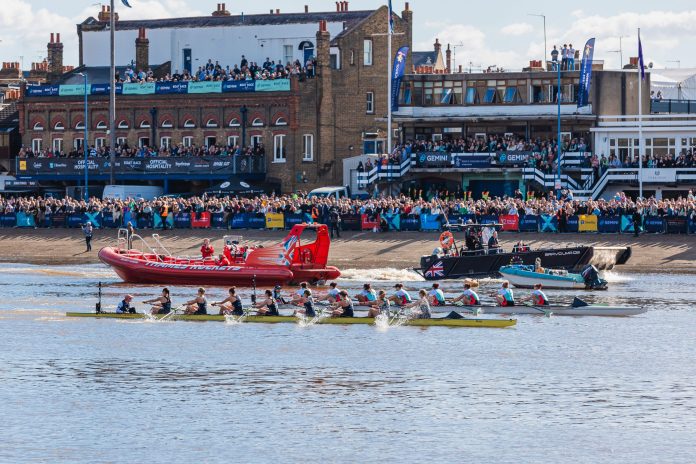
The Boat Race has signed JL to be the official performance wear sponsor, meaning rowers from both Oxford University Boat Club and Cambridge University Boat Club will suit up in custom performance apparel for the storied event.

“This will help increase our brand recognition internationally and support The Boat Race in their endeavors to increase viewership internationally,” said Alison Abrams, VP of Sales at JL Racing. It brings more awareness to the sport and hopefully inspiring viewers and motivating younger rowers to whatever potential they want to see out.”

JL has sponsored The Boat Race in the past with the most recent partnership the 2017 regatta, however this will be the first time the brand works with The Boat Race directly since launching JL Racing UK.

“We always pride ourselves on providing comfortable performance gear,” said Abrams. “Our main goal is to make sure the athletes feel that they can perform at their best without distraction.”

The performance apparel outfitter will be contributing to a nearly 200-year tradition of rivalry between two powerhouse clubs who race four miles, or 6.8 km, along the River Thames in South West London with over 250,000 spectators present or tuning in to watch.

“We want to make sure the fit and the fabric are right,” stated Abrams. “We also make sure the design fits the traditional and historic mantra of the boat race but also give it the modern design with whatever sponsor logos and specific design details the clubs want to include.”

The upcoming racing will take place on Sunday, April 13, 2025 with the dark blue of Oxford and the pale Cambridge blue blazing down the course garbed in JL Racing. More information about how to watch the racing and the JL Racing partnership can be found on The Boat Race website.


Rowers to Vie in February Indoor Championships Virtually

world rowing indoor championship
Photo courtesy of World Rowing.

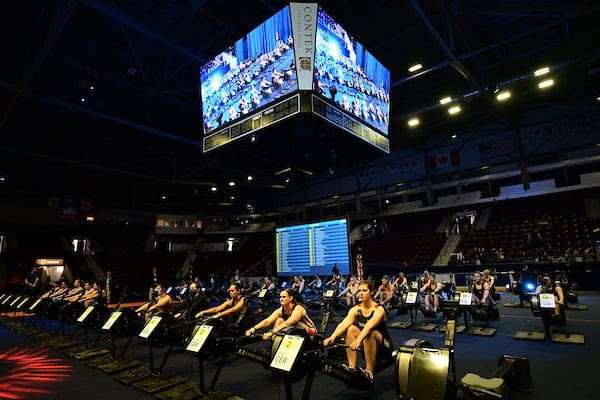
The 2025 World Rowing Indoor Championships, presented by Concept2, will take place over the last two weekends of February virtually.

The top 150 competitors in each gender and weight category per continental time zone who submit times during the open-qualification period from November 2024 through January 2025 will be invited to enter heats, conducted across three continental time zones. 

Finals will be broadcast live during European evening hours. 

CRCA Leaders Head to Congress to Advocate for Rowing

crca liz tuppen marnie stahl
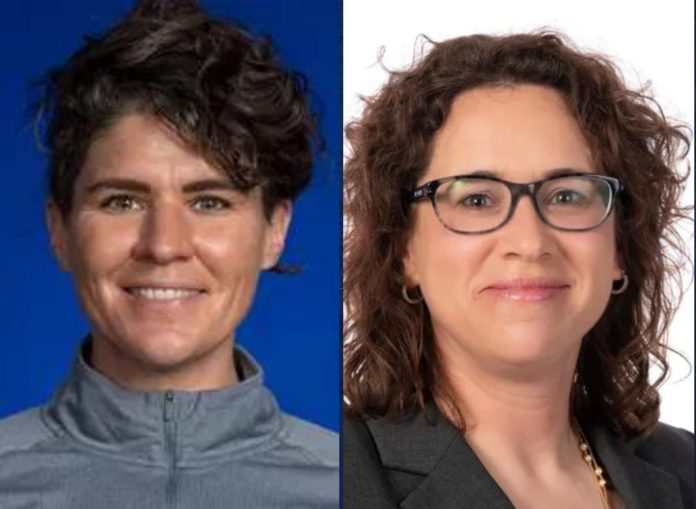
Liz Tuppen and Marnie Stahl. Photos courtesy of the CRCA.

Leaders of the Collegiate Rowing Coaches Association are heading to Washington September 25th and 26th to advocate for collegiate rowing directly to members of Congress.

After last May’s House vs. NCAA settlement agreement, in response to antitrust lawsuits filed against the NCAA, the CRCA, representing college coaches of women’s rowing, joined seven collegiate coaching associations in asking Congress to protect Olympic sports and academic opportunity for athletes.

“The CRCA is going to Congress now because the college sports landscape is shifting at an unprecedented pace,” said Liz Tuppen, president of the CRCA and associate head coach of the University of Michigan women’s rowing team.

“With the potential impact of the House vs. NCAA settlement, and the growing possibility of athletes being categorized as employees, the future of collegiate athletics is at a critical juncture.”

The agreement, if approved, would allow universities to pay student-athletes directly—an enormous departure from the amateur model of college athletics that has existed since the first intercollegiate sports contest, the Harvard-Yale boat race of 1852, long before the founding of the NCAA in 1906.

Specifically, university athletic departments could give student-athletes up to 22 percent of the average annual revenue of the Power Four conferences from media rights, ticket sales, and sponsorships (an estimated $20 to 23 million per school in 2025-26). The agreement also would increase scholarship limits; more than tripling the number for each school’s rowing team from 20 to 68.

Additionally, the NCAA will be responsible for paying $2.75 billion in back-pay damages to former Division I athletes.

These changes alone represent huge amounts of money, and that money would need to come from somewhere. The fear among leaders of non-revenue-generating sports such as rowing is that the money will come by reducing financial support, including funding for scholarships, coaches’ salaries, facilities, and more—if not cutting teams outright.

“The costs that could come with such a shift would undoubtedly lead to drastic cuts, and likely the elimination of most college Olympic sports programs altogether,” the Intercollegiate Coach Association Coalition (ICAC) warned in its letter to Congress.

Some schools are discussing a “tiered” approach to funding sports. Ted Carter, president of The Ohio State University, told The Columbus Dispatch recently that the Buckeyes intended to keep all 36 of their varsity teams but that “some of those sports may start to look and act a little bit more like a club sport, but yet compete at the Division I level.”

In the wake of the potential settlement, major questions revolve around its effect on Title IX requirements and the employment status of college athletes.

Against this backdrop, and in collaboration with seven other coaching associations within the ICAC and FGS Global, a strategic advisory and communications consultancy, Tuppen and Marnie Stahl, CRCA’s executive director, are traveling to D.C. to build relationships with congressional leaders and lay the groundwork for future communication and collaboration in defense of Olympic and non-revenue sports.

“These programs, including rowing, are essential not only for developing future Olympians but also for providing transformative educational opportunities, fostering gender equality, and shaping future leaders,” Tuppen said.

Added Stahl: “It’s really an educational mission of sharing what our sport looks like, what Olympic sports look like, why it’s important, and what unique value it brings.”

The potential loss of Olympic sports on the college level will mean that “thousands of students, including students who might not otherwise have stepped on a university campus, will lose out on scholarships and other life-changing opportunities,” the ICAC pointed out in its open letter. These student-athletes bolster the academic and cultural mission of higher education “by exemplifying excellence in time management, teamwork, leadership, and resilience.”

Stahl and Tuppen plan to help members of Congress  understand more fully the broader stakes of the proposed changes to collegiate athletics, which may come before Congress eventually for approval.

While football and basketball get most of the attention, the vast majority of college athletes compete in other sports and  play a major role in embellishing our national reputation on the global stage.

“Do you like that we are top of the podium in the Olympics? Is that a point of national pride? Because if it is, we want you to think about this,” Stahl plans to say.

To the surprise of some, the NCAA is supporting the ICAC’s efforts to lobby Congress. In a meeting to discuss the upcoming congressional visits, NCAA representatives thanked the coaching associations for taking action and encouraged them to continue advocating for their sports and athletes into the future.

Stahl and Tuppen believe they must take whatever action possible to defend and promote rowing.

“Liz and I agreed philosophically that we don’t want to be sitting there in the future saying, ‘The opportunity presented itself, and we didn’t do it for our sport,’” Stahl said. “That’s not a position we felt that the CRCA could take. At the end of the day, we’ll at least be able to say, ‘We tried.’”

In Buffalo, Summer Rowing Is Back

rowbuffalo canadian henley trophy
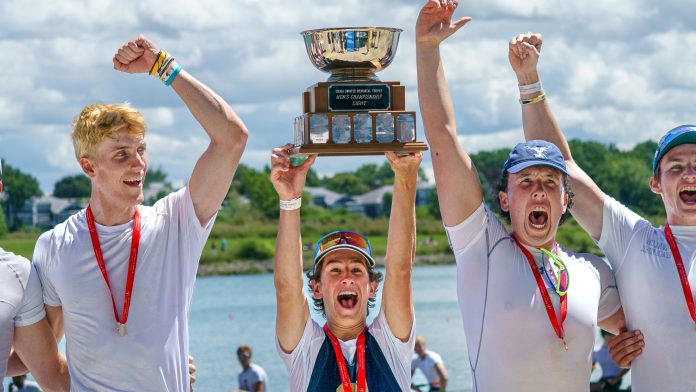
RowBuffalo hoisting the Craig Swayze Memorial Trophy.

Three years ago, a pair of oarsmen from Buffalo upset the favored U.S. National Team pair to win the 2021 USRowing Summer National Championship U19 event.

Rival Buffalo coaches R.J. Rubino of Buffalo Scholastic Rowing Association (BSRA) and Ryan Ficorilli of West Side Rowing Club had joined forces to return Buffalo summer rowing to its prior glory and with the upset victory they knew they were on to something.

“It’s the old rowing scene getting its juice back,” said Rubino—thanks to RowBuffalo, which he called “disruptive and new.”

RowBuffalo is the summer program that operates out of Buffalo Scholastic Rowing Association’s Patrick Paladino Memorial Boathouse on the Buffalo River. After adopting the name in 2023, RowBuffalo continues Buffalo Scholastic Rowing Association’s summer successes, racing at various USRowing summer championship regattas and Canadian Henley. The summer roster has grown from 35 athletes to over 100 in three years.

At this summer’s 140th Royal Canadian Henley Regatta, North America’s premier summer event, RowBuffalo won six events, proving that Buffalo rowing is back.

Earlier in the summer, RowBuffalo won the men’s youth eight and defended its 2023 title in the men’s U17 coxed four at USRowing’s RowFest in Oklahoma City. Esther Littlefield and Sophie Pirigyi captured RowBuffalo’s first women’s national titles, winning both the U23 and senior women’s pair by large margins.

The senior eight victory at Canadian Henley was the first for a Buffalo crew since 1956. The crew sped down the course in a blistering 5:33 (Great Britain won the Paris Olympics in 5:22), finishing ahead of Mendota Rowing Club in second by open water and local powerhouse, St. Catharines Rowing Club in third. Calgary, Western Ontario, and Vesper rounded out the final field.

The crew—coxswain Teddy Hibbard, stroke Peter Spira, Lars Finlayson, Wilder Fulford, John Wright, Preston Darling, Jackson Cheetham, Nathanial Sass, and bowman Collin Hay— came together from Harvard, Penn, Cal, Stanford, Los Gatos Rowing Club and Canisius High School and have rowed on U.S and Canadian national teams.

The win continued a three-year streak by men’s eights, including the lightweight eight in 2022 and the championship eight in 2023. RowBuffalo also won the U19 men’s eight, the U19 men’s coxed four, the championship men’s pair, the U23 lightweight men’s straight four, and the senior lightweight men’s dash eight.

Since 1912, West Side Rowing Club has been the epitome of Buffalo rowing. The storied club dates from Buffalo’s most prosperous era and has been redeveloped repeatedly, including relocation to accommodate a sewage-treatment plant in the 1920s, destruction by a 1975 fire, and the 2007 construction of the Fontana Boathouse, which was designed by Frank Lloyd Wright (originally for the University of Wisconsin). Located across town, BSRA had been a separate part of the Buffalo rowing scene before the advent of RowBuffalo.

A fifth-generation Buffalo resident, Rubino is a redevelopment project himself, of the athletic sort. Originally an ice hockey player who “liked the hitting and checking better than the goal-scoring,” Rubino rowed at Buffalo’s Canisius High, on the U.S. Junior National Team, and at Mercyhurst College before a back injury forced him to hang up his rowing trou.

“Most great coaches aren’t happy with how their rowing careers went,” Rubino told the Buffalo Rising podcast.

Now Rubino has earned his way back to the sport, with the growth of BSRA and RowBuffalo enabling him to shuck his “corporate job” and coach and organize rowing full time.

NRF to Honor National Rowing Hall of Fame ® Inductees

NRF 2024 Hall of Fame
Photo courtesy of Lisa Rohde.

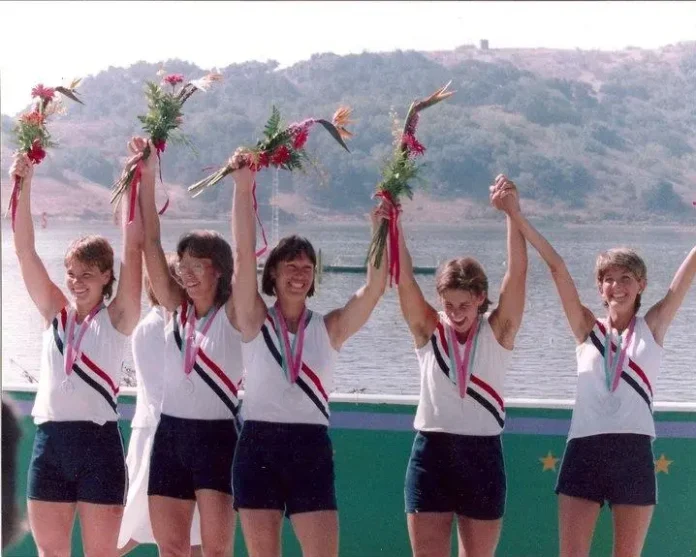
The National Rowing Foundation is set to honor 11 individuals in the Class of 2024 National Rowing Hall of Fame ® at the NRF US Team Reunion tent at the Head of the Charles Regatta on Saturday, October 19 at 3:00 p.m.

“It’s a great group,” said chairman of the NRF hall of fame committee Bill Miller. “They’ve had amazing experiences. Steve Gladstone is an outstanding coach,” remarked Miller. “We have two patrons who’ve contributed immensely to the wellbeing of rowing in the United States– John Nunn from Long Beach Rowing Association and Kent Mitchell who has done a lot of things nationally and internationally.”

Most recently Gladstone spent 13 years coaching heavyweight crew at Yale University before his retirement at the end of the 2023 season. In addition to Nunn and Mitchell, who have elevated the sport of rowing for athletes and fans alike, six Olympic silver medalists and their coaches join the hall of fame in 2024.

“Then we have two boats that turned in Olympic silver medals, a great achievement, in 1984,” said Miller. “Carlie Geer in the women’s single and then the women’s quadruple-scull with coxswain. It’s a great, very accomplished group.”

The National Rowing Hall of Fame ® was started in 1956 and The National Rowing Foundation took over its management beginning in 1975. There are currently over 500 athletes with a spot in the hall of fame with a new induction class every two to three years. Find out more about the 2023 Hall of Fame class as covered by Rowing News here.

Stephen C Gladstone
For Outstanding Achievement in Coaching
Fourteen IRA National Championships
 
John Nunn – Patron
For Exceptional Service to Rowing
Long Beach Rowing Association
 
Kent Mitchell – Patron
For Exceptional Service to Rowing
Pioneer in Live racing graphics, media and statistics
National Rowing Foundation Founder
 
1984 Olympic Silver Medal Women’s Single-Sculls
Charlotte Geer
Vincent J. Ventura, Coach
 
1984 Olympic Silver Medal Women’s Quadruple-Sculls
Anne R. Marden Grainger, Bow
Lisa D. Rohde, 2
Joan Lind Van Blom, 3
Virginia Anne Gilder, Stroke
Kelly Rickon Mitchell, Cox
John Van Blom, Coach

For more information or to purchase tickets to the event please visit:https://give.classy.org/nrfhocr2024.