Home Blog Page 44

Rowers to Vie in February Indoor Championships Virtually

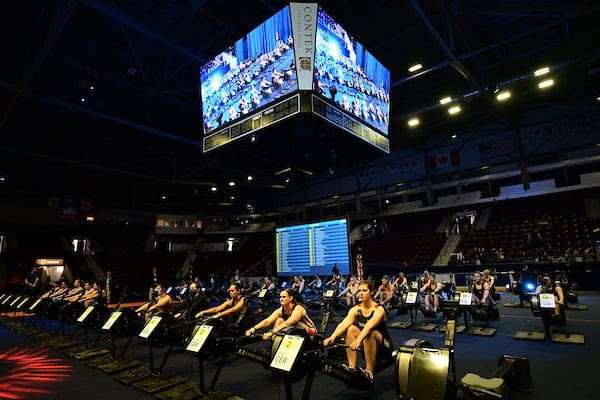
world rowing indoor championship
Photo courtesy of World Rowing.

The 2025 World Rowing Indoor Championships, presented by Concept2, will take place over the last two weekends of February virtually.

The top 150 competitors in each gender and weight category per continental time zone who submit times during the open-qualification period from November 2024 through January 2025 will be invited to enter heats, conducted across three continental time zones. 

Finals will be broadcast live during European evening hours. 

CRCA Leaders Head to Congress to Advocate for Rowing

crca liz tuppen marnie stahl
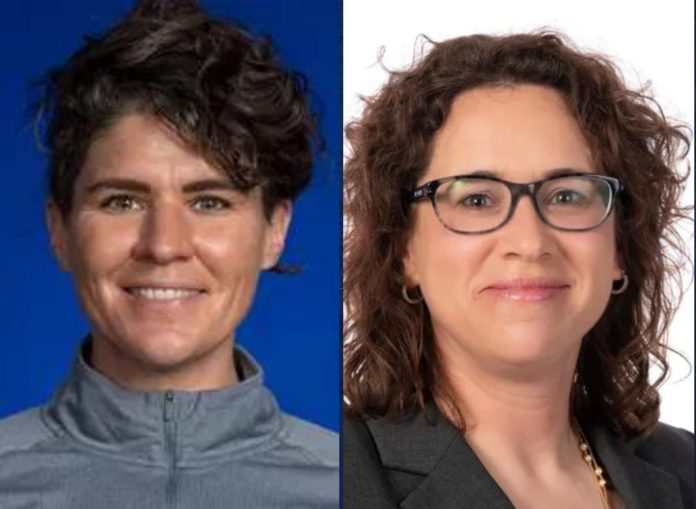
Liz Tuppen and Marnie Stahl. Photos courtesy of the CRCA.

Leaders of the Collegiate Rowing Coaches Association are heading to Washington September 25th and 26th to advocate for collegiate rowing directly to members of Congress.

After last May’s House vs. NCAA settlement agreement, in response to antitrust lawsuits filed against the NCAA, the CRCA, representing college coaches of women’s rowing, joined seven collegiate coaching associations in asking Congress to protect Olympic sports and academic opportunity for athletes.

“The CRCA is going to Congress now because the college sports landscape is shifting at an unprecedented pace,” said Liz Tuppen, president of the CRCA and associate head coach of the University of Michigan women’s rowing team.

“With the potential impact of the House vs. NCAA settlement, and the growing possibility of athletes being categorized as employees, the future of collegiate athletics is at a critical juncture.”

The agreement, if approved, would allow universities to pay student-athletes directly—an enormous departure from the amateur model of college athletics that has existed since the first intercollegiate sports contest, the Harvard-Yale boat race of 1852, long before the founding of the NCAA in 1906.

Specifically, university athletic departments could give student-athletes up to 22 percent of the average annual revenue of the Power Four conferences from media rights, ticket sales, and sponsorships (an estimated $20 to 23 million per school in 2025-26). The agreement also would increase scholarship limits; more than tripling the number for each school’s rowing team from 20 to 68.

Additionally, the NCAA will be responsible for paying $2.75 billion in back-pay damages to former Division I athletes.

These changes alone represent huge amounts of money, and that money would need to come from somewhere. The fear among leaders of non-revenue-generating sports such as rowing is that the money will come by reducing financial support, including funding for scholarships, coaches’ salaries, facilities, and more—if not cutting teams outright.

“The costs that could come with such a shift would undoubtedly lead to drastic cuts, and likely the elimination of most college Olympic sports programs altogether,” the Intercollegiate Coach Association Coalition (ICAC) warned in its letter to Congress.

Some schools are discussing a “tiered” approach to funding sports. Ted Carter, president of The Ohio State University, told The Columbus Dispatch recently that the Buckeyes intended to keep all 36 of their varsity teams but that “some of those sports may start to look and act a little bit more like a club sport, but yet compete at the Division I level.”

In the wake of the potential settlement, major questions revolve around its effect on Title IX requirements and the employment status of college athletes.

Against this backdrop, and in collaboration with seven other coaching associations within the ICAC and FGS Global, a strategic advisory and communications consultancy, Tuppen and Marnie Stahl, CRCA’s executive director, are traveling to D.C. to build relationships with congressional leaders and lay the groundwork for future communication and collaboration in defense of Olympic and non-revenue sports.

“These programs, including rowing, are essential not only for developing future Olympians but also for providing transformative educational opportunities, fostering gender equality, and shaping future leaders,” Tuppen said.

Added Stahl: “It’s really an educational mission of sharing what our sport looks like, what Olympic sports look like, why it’s important, and what unique value it brings.”

The potential loss of Olympic sports on the college level will mean that “thousands of students, including students who might not otherwise have stepped on a university campus, will lose out on scholarships and other life-changing opportunities,” the ICAC pointed out in its open letter. These student-athletes bolster the academic and cultural mission of higher education “by exemplifying excellence in time management, teamwork, leadership, and resilience.”

Stahl and Tuppen plan to help members of Congress  understand more fully the broader stakes of the proposed changes to collegiate athletics, which may come before Congress eventually for approval.

While football and basketball get most of the attention, the vast majority of college athletes compete in other sports and  play a major role in embellishing our national reputation on the global stage.

“Do you like that we are top of the podium in the Olympics? Is that a point of national pride? Because if it is, we want you to think about this,” Stahl plans to say.

To the surprise of some, the NCAA is supporting the ICAC’s efforts to lobby Congress. In a meeting to discuss the upcoming congressional visits, NCAA representatives thanked the coaching associations for taking action and encouraged them to continue advocating for their sports and athletes into the future.

Stahl and Tuppen believe they must take whatever action possible to defend and promote rowing.

“Liz and I agreed philosophically that we don’t want to be sitting there in the future saying, ‘The opportunity presented itself, and we didn’t do it for our sport,’” Stahl said. “That’s not a position we felt that the CRCA could take. At the end of the day, we’ll at least be able to say, ‘We tried.’”


In Buffalo, Summer Rowing Is Back

rowbuffalo canadian henley trophy
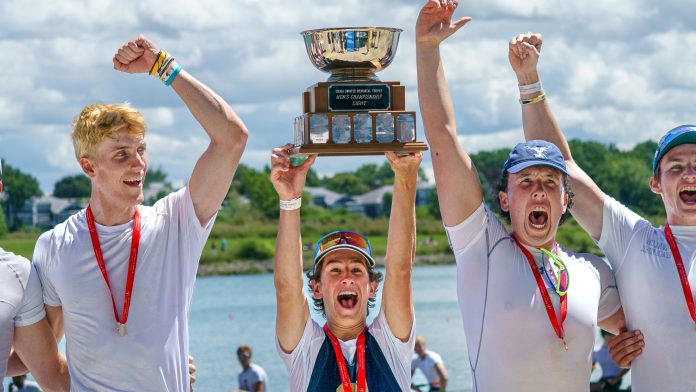
RowBuffalo hoisting the Craig Swayze Memorial Trophy.

Three years ago, a pair of oarsmen from Buffalo upset the favored U.S. National Team pair to win the 2021 USRowing Summer National Championship U19 event.

Rival Buffalo coaches R.J. Rubino of Buffalo Scholastic Rowing Association (BSRA) and Ryan Ficorilli of West Side Rowing Club had joined forces to return Buffalo summer rowing to its prior glory and with the upset victory they knew they were on to something.

“It’s the old rowing scene getting its juice back,” said Rubino—thanks to RowBuffalo, which he called “disruptive and new.”

RowBuffalo is the summer program that operates out of Buffalo Scholastic Rowing Association’s Patrick Paladino Memorial Boathouse on the Buffalo River. After adopting the name in 2023, RowBuffalo continues Buffalo Scholastic Rowing Association’s summer successes, racing at various USRowing summer championship regattas and Canadian Henley. The summer roster has grown from 35 athletes to over 100 in three years.

At this summer’s 140th Royal Canadian Henley Regatta, North America’s premier summer event, RowBuffalo won six events, proving that Buffalo rowing is back.

Earlier in the summer, RowBuffalo won the men’s youth eight and defended its 2023 title in the men’s U17 coxed four at USRowing’s RowFest in Oklahoma City. Esther Littlefield and Sophie Pirigyi captured RowBuffalo’s first women’s national titles, winning both the U23 and senior women’s pair by large margins.

The senior eight victory at Canadian Henley was the first for a Buffalo crew since 1956. The crew sped down the course in a blistering 5:33 (Great Britain won the Paris Olympics in 5:22), finishing ahead of Mendota Rowing Club in second by open water and local powerhouse, St. Catharines Rowing Club in third. Calgary, Western Ontario, and Vesper rounded out the final field.

The crew—coxswain Teddy Hibbard, stroke Peter Spira, Lars Finlayson, Wilder Fulford, John Wright, Preston Darling, Jackson Cheetham, Nathanial Sass, and bowman Collin Hay— came together from Harvard, Penn, Cal, Stanford, Los Gatos Rowing Club and Canisius High School and have rowed on U.S and Canadian national teams.

The win continued a three-year streak by men’s eights, including the lightweight eight in 2022 and the championship eight in 2023. RowBuffalo also won the U19 men’s eight, the U19 men’s coxed four, the championship men’s pair, the U23 lightweight men’s straight four, and the senior lightweight men’s dash eight.

Since 1912, West Side Rowing Club has been the epitome of Buffalo rowing. The storied club dates from Buffalo’s most prosperous era and has been redeveloped repeatedly, including relocation to accommodate a sewage-treatment plant in the 1920s, destruction by a 1975 fire, and the 2007 construction of the Fontana Boathouse, which was designed by Frank Lloyd Wright (originally for the University of Wisconsin). Located across town, BSRA had been a separate part of the Buffalo rowing scene before the advent of RowBuffalo.

A fifth-generation Buffalo resident, Rubino is a redevelopment project himself, of the athletic sort. Originally an ice hockey player who “liked the hitting and checking better than the goal-scoring,” Rubino rowed at Buffalo’s Canisius High, on the U.S. Junior National Team, and at Mercyhurst College before a back injury forced him to hang up his rowing trou.

“Most great coaches aren’t happy with how their rowing careers went,” Rubino told the Buffalo Rising podcast.

Now Rubino has earned his way back to the sport, with the growth of BSRA and RowBuffalo enabling him to shuck his “corporate job” and coach and organize rowing full time.

NRF to Honor National Rowing Hall of Fame ® Inductees

NRF 2024 Hall of Fame
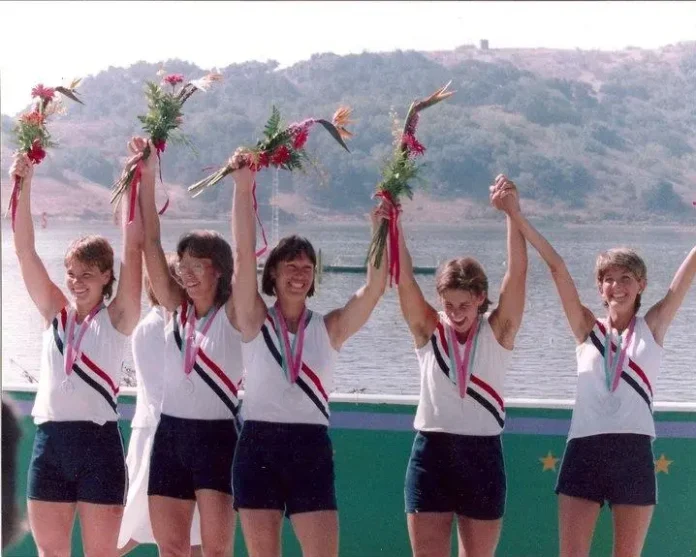
Photo courtesy of Lisa Rohde.

The National Rowing Foundation is set to honor 11 individuals in the Class of 2024 National Rowing Hall of Fame ® at the NRF US Team Reunion tent at the Head of the Charles Regatta on Saturday, October 19 at 3:00 p.m.

“It’s a great group,” said chairman of the NRF hall of fame committee Bill Miller. “They’ve had amazing experiences. Steve Gladstone is an outstanding coach,” remarked Miller. “We have two patrons who’ve contributed immensely to the wellbeing of rowing in the United States– John Nunn from Long Beach Rowing Association and Kent Mitchell who has done a lot of things nationally and internationally.”

Most recently Gladstone spent 13 years coaching heavyweight crew at Yale University before his retirement at the end of the 2023 season. In addition to Nunn and Mitchell, who have elevated the sport of rowing for athletes and fans alike, six Olympic silver medalists and their coaches join the hall of fame in 2024.

“Then we have two boats that turned in Olympic silver medals, a great achievement, in 1984,” said Miller. “Carlie Geer in the women’s single and then the women’s quadruple-scull with coxswain. It’s a great, very accomplished group.”

The National Rowing Hall of Fame ® was started in 1956 and The National Rowing Foundation took over its management beginning in 1975. There are currently over 500 athletes with a spot in the hall of fame with a new induction class every two to three years. Find out more about the 2023 Hall of Fame class as covered by Rowing News here.

Stephen C Gladstone
For Outstanding Achievement in Coaching
Fourteen IRA National Championships
 
John Nunn – Patron
For Exceptional Service to Rowing
Long Beach Rowing Association
 
Kent Mitchell – Patron
For Exceptional Service to Rowing
Pioneer in Live racing graphics, media and statistics
National Rowing Foundation Founder
 
1984 Olympic Silver Medal Women’s Single-Sculls
Charlotte Geer
Vincent J. Ventura, Coach
 
1984 Olympic Silver Medal Women’s Quadruple-Sculls
Anne R. Marden Grainger, Bow
Lisa D. Rohde, 2
Joan Lind Van Blom, 3
Virginia Anne Gilder, Stroke
Kelly Rickon Mitchell, Cox
John Van Blom, Coach

For more information or to purchase tickets to the event please visit:https://give.classy.org/nrfhocr2024.

Nova Southeastern releases 2024-25 schedule with Iliadis at the helm

Nova Southeastern 2024-25 schedule
Photo courtesy of the Sunshine State Conference.

Nova Southeastern will compete at seven regattas during the 2024-25 season for the Sharks first full season back after the program was cut in 2020 and reinstated in the fall of 2023, as covered by Rowing News. Recently appointed interim head coach Nicholas Iliadis will lead the Sharks after serving as an assistant under the guidance of former head coach Kim Chavers.

“My goal for the year is to bring energy and competitiveness back to this storied program,” said Iliadis. “This team has been through a lot of uncertainty these past few years prior to reinstatement and my hope for the year is to start the process of bringing this team back to the regional and national name that it once was. I hope to push the current athletes to new heights and bring in competitive recruits from all over to elevate the program.”

Last year the Sharks had several opportunities to get back on the water and race, including a fourth-place finish in the women’s DII 4+, a third-place finish in the women’s novice 8+, and a win in the women’s novice 4+ at the Florida Intercollegiate Rowing Association (FIRA) Championships.

The Sharks, along with Barry University, Embry-Riddle Aeronautical University, Rollins College and the University of Tampa, compete in the DII Sunshine State Conference. After taking first at the conference championship in 2024, the Embry-Riddle Eagles advanced to the NCAAs and finished in sixth of six teams. As the team rebuilds, Nova Southeastern looks to return to the NCAAs for the first time since 2014.

The fall slate begins with the Head of the Indian Creek regatta on October 5, at the Ronald W. Shane Center in Miami, Florida followed by the Head of the Canal 54 shortly after on October 9, in Fellsmere.

“This season marks the beginning of a new age for NSU Women’s Rowing,” remarked Iliadis. “After being reinstated as a varsity program the women’s rowing team has continued to grow and both myself and the team are very excited for the upcoming year.”

On March 25, 2025, the spring season will begin in Deland, Florida at the Stetson Showdown. As the year progresses the Sharks will also compete again at the FIRA Championships in March, the Knecht Cup Regatta and Sunshine State Conference Championship in April, and the Dad Vail Regatta in May.

Letters to Doctor Rowing: Potent Pause

Sinkovic Brothers paris olympic medals
Photo by Julia Kowacic.

Doctor Rowing received the following letters from two coaches who are students of the sport, both coincidentally named Gregg.

In my column about the micropause, I didn’t mean to imply that the pause is a new thing; it was new to me. Both letters point out, rightly, that it has been around for decades.

I recommend looking at the YouTube videos of Drew Ginn and the Dutch. It’s a good thing to think about.

Dear Doc,

As regards the micropause, I believe it was a Harvard JV oarsman in the 1960s who forced the pause on his rocking and rolling crew to create some discipline. The crew got very fast, and by 1967 all Harvard crews were using what came to be known as the “Stop & Shop” finish.

When Kris Korzeniowski arrived from Poland by way of Canada, he thought Harry Parker was all wrong. Many years later, he apologized and adopted it as well.

Dave O’Neill’s Texas crews have a decided gather. Steve Gladstone’s crews don’t use it, but instead have a strongly defined drop of the hands at the finish, essentially serving the same purpose.

For a few years, I included a history of the pause in an annual lecture to the CRI coaching course. It is not a new British thing.

Gregg Stone
Cambridge Boat Club

Full disclosure: I have detested the micropause since its beginning. I like your bicycle-chain analogy. I hold up the 1996 Dutch eight as how I want my guys to row, and they row like the bicycle chain, particularly in the YouTube clip: “Holland 8 training.”

I am curious whether you have drawn the same conclusions as I regarding micro (sometimes macro) pause. Basically, I can see it working for elite men who pull in the 5:40s and are quick through the drive and thus have time on the recovery to manage the inevitable rush that comes with it. But for weaker people, I think all it does is create rush, poor steady-state rowing, and holds them back at high rates. I find it can be used as a drill effectively for emphasizing a technical concept, but not something I want to incorporate as part of permanent technique.

The gather concept isn’t new. It dates back decades. In recent years, it was re-popularized by Drew Ginn, in a much-viewed social media post around 2011 titled “Will it make the boat go faster?” Drew explains how they are trying to maximize run. Clearly based on his success, he fully understands and applies the concept and makes the boat go faster. It works for him, most definitely.

Ginn was an elite rower, pulling in the low 5:40s. He could lever through the water pretty quickly with good drive mechanics, which of course he had. If he is rowing at 20 strokes per minute, and can get through the drive in 8/10ths of a second, that leaves him 2.2 seconds to parse out the entire recovery. 

A micropause could be incorporated with time left over still to execute a controlled, not-as-rushed recovery. Now, contrast that with a weaker oarsperson who lacks drive mechanics and is also assigned to row at 20, and is more like 7:20 for a 2K erg. They may spend more like 1.5 seconds on the drive, leaving them only 1.5 seconds for the rest of the recovery. Throw in a micropause and they need to rush the rest of the recovery to stay on rate. Throw in some indirect catches and you’re looking at a sloppy mess from the coaches’ launch. So this is a huge difference in ratio, rooted primarily in their physical capacity and ability to apply pressure.

I remember, too, when “fast hands, slow slide” was all the rage in the 1980s. It would minimize time around the back end so the slide could be controlled more.

Seeing the 1996 Dutch crew changed how I conceptualized the stroke, and I eventually landed on what you call the bicycle-chain analogy—smooth, fluid, with no big, sudden movements any place in the cycle.

When coaching this, I refer to moving the handle around the release as “continuous hands.” The handle(s) keep moving steadily, no gather, not super “fast hands,” just continuous. You get the best of both techniques this way, reducing check and promoting boat run through patience.

Gregg Hartsuff
Head coach of men’s rowing
University of Michigan

Letter to the Editor: Too Much Caffeine

Henley on Thames, United Kingdom, 2nd July 2018, Monday, "Henley Royal Regatta", view, Mobile, Coffee, Bar, Henley Reach, River Thames, Thames ValleyEngland, © Peter SPURRIER,

In “Better Rowing Through Food Science” by Nancy Clark in the July issue, the section about caffeine states: “Athletes can take caffeine in the form of pills (three to six grams of caffeine per kilogram of body weight; 200 to 400 milligrams for a 150- pound athlete) …”

The reference to three to six grams appears to be an obvious typo; that much caffeine would be dangerous, perhaps fatal. The correct dose would be three to six milligrams per kilogram of body weight, as is reflected in “200 to 400 milligrams for a 150-pound athlete.” 

If you check with the author, I’m sure she’ll want this corrected in the interest of accuracy and safety. Nancy Clark is an exceptional resource for your magazine, one of the best sources of scientific information for athletes about nutrition and well-being.

Mike Malak
Woodbridge, Va.

End of an Era at Brown University Rowing

brown rowing murphy
Photo courtesy of Brown Athletics.

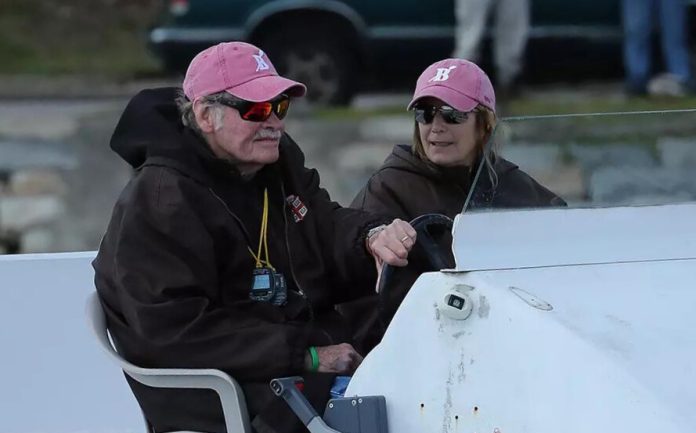
Brown University women’s rowing coaches John and Phoebe Murphy have announced their retirement after the most successful 40 years in collegiate rowing.

“Being part of Brown women’s crew has been a huge part of our lives, but the time has come to retire and give others a chance to lead this incredible team,” said the Murphys in a joint statement.

“We will miss the great racing and all the exceptional people we raced with and against who made our job so exciting. While we will certainly look back, we also look forward to cheering on future teams’ accomplishments. We will miss the boathouse, the Seekonk [River], and most of all, all the Brown students we have had the privilege to coach. We are always rooting for you.”

The Murphys led Brown to every NCAA championship regatta in the 27-year history of the event, winning seven times. Before the inception of NCAA rowing in 1997, Brown women coached by the Murphys won three IRA championships and the first women’s “Triple Crown” of Eastern Sprints, IRA, and the National Collegiate Rowing Championship.

The Murphys coached Brown to nine Ivy League championships and 10 Eastern Sprints varsity-eight wins. In 2022, Brown became the first American crew to win the Island Challenge Cup at Henley Royal Regatta.

Between them, the married couple has been awarded more than 30 different coach-of-the-year honors and is already in the Collegiate Rowing Coaches Association Hall of Fame.

“John and Phoebe Murphy have had a profound impact on our campus and in the world of rowing,” said M. Grace Calhoun, Brown ‘92, the Mencoff Vice President for Athletics and Recreation.

“Their sporting achievements are extraordinary but they pale in comparison to their invaluable role in shaping generations of student-athletes who have graduated to lives of meaning and success. We could not be more grateful for their leadership.”

Calhoun announced that John Murphy will be succeeded as head coach by Tessa Gobbo, a 2013 Brown graduate who captained the women’s crew and has been an assistant coach at Brown for the past three years.

While she was a Brown assistant coach, the Murphys  helped her become the best coach she could be, Gobbo said, including imparting this hallmark axiom: “Keep it simple and don’t talk too much.”

Gobbo, a 2016 Olympic champion in the women’s eight, won two gold and one silver medal at the three World Rowing Championships leading up to the Rio Games. She credits the intense, pumped-up training environment cultivated by the Murphys for lighting her competitive fire.

She also cites John Murphy’s invaluable advice when she attended her first U.S. National Team selection camp: “Be low maintenance.” This year, Gobbo was inducted into the Brown Athletic Hall of Fame.

Friendly and kind, the Murphys cultivated crews that were fiercely competitive and often beat larger rivals with more highly regarded recruits through the intensity with which they typically raced.

While neither secretive nor aloof, they had “a powerful sense of their own mission” as coaches, said Paul Cooke, the coach of Brown’s men’s rowing team for the past 24 years.

Cooke arrived in Providence as a freshman oarsman two years after John Murphy began coaching the Brown women.

Commitment is the word Cooke used to describe the Murphys, recalling that they were “always aware of being competitive.”

“It’s hard to imagine Brown rowing without them,” Cooke said.

John Murphy began his coaching career in 1976 at Cal-Berkeley, where he was responsible for the men’s novice crew. He continued to coach the men’s novice crew in 1977 and 1978.

In 1979-80, Murphy coached the women’s novice crew at the University of Washington, with the first novice eight going undefeated in the Pac-10 and claiming the West Coast Championship.

Murphy returned to Cal-Berkeley as the novice women’s coach in 1980, winning the Pac-10 West Coast Championship in 1981. His 1982 and 1983 crews were silver-medal winners, and his 1984 crew was the undefeated national champion.

John and Phoebe have three children—Jack ‘11, Penelope, and the late Patrick D. Murphy—and they reside in Barrington, R.I.

In addition to the NCAA championships, their IRA and Cincinnati championship results, combined with second- and third-place NCAA finishes, mean that over the past 40 years, more often than not, Brown University, under the coaching of John and Phoebe Murphy, concluded the season on the national- championship podium.

Although they bear the official title of the Brown University Loyalty Chair for Women’s Rowing John Murphy and Gratitude Chair Associate Head Coach Phoebe Murphy, they are known universally, and will be remembered always, as Brown women’s rowing.