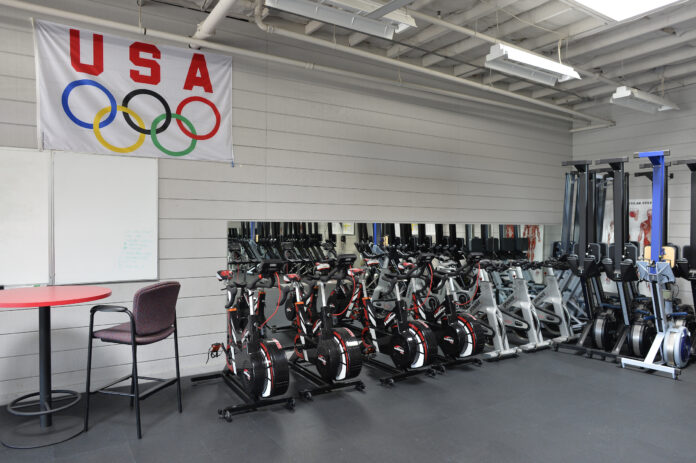
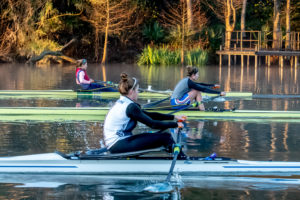
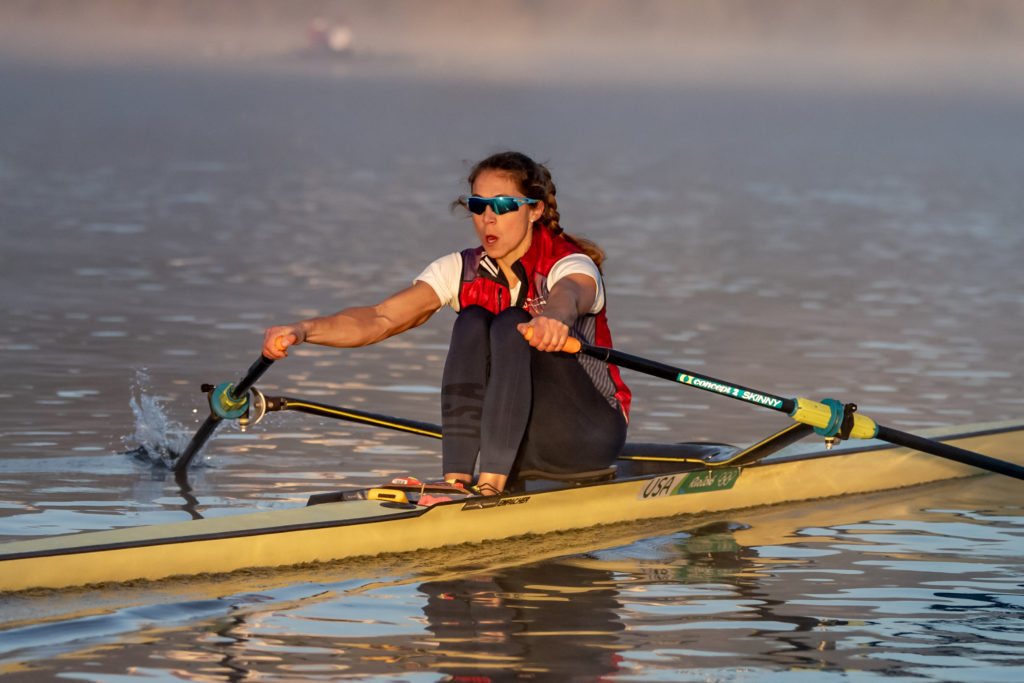
San Diego, California. USA. Gym Equipment stored in the corner. Boathouse, Lower Otay Reservoir, rowing training course, Olympic Committee's ARCO Training Center in Chula Vista California. {TIME{ {DOW} 11/04/2013 [Mandatory Credit. Peter Spurrier/Intersport Images] ..
STAFF REPORTS PHOTO BY PETER SPURRIER
The United States Olympic and Paralympic Committee late Monday called for the postponement of the 2020 Tokyo Olympics after more than 1,700 U.S. athletes responded to a survey and expressed concerns about severe impacts to their ability to train.
Most athletes said they favored postponing the Games over canceling them, according to a statement released by the USPOC.
The statement was issued by United States’ Olympic and Paralympic Committee Chair Susanne Lyons and USOC CEO Sarah Hirshland:
“Our most important conclusion from this broad athlete response is that even if the current significant health concerns could be alleviated by late summer, the enormous disruptions to the training environment, doping controls and qualification process can’t be overcome in a satisfactory manner.”
“To that end, it’s more clear than ever that the path toward postponement is the most promising, and we encourage the IOC to take all needed steps to ensure the Games can be conducted under safe and fair conditions for all competitors,” Lyons and Hirshland said.
The USOC’s statement follows a USA Today report regarding the potential postponement of the Games.
According to the Monday afternoon report, International Olympic Committee member Dick Pound told USA Today that the 2020 Olympics will be postponed. While there is no official announcement being made by the IOC, Pound said the decision to postpone has been made and the details are being worked out.
“On the basis of the information the IOC has, postponement has been decided,” Pound said in a phone interview. “The parameters going forward have not been determined, but the Games are not going to start on July 24, that much I know.”
Pound said he believes the IOC will announce its next steps soon.
“It will come in stages,” he said. “We will postpone this and begin to deal with all the ramifications of moving this, which are immense.”
Contacted by the newspaper for an official IOC response, spokesperson Mark Adams said, “It is the right of every IOC member to interpret the decision of the IOC executive board which was announced yesterday.”
In that announcement, IOC President Thomas Bach said he was going to take the next four weeks to decide the fate of the Tokyo Olympics, scheduled to begin July 24. Bach has ruled out canceling the Games.
Later Monday afternoon, IOC vice president and executive board member Anita DeFrantz commented to the Los Angeles Times that Pound’s comments that the Olympics had been postponed, “might be a bit premature.”
However, what is not in question is the fact that both Canada and Australia have announced that they will not send teams to Tokyo.
While the International Olympic
Committee continues to hold off making a decision about running the Tokyo
Olympics as scheduled, both the Canadian and Australian Olympic Committees have
announced they would not send teams this summer, ballooning the pressure to
cancel or postpone the Games.
The Australian and Canadian actions came after IOC updated their position Sunday that they are now considering plans to postpone that 2020 Olympics, but are not considering cancellation, and would announce their decision in the next four weeks.
Addressing the media following the IOC’s
decision Australian Olympic Committee CEO Matt Carroll said the AOC executives
met Monday morning and considered the impact the spread of Covid-19 is having
on travel and daily life in Australia and concluded that they would not send
athletes to Tokyo this summer, but to plan instead for the Games to be held
next summer.
“The decision is they unanimously agree that the Australian Olympic Team could not be assembled in the changes circumstance both here and abroad. We have to look after not just athletes and officials, but also their families who were feeling concerned for their sons and their daughters,” Carroll said.
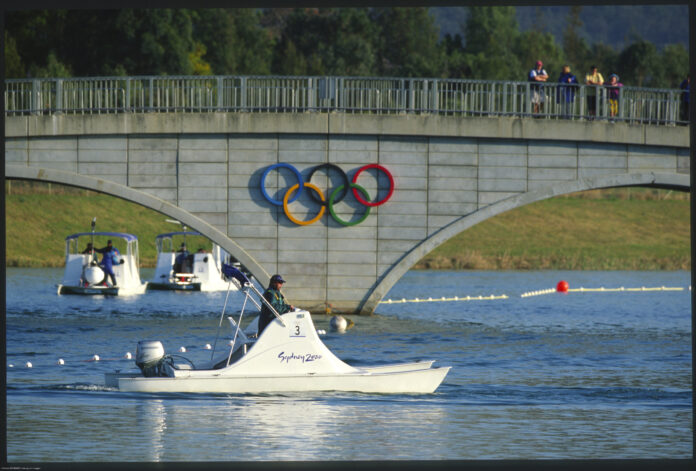
The 2000 Summer Olympic’s rowing venue in Sydney, Australia. Photo by Peter Spurrier.
“So, with these travel restrictions in place by the government, which we respect and understand, we understand the need to keep Australians safe, combined with the decision of the International Olympic Committee, we decided to plan for the hosting of the Games in 2021 in Tokyo.”
In announcing their decision, the Canadian Olympic and Paralympic committees released their decision that Canada would not send athletes to Tokyo this summer and called for the postponement until 2021 in the following statement:
“The Canadian Olympic Committee (COC) and Canadian Paralympic Committee (CPC), backed by their Athletes’ Commissions, National Sports Organizations and the Government of Canada, have made the difficult decision to not send Canadian teams to the Olympic and Paralympic Games in the summer of 2020.
“The Canadian Olympic Committee (COC) and
Canadian Paralympic Committee (CPC), backed by their Athletes’ Commissions,
National Sports Organizations and the Government of Canada, have made the
difficult decision to not send Canadian teams to the Olympic and Paralympic
Games in the summer of 2020.
The COC and CPC urgently call on the
International Olympic Committee (IOC), and the International Paralympic
Committee (IPC) and the World Health Organization (WHO) to postpone the Games
for one year and we offer them our full support in helping navigate all the
complexities that rescheduling the Games will bring. While we recognize the
inherent complexities around a postponement, nothing is more important than the
health and safety of our athletes and the world community.
This is not solely about athlete health – it
is about public health. With COVID-19 and the associated risks, it is not safe
for our athletes, and the health and safety of their families and the broader
Canadian community for athletes to continue training towards these Games. In
fact, it runs counter to the public health advice which we urge all Canadians
to follow.”
“The progress reflected in today’s IOC update to the global athlete community is an important step in providing clarity, but our athlete community continues to face enormous ambiguity surrounding the 2020 Games in Tokyo. Having spent countless hours communicating with IOC leadership, our peers around the world, our NGBs and the athletes we serve, we know the difficult obstacles ahead and we are all appreciative that the IOC has heard our concerns and needs, and is working to address them as quickly as possible.
“Every day counts. We remain steadfast in our recommendation that Team USA athletes continue to heed the advice of public health officials and prioritize their health and wellness over all else. At the same time we are eager to continue to explore alternatives to ensure all athletes have a robust and fulfilling Olympic and Paralympic experience, regardless of when that can safely occur. Together we will find solutions that keep the spirit of the Games alive.”
The America Collegiate Rowing Association became the final collegiate championship to officially cancel its regatta, completing the total loss of the spring season.
ACRA had been the lone holdout and had stated earlier in the week that it would hold off making a decision about the May 22-24 regatta until April 13th, but Friday afternoon it went ahead and made the call to eliminate the regatta.
The decision was made in the following statement released by ACRA:
“With the continued significant progression of the COVID-19 situation, and with the vast majority of ACRA Programs shifting from “suspended” to “canceled”, particularly in the past several days – the decision has been made to cancel the 2020 ACRA National Championships.
“There have not yet been any decisions regarding the future impact on eligibility, including Novice classification. The Board will look to provide this information for you all be early next week.
“The ACRA Board wishes all of our members and communities to stay safe and healthy at this time. Please continue to follow the instructions of all government officials regarding safety measures. This is a new and challenging experience for all of us, particularly difficult for our student-athletes that have worked hard all season. We ask the rowing community to continue supporting each other. We look forward to the next season of competition and returning back to the water when it is safe to do so.”
Thursday after the 82nd Dad Vail Regatta, one of the last major 2020 spring collegiate regattas not to be lost to the COVID-19 pandemic, officially canceled and left ARCA the lone holdout.
Regatta officials announced Thursday afternoon that it had given up trying to wait to see if they could hold out for the scheduled May event, and officially canceled the regatta. A statement posted to the regatta website reads:
“In order to comply with government recommendations, the Dad Vail Regatta Organizing Committee has decided to cancel staging the 82nd Annual Dad Vail Regatta, on Friday, May 8, and Saturday, May 9, 2020. As previously reported, DVROC adheres to all emergency health protocols adopted and announced by Federal, State and City authorities.
“The Dad Vail Regatta Organizing Committee members have been
collaborating daily regarding the 2020 Regatta and we are aware and
disappointed that the current health crisis has caused many traditional Dad
Vail schools to cancel their season, and the impact that has had on coaches and
athletes.”
USRowing announced Tuesday afternoon the postponement of the 2020 U.S. Olympic & Paralympic Team Trials – Rowing II scheduled for April 13-18 at Nathan Benderson Park in Sarasota-Bradenton, Florida.
According to the announcement, “USRowing’s Olympic & Paralympic Selection Procedures are currently under review and will be amended. The USRowing High Performance Committee is holding discussions regarding a new timeline and events that may be possible for the selection of the team. As soon as this is finalized, the information will be passed along.”
The USRowing announcement comes after statements from the International Olympic Committee and World Rowing taking the position that the Olympics will go on as planned. For now.
The IOC released its statement as an official communique even as national sports federations around the world work on contingency plans for the distribution of the remaining roster spots after qualification events were canceled last week.
Shortly after issuing the communique, World Rowing followed with an update. In their statement, FISA said it was working closely with the IOC and is continuing to study solutions to filling the remaining spots that were supposed to be filled through qualification regattas that were canceled Saturday.
“In particular reference to qualification for the Olympic Games, FISA recognises the IOCs duty to take a coordinated approach in addressing the modifications to the qualification systems of all sports caused by event cancellations due to the COVID-19 outbreak. The importance of giving as much certainty to our athletes and the rowing community as soon as possible is a high priority. FISA has been in daily contact with the IOC and aims to finalise changes to the qualification system with the IOC as soon as possible ahead of the planned IOC deadline of early April. The next communication will be posted as soon as agreement is reached with the IOC Executive Board,” the FISA statement read.
STORY BY ED MORAN IMAGES BY ED MORAN AND PETER SPURRIER
Emily Schmieg and Mary Nabel were just finishing up their afternoon row at Nathan Benderson Park and putting equipment away when they got the news that the U.S. Olympic Trials they were in Sarasota for was not going to happen.
It was not the same kind of news that collegiate and high school athletes were getting all last week when that their spring rowing season had been wiped out. Still, Schmieg and Nabel were ready to start racing and were hoping to win the chance to go to Switzerland in May and get a shot at qualifying the lightweight women’s double for the U.S. and race in the 2020 Olympics in Tokyo.
Those hopes were eliminated late Saturday when FISA announced the cancellation of the Final Olympic Qualification Regatta and World Cup III. An announcement about how the remaining spots on the Olympic schedule will be filled is expected from FISA Tuesday.
In a statement published about the cancellations, FISA said:
“FISA is now in close contact with the International Olympic Committee (IOC) and the International Paralympic Committee (IPC) in order to finalize proposals regarding the changes to the respective qualification systems. The next communication will take place on Tuesday, 17 March 2020.
“FISA understands the tremendous disruption to athletes, crews and all training opportunities as a result of the global pandemic situation and is taking these decisions in the very best and most principled way we can under the circumstances. Due to the unprecedented containment measures being taken by governments around the world, we recognize that Member Federations’ planning for Tokyo 2020 qualification, travel, accommodation and equipment movement is changing on a daily basis. FISA is working to gather information, analyze carefully, make decisions and communicate promptly.”
The postponement, and Saturday’s FISA announcement, threw a huge wrench in Schmieg and Nabel’s plans and depending what decisions follow from FISA, they could be facing the possibility that their only chance to race in the Olympics was just eliminated.
Needless to say, Schmieg and Nabel were stunned, and are now training in a hold and hope pattern.
“We had just finished up our second row of the day,” Schmieg said. “We were getting all prepared for our final race pace piece prior to the start of trials, and got the email from (USRowing high performance director Matt Imes.) It felt a bit like the rug was pulled out from under us. But we understood. We were disappointed, but understood where they were coming from.
“A majority of this is outside of our control, so we’re trying not to put too much focus on those things that we can’t control and go back to what we can control, which is to be physically and mentally prepared to race, and hope that everything works out and there is still a race to be had.
“We really don’t know what is going to happen yet,” Schmieg said. “I think a lot of it hinges on what FISA reports (Tuesday) and then sort of playing our cards on what USRowing might do.”
Training in Austin, Texas for Olympic selection. Photo by Ed Moran.
What USRowing might do will depend on what FISA announces.
“With FISA’s announcement today of cancelation of qualifiers we will wait for the update on the 17th to see how they address the remaining spots,” Imes said. “I’m sure like everyone else we’re disappointed our athletes won’t get a chance to compete to qualify, but at the same time we understand the extremely difficult decisions organizations are being forced to make at this time.”
During an interview Saturday morning prior to the FISA announcement, Imes said USRowing was in the process of developing a number of scenarios. Imes said there is still time to hold two separate U.S. trials. The spring schedule was designed to allow athletes to compete for spots in the singles and lightweight doubles, and give athletes who did not win time to regroup and race in team boats at a second U.S. Trials if they choose to.
The second trials is scheduled to take place in Sarasota April 13-18. But what will happen can just not be safely predicted. There is still time to hold two trials. Or the two trials could be condensed into one, which would force athletes to choose which boat to compete in.
“We still have the ability to execute the overall selection process and plan that we had in place, just bumping it back in time, if need be,” Imes said. “We have to wait for FISA to determine what is viable for them before we can to determine what the pathway is for some of these boats.”
Imes said contingency plans are being developed and that USRowing will be prepared to decide based on what FISA decides and hope to announce those plans within days.
“We would like to be able to say in the next two weeks what part of the selection process is going to be viable or not. But we will have a plan B and a Plan C. ” Imes said what happens will also depend on how the coronavirus containment efforts are proceeding.
“We don’t know where we are going to be in two weeks,” he said. “Nobody in the U.S. knows where we are going to be in two weeks, and whether we will be in a better situation or a worse situation.
“From a selection standpoint, we can add a date, we can break out a date, but we don’t know yet what we are going to do. These are uncharted waters and we want to be thoughtful, we want to be able to put a plan in place. Will it be what we had hoped for a year ago, no it will be a little bit more condensed and compressed,” he said.
Of the Olympic class crews that will be contested at trials, only the women’s single and women’s double are already qualified. Elimination of the final qualification regatta will not impact those crews – but it would force some athletes to choose which boat to race in should the two trials be compacted into one.
Entered in the postponed trials were 28 women’s single, including 2019 world bronze medalist Kara Kohler and 2016 Olympic silver medalist Gevvie Stone.
Gevvie Stone training in Austin, Texas. Photo by Ed Moran.
Stone and 2019 partner Cicely Madden qualified the women’s double for the U.S. last summer. While Stone was hoping to regain her spot as the U.S. women’s single, she would still have the option to race in the double at the second trials.
“That thought has crossed my mind,” Stone said. “They might hold the events together and I don’t know what I will do. My dad (and coach, Gregg Stone) is driving the trailer back to Boston, so obviously, he would be a critical part of that decision.”
Stone said the postponement news took her and her Cambridge Boat Club teammates entered to race in the women’s single by complete surprise. None of the three Boston based scullers, including Stone, Madden and Emily Kallfelz, had even made it to Florida, and were just traveling to Sarasota from their winter training camp in Austin, Texas.
“We weren’t even down there,” Stone said. “We landed in Charlotte for a layover and we all got a text from my dad when we turned on our phones that said trials postponed, reroute your flights to Boston. So, we did.
“We were surprised, because it seemed like the day before things were going to go as planned. We were disappointed for sure because we were ready and tapered and we were all really excited to get on the racecourse.
“Our immediate reactions are selfish because I was thinking about how much I had put in and how much I wanted to race,” she said. “And knowing that the college season was canceled because we were training so closely with (University of Texas women) most recently, and I had trained around Radcliffe in the fall, and being in touch with the Princeton coaches, we were all really excited to get on the line and have a race and channel all that college energy. We would do it for them, and then we got the same news they got.”
Saturday afternoon, Stone, Madden and Kallfelz were running stadium steps and doing off water training while waiting for the boat trailer to get back to Boston, so they can resume on water training on the Charles River.
“So, we go back to training. That’s all we can do at this point. But part of my heartbreak (Friday) was that (trials) could have been my last regatta in the single,” she said. It would be nice to race the single again because it’s a part of me and I love it, and I would love to have that opportunity. The fact that trials are separate this year was a gift, and I was really excited for that chance.”
So, Stone and all the other athletes hoping to race in the Olympics are waiting to see what will happen to the rest of their spring and summer racing plans.
That is not the case for collegiate and some high school athletes, who had their season canceled last week. One of the first to cancel was the Ivy League, which opted to end all winter and spring sports and close campuses on Tuesday.
When the news that the season was done, Yale head coach Steve Gladstone said the first thought was the decision was an overreaction, but as the scope of the pandemic in the U.S. became clearer, that thought became understanding.
“The first thought was that we understand that this is a serious situation, and that they would close the schools,” Gladstone said.
Yale Craig W. Johnson ’68 head coach of heavyweight crew Steve Gladstone. Photo by Peter Spurrier.
“But we thought, well, maybe they will allow us to train and compete. And then, within hours, it became clear that the situation was unfolding quickly, and the gravity of the situation was becoming more and more clear. Everybody understood that the decision was the right decision to make.
“At first we didn’t realize the magnitude of the situation, the virus, then after that became clear, almost immediately there was just a profound sense of sadness that this racing season was gone. All of these things were digested fairly quickly and the guys were there to support each other before they went their separate ways.”
Some of Yale athletes had plans to compete for their national teams, but, “I don’t think anybody knows what their plans are because nobody knows what these various clubs, national teams, and so forth, will be doing. So that’s up in the air. I think we’ll know much more about the rowing and what the options are probably in two to three weeks. But right now, it’s about getting back home and stabilizing.
In attempting to ease the impact of the loss of the winter and spring seasons, the NCAA is extending athlete eligibility for one season. Gladstone said he was happy to see the NCAA make that move and is waiting to see if the Ivy League will do the same.
Still, he pointed out that some seniors have plans they could not forgo for another semester at school and rowing.
“Some seniors, probably a majority of them, have commitments for next year, work commitments, or graduate school commitments for next year and would not be able to take advantage of the season of eligibility that would be granted. Maybe some will decide to take that, but until the Ivy deans and president make it clear how they will deal with this, we certainly won’t know,” Gladstone said.
At the University of Washington in Seattle, which has been at the forefront of the outbreak and has experienced one of the highest death rates in the country, head coach Yasmin Farooq, said she was grateful for the NCAA decision.
Washington was one of the first universities to shift to virtual classes. But while all athletic facilities have been closed and the season wiped out, Washington is hoping that the athletes can return to some form of a practice schedule.
“We are fortunate to have an athletics department that is just so in touch with student-athletes. They are just so sensitive and aware have been trying to make sure everyone gets the information they need to get as soon as possible.
“We are kind of on the front line of this here, and we’ve been in it for a bit. I’m grateful that the NCAA had the wisdom to within 24 hours of canceling the season to grant that blanket waiver and extend eligibility. That was the right thing to do.
“And I think as tough as it is for everyone to lose the season, to have a response that quickly in that regard. Because that was the thought going through many senior’s minds. And so for them not have to wait and see if it’s even a possibility, the extension gives them that option if they want it,” she said.
On the junior and club level, some impacted organizations that have elected to close and lost plans to hold events are adjusting, and hoping to find ways to continue. In Boston, CRI closed their doors for 30 days, but are moving forward to a virtual youth erg event. Closing the club would have eliminated the Youth Erg Trials International event CRI had planned to host Friday, April 3 at the Reggie Lewis Track and Athletic Center in Roxbury Crossing.
Yesterday CRI, announced plans to make the event virtual.
“As you may know, many organizations including CRI and the Reggie Lewis Track and Athletic Center have taken measures to protect and care for their communities. CRI is closed until March 30th and The Reggie Lewis Center is limiting large external groups,” wrote CRI Director of Development Shawn Cotes in announcing the decision.
Dr. Gevvie Stone training in Austin in 2020. Photo by Ed Moran.
Updated March 13, 2:41 p.m. EST
PHOTO AND STORY BY ED MORAN
USRowing announced Friday that Olympic Trials I are postponed and that all national team events have been suspended for 30 days. Shortly after the USRowing announcement, the Intercollegiate Rowing Association voted to cancel the 118th IRA National Championship Regatta and Eastern Sprints in addition to the USRowing collegiate series.
Friday’s decisions all but decimated whatever remained of the spring championship schedule and brings into question what USRowing will do for Olympic selection. Olympic Trials II has been scheduled for April13-18 in Sarasota and the final Olympic qualification regatta is due to take place in May.
In making their announcement USRowing said, “With the information, we have today, in consultation with the USOPC and new information from local health officials, USRowing has made the decision to postpone next week’s 2020 U.S. Olympic Team Trials – Rowing I in Sarasota, Fla., and will not run a National Team event for the next 30 days.
“We understand the difficulties of making this announcement at this time and the disruption it puts on the athletes currently preparing for the event in Sarasota. Over the next several days, USRowing, the USRowing High-Performance Committee and other invested parties will be discussing next steps as it relates to the selection procedures and process. USRowing will include feedback from athletes as we look at the process going forward. FISA will be making its next announcement regarding international events and the Olympic qualification process on March 17. USRowing will use this information in its planning,” USRowing stated.
Minutes after the USRowing action was made public the cancelations of the IRA and Men’s and Women’s Eastern Sprints along with the USRowing Collegiate series was announced.
IRA Commissioner Gary Caldwell said following the association’s announcement that the number of schools that have canceled their winter and spring sports schedules made the decision impossible to avoid.
“The cascade of schools and conferences deciding that it was in the best interest of their student athletes to cancel their participation made it impossible to move forward. There are significantly more important issues that these schools are confronting, and society is confronting in general than whether we are going to run specific sporting events or not,” Caldwell said.
Friday’s actions have followed a week of cancelations that have all but eliminated the entire spring racing season.
Late Thursday, NCAA President Mark Emmert and the Board of Governors canceled all remaining winter and spring NCAA championships. The announcement comes just a day after the Ivy League eliminated all spring sports following today’s announcements that the Patriot League, Pac-12 and Philadelphia Scholastic Rowing Association have all made cancelations. The San Diego Crew Classic followed later Thursday afternoon with the announcement that its regatta had too, been canceled. All but the PSRA have suspended their sports schedule for the rest of the spring.
In making its announcement, the PSRA said that they were canceling Manny Flicks 1-4 due to directives from the Philadelphia Mayor but the 5th Flick and City Championship are still on schedule. The PSRA is also considering adding a 6th Flick according to their statement.
On the afternoon of March 12, 2020, Philadelphia Mayor Kenney announced that beginning immediately all events with over 1,000 people are banned in the City of Philadelphia for 30 days due to the outbreak of the Coronavirus. This goes through Easter and includes Flicks 2, 3 and 4.
The 2020 NCAA Women’s Rowing Championship was due to held in Oak Ridge, Tennessee, May 29-31.
“This decision is based on the evolving COVID-19 public health threat, our ability to ensure the events do not contribute to spread of the pandemic, and the impracticality of hosting such events at any time during this academic year given ongoing decisions by other entities,” according to a statement from the NCAA.
The cancelations have been following rapidly developing actions to curtail exposure to the virus in the sports world that began with the NBA suspending its schedule. The NHL, Major League Soccer both announced that they were suspending play, while Major League Baseball announced a temporary halt to spring training.
News that the Ivy League shut down the spring season followed a similar decision announced Tuesday by the New England Small College Athletic Conference that it has canceled all their conference sports and championship events. The Patriot League also announced its decision to cancel all spring practices and competitions followed by the Pac-12 canceling all of their scheduled spring sports and championships including the Husky Open.
The NESPAC schools include Amherst College, Bates College, Bowdoin College, Colby College, Connecticut College, Hamilton College, Middlebury College, Trinity College, Tufts University, Wesleyan University and Williams College.
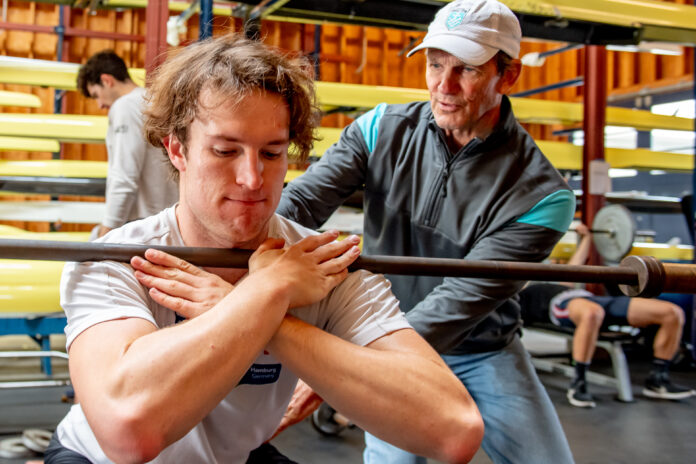
Tim McLaren assists with weightlifting at the United States Olympic Training Center in Oakland, California. Photo by Ed Moran.
STORY AND IMAGES BY ED MORAN
Most mornings in Oakland, California these days, Tim McLaren can be found at the wheel of a coaching launch, quietly following one or two crews of U.S. national team athletes training in pairs and working on the tiny details of their rowing skills.
McLaren is mostly quiet, while keenly attentive to what the athletes in front of him are doing. He speaks infrequently – and in short sentences – to make suggestions or ask for adjustments from the athletes. He teaches while they are still rowing, and during the times the crews are stopped to turn around at the top or bottom of the Oakland Estuary, where the U.S. men’s team training center is located.
His attention to the details of each athletes’ stroke – where they place their blades in the water, how they apply pressure against the oars, how they finish their stroke, to how they match up together as they move, even making suggestions for rigging adjustments, is something McLaren is known to do particularly well.
It’s a skill he developed as Australian Olympic sculler during a career that saw him win a silver medal in the quad at the 1984 Games in Los Angeles, and one that he later built on during 14 years as director and head coach of the University of Technology Rowing Club in Sydney, Australia, where he helped develop 30 Olympians over three cycles.
His reputation as a small boat coach, as a teacher, really, is the reason he was asked in 2007 to come to the United States and help establish California Rowing Club, and then later, in 2008, to take over the U.S. men’s national team when Mike Teti finished his first run as the U.S. head men’s coach to become the head coach at the University of California.
With Teti shifting away from international coaching, and the U.S. under pressure after the 2008 Games to increase the men’s medal potential in small boats during the London Olympic cycle, McLaren (who coached a CRC men’s double to a trials win and a place in Beijing, 2008), seemed the right fit for the job.
He stayed in the position during the entire 2012 London cycle but went back to Australia right after. He led the U.S. to a bronze medal in the men’s four, but the 2012 Olympics – despite having men’s crews in six of the eight men’s events, with the four medaling and the eight finishing fourth – was considered a poor showing for the U.S. men.
So, as he told USRowing he was going to do months before the 2012 Games even began, McLaren went home to resume coaching in Australia. It seemed that his time coaching in the U.S. was finished for good.
That changed again when Teti returned to the U.S. team and needed someone to help him begin to rebuild the U.S. men’s program, establish a new U.S. Men’s National Team Training Center in Oakland, and push toward medal performances over the next several Olympic cycles.
McLaren was the first person Teti thought of when the subject of an assistant coach came up. “Basically, when [U.S. high-performance director Matt Imes] said who can we get, I said Tim. He’s the first person that came to my mind,” Teti recalled.
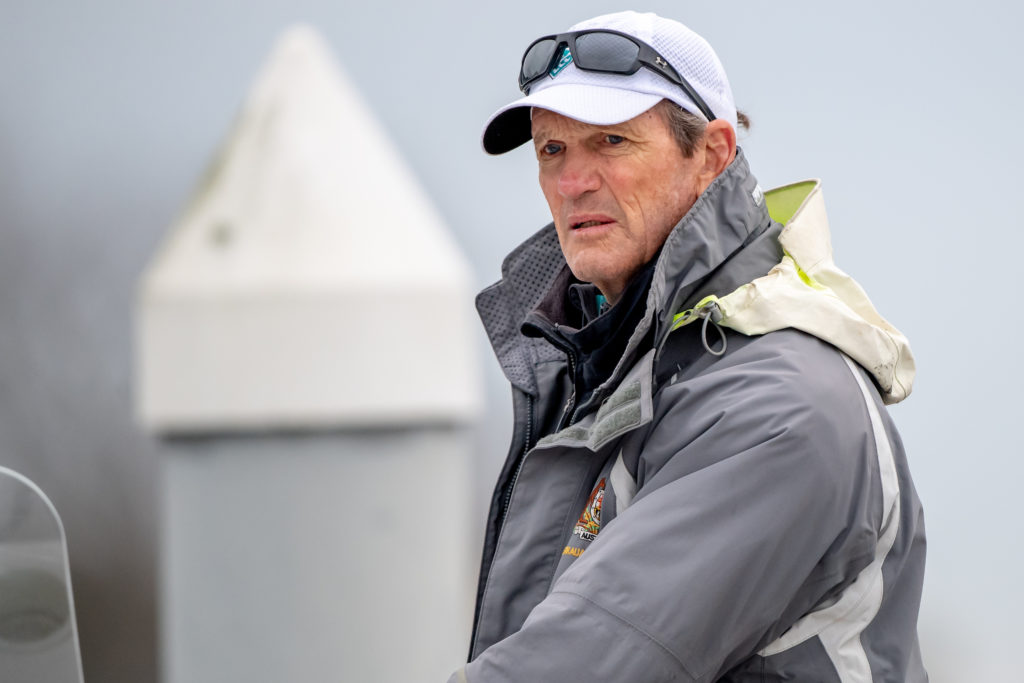
Tim McLaren. Photo by Ed Moran.
Teti said needed an experienced international coach with a solid performance record, and he needed someone who could teach.
“I felt the makeup of the team was going to be young. We knew what we wanted to do, we wanted to really focus on the undergraduates in the under-23 program knowing that if we are trying to win multiple medals, obviously at least one of them is going be in small boats. Tim has small boat expertise, and has won medals in small boats across the board – sculling, sweep, women, lightweights, everything.”
Teti said he knew that after spending six years in the U.S. and moving his family back and forth from Australia and Oakland, he was going to have to let McLaren set a situation in place that he could live with.
“So, I called him and said don’t answer me yet, but think of a scenario that could work, a scenario that could work for you,” Teti said. “I told him, I don’t want you to move your whole family over here now – again – but think of how we could come up with a scenario that could work. And he did,” Teti said.
“We basically let Tim make the schedule that would work for him, and he did and it also worked really well for us as well.”
Today, McLaren maintains his home Australia and comes to Oakland during the periods he is most needed to help develop the training group. He was in Oakland during part of last fall, went home and came back in January for the lead up to the National Selection Regatta, and then he went back again for March, and to attend his daughter’s wedding.
As far as Teti is concerned, McLaren’s impact developing the team has been evident, particularly for NSR pairs racing.
“All the pairs were pretty good,” Teti said. “There was some separation in the finals, but for the most part, the whole time there, in the heats and semis, of all these boats racing we had eight or nine boats within two and a half seconds. And, the times were fast. We had a bunch of boats going under six-thirty in a slight headwind or neutral conditions so, that’s good. It’s encouraging.”
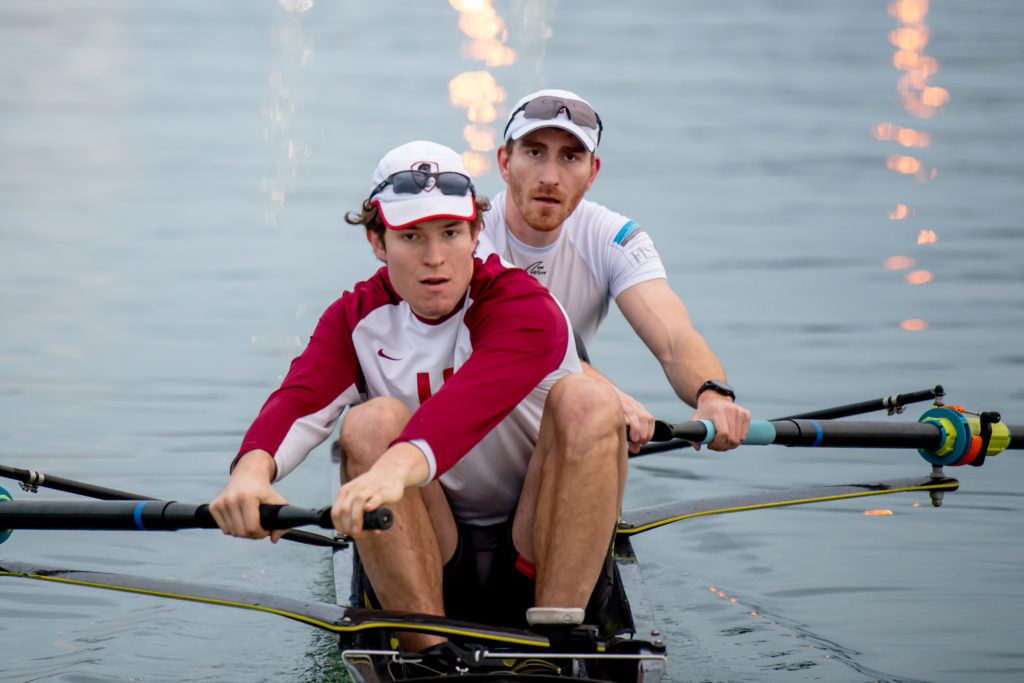
Tim McLaren on the coaching launch. Photo by Ed Moran.
Lessons Learned – Experience Gained
When Teti reached out to McLaren to join him, it didn’t take McLaren long to warm to the invitation. “Mike rang me up last year and I came out a few times before last Christmas, and then the New Year, and I stayed through worlds.”
What he found after being back was that his first stint in the U.S., coaching in the national team system has helped him develop a better understanding of how rowing in the U.S. works. McLaren was used to coaching in Australia, where athletes could work for most of the year, train either in groups, or on their own, and then come together as a team to prepare for international racing.
During the 2012 cycle, McLaren was coaching in a system where athletes were training full time and living mostly at the Olympic Training Center in Chula Vista, and not working. Teti is trying to change that in Oakland, where athletes are encouraged to find jobs and start careers. That environment, along with a better understanding of how the American system works, appealed to McLaren.
“It’s more familiar to me,” he said. “And, I feel a bit wiser. I think I understand things a little better having worked here. Looking back to when I was here, it gives me a good sort of perspective to have another chance to have an impact. I know Mike pretty well and, yea, I’m just here to help out. It’s a good a fit,” he said.
“So, I sort of cut back on my work back home and came over,” he said. “This is a pretty even group. You have some experienced guys that did the last campaign, but not that many. It’s a good group and the aim is to hang onto the guys for another cycle. It’s a solid group and I think we can do well.”
During the times the athletes are training in team boats, Teti takes the group and runs the practices. But for rowing in the smaller boats, overall boat-moving skills development, and off-water weight training, McLaren is the go-to.
“Once you jump out of the eight and into the smaller boats, there is a bit of learning going on,” McLaren said. Mike has done a good job, and [Washington coach Michael Callahan], has done a great job working with the under-23 kids, and creating some energy there,” McLaren said.
Teti said feels the same about working with McLaren:
“I have a tremendous amount of respect for Tim, I always have. I think he’s a great coach, not a good coach, he’s a great coach,” Teti said. “He’s an Olympic medalist himself. He’s coached crews to lots of medals in the Olympics and world championships, I mean lots, and I think he brings a component that I probably don’t have.
“He’s very good technically. He has a tremendous amount of knowledge, he has great patience with small boats, and he has a great demeanor. And, Tim is a good person. If my kid turns out like Tim, I’d be a really happy dad. He cares. He puts the time in, and cares, with almost with no ego.”
McLaren said he likes what he’s doing and hopes that he can help Teti establish his goals of developing athletes that will stay in the U.S. system beyond a single Olympic cycle.
“It’s good to work with Mike. It’s good to work as a team,” McLaren said. “I think I do that well. So, he’s running the show and I’m just assisting as best I can, and it’s enjoyable. I think the guys are doing well and they’re improving.
“I don’t like being away from home that much, even though I’ve done a lot of it. But it’s what you do, and I’m trying to manage that as best I can. I enjoy coming here. I have good memories of America, and my kids went to school here.
“I enjoy the people here in America. It’s been a good experience for me regardless of what things are beyond my knowledge. And I enjoy the (Olympic) campaign. It’s always a tough campaign when you’re on your own,” he said.
“But this will be good. We’ve qualified a couple of boats and we think we can give it a bit of a shake and it will be fun.”