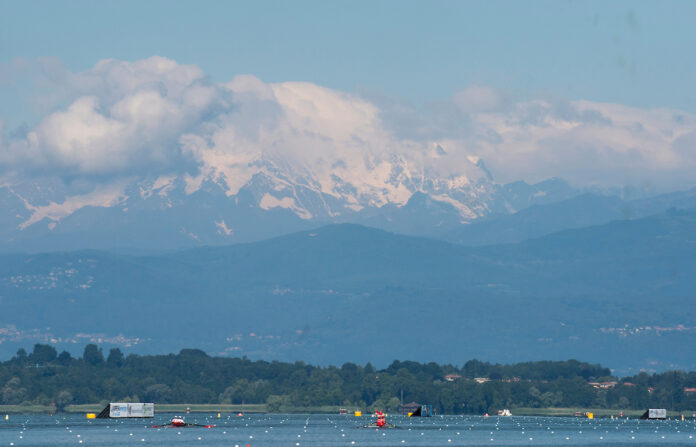
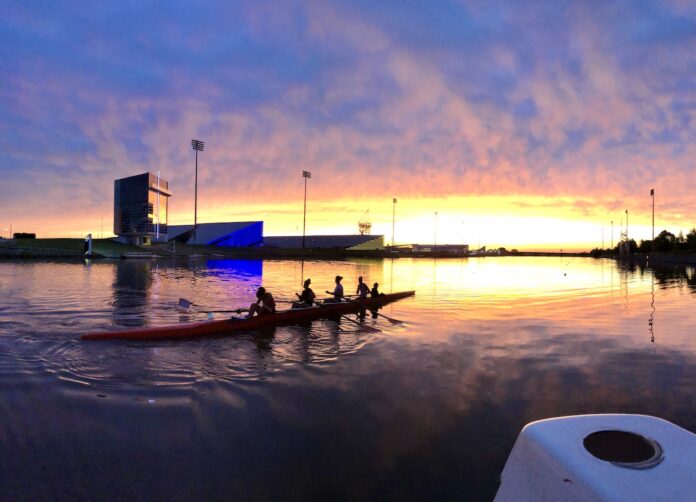
View of the Varese rowing course. Photo by Peter Spurrier.
BY LUKE REYNOLDS PHOTO BY PETER SPURRIER
The FISA Executive Committee along with the Italian Rowing Federation and the cities of Sabaudia, Varese, and Gavirate canceled World Rowing Cups I and II, the European Olympic and Paralympic Qualification Regatta April 27-29 in Varese, and the Final Paralympic Qualification Regatta May 8-10 in Gavirate, Italy according to a press release published March 10.
USRowing followed with a statement regarding the cancellations and how they would affect their selection process.
“These cancelations affect USRowing selection processes in a couple of ways,” Brett Johnson, senior director of programs and communications, said in an emailed statement. “On the Paralympic side, the Gavirate Regatta was to serve as an opportunity for athletes to classify and compete in an international event… On the Olympic side, USRowing Selection Procedures allowed for the winning W2- from the NSR to compete at World Rowing Cup II and III, with an opportunity to earn nomination to the Olympic team through placement at either world cup. With the cancelation of World Rowing Cup II, USRowing will look at the current procedure and determine what adjustments need to be made for the selection process. An update on this should be made by March 13.”
FISA is working with the International Olympic Committee along with national Olympic Committees to determine the proper course for relocating and rescheduling qualification opportunities for the Tokyo 2020 Olympic and Paralympic Games.
FISA will provide updated information by March 17.
Mike Teti and Tim McLaren keep a small whiteboard fixed to the wall inside the men’s national team coaches’ office at the T. Gary Rogers Rowing Center. They use it the same way most coaches do—to list the day’s workouts, athlete names, and boating assignments.
But Teti and McLaren also use it to track the progress of the 24 athletes that have come to Oakland, Calif., from all over the country to train with the best young oarsmen the U.S. has to offer in this 2020 Olympic cycle. Many of those named on the board rowed at the last worlds in Linz, Austria, where the U.S. qualified two men’s boats—the four and the eight—from the A final. There were no medals, but it was the first time the U.S. had qualified both crews from the A final since the Olympic schedule was overhauled in 1996.
More important, it is the first time in two Olympic cycles the U.S. men qualified the eight directly from the world championships, avoiding the grueling and unsettling effort of having to win a spot at the Games at the last-chance qualifier in Lucerne, Switzerland. Today, that means every athlete training in Oakland is in contention for one of the 13 guaranteed seats in the coming 2020 Olympic Games.
The group is a mix of veterans and first-year senior national teamers, and its size and depth is something Teti envisioned when he agreed to a plan to finish out his time as the men’s head coach at the University of California in 2018 and take over the men’s national team program for the second time in his long coaching career, a stint that included leading the U.S. to the last two medals for the U.S. in the eight—a 2008 bronze and a 2004 gold. Teti also guided U.S. men’s crews at the 1996 and 2000 Olympics.
Teti had nine names on the whiteboard for his first selection camp in 2017. The list increased and filled out in 2018 and 2019, but it did not include the names of a handful of some of the top collegiate athletes in the country. It could have, but Teti had another idea. He wanted to engage the top collegiate athletes, and their coaches, in the idea of developing senior national team athletes at the under-23 level, getting them in fast crews, and creating a farm system where young rowers with potential could experience rowing internationally, and win.
Teti wanted those young athletes in this camp, but not until they could come in and make an impact in the drive to Tokyo. So, he left them in the capable hands of Washington coach Mike Callahan, who headed up the under-23 crews, and took them to race in World Rowing Cup regattas, and under-23 world championships, where they won medals the last two summers.
It was the roadmap Teti had in mind when he agreed to take the U.S. job again. And it was a plan that is about more than just this Olympics. That is, of course, the initial goal, but it is also about creating a situation where the U.S. can build a deep pool of young talent, give them reason to stay in the game for more than a single cycle, and possibly place up to six men’s crews in the finals of the 2028 Olympics in Los Angeles
And it is intensely focused on finding and developing the best young American collegiate athletes in the U.S. “To me, the model for success, really, is having a solid two boats for under-23 every year. We need to have an eight and a four for under-23s, and make it attractive so that kids will want to do it,” Teti said. “And we need to keep doing that, every year.”
Mike Teti at the United States Olympic Training Center in Oakland, California. Photo by Ed Moran.
“If you look at this group now, I don’t think we have any game-changers, however, I do think we have about 24 guys that are legitimate international caliber athletes that are capable of winning medals for us at some point. Hopefully this year. And by making that investment in under-23 boats the past two years, that group has made a huge infusion into our group now and really enhanced them.”
Teti stays away from making bold predictions about any possible Tokyo result. But he knows that this group is on the hook for at least one medal, of some color. He will say what he hopes he and McLaren are building is a system that could create an era of success for the U.S., changing the direction the men’s sweep team has taken over the last two Olympic cycles.
“I’m trying to think more long-term,” he said. “Instead of going [in four-year cycles], we’re trying to think in terms of 10-year blocks. We can’t afford to lose out on our top collegiate athletes. They’ve got to be in the pipeline. We have to give them incentive to stay with the sport.”
For Teti, building a sustainable pipeline meant relocating the training center to a major metropolitan area, someplace where just graduated American collegiate athletes don’t have to necessarily choose between rowing on the national team, or working and starting a career, or family life.
Here, athletes are encouraged to find jobs, to earn money, and to notch out a place where they can live, work, and train while they develop and wait their turn to move up on the whiteboard and make an Olympic or world championship team.
The Oakland and San Francisco area is an expensive place to live, he said, but it is also a place with ample opportunity for college graduates. “There are a lot of things to do here, and you have these great opportunities for guys with degrees. We have guys working commercial real estate, we have engineers, we have private equity, we have all that stuff.”
Tokyo First
While Teti is focused on the long-term goals of building a base of rowers that will stay in the sport long enough to develop into “game-changers,” he also knows that the 2020 Games are what the rowing world is watching, particularly in the U.S. after the last two Olympics.
One medal from the men’s sweep program out of the last two cycles—a bronze from the four in London— was disruptive and discouraging. And after both cycles, USRowing blew up the plan, vowing to have a better result.
After failing to earn a bid in the 2011 qualifying world championship, Teti was asked to coach the eight during the collegiate off-season and led the boat to a qualification spot in the Lucerne regatta but finished fourth at the London Olympics.
Tim McLaren, then the overall head coach, was not returned to the team and USRowing started over, redefining what crews would be supported, focusing limited resources on the crews that have been traditional U.S. strengths.
Two young coaches, Bryan Volpenhein, who stroked the 2004 gold medal eight, was hired to coach the four, and Luke McGee, who made a name for himself as a young assistant coach at Brown and Washington, was hired to coach the eight. The four qualified. The eight did not, and again had to go through the final Olympic qualifier to gain a bid to Rio in 2016, where it once more finished fourth.
McGee was let go following Rio, and a task force was formed by the national governing body to seek answers. Teti, historically the most successful men’s coach in U.S. history, served on that task force and eventually agreed to return. He coached the men’s team to a silver medal in the 2017 world championships, with Volpenhein at his side to assist.
He returned to Cal for another collegiate season, and then took over full-time at the U.S. helm after the 2018 IRA championships. Volpenhein left and took a job as the head coach of the San Diego Rowing Club, and is now in his first year as the head men’s coach at the University of Pennsylvania.
Building the Pipeline
When he agreed to return to the U.S. national team, Teti sought to build a pool of athletes that could be successful for years to come, and he wanted it to be a system that would develop and retain athletes, one he said he hopes “can succeed no matter who the coach is.”
Teti believes the work is progressing, and points to the under-23 athletes who just joined the center this fall as an example and some of the young names on his whiteboard are of athletes who are in serious contention to make this Olympic team.
“Now, we don’t just have these under-23 guys that joined us, we have under-23 medalists. We have under-23 gold medalists. And so now, maybe a couple of these guys are ready to help us this year. [Alex] Miklasevich is a perfect example.
“He was a young guy two years ago, and you know what, maybe the under-23 eight was a little beyond him, so he went in the coxed four. And they won. And when he came back last year, he was just a different guy. And then he wins another medal (silver in the eight) and he comes to us, and he’s just a different guy. And there are five or six here now just like him.”
Miklasevich, who rowed at Brown University, knows now what Teti is talking about. But he might not have his first year in the under-23 camp.
“It was a really good learning experience the first summer,” Miklasevich said. “I sort of went into that year thinking I was going to be in the eight, and that was just how it was going to be. I knew I was going to be one of the stronger guys on the team.
“But I really struggled through selection and ended up making the coxed four. We ended up winning, which was awesome. The next year I made sure I really came in with the understanding that the coaches don’t know how good I am, and I needed to prove it every chance I got instead of assuming I was going to get a spot. It definitely humbled me, and I realized I had a lot to learn.”
Coming back for the 2019 under-23 campaign, Miklasevich was determined to leave nothing to chance.
“I needed to prove myself every chance I got. Initially, I was sort of separated from what seemed like the breakaway group, and then we did a test on the erg, and I made sure I left it all on there. Whenever I got a chance, I didn’t let go of it.”
Today, Miklasevich lives every day with the thought that there is something left to prove. “This has been a little bit different because you don’t really have many chances to prove yourself on the erg, so if you have a bad practice, you have to just fix it on the water the next day. You can’t come in and have a big erg and everything will be alright. I definitely have some confidence with my past results, but going in with a silver at under-23, I felt like we could have done a little bit better.
“So now, I feel again that I have a lot to prove. But also, you know you have to step up when you are rowing with guys that have rowed at the Olympics and have been rowing for the past 10 years at least. You have to bring it every day.”
Three of the guys Miklasevich is referring to are Alex Karowski, Mike DiSanto, and Austin Hack, who stroked the eight in Rio.
As Hack sees it, this is the strongest and deepest squad he has rowed with, and with no pressure to select a crew for a last-chance qualification regatta, he is feeling good about this team’s chances.
“I think a lot of the group that we have here now, and I think we definitely should be able to come away with medals. I don’t feel a ton of external pressure about it, but I know that the drive among the guys here is really high for that. I think probably horsepower wise, for our top group of guys, I think we’re probably a couple of seconds ahead of where we were in the last year just in terms of power than the last [Olympic cycle].”
Selection Continues
The athletes that have been gathering in Oakland the last few years are now at the point in the Olympic year where the cuts are about to start happening. The team left for the Chula Vista Olympic training center in late January and were scheduled to be there through the National Selection Regatta at the end of the month.
Only 20 of the Oakland group were selected to go, and when the pairs racing results are in, the pecking order of the remaining 20 will become clearer.
From there, the athletes who will fill the 13 seats will return to Oakland and continue the process until the two crews are selected in June. And when those athletes are picked, and alternates named, finding a place for the pipeline guys is the next step.
Where they go to continue developing toward that distant Olympic podium Teti has in mind is being worked out by McLaren.
“It’s a clear plan,” McLaren said. “Like Mike said, for those that miss out, we say flip the page. This is your schedule. Here’s your regattas. Here’s your training. Here’s your coach. Here’s your expectations. There is always that fallback plan for those people, and you encourage them to keep going.”
McLaren likes to point to the legendary Kiwi pair of Eric Murray and Hamish Bond as an example of the time it can take to develop. Murray rowed in four Olympics, the first two in 2004 and 2008 in the four. His boat finished seventh in 2008 and fifth in 2004. Bond was also in the 2008 four.
“They were favorites in 2008 and came seventh. So, Murray was about to finish his Olympic career with a fifth and a seventh. Just another New Zealand boat. He hung around for four more years and (teamed with Bond in the pair) he went to 2012 and won, then he went four more years and won another one. And now he’s an icon. A legend.
“With two Olympics and two failures, most guys around would quit. But we, too, could be not far away from being significant if we hang in there. And to hang in there, Mike is creating a system where people can work.”
Nothing Will Be Easy
On paper, there is reason to believe the U.S. men’s crews will be in contention. They have been close to medaling the past two world championships, are already qualified and are fortified with new athletes. But the competition will not care about any of that.
Germany, the Netherlands, and Great Britain all medaled ahead of the U.S. last summer. Australia qualified in fourth, and every crew, with just the right race, could have won or medaled. The Lucerne last-chance qualifier will add two more crews that cannot be counted out, among them could be Italy, New Zealand, or Romania.
“I am always aware of what the competition is,” Teti said. “I know that as much as we say we have all this talent, well, what does everyone else have? The German eight is going to be difficult to beat. The four is a super competitive field, the eight is a super competitive field, the pair is a super competitive field, so I mean, it’s going to be hard.
“So what we’re doing is trying to improve every day. Obviously, the goal is to win Olympic medals. I’m more trying to improve daily. We have a lot of interchangeable parts. And that’s because we have more talent, because we made this investment in a younger group.
“We know we are trying to get these boats on the podium this year, that’s what we’re trying to do. And if they’re not, we’re going to be disappointed.”
And beyond Tokyo?
“I would say having four boats on the podium in 2024, and then six boats on the podium in 2028, and four with a realistic chance of winning. Winning. We need to get kids like we are getting now, every year, and we need to keep them,” Teti said.
“There’s the board over there,” he said pointing to the wall next to the door where the whiteboard is fixed. “You can see who all the new guys are. There’s a few that are in college right now that are as good as these guys we have here now. We know that.”
Just a few weeks into the final year of the 2020 Olympic quadrennial, newly named National Rowing Foundation Executive Director Tracy Brown is leading the drive to meet this year’s all-important funding goals with a push to take advantage of a match grant drive begun at the end of last year with an offer from Boston Rowing Federation’s Chuck Pieper.
After an original offer of a match grant of up to $250,000, Pieper told the NRF he believed the grant should be double what he was offering, and challenged the nonprofit and USRowing to find enough additional donors to bring the final match grant offer up to $500,000.
“His comment to us when he made the initial match was that this needs to be bigger, that he was thinking more like $500,000, so that the amount raised toward funding the national team would be more like a million once we had everyone in.”
Brown said enough additional donors were identified to bring the potential match to $500,000, and now the drive is on to raise the amount necessary to take advantage of the offer. Brown, who was officially named the association’s executive director on Dec. 20 after serving as interim director since 2018, said the drive is well under way, but needs to be completed much sooner than the NRF’s normal funding drives, which continue closer to the end of the year.
“It will be a quick effort,” Brown said. “We need to bring this in before the team leaves for the Olympics. A lot of the expenses affiliated with the Olympics are coming in now, with reservations for travel to [World Rowing Cup regattas] and all the other things that have to be funded for this summer. We are in a full-on effort now to find that additional $500,000 so that we can fully fund the match,” Brown said.
According to Brown, the NRF and USRowing already has several donors ready to commit, but said the organization is hoping the match drive will spur new donors from across the community to chip in and help meet the funding goals.
Montclair High School boys’ varsity eight raced to victory at the 2018 SRAA National Championships Regatta. The Scholastic Rowing Association of America hosted 548 entries from 183 schools May 25-26, on the Cooper River in Camden and Pennsauken, N.J. Photo by Sportgraphics.
BY LUKE REYNOLDS PHOTO BY SPORTGRAPHICS
In a release published March 4, USRowing announced the 2020 USRowing National Championships will be moved from Lake Harsha in Bethel, Ohio, to the Cooper River in Camden County, New Jersey. The event will still be held July 14-19.
The decision to move to Camden centered mainly around response from the rowing community according to Brett Johnson, senior director of programs and communications for USRowing.
“During the open comment period for the entry packet in December and through the first couple of weeks of January, we were receiving a lot of feedback from our members regarding the location of the USRowing National Championships,” Johnson said. “We decided to explore the option of moving the regatta in response to that feedback. The Clermont Sports Development Corporation graciously worked with us to help make that happen. Harsha Lake at East Fork State Park is a wonderful venue, and the LOC does an exceptional job of providing our athletes with an outstanding race experience. We look forward to working with them for future national championships.”
USRowing is working with event coordinators to facilitate refunds for those who made travel arrangements to Ohio earlier in the year.
“We are working with our housing partners, HBC Event Services, and the Clermont Sports Development Corporation to make sure that all hotel deposits are refunded,” Johnson said. “We are trying to make the move as seamless as possible.”
Johnson also said USRowing intends on bringing future events to Lake Harsha and will announce information regarding those events later in the year.
According to a March 2 Connect Texas article, the University of Texas Board of Regents approved a $107m plan to expand and improve various athletic facilities throughout the campus as well as the Blanton Museum of Art and the George L. Sanchez Building.
Included in the plans are a “$60-million practice facility for the Texas men’s and women’s basketball teams, and the women’s rowing team,” according to Connect Texas.
The facility will include “basketball courts, rooms for rowing ergometers, strength and conditioning, sports medicine, players’ lounges, meeting rooms, and coach and staff offices,” according to the University of Texas Board of Regents meeting notes from the February 26-27 session.
In addition to the practice facility, the Texas Athletics master plan also includes “modest upgrades at Texas Rowing Center.”
The University of Texas’ women’s rowing program currently rows out of the Texas Rowing Center on Ladybird Lake.
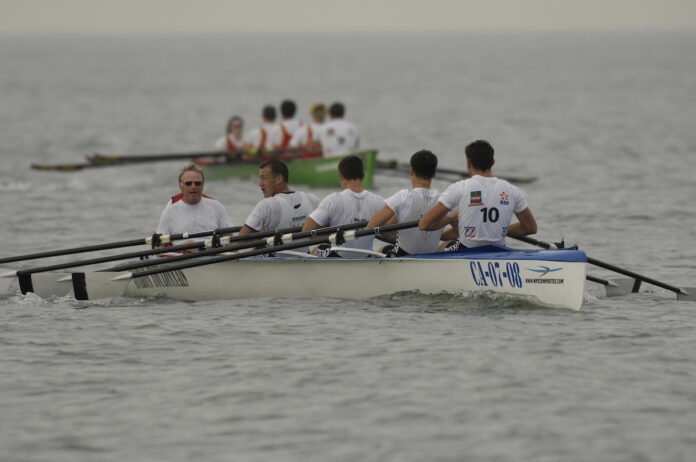
Coastal rowing from the 2006 Coastal Rowing Championships. Photo by Peter Spurrier.
BY ED WINCHESTER PHOTO BY PETER SPURRIER
In December, the IOC announced that the rowing events for the 2022 Youth Olympic Games in Senegal will exclusively feature coastal rowing. The sweeping overhaul, which sees solos, doubles, and a mixed double replacing singles and pairs, is the latest evolution in a fast-changing international rowing landscape and a possible sign of things to come at the senior level. “Coastal rowing is critical to our strategy to expand the sport to new and diverse countries,” said FISA President Jean-Christophe Rolland, who heralded the move as “fantastic news.” The Youth Olympic Games are open to athletes born in 2004 and 2005.
The Oklahoma City Boathouse Foundation announced today in a press release that it has changed its name and logo. The non-profit organization is responsible for expanding the sport of rowing in Oklahoma City and is home to a USRowing National High-Performance Center and U.S. Olympic & Paralympic Training Site.
According to the release, a new name along with a new logo will become the official branding of the organization effective today.
Mike Knopp, executive director of the freshly-named RIVERSPORT Foundation said the new name better fits the mission and vision of the organization.
“While the original name served us well, we believe RIVERSPORT Foundation ties all of our initiatives – adventures, athletics, our Olympic initiatives – together seamlessly and straightforward way,” Knopp said in the release. “It’s just easier to understand who we are and what we do.”
The RIVERSPORT Foundation’s youth rowing and kayaking programs are currently known as OKC RIVERSPORT. Their names will not change.
“It won’t change anything for me as a coach,” Maddie Wullschelger, head coach of the OKC RIVERSPORT women’s varsity rowing crew, said. “We are trying to encompass all we are doing down here at RIVERSPORT under one name.”
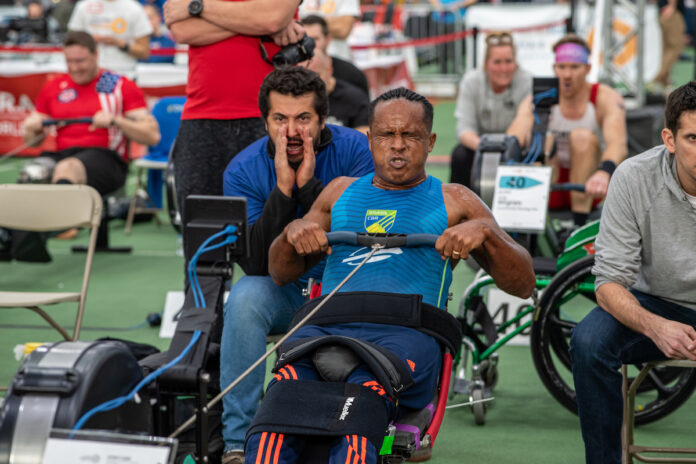
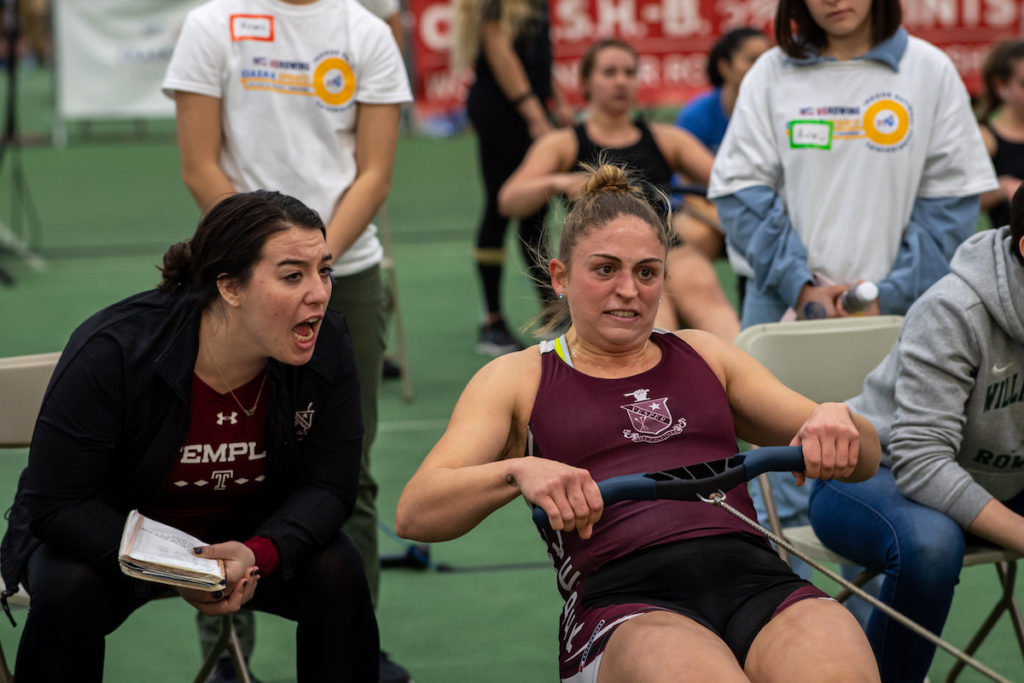
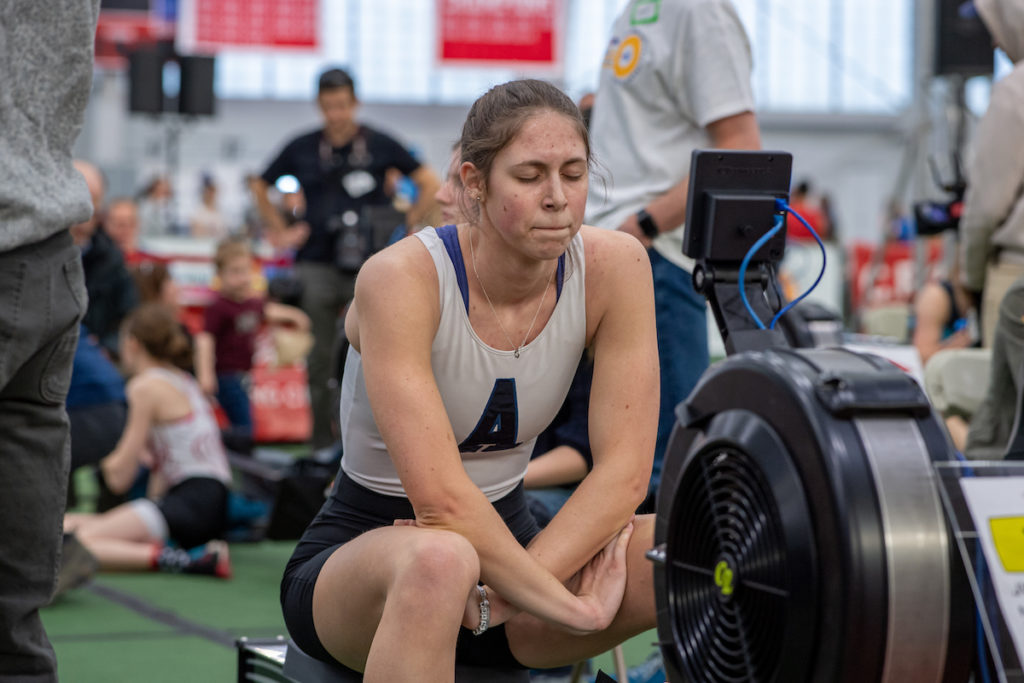
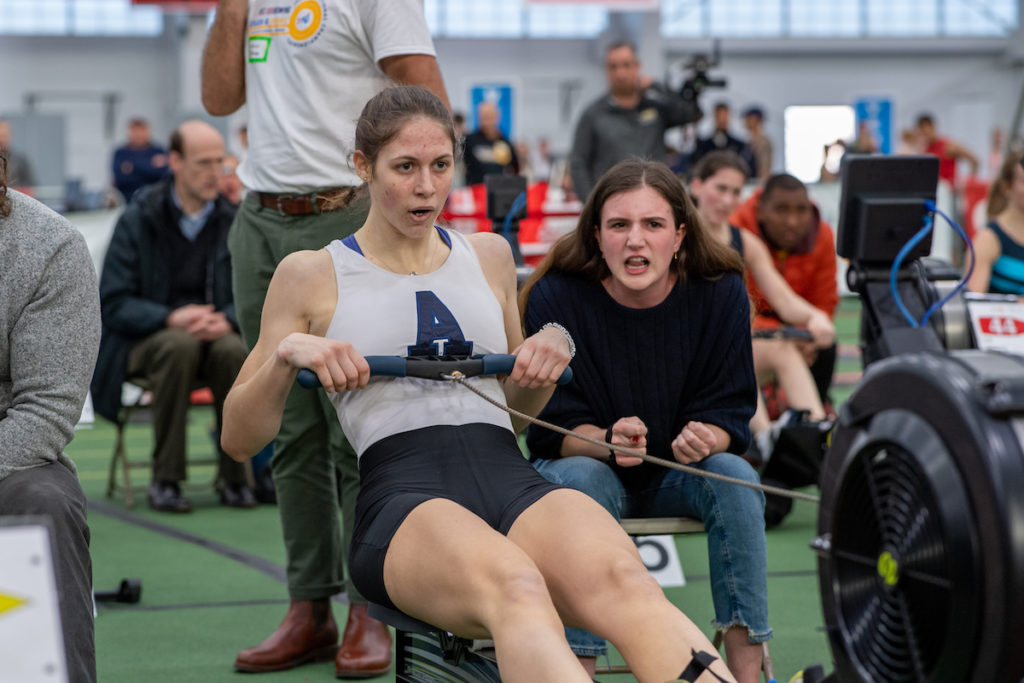
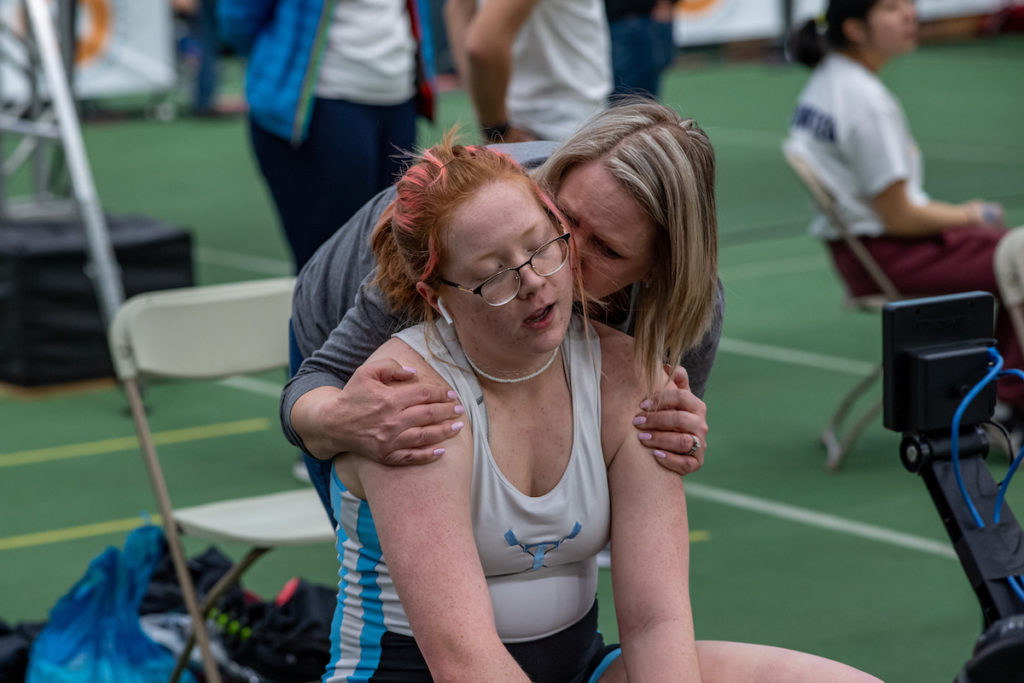
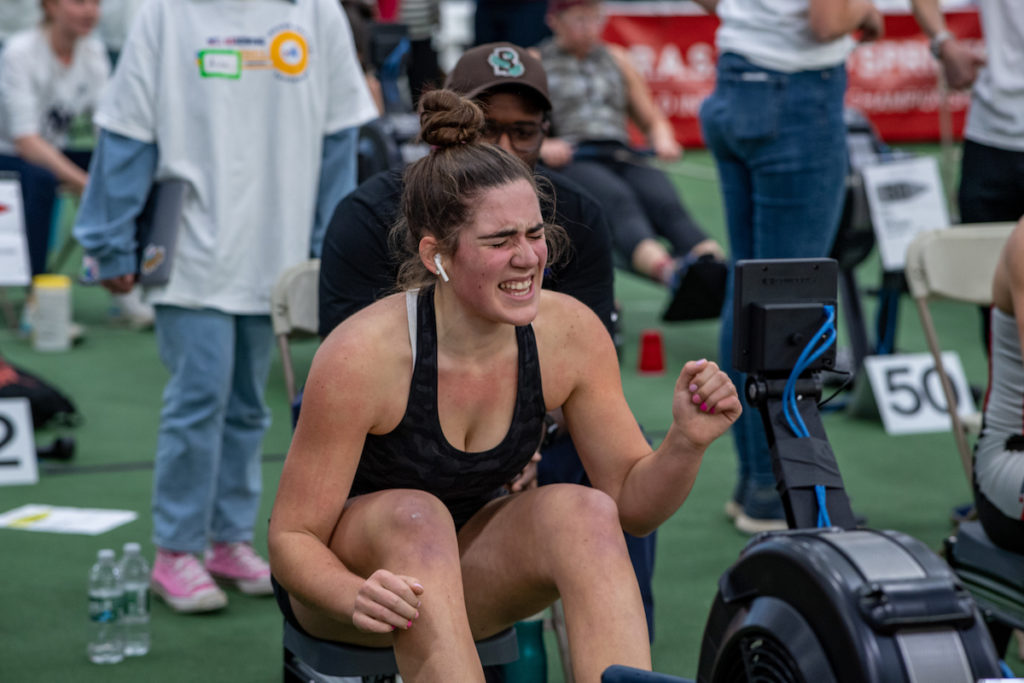
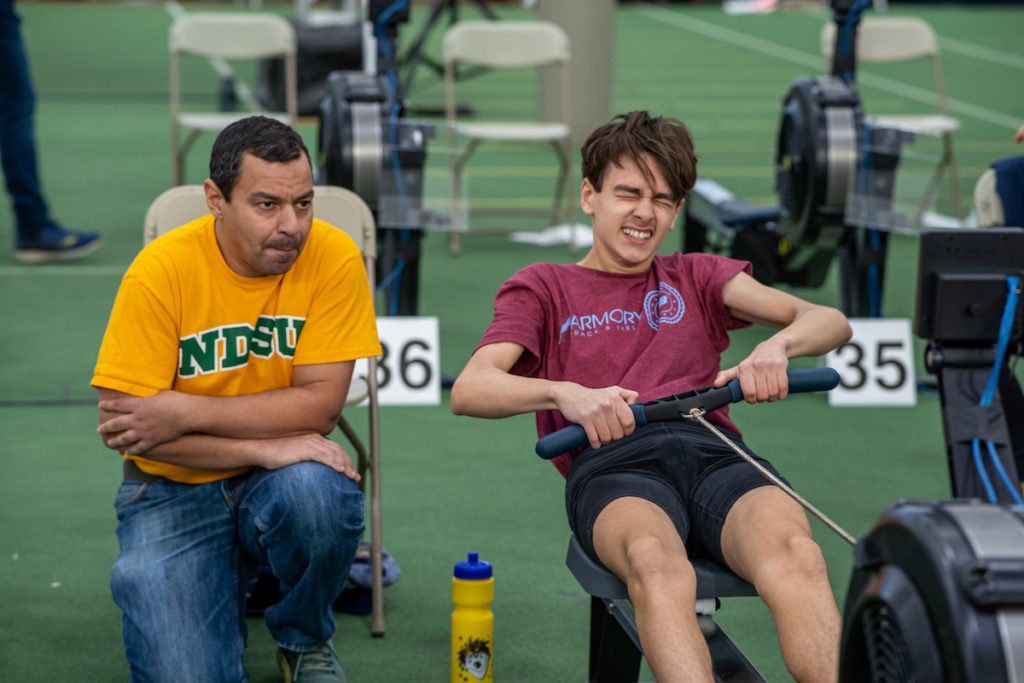
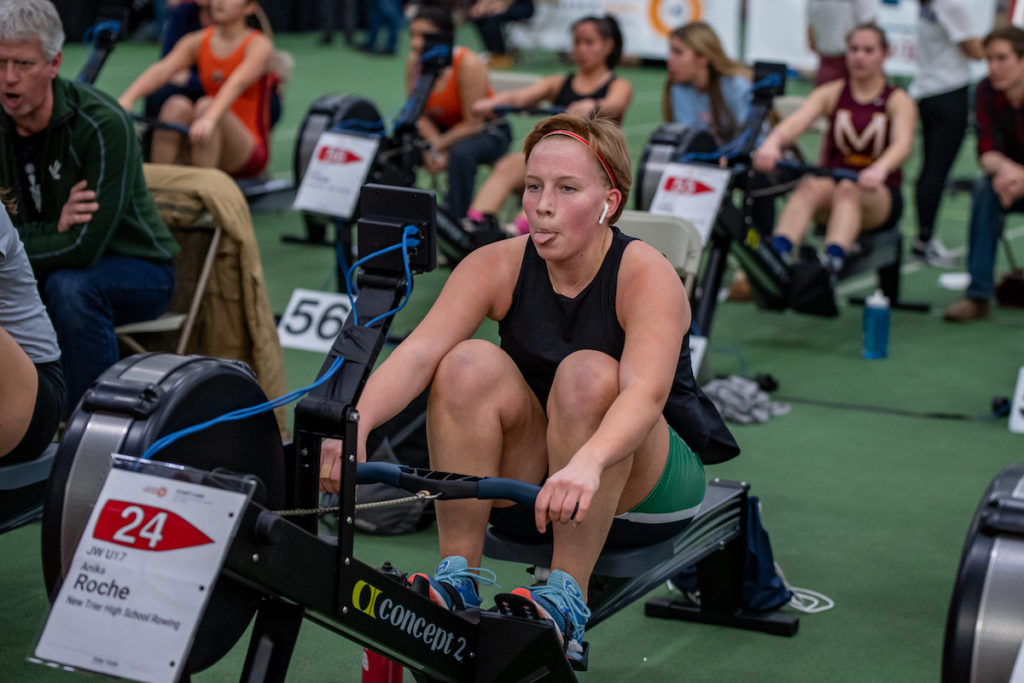
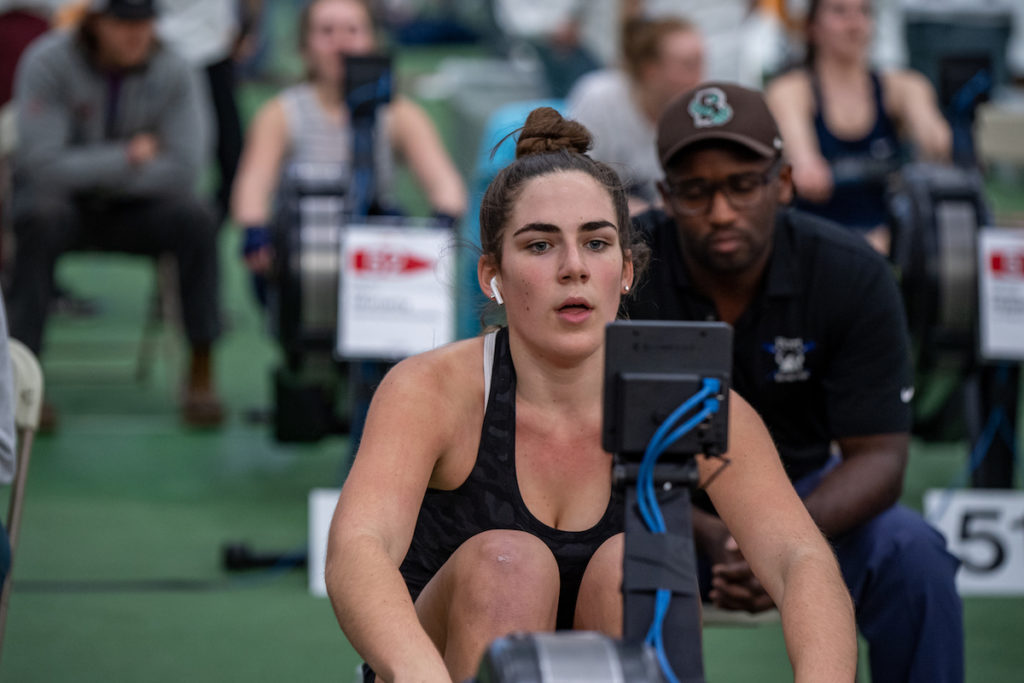
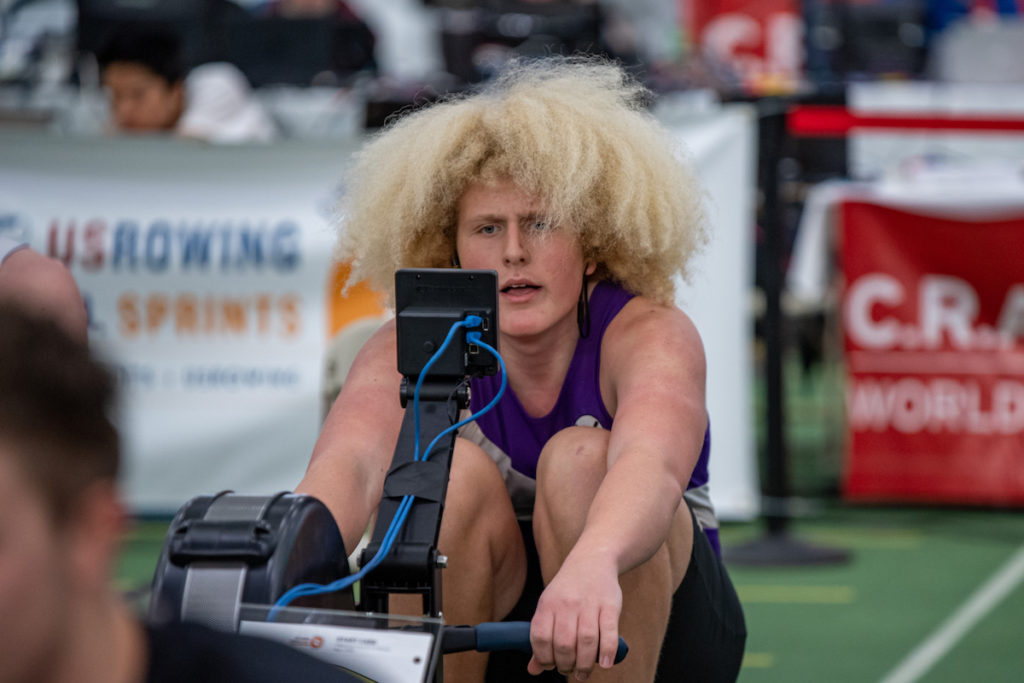
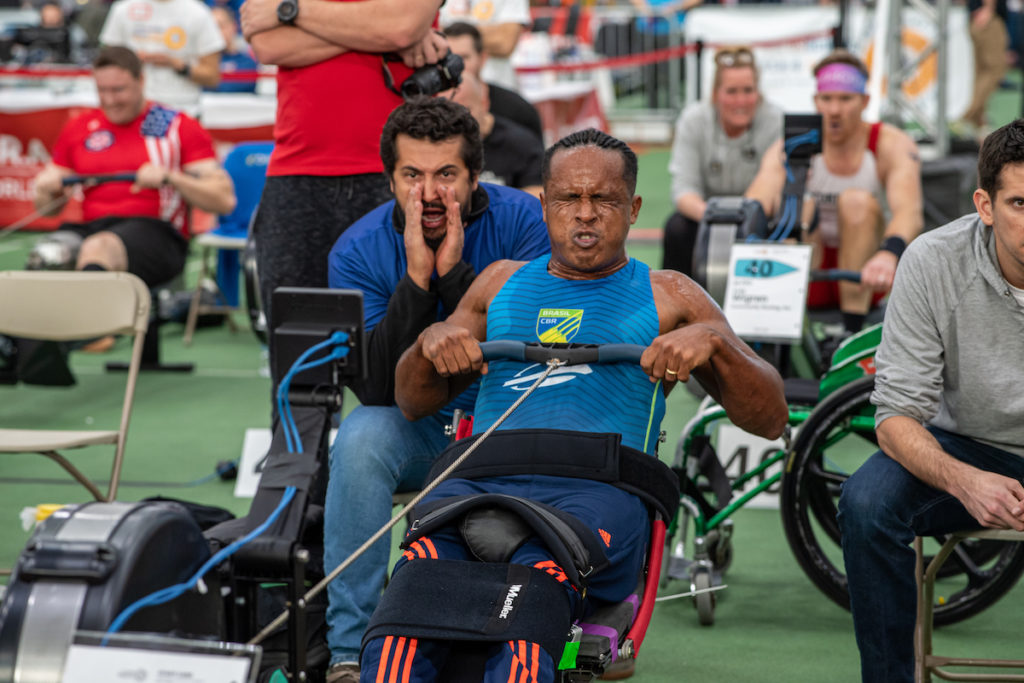
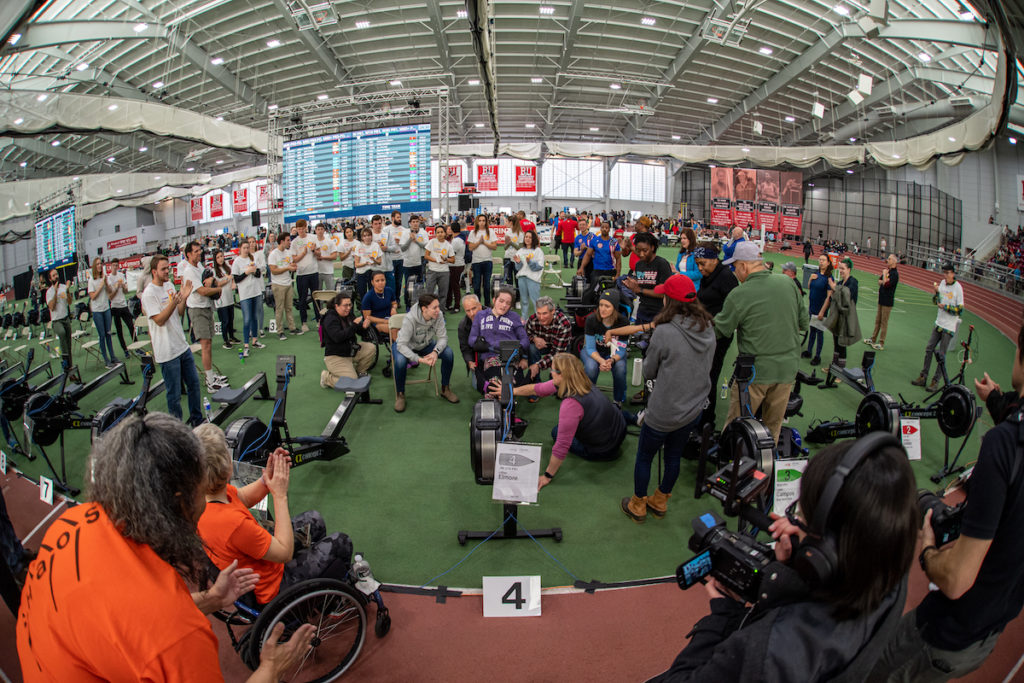
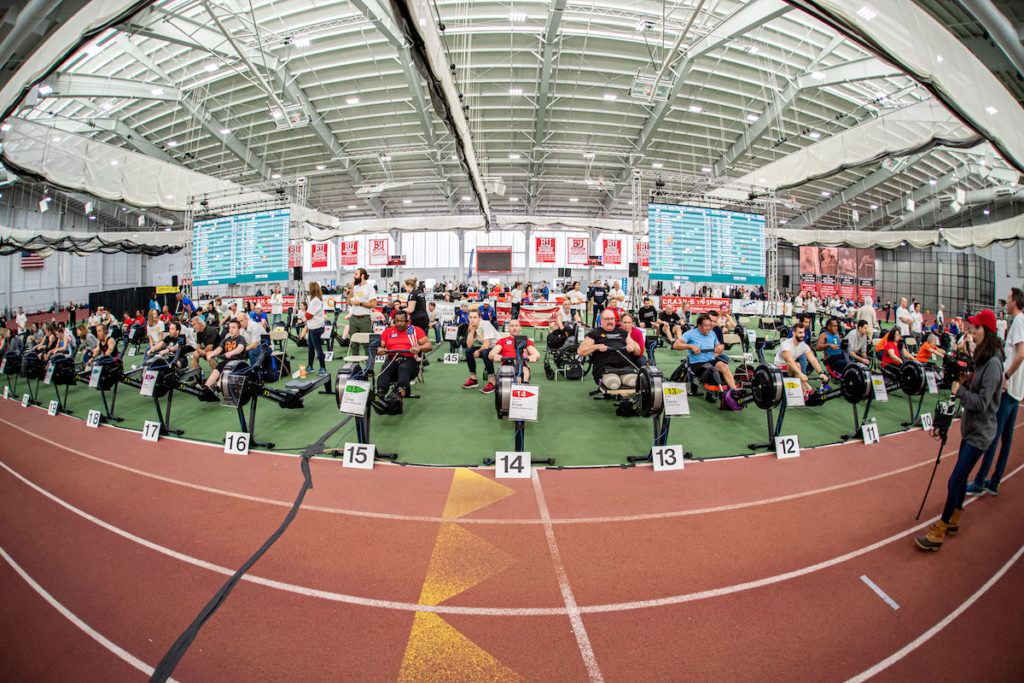
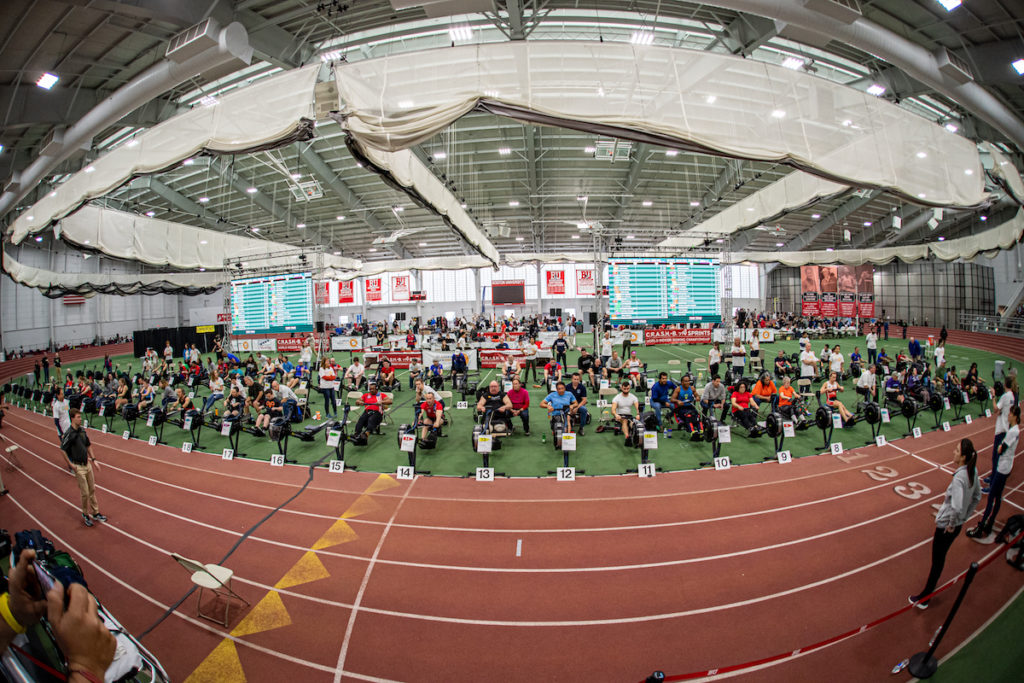
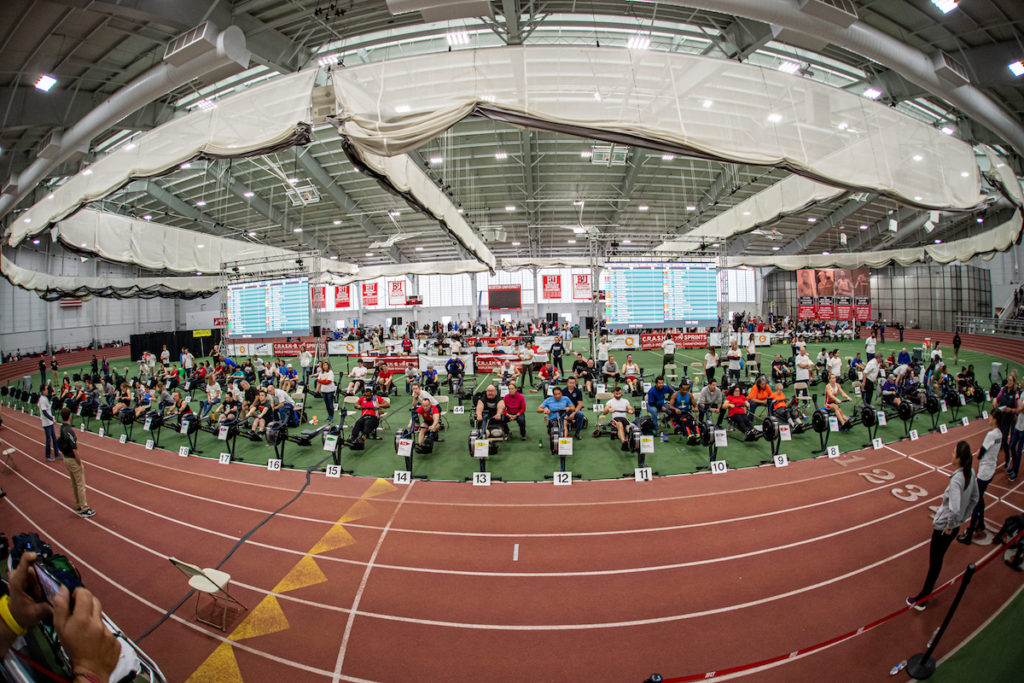
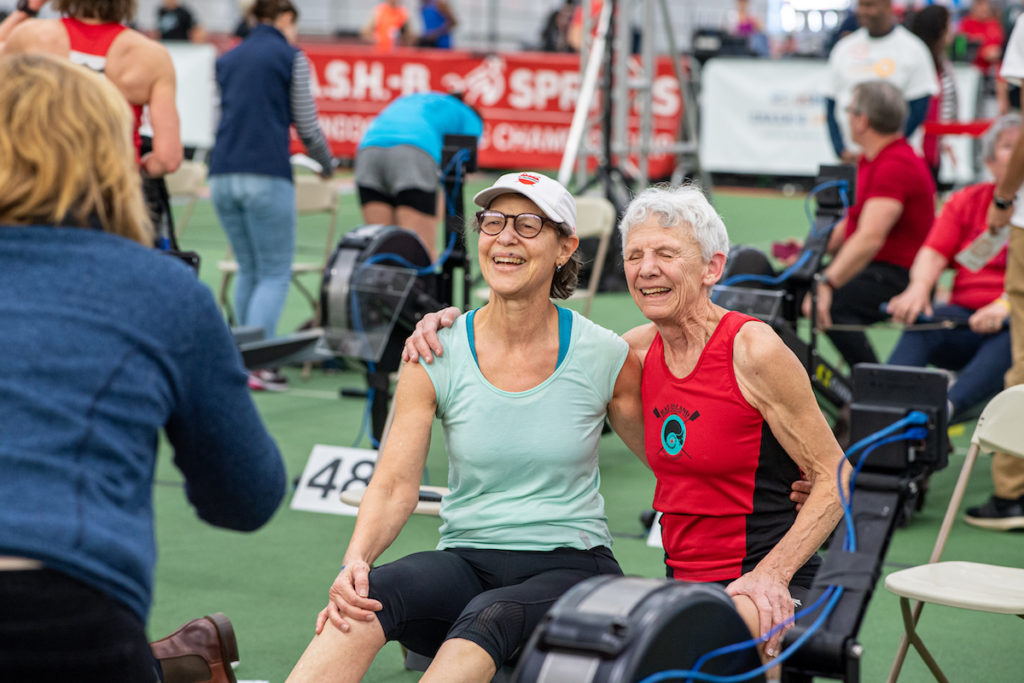
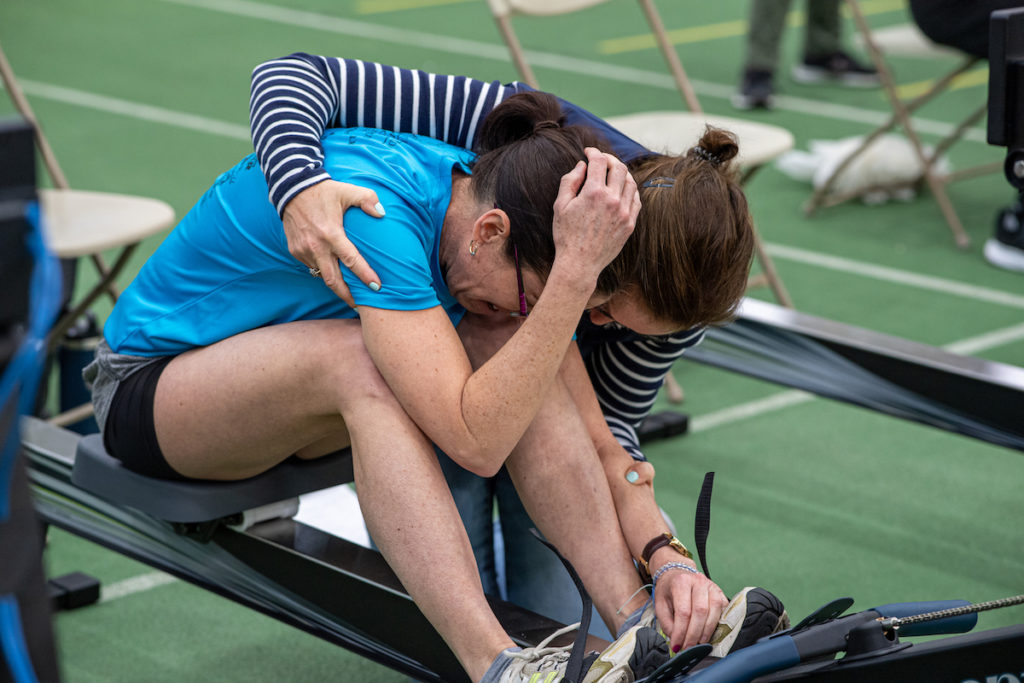
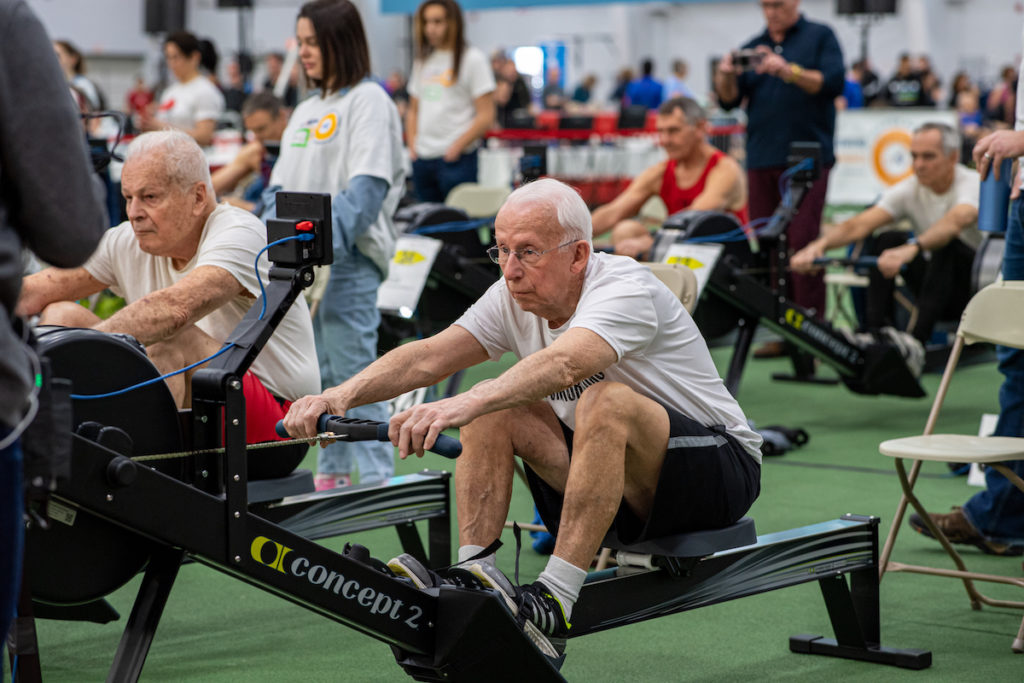
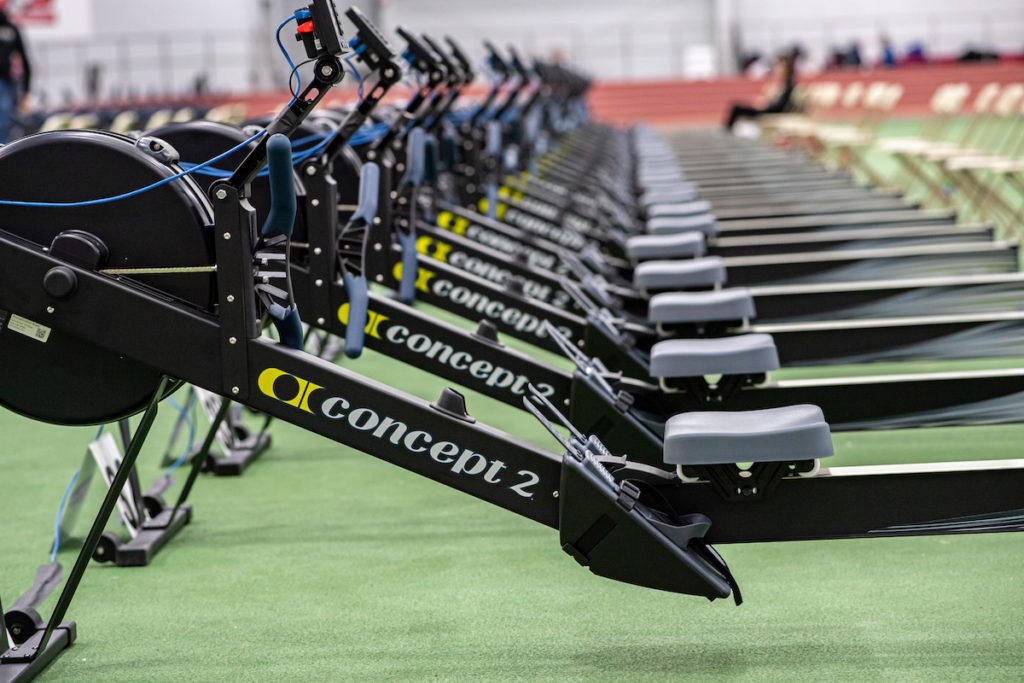
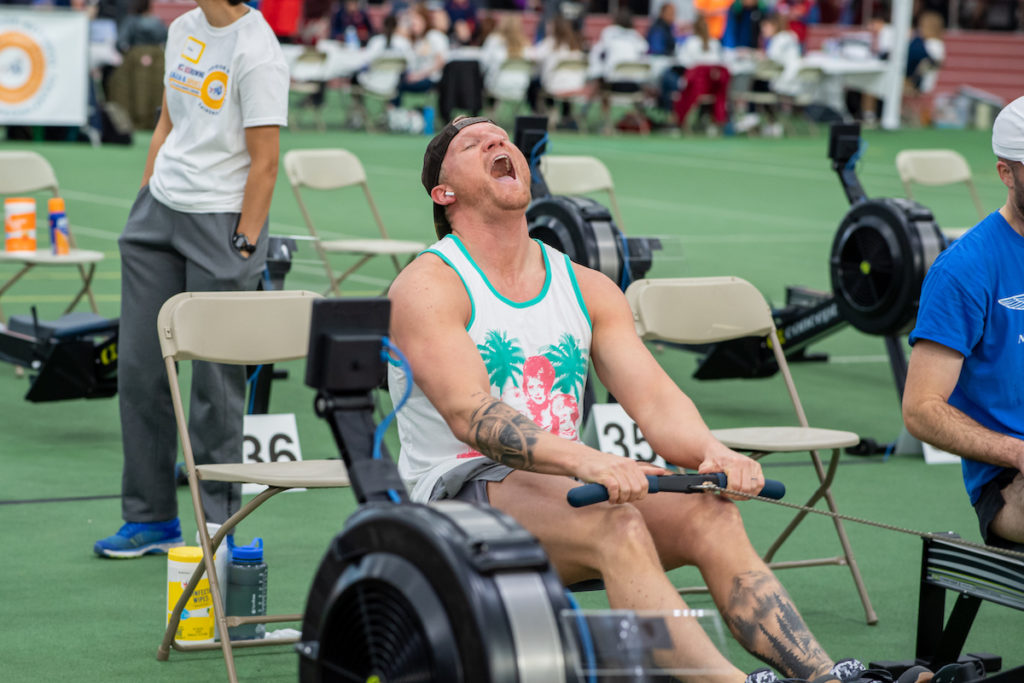
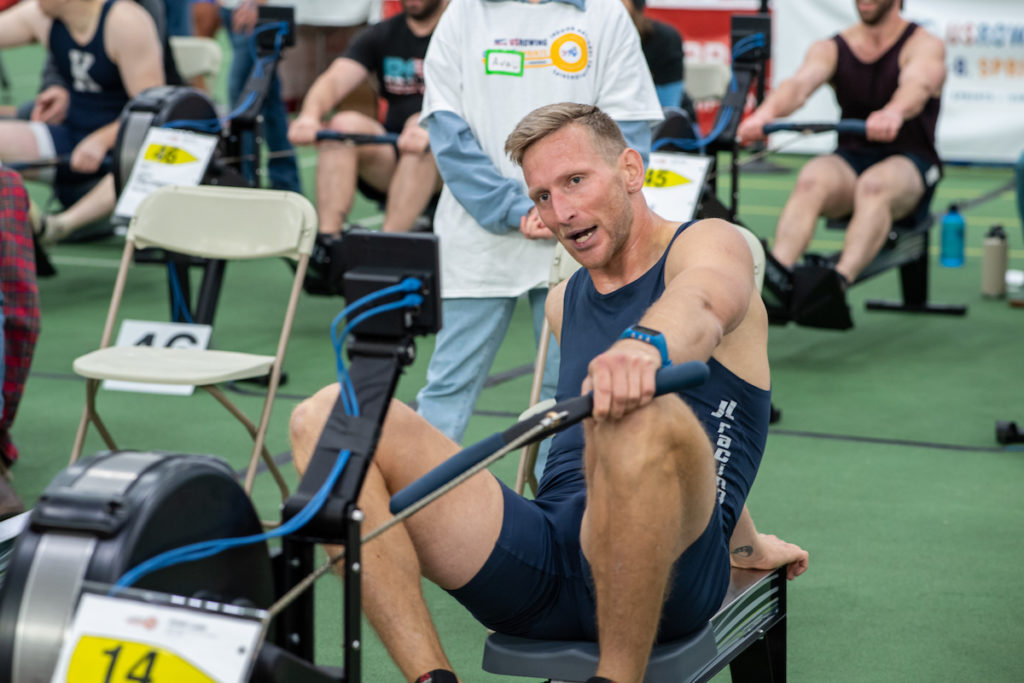
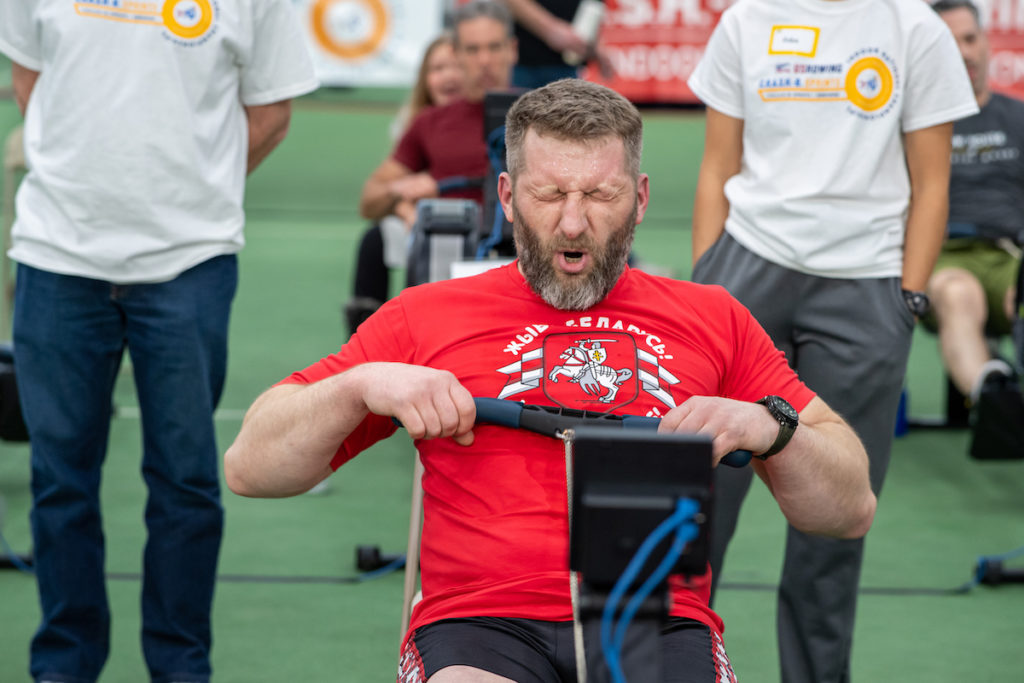
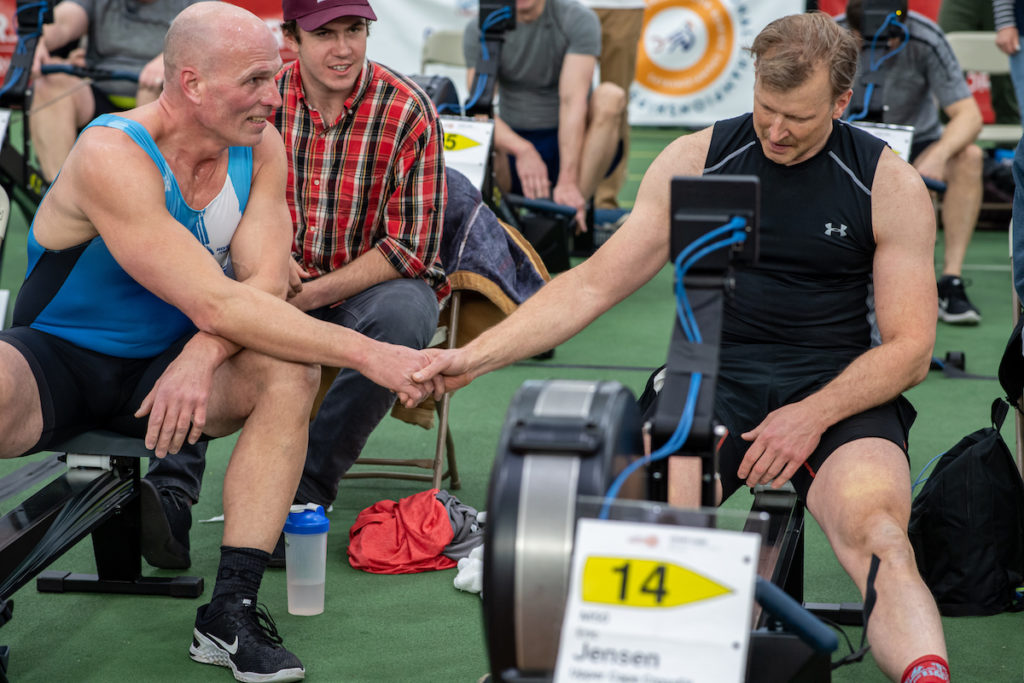
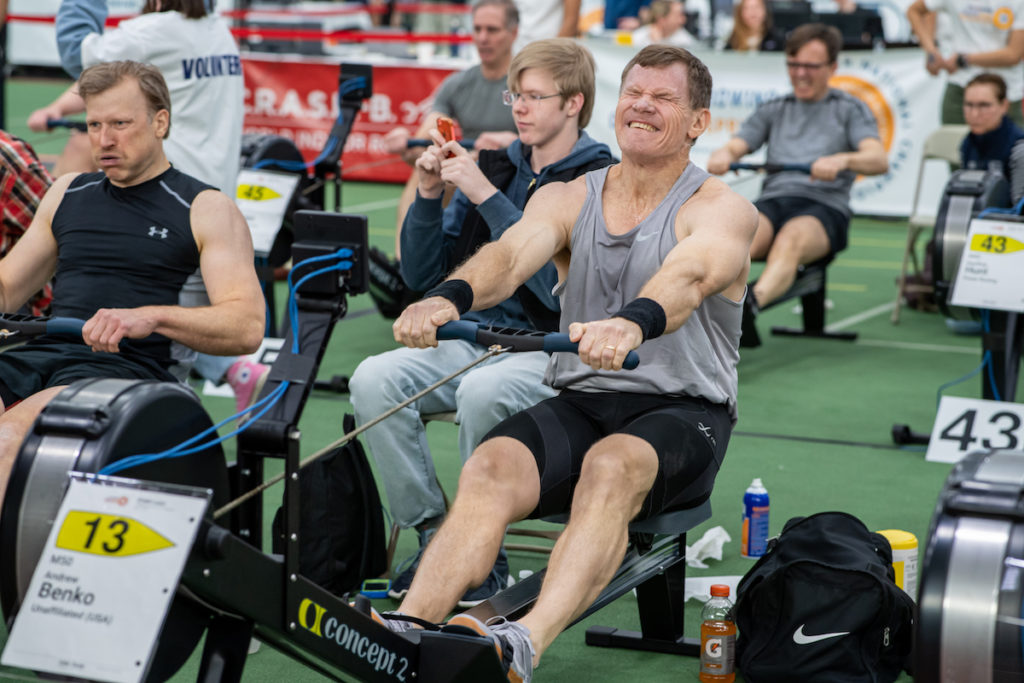
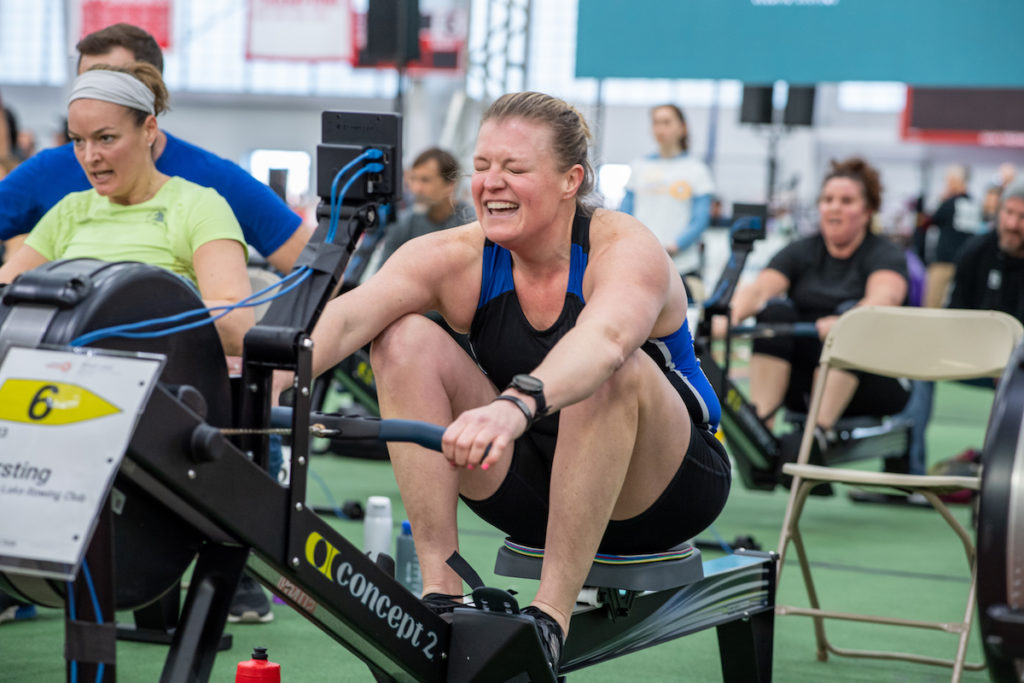
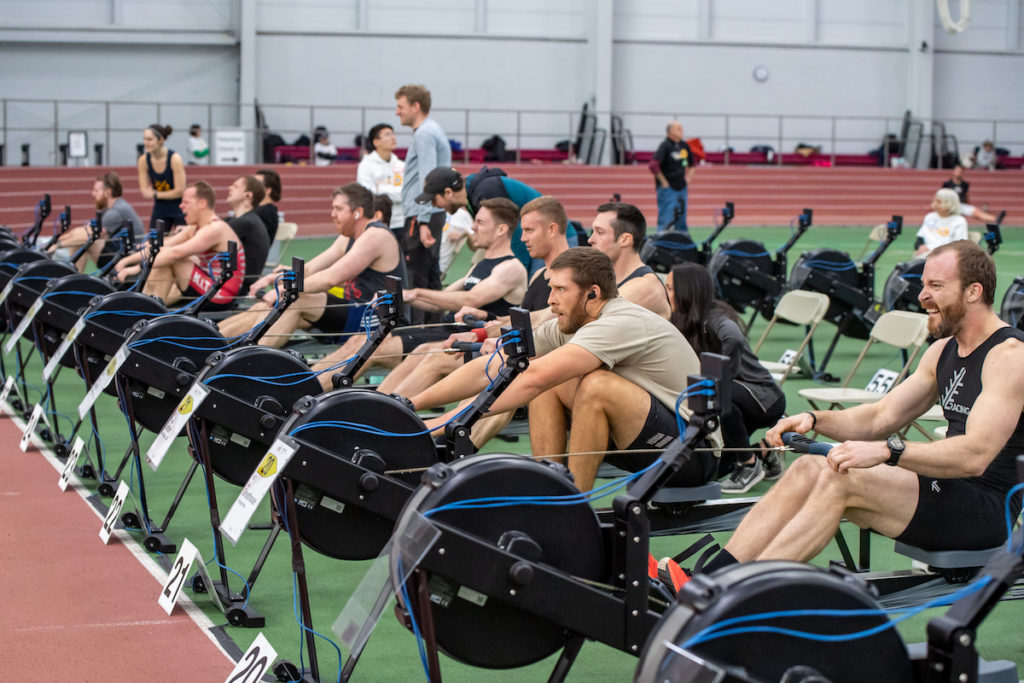
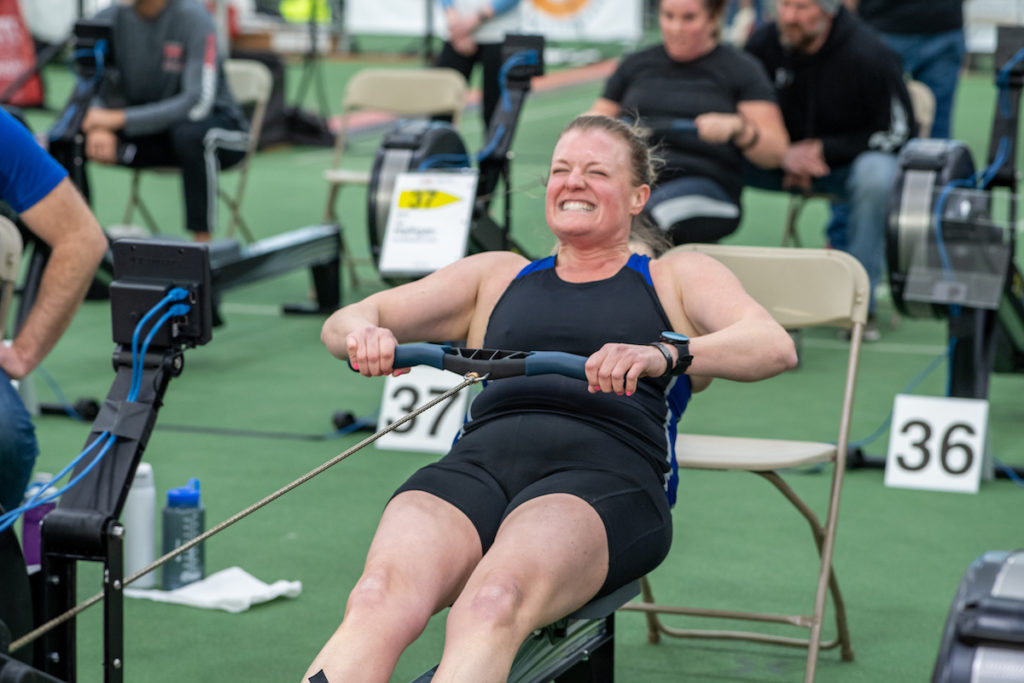
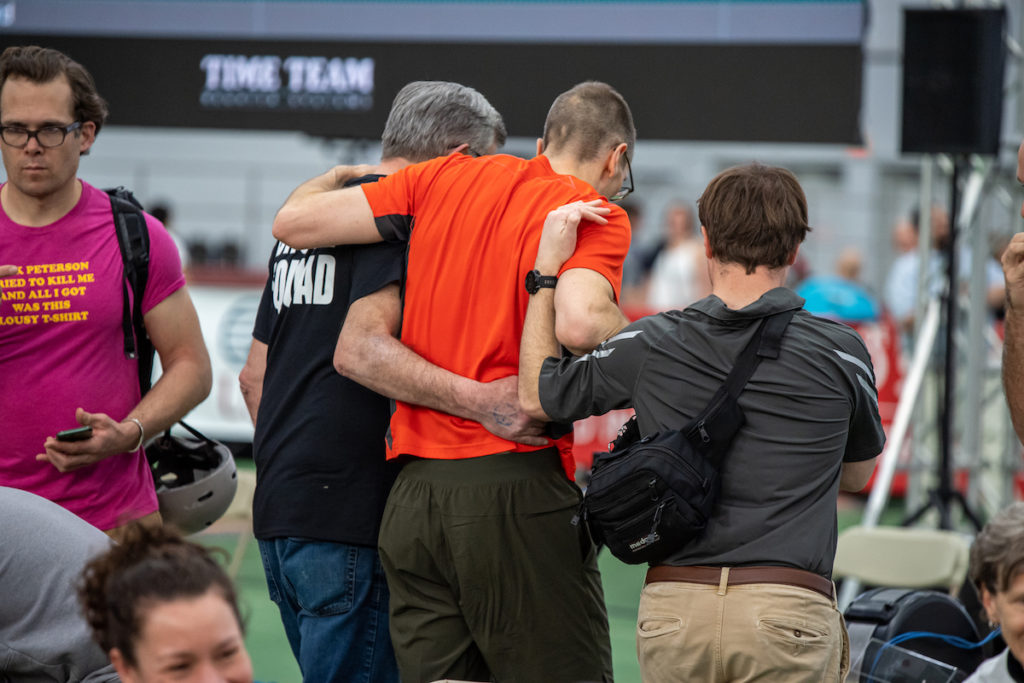
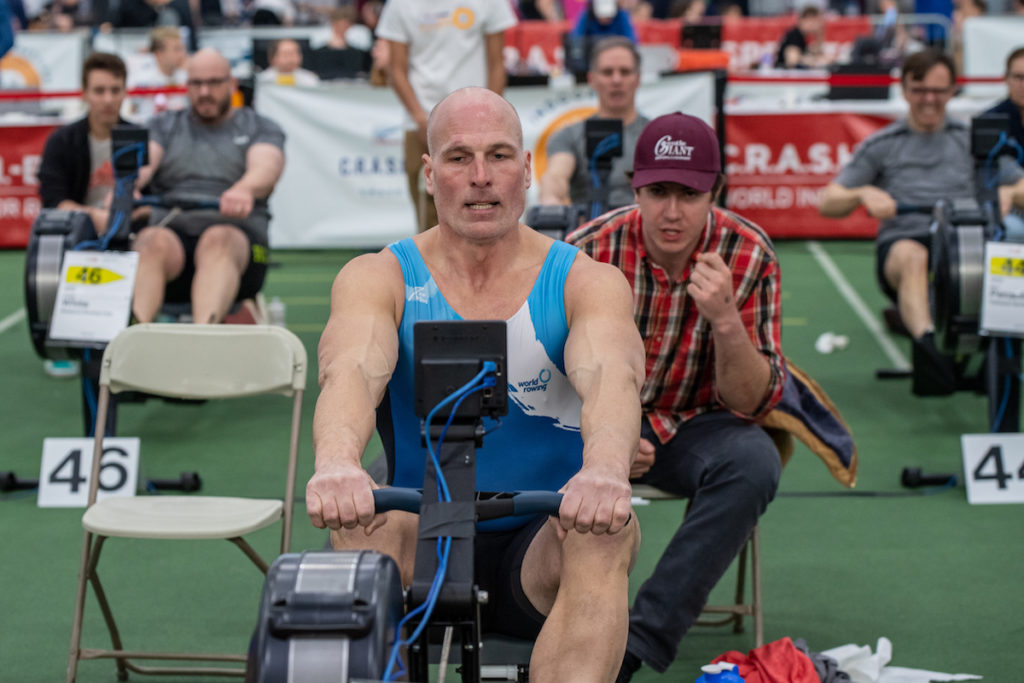
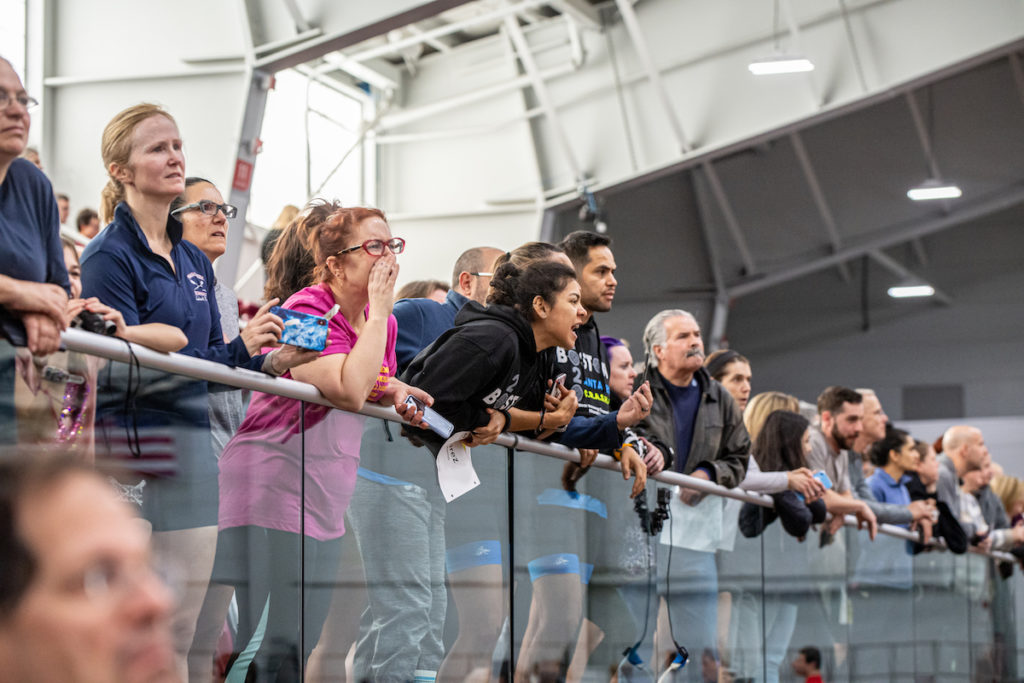
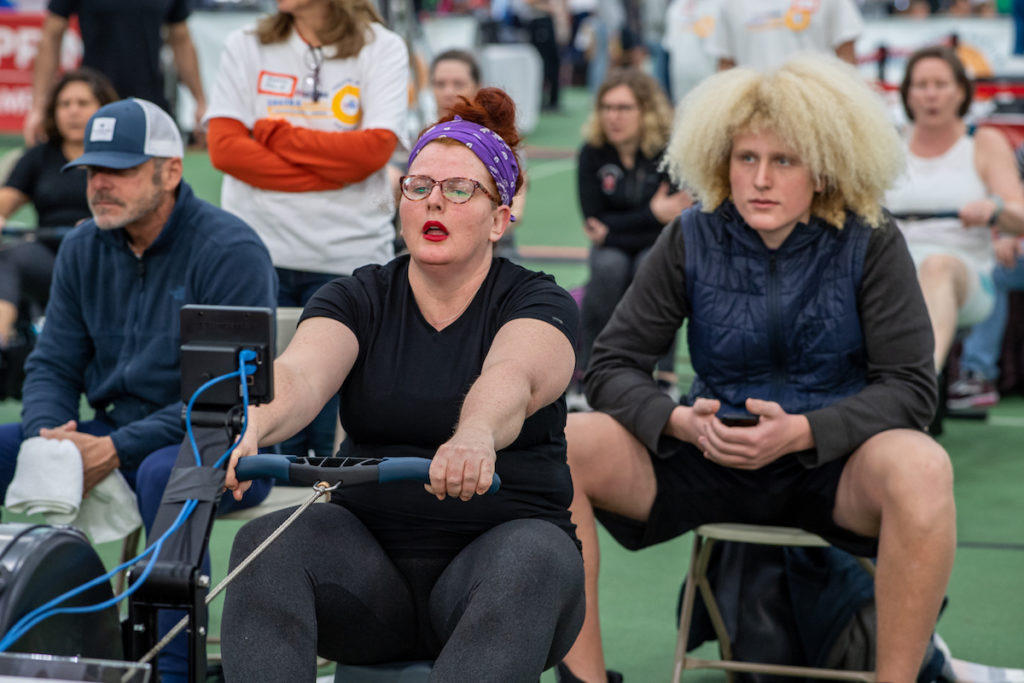
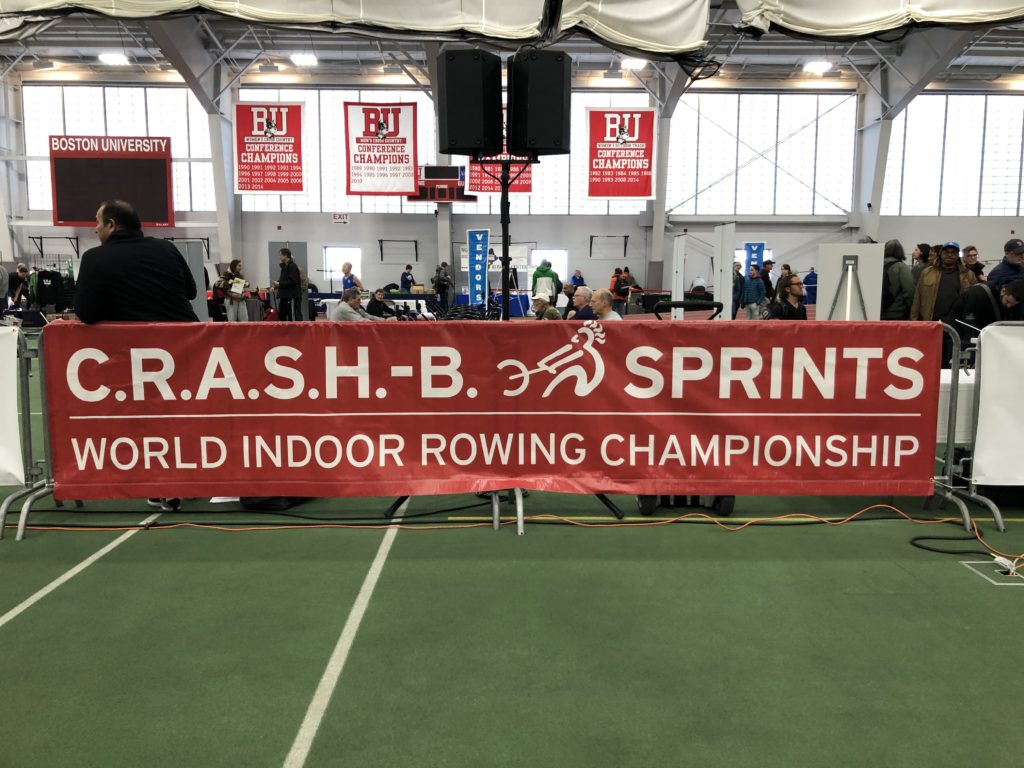
Racing at the 2020 C.R.A.S.H.-B's. Photos by Lisa Worthy.
BY COLLEEN SEVILLE PHOTOS BY LISA WORTHY
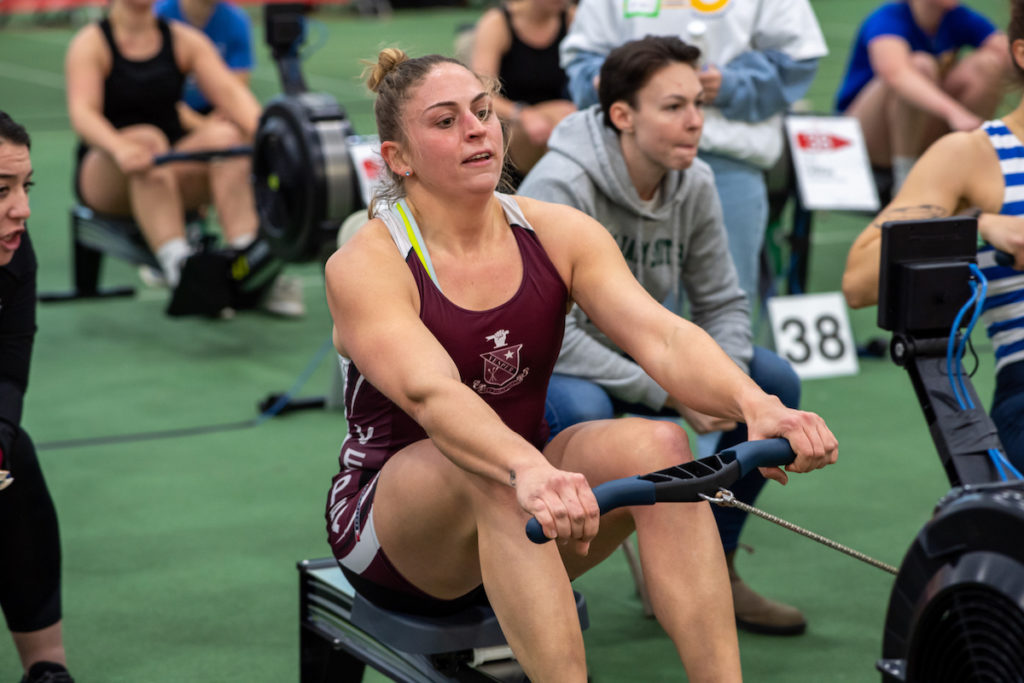
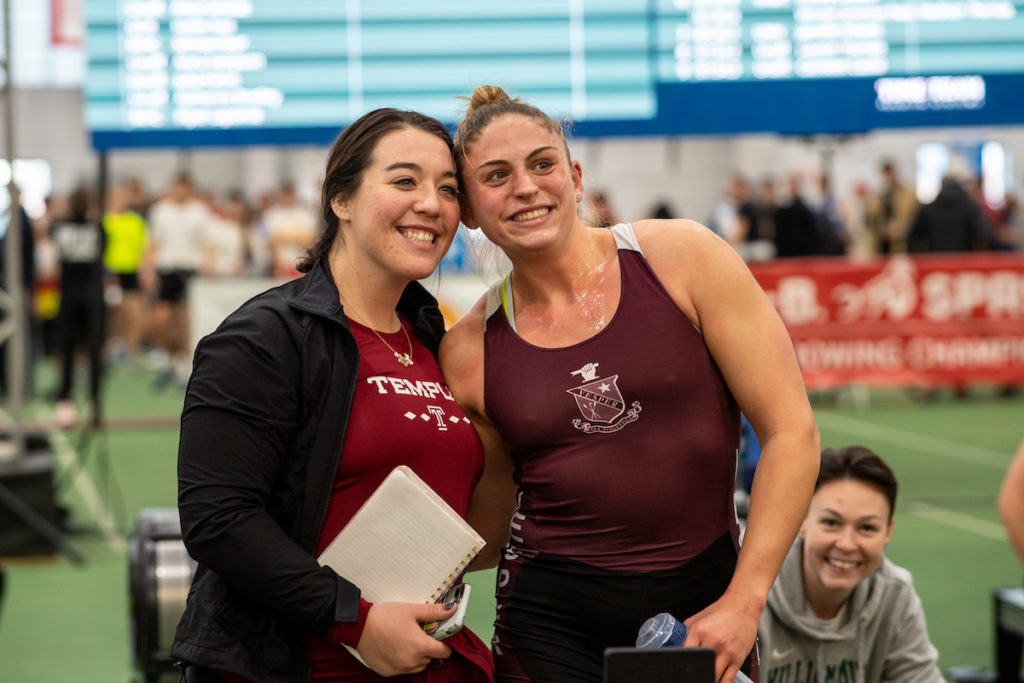
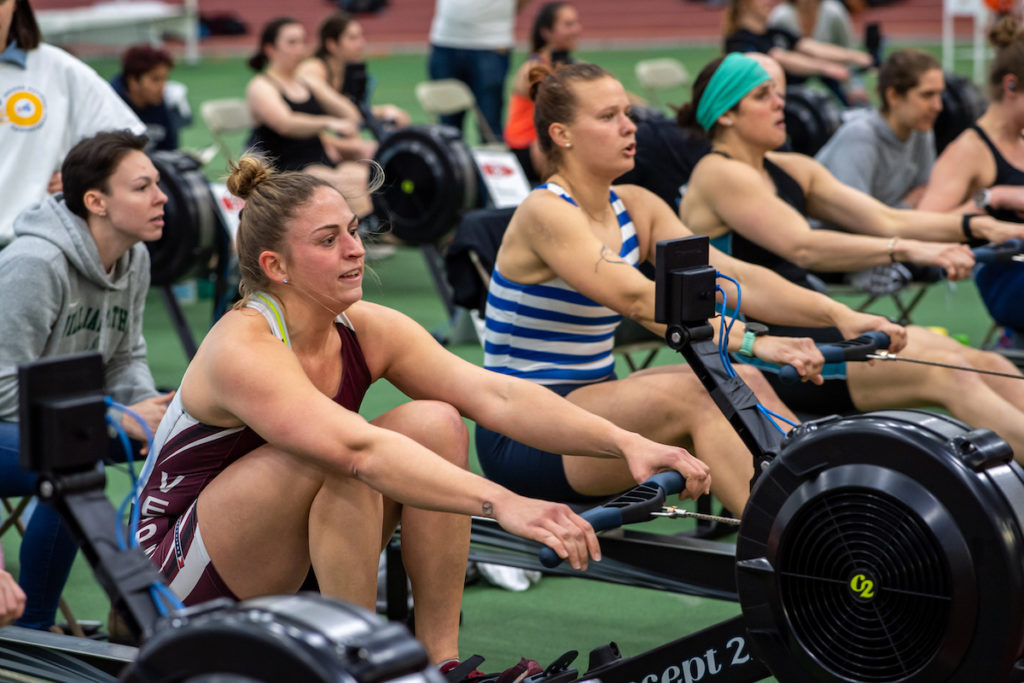
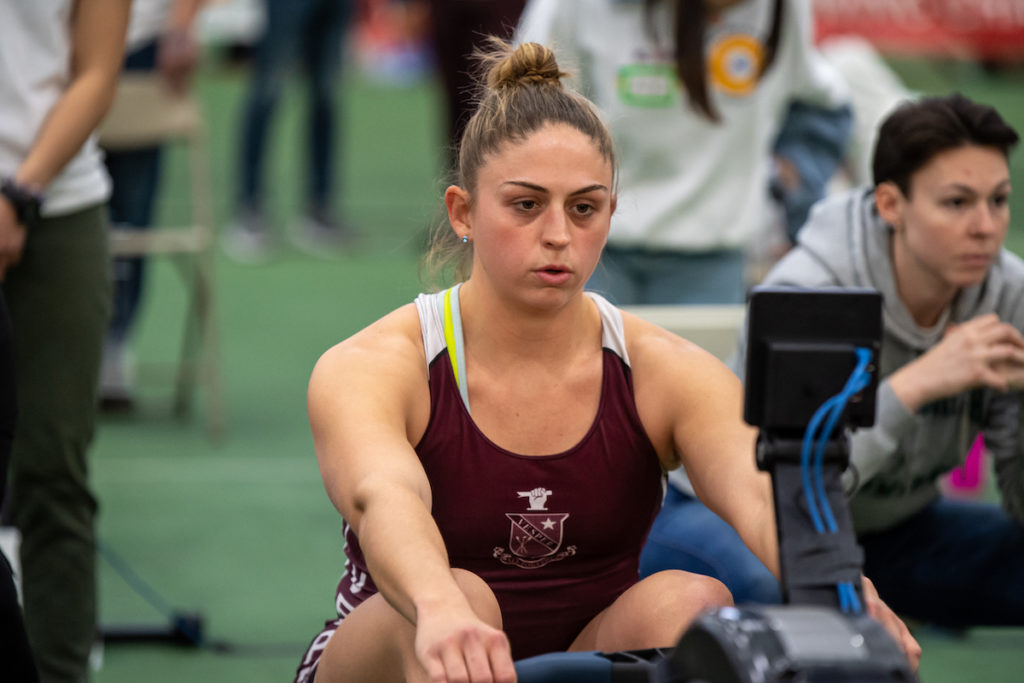
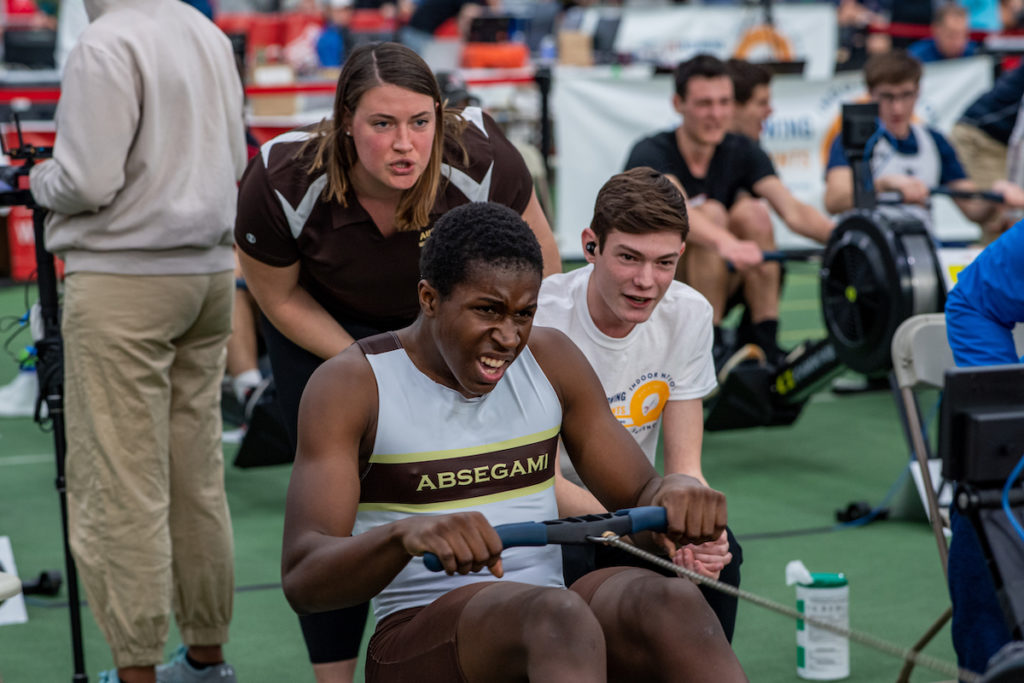
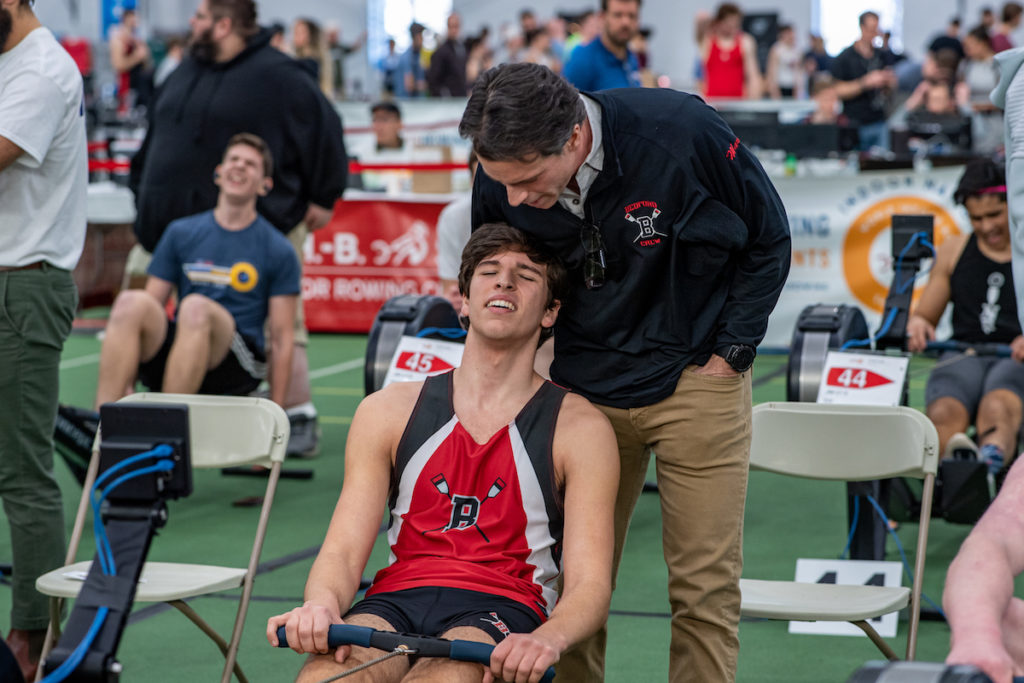
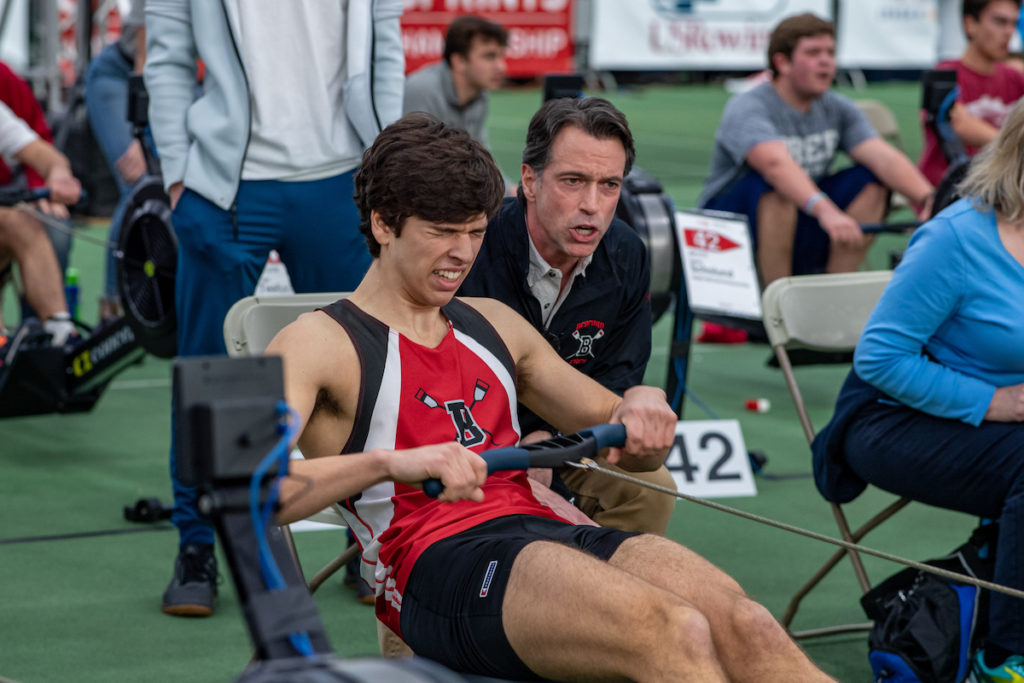
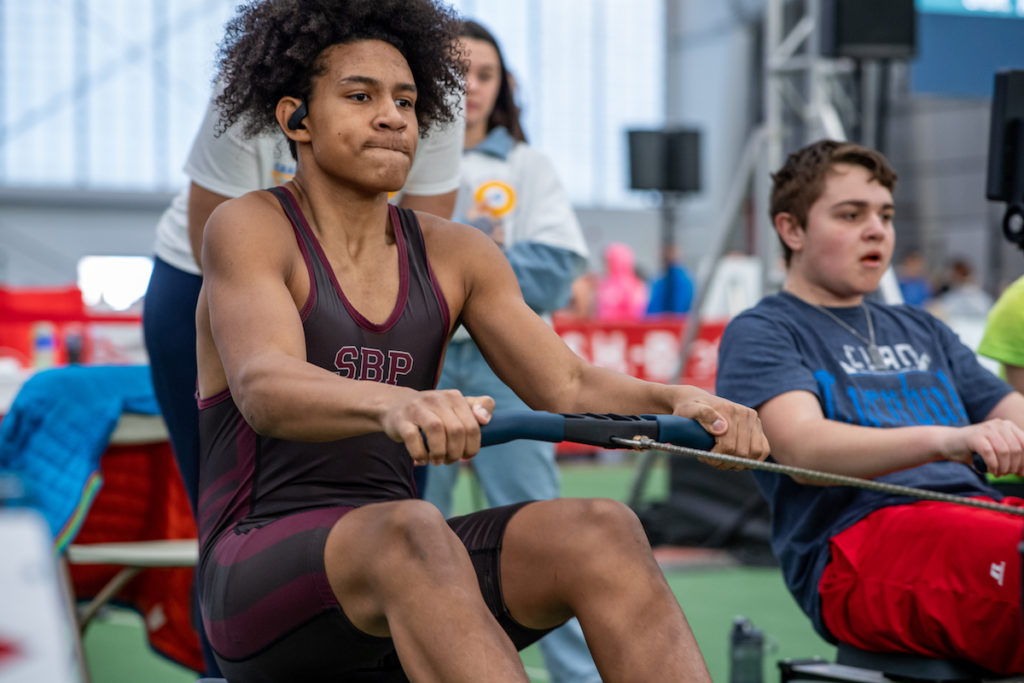
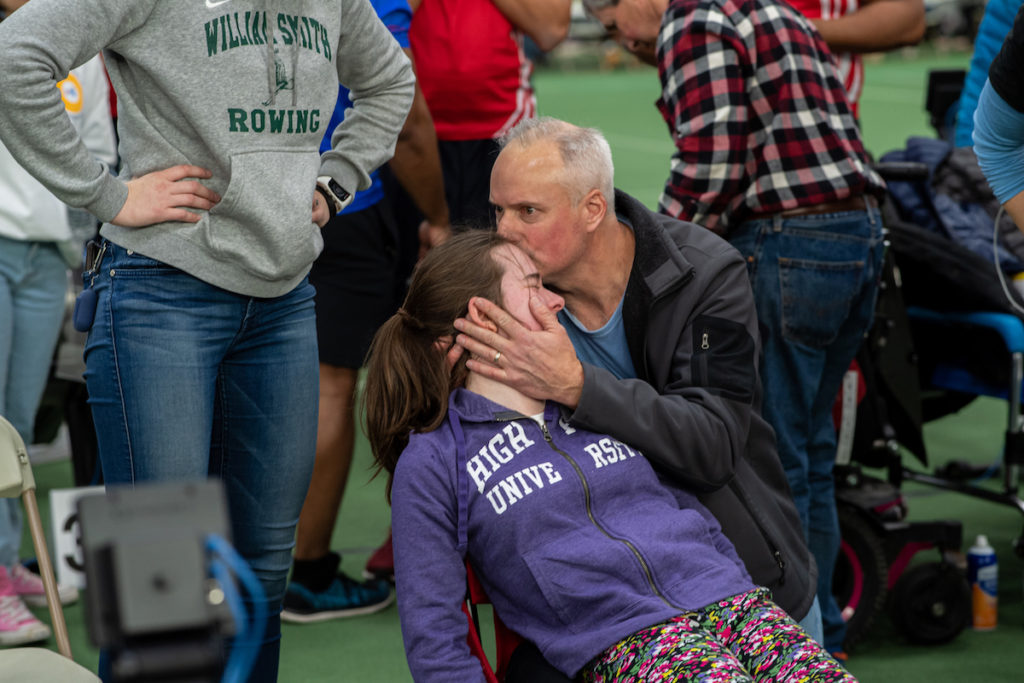
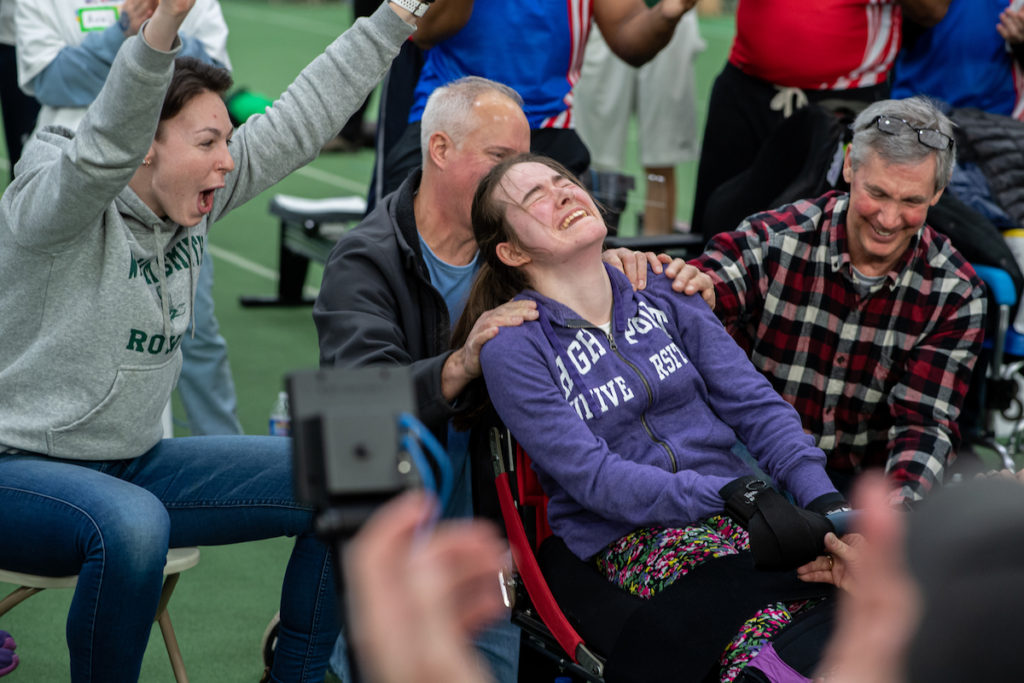
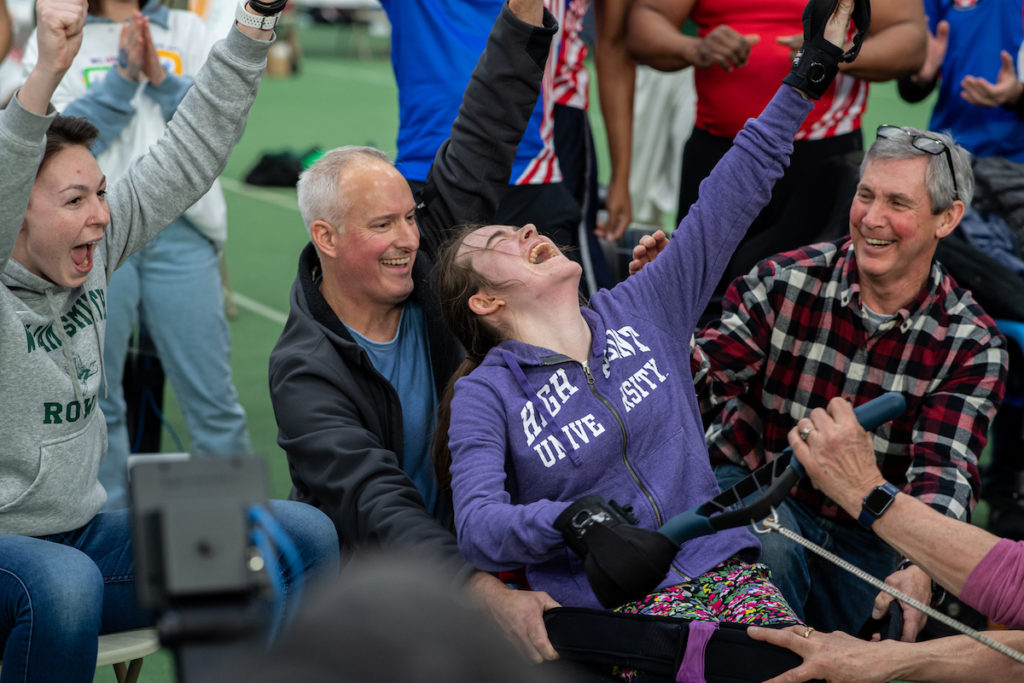
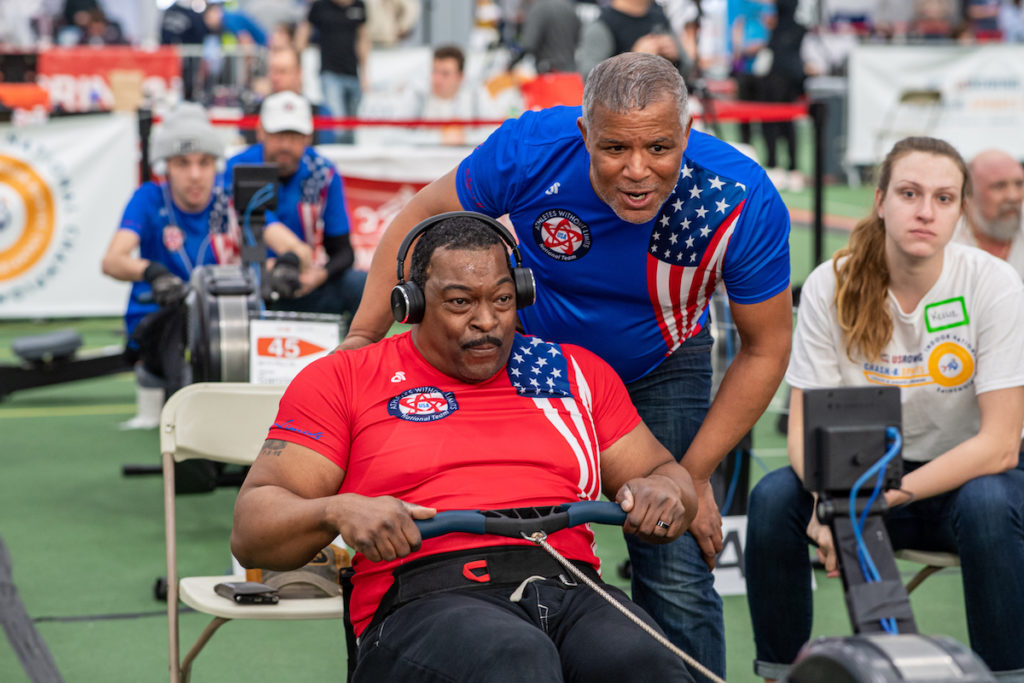
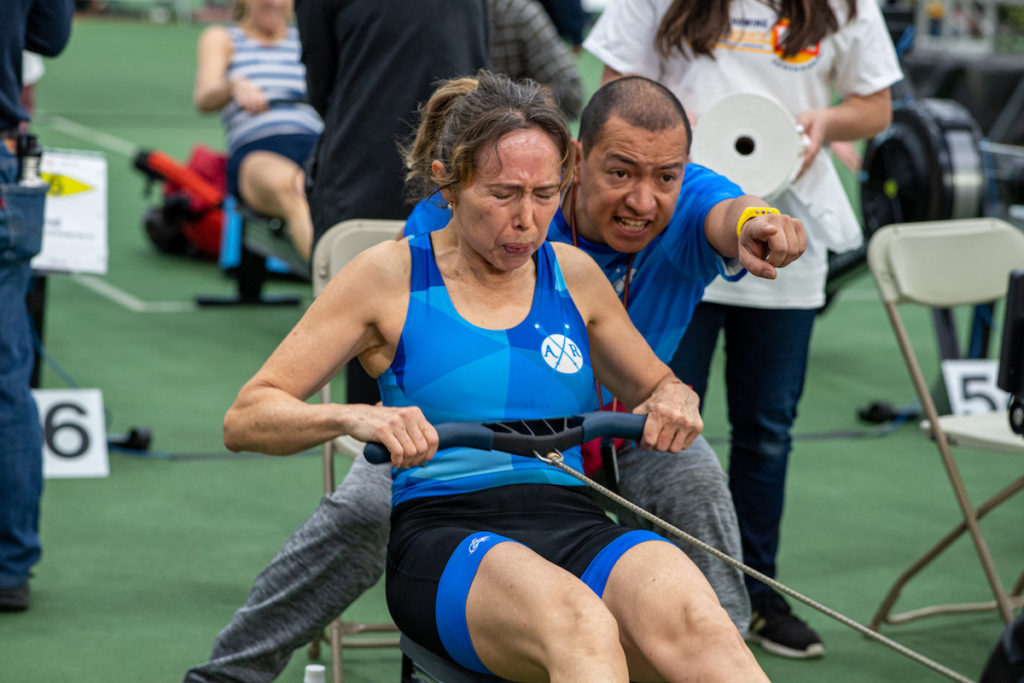
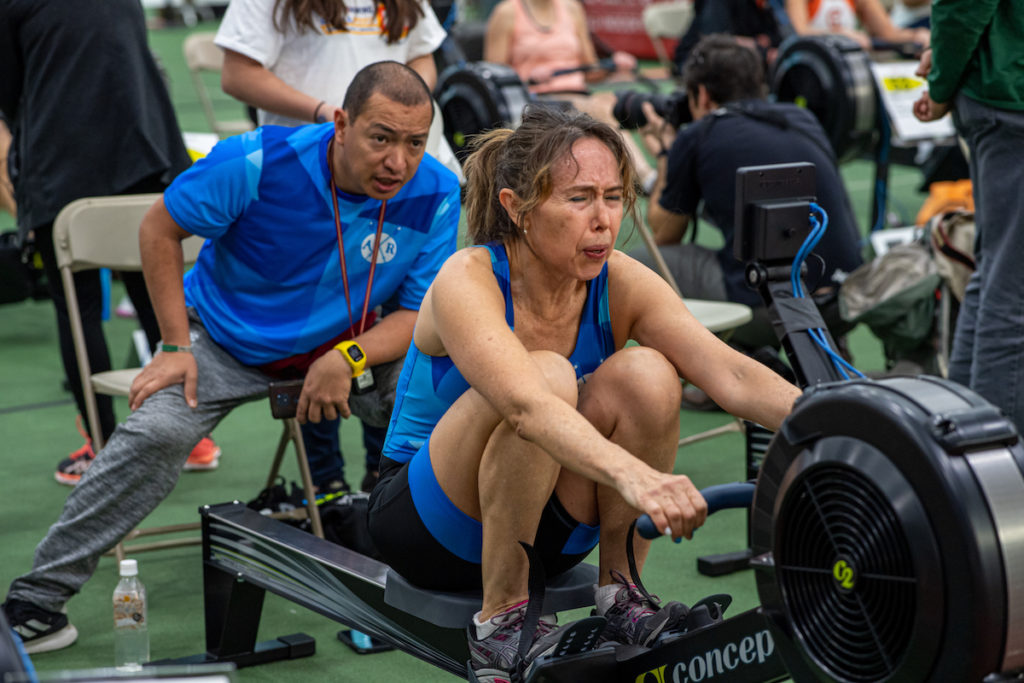
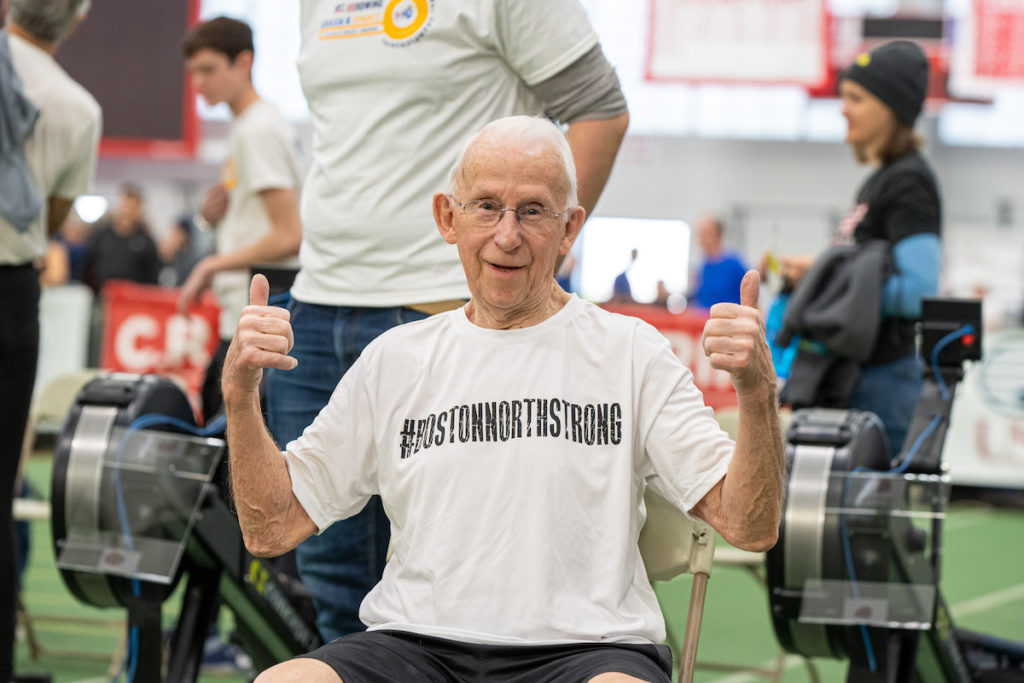
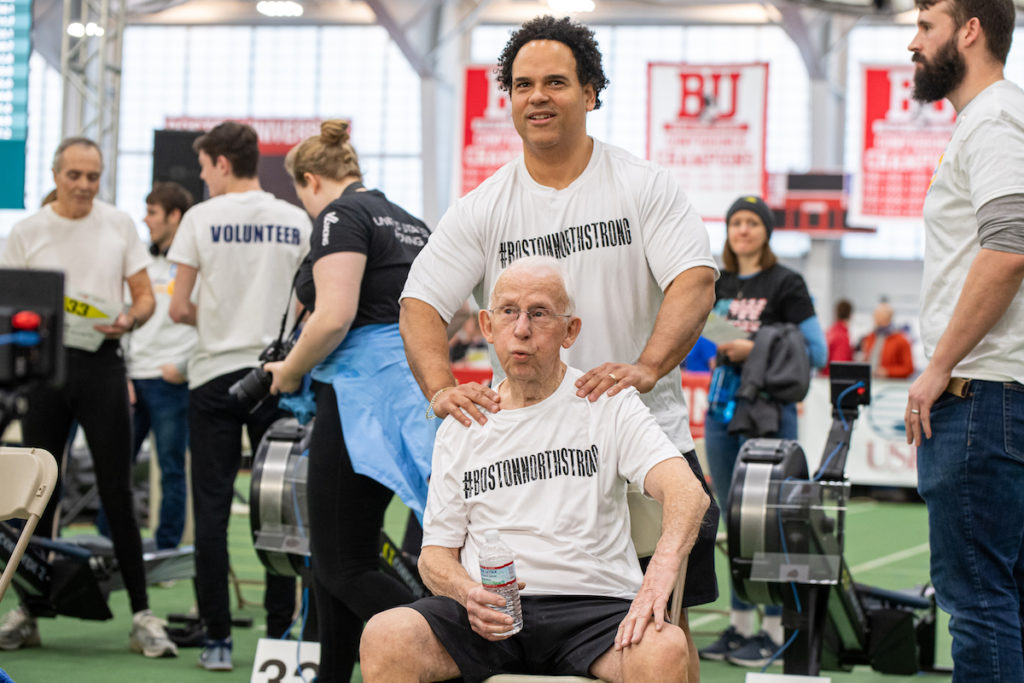
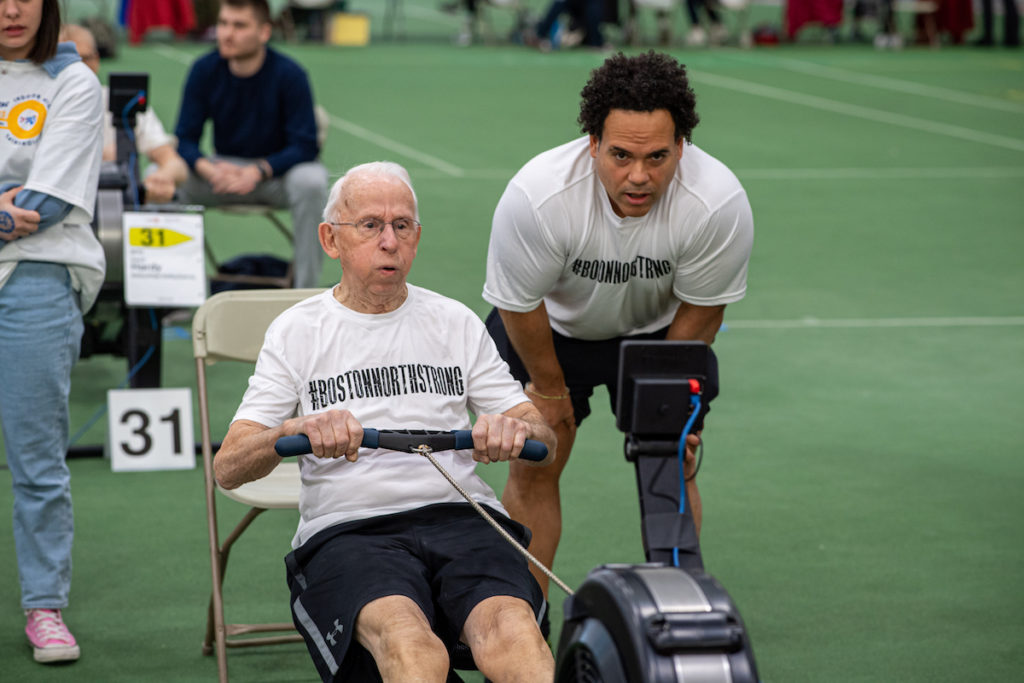
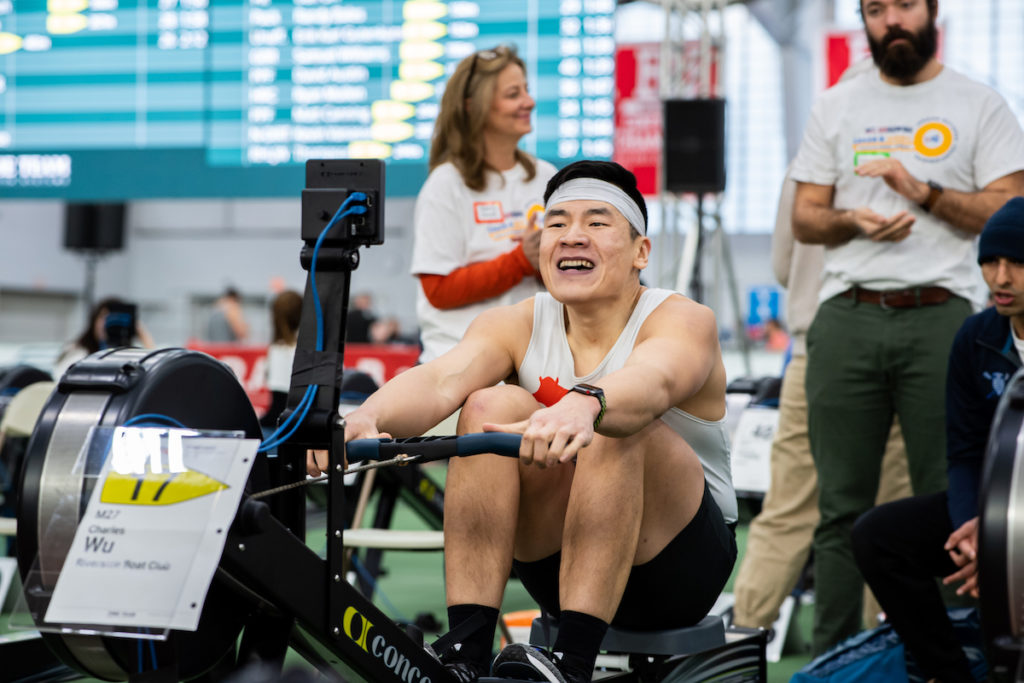
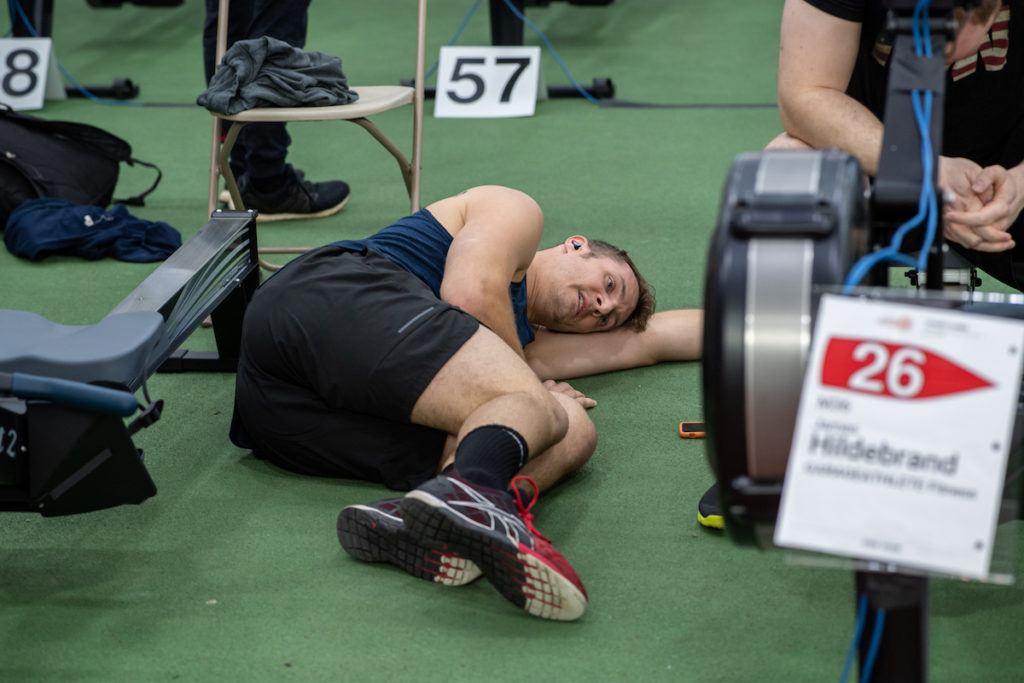
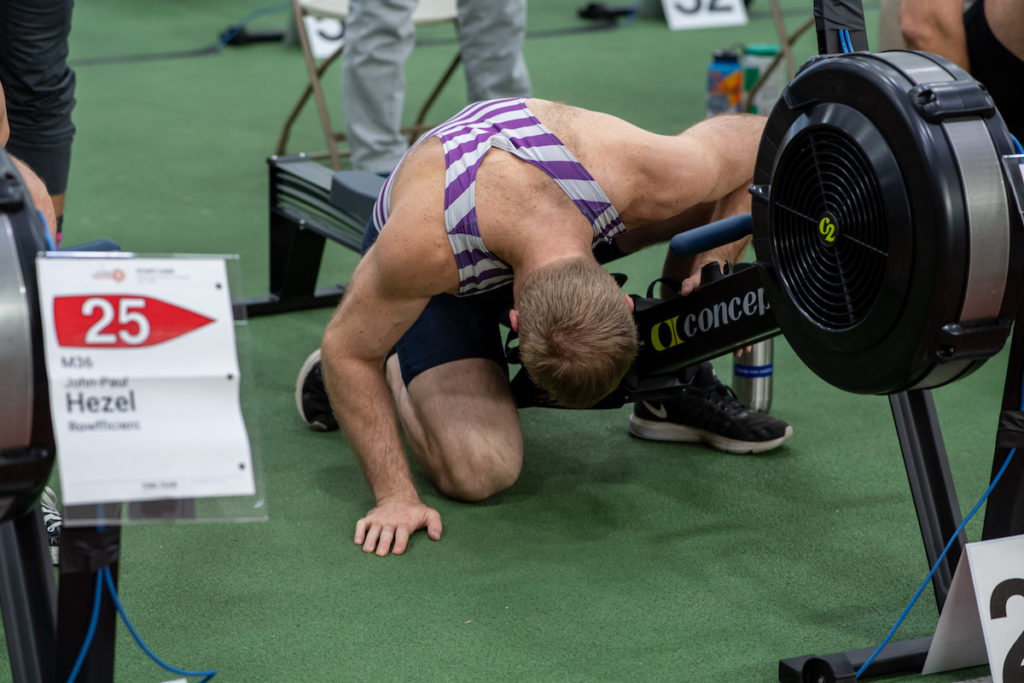
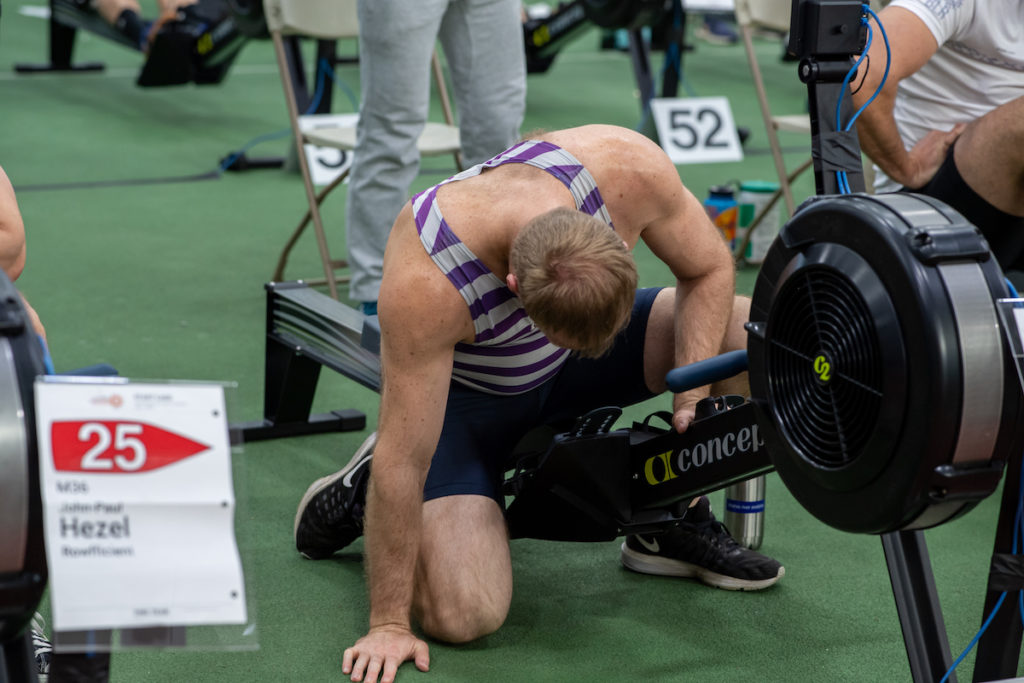
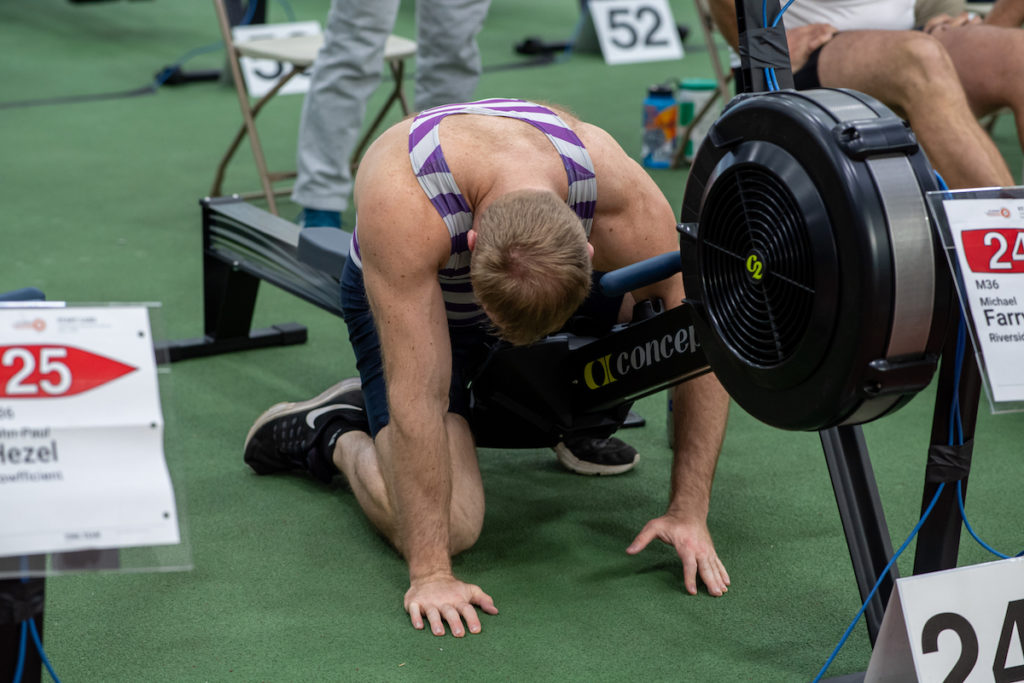
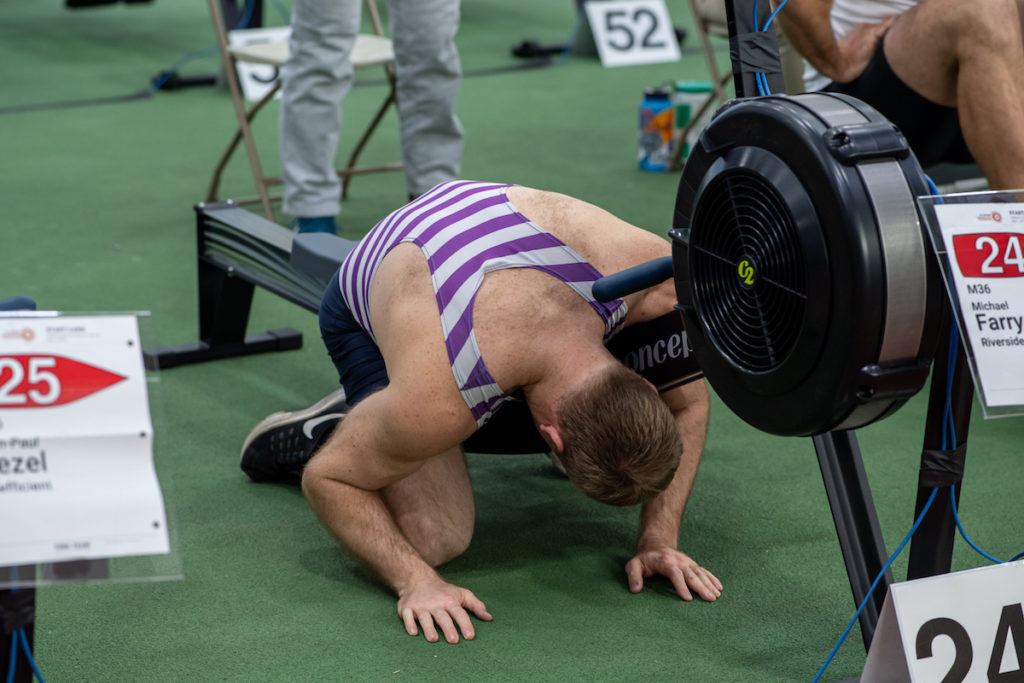
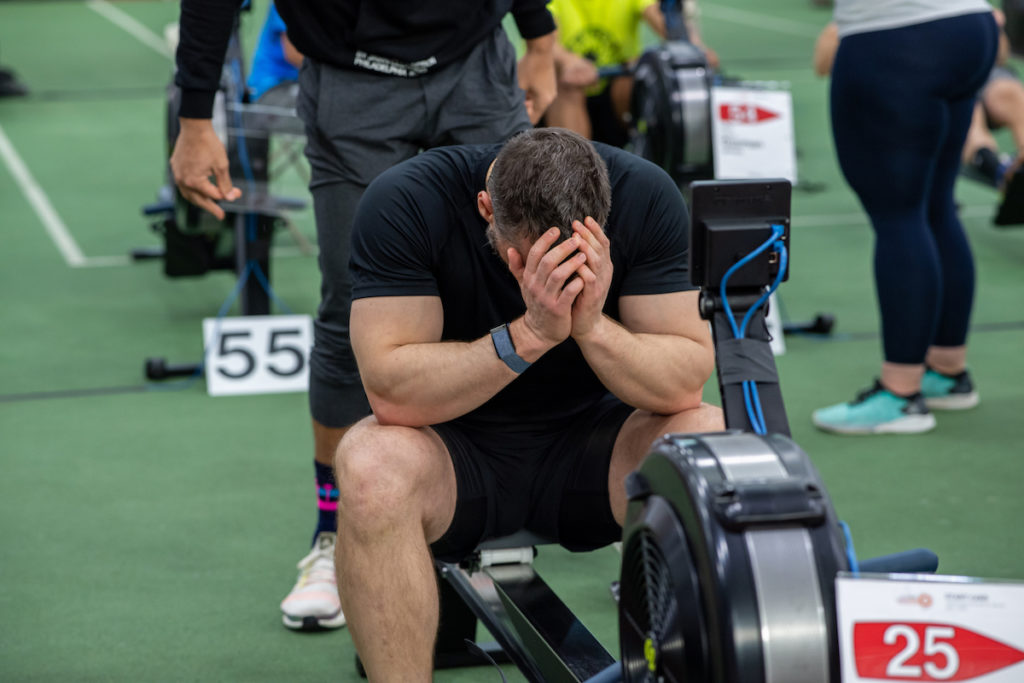
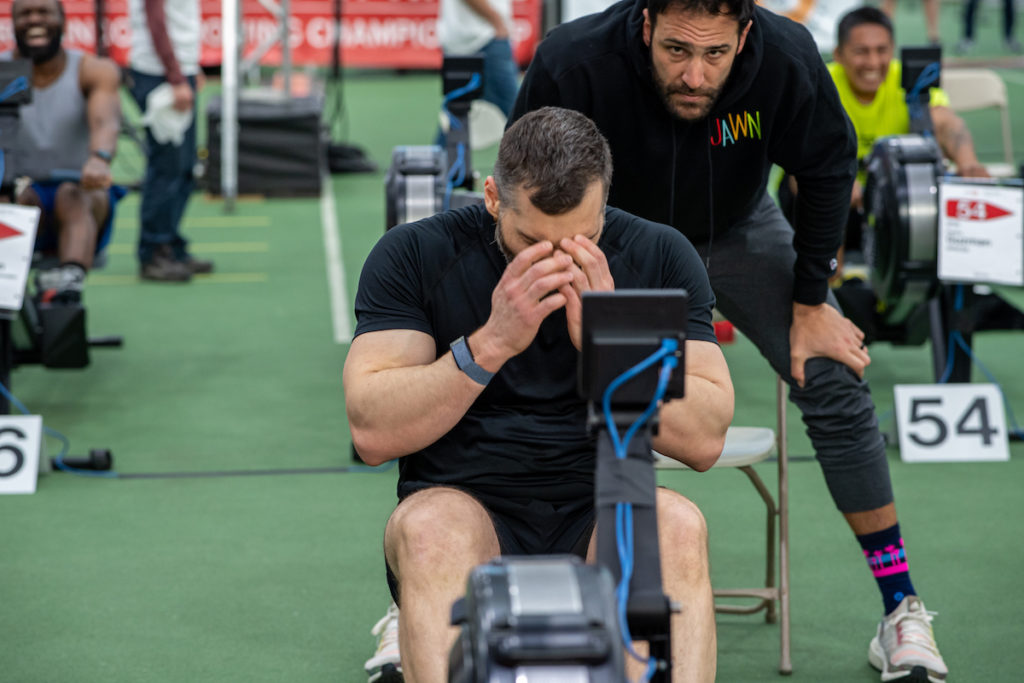
Each year the C.R.A.S.H.-B. World Indoor Rowing Championships unites the best of rowing across junior, under 23, para and masters categories, including open and lightweights. While the event has produced record-breaking times since its inception in 1980, in more recent years, some of the most exciting results have come from junior athletes. This year was no different.
Records were broken, new champions were crowned, and for the first time ever – in addition to the coveted C.R.A.S.H.-B. hammers – championship medals were awarded to the top three U.S. finishers in each event. Read on for a recap of race highlights and official times.
The championship kicked off at 9:00 am ET with the M85+, M80, M75, LM60, LM85+, LM80, LM75, LM70, M70, LM65, with category wins from George Demeritt (M85+), Alan McClennen (M80), Wyatt Hume (M75), Paul Siebach (LM60), Don Tanhauser (LM85+), Dave Watts (LM80), Brian Tucker (LM75), Keith Colburn (LM70), Larry O’Toole (M70), Tom Phillips (LM65) [RESULTS].
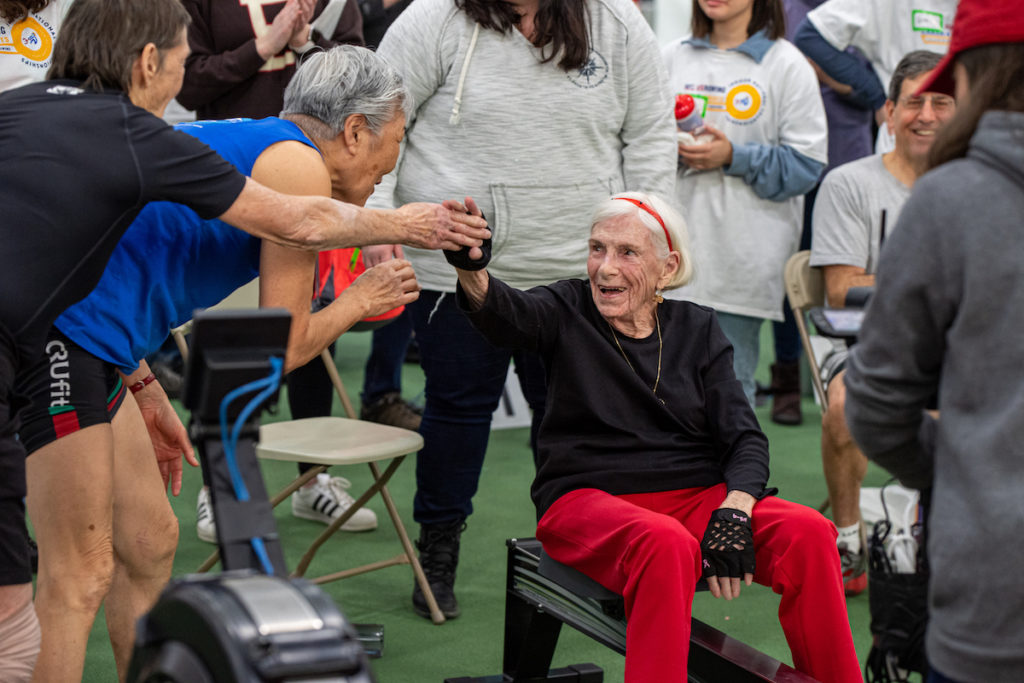
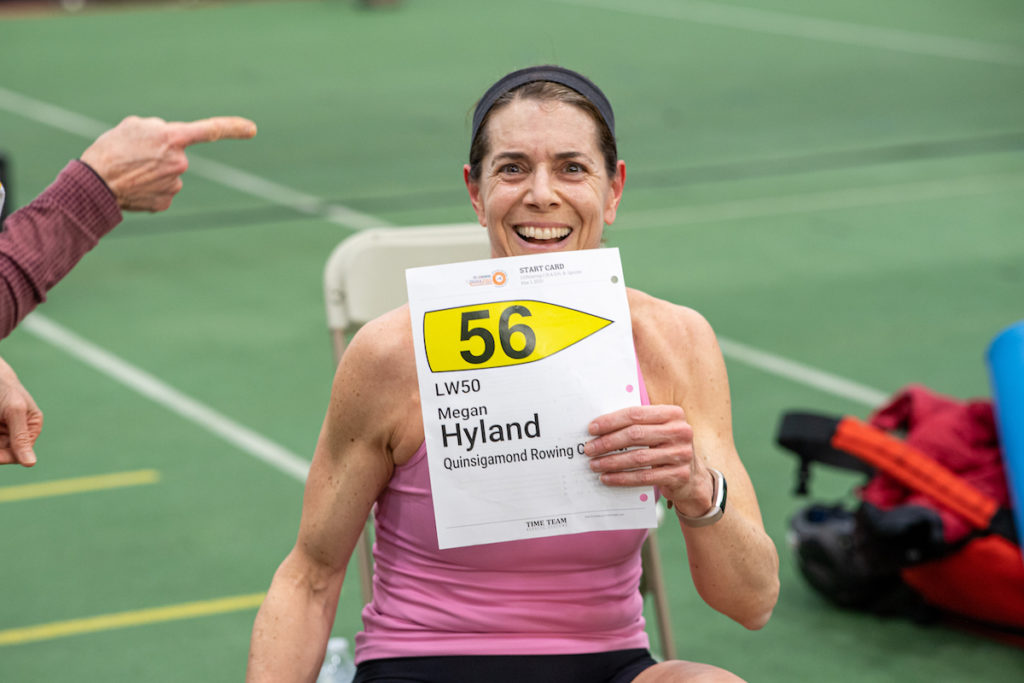
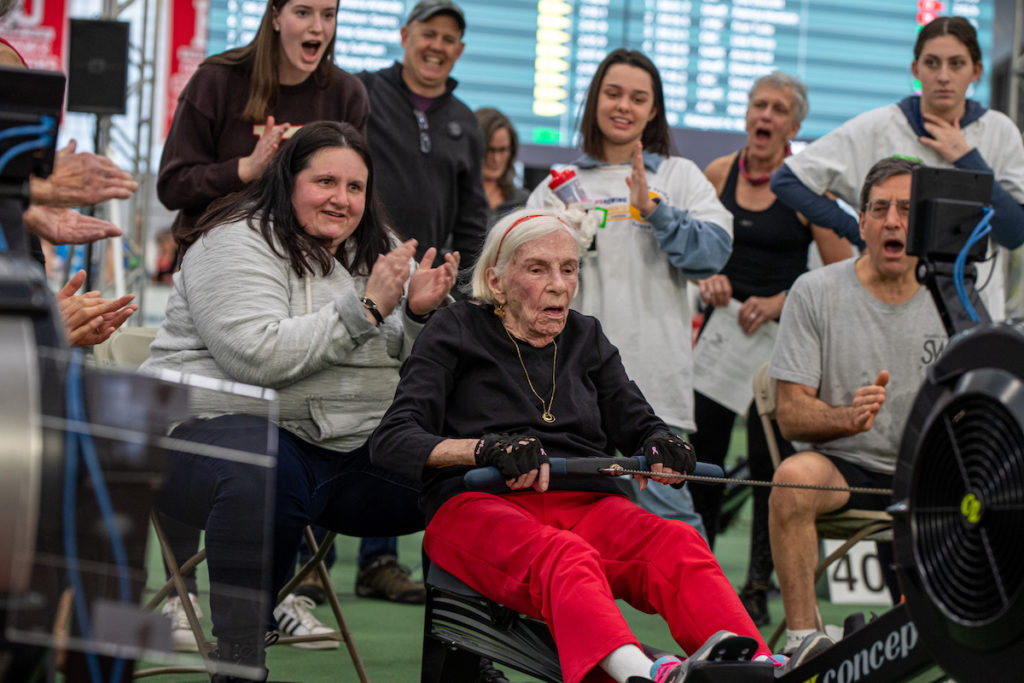
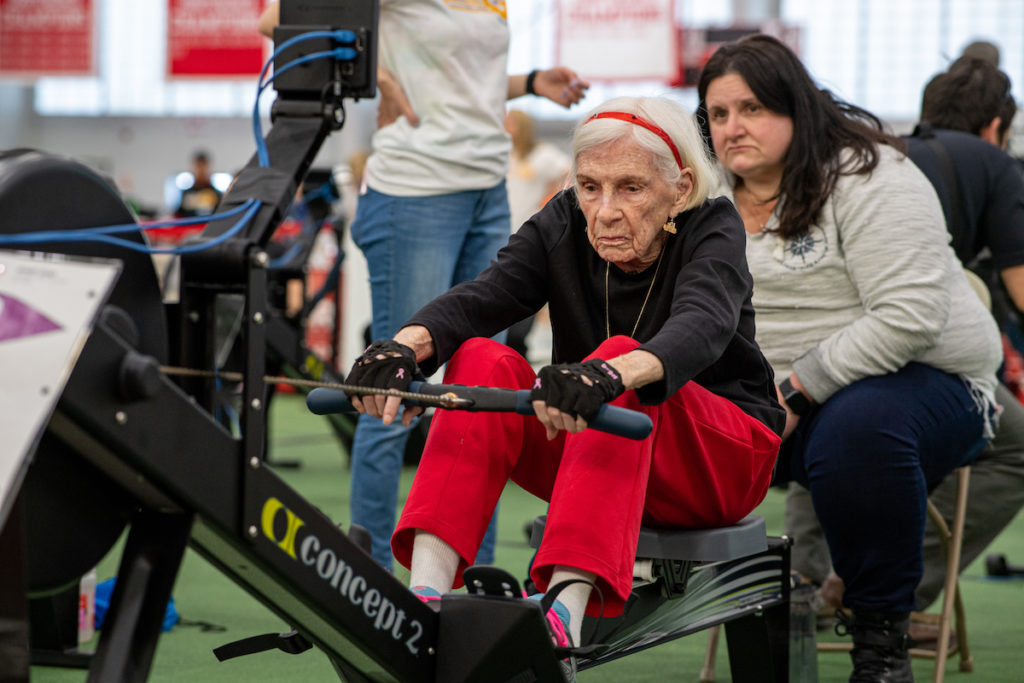
At 9:15 am ET the W80, W65, LW85+, LW80, LW75, LW70, LW65, LW60, LW55, W60, W70, LW50 events began, with racing spanning many different age groups. Fan-favorite 98-year-old Dottie Stewart returned to the C.R.A.S.H. -B’s after her 2019 appearance, representing the top half of her 95-99 age bracket. Her participation is an incredible accomplishment in and of itself. Category wins came from Luanne Mills (W80), Jayne Lytel (W65), Dottie Stewart (LW85+), Isako Egawa (LW80), Mari Friend (LW75), Majorie Elliot (LW70), Susan Gehrke (LW65), Patricia Montain (LW60), Saiya Remmler (LW55), Carla Dropo (W60), Patricia Smith (W70), and Megan Hyland (LW50) [RESULTS].
The 9:30 am ET M65, M60 and LM50 races included wins from Steve Krum (M65), Ken Gates (M60) and Carlos Reategui (LM50). [RESULTS].
At 9:45 am ET the W50, W55, LW43 races included wins from Mia Zierk (W50), Ellen Saint Clair (W55) and Laura Gassner Otting (LW43). Local fans were pleased to see a strong performance from Linda Muri as well, who finished third in the W55 category [RESULTS].
In the LM55, M55, LM36 and LM43 races at 10:00 am, John Dinsmore took first in the LM55, followed by category wins from John Tunnicliffe (M55), Jonathan Kotulski (LM36) and Stephen McKiernan (LM43) [RESULTS].
The W43, LW36 and W36 categories saw wins from Sara Forsting (W43), Ashley Sweeny (LW36) and Jordan Falcone. Falcone finished with the impressive time of 6:59.4, smartly pacing her piece start to finish [RESULTS].
At 10:30 am ET the M50 and LM27 events took off, with category wins from Andrew Benko (M50) and Robert McNamara (LM27). As of 2018 Benko is the current record holder in the M50 event, retaining that title thanks to his strong performance today [RESULTS].
The W27 category at 10:45 amsaw strong performances from Jacquelyn Burmeister, Libby Boghossian and Victoria Pascoe who took first, second and third, respectively [RESULTS].
At 11:00 am the M43 and M36 events took off, with category wins from Pavel Shurmei (M34) and Ante Kusurin (M36). Shurmei is a Belarusian rower who competed at two Olympic Games (2004 and 2008) and holds multiple world records [RESULTS].
The M27 event started at 11:15 am, with strong showings from Jack Trimble, Pavlo Prykhodko and Andreas Tilelis who captured first, second and third, respectively [RESULTS].
The racing then switched to the youngsters at 11:30 am and included the YM, YW, YW PR3-GD events, with athletes under the age of 14. These athletes raced the clock to see how far they could row over four minutes. Lancelot Workman posted the best result in the YM, with Rebecca Schmidt posting the strongest distance for the YW, and Abigail Dominguez in the YW PR3-GD [RESULTS].
A true C.R.A.S.H.-B. fan favorite, “The Bullpen” event didn’t disappoint, with Timothy Labounko of Cambridge Boat Club posting the fastest time. This race gives folks who have registered late a chance to jump in on the action in a mixed-race format. Bullpen registrants are only eligible to medal in an event that occurs after the Bullpen race, but not before [RESULTS].
As the afternoon progressed, so did the racing, picking back up with the M/W PR1, PR2 and PR3 categories at 12:45 pm. Matthew Houser posted the fastest time in the MPR3 event, Lisa Chiango in the WPR3, Michal Gadowski and Jolanta Majka in the MPR2 and WPR2, respectively, both for team Poland, followed by Rene Campos Pereira in the MPR1 and Katherin Valdez in W U19 PR1 [RESULTS].
At 1:30 pm the junior events kicked off, starting with the JM U15 won by Matt Califano [RESULTS].
The winner of the 1:45 pm JM U17 category was Matthew Marks of Bedford Crew Club [RESULTS].
In a category with by far, the most entries of any event, Isaiah Harrison put on an incredible performance in the JM U19 event with a final time of 5:53.2, racing up a category as he is still eligible for JM U17. Savas Koutsouras took the silver, with Mack Carr in third for the bronze [RESULTS].
At 2:30 pm the JW U15 and JW U17 events kicked off, with category wins from Claire Uiterwyk (JW U15) and Reilly Katz with an impressive 7:08.9 [RESULTS].
The JW U19, like its male counterpart, boasted incredible depth. Winner Mia Levy put on quite a race start to finish, with Nina Weeldryer and Olivia Vavasour capturing second and third, respectively. The quickest FW was Brigid Bane who took the gold in her category. Olivia Viessmann won the LW27 event. [RESULTS].
Stephen Grant captured the gold for the FM category at 3:15pm with a time of 6:49.1. Flyweight men must weigh 140 lb. or less on race day to compete in the event [RESULTS].
In the LW and LW U23 events at 3:30pm, Sophia Luwis captured the win for the LW, with Haley Higginbotham posting the fastest time within the LW U23 event [RESULTS].
The LM and LM U23 raced at 3:45pm, with wins from Alex Twist (LM) and Joshua Turk (LM U23). Turk in fact posted the fastest time in both the LM and LM U23 categories [RESULTS].
At 4:00pm the W and W U23 events kicked off, with exciting racing across both categories. Gabriela Thomas won gold in the W category with a time of 6:55.9, while Emily Winslow captured the win in the U23 event with a time of 7:17.5 [RESULTS].
The final event of the day was the M and M U23 categories. Marqus Brown (M) captured the coveted hammer and gold medal on behalf of Penn AC, finishing with a time of 6:00.7. Justin Steiner won the M U23 event on behalf of U.S. Coast Guard Academy with a time of 6:10.3 [RESULTS].
For a full list of the event schedule, erg assignments, and results, follow the link below.
C.R.A.S.H. B. Sprints
Racing at the 2020 C.R.A.S.H.-B’s. Photos by Lisa Worthy.
Racing at the 2020 C.R.A.S.H.-B’s. Photos by Lisa Worthy.
Racing at the 2020 C.R.A.S.H.-B’s. Photos by Lisa Worthy.
Racing at the 2020 C.R.A.S.H.-B’s. Photos by Lisa Worthy.
Racing at the 2020 C.R.A.S.H.-B’s. Photos by Lisa Worthy.
Racing at the 2020 C.R.A.S.H.-B’s. Photos by Lisa Worthy.
Racing at the 2020 C.R.A.S.H.-B’s. Photos by Lisa Worthy.
Racing at the 2020 C.R.A.S.H.-B’s. Photos by Lisa Worthy.
Racing at the 2020 C.R.A.S.H.-B’s. Photos by Lisa Worthy.
Racing at the 2020 C.R.A.S.H.-B’s. Photos by Lisa Worthy.
Racing at the 2020 C.R.A.S.H.-B’s. Photos by Lisa Worthy.
Racing at the 2020 C.R.A.S.H.-B’s. Photos by Lisa Worthy.
Racing at the 2020 C.R.A.S.H.-B’s. Photos by Lisa Worthy.
Racing at the 2020 C.R.A.S.H.-B’s. Photos by Lisa Worthy.
Racing at the 2020 C.R.A.S.H.-B’s. Photos by Lisa Worthy.
Racing at the 2020 C.R.A.S.H.-B’s. Photos by Lisa Worthy.
Racing at the 2020 C.R.A.S.H.-B’s. Photos by Lisa Worthy.
Racing at the 2020 C.R.A.S.H.-B’s. Photos by Lisa Worthy.
Racing at the 2020 C.R.A.S.H.-B’s. Photos by Lisa Worthy.
Racing at the 2020 C.R.A.S.H.-B’s. Photos by Lisa Worthy.
Racing at the 2020 C.R.A.S.H.-B’s. Photos by Lisa Worthy.
Racing at the 2020 C.R.A.S.H.-B’s. Photos by Lisa Worthy.
Racing at the 2020 C.R.A.S.H.-B’s. Photos by Lisa Worthy.
Racing at the 2020 C.R.A.S.H.-B’s. Photos by Lisa Worthy.
Racing at the 2020 C.R.A.S.H.-B’s. Photos by Lisa Worthy.
Racing at the 2020 C.R.A.S.H.-B’s. Photos by Lisa Worthy.
Racing at the 2020 C.R.A.S.H.-B’s. Photos by Lisa Worthy.
Racing at the 2020 C.R.A.S.H.-B’s. Photos by Lisa Worthy.
Racing at the 2020 C.R.A.S.H.-B’s. Photos by Lisa Worthy.
Racing at the 2020 C.R.A.S.H.-B’s. Photos by Lisa Worthy.
Racing at the 2020 C.R.A.S.H.-B’s. Photos by Lisa Worthy.
Racing at the 2020 C.R.A.S.H.-B’s. Photos by Lisa Worthy.
Racing at the 2020 C.R.A.S.H.-B’s. Photos by Lisa Worthy.
Racing at the 2020 C.R.A.S.H.-B’s. Photos by Lisa Worthy.
Racing at the 2020 C.R.A.S.H.-B’s is underway. Photos by Lisa Worthy.
Racing at the 2020 C.R.A.S.H.-B’s is underway. Photos by Lisa Worthy.
Dottie Stewart, 98 years old, after finishing her 2k at the 2020 C.R.A.S.H.-B’s. Photo by Lisa Worthy.
Racing at the 2020 C.R.A.S.H.-B’s is underway. Photos by Lisa Worthy.
Racing at the 2020 C.R.A.S.H.-B’s is underway. Photos by Lisa Worthy.
Racing at the 2020 C.R.A.S.H.-B’s is underway. Photos by Lisa Worthy.
Racing at the 2020 C.R.A.S.H.-B’s is underway. Photos by Lisa Worthy.
Racing at the 2020 C.R.A.S.H.-B’s is underway. Photos by Lisa Worthy.
Racing at the 2020 C.R.A.S.H.-B’s is underway. Photos by Lisa Worthy.
Racing at the 2020 C.R.A.S.H.-B’s is underway. Photos by Lisa Worthy.
Racing at the 2020 C.R.A.S.H.-B’s is underway. Photos by Lisa Worthy.
Racing at the 2020 C.R.A.S.H.-B’s is underway. Photos by Lisa Worthy.
Racing at the 2020 C.R.A.S.H.-B’s is underway. Photos by Lisa Worthy.
Racing at the 2020 C.R.A.S.H.-B’s is underway. Photos by Lisa Worthy.
Racing at the 2020 C.R.A.S.H.-B’s is underway. Photos by Lisa Worthy.
Racing at the 2020 C.R.A.S.H.-B’s is underway. Photos by Lisa Worthy.
Racing at the 2020 C.R.A.S.H.-B’s is underway. Photos by Lisa Worthy.
Racing at the 2020 C.R.A.S.H.-B’s is underway. Photos by Lisa Worthy.
Racing at the 2020 C.R.A.S.H.-B’s is underway. Photos by Lisa Worthy.
Racing at the 2020 C.R.A.S.H.-B’s is underway. Photos by Lisa Worthy.
Racing at the 2020 C.R.A.S.H.-B’s is underway. Photos by Lisa Worthy.
Racing at the 2020 C.R.A.S.H.-B’s is underway. Photos by Lisa Worthy.
Racing at the 2020 C.R.A.S.H.-B’s is underway. Photos by Lisa Worthy.
Racing at the 2020 C.R.A.S.H.-B’s is underway. Photos by Lisa Worthy.
Racing at the 2020 C.R.A.S.H.-B’s is underway. Photos by Lisa Worthy.
Racing at the 2020 C.R.A.S.H.-B’s is underway. Photos by Lisa Worthy.
Racing at the 2020 C.R.A.S.H.-B’s is underway. Photos by Lisa Worthy.
Racing at the 2020 C.R.A.S.H.-B’s is underway. Photos by Lisa Worthy.
Racing at the 2020 C.R.A.S.H.-B’s is underway. Photos by Lisa Worthy.
Racing at the 2020 C.R.A.S.H.-B’s is underway. Photos by Lisa Worthy.
Racing at the 2020 C.R.A.S.H.-B’s is underway. Photos by Lisa Worthy.
Racing at the 2020 C.R.A.S.H.-B’s. Photos by Lisa Worthy.
Racing at the 2020 C.R.A.S.H.-B’s is underway. Photos by Lisa Worthy.