The Marietta College Pioneers will celebrate their rowing program’s 150th anniversary during the 2020-2021 season. To mark the occasion the Marietta, Ohio liberal arts college will work to raise $5 million to shore up the Marietta Rowing Operations Fund which supports the men’s and women’s rowing programs. The fundraiser is well underway with $3 million pledged in cash and estate gifts by Marietta College alumnus and former coach Jeffrey Hugel. In addition to Hugel, a group of alumnus is also working to plan events to raise additional money for the fundraiser including David Nystrom, Tom Feaster, Brent Haney, John Strotbeck, Andrea Haynes-Perry, Mary Korn, Kevin Suter, Marc Ponchione, and Zach McGurk.
The 2020 fall racing season seems to be firmly rooted in virtual racing as confirmed by the creation of USRowing’s Virtual Fall.
The series of events include five major regattas including the Head of the Fish, Head of the Hooch, Head of the Ohio, Head of the Oklahoma, and Head of the Schuylkill and features a variety of on-the-water and off-the-water events adapted to meet Covid safety standards.
For the full release and more information on the race click here.
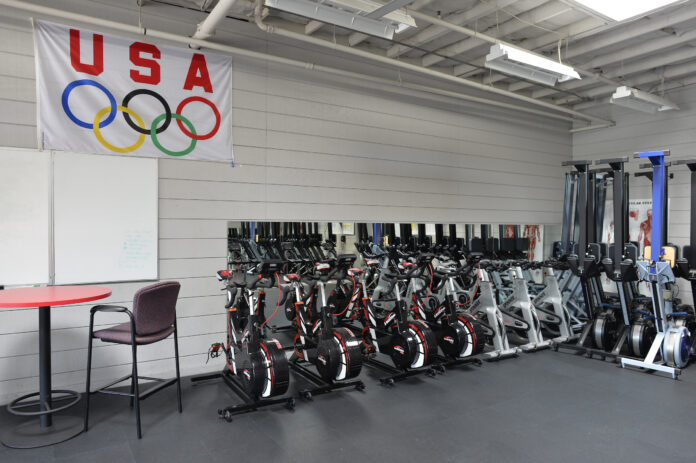
San Diego, California. USA. Gym Equipment stored in the corner. Boathouse, Lower Otay Reservoir, rowing training course, Olympic Committee's ARCO Training Center in Chula Vista California. {TIME} {DOW} 11/04/2013 [Mandatory Credit. Peter Spurrier/Intersport Images], ..
STAFF REPORTS PHOTO BY PETER SPURRIER
The United States Olympic & Paralympic Committee held its first meeting with the 44-member Team USA Council on Racial and Social Justice in August. The council focused on addressing four priorities: the right to protest and demonstrate; athlete voice and advocacy; institutional awareness and cultural change; racism and acts of discrimination. “We are grateful to this group of athletes and thought leaders who have joined the council, lending their perspective and dedication to help us confront the issues of racism and discrimination in sport and society,” said Sarah Hirshland, USOPC CEO. Olympic rower Grace Latz is the only rowing athlete on the council.
Emma Carlisle Reske, former Princeton men’s lightweight assistant coach, has been named men’s rowing assistant coach at Syracuse University.
Reske will join Dave Reischman and Jason Elefant as well as several others on the Orange coaching roster.
“I am tremendously excited to have the opportunity to join the hard-working and talented staff here at Syracuse,” Carlisle Reske said. “I am grateful to Coach Reischman for allowing me the chance to work with such an accomplished and competitive group of athletes. I look forward to contributing to many more successful seasons.”
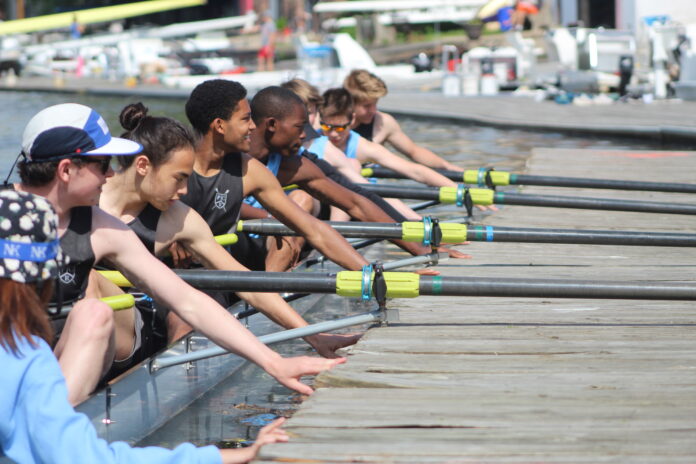
BY LUKE REYNOLDS PHOTO PROVIDED BY PHILADELPHIA CITY ROWING
The rowing community in the United States and abroad is experiencing a reckoning.
Since the Black Lives Matter movement surged in May and June, the rowing community has begun to take seriously the need to address the lack of diversity within its ranks.
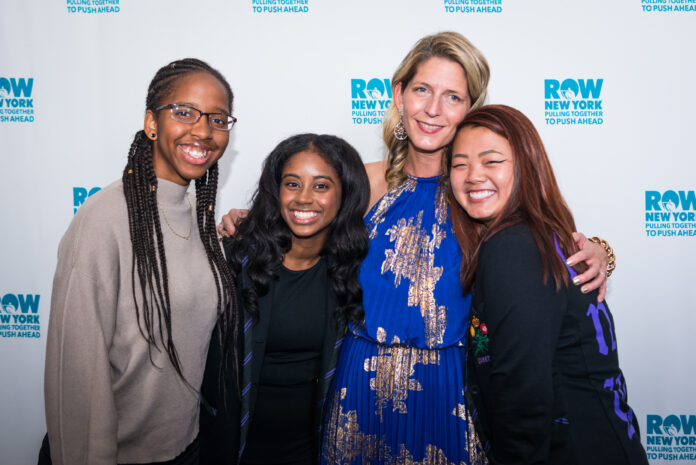
“There’s been an awakening,” Amanda Kraus, founder and CEO of Row New York, said. “People are hungry for information.”
The information rowing clubs are hungry for has largely been inaccessible, vague, or outright nonexistent. Despite the lack of resources, however, several clubs have found success in creating environments that reflect the communities they serve.
In a 2017 New York Times article titled “Rowing Toward Hope in a Troubled World,” Richard Butler, former inclusion manager at USRowing, explained his experience talking to athletes at various clubs throughout the United States.
“The kids I speak to in the inner cities tell me that rowing is a white sport,” Butler said. “But we need to recruit in the cities if we want to expand our talent pool.”
Will recruiting alone make rowing more representative? It helps, says Kraus, but it’s not the only way a club can better reflect its community. The first step: listening.
“There’s so much value in giving people space to talk and listening to them,” Kraus said. “People undervalue that. It doesn’t mean you’re going to solve racism, but you’re going to say, ‘I’m here, and I hear your pain. I can’t fix it, but I’m here and I care.”
The next step is finding a group of people within the local rowing community to champion the effort.
“Form a committee. Make sure the head of the boathouse is on the committee. Get four or five people who want to help, who want to champion this and be your allies. Sit down, and ask the following questions: Where do we get kids from? How do we make our boathouse inviting? How do we raise some money?
“Recruitment and retention are the keywords. How do you get kids who don’t normally think of themselves as rowers to join your program? And then, once they’ve set foot in the boathouse, how do you get them to stay?
“Part one in recruiting kids of color is to have not just white people doing it. In the beginning, that’s all we had–me, a 6-foot-1 white woman. I would tell these kids, ‘I know I’m this big white woman telling you to come row,’ and kids would laugh about it. Teenagers are my all-time favorite age because they will just laugh and be like, ‘OK, let’s try this.’
“Ideally, if you have someone of color doing the recruiting, that helps. ‘We can’t be what we can’t see,’ as they say.”
In addition to diversifying the recruiting team, pay attention to the informational material you bring to a recruiting event. That, along with anticipating questions, helps make athletes feel more comfortable trying something new.
“In the printed material and videos you use for recruiting, make sure kids can see people who look like them,” Kraus said.
Recruiting isn’t the end-all, however. Without partnerships and support from outside groups and agencies, increasing diversity–or having a club at all–can be impossible.
“You might have a kid say, ‘Well, I can’t swim,’ so you have to be there to say, ‘That’s OK. We actually do swim lessons all the time,’” Kraus said. “Or what if they say, ‘I’m going to get so hungry there,’ we are big believers in feeding everyone.
“Part two is saying, ‘OK, we have this person in the boathouse now. How do I make them feel as comfortable as possible so they stay?’”
Row New York has employed the city’s infrastructure to support its mission, along with partnering with various entities across the city to ensure its success.
“The biggest agency we work with is the parks department,” Kraus said. “They’ve been pretty amazing partners over the years. Our on-water sites are on parks property, so everyone, all the way up to the commissioner of the parks department, knows about Row New York and is a fan.
“We’ve put a lot of time and work into engaging with people in the community and getting their buy-in. We run programs for kids with disabilities during the school day, so we partner with the department of education. I wouldn’t say New York has been easy to navigate, but they have been great partners.”
In collaboration with Philadelphia City Rowing, Row New York published a widely shared Instagram post about “Eight Ways to Make Your Boathouse More Inclusive.” In June, the club also created a comprehensive resource library on its website to serve the larger rowing community.
“We were hoping that we could put something out that would help clubs make their organizations stronger and more inclusive,” said Caitlin Mance, executive director of Philadelphia City Rowing.
“We recognize that while the work that our organizations are doing is fantastic and very important, in order for there to be some systemic change in rowing, we need everybody else to do work, too.
“We need other boathouses to be more inclusive, so that when our kids leave our programs they have places to go where they feel comfortable when they’re at regattas and they’re not hearing racist comments.”
In addition to creating inclusive recruiting material and partnering with other organizations, including local government, Row New York trains coaches to help them better understand minority athletes and their particular circumstances.
“We have a ton of great, great coaches,” Kraus said. “Whether they’re white or people of color, they are at Row New York because they’re interested in not just coaching rowing. I always say to people ‘If you just want to make fast boats, that’s awesome, but this isn’t the place for you.’ You should care about fast boats and also youth development.”
Row New York uses a handbook that spells out the entire process, from the moment athletes try out for the team till they make the team. It includes informing athletes via telephone when they’ve made the team and telling them what to expect next. Also important: being able to communicate with the parents of athletes who do not speak English.
“Let’s say you make the team and you’re a part of my cohort of ninth graders. I’m going to call you that night, and if your parents don’t speak English, I also speak Spanish, and I’m going to get you on the phone and say, ‘Congratulations! We’re going to see you on Monday. Do you know what to wear?’ And then on the first day you come in, I’m going to introduce myself, say congratulations again, and make sure you feel comfortable here by establishing an emotional connection.”
What works for Row New York or Philadelphia City Rowing may not work for other clubs in America, Kraus concedes. Nevertheless, it can be done.
“It takes money. It takes fundraising. But the only one who can stop you is yourself in terms of leadership. You have to want to do it. Not everyone has to become a $5-million program. You begin with, ‘How do we get a few kids of color in the program? Then, how do we double that next year?’ Make a three-year plan.
“Yes, it’s hard, but a lot of it is that people don’t want to do it enough. Maybe now they will.”
Just prior to being announced as the new USRowing CEO, Amanda Kraus took some time to talk with Rowing News about her decision to leave Row New York, take over an organization that has been without permanent leadership since former CEO Patrick McNerney left less than three years into his tenure, and one that is struggling in the wake of the Covid-19 pandemic.
Here is the full question and answer session.
Rowing News: Why leave Row New York after building it into such a successful organization to take over the helm at USRowing and all the challenges it is facing?
Kraus: I started Row New York so that it would exist, and it’s definitely been a privilege and a joy to lead it for 18-years, but it is in a really good place right now, pandemic aside, in terms of stability and reputation. It has great fundraisers and a fantastic, functional board, so it doesn’t need me anymore. It has a great executive director and senior team and all those things.
So, when this role opened up and I started talking with a couple of board members at USRowing, I thought, well, I know there is a lot of work to do and I know that there is a lot of change that needs to happen to make USRowing successful, and I have enough humility to know that there is a chance I won’t be successful, but I would like to try.
And I think there is enough goodwill, I think there are enough smart people, I think there are enough resources in the rowing world, that USRowing can be successful. I would like to try to complete that puzzle.
Rowing News: What do you see as the first priorities? How and where do you start and what do you hope to accomplish?
Kraus: I think I have to start by doing a lot more listening than talking, which is my style, at least for sure in the beginning. I have my idea of what needs to change and what needs to be done, but those are mine, and mine alone. I only have one vantage point so I think I need to have a lot of conversations with stakeholders, and not just the loudest voices, not just the people who are already filling up my inbox, but reach out to the heads of clubs, and masters rowers, and adaptive rowers, and national team members, and ask them what’s working for you, what’s not working, what can USRowing do better? And then, ideally, I think I will start to see some themes coming out of that. You don’t want to get just one person’s opinion, or five people’s opinions. What are the themes? What do people want from this organization that they are not getting?
“I think I have to start by doing a lot more listening than talking, which is my style, at least for sure in the beginning.”
— Amanda Kraus
And then it is spending some time digesting all of that, thinking about, OK what am I hearing and then how does it align with what is actually possible, and then bringing that back to the board and saying, OK, this is what I think we can do. I can’t make a plan yet until I hear from folks.
What I do feel confident about, one thing I know needs to happen, is there needs to be a culture shift. I think the sport needs to be more inclusive. I think the sport better needs to reflect the diversity of our country. I think a lot of people are thinking that now, so that to me is the low hanging fruit.
I think the organization itself needs to work on transparency and vision and direction and communicating that back to its stakeholders, and really being an asset, learning how to be an asset and to be a value to members and membership organizations.
Rowing News: If diversity is a low hanging fruit, why have past diversity efforts failed to accomplish any real change?
Kraus: I don‘t know that I can answer that question. I could take guesses. I haven’t been there. I think it is one thing to want to diversify a boathouse, or a club, a program, a team, and it’s another thing to actually do the work. All I can say for sure is I know how to do the work. And you have to want it to happen, you have to really want it.
It is more work. You have to find the resources. You have to find the champions behind diversity and inclusion, and I can’t say why it hasn’t happened. I just can say I know how to make it happen, and that’s something I feel really good about. And I think that people are hungry for that, based on the phone calls I’ve been getting at Row New York in the last couple of months, with all the racial justice work, and the Black Lives Matter movement, and from people from all around the country asking what can we do.
So, I think there is an appetite, which is nice, for diversity inclusion. Hopefully, it’s not a moment in time, but I’m excited for that. I’m excited for USRowing to be the go-to place that people call instead of the Row New Yorks, that people will start calling USRowing and say I want to diversify my boathouse, I want to make my program more accessible, and that USRowing will be able to provide answers and guidance and eventually financial support and grants and be able to weave it more into the culture of the organization.
Rowing News: Finding funding and sponsorships to support the organization has been traditionally difficult. Do you think you can help USRowing find sponsorships, and get financial support outside of what is brought in from the National Rowing Foundation for the national teams?
Kraus: As I said, I have to talk with the stakeholders first before answering that and saying what I have to do, but left to my own devices I would say that generating more revenue is key. I think [USRowing] hasn’t had the resources it’s needed for as long as I have known about the organization. Maybe it had better revenues in years past, I don’t really know. But I do know that’s a big piece right now, how do we work on the income side and generate more revenue?
I think the opportunities I see are for sure national grants. At Row New York, we’ve been mostly limited to New York City-based foundations, but are there foundations that want to support a larger movement, to support rowing, whether it’s outreach rowing or it’s para-rowing, or it’s the national team. I think there could be more government support available right now. They have benefited from VA support, but are there other opportunities.
And then I think there is a huge opportunity for USRowing to start fundraising from individuals, for all of the efforts of the organization, to really start approaching individuals and say, hey, we’re starting a new coaching education program, or we want to expand outreach rowing, or we want to find more support for the national team, and really start a robust fundraising plan.
And the simple reason that hasn’t worked at USRowing is because there is no development team. So, you can’t do any fundraising if you don’t have that team in place. The sense I’m getting is the board is excited about starting that work.
Rowing News: What do you think is your biggest challenge walking in the door?
Kraus: I think I’m coming from a place where the mission was very pure, and it was very easy to stay focused on it. I think I am walking into a place where there is just going to be competing priorities, from different stakeholders. That’s only natural, people have the things that they care about within the context of rowing.
And so, I think one challenge I’m going to have is, how do you balance the wants and needs of all of these stakeholders without getting completely pulled into those weeds and losing sight of the big picture, how and when can I put the blinders on and say, Ok, let’s quiet the noise for a minute and make a plan and start to move forward.
Rowing News: What do you see as the least challenging going into a very a critical year?
Kraus: Of course I think most the challenging probably goes without saying and that is we are in a global pandemic. But I’ve been living that at Row New York, so that is not entirely new to me. And I think the least challenging is that when you take out all the noise, and you take out all the competing interests, and maybe some angst, at the end of the day the sport is just overflowing with really competent, really smart driven people.
There is no shortage of really excellent individuals who I think can be allies in running a great organization. Obviously, at the end of the day, I will be the CEO, so it’s not as though I am a team of thousands but, that said, I think so much of the success I have seen at Row New York has been because I know how to lean on other people and bring them on as champions and to say we want to get X, Y, and Z done, can you help.
And rowers, you just have to sort of get them focused in and there is nothing that they can’t do. So, it’s get them in the boat, tell them to start rowing. That’s my take on it.
Rowing News: Can you describe what you mean when you use the word “noise?”
Kraus: Obviously, there are a million opinions out there of what to do with every aspect of this organization, and the sense I am getting is a lot of people feel ownership over it, which can be a good thing because ownership brings along with it care and loyalty and all those good things.
But I think when you have too many cooks in the kitchen, or you are cooking for too long, it can stand in the way of progress. And that to me is noise, when you’re letting all of the feedback and all of the conversions get in the way of, ok what is our plan, and let’s move it forward.
And that’s not to say I don’t think you need to have conversations and get feedback and all those things, but at a certain point you need to focus in and get the work done.
Rowing News: When do you plan on starting and how long will you be listening, and at what point will you gather everybody around and say I’ve listened, this is what I think, and it is time to make decisions?
Kraus: Listening, because of Covid, I think that’s going to be over Zooms and that will be right away, like first order of business, so I would say three or four weeks of listening and digesting. I think that’s what I will need to sort of see and hear what the themes are. I don’t want to spend six or eight months just taking in feedback. I want to do it in a really deliberate way and then I think I will know enough to start to understand things better in terms of the needs and the wants of the stakeholders.
Rowing News: Are you nervous?
Kraus: Yea, of course I’m nervous! How could I not be nervous, I’m getting emails from people saying, ‘all of my hope is in you to change the sport of rowing in the entire country’. That’s just a little bit of pressure. But I also think I am much more excited than nervous. I think I know that I love a challenge, and I know there are good people out there who are going to be helpful so while I am nervous, I am definitely more excited.
Eighteen years after founding Row New York and leading its development into one of the most successful inner-city rowing programs in the country, Amanda Kraus felt it was time for a new challenge.
Monday, she accepted a new leadership position that will fulfill that wish when she was named the new chief executive officer of USRowing. Kraus replaces Patrick McNerney, who was hired to lead the national governing body of rowing in August of 2017, but resigned from the position just after the first of the year.
“I’m excited and optimistic,” Kraus said of being named to the post. “I started Row New York so that it would exist, and it’s definitely been a privilege and a joy to lead it for 18 years, but it is in a good place right now, pandemic aside, in terms of stability and reputation. It has great fundraisers and a fantastic, functional board, so it doesn’t need me anymore.
“So, when this role opened up and I started talking with a couple of board members at USRowing, I thought, well I know there is a lot of work to do and I know that there is a lot of change that needs to happen to make USRowing successful, and I have enough humility to know that there is a chance I won’t be successful, but I would like to try.
“I think we’re at an exciting inflection point at USRowing where we have an opportunity to change and grow. I look forward to leading us into that future while building on our strong foundation. I plan to do a lot of listening to all of the stakeholders. I need to understand what everyone wants and needs from USRowing.”
Kraus, who becomes the third woman to lead USRowing in the association’s history, and the third CEO since the 2016 Olympics, said she will begin work on November 1. The two women who preceded her were Sandy Hughes and Paula Oyer, who held the position under the former title of Executive Director.
Following McNerney’s departure, Susan Smith, USRowing chief domestic officer, was named interim CEO. It was her second stint in that position. Smith had also served as interim CEO following the departure of Glenn Merry, who held the role of CEO from 2005 to 2017.
“We are thrilled to announce that Amanda will be joining USRowing as our CEO later this fall,” said USRowing Board Chair Marcia Hooper. “She brings tremendous leadership and fundraising skills, community development and outreach experience, and diversity and inclusion efforts to our team. She is a proven leader in our sport, having built Row New York into one of the country’s most admired rowing organizations.”
Kraus will assume the helm during a tumultuous year at USRowing which has been significantly impacted financially by the Covid-19 pandemic. Her hiring comes at a time of increased pressure to diversify the sport in the wake of a national public outcry and the proliferation of the Black Lives Matter movement.
Given that Kraus is the founder and chief executive officer of Row New York, a program designed to introduce young people from different socioeconomic backgrounds to competitive rowing, while also providing academic support, she is well placed to help USRowing address its diversification efforts.
Leading that effort is among the priorities that Kraus will focus on, and something she believes she knows how to do.
“What I do feel confident about, one thing I know needs to happen, is there needs to be a culture shift,” she said. “I think the sport needs to be more inclusive. I think the sport better needs to reflect the diversity of our country. I think a lot of people are thinking that now, so that, to me, is the low hanging fruit.
“I think the organization itself needs to work on transparency and vision and direction and communicating that back to its stakeholders, and really being an asset, learning how to be an asset and to be a value to members and membership organizations.
“It is one thing to want to diversify a boathouse, or a club, a program, a team, and it’s another thing to actually do the work. All I can say for sure is I know how to do the work. You have to want it to happen, you have to really want it.”
In addition to leading a diversity effort, another of Kraus’ immediate challenges will be finding a way to rescue the organization’s financial situation. USRowing has historically found it difficult to stay financially healthy, and has lacked the kind of outside sponsorships that fuel some of the bigger sports governing bodies in the United States, relying heavily on membership and money from running regional and national regattas.
With the Covid-19 pandemic wiping out the rowing season, the financial loss has left USRowing revenue-challenged. As much as she is experienced in leading a large and successful rowing program, Kraus has also been recognized for her ability to find funding, resources, and grants.
Since starting Row New York in 2002 with a borrowed shell and eight teenagers, Kraus has raised more than $30 million for the program. The non-profit organization currently has an operating budget of more than $5 million and serves youth of all ages in three New York City locations and in a central community boathouse and learning center.
Row New York is also in the process of constructing a new state-of-the-art facility in Manhattan, to be named the Row New York Community Boathouse and Learning Center, next to the organization’s existing boathouse. The new boathouse will enable Row New York to expand both its rowing facilities and the space it uses to run academic programs and college prep classes.
Of the projected $40 million cost, almost half—$19.5 million—has already been raised during an ongoing large-scale capital campaign. In addition to the boathouse and learning center, the project will include revitalizing a surrounding city park and the installation of a community dock.
“I think (USRowing) hasn’t had the resources it’s needed for as long as I have known about the organization,” Kraus said. “Maybe it had better revenues in years past, I don’t really know. But I do know that’s a big piece right now, how do we work on the income side and generate more revenue?”
Kraus graduated from the University of Massachusetts, Honors College with a BA in English, and was captain of the university’s DII national championship rowing team. Following her undergraduate education, Kraus earned a MA in Technology in Education from Harvard University’s Graduate School of Education.
It was during her time in Boston that she sought an opportunity to coach girls from under-resourced communities at GROW Boston, an outreach program run from Community Rowing, Inc.
When she returned home to New York City, Kraus started Row New York.
In addition to leading Row New York, Kraus has been an adjunct professor at the New York University Robert F. Wagner Graduate School of Public Service, teaching graduate-level classes in Social Entrepreneurship and Fundamentals of Fundraising since 2014.
Kraus has been recognized for her efforts and was named by President Barak Obama’s Council on Fitness, Sports and Nutrition as winner of the 2012 Community Leadership Award. In 2014, she was named winner of the New York Community Trust-New York Magazine Nonprofit Excellence Awards.
Kraus has participated in and presented at numerous USRowing panels on diversity outreach and fundraising and was twice honored by the association.
She was the recipient of the John J. Carlin Service Award for “significant and outstanding commitments in support of rowing,” in 2008, and in 2011 she was presented with the Anita DeFrantz Award, awarded by USRowing for “achieving measurable success in expanding diversity opportunities in rowing.”
Rowing News had a question and answer session with Amanda Kraus prior to the announcement to look more into what she hopes to accomplish at USRowing. Read the full Q&A here.
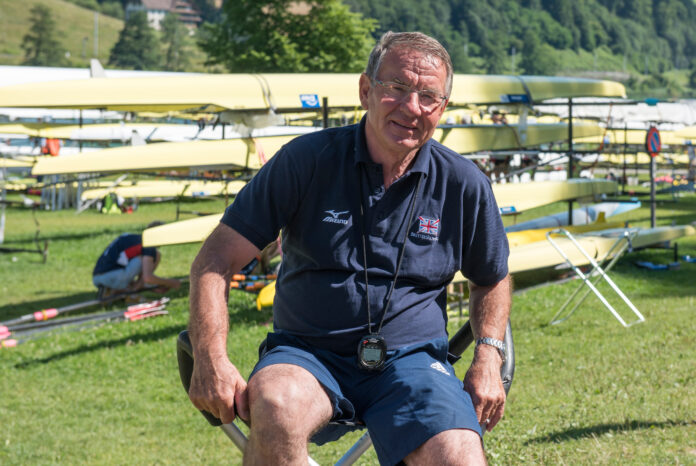
Lucerne, SWITZERLAND. 2017 FISA. Rowing World Cup III.
GBR Rowings Chief Coach: Jurgen GROBLER,
Venue: Lake Rotsee, Rowing Lake
11:37:15 Thursday 06/07/2017
[Mandatory Credit. Peter SPURRIER/Intersport Images.
FROM BRITISH ROWING PHOTO BY PETER SPURRIER
London, UK – Jürgen Grobler OBE has stepped down as Chief Coach of the GB Rowing Team after 28 years with British Rowing.
Regarded by many as the greatest Olympic coach of all time, Jürgen has decided to end a glittering coaching career that has seen him personally coach eight gold-medal crews from Great Britain in each of the past seven Olympic Games. Before moving to the UK in 1991, he had an outstanding coaching career in rowing with the former East Germany.
Jürgen has coached some of Great Britain’s greatest Olympic champions including Sir Steve Redgrave, Sir Matthew Pinsent, Pete Reed and Andrew Triggs Hodge. His first two GB gold medals – in Barcelona (’92) and Atlanta (’96) – were with the pair of Redgrave and Pinsent.
As Chief Coach for Men, and latterly Chief Coach for Men and Women, Jürgen has directly coached 20 Olympic champions to 33 gold medals from eight crews for Great Britain. Additionally, a staggering 23 crews have medalled at World Championships since 1991 of which 16 took home gold.
Jürgen Grobler said: “I have had the most incredible experience with the GB Rowing Team working with fantastic British athletes for nearly three decades. This has been a hard and difficult decision but British Rowing has big plans for Paris 2024 and we want to organise it now to give the GB Rowing Team the best chance of success. I can’t commit for the nextfour years so I have resigned in order to let everything start now.”
Paying tribute to his remarkable Olympic career, International Olympic Committee President Thomas Bach said: “Behind every great athlete and every great team is a great coach. They are the unsung heroes of sport. So it gives me great pleasure to pay tribute to Jürgen Grobler who is an exceptional talent and someone who has benefited so many athletes. His dedication is a great example for everyone in the Olympic Movement. I wish him all the best for the future.”
Reflecting on his long history of success at Olympic Games and the impact he has had on the sport of rowing, Jean-Christophe Rolland, FISA President said: “Jürgen’s contribution to rowing as a coach is simply tremendous. He has one of the most impressive achievement lists in the rowing landscape and probably even beyond in the world of sport. Jürgen first coached a crew to an Olympic medal back at the 1972 Olympics when he was just 26 years old and then continued to coach Olympic medal-winning crews through to the last Olympic Games in Rio.
“Jürgen is very much respected among his peers and they all know of his knack of putting together the right combinations in team boats and also the knack of getting his crews to peak just at the right time. We will miss seeing Jürgen at international events especially seeing him biking along beside races – usually out in front.”
When Jürgen arrived at the Leander Club to coach in 1991, Steve Redgrave already had two Olympic titles to his name but Matthew Pinsent was just 20 years old with two senior bronzes. Jürgen moulded them into one of the best pairs of all time and, after Atlanta, presided over their move into the four which won gold in Sydney. With Tim Foster and James Cracknell, this crew won world titles in ’97, ’98 and ’99 and their race for gold in Sydney gained worldwide publicity, much of it attracted by Redgrave’s quest for a record fifth Olympic title.
Jürgen continued his winning streak throughout the early 2000s and into a hugely successful home Games at London 2012, where the British team dominated on the water. Most recently at the Rio 2016 Olympic Regatta, he delivered gold medals in both the men’s four and men’s eight. He was subsequently awarded Sports Coach UK’s Lifetime Achievement Award in November 2016 and Lifetime Achievement Award at the BT Sports Industry Awards in April 2017.
Reacting to his decision to step down, British Rowing Chief Executive Officer Andy Parkinson said: “On behalf of everyone involved in rowing in Great Britain, I would like to say congratulations and an enormous thank you to Jürgen for everything he has achieved during his 28 years with British Rowing.
“I am naturally very disappointed that Jürgen was unable to finish his amazing career at the Tokyo 2020 Olympic Games scheduled this year as I am sure he would have finished on a high. What happens next is a discussion for another time – now is the time to celebrate a fantastic coaching career and an incredible person.
“I would like to wish Jürgen the very best for the future and look forward to seeing him on the towpath at our National Training Centre (Caversham) anytime. He leaves an inspiring legacy at Caversham, across the sport in the UK and around the world.”
Jürgen has been a key member of Team GB since 1992 and Sir Hugh Robertson, Chairman of the British Olympic Association looks back on his massive contribution during this time: “Jürgen Grobler has been an extraordinarily successful coach in one of Team GB’s most important sports. He has coached, inspired and supported athletes to deliver their best results when it mattered, Games after Games, across generations of athletes, and has been a key ingredient in Team GB’s phenomenal success. As a coach and as a man, he will be hugely missed.”
Jürgen has always believed that Great Britain’s success at international level has been the result of a solid partnership between British Rowing, Team GB and UK Sport. Dame Katherine Grainger, Team GB’s five-time Olympic medallist and British Rowing alumna said: “Over the last twenty years, it has been incredible to see Jürgen lead the men’s team onto the podium time and time again, coaching many athletes to fulfil their dreams and successfully represent Great Britain on the global stage.
“Whilst I was never directly coached by Jürgen, he was an undeniably influential figurehead of the rowing team. We shared an extraordinary time at the Sydney Olympic Games in 2000; my first Olympics and Steve Redgrave’s memorable last. Jürgen may have been finishing his partnership with Steve but he was just beginning a bright new legacy with the British men’s four. His ability to create successful crews year after year, decade after decade, is practically unparalleled. To this day it feels a tremendous privilege to have been part of British Rowing history and Jürgen has undoubtedly and deservedly cemented his name in the record books.”
Working with athletes every day has always been a huge motivation for Jürgen and four-time Olympic Champion Sir Matthew Pinsent was glowing in his praise of his former coach and mentor: “Jürgen has, for a number years, credibly laid claim to be the best rowing coach in history and I mark it as a privilege to have had him guide my career. He has single handedly constructed the longest winning streak in Olympic gold medals in Britain and his staying power and commitment alone are remarkable. He’s always coached with a deep passion for his sport and his athletes. He’s been one of the greatest assets for British rowing before, during and after our home Games in 2012.”
Jürgen is confident the GB Rowing Team will continue to take on the world’s best and challenge for medals at Olympic Games and World Championships having topped the medal table at the last three Olympic Games and two of the last three Paralympic Games. “For nearly 50 years of my coaching career I have been in the driving seat, working with athletes and fellow coaches. People trusted me to help them achieve their dreams but the show must go on and I really wish the British team well,” Jürgen said.
Mark Davies Chair of British Rowing added his praise while also expressing his disappointment that his career with Great Britain has come to an end: “He has been the architect of close to three decades of GB rowing dominance and he has defined how British Rowing is respected both internationally and domestically. I am very disappointed to see Jürgen go and I would have loved to see him stay through to the Tokyo 2021 Games but I believe we have a great team at Caversham to build on Jürgen’s legacy in Tokyo next year and beyond.”
British Rowing Director of Performance Brendan Purcell now has the task of creating and overseeing a new coaching structure at the GB Rowing Team and preparing British Rowing’s high-performance programme for the Tokyo 2020 Olympic and Paralympic Games and beyond. In the meantime, Brendan paid tribute to Jürgen for his outstanding service to the Team and rowing: “Jürgen has left a legacy in our sport of sustained medal success and a commitment to performance excellence that we have all been inspired and influenced by.
Our responsibility as rowers, coaches, sport science medicine practitioners and team staff is to use that inspiration and honour his legacy starting next summer in Tokyo and then onto Paris.”
Jürgen informed senior athletes, his crew and colleagues on 20 August that he has stepped down and Rio 2016 Olympic Champion in the men’s four Mohamed Sbihi paid tribute: “This news is emotional for me and is a big shock. Jürgen is a father figure to me. Everything I have achieved in my career is down to a handful of people and he is the main reason for my success.
“As a team we now have to honour his legacy through our performances over the next year and in Tokyo.”
World bronze medallist and women’s senior squad athlete Jess Leyden added: “I feel really privileged to have worked with Jürgen for the time that I did, both as a rower and as an athlete rep. He’s given so much to the sport and has achieved so much. We’ll definitely see him around the towpath, I’m sure.”
Jürgen acknowledged that there are many more people who have helped him to so much gold medal success. “I would like to thank the whole rowing family for their fantastic support throughout my entire career and in particular the British fans. They have travelled the world to support the team and I have always had big respect for that and also for the many parents and families who support the athletes through good times and bad behind the scenes.
“Also, teams within teams have always been so important to me. Take spares who didn’t make selection; their input was always just as crucial as they allowed the team to progress. The athletes will think that I just said that to make them feel better but I mean it. It was always about the team.”