Home Blog Page 234

A Simple Plan

BY RICH DAVIS
PHOTO BY PETER SPURRIER

Week 1: Go long. Head out for extended rows at low stroke rates and with firm pressure on the paddle. Rowing at a rate of 24 or lower helps engrain movements and makes it easier to make technical adjustments.

Week 2:  Focus on controlling the recovery and perfecting the proper sequence. This begins with the hands coming away, and then the knees rise, the back swings to the correct body-over position, the hands roll the blade square, and the blade is dropped into the water with slight lift from the shoulders.

Week 3: Shift your attention to the drive, initiating this phase of the stroke with the legs and accelerating throughout. Be sure not to begin the drive with the arms or back. The legs are stronger. The arms and back should be transferring the power of the legs to the blade.

Week 4: Clean up your release. As the hands approach the chest, continue to pull strongly until near the chest, then push down with the outside hand, feather, and relax your shoulders and arms.

Week 5: Revisit the subtle movements of the stroke through the catch, finish, and release.

Week 6: Get race-ready. Practice racing starts and shifts to body pace. Incorporate power 10s, short bursts, and the finish sprint.

Peanut Butter’s Benefits

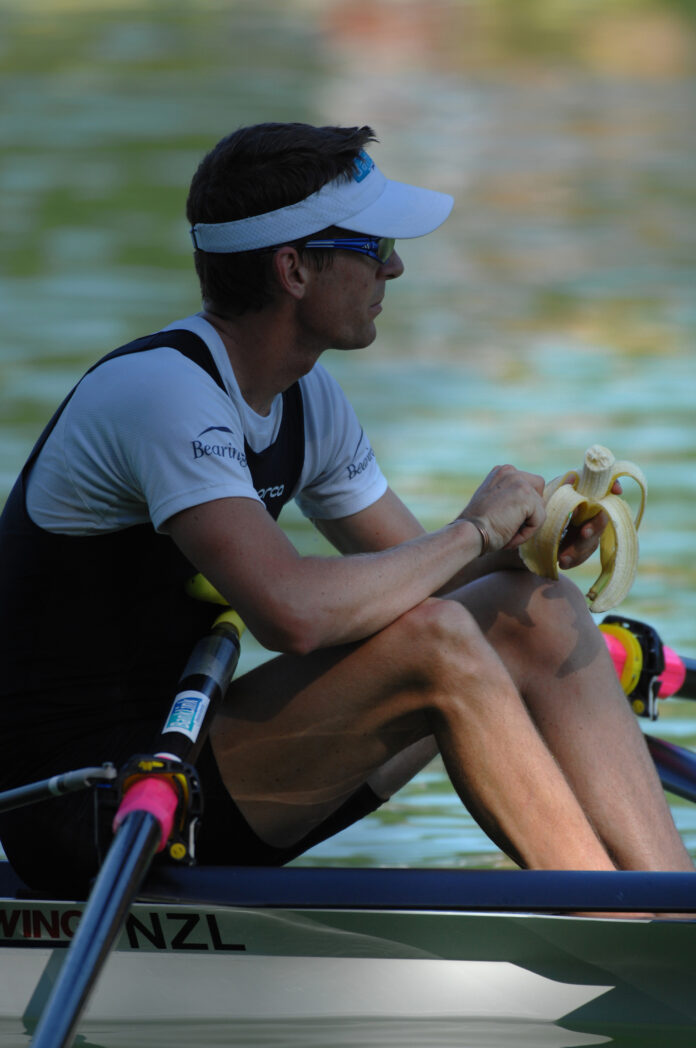
Lucerne, SWITZERLAND,NZL LM1X Grant DUNCAN, eating a Banana, at the 2007 FISA World Cup, Lucerne, on the Rotsee Lake, 14/07/2007 [Mandatory Credit Peter Spurrier/ Intersport Images] , Rowing Course, Lake Rottsee, Lucerne, SWITZERLAND.

BY NANCY CLARK
PHOTO BY PETER SPURRIER

In my humble opinion, peanut butter is one of the best sports foods around. Not only is it yummy, it is also health-promoting and performance-enhancing. If you are among the many athletes who try to stay away from peanut butter because it is fattening or too fatty, think again. While any food eaten in excess can be fattening, people who eat peanut butter five or more times a week are not fatter than nut avoiders. A Purdue University study reports subjects who ate peanuts daily did not overeat total calories for the day. That’s because peanuts and peanut are satiating; they help you feel pleasantly fed. Peanut eaters tend to intuitively eat less at other times of the day. It has other health benefits as well. Peanut butter contains primarily health-promoting mono- and poly- unsaturated fat that knock down inflammation. People who eat peanut butter and nuts five or more times a week have lower markers of inflammation than nut avoiders. For athletes who get micro-injuries every time they train, an anti-inflammatory food such as peanut butter is a wise choice. What’s good for the body is also good for the brain. Research suggests that peanut butter eaters benefit from improved brain-blood circulation and mental function. This contributes to enhanced processing speed and better short-term memory. Plus, a diet rich in healthy fats helps slow cognitive decline.

Robinson Named NYSCRA President

STAFF REPORTS
PHOTO PROVIDED

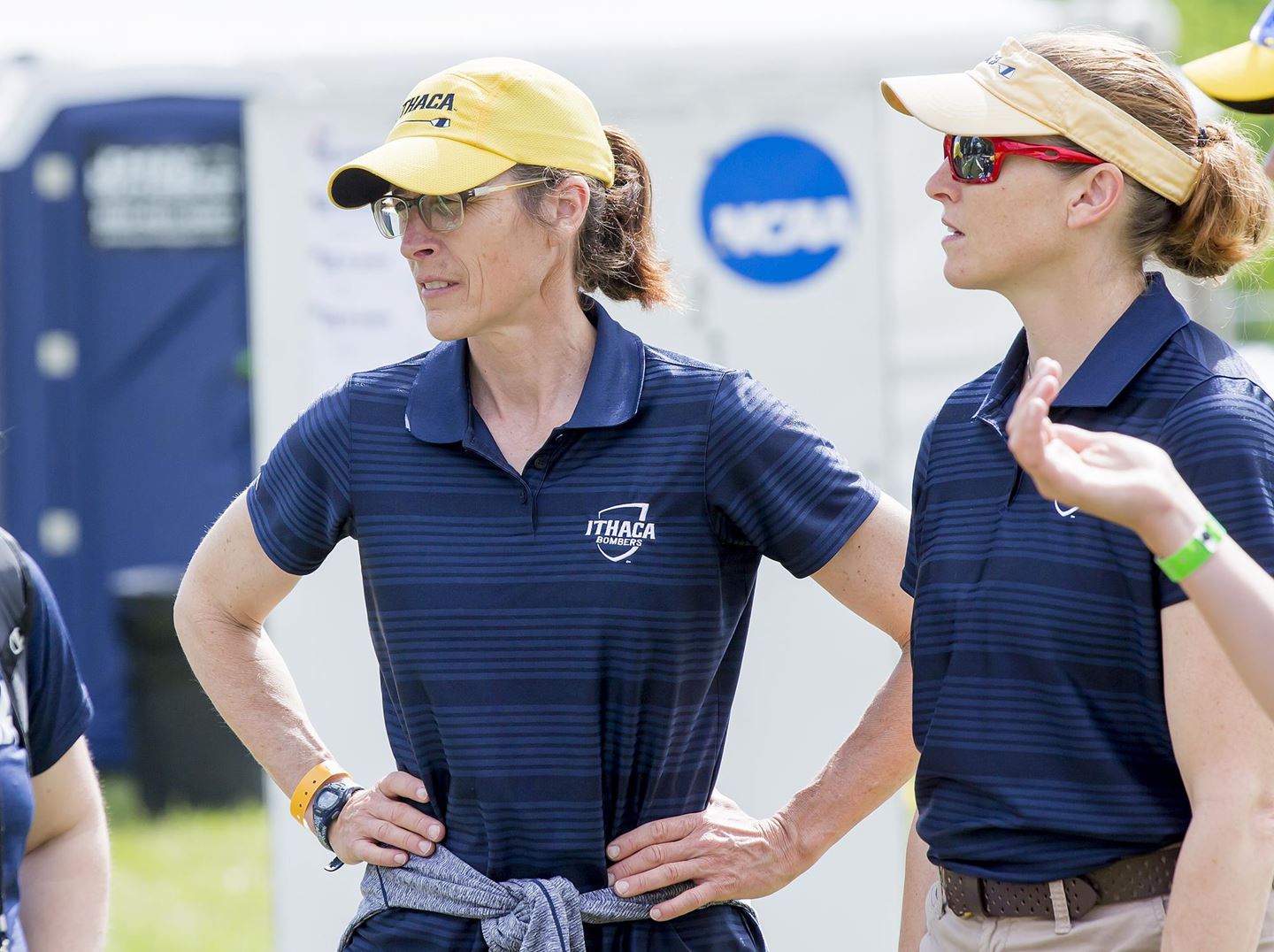
Ithaca College’s women’s rowing head coach Becky Robinson has been named President of The New York State Collegiate Rowing Association (NYSCRA).

Robinson who has been head coach of the women’s rowing program for 27 years was elected to the position by the also newly-elected NYSCRA Board of Directors in September.

“Covid gave the coaching world time to work on some things that we let go,” said Robinson.

“The NYSCRA hasn’t had a board for quite a few years and Dan (Robinson) was keeping it going with the help of one or two others. Each year, we would hold the NY State Rowing Championships, and ultimately, there were complaints with no one available to make appropriate changes. Zoom and the ease of online meetings helped pull the rowing coaching community together and we have had more conversations the past six months than we did in the ten years prior. A group of us got started, realized that the first step was to elect a board and then update the bylaws. At this point, our main focus is to negotiate the terms with SRA (Saratoga Rowing Association) and improve the NY State Rowing Regatta which is held the first Saturday in May in Saratoga Springs N.Y.”

Concept2 Holiday Challenge Back for 2020

Racing at the 2020 C.R.A.S.H.-B's is underway. Photos by Lisa Worthy.

STAFF REPORTS
PHOTO BY LISA WORTHY

The 2020 Concept2 Holiday Challenge is underway.

The event, which will run from November 24 to December 24, is a charity event in which participants row, ski or ride 100k or 200k meters between American Thanksgiving and Christmas Eve on the Concept2 RowErg, SkiErg, or BikeErg to raise money for charity.

Four charities were selected for this year’s event including The Pocock “A Most Beautiful Thing” Inclusion Fund, Doctors Without Borders, Direct Relief, and Everyone Eats.

For every participant who rows, skis, or rides 100k meters during the challenge, Concept2 will donate $.02 per kilometer (1000 meters) to the participant’s choice of this year’s charities. Once you get beyond 100k, Concept2 donates $.04 per additional kilometer.

In 2019, more than 9,500 people participated in the event. Gensen Palmer from Madrid, Spain, logged the most meters for the 2019 event totaling 2,372,000 meters.

The Year of Living Resiliently

PHOTO AND STORY BY ED MORAN

Not far into the pine woods along the Squamscott River in Stratham, N.H., at the end a car-wide dirt road that branches off Boat Club Drive, is a small wooden double-door shack that once served as a hunter’s retreat, but for more than 36 years has been a boathouse for nine single shells.

It can’t be seen on a Google overhead satellite map, but most mornings the sun penetrates the green canopy to cast enough light for Michael McGill, 86, and Mary Beth Weathersby, 70, to prepare their matching Carl Douglas wooden single shells for their daily row.

At least five days a week, sometimes six, McGill and Weathersby arrive at about 6:30 a.m. and set their boats out on slings. Then they carry their oars a few dozen yards down a narrow path to a small dock that juts past the reeds out into the water. There, they launch on the Atlantic-fed river and choose their direction of the day.

Once launched, they can head toward the Great Bay or toward downtown Exeter and under the bridge that carries NH-101. A round trip either way is about six or seven miles. Either route seems fine to the retired physicians who have made the trek to the river from their seacoast home in Rye a central part of their lives since the end of their careers.

The direction they choose depends on the tide and wind, but not much else. It’s being on the water that matters.

The pine-grove shack and the tidal estuary are their place of solace and their way to stay healthy, especially this year when a pandemic engulfed the world, forced most elderly people to stay inside, and caused rowing to cease across the country through late winter, all of spring, and most of summer and fall.

When Covid-19 first swept the world, neither McGill nor Weathersby could imagine not rowing. It’s what they love to do. The pandemic was not going to change that.

 “This is such a beautiful place.” said McGill. “There is no way we would have stayed away. We’re rowers, and that’s what we’ve been doing for years, and this was our rescue package.”

“This is just about the greatest place on Earth,” said Weathersby. “We think about being here all winter long. I come here to try to take a better stroke, and to enjoy the river, and the most beautiful boat I ever had.

      “We row and go home and do the laundry, nap, put on masks and get groceries and avoid it all. Then we wake up and do it again the next day.”

The devotion of the Squamscott Scullers would be inspiring at any time, but in this year of pain and so many unknowns, the little club and its dedicated rowers take on added significance, showing that there’s another side to the pandemic and proving that life, and the sport of rowing, will continue. It was the encouraging theme of a tumultuous year.

 While there was loss in the canceled seasons and among the ranks of collegiate teams–and more programs are likely to be scrapped–rowers will always find the water. Like the Squamscott Scullers, rowers row because it’s what they love to do.

Across the country, rowers, coaches and club administrators, after being shut in and away from water at the start of the pandemic, opened lines of communication from coast to coast to remain connected and share planning for a safe return to rowing.

Their collective response to the shutdown certainly ranks high as one of the “Best Of” moments in rowing for 2020.

Just a few days into the pandemic, Matt Logue, executive director of Pittsburgh’s Three Rivers Rowing, and Ted Benford, executive director of Boston’s Community Rowing Inc. (CRI), began a Zoom call and invited coaches and club administrators to join. Attendance expanded every week until the sessions included up to 20 representatives from clubs everywhere in the U.S.

Every week, they shared ideas and plans for returning safely to the water and keeping members connected. When restrictions lifted enough as spring inched toward summer, singles became the go-to boat to such a degree that boatmakers could barely keep up with new orders.

The calls continued through spring and summer, and soon waterways filled with rowers in singles or in small groups called pods, under the careful observation of coaches. In clubs that didn’t have enough singles to serve the membership, rowers who owned boats made them available to others.

Through online tutorials, group-led virtual workouts among clubs, and a series organized by USRowing, the community stayed active and fit while staying safe and dreaming about when the darkness would lift.

“The way the community came together, between the USRowing webinars and the Friday call we started, how it grew and brought people together who normally wouldn’t have the opportunity to talk to each other, helped connect us all to share resources,” Logue said. “It was an incredibly positive silver lining of an otherwise pandemic-stricken year.

Along the Charles River, rowers whose clubs were shuttered launched from the banks in singles and continued through the summer. Clubs began designing protocols that would allow them eventually to reopen their boathouses and docks and get members back on the water.

Some organizations, such as the Conshohocken Rowing Center outside Philadelphia, pulled together a fleet of singles and opened sculling classes for beginner to advanced rowers. Through summer and into the fall, kids pulled into the parking lot, filled out online health questionnaires, and entered the boathouse. After following Covid safety guidelines, they set their boats on the Schuylkill and rowed. The initiative attracted more than 150 young rowers from the surrounding area.

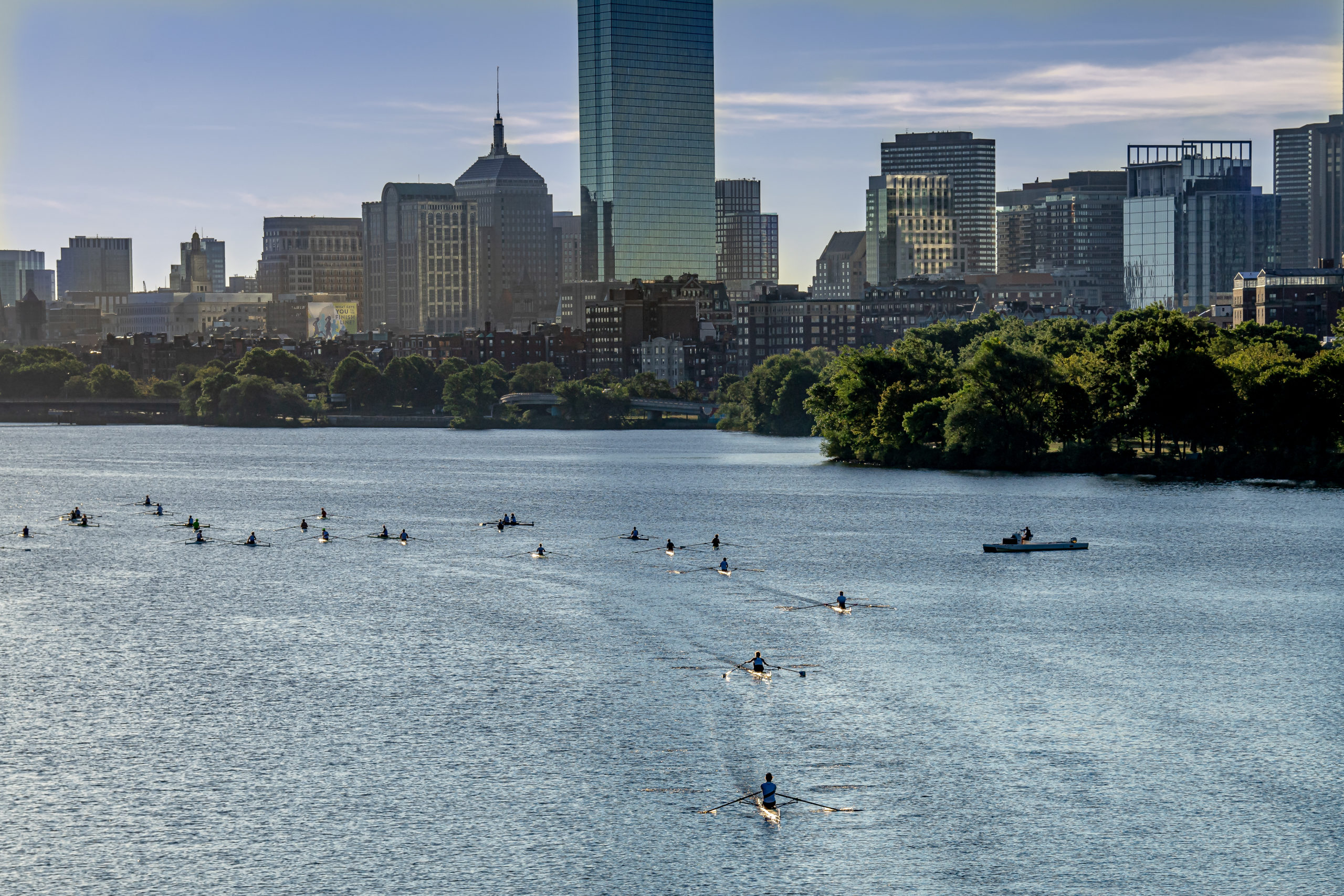
There would be no formal racing, no fall regattas, such as the Head of the Charles, Head of the Schuylkill, and Head of the Hootch. But tradition survived, and rowers found ways to push each other, particularly in Boston, where between 40 and 100 scullers gathered every other Sunday through September and October to row the Head of the Charles course in the Head of the Kevin race series.

A 21-year-old tradition run by the Riverside Boat Club, Head of the Kevin is an informal series of races run for fun and in preparation for the Head the Charles. The series is extremely popular among Boston- and New England-based rowers and was even more popular this year. It’s an event that brings the Charles community together–in good days and bad.

The event was run five times this year, two more than normal. The fourth was renamed the Head of the Kurmakov to honor beloved Riverside and Simmons University coach Nikolay Kumakov. The former Ukrainian and Soviet champion suffered a heart attack in his single while rowing on the Charles in early October.

Rather than not row the next Head of the Kevin, nearly 100 scullers gathered at the start line, many wearing black armbands, and observed a moment of silence before racing under the Railroad Bridge, where Kumakov’s name had been painted.

It was a tribute that made the gathering even more special to the Boston community, which was already grateful that the series had not been halted by the pandemic.

“If you look at what people are posting–from [Olympian] Gevvie Stone to random masters–they’re all writing the same thing: ‘I’m so happy that I got to put a bow number on and actually race and compete. People are really grateful that this is happening,’” said Igor Belakovskiy, a Riverside rower and rowing photographer after the second of the five-race series.

As fall edged toward winter, restrictions eased enough in some places to allow team boats to return to the water. And when the season came to its traditional end, docks were pulled from the water in places like Squamscott and around the country as rowers went back to winter training.

Workouts geared to the coming season will begin just as they do every year. It is still uncertain that there will be a 2021 season, that racing will return for collegiate, high school, and junior programs, that the Olympics will take place on their rescheduled dates.

But if it doesn’t happen, it’s a safe bet that the docks will go back in on the Squamscott River and that rowers will find a way to row and that the sport will survive and thrive. Because rowers row. It’s what they love to do.

Righting the Ship One Stroke at a Time

BY ANDY ANDERSON
PHOTO BY ED MORAN

Will 2020 be the year in which our sport finally makes serious efforts to reach out to populations that have historically been excluded? There are encouraging signs that this may be so. There aren’t many boathouses where you will see a lot of Black or Latinx faces. The paucity of Black or Latinx coaches has also sent a message that rowing is not a sport for everyone. But as we reassess what is happening in rowing, there is some promise in the air. USRowing made a strong statement on the issue on early June. It is too long to reprint here but a few sentences stood out.

“USRowing stands in solidarity with Black Lives Matter and rejects racism and discrimination of any kind. We recognize that our past efforts have not been enough, and we commit to making diversity, equity and inclusion a priority. But a commitment with no follow-through is not leadership. It is not action.

“We got it wrong. And we recognize that we have gotten it wrong for far too long. The murders of Ahmaud Arbery, Breonna Taylor, George Floyd, and so many others before them, have initiated a long-needed national dialogue and call to action on the subject of race in our country, from which we have been notably and unacceptably absent. USRowing apologizes to our membership and to the rowing community for our lack of engagement over the last several weeks and for the lack of leadership to help diversify our sport and to proactively combat the systemic racism and oppression that the Black community faces every day.”

Even before the murder of George Floyd and the subsequent protests around the country, the fact that no one was rowing in the spring of 2020, that no one was racing, caused many in the rowing community to examine the state of our sport. The marvelous film A Most Beautiful Thing, Arshay Cooper’s riveting story of how rowing on an all-black high school team helped him find brotherhood, beauty, and peace was brought to the screen by Mary Mazzio, an Olympic rower herself, who returned to her rowing roots for the first time since 1999’s A Hero for Daisy. Seeing black men talk about what they had gained from rowing helped bring new urgency to making rowing more diverse, equitable, and inclusive.

That’s not to say that these efforts weren’t already under way. It’s not news that we don’t have many non-white faces in our boats, whether it is shells or launches, or in our boardrooms or boathouses. There is a growing number of rowing programs that focus on making our sport accessible to under-represented communities that don’t come into rowing through the traditional school or college routes. All start-up rowing programs need solid funding, volunteers, and good leadership. As we head into 2021, there is reason to think that the needle is moving, that real progress is coming. Here are some of the positive signs that change is coming, that the push for diversity and inclusion will begin in earnest. They are the action needed.

A Most Beautiful Thing

Had Covid not intervened last March, Mazzio’s film would have been released in 20 major cities, with premieres in dozens of cities around the country. There were some big names from the professional sports world who were among the financial backers of the film, and they would have been on hand to help roll out Arshay Cooper’s story of growing up on Chicago’s West Side and how his chance meeting with Ken Alpart, a former Penn oarsman, inspired Cooper to join a nascent Manley Career Academy high-school crew. Cooper is a force of nature, someone whose personal warmth and passion for inspiring change and social justice make you realize that this man gets things done. It’s not surprising that he and Mazzio–also an undeniable force who had made previous films that focused on social justice–were able to attract high-profile support.

The film is narrated by Chicago native Common, a Grammy-winning musician and Academy Award winner who also signed on as an executive producer. NBA basketball all-stars Grant Hill and Dwayne Wade added their energy and support to the production side, as did hip-hop artist 9th Wonder. In addition to scoring the hip-hop soundtrack for A Most Beautiful Thing, 9th Wonder is also producing a soundtrack album to be released soon on Amazon. All four of these men are known for their philanthropic and community-based action. It’s not hard to see what drew them to the project. The authenticity of Cooper’s story, a boy who witnessed drive-by shootings and who had to walk the tenuous line between neighborhood gangs but who found a band of brothers at the Lincoln Park boathouse, immediately draws in even the non-rower. As Grant Hill told Mazzio, “This is a rare portrayal of Black men in a positive light.”

Cooper and Mazzio remained positive throughout the period of the postponement of the film’s release due to Covid. They had confidence that their film would find an audience. Many rowing teams had planned to attend the theater showings. As their seasons were canceled, rowers across the country bided their time. When George Floyd crashed into everyone’s consciousness after his killing by police in May, the film’s message became even more crucial. Plans to open in theaters, however, were shelved as the pandemic wreaked havoc on indoor gatherings and Mazzio and the team had to pivot to streaming platforms. When the film became available toward the end of July, it immediately garnered “must see” reviews. It ignited crowds that wanted more than a movie experience. They wanted change.

The impact of the project has been deep and profound outside of our sport as well. A Most Beautiful Thing was featured at the 2020 NAACP convention and will be shown to the Congressional Black Caucus with the goal of introducing new legislation to address trauma in underserved communities. The film also has become a platform for corporate executives, university presidents, and community leaders to facilitate difficult conversations not only about access and opportunity, but also about privilege and the obligation of privilege.

The philanthropy in the wake of the project has stunned both Mazzio and Cooper. Executive producer Bill Hudson, with a leadership gift, created the A Most Beautiful Thing Inclusion Fund, a fund that is under the umbrella of the George Pocock Rowing Foundation in Seattle. Fifty cents of each dollar of profit from the film and its tie-ins go into the fund. The fund now boasts a list of advisors that include all five Black Olympians (Anita DeFrantz, David Banks, Aquil Abdullah, Pat Etem, and Alex Osborn) along with significant commitments from Hudson Boat Works and Concept2.

Why so much attention? It’s not just about rowing. The film has moving interviews with the men who say that rowing saved them. It’s about trauma remediation in underserved communities. “It’s about the urgency to give back,” Mazzio said.

“None of us can diversify the sport–everyone has to,” Cooper said. “It’s like rowing. I can’t do the work of eight people; we need eight people doing the work.”

The Row New York Model

Amanda Kraus, recently chosen to be USRowing’s CEO, started Row New York in 2002 with eight girls, eight ergs, and a dream. Kraus had captained the team at the University of Massachusetts and knew how much she had gotten out of the experience.

“Everyone who loves the sport and the values that it teaches can tell you what they got out of it: patience, hard work, delayed gratification, team building,” she said. “It is great for kids. Why are we not sharing and spreading the sport as widely as possible?”

While in graduate school, she coached at Community Rowing in Boston with the G-Row program–dedicated to getting underprivileged girls onto the water. “It was something really special to be able to provide opportunities for those girls. Holy cow! I thought that rowing changed my life, but this is so much bigger for these kids.”

When she completed her degree and moved to New York City, her husband said, “You should start a program in New York.” But despite no money and no place to row (it’s always been tough to find good water to row on in New York), they knew it was an idea that needed to be pursued. They started erging, borrowed a boat from UMass, and Row New York began to take off. Donors, both individual and corporate, and volunteers began to help out. Kraus and her growing group of supporters found a place to row, bought equipment, and developed a board of directors, primarily people who, like her, wanted to give back to the sport that had done so much for them.

From the beginning, it wasn’t just about rowing. Row New York has always had an academic-support component and a preparation-for-college program. The group is justifiably proud of its extraordinary statistics. One hundred percent of their seniors graduate from high school, with 99% of them going on to college. Seventy-four percent compete at the New York State championship regatta. In the 18 years since its inception, Row New York has grown into a model for a community-based rowing program. Over the years, it has expanded to include boys, adults, veterans, and adaptive crews. It currently serves 2,200 New Yorkers annually from boathouses in Manhattan, Queens and Brooklyn. Fifty-three percent of them come from households with incomes of $30,000 or less, and 84 percent of the participants row for free.

There are a number of well-funded, well-organized community-rowing programs like Row New York around the country. But not every club can be a Row New York. There are countless programs that draw upon smaller populations and have more modest goals. The key to finding success with these programs is to realize that not one size can fit all. There are all kinds of opportunities to reach out and get people on the water.

The Head Of The Charles/Philadelphia Gold Cup

An example of how smaller grants can make a difference to a program is the new initiative from the Head Of The Charles Regatta, our country’s single-most important regatta, and another important regatta, the Philadelphia Gold Cup. Both have been making contributions to under-resourced rowing communities for the past 10 years. With 2020’s forced inactivity, they decided to up their game and partner, pooling resources to create an annual grant program with a budget of $100,000. The grant will “support rowing organizations that are committed to building and sustaining diversity in our sport.”

The Head Of The Charles/Philadelphia Gold Cup will award six to eight grants of $5,000 to $20,000 in early November. As Blair Crawford, chairman of the HOCR said, “It is long past time for the sport of rowing to honestly confront its lack of diversity and implement concrete actions to attract, mentor, and retain a diverse set of athletes, coaches and supporters. Establishing this fund is just the beginning phase of our intentional and sustained commitment to supporting greater equity in rowing.”

Over 20 programs from all over the country applied for grants. The grant-review committee was comprised entirely of rowers of color who, in addition to deciding who would receive the funds, will continue to serve as mentors to the programs throughout the year. These grants are meant to establish relationships within the rowing community, not to be one-shot deals. A decision was made to fund a variety of existing ground-level programs, ones that have strong ties to their communities. The aim is to help programs that are more than “walk into the boathouse, row, and go home.” Sport is more than exercise; it can be a tool for change in society. It can change lives and help in the development of young men and women.

The grant program hopes to build a network of programs with these aspirational goals. “We hope that these pilot-year grants will inspire community groups in the future that want to add rowing to the work that they are already doing with young people of color,” said Daphne Martschenko, one of the grant committee members. She rowed at Stanford and was the first woman of color to race in The Boat Race in 2015, winning with the Cambridge crew in 2018 of which she was president.

 “What I find so inspiring now is that initiatives like The Rowing in Color podcast are amplifying and empowering the voices and work of communities of color in this sport,” Martschenko said. “What I think is important to recognize is all the people and efforts that were under way long before our grant committee. Their time in the spotlight is long overdue.”

Like all of the grant-review committee members, she is giving back to the sport that has been so important in her life.

Courtney Wilson, a Riverside Boat Club member, past race director of the Head Of The Charles Regatta, and member of the grant-review committee, said, “Each grant recipient will be matched with a mentor who will help facilitate community-building and be available to help out. We want these programs to be sustainable and will work to build relationships among all of the recipients and other like-minded, more established programs.”

A person of color herself, Wilson noted, “I have always felt at home in rowing and want to share the experience with people who look like me. It can be hard to be the only person in a boat or at the boathouse who looks a certain way.”

USRowing

The announcement in late August that Amanda Kraus had been chosen as the organization’s CEO was exciting news. Her hiring by USRowing clearly shows the direction in which the organization wants to move. Her job will be to continue to support rowing at its highest levels while also reaching out to new populations. “Outreach is important for a few reasons,” she said. “As long as we keep looking in the same places, we are missing out on a pool of talent, one that if we can tap into will help us produce better results on all levels.”

The vast majority of rowers do not become national- team athletes, and Kraus knows that USRowing has to be about much more than finding talent for our highest levels. Rowing needs to be more accessible. She becomes passionate when speaking about what rowing provides.

That USRowing has acknowledged that its good intentions have not led to significant action is an important development. The creation of a permanent Diversity, Equity & Inclusion Committee is a step in the right direction, as is the impending hiring of a staff member to head DEI work within the rowing community. In announcing the formation of the standing committee, the press release said, “USRowing aims to create an inclusive culture.” USRowing has made ambitious statements about working to exemplify diversity, equity, and inclusion at all levels in rowing. With Kraus at the helm, there can be little doubt about the sincerity of the commitment. She is a proven person of action.

Get Them in Middle School

Mike Teti, the National Team men’s coach, is as big an evangelist for rowing as there is. “If our sport doesn’t start looking like America,” he said, “it’s going away.” He echoes Arshay Cooper when he talks about what got him into rowing. “I was from a blue-collar family in Philadelphia, and a buddy on the football team convinced me to try rowing. I’d never even seen the river before and I just couldn’t believe how great it was to be out on it, to be in such a gorgeous place. It had the peace that Arshay talks about. Kids ask me all the time how I got to be an Olympic rower. I didn’t start out with that as a goal. I just really liked the guys and being out in the boat.”

It seems odd to hear a coach who has his guys row hundreds of miles and do countless meters on the erg say, “What we don’t want to do is get kids to spend hours on ergs, and then half an hour getting an eight out on the water and adjusting the rigging. Sure, we’ve all been through that, but that’s boring. We’ve got to get kids into boats right away. Maybe take them out in a double with someone experienced. Make it fun. It doesn’t have to be every day. Get them in middle school and let them make a commitment to it later. But get them on the water.”

He points out how many people want to help to expand rowing into new areas. “People want to help. They want people to experience what we did. It’s easier to raise money for this than it is for the National Team.”

Make the boathouse a comfortable place 

I asked Arshay Cooper what he would do if he were in charge of rowing.

“If I were in charge, the first thing I would do is make sure that the top of the ladder was diverse. You know that you have achieved success when your diversity committee looks the same as your board of directors. Kids have got to see that they can go places, that they can become coaches, referees and officials, program directors. Even though rowing was good for me, right away the people at regattas didn’t look like me, and that was a problem.”

He has plenty of good advice for anyone planning to diversify and include under-represented minorities at boathouses.

 “Before you recruit kids to come down to the boathouse, make sure that the boathouse is ready for them. Tell the kids who have been there who is coming and why. You’ve got to make the boathouse a comfortable place. I’ve seen boathouses where black kids come in and the white kids are wondering why they are there. You’ve got to make it comfortable for everyone. When I was rowing in Chicago, it was almost a whole year before the white kids talked to the Manley kids.”

“Before you recruit kids to come row at your boathouse, make sure that the adults have had D&I training. Retention is more important than recruitment. You’ve got to build partnerships with the community, with the parents. Too often, to a parent, it can feel like you are there just to take their kids. Talk to the parents about what their kid and they can get out of this. Go to school fairs and meet parents.”

What might an American rowing program that was truly inclusive, that reaches beyond the traditional strengths, look like? Think about NCAA basketball and football. The University of Kentucky maintained all-white basketball teams until 1969. And the University of Texas won the national championship in football that same year with an all-white football team. Collegiate basketball and football are on a completely different level today. All-white rowing teams? We have them still. We look like sports looked 50 years ago. Imagine what the inclusion of non-white athletes might do to rowing. Collegiate women’s sports are now an important part of the athletic landscape. We’ve made great progress in gender equity. It’s time to move on racial equity.

Of course, we would like to find and develop sources of great athletes that could propel our national teams to even more success. But rowing’s diversity, equity, and inclusion efforts have higher goals. Rowing brings people together. Like all team sports, it is suffering under Covid, but the collaboration and life lessons that rowers learn are second to none. Let’s spread its message far and near. This could be the start of something big.


Coastal Rowing on Hold – Lightweight Rowing Survives for Another Cycle

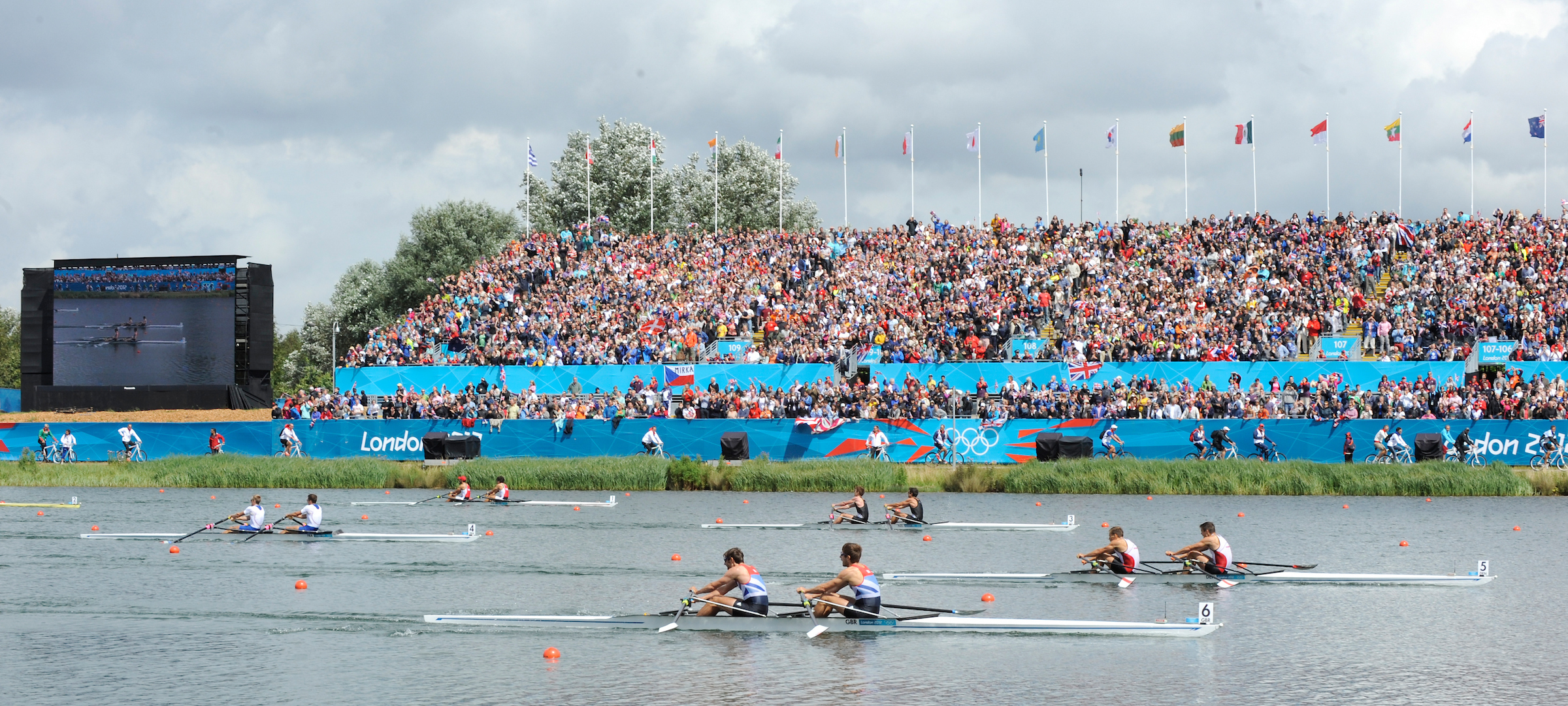
Eton Dorney, Windsor, Great Britain,..2012 London Olympic Regatta, Dorney Lake. Eton Rowing Centre, Berkshire. Dorney Lake. .Closing stages of the Men's Lightweight Double Sculls foreground. GBR LM 2X Silver Medalist, left Zac PURCHASE and Mark HUNTER..12:56:04 Saturday 04/08/2012 [Mandatory Credit: Peter Spurrier/Intersport Images]

BY ED MORAN
PHOTO BY PETER SPURRIER

While most people in the rowing community expected that the International Olympic Committee would approve the addition of coastal rowing to the schedule of the 2024 Summer Games, those hopes were dashed Monday for at least another Olympic cycle.

In announcing the decisions of the IOC Executive Committee on athlete quotas, gender equality, and the addition of any new sports for the Paris Games, the IOC said that World Rowing’s proposal to add coastal rowing to replace lightweight rowing could not happen for the 2024 Games.

In making the decision, which was announced Monday, the IOC stated that there would no change to the 14-event 2024 rowing program, which means that lightweight rowing will not be eliminated and would continue to be an Olympic event throughout the next cycle.

The reality is that the change will most likely happen for the 2028 Games in Los Angeles, California.

In a Monday press release following receipt of the decision, World Rowing said that the IOC praised the strength of the proposal to add coastal rowing and eliminate the men’s and women’s lightweight doubles from the program, but that “the impact of the Covid-19 Pandemic and the need to reduce costs and complexity for Paris 2024 specifically highlighted by the IOC Executive Board, the Commission concluded that no new disciplines could be added across any sport.”

In addition to ruling out coastal rowing, the IOC Executive Committee also voted on athlete quotas and gender equality issues, bringing the number of athletes down from 526 to 502 athletes by 2024. In addition, the Executive Committee voted to add skateboarding, sport climbing, surfing and breaking to the 2024 program.

In making the decision to put coastal on hold the IOC noted the “beach nature,” of coastal rowing and conveyed that it “could represent a very strong fit with the vision and venue landscape of Los Angeles and, following the definition of the LA2028 Sport Programme due in 2021, look forward to positively considering the inclusion of Coastal Rowing in the event programme for Los Angeles 2028.”

The decision was a disappointment for World Rowing’s long-term plans to add coastal rowing into the Olympic schedule, keeping lightweight rowing and not losing events outright was a positive outcome for the next cycle.

“The good news here is that the lightweights get one more Olympic Games, and that there was no reduction in the number of events. Lightweight rowing is a massively popular category of our sport and hopefully this comes as great news to lightweight rowing community all around the world. “

Read the full World Rowing Statement here.

Read the full IOC release here.

Galvanek First Step in Junior System Restructuring

BY ED MORAN
PHOTO BY LISA WORTHY

When USRowing announced that Casey Galvanek was named head coach of the entire Junior National Team system, the association was pulling the trigger on a long under consideration plan to restructure and centralize the way the country’s younger athletes are trained and selected.

From the development of the very youngest in the Olympic Development Program (ODP) levels to the training and selection of the team that represents the U.S. at the World Rowing Junior Championships, the system — as it has existed before — is undergoing a restructuring process and being standardized in ways that it had not in the past.

“We are just trying to create ways to be better,” said Chris Chase, USRowing Director of Youth Rowing. “I think for the 20 years the system that Steve Hargis (USRowing junior high performance director) developed and ran, evolved every year and was an incredible system. But we took some cues from the athletes from surveys we conducted in 2019 and we wanted to use that input to improve.”

Creating a position for a head coach who would oversee both the junior men’s and junior women’s teams, and the feeder systems that funnel athletes onto the Junior National Team was the first step in the process. After an extensive selection process, Galvanek was named to the position.

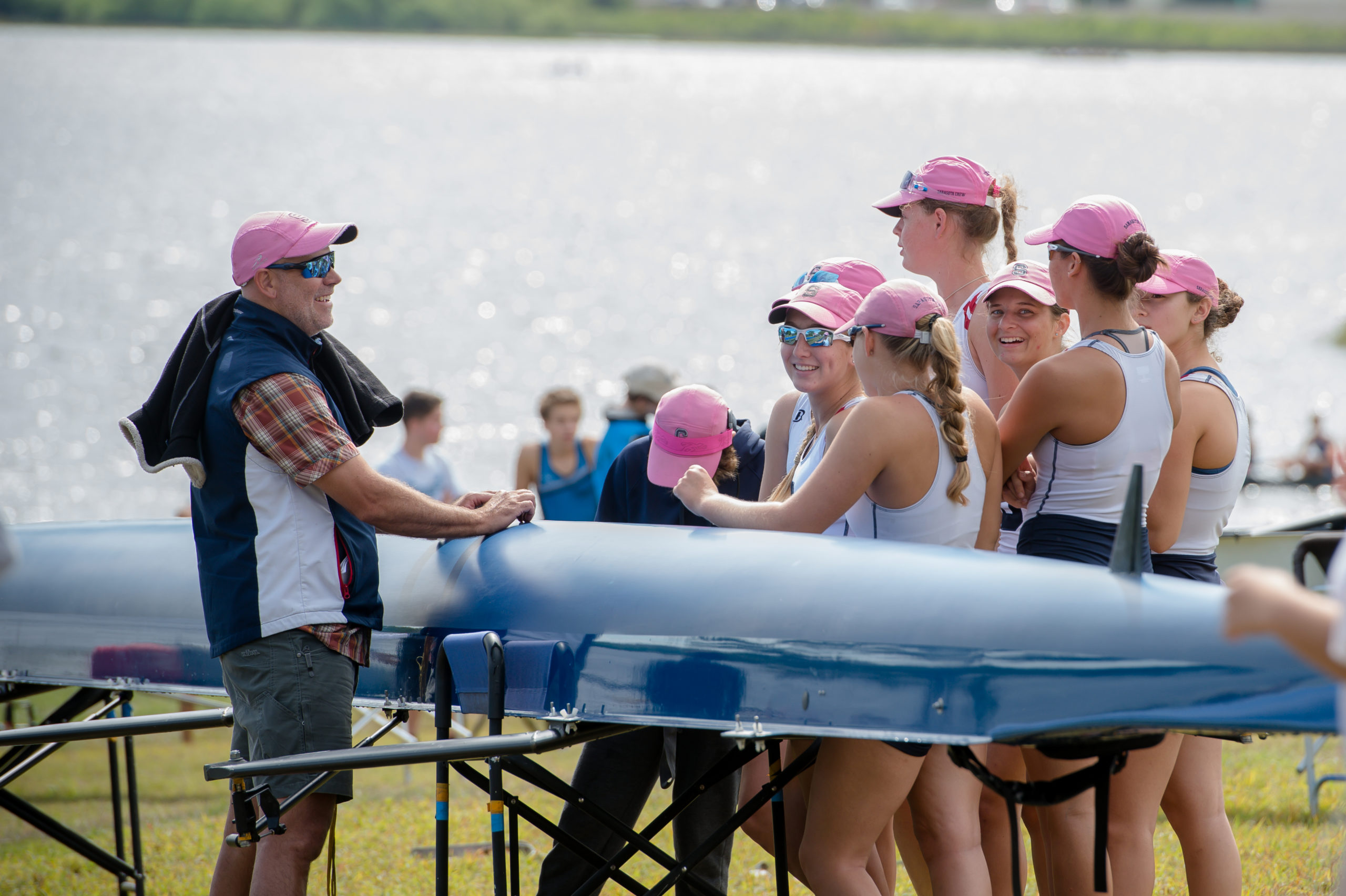
Galvanek, who has been the head coach of the men’s junior national team while also serving as the CEO and head coach at Sarasota Crew, where he oversees a staff of 26 coaches and 434 athletes, was named the new head coach on November 20.

“I’m very excited,” Galvanek said. “The reason I applied is because I want to help. I want to try and make the system the best it can be.”

Under Chase, the restructuring includes opening all the current coaching positions, from the “lead coaches” of the men’s and women’s national teams, all the way through the staff that will coach individual boat classes at the junior worlds, to those that will coach the High-Performance Team crews during summer competition at the USRowing National Championship and the CanAmMex regatta.

According to Chase, emails inviting applicants were sent to over 700 coaches nationally and the process of selecting the coaches is still underway. Next to be named will be the coaches that will lead the women’s and men’s junior national teams, followed by their assistants, and the coaches that will oversee the high-performance and CanAmMex teams.

Following that will be the selection of coaches who will oversee the ODP program and the assistants who will coach them. And, Chase said, the door remains open for more applicants.

“I want anyone who wants to be part of this, but hasn’t see the invitation, to contact me,” he said.

According to Galvanek and Chase, one of the biggest changes will be the way the selection camps for the men’s and women’s junior worlds teams will be run. Up until 2019, the selection camps took place at several different locations. The new model will follow the process the men’s junior team had used the last few years, with all the athletes training and undergoing selection at the Olympic Training Center in Chula Vista, California.

Under the revised system, both the 55 junior women and 55 junior men invited to the selection groups will attend camp together in Chula Vista.

After the rowers are invited to the selection camp, they will undergo a process designed to place athletes in the boats they are the strongest in.

“We will have an open and transparent system that will identify athletes capable of rowing in different boat classes,” Galvanek said. “We will put them in pairs, fours, quads, doubles, and eights and evaluate them in the same time trial format, with different lineups, and different partners so we can evaluate how they move which boat the best.

“We want to have athletes in the right boat classes, instead of saying we have a strong erg and shove them in whatever boat.”

According to Galvanek and Chase, the identification and selection system that will funnel juniors to the main selection camp will exist the same way it always has in terms of having identification camps, and having athletes who can’t make those camps submit erg results, while being open to athletes who might not have an opportunity to be easily noticed or attend a camp.

Galvanek, who has worked in the junior system for several years under Hargis, said the goal has always been to try and eliminate roadblocks and barriers and to have the most inclusive system possible.

“The way Steve [Hargis] told it to me was if you are driving past a lake and you see a kid out rowing in a single, and you see it’s good rowing, our job is to have a conversation with that kid to see if he or she is interested in participating.”

Beyond the identification camps for the selection group, USRowing created an ODP system in 2019 that is intended to reach potential athletes in the U17 and U18 ranks. That system includes camps for boys and girls in the six USRowing districts, and a season ending inter-district regatta.

In addition, the current revamping includes the addition of a new level for U18 athletes who are not quite ready for the selection camp, but have already participated in a U17 camp.

Those athletes will be invited to a month-long camp in one central location that will be staffed with highly experienced national and international level coaches and assisted by younger, still developing coaches, from clubs around the country.

One glitch to the restructuring right now is the Covid-19 pandemic and the restrictions to racing and training that continue to exist. To address that, Chase said several initiatives are being developed that include not holding identification camps and combining all the OPD athletes and coaches into one camp and creating a bubble for them to function in.

Chase said that plans are being made to bring all those athletes and coaches to Nathan Benderson Park, in Sarasota, Florida. in June, house them in the same hotel, and institute Covid bubble protocols that will include testing.

In addition, instead of holding identification camps this winter for the selection teams, a junior national team training plan is being developed by Galvanek that will be available to anyone that wants to follow it.

Athletes can follow the training plan and submit erg and strength testing results online for selection consideration, Chase said.

“There will be no identification camps this year,” Chase said. “What we are going to do is put out a junior national team sponsored training program. I think there are going to be a lot of clubs that are not going to be able to open for winter training, just given the restrictions on indoor spaces. So, we are going to put out a training program and that will serve as an identification program through January, February, and early March,” Chase said.

“Casey will design the program, and anybody in the country can have access to it. We’re going to try to find ways to be interactive, like have rankings for things like pullups, little contests from month to month, and have kids interact with other kids across the country. That will be done by birth year so all levels will know who is doing what,” he said.

The goal of all the reorganization, according to Galvanek, is to expand the system and create increased opportunities across the board for junior athletes of all ages.

“That’s what we are looking for, to make sure everybody has the same opportunity,” Galvanek said. “We want to create the safest, most competitive environment, where they can have the greatest amount of success.”

For complete information go here.