Home Blog Page 235

Indoor Cycling: A Rower’s Primer

PHOTOS AND STORY BY LIZ HINLEY

For rowers looking to gain an edge in the boat, recover from pesky injuries, or want to have an option for cross-training that supports rowing fitness, cycling is a beneficial tool. The main muscle groups required in cycling are similar for rowing. The key muscles to pay attention to are the quadriceps, gluteal, and hamstring muscles. 

Quadriceps
Cycling-Drives the pedal downwards (from 3 o’clock to 6 o’clock) by extending the knee
Quadriceps
Rowing-Applies initial pressure to the footboard by extending the knee
Gluteal
Cycling-Drives the pedal out and down (from 12 o’clock to 3 o’clock) by extending the hip
Gluteal
Rowing-Applies ‘follow-through’ pressure into the footboard during drive phase by extending the hip
Hamstrings
Cycling-Brings the pedal back and up (from 7 o’clock to 10 o’clock) by flexing the knee
Hamstrings
Rowing-Brings the boat up underneath during the recovery phase before the catch by flexing the knee

Keep these muscles in mind as you hop on the bike for your next ride. For those that ride on stationary bicycles, here are some tips: 

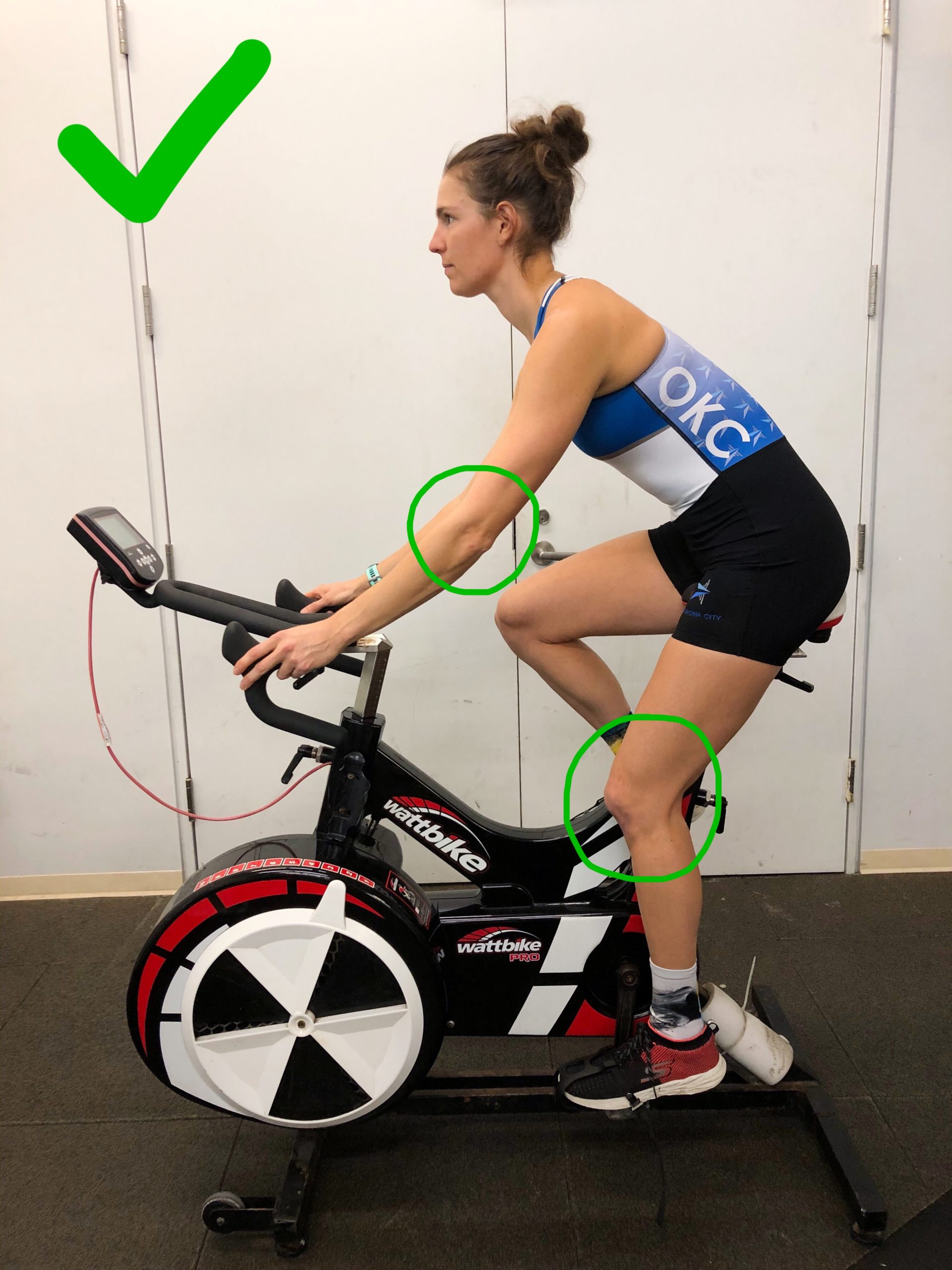
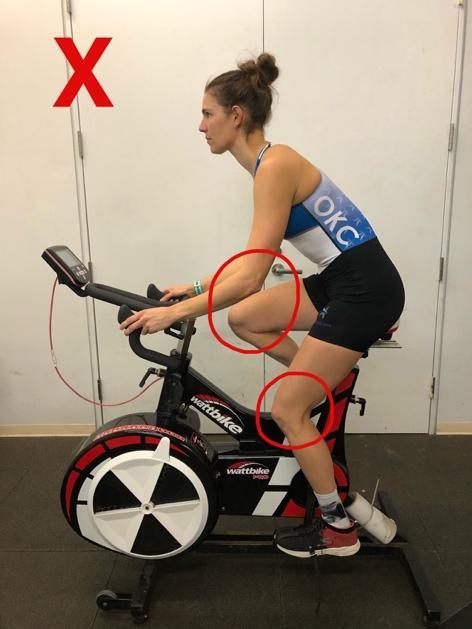
  • Set the seat height to about hip level when standing on the ground. You want to have a soft bend in the knee when the pedal is at the bottom (6 o’clock) to avoid locking out the knee or having to reach for the pedals (too high), or putting strain on the knees with too much flexion (too short). 
  • Elbows and shoulders should stay relaxed with very little bodyweight leaning on the handlebars. The elbows will have a slight bend. If they are stiff and straight, try adjusting the handlebars a little closer to the body. If they are too bent and tense towards the body, try moving the handlebars a little farther away. 
  • Most stationary bicycles will have flat pedals with straps that tighten over gym shoes. To properly engage the hamstring be sure to use the straps. Be careful when getting on and off, however, as you are strapped to the pedals. If there are no straps, riding is still possible just be prepared to feel the quadriceps engage the most. 

Here are two, 30-minute workouts you can do on the bike that can give your rowing a little boost: 

Technical and motor activation: Doing a single-leg work can help fine-tune how to keep consistent pressure on the pedal all the way around the stroke (entire clock face). Alternate pedaling with one leg at a time and then apply that focus to the 2-minute sections to practice. 

5-10 minute warm-up

(3x) 30s right leg only pedal, 2 minutes both legs, 30s Left leg only, 2 minutes both legs, 

5-minute easy cooldown

To get that heart-pounding: Using cadence (rpm) with various resistances can enhance pedal control and efficiency. 

5 minutes warm-up

(2x) 20s Right leg only pedal, 1 minute both legs, 20s left leg only pedal, 1 minute both legs 

Set resistance to low

(3x) 10s high cadence with high effort, 50s easy pedal (aim to keep seated on the saddle avoiding any excessive bouncing) 5 minutes steady pedal

Set resistance to high 

(3x) 15s low cadence with high effort 45  easy pedal  (feel those large muscle groups drive the pedal around allowing the cadence to be low but the resistance being high) 5 minutes easy cool down

Best of 2020

STORY AND PHOTO BY ED MORAN

The annual Rowing News “Best Of” print edition is on the way to rowing households throughout North America and available in the Rowing News app now. Take a look below at a preview of the issue.


Traditionally, our December issue is devoted to the best moments of the year in rowing. From the early erg races to the fall head extravaganzas and all the sprint events in between, we have filled these pages with recaps and celebrations of the year’s highlight moments and performances.

It would seem ludicrous to try to do that this year, when everything that could go wrong seemingly did.

After only two of the big scheduled events—the C.R.A.S.H.-B Sprints and NSR I—and a couple of months of early full-on training for what was supposed to be an Olympic year, a previously unknown coronavirus began sweeping the globe, and the disease it produced, Covid-19, wreaked havoc and pain.

The response was to shut down, close doors and windows, and cancel all planned social events in an effort to slow the spread of the virus and mitigate its devastation. Every aspect of normal life ceased to be normal, and for sports that meant the end of most seasons and all organized training.

By mid-spring, every regatta and every school, club and national-team season was canceled. Everything, including the Olympics, was put on hold. Athletes did not escape the flood of infections, and just before the breakup of the U.S. women’s training center, 12 rowers fell ill.

Given that there were no events, publishing a Best Of 2020 edition of Rowing News seemed, well, impossible.

Or is it?

If we take a deeper look at the events of 2020 and examine the response of the global rowing community, nuggets of bright moments shine under the surface and the constant drip of bad news.

When clubs and boathouses and training centers closed, coaches, athletes and administrators began finding ways to communicate and plan. A virtual meeting on Zoom between two or three club executives in Pittsburgh, Boston and Oakland became a weekly meeting that quickly grew to include some 20 executives.

Ideas were shared about how to keep club members connected and athletes training either by themselves or in virtual groups. Plans were developed for when the spread of the virus would slow enough to allow renewed access to on-water training. Singles became the boat of choice and allowed for groups to train together and still social- distance.

As live events were eliminated, virtual racing became the rage. Instead of doing nothing, clubs and associations across the country submitted erg scores or raced while being livestreamed from home. The competitive spirit was undiminished. From spring through the fall, racing went online, and went on.

In small clusters across the country, on-water rowing returned. In Boston, groups of singles launched from public docks or in places where a single shell could be wet-launched from shore by determined athletes.

People were unselfish in ways that bolstered the spirit of our community. In clubs like CRI, masters members who owned single shells made their boats available to others, and access to the river increased.

Similar gestures occurred across the country. Boats were donated to juniors at the Connecticut Boat Club so kids could get on the water. In clubs and programs, junior coaches devised ways to put small groups on the water in pods and coached in time slots that allowed for maximum usage.

Rowers row because it is what they love to do and have always done, and they found ways to do just that.

From a tiny, nine-rack shack in the woods of Stratham, N.H., a group of lifelong rowers who belonged to a club created in 1984 by a group of rowers that comprised of three former collegiate rowers and Ernestine Bayer, the “mother of women’s rowing” who started the Philadelphia Girls Rowing Club, launched daily to scull the tidal waters of the Squamscott River.

Across the country, when restrictions eased enough to get outdoors, rowers kept returning and doing what was necessary to stay connected with the sport.

By early fall, rivers and lakes for months vacant of shells were filled daily by smiling rowers. As the fall progressed and Covid restrictions lifted in some areas, even crews rowing in team boats reemerged.

Yes, 2020 was a terrible year, and the consequences of a lost season are sure to be lasting. Olympic hopefuls and coaches were forced to decide whether they had another year of training in them. Some decided to stick to their plans; others retired from the sport.

The loss of regatta and collegiate sports revenues caused the elimination of programs big and small. Crews at Dartmouth, the University of Connecticut, and Stanford University were among the storied programs cut.

Rather than stand by and watch, collegiate coaching associations banded together to seek solutions. For the first time in the Intercollegiate Rowing Association’s history, a coaches’ association was formed to give men’s programs a voice.

The IRA regatta found a title sponsor in Hydrow, a new rowing-machine company that is thriving in part because of the pandemic and the need to find safe ways to train. The resulting relationship ensured that the IRA championship regatta will be funded for the next three years.

Yes, boat manufacturers that rely on the collegiate market were challenged, but the determination of rowers to be on the water, to do what they have always done, saw sales of single shells skyrocket and keep most of them healthy.

Other 2020 challenges, such as social unrest and national protests about racism, resulted in rowing looking once again at the need to diversify the sport.

Again, there were plenty of “best of” moments. The stalled release of A Most Beautiful Thing, a movie about inner-city kids revisiting the experience of forming an all-black rowing team in Chicago, was released on live-streaming platforms and became a shining example of how rowing can change lives.

It helped bring attention to diversity-driven programs like Row New York and Philadelphia City Rowing, and similar efforts and successes in making rowing accessible to young people historically deprived of such opportunities. 

In New York City, Row New York began building a  new boathouse in northern Manhattan that not only will  bring rowing to young athletes unfamiliar with the sport but also will become a community and academic-support center that will help them realize the dream of attending college.

In a move sure to drive diversification from within the national governing body of the sport, USRowing tapped Amanda Kraus, the founder of that same New York program, to fill the leadership void it has had since the start of the year. In her first public comments, Kraus said that a culture change within the organization was among her top priorities.

So, yes, there was no season in 2020. There are no sensational performances and big race moments to spotlight. But there were many “best of” moments. If one thing held true in this horrible year, it is that there will always be “best of” moments that come from the people who make up the rowing community–the committed, determined folks who row because it is what they love to do.

No one said it better this year then the late Ed Winchester. In his last letter as editor of this magazine, Winchester, a world-champion athlete, Canadian Olympian, and eternal optimist, who died suddenly while erging in April, wrote:

Training is an optimistic act. Implicit in every erg workout and weight session is the idea that you can always get better—that who you are today doesn’t have to be who you are tomorrow. This is what drew me and so many others to our sport, and what keeps me coming back year after year.

This year, of course, is different. The loss of the rowing season is trivial in the grand scheme of what the world is facing. But it was a loss nonetheless, and it raised fundamental questions for the athletes and coaches whose seasons—and in some cases, careers—were cut short.

The sudden end to on-water activities was also jarring for those of us who cover the sport. For the first time ever, we were forced to contemplate what rowing would look like without racing.

After a month of social distancing and stay-at-home orders, we are starting to find out. Yes, there was some initial disappointment over what could have been this season, but very quickly we summoned our collective optimism and got back to work.

And work we did. Across the globe, virtual teams logged very real miles. Tokyo-bound athletes streamed backyard workouts. And on every permutation of the erg—static, dynamic, ski—indoor records continued to fall.

All of which means very little next to human tragedy that continues to unfold in communities around the world—ours included. Health worries persist, as do the strain and uncertainty that businesses and organizations across our sport continue to face.

More uncertainty surely lies ahead. But if I’m certain of one thing, it’s that we’ll keep moving forward, one optimistic stroke at a time.

In the category “expression of what makes our sport special,” that surely is “best of.”

Be sure to read the December issue and the complete “Making the Best of 2020.”

Camden County to Host 2023 NCAA’s

2018_5 May NCAA's Women's Rowing

STAFF REPORTS
PHOTO BY SPORTGRAPHICS

The NCAA announced that the 2023 NCAA Division I, II, and III women’s rowing championships will be held on the Cooper River in Camden County, N.J. Temple University will be the host school, and the event will run May 26-28.

“Cooper River Park has evolved and grown into an elite rowing course with the best straightaway lanes in the country,” said Camden County Freeholder Jeff Nash. “We are looking forward to having athletes, teams, and families come and stay with us for this momentous event and accommodating the top rowers competing at the highest levels in the United States.” 

Gym Named in Honor of Grace Rhett

STAFF REPORTS
PHOTO PROVIDED BY OUR LADY OF THE VALLEY REGIONAL SCHOOL

The Our Lady of the Valley Regional School in Uxbridge, Mass., will name a $3 million gymnasium and learning center after Grace Rhett, a College of the Holy Cross rower who was killed in a car accident last year while on a training trip. The facility will house a gymnasium, a basketball court, classrooms, outdoor spaces, and locker rooms. It is expected to break ground in early 2021.

Hydrow Partners with Fabletics

STAFF REPORTS
PHOTO PROVIDED BY HYDROW

Hydrow and Fabletics have formed a new partnership. The apparel company will have a dedicated space for Hydrow on its website, as well as offering the rowing company space within its brick-and-mortar stores for shoppers to try out the machine. The move comes after Hydrow’s explosion in popularity during the pandemic. Fabletics also will be the exclusive manufacturer of apparel for the company, producing and designing all the gear worn by Hydrow athletes. 

As Rowers Move Indoors, Be Smart, Stay Motivated

BY VOLKER NOLTE
PHOTO BY ED MORAN

One year ago, no one could have imagined what 2020 would look like. Now, 10 months into a full-blown pandemic, there have been profound changes in what we can and cannot do.

For rowers, the pandemic hit home when, in early summer, one regatta after another, including the Olympic Games, was canceled.

Measures were introduced affecting all parts of our lives, including how we train and compete, and they were quite painful. But the measures were effective in decreasing infection rates across the globe.

Unfortunately, changing weather that led to more  indoor activity, the easing of restrictions, and less careful behavior have driven infection rates up again. It’s easy to understand why people are eager to resume participating in sports and are suffering from “Covid fatigue,” but the consequences of letting our guard down outweigh the short-term benefits of forgetting about the virus.

We need to support each other in staying safe and diminishing the challenges of the various restrictions. Yes, it is difficult to stay motivated when training alone or in small groups, with limited opportunity for competition, camaraderie, and motivating goals like regattas. But look for the positive side of these challenges, as small as they may be, and set goals based on your individual ability. For a competitive rower, this may mean performance improvements; for a recreational rower, better health; for a masters rower, aging well. Find what you want to succeed at, enjoy the improvements you can make, and seek the most exciting activities that will help achieve your goals.

Think about the long-term gains you can make and that now you have more time to spend on things like yoga, relaxation, and meditation, which will pay off when hectic schedules return.

USRowing Names Galvanek Head Coach of Junior National Team System

STAFF REPORTS
PHOTO BY LISA WORTHY

USRowing has named Sarasota Crew head coach Casey Galvanek head coach of the United States junior national team system.

Galvanek will oversee all of the athletes and coaches in the program.

According to USRowing, “Galvanek comes to the position with extensive experience working with multiple levels of successful athletes.”

“Galvanek is currently the CEO and head coach at Sarasota Crew, where he oversees a staff of 26 coaches and 434 athletes. Concurrent to his tenure at Sarasota, Galvanek has worked with the U19 team, U23 women’s squad, and the men’s and women’s senior national teams. Since 2012, Galvanek has taken 12 crews to a world championship, winning medals four times and making the A-level finals eight times. He has helped develop the U19 men’s program for 11 years, with notable success on the national and international level.”

Read the full release here.

Perfect, On Balance

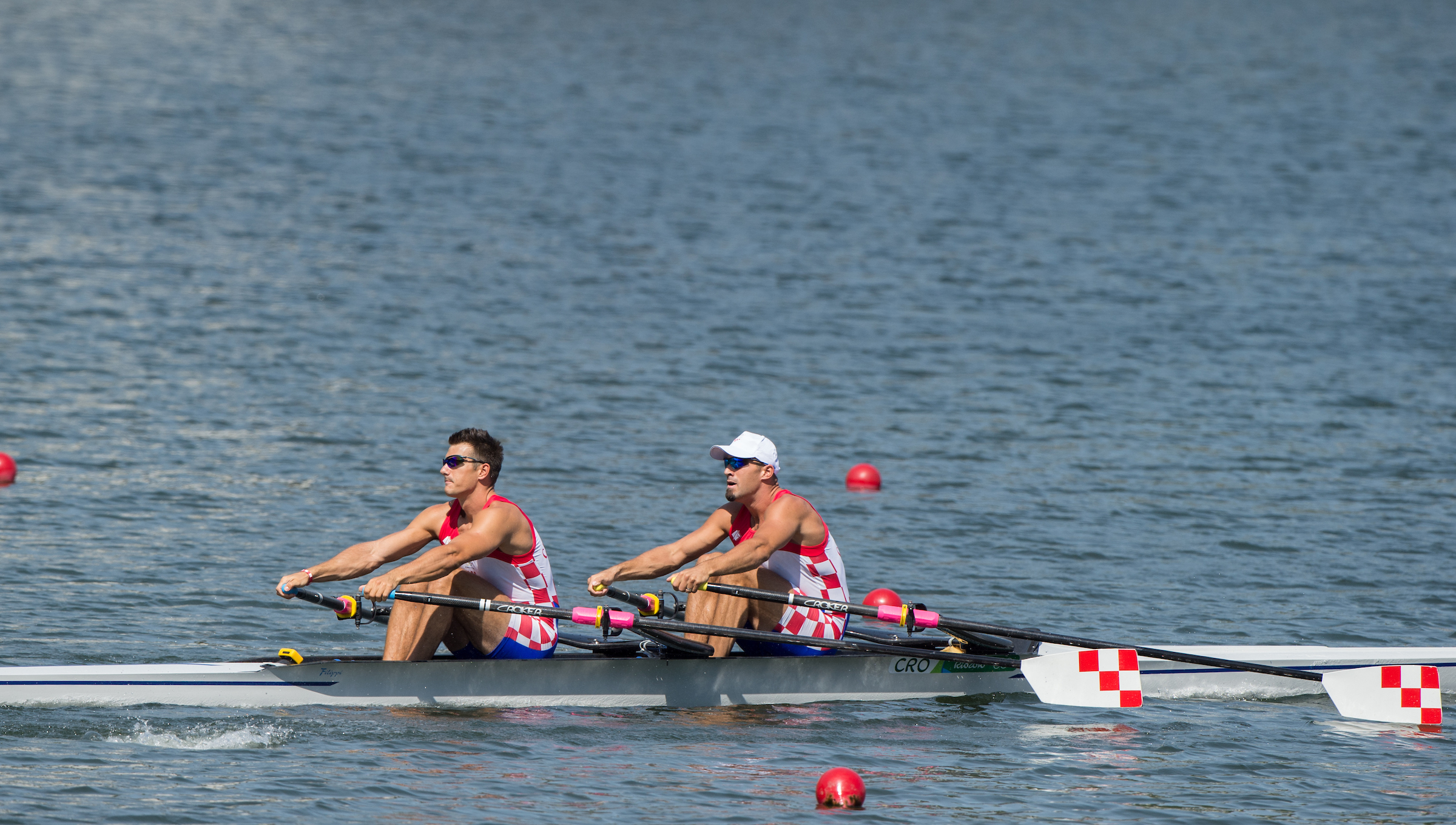
Rio de Janeiro. BRAZIL. CRP M2X. Bow. Martin SINKOVIC and Valent SINKOVIC, 2016 Olympic Rowing Regatta. Lagoa Stadium, Copacabana, “Olympic Summer Games” Rodrigo de Freitas Lagoon, Lagoa. Local Time 12:06:11 Saturday 06/08/2016 [Mandatory Credit; Peter SPURRIER/Intersport Images]

BY VOLKER NOLTE
PHOTO BY PETER SPURRIER

*Originally published in the April 2017 issue of Rowing News.

A large number of international coaches gathered earlier this winter for the 2017 FISA coaches’ conference in Vancouver. There were several compelling presentations, but the most interesting came from Nikola Bralić, the Croatian coach who guided Martin and Valent Sinkovic to Olympic gold in the double.

Bralić said he emphasized three points with his crew: Keep things simple, work hard, and start with balance. While the first two themes made sense to me, the fact that these highly-skilled scullers focused so diligently on balance—something that seems more appropriate for beginners—struck me as surprising.

According to Bralić, good balance is required for high-quality long-distance training, helps to prevent injury, and readies rowers for all conditions.

Training balance, however, is a complex undertaking—one that can only be done regularly in the boat and that begins with proper strength training.

To illustrate just how important balance work was to their routine, the Sinkovics would start every training session with balance exercises built into their warm-up. Bralić also pointed out that the degree of difficulty of the drills he chooses depends on water conditions. That way, impeccable execution is possible.

The vast majority of the double’s training videos that Bralić played at the conference showed perfectly flat water. These balance exercises build confidence in the crew to produce the highest speeds and to attack aggressively in all water conditions.