Home Blog Page 233

Ted Bonanno Retires from Fordham After 31 Years of Success

BY ED MORAN
PHOTO PROVIDED

The first time Ted Bonanno watched a Fordham men’s crew practice, he knew he was looking at a good opportunity.

They weren’t “particularly good,” Bonanno recalled, but they were doing everything their young coach was asking of them, and working hard to improve. 

“They were really into it and enthusiastic, and I got the impression there was potential for that program to develop.” 

For Bonanno, the notion that he was looking at something that could become bigger and better was inviting.

It had been two years since he had coached a collegiate team, after nearly 15 years at Rutgers University, and a spell at Columbia University, where he was named head coach three years into his tenure.

After leaving Columbia in 1987, Bonanno coached Juan Felix, a Columbia oarsman rowing the single and representing Puerto Rico in the 1988 Olympics and at the Henley Royal Regatta the following year.

Bonanno wasn’t at Fordham looking for a job that day. He had been asked to visit a practice by James Hammond, another Columbia grad and one of Bonanno’s former team captains who was coaching the Fordham men’s club crew and planning to leave after the season ended.

Although he grew up in the Bronx, Bonanno had never been on the university’s Manhattan campus, but an invitation from Hammond was enough to get him in the launch.

“He had a men’s eight, and they weren’t particularly good, but they were really into it and enthusiastic,” Bonanno recalled, “and I got the impression there was potential for that program to develop.

The following season, Bonanno signed on for the position Hammond had vacated and set out to build Fordham into a successful collegiate program.

“It was challenging,” Bonanno said. “They had a club program that wasn’t competitive. They weren’t winning any races, or very few, but I thought there was potential.”

After just one year, the Fordham men’s team was winning races and growing under his direction and recruitment efforts. In his second year, he added the women’s program to his duties and coached and developed them alongside the men.

He not only coached the two squads but also built  solid alumni support for both teams and guided the women into Division I when rowing became a NCAA varsity sport.

In October, Bonanno, 72, retired from the position he assumed in 1989, leaving behind a 31-year legacy of excellence and a textbook example of how to seize potential and turn it into success.

In his years at Fordham, Bonanno turned a modest program with little funding into a men’s and women’s team whose strong alumni support has enabled it to travel the country and the world to race.

Bonanno grew the program from a single men’s eight into a dual squad that included nearly 100 athletes in 2019. He also helped develop plans to build a permanent university-owned boathouse, a process that will continue into 2021.

During his tenure, 10 Fordham crews have had undefeated seasons and Fordham crews have won 17 national championships, including a Division I National Collegiate Rowing Championship, the IRA Regatta, 11 Dad Vail Regatta championships, and three ECAC National Collegiate Invitational Regatta titles.

Bonanno’s teams through the years were consistent medal contenders at multiple prestigious regattas, including the Dad Vail, IRA and NCAA championships, Henley Royal Regatta, and the Head of the Charles.

More than just a coach, Bonanno guided hundreds of young men and women through their undergraduate careers and into successful adult lives.

“He has produced great results for both the women’s and men’s programs, even though the teams have not had a permanent boathouse during his tenure,” said Charles Elwood, Fordham’s deputy director of intercollegiate athletics, whose daughter, Kylie, rowed for Bonanno and will be a senior on the team this year. “The struggles of not having a permanent boathouse were difficult, but it  motivated Ted and the student-athletes only to work harder.

“Ted has always been known as a great technical coach who can get the most out of his team from every practice, and his dedication to the academic and athletic success of the student-athlete is evident in everything he does and stands for.

“He is known for his ‘Ted Talks,’ his sometimes daily talks to the team on topics ranging from practice and fitness to academics and success for life. His constant theme was to strive for excellence and do your absolute best for your team, yourself, and your program.”

Seeing Potential and Sizing Opportunities

The essence of Bonanno’s approach at Fordham was taking baby steps and setting achievable goals. When his team was small, he focused on the boat that he thought could be most successful during that particular season.

In his first year, Bonanno coached the men’s varsity eight to an undefeated dual season and a spot in the finals at the Dad Vail Regatta. The next season, Bonanno’s priority crew for the Dad Vails was the men’s four, and he coached that to a second-place finish.

From the very first season, Bonanno, who began rowing at Monsignor Scanlan High School in the Bronx before rowing at Marietta College, made recruiting and building a vibrant and supportive alumni network a priority.

Before coaching at Columbia, Bonanno coached men’s lightweight rowing at Rutgers, and he made sure he had a lightweight component in both the men’s and women’s squads at Fordham. His men’s lightweight eight was at times as competitive as any boat in the country.

“It got much, much better pretty quickly,” Bonanno said. “Our strong suit was lightweight men, and we built one of the stronger lightweight men’s eights in the country over the next couple of years. We beat all the Ivy League schools at one point or another.”

While building the men’s team, Bonanno also focused on recruiting and coaching the women and saw an opportunity he believed could lead to getting a crew invited to the first NCAA women’s championship in 1997.

When the regatta was announced, the rules did not require that an entire team had to qualify, as they do now. There were automatic bids for crews that won at specific qualifying regattas, including the Dad Vail.

Bonanno thought he could center the women’s season around a four and pointed his women rowers toward winning at Dad Vail and racing in the NCAA championship. The plan went perfectly. But when Bonanno called the NCAA office after the victory to learn how to enter, he was told that because the women belonged to a club team they were ineligible. 

“That was not great news,” Bonanno said. “After that happened, I pushed pretty hard, and the next year we were varsity.”

It might seem unmanageable–one person coaching both men’s and women’s teams, especially with limited budgets and the men competing as a club squad while the women rowed as a varsity NCAA team.

But Bonanno was undaunted. He coached both teams together, pitting men’s and women’s eights against each other when they matched in relative speed, and frequently creating mixed boats that helped rowers of both genders  develop.

“When the women rowed with the men, they got sharper,” Bonanno said, “and the men were quicker and  more explosive at the catch.”

The men became better technically from the women who “were better at setting the boat.” Bonanno said.

“We didn’t do it all the time, but they enjoyed it when we did. The two teams were always very tight and close with each other. And when we raced the mixed boats in practice, they were very competitive.”

The Perfect Fit for a Career Coach

If Bonanno was a perfect fit for Fordham, the university and the students who attended were a perfect fit for Bonanno, who besides coaching at Rutgers and Columbia guided rowers on the elite and international level and coached at some of the bigger club programs in the country.

“I’ve really enjoyed my time at Fordham,” Bonanno said. “The students were sort of blue-collar rowers. You told them what to do, and they did it. The fact that I had a pretty good reputation when I first got there helped.

“I wasn’t your typical small-program club coach. Most of the coaches they had at Fordham before me were like [Hammond], my former team captain. He was just a rower looking for something to do for a year. Or they had a recent grad who stuck around to coach a season.

“The rowers knew I had a strong background. And then we started to win, and that just fit into what I was doing there. It worked out pretty well, and then the women started to take off as well. We had some really good success.

“But the programs were quite small at the beginning. The funding was virtually non-existent. I made a real effort to build up alumni support, and as a result, we were able to do some interesting things. We started to win, and the alumni liked that and started to support the program.”

By the late ’90s, the program was enjoying ample success, alumni support was substantial, and the men could do anything the women could do.

“If they wanted to go to any regatta, they could,” Bonanno said. “We went to Henley several times. We were regular attendees at the San Diego Crew Classic. We could really do whatever we wanted, budget wise. We had tremendous support, and still do to this day.”

“I totally enjoyed my years at Fordham. Obviously, it was challenging, and a lot of work, but the students I coached–hard-working, dedicated, willing to put in a big effort–made it all worth it.”
USOPC Begins Review of USRowing Elite Athlete Concerns

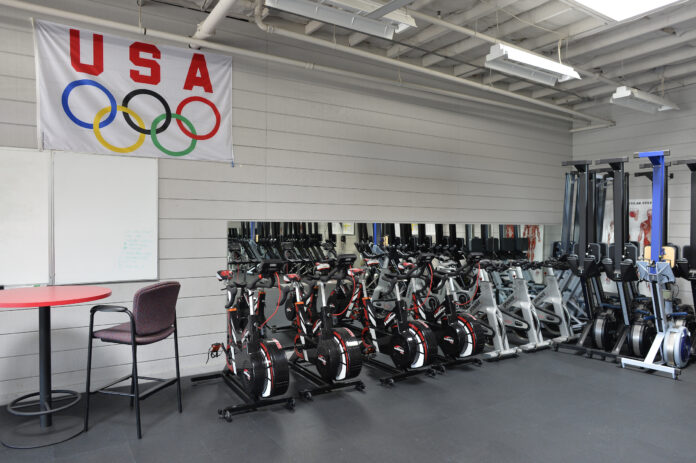
San Diego, California. USA. Gym Equipment stored in the corner. Boathouse, Lower Otay Reservoir, rowing training course, Olympic Committee's ARCO Training Center in Chula Vista California. {TIME{ {DOW} 11/04/2013 [Mandatory Credit. Peter Spurrier/Intersport Images] ..

BY ED MORAN
PHOTO BY PETER SPURRIER

The United States Olympic and Paralympic Committee has notified USRowing that it has begun “a review” of alleged concerns raised by “certain segments of USRowing’s elite athlete population,” which are being viewed as significant enough for the USOPC to hire an independent law firm to conduct interviews and provide an “outside perspective.”

USRowing was notified of the action by the USPOC with an email dated Friday, January 8 that included an attached letter detailing who was conducting the review and what steps they will be taking. No specific allegations or complaints were contained in the email or the attached letter that was addressed “Dear USRowing Athlete,” and a copy of which has been obtained by Rowing News.

The letter states that the review is being conducted “with the full support and participation of USRowing, and was prompted, in part, by USRowing’s request for assistance in responding to athlete concerns regarding athletes’ ability to obtain impartial responses to complaints involving USRowing personnel and practices.”

The Friday email states:

“The USOPC’s Office of Compliance is responsible for ensuring National Governing Bodies are fulfilling their obligations as set forth in the Ted Stevens Olympic & Amateur Sports Act as well as the USOPC Bylaws and various other USOPC policies. Among the most important of an NGB’s obligations is meeting the needs of, and being responsive to, the concerns of their elite athlete populations.

“We are reaching out to you today because certain segments of USRowing’s athlete population have raised concerns about the culture for elite athlete competitors which we believe warrants an outside perspective. To that end, the USOPC has hired the law firm Arent Fox LLP to conduct an independent review and assessment to identify the root factors contributing to those concerns and determine how to address them.

 “The manner in which this review will be carried out is detailed in the attached letter. Please note that not everyone who receives this letter will be contacted by Arent Fox, but if they do reach out to you, we encourage you to speak openly and honestly with them about your experiences. Also, if you are not selected but wish to speak with Arent Fox, instructions for contacting the attorneys conducting the review are included in the letter.

“The USOPC looks forward to receiving Arent Fox’s report when this review has concluded, and to sharing its findings and any recommendations with the USRowing community.”

Reached Saturday afternoon, USRowing CEO Amanda Kraus said:

“The well-being of athletes has and always will be a foundation of our mission to champion participation and the passionate pursuit of excellence in rowing.”

“USRowing has been taking specific steps to ensure a competitive culture where athletes can thrive in a safe and healthy way for the last year, after having received expressions of concern from some athletes.

“Among other steps, USRowing requested an outside perspective from the USOPC and we welcome that assistance in the form of this independent review. We encourage our athletes and personnel to participate in the review and cooperate as much as possible and we look forward to getting valuable feedback as a result,” Kraus said. 

The attached letter also did not specify what concerns were raised to them that resulted in the review.

The letter states:

“Dear USRowing Athlete:

The USOPC retained Arent Fox LLP (“Arent Fox”) to conduct an independent review and assessment to identify root factors contributing to feelings of distrust and concern expressed by certain segments of the athlete population and determine what is necessary within USRowing to maintain and/or create a healthy culture so that its elite athletes can have successful rowing careers while maintaining their physical and mental wellbeing.

“The USOPC has asked Arent Fox to identify specific athlete needs compared to the current practices of USRowing, and in that context to evaluate whether any USRowing practices are inconsistent with its general duties and obligations as a National Governing Body, as set forth in the USOPC Bylaws.

“This review is being conducted with the full support and participation of USRowing, and was prompted, in part, by USRowing’s request for assistance in responding to athlete concerns regarding athletes’ ability to obtain impartial responses to complaints involving USRowing personnel and practices.”

The letter said the areas of review will center around the Olympic team selection process, mental, and physical health resources, USRowing “resource allocation practices,” and USRowing’s high-performance policies and practices to “review whether elite athletes’ concerns are capable of being heard in a fair and neutral way, that does not contribute to a fear of retaliation.”

The letter stated that review will involve speaking on a confidential basis “with a wide selection of current and former USRowing elite athletes, select members of USRowing’s Board of Directors, USRowing athlete representatives, and select members of USRowing’s staff.

When finished the findings of the review will be presented in a confidential report for the “USOPC’s eyes only,” and will provide a “collective consensus of athlete needs relating to the topics listed,” and any compliance issues identified during the review.

“In addition,” the letter continues, “Arent Fox will make recommendations with respect to impediments (if any) that it concludes are or may be interfering with the maintenance or creation of a healthy and successful culture for elite athlete competitors.”

A separate report will be made available to USRowing, and a summary of the findings and “any corresponding recommendations will also be shared with the USRowing Community.”

According to the letter, all athletes interviewed will be identified by name to the USOPC “if the interviewee consents,” but no names will be revealed in the report to USRowing.

“For those who wish to remain anonymous in the USOPC report, efforts will be made to do so, including withholding names, dates of involvement with USRowing, position, gender and other background information,” the letter states.

OKC RIVERSPORT Youth Rowing League Prevails Despite Challenges

BY LUKE REYNOLDS
PHOTO PROVIDED

Every year, the Oklahoma City RIVERSPORT Youth Rowing League hosts its fall championships, with hundreds of students from local schools descending upon the Boathouse District for a 500-meter race under the lights of the world’s only illuminated rowing venue.

This fall was only slightly different, making the program and its season-ending race a positive outlier among several events and programs that were canceled or axed.

“This season started in mid-September,” said Gena Terrell, the league’s coordinator. “Normally, we would start the second week of August, but schools were still trying to figure out what they were going to do, which made us think we really weren’t going to have a season at all. And then, as we got into it, we were, like, ‘These kids still need a place to go, and we need to keep them engaged in order to bring them back for future seasons.’

“So we decided we could have a season on a small scale and we reached out to the schools to see if they were willing to participate, and fortunately they were on board.”

With a go-ahead from a few local schools, the league’s coaches and administrators had to figure a way to make training safe while also having a race at the end of the season, given that purchasing a new fleet of singles would be impossible.

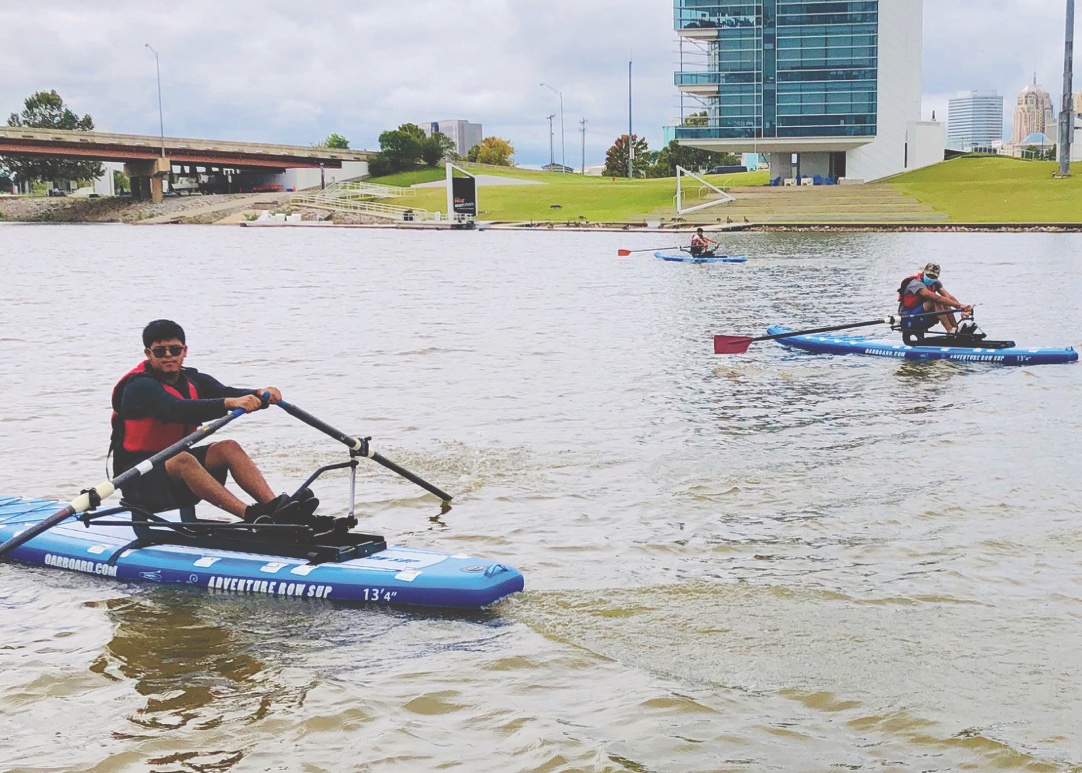
“We all started brainstorming, and Mike Knopp [RIVERSPORT executive director] came up with the idea of getting athletes on the water by utilizing OarBoards,” Terrell said.

The OarBoard was an elegant solution to the problem of getting athletes on the water while maintaining social distance, and also not forcing the program to buy a whole fleet of singles.

“From a rower’s standpoint, we were a little skeptical at first just because we didn’t know if it would be possible to get the kids on the water or how durable they were. We had to adapt our coaching methods because it’s a sliding rigger instead of a sliding seat. But once Mike said that this is how we get the kids on the water, we were, like, ‘OK, we’ll give it a try.’”

The OarBoard, which is a rowing mechanism that rests on top of a standup paddleboard, allowed the athletes to get on the water safely and learn to scull, which enabled them to race at the end of the season.

“It actually worked out really well,” Terrell said. “The kids were a little unsure at first, but once we got them out there and actually on the water, they just took to it and were off. I think it allowed them the freedom to rely on themselves, as opposed to their teammates in the eight.”

The season-ending race took place in October, with more than 10 heats of 500-meter OarBoard races.

“The event went extremely well, considering everything,” Terrell said. “The racing itself was incredible. I was surprised at how many breakout athletes we had that day. A lot of things clicked for the athletes on race day, so that was really great.”

Terrell believes this Covid-forced adaptation will benefit the program in the long run and expects the league will use the new rowing mechanism well into the future. 

Machine Learning

Racing at the 2020 C.R.A.S.H.-B's. Photos by Lisa Worthy.

BY COLLEEN SAVILLE
VIDEO BY ADAM REIST

Anyone involved in the rowing world—in any capacity—would have to be living under a rock not to know that our sport is changing. From the de-prioritization of lightweight rowing on the world stage to FISA’s more recent focus on coastal and indoor rowing, to the surge of indoor rowing within the boutique fitness industry, there is little doubt that we are entering a new era for our sport.

On the international level, efforts are underway to increase rowing’s diversity and exposure more broadly. One of the greatest measures of this on the international stage, of course, is coverage received at the Olympic Games. While coverage is important for the many sports for which Olympic gold matters, it perhaps matters even more for rowing. But with the Olympics only coming around every four years, there is an immediate and growing need to develop new permutations of rowing that evolve the sport and capture public attention, both during and between the Olympic Games.  

Yet for many—myself included—warming up to the next evolution of rowing has taken some getting used to.

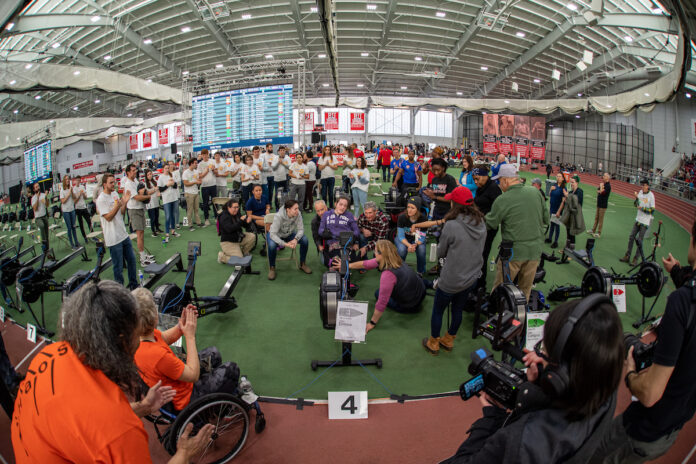
Remember when the word “erg” was synonymous with painful tests and long winters spent training indoors? Today, people across the country are enthusiastically embracing the machine, signing up for indoor rowing classes and jumping at the chance to race on Concept2’s ubiquitous indoor rower at the C.R.A.S.H.-B. Sprints and other competitions alongside their CrossFit teammates. And while the CrossFit boom is not new, the rise of indoor rowing sure seems to be. 

For many in rowing, the erg is a tool; a means to an end. Used for a very specific purpose at a specific point in the season—typically when the water is frozen over—the erg offers a way to simulate the rowing stroke and accurately measure work output.  Historically, it enabled rowers to stay fit over the winter so they can get their bows over the finish line first in the spring—on the water, where it mattered most. 

And for many, this is still true. But it is also true that the indoor rowing boom, especially within the boutique fitness industry, has provided traditional rowers with an opportunity to adjust how they think about both the erg and the ways in which it helps generate awareness and enthusiasm for our sport in the broader world. 

And overall awareness is on the rise. Hydrow, for example, the rowing machine that launched in 2018 with live and on-demand workouts led by current and former U.S. national teamers, was recently featured on Ellen DeGeneres’ popular daytime TV talk show. The machine was included as part of a holiday giveaway series, introduced by guest Jennifer Aniston. “We were really excited about that,” said Bruce Smith, Hydrow’s chief executive officer, “to have tens of millions of people exposed to Hydrow, to have one of the world’s most famous people present Hydrow to the world. We think it’s just an unbelievable opportunity for the sport to come across as not something that is for a few elite people but really is for everybody. It’s incredibly exciting.” 

When asked why indoor rowing seems to resonate with people so strongly—Smith’s machine surpassed treadmill sales at Best Buy on Black Friday—he cites two reasons. “The first is a really rational reason, which is that if you have a specific amount of time to invest in your fitness and whole health, then you want the most bang for your buck. The best exercise you can get is on the rowing machine because it engages 86 percent of your muscles, versus cycling or running, which really only uses the lower half of your body. The second reason is that there is a powerful emotional connection that people have to water. And so the opportunity to actually do the sport in a meaningful way, through an authentic connection to the water as a way of participating in this really old and formerly quite famous sport, resonates with people in a way that at times even surprises the people who do it.” 

This exposure isn’t just limited to Hydrow. The public’s increasing awareness of indoor rowing is also evident in boutique fitness studios like RowHouse. While franchises like OrangeTheory and CrossFit gyms use the erg for high-interval, short-distance bursts, RowHouse takes a totally different approach to indoor rowing. 

“When we first opened,” said Caley Crawford, director of education at RowHouse, “half the team was fitness and half the team was rowing, and we were able to combine those and say, ‘OK, here’s our fitness perspective on this. This is going to translate, but this is not.’ And then the rowers would say, ‘OK, well, rowers are going to laugh at this but appreciate that.’” 

I ask Crawford what it’s like to bring rowing to the masses. “Most of our clients had never touched a rowing machine or never even knew that crew was a thing prior to their experience at RowHouse. It’s the oldest sport in [the world] and yet no one really knows about it. It’s very niche. However, through marketing, we’ve been able to really highlight the low-impact nature of indoor rowing, and at all levels, the inclusivity we believe in. I think that’s really spoken to our members.” 

She continues, “Being effort-based allows us to row together and row in swing, where everyone can generate their own intensity. Members are not put at a level where they can’t keep up. It’s incredible when you have a machine that’s based on body mass. It means I can perfect my ability to use my body as force to basically pull against the chain and get the fan spinning. And so when those initially deconditioned clients come in, once they get good at the form and the timing and body positioning, they can quickly become the most powerful people in the room. It’s amazing. There’s really not a lot that’s out there in fitness that’s like that. It’s been really rewarding to see. Some people haven’t worked out in, say, two years, three years, five years, and they’re losing over 50 pounds in their first year. They find this passion that becomes a habit and get addicted to the meters and split times. It’s pretty incredible.”

RowHouse had three locations when they first opened in early 2018. Within the next 24 months, they say they plan on opening an additional 300 locations. RowRepublic, Power Rowing, Drive Rowing Studios, and Row & Ride are also growing indoor rowing brands. 

Then there is World Rowing’s focus on indoor rowing. In 2018 World Rowing, the marketing arm of FISA, launched the inaugural World Rowing Indoor Championships in partnership with Concept2, USRowing, and the organizing committee for the Erg Sprints in Alexandria, Va. The event followed the successful inclusion of indoor rowing at the 2017 World Games in Poland and according to World Rowing, was “formally formed in recognition of the tremendous growth and development of indoor rowing as a full discipline within the sport of rowing.” Paris is the site of the next World Rowing Indoor Championships in February 2020. Indoor Rowing was also featured at the inaugural World Urban Games this past October in Hungary and drew praise from organizers and participants. 

A longtime rowing broadcaster, both at the worlds and Olympics, FISA’s Robert Treharne Jones has one of the most recognizable voices in our sport. I asked him about the explosive growth of indoor rowing in his native United Kingdom. “I think it’s the accessibility because there’s not a gym anywhere in the world worthy of the name that doesn’t have one or two ergs in the corner. They may not get used particularly well and they may not get used particularly proficiently, but at least it gives everyone the chance to have a go, simply as part of their regular membership. 

“It means they don’t have to hunt down the local rowing club, which can take a massive amount of work depending on the geographic location of where they live. Because let’s face it, by the very nature, rowing has to have access to water, and there are vast areas of the world where that is not the case.

“Having accessibility,” he continues, “having the equipment provided there and hopefully some folks in charge who can give you a rough idea of what it’s all about before you step onto the machine helps tremendously. Of course, there’s a lot more to it when you do get the chance to climb into a boat, but as far as first steps are concerned, I think it’s a great way forward.”  

I continue to think about exposure and access, and the larger implications for our sport when both are present. 

“Of course, it’s not just indoor rowing,” Treharne Jones says. “There are many other branches to our sport beyond the part we’re familiar with—the flat water, the racing shell. Certainly in the United Kingdom, there are six or seven other rowing disciplines that I can think of on the water, and the idea is to bring them all under one general umbrella because the sport and the people who take part in it will benefit from it.”

Treharne is very much aware of the changes occurring internationally in rowing, with the Olympics the determining factor for so much that occurs in our sport at the highest level. He cites the introduction of new branches of the sport—coastal rowing and beach sprints specifically—that are being floated as potential new formats for future Olympic contests. “The world is moving on and the rules which have governed what we do and the way we do it since rowing was included in the first modern Olympics in 1896 may no longer hold true, and just because it’s been done like that for the last 100 years doesn’t mean to say that’s the way it’s going to be for the future.” 

For Treharne Jones, indoor rowing is simply another new branch of the sport.

“The same sort of ethos that I was talking about in the United Kingdom that brings all members of the rowing families together under one umbrella, on or off the water, is true at a continental and global level. And then people have the opportunity, hopefully, of moving between one branch and another. Moving from the erg to the water is an ideal we would hope for, but it’s quite a mixed picture at the moment because of the uncertainties of how the Olympic program might develop. 

Treharne Jones continues: “The guiding principle there is universality, which is as many men and women from as many different nations in the world taking part in the sport. And if the sport has to change to attract more men and women to take part in it, then that has to be the way forward. I think coastal rowing and indoor rowing are significant parts of that equation.” 

Accessibility, awareness, exposure, and reach. This is actually the new era of indoor rowing, and indeed rowing across all forms and disciplines. Independent of whether one learns to row on flat water, the ocean, or on an erg viewing workouts on-demand, the result is the same: A broader understanding and appreciation for our sport and its many benefits.

The Way Forward

BY CHIP DAVIS
PHOTO BY ED MORAN

You don’t have to remind us how bad the year 2020 has been, with all of its terrible losses. I probably don’t have to remind you, either. And it might get even worse before it’s over.

But we all could use reminding of what wasn’t so bad, of what was good, and of when the worst of times brought out the best in us. Longtime contributor Connor Walters, who recently became the head coach of his high school’s rowing program, does exactly that in his feature “The Things We’ll Remember.” Ed Moran, whose addition to the Rowing News crew is another positive part of this year, realized early on in the planning of this issue how it would be different, and better. In a normal year, the December issue is a “Best Of” edition, in which we recap the biggest wins from the top regattas and recognize the top-performing coaches, programs, and crews.

Of course, there were precious few actual regattas this year, and naming winners seemed meaningless, if not impossible. But in discussions with Walters, Moran heard the young coach’s joy as he described the enthusiasm and creativity with which his junior athletes had met the challenges of rowing through the worst year of their lives, recalling late-night workouts and the irrepressible optimism that underlies all training.

Andy Anderson, better known as Doctor Rowing to faithful readers (whose subscription support we appreciate now more than ever), writes with a positive tone about the benefits of diversity, equity, and inclusion for our beloved sport.

And so, the expanded Rowing News crew–including new assistant editor, Art Carey; recently promoted managing editor, Luke Reynolds; and our newest associate, Liz Hinley–has come together after our own terrible loss of our friend and editor of 20 years, Ed Winchester, and shone a positive light on the best parts of the year with an optimistic view of the way forward, and all the potential it holds.

As Walters writes in his feature, “We pursued greatness, and we did it together.”

The Things We’ll Remember

BY CONNOR WALTERS
PHOTO BY ED MORAN

I’ll remember the goofy screenshots of my athletes pumping iron after midnight.

I’ll remember the uplifting streams of social media posts from every rowing team out there, re-haring athletes’ pictures of land training, each teammate one-upping another.

I’ll remember the rapid-fire emails to my rowers, soliciting and collecting their erg scores for our first-ever virtual rowing tournament.

I’ll remember the joyful shouts echoing across the water from athletes’ first day back on the water–and the splashes when they flipped during their first days out in singles.

These are not the things I thought would be my rowing memories from 2020. Far, far from it.

I’m a first-year high school head coach and 15-year veteran of the sport and I had never experienced a year like this one. Indeed, none of us ever had. And all of the usual events and moments and achievements and changes of a traditional rowing year–especially an Olympic one!–vanished as the coronavirus pandemic became a fact of life from one winter into a spring, a summer and now winter again.

But there will be so many things that we will remember. And this year, perhaps, the stories we tell will all be a little more special because they will all be a little more different.

And yet there will be so much our stories have in common: the rise of national–and international–virtual erg races, the utilization of video calls and social media to train “together,” the feelings of accomplishment after months of heartbreak and despair.

Because the pure and simple truth is that rowing happened in 2020. It happened in ways that are amazing and awesome, albeit unusual. And so the things we’ll remember from the year in rowing reinforce the notion that our sport and its people are special.

We pursued greatness, and we did it together.

Make Erging Fun Again

March was the month when the chips began to fall. It began with the Ivy League canceling spring sports, soon followed by March Madness, and then postponement of the rapidly approaching NBA playoffs.

Many springtime regattas remained on the books through April, but the steady drip of cancellations–and the shuttering of boathouses nationwide–reinforced a depressing reality that no water racing would soon happen.

What emerged almost immediately, however, was the inaugural March Mania team erg-race tournament, created by Rowers Choice. Hunger and intrigue drove participation in what felt like the first legitimate spring racing opportunity.

“We definitely were the first to make it national news, and in a literal sense we were written up in The New York Times and other big media outlets because we made it fun,” said Rowers Choice CEO Alex DelSordo. “Our first race, March Mania, we had over 1,500 athletes competing in the tournament.”

DelSordo and his team had done some legwork beginning in February, talking with coaches to find out what they might want in order to keep athletes training during a shutdown. The idea was relatively simple: a bracket-style tournament for athletes of all ages and abilities, with competitions for teams of four, or individuals. Each leg had a different race distance, inspired by some of the nation’s best-known regattas.

“We asked, ‘How do we make this thing relatable to the general public?’ It’s basketball meets rowing meets the virtual world,” DelSordo said. “It was after we interviewed so many people and asked so many coaches what they want. I called USRowing and said, ‘With your support, we could make this a truly global event, and [former interim CEO] Susan Smith was all about it. If it wasn’t for USRowing saying we could do it, I don’t think it would have been a success.”

March Mania, and the tournaments that later followed, were successful in large part because they were entertaining. The Rowers Choice team effectively utilized social media to provide the latest, including live results that updated each race bracket. Most people were working and studying at home, sitting in front of a computer for large portions of their days. That made it easy to stay engaged and excited as rowers watched to see who would emerge victorious.

But what began as a way to keep rowers competing soon turned into a first-of-its kind global tournament.

“We had over 100 people reach out and say, ‘This is cool, but is there a way to ante up the bet? Let’s make it popular among the masters and the open rowers,” said DelSordo. “There was a point when the Olympics were canceled, and I read an article about Olympic athletes not getting funding for their Olympic cycle, so I asked, ‘What are the rules behind wagering and gambling and having prize money?’”

The result was the Global Virtual Rowing Challenge, with expanded categories, entry fees, and prize money on the line–for an erg race.

DelSordo says the total amount awarded was roughly $40,000 across all the athletes and categories. It also featured a live-streamed grand final for the junior women’s race, between girls from the United States and the United Kingdom–part of his vision for making rowing more fun and accessible to the masses.

The pandemic has made Rowers Choice refocus its priorities from boat sales and repairs to perhaps something completely new.

“The one thing that we learned is to make our business a non-rowing business,” DelSordo said. “Look at what the NFL does, MLB, ESPN and Barstool. That’s the larger audience, not just the same 5,000 or 10,000 people who look at rowing every day. How do we market our business to reach a national scale? That has been the focus of our business since June of last year.”

Of course, boathouses around the country hosted their own virtual erg competitions, but few of them had two international superstars like Clark Dean and Oliver Zeidler racing in the championship round. It’s no Olympic final, but it was the highest profile racing many people saw for months.

By taking erg racing into the live-stream era, rowing may have tapped into a new way to give more people the feeling that rowers get when being on the starting line–even if they have never touched a boat or if, heaven forbid, a pandemic occurs again. Rowers Choice even launched a program called the Premier Rowing League that aims to make race-day butterflies available to everyone.

“I raced live against a kid from California,” DelSordo said. “I have not competed in two and a half years, but it brought me back to that feeling at the starting line, and I don’t care if my race is only a minute and eight seconds long, it’s still got the same excitement and energy. That’s what people are starting to understand.”

The Story of Stories

Curse the omnipresence of smartphones all you want, and sure, ban rowers from having them in the boat, but without technology and social media, staying connected, motivated, and inspired would have been downright difficult this year.

It’s become commonplace to find some of the funniest and certainly strangest material on Instagram, as teams used the platform to share insider looks at their own training. One could get lost scrolling through their Instagram feeds or watching loop after loop of video stories.

The collegiate rowing world has this down pat, and as the pandemic shuttered universities, the team Instagram feed became the go-to place to see what workouts your teammates were devising.

For some programs, it came naturally. For others, it was the result of a concerted effort. At Hobart College, the Statesmen’s daily training posts began as the team participated in the school’s Yards for Yeardly campaign, which raises funds to prevent and educate people about abusive relationships. Ordinarily, the crew would have been on the water and unable to submit individual workouts. This year, however, Hobart men’s rowing took the competition by storm.

“The goal for the campaign was five million yards,” said head coach Paul Bugenhagen. “We blew five million yards out just by ourselves in a week or two. Then the college upped the ante. I think my team accounted for most of the yards that got collected, and there was some great participation across campus.”

In practice, the team’s Instagram account became a clearinghouse for sharing individual rowers’ daily workouts. One would run 20 miles and post a screenshot showing the pace. Another would bike 100 miles, posting pictures from the road. Bugenhagen sees the posts as reflective of the championship mindset of his athletes.

“I don’t know that we really had a plan around staying connected, but we have guys who are hardwired to compete,” he said. “We doubled down on those aspects now.”

Like many coaches, Bugenhagen also joined his athletes in their work. He says it was a way to cope with the loss of what seemed to be a promising season, as well as a way to better himself, including losing 35 pounds.

“Out of 158 days in quarantine, I missed only one day of working out,” he said. “It ended up being a cool journey, and social media kept me connected to my buddies and my friends. They were amazing in their comments. I had alums say, ‘Coach, I’m working out again, and your posts gave me the energy to go do that.’”

When they weren’t posting online, Bugenhagen’s athletes stayed connected via Zoom. Rather than simply chatting, they would watch a rowing video and discuss it.

“We used that exercise as a way to stay engaged with our sport when we couldn’t do it,” he said.

With his rowers back at school and on the water, Bugenhagen agrees with a comment he heard from a young rower this summer: Rowers were built for Covid. After laughing it off initially, he has come to see how true that is.

“I haven’t seen that same level of selflessness in other sports,” he said. “In our team and our sport, there have been overwhelmingly positive stories around conquering this and how [rowers] have been able to manage it. The situations that have allowed teams to operate and benefit are front and center for me.”

From the Water to the Web

The sculling renaissance that has been hyped and happening in recent years became the only way to row on the water for months–unless, of course, you cohabitate with another rower.

Needless to say, 2020 was the year of the small boat. And as springtime cancellations turned into summer, all eyes shifted to the fall. Could this pandemic really keep rowers away from the banks of the Charles River or out of friendly Chattahoochee?

Unfortunately, it did, but the pandemic also made these signature fall regattas truly open to the masses for the first time.

A release from the Head of the Charles said: “Whether you are new to rowing or are a seasoned competitor at the regatta, Head of the Charles is welcoming all participants to our first global remote event. Competitors are welcome to enter as many events as they like.”

“Historically, our traditional regatta is oversubscribed for each event,” executive director Fred Schoch stated. “This year stands as a unique opportunity for the entire global rowing community to compete.”

Soon after this change was announced, the race rebranded as “4702,” the distance of the famed Boston course. All interested athletes could erg 4,702 meters at home individually or with a group of five, or erg live against a competitor on the traditional race weekend, or row the distance on water and submit a time tracked by GPS.

Unsurprisingly, hundreds of athletes registered. While the erg contest racked up the most entries, the on-water race reflected the massive influx of young new scullers, and backed the longstanding Charles tradition of the youth events being the most highly subscribed. For example, more than 270 boys entered the men’s youth or U-17 categories.

The Head of the Hooch took the online racing concept a step further, partnering with race-timing company HereNOW to develop a virtual-reality app for rowers competing on their ergs.

Available for Android and iPhones, the app connected to Concept2 PM5 monitors for the 5,000-meter race. Rowers could get together beyond just single entries; in team boats a designated ‘coxswain’ would steer crews down the course using the phone.

And forget biking up and down the race course to watch crews all day. The virtual format saved coaches some legwork, according to the regatta website: “The HereNOW VR platform will offer a ‘spectator view’ with several specific locations to watch the virtual race. Boats will pass in front of the viewing point much like a real regatta, allowing spectators to toggle between viewing points and follow specific boats down the course.”

It’s probably too early to say whether these offerings will be recurring options for rowers who don’t qualify or can’t make the trip to either regatta in future years. Certainly they opened up some highly sought-after race spots to anyone with erg access.

They also reminded us that, no matter the format, racing is what makes rowing great.

Do You Remember?

I can almost hear myself saying this to my athletes in the next couple of years, when we slip a little bit and take for granted the amazing freedoms we have in rowing when no pandemic is going on.

“Do you guys remember back during the pandemic when you all 2K-tested at home and nearly everybody hit a PR?”

“Do you remember the ridiculous selfies of your teammates out on a run, or lifting in their basement at one in the morning?”

“Do you remember how you felt when we first were able to get back together on the water? You celebrated like it was Christmas morning, all for the chance to mess around in a little boat.”

Thanks to the marvels of the 21st century, our time in isolation was perhaps not so isolating. Our hunger for racing did not go unsatisfied. Our longing for human connection was fulfilled–as long as our internet one was working. We rowed in ways the world had never seen before.

And maybe it was all an inadequate substitute for what you might call “the real thing.” But in 2020, this was all we had, and it was enough.

We’ll remember that.

On the Homefront

BY BILL MANNING 
PHOTO BY ED MORAN

Parents have an essential role in their child’s recruiting process but find it tricky identifying where exactly they fit in. A successful recruiting effort is a joint endeavor: the student leads and the parents support and advise, mostly behind the scenes.

Providing mature, adult perspective is valuable parental support. Keep the big picture in mind and demonstrate a healthy commitment to the process—not just the result. This begins early by focusing on the values of competitive rowing itself, not thinking about getting something like an athletic scholarship or Ivy admit.

Parents can also help by encouraging and facilitating their child’s participation in multiple sports. Even if they want to, do not let young athletes only row. Similarly, parents should not push their child to specialize. Doing any single sport four seasons a year as a developing teenager is rarely a good idea.

At a concrete level, parents can accompany their child on unofficial visits to colleges. Besides the anticipated benefit of seeing colleges, these trips can be incredibly rewarding experiences when parents begin seeing their child as a young adult and together confront the reality of their soon leaving home.

Scholarship or not, college is expensive. Parents should educate their child regarding what is financially realistic. The money talk should occur early; before an athlete gets fixated on one college or one type of college. In the same vein, parents can also help their child see the broader picture of college life beyond rowing and life after college. They are likely the only ones thinking about the return on investment of a particular school and course of study.

Parents must let the athlete communicate with the college coaches. When a parent contacts a coach because “my son is too busy,” coaches the coach will immediately think he won’t be able to handle rowing and studying at that institution.  Parents should become involved if the discussion turns to scholarships, financial aid, or admissions support, but otherwise leave it in the student’s hands.

Frequently parents say, “It’s their choice. We want to leave it up to him or her.” This is as dangerous as dictating to a child where to enroll. For most recruited rowers, selecting a college is the first significant, consequential decision of their lives. Parents should voice their opinions and offer advice. They know their child better than anyone and are best positioned to offer counsel.

Finally, parents have the life experience and maturity to better manage expectations than most teenagers. If mom and dad remember that the application is accepted or denied, not their child, then everyone is more likely to feel satisfied rather than disappointed when all is said and done.

Pac-12 Challenge Recap