Long Island University will add rowing to their roster of Division I sports.
The university, located in New York, will begin its search for a head coach immediately and will start competition in 2022-2023.
“We are excited to be adding rowing to our Shark family,” LIU Director of Athletics, Dr. William E. Martinov Jr. said. “We are looking forward to hiring an exceptional coaching staff to recruit and train some of the best and brightest new Sharks. Adding opportunities in a sport for both men and women here on the Gold Coast of Long Island seemed like a natural fit for our athletic department. We look forward to our continued pursuit of excellence both in the classroom and on the water!”
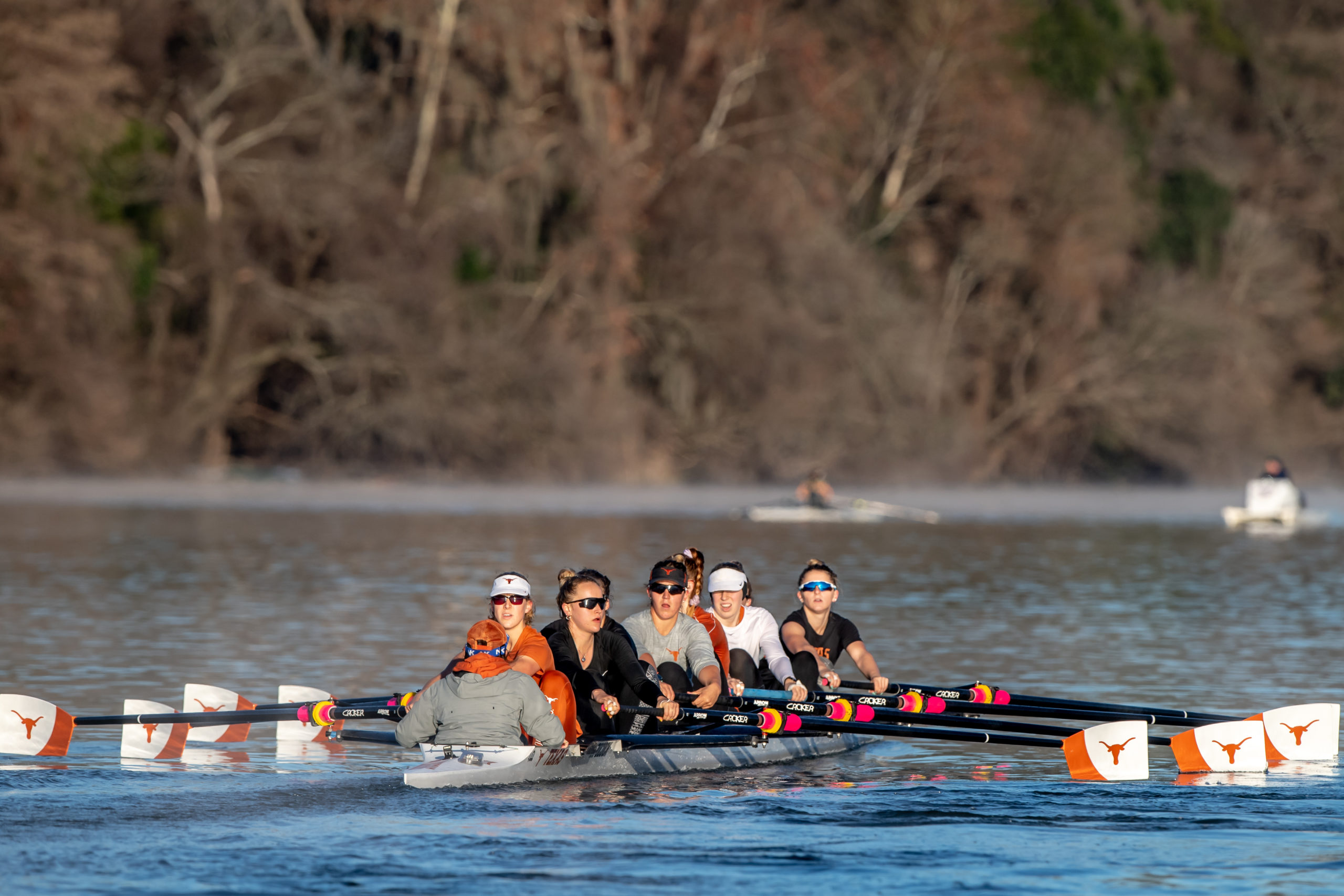
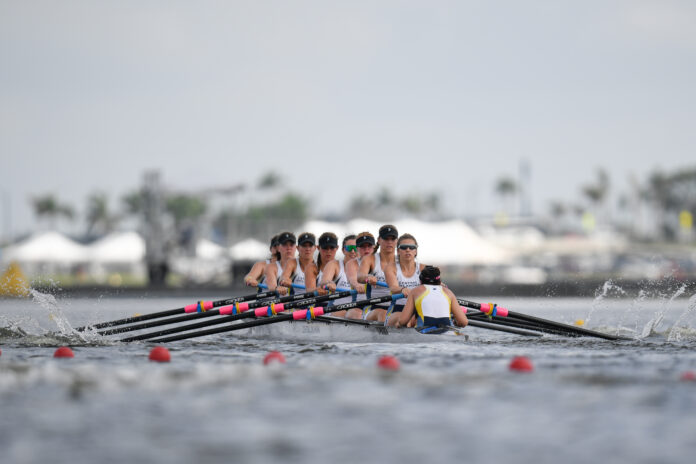
The University of Texas and University of Central Oklahoma topped the final regular-season Women’s Division I and II Pocock CRCA Polls presented by USRowing.
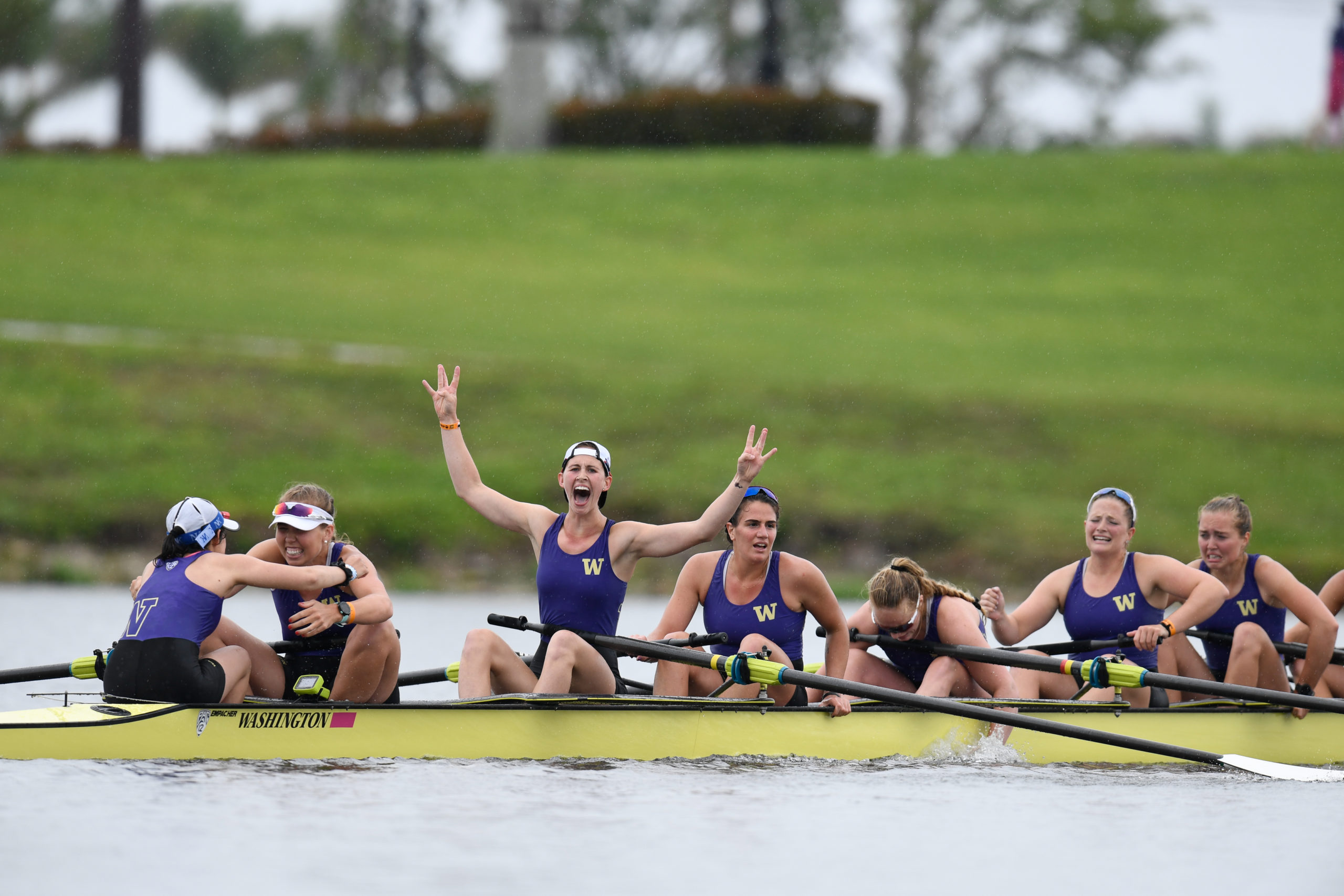
Texas moved into the top spot in the DI rankings, with the University of Washington dropping to second place. Stanford University moved into third position, with the University of Virginia ranking fourth. The University of Michigan rounded out the top five.
In DII, the University of Central Oklahoma continued to rank first, receiving all five, first-place votes. Seattle Pacific ranked second, followed by the Florida Institute of Technology. Embry Riddle Aeronautical University ranked fourth, with Mercyhurst University moving into the top five.
Division I Rankings
Rank
Team
Total Votes
Previous Ranking
1.
University of Texas (9)
486
2
2.
University of Washington (16)
480
1
3.
Stanford University
439
4
4.
University of Virginia
430
3
5.
University of Michigan
410
6
6.
Ohio State University
355
7
7.
Rutgers University
348
5
8.
University of California, Berkeley
302
8
9.
Syracuse University
251
11
10.
Duke University
246
17
11.
Princeton University
236
10
12.
Southern Methodist University
216
12
13.
University of Alabama
205
13
14.
University of Tennessee
169
14
15.
University of Wisconsin
121
20
16.
Washington State University
104
19
17.
Oregon State University
93
18
18.
Indiana University
91
9
19.
Brown University
87
15
20.
University of Minnesota
56
16
Others Receiving Votes: University of California, Los Angeles (50), Clemson University (29), University of Central Florida (18), U.S. Naval Academy (11), University of Notre Dame (7), Gonzaga University (4), University of Southern California (3), University of Iowa (2), University of San Diego (1).
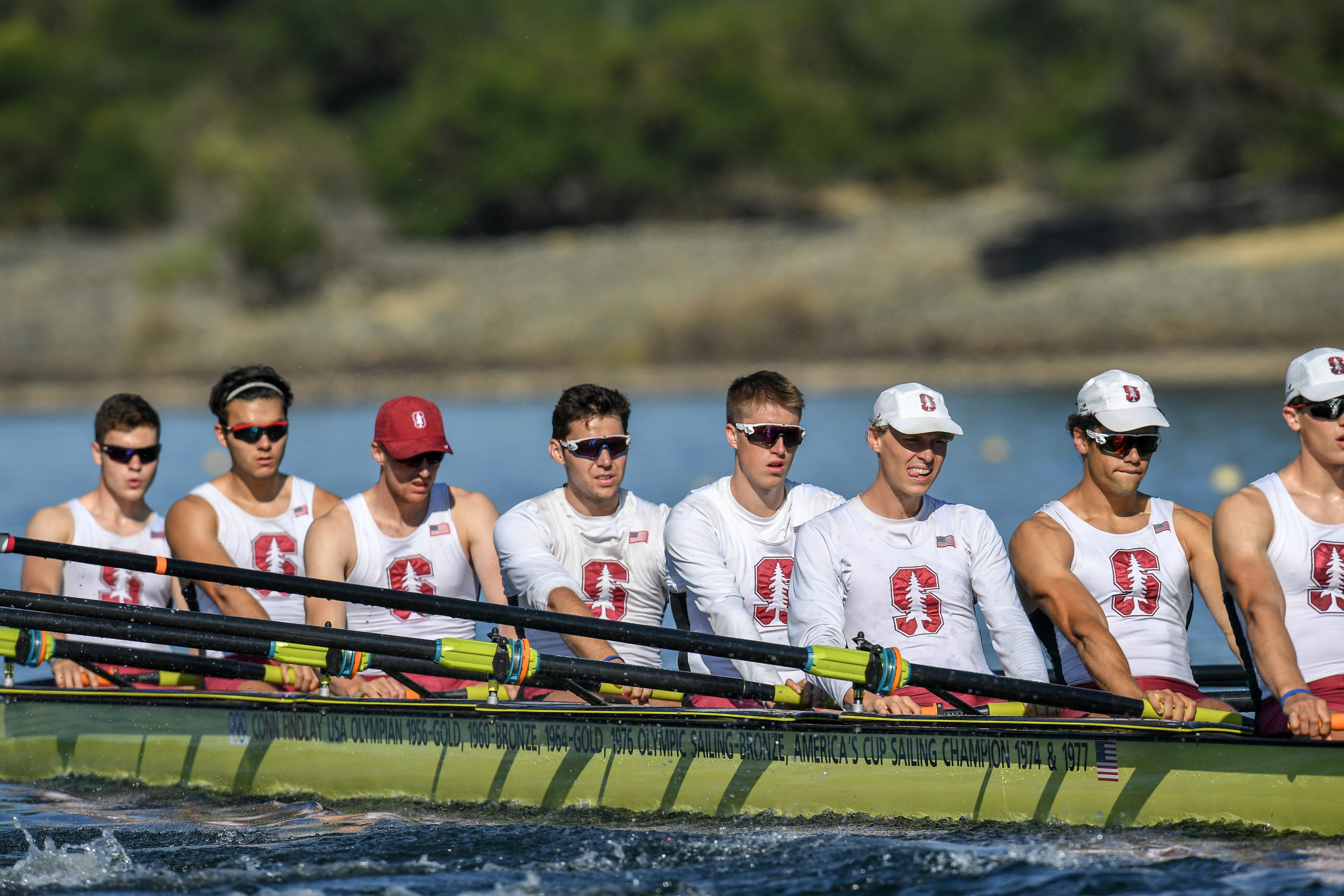
The Stanford Athletic Department announced that the 11 varsity sports programs — including men’s rowing and women’s lightweight rowing — it planned to cut will be reinstated.
The announcement comes nearly 10 months of hard-fought battles, including two lawsuits, orchestrated by student-athletes and other stakeholders.
“We have new optimism based on new circumstances, including vigorous and broad-based philanthropic interest in Stanford Athletics on the part of our alumni, which have convinced us that raising the increased funds necessary to support all 36 of our varsity teams is an approach that can succeed,” said Stanford President Marc Tessier-Lavigne.
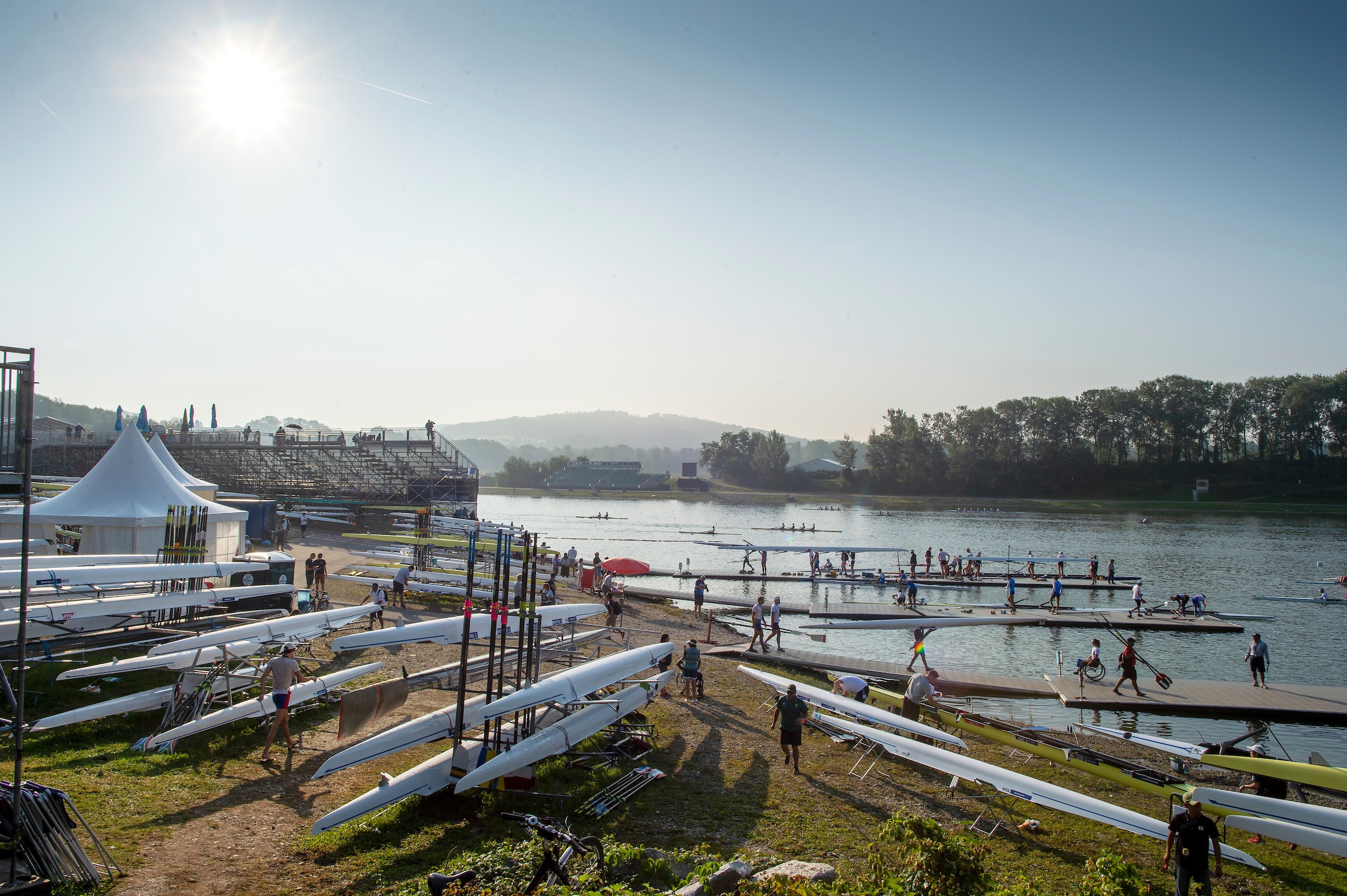
Linz, Austria, Saturday, 31st Aug 2019, FISA World Rowing Championship, Boat Park Area, [Mandatory Credit; Peter SPURRIER/Intersport Images]
08:30:34 31.08.19
STAFF REPORTS PHOTO BY PETER SPURRIER
World Rowing confirmed that the 2021 World Rowing Masters Regatta will take place this year.
The event, scheduled for September 1-5, will be staged in Linz-Ottensheim, Austria.
“Protecting the health and reducing the chance of infection for all participants is the priority for all World Rowing events,” World Rowing wrote in a release today. “Following extensive discussions with all key stakeholders, the World Rowing Executive Committee has verified that the preparations of the Organizing Committee (OC) of the 2021 WRMR conforms to the World Rowing requirements for 2021 regattas.”
World Rowing acknowledges that depending on the status of the pandemic that athletes will need to be responsible for their own countries’ rules and regulations regarding international travel. The organization also has strict rules regarding health and safety precautions.
“Each participant is responsible to exercise maximum care for themselves and their club and crew members before, during and after the event. All participants must follow the measures in the OC Covid-19 Protection Plan at all times, including the wearing of masks at all times except in the boat, on an ergometer or at meals, social distancing and regular disinfection, among the other measures published by the OC.”
The NCAA selected four programs to compete in the 2021 NCAA Division II Women’s Rowing Championships today.
The University of Central Oklahoma, Embry-Riddle (Florida), Florida Tech, and Mercyhurst will compete for this year’s title.
The event will be held at Nathan Benderson Park in Sarasota-Bradenton, Florida May 28-30. The University of Central Florida along with Suncoast Aquatic Nature Center Association, the venues managing organization.
The University of Central Oklahoma will be defending their title in hopes to win a third straight championship.
Rowing lost a giant on March 30. Word spread quickly that Larry Gluckman had died. How could it not have? Larry had so many admirers and people whom he had helped that the LG network got the word out at cyber speed. I hadn’t seen Larry in a while but I had talked with him last summer when he gave me details of the 1973 race in Heidelberg, Germany, where he and other US team members won the famous Martini Achter eight.
Over the past 40 years that I knew him, Larry delighted in telling stories and spinning theories about rowing, many of which found their way into my columns. When Larry got into a story, the listener was hit with a tidal wave of enthusiasm, energy and humor. Larry brought these same qualities to his coaching and the countless coaching clinics he gave. You walked away from listening to Larry thinking, “Boy, I’d like to row for him.”
He introduced me to a workout that is famed for its intensity, a workout that builds confidence once you live through it. At racing ratings: 20 on, 5 off, 20 on, 5 off, 20 on. Minute and a half rest. Repeat three more times. That’s a 2K. Rest five minutes and repeat two to three more times. We have always called these pieces “Gluckers.” Generations of rowers have suffered through it but appreciated that it made them tougher.
Gluckman’s Theorem was what I dubbed an important piece of research that he told me about. It began with a letter to me:
Most of my old rowing buddies have female offspring. Someone said that Larry Gluckman has a theory about this: “If a guy does a lot of intense seat racing, he burns up all of his male sperms and can produce only girls.” What do you know about this, Doc?
Sign Me,
Y Chromosomes
In my column, I replied:
Isn’t Larry Gluckman great? Just when you think you’ve heard it all, along comes a new Gluckerism. This is the man who said, “Anything can happen in rowing. It’s an outdoor sport.” He’s rowing’s answer to Yogi Berra.
Although this isn’t exactly my field, what the heck, how difficult can the miracle of human birth be? I’m not sure that your phrasing “the male sperms” is exactly on target, but let’s not quibble over details.
This sounds like a variant of the old Wearing-Jockey-Shorts-Causes-Infertility urban legend. You know, by raising body temperature, the sperm are cooked beyond the magic point. It is true that at temperatures above 104 degrees, the motility of sperm is reduced and the creation of new sperm (spermatogenesis) is slowed. But according to research, the effect is short-lived, only a half hour or so, barely enough time to get the boat docked, out of the water, and into the rack. So, unless Mr. Gluckman is talking about coed gymnastic sex in the boat, right after a piece, I think that we can safely rule out higher temperatures as a causal agent.
I went to a New Year’s party and looked around. National teamer Tom Bohrer was there with his two daughters. Tom Kiefer carried in his girl. Greg Montesi had daughter Piper in tow. Andy Sudduth chased Zoë and Sophie around.
I wonder what Glucker would say about another interesting thing that all of these guests had in common: Their wives were all oarswomen of note, having earned basketfuls of medals themselves. So is Glucker’s theorem somehow made stronger by the presence of these strong X chromosomes?
Surprisingly, Gluckman’s Premise, unscientific though it may be, has some support in the rowing world. When airing this strange bit of reproductive theory, I heard a corollary. Strokes do have boys. Strokes–they never get seat-raced much. Strokes–the stylists in the boat. Strokes–they don’t really crank it the way the guys behind them in the engine room do. Hmm. Stroke of the world champion 8 in 1987 John Pescatore has twin boys.
Said one old oar who wished to be kept anonymous, “Show me an oarsman with sons, and I’ll show you a guy who tanked a lot of pieces.”
So where is all this headed? In 20 years, look for some awesome American women’s crews.
P.S. Did I mention that Larry Gluckman, seat-raced to within an inch of his life while trying to make the ’68 and ’72 Olympic squads and a spare for the ’76 Olympic eight, is himself the father of three–count ’em, three– great girls, Meg, Katie, and Anna?
Larry used to tell his crews a story about his father. “My father grew up in the Depression, and his father was out of work. So my father decided that he needed to get a job to help out at home. He was 16 and applied for a position at a market stocking shelves. There were probably 20 applicants for one position, and there wasn’t anything about my father that stood out. He went in for an interview, talked to the boss, and was told that they’d get in touch with him. It sounded like a hollow promise. On his way out of the office, my father noticed a broom lying down near the door. He picked it up and stood it in the corner and left. The boss came running out and said, ‘You’re hired. You didn’t have to do that, but you did.’ My father used to tell us that story and end by saying, “Always do something extra; that’s how to live your life.”
His crews undoubtedly got the message. Larry always did something extra. He spread around his knowledge, his warmth, and his humanity to anyone in his orbit. We should all try to live as Larry Gluckman did.
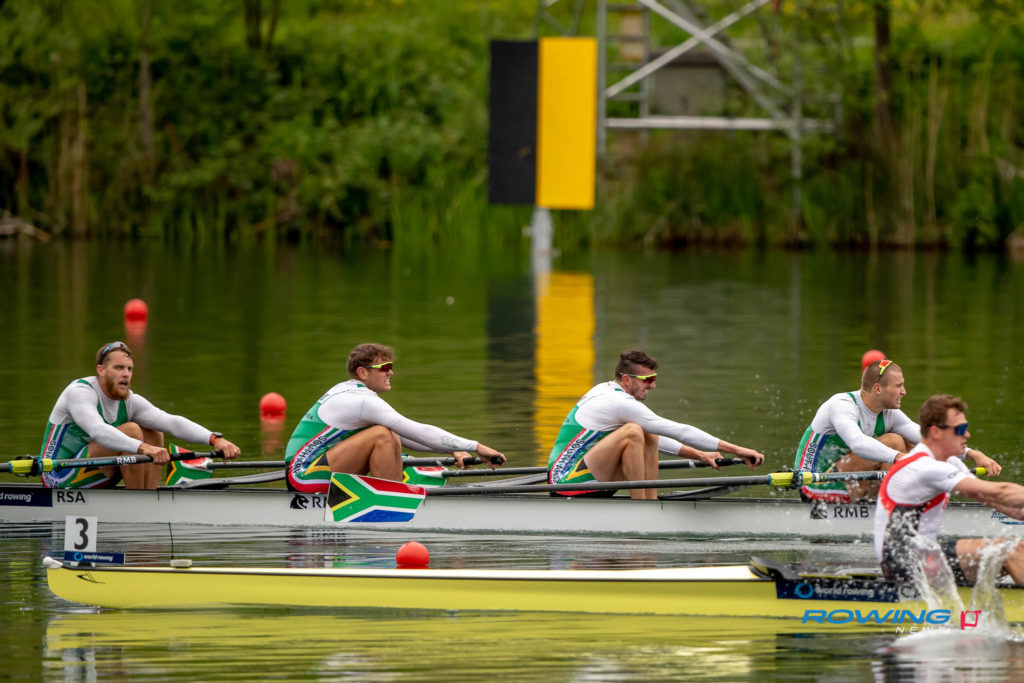
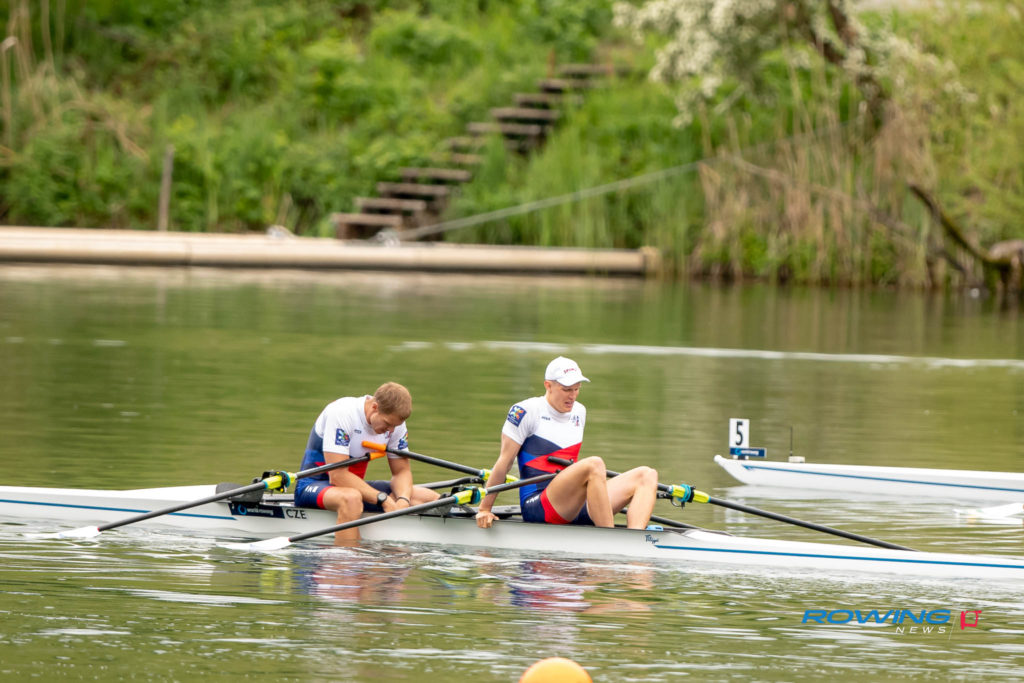
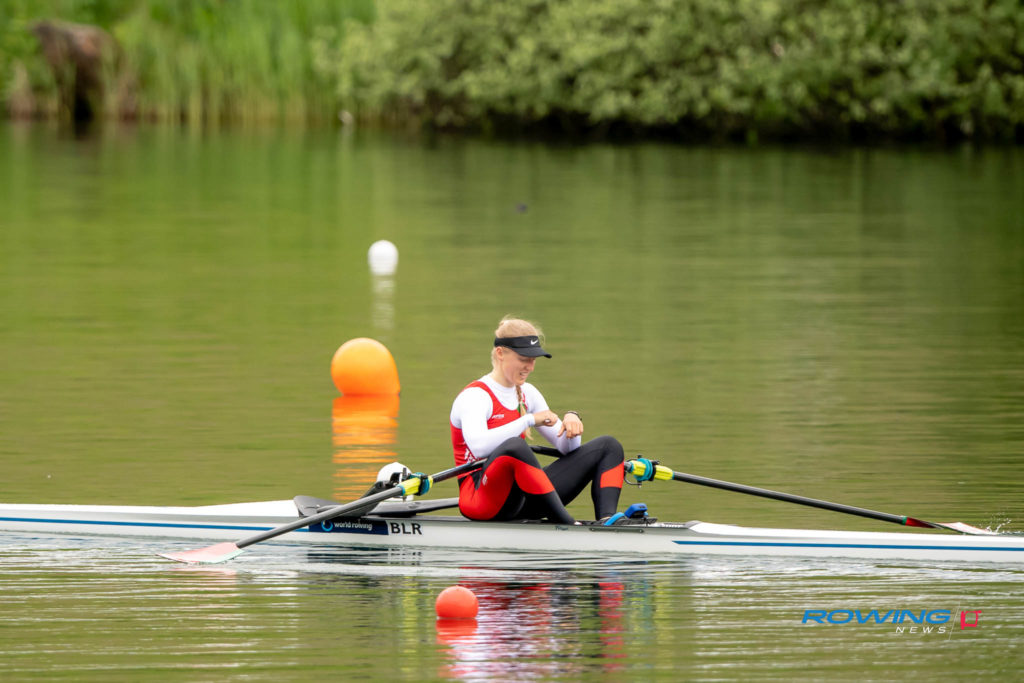
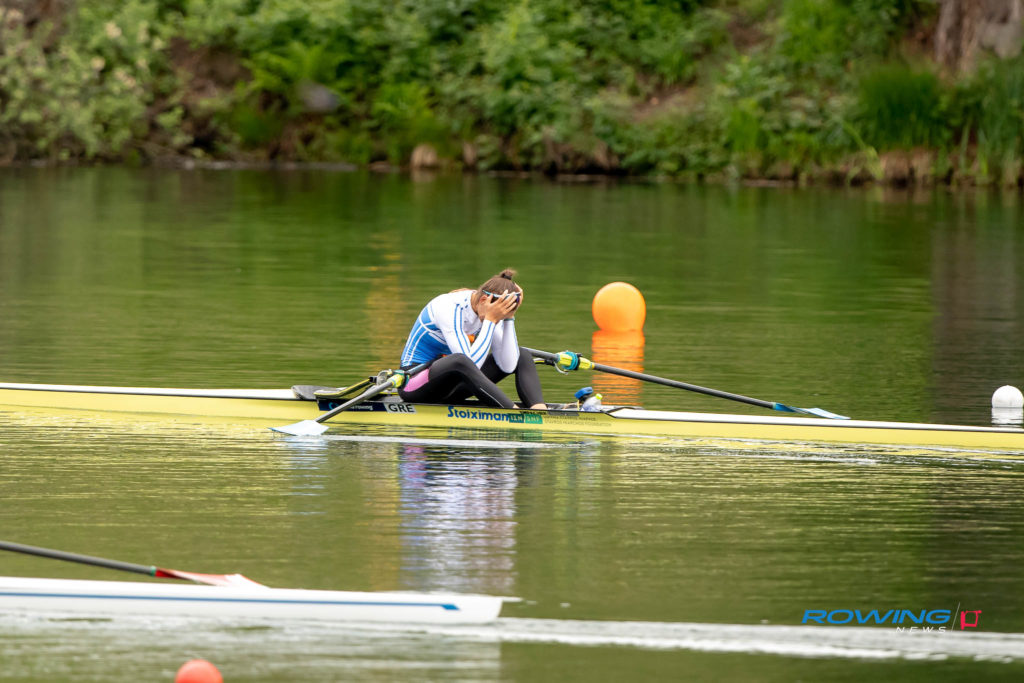
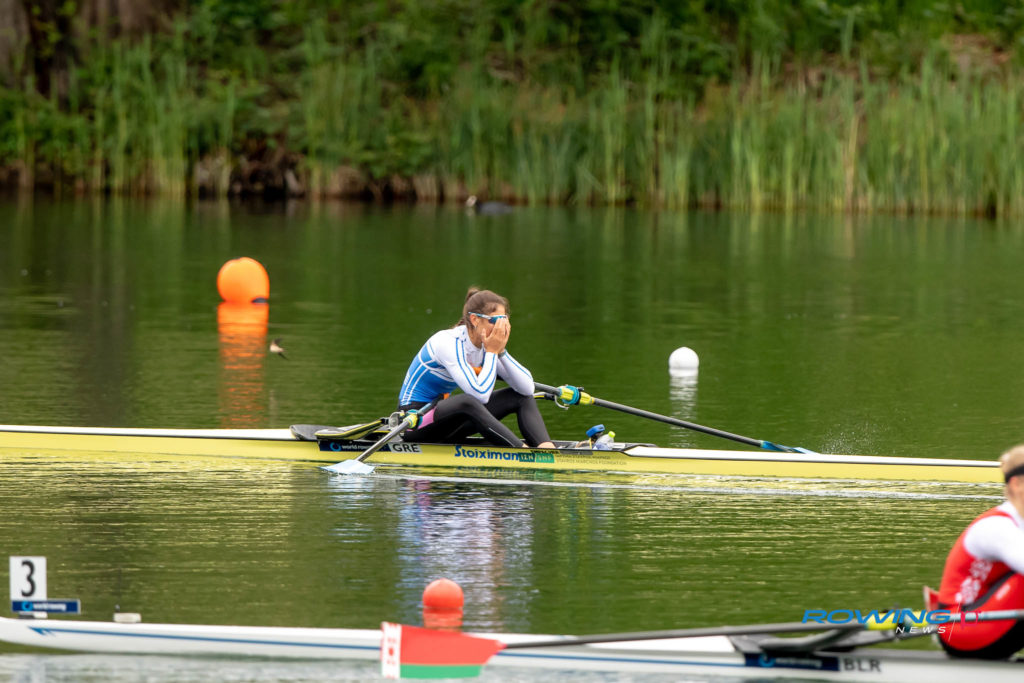
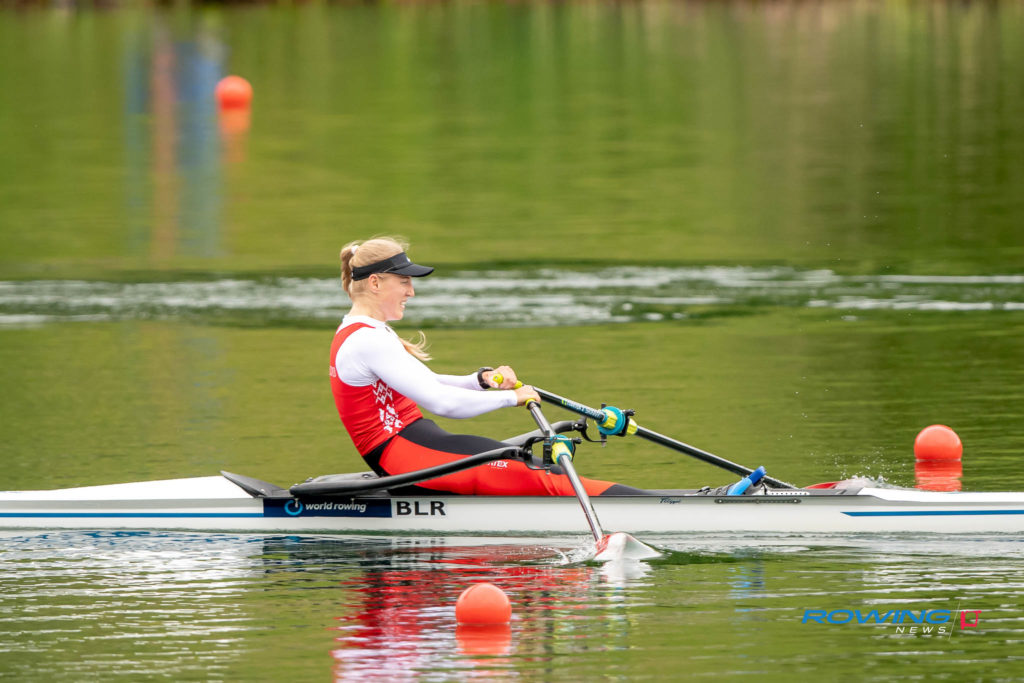
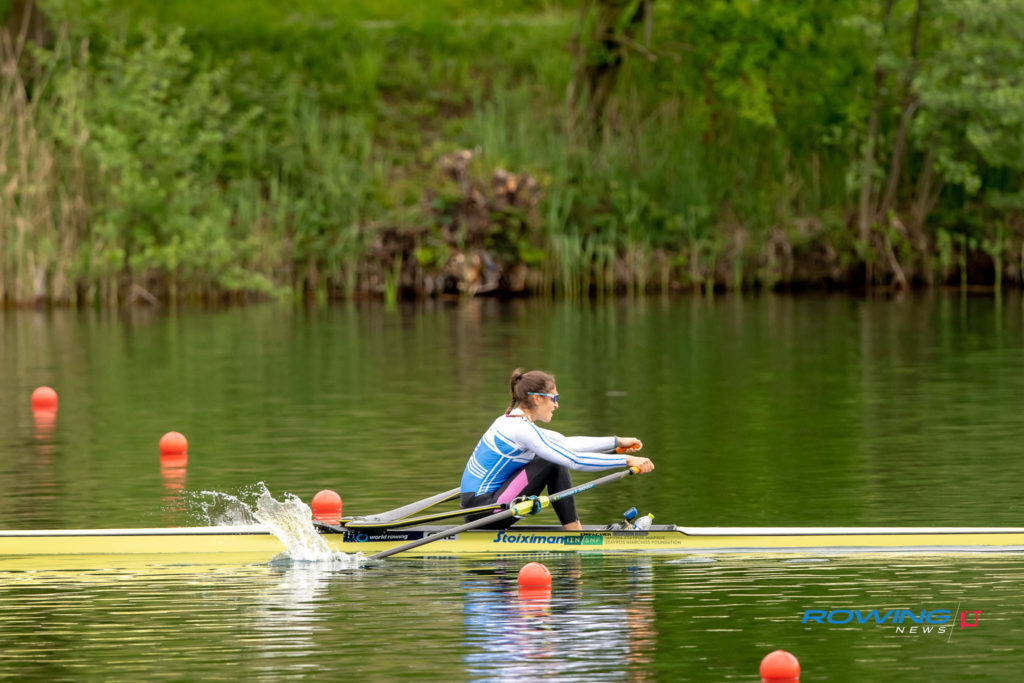
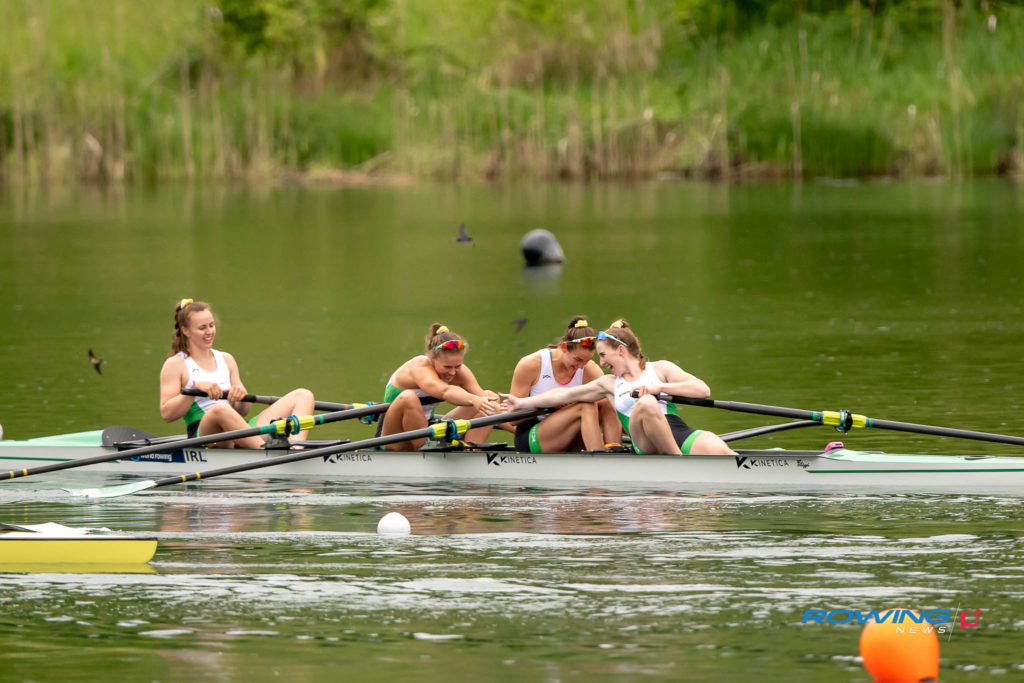
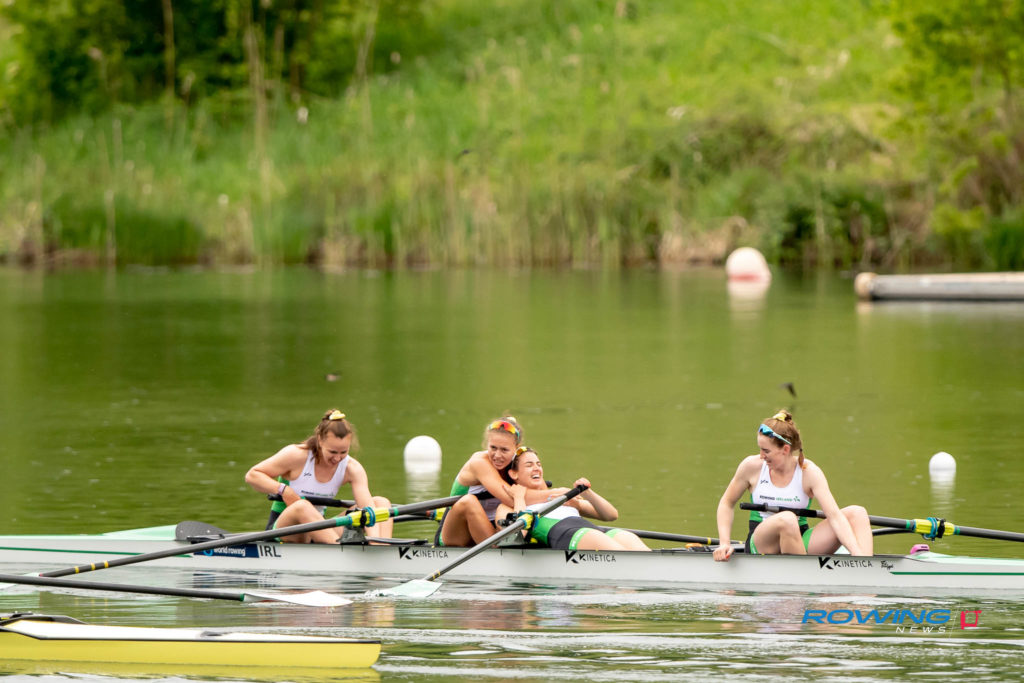
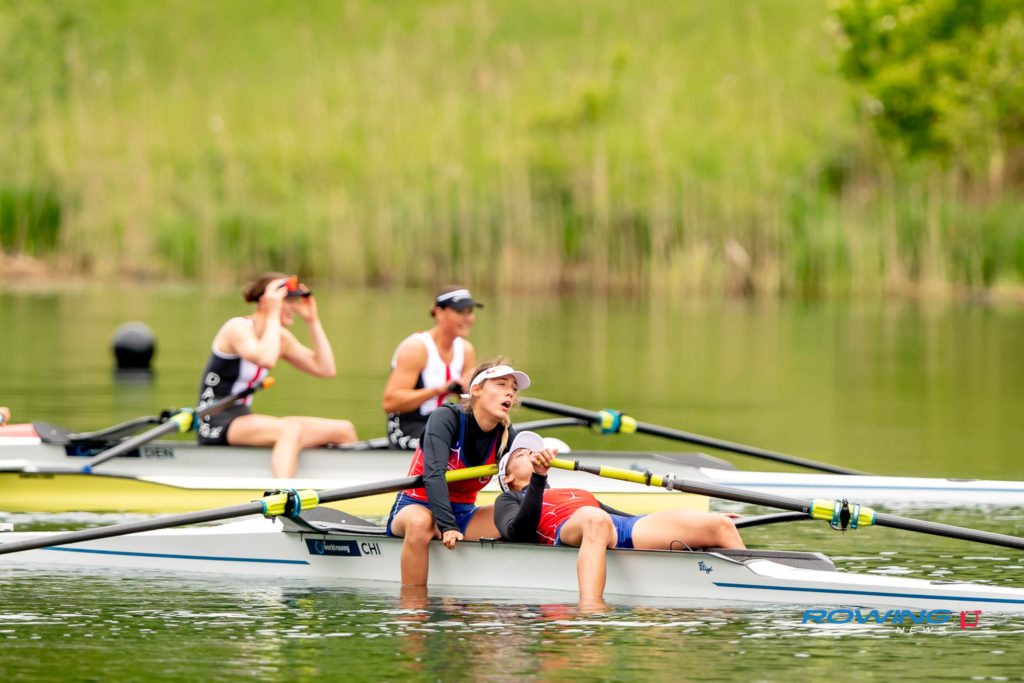
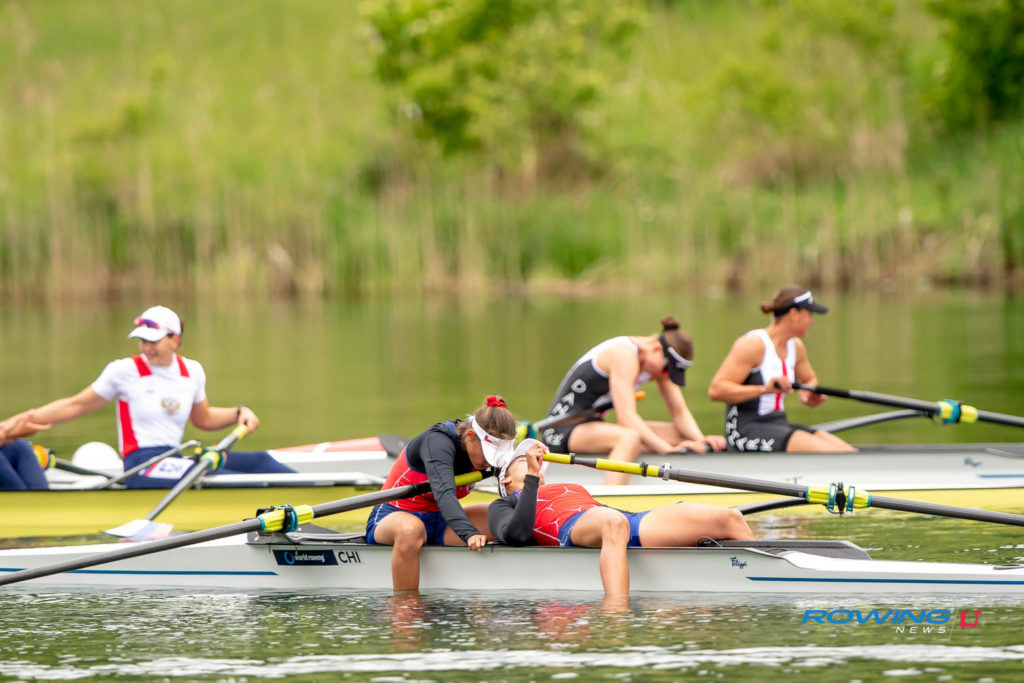
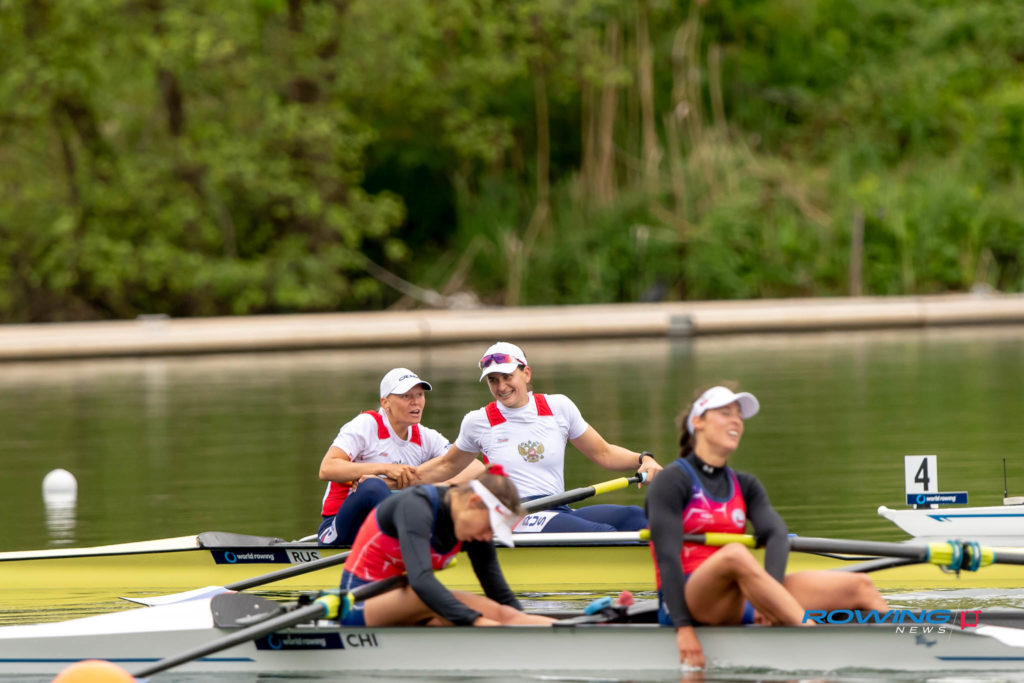
The pandemic-delayed 2021 Final Olympic Qualification Regatta took so long to get scheduled and arranged that it seemed almost amusing that the final two days were suddenly crammed into one morning of frantic racing and overflowing emotions.
It was supposed to run for three days. But Swiss weather in Spring can be untenable for outdoor sports. Systems of moisture rising up and over the snowcapped mountain peaks that fill the horizon around the Rotsee racecourse in Lucerne come down the other side and into the valley toward Lake Lucerne as rain and wind.
And it was all so fitting.
The sudden predicted weather changes that forced World Rowing to cancel Monday finals and jam two days of racing into one somewhat matched the uncertainness of which countries had cooked up a team that could come and claim one of the last 29 spots on the Tokyo Olympic schedule.
Most of the crews were new. Many of the combinations in the team boats were largely untested. None of the athletes had raced in an international regatta of this consequence since the World Rowing Championships in 2019.
Covid forced the entire year to be pushed back, and stranded Olympic dreams on the shore.
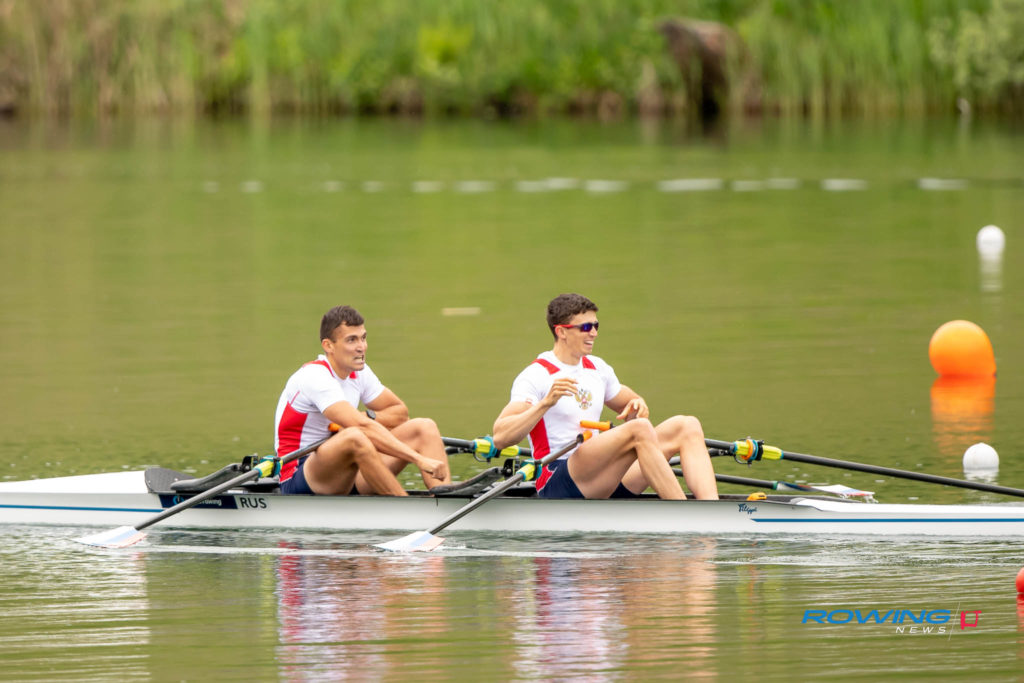
But it finally happened. And when it did, four hundred athletes from 49 countries brought their hopes and Olympic dreams and raced over two compacted days for the last remaining Olympic slots.
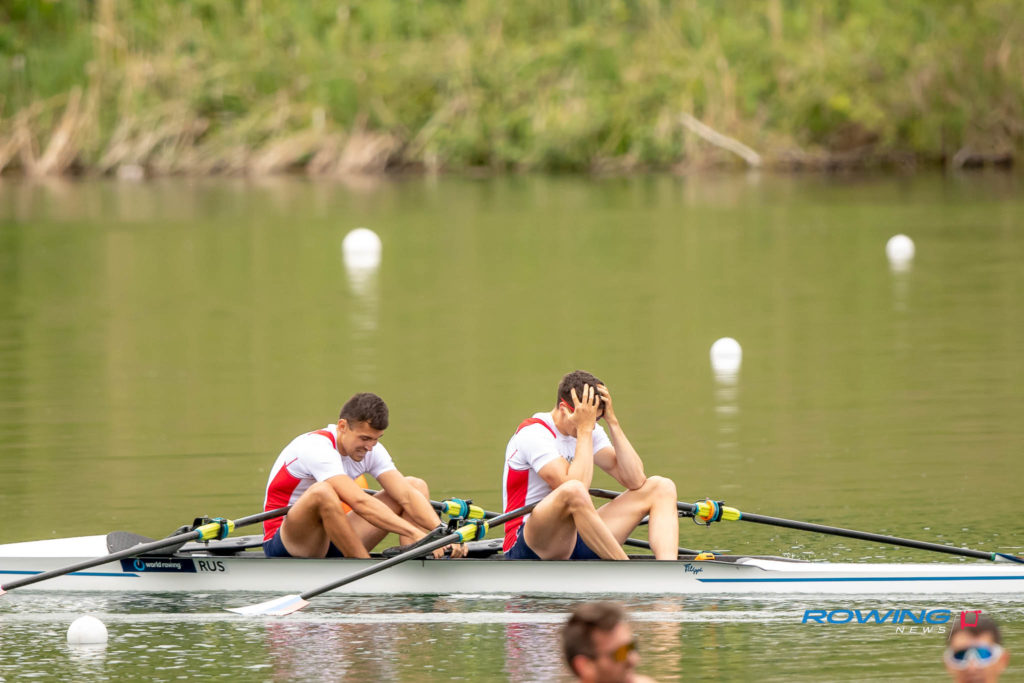
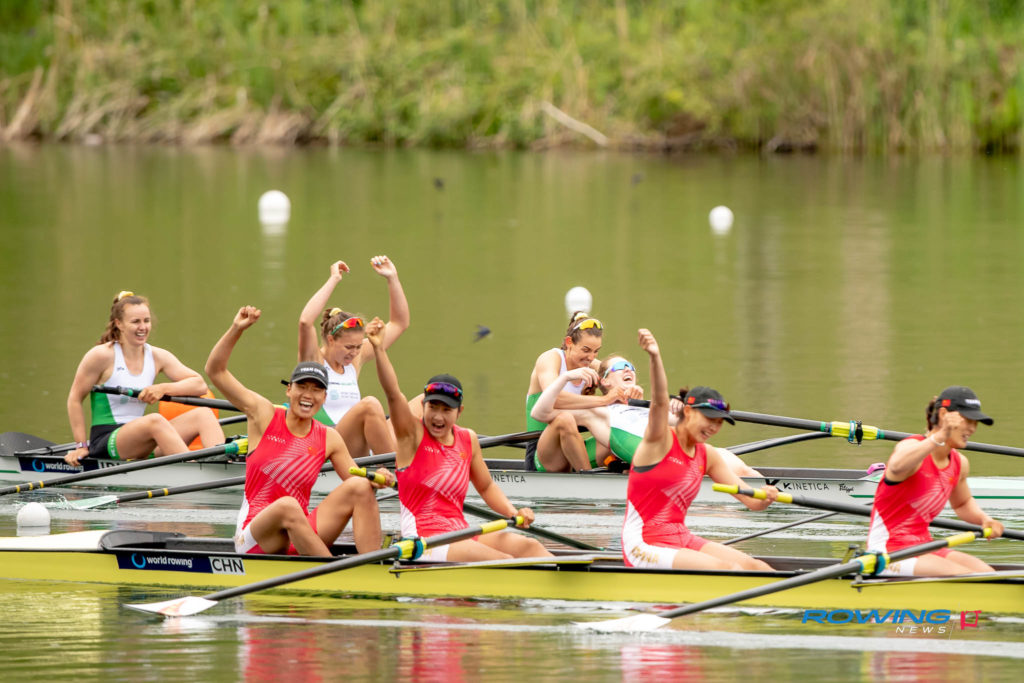
And there was plenty of disappointment and joy, in the end, to go around.
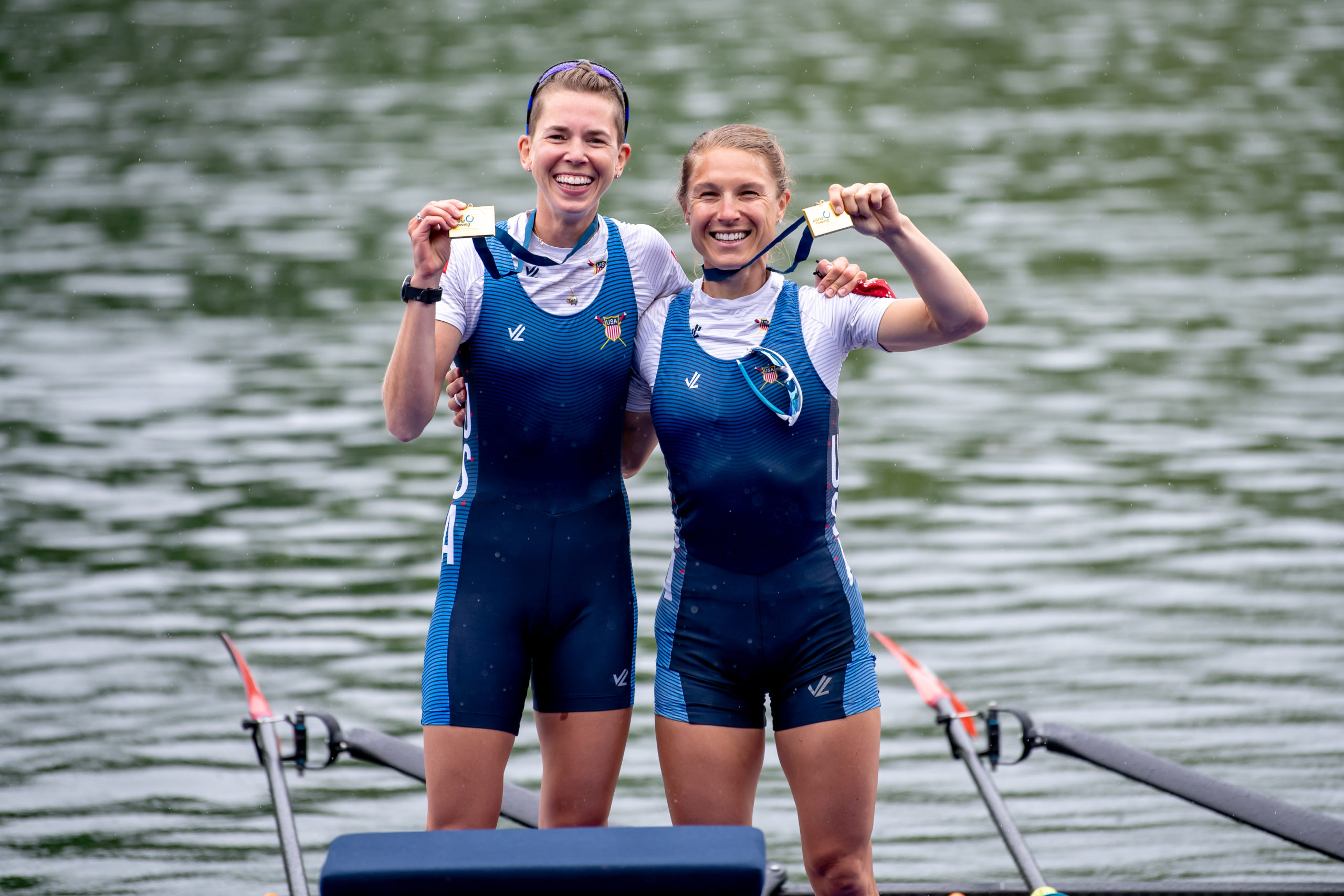
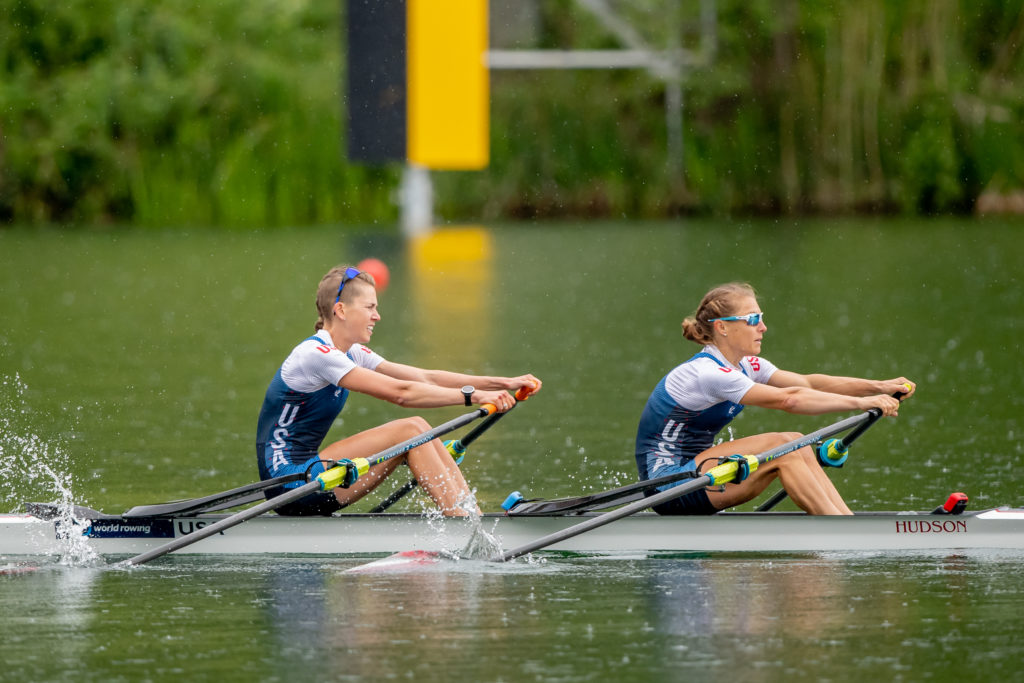
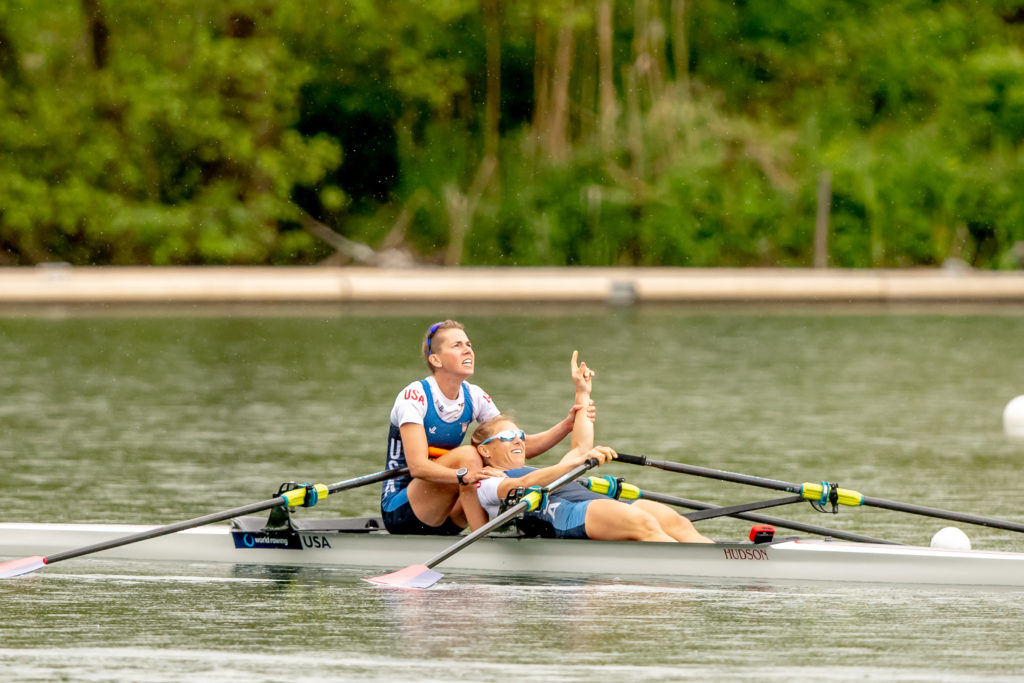
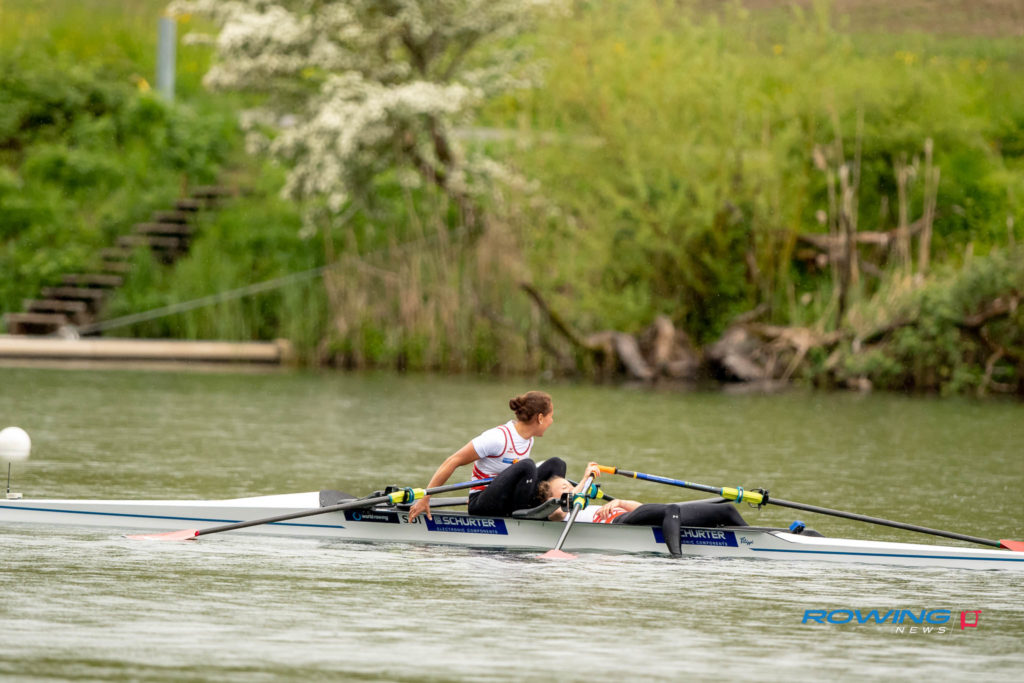
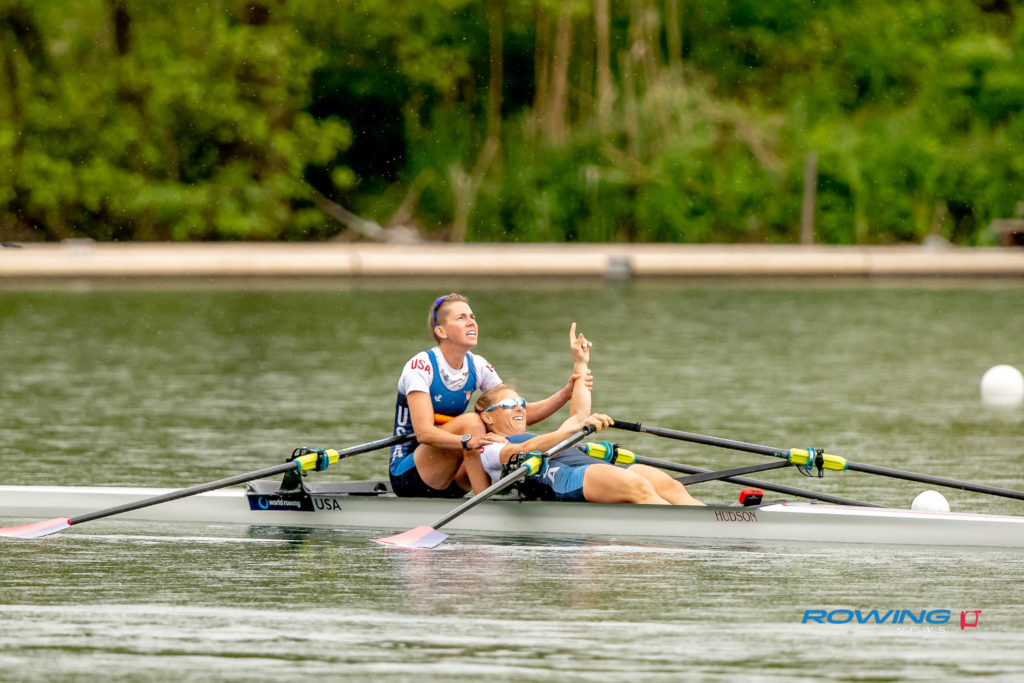
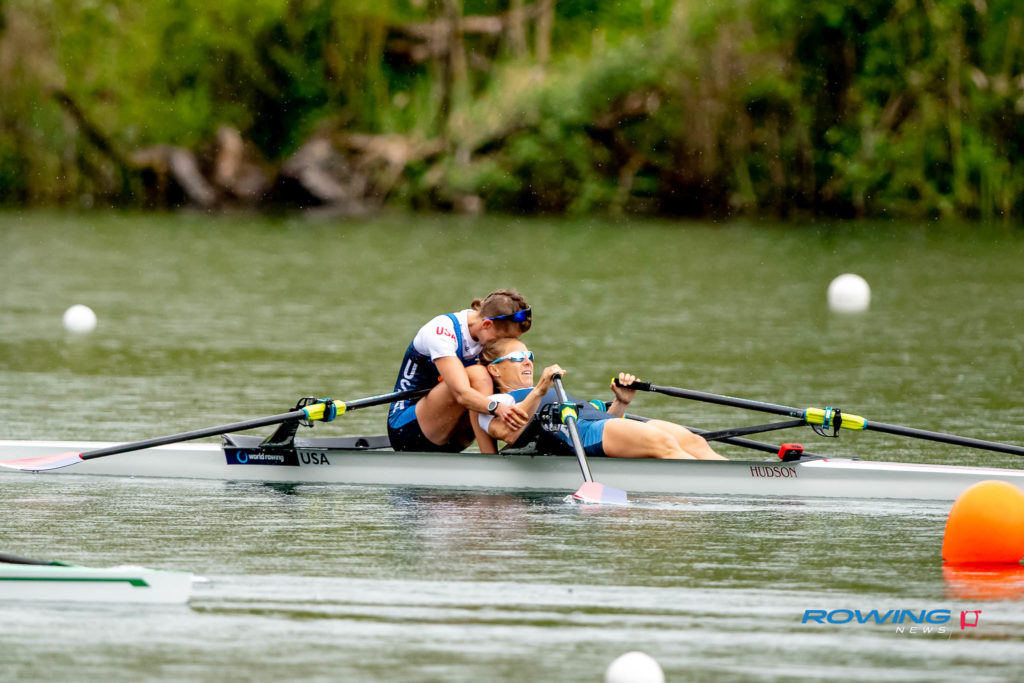
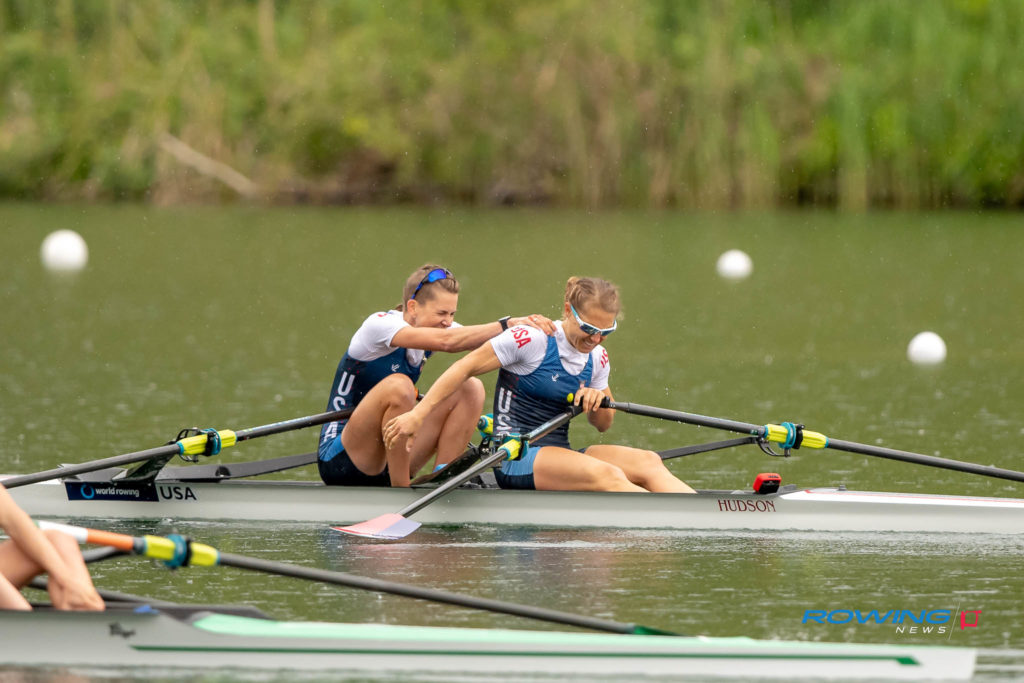
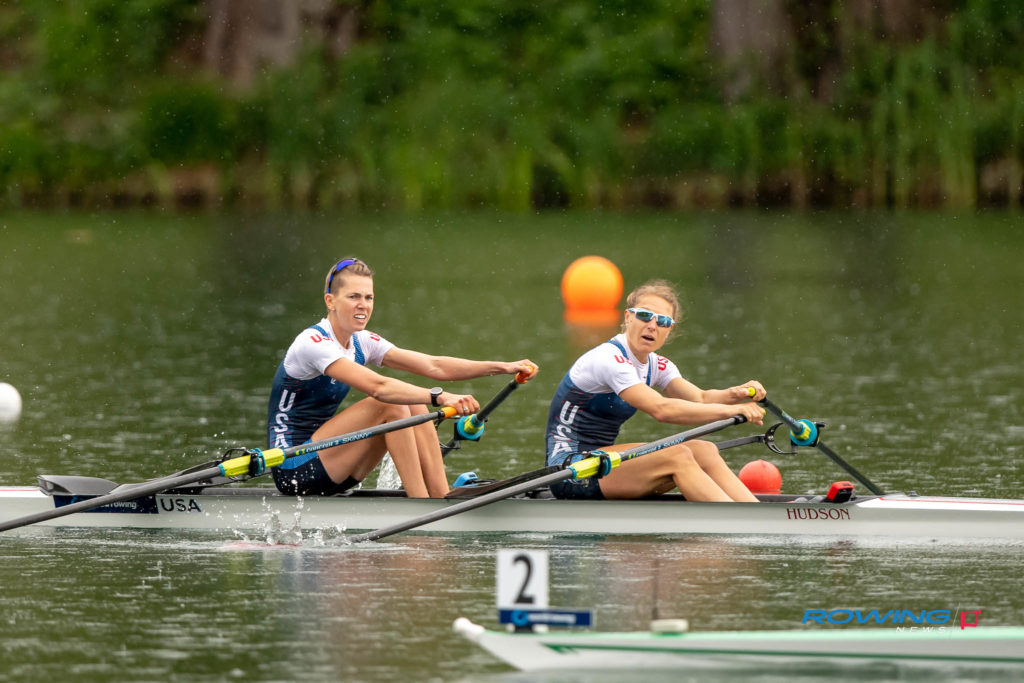
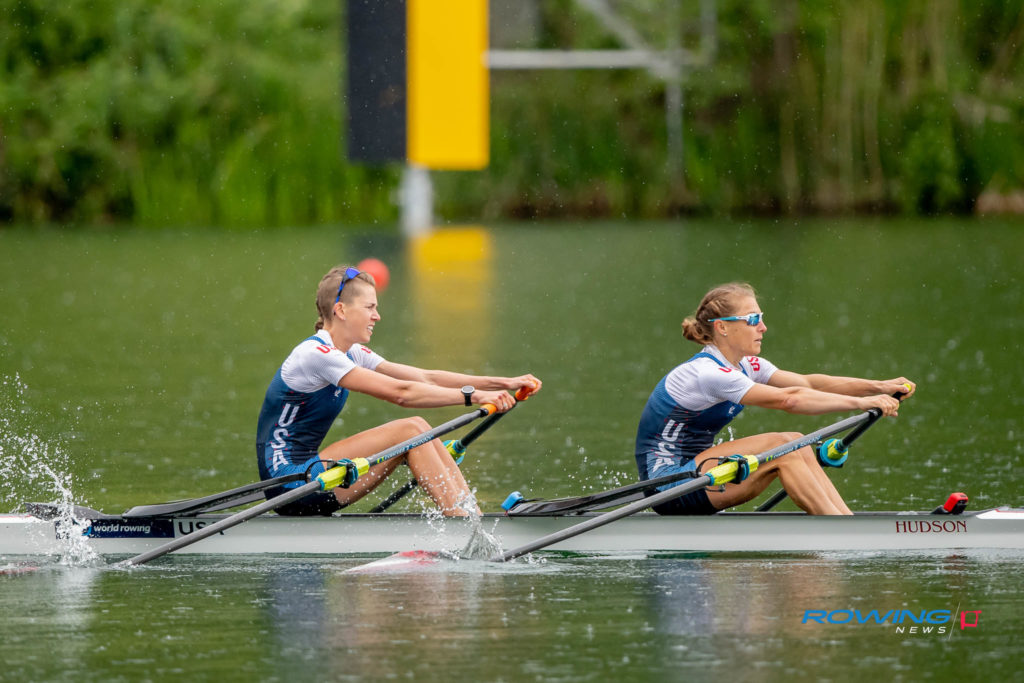
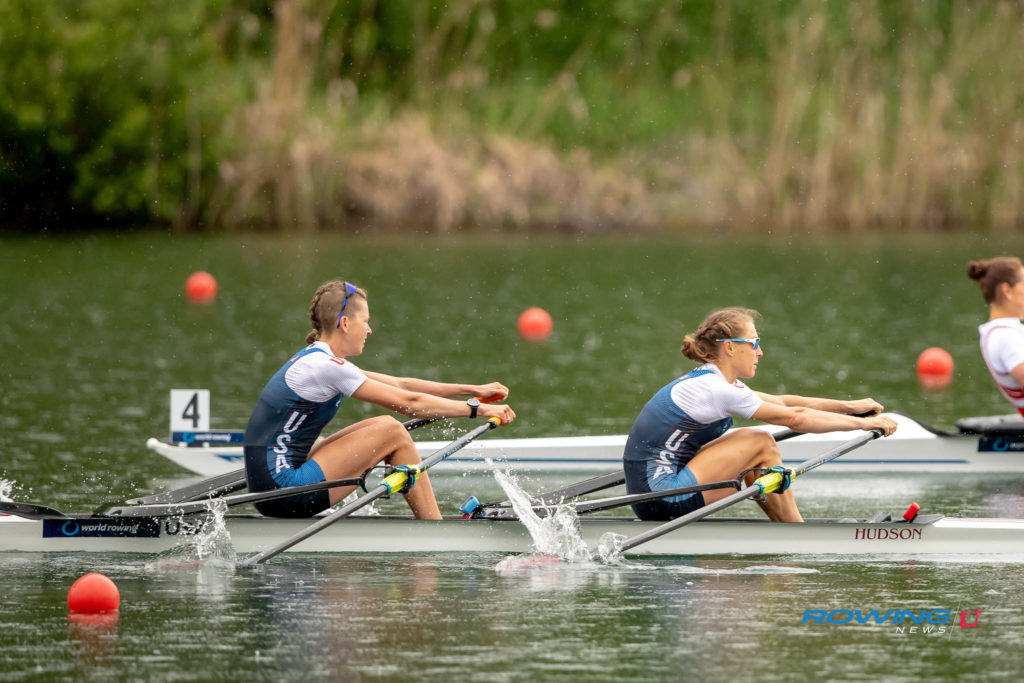
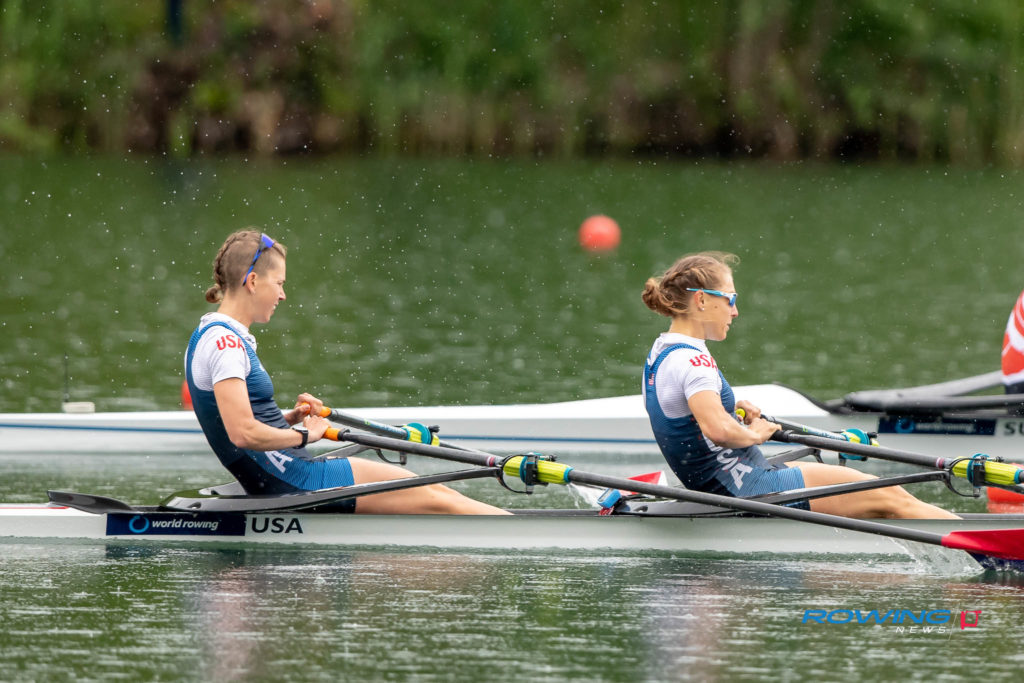
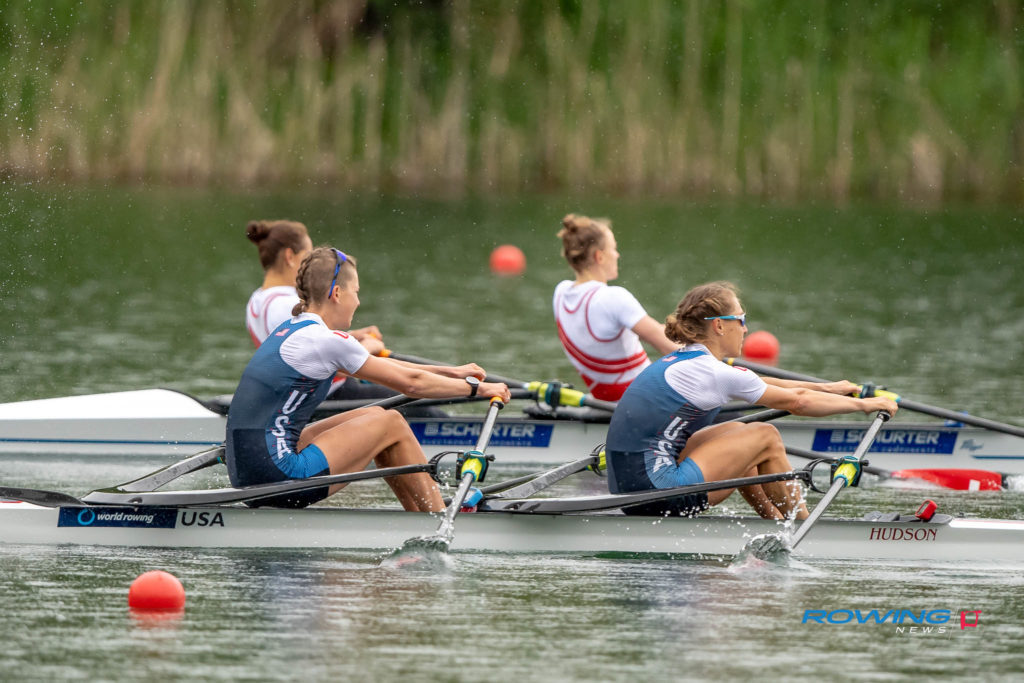
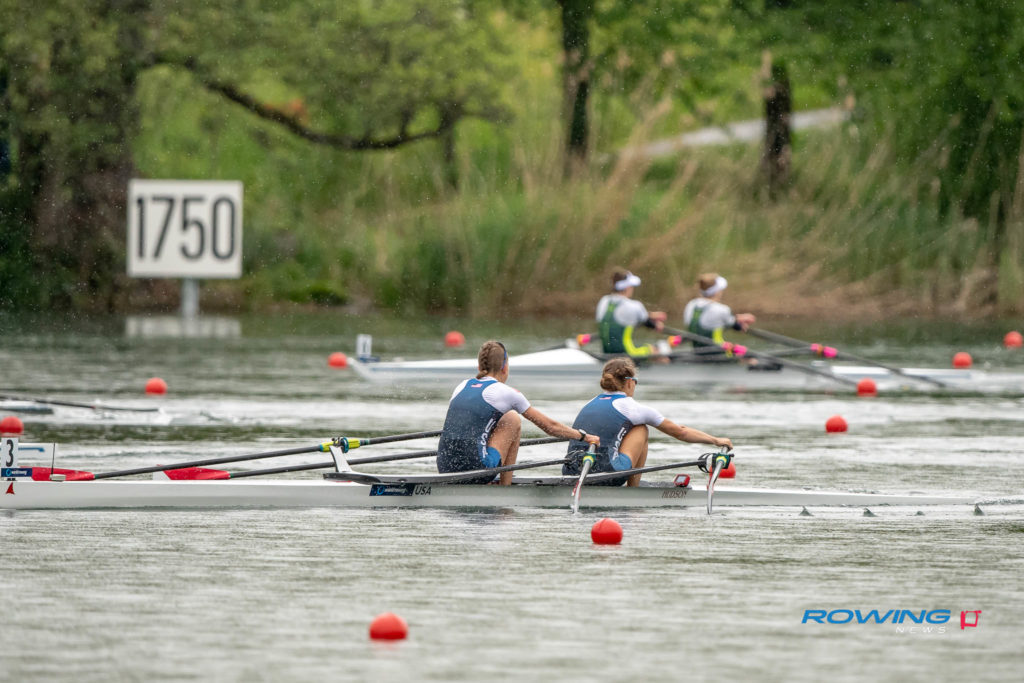
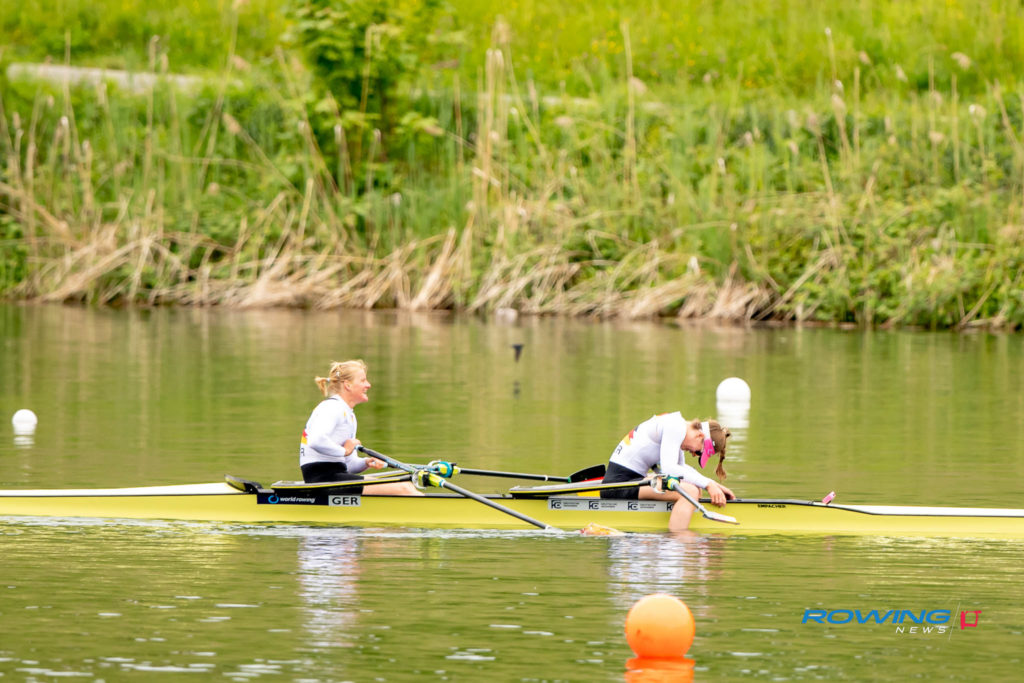
Joy particularly for 34-year-old U.S. lightweight sculler Michelle Sechser and her 27-year-old new partner in the lightweight double, Molly Reckford. They cruised through the regatta, won their event, and now go home to pack Olympic bags.
“I am so happy to have achieved this, and to have done it with Molly,” said Sechser. “I couldn’t ask for a better way to achieve this thing. It was a really hard race and the amount of competition, the amount of people watching, because when the Olympics are on the line everyone just throws everything that they can.
“It was really awesome to feel the power of our boat respond to the attacks the field was launching without any sort of nervousness or hesitation, and that’s how I know I have a great partner calling the shots.”
Two years ago Reckford was a recreational masters rower in California who reenergized an Olympic dream that began at the feet of her two-time Olympian grandfather, William Spencer, who passed in December of 2020. Reckford races in his memory and believes she is being watched over and powered by him.
“This means the world to me,” Reckford said. “I could not be more proud of Michelle, or the race we put together. This journey has really helped me process the death of my grandpa, and I know he was there with us pushing us towards the line. We put in a lot of hard work in the last 15 months, and I am so thankful that we pulled it off.”
“This means the world to me,” Reckford said. “I could not be more proud of Michelle, or the race we put together. This journey has really helped me process the death of my grandpa, and I know he was there with us pushing us towards the line. We put in a lot of hard work in the last 15 months, and I am so thankful that we pulled it off.”
-Molly Reckford
It’s hard to say which athletes were either positively or negatively impacted by the schedule changes, but every one of them that made it through the early semifinals to the later morning finals had to make some kind of mental and physical adjustment.
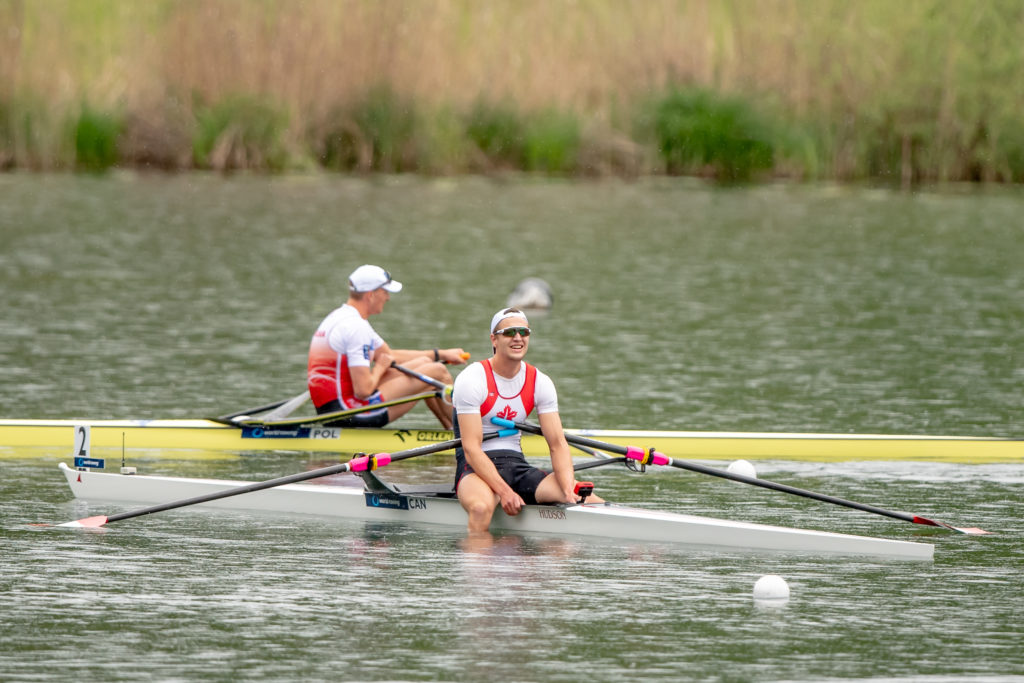
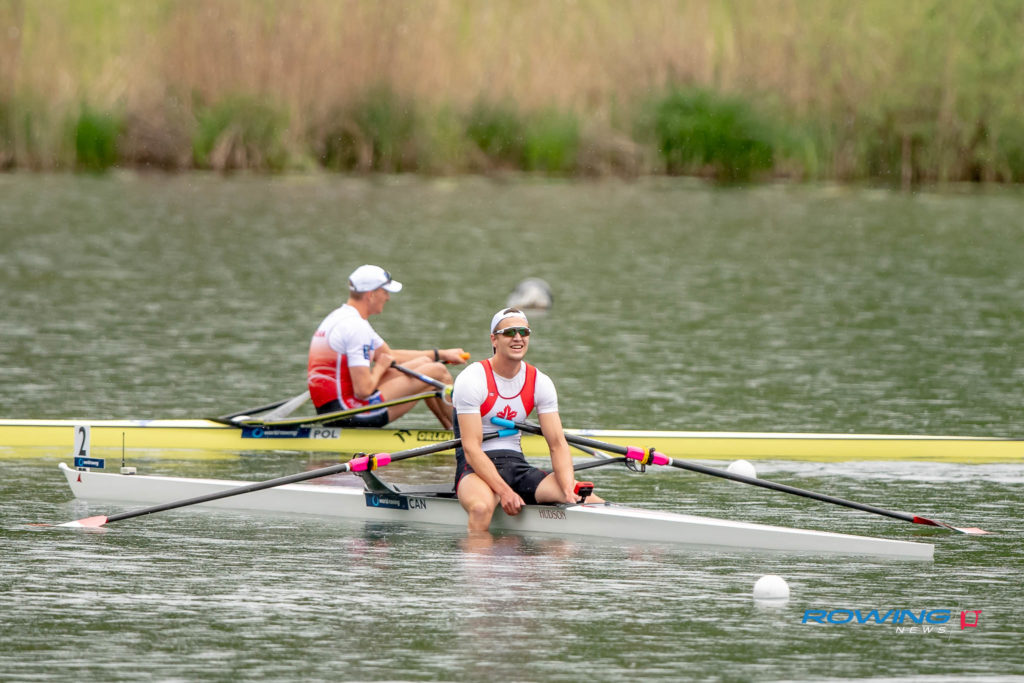
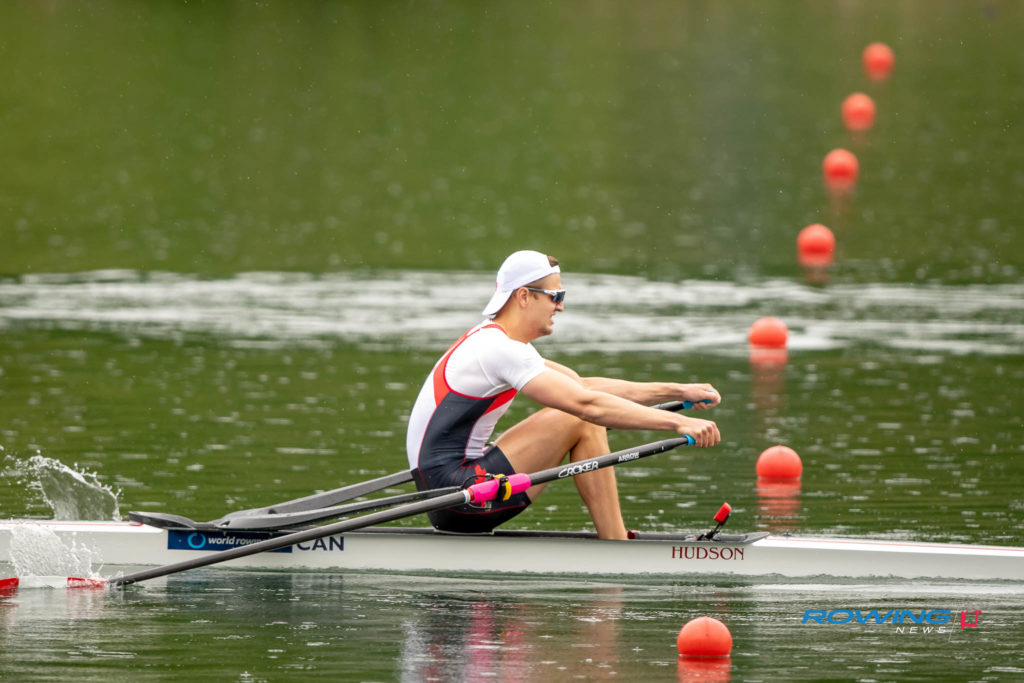
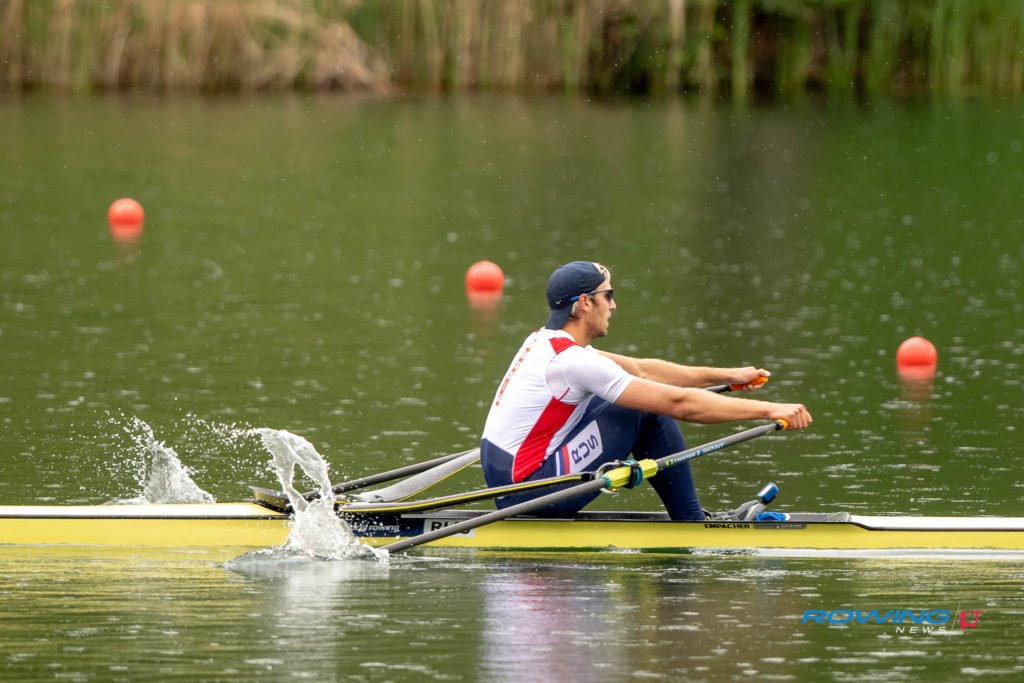
“It was interesting having only two hours between the semi and the final,” said Canadian men’s single sculler Trevor Jones, who finished second and grabbed a place at the Games. “Yesterday’s heat was good to get the jitters out. I’ve put in lots of miles this winter, and I’m really relying on that”
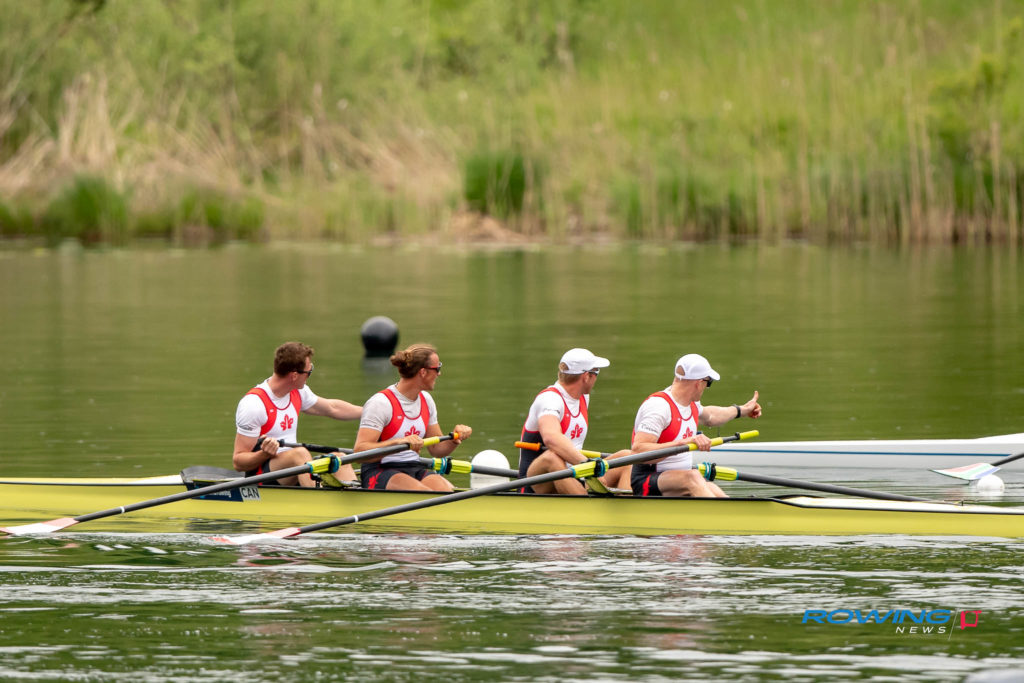
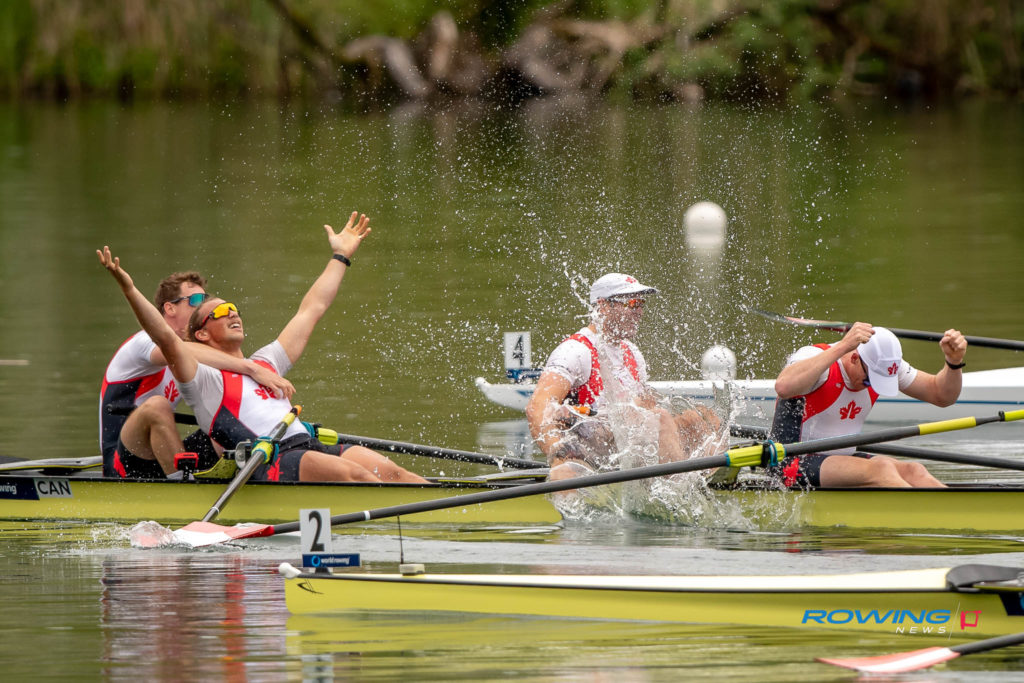
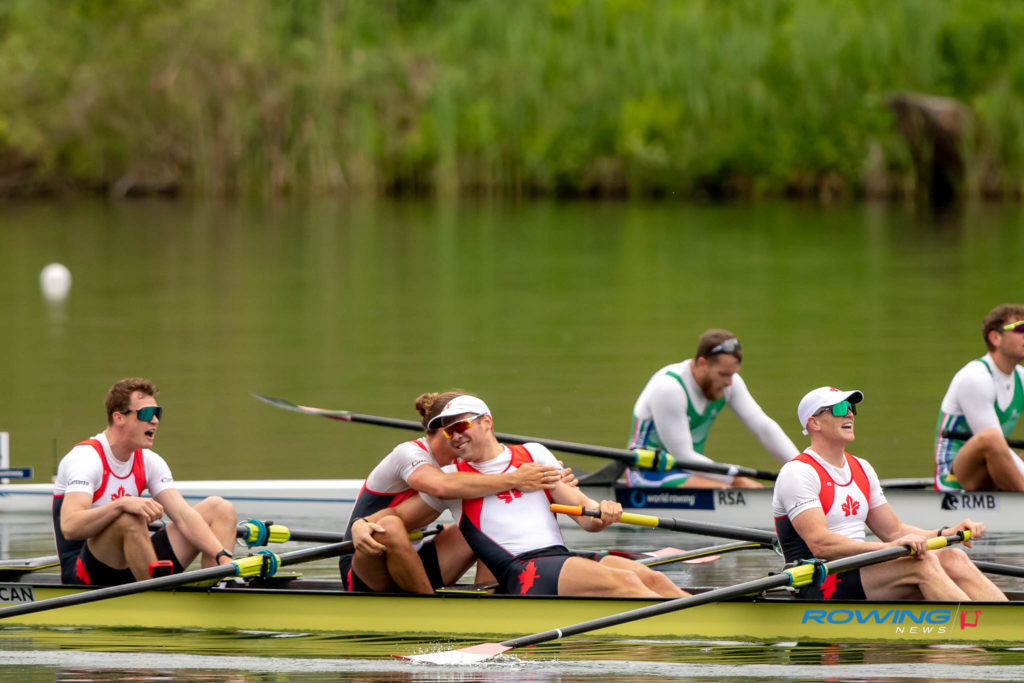
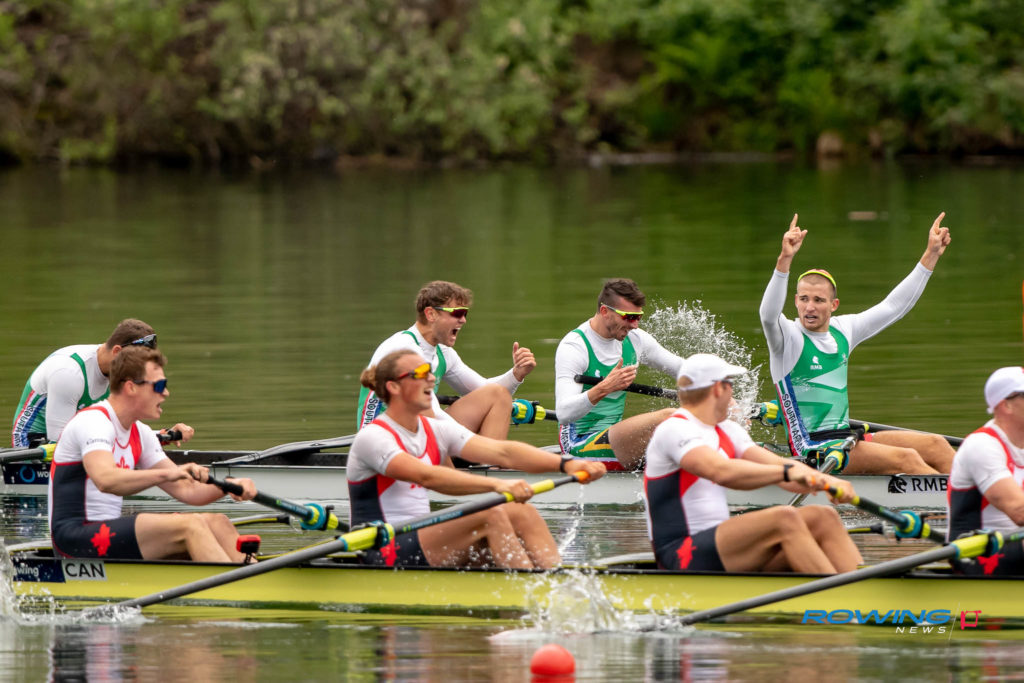
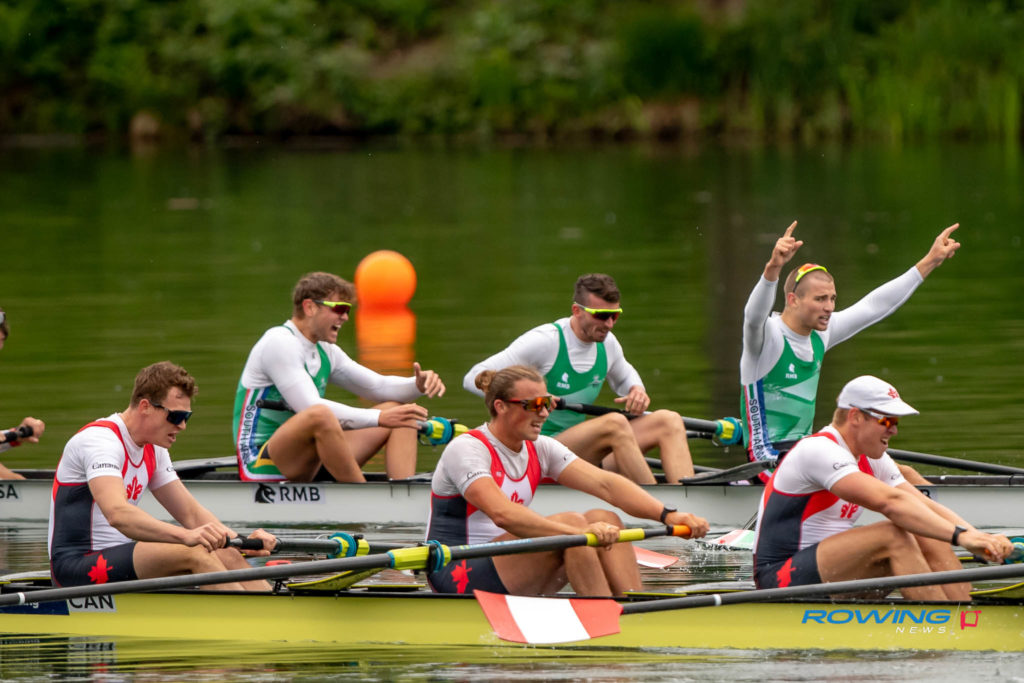
Jones was one of three Canadian men’s crews that earned their place in the postponed 2020 Games. As he crossed the line, his teammates from the men’s four rose from their seats in the medals waiting area and enthusiastically called to Jones to join them on the dock as he sprinted to the finish and powered through Poland’s Natan Wegrzycki-Szymczyk, a favorite to place in the top two.
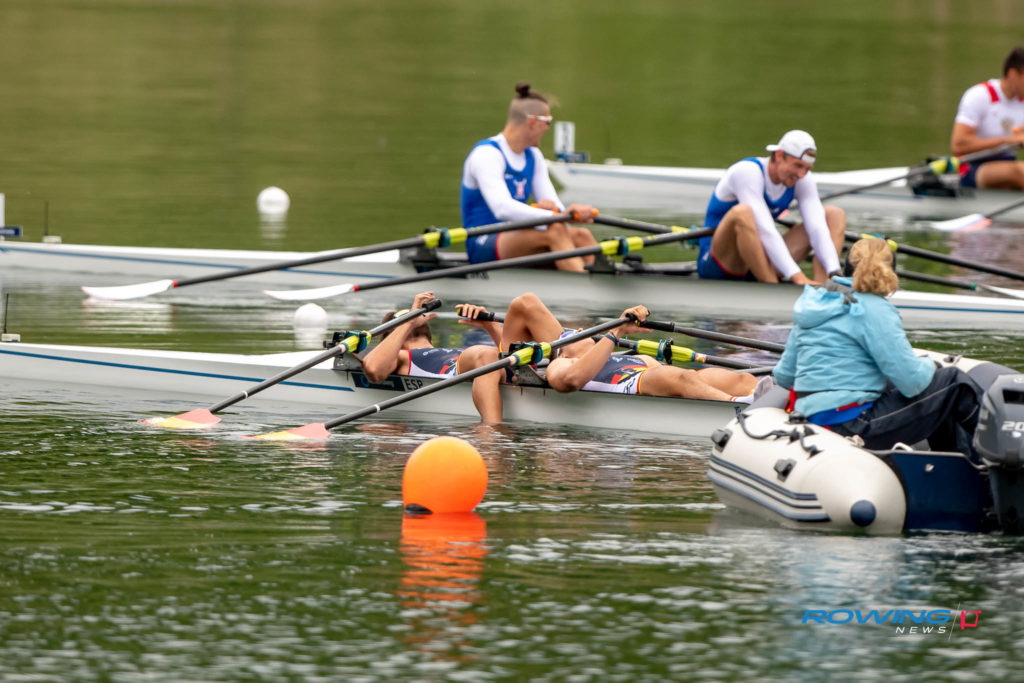
After the race Jones sat in his shell, looking, it seemed, like he was too exhausted to raise his arms in triumph, relying on a brief smile and a thumbs up to his mates. A few minutes later, Canada claimed the win in the lightweight men’s double and added a third crew to the party.
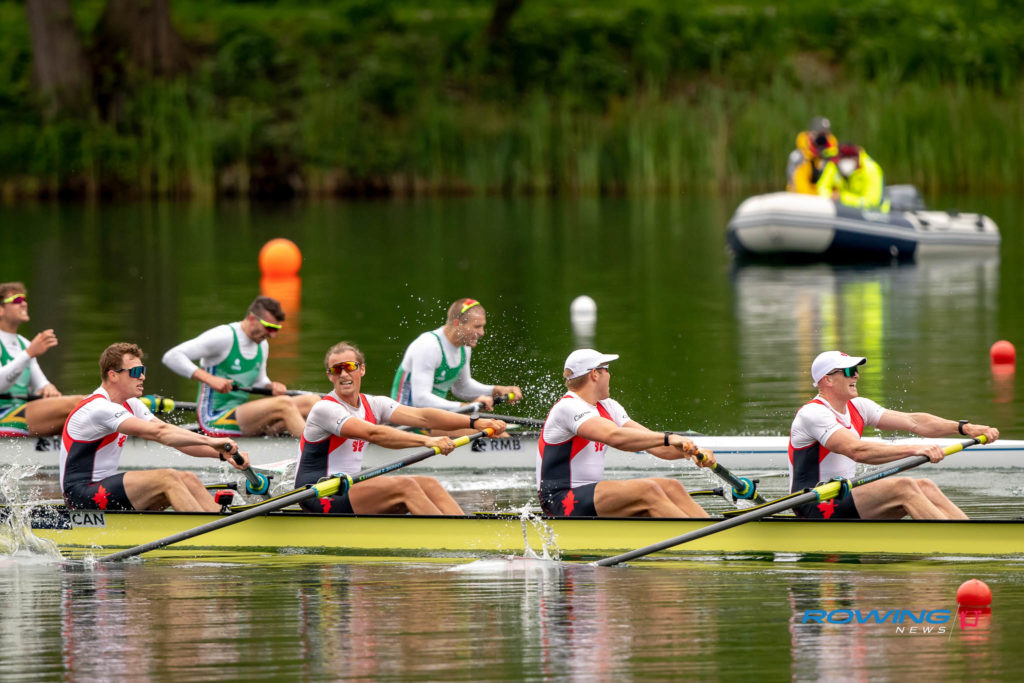
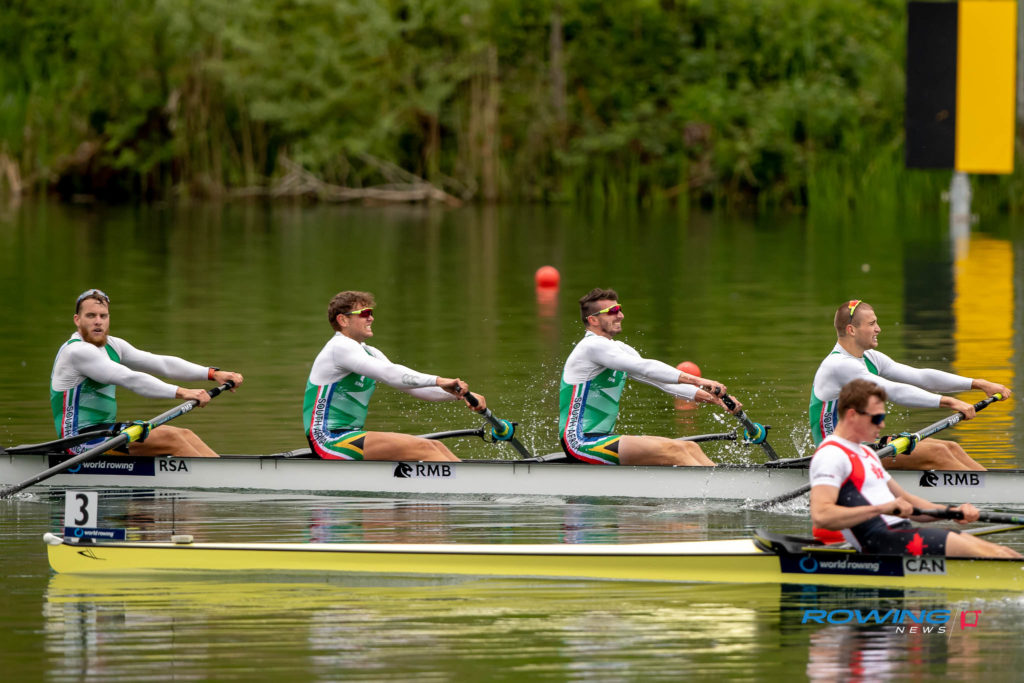
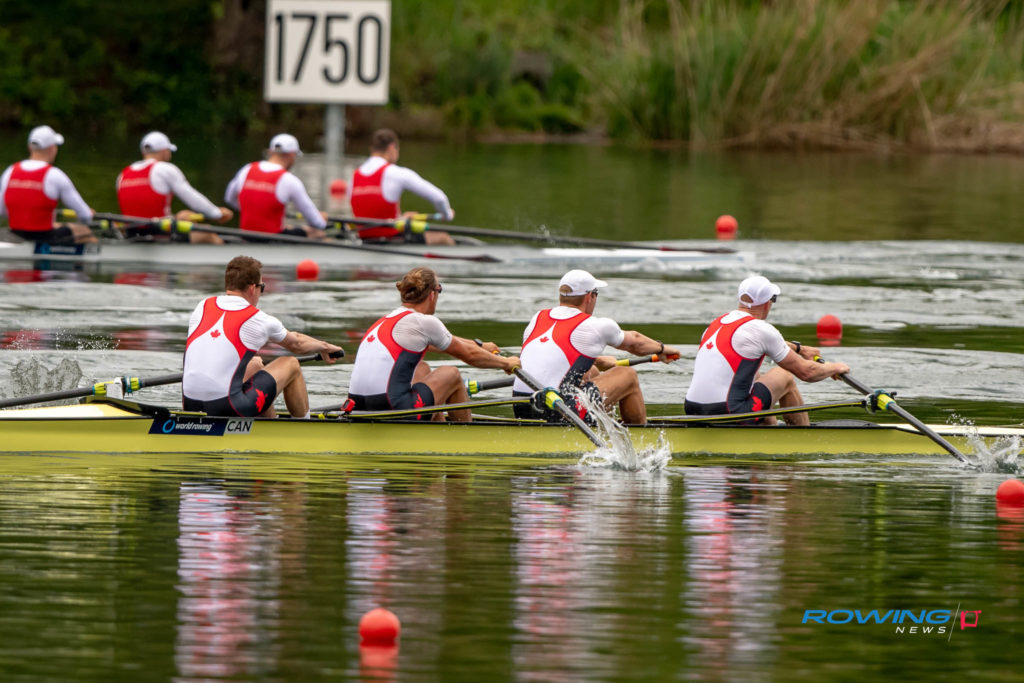
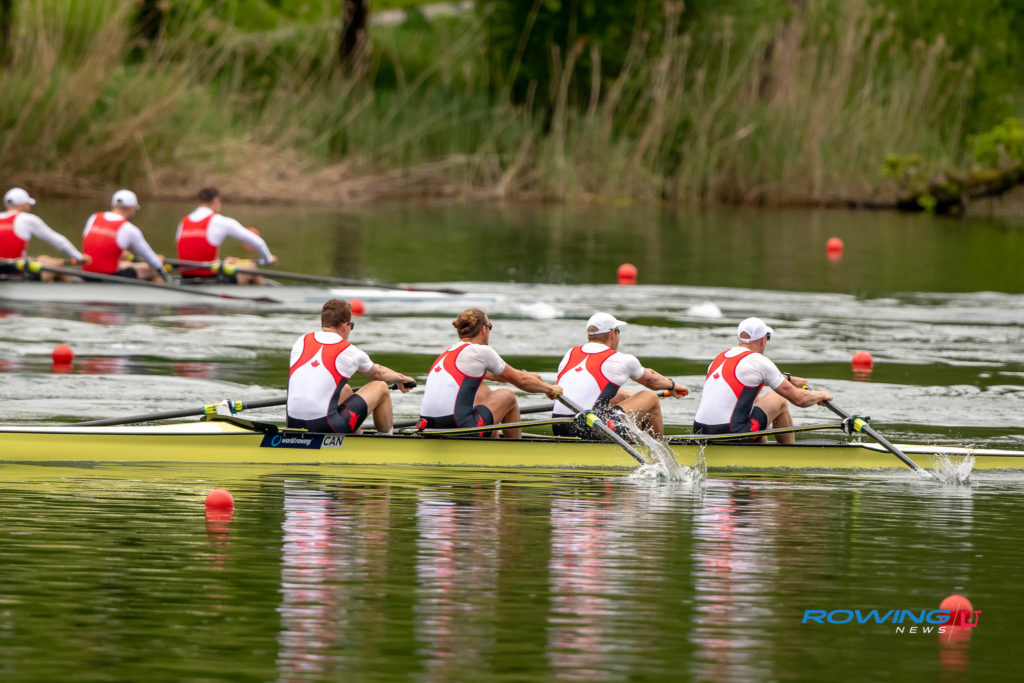
It was that kind of weekend in Lucerne. Different countries stacked the deck sending multiple crews and took home what Olympic slots they could. Canada sent three and grabbed three.
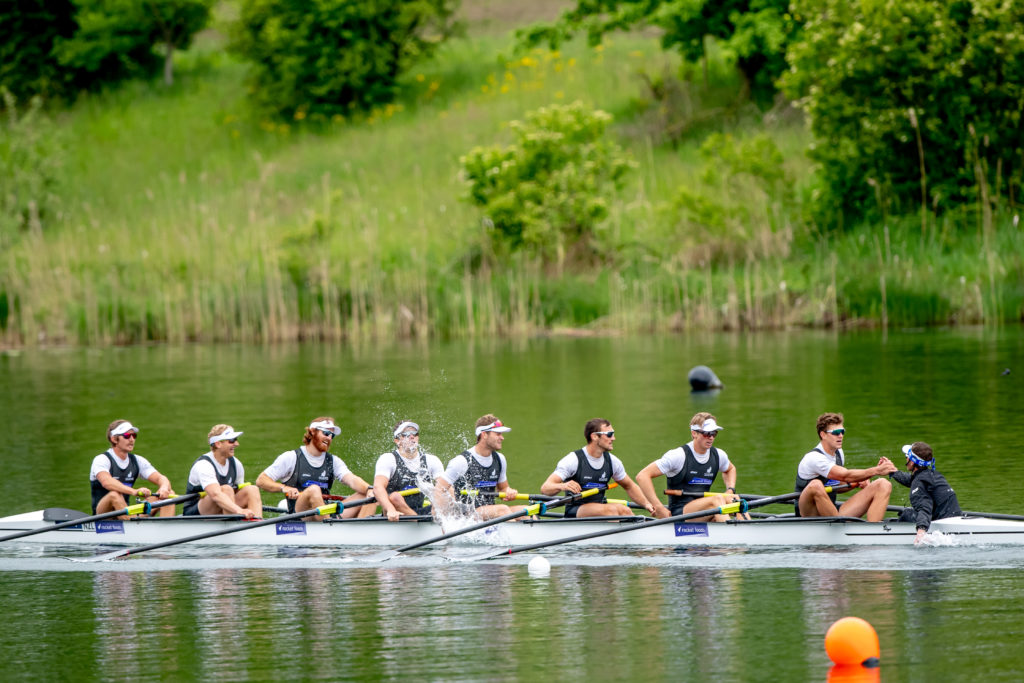
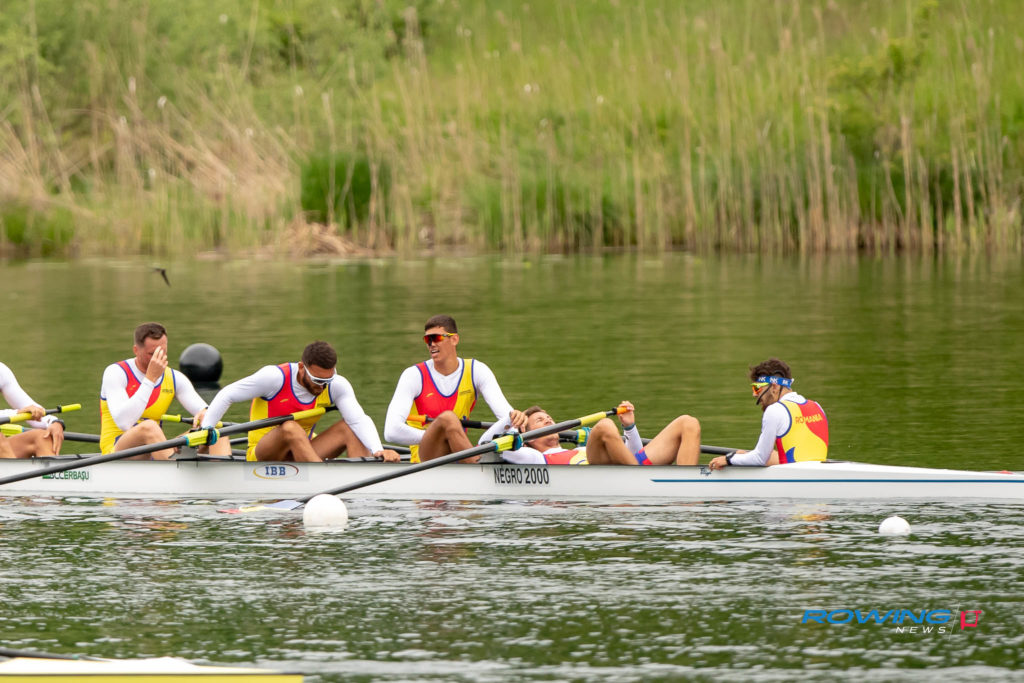
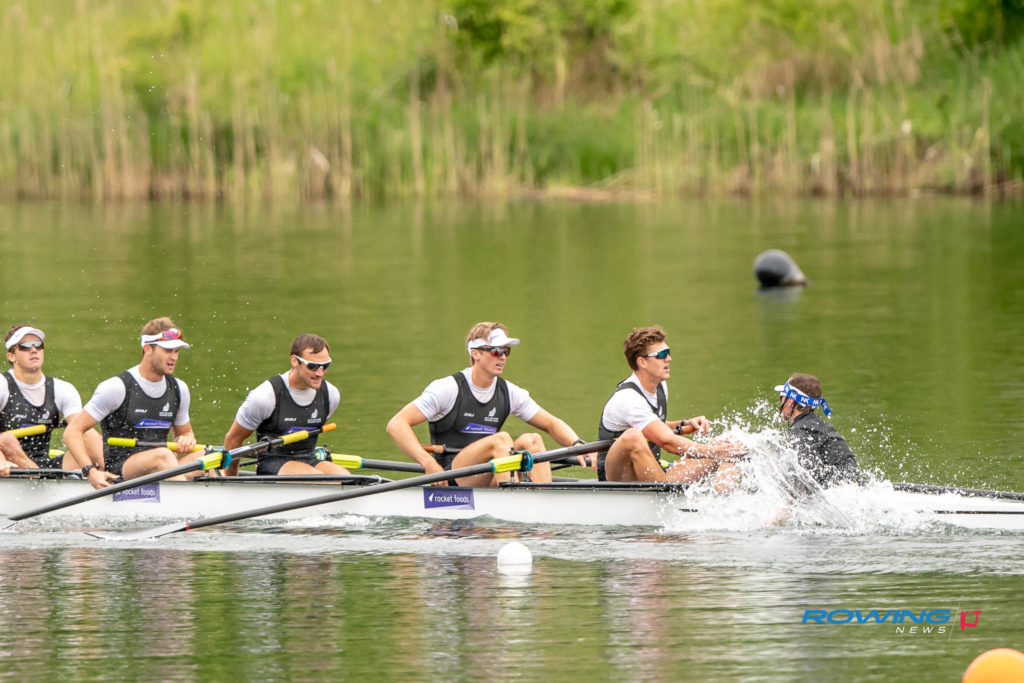
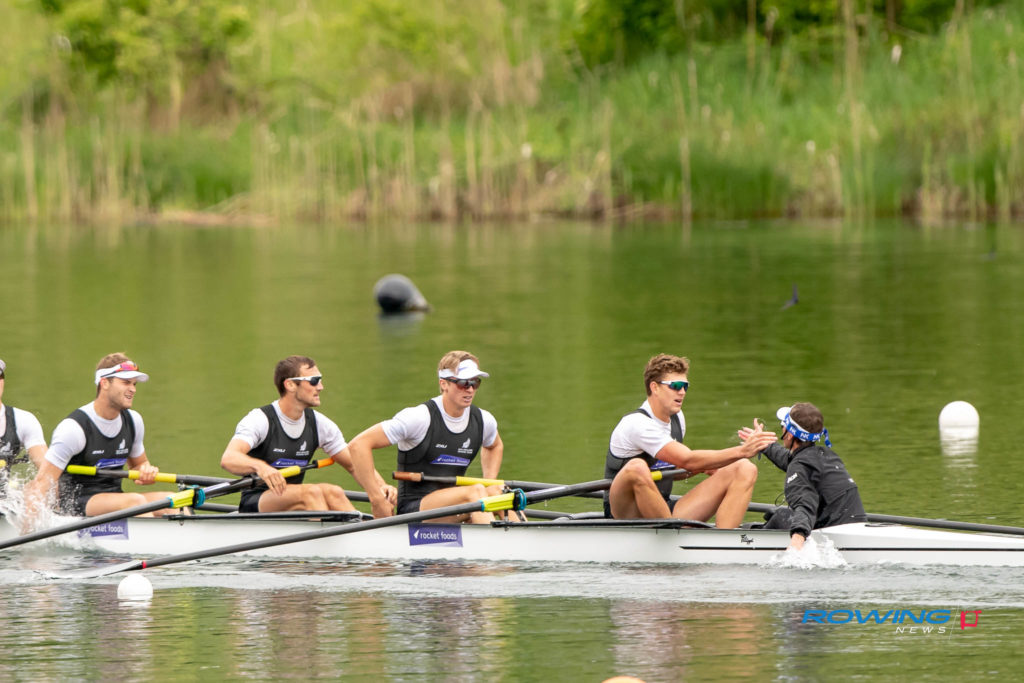
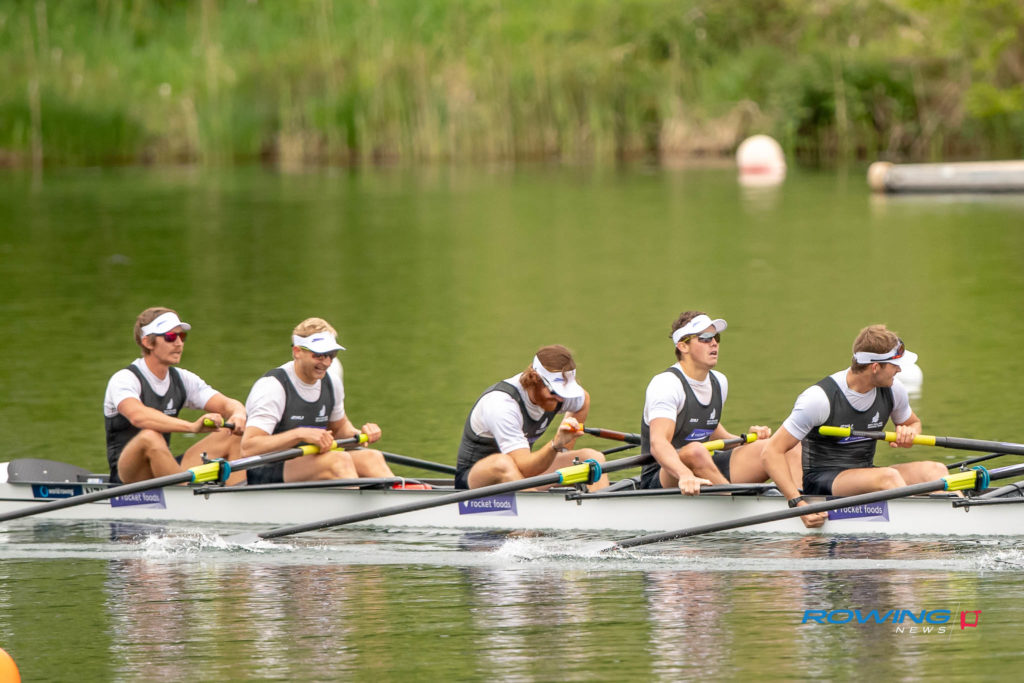
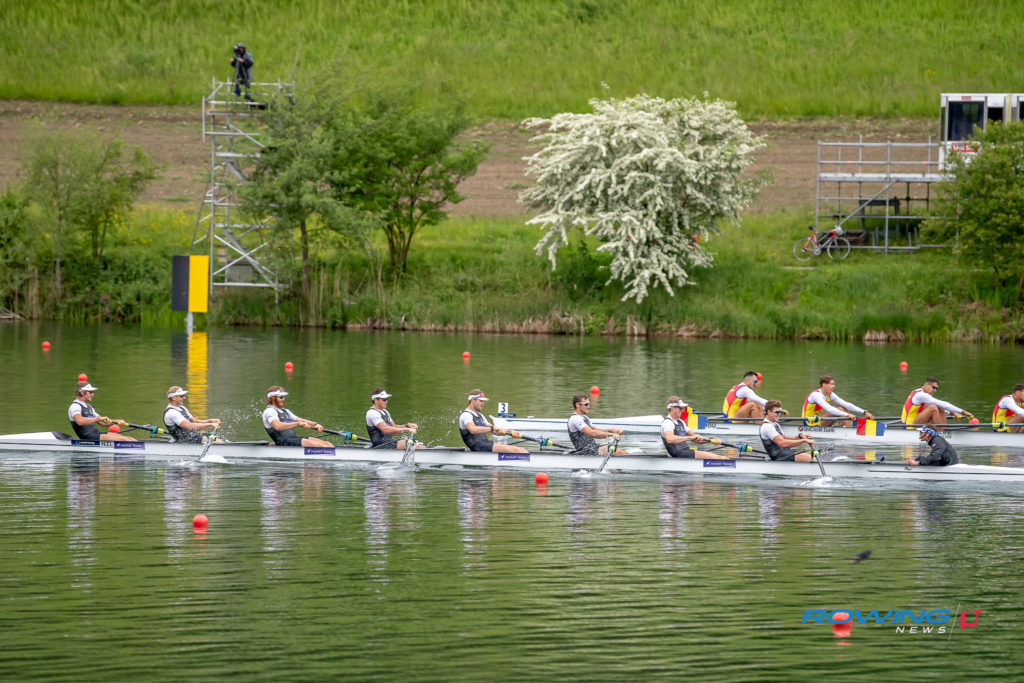
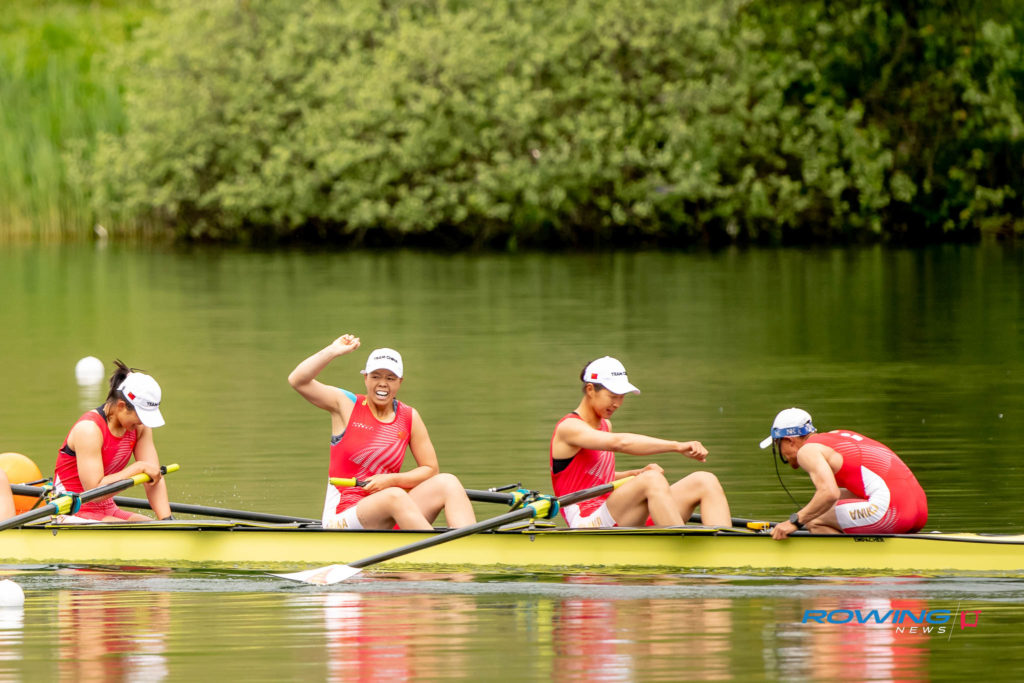
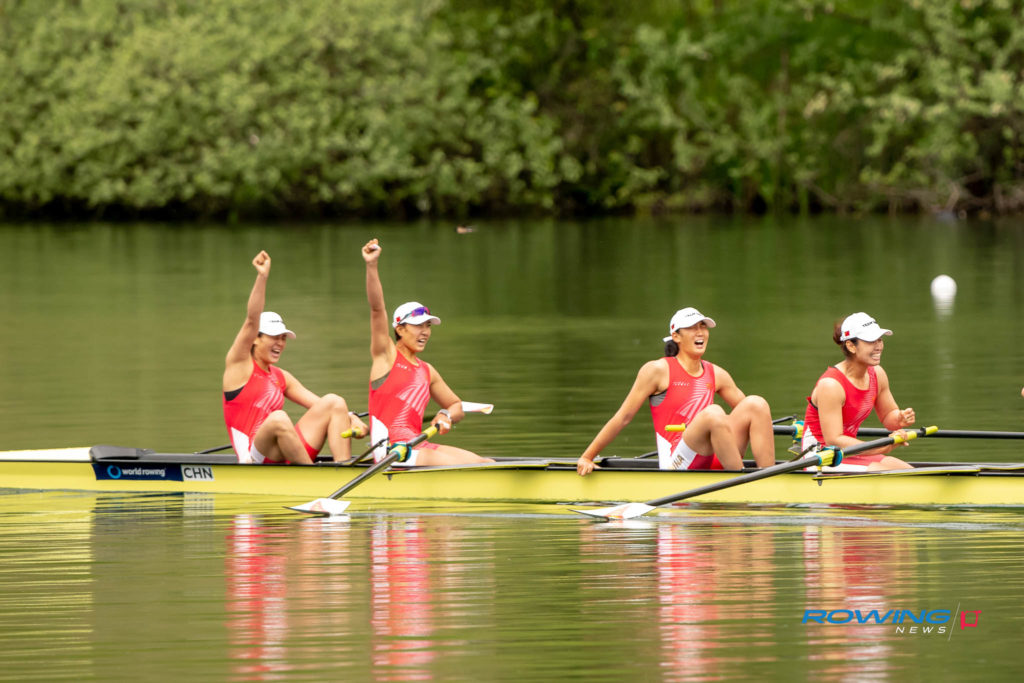
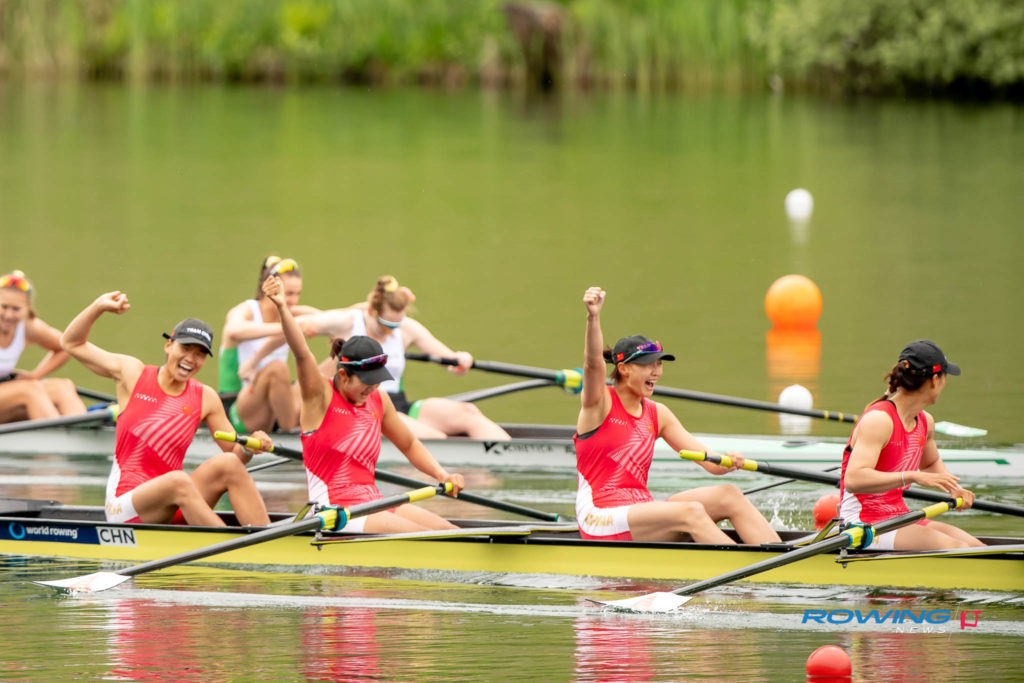
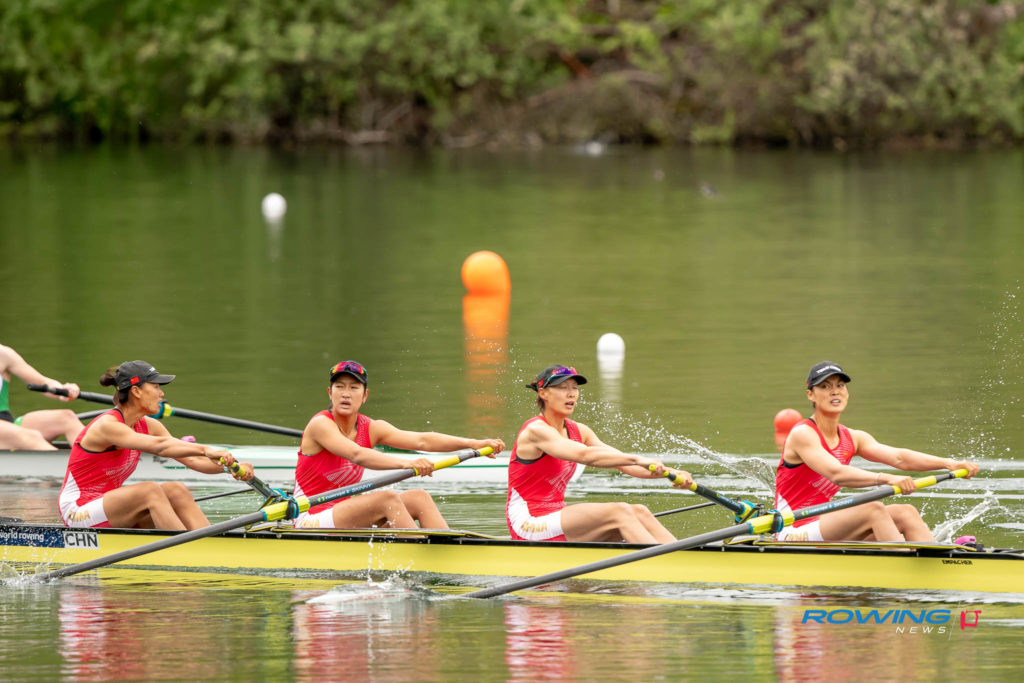
China sent 8 and got two — the women’s eight and four. New Zealand sent one — the men’s eight — and that was enough for them. They won the event and along the way helped Kiwi rowing legend Hamish Bond become a four-time Olympian.
“Yea, that just makes me feel old,” Bond said at the medals stand. “This was definitely what we came here to achieve. I believe in the guys that we have in our crew. I really think our final place is only limited by how well we can execute our potential,” he said.
“I think we have all the potential that we need. We just have to maximize in the big show.”
The big show is now just weeks away, but because New Zealand is an island nation that has controlled the pandemic by shutting its borders, Bond and his teammates are heading into a two-week quarantine and missing valuable training time.
“We were disappointed that World Rowing decided to have this regatta during a pandemic and somewhat unnecessarily make crews from the other side of the world come over,” he said. “We have to go back to New Zealand and spend two weeks in a hotel when we’re just weeks out from the Olympics. It’s not ideal but that’s the card we’ve been dealt, and we’ll have to make the most of it.”
Besides Sechser and Reckford, the U.S. sent six crews, five of them men’s crews, four of them sculling boats.
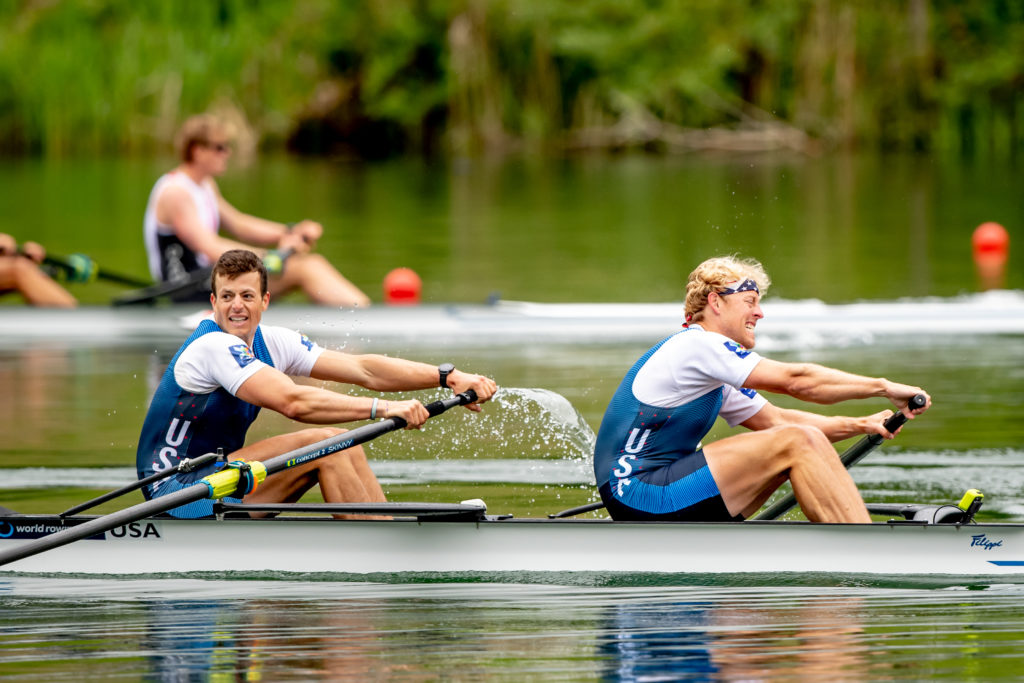
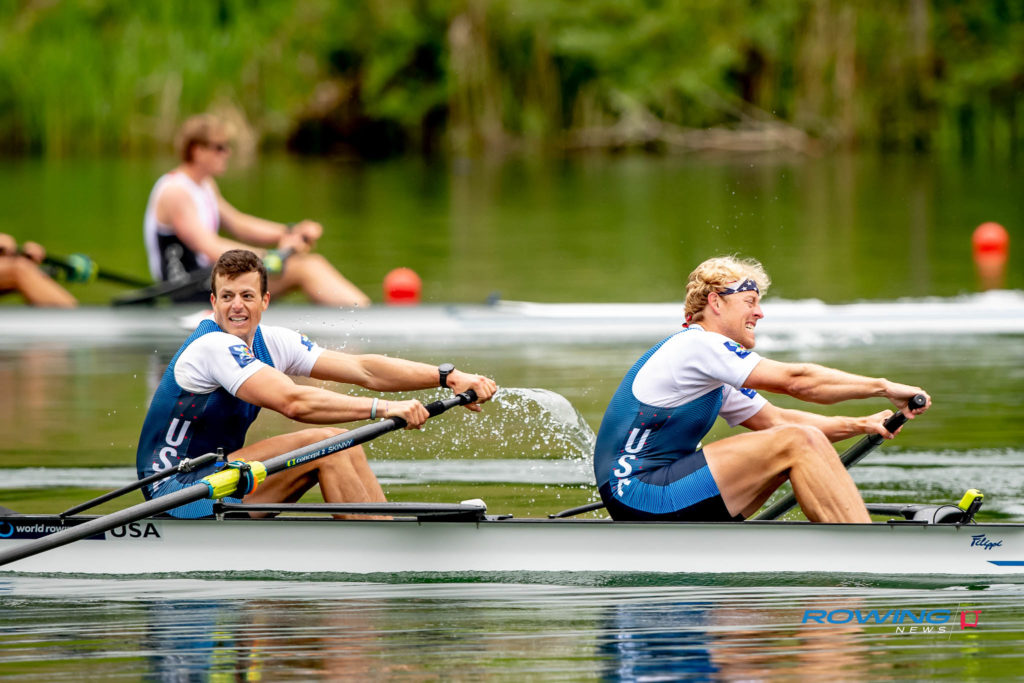
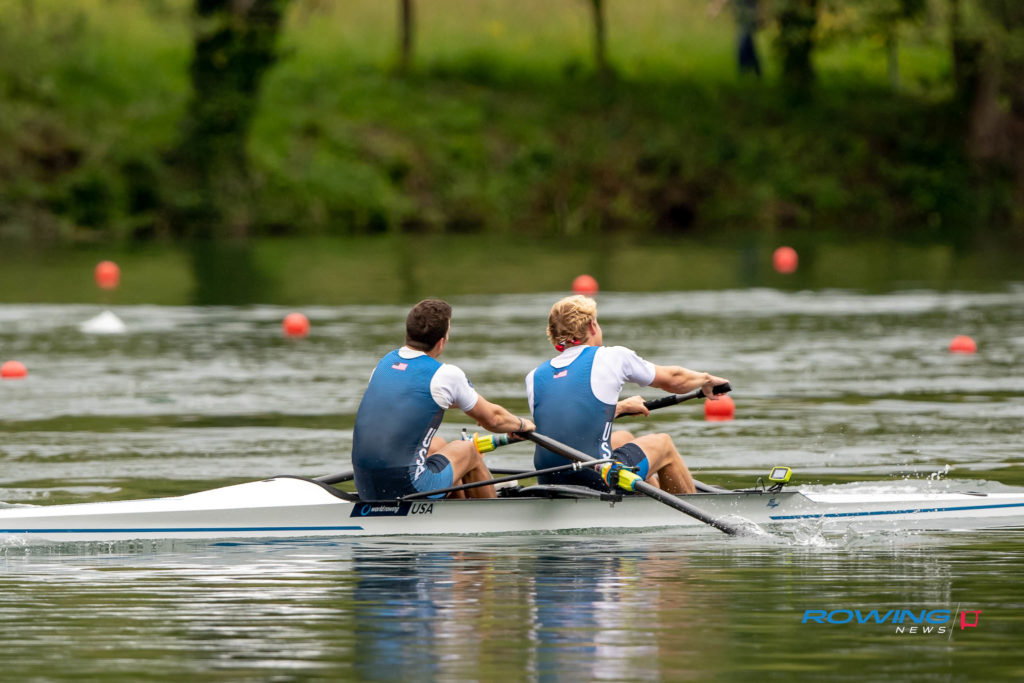
Of those entries, the only men’s crew to make the Sunday schedule was the men’s pair of Tom Peszek and Michael DiSanto, both Olympians with experience enough to carry them through the morning semifinals.
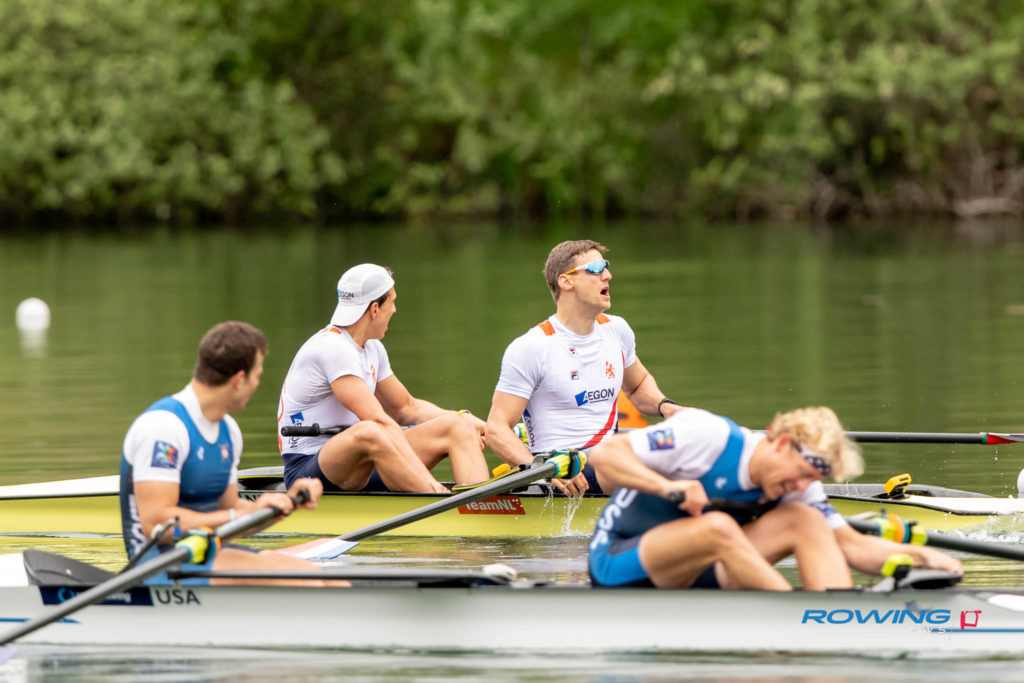
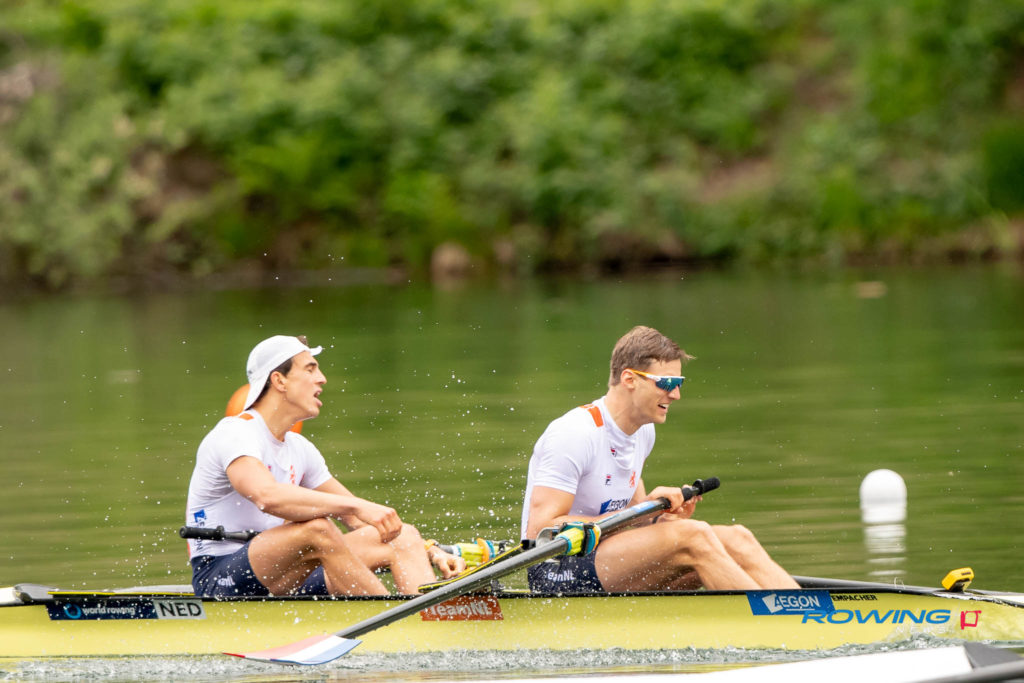
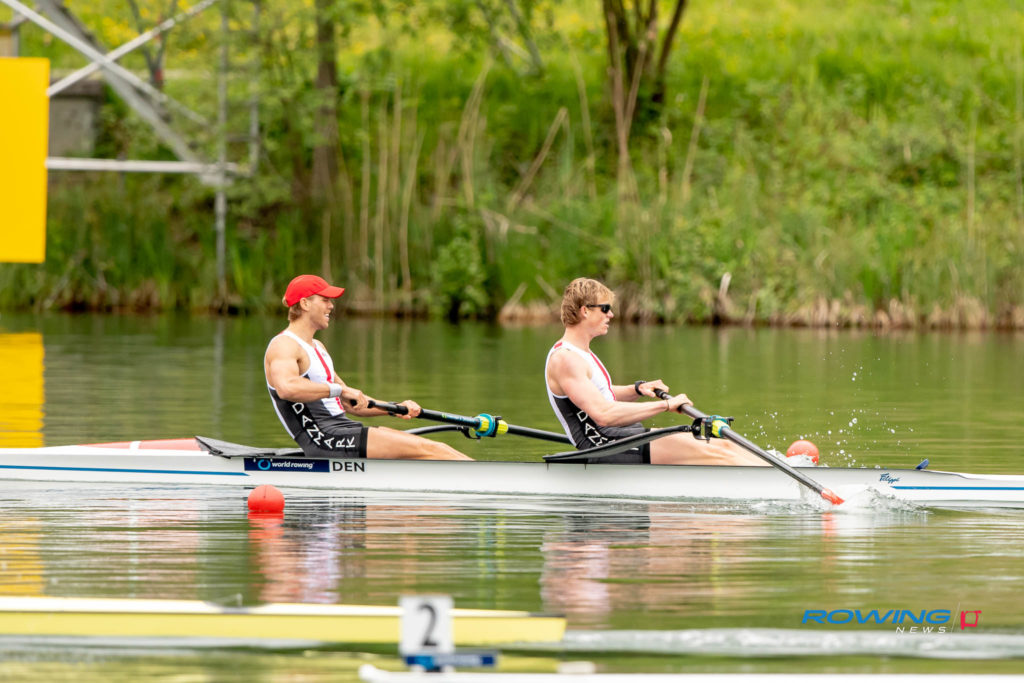
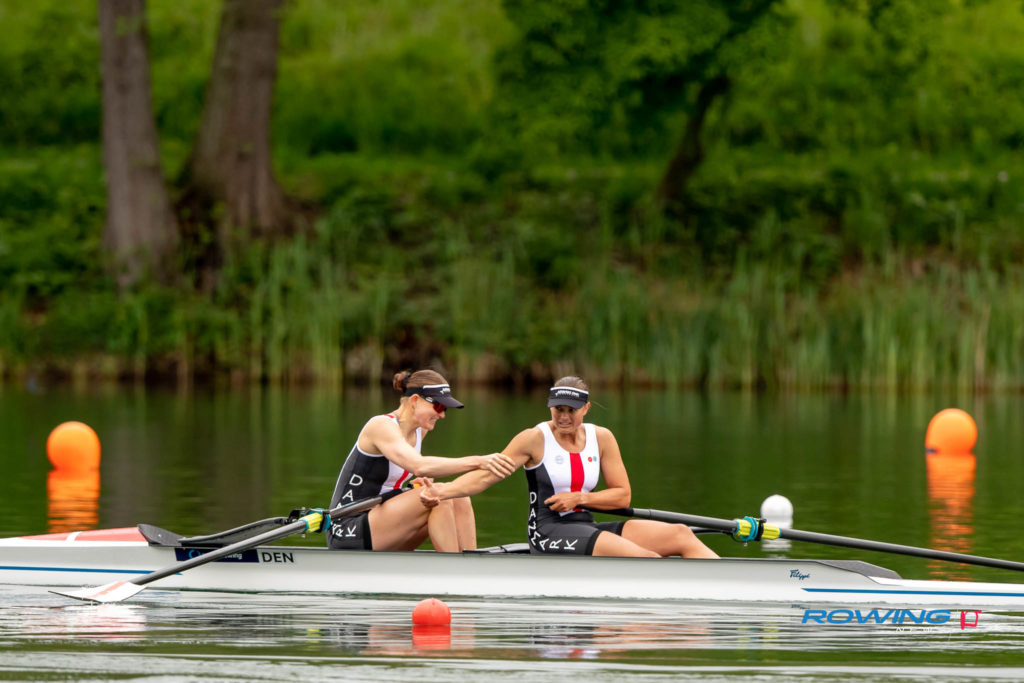
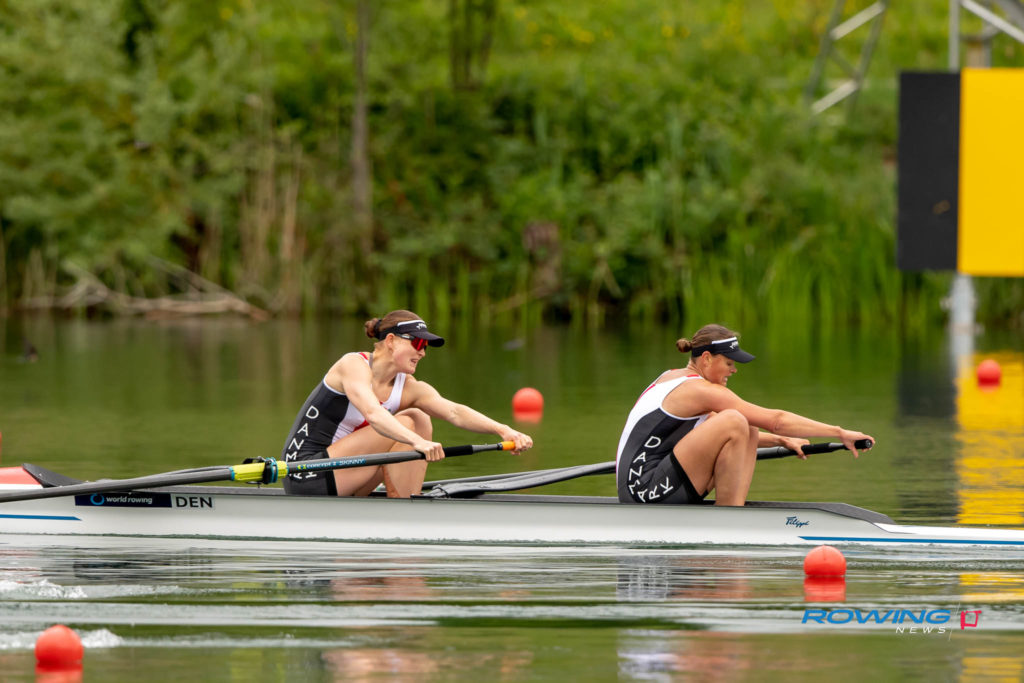
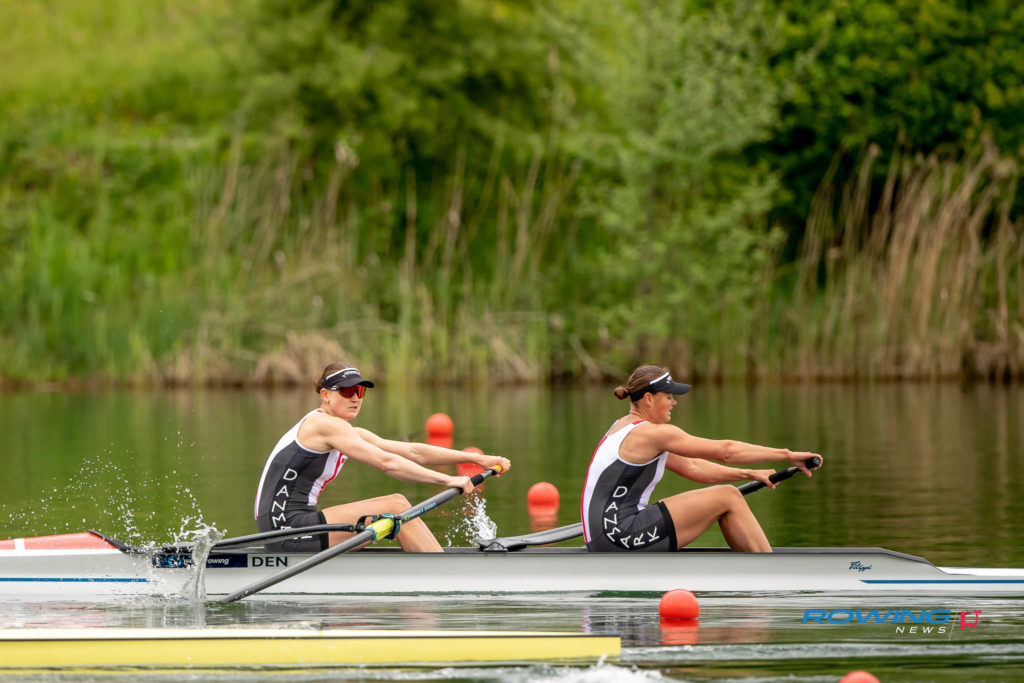
DiSanto and Peszek made a massive push through the sprint to get into a qualifying top-two position but finished third behind the Netherlands’ Guillaume Krommenhoek and Nicolas Van Sprang and Denmark’s Joachim Sutton and Frederic Vystavel.
“I am so happy that we managed to qualify,” said Krommenhoek. “It was a tough morning with two races. It was the most important race of my life and we are so happy,” he said.
“We’ve been told yesterday the schedule was going to change,” Vystavel added. “It is about keeping in focus and taking it easy as the races were coming. We had our plan and we stuck to it. It was a really good race.”