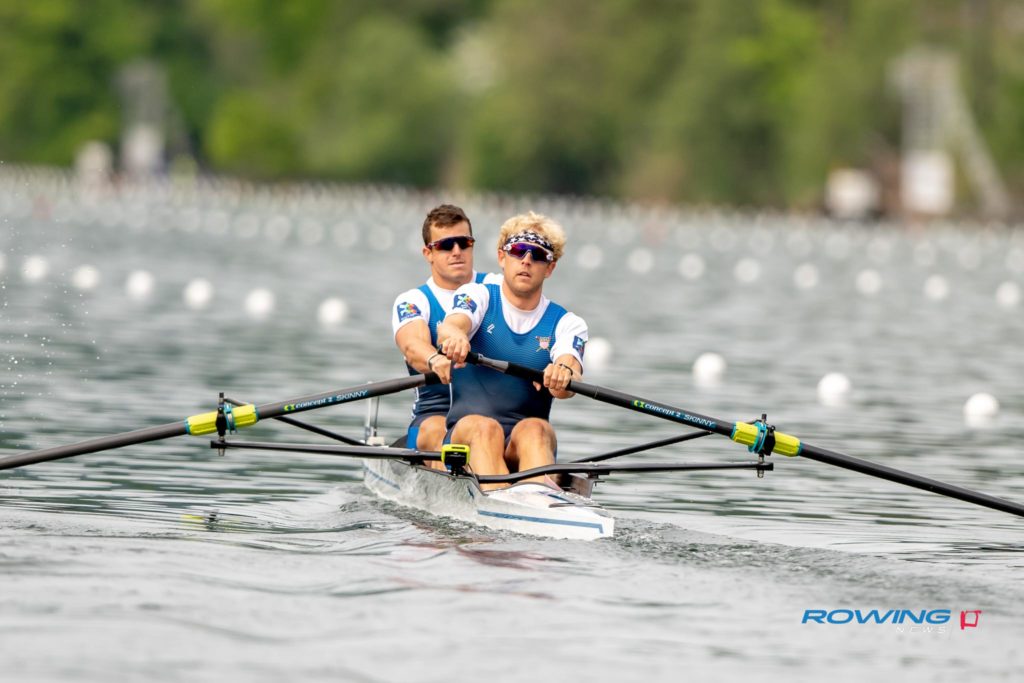
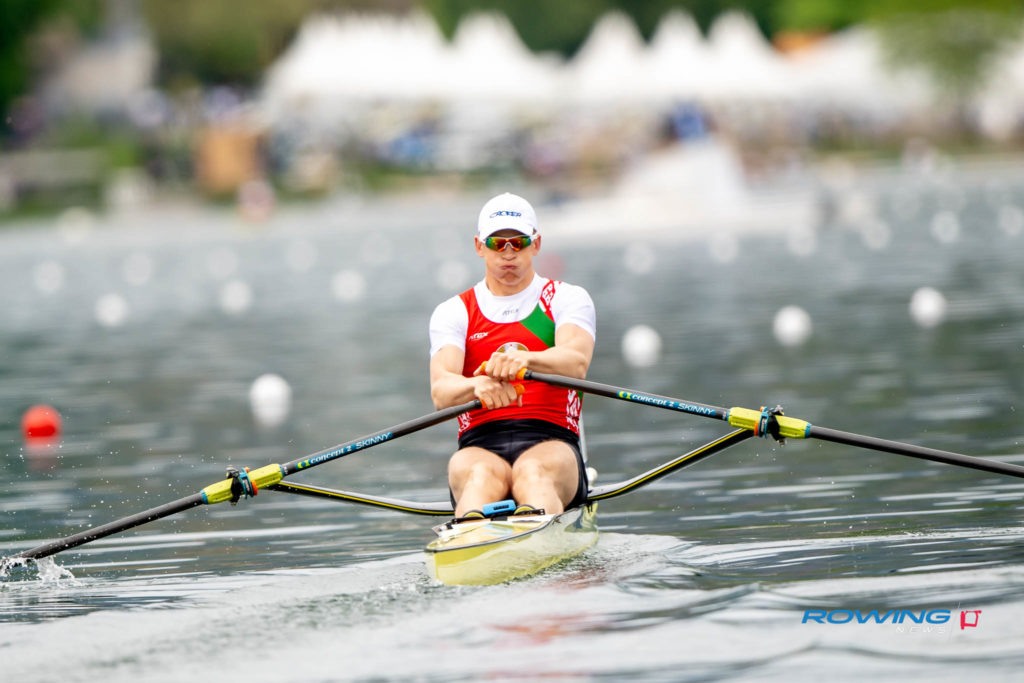
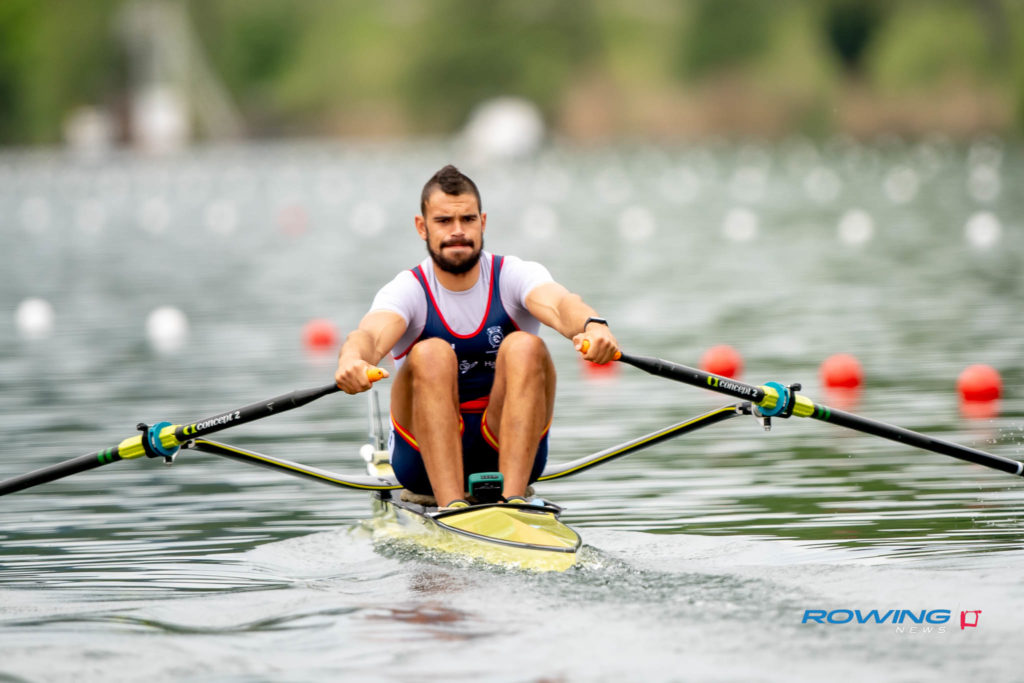
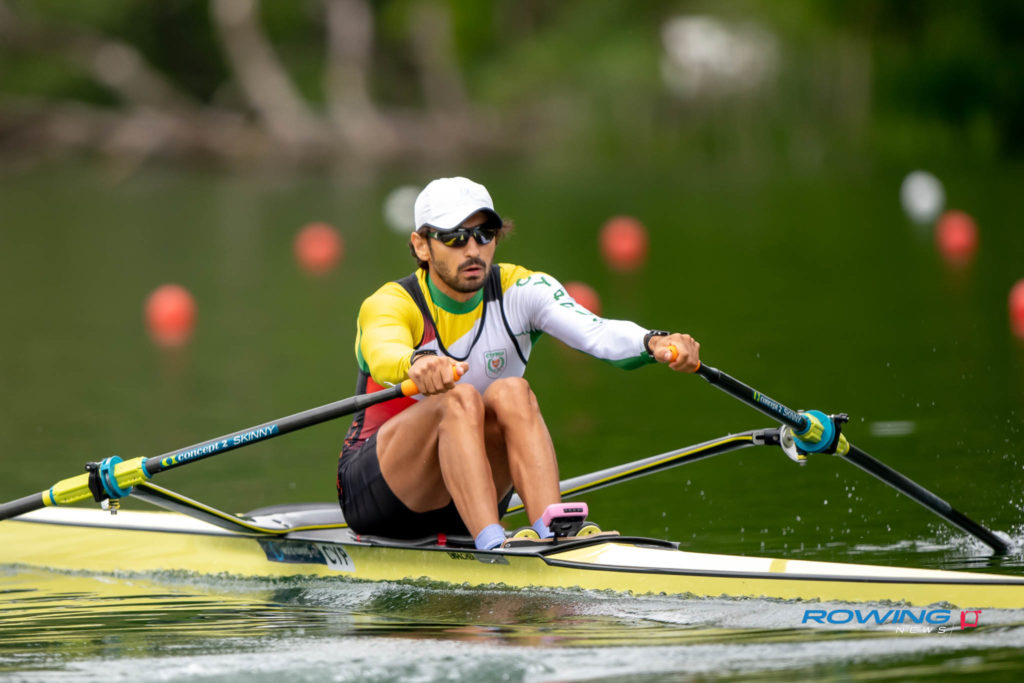
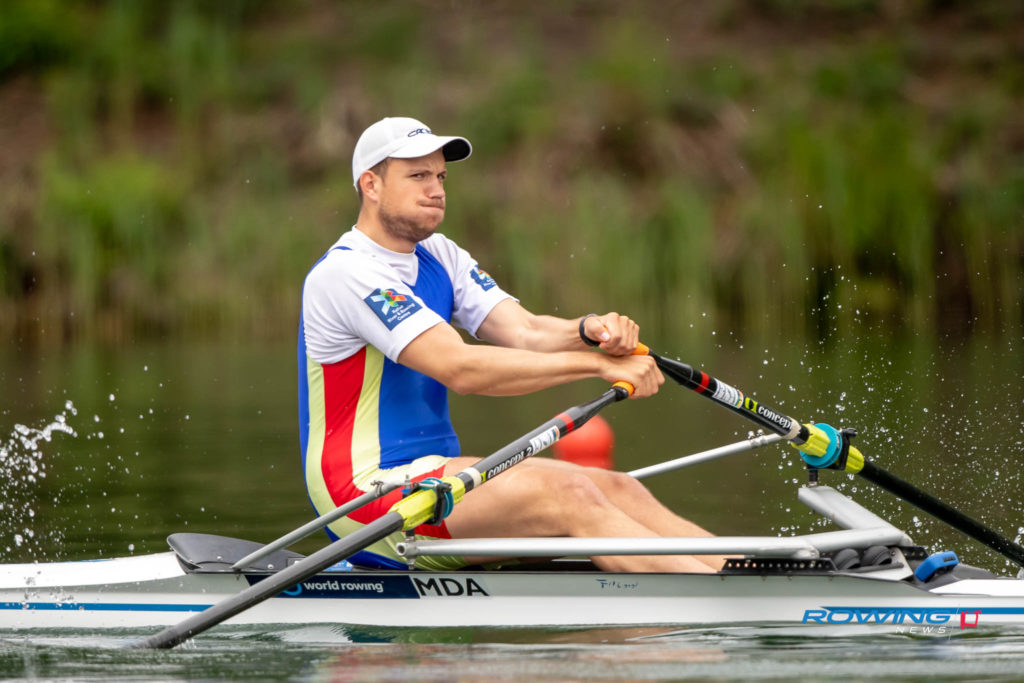
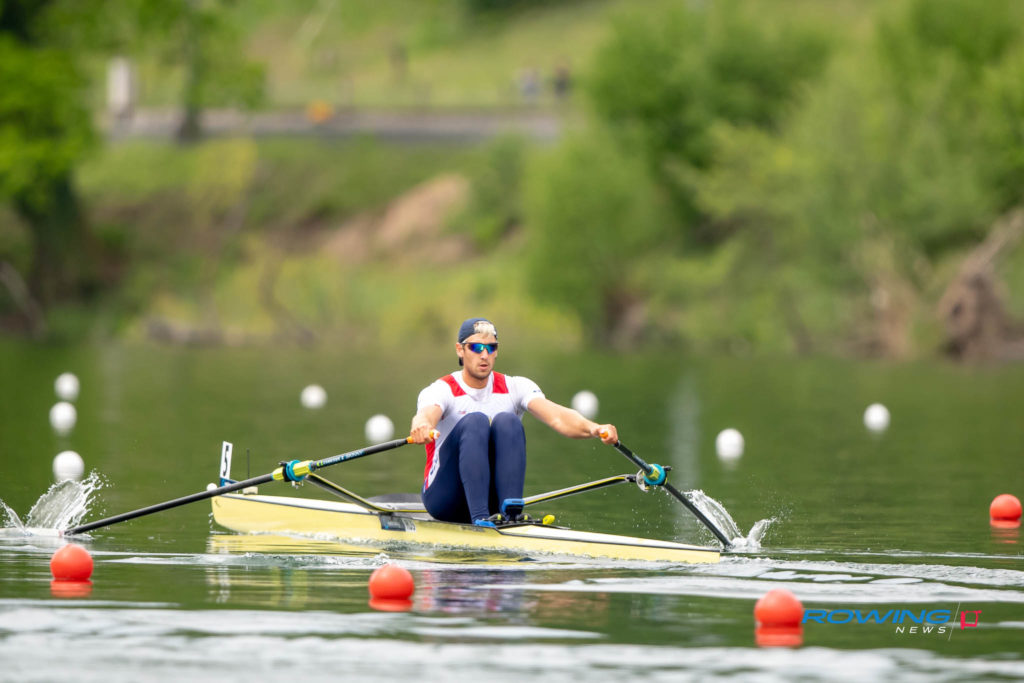
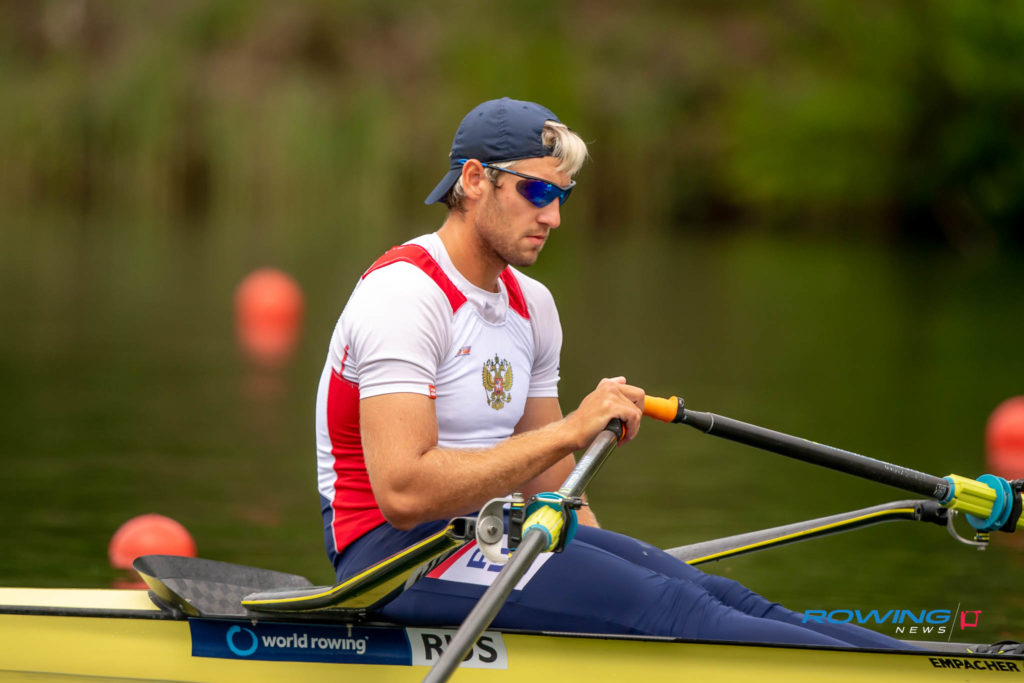
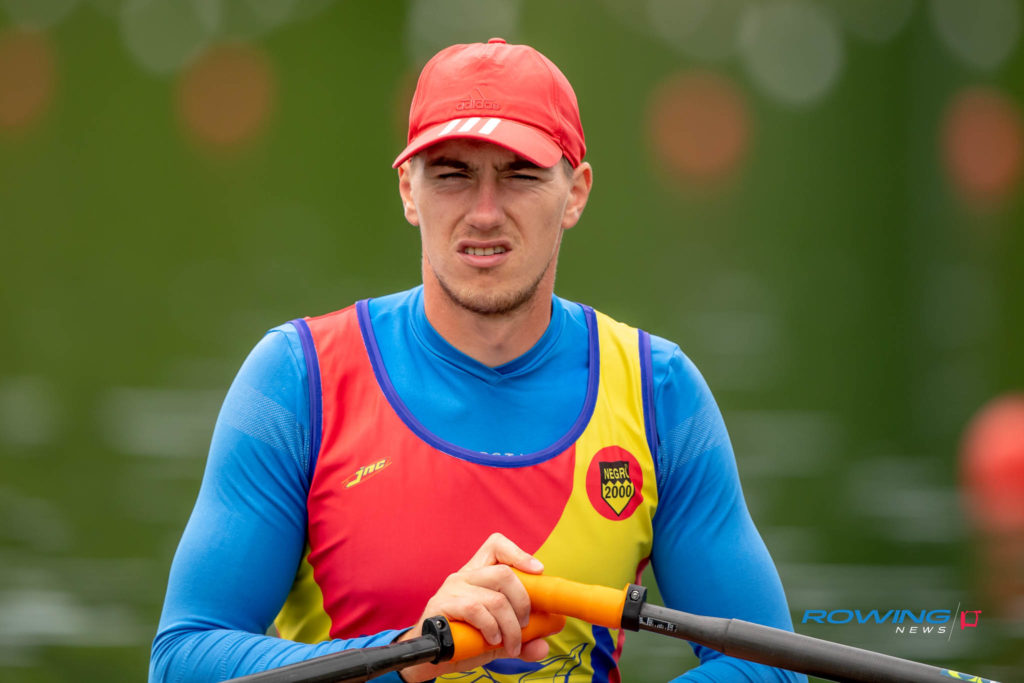
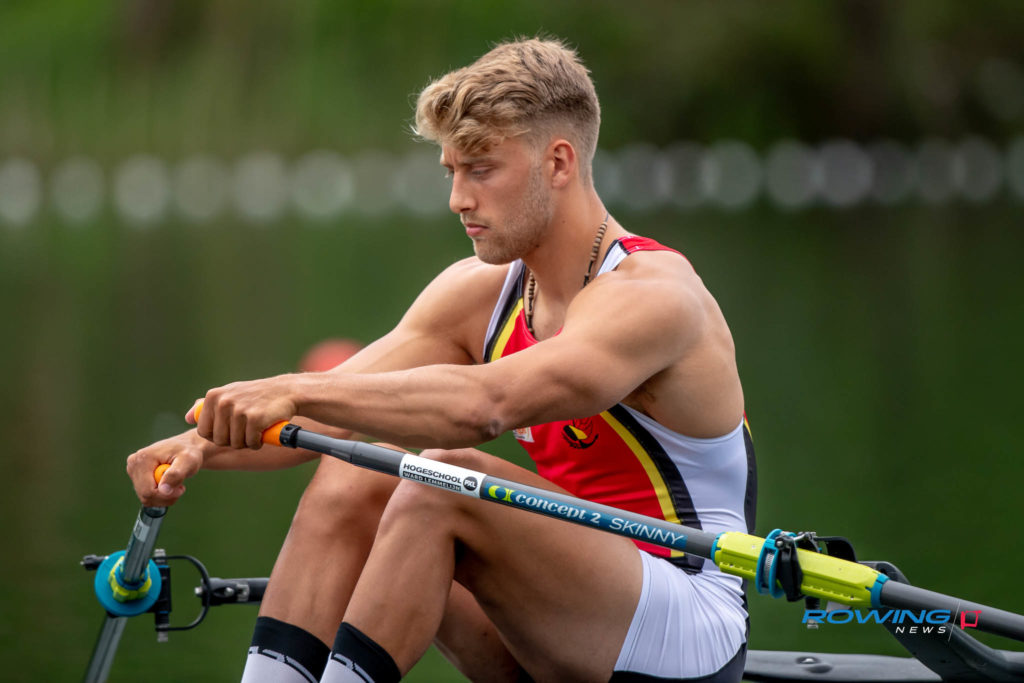
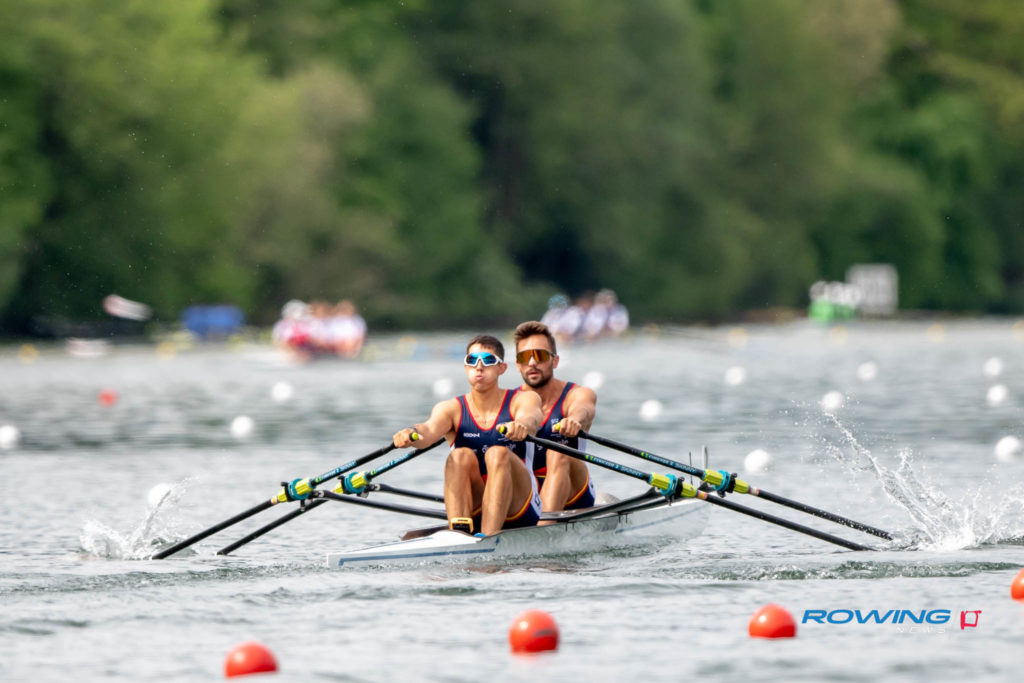
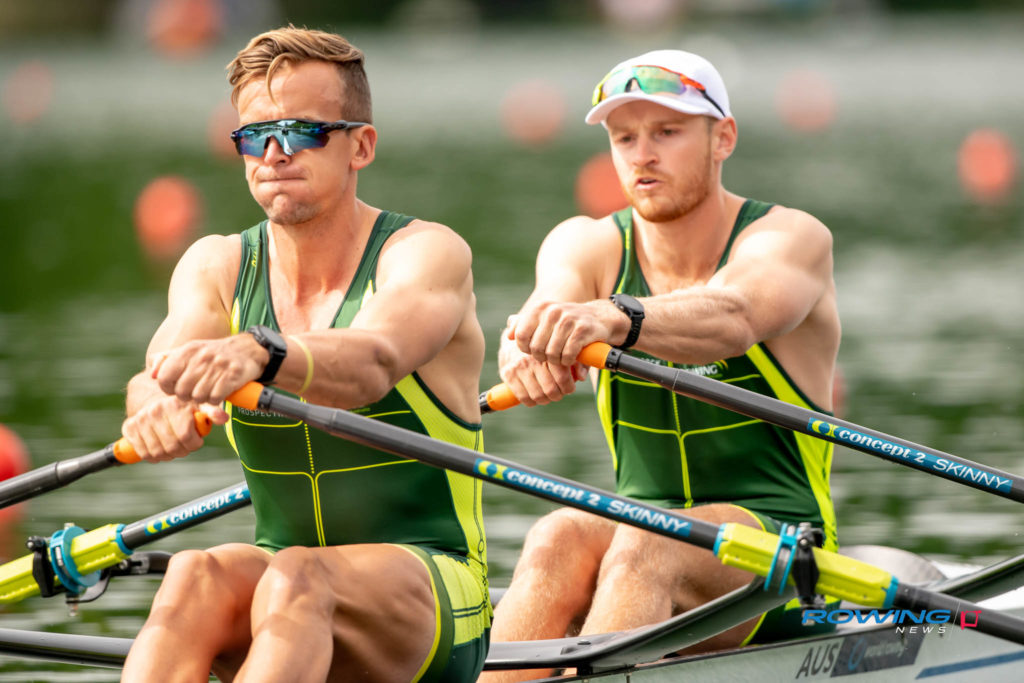
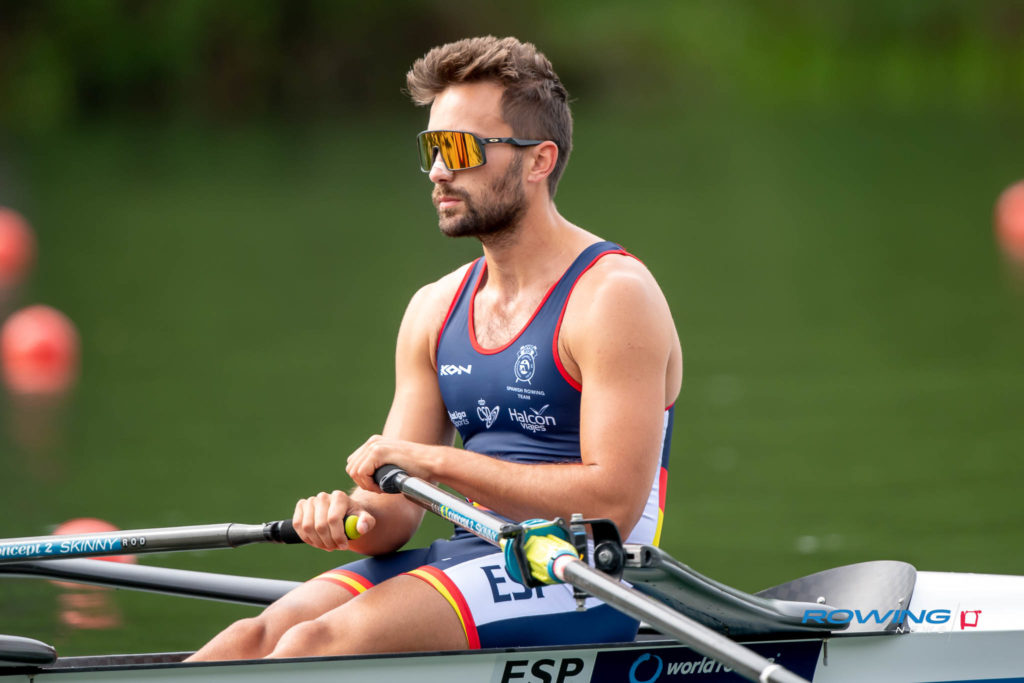
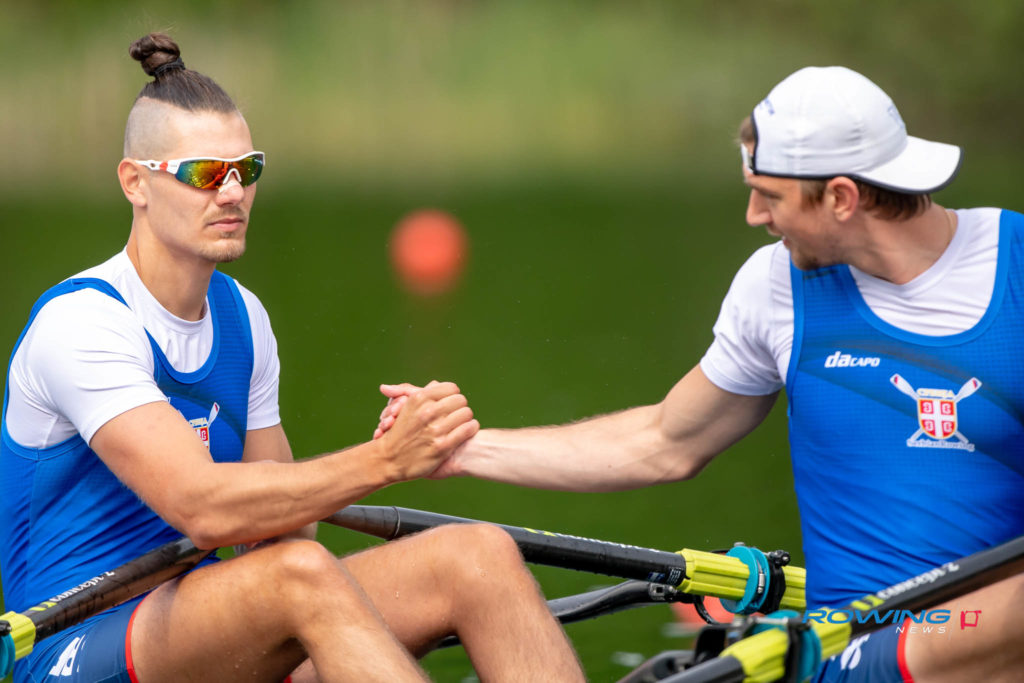
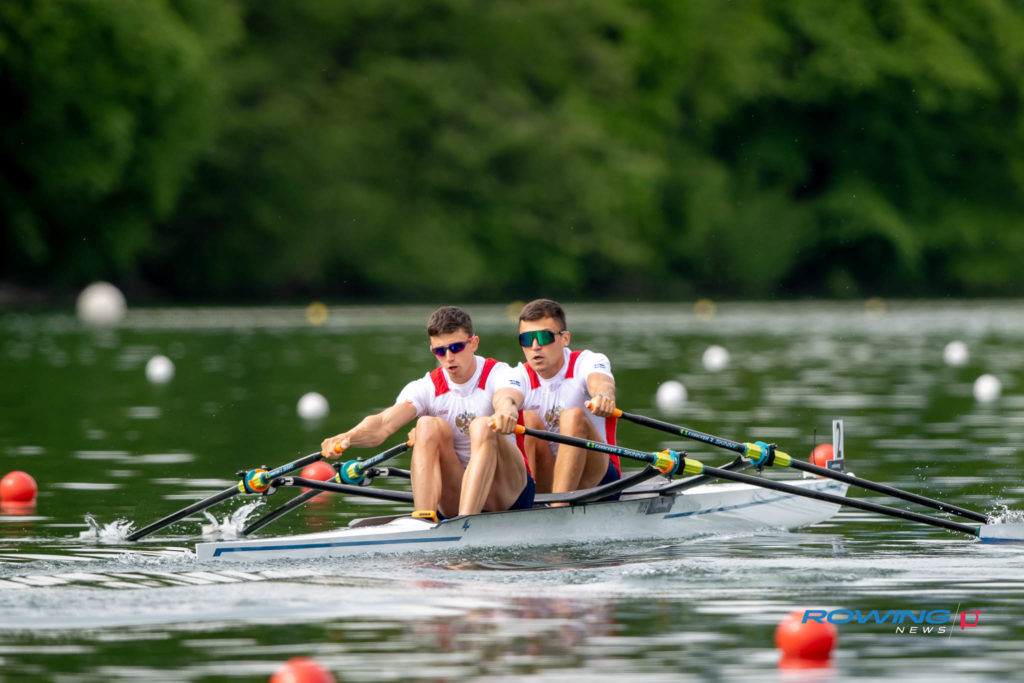
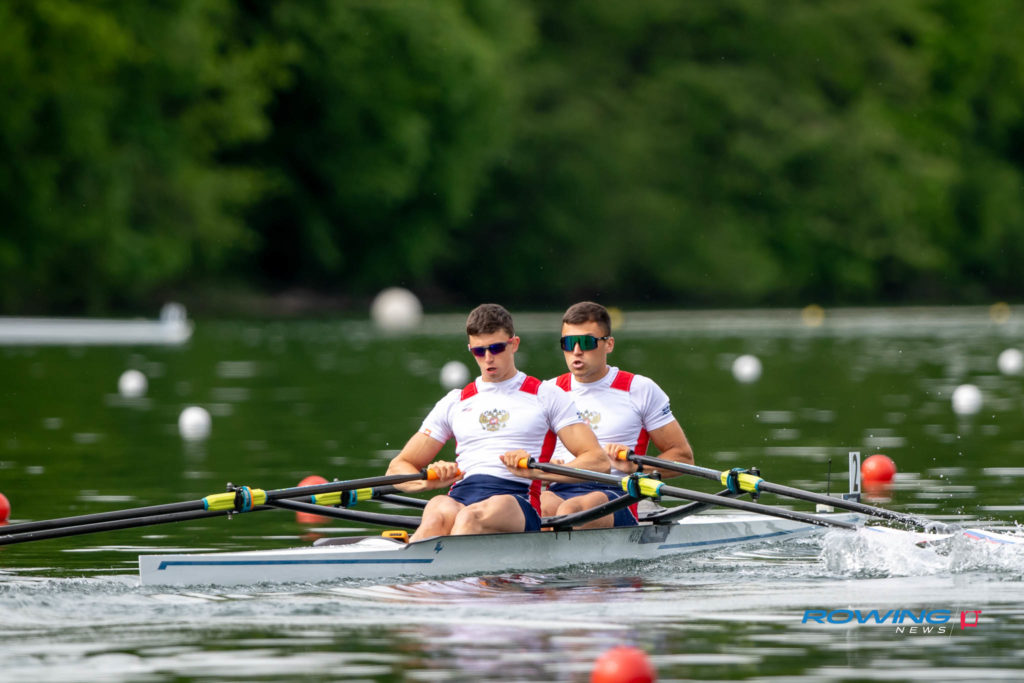
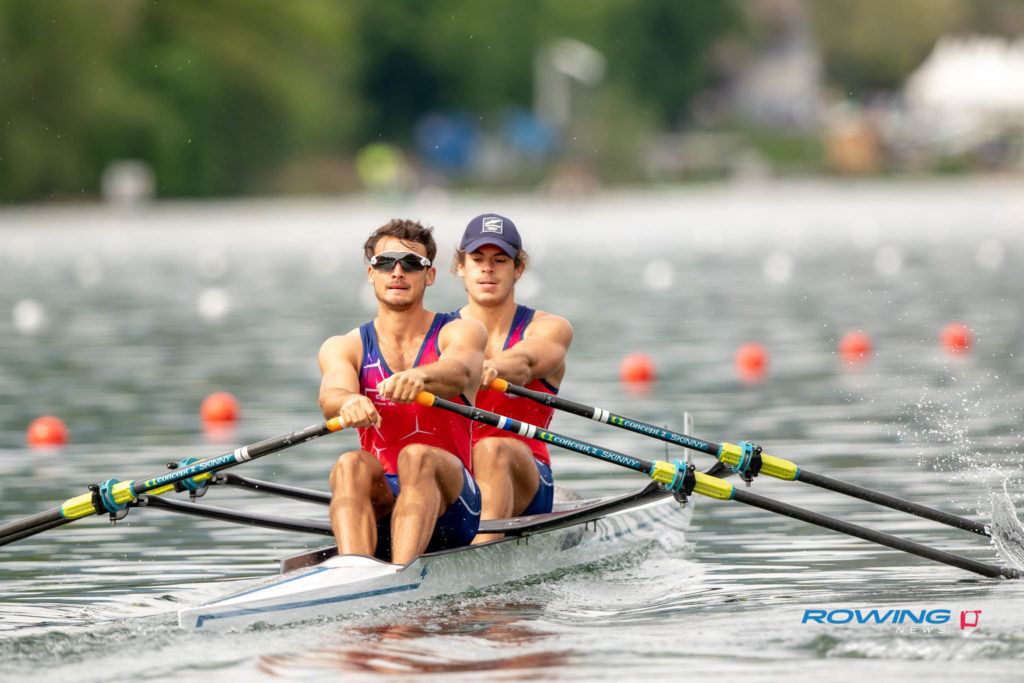
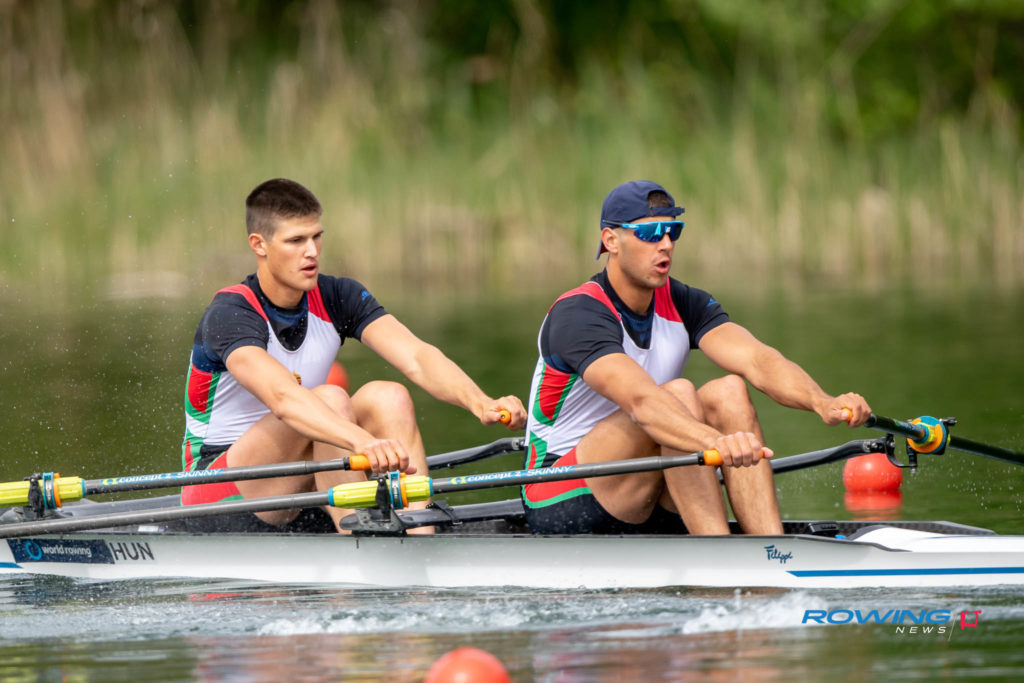
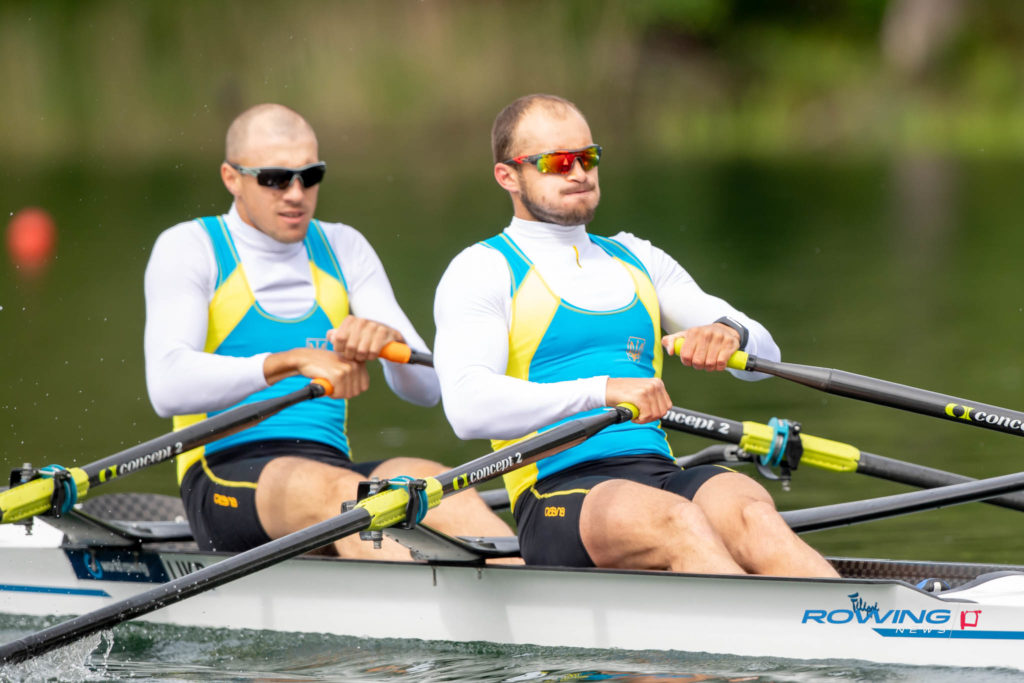
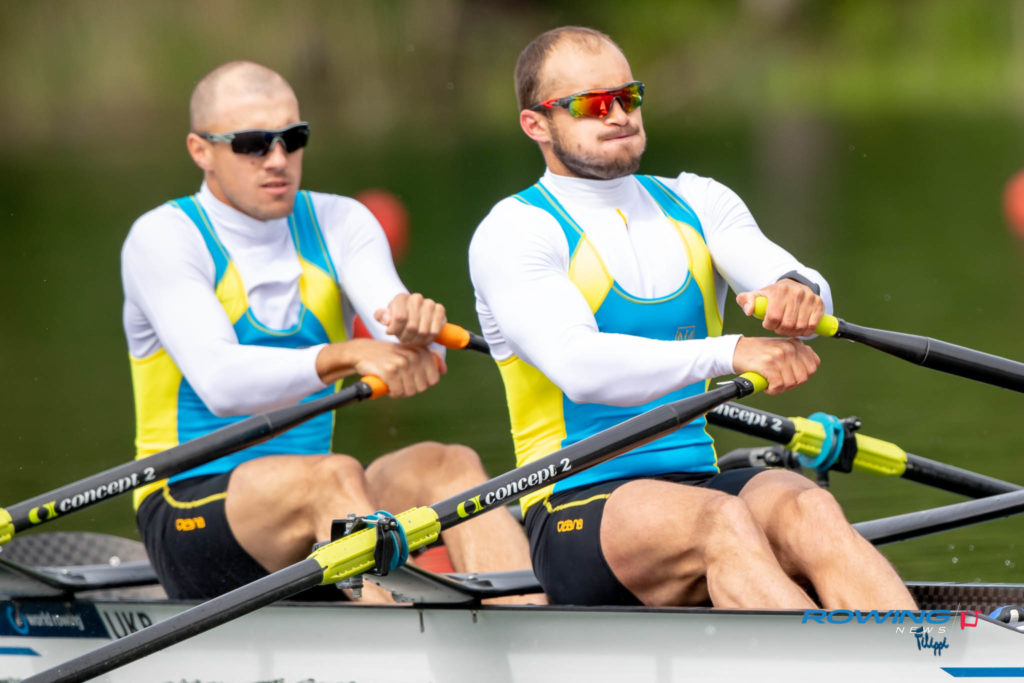
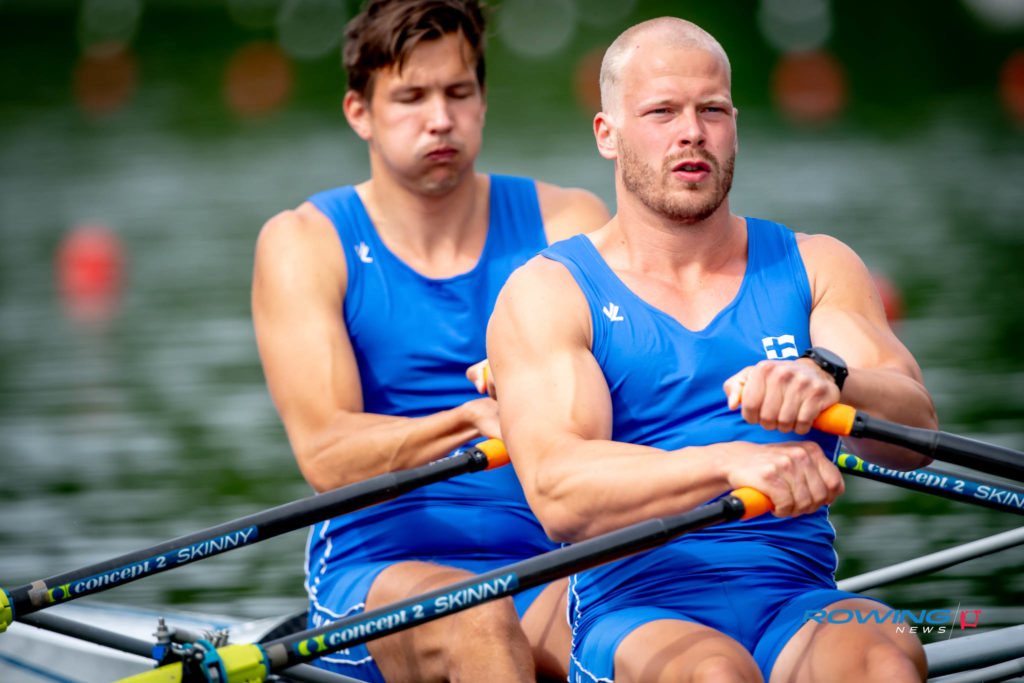
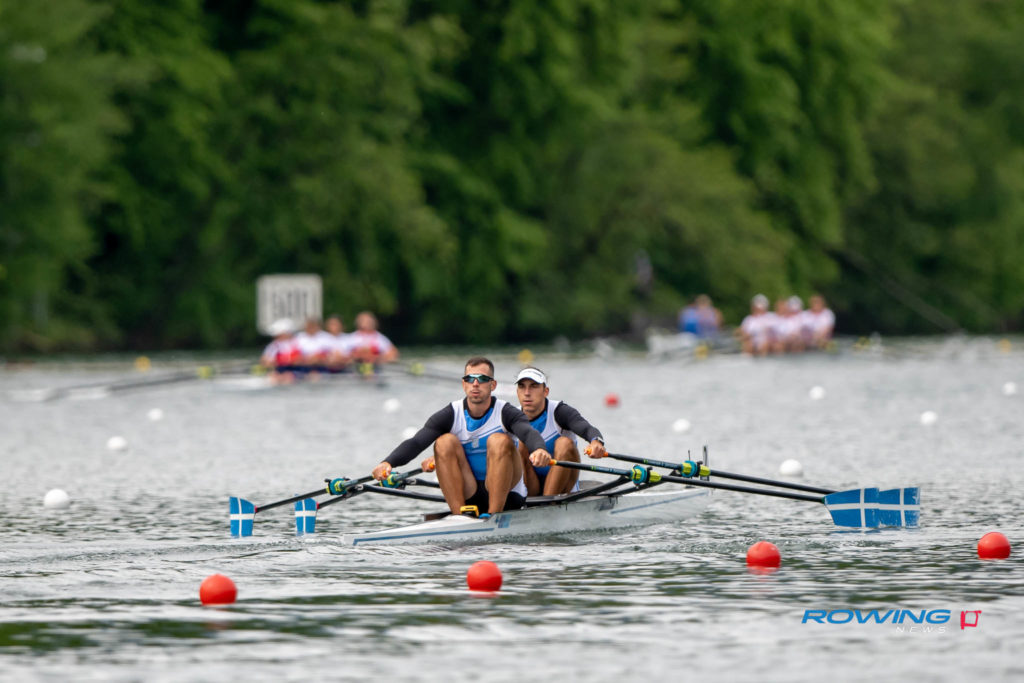
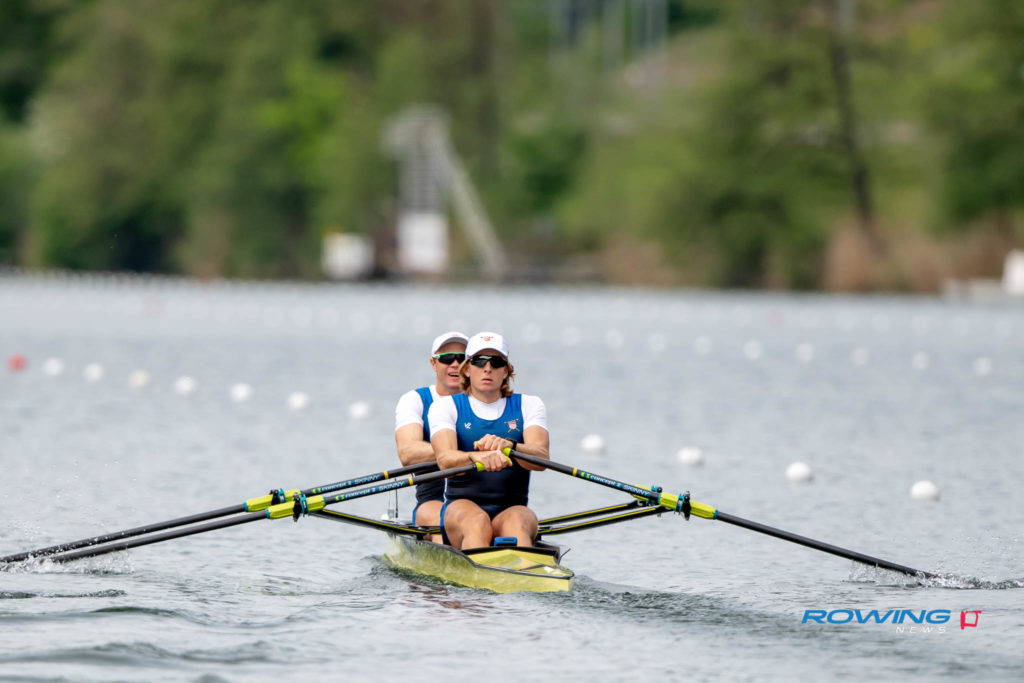
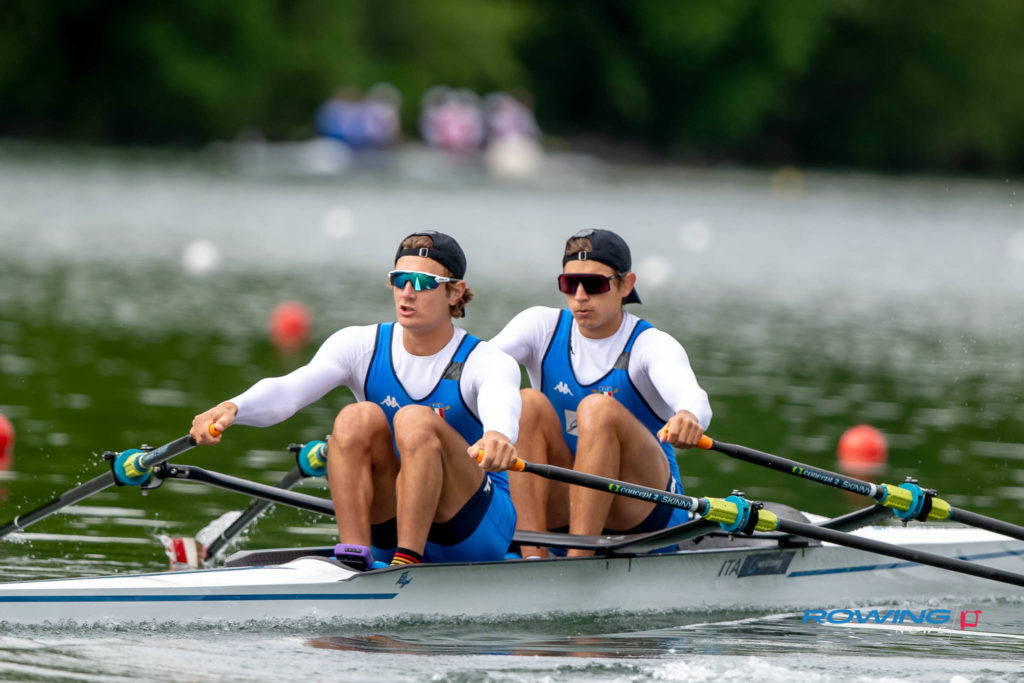
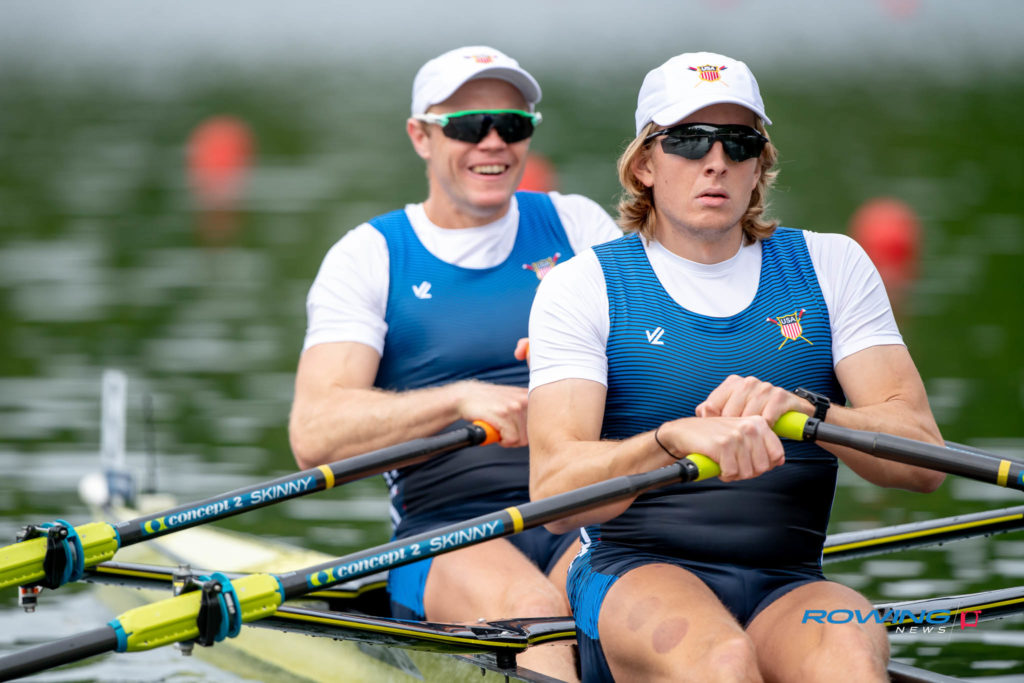
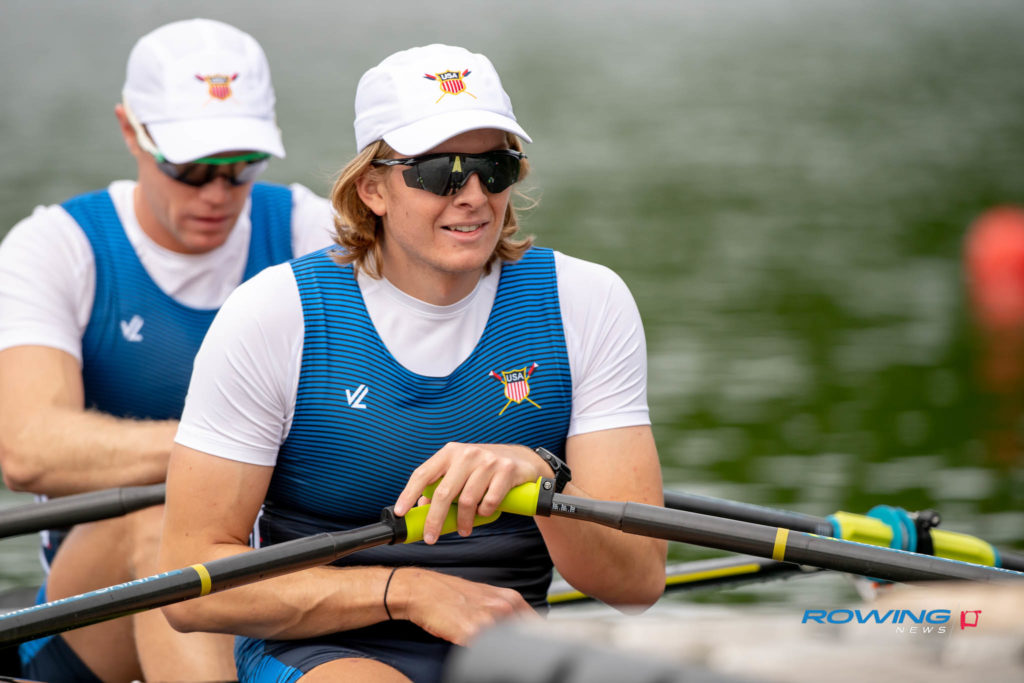
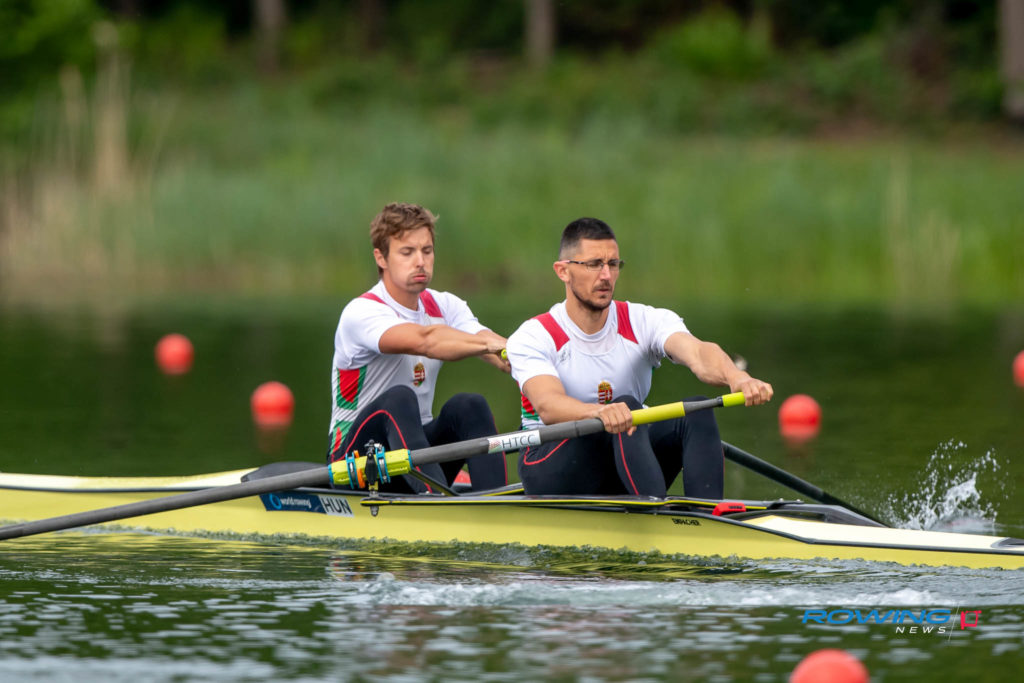
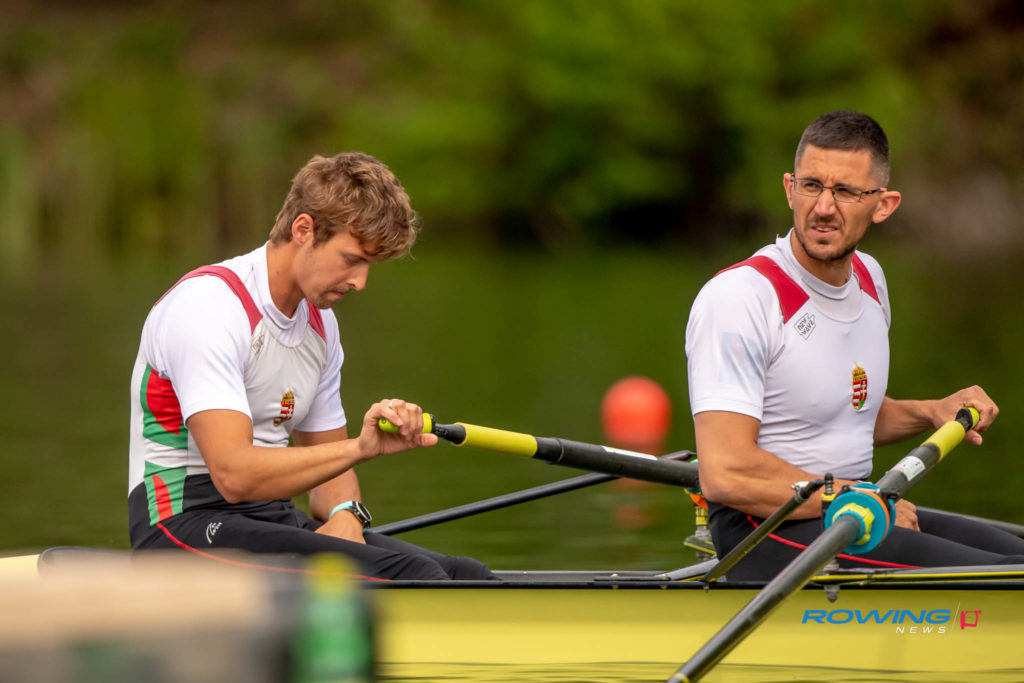
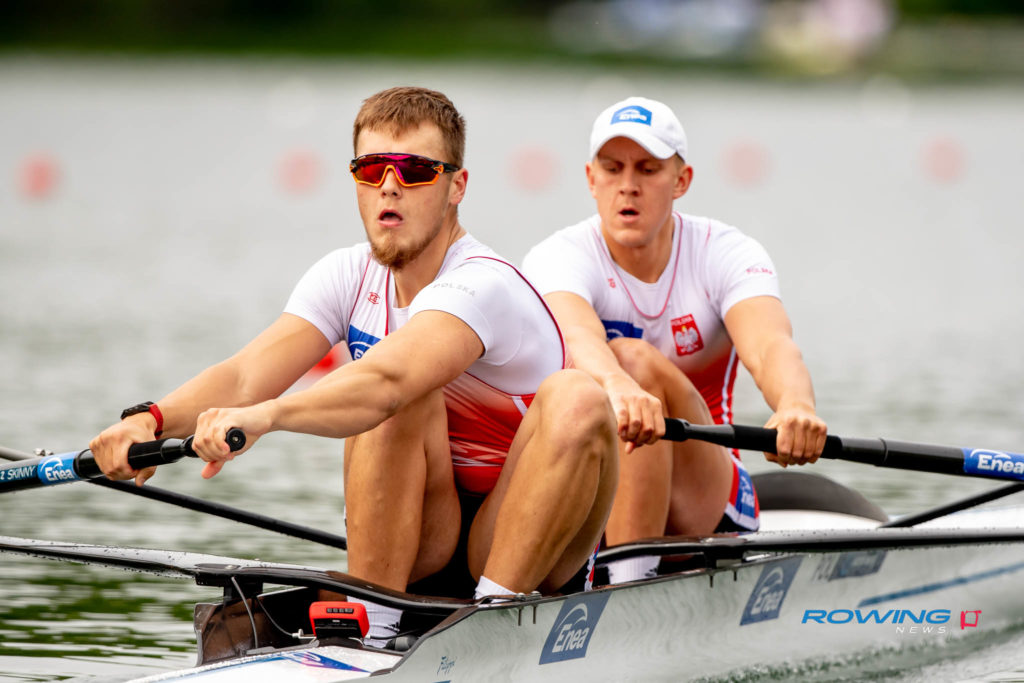
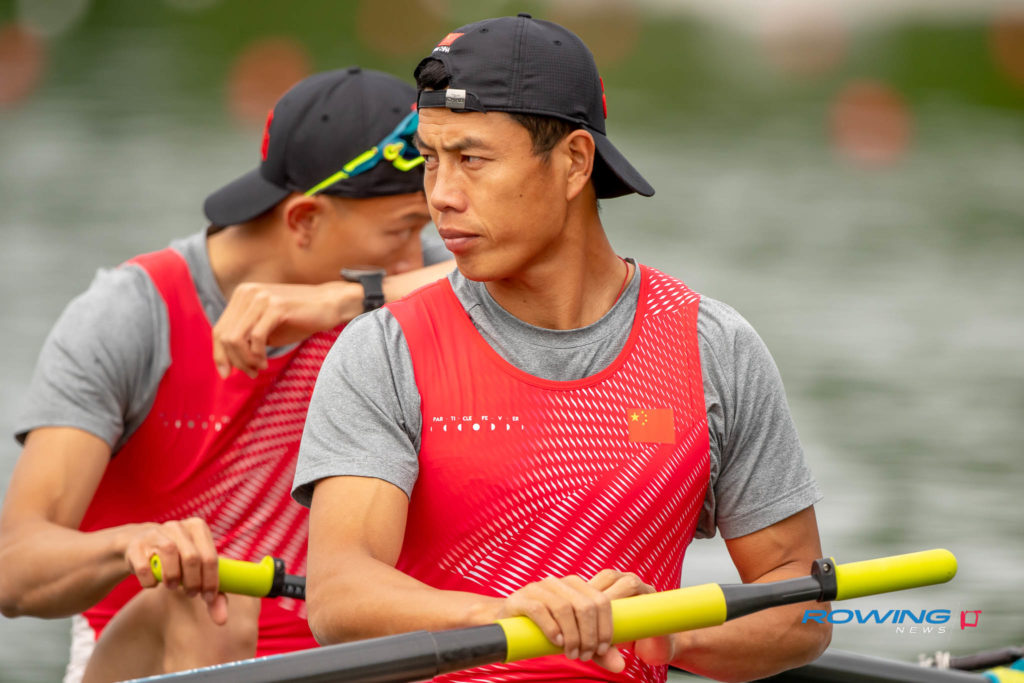
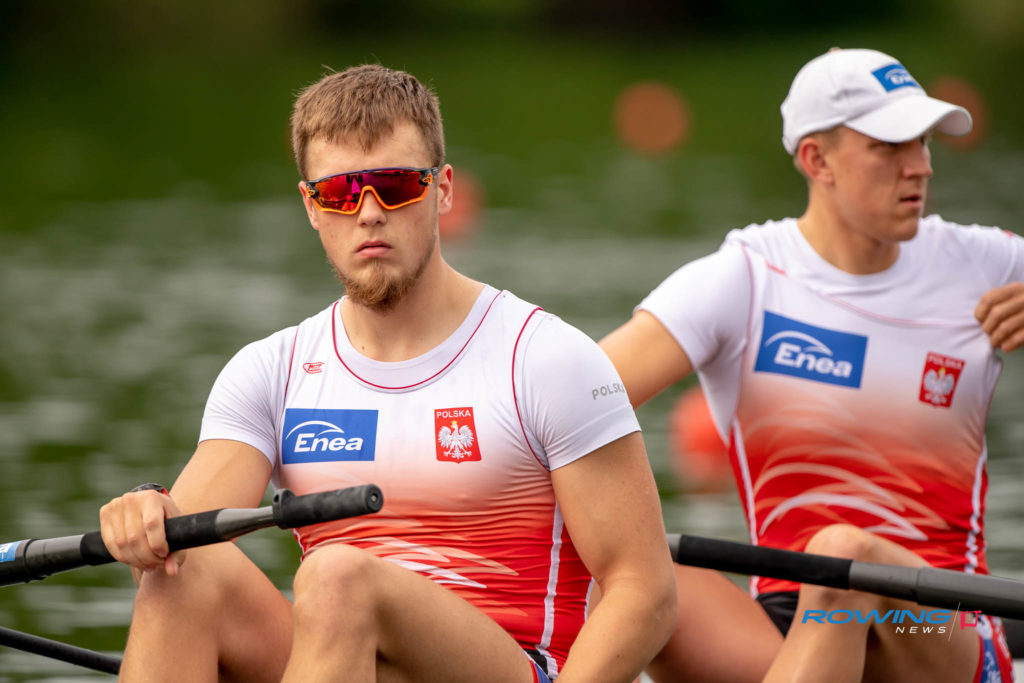
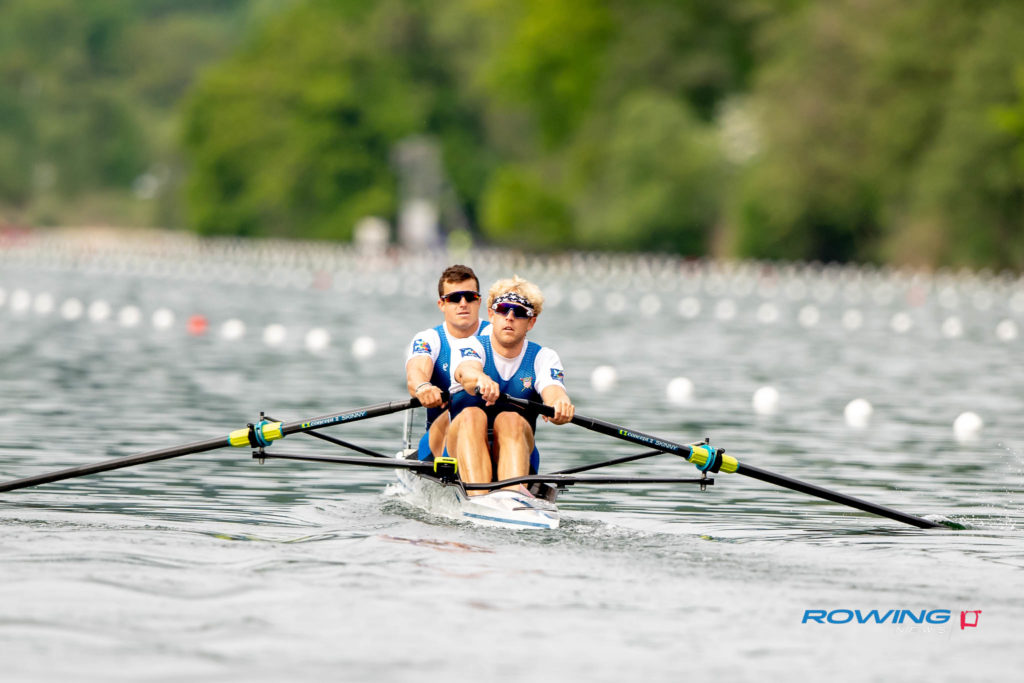
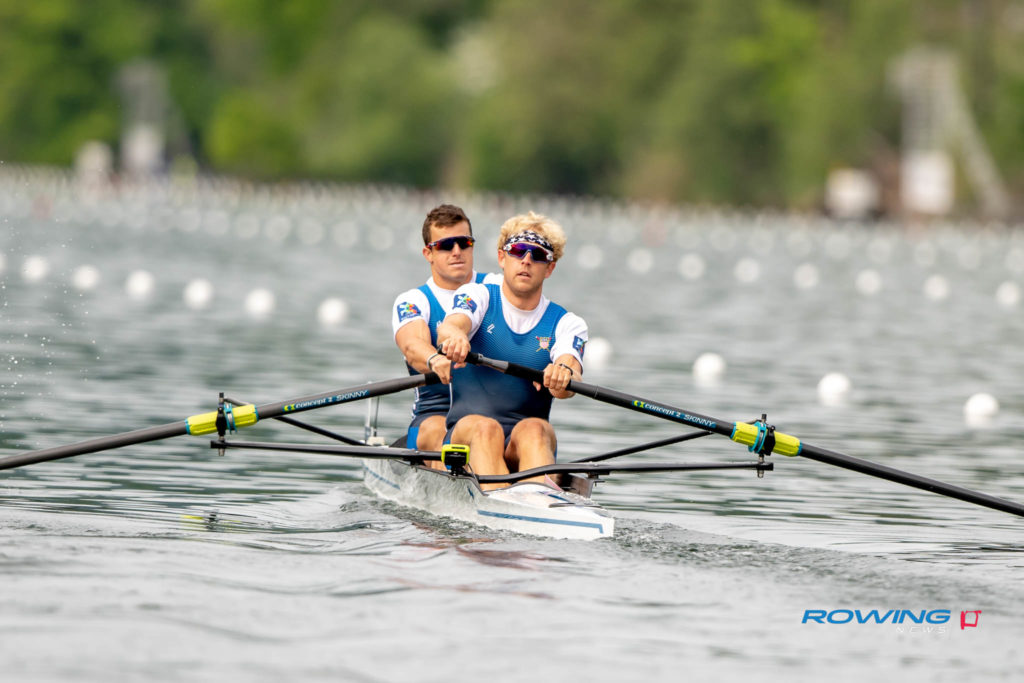
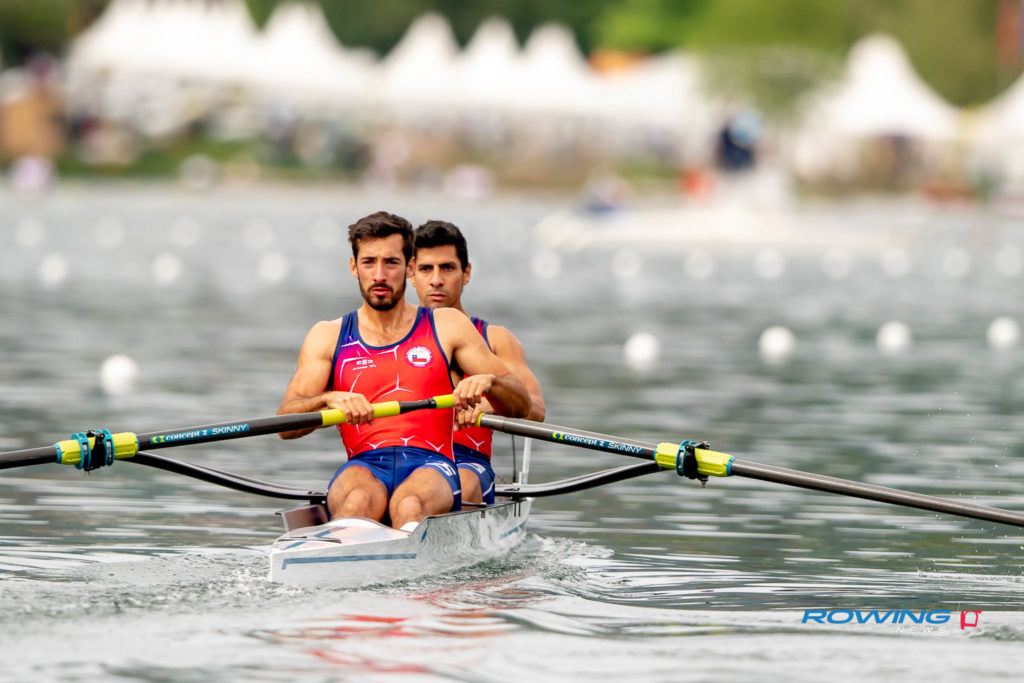
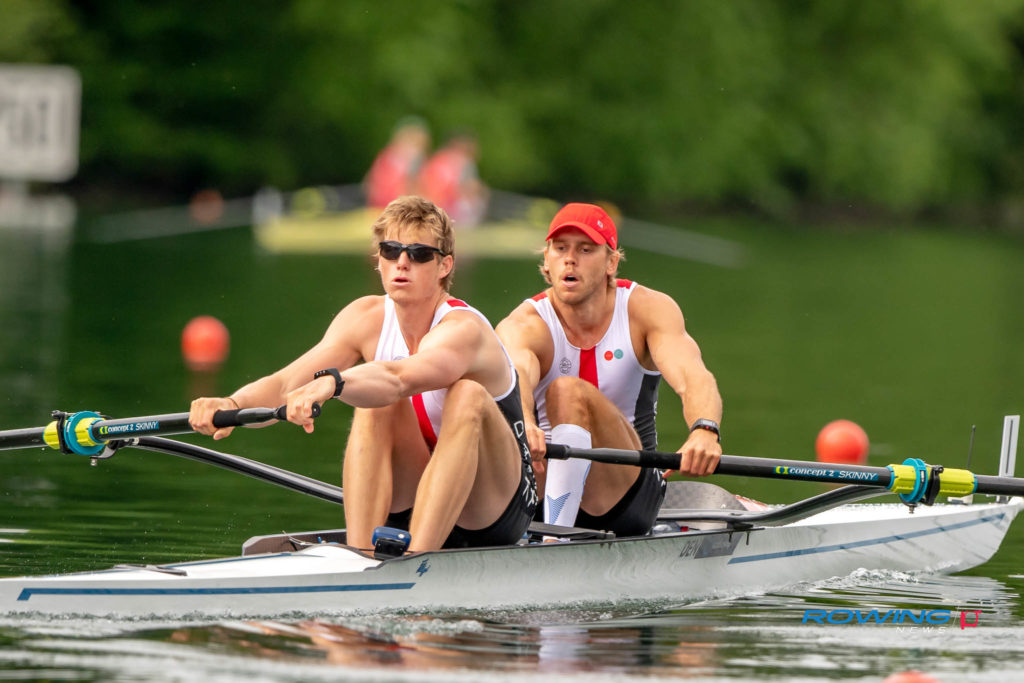
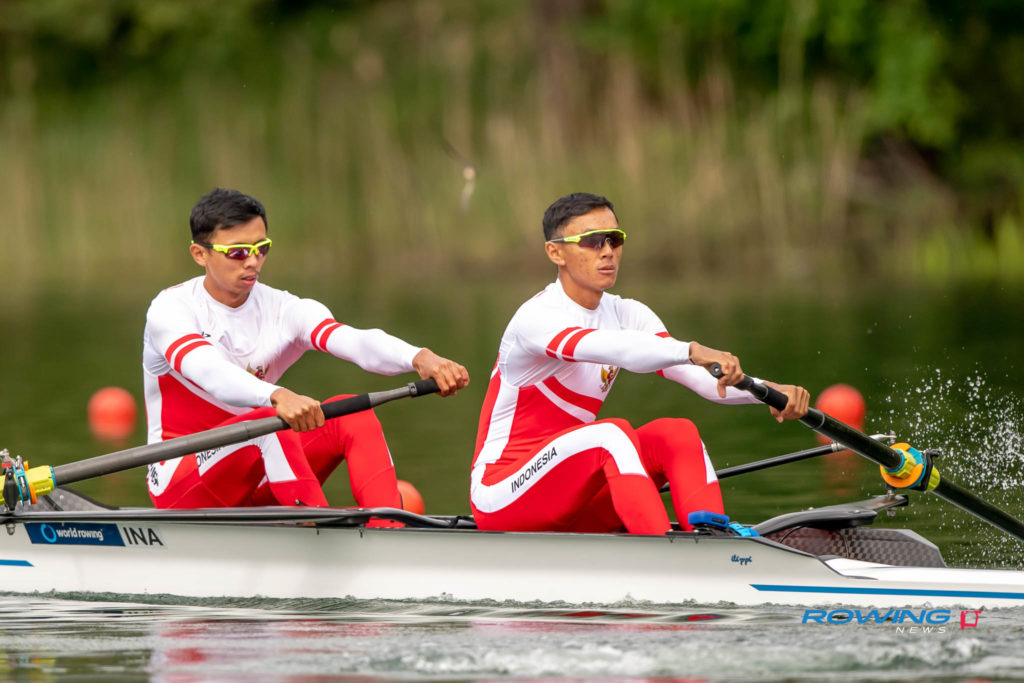
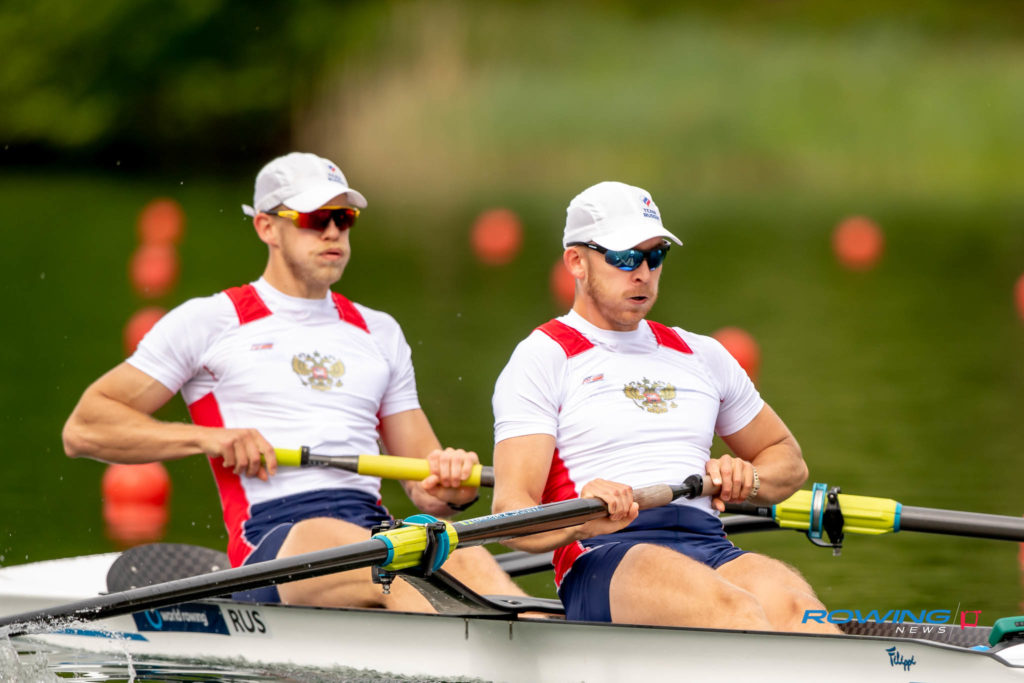
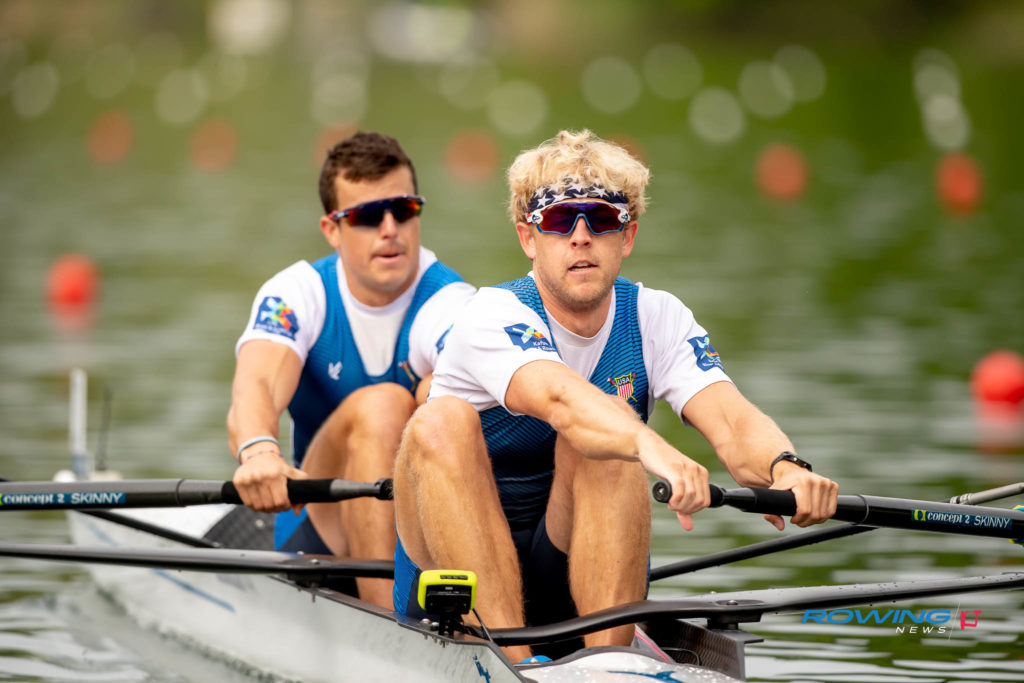
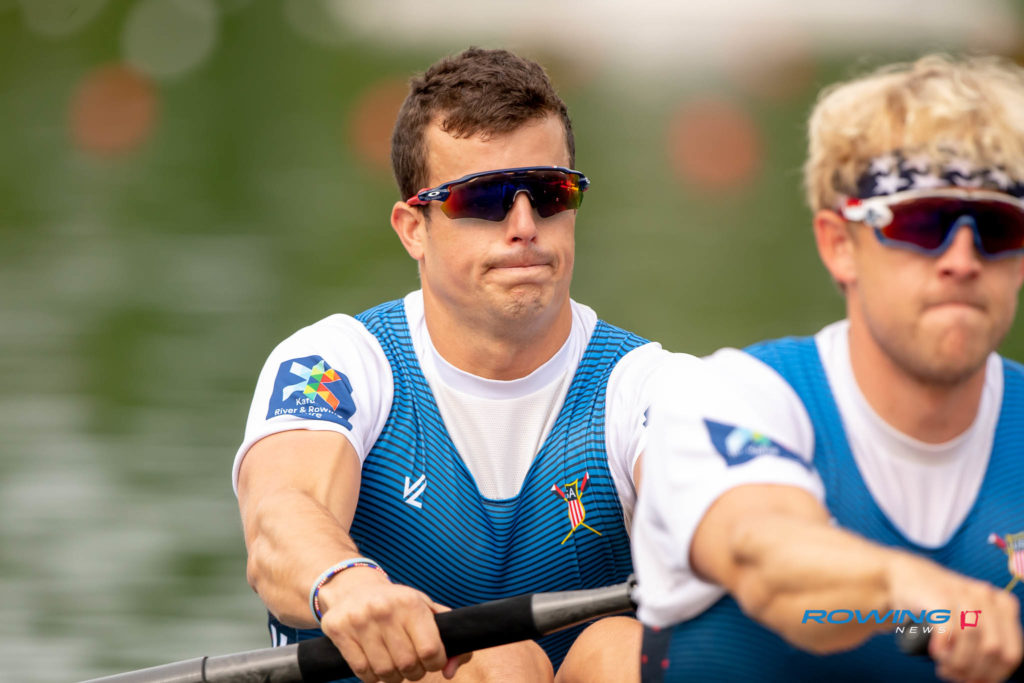
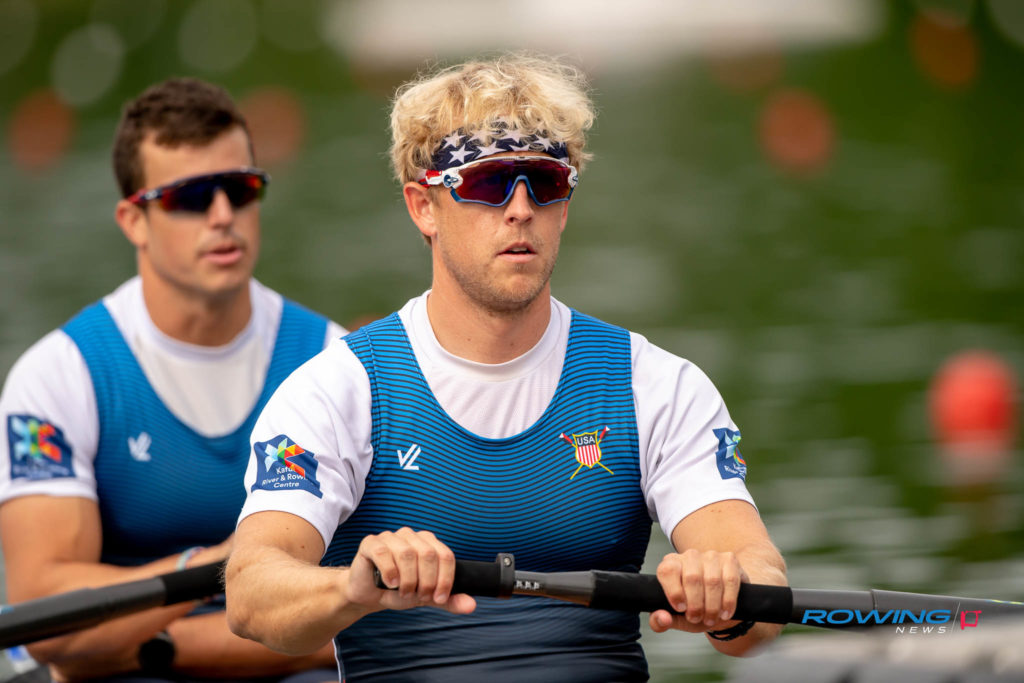
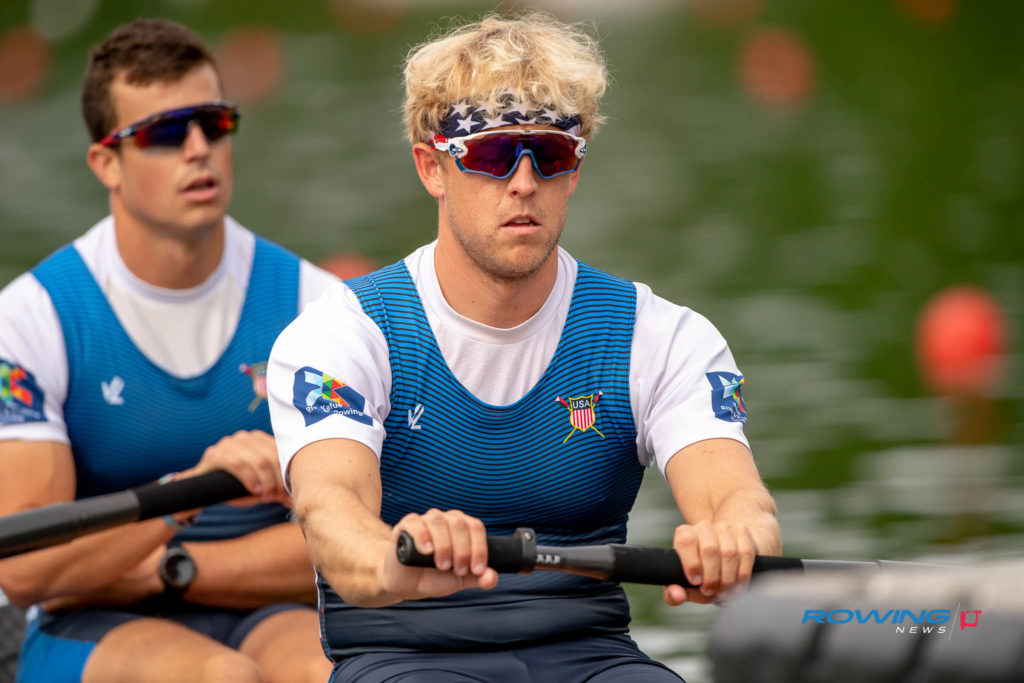
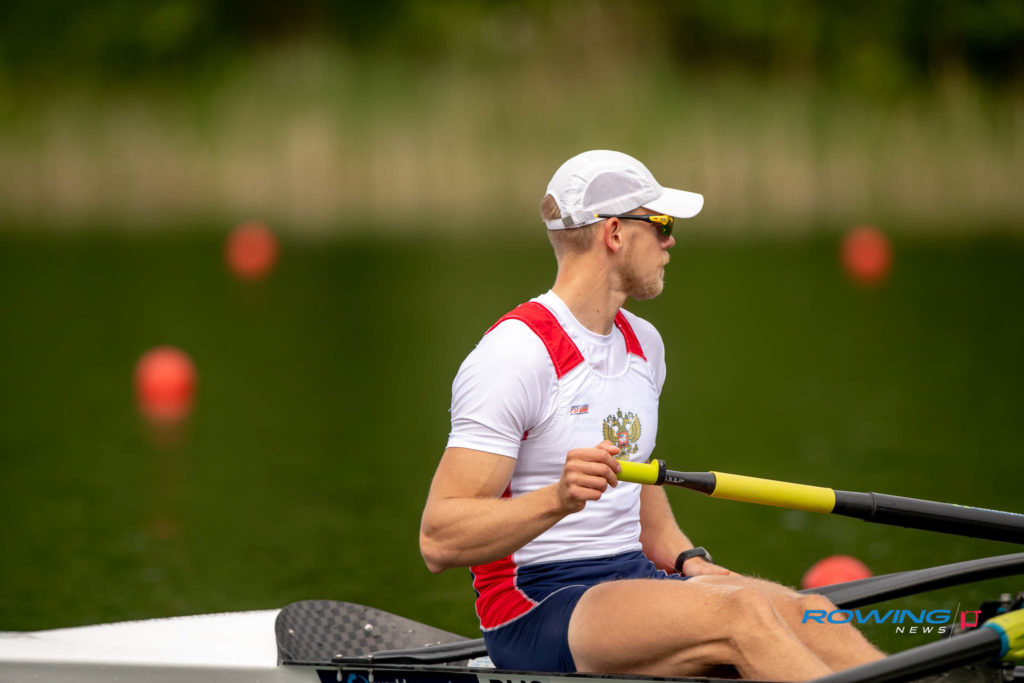
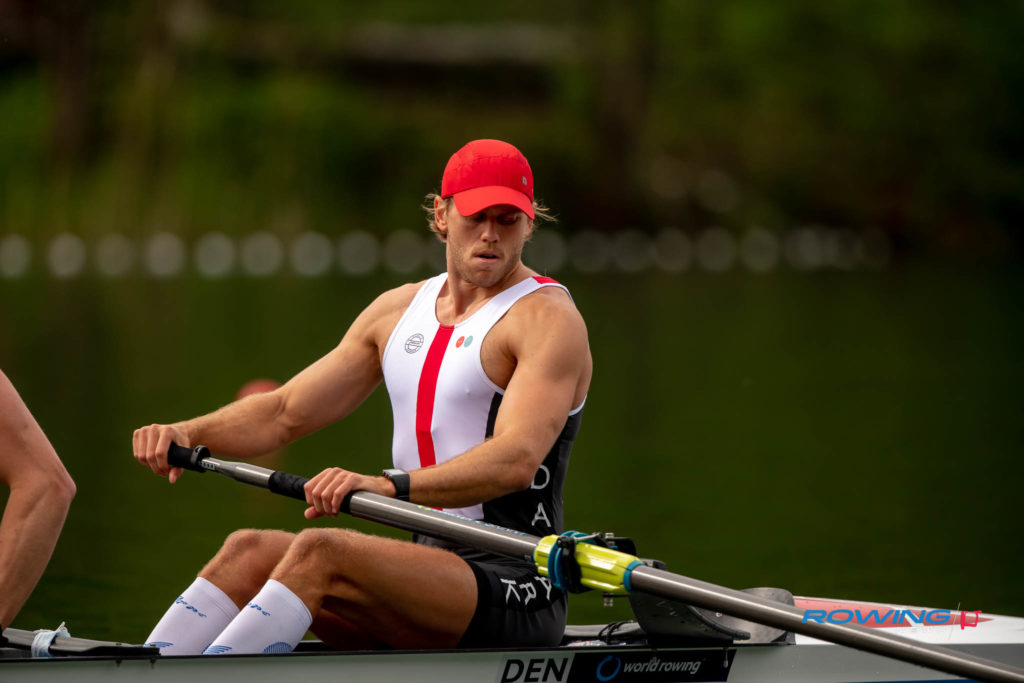
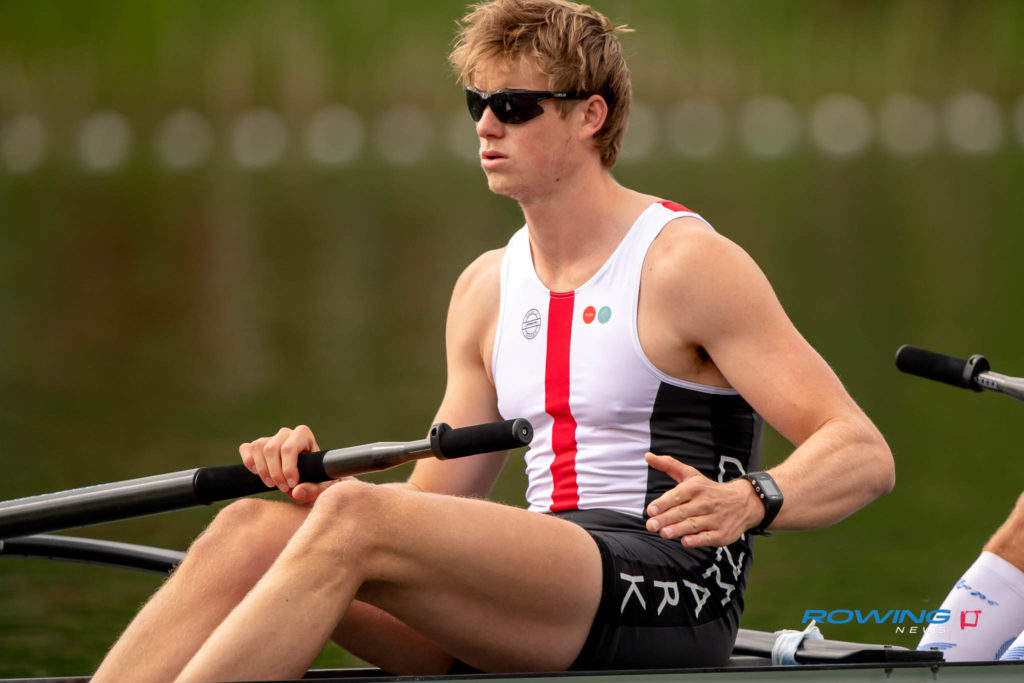
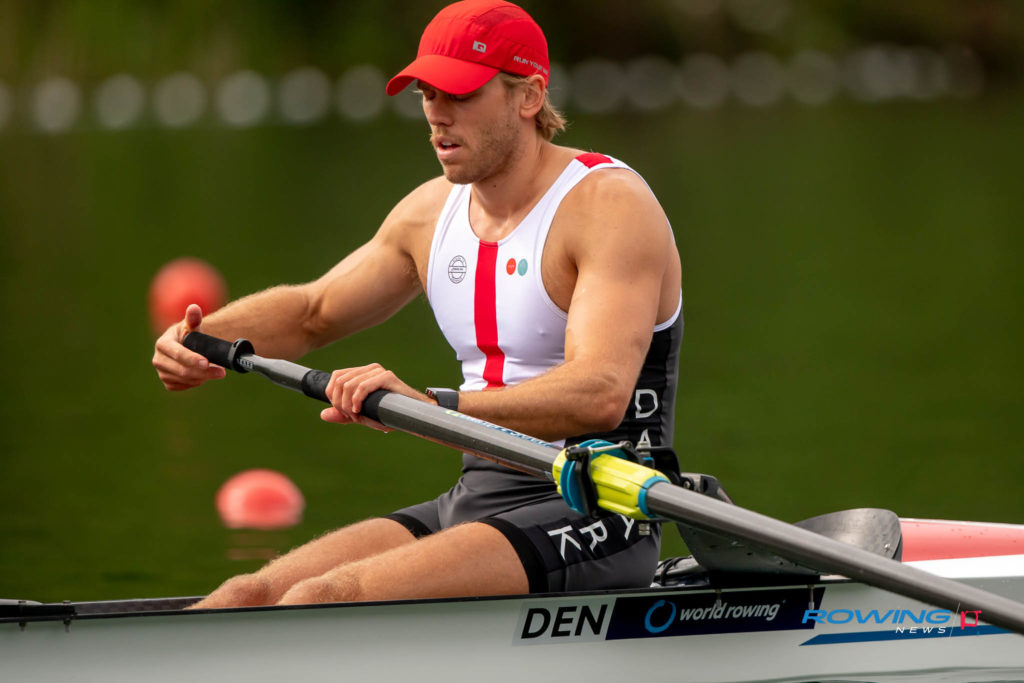
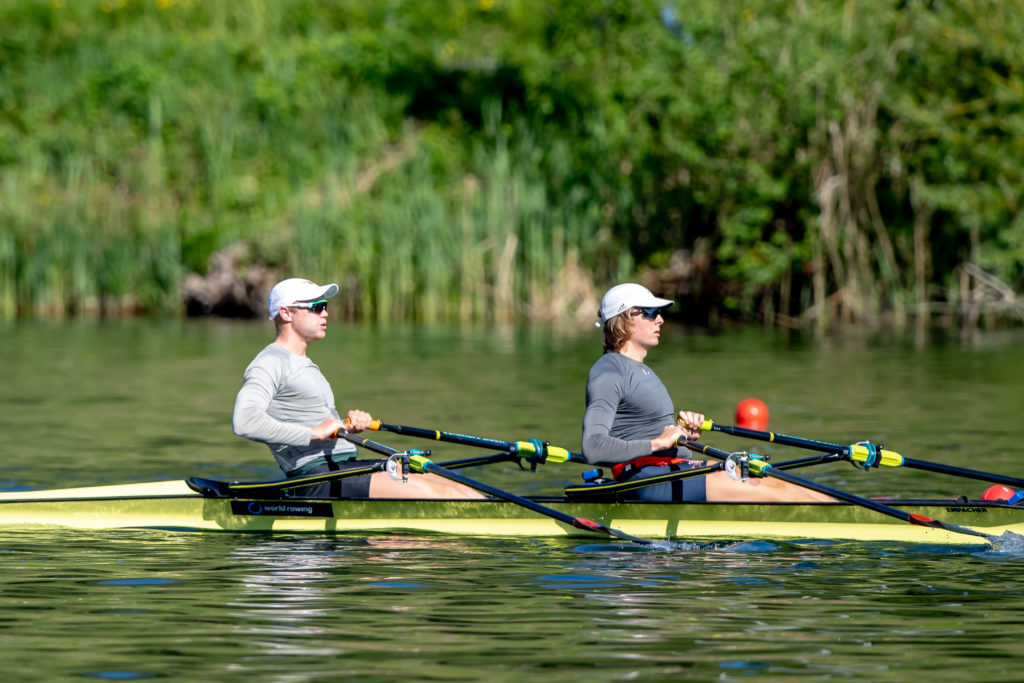
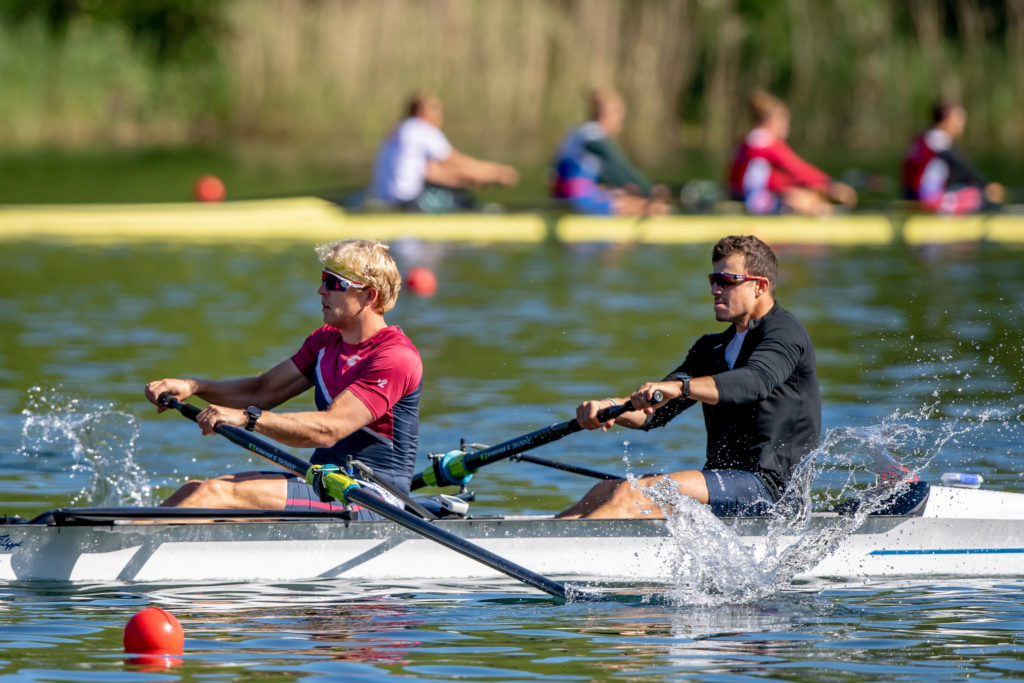
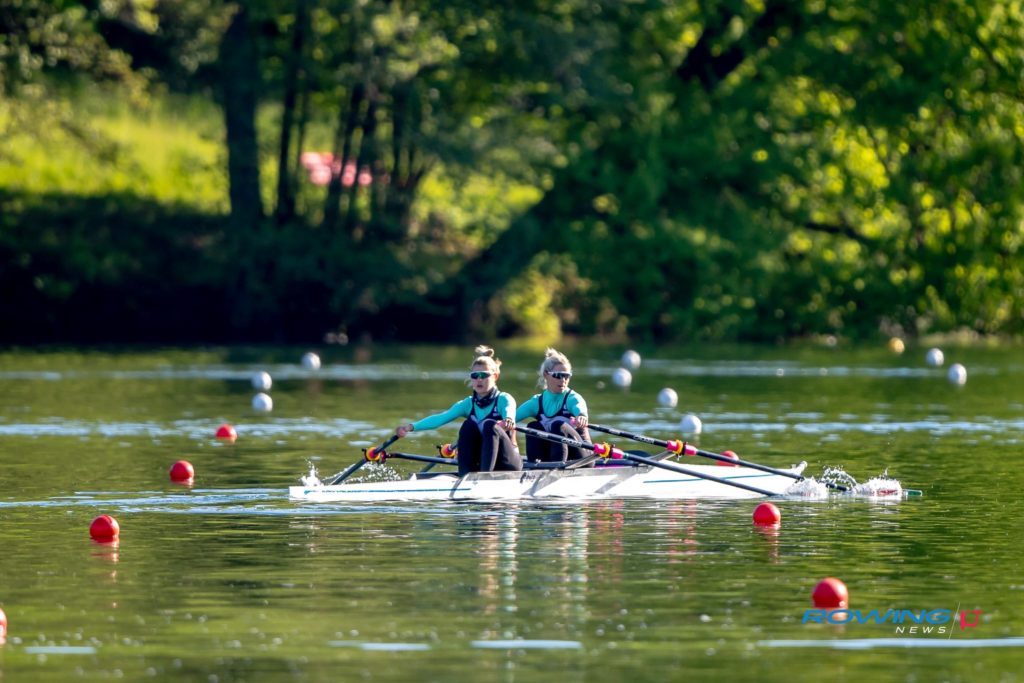
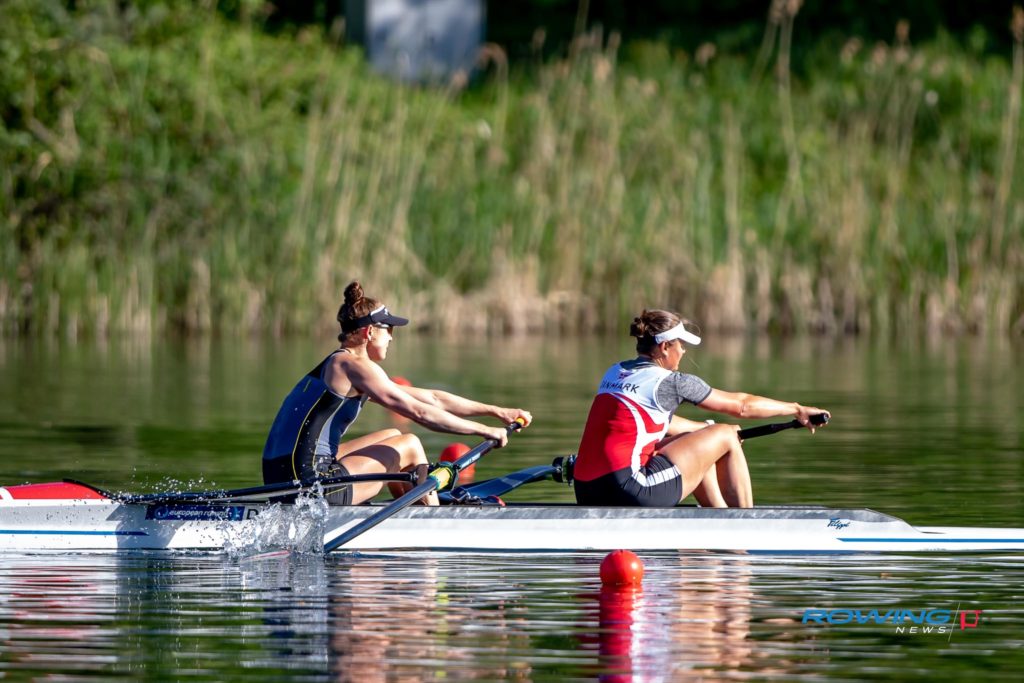
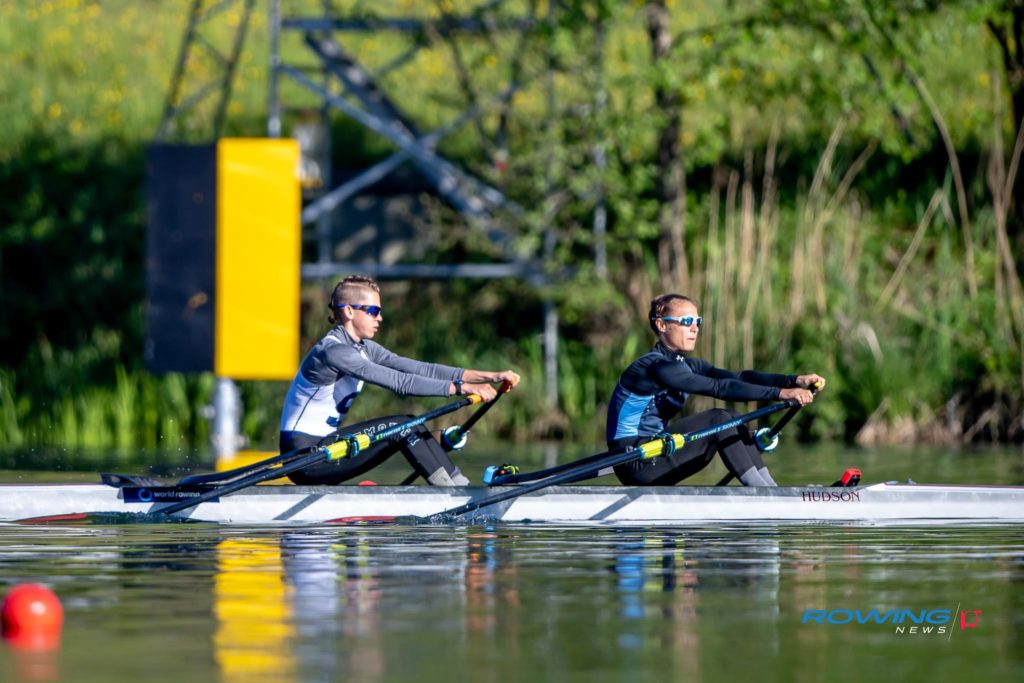
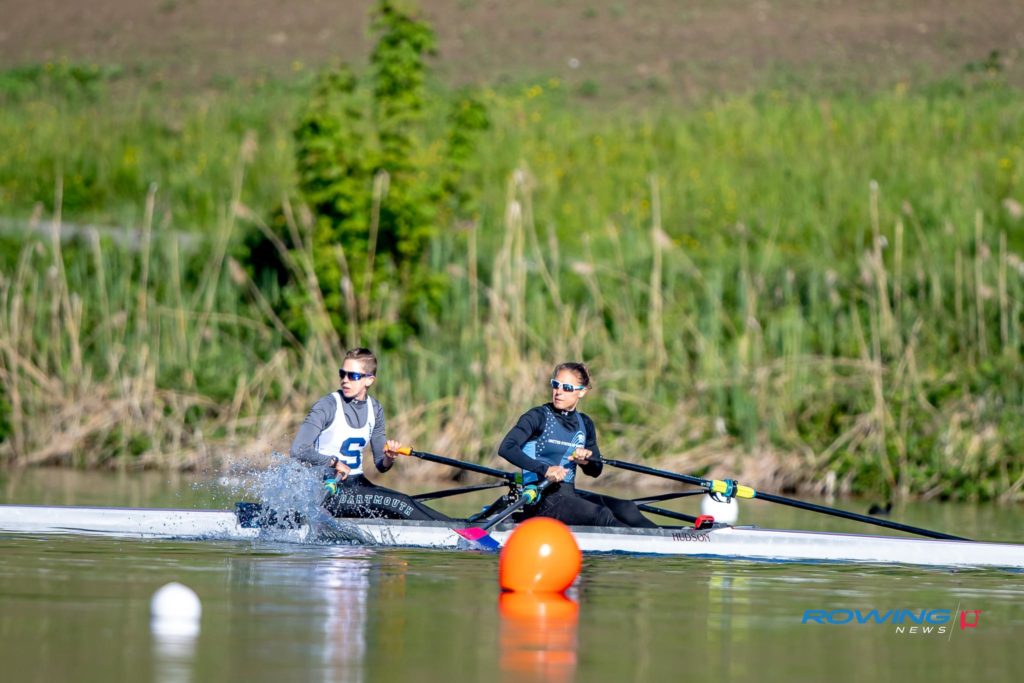
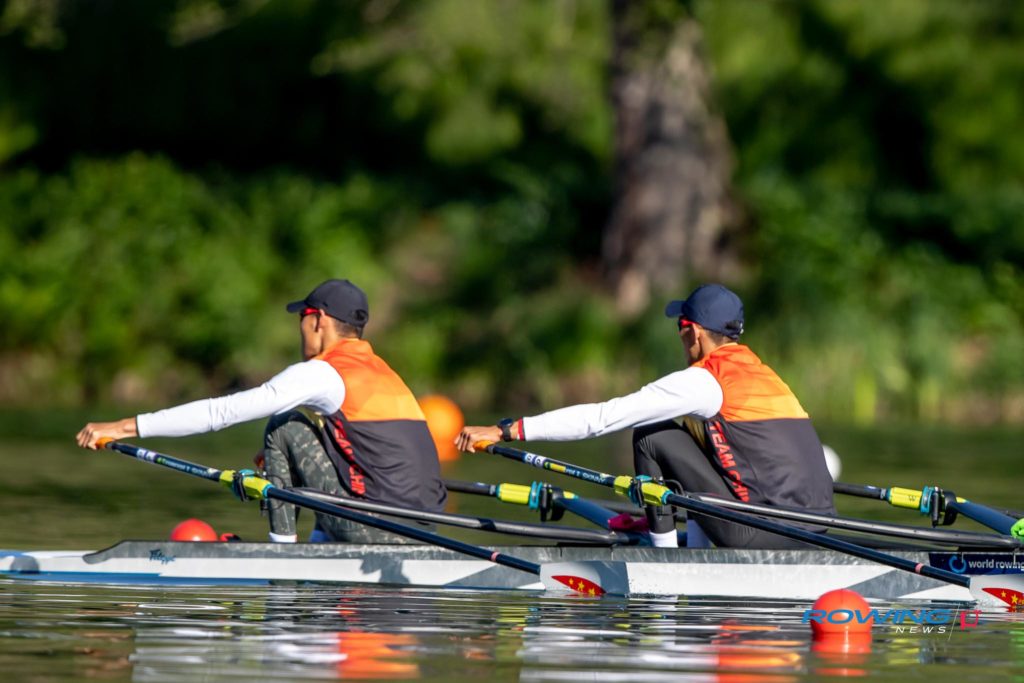
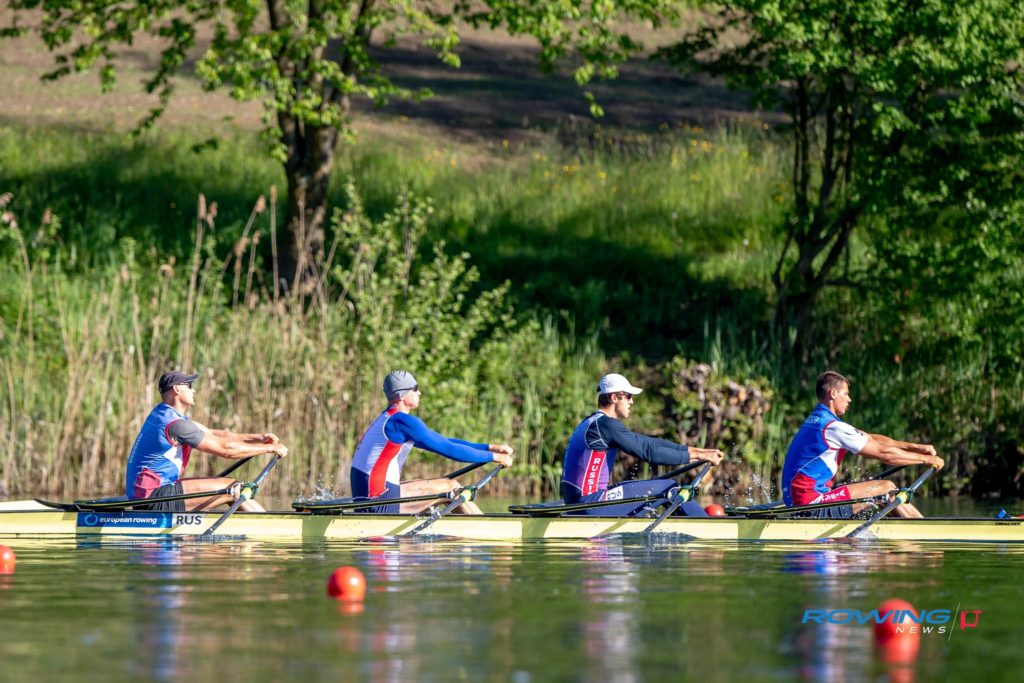
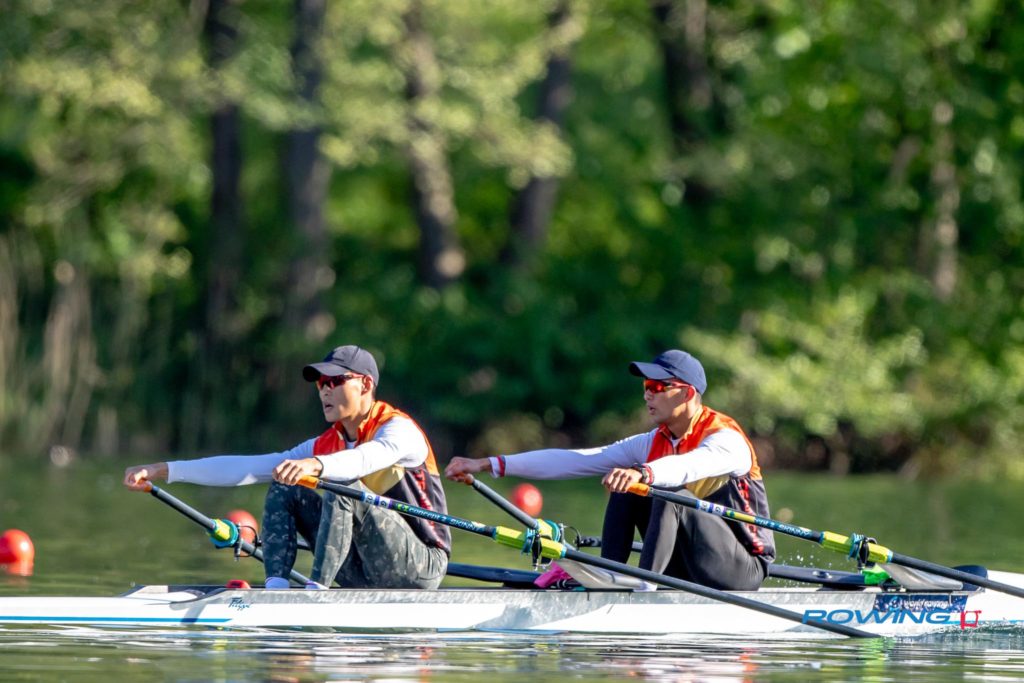
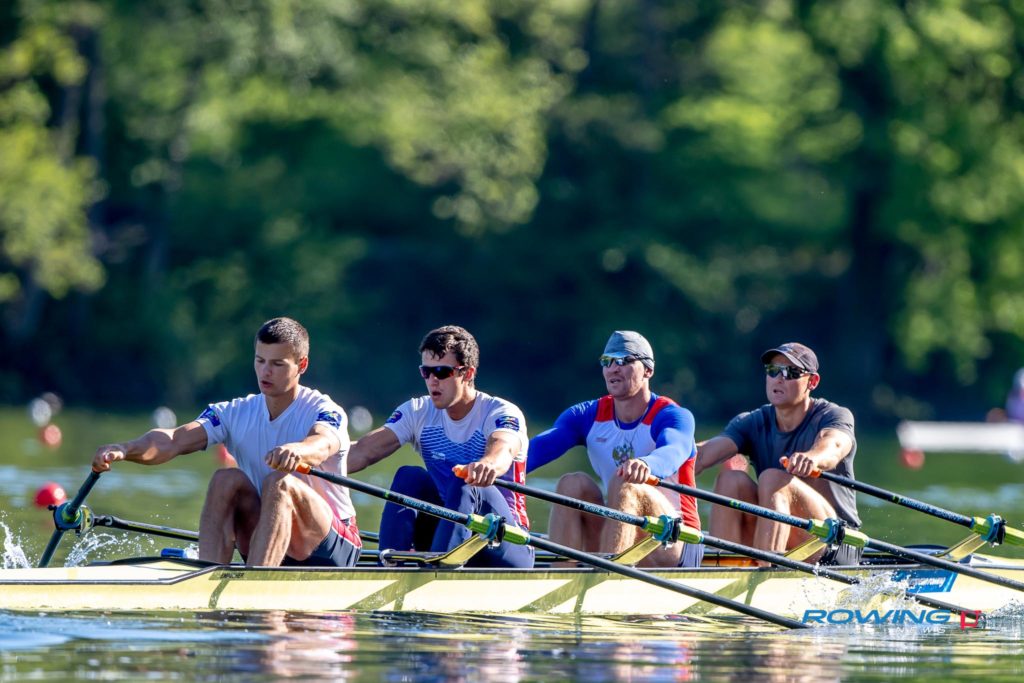
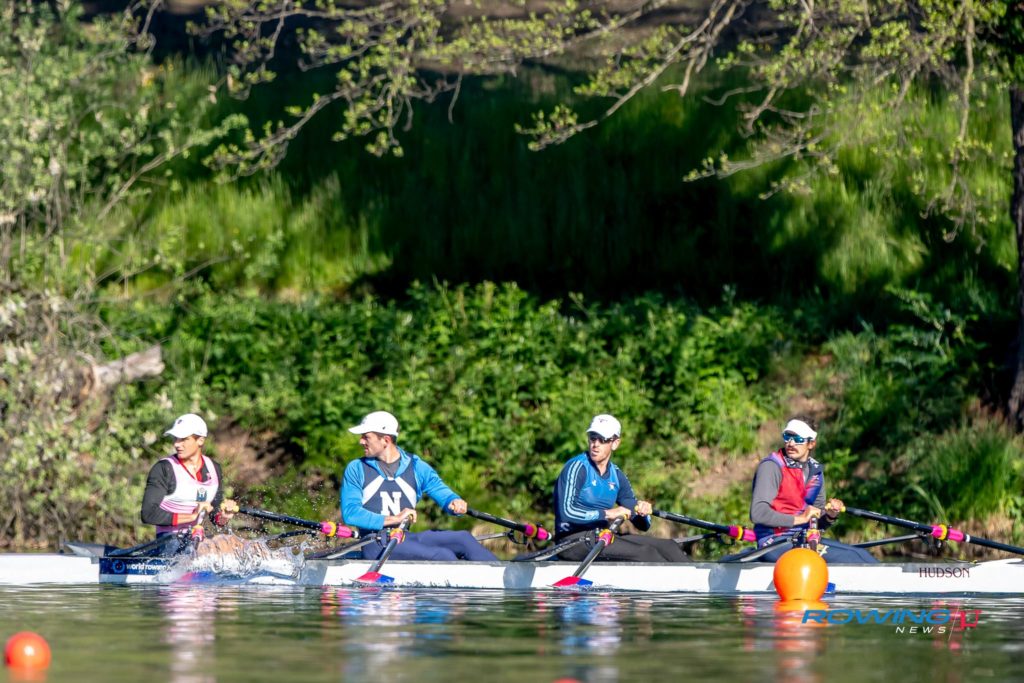
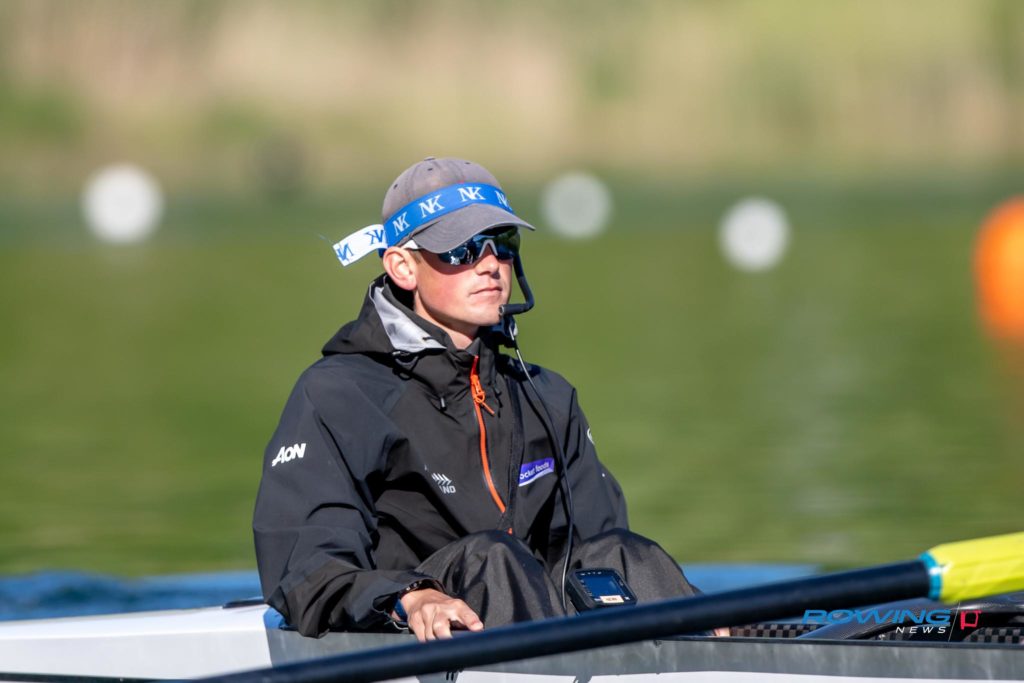
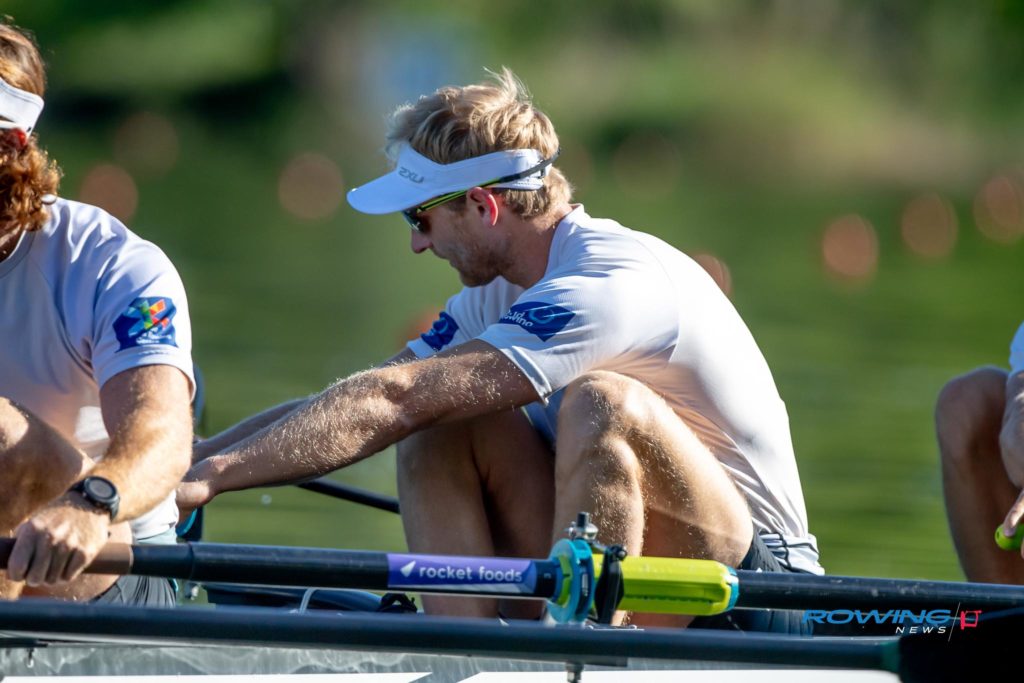
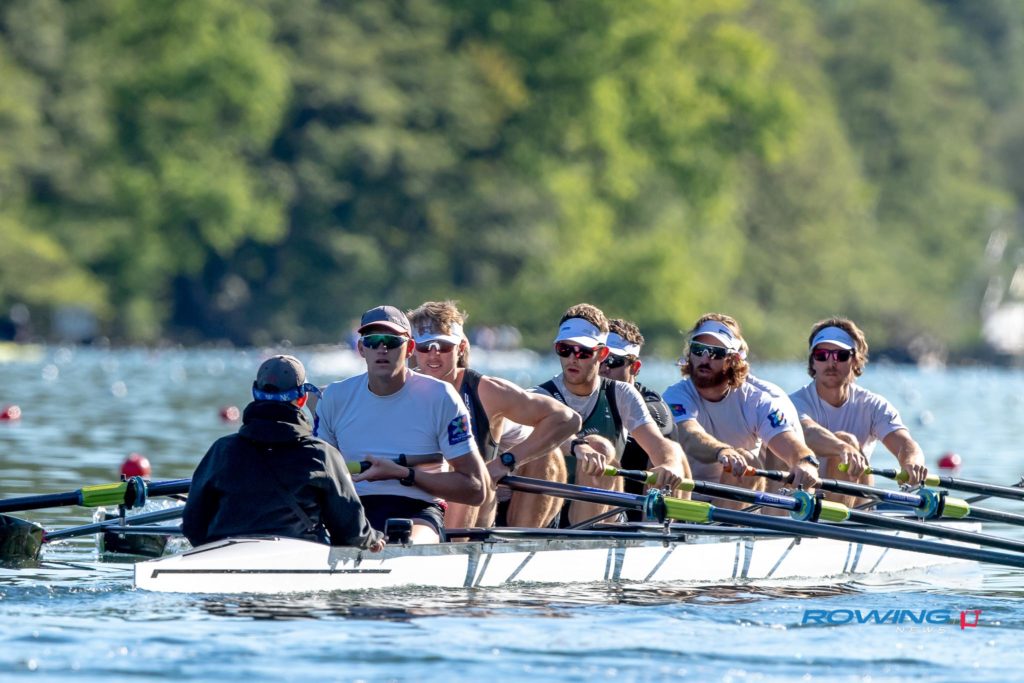
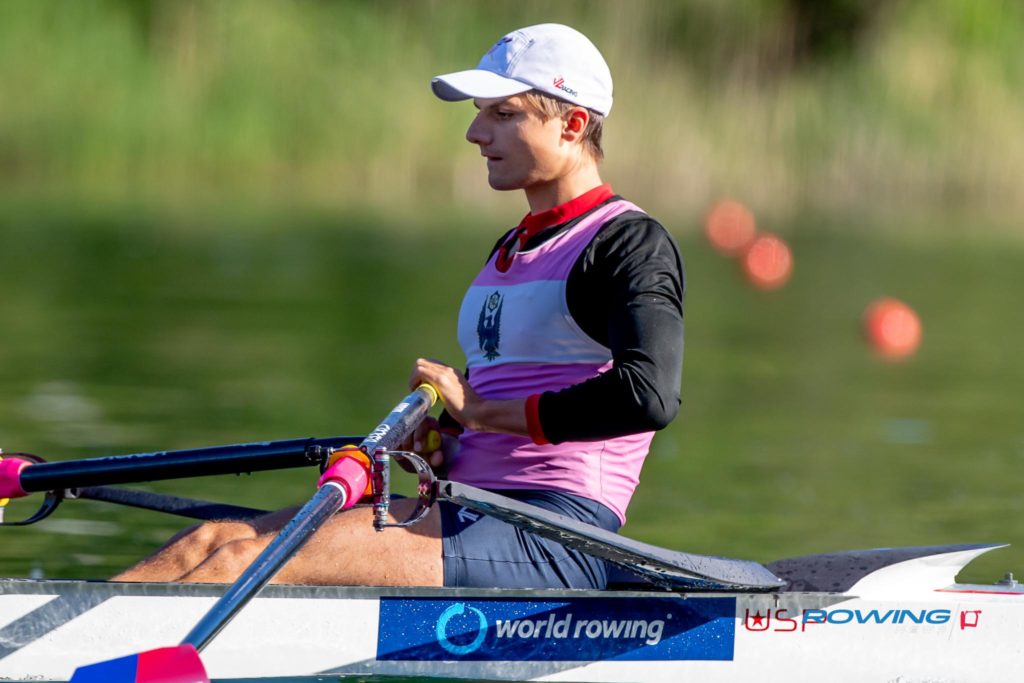
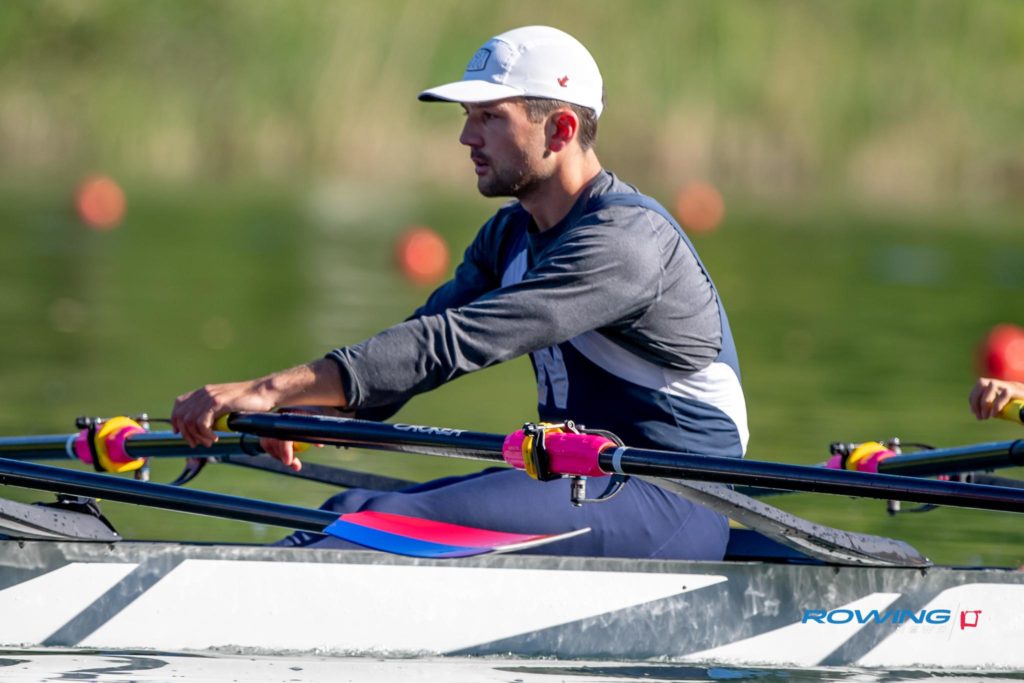
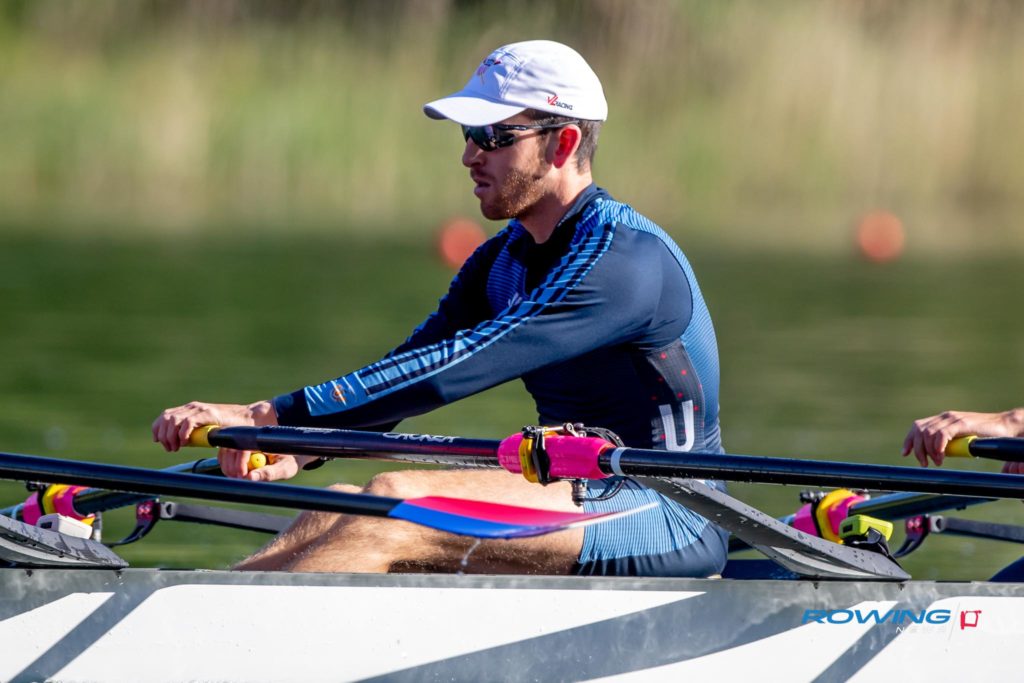
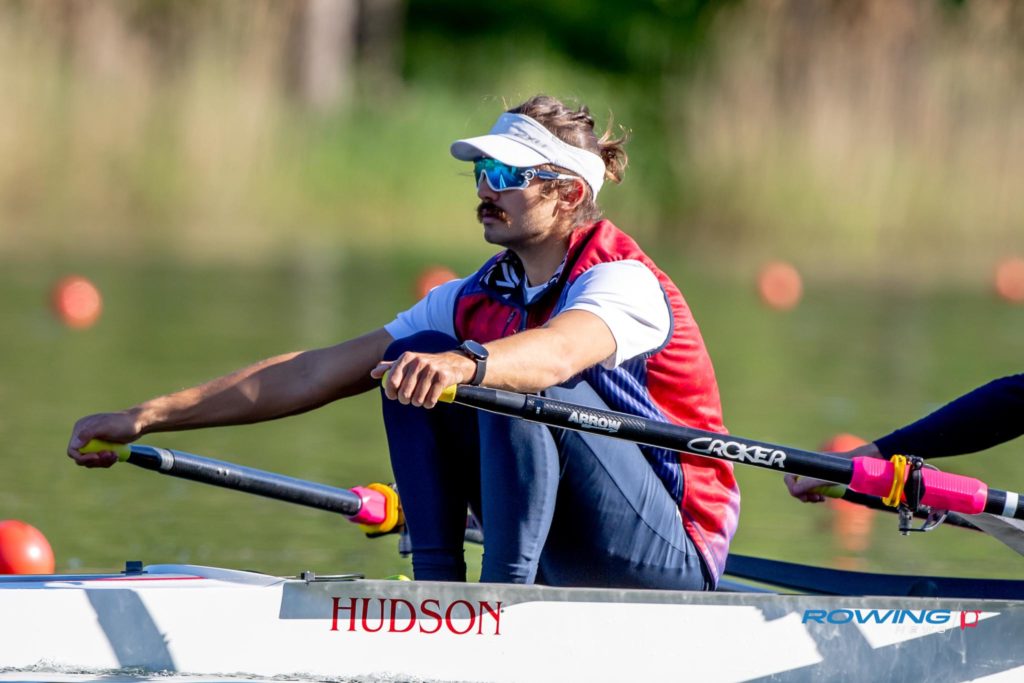
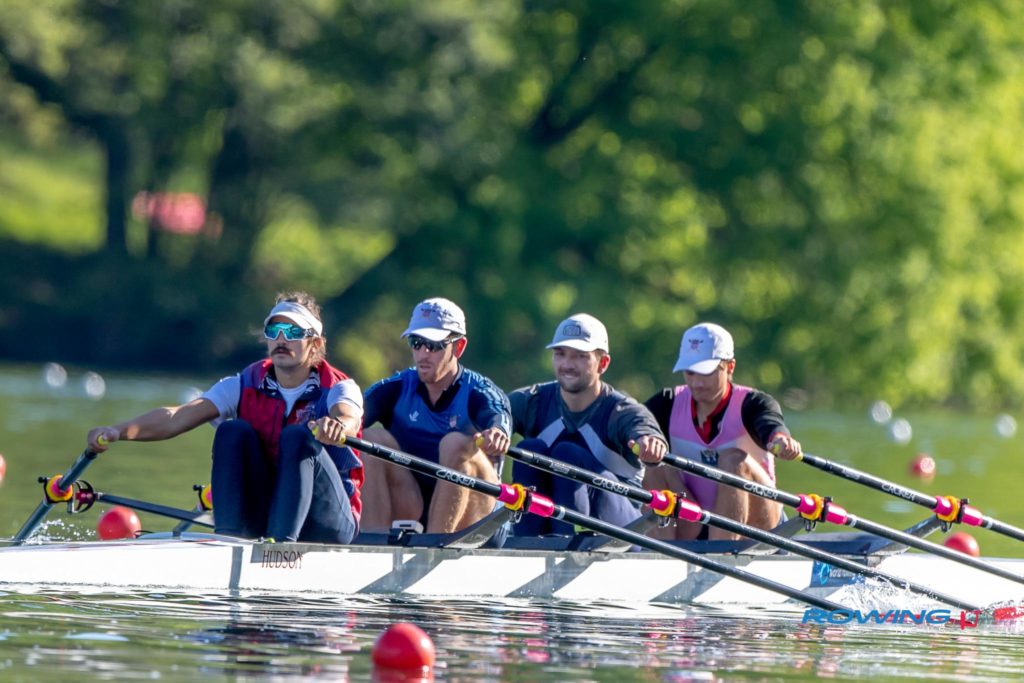
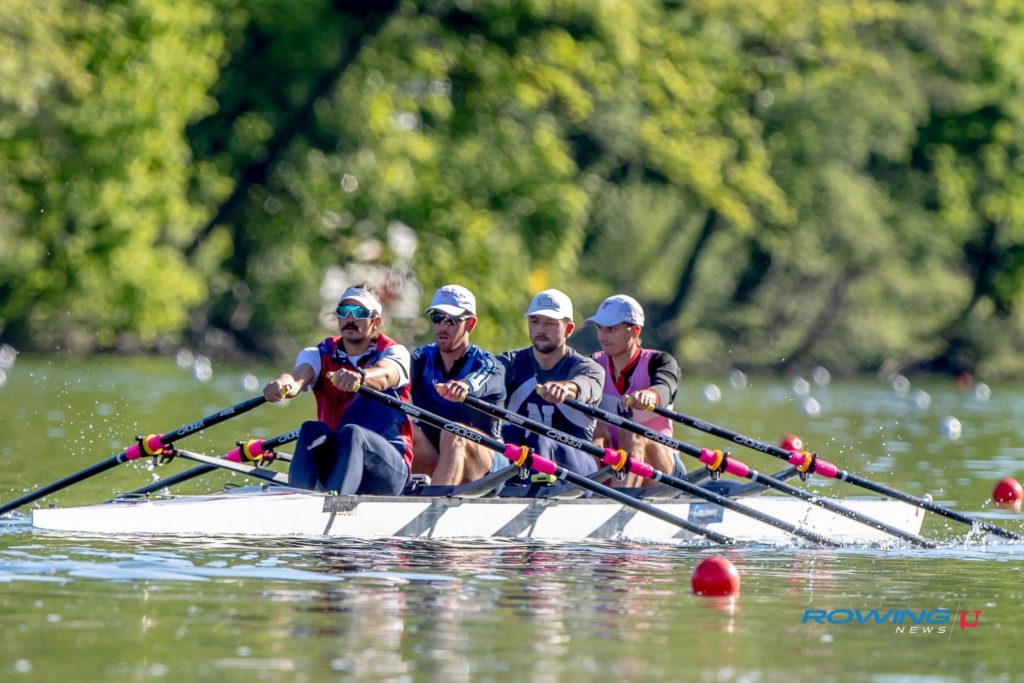
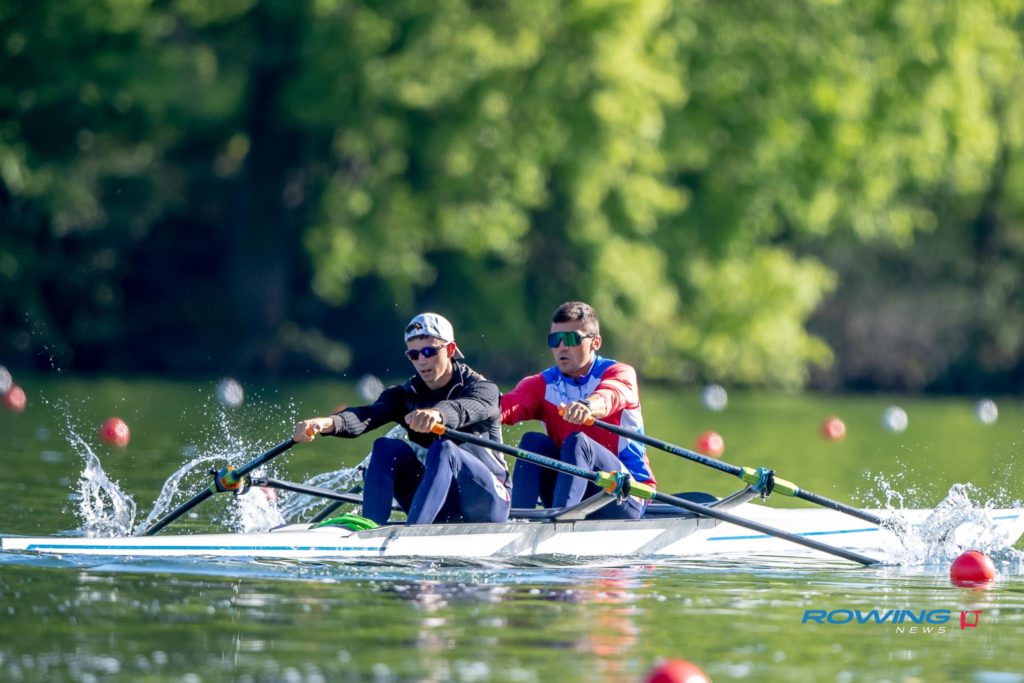
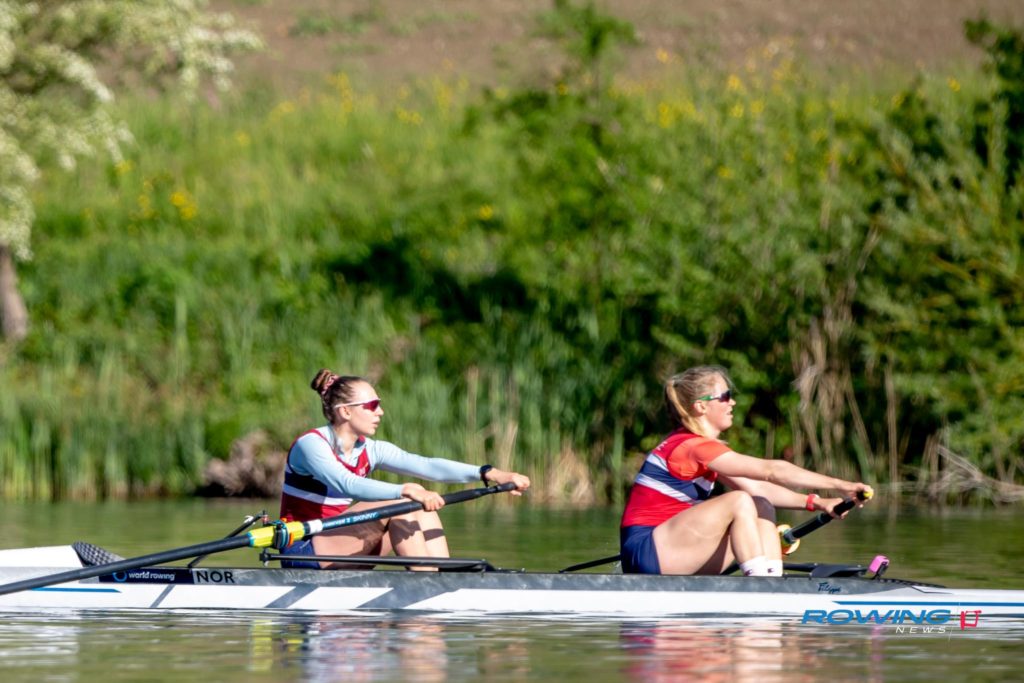
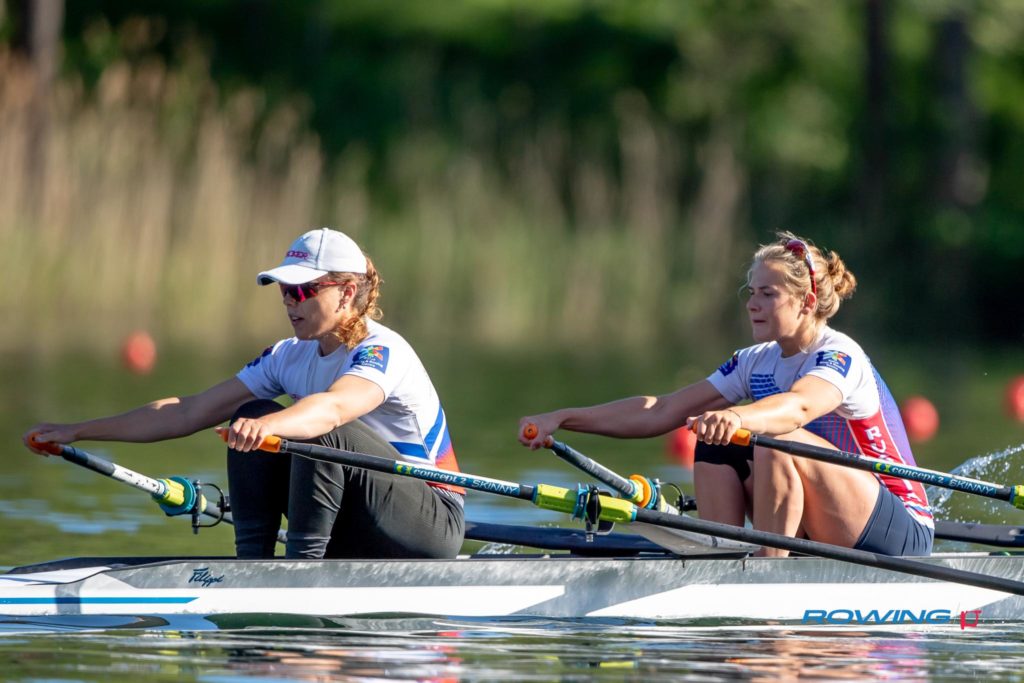
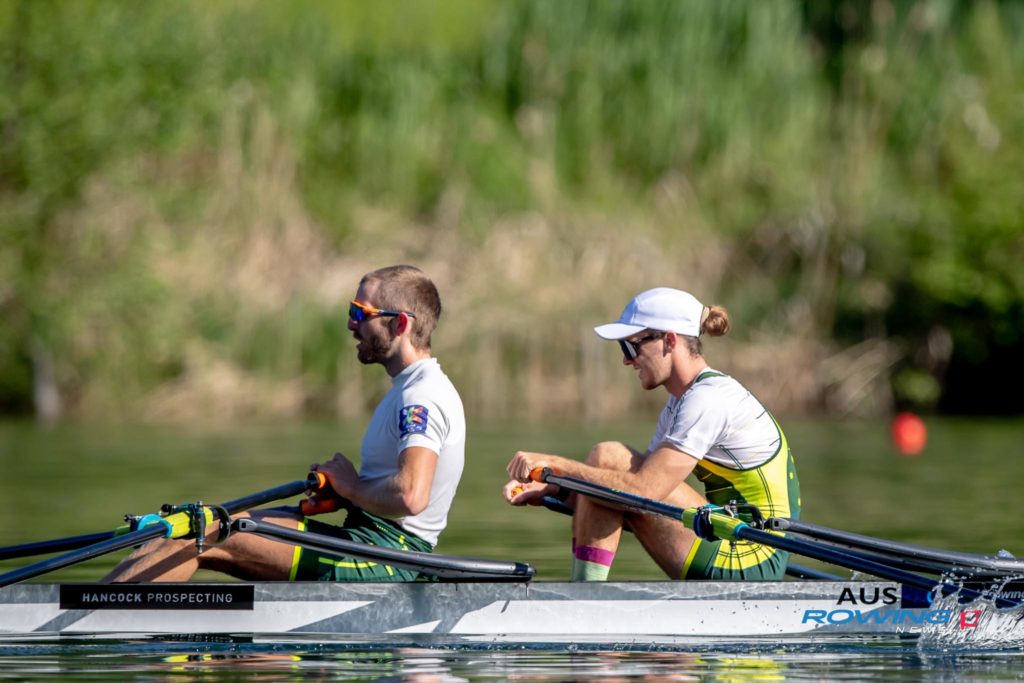
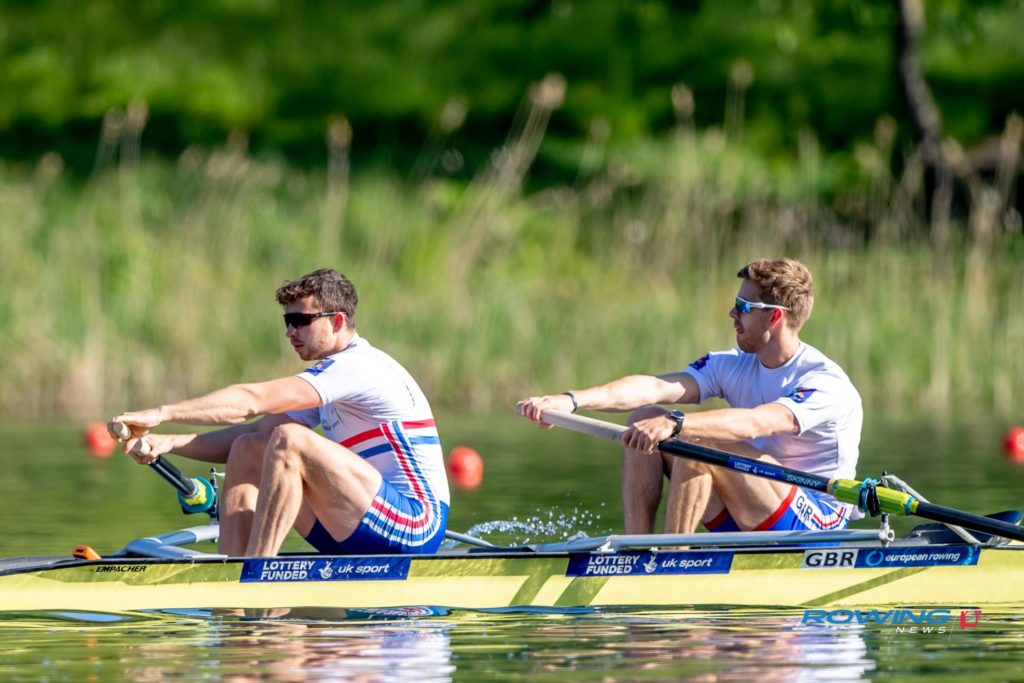
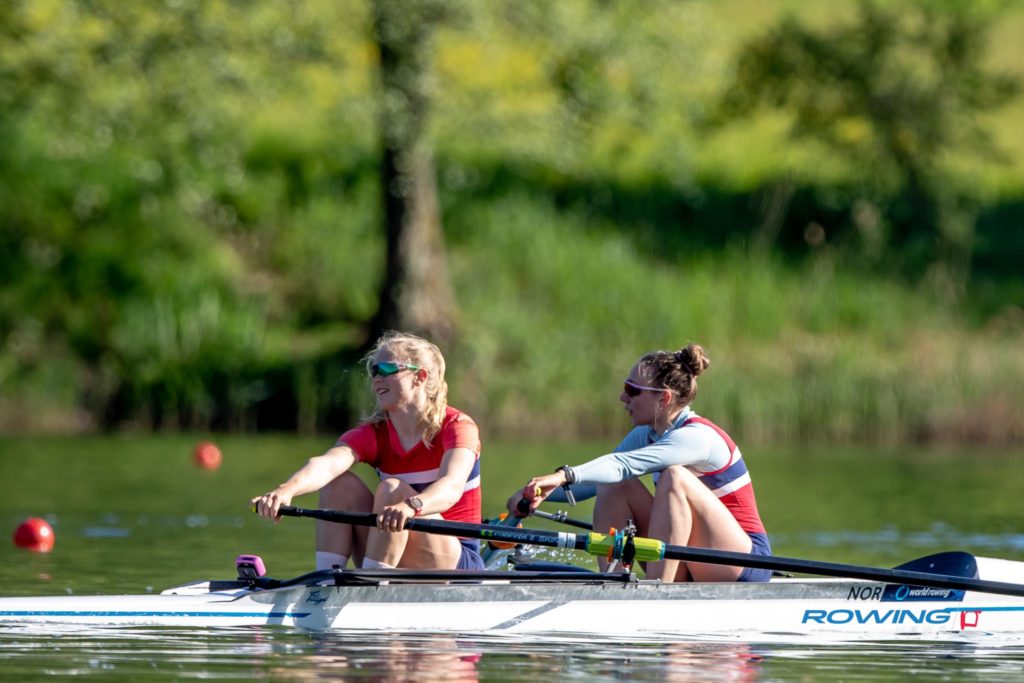
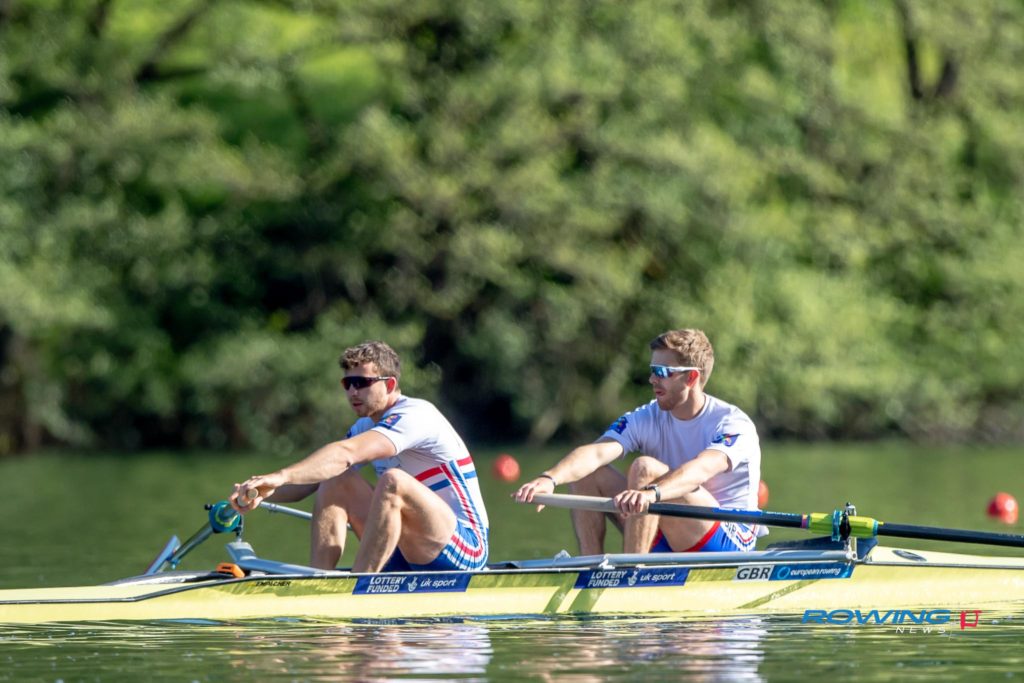
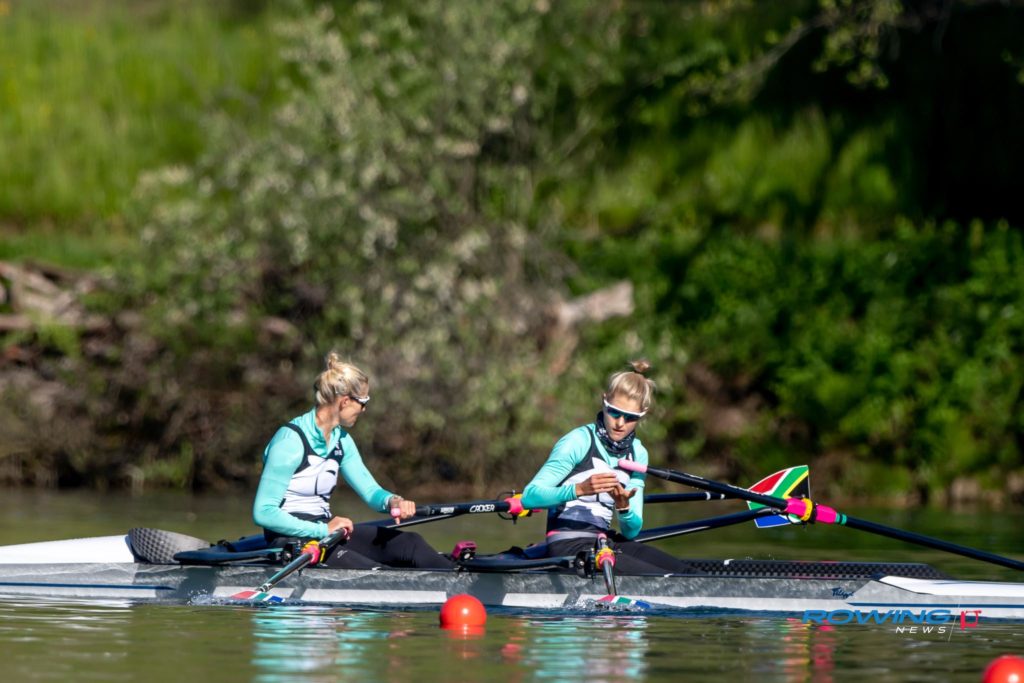
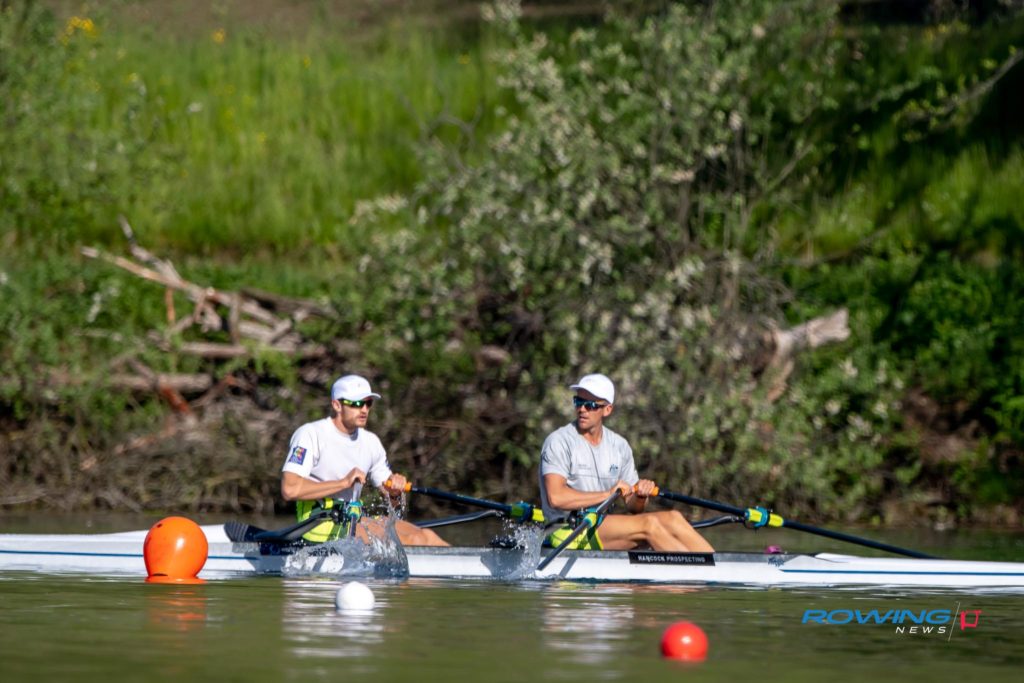
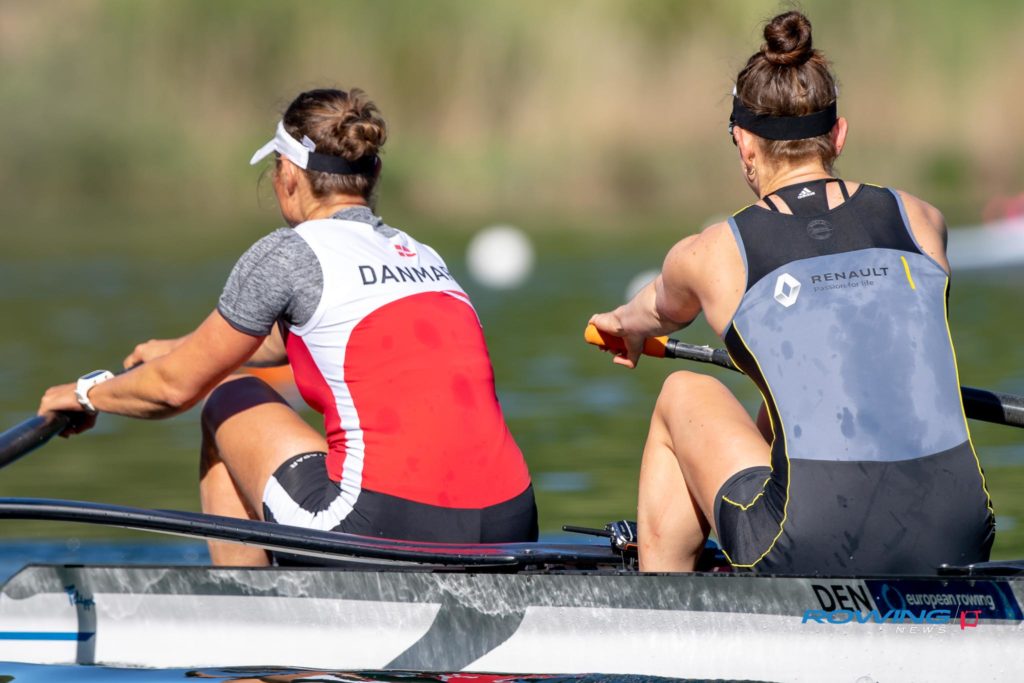
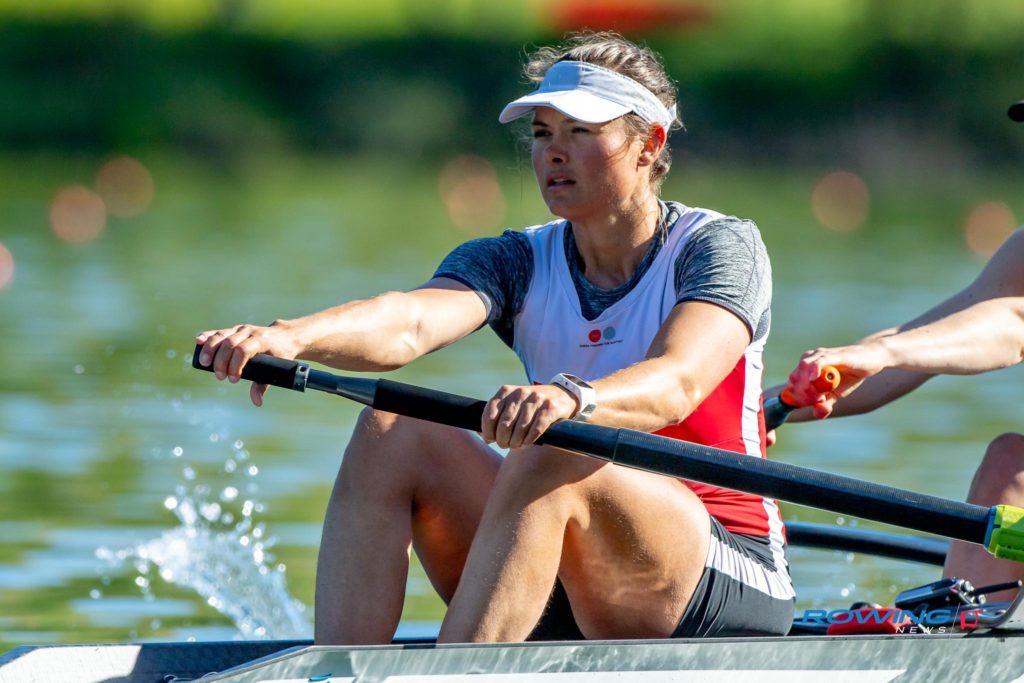
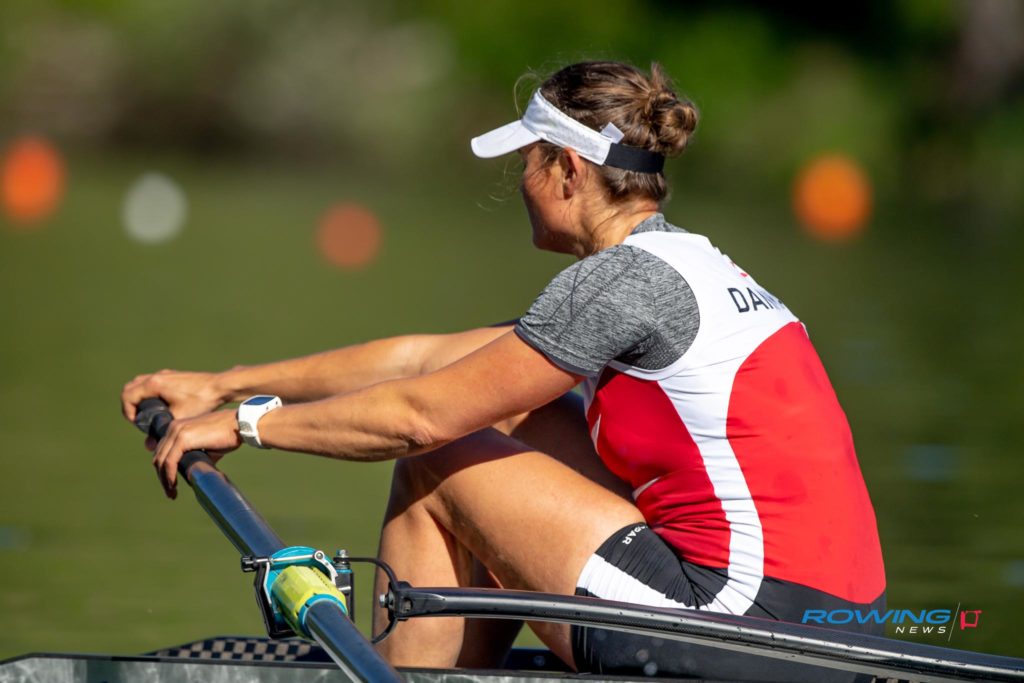
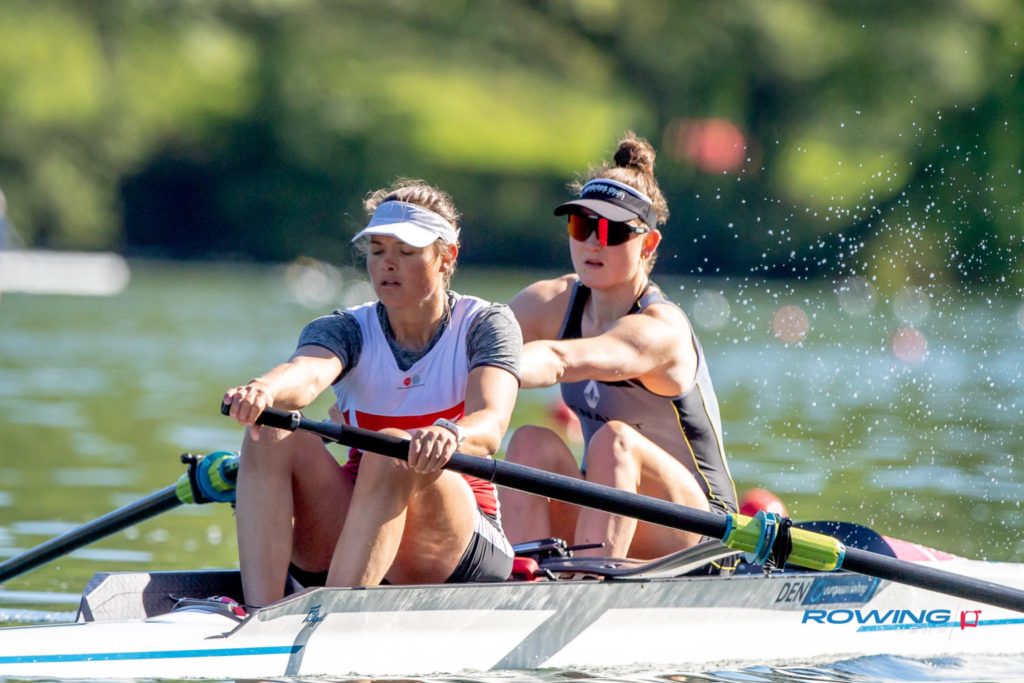
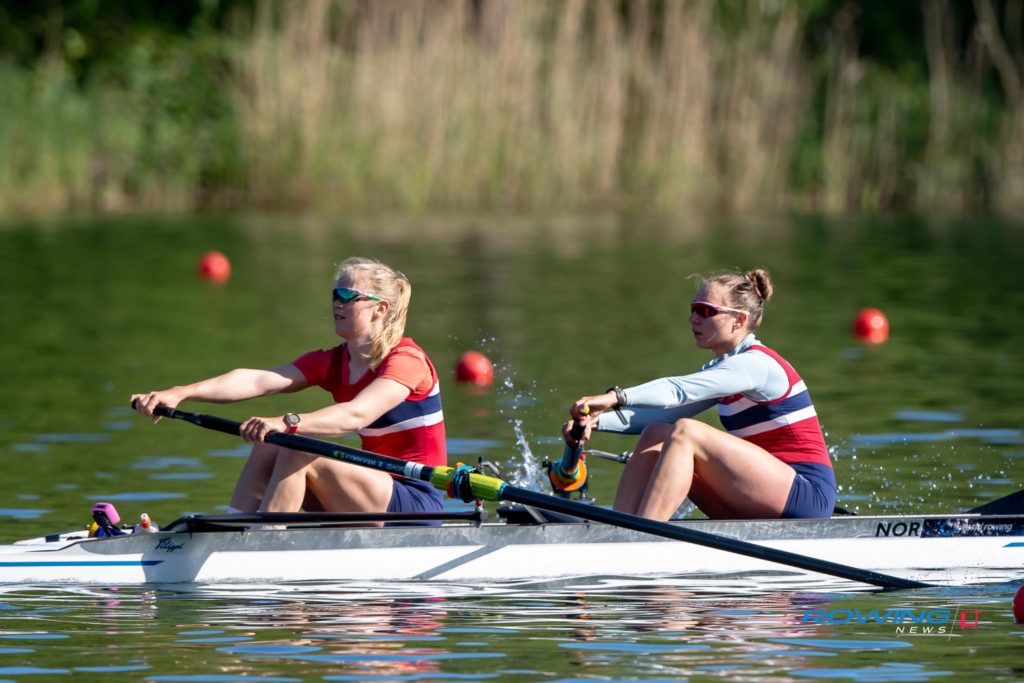
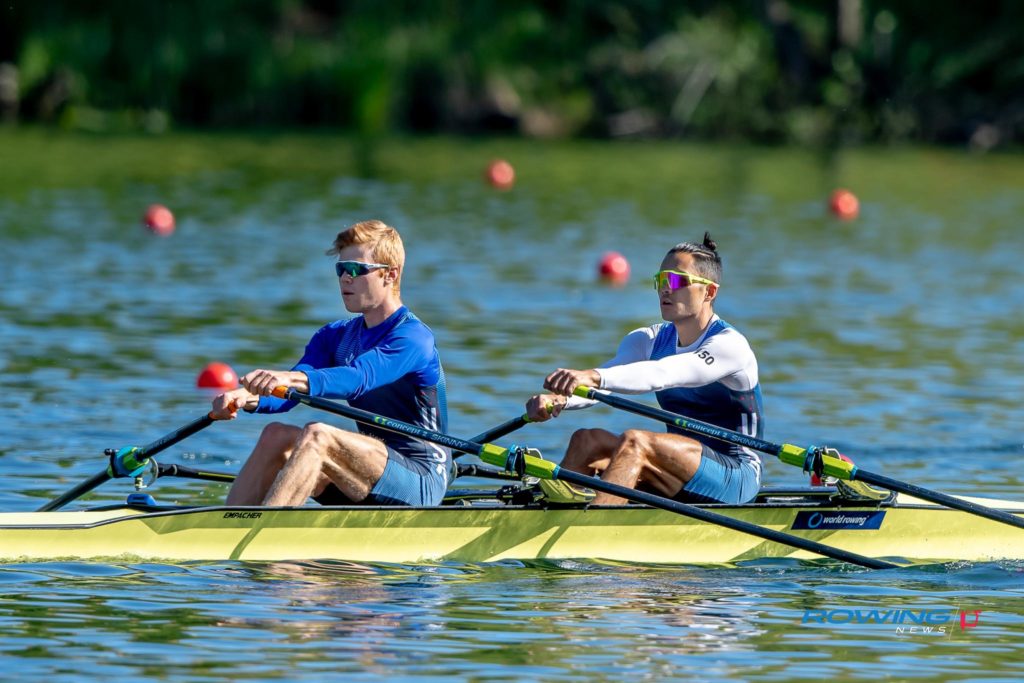
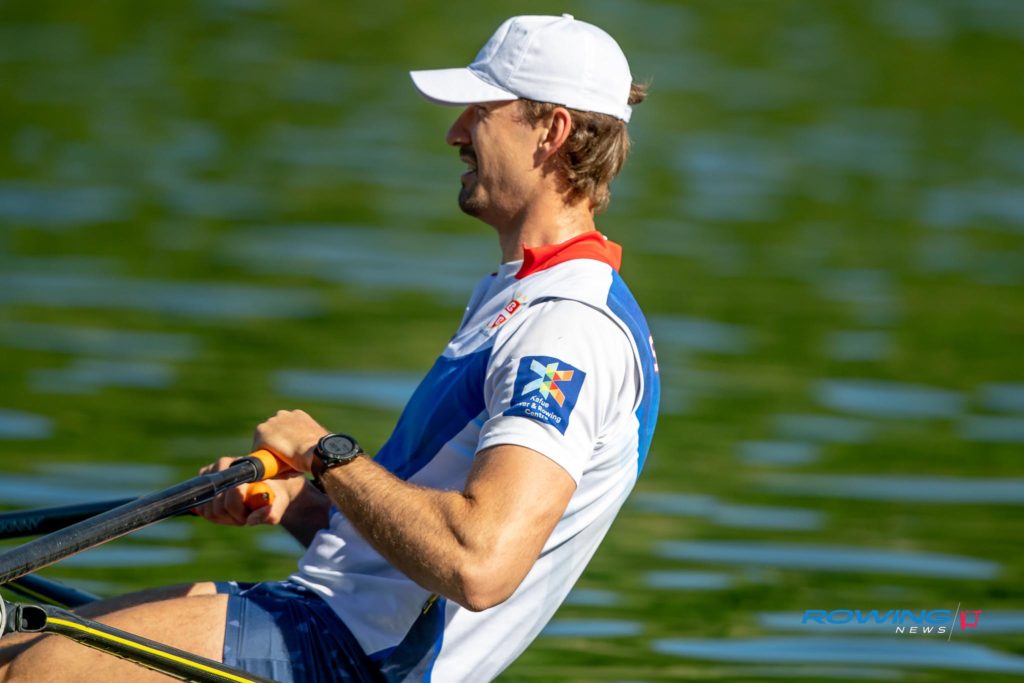
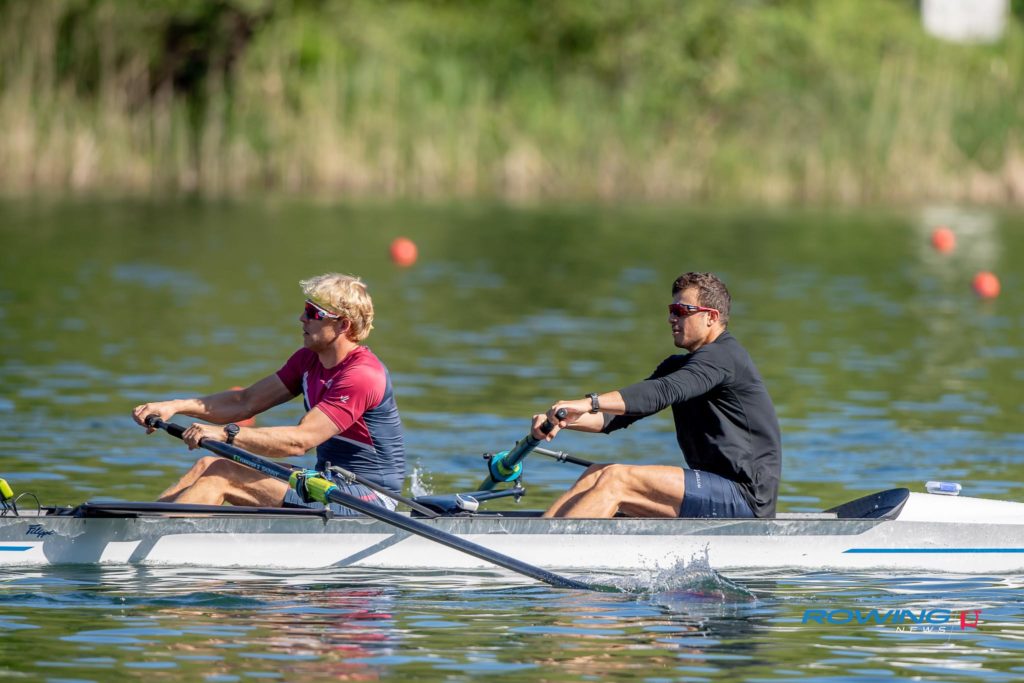
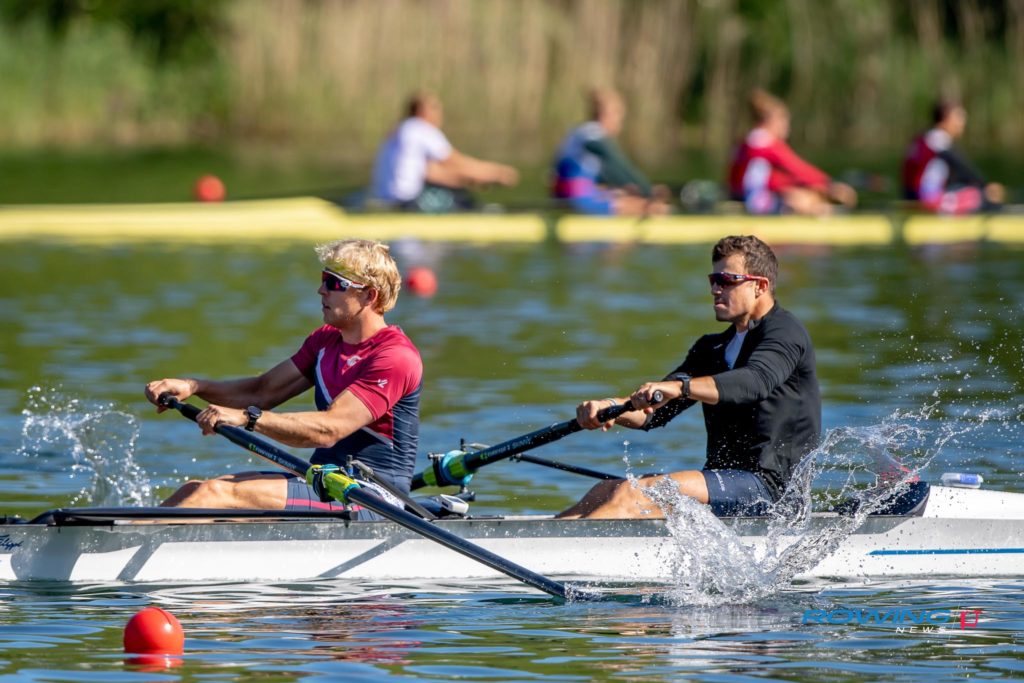
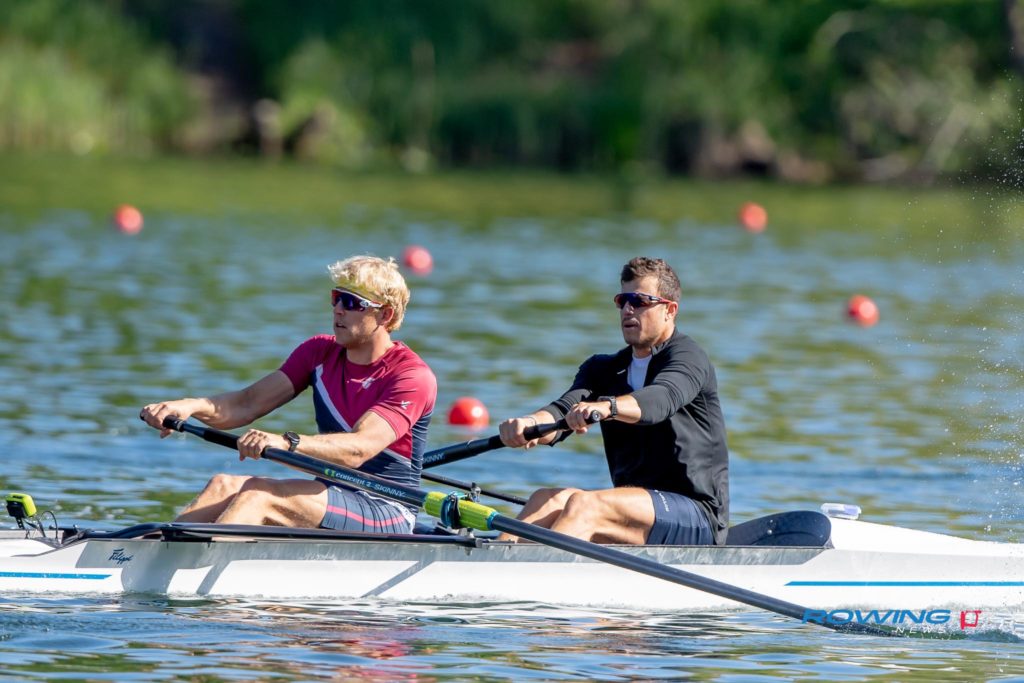
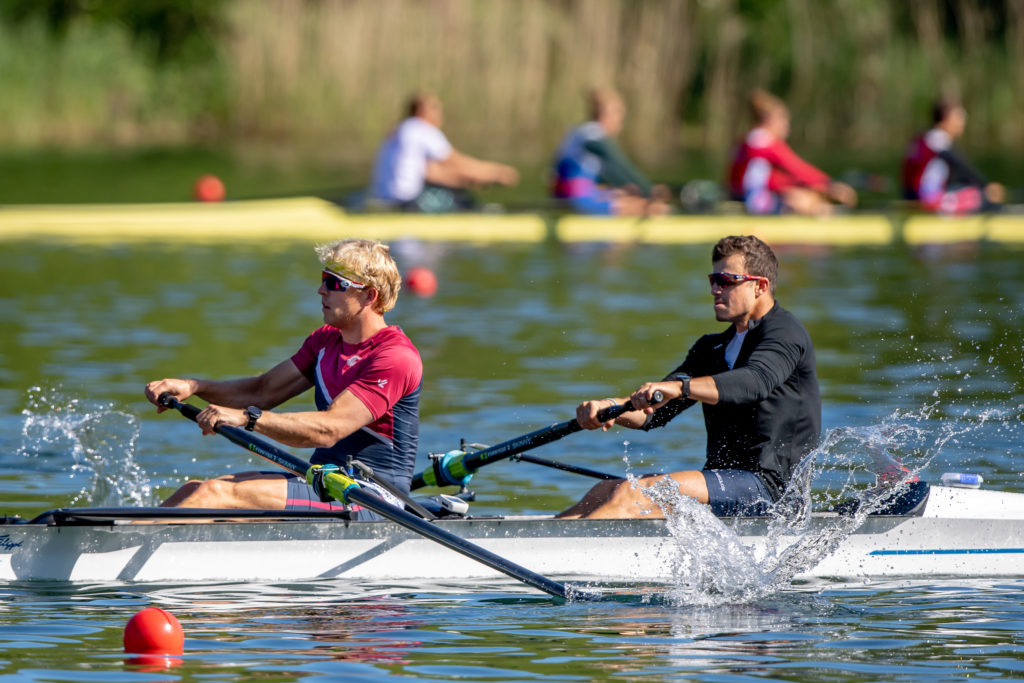
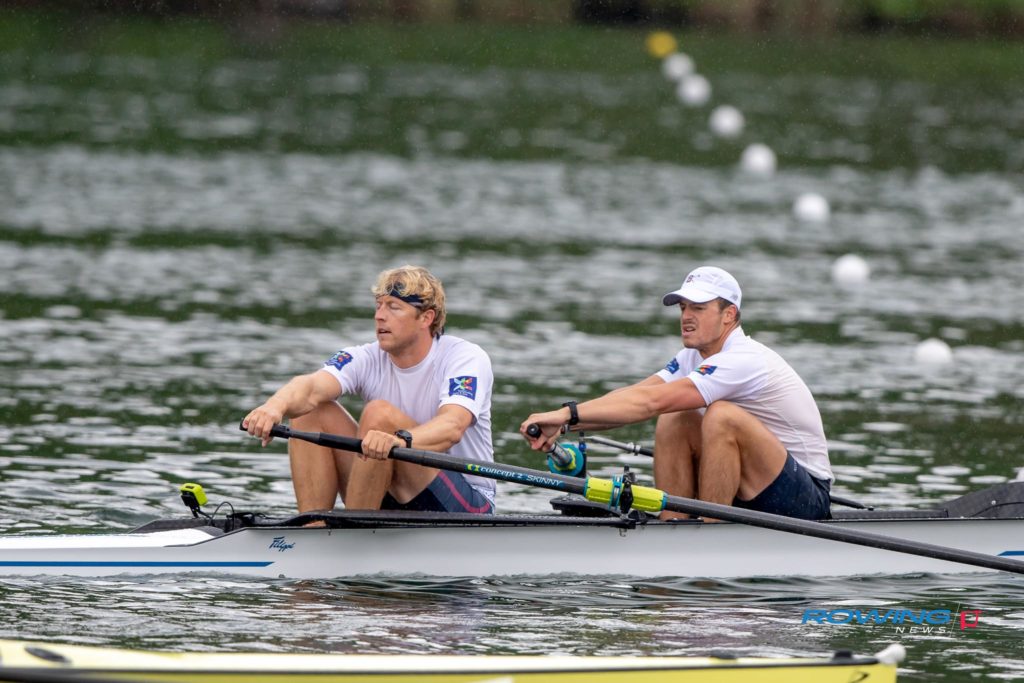
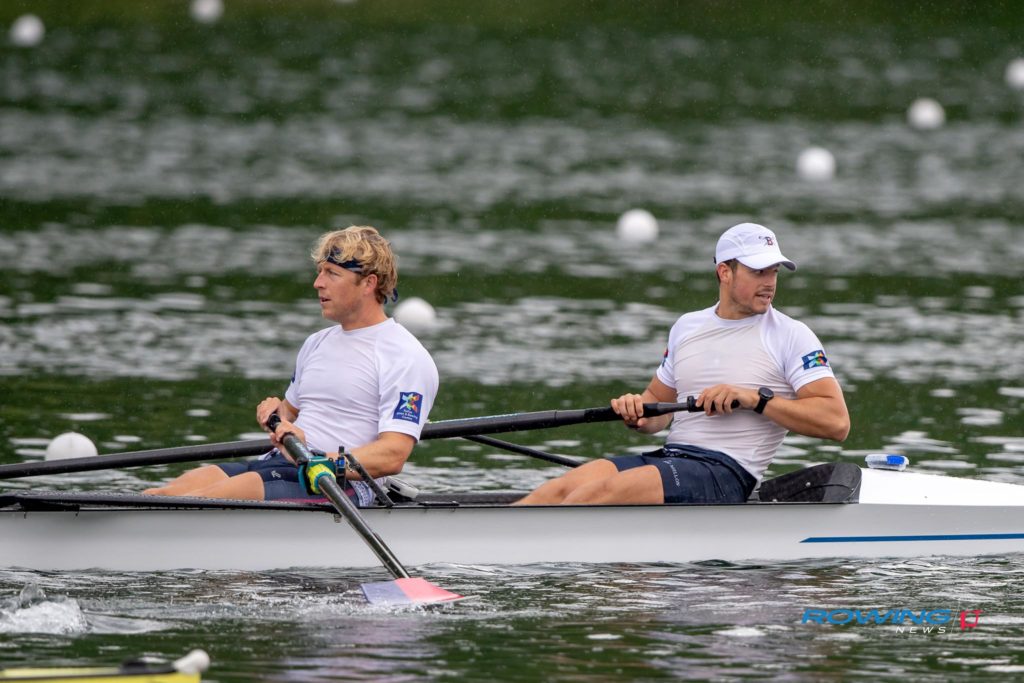
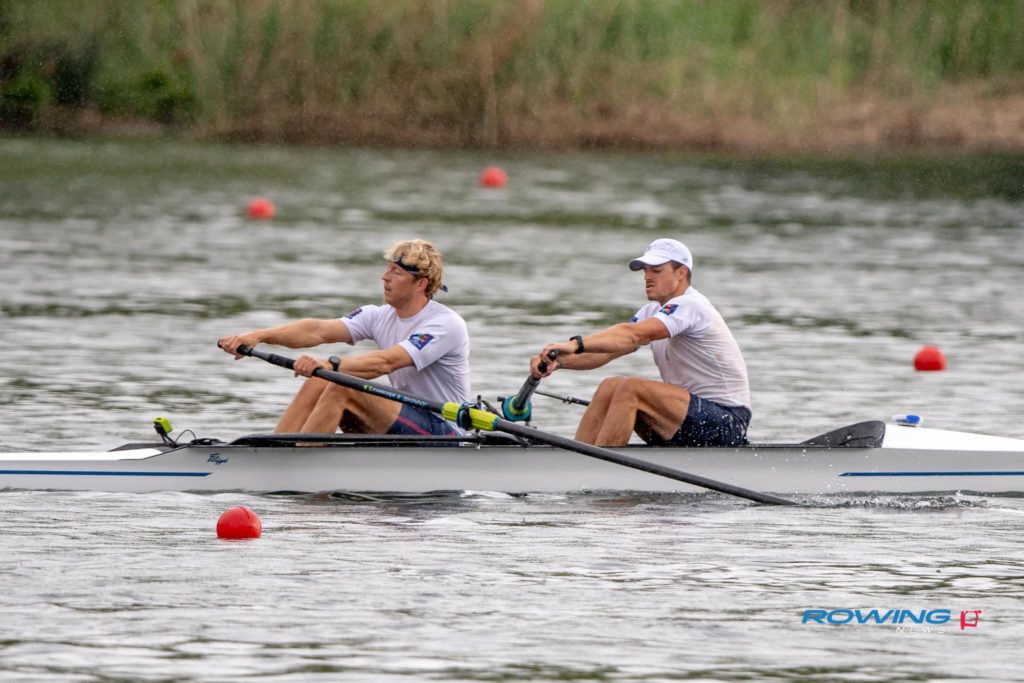
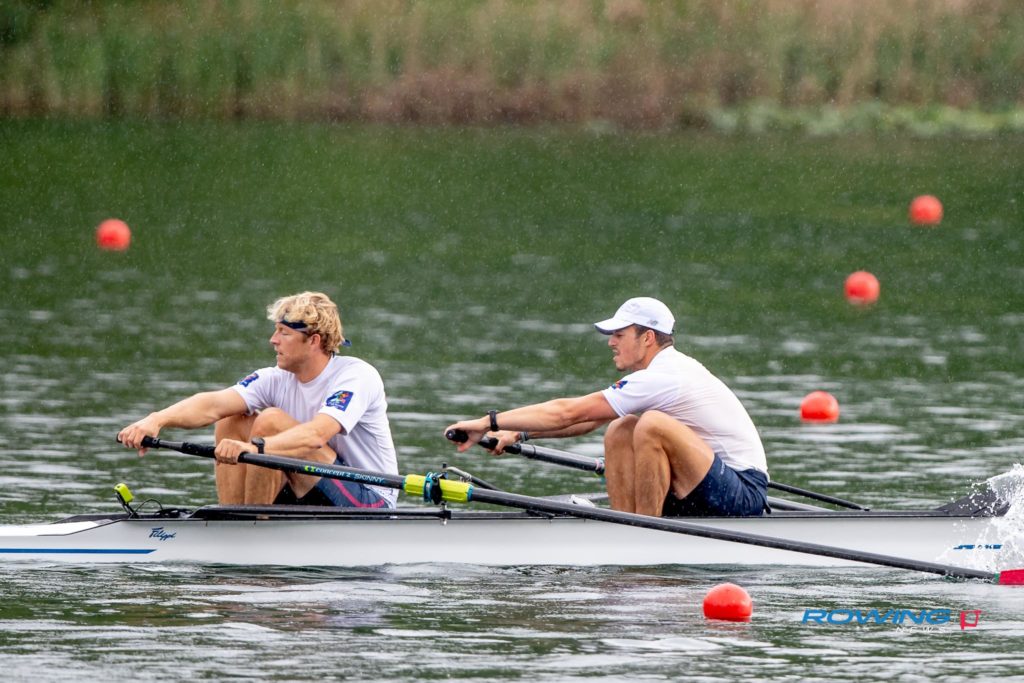
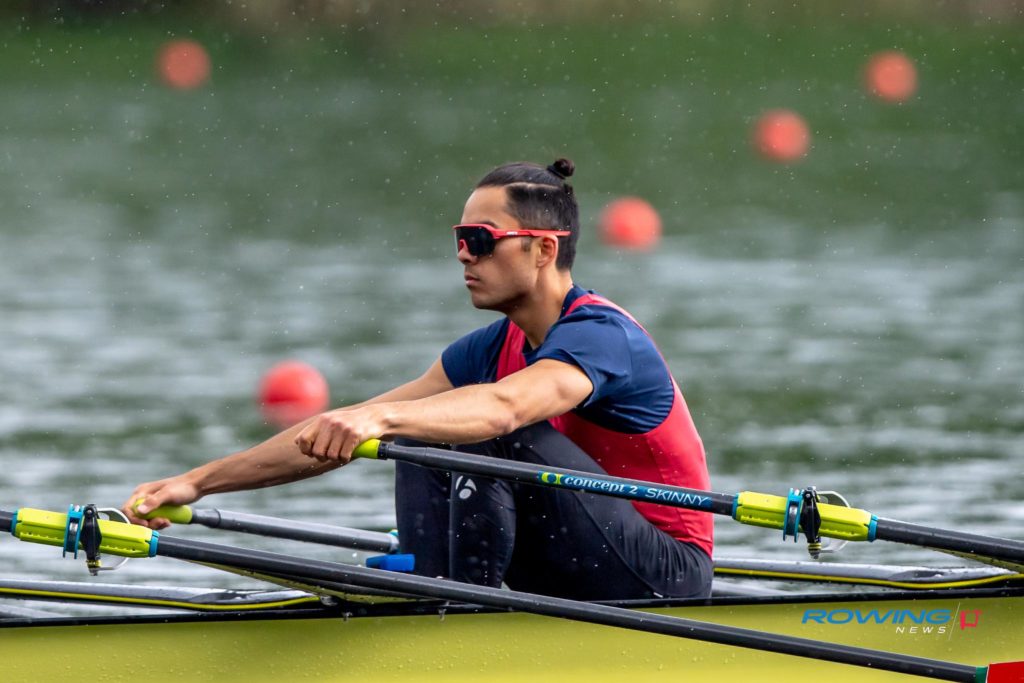
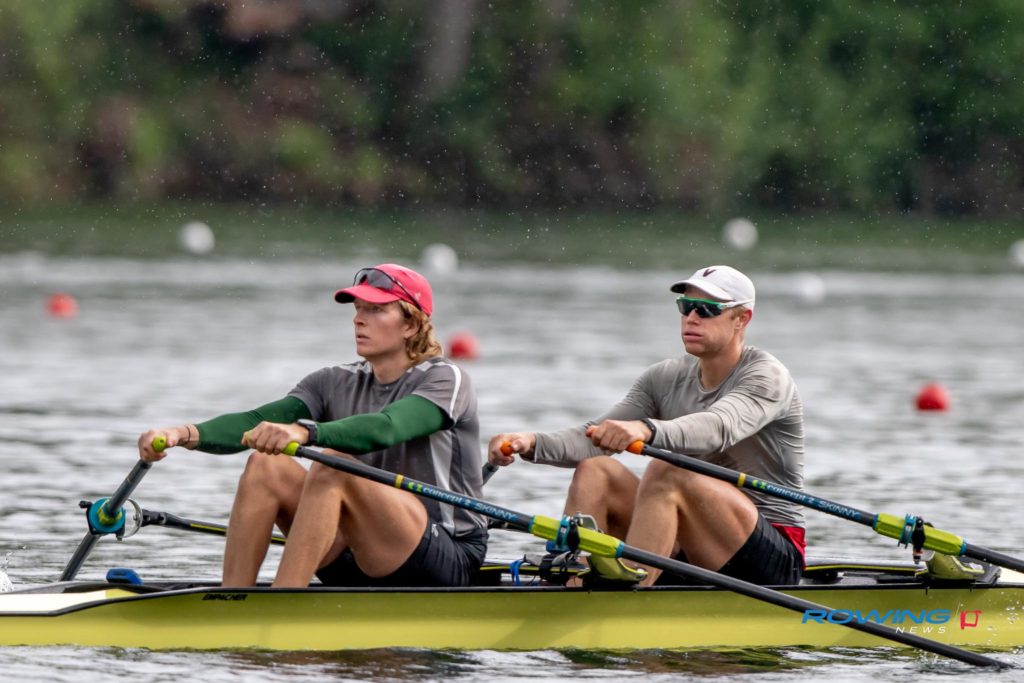
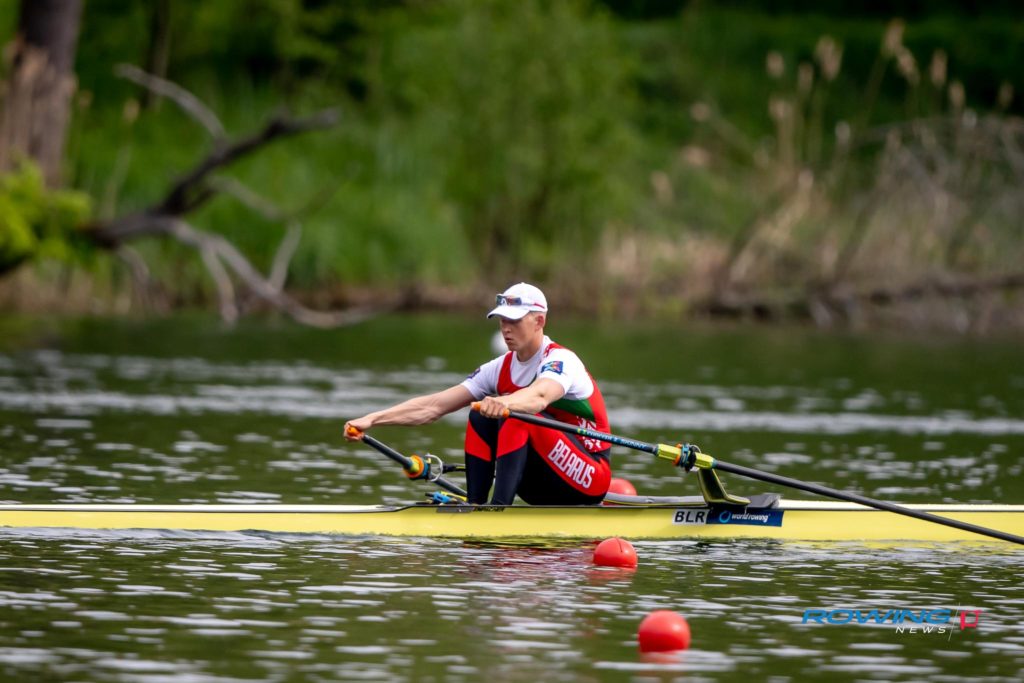
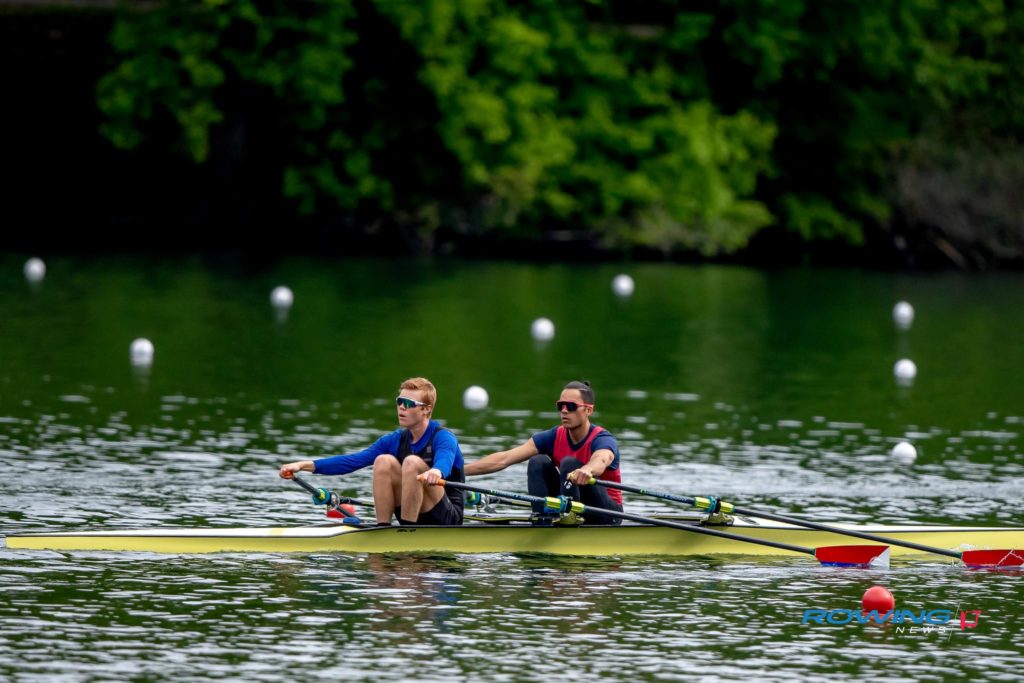
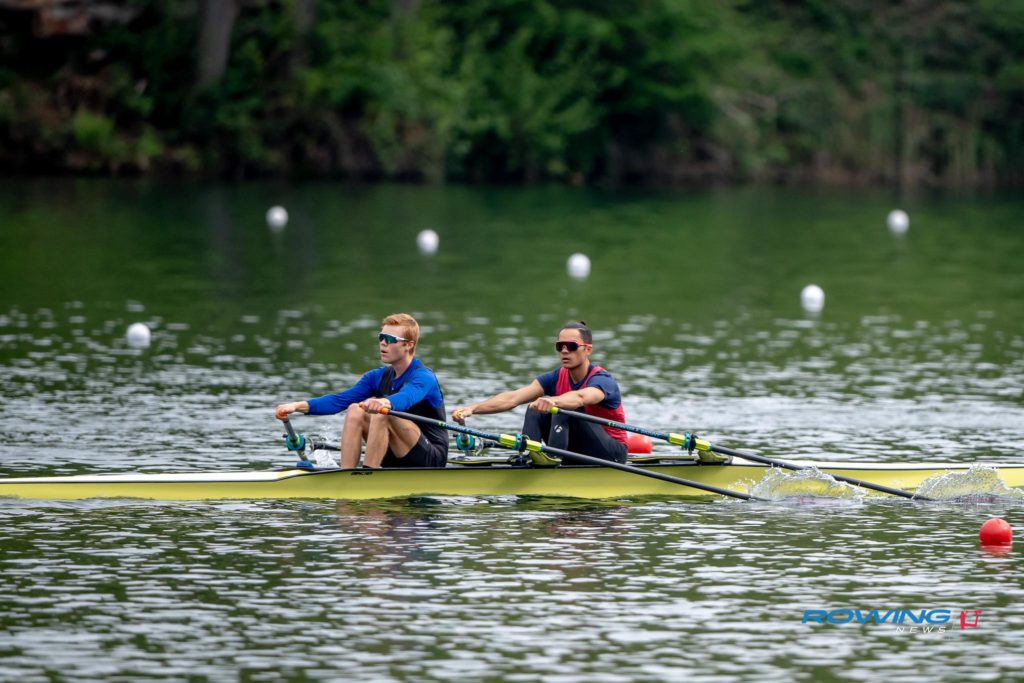
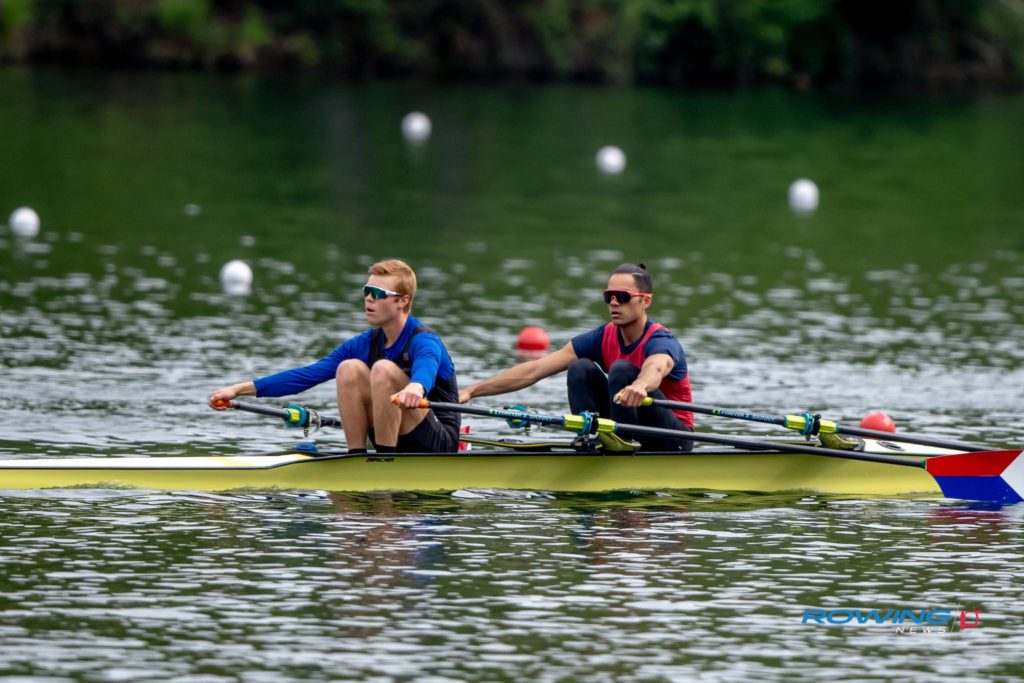
Tom Peszek has been an athlete of few words since he and Mike DiSanto earned the chance to race for a spot in the Tokyo Olympics in the men’s pair when they rowed unopposed in U.S. Olympic Trials II.
In the days before racing began at the 2021 Final Olympic Qualification Regatta in Lucerne, Switzerland, Peszek was asked what he felt about the upcoming regatta and how the training was going.
Peszek answered the email query with this one sentence: “We are ready to go.” Attached with the answer was a video clip of an interview between Marshawn Lynch and Dion Sanders at media day before the 2014 Superbowl in which Lynch answers a similar type of question with this one-liner — “I’m just about that action, boss.”
“We are ready to go.”
-Tom Peszek
Saturday, just after advancing directly to the semi-final and getting one step closer to the Olympic action in Tokyo, Peszek was still in quick response mode, responding to a media question for comment on the race, saying, “All boats pulled hard today.”
That was certainly the case in nearly every event contested Saturday in the 14-event final Olympic qualification event before the Tokyo Games. But the results by evening were not all the same. Of the six U.S. crews hoping to find a place in Tokyo, only two have advanced and remain in contention, including Peszek and DiSanto and the women’s lightweight double with Michelle Sechser and Molly Reckford.
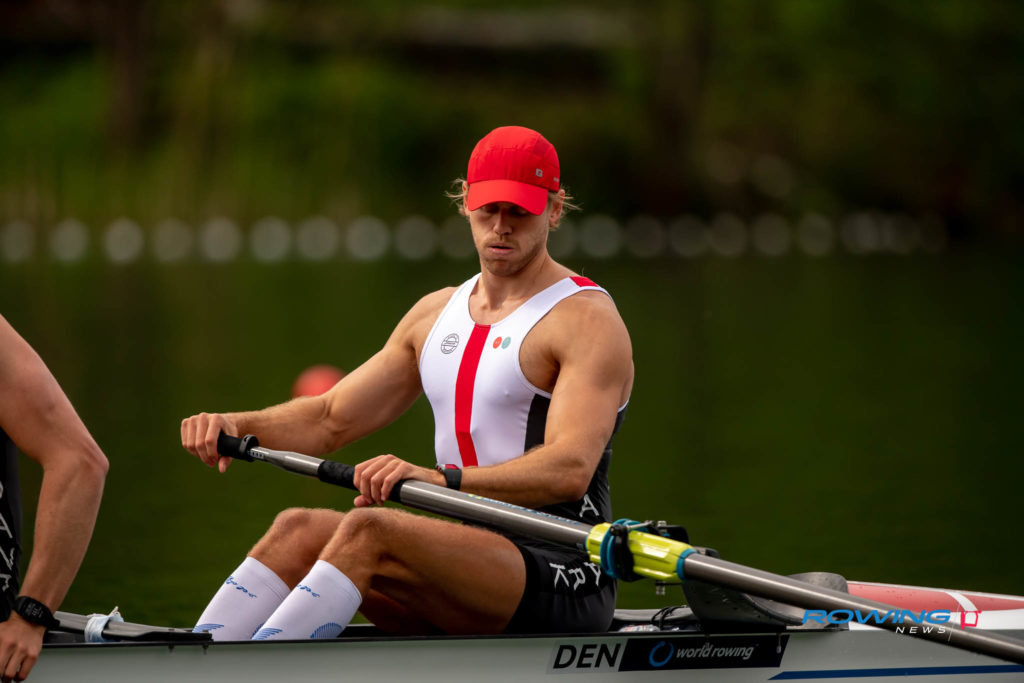
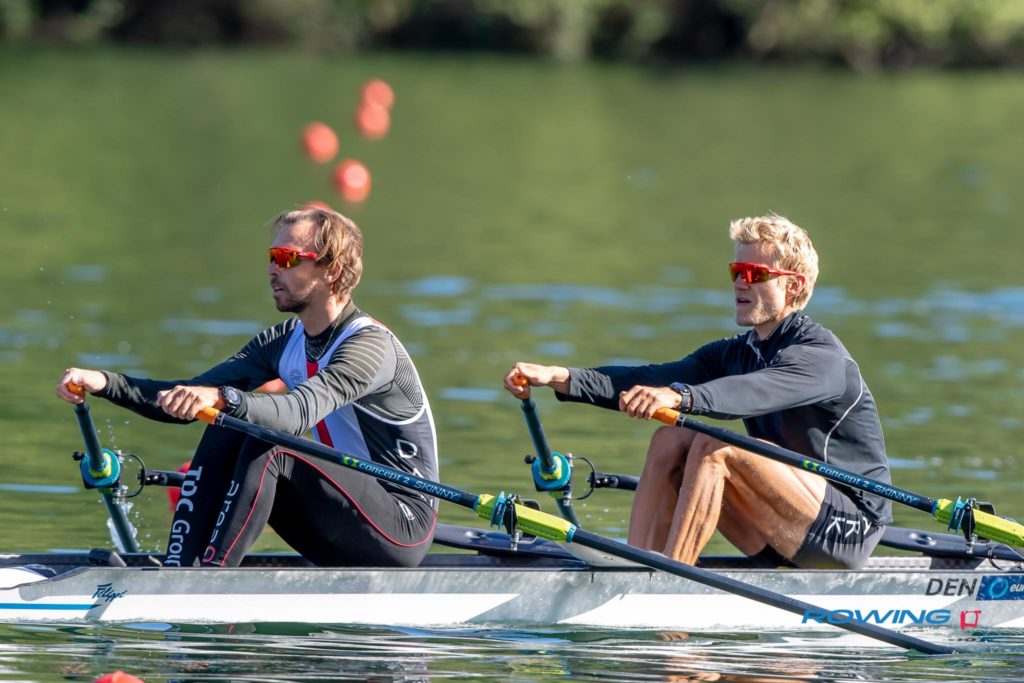
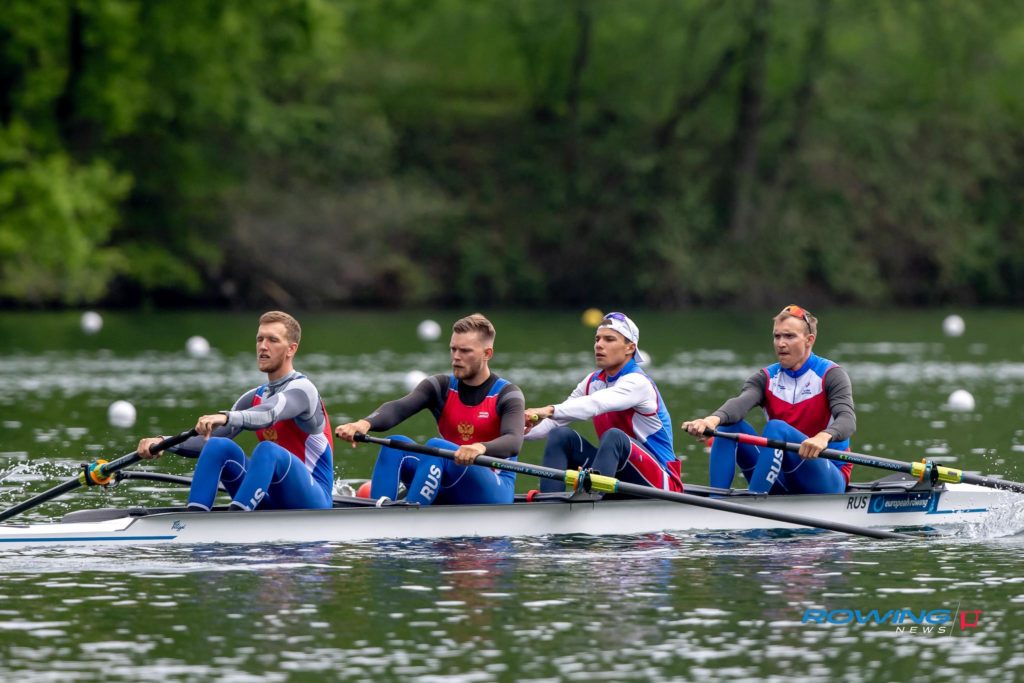
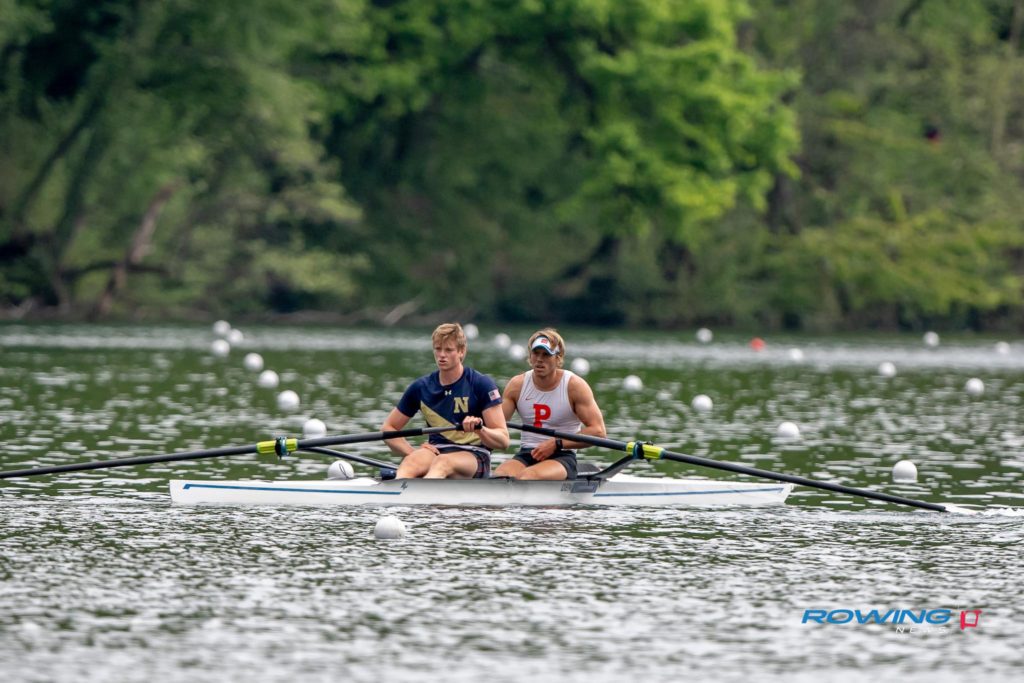
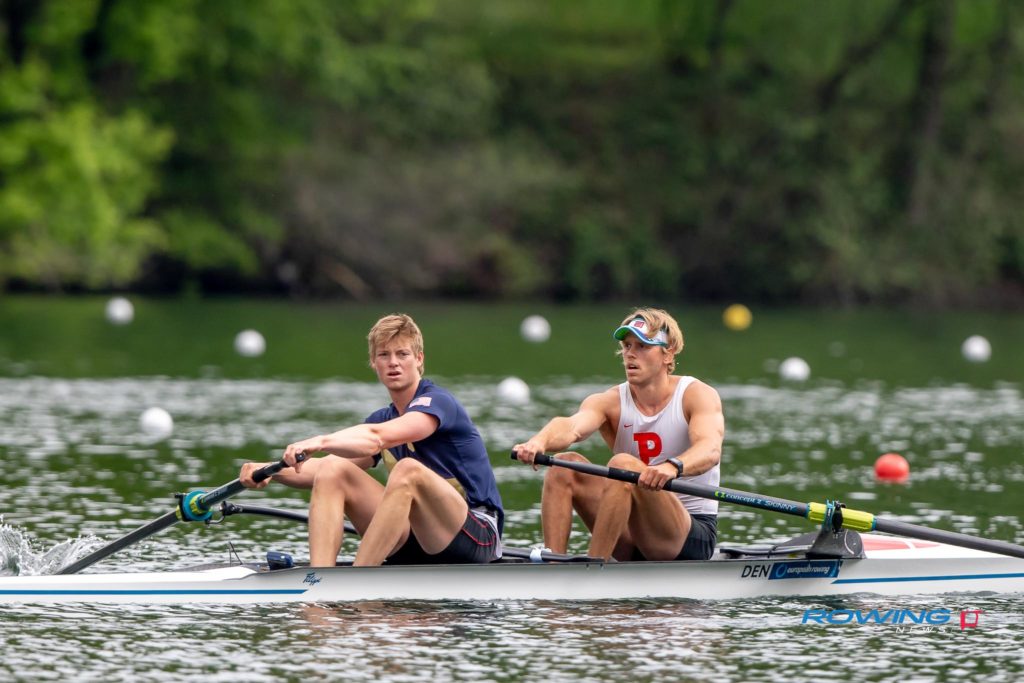
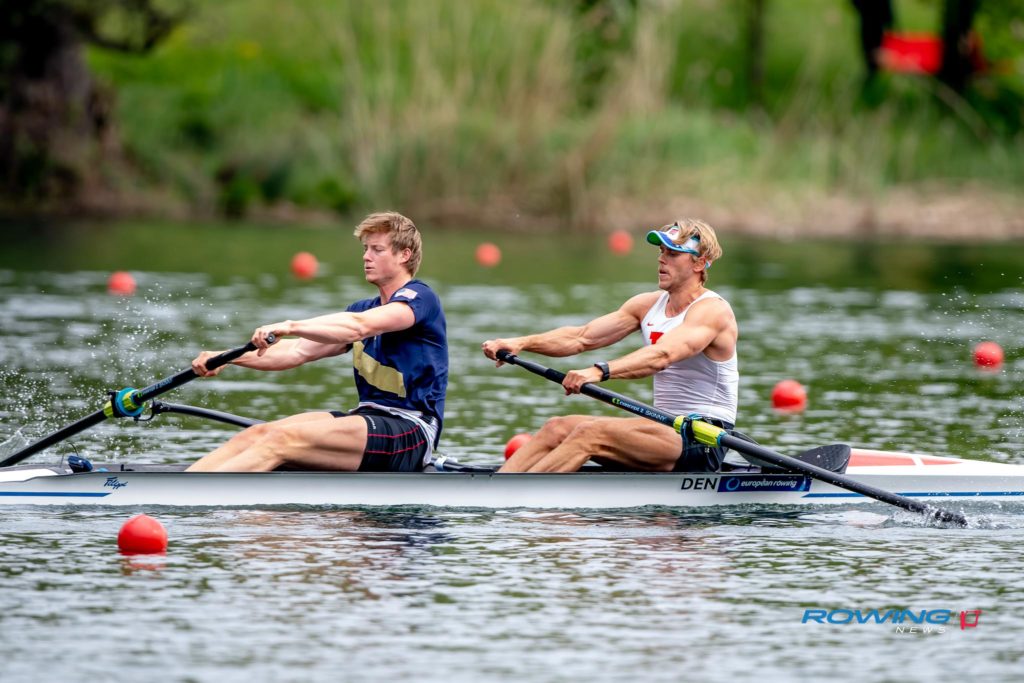
Leaving all talk on the water, Peszek and DiSanto finished in the second of three qualifying spots behind Denmark and ahead of Chile in their heat.
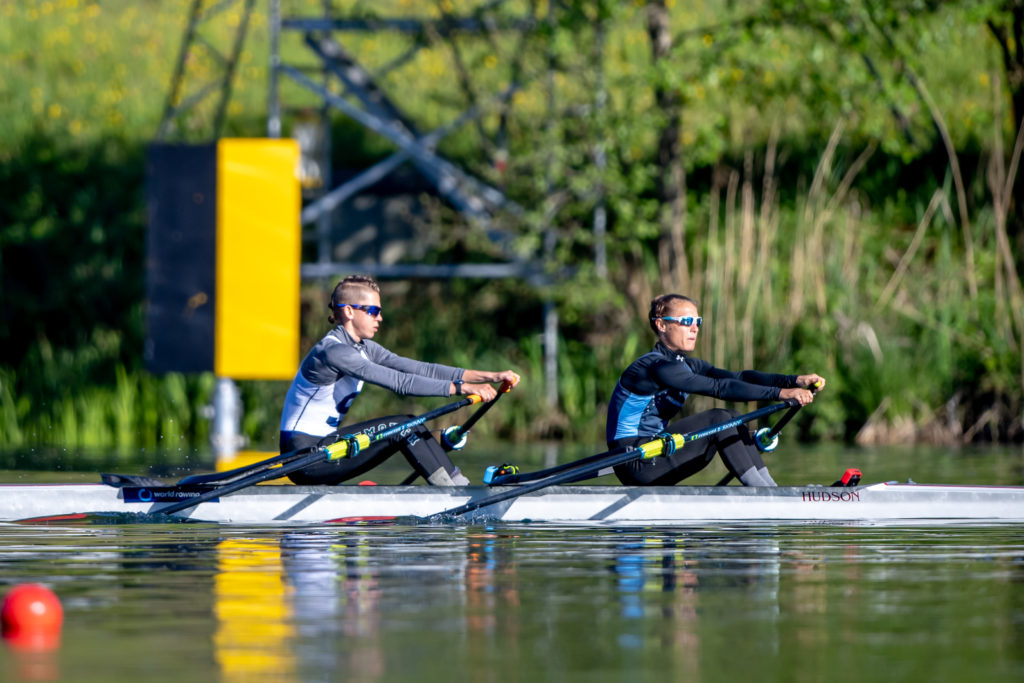
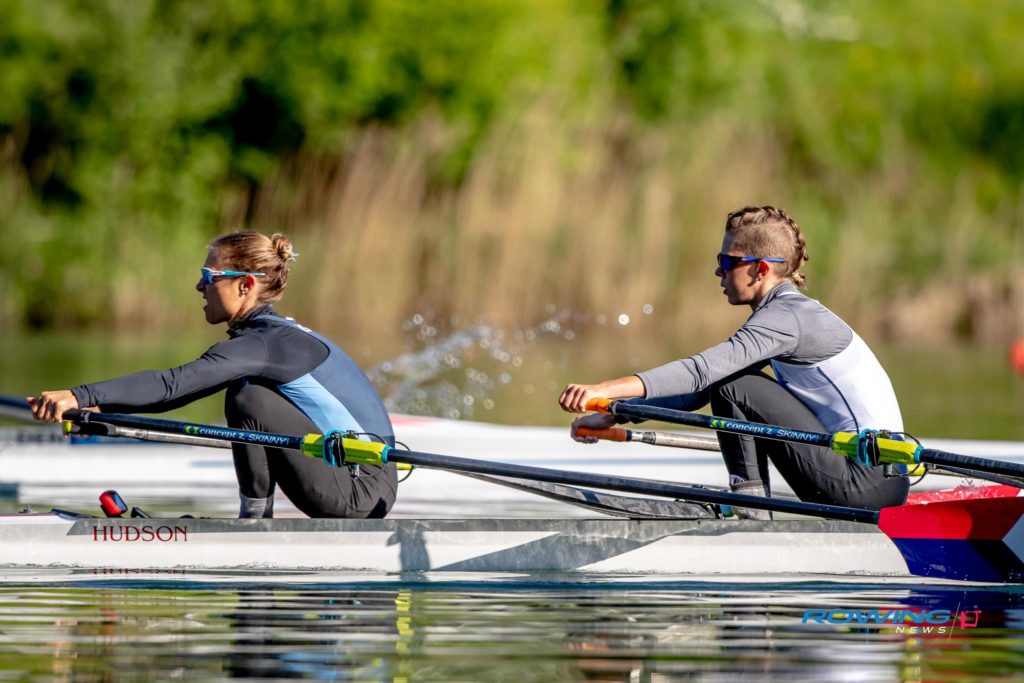
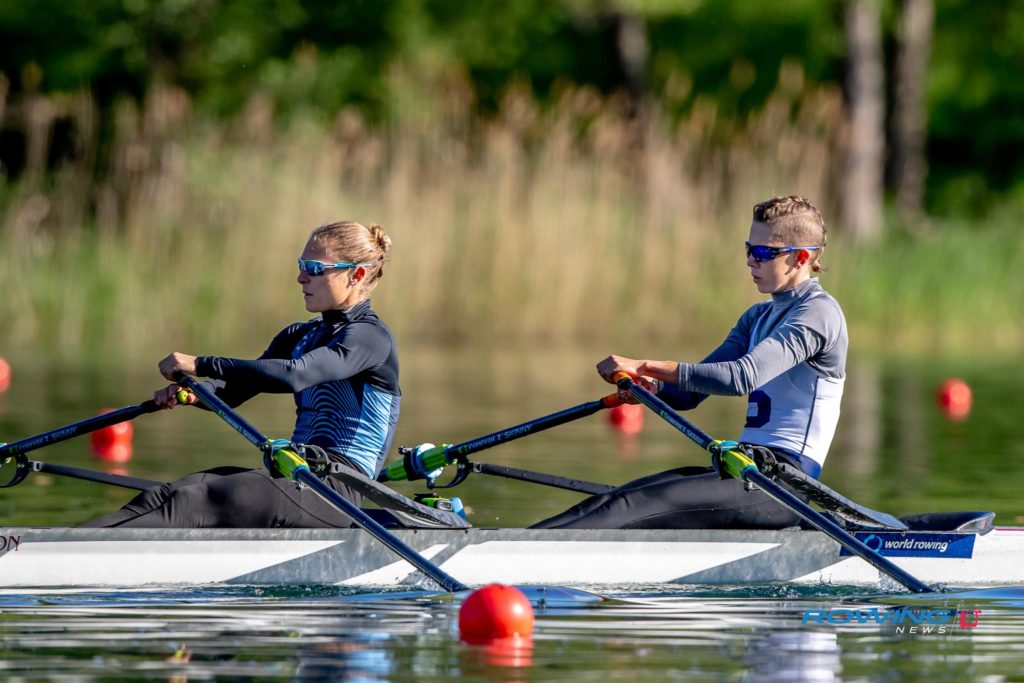
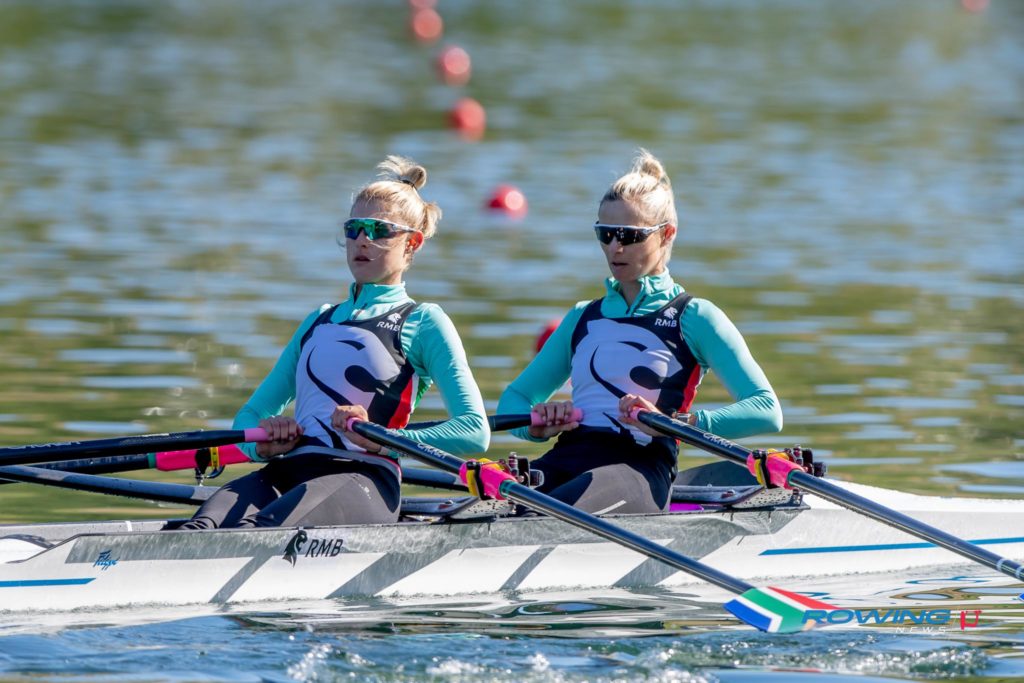
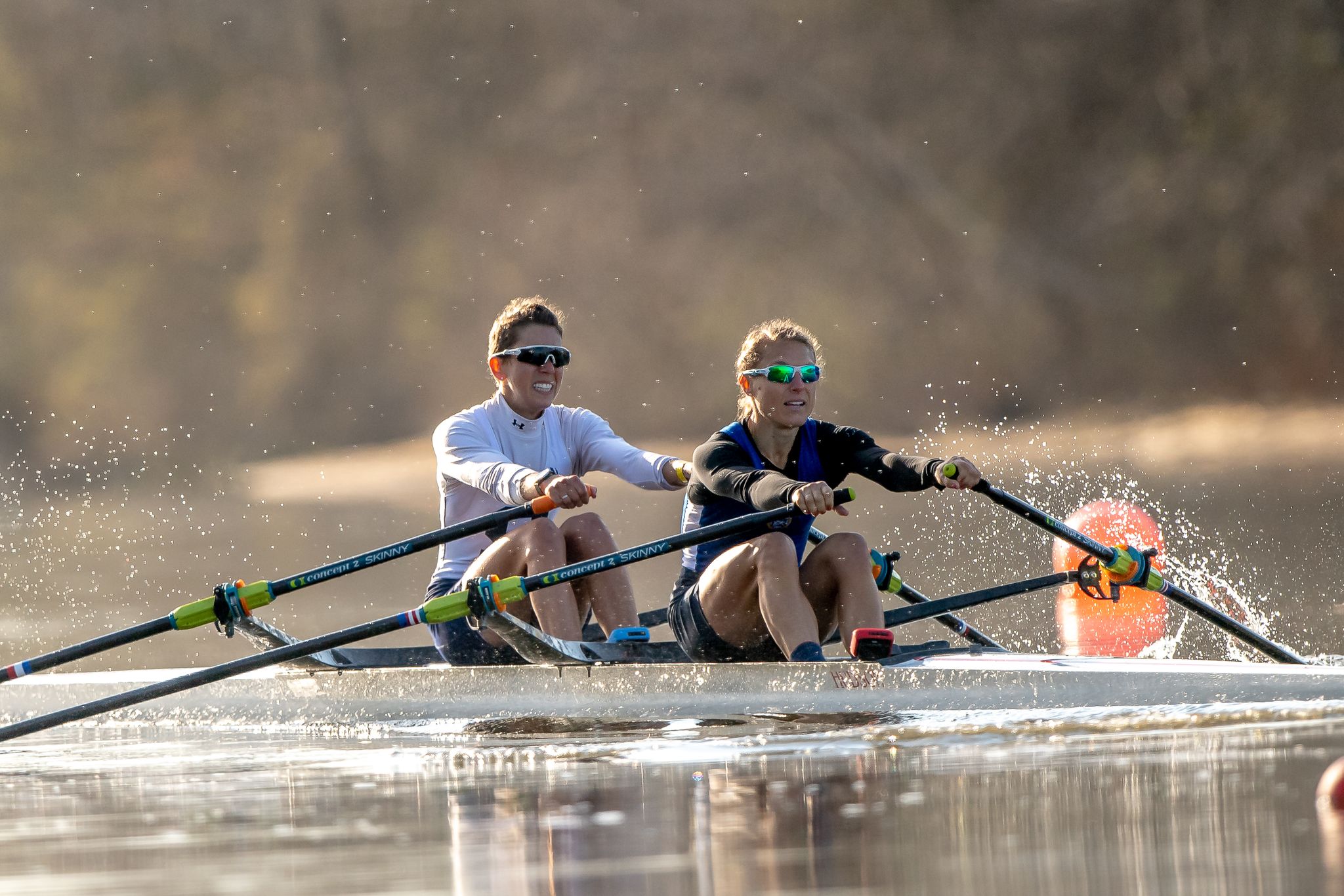
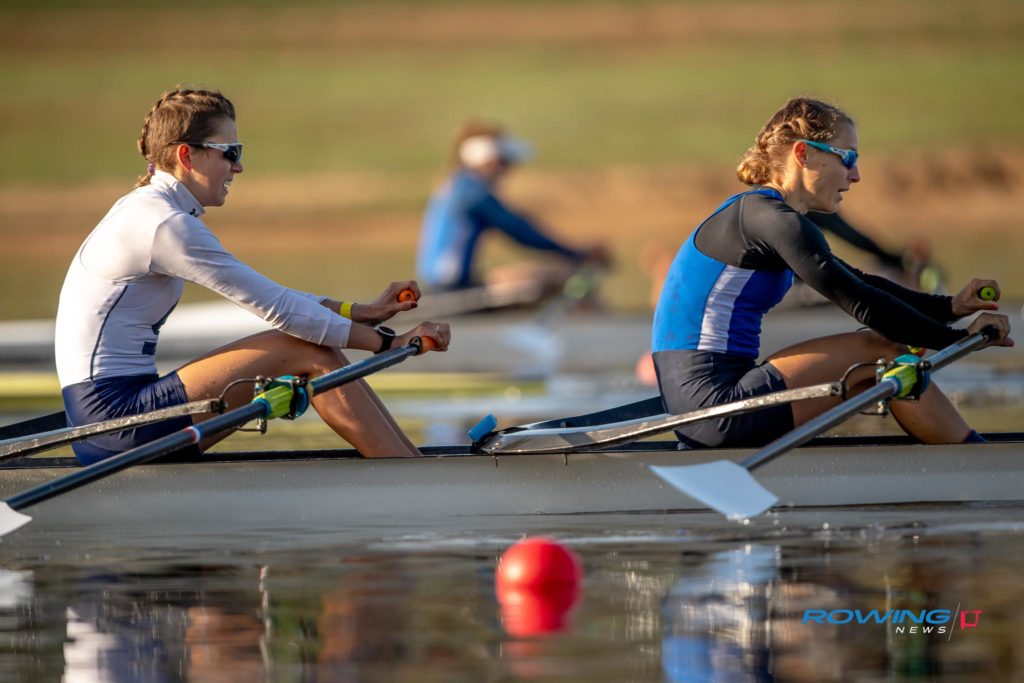
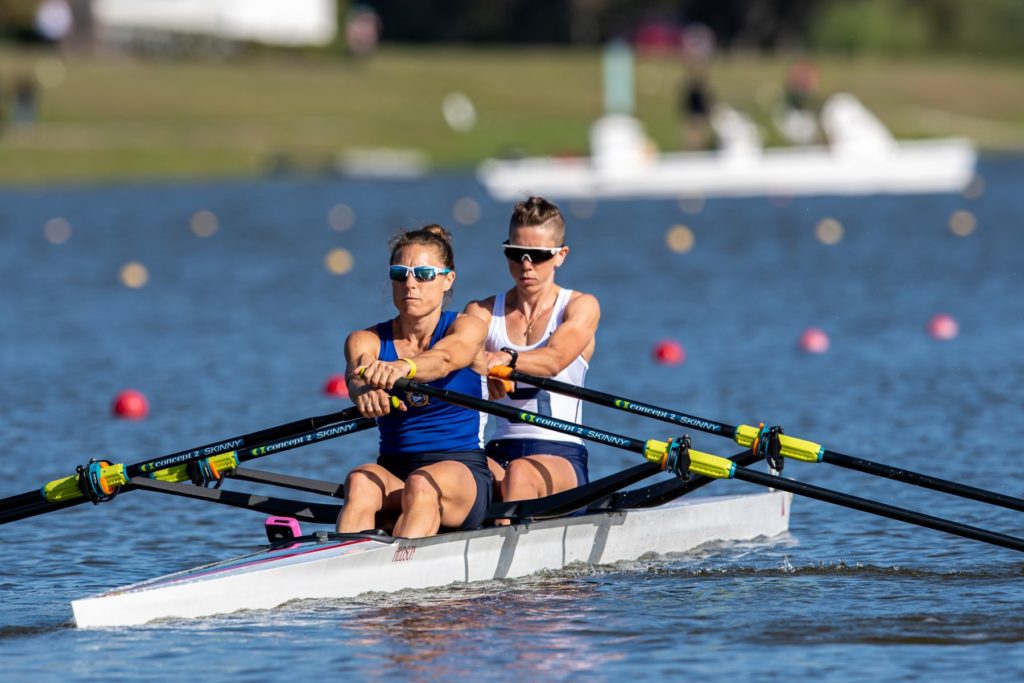
Joining them and avoiding rowing in what can be an exhausting extra race on the way to the final was Sechser and Reckford, who rowed in the second of three heats and not only advanced with a win but posted the fastest time of the 14 crews that are racing in their event.
Sechser and Reckford have been a dominating force in their boat since beginning the 2021 Olympic campaign at the first U.S. rowing trials in February. After the Saturday morning race, Reckford also kept her remarks brief, and to the point: “I think we executed our race plan well, and we have technical changes that we are excited to keep improving on. This is a competitive boat class, and so we are taking nothing for granted. One race at a time — one 250 at a time.”
Her partner, Sechser, was slightly more expansive: “It was a good first international race together as a crew,” she said. “Molly handled everything like champ.
“Every time we get another race together, we learn more about ourselves as a crew and definitely identified areas we want to execute better tomorrow. The huge schedule change was a bit of a surprise, but a great lesson in being able to roll with punches and keep our eyes fixed on the goal.”
The rest of the six crews competing in the final chance Olympic qualifier for the U.S. had a tougher go, which was been made even more difficult by the “huge schedule change,” Sechser mention. A predicted bad weather Monday with forecasts calling for “unrowable and unfair conditions,” that included wind and rain, forced event officials to condense the schedule and cancel racing on Monday.
Instead of rowing some of the reps, and all semi-finals on Sunday and holding Monday finals, the new schedule set the stage for an afternoon bout of expediated reps on Saturday, followed by semifinals and finals Sunday.
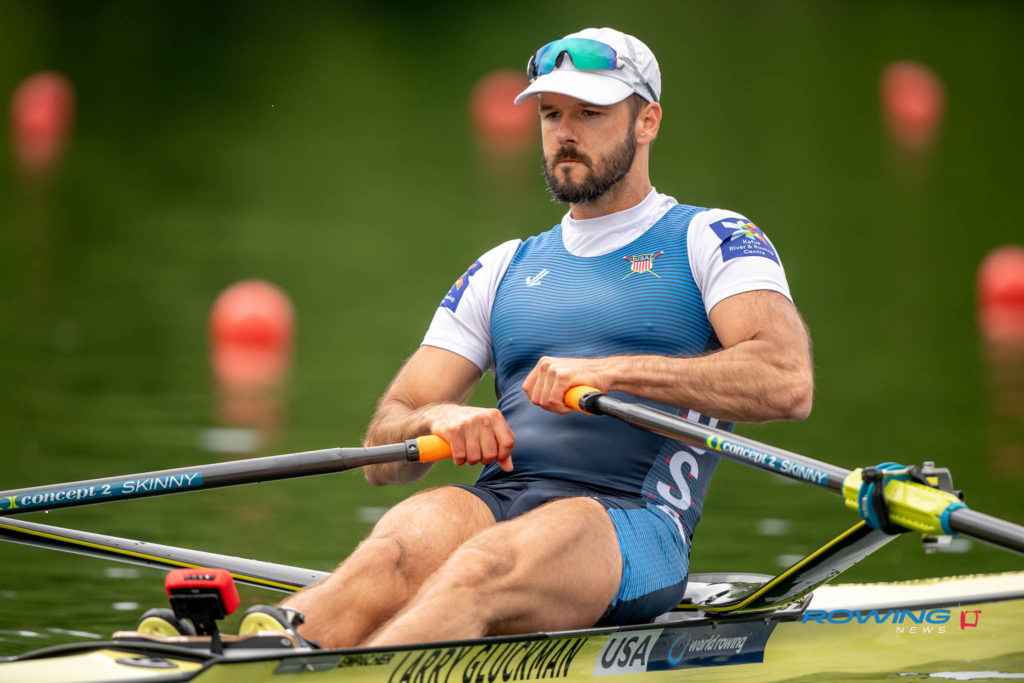
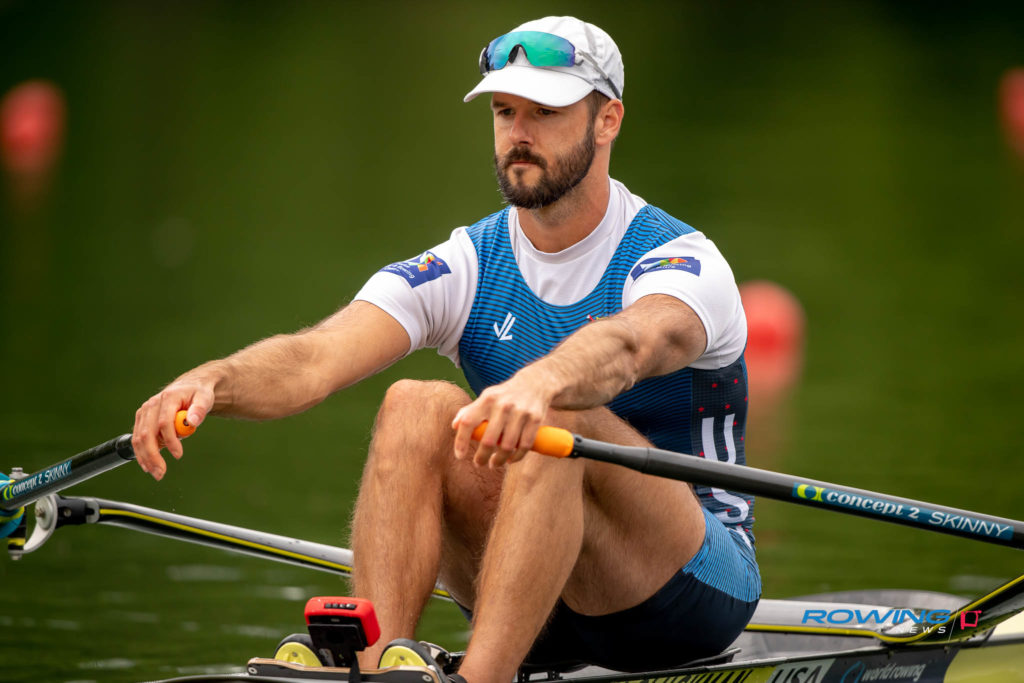
And, the Friday repechages were not kind to several of the U.S. crews including, men’s single sculler John Graves, men’s double crew of Kevin Cardno and Johathan Kirkegaard, the lightweight men’s double of Jasper Liu and Zach Heese, and the men’s quad crew of Charles Anderson, Justin Keen, Eliot Putnam, and Sorin Koszyk.
The first to be disappointed Saturday afternoon were Cardno and Kirkegaard. After being forced into one of the scheduled Friday reps for the men’s double event after finishing third in their heat, Cardno and Kirkegaard finished fourth in their rep and were eliminated from Olympic qualifying contention.
They were followed by John Graves, who has said since taking on this challenge that this season would be his final in international competition. Graves finished second in his morning heat to Poland’s Natan Wegrzycki-Szymczyk.
Late Saturday afternoon, Graves finished fourth in the rep and is done.
“A very tough one to swallow and definitely blindsided by the result today,” Graves said. “I’m not sure what to say other than something is clearly off at the moment. Possibly related to timing coming down from altitude, but difficult to say for sure.
“Frustrating to not be able to put out my best stuff today, but it is what it is and I take full responsibility for the outcome. I will see what I can learn from it and see if I can put together some better racing at WC2. Obviously, there was a harsh reality coming off the water today knowing that my hopes were no longer alive for Tokyo, but I’m trying not to dwell on that too much. This has been an awesome year of growth and learning, and despite this result, I am really proud of the quality of the work I’ve put in.
“I knew the potential risks of doing an altitude camp leading into this event, and ultimately that was a risk I was willing to take and one I totally own,” he said. “Yes, I’m disappointed I won’t be in Tokyo, and that I couldn’t show what I’m capable of this weekend. But hey, it’s been an awesome ride. No regrets whatsoever.”
In the men’s lightweight double, Jasper Liu and Zach Heese hiccupped at the start, fell into fifth in the first 500-meters of the heat, and never got back in. Heese appeared to jam his hands together rolling up to the catch and nearly lost his port oar. His hand slipped down to the top of the shaft, just below the grip, and it took a few strokes for him to get it back under control.
That blip sent them to the second-chance race where they finished fourth.
“That was truly a heartbreaking loss,” Liu said. “Especially since we were leading GB until the last ten strokes. We had hoped to earn a better result, obviously, so not making it out of reps feels pretty bad. But there are definitely some silver linings, especially considering where Zach and I started only three or four years ago. We will take lessons from this year into the next cycle – with the goal of avoiding FOQR in 2024.”
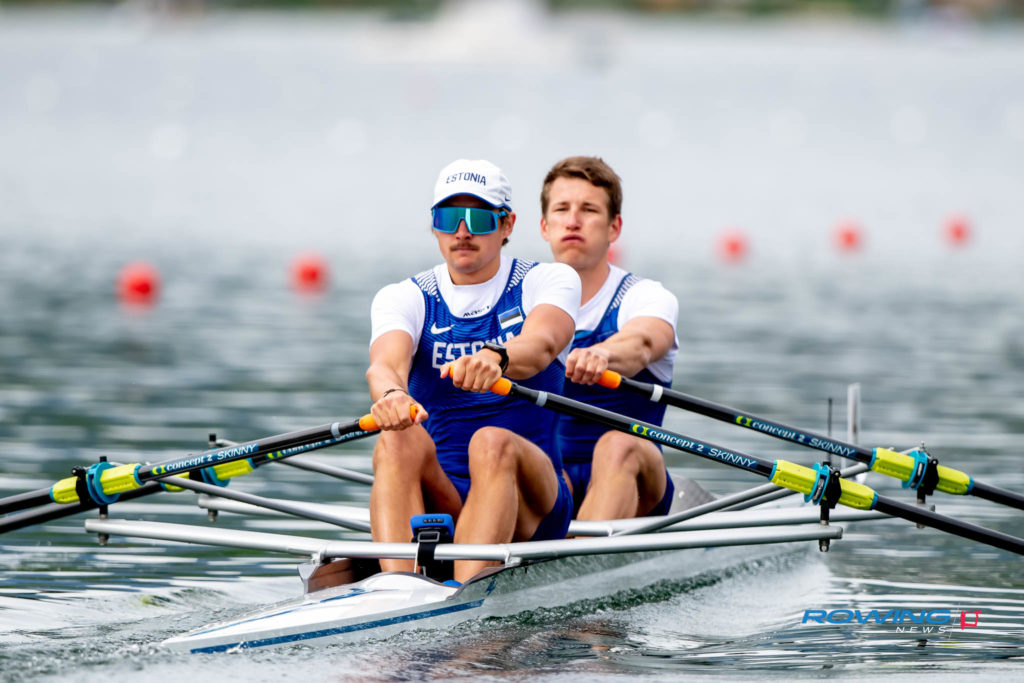
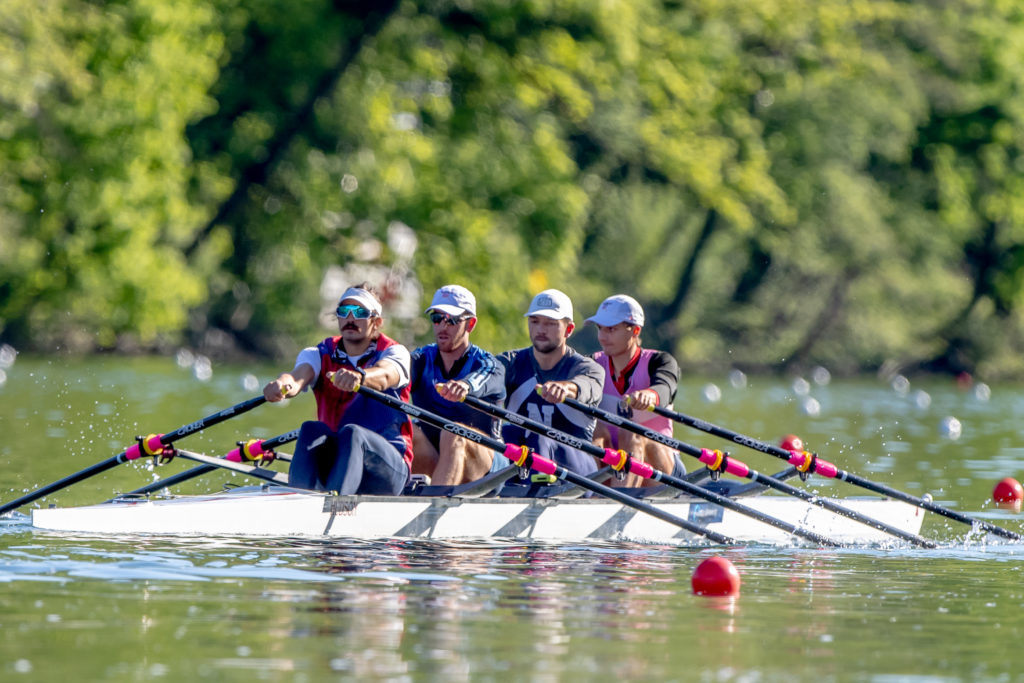
In the final race that featured a U.S. men’s hopeful crew, the Philadelphia based quad of Charles Anderson, Justin Keen, Eliot Putnam, and Sorin Koszyk, was pushed into a Saturday afternoon rep that had been scheduled to take place Sunday morning when they finished third in their opening heat behind Estonia and Ukraine.
In the late rep, they finished sixth.
“First off, we are obviously very disappointed things didn’t go the way we had hoped they would,” said coach Sean Hall. “I’m sure we all had some expectations — I know I did — as all indicators at various stages were so positive, it was hard not to think we were sure to at least be in the final, if not fighting it out with Estonia for the win.
“But this is racing at the highest level. We have to remember most everyone we raced against has a shopping list of accomplishments, lots of international race experience, and medals. By contrast, these guys are brand new to this, with only Justin Keen having a few years racing at this level.
“They raced like they’ve been at it a while. And let’s be honest, this was only their 3rd full race together. I think COVID is what got us this far. It gave the guys time to grow and mature as athletes, and I think that showed in the racing, starting with trials.
“But it was an unusual circumstance which will not happen again, and I hope the guys will realize this and use the time they have and continue to pursue their goals,” Hall said. “I also hope this will draw more talent to the group, and to the discipline. The most important thing is to keep it going.”
Click here for complete Saturday results and the full Sunday schedule.
The long wait is over. This weekend, six U.S. crews will race in Lucerne, Switzerland, at the Final Olympic Qualification Regatta and compete to join the crews that are already qualified for the Tokyo Games this summer.
With the exception of the men’s quad that is racing in Lucerne, but went to Zagreb, Croatia, to test their speed at World Rowing Cup I — placing fourth in a photo-finish with Germany — this will be the first international regatta for U.S. crews since the 2019 World Rowing Championships in Linz-Ottensheim, Austria.
It is a widely held belief that qualifying for the Olympics, in any cycle, through the final qualification regatta is the hardest path to the Games. Most years, the favorites are easy to predict based on the preceding world championship results.
It is a widely held belief that qualifying for the Olympics, in any cycle, through the final qualification regatta is the hardest path to the Games.
But due to the cancelation of the international regatta season last spring, followed by the postponement of the 2020 Olympics, very few of the crews have had a chance to race internationally except for those that went to European events last summer and fall, or World Cup I this spring.
The regatta will feature racing in all 14 Olympic class fields, and when entries were announced Monday, four hundred athletes from 49 countries were scheduled to begin racing Saturday morning, and, if successful, will race for a place in Tokyo in the Monday finals.
In all but one boat class, the top two finishing crews will qualify for Tokyo. The lightweight women’s double which three qualifying spots.
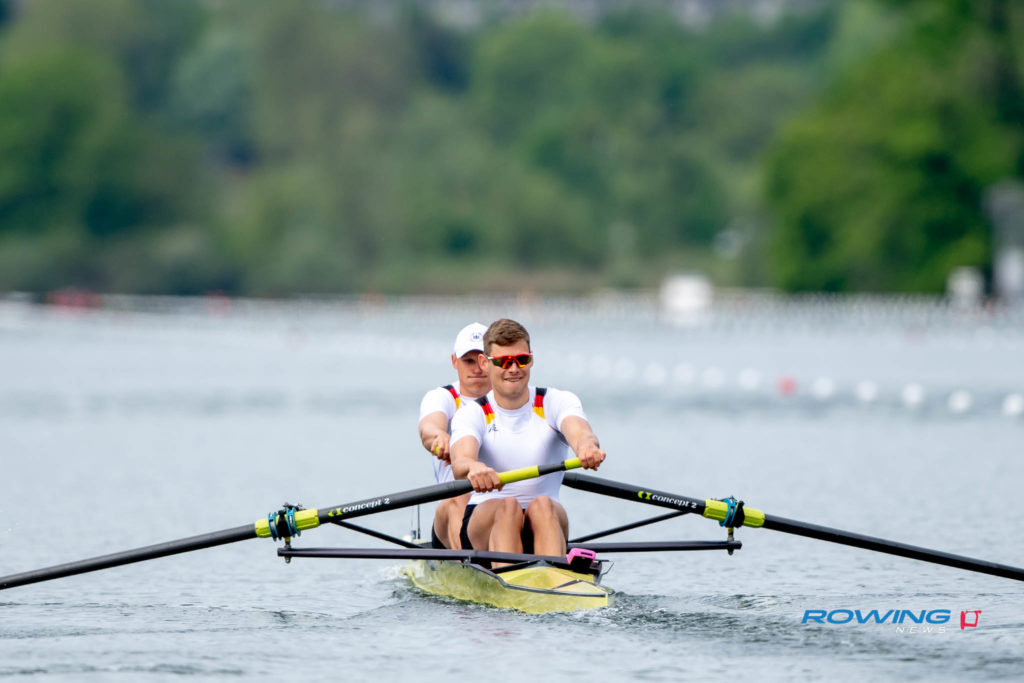
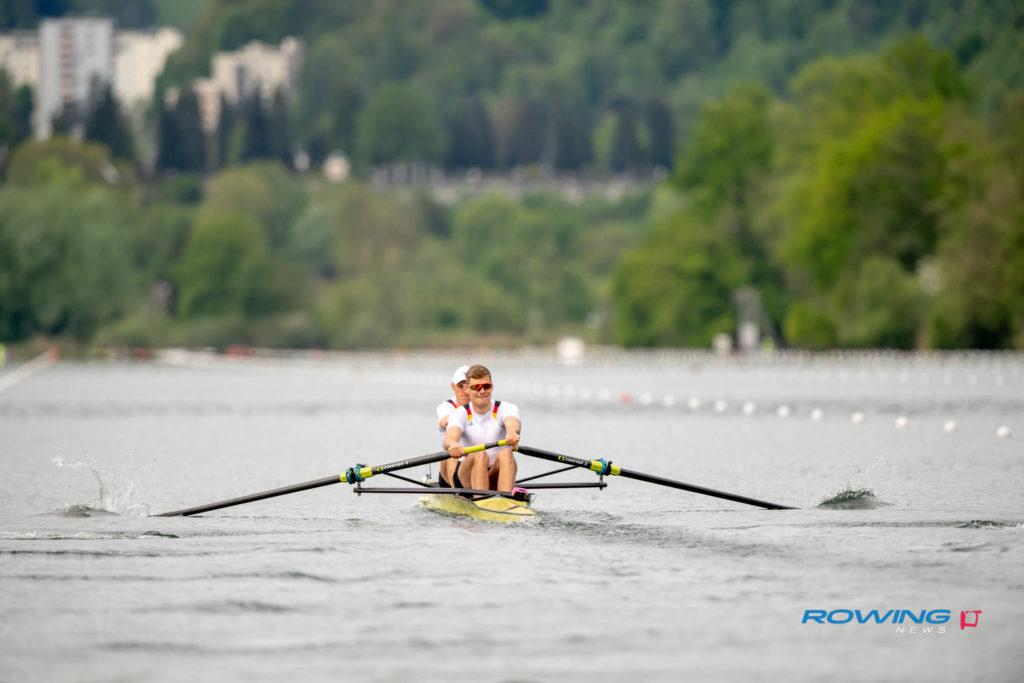
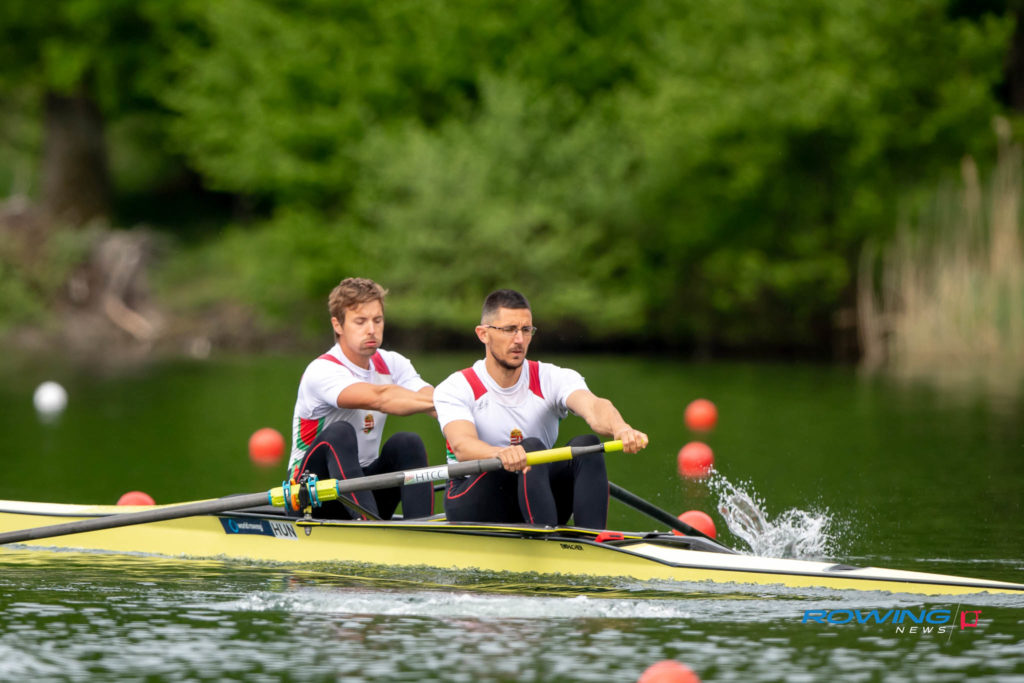
Of the 14 boat classes already on the Olympic schedule, the U.S. qualified nine crews — seven women’s, including the single, double, quad, pair, four, and eight. The men have just two crews qualified — the eight and four. Of the crews competing in Lucerne, four are men’s sculling crews — the single, double, lightweight double, and quad. The only sweep crew racing is the men’s pair.
Following is a breakdown of the U.S. crews in contention:
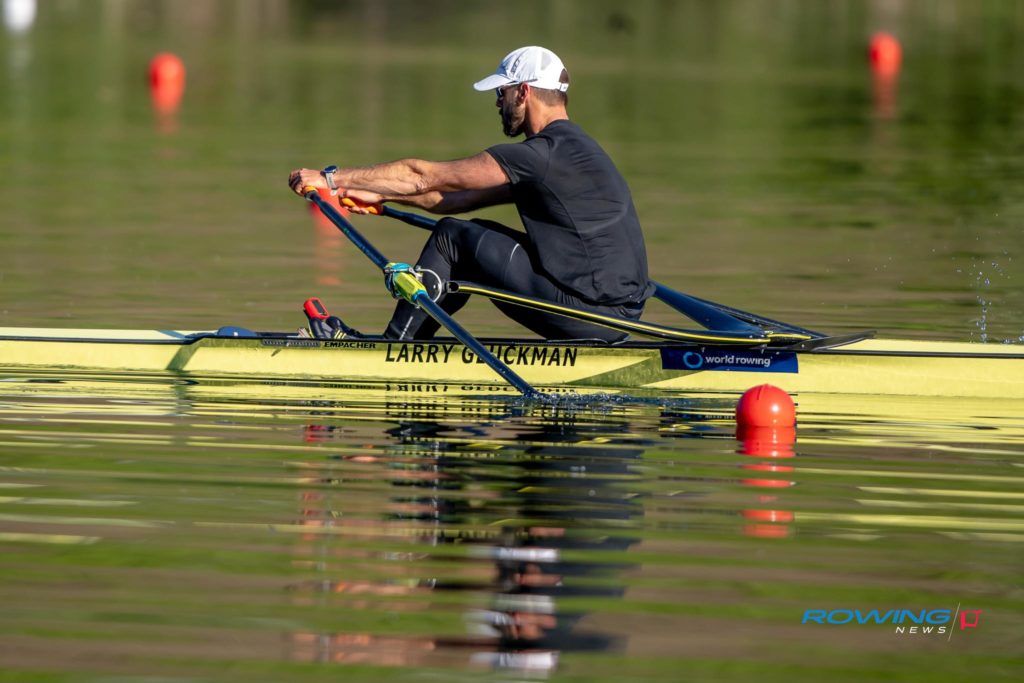
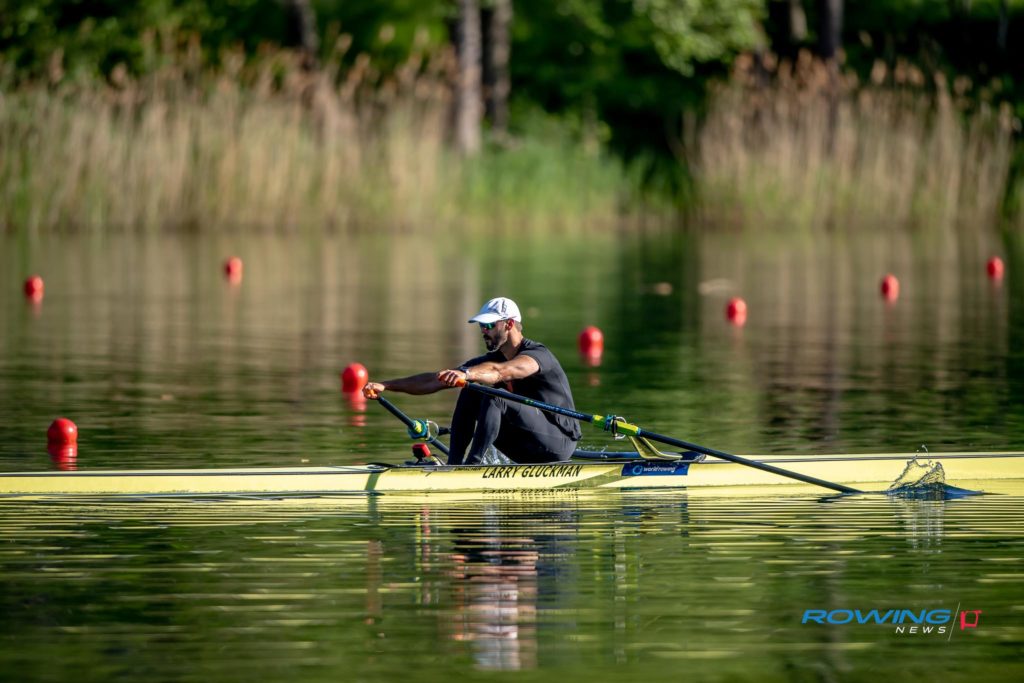
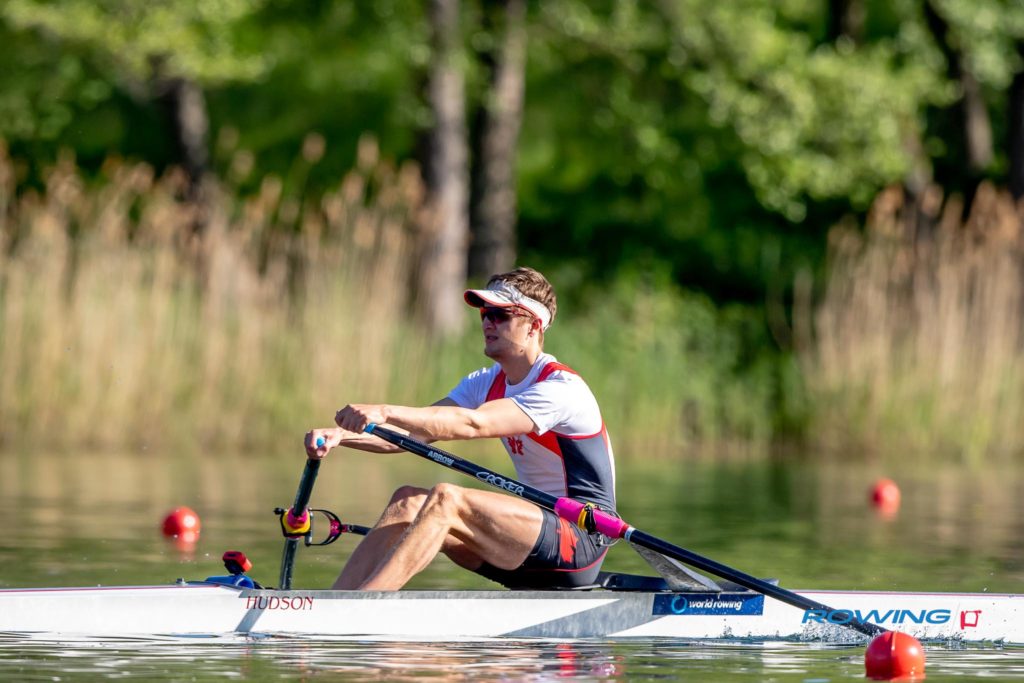
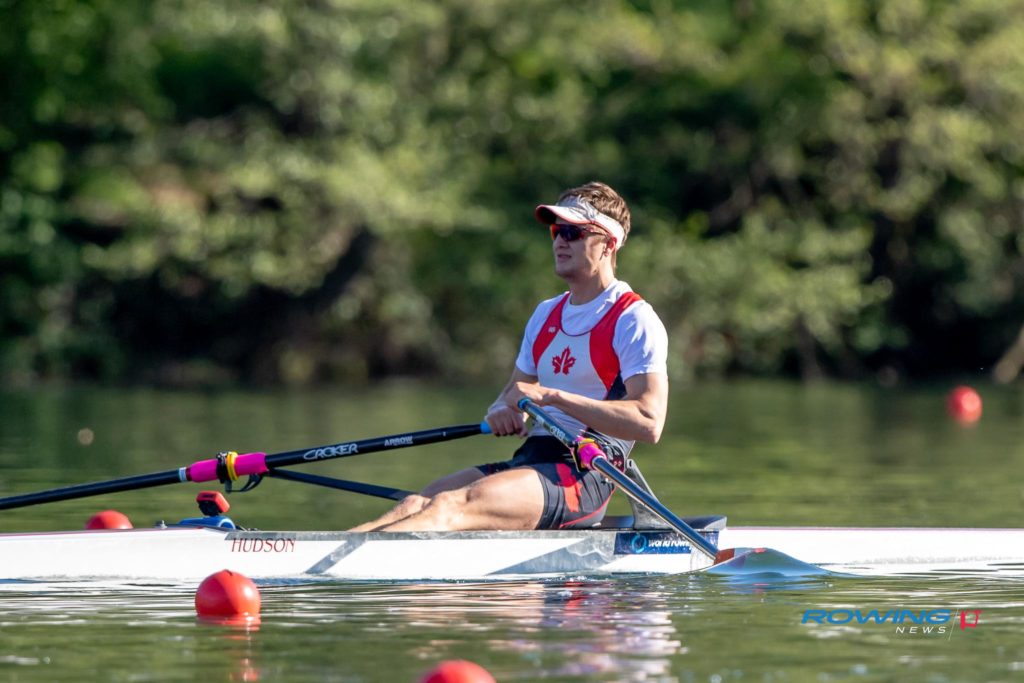
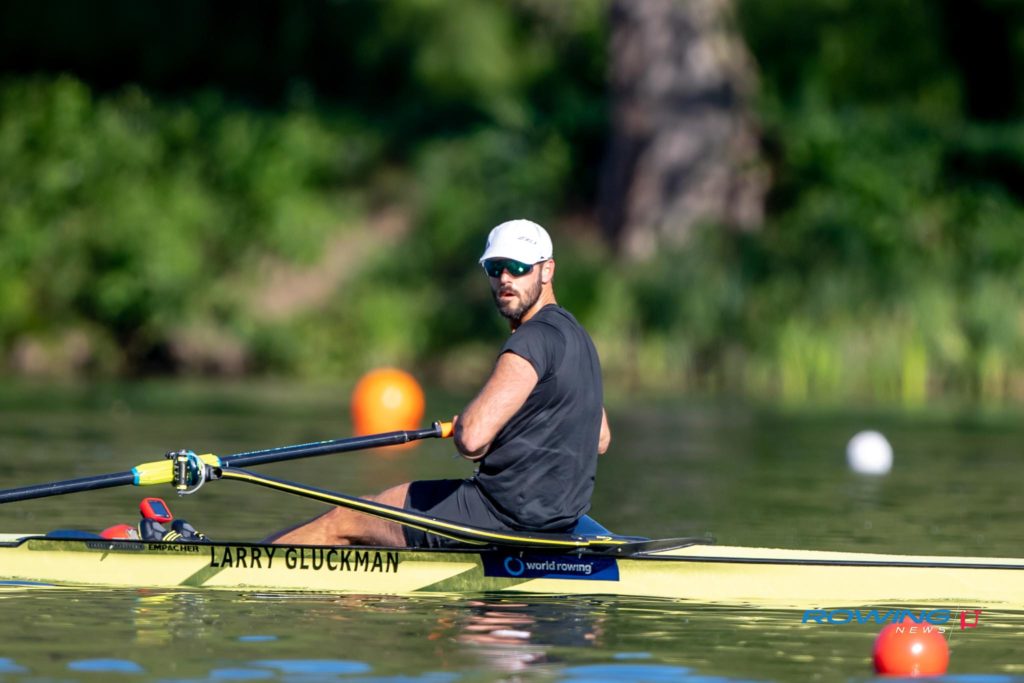
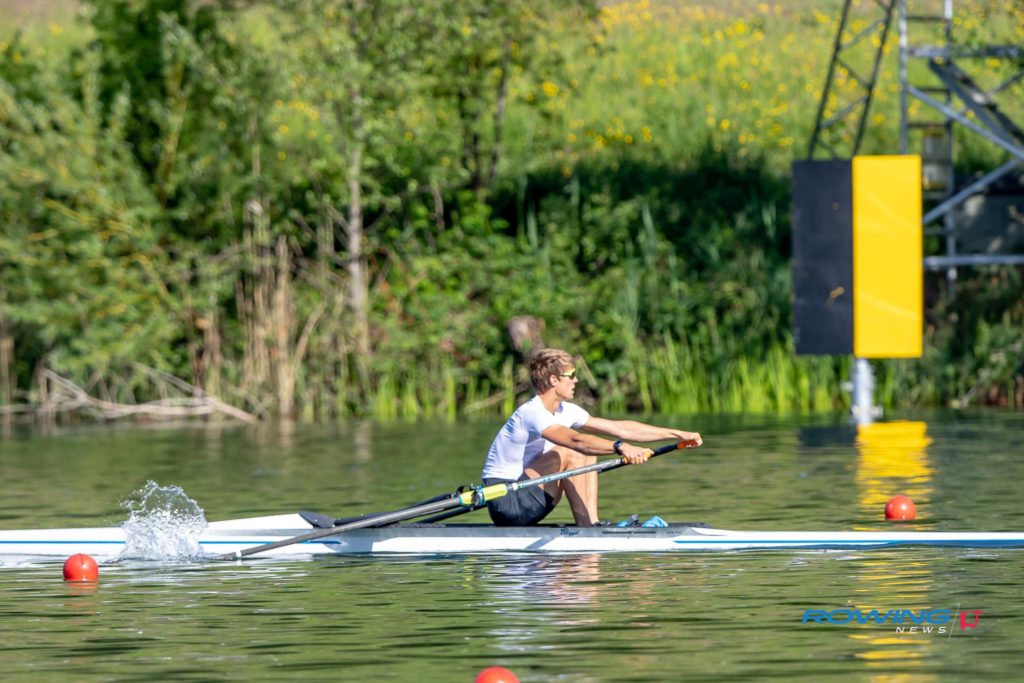
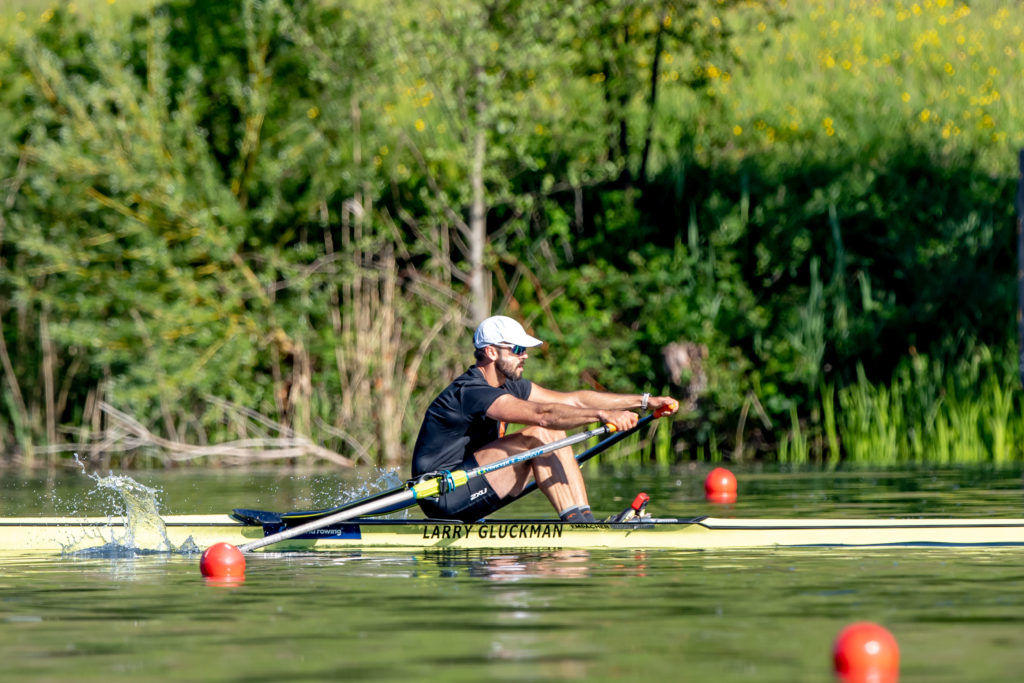
Men’s single (M1X) – John Graves, of Green Racing Project, won trials in February and is among the largest field of contestants in the regatta. Twenty-six men’s single scullers will race for the top spots.
Of the 26 crews entered, Natan Wegrzycki-Szymczyk of Poland should be seen as a favorite for one of the two open slots. Wegrzycki-Szymczyk finished third at the 2021 European Championships, and seventh at the Rio Olympics.
This is Graves’ second final qualification regatta, and last attempt at making an Olympic team. He last raced the 2016 qualifier in the quad that did not qualify. Just before competing at trials in Sarasota in February Graves said, “This definitely will be my last go at it, and I think it’s really important that I put myself in an environment, and a situation, where I felt I was getting everything out of what I am putting into it.
“This fall was a moment for me to take a second and figure out what I really wanted out of the year and how I can best go about doing that. And for me, the single was the best way to go after the goal of qualifying a men’s sculling boat for the Olympics and to use everything I’ve learned over my career. And then, regardless of the result, be happy finishing my career going as fast as I personally can, and being able to live with that.”
Men’s Double (M2X) – Among the field of 18 countries, the U.S. will be represented by Trials I winners Kevin Cardno and Johathan Kirkegaard. As in most of the men’s sculling events, this is an incredibly hard field to finish top two. Cardno and Kirkegaard have been training in Switzerland for the past few weeks, along with the men’s lightweight double.
“Preparation has been going well,” Cardno said. “We traveled to Switzerland early to give ourselves the best chance to get acclimated. This has had its own set of challenges, but I believe it was the right decision. The training has been tough, but being side by side every day with the lightweight men has kept us all honest. Overall, we’re very eager to race!”
Men’s lightweight double (ML2X) – In another crowded field of 18, Trials I winners Jasper Liu and Zach Heese will represent the U.S. in the men’s lightweight double. Liu and Heese have been training in Switzerland with the men’s heavyweight double. Both recognize the difficulty of reaching a top two placement but are hopeful. “We’re winding down our last block of hard training here and getting excited to race,” Liu said.
“This camp has been the perfect opportunity to focus one-hundred percent on training, something we don’t usually get to do at home. Having the heavyweight double next to us has been awesome. Both boats are moving well, so it keeps the standard high every session. There are some great crews entered, but I don’t know if anyone is exceptionally faster than the rest,” he said.
“Like all lightweight races, it’s going to be tight. I know we’re not coming into the regatta as favorites, but we definitely have a shot to make the final. And as long as we get a lane, anything can happen.”
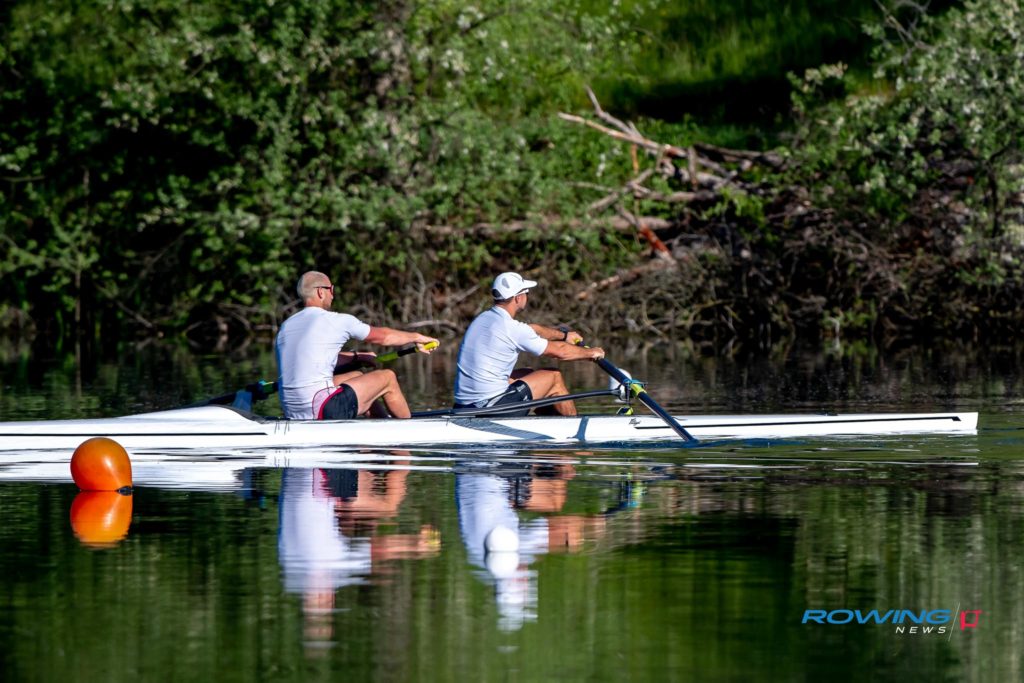
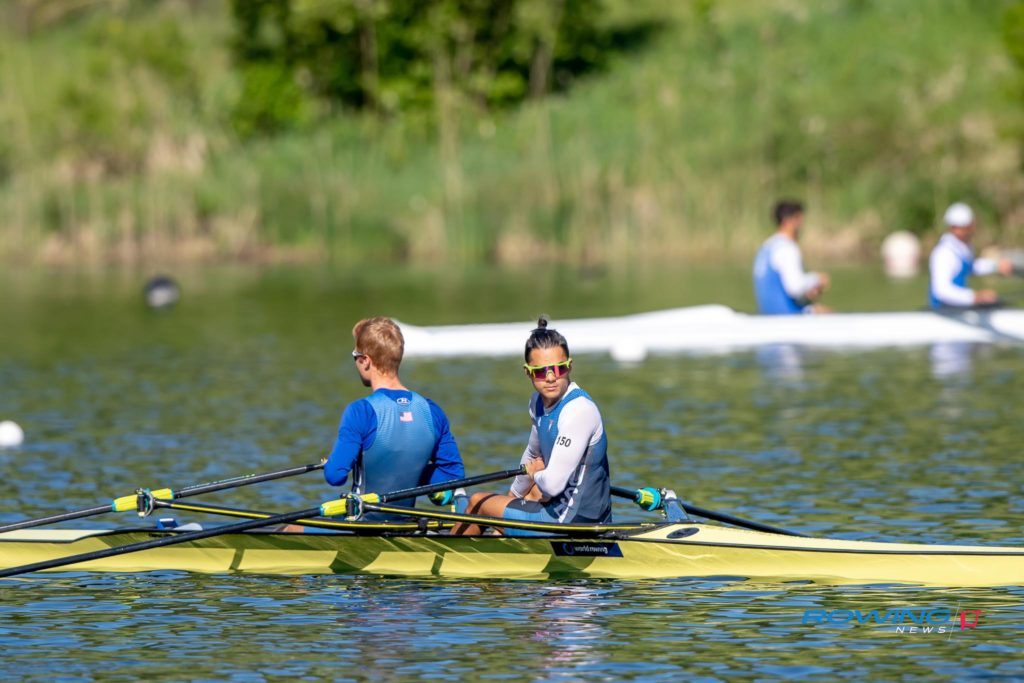
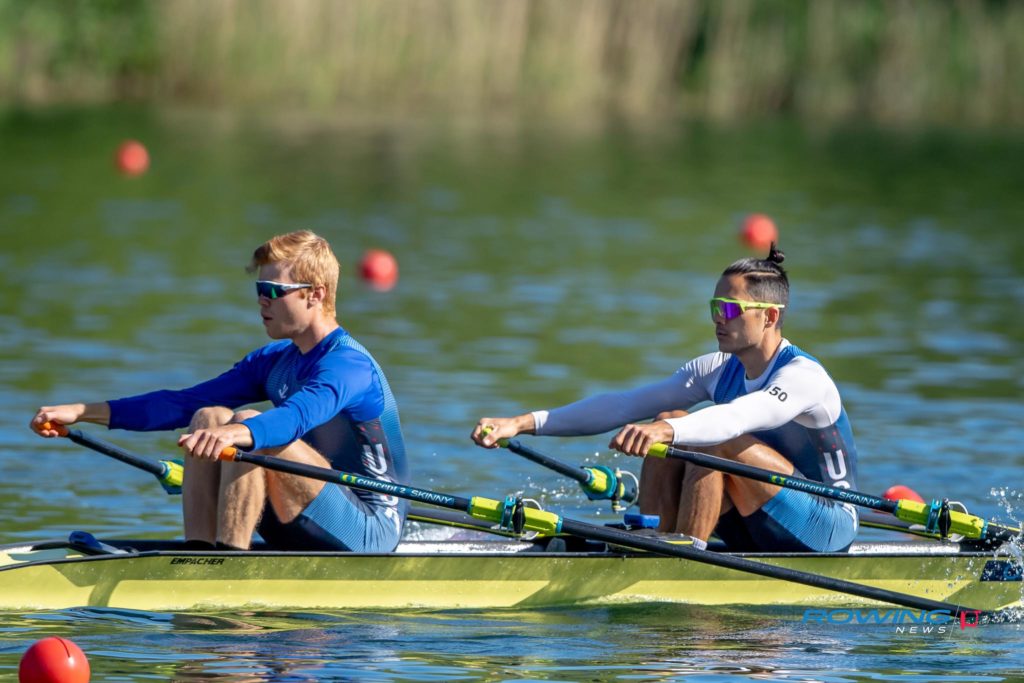
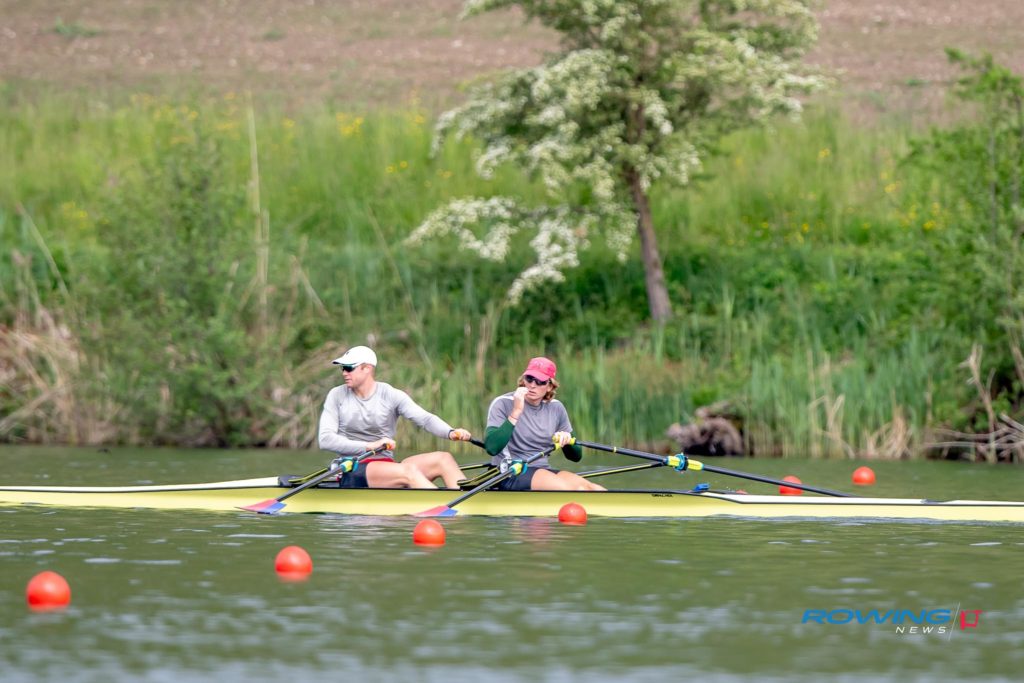
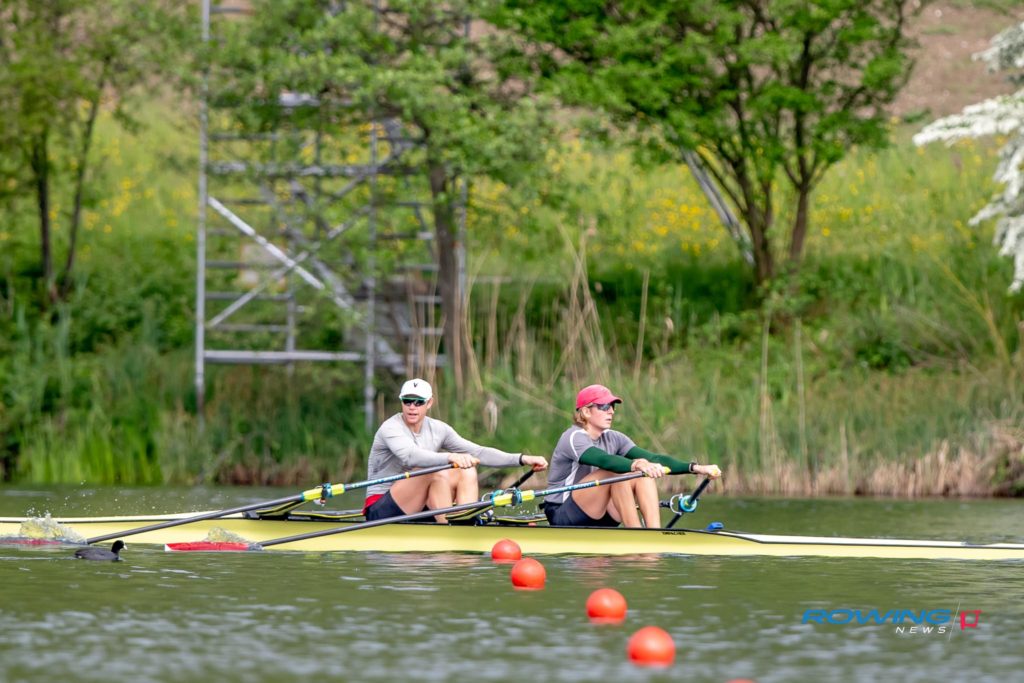
Men’s Pair (M2-) – There are 14 men’s pairs entered. The U.S. is being represented by Olympians Tom Peszek and Mike DiSanto. DiSanto rowed in the 2016 men’s eight that finished fourth in Rio. Peszek rowed the pair to an eighth-place finish in London. Peszek and DiSanto rowed uncontested at U.S. Trials II and should be considered contenders to reach the Olympics. Of the crews entered, several raced in either the European Championships or World Cup I. Asked how preparations were going, Peszek said simply: “We are ready to go.”
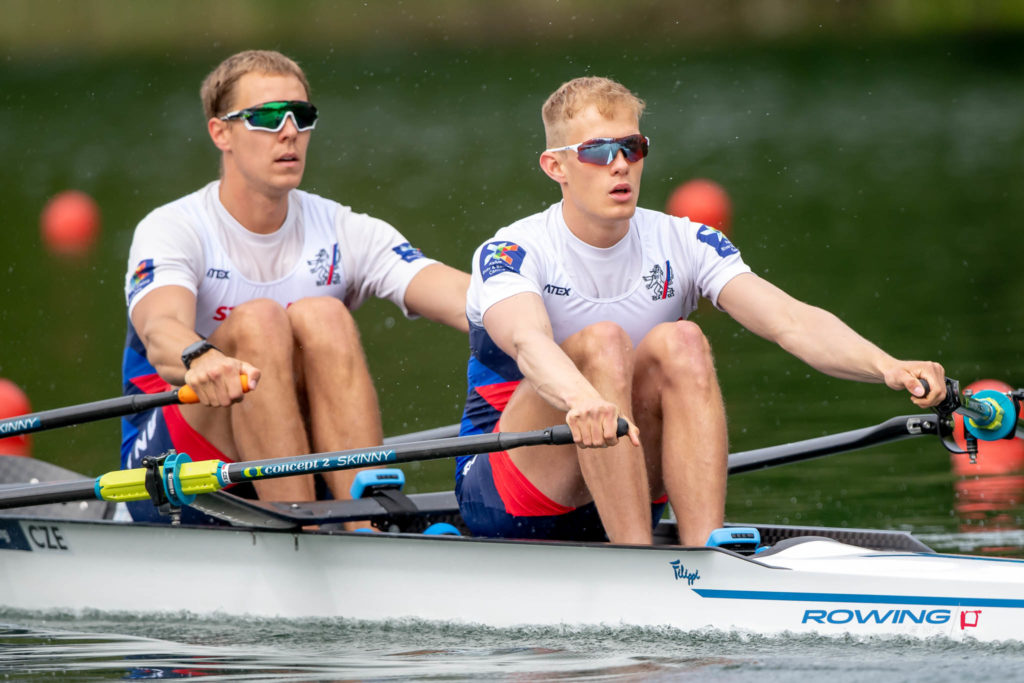
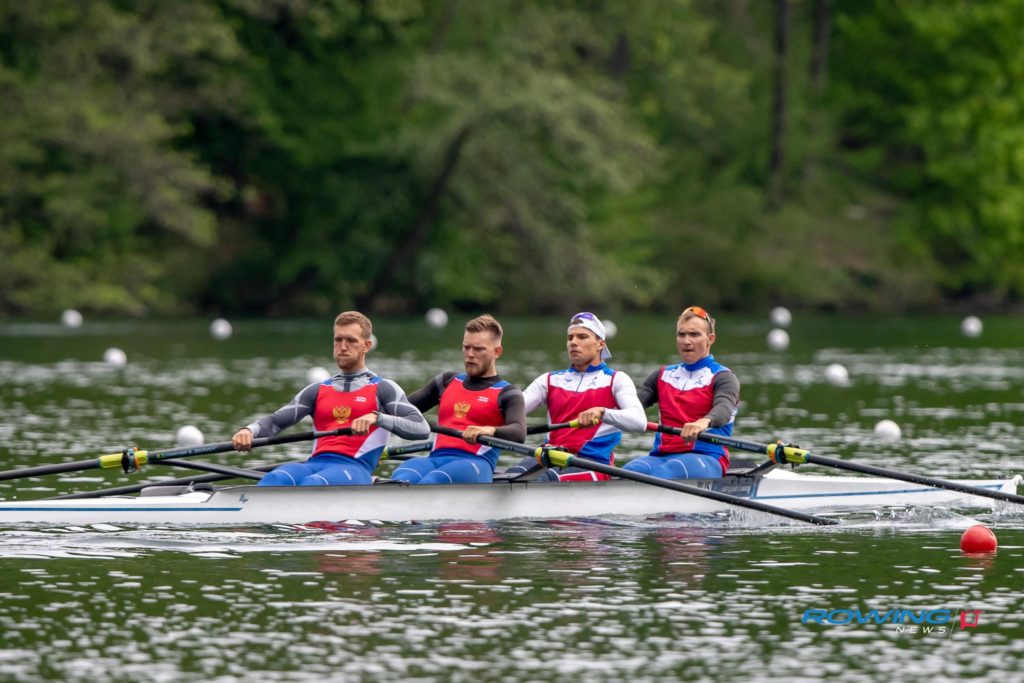
Men’s Quad (M4X) – The U.S. crew of Charles Anderson, Justin Keen, Eliot Putnam, and Sorin Koszyk will be among 12 countries hoping to finish top two and advance to Tokyo. The quad is the only crew that has raced internationally for the U.S. this season, finishing fourth in a photo finish sprint with Germany at World Rowing Cup I, May 1.
Of the crews in the final at World Cup I, Estonia and Czech Republic will be racing in Lucerne. Estonia won the final. The Czech Republic finished fifth. The crew is comprised of athletes that train on the Schuylkill River in Philadelphia and are coached by Penn A.C. head men’s coach Sean Hall.
Following racing in Zagreb, Croatia at the world cup event, the crew traveled to Linz, Austria for final preparations. “Right now, the guys are looking pretty good,” Hall said. “The boat is moving well, and we have great training conditions here in Linz.
“We still have an uphill battle facing us in Lucerne. We have a bead on Estonia, but we expect both Ukraine and Russia to show better than they did at European Championships,” he said.
“This is not to count out the Czech Republic, or anyone else for that matter. We have clear goals for how to lay down our next races and can only work toward even better execution, but I have complete confidence in these guys to be there on the day.”
Women’s Lightweight Double(LW2X) – Of all five U.S. crews racing in Lucerne, Michelle Sechser and Molly Reckford could have the best chance of advancing, if not for the fact that there are three spots open in Tokyo instead of two, but also because of their performances at both U.S. Olympic Trials I and II. After winning trials in dramatic fashion in Sarasota at Trials I, Sechser and Reckford went to Trials II and raced among the crews competing for the qualified women’s open double.
That race was won by the Cambridge/Arion composite entry of Gevvie Stone and Kristina Wagner. But, Sechser and Reckford were second and among the top performers in that regatta. Like Graves, Sechser has said that this will be her final attempt at making an Olympic team. Read a complete story of her journey from 2011 through this 2020 cycle with Reckford here.
For a full list of entries in all 14 events, and complete regatta information including live streaming information click here.
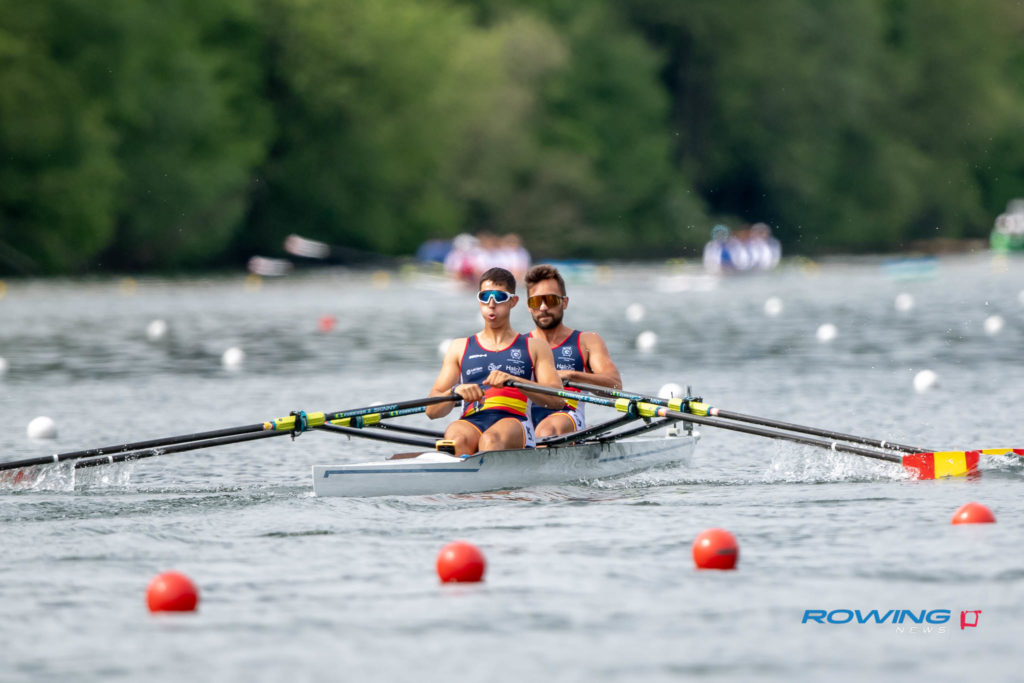
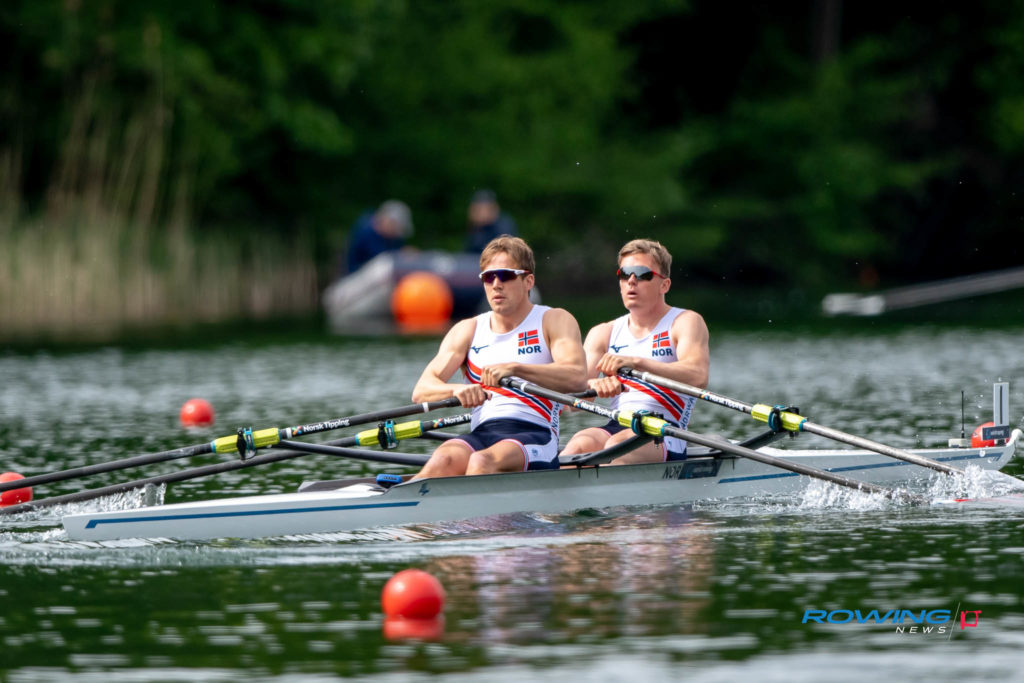
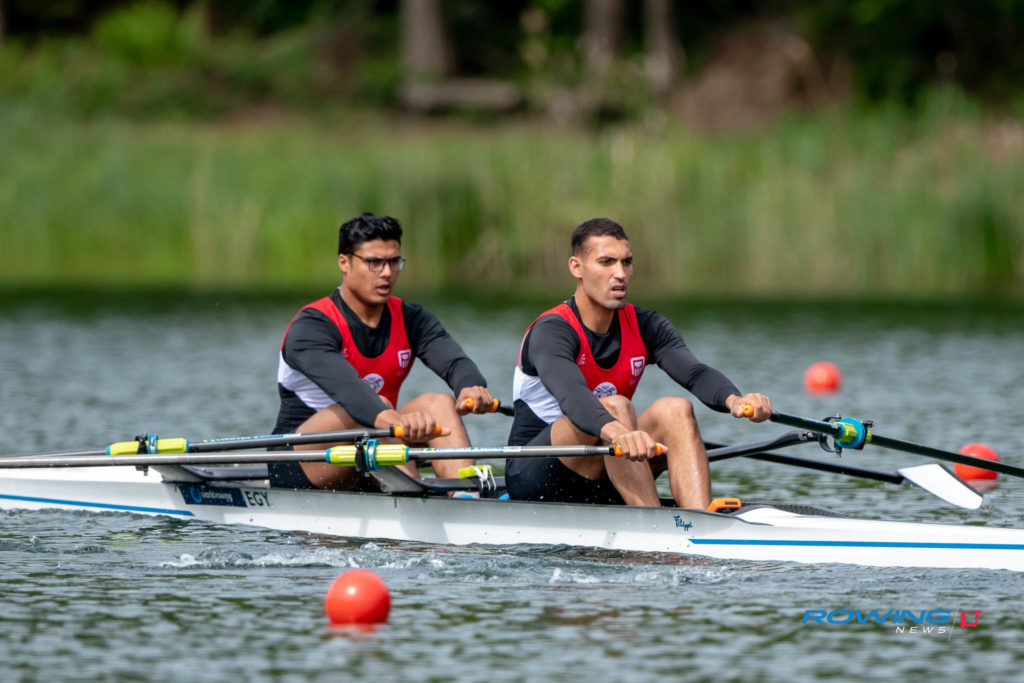
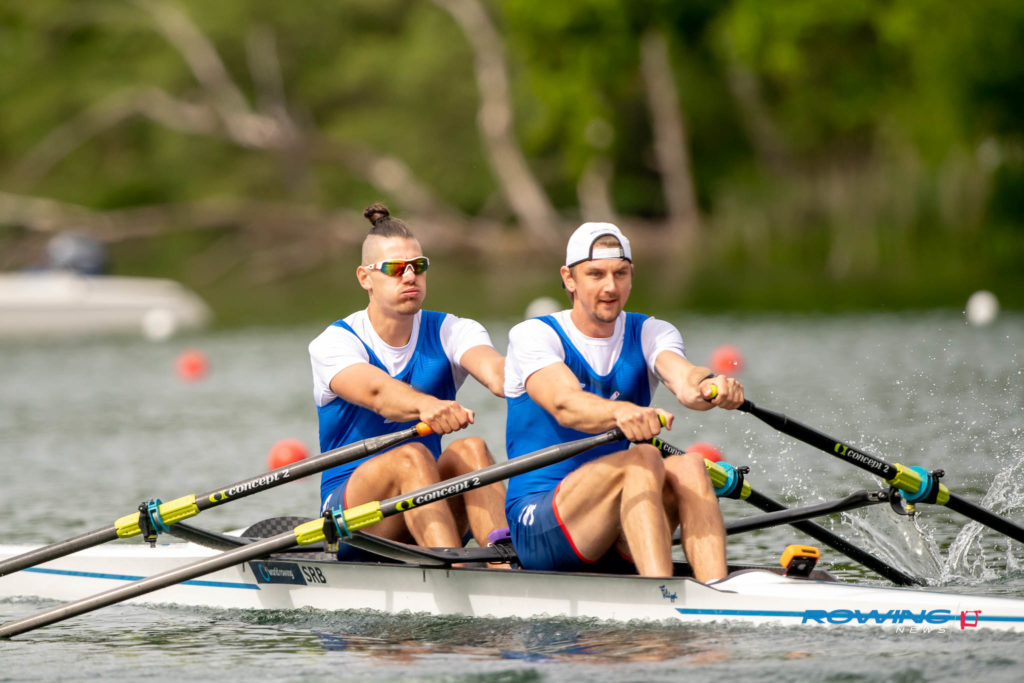
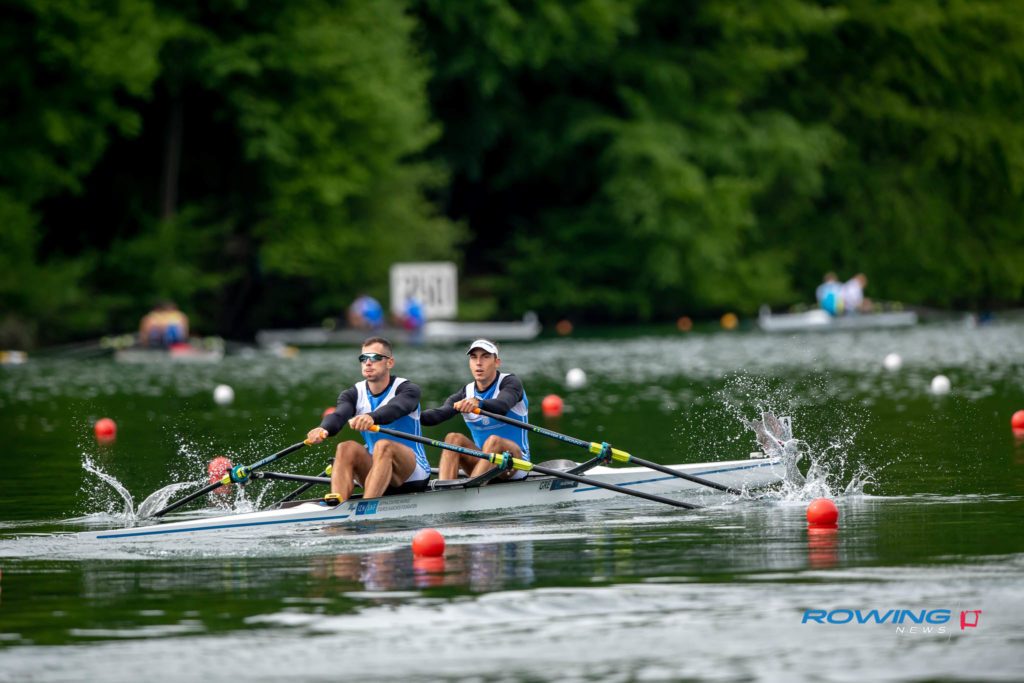
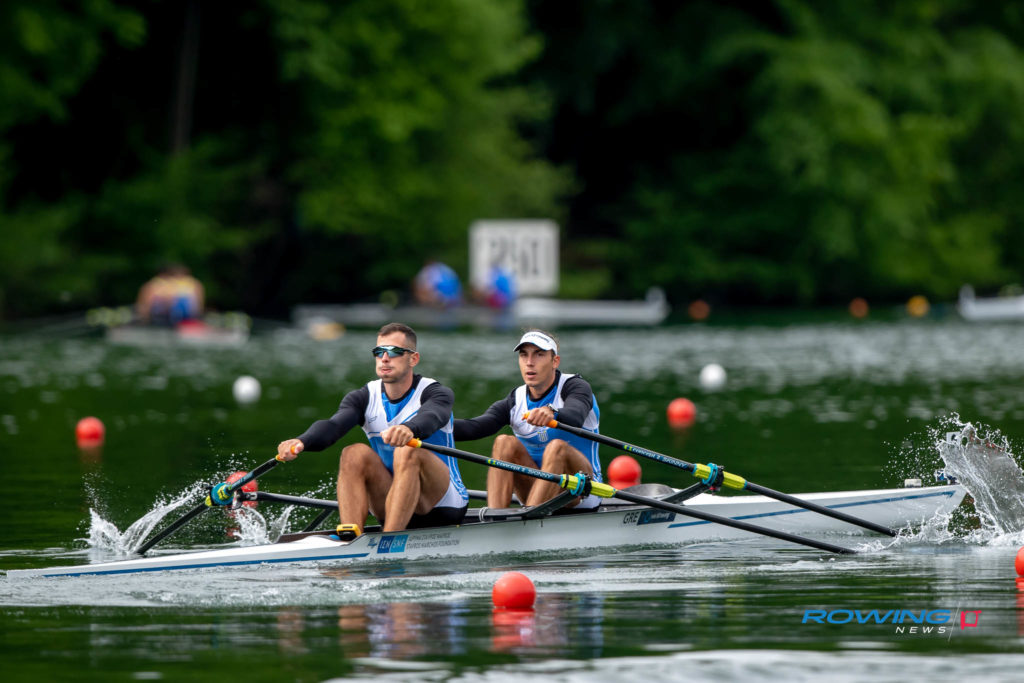
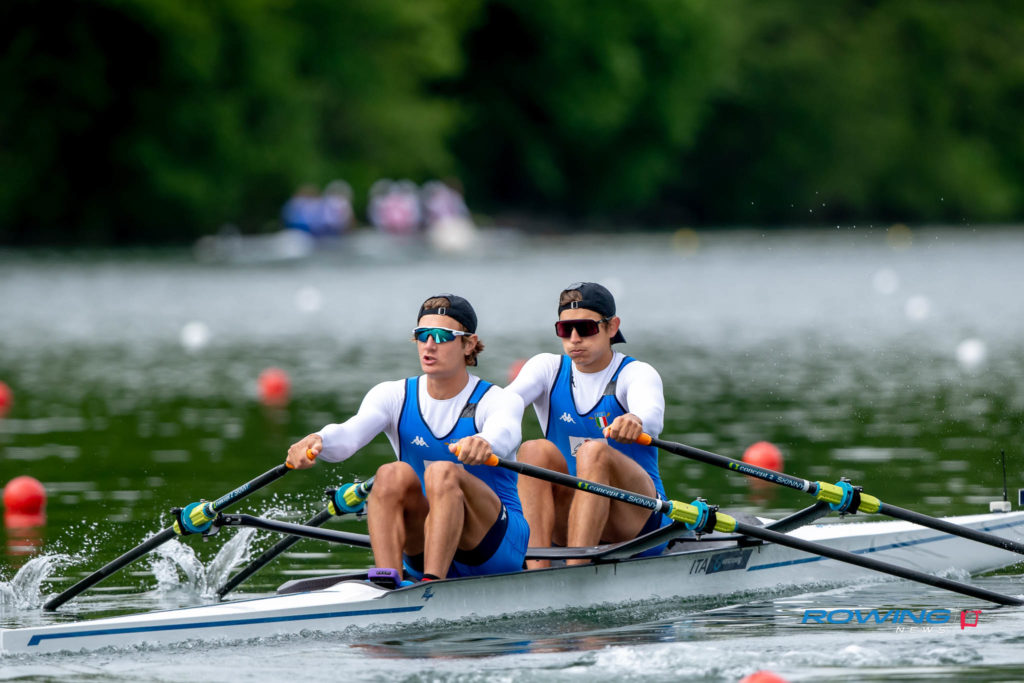
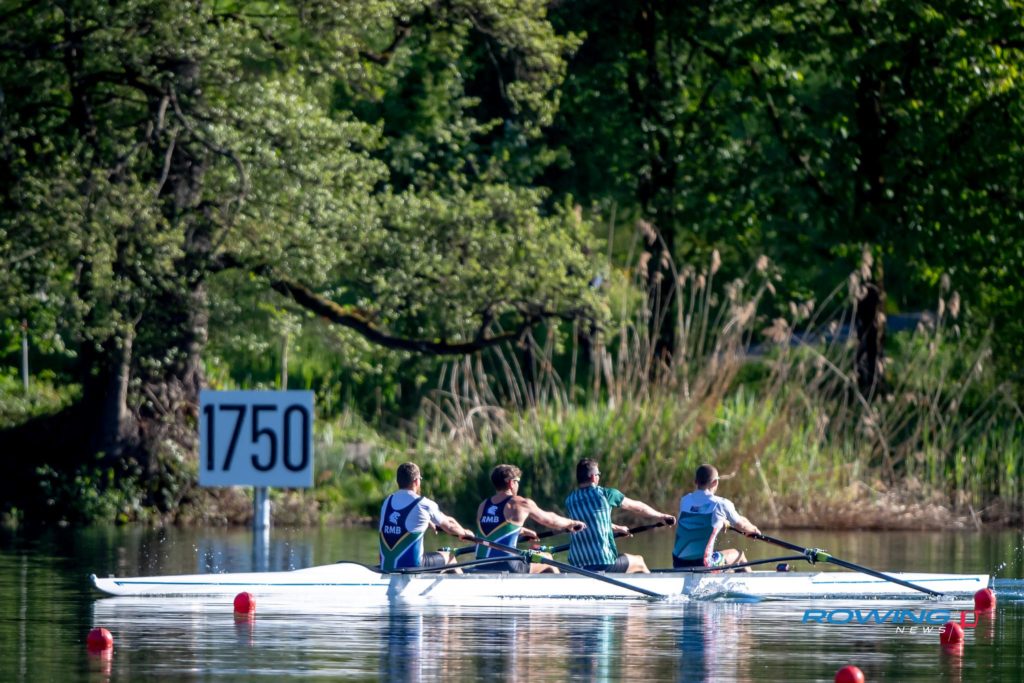
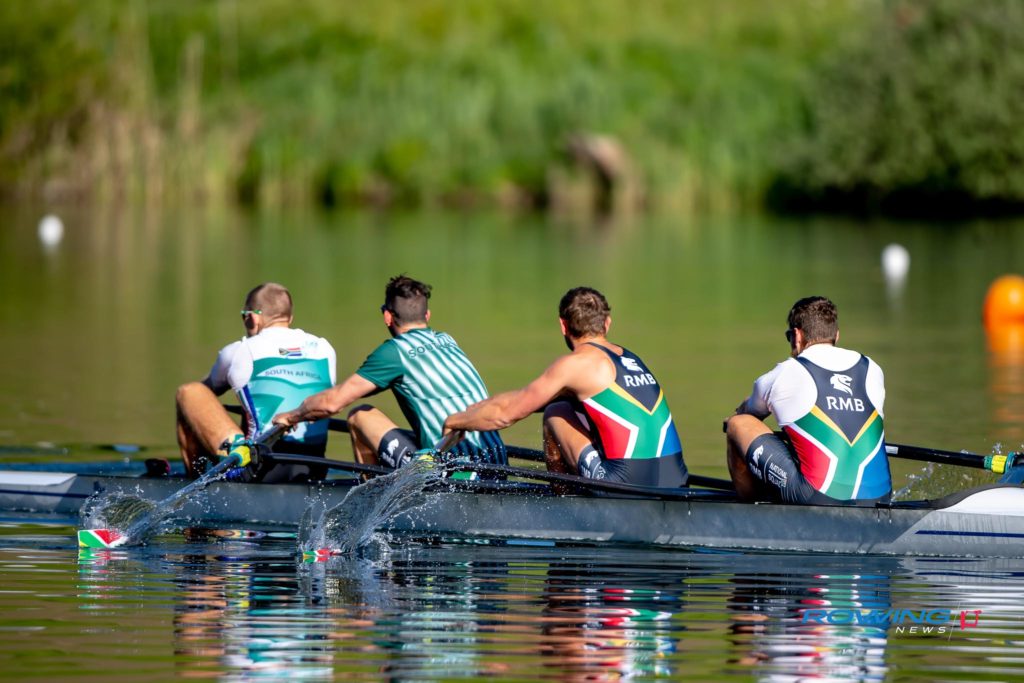
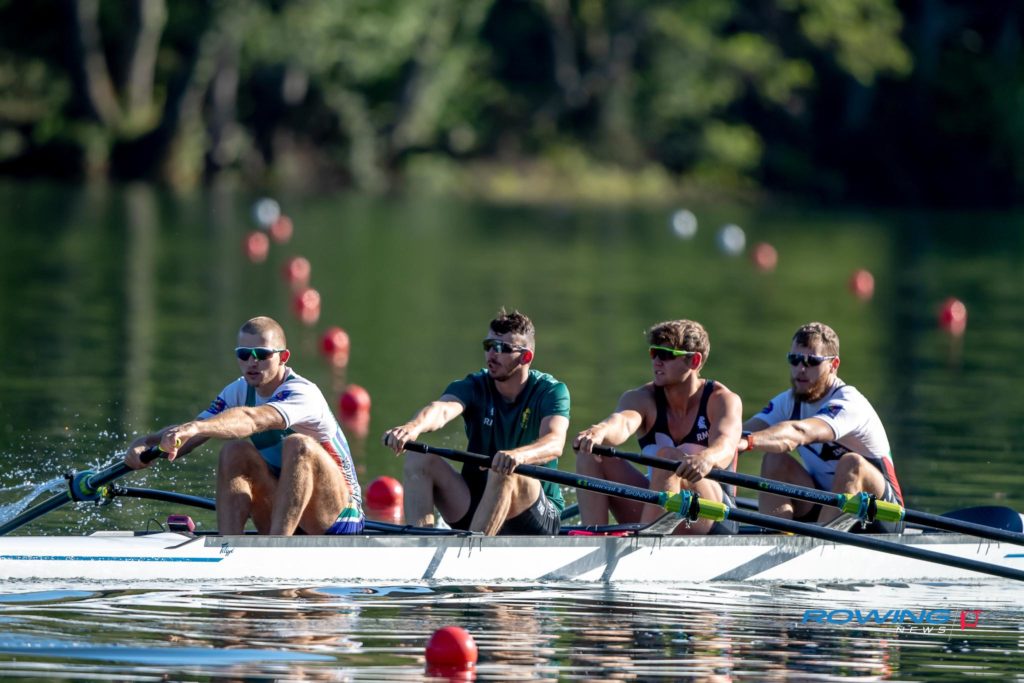
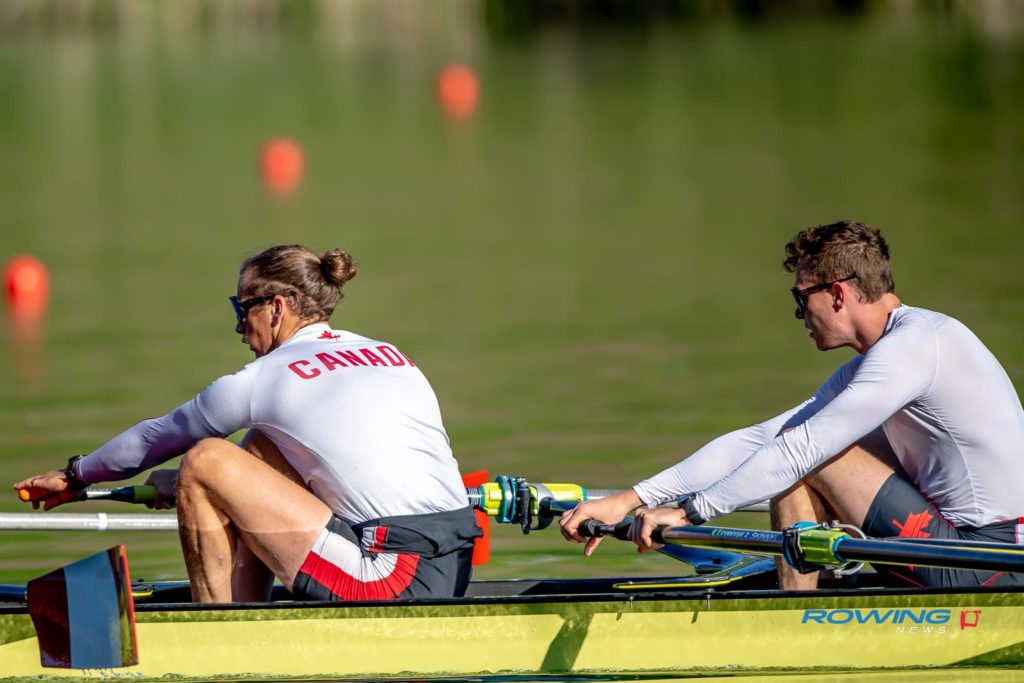
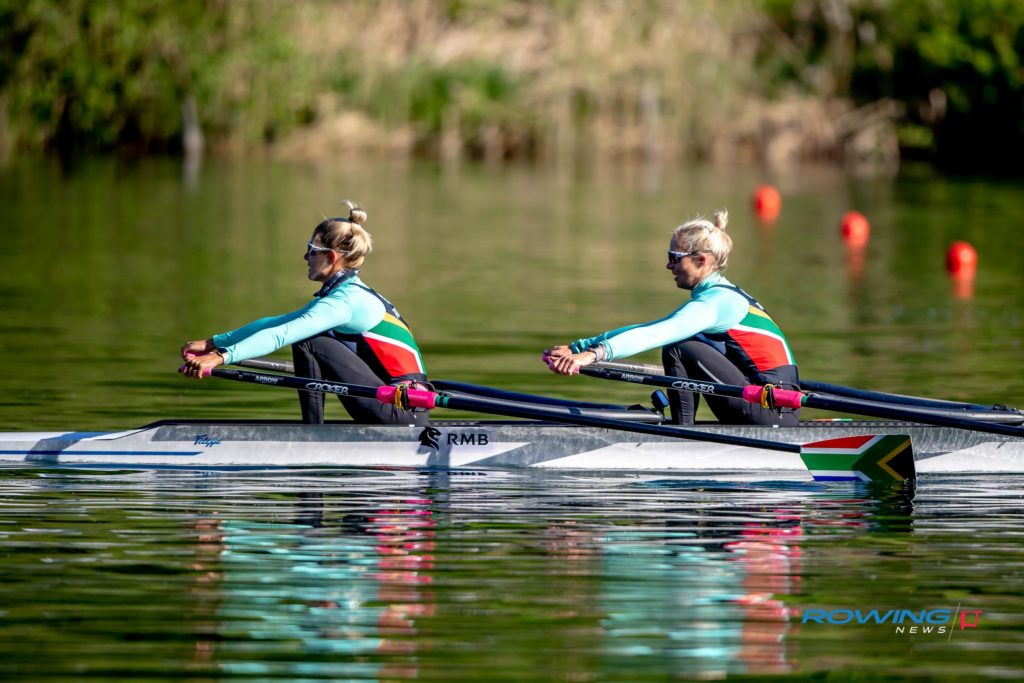
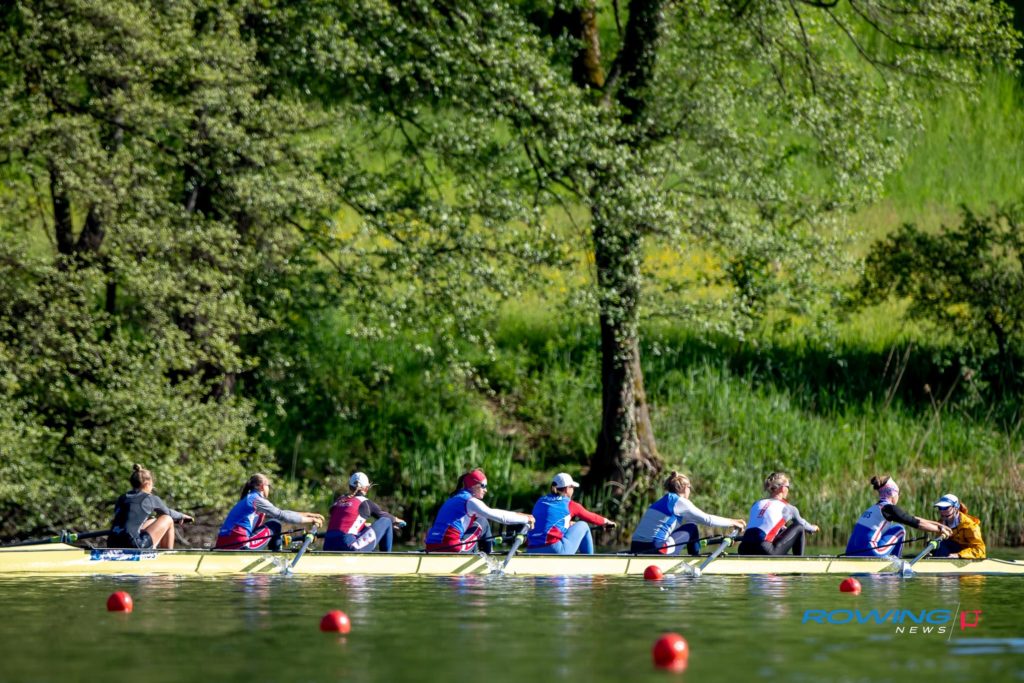
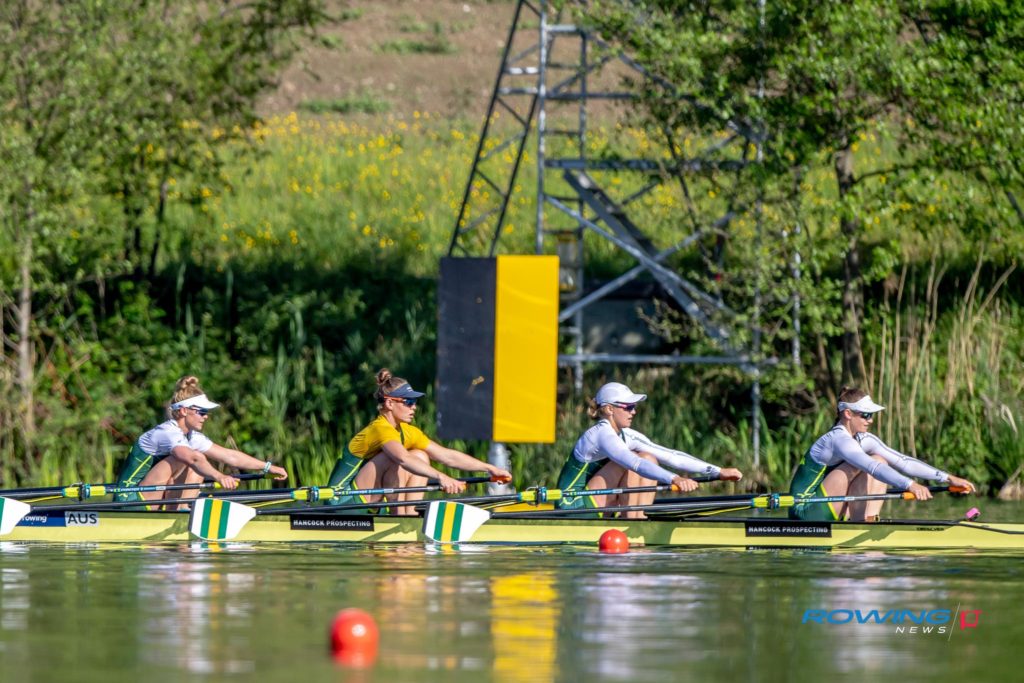
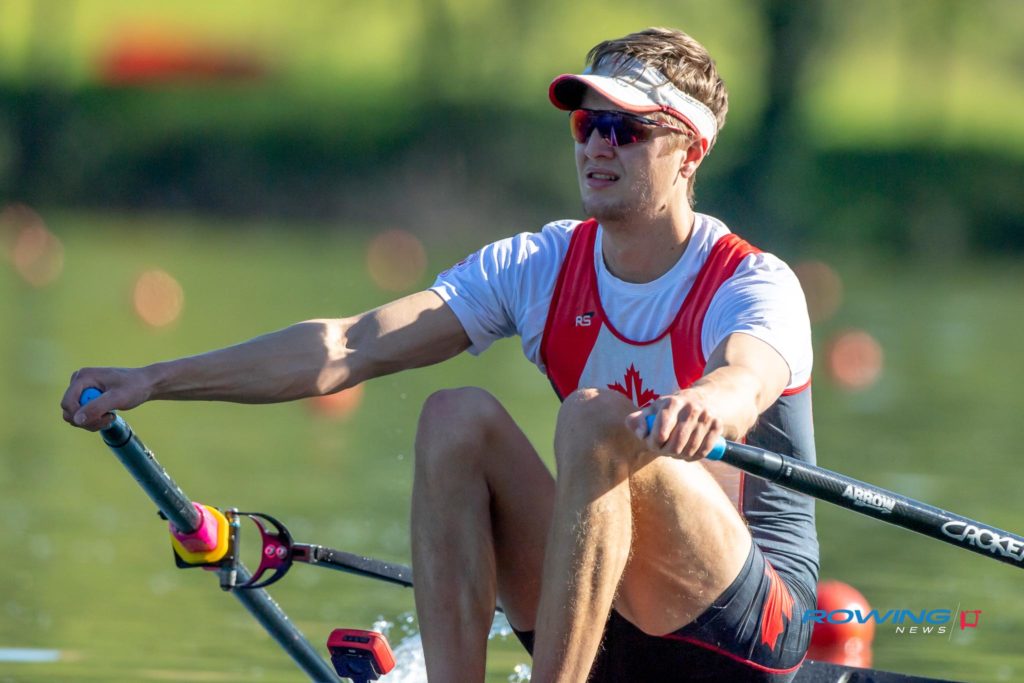
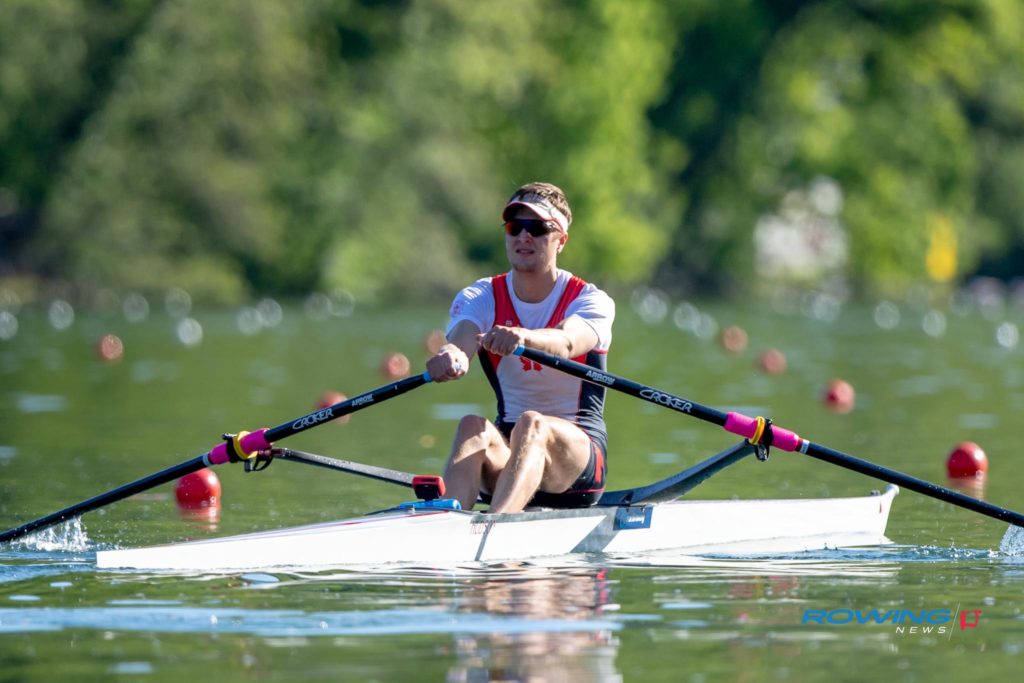
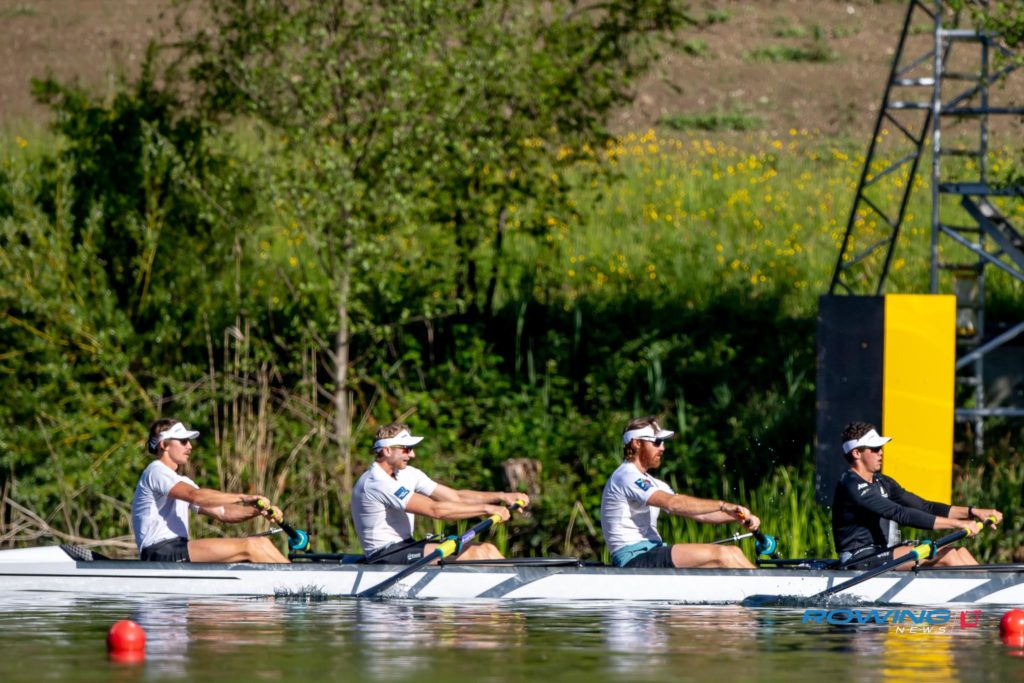
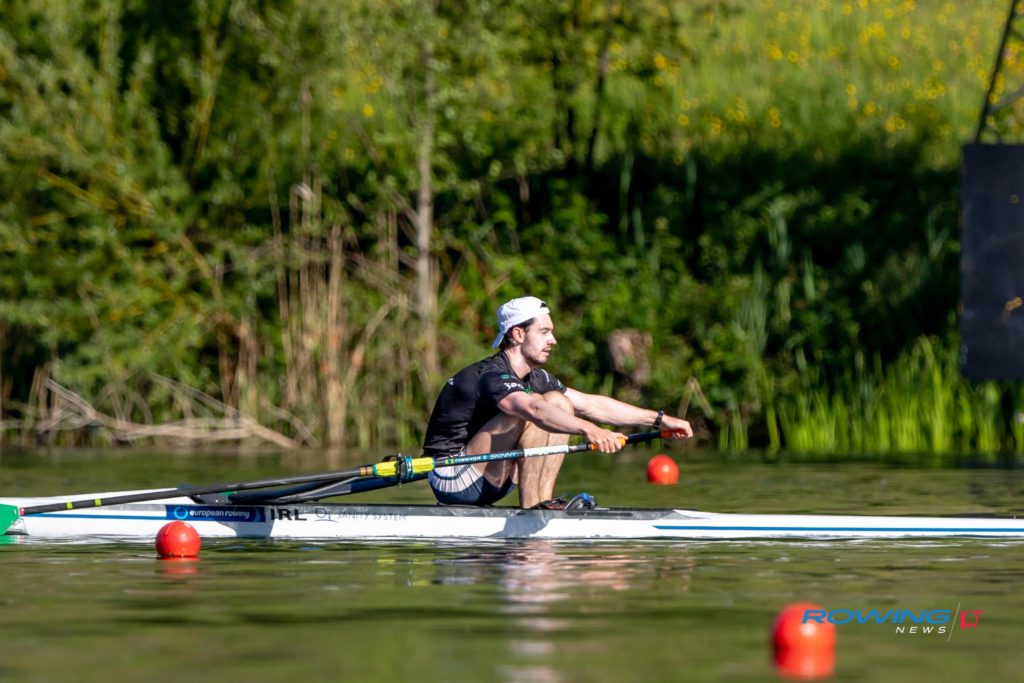
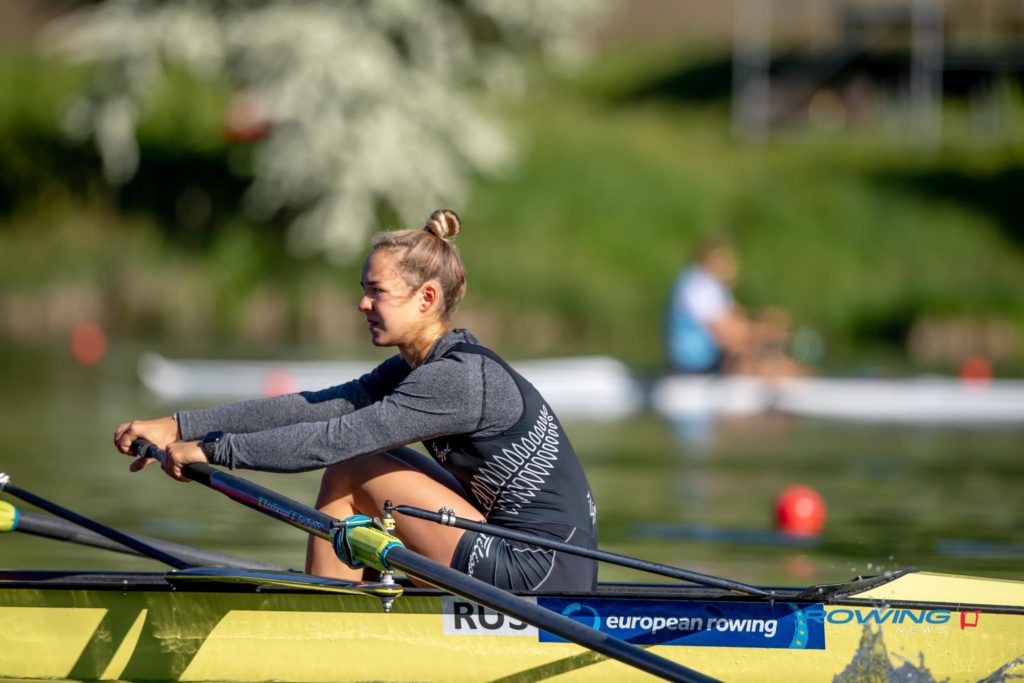
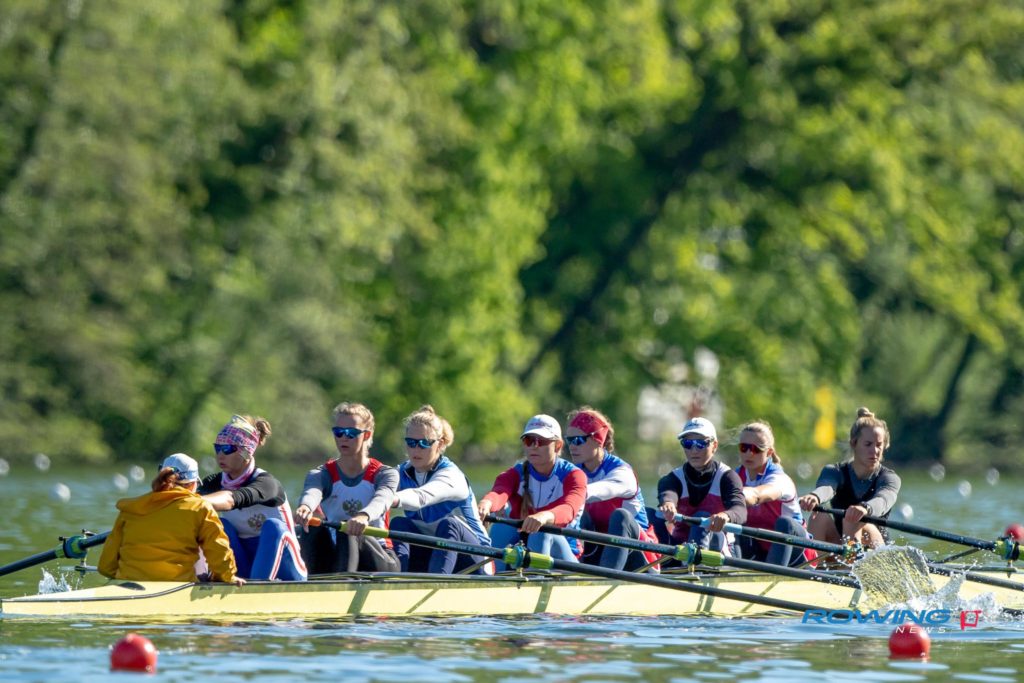
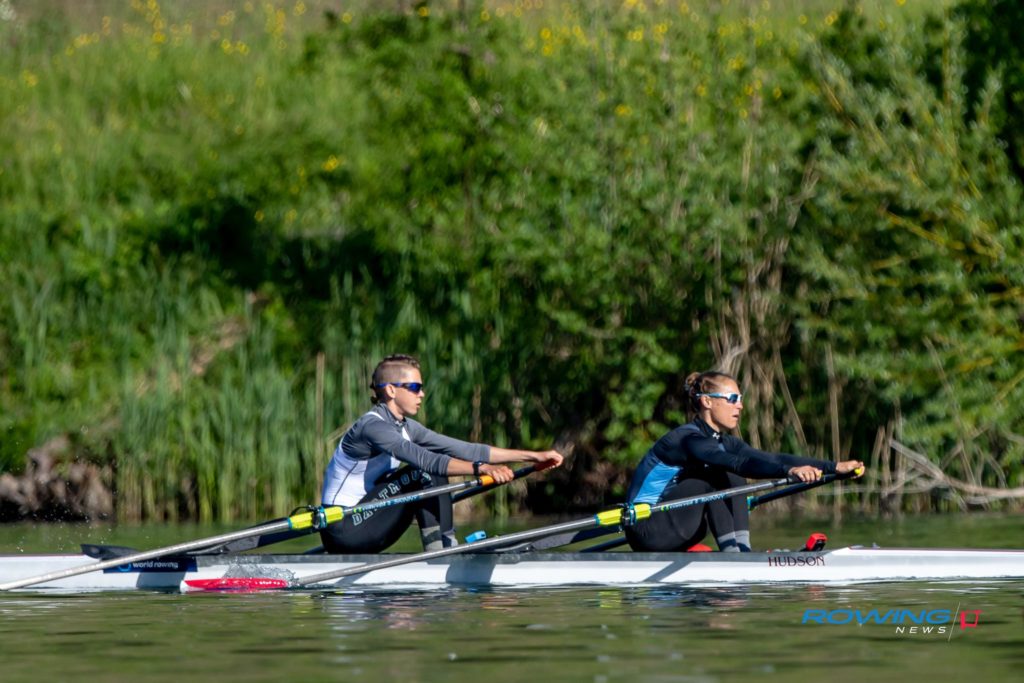
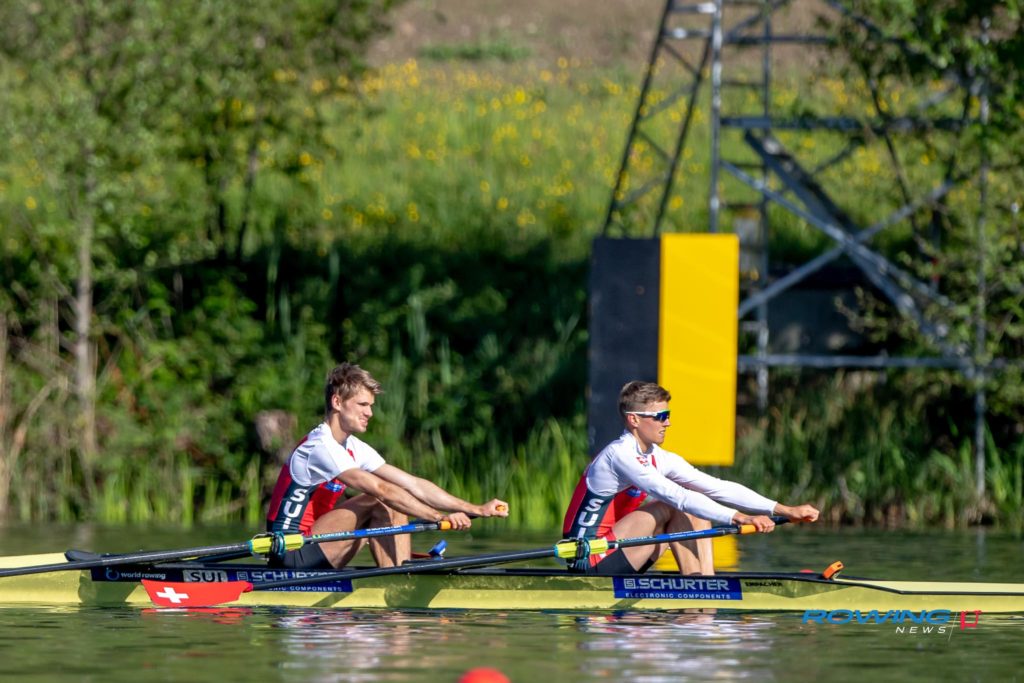
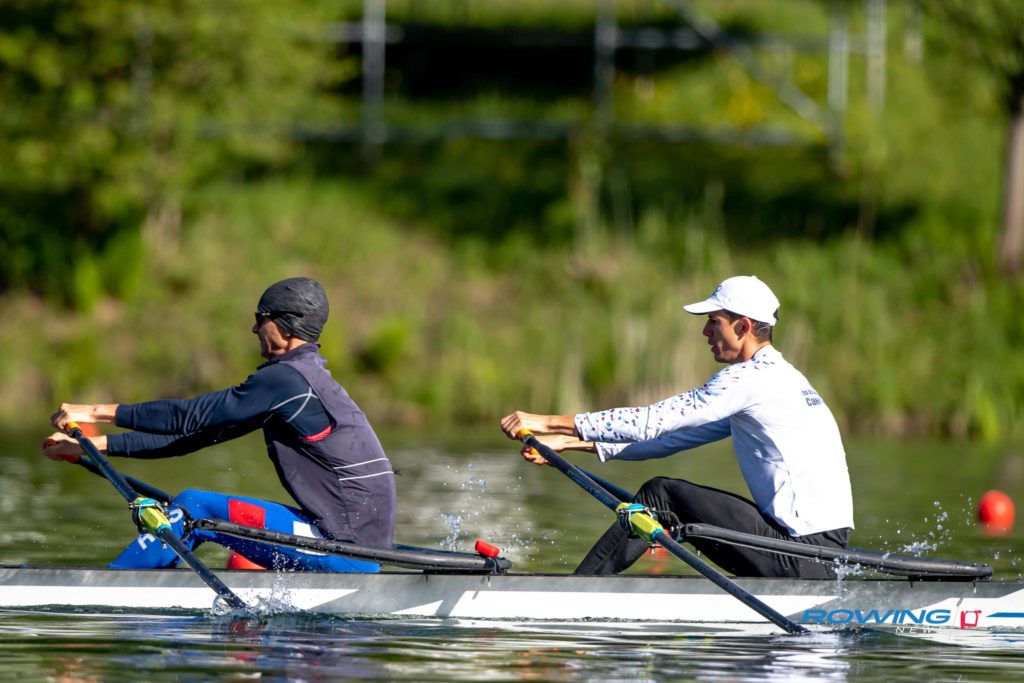
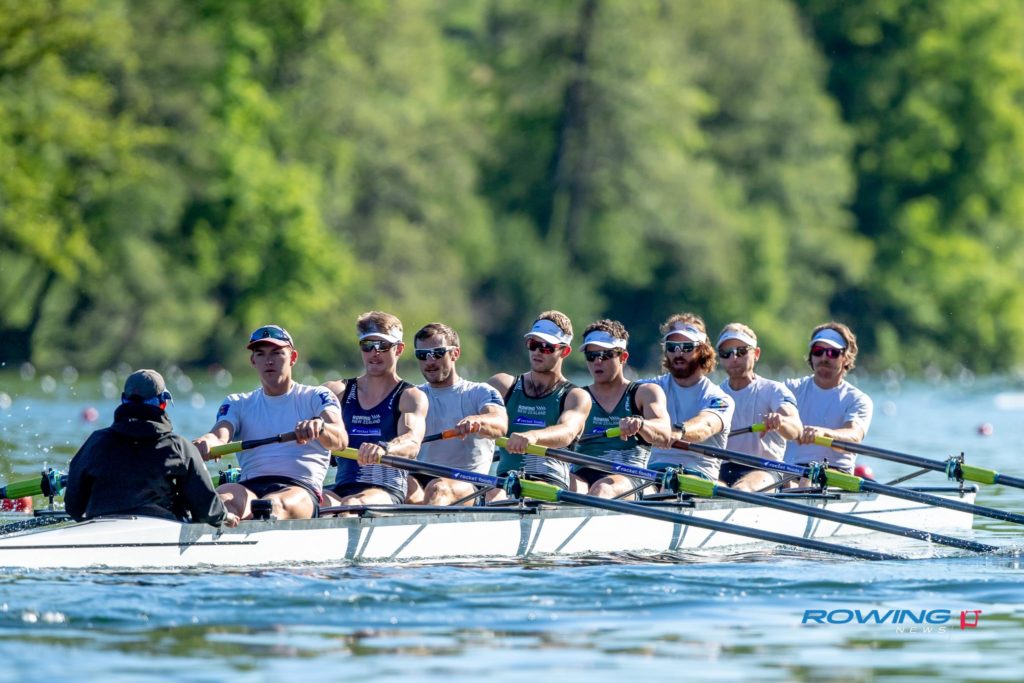
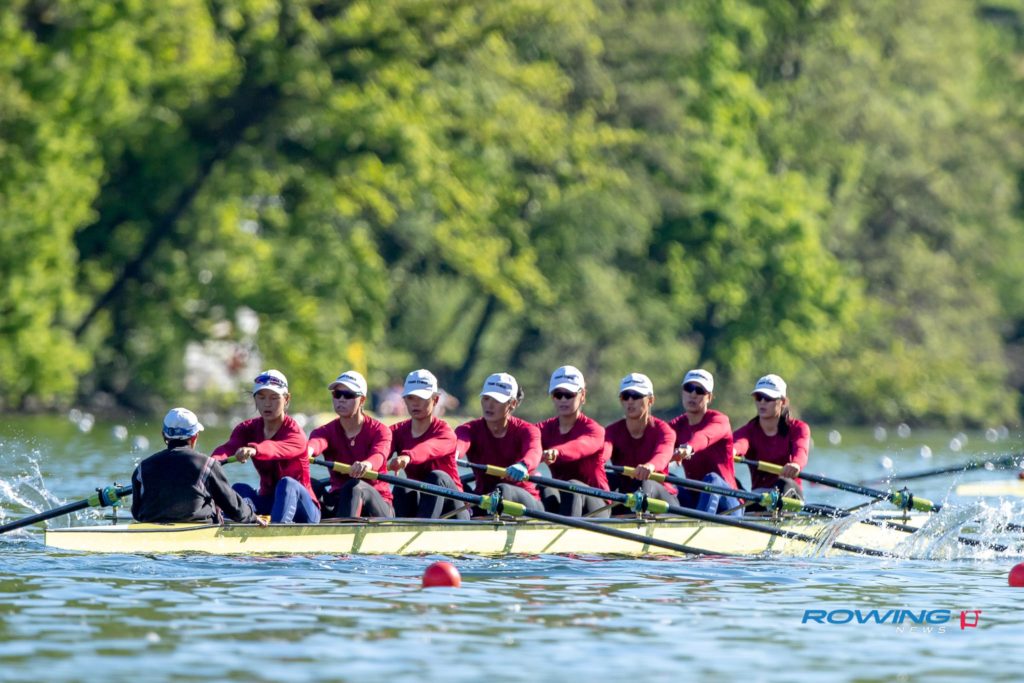
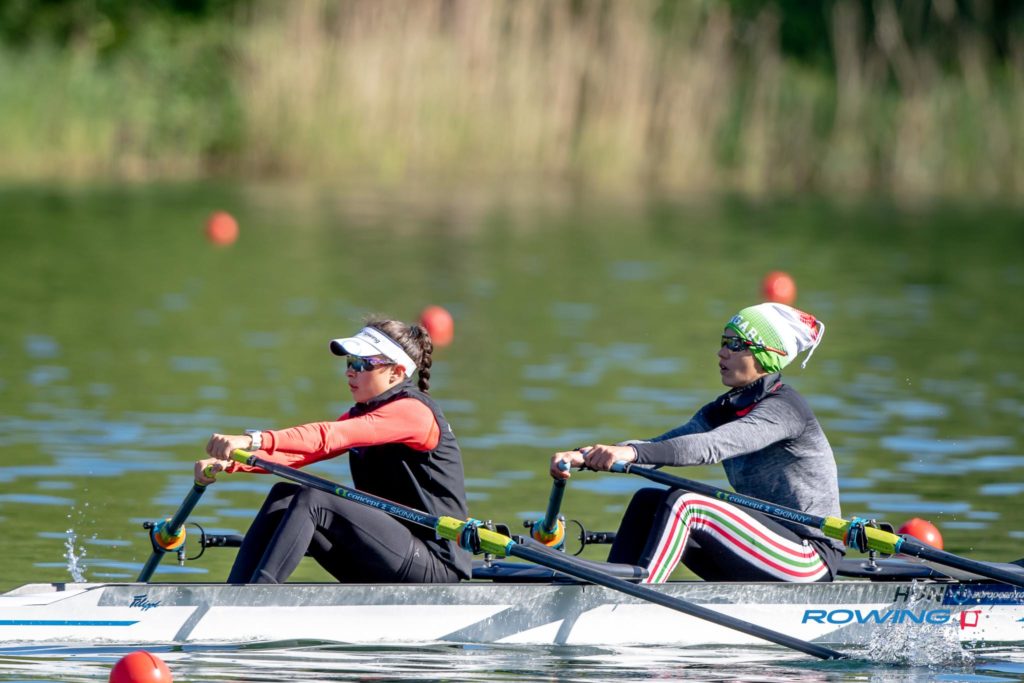
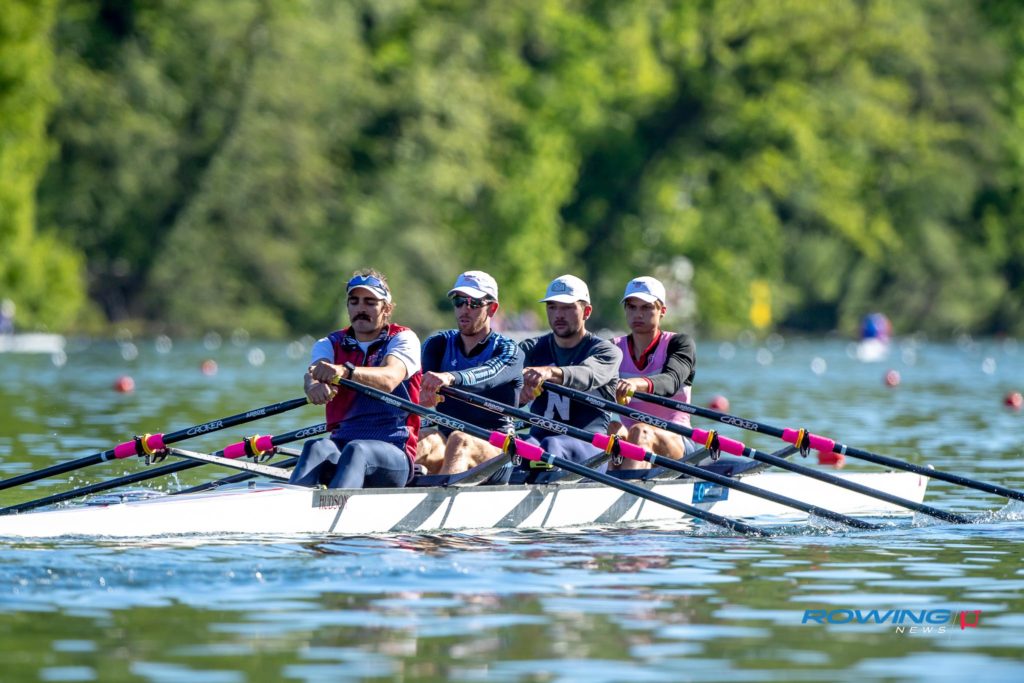
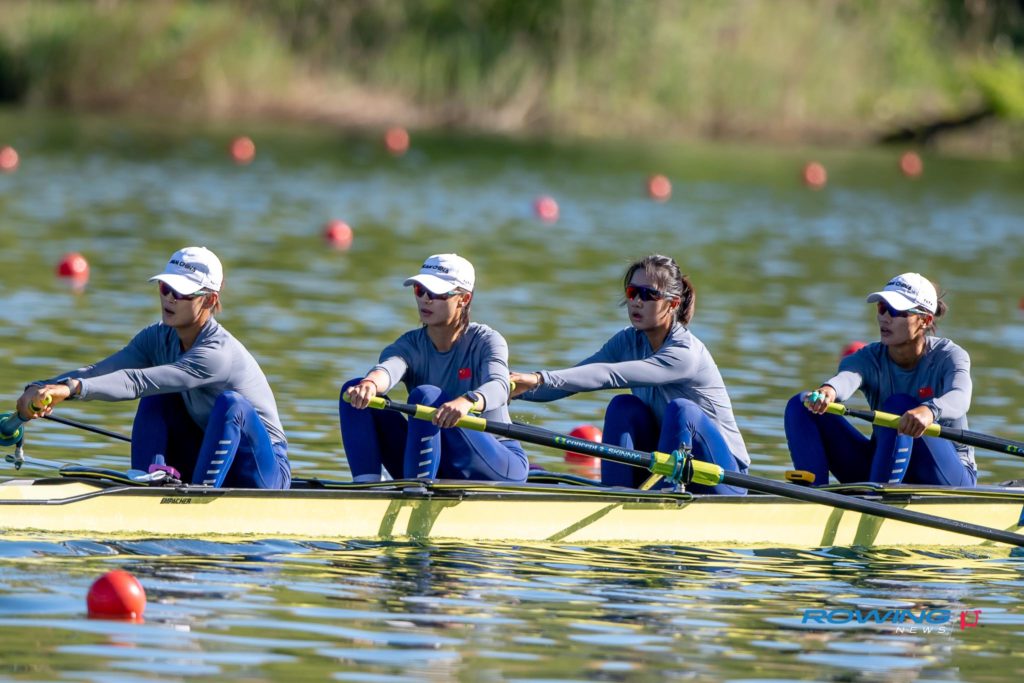
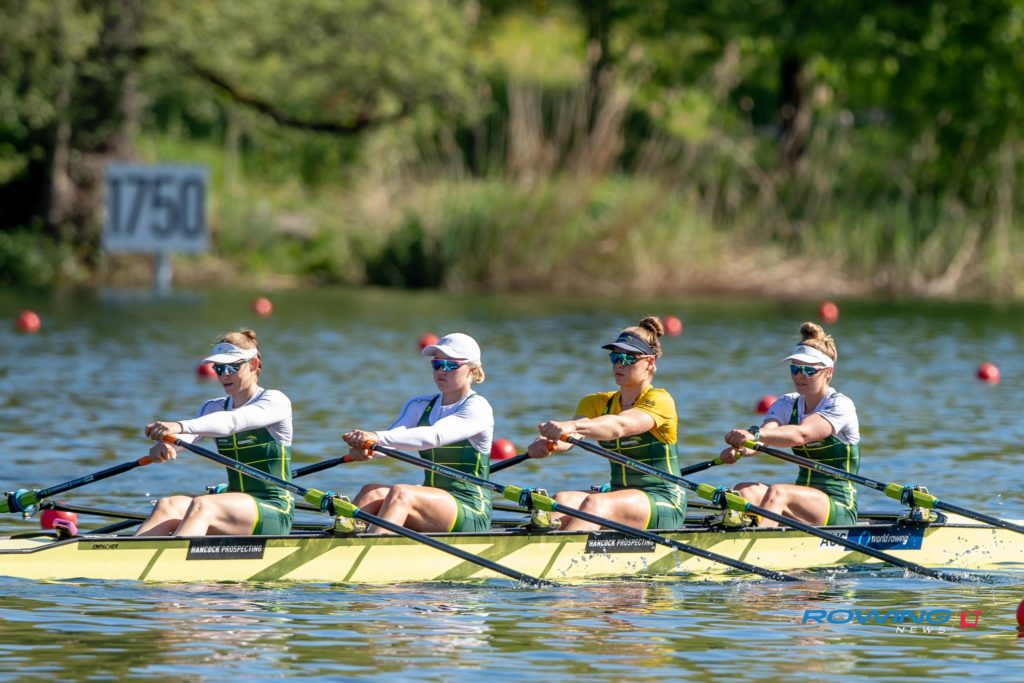
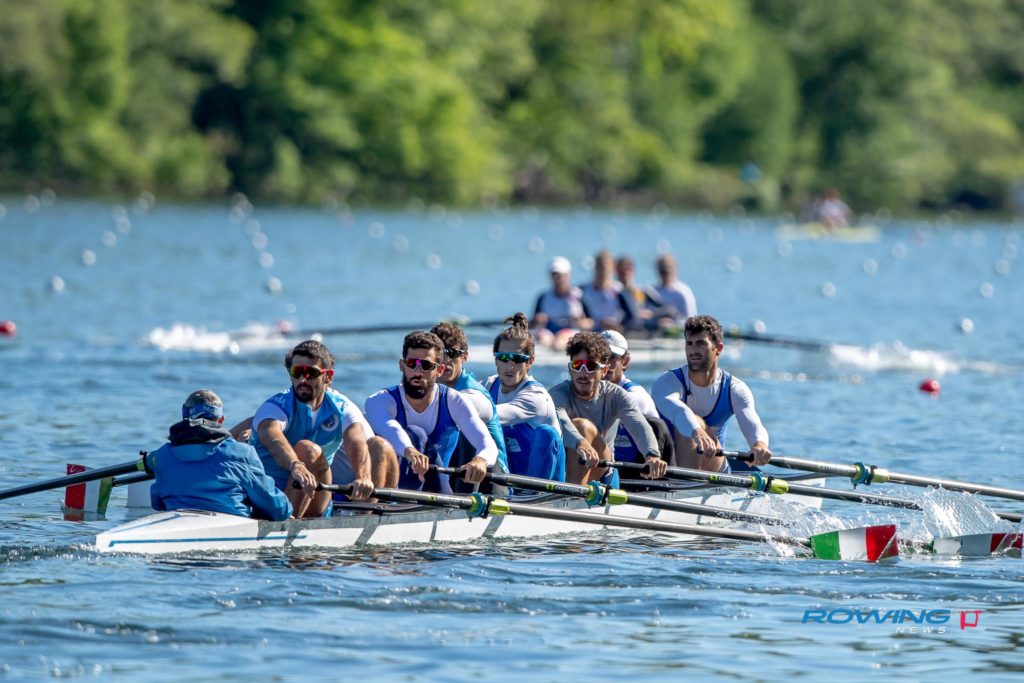
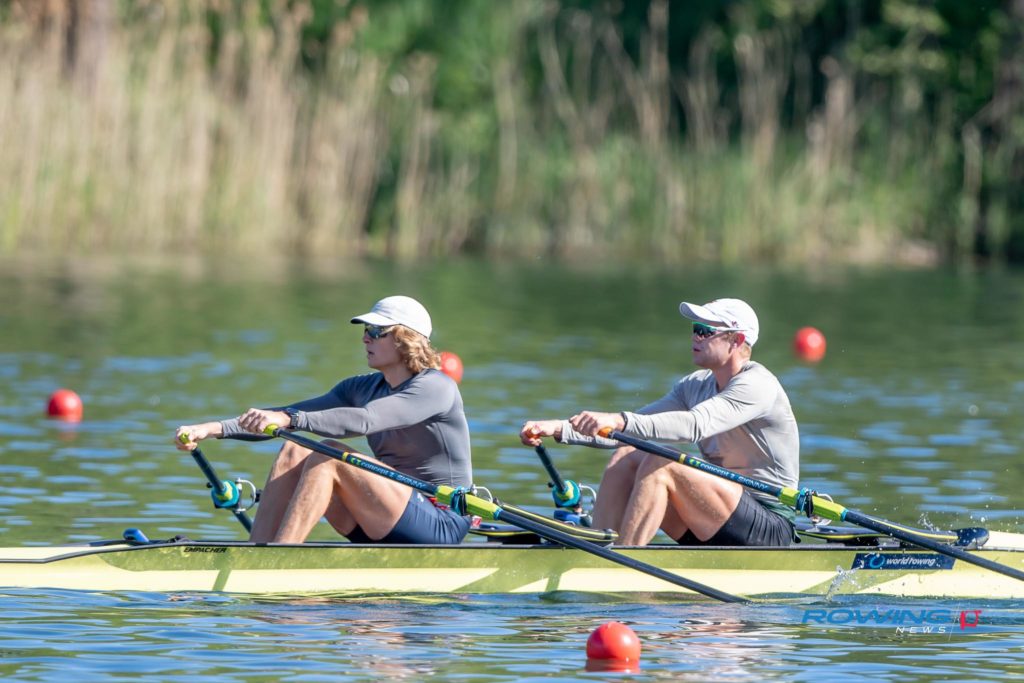
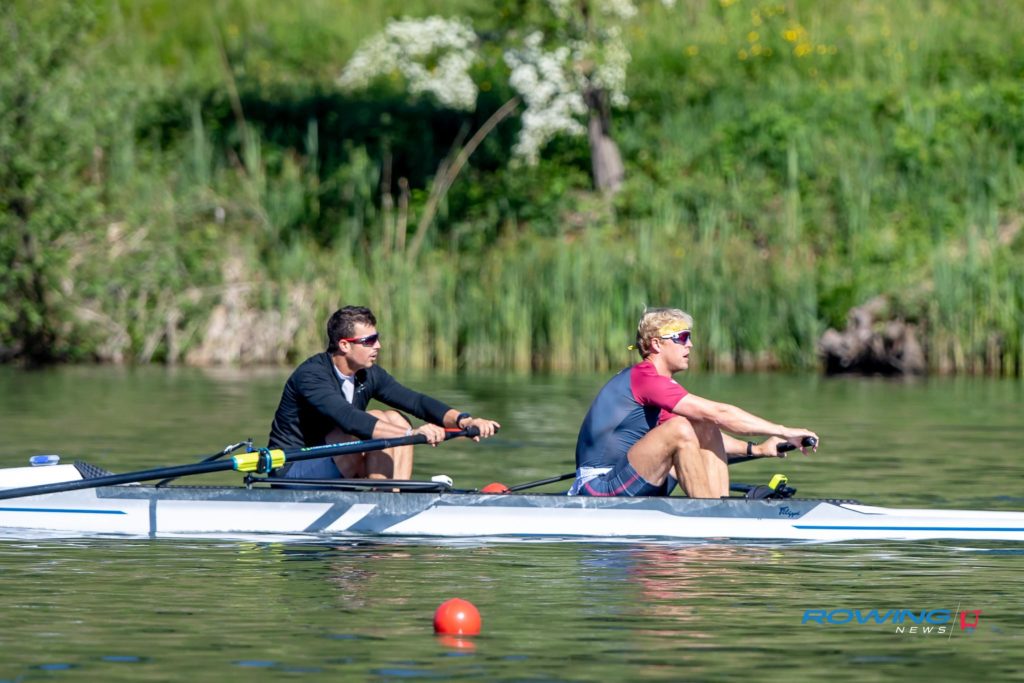
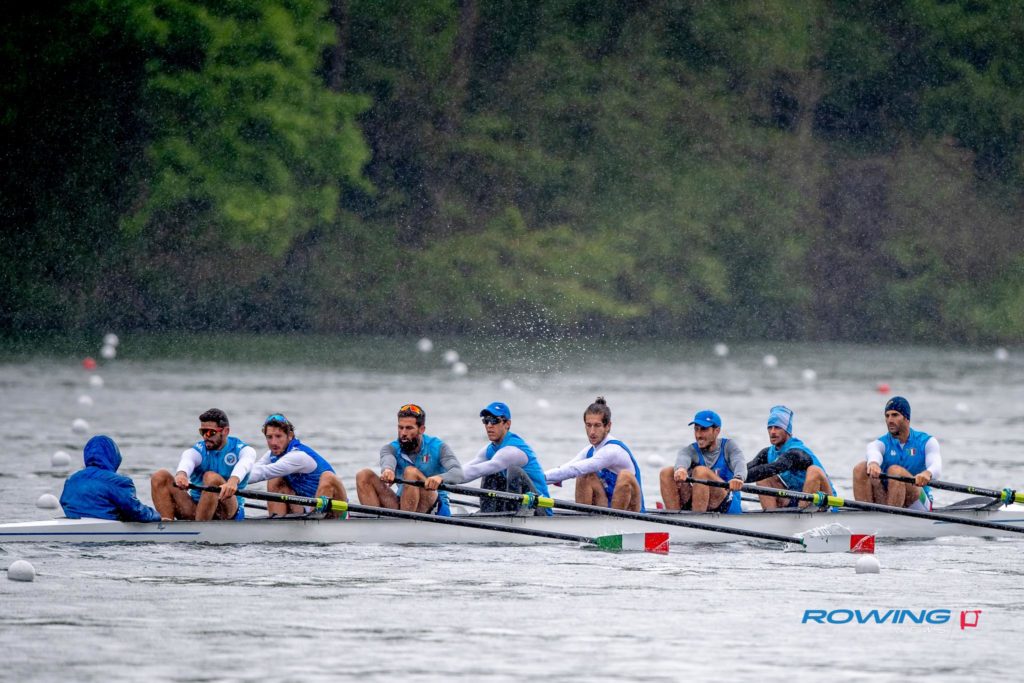
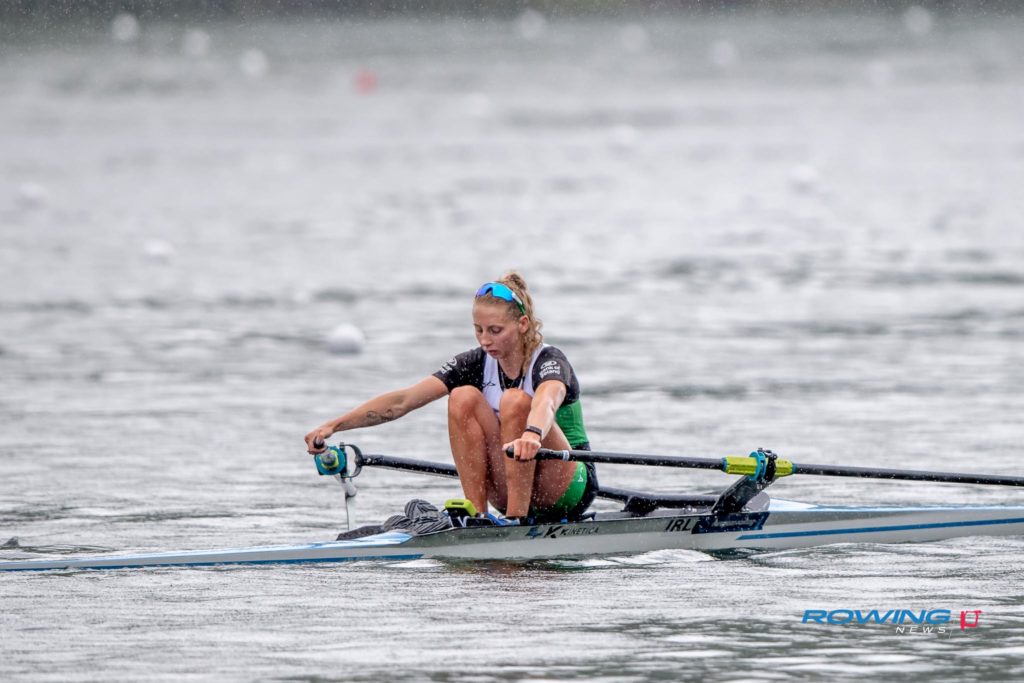
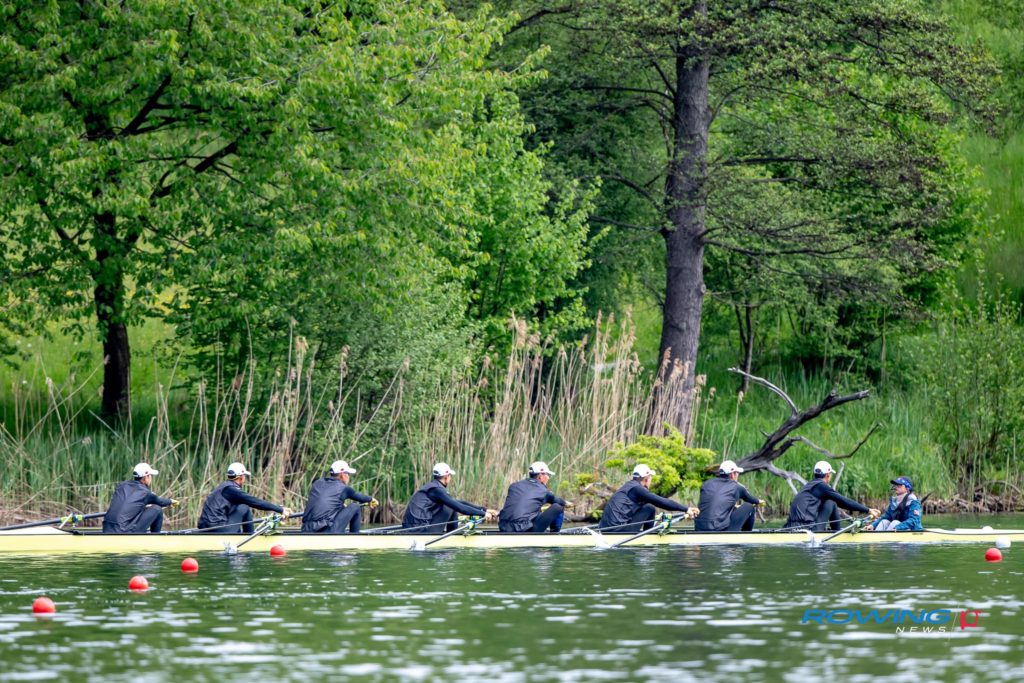
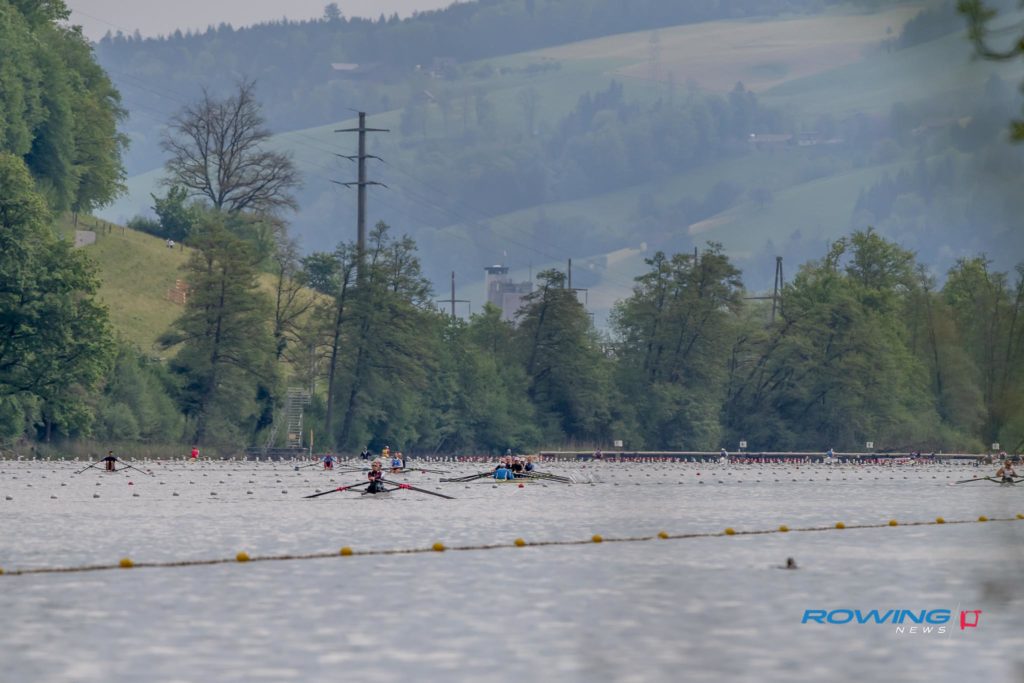
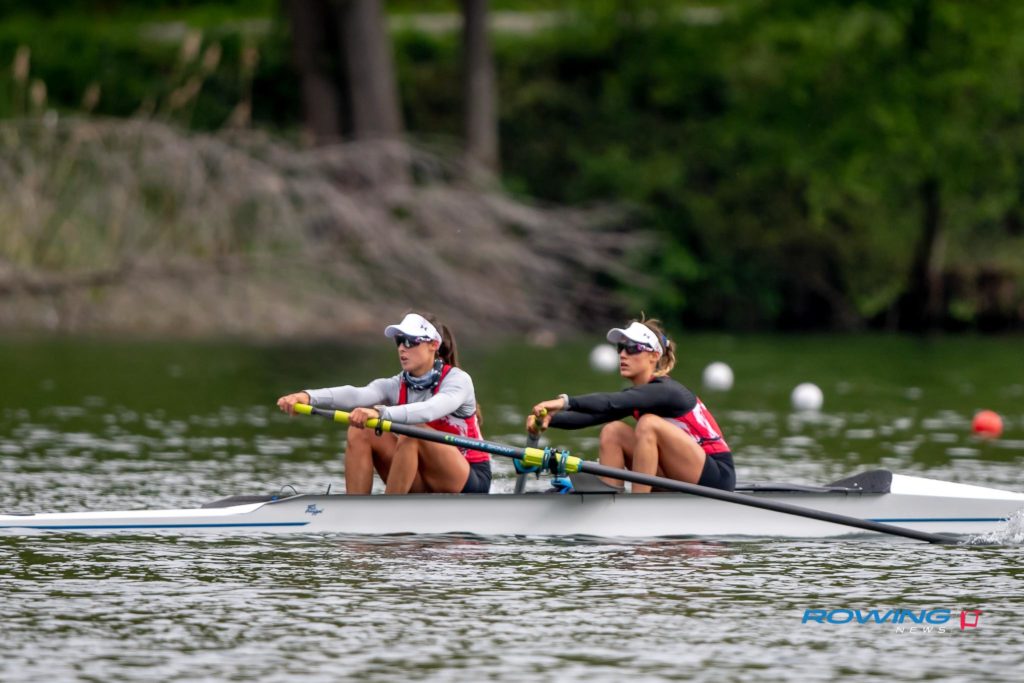
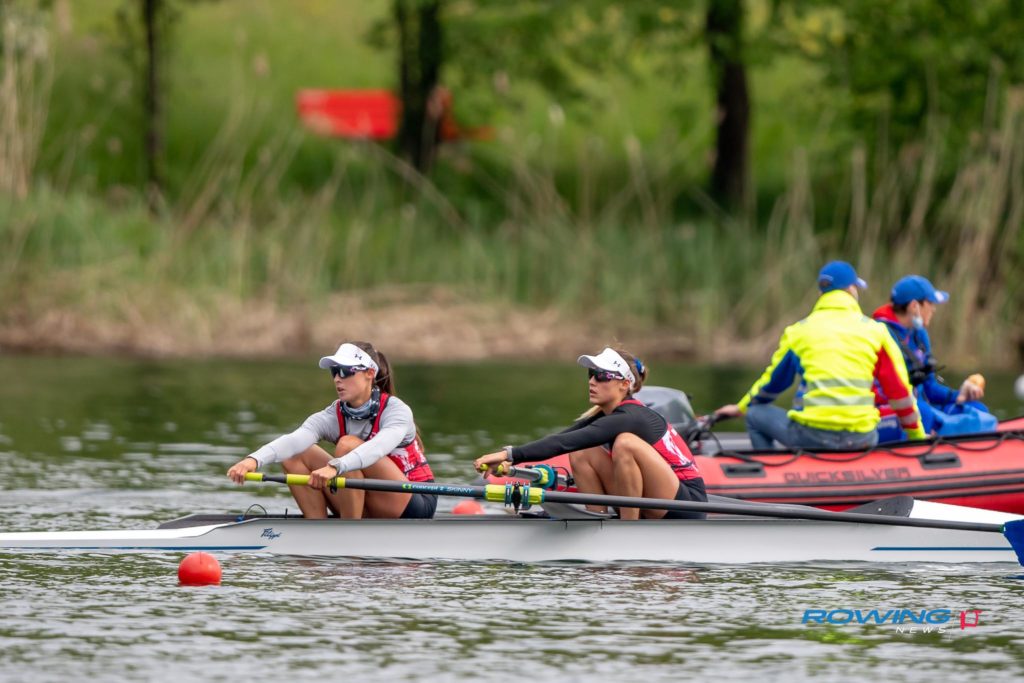
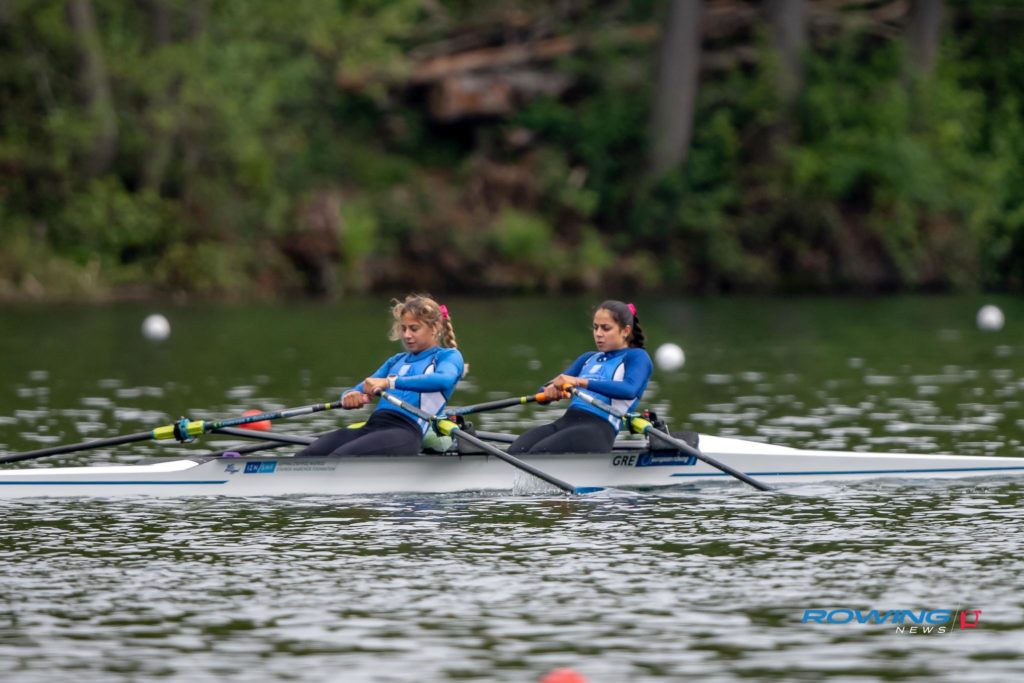
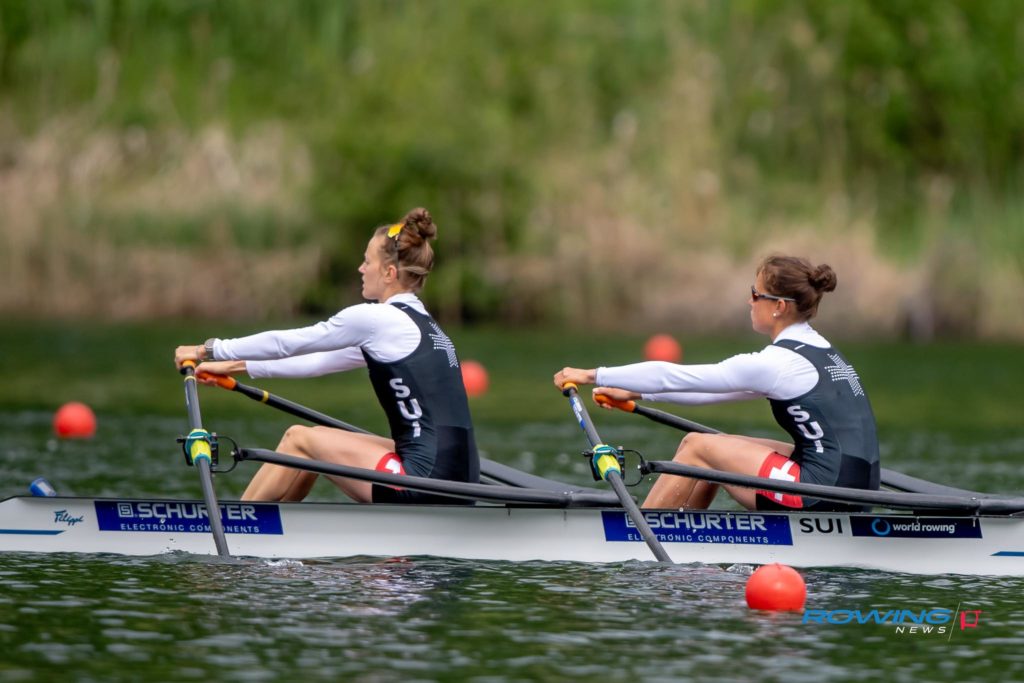
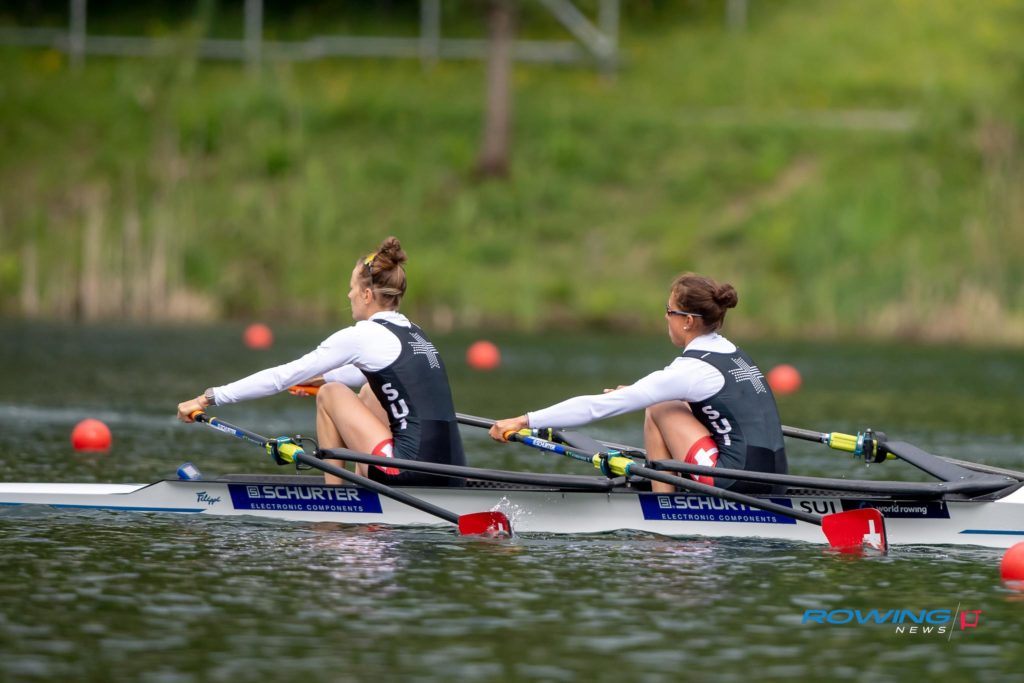
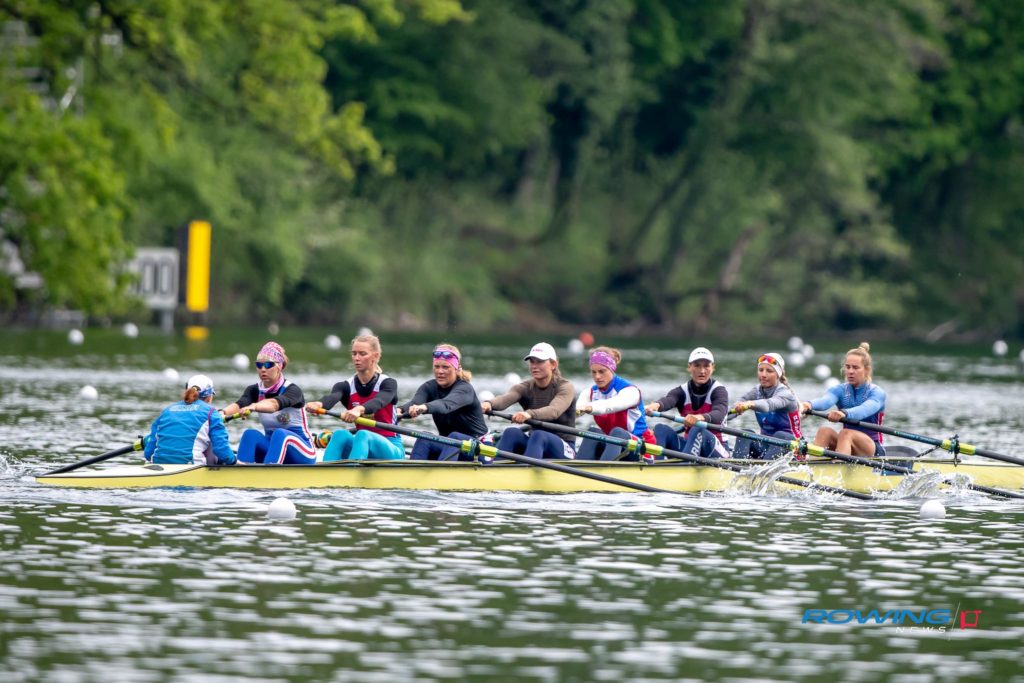
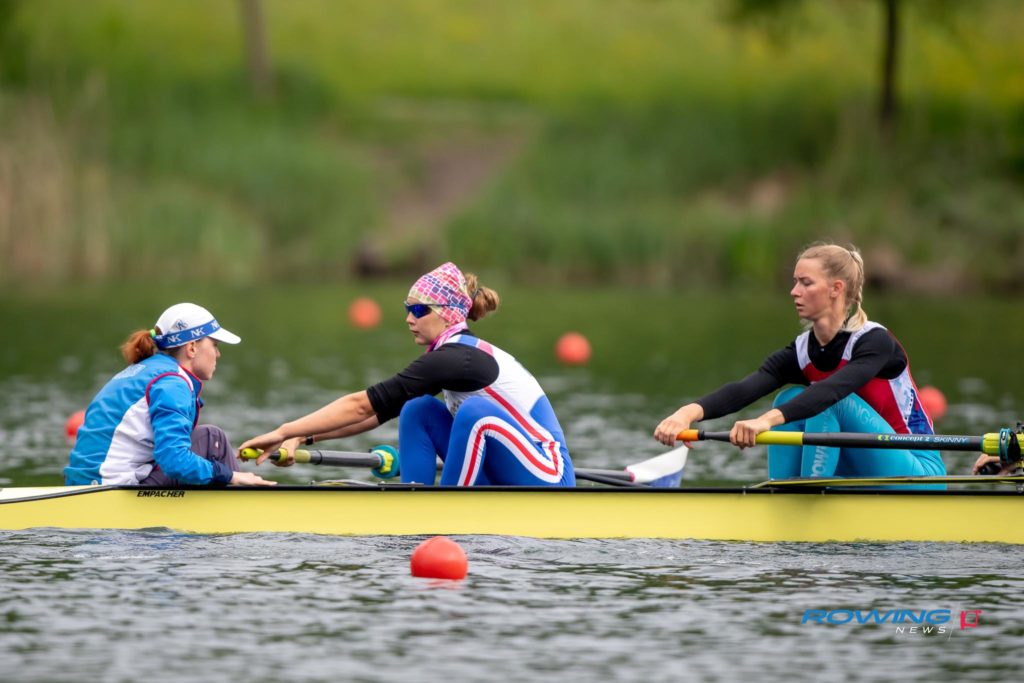
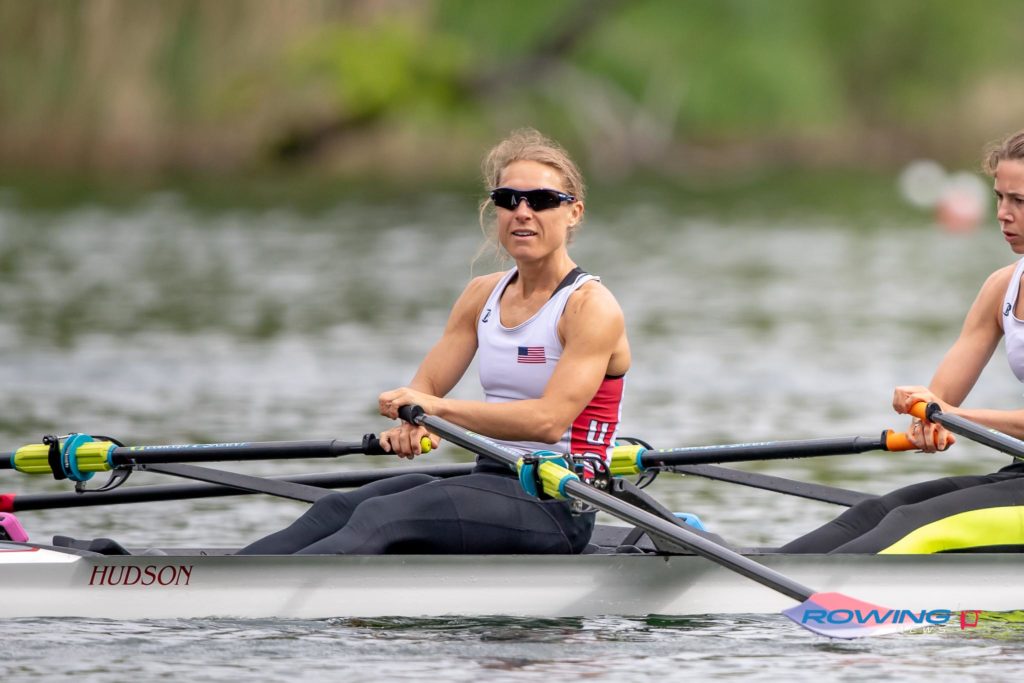
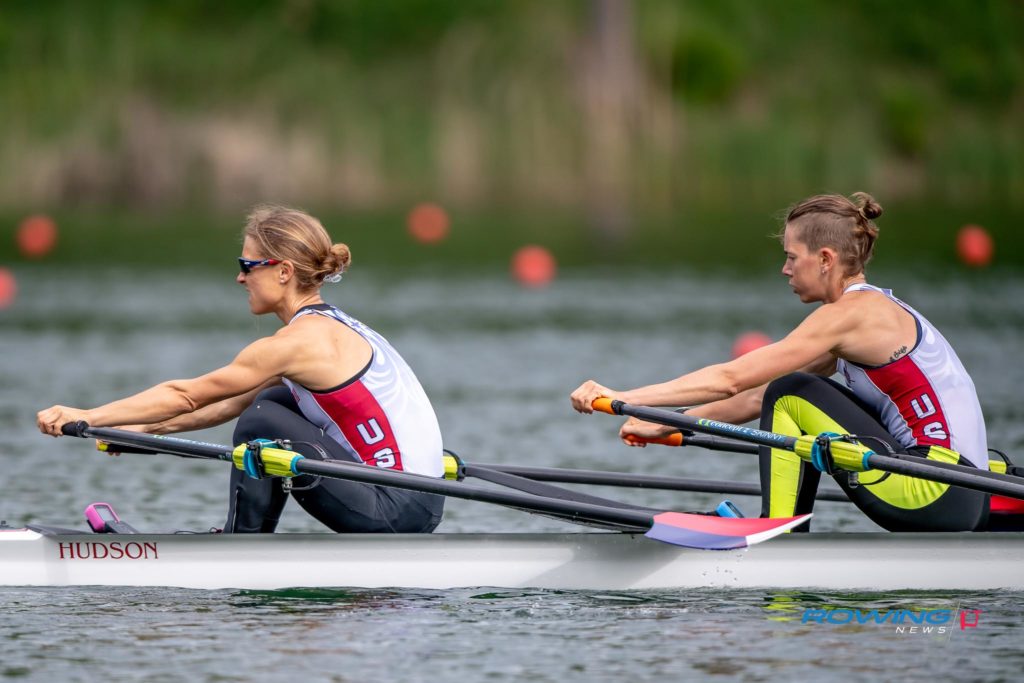
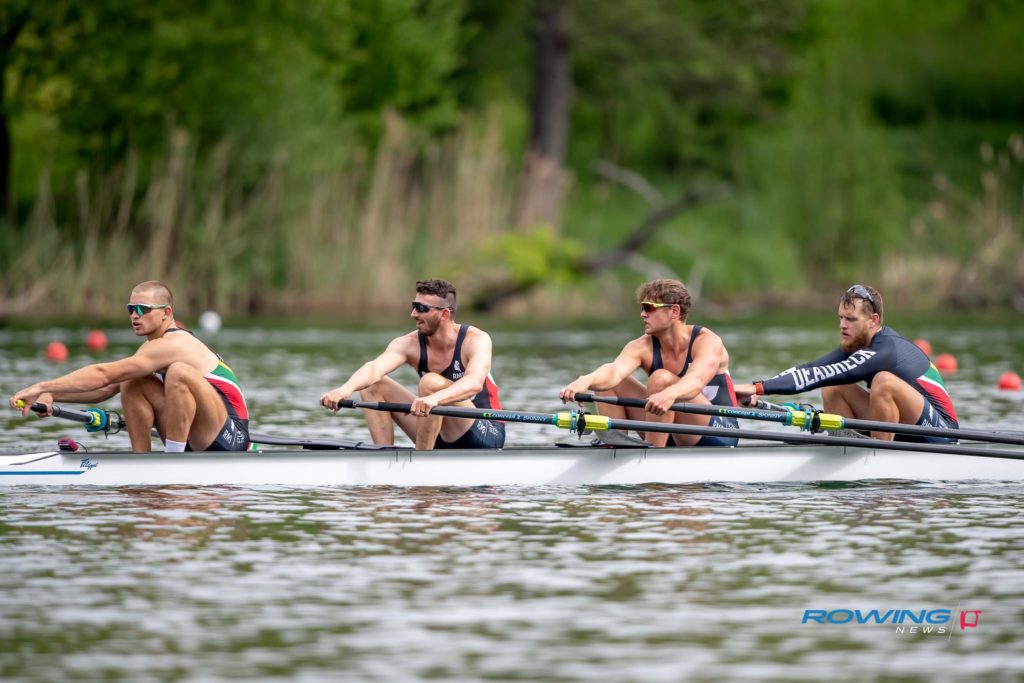
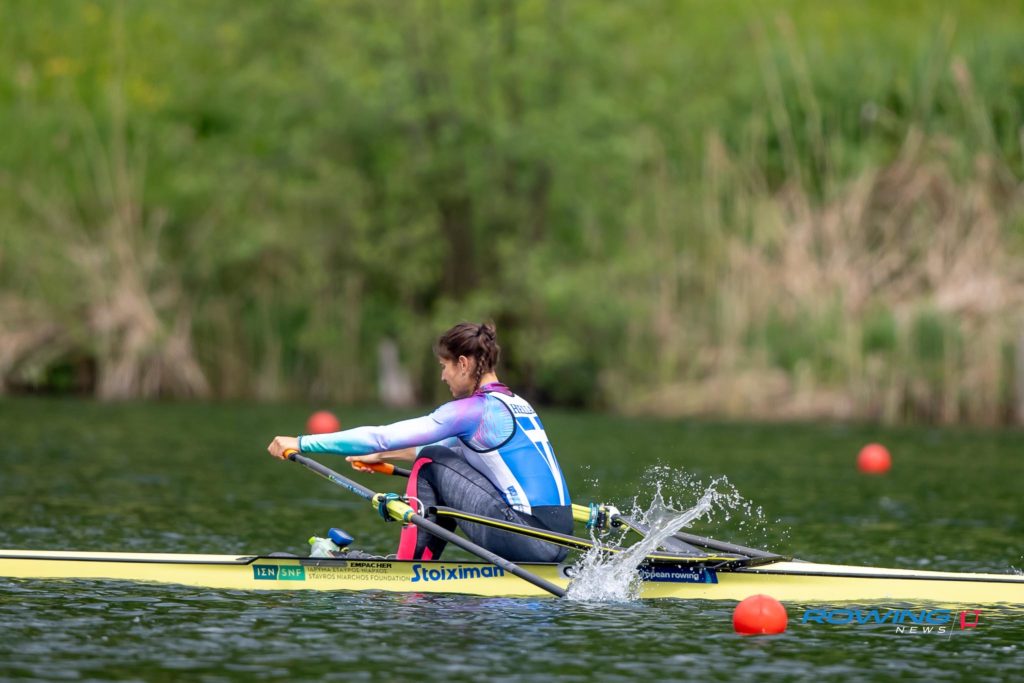
The Rotsee opened for practice in Lucerne, Switzerland, Thursday morning and was filled with crews from around the world who are hoping to earn a place in the Tokyo Olympics and six American crews are among them. Racing starts Saturday. Here’s a gallery of photos from the first day.
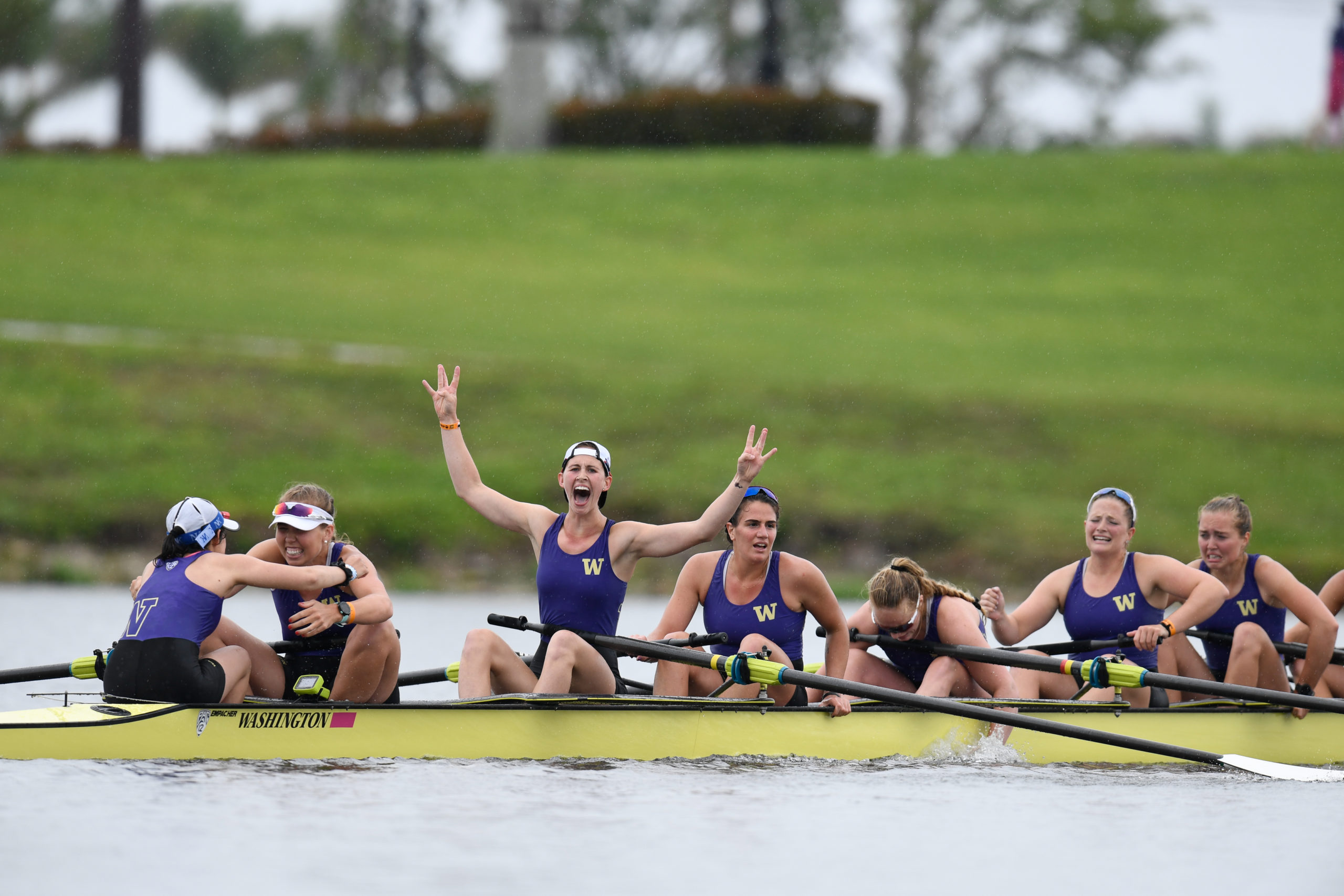
Yet again, the University of Washington, University of Central Oklahoma, and Bates College topped the rankings in this week’s Women’s Division I, II, and III Pocock CRCA Poll presented by USRowing, respectively.
On the Division I side, the gap between first-place Washington and second-place University of Texas continued to be slim, as the Huskies took 13 first-place votes and the Longhorns took 12. The University of Virginia held onto third, while Stanford University and Rutgers University rounded out the top five.
The University of Central Oklahoma took the top Division II spot for the fourth week in a row. All following rankings remained unchanged from the previous week, as Seattle Pacific University, Florida Institute of Technology, Embry Riddle Aeronautical University, and Western Washington University claimed places two through five, respectively.
For Division III, Bates College held onto first place. Ithaca College moved from third to second, while Hamilton College was bumped to third. Williams College and Wesleyan University secured spots four and five, respectively.
Division I Rankings
Team Rank
Total Votes
Prior Ranking
1
University of Washington (13)
489
1
2
University of Texas (12)
486
2
3
University of Virginia
429
3
4
Stanford University
401
4
5
Rutgers University
395
5
6
University of Michigan
372
6
7
Ohio State University
337
8
8
University of California, Berkeley
336
7
9
Indiana University
236
9
10
Princeton University
228
NR
11
Syracuse University
227
10
12
Southern Methodist University
226
11
13
University of Alabama
210
12
14
University of Tennessee
198
13
15
Brown University
114
17
16
University of Minnesota
113
15
17
Duke University
109
16
18
Oregon State University
91
18
19
Washington State University
75
19
20
Unviersity of Wisconsin
47
20
Others Receiving Votes: University of California, Los Angeles (40), University of Notre Dame (30), University of Southern California (29), Clemson University (16), University of Iowa (7), U.S. Naval Academy (3), University of Louisville (1), California State University, Sacramento (1), Northeastern University (1), Drexel University (1), University of San Diego (1).
Division II Rankings
Team Rank
Total Votes
Prior Ranking
1
University of Central Oklahoma (5)
194
1
2
Seattle Pacific University
173
2
3
Florida Institute of Technology
145
3
4
Embry Riddle Aeronautical University
128
4
5
Western Washington University
85
5
6
Mercyhurst University
75
6
7
Barry University
55
7
8
Jefferson University
45
8
Others Receiving Votes: N/a
Division III Rankings
Team Rank
Total Votes
Prior Ranking
1
Bates College (10)
225
1
2
Ithaca College
203
3
3
Hamilton College
200
2
4
Williams College
175
3
5
Wesleyan University
160
4
6
Colby College
135
5
7
Tufts University
123
6
8
WPI
120
10
9
Washington College
115
9
10
Pacific Lutheran University
85
11
11
US Coast Guard Academy
70
8
12
Rochester Institute of Technology
70
11
13
Trinity College
47
13
14
Stockton University
25
15
15
Marietta College
22
14t
Others Receiving Votes: William Smith College (20), Lewis & Clark College (5).
The mile or so between the launch dock and the start line for the final of the lightweight women’s double at the 2021 U.S. Olympic trials did not take long to cover in the boat Michelle Sechser was rowing.
But the metaphorical distance –how far and how long Sechser had been rowing to reach that point, one that would bring her as close as she’s ever been to achieving her dream of being an Olympic athlete–was almost incalculable.
Unlike her partner in bow, Molly Reckford, who was in just the second full season of chasing the same dream, Sechser had journeyed to the start line countless times since beginning her U.S. national-team career at the 2011 Pan American Games.
Sechser had gotten oh-so-close before. She had helped power the 2016 U.S. lightweight double to Olympic qualification at the preceding world championships, only to lose out in selection. She had been so near that her inability to achieve her goal had, at times, filled her with anger and fear.
That was not the case, however, on this day at Olympic Trials I at Nathan Benderson Park in Sarasota, Fla. During the first three races–from the opening time trial they had won by an astonishing 17 seconds, through the semifinal, Sechser and Reckford had established themselves as the favorites to go to Lucerne in May to qualify for the Tokyo Games.
They had partnered just before Covid postponed the 2020 trials– a 34-year-old veteran of international lightweight rowing who had seen her share of triumph and disappointment; and a 27-year-old who was once sure she’d never be good enough to make a national team and quit for two years until masters rowing kindled a desire to match her grandfather’s Olympic feats.
Once settled in, Sechser and Reckford were getting ready to execute a plan that would require a clean and quick start, one that would place them no more than a length behind a field that included Mary Jones and Emily Schmieg, the 2018 world-championship silver medalists many observers considered unbeatable.
“We knew that Mary and Emily were fast off the line, and we knew that they were going to want to control the field,” said Reckford. “And we had mentally prepared to be down about a boat length at the 500.
“We were sitting at the start line, and in my head I was thinking, ‘This is Olympic trials. No matter what, just get off the line clean. This is the most important race of your life. Just get off the line clean.’ And of course, because I was thinking that, I messed it up.”
“We were sitting at the start line, and in my head I was thinking, ‘This is Olympic trials. No matter what, just get off the line clean. This is the most important race of your life. Just get off the line clean.’ And of course, because I was thinking that, I messed it up.”
–Molly Reckford
Six strokes in, Reckford who was keeping a loose grip on her oar to avoid over-tensing her forearms, skimmed the water with her right oar, and the handle flew out of her hand and over Sechser’s head.
Sechser and Reckford all but stopped, and the three other boats pulled away. The spectacle was livestreamed, including Sechser’s unmistakable anger and a frustrated look that seemed to cry, “Not again!”
There had been too many times when she was so close. She could not allow this chance to slip away. But in the world of rowing, losing an oar at the start of an elite final usually means the end of the journey and, for Sechser, her last shot at the Olympics.
From a Sister’s Regatta to the World Stage
Michelle Sechser was not an athletic teen in high school, and the only reason she went to a rowing event was to see her older sister, Jacquie, race for Capital Crew on Lake Natoma in Gold River, Calif.
“I was spending weekends going to her regattas as a good younger sister and thought it seemed pretty cool,” Sechser said. “But I was pretty unathletic at the time when I joined.”
She had participated in dance and dabbled in gymnastics. She liked being active but lacked the confidence to try a team sport. Rowing changed that.
“I never did a side-by-side competition sport,” she said. “But once I got to sit on a start line, I realized how empowering that was, how much confidence it gave me, which was something I struggled a lot with in high school. Finding this outlet, this really specific way that I could be confident in myself, was empowering.”
In her sophomore year, Sechser made the varsity eight in the boat her sister stroked. “She was our stroke seat and team captain. I was her six seat and rushed the hell out of the slide.”
Not as tall or strong as some of her teammates who were being recruited to row at schools such as the University of California or the University of Washington, Sechser nevertheless drew the attention of coach Kevin Harris at the University of Tulsa and earned a place on his team.
After completing her undergraduate education, Sechser enrolled in Tulsa’s graduate school and earned an MBA. During that time, Sechser, who was sculling and working to stay fit, was encouraged by Harris to try out for the U23 lightweight double. Harris arranged for the coach to invite her to camp.
“It terrified me,” Sechser said. “I didn’t think I was good enough. The coach invited me out, explained the process, and gave me the information. But I got the yips and didn’t go.”
Sechser, who liked to erg and train, kept at it until her scores improved so much she decided to go the C.R.A.S.H.-B Sprints in Boston. There, she performed so well that she was approached by Cameron Kiosoglous, a long-time U.S. national-team and Olympic coach who at the time was working at USRowing’s National High Performance Center in Oklahoma City.
“Cam came up to me after the race and asked me about my rowing accolades and if I knew how to scull, which I didn’t really,” Sechser recalled. “He said I should come to OKC in the spring and he would get me in a single and teach me a few things. After I finished my MBA program, I moved to OKC and trained there.”
Sechser developed the speed necessary to make a national team, and in 2011, she won bronze medals in the lightweight double and quad at the Pan American Games. The following year, she made her first senior team and raced in the quad, finishing fourth at the senior world championships in 2012.
In 2013, she rowed the single to a seventh-place world-championship finish in Chungju, South Korea, and then began chasing an Olympic berth in the lightweight double, eventually partnering with Devery Karz.
Karz and Sechser rowed the double at the next two world championships, finishing 10th in 2014 and 11th in 2015, high enough to qualify for the 2016 Games.
The next season is not a good memory. Sechser lost her seat in a months-long selection process to Kate Bertko, an experienced U.S. national-team sculler who rowed on the U.S. open-weight team for three seasons before switching to lightweight. Bertko had won silver in the lightweight double in 2013 and a bronze in the single in both 2014 and 2015.
“We started selection camp, and the cream rose to the top. I did not make the boat. It was a hard camp. It started the day after Christmas and it went until we drove to Sarasota for trials on April 7.
There, Karz and Bertko, who were partnered during selection camp, won and were named to the 2016 Olympic team.
After trials, Sechser was invited to train with Bertko and Karz as an unofficial spare, and she traveled to Lucerne, Switzerland, to race in World Rowing Cup II, Bertko and Karz in the double, Sechser in the single.
“I was grateful they chose to keep us a three-person team,” Sechser said. “Our plan was to keep training together in Princeton, and they would go off to Rio, and I would go to the non-Olympic Worlds trials and race the single. But once they flew off to Rio, and the coach was gone, and the training partners were gone, that was when it finally hit me how devastated I was.
“They were all gone, and I was on Lake Carnegie by myself. There was such pomp and circumstance and ticker-tape-like celebration for everyone going off to Rio, and the next few mornings it was just me out there.
“It hit me like a train, and I realized I did not feel emotionally invested in non-Olympic Worlds. I didn’t feel any motivation to go to the race or trials, so I didn’t.”
Instead, Sechser went home to visit family, took time to reflect, and then decided to enter the championship single at the Royal Canadian Henley to see whether she still loved racing. Canadian Henley is a regatta where Sechser had raced before and that she’d always enjoyed. So she went–and won–and decided to try again for the Olympics in 2020.
Trials Final: Crab, Recover, Go
If Mary Jones and Emily Schmieg had been on the other side of Sechser and Reckford, Sechser might never have seen the oar fly over her head, hit the end of the oarlock, and bounce back toward her face.
“I saw it coming because Mary and Emily were off to port side. You learn to race with peripheral attention, and I was monitoring the other crews off the line.”
As the oar came toward her head, Sechser saw it and ducked, and the oar flew back into Reckford’s hand.
“If the field had been on starboard side, and the crab to port, I would not have ducked,” Sechser said.
Reckford is still not sure what happened.
“I had a loose grip. We were moving very quickly, and I think my blade hit the water and got knocked out of my hand. From the slow-motion video, it looks like I just throw it at Michelle.
“It was the longest two seconds of my life. They talk about life flashing before your eyes and time slowing down. Well, that’s what happened: My life flashed before my eyes and time slowed down. I had this moment when I thought, ‘I just lost us Olympic trials on stroke six.’
Reckford didn’t see the look on Sechser’s face until later, but those watching the live feed did.
“Kate Bertko texted me and said the look on your face when she caught that crab was like you were going to kill her. I was channeling some of the emotion of 2016, some of the camp emotion of 2020. I was thinking, ‘I am not going to let anything stop us from achieving this goal.’”
Behind Sechser, Reckford was having similar thoughts as the oar hit her hand and she pushed it back into place.
“In the video, Michelle looks at me like, ‘I’m going to kill you!’ I was thinking, ‘I cannot let Michelle’s dream die because of my mistake. My own dreams, I wasn’t even thinking about it. Michelle has worked too hard, has been at this too long, for me to have ruined this.
“I caught the oar handle again and thought, ‘OK, it doesn’t matter. Just go. Make it up. You can do this. Just go. I cannot take this away from her.’
“I was going as hard as I could, trying to get us even again and doing everything I could to match her and row well. Power up, and get us even. The devastation would be unreal if I had lost her the chance at achieving her dream.”
Happy Masters Rower
Molly Reckford has wanted to be an Olympian from the time she was four years old and traveled with her family to the 1996 Summer Games in Atlanta. Her grandfather, William Spencer, was a two-time Olympic biathlete, a five-time Olympic coach, and was participating in the torch relay. Reckford’s family gathered in Atlanta to watch.
“That was the coolest experience, and I didn’t fully understood how cool it was and what an opportunity it was because when you’re four everything is new.”
But it made a lasting impression and began a love affair with the Olympic Games. She and her family watched every Games together, and in 2002, her grandfather participated in the torch relay again, helping carry the flame off the plane from Athens when it landed in the U.S.
Both torches hang in the entryway of Reckford’s grandparents’ home in Utah, along with other Olympic memorabilia from Spencer’s Olympic career, and every time she visited, the souvenirs fueled Reckford’s Olympic yearning. “I always wanted to be good enough at something to go to the Olympics,” she said.
When she began attending Phillips Exeter Academy in New Hampshire, Reckford began rowing and dreaming of making the national team. She carried the dream to Dartmouth College but did not excel and began thinking it would never happen.
“I wasn’t good enough, especially in college. I had a super slow erg. I was always in the second boat or lower. I just didn’t have what it takes. I saw my teammates pulling sub-seven erg scores and going to U23- development camps. I was more than 30 seconds slower. I just knew I had no shot.
“I let the dream rest a little bit. I still fantasized about it and always wanted to be the best of the best, but I figured I was just not made for this, I’m just wrong. Post college, I gave up on rowing. I needed to go live life, and I stopped rowing for about two and a half years.”
Reckford moved to Menlo Park, Calif., and began her career with Aetos Alternatives Management. Just for fun, and because she liked sculling (something she had done summers during her college years), she joined Bair Island Aquatic Center and started rowing again. “I was thinking, ‘I love this, but I forgot how hard it is.’”
Bair Island had a masters team, and Reckford was invited to join the racing group. “That was great because the masters were all like, ‘You’re so young and strong, Join the comp team.’ I felt like a celebrity–wanted and desired. In college, I never felt like that; I felt very disposable. Very quickly, I went from paddling around for an hour before work to wanting a real training program and wanting to be on the water more times a day.”
Along the way, Reckford got fitter, hit erg scores she’d never seen at Dartmouth, and began training before and after work.
A training partner saw her erg scores and told her she was close to the standards of some high-performance lightweight teams. So she pushed to get to, or below, those marks.
“And that’s when I started training super seriously,” Reckford said. “I thought, ‘I might be good at this lightweight thing. I might actually be good enough to make the national team. So I dusted off that dream and pulled it out of the back of the closet.”
She set goals that became decision points, including entering six events at the 2018 masters national championships in Oakland, Calif.
“I told myself, if I do well, I will take that as a sign that I should keep doing this. And if I don’t do well, I tried. I’m not good enough. But I can still be a masters rower and have fun.”
Reckford won all six races and began looking for more challenges. That led her to a national-team identification camp, where she hit a personal best on the erg. “I preformed pretty well, and that was another sign,” she said. “That fall was when I started really putting in the work.” To test herself again, Reckford entered the April 2019 USRowing Spring Speed Order in Sarasota, Fla.
“I had no clue at the time how much that was going to change my life,” she said. “No. Clue.”
She got permission to work remotely, packed up her oars, and flew to Florida, where she assessed the situation and began mapping another goal.
“The two fastest people were going to be the double. The third-fastest person was going to be the single. The next four slots were going to be in the quad. My goal was to make the lightweight quad, to finish in the top eight. If I am not in the top 10, this is over, this is done. I have tried, I put in a lot of effort, but this is taking away from my career, and I can still have fun and be a masters rower.”
Reckford won the B final, top seven. “It was awesome.”
She began looking for a doubles partner for the 2019 world-championship trials and emailed Peter Mansfield, the coach at Vesper Boat Club, hoping she could come to Philadelphia and partner with Sechser. But he suggested she ask Sarasota Crew coach Casey Galvanek whether she could join a lightweight-women’s-double camp he was running in Sarasota.
Galvanek invited her, and Reckford remembers thinking, ‘This is it. This is my break.’”
Before camp, Sechser had partnered with Christine Cavallo and begun training for the 2019 trials. Reckford was partnered with Rosa Kemp, who had finished third in the April speed order. Later that year, at the world- championship trials, Sechser and Cavallo won. Reckford and Kemp finished second. Both landed in the lightweight quad, and Reckford had made her first national team.
“That was really cool. In one calendar year, I went from masters nationals to an ID camp, to seventh at speed order, to second at trials, to Worlds. World championships happened in August, and I had a Facebook thing that came up that said a year ago you were drinking beer out of a trophy at masters nationals. And now I was at Worlds.
“After that, I decided, This is it. I am going for it. I wanted to make Tokyo. I have a shot at the Olympic team. I’ve got to try.”
Trials: Second 500, Taking the Lead
Sechser never stopped rowing when Reckford lost her oar, and the boat didn’t lose as much distance as it could have. A millisecond after Sechser saw the oar go over her head, she heard Reckford get it back into the oarlock.
Sechser and Reckford had talked about what they needed to do if something happened–if they clipped a buoy, bobbled a stroke, caught a boat-stopping crab–and the plan was to get right back to racing.
“I was keeping that raw attitude of ‘Nothing is going to stop me from winning this race and achieving this goal,’” Sechser said. “When she caught the oar, she knew exactly what I was thinking, and my first thought once I heard her sleeve pushing back into the oarlock was, ‘Just go!’
“I was keeping that raw attitude of ‘Nothing is going to stop me from winning this race and achieving this goal.’ When she caught the oar, she knew exactly what I was thinking, and my first thought once I heard her sleeve pushing back into the oarlock was, ‘Just go!’”
–Michelle Sechser
“She would catch me in a stroke or two. As soon as we took five strokes to build, I could feel that she was rowing really hard to make up for what she had caused.”
The original plan was to trail Jones and Schmieg by no more than a boat length at 500 meters, but the adrenaline from the mangled start pushed them into another gear, and they were even when they reached that point. At the venue in Sarasota, there’s a small white building that’s an indicator that crews are in the second 500 meters.
“I saw we pulled even right around that white building,” Reckford said. “I thought, ‘This is good. We made up for it. We can do this. Breathe, just keep breathing.’ At about 750 meters, Michelle called, ‘Ready.’ She is much more experienced at racing, and that is her saying, ‘I’m ready for you to call us into a move now.’”
It was not a move Sechser planned for any specific point but one she was looking to make based on what she felt other racers were doing.
“You can sense when the field is sort of lulling or hesitating, and that’s the moment to move. So as soon as we drew even, I said, ‘Ready for the move.’ It was the open-door moment when the field was hesitating.”
Recalled Reckford: “She said, ‘Ready,’ and I said, ‘Ready up,’ and we brought up the rate a little bit, and we were able to move far enough ahead to control the field.”
Worlds 2019, Selection Camp 2020
For Reckford, the 2019 World Rowing Championships were a wish come true. She had made a national team and was embarking on the Olympic dream she had begun hatching at the Atlanta Summer Games and in the hallway of her grandparents’ home in Utah. Next would come more training, lightweight camp in Sarasota, and then Olympic trials–with Kemp, she hoped.
For Sechser, it was another bad memory. She and Cavallo had failed to place high enough at the world championships, and the women’s lightweight double would have to go through the Final Olympic Qualification Regatta in Lucerne if it were to race in Tokyo.
It’s a near-impossible regatta. To gain a place in the Olympics, the crew has to place in the top three. Every country with a fast combination that has not yet qualified sends a boat. In rowing, it’s known as “the regatta of death,” the place where dreams are buried.
She and Cavallo were not a bad crew, Sechser says. They just had not gotten it right.
“The best way to describe it is there are a lot of pieces to this puzzle to get right. They don’t all have to be 100 percent perfect, but they all need to be at least good. Nothing was egregiously wrong, but we struggled to keep all the pieces together.
“It was so disappointing to come up short. The year 2019 was hard. It was a lot of trying to just put some duct tape on problems and make it work, and it’s not how preparing for a proper qualification should go.”
After Worlds, Sechser took time to recover and then began training again. So did Cavallo and Mary Jones and Emily Schmieg. After winning silver at the 2018 World Rowing Championships, Jones and Schmieg finished third at the 2019 trials. Jones was dealing with an injury, but Schmieg won the lightweight-singles trial and raced in Austria at the world championships.
All four women went to Austin just after Christmas and began another selection camp. Again, as in 2016, Sechser did not emerge with a partner.
So she called Galvanek, who was also running a selection camp that Reckford was part of. She was hoping Kemp would be rowing with her, but Kemp had retired, and Reckford was rowing with Jess Hyne-Dolan, who was also in the 2019 lightweight quad.
Galvanek told Sechser he would not break up the double, but she was welcome to call them both and ask if they would open the boat to selection again. Reckford and Hyne-Dolan both were excited by the prospect of having Sechser join them but also scared of losing to her and not having a partner.
“That was really exciting, and really scary, because you never want to have to seat-race Michelle. She is so fast. We had a double that could move and felt safe, and if we let her come in and seat-race against us, there was a chance she would kick one of us out of the boat. We both had this interesting calculus that I am going to be the one left without a seat, versus I get to row with Michelle.”
But Cavallo, who also had lost out in Austin, called and said she wanted in. Problem solved. Four women in camp meant two crews for trials.
The camp lasted two weeks and resulted in the partnering of Sechser and Reckford.
“For me, it was another dream come true,” Reckford said. “She was willing to take a risk on me when I was a fairly unproven, very inexperienced athlete.
“We had three weeks before trials to correct 7,000 problems, and then we were going to race a boat that’s been together for two years. Good luck.”
Covid-19, Crushing Disappointment, and Uncertainty
Sechser and Reckford were set to go. Some of the crews that would race in that February 2020 event were already in Sarasota. The double from Austin was in the airport in Charlotte, N.C., in transit to the regatta.
Then the pandemic invaded. Trials were postponed, then canceled. The qualification regatta was canceled. The Olympics were postponed.
“I was trying to take a nap when I got that email,” Reckford said. “Talk about getting punched in the gut. I was just devastated. I was trying to talk myself into believing it would be OK. ‘In 30 days, they are going to hold it. We’re going to lock down for two weeks, and then Covid will go away and we’ll be fine. They’ll just move the lightweights to Trials II.’ I was just trying to tell myself it will be fine.
“Then when they canceled the qualification regatta, we knew if there is no qualification regatta, we don’t have a chance because this boat is not qualified. Losing the chance at trials, and then thinking that America might not even get a boat, it was dark, it was a dark time.”
Reckford and Sechser stayed in Florida and trained until June. Then both moved north to Boston and made different plans. Reckford found a host family in Boston and was training under the guidance of Harvard assistant coach Jessie Foglia.
She participated in a sort of secret regatta run in late summer that involved all the people who were also training on the Charles River, including the Cambridge Boat Club group run by Gregg Stone, the father of 2016 Olympic silver medalist Gevvie Stone.
It was called the Social Distancing Regatta. Reckford finished sixth in a field of mostly heavyweights.
Sechser, however, had decided she needed time off.
“I feel like a bad person saying this, but yes, Covid was a good thing for me,” Sechser said. “It forced me to reevaluate a lot of things.
“I didn’t know it at the time, but I had a lot of heavy emotional processing to do, and my body needed rest. The bulk of that summer was bike riding, cross-training, PT, and rehab. If I was going to go for one more time, I knew I needed to be healthy and ready.
“My emotional levels were just through the roof. I was existing on rage and fear. It’s not the way good rowing happens. It’s not the way healthy doubles relationships happen.”
She was angry, Sechser says, with herself–for trying so hard for so many years and not being able to close the deal.
“I was angry at not being good enough, not being skillful enough. A lot of times, doubles or crews or countries will have an athlete who’s just a head above the rest, a standout. I couldn’t quite get myself there, and it felt like the harder I worked, the farther away it got.
“I was scared of putting so much into it and still not being good enough. There was a sense that there was still more that I couldn’t get right, whether it was peaking right, or staying injury-free, or gelling with my partner. I just felt like there was more to show, and I hadn’t timed it well enough to be able to show that to everyone, and to myself, to prove what was really there.
“If I ended without that, it would have been very unsatisfying.”
So Sechser took the summer off for the first time in years. She visited her family, spent time with friends, concentrated on work, helped start a company, and was promoted. She found peace.
By fall, she was ready to go again.
“Recommitting to it, having a rejuvenated sense of purpose, I was able to take a deep breath, a step back, so I wouldn’t be competing from a place of panic or fear of failure.
“If I don’t make the Olympics again, fine. I was coming back to it just wanting to see how fast I can go, how high we can get, domestically, internationally.
“I was just living life and being reassured that everything was still going to be OK. It took away a little of the emotion that I have given everything and missed all this time with my family, my boyfriend, and my friends. They’ll still be there.”
Trials final: The last meters to the line
As Sechser and Reckford commenced the final 500 meters, they were in control and holding a lead that kept the field in view. If there was going to be a challenge in any of the other lanes, they would see it coming.
But they were not thinking sprint. What had happened at the start was front of mind.
“My heart rate must have been up 195 beats a minute after that adrenaline shock at the start,” said Reckford. “We pulled harder coming into the finish, but it felt too risky to sprint, and if there was damage to the oar, if I messed up again, if we got overexcited, clipped a buoy, it was better to just control our boat, make it across the line.”
In stroke seat, Sechser was thinking the same thing.
“I kept the rate pretty low going forward,” she said. “We definitely didn’t sprint. I didn’t want any more crabs or diggers, anything. I didn’t know if there was any sort of damage to the oar.
“I just was thinking, ‘Dear God, get us across this line safely.’ So we kept the rate pretty low and controlled. I communicated to Molly to keep it clean and tight. The field was in our view. Should someone sprint, take the rate up and go.”
But there was no matching sprint. Sechser and Reckford crossed the line and claimed the right to go to Lucerne and race to qualify for Tokyo.
Lucerne Next
For Reckford, whatever happens in Lucerne is unlikely to end her rowing career, though she’s not thinking past the qualification regatta.
“I couldn’t believe we pulled off trials,” she said. “Until 250 meters to go, every third stroke I was still looking at the boat next to us, thinking they are about to go, they are going to sprint through us.
“I was mentally prepared to have to sprint. They are all elite athletes. They’ve done this so many times. They all have good sprints. They’re going to whip out something terrifying.
“And when we crossed the finish line, there was a certain amount of embarrassment about the start but there was mostly excitement and joy–that we had managed to do it, and that we had closed a very strange year and made it to the next step.
“I think of Tokyo in a very daydream sense. I really want to go, but this Lucerne regatta is going to be the hardest regatta of our lives. This is going to be so competitive.
“There are a number of things that could go wrong, and we need to have everything go right in order to pull this off. I want it so much, but I can’t think about it seriously yet, because I don’t know how fast these other boats are.”
For Sechser, of course, it will be different. She is aiming for her last Olympics. After that, it’s career, family, friends, and life beyond the grind of lightweight rowing. Getting the opportunity to race for Tokyo is an accomplishment she will always remember.
“There is still a little bit more to go to close the loop, but I can say without a doubt, should anything happen, whether Covid-related or anything else, I feel so much more at peace with how it’s gone, and with the kind of speed I’ve been able to produce in a double.
“It’s been fun, and it’s the closest I’ve ever been with a doubles partner. It’s just been a really special experience. The loop isn’t quite closed, but I’ve certainly enjoyed this final phase a lot more.”
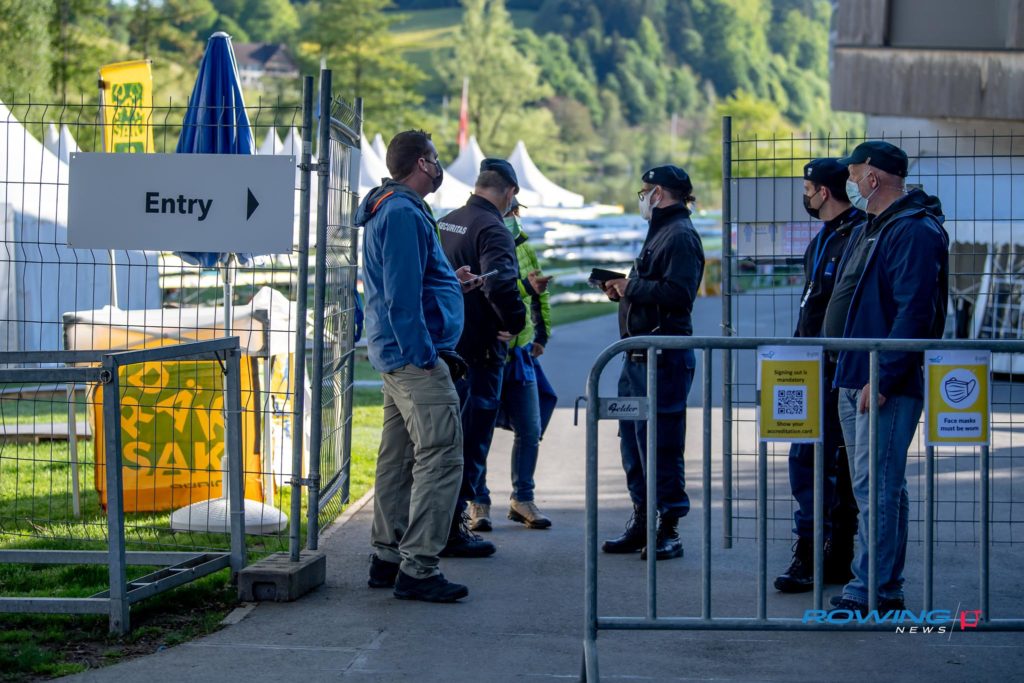
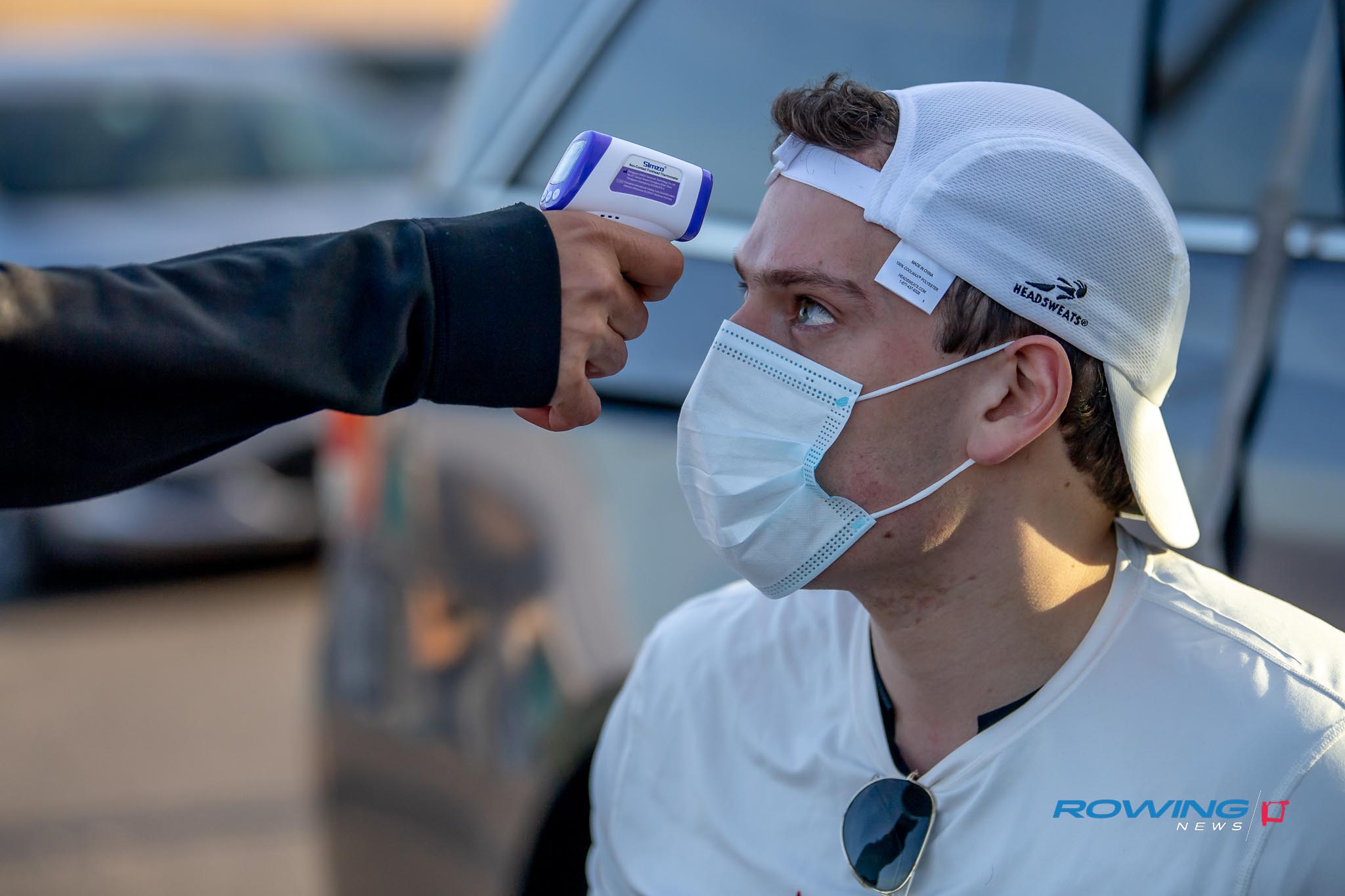
For athletes who have received a full vaccination sequence and are training with other fully vaccinated athletes, they no longer have to wear masks while outside on docks or other outdoor areas as long as they are maintaining social distance. They should continue to wear them inside, according to USRowing.
The full documents can be found in the links above or on USRowing.org.
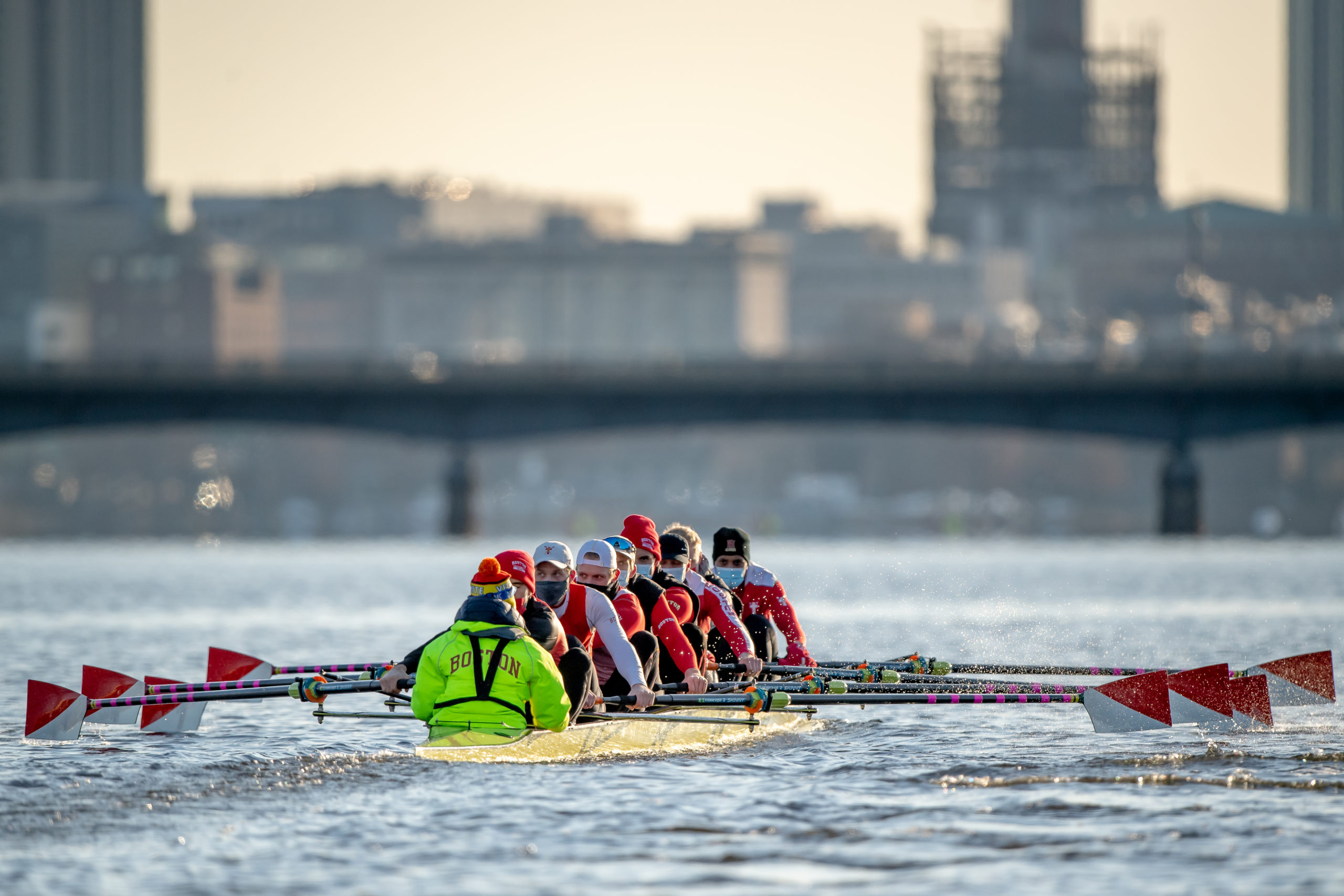
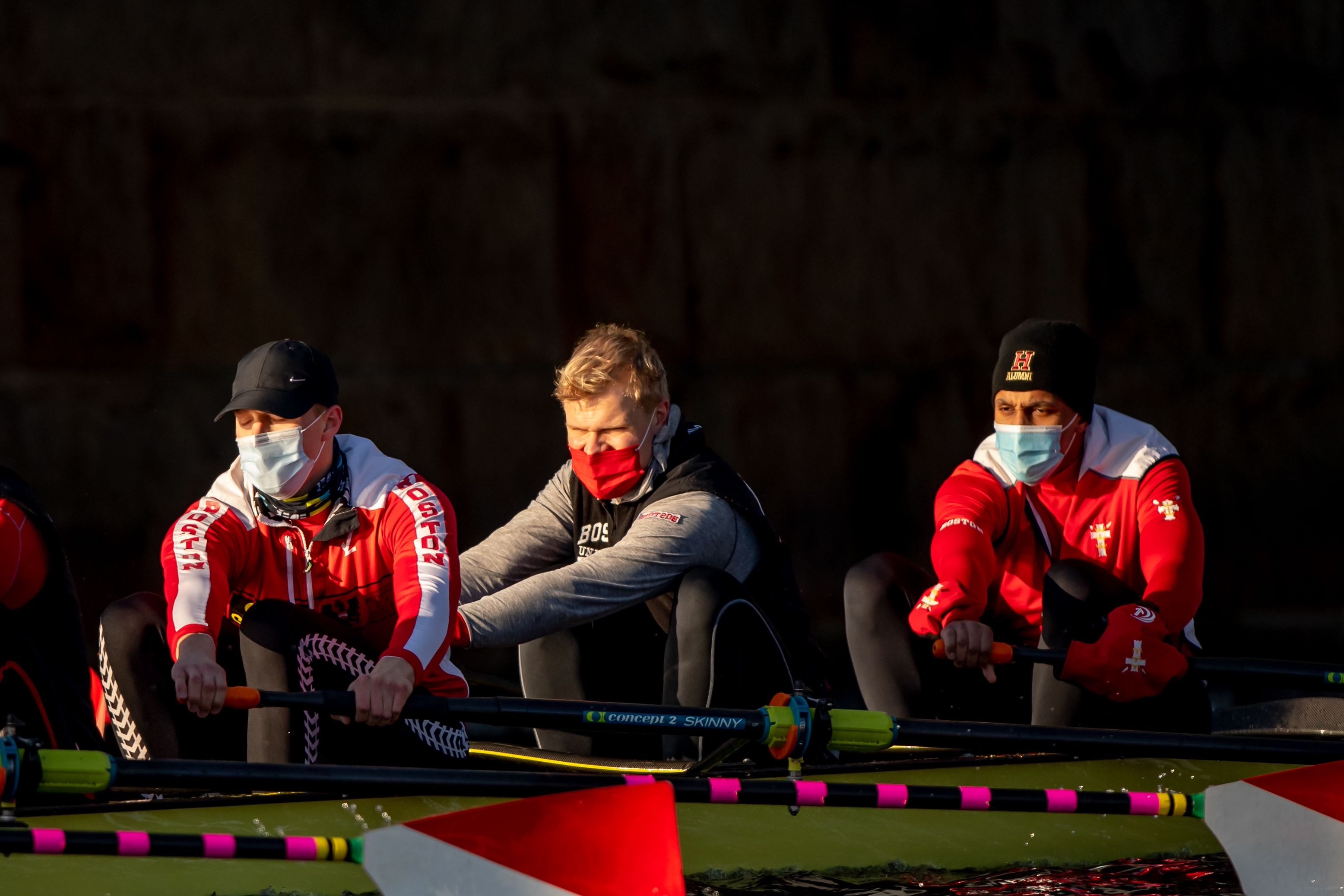
It’s mid-March in Boston, Wednesday, just before 5 a.m., and three days after clocks were turned forward for daylight savings time. It’s dark. It’s cold, somewhere just above 20 degrees. A warm week is followed by a return to January conditions. Ice is forming again along the banks of the Charles River, not enough to choke it off, but enough to accentuate the temperatures of the past few days.
In several student dorms on the campus of Boston University, alarm clocks are sounding time to wake up. If ever there were a morning when the thought of rolling over and waiting for the sun to warm the day could be excused, this would be it.
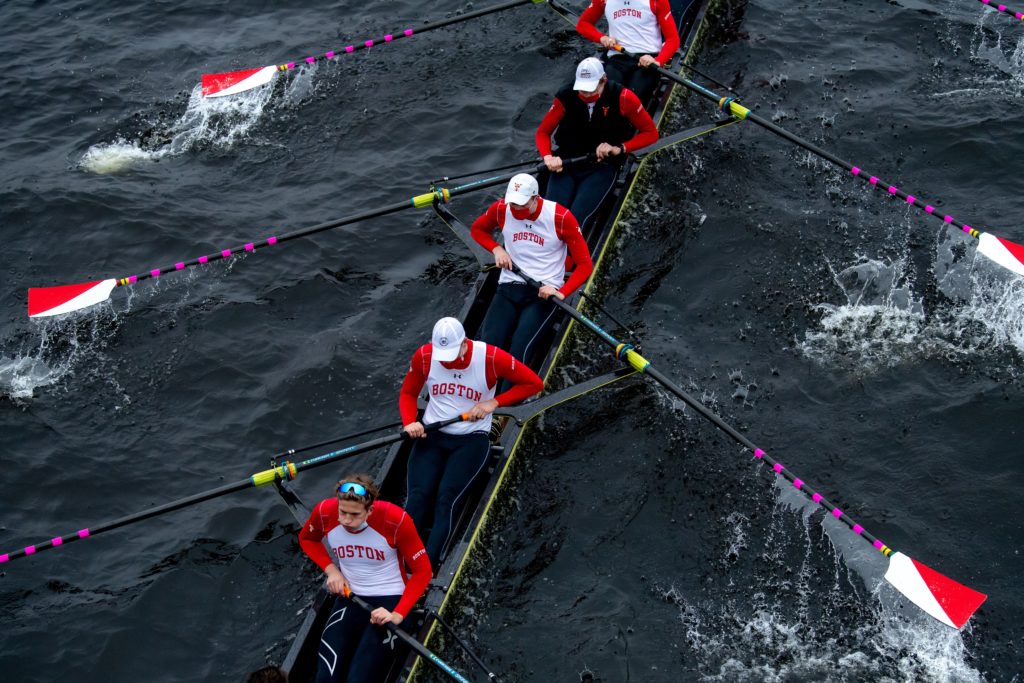
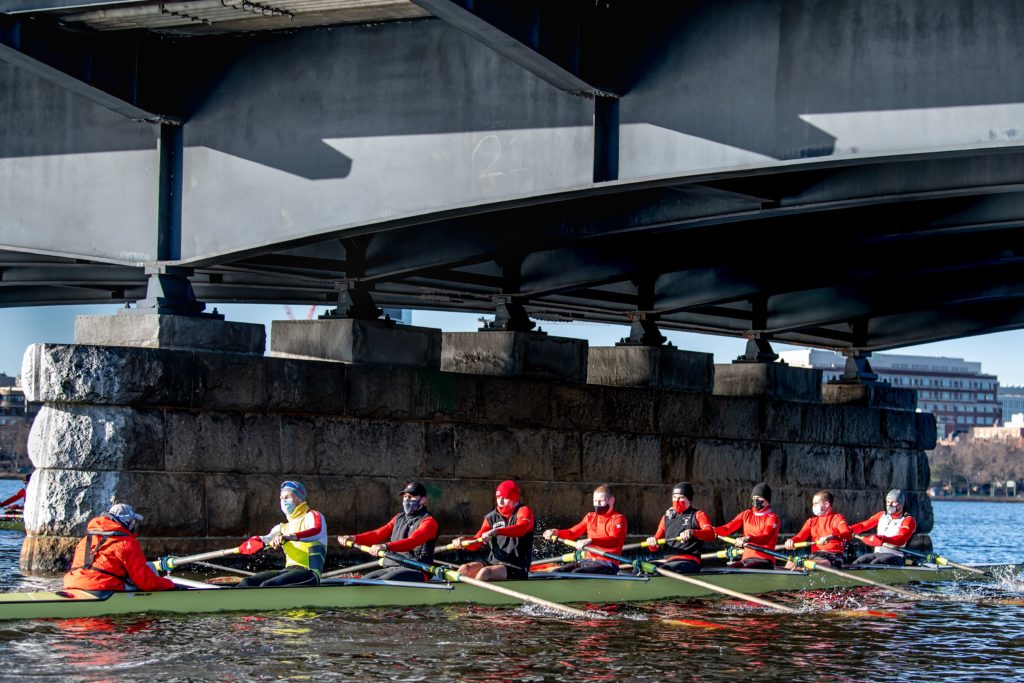
Such a temptation, however, is fleeting, for the students climbing out of their warm beds are athletes, rowers on BU’s men’s team, and there is an actual practice set for this morning. On the water. In eights.
Ask the 34 athletes scheduled to row what they are thinking when the alarm sounds on a day like this, and nearly all answer the same way: “I can’t wait to get there.”
This March morning, like similar mornings March a year ago, exists in the era of Covid-19, the pandemic that stopped everything for most of the last 12 months. There was no rowing last spring. Or summer. Or fall.
The Charles River hasn’t seen a collegiate team practicing in eights in, well, forever.
But now, and for the last few weeks, there is practice. The crew season is back, under strict safety protocols and very different circumstances. The virus is not gone. Life is not normal. There is no certainty that there will be another morning for rowing, or school.
The virus has a stubborn way of dictating what can and cannot take place, or if a new surge will shut down life again.
BU’s Covid-mitigation protocols have kept students tethered mostly to their small rooms, getting tested every three days.Cold anddarkare not conditions to complain about, especially when boats and teammates–other people–are waiting at the DeWolfe Boathouse on Memorial Drive in Cambridge, just a short walk across the BU Bridge from Boston.
“Of course, not many people like to wake up at 4:50 in the morning,” said BU sophomore Paul Seiters. “But for my part, I can say that my thought is: Look, you are extremely privileged to live in this current situation, to have this testing protocol, to be able to row. If you don’t take advantage of it, it would be disrespectful to everybody else.
“So I get out of bed and get my coffee and go. And to be honest, Boston in the morning is beautiful. It’s absolutely stunning going out there in the morning hours, with the skyline in the background. So I see it as an extreme privilege, especially with the rowing setup we have here. I’m happy about it every morning.”
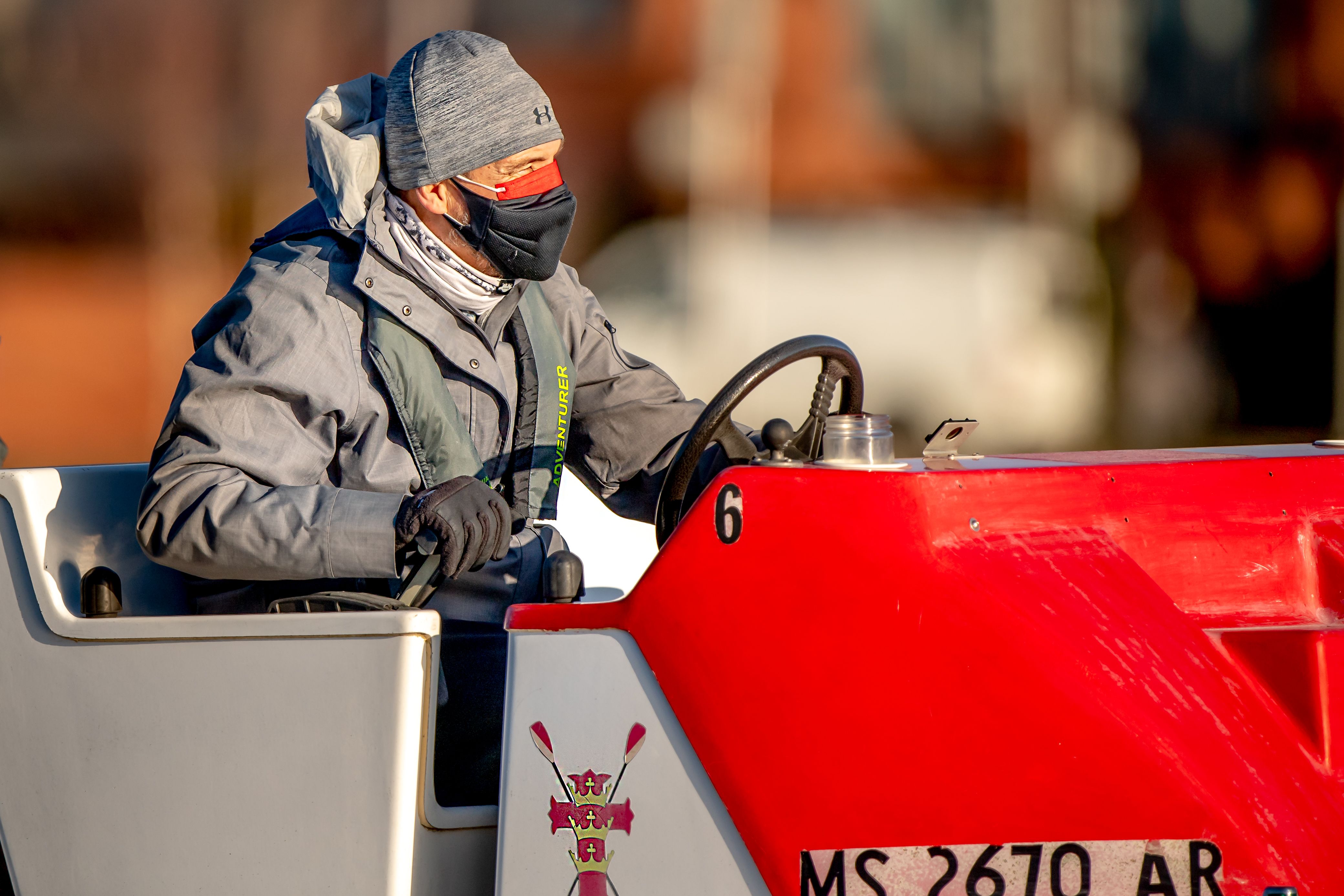
If he’s not already there before the alarm clocks go off, head coach Tom Bohrer is making his way into the city from his home in Concord, Mass. He needs to get things ready, set the lineups, check to make sure everything is in place for a smooth morning where students get into the boathouse, stretch, get the oars and boats out, and get off the dock and on the water, quickly, efficiently, safely. They must launch in small groups, timed so there’s not a lot of mingling in the boat bays or on the docks.
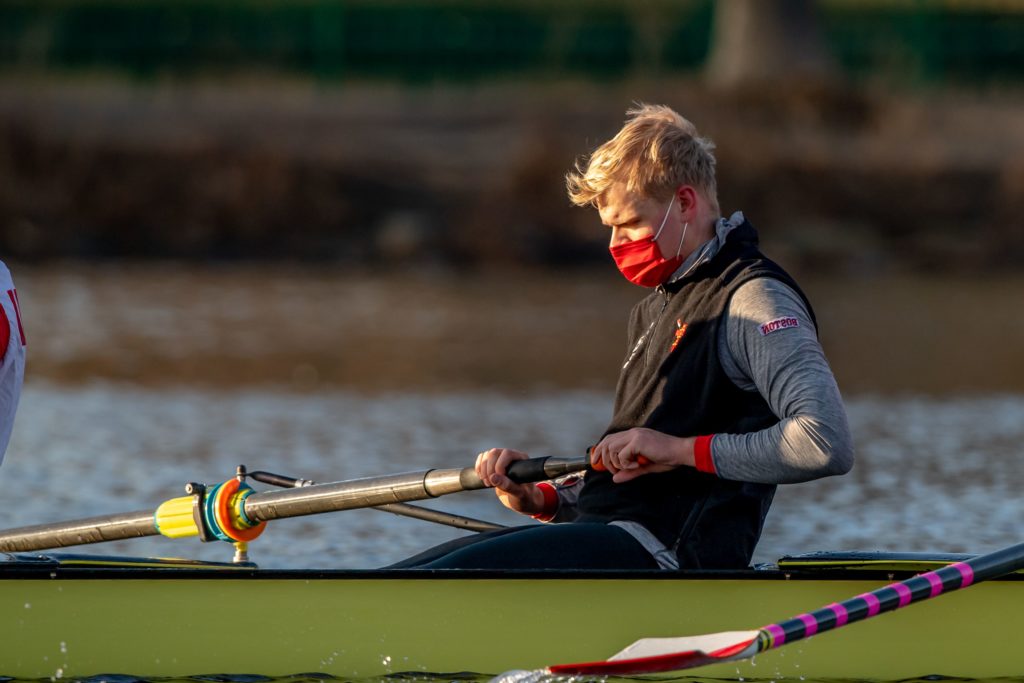
Training is not the same as it was before Covid. For months last spring and summer, some of it was done remotely, individually, on Zoom calls among teammates across the country and the world. When students returned to campus in the fall, there was erging on the docks and rowing in singles, all while masks covered their faces. Just breathing was challenging.
In February, after winter break, the athletes broke into training groups –three pods of 10–based in part on whether they lived together. Small bubbles of students moved in and out of the boathouse and weight room, seeing the other pods only in passing. There were pauses when contact tracing involved someone on the team, or when a student felt ill. On those days, the rowers trained separately. They ran. They used bags filled with sand for weight training.
For Bohrer, the last months of his 12th year at BU, and the beginning of his 13th spring, have been about getting through, living in the moment, and taking every single day one at a time.
For Bohrer, the last months of his 12th year at BU, and the beginning of his 13th spring, have been about getting through, living in the moment, and taking every single day one at a time.
But now, rowing is back. There are races scheduled, the first one a dual against Holy Cross two weekends from this Wednesday morning. Bohrer and his staff have led his team through the past 12 months and gotten them all to this point safely. He has enough athletes to fill three eights, certainly a smaller squad than he’s used to.
Some athletes, especially international students, have opted out this season. But for those who are on campus, the boathouse is open. They have endured together, even though they have remained in small groups. They follow the guidelines with pride and determination and are frequently tested. The result to date: zero cases. And there is racing!
This is the story of how Boston University’s men’s rowing team has handled itself, how its members have existed through the pandemic, and the bond they have formed during their shared experience.
A Motto to Rally Around
To call Tom Bohrer competitive is an understatement. He’s a two-time Olympic silver medalist and 1992 Olympic-team captain. He rowed on the U.S. national team from 1986 to 1994, before stepping out of his competitive career and moving to coaching.
In a typical year, Bohrer begins mapping a course he hopes will guide his crews through the dual-racing season and into what he always hopes will be a spot in the finals, and a top place overall, at the Intercollegiate Rowing Association Championship Regatta.
Like any top collegiate coach, Bohrer searches the country, and the world, for the best recruits. Then, each fall, he begins training and developing the squad, making plans for the spring racing season. He moves guys around, changes boat combinations, looks for athletes who mesh to create speed.
This year, of course, has not been normal. Bohrer’s only option was to adapt, to rethink priorities, to lead with strength, but also to guide with understanding. When the shutdown began, his role was making sure athletes were doing something to get through, emotionally and physically. He sent training plans and kept in touch. Whereas in most years he did his best to connect with his athletes, this year staying connected would become the priority–an experience that has changed him.
“Absolutely,” Bohrer said. “This year, I think about not getting ahead of myself, and staying in the moment more than ever, making sure that I know what my guys are thinking. Not assuming things.”
When the shutdown began last spring, Bohrer worked to stay in touch with his athletes and encouraged them to stay in touch with each other and find ways to train and set goals. He also came up with a motto they could rally around: “Fortitude in the solitude.”
As he did all that, he worked to make a plan, several plans in fact, for when the campus and training facilities would reopen. His planning had less to do with reaching championship speed than keeping the team moving forward, finding ways for individual improvement.
“The difference this year has been that even with Covid, we should not let it dominate how we think and go about things, or use it as an excuse. If we can’t lift weights in the weight room, why can’t we get stronger? If we can’t row and need to do sandbag circuits instead, why can’t we do them in good form, push limits, and build aerobic capacity? We adapt and embrace the opportunity we have. It’s a decision to say: Yes, I can do this!”
“In some ways, I’ve become a better coach. I’ve been telling the guys to be more flexible and ready for changes. And I’ve become a better planner. We have a Plan A, a Plan B, and a Plan C.
“I hope my guys have seen that my emotions are pretty steady, even when things don’t look great. They’re looking at me not to lose my cool, and the guys have really responded. They have all made choices and given a lot. And I see a lot of joy in what we are doing.”
Making Choices
From the moment the pandemic hit, every member of Bohrer’s crew had to make difficult decisions–sit out and train at home or come back to strict university Covid protocols, testing, masking, and isolation. About 10 did not return for spring 2021. But 34 did, and despite the difficulties, they’ve enjoyed their shared experience.
Freshman Stefan Scornavacca, Harvard, Massachusetts.
Scornavacca, a high-school senior and captain of his team, was heading into a promising final spring season when word came that his school was closing.
“We left in March and never returned to in-person classes,” Scornavacca said. “Then I transitioned right to BU at the end of the summer.”
When he got to Boston, Scornavacca was assigned to a freshman dorm with two-person rooms and reported to practice two weeks later. He was assigned to a pod with 10 other freshmen and trained only with that group.
Freshmen are not allowed into upper-class dorms, so interaction outside the group was limited. But that made the bond within his class closer.
“We tried to hang out together and make sure we were accountable, doing our own workouts,” Scornavacca said. “We went on lots of freshman runs.”
When Thanksgiving break came, Scornavacca went home, and the university urged anyone who left school to stay home until second semester began in February. Once back on campus, he resumed winter training in the same pod.
Despite the challenges of being in a tight bubble, the team has been doing what it can to gel, Scornavacca said. Every freshman was assigned an upper-class mentor, and team bonds began forming.
“It’s been pretty cool, especially getting to know the guys. There have been a lot of challenges, but we got used to embracing uncertainty. We have been dealing with this for the last year or so now. We came with the hope that we would have training and racing and we tried to come in with an open mind to whatever we could to get going.”
An early challenge arose last fall when a student in the freshman dorm tested positive. Although the student was not on the team, Scornavacca had been in contact with him and had to quarantine for 14 days.
“That was pretty tough, because I was alone. I tried to stay in contact with my teammates to make sure that my training was still going and that I was improving at whatever I could each and every day.”
That’s now behind him, and he is back on the water. He takes all but one class online in his room and spends nearly three-quarters of his time on campus there as well.
“I’m just excited to get going, especially in the team boats. That’s what we came to do. I have not personally rowed in an eight before this semester for a year and a half. I was very, very excited to get back into it.
“I’m trying to take it one day at a time. I have expectations for what I can do myself, but I just try to enjoy what I’m doing and get through it.
“The team culture has been amazing so far. We are the closest-knit team I’ve ever been a part of, especially our freshman class. Covid has made us closer than ever. It’s been pretty cool.
“I never expected this, but my thoughts are: I’m a freshman. This is just my first year, and I still have lots to look forward to.”
Sophomore Paul Seiters, Osnabrück, Germany.
Seiters was optimistic about the coming season. In 2019, the team had had a solid performance at the Head of the Charles and a good late-fall training period, and 2020 spring training was in full swing. They were at Clemson on the spring-training trip, rowing in eights, making progress.
Then came news of the coronavirus outbreak. “It was like a little thing somewhere. We knew there was something going on, but it was no different from Ebola or other epidemics at that point,” Seiters said.
“Over the course of a week, everything started to ramp up exponentially, and suddenly it was announced that the university would not be attended in person. That was a very uncertain time. After that, I headed back to Germany.”
A three-time under-23 German national-team athlete, Seiters was able to train at the German Olympic training center until Germany went into a two-month lockdown. He went back to the training center when it opened again. “I got workouts in there. I trained a little bit with the national team, following Covid measures and being careful.”
While some of his international teammates remained home, Seiters went back to BU in February when the campus opened.
“For me, it was not really difficult, because I consider my teammates friends. Of course, there was a risk evaluation. I understood there would be special behaviors I was not accustomed to before, like wearing masks all day, limiting social contact.
“But that is the commitment we made coming back. We knew the rules; they were communicated clearly. Everybody knew what they signed up for.”
Part of the athletic department’s protocols included testing every three days, and that helped Seiters make his decision.
“I get paid to come to this university, to row for this university, and even though there is a pandemic, I still think it is my duty. It also is fun to be here, be with the team, and produce for the team.”
Seiters and his teammates have learned to live with uncertainty. There have been times when they have gone to the boathouse only to learn there was going to be a contact-tracing pause.
“A lot of this is good judgment and initiative by the athletes, but it is also mandated by the university. The university has excellent protocols in place to limit our practice together when they think there’s a risk.
“The best way to get through this all is thinking day to day. I’m happy every day I can be in the boathouse. I’m happy every day I can be at the university and have little successes. If at the end of the day, I can say, I got through this without any major incidents, I got through this with a lot of fun with my teammates, then it was a good day.”
Junior Harrison Steck, Decatur, Illinois.
Steck is not shy about admitting that he sometimes thinks about hitting the snooze button.
“People are lying if they tell you that every morning when that alarm goes off, and you know you have to walk over the BU Bridge when it’s 22 degrees, that they don’t think about it.” Steck laughs, adding quickly that the experience builds character and is rewarding.
“Once we get to the boathouse, it is high energy every single day. We’ve got good music going, and everybody is excited to be there to get some good training in. The coaches have done a phenomenal job keeping us motivated. We’ve got a whole training support staff. We’ve got people we can reach out to, whether that’s the physical trainers or somebody for academics.”
After the university shut down last spring, Steck went home to Illinois and stayed. “I was worried that the restrictions were going to be such that I wouldn’t be able to get effective training.
“I just stayed home and trained on my own. I thought we were going to be shut down and sent home again, and I was worried we wouldn’t be able to train. But that didn’t happen and has yet to happen this spring.
“It’s definitely had its challenges. We have to do everything the normal college student does, and then we have to push ourselves that much further to follow the guidelines, to stay social-distanced, stay in our own bubble.
“If one kid gets it on our team, it’s pretty much going to take down the entire program. It’s been hard, but at the same time, the entire group has really rallied behind the common mission of us all avoiding getting the coronavirus. And it’s kind of nice to be in a group of people who want to be here and work hard and do our best.
“Actually, it’s been fun to see people’s character and test ourselves. We’ve been given an opportunity to step back and evaluate what we do, to ask what we can do differently. We’ve done some different training, especially with ergs. It’s hard to do with a mask on constantly, so we’ve adapted. We’ve brought in sandbags, and do sandbag workouts. We do a lot more running than we used to, and it’s been fun to step back and say: We have these challenges, but how do we navigate them?”
Senior Captain Michael Boston, Lower Gwynedd, Pennsylvania.
After rowing for eight consecutive seasons through high school and then college, a senior about to end his competitive rowing career can be forgiven for thinking less about rowing and more about life after school.
For Michael Boston, it’s not that rowing had become a burden but that the repetitiveness and predictability had made it seem stale. One surprising result of the pandemic: It enabled Boston and other veterans of the sport to hit “Refresh.”
Boston seconds Coach Bohrer’s observation about “seeing a lot of joy.”
“We have been going through this copy-and-paste formula for the past three years. We knew what we were training for. Racing in eights, we go through these training programs and we execute them. And you pretty much do the same training plan for the three years, maybe making a change here and there.
“But this year, it’s completely different. There was no racing in the fall, and so coach had an opportunity to go back to the building blocks of what our training is about and what it’s for when it comes to getting on the water.
“It definitely was refreshing, and unexpected. My most fun time at BU is this year, and our winter training, which is usually a time when you put your head down and get through it.
“We were really able to revive ourselves and try something new that was successful. Every day, kids were coming in and having a good time and were excited. It’s something I hadn’t seen in a while. Being able to do something new at the end of my time here was rejuvenating.”
Which is not to say the pandemic has been easy. When the team returned to BU after the Clemson training trip, Boston stayed one night, packed what he could, and flew home.
When it came time to decide whether to come back, Boston didn’t hesitate, even though he knew it would mean remote learning and staying in his four-person dorm room “80 percent of the time.”
“I was pretty much just in my house from March to September anyway,” Boston said. “So hearing we could have something of a fall season and get out on the water and train as a team, without a doubt I was excited to get back to school.”
Fall training, the Head of the Charles, and the spring racing season are Boston’s favorite times in crew, and he has missed one of each.
“In the fall, I definitely battled a sense of loss,” he said. “There were times when we were doing work in singles and I was thinking: We’re collegiate rowers, we row in eights! What’s the point? I felt like we were missing out. This isn’t what it’s supposed to be.
“But you take a second and you realize: It’s not like anyone else has an option. We’re all in the same boat. The sense of loss does come sometimes, but I just have to realize there’s still an end goal in sight.”
Staying focused on that goal has been easier because he’s one of the team captains. Boston has tried to unite a team separated into training groups with limited time together, and that requires good communication.
“I have relationships with almost everyone on the team,” said Boston, “and that’s enabled me to communicate the coaches’ ideas, the team’s ideas, and to get across to everyone accountability. I feel like we’ve been able to stay really interconnected.”
At the end of this semester, Boston is headed into the “regular work world.” He has secured a position at Morgan Stanley, where he will be working in investment management. One tool he believes he will carry with him stems from his time in rowing, and his time as a student during the pandemic.
“Rowing has taught me to be open, and with Covid, I’ve been trying to live in the moment. I know I’m going to look back with fond memories of the training and experience we went through as a team. Going through this has taught me that everything we do, everything we go through, we need to sit down and take it in fully and joyfully. I’m excited as can be right now.”
Lessonsto Remember
When Coach Bohrer talks about this year, and his 28 rowers and six coxswains, he does so with pride for all they’ve accomplished and learned–about themselves and life.
“This has shaped the guys,” he said. “They learned to embrace what they can do. And once they embraced it, and see the result, it’s empowering.
“What I told the seniors was: Last year, your season got canceled, and this year it looks like we’re going to have some races, but it’s not going to be the same championship.
“Your legacy is going to be how you held the team together, that shared experience of being able to train together without knowing if you’re going to be able to compete. That joy of training and pushing each other is going to be something we will always remember.
“For all of us–everybody–this has been about finding passions again, whether it’s gardening, working on the house, spending more time with a spouse. Covid stinks, but in many ways it’s taught us about ourselves, and it’s no different on a team.”
The University of Washington, University of Central Oklahoma and Bates College continued to top the rankings in this week’s Women’s Division I, II and III Pocock CRCA Polls presented by USRowing.
The DI rankings tightened up at the top, however, with the Huskies retaining the No. 1 spot in the poll by one point, receiving 13 of the 25 first-place votes. The University of Texas continued to rank second, earning the remaining 12, first-place votes. University of Virginia ranked third, with Stanford University moving up to fourth. Rutgers University rounded out the top five.
In DII, the top five remained unchanged with the University of Central Oklahoma ranking first, once again receiving all five, first-place votes. Seattle Pacific ranked second, followed by the Florida Institute of Technology. Embry Riddle Aeronautical University and Western Washington University rounded out the top five.
Bates College once again took the top spot in the DIII poll, receiving all 10, first-place votes. Hamilton College moved up to second position, followed by Ithaca College. Williams College made the jump from 10th to fourth in this week’s rankings, with Wesleyan University rounding out the top five.
Division I Rankings
Rank
Team
Total Votes
Previous Ranking
1.
University of Washington (13)
488
1
2.
University of Texas (12)
487
2
3.
University of Virginia
424
3
4.
Stanford University
402
6
5.
Rutgers University
394
4
6.
University of Michigan
373
5
7.
University of California, Berkeley
335
7
8.
Ohio State University
333
8
9.
Indiana University
239
10
10.
Syracuse University
229
9
11.
Southern Methodist University
223
11
12.
University of Alabama
211
13
13.
University of Tennessee
202
12
14.
Princeton University
200
NR
15.
University of Minnesota
115
14
16.
Duke University
114
15
17.
Brown University
113
17
18.
Oregon State University
95
19
19.
Washington State University
77
NR
20.
University of Wisconsin
49
20
Others Receiving Votes: University of California, Los Angeles (48), University of Southern California (31), University of Notre Dame (30), Clemson University (17), University of Iowa (13), U.S. Naval Academy (3), California State University, Sacramento (1), Northeastern University (1), University of Louisville (1), University of San Diego (1), University of Tulsa (1).