Home Blog Page 89

La Salle Men’s Rowing Knocks Off Defending Dad Vail Champion Drexel in Season Opener

Story and photo courtesy of LaSalle Athletics.

PHILADELPHIA – The La Salle University men’s rowing team had a banner day on the Schuylkill River Saturday, as the varsity eight and second varsity eight both earned victories over defending Dad Vail champion Drexel in their spring season-opening performance.

QUOTE FROM COACH KRAKIC
“Great racing by all crews! The team has shown a clear step up in training from last season and we managed to reproduce it in race conditions. We have laid down a solid benchmark early in the season, indicating a good baseline that we can work from. I am excited to see how we progress this year as we transition into more speed work!”

HOW IT HAPPENED

  • The Explorers, who are coming off a historic season that saw both the varsity eight and second varsity eight finish in the top 20 nationally at Intercollegiate Rowing Association National Championships last year, started off slowly in the first race of the day.
  • The Dragons opened up an early lead from the start, before La Salle began to mount a charge.
  • With graduate student coxswain Trevor Fawcett directing the crew, the Explorers walked through the Dragons boat that opened the year two weeks ago with wins over nationally-ranked Oregon State and UC San Diego.
  • By the end, La Salle’s top boat closed a full length in front of Drexel’s group in a lightning-fast time of 5:30.5.
  • The second varsity eight, coxed by Dominic Mazza, followed up the first varsity’s performance with a win of their own over Drexel by a mere 1.2 seconds.
  • In the third and final race of the day, La Salle’s varsity 4 finished third.

UP NEXT

  • La Salle continues a tough early stretch of the season on Saturday, March 23 with a dual race against Georgetown.

RESULTS
Varsity 8+ Race

  1. La Salle – 5:30.5
  2. Drexel 1V – 5:32.3
  3. Drexel 3V – 5:52.4

Second Varsity 8+ Race

  1. La Salle – 5:44.8
  2. Drexel 2V – 5:46.08
  3. Drexel 4V – 6:27.37

Varsity 4+ Race

  1. Drexel V4 – 6:39
  2. Drexel JV4 – 7:07
  3. La Salle – 7:28

Training Through the Ages

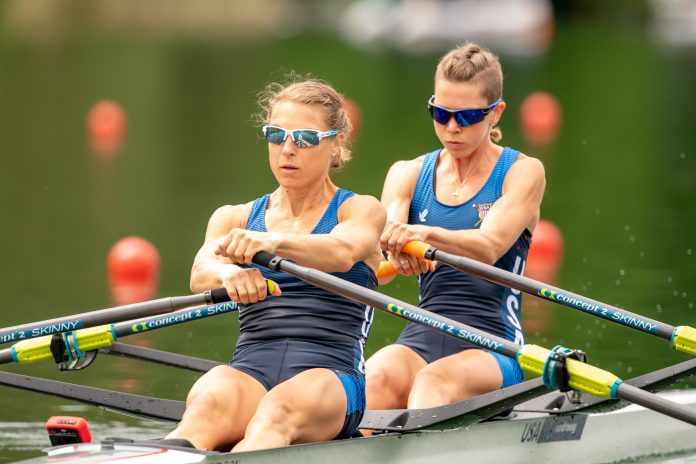
Sarasota, Florida, USA ., Saturday, 29.09.18, Silhouette, Crews boating in the early morning sun, FISA, Masters World Rowing Championships, Nathan Bendersen Park, Sarasota-Bradenton, © Karon PHILLIPS,

BY ALAN OLDHAM
VIDEO BY ADAM REIST

Change is something we all face as we age. Bodies grow—vertically at first and then often horizontally—and so do attitudes about training and motivations for staying in the sport or even taking up an oar later in life. Yet the template for how many rowers train and race, from the youngest juniors right through to the very oldest masters, can feel like it misses the mark.

While a one-size-fits-all approach still dominates in many sports, a growing trend shifts the focus onto the individual athletes that make up a team or club. This is especially significant for older athletes, who may not have the time to commit to vast amounts of training. We’ve all heard the expression, “train smarter, not harder,” but what does training smarter actually mean for rowers trying to perform as they age?

To find out more, I reached out to four experienced coaches from across the United States and Canada.

Breaking Bad Habits

My first call was to three-time world champion German/Canadian lightweight sculler Michelle Darvill. 

“All of this depends on the individual,” she said in response to my question about training for older athletes. In fact, I ended up hearing a lot of this sort of thing, not just from Darvill, but from others I contacted as well. “How someone trains is often based on physiology, training, and length of race,” continued Darvill, who until recently served as a national development team coach and women’s coach for Rowing Canada. In other words, it’s all relative. 

Yet there is one thing, according to Darvill, that is not relative: good technique. “Technique is important in all age groups to enable maximal leverage, minimize injury, and maximize boat propulsion,” she told me. Poor technique can lead to bad habits and for Darvill the only solution is “mileage and the desire to change.”

“This means staying focused on the task,” she explained. “Many people are willing to try something out for a couple of strokes, but want a quick fix. You have to be willing to dedicate time to making a technical change to retrain patterning and even look at other areas, such as flexibility or core strength, that you can improve on. When you look at periodizing your training plan, starting a new season and the general preparation stage may be the period of the year to devote to looking at the gaps and correcting technique. It is also important to look at how race pace may impact technique.”

The good news is that no matter one’s age, technique change is still possible, according to Darvill. “It is about having the right attitude,” she said. “Having feedback can also help; whether it is video or coaching or speed feedback, there are lots of tools out there.”

Rigging and Racing

A properly-rigged boat is a critical part of rowing well and racing fast. In fact, the adjustability of equipment to fit the athlete rather than the other way around is a good example of individualization already at work in the sport. But should rigging change as a matter of course as athletes age?

Not really, according to Patrick Kington, director of rowing at the San Diego Rowing Club. “As far as rigging is concerned,” he told me, “we don’t make changes based on age group per se, but rather on fitness level, size of the athletes, and those types of things. So while it’s true that, in general, I’ll have lighter loads for our athletes as they age, since younger athletes are more powerful on average, we use the fitness levels of the individual athletes to make the determination rather than making adjustments based on age group.”

Kington’s exceptional work with masters rowers was recognized in 2018 with a USRowing Fan’s Choice Award for Masters Coach of the Year, yet his engagement with rowers spans all ages and abilities. I reached him while he was en route to Austria for the senior worlds as coach of U.S. Paralympic sculler Blake Haxton.

When it comes to racing, “tactics do change with age and ability,” he said. “Our younger masters will come off the line at higher rates, have a more aggressive base pace, and begin their sprints earlier. Our older athletes will adopt a more conservative pacing strategy. The other main difference in strategy that one sees in masters racing versus junior or collegiate or elite is that the 1k race demands a more aggressive strategy. There simply isn’t time in the race to make large moves if a boat gets left behind off the line.”

For Darvill, the focus of a good strategy at any age comes down to pacing. “One consistently successful strategy we do see at all levels is even pacing,” said Darvill. “You want to minimize big changes in speed because it takes more effort to get the speed back up if you take your foot off the gas pedal. It often takes years of experience for athletes to find where the fine line is. This takes practice and specific training. For 1,000-meter races, you might be able to push a little harder, but you can’t treat it like a 200-meter sprint or you will fly and die.”

And once again, it comes back to the individual. “People need to figure out the best strategy for them,” she said. “There are many things to consider; wind, number of races, temperature, where they are in the season, and so on.  For some it might feel like they can’t race well unless they are ahead of the group. You don’t want to be sitting in wash, so sometimes you need to put yourself out there.”

Rest and Recovery

There are some interesting things that happen from the physiological side of things as athletes age,” said Kington. “I find it is important to continue to engage in high-intensity workouts with aging athletes; however, they will require more time to recover, both in between intervals within a workout and between workouts.”

“We do periodize the training for all of our athletes, regardless of age, but there are some differences within that framework,” he continued. “For instance, a men’s eight in the B age group may be planning to base [rate] at 38 strokes per minute, whereas a women’s quad in the G age group may be planning to base at a 30 for their race. As we approach a priority competition and start doing a lot of race-specific work, both groups would engage in the same workout—say 6 x 3 minutes—but the women’s G quad would do that with more rest between intervals and do the intervals at 26-32 strokes per minute, and the men’s B eight would do it with less rest between intervals and at a 34-40.

On a longer time scale, Darvill said how masters choose to periodize their training “depends on what you want to get out of it, how committed you are, and what your lifestyle allows. Periodization can help athletes in many ways to peak for events, recover properly physically and mentally, and in conjunction with tracking, can help tailor a program to support peak performance.”

Changing things up is a big part of keeping the adaptations coming, including later in life. “I think stimulus change is important for everybody regardless of age,” said Darvill. “Your body gets used to doing something one way, becomes often efficient at it, so changing stimulus is important to improving. A lot of masters have been weekend warriors doing their own thing, but there are so many services out there offering specialized training and targeting areas of weakness. If people are willing to go that route, you can circumvent injury and see improvements in other areas.”

Longevity

The idea that athletes can be proactive in things like injury prevention and longevity in the sport is central to Allison Ray’s mission as head coach at Oakland Strokes Rowing. “As you get older you need more time to recover,” the former assistant coach for Canada’s men’s team told me during a call from California. “As a masters athlete, you have to get really good at the recovery and injury prevention game so you can train as hard as an elite athlete. When I think of older national team rowers, some of those guys have had to train differently.”

While her current work with juniors may seem to put her at the opposite end of the age spectrum to masters, setting her young rowers up for a lifetime of enjoyment and success in rowing is a top priority for Ray.

“The first stage is learning to love the sport,” she told me. “Then learning how to train, then compete, and then how to win and how to lose.”

“A big part of it is helping them develop body awareness,” said Ray. “We have someone come in twice a year and do a functional mobility assessment and she gives us a score for the athletes and they work on things like flexibility and so on.” 

“Teaching them accountability, responsibility, and how to function as part of a rowing team are also important,” adds Ray. “Those things actually lead to longer-term success in the sport. I think there is something about it not being a self-centered experience where they learn the joy of doing things for the team together.”

The most important lesson that Ray seems to be imparting to her juniors, however, is learning how to learn. “Learning to have conversations with coaches, each other, and themselves, learning how to be in new situations like selection, how to seat race, how not to seat race,” she said. “These are skills that will allow you to feel empowered and provide motivation to rowers at all levels to stay with the sport.”

Motivations

When it comes to understanding what motivates people to start rowing and stay with it, U.S. Olympic gold medalist Holly Metcalf knows a thing or two. 

“My first exposure to motivation I had not experienced before was with masters women back in the early ‘90s,” said Metcalf, who is entering her 13th season as head coach for MIT’s open-weight women. “I had just finished my national team career and was coaching at various community programs. During this time, high school rowing was growing, and many women were introduced to rowing through their children.”

“Women in particular were drawn to rowing and wanted to learn to row,” she explained. “Many of these women were pre-Title IX and excited by the fact that they did not have to have prior experience and could start as novices. The motivation for many of the masters women was to experience teamwork—the kind they had observed their children growing so much from—to improve health, to have a community of women outside of their families and work demands, to learn something new, and discover the athlete within.”

“I was shocked by the stories of masters women—and men—being coached with a lack of respect for their desire to learn to row,” recalled Metcalf, who remembers her own feelings of trying to find her place in the sport following success at the international level as an athlete and then coach. She realized that, “what the masters community needed was respect for where they were in their lives and for the depth of experience they had in life.”

So she developed one of the first masters women’s rowing camps in America that offered quality instruction and, more importantly, what Metcalf called an “environment supportive of their journey into rowing. For those who never considered themselves competitive, they discovered a natural desire to find more speed as their knowledge grew.”

From her first successful Row as One camp she took her philosophy to Boston’s inner-city schools with G-Row Boston, fostering leadership for girls. Her next initiative, WeCanRow, has spread across the nation and focuses on bringing the life-changing power of rowing to the breast cancer survivor community. “With all groups, we shared the same love of feeling the sum of the strength of nine people connecting strength through the demands of moving together, being intense together, finding grit together.”

The Mental Game

Grittiness is something talked about a lot these days when it comes to sport psychology. For Darvill, staying on top of the mental game is what separates the best from the rest.

“Mental training is particularly important for masters rowers in racing and is a big part of enhancing peak performance. We all know that the adrenalin push helps rowers get through those last few strokes, however it is important to find ways to stay on task throughout the race. You train your body to perform during racing, and in the same vein your mental game needs to be honed.”

The social aspect of masters rowing shouldn’t be ignored either she added. “We are now seeing larger subscriptions to masters racing, which often involve training camps and social activities at the regattas. For many this social aspect is a large draw to the sport. For both new and returning athletes it is important to understand what type of experience they want and this will help guide their training and approach to seeking out the best training environment.

“Athletes do tend to want to get different things out of the sport as they age,” agreed Kington. “Our youngest groups are very concerned with competition, while our oldest groups seem to get more out of the sense of community and enjoy racing with athletes with whom they’ve been racing and training for decades. Obviously, there are individuals within these groups for whom the opposite trends hold true, but that seems to be the case on average.”

“In the same sense, athletes that are hoping to get different things out of the sport respond best to different coaching styles. I don’t know if it’s accurate to say that I coach large groups differently, such as the junior women one way and the masters men another, but I definitely try to learn what each individual within a group is after and try to find what styles of coaching will be most effective for them.”

For coaches and athletes then, finding the right mental space seems to come down to managing expectations and setting appropriate goals. Fortunately it is never too late—or too early—to plant the seeds of mental toughness.

“For us,” Ray said of her juniors, “the goal-setting is focused around what is happening at the boathouse and at school, short term and long term. Having a process to follow up on it is critical—socializing it in their day to day at the boathouse so they are having conversations with each other about how they are doing.” There is also a mental health aspect to all of this, as the door gets pushed open to provide a safe space for important conversations to take place.

“We’ve had kids down here before and they’ve been struggling and we say, ‘OK, just tell me if today is not a good day and we can figure out what to do.” When it comes to individualizing experience, it can be difficult, Ray said. “In the context of 100 kids, it comes down to what small things can you do if kids are having a hard time? We do spend time trying to motivate them to come and talk to us if things are difficult. And having limits and cultural standards on your own team about how they talk to each other, being good teammates. These sound like simple things, but being disciplined about it creates the environment that helps with mental health.”

The Sky’s the Limit

The idea of an age limit on top performance is a common view, but Darvill thinks it’s time to rethink what older athletes can do. “The mind will usually go before the body,” she said. “Diminishing will and desire likely precede physical limitations. That being said, some masters rowers have all of a sudden found a fountain of youth and dedicate large amounts of effort and time into their training and racing.”

“Every athlete can find something to help them improve, whether it is nutrition or integrating some stretching routine,” Darvill continued. “We do not know a lot about the limits of what masters can do because they usually do not follow a high-performance plan and often do not have proper systems in place to maximize performance. There are many ways to circumvent a decline in performance that are still untapped.”

“As the baby boomer retirement generation grows and their lifestyle changes, we will see more people devoting time to fitness. For rowing, the increased access to coaching, training regimes, and great racing opportunities around the world only serves to increase the appeal and enjoyment to both veteran and novice rowers alike.”  

Shock Value

Princeton University, Boathouse, Lake Carnegie, Princton, New Jersey, USA, [Mandatory Credit, Peter Spurrier/ Intersport Images] Boathouse, Princton. NJ, USA

BY CHIP DAVIS
PHOTO BY PETER SPURRIER

Heart disease, including cardiac arrests, is the leading cause of death in the United States. Many cardiac arrests are caused by an arrythmia, either ventricular fibrillation or ventricular tachycardia. In either case, if left untreated, these abnormal rhythms can cause death within 10 minutes. 

While CPR can maintain blood flow to the brain, it typically cannot convert the electrical system of the heart back to a normal rhythm. To do that, either an electric charge to the heart muscle or IV medication (or both) must be administered. The sooner the rhythm is restored, the better the patient’s chance for full neurologic recovery. 

Automated external defibrillators (AEDs) are able to sense the heart’s rhythm and determine whether it is “shockable.” They provide verbal and text messages to bystanders with directions for use and instruction in CPR until professional medical help arrives. While first responders have ready access to AEDs and they are common in athletic facilities, they are less likely to be available at smaller clubs, boathouses, or private residences, where cardiac arrests often take place. In remote locations, there may be a delay of more than 10 minutes in EMS response time. 

AEDs require little training and are highly reliable. There is very low risk of applying inappropriate shocks. If your boathouse, gym, and residence don’t have one, consider getting one. Professional-quality AEDs can be found for as little as $800, and prices have been dropping. Your organization’s budget for safety or facilities should be able to cover the cost. 

Tom Rooks, USRowing’s director of sport safety and operations, says, “We’re a big fan of AEDs.”

AED training is a category of first aid like CPR training, something “all coaches should have,” Rooks said. 

“It would be a much safer sport if every boathouse had an AED. They are a critical first-aid piece.”

Louisville Set to Host 12th Annual Oak Ridge Cardinal Invitational

Story courtesy of Louisville Athletics. Photo courtesy of Adam Creech/ Louisville Athletics.

LOUISVILLE, Ky. – The University of Louisville rowing team is set to host its 12th Annual Oak Ridge Cardinal Invitational this weekend at the Melton Lake Rowing Venue in Oak Ridge, Tenn.

Dates: March 16-17, 2024

Location: Melton Lake Rowing Venue in Oak Ridge, Tenn.

Participating Teams: Alabama, Clemson, Duke, Indiana, Louisville, Navy, North Carolina, Notre Dame, San Diego, Wisconsin

Results: https://legacy.herenow.com/results/#/races

The Cardinals are hosting a 10-team field that features a pair of teams ranked in the 2024 Preseason Pocock Collegiate Rowing Association Poll in No. 13 Duke and No. 16 Indiana as well as three teams receiving votes: Alabama, Notre Dame and Wisconsin. Other participating teams are Navy and San Diego as well as ACC opponents Clemson and North Carolina.

Head Coach Derek Copeland on the Oak Ridge Cardinal Invite

“This is our 12th year hosting this event and it keeps getting better. We have a good partnership with Oak Ridge Rowing Association to host this early season regatta. We are grateful for the many teams that are traveling in to make this a great competition.”

With a smaller roster than normal, we have asked a lot of our athletes to step up and make every seat, and every stroke count. We have had a very productive week of training and look forward to seeing how the group can compete. Part of it must always be about production. We mostly want to see an accurate representation of our speed: we want to control what we can, expect our bodies to respond, and, in the end, we want to perform.

We have just few seniors and enjoy every opportunity to be rowing with them because we know how special this opportunity is and how quickly it will pass. We are also very proud of our younger athletes. We have 30 rowers and seven coxswains here and about half of them are freshmen, many of those just started rowing in September. It is important to recognize just how far they have come.”

Following this weekend, the Cardinals will return to action March 29-30 at the Sunshine State Invitational in Sarasota, Fla.

Core Principles

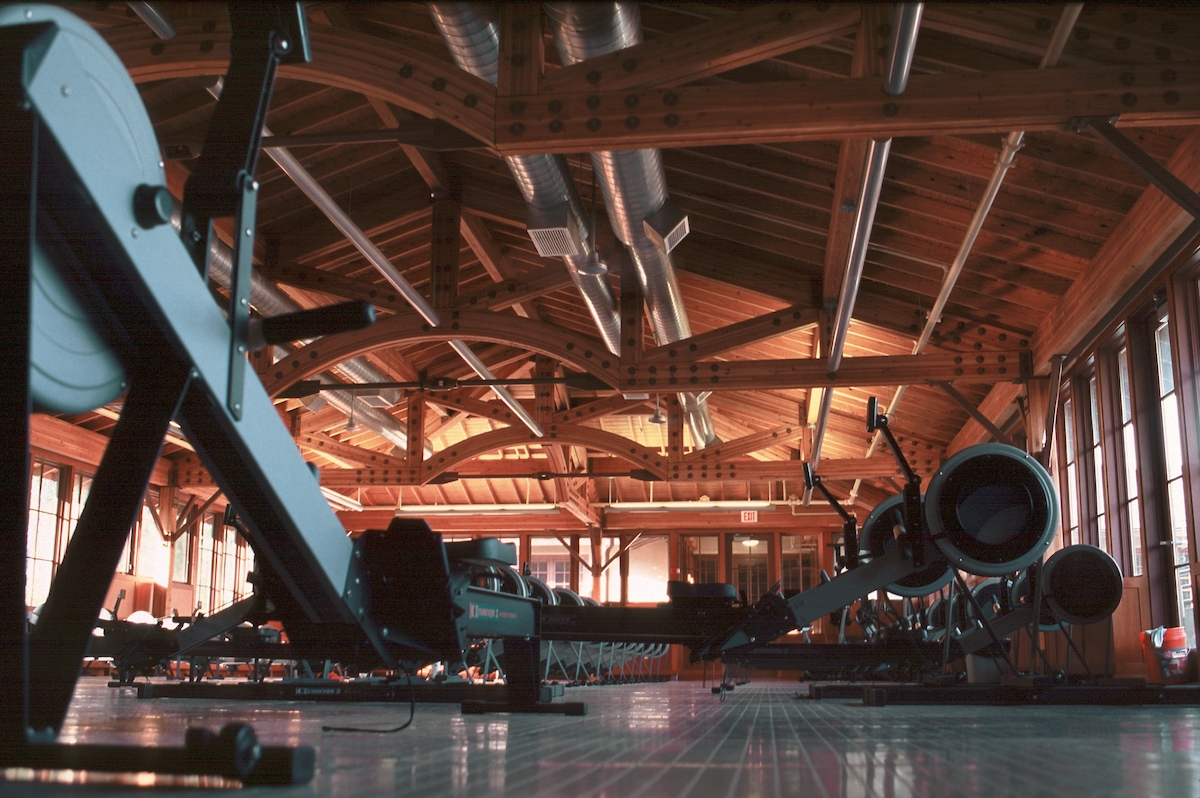
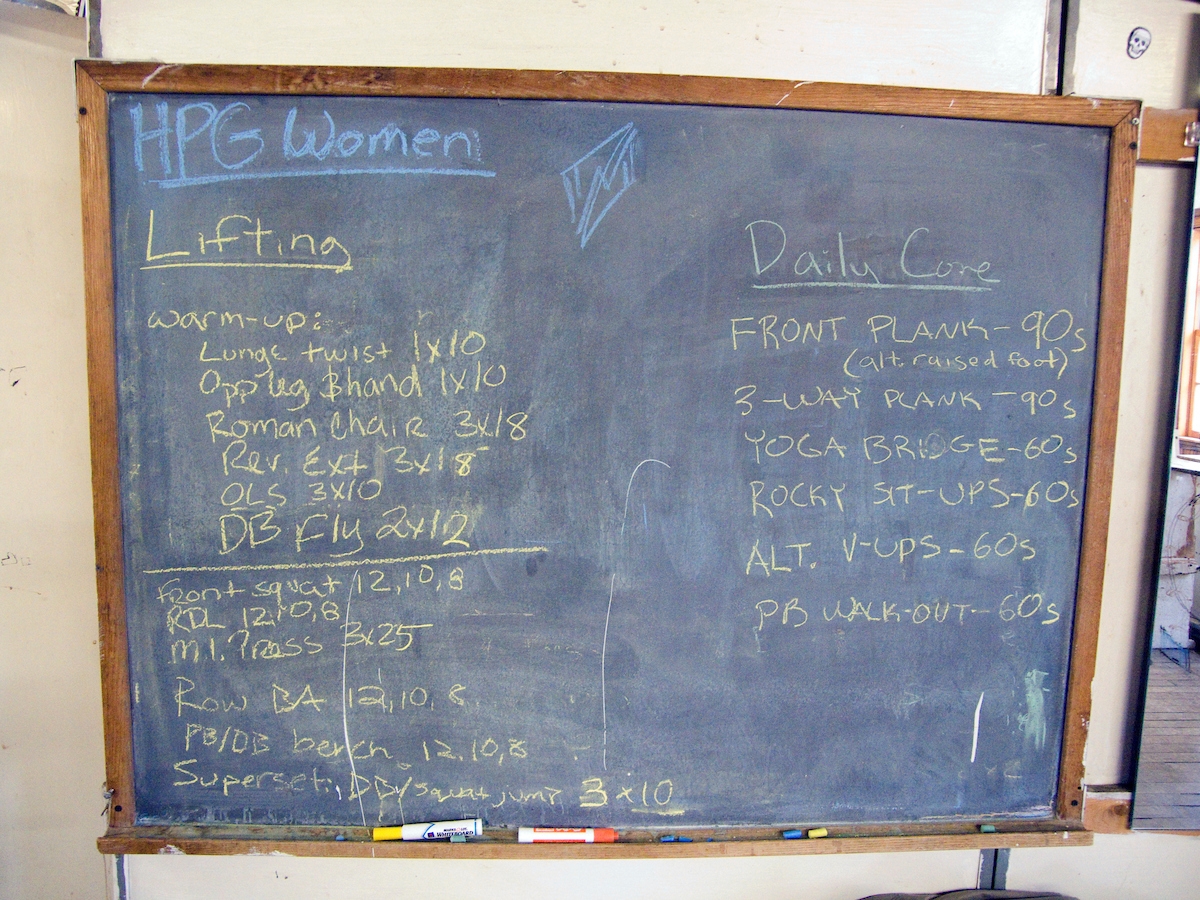
Cambridge; USA; GV Boathouse, Riverside Boat Club, Training Programme, Weights, Core Strength, High Performance Group, October 2009; HOCR; Head of the Charles River; Cambridge/Boston; Massachusetts; Mandatory Credit Karon PHILLIPS/Intersport Images]

BY VOLKER NOLTE
PHOTO BY PETER SPURRIER

Read about the core and you’ll discover:

  1. There’s no consensus about how to define it;
  2.  There’s no settled understanding of how it works;
  3.  There are widely divergent views about how best to develop and maintain core strength.

Core refers to the portion of the body between the diaphragm and the muscles of the pelvic floor and it includes the spine; the abdominal muscles, tendons, and ligaments; and the stomach, intestines, and other internal organs. The mid-part of the body plays an essential role in generating functional movement. The core stabilizes the chest and pelvis, and well-developed core muscles help prevent injury. In addition, the core is vital to your ability to sense movement and your body’s location in space (proprioception), which is essential for balance.

Because of the core’s importance, be careful when transitioning from ergometer training to on-water rowing. Rowing on the water employs muscles and nerves that are not exercised optimally on a rowing machine. The fact that we get exhausted so quickly when we return to water rowing is proof that our bodies are being taxed in different ways.

On the erg, you don’t engage your transverse abdominis muscles, and your proprioceptive system is in sleep mode. Unstable sliding seats or thick seat pads fail to imitate adequately the sensation of a rocking boat and the movement of crewmates. Worse, an unstable seat can lead to a laterally tilted pelvis during the rowing motion, which can cause injury. A boat that rolls to one side will breed problems with bladework, but an athlete on an indoor rowing machine can ride on a tilted seat easily. On the water, rowers need to right the rolled boat immediately, and as the blades touch the surface, the entire crew participates in making the boat level.

Here’s my advice: Don’t start with an intense 20K the first time you’re on the water, no matter how inviting the weather. Instead, start easy. Row a few hundred meters, stop, do some balance exercises, then keep rowing lightly for another kilometer or so, and repeat for 45 minutes. Increase the length and intensity of your rows slowly so your core can adapt to the exertion.

Of course, you should supplement your on-water training with core exercises on land. The aim is not a six-pack, which is more cosmetic than functional and a poor indicator of a strong core. Heavyweight weightlifters need a mighty core to handle the staggering loads they lift, but their abdomens hardly resemble the washboards of fitness-mag cover models. Your core is used and conditioned every time you take a step or a stroke, but to prepare it for peak performance and the strain of high-level competition requires deliberate, targeted exercise.

MSU’s Kubas Embodies One of the Fastest Growing Women’s Sports

Story and photo courtesy of MSU Athletics.

Michigan State graduate student Ella Kubas has done almost every sport under the sun, but she ultimately became a Spartan to pursue her master’s degree in financial planning, wealth management, and athletic career in one of the fastest growing women’s collegiate sports: rowing.

Sports kept Kubas busy throughout her childhood.

“I was involved in highland dancing, football, soccer, volleyball, basketball, track and field, cross country, triathlon, really everything as a kid, and I’m really thankful for that opportunity,” Kubas says. “But it got busy. There were days when I would wake up at six in the morning and go for a swim before school, and then at school for lunch I’d either go for a run, or ride my bike. After school I’d have a volleyball game and then after that I would have track practice.”

She looks back at her busy schedule and there are moments when she thinks maybe she did too much, but she always enjoyed it and that’s what she wanted to do at the time.

“She was never really burnt out,” Kubas’ mother, Carolyn, said. “She worked hard, she was dedicated, and it was quality vs. quantity. She just kept going and never did we say, ‘you have to get up for practice,’ or ‘you need to go to practice.’ Not once ever. Sometimes I had to say, ‘you need to miss practice.”

Kubas grew up in Milton, Ontario, surrounded by a sports family. Her mom was involved in basketball and club football, and her dad played football during college.

“I kind of came from sports and it’s always been in my blood to be athletic,” Kubas said.

Kubas participated in her first triathlon when she was six.

“My parents signed my brother and I both up because we just had way too much energy and they didn’t know what to do with us,” Kubas said.

She ended up going the wrong way on the bike during her first race, but that didn’t stop her from enjoying it and keeping the experience close to her throughout her life.

“She was on this pink fluffy bike, and she was as happy as a clam coming back,” Kubas’ mother says. “She didn’t care. She was like, ‘Yeah, I’m good.’ And then she just kept going.”

Kubas considered traveling to another town to participate in a training program when she got older, so her mom ended up starting a triathlon club.

Kubas attended Milton District High School and earned varsity letters in cross country, track and field and volleyball. During this time, she placed 12th at the Pan American Championships in 2018, finished in the top three at the Ontario Provincial Championships two years in a row and was named the 2018 Junior Athlete of the Year by Triathlon Ontario.

Kubas took a gap year after graduating so she could train more in triathlons and figure out what she wanted to do.

“International tuition was a lot, so I kind of knew that I needed to have some assistance to study here,” Kubas said.

She was recruited by the University of South Dakota, which allowed her to come to the States so she could continue her academic and athletic career.

“I flew out for a visit and the team really just felt like family and it felt really right. I really liked the ability to combine my sports and school at the same time, which I don’t think I really would have gotten to do at the same level in Canada.”

She finished first at the national meet, was a First Team All-America honoree and was an All-West Region member on the team at South Dakota in 2022. She also placed fourth overall in the NCAA Triathlon Championships, which was her final race.

“A memorable moment was when she was able to make and be invited to the national team for triathlon and participate in international events,”  Kubas’ mother said. “Being able to represent Canada, an underdog, at the Summer Games was one. That could have been one of the most exciting races I’ve ever seen because of the resiliency between her and her teammates. It’s not medals, it’s moments.”

Halfway through her junior year she started looking into rowing and wanted to pursue another degree. Kubas graduated in Dec. 2022 and started at MSU in Jan. 2023.

“There was a two-week period where I was moving all of my international visa stuff over. It was honestly really scary at the time because I left everything that I was comfortable with and started something new. I really kind of threw myself off the deep end with learning a new sport and meeting all of my new teammates, but I think it was the best way to do it.”

Prior to coming to MSU, Kubas had never seriously rowed, but that didn’t stop her from taking on a new challenge.

“It’s one of the most mentally challenging sports I’ve ever done,” Kubas said.

Rowing is different from most of the sports Kubas had done before.

“For me highland dancing and volleyball were a lot more skill based. Rowing is like that in a way, but it is also very mental. Especially on an erg machine because it’s you versus a screen, and every single motion you do the screen is going to react and you have to be able to handle that. Triathlon races were an hour long but now they’re seven minutes in a boat. It’s seven minutes of pain and not an hour of pain but that doesn’t make it any easier.”

Kuba’s goal for the future is to qualify for Team Canada, aiming for the 2028 Los Angeles Summer Olympics. She was recently selected as an RBC Training Ground “Future Olympian”, giving her financial support for her Olympic training.

“That girl can make the Olympics,” Kubas’ teammate and roommate, Lizzie Johnston said. “She is just an amazing athlete, and she deserves everything that she has earned. She just works so hard. I honestly tell everyone, and she probably gets annoyed with me, but I’m like, ‘She’s going to be an Olympian, I’m calling it right now.'”

Kubas feels like she has gotten to live the best experience twice by attending two different colleges. Having a new opportunity at MSU has allowed her to grow.

“The drive Ella has and the competitiveness, positivity; she’s one person on the team that I found having similar values to me,” Johnston said. “She’s not only physically strong, but her mental game is so strong too. You can’t do anything that will tear her down. With so much adversity that we’ve had on our rowing team, I’ve never seen it get to her.”

She’s learned to take what a sport has taught her and bring it into the next thing she does in life, which has given her a lot of confidence throughout her journey.

“The one thing I’ve tried to engrain in her as a parent is don’t let something define you,” Carolyn Kubas says. “We feel sports has taught her a lot about life and she has learned that things don’t go great all the time.”

Kubas’s plan after college is to look into some part time opportunities within financial service, but she still wants to pursue rowing.

“I have National Team aspirations, so I want to see if that’s attainable. You never know if you don’t try, and I’m still so new to it that it’s a little scary to be like ‘oh let’s just try to go do this even though I have no idea what’s ahead, but I’m also young and I have a lot of support and opportunities, so why not do it while I can.”

Johnston added, “The fact that she’s only been doing this sport for a little over a year, became a captain, and how fast she already is, it’s insane.”

USRowing Announces New Board Chair

Story courtesy of USRowing. Photo by Ed Moran.

USRowing is very pleased to announce the election of Kirsten Feldman as its new board chair, a decision made at this past weekend’s quarterly board meeting.

Kirsten is a retired investment banker with extensive experience advising companies and boards. She was elected to the USRowing Board in 2023 as the Northeast Region representative and has previously served as Co-Chair of the Diversity, Equity, and Inclusion Committee, as a member of the High-Performance Council, and is currently a Trustee of the USRowing Foundation.

She retired as a Managing Director at Morgan Stanley in New York City, after leading the firm’s Global Retail Industry practice for many years. Following her retirement, Kirsten has served on the boards of several non-profit organizations, including the Environmental Defense Fund, Asphalt Green, the Montana Land Reliance, and the Steep Rock Association.

Kirsten, who grew up in Canada, was both a club and collegiate swimmer and rower at the national level. She is an active master’s rower and resides in Washington, Conn.

“I am honored to bring my extensive background in business, non-profit management, and rowing to this new position,” Feldman stated. “I look forward to continuing to contribute to USRowing’s progress towards excellence as the national governing body of our sport and supporting our National Team athletes at the Olympics and Paralympics,”

USRowing would like to express its gratitude to Nobuhisa Ishizuka for his leadership as the prior Board chair.

Kirsten Feldman. Photo courtesy of USRowing.

Breaking Bread

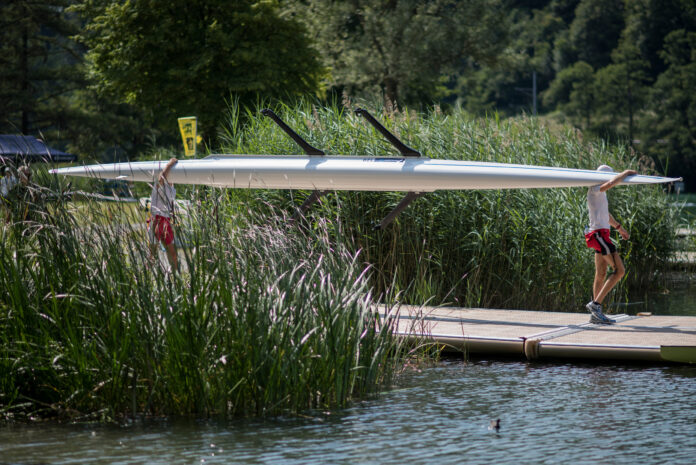
Lucerne, SWITZERLAND, 12th July 2018, Thursday Crew, Activity, on the boating docks, FISA World Cup III, Lake Rotsee, © Peter SPURRIER,

BY NANCY CLARK
PHOTO BY
PETER SPURRIER

Many athletes and exercisers are staying away from bread these days. But in doing so, they are denying themselves of this pleasurable food.

Truth is, any food can be fattening when eaten in excess. As long as the portions fit within your calorie budget for the day, you will not gain undesired weight by eating bread. The problem is not with the bread, but with your relationship with bread.

If you feel as though you have no control over it, you may believe that bread is addicting. The smarter solution is to eat bread daily.

Denying yourself of this little pleasure leads to “last-chance eating.” And what about white bread? In general, the less processed a food is, the more nutrients it has. Thus, whole wheat breads are preferable to the refined versions. But white bread is not a nutritional zero. You need to look at the whole day’s diet: Is it balanced or unbalanced?

Current dietary guidelines recommends half of your grain-foods should be whole grains; the other half can be refined, enriched grains—like white bread. While some nutrients (fiber, magnesium and zinc) get lost in the milling of whole wheat into white flour, other nutrients have been added back. Since 1941, white flour has been enriched with thiamin, riboflavin, iron, and niacin in amounts equal to whole-wheat flour.