Home Blog Page 88

Oregon State Women Open 2024 Spring Season at Home

Story and photo courtesy of Oregon State Athletics

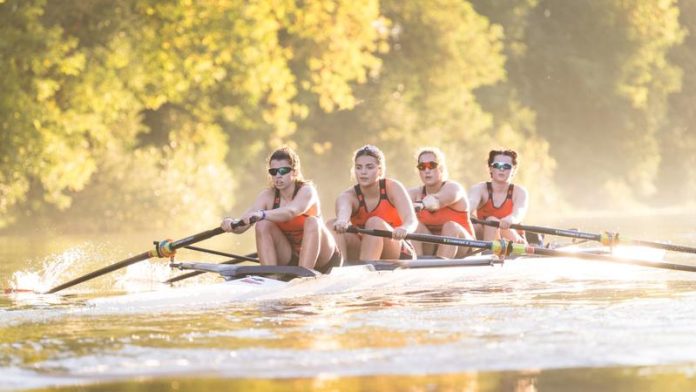
CORVALLIS, Ore. – Beaver women’s rowing is back in action this Saturday, hosting the Miami Hurricanes and Washington State Cougars at Dexter Lake in Lowell, Ore., for the team’s first regatta of the 2024 spring season.

OSU finished its 2023 spring season with a fifth-place finish in the 2023 Pac-12 Championships, posting times of 6:53.249 (3V8+), 7:23.485 (1V4+), 6:34.801 (2v8+) and 6:29.460 (1V8+), with the final time besting both Washington State and UCLA. After the team’s successes in 2023, several Beavers competed at the international level, with Evan Park (United States) and Giulia Clerici (Italy) both earning gold medals at the U-23 World Rowing Championships.

OSU came in at No. 20 in the 2024 CRCA Pocock Preseason Poll with Park recognized as a CRCA Preseason Athlete to Watch on March 11, which came after the Bend, Ore., native set a new program record for the 2k Erg in February that had stood for nearly five years.

Updates and results from Saturday’s races will be shared live on the Oregon State Women’s Rowing Twitter account and a live stream can be found on Facebook.

UP NEXT
The Beavers hit the road for the next regatta, heading to Columbus, Ohio, to race Minnesota, Indiana and hosts Ohio State on April 6.

FOLLOW US
For more information on the Oregon State women’s rowing team, visit OSUBeavers.com or follow the team’s official Twitter account at Twitter.com/BeaverWRowing, on Facebook at Facebook.com/BeaverRowing, or on Instagram at Instagram.com/BeaverWRowing.

OUR MISSION
Oregon State Athletics strives to Build Excellent Authentic Visionary Student-Athletes (Go BEAVS).

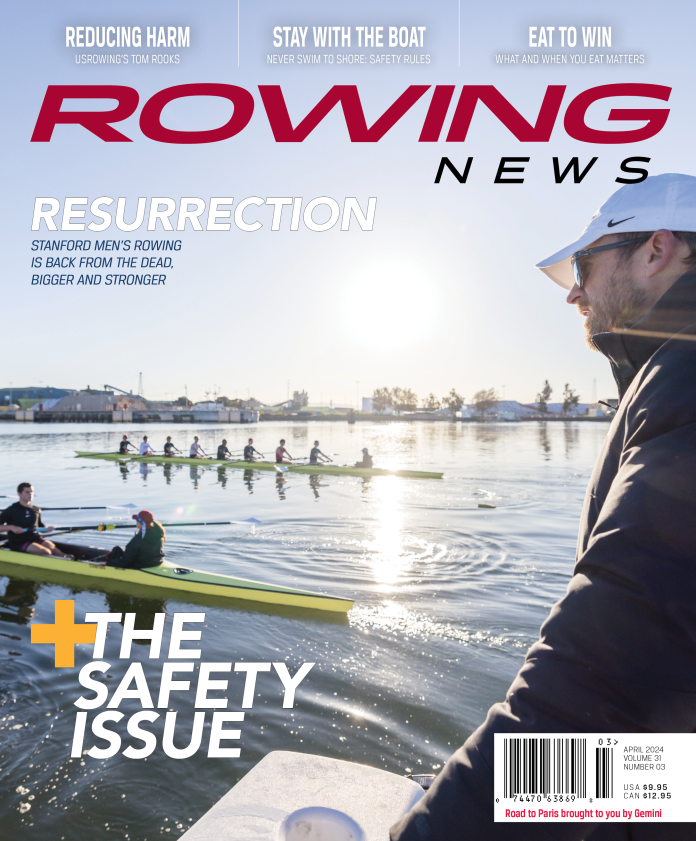
April 2024 Magazine

Evening Strokes

BY VOLKER NOLTE
PHOTO BY ED MORAN

When I first began studying the specifics of training older people, I didn’t feel like I belonged to that group yet. I was in my 30s and participating in masters races seemed still far away for me despite the fact that I was already fitting into the first masters age categories. Although the days of elite training were behind me, I still considered myself a competitive rower. I continued enjoying myself as I trained regularly and purposefully. Having been fortunate enough to be involved with high-performance athletes as a researcher and coach, I was always in an environment that gave me access to excellent training facilities, and my interest in rowing- equipment development put me in touch with the latest rowing and boating innovations, so it was easy to keep my “toys” up to date.

The main motivation for continuing to train regularly has been fitness and health. I have tried always to maintain a level of athleticism that enables me to row on exciting crews, experience good boat speeds, and even compete.  I have learned that I don’t like touring rowing, poorly maintained and rigged equipment, or just drifting around on the water with no destination. I realize that many other rowers love touring rowing or don’t mind getting on the water with “normal” equipment to just enjoy the elements.

Masters rowing is not a “one size fits all” activity. We have to choose the options that are ideal for us individually. Of course, certain compromises must be made in order to come together as a crew or training group in a club, but this can be done in such a way that everyone gains satisfaction, confidence, and enjoyment. The goal of the rowing outing must be clear and shared by all. For a touring rowing group, the goal may be to navigate a particular current on the river, to be able to manage refreshments and snacks during a two-hour rowing trip, or to be able to row very steadily and effortlessly together. The goals of the training rowers may be to balance the boat better, achieve a certain stroke rate for a certain number of strokes, or maintain a certain speed for a few five-minute pieces. As long as everyone is making an effort toward the agreed-upon goals, and areas of progress can be identified, positive feedback will ensue, leading to a sense of accomplishment and satisfaction.

All of this is easier said than done, but we need to begin working toward these goals. It takes communication and preparation to get things off the ground. Sometimes it even means re-evaluating goals, especially in light of getting older. There’s no getting around the fact that some biological abilities decline with age. But that makes it all the more important to keep realizing positive accomplishments. It may well be that outings need to be shortened, that more time is needed for recovery, or that splits on the ergometer become slower, even though training is maintained. Along the way, there are always many positive achievements that can and should be celebrated.

My friend Wolfgang Fritsch and I used the term “successful aging” in our book, Masters Rowing, and by this we mean the ability to achieve an overall positive balance sheet with increasing age. Practicing our sport in a healthy way, as either a recreational or competitive rower, enables us to maximize developmental gains while minimizing losses. In fact, rowing is one of the few sports that allows us to enjoy far-reaching exercise benefits even in old age. It is a low-impact weight-bearing activity that builds strength and endurance and fosters balance, agility, and coordination—all at once.

Pocock CRCA Coaches Poll – Week 1

Pocock CRCA Coaches Poll
Courtesy of CRCA
Division 1
Rank Team Points Previous Ranking
1 Stanford University 2605 1
2 University of Washington 2445 2
3 Princeton University 2252 3
4 University of Texas 2223 4
5 Yale University 2195 5
6 Brown University 1927 6
7 University of California, Berkeley 1834 8
8 University of Pennsylvania 1757 7
9 University of Michigan 1686 9
10 University of Virginia 1651 10
11 The Ohio State University 1425 12
12 Syracuse University 1362 11
13 Indiana University 1030 16
14 Rutgers University 985 14
15 Duke University 967 13
16 University of Southern California 766 15
17 University of Tennessee 713 17
18 Southern Methodist University 456 18
19 Harvard-Radcliffe 425 19
20 Oregon State University 310 20

Others Receiving Votes—

University of Iowa (225), University of Alabama (168), University of Wisconsin-Madison (142), University of Notre Dame (123), University of California, Los Angeles (80), Columbia University (70), University of Minnesota (67), Washington State University (60), Clemson University (48), Dartmouth College (32), Gonzaga University (31), Northeastern University (24), University of Tulsa (21), University of North Carolina (21)
 
Division II
Rank Team Points Previous Ranking
1 Cal Poly Humboldt 197 1
2 University of Central Oklahoma 142 3
3 Seattle Pacific University 140 2
4 Western Washington University 133 T-4
5 Embry-Riddle Aeronautical University 101 6
6 Thomas Jefferson University 53 T-4
7 Rollins College 49 NR
8 Mercyhurst University 29 7
Others Receiving Votes: Barry University (20), University of Tampa (18),
Division III
Rank Team Points Previous Ranking
1 Wesleyan University 676 T-2
2 Tufts University 665 1
3 Wellesley College 661 T-2
4 Bates College 580 5
5 Trinity College 509 4
6 Smith College 478 6
7 Ithaca College 434 7
8 Williams College 423 8
9 Hamilton College 384 9
10 Worcester Polytechnic Institute (WPI) 246 11
11 US Coast Guard Academy 230 10
12 Clark University 197 12
13 Rochester Institute of Technology 88 14
14 Skidmore College 59 NR
15 University of Rochester 48 15

Others-Receiving Votes: Lewis & Clark College (46), William Smith College (46), University of Puget Sound (38), Stockton University (35), Colby College (34), Pacific Lutheran University (34), Washington College (22), Marietta College (16), Pacific University (12)

Oxford-Cambridge Boat Race Crews Announced

Story courtesy of The Gemini Boat Race 2024/ Olivia Bothamley-Dakin. Photo courtesy of The Gemini Boat Race 2024/ Benedict Tufnell/ Row360

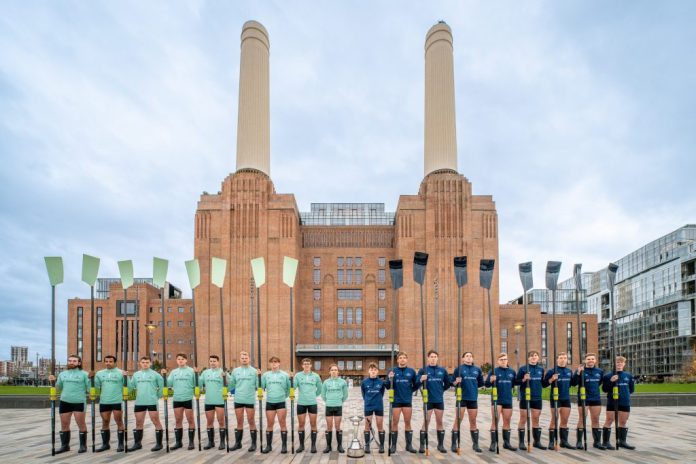
For the first time in its rich 195-year history, the announcement of which 36 athletes had earnt coveted seats in the blue boats was made public.

Sandwiched between Superdry and Mango, as shoppers enjoyed their evening retail therapy, the stage was set for the big announcement.

Battersea Power Station was the perfect venue. It was befitting that this teaser event for one of Britain’s most iconic sporting events would be held in one of the country’s most iconic buildings.

Guests, families and curious shoppers were treated to a flurry of activities including photographs with the iconic trophies, film screenings of Turning The Tide, a series of short films telling the story of The Gemini Boat Race 2024 and a Q and A with Boat Race alumni and GB rowing Olympians.

At 7:30pm, the main event started. BBC broadcaster and Boat Race commentator Andrew Cotter hosted the proceedings.

As Cotter pointed out, Oxford started out with 88 trialists, Cambridge with 89 so the athletes who were called up onto the stage really were the cream of the crop.

Chair of the Boat Race company, Siobhan Cassidy in her introductory speech said: “With each historical era of the Boat Race we add to the story, the excitement and the drama.”

This rang true with this year’s event at Battersea which had all the drama as each athlete glided down an escalator opposite their blue rival, catwalked to the stage and shook hands with their opponent and respective coaches.

The men, as is tradition also weighed in and there was little between the rivals with Oxford coming in at an average 92kg, just half a kilogram heavier than their Cambridge counterparts.

Notably, Oxford’s two-man, Harry Glenister received the biggest cheers from his enthusiastic personal support crew attending the event.

The magic of the event was that for the first time the athletes could be announced in front of proud friends and family, something that was cherished by the crews.

Oxford women’s six seat, Annie Sharp said: “I was nervous descending down the escalator, the walk was longer than I expected but what a great story to tell family and friends. It’s been such a fun day and big thanks to the organisers for making it possible.”

Her Cambridge rival, three seat, Clare Hole added: “It was an incredible event. I don’t know what I was expecting but it was amazing to have so many people here.

“It’s been a great day to bond with the crew and have my family come and support is so special. I managed to not trip on the escalator walking up to the stage, so I’m happy.”

For all those in attendance, the event certainly whipped up anticipation for the big day and for the 36 Blue Boat rowers, their coaches and support teams it was a great moment to recognize the last six months of incredible hard work.

Now the crews are announced, the next two weeks are vital as every second will be poured into making their boat inches faster and achieving the one simple goal, to win the 2024 Boat Race.

The 78th Women’s Race begins at 14:46 on Saturday 20th March 2024, with the 169th Men’s Race an hour later.

For more information about the crews and for rower bios visit https://www.theboatrace.org/crews

The crew announcement also market the launch of our new video series, Turning the Tide. You can watch episode 1 now!

WORDS: Olivia Bothamley-Dakin
PHOTOS: Benedict Tufnell/Row360

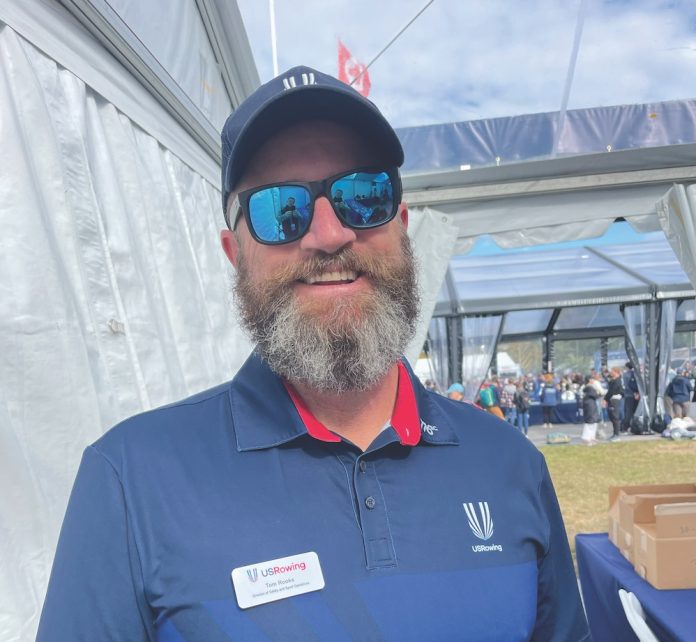
The Rowing News Interview: Tom Rooks

United States Coast Guard veteran Tom Rooks, a longtime rowing coach, now serves the sport of rowing full time with USRowing, overseeing a new, invigorated approach to safety. Rowing News caught up with Rooks at the end of an early-season junior-rowing practice.

Rowing News: What’s your new job?

My job is Director of Safeguarding, which puts a few things under my team’s tent. I still have the priorities with safety that I did prior to this position. I’m responsible for getting safety communication and education out there, and looking at ways to reduce harm from a physical-safety perspective.

But what’s changed is that SafeSport, grievance procedures, and the Referee Corps, those things are now with our team. And that all came with the development of the vision toward safeguarding. The easy way to explain it is: Let’s reduce harm. Sometimes that’s physical, sometimes it’s mental.

If that’s a kid who hates the sport or is unable to stand up straight, if that’s from hazing on a high-school team, or if that’s from not listening to your body and seeing a doctor, the harm is the same. So what we’re trying to go after is: “Where are there places where we can reduce harm while still letting rowing deliver all the great lessons and experiences that it has to offer?”

Before I became the Director of Safeguarding, I was the Safety and Well-Being Associate. And then I was the Director of Sport Safety, which was kind of the same role with a bit of a promotion. And then what really happened was the more you look into the incidents we have in our sport—be it drownings, collisions, abuse, all those things—a lot of the harm comes from the same lack of curiosity about how to evaluate risk and do the right things to reduce it.

Rowing News: Before you came to USRowing, you served in the United States Coast Guard. Tell us about that.

Yes, I’m a 22-year active-duty veteran. I’m a retired Senior Chief, and ironically enough, my last job in the Coast Guard was running the school for all of our coxswains. So anyone who wanted to become a Boatswain’s Mate—the trade of driving boats on rescues and law-enforcement missions—they had to get through our schoolhouse.

I got involved with USRowing [laughing], I blame Chris Chase for my job at USRowing. He called me one day because we were friends and said, “Can you help out with safety?” And I said, “Sure.” Chris Chase gets you motivated, and the next thing you know you find yourself contributing.

Rowing News: SafeSport certainly has some limitations, as we found out the hard way with some coaches who were in the news. USRowing had its hands tied with how much could be done. Where does safeguarding go beyond that?

So the beauty of safeguarding is we can look for where there are overlaps and where there are gaps and we can fill them.

A good example is if you were at a regatta and your coach refused to let you wear a jacket and the regatta was two hours behind and 40 degrees with the wind blowing 20 miles an hour. If you think about it, we have a SafeSport incident, right? We also have a non-contact physical misconduct, but you also have a safety incident. You also possibly have a referee complaint and you might have disagreements on your hands. By unifying all these processes and concerns under safeguarding, we can take a look at a given scenario and find out what best applies to mitigate it and better find all of the lessons learned.

I’m a firm believer that, outside of a character-driven mistake, a lot of people make mistakes we should learn from and help them learn from. I made a lot of mistakes as a young coach. And one of the things with that is finding where there are avenues and outlets where we can learn and spread the lessons learned, so the next person doesn’t have to make the same mistake.

There are a lot of people who have experienced something that they shouldn’t have, and they don’t know what to do with it. We can’t expect a 15-year-old rower to know what should be a local club problem to resolve and what should be reported to SafeSport. So there are two aspects for me to safeguarding: prevention and response. We have a partnership with WeRideTogether, and they have a really good education module up on The Launch [USRowing’s online-learning platform] right now that people can take for free. It teaches them what is a healthy relationship with your coach and what is unhealthy.

We’re trying to find more tools, especially on the prevention side. With response, we have SafeSport requirements we follow and we don’t have the option to say “no, thanks,” and do things our own way. There are certain cases that are mandatory to go to them, and their processes are rightfully very defined. But on the prevention side, having the safeguarding concept in place really gives us a lot of freedom to do better education, like our annual safety report. If somebody reads that and sees that last year we had a lot of regatta incidents with uncoxed boats hitting each other, then maybe they say, “Let’s put it in a training plan for whomever is going to steer a quad or double.” And maybe that prevents the next person from getting run over out there or having their boat destroyed.

Rowing News: We’ve been talking about the human costs of safety issues, but there’s also a financial cost, right?

I was pretty proud of how open we were about the insurance problems we faced last year. The original quotes we got from carriers were just an astronomical price increase from where we had been just a year before. And the really direct truth of it is what we call SAM coverage, sexual assault and molestation. A lot of carriers are pulling out of the U.S. market because with the amount of revelation of what’s happening in youth sports and what has happened over the years, it’s getting pretty hard for insurance providers to feel like they have any understanding of what next year may hold.

The thing I like about my job is, it’s the right thing to do morally and ethically to reduce harm, but it’s also the survival of our sport. If things keep going—and it’s not just rowing, it’s across sports—but if things keep going this direction, if you don’t find a way to reduce bullying, abuse, molestation, all these things that are happening, if we don’t fight this like it’s an existential threat, it’s going to change the rowing landscape.

So many people have done so much good work in the 30 years I’ve been involved at opening up our sport to community programs, getting out of just the private, well-funded schools and into more places people can row. If our insurance costs start doubling every year, those are the programs that go away. Your local rowing club, that’s who will go away if we can’t get our heads around this to start reducing harm in the sport.

Rowing News: What’s your vision? What will you look back at and say, “That’s where I really moved the needle?

When a tragedy happens in our sport, I want to be surprised. Right now, throughout our sport’s history, when things have happened, I find myself and a lot of people I know going, “Well, it was only a matter of time.” I want to be surprised. When I was in the Coast Guard, I lost shipmates. I lost friends. The goal was when we read about the mishap that we couldn’t have imagined it would have happened.

So for me, however long I’m able to endure, however long this career goes, when I walk away, I want to have a professional culture that looks at risk. I talk a lot about this concept: I’m pro-risk. I’m anti-chance. Risk, we can look at. We can calculate. We can mitigate it. Chance is when we see the risk and go, “Well, hopefully, it’s OK.”

We owe each other more than that.

Further reading from the Rowing News Safety Issue

The Tragic Case of Dzmitry Ryshkevich

“Many events have been staged safely in Austria at Linz-Ottensheim, the site of the 2019 World Rowing Championships, and the safety team for the course was very experienced. Before the event that year, significant work had been undertaken, including building a new boathouse and enlarging the boat park area, which featured a dedicated Para rowing area and pontoon.

Because of limited water space for racing and training, traffic patterns were discussed and tested extensively. In 2019, a training area was created for Para singles because often they had little time to prepare, since they tend to be the slowest boats in the regatta.

Safety during training and racing was taken extremely seriously by the organizing committee and World Rowing. Although regatta safety is the legal responsibility of the organizing committee, it is carefully elaborated with the many years of experience of World Rowing’s events team. This includes such matters as the number of safety boats and professional patrolling during training and racing.

Now to the tragic case of Dzmitry Ryshkevich. His was an amazing survival story. In 2003, when he was 17, he was run over by a car in his hometown of Grodno, Belarus. Many of his vertebrae were crushed, many of his body organs were damaged or had to be removed, and he hit his head hard and suffered brain damage. The fact that he survived was miraculous enough, but then he required numerous surgeries, and his recovery called on the total support of his family and friends. He showed great courage to switch to Para rowing, which he began in 2007 after competing in other Para sports. In Beijing in 2008, the first Paralympic Games to feature Para rowing, he won a silver medal.

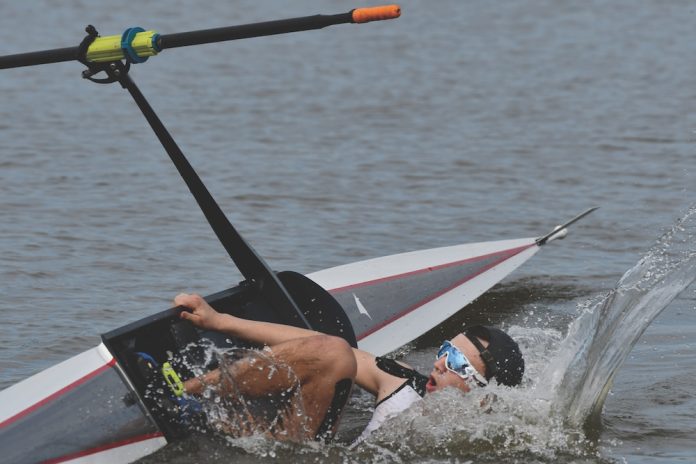
In 2019, Dzmitry went on his first training row on the opening day of training at Linz-Ottenheim. When he reached the end of the training lane for Para singles and began to turn his boat around, his upper body swayed to one side, which caused the rigger to break off the starboard side (there was no damage on the port side because the nuts and screws were missing).

The boat capsized, he went under, and, unable to right himself, sank. His very developed upper body and high center of gravity made it difficult for him to maneuver in the water. Safety motorboats rushed to the scene in accordance with protocol, and divers began searching.

Since the regatta course had been dredged recently to return its depth to three meters, the water was cloudy, and it was difficult to see the farther down the divers went. In addition, the water level of the Danube changed each night because of a hydroelectric dam at the 1,000-meter mark, which stirred the bottom sediment. Scuba divers summoned to the accident site from all over the area continued hunting for hours, but it was too late to save Dzmitry. It was a tragic experience that underscored the critical role and responsibility of coaches and support staff in Para rowing.

So far, there has been no public disclosure of the conclusions of the accident investigation since it’s considered a private matter between Austrian authorities and the Ryshkevich family.

In corresponding with Dzmitry’s father at the end of the inquiry, however, I learned that the police report stated that after off-loading Dzmitry’s boat in Linz and setting it up for training, his coach neglected to install the screws on the port side of the wing riggers. Although the coach was indicted for negligence in Austria, he has avoided prosecution so far by staying in Belarus since the accident. The organizing committee and World Rowing were not cited in the inquiry for any negligence or lack of due diligence.

A full review of safety at World Rowing events by an independent water-safety advisory firm based in the UK had been planned since 2017. The review was approved in 2019, but its start was delayed because of Covid event cancellations in 2020. In October 2021, a report covering five areas and recommending 34 actions was delivered to World Rowing for consideration. No significant errors or omissions in safety protocols were identified, but things such as better systems, more documentation, and appointing an overall safety officer were highlighted.

The recommendations were then reviewed by the various World Rowing commissions that are involved in safety, regatta organization, and equipment. Recommendations specific to Para rowing were passed to the Para Rowing Commission, and I believe most of them were adopted during 2022.”

Further reading from the Rowing News Safety Issue

Never Swim to Shore, and Other Safety Rules

Photo courtesy USRowing.

• Stay with the boat: Should any boat swamp or capsize, all rowers and coxswains should stay with the boat and never swim to shore for help. This is the single most important safety advice, and this, alone, can save lives.

• Safety committee: Every rowing organization should have a safety person or committee responsible for establishing and enforcing safety guidelines specific to the team and location. All members of the club should be familiar with these. Create emergency plans and a site map indicating all bridges, traffic patterns, and rescue access points.

• Weather checks: All coaches should perform a comprehensive weather check before launching, including air and water temperature, wind, water flow rate, fog, strong current locations, debris, looming thunderstorms, and any other relevant local factors. If it’s iffy, do not row.

•Go no-go matrix: Everyone should have the authority to determine safety. Everyone from the assistant coach to the president of the club ought to be authorized to make a safety determination.

• Bow and stern lights: All boats going out at dusk, dawn, or in low visibility should have lights on both the bow and stern. If you’re not sure if it will be dark enough to need them, err on the side of putting them on.

• Life jackets: Consider inflatable life jackets for rowers, coxswains, and coaches, especially in very cold conditions and for less experienced rowers. Life jackets should always be worn by anyone who hasn’t passed a swim test, and all launches should be equipped with enough easily accessible life jackets to rescue at least the largest boat you coach.

• Check hardware: Get rowers and coxswains in the habit of checking all hardware on their seat before each row. They need only to finger-tighten everything to identify any major issues.t

• Log book: A log book always should be used when boats are going out without a coach, which should be limited to experienced rowers and good-weather conditions. All crews should log in and out, with a dedicated club member responsible for keeping regular tabs on the log and following up immediately with any discrepancies.

• Audit: Complete the USRowing Safety Audit Checklist. Have all athletes watch the USRowing safety video every year.

•When in doubt, everyone in a position of responsibility should ask themselves: How will I defend this decision to the families of the people involved, or in court?

Further reading from the Rowing News Safety Issue