Home Blog Page 39

Penn Wins Men’s and Women’s Eights at the Schuylkill

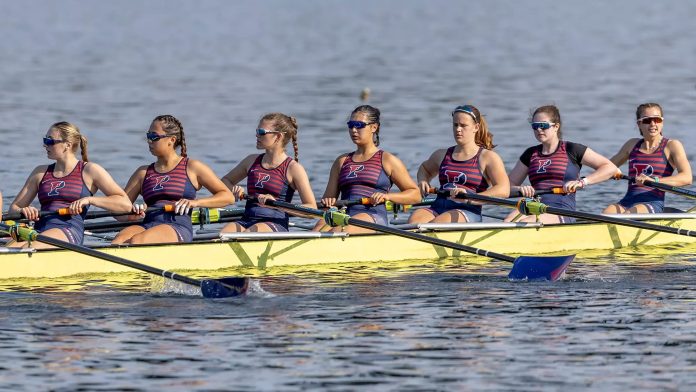
penn women's rowing head of the schuylkill 2024
Photo courtesy of Penn Athletics.

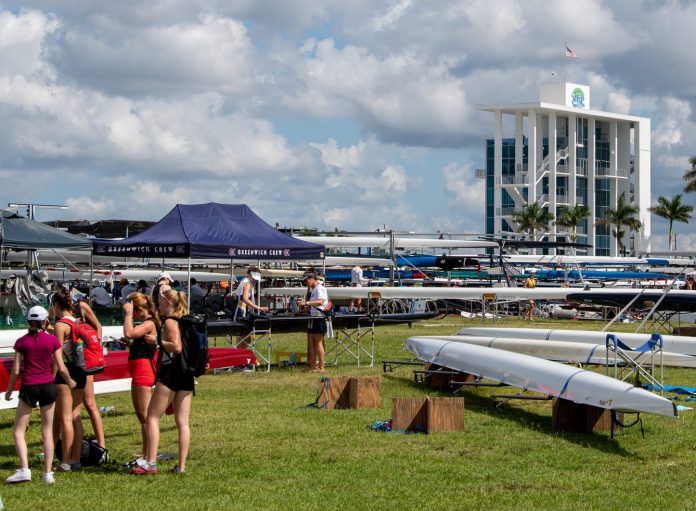
Over 8,000 rowers competing in 155 events at the 2024 Head of the Schuylkill Regatta enjoyed sunny warmth with challenging winds over the weekend.

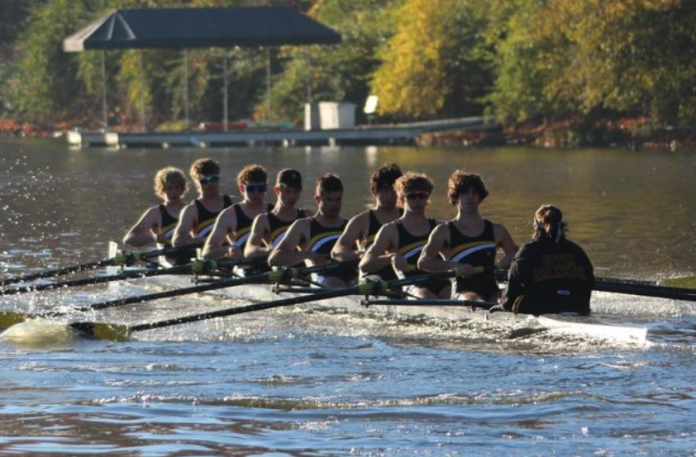
The University of Pennsylvania won both the women’s and men’s championship eights, finished first and second in the club eights, and won the championship fours and frosh/novice eights.

The Penn women also went one-two in the championship coxed four, and won the college frosh/novice eight

“It was a good learning event for us. Progress is our focus,” said new Penn women’s coach Bill Manning. “We all know that everyone will get faster so we don’t keep score until April.”

University of Pennsylvania men also won the championship pair, frosh/novice coxed four, championship coxed four, alumni quads.

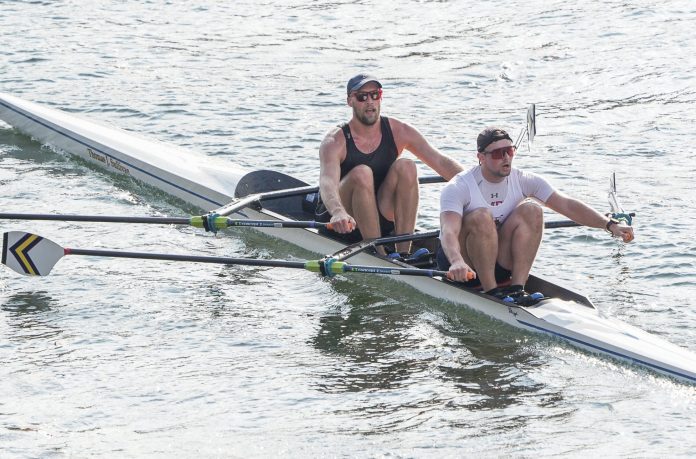
Riverside Boat Club’s Elizabeth Martin won the women’s championship single and Whitemarsh Boat Club’s Claire Friedlander won the women’s championship lightweight singles. Head of the Charles men’s single winner Finn Hamill, from New Zealand’s Waikato Rowing Club, won the champ single, men’s double with Justin Schmidt, and mixed double with Olympic champion Karolien Florijn. Schmidt cemented Whitemarsh’s dominance of lightweight singles by winning the men’s event.

Clete Graham, who led the Schuylkill Navy and Stotesbury Cup Regatta through their greatest growth, has kept busy in so-called retirement.  Graham finished fifth of eleven in the men’s masters lightweight single (60+), won by Malta’s Ted Trocky, before coaching two Notre Dame women’s masters eights on Saturday, and then came back to coach seven sculling boats from Concord High School (Delaware) on Sunday.

“I was pretty tired by the end of the day Sunday,” Graham admitted, “but had a great time all weekend. A very well-run regatta, with a very nicely buoyed course, and beautiful weather.”

Racing Gets Spooky at Pumpkinhead

Pumpkinhead
Photo courtesy of Austin Rowing Club.

Across the United States, rowers embraced the fall rowing conditions and some even dressed up for the occasion in the case of Pumpkinhead in Austin, Texas.

Pumpkinhead – Head of the Colorado, which Austin Rowing Club has hosted since the mid-1980s on Lady Bird Lake, saw a myriad or rowers in costume as part of regatta tradition on Saturday.

“We have a 3K racecourse that runs from ARC east towards the Longhorn dam,” said regatta director Megan Getman. “Because the regatta is around Halloween we encourage costumes. The teams in big boats create themed costumes and they are expected to race in costume. They have to put some thought into the costume to make it rowable.”

The regatta now offers an Adaptive 1x race, allowing racing to be available and accessible to everyone. This year Texas Rowing for All had six entries.

“We had clubs from all over Texas, Louisiana, and Oklahoma,” Getman stated. “We also had a few international clubs this year— a few from Mexico that started coming. They’re very much fun to row with. We have juniors, collegiate, and masters. Texas Rowing Center and Austin Rowing Club usually do really well.”

In Gold Lake, California at the Head of the American, California Rowing Club took the top nine spots in the Men’s Open Single and the top two spots in the Women’s Open Single In the Women’s Collegiate Eight University of California-Berkeley claimed first and second place. On the men’s side Gonzaga University finished first in 15:51.3, over 20 seconds faster than second place Santa Clara University.

The 8th annual Music City Head Race took place on Saturday in Nashville, Tennessee on the Cumberland River. University of Louisville Rowing finished first in the Women’s Collegiate Eight in 17:46.5 with Vanderbilt Rowing Club coming in second in 18:10.9. Michigan Rowing Association, who had four entries in the Men’s Collegiate Eight, took the top two spots with Virginia Tech placing third.

“Fall racing is a different game altogether and it’ll be fun to see the team participate in these races,” said Louisville coach Derek Copeland. “They had a pretty good summer and have welcomed 22 newcomers and a dozen novices from campus. The upperclassmen have done a great job showing this young group the way as we’ve nearly doubled our squad size from last year.”

Recruiting: The Timeliness of Now

sarasota youth nationals
The top junior and high school school crews qualify for the USRowing Youth National Championships at Nathan Benderson Park in Sarasota, Fla. PHOTO: Lisa Worthy.

The best time to begin considering your university choice is now, regardless of where you are in high school.

If you’re in the ninth or 10th grade, begin by assessing both your athletic and academic abilities. Understanding your strengths and weaknesses will help you set realistic goals for your academics and rowing.

As you approach the summer before your junior year, it’s time to refine those goals. This is an ideal time to think about the type of school you’d like to attend. Do you envision yourself at a large state university, a smaller liberal-arts college, or something in between? With so many options, the process can feel overwhelming. There are also great club programs that offer attractive opportunities to keep rowing.

For rowers, official (paid) visits are allowed in both the junior and senior years. Many athletes take advantage of early visits, even before they’re ready to decide. While early visits can be helpful, it’s important not to rush your choices.

So when is the right time to begin the process of selecting a university? Again: now. Wherever you are in the process, there’s always a productive next step. Even if it’s the fall of your senior year and you’ve just decided you want to row in college, it’s not too late. Begin by expressing your interest to university coaches. Your current coach or a recruiting expert can guide you through the next steps.

Whether early in high school or nearing the end, it’s never too soon—or too late—to begin preparing for your university rowing careeer   

Robbie Tenenbaum coached at the NCAA level for over 30 years and with the U.S. Junior National Team for eight. He now helps parents and families navigate the university recruiting process. 

Haxton, American, and Pumpkinhead Regattas Commence Racing October 26

Upper Arlington Crew columbus ohio
Photo courtesy of Upper Arlington Crew.

The Head of the American, Pumpkinhead – Head of the Colorado, and Blake Haxton Fall Regatta are all scheduled for Saturday, October 26. Racers from the middle school all the way up to masters will be competing.

Upper Arlington Crew from Columbus, Ohio will be the host of the Blake Haxton Fall Regatta held on Griggs Reservoir.

“We have over 480 entries right now, and we’re very excited,” said race director Lisa Osborne. “It’s looking like we’ll have great weather, not like a typical October regatta. Also, this year we are going to have an extra launch dock. The regatta has grown significantly in the last few years, so we needed to accommodate our growth, entry, and team sizes.”

The dock purchase was a collaboration between Upper Arlington Crew, Washtenaw Rowing Center and the Kathryn Bennett Race Course.

“The men’s and women’s varsity eights have some really fast teams,” said Osborne regarding races to look out for. “We also have a good number of quads and doubles. We’re also happy to have some middle school racing at the very end of the day to get those kids excited about rowing. It’s a composite race for teams that don’t have enough to fill a boat and it’s just 1,000 meters. For many of them it will be their first race so it’s exciting to see them be able to participate and see what an actual race is like from launching, to crossing the finish line and hearing the horn.”

The Head of the American regatta is hosted by the Sacramento State Aquatic Center on Lake Natoma in Gold Lake, California and invites high school, college and master rowing programs to race the 5K course, which snakes along the river’s north shore.

In addition to the California and Ohio regattas, Austin, Texas and Austin Rowing Club will be the site of the 40th annual Pumpkinhead – Head of the Colorado which features a 3K race starting at ARC’s dock on Lady Bird Lake. Junior, collegiate, adaptive, and masters rowers will all have the opportunity to compete.

Racers Flock to Boathouse Row for Head of the Schuylkill

head of the schuylkill 2023 undine
Photo by SportGraphics.com

Known as ‘America’s favorite regatta’ by Philadelphia natives, the 54th Head of the Schuylkill is set to run from Saturday and Sunday, October 26-27, 2024.

“It’s a lot of fun and it’s one of my favorite head races because it’s a local one,” said Undine Barge Club head coach Joe Quaid. “It’s not the same course we row day in and day out. In the last 20 years the traffic pattern has been flipped because they don’t want boats crossing the course to get to the far side of the river. You go up the east side of the river. The biggest difference is the Columbia Ave. Bridge is the major turn in the river and normally you can get really close to the wall but when they flip the course the buoys around that turn are almost in the middle of the river so it’s much different. It pushes everybody out and it evens the field from just the locals hugging the wall.”

The Redgrave Challenge, honoring British rower and five-time Olympic gold medalist Sir Steven Redgrave takes place over the course of the day on Saturday. The Challenge involves racing between both lightweight and heavyweight collegiate and open men and women. Adaptive/Para events, alumni events, parent/child/sibling events and half course events are all included in Saturday’s lineup. Sunday racing will feature high school, open, championship, mixed masters and veteran Events.

HOSR dates back to the 1970s when members of the University Barge Club proposed the idea of a head race style course. In the regatta’s inaugural year only 12 women were entered. Fast forward to 2013 and the event saw over 3,200 women racing down the course. Today the event hosts more than 8,000 athletes from over 260 clubs, high schools and colleges with 20,000 to 30,000 spectators anticipated.

“This year we have some really good masters,” Quaid noted about Undine’s HOSR 2024 entries. “The 50-59 year old age group are competitive as well as the younger athletes in the champ singles, doubles, and quads. It’s a mixed bag. Some people row a few days a week and others row pretty hard and are consistently training.”

Undine, a core member of the clubs along Boathouse Row, was founded in 1856 and will be joined at this year’s Head of the Schuylkill by storied crews along with programs who have just emerged on the rowing scene in a competitive 2.5-mile race down the Schuylkill.

Letter to the Editor: Bully for Beach Sprints!

beach sprints
Photo by Lisa Worthy.

I join Doctor Rowing in mourning the elimination of lightweight events in future Olympic competitions. I take umbrage, however, at his remarks in that same piece about Beach Sprints. He describes the sport as “created with an eye to television,” implies that coastal rowers aren’t “real rowers,” says the sport “sounds like a joke,” and compares it to a “reality show.”

The sport of Beach Sprints (and coastal rowing in general) is worthy on its own merits. Suggesting that lightweight rowing has been shoved aside to make room for entertainment does a disservice to coastal rowers, coaches, fans, and the sport itself.

The variables that impact flat-water rowing are largely invisible to the casual regatta attendee, who observes much of a race through binoculars or on a Jumbotron. The same Rowing News issue bemoans ill-attended World Rowing events in Europe. Here’s a solution: Bring back the observation train! 

Beach Sprints fans can watch the entire race from the beach. Rough surf can toss athletes out of the boat, odd currents and sea floor anomalies can carry boats far off course, and officials call pauses in racing to allow sea life to clear the course.  

The sport is truly inclusive; athletes of all body types are successful, Para rowing teams are forming, and little infrastructure is needed for world-class competition, allowing countries without a long rowing history to develop athletes and host competitions with minimal investment.

I invite Doctor Rowing and any other doubters to take a look at the photo of the US CMix4 launching in their time trial at this year’s World Rowing Beach Sprints. What you see there are athleticism and teamwork worthy of raising up.  

Next summer, jettison your blazer and below-the-knee hemline, pack your swimming suit, and find the nearest coastal-rowing competition.

And don’t forget the sunscreen.

Ruth Ellen Outlaw
Charlottesville, Virginia

IRA Names Kunkemueller as Commissioner

IRA Kunkemueller Commissioner
Photo provided by The Intercollegiate Rowing Association (IRA).

The Intercollegiate Rowing Association (IRA) Board of Stewards has appointed Laura Kunkemueller as the organization’s next commissioner. She steps into the role previously held by Gary Caldwell, who retired on October 11, 2024.

Kunkemueller, who rowed collegiately for Princeton University after walking on to the team her freshman year, has been a part of the last 25 IRA Championships, initially as a referee and beginning in 2015, as the Chief Referee.

“The transition is the culmination of what is best described as an apprenticeship with Gary Caldwell,” remarked Kunkemueller. “Gary and I are among a handful of people who have worked the IRA for 25 years or more. We’ve worked very closely over the last three years to make sure that I was ready to progress when he wanted to retire.”

With Caldwell at the helm the IRA advanced from ECAC affiliate and established a constitution, bylaws, and operating rules. The IRA is currently a 501(c)3 corporation with a Board of Stewards entrusted with the authority to operate the championship with the best interests of the athletes in mind.

“There is always the desire to make sure that we are at the forefront of athlete experience and championship experience,” said Kunkemueller. “Men’s collegiate rowing has a very special place within the broader picture of rowing—there’s a lot of history and tradition but we need to keep the flavor of that while pushing forward to take advantage of what we have available now from technology or other resources.”

After taking a break from rowing following her Princeton graduation, Kunkemueller moved to Syracuse, N.Y. where one of her father’s boatmates from college got her back into the sport, this time as an official. She was introduced to the ECAC and men’s collegiate rowing first observing them in 1998 and working from 1999 on.

“Collegiate rowing is at a great place,” Kunkemueller stated. “I’m excited about what I see in terms of ways that we can grow engagement and work together to elevate the championship experience. Gary grew and professionalized the IRA as an organization, series of qualifying regattas and the national championship. The team in place is well positioned to push forward and take the championship to a higher level.”

Kunkemueller’s role as commissioner, effective immediately, will call upon her experience as a college rower, referee and Chief Referee as well as her desire to enhance the IRA Championship.

Coach Development: Managing the Managers

coach boat maintenance rigging hocr
Photo by Lisa Worthy.

I have often heard college coaches complain about working for administrators who have no first-hand knowledge of what it’s like to be a varsity athlete, let alone a coach. I’ve been one of them at times. They don’t understand what it takes to win. They’re too sensitive to the student-athletes’ complaints. This is supposed to be hard!

Sometimes, this is undoubtedly the case, and working under a supervisor like that can be exceedingly frustrating. Other times, though, coaches are coming into the relationship with their admins with preconceived notions of what to expect. But what would happen if we approached those relationships with a more open mindset?  If we viewed our admins as partners with a different set of experiences from our own rather than adversaries or obstacles?

This fall, I had the opportunity to speak with a sports-management class at UMass Amherst about the current college- athletics landscape and the experiences of collegiate coaches.

The students, all sports-management majors, were engaged, curious, and thoughtful in our conversations as they sought to understand the collegiate coach’s experience within the larger athletics landscape. They asked about how coaches balanced the sometimes conflicting pressures to drive elite performance while still receiving positive student-athlete reviews at the end of the season. They brainstormed about the challenges coaches face in recruiting effectively from the increasingly necessary transfer portal.

Listening to them, I wondered what their future careers might be. None of the students there was a varsity athlete. It’s highly unlikely any would become coaches. Some, though, will likely go on to administrative roles within college athletic departments. Indeed, several were already working at internships in compliance and elsewhere in their own department. They may go on to be administrators who oversee sports directly and even athletic directors.

Though they have not been in the trenches, these students were approaching the work of sports management with curiosity about and empathy for coaches. Do they need to be educated about the realities of life on or leading a team? Sure. But that will be the responsibility of the coaches they lead. If that is done with care and honesty, there’s no reason they won’t develop into positive and productive partners for the coaches and teams they one day oversee.

As coaches, it’s our responsibility to get those around our teams on board with what we’re doing. Assume that others are coming into the situation with the best of intentions—until proven otherwise—and you stand a much better chance of building a lasting, beneficial partnership.