Home Blog Page 245

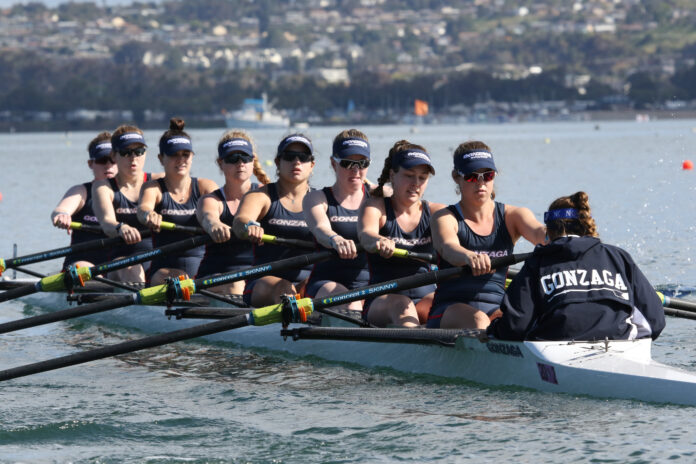
Gonzaga Names Andrew Derrick Women’s Rowing Head Coach

STAFF REPORTS
PHOTO BY SPORTGRAPHICS

Andrew Derrick has been named head women’s rowing coach at Gonzaga University in Spokane, Washington.

Derrick will make the move to Spokane after spending four seasons as the head women’s rowing coach at Seattle Pacific University (SPU), a private university in Seattle, Washington.

“I am extremely excited to be given the opportunity to join the Gonzaga family,” Derrick said. “I was fortunate to work with and get to coach some amazing people at Seattle Pacific, so leaving them is extremely difficult.

“However, when given the opportunity to be a part of such a highly successful department with impressive momentum connected to such a respected university, my wife and I knew it was the right decision for our family.”

Before SPU, Derrick spent six years coaching at the University of Central Oklahoma in Edmond, Oklahoma, where he helped the Bronchos earn their first NCAA bid in 2011.

Derrick graduated from the University of Washington with a Bachelor’s degree in history and earned his Masters of Education in intercollegiate athletic leadership in 2008.

Men’s Collegiate Rowing Coaches Association Formed

BY ED MORAN
PHOTO BY SPORTGRAPHICS

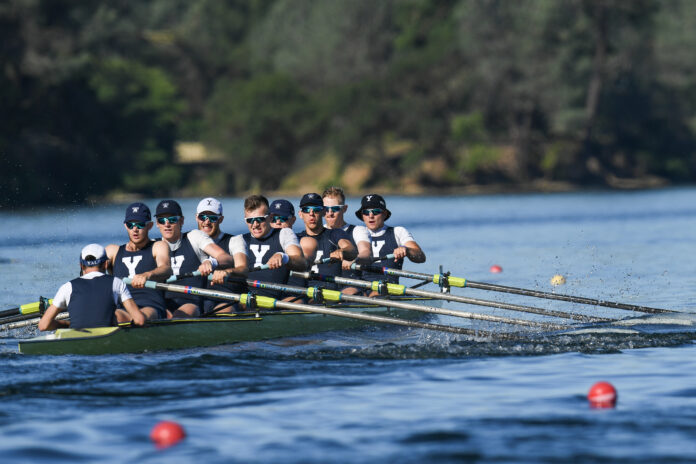
Wisconsin men’s coach Chris Clark said the idea of forming a national men’s rowing coaches association has been talked about for years. But until 2020, when all collegiate sports shut down due to the Covid-19 pandemic, there didn’t seem to be much time to actually pull it all together.

But with this year’s long interruption, Clark and Northeastern University’s head coach John Pojednic, with a big hand from Intercollegiate Rowing Association Commissioner Gary Caldwell, have taken the time necessary to complete the idea and formed the Intercollegiate Rowing Coaches Association (IRCA).

The association, which will represent men’s rowing coaches who work in schools that have varsity men’s rowing programs, began official business Tuesday afternoon with its first meeting, which was, fittingly for 2020, held on a Zoom call.

“I’ve talked about this for years,” said Clark. “But we started talking about it in earnest maybe a few years ago. I remember talking to other coaches and there were different levels of enthusiasm. But everybody seemed to be into it. And then we did absolutely nothing.”

But that changed with the Pandemic shutdown and when issues that affected all collegiate sports began being debated and men’s rowing found that it did not have an official association to represent them.

“What really sparked this was in May when all sorts of things in athletics were hitting the news,” Clark said. “And one thing was this concept that some NCAA schools were trying to get a waiver to drop below the 16-sport minimum required to remain an NCAA institution and the implications that would bring.”

So, Clark and Pojednic stepped up the effort to organize and decided to bring Caldwell into the planning. Tuesday, the fledgling association launched its official website and began the business of getting the word out, growing membership, and preparing for what issues there are ahead for men’s rowing.

“The closest thing to a men’s collegiate coach’s association is the IRA coaches group,” Caldwell said. “But that only represents the schools that are part of the IRA, and among the colleges that sponsor men’s varsity rowing, only two-thirds of them are IRA members and the other third are not,” Caldwell said.

“So, you have a group that doesn’t have an organized voice at all. This provides an opportunity for the 51 IRA member schools and the 25 other schools that have men’s varsity rowing to have a unified voice on an area of concern to all of them,” he said.  

NK Offers First-of-its-Kind Virtual Racing Series

Single, Sculling, SpeedCoach, SpeedCoach GPS, Row, Racing, Race, Water, Yellow Bumper, GPS, GPS Yellow Bumper, Rowing

STAFF REPORTS
PHOTO BY PROVIDED

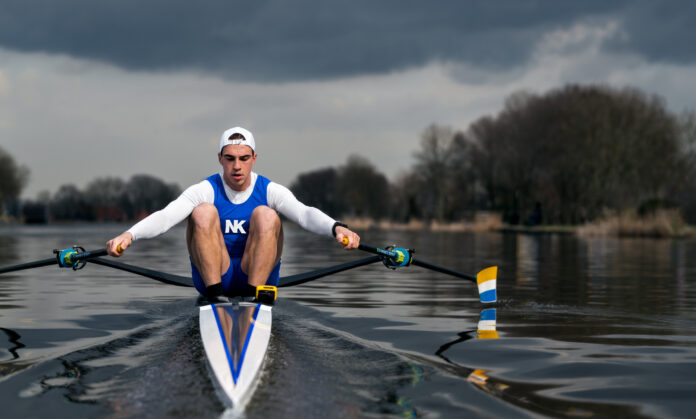
Nielsen-Kellerman’s SpeedCoach Summer Regatta Series will begin this week starting with the Independence Day World Regatta.

The Independence Day World Regatta will run between July 1-4 and is the first in the company’s 11 event series that will be held in July and August

The race will take place on the water and provide an alternative to the virtual erg races that have been commonplace since the Covid-19 lock-down began. Athletes are asked to row a set distance on the water against the clock and use that time to rank themselves against other competitors. 

To compete, rowers will need to own an NK SpeedCoach GPS which will be used to monitor the distance and time for ranking. Athletes will row the piece in a single within a certain time frame and then upload the result to the NK LiNK Logbook.

“We know lots of athletes have been training hard indoors for the last four months, but now that summer is here, people would prefer to be out on the water,” said Mattison Crowe, director of marketing at Nielsen-Kellerman.  

“Racing on the water remains a challenge with no organized competitions and the need to maintain social distancing guidelines, so we devised a way for people to race their singles over a variety of distances and compare their results with scullers from all over the world.”

There are no entry fees associated with any of the races.

A Most Beautiful Thing, Indeed

BY ANDY ANDERSON
PHOTO COURTESY 50 EGGS FILMS

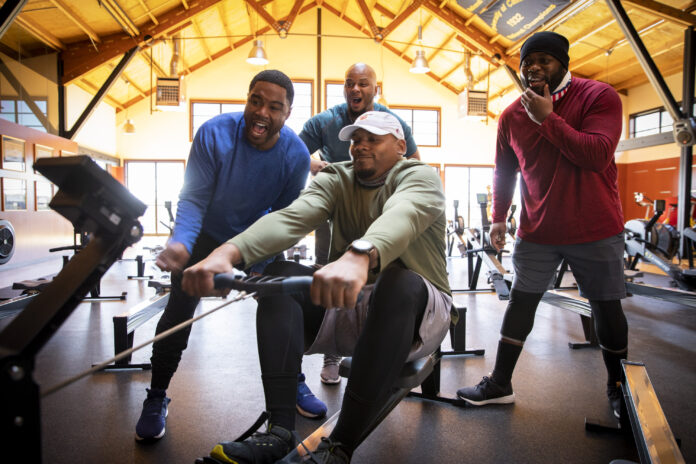
One day at Manley Career Academy, a high school on Chicago’s West Side, an African-American teenager named Arshay Cooper noticed a long, skinny white boat in the lunchroom and a TV showing people racing in the same shell. He looked more carefully and saw nothing but white people rowing; he moved on. The next day there was a sign saying that anyone who came to the gym to learn about rowing would get free pizza. Cooper and a few other boys decided to check  it out. A “curly-haired Jewish guy” stood up and said that he wanted to start a team at Manley. “There are no all-black crew teams. You will be the first.” Cooper decided to give it a shot despite the number of people who told him it was a crazy thing for a black kid from Chicago’s toughest neighborhood to try.

Mary Mazzio, the documentary filmmaker who cut her teeth with a rowing movie about the Yale women’s crew rebellion, A Hero for Daisy, is back 20 years later with another rowing film, Arshay Cooper’s story. His 2015 book, Suga Water: A Memoir, is the basis for Mazzio’s new film, A Most Beautiful Thing. Mazzio knows rowing, having rowed at Mount Holyoke and on the U.S. lightweight and open weight national teams in the ‘80s and ‘90s; her rowing apex was competing in the Olympic double in 1992. She also knows great stories, and this one is both important and wonderful.

A friend told Mazzio that she had to read Suga Water. She read it, loved it, and tweeted about how awesome it was. Thirty minutes later she got a tweet back from the author himself. Over the next 18 months, Cooper and Mazzio hatched the plan for what would become the film. They found big-name people who wanted to help, NBA stars Grant Hill and Dwayne Wade. The rapper Common agreed to narrate. The filming took place from January 2019 through July 2019 in Chicago and with trips to Oakland, New York, and Philadelphia. At press time, they were doing final editing and polishing, but I was lucky to see a rough cut. 

Cooper has become a tireless promoter of rowing because of what it did for him and the guys in his crew. “It literally saved my life,” he says. If you were young and black from the West Side of Chicago, you joined a gang; that’s just the way it was. A moving moment in the film comes when the five guys who reunite answer a question that we don’t hear. “Eleven.” “Twelve.” “Ten and a half,” they reply. The viewer wonders what the question might be and discovers what it is a moment later: ‘When did you see your first person murdered?” 

After Mazzio contacted Cooper, the idea of having a 20th reunion and filming the guys training and then racing was born. They were excited. But they were also scared to race after two decades away. “You mean we’ve got to give up eating junk food (and get in shape)?” Each of them had his own personal reasons: Preston Grandberry to go back in time and undo his mistakes—he had done jail time; Malcom Hawkins to show his son that there’s another way besides the gang life; Alvin Ross to celebrate that he’s still alive; and Cooper to show kids that they can’t move forward until they break the cycle of violence and move together. They also wanted to show their mothers, their friends, and relatives just what rowing had been for them. None of those people had ever seen them row back in the day.

I spoke with Arshay Cooper soon after watching the film. I asked him what drew him to rowing after the initial free pizza.  “I was a loner with an older brother who was in a gang. I didn’t want to go that way. Being part of a sport where there were no cheerleaders, nobody making money, where guys showed up just for themselves and each other. I realized these are the people you want in your life.” 

It’s a film that shows the importance of connection, of belonging. These guys stayed away from the dangerous attractions of the gangs and forged their own brotherhood in a boat. It also highlights the possibility of reaching across to others who are not like you. When Cooper was in college and working as a barista, a Chicago police officer who had once arrested him came in for a coffee. Cooper served him and said, “That coffee and scone are on me.” 

A friendship developed between the gregarious black ex-rower and the white policeman. They played poker together; the cop came to Arshay’s wedding. And when the Manley guys got together last summer, Arshay invited four Chicago cops to join them and row in an eight. Mazzio captures the rich scene. The police look as nervous about getting into the shell as the Manley guys must have 20 years ago. As they begin to row and the cops need instruction, one of the Manley guys shouts out, “Yelling at cops. I could get used to this.” Everyone dissolves in laughter.

Those of us who row take for granted the things that made rowing such a special and wonderful experience for this “first-ever all-black crew”—there are no sirens on the water, no gunshots, no distractions. Arshay calls being on the water “a place we could go to download.” It is indeed a most beautiful thing.

Backing Up Your Skills

Poznan. POLAND. ASW 1X, Rachel MORRIS, in her heat at the FISA World Cup III, Malta Lake. Thursday 16/06/2016 [Mandatory Credit; Peter SPURRIER/Intersport-images]

BY MARLENE ROYLE
PHOTO BY PETER SPURRIER

With the summer of the single happening, you will want to get as proficient as you can as quickly as you can. You need to have a good handle on boat maneuvering and blade work if you plan to put in meters of sculling.

Perfecting your backing will give you the biggest bang for your buck in terms of boosting your skills. If you get stuck in the bushes on shore, moving your shell sternward is essential for getting you out of the predicament. Besides safety, backing allows you to practice proper blade depth, keeping your handles moving on a level plane, making subtle steering adjustments and to feather-squaring or reverse feather-squaring.

By taking a backing stroke, then letting your blade gather pressure, you can learn the feeling of a set blade at the beginning of the drive. By watching how you back your boat down, a coach can quickly assess your sculling skills.

Practice first with your port oar so you move only in a circle. Keep the starboard oar flat on the water and keep the boat set. With the handle near your body at the release position, square your blade in the water and keep the blade in the same position you would while rowing. Push the handle away from you toward the stern. Then, as you release the blade, feather forward so the scoop faces down and you can slide the tip of the blades across the water to return the handle to your body. Practice with each oar, then both together. Begin with your arms and body only, then gradually build up the slide length as you get comfortable taking longer backing strokes. 

Marlene Royle is the author of Faster Masters and Tip of the Blade: Notes on Rowing. She specializes in training masters rowers, and her coaching service, Roylerow Performance Training Programs, provides the expertise and support to improve your competitive edge. For information, email Marlene at roylerow@aol.com or visit www.roylerow.com

2020 European Rowing Junior Championships Confirmed for September

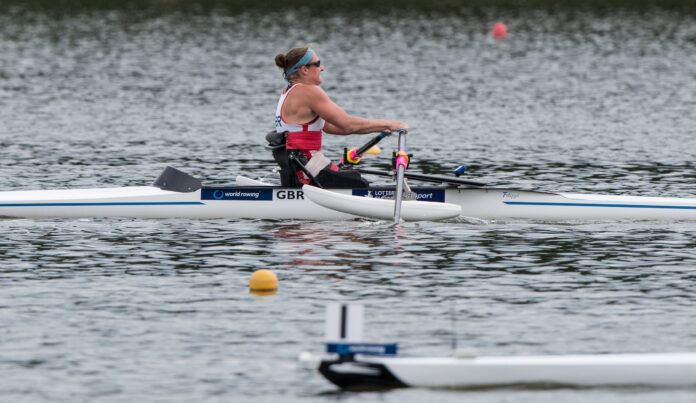
Belgrade, SERBIA. GBR LW1X. Kathryn TWYAN, Silver medalist Women's Lightweight Single Sculls, 2012 FISA World Cup I Saturday 05/05/2012 [Mandatory Credit. Peter Spurrier/Intersport Images]

STAFF REPORTS
PHOTO BY PETER SPURRIER

The 2020 European Rowing Junior Championships have been confirmed.

The event, previously scheduled for May 30-31, will now take place September 26-27 in Belgrade, Serbia.

“The Serbian Rowing Federation and the European Rowing Board (ERB) have been closely monitoring the evolving pandemic situation and, with the support of the Serbian and Belgrade governments, have put in place a plan to host the event using the Event Infection Prevention Guidelines (Guidelines Link) based on the recommendations of the World Health Organisation (WHO) and FISA Sports Medicine Commission,” according to a release from FISA.

The regatta is the second confirmed event on the 2020 FISA calendar joining the 2020 European Rowing Under 23 Championships which will take place in Duisburg, Germany, September 5-6.

A decision is expected to be made for the viability of the 2020 European Rowing Championships in late July. The race is currently scheduled to happen October 9-11 in Poznan, Poland.

Pride Month Q&A

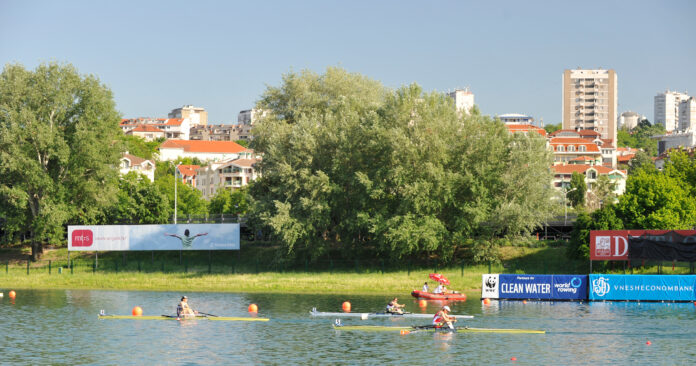
Plovdiv BULGARIA. 2017 FISA. Rowing World U23 Championships. AM. Boating Area. 09:48:05 Saturday 22.07.17 [Mandatory Credit. Peter SPURRIER/Intersport Images].

BY LUKE REYNOLDS
PHOTO BY PETER SPURRIER

The Gay and Lesbian Rowing Federation (GLRF) has been in the rowing community for decades providing resources, unique rowing gear, and a community of like-minded rowers with a place to commiserate with one another. Rowing News interviewed with GLRF co-founders Brian Todd and Elizabeth Morgan, to hear a little bit more about the organization, its history, and what it hopes to achieve. 

*This interview has been edited for brevity and clarity.


Q: So tell me a little bit about the history of the GLRF.

Todd – Well we got the ball first started rolling in 1998 at the Amsterdam Games on a Wednesday afternoon midweek when we found out there would be no rowing at the Sydney Gay Games. So we muttered among ourselves, ‘we should do something about this.’ That started a kind of email list and then Liz contacted me in March of 2000. She had gotten an email from someone at the gay games — I think it was the president — who said, ‘if you want rowing in Sydney, you need to join the Federation of Gay Games.’ And that began the collaboration and the eventual creation of the GLRF. 

Morgan – Part of I think what we’ve struggled with, as well, was also trying to figure out what this organization was going to be. You know, because in rowing at that time there was not sort of a big contingent of dedicated gay and lesbian rowing events. And so a lot of people who were rowing who were also gay were just rowing with or working with other clubs whether or not they were out. So, we were trying to figure out how an organization like ours fits in. Really our main objective at that time was simply to create an organization as required by the Federation of Gay Games to know to be able to represent the rowing community. 

Q: Tell me a little bit more about the community that exists within the Federation. Why is it important for there to be a community like that tailored toward people who identify as gay or identify as someone on the LGBTQ spectrum?

Todd – I think to be able to connect with rowers from around the world is still important for gay and lesbian rowers. There is still to this day I see it in a sense of community that rowers enjoy being able to connect with like-minded folk. 

Q: Would the two of you say that rowing is an inclusive sport? Is rowing a good sport for a gay person? What makes rowing unique versus other sports?

Todd – Well, you hit one of my hot buttons because this is one of the things that I talk about. And it’s always amazing when I met at a GLRF booth at regatta and people come in and say ‘but why [do you have this organization]?’ and we say, well, rowing is a noncontact sport and we feel the number of gay and lesbian people in rowing is much higher than the standard 10 percent. It’s more like probably 20 percent. One of the reasons is because rowing is a noncontact sport and everybody can participate. It’s not like the traditional where you’re you’re at the playground and being picked out for whose team you’re on. Everybody has to perform on their own, in their own seats. And it’s much easier, I feel, for a gay or lesbian person to fit in than to be essentially being dominated by somebody in a more contact sport.

Morgan – Rowing has a mystique that, you know? There’s always new people willing to try it. One thing that I personally have found interesting, having been involved with [DC] Strokes since the early 90s, I teach the learn to row classes and going back 20 years the novice classes were often people who had never actually participated in any kind of sport previously. Maybe they run or maybe they have done some things very individually but generally, people didn’t have experience with sports. So rowing was sort of new on multiple levels for them. Now I find it much more common that athletes have done some sort of sport in the past often with some rowing experience. 

Q: Tell me a little bit more about that dynamic that’s changed. I mean, obviously, the whole landscape for gay people has changed outside of the sport of rowing. But in rowing as well, how have things changed in the past 20 or 25 years?

Morgan – There is a lot, a lot more openness and people feel more comfortable now. I think one of the things that early on that we did see and one thing that is still true today is to continue being an advocate because there is still a stigma. I mean we still hear stories of people not being willing to be out on their team or what have you because people, coaches, in particular, wouldn’t be supportive. They might be worried they won’t get boated or what have you. Certainly, as you made your way through the elite levels of the sport, I don’t think we’ve totally cast that off but I do think things have really shifted. People feel more comfortable coming out at an earlier age and I don’t think there is quite the stereotype that existed back in the day. 

Q: What’s coming down the line for GLRF? Anything on the calendar for the fall or spring 2021?

Todd – Our calendar still shows the Sin City Erg which is still up in the air due to the virus. Are we going to be able to compete? We don’t know but our plan is to move forward with it. We are also planning on having a booth at the Head of the Charles and the Head of the Hooch. I haven’t talked to Head of the Charles yet to see if there have been any changes but I think everyone is just doing a ‘wait and see.’ 


The Gay and Lesbian Federation is currently hosting “a global initiative to promote inclusion and acceptance in the broader rowing community” called the Rower’s Pledge. To sign the pledge and learn more about the Gay and Lesbian Rowing Federation, visit glrf.info

End of one season, looking forward to the next

Rio de Janeiro. BRAZIL. 2016 Olympic Rowing Regatta. Lagoa Stadium, Copacabana, “Olympic Summer Games” Rodrigo de Freitas Lagoon, Lagoa. Thursday 11/08/2016 [Mandatory Credit; Peter SPURRIER/Intersport Images]

BY RICH DAVIS
PHOTO BY PETER SPURRIER

During the summer, staying in shape and building strength should be the primary focus. Rowers can achieve these goals in many ways: running, biking, swimming, surfing, even rowing. 

Young athletes should exercise at least 50 minutes to develop aerobic capacity. If they need to improve their rowing, they might sign up for a short session at a rowing camp or join a club and row occasionally. 

Why not row more? Young athletes will not develop properly if they engage in the same sport exclusively all year long. I recommend that coxswains seek a challenging sport or fitness program to increase their athleticism. Some of my best coxswains were accomplished athletes in other sports — wrestling, cross-country running, skiing and swimming — and as a result they understood exactly what their rowers were going through during a race and knew intuitively when to ask for more. They also commanded the respect of their crewmates.

There are summer rowing camps that offer specific coaching for coxes who may not get the instruction they need during the busy school year. Teenagers grow exponentially in the summer, and using this time to strengthen rowing ability in a sensible way will pay dividends during the racing season. The late Harvard coach Harry Parker once said his goal was not to win sprints but for his crews to be as fast as they could and to win as many races as they could. About the speed of each crew, he was a realist. 

My goal for crews is to row hard. By rowing hard, I mean developing technique and fitness and learning to push to the limit. If a crew does all this, what more can you ask? The pressure is on the coach to help athletes to row well, to be in top shape, and to love working hard.