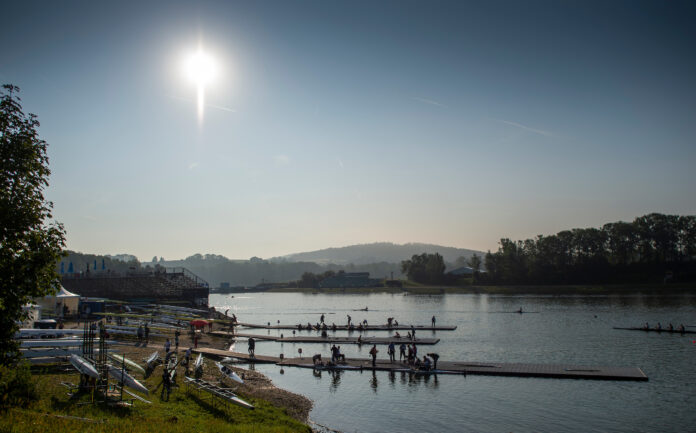
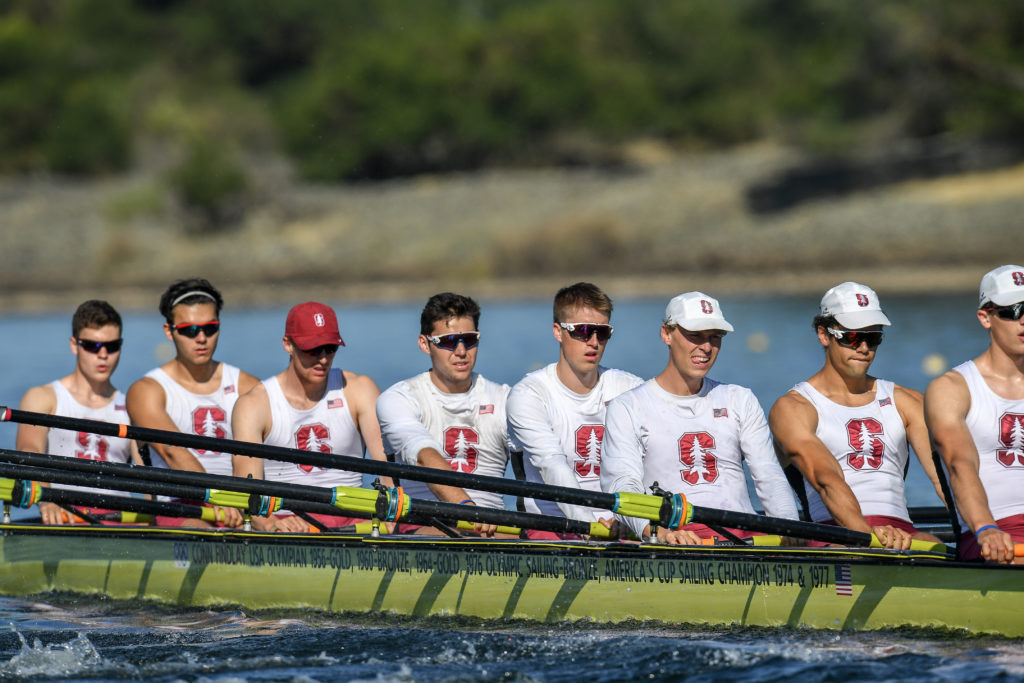
Linz, Austria, Saturday, 31st Aug 2019, FISA World Rowing Championship, Boat Park Area, [Mandatory Credit; Peter SPURRIER/Intersport Images]
08:38:05 31.08.19
BY LUKE REYNOLDS PHOTO BY PETER SPURRIER
Jenn Gibbons, co-founder and executive director of Recovery on Water (ROW), stepped down in May.
Gibbons will take on the executive director position at the George Pocock Foundation. ROW is a nonprofit rowing program founded in 2007 to support breast cancer survivors through the sport of rowing, according to its web site.
Gibbons has been the executive director since its inception. In the open letter announcing her resignation, Gibbons said, “In my departure, I have one last important request for you: Please join me in continuing to support the ROW mission, and support the next iteration of our important work by supporting the organization’s new leader.”
Dredging has begun along miles of the Schuylkill River–one of rowing’s most storied locales–to remove 60,000 cubic yards of sediment from the river floor, a project nearly seven years in the making.
The dredged material is being pumped through a pipeline over the Fairmount Dam onto barges south of the I-676 bridge. The barges will then travel south along the river and dispose of the dredged material at an area operated by the U.S. Army Corps of Engineers.
The project is being funded by several organizations that call the Schuylkill home and is a wonderful illustration of what can be done when people are united by a common mission–ensuring that the Schuylkill remains a fair and safe racecourse with racing lanes of equal depth, so that events such as the Stotesbury Cup Regatta and the Jefferson Dad Vail Regatta can continue. Recently, some outside lanes were as shallow as two feet, while others were 10 feet deep.
“The fact that there haven’t been regattas in the spring and summer due to Covid-19 has been, in a weird sense, fortunate, because those events would have been more difficult to run and organize as a result of the dredging,” said Bonnie Mueller, vice commodore of the Schuylkill Navy, an association for amateur rowing clubs in Philadelphia. “That said, the dredging was never going to have to work around the regattas; the regattas were going to have to work around the dredging.”
Dredging begins each weekday at 7 a.m. and is projected to run through the end of the year. For many, the project’s launch marks an important moment for the larger Philadelphia community.
“From a Schuylkill Navy perspective, we are excited to be at this place after such a long time. But more importantly, we feel grateful” said Mueller. “Grateful for a collaboration and the unique partnerships that allowed us to get to this place. That includes not only the rowing and paddling community but the city itself. In these challenging times, it makes me feel hopeful. This dredging project has cemented my belief that great things, though difficult, can be done when people come together.”
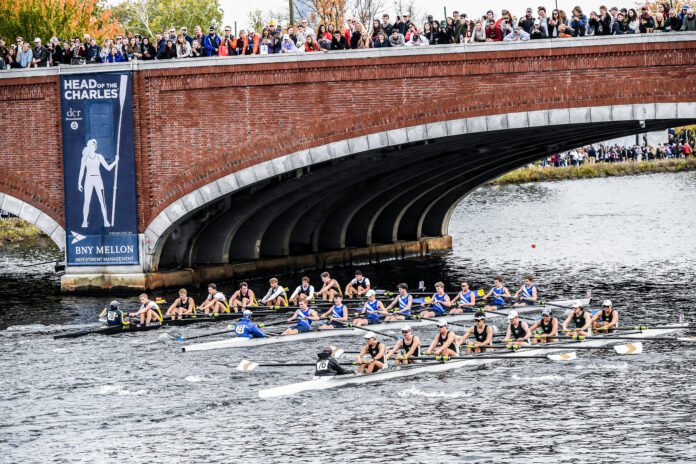
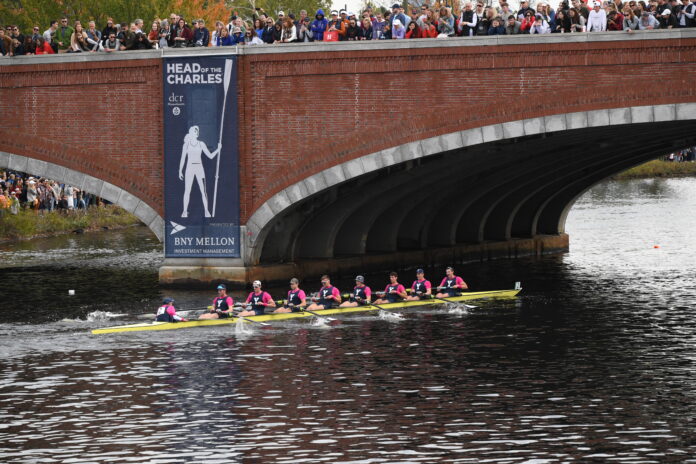
The Head of the Charles Regatta, one of the last of the major rowing events that has not yet been lost to the Covid-19 Pandemic was officially canceled Wednesday.
After weeks of mulling over possible smaller versions of the iconic regatta, even partnering with Massachusetts General Hospital to determine a safe way to do that, it became clear to the HOCR organizers that the only thing that could possibly take place on the Charles River this fall would be a “token event.”
In an official announcement posted on Twitter and on the Head of the Charles website, the 56th version of the Head of the Charles was officially canceled, for only the second time in the regatta’s history, the first coming in 1996 during a major coastal storm. In making the announcement, the regatta unveiled plans to host a virtual, global, event on the weekend the race was supposed to take place, Oct. 17-18.
“It’s crushingly disappointing,” said HOCR executive director Fred Schoch. “We lost the event in ’96, and that was a horrible day because we had to cancel it event by event and everybody had arrived and spent all their money to be there.
“It was really messy and everyone came and went and left disappointed. This way at least we can refocus people and give them something to train for, and something to look forward to. But it really hurts, you plan all year, my job is not unlike being a wedding planner, all your efforts go into one weekend a year and to lose it hurts.”
According to Schoch, the cancellation was not unexpected given the current state of the pandemic and all efforts were made to try and stage an event of significantly reduced size. To do that, the HOCR partnered with epidemiologists at Mass General and began exploring options.
“We sent all the subcommittees, of which there are about 40, back to their corners to research how we might run a singles only event,” Schoch said. “We knew a full on sweep regatta was really off the table early on because of Covid, and the fact that no colleges are going to be rowing this fall.
“We listened to many voices,” Schoch said. “In addition to the race committee, we engaged the infectious disease department at Mass General Hospital to advise us on how we might do a singles only event, and also how we might do a community service event, which we might do at some point this fall, details to be determined again.
“We charged the Mass General Hospital team who know nothing about the logistics of running the Head of the Charles, but know everything about the medical risks, how would you advise us on doing it.
“They did come up with a number of ways that we could cautiously run a very small event. And that was sort of the deal-breaker for me, that it would be a token event, 180 to maximum 400 people,” Schoch said. “And even then, the logistics of having all those people be from within 140-mile radius, according to USRowing guidelines, under the age of 65, show up at six in the morning on Saturday morning for a one-day event, was a deal-breaker.”
The regatta is one of the last of the big rowing events to be canceled this year, and has always been a highlight to the Boston fall sports scene. The two-day event annually attracts 11,000 athletes from around the world and draws hundreds of thousand spectators to the banks of the Charles River.
Having the regatta canceled was not lost on Massachusetts Gov. Charlie Baker, who was quoted in the Boston Globe saying, “As someone who has stood on the banks of the Charles off and on for 40 years enjoying the race I, like so many other fans of the Regatta, am saddened by this announcement but can totally understand the decision. COVID changes many things and it is better to be safe.”
The HOCR cancellation followed the cancellation of the Head of the Schuylkill Regatta in Philadelphia Tuesday.
“I feel personally that we almost waited longer than we wanted to in making this decision, given that so many other events after us have canceled,” Schoch said.
“So, I set the staff to work to come up with what is in the realm of possible and that’s when we landed on this global, remote event where people are going to be able to row the HOCR distance on any body of water anywhere in the world and submit a time.
“Hopefully we will see a large competitive field for that and then on the weekend of the Charles we will do a live virtual competition for various age groups working with RegattaCentral and Nielsen-Kellerman.
“We’ll turn the page and we’ll use this time wisely and make the Head of the Charles 2021 even better, but hopefully we will see a heavy subscription ergometer and virtual events, which the entry fees will go to support the new Gold Cup, Head of the Charles diversity event which we announced this week.”
The Head of the Schuylkill Regatta is among the events that were cancelled by the city of Philadelphia Tuesday when it announced that all large outdoor events were banned through February.
According to HOSR executive director Jennifer Wesson, the decision was made to cancel the regatta Monday after talking with city officials about their plans to ban all large public events into early next year.
“I have to say that this is where we thought we would be earlier this year,” Wesson said. “We have been planning a number of different scenarios over the last few months. We were hoping to have a singles only regatta, possibly a masters only regatta, but at this point in time, based on the current conditions and forecasts, and forever changing information, it was difficult to see a way forward without losing the spirit of the regatta.
“We talked with the city yesterday, and we were happy that they stepped up and made a decision.
Wesson said plans are being made to hold a virtual regatta. “So, we will have a virtual race and if you’re one of those that are able to participate on an erg, there will be live race times during HOSR weekend. Then we will set up, typical to what others are doing right now, participation for runs and bikes, and making it inclusive event,” she said.
“We are going to make an announcement in the next couple of days about there being no on site regatta, and details to come on a virtual, inclusive event.”
Though not listed in the original news reports, the fall regattas, including the Head of the Schuylkill and Navy Day Regatta, were expected to be among those eliminated along with all other any large outdoor events through February, including the Philadelphia Marathon, Thanksgiving Day Parade, and iconic New Year’s Mummers Parade, due to the Covid-19 pandemic.
In an effort to support inclusion and diversity efforts, the Head of the Charles Regatta and the Gold Cup of Philadelphia have announced a partnership to fund $100,000 in seed capital to launch a program that will make annual grants to rowing programs serving under-resourced youth and communities throughout the country.
The fund will also provide in-kind equipment and mentoring services that will allow the programs to field competitive teams of 19-and-under youth.
The Head of the Charles/Gold Cup Fund will immediately launch a nationwide fundraising campaign to encourage contributions to the fund as it creates an endowment for ongoing annual grantmaking and will immediately begin accepting grant applications and can be submitted up until Aug. 15. Grant recipients will be announced by Sept. 15.
“It is long past time for the sport of rowing to honestly confront its lack of diversity and implement concrete actions to attract, mentor and retain a diverse set of athletes, coaches and supporters,” said Blair Crawford, chair of the board of the Head of the Charles Regatta, in a release announcing the effort.
“As a highly visible leader in the sport, the Head of the Charles Regatta must do better. Establishing this fund is just the beginning phase of our intentional and sustained commitment to supporting greater equity in rowing.”
The full release and details of the program are posted online.
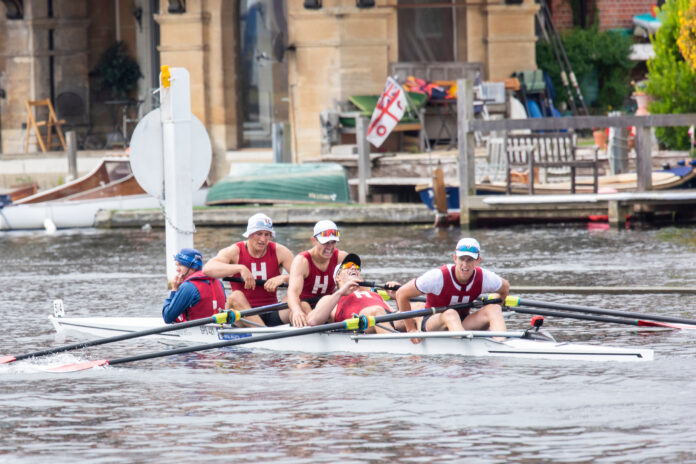
Crews struggle at race pace for a variety of reasons: They’re not strong enough to hold the rate; they haven’t seen sufficient high rates in practice; or their technique is holding them back. If any of this sounds familiar, you are better off instructing your crew to row as high as they can without sacrificing proper technique. But if they are fit and row well, I’ve found that stroke-rate pyramids or fartlek-style stroke training helps. With pyramids, you’re going from a base rate to higher rates for a limited number of strokes. I like the rate pyramids because they make it clear at which rates the technique begins to break down. Holding higher rates for a series of eight 500-meter intervals is another good indicator of the rates a crew will be capable of maintaining for 2,000 meters. I have also had a surprising amount of success in this area during “starts” workouts, in which we tried to see how high the crew could go in the middle section of the sequence. Of course, at the higher rates, they were no longer effective, but it showed them they could hold the comparatively lower race pace without any problems. It’s common for crews to dip below race pace in the third 500 or after a planned burst (even though they somehow find the strength to mount a finishing sprint). These weak spots can be addressed during training, but if the coxswain feels them coming during a race, he or she should make a call for “legs” to get the boat back up to speed.
Bob Madden, an old friend and fellow rowing fanatic, recently copied me on an email that seemingly was sent to everyone who ever rowed in Philadelphia, had ever visited Philadelphia, or had ever munched on a cheesesteak–pure manna from heaven! Attached was a copy of the program from the 1966 Head of the Charles, the second one to be contested. Bob pointed out a number of mutual friends–Larry Gluckman and Bill Miller rowing for Northeastern–and then drew my attention to the seven man in the Penn A.C. lightweight eight, Leo Burt. For connoisseurs of weird rowing stories (aren’t we all?), the Leo Burt story is one of the strangest.
None of the people who knew Leo Burt ever suspected that he would go from a quiet, serious boy who loved rowing to a fixture on the FBI’s Most Wanted List. With two accomplices, Burt, then 22, loaded a stolen van with 1,700 pounds of homemade explosives on the night of August 24, 1970, and detonated a bomb outside the University of Wisconsin’s Army Mathematics Research Center. The bomb destroyed most of Sterling Hall and killed a young researcher and father of three. A massive manhunt ensued, but Burt escaped and is still at large almost 50 years after the bombing. He remains on the FBI’s Most Wanted List for Domestic Terrorism.
Burt had rowed at Monsignor Bonner High School, just a few miles from Philadelphia’s Boathouse Row. What struck Leo Burt’s classmates most about him was his intensity. He was never laid back, never paced himself. Throughout high school and his first three years of college, rowing had been his first love and took precedence over everything else. He went to the University of Wisconsin and stroked the freshman eight in the spring of 1967. That summer, he rowed at Penn A.C., and his eight won the junior eights event at the Canadian Henley. As a sophomore, he roomed with the late Tim Mickelson, a silver medalist in the 1972 Olympics and world champion in the 1974 U.S. eight. At barely six feet tall, Burt was undersized compared to his teammates. As a junior, Burt lost his seat in the JV and moved down to the dreaded third varsity. That did it. He began to voice his disaffection, talking politics in the apolitical world of the boathouse.
As happened in those days, hair length became a divisive issue. Following a Wisconsin rowing tradition, Coach Randy “Jabo” Jablonic announced that all oarsmen would get haircuts. Burt wrote to Jabo protesting the order, arguing that many of the oarsmen whose faces looked down from turn-of-the-century photos had long hair. A notice was posted on the boathouse bulletin board: Anyone who showed up at the alumni dinner with long hair should clear their locker and be gone the next day. Leo cleared out.
He began to write for the campus newspaper, covering political rallies. At one rally, violence erupted, and Burt was clubbed by a Madison policeman. He went over the edge and began to live a radical lifestyle, consumed with fury at the Vietnam War and the illegal bombing of Cambodia. “The Leo we used to know was not the Leo who committed this crime,” one of his teammates said. “The war changed him tragically.”
The bombers issued a press release that began: “Today, the battle cry against imperialism was raised once again, as the mathematics research center of the U.S. Army was struck by revolutionary cadres of the New Year’s Gang. If [our] demands are not met, revolutionary measures of an intensity never before seen in this country will be taken by our cadres. Open warfare, kidnapping of important officials, and even assassination will not be ruled out. Although we have sought to prevent any physical harm to all people in the past, we cannot be responsible for the safety of pigs if our demands are not met. Power to the People!” For those of you too young to remember, this is pure Sixties Radical Prose.
Burt was never apprehended, although his three accomplices were caught and did jail time. He apparently reached Canada successfully, despite his FBI 10 Most Wanted status. There was a moment at the Worlds in St. Catharine’s that summer (1970) when Tim Mickelson, rowing in the U.S. eight, received a couple of phone calls from an unidentified caller. Was Burt trying to get in touch with his old boat mate?
“I came back to the dorm from the race course,” Mickelson told me. “The caller wouldn’t leave a message, and except for my family, no one would have been calling me. I found out later that the Canadian Mounties were watching me carefully at the regatta, in case Burt called. You know, at that point [only two weeks after the bombing], it hadn’t been made public yet who the suspects were, so if he had called…sure, I would’ve lent him money. He was an old rowing friend, and I credit him with some of my success. The summer after my freshman year, I lived with his family in Philly and rowed with him. He was a fanatic about rowing, and he pushed us all to be more intense.”
Within weeks of the bombing, Burt posted a letter to his parents in which he disavowed any part in the bombing and closed with a familiar oarsman’s plea: “Please save those rowing nationals clippings for me.”
“When I flew back from St. Catharine’s, the FBI was waiting at the airport for me,” Tim Mickelson said. “They told me about his part in the bombing. They thought that rowing had been his greatest connection at the university, and he might try to seek help from one of his old rowing buddies. Every two or three months for the next few years they would call me up to check whether I’d heard anything.
“No, I don’t have any theory about what happened to him. The FBI thought at some point that maybe he got onto a freighter or something and reached Australia or New Zealand.” Burt vanished without a trace. From time to time, his story has been resurrected in the press, most recently in The Philadelphia Inquirer in 2014. After nearly 50 years, he is the fugitive who has gone the longest without being caught. Coach Jablonic is quoted in the book Rads saying, “God, if Leo had only made the varsity, this might never have happened.” Who knows? Dr. Rowing has certainly known a number of people for whom rowing has been a lifeline. Maybe things could have turned out differently.
First came the news that Stanford University was cutting 11 varsity sports, including men’s rowing and women’s lightweight rowing, as a direct result of the financial losses suffered during the spring pandemic shutdown that closed schools across the country and forced the cancellation of all spring sports seasons.
That midday Wednesday announcement was followed a few hours later by the news that the Ivy League had reached a decision to cancel all fall sports. It was a decision that had been anticipated – and expected – but was no less easy to accept.
The official announcement did not come immediately, but the news nonetheless was being reported by multiple organizations citing sources who said the eight member schools had been informed.
According to those early reports, all fall sports are canceled and a decision on when winter sports might return would come later in the year. The reports also suggested that there is potential to move the football season to the spring, a switch that has been talked about for weeks.
Those early reports became official late afternoon when the league posted their decision on their web page.
The decision made will keep the Ivy League out of fall collegiate sports:
“With the safety and well-being of students as their highest priority, Ivy League institutions are implementing campus-wide policies including restrictions on student and staff travel, requirements for social distancing, limits on group gatherings, and regulations for visitors to campus. As athletics is expected to operate consistent with campus policies, it will not be possible for Ivy League teams to participate in intercollegiate athletics competition prior to the end of the fall semester.
“Practice and other athletic training opportunities for enrolled student-athletes will be permitted provided they are structured in accordance with each institution’s procedures and applicable state regulations.
“The Ivy League will also issue guidelines on a phased approach to conditioning and practice activities to allow for interaction among student-athletes and coaches that will begin with limited individual and small group workouts and build to small group practice sessions, if public health conditions permit,” the league post stated.
If the Ivy League action is followed anything like what took place this spring, the rest of the collegiate conferences will soon make similar moves.
Beyond what that will mean for the students who participate in fall championship seasons, the announcement will also impact the college rowing teams that row in the fall regattas. And that should have a downward effect on those events themselves.
The Head of the Charles Regatta relies heavily on collegiate entries, and on the college boat houses that line the Charles River to have the success it has enjoyed for so many years. It is unlikely the regatta can be staged if the boathouses are closed.
Regatta officials have not made a decision and have maintained that the call to cancel the regatta or try to hold some form of hybrid event will not come until the end of July.
But just the fact that the Ivy League has shut down and that the virus is spiking to levels above those that forced the country into complete shutdown earlier this year, does not bode well for a fall rowing season.
Hours before the news of the Ivy League decision began to trickle out, Stanford University dropped the shocking news that it was cutting 11 varsity sports programs, including men’s rowing and women’s lightweight rowing.
Photo by SportGraphics.
The announcement was made during a Zoom call to student-athletes and staff by the Stanford athletic department and Stanford Board of Trustees. A detailed explanation of the actions is posted on the Stanford Athletics page.
The 11 programs cut include men’s and women’s fencing, field hockey, lightweight rowing, men’s rowing, co-ed and women’s sailing, squash, synchronized swimming, men’s volleyball and wrestling.
“We understand that the timing of this announcement, in early summer and against a backdrop of uncertainty and change across our country, is certainly far from ideal, as is the method by which we had to deliver the news to our student-athletes and coaches today, via Zoom,” the university wrote.
However, the cuts were “imperative to confront the financial challenge before it worsened, to undertake a deliberate and collaborative decision-making process with our Board of Trustees and campus leadership, and to exhaust all viable alternatives before making profound changes in our programs, especially during this difficult time.
“The decision to discontinue these 11 varsity sports programs comes down primarily to finances and competitive excellence. With so many varsity sports and limited financial resources, we would no longer be able to support a world-class athletics experience for our student-athletes without making these changes.”
The cuts will impact 240 student-athletes, 22 coaches, and will eliminate 20 staff positions from the athletic department. Stanford’s announcement also made clear that outside funding would not save the cuts from taking place.
“The decisions to reduce our sports offerings are final, and any future philanthropic interest in these sports may be directed towards supporting them at the club level, should they establish as a club sport after their 2020-21 varsity campaign,” the announcement stated.
“While Stanford Athletics has many tremendously generous donors, their support simply could not cover the escalating costs of ensuring excellence across the board in our 36-sport model.”
Stanford’s decision comes weeks after North Park University in Chicago, Illinois, Ohio Wesleyan University in Delaware, Ohio, and the University of Connecticut in Mansfield, Connecticut, eliminated their rowing programs.