Home Blog Page 232

Origin Story

*Originally published in the April 2020 issue of Rowing News

BY ANDY ANDERSON
PHOTO COURTESY HOWARD UNIVERSITY

Doctor Rowing’s last column about the soon-to-be-released film A Most Beautiful Thing and the story it tells about Chicago’s Manley High School crew sparked a quick response from my friend, rowing historian Tom Weil. He said he enjoyed the column, but pointed out that the Manley guys in 2000 were not the first all-African-American crew. “Howard University boated all-Black crews from the 1960s into the 1970s. They were definitely not all inner-city kids, but they were definitely ‘all-Black crews,’ so ‘first-ever’ for this crowd is simply wrong.” 

Ken Alpart, the former Penn lightweight, appeared in the Manley lunchroom one day to drum up support for his idea, saying, “There are no all-Black crew teams. You will be the first.” He was unaware that Howard University had preceded this effort by close to 40 years. The teenagers in the film, men now, believed they were the first African Americans to row. They hadn’t heard of Howard’s crew. In no way does this diminish their story, because it is about so much more than being the first. Arshay Cooper’s memoir and Mary Mazzio’s film tell the tale of how rowing provided them with something beautiful and positive.

The Howard University crew program was started by an alum named Howland Ware, a member of the class of 1941, who had seen the Eastern Sprints in 1952 and thought, “It was so exciting. I just figured Howard had to have a crew.” He convinced the powers that be at Howard to let him finance the enterprise with a $10,000 gift and get onto the Potomac River. The program’s first coach was a George Washington University law professor named Stuart Law. Law had rowed at Yale and been a spare for the 1956 Olympic gold medalists. Starting up any rowing program is hard work, but imagine the difficulties that Law must have faced in 1961 when Howard boated its first crew. College sports across the country were still very much a white man’s game in the early sixties. While Jackie Robinson had played football at UCLA in 1939 and broke the “color barrier” in major league baseball in 1947, the legendary Bear Bryant at the University of Alabama didn’t allow a black football player until 1971; Adolph Rupp at Kentucky kept his basketball teams all-white until 1970. 

It must have also been a monumental effort to get rowing started at Howard because, unlike with other sports, none of the men who joined the team had ever rowed. But driven by their passionate coach and visionary founder, Howard students began to take to the water. In 1962 they had a tough year, including getting ridiculed for flipping their eight at the dock. In 1963 they were given varsity status and looked to be improving although they did not win any of their eight races. In 1964 they beat American University (which has since dropped rowing), George Washington, and Georgetown to become the “Champions of the Potomac,” as Jet magazine called them. They also traveled to New Haven to race the Rutgers’ third varsity heavyweights and the Yale third varsity lights, finishing third but earning respectability. 

Rowing is never all about racing results, however. Small college programs are never stocked with a surplus of athletes; if you are lucky you can find several and teach others what being an athlete means. In the early days, most of the Howard oarsmen were rowing as a way to get in shape for wrestling and football. But a few of them grew to love it and were committed. Rudolph Smith, who rowed three seat in the 1964 crew was quoted in Sports Illustrated as saying, “I soon found out that I liked rowing better (than wrestling). Out there on the water you have to depend on yourself to go all the way. There aren’t any substitutes. Rowing isn’t a great spectator sport, and you don’t get to be a hero. You have to do it just because you like it.” 

There isn’t a great deal of information about the Howard crews of the late sixties. If we remember those years, we know that political action and protests against the Vietnam War dominated college campuses. Even Yale saw all of its freshmen quit in 1970 after the Sprints in order to go off campus and join in demonstrations. Tony Johnson, a Rowing Hall of Fame member with fellow 1968 Olympic pairs silver medalist Larry Hough, took the Georgetown coaching job in 1966 and recalls coaching Howard oarsmen at Potomac’s summer program in 1969. There was still some enthusiasm for rowing on campus, but it was waning. Johnson moved to Yale in the fall of 1969 and was contacted by Howard for help in finding a coach for the college. He mentioned it to Nat Case, a 1970 Yale graduate, who eagerly accepted his first coaching job. His Howard crew in 1971 boated two eights and raced at the Dad Vail after winning one race but “didn’t do especially well,” he recalls. The next year, the university pulled the plug on the program because of a lack of interest. Case was disappointed—he had a couple of very dedicated athletes—and went on to become Yale’s first full-time women’s coach.

Rowing continues to struggle with diversity and inclusivity in today’s era, although there are a number of programs that have succeeded in getting people of color to try the sport.
Lightweights Back in For C.R.A.S.H.-B.’s

STAFF REPORTS
PHOTO BY LISA WORTHY

Lightweight rowing is back in for the virtual 2021 USRowing C.R.A.S.H.-B. World Indoor Rowing Championships.

According to a revised version of the entry packet published Friday afternoon, “There are lightweight rowing opportunities for Masters and U23 individual and Masters and U23 team events at the virtual 2021 USRowing Indoor National Championships / C.R.A.S.H. – B. Sprints World Indoor Rowing Championships.”

The change comes after the event announcing that there would not be any lightweight events due to the inability to monitor athletes’ weight since the event is virtual.

USRowing has since developed a new protocol for athletes to submit their weights to the regatta administrator.

For a full list of the new lightweight rules visit the USRowing entry packet here.

Two Round Tables to be Hosted in Honor of Martin Luther King Jr. Day

STAFF REPORTS
PHOTO PROVIDED

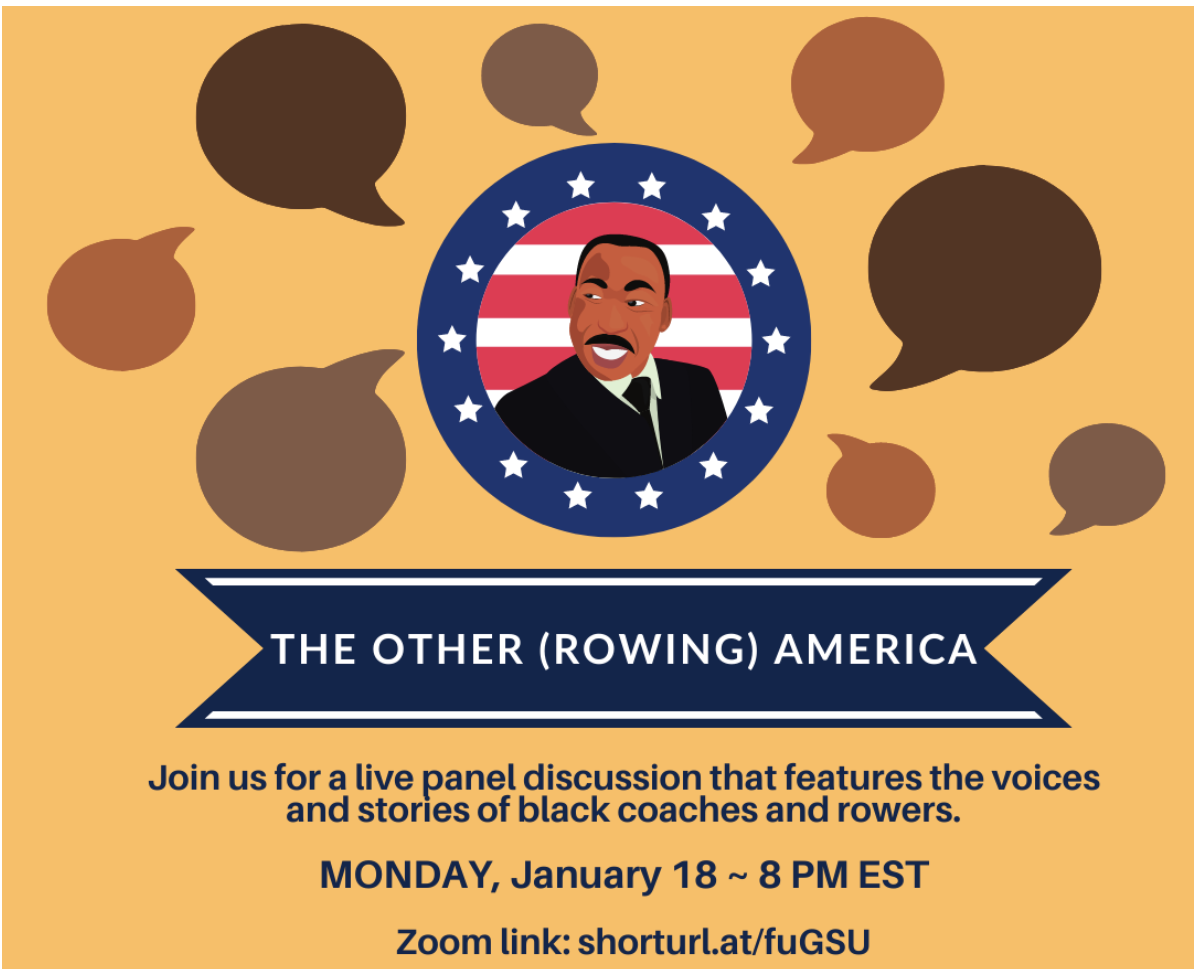
Two virtual inclusion forums will be held Monday in honor of Martin Luther King Jr. Day that is intended to promote rowing to rowers of color and celebrate the stories of black coaches and rowers.

The two roundtables will be conducted virtually via Zoom. The first will be held at 1 p.m. EST and hosted by Power Ten / Lake Phalen Community Rowing. It is a forum “led by rowers of color for youth of color,” according to the event’s flyer, and will include discussions around how to get involved in the sport of rowing and the opportunities rowing can provide.

The second, titled “The Other (Rowing) America,” will be held at 8 p.m. EST and hosted by the Head of the Charles Gold Cup Fund. It will be a “live panel discussion that features the voices and stories of black coaches and rowers,” according to the event’s flyer.

For more information and to register for both events click here.

Tentative Plans for the 2021 USRowing Youth National Championships Announced

BY ED MORAN
PHOTO BY SPORTGRAPHICS

USRowing has announced the beginnings of planning for a Youth National Championships that will not require qualification from regional regattas and eliminates lightweight events in place of age based categories.

Before making the Friday announcement, USRowing on Monday set a tentative schedule for 12 domestic events, including the virtual C.R.A.S.H.-B, six regional youth championships, and the June Youth National Championships. It also included dates for the summer national club championships and three masters regattas.

In the statement, USRowing made clear that while the dates are set, there are no guarantees that events can take place due to the Covid-19 pandemic, and is in the process of establishing a “robust Covid-19 risk mitigation plan for this year’s Youth National Championships,” which the association will release when completed.

“As the spread of the Covid-19 virus continues to surge across the country, USRowing has been developing our plans and structure for the 2021 USRowing Youth National Championships scheduled for June 10-13 in Sarasota, Fla., the statement read.

“As always, our number one priority is to run a safe regatta, and Covid-19 adds a new layer of planning to help ensure the safety of our athletes, coaches, referees, volunteers, staff, supporters, and other attendees.”

The statement further reads; “We still do not know whether we will be able to hold some of our championship events in 2021, but we wanted to announce those dates for planning purposes. We will confirm information approximately 60 days before the scheduled date of each regatta.”

Two of the most notable changes for the 2021 Youth Championships are the elimination of qualification, and the elimination of lightweight events. The final details of the Youth Championships will be released with the “final entry packet,” on March 1, 2021, USRowing said.

“With Covid-19 infection rates rising and the vaccination rollout still a work in progress, it was important to develop a plan for this year’s Youth National Championships that addressed the high probability that either no, or a limited number of, regional championships and qualification regattas would be able to take place.

“With this uncertainty, the 2021 USRowing Youth National Championships will have an open entry process that does not require qualification.”  

In recent years, the safety of having junior lightweight rowing events has been a focus of discussion across the country, and within USRowing. Part of those discussions included whether it would be safer to eliminate lightweight rowing at USRowing owned events and replace them with age structured races.

This is what will be offered for this year’s Youth Nationals, according to the USRowing release that included this rationale.

“In 2020, USRowing instituted a junior lightweight compliance protocol to “ensure that participating athletes are ‘true’ lightweights and do not lose weight in order to meet weight standards, focusing on the health and safety of youth rowers.”

Those protocols required athletes to get medical certification from their primary care provider. Because of the stress on the current health care system throughout the Covid-19 pandemic, USRowing does not want to continue that requirement, nor does it want to hold events that will require weigh-ins.

“In addition, the process to weigh athletes requires close-contact with referees, volunteers, and other race officials and creates areas with the potential for large groups to congregate. Given these concerns and to control any risk of infection at our regatta sites, we will not be offering youth lightweight events at our races during 2021.”

USRowing announced that it will offer “a large list of age-based, Under-17 events at this year’s Youth National Championships, and we will not be hosting a separate U17/U15 National Championship in 2021.”

The full release and details of the new categories are contained in the full USRowing release.

Kathleen Heddle: 1966-2021

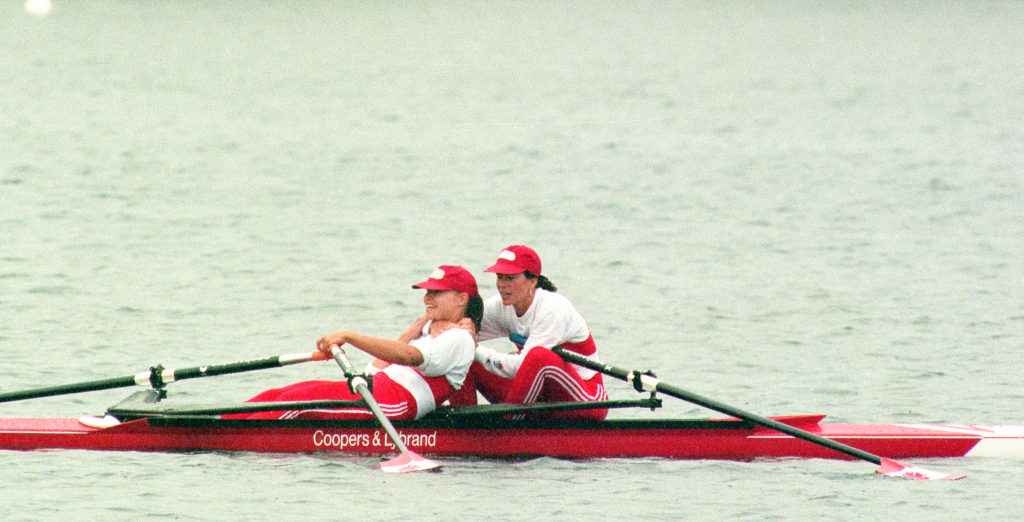
Barcelona, SPAIN. CAN W2X, stroke, Katherine HEDDLE and bow Marnie MCBEAN, 1992 Olympic Rowing Regatta Lake Banyoles, Catalonia [Mandatory Credit Peter Spurrier/ Intersport Images]

BY ANDY ANDERSON
PHOTOS BY PETER SPURRIER

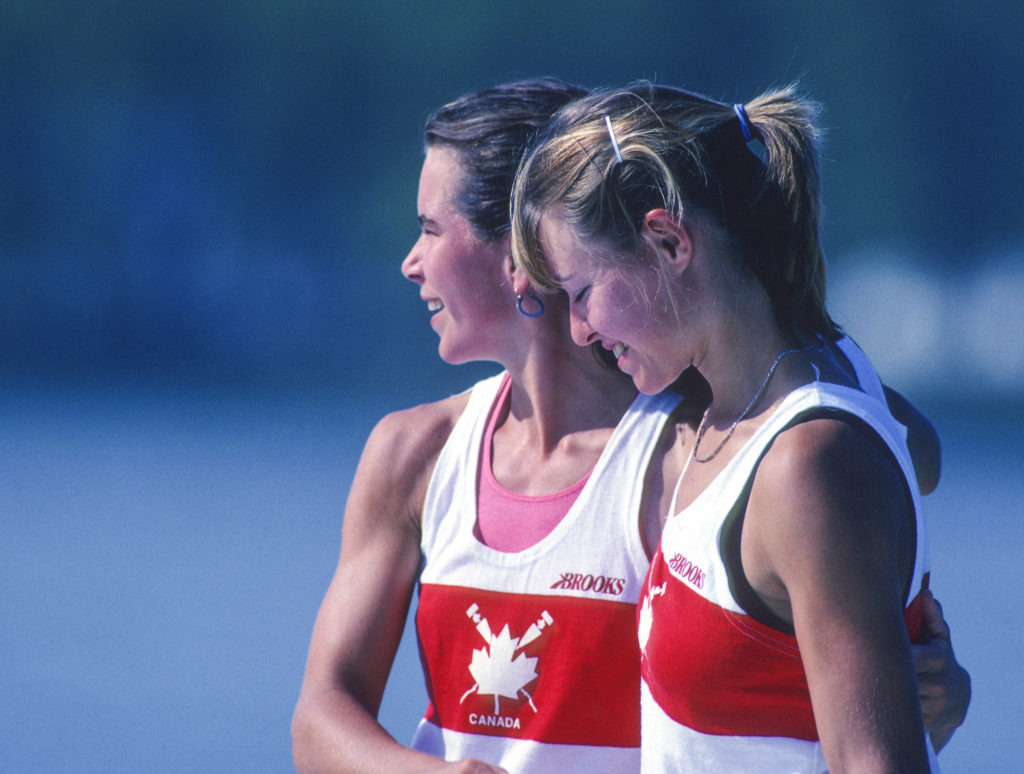
Kathleen Heddle died on January 11 from cancer at age 55. She was one of the greatest women to ever row; the successes that she and rowing partner Marnie McBean achieved are unmatched. When Doctor Rowing wrote about them in 2015, Heddle characteristically deferred to McBean to talk with me about their careers. Heddle never sought the limelight; she let her oar do the talking.

*Originally published in Rowing News Volume 22.

Marnie McBean and Kathleen Heddle

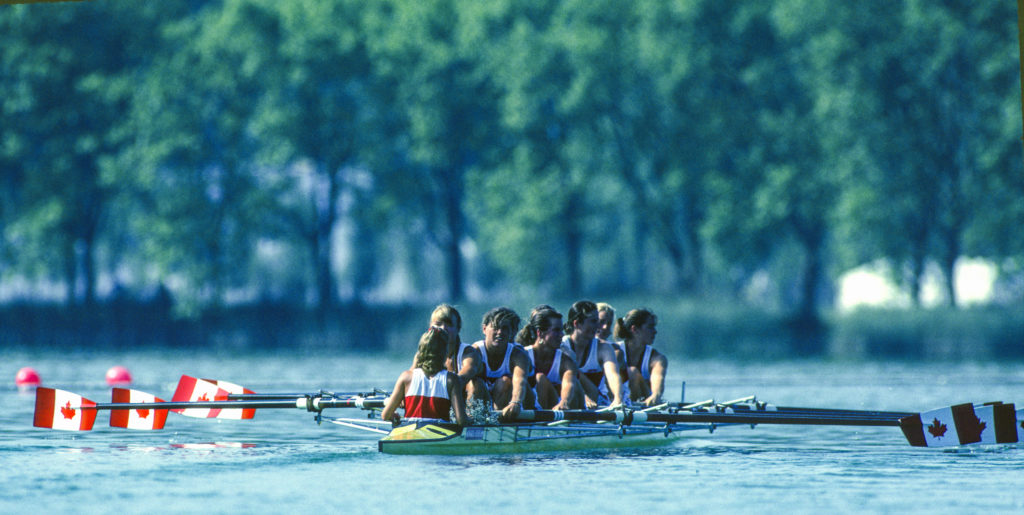
Winners of three Olympic gold medals in the 90’s, this Canadian duo broke ground in women’s elite rowing. Before McBean and Heddle, no Canadian Open-weight woman had won a gold medal in Worlds or Olympic competition. In Barcelona in the 1992 Games, they won the pair and then doubled their gold medals by winning the eight. Switching to sculling for ‘96, they won the double and earned a bronze in the quad. Elisabeta Lipă of Romania is the only other woman to have won gold medals in three different Olympic boat classes, but McBean and Heddle are the only ones to have medaled in all six open women’s events.

The pair built upon some of the successes of the Canadian women in the 80’s. From McBean’s perspective, the challenges of her predecessors were made greater by “male coaches who weren’t always the most supportive, the pharmacology of the eastern Europeans and cultural norms that lacked understanding and respect for women in power/endurance sports.”

When the two got together in a pair in 1991 and won the Worlds in Vienna, a trip that also included a gold medal in the eight, McBean and Heddle won a medal in every event and year in which they raced together. The fiery McBean and the quietly intense Heddle formed a partnership that was unmatched on the water. “We were fortunate in that we had a great – and very professional – coach (Al Morrow), a powerful and mature group of women to train with and against, and society was just starting to embrace letting women be referred to as powerful, competitive and dynamic,” says McBean. Morrow adds, “As a 2- and 2x (and even in the  8 and 4x) McBean and Heddle were a bit of an ‘Odd Couple;’ their strength was that they were quite different in many ways and by cooperating with each other the ‘sum of the parts’ became very strong.”

Despite their success as the greatest Canadian athletes of their era, there were always battles for funding and equipment. In her early years while training, McBean managed the concessions that sold nachos and hot dogs at a minor league baseball stadium in London, Ontario, and hired her teammates to do the same. Even though her success in Barcelona ensured that she was reasonably well-funded and began to earn an income doing corporate presentations, she worked hard to raise money for the entire Canadian squad, “there is no point in being independently financially strong but part of a team that is struggling to eat.”McBean continues to work with the Canadian Olympic movement; she was one of the presenters of Toronto’s bid for the 2008 Games, and she was a team mentor with the Canadian Olympic team from 2006 – 2014 for all of the teams in that period (summer and winter), helping Canadian athletes be comfortable with the social and cultural aspects that are unique to the Olympic games and embracing their confidence and ambition in that environment. She worked for the last five Games to ensure the best Canadian performance possible by preparing athletes emotionally and psychologically. Heddle has retired to a life out of the public spotlight, but the standard that this pair set is unprecedented.

2021 Erg Champs to be Held Virtually

Racing at the 2020 C.R.A.S.H.-B's is underway. Photos by Lisa Worthy.

STAFF REPORTS
PHOTO BY LISA WORTHY

The 2021 C.R.A.S.H.-B. Sprints World Indoor Rowing Championships will be held virtually this year. USRowing has partnered with the event to host the 2021 USRowing Indoor National Championships. According to USRowing, “The event will be held March 7, 2021, and will be contested virtually on Concept2 ergometers, using Time-Team’s virtual timing platform. The Time-Team platform allows all participants to compete in real time, against other competitors from around the country, from the comfort of their own home. The Time-Team platform allows for each competitor to have their erg information broadcasted live for all other competitors and spectators to see throughout each 2,000-meter race.”

Canadian Henley Rowing Center Breaks Ground

BY ED MORAN
PHOTO PROVIDED

Development of a new rowing facility on the Royal Canadian Henley rowing course has officially begun, following a groundbreaking ceremony in November.

“Henley Rowing Centre is a key community legacy project that will be built as a result of Niagara hosting the 2022 Canada Summer Games,” said Doug Hamilton. chair of the Niagara Host Society. “This development at the Henley Rowing Course in St. Catharines will not only benefit our rowing community but it will also further enable Niagara to continue to host major national and international championships, such as the 2024 World Rowing Championships.”

The new facility is being developed by the Niagara Host Society and its funding partners to grow rowing in the region and address the need for off-water training and support facilities at the iconic rowing course.

“The government of Canada is proud to invest in the future of sport and physical activity in the Niagara region. The improved Henley Rowing Centre will give our athletes a training center suited for their skills and help them make Canada proud,” said Steven Guilbeault, minister of Canadian Heritage. “The renewal of the rowing center will not only have a positive impact for the 2022 Canada Summer Games but will also leave a critical legacy for years to come.”

The Royal Canadian Henley Rowing Course and the new Henley Rowing Centre will be the site of rowing competition during the Niagara 2022 Canada Summer Games, which are set to take place Aug. 6-21, 2022. The new facility is expected to be completed by the end of 2021.

The Women at the End of the Oar

STAFF REPORTS
PHOTO PROVIDED

Women’s Voices in Rowing captures the female rowing experience through the stories of 14 rowers from around the world. Published in November, it is the work of Daniela Nachazelova, a native of the Czech Republic who competed at Washington State University and won medals in international championships. For each copy sold, a dollar will be donated to World Rowing and its gender-equity efforts. The book is a response to the fact that the Tokyo Games will be the most gender-balanced Olympics in history–with 48.8 percent of the participants expected to be women.