While the country is inching towards some degree of a return to normalcy and with dual-format racing taking place across the country, there was still not sufficient time to ensure there would be enough entries to fill the men’s and women’s Eastern Sprints or the National Invitational Rowing Championships and all three have been canceled.
All three races normally take place in May on Lake Quinsigamond, in Worcester, Mass., and are key regattas for collegiate rowing programs on the East Coast, and for Ivy League schools, many of which are facing travel restrictions or outright cancellations of spring championship participation.
The Ivy League announced Feb. 19 that it would not participate in spring conference championships.
In making the announcement, Intercollegiate Rowing Association Commissioner Gary Caldwell said, “The effects of the ongoing Covid-19 pandemic continue to be felt. While it’s encouraging that a significant number of schools are making plans for limited dual racing opportunities in the Northeast, we are a long way from normalcy. Our ability to conduct spring championships in Worcester is contingent on a robust roster of schools, and we just aren’t there right now.
“We just don’t have enough perspective entries for any one of those three regattas to make the financials work. We’re extremely disappointed to have to cancel our Worcester series for the second year in a row and are looking forward to a resumption of some form of normalcy in 2022.”
Asked about the IRA taking place in West Windsor, N.J., May 28-30, Caldwell said he will be presenting the IRA stewards a full proposal when they meet Wednesday.
“We have a full proposal and set of Covid mitigation protocols to show them at the meeting on Wednesday and we are looking for a final decision from them by a week from Wednesday.”
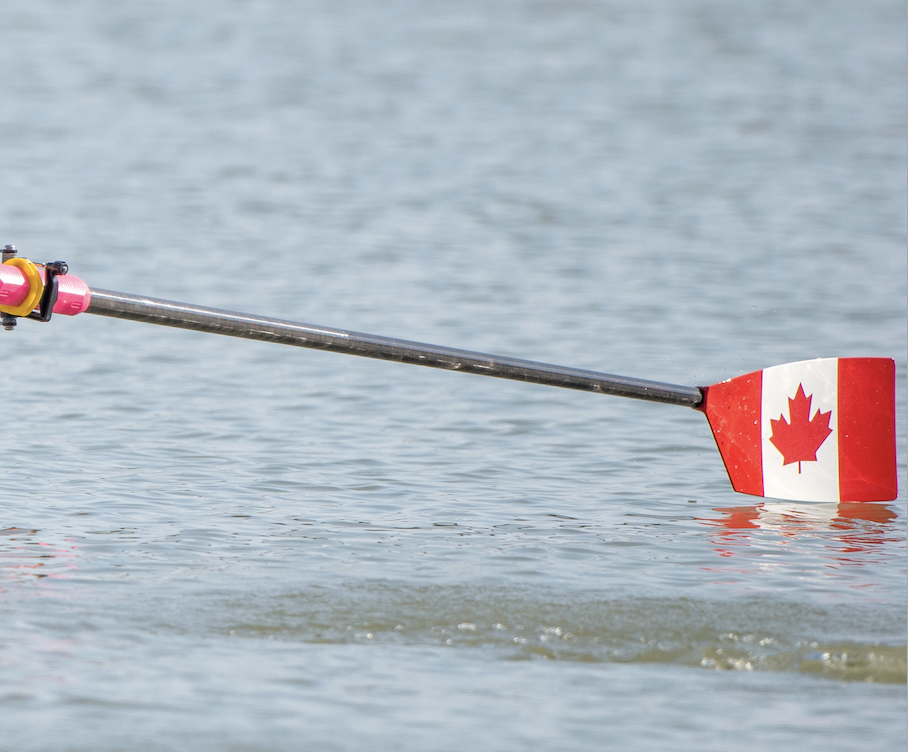
Rowing Canada Aviron made the announcement Friday that it will not be sending its crews to the 2021 World Rowing Cups putting the path to traditional Olympic qualification in jeopardy.
Six Canadian crews are already qualified for the 2021 Games and will not be traveling to any international regattas, according to the statement.
The announcement cites the Covid-19 as the reason behind the decision.
“Due to the ongoing global pandemic, travel restrictions, and health considerations, all crews will continue training at the National Training Centre (NTC) in Victoria, BC in the lead up to the Tokyo Olympic and Paralympic Games,” reads the release.
The national governing body is hopeful that there will be the opportunity to send its non-qualified crews to the Final Olympic and Paralympic Qualification Regattas in May and June.
“RCA will seek strategies for sending non-qualified crews to the Final Olympic and Paralympic Qualification Regattas in May/June 2021. This decision-making process will be led by RCA’s Chief Medical Officer and RCA’s High Performance Operations team with health and performance front of mind. RCA’s six qualified crews will not be travelling to international regattas this spring and will continue their Tokyo Games preparations within the NTC.”
The 2021 American Collegiate Rowing Association National Championship has been canceled.
Despite the fact that racing is currently taking place and regattas — both domestic and international — are continuing to be confirmed, the event would’ve had significantly decreased attendance leading regatta organizers to cancel the event.
“Due to the challenges posed this season by the COVID-19 Pandemic, the ACRA Board gathered information from the membership regarding possible attendance at the 2021 ACRA Championship Regatta. Currently, less than 10 programs have indicated they would be in a position to travel and compete at our regatta this season,” read a release from the ACRA board published March 3.
The announcement also acknowledged the fact that some programs are able to race depending on their respective institutions’ guidelines for competition.
“There are a significant number of programs able to compete and travel within their region. The Board encourages all programs to reach out to their Regional Representative to coordinate regional races and locations wherever possible.”
This weekend will bring some changes to the USRowing Board of Directors.
Kevin Harris and Nobuhisa Ishizuka will be seated by the board to serve three-year terms as at-large representatives on the USRowing Board of Directors.
This will be Harris’s first term as an USRowing at-large representative while Ishizuka will be seated into his second term.
Harris is currently the head coach of women’s rowing at the University of Tulsa where he has been coaching since 2002. Ishizuka is currently the executive director of the Center for Japanese Legal Studies at Columbia Law School.
In addition to the changes on the Board of Directors, USRowing also announced that Ellen Minzner will take on the full-time role of director of para high-performance after having previously spent a decade at Community Rowing Inc. as the director of inclusion and advocacy.
“I am thrilled to be in a position to focus my attention on building a program of sustained excellence for U.S. para-rowing across all disciplines,” Minzner said. “I look forward to working with all the coaches, athletes, and the high-performance staff at USRowing to make that happen, from Tokyo through LA 2028.”
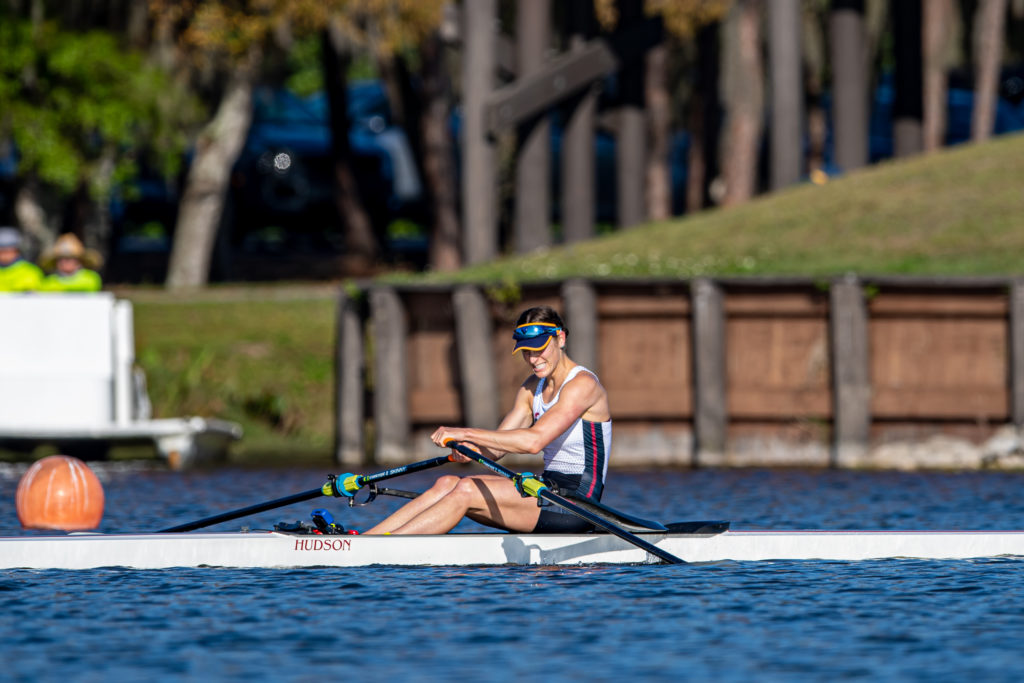
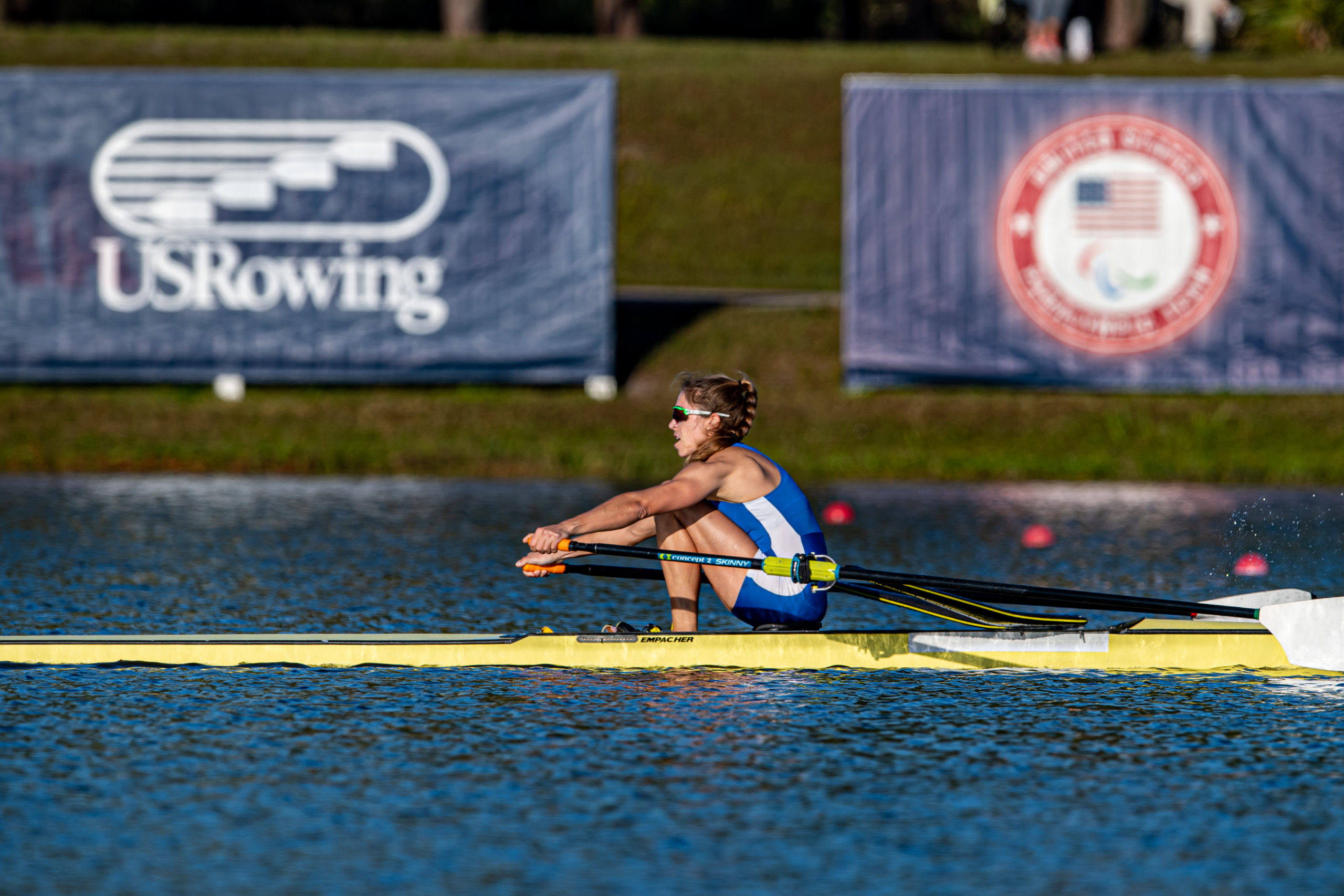
Getting sleep has been hard for Kara Kohler since she got to Sarasota, Fla., and started racing in the Olympic rowing trials. Up for grabs was the women’s single slot on the Olympic team that she had secured for the U.S. with her bronze medal performance at the 2019 World Rowing Championships in Linz, Austria.
Her plan was to fill that seat last year. But the pandemic put that off. One full year of waiting and training and wondering if she could reach her second Olympic team was coming down to a single week, and then a single day. And the tension made falling asleep and turning off her mind difficult.
Thirty-five women had come to Nathan Benderson Park to challenge for that same Olympic spot.
And, there were more than a few who, with a special week, could have stopped Kohler, including the 2016 Rio silver medalist Gevvie Stone. For certain, Stone was trying, moving through the three races to the Friday final with as much speed and confidence as Kohler.
But it was not until Friday morning that the two favorites were matched head to head, and lined up next to each other.
Not even before they had crossed through the first 500-meters, Kohler and Stone had pushed away from the two other finalists — Margaret Fellows and Kristina Wagner — and were practically in a race of their own.
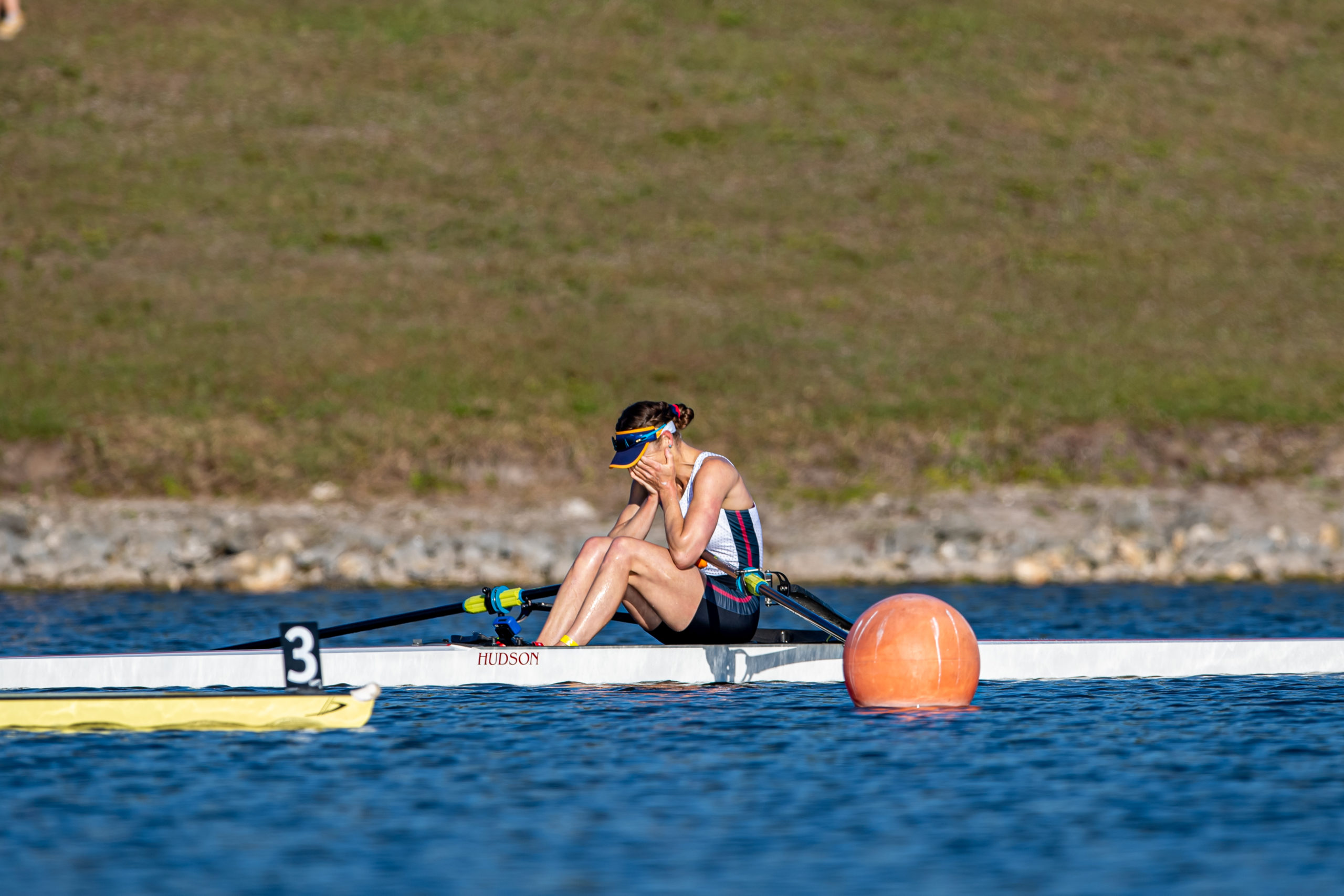
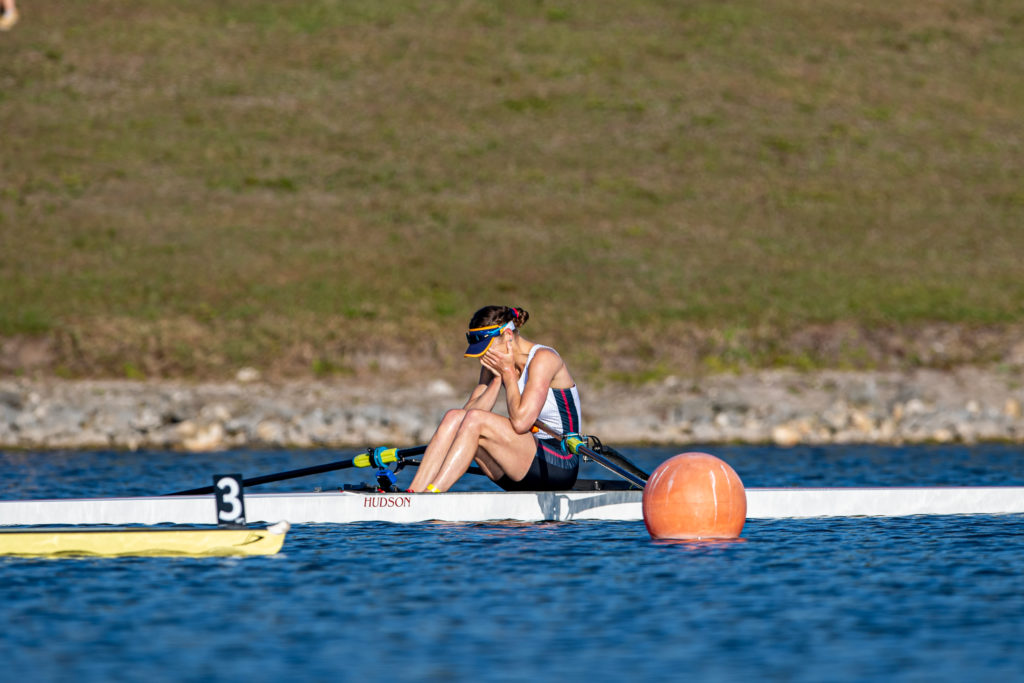
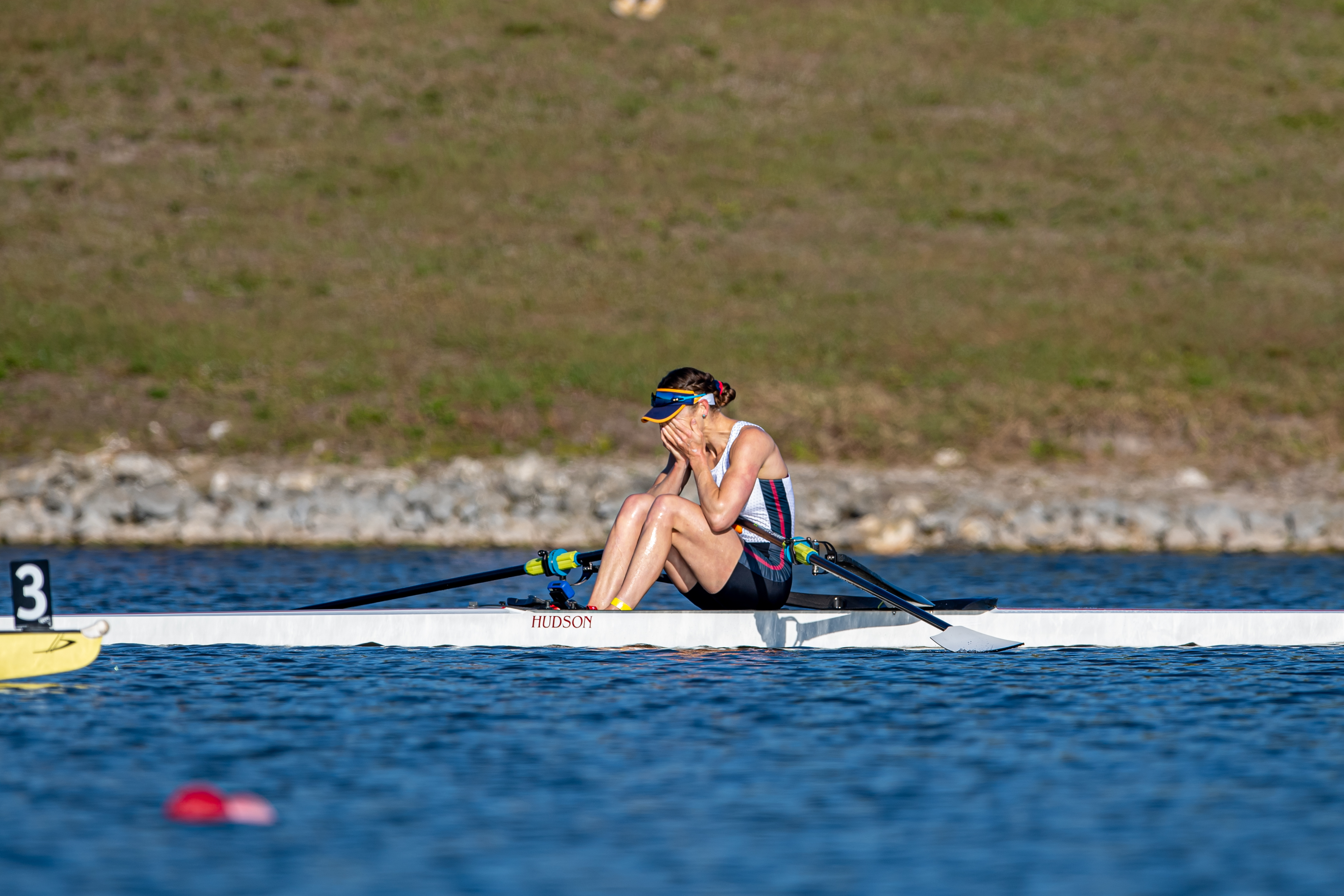
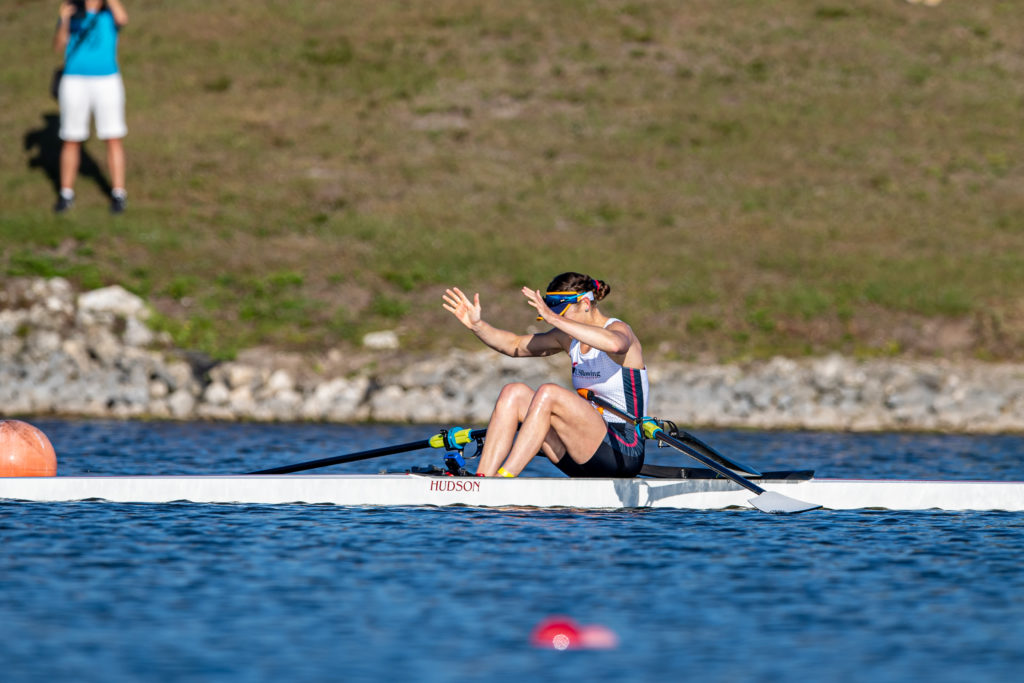
Kohler and Stone battled down the course, but it was Kohler who inched into the lead through the first 500-meters, and then methodically moved closer to the finish ahead of Stone. She finally reached the finish nearly four seconds in front, and when the horn sounded, Kohler shot her arms into the air, and then covered her face and let all that emotion out in tears of joy and relief.
“You could say I was a bit of an emotional wreck,” Kohler said of the toll of competing to reach a goal she had set long ago. “That was just the emotion from the past four years, all the ups and downs coming out a little bit. But it was also excitement and relief. And there was definitely joy in that.
“All through the week, just thinking about it, I would start crying.”
If Kohler was nervous, and she was, she talked about it in nearly every interview she did before Friday. But, she went to the line focused and ready and when the race started she went to work, handling every stage with determination.
Friday, Kohler said she did what she had visualized she would do, how she would prepare, how she would take each stroke, how she would control her breathing, and how she would race against Stone, who she knew was going to be fast and would push her.
“It was about the race I visualized. I knew she was going to push me very, very hard and I would have to work the whole 2000-meters to get the lead I wanted. She pushed me hard, and at times it was scary, but I was focused on what I had done in training all year, and on all my teammates cheering for me, and that helped me accomplish my goal today.”
Her focus and determination was well developed through this year of uncertainty.
There was no point where it was assured that the event could be held – even right up to the start of racing. Last year’s trials were canceled while athletes were already on the venue training. And when the Olympics were postponed, finding motivation to continue in the single was straining.
“It’s just a reminder that you can only control the day,” Kohler said. “You obviously aim for your goals, but you never know what’s going to come. It was a difficult year, but I think it helped me refocus and test how badly I wanted to race in the single.
“It’s not always easy training in the single,” she said. “It can be pretty brutal at times. It was a good test of how badly I wanted to race the single.”
There are still months to go before the 2021 Olympics begin, and questions to answer, not the least of which is: will there be an Olympics? Regardless, Kohler will be preparing, just like she did before trials. She will fly back to California, where the U.S. women’s and men’s sweep teams are camped in a bubble situation through next month.
“I will relax this afternoon. But I am going back to Chula Vista tomorrow to continue training.”
For Stone, the result was disappointing, but not as disappointing as in 2019 when Kohler beat her to become the 2019 single sculler, she didn’t feel she had her best race that day. Friday, Stone raced the best she had in her and credited Kohler for being as fast as she is.
“I knew headed into this that Kara was fast, and Kara is fast, and I also know that I was going fast heading into this, faster than I was five years ago, and that I had a good race. Quoting a coach and friend, Larry Gluckman, Stone said, ‘You can have a good race, and it doesn’t guarantee the outcome you want.’
“I fought every stroke of the way. My goal coming into this was to be able to end my singles career, if it were going to be the end, with a great race. And, I had one. Conditions weren’t super-fast and we went fast.”
While Stone will not row in Tokyo in the single, her quest for a third Olympics is not over. Like she did in 2019 when she lost the first time to Kohler, Stone will return to Boston with the other women she had been racing and training with, and begin working to find the right double combination to race in the next set of trials in April.
Stone paired up with Cicely Madden, in 2019 and won those trials, and together they finished a close fifth in Linz to qualify the boat class for Tokyo. She said the details are not yet worked out, but that is the direction she will be taking.
“I will be driving the trailer back to Boston with my boyfriend, and then getting into a double.”
Men’s Single
While Kohler has won a guaranteed place on the U.S. squad should they take place this summer, nothing is yet set with the pandemic still looming behind everything, Stone will be racing for the second guaranteed spot on the team.
That is not the situation for the winners of the other four events contested in Sarasota – the men’s single, men’s double, and lightweight men’s and women’s double. None of those boat classes were qualified in 2019. The decision each of the winning crews now must make is if they want to travel to Lucerne in May to the Final Olympic Qualification Regatta and try for the remaining two spots left up for grabs for each crew there.
That is arguably a much bigger task than the one they faced this week at the U.S. Trials. In all but the men’s double, there is a second choice – match up with some of the other athletes that were racing in either the double or men’s single event and race in a quad at the next set of trials in April.
John Graves has done that, he lost out at trials in 2019 and raced with a quad from Penn A.C. Rowing Association at the world championship. That boat also did not qualify. When he came back home, Graves went back into the single and made his goal winning these trials and racing the single at the FOQR.
That is a hard place to win a spot in the Olympics, and Graves knows that. He was in the Craftsbury quad in 2012 that won trials, then went to Lucerne and missed.
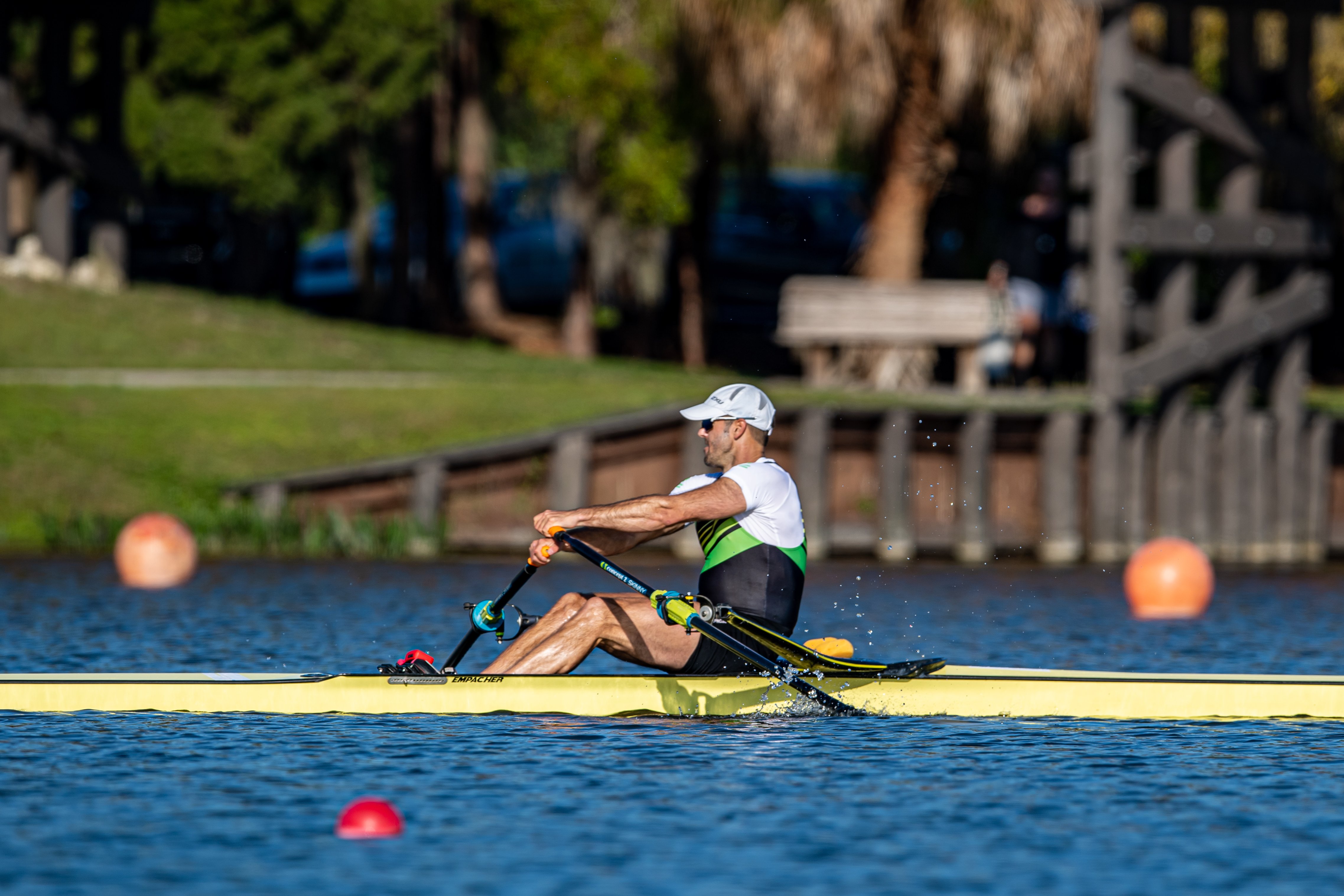
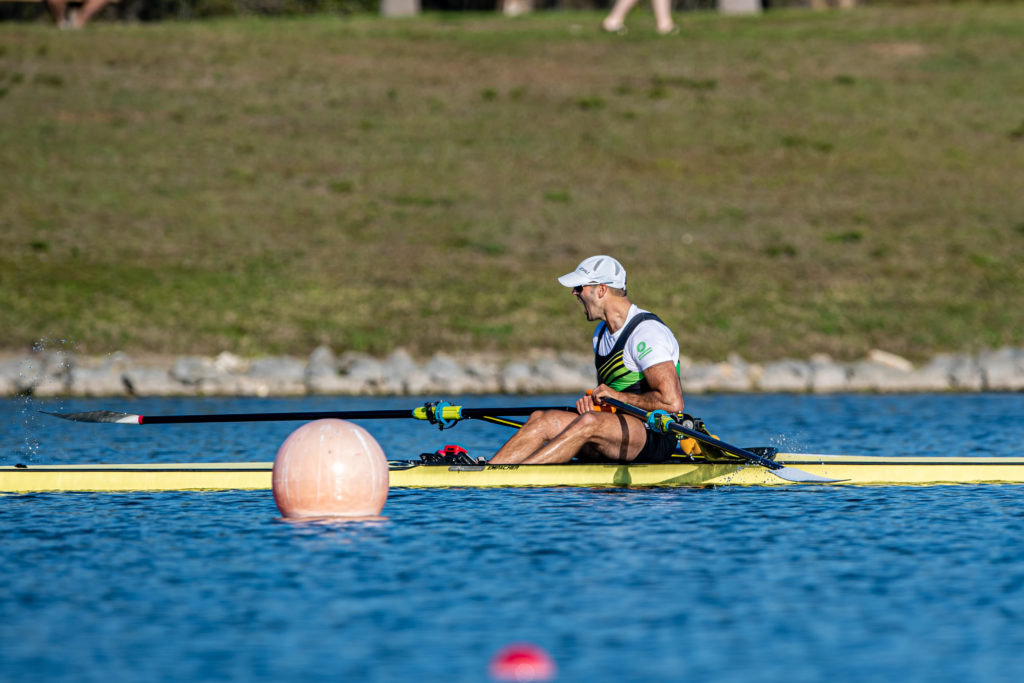
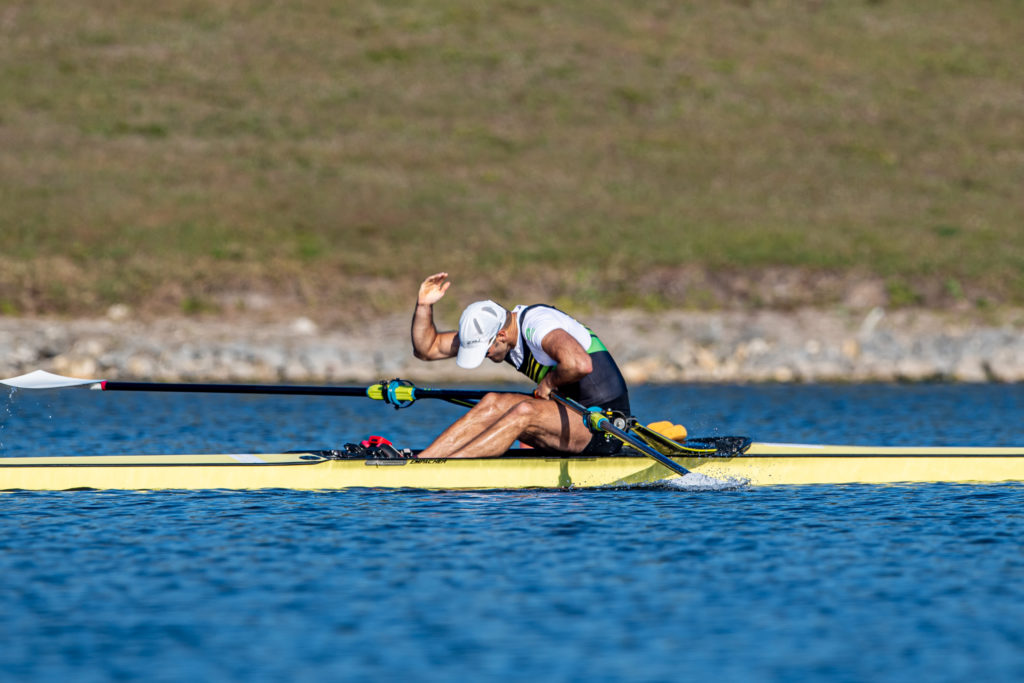
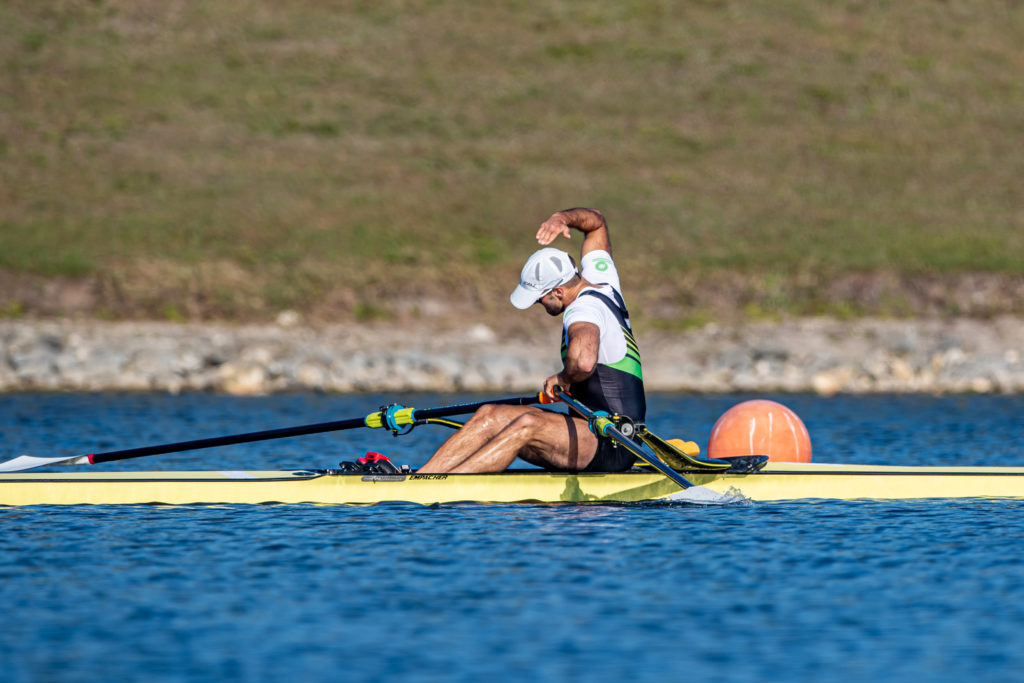
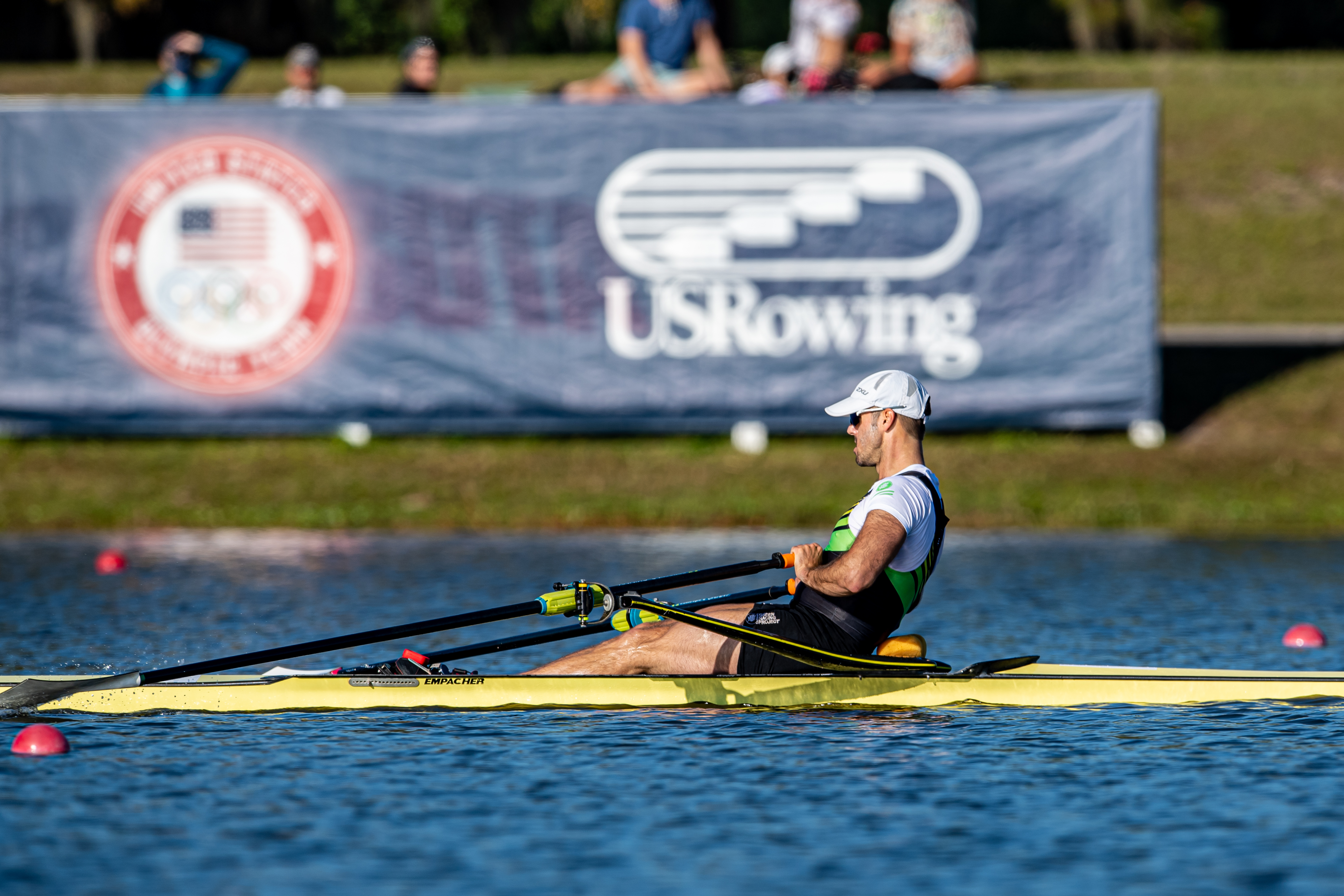
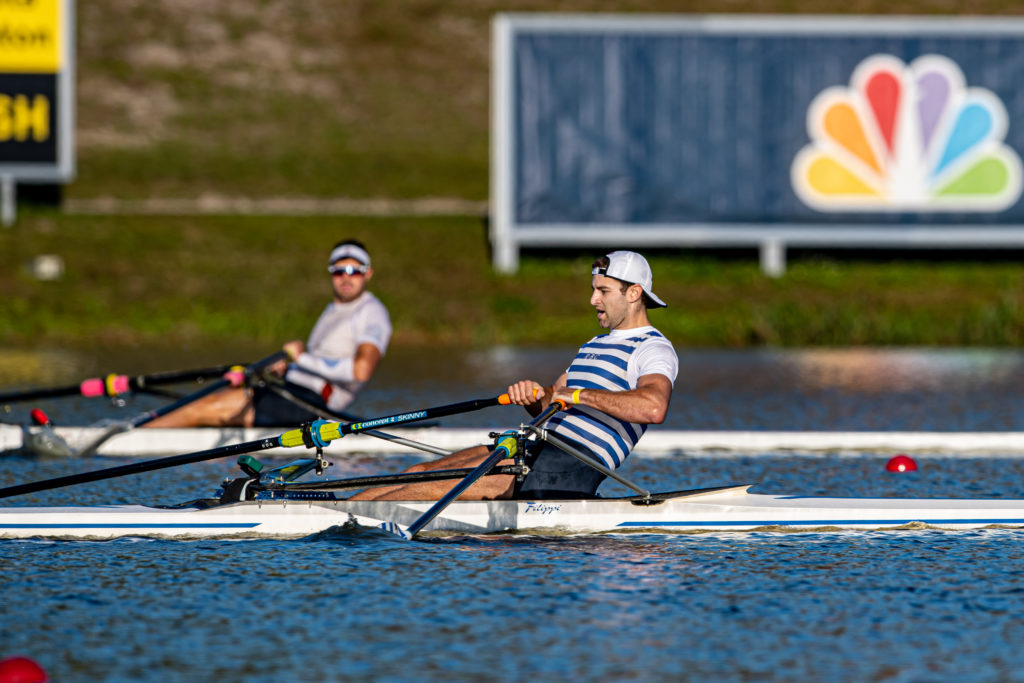
Friday, Graves checked off the first goal in his quest to close out his long national team career with a trials win. Lining up against Craftsbury teammate Lucas Bellows, Malta Boat Club’s Lenny Futterman, and Riverside Boat Club’s Kevin Meador, Graves wasted little time getting into the lead and holding through the finish line.
“It feels great,” Graves said. “Trials are emotionally draining and stressful. It just feels great to have crossed the line and be able to set my sights on Lucerne and the main goal.”
Graves has had a good week in Sarasota, winning the time trial, heat, and semifinal. Friday, his intention was to finish the job.
“I wanted to just get back into my rhythm and build off (Thursday’s semifinal) and try to put myself in a position where I could control the race and I was able to do that. Then when you get into the back half, especially at trials, you’re just thinking, alright, no mistakes, get it across. I was happy to do that.
“It’s really stressful and I was really thankful to get it done.”
One note that should not be passed up on was the performance of his brother Peter, who came to trials and raced a double with brother Thomas. The brothers raced through the time trial and heats, and then scratched the entry just before the reps.
But when John was coming down the course, brother Peter was on the coaches’ path running and pacing John the entire way while wearing a back pack. It’s not unusual to see coaches following a race, but it’s usually done on bikes or roller blades.
“I’m not surprised,” John said. “I didn’t know he was going to do that. I didn’t see him, but I heard him. He’s a total piece of work.”
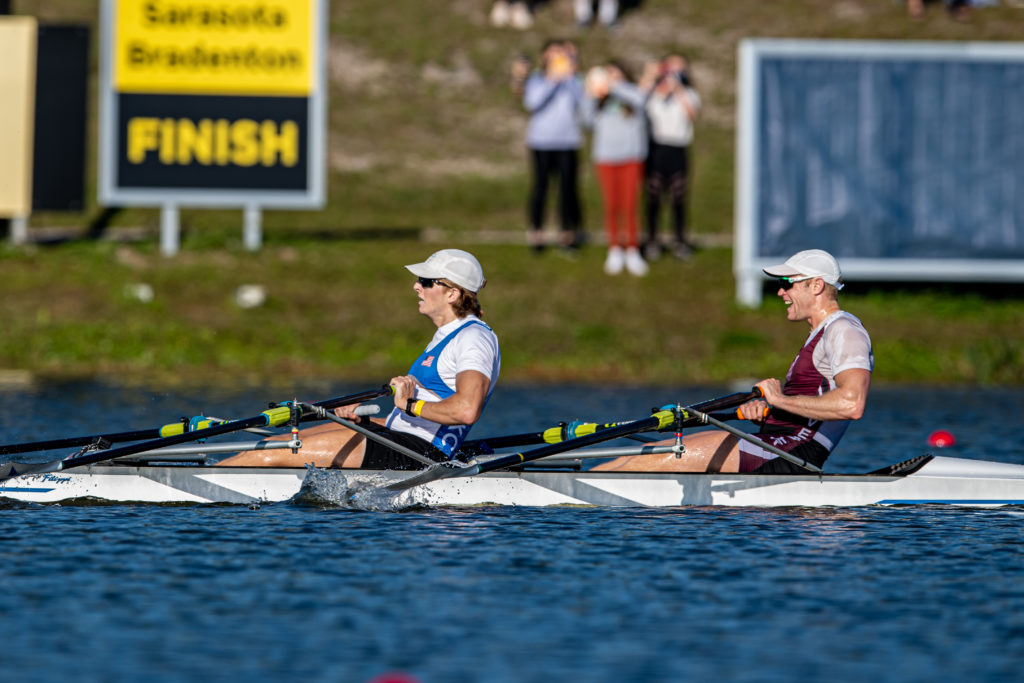
Men’s Double
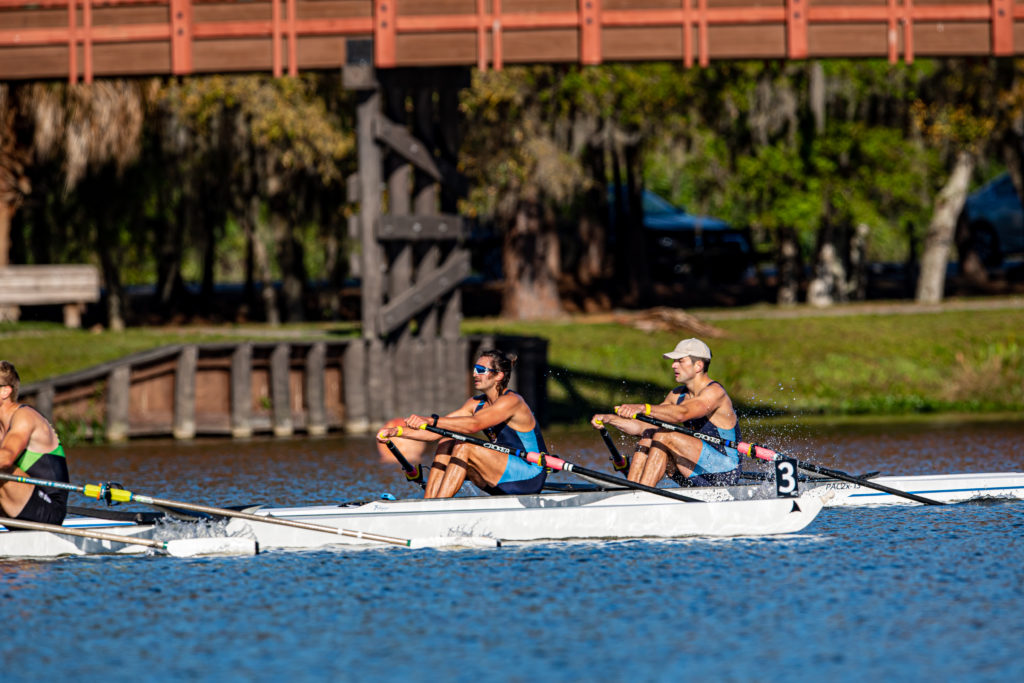
The men’s double is one of the events that will see athletes spill over into groups forming to build a fast quad for the April trials in West Windsor, N.J. Even before this event began, before the three double combinations from the Penn A.C. group were decided, one of the primary goals for coach Sean Hall was race experience after the year off, and quad selection.
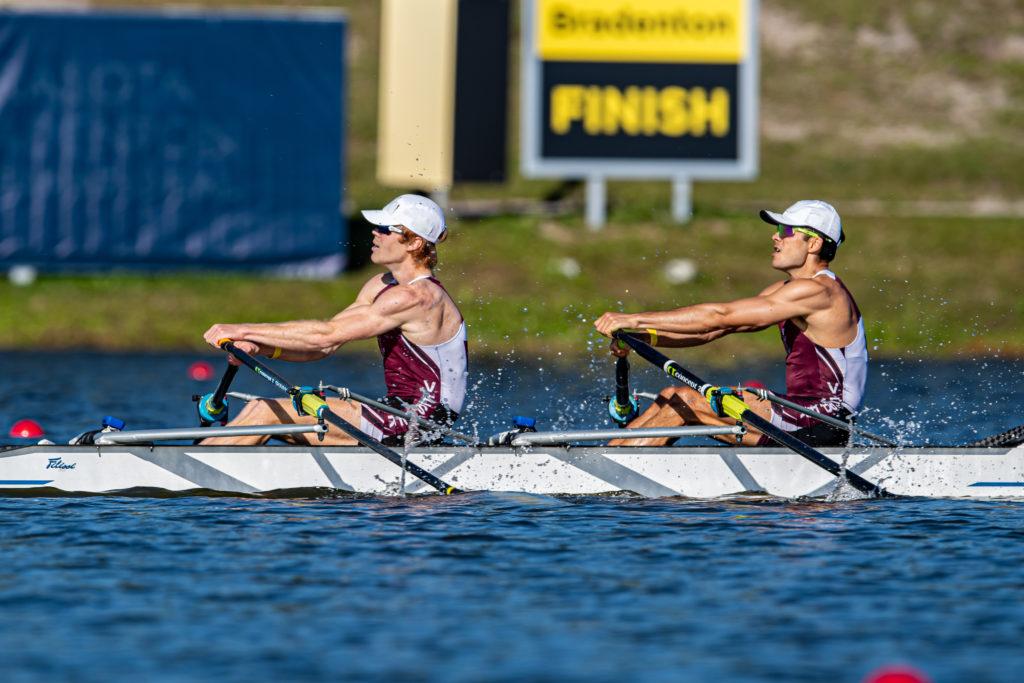
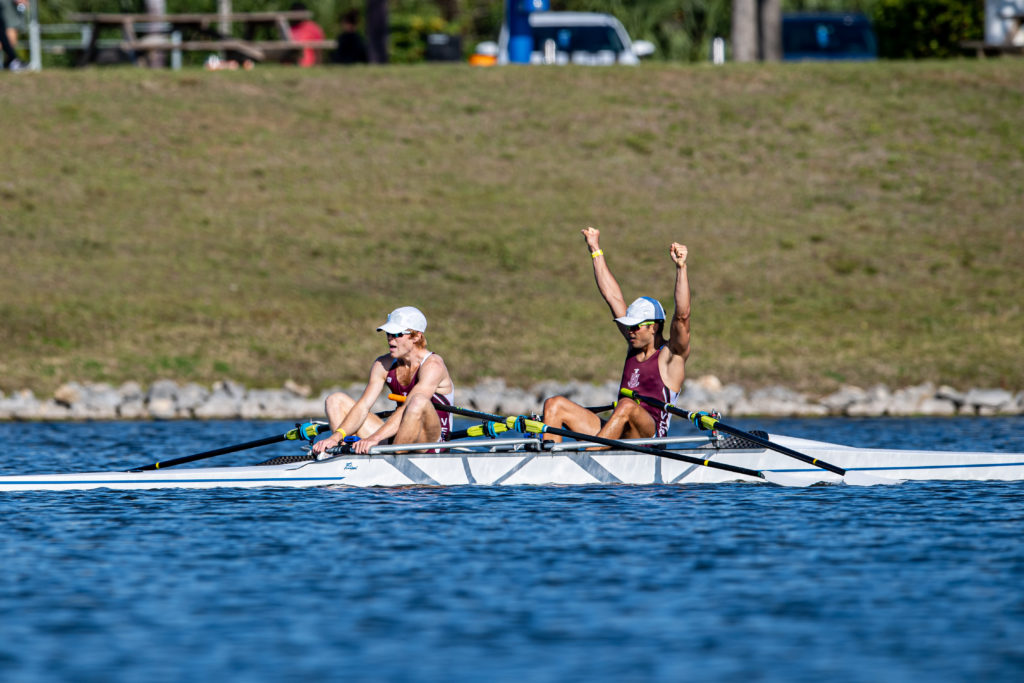
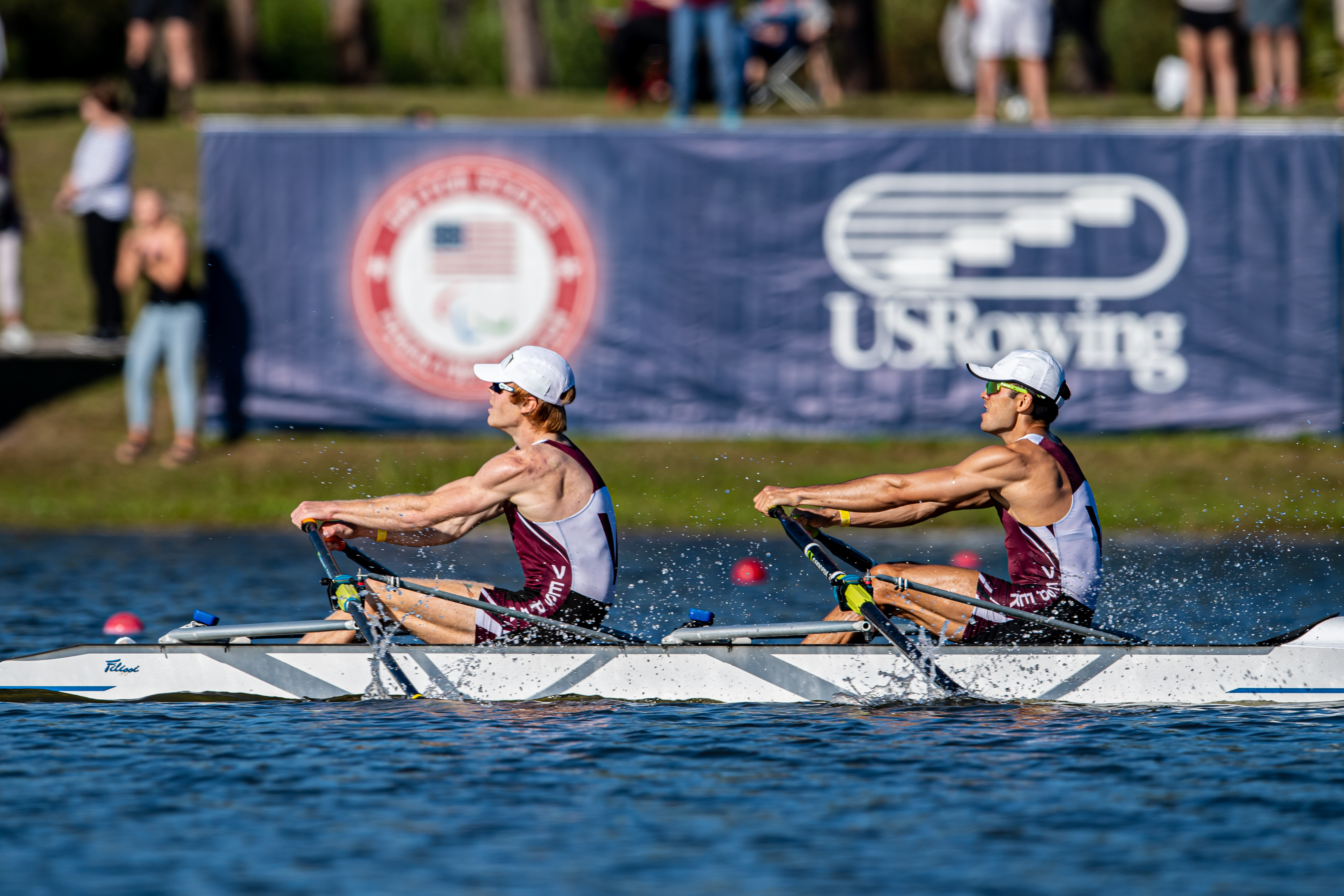
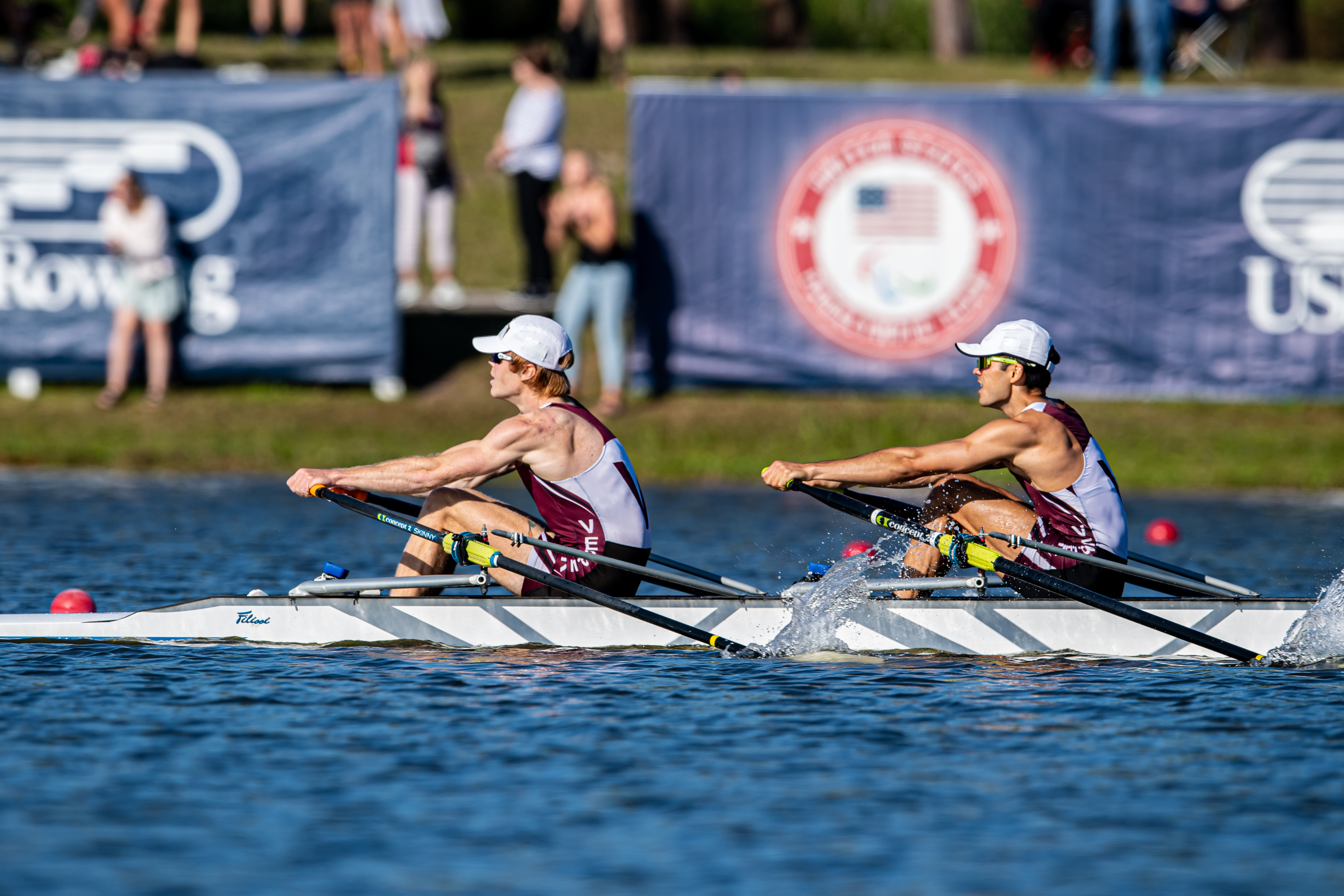
Penn A.C. had two crews in the final, and both were in the fight. Throughout the racing, three different crews held the lead at one point on the course, and eventual winners, Kevin Cardo and Jonathan Kirkegaard from Vesper Boat Club and the Oklahoma City High-Performance Center trailed in fourth in the first 500-meters.
They also had a scare that could have ended their day when Cardo clipped the buoy line in the final strokes before the line and momentarily lost an oar It did not stop the crew.
“Everyone just kept pushing through the middle one thousand, so it really did come down to that last little bit,” said Cardo. “I felt like there was always a calmness in the boat, until the last 10 strokes.”
“Everyone just kept pushing through the middle one thousand, so it really did come down to that last little bit,” said Cardo. “I felt like there was always a calmness in the boat, until the last 10 strokes.”
-Kevin Cardno
Like most of the athletes in Sarasota this week, the Covid shutdown has been a severe interruption, but Cardo said he and Kirkegaard decided just after last year’s trials were called off to stick with their plan.
“This win validates all the work we have done through entire year,” Cardo said. “We were leaving for trials in 2020 when they decided to cancel the event due to Covid, and I was thinking to myself then, either figure something else out to do or stay and train this and double down on it.”
It did not hurt that they also decided to train in Oklahoma, which opened up earlier than most locations from the shutdown restrictions.
“We were lucky that the state of Oklahoma made it through (the lockdown) to being reopened rather quickly, and we were able to row and had a lot of time in the boat, a lot of miles.”
Those miles gave them confidence in themselves and are why they have decided not to try and find a quad to row in, but stay together as a double and go to Lucerne and see what they can do.
“There is no easy way through Lucerne,” said Kirkegaard, “quad, double, single, so it comes down to miles in the boat. That is what is going to give you a few more pluses in the column. So, more miles in the boat means a better chance.
“The trickle-down trials system doesn’t allow Americans to do the best they possibly can. It’s a mountain and no matter how you climb it, in the quad, or the double, it’s going to be really, really difficult. We’re thinking we already have miles in this boat, let’s add more to it rather than start over,” he said.
Women’s Lightweight Double
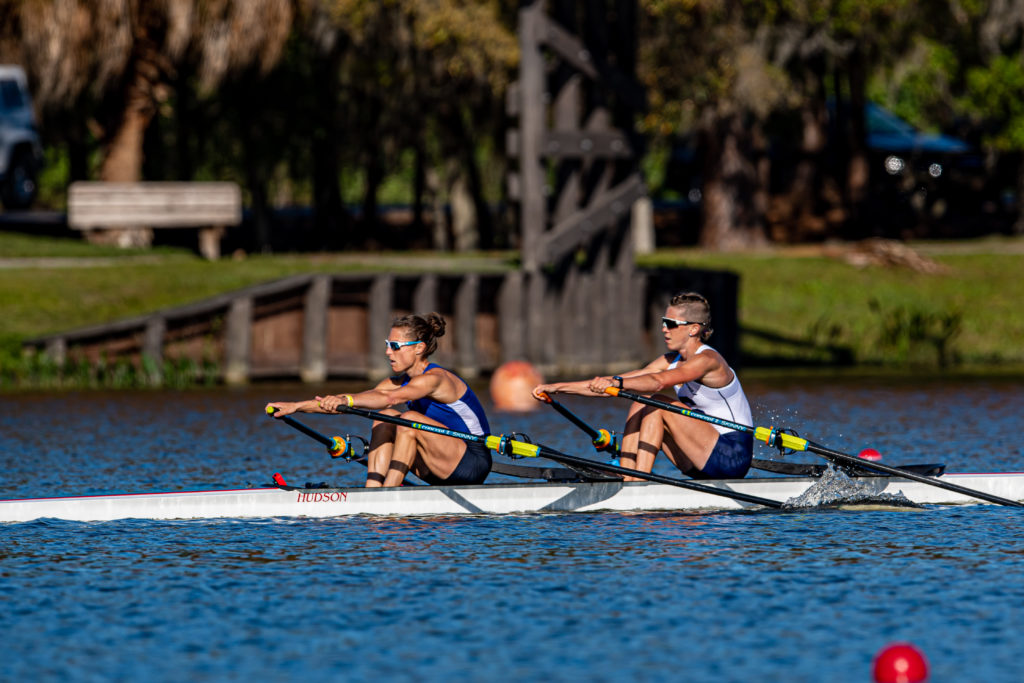
All week, the racing has been hard-fought between three crews of women, many of whom have deep experience in the event and include two athletes, Michelle Sechser and Christine Cavallo, that raced together at the 2019 world championships but could not push through to qualify the boat for the U.S.
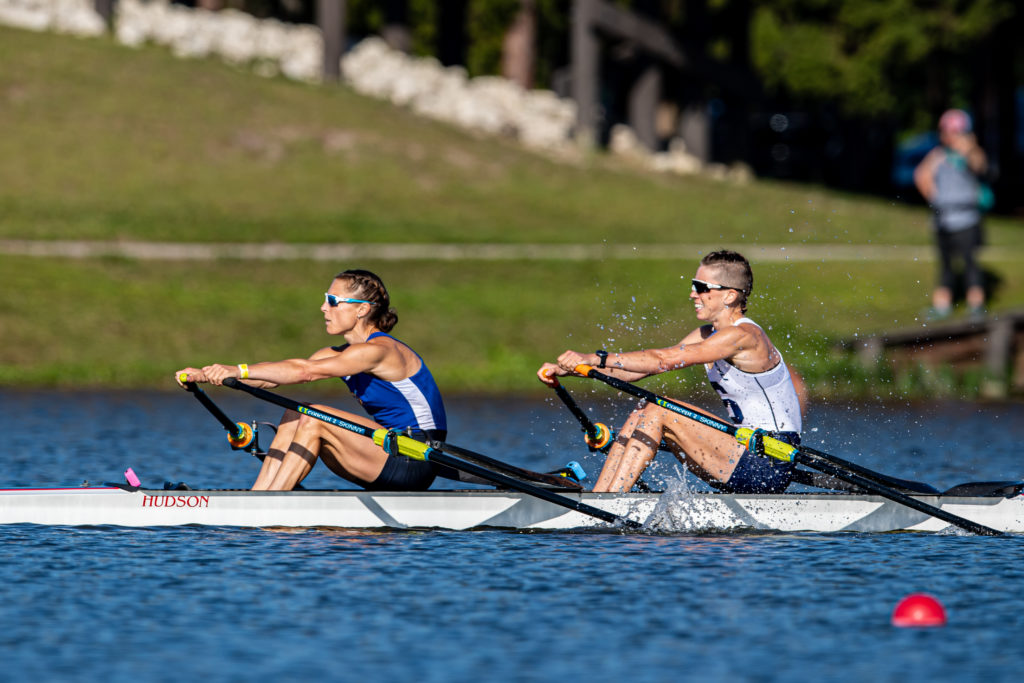
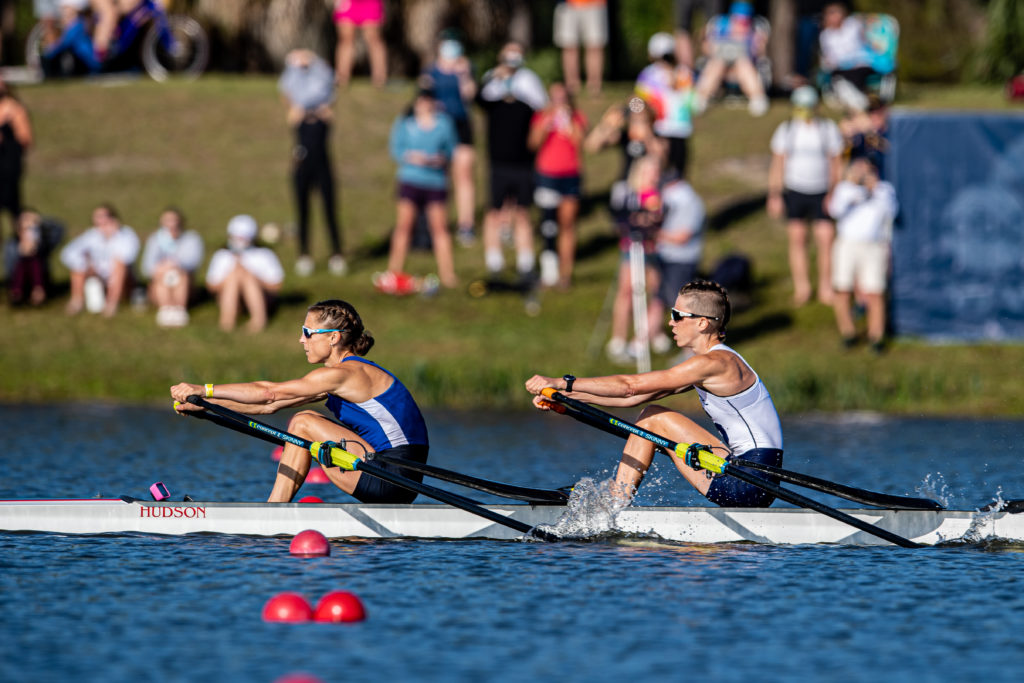
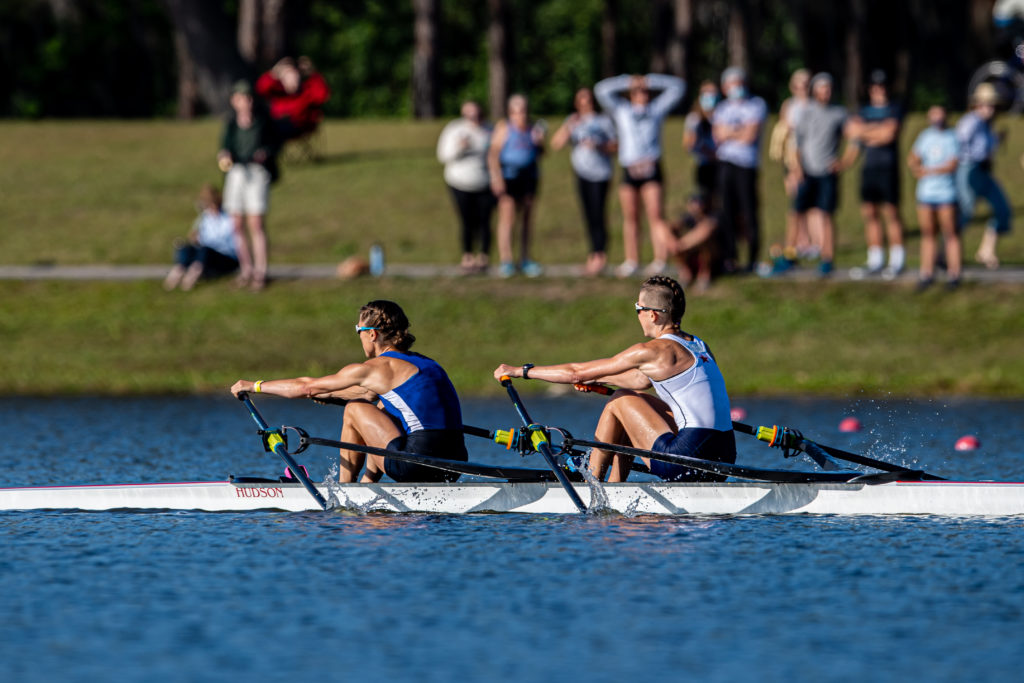
Both found different partners for these trials. Sechser, from Cambridge Boat Club, teamed up with former Dartmouth rower Molly Reckford who has been training with Sarasota Crew. Cavallo paired with former Wisconsin lightweight Grace Joyce and came to Sarasota from Craftsbury’s Green Racing Project.
The third crew, Cambridge Boat Club’s Mary Nabel and Emily Schmieg, has raced and won bronze and silver medals in world championship competition in 2017 and 2018. Those three crews advanced through the week and were joined by Sophie Heywood and Sophia Denison-Johnston from Mission Rowing.
While there was vast international experience in the three crews, Sechser, who’s racing in the lightweight women’s double dates back to 2013, and new partner Reckford, had set the standard for the week.
They won the time trial by 17-seconds and advanced through the heats and semifinals in complete control of the field.
They went to the final as the top seed. If there is a point in a race where a crew can fall apart, or show their determination and skill, it came in the first strokes of the race when Reckford momentarily lost control of her port oar and it came out her hand.
She said she has “no idea,” how, but the oar came out of her hand. It happened so quickly neither women had time to think about it, but just before it could become a disaster, the oar bounced back around and right back to Reckford’s hand. But not before Sechser saw the coming back at her head and ducked to get out of the way. It was a teamwork save.
“I have never had such a short amount of time feel so painfully long,” Reckford said.
There is something to be said for practicing for disaster, for planning for hitting a buoy, losing an oar in the wind, and so there was a plan.
“Michelle and I had discussed things going in, we knew there a possibility we could end up on a buoy, we said if something happens, deep breath, collect yourself, build back up. It’s always terrifying, it’s always awful, but we had a plan in place, and I knew that Michelle knew what to do, and I knew what to do, so my brain went straight to get my handle back into my hand and build.”
Sechser said her reaction was a “sharp pain of frustration” that lasted about a millisecond. “When she got the oar back in her hand, I just started us back up and pushed really hard to get back in the race.
“Our mantra for the first 500 before that was breathe and push, breathe and push, so she recovered the oar and I just kept telling myself just breathe and push.”
“Our mantra for the first 500 before that was breathe and push, breathe and push, so she recovered the oar and I just kept telling myself just breath and push.”
-Michelle Sechser
The result was a charge through the pack and a chance to go to Lucerne and row a spot in Tokyo.
For both women — but for very different reasons — that opportunity is special. To Sechser, who helped qualify the boat in 2015, but did not win trials the next season, and then missed qualifying the boat in 2019, it’s a chance to change the ending.
“I feel incredibly grateful to have another chance to do this right,” she said.
For Reckford it’s a step towards a lifelong dream to be an Olympian, a dream inspired by her grandfather, Bill Spencer, a two-time Olympian in the biathlon in 1964 and 1968, who later became a coach on the team and served from 1972 to 1984. He was inducted into the U.S. Biathlon Association Hall of Fame in 2000.
Spencer passed in December 2020. He was 84.
When Reckford races, she does it with her “Grandpa” in mind. “This is otherworldly,” she said. “I grew up watching the Olympics religiously. At my Grandpa’s house, there are two Olympic torches because he took part in the Olympic torch relay twice and was a two-time Olympian.
“The Olympics were always present in my life and I always dreamed of being good enough at something to go. I know he is proud of me today. We haven’t done that yet, but to have made the trials boat, and to be one step closer to potentially going, this is a dream come true.”
Men’s Lightweight Double
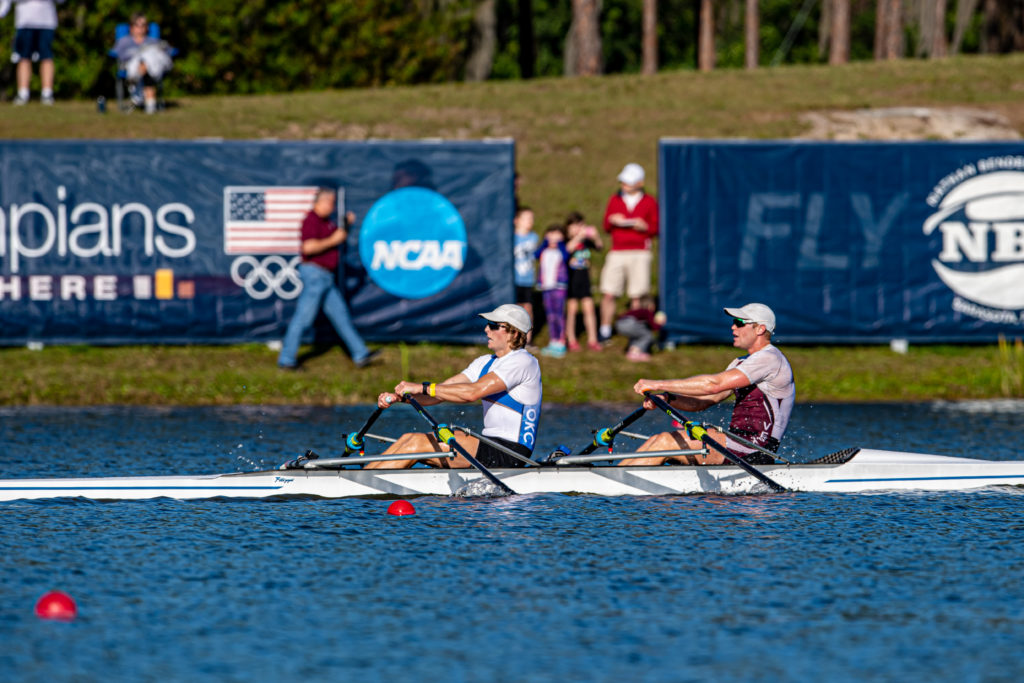
Of the seven crews entered in the men’s lightweight double, three of the crews were from Philadelphia-based Vesper Boat Club, and one, the crew of Zack Heese and Jasper Liu had been setting the pace at trials all week.
When the finals were lined up all three Vesper boats were on the there and were joined by the composite Riverside/Unaffiliated composite entry Alex Twist and Hugh McAdam. As they had done all week, when the race started, Heese and Liu shot off the line and into the lead. It was what they had planned.
“Once we lined up next to those other boats that have been our training partners for the past month, year, it kind of felt like, we know how to do this,” Liu said. “We were nervous for sure. Any time you line up to race, you’re going to be nervous, but we had confidence.
“We’ve raced before, we’ve been here before, and after the start, after the first hundred meters or so, we were back into our rhythm, feeling we know what we’re doing.”
Heese, who was stroking the boat and setting the pace, said he kept the rating high to push out in front of the field, where they could keep track of what was happening behind them.
“We really just wanted to set the tone early off the start,” Heese said. “So, we took some high strokes and really waited a while to settle. That way we could really see how the race played out behind us and we could react to it. I think we went out probably in the high 40s and then we settled down to a mid-rate 42 for maybe 20 strokes, maybe, then finally brought it down to a more sustainable 38-39.”
Heese and Liu continued that pace until they crossed the line and won, and only adjusted when they felt they needed some push.
“We were up enough to where we could see the other boats in our peripheral after about the first 500. I was making our technical calls and some motivational calls, half for myself and half for Zack. We practiced this dozens of times before, so we knew what we were doing.
“I don’t want to say this is a relief, but it’s a sense of accomplishment for sure. This has been our goal for the past three years individually just coming out of college and starting to row on the elite scene. So, this is huge to have that in our pocket now,” Liu said.
Friday is finals day at Olympic Trials I in Nathan Benderson Park in Sarasota-Bradenton Fla. and when the day is complete, the first of the 2021 U.S. Olympic rowing team will be named.
Of the five finals that will take place, only the U.S. has a secured place in the women’s single. Kara Kohler, who took bronze in the 2019 World Rowing Championship and qualified the boat class for Tokyo, will be among the four women who will race to fill that slot.
Kohler, rowing as an entry from the U.S. women’s Princeton National Training Center, and is a 2012 London Olympic bronze medalist in the quad, will line up next to Cambridge Boat Club’s Gevvie Stone, a two time Olympian, and current silver medal holder in the event from her performance in Rio 2016.
This is a rematch of the 2019 World Championship trials where Kohler beat Stone on the same course. Also racing in the event are Boston Rowing Federation’s Margaret Fellows and ARION’s Kristina Wagner.
The other events — the men’s single, men’s double, and men’s and women’s lightweight doubles — are racing for the opportunity to represent the U.S. at the Final Olympic Qualification Regatta in Lucerne, Switzerland in May.
After finishing second to Kara Kohler in the 2019 world championship singles trial, Gevvie Stone left Sarasota, Fla. disappointed in the way she had rowed the final.
She was racing to regain her spot on the national team after taking the time off she needed to focus back on getting her medical career going following her silver medal win in the 2016 Olympics.
But she did not feel she had enough time in training to reach the level of fitness, or technical skill she knew was capable of and could not find her best performance when it mattered the most.
And that race has stuck with her since.
Stone will get another chance Friday morning, nearly two full years later. Both she and Kohler rowed to what looked like comfortable finishes in the semifinals of the 2021 Olympic Trials I and will line up next to each other right back on the same course in Sarasota, Fla.
Stone and Kohler were among the four women that fought their way through these trials and now find themselves on the verge of becoming the first U.S. athlete to be named to the team that will compete in the Tokyo Olympics this summer.
And following racing Thursday morning, Stone did not shy from reflecting on the 2019 race.
“I had been fortunate up until that point in my career that when I ended things, I ended with a great race,” Stone said. “In London in 2012, that was the best race I had in my life at that point. In 2016 in Rio it was close to the best race, I would argue that Lucerne (World Rowing Cup II, silver) was better, but it was a great race.
“I walked away from 2019 not with that same sensation and when everything was canceled last year, I was pretty devastated because I wanted another chance to run down the course in the single and to prove to myself that I have a better race in me,” she said.
Both Stone and Kohler came into these trials as the favorites to gain the Olympic slot that Kohler secured for the U.S. with her 2019 bronze medal performance in the 2019 World Rowing Championships. And they have rowed that way in each stage of the event.
Thursday morning Kohler advanced from the first semifinal. She established a lead from the start and rowed in front the length of the course. There was some entertaining racing in both semis, but they happened behind the leaders.
Thursday morning Kohler advanced from the first semifinal. She established a lead from the start and rowed in front the length of the course. There was some entertaining racing in both semis, but they happened behind the leaders.
Watching the race, it appeared that Kohler was well in control almost from the start. But she said it did not feel that way to her, at least until the second thousand.
“I figured everyone would put out a fast first thousand and then the second thousand I kind of held my rhythm and rowed to the line. It feels very good. It’s a relief for sure, and now I’ll lay it all on the line and put together a race that’s as fast as I can go.”
Like Stone, Kohler remembers the 2019 match up and said that she is excited for the race but still knows she is going up against a tough competitor. “I guess it’s really no different,” Kohler said. “I know she’s fast and I know she’s incredibly fierce when it comes to racing. So I have the same nerves, and I know I have to bring my A game to win. It would be pretty incredible if I did.”
This is the second time Kohler has been close to making the Olympic team. The difference now is she was named to the 2012 quad from selection. This time it is all on her and now comes down to one race.
“Big boat selection is drawn out over a longer period of time and I feel like there is less riding on one single moment,” she said. “I guess in a way it’s more stressful, but not really because you still want to make the Olympic team, and that’s stressful no matter what. You work so long and hard for it.”
With the semi behind her, Kohler is now focused on getting rest and waking up on time. “It’s been pretty hard getting to sleep all week. I just make sure all my alarms are set and go off properly, even though I’ve been waking up before my alarm all week, which is pretty impressive for me.”
Once the alarms are sounded, Kohler will then start to focus on the steps between the beginning and end of racing. “I’m mostly trying to think as little as possible and focus on each step until I get to the finish line.
“My warm up, the quality of my strokes, my breathing, rhythm and trying to be calm and quiet all the other thoughts that want to creep in, all the doubts and whatever else there is.”
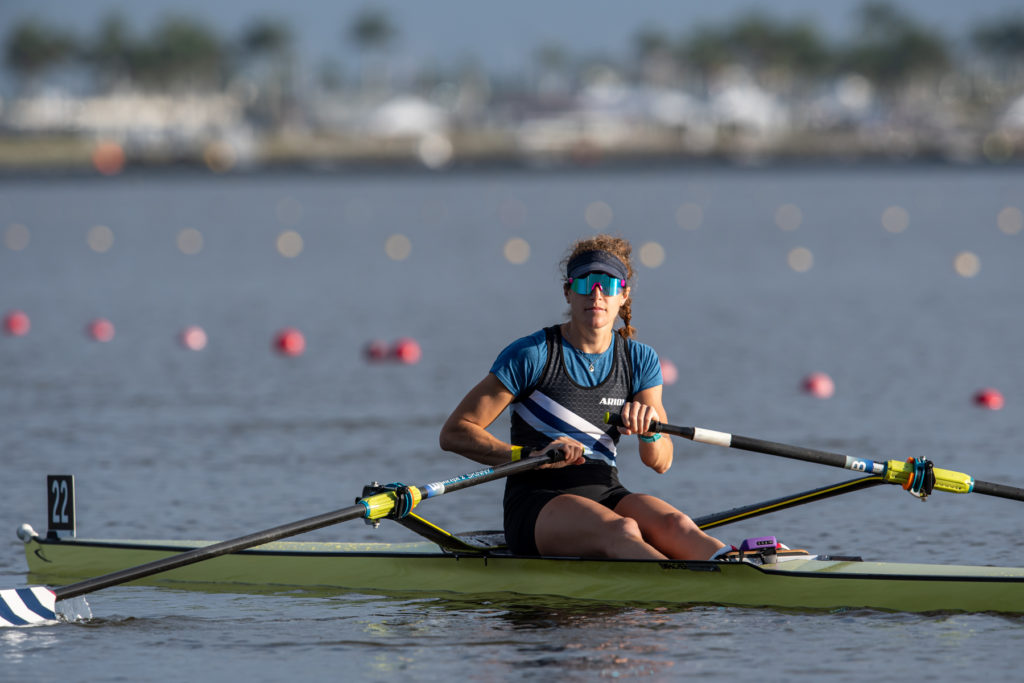
Behind Kohler in the first semi, ARION’s Kristina Wagner, who had won her spot in the semi in the Wednesday reps, looked to be left behind after fading in the first 500-meters and was having a much different race experience.
Wagner trailed the four-boat heat through the first thousand meters in what seemed like a distance that could not be made up.
Ahead of her were Cicely Madden from Cambridge Boat Club and Craftsbury’s Jennifer Forbes. Wagner was more than five seconds behind third-place Forbes at that point.
“I was not planning on being quite so far behind, I thought I had a pretty good start and then I just shifted a bit more than the rest of the field,” Wagner said.
“With about 1250 to go, I thought, OK, this could either be a really awesome finish or a really bad race,” Wagner said. “So, I just tried to keep chipping one split away on my GPS, and then I could see one boat out of my periphery and I just tried to close in on that boat. That kind of led me to another boat.
“I started sprinting with 500 to go. I was pretty surprised. Not every sprint is successful so I just was excited and happy it had worked out. I just heard Kara’s beep (at the finish line) and then I thought this next one is for me.”
“I started sprinting with 500 to go. I was pretty surprised. Not every sprint is successful so I just was excited and happy it had worked out. I just heard Kara’s beep (at the finish line) and then I thought this next one is for me.”
-Kristina Wagner
With the second-place finish, Wagner will race in the final tomorrow.
In the second semi, it was more of the same, Cambridge Boat Club’s Stone pulled away early and then just controlled the race from the front of the pack.
Behind her Boston teammate Margaret Fellows trailed in fourth and it seemed that Sophia Vitas from the U.S. women’s Princeton Training Center was going to take the second qualifying spot.
But Fellows had not given up the thought that she had the experience and fitness to push through.
“I was just focusing on rowing my best race,” she said. “I knew that I had more experience in the single than (Vitas) does and I knew that she was going to be fast. But I also believed if I had the best race that I could have, I could beat her.
“I’m incredibly impressed by the regatta (Vitas) has put together since this is the first time she has ever raced in the single, but I also have a lot of confidence in my own ability.”
Fellows inched back into the race and caught Vitas near the finish. “I just kind of sensed the line and started going when I needed to and it panned out.”
That finish set the lineup for Friday’s final and Stone’s chance to find her best possible race.
“As much as we race to beat other people, one of the best things about rowing is you are racing yourself, the goal is to get from the start to the finish as fast as possible, and yes, I want to win tomorrow. But my bigger goal is to have my best race of the week tomorrow.”
Men’s Single
Malta Boat Club’s Lenny Futterman and Craftsbury’s John Graves have both been clear that this regatta will be the last year of their careers and have put everything into their training with that goal in mind. Neither has a direct path to Tokyo. Of the five events being contested, only the women’s single has a spot for 2021. The men’s single, double, and men’s and women’s lightweight doubles all have to race in Lucerne at the Final Olympic Qualification Regatta in May and hope to finish either first or second to get to Tokyo.
But trials is the first step and both have been leading the field through the week. Friday, they will face each other in the final having won their respective semifinals Thursday.
Futterman was the first to race and was involved in one of the fiercest battles of the day. Futterman gained the lead off the start, with Kevin Meador of Riverside rowing in second in the first 500-meters.
Behind the leaders, Penn A.C. Rowing Association sculler Thomas Phifer rowed in fourth place behind Michael Clougher. None of those positions held and by the time the race had reached halfway, Clougher had a slight lead on Futterman.
Futterman managed to get the lead back and win. He was rowing with a comfortable advantage while behind him, Meador and Phifer fought each other, and then through Clougher.
“I knew what I needed to do,” Futterman said. “I was moving along thinking this is fine, no alarm bells were going off and I got up, and was able to paddle across the line a little bit,” he said. “Semis are always going to be competitive; this is a very deep field so I’m just taking this one race at a time. It’s the stock answer, but it’s true.”
Meanwhile, Meador kept adjusting and managed to sprint to the second qualifying position deep in the last quarter of the race.
“It was a barn burner from start to finish,” Meador said. “I don’t think there was anyone point in that race where I felt I could settle in and get comfortable. I was just clawing my way down the whole course. Everyone was fast today and I feel myself to be pretty fortunate to have made it through.
“Every time I looked, maybe someone was up, maybe someone was moving, and it was time to go again,” he said. “I knew someone was going to have a really good second thousand, and that someone would fade, I just had to make sure it wasn’t me.”
In the second semi, Graves made sure he stayed clear of anything like what had happened in the first race. He gained the lead early and stayed in front. Behind him, Craftsbury teammates Lucas Bellows and William Legenzowski, and Maritime’s Casey Fuller, battled to advance in second.
“I was just trying to progress because, obviously, the important race is tomorrow, so there was nothing fancy,” Graves said. “This is what we have prepared and trained for, so just looking forward to it being the day we marked on the calendar, and then having my best row tomorrow.
“I could have managed my exertion a little bit better, and maybe I put a little bit too much out on the course. But I thought it was a good step from the heat, and now I have to step forward again in the final.”
Men’s Double
Throughout the week, racing in the men’s double has been consistently even, no one crew has established themselves as the boat to beat. And after Thursday racing, it’s still pretty much the case.
In the first semifinal, Penn A.C.’s Charles Anderson and Finn Putnam qualified first, followed by Craftsbury’s Jacob Plihal and Mark Couwenhoven. The Craftsbury crew was the faster boat in the time trial and heats and took the lead at the start Thursday.
But Penn A.C. caught and passed them in the second thousand-meters to win and leave the second spot to Craftsbury.
“We really just trusted our fitness and training,” said Anderson. “We’ve been down on our teammates in practice and we just wanted to stay relaxed and calm and trust our fitness as we pushed through the middle of the race. We stayed nice and relaxed at the finish to close out the race and move on.
“We’re just trying to have a better race every day, and hopefully tomorrow we will have the best race of the week. The first couple of days there was definitely some race anxiety from not having raced in over a year. I think the first couple of days shook out some nerves and we could focus on what we were doing today,” Anderson said.
Much the same happened in the second final. Penn A.C.’s Justin Keen and Sorin Koszyk took the lead from the start, but by the time the field was crossing into the second thousand-meters, the composite crew of Vesper Boat Club and Oklahoma City High-Performance crew Kevin Cardno and Jonathan Kirkegaard moved into first and held while Penn A.C. held second and advanced.
“The week has been good,” Cardno said. “We’re happy with how we executed today. So, we’re feeling pretty good. We just stayed calm and in our base and that carried us through. We figured it would be guns blazing through the first 750. We just kept our heads down and didn’t get stressed out or frantic,” he said.
“Tomorrow we just have to execute, we both realize it’s going to be a tough job. So, we’ll stay calm and trust what we’ve done up to this point.”
Lightweight Women’s Double
What makes this event particularly interesting is the number of competitors that have been racing lightweight events both with and against each other for the last several years. In the first semifinal, the 2019 crew of Michelle Sechser and Christine Cavallo that raced together in the world championship in Linz, Austria, came to Sarasota with new partners, Sechser with Molly Reckford and Cavallo with Grace Joyce.
Sechser and Reckford, rowing as a Cambridge Boat Club/Sarasota Crew composite entry have been flying through the events, winning the time trial by 17-seconds and easily taking their heat. Thursday they established an early lead and rowed comfortably through the finish.
“We’re feeling good,” Sechser said. “We’ve been trying to stay very process-oriented and just kind of take it a very simple one day at a time.
“We’re feeling good,” Sechser said. “We’ve been trying to stay very process-oriented and just kind of take it a very simple one day at a time.
-Michelle Sechser
“We saw that there was going to be a funny headwind this morning, and we just used the opportunity to have a nice clean start and settle into a very internal rhythm that felt aggressive but sustainable for us. We’re really looking forward to tomorrow and finally a chance as a new crew to see what we can do out there on the racecourse now that it’s time to full throttle it,” she said.
Behind them Craftsbury’s Joyce and Cavallo rowed into second and qualified for the Friday final.
“I literally cried with happiness,” Cavallo said. “This is just a massive adventure. We’re staying present. Smiling a lot and rowing the best we’ve ever rowed. Before this week, I haven’t raced a 2k since 2019 worlds.
“And Grace and I have never lined up together. But We’ve learned how to work together better than ever,” she said. “So, each race has been reintegrating what we’ve learned through work with what we know as racers.”
In the second semifinal, Cambridge Boat Club’s Mary Nabel and Emily Schmieg, who raced together in the 2017 and 2018 world championships taking bronze and silver respectively, won easily.
Crossing in the second qualifying position were Mission Rowing’s Sophie Heywood and Sophia Denison-Johnston.
“The plan was to just get out from the start and control the race from start to finish,” Schmieg said. “We wanted to work as little as possible in the semifinal to get to the final and be fresh as possible.
“It feels great,” she said of being back. “The return to racing has been very exciting, we would have liked to have had one more regatta before jumping right into trials, but it’s about making the most of it. It’s a long week, so it’s the long game and how you finish the week, and we are looking to finish strong.”
The week-long process of narrowing down the field of athletes racing at Olympic Trials I has come down to semifinals day. That’s not as big a deal as finals Friday, but it is one of the two best days of racing scheduled for the week.
And, finally, for those trying to follow at home watching numbers on a laptop, Thursday and Friday’s racing will be streamed live on NBCSports.Com and on the NBC Sports App. Click here for the link.
Here are a few notes about who is left in the mix, and a few other things.
If you live, or have been in Boston lately and looked out at the Charles River through the fall and into the winter, you might have seen four of the women racing in the single and the two women racing in the women’s lightweight double.
Margaret Fellows, Cicely Madden, Ali Rusher and Gevvie Stone (the four singles), and Mary Nabel and Emily Schmieg are all part of the Boston Rowing Federation training group that mostly row out of the Cambridge Boat Club and are being coached by Gregg Stone, Gevvie’s father, aka “Coach Dad.” Schmieg is also a member of the Potomac Boat Club in Washington but has been training with the group since last year.
Rusher, Stone and Fellows are all racing in the second semifinal. Madden is racing in the first.
Three other clubs that will have a strong presence on the water Thursday are Craftsbury’s Green Racing Project, out of Craftsbury, Vt., and Philadelphia-based Penn A.C. Rowing Association and Vesper Boat Club.
The Green Racing Project has three men’s singles racing, including John Graves (who, by the way, trained mostly with the Boston women throughout the past two seasons), Lucas Bellows, and William Legenzowski.
Craftsbury is also being represented in the men’s double by Jacob Plihal and Mark Couwenhoven, and Webster Thompson and Andrew Raitto, and in the lightweight women’s double by Grace Joyce and Christine Cavallo. Leading that group is former national teamer Stephen Whelpley.
Philadelphia’s Schuylkill Navy has an armada in the semis including three doubles from the Penn A.C. – Charles Anderson and Eliot Putnam, Justin Keen and Sorin Koszyk, and Thaddeus Babiec and David Judah. The club is also represented in the men’s single semi by Thomas Phifer. They are coached by former U.S. Olympian Sean Hall. Also representing Penn A.C. is Cara Stawicki who is rowing a composite entry in the women’s lightweight double with Olivia Farrar.
Also in the men’s single is another Schuylkill rower, Lerry Futterman from Malta Boat Club. On the men’s lightweight side, three of the four boats that will race in the Friday final all wear Vesper Boat Club unis. They are Zachary Heese and Jasper Liu, James McCullough and Joshua Remland, and Cooper Tuckerman and Charles Bickhart. They are coached by Peter Mansfeld.
There were other clubs that came to Sarasota with strong groups and raced hard this week: Oklahoma High-Performance Center sent eight crews and have Michael Trebilcock and Zachary Petronic representing in the men’s double.
And not to leave out the Boston stripe brigade; Riverside Boat Club sent seven crews and two will be racing Thursday including, Kevin Meador in the men’s single and Elizabeth Martin and Makayla Karr-Warner racing in the lightweight women’s single.
In total, there were 29 U.S. clubs represented on the water at Nathan Benderson Park, joined by five athletes from the USRowing women’s Princeton Training Center. And two of them — Kara Kohler and Sophia Vitas — will be on the blocks in the women’s single.
Given the Covid restrictions, disruptions and anxiety of the past year, the inability to access club space and water time and boats, athletes training on their own, but staying committed to their dreams and goals, that is a notable effort by the U.S. club system and the athletes who showed up.
And since it is apparently shout-out Thursday here at Rowing News, for a regatta that is being run as the first real race and important race since the pandemic struck and wiped out nearly everything in 2020, congratulations to everyone involved in getting this done in a safe and efficient way.
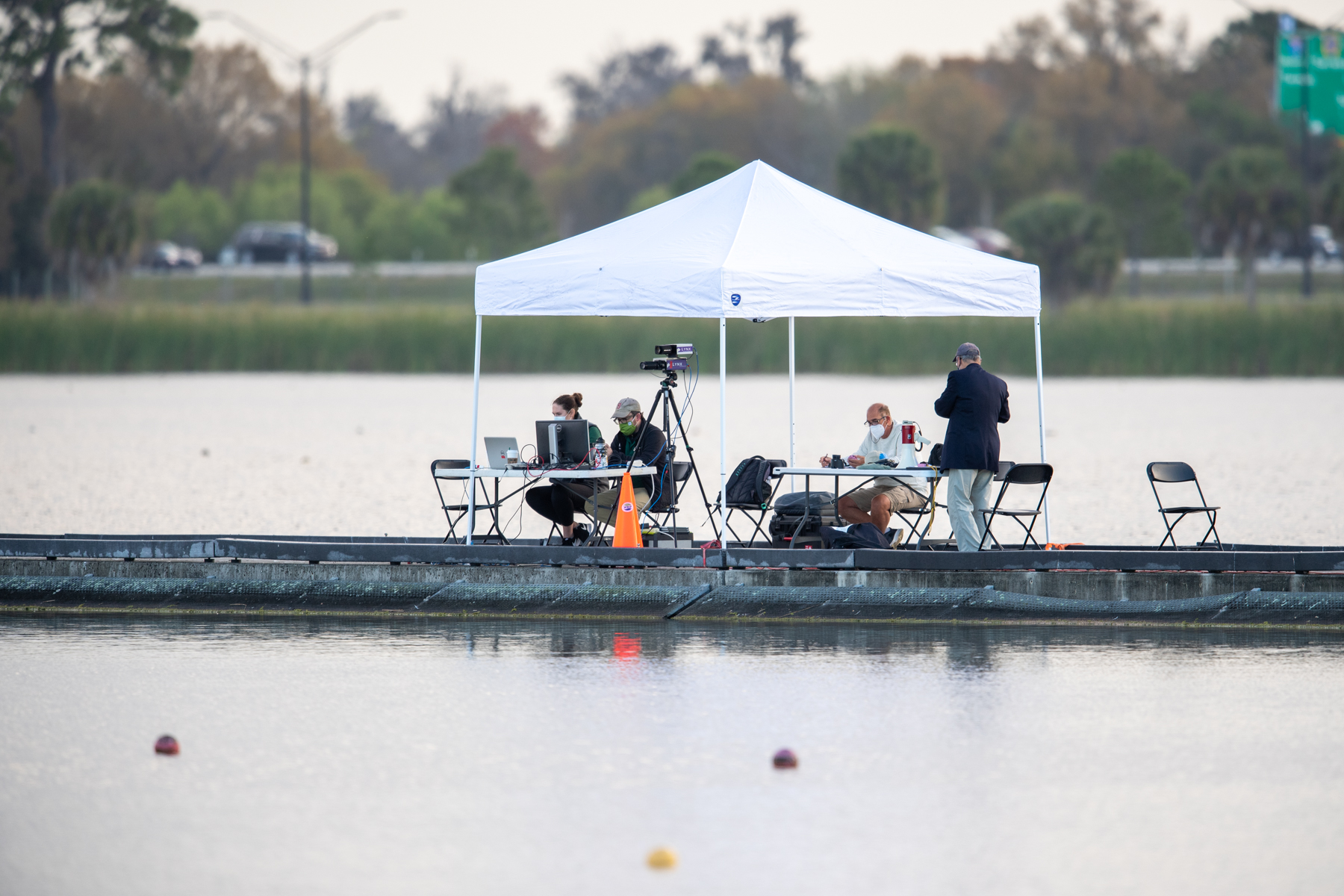
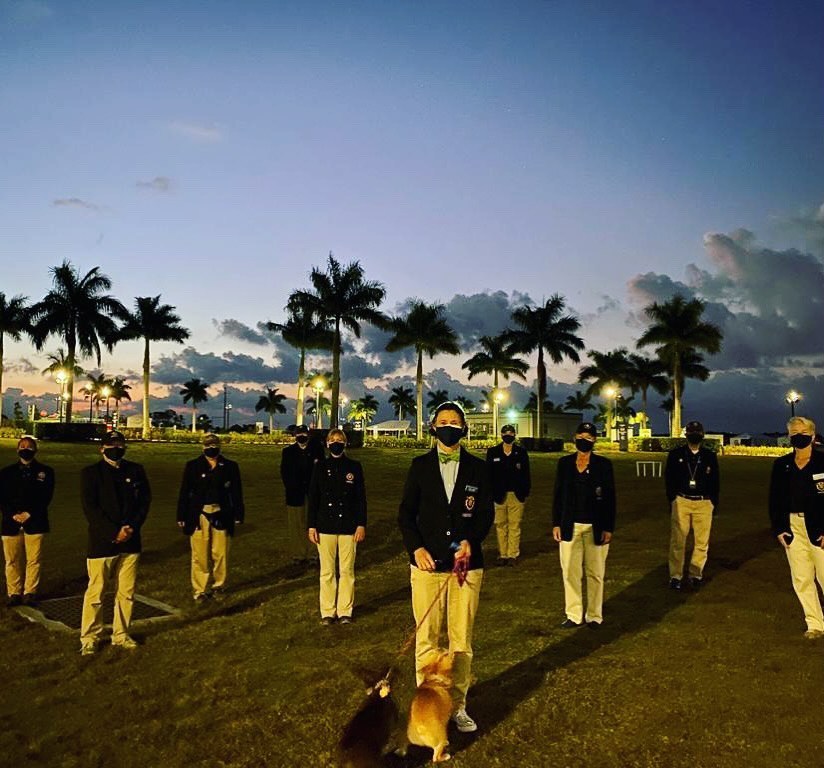
As Cicely Madden said there were “masks everywhere.” There were also daily health scans, pre-event testing, and volunteers, staff, and members of the USRowing referee corps who came down put on masks, and did the job.
There are a lot of fans and athletes of rowing hoping for a season, something to look forward to, that can take some hope from the job being done this week in Sarasota by everyone involved. Referee Rachel Le Mieux took this photo of the group Wednesday. She is not in the photo, (but she is wearing a mask we are told.)