Home Blog Page 227

Scholastic and Collegiate Rowing Regattas Return to Philadelphia

STAFF REPORT

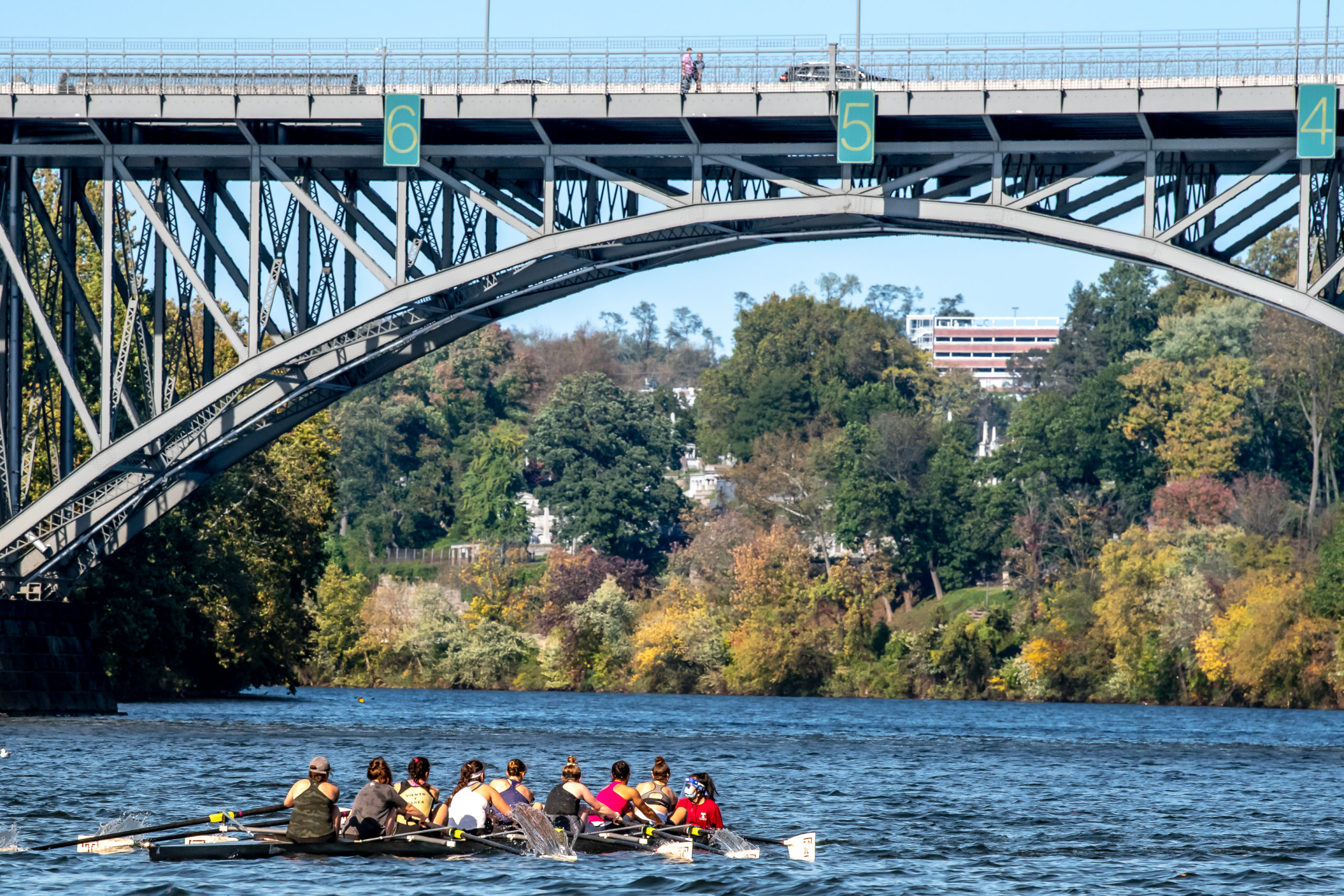
PHOTO BY ED MORAN

After more than a year of no scholastic rowing or large collegiate regattas on Philadelphia’s Schuylkill River, applications for six events have been approved by the city and are now officially on.

According to a press release sent out Wednesday, applications for permits to run three of the Manny Flick/Horvatt regatta series, the Philadelphia City Championships, the Stotesbury Cup Regatta and the Jefferson Dad Vail Regatta, have all been approved.

The permits were granted after Covid mitigation plans were submitted that prohibits spectators, alumni, and vendor tents, while requiring mask wearing and social distancing.

Read the full press release below:

Philadelphia, PA. March31, 2021–The Schuylkill Navy of Philadelphia, the governing body for Boathouse Row and amateur sport on the region’s Schuylkill River, joined the Dad Vail Regatta Organizing Committee (DVROC) and Philadelphia Scholastic Rowing Association (PSRA) in announcing that the City of Philadelphia has approved the organizations’ applications and integrated COVID-19 Mitigation Plan for spring rowing regattas on the Schuylkill River.

With the approval, event organizers can now proceed with final preparations to welcome athletes to the Schuylkill River’s National Course for the PSRA’s Philadelphia City Championships (for high school athletes on May 1-2), Jefferson Dad Vail Regatta (for collegiate athletes on May 7-8), and the Schuylkill Navy’s Stotesbury Cup Regatta presented by Toyota (for high school athletes on May 14-15). On consecutive Sundays in April, the PSRA will also host three scholastic high school regattas as part of the Flick-Horvat Series.

Bonnie Mueller, Commodore of the Schuylkill Navy, shared that the three organizations have been working closely with one another for many months to strategize plans to offer racing on the iconic Schuylkill River venue.

“Early on, we recognized that these spring events might be some of the first large, non-professional-sports gatherings in the City since March 2020. We, therefore, wanted to align our efforts and present a coordinated plan for consideration to our partners within the City’s Office of Special Events, Parks & Recreation Department, Managing Director’s Office, and –most especially–the Philadelphia Department of Public Health.”

The 2021 events will look and feel different. COVID 19 safety measures in place will include: Masks required on land at all times. No spectating tents or spectators. No food or drink vending on site.

Additional safety measures will be in place.

“Gone will be the familiar sight and experience of parents and other fans who typically throng the water’s edge,” said Philadelphia Scholastic Rowing Association President Leslie Pfeil.

Stotesbury’s Racing Director Erika McCormick agreed: “Ultimately, these events are about student-athletes and their opportunity to compete. While we acknowledge the disappointing change it will be for fans to stay away, the athletes and their coaches have been making adjustments and adapting to big changes on a regular basis for over a year, all in preparation for this moment.”

As the world’s largest high school rowing event, the Stotesbury Cup Regatta may need to limit the volume of entries pending further clarification from the City and interest from schools that typically compete in the event.

“Eliminating spectator access is, unfortunately, a necessary step to make as much socially-distanced-space for as many athletes as possible.”

Added Pfeil; “While these are outdoor events, we’re aligned as regatta organizers to work with the City to take the safe route. We believe it’s the right choice as we collectively balance the desire to return to normal (especially important for the physical, mental, and emotional health of young students) with the need to exercise caution as we navigate our way out of the pandemic.

“The approval for the spring regattas is another early step –taken with extensive planning and attention to public health–towards Philadelphia’s safe re-opening. It’s also a sign of the City’s continued commitment to the Schuylkill River as an internationally recognized center for rowing and paddling.

“For close to two centuries since the first regatta in 1835, Philadelphia has been a premiere destination for what is one of our city’s oldest and most unique sports. With needed precautions in place and working together with these event organizers, we’re delighted to welcome athletes once more to safely compete at the birthplace of American rowing,” said Deputy Managing Director David Wilson.

DVROC President Jim Hanna concurs; “The Jefferson Dad Vail Regatta is the nation’s largest collegiate regatta, and we know that university and college students around the country will be excited for the chance to compete once more in Philadelphia.

“On behalf of those students, our own Board, and all rowing fans across the nation, I extend our gratitude to Mayor Kenney and our partners in the many City departments who helped position us to now move ahead with final preparations.”

The Schuylkill Navy will share additional information during the scheduled March 31 “State of the Schuylkill” Gathering at 7 pm via Zoom.

Topics will include the spring and summer racing seasons (an additional nine rowing and paddling events are tentatively planned for June-November 2021), the ongoing Schuylkill River Dredging Project, and the continued efforts of the City of Philadelphia with its partners in the rowing and paddling communities to support increased access and inclusion on the Schuylkill River.

Pre-registration for the Zoom Webinar is required and available via the Schuylkill Navy social media channels. For additional information from the Schuylkill Navy, please contact Commodore Bonnie Mueller at bmueller81@me.com
Remembering Larry Gluckman

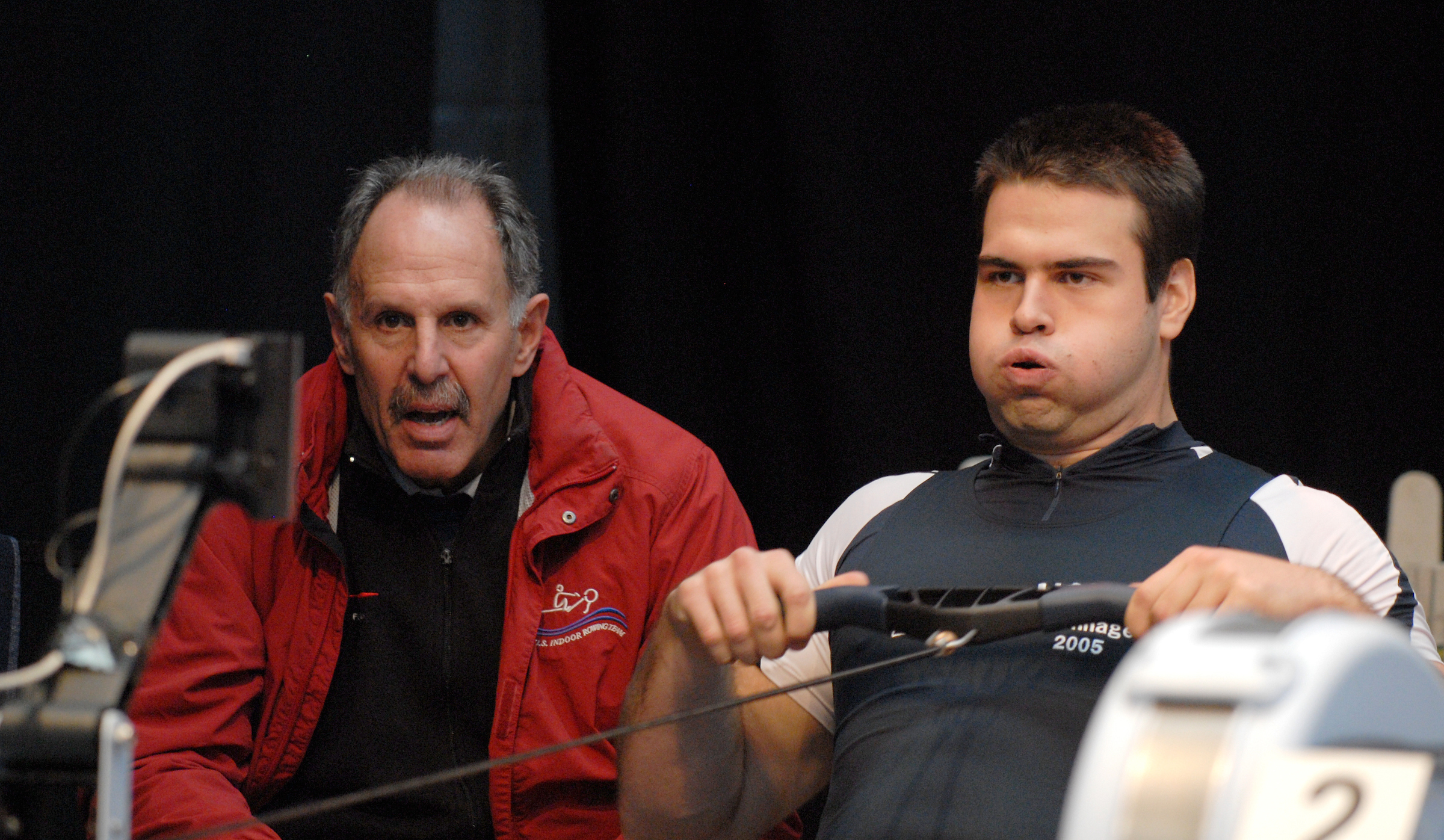
Dresden, GERMANY, USA Men's, Roman SHOR, competing at the European Indoor Rowing Championships, Margon Arena, Dresden, coach Larry GLUCKMAN, left. 15/12/2007 [Mandatory Credit Peter Spurrier/Intersport Images]

BY ED MORAN
PHOTOS BY PETER SPURRIER, COURTESY OF JOHN GRAVES

John Graves wasn’t focused on rowing when he was still a high school athlete. He intended to follow his two older brothers into Trinity College, but he wanted to play soccer — until the cold day that he first met Larry Gluckman while on a visit to the college as a 15-year-old high school student.

Gluckman invited Graves to come out on the launch for a practice. Both of his brothers, Peter and Tom, were in the varsity eight that Gluckman was taking out, and because it was 28-degrees, he suggested that the young Graves put on a survival suit for his time on the water.

“After all, it was 28 degrees,” John Graves recalled. “I declined and decided just to wear a fleece jacket. When he noticed I was shivering, Larry turned to me with a smirk and said, ‘John, I tell the boys, there is no such thing as bad weather, just poor choice of clothing.’

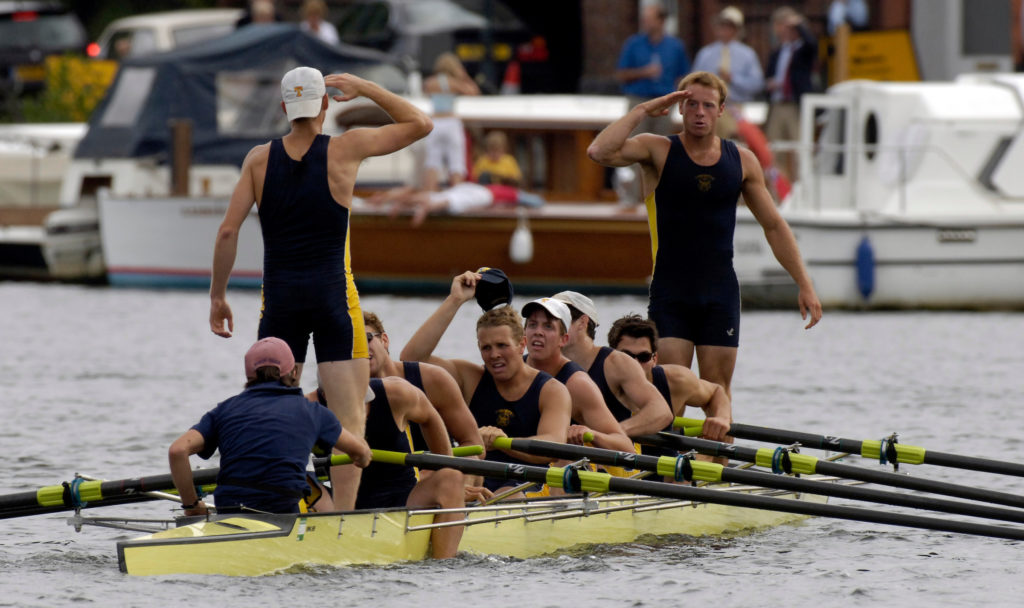
“That summer Larry and my two older brothers won the 2005 Temple Challenge Cup at the Henley Royal Regatta. At the time, I was an aspiring soccer player, but this achievement made a lasting impact on me — one that still very much affects me today. It was a masterclass from Larry on programmatic alchemy — a lesson on how to make the whole greater than the sum of the parts.”
“That summer Larry and my two older brothers won the 2005 Temple Challenge Cup at the Henley Royal Regatta. At the time, I was an aspiring soccer player, but this achievement made a lasting impact on me — one that still very much affects me today. It was a masterclass from Larry on programmatic alchemy — a lesson on how to make the whole greater than the sum of the parts.”

-John Graves

Yesterday afternoon, Graves found it difficult to tell that story.

Gluckman fell ill, and Tuesday morning the 74-year-old who dedicated his entire adult life to coaching, from when he was an undergraduate student-athlete at Northeastern University to Graves’ last campaign, died surrounded by family.

The details of what happened remain unclear, but according to what close friends have said is that Gluckman had undetected leukemia that was discovered after he suffered a stroke and was taken to a hospital in Burlington, Vermont.

“Larry made the trip down to Sarasota, to watch me race at 2021 Olympic Trials. My journey in the sport was coming to an end and he wasn’t going to miss it for the world. Larry is True North for me,” Graves said.

After helping Graves win the singles event at U.S. Olympic Trials I last month in Sarasota, Fla.

“It’s impossible for me to articulate the scale of his impact on me. He was an unwavering source of wisdom, energy, and support for me on every step of my journey in the sport. It was a dream to cross the line at trials and salute him, one step down, one step to go. 

“We were planning our trip to Lucerne when Larry began to get sick. We had spoken about plans as recently as Friday. Prior to his passing, his daughter, Kate, told me that Larry wanted to make sure I was taken care of, that I kept focused on the goal, and that he loved me. I still can’t stop crying thinking about it. It’s the most Larry thing possible. Totally selfless and coaching until his final breaths.”

To those who knew Larry Gluckman, Graves’ story is not unusual, but an example of who the legendary coach was at his core. He loved coaching, and he was drawn to others who committed themselves to the sport.

“Larry brought a lot of good will, a lot of joy, a lot of fun to the process,” said Yale men’s head coach Steve Gladstone who has known Gluckman since he coached him in the U.S. men’s eight in 1973.

“Everywhere he coached, the years he was at Princeton, the years he was at Trinity, there was always a sense of good spirit in what they were doing. It was never glum, it was never heavy. He brought to his teams that he coached the joy of racing, competition, camaraderie. He was a very, very warm human being.”

Born and raised in Hampton Bays, New York, where he was a standout high school athlete, Gluckman’s long career in rowing began at Northeastern University where he was a walk-on athlete to the crew team.

By the time he was a sophomore, Gluckman was voted most improved, and by the end of his junior season, he was voted the Most Valuable Oarsman. His senior year, Gluckman captained the crew that lost only once (to Harvard) in the 1968 regular season and finished fourth in both the Eastern Sprints and IRA Championship.

Gluckman also rowed on the US national team at the Pan Am Games, World Championships, and Olympics between 1967 and 1976.

Gluckman’s collegiate coaching career began at Columbia University. After Columbia, Gluckman returned to Northeastern as an assistant coach. In 1980, he was named head coach at Princeton University and helped establish his teams as one of the elites in the collegiate ranks. In addition to his years at Columbia, Northeastern, and Princeton, Gluckman spent 2015-2019 coaching at the Florida Rowing Center.

He was inducted into the Northeastern Varsity Club Hall of Fame and was a Power 10 honoree in 2011.

Everywhere Gluckman worked, he left a legacy as one a caring and dedicated man and coach, friends and fellow coaches recalled.

“Larry and I came to Princeton in the fall of 1979, he was the frosh heavy coach and I was the frosh light coach,” said Curtis Jordan. “He has been a lifelong friend and mentor of mine ever since. When I think of Larry, I think of his generosity. He was beyond generous with his knowledge, time, and energy. Every athlete and every fellow coach knew they were getting 100 percent of Larry, all the time. He loved rowing and the people in the sport. The sport and all of us in it will miss him.”

Following Princeton, Gluckman led Dartmouth College before beginning work with Concept2 as a marketing representative, while also coaching at the Craftsbury Sculling Center.

In addition to his time as a collegiate coach, Gluckman coached on the world stage as an assistant coach for the 1979 Pan American Team, as the 1980 Olympic Coach for the women’s double scull and coxless pair, at the 1981 World Championship and 1984 Olympics, where he coached the women’s coxed four.

Gluckman returned to collegiate coaching in 2002 at Trinity College where he stayed until he retired in 2009.

IRA commissioner Gary Caldwell, a friend for over 49 years, remembered Gluckman’s time at Trinity as some of the happiest years of his coaching career.

“We had a number of lengthy talks before he took that job,” Caldwell said. “And I don’t think I ever saw him happier as a coach at the college level then I did during his time there because he got to do what he loved best about the job, which was coaching. And he had tremendous success at Trinity, not just with the Henley crews but in general, he lit the place up the entire time.”

Caldwell said he first met Gluckman when he was a young coach and was invited to a pre-Olympic training camp as a coxswain coach.

“I was in my first or second year of coaching at Trinity, and he was coaching when I first met him and I was invited to pre-Olympic training camp up at Dartmouth as a coxswain coach and I spent a lot of time in the launch with him. I found him then to be one of the best coaches at sharing.

“He always felt that nothing was worth keeping secret. He was willing to share anything and everything he knew about the sport of rowing with anybody who wanted to sit down with him and talk about it. Keeping secrets didn’t make your boats fast, which as a young coach I found really, really fascinating.

“And he was always willing to mentor somebody and give them advice, and I think the part of his legacy is that the people who rowed for him admired him and wanted to do their best, not only for themselves but for him too.”

After Trinity, Gluckman and his wife Sara moved to Glover, Vermont, where he started the Small Boat Training Center at Craftsbury, which developed into the Green Racing Project. During his years leading the elite rowing programs at Craftsbury, he coached several crews onto the U23 and senior national teams, including the 2016 men’s quad that won trials and went to Lucerne for the final Olympic qualifier. John and Peter Graves rowed in that boat.

Steve Whelpley, who now coaches the Craftsbury elite sculling group, remembers Gluckman “as a believer.” He still followed numbers with a practical diligence, but he believed in the potential of people. The number of athletes in the world that drove themselves to higher forms of themselves as a result of Larry Gluckman is innumerable.

“On a physical level, Larry gave me the gift of a mustang suit without which I would have surely frozen at the helm in Craftsbury. On an intangible level, his example gave me the promise of a balanced life with heaps of success only overshadowed by the mounds of inspiration he provided to the world around him.”

A celebration of Larry’s life will be held in the summer. In lieu of flowers, a scholarship fund has been set up in Larry’s name at the Craftsbury Outdoor Center to support bringing new people to rowing or donations may be sent to D.U.M.P and their environmental justice efforts. Notes to the family can be sent via the Curtis-Britch funeral home’s obituary page.

Masters Nationals On for August Racing

STAFF REPORTS
PHOTO BY LUKE REYNOLDS

The 2021 USRowing Masters National Championship will take place August 12-15 in Oak Ridge, Tennessee according to an announcement from USRowing published March 31.

The event was last held in Oak Ridge in 2017.

“We’re looking forward to offering the opportunity for our masters rowers to get back on the water at the USRowing Masters National Championships later this summer,” said USRowing Director of Events James Rawson.

“Oak Ridge is a beloved racing venue, and we’re thrilled to be working with them for another national championship regatta. As always, our number one priority will be to run a safe regatta. We will be putting COVID protocols in place and will announce these measures closer to the event.” 

Q&A With USRowing Chairman of the Board of Directors Nobuhisa Ishizuka

BY LUKE REYNOLDS
PHOTOS BY SPORTGRAPHICS

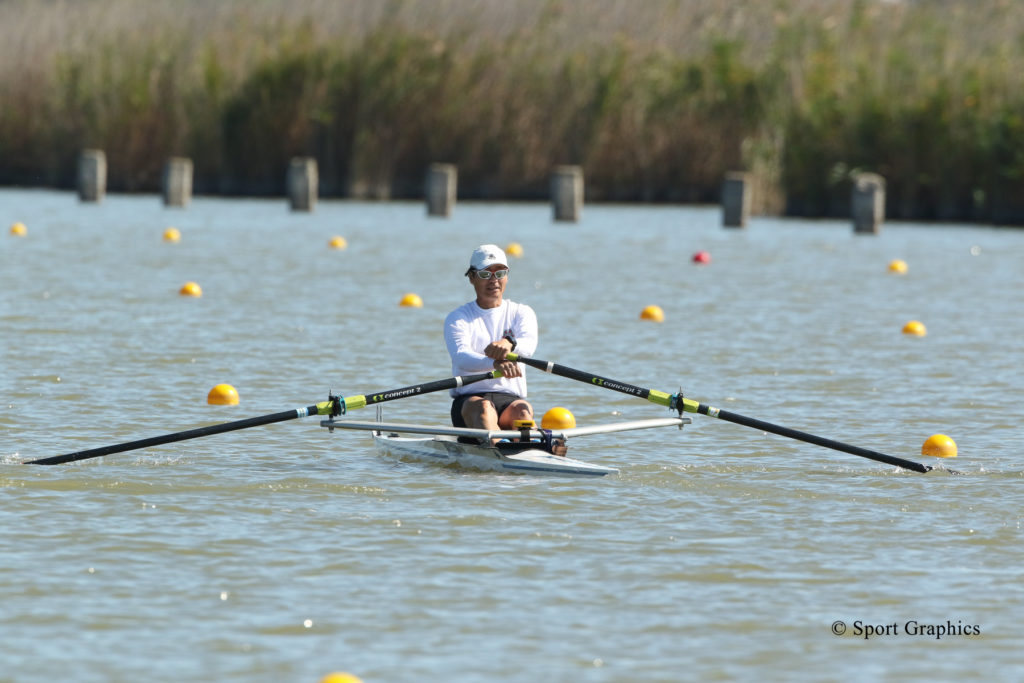
Nobuhisa Ishizuka, newly-elected Chairman of the USRowing Board of Directors, attorney, and lifelong rower took some time this week to answer a few questions about his experience as an athlete and how he hopes to impact the board in the coming year.

RN: Can you tell me a little bit about your background? Both rowing specific and general background. 

Ishizuka: I have been involved in rowing since 1978, starting with the lightweight program at Columbia and continuing with masters rowing at the New York Athletic Club in the early 1990s. I moved to Asia in 1999 and remained a competitive masters rower, promoting international exchange in the sport as a member of rowing clubs in Hong Kong and Tokyo, helping to organize club participation in regattas from Australia to the U.S. and Europe, and hosting numerous overseas rowers in Tokyo.  I have been on the USRowing Board since returning to the U.S. in 2018, and formerly chaired the Ethics and Governance Committee. 

In my professional life, I was a partner at Skadden, Arps for 18 years, where I advised boards, CEOs, and senior management of multinational corporations on major transactions and disputes. After retiring from active law practice at the end of 2017 after 31 years, I accepted an appointment as an officer and lecturer at Columbia Law School, where I direct a research center and teach international comparative law and legal history.  In addition to my professional experience, I have been actively involved with non-profit organizations such as the Boards of Visitors of Columbia College and Columbia Law School and on the advisory boards of various organizations, serving on a number of committees focused on governance reforms, strategic planning, and fiscal development. 

RN: How long have you been involved with USRowing?

Ishizuka: I have been a member of USRowing for over 25 years and am a lifetime member. 

RN: How has your undergraduate rowing experience affected your career as an attorney?

Ishizuka: I am not sure that my undergraduate rowing experience translated directly to my career as an attorney.  Of course, the values of discipline, hard work, and teamwork are relevant and are cited a lot by others as positive influences.  For me, the rowing experience put things into a certain perspective that was helpful in a more indirect way.  Such as being honest with myself about certain things, like my limits, being smart about good health, the importance of taking care of oneself, and knowing when to back off.  

“For me, the rowing experience put things into a certain perspective that was helpful in a more indirect way.  Such as being honest with myself about certain things, like my limits, being smart about good health, the importance of taking care of oneself, and knowing when to back off.”

– Nobuhisa Ishizuka

RN: With the lightweight rowing community experiencing a tremendous amount of change (both positive and negative) in the past few years, do you have any hopes or expectations for the future of the class of rowing?

Ishizuka: I think there is a place for lightweight rowing within the sport.  I’m aware of the arguments about safety, which are credible particularly at the junior level, and performance––particularly at the elite level––about which reasonable people can disagree.  From a broader perspective, there are large parts of the world where lightweight rowing provides opportunities to compete that otherwise wouldn’t exist at all levels of the sport, which I believe is a positive thing.  So I do hope it can be retained.  

RN: What are your goals both immediate and long-term for the board?

Ishizuka: USRowing faced a number of very significant challenges over the past year and the board was able to address them in a thorough and thoughtful manner.  Notwithstanding the progress we’ve made, there are three interrelated areas, in particular, I believe the Board should focus on to manage change more effectively and build a strong foundation for the future. 

First, I’d like the Board to adopt a more strategic mindset toward the organization’s long-term goals.  To do so, it has to inspire confidence that it, in collaboration with the CEO, has a clear vision for the direction of the organization and the discipline to adhere to it. It also needs to develop a style of organizational leadership that resists a tendency to react to individual events in a patchwork manner. 

Second, I’d like the Board to clearly project its expectations for achieving the vision in a consistent, proactive and outwardly visible manner to the organization’s constituents. Nothing improves the credibility of an organization more than its leadership displaying consistency of action, a proactive commitment to improvement, and delivery on promises. Over time, shortfalls in these areas have the cumulative effect of undermining the credibility of the Board.

Finally, I’d like to guide and manage the Board toward a clearer view of its role and responsibilities. The board’s duty is to serve the interests of the organization and all of its constituencies as a whole. 

RN: What made you want to lead the board of directors?

Ishizuka: I felt my experience with professionally managed boards, management, and staff offered perspectives that could be valuable. I believe USRowing can fulfill its vision as an organization that cultivates excellence while strengthening its role as the steward of a uniquely passionate community. The most valuable contribution I believed I could make was to support positive and forward-looking organizational change that places USRowing at the forefront of NGBs within the Olympic movement in the United States.  

RN: Can you give us an overview of the status of USRowing as it begins the final push for the Olympics with a new CEO while still dealing with the effects of the pandemic?

Ishizuka: A CEO transition is always challenging but brings a number of rewards.  There is a significant bump of optimism, energy, and fresh thinking that invigorates an organization.  Amanda Kraus brings all of this and more to the table, together with a deep reservoir of goodwill and a strong work ethic.  This positions us really well to focus our efforts on new initiatives from the grassroots to the elite level as we start emerging from the pandemic.  As for the Olympics, the athletes are maintaining their incredible focus on bringing out their best performance every single day, which inspires and humbles us all.  And the management team is working incredibly hard to support them in every way they can.

RN: Do you have a favorite rowing memory you’d like to share? 

Ishizuka: Every day on the water, with the sun rising and the wind on my face, is a favorite memory. 

Henley Royal Regatta Announces Hopeful Staging Date

Henley on Thames, England, United Kingdom, Sunday, 07.07.19, Oxford Brookes University A (foreground) and Hollandia Roeiclub, Netherlands, NED, (background), passing Stewards' Enclosure in the Final, of The Ladies' Challenge Plate,, Henley Royal Regatta, Henley Reach, [©Karon PHILLIPS/Intersport Images] 13:16:58 1919 - 2019, Royal Henley Peace Regatta Centenary,

STAFF REPORTS
PHOTO BY PETER SPURRIER

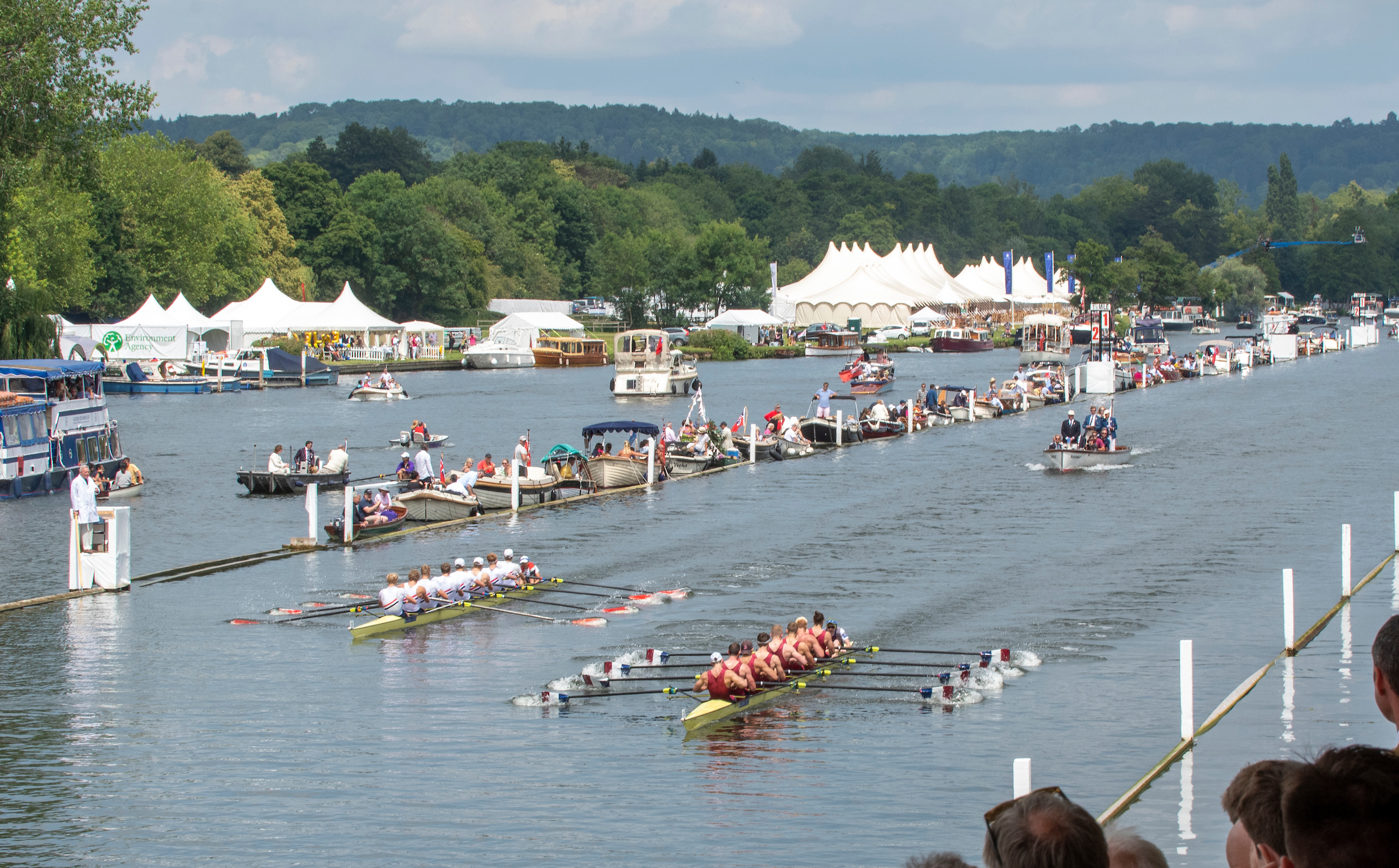
Another promising sign of racing to come emerged today when the Committee of Management made public their intentions to put on a Royal Henley Regatta this summer.

The event is tentatively scheduled for the week of August 9.

“Our ambition remains to stage the best Regatta possible this summer in the context of the ongoing pandemic, with the health and safety of all those involved in the event, as well as wider public health remaining our highest priorities,” announced the committee. “Based on our consultation, we are now cautiously but actively working towards staging of the 2021 Regatta at Henley-on-Thames during the week commencing 9 August as the primary planning scenario.”

The event is normally held the first week of July.

Despite the good news of an event taking place, regatta organizers acquiesced with the idea that event attendance would most likely be limited.

“We will include all 26 events in the programme, including those planned to be newly introduced in 2020 and in 2021.  However, the Regatta will most likely be staged with limited site infrastructure and reduced spectator attendance.  In line with Government and public health guidance, the introduction of infection control measures will form part of our planning.”

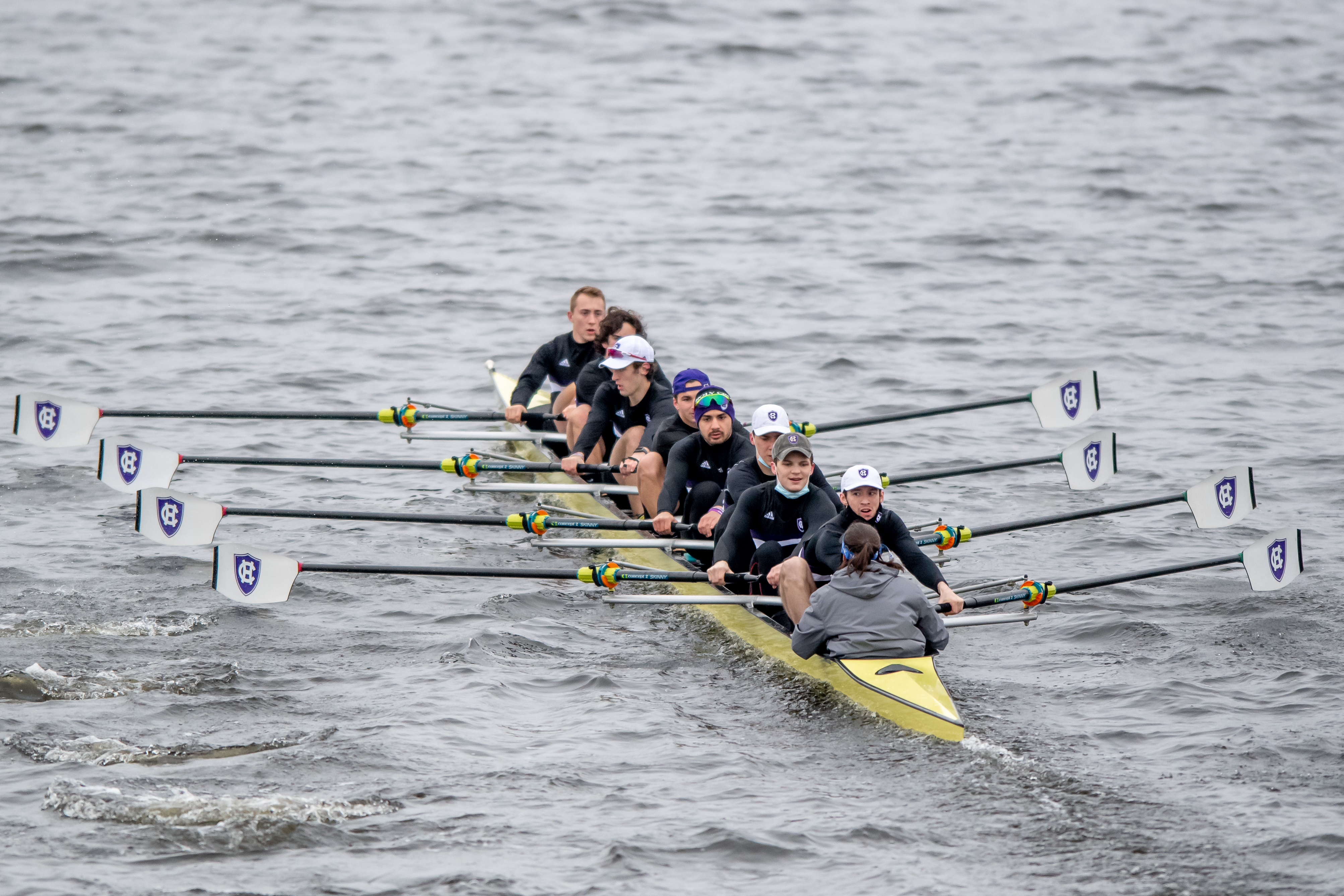
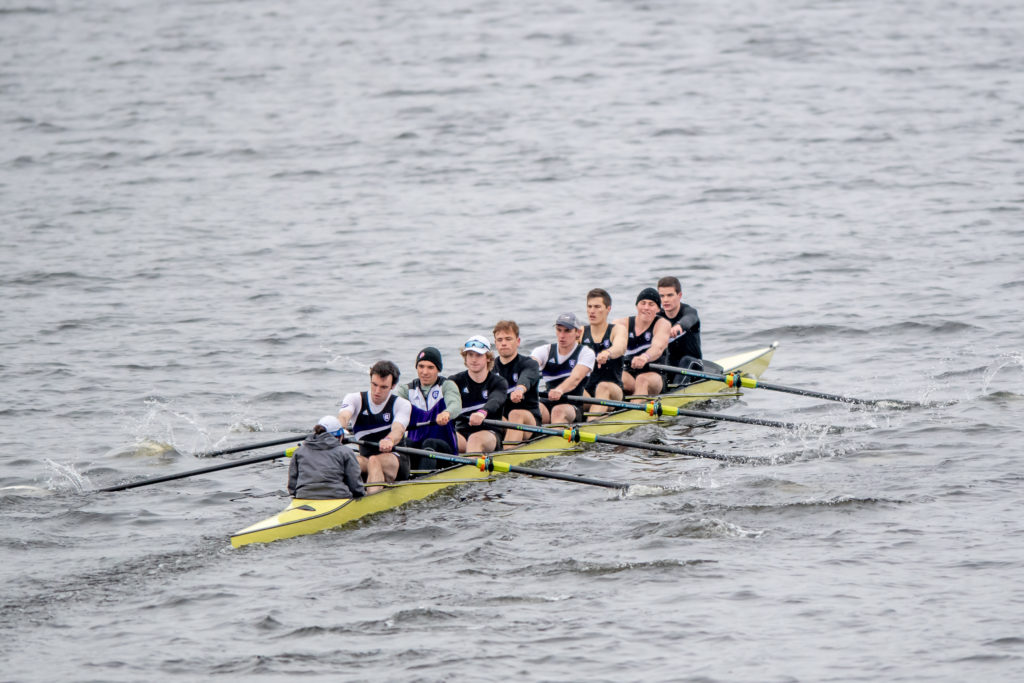
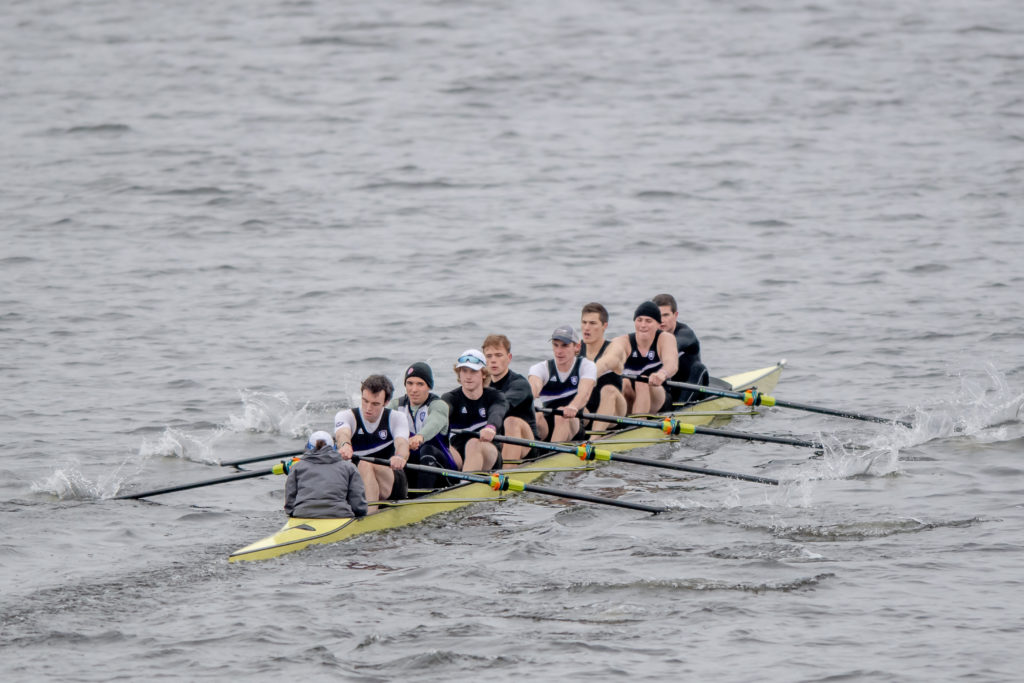
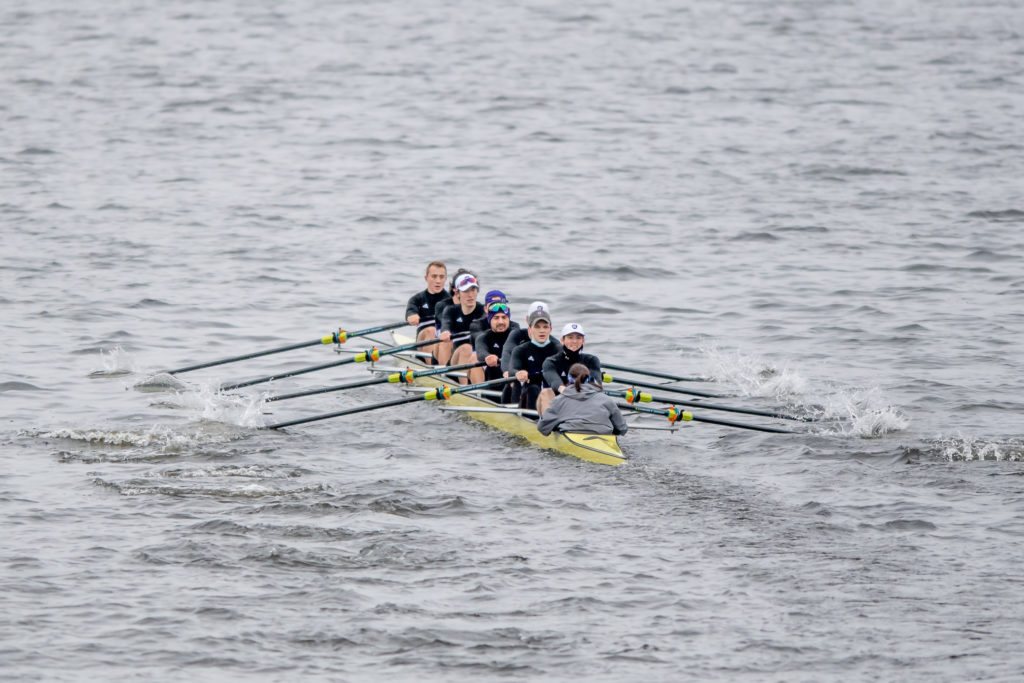
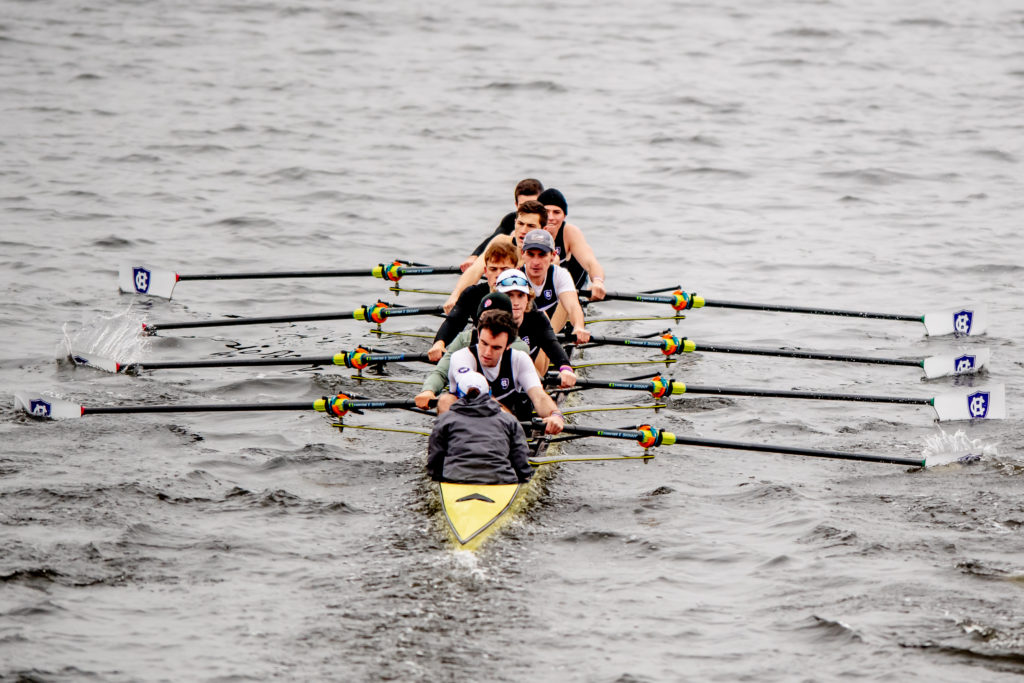
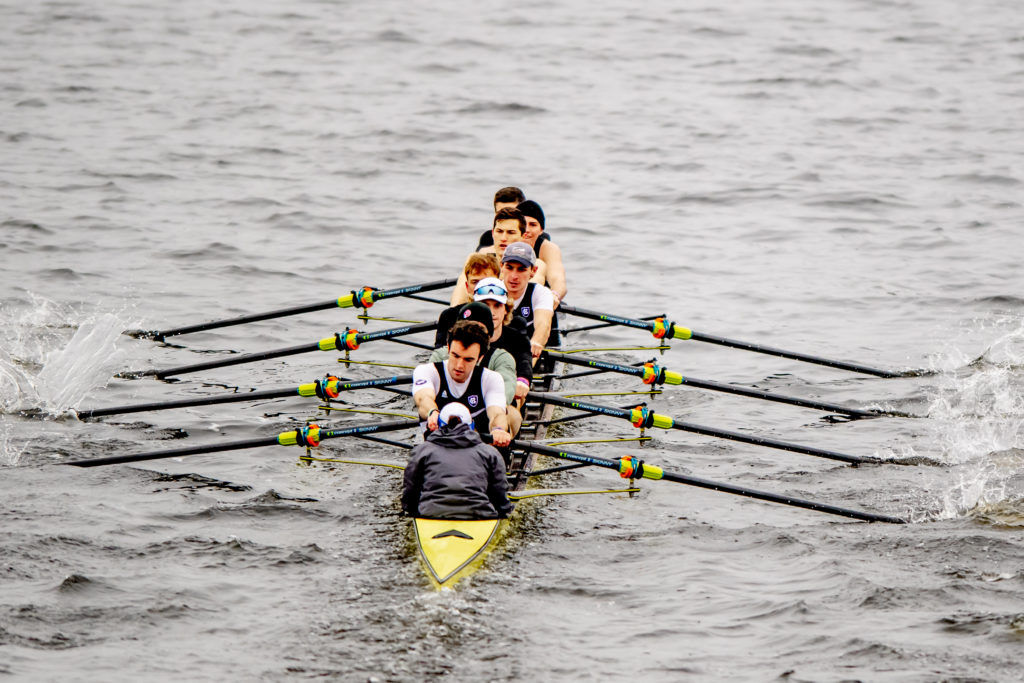
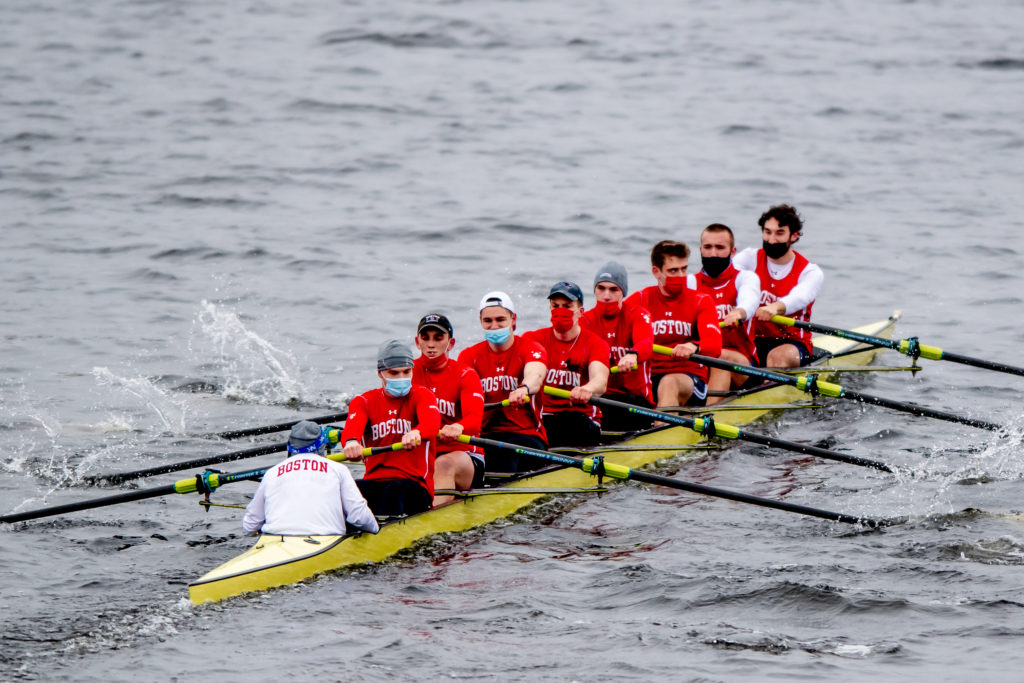
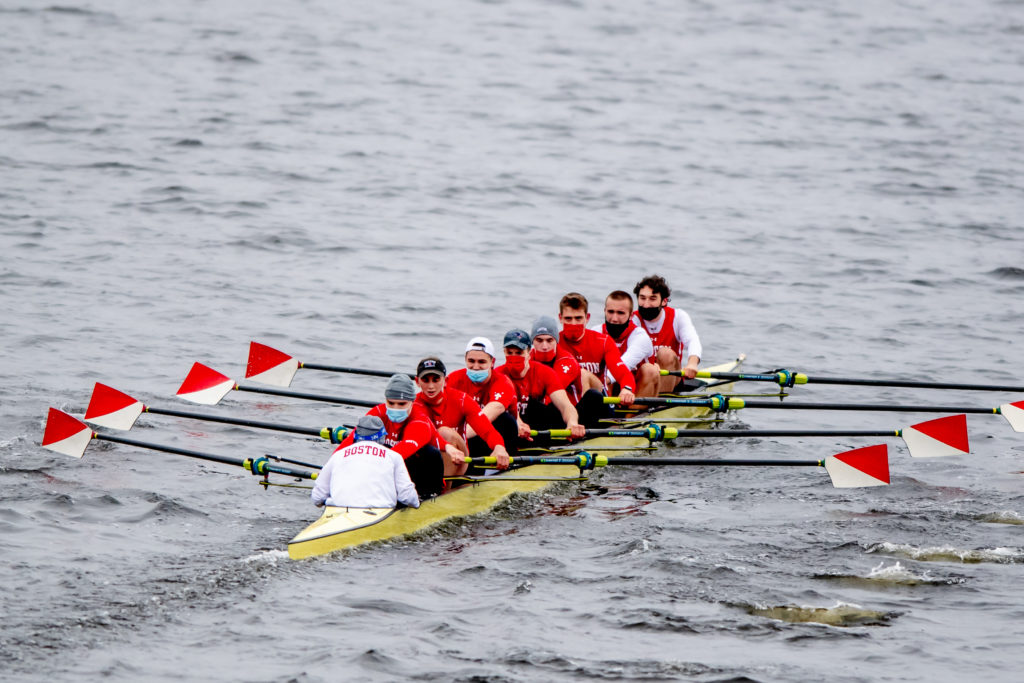
Sunday Morning Rowing Scrimmage on the Charles

PHOTOS BY ED MORAN

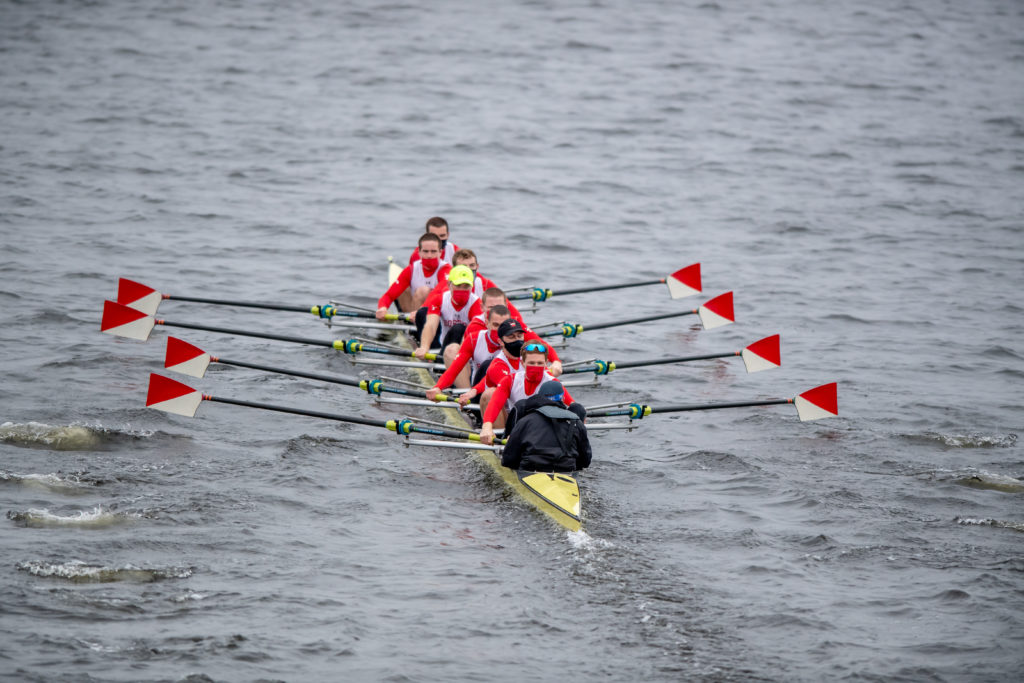
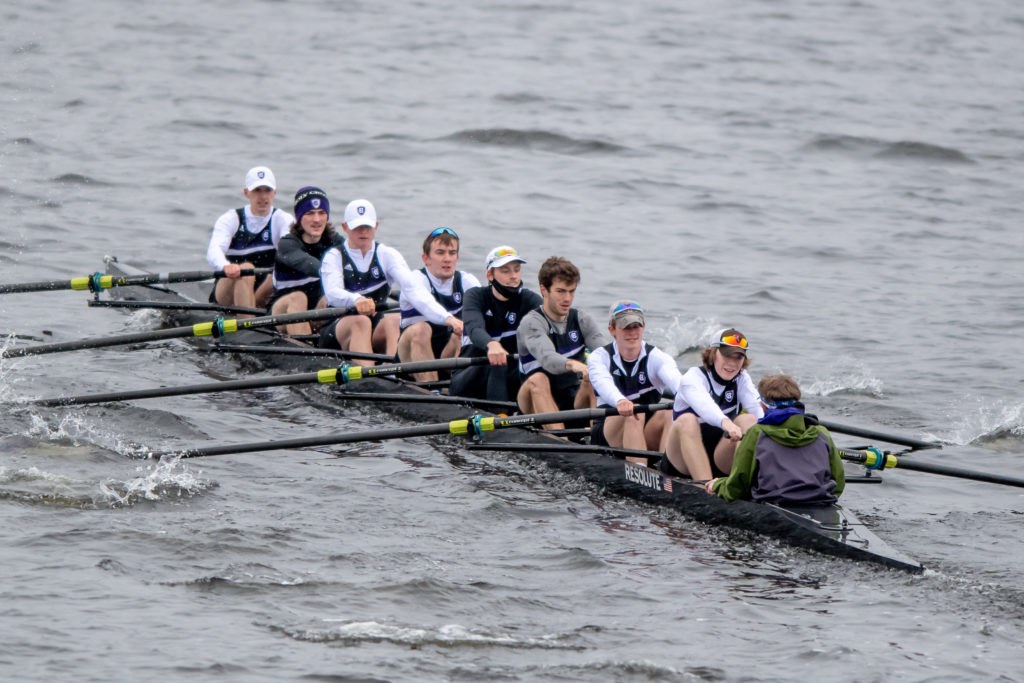
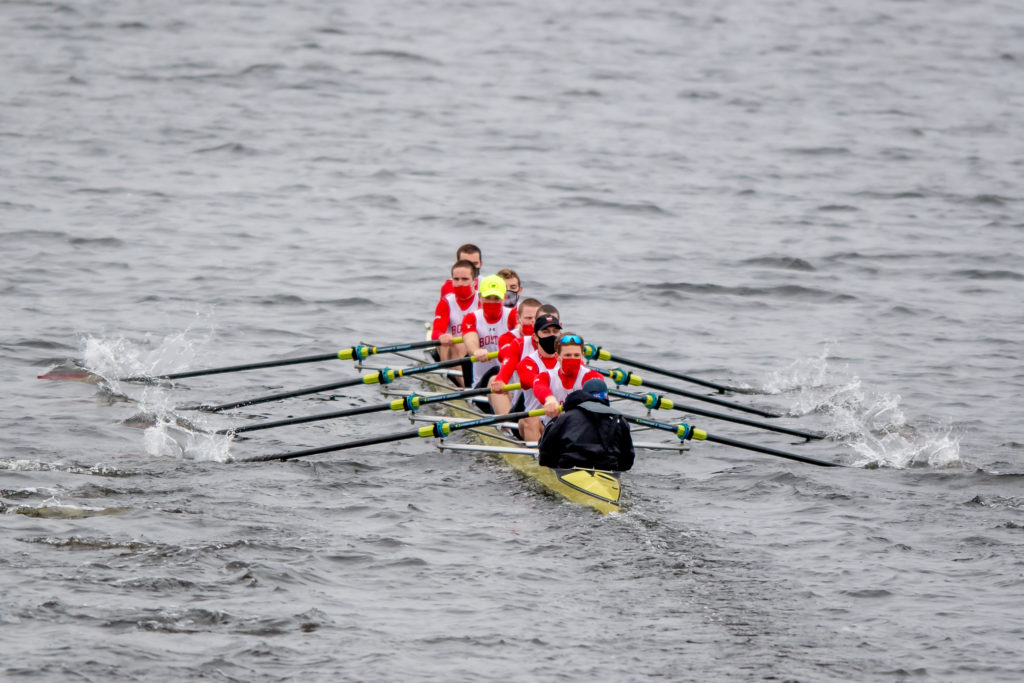
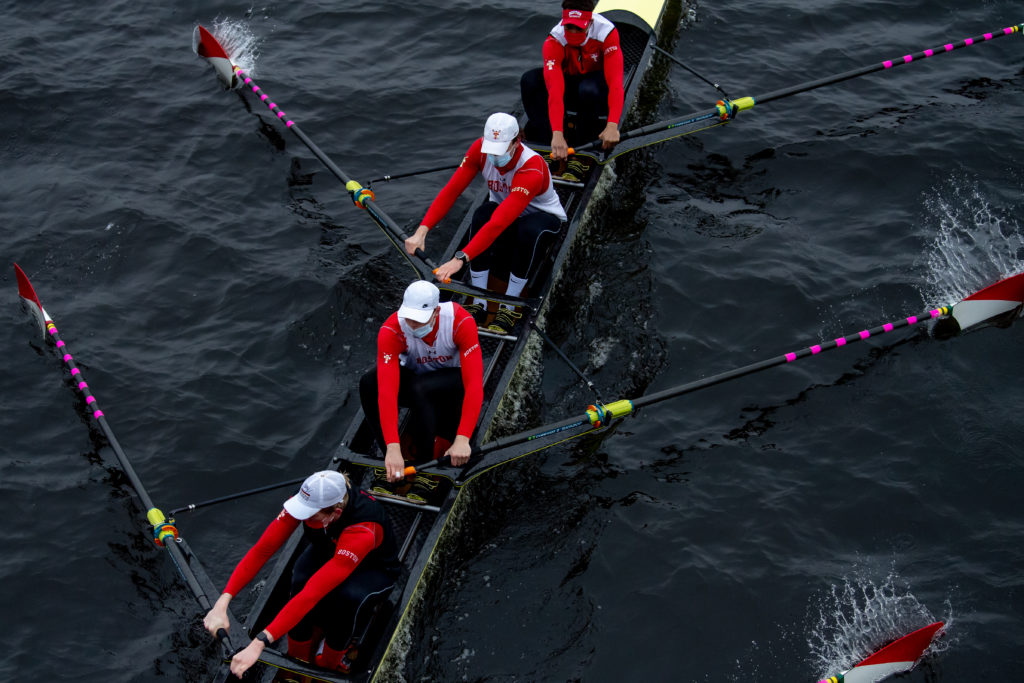
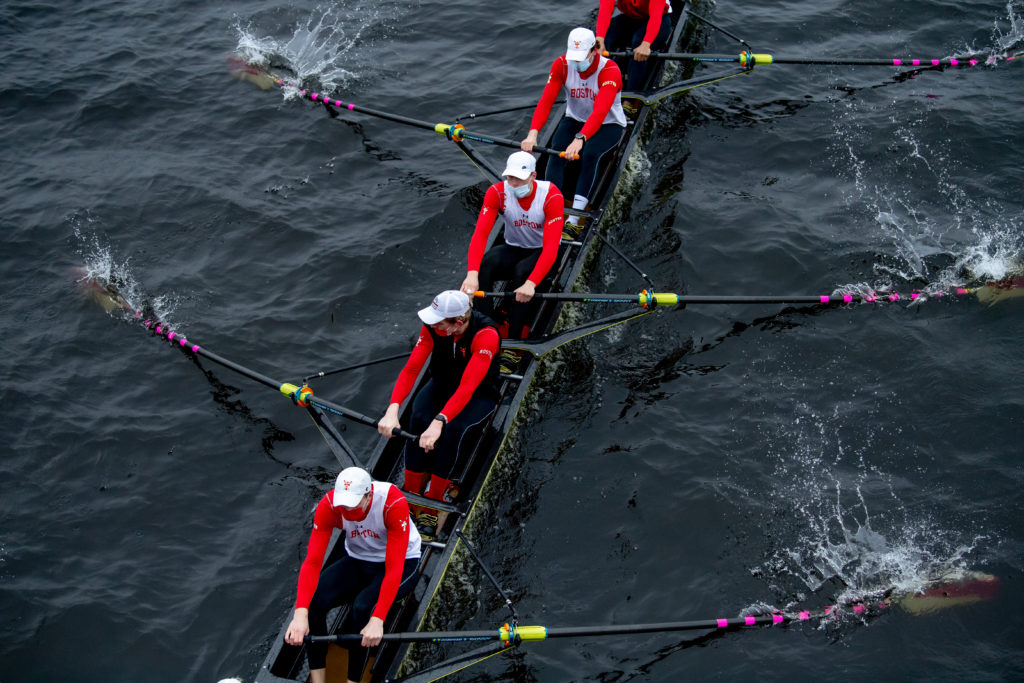
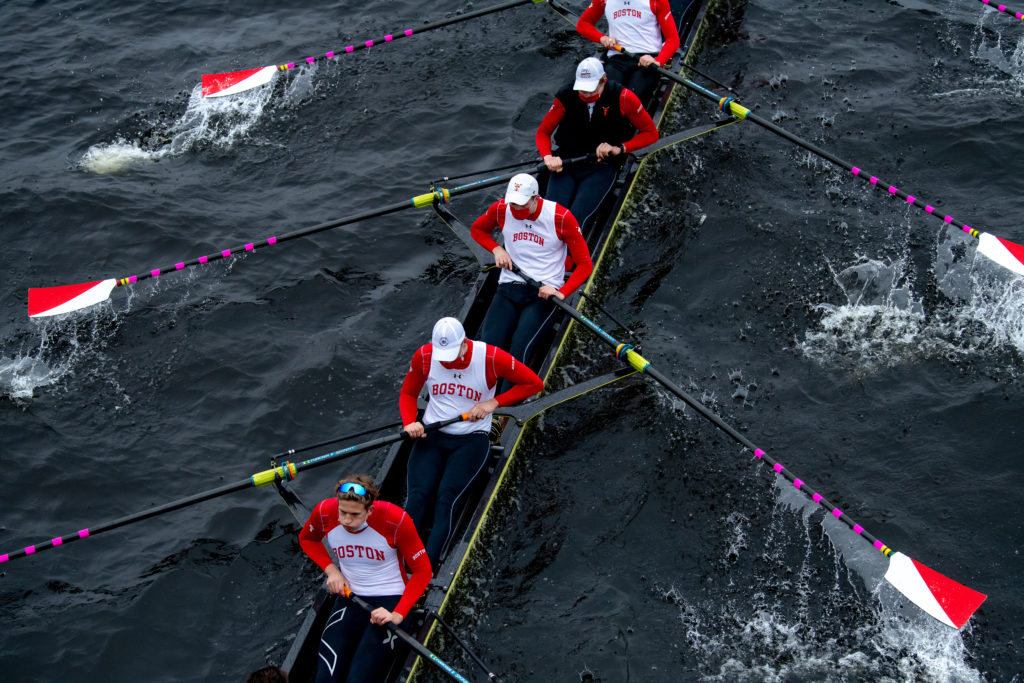
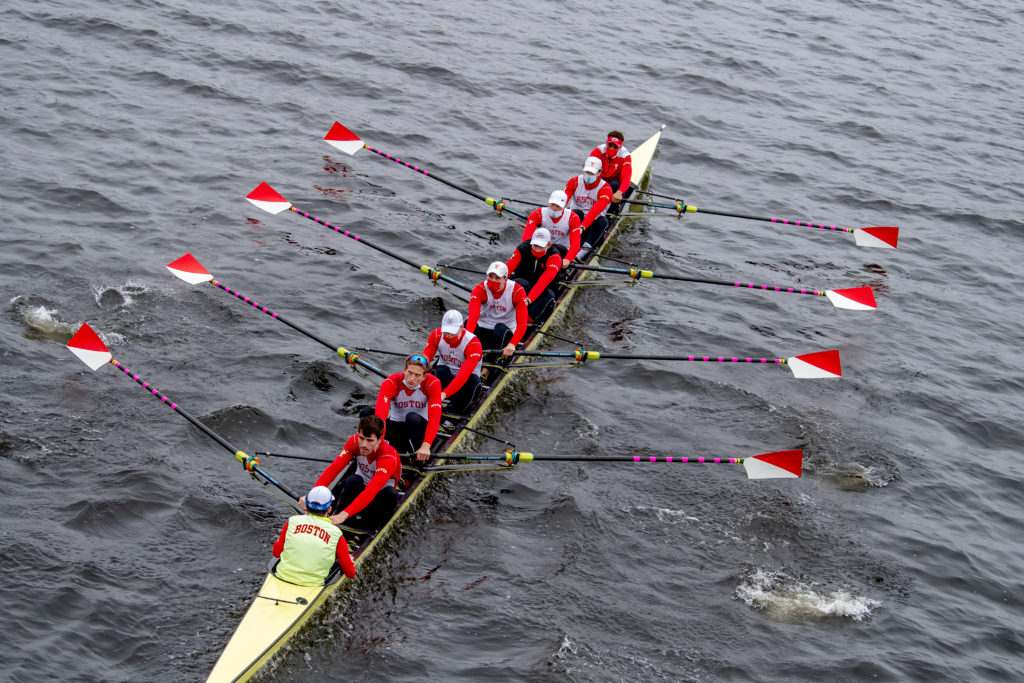
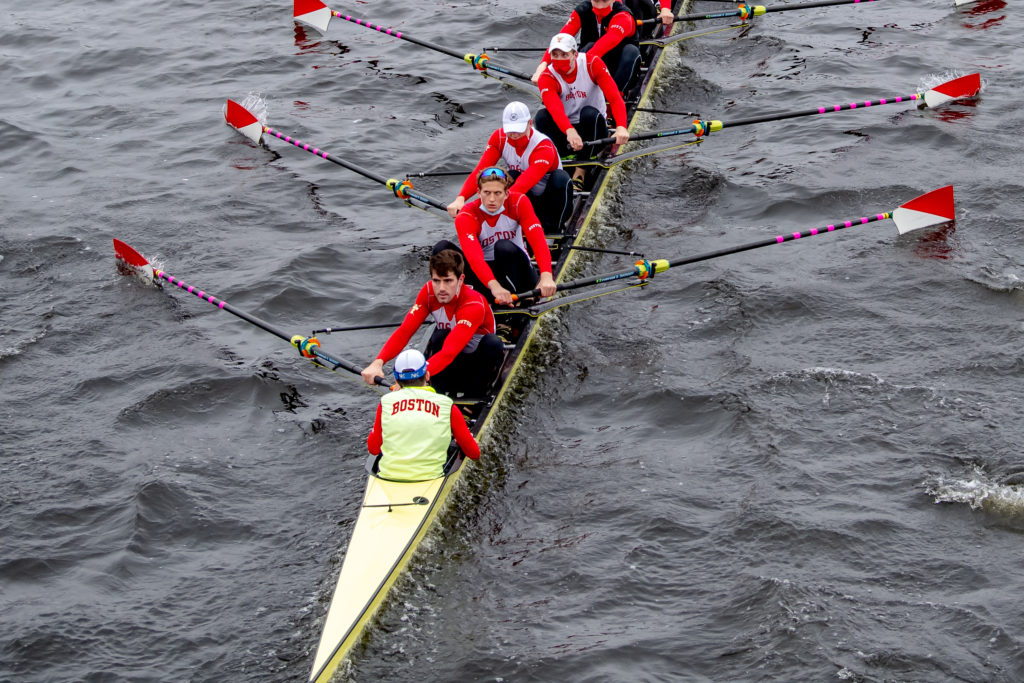
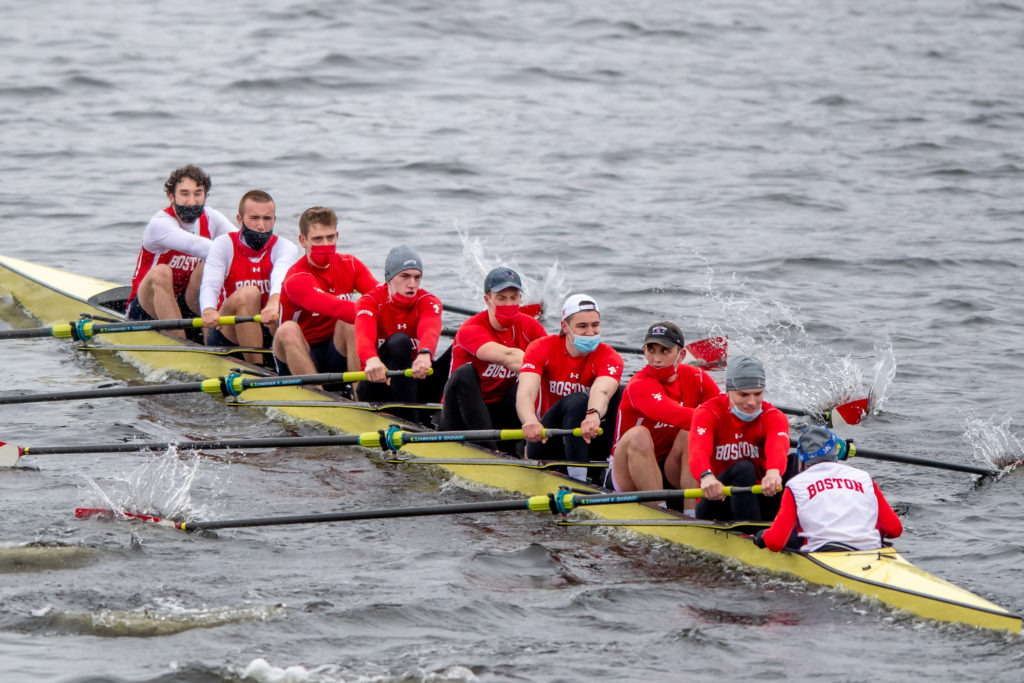
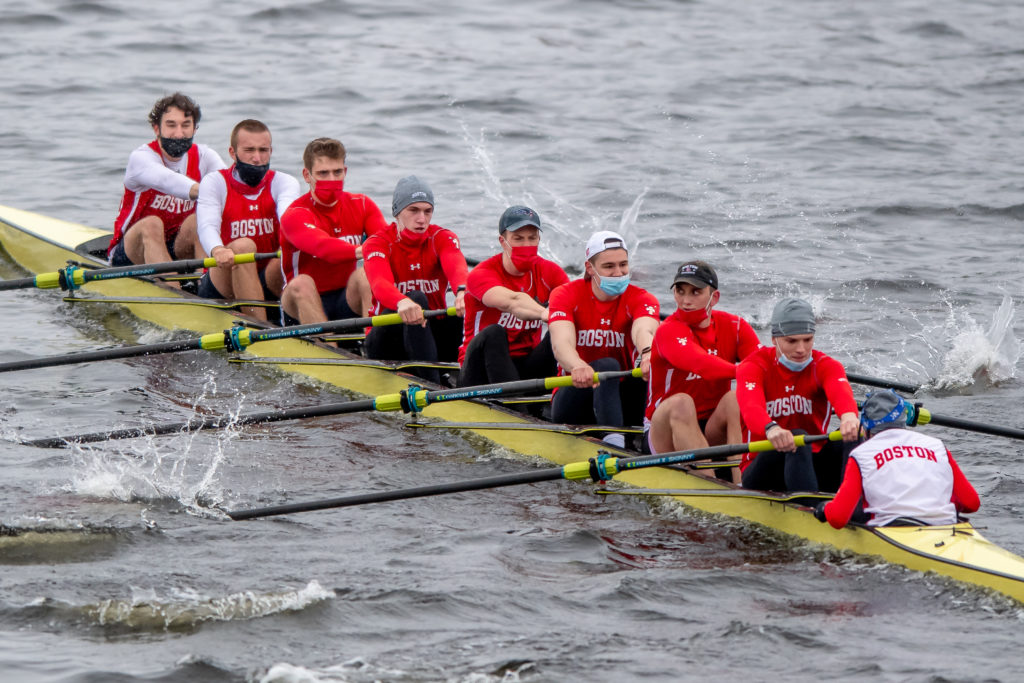
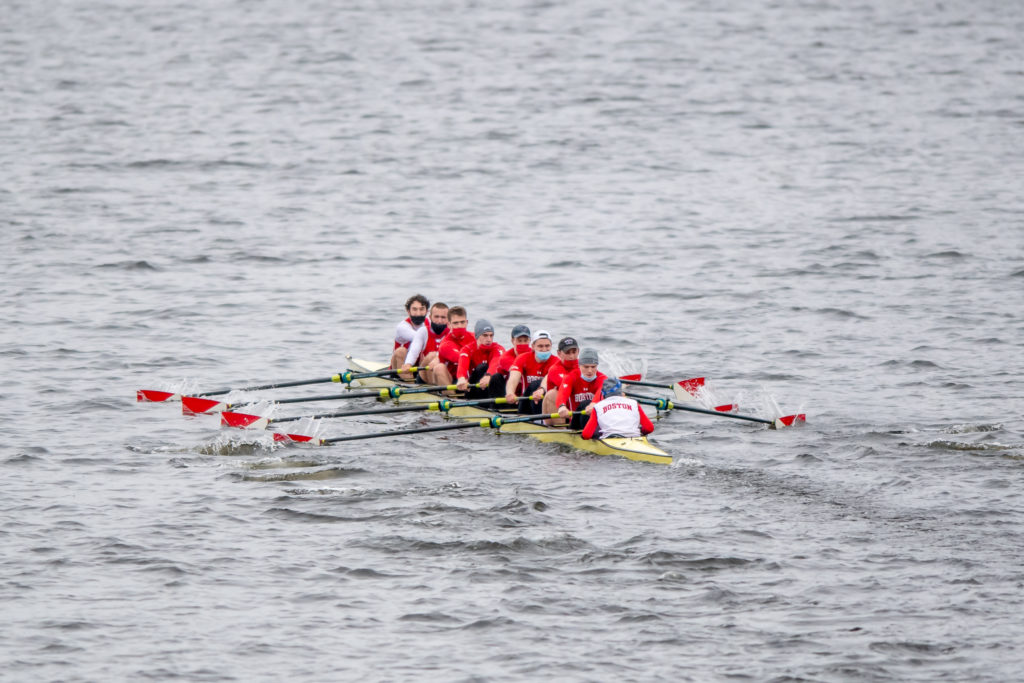
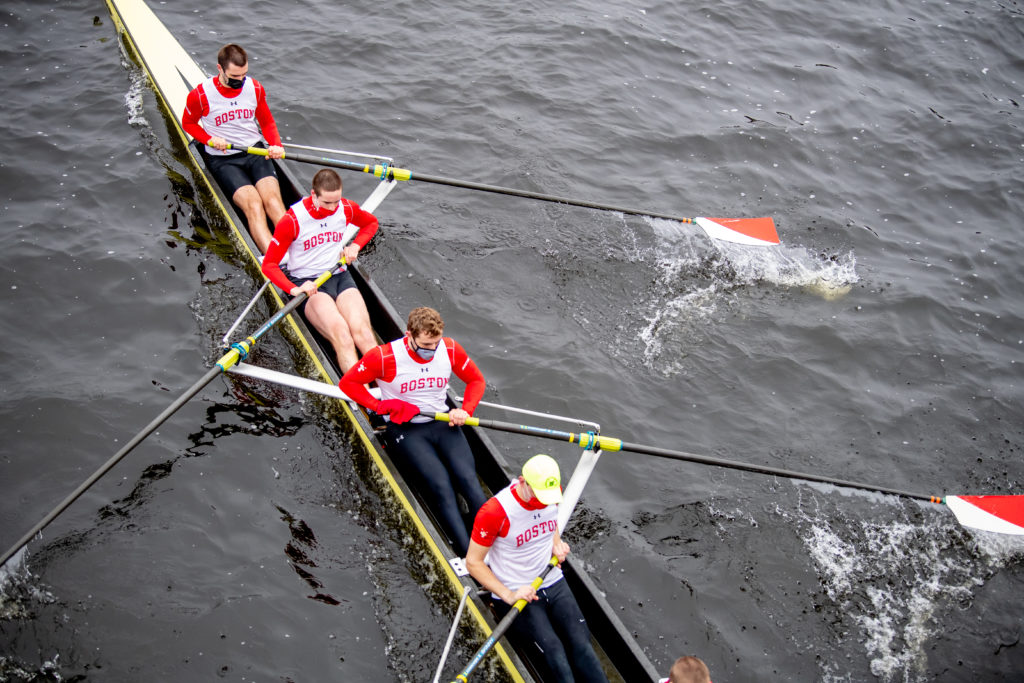
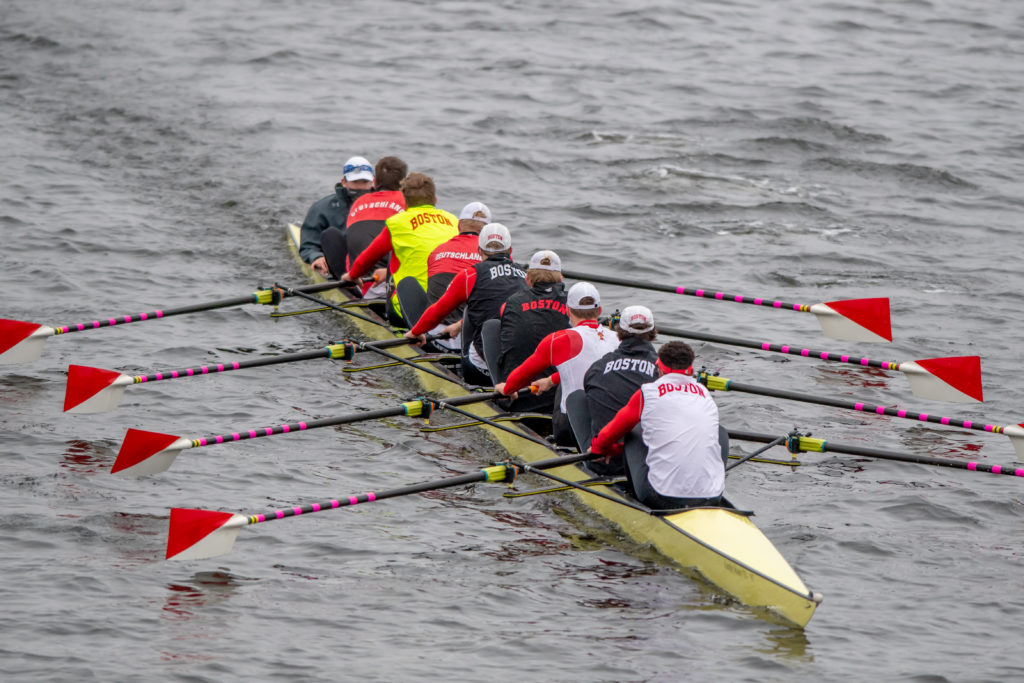
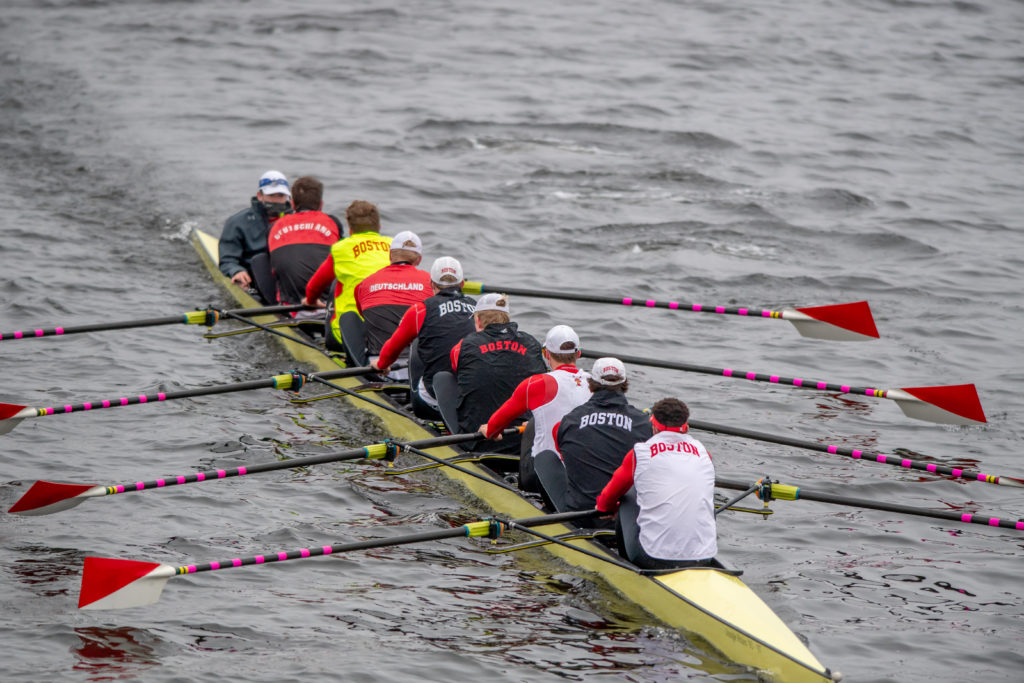
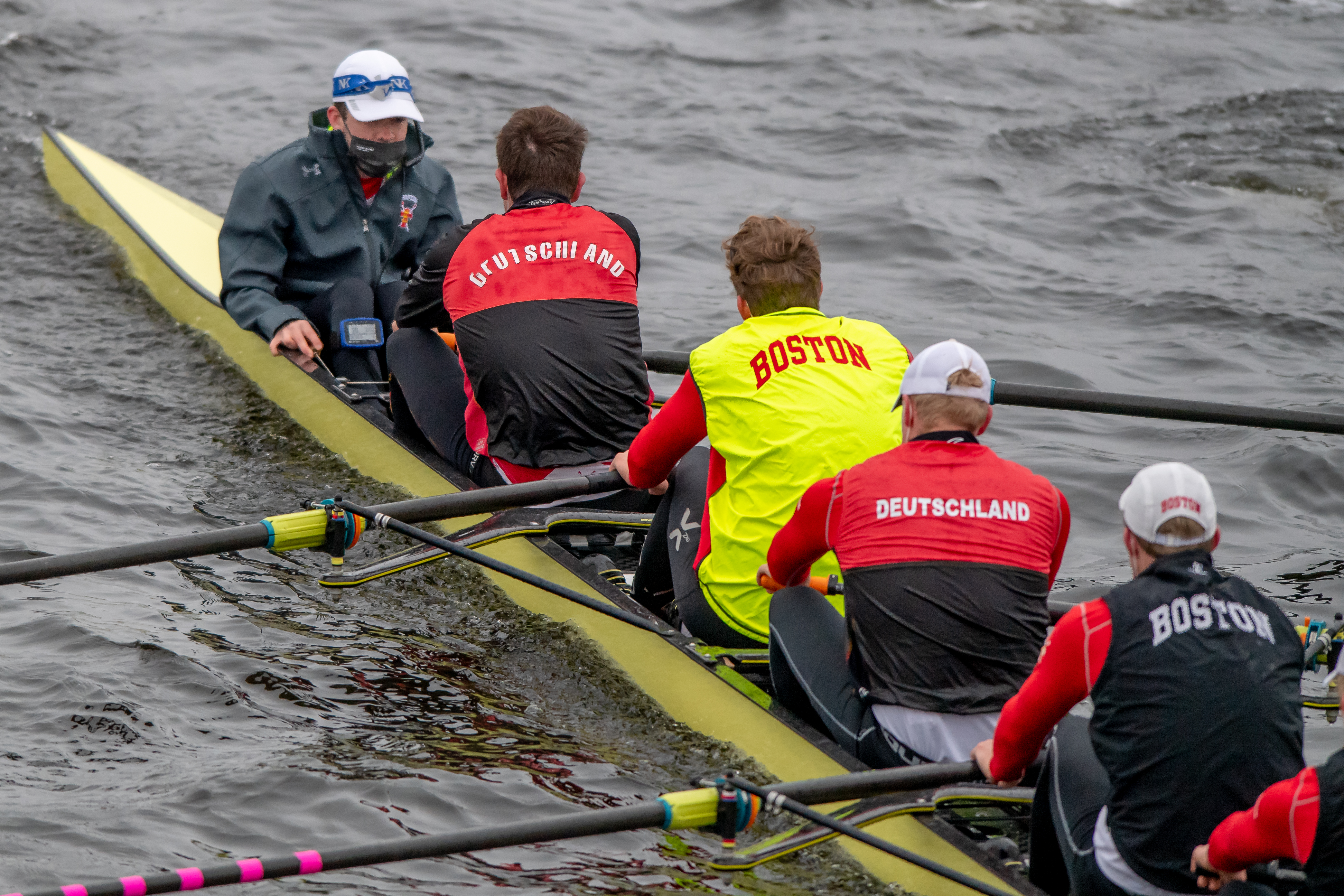
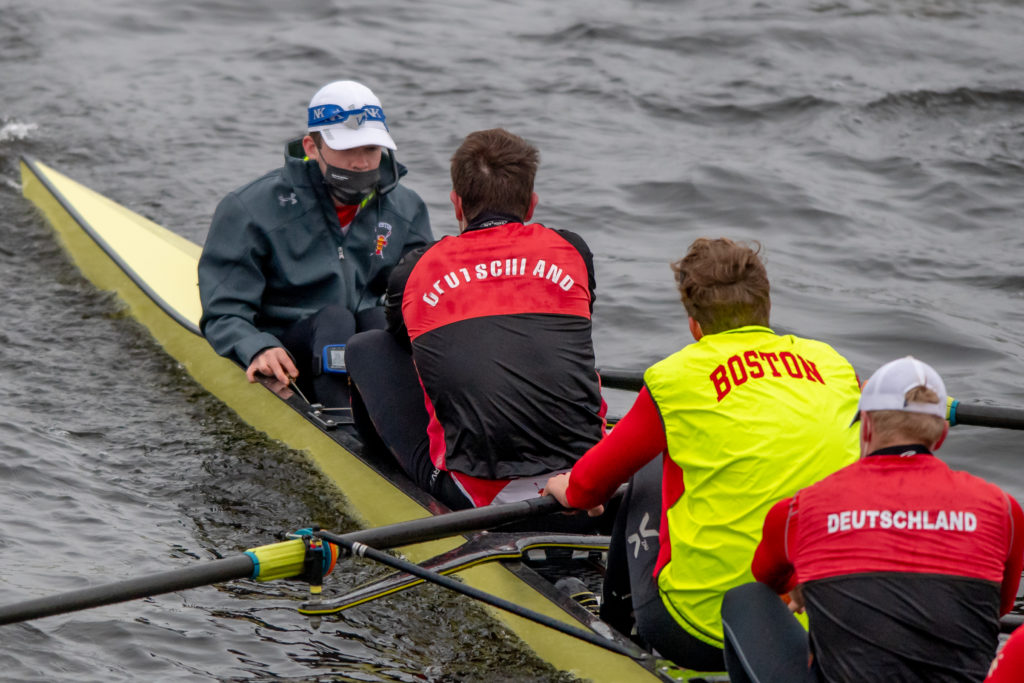
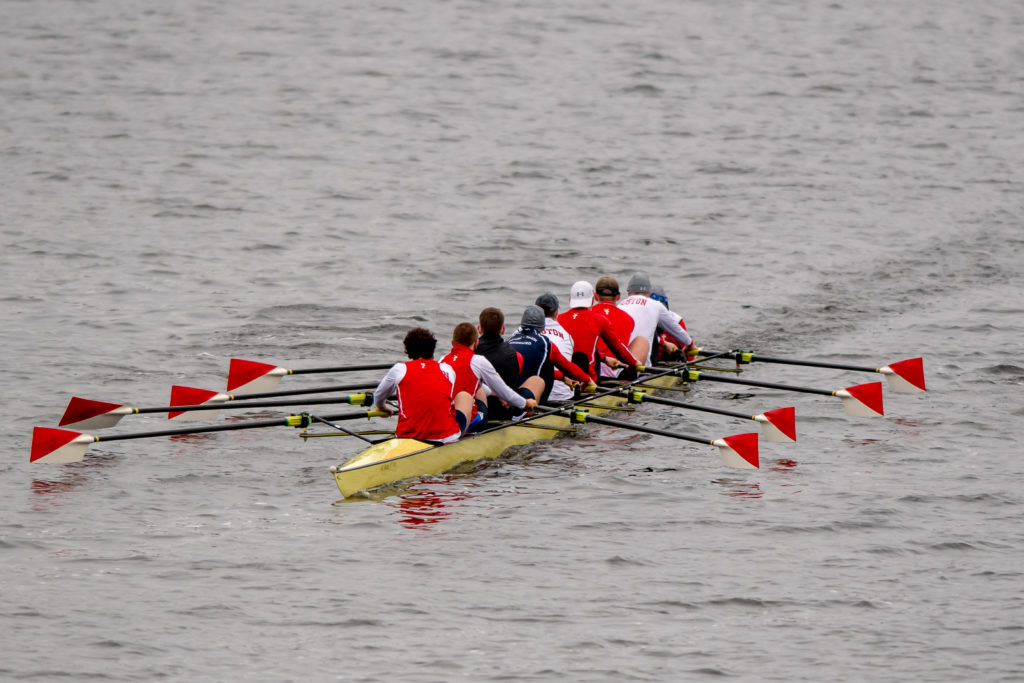
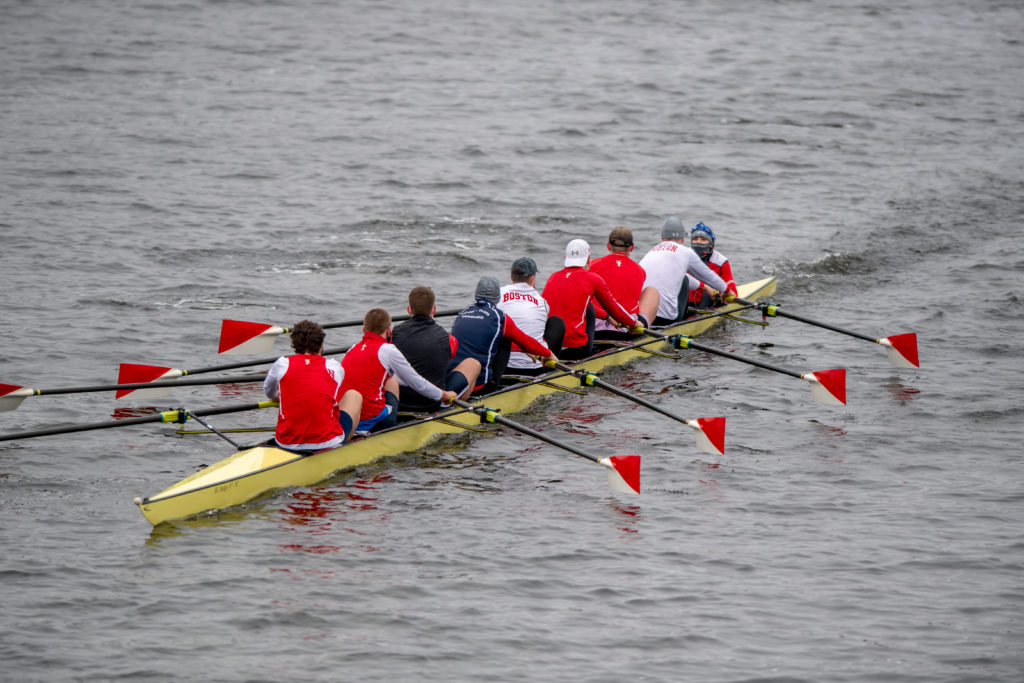
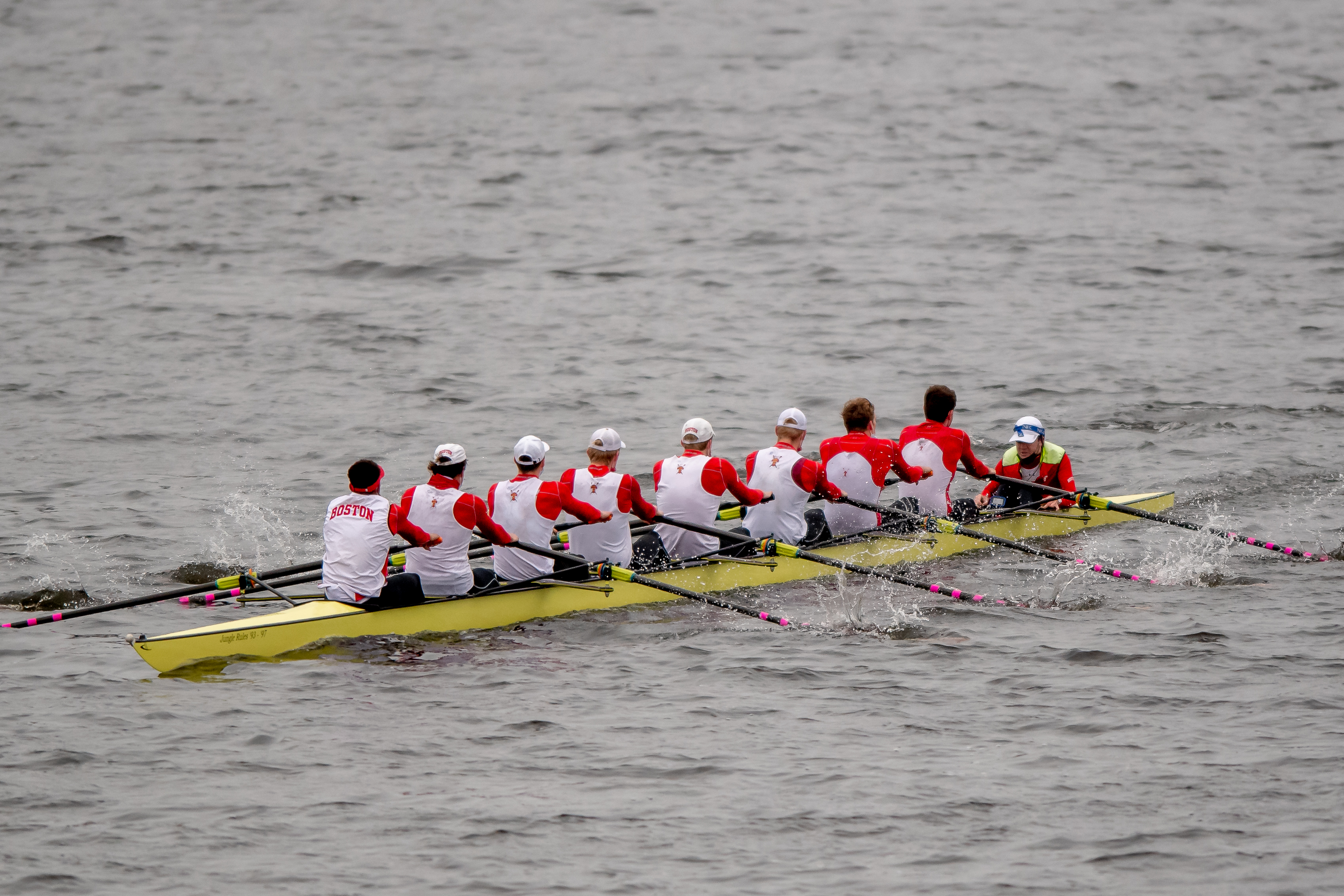
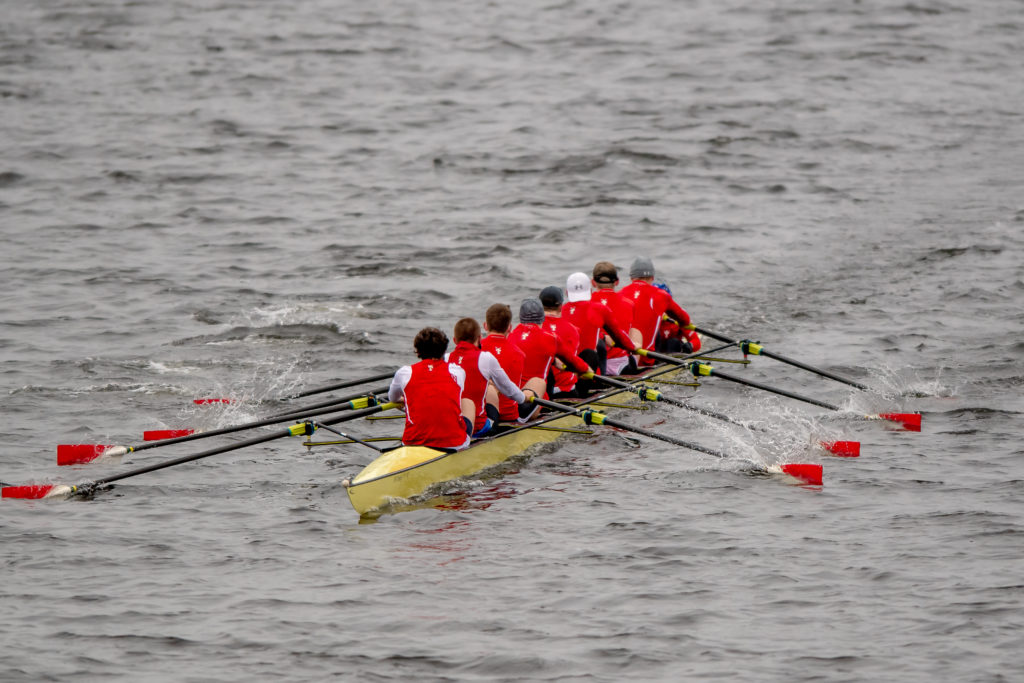
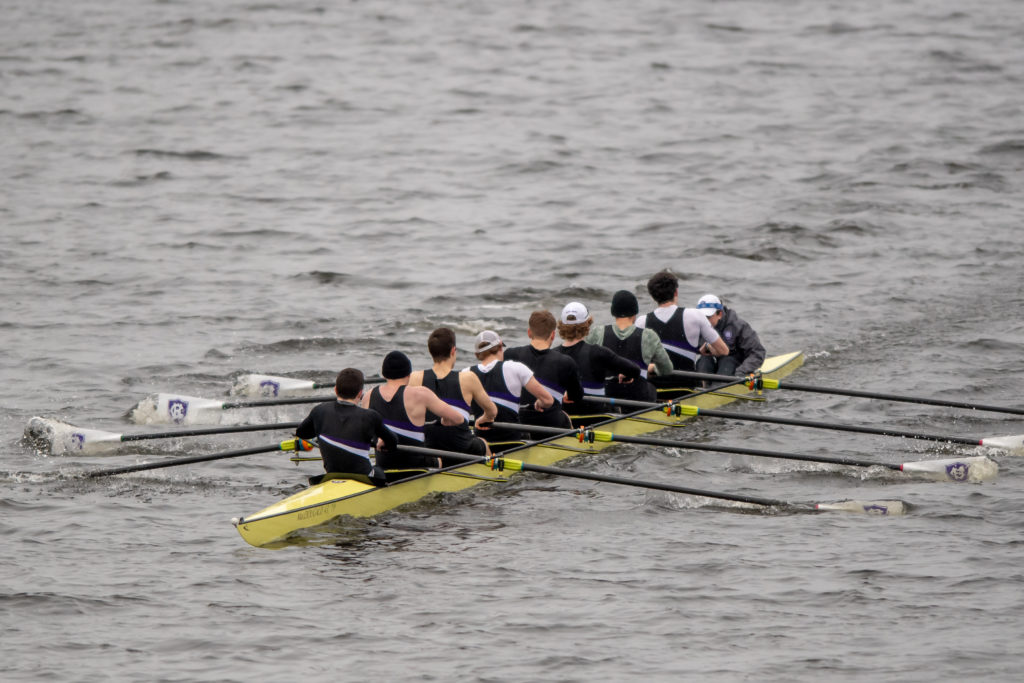
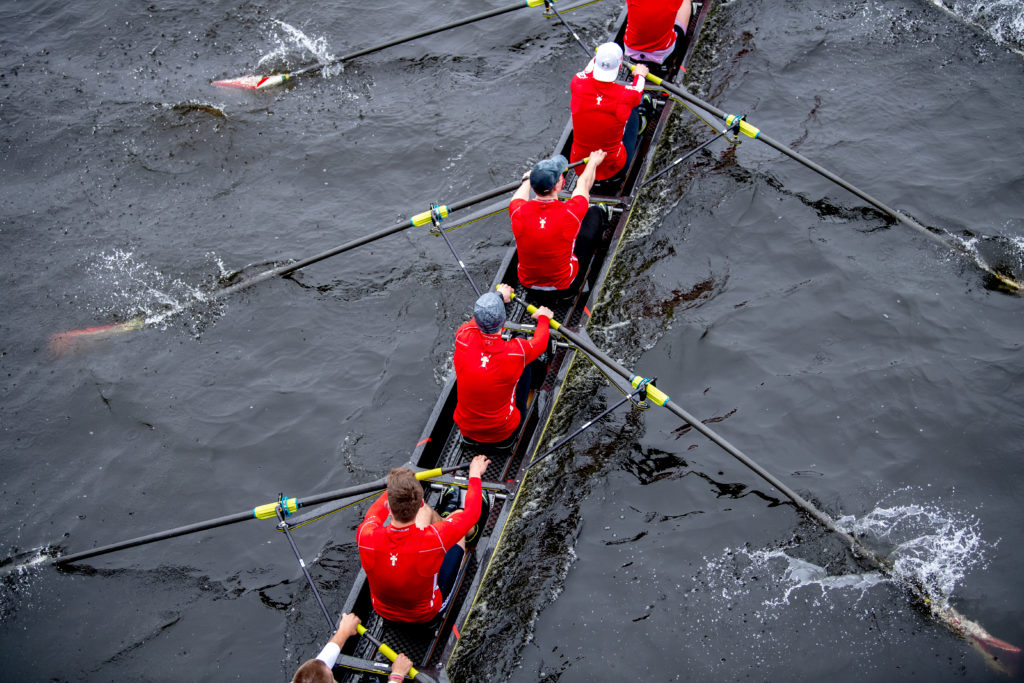
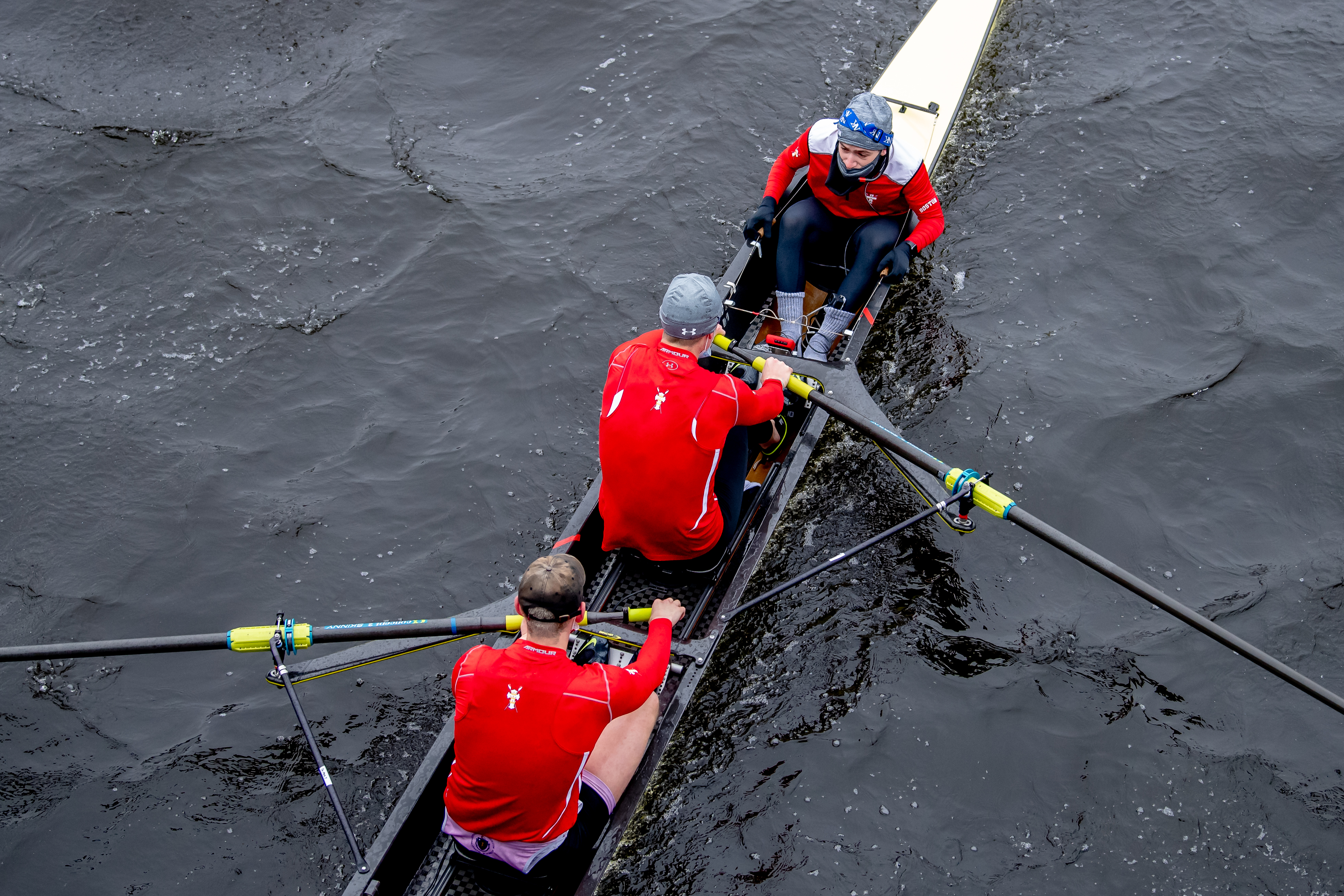
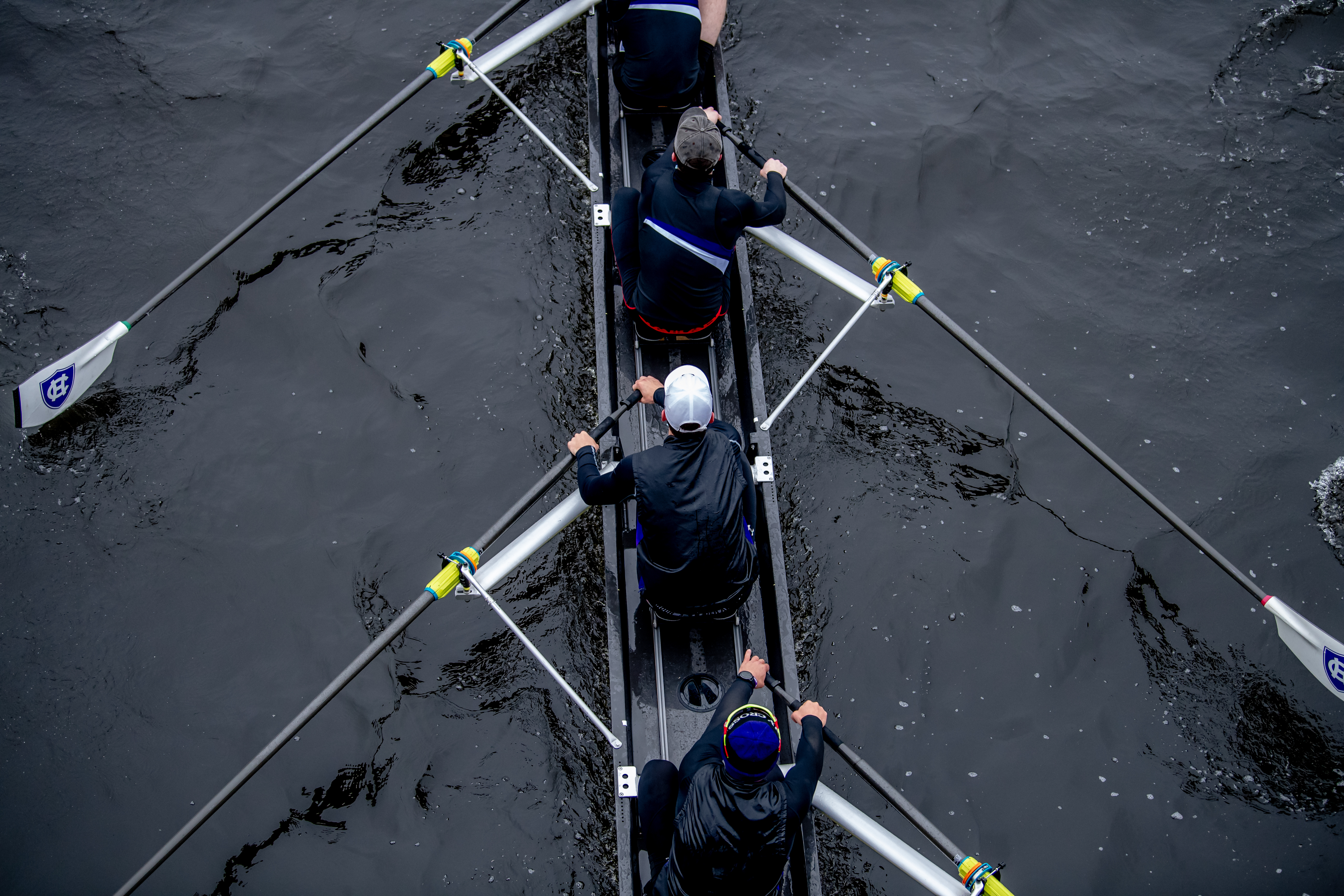
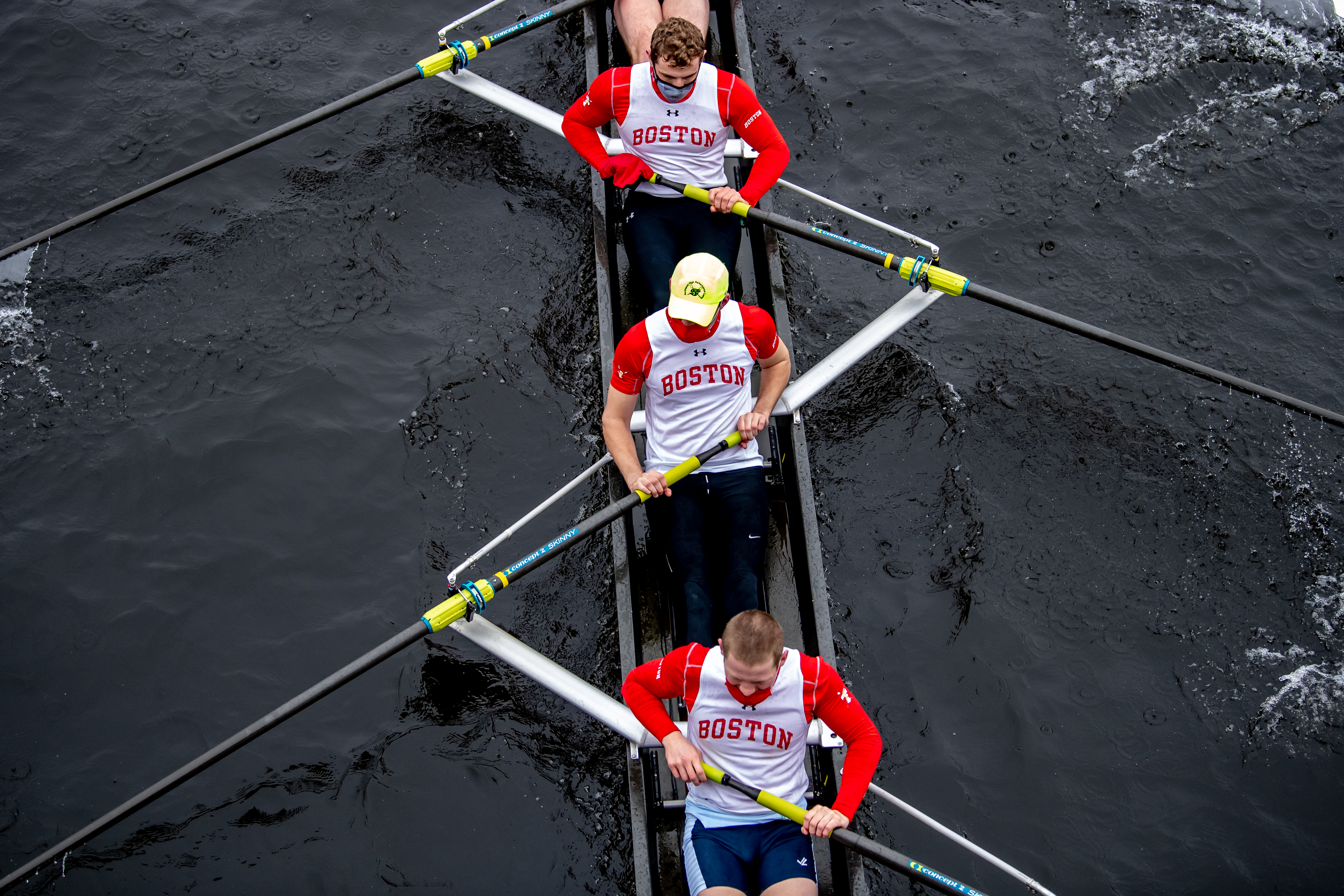
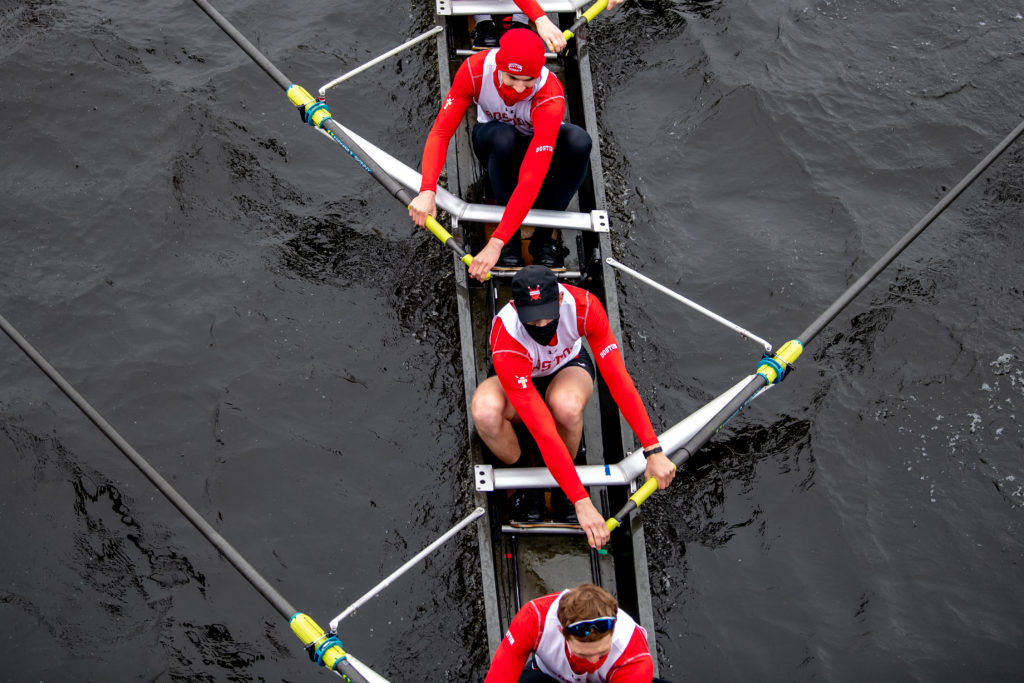
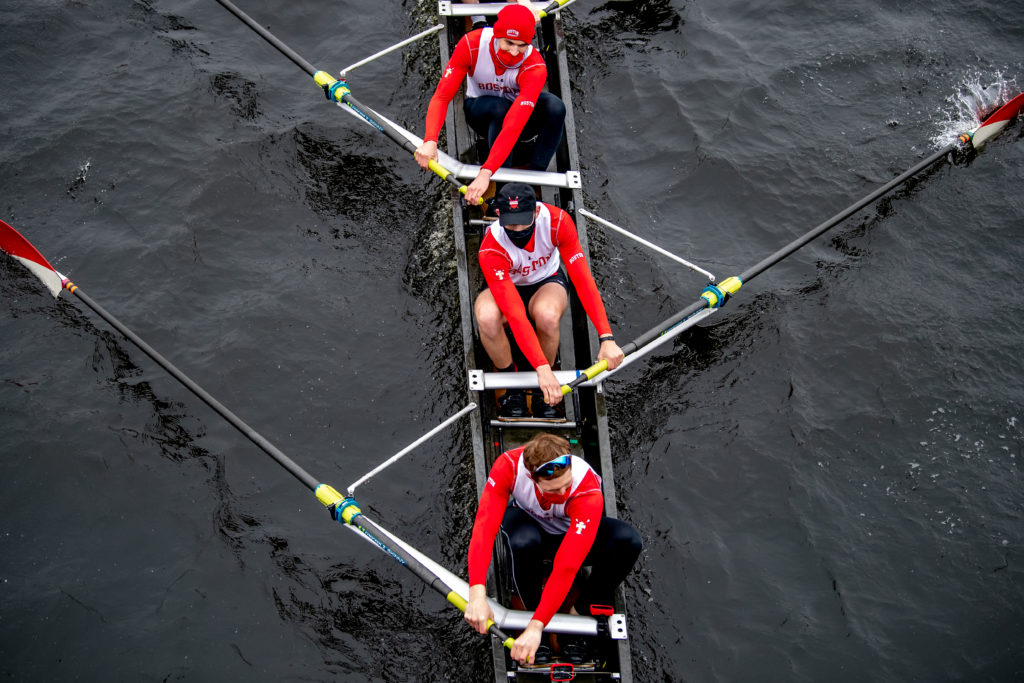
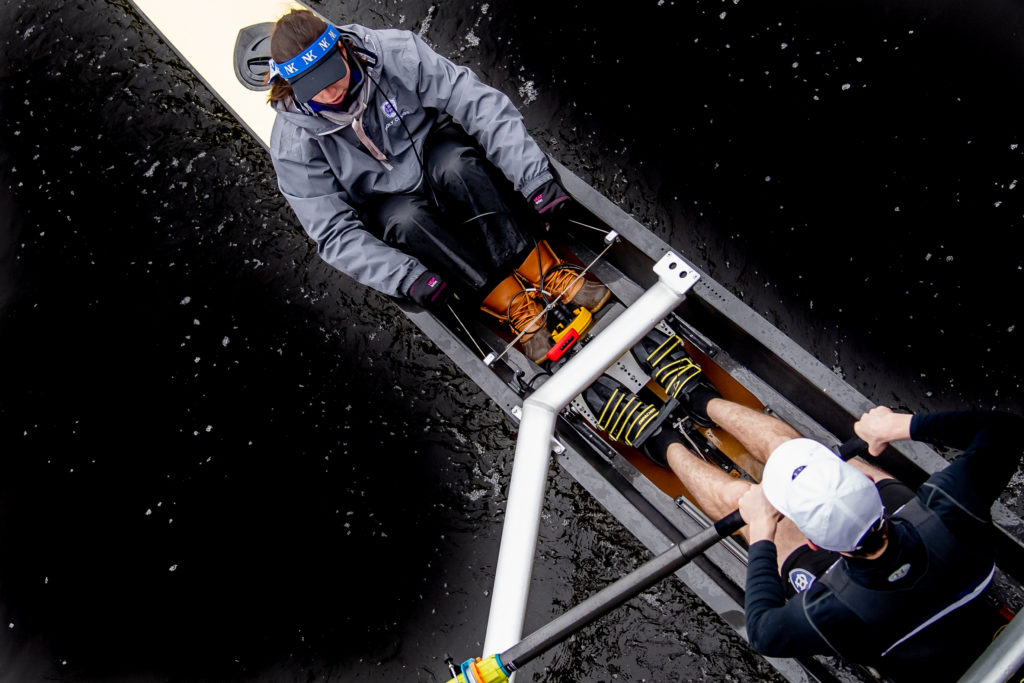
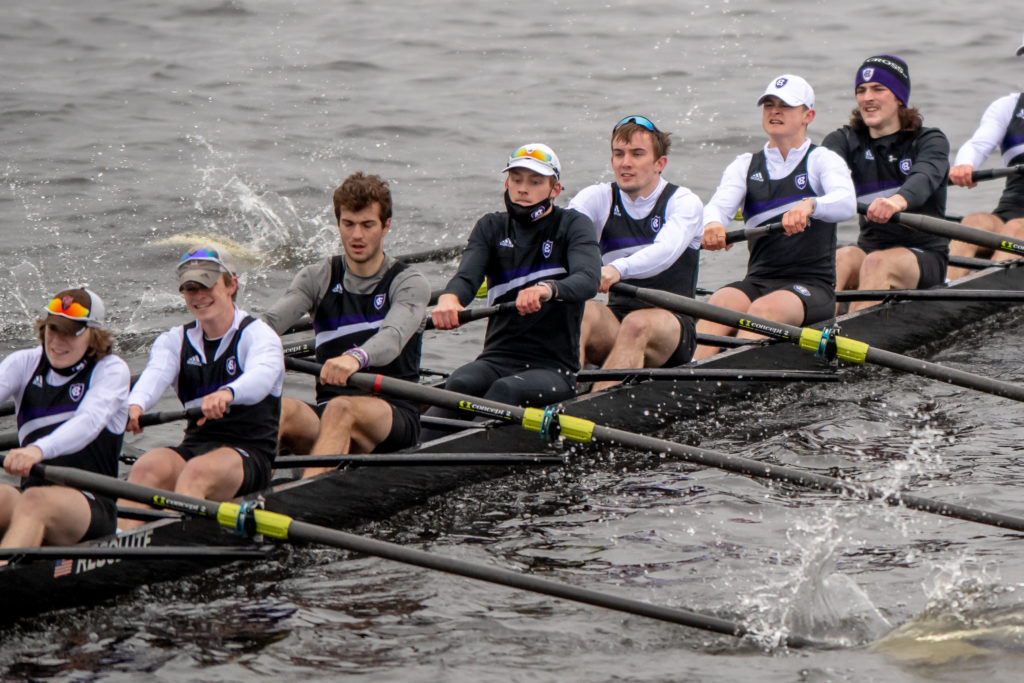
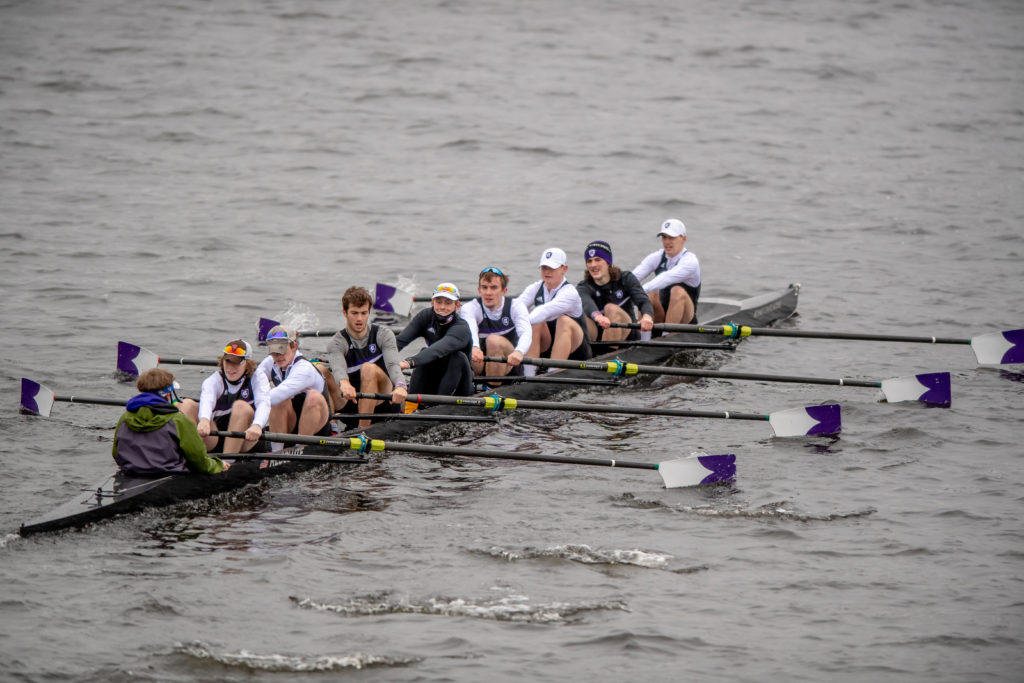
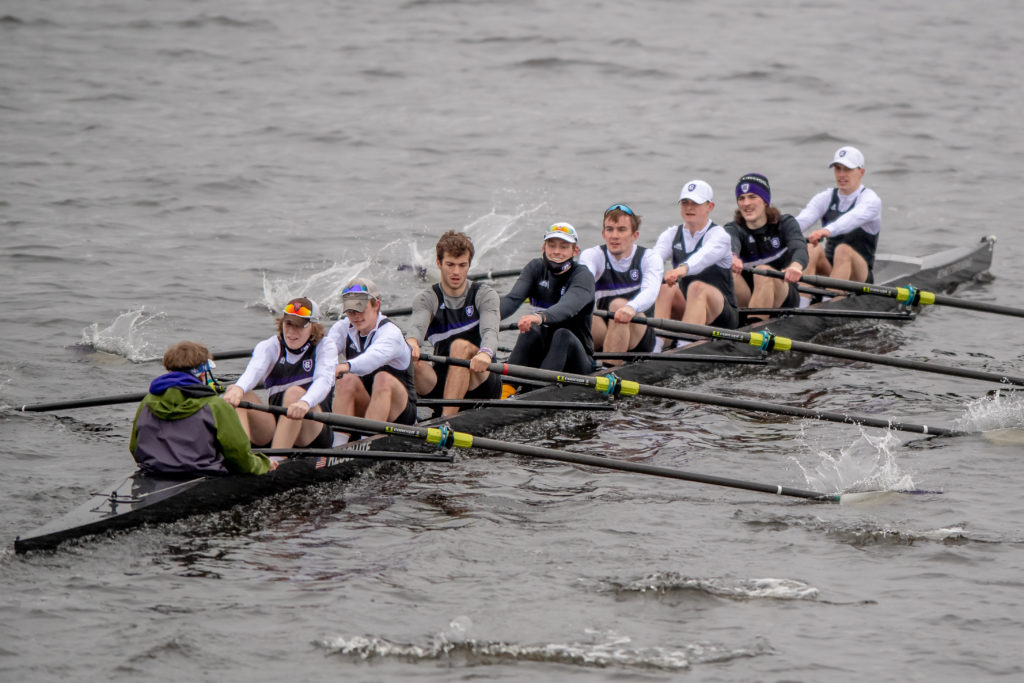
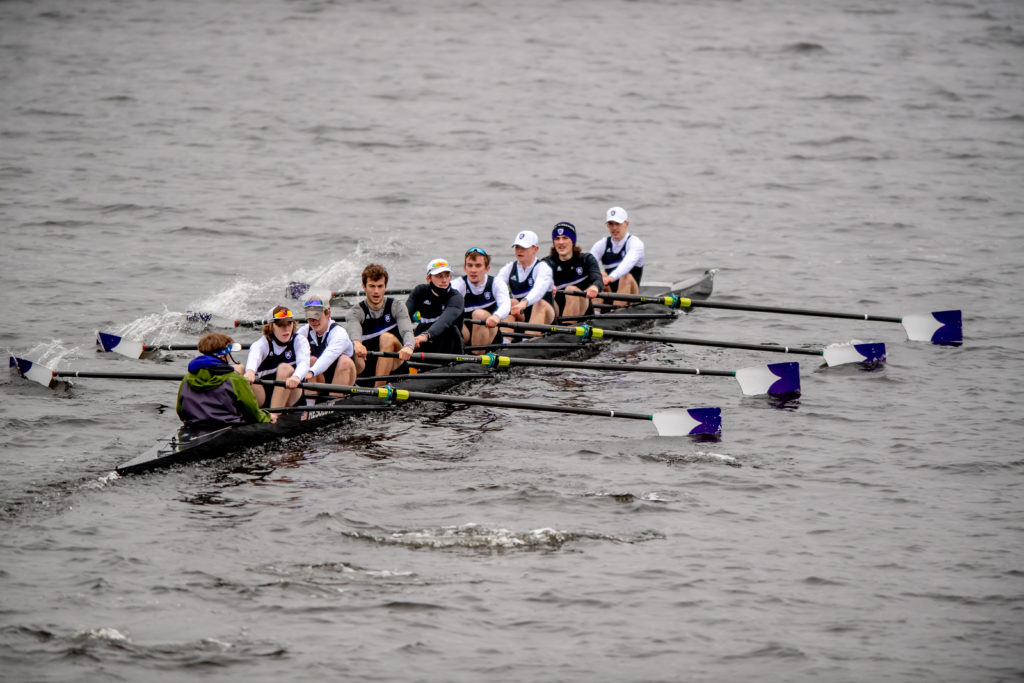
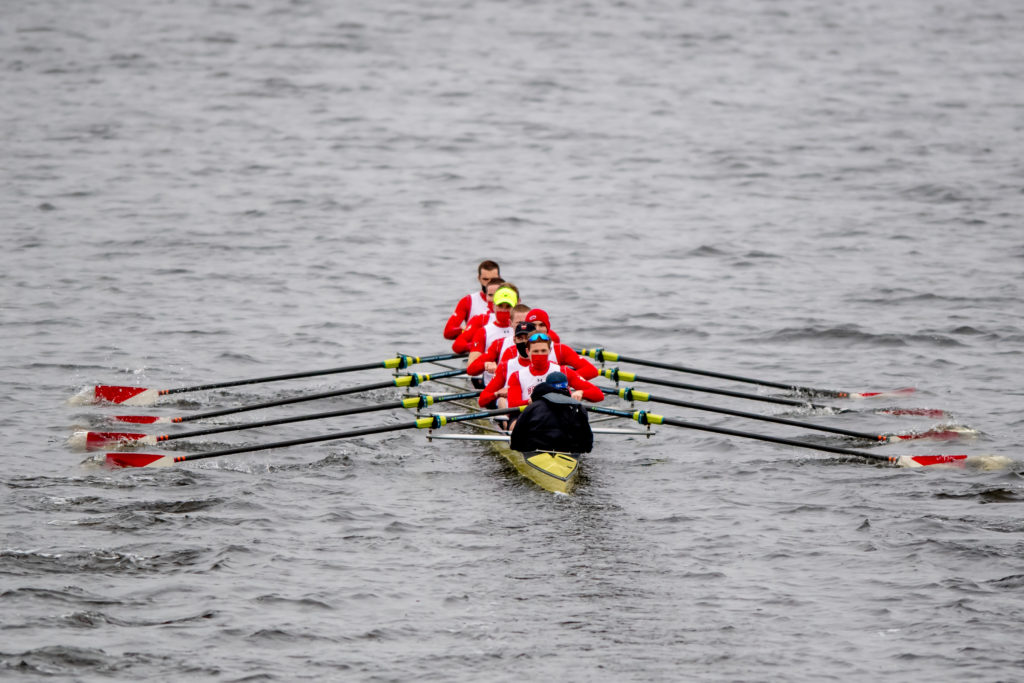
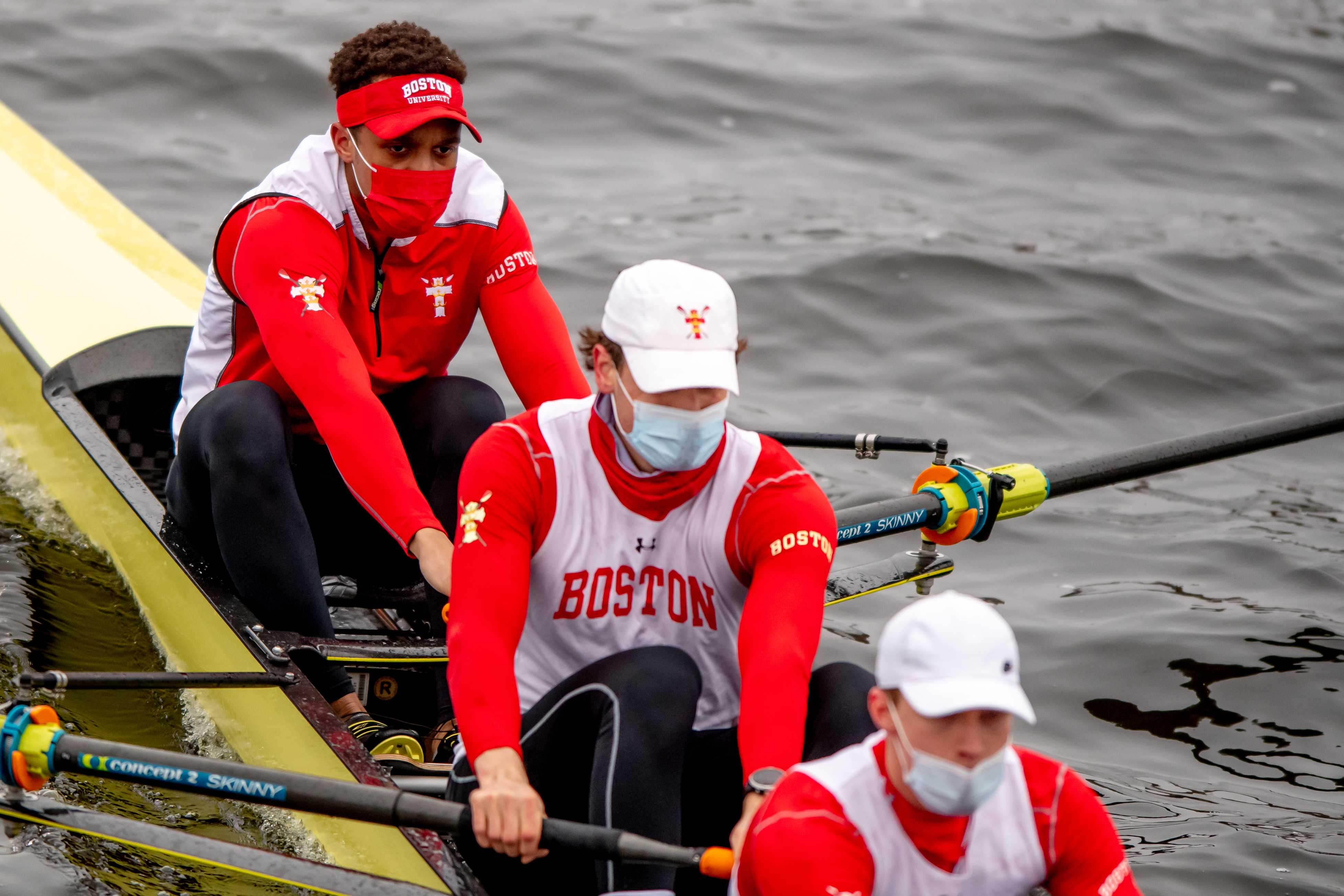
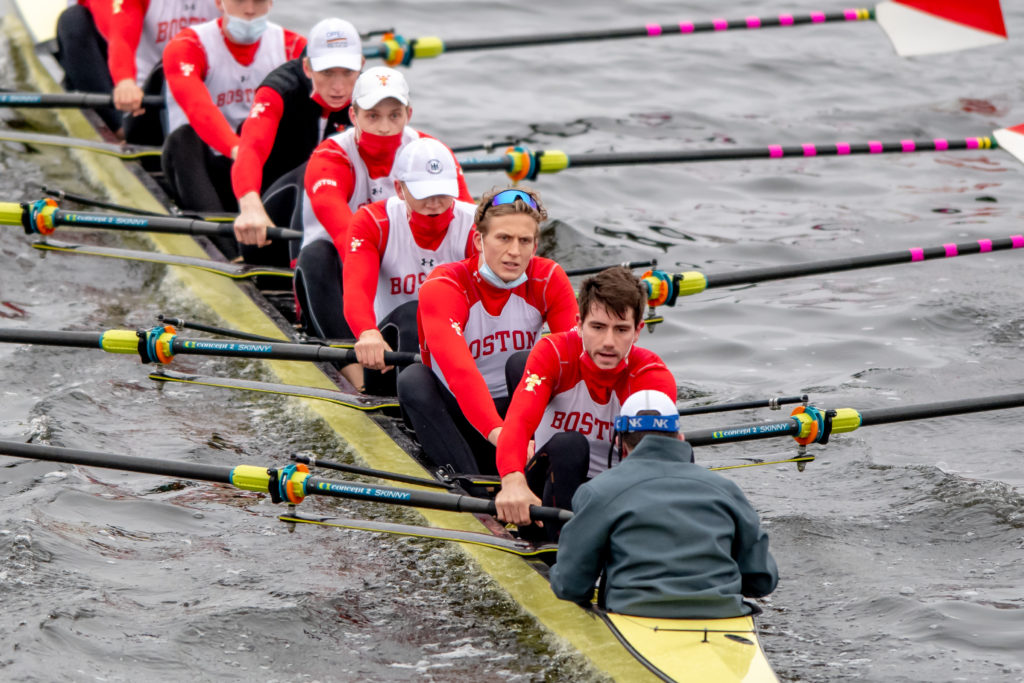
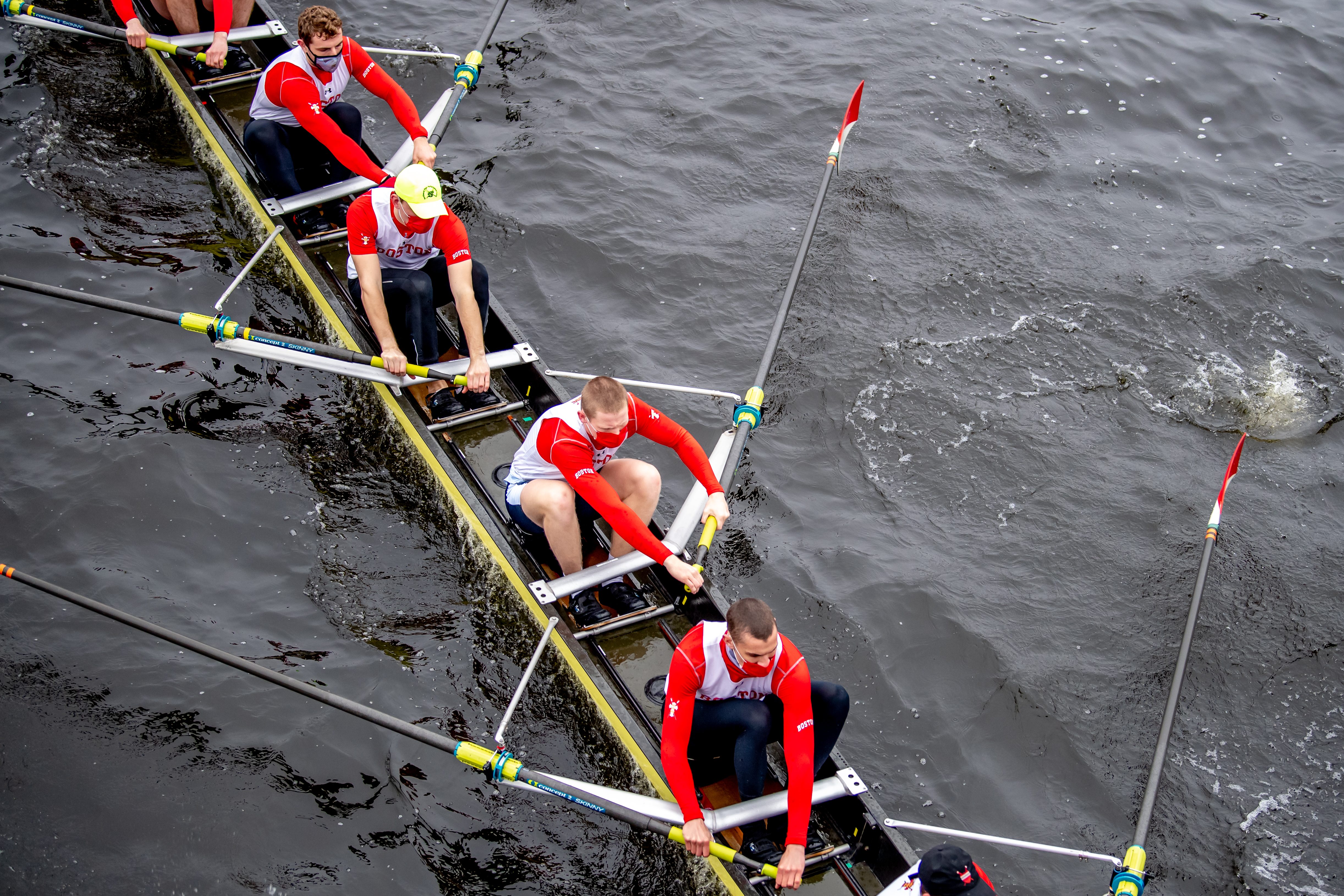
The College of the Holy Cross men’s rowing team scrimmaged Boston University’s men’s program on the Charles River Sunday. Check out the action below.

IRA Championship Will Take Place

BY ED MORAN
PHOTOS BY SPORTGRAPHICS

After weeks of planning, more than a year of Covid-19 shutdowns and lost regattas, 26 collegiate men’s rowing teams have responded to the call to come to Mercer Lake in West Windsor, N.J. to race in the IRA Championship, May 28-29.

In a vote taken by the IRA Stewards Wednesday, a proposal put forth by league commission Gary Caldwell March 10th was approved after Caldwell secured commitments from the schools that they would attend and have submitted entry packets.

Caldwell said the racing will include lightweight events, but that the entries for them will be named later. To date, there are three women’s and three men’s lightweight teams planning to attend.

“I think everybody is very juiced up about this,” Caldwell said. “It’s been a long slog for all of us. I can’t imagine going literally almost two years without competition and trying to keep kids enthused and safe, and all the other stuff these coaches are trying to do.

“It’s expanded their appreciation for the process,” he said. “I’ve seen tremendous growth on the part of a number of coaches who have had to deal with things they have never even thought of before,” he said.

“There is a lot of work left to do between now and the last week in May, but we have a clear path forward now as long as people stay healthy. On a local level our kids to make good choices and recognize the bad choices other people make and not get caught up in that inadvertently,” Caldwell said.

“There is a lot of work left to do between now and the last week in May, but we have a clear path forward now as long as people stay healthy. On a local level our kids need to make good choices and recognize the bad choices other people make and not get caught up in that inadvertently.”

-Gary Caldwell  

“The other thing is we have to hope for is that the downward trend the first quarter of this year continues and that the sickness overall doesn’t go the other direction.”

It’s a given that this IRA will be different in many ways. There will be only two days of racing, with Friday morning time trials and afternoon semifinals, followed by Saturday morning finals.  There will not be spectators, no big screen, alumni tents, or food vendors, but there will be live streaming of the racing.

And the competition is not going to be at the level it normally is. All eight Ivy League schools, including defending champion Yale, have been handcuffed by both a lack of full rosters and a decision by the Ivy League to ban championship participation for all sports.

However, according to Caldwell, several Ivy League schools have expressed an interest in racing if they can get individual institutional approval. That, Caldwell pointed out, would be dependent on the local state of the pandemic for each of those schools.

Caldwell added that the number of schools attending could be expanded pointing to the fact that the New England Small College Athletic Conference is having a full schedule of spring racing and a championship weekend prior to the regatta and that two men’s programs could be added. 

With the Ivy League decision, and the impact the pandemic has had on rosters and teams, this regatta will be unique in that it will open opportunities for schools that don’t normally gain entry or have ever participated. 

“It will not be the IRA from a competitive standpoint the way that we normally see it, and given the implications the pandemic has had on individual schools and their rosters, any conventions that people have about who should be great and who is not going to be great, or is competitive, get thrown out the window,” he said. “That is going to make a difference. The depth of some of these schools is going to be different.

“In terms of giving an opportunity to open the regatta to schools that don’t always qualify, this is a pretty big deal. Fairfield University has never sent a varsity eight to the IRA and they will this year.”

Caldwell said he also believes that the two-day format that guarantees that every team will race three times will create a more level field.  

“Quite frankly,” he said. “In some ways, this might be better than our regular format from the standpoint of determining who should get to the semifinals. The time trial is going to lie a lot less than heats that are made up out of polling. 

“Coaches and athletes will have to make determinations as to how hard they want to go and where they are willing to put themselves in the pack, how much they want to save for the next round. Three races in two days are not easy. 

“And, it does eliminate the built-in advantage that traditionally happens when the first and second place crews in the heats bypass the reps and go directly to the semifinal and end up racing one less time than everybody else. This year the format ensures everybody races the same number of times.”

The regatta, which was canceled last spring because of Covid 19, was close to being lost for a second year by the winter virus spikes, state-to-state Covid restrictions on travel, and increased regatta costs due to projected reduced entries and Covid testing and mitigation fees. 

But through Caldwell’s persistence and the desire of the colleges to race no matter what the format of the regatta looked like, the IRA was saved. And, the news was welcomed by coaches across the country. 

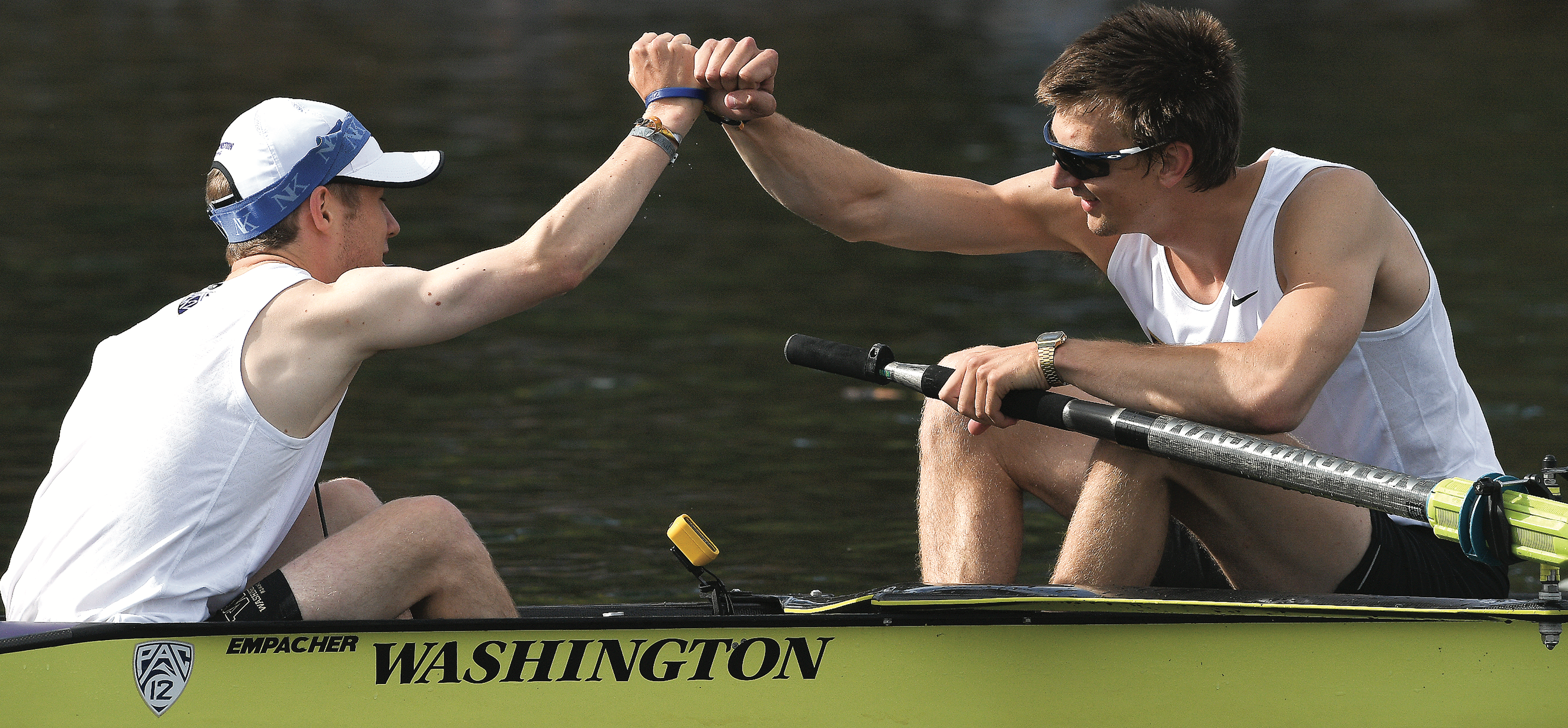
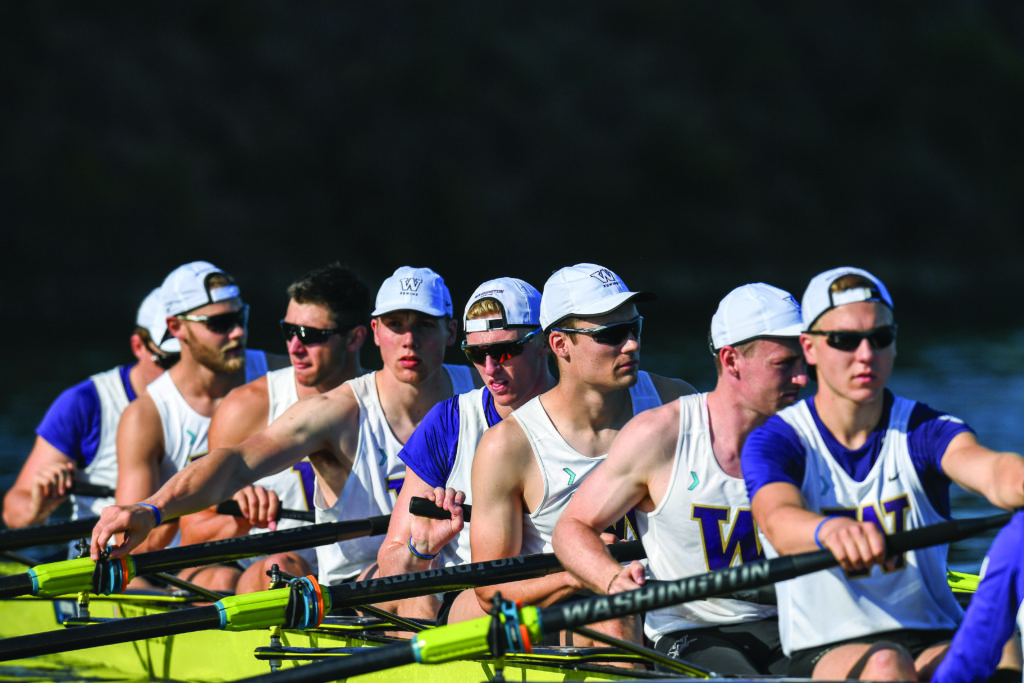
“Never before have I seen our students so committed to something so uncertain,” said University of Washington head coach Michael Callahan. “It has been a real act of faith and trust, some of the most important values in our sport.

“Never before have I seen our students so committed to something so uncertain. It has been a real act of faith and trust, some of the most important values in our sport.”

-Michael Callahan

“We are both humbled and thrilled by the news that there will be an IRA,” he said. “We are incredibly grateful for the opportunity to race and feel deeply indebted to Gary Caldwell, the Stewards, and everyone across the sport who have come together to make this happen. It is no small feat and racing for a national championship is a gift we will never take for granted. We will cherish this opportunity.”

In Berkley California, Cal head coach Scott Frandsen, echoed those sentiments:

“We are excited to see the IRA Championship firmly at the end of the spring racing schedule,” Frandsen said. “Through all of the ups and downs of the past year, many of our programs have continuously adapted to the latest adversity while training towards an uncertain future. Giving all of our student-athletes this light at the end of the tunnel to focus on and train towards is really motivating for everyone involved,” he said. 

“I am grateful to my athletic department for all of the effort that has gone into allowing our team to train and to Gary Caldwell for all of the work that he has done to make this possible.”

In Boston, BU head coach Tom Bohrer said he was also excited to have the regatta back on the schedule. “I think it’s great that schools want to do it, just realizing that of that has happened during Covid time, it wouldn’t surprise me if some of the teams that said they want to go won’t go because of something happens along the way,” he said.

“But I think it will be good for rowing if we can do it and I am cautiously excited about it.”

Covid mitigation and safety protocols required for participation include regular testing prior to arrival and on-site testing when teams get to the venue. In addition, all teams will be restricted to their hotel rooms and the regatta site and will not be allowed contact with anyone outside of the regatta bubble during the event. 

“People are grateful just to have this opportunity,” Caldwell said. “Everybody’s assumptions about what they are entitled to and what’s a gift have changed in the last 12 months, mine included.

“My staff have all worked really, really hard the last couple of months to get us to this reality. It’s taken a ton of work. We’re really happy we’ve gotten here. Now we’ve got to cross the finish line.”

To that end, Caldwell has one plea for parents, alumni and friends:

“Just stay home. Do not come down to the site and think you can find a place to perch where you are not going to get noticed. You can’t have contact with your athletes. If you do, you put them at risk and you put us in a position where we may have to shut a whole team down.”

Washington Tops Women’s Division I Pocock CRCA Poll presented by USRowing

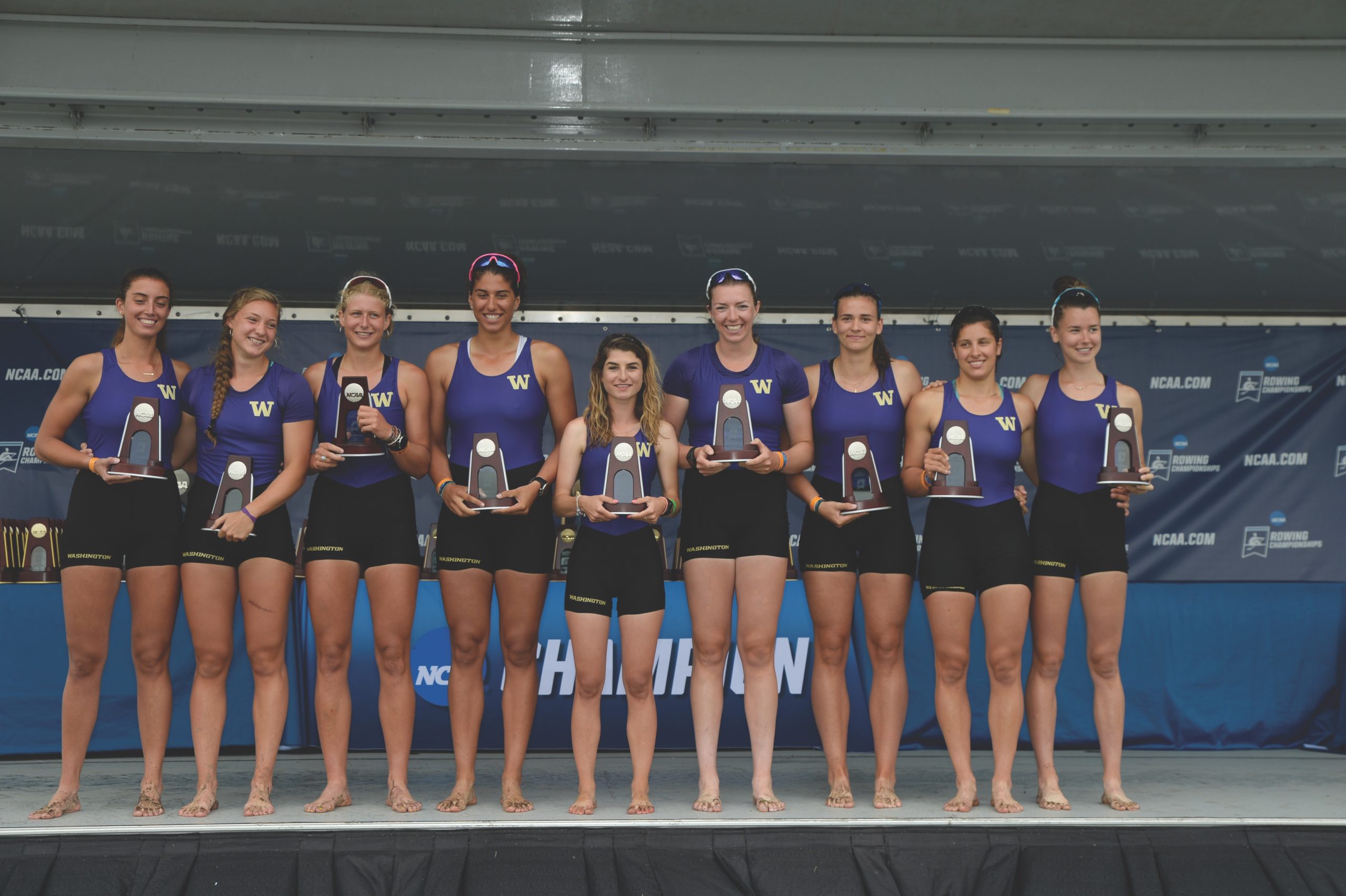
2018_5 May Sat afternoon NCAA's Women's Rowing

STAFF REPORTS
PHOTO BY SPORTGRAPHICS

The University of Washington is atop the Women’s Division I Pocock CRCA Poll presented by USRowing again this week.

The Huskies received 19 of 25 first-place votes. The University of Texas ranked second, earning the remaining six first-place votes. The University of Virginia remained in the third position. Stanford and the University of California, Berkeley moved to the fifth and fourth slots, respectively, reversing last week’s positioning.

Also notable is the University of Alabama moving up three spots from 11th to take a spot in the top-ten standings at number eight.

Division I Rankings

RankTeamTotal VotesPrevious Ranking
1.University of Washington (19)4941
2.University of Texas (6)4562
3.University of Virginia4263
4.University of California, Berkeley3835
5.Stanford University3814
6.Ohio State University3606
7.University of Michigan3087
8.University of Alabama29311
9.University of Tennessee2788
10.Indiana University2549
11.Duke University25010
12.Rutgers University23612
13.Southern Methodist University20714
14.University of Wisconsin19813
15.University of Iowa10615
16.University of Minnesota9719
17.Syracuse University9617
18.University of Southern California9016
19.University of California, Los Angeles8820
20.U.S. Naval Academy7318

Others Receiving Votes: Washington State University (58), Oregon State University (40), University of Tulsa (23), University of Notre Dame (15), University of Central Florida (8), University of Oklahoma (8), University of San Diego (8), Clemson University (6), San Diego State University (5), Northeastern University (3), University of Louisville (2).