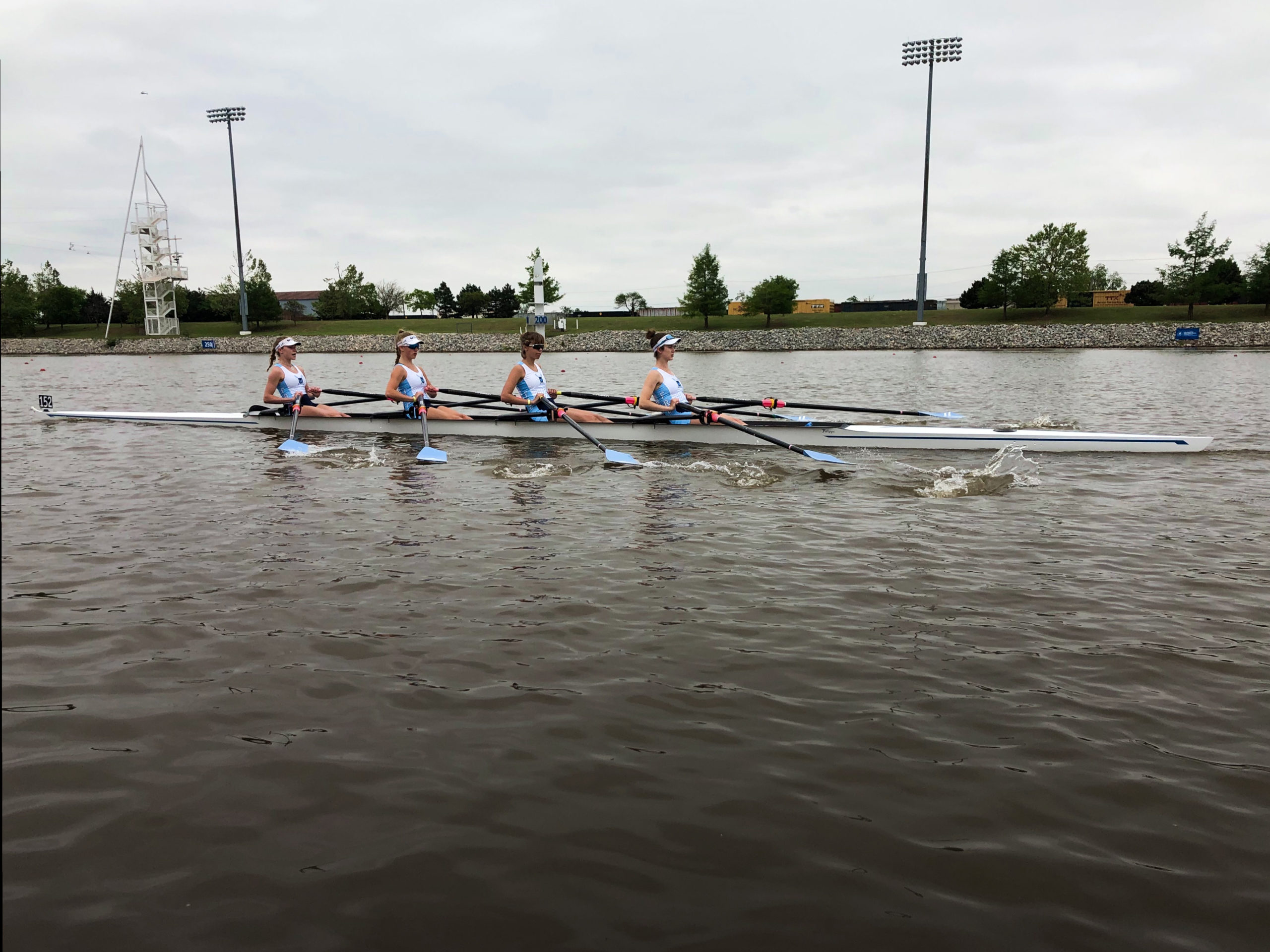
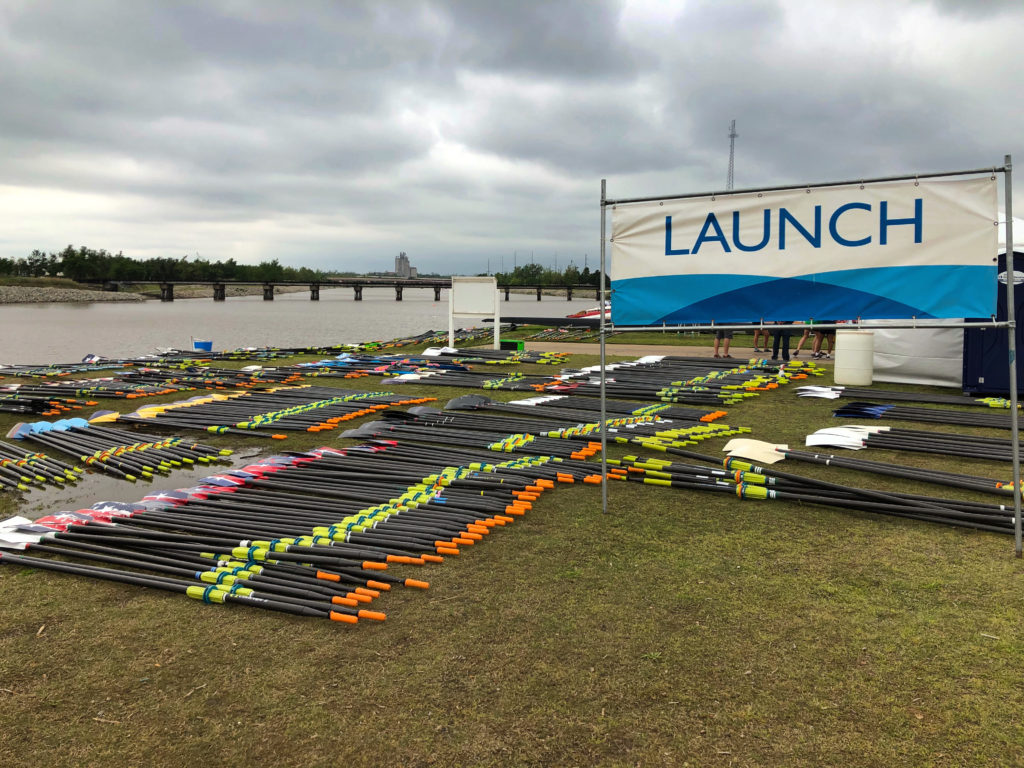
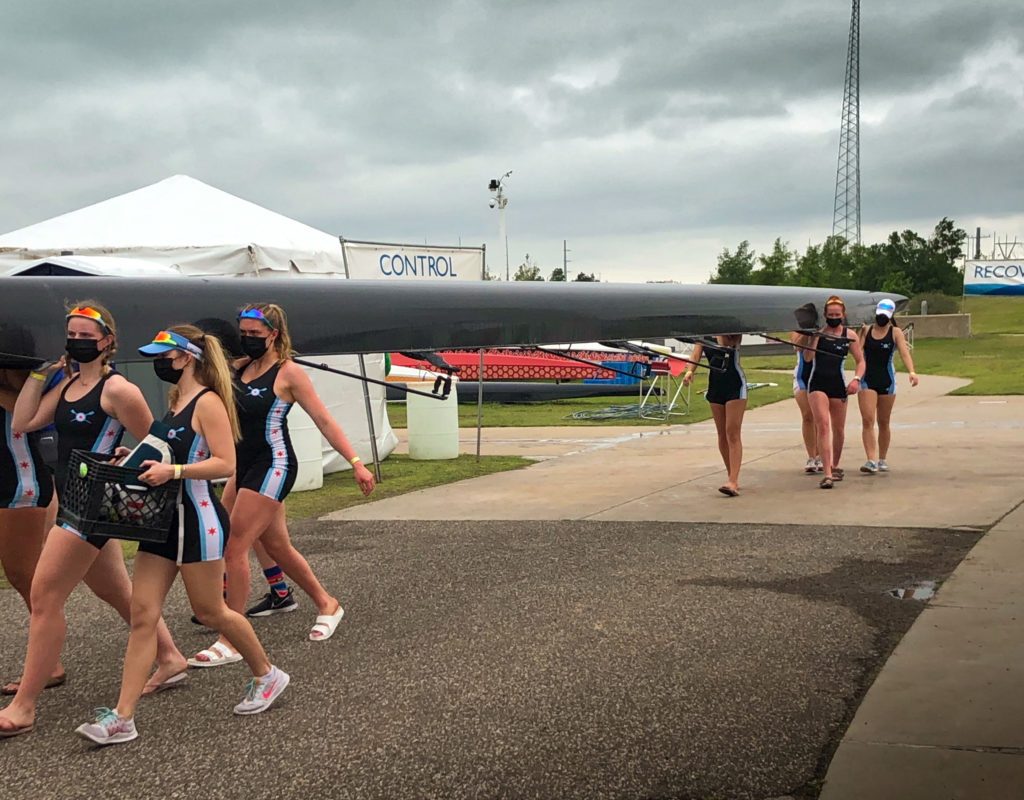
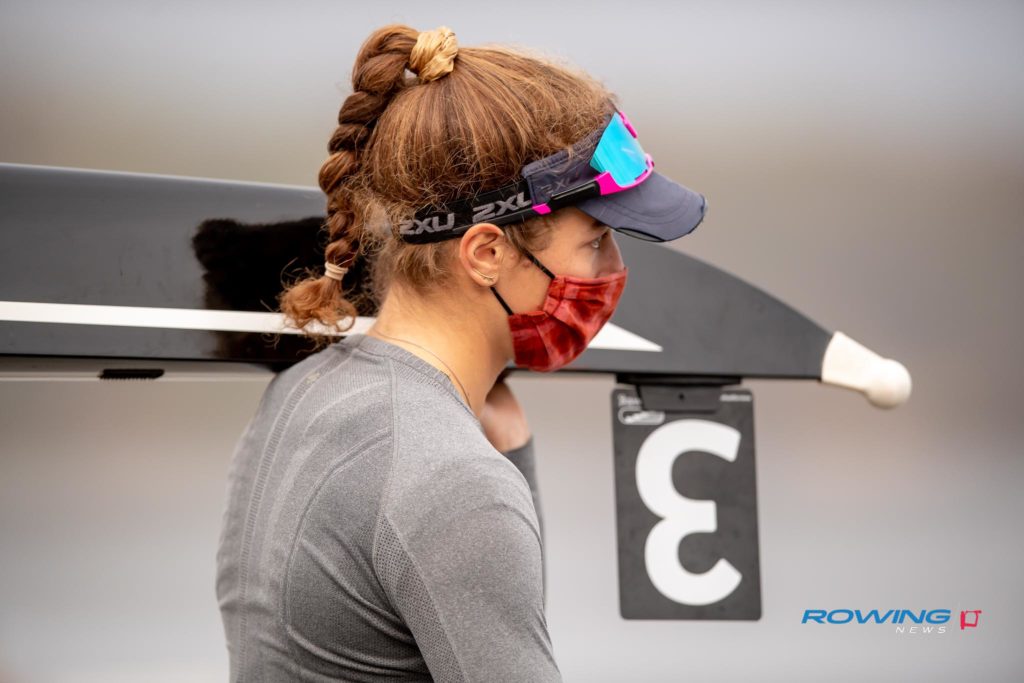
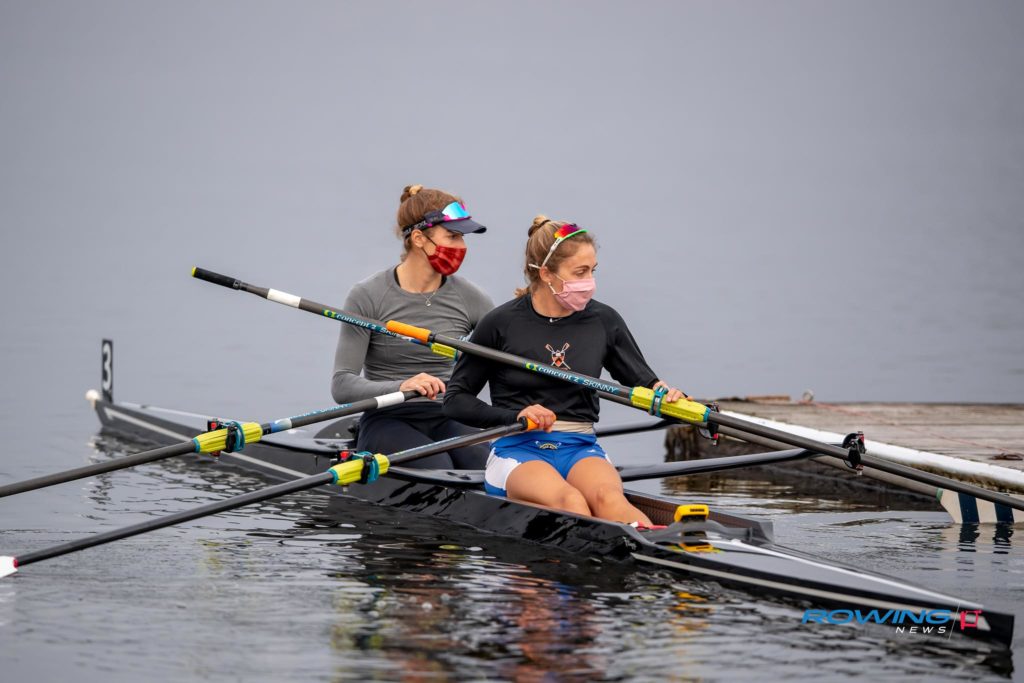
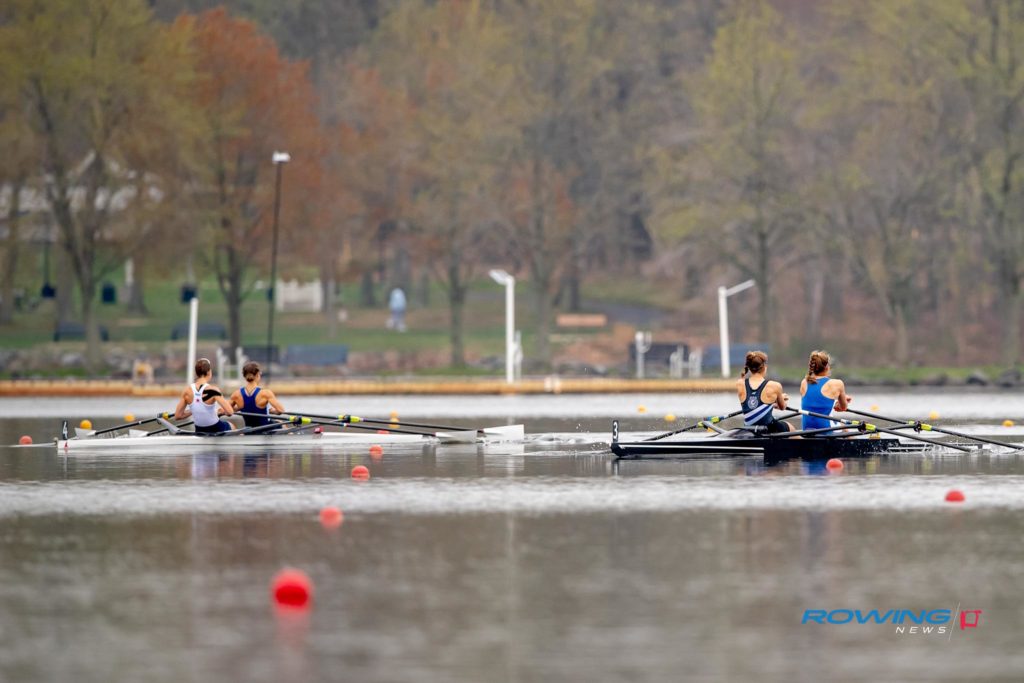
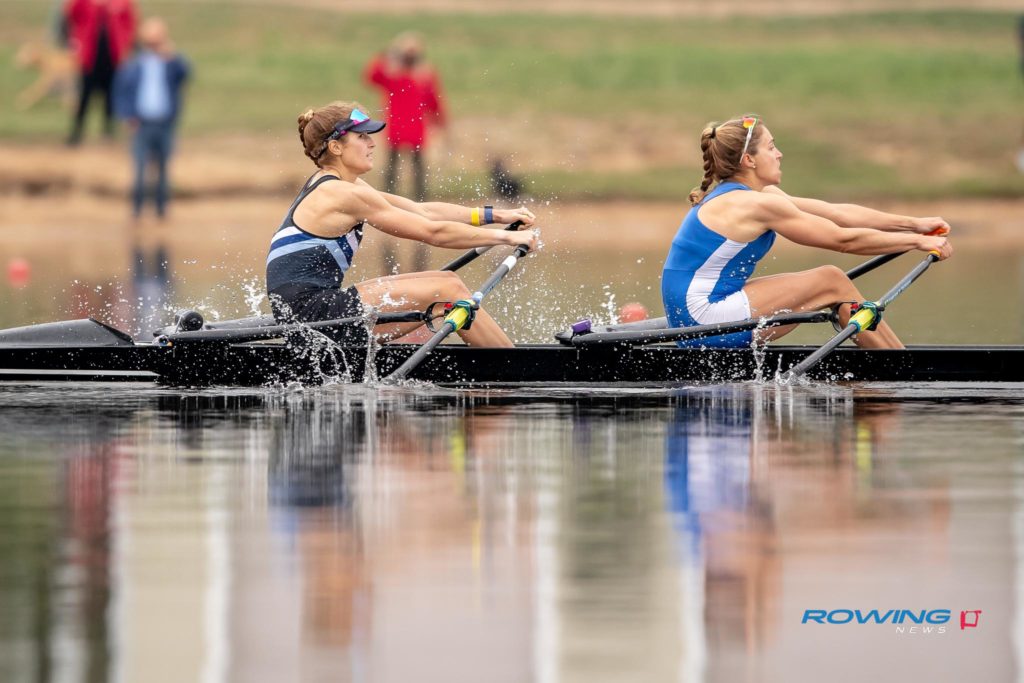
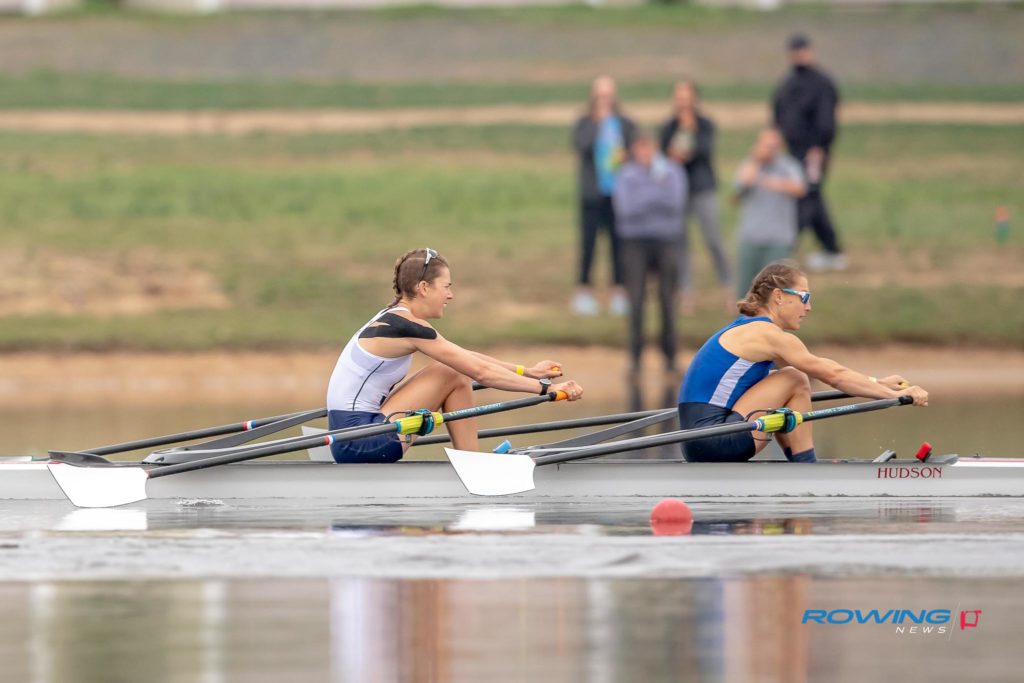
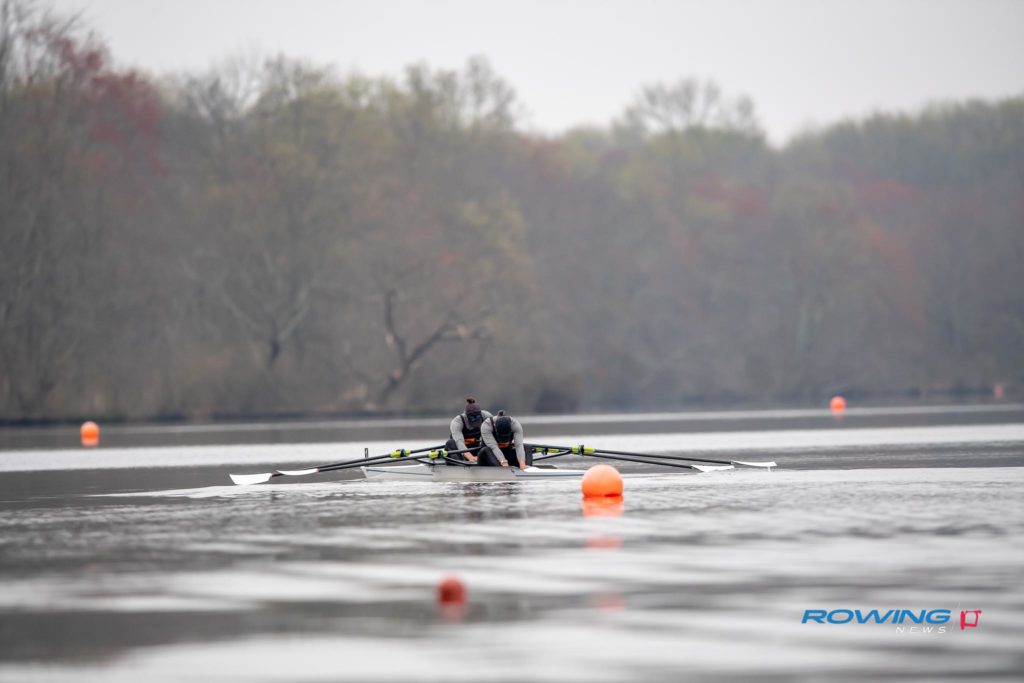
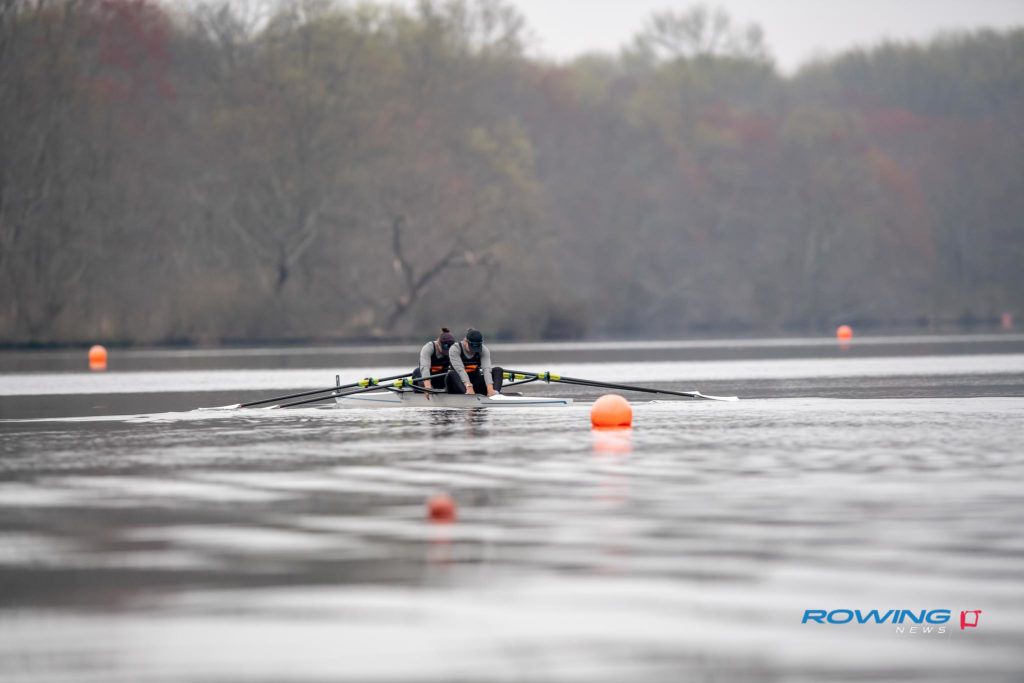
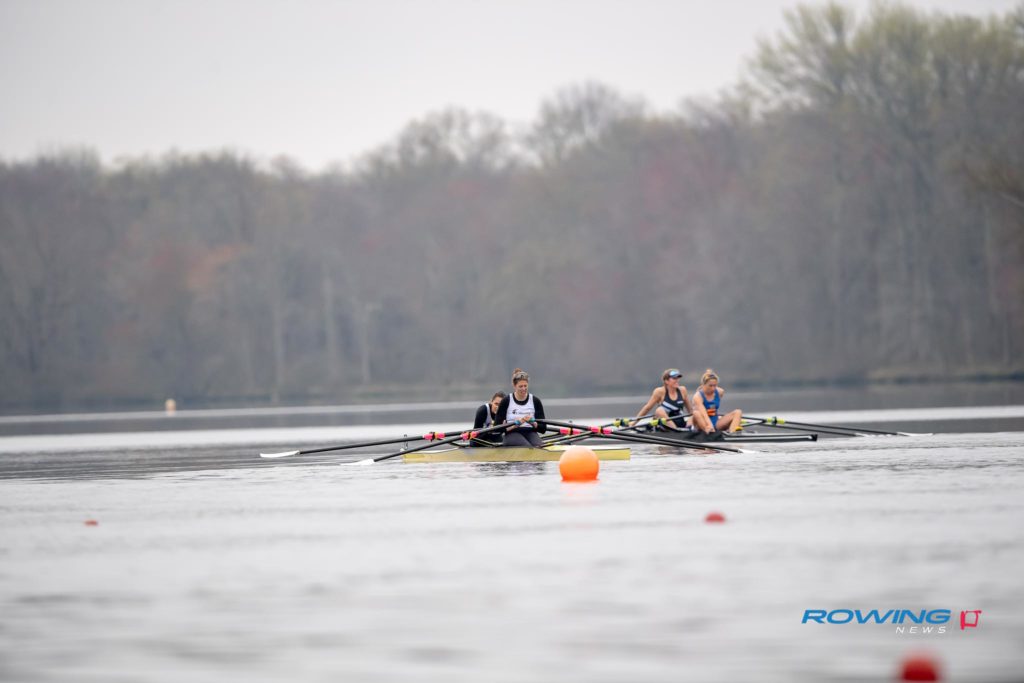
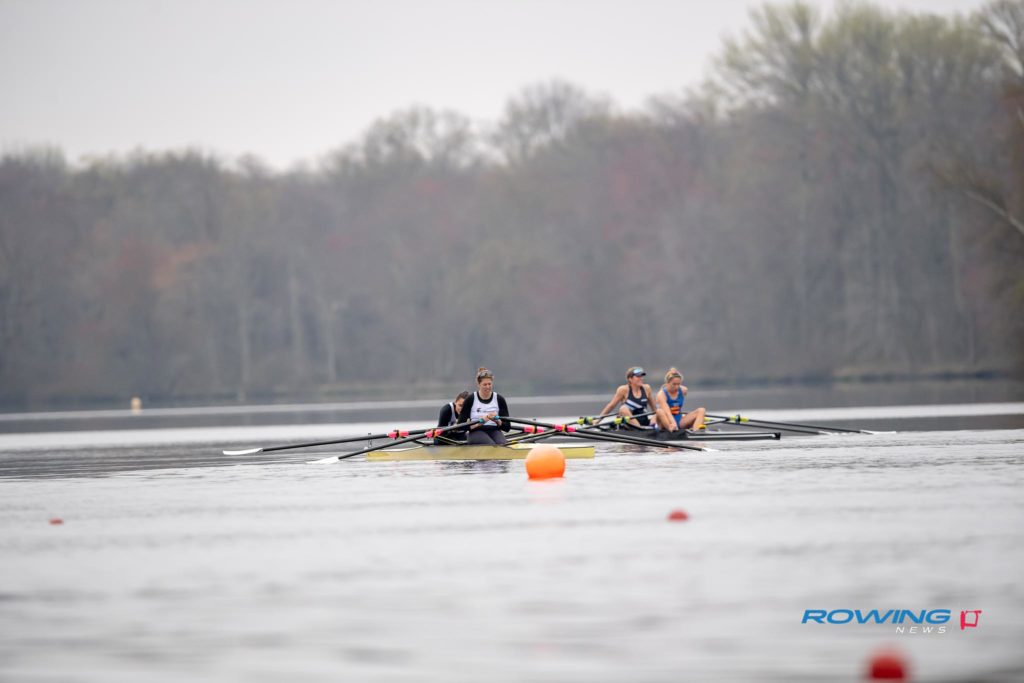
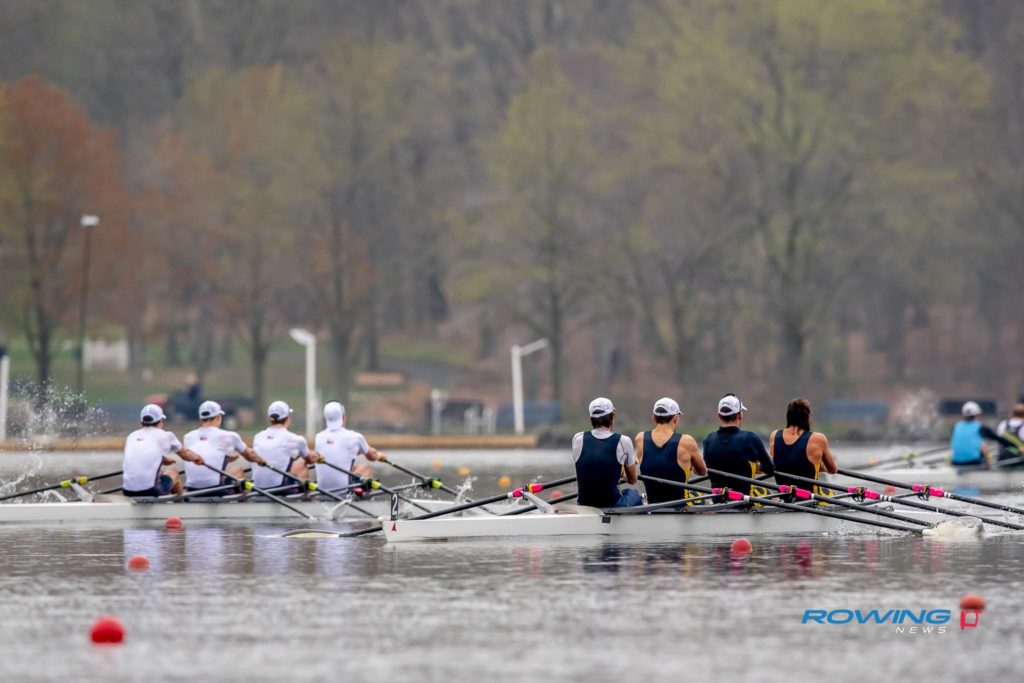
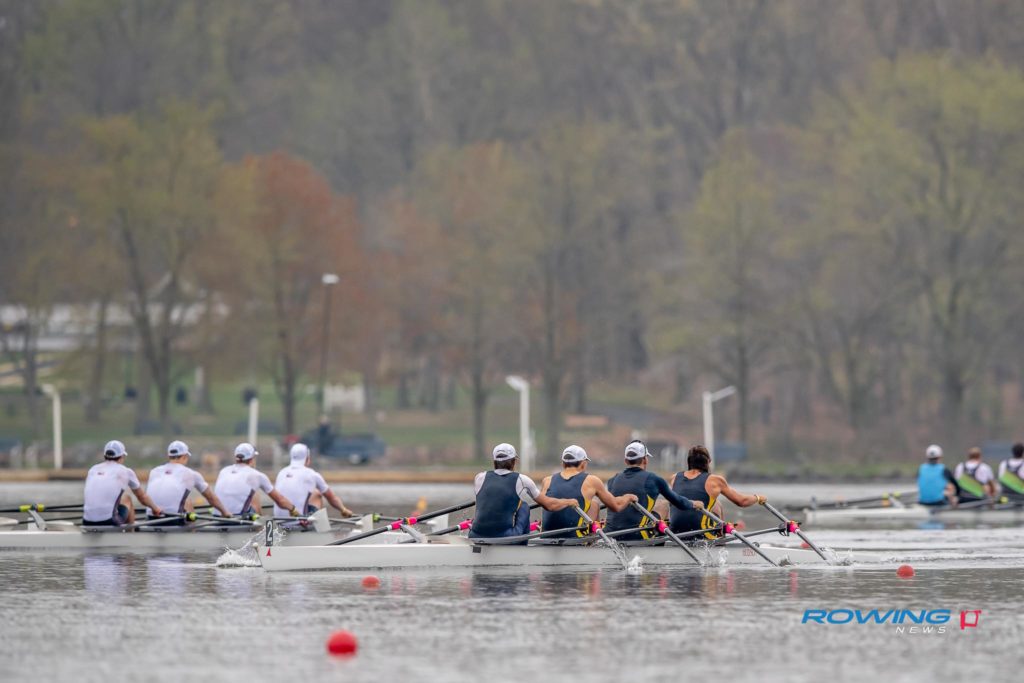
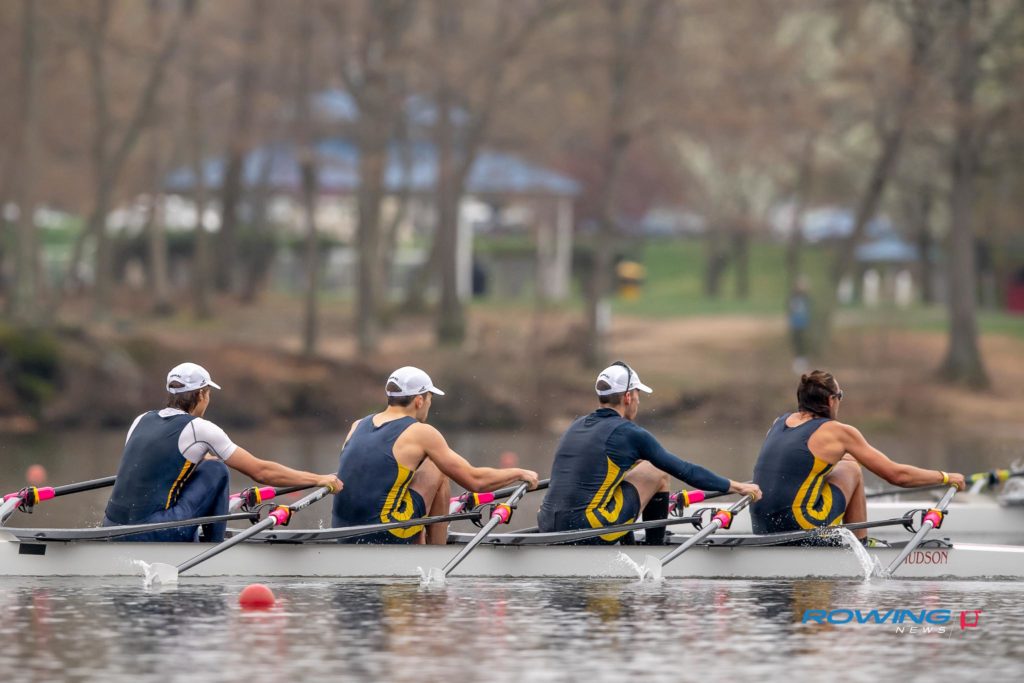
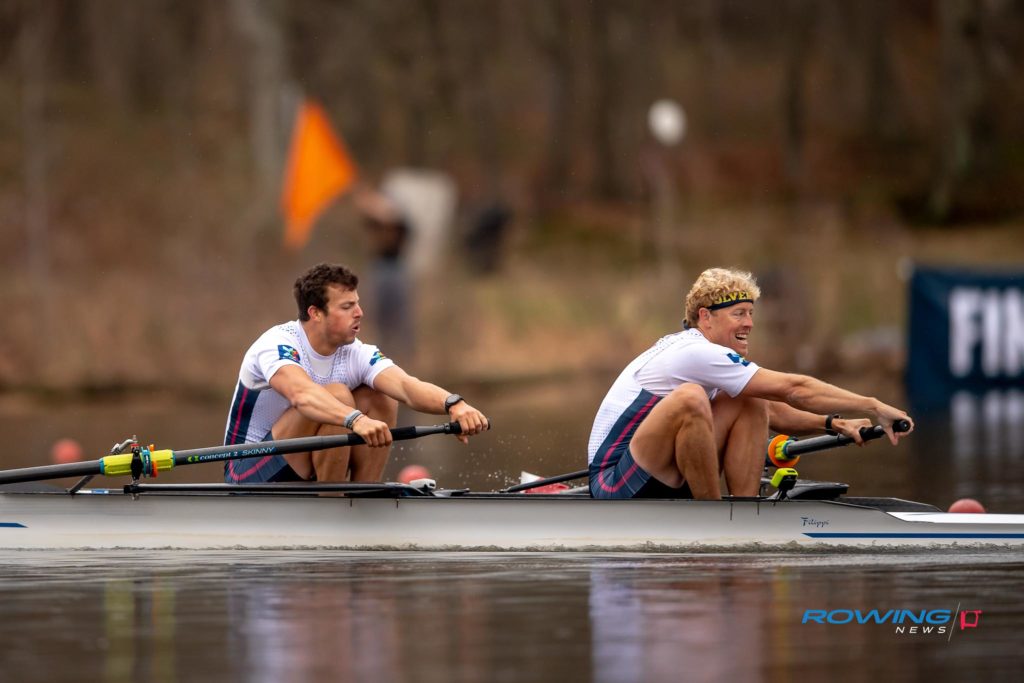
OKLAHOMA CITY, OKLA. — It was a year of firsts for the 2021 USRowing Central Youth Championships.
It was the first event in over a year since Oklahoma City’s Boathouse District hosted a formal regatta. It was the first time teams such as Newport Aquatic Center and NORCAL Crew were able to participate in the event. And it was a first for hundreds of athletes who — after months of no racing — were able to go head-to-head against competitors.
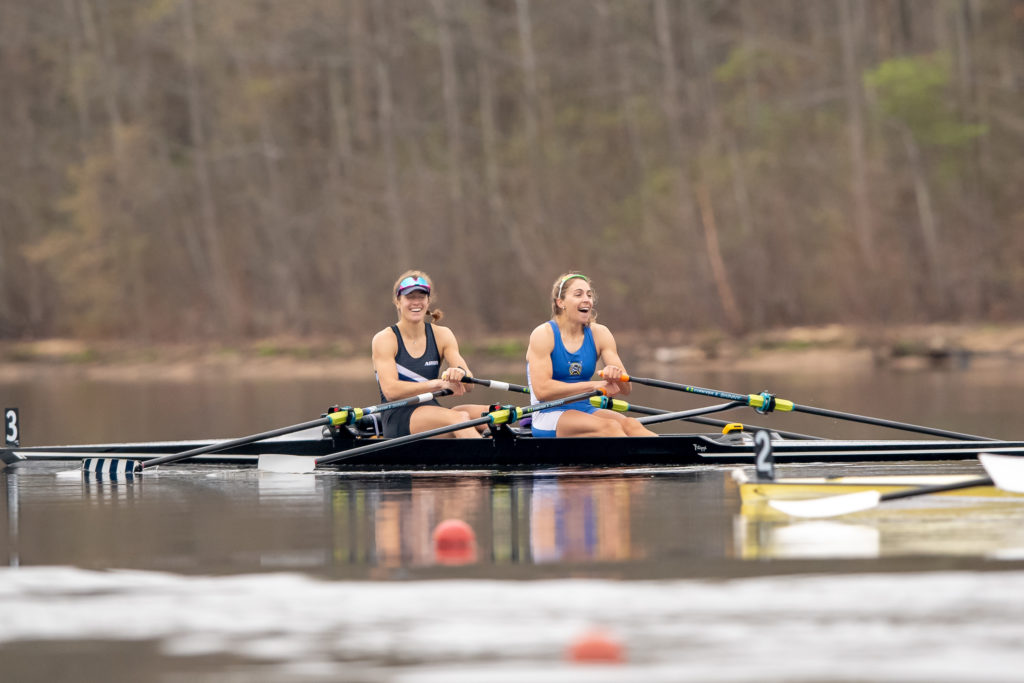
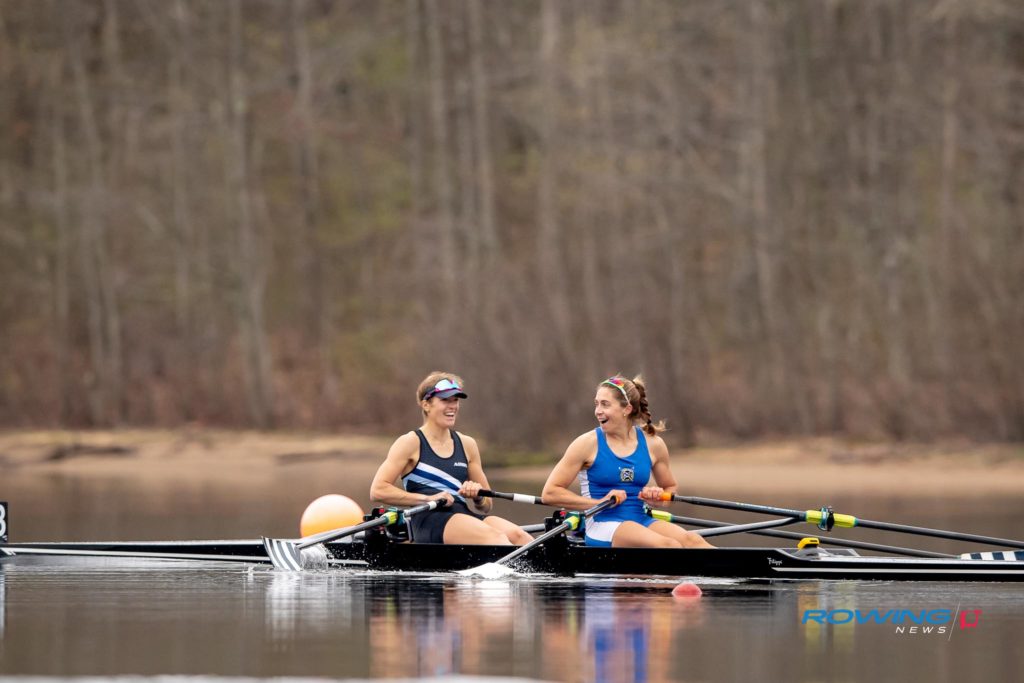
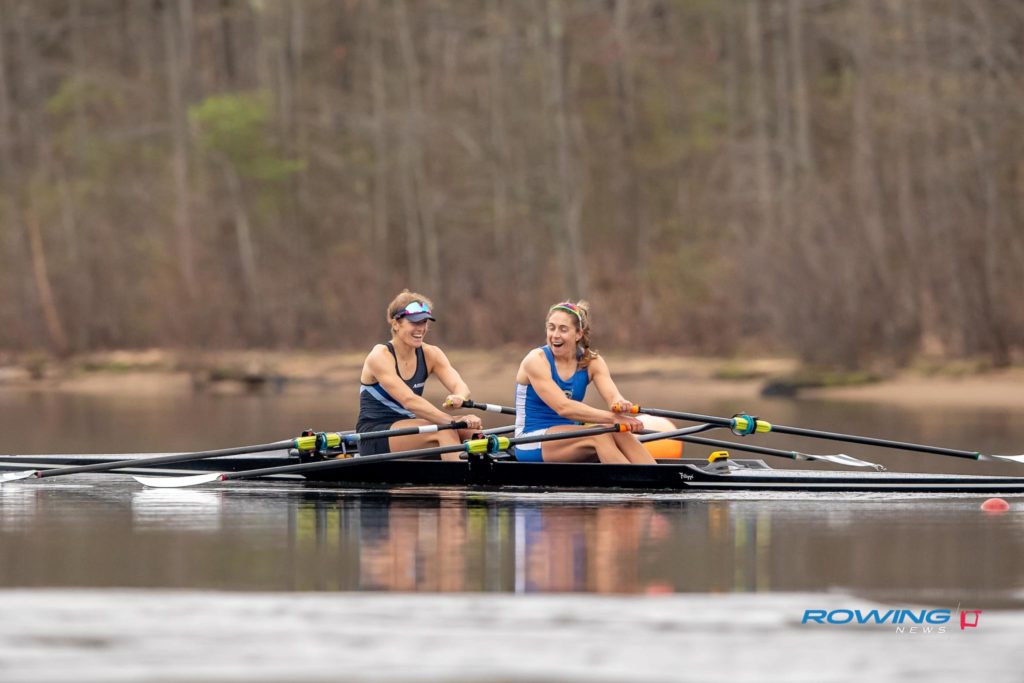
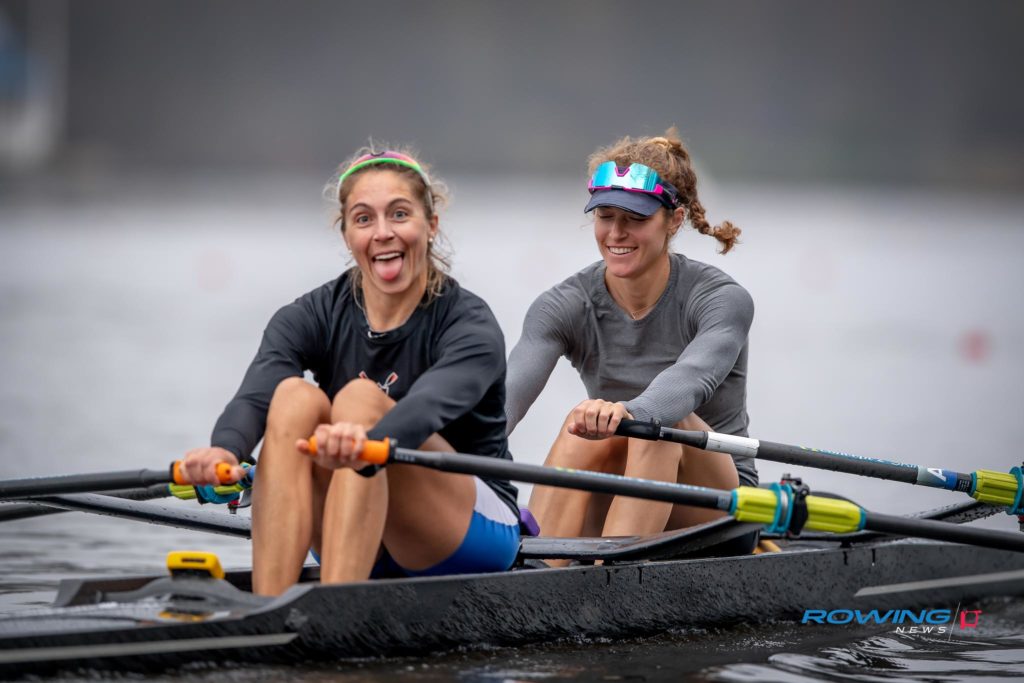
“This is our first time [racing at the Oklahoma City’s Boathouse District]. We went to Dallas a few times, but it was nothing more than a scrimmage. This is really cool and really fun,” Texas Rowing Center’s Ava Martinez and Marin Maycott said.
“This is our first time [racing at the Oklahoma City’s Boathouse District]. We went to Dallas a few times, but it was nothing more than a scrimmage. This is really cool and really fun.”
-Ava Martinez and Marin Maycott
With 26 clubs lined up to compete for championship titles, it’s a special opportunity for senior student-athletes as well.
“It’s been awesome to be able to get the seniors a real racing season,” Dallas Jesuit Head Coach Randy Dam said. “It would have been a big bummer if they had to go two years without being able to race. Same thing with a lot of the other teams.”
Jesuit placed top-six in their time trial events to earn a slot in tomorrow’s final.
They are joined by Chicago Rowing Foundation who won the time trial for the men’s youth eight as well as Newport Aquatic Center who took second. NORCAL, Dallas United, and White Rock Rowing will take the three remaining spots in the final.
In tomorrow’s women’s youth eight final Chicago Rowing Foundation will line up next to Newport, NORCAL Crew, Dallas United, Texas Rowing Center, and OKC Riversport.
In addition to the many other firsts for the event, crews are not racing for a spot at a national championship due to the fact that this year’s Youth National Championship is open to all crews.
Results for the 2021 USRowing Central Youth Championships can be found here. Finals for the USRowing Central Youth Championships begin at 8 a.m. CST.
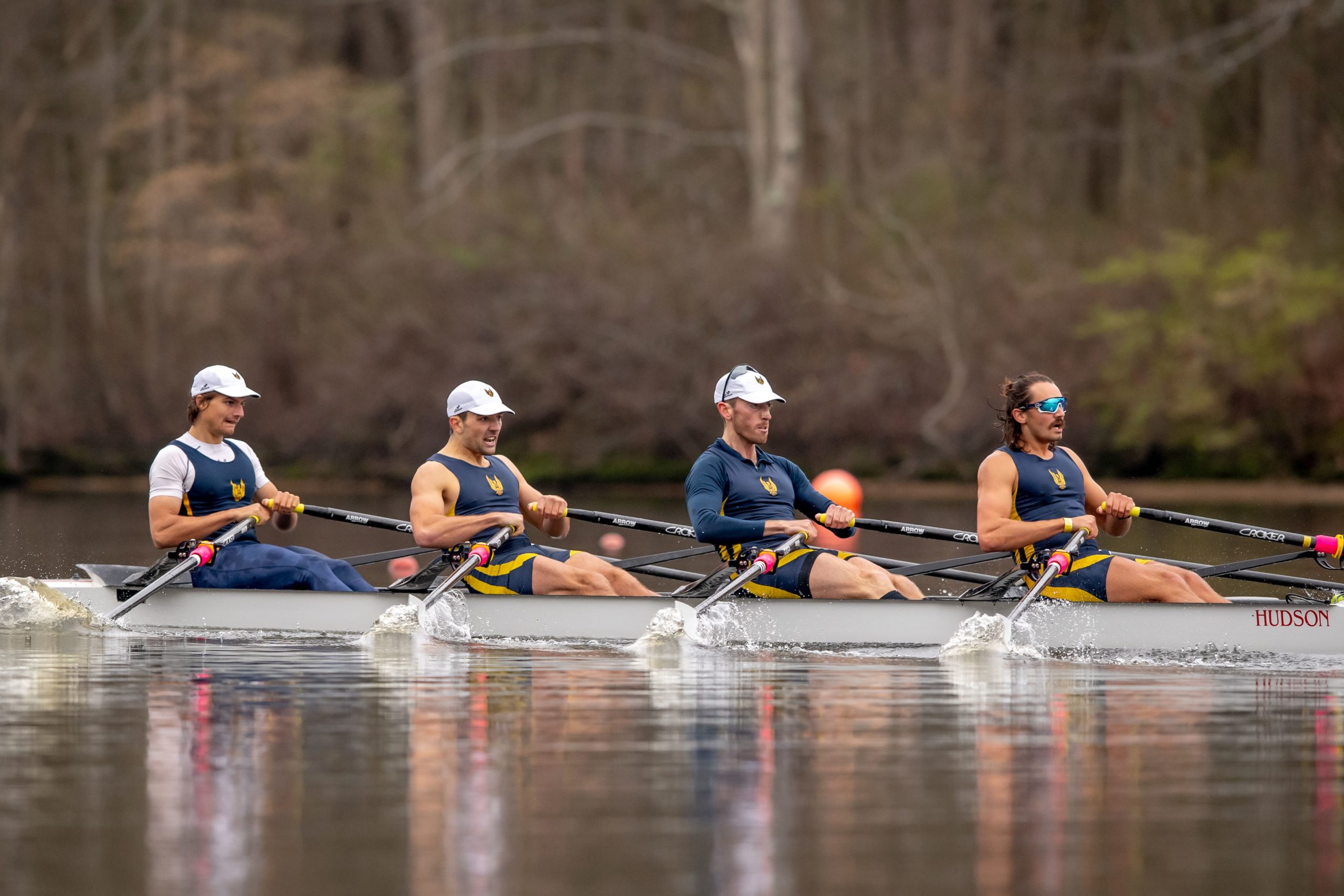
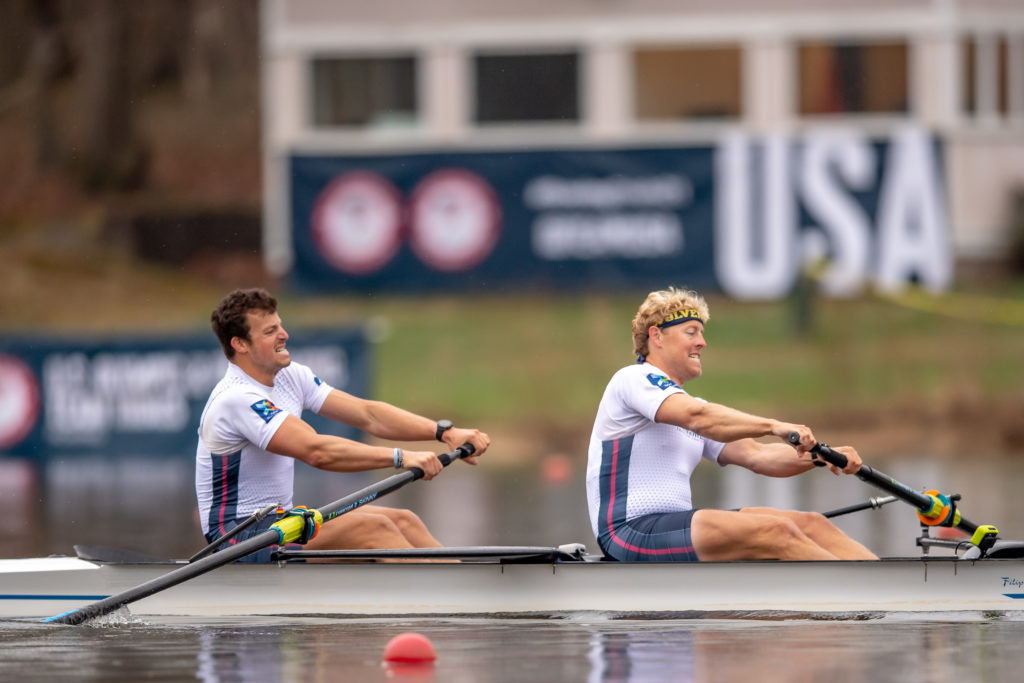
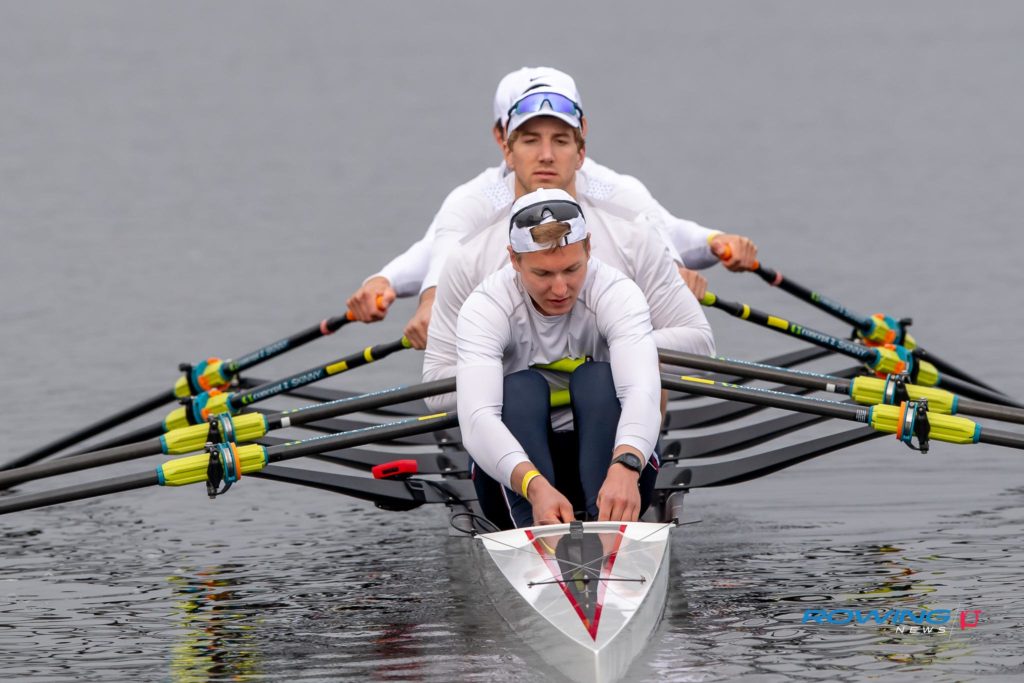
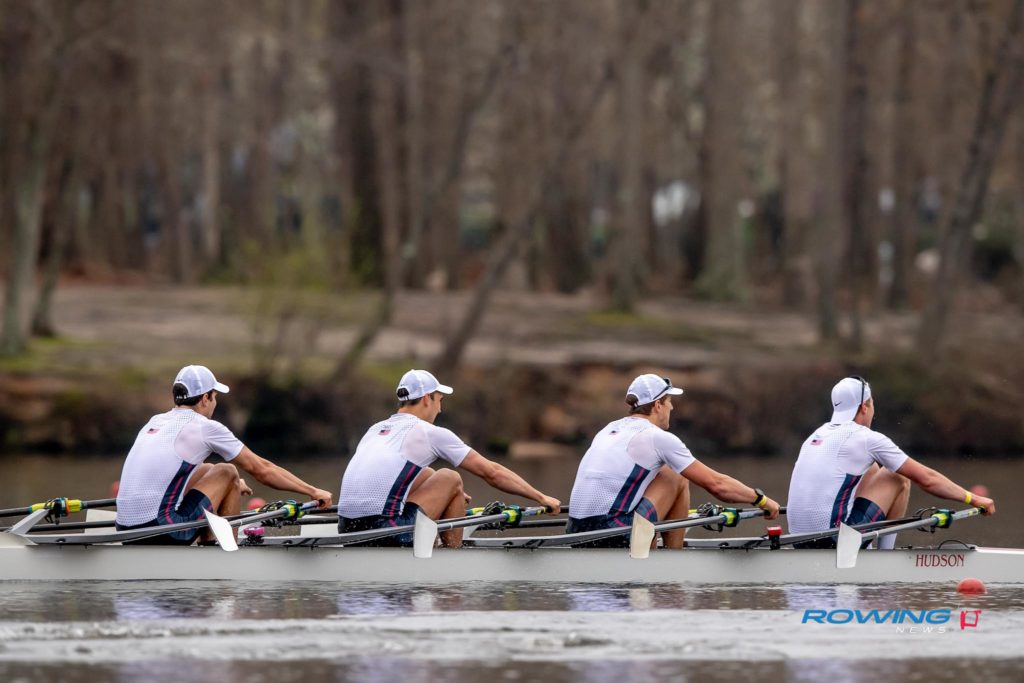
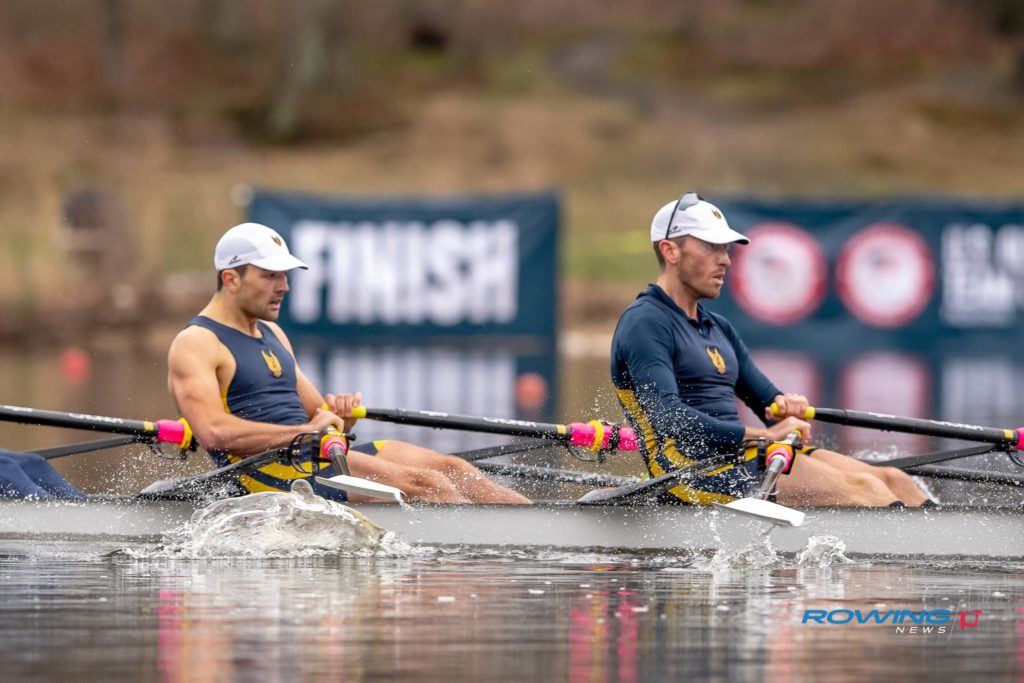
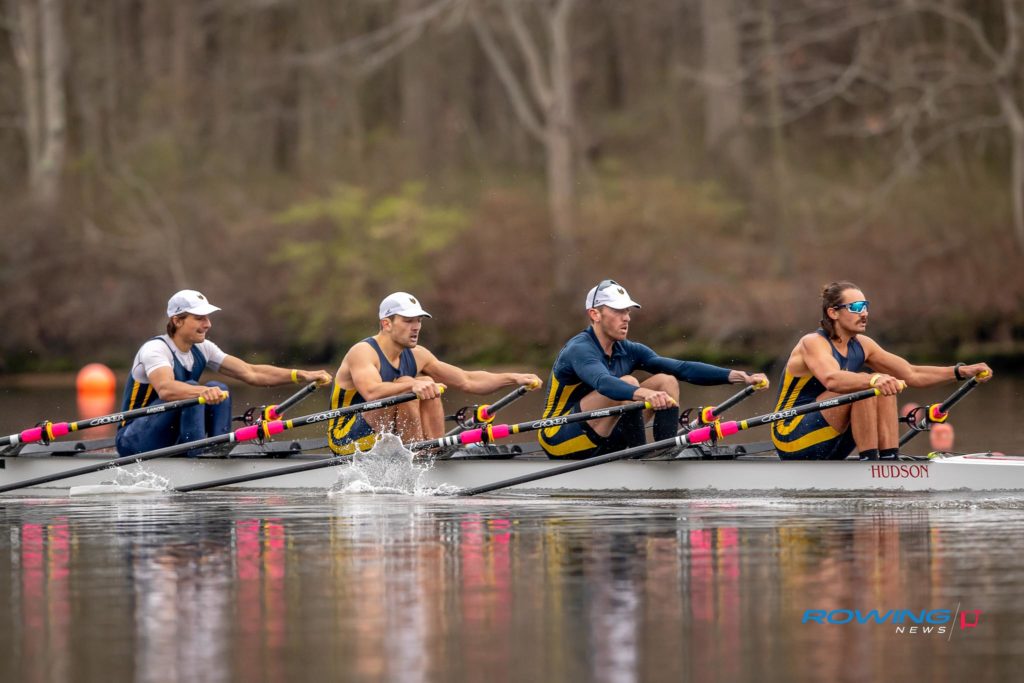
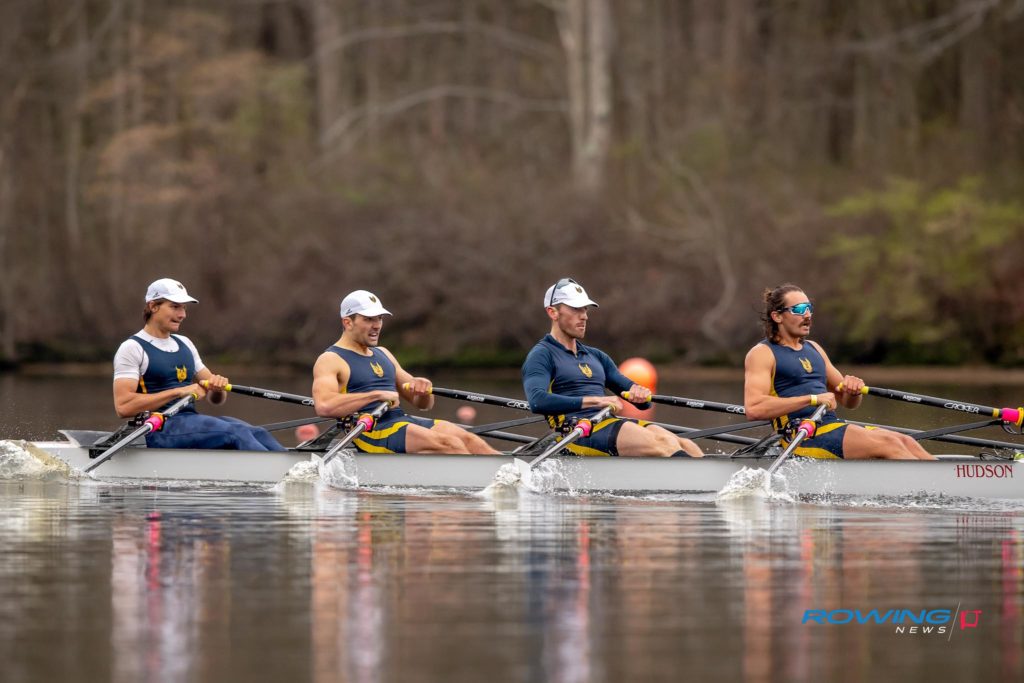
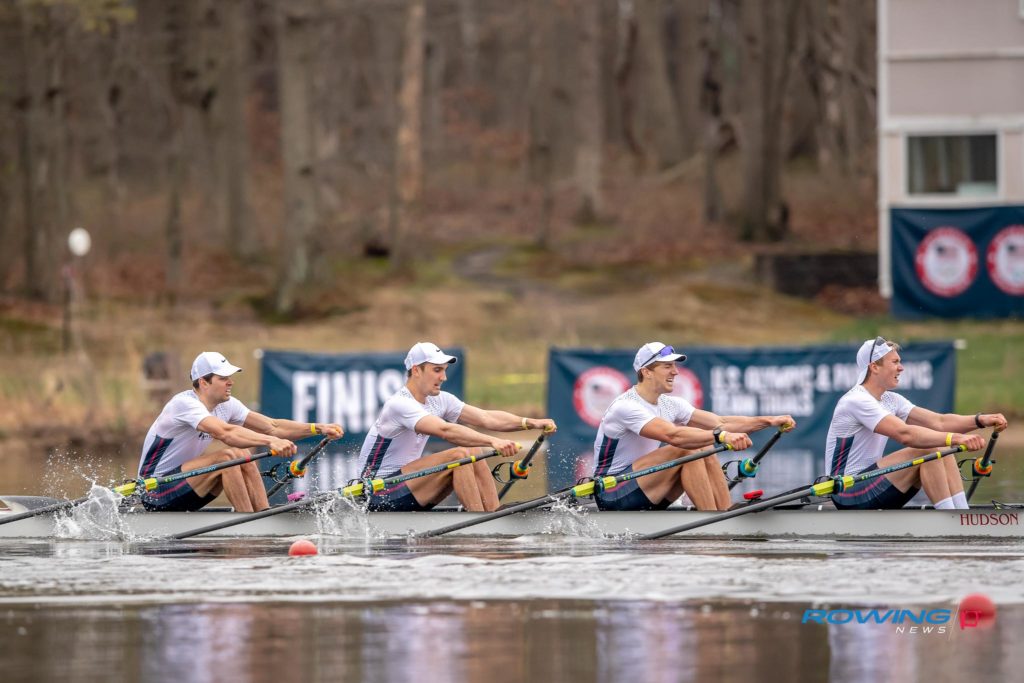
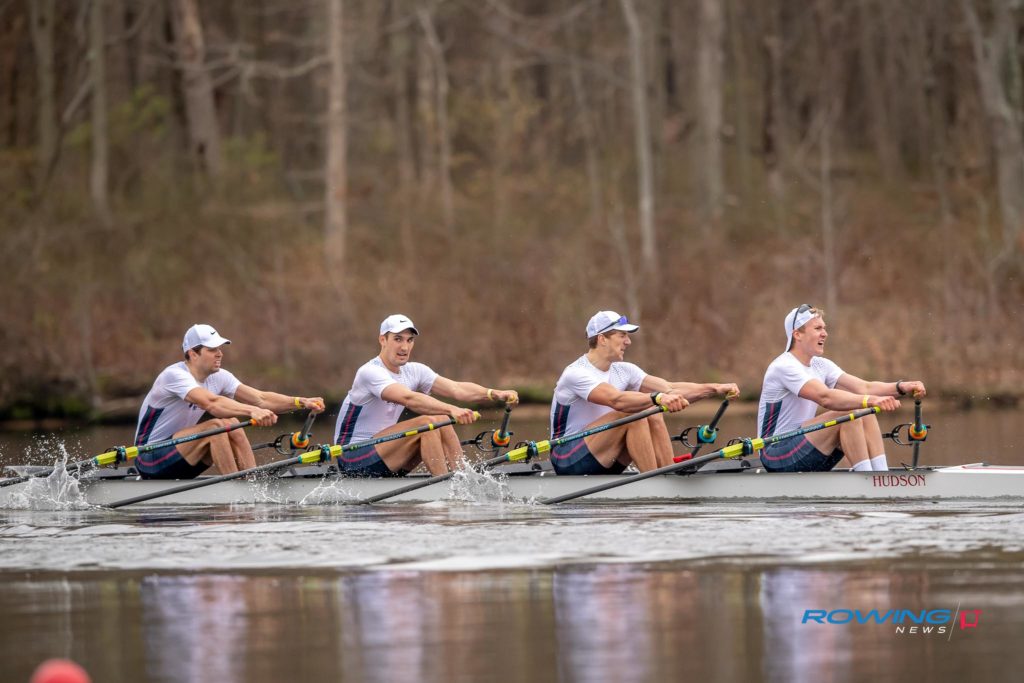
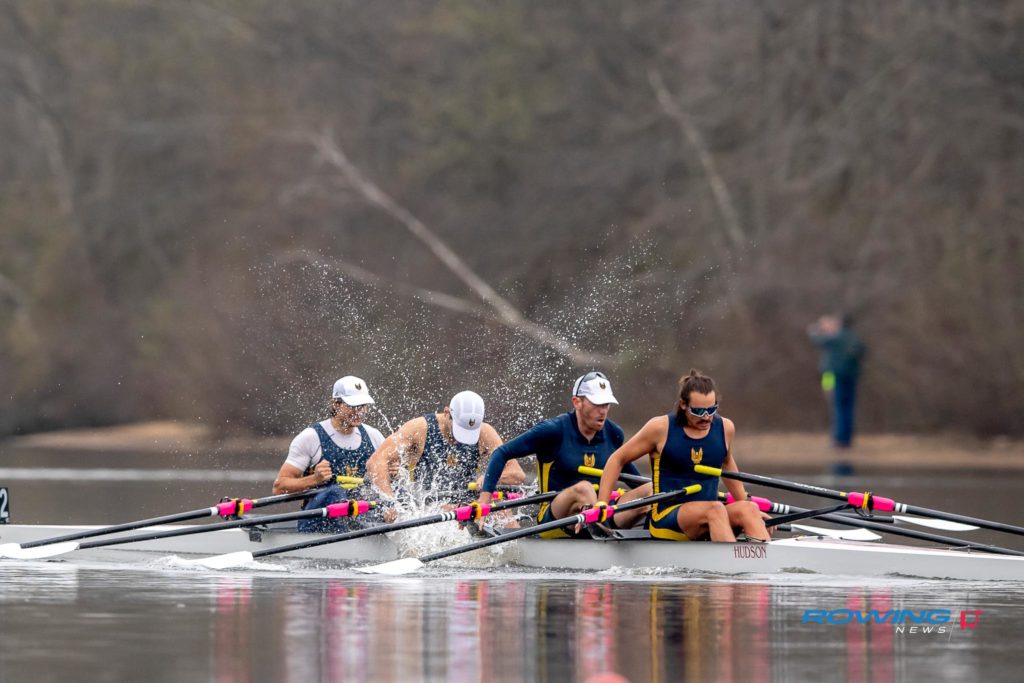
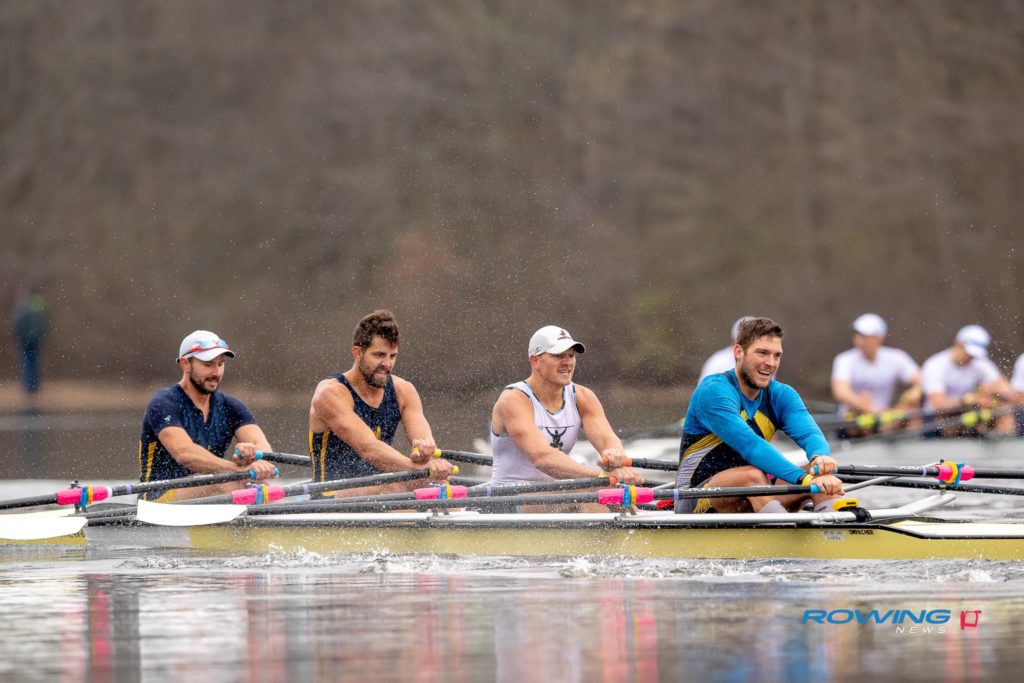
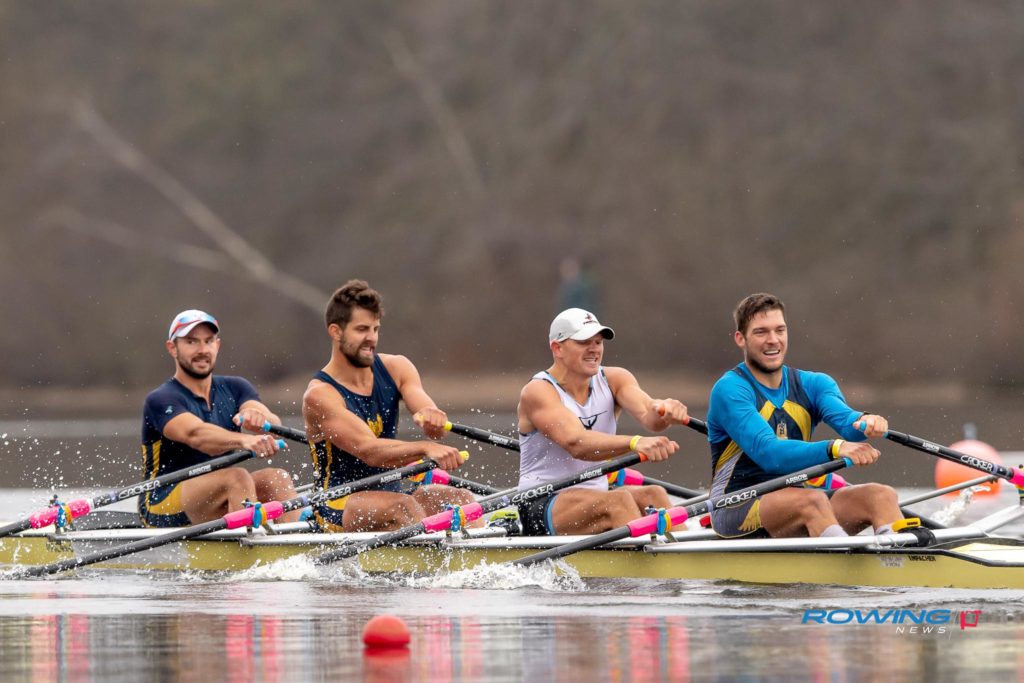
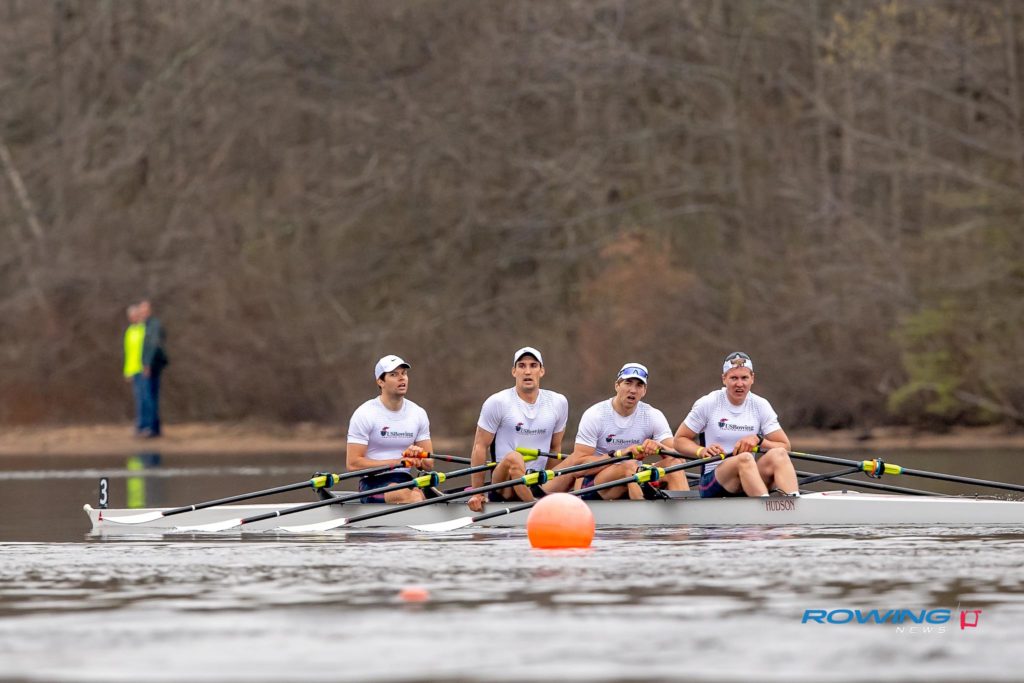
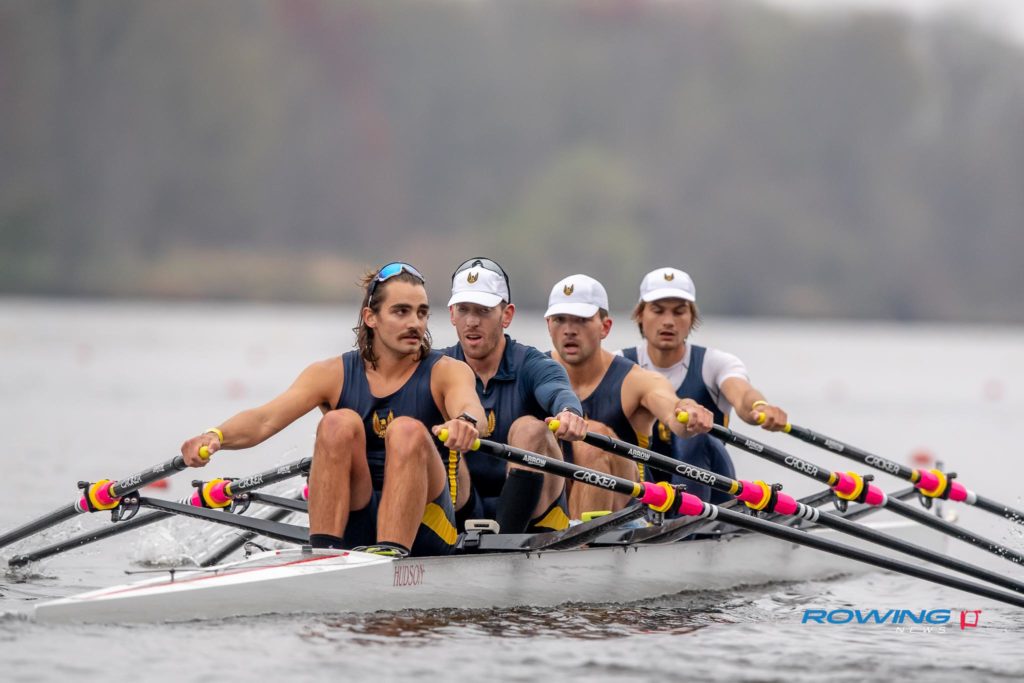
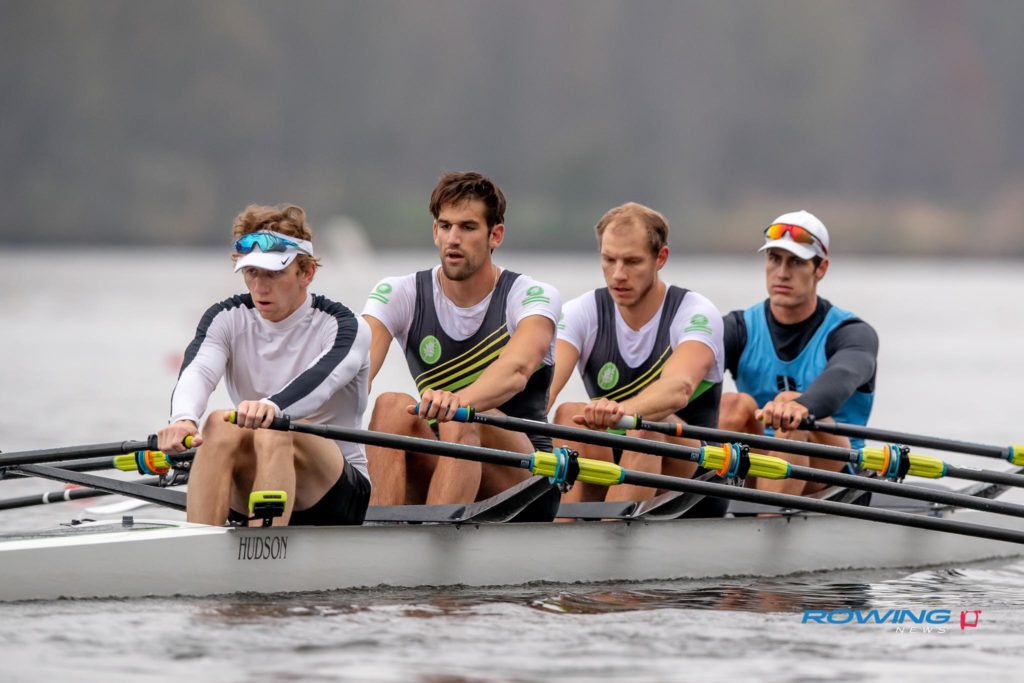
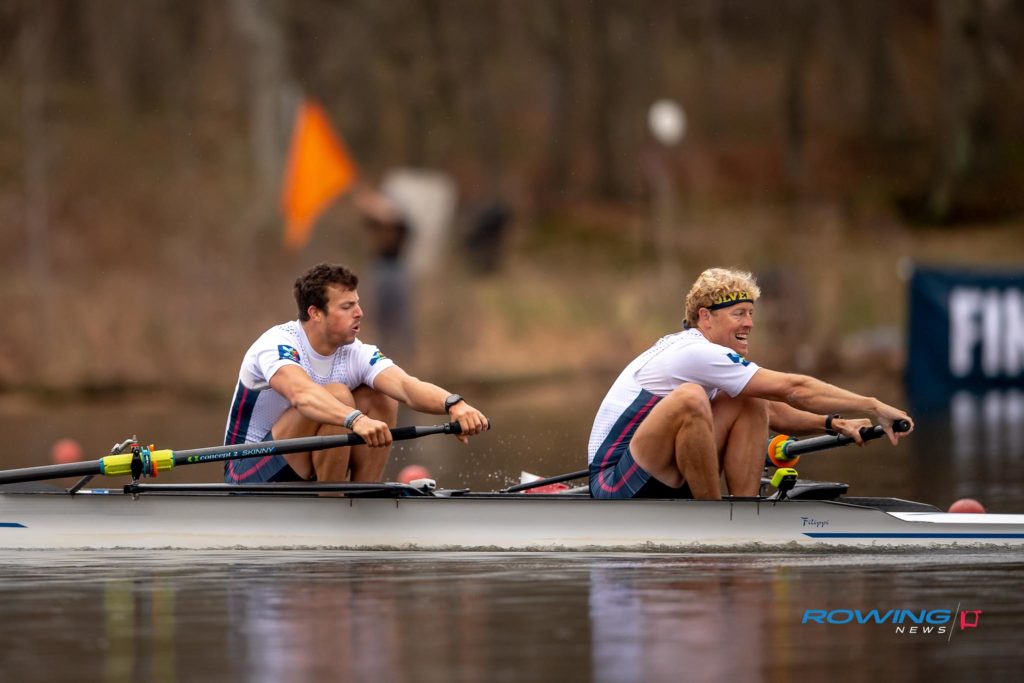
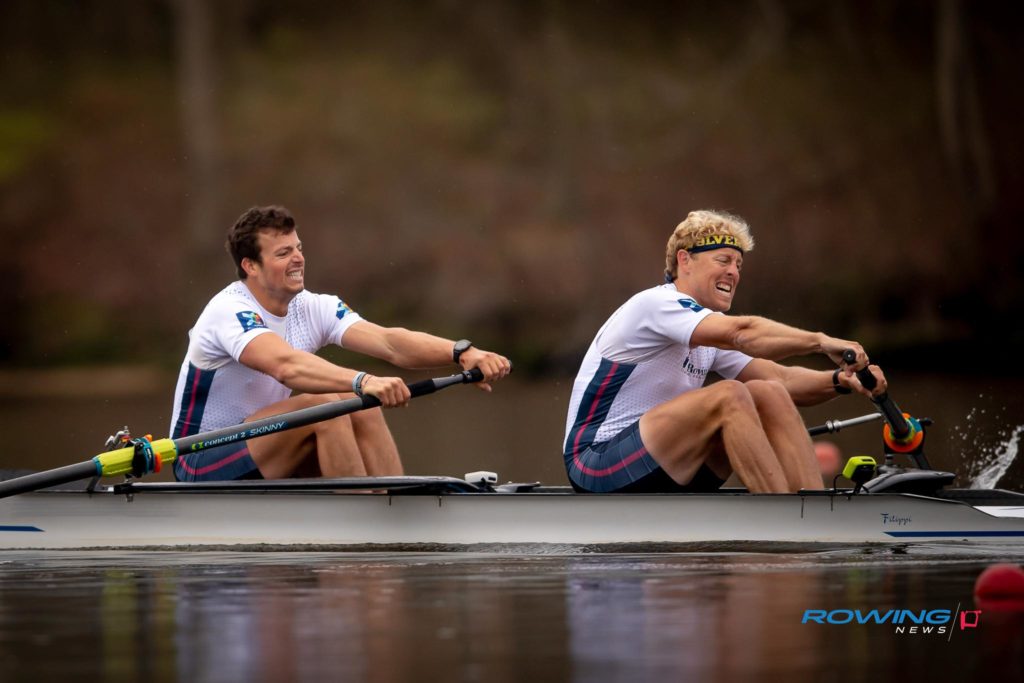
Looking to get in a tune-up regatta against international competition, the Schuylkill Navy/Penn A.C. men’s quad that won U.S. Trails II last month, showed promise racing in the final of World Rowing Cup I in Zagreb, Croatia, crossing fourth Saturday in a photo-finish sprint to the line against Germany.
The U.S. trailed early in the race, but pushed through into third driving through the final 500-meters, but missed the medals when Germany sprinted back and nipped the new U.S. crew at the line.
It took a few minutes for race officials to determine the outcome, but once sorted out, the U.S. had finished just a hair behind Germany — 5:49.65 to 5:49.76.
This was the final preparation race for the crew of Charles Anderson, Justin Keen, Eliot Putnam, and Sorin Koszyk, who will next travel to Lucerne, Switzerland, and attempt a top-two finish to earn an Olympic placement at the Final Olympic Qualification Regatta, May 15-17.
While the crew did not reach the medal podium, they felt that they had made progress and are encouraged by the racing.
“We feel good for now,” said Keen. “We improved every day and accomplished our goals for this regatta. Today we wanted to be in the mix for the medals at the thousand, economize for 500, then send the last 500,” he said.
“We were able to do that, but Germany was able to find a couple more feet at the line. Each stroke we take battling it out with qualified boats builds our confidence as a crew. We’re excited to get back into the boat and oars we’re used to and have a quality training camp in Linz, [Austria] before heading to Lucerne.”
While much of rowing depends on automatic and unconscious actions, it is possible for rowers and coxswains to think themselves into a panic, which can lead to choke.
The best way to avoid this is through proper preparation. Have crews practice the various components of a race over and over again.
Also have them mentally work through worst-case scenarios, such as crabs or equipment issues. On race day, it is helpful to keep a checklist of things to work on to ensure their focus is on rowing well and not on the pressures of competition.
It is the job of the coach (on land) and the cox (on the water) to keep reminding the athletes of these points. Some researchers suggest that thinking too much during a competition has a negative impact on performance.
Crews I coached have clearly benefited by visualizing a number of different race scenarios where they had to overcome a problem to achieve the desired outcome. They have also benefited from real-world practice, too.
By learning how to get back to race pace following a boat-stopping crab or after another crew overtakes them, they learn to overcome anything, including choking.
The University of Washington, University of Central Oklahoma and Bates College continued to top the rankings in this week’s Women’s Division I, II and III Pocock CRCA Polls presented by USRowing.
In the DI rankings, the Huskies received 18 of 25 first-place votes to remain atop the poll. The University of Texas continued to rank second, earning the remaining seven, first-place votes. University of Virginia ranked third, with Rutgers University and the University of Michigan rounding out the top five.
In DII, the top five remained unchanged with the University of Central Oklahoma ranking first, receiving all five, first-place votes. Seattle Pacific ranked second, followed by the Florida Institute of Technology. Embry Riddle Aeronautical University and Western Washington University rounded out the top five.
Receiving all 10 first-place votes, Bates College took the top spot in the DIII poll. Wesleyan University ranked second, followed by Ithaca College, Tufts University and Hamilton College.
Division I Rankings
Rank
Team
Total Votes
Previous Ranking
1.
University of Washington (18)
490
1
2.
University of Texas (7)
484
2
3.
University of Virginia
423
3
4.
Rutgers University
383
4
5.
University of Michigan
378
6
6.
Stanford University
374
12
7.
University of California, Berkeley
354
5
8.
Ohio State University
339
7
9.
Syracuse University
263
8
10.
Indiana University
249
9
11.
Southern Methodist University
221
14
12.
University of Tennessee
215
11
13.
University of Alabama
211
10
14.
University of Minnesota
133
16
15.
Duke University
122
13
16.
Washington State University
114
15
17.
Brown University
91
NR
18.
University of California, Los Angeles
85
17
19.
Oregon State University
78
NR
20.
University of Wisconsin
60
18t
Others Receiving Votes: University of Iowa (59), University of Notre Dame (35), Clemson University (30), University of Southern California (29), Princeton University (19), University of Tulsa (6), U.S. Naval Academy (4), and University of San Diego (1).
Division II Rankings
Rank
Team
Total Votes
Previous Ranking
1.
University of Central Oklahoma (5)
195
1
2.
Seattle Pacific University
170
2
3.
Florida Institute of Technology
139
3
4.
Embry Riddle Aeronautical University
134
4
5.
Western Washington University
87
5
6.
Mercyhurst University
64
8
7.
Barry University
55
7
8.
Jefferson University
54
6
Others Receiving Votes: Rollins College (2).
Division III Rankings
Rank
Team
Total Votes
Previous Ranking
1.
Bates College (10)
150
1
2.
Wesleyan University
135
5
3.
Ithaca College
130
2
4.
Tufts University
123
4
5.
Hamilton College
102
6
6.
WPI
90
3
7.
US Coast Guard Academy
88
13
8.
Washington College
62
10
9.
Pacific Lutheran University
60
8
10t.
Trinity College
58
9
10t.
Williams College
58
7
12.
Rochester Institute of Technology
55
11
13.
William Smith College
37
12
14.
Colby College
17
15
15.
Marietta College
15
14
Others Receiving Votes: Stockton University (10) and Lewis & Clark College (10).
With many returning to the water following winter or Covid restrictions–whether a warm-weather training camp or the resumption of business as usual–the natural tendency, and danger, is to jump back into demanding training too quickly. A sudden increase in volume or intensity without adequate preparation invites injury and missed water time.
To avoid this, first identify and accept the athletes’ current fitness level, regardless of what it should be or you want it to be. If your athletes didn’t do enough previously, “whipping them into shape” will succeed only in damaging their health and enthusiasm. Second, coach to each individual as much as possible. If you direct your training only to the fittest few, you’ll lose your numbers. If you coach to the lowest common denominator, you’ll bore your better athletes, and they won’t improve. With mixed boats rowing by sixes, more prepared athletes are able to train more, and the less ready are able to row less. Rather than creating one weak slow boat, distribute the weaker athletes across the bow pairs of all the crews.
Our bodies are not equipped to sustain strenuous physical work unless being introduced to it gradually. We can sometimes do unprecedented things once, but after doing so, we often pay a heavy price in recovery time. Stay safe by starting relatively slowly and building the training load progressively.
Pay attention to volume, intensity, and recovery time. Longer recovery periods are needed early on. Even lower- intensity rowing places significant demands on the body when it’s a new endeavor. Temper the volume level of the workouts, gradually ramping them up. It’s typically better to increase either volume or intensity in a given session rather than both simultaneously. Do either more kilometers or faster kilometers each day, but not more faster kilometers.
The mental aspect is no different from the physical. Concentration is a learned habit that diminishes when not exercised and does not return to previous levels immediately. Minds will wander on longer rows. It’s also extremely hard to maintain a high level of output for extended periods. Ask too much too soon and the athletes may well plateau, while feeling stagnant will sap confidence. “Negative splitting” the training (performing the second half of a row or workout faster than the first) is a progressive approach that provides a sense of improvement that motivates and builds confidence. Peaking at the right time is the goal, not the total amount of work done.
Teams do not pick up where they left off previously. It’s often a different team with new leadership that doesn’t yet possess the knowledge or confidence to lead from day one. Be patient. Previous best practices and expectations should be re-introduced. Taking the time to explain yourself first saves time in the long run.
Coaches seek quick improvement but must resist the temptation and tendency to do too much too soon. When returning to training or getting back on the water, build into it gradually. One day of overworking your athletes isn’t worth multiple days needed to recuperate.
On a Friday afternoon in January, in two places separated geographically by 1,300 miles and meteorologically by at least 50 degrees, the challenges Andrea Landry would have to confront as the new women’s rowing coach at the College of Holy Cross were painfully evident.
In Worcester, Mass., where Covid-19 concerns had halted all Crusader practices and nearly vacated the 50-acre campus, Landry was forced to utilize Zoom to address a team still smarting physically and emotionally from an unimaginable tragedy exactly 12 months earlier.
Meanwhile, at that moment in Vero Beach, Fla., as mourners reverently dropped pink carnations into the Indian River, several local crews rowed silently past the Merrill P. Barber Bridge. It was a moving memorial to what had transpired at an intersection there exactly one year ago, when a van carrying the Holy Cross women rowers–in Florida on a practice trip–was struck by a pickup truck.
That crash killed Grace Rett, a sophomore rower, on the day after her 20th birthday. It also seriously injured several of her Crusader teammates. In its messy aftermath, lawsuits were filed, and longtime women’s coach Patrick Diggins, who had been driving the van, retired.
That combination of trauma and seclusion spread like a pall over the program that Landry took control of in July when, after a career as a successful UMass rower and coach, she was hired by Holy Cross to succeed Diggins.
Despite its challenges, the new job was a welcome homecoming for Landry, a native of nearby Shrewsbury and the married mother of a 2-year-old daughter. Lake Quinsigamond, the Crusaders’ home course, was where as an awkward seventh-grader she’d discovered the sport while attending one of her older brother’s races, and where she first touched oar to water.
“I saw my brother’s crew carrying the boats over their heads and down to the dock, and right away my interest was sparked,” she said. “But by my freshman year in high school, I still didn’t have the maturity, athletic ability, or bravery to try out.”
She found those assets a year later, made the team at Shrewsbury High, and ever since has devoted her life to the sport. Now she will need all that and probably more as she takes control of a rusty, shell-shocked Holy Cross team, one that ended its last complete season by finishing eighth in the 2018-19 Patriot League Championships.
“With any traumatic experience, it’s inevitable for there to be some residual pain and grieving,” Landry said after the team finally reassembled in February. “But the women have presented themselves each morning wanting to work. A motto they created last spring prior to the Covid shutdown and continue to embody is `Love the Fight.’ You can see that in their eagerness to learn more about their training, in the attitudes they bring to 6 a.m. practices six days a week, in asking constantly if they’ll have a chance to test a 2K and have the chance to race.
“Let’s face it,” she said, “that tragedy remains the elephant in the room. I told them that I will never pretend to understand or know what their experience has been like. It was a very traumatic event, and there still are a handful of women on our roster who are working through what you can see on the surface, rehabbing from the injuries they suffered. But these women are also still grieving for their teammate, Grace Rett. What we’re trying to do moving forward is figure out what to do with those emotions. We have to figure out what is important in terms of their recovery process, their healing process.”
One of the solutions they developed was to honor and emulate the strengths exhibited by Rett, an athlete so determined that just weeks before her death she set a world record by rowing indoors on a machine for 62 consecutive hours.
“We’ve kind of determined that there were some qualities Grace brought to the team that were very apparent, not just to the athletes but to the community, to the parents, to the alumni.”
As a result, the Crusaders grouped those values into an acronym, GRACE (Gratitude, Resilience, Accountability, Resilience, and Accountability), that will serve as their foundation moving forward.
“Part of my job as a coach is to take these values and create an environment where these women can bring them to light,” Landry said. “When things are hard, we can talk about why accountability matters. We can do some team-bonding talking about how we can respect each other and bring enthusiasm to what we do. … There’s a great opportunity here for this team to thrive. We have wonderful resources. And it’s a great group of women.”
“Part of my job as a coach is to take these values and create an environment where these women can bring them to light,” Landry said. “When things are hard, we can talk about why accountability matters. We can do some team-bonding talking about how we can respect each other and bring enthusiasm to what we do. … There’s a great opportunity here for this team to thrive. We have wonderful resources. And it’s a great group of women.”
– Andrea Landry
After addressing that delicate subject in her first remote meeting, Landry confronted the other issue that continues to cloud her team’s prospects: Covid-19. Life is messy, she told her rowers, and the virus is a part of life. If they learned to adapt and overcome its considerable hurdles, they’d emerge better rowers and better people.
“We were very realistic about how they could they do that,” Landry said. “For example, we suggested training they could do at home. We know everyone has different resources, different financial limitations. Not everyone could get to a gym, not everyone has a small boat. They know this season won’t be the same, but I think we’re hanging on. I think we’re in a good place.”
The Crusaders team Landry inherited will be captained by Anne Comcowich, Carrie Malatesta, and Josie Ascione. Its other significant contributors, the coach said, figure to be Maddy Downey, Claire D’Attoma, Lauren Colby, and Ellen Anne Foy.
The rowers couldn’t return to campus and reassemble until Feb. 1. Even then, college, state, and Center for Disease Control guidelines seriously restricted what they could do. The Crusaders’ daily workouts were confined to the walkway above the Hart Center’s basketball court. There, masked up and 14 feet apart from each other, they practiced on rowing machines, building stamina for a season that may or may not take place.
“We’ll be on the earth, building our base,” Landry said. “We’re not going to be focusing hard on the specifics of racing or technique. It’s just going to be about building our base, getting our volume in, getting to know each other.
“For now, we’re here and we’re grateful. But I’m a realist. We’re still in a pandemic. Things will happen. But we’re doing what is in our control to prevent any team-wide shutdowns. We’ll revisit protocols for rowing on Lake Q once we cross that bridge.”
Like most collegiate crews, the Crusaders haven’t competed since the pandemic struck last March. Their fall season was canceled, and as of late February, they weren’t yet sure what the spring would look like. Landry said it was possible they could resume racing as early as March 27, and a few meets have been penciled in. She also said her team “expects to be on the Cooper River” for the Patriot League Championships in May.
This environment of uncertainty couldn’t be more different from the remarkably consistent one she inhabited at Amherst as a rower and coach. A walk-on at UMass, one whose grit and devotion to fundamentals made up for a shortage of natural ability, she helped the women rowers capture three Atlantic 10 titles. In 2009, Landry became a graduate assistant and rose steadily– from recruiting director, to assistant coach, to assistant head coach, to acting coach when the successful program’s longtime head, Jim Dietz, stepped down in 2019.
During her tenure on Dietz’s rowing staff, UMass women won three more Atlantic 10 titles, three Dad Vail Regatta championships, and made it to three NCAA championships.
“As a coach, the thing that made her special was that she immediately realized coaching was not all about wins and losses,” said Dietz. “It was about the athletes. She communicates well with her athletes, and they quickly come to realize that she has their backs.”
As for the difficult situation she stepped into in Worcester, Dietz predicted Landry’s experiences in rowing would help both her and her team.
“One thing you learn from rowing,” he said, “is how to endure. There are no timeouts, just preparation every day for the challenges you meet.”
West Windsor, N.J. – Gevvie Stone and Kristina Wagner had very different initial reactions to the Pandemic postponement of the Tokyo Olympics.
Stone, who was just finishing up preparing for life as an emergency room doctor, had put the start of her career on hold to train for the possibility of rowing in a third Olympics in 2020. She was preparing to go to Olympic trials and vie for a spot in the women’s single but trials were canceled followed by the eventual postponement of the Tokyo Games.
She spent weeks after the delay was announced wondering if she had another year of training in her, or if she should be content with having rowed in London in 2012 and winning a silver medal in Rio.
Wagner, by comparison, was a year out of Yale University and just getting started trying to earn a spot sculling on the U.S. national team. She rowed in an ARION quad at the Henley Royal Regatta, and then in a U.S. quad at World Cup III both in the spring of 2019, but her training for an international career was just beginning.
Her reaction to the Olympic delay was to think of it as a chance to train for an additional year.
“I saw it being either disheartening, as in, ‘oh another,’ or, ‘OK, another year,’ and using it as an opportunity rather than a roadblock.”
So, Wagner remained in Saratoga, New York training with the ARION sculling group there. She stayed safe and healthy and went to the 2021 Olympic Trials I in Sarasota in February, where she had the kind of performance that drew attention to how much she had developed, finishing third in the final.
Stone, who had come around to the idea that she could be a doctor the rest of her adult life, but that she had probably one year left before she would have to retire from competitive rowing, and decided to continue. She also went to the Sarasota trials, where she finished second to Kara Kohler.
It had always been Stone’s plan to go to the second Olympic trials if she did not win in the single, to race for the women’s double spot in Tokyo that she and Cicely Madden had qualified at the 2019 World Rowing Championships. But when her Cambridge Boat Club group went back to Boston to hold a selection camp, Wagner was invited to join in. And, during selection, Stone and Wagner emerged as a double.
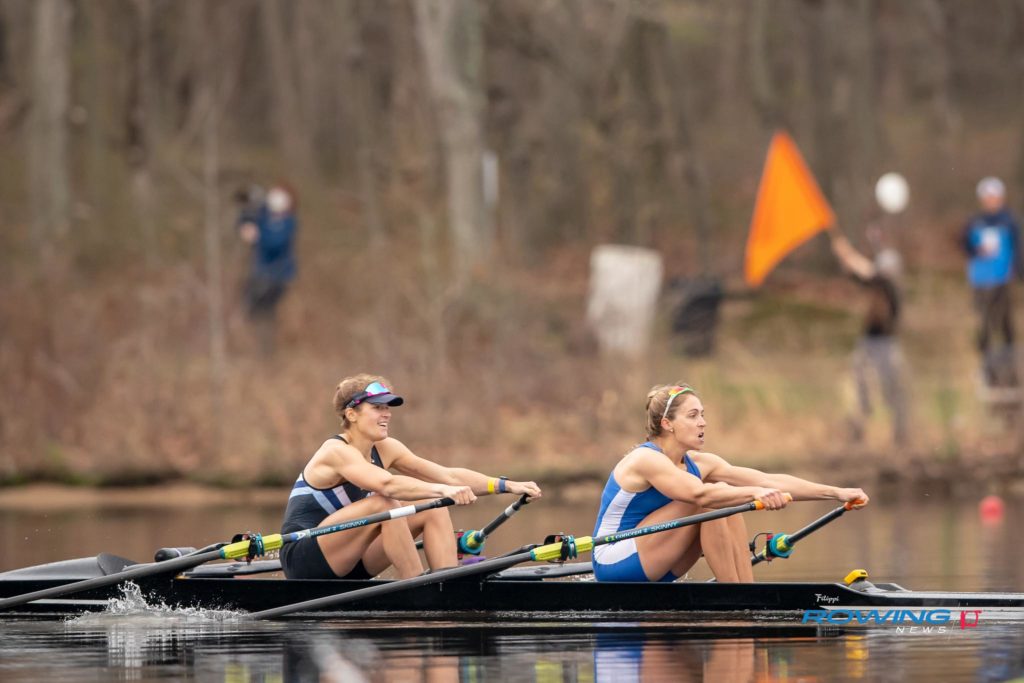
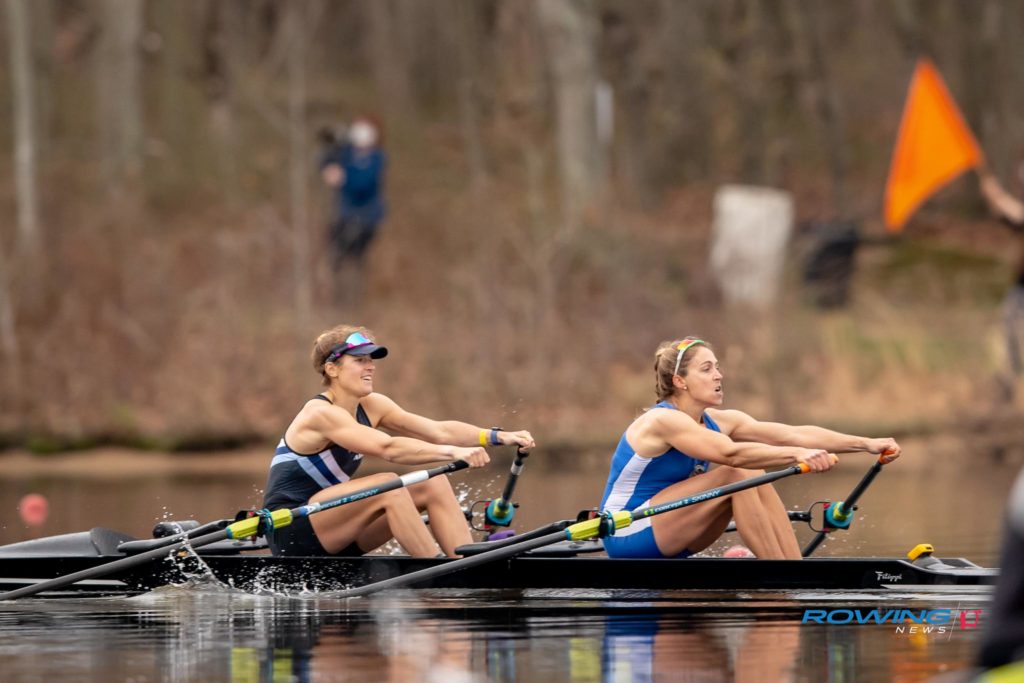
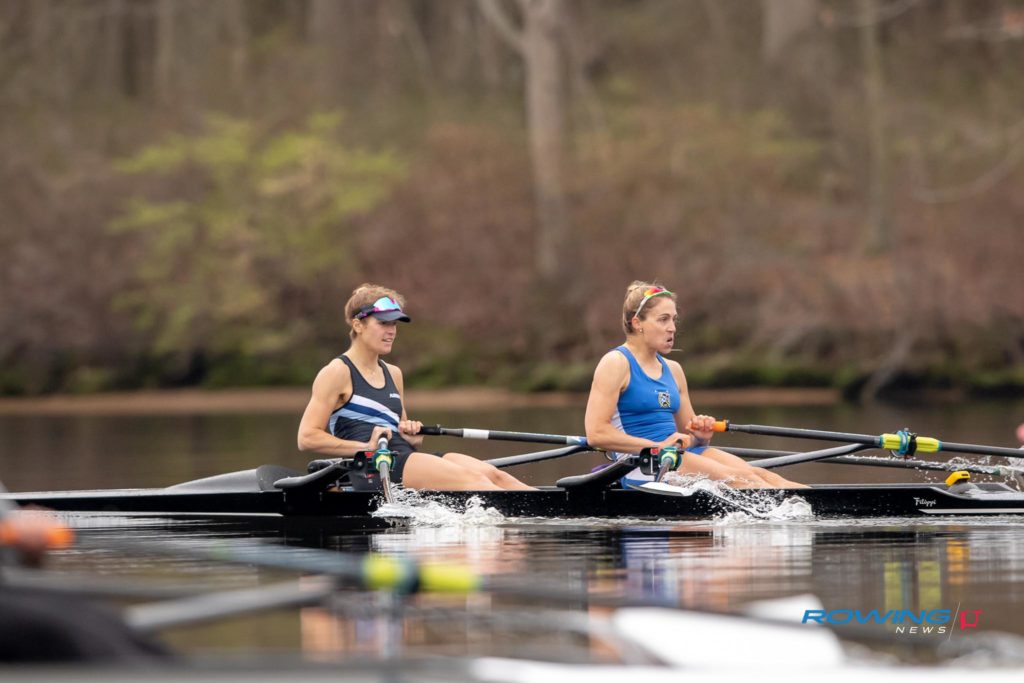
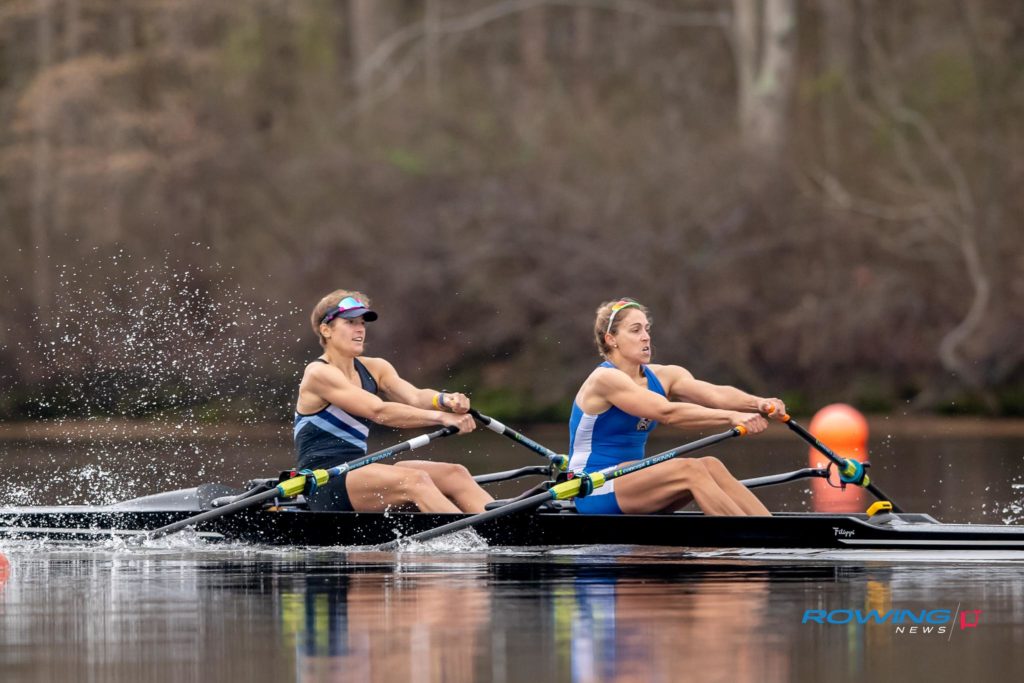
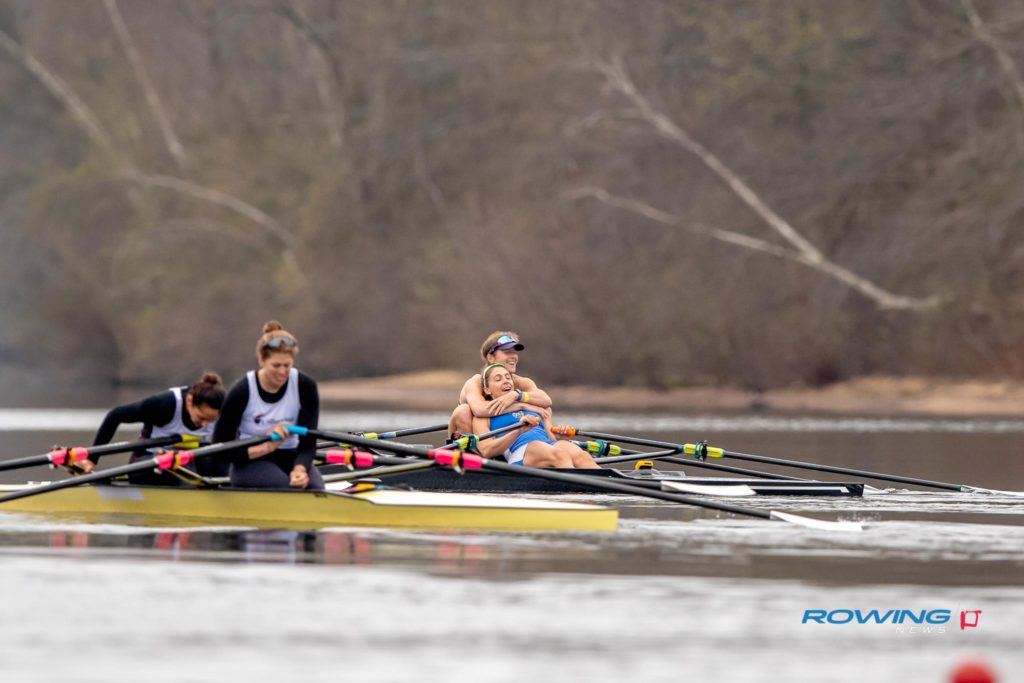
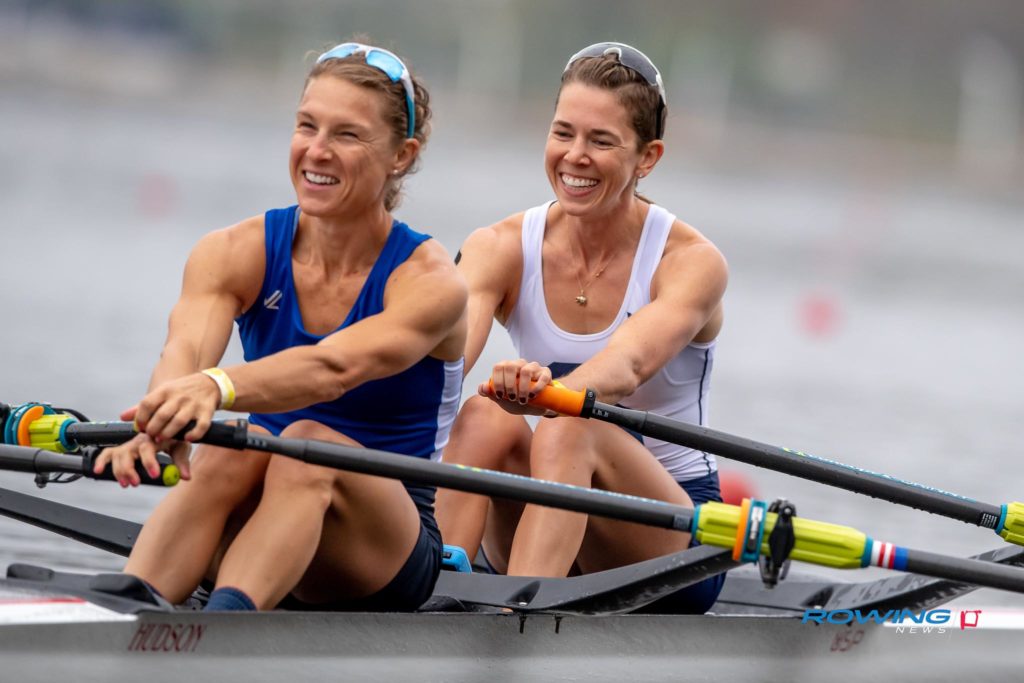
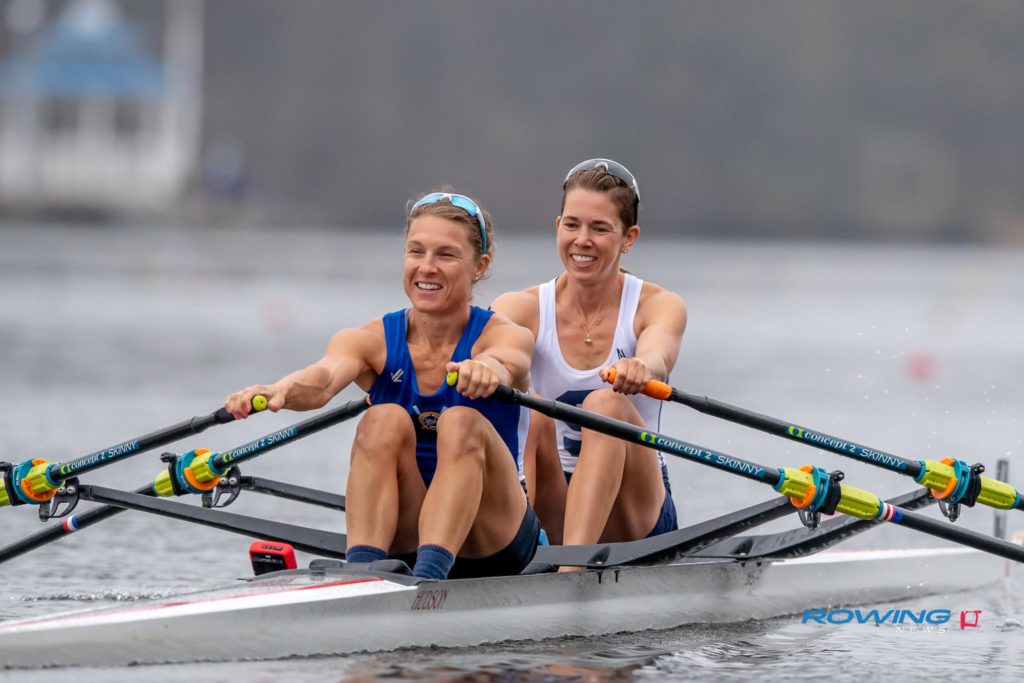
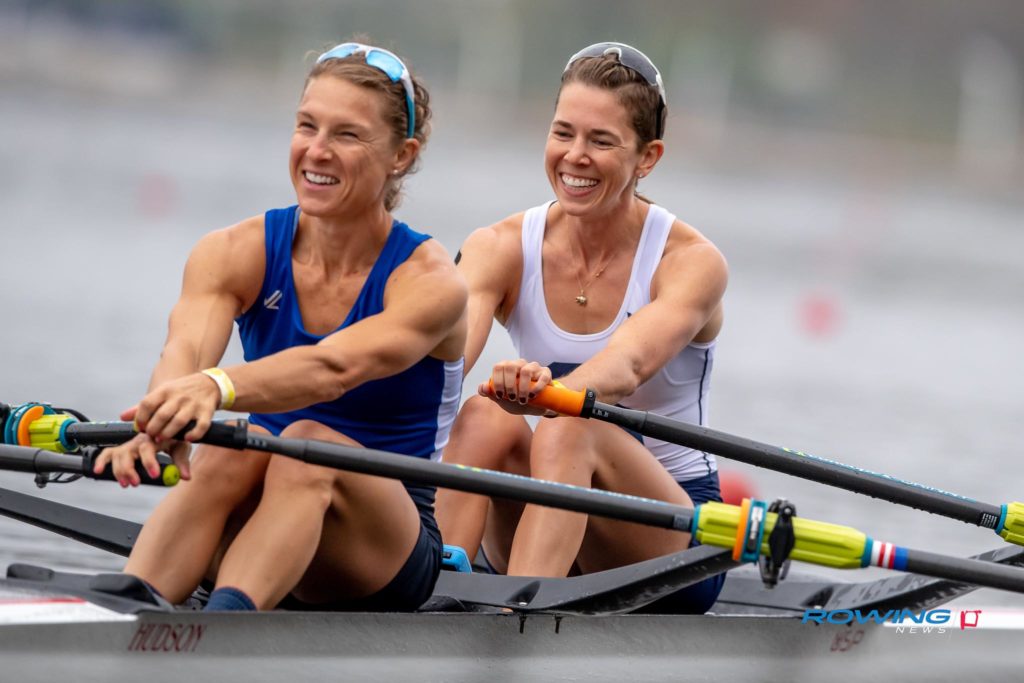
Thursday, Stone and Wagner, reached the goal they set for themselves, winning the women’s double at Olympic Trials II on Mercer Lake in West Windsor, N.J., and became the second crew to be named to the U.S. team that will row in Tokyo.
“I really didn’t know what I wanted to do,” Stone said. “But I’m glad I stuck with it. It’s been a long road, a long turnpike as I say, and the tolls have been paid for an extra year. It’s been really fun to hop in the double the last six weeks and to have it come together.”
The women’s double was one of three events contested on Mercer Lake Thursday. In the two other events, the men’s quad and the men’s pair, crews won the right to go to the Final Olympic Qualification Regatta in Lucerne, Switzerland next month and compete for a spot in Tokyo.
While the women’s double was already qualified for the U.S. in 2019, the quad and the pair were not.
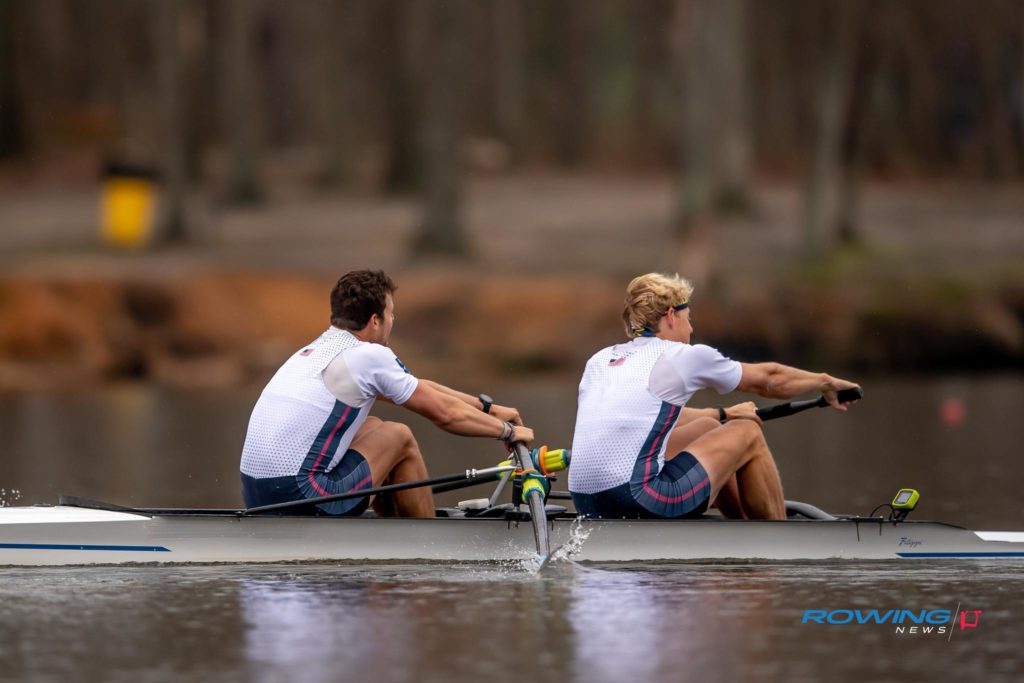
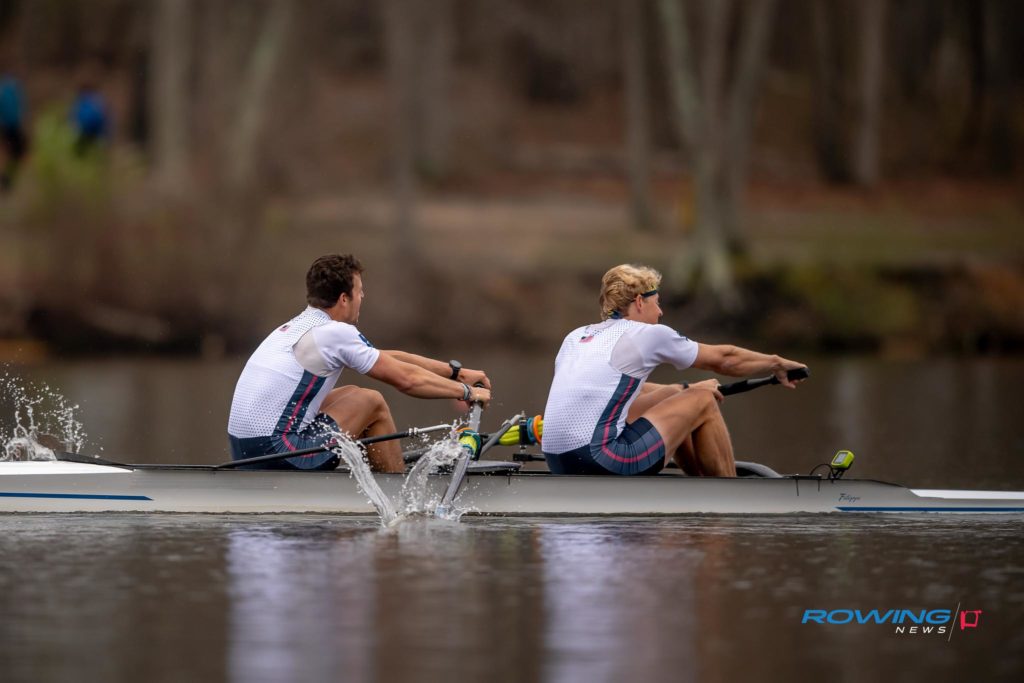
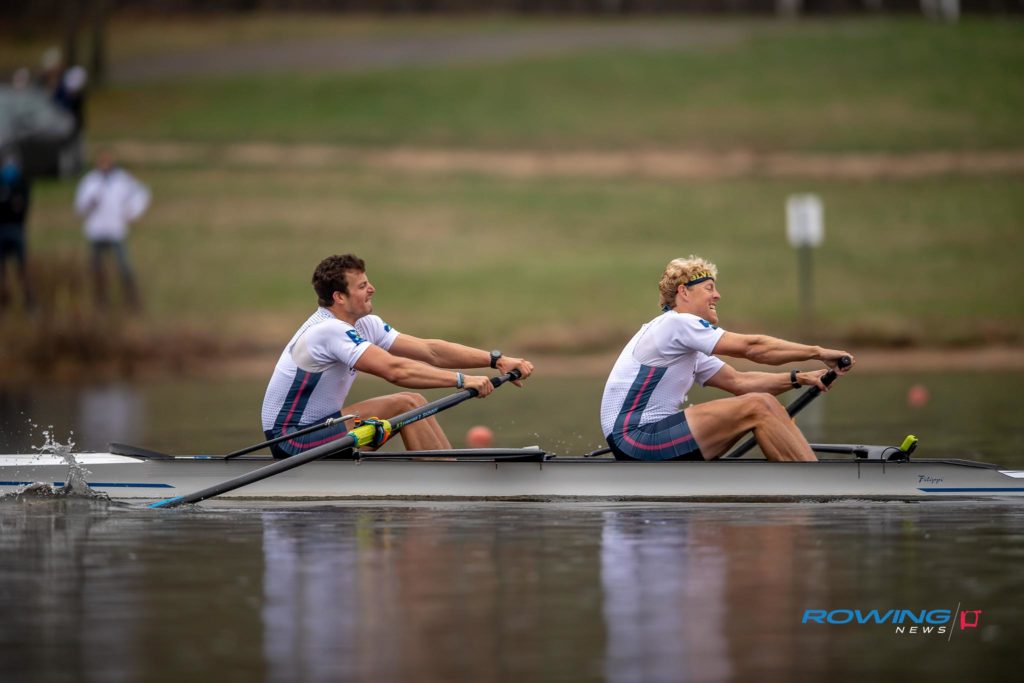
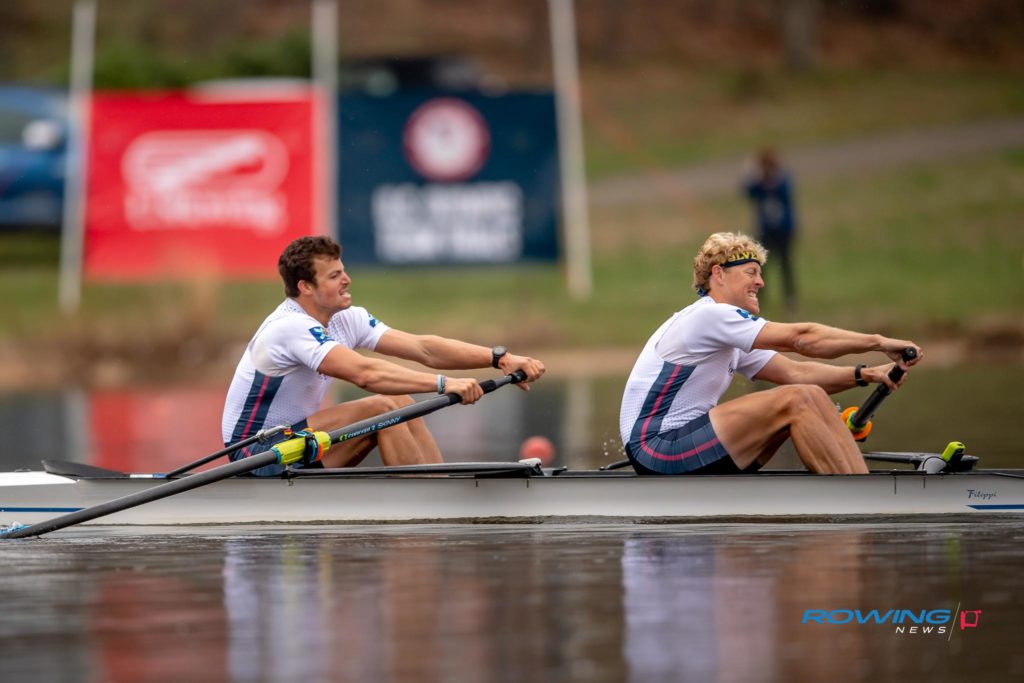
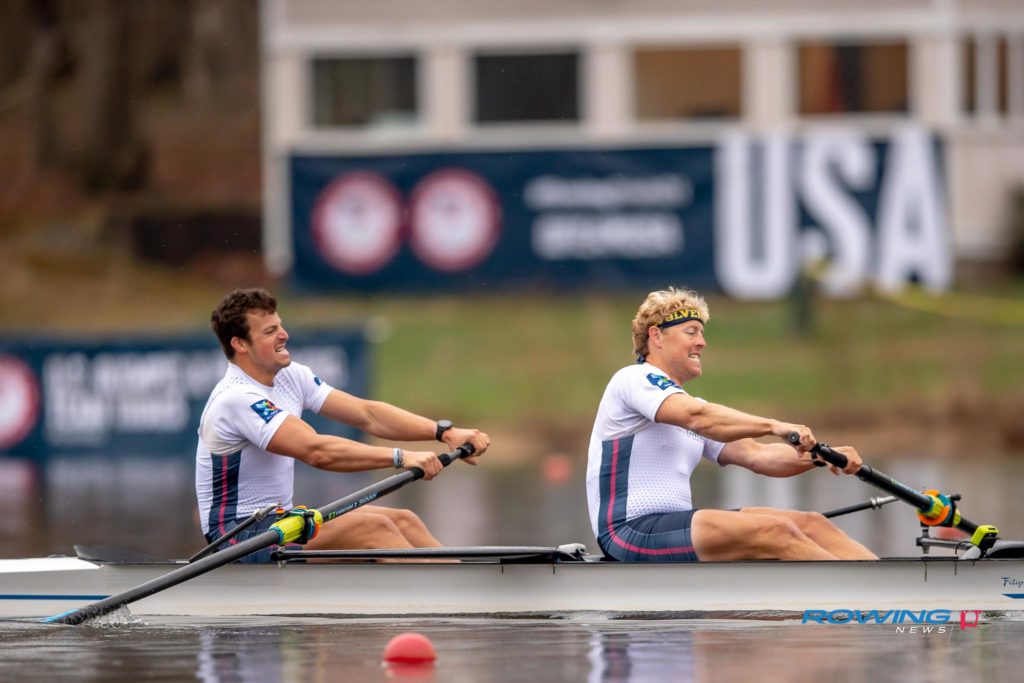
Olympians Tom Peszek and Michael DiSanto rowed uncontested in the men’s pair and will represent the U.S. in Lucerne. For the quad, the U.S. will be represented by the Penn AC Athletic Club and the Schuylkill Navy composite crew of Charles Anderson, Justin Keen, Eliot Putnam, and Sorin Koszyk.
The four-day event, originally scheduled to run a full five days, was shortened by forecasted rain and wind for Friday, but despite the races being shifted around, the regatta was run successfully.
Three Paralympic crews — the men’s and women’s PR1 single and the mixed PR2 double — were named to the para Tokyo team in finals racing Wednesday, and the field of 16 doubles and six quads were raced down to the finals lineups.
In all but the Monday time trials, Stone and Wagner finished first and established themselves as the favored crew for Thursday.
Also making it to the final were 2016 Olympians Meghan O’Leary and Ellen Tomek from New York Athletic Club, the lightweight women’s double winners from Olympic Trials I, Michelle Sechser and Molly Reckford, and Jenifer Forbes and Sophia Vitas from the U.S. women’s Princeton Training Center, all crews that had rowed fast times all week.
But it was Stone and Wagner who controlled the race Thursday, finishing first in 7:07.21. Sechser and Reckford were second in 7:11.09. Tomek and O’Leary were third in 7:11.94, with Forbes and Vitas following in fourth in 7:12.83.
“We had a little bit more of a race plan today because we knew it was going to be four boats across,” said Wagner. “We had a little bit more of an internal race plan. We had a few moves that we executed pretty well.”
For Stone, the result has earned her a third Olympics and a satisfying way to continue her final year in international competition.
“I wasn’t thinking about number three,” Stone said. “I was thinking about getting to the Olympics again as its own separate experience. Tokyo was always in the back of my mind.
“When you go to the start line at an Olympic trial final, you’re thinking you’re racing for Tokyo. How would you not think about that? Kristina called ‘Olympics’ in the last 10 strokes. At that point, it was clear that we were going.”
It has been an exciting past few months for Wagner, and a big payoff from her commitment to training and learning in Saratoga during the Covid shutdown.
“I’ve been working hard for four years; really hard I would say the past two years. When the Olympics were postponed I saw that as an opportunity for myself and capitalized on it. Getting in the double has been an awesome opportunity, learning from Gevvie, and I can’t wait to keep doing it. Ninety-nine days now.”
From Mercer, Stone and Wagner plan to return to Boston and the Charles River and resume training. There is a possible trip to World Cup II in Lucerne, which follows the final qualification regatta by a few days, but they have not decided on traveling yet.
Covid restrictions complicate planning and travel, something that caused the U.S. training center sweep camps to cancel early plans to send a large group to compete there as well. In an email sent last month, the athletes were informed of the decision.
“Over the past several weeks, USRowing has been in discussions with FISA, the USRowing Medical Committee, the HPC (High Performance Committee), and coaching staff in assessing the current risk and benefits of attending international events in preparation for the Olympic Games,” high performance director Matt Imes wrote in the email.
The concerns identified were restricted access to the venue in Lucerne prior to racing, rising positivity rates and the slow vaccination process in Europe, and potential impacts on athletes or staff returning home if infected overseas.
Imes also pointed out that several other countries had already announced they would not attend, including Australia, Canada, and New Zealand, all teams that would have lessened the competitive field by not attending.
“USRowing will continue to allow boats that need to compete at the Final Olympic Qualification Regatta or have selection implications to travel as necessary, and the athletes already in Lucerne for the FOQR will be allowed to remain onsite to compete in World Cup II if they so choose,” Imes wrote.
Two boats that will go to Switzerland were on Mercer Lake Thursday.
In the men’s quad trials, the four-boat race came down to a dual between the Penn A.C./Schuylkil Navy crew and the Oakland U.S. men’s training center entry with Oliver Bud, Spencer Furey, Andrew Gaard, and Michael Knippen.
Just after crossing the halfway point on the course, the Philadelphia crew made a planned move and pulled ahead. By the time they reached the last few hundred meters, they had a clear lead.
“When we came in, we knew the training center was going to be fast off the line,” said Anderson. “Our race plan was to stay with them and go at the [one-thousand-meter mark]. We executed that pretty well and we just did what we have been doing the past two months together. Just training that second half, moving together,” he said.
“This is what we have been training for the past year, all through the Pandemic. And we just did it .”
Everyone in the crew felt that having the training center entry racing elevated the competition level of the field and helped push their development with the qualification regatta coming up.
“It was a real mental challenge this week,” said Putman. “We knew we were good enough to win this regatta but having the training center here was a real mental challenge more than anything. It was really satisfying to beat them.
“We knew that they were very strong and that they were really good racers. We had a lot of respect for them,” he said. “But we knew ultimately that our best could beat them so we just wanted to deliver what we knew we were capable of.”
The crew is making tentative plans to travel to Europe and compete in World Cup I, April 30 to May 2, in Zagreb, Croatia, to gain needed international race experience before the qualification regatta.
“We’re halfway there,” said Keen. “We know the next test is probably going to be harder. Couple of fast crews. We know that New Zealand is probably not going to be there, but we still have to beat Ukraine or Estonia, or Lithuania. It’s going to be tight but we’re looking forward to the challenge.”
As for the men’s pair, Peszek said he and DiSanto have been training in Boston and would continue training there until they leave for Switzerland.
“We’ll probably stay in Boston,” Peszek said. “There is a really good community there keeping as supported. Keep working hard, find a little bit of speed, and have a little fun.”
Peszek, who rowed in the pair in London, and DiSanto, a member of the 2016 men’s eight, had been part of the Oakland group hoping for a spot in the eight or four but opted for the pair because they felt it was a good opportunity.
“For both of us, it just felt like the right opportunity,” he said. “We like what we do in the pair, and we would love to represent that for America and get that done. So, it’s been great.”
Peszek said the lack of any other entries surprised them.
“A little bit. But there is a challenge to this boat, Lucerne looms large,” he said. “So, it is by no means a given. We expected somebody else to show in, and that would have been nice, but at the same time, we are happy to go down the course and challenge ourselves.”
Looking forward to Lucerne, Peszek said he and DiSanto are focused on themselves. “You never know who is going to show up, and that’s not key to our mentality,” he said.
“You can’t control what happens in the other lane, so for us, it’s we’re going to go for A to B as quickly as we can, and if anybody else can hang with us, good for them. But, that’s what we’re going to do.”