Home Blog Page 173

Essential Drills for Blade Depth

BY MARLENE ROYLE
PHOTO BY ED MORAN

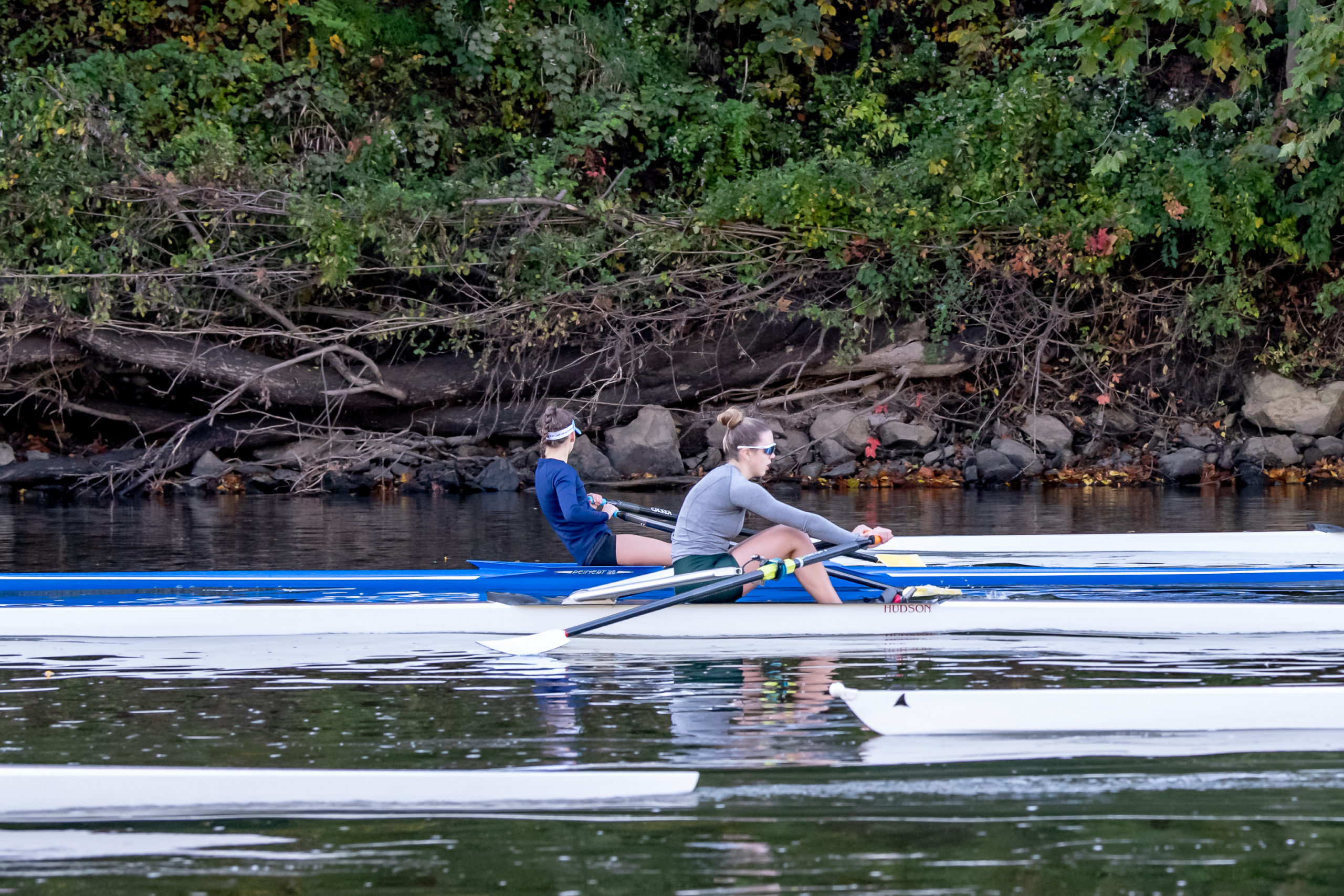
I recently did a group lesson for intermediate scullers on improving blade depth to move the boat better.

First, to get a sense of where the blade will sit naturally, I positioned them at the release. By keeping pressure against the oarlock, they had control of the handle but allowed the blade to sit where it wanted to rest in the water.

Then they lightly placed their fingers on the handle without disturbing the height in the water. Next, we did a drill called “rowing in circles.” With one blade feathered flat on the water and the boat level, I had them row with one oar. This has the advantage of letting the sculler see what the blade is doing in the water.

As a reference of blade depth, I asked them to keep the top edge of the blade level with the surface of the water.

Allowing the blades to sit in the water requires light hands.

The “two-finger rowing” drill demonstrates how little effort you need to control the oar. Using regular hand placement while on the recovery, place the blades in the water.

Once they find their depth, lift the middle, ring, and small fingers off the handles so you are drawing the handles with the thumb and index finger only. During this drill, it is difficult to “pull” so you automatically feel where the blade wants to sit. 

Foggy Thinking

Varese. Lombardia. ITALY. General View. as the sun rises, and burns of the mist/fog at the Varese Rowing Club. [Canottieri Varese] Thursday 22/12/2016 [Mandatory Credit; Peter Spurrier/Intersport-images] , Atmospheric, mist, fog, Sunrise, Sunset, Blue Hour,

BY MARGOT ZALKIND
PHOTO BY PETER SPURRIER

In 1916, Carl Sandburg wrote a wonderful poem about fog, describing it as coming “on little cat feet” and “looking over the city and the harbor on silent haunches.” But when you’re out on the water and confronted suddenly by thick fog, there’s nothing benign about it.

The disorientation caused by fog is amazing.  Quickly and completely, a rower, coach or coxswain can lose track of which way to go.  

Fog typically forms over bodies of water when the temperature of the water and ground differ. That’s why when rowers arrive at the boathouse they may be surprised to find the river or lake blanketed in white.

As coaches and rowers, we often think: “Oh, I know where to go. I will stay close to shore. I can see the boathouse. I’ll be careful.” While these thoughts may be well founded, are they the safest approach? Some coaches may see fog on the far end of the lake and say, “Well,  I just won’t go there.” but while they are coaching, the wind may shift and the fog may enshroud their crews, and that’s when things can get messy fast.  Rowers are often surprised (and overcome) by fog, since it can move with the breeze or air currents as the ground cools or warms.  

Since fog is made up of water droplets, sound and vision are both affected in strange ways. Sounds are often muted or seem like they’re not coming from where they should. Visibility can be cut to feet, not yards. Sometimes, the only way to discern direction is to spot the sun above the fog or to sense the current, if there is any.  

Coaches should always carry a compass (and it’s an app on your cell phone), but how many coaches know the direction they travel from the boathouse?  

The best strategy if you do get caught in fog is to pick a single direction with the aim of heading slowly toward shore. The hope is that you’ll soon be able to pick out a familiar landmark and travel toward safety.   

Better yet?  Err on the side of caution and remain land-bound when fog is present or looming. 

 If the weather forecast includes fog or you arrive at the boathouse and see the view obscured by fog, do not launch until the danger passes. On the Potomac River in Washington, D.C., fog can come in thick and fast. Often when we were ready to launch at 5:30 am, we couldn’t see the other side of the river. That was the criteria for a safe launch. If you couldn’t see the other shore across from the boathouse, you couldn’t launch. 

Fog is challenging even on a waterway without much boat traffic. Because sounds are misleading and distant lights can’t be seen, you can get disoriented. Rocks and other hazards are invisible, and so is the shore and other boats. In places such as Norwalk, Conn., and other busy waterways, large motor- and sailboats increase the danger.

Proceeding slowly through thick fog can be perilous unless you’re in open water that you know is free of such submerged hazards as boulders, ledges, and sandbars. Hugging the shore, where such hazards are common, can lead to  disaster. In short, fog can form quickly and throw boaters off guard. Visibility can be reduced to a few feet, which can disorient even the most experienced rowers. So slow down, turn on all lights, listen for other boats, and warn others of your presence. Above all, avoid rowing in foggy conditions in the first place.


Virginia Women’s Rowing Hosts Rivanna Romp November 13

STAFF REPORTS
VIDEO BY ADAM REIST

The University of Virginia women’s rowing program is hosting the Rivanna Romp November 13 on the Rivanna Reservoir in Earlysville, Virginia.

The University of Central Florida, Duke, Louisville, Navy, and North Carolina will all race against the host squad in eights and fours.

Racing begins at noon, and the event is free and open to the public.

Set Up for Success

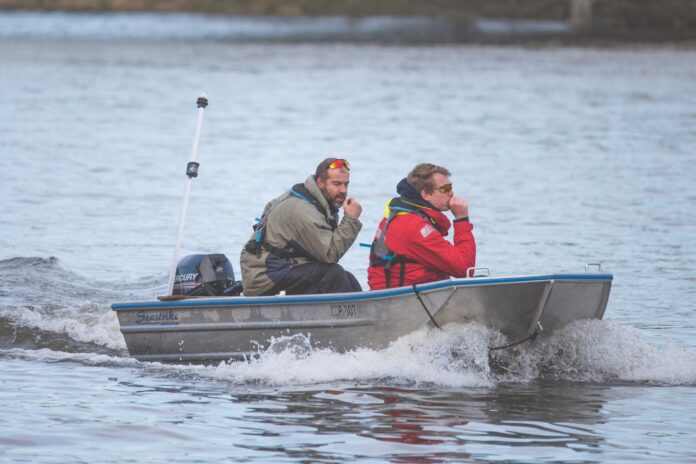
Mortlake, Greater London. 11th December 2019, Oxford Women's University Trial Eights, [L] OUWBC Head Coach; Andy NELDER, with Assistant, Putney to Mortlake, River Thames, [Mandatary Credit: Peter SPURRIER/Intersport Images],

BY BILL MANNING
PHOTO BY PETER SPURRIER

When we see a problem, our instinct as coaches is to jump right in with a proposed solution. But what if the problem is not really the problem? We can bark commands from the launch all we want, but if the athlete isn’t ready to learn we’re only making matters worse.

Before attempting to change one’s behavior, first ask what is holding the athlete back from making the desired adaptation. An athlete cannot accept coaching and attempt to change—an inherently risky activity—until they first feel secure enough to go for it.

Athletes are frequently preoccupied and bring their distractions to practice. The burden of school responsibilities, disruptions at home, relationship troubles, and other aspects of the rower’s life (think job search for your college athletes and college search for your juniors) can paralyze well-intentioned rowers. When at athlete doesn’t have a clear head, they usually do not have enough bandwidth to implement a change. A good coach knows that bigger issues must be addressed or significantly compartmentalized—even if only temporarily—before athletic learning and progress can occur.

Insecurity inhibits athletes, too. The fear of making a mistake and looking bad in front of one’s teammates or, worst of all, letting them down, will prevent a rower from making the changes they need to improve. One condescending comment from a coach or teammate can shut down an athlete for a long time. It’s up to the coach to first create the environment—better yet, a community—that negates this fear and encourages athletes to welcome failure as a step on the path to learning and greater success. Only then you’re your coaching be accepted.

The boat’s rig may also be working against you as a coach. If the pitch on the blade is off, then telling them to “stop digging” isn’t going to change the oar’s path through the water. Check the rig to ensure the boat is set up appropriately to encourage the correct rowing behavior rather than have it counteract the good work you’re putting in from the launch.

Sometimes athletes are simply so physically uncomfortable that nothing else matters. Bad blisters may force them to hold the handle incorrectly, which inhibits the effectiveness of their stroke. Athletes will commonly contort their bodies, knowingly or unknowingly, to protect an injury or to accommodate a poorly fitted seat. Something as seemingly small as poorly fitting shoes can also get in the way. Be sure to ask your athlete if they are comfortable with their foot stretcher. Weather and water conditions may overwhelm an athlete. Don’t expect anyone to make technical changes in a small boat if their chief concern is flipping.

Before your next technical session, survey the scene and make sure your athletes are ready, willing, and able to accept your coaching. Only then will they progress with your instruction.

Self-Improvement 101

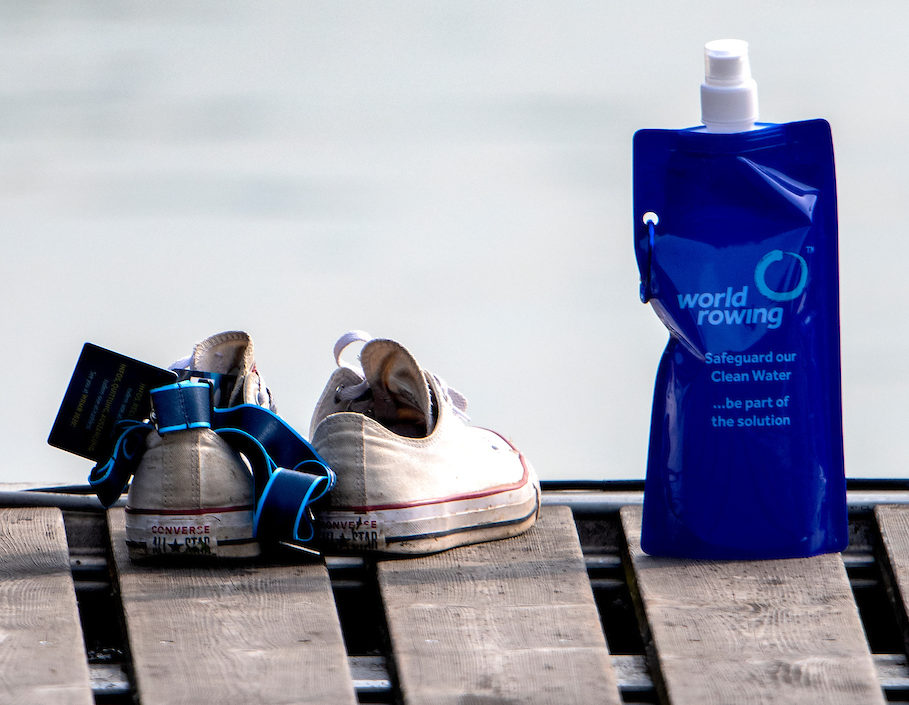
Linz, Austria, Wednesday, 28th Aug 2019, FISA World Rowing Championship, Regatta, Start Area, World Cup Re-usable water bottle. [Mandatory Credit; Peter SPURRIER/Intersport Images] 09:45:48 28.08.19

BY MARLENE ROYLE
PHOTO BY PETER SPURRIER

Be honest. How well do you take care of yourself? Athletic lifestyle is all about your daily pattern of nutrition, hydration, and sleeping habits, as well as feelings of well-being, stress management, and personal time for other interests. Take a pen and paper and write down five areas where you can make positive changes in your daily life. Here are some considerations:

  • Improve nutrition to increase energy availability by boosting whole-food consumption. 
  • Increase aerobic efficiency by trimming excess weight. 
  • Raise your power-to-weight ratio.
  • Hydrate adequately to reduce fatigue and assist recovery. 
  • Consult a sports nutritionist if you need professional advice.

Quality sleep is an essential component of recovery from exercise and for supporting weight reduction. Do you really get enough sleep? If not, look seriously at strategies to increase your rest time, such as taking catnaps or changing your daily schedule. Cheating on your sleep is easy when you are bus, but in the long run, it is detrimental to your performance. You should not raise your volume of training at any time if you are not able to get adequate rest. It is better to take an extra day off from time to time to sleep in than to run yourself down. Go to bed at a time each night that enables you to catch enough Zs. Sleep in a room that is quiet and dark with circulation of fresh air. Good recovery will keep you healthy, boost your ability to exercise at a quality level, and help you work through the toughest moments of training. 

Take time to identify how you can improve your mental preparedness. Do you need to manage stress or learn to concentrate better? What keeps you happy? Find ways to build relaxation into your day. It will keep you on top of your game and help you make good decisions.

Marlene Royle is the author of Tip of the Blade: Notes on Rowing. She specializes in training for masters rowers, and her coaching service, Roylerow Performance Training Programs, provides the program and support to improve your competitive edge. For information, email Marlene at or visit www.roylerow.com.

Head of the South Canceled Due to Tropical Storm/Hurricane Nicole

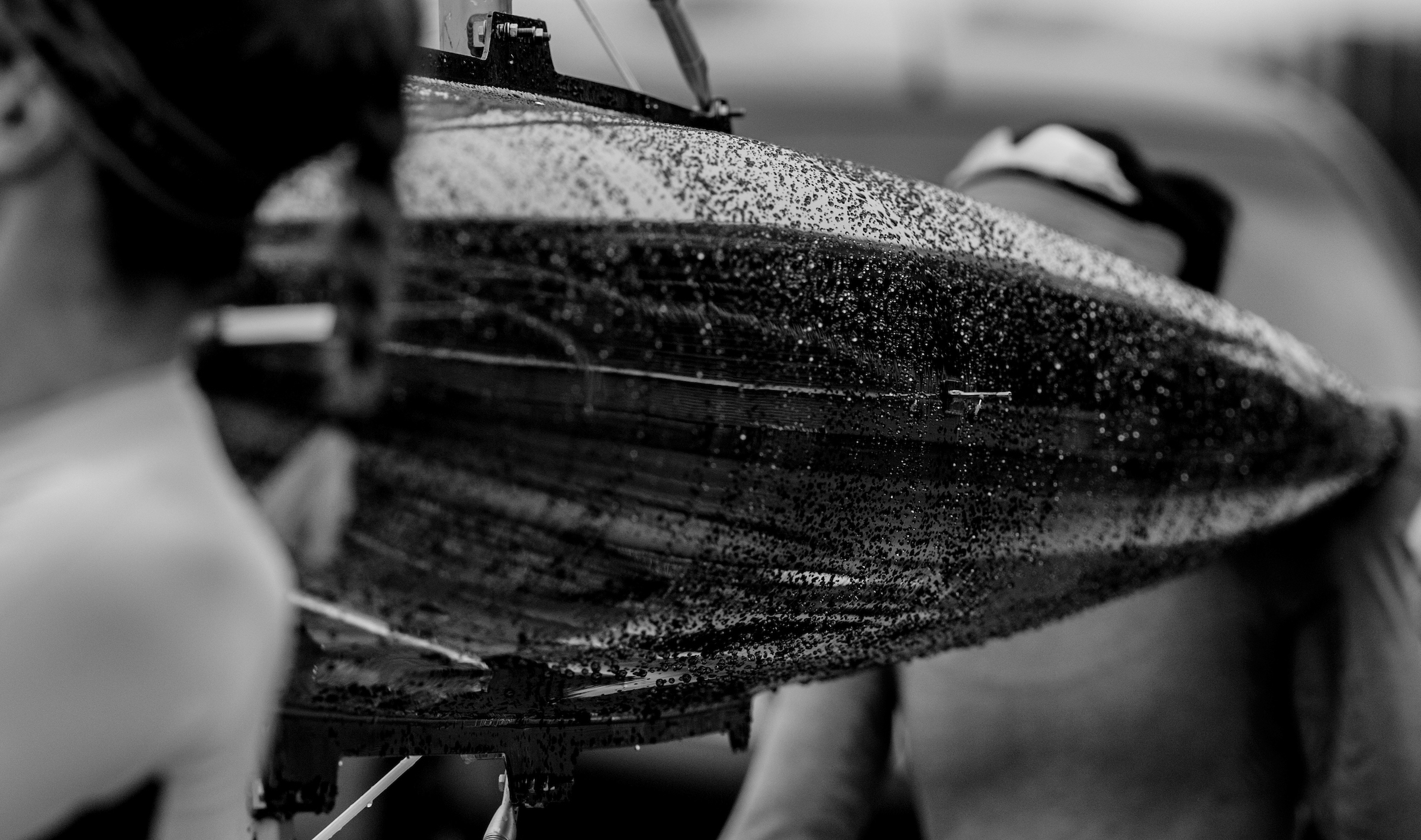
Caversham. Berkshire. UK Rain, gathered on the Pairs [shells] hull. 2016 GBRowing U23 Trials at the GBRowing Training base near Reading, Berkshire. Monday 11/04/2016 [Mandatory Credit; Peter SPURRIER/Intersport-images]

STAFF REPORTS
PHOTO BY PETER SPURRIER

The 2022 Head of the South Regatta has been canceled.

The event, originally scheduled for November 12 in Augusta, Georgia, was canceled due to the approaching Tropical Storm/Hurricane Nicole. The regatta had over 630 entries from more than 50 clubs.

Race organizers expressed their disappointment on Instagram.

https://www.instagram.com/p/Ckv_TRTvjx3/?utm_source=ig_web_copy_link

Habitual Excellence

BY BILL MANNING
PHOTO BY ED MORAN

It’s a sporting cliche but true: The little things add up. The accumulation of marginal gains can produce the desired outcome, eventually. With racing season around the corner, rowers willing to do the following habitually will improve more and can develop a competitive edge.

Begin by setting goals (short, medium, and long-term) and then measure progress regularly and objectively. The introspection necessary for goal-setting requires answering the question “Why am I doing this?”, thus fueling the effort. Result-oriented goals are useful and common, but process-oriented goals hold us most accountable. Something as simple as “I will train for at least one hour six days this week” can keep you on track and moving forward when motivation falters.  

Arrive early, prepared for practice. Simply laying out the necessary clothes and packing the night before morning practice gets training started right. Being prepared builds confidence. Bring a clear mind to each session. Rowing practice is not the time or place to solve a relationship issue or worry about school. It should be a respite from troubles and a safe space to focus on one thing and one thing only: making fast boats. This focus brings more enjoyment and more progress.

Treat recovering as seriously as training. Many athletes will do the work; just look around at practice. Far fewer will organize themselves so that they rest and recover to get more benefit from training. Regularly get sufficient sleep (the single most neglected beneficial behavior among junior and college rowers), eat better, hydrate, socialize smartly, and generally maintain good health. Holding yourself to a higher standard of behavior opens  the possibility of achieving a higher level of performance.

Practice a positive attitude. It’s a learned skill, highly contagious, and when shared, a force multiplier. Embrace the challenge. Sometimes competitive rowing is just not fun.  Accept this and make the best of it. Whether it’s an especially long session, bad weather, or a blister; it shall pass. Suck it up and get on with it. Weaker athletes than you have survived worse.

Race through the finish line, not just to it. Finish strongly. Always step up at the end and raise the level of performance. Whether it’s the last 500 meters, the last piece of practice, or the final practice of the week, commit to making it the best. Show what you’re capable of. “Last one, fast one” is universal among top performers.

These small consistent efforts require no talent and little added exertion but yield many positive outcomes. The physical benefits are most obvious, but the acquired belief in oneself and confidence in one’s preparation provide the greatest advantage. Knowing you’ve done things the right way is a foundation upon which self-belief grows and big results are achieved.

Recruiting Pet Peeves

BY BILL MANNING
PHOTO BY ED MORAN

Even with all that has been written about recruiting, college coaches still find many things they wish every prospect understood. Here are a few behaviors that frustrate coaches across the country. Consider these recruiting pet peeves and do yourself a favor by avoiding them.

When emailing a coach, sign your first and last name to every message you send. Even better, include your graduation year (2023, 2024) and affiliation (school or club). You’re not the only Isabelle or Jimmy they’re hearing from.

If the coach asks you to submit their recruiting questionnaire, do so immediately. You can always email new information or update the questionnaire. Never refer a college coach to your beRecruited/CaptainU/NCSA online profile as a substitute for submitting their questionnaire. Many athletic departments require coaches to communicate with prospects through their recruiting software and need the questionnaire to do so.

If a coach requests your unofficial academic transcript and/or test scores, make sure your name is clearly visible on what you provide. Sometimes what you may download as a grade report doesn’t show your name. If you send this information as a link to a school website, make certain that it’s not password-protected and the coach can access it. Also, send the materials to the coach; college coaches typically cannot review what goes directly to the admissions office.

If a coach requests video, send footage of you pulling hard, not paddling around. Coaches want to see how you behave at race pressure and race rates. Ideally, have you and your blade(s) fill the video screen. If the video shows you in a team boat, clearly identify which seat you’re rowing. Keep video clips to less than 30 seconds.

And of course, everyone’s favorite: Do not make excuses for your erg time. Telling a coach that you “didn’t get the chance to test” or “can’t find an erg” makes you come across as unmotivated. Your peers who find ways to get more fit and demonstrate their fitness are getting the attention you seek.

You don’t necessarily need to pull a 2K. Most college coaches will accept the results of any erg test that your team does. When sharing erg times, send a picture of the monitor showing your time and splits. Coaches like  this verification and seeing how you paced your piece.

Finally, ask questions rather than make assumptions. College coaches appreciate direct questions regarding their team, recruiting standards, and timeline. “What do I need to do to earn a scholarship/admissions support?” is much better received than “Will you give me a scholarship/support?” The coaches also know more about the recruiting and admissions process at their school than anything you’ll read on message boards. If you rely on internet gossip, you’ll get exactly what you deserve. The opinion of your peers is valuable, but it should not stand alone when evaluating your options.

Good luck with your college search and selection process!