Home Blog Page 172

Ten Seconds, Two Truths

BY MARLENE ROYLE
PHOTO BY ED MORAN

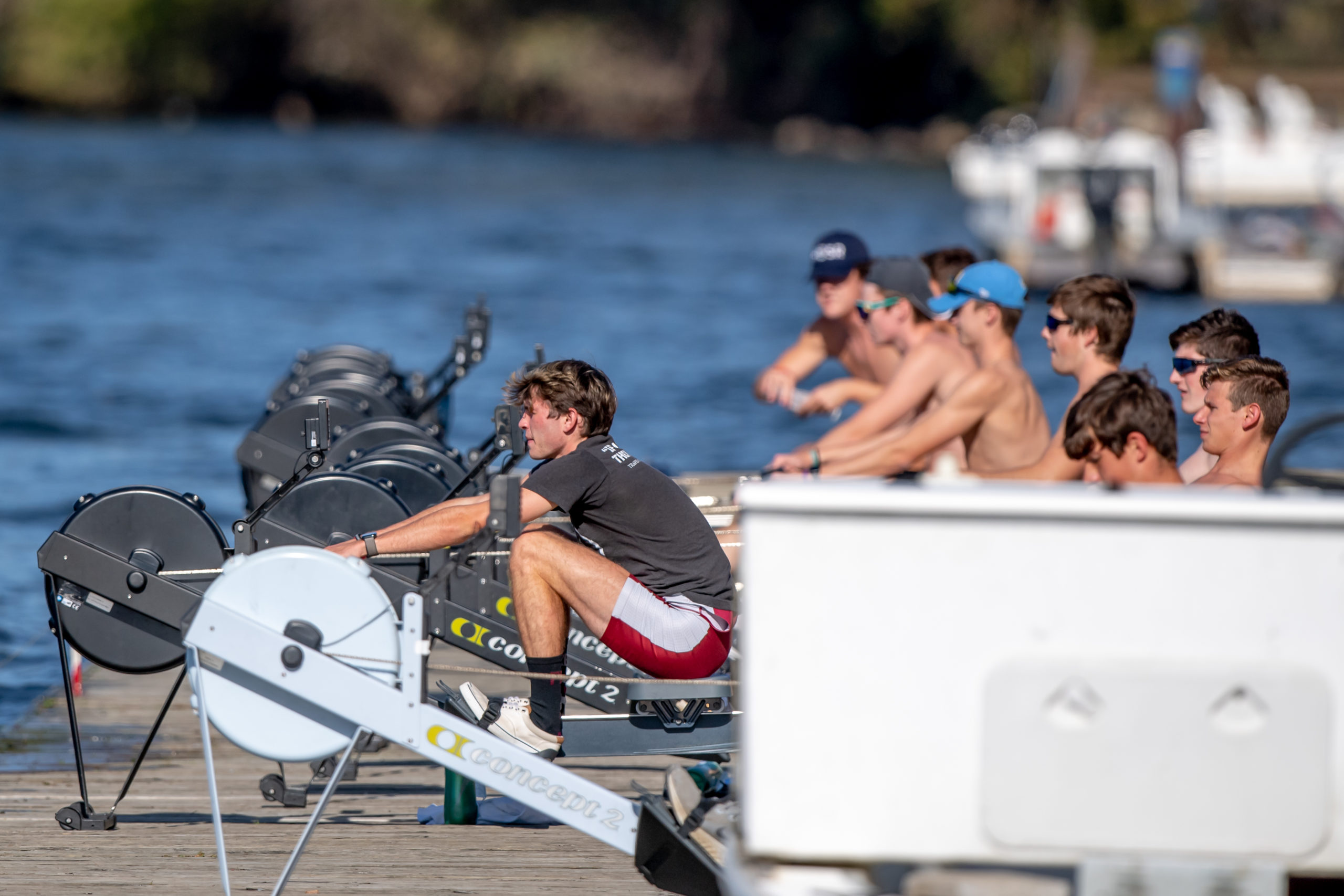
To keep tabs on your progress without having to go into the 2000-meter pain cave, fire off a quick 10-second peak-power test on the erg. If your peak wattage is going up, you are getting better.

Your watts indicate the current limit of your 2000-meter potential. Take 55 percent of your peak-watts value to estimate the best average you can realistically hold. If your peak power is 500 watts, 55 percent is 275 watts or 1:48.4 per 500 meters. A goal of 1:45 per 500 meters would be overreaching until your peak watts notches up.

You can also determine your peak-power-to-body- weight ratio. It’s a good efficiency measurement for an athlete. The target ratio is between 7.3 and 9.0 when comparing your watts to body weight in kilograms.

Improve the ratio by increasing your peak-power watts and keeping the same body weight, keeping the same peak-power watts and decreasing body weight, or improving your peak-power watts and decreasing body weight some amount. Set the drag factor to 200. The high drag factor is necessary to provide adequate resistance so that you can hit a true peak power. Warm up, then from a stop row as hard and as fast as possible for 10 seconds, recording the highest power you see on any stroke.

You must row full slide without using a racing start. Rest for a couple of minutes and repeat. There is a slight learning curve when you first do this test, so you might want to do it a few times to get a true peak-power score.

Marlene Royle is the author of Tip of the Blade: Notes on Rowing. She specializes in training masters rowers, and her coaching service, Roylerow Performance Training Programs, provides the support you need to improve your competitive edge. For information, email Marlene at roylerow@aol.com or visit www.roylerow.com.

Beware the Turkey Trot

BY OLIVIA COFFEY
PHOTO BY ED MORAN

A turkey trot may seem like the perfect athletic accompaniment to your Thanksgiving holiday, a great excuse to spend the remainder of the day eating and watching football guilt-free.

That’s what I thought on my first, and notably last, turkey trot while I was visiting in-laws in Kentucky. On the ride to the course, the four of us agreed to run together at a comfortable pace. We arrived, pinned on our bibs, and immediately joined the pack at the starting line. An air horn signaled a chaotic and crowded start, but eventually we settled into an enjoyable pace.

This didn’t last long. Before I knew it, my sister-in-law, an avid runner, gradually pushed ahead. I shrugged off her move, thinking she was too advanced for our pedestrian pace. The three of us remaining stayed together and continued to plod ahead. Eventually, the number of runners around us petered out, and I could feel our pace picking up.

A gradual uphill brought the demise of my brother-in-law. The increased speed, along with a lack of warmup, led to a pulled hammy. “Go on without me,” he grimaced, as my husband and I cruised on by.

The two of us were now knocking on the door of our peak running abilities. I had personally tried to avoid running, finding little correlation between it and rowing, but my training made it possible for me to sustain decent speeds with little preparation.

As we entered the last third of the race, we were surrounded by those of similar speed. Occasionally, we were passed by another runner–a gifted kid, a person with those small running shorts. This didn’t bother me. I was content deferring to a better runner.

Until I was passed by another woman about my height, about my age. “Wait a minute,” my inner voice taunted, “I can fun faster than her.” I took off in pursuit as the sound of my husband’s labored breathing faded behind.

I chased her down and was able to eke out a lead in the last quarter mile or so, hitting my max heart rate and winning my age division in the process. I was greeted at the finish by my smiling sister-in-law. My husband followed. Eventually, my brother-in-law hobbled past the finish line.

     While the rest of the day was quite enjoyable, the next morning my body felt like it had been hit by a train. My shoulders ached, my hips were tight, my low back throbbed. The real kicker, though, were the calves. I couldn’t walk for days. 

     My advice, if you plan on turkey trotting, is to prepare in advance, and if you can’t, you’re better off watching football on the couch. 

Competition Guidelines

  • Prepare: Spend at least six weeks training sport-specific muscles before any event.
  • Warmup: Get the body moving before hard exercise, especially as the weather gets colder.
  • Stick to the Plan: Stay focused and avoid letting competitive tendencies derail days/weeks of training.     

Women’s Ivy League Championship Regatta Will Move to Lake Quinsigamond

BY CHIP DAVIS
PHOTO BY LISA WORTHY

The women’s Ivy League championship regatta will move to Lake Quinsigamond, in Worcester, Mass. and run concurrently with the men’s Eastern Sprints on Sunday, May 14. Camden, N.J., where the Ivy championship has been held, will reportedly host the Dad Vail in 2023 while the Schuylkill River is dredged, forcing the Ivy League to move.

“We’re excited to add the Ivy League Women’s Rowing Championship to our schedule of championship events this spring,” Quinsigamond Rowing Association President Patrick Diggins said. “It is a tribute to our dedicated corps of volunteers that high caliber events like the Ivy League Championship value the rowing experience and history of Lake Quinsigamond.”

The long weekend will also feature, on Friday, May 12, the Patriot League championship and National Invitational Rowing Championship (NIRC) regattas, which attracts about half of all Division III collegiate programs. 

“We are incredibly appreciative to the EARC, and in particular Gary Caldwell and Patrick Diggins, for welcoming our championship to the EARC Sprints this year,” Ivy League Executive Director Robin Harris said. 

Between the NCAA automatic-qualifier status of the Patriot and Ivy championships, the IRA-qualifying men’s Sprints, and the influential role the NIRC plays in at-large selections for both national championships’ Division III events, the Mothers’ Day mega-weekend at Worcester’s Regatta Point state park could become the most important collegiate regatta besides the national championships. Lake Quinsigamond, a long, narrow lake generally well-protected from the wind, successfully hosts a slew of regattas every weekend in May. Some of the best-attended masters national championship regattas have been hosted in Worcester, and the park would have been a natural choice for Boston’s abandoned Olympic bid.

Concept2 Holiday Challenge Underway November 24

STAFF REPORTS
PHOTO COURTESY

The 2022 Concept2 Holiday Challenge will begin November 24.

The event is in its 23rd year and runs from Thanksgiving through midnight on Christmas Eve.

“Row, ski or ride 100k on the Concept2 RowErgSkiErg or BikeErg (combined meters count!) during the challenge and Concept2 will donate $.02 per kilometer (1000 meters) to your choice of this year’s charities. Once you get beyond 100k, we’ll donate $.04 per additional kilometer. Note: BikeErg meters are counted as half when applied to the challenge,” according to the challenge page.

This year’s charities include Prytula Foundation, Greenpeace, Global Fund for Women, American Council of the Blind, and Vermont Parks Forever.

Read more about the challenge.

Winter Training Challenges

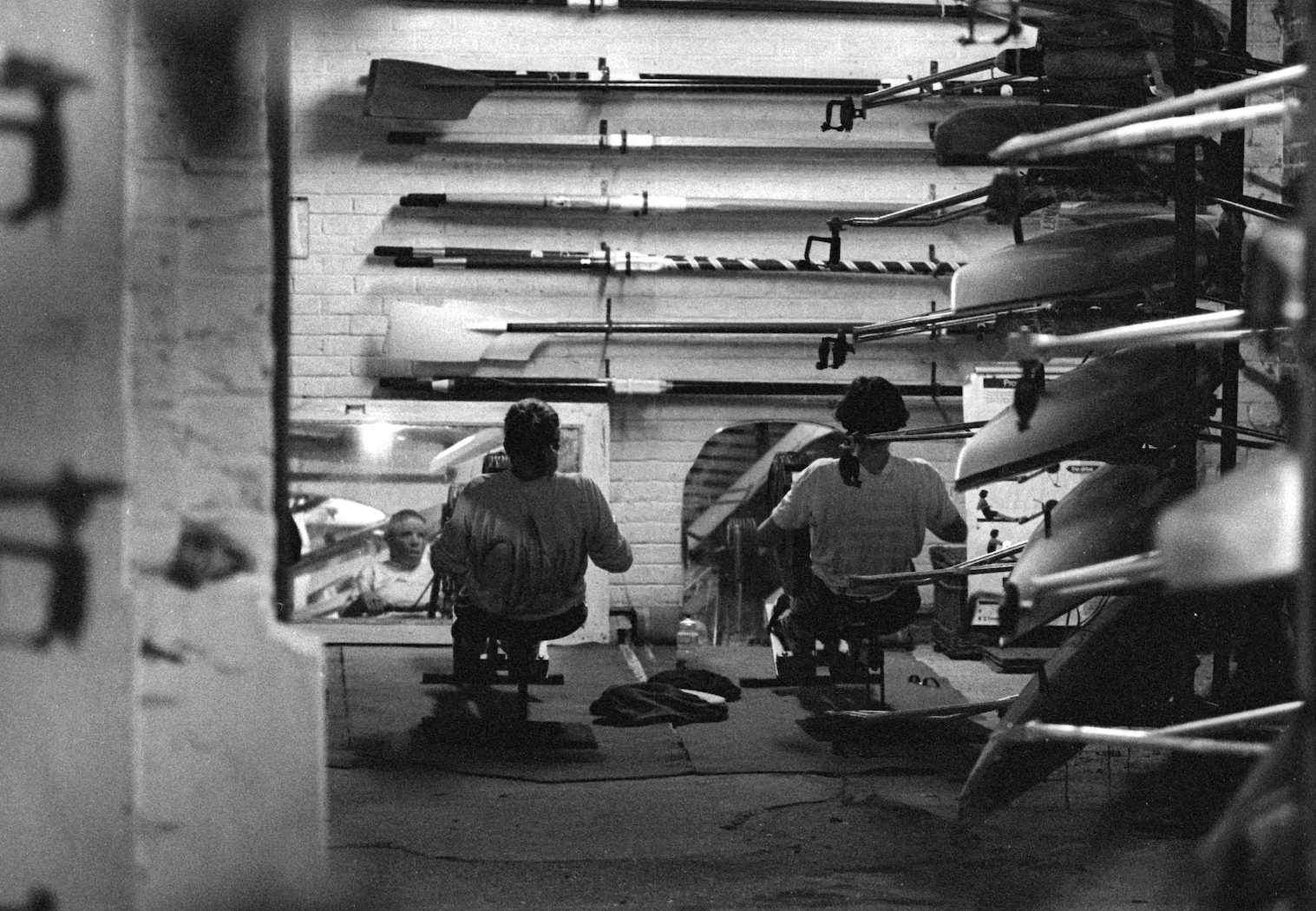
Hammersmith. London. General Views, ergos session at the back of Furnivall Sculling Club, Boathouse, 1987 Women's Head of the River Race. Raced over the Championship Course [Mortlake to Putney] [Mandatory Credit; Peter Spurrier/Intersport-images] 1987 Women's Head of the River Race, London, UK, Concept Ergometer, Erg, Ergo,

BY RICH DAVIS
PHOTO BY PETER SPURRIER

Finding ways to make rowers stronger and faster while keeping spirits high is always a challenge during the dark days of winter. The following suggestions are not all applicable during pandemic restrictions, so obviously some apply to future winter seasons.

The schedule for indoor work provides a good opportunity to introduce variety into your program. The ergometer remains our sport’s main winter-training tool. Find imaginative ways to use the machine to build fitness and enhance technique. The erg can improve rowing for both novice and experienced rowers by returning their focus to the basics. Coaches can stand close by and direct proper body positions.

Rowing alongside or on sliders is a way to demonstrate proper timing and slide control on the recovery. Mirrors in the erg room enable rowers to see what they’re doing and to compare their movements to other rowers.

The erg is a great teaching tool. Many problems are easier to fix on the erg than on the water. Raising the shoulders on the drive, for instance, can be difficult to correct because rowers don’t feel it when they engage those muscles.

On the erg, however, they should be able to see their shoulders rise at the catch. Catching with the arms is another fault that is easier to correct on the erg. The erg will allow you to teach your rowers how to properly hang on the handle without fear of flipping. Also, by holding the erg handle and having your rower concentrate on standing on the foot stretcher, you can effectively teach the initial leg drive that begins each stroke. It is critical that your rowers have a clear picture of what good rowing looks like.

Over the winter, show videos from world championships or Olympics as a way to convey what the proper stroke looks like as well as the different ways there are to achieve speed. This leads not only to better technique but also to an appreciation of how power and strength can override technical faults. No one is perfect– even those striving to be the best in the world.

The erg also affords you the opportunity to teach drills you will use on the water. It can help you teach your rowers how to break through the pain barrier and row hard. Before assigning long or hard pieces, talk with your athletes about how they can approach the workout and how they can deal with the pain. Interval training calls for rowers to push as hard as they can followed by rest phases in which they can find the will to push harder at the next piece.

Finally, with the pressure of racing removed during indoor training, your athletes should feel free to concentrate on the many aspects of good rowing. Help them by sending encouraging messages about technique, the importance of sleep, good eating habits, and other relevant topics.

Why We Lift

Photo by Peter Spurrier.

BY RICH DAVIS
PHOTO BY PETER SPURRIER

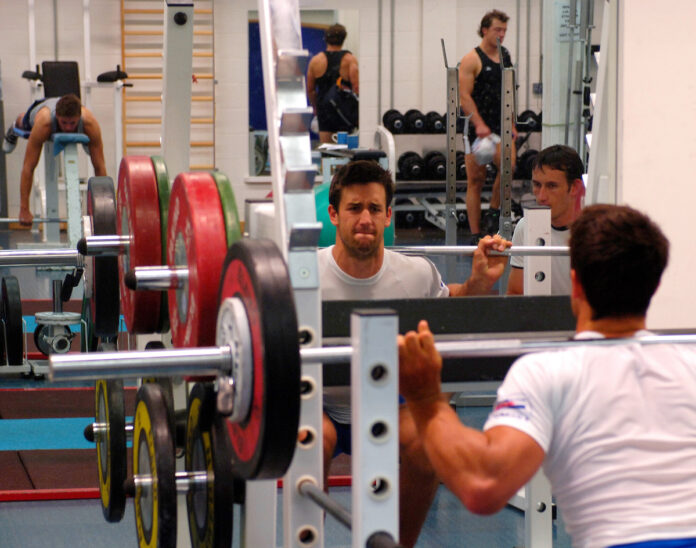
Rowing is a strength sport, and if used appropriately, the erg will allow you to improve this critical dimension. But a well-designed weight program can be more effective by enabling you to hone in on areas that need work. Focus on rowing-specific exercises, such as the leg press, curls, bench press, and squats. Use both weight machines and free weights. Consult with a coach, trainer, or an experienced conditioning coach to create a program based on what you need to develop to improve your strength for rowing or sculling. A few pointers: when exercising with free weights make sure you have a spotter; always wear shoes when weight lifting; develop opposing muscles to ensure your body is balanced; and make time for rest. Of course, whether you use equipment at a gym or your own weights, always wipe it down before and after use to avoid spreading cold and flu germs. For those who are still on the water, safety this time of year needs to be your fist priority. Always factor in the conditions when assessing what you can achieve in a session. I once found myself on the water with three freshman crews when the weather suddenly changed from a light breeze to a roaring wind. Fortunately, were able to get in safely but the outcome could have been much worse. Don’t make the same mistake. Always check the weather before launching.

Nutrition for Competitive Rowers

BY NANCY CLARK
PHOTO BY YOAV AZIZ

Many factors affect your ability to enjoy a winning performance, and some are out of your control, such as heat, humidity, wind, altitude, water conditions, as well as the time of the event, the interval between events, and perhaps jet lag. But nutritional factors are in your control, including what, when, and how much you eat. Simply put, to row at your best, you need to know how to eat well enough to fight fatigue and be strong to the finish.

To address how to eat to row at your best, I looked to the highly respected sports nutritionist Louise Burke, a researcher at Australian Catholic University in Melbourne. Here are some key points from her journal article that may inspire you to consult with a registered dietitian or board-certified specialist in sports dietetics to help optimize your sports diet.  

Eating  
• Carbohydrate is a fundamental source of energy for your muscles. It is stored in your muscles as glycogen. Glycogen depletion (“hitting the wall”) is linked with fatigue.
• Carbohydrate is also a fundamental fuel for your brain. Carbohydrate in the blood, known as blood glucose, fuels the brain so it can focus on, and respond quickly to, the task at hand. To optimize athletic performance, you want to maintain adequate blood glucose levels during exercis, as well as start intense exercise with fully loaded muscle-glycogen stores.

• Blood glucose is supplied by your liver as well as the banana, toast, or other form of sugar or starch (carb) you eat before and/or during exercise. Some rowers avoid pre- and during-exercise fuel, fearing it will create intestinal distress. The better path is to train you gut to tolerate foods and fluids. During training sessions, experiment with a variety of carbs (dried pineapple, granola bar, diluted juice) and/or a variety of flavors and brands of commercial products (sports drinks, gels, chomps, etc.), so you can learn what settles best. Choosing a variety of carbohydrates can increase how fast they’re absorbed and might reduce the risk of GI distress. Having a well-tested fueling plan is helpful.

• Training enhances your ability to burn fat, and it can be enhanced further by adapting to a keto (high-fat, very low-carb) diet. Given that fat stores are essentially limitless, a keto-adapted endurance athlete (theoretically) should be able to perform very well without having to consume additional carbs during exercise, reducing their risk of intestinal upset from drinking/eating during a race. Sounds good, but this theory doesn’t always work. Research shows that keto-adapted athletes can maintain their performance during moderate-intensity exercise but experience a performance decline during real-life high-intensity competitive endurance events. That’s in part because burning fat, as compared to burning carb, requires more oxygen, and at high intensities, such as a breakaway sprint to the finish, oxygen supply to the muscle becomes a limiting factor. 

Brain function 

• As a rower, you need a well-fed brain to help you concentrate, focus, and make wise decisions. A well-fed brain also can help keep you motivated to row at a hard pace. To feed your brain, you want to be well fed when you begin exercising, with blood sugar in the normal range, not fasted and running on empty.

• Caffeine is known to reduce the brain’s perception of pain, effort, and fatigue (even in rowers who regularly consume coffee). The recommended dose is 1.5 to three milligrams per pound of body weight (3 to 6 mg/kg) but one size does not fit all. Experiment to find the dose that’s best for your body.

• Rowers can consume caffeine via gels, caffeinated energy bars, pre-workout supplements, caffeine pills, and coffee. The problem with coffee is the variability of the caffeine content, which makes it hard to identify a specific dose. 

• Some performance enhancers do not need to be absorbed by the body to offer benefits. For example, simply rinsing the mouth with a sugar solution/sports drink (and spitting it out) stimulates reward centers in the brain, allowing you to row harder.

• With some substances, the mouth does not have enough sensors, so you need to ingest the substance to enhance performance. For example, drinking a small amount of a bitter substance such as quinine can trigger a beneficial “fight or flight” response when taken immediately before a short, intense effort, such as a power-lift or sprint.

• Rinsing the mouth every five to 10 minutes with a menthol-containing solution creates a perceived cooling effect that can help increase power or speed during prolonged exercise in the heat. But be careful. If you feel cooler but actually are not, you might overextend yourself and end up slowing down prematurely.

  • Anti-cramping agents such as pickle juice or others spicy substances might be helpful for rowers who experience muscle cramps. These pungent tastes are thought to distract the nerves involved with the cramping muscle, thus reducing the perceived severity of the cramp.

Fluids

• You want to be sure you’re optimally hydrated before you begin rowing. Your first-morning urine should be light-colored, not dark and concentrated.

• Whether programmed drinking (according to a plan) is better than drinking according to your thirst depends on your sport. For example, an endurance rower can develop a large mismatch between sweat losses and fluid intake as compared to a rower who trains for only 45 minutes. 

• The suggested goal is to lose less than two percent of your body weight during exercise. In lab-based research, a loss of more than three percent of body weight is linked to reduced performance. In real life, the drive to win overrides the negative effects of being under-hydrated. Questions remain unanswered: Could under-hydrated athletes have performed better if they were better hydrated? Or, does being lighter because of dehydration offer an advantage? Stay tuned. Sports nutrition is an evolving science.

Nancy Clark, M.S., R.D., counsels both casual and competitive athletes in the Boston area (Newton; 617-795-1875). Her best-selling Sports Nutrition Guidebook is a popular resource, as is her online workshop. Visit NancyClarkRD.com for more information.


Semantics for Rowers

BY BILL MANNING
PHOTO BY TOM WALSH

Coaches may influence culture, but athletes create it—through the sum of their attitudes and actions. When positive attitudes align and standards of behavior are shared, the whole is greater than the sum of its parts; good culture is a force multiplier.

Below are representative attitudes and actions of rowers at different points in their journey. The chart shows how rowers typically behave as novices, varsity athletes, and champions. It’s a tool for self-evaluation and provides coaches with a framework for helping rowers understand where they stand on the continuum of commitment and what they can do to achieve more satisfaction and success.  

NoviceVarsityChampion
ParticipantCompetitorCompetitor
Self-centered (me first)Team-orientedTeam focused
FollowerContributorLeader
Needs directionOK on their ownTakes initiative
InconsistentConsistentReliable & dependable
Slow to accept feedbackReadily accepts feedbackSeeks out feedback
Makes excusesNo excusesSeeks solutions
PassiveAttentiveActively engaged
Harbors negativityInfluenced by othersRelentlessly positive
LatePunctualEarly
Attends practice when convenientAttends practice consistentlyStructures the day so as to not miss practice
No prioritiesAcademics first, athletics secondAcademics & athletics both important and done equally well
Misses trainingMakes up missed trainingDoes more than asked
Avoids stressManages stressThrives under stress
Neglects healthSeeks help when sick/injuredPro-active taking care of him/herself
Socializes like non-athletic peersSocial but smartDoes not compromise goals for social life.
Repeats mistakesLearns from mistakesLearns from other’s mistakes
Wants immediate gratificationDefers gratificationDefers gratification
Talks and/or worries about the oppositionFocused on beating the oppositionFocused on producing the best performance possible on race day.
Avoids discomfortAccepts discomfortEmbraces discomfort: “comfortable with being uncomfortable”
Rows hard when aheadRows hard in close racesAlways rows hard
Likes to raceWants to race successfullyNeeds to race successfully
It’s all about the gearWears gear at practiceKnows medals are more impressive than gear