Home Blog Page 174

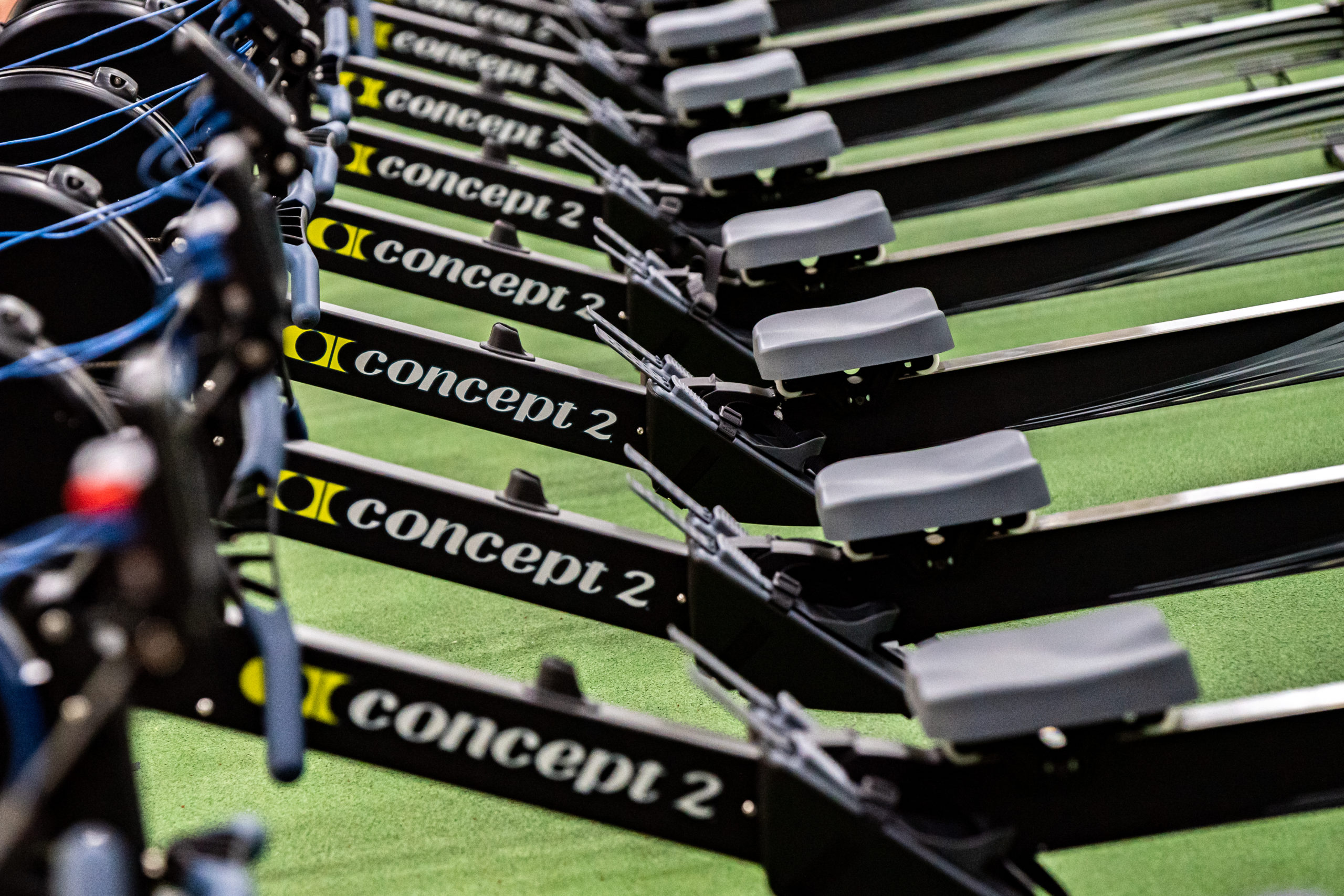
Shadow Rowing

BY MARLENE ROYLE
PHOTO BY LISA WORTHY

Getting feedback rowing indoors is as important as getting feedback rowing outdoors, especially as the mercury drops and our attention turns to the months of erging ahead.

Not all erg work has to be hard. Shadow rowing is one type of technical training that helps you create new patterns in your stroke or build uniformity in team boats. It’s low stress, and you can develop better flow with your partner if you work one behind the other or side-by-side to sync your movements.

You “row” without the handle, make the same motions that you would use in the stroke, and focus on grooving in new habits. This is a valuable exercise when you cannot be in the boat together or connected by slides.

Shadow rowing can be used if you have an active rest day or for mental training when conserving physical energy is important, such as while tapering for races or as part of a land warm up. You can incorporate pause drills to match setting your body angle or focus on your rhythm.

Setting up mirrors in the front, to the side, and at a 45-degree angle to your machine is another easy way to watch what you are doing or record yourself during practice for a quick check of your form, especially when rowing a trial.

Marlene Royle is the author of Tip of the Blade: Notes on Rowing. She specializes in training for masters, and her coaching service, Roylerow Performance Training Programs, provides the support you need to improve your competitive edge. For information, email Marlene at roylerow@aol.com or visit www.roylerow.com.

The Last of the Great Fall Regattas

STAFF REPORTS
PHOTO BY LUKE REYNOLDS

Over 2,000 boats from 171 clubs race in the Head of the Hooch, November 5-6 in Chattanooga, Tenn. in “The Last of the Great Fall Regattas”. 

Student-athlete Success Center Renovation at UConn to Include Rowing Tank Among Other Improvements

STAFF REPORTS
PHOTO COURTESY

The University of Connecticut announced that it received a lead gift for the construction of a state-of-the-art student-athlete performance and academic support center on the Storrs campus from former student-athlete Dr. Trisha Bailey ’99 (CLAS).

The space will include 80,000 square feet of renovation and the addition of a rowing tank.

“Trisha Bailey is an American success story that has its roots in the classroom and in competition at UConn,” said David Benedict, director of athletics. “She is the ideal model for our student-athletes to aspire to become champions in all they pursue well after their playing days are over.  Her unprecedented and transformational generosity will dramatically elevate the academic, nutrition, and mental wellness needs for all of our more than 600 student-athletes, it also will provide a new home to six of our Olympic sports – five of which are women’s programs.

“On this 50th anniversary year of Title IX, it is an honor to have Trisha’s name on this world-class new facility as an enduring legacy for generations to come.”

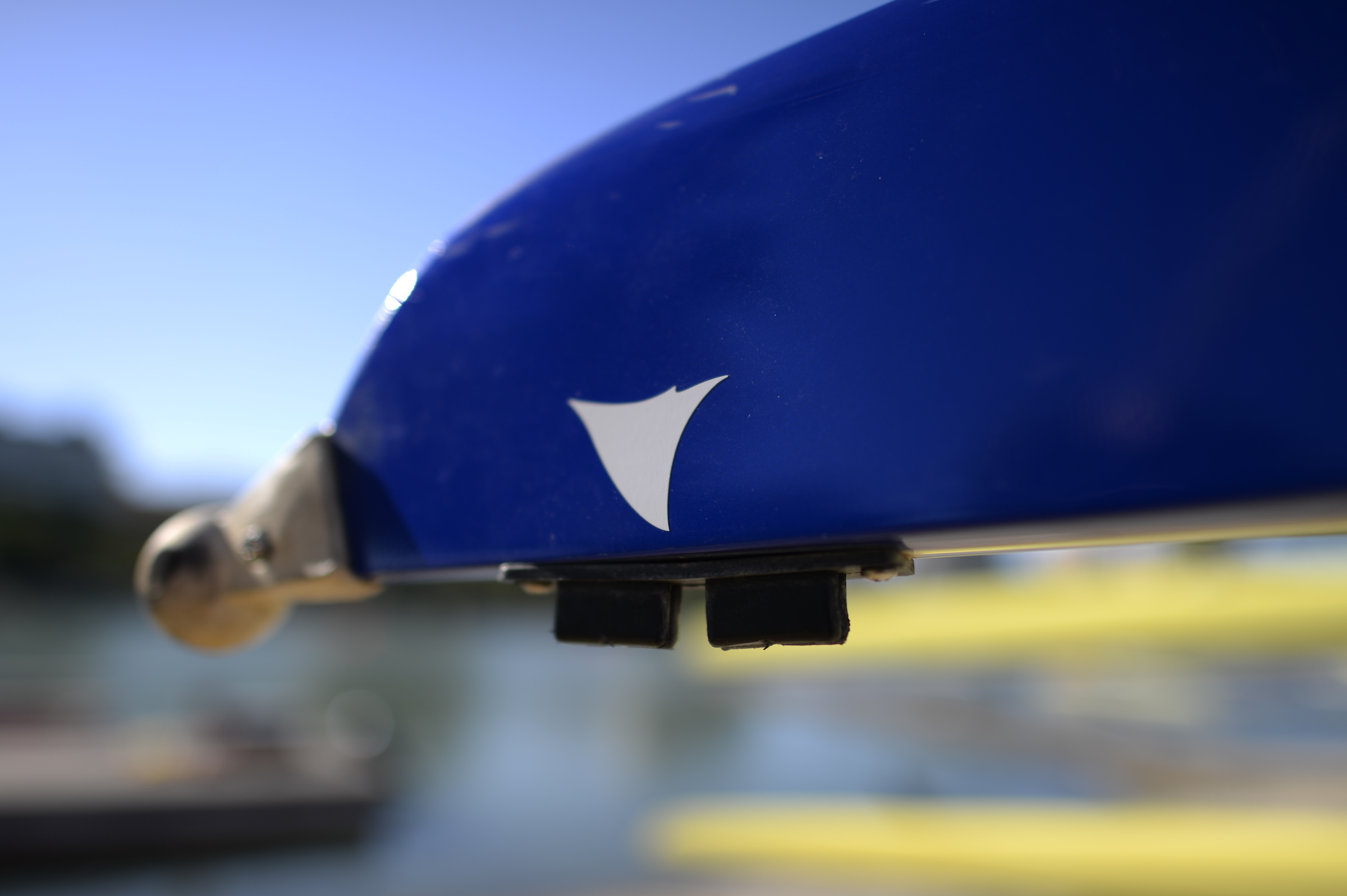
Bow Balls: Why They Matter

Seville. Andalusia. SPAIN. General View GV. Bow Ball, Hudson Shell. 2013 FISA European Rowing Championship. Guadalquivir River. Thursday 30/05/2013 [Mandatory Credit. Peter Spurrier/Intersport]

BY MARGOT ZALKIND AND MIKE DAVENPORT
PHOTO BY PETER SPURRIER

You’re ready to launch, nervous and psyched, and the dockmaster says, “Sorry. Go back and get a bow ball.” You thought the wad of duct tape you attached to your boat would suffice. But it doesn’t.

What’s the big deal? (And does it matter even if you are not racing? Yes.)

If someone at the launch site is safety-smart and paying good attention, they will not let you launch unless you have heel ties at every seat (which we covered last issue), and a firmly attached bow ball on your boat.

Do you know why?

From USRowing’s 2021 Rules of Rowing:

“Every boat shall have a supple or plastic ball, of a white or fluorescent color, firmly attached and mounted on its bow, unless equivalent provision for visibility and protection against puncture injury is included in the boat’s basic construction. The bow ball shall be at least four centimeters in diameter.”

When did bow balls become a safety feature of most shells? Rowing historian Bill Miller writes:

“I began rowing in 1966, and they were used regularly then. They were actually rubber balls with a string of leather fed through and then screwed or tacked to the sides of the bowsprit. I think it was in the 1970s that a molded rubber attachment was manufactured and replaced the rubber ball.

“One incident happened on the Charles River, which was a very busy rowing highway in the 1970s, and even more so now. A sculler was rowing on the proper side of the river when a coxed-four on the wrong side plowed into him without a bow ball. The wooden prow penetrated his back, broke off and remained there. He was extracted from his single and rushed to Mass General Hospital, where the remains of the bow were removed. Luckily, it did not cause damage to his spine, but concern was infection from the dirty water. Antibiotics were prescribed, and a watchful eye kept to see if infection developed. Nothing developed, but his sculling was impossible for many weeks.

“Without a bow ball, severe body injury can occur, and dirty river water presents additional danger.”

Too often, we see boats with bow balls attached with duct tape, adhesive tape, or some glue. We’ve seen bow balls made of wadded-up tape and even newspaper.

News item, October 17, 2002

SCULLER HURT WHEN STRUCK ON CHARLES 

A Lexington sculler suffered serious injuries yesterday morning when the prow of an eight-man boat rammed into his side and hurled him into the Charles River in Watertown.

The rower, 55, apparently did not see the larger racing shell speeding toward him when, as he was passing another boat, it crossed the center of the river, according to State Police. The end of the larger boat penetrated deeply into the rower’s torso, witnesses said. The bumper (bow ball) on the prow of the eight-person shell was knocked off by the impact.

The initial contact between the vessels tore a rubber safety bumper from the larger boat, reports stated, and the sharp prow of the larger craft entered the left side of the patient’s lower back, above the iliac crest, and exited the central portion of his lower abdomen.

 He then slipped off the larger vessel’s prow and fell into the water. He did not lose consciousness and within five minutes was pulled from the water by the occupants of the larger boat and brought to shore. Emergency medical services were called.

Bottom line? Bow balls protect anyone and anything they might slam into. Make sure your boat has all the right safety equipment. 

The Essential Function of Fins

Mortlake/Chiswick, GREATER LONDON. United Kingdom Oxford University Women's Boat Club, OUWBC vs Molesey BC, Pre Boat Race Fixture, 2017 Boat Race, The Championship Course, Putney to Mortlake on the River Thames. Fin and Rudder combination. Hudson Boats Sunday 19/03/2017 [Mandatory Credit; Peter SPURRIER/Intersport Images]

BY VOLKER NOLTE
PHOTO BY PETER SPURRIER

Let’s assume you’re buying a new single for yourself. You choose the size of the boat according to your weight. Of course, you pick a nice color, and also give your shoe size. Maybe you even select a certain seat top. But did you ever think about the fin size or its placement? Most of the time, you don’t have a choice, since boatbuilders usually offer only one type of fin, and the fin box is in a fixed position. What if you want to change things?

Before you do, think about the functions of the fin. Its main purpose becomes obvious as soon as it’s lost by hitting a submerged lo: The boat no longer goes straight. Since every boat rolls a little during the stroke, the submerged boat shape is, for parts of the stroke, no longer symmetrical, which tends to turn the boat. Once the boat is set to spin, it will continue to do so increasingly. 

The fin keeps the boat going in a set direction, absent any side forces. Small roll movements have no effect on the course of a boat with a fin. The boat tracks straight after completing a steering intervention, and the fin reduces the impact of side winds. 

The second function of the fin is to stabilize the boat; a deep fin helps balance it. 

All these functions are dependent on the fin’s area, height (vertical distance from hull to tip of fin), and placement along the boat’s longitudinal axis. The height and area of the fin determine its ability to keep the boat straight and influence its stability. Where the fin is placed affects its ability to turn the boat; the closer the fin to the stern, the harder to steer.

So what’s the optimal fin design and where best to put it? It depends on various factors—current, side wind, whether a course is straight or twisty.

Is a high fin best? Not necessarily. High fins tend to “sing” or vibrate from the turbulence at their tail edge, which generates a whistling sound that gets amplified by the boat’s hollow canvas. Not only is it annoying but also it slows the boat. To avoid vibrating, a high fin needs to be longer and thicker, which increases drag. 

If you want the boat mainly to go straight and be balanced, and more drag is acceptable, then a higher fin with considerable area is desirable. Ditto on a straight racecourse with loads of side wind. On a head-race course such as the Head of the Charles, however, as well as when training on a winding river, a smaller fin is best. 

 A fin needs to be able to shed weeds, which means its front edge should be rounded and smooth. It also has to be angled toward the stern. Caveat: A more triangular shape means increasing the height of the fin will also increase drag. Reason: the fin’s longer base.

The ideal? If your new boat came with several different fins that could be swapped out easily depending on conditions. There could be a “training fin” for occasions when drag is not an issue.  A “straight-race fin” that’s high and hydrodynamically maximized.  A smaller “head-race fin” that sheds weeds well. A larger “side-wind fin,” and so on. The fins would be simple to attach and remove and would break off in an accident without damaging the hull.

Next wish:  A fin box that would enable you to move the fin longitudinally toward the bow or stern. Better yet would be a mechanism that would allow you to move the fin horizontally from within the boat, so that you could position the fin optimally while sitting at the start and observing actual wind conditions. 

Since we’re dreaming, why couldn’t we move the fin while rowing, pulling it toward the bow as a turn approaches, pushing it toward the stern for a straightaway. Of course, this interchangeable fin-positioning box would not generate additional drag or add extra weight to the boat. 

 A big ask for boatbuilders, I realize, and of course it would increase the cost dramatically. So how about two fin boxes at different locations? You could choose the most desirable fin position for a given situation, and the unused fin would close nicely so that it wouldn’t drag.

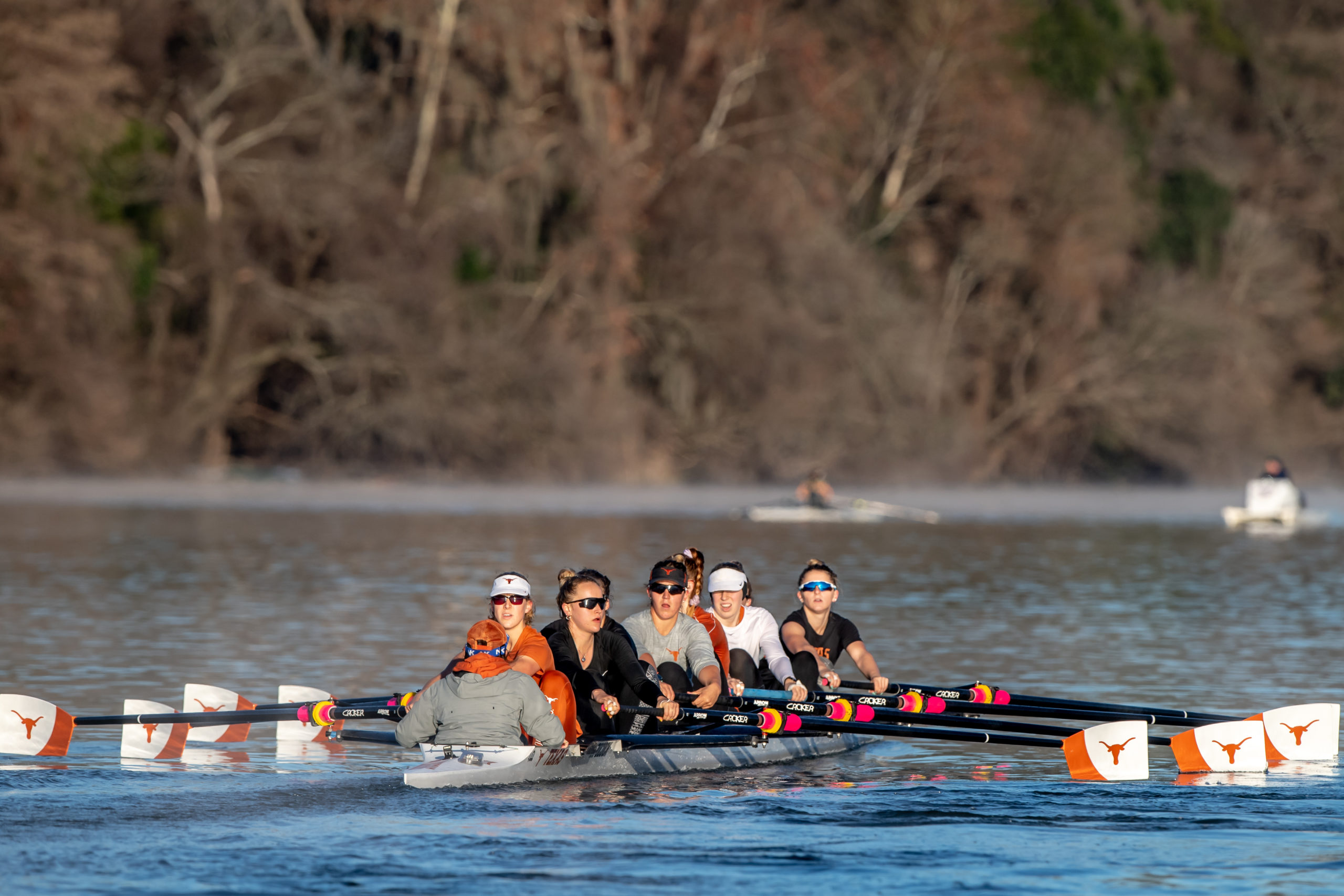
Longhorns Publish 2022-2023 Race Schedule

STAFF REPORTS
PHOTO BY ED MORAN

The University of Texas’ women’s rowing program announced its schedule for the 2022-2023 season November 1.

The first regatta the crew will race in is the Waco Rowing Regatta November 6, marking the first time the program has competed in a fall event since 2018.

The spring lineup includes several scrimmages and duals, the 2023 San Diego Crew Classic, and hosting the Big 12 Conference Championship.

View the full schedule here.

Top 10 Rowing Venues in North America

VIDEO BY ADAM REIST

The Cost of Customization

BY NANCY CLARK
PHOTO BY ED MORAN

We are overloaded with the amount of online nutrition and fitness information. At the same time, it enables us to form opinions and create a belief system surrounding food and exercise.

No matter what you believe in—whether the paleo diet or CrossFit—the common goal should be to nourish your soul by being fit, healthy, and at peace with your body and what you put into it.

The best way to achieve this is by balancing food intake with energy expenditure, eating a variety of real foods, and creating a health-promoting fuel and exercise program that you can sustain over the long-term. Of course, no one size fits all.

Each of us has different physiological and psychological needs. Dairy, for example, is not intolerable for everyone, nor should gluten be avoided at all costs for those who don’t have celiac disease. There is no such thing as good or bad food.

All of us are also different when it comes to weight management. There are just as many reasons why people gain weight as there are tools to manage it.

Whatever your approach, remember that your food and exercise program should help you feel good from the inside out, and should allow you to consistently make choices that you enjoy and can sustain.