Home Blog Page 163

Warm-up Reset Drill

BY MARLENE ROYLE
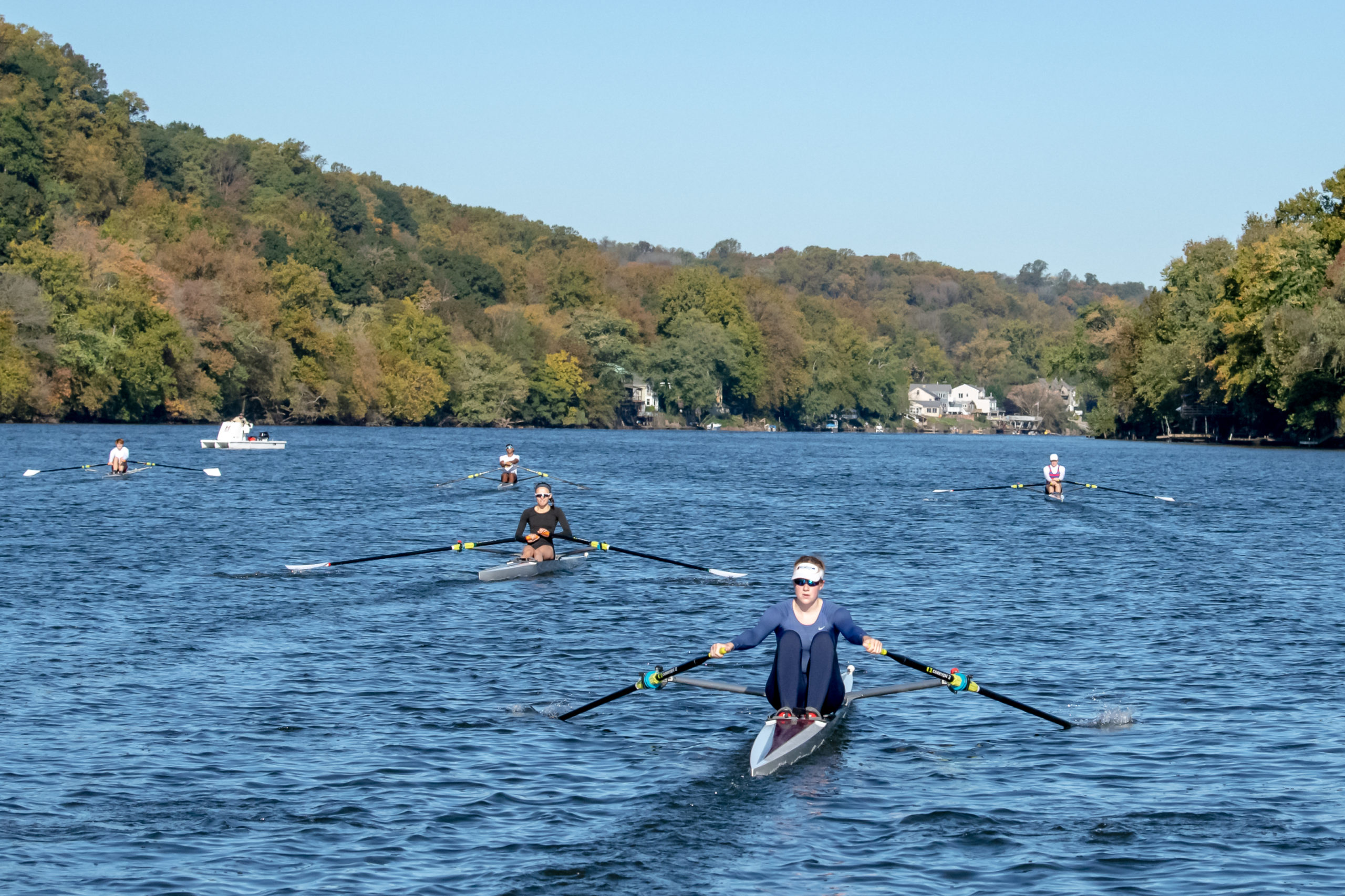
PHOTO BY ED MORAN

Each early outing as a new single sculler can feel like you’re starting again from square one. The hull is sensitive to every micro-shift of your weight or handle movement, so having a good drill in your back pocket to get settled in at the start of your row can help you catch your breath and get going. 

Once off the dock, begin with an exercise called the push-pull drill, or rowing in place. This is a warm-up drill that helps you establish your hands on the handle correctly and emphasizes blade depth, changing handle directions fluidly, and keeping the boat set.

To do the push-pull drill, sit at the finish position with the boat level, blades squared and buried in the water. Gently push the handles away, in a backing motion, following the same sequence as the recovery sequence—handles open wide as you approach the top of the slide, then stop at three-quarters or full slide depending on how comfortable you are.

Check that you are sitting tall and keeping some weight against the oarlocks so the rigger stays level. Allow the handles to press into the hook of your fingers as the blade gathers the water. Glance at your hand position and make sure you have the correct handhold on the oar handle (knuckles at 12 o’clock, palms off the handle, wrists flat and in line with the back of the hand for the drive). Then practice in place, moving back and forth on the slide, alternating rowing and backing, and keeping the blades square in the water.

Practice for three to five minutes. Repeat the pushing-away motion. Then, at the top of the slide, gather the pressure on the blades and gently change direction. As you get more comfortable, you can increase the pressure and length. During the exercise, keep the blades square and at the correct depth.

Marlene Royle is the author of Tip of the Blade: Notes on Rowing. She specializes in training masters rowers, and her coaching service, Roylerow Performance Training Programs, provides the program and the support you need to improve your competitive edge. For information, email Marlene at roylerow@aol.com or visit www.roylerow.com.

Cross-Training: Align the Spine

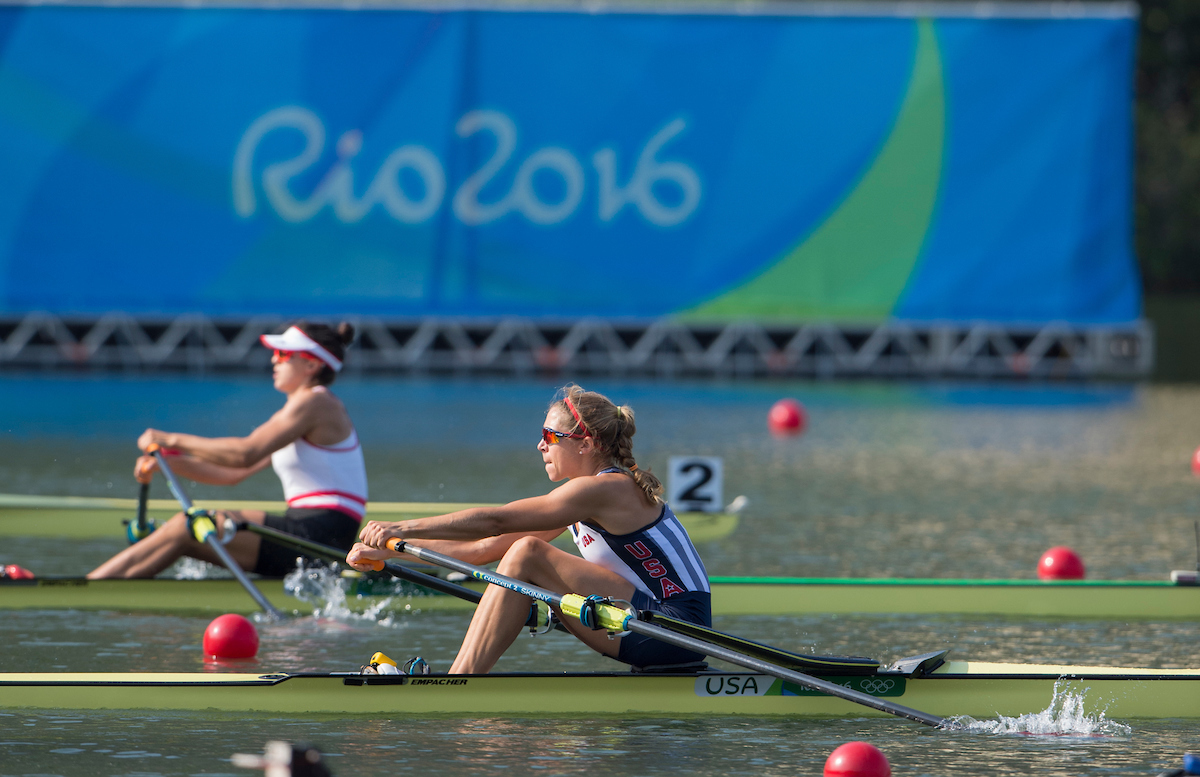
Rio de Janeiro. BRAZIL. USA W1X, Gevvie STONE, Quarterfinal. 2016 Olympic Rowing Regatta. Lagoa Stadium, Copacabana, “Olympic Summer Games” Rodrigo de Freitas Lagoon, Lagoa. Tuesday 09/08/2016 [Mandatory Credit; Peter SPURRIER/Intersport Images]

STORY BY LIZ HINLEY
PHOTOS BY LIZ HINLEY AND PETER SPURRIER

The phrase “breaking my back” has a double meaning for rowers as they always work hard to move the boat but it can also literally mean breaking one’s back when it comes to spinal posture on the erg and in the boat. Potential injuries that can result from having poor posture.

Proper posture is crucial for spinal health as well as setting up a great catch position for a strong drive phase. 

Here’s spinal alignment broken down and how to use it to find proper alignment, apply it to rowing, as well as ways to support the position with core exercises. 

By separating the spine into four sections, we can focus on each to elongate the spine by using the surrounding core muscles. The sections are pelvic (sacral), lumbar, thoracic, and head (cervical). 

  1. To start, rotate the pelvis so that the tailbone draws down towards the ground. Do so by lifting up the lower abdominal muscles. 
  1. Once the pelvis is locked in, squeeze the mid abdominal muscles (the gut) in and up towards the spine. 
  1. With the pelvic and lumbar locked in place, draw the shoulders down and back. Allow the chest to open wide with a lifting sensation versus a pinching back movement. This will elongate the thoracic area.
  1. Lastly, with the three previous areas aligned, we stretch the cervical spine by extending up through the crown of the head towards the ceiling and the chin tucking slightly down. 

Just as we built from the bottom up, proper position in the boat and on the erg starts with good pelvic placement. 

For example, at the catch, look to fully rotate over by pivoting at the hips instead of the back. This allows us to squeeze the belly towards the legs with the lumbar straight and protected by the surrounding core muscles. 

With the shoulders down and back, we are locked in and ready for the oars to connect with the water as well as having a wide chest to minimize lung compression. 

Lastly, the headrests in alignment with a steady, forward gaze preventing extraneous movement. 

Below are some exercises we can do to strengthen and support this spinal position. 

  • Posterior Pelvic Tilts

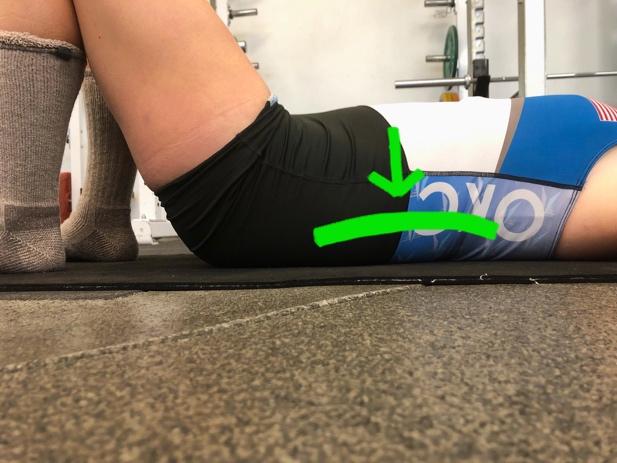
Lay on your back with feet hip-width apart, knees hip-width apart, and arms resting by your sides or with your hands on your hips (not depicted here). The low back will want to lift away from the floor. Using our low abdominal muscles, press the low back into the floor with a slight rotation of the pelvis, hold that position for about 3 seconds, then release. 

  • Dead Bug 

Lay on your back with knees up to a 90-degree angle, feet in the air, and arms extended either straight above to the ceiling or above the head if you choose to hold a weight or dumbbell. Like pelvic tilts, squeeze the lower abdominals muscles so that the low back presses into the floor. Tighten the core around the midbody and open the chest with the shoulders down and back flat against the floor. Hold this position as you lower one leg at a time to just above the ground. With the modification of the arms without the weight, lower the opposite arm from the leg that is lowering (i.e. right arm, left leg). The goal is to keep the core tight as the limbs move. 

  • Plank

Apply the four sections we worked on in a standing position into planks. Imagine a straight line from head to heal when in the position. To add an extra challenge, try moving around the limbs without moving the torso or add some weight resting the back. 

The Talk Test

BY MARLENE ROYLE
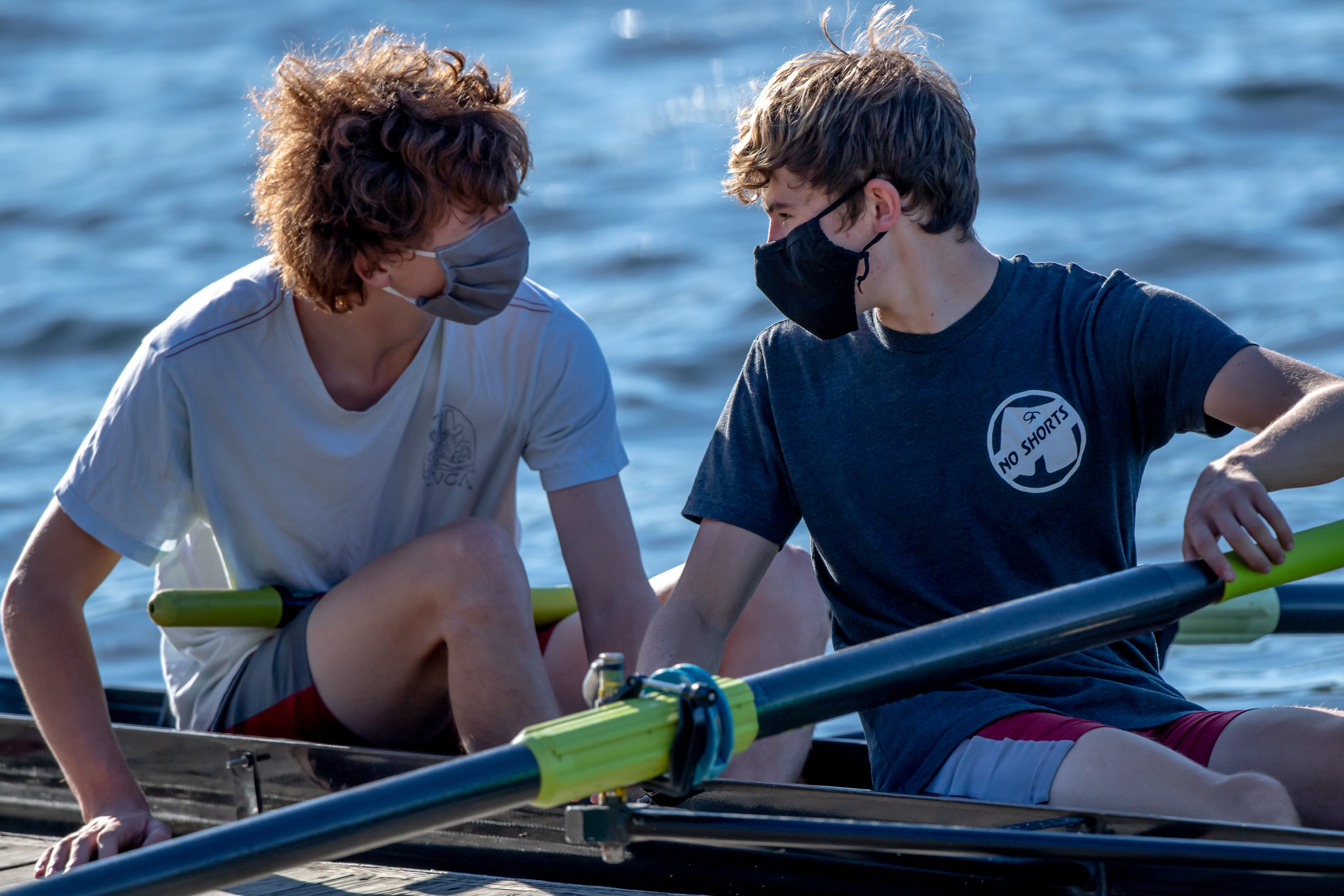
PHOTO BY ED MORAN

Intensity is a key variable that determines the effectiveness of a training session. Rowers express  intensity in watts, 500-meter splits, stroke rate, heart rate, or simply how hard the effort feels during a given task. 

Rate of perceived exertion, or RPE, is subjective, and though it seems rather primitive compared to the metrics we can collect from our devices, RPE can give you insight about how well your training is going, especially when paired with data points and the fact that the first time you rowed a certain workout it seemed harder than the second. 

For easy reference, the 10-point RPE scale can be translated into a talk test. As you take harder strokes, breathing rate increases and talking gets harder. Rowing is considered easy when you can conduct a conversation. But when you’re pushing the edge and breathing hard, it’s a sign you’re above the lactate threshold. 

Here’s how to apply the talk test. On a scale of one to 10, a zero to one is light effort. Two to four is an active recovery pace. Four to five is a steady aerobic pace. At these levels, you’re able to talk freely, breathing through your nose and then comfortably through your mouth. When you get to six, it’s more of a tempo pace, and your sentences become shorter and breathing more difficult. Seven to eight is a challenging pace during which you can utter only short phrases. Time trials or races can hit eight to nine, and words become sparse. Level 10 is a maximum effort or all-out sprint that renders you speechless except for a command like “Up!”

Marlene Royle is the author of Tip of the Blade: Notes on Rowing. She specializes in training masters rowers, and her coaching service, Roylerow Performance Training Programs, provides the support you need to improve your competitive edge. For information, email Marlene at roylerow@aol.com or visit www.roylerow.com.

Getting Real 

STORY BY VOLKER NOTLE | PHOTO BY LISA WORTHY

In high-school rowing, the gap between the ideal and real is often yawning. The best methods for teaching young athletes to row and preparing them for competition are well-known, but in the real world, coaches sometimes implement programs that go against their better judgment—not because they’re unaware of the physical and mental development of their young charges but because they want them to be as competitive as possible.

Beginners must learn rowing technique and how to contribute to the team. Their bodies must be conditioned so they can compete. They must learn the rules of racing, race preparation and strategy, and such elements of training as proper nutrition and strength-building. Finally, they must manage their time and cope with the demands of travel and the stress of intense training, race preparation, and competition.

All this requires careful step-by-step guidance that takes time—at least a whole year. You begin with training two or three times a week, keeping the sessions short and fun. The goal is to  give beginners enough time to feel and master the rowing motion while they improve physically through such exercise as running, cycling, and strength-training. Over time, the amount of training increases slowly and is transferred to the boat.

 In frequent short meetings, new rowers receive instruction in rules, strategy, and other basics of the sport. Periodic competitive workouts enable coaches to monitor their development and identify areas to focus on in the next training period.

That’s the ideal; the reality is usually different. Coaches are constrained by the schedule of the school year, the competitions that coincide with it, and of course the weather, which is influenced by the seasons. In addition, students have commitments to participate in other sports or extracurricular activities. 

Many coaches are doing a good job under the circumstances—as evidenced by the high rate of participation in high-school rowing and the success of some of the outstanding programs. Nevertheless, the technique and performance of many scholastic rowers leave much to be desired, and there are still too many promising rowers who leave our sport after high school because they find it too intense and not enough fun.

What can be done to fix the situation?

First, coaches should plan for the long term. Develop a multi-year plan with your student rowers. Define success at the outset as improving technique and fitness, with concern about winning coming later. Racing is motivating, of course, as long as it’s appropriate to the developmental level of your young rowers and pits them against teams of similar speed. Obviously, teams should race at the local level initially before participating in regional, statewide, and national contests.

Second, teach proper skill development. To succeed at higher levels, rowers must master technique, be physically fit, and understand the rules and tactics of the sport. At the beginning of an athlete’s career, each of these areas must be taught independently. Before novice rowers can perform heavy training loads in a boat, they must be able to row well technically. Therefore, initial training must take place outside the boat, and rules and tactics can be introduced gradually depending on the particular circumstances of each young rower. At the end of the process, rowers can continue their development in all aspects in the boat.

Third, as much as possible, make it fun. This can be achieved by building the training load slowly, connecting it with awareness of progress, varying the workouts regularly, and imparting a sense of achievement through competition.

Building a high-school program takes a lot of patience and smart planning, but when done right, it pays off. Imagine the excitement when student-athletes enter their senior year confident that they’re proficient rowers who will perform well in their crew, physically prepared to row at any intensity in the boat and race at the highest level. 

They have been in the program for several years, have used their off seasons out of the boat to get physically fit, have improved their ergometer scores steadily, and know the level of racing they’ll be doing at the end of the season. Such a group of athletes can look forward with enthusiasm to the final eight weeks of intense training and racing.

By this time, these rowers have developed the commitment to showing up early in the morning to row and the mental toughness and organizational skills to keep a training session productive if one of their teammates misses a practice. They also can deal with such disruptions as heavy schoolwork and bad weather.

The goals in the final weeks of the season are to refine rowing technique and increase training intensity while decreasing training duration to build momentum for the peak of the season. This requires full concentration during each training session so that every minute counts.

 While long low-intensity workouts are featured at the beginning of this phase, over time the two or three intense workouts a week become shorter and harder. Low-intensity training sessions at the beginning of the season are used toward the end of the season exclusively for recovery At the same time, high-intensity training sessions need to achieve competition and even top speed, and thus become shorter and shorter. 

High-intensity interval training (HIIT), with intervals typically lasting one minute or less at absolute peak performance, is popular and useful, but significant recovery must be allowed, and focusing on optimal rowing technique is essential to achieving the expected benefits.

Intestinal Distress: Gutting It Out

BY NANCY CLARK
PHOTO BY ED MORAN

While some athletes have cast-iron stomachs and few concerns about what and when they eat before they exercise, others live in fear of pre-exercise fuel contributing to undesired pit stops during their workouts. Be it stomach rumbling, a need to urinate or defecate, reflux, nausea, heartburn, or side stitch, preventing intestinal distress is a topic of interest to athletes with finicky guts.
Here is some information that will help you fuel well before and during exercise, while reducing the risk of gastrointestinal (GI) distress. For more, you can read The Athlete’s Gut by Patrick Wilson or listen to this podcast.

• Being anxious about intestinal issues can exacerbate the problem. So stay calm and think positive. Trust that your gut is adaptable and trainable. Record what, when, and how much you eat, as well as the duration and intensity of your exercise. Use that data to help you figure out what foods and fluids settle best. Building body trust can reduce anxiety, and that can reduce GI issues. That said, pre-competition nerves can affect any athlete, regardless of GI hardiness.

• Athletes in running sports are more likely to suffer GI issues than, say, bicyclists or skiers. With running comes intestinal jostling; the longer the intestines are jostled, the higher the risk of upset. Ultra-runners know this too well.

• If you experience gut issues every day, even when you are not exercising, talk to a GI doctor. Celiac disease, Crohn’s, ulcerative colitis, and blood in your stool need to get checked out now. They are serious issues and differ from exercise-induced GI problems.

• The higher the intensity of exercise, the higher the risk of intestinal distress. Add heat and anxiety to intense exercise and many athletes experience transit trouble. During hard workouts, blood flow diverts from the gut to transport oxygen and glucose to the working muscles and carry away carbon dioxide and waste products.

• Low-intensity training that can be sustained for more than half an hour is less problematic. The GI tract gets adequate blood flow, can function relatively normally, and is able to digest, absorb, and metabolize pre-exercise fuel. Athletes tend to have fewer GI issues on easy training days because of better blood flow to the intestines, lower body temperature and less anxiety.

• Carbohydrate is the easiest-to-digest fuel before and during exercise. Carbohydrate gets broken down into simple sugars in the stomach, then absorbed into the bloodstream from the small intestine. Specific transporters carry each sugar molecule (such as glucose or fructose) across the intestinal wall. Hence, consuming a variety of carb-based fuels helps minimize a backlog if all the transporters for, let’s say, fructose get called into action.

• With training, the body creates more transporters to alleviate any backlog. That’s one reason to practice event-day fueling during training sessions. Your body gets the chance to activate specific transporters. The foods and fluids you consume before and during training should be the ones you’ll use for the event. Some popular carb-based pre- and during-exercise snacks include fruits (banana, apple sauce), vegetables (boiled potato, roasted carrots), and grains (sticky rice balls, pretzels, pita), as well as commercial sports foods (sport drinks, gels, chomps).

• Athletes who experience gas and bloat want to familiarize themselves with FODMAPs —Fermentable (i.e., gas-producing) Oligo-, Di-, Mono-saccharides and Polyols. These are sugars and fibers that some people have trouble digesting. Commonly eaten sport foods high in FODMAPs include milk (except lactose-free milk), bread, pasta, onions, garlic, beans, lentils, hummus, apples, and honey.

By choosing a low FODMAP diet for a few days before an important event, an athlete might be able to reduce, if not avoid, digestive issues. (Experiment during training first to be sure the low FODMAP foods settle well.) Low FODMAP foods include bananas, grapes, cantaloupe, potato, rice quinoa, maple syrup, and cheddar and Parmesan cheeses. For more information about FODMAPS, go to www.KateScarlata.com

• Fatty foods (butter, cheese, nuts) tend to leave the stomach slowly and are metabolized slower than carb-rich foods. If you’ll be exercising for only one to two hours, think twice before reaching for a handful of nuts or a chunk of cheese for a quick fix before exertion. A banana or slice of toast will digest more quickly and be more available for fuel.

Eating fatty foods on a regular basis can speed gastric emptying a bit, but you won’t burn much pre-exercise dietary fat during your workout unless you are an ultra-athlete who will be exercising for more than three hours. In that case, a bagel with nut butter or cheese will offer long-lasting fuel.

• Some athletes chronically undereat during training. This includes dieters trying to lose weight and athletes with anorexia. Undereating can impair GI function; the gut slows down with inadequate fuel. Delayed gastric emptying means food stays longer in the stomach and can feel heavy during exercise (as well as being less available for fuel). Slowed intestinal motility easily leads to constipation, a common problem among undereating athletes.

• Highly active athletes, such as Tour de France cyclists and ultra-runners, need to consume a large volume of food to support performance. If they are eating healthy foods before and during endurance exercise, they can consume a lot of fiber, which can easily contribute to rapid transit. Endurance athletes needing a high-calorie diet often benefit from eating some so-called less healthy foods (such as white bread, white rice, cookies, candy) for low-fiber muscle-fuel.

• Since each athlete has a unique GI tract, experiment during training to learn what works best. Eat wisely–and enjoy miles of smiles.

Sports nutritionist Nancy Clark, M.S., R.D., counsels both casual and competitive athletes in the Boston area (Newton; 617-795-1875). Her best-selling Nancy Clark’s Sports Nutrition Guidebook can help you eat to win. For more information, visit NancyClarkRD.com.

From All Sides

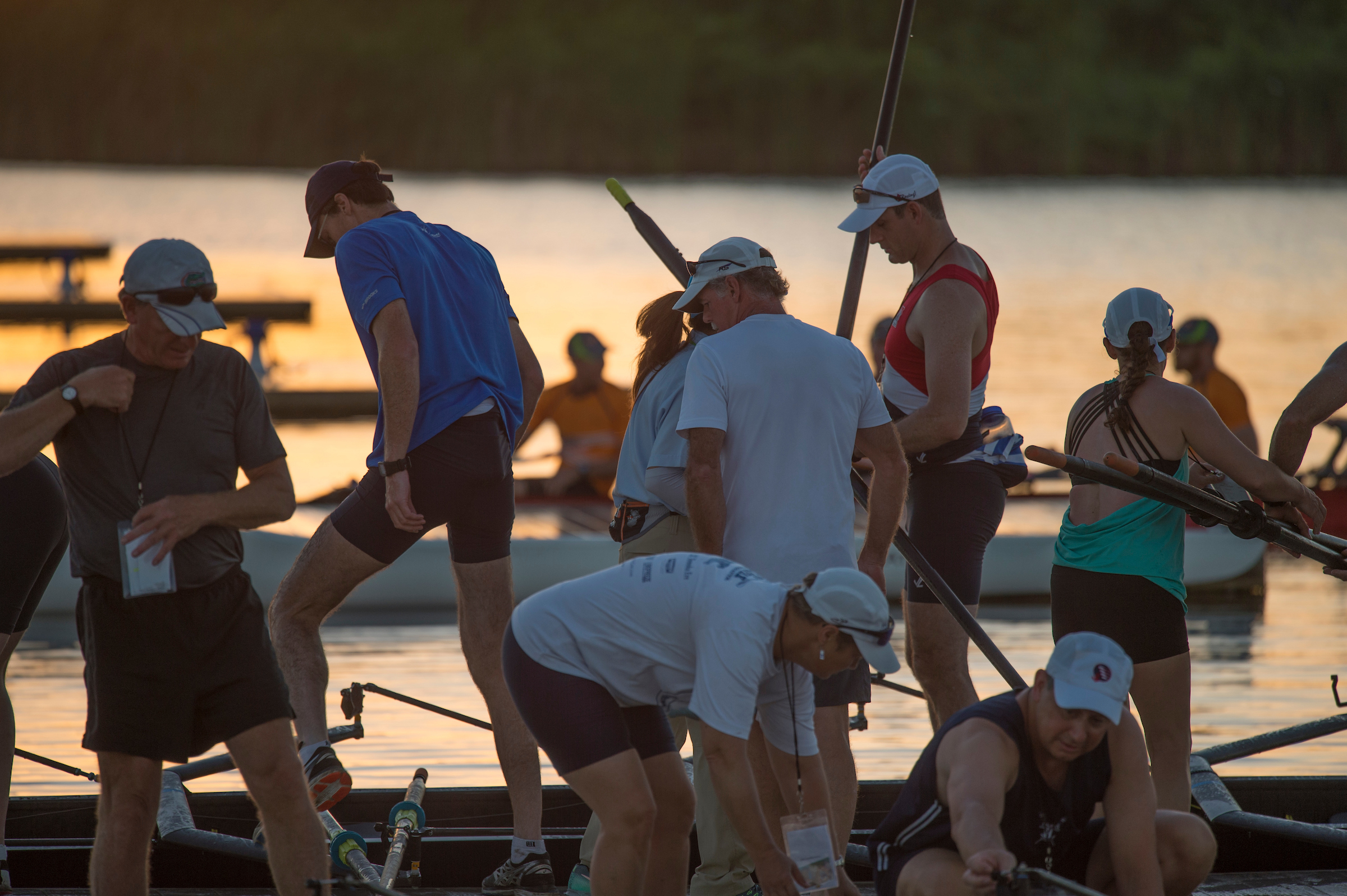
Sarasota, Florida, USA 29th September 2018. FISA, Boating Area, sunrise, Masters World Rowing Championships, Nathan Bendersen Park, Sarasota-Bradenton, © Peter SPURRIER,

BY MARLENE ROYLE
PHOTO BY PETER SPURRIER

Maintaining joint stability and bone health is a priority for masters rowers. Changes in hormones affect the tensile strength of connective tissue, and the resulting loosening of ligaments and tendons sets off joint niggles and flare-ups that can keep you out of the boat.

Resistance training helps build stability around the joints by increasing the strength of the muscles so they can better withstand the pressures of lifting and moving through motions with force. Resistance training also helps increase bone-mineral density. Multidirectional stress is very good for remodeling bone, and older rowers need to put different types of stress on the bone to signal it to get stronger. 

Rowing does not offer enough changes in direction, nor do walking or running alone. This is where well-chosen cross-training activities can fill the gap and add some variety to your program.

Jumping rope or skipping for a couple of minutes a day can have a positive impact on bone health. Include it in your warm-up routine. Also, engage in activity that requires movement in different directions. Go out dancing, play tennis, shoot some hoops, or hike uphill, bounding with ski poles, mixing in sets of lateral hops similar to how cross-country skiers train.

Have some fun with friends and improve your bone health at the same time.

Marlene Royle is the author of Tip of the Blade: Notes on Rowing. She specializes in training masters rowers, and her coaching service, Roylerow Performance Training Programs, provides the support you need to improve your competitive edge. For information, email Marlene at roylerow@aol.com or visit www.roylerow.com

USRowing’s New Gender-Identity Policy Sparks Controversy

BY CHIP DAVIS

A group of prominent oarswomen has organized formal opposition to USRowing’s new gender-identity policy, calling it unfair to females and saying it undermines hard-won gender equity in rowing.

“This policy destroys fair competition for girls and women, but it protects it for boys and men. By allowing males to identify as girls and women to compete in the women’s category, fairness for female athletes is blatantly discarded,” said Dr. Mary O’Connor, an Olympic rower and a member of the Independent Council on Women’s Sports (ICONS).

USRowing, recognized by the U.S. Olympic and Paralympic Committee as the sport’s national governing body, issued an updated gender-identity policy in December of last year.

The new policy, to be revised annually, permits rowers to declare confidentially that they are women, without any medical treatment or documentation, and race in women’s categories in regattas that are not run by World Rowing (the international rowing federation formerly known as FISA), or under the jurisdiction of the NCAA or “other national rowing governing organizations.” Mixed events are the only ones in which the new USRowing policy addresses “athletes assigned as female at birth.”

“USRowing made sure that fairness and competition was protected for boys and men by defining eligibility based on sex in only one category—the mixed-boats category,” said O’Connor, who was among the Yale women who stripped naked and wrote “Title IX” on their bodies in 1976 to advance women’s sports.

“Why? Because if they did not do so, that would make competition unfair for men potentially if the men were competing in a mixed event against boats with males who identified as women.

 “This is the only category—namely, when females are racing with men—in which being female is the criterion for inclusion. Otherwise, women have to compete in women’s events against men who identify as women.”

In simple terms, the debate is about sex versus gender. The sex camp argues that male physiological differences, such as more testosterone, larger size, and higher oxygen-carrying capacity, confer an undeniable advantage in competitive sports such as rowing. Hence, fairness requires separate events for males and females. 

The gender camp argues that how a person self-identifies should determine the arena in which they can demonstrate their talent, achieve their potential, and enjoy competition at a time when efforts are being made to erase discrimination and right past wrongs by emphasizing diversity, equity, and inclusion.

USRowing CEO Amanda Kraus defended its policy in a statement to Rowing News.

“At USRowing, we seek to make rowing a highly competitive, safe, and inclusive place where all athletes, including transgender athletes, can participate fully and feel a sense of belonging.” Kraus wrote. By accepting gender as a self-identified attribute, “we are saying we TRUST [sic] our rowers and believe in them when they say they are a man or a woman.”

For O’Connor and ICONS, which includes Olympians and former U.S. National Team members Carol Brown, Jan Palchikoff, Patricia Spratlen Item, Valerie McClain, and Ann Simpson, that doesn’t cut it.

“The science is very clear,” said Dr. O’Connor, a physician and orthopedic surgeon. “Sex is absolutely the single most important determinant of athletic performance. Males are bigger, stronger, faster than females. There is no debate about this. 

“We also know that males who identify as women cannot become female. Humans cannot change their sex. Males who identify as women and suppress testosterone do not lose their male physiologic advantage. It is changed, it is decreased somewhat, but that does not level the playing field, and therein lies the problem.”

In NCAA rowing, where coaches have embraced enthusiastically the recruitment and importation of athletes from Europe, Australia, and New Zealand to win championships, the possibility of a crew consisting of men who’ve declared themselves women doesn’t exist, even though the NCAA ducked the issue by referring gender-identity policymaking to the governing bodies of each sport.

“With respect to collegiate athletes,” wrote USRowing’s Kraus, “our policy follows World Rowing’s policy of a maximum of five nanomoles per liter of testosterone for a minimum of 12 months for trans women to compete”—a reference to the hormonal threshold for eligibility after testosterone-suppression treatment.

O’Connor criticized that part of USRowing’s policy. 

“Testosterone suppression does not equalize the playing field. There’s lots of scientific data to support this. In the longest study, even after 14 years of testosterone suppression, a male taking testosterone-suppressing medication who identifies as a woman is still 20 percent stronger and has 20 percent greater heart and lung capacity than a female. The physiologic advantage of being born male cannot be erased.”

Dr. Kate Ackerman, a former U.S. National Team rower and current chair of the USRowing medical committee, said, “Unfortunately, we do not have prospective, sport-specific studies to fully understand how much prior testosterone exposure with subsequent testosterone suppression contributes to a trans athlete’s boat speed. No studies in trans rowers have been performed to date.”

As this issue went to press, World Athletics (track and field’s governing body) was considering a limit of 2.5 nanomoles per liter after two years of suppression. World Rowing might adopt the same lower threshold, but Dr. O’Connor doesn’t believe that solves the fairness issue.

“Suppressing testosterone for two years, even at a level that is closer to females, will not erase the biological advantage of being male,” she said.

In a written response to Rowing News, Dr. Ackerman, a sports medicine physician, endocrinologist, and director of the Female Athlete Program at Boston Children’s Hospital, elaborated: 

“The IOC has asked that sports governing bodies, including World Rowing, strike a balance between fairness and inclusion. This is a difficult task when we don’t know the direct effects of hormonal transition on trans rowers’ sports performance. As a member of the World Rowing Medical Commission and as the chair of the USRowing Medical and Sports Science Committee, I can assure you that both organizations are putting a lot of thought into their gender-inclusion policies.”

The USRowing policy was approved by its board with no public record of how members voted. Rowing News has learned that among board members there is significant disagreement. USRowing said the board engaged in “several lengthy and comprehensive discussions” that elicited “varying opinions.”

 “It’s not fair to let males, even though they identify as women, compete against females,” Dr. O’Connor said. “It’s blatantly discriminatory to females.

“The better policy would be to say, ‘Here’s the female category where females compete and here’s the open/male category where men and individuals who are male but are suppressing testosterone can compete.’ The female category has to be protected.”

“We will regularly revisit this policy as and when appropriate,” Kraus promised, “to ensure that it does not become an issue for rowing.”


Radcliffe Lightweight Rowing Announces 2023 Spring Schedule

COURTESY CRIMSON ATHLETICS
PHOTO BY PHIL TOR

CAMBRIDGE, Mass.. – Radcliffe lightweight rowing released its 2023 spring schedule, Sarah Baker, The David K Richards ’61 Family Head Coach for Radcliffe Lightweight Crew, announced February 1. The Black and White will race in seven different events in the spring including the Eastern Sprints and the IRA National Championships.
 
Radcliffe opens the season with the Class of 2004 Cup at Georgetown on Mar.26 on the Occoquan Reservoir. The Black and White will defend the cup after defeating Georgetown in the season opener last year. The team returns to the Charles River the following week to face Princeton for the Class of 1999 Cup on Apr.1.
 
Following the Class of 1999 Cup, Radcliffe will meet up with Charles River rivals Boston University and MIT to defend the Muri Cup and vie for the Beanpot on Apr.8. Harvard then heads down to Cherry Hill, N.J for the Knecht Cup Regatta on Apr. 9-10. At the 2022 event the team earned a silver medal in the lightweight eight and gold in the lightweight four. The Black and White then return to Cambridge yet again to face Bates College on Apr. 23 before beginning its championship races.
 
Radcliffe heads to the Eastern Sprints in Worcester, MA, on Apr.30 where they look to top their 2022 results of medaling in every event. The season concludes at the IRA National Championships on June 2-4 in West Windsor, N.J.