Home Blog Page 162

NRF Adds Five New Board Members in 2023

Rotterdam. Netherlands. USA Blades/Oars. 2016 JWRC, U23 and Non Olympic Regatta. {WRCH2016} at the Willem-Alexander Baan. Thursday 25/08/2016 [Mandatory Credit; Peter SPURRIER/Intersport Images]

PROVIDED BY THE NRF
PHOTO BY PETER SPURRIER

Elle Logan rowed at Stanford University and graduated in 2011 with a BA in History. In 2009, the women’s rowing team won the Pac-10 Championships and the NCAA Championships. Elle was named the Pac-12 Rower of the Century in 2016.
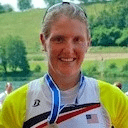
Elle Logan.

Elle was a member of the U.S. National Rowing team from 2007-2016. She competed at three Olympic games (Beijing 2008, London 2012, and Rio 2016) as a member of the Women’s 8+ and has three Olympic gold medals.  In addition, Elle competed at various World Championships,  World Cups and other international events in the 8+, 4-, 4x, 2- and 1x earning an assortment of medals during that time.  The 2008 Olympic boat was named “Crew of the Year” by FISA in 2008 and inducted into the National Rowing Hall of Fame™ in 2014.

After transitioning away from training full time in 2016, Elle moved into the commercial real estate industry and received her MS in Real Estate Finance and Development from the University of Washington Runstad School in 2019. She spent a couple years at Katerra, a vertically integrated construction company, before joining Hess Callahan Partners, a Class A office in-fill developer in Seattle, and is now currently an asset manager at BentallGreenOak, a global commercial real estate investment manager headquartered in New York.

Elle lives on Vashon Island in Seattle, Washington with her husband Carlos and two boys Guillermo (5) and Alejandro (3). In addition to rowing the RP3 whenever she gets a moment Elle has taken up open water swimming in the Puget Sound.

Matt Knifton grew up in Austin, Texas, where he played football like every other boy. He never thought about rowing until he was recruited to the fledgling University of Texas Crew in the mid-1980’s. As men’s captain, Matt worked with many others to build UT Crew, and that club program would eventually spawn the UT varsity women’s juggernaut of today. After graduating with a chemical engineering degree in 1990, Matt rowed at Vesper (and lived in the boathouse) until he was reassigned
to the new National Sculling Training Center in Occoquan, VA. Matt spent two years there rowing and constructing various Soviet-era rowing torture machines for Coach Igor Grinko. Although Matt never realized his dream of making the 1992 Olympics, he has fond memories of that experience and the great people he met.
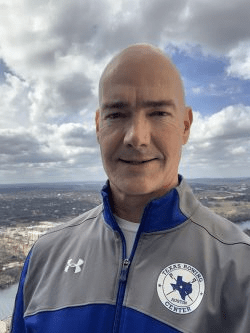
Matt Knifton.

After graduating from Texas Tech School of Law, Matt returned to Austin in 1996 and began his twenty year career as an environmental attorney with the law firm of Thompson & Knight. In 1999, Matt founded Texas Rowing Center (TRC), which is now the largest rowing club in Texas and the southwest with over 800 rowing members and 200 juniors. TRC is also home to a robust masters program that has won the USRowing Masters Nationals Club Trophy in 2017, 2019, 2021, and 2022.

In addition to rowing, TRC is the reputed to be the world’s largest standup paddle-board rental operation with over 500 boards. The advent of the “SUP” and its popularity in Austin allowed Matt to retire from law and focus on running TRC. In 2010, Matt helped start Texas Rowing For All, a 501(c)(3) nonprofit with the mission to provide rowing and paddling for people with physical, sensory and intellectual disabilities. TRC is also a national leader in diversifying the sport of rowing by recruiting and hiring athletes and coaches of color.

In 2021, Matt hired Coach Peter Mansfeld and started TRC High Performance, a 501(c)(3) nonprofit with the mission of training and supporting rowers hoping to compete in the World Rowing Championships and Olympic Games. Thanks in large part to the generous support of the National Rowing Foundation, all eight TRC-HP athletes competed at the 2022 World Rowing Championships.

Matt continues to compete as a masters athlete, winning medals at Masters Nationals, Head of the Charles, the Henley Masters Regatta; as well as a CRASH-B hammer in 2018. But Matt’s greatest rowing pleasure is watching his daughter Kate compete. Kate has stroked the UT 1V8+ to two consecutive undefeated seasons, including two NCAA 1V8+ victories, and has led UT to two back-to-back NCAA Women’s Rowing Team National Championships (Hook’em!). Kate also stroked the U.S. four (all Longhorns) to a gold last summer at the U23 World Championships, which earned her the 2022 USRowing U23 Female Athlete of the Year award. Matt is also the father of another amazing young woman, Sophie, who is a student at The University of Chicago. Sophie left rowing after one week because she wisely “doesn’t like to hurt.”

Paul Teti.

Mr. Teti is a Co-founder and Partner at Eagle Cliff Real Estate Partners. Prior to forming Eagle Cliff, Mr. Teti served as Executive Vice President of Real Estate Operations at Columbia Property Trust where he was responsible for directing the operations of Columbia’s portfolio of investments nationwide and served on Columbia’s Investment Committee. Mr. Teti came to Columbia in 2020 from Normandy Real Estate Partners, where he was a Partner and head of their leasing and asset management group, responsible for managing the leasing and marketing activities for the company’s portfolio. Mr. Teti also spent time on business development and capital raising activities for Normandy and served on the investment committee. Earlier, Mr. Teti was part of Normandy’s acquisitions team, where he assisted in underwriting and closing acquisitions and financings. Mr. Teti holds a degree in Sociology from Princeton University, where he was a member of the National Champion rowing team. Mr. Teti is also a three-time member of the U.S. Olympic Rowing Team, competing in the Sydney, Athens and Beijing Games. Mr. Teti is active in his community and serves on the Board of Trustees at Stuart Country Day School, the Madison Square Park Conservancy and Playworks. He has held leadership positions with several local and national non-profits and charities, including Leukemia and Lymphoma Society, The Diabetes Research Institute and the U.S. Olympic Rowing Team.

Ben Holbrook started rowing at Brown University and graduated in 1997 with a degree with Honors in Psychology.  Ben won two National Championships, two Eastern Sprints and three IRAs among other medals while at Brown.  Ben rowed on numerous National Teams from 1994 to 2004, and competed in the 2004 Olympics in the Men’s Quad.  Ben won two world championship medals including a gold medal in 1995 and silver in 2000 both in the Men’s Coxed Four.  Ben also won a gold medal in the Men’s 8 at the Pan Am Games in 1999.

Ben Holbrook.

Ben is a Senior Managing Director at Mason Wells, a middle market private equity firm based in Milwaukee, WI.  Ben has been at Mason Wells for 18 years and is a senior partner at the firm where he oversees the firm’s consumer product investments.  Ben is currently chairman of the board for three portfolio companies and also oversees the firm’s business development efforts.  Prior to Mason Wells, Ben was a research analyst at Janney Montgomery Scott in Philadelphia, PA.  Ben is also on the board of the Petit National Ice Center in Milwaukee, WI where numerous Olympic speed skating trials and US Championships have been held. 

Ben and his wife Danika live in Whitefish Bay, WI along with their four children, Teah, Amalia, Lincoln and Carmen.  Danika began rowing at the age of 11.  She rowed at Princeton University and graduated in 1995 after winning two national championships and two Eastern Sprints.  Danika also competed on numerous National Teams, winning a gold medal in the Lightweight Women’s 4 in 1994. Danika also competed in the 2004 Olympic Games, earning a 5th place finish as the stroke of the Women’s Quad.  Ben and Danika moved back to Milwaukee, WI in 2004 following the Olympic Games.

Liv Coffey.

Olivia Coffey’s parents, Calvin and Margaret, taught her to row when she was in middle school. She began rowing competitively at Phillips Academy and continued rowing at Harvard University, where she was a co-captain and All-American. She represented the U.S. at eight World Championships, winning a medal at every event and gold in the 2009 U23 W8+, 2013 W4-, 2015 W4x, and 2018 W8+. She was a spare at the 2016 Olympics and raced in the W8+ at the 2020 Olympics. Olivia also raced for Cambridge and won the 2018 Boat Race. 

She is an Associate at One Equity Partners and is involved with investments in the industrial, healthcare, and technology industries. She is a Board member at Dragonfly Financial Technologies.

Olivia and her husband, Michael, live in New York. Michael rowed at Harvard and won the 2003 IRA. Michael was a World Champion in the M8+ in 2005 and also won the 2005 Boat Race rowing for Oxford. Olivia has three older sisters, Laurie, Claire, and Roxanne. Olivia and Michael have a cat named Amo.

Random Thoughts on Coaches

Boston, Massachusetts, Senior-Veteran Men's Single, Harry PARKER, Alte Achter Boat Club, moves past the Riverside Boat Club, dock, during the Forty Second, [42nd] Head of the Charles, 22/10/2006. Photo Peter Spurrier/Intersport Images...[Mandatory Credit, Peter Spurier/ Intersport Images] Rowing Course; Charles River. Boston. USA

BY ANDY ANDERSON
PHOTO BY PETER SPURRIER

I write frequently about coaches. As a rowing coach myself, I like to think about what other coaches do–not just drills and workouts but how they work with their athletes and peers. I spent a lot of time talking to people about last month’s feature on Ted Nash, and it got me thinking, again, about the role of rowing coaches.

Coaches are teachers. How a coach chooses to explain and teach the rowing stroke is one of the most important elements of their job. Although most of us use video to show examples of what we want, you can’t just roll the tape and have the athlete figure it out. We rely on our words.

Some of Ted Nash’s vocabulary has always amused me. I remember hearing him talk with athletes about the “insertion” and “extraction” of the blade, not the catch and finish. The precision of these words conveys his passion for making the most minute matters important.

Another great coach, the beloved Larry Gluckman, had his own concern about the language of coaching rowing. He hated the term “the finish” because it implies that each stroke has an end point, and Larry wanted to make sure that his athletes and the coaches he talked to at clinics across the country understood that the rowing stroke is a cycle. Each stroke is connected to the next one. Calling the moment when the oar handles touch the body and the blades come out of the water “the finish” disrupts the cycle. Once you begin to row, there is no finish. Larry talked about the entry and release, not the catch and finish.

Do these small linguistic choices make a coach great? I doubt it, but they do reflect the care and seriousness with which coaches instruct their athletes. Some coaches use analogies and metaphors to get across what they want their athletes to do in the boat. Al Rosenberg, the renowned coach of the 1964 Olympic gold-medal eight and 1974 world champions, talked about how the motion of putting the blade into the water is like rolling an orange off a table and snatching it before it falls to the ground. Breaking with widely accepted vocabulary, he said that a “quicker catch” is not the goal. A good catch is like peeling a banana or putting on your pants: it can’t be done quickly. It must be done carefully and deliberately.

My own college coach used to talk about the rowing stroke as being similar to the Fourth of July picnic pastime of squeezing watermelon seeds between thumb and forefinger until they shoot forward at your target–typically that annoying little brother. “Put pressure on at the beginning of the stroke–the catch–and you’ll get that seed to squirt out and propel the boat and have great run,” he’d say, or something like that. I never did feel that in the boats I coxed, but it was an appealing image.

And where do coaches focus? When I began to coach, I was told that there are two kinds of coaches: those who coach the bodies, and those who coach the blades. Although this is obviously a foolish oversimplification, it probably is true that in the beginning, at least, a coach focuses more on one than the other. “You were a coxswain,” I was told, “so you’ll probably spend more time looking at the blades and trying to read them the way a cox would.” That made me determined to learn from the bodies, a view of rowing that I hadn’t ever had before.

I once asked Harvard’s Harry Parker what he would like to see high-school coaches spend more time on. “Work on the hands,” he said. “So many guys get to college without a clear understanding of how they should hold the oar and what the hands should be doing to feather and square up.”

It takes a while to develop a vision of what your crew should look like, but there’s probably no more important thing for coaches than to have a clear picture in their head of what they want the motion of their crew to look like. Crews that are coached by the best coaches have a distinctive look from year to year. When Todd Jesdale was a young coach at Cornell, he asked the heavyweight varsity’s Stork Sanford, one of the most successful coaches of his era, why as race day approached Stork drove his launch so far away from his boats. “The farther away I get, the better they look.”

Coaches probably get an inordinate amount of credit for the successes or failures of their crews. After all, there is nothing as important in the sport as having good athletes. But you knew that, didn’t you?

High Point University to Add Women’s Rowing to Division I Sport Offerings

PROVIDED BY HPU

High Point, N.C. — High Point University Athletic Director Dan Hauser announced Wednesday that women’s rowing will be added as the Panthers’ 17th NCAA Division I athletic program. HPU will join Duke University and the University of North Carolina as one of three Division I programs in the state of North Carolina. Regionally, there are six total Division I programs in the states of Virginia, North Carolina, and South Carolina, and the new High Point University Rowing team will compete against 91 programs nationally.
 
“We are very excited to add women’s rowing to our Division I sport offerings and we are committed to creating championship success,” HPU Vice President and Athletic Director Dan Hauser said. “When you look at the last two programs we started at HPU (women’s and men’s lacrosse), both have quickly ascended to conference championships and national success in the NCAA Tournament. Rowing is the perfect fit at High Point University and with the amazing performance venue of Oak Hollow Lake, we are poised for greatness.”

Global Locations Confirmed for World Rowing’s Classic and Coastal World Championships

PROVIDED BY WORLD ROWING

2023 World Rowing Coastal Championships & Beach Sprint Finals go to Barletta, Italy

Recently, the World Rowing Council was asked to vote on the attribution of the 2023 World Rowing Coastal Championships & Beach Sprint Finals. Originally attributed to Sabaudia, Italy, the event had to be reallocated due to unforeseen political changes in the city. World Rowing received various expressions of interest from a number of countries.

Following the recommendations of the Coastal Rowing Commission, led by its chair, Guin Batten, the Council reviewed a bid from Barletta, Italy, and unanimously decided to attribute the event to the Italian coastal city. The dates will be confirmed as soon as possible.

“The competition will take place along the shores of the Adriatic Sea, and the exciting nature of coastal rowing will fit perfectly in this environment. We are looking forward to working with the organising committee to make this event truly memorable” said World Rowing President Jean-Christophe Rolland.

Coastal rowing is the extreme version of the sport, and perfect for adventure seekers who enjoy the thrill of the unknown rowing conditions and beautiful coastal scenery. It is one of the fastest growing communities of rowers, and is particularly accessible to rowers based in locations where flat water is not nearby.

The discipline of Beach Sprints is also included on the core programme for the 2023 ANOC World Beach Games in Bali, Indonesia, the 2026 Commonwealth Games in Victoria, Australia and the 2026 Youth Olympic Games in Dakar, Senegal. It has also been formally proposed to the International Olympic Committee for inclusion in the 2028 Olympic Games in Los Angeles. A decision from the IOC is expected this summer.

2026 World Rowing Championships confirmed in Amsterdam, The Netherlands

The World Rowing Council also was presented with an update on the 2026 World Rowing Championships bid. In September 2022, at the World Rowing Congress, there was a provisional attribution of the 2026 World Rowing Championships to Amsterdam, the Netherlands. The Council was satisfied with the progress made on the conditions and ratified the decision to fully attribute the 2026 World Rowing Championships to Amsterdam.

Amsterdam has a long rowing tradition – having hosted two World Rowing Championships, in 1977 and 2014, the World Rowing Under 23 Championships in 2005 and 2011 and the World Rowing Under 19 Championships in 1968 and 2006. The Bosbaan, located in Amstelveen, also hosts the Olympic training centre for the Royal Dutch Rowing Federation (KNRB) and the famous Holland Beker regatta each year.

“Being back in Amsterdam is great news, added World Rowing President Jean-Christophe Rolland. The 2014 World Rowing Championships in Amsterdam were really successful, and the Netherlands have such a long tradition with rowing. We are looking forward to staging the event in this iconic city and have so many fans from all around the world on the shores of the Bosbaan.”

“Amsterdam is a city of water and we are proud to host the 2026 World Rowing Championships. We have a long history in rowing and many Olympic athletes train here in Amsterdam. We look forward to welcoming the international rowing community to ‘The Bosbaan’ in 2026” added Sofyan Mbarki, Vice Mayor of the City of Amsterdam, responsible for Sports.

Sideways Glances

BY MARLENE ROYLE
PHOTO BY ED MORAN

What you glimpse out of the corners of your eyes tells you where other boats are on the race course, where your blade is during your stroke, and helps you steer a course in a single or coxless boat. Information that you take in through your peripheral vision travels quickly to your brain so you can sense movement beyond the point where your eye is focused. It also plays a role in helping you maintain your balance, which is crucial in rowing. 

One of the most straightforward exercises for improving your peripheral vision involves a straw and two toothpicks. Your central vision is more focused, but as you move to your near, mid, and far peripheral vision, objects get hazier, so you may not be able to pick out precise movements or details. The straw and toothpick exercise can improve your ability. 

Start by drawing a black line on the center of the straw with a marker. The line should go around the circumference of the straw. When you set the straw horizontally on a flat surface, the mark should appear as a vertical line that runs around the straw. 

Now have a teammate hold that straw horizontally in front of you. Take a step back, so you’re one to two feet from the straw. With a toothpick in each hand, focus your central vision on that black line. Now, try to place the toothpick into each end of the straw. Keep focused on the black line. As you continue to perform this exercise, you will train your mind to have a sharper focus on your peripherals. Eventually, you will be able to place those toothpicks into the straw with no problem.

Marlene Royle is the author of Tip of the Blade: Notes on Rowing. She specializes in training masters rowers, and her coaching service, Roylerow Performance Training Programs, provides the program and support to improve your competitive edge. For information, email Marlene at roylerow@aol.com or visit www.roylerow.com.

What Lies Beneath

Putney. London. Tideway Week build up to the 2012 University Boat Race . Championship Course - Putney to Mortlake. OUBC Chief Coach, Sean BOWDEN, with Dan TOPOLSKI, OUBC Consultant Coach, in Coaching Launch, Tuesday 03/04/2012 [Mandatory Credit; Karon Phillips/Intersport-images]..

STORY BY ALAN OLDHAM
IMAGES BY PETER SPURRIER

They just closed their eyes and were satisfied by having a lunatic who was willing to work 24/7. They were experienced and should have known that working so hard was not sustainable over time.”

These are the words of an elite coach in a 2014 Norwegian study on burnout. Yet coach burnout, or “a feeling of being overextended and depleted of one’s emotional and physical resources,” isn’t just something that happens at the elite level.

We can all probably think of at least one coach experiencing or at risk of burnout (and that person might even be you). From strained interpersonal relationships to nagging self-doubt to crushing expectations, the factors that lead to coach burnout are not overly complex at first blush. What we don’t tend to talk about, however, are the underlying reasons behind the stress as well as the toll—emotional and physical—it takes on even the most passionate and inspired coaches.

While mental health is a big part of burnout, here we focus on the causes and effects of coach burnout and what can be done to help coaches rediscover that love for the sport that first compelled them to give back.

Defining Well-Being and Burnout

The Oxford dictionary defines well-being as “the state of being comfortable, healthy, or happy.” While this sounds like a simple concept, it is far from it. We all react to situations differently, so our experience of comfort, health, and/or happiness is somewhat subjective. It is also important to consider that appearance can be deceiving; even the most positively cheerful coach might be putting on a brave face.

“In some ways, coaches remind me of doctors,” said Alex Hutchinson, a writer who focuses on the science of fitness, exercise, and health. “[They are] so focused on making other people well (or fast) that they ignore the most basic rules of wellness in themselves.”

For Hutchinson, those basics include “getting enough sleep, eating well, and—ironically—getting regular exercise. There’s also a logistical challenge: if you’re spending hours and hours watching other people exercise, and planning their every move, there’s often not much time to do your own workout.”

“There’s no doubt that the physical act of coaching can be exhausting—biking alongside athletes, screaming splits, experiencing sky-high levels of vicarious stress, and so on. But the best countermeasure is probably more time in the gym or on the trails, not less.”

However, the stress mounts up, if these issues are not dealt with, they can lead to burnout. 

Although I didn’t get the chance to interview Christina Maslach, who penned the classic definition of burnout, her work since the 1970s in the field of occupational burnout is has been highly influential. Maslach proposes three aspects to burnout: exhaustion; depersonalization, an indifference or cynical attitude toward people someone is supposed to be engaged with; and inefficacy, a sense of reduced personal accomplishment. 

“A work situation with chronic, overwhelming demands that contribute to exhaustion or cynicism is likely to erode one’s sense of effectiveness,” she wrote in a 2001 study. 

What Can Coaches Do?

For anyone seeking advice, the landscape is littered with self-help tips both for coaches experiencing burnout and those hoping to avoid it. It is obviously something on the minds of many. 

OUWBC Head Coach Andy Neldler with an assistant on the River Thames. Photo by Peter Spurrier.

Beyond the blogs and broad-stroke advice columns, there are some more reputable resources available. The United States Olympic & Paralympic Committee’s recently published “Quality Coaching Framework” document includes some practical information and tips designed to help coaches help themselves. In fact, the sixth and final chapter focuses entirely on coach well-being.

“One of the saddest ironies in sport,” begins the chapter, “is that although coaches strive to provide an enjoyable and healthy experience for their athletes to develop and perform optimally, too often they approach their job in a manner that has the opposite effect on their own well-being.”

For Chris Snyder, director of coach education with the United States Olympic & Paralympic Committee, well-being comes down to “arming coaches with the abilities to handle any stressors that come their way and be able to react in a positive way that keeps the athlete at the center of execution.”

“What we have found is that if you do these concepts right, you’ll gain more success on the field or in the boat. You have to be able to connect with people. You have to know why you are there. You have to have those athlete-centered outcomes. But then if you don’t take care of yourself as a coach, mentally and physically, the athletes can tell.”

At the heart of it, said Snyder, is the coach’s role in a world that has changed significantly from previous generations. “These are new athletes and new methods of coaching,” he told me. “There is a big difference and athletes are looking for people to inspire them and be role models in a whole new way.”

The picture Snyder paints is one many coaches and athletes can probably identify with. With the rise of data in training and the increased importance of making marginal gains, there is a sense that coaches must be more vigilant than ever as gatekeepers and knowledge filters. They must let just the perfect amount of insight through. No more. No less. No room for mistakes.

While the actual workload may be growing due to the rapid pace of advances in the science of performance, society’s view of a coach’s role has in many ways remained the same. This only leads to greater pressure, argued Snyder, who points to the rapid growth of ultra-organized youth sports in the United State as an example.

“The increased pressures—including the role of social media—that come with popularizing the sport system put more pressure on every level of coaching,” he told me. “Even the traditional pressures in youth sports like parents in the stands are greater than they used to be. The question becomes, how do you as a coach handle these pressures and arm yourself with tools?

“If we are going to keep coaches from dropping out and keep athletes from having less educated coaches, we have to manage this,” continued Snyder. “Part is giving the coaches the tools, but if you can get everyone, from fans and parents to sport administrators, to value the system, you can decrease those pressures.”

Supportive Structures

Whether as volunteers or professionals, most rowing coaches recognize the importance of a good relationship with those in charge of their club or organization. In that 2015 Norwegian study, Marte Bentzen of the Norwegian School of Sport Sciences and her colleagues concluded that “sporting organizations had a great influence on the coaches’ perception of their job and represented a major catalyzing factor within the burnout process.” 

Or to put it another way, a poor working relationship with the boss leads to reduced levels of well-being for the employee.

“We were winning medals at an international level, but we had to deal with a board of volunteer leaders who knew little about sport at that level,” reported one of the coaches in the study. “They interfered in how we did our work and with the responsibilities we were given as coaches. It was very frustrating.”

This situation of being over-managed by a group of leaders without the skill or time required to lead effectively can result in what Bentzen calls “un-autonomous independence.”

“Their leaders did not discuss challenging situations with them or give them direction in their work,” stated the study, concluding that, “managers need to be regularly present and create an adaptive work environment, by offering autonomy support and structure for coaches.”

When it comes to workload, something usually cited as a major cause of burnout, Bentzen’s team found that long hours, while problematic, were not as significant as the reasons coaches felt they had to keep working so hard. These ranged from “not being in control,” to “feeling behind,” to “lack of experience,” to “not perceiving themselves as competent.”

Ultimately, when coaches work without feeling supported, they can lose their sense of purpose. As another coach in the Norwegian study noted, “I felt what I did was meaningless. That is a good word. Why am I doing this? Why do I wear myself out when I could have had an ordinary, 9-to-5 job? I started to question whether this was something I wanted to do for the rest of my life. I started to doubt it.”

Changing the Culture

Helping coaches to become more resilient in the face of mounting challenges and pressures on all sides is not the only solution to the problem of burnout.

For Jim Denison, a professor at the University of Alberta’s Faculty of Kinesiology, Sport, and Recreation, what’s also required is a shift in how we think about sports culture more broadly. “The historical norms around what effective coaching looks like and what effective coaches should say and do have a legacy of giving power to the coach to be in control,” he told me. “These norms allow the coach to say, ‘Yes, I’m the expert, I know these things,’ but it also creates issues such as marginalization and isolation and sets up the expectation that you as the coach are responsible for your athletes’ learning.”

Central to this idea is the theory that learning is a process of transmission, Denison explained. “This is the old image of a pupil and you are pouring stuff into his or her brain.

“This norm is oppressive to both athletes and coaches,” he continued. “Surveillance is exhausting. As a coach, when you believe that you are in charge of the progress and development of all your athletes and that you are monitoring every aspect of their lives from their sleep hours to their nutrition, to their videoing, that is exhausting.

“It is not a case of saying that data is bad, or video is bad,” Denison added. “It is a question of the intentions that are used. Unfortunately, we are in an age of a data grab or data dump. We need to shift to looking at teams as learning organizations rather than performance organizations.”

Until we can see athletes and coaches as part of the same team on a shared journey of learning and developing, said Denison, all the talk about athlete-centered coaching is nothing but lip service.

“To be truly athlete-centered requires a shift in how you think about the body, knowledge, power, and learning,” he said. “Until you shift the framework, you are only pouring old wine into a new bottle.”

Related to Denison’s call for change is a shift in the language we as coaches use to describe both our sport and the athletes’ bodies. “Language has far-reaching effects in what we consider ethical, practical, and the design of systems,” Denison said. “In an environment where exercise physiology really dominates, that knowledge has a lot of power,” he explained. “Coaches acquire that knowledge, which gives them a sense of power over their athletes to design the training program such that athletes’ bodies get itemized to be thought of as soldiers, animals, or machines.”

Thinking of athletes in abstract terms, according to Denison, only serves to widen the power gap between coach and athlete, placing even more pressure on the coach to be the all-knowing, all-seeing expert. 

“When you say something like ‘He’s got a machine engine,’” said Denison, “it may be an idea that we take for granted in sport, but this kind of language has the cumulative effect of establishing athletes as machines with coaches tinkering with them. Until you get away from these metaphors of machines, animals, and soldiers,” he continued, “you are not going to move beyond the ideology of domination. Domination is never ethical. Even though you might be a nice person, if you don’t change your language, the way you run your practices won’t change. What you do and say have to be linked. New ways of saying things give new possibilities of doing things.”

I asked Denison what metaphor coaches should instead use for an athlete’s body. “Think of the body as a force,” he said. “When you do things to the body, it does things back at you like a force. The relationship is reciprocal.”

Whether metaphor or reality, that sense of respect and shared responsibility goes a long way to ensuring the long-term well-being and sustained engagement of coaches and athletes. “Moving away from the ‘coach-as-expert’ and ‘athlete-as-learner’ to the ‘coach-and-athlete-as-learners’ [and] even to the ‘coach-as-learner’ and ‘athlete-as-expert,’ will make a big difference,” said Denison. “It unloads all the responsibility and burden and expectation for the coach to be the all-knowing expert. And who can live up to that?

“That’s an environment where people can feel it is not such a risk—or even shameful—to be wrong,” he added. “When I ask athletes or coaches how they are doing and they say, ‘I’m fine,’ that isn’t always an honest answer. We have to question why is it such a risk for them to be honest?”

Where to From Here?

At the end of all this, I find myself with many more question than answers—not an unusual situation for me. For the first time in a long while, however, I’m fine with that. And maybe that’s the big lesson here. 

As coaches we can’t always choose who we work for or select the most agreeable athletes—and parents for that matter. For all that, improving coach well-being is not a case of simply pulling ourselves up by the bootstraps. Having the know-how and the tools to handle a bad situation is part of the solution, but even that doesn’t address the underlying conditions.

As I discovered, systemic change is needed across all sports, but coaches can’t do it alone. If we want to make ours an example of how sport can lift people up, then it is up to all of us within the rowing community to create a safe environment for everyone—athletes and coaches—to communicate openly, make mistakes, and never stop learning.

If there’s one thing I’ll carry with in my own coaching from all this digging into coach burnout, it’s to take on a lot less baggage that doesn’t really belong to me in the first place.  

Rowing Biographies I’d Like to Read (or Write)

Putney, London, left facing, stroke Caryn DAVIES, supported by Nadine GRADEL IBERG, and Lauren KEDAR, sets the tempo for the race. Pre Boat Race Fixture, Oxford University Women's Boat Club {OUWBC} vs Molesey Boat Club, over the River Thames, Championship Course Putney to Mortlake Sunday 22/02/2015 [Mandatory Credit; Peter Spurrier/Intersport-images] OUWBC. Bow. Maxie SCHESKE, Anastasia CHITTY, Shelley PEARSON, Emily REYNOLDS, Amber DE VERE, Lauren KEDAR, Nadine GRADEL IBERG, Caryn DAVIES and Cox, Jennifer EHR. Molesey BC. Bow. Emma BOYNS, Orla HATES, Eve NEWTON, Natalie IRVINE. Aimee JONKERS, Helen ROBERTS, Sam FOWLER, Gabby RODRIGUEZ and cox, Henry FIELDMAN

BY ANDY ANDERSON
PHOTO BY
PETER SPURRIER

The October 27, 2020 New York Times Book Review leads with Red Comet, a biography of the brilliant poet Sylvia Plath. It catches my eye because it is written by an old advisee and rower of mine, Heather Clark. I like reading biographies. A good one gives us insight into a person’s particular genius, recounts great anecdotes, and inspires us to reach for a higher bar in our own meager lives. Last year, I read and reviewed biographies of Thor Nilsen, Jurgen Grobler, and Harry Parker, all great rowing coaches. How many deserving subjects for biographies are still out there waiting to be captured in print? My late editor here at Rowing News once told me, “The writing is the easy part; the hard part is all the reporting and interviewing.” I don’t know that I completely agree with that, but gathering the material is certainly the most time-consuming. And fun, if you allow yourself enough time to do it.

So, here’s a list of deserving people for rowing biographies. I hope that someone with the time will step forward to write them. In another life, I’d be tempted to write these myself.

Joe Burk: The great Philadelphia sculler rowed his own unique stroke–short, upright, and at ratings in the 40s when all his competitors were locked in the long and low style that had dominated rowing since the sliding seat was introduced. The zenith of Burk’s career was 1938, when he won the Diamond Sculls at Henley in a time of 8:02, shaving 8 seconds off the course record that had stood for 33 years. That record would stand until 1965, when another American, Don Spero, went 7:42. Burk coached at the University of Pennsylvania, where his strong crews never quite reached the peak of collegiate rowing. Was he too fine a person? Too much a gentleman? Not aggressive enough of a coach? I asked him why he didn’t have his own Penn crews try to row the way he had. Modestly, he said, “I didn’t think that it was a way of rowing that would work for many other people. It had taken me so many hours to learn to row at high rates efficiently. I didn’t think that college boys could do that.” Doctor and Mrs. Doctor Rowing spent three days with Joe and his wife, Kay, at his retreat in Montana, and although I learned a lot, there is a lot more to be explored about his sculling and coaching.

Kris Korzeniowski: Before “Korzo” arrived on the scene, most American crews seemed to emphasize the catch at the expense of the rest of the stroke. He caught us up to what the rest of the world was doing with technique and introduced new training principles. One of the most influential coaches in U.S. rowing, he is completely unselfish about sharing his knowledge with other coaches. Coaching education is a passion for him, and the list of current coaches who have learned by attaching themselves, remora-like, to Korzo’s launch is a big one. There’s also no one funnier or more outrageous. “All this positive reinforcement you Americans live by. Look at what some negative reinforcement can do,” he once said, after telling someone “You row like $#*!” and then seeing immediate improvement.

Madame X: Here’s a shocking piece of national-team coach trivia: No woman has ever been the head coach of the USA women. When this finally comes to pass, who will it be?

Steve Gladstone: Who else has taken three different men’s varsity programs to the top? Gladstone’s six IRA crowns at California, five at Brown, and three at Yale–for a total of 14 national championships–is unparalleled. His recruiting of foreign athletes has changed collegiate rowing in the States. A recruited football player at Syracuse, he turned to rowing and has left nearly everyone else in his wake.

Pertti Karppinen: The great Finn, a single sculler with three consecutive Olympic golds, remains a mystery largely because of the barriers of language. His race in the 1984 Olympic finals over his great rival, Peter-Michael Kolbe of West Germany, is the definition of a come-from-behind victory.

Tom Terhaar: Without a lot of fanfare, Terhaar has led the USA women to Olympic and world-championship dominance. A national-team coach since 2001, he coached his women’s eight to 11 consecutive world or Olympic championships from 2006 to 2016, including three Olympic gold medals. He’s still coaching and still young, so there remain many chapters to be written, but some aspiring writer should latch on to his coaching launch.

The Olympic silver-medalist U.S. women single scullers: There have now been five of them: Joan Lind, Carlie Geer, Anne Marden, Michelle Guerette, and our current silver medalist, Gevvie Stone. The pressures of being all alone in a boat are not exaggerated. How did these extraordinary athletes rise to such heights and, with the exception of Stone, decide not to pursue another four years solo?

Caryn Davies: In contrast to her sculling sisters, Davies was able to stay at the top of the sweep rowing scene from 2002 to 2012, earning two Olympic gold medals and four Worlds golds. In 2015, she stroked the first Oxford women’s boat to race the full Tideway course to victory. In 2019, at age 37, she won the open division of the CRASH-B’s. How has she been able to do it for so many years?

Andy Sudduth: He burst onto the international racing scene as a 19-year-old, making the coxed four for the 1981 world championships, then rowing in the silver medal eight in Los Angeles. In 1985, his first year representing the USA in the single, he was within a hundred meters of winning and beating Karppinen, when he hit some bad water and ended up silver. His rise was meteoric; his time at the top too brief. At the 1988 Olympics, he finished sixth. The next year he was out of rowing. What drove this phenom?

The Dreissigackers: Who has changed the face of rowing more than these engineers? Like Henry Ford, they didn’t invent the machine that propelled them to great heights–there had been earlier rowing machines–but they perfected it for the masses.

We are just scratching the surface here. There are so many fascinating people with fascinating stories in our sport. Are you retired or about to be? Think about writing a biography.

Attention … Go!

BY TAYLOR BROWN
PHOTO BY ED MORAN

Let’s do a visualization exercise together.

Close your eyes and imagine you’re at a championship regatta. Your eight is rowing up to the start line. In the boat, there is quiet intensity.

After you’ve finished your warm-up, your coxswain begins to navigate toward the stake boats. You start to feel some anticipation, nervousness, or even fear of the impending pain. Your breathing gets a little shallower and you notice the distinct feeling of nausea.

You’re locked onto the stake boat now, and the feelings intensify. Your body, anticipating the pain cave it’s about to enter, has started pumping out cortisol and you realize that you now feel nothing at all, you’ve gone numb. You start to wonder, Why am I feeling this way?” 

Then, “ATTENTION! GO!”

Now, open your eyes. We’ve all been at the start line before a race and experienced similar things. These experiences can either throw you off or not, and it all comes down to the way you choose to respond. One thing is clear: If you don’t think about how to respond before you get to the start line, then you’re not setting yourself up for success.

Here are three strategies for managing nerves while sitting at the start line.

Control the Controllables

A common expression in sports is “control the controllables.”  A good piece of advice for sure, but what exactly is in your control? If you feel nervous at the start line, are those nerves in your control or are they acting on their own?

Internal experiences such as emotions and feelings happen outside our conscious control, but you can control how you respond, which may influence your performance.

If you respond to nerves by questioning yourself, then it may result in lower performance. Or you can acknowledge the nerves, focus on your breathing, and visualize the race plan, which may result in better performance. 

Nerves may not be in your direct control, but your response is.

Come Back to Your Breath

If your nerves are involuntary, then what can you do to influence them?

Hack your nervous system!

Breathing in specific ways can regulate your nervous system and influence the intensity of your nerves.

One way is called diaphragmatic breathing. In this kind of breathing, you inhale slowly through your nose, drawing the air to the bottom of your lungs and relaxing your belly. Let your abdomen, sides, and back expand. Then slowly exhale through your mouth.

Diaphragmatic breathing will activate a relaxation response, and your nervousness likely will subside or dissipate altogether.

Reframe and Re-engage

Viewing a situation from another perspective is called reframing.

After breathing, you can choose how to view the nerves. A particularly helpful strategy for athletes is to ask themselves, “What are these nerves telling me?”

A productive answer is These nerves are telling me that I’m excited and that this race is important to me, because if it wasn’t, then I wouldn’t be feeling this way.”

Nerves are just our body’s way of saying this means something. Reframing the nerves in this way may motivate you to perform, reduce your level of fear, and produce a racing mindset

Failing to prepare is preparing to fail. Yes, nerves are expected, but they do not have to influence your performance negatively. Prepare how you’d like to respond to your nerves and then at the start line, put your plan into action.