Home Blog Page 164

Coordinating Your Performance

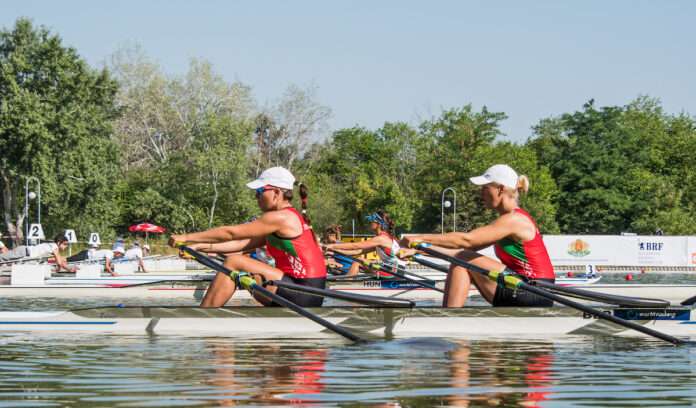
Plovdiv BULGARIA. 2017 FISA. Rowing World U23 Championships. BLR BW2X Bow. KLIMOVICH, Tatsiana and STARASELETS, Krystina. Thursday AM, Heats 09:25:03 Thursday 20.07.17 [Mandatory Credit. Peter SPURRIER/Intersport Images].

BY MARLENE ROYLE
PHOTO BY PETER SPURRIER

Devoting time toward improving the coordination of your body sequence and blade work is key to improving your performance on the water. The coordination of movement is integrated in your brain and spinal cord. The central nervous system (CNS) is constantly regulating signals to speed up or slow down reactions so it can execute an accurate response to an outside stimulus.

For example, if your blade starts to dig deep in the water, your CNS senses the blade angle and will signal the muscles of your hand to loosen your grip on the handle so you don’t catch a crab. When your movements are not yet automatic, the motion of your body or blade will be uncoordinated. As you practice repetitions of a drill or row a lot of concentrated kilometers, you will feel your nervous system develop smooth coordinated movements, and then finer skills will follow so you can manage different conditions, such as rowing in wind, rough water, or hitting higher stroke rates.

 One way to develop your coordination is to perform a skill with the opposite limb or in an unusual pattern. In sweep rowing, have athletes regularly switch sides to become competent on port and starboard. Include drills that alternate hands on the oar, such as outside hand only, inside hand only, or outside hand on the drive/inside hand on the recovery. 

For scullers, the Swinford Switch is an excellent drill for right-left assimilation and blade work. Scull with the port blade squared and the starboard blade feathered for 10 strokes, and then in one stroke, switch to the port blade feathered and the starboard blade squared for 10 strokes, making sure blades stay off the water all the time.

Marlene Royle is the author of Tip of the Blade: Notes on Rowing. She is a specialist in masters training, and her coaching service, Roylerow Performance Training Programs, provides support to improve your competitive edge. For information, email Marlene at roylerow@aol.com or visit www.roylerow.com.
Trust Your Coach, Become Faster

BY MARLENE ROYLE
PHOTO BY ED MORAN

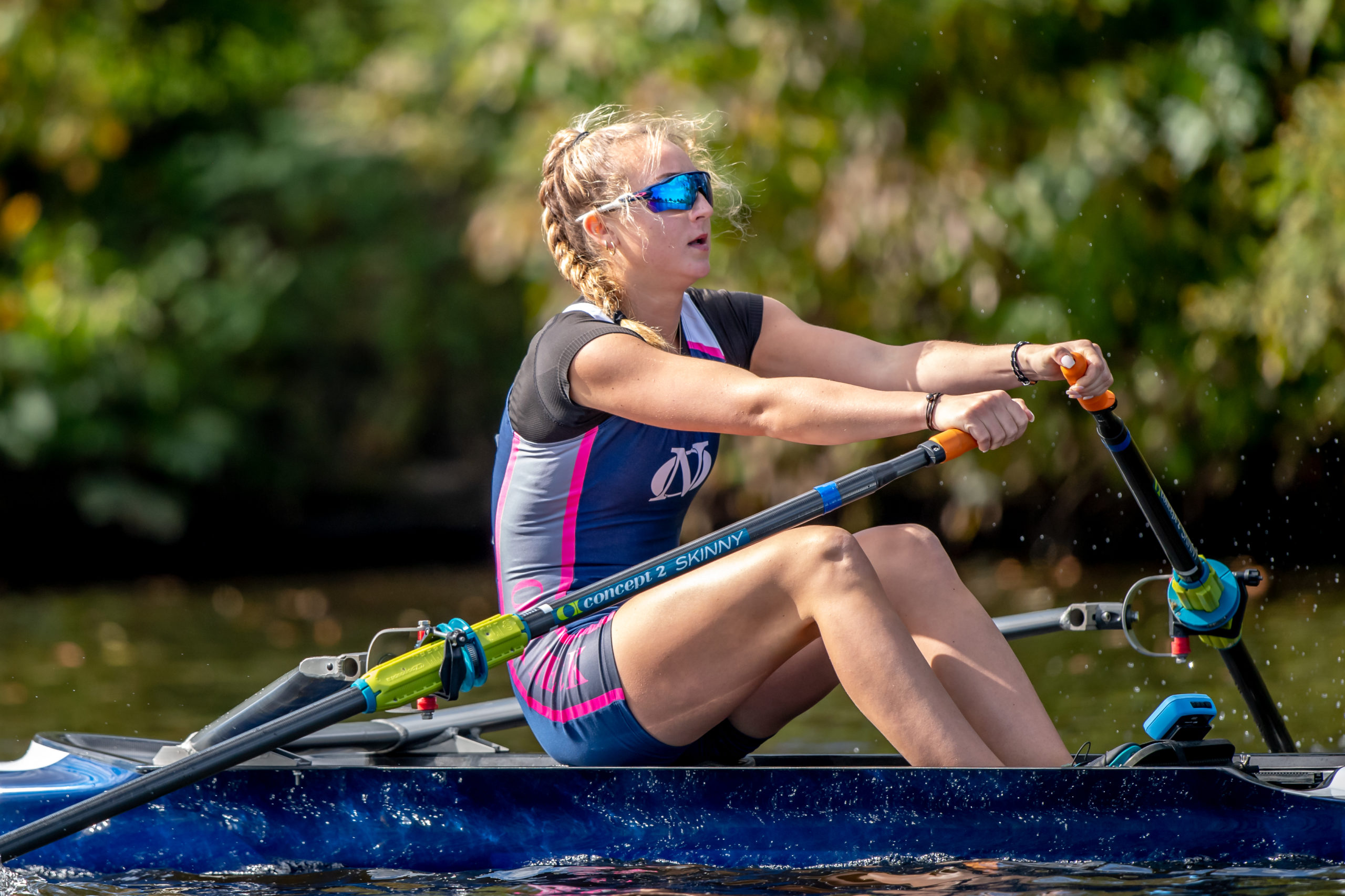
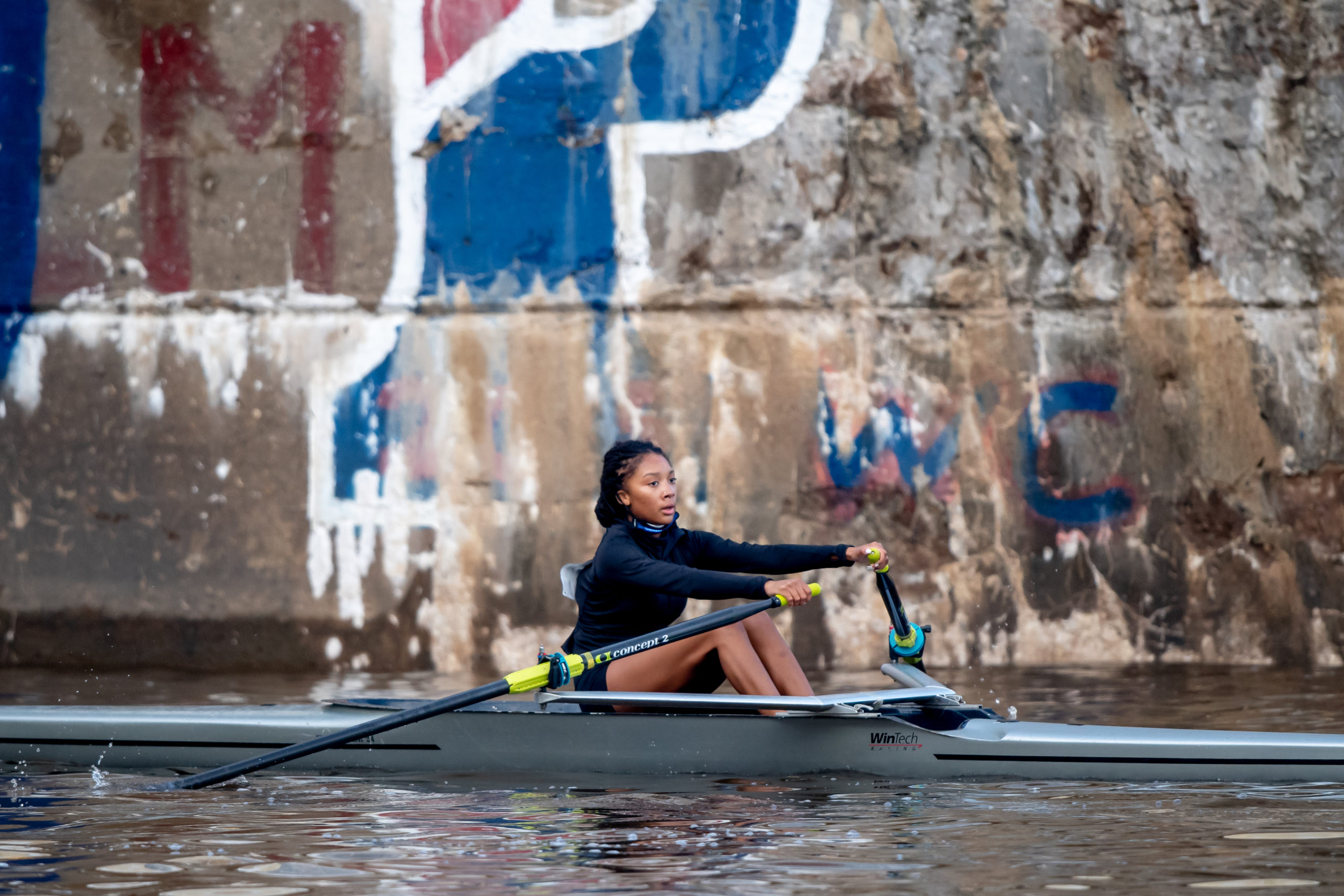
Sculling in a single and also having a coach is a double dose of feedback. The boat responds instantly to your motions, and your coach will be refining your rhythm, power application, and bladework. You will get the most out of your individual training session if you receive coaching well. Here are tips to improve your coachability:

* Decide to get better and stay open to suggestions. Your coach is there to guide you, give you feedback, and share expertise. 

* Concentrate during practice. Once you set foot in the boathouse, all your attention should be on

what is happening during training. No tweets, texts, or thinking what is for dinner–focus only on the task at hand.

* Listen carefully to your coach’s instruction. When asked to make a change, acknowledge it, and immediately react by attempting to make a correction. Your coach will notice that you are trying.

* Check in with your coach after practices. Communicate with each other and build on improvement step by step. Off the water, visualize the correction your coach asked you to make or row in front of a mirror so you can work on the coach’s tip. 

* Write comments down in your logbook when they are fresh in your mind so you recall what your coach was teaching you. With a few notes, you’ll quickly review the session to get better for your next row. 

Marlene Royle is the author of Tip of the Blade: Notes on Rowing. She is a specialist in masters training, and her coaching service, Roylerow Performance Training Programs, provides support to improve your competitive edge. For information, email Marlene at roylerow@aol.com or visit www.roylerow.com.
Improving Through Speed Play

BY MARLENE ROYLE
PHOTO BY ED MORAN

In English, the Swedish word fartlek translates as “speed play.” Unlike intervals that have precise rest periods, fartlek is continuous rowing that varies your pace based on feel and grit. These sessions improve your speed, endurance, and race tactics, and toughen your mind for the mid-race burn. 

Fartlek workouts mix easy rowing with race-pace work in one session. There is no need to achieve specific splits; instead, alternate between your low-intensity cruising speed and best effort. You can row a long session for 60 minutes or a short session for 30 minutes. Row a power pyramid beginning with 10 strokes at race pace, then paddle 10 strokes, then 20 strokes at race pace, then paddle 20 strokes, etc., up to 50 strokes, and then back down again. 

Another type of session is called surroundings fartlek. Row 30 minutes at 18 strokes per minute, including unstructured intervals. After your warm-up, pick a landmark in the distance—a telephone pole, bridge, tree, another crew—then row to it at a faster pace. Once you’ve reached it, slow down, and recover at your base rate as much as you need. Just don’t stop. Then zero in on a new landmark and pick up the speed again. 

No rules here. Pick the pace that feels good. After 30 minutes, rest a few minutes, then do it again. When you want to win your race, you need to put up a good challenge or at least make the other crew work hard to beat you. Being able to respond and push is key.

Marlene Royle is the author of Tip of the Blade: Notes on Rowing. She specializes in training masters rowers, and her coaching service, Roylerow Performance Training Programs, provides the knowledge and support you need to improve your competitive edge. For information, email Marlene at roylerow@aol.com or visit www.roylerow.com.
Condition-Free Technique

BY MARLENE ROYLE
PHOTO BY ED MORAN

The late coach Larry Gluckman coined the term “condition-free technique.” Larry coached his rowers to develop clean bladework skills and technique so they could handle any kind of adverse weather or water. Losing rhythm, being thrown off balance or, worst-case scenario, flipping over happen easily if you are not rowing with your oars high enough off the water to clear the chop or pass over a lane marker. Trouble comes when blades feather in the water or touch down on the recovery.

A first step toward achieving condition-free technique is to spend time on your release and feather. Initiate your release by tapping down on the handle, then feather as your hands move away, angling the top edge of your blade toward the bow, the bottom edge toward the stern. Once your hands move away from your body, continue to establish height of the oar shaft off the water by keeping your weight over the handle. Aim for full shaft height by arms/body away, then maintain the height off the water so you have room to square up.

In practice, Larry would instruct, “Tap down enough to get your blade up and over buoy. Feather over the top of it.” To carry your blades high enough off the water, try 10 strokes of a quarter-feather-to-square blade drill. Release then feather the blade only one-quarter as you set your body angle. Once you start your slide, fully square the blade up until you enter the water. 

Marlene Royle is the author of Tip of the Blade: Notes on Rowing. She is a specialist in masters training, and her coaching service, Roylerow Performance Training Programs, provides support to improve your competitive edge. For information, email Marlene at roylerow@aol.com or visit www.roylerow.com.
Managing Pre-Race Jitters

BY OLIVIA COFFEY
PHOTO BY ED MORAN

I’ve never felt an overwhelming sense of confidence before an important race or erg test. Instead, I generally feel quite nervous and uneasy. You’d think that years of training would help shift my mindset, but instead, it has only moved the goalposts.

I used to view this trepidation as a bad thing, a signal that perhaps I hadn’t prepared as well as I should have or the competition was too stiff. This feeling of apprehension is uncomfortable, especially because–having played sports my entire life–it’s not something I’d felt until I started rowing.

What I’ve come to realize, though, is that these pre-race nerves are usually a good sign, and most, if not all, rowers feel this way before a big event. Nervousness is a signal that I care about the outcome of a race and that my body is primed to perform at its best. Generally, the more anxious I feel before a race, the better the result. That doesn’t mean, though, that I let my nerves take over. If I’m not careful, these feelings can manifest themselves in ways that detract from my ability to achieve my goals.

The first step in conquering pre-race nerves is admitting they exist. When I start to sense these feelings creeping in, I take time to recognize how I’m feeling, reassure myself that it’s OK to be nervous about the task ahead, understand what I can control, and try to move forward with a clear mindset. As the race draws nearer, though, this can get harder and harder to do.

To mitigate the impact of pre-race nerves as the big day approaches, I’ve come up with a few methods to cope in three areas that are usually impacted by these feelings. I hope the advice below helps prepare you to have your best race possible.

Sleep 

It’s difficult to get quality sleep the night before an important race. If this happens to you, don’t worry; it’s totally normal. If you make sure to get as much rest as possible the week of a race, tossing and turning the night before won’t affect your performance. 

Fuel

Nerves have a huge impact on your appetite and gastrointestinal tract, and the last thing you want to do, especially on the day of an erg test, is weigh in light. Try to prept weight loss by consuming as much food as possible the week of a test. That way, when the race-day breakfast won’t go down, you’ll still have enough fuel in the tank to power a good performance. 

Focus

Finally, I find that if I’m not actively engaging my mind in a non-rowing related activity, it will always wander to the upcoming race. While visualization is helpful, obsessing over an event is mentally draining, so I try to make sure I have enough work, games, and rom coms queued up to keep my mind focused elsewhere until I decide it’s time to think about the race.

Early Registration for 2023 San Diego Crew Classic Closes January 31

STAFF REPORTS
PHOTO BY LUKE REYNOLDS

The 2023 San Diego Crew Classic will take place March 31-April 2 on Mission Bay in San Diego.

Early registration for the event will close January 31.

To register for the event, visit RegattaCentral.com or click the button below.

Joint Effort

BY MARGOT ZALKIND
PHOTO BY ED MORAN

It’s still winter in most regions, so here are ways to use your off-time wisely for the benefit of your rowing organization.

Help your organization and help others

Years ago, a few of us put heads (and experience) together and formed the Potomac River Safety Committee. Coaches, referees, coxswains, scullers, and float captains from organizations that shared the same stretch of the Potomac felt strongly that not only is there wisdom in numbers but also that if we agreed on traffic patterns, standards, and policies regarding heat and cold, we could all help each other. The spirit of mutual support and accountability inspired us to share the work and develop the guidelines.  

Learn from others

By creating a consortium, you share not only standards of safety but also avenues for communicating and enforcing your rules.  

You also learn from others. Tony Johnson, then head coach at Georgetown, and the other experienced coaches were a leading force on the committee, and these knowledgeable resources for new coaches formed a solid standard of safe practices. 

“We realized that the river was more and more crowded with novice rowers, novice coaches,” Johnson said. “I noticed an inexperienced coach out on the water in an eight of novice rowers, and he was coxing, rendering him incapable of handling a rescue, if needed.  

“There were not enough controls, not enough people knowing to pay attention. I called some of them ‘cowboys on the river.’ So I was very glad we started this committee. Our message was ‘Be careful. Be aware. Look out for one another.’”  

George Kirschbaum, who has years of hands-on leadership experience as coach and coxswain, still works hard to keep the committee afloat. He agrees that we are a safe sport, but some are irresponsible at times. The draw of being on the water can override reason. 

Rules and Guidelines

Information such as safety standards, emergency contact numbers, and rescue procedures can be found on the Potomac River Safety Committee’s website. This committee still exists, and we have heard that Boston and Philadelphia have similar support systems. Please let us know if you have such a system in your area.

Review, Remind

At the beginning of every season, all Potomac River organizations sent their coaches, coxswains, and scullers to meet with our committee. We reviewed guidelines and then conducted an exam to reinforce the covered safety points. 

Map it out

We created and posted a comprehensive map of the river, identifying all hazards and traffic patterns, complete with which bridge archway to use and when. If there is a lot of activity on your waterway, from fishing boats to scows, educate your rowers about likely challenges (and how to stay visible and safe). We are seeing more boats appear yearly, often with untrained coxswains, novice coaches, and inexperienced launch drivers. 

Why not establish such a collaborative effort at your location? Not just rowing clubs, but also canoe, kayak, sailing, swim clubs, any other entity sharing your water. Invite enforcement representatives. Join forces with your neighboring organizations or take it on yourselves to form a safety committee at your club. Collaborate.                

Work together

Post your rules, hazard maps, local contacts, safety standards, and make them visible. Use Websites and printouts.

Here’s a checklist for ensuring that all aspects of safety are covered in your safety plan:

  • Emergency plans and rescue
  • Contact information (emergency and more) 
  • Equipment guidelines
  • Traffic patterns and hazards 
  • Cold-weather policies
  • Weather and wind information
  • River levels and currents data 
  • Water and air quality
  • Courtesy on the water

Tarheels Release 2023 Rowing Schedule

STORY AND PHOTO COURTESY UNC ATHLETICS

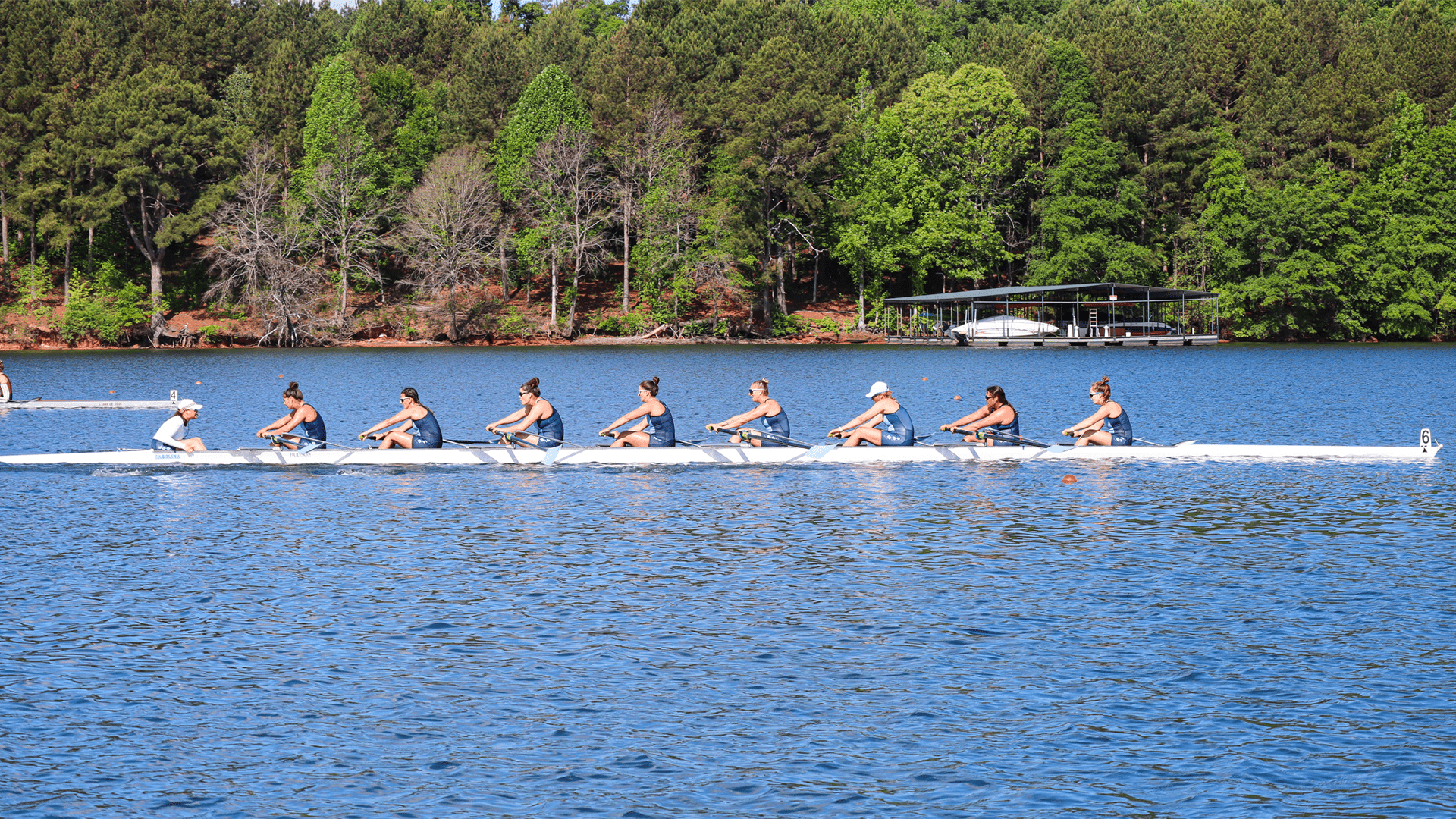
CHAPEL HILL, N.C. – The North Carolina rowing program released its 2023 schedule Wednesday afternoon. The slate, which features four regular season events and the ACC Championship, gets underway in just over a month. 

“We have some opportunities to race teams that are having great success, and that’s who we want to go up against,” head coach Erin Neppel said. “It’s important to see other ACC teams before we get to the conference championship, and the schedule allows us to do so.  It always goes by really fast, so we’re excited to get to it this year.” 

The season gets underway on March 4, as the Tar Heels travels to Clemson, S.C. for the Carolina Cup. This season is the eighth consecutive year UNC will compete in the Carolina Cup. Next, North Carolina heads south March 31 and April 1, for the Sunshine State Invitational in Sarasota, Fla. 

The Tar Heels are set to host the Lake Wheeler Invitational, April 21-22, at Lake Wheeler in nearby Raleigh. To close the regular season, UNC will travel north to Charlottesville, Va. for the UVA Invite. 

For the first time in conference history, the ACC Rowing Championship will be held at Lake Wheeler on May 12-13. 

To view the entire 2023 schedule, click here