It’s a sporting cliche but true: The little things add up. The accumulation of marginal gains can produce the desired outcome, eventually. With racing season here, rowers willing to do the following habitually will improve more and can develop a competitive edge.
Begin by setting goals (short, medium, and long-term) and then measure progress regularly and objectively. The introspection necessary for goal-setting requires answering the question “Why am I doing this?”, thus fueling the effort. Result-oriented goals are useful and common, but process-oriented goals hold us most accountable. Something as simple as “I will train for at least one hour six days this week” can keep you on track and moving forward when motivation falters.
Arrive early, prepared for practice. Simply laying out the necessary clothes and packing the night before morning practice gets training started right. Being prepared builds confidence. Bring a clear mind to each session. Rowing practice is not the time or place to solve a relationship issue or worry about school. It should be a respite from troubles and a safe space to focus on one thing and one thing only: making fast boats. This focus brings more enjoyment and more progress.
Treat recovering as seriously as training. Many athletes will do the work; just look around at practice. Far fewer will organize themselves so that they rest and recover to get more benefit from training. Regularly get sufficient sleep (the single most neglected beneficial behavior among junior and college rowers), eat better, hydrate, socialize smartly, and generally maintain good health. Holding yourself to a higher standard of behavior opens the possibility of achieving a higher level of performance.
Practice a positive attitude. It’s a learned skill, highly contagious, and when shared, a force multiplier. Embrace the challenge. Sometimes competitive rowing is just not fun. Accept this and make the best of it. Whether it’s an especially long session, bad weather, or a blister; it shall pass. Suck it up and get on with it. Weaker athletes than you have survived worse.
Race through the finish line, not just to it. Finish strongly. Always step up at the end and raise the level of performance. Whether it’s the last 500 meters, the last piece of practice, or the final practice of the week, commit to making it the best. Show what you’re capable of. “Last one, fast one” is universal among top performers.
These small consistent efforts require no talent and little added exertion but yield many positive outcomes. The physical benefits are most obvious, but the acquired belief in oneself and confidence in one’s preparation provide the greatest advantage. Knowing you’ve done things the right way is a foundation upon which self-belief grows and big results are achieved.
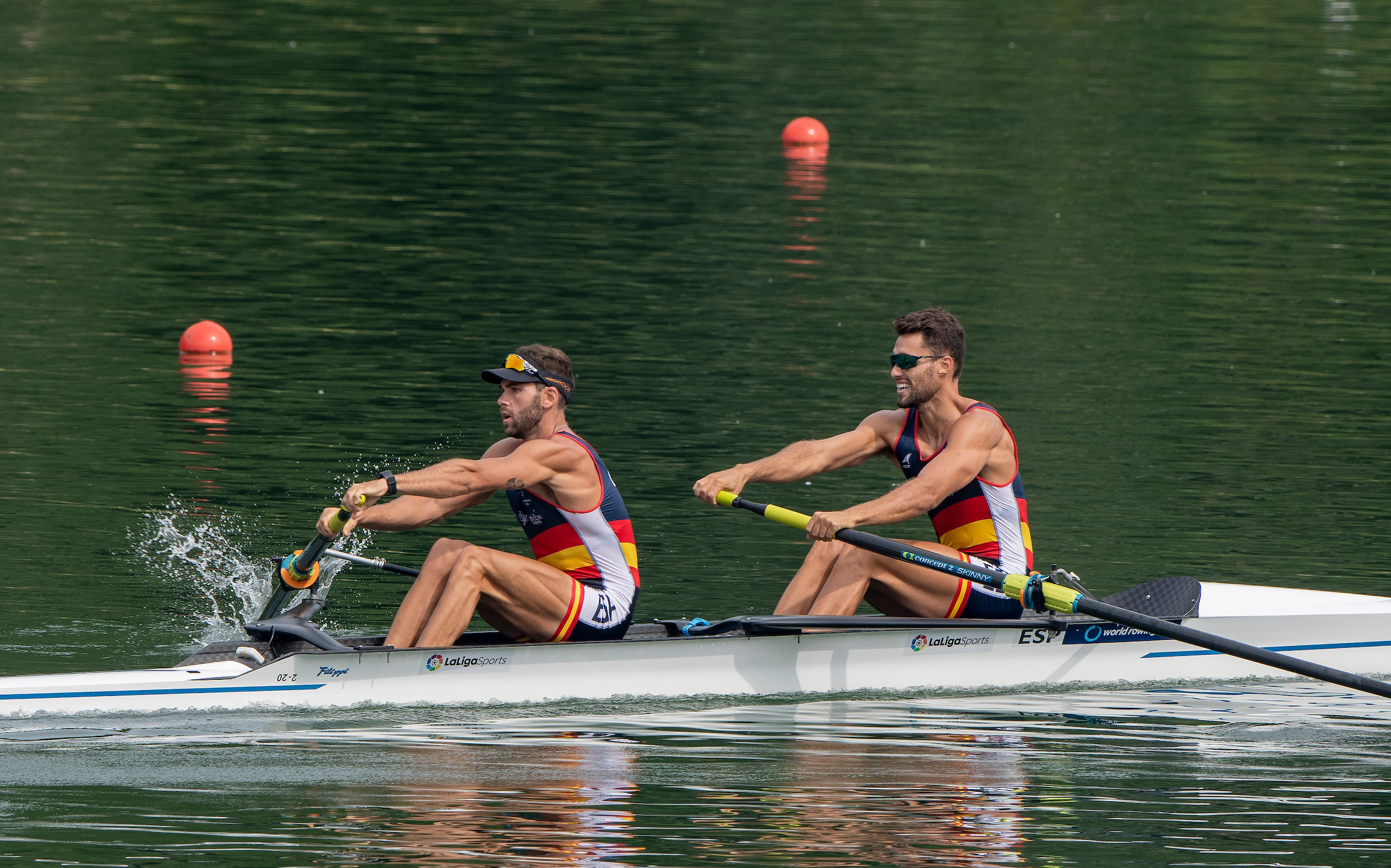
Linz, Austria, Wednesday, 28th Aug 2019, FISA World Rowing Championship, Regatta, Start Area, ESP M2-, Bow Jaime CANALEJO PAZOS, Javier GARCIA ORDONEZ, Quarter Finals
[Mandatory Credit; Peter SPURRIER/Intersport Images]
11:25:58 28.08.19
BY BILL MANNING PHOTO BY PETER SPURRIER
I am not a physicist. I am a rowing coach. Sir Issac Newton was a physicist. He could have been a successful rowing coach, too.
Newton recognized and first described classical mechanics, including the motion of an object and the forces acting upon it. With his Third Law, he explained that every action has an equal and opposite reaction. Simply stated, to move the boat forward there must be force backward. Since most college athletes and many high-school athletes are familiar with this, I have found it, admittedly with some oversimplification, a useful way to teach effective rowing/sculling.
Newton’s Third Law is seen when a person walks; they push against the floor, and the floor pushes against the person. The rocket flies up because the engine exhaust pushes down. Similarly, to move an oar handle, the rower must brace and, ideally, press actively into the foot-stretchers. Show your athletes this by asking them to sit on the erg, lift their feet off the ground, and attempt to pull on the handle.
Too many think their effectiveness depends solely upon tugging the oar handle. Their leg drive consists of a jump or a kick, but this creates only momentary force. An awareness of Newton’s Third Law helps explain to athletes why they should keep pushing as long as possible—to push into and through their shoes and not away from them.
Teach athletes to make the drive as long as possible. (This is not the same as making their arc in the water as long as possible; extra reach and/or layback are often counterproductive.) The length of the drive is determined by how long athletes can maintain their push. There is no possibility of adding speed to the boat once the feet are no longer pushing into the foot-stretchers. The boat will continue forward with gradually decreasing speed until friction overcomes the momentum created earlier and it comes to a stop. Feet-out rowing is an excellent teacher.
Once the necessity and advantage of pushing rather than focusing only on pulling are understood, the next step is using the body to connect the leg drive to the hands holding the oar. The torso must be strong enough to accept the force of the leg push and transmit it to the hands so that the handle moves. The body braces and works against the leg drive regardless of how much levering or swing the body is asked to do.
A good coaching progression begins by having the athlete row legs-only and focused on pressure into the foot-stretchers. Encourage athletes to move their seat more than the handle; yes, to shoot the slide. Once accomplished, keep athletes focused on the press but drive their body and seat together. Disassociate moving the boat from pulling the handle and instead associate success with pushing while holding the trunk firm. From here the arm draw can then be seen as maintaining pressure into the feet and on the blade as the load gets progressively lighter.
Coach Newton also had a lot to say about the use of levers, or in our case, oars. This is a little more complicated but perhaps a topic for the future.
Balancing a boat is one of the trickier and more rewarding requirements of good sculling and rowing. It’s also one of the harder things to coach, as it is so experiential and dependent upon boat feel.
Make your initial aim to create a stable platform on which to do work. If the blades stay off the water, that is best, but it’s a mistake to emphasize this at the expense of stability.
Appreciate that stability is a much bigger challenge on the recovery than on the drive. Typically during the drive, the blades lock in against the water and serve as in the same way as training wheels on a bicycle, keeping the boat upright. Without the training wheels during the recovery, things get more precarious.
Focus on the oarlocks rather than the blades. Teach athletes to keep the riggers level, like the wings on a plane. The boat will go much faster if level, despite the blades dragging a bit, than if the athletes are fighting to get the blades off the water, and only occasionally doing so.
Recognize that boat speed and stability are related. Continuing the bicycle analogy, it’s nearly impossible to stand a bike up, but it easily stays upright when moving forward. Instruct athletes to keep some pressure on the drive and the rate up a bit. A faster recovery speed will make balancing the shell easier. The boat sits up more on top of the water when it’s moving faster. Too often, coaches insist on paddling and keeping the rate low, thinking this makes rowing easier when, in fact, it hinders stability. Without stability, the athlete can’t apply power effectively.
Coach people to sit properly on their seat. Athletes will mistakenly lean away from their rigger, especially if their height is too low. The lateral pressure of the collar into the oarlocks centers the athlete and strengthens the connection to the boat. Teach them to think of their body as a fortress of stability connecting the oar handle(s) to their shoes. (Thank you Gordon Hamilton for this analogy.)
Teach using the feet and hands to establish balance rather than leaning this way and that with the body. It’s nearly impossible to set a boat with uncoordinated bodies leaning; it’s less powerful and it makes one more susceptible to injury. The higher foot can press down harder to create stability. Adjusting the handle heights slightly to even out the rigger heights is far more effective than trying to lift the blades off the water. If a rigger is high, lower the handle. If a rigger is low, raise the handle.
Coaching stability in rough water is an even greater challenge. Again, it generally pays to row at a slightly higher rate. Doing so speeds up the boat and keeps it more stable. It also acknowledges that there will be some bad or missed drives and minimizes their impact because of the increased frequency of strokes. When rowing with a quicker recovery, it is essential to coach that the blades must be quicker to the water and the legs quicker on the push.
While the primary power of the rowing stroke comes from the legs, it’s necessary for the back to connect this power to the handle and add needed acceleration.
Always reinforce that the legs should initiate the drive and that the body must not take the catch by lifting up off the thighs (which occurs when the seat stops, the athlete is unbalanced, and/or the legs are not used first). Early, sequential preparation of the torso on the recovery creates stability at the top of the slide, sets up the body for the leg push, and facilitates the application of horizontal power on the drive.
The legs drive the body backward while the trunk holds against this push, thus forming a secure connection between the feet and the handle. Connecting the push of the legs to the handle prevents shooting the slide or bum shoving.
Actively opening the body against the push of the legs makes the leg drive, and consequently the stroke, longer. It’s a firm torso opposing—working against—the push of the legs, and not always additional layback, that adds effective length. Otherwise, the legs cannot engage for the needed duration. The body will remain in front of the hips initially but, having less distance to travel, still will finish at the same time as the legs. This also enables the athlete to increase the drive speed and thus maintain pressure on the blade as the load gets lighter—the vital acceleration that moves the boat faster as the drive progresses.
There are typically two ways athletes can use the back in the boat effectively. Those with long torsos and short legs will sit generally with a tall, straight back, hinge from the hips, and use the back as a lever. Those with longer limbs and shorter torsos may do this or may have a more rounded back that looks like it is uncoiling during the drive.
The drive itself is taken generally in one of two fashions: simultaneously or sequentially. In a simultaneous drive, the back more actively opens as the legs initiate the drive. The legs and the back push and pry together. In a sequential drive, the back follows the legs. The back still holds against the push of the legs but most of the push occurs before the back opens dynamically. Body movement is minimized as the drive begins but increases as the boat picks up speed and the load gets lighter. Either works, but it’s best if the entire crew does the same thing.
More body is used in headwinds because the drive takes more time and is heavier. The torso does not necessarily lean back farther to lengthen the drive; it works more strongly to resist the leg push, which makes drive last longer. Conversely, less body should be used with a significant tailwind because of the quicker drive and inability of the back to keep up with the speed of the legs. This is also true of different boat classes. Athletes rowing slower boats such as pairs often will use their backs more obviously, while athletes in faster boats such as quads and eights will sit much more upright.
Rotterdam. Netherlands. USA Blades/Oars. 2016 JWRC, U23 and Non Olympic Regatta. {WRCH2016} at the Willem-Alexander Baan. Thursday 25/08/2016
[Mandatory Credit; Peter SPURRIER/Intersport Images]
PROVIDED BY THE NRF PHOTO BY PETER SPURRIER
Elle Logan rowed at Stanford University and graduated in 2011 with a BA in History. In 2009, the women’s rowing team won the Pac-10 Championships and the NCAA Championships. Elle was named the Pac-12 Rower of the Century in 2016.
Elle Logan.
Elle was a member of the U.S. National Rowing team from 2007-2016. She competed at three Olympic games (Beijing 2008, London 2012, and Rio 2016) as a member of the Women’s 8+ and has three Olympic gold medals. In addition, Elle competed at various World Championships, World Cups and other international events in the 8+, 4-, 4x, 2- and 1x earning an assortment of medals during that time. The 2008 Olympic boat was named “Crew of the Year” by FISA in 2008 and inducted into the National Rowing Hall of Fame™ in 2014.
After transitioning away from training full time in 2016, Elle moved into the commercial real estate industry and received her MS in Real Estate Finance and Development from the University of Washington Runstad School in 2019. She spent a couple years at Katerra, a vertically integrated construction company, before joining Hess Callahan Partners, a Class A office in-fill developer in Seattle, and is now currently an asset manager at BentallGreenOak, a global commercial real estate investment manager headquartered in New York.
Elle lives on Vashon Island in Seattle, Washington with her husband Carlos and two boys Guillermo (5) and Alejandro (3). In addition to rowing the RP3 whenever she gets a moment Elle has taken up open water swimming in the Puget Sound.
Matt Knifton grew up in Austin, Texas, where he played football like every other boy. He never thought about rowing until he was recruited to the fledgling University of Texas Crew in the mid-1980’s. As men’s captain, Matt worked with many others to build UT Crew, and that club program would eventually spawn the UT varsity women’s juggernaut of today. After graduating with a chemical engineering degree in 1990, Matt rowed at Vesper (and lived in the boathouse) until he was reassigned to the new National Sculling Training Center in Occoquan, VA. Matt spent two years there rowing and constructing various Soviet-era rowing torture machines for Coach Igor Grinko. Although Matt never realized his dream of making the 1992 Olympics, he has fond memories of that experience and the great people he met.
Matt Knifton.
After graduating from Texas Tech School of Law, Matt returned to Austin in 1996 and began his twenty year career as an environmental attorney with the law firm of Thompson & Knight. In 1999, Matt founded Texas Rowing Center (TRC), which is now the largest rowing club in Texas and the southwest with over 800 rowing members and 200 juniors. TRC is also home to a robust masters program that has won the USRowing Masters Nationals Club Trophy in 2017, 2019, 2021, and 2022.
In addition to rowing, TRC is the reputed to be the world’s largest standup paddle-board rental operation with over 500 boards. The advent of the “SUP” and its popularity in Austin allowed Matt to retire from law and focus on running TRC. In 2010, Matt helped start Texas Rowing For All, a 501(c)(3) nonprofit with the mission to provide rowing and paddling for people with physical, sensory and intellectual disabilities. TRC is also a national leader in diversifying the sport of rowing by recruiting and hiring athletes and coaches of color.
In 2021, Matt hired Coach Peter Mansfeld and started TRC High Performance, a 501(c)(3) nonprofit with the mission of training and supporting rowers hoping to compete in the World Rowing Championships and Olympic Games. Thanks in large part to the generous support of the National Rowing Foundation, all eight TRC-HP athletes competed at the 2022 World Rowing Championships.
Matt continues to compete as a masters athlete, winning medals at Masters Nationals, Head of the Charles, the Henley Masters Regatta; as well as a CRASH-B hammer in 2018. But Matt’s greatest rowing pleasure is watching his daughter Kate compete. Kate has stroked the UT 1V8+ to two consecutive undefeated seasons, including two NCAA 1V8+ victories, and has led UT to two back-to-back NCAA Women’s Rowing Team National Championships (Hook’em!). Kate also stroked the U.S. four (all Longhorns) to a gold last summer at the U23 World Championships, which earned her the 2022 USRowing U23 Female Athlete of the Year award. Matt is also the father of another amazing young woman, Sophie, who is a student at The University of Chicago. Sophie left rowing after one week because she wisely “doesn’t like to hurt.”
Paul Teti.
Mr. Teti is a Co-founder and Partner at Eagle Cliff Real Estate Partners. Prior to forming Eagle Cliff, Mr. Teti served as Executive Vice President of Real Estate Operations at Columbia Property Trust where he was responsible for directing the operations of Columbia’s portfolio of investments nationwide and served on Columbia’s Investment Committee. Mr. Teti came to Columbia in 2020 from Normandy Real Estate Partners, where he was a Partner and head of their leasing and asset management group, responsible for managing the leasing and marketing activities for the company’s portfolio. Mr. Teti also spent time on business development and capital raising activities for Normandy and served on the investment committee. Earlier, Mr. Teti was part of Normandy’s acquisitions team, where he assisted in underwriting and closing acquisitions and financings. Mr. Teti holds a degree in Sociology from Princeton University, where he was a member of the National Champion rowing team. Mr. Teti is also a three-time member of the U.S. Olympic Rowing Team, competing in the Sydney, Athens and Beijing Games. Mr. Teti is active in his community and serves on the Board of Trustees at Stuart Country Day School, the Madison Square Park Conservancy and Playworks. He has held leadership positions with several local and national non-profits and charities, including Leukemia and Lymphoma Society, The Diabetes Research Institute and the U.S. Olympic Rowing Team.
Ben Holbrook started rowing at Brown University and graduated in 1997 with a degree with Honors in Psychology. Ben won two National Championships, two Eastern Sprints and three IRAs among other medals while at Brown. Ben rowed on numerous National Teams from 1994 to 2004, and competed in the 2004 Olympics in the Men’s Quad. Ben won two world championship medals including a gold medal in 1995 and silver in 2000 both in the Men’s Coxed Four. Ben also won a gold medal in the Men’s 8 at the Pan Am Games in 1999.
Ben Holbrook.
Ben is a Senior Managing Director at Mason Wells, a middle market private equity firm based in Milwaukee, WI. Ben has been at Mason Wells for 18 years and is a senior partner at the firm where he oversees the firm’s consumer product investments. Ben is currently chairman of the board for three portfolio companies and also oversees the firm’s business development efforts. Prior to Mason Wells, Ben was a research analyst at Janney Montgomery Scott in Philadelphia, PA. Ben is also on the board of the Petit National Ice Center in Milwaukee, WI where numerous Olympic speed skating trials and US Championships have been held.
Ben and his wife Danika live in Whitefish Bay, WI along with their four children, Teah, Amalia, Lincoln and Carmen. Danika began rowing at the age of 11. She rowed at Princeton University and graduated in 1995 after winning two national championships and two Eastern Sprints. Danika also competed on numerous National Teams, winning a gold medal in the Lightweight Women’s 4 in 1994. Danika also competed in the 2004 Olympic Games, earning a 5th place finish as the stroke of the Women’s Quad. Ben and Danika moved back to Milwaukee, WI in 2004 following the Olympic Games.
Liv Coffey.
Olivia Coffey’s parents, Calvin and Margaret, taught her to row when she was in middle school. She began rowing competitively at Phillips Academy and continued rowing at Harvard University, where she was a co-captain and All-American. She represented the U.S. at eight World Championships, winning a medal at every event and gold in the 2009 U23 W8+, 2013 W4-, 2015 W4x, and 2018 W8+. She was a spare at the 2016 Olympics and raced in the W8+ at the 2020 Olympics. Olivia also raced for Cambridge and won the 2018 Boat Race.
She is an Associate at One Equity Partners and is involved with investments in the industrial, healthcare, and technology industries. She is a Board member at Dragonfly Financial Technologies.
Olivia and her husband, Michael, live in New York. Michael rowed at Harvard and won the 2003 IRA. Michael was a World Champion in the M8+ in 2005 and also won the 2005 Boat Race rowing for Oxford. Olivia has three older sisters, Laurie, Claire, and Roxanne. Olivia and Michael have a cat named Amo.
Boston, Massachusetts, Senior-Veteran Men's Single, Harry PARKER, Alte Achter Boat Club, moves past the Riverside Boat Club, dock, during the Forty Second, [42nd] Head of the Charles, 22/10/2006. Photo Peter Spurrier/Intersport Images...[Mandatory Credit, Peter Spurier/ Intersport Images] Rowing Course; Charles River. Boston. USA
BY ANDY ANDERSON PHOTO BY PETER SPURRIER
I write frequently about coaches. As a rowing coach myself, I like to think about what other coaches do–not just drills and workouts but how they work with their athletes and peers. I spent a lot of time talking to people about last month’s feature on Ted Nash, and it got me thinking, again, about the role of rowing coaches.
Coaches are teachers. How a coach chooses to explain and teach the rowing stroke is one of the most important elements of their job. Although most of us use video to show examples of what we want, you can’t just roll the tape and have the athlete figure it out. We rely on our words.
Some of Ted Nash’s vocabulary has always amused me. I remember hearing him talk with athletes about the “insertion” and “extraction” of the blade, not the catch and finish. The precision of these words conveys his passion for making the most minute matters important.
Another great coach, the beloved Larry Gluckman, had his own concern about the language of coaching rowing. He hated the term “the finish” because it implies that each stroke has an end point, and Larry wanted to make sure that his athletes and the coaches he talked to at clinics across the country understood that the rowing stroke is a cycle. Each stroke is connected to the next one. Calling the moment when the oar handles touch the body and the blades come out of the water “the finish” disrupts the cycle. Once you begin to row, there is no finish. Larry talked about the entry and release, not the catch and finish.
Do these small linguistic choices make a coach great? I doubt it, but they do reflect the care and seriousness with which coaches instruct their athletes. Some coaches use analogies and metaphors to get across what they want their athletes to do in the boat. Al Rosenberg, the renowned coach of the 1964 Olympic gold-medal eight and 1974 world champions, talked about how the motion of putting the blade into the water is like rolling an orange off a table and snatching it before it falls to the ground. Breaking with widely accepted vocabulary, he said that a “quicker catch” is not the goal. A good catch is like peeling a banana or putting on your pants: it can’t be done quickly. It must be done carefully and deliberately.
My own college coach used to talk about the rowing stroke as being similar to the Fourth of July picnic pastime of squeezing watermelon seeds between thumb and forefinger until they shoot forward at your target–typically that annoying little brother. “Put pressure on at the beginning of the stroke–the catch–and you’ll get that seed to squirt out and propel the boat and have great run,” he’d say, or something like that. I never did feel that in the boats I coxed, but it was an appealing image.
And where do coaches focus? When I began to coach, I was told that there are two kinds of coaches: those who coach the bodies, and those who coach the blades. Although this is obviously a foolish oversimplification, it probably is true that in the beginning, at least, a coach focuses more on one than the other. “You were a coxswain,” I was told, “so you’ll probably spend more time looking at the blades and trying to read them the way a cox would.” That made me determined to learn from the bodies, a view of rowing that I hadn’t ever had before.
I once asked Harvard’s Harry Parker what he would like to see high-school coaches spend more time on. “Work on the hands,” he said. “So many guys get to college without a clear understanding of how they should hold the oar and what the hands should be doing to feather and square up.”
It takes a while to develop a vision of what your crew should look like, but there’s probably no more important thing for coaches than to have a clear picture in their head of what they want the motion of their crew to look like. Crews that are coached by the best coaches have a distinctive look from year to year. When Todd Jesdale was a young coach at Cornell, he asked the heavyweight varsity’s Stork Sanford, one of the most successful coaches of his era, why as race day approached Stork drove his launch so far away from his boats. “The farther away I get, the better they look.”
Coaches probably get an inordinate amount of credit for the successes or failures of their crews. After all, there is nothing as important in the sport as having good athletes. But you knew that, didn’t you?
High Point, N.C. — High Point University Athletic Director Dan Hauser announced Wednesday that women’s rowing will be added as the Panthers’ 17th NCAA Division I athletic program. HPU will join Duke University and the University of North Carolina as one of three Division I programs in the state of North Carolina. Regionally, there are six total Division I programs in the states of Virginia, North Carolina, and South Carolina, and the new High Point University Rowing team will compete against 91 programs nationally.
“We are very excited to add women’s rowing to our Division I sport offerings and we are committed to creating championship success,” HPU Vice President and Athletic Director Dan Hauser said. “When you look at the last two programs we started at HPU (women’s and men’s lacrosse), both have quickly ascended to conference championships and national success in the NCAA Tournament. Rowing is the perfect fit at High Point University and with the amazing performance venue of Oak Hollow Lake, we are poised for greatness.”
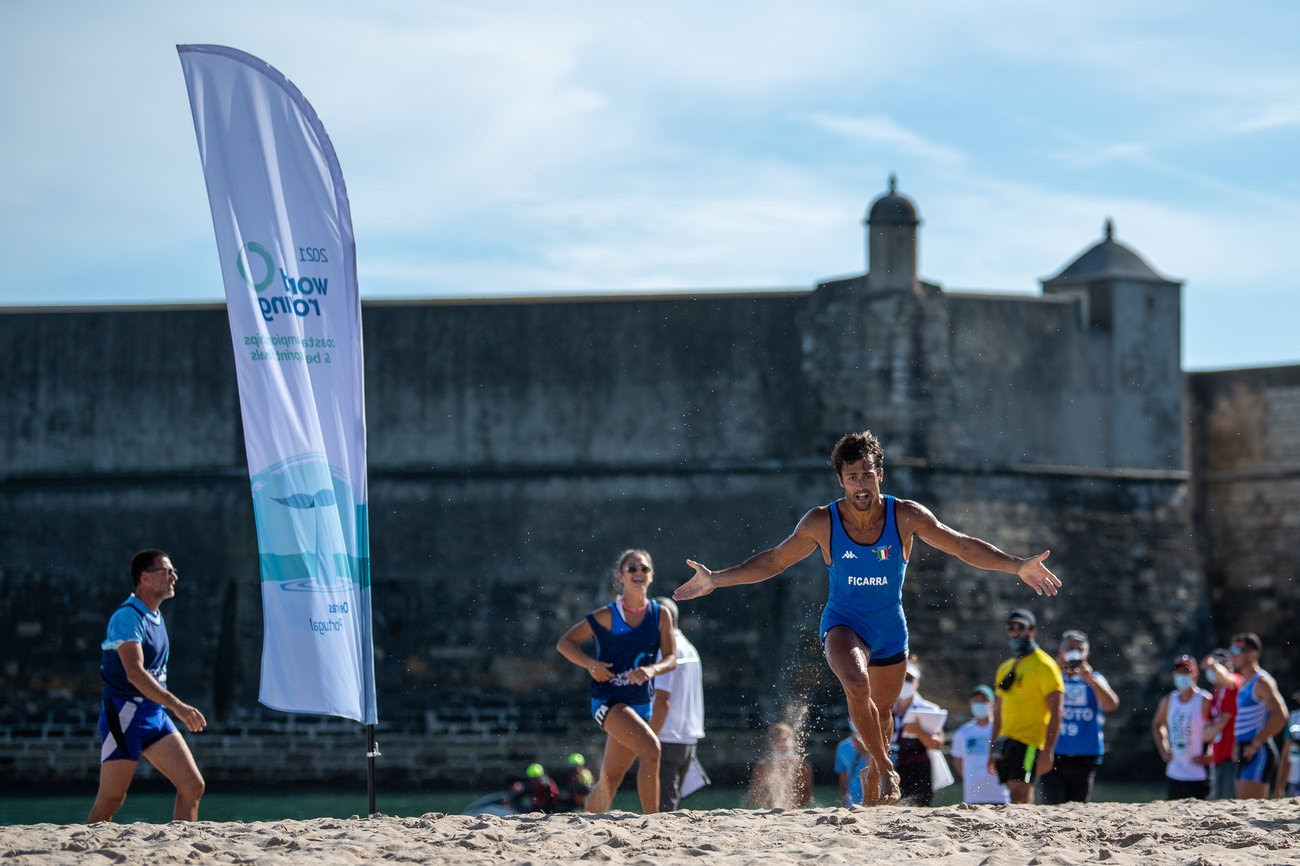
2023 World Rowing Coastal Championships & Beach Sprint Finals go to Barletta, Italy
Recently, the World Rowing Council was asked to vote on the attribution of the 2023 World Rowing Coastal Championships & Beach Sprint Finals. Originally attributed to Sabaudia, Italy, the event had to be reallocated due to unforeseen political changes in the city. World Rowing received various expressions of interest from a number of countries.
Following the recommendations of the Coastal Rowing Commission, led by its chair, Guin Batten, the Council reviewed a bid from Barletta, Italy, and unanimously decided to attribute the event to the Italian coastal city. The dates will be confirmed as soon as possible.
“The competition will take place along the shores of the Adriatic Sea, and the exciting nature of coastal rowing will fit perfectly in this environment. We are looking forward to working with the organising committee to make this event truly memorable” said World Rowing President Jean-Christophe Rolland.
Coastal rowing is the extreme version of the sport, and perfect for adventure seekers who enjoy the thrill of the unknown rowing conditions and beautiful coastal scenery. It is one of the fastest growing communities of rowers, and is particularly accessible to rowers based in locations where flat water is not nearby.
The discipline of Beach Sprints is also included on the core programme for the 2023 ANOC World Beach Games in Bali, Indonesia, the 2026 Commonwealth Games in Victoria, Australia and the 2026 Youth Olympic Games in Dakar, Senegal. It has also been formally proposed to the International Olympic Committee for inclusion in the 2028 Olympic Games in Los Angeles. A decision from the IOC is expected this summer.
2026 World Rowing Championships confirmed in Amsterdam, The Netherlands
The World Rowing Council also was presented with an update on the 2026 World Rowing Championships bid. In September 2022, at the World Rowing Congress, there was a provisional attribution of the 2026 World Rowing Championships to Amsterdam, the Netherlands. The Council was satisfied with the progress made on the conditions and ratified the decision to fully attribute the 2026 World Rowing Championships to Amsterdam.
Amsterdam has a long rowing tradition – having hosted two World Rowing Championships, in 1977 and 2014, the World Rowing Under 23 Championships in 2005 and 2011 and the World Rowing Under 19 Championships in 1968 and 2006. The Bosbaan, located in Amstelveen, also hosts the Olympic training centre for the Royal Dutch Rowing Federation (KNRB) and the famous Holland Beker regatta each year.
“Being back in Amsterdam is great news, added World Rowing President Jean-Christophe Rolland. The 2014 World Rowing Championships in Amsterdam were really successful, and the Netherlands have such a long tradition with rowing. We are looking forward to staging the event in this iconic city and have so many fans from all around the world on the shores of the Bosbaan.”
“Amsterdam is a city of water and we are proud to host the 2026 World Rowing Championships. We have a long history in rowing and many Olympic athletes train here in Amsterdam. We look forward to welcoming the international rowing community to ‘The Bosbaan’ in 2026” added Sofyan Mbarki, Vice Mayor of the City of Amsterdam, responsible for Sports.