Home Blog Page 95

Minding a Rower’s ‘P’s’

BY BILL MANNING | PHOTO BY LISA WORTHY

For most coaches, the challenge when teaching rowers is where to begin. Troubleshooting a rower’s stroke helps detect what’s actually going on and what can be improved. Though the stroke cycle is continuous, focusing on its elements generally makes the whole better. A handy hack for coaching better is looking at the stroke with “the P’s” in mind.

Posture. “Posture proceeds performance,” former Boston University men’s rowing coach Rodney Pratt preached. Rowers should sit on their seats square and level, weight distributed evenly left to right, neither too far forward nor too far back. Their hips should be elevated (lift the belly button) so their pelvic bones—the sit bones—are the primary point of contact. 

Rowers should be able to sit in this position comfortably for an extended period. If not, ask them to put their hands on the gunwales, lift off the seat gently, and sit back down. This will help center their weight on the seat.

Next, check that the bottom of their feet connect to the foot stretchers. Engaging with the foot stretchers balances the boat and creates the potential for power.

Rowers should keep the oar collar(s) firm against the oarlock(s) through the entire stroke cycle. This light lateral pressure keeps the lever engaged against the fulcrum of the pin, thus balancing the boat and making the drive more effective.

Preparation. Everything in the stroke cycle depends on what’s done before. The recovery begins with rowers separating the handle from the body and forming a rectangle—outstretched arms making up two sides, shoulders and handle the other two. Look for the pivot from the hips, the pelvic tilt, being low in the torso and early on the slide. Too often, body weight doesn’t shift forward because rowers are reaching from their shoulders and rounding the upper back. After pivoting, the body is positioned and remains patient as the knees rise. The recovery is sequential but overlapping. It should position rowers so they’re poised to reverse direction. Pause drills reinforce proper preparation.

Pushing with a firmly braced body initiates the change of direction. While pressure on the foot stretchers and handles should be equal, emphasize pushing. The tendency to pull rarely needs reinforcing, but the need to push always does. Just like the recovery, the drive should be sequential but overlapping. This is achieved by the trunk’s prying open against the continued push of the legs. The pertinent mantra: “Push…push pry…push to prevail.”  

Rowing with greater resistance—meaning a heavier boat—helps teach prying against the leg push. In a single, hold the oars closer to the collars, and in sweep, row inside-arm-only to achieve this effect. Rowing a team boat with some sitting out works, too.

Pulling seemingly comes next, but too often pulling replaces pushing rather than adding to it. While the arms draw the handle toward the body, this depends on continued pressure being applied through the shoes (every action has an equal and opposite reaction). If the finish is weak, the problem almost always is insufficient pressure on the feet rather than too little on the front of the handle. Maintain posture and keep pressing. 

Power properly applied cures most problems. Rowing powerfully with the feet on top of the shoes rights many wrongs.  “More power!” is often the best coaching advice one can give.

The Looming Ref Crisis

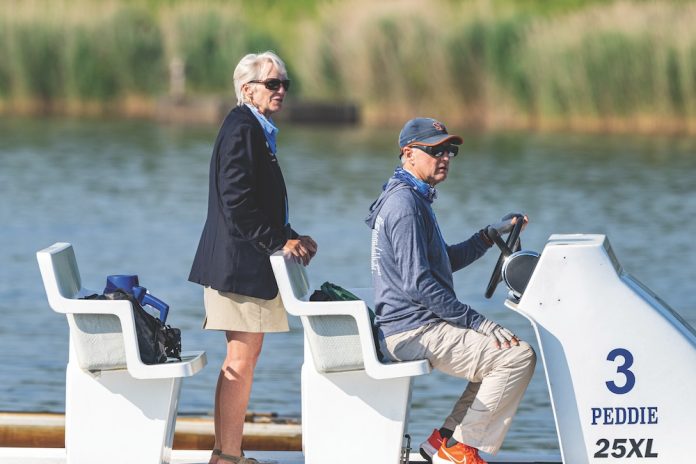
Photo by Lisa Worthy.

During the 2023 NCAA National Championship, a dozen geese planted themselves on the racecourse before the final of the Division I second-varsity eights. Despite warnings from at least one coach, the referees did nothing to remove the geese or delay racing.

Less than a minute into the race, the Texas crew rowed directly into the flock, a completely avoidable obstacle that the team protested immediately after crossing the finish line—to no avail.

That same year, at the Head of the Charles, in addition to pride, money was on the line for the top three finishers in the Championship Singles events. Afterward, Emma Twigg, who earned $5,000 by finishing second, was overheard saying she had missed a buoy and was not penalized.

This, presumably, did not sit well with Kara Kohler, who finished fourth, just out of the money and a mere 3.4 seconds behind Twigg. She raised the issue with regatta officials, who directed her to the referees. But because an umpire hadn’t seen a violation and assessed a penalty during racing, the call could not be appealed.

Every coach has tales to tell of referees who do not take action in a crucial race or stepped in when it didn’t seem necessary. But the sport of rowing would not be possible without the presence of referees to ensure the safety and fairness of racing. And yet they’re often a source of frustration for rowers, coxswains, and coaches alike—when they’re noticed at all.

Every rower or coxswain can recall times when a referee harangued them unnecessarily for their steering or, worse yet, did nothing to address the sloppy steering of a competitor. While these stories are attention-grabbing and certainly a source of consternation, they represent only a small part of what referees do and the difficult realities they face.

Referees have the most thankless job in our sport. Most in the rowing world rarely look past their surface interactions with referees to understand all that goes into being an official, the challenges individual referees and the corps as a whole face, and the active efforts being undertaken to improve the practice.

Financial barriers to entry, low numbers, an aging demographic, lack of consistent compensation, and no standardized system for evaluation combine to limit the current and future effectiveness of referees. With each passing year, these problems are becoming only worse. Said Tom Rooks, USRowing’s Director of Sport Safety and Operations: “There’s an alarm on the dashboard.”

Today, the role of referee is being redefined.

“We’re in a challenging and ever-changing landscape,” said Gary Caldwell, commissioner of the Intercollegiate Rowing Association, “where some folks inside and outside the referee corps consider it avocational, and some people consider it vocational.”

The good news is that many in the referee corps, with renewed support from USRowing, are working behind the scenes to make things better, because they realize the stakes are high. Without an educated, energetic, accountable, and supported referee corps, the entire sport of rowing will suffer, becoming less safe, less fair, and ultimately less competitive.

To understand referees, it helps to know how they are made. First, referee candidates must complete the five-hour Referee Online Training Program. As the name suggests, the program is entirely virtual and is created by the Referee College, a consortium of senior referees from across the nation. After completing the program, along with passing a background check and SafeSport training, candidates move on to observations. They participate in ride-alongs with licensed referees at regional regattas, witnessing first-hand the unique responsibilities of the various referee positions and learning from more experienced officials.

Once they’ve accumulated enough observation hours, candidates move on to the licensing exam. This 50-question test is multiple-choice and open-book. After completing this final step, candidates become officially licensed assistant referees. After completing another round of practical testing, they can advance to becoming a full referee. By working at least four regatta days per year and completing annual continuing education, referees can keep their license active.

The process is straightforward and, notably, is executed without the involvement of USRowing until it’s time to confer the actual license.

The system, say some of the most established referees in the game, works. Kirsten Meisner has been a referee for nearly 25 years, serving as an umpire at numerous national and international regattas, including, this year, the Olympic Games. She’s also a member of the Referee College and knows the ins and outs of referee education.

“We have the background knowledge. It’s easier for us to just roll with it,” Meisner said, by way of explaining why the Referee College manages the training program. While turnover in USRowing staff can cause inconsistency, the referee corps remains stable, resulting in consistent educational standards for onboarding recruits.

“People who get the referee bug tend to stick around for a very long time,” Meisner said. “We have survived numerous different CEOs, numerous different boards, numerous different staff people. We have that perspective that they don’t necessarily have.”

Now for that “alarm on the dashboard.” It boils down to one word: compensation, a constant topic among referees and regatta directors. Though the position is volunteer, many referees can incur significant personal costs working a regatta, which discourages new candidates, especially younger ones. They’re required to travel long distances, stay overnight, which means often missing meals, time with family, and even paying workdays. For this, they may receive nothing more than a cup of coffee or, if they’re fortunate, complete travel reimbursement and a stipend. The time and economic barriers to entry are significant.

In 2023 when the Referee Committee, a group of referees who voluntarily advise USRowing, conducted a study of compensation at 97 regattas, they found that 97 percent provided some form of compensation but that nearly three-quarters provide no reimbursement for travel. The median daily compensation was $100, with a few offering up to $400 per day—and just as many offering zero.

The committee proposed a standard compensation rate ranging from $100 to $200 based on the number of hours worked. They proposed also that regattas should cover travel expenses, meals, and single-occupancy hotel rooms and advised that referees should have reasonable breaks throughout days that can last longer than 12 hours. USRowing already follows such practices for its national-championship regattas, but its example does not dictate how registered regattas handle compensation.

IRA Commissioner Caldwell stages five championship regattas every spring—Eastern Sprints, Women’s Sprints, National Invitational Rowing Championship, New England Rowing Championships, and the IRA National Championship. Just to accommodate moving referees to single-occupancy rooms, he said, increased hotel costs for the IRA National Champiobships from $11,000 to $23,000–a massive jump that resulted in higher regatta fees for participating teams.

Terry Friel Portell, the current chair of the Referee Committee, while acknowledging the financial impact of the proposed compensation model on regattas, believes it’s worth it.

“We have to address the fact that referees are volunteers and need fair compensation for our time, which unfortunately puts monetary stress on the local organizing committees and ultimately the athletes. We recognize that. But to attract younger people to refereeing, we can’t expect them to give up workdays, give up vacation days, go somewhere and do this for a weekend and not get paid, or at least not walk away even.”

Another issue plaguing the referee corps is evaluation. Currently, there is no standardized way to grade referees, and the opportunities for constructive feedback are limited. Chief referees are responsible for creating their own team of refs for a given event. The selection is made often through networking and word of mouth, since there’s no objective ranking of referees—a constant source of frustration in the sport.

“That’s something that I’d love to improve,” Meisner said. “There are definitely people who would benefit from some feedback and opportunities to do different things.”

Added Caldwell: “There are some wonderful folks who are in refereeing, and it’s simply not the right thing. God love ’em, they’ll continue to make the same mistakes over and over again.”

Many referees are older—average age, 60–and have been doing it for a long time. Some have no background in competitive rowing, and others became referees only because their children began rowing and reffing afforded a better view of the action than the parents’ tent on shore.

Without a formal evaluation mechanism, there’s no reliable way to identify referees who are making errors consistently or mismanaging events. Chief referees must rely on their personal experience of the referees they’ve worked with or recommendations from trusted colleagues and then do the best they can with the people available.

“If you know you need 20 people and you can find only 15 that you’d classify as ones you don’t have to worry about, you still need five more,” Meisner said. “You take what you can get if you really need it for safety purposes. You just become very particular about where you assign them.”

These two issues–compensation and evaluation–bear on the most pressing issue facing the referee corps: recruiting.

Rowing is undergoing tremendous growth, and there are too few referees to keep up. In 2023, there were 224 USRowing registered regattas, up from 168 in 2019. During the same period, the number of referees actually dropped. Today, there are about 450 active referees, and some regattas are struggling to find enough refs, let alone those who are accomplished and regarded highly.

“If you look at our numbers—where we’re going, and what we’re trying to accomplish—it doesn’t work,” Rooks said. “This cannot continue for very long.”

To address the problem, USRowing last summer created the Referee Programs Associate—a full-time staffer whose job is to deal with referees. Hugh McAdam, a former National Team rower, was tapped for the position and has been collaborating with the Referee Committee members, all of whom have 15 to 20 years of experience, to formulate a practical vision for the corps.

Rooks, who oversees McAdam, describes the role as 51 percent supporting the referees and 49 percent leading them. The refs have operated with a high degree of autonomy for a long time and would benefit, Rooks and other believe, from more involvement by the sport’s governing body.

Recruiting referees is a perennial challenge. Experienced young rowers and coxswains are discouraged from becoming referees often by the expense and the perception that reffing is for retirees.

“There aren’t enough college coaches pulling kids aside and saying, ‘If you want to stay with this but you don’t have time to row at a club or you’re not National Team material, try reffing. It’s the best seat in the house,’” Caldwell said. “I don’t think we do enough proselytizing.”

The goal of USRowing and the Referee Committee is to approve a new recruiting plan by October and implement it in January. Their resolve is such that it’s cemented in the 2025 budget.

Meanwhile, USRowing is recommending compensation for referees sufficient for them to break even, and perhaps pocket some extra cash for their time, skill, and effort. This would help attract more and higher-caliber referee candidates. But at this point, it’s just a suggestion; USRowing will not require its registered regattas to comply, so deciding whether and how much to pay refs still rests with organizers of individual regattas.

Also being discussed are formal means of evaluating referees, despite reluctance and resistance from some corners of the corps.

“By and large, referees are very professional, and the corps does a good job of representing USRowing,” McAdam said. “But there are always a couple of bad apples. I’d love to have a way to minimize those.”

“It’s going to require culture change to get to that because we haven’t had that,” said Referee Committee chair Friel Portell. “There are a lot of people who don’t care to have any feedback.”   

Perfecting the Pause

BY MARLENE ROYLE
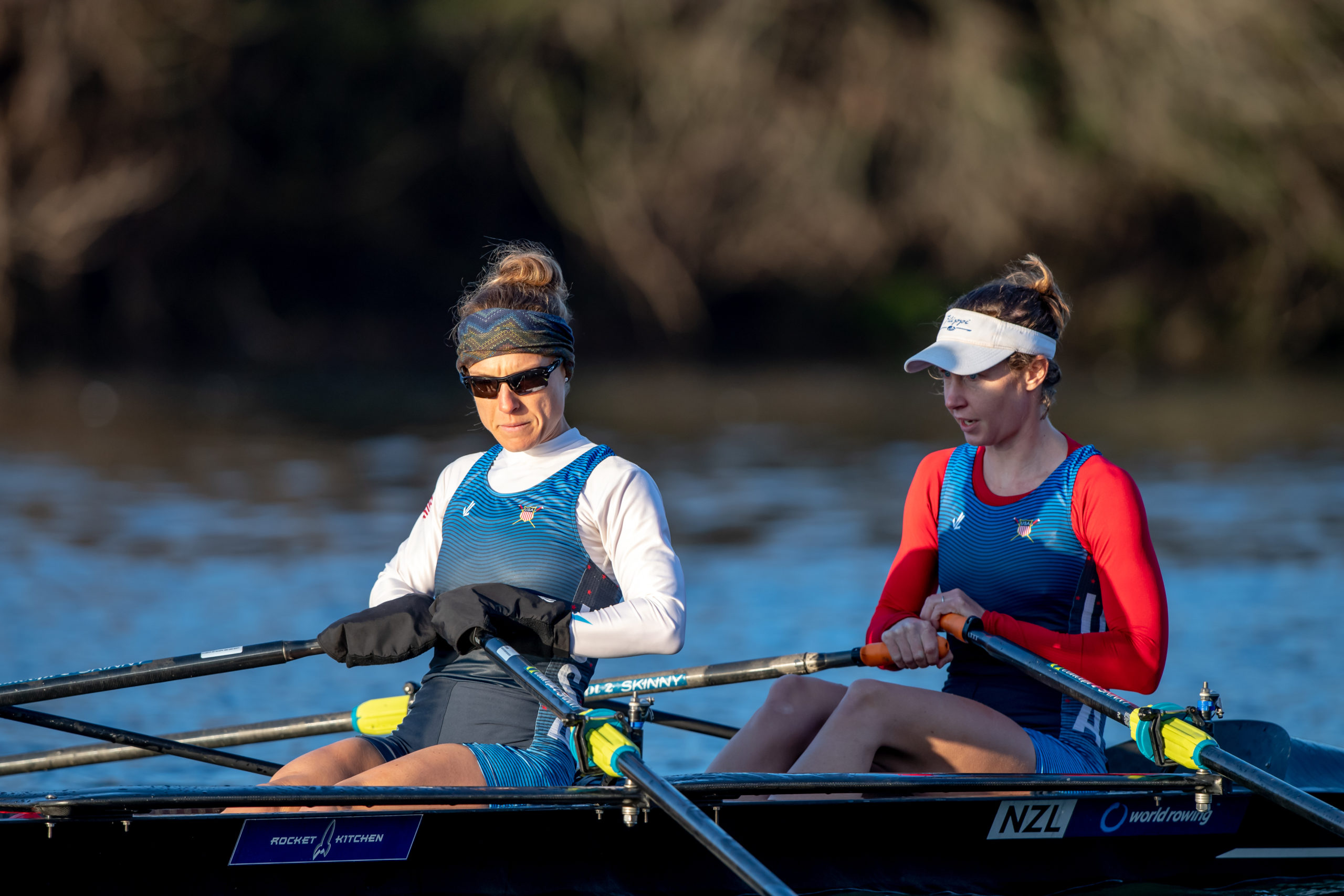
PHOTO BY ED MORAN

Pause for a count of 1-one thousand, 2-one thousand. Row. 

This slight interruption of the stroke cycle gives you the opportunity to stop briefly and check your position. Pause drills can be incorporated at the finish position, arms away, arms away/body over, quarter-slide, half-slide, three-quarter slide. 

Double pause drills incorporate two pauses during one recovery, such as pausing at arms/body away and at one-half slide. Pause drills are a staple of technical training. For example, a pause at arms/body away grooves in various skills, such as a smooth follow-through of the stroke with a fluid release and complete body preparation; setting posture correctly out of bow; maintaining a still body angle once compression begins; keeping weight over the handles with flat wrists; checking the left-hand-leads-the right in sculling; relaxing the slide once the pause breaks; balancing the boat with blades off the water; syncing a crew’s timing out of bow, matching when all knees rise. 

Pause drills can also be part of a strength-endurance session with a focus on single-stroke power through the water, a regular part of your warm-up, or adapted for the indoor rower. Begin a pause drill set by pausing after every stroke for 10 strokes. Next, try pausing every other stroke for 10 strokes. Finally, five and pause—up to five strokes of continuous rowing followed by a one-stroke pause.

Blend the skill you perfected at the pause into your continuous rowing.

Marlene Royle is the author of Tip of the Blade: Notes on Rowing. She specializes in training for masters rowers. Her coaching service, Roylerow Performance Training Programs, provides the support you need to improve your competitive edge. For information, email Marlene at roylerow@aol.com or visit www.roylerow.com.

CAS confirms IOC decision to suspend the ROC

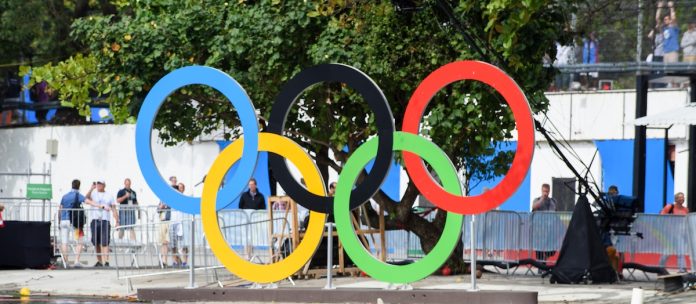
Rio de Janeiro. BRAZIL. 2016 Olympic Rowing Regatta. Lagoa Stadium, Australian Blades and Olympic Rings. Copacabana, “Olympic Summer Games” Rodrigo de Freitas Lagoon, Lagoa. Thursday 11/08/2016 [Mandatory Credit; Peter SPURRIER/Intersport Images]

Russia’s appeal against its suspension from the International Olympic Committee (IOC) has been denied by the Court of Arbitration for Sport (CAS), as reported by Reuters. This decision upholds the IOC’s October ruling that banned the Russian Olympic Committee (ROC) for its acknowledgment of regional Olympic councils within territories of Ukraine currently under Russian occupation, specifically Luhansk, Donetsk, Kherson, and Zaporizhzhia.

The suspension disqualifies the ROC from receiving funding and from any association with the Olympic movement, though it leaves the door open for Russian athletes’ participation in the Paris 2024 Olympics under neutral status.

The IOC’s stance is grounded in the violation of the Olympic Charter’s principles regarding the territorial integrity of member nations, in this case, Ukraine.

The ROC’s attempt to overturn this decision, seeking full recognition and the associated rights of a National Olympic Committee (NOC), was rejected by the CAS.

The court’s ruling affirmed the IOC Executive Board’s action, noting its adherence to principles of legality, equality, predictability, and proportionality.

Rowing Against Putin

STORY BY DOCTOR ROWING / ANDY ANDERSON 

It doesn’t take much imagination to envisage the hardships and horrors that Ukrainians are undergoing. Nearly every night we see coverage of another village bombed, another apartment block in a major city left in rubble. Putin’s aggression doesn’t spare anyone or anything.

Ruslan Kireev, a rowing coach from the Ukraine, sent photos of the destruction that has been wreaked upon boathouses in Kherson and Odessa, the former on the Dnieper River, the latter on the Black Sea. Both have been strongholds of rowing. While there are certainly more important things than rowing, people need to have hope that daily life will return to normal, that one day kids, men, and women will be able to restart their lives.

Sean Colgan, American Olympian in 1980, has been close to Ukrainian rowing ever since those boycotted Olympics. He is organizing a relief effort for rowing in Ukraine.

“They have nothing left,” he told me. “No boats, oars, or ergs. I’ve asked four other members of the 1980 U.S. men’s eight to help collect equipment, used or new, so that we can ship it to the Ukraine.” 

They can rebuild their boathouses, but there’s no way for them to get equipment. Sean and his Colgan Foundation have offered to pay to ship in containers whatever they can collect.

“There’s not a great rush. They are usually frozen in until April,” he said.

But now is the time to look through our boathouses and see what we can part with.

As of this writing, the collection and shipping details are being worked out. Bruce Ibbetson, stroke of the 1980 eight, will coordinate in Southern California; Brian Colgan, Sean’s brother, will work in Florida; Mike Hess and the Pocock Center will handle Seattle. Boston and Philadelphia are in the process of finding a coordinator. 

The roots of involvement with Ukraine go back to the 1980 Olympics, which were slated to be held in Moscow. When the U.S. boycotted because of the USSR’s invasion of Afghanistan, the pre-Olympic regattas took on much more importance. The U.S. sent a full team to Lucerne, and hopes were high that we could defeat the Soviets and East Germans.

But the Soviet eight didn’t show up at the regatta; it was said that they had failed drug testing and didn’t want to be embarrassed with disqualification. That USSR eight was composed of four oarsmen from Minsk, Belarus, and four from Kiev, Ukraine. The way our guys saw it, they ducked Lucerne and won a bronze in Moscow, where they were unlikely to be drug-tested.

Ten years later, Colgan and Ibbetson organized a reunion regatta in Moscow—U.S. vs. USSR alums. The U.S. won decisively. Sean’s father, Chuck Colgan, a longtime regatta and club official, managed that trip. The guys from the Soviet boat complained: “Well, of course; we didn’t have access to training equipment,” because once they were not on the official squad, they had no place to row. So Colgan bought four ergs and sent two to Minsk and two to Kiev. The next year, at the 1991 Miami World Masters Regatta, the U.S. beat them again. 

By 1994, with the world championships in Indianapolis, Colgan organized and paid for the Ukrainians to come to Philadelphia to train. Same for ’95 and ’96, before the Atlanta Games. 

Fast forward: With their country under siege, Colgan searched his database to find the Ukrainians and paid for their training base in 2022. Sean has helped them come to the last two Head of the Charles regattas, and he will continue his support. Suspecting there might be many others of like mind, Sean initiated this latest effort.

Watch RowingNews.com and the Rowing News Instagram account for updates on where and when to take equipment. I’m finding a few sets of oars and ergs. How about you?

Saudi Arabia Aims to Row on the World Stage

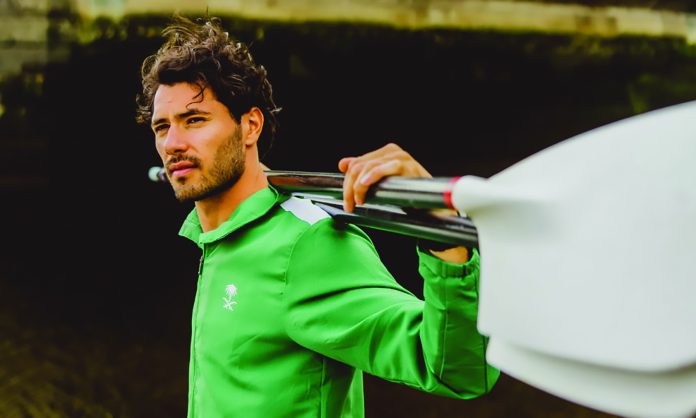
Olympian and captain of the Saudi Rowing Team, Husein Alireza. Photo courtesy.

Saudi Arabia—the richest Arab country, with a thriving economy driven by huge oil revenues­—is aiming to become a player in international rowing by vying to host the 2025 indoor-rowing championships and the 2027 Beach Sprint championships.

Rowing “encourages a competitive environment in the country,” said Husein Alireza, an Olympian and captain of the Saudi Rowing Team during an Arab News podcast.

“To host world-class athletes, to demonstrate world-class performances and expose the people to what it takes to perform on the world stage, that’s priceless. It inspires people.”

The Saudi Rowing Federation, formed three years ago, has ambitious plans to discover, recruit, and develop promising rowers in the nation of 36 million people. Scouts have visited some 50 schools to conduct fitness assessments and identify students who, because they are tall and long-limbed, are suited biomechanically to excel in the sport.

Prospects will begin by learning how to row and will progress through several stages of development until they’re capable of competing and winning at the elite level. The coach of the Saudi team is top-tier—Matthew Tarrant, a two-time British Olympian who rowed in the coxed pair, coxed four, and eight and won medals in five world championships, two of them gold.

Alireza, Saudi Arabia’s first rowing Olympian, competed in the single scull in Tokyo in 2021. He began rowing at Cambridge University, where he was coached by the esteemed oarsman Bill Barry, who continued to guide Alireza when he earned an Olympic spot after capturing a gold medal at the Saudi Games. (Barry attended another Tokyo Olympics—in 1964—as an athlete, winning silver in the coxless four.)

During the four years he prepared for the Olympics, Alireza trained relentlessly, rowing three times a day, and taking a day off only once every two weeks.

Alireza views rowing as a way to diversify further Saudi Arabia’s booming sports scene (the number of sports federations in the kingdom has tripled, soaring to 97 from 32 in 2015) and dilute the dominance of football (soccer). He’s excited especially about the potential appeal of spectator-friendly coastal rowing and Beach Sprints.

Coastal rowing, which debuts at the 2028 Los Angeles Olympics, “opens up a whole new world,” he said. “It’s a little easier to get a hold of and to master than traditional rowing, so it’ll involve a lot more Saudis.”

With its many beaches, Saudi Arabia is an ideal venue for such contests, he added.

“The social and economic benefits of hosting these events are undeniable and well-documented,” Alireza said. Sports participation “decreases stress and improves the health of the general population, which in turn decreases the costs of health care. It’s intrinsically linked to the quality of life.”

Saudi Arabia is moving aggressively to broaden its economy and reduce its reliance on oil by promoting sports, entertainment, and tourism and is spending billions to do so as part of Crown Prince Mohammed Bin Salman’s Vision 2030. The country is liberalizing its laws and investing in the traditionally marginalized, such as youth and women. In 2018, women were allowed to drive for the first time in history.

The two pillars of fostering sports like rowing are opportunity and support, and the Saudi government, through its Sovereign Wealth Fund, is putting its money where its mouth is, channeling $427 billion into bolstering its various sports federations.

In 2021, the kingdom shook up the world of golf when it ponied up $2 billion to launch the LIV Golf Tour, luring star players from the PGA with lucrative cash payouts. That same year, the first Saudi Arabian Grand Prix, a Formula One race, took place, a contest that recurs this month.

Late last year, Jeddah was the site of an America’s Cup preliminary regatta, and in 2034 the kingdom will host the Asian Games and the 25th FIFA World Cup. Saudi Arabia has been staging professional wrestling events since 2014 and purchased a $100-million stake recently in a mixed-martial-arts league.

The nation has become the home of elite boxing and is negotiating to host a new Masters 1000 professional tennis tournament as early as January of next year.

“It’s amazing the diversity of the events we are hosting,” Alireza said. “If we are ready to host world-class events, then why not? We don’t have to explain why these events are happening here. It’s because we can.”

Footloose 

STORY BY VOLKER NOLTE | PHOTO COURTESY WORLD ROWING

Drills are an excellent way to learn a specific part of the rowing stroke without the coach having to intervene or explain much. Ideally, the exercises are chosen to emphasize or even overemphasize the intended movement. In order for the exercise to be effective, rowers should be compelled to perform the technique correctly without coaches telling them how explicitly.

Rowing on the square is one such exercise, as rowers must coordinate force, hand movement, and balance on the release in a way that leads to extracting the blade from the water properly. By letting rowers figure out the best way to propel the boat and move their hands to disturb its motion least, they develop a sense of what a well-executed release feels like when rowing on the feather. No wonder this exercise is used so widely.

Another exercise that fosters proper technique is rowing with your feet out of the shoes. This exercise was made popular by Australian coach Marty Aiken, who led Swiss brothers Markus and Michael Gier to the Olympic gold medal in the men’s lightweight double sculls at the 1996 Atlanta Games. That crew was known for its excellent technical skills, and Aiken  pointed out in his speeches repeatedly that he used the feet-out drill frequently. In fact, he credited the drill for making a significant impact on his team’s technical abilities. While many athletes have difficulty executing the drill properly at low boat speed, the Gier brothers were able to row flawlessly with their feet out of their shoes at race pace.

Although rowing immediately with your feet out of the shoes at high stroke rates is not recommended, this exercise has tremendous benefits and should be used specifically to improve fine-motor skills in sculling. Coaches should introduce the exercise by having rowers start slowly and with minimal effort. Rowers will learn quickly not to lean back too far, to hold pressure on the blades until released, and to extract the blades cleanly. Any error in these elements will cause rowers to lose contact with their footstretchers, leading to uncertainty and an interruption in flow.

Coaches don’t need to say or do much by way of correction. The settings of the exercise provide the challenge, and rowers learn on their own which movements help set up the boat and maintain balance. Some rowers, however, tend not to lean back at all or even “fall over the handles”—that is, they keep their shoulders in front of their hips, which makes the exercise easier to perform but of course teaches incorrect technique. In this case, it’s imperative for the coach to intervene.

 The virtue of this exercise is that it gives athletes excellent feedback; they clearly see improvement in their technique when their movement produces solid strokes with good propulsion, clean finishes, and stable balance through proper use of power on the footstretcher, as well as correct body swing and bladework. This drill can be practiced to perfection, as demonstrated by the Swiss double at racing speed.

While the less secure contact of the feet with the footstretcher requires more precise execution of the rowing stroke and increases the sense of the forces transmitted through the feet—thus improving technique when the feet are strapped back in—coaches should be careful not to reinforce incorrect technique. Because the feet are outside the shoes, coaches sometimes use the exercise to illustrate that during recovery rowers don’t need to pull on the footstretcher. This is incorrect, of course, and can give rowers a false impression.

It’s impossible mechanically to move from the finish position to the catch position without pulling on the footstretcher. Rowers can experience this by removing their shoes completely from the footstretcher and placing their feet on nothing more than the flat plate. Result: Rowers lose contact with the plate completely the moment they cease applying pressure on the blade. This can lead to outright disaster, especially if the boat is going fast—not to mention the impossibility of initiating the recovery. Therefore, this exercise should be undertaken with extreme caution and under only safe conditions.

Rowing with the feet out of the shoes and the shoes on the footstretcher enables rowers still to pull with their feet by digging their heels into the back of the shoes. This does not diminish the effectiveness of the exercise; to the contrary, it allows rowers to experience the above benefits while teaching them also to pull sensitively on the footstretcher. Coaches must emphasize this feedback so the exercise can have its full magical effect.

Prague puts on an show as indoor rowing champions win again

STORY COURTESY WORLD ROWING

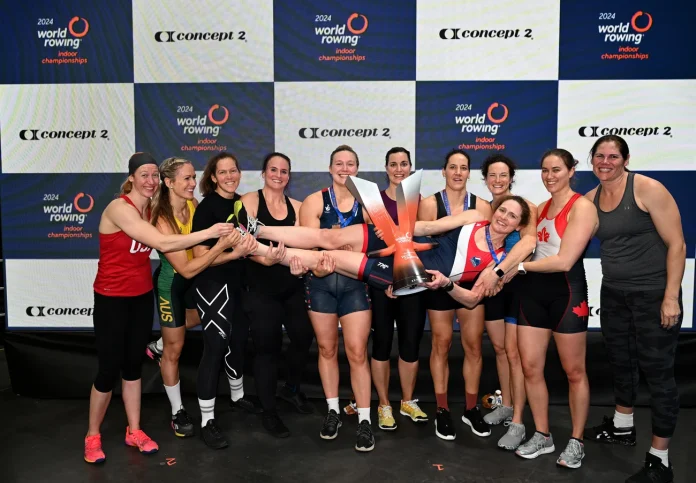
The 2024 World Rowing Indoor Championships, presented by Concept2, came to a close on Saturday with two fantastic races in the World Rowing Versa Challenge. Before that, Ward Lemmelijn of Belgium and Czechia Pavlína Flamíková’s titles in the men’s and women’s 23-39 2000m races highlighted a packed day of racing.

Finland’s Joel Naukkarinen and the USA’s Elizabeth Gilmore successfully defended their Versa Challenge titles with performances showing strength and consistency across the weekend. Both went into the final challenge, the Chase, in the lead and were able to look back on their opponents as they took comfortable wins.

In the men’s competition, the day saw several changes in placings but it was Great Britain’s Cameron Buchan and Pole Maciej Zawojski who came away with silver and bronze; Zawojski securing the medal with a strong final piece in the Chase. The women’s podium was completed by Britain’s Charlotte Dixon and Jessica Eddie. Three-time Olympian Eddie, given a wild card to participate in the Versa Challenge, showed why she deserved her spot with a fantastic sprint to overtake Morgan McGrath for bronze.

In the men’s 23-39 2000m event, Belgium’s Ward Lemmelijn was determined to not only regain his World Rowing Indoor Championship title, but also break Josh Dunkley-Smith’s world record of 5:35.8. He achieved the former, winning decisively in 5:43.2, but missed the latter.

Host nation Czechia won gold and silver in the women’s 23-39 2000m. Pavlína Flamíková’s training was disrupted by a car crash at the start of the season, but she has bounced back impressively and won the women’s 23-39 2000m in 6:47.6, ahead of compatriot Anna Šantrůčková and early leader, Britain’s Kathryn Mole.

Czechia’s other medals included silver in the lightweight men’s 23-39 2000m. Jiri Simanek was defending champion, but was unable to catch Germany’s Florian Roller (racing virtually) in the final 500m. Roller won in 6:09.7 with Simanek recording a personal best of 6:10.9 for silver.

Germany’s Alexandra Föster has already shone on the world stage with world under-19 and under-23 titles in the women’s single sculls and success at senior level too. Competing virtually, she added gold in the women’s 21-22 2000m category with a controlled, even-paced row in a time of 6:48.4 – adding to her under-19 title from 2020.

Much of the morning’s racing was taken up with 500m sprints, first for the para and Under 19 athletes and then for those aged 40 and over. Three records were set during the course of the racing: Egypt’s Alaa Ibrahim won the men’s PR1 500m in 1:43.1, a world record for the 30-39 age group in this category. Denmark’s Merete Boldt beat her own world record, rowing a 1:55.1 for women aged 75-79, and Britain’s Valerie Coleman set a record for heavyweight women aged 95-99, finishing in 2:57.8.

World Rowing Indoor Commission member Eric Murray, himself a former world record holder in several indoor rowing events, said the weekend had showed how the sport is growing through innovation.

“There is a very good appetite for the sport of indoor rowing,” Murray said. “It’s a fantastic event, still so many things we can do with it, but you can give it a very good five-star rating for what it is and know that without a doubt it can only get better and better. People were engaged, you saw them coming back into the stands to watch the Versa event because this is different.”

“There’s so many different things that you can do with indoor rowing. The people around, you can hear them talking about what they’ve been doing online and the communities that there are and that shows the connectivity between the communities that are out there in indoor rowing. And if that doesn’t show you that this is getting bigger and better every day, I don’t know what does.”

To re-watch all the races, go to our YouTube Channel.

To check the results and the photo galleries, go to our website.