Home Blog Page 32

Head of the Housatonic to Expand to Two Days of Racing in 2025

Head of the Housatonic, New Haven Rowing Club's annual Columbus Day weekend head race.


The Head of the Housatonic regatta will expand from one to two days for 2025, the New Haven Rowing Club announced. The inaugural two-day regatta will be held Saturday and Sunday, October 11-12 at Indian Well State Park in Shelton, Conn., its regular location.

The event had grown into one of the largest one-day regattas, turning away entries for lack of space. The two-day format for 2025 will have no entry caps for individual events.

“Hosting the Head of the Housatonic is the highlight of our year at New Haven Rowing Club,” said club president Matt Broder. “We offer great competition in a beautiful venue, and the two-day format will make the event even more appealing to coaches and athletes alike.”

Mid-October is typically peak foliage season in Connecticut and previous editions of the regatta have attracted competitors from as far away as New Zealand.

The expanded format will include several new events and will make it easier for coaches to provide multiple racing opportunities to their athletes. Saturday will feature races for colleges, clubs, and masters rowers, while Sunday events will be dedicated to high school rowers. New events on the schedule include mixed masters eights and quads; junior novice singles, doubles, quads and fours; and a dedicated coxed quad race for experienced junior athletes.

Sports Nutrition on a Budget

Oats plus milk plus peanut butter give you at least 20 grams of protein. That’s the equivalent of the protein in three (more expensive) eggs.

Rowers get hungry, and feeding hungry rowers can get expensive. Comments I hear commonly:

My teenage rowers are eating me out of house and home.

Protein bars and powders are so expensive. Do I really need them?

I spend way too much money on take-out meals. I’m just too tired to cook after I train hard.

Any way you look at it, rowers can overspend their food budget easily. Here are some practical suggestions to help you get more for your food dollar so you can thrive on a budget-friendly, performance-enhancing sports diet.

Good nutrition begins in the supermarket. Add food shopping to your busy schedule. Before shopping, think about a rough menu for the week. The ideal plan will include foods on sale that week at the grocery store. If you want some low-cost food ideas, google “budget-friendly healthy meals.” You’ll find lots of helpful websites, such as BudgetBytes, SpendSmartEatSmart, and $5Dinners.

Don’t overdo protein. The easiest way to lower your food budget is to eat less meat and animal protein and more grains (pasta, rice, oats), beans, breads, and other starches. While you need adequate protein (0.5 to 0.8 gram of protein per pound of body weight; 1.2 to 1.8 gram per kilogram), filling up on excess protein displaces the carbs you need to fuel your muscles optimally. Including some protein-rich food at each meal and snack can provide plenty of protein for the day. A four-ounce serving of chicken (about the size of a deck of cards) offers about 30 grams of protein. It’s common for hungry rowers to eat twice that much! No need for costly protein bars, powders, and supplements.

Budget breakfast suggestion: Eat more oatmeal! It’s much less expensive than dry cereal or eggs. Plus, oats have heart-healthy fiber that helps lower cholesterol. Because oats are carb-rich, they do a good job of fueling muscles. They also offer six  grams of protein per half cup of raw oats to build and repair your muscles. Buy the big 42-ounce container (about $8 for Quaker, $4.60 for the store brand). A half-cup uncooked serving costs less than 25 cents. Skip the individual packets (50 cents each) and microwavable tubs ($1.80 each).

To make Oatmeal of Champions, put a half to one cup of raw oats in a microwavable bowl, stir in a cup or more of milk (instead of water, for more protein and calcium), add some salt (enhances flavor) and microwave for two-ish minutes. Swirl in a spoonful of peanut butter and some raisins. Voila! A yummy carb-plus-protein balanced meal that fuels you up for (or refuels you after) your morning workout. Oats plus milk plus peanut butter give you at least 20 grams of protein. That’s the equivalent of the protein in three (more expensive) eggs.

Fruit on a budget: Seasonal fresh fruit is a smart choice— strawberries in spring; apples in fall. Off season, canned and  frozen fruits are just as nutritious, but with a lower price tag and no spoilage. A small box of blueberries can cost at least $4 to $6, depending on the season. Frozen blueberries cost about $4 for a 12-ounce bag. Frozen berries (and other fruits) are perfect for adding to oatmeal, smoothies, and yogurt.

Frozen fruit doesn’t spoil. Wasted food equals wasted money. Before it gets too ripe, peel, then freeze, that brown speckled banana (and other produce).

Dried fruit also doesn’t spoil and offers nutritional value similar to fresh. Drying removes water and concentrates the nutrients. Choose dried fruits of different color (orange apricots and mango, yellow pineapple, brown dates) to boost your intake of anti-inflammatory, immune-boosting phytochemicals. Munch on a handful of dates or raisins instead of snacking on ultra-processed and expensive ($1.50 to $2.50 or more) energy bars. Pair dried fruit with nuts for a handy carb-protein sports snack. Both can be bought in bulk for significant savings at BJ’s and Costco.

Vegetables: Frozen veggies are money savers compared to fresh. Plus, they can be more nutritious. That’s because they’re flash-frozen at peak ripeness. Freezing retains nutrients that otherwise get lost when being transported from, say, California to New York City. A one-pound bag of store-brand frozen green beans costs less than $2; fresh are twice that price. Frozen veggies are simple to cook. They require no prep time, leave no waste, and won’t spoil (like the head of broccoli you bought last week and never quite got around to cooking).

Lunch: A sports sandwich of champions is peanut butter plus banana. For only $1.40*, you can get about 500 satiating calories that cost less than making a turkey cheese wrap ($3.85**) or buying a McDonald’s Quarter Pounder ($6.40)

*two slices of Dave’s Killer Bread (80 cents) plus two tablespoons of Teddie All-Natural peanut butter (30 cents) plus a medium banana (30 cents) = $1.40

**one burrito-size flour tortilla (55 cents) plus four ounces of deli turkey ($2.75) plus one slice of Swiss cheese (55 cents) = $3.85

A grain bowl for lunch is another budget-friendly option. Toss into a bowl last night’s leftover rice, canned beans, shredded cheese, and salsa. Cheaper than buying lunch at Chipotle!

Snacks: Single-serve sports snacks, such as applesauce pouches and yogurt cups, add up in terms of money as well as landfill space. Purchase reusable small containers that you fill with yogurt, trail mix, or pretzels. Prep a week’s worth of grab- and-go snacks so they’ll be ready and waiting.

Instead of granola bars, enjoy peanut butter and graham cracker “snack-wishes.” They’re crunchy and tasty—just like a granola bar—but cost less and are better for the environment.

Note: Peanut butter, which is much less expensive than other nut butters, is an anti-inflammatory, nutrient-rich source of protein that fits into many meals, be it PB in oatmeal for breakfast, PB&J for lunch, PB and apple for snacks, and even peanutty pasta for dinner.

Dinner: Canned tuna and salmon are less expensive than fresh fish and offer cook-free options for adding omega-3 fats to your diet. Enjoy eggs for dinner (instead of breakfast). If you’re a die-hard meat eater, stretch out the meat by making stews, stir-fries, and casseroles. Vegetarian meals can be more budget-friendly than meat-based meals. Bean burritos, anyone?

The bottom line: By planning ahead, buying store brands, taking advantage of frozen fruit and veggies, buying in bulk the foods that won’t spoil quickly (oats, nuts, dried fruits), and making leftovers into planned-overs to minimize food waste, you can enjoy an effective sports diet despite a tight food budget.

To reduce costly restaurant eating, curb your dinner appetite by enjoying an apple with peanut butter for an afternoon snack. You’ll have energy to cook and will spend far less than succumbing to takeout food.

Give it a try.

Sports nutritionist Nancy Clark, M.S., R.D., counsels both casual and competitive athletes in the Boston area (Newton; 617-795-1875). Her best-selling Nancy Clark’s Sports Nutrition Guidebook can help you eat to win. For more information, visit NancyClarkRD.com.

Doctor Rowing: A Bridge to the Past


On our way to New York to watch daughter Ella run the marathon, we took the Charter Oak Bridge across the Connecticut River in Hartford.

As I do every time we cross the bridge, I reminded Mrs. Doctor Rowing to take a good look to the left to see the huge empty shell of the former Hartford Electric Light Company building. This now-abandoned power plant, officially known as the South Meadow Power Plant, was key to the city’s electric grid from its construction in 1921 until it went offline in 1962. It’s a massive building on the west bank of the river that hogs acres of shoreline. Throughout my time in Hartford in the ’70s, while coxing at Trinity College and for three years coaching freshmen and women’s crews, it sat quietly about 500 meters upstream of our boathouse, oblivious to the efforts in the sleek shells that sped by it every day.

As we rowed past the swirling backwater coming off the riprap arm that created a sheltered place to give coal barges a dock to unload, I’d think of a secret ambition that our coach, Norm Graf, had shared with me.

Like everyone who has coached at Trinity, Coach Graf used to worry about the drive to and from the boathouse. The Trinity campus is on the west side of the Connecticut River, but the boathouse is on the east. The drive to practice at 3 p.m., when many of the insurance companies let out their employees, was  done usually in heavy traffic at breakneck speed. Can’t be late for practice! When it was rumored that the HELCO plant was going to be sold, Graf dreamed of buying it.

After I departed Hartford and coaching at Trinity in 1979, the South Meadow Power Plant had a second life generating power, not from burning coal, as it had done originally, but from burning municipal garbage.

Its future could have been even brighter: When the New England Patriots began talking about building a new stadium in the ’90s, the governor of Connecticut began courting the team’s owner, Robert Kraft, to move the team to Hartford. It was rumored that the South Meadow site was dangled as a great place for the NFL franchise. The NHL Whalers had recently left for Carolina, and the region could have used the boost.

Plans were drawn, and there was enormous excitement for building a riverfront stadium and welcoming the Patriots. Instead, Massachusetts gave them a sweetheart deal for Gillette Stadium. Connecticut had been played, and Hartford got a garbage-burning facility instead.

As I cross the Charter Oak Bridge, I think back on Norm’s big idea. Norm had a lot of big ideas—he told me that calling 10s wasn’t enough to make a significant impact on a boat’s speed, so he wanted me to call 15s. “But don’t use the word 15; that would sound intimidating. Just call them 10s and keep counting.”

When I was introduced to the man who would be my college coach, I didn’t know what to think. A WW2 vet with close-cropped hair, he seemed suspicious of our long-haired generation. He was impatient, demanding, and a bit of a bully. We got used to hearing “Kevin, Ke-VINNN” as he yelled at our poor overworked manager. “Get over here, NOW! I need you.”

When the Grafs had us over for dinner one Sunday, he ripped his wife in front of us for using wine to cook the beef stew.

“These guys are in training and have agreed not to drink,” he complained, “and now you go and blow the whole thing.”

Like many of his coaching colleagues, he was contemptuous of women rowing, yet he rose for 6 a.m. practices every day so that they could have a rowing experience. How many times did I hear him rail about how slow the lightweights and the women were on the dock? But if you knew Coach, you knew that what lit his fuse was just impatience and excitement about getting out on the water.

After retiring, he came back and was the women’s coach, and, of course, they loved him because he took them seriously and because deep down he was a teddy bear.

His first coaching job was with the Yale lightweights in the late ’50s. I wish I had asked him more about that stint; it wasn’t an especially happy time for him, I suspect. The only time he told me much about Yale, he said, “Jim Rathschmidt, the heavyweight varsity coach, had a rule at the boathouse. No one could get out on the water before the varsity heavyweight eight. I can’t tell you how much time we wasted standing around, waiting for them to get out.”

He was offended by that arrogance.

At big regattas, like the IRAs, Norm didn’t hang out with the other coaches. Instead, he went out for a beer (although he drank wine) with the boatmen, the men who repair and rig boats. I remember being somewhat embarrassed. Shouldn’t he be talking and learning and sharing knowledge with all the other coaches? Gradually, I realized that the boatmen were the salt of the earth—kind, wise, and hilarious. I was embarrassed by my own snobbishness.

He had some crazy ideas; the HELCO purchase was just one of them. It’s a huge building, and with that breakwater, there was a nice calm “harbor” that would be ideal for a rowing dock.

“Andy, what if we could get South Meadow and convert it into a boathouse?”

But Coach Graf wasn’t thinking like I was, putting in racks and using the space like every other boathouse I’ve seen. No, he was a visionary.

“What if we put in cables and suspended the sterns from the ceiling, hanging them vertically, like sides of beef? We could take advantage of the building’s height and hoist them up and down with pulleys.

“It’s never been tried, Andy! We wouldn’t even need the whole building.”

Our fleet of Schoenbrods like sides of beef? Rocky was then the sports movie—an Oscar winner that everyone had seen. The scene of Sylvester Stallone working in a meat freezer, getting in extra body-shot punches against the hanging beef, was etched in my memory, as it must have been in Norm’s. When I had seen it in the theater, as Rocky battled Apollo Creed in the climactic scene, my friend Murph yelled out, “The meat, Rocky! Hit the meat!”

Every time I drive over the Charter Oak Bridge, I have visions of Norm’s HELCO boathouse, and let me tell you, as impractical as it might have been, in my mind it looks fantastic. In Seattle, Lake Washington Rowing Club converted a warehouse into its boathouse, and Seattle University is in a remodeled fishery.

Dear readers, are there boathouse conversions you know of, spaces that have found second lives as homes for our sport? Has anyone gone vertical with their shells?

Not long ago, a Penn oarsman told me that there was a quotation engraved at the Palestra, the home of the University of Pennsylvania’s storied basketball program, built 99 years ago in 1925, the year of Norman T. Graf’s birth. There’s a plaque that reads, “To play the game is great. To win the game is greater. But to love the game is the greatest of them all.”

Coach Graf, you helped us love rowing. Thank you.

Doctor Rowing, a.k.a. Andy Anderson, has been coxing, coaching, and sculling for 55 years. When not writing, coaching, or thinking about rowing, he teaches at Groton School and considers the fact that all three of his children rowed and coxed—and none played lacrosse—his greatest success.


Coach Development: Finding Yourself Beyond the Boathouse

The winter break offers more than just a pause in the training calendar.


At winter break, I find myself thinking about identity. Specifically, how easy it is for coaches to forget who we are beyond our role at the boathouse. We become so immersed in our coaching personas that stepping away—even briefly—can feel like leaving part of ourselves behind.

The winter break offers more than just a pause in the training calendar; it’s an opportunity to reconnect with the multifaceted people we are beyond our coaching roles. The person who has interests unrelated to sport. The friend who can talk about topics other than technique and race plans. The family member who is fully present at holiday gatherings rather than mentally reviewing recruiting lists.

Years ago, a more experienced coach shared something that dramatically affected my approach to breaks: “The best ideas I’ve ever had about coaching came when I wasn’t trying to think about coaching at all.”

He explained how making genuine mental space away from the sport allowed his mind to process challenges differently, leading to creative solutions he might never have discovered while problem-solving actively. He found inspiration in podcasts about musicians and stories his children shared about their experiences in grade school.

It’s often in the mental space when we’re not actively engaged that our most innovative ideas emerge. Think about the ideas that come to you during a quiet shower or a run without music playing.

So, as we enjoy winter break, I have a challenge for you: Instead of taking a forced break just from coaching, try reconnecting actively with all the other parts of who you are. Engage in activities that challenge different parts of your brain. Create something unrelated to sport. Connect with friends and family who aren’t familiar with rowing. Dare to let yourself be bored.

When you return to the boathouse, not only will you feel refreshed but also you’ll bring fresh energy and creative ideas to practice. You’ll be able to make decisions with the benefit of a broader perspective. You’ll connect with your athletes and fellow coaches on a more human level and model for them the benefits of thoughtful work-life integration.

This holiday season, remember that the boathouse will still be there when you return. But it’s up to you to return to it energized, inspired, and ready to tackle the rest of the year.  

Madeline Davis Tully competed as a lightweight rower at Princeton and on the U-23 national team before coaching at Stanford, Ohio State, Boston University, and the U-23 national team. Now a leadership and executive coach, she is the founder of the Women’s Coaching Conference.

Henley Royal Regatta Adds New Women’s Race

Henley womens race
Photo by Benedict Tufnell | Henley Royal Regatta


Henley Royal Regatta has added The Bridge Challenge Plate, an additional women’s race, as the regatta works towards gender parity on the Thames.

“The Bridge Challenge Plate is a significant step forward in broadening opportunities for female competitors at Henley Royal Regatta,” remarked Richard Phelps, Chair of Henley Royal Regatta. “It fills a vital gap in our competition structure, providing a platform for Intermediate Women’s crews to compete at the highest level for their category. This new event complements our efforts to increase entries in five existing Women’s events and reflects the Regatta’s commitment to inclusivity, gender parity, and maintaining the highest competitive standards.”

Richard Phelps
Photo of Richard Phelps by Benedict Tufnell | Henley Royal Regatta

The Bridge Challenge Plate is the first event in the history of HRR in the intermediate category. It’s designed for crews below the top level, Premier category, but above the Club and Student categories.

“This event addresses a specific gap in our offering for female competitors,” said Phelps. “Since 2017, we’ve introduced six new women’s events, creating opportunities for growth across all levels. Adding this Intermediate event is the next logical step in ensuring sustainable and balanced progression for female rowers. Our approach to gender parity focuses on thoughtful, incremental changes to ensure quality competition and lasting progress.”

The Bridge Challenge Plate will see its inaugural race in 2025, and the regatta staff don’t expect to see major changes to the racing schedule.

“We expect the introduction of The Bridge Challenge Plate to be easily accommodated within the 2025 schedule, especially with a projected decrease in entries to The Remenham Challenge Cup [open women’s eights],” stated Phelps. “This addition responds to a remarkable growth in demand and talent within women’s rowing – we saw twice the number of female entries in 2023 than 2019.”

Canisius University to Compete at Six Spring Regattas

Canisius rowing schedule 2025
Photo by Max Sacco.


The Golden Griffins head women’s rowing coach Matt Cosmann has released the 2025 spring schedule which will begin with a home regatta against Mercyhurst on Saturday, April 6.

“We had a good fall,” said Cosmann. “It was my first fall as the head coach. I’ve been with the team for five years. I was the assistant, and I stepped into the head coaching role. It was probably our best fall in the past five years. We did a good job against Robert Morris and George Mason. Our second varsity and our novice eight beat George Mason and Robert Morris’s 2vs and our novices had just learned how to row a month before.”

Following the season-opener, Canisius will travel to Cherry Hill, N.J. for the Knecht Cup, to be held April 12-13. Before the MAAC Championship in May, the Golden Griffins will compete at the New York State Championship, the Sacred Heart Invite, and the Black Rock Cup.

“I’m expecting Jacksonville and Marist to be fast,” remarked Cosmann. “In the last few years Sacred Heart got a new head coach [Lucas Wilhelm] and he’s done a phenomenal job growing the program. What they’ve done over the past three years is a model here at Canisius and I know they’re focused on trying to win. When I look at the rest of the conference, it’s very much wide open. We will be competitive with those three teams if we work hard over the next four months.”

This year the team will not be leaving the state of New York for a winter training trip, opting to put resources towards the purchase of a new hull. Instead, the Golden Griffins will be spending time on the erg, in the weight room, and in the tanks.

“It gets a little cold in Buffalo and we take the docks out for the winter,” said Cosmann. “What’s kind of new this year is the team is using the CrewLAB app to hold each other accountable and have been crushing it. They’ve been putting in a lot of time on the ergs so far. They’re doing a three-day-a-week lift at this local gym called Nickel City Athletics. All of the women who are local have been showing up every single day.”

The program rows out of West Side Rowing Club in Buffalo and last year they were able to get the docks in by the last weekend in February. Cosmann and the coaching staff hope to stay on that timeline, if not a little earlier.

“If we can get them in sooner, we’ll do that,” stated Cosmann. “I don’t like to live on the erg. Obviously, the erg is great. It’s a good way to get in shape, stay fit, work hard, and all that fun stuff, but we’re not going to the MAAC erging Championships we’re going to the MAAC Rowing Championships, so I like us to row and get on the water. We have a really fresh feel on the team and it’s the biggest group we’ve had in my time here. We have a lot of positive things heading into the spring.”

Legenzowski Joins Big Green as Assistant Coach

Carly Legenzowski dartmouth coach
Photo courtesy of Texas Longhorns.


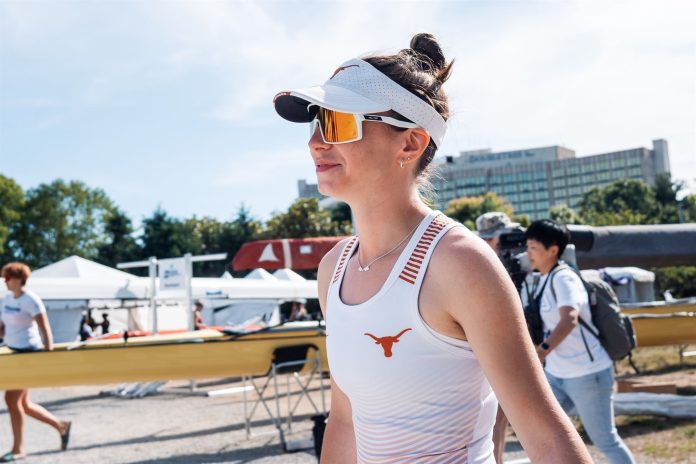
Carly Legenzowski, three-time NCAA Champion with the Texas Longhorns, has joined the Dartmouth women’s rowing coaching staff under the guidance of head coach John Graves and assistant Kendall Brewer.

Legenzowski comes to Dartmouth after she was a coxswain at Texas from 2021-2024, winning NCAA titles in 2021, 2022, and 2024.

“I was a volunteer at Texas in 2021 when she was a freshman,” recalled Graves. “Dave O’Neill [Texas head coach] was coaching me and I was training alongside the team. It was a unique set-up where Carly would go out in a coxed four and I would be in a single and we would train together so that’s how I knew her initially. I got the chance to coach her this past summer on the U.S. Under-23 National Team.”

The four which Carly coxed last summer went on to win a silver medal at the World Rowing Under-23 Championships.

“I consider Dave to be the best coach in NCAA rowing and being around that team and seeing how they operate was very informative for me—Carly and I both have huge respect for him,” remarked Graves. “Coming in as a head coach at Dartmouth, I have taken a lot of my experiences to incorporate them into the team and the culture that we’re building here. Watching the way that Carly ascended into the first varsity boat at Texas and them winning a national championship last year—it was cool to see her grow into that role. The chance to add some of that experience to this team is in line with what we’ve been doing this last year.”

Legenzowski brings an impressive resume including four-time Big 12 Champion and 2024 First Team All-American.

“It’s a credit to the current team and the work they’ve been putting in that Carly felt like this was an exciting opportunity for her,” said Graves. “As the team is becoming more ambitious to take the next step to getting Dartmouth back to NCAAs, Carly’s experience with Texas at NCAAs, coupled with Kendall Brewer’s experience rowing at Michigan, means we have a staff that can help guide the way in that regard.”

Jeff Powell Appointed New CEO for Rowing Canada

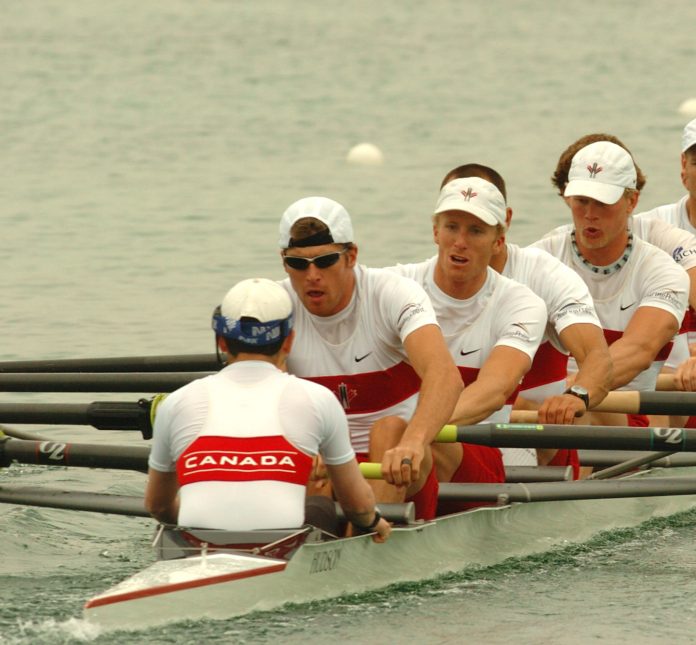
Jeff Powell stroking the Canadian men's eight to victory at the 2004 World Rowing Cup in Munich, when Canada was the two-time defending world champion in the men's eight. Photo: Peter Spurrier, Intersport Images, www.intersport-images.com


Rowing Canada announced the appointment of Olympic oarsman Jeff Powell as the next CEO of Canada’s national governing body for the sport. Powell won two World Rowing Championships in the men’s eight and is a former Canadian National Team coach.

“I am tremendously excited to return more fully to the sport and the organization that has been such an enormous part of my life,” said Powell. “I look forward to working with Canada’s rowing community to support the sport we all care about and to focus on building a strong and connected future together.”

Canada failed to qualify a men’s crew for the Paris Olympics and hasn’t raced a men’s eight in the Olympics since 2012. The women’s eight won silver in Paris and the women’s lightweight double—the only other Canadian crew to qualify—finished eighth. Jacob Wassermann was Canada’s lone Paralympic competitor in Paris.

“As we continue to evolve our strategic direction and build upon the great legacy and potential of our sport, we are confident Jeff will help elevate and strengthen our organization and our rowing communities,” said Michael Bryden, Chair of the RCA Board of Directors.

“He’s a man of high drive, high standards, and very confident in implementing his ideas. He will piss off many people and this is exactly what the organization needs,” said Powell’s teammate Adam Kreek. “He has the hard edge of a high performer and is willing to lean into conflict.”

Powell returns to rowing from the Canadian Sport Centre Manitoba, where he was CEO. He replaces Terry Dillon, who resigned June 30, and will succeed interim CEO Jennifer Fitzpatrick on February 3, 2025.