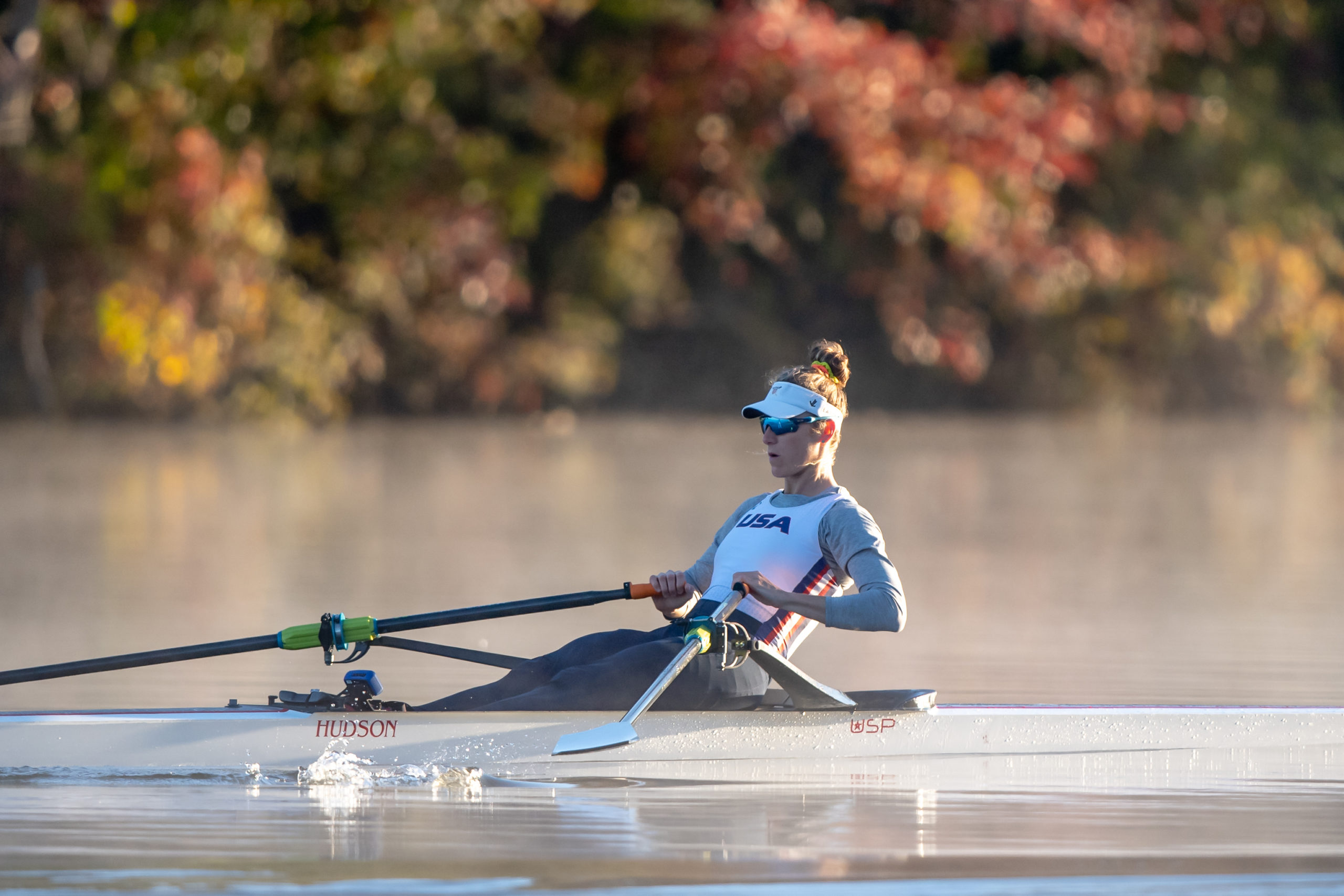
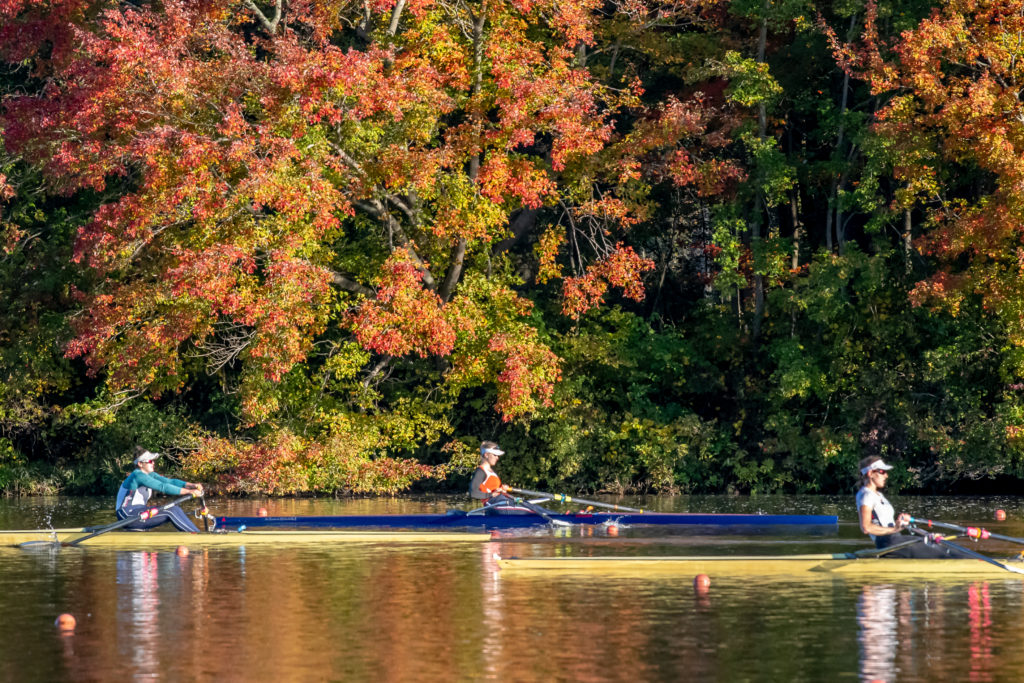
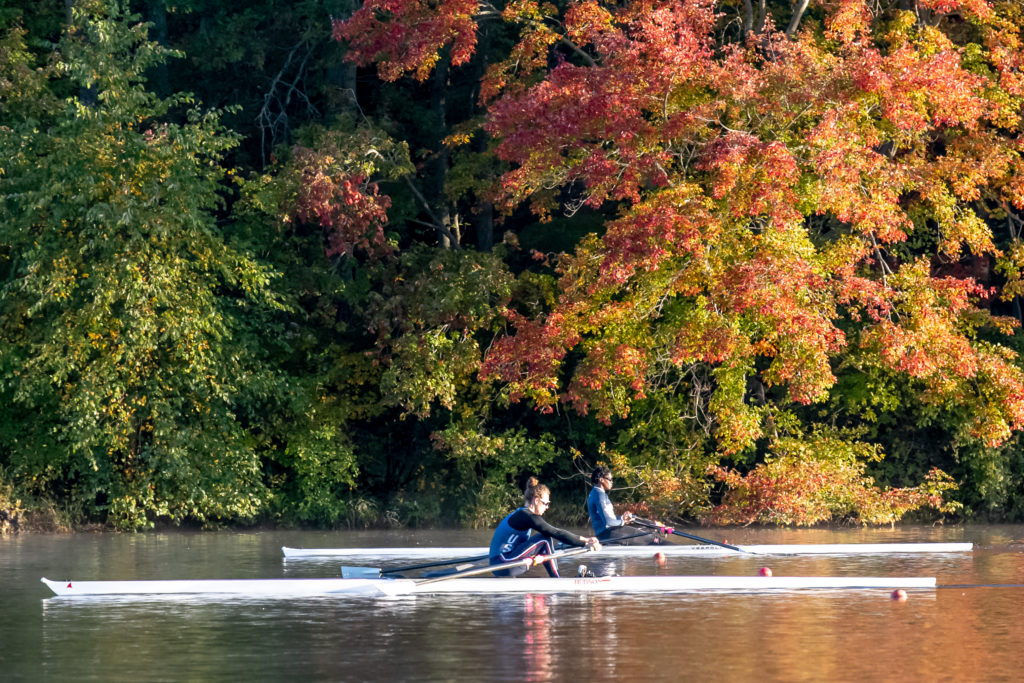
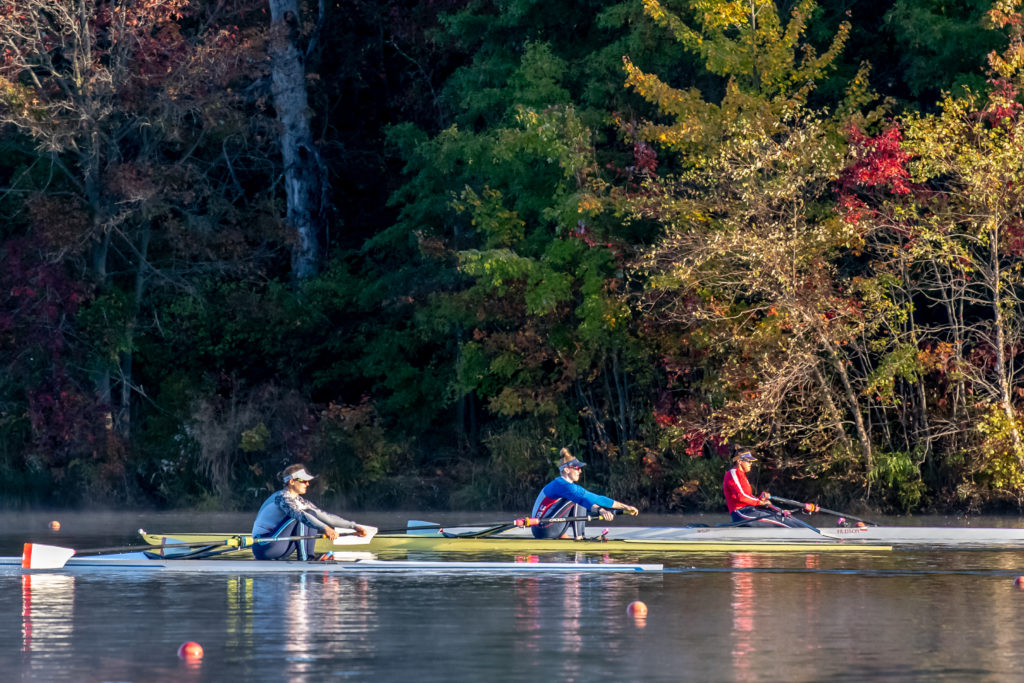
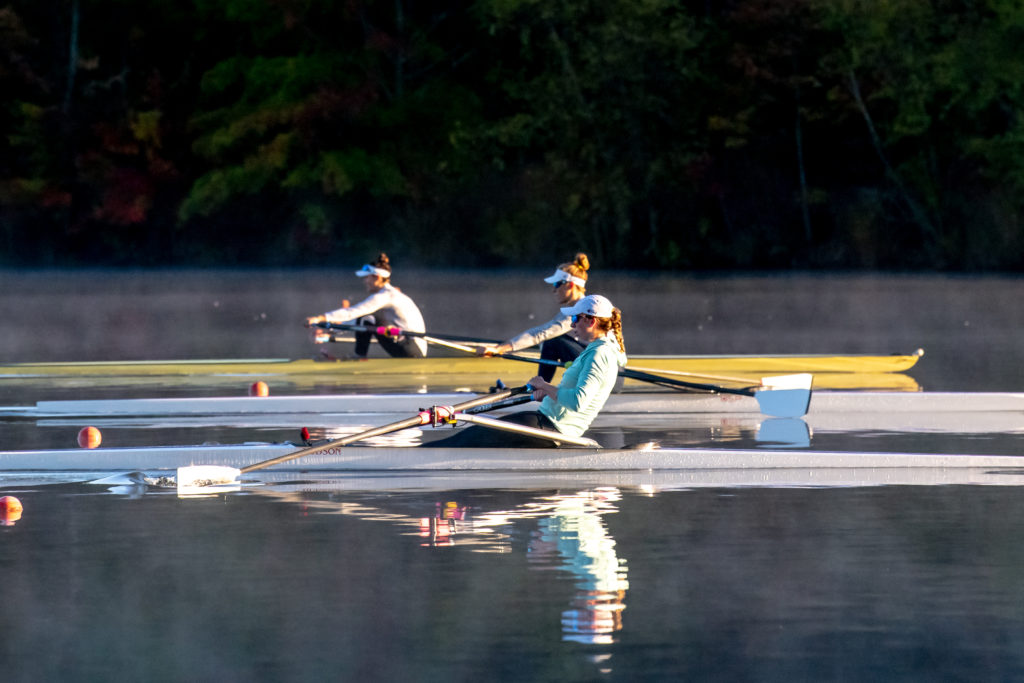
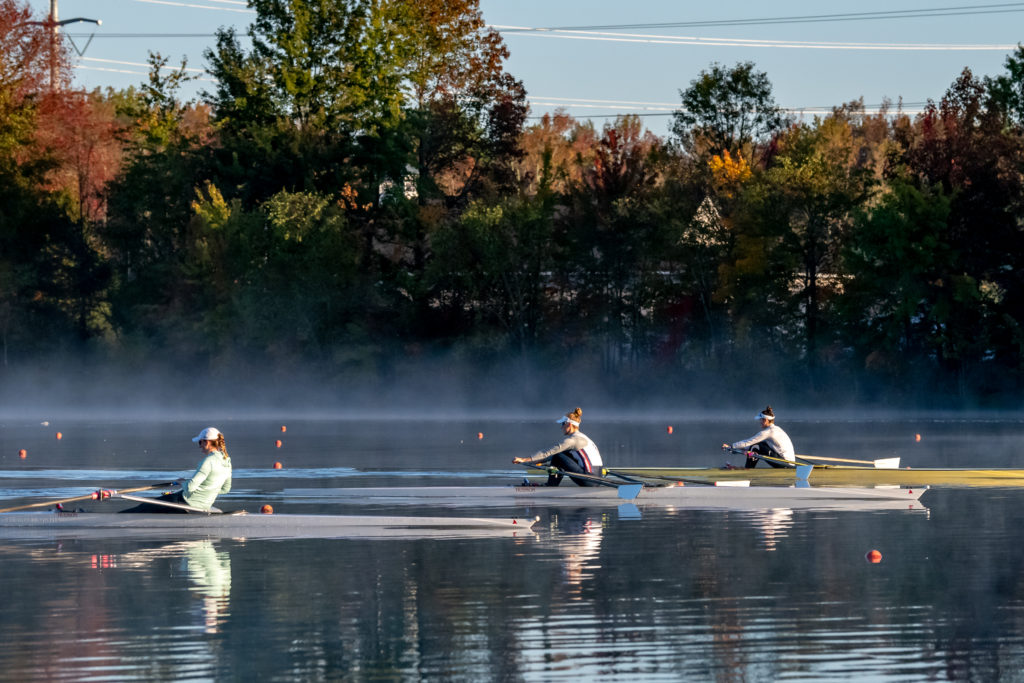
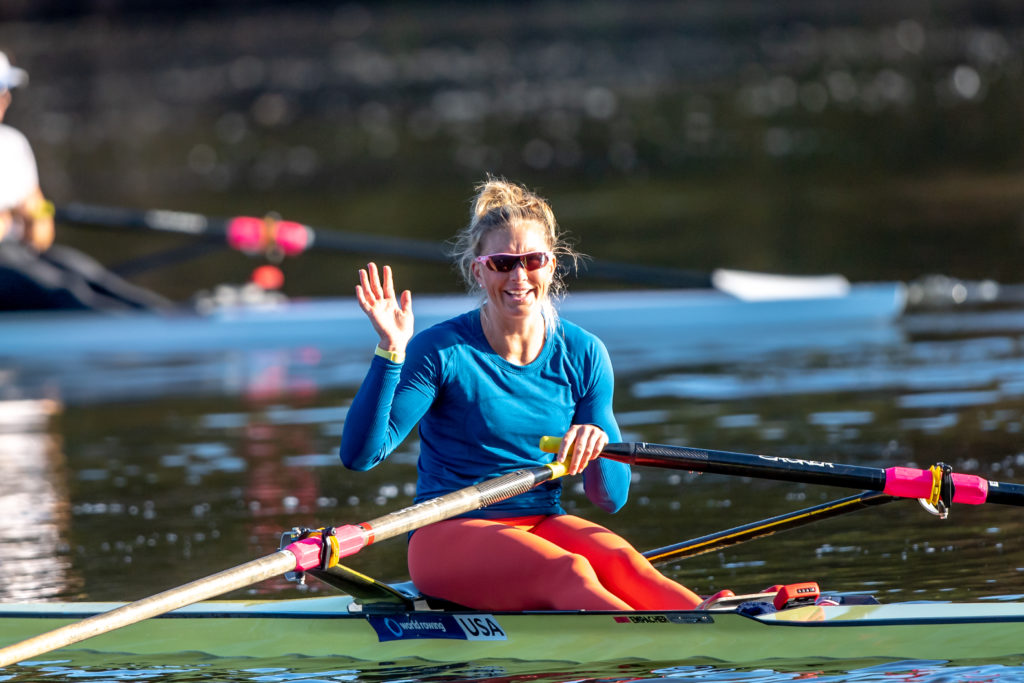
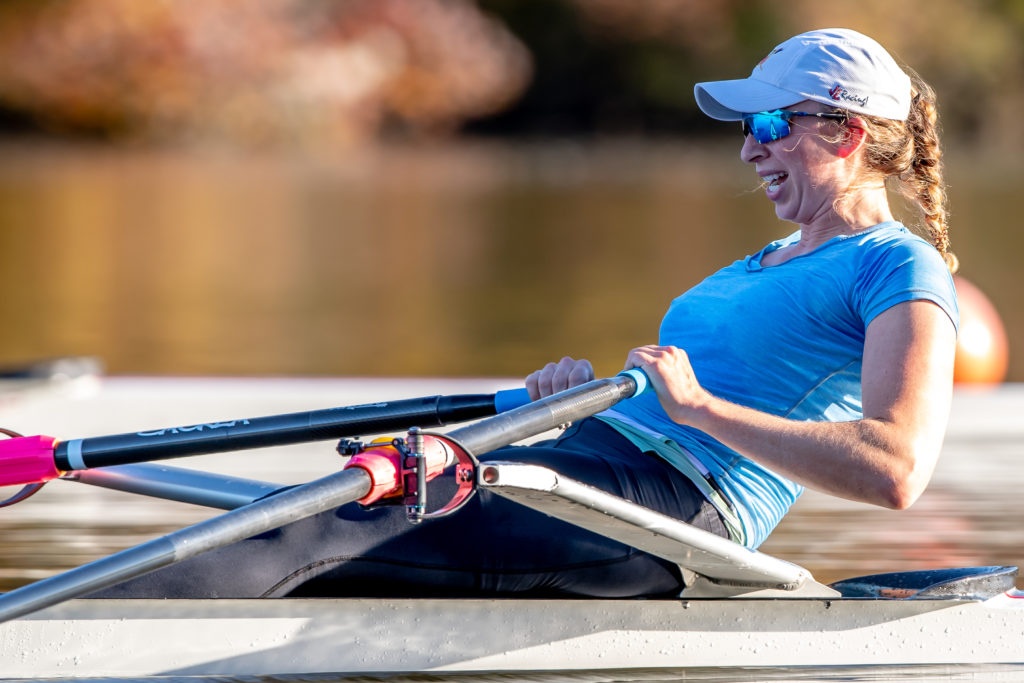
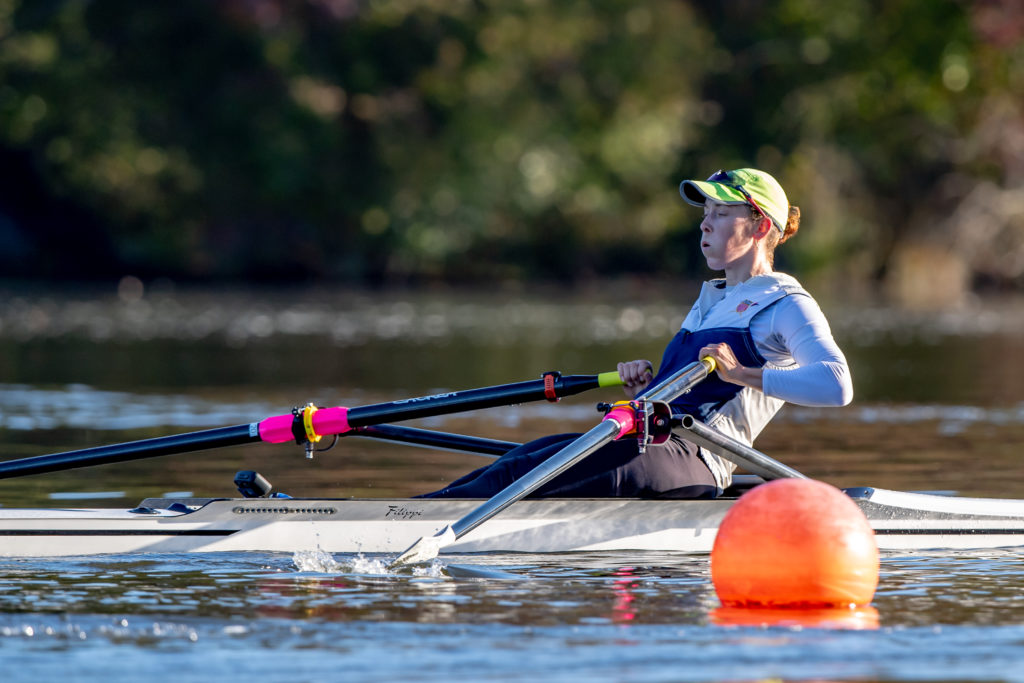
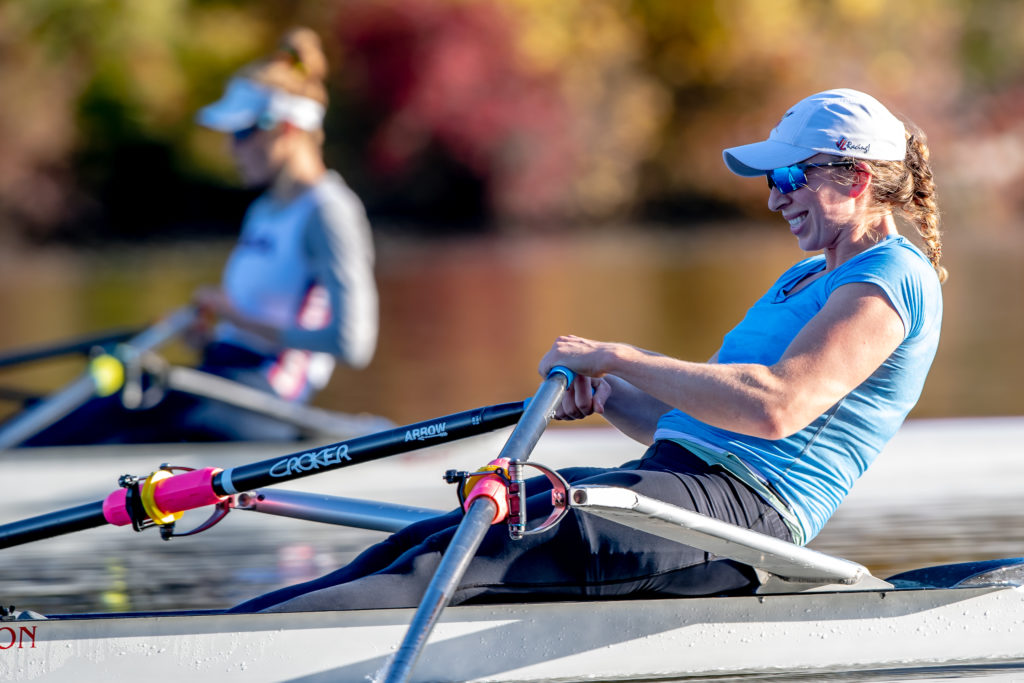
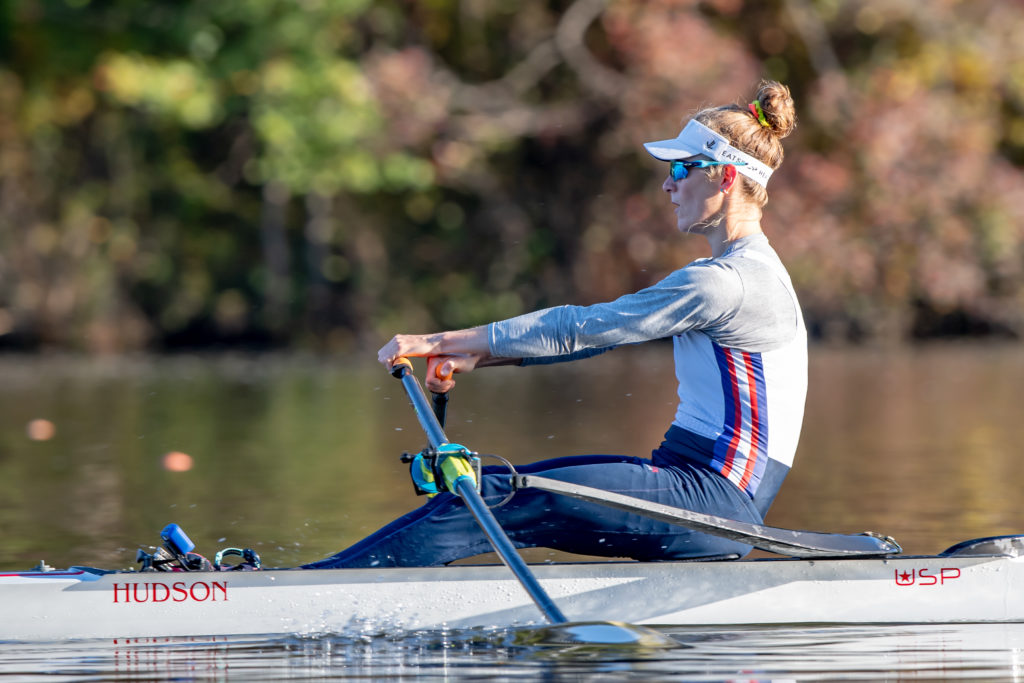
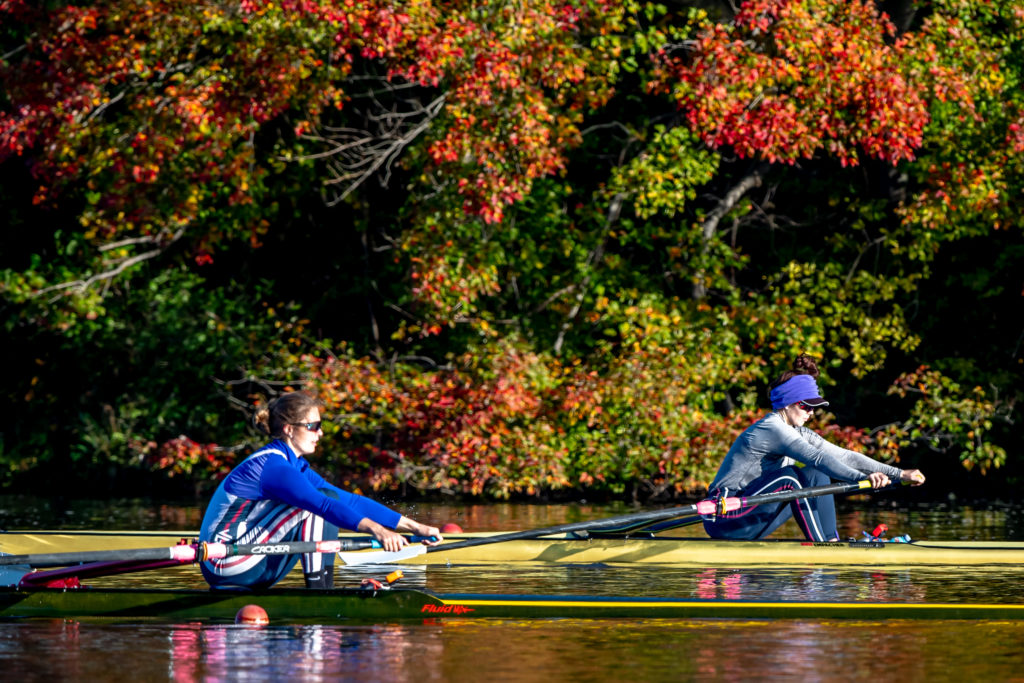
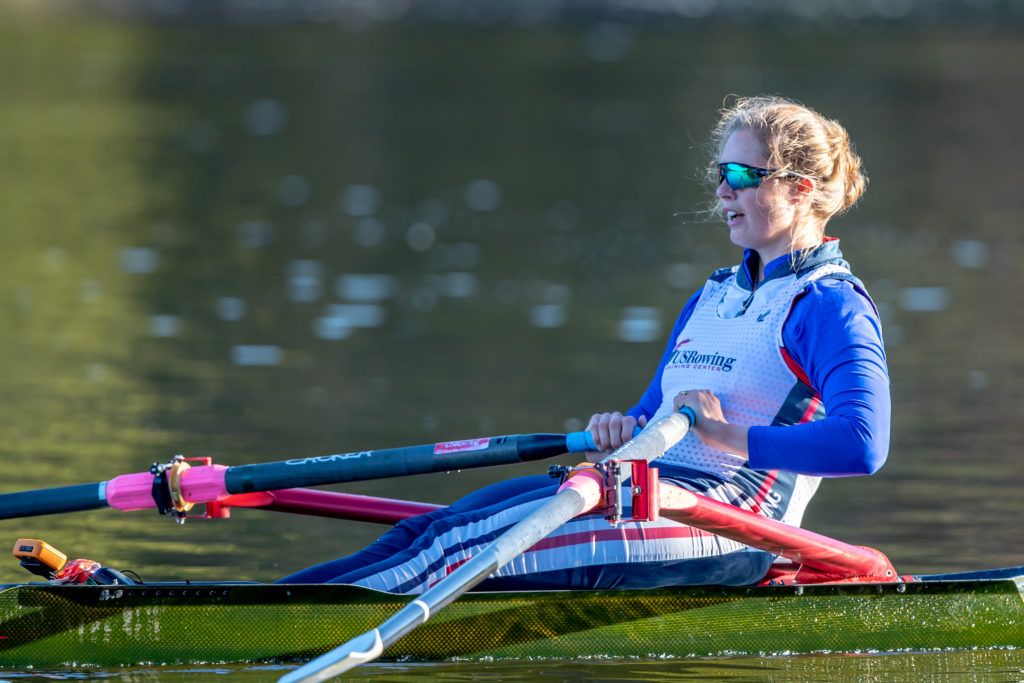
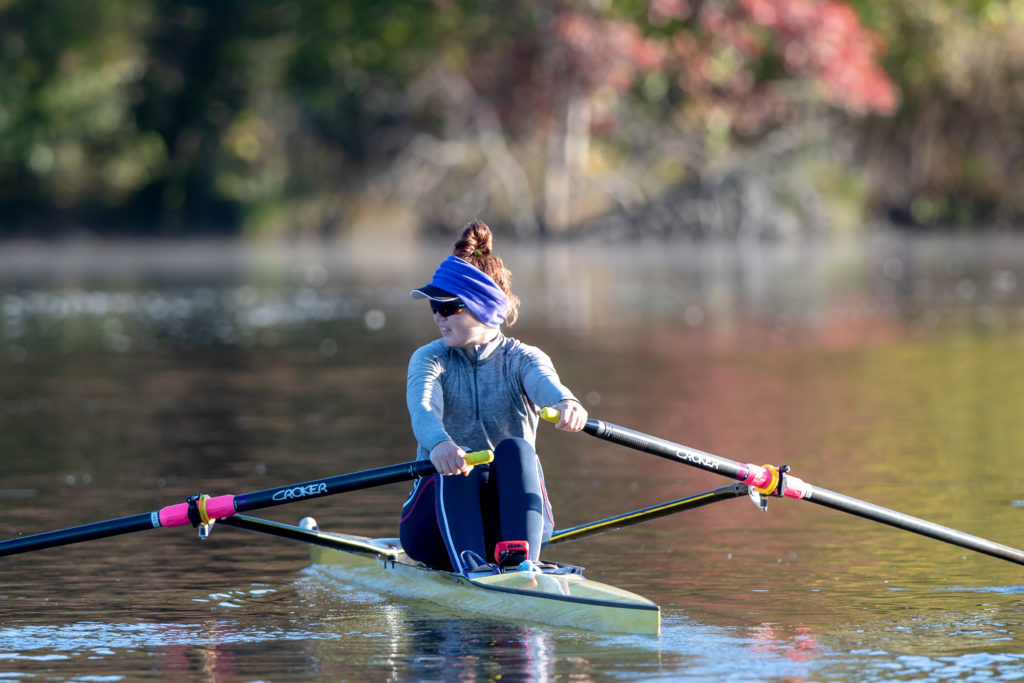
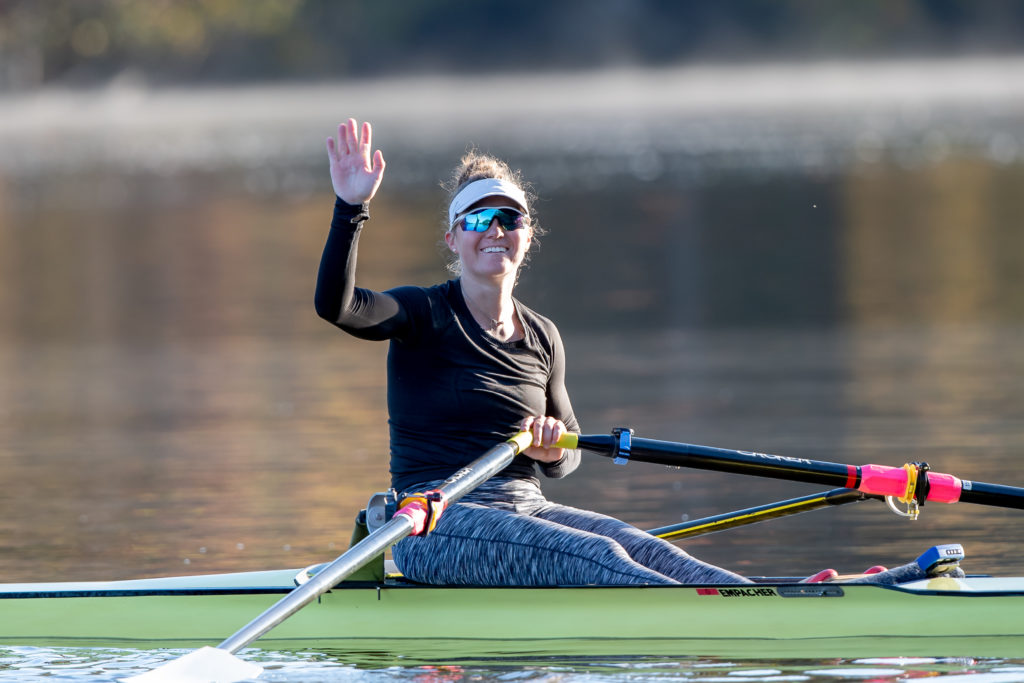
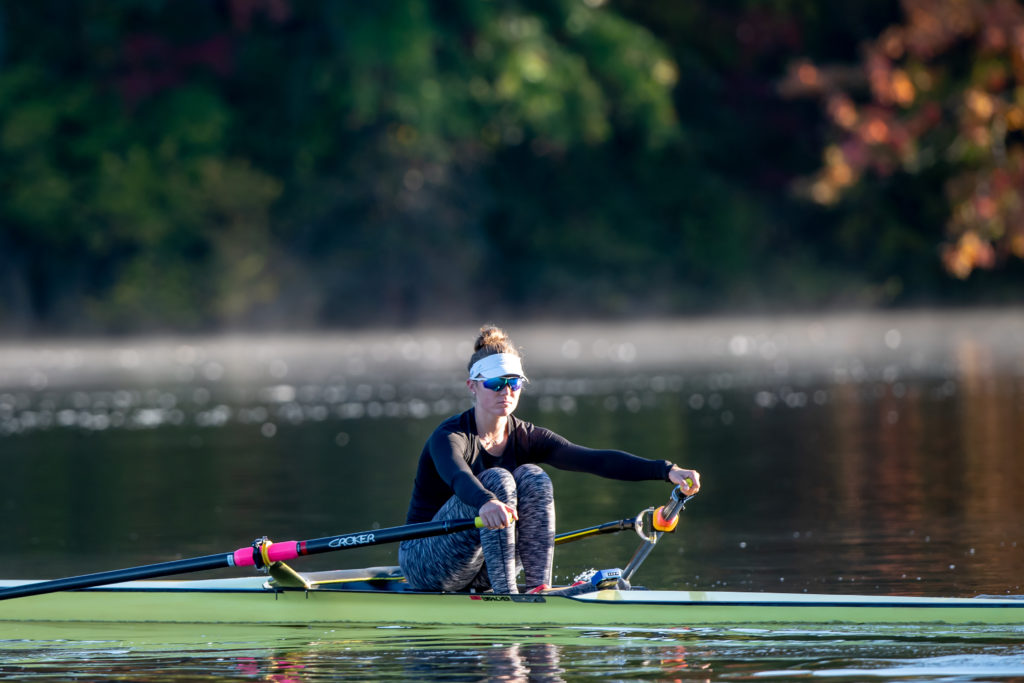
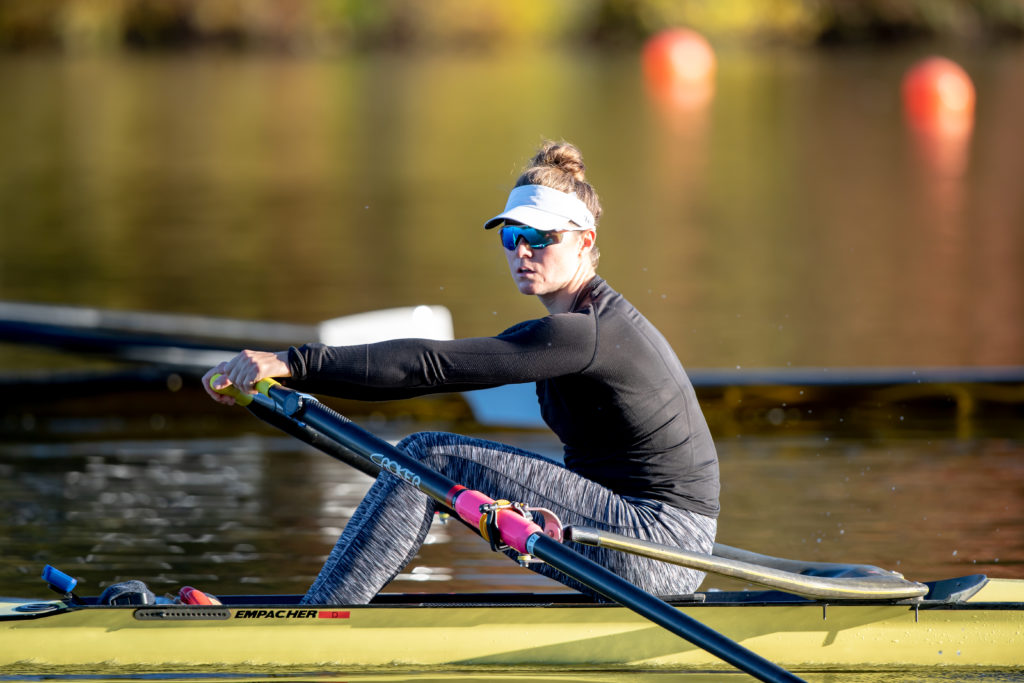
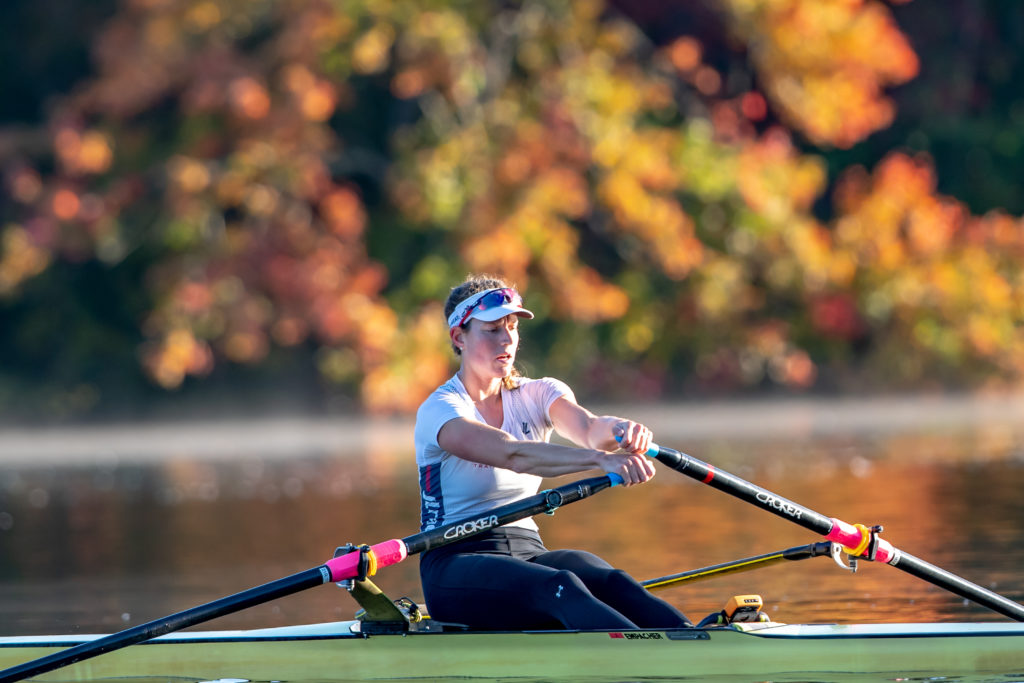
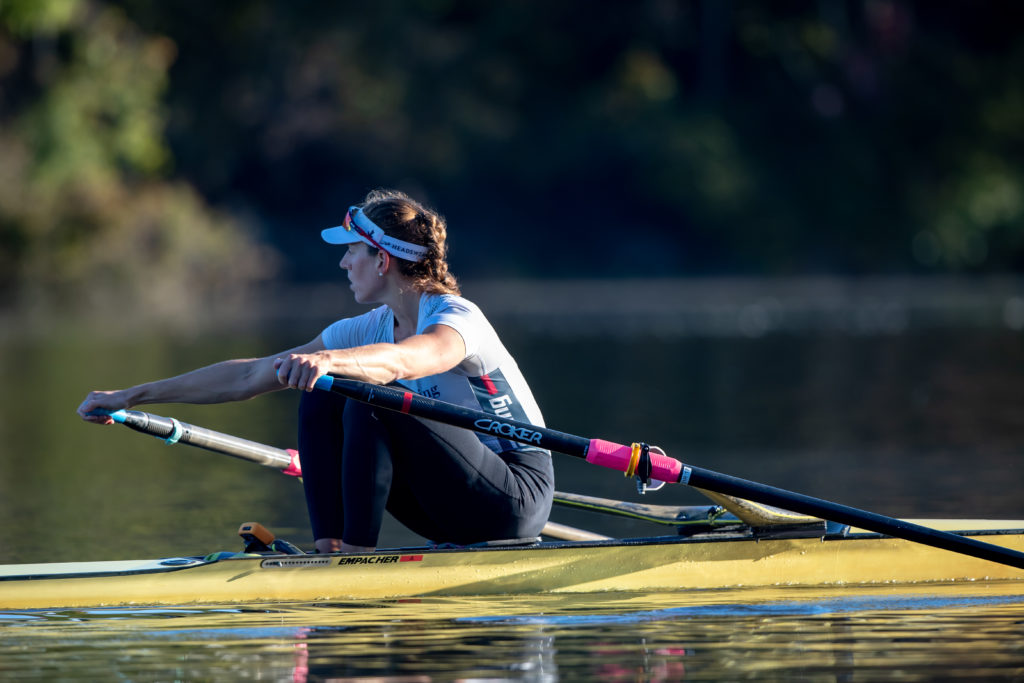
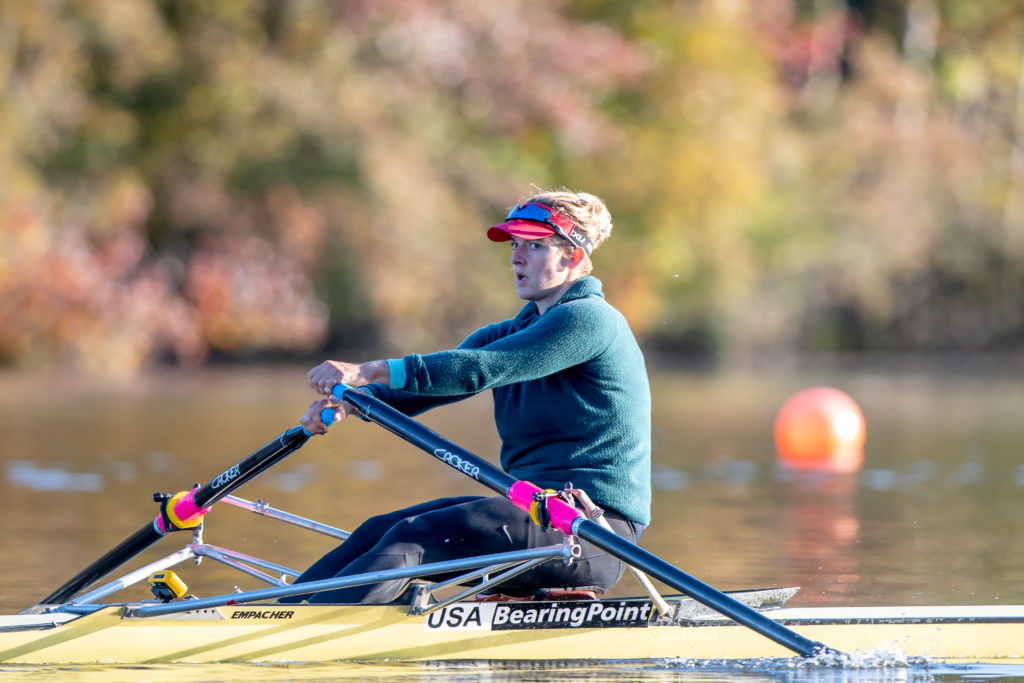
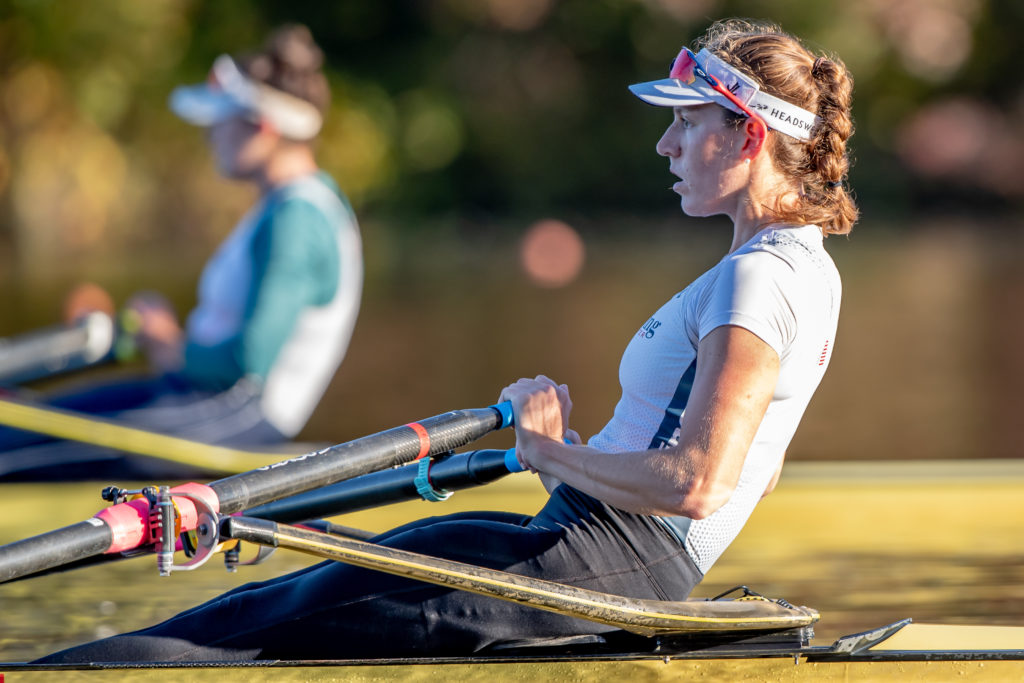
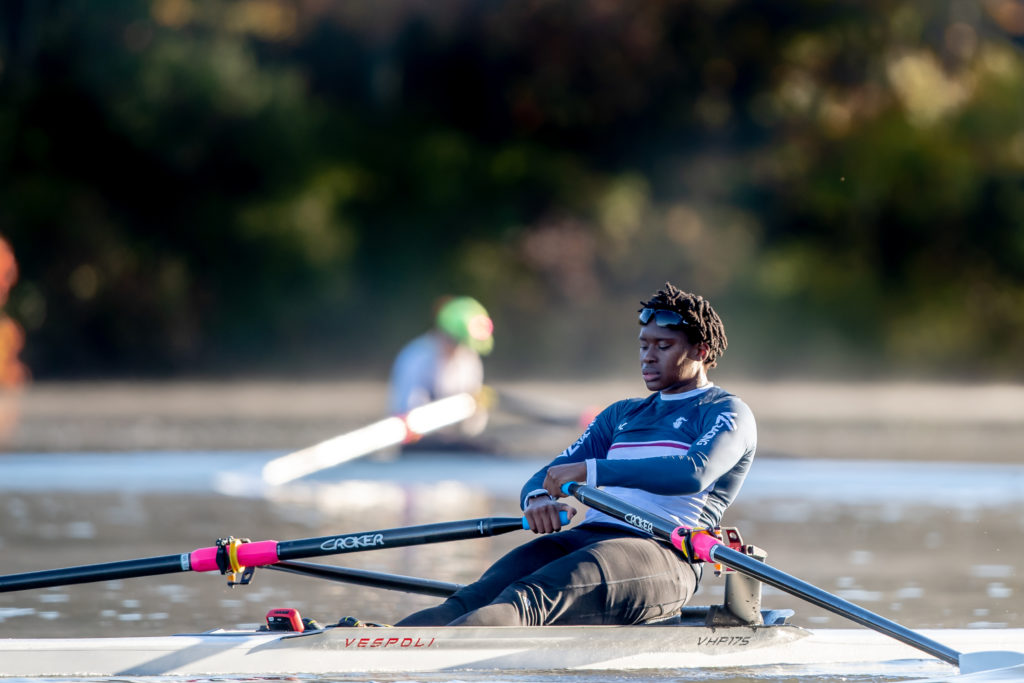
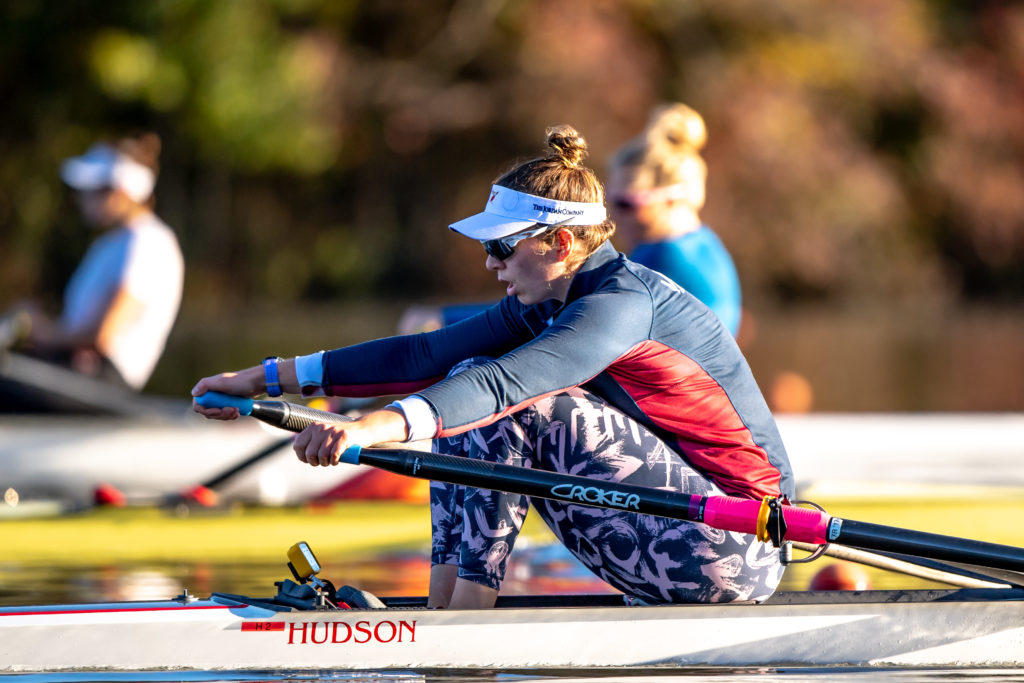
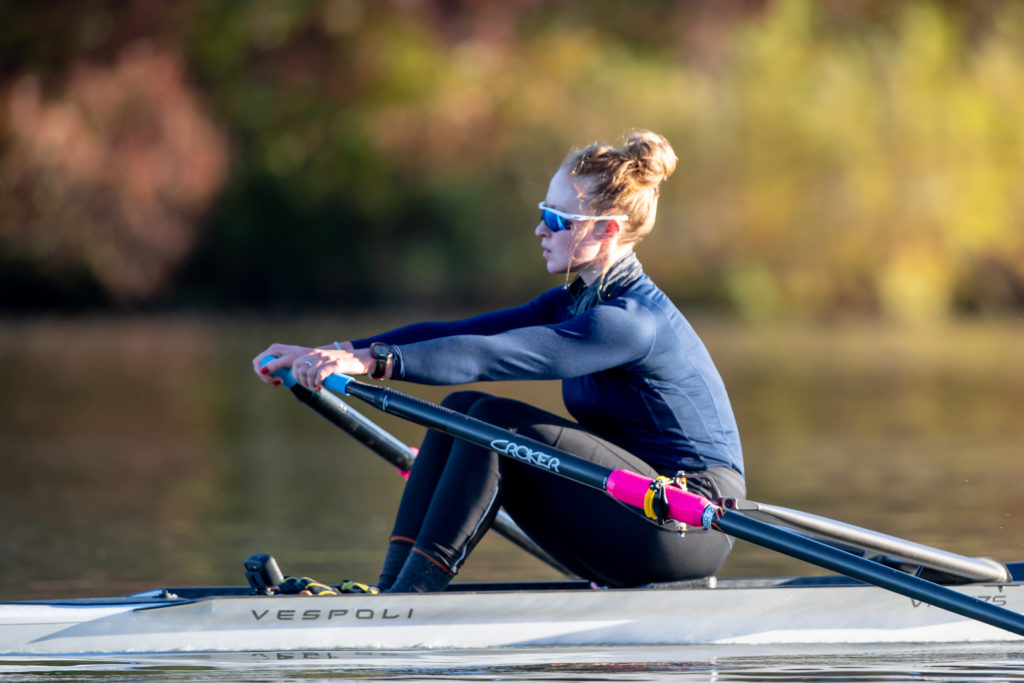
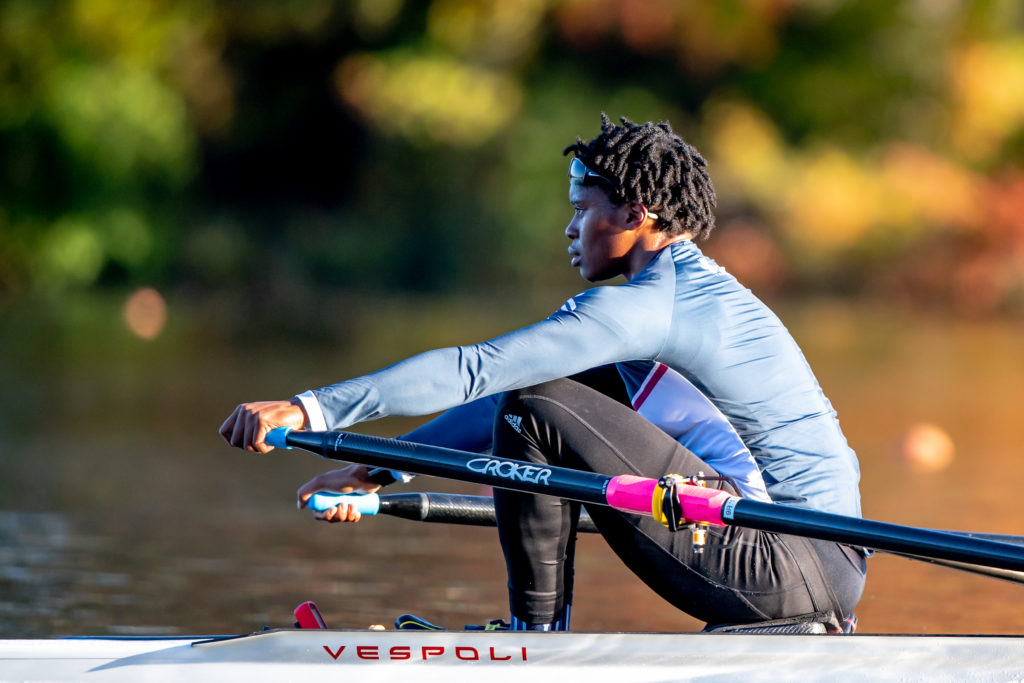
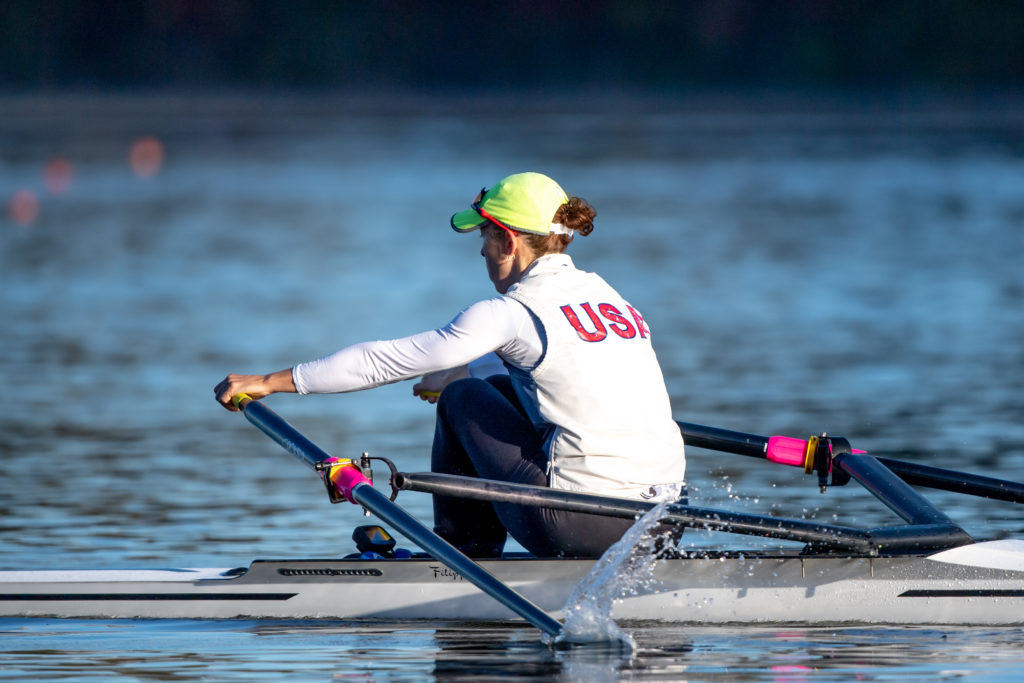
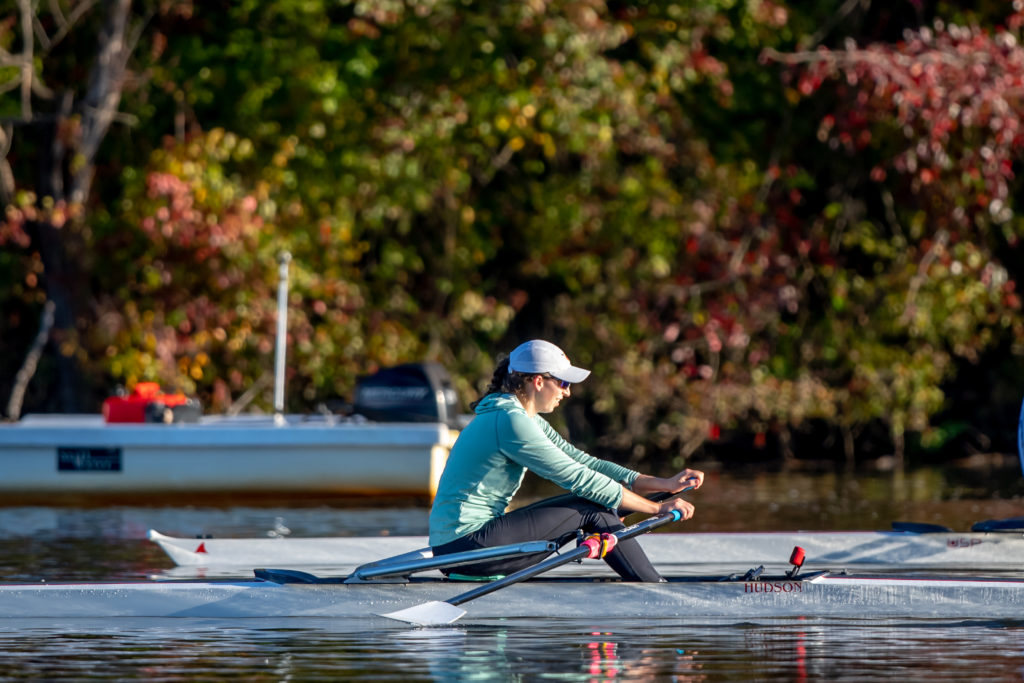
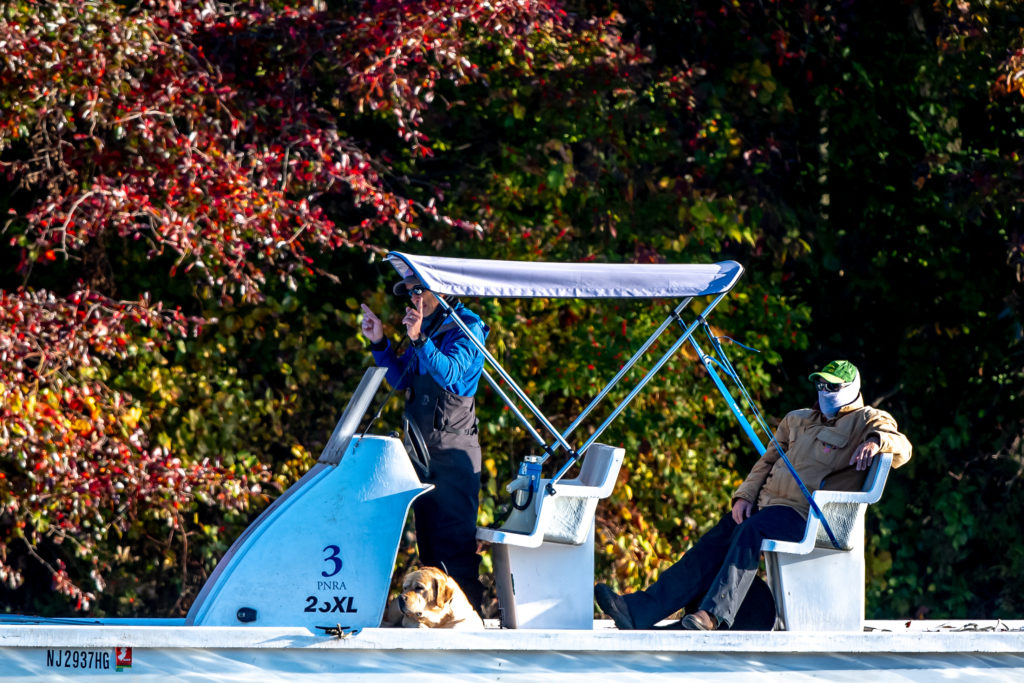
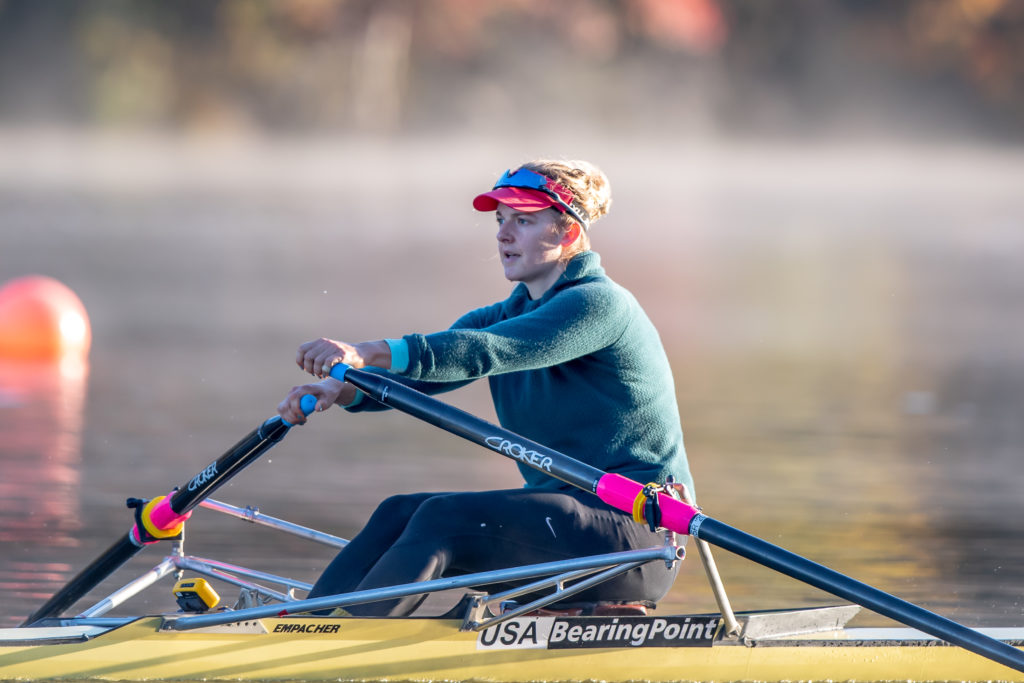
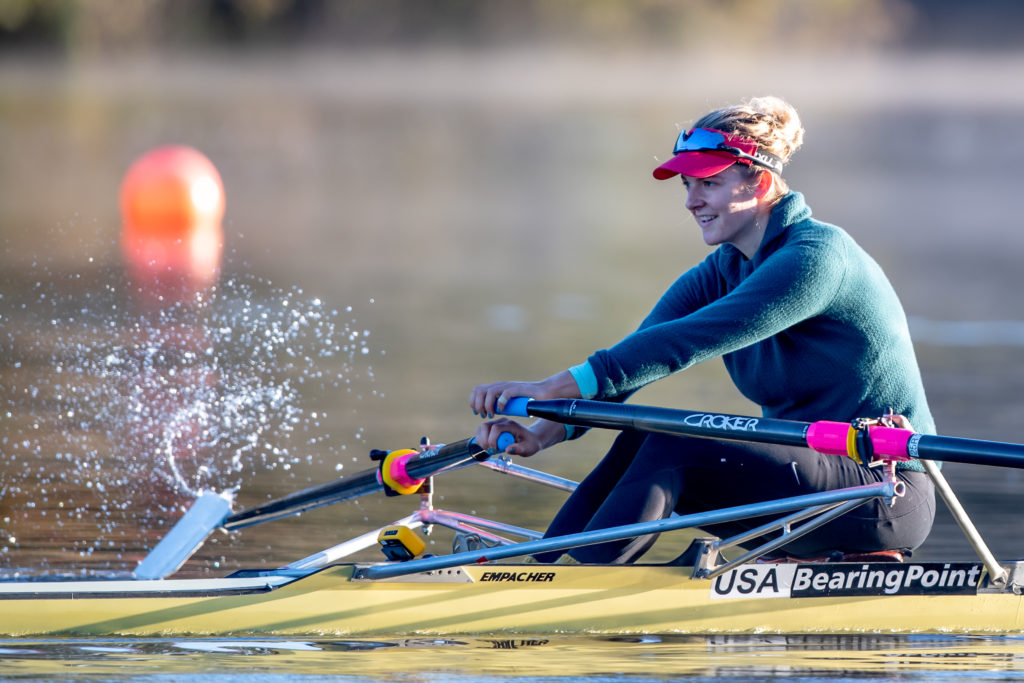
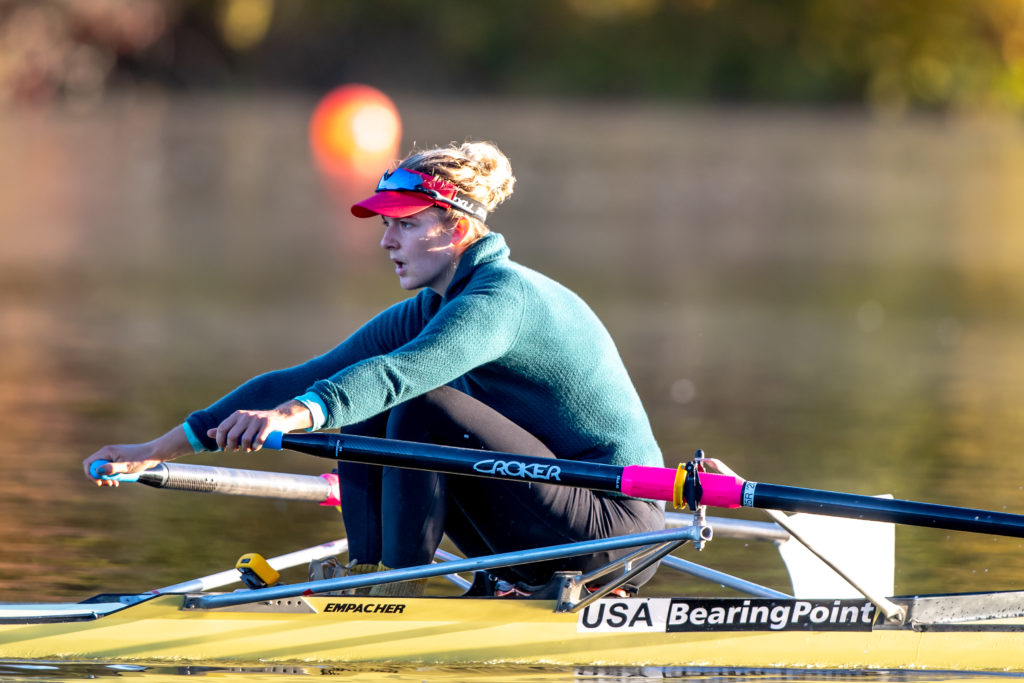
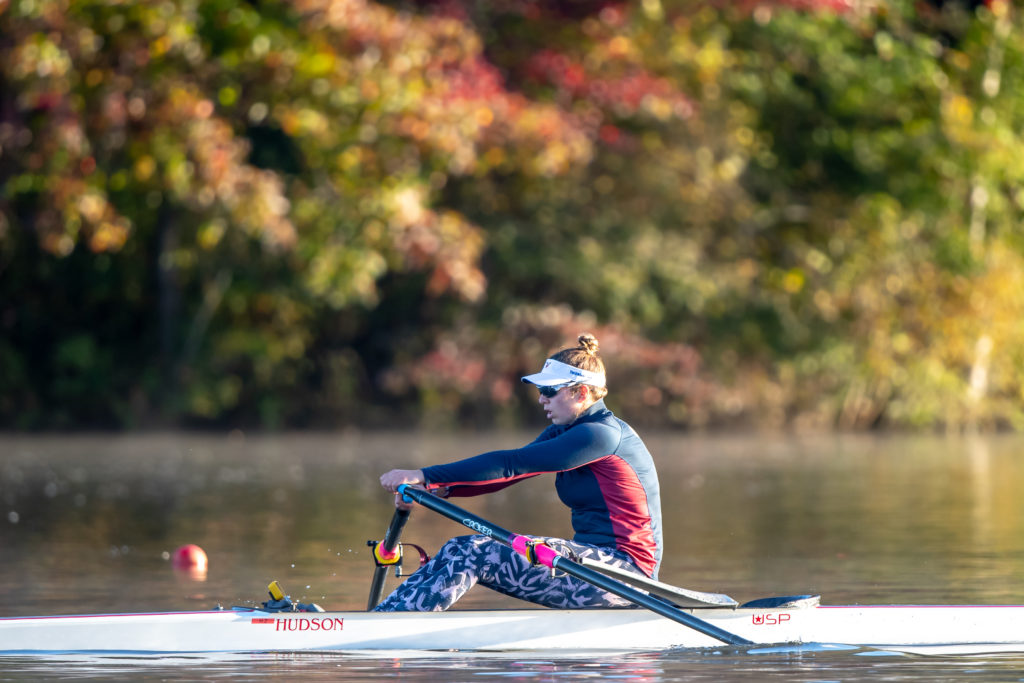
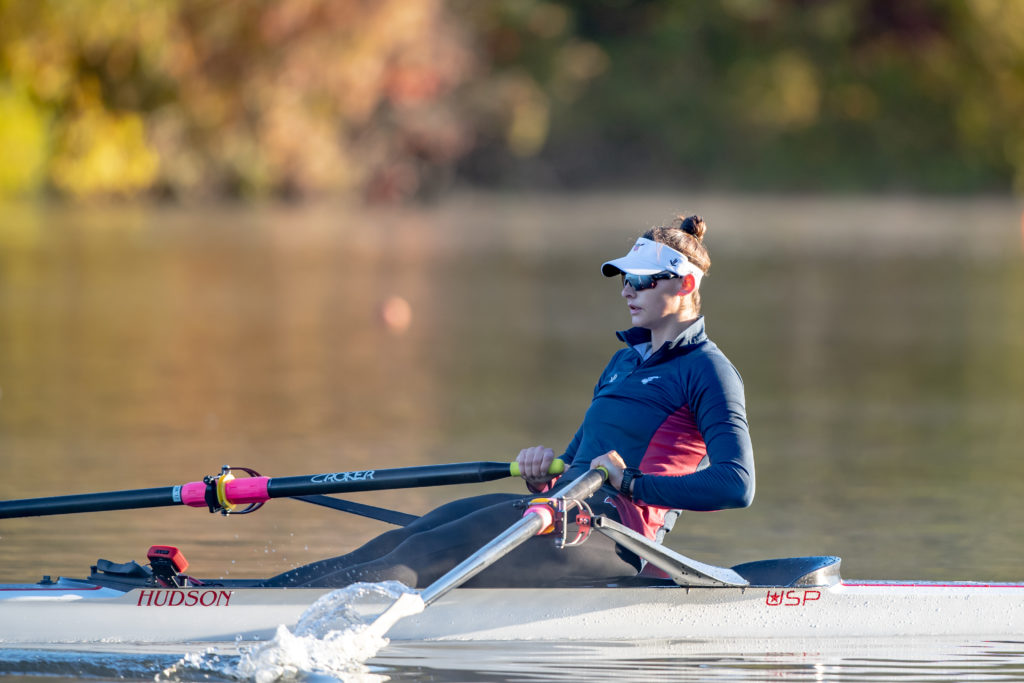
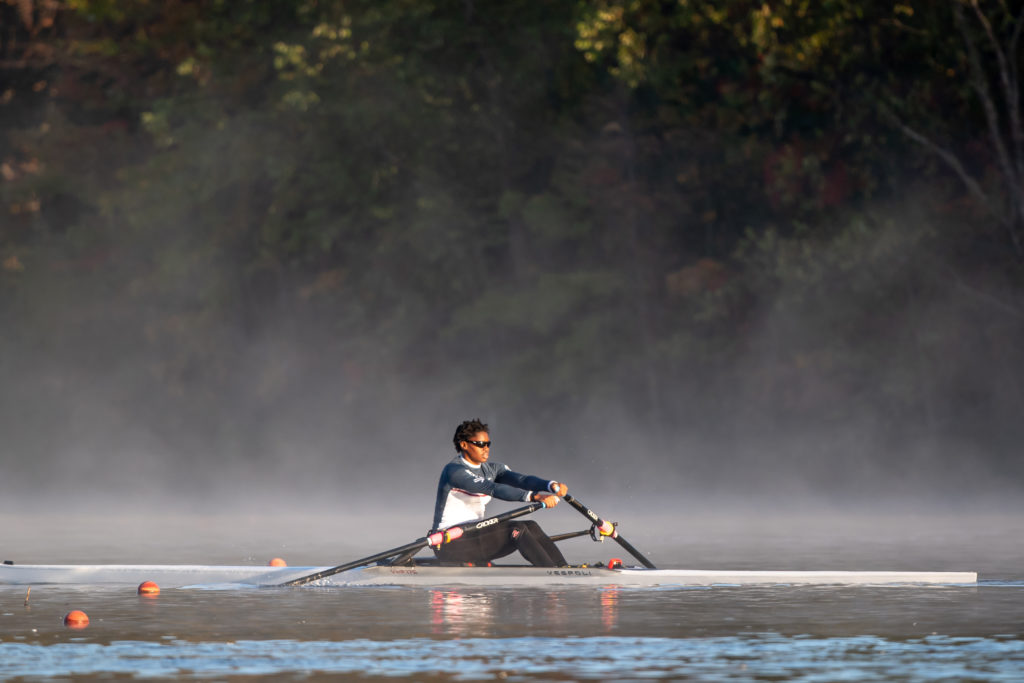
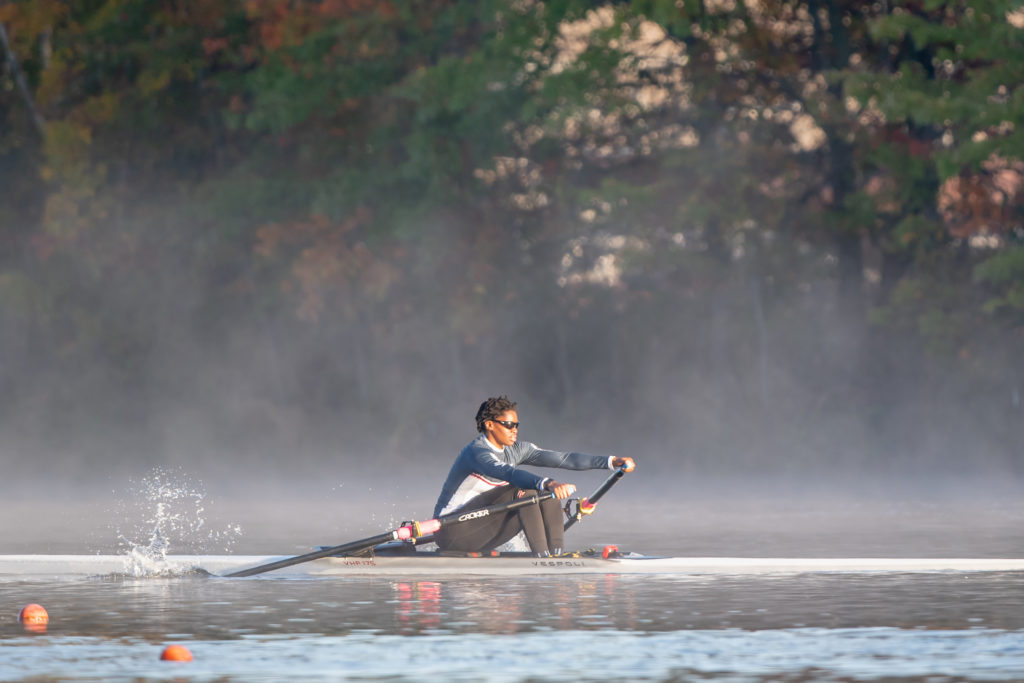
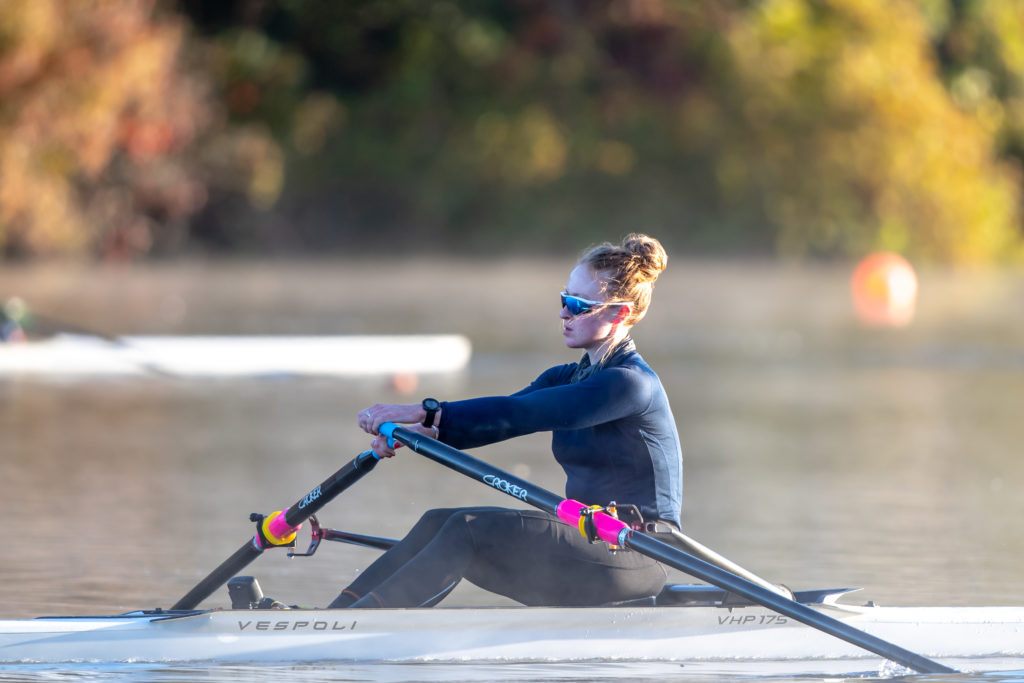
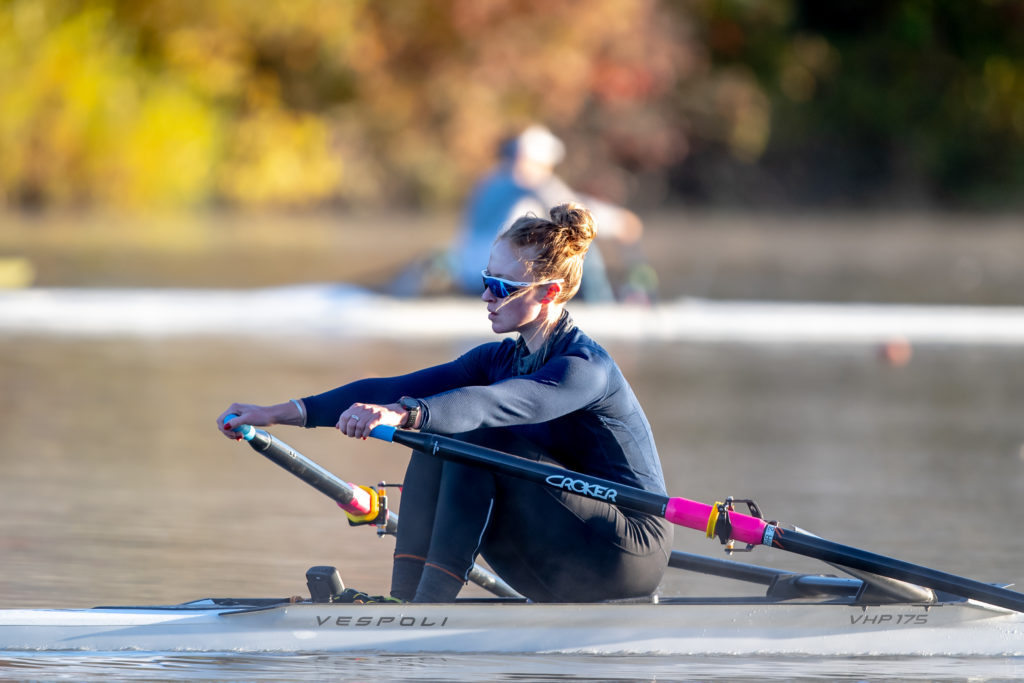
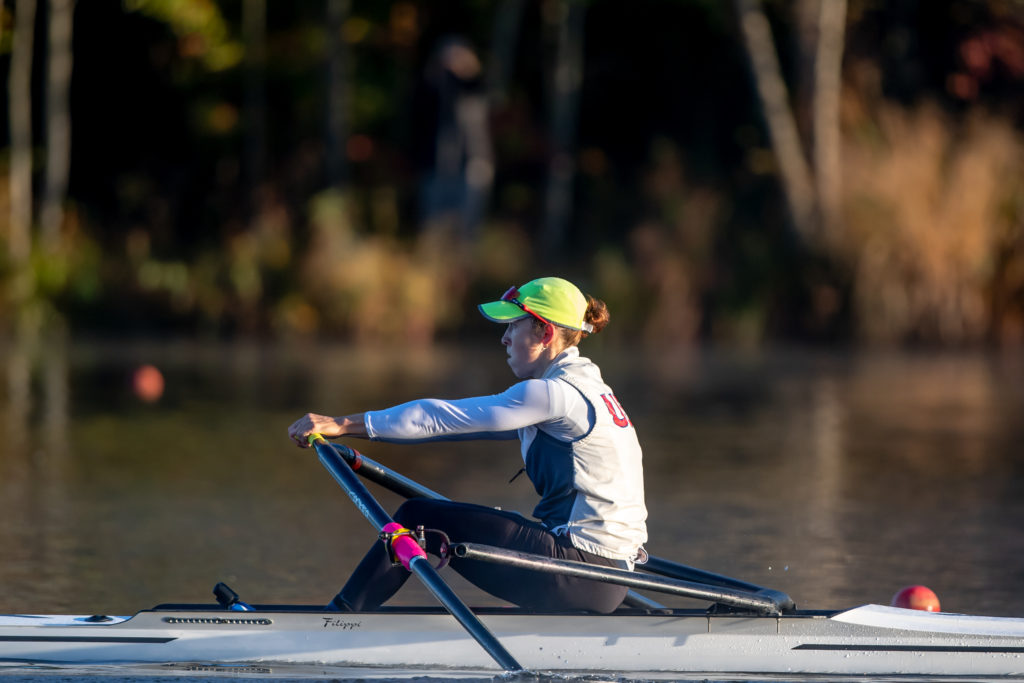
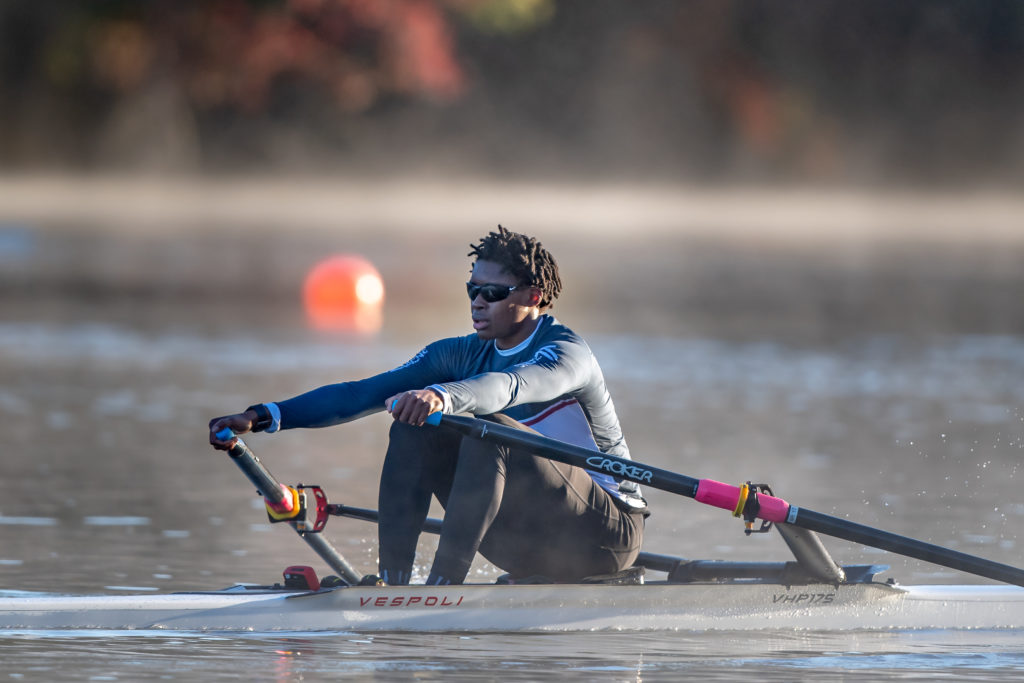
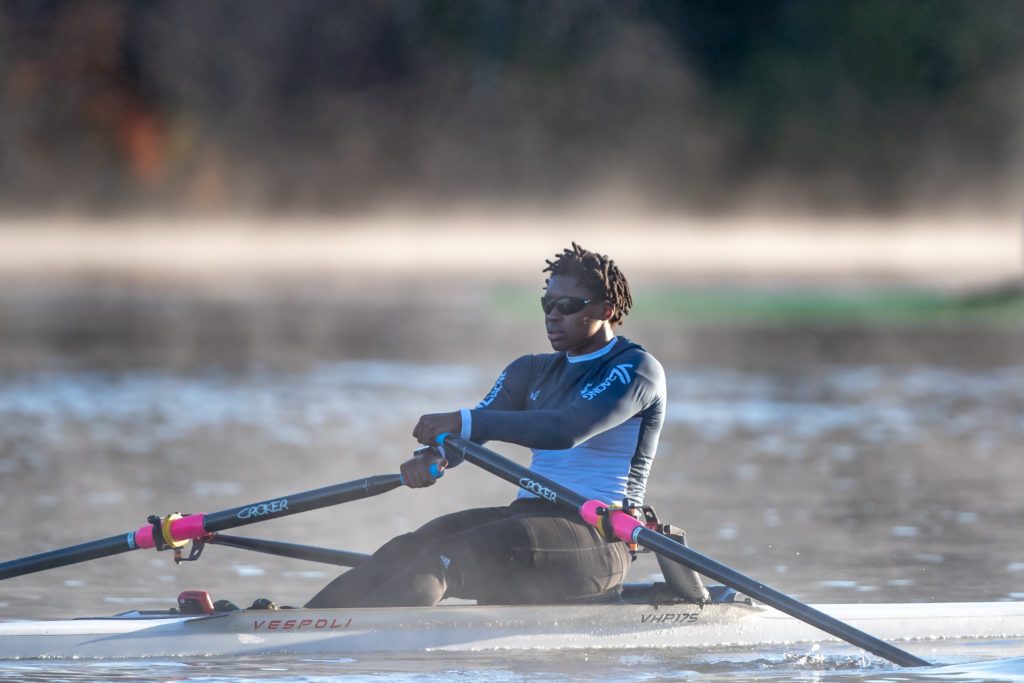
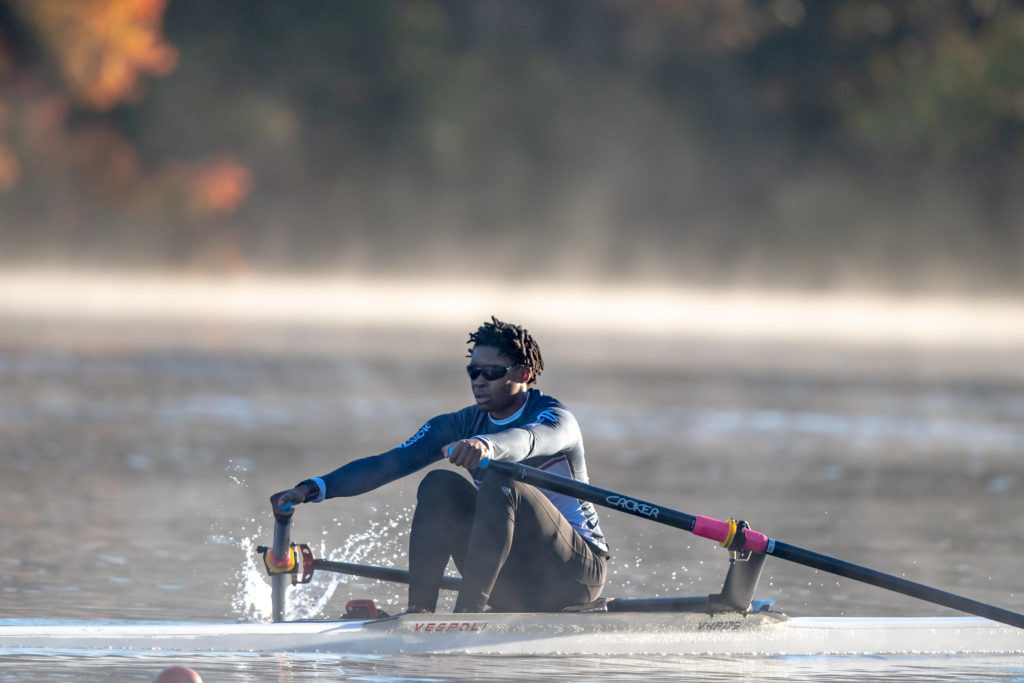
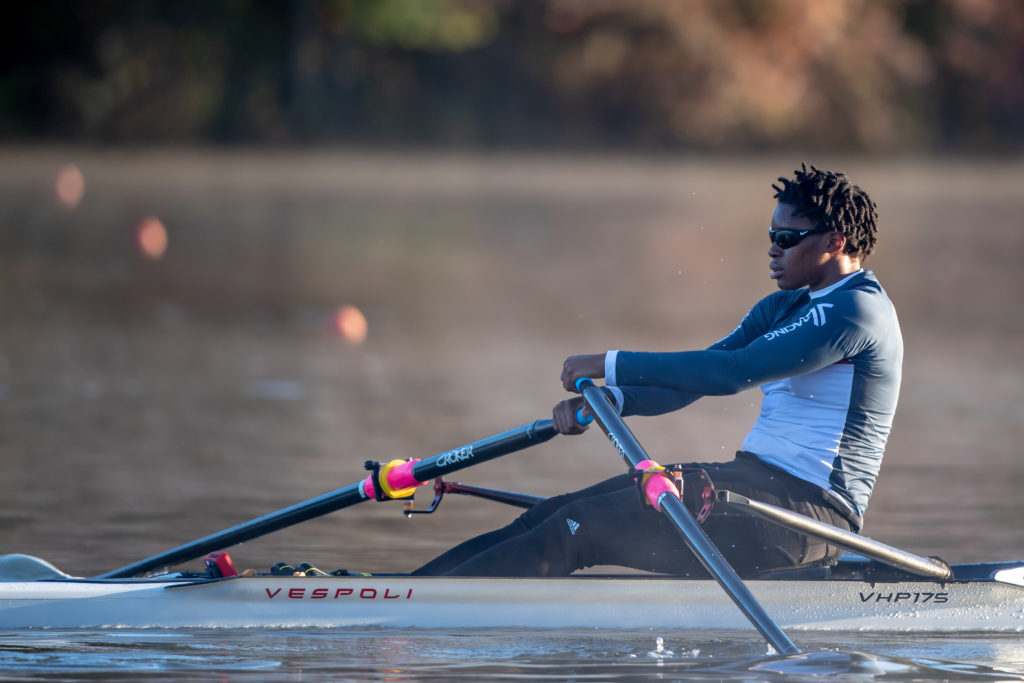
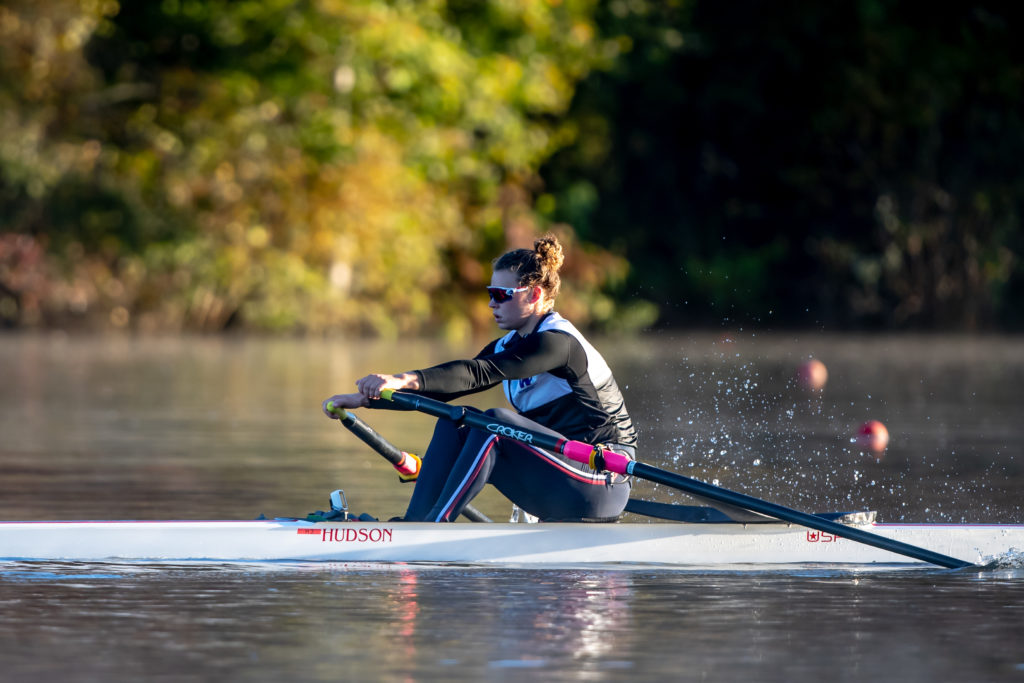
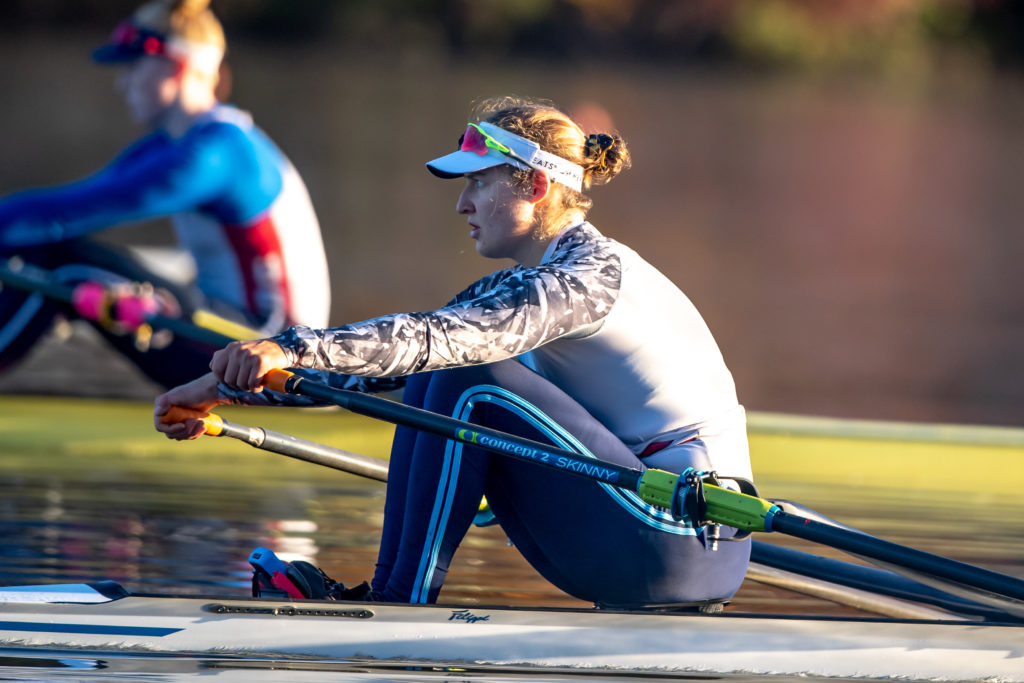
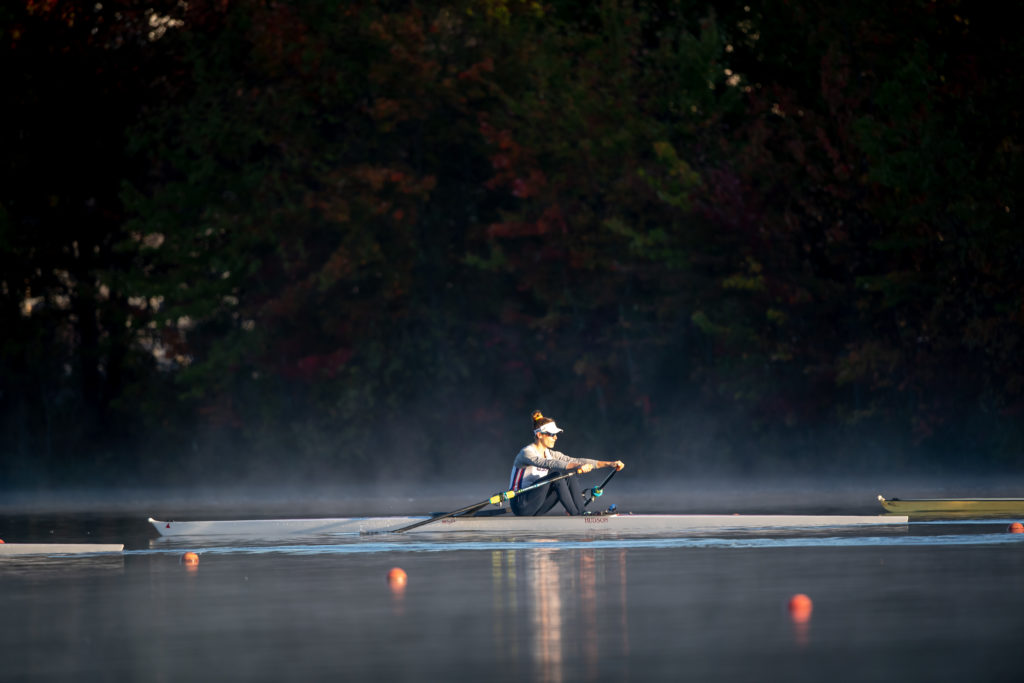
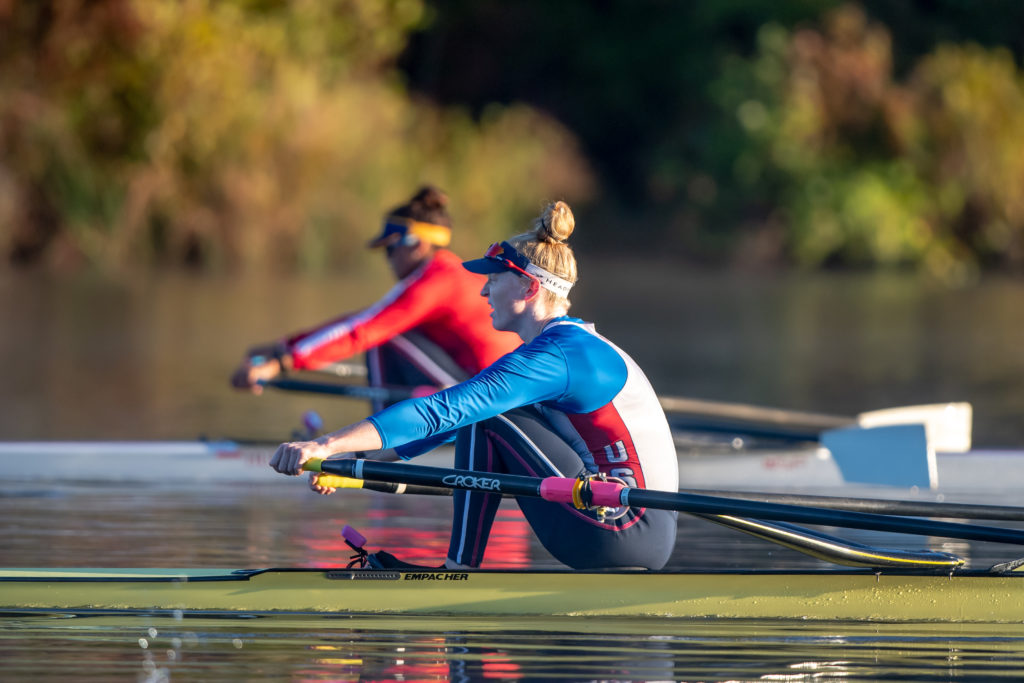
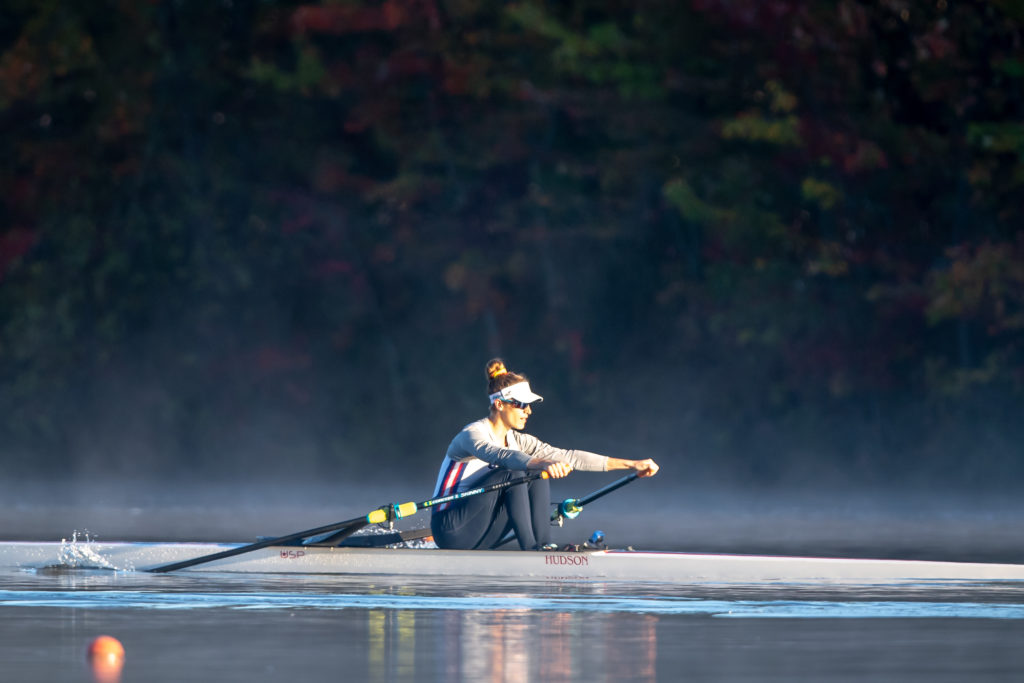
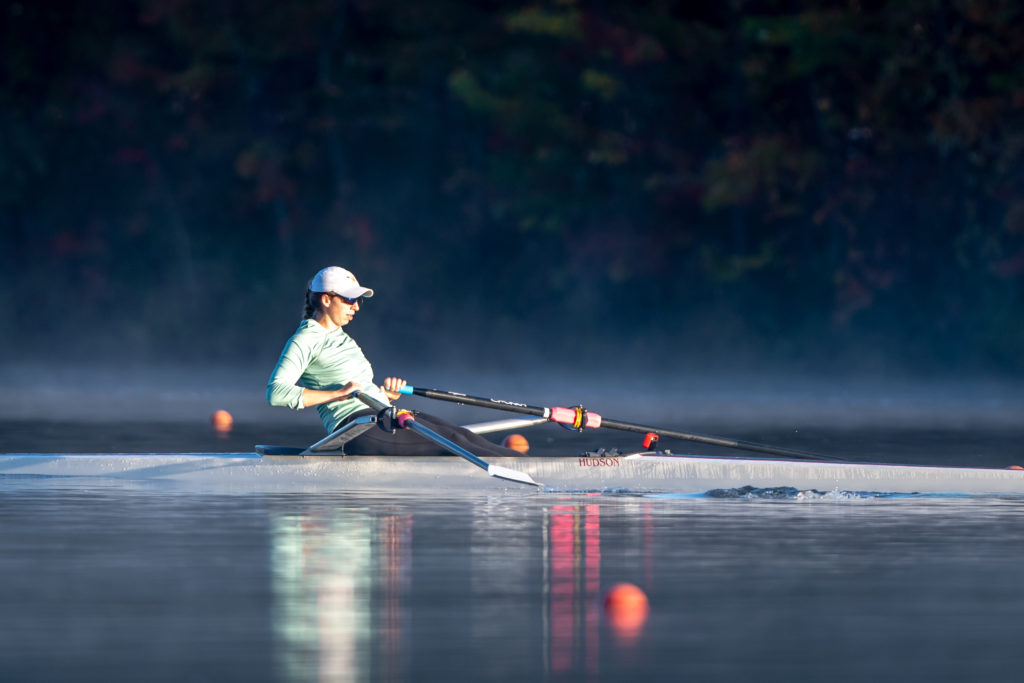
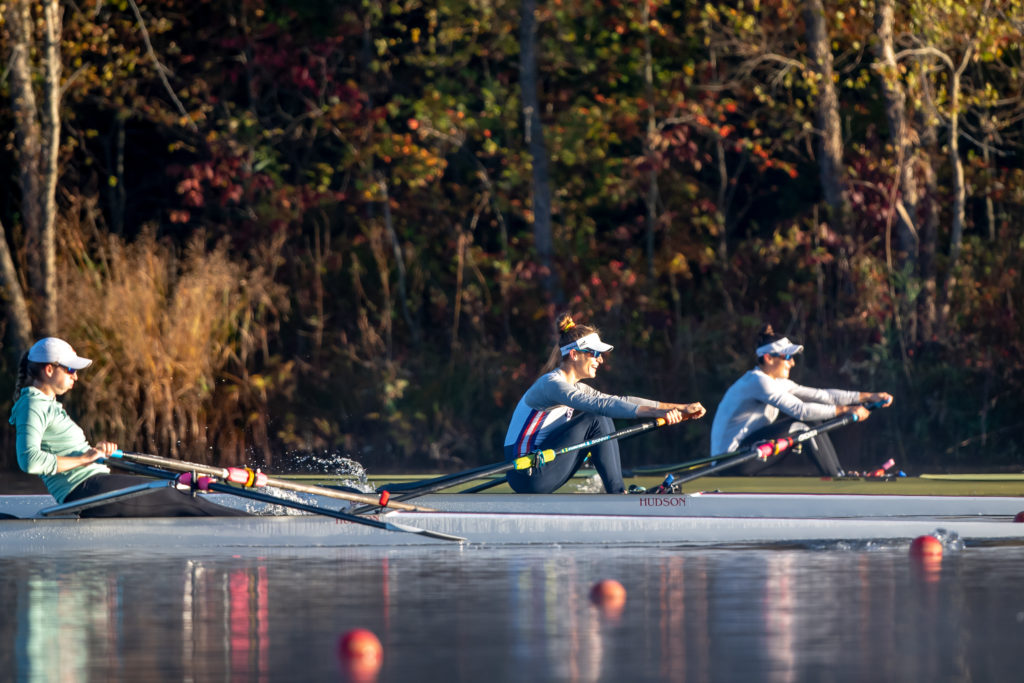
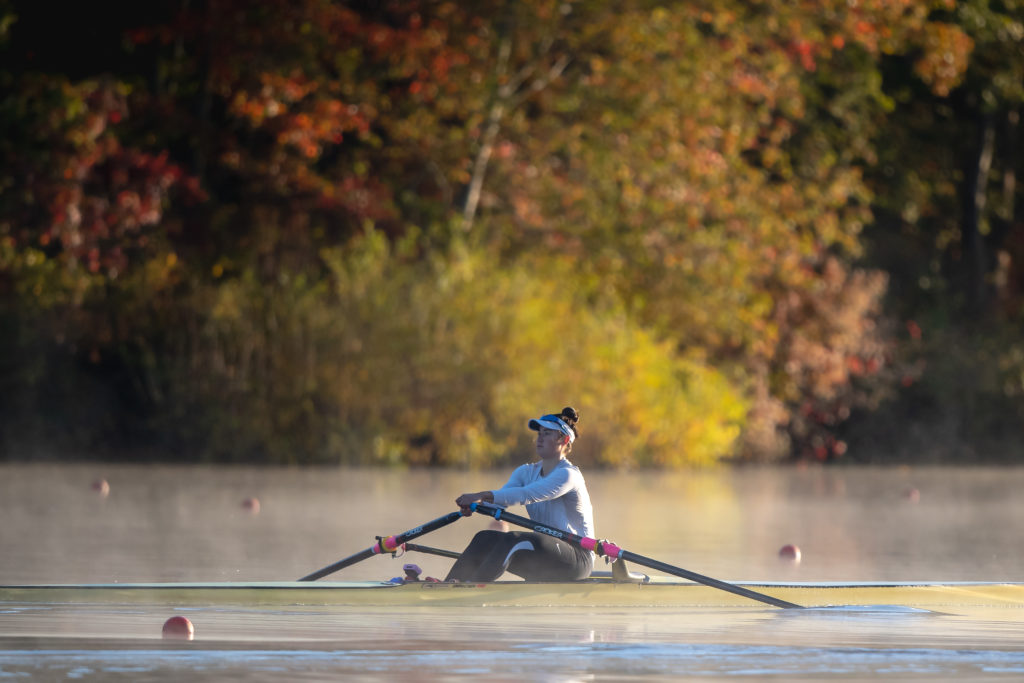
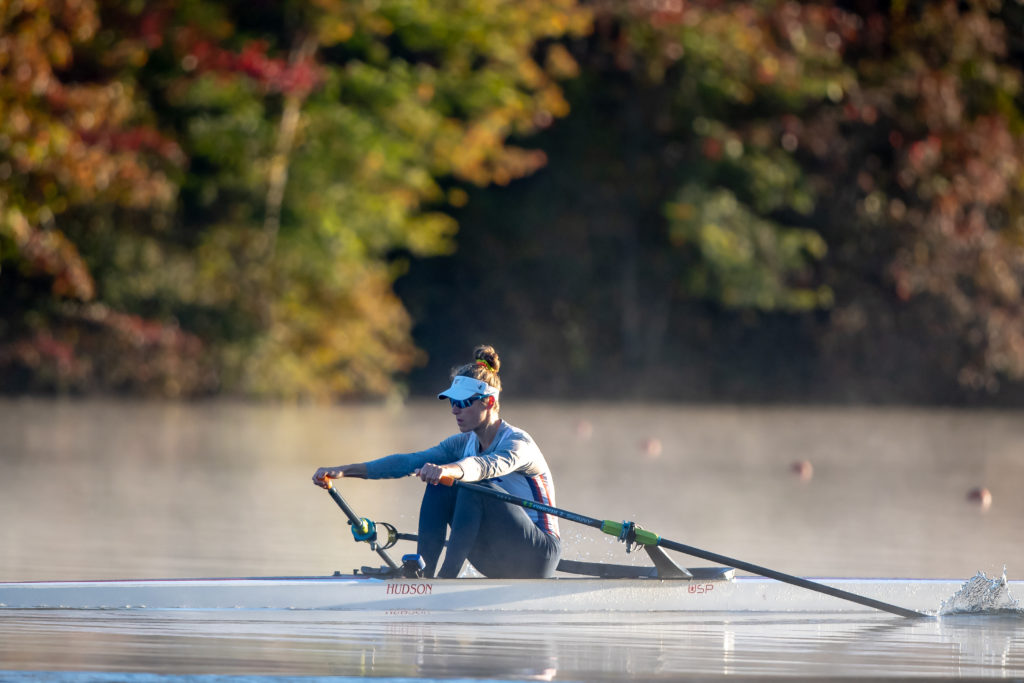
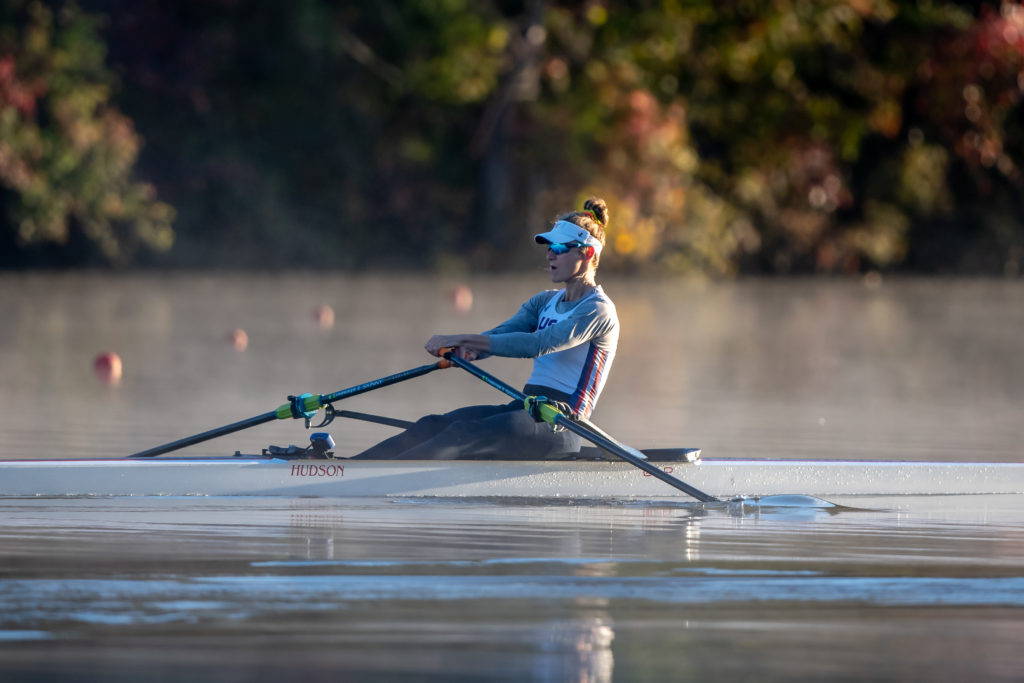
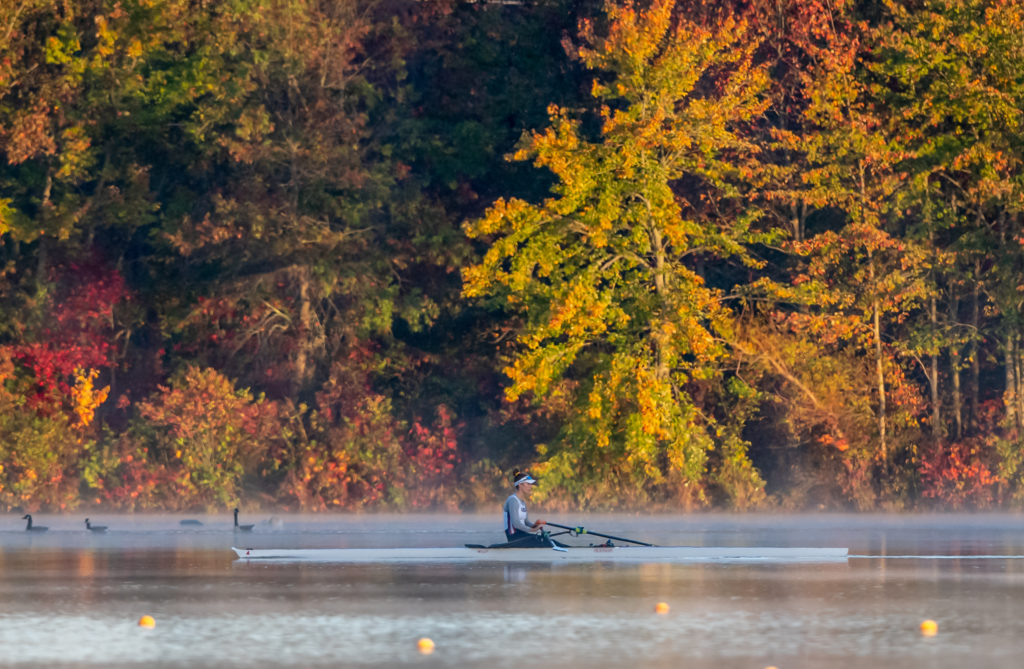
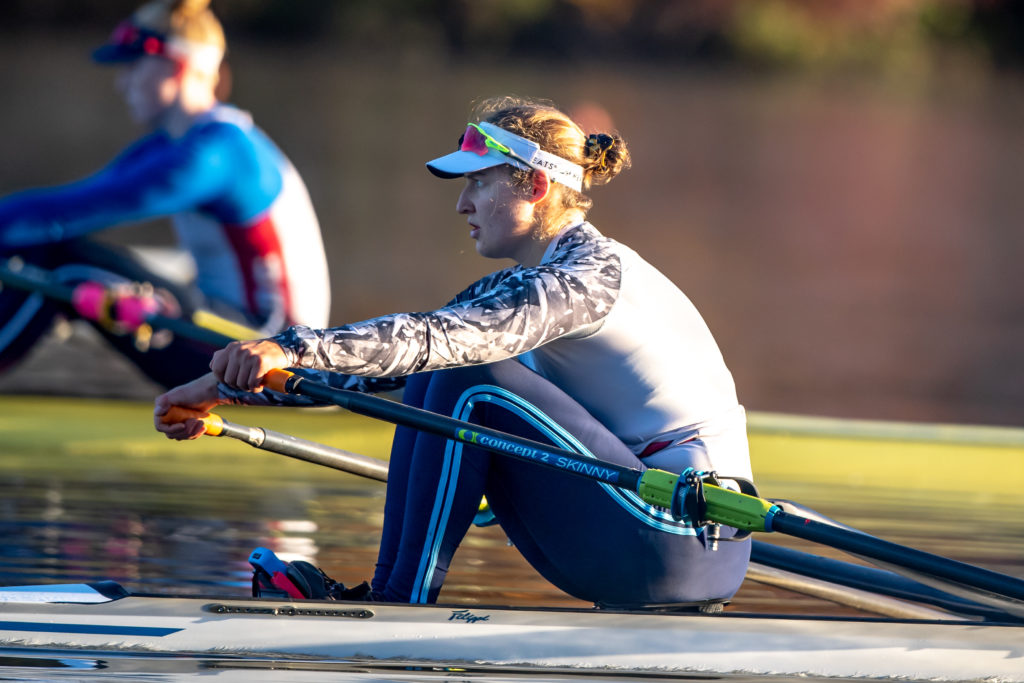
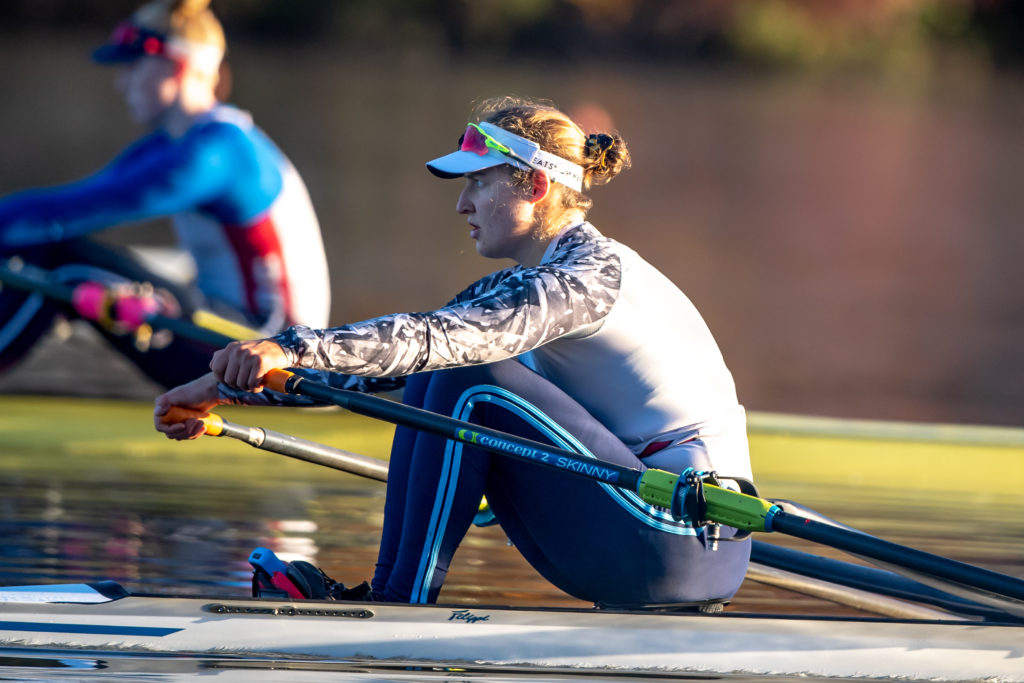
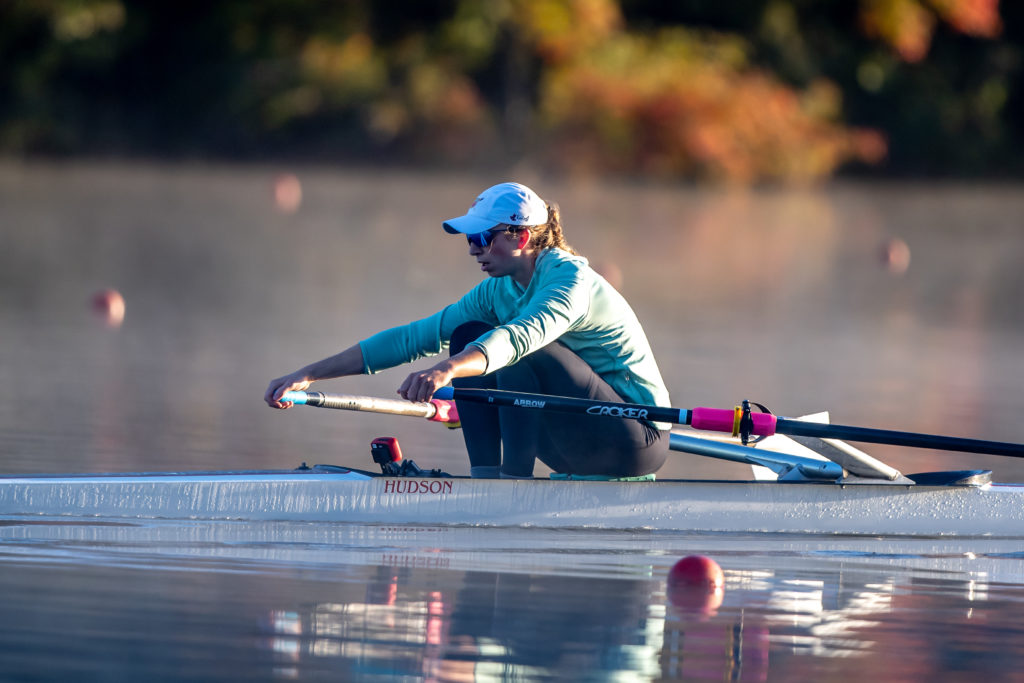
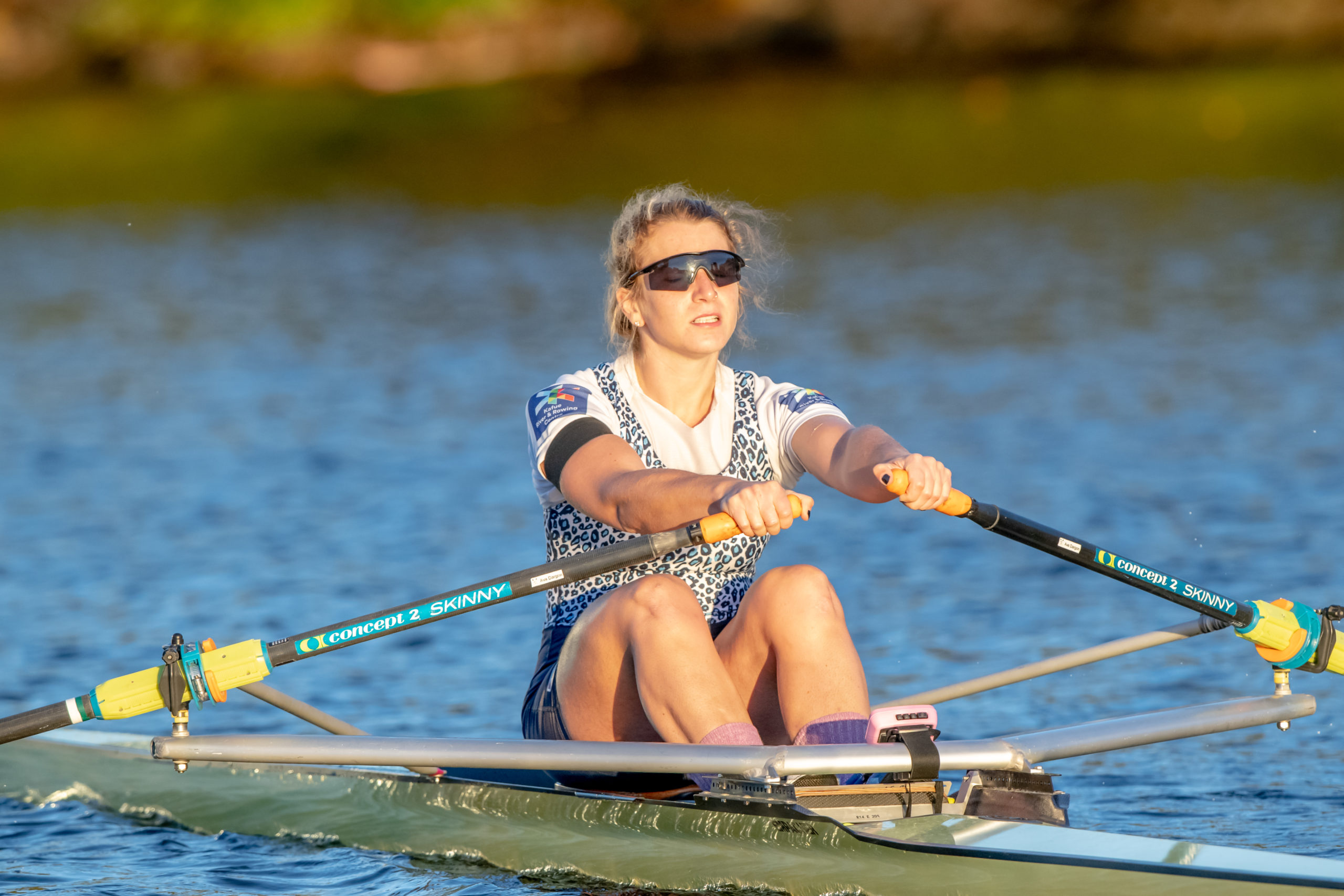
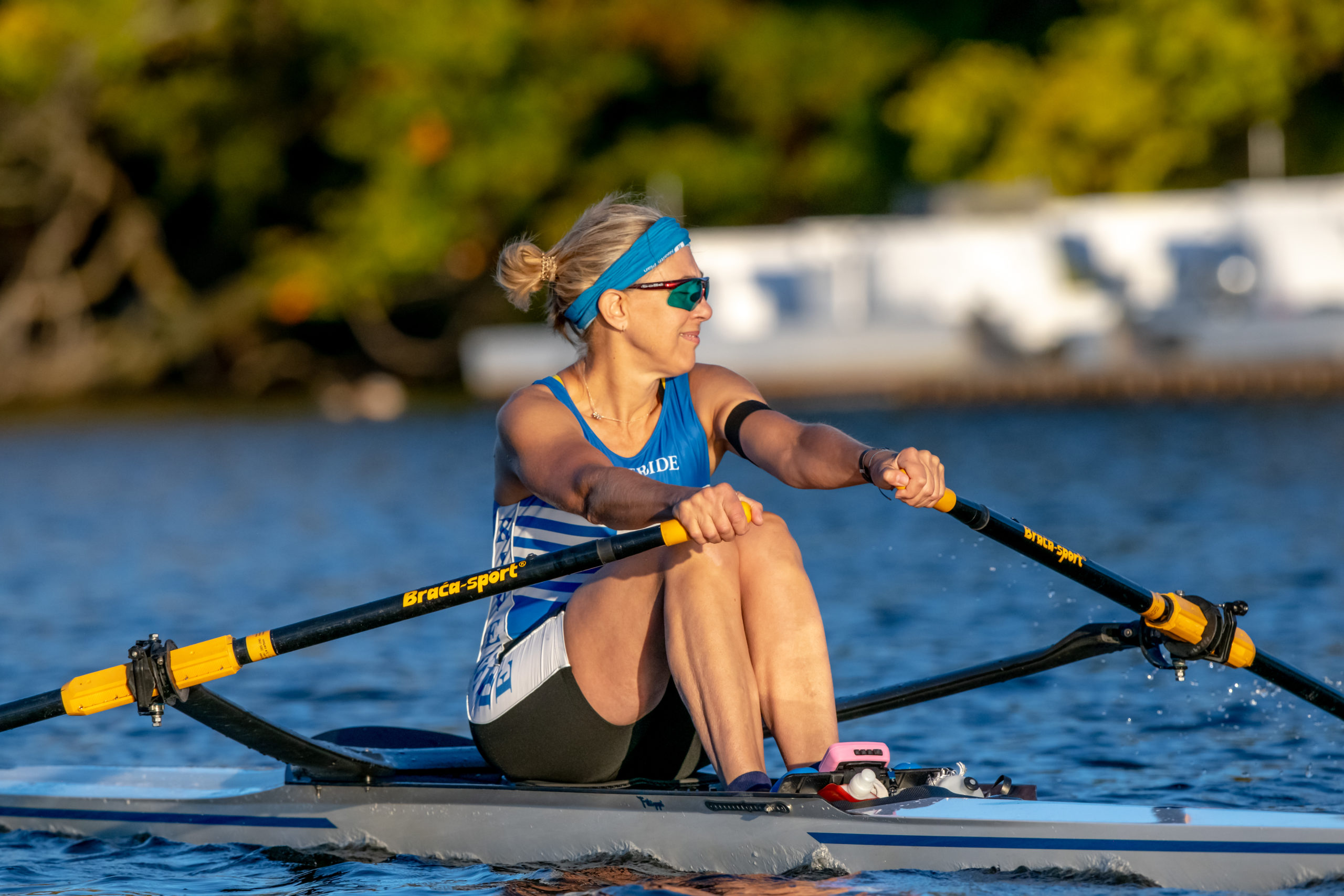
Racing and rowing in team boats is still on hold through, but the United States women’s training center is back at work and training in singles on Mercer Lake in West Windsor, N.J. and on Wednesday morning several of the team was on the water enjoying a colorful and perfect for sculling fall morning.
“My breaking news is that I’m officially joining the Hydrow team,” Hart said in the video. “That’s right, I am now the brands’ creative director. I couldn’t be more excited.”
Hart goes on to explain that he is not only excited to be a part of the Hydrow team, but also to spread the sport of rowing itself.
STORY BY ED MORAN PHOTOS BY ED MORAN AND PROVIDED BY IGOR BELAKOVSKIY
Driving the start launch under the Boston University Bridge early Sunday, Kim Degutis saw the coming sunrise over the Charles River Basin and noted that it was the kind of morning that Nikolay Kurmakov loved to watch unfold.
“He really loved a good sunrise,” Degutis said. “This will be a good one.”
And a fitting one.
Kurmakov, a former Ukrainian and Soviet Union national champion who coached both Simmons University women’s crew and the women’s sweep team at the Riverside Boat Club, died of an apparent heart attack he suffered while rowing on the Charles River Oct. 1. And, on this Sunday morning, the sun was rising with full colors to light an event being rowed in his honor.
Nikolay Kurmakov.
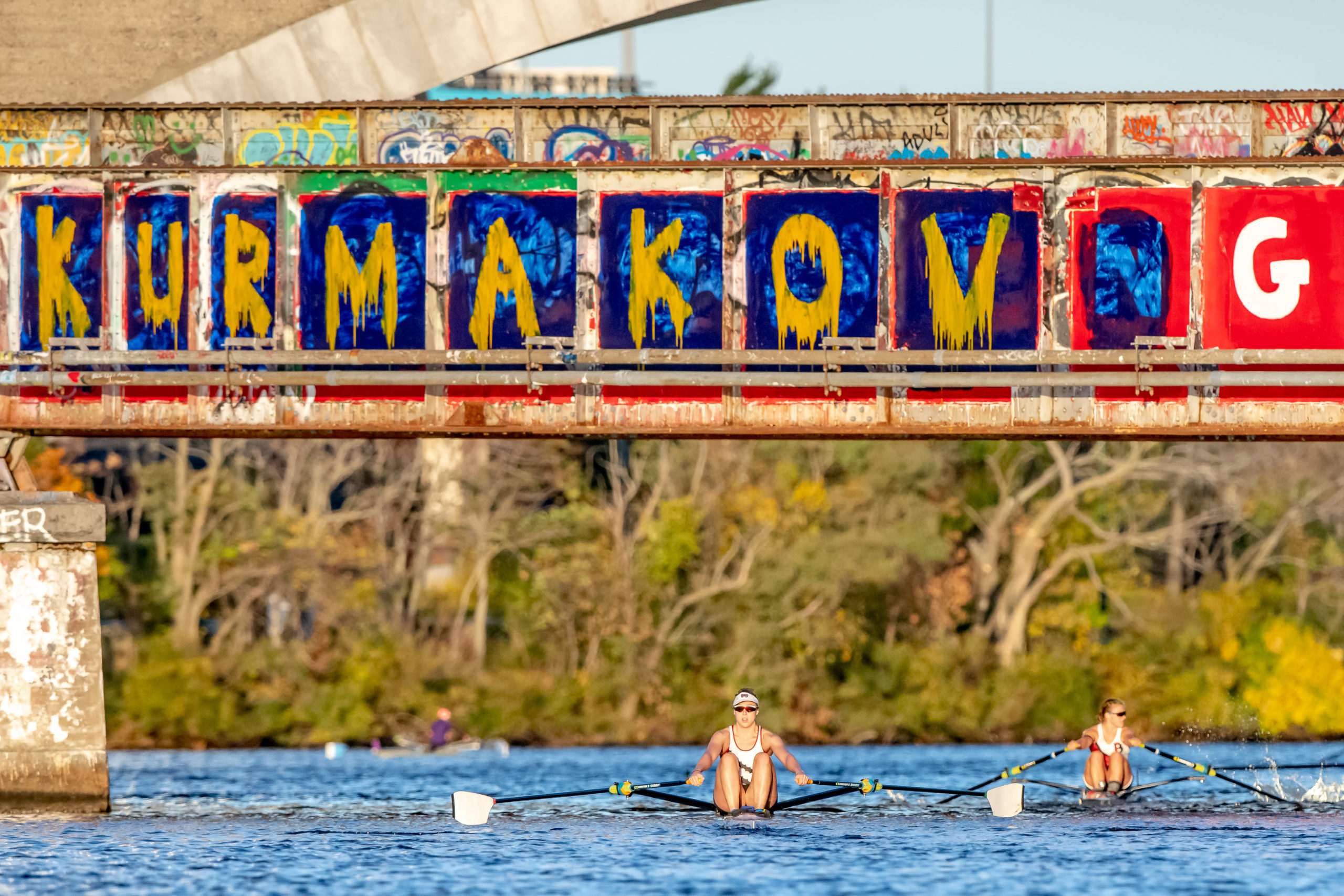
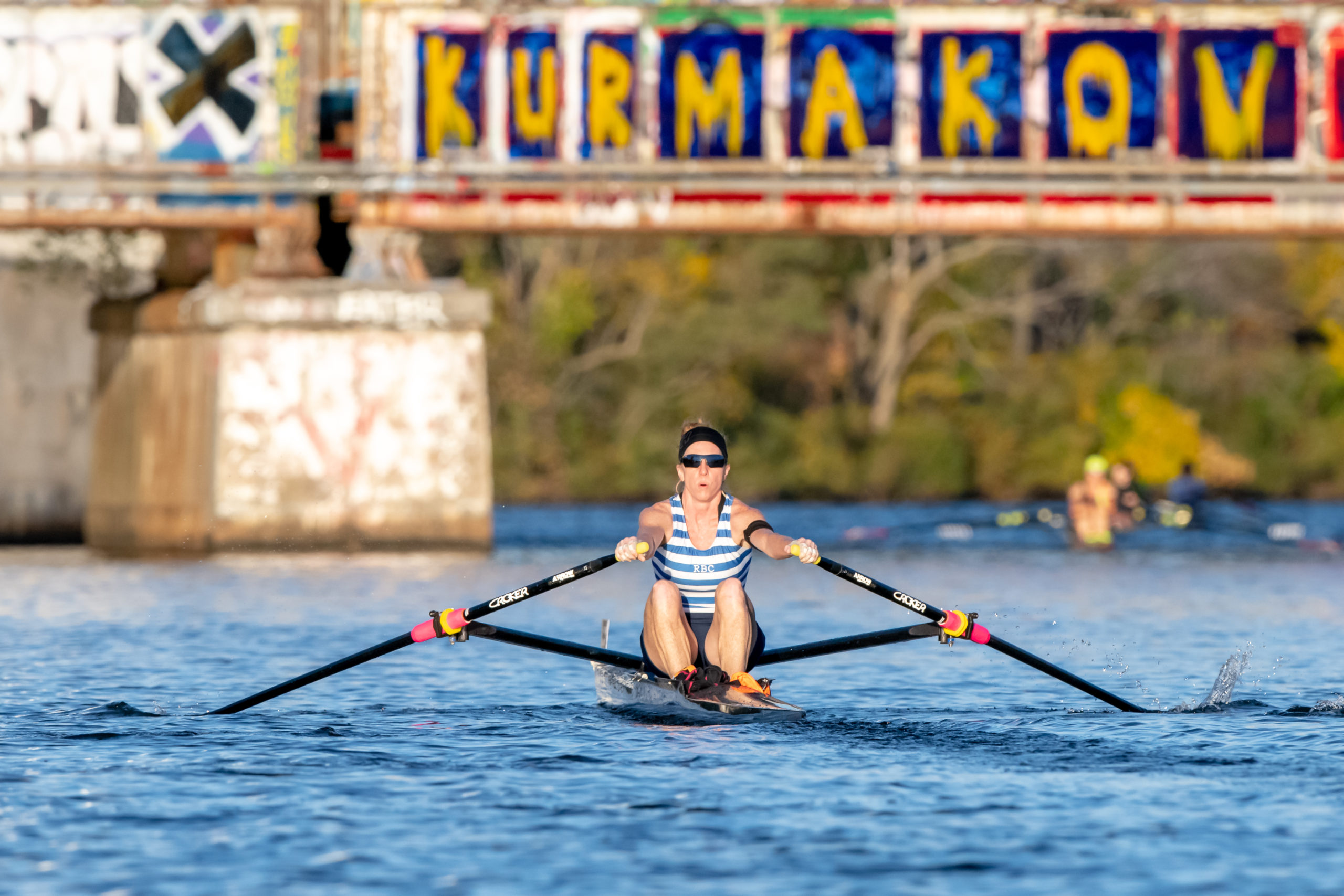
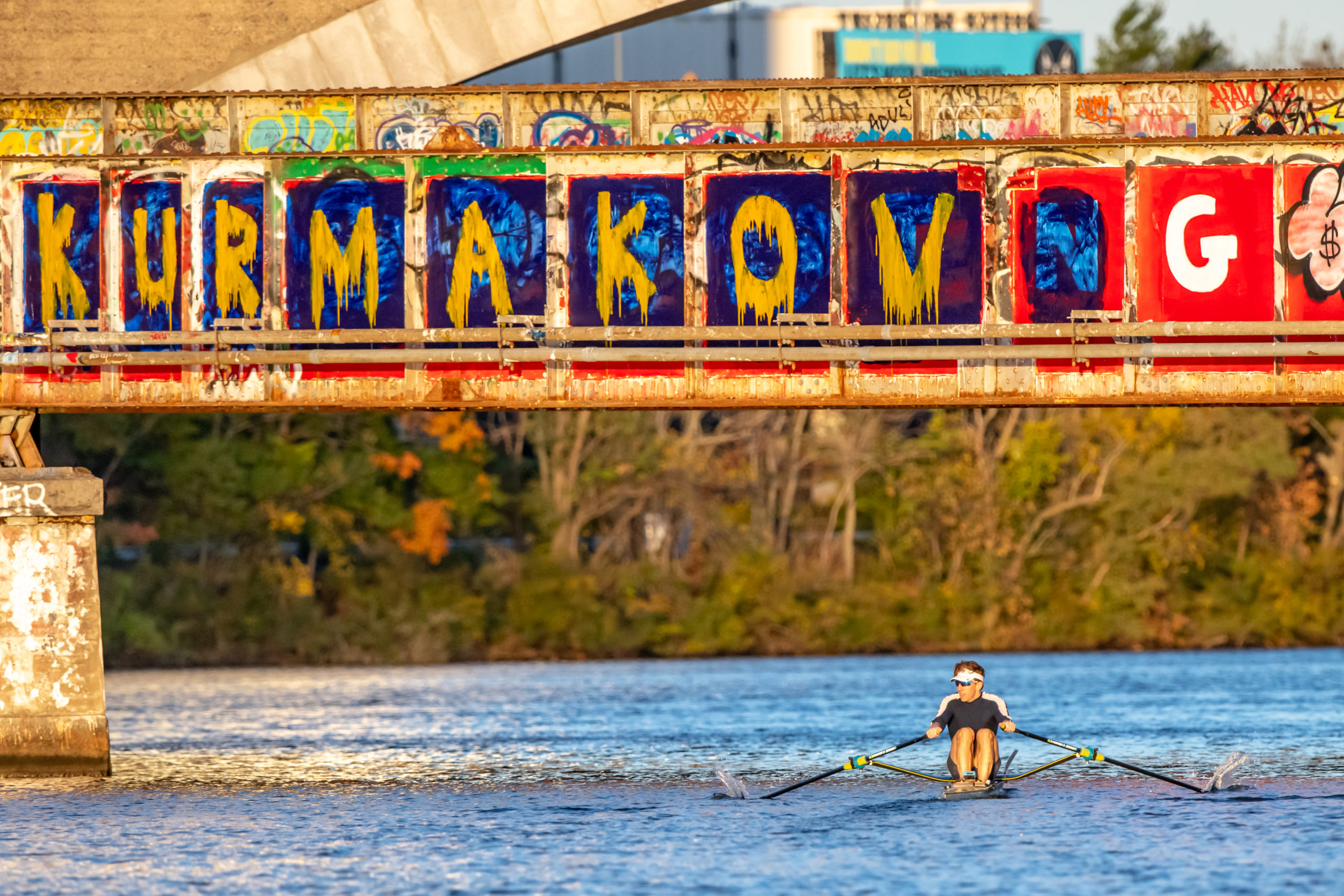
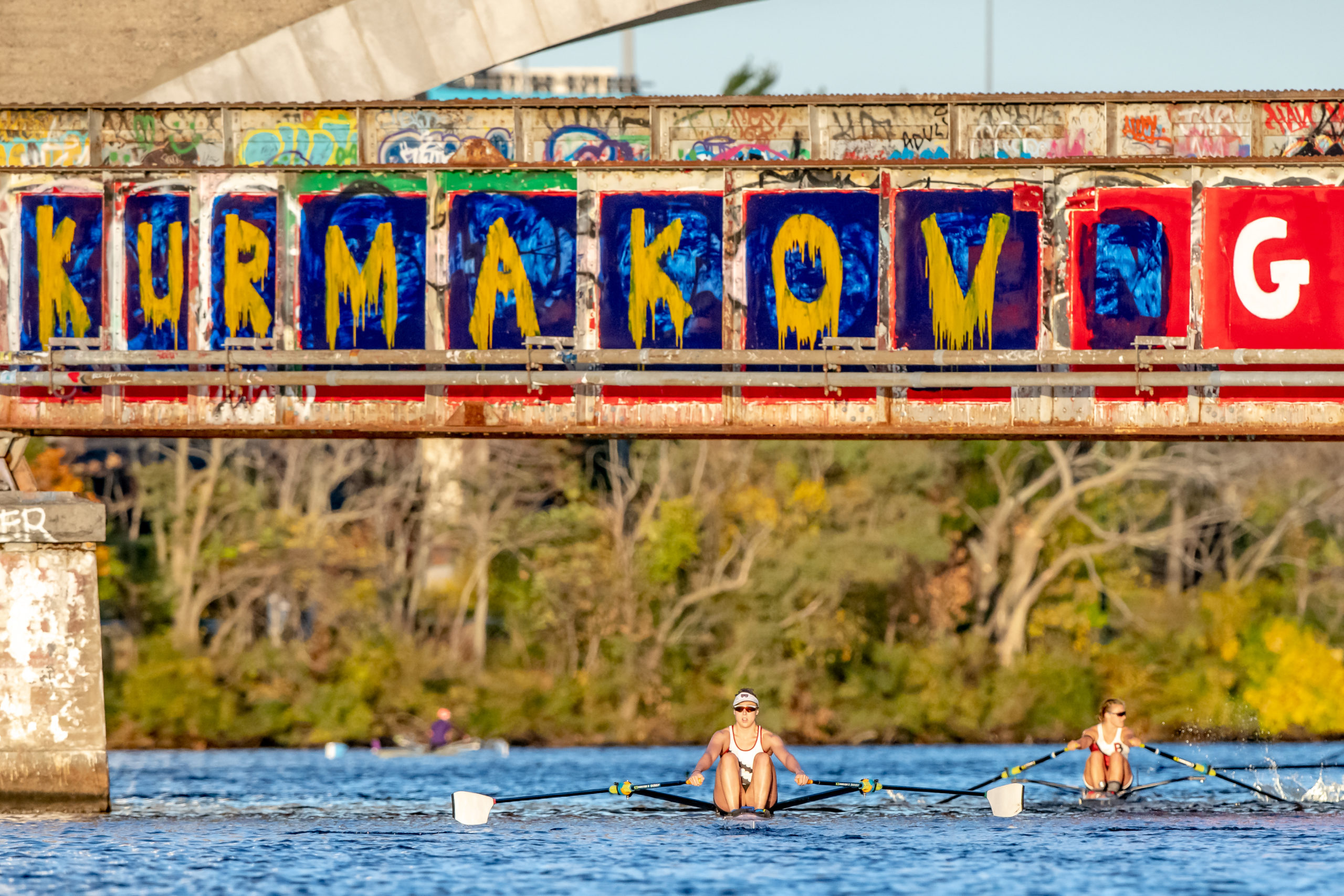
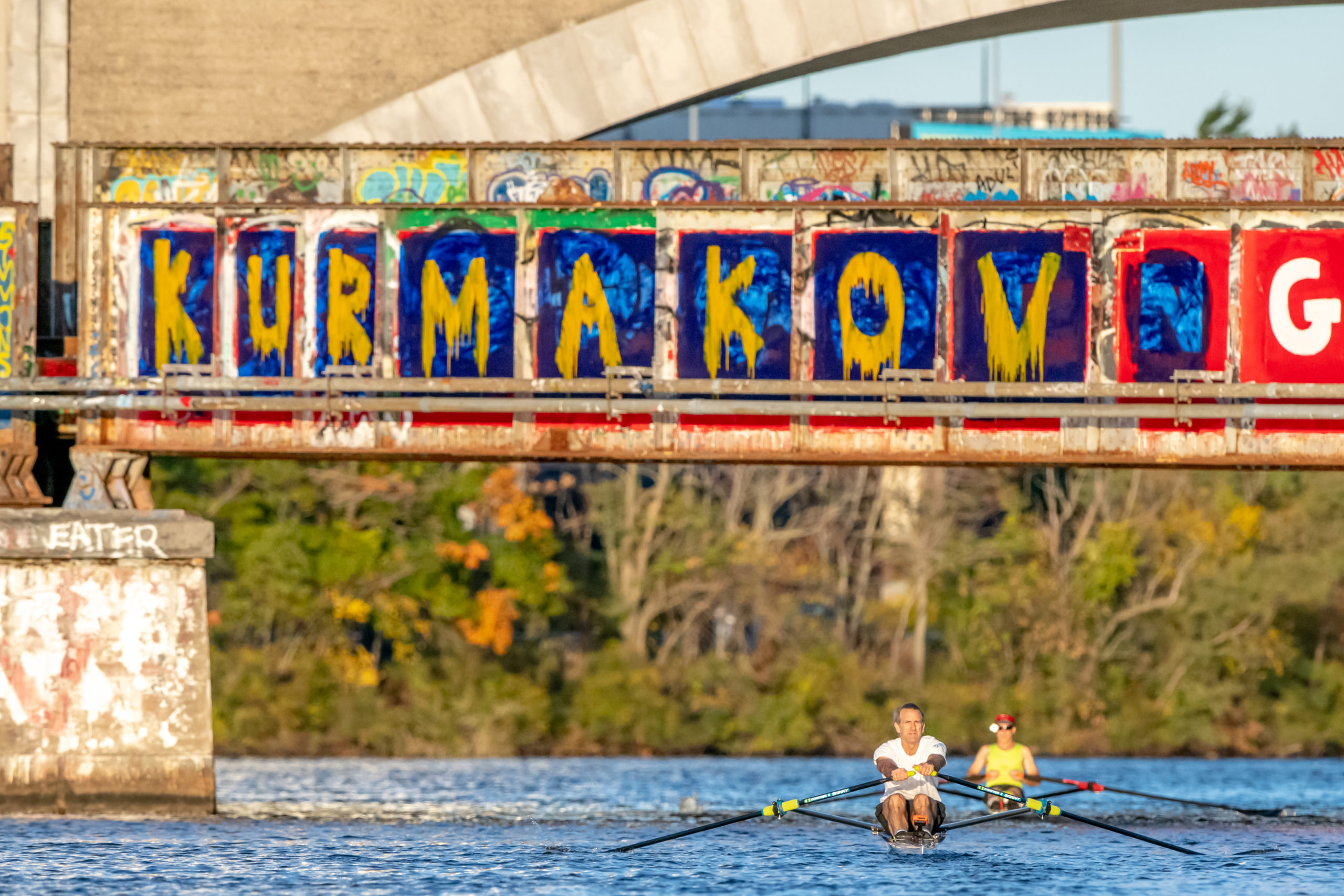
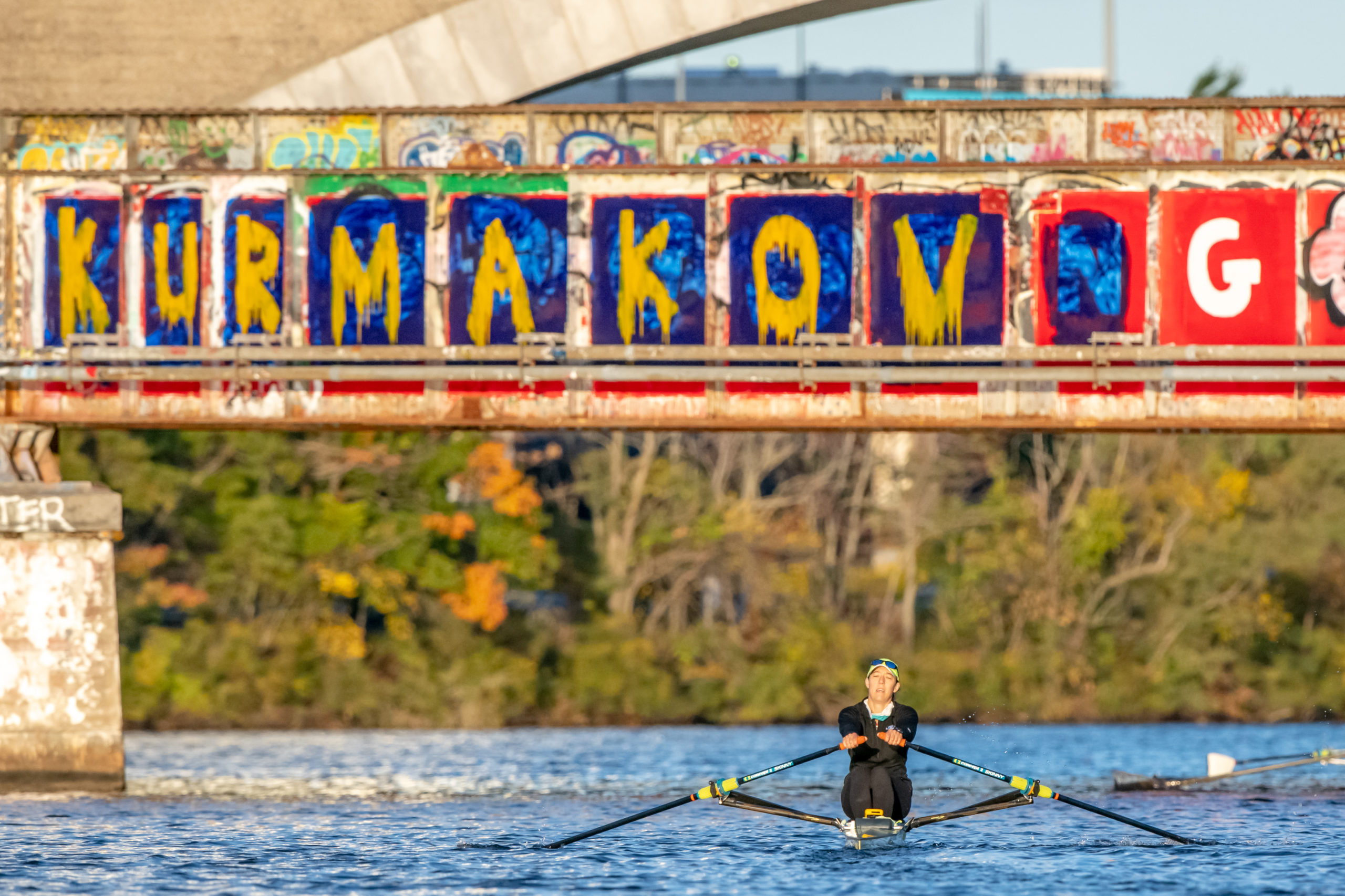
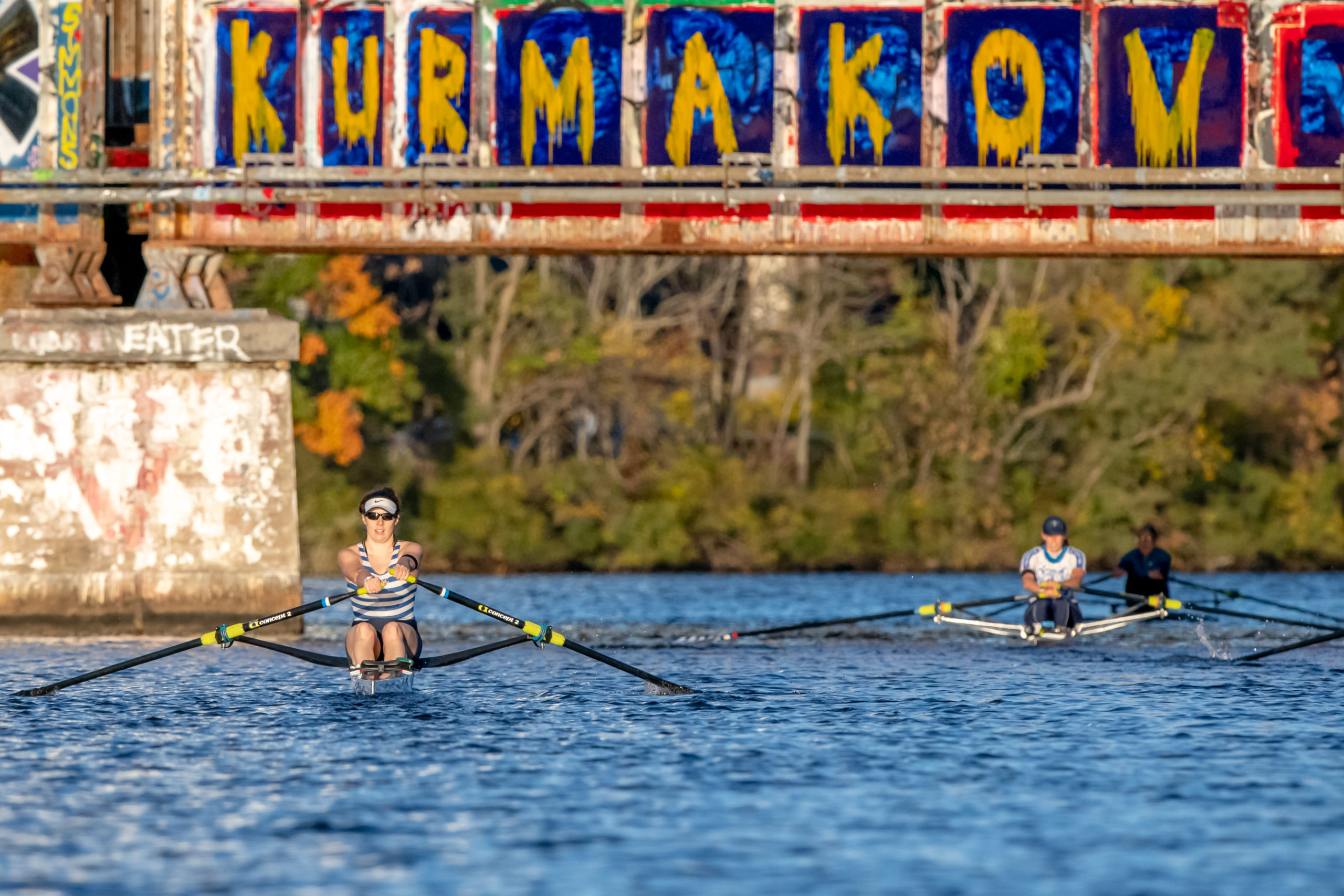
The event, which is normally part of the Head of the Kevin series that the Riverside Boat Club runs during the fall as a Head of the Charles practice race was renamed the Head of the Kurmakov for this particular day, and not only did the weather and the sun cooperate, the Rail Road Bridge that serves as the gateway to the Head of the Charles course was painted this week with Kurmakov’s last name in Simmons colors.
In all, 107 Boston area based single scullers sat in tribute for a moment of silence to Kurmakov before racing under his bridge in an event renamed in his honor.
According to Kevin McDonnell, who started and has run the Head of the Kevin series for the last 21 seasons, the decision to dedicate this one of the 2020 races came as the Riverside and Simmons community were struggling with their loss.
“It was a spur of the moment thing,” McDonnell said. “Everyone was just trying to deal with the emotions of losing Nik and it seemed like the right thing to do. I don’t think I ever spoke to him directly about the Head of the Kevin, but I was told this morning that this was one of his favorite things. I didn’t know that.
“We were all just about what the right thing to do and the suggestion came up that we name this Head of the Kevin the Head of the Kurmakov. So that’s what we did.”
ADD DESCRIPTION at Northfield Mount Hermon on MONTH DAY, 2016. Photography by Glenn Minshall.
BY LUKE REYNOLDS PHOTO PROVIDED BY NMH
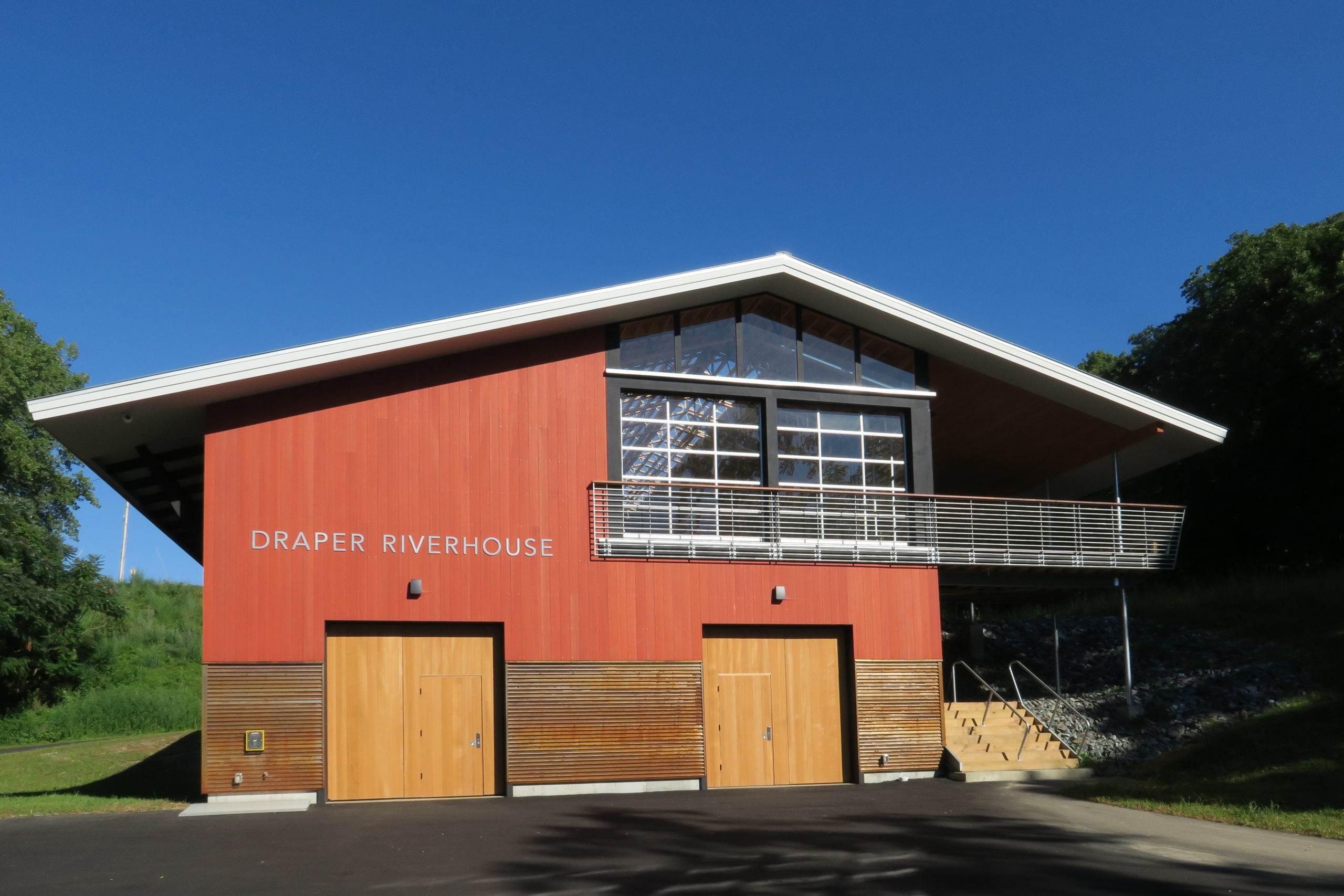
Northfield Mount Hermon, a boarding school in Gill, Mass., is now home to a new 7,000-square-foot boathouse that will serve as a base for the school’s coed 80-person crew.
“The Draper Riverhouse ties us to the river,” head of school Brian Hargrove said at the building’s naming ceremony. “It ties us to place in a way that differentiates us from other schools.”
NMH’s crew began in 1965 and has outgrown the nearly 50-year-old Speer Boathouse, which the Draper Riverhouse replaces.
“It’s totally utilitarian,” said Lou Kinder, NMH women’s varsity coach. “The architects did a great job making it aesthetically pleasing.
“The plans for this pre-date my time at NMH, but my understanding is that it’s a place to invite more of the student body down to the river. It’s definitely a space for the entire campus. I think it will draw more people to the program.”
The two-bay boathouse was designed by Daniel Johnson of WaterShed Studios. It includes additional outdoor storage for the crews’ sweep-boat fleet as well as several architectural embellishments such as skylights and light wells to allow natural light to enter the ground-floor boat bays and illuminate a wooden Pocock eight that will hang in the rafters.
“This boathouse provides the team with an elite training center, includes multi-functional space on the top floor for erging and training, two boat bays, and gives our fans and spectators a view of our entire racecourse from start to finish,” said rowing alumna Liz Donald, one of the schools’ rowing coaches and major gifts officers.
Construction began in the fall of 2019. Two alums–Sam Caligione ’88 and Mariah Draper Caligione ’89, co-founders of Dogfish Head, the Delaware brewing company–gave the lead gift.
The NMH crew will row larger boats later in the season, when it’s safe, but for now will use the new and improved space for erging at a safe distance, Kinder said. The crew is aiming for a full spring racing season, if possible.
“We had a lot of high spirits coming out of last fall after we placed second at the Head of the Charles,” Kinder said.
“The kids had set extremely high goals for themselves with the intention of racing at the [New England Interscholastic Rowing Association Championships]. That energy is still strong. We’ve been emphasizing that if we can get a little faster each day, we’ll be proud of the results.”
When Chris Maietta had the idea to start a high school rowing program in his home town of Wayland, Massachusetts, he called then school principal Charlie Ruopp and set up a meeting. Ruopp had done a bit of sculling in his past and was immediately receptive to the idea.
But he also knew that the size of the school enrollment could be a barrier to the growth and success of a new program. Wayland, located in the Metro West suburbs of Boston is a small, rural town, the same as its neighbor, Weston.
So, the principal picked up the phone with Maietta’s sitting in the office and called the athletic director at Weston High School and suggested that they combine their efforts and form a program that would serve the students from both schools, and so began the Wayland-Weston Rowing Association.
“The initial idea I had was just for Wayland,” Maietta said. “That’s where I live. I had a visit with the principal to see what he thought about it. Turns out he had done a little bit of sculling and was familiar with the sport, and thought it was a great idea.
“But he had the thought of calling Weston, the town next door because the two schools were really small and they sometimes struggle to do things. He felt if it were possible to combine the two schools into one program it could be a poster child for ways in which we could collaborate and share resources for the benefit of everybody.
“I was sitting in his office and he picked up the phone called the athletic director over at Weston and said I have this guy here and we’re talking about starting a rowing program, I think you should get in on this. He didn’t really know much about rowing, but so as long as we weren’t asking for money, he was all in.”
“He didn’t really know much about rowing, but so as long as we weren’t asking for money, he was all in.”
– Chris Maietta
That meeting and phone call took place 20 years ago this fall. Since then the program has grown to serve an average of 100 to 110 students every fall and spring semester, and stands as an example of how a rowing program can form from a simple idea to one that has been successfully run for two decades.
The program has flourished in those 20 years, and now holds programing for between 45 and 55 middle school students from the combined schools as well as the high school program.
“I can’t believe it’s been 20 years,” Maietta said. “I started it and then very quickly a lot of people came out of the woodwork to help, and over the course of the years, there were many hands contributing. It’s just a credit to an awful lot of people who chipped in,” he said.
“I think our experience exemplifies the way in which rowing can bring together remarkable people—student-athletes, coaches, parents, alumni, friends, state and local officials—in support of a worthwhile endeavor, all under the auspices of an independent, not-for-profit educational organization completely funded by voluntary contributions.”
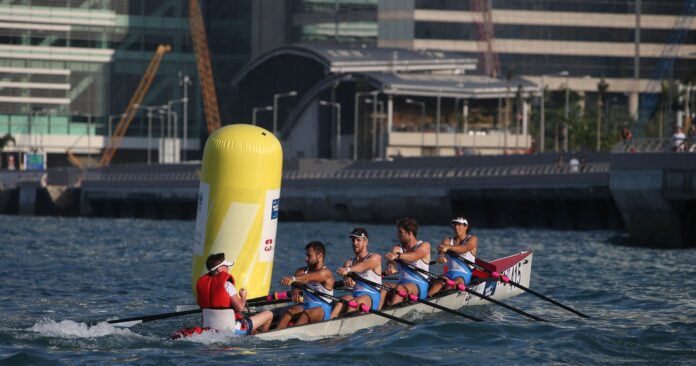
While plans to have coastal rowing added as an Olympic event for the 2024 Games move forward, the first international coastal competition to be run since the beginning of the Covid-19 Pandemic is set to take place this month at Marina Di Castagneto in Italy’s west coast province of Livorno.
The European Rowing Coastal Challenge is being promoted by the Italian boat company Filippi and will run from Oct. 23-25, FISA announced at a press conference last week.
Racing will include events in junior and senior beach sprints in addition to senior coastal rowing events.
The racing is being touted as an important event in the development of coastal rowing and in the FISA campaign to have coastal rowing added to the Olympic program following the Toyko Games.
The George Pocock Rowing Foundation’s Erg Ed has been selected as the 2020 United States Olympic Committee Rings of Gold program recipient.
The award is intended to “recognize an individual and a program dedicated to helping children develop their Olympic or Paralympic dreams and reach their highest personal potential.”
The award was announced in conjunction with five other USOPC annual awards. The Rings of Gold award will be presented during a virtual event as part of the 2020 U.S. Olympic & Paralympic Assembly on Thursday, Oct. 8.
Caversham. Berkshire. UK
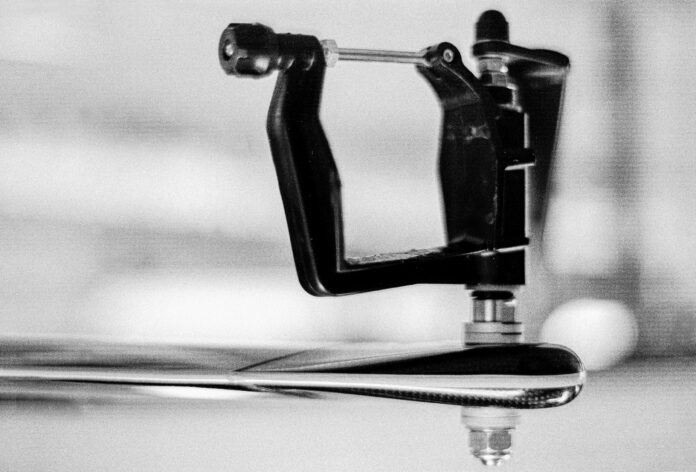
Oarlock mounted,on the Rigger, Boathouse, 2016 GBRowing U23 Trials at the GBRowing Training base near Reading, Berkshire.
Monday 11/04/2016
[Mandatory Credit; Peter SPURRIER/Intersport-images]
BY CHIP DAVIS PHOTO BY PETER SPURRIER
“Be a weapon in the war on mediocrity,” Murray Washburn loved to say. He was a great friend and mentor to many here in Hanover, N.H., including more than a few of us rowers. The year brought yet another terrible loss when Murray died this summer. But his love and kindness live on in a multitude of people and things, such as this very magazine. I began washing dishes in one of Murray’s restaurants when I was a teenage student-athlete, and over the next decade, my jobs there paid for a lot of college and Rowing News press bills. Murray’s guidance set the course for our company, and in the decades that followed, his encouragement and counsel aided and inspired us.
As she takes the helm as USRowing’s next CEO, Amanda Kraus (Big News, page 23, with extended Q&A on RowingNews.com) will be a key figure in pulling our sport’s national governing body out of mediocrity. She’s the first CEO hired from a rowing success–Row New York, which she founded–and she’s already saying and doing things that demonstrate her talent for growing an organization and making it financially healthy and inclusive.
Other entities in rowing are also using the lost year of 2020 to serve and strengthen our sport. The Rowing Industry Trade Association, IRA National Championship Regatta, Collegiate Rowing Coaches of America (women), and Intercollegiate Rowing Coaches Association (men) have all used canceled seasons to organize and prepare for future success. We’re all erging and sculling on our own now, but also working together remotely towards a future of excellence.
While the best part of 2020 may be its ending, 2021 can be our best year yet.