Home Blog Page 237

How to Load the Blade, Safely

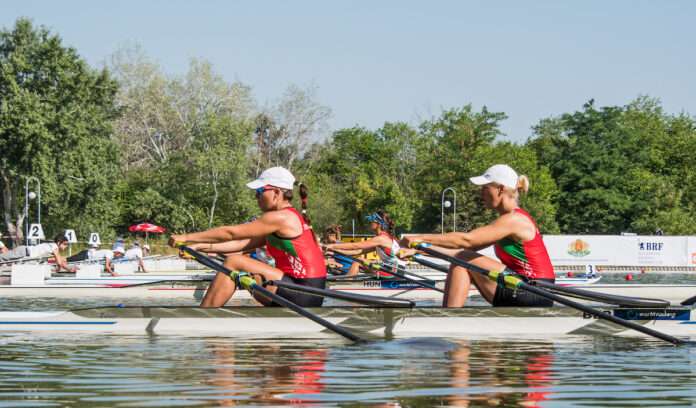
Plovdiv BULGARIA. 2017 FISA. Rowing World U23 Championships. BLR BW2X Bow. KLIMOVICH, Tatsiana and STARASELETS, Krystina. Thursday AM, Heats 09:25:03 Thursday 20.07.17 [Mandatory Credit. Peter SPURRIER/Intersport Images].

BY MARLENE ROYLE
PHOTO BY PETER SPURRIER

As you eye your transition back to the boat, try paying attention to your upper body form. Strive to control the oar handle rather than the other way around.

A so-called “packed shoulder” position will help you do that by increasing your connection to the handle so you are better able to direct and load the blade. To pack your shoulders and make them stable, start by lifting your chest up and then pressing your shoulder blades down as if putting them in your back pockets or pushing them down to the ground.

Note that if you reach for the entry and then hang on the drive, you will be pulling your joints apart. This gives the oar handle control over you. A relaxed, overstretched position invites injury every stroke.

When you reach, imagine your biceps are looking at each other. This creates enough rotation in the humerus to keep the shoulder set when you start to row full pressure.

Reduced slippage in your shoulders also means less slippage in the water. Practice your packing on land first with a loaded carry exercise. Load your body up with extra weight holding dumbbells in each hand then walk 25 steps as you lift your chest and keep your shoulders down. 

Head Of The Charles and Gold Cup Award Grants to Support Rowing Programs Committed to Diversity and Inclusion

Henley on Thames, England, United Kingdom, 3rd July 2019, Henley Royal Regatta, Boston University, USA., completing in the Temple Challenge Trophy, Henley Reach, [© Peter SPURRIER/Intersport Image] 18:40:47 1919 - 2019, Royal Henley Peace Regatta Centenary,

STAFF REPORT
PHOTO BY PETER SPURRIER

The Head of the Charles Regatta and Gold Cup of Philadelphia partnership formed this fall to support diversity and inclusion efforts in rowing announced that it is awarding seven grants totaling $100,000 to rowing programs that serve “under-resourced youth and communities,” throughout the United States.

In an announcement Tuesday, the partnership’s Grants Review Committee said it, “received and reviewed twenty-two applications from around the country. Each program presented its own unique approach to create, grow, and sustain boathouses that are both diverse and inclusive.”

Grants were awarded to the following programs: 

BLJ Community Rowing, Philadelphia PA ($12,000): BLJ is a Black owned and operated rowing organization that provides a direct bridge and access to the immediate surrounding community located on the Schuylkill River. They are passionate about providing access to the elite sport of rowing by removing boundaries and creating opportunities.

Relentless Rowing Academy, Columbus OH ($12,000): Relentless Rowing Academy is an up-and-coming Black owned and operated non-profit that provides financial, instructional and educational support to local rowing clubs. Its mission is to collaborate through partnerships that overcome the social and cultural barriers that have historically prevented the development, recruitment, and retention of BIPOC (Black, Indigenous, and People of Color) and PARA athletes in rowing.

Watuppa Rowing Center, Fall River MA ($12,000): Watuppa provides tuition-free rowing programs to low-income students residing in the under-resourced Gateway City of Fall River. From teens to masters, military vets to para athletes, to those training for the highest level of competition, they are building an inclusive rowing center.

St. Benedicts Prep Rowing, Newark NJ ($16,000): St. Benedict’s Prep has served the greater community of Newark, welcoming students from all racial, religious, and socioeconomic groups to create real diversity. St. Benedict’s Prep prepares boys to fulfill their potential as emotionally mature, morally responsible and well-educated citizens.

Chicago Training Center, Chicago IL ($16,000): CTC strives to work beyond the physical benefits of sports participation by using competitive rowing to broaden the academic and personal horizons of Chicago youth.

Baltimore Community Rowing- Reach High Baltimore, Baltimore MD ($16,000): BCR provides rowing opportunities for middle and high school students living in Baltimore City while providing equitable access to athletes of color.

DC Strokes Rowing Program, Washington DC ($16,000): Operating in conjunction with Athletes Without Limits, DC Strokes serves as a developmental rowing program to engage youth, build strong leaders, support diverse and active communities, encourage goal-setting and success, and serve those often left out.

Rain, Shine, or Pandemic, Head of the Kevin Presses On

BY ED MORAN
PHOTOS BY ED MORAN

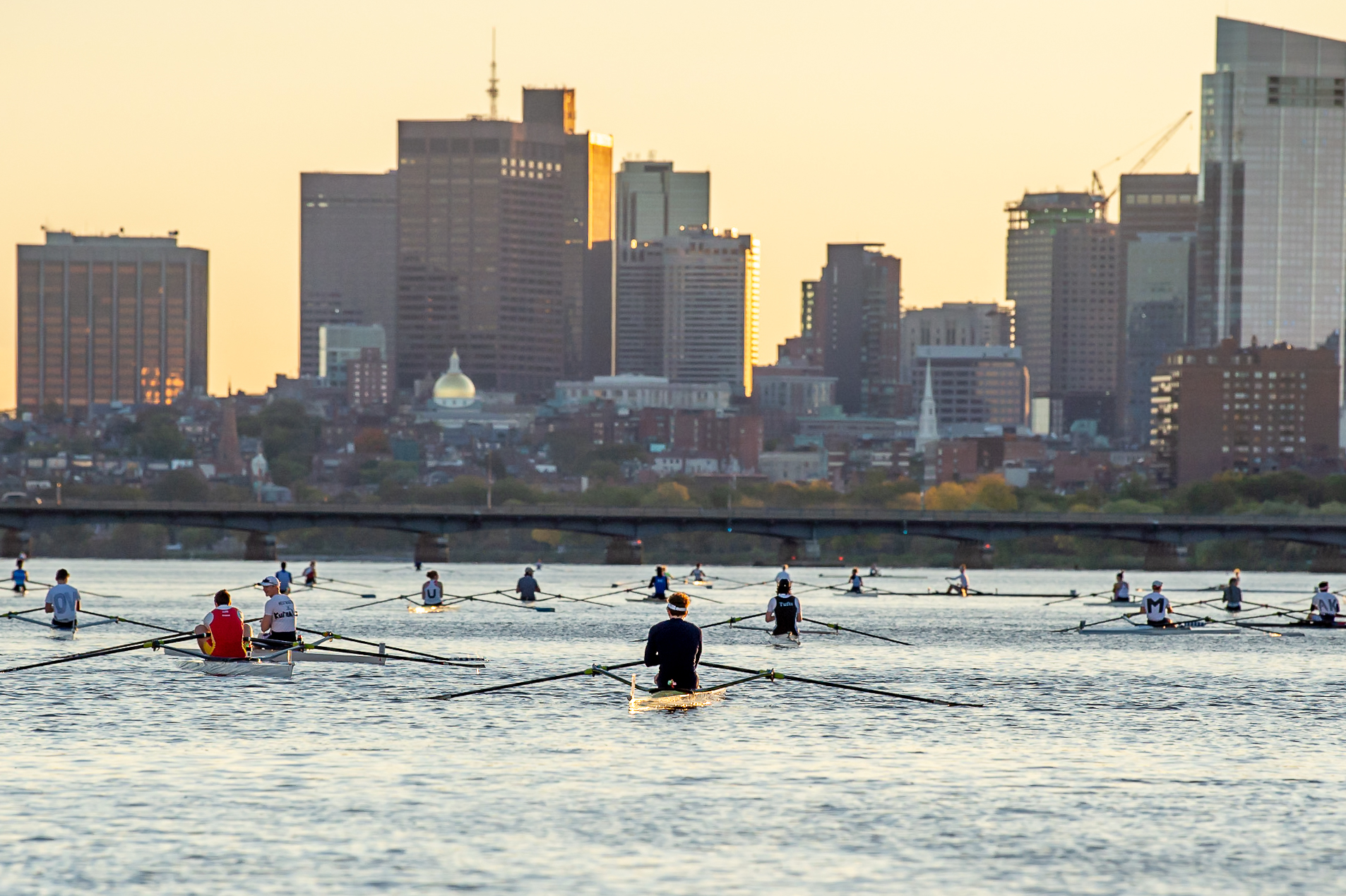
The morning sun broke low over the Boston skyline, filling the Charles River basin with a sparkling light that glinted silver in the puddles made by the parade of single scullers who rowed under the Boston University Bridge and formed a warmup group just above the traditional start line of the Head of the Charles Regatta.

It’s a familiar scene in Boston when summer fades into autumn, and the fall head-race season begins. But in 2020, it is not an expected sight. As with everything else that was canceled to curtail the spread of Covid-19, all racing on the Charles River has been shut down–everything from the spring collegiate duals to the club summer sprints, and finally the Head of the Charles.

Yet, on this last Sunday of August, and every Sunday through October, the same scene repeats. As dawn lights the Charles River basin, between 60 and 100 scullers glide into place and wait to be called onto the course to start racing.

One by one, the scullers in singles, and a few doubles  rowed by people living in the same house, line up in front of Boston University’s DeWolf Boathouse to race spaced 10 to 15 seconds apart down the Head of the Charles course.

For 21 years, the Head of the Kevin head-race regatta series–often described as “a practice, not a regatta”–has been run up to three times a fall. It is not an official race, but winners are awarded hand-made sterling silver medals, and their names are etched onto official plaques that honor each year’s champions and hang on the walls of the Riverside Boathouse on Memorial Drive in Cambridge.

There is no fee to participate, but anyone who wants to race must submit an entry for approval. While there are no official timers, times have been recorded each of the last 21 years, recently by HereNOW, the company that times some of the most important regattas in the country.

Again, it is not an official race, especially in 2020, when no official regattas are permitted in most places across the country, especially Boston.

“If you’re going to have a regatta, you have to have permits and stuff like that. We’re really just a practice,” says founder and guiding spirit Kevin McDonnell. “Right?”

Right.

This year, this “practice that is not a regatta” became the only racing outlet for rowers training through the pandemic in Boston, making the rite even more cherished. It began in 2000 as a fun way to bring together rowers of different levels at the Riverside Boat Club and help them prepare for the Head of the Charles. 

“It’s wonderful to have something that’s the same in a year where nothing has been the same.” said Olympian Gevvie Stone, whose plans to compete in her third Olympics were derailed when the 2020 Tokyo Games were postponed. “For the Head of the Kevin to feel the same it has every other year is special.”

The First 20 Years

Understanding how the Head of the Kevin became the only regatta to survive the 2020 ban on racing requires looking back at how it began, and how it has grown.

The man who started it all was McDonnell, a lightweight sculler from New Brunswick, Canada. When he moved from Los Angeles and the California Institute of Technology to Cambridge and the Massachusetts Institute of Technology to finish his Ph.D., he began coaching and sculling at Riverside.

Previously, McDonnell had rowed at the Long Beach Rowing Club, which held an event called the Bay Series, a 5,000-meter head race once a month during the fall and winter on a course that begins at Marine Stadium, proceeds around Naples Island, and ends at the LBRA boathouse dock.

“There are not quite as many head races in California, so they have a longer season and they do this piece around the island in Long Beach,” McDonnell said. “Basically, you just showed up and signed your name on a piece of paper, and they came up with a start order and off you went. 

“But the best part was you would come back and there would be people making breakfast out on the tarmac outside the boat bays and you would just kind of hang out and shoot the breeze and have food. It was a really fun way to go get your head-piece training in.”

After moving to Boston, McDonnell realized that the East is a bit more formal, with more rules at Riverside than he was used to. Most of them involve managing limited boats and equipment among many members and teams in the small boathouse.

“When I started rowing there, I realized that they didn’t have anything kind of fun; the East is a little stiffer than the West.”

And so, McDonnell saw an opportunity to replicate the Bay Series, right down to the post-racing breakfasts.

The first Head of the Kevin was run in 2000 and is run pretty much the same way today. People sign up to race, get a start order, row to the Head of the Charles start line, and wait to be called.

Everyone has a bow number (you create your own, so the way boats are numbered is unique and, well, quirky), and the start order is assigned by McDonnell, generally fastest to slowest.

For the first three years, it wasn’t called the Head of the Kevin.

“I gave it a really awkward name, like the Riverside Fall Head Piece Series, or something terrible like that,” McDonnell recalls. He credits Riverside sculler John Tracy with renaming it after him.

Winning is not about who rows the course fastest. Everyone competes against a time standard based on the events they would have rowed in the Head of the Charles. So a lightweight woman has a chance to beat anyone else in the pack, including world-class heavyweight men. And that is exactly what happened in the second of the 2020 series, when U.S. national-team lightweight women’s sculler Mary Jones won against a field of 78 other boats, including a men’s double.

Anyone who rows any of the races accumulates points, and champions are named at the end of the series, which is usually three races, but this year could be extended to five.

One of the best parts of the event occurs after each race, when the athletes gather at Riverside for breakfast and wait for McDonnell to figure out the times and declare who won, a ritual that has changed the club’s social dynamic. 

“At the time we started, Riverside was going through some transitions, and there were different types of memberships coming in,” McDonnell said. “There was really bad communication between these different aspects of the boathouse.

“People weren’t talking to each other, and a really nice side effect of running these pieces was that everybody just kind of hung out and had breakfast afterwards while they waited for me to slowly use my Excel spreadsheet to calculate their times.

“Over the years, I got feedback that that really made a difference, because people really weren’t talking to each other. They were zipping in, rowing a boat, and zipping out. And now they had a reason to stay and hang out and talk, and it really sort of improved the mood a little bit.” Longtime Riverside member and rowing photographer Igor Belakovskiy (a.k.a., The Sculling Fool) says the former social tension was more about the amount and availability of the club’s equipment.

Head of the Kevin is “one of the few times when everybody is in the same room and racing at nearly the same time. It’s one of the more unifying events,” Belakovskiy said. “People might be jockeying for a specific single or double, but on race day, everybody races in whatever is there.

“A lot of people look forward to the wrap-up as much as they look forward to the race. Kevin’s pretty funny and will definitely take potshots at people who are really full of themselves. Whatever the results are, he’ll make it fun for you to wait and find out what happened.

“To me, the Head of the Kevin is like the Head of the Charles, but like the fun Head of the Charles, where everybody races at the same time and can compete on absolute speed and also relative speed. It’s really a good community race.”

Over the years, while the size and field of crews evolved, there have never been more than 130 boats–mostly small sculling crews but also 30 or so eights and fours from clubs and schools around Boston.

The only requirement is knowing how to navigate the Head of the Charles course, a twisting complex of turns and bridges with enough places for mayhem to keep McDonnell nervous. Newbies are never allowed.

“I don’t take just anybody,” McDonnell said. “Those [who compete] are mostly all local boats that know what they are doing. Crazily, we haven’t had any incidents over the whole 21 years. I can think of only one near-miss, and that person wasn’t invited back.”

Eventually, the accepted and invited list expanded to include rowers from other clubs in Boston as well as from the entire New England region.

“We’re happy to have people come and join us; it makes it a better thing,” McDonnell said. “But we can’t take 200 or 300 people. We cap it at 100 small boats and  up to 30 big boats. That’s the biggest it’s ever been, and I wouldn’t want it any bigger. It would just be unwieldy.”

“It’s grown to become a lot more like a Charles community thing rather than a Riverside thing,” said Belakovskiy. “Pre-pandemic, it became a New England thing. We would get people from the whole region.”

Another unique feature is the difference in the level of experience. The rowers in the start area include current and former Olympians and U.S. national teamers, club high-performance folks, along with masters and juniors.

The start order gives people competition to look forward to. Stone, who won a silver medal in the women’s single in Rio, and has won the women’s single championship at the Head of the Charles a record 10 times, still finds the racing challenging.

“I have been doing them for a number of years, and have done at least one a year, but usually two,” Stone said. “Honestly, it’s one of the most fun events because it’s local, it’s camaraderie, it’s people in small boats, and it’s really fun to start fastest to slowest and to try to catch the person in front of you.

“As someone who was training relatively alone in Boston, the only female in my training group for a large number of years, it was really fun to get mixed in with the boys and to race the lightweight [high-performance group] from Riverside–to show them that a girl can go fast, too.”

The Pandemic Year

When the pandemic shutdown forced the end of all official regattas, the board and safety committee at Riverside met to determine the feasibility of safely running the series when Covid restrictions eased. Social distancing is still required in Boston, which means the racing would be limited to singles, and doubles if the crew lived together.

It also would require an elaborate dock dance to get all the crews from the boathouse onto the water.

“This year is different, obviously,” said McDonnell. “And when we started thinking about it, we felt there is nothing going on, and everybody is dealing with a lot right now, and if we can give people just one little thing, like this, even if we get just one or two of them run, it would be something.

“It would give people a little relief, something to do, something to put in a few harder strokes. There was a lot of enthusiasm at the board level. We just had to work through how we could do it.

“We’re trying to play completely by the rules. The closest you’re going to get in a single to another single is probably 12 feet, and you are in open air. The biggest issue is bringing people to the boathouse, who then have to launch in a short period of time.”

The problem was solved partly by rowers launching from spots other than boathouses. 

“People are launching from public docks and other places because they don’t want to deal with going into a boathouse, masking up, rinsing their boat off with bleach,” McDonnell said.

To reduce the number of people going into the boathouse and onto the dock, rowers are given specific time slots to get their equipment and get on the water.

“Everybody has a 10-minute window or so to come to the parking lot, go inside, get their oars, get their boat out, put it on the dock and shove off,” McDonnell said. “We’re sending people through the boathouse in chunks of six to eight people at a time over 10 minutes. We do it in reverse on the way in.”

The one unavoidable loss this year is breakfast on the dock, but McDonnell turned to a very pandemic solution–Zoom.

“I tried it out after the last one,” McDonnell said. “I threw out a Zoom invite and then jumped on. I have never let the results go live, and everybody is used to that now. With HereNOW, the results pop instantaneously.

“I purposely have them turn the results off, so that when we weren’t in Covid, people would have to show up at the boathouse, eat some breakfast, hang out while I manually wade through the results and tell them to people in person. And then I would press the go button on HereNOW.

“You couldn’t find out how you did relative to everybody else unless you waited for me to go through my annoying spiel thanking all the volunteers and making fun of people who flipped or did something wrong.

“I thought it was good to keep that routine going, so I said you won’t find out the results until the 10 a.m. Zoom meeting. I did it from my car last time driving to vacation. It was great, kept it different and fun.”

Another change this year is that additional prizes for winners will not be given out. 

“Instead of buying gift cards for the winners, we chipped in money to give to a couple of local charities. It is a tough time for everybody, and we felt that was something we could do differently this year.”

To date, three of the series have been held, and it is hoped there will be five. That will depend on the pandemic and the weather.

“We actually have enough weeks in the fall to do up to five of them,” McDonnell said. “If we actually get five in, that would be wild. If the weather gets bad, or Covid spikes, we stop.

For a year with no official regattas, the Head of the Kevin has come through in ways McDonnell never could have anticipated. And the effort has been appreciated.

“If you look at what people are posting–from Gevvie Stone to random masters–they’re all writing the same thing: ‘I’m so happy that I got to put a bow number on and actually race and compete. People are really grateful that this is happening.’” 

Life After Rowing

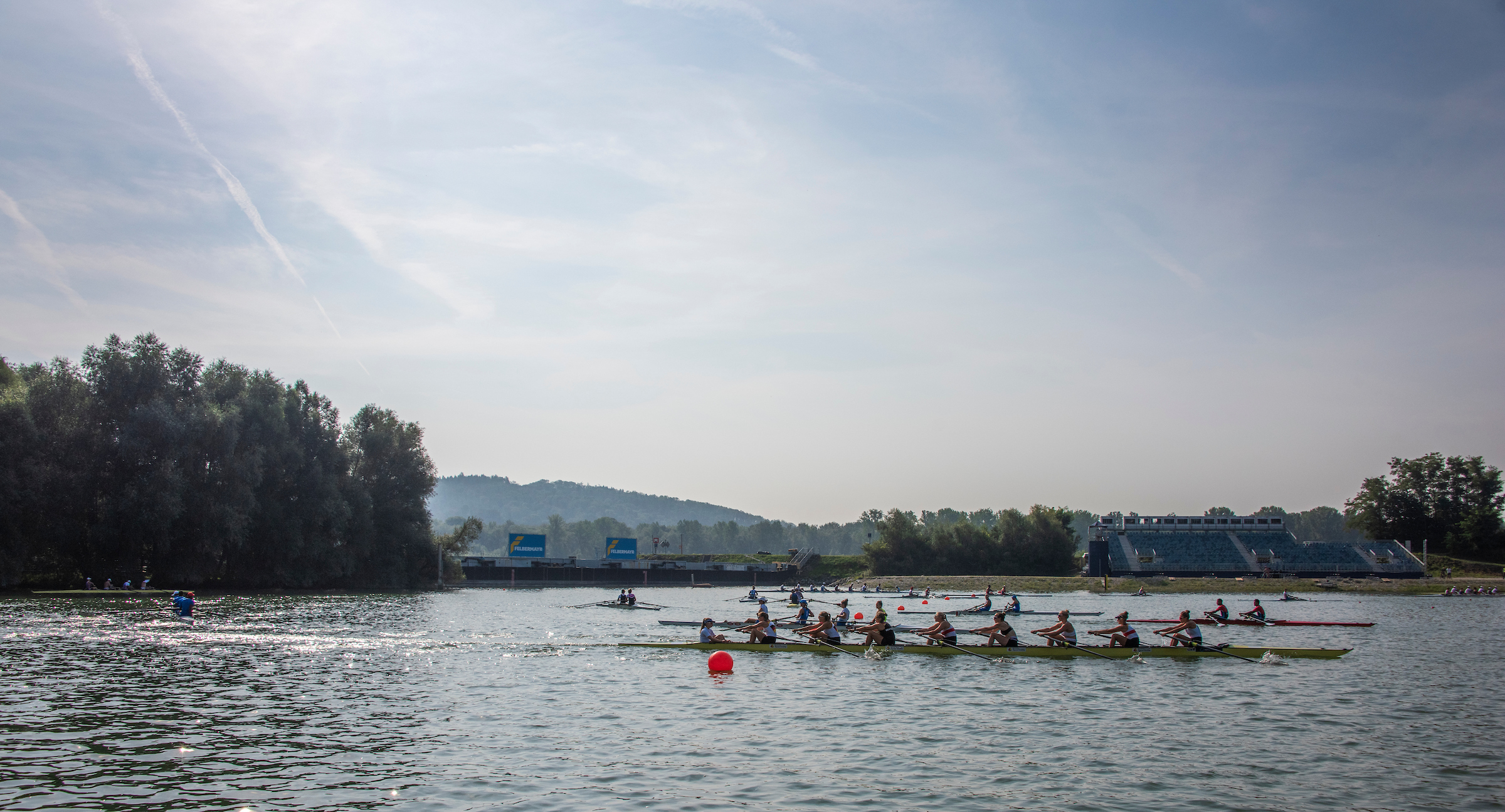
Linz, Austria, Saturday, 24th Aug 2019, FISA World Rowing Championship, Regatta, General View, crewa turning at the finish end of the course, [Mandatory Credit; Peter SPURRIER/Intersport Images]

BY ALAN OLDHAM
PHOTO BY PETER SPURRIER

For many in rowing, the question “What comes next?” can be difficult to answer.

Dedicating so much time and energy to a single pursuit often means putting life on hold.  Education, work, relationships, self-care–all in turn move further down an athlete’s priorities list and can sometimes fall off the page altogether.

Yet life after rowing is a certainty for anyone who picks up an oar and sits in a boat. Whether a rower’s career of daily strokes is as short as a season or as long as a century, a reckoning with life beyond the boat is as unavoidable as the pain of a race.

Complicating things in this transition is the way that rowing seeps into life and life into rowing, blurring the buoy lines that distinguish future possibility from past and present.

This is a story about three rowers: a Scot, an American, and a Canadian. In narratives of redemption, transformation, and acceptance–themes to some degree familiar to all rowers–they share their personal journey through rowing to life on the other side, and how, in their own ways, all three have found themselves by losing themselves in the service of others.

Jail time

Few who experience the soaring-like swing of a boat in perfect balance can deny the ability of rowing to put reality on hold and hold the rower in thrall. While calling the sensation life changing might seem like a stretch, the magic of such moments has a power that surpasses understanding.

Spending her time in and out of Britain’s prisons over the last year, Imogen Walsh understands better than most just what the sport can do. As “prisons manager,” the two-time world champion lightweight sculler is both the mind and muscle behind Fulham Reach Boat Club’s Boats not Bars initiative.

“Fulham Reach is a community with the vision that rowing should be accessible to all,” she said. “The Boats not Bars program specifically aims not only to improve the mental health of people in prisons but also to reduce the rate of re-offending after release.”

The seed of inspiration was planted early through an unlikely friendship that forced her to think differently about the sport.

“I’ve known John since he left prison and joined the London Rowing Club,” said Walsh of her friendship with John McAvoy, an ex-felon and once the most-wanted man in Britain. “All the way through my rowing career we’ve been friends and we’ve spoken about how rowing changed his life.”

Through rowing, McAvoy transitioned from maximum-security isolation to reformed role model and record-setting elite athlete.

 “For him, that journey began with erging in prison, but it wasn’t just about that,” Walsh said. “It was joining a rowing club that made the most difference. It was about putting in place a new environment outside of prison.”

It was an idea Walsh would put into practice after her own retirement from full-time training brought with it the usual soul searching about what to do next.

Years later, Walsh is finally able to harness the redemptive power of rowing to help a new generation of Britain’s castaways plot a positive path forward

“These are not bad people,” said Walsh. “They have had limited choices. It is easy for me, who grew up in a middle-class family that supported me, to make different choices. If I had grown up in a different environment, I would have had none of that.”

Guns to gunwales

The world of guns, gangs, and drugs, out of which Walsh hopes to lift British prisoners through Boats not Bars, is similar to the reality Arshay Cooper longed to escape as a teenager growing up on Chicago’s West Side during the 1990s.

Cooper was one of the lucky ones. Salvation struck while he was still in school in the form of a rowing team set up with the express purpose of giving Black kids the chance to escape the cycle of intergenerational trauma, poverty, and addiction that plague so many inner cities. Rowing helped Cooper transform his life.

“Growing up in a place where it is hard to trust, the reality is that to survive you have to join a gang or you have to isolate,” said Cooper of his life before rowing. “When all the goodness that you see in the world, everything you imagine for life was only on a TV screen, to have a sport like rowing show up in your school and have someone say that you can work hard and travel and go to college, for me it filled that void.”

“You can’t be what you can’t see,” he added, using a phrase echoed in the recently released documentary A Most Beautiful Thing. Based on his autobiography, which was first published as Suga Water and re-released this year as A Most Beautiful Thing, the movie is directed by former U.S. Olympic rower and award-winning filmmaker Mary Mazzio and narrated by renowned rapper Common. The book and film tell the story of Cooper and his teammates on America’s first all-Black high-school rowing team.

“What really allowed us to let people in,” said Cooper, “were the long bus or van rides to other cities, places where we weren’t worried about watching our backs. The culture of the team made sure we knew that the lessons we learned outside the boat were just as important as the lessons inside the boat.”

Three aspects of that culture stick in Cooper’s mind:

 “First, leave the boathouse better than you found it. What does that really mean? It is also about leaving the practice or your teammates or your classroom better than you found it. Your job, a person you just met, or the world, you want it to be better because you were here.

“Second is balance, not just balancing the boat, but balance in life outside of it. It is all the same thing: Be fast and be diverse. You have to go after it in the boat, in your academics, in life.

“The third thing we were taught is that to get the results you want, you have to give what hurts. Time, talent, treasure, we have to give what hurts.”

These simple, powerful notions have guided Cooper through his post-rowing career as an internationally trained cordon bleu chef–something he could never have imagined before holding an oar.

Through his work as a public speaker and diversity consultant, Cooper is opening access to rowing in the hope that a new generation of America’s marginalized youth can learn these same lessons. By providing a community of support, and teaching skills needed to heal the harm of poverty and hate, he is giving young people the chance to transform their lives for the better far beyond the boat.

Identity crisis

For Walsh’s prisoners re-engaging with society after years behind bars, and Cooper’s inner-city youth, searching for escape from a life sentence of limited choices and harsh consequences, the importance of supportive places and people is hard to overstate.

Yet the role of community support in improving the lives of society’s most vulnerable becomes even more apparent when the struggle to belong is seen as something affecting even those counted among the world’s most successful.

Michael Phelps’ recently released HBO documentary, The Weight of Gold, gives a glimpse of the dark places into which athletes’ mental health can descend during and after their time in the spotlight. Rowers are not immune.

“The worst that could happen is suicide,” said Canada’s Jeremiah Brown, speaking of the consequences when athletes cannot find support or support suddenly disappears, as can happen with retirement or injury.

“We lose these people when they are so far removed from any band of society. For some, their team has become their whole reason for existence–the laughs, the joys, so much is wrapped up with that performance environment–and then things change, sometimes overnight.”

After four years on Canada’s national team and a silver medal in the men’s eight at the 2012 London Olympics, Brown found that his greatest struggle was the return to reality, coming to grips with the new normal.

“As an Olympian, people look at you and think, ‘You’re a high achiever, you’ll figure it out.’ The bigger problem is that you believe that, too. You put it on your shoulders and try to power through rather than accepting that you are where you are, starting over from scratch. That is where you need help and peers and mentors.”

Athletes face a range of challenges as they transition out of sport, explained Brown, who served for four years as head of the Canadian Olympic Committee’s “Game Plan” initiative that set out to provide support for elite athletes in transition after sport.

Although he has since handed over the reins of that important work, Brown–who published a book, The Four Year Olympian, and committed himself to public speaking–has applied the lessons learned from helping other athletes to his own challenges.

“The biggest challenge is the matter of identity, trying to morph and transform yourself into whatever is next while people are still celebrating you for what you have done in your past,” he said. “People mirror back your athlete identity while you are trying to create a new one.

“You lose your funding, and all of a sudden you have got to pay the rent, but job prospects can be bleak. You have this hole on your resume. Interviewers want to talk about your sport background and then often overlook you because you don’t have [the experience] they’re looking for.”

All of that, explained Brown, can take a heavy mental toll. “When your identity is not on solid ground anymore it really creates mental-health challenges,” he said. “Anxiety and situational depression are common. You need to take action to move out of this state of going from what you were to what you will be, but there is paralysis.

“It can take years to accept the changes in your life. I have talked to a number of Olympians who even 10 years or more after the Games were still wrestling with figuring out what’s next. It is something that I deal with myself. It has taken me a long time to get there.

“The glory of an Olympic medal fades pretty fast, and what are you left with? In the long term, athletes say similar things. Whether you won three Olympic gold medals or you didn’t meet your performance goals, you are still struggling with the same things and the same question: ‘Who am I now that I have invested so much of my life in this?’” 

Late but in earnest

“You can feel that you have put everything into your training for years and not even come away with what you wanted,” said Walsh, of her own transition out of elite rowing back to “normal” life.

After a career that included two gold medals at the World Rowing Championships (2011 and 2016, lightweight women’s quad), and one silver (2015, lightweight women’s single), Walsh drifted away from the sport.

“I wasn’t sure if I wanted to stop rowing or not, but there was always a better reason for me not to go back than there was for me to go back,” she recalled.

“I was actually offered a role through World Rowing and Olympic Solidarity to go and coach in the Maldives. It was an amazing opportunity, and I coached there for seven months. After that, there was always another adventure to go on.

“When I moved back to the UK in 2017, I did find it hard not to have an identity after full-time rowing. It is often associated with people who reach the highest heights and go to the Olympics, but I think it is also hard for those who don’t reach that goal. It is about finding something you are really passionate about and moving on.”

Fortunately for Walsh, who came to the sport first in university and started full-time training only in her mid-20s, life outside rowing had already begun taking shape well before she set her eyes on international racing. That early experience in the nonprofit sector has proved invaluable in her life after rowing.

“Before rowing on the British team, I worked for an overseas development charity,” she said. “It was the same kind of principle [as what I do now], trying to enable people to fulfil their potential.”

Perhaps because of her late start, Walsh saw rowing as something that added to rather than defined her life.

“I wasn’t sporty,” she said of her teenage years. “I didn’t trial for rowing until I was 26. My initial goal was to go into [the British national-team] trials, one time, one year, and then go back to my life in Scotland. It kept building and building. In the end, it didn’t work out. I was on the team for five years and didn’t go to the Rio Olympics. It is something that will always have an edge for me.

“Although I didn’t end up going all the way to the Olympics, I don’t regret the journey. Where I am now, I probably would not be had I not done my rowing.”

A community of care

The power of community to anchor an individual to life is something in which Walsh, Cooper and Brown have put their faith.

Once people feel they belong inside a rowing club, they enjoy a sense of community that many rowers on the “inside” take for granted, said Walsh. “Rowers and rowing clubs really are like family. The support network is ready made there for anyone who joins.”

For Walsh, rowing’s reputation as a sport of privilege, beyond the experience and even imagination of most prison inmates, is what can give it power to change lives for the better.

“It is not a sport that a lot of people in prison expect to do,” she said. “I want to challenge their self-perception. Getting them involved in a sport that they feel is not for them has a powerful effect in changing their whole mindset.”

The impact on someone’s life when they are invited in from the outside can be profound. Whatever their background, for those who do come inside, success in the sport, and in life beyond it, requires the right support from the very start.

“It is hard to do other things while you are at the elite level,” said Brown. “For rowers, taking care of yourself and your long-term life plan have got to be part of the high-school and college levels of the sport. Coaches at these levels have a responsibility not to pretend that they are taking people to the Olympics. You have to understand what stage [of athletes] you are coaching.

“The more that coaches are talking about these things, getting to understand their athletes, building trust and encouraging them in all areas of life, the better it is going to be.”

Even more than coaches, said Brown, family and close friends can keep athletes grounded. “They are the community that helps someone realize there is more to life than what’s right in front of them.”

“There are people who grow up like I did with anger toward people who don’t look like them,” said Cooper. “Recasting that narrative is what really fires me up. The stories of hope keep me going. Every young person who rows–white, black, Hispanic–can tell you the first time they had hope from rowing and when they had hope to give.

“I have not changed the world,” said Cooper, “but I have sparked the brains of those who will make this sport diverse. That fire is contagious. I am fanning the flame for these young people to catch. They are more radical, talented, and have more energy. Black collegiate rowers [can finally] say, ‘Now I believe I can make it on the national team and row for this country.’”

“Rowing has taught me that anything is possible,” said Walsh. “Rowing was never on my radar. It was never something that I thought I could do. I was fortunate to have people around me who opened my eyes to that possibility and gave me a nudge.

“It is rewarding to see people achieve things that they didn’t think they were capable of. What I find most rewarding about coaching is not just someone going faster–although that is good–but their growing confidence and then growing in other areas. It is people saying, ‘Oh, he is really coming out of himself now,’ or ‘being more helpful,’ or people themselves saying, ‘I used to be depressed, but now I feel so much better.’”

It is a feeling Cooper eloquently summed up in his book, describing why he and his teammates kept showing up for a sport that only months before they had known nothing about: “We don’t just live to row, we row to live.”

Whether someone has an eye on the next Olympics or even just the next stroke, seeing rowing as part of life’s journey rather than the ultimate destination might just be the difference between merely living life and loving it.


Preparing to Race Again

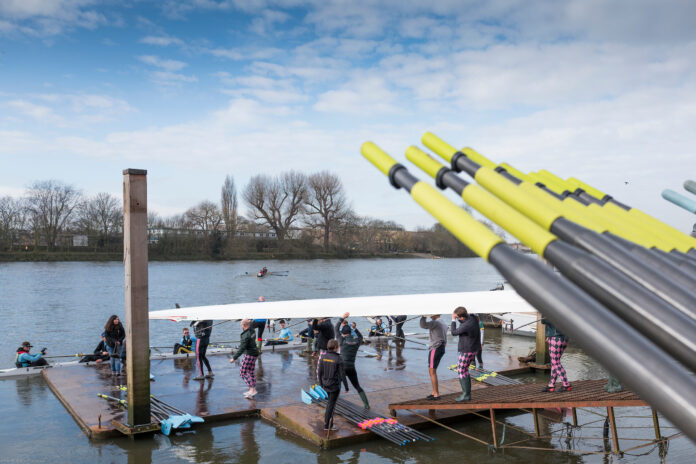
Hammersmith. London. United Kingdom, Hammersmith. London. General View, "Oar Handles", Furnivall SC, 2018 Men's Head of the River Race. Championship Course, River Thames, 2018 Men's Head of the River Race. , Championship Course, Putney to Mortlake. River Thames, Sunday 11/03/2018 [Mandatory Credit:Peter SPURRIER Intersport Images] LEICA CAMERA AG LEICA Q (Typ 116) 1/2500 sec. 28 mm f.3.5 200 ISO. 42.5MB

BY RICH DAVIS
PHOTO BY PETER SPURRIER

We all look forward to the resumption of races in the months ahead. Before racing, it is wise to diminish the workload according to how competitive you expect the competition to be. In general, this reduction takes place several days before each race. Earlier in the season, incorporate more taxing workouts into the routine, During racing season, lighten your training while emphasizing speed work, the different phases of a race, starts and rate shifts.

Getting proper sleep is critical during racing season for athletes of any age, whether you are sculling or in a sweep boat. It is especially important on the “night before the night before” a race. Athletes typically don’t sleep well before a big race, so the extra rest can make a difference.

As your rate goes up, be sure you know and have time to practice the stroke rate you plan on hitting during the race. Establishing a pre-race routine also helps with preparation. This could include running through possible scenarios that might occur during a race, although ideally you would have practiced these on the water beforehand.  Make a regular practice of visualizing perfectly executed races, always with you coming out on top!

Navigating the College Recruiting Process

VIDEO BY ADAM REIST

ACRA Goes Nuclear

BY COLLEEN SAVILLE
PHOTO PROVIDED

The American Collegiate Rowing Association announced that the 2021 ACRA championship will be held in Oak Ridge, Tenn., May 21 to 23. The move is a departure from Lake Lanier in Gainesville, Ga., a course built for the 1996 Olympic rowing events and where the championship has been held uninterrupted since 2011. The 2021 regatta will be Oak Ridge’s second time hosting the championship, the last being 2009.

Cameron Brown, president of the ACRA and the men’s head rowing coach at Orange Coast College, said  that while Lake Lanier has served well over the years,  opening up to bid was appealing for several reasons.

“We decided to make the move in part to test the waters, to see what the current rowing-venue landscape is like. One of the biggest motivating factors for us was the cost of the regatta and cost of travel for attendees. We got bids from four or five different venues from around the country, and after reviewing each carefully, decided that Melton Lake was the best option for us.”

Because the ACRA is composed of self-funded club rowing organizations, one of the biggest challenges athletes face is covering the cost of race-related travel.

“The cost of travel,” Brown says, “especially for teams from the West Coast and Northeast is a significant factor. And so even though Oak Ridge is still quite a big trip for those teams, it seems like the cost of attendance should be a little easier for them.”

The course itself is also highly functional, with long, dedicated warmup areas and a seven-lane buoyed race course. In addition, Melton Lake will be closed to all other boat traffic during championship weekend, thereby eliminating wake from leisure boats. For a regatta that has historically fallen on Memorial Day weekend, this is key. “It’s a huge advantage for Melton Lake,” Brown says.

After a canceled 2020 season because of COVID-19, Brown is more enthusiastic than ever about what is to come.

“I want people to really experience the regatta. In 2019, we had 1,700 athletes and over 75 programs. It’s a big championship, and the level of racing at the top is really quite high. You can ask any ACRA head coach, Who will be at the medals stand? and I don’t think any of them can give you an answer with certainty. That’s not the case with every regatta. It makes it fun and exciting, and that’s what I would encourage people to pay attention to. That’s why we race. Our goal is to bring that experience to our athletes and spectators in Oak Ridge.” 

New Zealand’s Unflappable Rower-Optimist

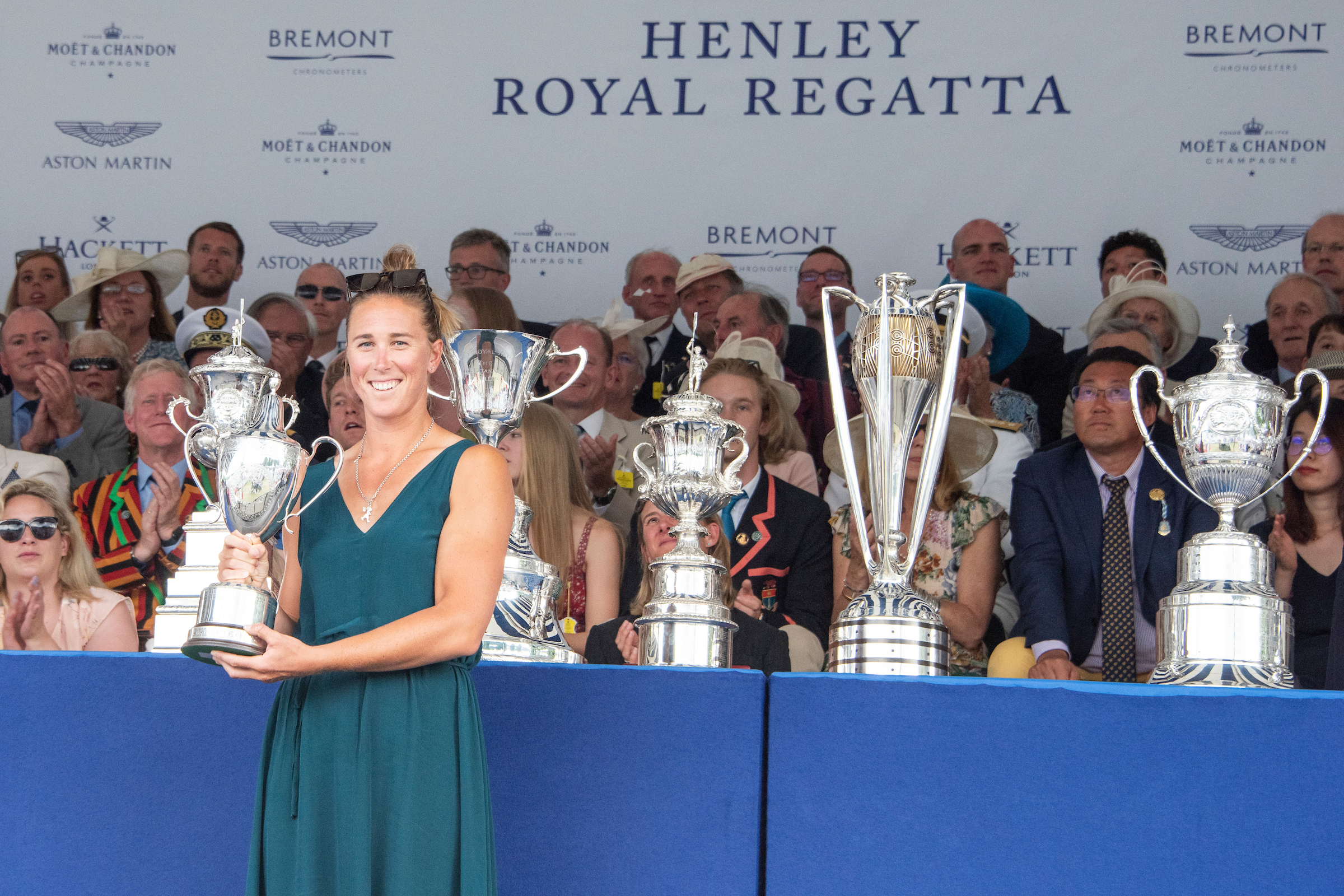
Henley on Thames, England, United Kingdom, 7th July 2019, Henley Royal Regatta, Prize Giving, The Princess Royal Challenge Cup, Emma TWIGG NZL., [© Peter SPURRIER/Intersport Image] 17:41:21 1919 - 2019, Royal Henley Peace Regatta Centenary,

BY ED MORAN
PHOTO BY PETER SPURRIER

By the end of the 2019 rowing season, New Zealand’s Emma Twigg had more than accomplished what she felt she needed to do in the run-up year to the Tokyo Olympics.

With wins in World Cups II and III, the Henley Royal Regatta, and a second-place finish at the world championships, Twigg traveled to Boston to cap the season with a top-five finish at the Head of the Charles, and a win in the Gold Cup Sprints in Camden, N.J., the next week.

It was a much better place than where she was the season before the 2016 Games in Rio, when a year after going undefeated and winning the 2014 world championship, she took time away from the New Zealand national team to train on her own and begin work on a graduate degree in Europe and was told she could not row for her country.

She hoped to race in the 2015 season, but because she went abroad to study for a master’s degree in the FIFA International Masters in Management, Law and Humanities of Sport program, Rowing New Zealand ruled her ineligible for a place on the team.

Twigg trained on her own while completing the course, but there was no season of international competition during which to prepare, and because New Zealand did not qualify for the women’s single at the 2015 world championships, she had to race in the Final Olympic Qualification Regatta to earn a place in Rio. Twigg never felt she had built the foundation she needed to be her best.

She reached the final, but missed the medals stand, narrowly finishing fourth for the second consecutive Olympics, and left Rio convinced she was done with the sport. But after moving to Switzerland for a job with the International Olympic Committee, Twigg worked on the IOC staff at the 2018 Winter Games and rediscovered her desire to be an elite athlete, to race at the highest level possible, and she decided to return to rowing and aim for Tokyo.

In November 2019, after a full season of successful racing, Twigg was back home in New Zealand and feeling in control with nine months to go to the Tokyo Games.

And then Covid-19 applied the brakes.

“I felt like my 2019 season exceeded my expectations,” Twigg said. “After having had two years of no rowing, I was pleasantly surprised by how my season ended up, and to top it off with a Gold Cup win was pretty cool. So I was feeling confident about this year and our summer leading into the [2020 spring] Europeans. I had a great summer and was really looking forward to some international racing again. But I just didn’t get to do it.”

Today, Twigg is back where she was 12 months ago–nine months from her fourth Games, and training at home for the coming season. She had already been picked to represent New Zealand last January, and it is fully expected she will be named New Zealand’s women’s single sculler again during the 2021 selection.

While training behind New Zealand’s closed borders, she is making the most of it, and for the first time in her career, training with her Kiwi teammates. The experiences of the past year have also been as much about personal growth and introspection as training for another racing season, and the 2021 rescheduled Games now have a different meaning.

During her lockdown training, Twigg also has been enjoying life. She is spending more time with friends and family, touring New Zealand, and leveraging her status as a popular athlete to promote social equality. She is talking openly about her January marriage to her wife, Charlotte, and her desire to be an advocate and role model for the LGBTQ+ community.

“You can’t go through a pandemic, or a situation like this, and not have your perspective changed. It certainly reinforces the reasons I row, which is as much about inspiring people and doing my part as an athlete with a profile as it is about trying to win medals and claim the glory.

“You can’t go through a pandemic, or a situation like this, and not have your perspective change. It certainly reinforces the reasons I row, which is as much about inspiring people and doing my part as an athlete with a profile as it is about trying to win medals and claim the glory.”

-EMMA TWIGG

“This period of time–and the thought that there could still not be a Games next year–reinforces the reasons I get up in the morning to train. I love the sport, I love what sports can do for the world and different communities, and I really want to make the most of the time I have left.

“Obviously, it will be devastating if we don’t go to Tokyo, but at the same time, if you look at the hurt and the harm that is going on around the world, it really makes me appreciate what we have here at home in New Zealand and admire the circle of people on my team and my family and friends.”

Olympic Journey

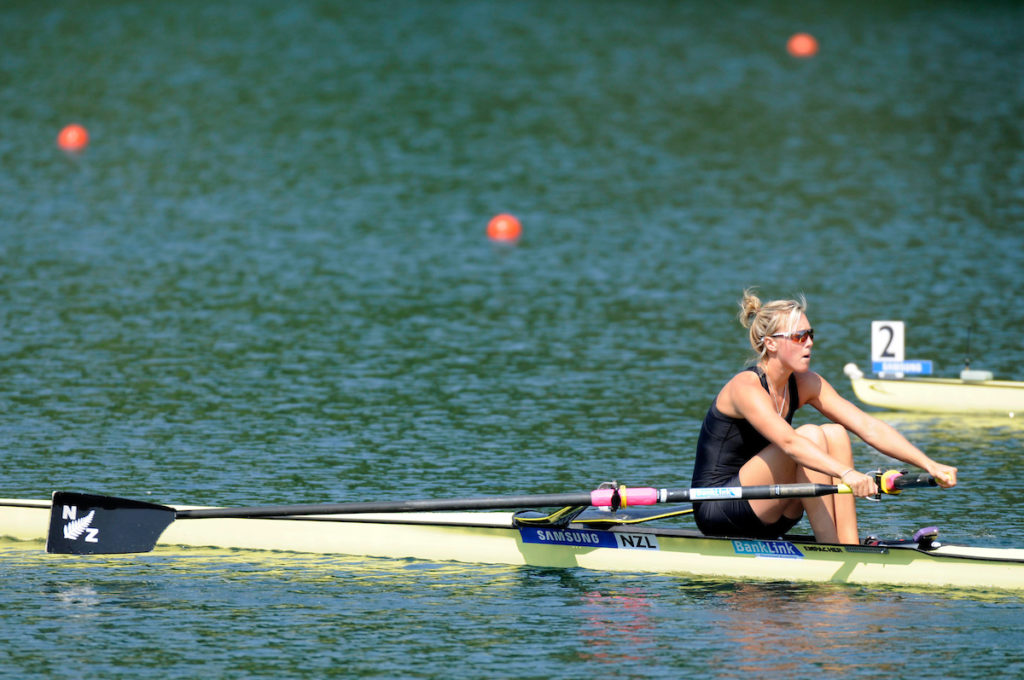
Twigg’s quest to stand on an Olympic podium began when she was a junior athlete in 2003 in the women’s eight at the junior world championships. She rowed again on the junior squad in 2004, but began to emerge as one of the top women single scullers in the world in 2005. She finished fourth in the single at the under 23 world championships, and then won the event at the World Rowing Junior Championships in Brandenberg, Germany, that same summer.

She raced in her first Olympics at the 2008 Games in Beijing, where she finished third in the B final (ninth overall). She won her first medal, a bronze, at the world championships in 2010. The next year, she took bronze again on Lake Bled, Slovenia, and qualified in the single for New Zealand for the London Games.

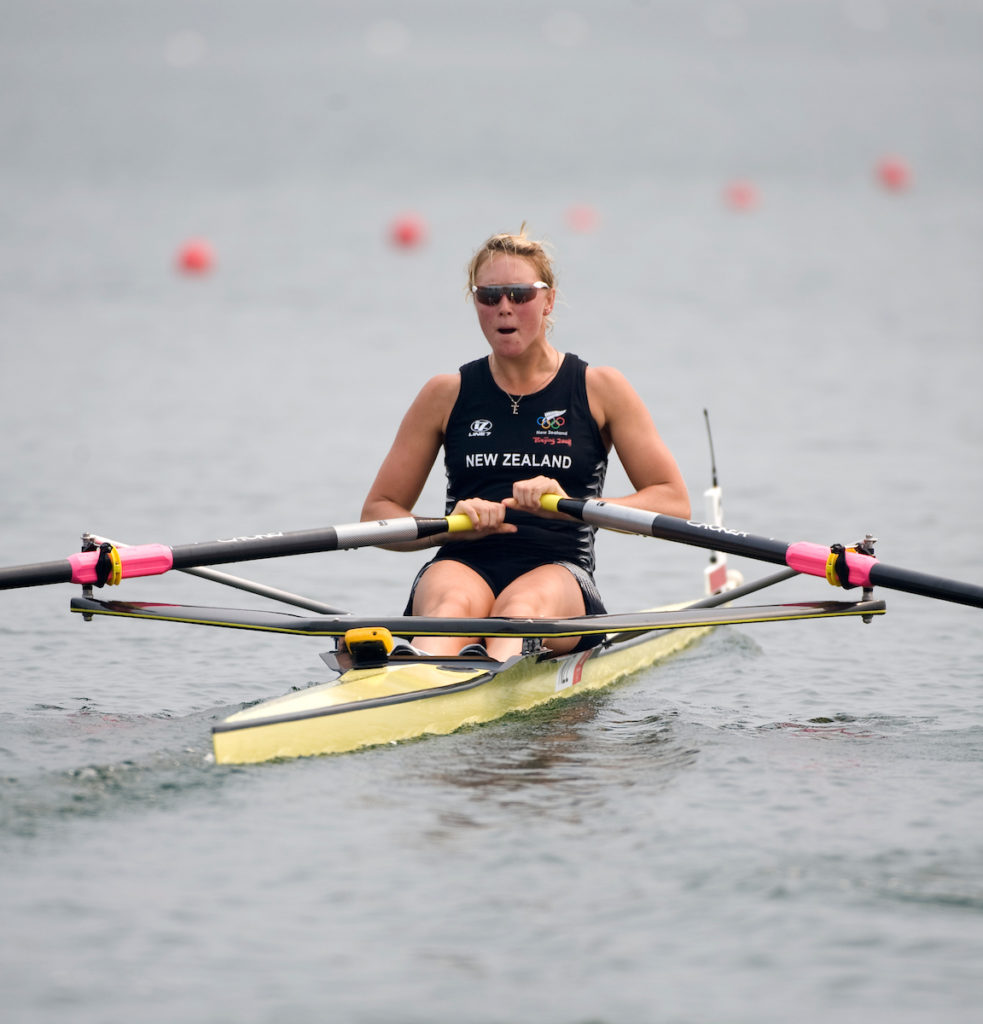
Emma Twigg at the 2008 Olympics.

In London, Twigg finished fourth. At the start of the 2016 cycle, Twigg took second at the 2013 world championships, and then came back for the 2014 season and dominated. She won all three world-cup events and then topped her undefeated season with a gold medal at the 2014 world championships.

After that year, Twigg, seeking a change before the next Olympics, enrolled in the FIFA master’s program, and could not compete for a spot on the New Zealand team the following season. After earning a place in 2016 at the Final Olympic Qualification Regatta, in Lucerne, Switzerland, Twigg went to Rio, and finished fourth again. Dejected, she retired and went to work for the IOC.

Pandemic Interruption

With her passion for the sport and racing “reignited” at the 2018 Winter Games, Twigg made plans to race during the 2019 season and was hoping to build a foundation for competing for a podium spot in Tokyo. Her efforts took her back to the top of the contenders’ pile. But Covid iced Twigg’s training and racing plans for the 2020 Olympic year when FISA canceled the international racing schedule, followed by the Olympic postponement.

As uncontrollable community spread began overwhelming hospital systems around the world, New Zealand, an island nation, had already closed its borders and shut down the country entirely. Its stated policy was not one of containment, but elimination. On March 26, the government ordered residents to stay inside. Only essential workers were allowed to leave home.

With closed borders and a six-week complete lockdown, new cases of Covid-19 declined rapidly, and New Zealand began easing stay-at-home restrictions while keeping its borders closed. By May, the country had effectively ended community spread, and on June 8, the government moved to a level-one alert from the level-4 shutdown, and on-water training resumed.

When it became clear that the Covid-19 outbreak was going to force postponement of the 2020 Games until 2021, Twigg reset her schedule and settled in for another year of training. The Tokyo Games would be her fourth, and Twigg, 33, still planning on competing, took it in stride.

“I had planned on doing another season after Tokyo, with a little bit of a break afterward. I had some pretty cool things planned for the end of this year. In terms of the impact on my life, it wasn’t huge. But as the lockdown progressed, it became a reality that we were over a year away and that we were looking at a Games that, even now, are still are pretty uncertain.

“There was definitely a period during that lockdown time when I was really struggling to motivate myself, but, luckily, our country has done a great job of containing the virus, and we were back on the water within six weeks or so, which was huge because the lockdown certainly taught me that I was not a big fan of the erg. I loved to row and I loved to be on the water, so getting back in the boat was pretty awesome.

“Since then, I’ve just sort of built back into things and restructured this year, and next year I hope I’ll be better off in the long term.”

Twigg, who has never trained in New Zealand through the winter, has been surprised by how pleasant the weather can be.

“I had all these visions of it being freezing cold and windy and pretty miserable. But to date, we’ve had some really nice weather, and I’ve quite enjoyed the flat water we sometimes get.”

In fact, she was enjoying conditions so much that when the rest of the national team took a four-week break, she stayed and continued training with Mahe Drysdale.

“Mahe and I decided we would take our break a little bit later in the year. So that was also nice, just the two of us training out of the national training center. But now we’ve got the full squad back, and that time apart has made me realize that what we’ve got going is pretty awesome in terms of having training partners and having girls pushing me every single day and making it a competitive environment, because when you are trying to do things by yourself, it can be a little bit taxing on the motivation.”

Twigg has also been enjoying everyday life and her marriage. Her frequent posts on Instagram reflect her desire to take a step back from training and, well, just have fun. She has posted images of herself from her backyard, where she’s dancing, from a golf driving range with family, and from the stunning vistas she has visited. Her posts also reflect her resolve to use her celebrity to be a voice for gay athletes and to support social-justice causes.

“It’s been an organic thing, something over time. I’ve realized the impact athletes can have. Even if it’s just one or two people who are touched in a positive way by what I say or do, that would be a win for me.

“It has taken a long time to be comfortable talking about my sexuality openly. I wanted to be known as Emma the amazing rower before I was Emma the gay rower. Now, coming back to the sport, I feel like I can have a real impact on some people’s lives and bring awareness to what I have thought as being really normal, but I know isn’t for many people around the world.”

Looking Ahead

If Twigg began her push for another Olympics with a sense of unaccomplished dreams, it’s not apparent in how she talks now about Tokyo and her fourth attempt at reaching the medal stand.

“It’s just another step in the story really,” she said. “My career has been full of ups and downs. I’ve also had some very high highs as well, and a lot of success, and I can look back now with a lot of pride, which I couldn’t a few years ago.

“I was really looking forward to this one, especially since I had spent some time working in Europe at the International Olympic Committee. I have a huge bunch of friends over there who are working tirelessly to put these Games on, and I know the amount of effort that has gone into it from their side.

“So seeing it from a different perspective, and a different way, has excited me to go over and compete and to link up with all of them and also to continue doing what I love doing.

“The time off after the Rio Games, and the result, made me realize that it’s not about the medals. Don’t get me wrong: It would be an amazing feeling to be at the top of the podium, but at the same time, what I didn’t appreciate was the journey and being able to get up daily, to try to be better, and to do something I love. I know that it’s a very limited time in my life.

“The time off after the Rio Games, and the result, made me realize that it’s not about the medals. Don’t get me wrong: It would be an amazing feeling to be at the top of the podium, but at the same time, what I didn’t appreciate was the journey and being able to get up daily, to try to be better, and to do something I love. I know that it’s a very limited time in my life.”

-EMMA TWIGG

“If Tokyo means that I achieved my dream of an Olympic medal, then awesome. But also, at the same time, just being there and experiencing it is a different perspective for me.”

And if Tokyo doesn’t happen?

“It’s a bridge I’ll cross when I come to it. If I wake up in the morning and still believe I can be better and stronger and want to keep doing it, then I don’t see why I couldn’t stay through the next cycle. 

“I look at Sanita Puspure [2018 and 2019 world champion], who is 39, and what she has done in her late 30s. Historically, there have been many examples of women in their mid- to late 30s being successful at that level.

“I really don’t see age as a barrier. It’s got to be something that I still see value in, and I still love and can support my family with. There’s a whole number of things, but one thing this year has taught me is you can’t predict anything.”