Home Blog Page 21

Henley Royal Regatta Underway

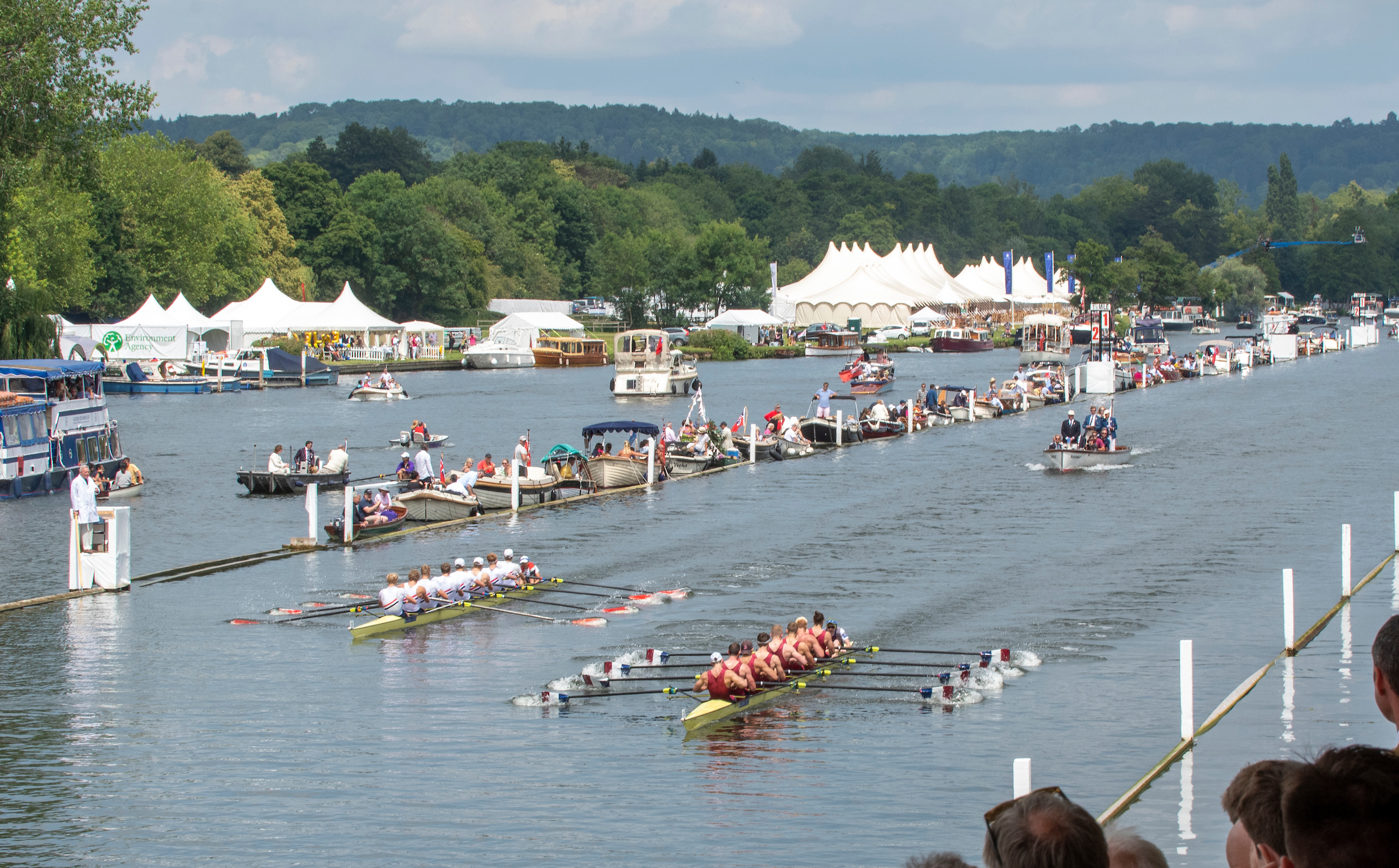
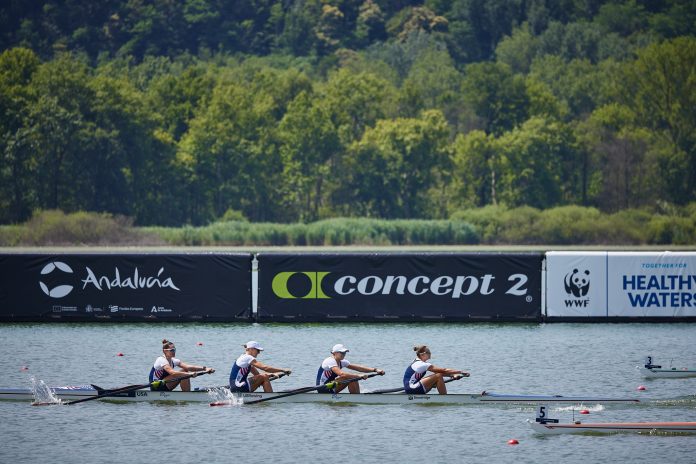
Henley on Thames, England, United Kingdom, Sunday, 07.07.19, Oxford Brookes University A (foreground) and Hollandia Roeiclub, Netherlands, NED, (background), passing Stewards' Enclosure in the Final, of The Ladies' Challenge Plate,, Henley Royal Regatta, Henley Reach, [©Karon PHILLIPS/Intersport Images] 13:16:58 1919 - 2019, Royal Henley Peace Regatta Centenary,


Henley Royal Regatta has begun, with livestream available on YouTube. The most prestigious regatta in the world draws more than 300,000 spectators each year, and boasts over 400 races across six days of single-elimination dual racing on England’s River Thames.

The Oarsman Award Finalists Named

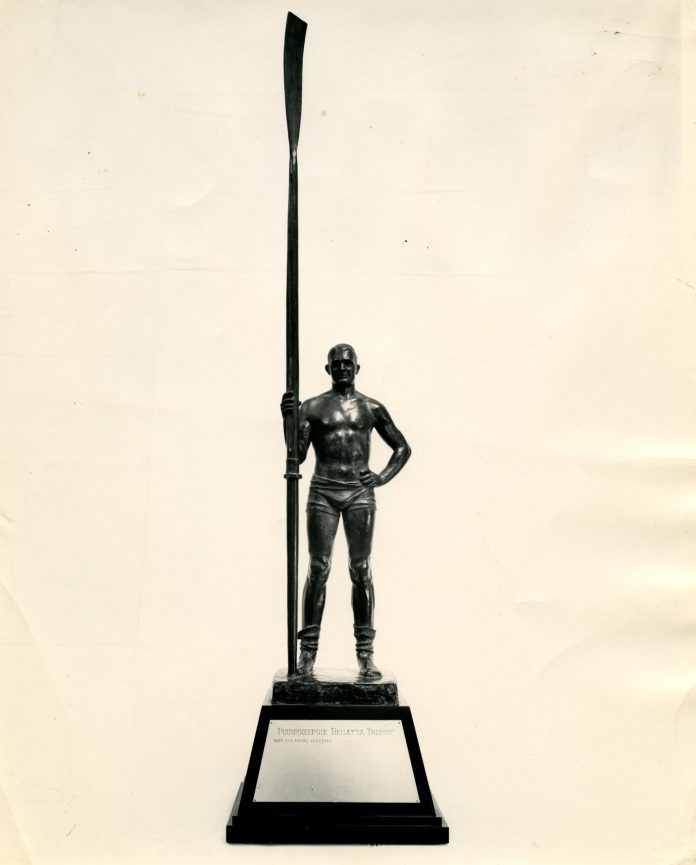
Three men will be named winners of The Oarsman, a new award meant to emulate the Heisman Award, one each from men’s Division III, the lightweight league, and the Division I heavyweight league.

Finalists for the Division III award are Tufts University’s Max Landers, Trinity College’s Jack Carr, and Williams College’s Owen Maier. Lightweight finalists are MIT’s Marc Rizk, Dartmouth College’s Ryan Tripp, and Harvard University’s Brahm Erdmann.

The heavyweight finalists are Princeton University’s Patrick Long, Brown University’s Oliver Page-Kuhr, University of California-Berkeley’s Frederick Breuer, University of Pennsylvania’s Sam Sullivan, University of Washtington’s Logan Ullrich, Harvard University’s Gabriel Obholzer, Dartmouth College’s William Bender, and Syracuse University’s Lachlan Doust.

Ballots were distributed to head coaches of Intercollegiate Rowing Coaches Association (IRCA) head coaches, former coaches, rowing media members, Olympic medalists who competed in the IRA, and team captains of recent IRA winning teams.

Winners will be announced Friday, July 11.

U.S. Crews Earn Three Medals at Lucerne World Rowing Cup

The U.S. crew of Alexandria Vallancey-Martinson (bow), Camille Vandermeer, Azja Czajkowski, and Etta Carpender (stroke) rowed through Australia in the second half of the race to win gold in Lucerne. PHOTO: Stewart Cohen.

U.S. National Team crews won gold, silver, and bronze medals at the second and final stop of the World Rowing Cup in Lucerne, Switzerland. The U.S. women’s four won gold over early-leading Australia, the women’s eight won silver, and the men’s quad won bronze.

“We did a really good job of executing our plan, just staying internal,” said Azja Czajkowski of the U.S. four, which also raced as part of the women’s eight. “We just trust each other a lot.”

The men’s quad’s medal was the first for the U.S. in the World Rowing Cup event since 2014. U.S. Olympic single sculler Jacob Plihal joined Andrew Leroux, Cedar Cunningham, and Christopher Carlson in the quad, which also doubled up with the sixth-place U.S. men’s four to finish fifth in the final-only eights race.

The Lucerne regatta completed a successful training and racing trip for the U.S. National Team, as USRowing’s CEO for high performance Josy Verdonkschot now returns to the U.S. to train and select crews for worlds trials, August 1-3 on Mercer Lake, New Jersey. The 2025 World Rowing Championships are September 21-28, outside of Shanghai.

“Great to have some racing to see where we are and test some combinations,” said Verdonkschot.

Romania’s Olympic-champion women’s eight won at Lucerne, as did the German men’s eight, marking a return to the top for Germany. Recent University of Washington national champion Logan Ullrich jumped in the single after the IRA regatta and won at Lucerne.

“I dreamed about this for years,” said New Zealand Olympian Ullrich. “I didn’t think it would come that quick in my sculling career. I’m just blown away.”

Great Britain’s Lauren Henry won the women’s single in Lucerne. Henry also won the European Rowing Championships and the Varese stop of the World Rowing Cup.

Romania topped the medal table in Lucerne after winning three gold, two silver, and one bronze medal. Overall, Great Britain won the 2025 World Rowing Cup.

New Georgetown University Boathouse Site Established by Complex Land Swap


By Terry Galvin

Georgetown University, which has had a rowing team for nearly 150 years and has worked on building a boathouse on the nearby Potomac River for at least 50, has secured riverfront land for one.

The agreement announced June 10 between the university, the National Park Service, and the District of Columbia follows decades of work with the overlapping jurisdictions that control parts of the Potomac waterfront to agree on a location and a somewhat complex land swap to make it available.

The agreement shifts control of four parcels of land on the district’s side of the river:

1 — The university will donate one parcel to the National Park Service to allow uninterrupted use of the Capital Crescent Trail.

2 — The Park Service will transfer control of two parcels at the base of the Francis Scott Key Bridge to the District.

3 — The District will transfer one of those parcels, one just west of the bridge, to the university for a boathouse.

4 — The District will develop the fourth parcel involved in the agreement, on the east side of the bridge and adjacent to the existing Georgetown Waterfront Park, to improve public access to the Potomac River and to the Capital Crescent Trail.

The boathouse will serve the university’s men’s and women’s rowing teams, giving them a home of their own for the first time since an early one was washed away by a flood in the late 19th century. For decades the teams have been based in the Thompson Boat Center (TBC). TBC, a mile west on the river from the Key Bridge, is also where the crews of George Washington University, 13 high schools, and two master’s programs store their equipment and launch. The university pointed out that its teams’ move from TBC will provide more space for others there.

“This collaborative effort, which has been underway for decades, will create a special space for the Georgetown rowing community and will usher in a new era for public access to the Georgetown waterfront,” Robert M. Groves, interim president of Georgetown, said in a news release.

Planning, design and permitting work will follow now that the site has been secured.

TBC and the parcel west of the bridge, where the new boathouse will be, are operated by a Park Service concession, Boating in DC, which rents out kayaks and other small craft without motors. The concession to be displaced by the new boathouse will move to a nearby location to be determined later, according to a university statement.

Another neighbor of the new boathouse, the 156-year-old Potomac Boat Club, welcomes the boathouse development, which will be on the other side of three townhomes from PBC, boat club president Lena Wong said.

Georgetown Coach Emeritus Tony Johnson is a PBC member, she pointed out.

“We have supported Georgetown University and Tony’s vision of getting the school’s boathouse for well over 40 years,” Wong said.

The Washington Canoe Club, built in 1905, is about 400 feet east of the PBC.

The new Georgetown University facility and a planned boathouse on the Arlington side of the river both will help relieve the pressure on facilities caused by the area’s growing population and popularity, Wong said.

In addition to housing the Georgetown crew teams, the new boathouse will provide rowing programming for the local community. The public will be able to use its docks to launch their own canoes, paddleboards and kayaks, according to the university.

The boathouse’s construction cost will be funded by private donations, the university said.

Henley Royal Regatta Draws Another Record Field

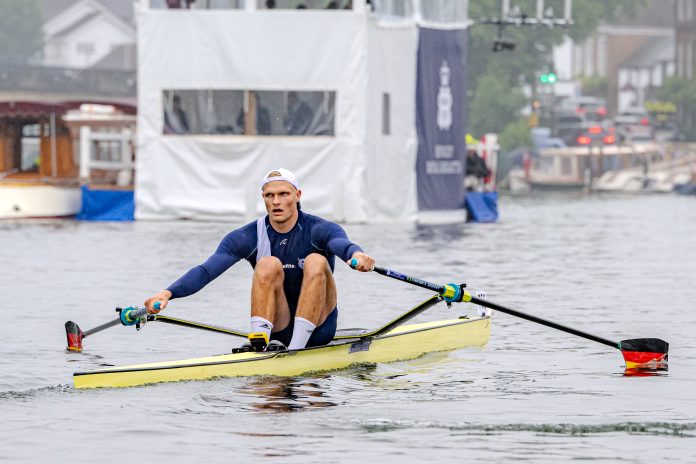
Olympic champion Oliver Zeidler returns to Henley Royal Regatta, attempting to win his fifth Diamond Challenge Sculls title. PHOTO: Lisa Worthy

Henley Royal Regatta, rowing’s grandest event, has attracted 768 total entries—four fewer than last year, but a record number from the UK—to the six-day regatta featuring single-elimination racing in front of huge crowds on England’s River Thames. This year’s regatta introduces a new women’s event, the Bridge Challenge Plate, for “intermediate” women’s eights, crews not quite national-team level, but too good for the university-level event.

“This new event reinforces Henley Royal Regatta’s commitment to achieving gender parity on the water,” said first-year regatta chair Richard Phelps. “This provides a much-needed bridge between the top premier events and our club/student events.”

The two most recent Olympic champions in the men’s single, Olli Zeidler (Paris, 2024) and Stefanos Ntouskos, (Tokyo, 2020), will race in a packed Diamond Challenge Sculls field that also includes Olympic medalists Melvin Twellaar, Simon Van Dorp, and Logan Ullrich. In the Princess Royal Challenge Cup for women’s singles, Lithuania’s Viktorija Senkuté, who won bronze in the single in Paris, headlines the field that includes Great Britain’s Lauren Henry, who just won the World Rowing Cup event in Varese, Italy.

College, club, and student rowers from 44 U.S. and seven Canadian clubs, including elite scullers, will race across the regatta’s 27 events, with all finals on Sunday, July 6.

Coxing: Getting Ready for Your Trip

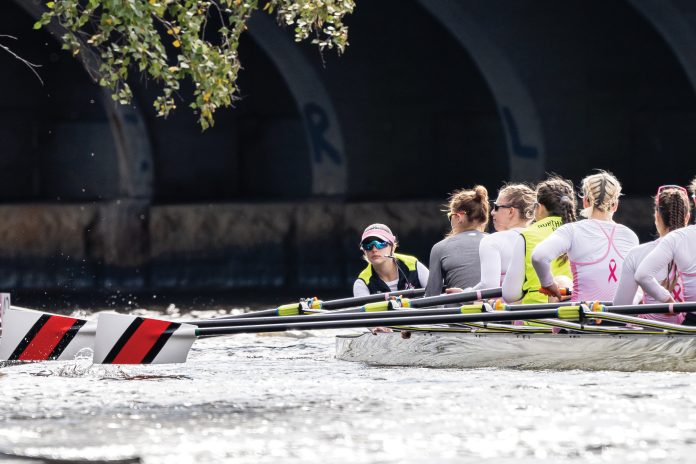
As with everything about coxing, a little preparation goes a long way. PHOTO: Lisa Worthy.


If you’re lucky, you’ll be packing a bag and getting on the water for a training trip or regatta with your team. As with everything about coxing, a little preparation goes a long way.

First, you need to get there with the right gear. Make a packing list so that you have everything you need for days on and off the water. Check the weather; just because you’re southbound doesn’t mean you’ll be basking in sunshine. If it’s going to rain for multiple days, pack enough waterproof layers and shoes that you won’t need to put your own soggy clothes back on. Read your itinerary, and make sure you have enough snacks, sunscreen, and battery charge to get you through the first day or two, since you’ll probably arrive and go straight to rigging and rowing.

Training camp means that you might be going from a relatively straightforward body of water to one with a lot more places to go—and more places to make a wrong turn.

“Look at a map. Know where north, south, east, and west are and know the traffic patterns in general,” advised Tessa Gobbo, the Loyalty Chair for Women’s Crew at Brown University (and 2016 Olympic gold medalist). “Everybody’s a little unnerved on a new body of water. It’s your job to know what’s happening. So look at a map.”

Use Google Maps to orient yourself with an overhead view (it’s good to know how the cardinal directions relate to the venue) and Google Earth to help identify some landmarks that you can connect to visually when you arrive. You can get creative here; power lines, buoys, notable houses, and odd flora are all good options.

Mastering the course beforehand allows you to show up every session ready to focus on anything else that might arise. Training trips always bring some adventure. Maybe the launch dies, maybe a pod of dolphins crashes your steady-state row. If you haven’t been in the coxswain’s seat in a little while, you might be feeling a bit rusty. Jump in with both feet.

“This is your time to be there and be involved with everything,” said Gobbo. “Make sure that when you’re around the team you’re ‘on.’”

Be present during practice and give yourself some time between sessions to rest and recover, just like your rowers. While you might not be taking strokes, out on the water your brain is hard at work.

Traveling for a camp can be one of the best experiences you’ll share with your team—flat water, great bonding, and fast rowing in a new environment. But it also can be draining. You’ll spend much of your day on the water, not always in ideal conditions, and a lot of time will be spent in selection. Emotions can run high.

This is a good moment to remember your oversized emotional influence on your team. You can make a tough practice better.

“You can set the tone more than you realize,” Gobbo said. “You want the team to be serious but have a good time? You can be serious but have a good time. You want your boat to go fast on the water? You’re only talking about that boat going fast on the water, not other stuff. It sounds super simple, but it’s so rare that a sport has a designated leader.”

A training trip is an opportunity to get back on the water and set the tone for the coxswain you’ll be this season. If you come prepared, treat your teammates well, and meet challenges with earnest effort, you’ll be on your way to a good spring

Hannah Woodruff is an assistant coach and recruiting coordinator for the Radcliffe heavyweight team. She began rowing at Phillips Exeter Academy, was a coxswain at Wellesley College, and has coached college, high-school, and club crews for over 10 years.

U.S. National Team Crews Head to Lucerne With Four Medals From Varese World Cup

The U.S. National Team women'f four rowed through The Netherlands to win the first World Rowing Cup in Varese, Italy. PHOTO: Stewart Cohen.


Twelve U.S. National Team entries will compete at the second, and final, World Rowing Cup in Lucerne, Switzerland, from June 27 to 29, after an impressive showing at the first.

U.S. National Team boats earned four medals at the World Rowing Cup in Varese, Italy. The women’s four won gold, Jacob Plihal won silver—his first World Rowing Cup medal—and the women’s eight took home silver, all on Sunday, after the PR3 mixed four with coxswain took silver on Saturday.

The USA1 entry of Camille VanderMeer and Olympians Kate KniftonTeal Cohen, and Azja Czajkowski trailed a Dutch four through the first half of the race before taking the win. The USA2 entry of Etta Carpender, Alexandria Vallancey-Martinson, and Olympians Jess Thoennes, and Charlotte Buck finished fifth.

The two fours combined into an eight coxed by Olympian Nina Castagna to finish second to the Brits. Level with Australia and trailing both Germany and Great Britain through the first half of the race, the U.S. crew closed the gap to two seconds at the line, leaving Australia (third) and Germany (fourth) behind. Italy’s women’s eight missed catching Germany by .01 second. China finished sixth of the six total entries.

Plihal, who won the C final and recorded the fastest time ever for a U.S. single sculler at the Paris Olympics last summer, chased Olympic bronze medalist Simon Van Dorp down the course in the grand final after winning his heat and quarterfinal races. Plihal, the Northeastern alum, lost to Van Dorp, the Washington alum, by three-quarters of a second in the semi. Van Drop extended the margin to two seconds in the final. But Plihal, who didn’t have the full four years to concentrate on the single going in to Paris, has narrowed the gap to the top impressively so far in the early run-up to LA 2028. This spring, he told Rowing News he was looking forward to concentrating on the single and seeing what he could accomplish.

Any budding rivalry will have to wait, as Plihal is entered to race in the quadruple sculls and, combined with the four, in the eight at Lucerne.

Simon Van Dorp (left) and Jacob Plihal await the awards ceremony after finishing one-two at the World Rowing Cup regatta in Varese, Italy. Van Dorp was a captain at the University of Washington and Plihal was captain of the Northeastern University crew. PHOTO: Steward Cohen.

“Always good to keep people guessing,” said U.S. National Team boss Josy Verdonkschot, who is leading the coaching staff of new hire Fiona Bourke, women’s coach Jesse Foglia, and Olympic-champion men’s coach Casey Galvanek on the three-week training and racing trip that will not include Henley Royal Regatta, calling it a “nice opportunity to try out some stuff.”

The Netherlands, with three golds and eight total, topped the medal table at the Varese World Rowing Cup, but will not compete in Lucerne. Great Britain, also winners of three golds, was second with five total and will mostly skip Lucerne but see Dutch and Australian competition at Henley. The U.S. was seventh on the Varese medals table but fourth in the World Rowing Cup (not all medal events count).

The year following an Olympic Games is typically a time for elite rowers and national teams to try new things, and is the only year the World Rowing Championships are held outside of Europe. This year’s worlds will be held September 21-28, outside of Shanghai, China.

New Documentary Tells the Story of Champion Paraplegic Rower Angela Madsen

Angela Madsen, a paraplegic who celebrated her 60th birthday while trying to row alone across the Pacific. Madsen died during the 2020 attempt when she was nearly halfway to Honolulu. PHOTO: Courtesy of Row Of Life Films.

Editor’s Note: This article was updated on July 9, 2025 with new information.

By Terry Galvin

Thanks to a new documentary, we can know intimately the story of four-time World Rowing Championship medalist and ocean rower Angela Madsen, a paraplegic who celebrated her 60th birthday in 2020 while trying to row alone across the Pacific. Madsen died the next month when she was nearly halfway to Honolulu.

The 82-minute film Row of Life, which premiered June 19, was made because Madsen, an American and Marine Corps veteran, asked Soraya Simi to make a record of the effort, Madsen’s second solo trans-Pacific attempt. Simi at the time was 22 and had graduated from the USC film school the year before. A short documentary Simi had made of 40 days sailing on a large educational vessel had piqued Madsen’s interest.

But what Simi directed in her first feature documentary is a polished, beautifully shot and edited work. It premiered at the Downtown Community Television Center’s Firehouse Cinema in New York City, an official Academy Award-qualifying theater.

Among the 10 people who came on board as executive producers for the film is Sue Bird, who formed woman-focused media companies after retiring from three decades in the WNBA.

As the Covid pandemic spiked in 2020, Simi became a part of Madsen’s support team, which consisted almost solely of Madsen’s wife, Deb Madsen. The film shows the Madsens’ weather analyst as an LA television news meteorologist who broadcast forecasts and updates to viewers after becoming interested in their effort.

The budget for a planned 20-minute film was $6,000, requiring Simi to tap every resource a young film-school graduate could scrounge up.

Simi is in front of the camera only a few times. She helped Deb Madsen contact the Coast Guard when Angela stopped responding to texts and calls. She also led the camera crew to the Marshall Islands after they heard that Madsen’s 20-foot boat had washed up on an atoll there months after a German cargo ship had been diverted to recover her body.

Promises kept for an amazing woman

The film is an unsparing look at a woman with a matter-of-fact approach to challenges that was shaped by hardships overcome by toughness and drive.

Madsen looks at the camera in a pre-departure interview, her face and shoulders barely fitting in the frame, when she says, “Someone once told me I was born with a resilient trait and I said, ‘No, I’ve just had more opportunity to practice than other people have.’

“It’s a capability we share, as humans — to be capable.”

The first words heard in the film are Madsen’s, spoken in voice-over of an aerial shot of her rowing her ocean boat across the screen.

“I’ve had a vision of getting to the finish line — I get to claim victory, and it’s documented.”

Simi and Deb Madsen have made sure two parts of that dream came true.

Simi overcame huge obstacles to finish the film, as she promised Angela she would do.

And near the end of the documentary, Angela Madsen’s granddaughters and Deb Madsen are on a sailboat carrying a box of Angela’s ashes into Honolulu Harbor, the planned destination of her epic row.

Deft editing of video from many sources

Biographies can drag as slowly as a trans-ocean row crawls across the map. But this film deftly intercuts background, key information and dramatic recreations of moments during her Pacific crossing. The pacing varies and never seems hurried, though most scenes last only a handful of seconds.

Archival footage recounts Madsen’s rows with teammates twice crossing the Atlantic, once crossing the Indian Ocean, and once circumnavigating Great Britain. Interviews with veteran ocean rowers Chris Martin, Roz Savage and, later, Cyril Derreumaux, put the endeavor in context. Other video clips quickly summarize Madsen’s achievements as a para-athlete and the increased “level of difficulty” of her life caused by being dependent on others and a wheelchair.

Shown rowing at one point, Madsen takes off her top, complaining that she gets rashes because of the scars left when she lost both breasts to cancer in 2002. Her spinal-surgery scars and a tattoo are visible on her lower back.

Savage explains that a parachute drogue anchor is used in storms to hold the boat bow into the waves when seas are high, information that becomes deadly relevant later.

Madsen is shown training on an erg in the middle of the night as her voice relates that the rods in her back hurt and interrupt her sleep. We see her packing, checking expired freeze-dried food, and being launched at night from a trailer at a Marina del Rey boat ramp to begin her solo voyage.

Two losses threaten to end film project

Simi later says that Angela’s death almost made her quit the project.

The loss of all the at-sea video Angela had taken made the documentary seem impossible.

Simi and her small crew had set up Madsen’s boat to make her “an autonomous filmer.”

In that time before high-bandwidth, individual satellite communications became affordable on the project’s tiny budget, video could not be uploaded to Simi. And when Simi traveled to the atoll in the Marshall Islands to examine Madsen’s abandoned boat, she found that it had been stripped of cameras, storage cards and any hope of recovering video. She stayed a month searching in the Marshall Islands without success.

Instead, to illustrate what life alone on a small rowboat at sea was like, Simi and her production team used shots of her 2013 unsuccessful solo Pacific crossing attempt and other rows. The sometimes shaky clips of a passing whale, a sea turtle, a ship, a moonlight trail of reflection to the horizon, are the background to voice recordings and recreations of text messages from the fatal 2020 attempt.

“We re-created the row as precisely as possible based on what actually happened while Angela was at sea in 2020,” Simi said in an email interview.

Video graphics show her course on a map and recreate text conversations between Madsen, her wife and others.

Madsen voiceovers during an on-screen storm tell of her injury during a Marine Corps women’s basketball team practice, the operation that put her permanently in a wheelchair in 1993, her being abandoned by her live-in girlfriend and evicted when she was released after three months in the hospital, and becoming homeless and suicidal before changing her life.

“I learned how to stop being adrift and angry, and learned how to navigate,” she says to the camera.

A record of achievements

In addition to winning a silver medal in the single at the first ever international event for adaptive rowing, the 2002 World Rowing Championships, she won World Rowing gold three times in the double with fellow American Scott Brown. She and Brown represented the U.S. in the first appearance of adaptive rowing at the Paralympic Games, in Beijing in 2008. She also won a bronze medal in the shot put at the 2012 Summer Paralympics in London.

In 2009, Madsen and Helen Taylor of the U.K. were the first women to row across the Indian Ocean, doing so in a team of eight. She was part of two teams that rowed across the Atlantic.  In 2014, she and Tara Remington of New Zealand rowed from Long Beach, Calif., to Honolulu. In 2013, her first attempt to row solo from California to Hawaii ended by being hoisted into a Coast Guard helicopter after only nine days because of heavy seas. That time, her boat was thought lost until a fishing boat spotted it and returned it to her.

She was a 14-time Guinness World Record holder.

She wrote a memoir, Rowing Against the Wind, published in 2014. She also was the subject of one in a series of half-hour AT&T Original Documentaries.

USRowing posthumously awarded her the 2022 Isabel Bohn Award for “achieving measurable success in expanding rowing opportunities for those with physical and intellectual disabilities.”

She received the Athletes in Excellence Award from The Foundation for Global Sports Development in recognition of her community service efforts and work with young people, including founding the California Adaptive Rowing Program.

After seven days of showings at Firehouse Cinema, Row of Life will be shown at select theaters. It has no distribution or streaming deal yet.

A screening and a following panel discussion were held June 27 at El Camino College in Torrance, Calif., in conjunction with Angel City Sports’ 11th annual Angel City Games.

Angel City Sports, which promotes adaptive sports and mentors athletes, will hand out its Angela Madsen Courage Award, which honors a veteran or first responder who embodies Madsen’s life and legacy. Madsen coached rowing, shot put and javelin parathletes for Angel City Sports from its founding in 2013.

More information on the film is available online.