Home Blog Page 18

Rowing News Interview: Wyatt Allen

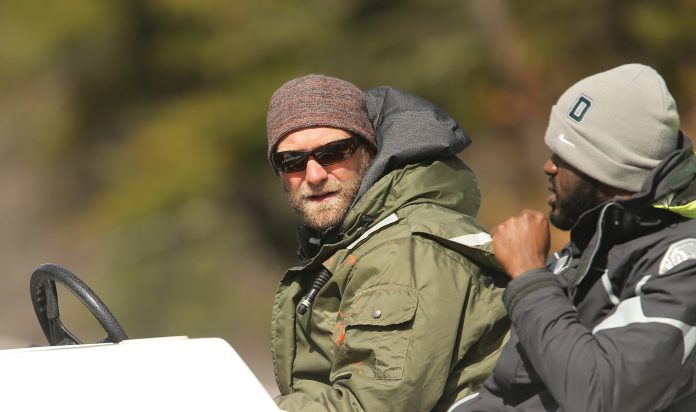
Dartmouth heavyweight coach Wyatt Allen. PHOTO: Justin Lafluer.


Olympic champion Wyatt Allen knows a thing or two about developing rowing potential into rowing victories, having lived the experience as an athlete before becoming a coach.

Allen learned to row in the club program at the University of Virginia, and his prowess earned him the opportunity to row with U.S. National Team aspirants training at the time under Kris Korzeniowski and Mike Teti in Princeton. Soon, he was assigned to the sculling group to mature before being fed into the meat grinder of selection for the eight and four, the priority boats.

He developed so well, as both a sculler and sweep oarsman, that he won the Diamond Challenge Sculls at Henley Royal Regatta in 2005, the year after winning Olympic gold in the U.S. men’s eight, an event in which he won bronze at the 2008 Beijing Games.

Allen’s coaching career began at the University of Washington in the 2008-09 season. There, he was an assistant on the IRA-winning staff, part of UW’s three-boat sweep of the national championship. He then moved down to Berkeley to coach the Cal freshmen under his Olympic coach Mike Teti, and again his crew won the IRA.

After that, more job offers came in, and Allen took the head coaching job at Dartmouth, a struggling program at the time. “Dartmouth is where good coaches go to become mediocre,” a competitor told him. This year, Allen’s Big Green beat that coach’s varsity multiple times during an undefeated regular season that culminated in the Dartmouth varsity heavyweights’ winning a silver at Eastern Sprints, bronze at the IRA, and advancing to Saturday’s semifinal of the Ladies’ Challenge Plate at Henley Royal Regatta.

For all that and more, Allen was honored by his peers as the 2025 Intercollegiate Rowing Coaches Association Coach of the Year.

Rowing News: You’ve been the head coach of the Dartmouth heavyweight program for 11 years and had some success along the way, but 2025 was your best year yet, after a good but ultimately disappointing year last year. What were the differences this year that led to the undefeated regular season, medals at Sprints and the IRA, and an impressive run at Henley?

Obviously, it starts with having a talented group of guys returning for the year. Last year was a disappointing end for the guys in the 1V, and the returners out of that boat came back this year and responded to the disappointment in just the way you would hope—by doubling down on their training and approach to this year. We also had a strong core return out of a medaling 2V and a fifth-place 3V, which created a deep competitive group this year.

Senior leadership from guys like Munroe Robinson, Julian Thomas, Miles Hudgins, and Sammy Houdaigui was a huge piece of the year. And then having Billy Bender return from the Olympics and add his leadership and rhythm in stroke seat was critical as well.

Rowing News: You were a big oarsman, winning the Henley Diamonds in the single and Olympic gold in the eight, you run a big program that races five eights, and your varsity this year was a boat of really big oarsmen. What’s the Wyatt Allen “big” approach all about?

I don’t know if there is an actual “big” approach I follow or subscribe to. I do believe in the importance of carrying a big roster in terms of depth and competitiveness. There is no substitute for internal competition and the way that can raise the level of performance for a group. It also helps a program be more consistent year to year.

When I arrived in 2014, it seemed that Dartmouth would have a good recruiting class or two, then the talent would fall off for a year or two, and then pick up again. We really made an effort to stabilize things and become more consistent, starting with our recruiting, and hopefully leading to our on-the-water performance.

In terms of the physical size of our rowers, it really depends year to year. This year’s 1V crew was tall and physical. I suspect that next year we will be smaller physically. I remember Kevin Sauer at Virginia saying to me as an undergrad that “the oar really doesn’t care how tall you are; it cares only about the force you’re able to generate.” That’s an oversimplification, of course, but it’s stuck with me a long time.

Rowing News: Your former assistant John Graves is now the women’s head coach at Dartmouth and has led a remarkable resurgence of that program. You seem to have a successful working relationship with lightweight coach Trevor Michelson, who just won silver at IRAs. How much does a high-functioning boathouse environment contribute to one squad’s success, and vice versa?

It’s a total cliché, I know, but this year was a perfect example of a “rising tide raises all ships.” It was great to come down to the boathouse each day and see all three programs excited and motivated by the prospects in front of them. And it was special to have the lightweight and heavyweight 1Vs win medals within a few minutes of each other at the IRA.

On the coaching front, I’ve learned a ton from Trevor and John, and the same is true of the way our coaching staffs work together. They’re all friends and willing to share and work together.

Rowing News: IRA and U.S. National Team watchers complain about the predominance of international recruits in top college crews, but your varsity had six Americans. Are you doing something different than your top competitors, or did it just work out that way?

We’re not doing anything that different from what our competitors are doing. Every year, we go out and recruit the best group we possibly can. For us, that has typically been two or three internationals and the rest domestic, which creates a nice balance to our roster.

Rowing News: What do you wish a younger you knew early in your coaching career?

I would describe myself early in my career as a “more is always better” kind of coach. That came out of coaching freshmen, where you can get away with that. They’re young, durable, and you have them for only one year.

I’ve learned to pace the year better the longer I’ve coached. Don’t get me wrong: I believe you have to train a lot and hard. But by being a little more strategic in how many times we ask them to go all out in a week, for example, we’ve been able both to get more out of our guys and to make it more sustainable for them over a four-year period.

Rowing News: What do you wish the rowing community knew about what you’re doing at Dartmouth?

Two things, and they’re related.

One: sculling. We have a big group of our guys rowing in singles and doubles a big part of the fall, and often in the spring. There’s no better place for small-boat rowing than the Connecticut River in the fall, and we do everything we can to take full advantage of it.

Two: We are proud of the number of guys who are pursuing rowing at the highest level when they graduate. We just had five current or recent grads take part in the U.S. National Team senior camp. It sounds like we may have two athletes selected to this year’s eight. And we’ve had a pretty consistent group of guys training with Mike Teti at California Rowing Club.

The sculling has helped create skills and opportunities for the guys when they graduate, and it’s very cool that these guys have something left in the tank after four years, both in terms of energy and passion for the sport.”
CURRENT ISSUE OF THE MAGAZINE

From The Editor: Purposeful Conflicts of Interest

The U.S. men’s U23 four wins in Poland at the World Rowing Under 23 Championships. PHOTO: Lisa Worthy


If you work in the sport of rowing and you don’t have conflicts of interest, you must be new.

From our school crews to our summer clubs to our universities to our camps, sculling groups, and erg gyms, anyone who does anything in our sport beyond just rowing the boat will be tasked with working for one set of interests while having a personal conflicting interest. A situation in which the aims of two or more parties are incompatible is the definition of a conflict of interest.

It also describes a regatta.

We all want our crew to win; only one can. But our greater interest, fundamental to the integrity of the sport, is that the fastest crew wins. By holding themselves to that greater interest, organizers and volunteers who are alumni and supporters of participating crews can still work at regattas and make them fair. The desire for our crew to win and the principle that winning means being the fastest crew is rowing’s confluence, not conflict, of interest.

When we asked Dotty Brown to write about Ed Woodhouse’s new book about legendary oarsman and coach Joe Burk for the September issue of the magazine, she initially disqualified herself because she had helped Woodhouse and promoted his book.

But our greater interest is to inform the rowing community of the great tale of Joe Burk, who coached Harry Parker and espoused sculling while putting together the fastest eights in the last century (a formula very much in contemporary favor).

So Brown’s piece (page 32 in the September issue) isn’t impartial but it serves our readers by acquainting them with an inspiring rower and coach, thereby enhancing their enjoyment of our sport.

As a former captain of the Dartmouth lightweights, I bleed Green, and in assigning the two features in the September issue (as well as writing one of them), I lined up blatant conflicts of interest.

My interview with Dartmouth coach Wyatt Allen tells the story of his quarter-century journey from club novice to Olympic champion and now the IRCA Coach of the Year in a way I hope inspires other athletes and coaches to continue their own rowing journeys.

In Andy Anderson’s celebration of the heights lightweight rowers have reached recently, we recognize the excellence achieved within a segment of our sport that hasn’t let lost support at the Olympic level slow it down on collegiate and international racecourses.

Serving our community with these stories is the confluence, not conflict, of our interests.

Royal Canadian Henley Regatta

Notre Dame, St Catherines Rowing Club, Buffalo Rowing Club, and OKC Riversport line up for the second heat of the men’s U23 lightweight four at Canadian Henley. PHOTO: Connor Schafer.


The 141st Royal Canadian Henley Regatta returned to pre-Covid levels of popularity this year with over 2,000 entries from 129 clubs.

“It’s good to see that we’re back,” said regatta chair Peter Scott. “We had some fantastic weather. We were cranking them out every six minutes. We can put three on the course at a time.”

The regatta needed that capacity, and more, as the North American rowing community flocked to St. Catharines, Ont. for the culminating experience of summer racing on Martindale Pond.

Rowing Canada composite crews took first and second place in the Brock University 25th Anniversary Trophy race for women’s championship eights.

“It was a good experience for our squad,” said Canadian National Team head coach for women, Tom Morris, “one we hope to continue into the future seasons.”

California Rowing Club won the Craig Swayze Memorial Trophy for men’s senior eights, ahead of a composite crew of Canadian athletes, a pair of Wisconsin high-performance eights, and Greenwich Crew. Canadian Henley continues to attract increasing numbers of big American clubs and high-performance camps.

Before Covid, the regatta opened up more spaces to junior crews to meet demand, Scott said, and now the regatta needs to find room in its already packed six-day schedule for increased demand for senior events.

There were “quite a bit of boats on the waitlist,” Scott said, including eight for the under-23 men’s eights.

The regatta can run about 100 races a day, but going from three heats advancing to the final to adding a fourth heat requires two semifinals to set the final, something the regatta couldn’t make work this year.

“A storm changes everything, and it’s taxing on the volunteers to race after 6 p.m.,” Scott said. “We have a solid, steady volunteer group coming back every year. It’s a reunion, one big happy family—really nice to see smiles everywhere.

“We’re proposing a bunch of changes for next year—not sure how many will go through,” said Scott, who mentioned the demotion of lightweight rowing and the introduction of mixed rowing on the international level as trends for the regatta to watch. “We’ll have a discussion over the winter.”

Community Rowing, Inc.’s Simeon John hauled away lots of silverware by racking up three wins: the Anthony ‘Tony’ Novotny Trophy for men’s under-19 singles; the Dave Cornelius Memorial Trophy for the men’s lightweight single dash; and the R.G. ‘Bob’ Dibble Memorial Cup for men’s 64-kilogram singles. John then faced the other way to cox the CRI entry to fourth place in the men’s eight dash.

Results

Future Olympians?

PHOTO: Lisa Worthy.


USRowing held the inaugural Youth Beach Sprint National Championships on Lido Beach in Sarasota, Fla, June 17-18. Ophelia Weiss from Next Level Rowing won the women’s single sculls. In the men’s single sculls, Ronan Maher of Oregon Rowing Unlimited clinched gold. In the men’s double sculls, Nicholas Griffin and Harrison Lee claimed gold, thanks to their explosive speed both on land and water. In the women’s double sculls, powering through the conditions led Elizabeth City Rowing Club’s Emma Mayer and Ella McFadden to win gold.

From The Editor: The Best Views


I didn’t get to Varese, Lucerne, or even Henley this year to see those great regattas in person, but I did spend about a quarter of May in New Jersey witnessing the IRA and NCAA national championship regattas.

For all five regattas, I, like thousands of others, had the best views of the astounding racing, fast times, and remarkable results achieved by some of the world’s greatest rowers.

On both the Cooper River in Camden County and Lake Mercer in Mercer County, you had to be there to appreciate fully how bad the wind and water conditions were—and how well most crews handled them, whether they should have been racing in those conditions, or not. And when you wanted to know what was happening at every point of the racing, all you had to do was look at the huge video screens showing the livestream coverage.

For the European regattas, drones and multiple other camera angles delivered video images even better and more dramatic than you’d see in person and in vivid high-definition clarity. At the World Rowing Cups, drones appeared to fly at, around, and in between the crews as they raced, providing an even better view than that of the coxswains.

From the continued dominance of the Romanian women’s eight at Lucerne to the outrageous and repeated upsets handed out by Finn Hamill at Henley, you could watch, and rewatch, why successful coaches warn their crews about getting overstroked and why the size of the fight in the dog is more important than the size of the dog in the fight.

It’s all possible thanks to the rapid improvements in video coverage, commentary, and digital delivery going on right now in rowing. Never has the myth “it’s not a great spectator sport” been less true.

World Rowing Under 23 Championships Record Entries Racing in Poznan, Poland

U.S. Under 23 National Team spares Pietro Brocca (Northeastern University) and Andrew Soman (University of Wisconsin) at the 2025 World Rowing Under 23 Championships, in Poznan, Poland. PHOTO: Lisa Worthy.


The 2025 World Rowing Under 23 Championships, July 23-27, have attracted record entries in the men’s and women’s eights—14 and 10 countries, respectively—in Poznan, Poland. Germany and Italy have each entered crews in 17 of the 18 events contested, including Para rowing PR3 U23 men’s and women’s single sculls. Nearly 700 athletes from 53 nations will compete over five days of racing.

The U.S. has entered nine crews, including men’s and women’s eights and coxless fours. Canada has entered five crews: men’s and women’ eights and pairs, plus a women’s coxless four.

The University of Texas has 14 student-athletes competing at the under-23 worlds, the most of any NCAA program. The University of Washington men and women combined—men race in the IRA, women in the NCAA—have 15 Huskies, racing for six different nations, at the regatta.

“It’s great to see so many of our athletes racing for their national teams this summer,” Texas head coach Dave O’Neill said. “Texas athletes make up a significant portion of the squad for many countries. They’re racing in a variety of boat classes and will go head-to-head in a few occasions. I wish them all the best and look forward to seeing them on campus next month.”

Racing began on Wednesday, July 23 and runs through the weekend, with A finals on Saturday and Sunday.

Livestream  |  Results

CURRENT ISSUE OF THE MAGAZINE