Home Blog Page 176

2022 Head of the Schuylkill Regatta Underway October 29-30

STAFF REPORTS
PHOTO BY ED MORAN

Approximately 9,000 rowers compete in Philadelphia’s Head of the Schuylkill Regatta, October 29 and 30. Crews from 261 clubs race in 146 events, including 287 high school eights across the novice, varsity, JV, and lower boat events.

Practicing Mindful Visualization for Rowing

BY TAYLOR BROWN
PHOTO BY ED MORAN

Visualization is widely employed by elite athletes and high performers. Michael Phelps, Novak Djokovic, and Lindsay Vonn are among those who praise this tool for preparing mentally. There’s no doubt that visualization can help you attain your goals, but little attention is paid to the potential risks and how to minimize them. 

For visualization to be effective, you must be deliberate about your intention. Most athletes visualize to build confidence in a future situation, but it’s essential to be specific.

You can visualize when you’re learning a new skill to strengthen neural connections. This applies to game play and strategy as well. The brain doesn’t know the difference between reality and something visualized, so the more you rehearse the skill or strategy in your mind, the more automatic your new learning becomes. You can also visualize how to respond in stressful, emotionally charged situations, which builds confidence when you experience those situations in the future. 

If you’re unclear about the purpose of your visualization, the consequences can be counterproductive. For example, when anxious before a race, you may use visualization to reduce nervousness and increase confidence. But that can backfire if it winds up drawing more attention to the very thing you’re trying to avoid. How to prevent this? Engage first in a mindfulness practice, accepting and releasing the thoughts and emotions that are generating your anxiety. Then, when you’re in a more emotionally stable state, undertake visualization with a specific aim. 

Visualization helps by creating more certainty about the future. When you can picture what’s likely to happen, as well as how to respond, it puts you at ease. One drawback: Visualization may create rigid expectations about what the future should be. If you visualize something happening a certain way, you may lack the mental flexibility to accept and adapt if reality fails to cooperate. To minimize this, hold on to your expectations loosely, keep visualizations realistic, and try to imagine how you’ll respond when real life throws a curveball.

There’s a thin line between visualization and anxiety. Like visualization, anxiety is about the future—a feared future dominated by unpleasant emotion. A handy way to distinguish between anxiety and visualization: When you visualize, you look at your thoughts; when you’re anxious, you look from your thoughts. In other words, your thoughts and emotions take over completely, warping your outlook and stoking apprehension. If anxiety begins to surface during visualization, it’s time to take a break or switch to a mindfulness practice to pacify your nervous system. If visualization creates anxiety continually, then it’s not enhancing your performance and you’re better off adopting a mindfulness practice that focuses on staying grounded.

Visualization can certainly facilitate peak performance, but when used mindlessly, it also can incite undue stress and pressure. To get the most out of visualization, use it mindfully and pay attention to whether it improves your rowing. 

Racing on the Nile

BY ANDY ANDERSON
PHOTO PROVIDED

How many of you woke up on Jan. 2, 2021 and discovered that you had been forwarded an article from The New York Times titledRowing the Nile: A Soothing Respite in a Chaotic Metropolis?” Besides mentioning the importance of the Nile to the pharaohs and the belief that the sun was rowed from east to west each day–the Greek myth was that it was driven in a chariot from sunrise to sunset–the article talked about the growth of rowing in Cairo as young Egyptians discover the pleasures of escaping the madding crowd in a boat. And there was a brief mention that in the ’70s there was an international regatta on the Nile.

Holy cow! I thought. I know some people who rowed in that regatta. And I’ve never asked them much about it. My first call was to Gary Caldwell, who coxed Yale in the second regatta, the first to which Americans were invited, in December 1971. The Egyptians were eager to revive tourism after 1967’s Six-Day War with Israel and they put on a terrific event for Yale, Harvard, Oxford, and Cambridge. Two local clubs, the Cairo Police and the Arab Contractors, filled out the field. Caldwell remembers climbing the Great Pyramid after the races finished. “It was fantastic, the best trip I ever had.”

For the 14 years that the Nile International Rowing Festival was in existence, the pattern was the same. Crews flew to London and then boarded Egypt Air to Cairo, where they were treated magnificently. They took a short flight to the first race at Luxor, 420 miles south of Cairo.

Gregg Stone of Harvard describes the 1974 trip: “We began the trip in Luxor, the first capital of ancient Thebes and across the river from the Valley of the Kings. Luxor was partially a tourist town and partially full of archaeologists. We rowed in Egyptian copies of Donoraticos. The slides were too short and they were warped, but no boat was better than any other. Six boats across, no buoys, quite a bit of stream, and of course the lanes were not even across the course.”

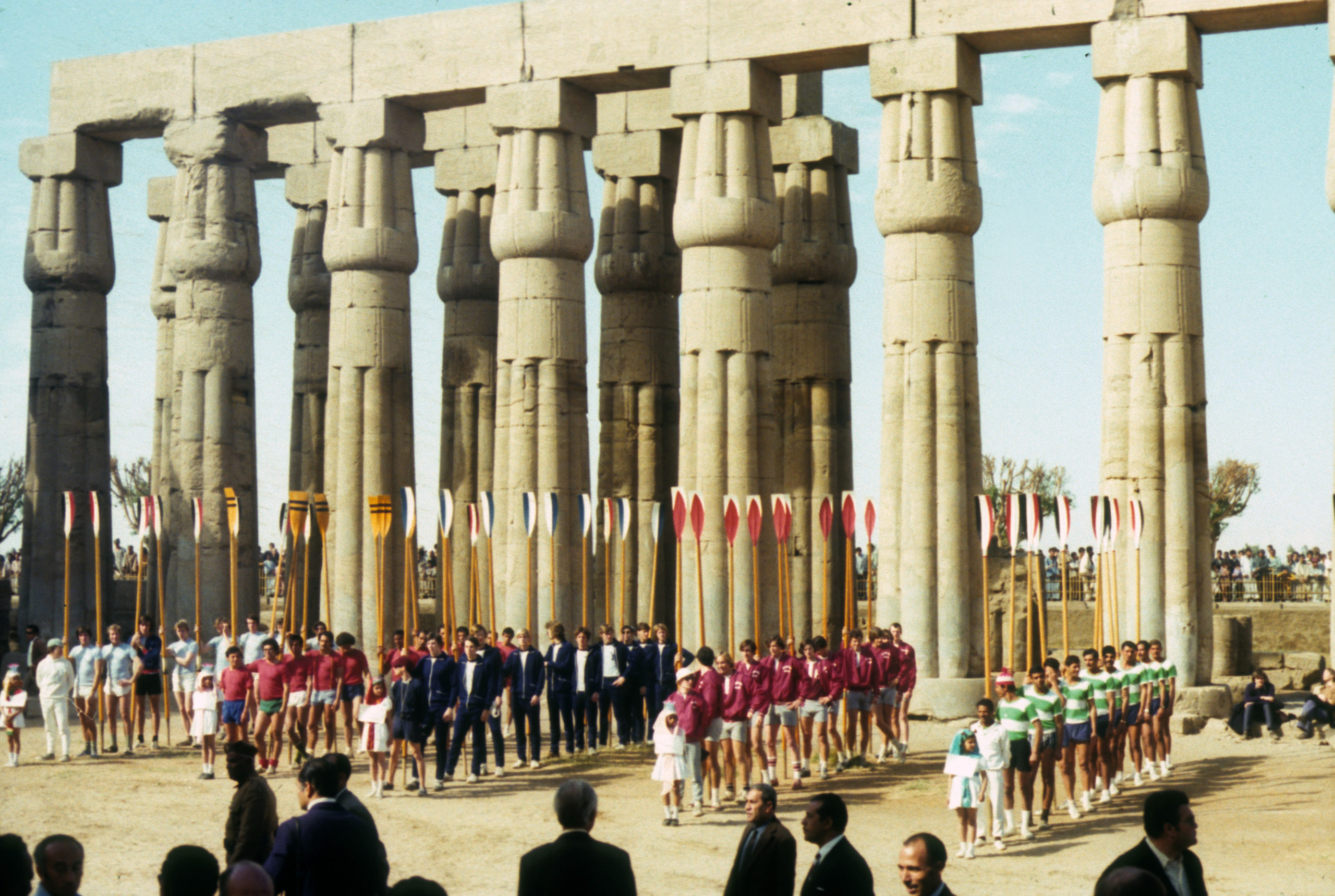
Harvard’s Al Shealy picks up the story: “The ceremony at Luxor was a real hoot. The New York Times reported, ‘To the triumphal march from Verdi’s Aida, the competing crews paraded into the court holding their oars like martial staffs. Egyptian schoolchildren in native dress chanted welcomes in both Egyptian and English and strew rose petals in the paths of the entering oarsmen. The ceremony re-enacted the pharaonic parades of 4,000 years ago, when ancient rowing teams raced on the same stretch of the Nile where today’s racing took place The ancient crews raced for the honor of leading the funeral processions of the deceased kings.’

“After the race in Luxor, which we won by a half-length, overtaking a quick-starting Cairo Police, we spent a beautiful evening on a houseboat drinking champagne, gazing at the stunning silhouette of the moonlit Luxor Temple, and conversing with a general in the Egyptian army. Ebullient, with an Errol Flynn mustache, he regaled us with stories of his involvement in the Six-Day War. My sense was that if he had been able to so entertain the Israelis, the conflict would have been known as the Three- Hour War.”

The crews returned to Cairo for the second and final race. Stone says, “When we went out to Giza, we all tried to climb the pyramids without getting caught. It was against the law, but ever so tempting. Just a big version of running the stadium. Coach Harry Parker figured out that a little bribe went a long way, and while some guys were climbing, a few of us paid a guide to take us into a pyramid. What a stupid idea. Ever been claustrophobic? The passageways get smaller quite quickly, and very dark, especially when your guide blows out the candle and asks for more money. I remember buying a Roman coin, which was fake, and stupidly giving a guide my camera when I got on a camel. More money to get the camera back. It was a great trip, but we all wanted to leave before the appointed day, largely because it was Christmas vacation and those not sick feared getting sick.”

Shealy did get sick and was unable to row in the Cairo race. “This time, we lost ignominiously to the Cairo Police, probably because various Nile-borne pathogens were arranging their Barcaloungers in the alimentary grottoes of our crew.”

The regatta continued for the rest of the 1970s. In 1977, the British and French national teams were invited, and so was the U.S. national team. In December, however, it wasn’t possible to name a U.S. boat, so it was decided that the University of Washington, which had won the Grand Challenge Cup at Henley five months before, would represent the USA.

 Dave Magee, who rowed six in the boat, recalls, “It was a phenomenal experience. Prior to leaving, we consulted a University of Washington physician. He advised us on diet, what foods were safe to eat and which were not, what to do about drinking water, what to do if falling ill. He also gave a brief summary of a curious parasitic organism native to the waters of the Nile called a ‘trematode.’

“As I recall, their normal host was some Nile ‘snail.’ They were prevalent in the waters we would be rowing and that we should avoid immersing ourselves in that medium if at all possible. Trematodes, he explained, can get into the bloodstream by burrowing into the skin, travel one’s circulatory system, and become lodged in the liver, causing cirrhosis–more specifically a condition called schistosomiasis. ‘Schistosomiasis’ became our battle call. We were terrified to get splashed and couldn’t believe the locals bathed, washed and cooked in Nile waters. We brought big jars of peanut butter for emergency nutrition. We ate only baked foods and peeled fruit. Washed our hands until they were chapped. Luckily we stayed healthy.

“At Luxor, we were stunned by the magnificence of the architecture. How something so ornate and immense could’ve been built over centuries, starting some 4,000 years prior, and remain still so fabulously preserved defied belief. I should mention here that, in advance of leaving, we boned up on our Egyptian history by watching, for historical relevance, The Spy Who Loved Me, a summer of ’77 James Bond flick, several scenes from which were filmed at the Temple of Karnak. We were impressed by the unexpectedly large crowds. We weren’t sure how the sport had so many fans–or how they knew enough to show up. But they did. In really large numbers. We and the other teams marched through the 134-column Hypostyle Hall and other relics, oars in hand, to the shores of the Nile.

“The race in Luxor was nuts. We had practiced the course on the eastern shore and knew where we would start and where we would finish. The 500-, 1,000-, and 1,500-meter marks were guesswork. We put in, took our prescribed warmups, and headed to the ‘start.’ The shores now obscured by the crowds start to finish, we and the other boats had to negotiate with officials where the precise starting line was. We had a good race; we sprinted perfectly to win–the British and French boats congratulating us–until we found out we were in second or third place, the French declared the winners, to their surprise. I guess the ‘finish line’ was 50 or so meters back from where we all thought it was.”

Washington returned a few more times before the regatta was abandoned. But for those lucky enough to have participated, it was an experience that they never forgot, a regatta run primarily for fun, in contrast to the high seriousness with which most rowing events are conducted.


Will Scoggins Honored With Shell Dedication

STAFF REPORTS
PHOTO COURTESY

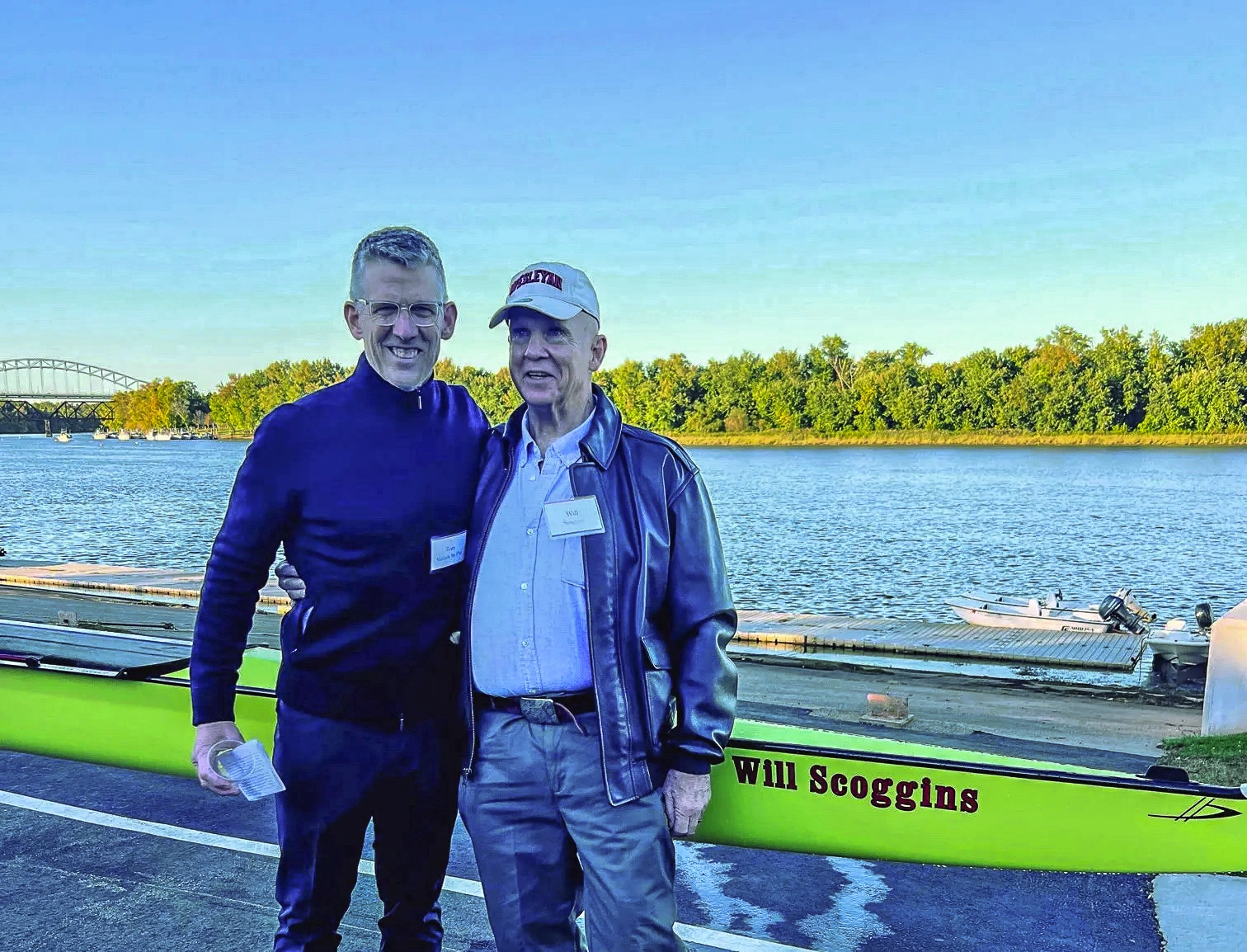
Alumni of Wesleyan University in Middletown, Conn., have donated funds to ensure Wesleyan always has a shell named after beloved coach Will Scoggins. Wescrew alumni gathered during homecoming weekend to dedicate the first new shell and celebrate Scoggins at a dinner.

“For Will, the medium was much less important than the message: Do what you do with pride and excellence or don’t do it at all,” read the citation.

Scoggins coached Wesleyan to a 15-0 record over two years, including a 1987 New England Championship.

2022 Head of the Charles Regatta

BY CHIP DAVIS
PHOTOS BY SPORTGRAPHICS, CHIP DAVIS

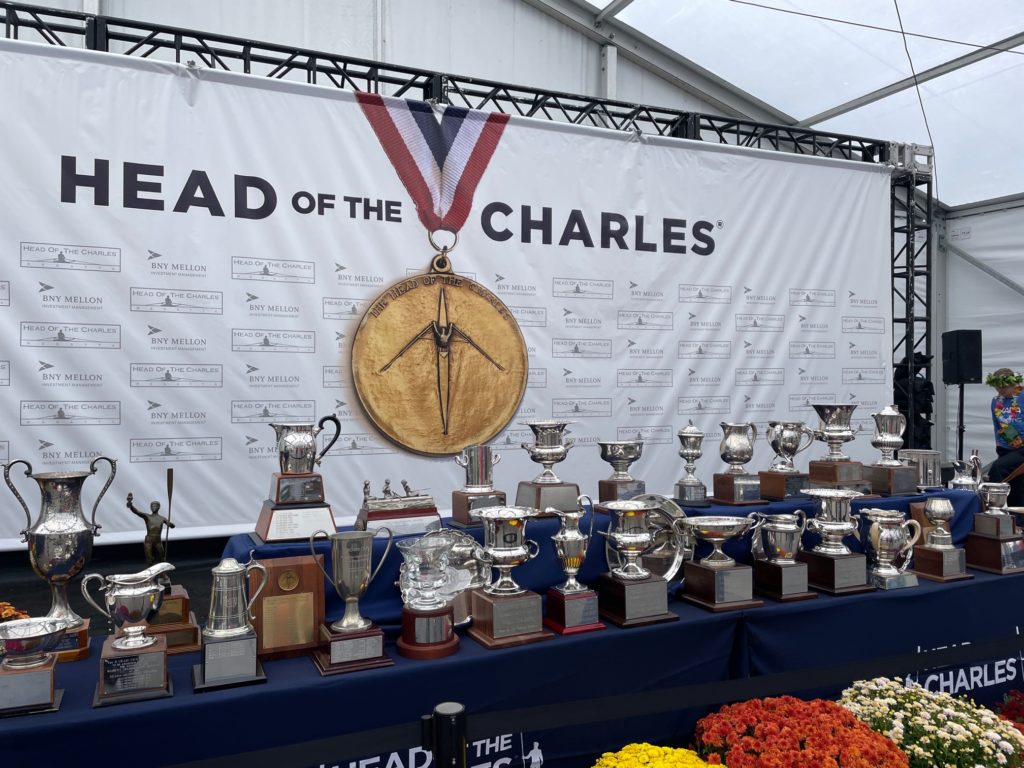
Ezra Carlson won both the Championship Singles event on Saturday and the Championship Eights, as a member of the USRowing entry, on Sunday—in a course-record time 13:23.

“The spectators, the energy, the foliage, it’s just such a special event,” said Amel Younis, who along with partner John Mannion won the lightweight double division and finished eighth overall in the Championship Doubles. “Being able to partake in it is special and to win it is an even more incredible feeling.”

According to regatta officials, 11,300 competitors raced over the three-day weekend, as sunny skies welcomed America’s fall rowing festival back in full on Friday and Saturday, while overcast skies and a helpful wind presented record-setting conditions on Sunday.

“With only one practice in this lineup, it’s great to get the win, it’s even better to get the course record,” said Carlson. “I think we have a really good group of guys in general for the senior team right now. All the guys in this boat are awesome. I think we had just the best attitude we could have going into today. Just to go out and have fun, put down a good race, and see what we could do, and it turned out really, really well.”

The USRowing eight was a late entry. “Most of these guys were together for the Canal Cup in Germany, the 12 and a half kilometer race a few weeks ago that we won against the Dutch, so we were kind of just trying to keep that train rolling and finish out the fall well,” said Carlson.

“It’s been a great Head of the Charles, and I’m stoked to be here for another year,” Carlson said.

Lunging at the Catch

BY RICH DAVIS
PHOTO BY ED MORAN

Lunging at the catch is the most common mistake masters rowers make.

The forward angle of the back should be established out of the release and remain constant as you float over the toes. When there is too much forward-body movement into the catch, the drive phase of the stroke is often initiated with the arms and back.

To work on this, find a partner to grab the erg handle you’re holding and pull you forward from a relaxed recovery position. Stay relaxed and feel the proper sequence as you are pulled sternward–hands leading the shoulders, knees moving up and back over the toes, but not beyond.

The so-called “turtle drill” is another way to tackle this technical shortcoming. Begin at the catch and push with the legs before adding the arms, keeping the back in the forward body position.  Repeat.

This drill will force you to initiate the drive with the legs and not with the back. Many will find it difficult, but none more so than those for whom it has been designed: chronic lungers.

57th Head of the Charles Underway October 21-23

STAFF REPORTS
PHOTO BY ED MORAN

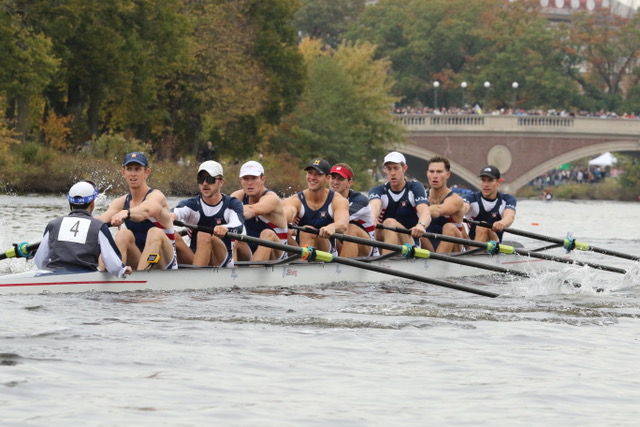
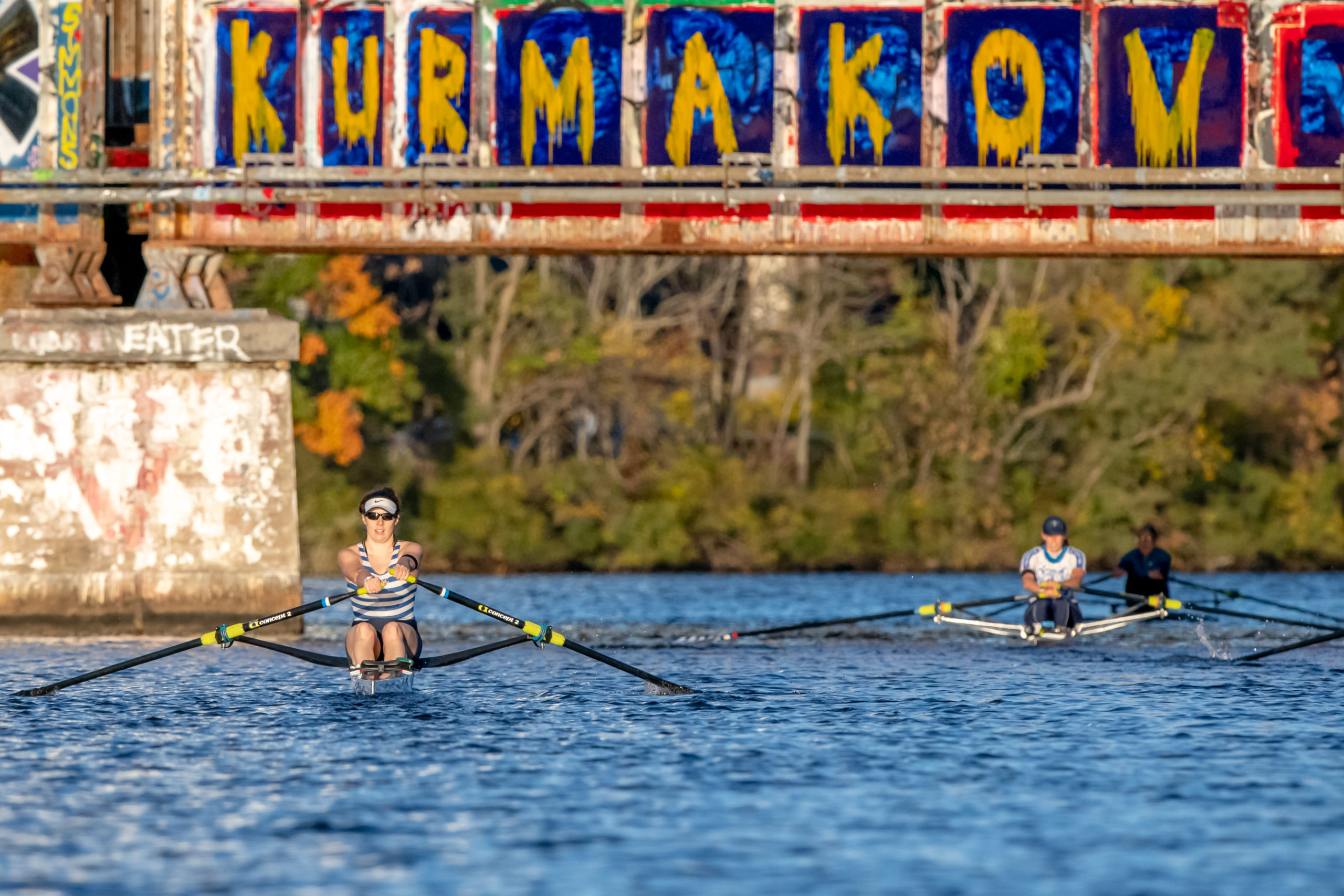
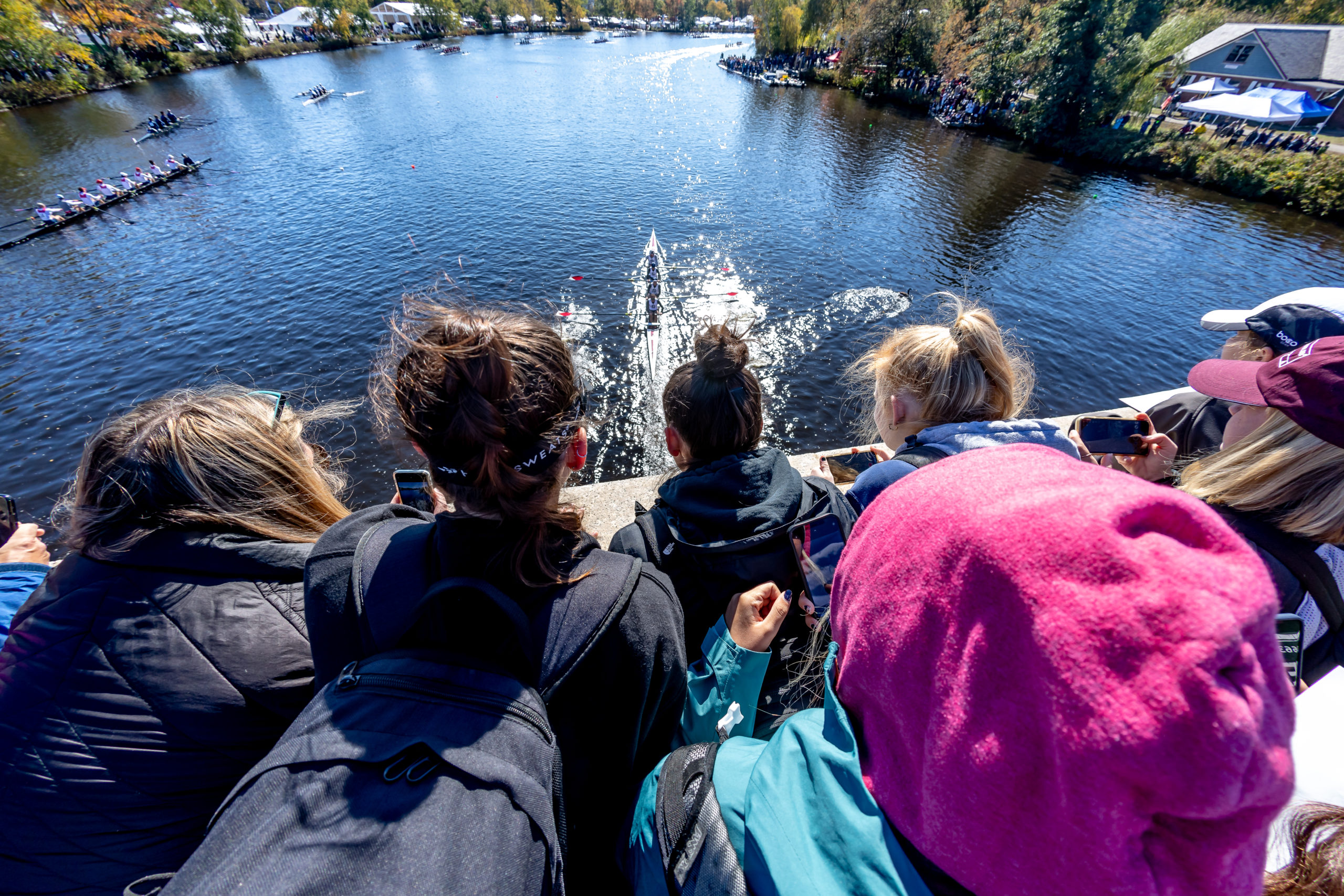
The 57th Head of the Charles Regatta is underway October 21-23.

The annual event takes place on the Charles River in Boston, Mass. There are over 2,400 entries from over 790 clubs racing at this year’s event.

NY Giants Honor San Miguel Rowing Program with $25k Check and Local Latino Achievement Award

STORY COURTESY
PHOTOS COURTESY SAN MIGUEL PROGRAM

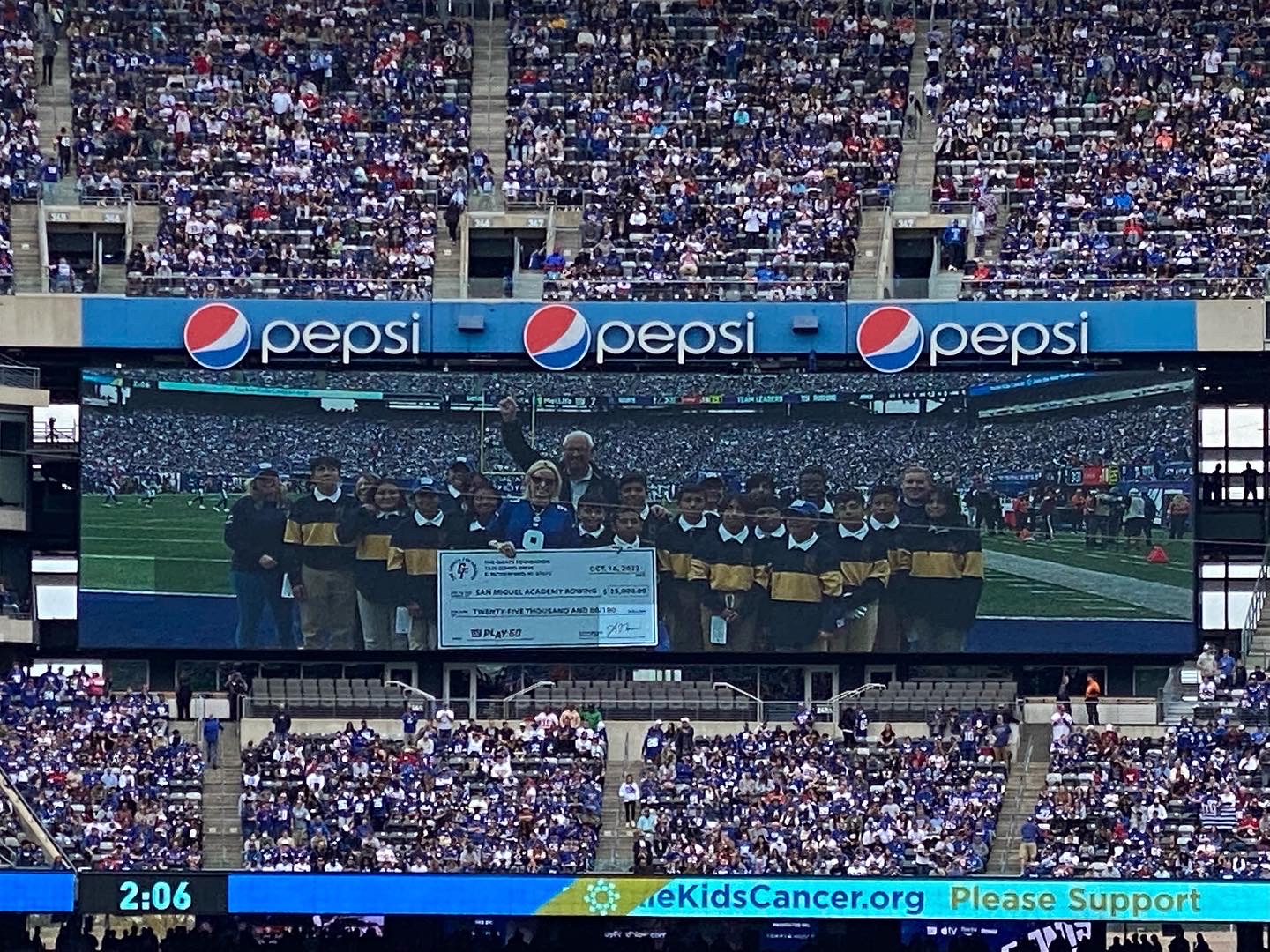
The San Miguel Rowing Program was honored by the NY Giants at MetLife Stadium October 16 as part of Hispanic Heritage Month. San Miguel rowers were invited onto the field during a timeout and presented with the “Local Latino Achievement Award.” Ann Mara Cacase, representing the Mara Family and the Giants Organization, presented San Miguel Rowing with a check for $25,000 wearing a special ‘San Miguel’ Giants jersey. San Miguel Rowing, part of San Miguel Academy of Newburgh, is one of the largest hispanic rowing programs in the country.  Last June, San Miguel Academy rowers placed 11th overall at the USRowing National Youth Championships in Sarasota, Florida after qualifying for Nationals in May with a solid first-place finish in the U15 quad division at the USRowing Northeast Youth Championships in Lowell, Massachusetts. The Northeast is one of the most competitive divisions in the country. 

“The NYGiants organization has always stood for integrity and hard work.  San Miguel Academy rowers are especially proud that the Giants have singled them out for Latino Achievement.  Our rowers work hard 6 days a week, both in the classroom and in the boat.  We are all grateful that our student-athletes have been recognized by the NYGIANTS and the NFL.”  -Father Mark Connell, Executive Director and rowing coach, San Miguel Program

San Miguel Academy of Newburgh was founded in 2006 to break the cycle of poverty through education. The rowing program was established in 2010 with a small group of boys in borrowed equipment and hand-me-down boats. Over the years, the program has grown to over 40 rowers, boys and girls, who train year-round on Ergometers and, weather permitting, on the Hudson River.  San Miguel Rowing is now among the largest middle school rowing programs in the country, as well as the largest minority rowing program, and has proven to be significantly beneficial to obtaining continuing educational opportunities for San Miguel Academy students.