BY CHIP DAVIS PHOTO COURTESYOF THE DEPARTMENT OF DEFENSE
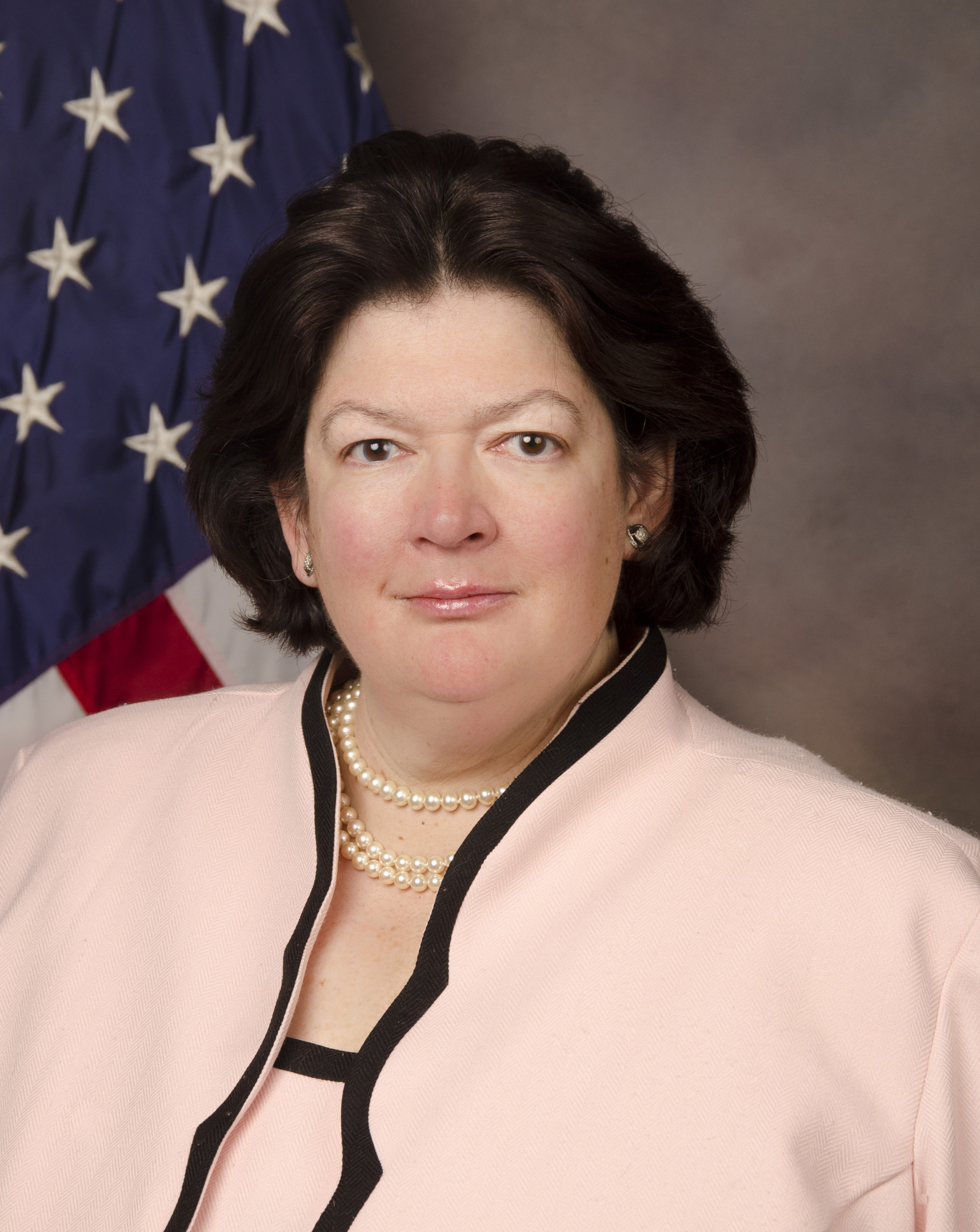
Longtime USRowing referee Roxanne Everetts died March 7. Everetts served as the chief referee at the first Champion International Collegiate Regatta (now the National Invitational Rowing Championships) in 1993 and continued to work weekends as a referee at regattas and championships for most of the next 20 years.
“She had a presence, no question,” recalled IRA Commissioner Gary Caldwell. “She wore her love for our sport and her fellow officials on her sleeve and will be sorely missed. I feel privileged to have known her as an official and friend.”
Everetts mentored many of the men and women who now officiate rowing, especially in the mid-Atlantic region.
BY COLLEEN SAVILLE PHOTOS BY Caitlin Patterson, John Lazenby, Judy Geer, Paul Bierman UVM, Val Stepanchuk, Wes Vear
*This piece originally ran in the September 2018 issue of Rowing News
When Dick Dreissigacker and Judy Geer took over the Craftsbury Outdoor Center in 2008, they knew they had the chance to make an already good thing even better.
Founded by Russell and Janet Spring in the mid-1970s, the Craftsbury Outdoor Center in Craftsbury, Vt., was originally an all-boys prep school the Spring family turned into a training center for Nordic skiers and rowers interested in learning to scull. Each summer, Judy and Dick would travel to Craftsbury for one week to guest coach the sculling camps, a group comprised of athletes of all ages and skill levels, eager to master the art of rowing small boats.
Through the Craftsbury camp system, Dick and Judy taught their two daughters to scull at an early age and, eventually, to ski.
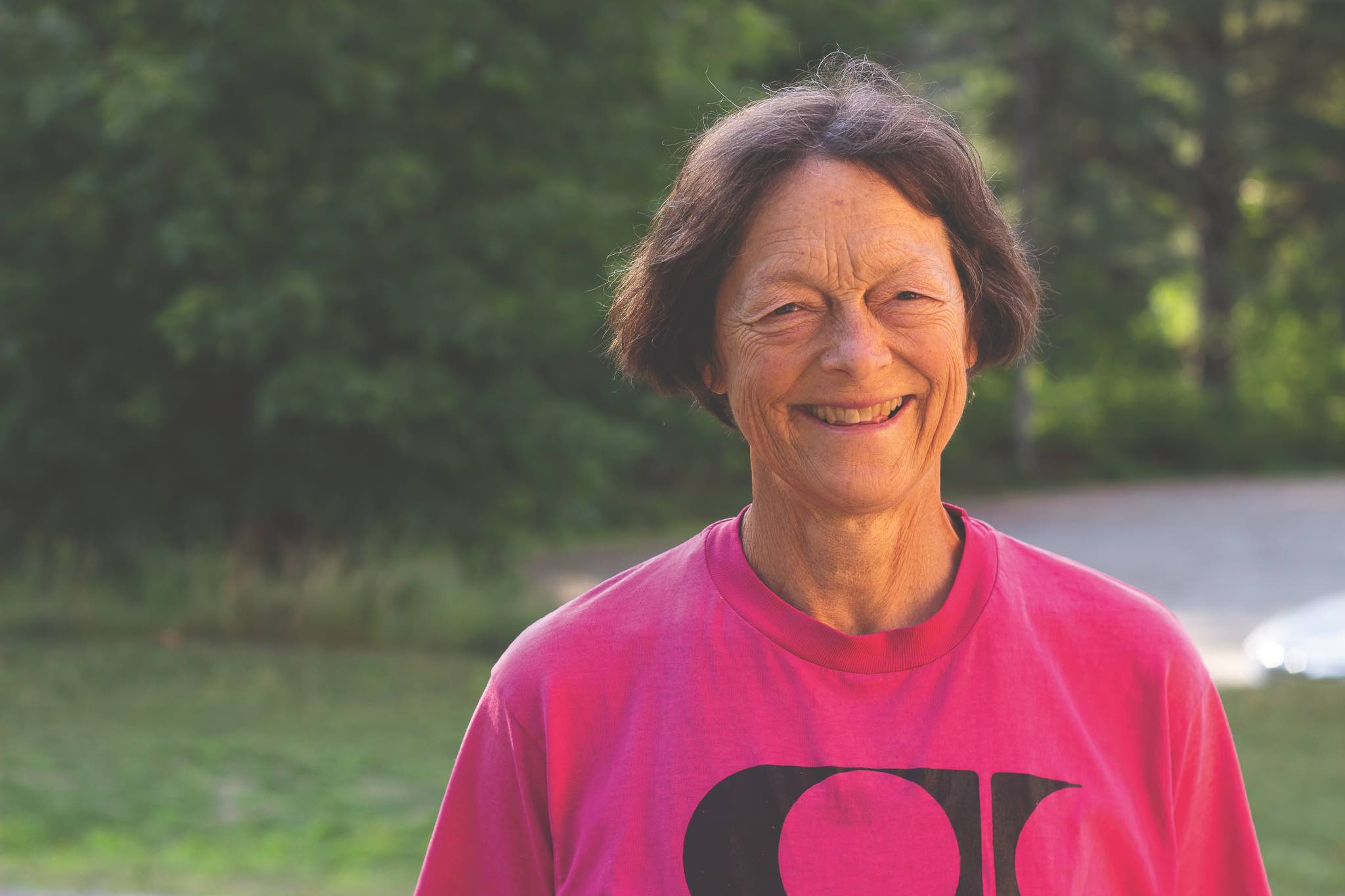
Dick and Judy Dreissigacker.
“Up here it’s a long winter,” Judy says laughing, “and so we taught our kids to ski early on. In turn, they got to know the other kids who were cross-country skiing at the center. At that time, Craftsbury had hired a new cross-country skiing coach who wanted to start a junior program, and so we asked Hannah, our oldest, ‘Do you want to be a part of this program?’ and she said yes. We’ve been involved ever since.”
(Hannah, by the way, would go on to compete in the Sochi Winter Olympics in 2014 as a biathlete. Her sister Emily competed in biathlon in the 2018 Winter Games.)
In 2008 Dick and Judy purchased the training center from the Spring family and reorganized as a non-profit to ensure the Craftsbury experience would be around for generations to come. Judy notes that she and Dick worked closely with the Springs during the transition, reflecting on what Craftsbury had been, and sharing visions on what it could be. Today, Craftsbury is a training center for elite rowers, Nordic skiers, bikers, and more recently, runners. It is arguably the most energy-efficient training facility in the country, and has built a strong reputation on its sustainable innovation and reliable snow.
Ask any Craftsbury athlete or coach, however, and they’ll likely tell you that above all, the center is a special kind of utopia. The Craftsbury Outdoor Center is many things, and in some ways, they’re just getting started.
When Judy describes the foundation of the Outdoor Center, she quickly points to the mission statement by which the athletes, coaches, and members of the larger community live.
“We created a mission for the Outdoor Center, which has three prongs,” she says. “To support and promote participation and excellence in lifelong sports with a special focus on rowing, Nordic skiing, biathlon, and running; to use and teach sustainable practices; and to be good stewards of the surrounding land, lake, and trails.”
While sustainability—especially at scale—requires ongoing effort, Craftsbury is happy to rise to the occasion. Judy explains that in exchange for three organic meals per day, housing in the dorms, access to equipment, coaching, and all-expenses-paid travel to important competitions, Craftsbury Green Racing Project athletes (the official name for their post-collegiate group of elite rowers, cross-country skiers and biathletes), give back by dedicating 10 hours per week or 500 hours per year to the center by working on projects that support the mission.
Depending on the day, this could mean anything from working in the garden to splitting wood to trail maintenance, helping design a new building, or analyzing the energy uses of existing buildings. Oftentimes, too, giving back includes either mentoring or coaching junior or novice athletes. Judy notes that this idea of contributing to the larger community helps provide balance for athletes training at the elite level, while simultaneously creating a community by and for athletes of all ages.
“It’s an ongoing challenge,” she says. “These kids have to fly all over the world [to compete], and it’s not easy to be a team that way and be green. But we would, of course, rather try than not try at all.”
“These kids have to fly all over the world [to compete], and it’s not easy to be a team that way and be green. But we would, of course, rather try than not try at all.”
-Judy Geer
When Stephen Whelpley, former U.S. senior national team rower and Green Racing Project (GRP) alum returned to Craftsbury in 2017 to assume the role of head coach for the GRP rowing squad, he was already familiar with the green ways of life so central to the community. In addition to the benefits of sustainability at Craftsbury, Whelpley recalls the positive impact cross-training had on his career as a rower.
“When I joined GRP as an athlete back in 2012, I had never before cross-country skied,” he says. “That whole first year when you do it, you may be inefficient and have to augment what you do on skis with other indoor work on the erg or the bike, but by year two, it’s an invaluable cross-training tool.”
Whelpley continues, explaining how Judy and Dick still today find new ways to harmonize their athletic initiatives with their vision to be as energy-efficient as possible across the center. Most recently, that has involved a snow-saving study in partnership with the University of Vermont, that tests and refines methods of storing snow over the summer months, with the goal of lengthening the Nordic ski season in late fall and early winter, while simultaneously reducing the energy costs and carbon emissions associated with snowmaking.
“We began almost sort of joking about it,” Judy chuckles, but Paul Bierman, who is a professor of geology at the University of Vermont and a Craftsbury member along with his kids, said, ‘We can do this, and I have a masters student named Hannah Weiss who would be a great asset to this project.’ From there, it all came together.”
Judy explains that storing snow over the summer is both an art and a science, as it requires managing energy gains and losses to the snow pile, understanding which methods of insulation work best and are most sustainable over time, and of course, predicting melt rates that inform how much snow should be stored in order to net out to the desired amount. Right now, the center’s goal is to successfully store roughly 2,000 meter’s worth of snow to help lengthen the ski season, and act as a buffer for unexpected warm days or periods during the winter.
“Early races are something you stress about getting enough snow made for,” Judy says, “and the later races are challenging because you don’t want to make too much snow. This is where having that cushion would be a very nice thing.”
Judy notes that Craftsbury wanted to be in a position to host more racing, especially at the bookends of the season in November and March, and that snowmaking only works when temperatures drop below a certain threshold.
“Unfortunately, more recently, rising temperatures mean Craftsbury isn’t getting cold enough by the time we want to have snow,” she says. “And so what a lot of places in Scandinavia, and a few in Canada and southern Germany do, is save a huge pile of snow in the winter, and cover it with something during the warmer months … sawdust, wood chips, etc. What we’re looking at now is what’s going to be the best for us at Craftsbury. It’s science, combined with economics and environmental concerns, including the efficiency, the logistics and costs. It’s truly a multifaceted study.”
Part of what makes this project both challenging and interesting, is that the insulation methods that may work for one country or climate won’t necessarily work for another, since energy is transferred from the environment to the snow piles in different ways. Professor Bierman and Hannah Weiss, alongside Judy and Dick, must constantly consider the ways in which heat is conducted from the ground below to the base of the pile, since that variable directly affects the rate at which the protected snow will melt.
“They have fascinating monitoring equipment that can measure how fast the pile is shrinking,” Judy explains, “and temperature monitors that we put below the pile and then in the pile to help compare the different layers of insulating materials, in order to determine which are ultimately going to work best.”
Other variables the team must consider include the changing ground temperature during the warmer months, seasonal rain, and the increasing temperatures each year that warm the top of the insulating layer during the day, and in turn, melt the pile from the top down. The best conditions to store snow are of course cold, but also dry. If the air is dry, evaporative cooling from moist wood chips or sawdust will help remove energy from the stored pile of snow, rising out of the snow into the cool, dry air.
An added bonus of snow storage for the center is that it allows the team to focus on making artificial snow only on the coldest nights mid-winter, when it is most efficient from a power and water perspective. Right now, Craftsbury has two experimental piles, but the plan is to refine the project for next year and in years to come based on this year’s findings.
“These are two experimental piles we knew weren’t going to be enough,” Judy explains, “but they should enable Hannah and Professor Bierman to create a model for how much snow we’ll need, based on how much snow they forecast we’ll lose. We’ll probably lose a good third of our snow, so that just means we have to save that much more,” she notes.
At the same time, Judy and team recognize that the journey is part of the process.
“We had some fun on the fourth of July,” she says, “and dug out a bit of snow for the local kids to sled on. It was a lot of fun.”
From a racing perspective, Whelpley notes that more and more important cross-country skiing competitions are being held at Craftsbury because of the center’s reliable snow, a reputation the study will only help uphold. He recalls his time as a GRP athlete and his role in helping make Craftsbury’s artificial snow making process as efficient as possible.
“One of the biggest byproducts of snow making is that the generator has to cook like crazy,” he says. “It pumps water from down below and helps run the process of pumping the water out and making it freeze, which, in turn, throws off a ton of heat. There was a neat, innovative project that preceded this process, where the team ran tubes underground and through ventilators into the shed where the generator lives, picking up the exhaust heat, and using it to heat a 50,000 gallon bladder, which I helped install as an GRP athlete.”
Whelpley explains that the bladder stays hot because it is insulated inside a cement box that functions as a heat reservoir, from which the center sources their domestic hot water for faucets, as well as for much of the radiant heating throughout the building, replacing the need for fossil fuels.
“We are very conscious that this thing we do to make our livelihood possible has byproducts,” he says, “and I think that’s an example of really interesting problem-solving. As a first step, we always look at what is already in place. In the case of the snow storing project, we looked at what was around us and recognized that if you have the snow, man-made or natural, why wouldn’t you try saving it?”
“We looked at what was around us and recognized that if you have the snow, man-made or natural, why wouldn’t you try saving it?”
-Stephen Whelpley
Olympic hopeful and Green Racing Project athlete Jennifer Forbes couldn’t agree more. When asked about the benefits of the snow storing study, and more generally, of having access to cross-country skiing trails and equipment as an elite rower, she is quick, like Whelpley, to acknowledge the ways in which Craftsbury’s variety of training options have helped her.
“I’ve always wanted to learn how to cross-country ski because I felt like that would be an amazing way for me to get off the erg,” she says. “After my back surgery, I was able to come to Craftsbury and do something that developed my hip and lower body strength, while still getting a killer cardiovascular workout. And, of course, there is the added bonus of being outside in the winter. You still need to stay in touch with the erg, but a lot of my work I did outside once I got proficient at skiing. Mentally it was great, but physically my body felt more balanced.”
From a coaching perspective, Whelpley says this type of cross-training is equally as appealing.
“You don’t have to come in an already savvy skier. Cross-country skiing as a form of cross-training is something you see across a lot of the successful European rowing teams. Look at the Sinkovic brothers [of Croatia], they ski. The Norwegians obviously ski, the British team skis, it just keeps going on and on, and I think that is because it’s such a therapeutic way for your body to get aerobic volume done without it taking a toll. There are a lot of other perks like balance on the skis that can translate to balance in the boat, and of course, there is a rhythm play that happens, too.”
Whelpley explains that cross-country skiing taught him how to work and rest at the same time, a notion familiar to rowers who are constantly perfecting the inherent dichotomy between the drive and the recovery.
“When you’re gliding on the ski you can’t turn off completely and be a bowl of Jell-O,” he says. “You still have to find a way to move that ski forward and relax at the same time. Everything we do in rowing is partial extension of the hip joint, and whether you prefer classic or skate skiing, both are therapeutic and engage your glutes while extending the hips. The injuries that our sport are most prone to are connected to overuse, and the imbalances that are derived from it. I think this type of cross-training makes rowers better athletes in the long run,” he says.
While the Craftsbury and larger skiing community will have to wait and see what findings this initial snow storing study will bring, there are a few things we know for sure. So long as athletes continue to train and live at the center, Craftsbury will continue to innovate. Forbes describes just a few of the reasons the center is so special to her, quick to cite Dick and Judy’s support first and foremost.
“Dick and Judy are incredibly generous and supportive, and not just physically by giving us the things that we need in order to successfully train, like boats and a place to live,” she says. “The food is amazing, the air is clean, the water is clear, and it’s simply this little piece of paradise. My soul is very happy being here, and I think a lot of people share that notion. It’s a nice place to live.”
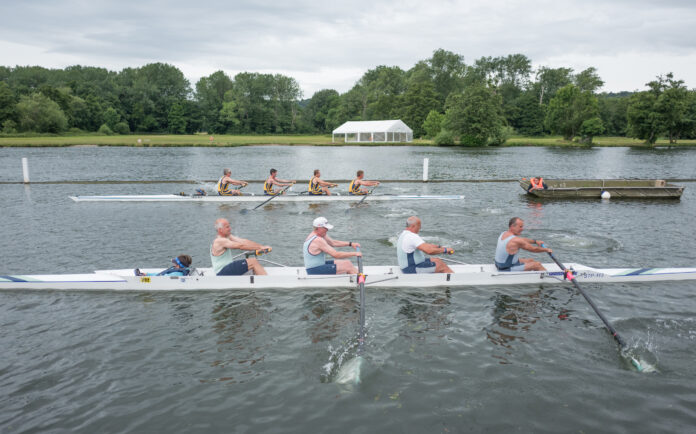
Henley on Thames, United Kingdom. 2016 Henley Masters' Regatta. Henley Reach. England. on Saturday 09/07/2016 [Mandatory Credit/ Peter SPURRIER/Intersport Images]
Rowing, Henley Reach, Henley Masters' Regatta.
General View, Henley Reach, venue, for the 2016 Henley Masters Regatta.
BY RICH DAVIS PHOTO BY PETER SPURRIER
Full disclosure: I slouch. But I am not alone.
Many of the masters I have coached over the years slouch too. This is not a strong position for rowing.
Instead, aim to sit up straight with your head over your shoulders and hips and your eyes on the horizon. This is not only a biomechanically better way to approach the stroke, it also puts you in a better position to ensure you are using your full lung capacity.
Poor posture is a source of not only back pain, but also muscle fatigue, breathing limitations, and arthritic joints. When our bodies are out of line our muscles have to work harder.
Prolonged slouching begets more slouching, with tightening tendons and muscles contributing to a default slouch position. Keeping your head up will help you keep your back straight.
On the recovery, try swinging a straight back from the hips to achieve proper forward body angle. Take time on the release to catch your breath and make sure your shoulders are relaxed, but not rounded.
The year 2021 ended with an email from an old friend who coached with me at Trinity College:
Dear Doc,
Thought you’d be amused to hear that I’m soon to return to the coaching life—after a 40+ year layoff—at a local Catholic girls high school. Just a few miles from my house—85 percent minority students and the only girls crew in the area. Not sorted whether I’ll be coaching JV crew or novices, but think I might prefer the former. Was telling the athletic director and the head coach that the only aspect (despite the layoff) I feel a bit unprepared for would be coaching novice coxes. In any case, I’d like your thoughts on best coaching practices nowadays, good YouTube sources, etc. This is a pretty new program and operates only January through May as they have insufficient funding for a full academic year.
With USRowing’s focus on reaching out to underserved rowers, I wonder if you have thoughts about potential funding sources. A very little money could have significant impact. For some of the families, even coming up with the $350 fee is pretty tough. In any case, if you have a few minutes later this week for a phone/Zoom call, I would appreciate it. Thanks.
Dear Old Friend,
As I told you last night in our Zoom, which included another college friend who is coaching in a young program near me in Massachusetts, I’m delighted to hear that you are getting back to coaching and giving back to the rowing world, from which we have all benefitted. I think that you’ll find it to be a lot of fun. Coaching coxswains is always a challenge, but jump right in. They are essential, no matter what you old-school oarsmen think. (Doctor Rowing was a coxswain and took a lot of guff. All ’swains do.)
The first thing coxswains need to know is that the safety of their crew and their equipment is paramount. It is exactly the same as driving a car. That means learning the traffic pattern of your river and knowing when to start and stop rowing. I always tell my coxswains that of the many responsibilities that the position entails, the only one that cannot be performed by anyone else is steering. A rower could give commands, could call 10s, but no one else can steer. So that should always be their priority, especially at the beginning.
Here we got into a discussion: “I hate that all the fours nowadays are bow-coxed so that the coxswains can’t do any coaching,” said my friend. “How can they coach the boat on timing or bladework?”
I heartily disagreed. It takes a lot of experience for a coxswain to be able to provide valuable coaching. In the early stages of their careers, coxswains should work on steering and boat management. Let the coach do the coaching. There’s so much they need to master—starting pieces even with other boats and at the same time. They need to make sure that the shell is always pointed correctly down the river. They need to learn the commands and give them at the right time and with an authoritative voice. And it is crucial for coxswains to be able to see where they’re going, hence the bow cox. For high-school rowing, give me safety and not hitting things any time.
Teach your coxswains, not by giving them something to read or a video to watch, but by spending time with them. The first day, tell them to stand right next to you, as you give all the commands while they listen and watch. “Hands on. Lift it out of the rack. To the shoulders, ready, up. Walk it out.” Etc. Give the commands on the dock, putting the boat into the water, getting into the boat. On the second day, tell them, “I will say the commands quietly, and you will repeat them.” Inevitably, they will either scream them out, or more likely they will repeat them in a conversational manner. “These are commands, Roger. Make them sound commanding.” Demonstrate. On the third day, ask the coxes if they are ready to do the whole thing themselves. Maybe they will ask for another day before they are ready. That’s OK. You want them to be assured so the crew will have confidence in them.
At the beginning, if you are rowing with either a pair or a four, they will complain that the boat doesn’t steer. That’s true; it doesn’t steer well with so little momentum, especially if the rowers aren’t putting much power on it. The tiller is useful only if the boat has some movement. If they can’t keep it from going to starboard with the rudder, starboard needs to put more pressure on.
An incredibly valuable video is the USRowing safety video on its website. It shows coxswains and rowers what could go wrong. They will tremble and laugh at the Ejector Crab sequence, but it is vital that they know what to do in case of mishap. NEVER SWIM AWAY FROM THE BOAT should be repeated over and over. I begin every new season showing this to everyone. There are a lot of good videos of drills on YouTube. Search out the ones you deem appropriate for the right time of your season.
Here’s an important thing: Never let go of your oar. Your oar is your friend; you need it to balance the boat; you need it to row the boat. Only bad things happen if you let go of it.
There is information out there about funding and inclusion, too. It’s a vital part of the sport. Confer with other coaches in your area. I will come back to this in another column, but as you note, it is a priority for USRowing.
My final words are: “Make it fun.” It’s awesome to be in a shell that begins to move. Introduce pulling hard as soon as you can. That’s when you begin to see those little smiles cross their faces. “Wow!”
Putney, Great Britain, 17th March 2019, Umpire Rob CLEGG, marshalling the two crews at the start of the Pre Boat Race Fixture, Oxford University Boat Club vs Oxford Brookes, Championship Course, River Thames, England, [Mandatory Credit; Peter Spurrier/Intersport-images],
BY MARGOT ZALKIND PHOTO BY PETER SPURRIER
The enthusiastic young coach had a boathouse full of novice junior scullers, all eager to go out on the water. She accommodated, placed them in singles and doubles, and then went back to get her launch on the water. By the time she came close to where they had strayed, they were like chickens let loose—all over the water, perilously close to the hazards, the shore, and sometimes even each other.
Could she oversee all of them? No. Was this safe? No. Crew parents went into a frenzy. So what is the recommended safety guideline for coach-to-athlete ratio? This is a question we are often asked. The answer is, “It depends.”
There are so many factors to consider. How experienced are the rowers? How experienced is the coach? The coxswains? How many singles and how many sweep boats? What is the situation? The weather? And of course, making sure that everyone has passed the monitored swim test.
Scenario one: You have two experienced eights rowing on a calm body of water 2,500 meters long and 10 racing lanes wide. This can be a very safe situation, and one coach for the two boats could be considered a good ratio.
Scenario two: Now take the example of 18 novice singles out on a rain-swollen river that has debris and barge traffic. A safe coach-to-athlete ratio here might be one coach to two athletes. (Or, better, take out quads that day. Or don’t launch.)
There is not a one-size-fits-all answer because every time a crew heads out on the water, it’s a judgment call.
Questions that need to be answered before the athlete’s launch:
· How experienced is the coach? (and are you/they well-versed in rescue?)
· How experienced are the rowers?
· If there are coxswains, how experienced are they?
· What are the hazards on the body of water and what are the conditions on the water (and what will they be for the next two hours)? Are hazards well marked?
· Are the athletes familiar with the body of water or are you a visiting team on an unfamiliar body of water?
· How many athletes will safely fit in your launch?(Look at the information plate on the hull, or if a wakeless launch, ask the manufacturer.) And make sure you have enough PFDs for every rower you are in charge of.
· Has the coach been trained in how to approach a boat safely and how to rescue rowers?
How fast can you get a boatload of athletes to safety if the need arises? (And are you carrying all rescue equipment and a communication device?)
To make sure the coach is not overextended on the water, here is some basic advice:
Before the season, establish guidelines for the program using the questions above and other issues at your venue that need to be taken into account.
· Do not take out more athletes than the coach can keep an eye on.
· Design practice so that boats stay together for easier monitoring.
· Have enough PFDs in your coaching launch for every rower under your supervision. And wear one yourself.
Every program needs to develop and follow guidelines that makes sense for them, for their waterway, and their athletes’ expertise.
Margot Zalkind and the Foundation for Rowing Education (Mark Wilson, Jim Dietz, Jeff Freidrichs) The Foundation for Rowing Education is a nonprofit that creates and shares information about boating safety, coaching the coxswain, coxing, trailer driving, and launch driving. Visit www.RowingEducation.org or info@RowingEducation.org.
Racing at the 2020 C.R.A.S.H.-B's. Photos by Lisa Worthy.
BY JOSH CROSBY PHOTO BY LISA WORTHY
Lying on a patch of grass outside the St. Paul’s School boathouse, we took a few deep breaths before coach Chip Morgan began our first-ever pre-race visualization session. I don’t remember his exact words, but I do remember how he talked us through the following day’s race, start to finish, in specific detail. He had us see in our minds a strong and speedy start, a smooth settle to our race pace, perfect oar placement on entry and exit, and a powerful, race-winning sprint to the finish.
More importantly, he had us visualize the not-so-perfect aspects of the race too—obstacles and distractions that we were likely to encounter. Coach Morgan took it a step further still. We also visualized our personal fears on race day. My nightmare? That my forearms would lock up; I wouldn’t be able to hold onto the oar and that would be the sole reason we would lose. My coach had me see the point in the race where I may notice my forearms starting to tense. He taught me that my response would be to focus on a firm, but relaxed, grip on the oar. When my forearms actually tensed up at the 1,200-meter mark in the race the next day, I was ready for it. My forearms stayed strong and we won.
The below erg workout will help you work on both your fitness and visualization skills.
The Workout:
Warm-Up: 1,500 meters Picture your favorite place to row. Bring in the colors and the details of the surroundings. Imagine yourself pushing off the dock into choppy water. Stay calm, get moving, and focus on technique.
Row 1,000 meters easy at 22-24 strokes per minute, and then the last 500 meters at medium intensity at a 24-26.
Wave 1: 2,000 meters You’re in a single with just a ripple on the water. A single sculler is paddling alongside you. Not just any sculler—the most competitive person you know.
1,000 meters easy intensity at a 24 focusing on technique. Imagine a bobble or two that you fix right away.
750 meters medium intensity at a 26. The other single is moving on you. Go with her.
250 meters hard intensity at a 28-30. Make your move here. See her fade off of your stern deck.
Wave 2: 1,2500 meters Imagine you’re in a coxed four with some of your favorite rowing friends when another four rows up on you. They want to spar. Game on!
250 meters easy at a 22-24. The crew is alongside you now, close enough that you can hear them breathing.
4 x 250 meters hard at a 24, 26, 28, and 30. Visualize losing the first one and the specifics you need to do to change that outcome. See yourself winning the next three.
Wave 3: 1,000 meters Take it back to the boathouse as the sun sets. See the colors on the water and notice your blade washing out a bit. Then see your blade entering and exiting with perfection.
Peter Spurrier Sports Photo
email pictures@rowingpics.com
Tel 44 (0) 7973 819 551
Photo Peter Spurrier
Martin Cross's Olympic Gold medal from the LA 1984 games - picture taken at the RRM
PROVIDED BY WORLD ROWING PHOTO BY PETER SPURRIER
A delegation of World Rowing representatives was in Southern California last week to visit the Los Angeles 2028 Olympic and Paralympic Games headquarters. They discussed, amongst other topics, the collaboration between LA28, World Rowing and US Rowing in the years leading to the Games.
World Rowing was represented by Jean-Christophe Rolland and Tricia Smith, President and Vice-President respectively, and its Executive Director, Vincent Gaillard. They were accompanied by Nobuhisa Ishizuka, Chair of the US Rowing Board.
They attended a series of meetings with key members of the Los Angeles 2028 Organising Committee, including Casey Wasserman (Chairperson), Janet Evans (Chief Athlete Officer), Kathy Carter (Chief Executive Officer), John Harper (Chief Operating Officer), Doug Arnot (Consultant, Games Delivery) and Niccolo Campriani (Sports Director). They also met Gene Sykes, Chairperson of the US Olympic and Paralympic Committee.
Prior to these meetings, the delegation had the opportunity to visit the proposed venue for Classic rowing, the Long Beach Marine Stadium, previously used for the 1932 Olympic Games and located at the heart of the city of Long Beach. The maximum possible length for racing in Long Beach is 1500m, marking an exception that World Rowing accepted to make to showcase the sport at the heart of the Games.
In the context of the proposal made to the International Olympic Committee to include Beach Sprint Rowing at the 2028 Olympic Games – on the back of its confirmed inclusion at the 2026 Youth Olympic Games in Dakar, Senegal, and the 2026 Commonwealth Games in Victoria, Australia – the delegation also presented how this discipline would uniquely add value to the LA28 Games, targeting a full venue share with other inshore events in the Olympic program to ensure a financially sustainable approach. A decision regarding the inclusion of Beach Sprint Rowing is expected by the IOC before the summer.
“It was a very fruitful visit, which will contribute to strengthen our partnership with Los Angeles 2028 for years to come, said World Rowing President Jean-Christophe Rolland. We are looking forward to actively supporting their ambition to, once more, make Olympic and Paralympic history in Los Angeles, including, we hope, through the inclusion of an exciting new form of rowing that will fully embrace the LA spirit and beach culture”.
The Los Angeles 2028 Olympic Games are scheduled to take place from July 14 to 30 2028, followed by the Paralympic Games from August 15 to 27 2028.