Home Blog Page 117

Facing Facts

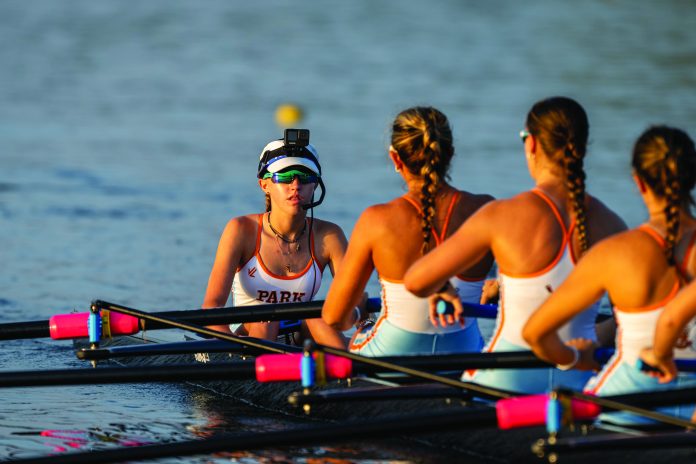
BY KALYEIGH DURM | PHOTO BY LISA WORTHY

Now that the fall season is coming to an end and you’re beginning to look ahead to spring, it’s time to do some reflecting—not just on this season but on last spring as well. Coxing your team’s top varsity boat is an aspiration for many coxswains, and when you’re in contention and don’t make it, it’s natural to wonder why.

Sometimes, there is no reason. You can do everything right and still not get it, and that’s just life. It’s important to recognize when that’s the case and when objectively you could have done something better or different that would have put you in a more competitive position.

Sometimes, that means just putting the time in on the water to improve your skills; other times, it means confronting some harsh realities, such as the ones listed here. Control the controllables, as they say. You don’t have control over the whims of your coaches but you do have control over you. As you read through these, consider if any are applicable and use the time between seasons to craft a plan of action so that when spring rolls around, you can hit the ground running.

You’re not being proactive.

Showing up every day isn’t reason enough to make the 1V. It’s one small piece of the puzzle. You need to be proactive every single day (even, and maybe especially, in the winter) about learning the required skills, striving to perfect them, and communicating regularly with your coaches. If you’re not doing those things, you’re not doing anywhere near enough.

Your task: Talk to your coaches about where you succeeded or failed in this area last season. What does “being proactive” mean to them (and you)? What are one or two things you can be more proactive about as a coxswain on and off the water and as a team leader?

You seem uninterested.

You don’t have to be the peppiest person in the boathouse but you do need to convey some level of energy, enthusiasm, and engagement. If you go about practice with an apathetic demeanor, you’re hardly signaling to your coaches that being in the 1V is something toward which you’re motivated to work. Apathy is not a leadership quality, either, so if that’s your general attitude, the coaches are unlikely to consider you.

Your task: As the Snickers ad says, “You’re not you when you’re hungry. Maybe you just need a Snickers.” Maybe all it takes for you to be more lively at practice is to have a snack beforehand. In some cases, knowing what it takes to show up as your best self might necessitate more self-examination (which may lead to the “Do I even want to do this sport?” and “Am I really that into it?” conversations—both normal and fine.)

You don’t make a case for yourself.

You need to know your strengths and weaknesses objectively and be able to sell yourself if and when your coach asks why you should be considered for the top boat. Regard it as a job interview. Your coach, like a prospective employer, wants to know what you can do for her and the team, not how this is going to benefit you. Confidence and humility are key; acting smug and cocky can and will make it easy to dismiss you.

Your task: Be your own best advocate. This is a skill that has to be learned just like any other. Whether you’re in the initial learning stages or you’re refining your approach, Harvard Business Review has dozens of articles about this and is a great resource.

You haven’t researched the job.

Find out what the coaches and rowers want in their top coxswain in terms of skill, ability, and personality and talk with current and former coxswains to get a sense of the expectations and what it takes to be in that position.

Your task: Treat this like any other research project. Engage others in the conversation, take notes on what you learn, see where the commonalities are, note your strengths and weaknesses relative to those skills and traits, and prioritize the ones on which you need to work.

You’re not good enough or are under-qualified.

It’s fine—good, even—to aim high, but you need to be realistic and not get upset or discouraged when someone says you’re not ready. If you’re just coming off your novice year or you’re a junior who still hasn’t come to terms with what a straight line looks like, you’re not ready to be in the 1V. It’s not a dig or a microaggression, demeaning or bullying, to be told that. It’s an objective fact based on your current skill level and should motivate you to figure out where you can and should improve so you can make a stronger, more grounded-in-reality case for yourself next year.

I also recommend not making the same mistake I did when I misinterpreted positive feedback from my coach and teammates as their saying, “You’re a lock for the 1V.” I was confused more than anything else about not being in the lineup because it seemed to contradict what I’d been hearing, which led my coach to give me the famous “listen to what’s being said, not what you think you heard” speech. I was doing well in light of my current level of experience, but there was still tons of room for improvement, not only for my own growth as an athlete but also to meet the lofty standards our team set for varsity coxswains.

Your task: Again, assess your skill level objectively. How does that compare to what your team expects of a varsity coxswain? This is a good opportunity to do coxswain evaluations, too, so you can get feedback from the athletes to incorporate into your plan of action.

You’re not learning from your mistakes or you get complacent easily.

When you make a mistake, accept what happened, learn from it, and apply it in the future. If you’re making the same mistakes consistently or you get cocky and stop paying attention, your judgment, decision-making, and self-awareness (all critical qualities for a coxswain) are going to be called into question. The saying “Once is a mistake; twice is a decision” tends to be true.

Your task: Mistakes are part of the learning process, so when you make one, debrief with your coach or the other coxswains to talk through what happened and how to approach that thing differently. Understand the steps necessary to achieve your desired outcome, reset, and try again. Or, in more simple cases, just don’t do that thing again. Not making a mistake for a second time also means distinguishing between a blip and something more rooted, such as a fundamental misunderstanding of the task at hand.

You’re entitled.

Technical things aside, this is a top reason you’re not in the premier boat. You don’t deserve the 1V because you’ve been on the team the longest. You don’t deserve the 1V because some of the rowers like you better than the other coxswain. You don’t deserve the 1V because you did this inconsequential thing that anyone with two neurons firing and an ounce of common sense would know to do. If you spent half as much time on improving your skills as you do complaining about why you’re not being given the 1V on a silver platter, you’d be in the 1V already.

Your task: Humble yourself, put the work in, and be intentional and deliberate about the steps you’re taking to develop yourself as a coxswain.
The Conference Season

BY MADELINE DAVIS TULLY | PHOTO BY HANNAH ONDAK 

As the fall season draws closer to an end, the attention of coaches may begin to turn to how to get the most out of winter training. But this isn’t just relevant for our athletes. Coaches, too, stand to grow in these winter months. Professional development is a critical pursuit for all coaches but one that gets pushed aside often to tend to more immediately pressing matters—calling recruits, meeting with athletes, or maybe even taking a moment for yourself to go for a run or read a book.

The winter can slip by quickly without any real attention being paid to learning and growing into a better coach. In my opinion, the best way to take some time to focus on professional development, mixed with networking and if you’re lucky a little travel and time for yourself, is attending a conference. And winter is the perfect time.

Like everything in life, you get out of your education what you put in. And this is certainly true for conferences. Stay away from the coaches who think they have nothing more to learn. Surround yourself with peers who are hungry for, or at least open to, learning. Enter each session with an open mind and a curious heart. You never know what nugget or occasionally game-changing bit of information you can learn from an unexpected source.

I will never forget being in a session at the USRowing conference years ago when an eager junior coach asked Mike Teti how he coached elbow position on his Olympic and University of California crews. Mike thought for a moment and replied, seriously: “I don’t think I’ve ever said the word elbow while coaching. Ever.”  Sometimes you’ll be surprised by what you learn. And some things should be taken with a grain of salt.

While there’s plenty of information to be acquired during regular sessions at these events, I’ve always found the conversations I had with other coaches over a coffee or beer to be the most valuable. This is where I learned what other coaches were trying out or struggling with. There is so much to be gained by just listening to what other coaches, especially more seasoned ones, have to say about their experiences.

But don’t be afraid to speak up as well. This is a chance to further your coaching relationships and expand your network in authentic ways. And sometimes it’s important, and fun, to just kick back with peers and talk about something, anything, other than rowing. Not every conversation will be a fount of inspiration, but that doesn’t mean it can’t be important or enjoyable.

The USRowing Annual Convention, now RowCon, has for years been a staple of many coaches’ calendars. Though we lost the Joy of Sculling Conference after Covid, the event has been reborn as The Conference for Rowing Coaches, organized by co-directors Peter Steenstra and Mark Davis. Newcomers have also arisen recently, including the Rowers Choice Coaches Conference and Manufacturers Expo as well as the Science of Rowing Virtual Conference. Each of these events has a different focus, and attendees will be served best by looking at the mission statement of the event and the topics covered by speakers to get an idea of what is the best fit for them.

I feel so strongly about the role of conferences in coach development that I have founded my own—The Women’s Coaching Conference. This event, taking place for the first time in Boston from Nov. 30 to Dec. 2, serves all female rowing coaches and provides attendees with actionable education and community-building. The event fills a specific—and currently unaddressed—need to focus on the professionalization of the career and create a space for women to learn, connect, and inspire emerging and established coaches so we can make this job sustainable and enjoyable.

Regardless of where your coaching education takes you this winter, if you approach every opportunity with an open mind and a genuine willingness to try new things, you can become a better coach.

How to be a Great Teammate

BY TAYLOR BROWN
PHOTO BY LISA WORTHY

In rowing, working together is non-negotiable. Teamwork in rowing is beautiful in its simplicity; you must follow the rower in front of you and lead the rower behind you. To be a good teammate, you must focus on making your stroke the best it can be.

One of the most common challenges to teamwork is working closely with people you don’t like or enjoy.

Of course, we would all like to be on teams where everybody gets along and supports each other, but sometimes that is not the case, and it certainly doesn’t have to be the case to win.

Team cohesion refers to the interpersonal relationships on a team, and how they affect performance. Team cohesion breaks down into two areas: task cohesion and social cohesion.

Task cohesion is driven by the sole purpose of achieving a collective task or goal as a team. Many great teams include key players who are not friends but trust each other to execute on game day.

Social cohesion is driven by the relationships on the team. Teams that have a strong bond often are highly motivated by that bond; they have each other’s backs not because they must but because they want to. Though appealing, high social cohesion is not necessary for success.

The mark of a great teammate is the consistent ability to communicate clearly and to show respect and humility to all members of the team, not just your friends. You’re certainly not expected to be friends with all your teammates, so here are some guidelines to being a great teammate, even when you don’t see eye to eye.

In his book The Four Agreements, Don Miguel Ruiz lays out a blueprint for personal freedom. He explains how to be in relationships with other people in a way that does not tether your well-being to their actions. His wisdom is as true on a team as it is for life.

Be Impeccable With Your Word

Your words express meaning. Speak with truth and integrity to support yourself and those around you. Do not speak what you do not know. In the minds of your teammates, your words can grow into beliefs about themselves and others. Speaking out of integrity or truth can have ripple effects in team culture and success.

Take Nothing Personally

People see what they want to see. When someone says something to you, it is from their truth, not yours. As a teammate, taking nothing personally will give you the power to choose what you agree with and what you do not. Whatever your choice, be impeccable with your words in response.

Don’t Make Assumptions

It is our nature to create meaning through pattern-making. Making assumptions is like completing the puzzle of someone’s life without first having all the pieces. The complexity of situations makes it easy to assume you know the answer. As a teammate, seek to understand the complexity. Ask questions, get curious, and be clear, which will help your words be impeccable.

Always Do Your Best

You will stumble in your quest to be impeccable with your word, take nothing personally, and not make assumptions. Your best will vary from day to day and even moment to moment. When you try your best, you will live in integrity, truth, and power.

Being a great teammate, even to those with whom you are not friends, means being intentional with your communication and your perceptions of your interactions. Reactivity and impulsivity rarely make a great teammate. Use these four reminders and you’ll be on your way to building strong bonds with all of your teammates as well as improving your personal relationships in general.

USRowing Foundation Adds Two New Trustees

Photo: Peter Spurrier/Intersport-images.com

STORY COURTESY USROWING | PHOTO BY PETER SPURRIER

NEW YORK, N.Y. – USRowing is pleased to announce the addition of William Weil and George Wilson II as Trustees to the USRowing Foundation (USRF).

“Along with their rowing backgrounds and connections, both William and George add professional expertise that will be valuable to the organization as we head into the Olympic year and beyond,” said USRF Chair Bill McNabb, former Chairman and CEO of Vanguard.

“I owe so much to the sport of rowing, which transformed me as a student, athlete, and person,” said Weil. “My wife, Tracey, and I also deeply appreciate how the sport has favorably impacted our kids. I am excited to join the USRowing Foundation to support its philanthropic work, which includes bringing more people into the sport, increasing its diversity, and funding the U.S. High Performance Program.”

“I am grateful for the pivotal role that rowing has played in shaping my high school and collegiate experiences.,” Wilson said. “The lessons and discipline cultivated during those years have profoundly influenced both my professional and personal life. It is with sincere humility that I bring my expertise, advice, and perspective to USRowing, with the hope of contributing to the organization’s commercial growth goals.”

Weil Head ShotWilliam S. Weil (Washington, D.C.) 
Manager, Private Trust Company

Wilson Head ShotGeorge Wilson, II (New York, N.Y.)
Head of Partnerships, National Basketball Association G League 

There are currently 29 USRowing Foundation Trustees who represent a wide breadth of professional expertise and rowing connections. A full list of USRF Trustees can be found here.

About USRowing Foundation  
The USRowing Foundation is the fundraising arm of the United States Rowing Association (USRowing). Trustees of the USRowing Foundation use their personal and professional contacts to grow the USRowing fundraising pipeline – providing opportunities for individuals, foundations, and corporations to support USRowing initiatives and priorities through individual philanthropy and corporate partnerships.

About USRowing 
USRowing is a nonprofit organization recognized by the United States Olympic & Paralympic Committee as the governing body for the sport of rowing in the United States.

Nominees Revealed for 2023 World Rowing Awards

PHOTO AND STORY COURTESY WORLD ROWING

Following public nominations, the Executive Committee has selected the finalists based on the analysis of expert panels created for each of the awards. The 2023 World Rowing Awards will be held virtually on Monday, 11 December 2023 at 19:00 CET.

Finalists for the 2023 World Rowing Awards (listed in alphabetical order of the country name)

Men’s Crew of the Year

  • Oliver Zeidler, Men’s Single Sculls, Germany
  • Oliver Wilkes, David Ambler, Matthew Aldridge, Freddie Davidson, Men’s Four, Great Britain
  • Roman Roeoesli, Andrin Gulich, Men’s Pair, Switzerland

Women’s Crew of the Year

  • Emily Craig, Imogen Grant, Lightweight Women’s Double Sculls, Great Britain
  • Karolien Florijn, Women’s Single Sculls, Netherlands
  • Magdalena Rusu, Roxana Anghel, Adriana Adam, Iuliana Buhus, Madalina Beres, Maria Tivodariu, Ioana Vrinceanu, Amalia Beres, Victoria-Stefania Petreanu, Women’s Eight, Romania

Para Crew of the Year

  • Nikki Ayers, Jed Altschwager, PR3 Mixed Double Sculls, Australia
  • Lauren Rowles, Gregg Stevenson, PR2 Mixed Double Sculls, Great Britain
  • Birgit Skarstein, PR1 Women’s Single Sculls, Norway
  • Roman Polianskyi, PR1 Men’s Single Sculls, Ukraine

Coach of the Year

  • Darren Whiter, Great Britain
  • Michelle Darvill, Netherlands
  • Francesco Fossi, Netherlands
  • Johan Lidberg, Norway
  • Ian Wright, Switzerland

Distinguished Service to International Rowing

The winner of the Distinguished Service Award will be announced at the time of the Awards Ceremony.

Thomas Keller Medal

  • Angel Fournier Rodriguez, Cuba
  • Ondrej Synek, Czechia
  • Richard Schmidt, Germany
  • Kerri Williams and Grace Prendergast, New Zealand
  • Caryn Davies, United States of America

The 2023 World Rowing Awards will be presented in a virtual ceremony on 11 December at 19:00 CET, through World Rowing’s website.

The Stationary Stability Drill for Rowers

BY MARLENE ROYLE
PHOTO BY ED MORAN

With the stationary stability drill, you can master your release and transform your narrow hull into a rock-solid platform–without even taking a full stroke. It is a progression drill for patterning the phases of the stroke (release, feather, arms, body away, return to release) without the blades touching the water. Picture a level across the gunnels. Your aim is to keep your oarlocks even as you move through the stages. Practice in your single or as a crew.

Start with the square release–sitting at the finish of the drive, legs flat, hands at the center of gravity near the body, wrists flat, elbows out, core stable. Apply subtle force toward the pins and blades, as if your elbows are looking at the pin. Begin tapping the blades halfway out of the water, using your forearms hinged at the elbows. Keep the weight of your forearms and wrists above the handles. Hold your elbows and core steady until you feel as though you’re beginning gently to unweight the seat. If one rigger tips, apply subtle pressure to lower the higher rigger and even out.

Once you can tap out halfway and stay set, bring the blades all the way out to clear the lower edge. Then release and feather, making sure to come out of the water with blades squared. Keep your wrists flat and the exit and feathering of the blade separate. Do not use your wrists to feather the blade out of the water.

 Do this until stable, and then progress to release-feather-hands away, then to body away. Once you accomplish the pattern with blades off the water, you can transition smoothly to clean rowing.

Marlene Royle is the author of Tip of the Blade: Notes on Rowing. She is a specialist in masters training, and her coaching service, Roylerow Performance Training Programs, provides support to improve your competitive edge. For information, email Marlene at roylerow@aol.com or visit www.roylerow.com.

Schoch set to step down from the Head Of The Charles Regatta

STORY BY CHIP DAVIS | PHOTO BY ANTHONY TULLIANI

Fred Schoch will step down from the Head of the Charles in 2024, the regatta will announce Tuesday. The world’s largest regatta successfully completed its 58th year of competition earlier in October, featuring 2,599 crews racing across three days.

“Obviously it takes a lot of people to run that and I’ve just been lucky enough to be the face of it,” said Schoch, who has led the regatta for 33 years. “It’s been quite a journey, but it’s time to reset. I couldn’t be a prouder of the legacy that I’ve left.”

Schoch is an accomplished pioneer in the sport, proving that professional management of a rowing event can attract public attention, sponsorship, and commercial success from beyond the rowing community.

“Fred created an incredible destination regatta over the course of his tenure. He built our success through his advocacy and connections with sponsors, competitors and coaches, staff and volunteers,” said Tim Fulham, chair of the Head of the Charles’ board of directors. “He has been a true trailblazer in the commercial development of rowing. We are fortunate for Fred’s decades of dedication to the success of the regatta.” 

Since 1965, the Head of the Charles has become the world’s largest rowing regatta. It is the third largest outdoor event in Boston, alongside the 4th of July and Boston Marathon.

“When I started with the regatta, it was a $300,000 event,” said Schoch, “and now it’s, you know, four-plus million.”

Schoch’s successor, to be named through an international search with TurnkeyZRG and Head of the Charles board members, will have big boots to fill and new challenges. 

“As we think about our next Executive Director, we are seeking a leader who will join us in our commitment to running a world-class regatta and at the same time help us think proactively about the areas where we can continue to pioneer, grow, and improve,” said Fulham.

Since the Boston Marathon bombing in 2013, the regatta’s security and public safety costs have tripled and “we haven’t had a profitable regatta since before Covid,” said Schoch. “But the regatta’s in good shape in terms of mechanics because of our board of directors and race ops crew, they’re totally dialed-in.”

“Without putting anymore boats on the river, we’re sort of at capacity for now and we’ve got to figure out how to pay the bills going forward. We’re in a really strong position. I’ve built up the endowment over 30 years that would be the envy of almost any nonprofit.”

“I think that the future is bright.”

53rd Head of the Schuylkill Regatta Attracts 1000s of Crews

STORY BY CHIP DAVIS | PHOTO BY CHRIS PRATT

Summer-like heat welcomed 2,191 crews to Philadelphia for the 53rd Head of the Schuylkill Regatta, Saturday and Sunday, Oct. 28 and 29. The United States Naval Academy covered the 2.5-mile course in 10:58.6, just half a second faster than the University of Pennsylvania, to win the men’s championship eights event on Saturday. The Danish National Team covered the course more than 50 seconds faster than Temple University to win the women’s championship eights.

Founded in 1970, the Head of the Schuylkill became the only fall competition on the river for post-collegiate athletes in Philadelphia, creating racing opportunities for both men and women. A dozen women entered the first regatta; by 2013, female competitors outnumbered males, with over 2,300 competing. The regatta grew into the world’s largest one-day rowing competition and had to expand to a two-day schedule in 2008 to accommodate its popularity.

RowAmerica Rye crews placed first, second, and fourth in the women’s high school eights event on Sunday. Saugatuck Rowing Club entries finished third and fifth in the 45-boat field. An additional 42 eights raced in the JV and lower boat event, with 25 more in the Michael O’Gorman Women’s High School Eights (Frosh/Novice) event.

On the boys’ side, there were even more entries of 61, 60, and 47 eights on each of the three high school levels. Saugatuck beat RowAmerica Rye by less than three seconds, with St. Joe’s Prep in third.

Malvern Prep’s Cormac Rooney won the Jim Barker Men’s High School Single event. Niagara Falls Rowing Club’s Ashlin Fehr finished first in the women’s event.

The University of Pennsylvania edged the United States Naval Academy by a single second to win the men’s club championship eights event in 11:33, with a second Penn crew five seconds back in third. Division II Embry-Riddle Aeronautical University bested Temple University on the Owls’ home course by nine seconds to win the women’s club championship eights. Sacred Heart University finished third.

RESULTS