Home Blog Page 66

The Rotsee Turns Orange as the Dutch Top the Table at World Rowing Cup II

Story and photo courtesy of World Rowing.

The beautiful surroundings of Lucerne, Switzerland once again played host with perfect conditions on the Rotsee as the final day of the 2024 World Rowing Cup II got underway.

The final day of racing saw medals awarded across 18 boat classes which saw reigning World Champions be beaten, World Rowing Cup leaders repeating success, and a few new arrivals on the scene in what is likely to be closest preview for what we might see in Paris at the Olympic and Paralympic Games in the coming months.

The block of A-Finals started with the PR1 women’s and men’s single sculls. In the women’s event, the lead changed several times throughout the race with Germany’s Manuela Diening being victorious in the end, and bringing to a close Birgit Skarstein (Norway)’s gold medal streak. A medical withdrawal from the reigning Paralympic and World Champion, Roman Polianskyi, in the men’s event opened the door for Italy’s Giacomo Perini.

The coxless pairs saw both winners from World Rowing Cup I repeat their success with the reigning World Champions from the Netherlands winning the women’s event and, in the men’s, the 2023 World Rowing Championships silver medallists from Great Britain took the honours comfortably ahead of Spain.

There was a surprise in the men’s four; while eyes had been on the reigning World Champions from Great Britain, and the reigning Olympic Champions from Australia, who beat them by 0.03 seconds in the heat, it was the USA that claimed gold, with Australia missing out on a medal altogether. Great Britain found continued succes in the women’s four when their new line-up for this Olympic season won gold ahead of the Dutch reigning World Champions, with the Americans winning bronze.

It was absolutely no surprise to see Great Britain winning the lightweight women’s double sculls; as a crew, Emily Craig and Imogen Grant are unbeaten since Tokyo. Meanwhile, in the lightweight men’s double sculls, the Italians, Stefano Oppo and Gabriel Soares, repeated their win from World Rowing Cup I beating the gold and silver medallists from last year’s World Rowing Championships, Ireland and Switzerland.

In the men’s double sculls, it was the Netherlands who finished on top, with Italy and Spain filling out the podium. On the women’s side, it was Sophia Vitas and Kristina Wagner of the USA who pulled ahead of the Australians and newly minted European Champions from Norway.

In the quadruple sculls, it was the reigning World Champions who took the honours for both men and women – the Netherlands for the men, and Great Britain for the women.

What was perhaps the largest surprise of the day came in the men’s single sculls when Simon van Dorp of the Netherlands overhauled reigning World Rowing Champion Oliver Zeidler of Germany in the last few strokes.

Canada, with a substitute on board, came from behind in the women’s eight to cross the line ahead of Great Britain and the USA. Great Britain were challenged by the USA in the men’s eight, who had won the Preliminary race on Friday, but took home the win. That podium was completed by the Netherlands.

The Netherlands left the Rotsee orange, coming away at the top of the medal table with 9 medals (5 gold medals) and the World Rowing Cup point standings lead with 128 points.

For race reports, photos, race results and videos go to www.worldrowing.com.

Historic Gold for Hong Kong China and Olympic and Paralympic Finalists Decided at the 2024 World Rowing Cup II in Lucerne

Story and photo courtesy of World Rowing.
Nine weeks out from the start of the Paris 2024 Olympic rowing regatta at Vaires-sur-Marne, the last World Rowing Cup II finalists were decided at the Rotsee in Lucerne for the Olympic and Paralympic boat class with finals scheduled for Sunday, 26 May. The day also saw the first medals awarded in five international boat classes, including three Para boat classes, with para events premiering at the World Rowing Cup in Lucerne.

Ukraine’s Svitlana Bohuslavska took home the first gold medal of the day in the PR2 women’s single sculls, while Italy’s Daniele Stefanoni won the PR2 men’s single sculls. Another gold went to Ukraine in the PR3 men’s pair.

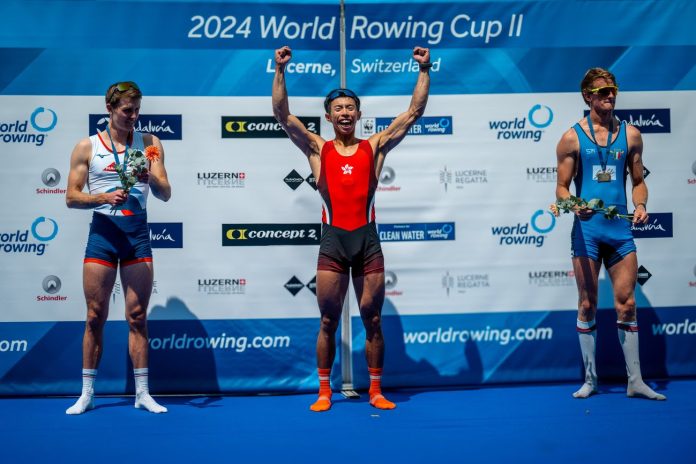
The women’s and men’s lightweight single sculls wrapped up Saturday’s finals with an historic win by Hin Chun Chiu in the men’s event, taking home the first ever gold medal for Hong Kong China at a senior World Rowing event. Reigning World Champion in the lightweight women’s single sculls, Siobhan McCrohan of Ireland won her final ahead of USA and Great Britain.

Earlier in the day, racing in Saturday’s semi-finals and repechages gave the large crowd of spectators a first taste of what to expect in tomorrow’s Olympic and Paralympic boat class finals and a good indication of what to see at the Games in Paris in a few weeks’ time.
A battle of the champions is to be expected in Sunday’s A-final of the women’s single sculls, when Olympic champion Emma Twigg and World Cup series leader and reigning World Champion Karolien Florijn will go head-to-head in the final after winning their respective heats. They will be joined by Australia, Germany, Lithuania, and AIN in the final, who all progressed to the final round after taking the top three spots in Saturday’s semis.
Reigning World and European Champion Oliver Zeidler will also be one to watch after continuing his strong 2024 season with a win in the men’s single sculls semifinals, while the AIN sculler Yauheni Zalaty won the second semi-final. 
In the women’s pair, reigning World Champions from the Netherlands overhauled Australia in the closing stages of the first semifinal, while Ireland won the second semifinal comfortably, also securing a place in the A-final.
In the men’s pair and much to the delight of the Swiss home crowd, Switzerland qualified for the final in second place, behind Great Britain1 and ahead of the pair from South Africa. The second semifinal saw a battle to the line with Spain, Great Britain2 and Ireland securing places for the final and the USA just missing out.
The women’s double sculls made for some surprises with neither the World Cup I winners from the Netherlands, nor the Lithuanian silver medallists from last year’s World Championships getting through to the final. The top three spots and thus the qualification for the final were taken by Ireland, Norway and New Zealand, as well as Australia, the USA, and China.
In the men’s double sculls, the last four qualifying spots were decided in the repechage with Italy, France, New Zealand, and Norway to join Friday’s heat winners Spain and the Netherlands in the final. The biggest cheer from the crowd went to Jan Schaeuble and Raphael Ahumada Ireland of Switzerland, who beat the Irish Olympic champions in the lightweight men’s double sculls’ semifinals and will be looking to win for the first-time on the Rotsee on Sunday.

The World Rowing Cup II will wrap up tomorrow Sunday 26 May, with racing to resume at 09:00 CET with the Finals B (place 6 – 12). The medal events, A-finals, will commence from 10:05 CET. All A-Finals will be livestreamed on worldrowing.com.

The World Rowing Cup II follows just days after the conclusion of the Final Olympic and Paralympic Qualification Regatta, which concluded on Tuesday with the final Olympic and Paralympic spots decided. See race report HERE.

For race reports, photos, race results and videos go to www.worldrowing.com.

It’s a Jungle Out There

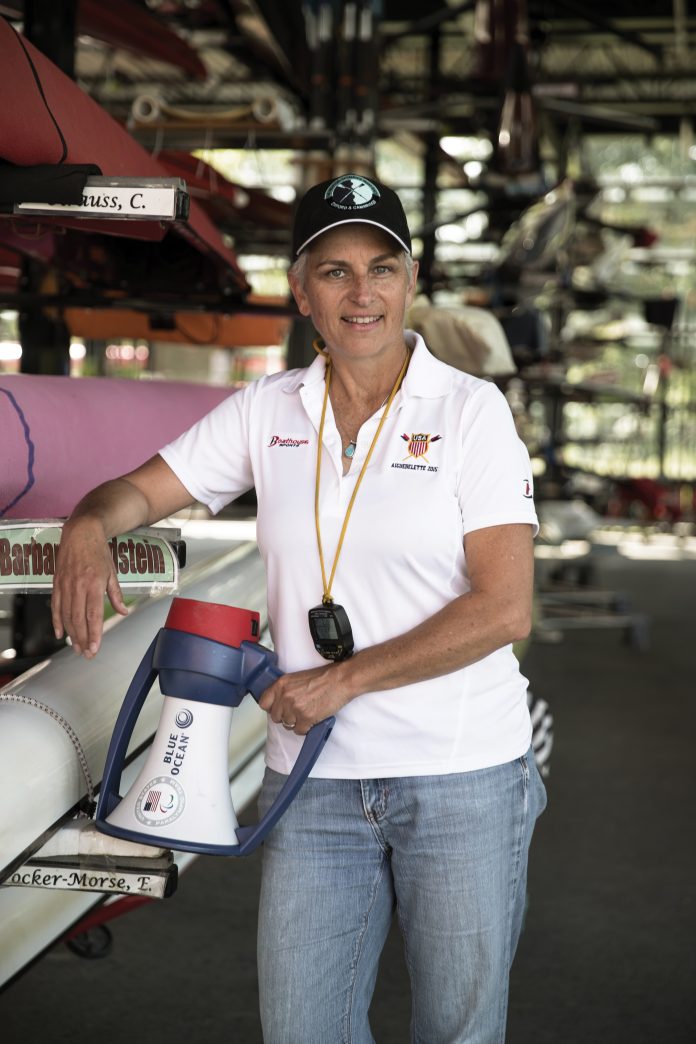
Several years ago, as the head women’s rowing coach at Boston University, I got a call from one of my top recruits, a national teamer from a small European powerhouse, several days ahead of her scheduled official visit. The trip was a big deal; we didn’t have a huge budget, so spending the money for an international visit was something we did in only a few cases for recruits we felt really good about. This recruit was technical and tough and fun; she would have made us faster and been a great teammate.

I assumed the call was just a regular check-in about some last-minute details. She appeared on FaceTime from the darkened back seat of her parents’ car as they drove through the countryside on her way home from practice.

Abruptly, awkwardly, she told me that she had committed to another school. Just like that. I was shocked. The coach, from a Pac-12 program, had made her a scholarship offer less than an hour ago, with one catch: The offer expired at the end of the call. She had to make the decision right then and there. She accepted.

There was no logistical need for the coach to do that. It was simply a way to introduce urgency and to intimidate the recruit into making a hasty decision before she could visit another school and think better of it.
I spoke with her and her father at length about what was really happening—that this coach, afraid she would visit my team and find it a better fit, had decided to strong-arm and scare her rather than let her make the decision that was best for her and her future.

They understood but were too afraid of risking that the coach might rescind the offer. She canceled her visit to BU, costing the team nearly $1,000, and went to the other school.

How did that work out? She left the school before the end of her freshman year, quit the sport, and never again competed at Worlds.

After nearly 25 years in the sport, I’ve seen the recruiting process from every angle. I’ve been the overwhelmed high-school senior making every visit possible, uncertain whether I wanted the size and spirit of a large state school or the intimacy of a small DIII college. I’ve been the young assistant coach flying around the globe trying to identify and lock in the next difference-maker for my team. I’ve been the experienced head coach, more patient and also more jaded, trying to outmaneuver increasingly cutthroat opposing coaches while building my own program.
Through all of this, I saw time and again how a lack of honesty and transparency made the whole process much more anxiety-inducing than it needs to be. Sure, there will always be some degree of stress involved for recruits as well as coaches. This is a big, expensive decision that will impact the next four years of their lives, and beyond.

For coaches, the future success of their teams depends on the accumulated strength of their recruiting classes. But time and again, I’ve seen how the egos and unrestrained competitiveness of some coaches and the inexperience, lack of confidence, and occasional hubris of recruits can make this far more difficult than it needs to be.

When asked to describe the current college-athletics recruiting scene, Becky Munsterer Sabky, a former admissions officer at Dartmouth College and author of Valedictorians at the Gate: Standing Out, Getting In, and Staying Sane While Applying to College, declared, “It’s a jungle out there.”

This is certainly true, but with some guidance, perspective, and candor, high-school rowers and coxswains, and their parents, can navigate the process successfully and land at a university where they are happy and can thrive athletically, academically, and personally.

Start with you.

The success of the entire recruiting process rests on having a solid understanding of its most important player: you. It doesn’t matter which teams made it to nationals last year or which university is on top of the rankings. What matters is that you are able to find the school and team that is the best fit for what you want out of your college experience. This requires honest reflection and the confidence to go for what you want, not necessarily what is expected of you.

“Expectations are important,” said Liz Trond, head coach of the Connecticut Boat Club (CBC) and former coach of the U.S. Junior National Team.

“Do you want to join a sorority, write for the school newspaper, be on the rowing team, go abroad, and take family trips all the time? OK, well then most of the programs in Division I and high Division III are not for you.”

Trond tells her athletes pointedly: “Don’t come to me and say ‘I want to row at Virginia but I’m super-excited to be in a sorority.’”

In the early days of the recruiting process, high schoolers must keep an open mind and look around at their options with genuine curiosity. Talk to older athletes on your team and those who have graduated about their college searches and current college experiences. Visit every campus you can. Take virtual tours when you can’t. It’s just as important to know what you don’t want as what you do.

Know that there are benefits and disadvantages to every setup. The peaceful idyllic campus may require some extra travel time. The bustling city school may not offer housing all four years. It’s all about priorities.

Claire Ochal, head coach of Harvard-Radcliffe heavyweight rowing, spent five years coaching at Syracuse before coming to Cambridge. The two schools are very different, she says, and each has pros and cons.

“Syracuse is very professional. Athletic departments in the ACC, Big Ten, Big 12 are huge moneymakers for the university,” she said. “At Harvard, it feels a little more homey. It’s not driving the revenue of the institution. But your team isn’t getting on College GameDay every weekend.”

Recruits are hearing this throughout their college search, I hope, but it bears repeating: Choose the school first and the team second. You never know what will happen with your rowing career. You want to make sure that you’re at a school where you can be happy and have a great experience, with or without rowing.
That said, the athletics-recruiting piece of the college search has an undeniable impact on the process, for better or worse.

“The college application process on speed”

With 15 years of experience in college admissions, Sabky knows the college search process.

“Athletics can really be an advantage when you’re applying to colleges,” she said, “but it’s also, in terms of the timeline, a big disadvantage because you have to figure this all out much more quickly than other kids.”

Recruits need to have their testing and transcripts ready earlier and often are committing well before their non-recruited peers.

For this reason, Sabky recommends reaching out to coaches as early as possible. Current NCAA rules prohibit verbal or written contact between college coaches and high-school recruits until June 15 or later after sophomore year and in-person contact until Aug. 1 or later of the same year. She advises high schoolers to reach out to all of the coaches of the schools they’re interested in, provide some information about themselves, and ask about how they conduct their recruiting.

Trond goes a step further in advising her junior athletes. She urges them to write direct, specific emails, including their height, weight, and erg score up front, even if they’re not yet up to par with what would be expected at a certain program.

“It’s helpful to say, ‘Listen, I realize this is not Division I standard yet. This is what I’m working on. This is what I could contribute to your school.’ Put it out there,” she advises.

This level of candor and awareness of the process will allow the recruit and coach to have honest conversations from the get-go.

Some of this accelerated timeline is unavoidable, but some of it is being driven by the recruits themselves. Junior-year commitments, relatively unheard of in rowing only a decade ago, are becoming increasingly common at many schools. To be sure, some of this acceleration is coming from college coaches who are motivated to lock up top recruits before other coaches can get to them. But the pressure is just as likely to come from high schoolers themselves who want the security of an early decision and the relief of a concluded process before the beginning of senior year.

Coaches commonly see early decisions being made en masse within one team; once one junior makes his decision early, his teammates are far more likely to follow suit.

“The FOMO is insane,” one collegiate coach of a top-five program said, referring to the “fear of missing out.”

Ultimately, the fundamentals of the process are the same. “You’re students first. You’re going to have to take the SATs. You’re going to have to get recommendations. There are no shortcuts,” Sabky reminded. “So think of this as your college application process on speed.”

The role of parents

Copilot. This is the key responsibility and opportunity for parents in their children’s college recruiting process. Sabky believes no one wants to be or have a helicopter parent, but a backseat parent can be just as detrimental.

“The copilot parent is willing to be there to support the student but not necessarily driving the car,” Sabky said.

This necessitates clear communication—between the parent and child as well as between the parent and coach (when appropriate).

“We want [parents] to feel comfortable with us as coaches,” Ochal said. “We want them to feel when their child is going to a place that’s going to be a home away from home for them that they trust the coaching staff to make the right decisions and look out for their child the best way they possibly can.”

Sabky believes there are practical benefits to having parents involved, particularly in important conversations. When discussing admissions, scholarships, timeline, and other complex topics, “it’s good to have other ears in the room” to ensure that everyone walks away with an accurate impression and a firm understanding of dollars and dates.

Crucially, parents should not overstep. It’s common throughout the sport that it’s often parents, more than high schoolers, who are pushing to get into the best college or row for the best team, regardless of fit or satisfaction.

Understandably, high-schoolers will go along with their parents’ wishes. Trond, who has seen this often with her CBC athletes, asked a group of parents about their goals.

“Are parents looking for college admission? Or are they looking for a four-year, healthy, cool, challenging environment for their daughters?”

The parents’ answer: “Admissions.”

The unfortunate result of such a focus is that aspiring rowers may choose a school because it has the flashiest name, not because it excites them or has the academic program they’re interested in or has a team full of people with whom they fit in well.

Another important topic is money. I’ve seen countless instances when parents kept their kids in the dark about the family’s financial situation, leaving recruits unable to have effective, accurate conversations with coaches. When a coach asks, “Is need-based financial aid a possibility for your family?” recruits need to have some idea of the answer. Whether financial aid or athletic scholarships are on the table, college-bound rowers ought to have an understanding of their family’s ability to contribute to the cost of their college education and how that works as part of growing into young adulthood.

Said Sabky: “The process should be the child’s, but the conversation about money should be the family’s.”

Getting jerked around

Most of the time, college coaches act with honesty and transparency during the recruiting process, but there are exceptions. Recruiting is a high-stakes full-time endeavor for them. Their livelihoods depend upon their ability to assemble and develop the best team possible. Coaches are under a lot of pressure, and most—but not all—try to act fairly. As a recruit, you need to keep your wits about you so you can recognize when you’re getting jerked around and decide how much of that you’re willing to take.

This happens most commonly around commitments—the team’s commitment to offer a scholarship, roster spot, and/or admissions support and the recruit’s commitment to apply to, attend, and row for the school.

Though this can be a high-stress time, the fundamentals of a strong relationship should not fly out the window. Accordingly, be forthright about your interest level. Don’t tell four schools they are all your top choice; coaches talk. Similarly, coaches should be expected to be honest. It’s reasonable for recruits to expect coaches to be clear about their interest level, what standards need to be met, and what factors will affect the timeline.

If a coach can’t provide answers, ask yourself why. Sometimes coaches are keeping athletes on the back burner. They’re pursuing their top recruits and temporizing with second-tier recruits in case things don’t work out. Meanwhile, some athletes are doing likewise as they juggle different teams.

Eventually, this can put the whole process in jeopardy. Athletes end up holding out hope for a long shot while letting other great options fall by the wayside. You must decide for yourself how much of this you’re willing to take. Perhaps this is your dream school and you’ll wait forever for the chance to row there. That’s fine, as long as you understand you may be sacrificing other opportunities.

Oftentimes, though, recruits face the opposite problem: coaches pressing them to make a decision before they’re ready. This is a tactic I saw time and again from some of the most cutthroat recruiters out there. I heard of a Big Ten coach who made a scholarship offer during a football game on an official visit but stipulated that the offer expired when the recruit left the stadium. I know of an instance at an ACC school (and many similar situations in other conferences), where a scholarship offer expired on the date the recruit was scheduled to leave for her next official visit, forcing her either to cancel the visit or to forego the offer. These high-pressure tactics put young people and their families in impossible and wholly unnecessary situations.

As a collegiate head coach, my philosophy was always that I wanted a team full of people who had great options and chose my team. I wanted recruits to take every visit, talk to every coach, so they could feel confident they were choosing the team and school that was the best fit for them.

By denying recruits this ability, coaches are building a team of athletes who were bullied and intimidated into choosing that school. All this does is reveal the lack of confidence the coach has in his own program. If he were sure about the quality of the experience his crew members were having, he’d be comfortable giving recruits the chance to explore their options thoroughly, while certain the best would choose his program.

Another time recruits must demand as much clarity as possible is when discussing their admissibility. Different conferences and schools use different language and processes to determine how likely it is that a recruit will be admitted.

In the Ivy League, for example, the admissions office confers “likely letters” on select prospective students, mostly recruited athletes, indicating the probability of their admission. Member schools have agreed that these letters can be issued only between Oct. 1 to March 15 of senior year after an academic pre-read process that cannot begin before July 1 before senior year. It’s not unheard of, however, for a coach to imply to a recruit that he or she is likely to be admitted in May of junior year. This may be nothing more than an educated guess, and it’s considerably different from the assurance offered by an actual letter from the admissions office.

Conversations about admissions at many schools can be complex. Some coaches have direct communication with a representative in the admissions office who can give specific, personalized feedback on a recruit’s academics as early as junior year, advising which grades need to be improved and which classes to take senior year.

At other schools, coaches who have no relationship with the admissions office are compelled to offer their own best assessment, which can be highly variable and subject to their own biases. Whether because of unclear communication or intentionally misleading information, recruits are often left more, or less, certain of their admissibility than they should be. Therefore, it’s imperative that you ask direct, probing questions about this consequential topic. This is not a place for any ambiguity, intentional or otherwise.

In situations like these, you must ask yourself: If a coach is going to treat me like this during the recruiting process, when she’s trying to impress me and win me to her team, how will she treat me when I’m on the team and things are challenging? If a coach is going to tell a recruit he is definitely admissible, when he has no direct indication from admissions confirming that, how can he be trusted to be honest throughout the rest of the athlete’s career? If a coach is going to bully an athlete into committing before she’s ready, how is she going to behave when that same athlete is struggling to adapt to the pressures of collegiate rowing?

Taming the “Jungle”

To be sure, the college recruiting process is filled with nerves and uncertainty, long shots and tough calls. It is also, likely, the only time in your life that your love of and dedication to the sport of rowing will provide real, tangible benefits.

You may be able to get into a college that otherwise wouldn’t accept you. You may receive an athletic scholarship, worth up to $360,000 over four years. At the very least, you will have the opportunity to speak with coaches and current student-athletes to get a realistic understanding of life at their institution, an experience not available to the average applicant. You may get feedback, or a decision, from admissions long before your peers. So do your best to enjoy the process. It’s truly a once-in-a-lifetime experience.

Counsels Sabky: “Be authentic, be thorough, and be ready to make these decisions a little bit faster—and to get good news a little bit earlier.”


Thanks for asking!

Some actual good questions

College coaches and rowers are used to being asked the same boring, superficial questions by most recruits. While you do need to cover the fundamentals, if you can find the answer on the university’s website, you shouldn’t ask the coach.

You can set yourself apart from the rest of the recruiting class, while learning valuable information about a team, by asking thoughtful, specific questions. Experienced college and junior coaches recommend these:

• Tell me about a challenging conversation you’ve had with an athlete.

• What does it look like for the team when things are going well? What does it look like when things are going poorly?

• How do you work on team values regularly?

• What type of people are successful on your team?

• What outside resources do you bring in to support team development (culture, sports psych, nutrition, etc.)?

• How are injuries handled? How are athletic training and sports medicine involved in that process?

• What academic challenges do your rowers commonly face and what resources do they have to address them?


 

10 Cal Men’s Rowers to Compete at Paris Olympics

Story and photo courtesy of Cal Athletics.

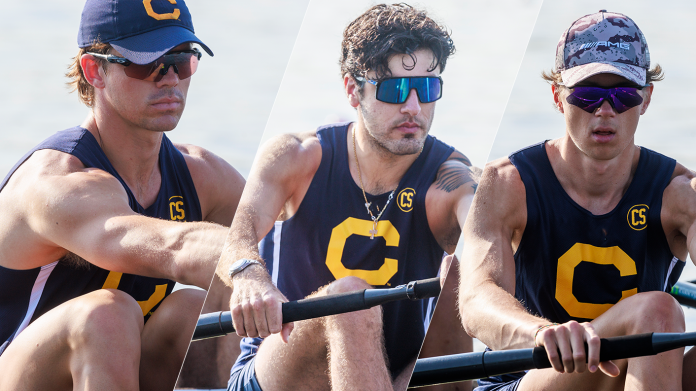
BERKELEY – The California men’s rowing team will have a large contingent at the 2024 Paris Olympic games as 10 current and former Golden Bears have qualified to represent their countries this summer. A quartet of Bears earned their spots by finishing in the top two of their races at this week’s World Rowing Final Olympic and Paralympic Qualification Regatta in Lucerne, Switzerland: current Cal men’s rowers Gennaro di Mauro and Tim Roth along with alums Martin Mackovic ’18 and Christian Tabash ’23. They join current Bear Angus Dawson along with alums Campbell Crouch ’23, Ollie Maclean ’23, Olav Molenaar ’22, Jack Robertson ’21 and Gus Rodriguez ’23, who were all previously named to their respective Olympic teams.

Di Mauro qualified for the Italian men’s eight after he helped power his crew to a second-place finish at this week’s Olympics qualification regatta. It was an extremely exciting finish as Italy was in the third position behind Canada heading into the final 500 meters of the final and was able to make a push to edge out the Canadians by just .01 seconds to take the final Olympics spot. This will mark Di Mauro’s second Olympics appearance as he rowed in the men’s single sculls at the 2020 Tokyo Olympics, which finished second in the B Final. Di Mauro was part of Cal’s V8+ that won back-to-back IRA National Championships the last two years.

Roth will compete for Switzerland in the men’s four after his team won its opening heat before finishing second in the final at this week’s qualification regatta. His boat beat out Germany, which finished in third place and featured Cal teammate Frederik Breuer. This will be Roth’s first-ever Olympics appearance. His previous international experience includes a fifth-place finish in the A Final in the men’s four at the 2024 World Rowing Cup I, a second-place finish in the B Final of the men’s four at the 2023 World Rowing Championships and a fifth-place finish in the A Final in the men’s four at the 2022 World Rowing Championships. He was also part of Cal’s V8+ the past two years.

Mackovic qualified for his second Olympic Games for Serbia after finishing in second place in the men’s double sculls at the qualification regatta. He also competed in the 2020 Tokyo games in the men’s pair and finished fifth in the A Final. Mackovic has been rowing extensively in the men’s pair on the world stage consistently since graduating from Cal and his credits include a gold medal at the 2021 World Rowing Cup I and bronze medals at the 2022 World Rowing Cup I and III.

Tabash is set to race in his first Olympics for the United States in the men’s eight after his team won its final at the qualification regatta. His crew won in wire-to-wire fashion, taking the lead in the first 500 meters and not looking back. Tabash was a grad transfer for the Bears during the 2023 season when he rowed in the third varsity for a majority of the season. His last international competition came at the 2021 U23 World Rowing Championships, where he earned a bronze medal in the men’s coxed four.

Dawson, also a member of Cal’s back-to-back IRA national champion V8+, and Robertson will race for Australia in the men’s eight and coxless four respectively after Rowing Australia named both of them to the Australian Olympic Team following the country’s 2024 National Senior, Para, U23 and Australia A Team Selection Trials, which were held Feb. 25 – Mar. 3 at the Sydney International Regatta Center. This will be Dawson’s second Olympics appearance after he finished sixth in the A Final in the men’s eight at the 2020 Games and Robertson’s first.

Crouch was named a spare for New Zealand’s men’s pair by Rowing New Zealand earlier this month. New Zealand qualified its men’s pair with a top-11 finish at the 2023 World Rowing Championships. At Cal, Crouch was part of the Bears’ V8+ that won consecutive IRA national championships the previous two years.

Maclean, who won consecutive Pac-12 Men’s Rowing Athlete of the Year Awards (2022 and 2023) and was also part of Cal’s back-to-back IRA championship V8+, will row for New Zealand in his first Olympics in the men’s four. He qualified with a third-place finish in the A Final of the 2023 World Rowing Championships. Maclean also earned a bronze medal in the men’s four at the 2023 World Rowing Cup III.

Molenaar will be part of the men’s eight for the Netherlands after he helped his country secure a berth via a second-place finish in the men’s eight at the 2023 World Rowing Championships. This marks his first Olympics appearance. He previously aided his country to a bronze medal in the men’s eight at the 2023 World Rowing Cup III and silver medal in the men’s four at the 2023 European Rowing Championships. During his time in Berkeley, Molenaar was part of Cal’s V8+ that finished second at the IRA national championships in 2021 and the 2V8+ that won the IRA national championship in 2019 and finished second in 2022.

Rodriguez was named a spare on the U.S. men’s eight team which qualified for the Olympics with a first-place finish at this week’s Olympics qualification regatta. This will be his first Olympics. He transferred to Cal as a graduate student in 2023 and rowed in the V8+ that went undefeated and won the IRA national championship.

STAY POSTED

For further coverage of Cal men’s rowing, follow the Bears on Twitter (@CalMrowing), Instagram (@calmrowing) and Facebook (Cal Crew).


Pocock CRCA Coaches Poll – Week 10, May 22

Story and image courtesy of the CRCA.

The Week 10 Pocock CRCA Coaches Poll, collected on Monday prior to the announcement of at-large bids and seeding for the NCAA DI and DII Championships, has been released with Texas retaining their #1 ranking in the DI poll as Western Washington jumped to the top of the DII poll after coming in second last week. Tennessee made a big move from fifth to third in the DI poll as Embry-Riddle jumped from the third to second spot on the DII ranking. There were no changes in the DIII poll as no racing took place over the weekend.

The next poll will be released on Wednesday, June 5th, after the conclusion of the NCAA Championships which run from May 31-June 2 on Harsha Lake in Bethel, OH.

Division I
Rank Team Points Previous Ranking
1 University of Texas 2618 1
2 Stanford University 2513 2
3 University of Tennessee 2246 5
4 Princeton University 2217 3
5 Yale University 1972 6
6 University of California, Berkeley 1965 4
7 University of Washington 1897 8
8 Brown University 1857 7
9 University of Michigan 1655 9
10 Syracuse University 1562 10
11 University of Pennsylvania 1392 11
12 Indiana University 1206 14
13 Rutgers University 1175 13
14 University of Virginia 1147 16
15 The Ohio State University 1018 12
16 Duke University 718 15
17 Oregon State University 633 ORV
18 University of Notre Dame 421 ORV
19 University of Alabama 280 19
20 Harvard-Radcliffe 245 20
ORV Columbia University 209
ORV Gonzaga University 199
ORV University of Central Florida 191
ORV Washington State University 183
ORV University of Miami 145
ORV University of Southern California 95
ORV University of Wisconsin-Madison 80
ORV University of California, Los Angeles 71
ORV University of Minnesota 41
ORV Clemson University 23
Division II
1 Western Washington University 165 2
2 Embry-Riddle Aeronautical University 141 3
3 University of Central Oklahoma 130 1
4 Seattle Pacific University 129 4
5 Cal Poly Humboldt 121 5
6 Mercyhurst University 96 6
7 University of Tampa 48 7
8 Rollins College 40 8
ORV Thomas Jefferson University 15
Barry University 15
Division III
1 Tufts University 730 1
2 Trinity College 660 2
2 Williams College 660 2
4 Wesleyan University 650 4
5 Wellesley College 500 5
6 Smith College 470 6
7 Bates College 450 7
8 Hamilton College 430 8
9 Ithaca College 360 9
10 US Coast Guard Academy 310 10
11 Worcester Polytechnic Institute (WPI) 263 11
12 William Smith College 176 12
13 Clark University 120 13
14 Connecticut College 60 14
15 Rochester Institute of Technology 40 15
ORV University of Puget Sound 36
ORV St. Mary’s College of Maryland 30
ORV University of Rochester 26
ORV Skidmore College 16

History Made as Final Olympic and Paralympic Spots Were Claimed for Paris 2024

Story and photo courtesy of World Rowing.

History was made in an intense session of racing in Lucerne on Tuesday, when the final Olympic and Paralympic spots in Rowing were claimed for the Paris 2024 Olympic and Paralympic Games.

With the last 37 slots available for Paris across the 19 boat classes, there were historic moments, heart breaks, and photo finishes when the finals of the 2024 Final Olympic and Paralympic Qualification Regatta were contested on the Rotsee.

For the first time in the history of Rowing, the Olympic Rowing Regatta (27 July to 4 August 2024) will see an Italian and Danish women’s eight line up at the Paris 2024 Rowing venue at Vaires-sur-Marne in a few weeks’ time after both nations secured the last two tickets of the event. Italy dominated the women’s eight to the line, while it was a very tight finish between Denmark and China for the second spot.

The Italian men’s eight followed suit and together with the American eight they took out the top two spots – and therefore the two final tickets in this event. The USA won the final, while Italy had to wait for the result in a photo finish with Canada, beating the latter by 0.01 seconds on the line.

Denmark’s sweep women were on fire on the last day of racing, securing not only the Paris 2024 ticket in the eight, but also in the women’s four and women’s pair.

In a strong final sprint, New Zealand secured the second qualifying place behind Denmark in the women’s pair, while Ireland moved ahead of Denmark in the women’s four to also qualify.

In the men’s pair, having led for much of the race, Denmark was overhauled and in the sprint to the line was between Germany, Lithuania, and the Netherlands. It was too close to call on the line but eventually it was confirmed that Germany and Lithuania had secured the two qualifying places for Paris.

In the men’s four, an impressive sprint from the Italians, secured them Olympic qualification with Switzerland taking the second spot in front of an ecstatic home crowd.

Racing in front of a home crowd was also extra motivation for France’s crews at this last chance regatta, with both the French women’s and men’s lightweight doubles sculls sealing their home Olympic spot ahead of Greece, who took the second and final spots in both events.

Another two spots were on the line in the women’s double sculls with Czechia taking the win and Great Britain adding to their impressive total number of boats qualified for Paris. In the men’s double sculls, the USA and Serbia are heading that way too.

The USA secured another Olympic berth in the women’s quadruple sculls with Ukraine joining them, while the US men’s quadruple sculls crew just missed out on Olympic qualification by just 0.13 seconds with Norway and Estonia locking in the final two spots. Spain’s and Switzerland’s women’s single scullers as well as Romania and the USA on the men’s side, locked in the final Paris 2024 Olympic sculling tickets.

With 99 days to go to the start of the Paralympic Games, the Final Olympic and Paralympic Qualifying Regatta also decided the remaining spots for the Paris 2024 Paralympic Regatta (28 August – 4 September 2024). While there were two qualifying places available across the Olympic events, there was only one up for grabs in most of the Paralympic classes which made for extra exciting racing.

The PR3 mixed double sculls will premiere at the Paralympic Games and it will be Ukraine who will get the chance to write history come Paris after taking the single qualifying place ahead of Brazil.

In addition to securing two Olympic spots, Paris 2024 host country France also secured three in the Paralympic classes, including the PR1 men’s single sculls as well as the PR2 mixed double sculls. In the latter, Israel qualified for the Paralympic Games as well.

In the PR3 mixed coxed four Italy was absolutely untouchable and approached the line to secure Paralympic qualification comfortably ahead of Brazil, who took the second place.

Overall, 18 NOCs secured additional Olympic quota places at Lucerne this week, with the USA securing four, Denmark and Italy three, while France, Greece and Switzerland added two to their overall Paris 2024 qualifying spots.

In the Paralympic events, France will prepare two additional crews for their Home Games, while Ukraine, Italy, Brazil and Israel secured one. Pending a protest, the spot in the PR1 women’s single sculls is yet to be decided.

The Rotsee will heat up again from Friday, 24 May with Paris 2024 Olympic and Paralympic medal contenders lining up for the 2024 World Rowing Cup II (24-26 May 2024) and the penultimate International racing chance ahead of the Games.

For race reports, photos, race results and videos go to www.worldrowing.com

The World Rowing Cup Series Makes Its Annual Stop in Lucerne, Switzerland

Story and photo by World Rowing.

The 2024 World Rowing Cup II is set to be staged from 24 to 26 May on the iconic Rotsee in Lucerne, Switzerland. A total of 234 crews from 43 nations will compete in 23 boat classes, in the hopes of earning points that will contribute to their countries overall standing in the series.

The men’s single sculls has 29 entries, with World Rowing Cup leader Oliver Zeidler being the standout name. Zeidler completed the World Rowing Cup hat-trick last year – winning all three World Rowing Cup events in the same boat class in the same year – and seems well on his way to repeat on his performance. He will face tough competition, with the likes of Simon Van Dorp of the Netherlands, Stefanos Ntouskos of Greece, Tom Mackintosh of New Zealand, and Sverri Nielsen of Denmark.

The men’s double sculls will see the return of the reigning Olympic Champions of France, Matthieu Androdias and Hugo Boucheron, for their first international race together again time since last year’s European Rowing Championships – a good marker two months ahead of the Olympics on home waters, especially facing the reigning World Champions of the Netherlands, Stef Broenink and Melvin Twellaar.

The women’s single sculls will see five out of the six women in last year’s A-Final at the World Rowing Championships racing. While Karolien Florijn of the Netherlands still hasn’t lost a race in two years, she will face tough competition with the reigning Olympic Champion, Emma Twigg of New Zealand, but also World medallist Tara Rigney of Australia, and former Lucerne World Cup winner, Alexandra Foester of Germany.

The women’s double sculls will see Norway’s surprise European gold medallists, Thea Helseth and Inga Marie Kavlie, looking to test themselves against a wider field that includes boats from Lithuania and the USA that medalled at last years’ World Rowing Championships.

For the first-time ever, Para-Rowing will be contested at a World Rowing Cup in Lucerne. The top names in the sport – Birgit Skartstein and Moran Samuel in the PR1 women’s single, Roman Polianskyi and Giacomo Perini in the PR1 men’s single, or the Dutch, Irish, and Polish combinations in the PR2 mixed double sculls are set to compete for the first time on the Rotsee.

The 2024 World Rowing Cup II will be the first time seeing USA, Canada, New Zealand, as well as many South American and Asian countries racing internationally this season – and perhaps the only time before the Olympic and Paralympic Games later this summer in Paris. The USA has entered both men and women’s eights, their men’s eight hoping to qualify for the Games at the Final Olympic and Paralympic Qualification Regatta just days prior to the 2024 World Rowing Cup II.

The Netherlands are currently in the lead of the 2024 World Rowing Cup points, with 68. They are followed by Great Britain with 63, and Italy with 58.

Find the full entry list on the event page.
Find the current World Rowing Cup standings here.

What is the World Rowing Cup?
The World Rowing Cup is an annual series of three regattas that, traditionally, act as a lead-up to the World Rowing Championships. This year, the World Rowing Cup series, after its first stop in Varese, Italy, will travel to Lucerne, Switzerland, and Poznan, Poland.World Rowing Cups are held over three days with a progression system from heats through to finals. Racing at the World Rowing Cup includes the 14 Olympic boat classes and a selection of International boat classes. Para-rowing is contested at some World Cups. Each Olympic boat class earns points based on the finishing order. The highest placing boat from a country is awarded the following points:

1st = 8 points, 2nd = 6 points, 3rd = 5 points, 4th = 4 points, 5th = 3 points, 6th = 2 points, 7th = 1 point.

Para Coach Ellen Minzner Named 2023 Coach of the Year

Ellen Minzner at Community Rowing, Inc. Photo: Chris Cardoza

The U.S. Olympic & Paralympic Committee honored Ellen Minzner in May as the 2023 Paralympic Coach of the Year.

“It is an honor to be selected from among the many successful Paralympic coaches in the U.S.,” said Minzner, who coached the silver medal-winning PR3 mixed four with coxswain crews at the 2016 Rio and 2020 Tokyo Paralympic Games.

“It speaks volumes about our program overall and the countless hours and energy that all the Para coaches on our high-performance team give to create successful crews and to advance the sport as a whole.”

Minzner is the first high-performance USRowing coach to be honored with a USOPC coaching award. For 10 years, she worked at Boston’s Community Rowing, Inc., where she spearheaded initiatives for inclusion and advocacy for people with disabilities, military veterans, and underserved youths.

As USRowing’s director of Para high performance since 2019, and the Para National Team coach for five years before that, Minzner has overhauled Para talent identification and athlete development, with an emphasis on working with collegiate athletes. At the 2023 World Rowing Championships, her Para crews won silver medals and qualified for Paris in the PR3 mixed coxed four and the PR3 mixed double.

The 2024 Paralympic rowing events run from August 30 through September 1.