Home Blog Page 42

How to Eat Like the Champions

tour de france cycling

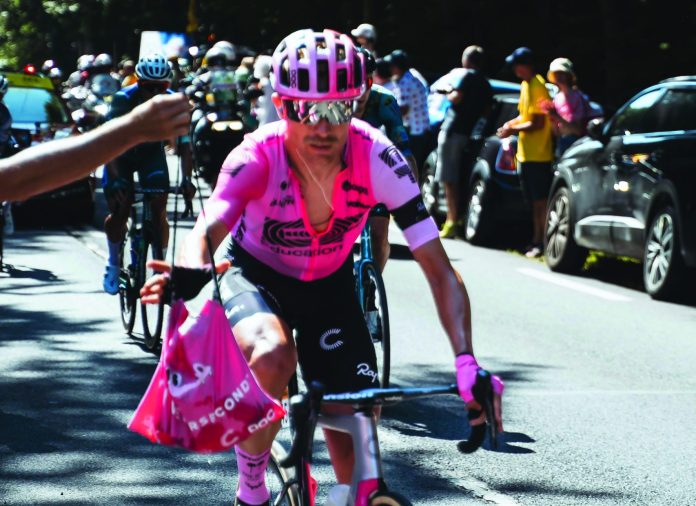
If you’re like me, you’ve been enthralled watching the Tour de France and the Paris Olympics. I found myself wondering about the strategies these high-performing athletes use to fuel their bodies before, during, and after extremely hard training sessions and competitions.

The webinar Fueling the Tour de France addressed my curiosity and solidified my observation that sports nutrition has indeed evolved into being a central component of the training and competing strategies of elite athletes.

In the past, Tour de France riders refueled minimally—perhaps a protein shake—soon after the day’s race. They waited until they got back to the hotel to eat three to four hours later. Today’s riders consume a significant amount of carbs right after each stage to speed up their recovery. Compared to their peers of 10 to 20 years ago, they also eat significantly more carbs. Result: They experience fewer episodes of hitting the wall, bonking, and becoming depleted completely. This hastens recovery; if you don’t dig yourself into a hole, you don’t need to dig yourself out of one.

Here are some interesting takeaways from the webinar that may inspire you to take a closer look at your fueling patterns, carbohydrate intake in particular. While you may not be a Tour de France cyclist, it’s likely you have the similar goal of becoming the best athlete possible.

• Tour de France losses are linked commonly to inadequate carbohydrate intake. While a cyclist may not win the tour in a single stage, he can lose it in a single stage.

• Fatigue related to training hard vs. fatigue related to underfueling is difficult to distinguish. Experimenting with eating more grains can help identify and resolve an underfueling problem.

• To optimize the availability of fuel (carbs) for muscles and the brain, rowers who train intensely should:

—carb-load a day or two before the endurance event.

—consume adequate carbs during the endurance event.

This will reduce the risk of bonking/hitting the wall and will improve stamina, endurance, and overall performance.

• Ideally, each competitive rower has a meal-by-meal plan and day-by-day approach that offers high-, medium-, or lower-carb meals according to the demands of the day. That is, not every day requires a high-carb intake. For a Tour de France cyclist, flat stages require fewer carbs compared to mountain climbs, with further adjustments needed for heat, wind, and rain.

• While some high-level endurance athletes have a support crew that helps provide food and fluids during long training sessions and events, the cycling Team Sky has its own kitchen truck with three performance chefs who guide food intake during the Tour. The four main meals are breakfast, on-bike fueling, post-bike fueling, and dinner. For rowers, the strategy is to surround your workouts with food.

• Overall daily targets are 2.5 to nine grams of carbohydrate per pound (five to 20 grams of carbohydrate per kilogram) per day to fuel muscles, more than 0.9 grams of protein per pound (two grams per kilogram) per day to preserve muscle mass, and minimal dietary fat intake (so athletes fill up on carbs, not fat).

• During hard efforts that last longer than 2.5 hours, the goal is to consume 90 to 120 grams of carbohydrate per hour. That’s about 350 to 500 calories from carbohydrates per hour—a lot more than most endurance athletes consume.

• Endurance rowers, take note: For a 150-pound (69 kilogram) Tour cyclist doing extreme work, nine grams of carbohydrate per pound (20 grams of carbohydrate per kilogram) translates to 1,350 grams of carbohydrate. That’s 5,400 calories just from carbohydrate alone—about the amount in a two-pound bag of uncooked white rice. No wonder Tour de France cyclists consume bowls of white rice for a pre-race breakfast!

• Consuming that much carb from food can be difficult. Hence, concentrated sources of carbs such as gels and chews can help athletes hit their carb goals.

• During endurance exercise, sports drinks facilitate the ability to consume 120 grams of carbohydrate per hour. Tour de France riders rarely go below 80 grams per hour. Endurance runners should choose hydration fluids that offer more than just plain water.

• Consuming a variety of carb sources enhances their transport out of the GI tract and reduces the risk of intestinal distress. Carb blends (such as sports drinks made with glucose + fructose) have limited variety, so don’t eat too much of the same commercial sports food. Standard carb-rich foods (banana, granola bar) offer a wider variety of carbs.

• Tour de France cyclists must train their guts to be able to  digest and absorb up to 120 grams of carbohydrate (around 500 calories) per hour comfortably. In training camps, they do not only on-bike training but also gut/digestive training. They practice eating as they would for a race. Gut training can take years as cyclists increase their intake of carbs per hour gradually. Simultaneously, they test different products they might want to use.

• Cyclists should plan to begin feeding early and for as long as they can manage if they know they’ll be unable to ingest much during the upcoming mountain climbs. Similarly, rowers who can’t eat much on race day should consider eating extra the day before.

• In the first 60 to 90 minutes of recovery, a Tour cyclist may consume cherry juice (carbs + antioxidants), quickly absorbed carbs, and a whey + carb recovery shake. When traveling back to the hotel, they eat a meal (such as salmon and pasta with extra salt) and sweets (cake, fruit).  If they have a hard ride the next day, they eat and refuel as much as possible. At the hotel, they snack, have a massage, eat another dinner, and go to bed with a full belly.

• At the elite level, some endurance athletes practice carbohydrate periodization (training with depleted muscle and/or liver glycogen stores some of the time) for selected workouts at the start of a training block. “Sleeping low” (with low glycogen stores) and then training on empty (no pre-exercise carbs) a few times a week can enhance cell signaling and induce adaptations that can improve performance. These train-low sessions get phased out as training intensity increases. (Note: Athletes not at the elite level should focus on the fundamentals of fueling adequately. No need to train low when there are easier ways to enhance performance.)Conclusion: Food is more powerful than many rowers think. If you have a hit-or-miss sports diet, think again. A sports dietitian can help you eat to win!
USRowing names Senior, Beach Sprints and Para Athletes of the Year

Musniski rowing Paris Olympics
Photo courtesy of Meghan Musniski.

USRowing has named six more athletes as 2024 Athletes of the Year to be honored on Attager Row at the prestigious Head of the Charles Regatta on Saturday, October 19, at 5 p.m.

Todd Vogt (Rochester, N.Y./University of Buffalo) and Gemma Wollenschlaeger (St. Augustine, Fla./Temple University) earned the Para National Team Athletes of the Year. Chris Bak (Cincinnati, Ohio/University of Cinncinati) and Annelise Hahl (Cary, N.C./Triangle Rowing) are the Beach Sprint National Team Athletes of the Year. Finally, Michael Grady (Pittsburgh, Pa./Cornell University) and Meghan Musniski (Naples, N.Y./Ithaca College) have been titled the Senior Team Athletes of the Year.

Vogt has been a part of four national teams, and he competed at his first Paralympics in 2024 where he saw a seventh-place finish in Paris in the PR3 mixed double. Wollenschlaeger, along with her boat mates, won silver in the PR3 four with coxswain at the 2024 Paralympic Games. At the 2023 World Championships Vogt and Wollenschlaeger raced together in the PR3 mixed double sculls and won a silver medal.

On the beach sprints side Bak and Hahl, both four-time national team members, notched gold medals in their respective events in 2024 on the international stage. Bak raced to a first-place finish at the World Beach Sprint Finals in the men’s solo and Hahl won the junior women’s solo and junior women’s double sculls events.

Grady, who recently joined the Washington Huskies men’s rowing team as an assistant coach, is a two-time Olympian and a gold medalist in the men’s four at the Paris Olympics.

“It was certainly a big year for me,” said Grady. “It’s been a lot of work and finally seeing the success of it all. My contribution to the team—the energy, culture, drive, and mission we had being fulfilled is incredible. I really didn’t anticipate this was the way things would go. I knew we had a chance to win based on how we performed last year and the time we were together in the boat but it’s been a long journey.”

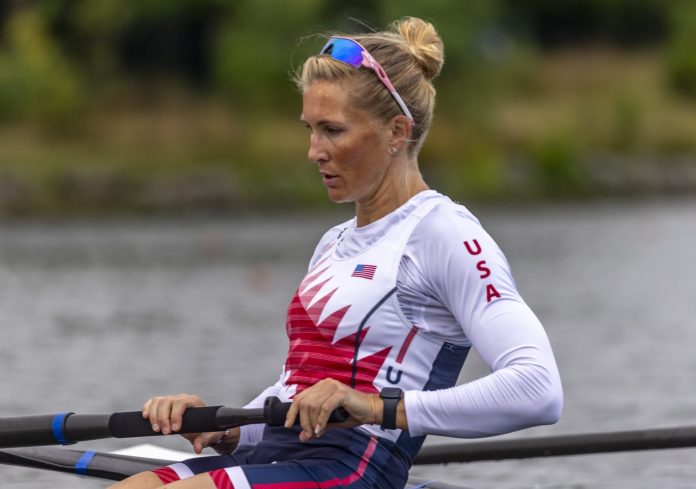
The Carie Graves Female Athlete of the Year, Meghan Musniski, is a four-time Olympian. She has competed at five world championships and holds two Olympic gold medals. Musniski has represented the United States on the national stage for over 14 years.

“Sara Hendershot who is on one of the USRowing athlete committees,” remembered Musniski. “She told me that the men and women on the senior team had voted me as the female athlete of the year. I was surprised and really honored because it’s an award that has nothing to do with your immediate results and is all to do with what your teammates think about you as a teammate—your work ethic, drive, and you as an overall person. That’s really special because I’ve trained with a lot of people who are incredibly hard working and deserving of the award.”

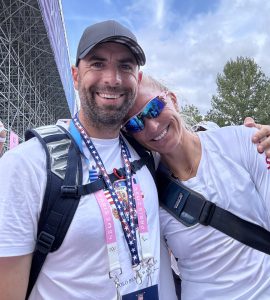
Musniski is one of the most decorated rowers on the women’s senior team. However, she never could have predicted her success. This year’s Olympics was especially meaningful for her, getting to experience it with her husband, Skip Kielt, who coached the senior men’s 2x.

Musnicki and Kielt
Photo provided by Meghan Musnicki

“If you told 25-year-old Meghan that in the next 15 years she would have five world titles, two Olympic golds, and four appearances at an Olympics I would have laughed at you. It’s amazing. The athletes that I train with make it such a special experience. It’s a pretty unique experience to be at my fourth and final Olympics with Skip’s hopefully first of many Olympics. Getting to experience that as a couple is not something that a lot of people can say.”

Musniski, Grady, Vogt, Wollenschlaeger, Bak and Hahl will be honored for their incredible success along with the USRowing Under 19 and Under 23 Athletes of the Year at the 2024 Head of the Charles.

Healing Through Rowing: Cancer Survivors Meet at HOCR

Survivor Rowing Network
Photo courtesy of Beth Kohl.

In order to bring attention to Survivor Rowing Network and their service to those recovering from cancer, this story is not behind the paywall.

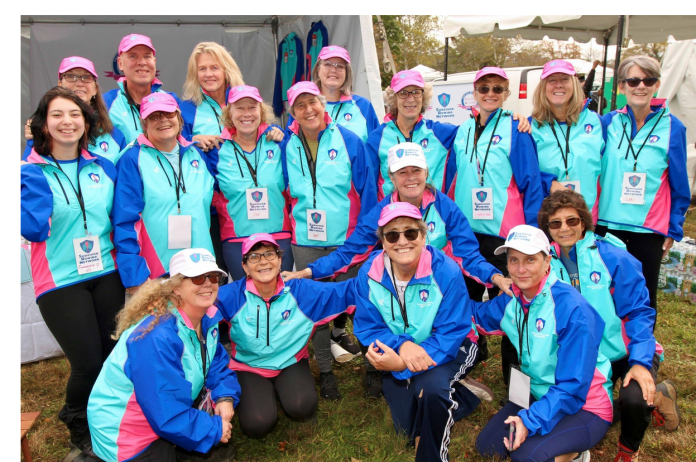
Survivor Rowing Network unites over 27 programs nationally, and plenty more internationally, behind a shared goal of bringing a sense of community, support and passion to those recovering from any form of cancer. In less than two weeks, a group of 11 boats will cruse down the Head of the Charles 2024 course at approximately 3:26 p.m. as part of the regatta’s first ever Survivor Row.

Survivor Rowing Network began in 2019 when its founder and executive director Beth Kohl met the Saugatuck SurviveOars at a Rowing Cares race in Poughkeepsie, N.Y.

“I was blown away by their passion and community. They had overcome so much but were so positive about finding rowing as part of their rehabilitation,” recalled Kohl. “I wanted more cancer survivors to find the joy that these ladies had found.”

Kohl, who had recently taken over as president of Rowing Cares, met with other teams who had programs already in place for cancer survivors such as Recovery on Water, ROC Crew, and several We Can Row programs in in Boston, Mass. Philadelphia, Pa. and Washington, D.C.

“I started thinking, how can we help more survivors find rowing,” said Kohl. “Our simple goal was to introduce rowing to more survivors either on the water or on the erg. We got a few more people together started having zoom calls every month with the survivor programs and very quickly a passionate, strong community was formed.”

Fast forward to 2023, Survivor Rowing Network had 15 active clubs, many of which had interest in racing. Together, the programs entered boats in the Grand Masters 8+ and 4+ in the 2023 Head of the Charles. The network has nearly doubled in size, so much so that 27 teams are now involved and will be sending 99 rowers and 11 coaches to participate in the Survivor Row at the 2024 Head of the Charles.

“Overwhelming is the word we use almost every day–sometimes multiple times in a day,” said Kohl. “I’ve had many great jobs but never one where the doors always opened, where positivity prevails, where many conversations and meetings include tears. We are building a global community of women and men united by their love of the sport.”

The Upper Valley Rowing Foundation, an active member of Survivor Rowing Network, started CReW or Cancer Recovery Through RoWing in June of 2019.

“My daughter was diagnosed with cancer when she was a freshman in high school—this was 2012,” said UVRF CReW coach Carin Reynolds. “She stayed on the team all through her treatment. It was the one place where she wasn’t ‘the kid with cancer,’ she was just another part of the team. When CReW was starting in 2019, I instinctively knew that this program would be a great thing. It’s so important to have a team at your back.”

What started at UVRF as a six-week program turned into a 45-person team open to survivors of all forms of cancer who meet three times a week to do a mixture of rowing on the water and virtual erg workouts.

CReW is just one of many programs making the trip to the Head of the Charles to come down the course as part of the Survivor Row.

“Exercise it the greatest deterrent to recurrence and in 2025 we are on a mission to educate the medical community around the world on the benefits of rowing for recovery and rehabilitation,” said Kohl. “We can’t even imagine what it will be like when we all meet for the first time at HOCR. For most it is their first Head of the Charles and for many it is their first regatta of their lives. There will be many tears, I’m sure, and I can’t wait.”

Coxswain Development: Fall Housekeeping and Other Chores

coxswain equipment coxorb

Whether your winter season is indoors or out, the end of fall racing is a great time to take care of your equipment so that it serves you well on the water.

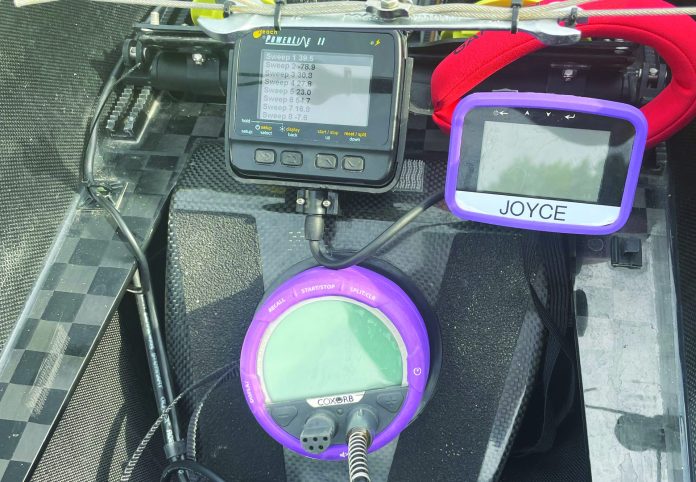
First and foremost is the care and maintenance of your CoxOrb, CoxBox, and other electronic devices, like SpeedCoaches. Problems with your CoxBox may not be your fault, but they can irritate your rowers and interfere with your ability to run a practice safely and effectively. Take steps to ensure that your equipment functions properly.

“Make sure you’re regularly charging but not keeping it plugged in the whole winter,” said Jun Jeon, sports-performance sales manager at Nielsen-Kellerman. A good rule is not to charge the CoxBox or SpeedCoach continuously for more than two days.

Conversely, you also don’t want your electronics to sit untouched for months with the battery drained. Regularly charging and discharging the battery will help preserve its life.

“A lot of the troubleshooting or repair calls that come in are unfortunately the result of not keeping up with that charging,” said Jeon.

It’s also best practice to clean your CoxBox at least once a month (or biweekly if you row in salt water) and before it’s put away for any extended period. NK sells maintenance kits for the CoxBox, and you can also assemble your own. If your CoxBox is the newer style with three ports on the front, make sure to use the protective cap that came with the box whenever you’re on the water to prevent moisture from entering through the right-side Smart Connector port. Keep the cap on for storage as well.

Make sure your headset and wiring are coiled loosely and neatly for storage and travel and that you don’t lift or carry the box by the microphone cord when it’s in use.

“Be careful with where the microphone jack is,” said Jeon. “It’s where we handle it the most when we plug it into the CoxBox.”

When the microphone jack is handled gently, “there will be less static, and people will be more pleased with how the CoxBox sounds.”

Other coxswain housekeeping tasks worth mentioning:

Empty out the rest of your coxswain bag and replace wrenches, hardware, and tape that were used up (or went for a swim) during your fall season.

Clean and air out your waterproof gear and flotation suit, if you use one.

If you recorded your coxing throughout the fall season, label and organize your recordings digitally.

If your boats are de-rigged for the winter, note how each shell was rigged so you can help your coach and team re-rig efficiently.

With these tasks done, you’ve set yourself up to help yourself and your team get on the water smoothly when racing resumes.

USRowing tabs Jett and Murphy as Under 19 Athletes of the Year

Jett and Murphy USRowing
Photo courtesy of USRowing

Charlotte Jett (Greenbrae, Calif.) and Tyler Murphy (Windermere, Fla.) have taken the USRowing 2024 Athlete of the Year honors after competing on the national stage for two consecutive years each.

“I was with my friend Carly [Brown] who stroked the U19 eight when I found out I was receiving the award,” recalled Jett. “I checked my phone, and I got the email, and it was super exciting. It was fun to receive it while she was there because she’s great and I got to celebrate with someone.”

Jett has been a two-year contributor on the women’s Under 19 National Team. This past summer, the women’s eight with Jett holding down six seat won gold at the World Rowing Under 19 Championships in St. Catharines, Canada.

Tyler Murphy, also a two-time Under 19 National Team athlete, also medaled in St. Catharines, Canada. The men’s eight crossed the finish line in 05:27.50, three seconds behind Great Britain, for a silver medal. Murphy sat in the men’s eight that finished second at the 2023 USRowing Youth National Championships and won the pair at the 2023 USRowing Under 19 National Team Trials.

“I’ve been very blessed to have spent my last two summers with the U19 national team,” Murphy said to USRowing. “I’ve made memories with friends for the rest of my life. Both of my summers brought me amazing experiences that have shaped me so much as a person.”

Murphy and Jett receive the award, which is voted on by the Under 19 National Team athletes and coaches, and will be honored on on Attager Row at the 2024 Head of the Charles on Saturday, October 19 at 5 p.m. As the date gets closer, Jett hopes that rowers can learn from her experience that success is not immediate and learning to love the process is just as important as the outcome.

“I didn’t make the national team right away, but it was really pivotal in my rowing career,” remembered Jett. “It shows me how many people around me were also really good at rowing. It takes a while, and your first try might not always be successful but a lot of it is patience and being able to put your head down and work. Failure has taught me the most.”

Rowing in Rough Water

coastal rowing rough water lisa worthy
Photo by Lisa Worthy.

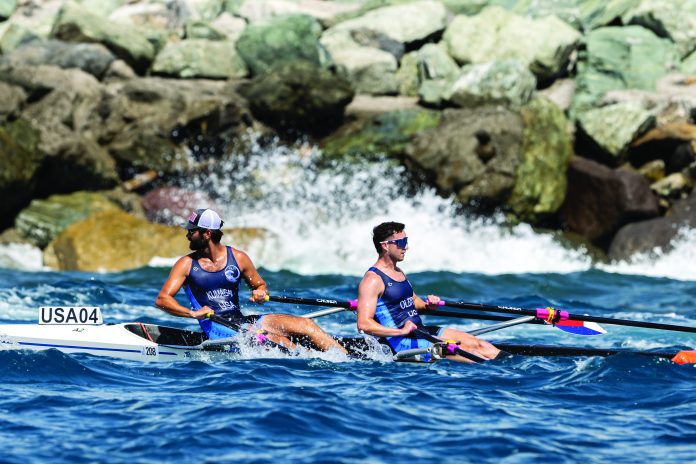
Training and racing in rough water are part of rowing.

First, through coaching and drills, master stability, bladework, and power application on calm water. Over time, progress to maintaining your form in various degrees of difficult wind and waves.

Practicing in challenging water conditions will elevate your skill level, especially if you compete and train on water that is typically flat. The smaller the boat you’re in, the more refined your technique needs to be.

A major faux pas in bad water is tightening your shoulders, arms, and hands; the chop then travels to your upper body and disrupts your stability. Keep as light a hold on the oar handle as possible to allow the blades to stay at the proper depth during the drive and help you feel the water.

Loose shoulders let the arms absorb hitting the top of a wave, catching an edge, or adjusting the blade height on the recovery.

After the release, be sure to lower the oar handles enough to clear the waves and carry the oars higher off the water during the recovery. Practice plenty of rowing with the blades off the water and tapping drills or strokes on the square to improve balance. Keep the entry light and intentional so you can feel the blade set before you drive.

When waves are of varied height and amplitude, the blade can miss the water, forcing you to hold your balance until the blade gets back in the water. Be patient and focus on placing the next entry.

Gaining experience in adverse situations (as long as they’re safe) will provide the lessons for learning to work with the water.

UCLA, USC, and Navy Fill Assistant Coaching Openings

USC Navy UCLA coaching
Photo courtesy of Navy Men's Heavyweight Rowing

Guillermo Lemus, Larkin Brown and Nick Peterson have stepped into assistant coaching positions at the University of California, Los Angeles, University of Southern California and the United States Naval Academy respectively.

Lemus joins the Bruins after serving as associate head women’s rowing coach at the University of Kansas and before that as an assistant rowing coach at Oklahoma University. At Kansas Lemus coached the 2023 Big XII Newcomer of the Year and the 2022 Co-Big XII Newcomer of the Year. At Oklahoma Lemus was part of the team that earned a second-place finish at the Big 12 Championships in 2018 and 2019.

Lemus has also spent time coaching at University of Southern California, the University of San Diego, San Diego Rowing Club, California Yacht Club and Lions Rowing Club. He learned to row when he was just 12 years old in Amatitlan, Guatemala and graduated in 1990 from International Institute for Computer Studies.

Nick Peterson joins Navy heavyweight rowing with a notable rowing career of competing on the U.S. National and Olympic Teams from 1998-2000 and racing to a seventh-place finish at the 2000 Sydney Olympic Games. He will be working with Steve Gladstone, who took the helm at Navy this summer.

“The Naval Academy epitomizes growth mindset,” Peterson noted about the program. “It’s a very freeing culture. Many athletes start as walk-ons so there is a culture of support, and everyone tries to make those around them better. At some point we all hit a roadblock of some kind. It can be very limiting because it means we don’t stretch beyond ourselves. With a growth mindset everything is an opportunity to learn.”

For Peterson, his time working with Guennadi Bratichko, who coaches at Capitol Rowing Club in Washington, D.C. was very influential and built the foundation of the coaching style that he brings to the water while coaching at Navy.

Brown, who joins the USC coaching staff after a successful collegiate rowing career at the University of Virginia, coached for the USRowing Olympic Development program last summer and will bring a wealth of knowledge from her ACC and NCAA championship appearances.

“When I graduated, I felt like my rowing career was complete, but I was still not ready to leave rowing,” remarked Brown. “I think about how much I loved my college rowing experience and the opportunities it provided me. Since I’m a recent graduate I know what it’s like to be a college rower right now.”

The USC rowing team, with Brown’s guidance, is excited and hungry to see out their potential this season.

“For us it’s still early days. One of our major goals is for the athletes to grow physically and emotionally– to create confident rowers and boost their belief in themselves and in each other.”

Coach Development: Know Thyself

pete carroll football seahawks
Pete Carroll coaching the Seattle Seahawks.

On the surface, it may not seem like rowing and football have a lot in common. Perhaps rowing coaches and football coaches have even less in common.

On the collegiate level, football coaches are raking in millions of dollars, ensconced in their secure practice facilities, rarely putting in an appearance at any of those “mandatory” all-staff meetings for which the rest of us have to show up.

Similarities between the NFL coaching experience and that of our National Team coaches, for whom coaching an Olympic crew is often not even their full-time job, can seem essentially non-existent.

That’s why, over a decade ago, I was surprised to find myself devouring legendary football coach Pete Carroll’s book, Win Forever. And I’ve been even more surprised by how often I’ve returned to it in the years since.

I didn’t think of myself as a Pete Carroll fan when I picked up the book, but the success he had with USC and the Seahawks, making him one of only three head coaches ever to win a collegiate national championship and a Super Bowl, is undeniable.

My lasting takeaway from the book, and the reason I include it in the syllabus for the course on coaching that I teach at CRI’s Institute for Rowing Leadership, is how concisely Carroll articulates his core philosophy and the benefits he experienced by being able to do so.

There’s no long-winded back story or a pyramid hung up on the wall—just one clear idea: competition.

In the introduction, Carroll recounts how, after being fired by the Patriots in 2000, he was feeling lost and defeated. Inspired by another coaching great, John Wooden, who took 16 years to figure out his own immutable rules for success, Carroll set about defining his own.

He understood, as he says in Win Forever, that “one of the keys to success lies in knowing and believing in yourself.”  And what Carroll knows is that he is a competitor. He is driven by a single thought: “to do things better than they had ever been done before.”  And that’s how he decided to begin leading his teams.

It was shortly after defining this singular organizing principle that Carroll decided to leave the NFL and interviewed for the head-coaching position at USC. In the interviews, he unveiled his newly defined philosophy and, throughout that process, sensed a newfound confidence and belief in himself.

“I had never felt so prepared and well-equipped to deal with the challenges of taking over a program,” he recounts.

This, coming from someone who already had been coaching for nearly 30 years—four of them at the helm of an NFL team— speaks volumes about the benefits of defining and articulating your own guiding principles and values.

There’s no need to wait 30, or even 16, years to define your coaching philosophy. Think of what unimaginable successes Carroll or Wooden could have achieved if they had set about the work of articulating their values sooner.

Wherever you are in your coaching career, now is a great time to begin knowing and believing in yourself.