

VIDEO BY ADAM REIST
COXSWAIN RECORDING COURTESY OF MOLLY ROCHFORD
Inside the Boat – Cornell Men’s Lightweight Eight at the 2019 IRA Championship
A Look Inside the University of Washington’s Men’s Rowing Program

VIDEO BY ADAM REIST
PHOTO BY SCOTT ELKUND
Finding Ways to Cope

BY ED MORAN
PHOTOS BY ED MORAN, LISA WORTHY, AND COURTESY OF THE ASSOCIATION FOR APPLIED SPORT PSYCHOLOGY
With the spring rowing season lost, the summer schedule in question, and schools and clubs closed in the world-wide effort to combat the spread of COVID-19, athletes on all levels are having to deal with the emotion of loss and the questions of how to keep training and connected to the sport and their goals.
To offer some perspective and insight on what professional sports psychologists can suggest as ways to cope with those emotions and stay in training Rowing News reached out to the Association for Applied Sport Psychology (AASP), who connected us to Dr. Stephen Gonzalez, Dartmouth College assistant athletics director for leadership and mental performance.
Dr. Gonzalez has years of experience working and teaching in the field of sports phycology in collegiate and youth athletics, as well as working with the United States Army’s Comprehensive Soldier and Family Fitness program.
The following is a question and answer session that can be applied to student-athletes on many levels, but also focuses on the impact the COVID-19 shutdown is having on youth rowers.

Dr. Stephen Gonzalez, Dartmouth College assistant athletics director for leadership and mental performance.
Rowing News: What can the initial emotional impact on student-athletes who have lost their spring and possible summer seasons be like?
Dr. Gonzalez: “Under high levels of stress our world shrinks quite a lot, and it’s hard not to just focus on ourselves. But when a decision is made that really impacts you, your future and your wellbeing, it’s like nothing else matters, and the first thing you think of is, what am I going to do, how is this going to affect me?
“For juniors, they may think, how am I going to get to the junior national team? Or earn a college scholarship? Or any of those things. And so, I think the emotional impact really puts the blinders on, and it completely narrows us to not think about anything other than ourselves and the situation that we’re in, which then spawns us to have multiple categories of responses, depending on the individual. People can get really angry and frustrated that this is happening.
“A lot more people become sad and depressed, just very upset. And so, you have to sit with that for a while because [the season] is gone and you’re stuck with these feelings. There really isn’t a resolution at that moment, and I think that’s one thing athletes are pretty good at, we try to move on and get to the next target, or get to the next race. But there is no next race.
“And for junior athletes that maybe were hoping for one or two more opportunities to showcase their abilities, it can be really hard, because now you don’t have control over your destiny and you really struggle with that.”
Rowing News: What are some ways of dealing with those emotions?
Dr. Gonzalez: “The first thing we have to understand is our emotions are so powerful that we almost feel like they are indicative of us as a person. So, if I am really angry and sad, we tend to see it as I, as a person, am angry and sad. But really, we have to separate from our emotions. Emotions aren’t people, emotions are temporary feeling states, and how long those feeling states last are dependent on a lot of things, but the advice I give any athlete is you have to separate from the emotion.
“The first thing we have to understand is our emotions are so powerful that we almost feel like they are indicative of us as a person. So, if I am really angry and sad, we tend to see it as I, as a person, am angry and sad. But really, we have to separate from our emotions. Emotions aren’t people, emotions are temporary feeling states…”
– Dr. Stephen Gonzalez
“Once I can separate from the emotion, then I can actually examine and evaluate the experience – why am I feeling this way, how important is rowing to me, we start to really ask ourselves why am I so upset.
“I really care about rowing but why? Then it gives you an opportunity to really evaluate your experience and your relationship to the activities and the things that you do. Then I think the last thing is we can embrace the emotion, or appreciate the emotions, because emotions are a part of human life and all the highs and the lows. And we can then thank the emotion for getting us the realization that we care, or thank the emotion for keeping us safe, or thank the emotion for giving us greater clarity.
“The more we can get people to separate from the emotion, the more they can actually evaluate it and examine it, to really understand why they are feeling that way. I think it provides some really good context to help people start to move on and have a better understanding of the significance of the event, rather than get so caught up in an emotional state.”
Rowing News: What are some ways to best transition from being in a team environment to training alone?
Dr. Gonzalez: “I have had a lot of experience working as a performance expert for the United States Army, and the tenants of the U.S. Army are to be ready and resilient. And it’s so fascinating because we have soldiers in infantry divisions across the United States that are constantly training for, hopefully, wars that never happen.
“But if they do happen, the question is are we ready for when that comes about, and are we then resilient in those moments when we need to be? They spend a lot of time training the social capital in soldiers to be ready and resilient.
“The message that I have had for athletes is you need to own the fact that seasons are going to come back, are you ready for them? And, your readiness level is how much you value what you can do. There are so many people that don’t have access to home gyms that are athletes. We have strength and conditioning coaches, for example, that are working on developing these body weight and home routines that require very little to no equipment at all. So, it’s doing squats with a backpack full of canned goods as resistance, or using a towel to do eccentric work instead of a band.
“The message that I have had for athletes is you need to own the fact that seasons are going to come back, are you ready for them?”
Dr. Stephen Gonzalez
“It’s not as glamorous as being in a really great team training environment, so because of that, because we know what those environments can look like, are we devaluing what we can do? I think it’s really, really imperative that when we transition to whatever you have access to, you have to give it value and meaning. I know it’s not perfect, or exactly what you’ve been able to do in the past, but the first thing we need to do is value it. The second thing is to appreciate the fact that you are capable of doing something to either maintain or sustain what you need to do to physically be ready when the time comes.”
Rowing News: Is staying connected to teammates and coaches important?
Dr. Gonzalez: “It’s very important to stay connected. And we do have this ability to be interconnected through a variety of different mediums electronically now. So, whether it’s checking in with teammates after workouts, or face timing with a teammate on the erg, or whatever it is, it can help with that transition. But first and foremost, you have to value and appreciate what we can do and not get so caught up in what others have access to. We can’t play that comparison game because that’s not going to help you take action now. And I think taking purposeful action is what we want people to do.
“It’s absolutely vital in terms of coping with this event. It has impacted everybody, all facets of human life and society have been affected by this pandemic, and when we spend too much time on our own, we start to think that things are just happening to us. I think it’s really important to connect to the team because we start to understand that people are going through similar challenges, it normalizes the situation for us. It enables us to offer encouragement to other people.
“Rowing is a team sport, and I think it’s important to see what your teammates are doing so that you can appreciate their efforts. And, if you see teammates that are in your boat and you see them really making strides and doing what they can to be ready for when the season comes back, or when we can compete again, it builds trust and enables us to see the camaraderie of why rowing is so special. It really keeps that alive.
“I was a distance runner, so for me being able to connect with track club members and training partners is important. Part of the beauty of sport is once you are done being seriously competitive, it still connects you to people that appreciate what you appreciate, and we hope that sports provide life-long friendships, and helps us connect with people across the world. I think by staying connected, it not only helps teams, but I think it helps us just as human beings in moving forward.”
Rowing News: Will staying connected and doing interconnected workouts, staying positive and focused, become more difficult as time goes on the shutdown continues?
Dr. Gonzalez: “The timeline continues to fluctuate, and I think in the next couple of weeks, by the end of April, we will probably have a better idea of how much longer this could potentially go. I think we’re on the brink right now. There are even questions now of is college football going to be happening, and if that’s the case, we’re now moving into fall.
“I am preparing our student athletes, especially in the fall sports, to prepare like the season is going to start on time. But we have to prepare for the option that this is going to be something that could continue, and now we need to adapt. Are we ready for that?
“I think that will help people stay more engaged, and at least anticipate the fact that this could go on longer, and not ignore the fact that it can. And I think that just opens us up to be a little more flexible to this very ambiguous and constantly changing, uncontrollable situation. So, when it comes to what our focus should be, we have to meet the athletes where they are. What that means is, are there athletes that are asking for these workouts, are still motivated. Or, are there some athletes that are still kind of grappling with this and aren’t ready to be in a formal training tempo, or battle rhythm, and just want to get on the bike or maybe do some other activities to stay active, but get some space from it because they are overwhelmed.
“I think we just have to meet people where they are with this, and then just give it a little time and then yea, get back to sending out workouts and gathering some metrics. But the uncertainty of the situation requires us to be probably a little more flexible than where we were in the past.
“Generally, we do our training with a target in mind to demonstrate our abilities. Should the focus be returning to competition eventually, yes. I think that’s a subconscious focus point, but I don’t think it can be the focal point right now because there is no target date, there is no definitive yes, this is going to happen. Because of that, the focus needs to be on am I still appreciating rowing and this sport for what it gives me in terms of a sense of accomplishment and helping me maintain overall health and wellbeing through some physical activity, and is it allowing me to stay connected to people, and do I appreciate the process of training.
“If we get back to that, I think we will still continue to foster a healthy love of what we’re doing. And then, when it comes time to target our training towards something, I think then we’ll be there.”
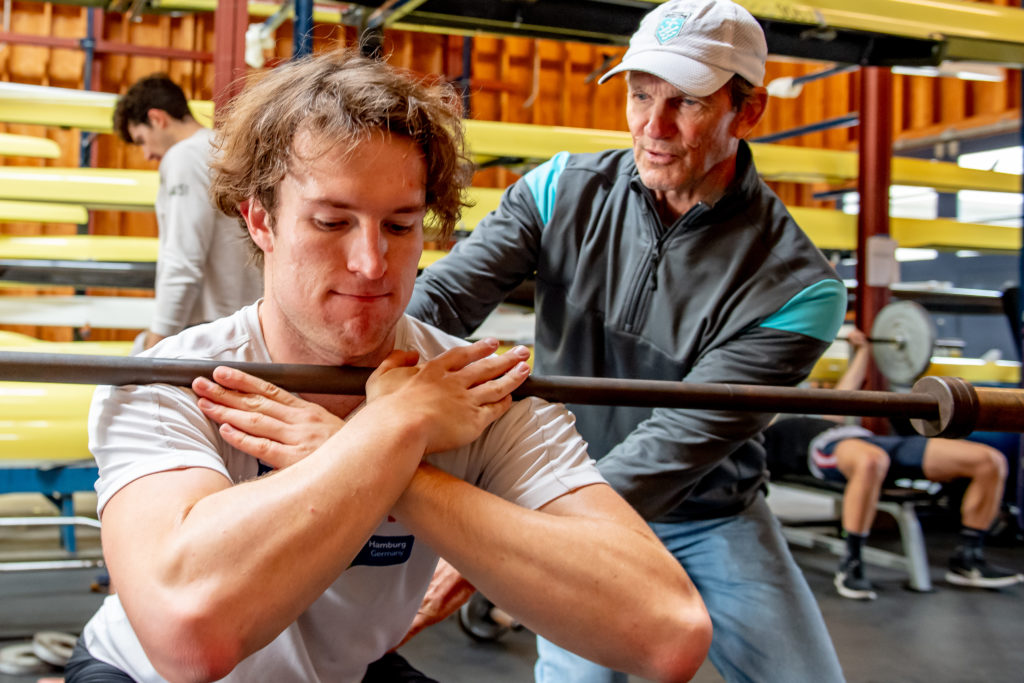
Rowing News: What recommendation do you have for junior athletes who are hoping to row in college and possibly be awarded a scholarship or financial aid, and are now feeling anxious about their opportunities being threatened?
Dr. Gonzalez: “What’s interesting is looking at why people get involved in their sports. Generally, people get involved in their sports because they saw it on TV, they were inspired by someone, they had family members in the sport. There is some sort of social influence.
“But people start, and then they like it. It’s cool to see kids take on a sport, begin to appreciate it, kind of do it on their own. And if they show promise, all it takes is one person saying you’re really good at rowing, if you continue doing this, you could probably row in college, maybe get a scholarship. Then, suddenly that conversation has now created a transactional relationship with the sport. It used to be something done out of pure love, but as soon as we tell somebody they can do something for something, now there is all this stress. I have to do this to get this.
“I think this is a really great pause and reset for us to get back to why we do something, get back to fostering that love of the activity so that we have a healthier sense of motivation when the time comes to really need the motivation to train and get ready to compete again.”
There are multiple online sports psychology resources and tips for athletes dealing with the COVID-19 shutdown available at AASP.
Renewed Hope for Rowing in the Olympics
BY ED MORAN
PHOTOS BY PETER SPURRIER
VIDEO BY ADAM REIST
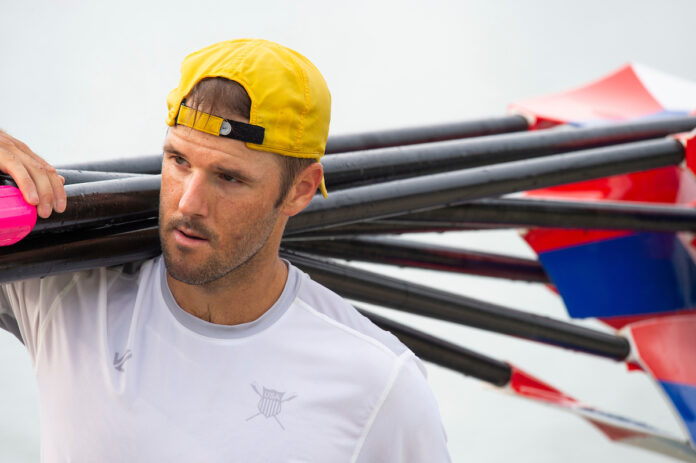
Like other athletes across all sports, John Graves has been struggling with the emotions of having his 2020 Olympic aspirations taken on a roller coaster ride of hope and disappointment.
He was in Sarasota and set to row in the U.S. men’s single trials in March and, if he won, he planned to go to the Final Olympic Qualification Regatta in Lucerne, Switzerland in May.
Then, just before trials were about to begin, they were postponed. The news was disruptive, but trials weren’t eliminated, and there was still hope they would be rescheduled and that the Olympic qualifier would still happen – until FISA canceled the qualifier.
But when the Olympics were postponed all Graves could do was wonder how it would all play out. When reached by phone on the morning the IOC decision to postpone was announced, Graves’ reaction went like this:
“I’m just lying on the floor reading twitter. I feel confident that it is the right decision to postpone the Olympics, but just for me personally, it’s challenging because I was pretty confident this year would be my last year. Obviously, I don’t have all the answers right now but, this kind of opens up a whole new can of worms.”
A full week later when the new Olympic schedule was announced for next summer, Graves said he could not leave rowing without giving one last shot at getting to an Olympics. He was hitting reset, turning back the calendar, and beginning to plan out the best way to get his final season back and finish his career, which he hopes is done on the racecourse in Tokyo. He wants to be an Olympian. Or he at least wants to be able to say that he tried one last time.
It’s the path he has been walking for most of the last ten years.
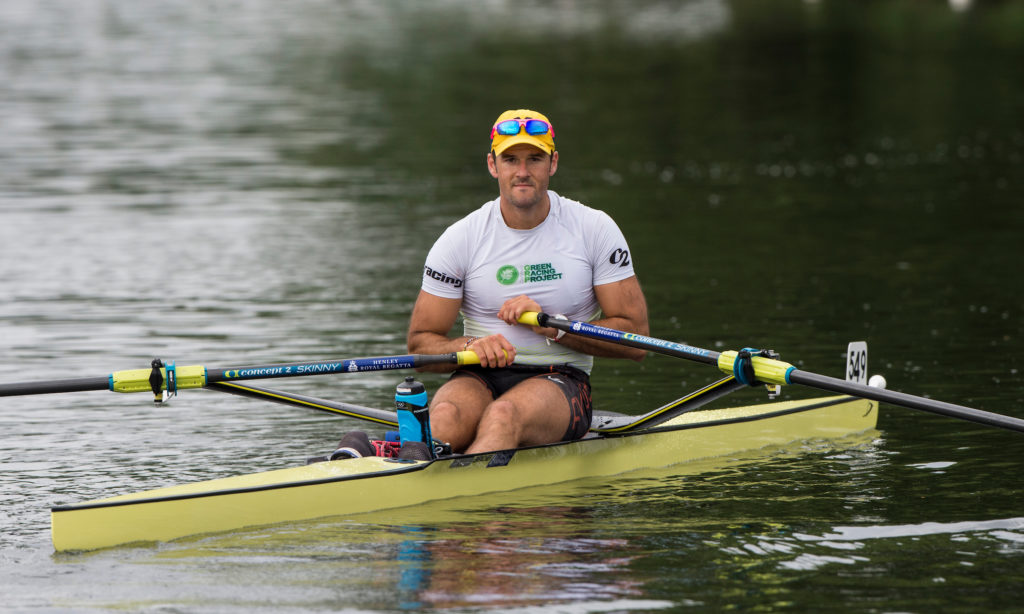
“I hesitate to say I have any concrete plans at the moment,” Graves said. “The new dates just got named, and there is still so much up in the air, like what the qualifier dates will look like, what the trials dates would look like, stuff like that.
“It’s hard to plan exactly the next 15 months or so. At the moment, it’s challenging to know that we put in a ton of work this year and we didn’t really move the needle at all as far as getting through trials, or at least selecting some of the US boats. I would feel better about stuff if we had at least done that and I could focus on the qualifier as kind of one step away from the Olympics, but now we are essentially where we were a year ago.”
Graves’ international journey has lasted from 2009 through 2019 including roster spots on two under-23 world championship teams, six senior world teams, and the 2016 Final Olympic Qualification Regatta in Lucerne, Switzerland.
He wanted to try one more time. And 2020 was supposed to be different – different in that for the first time in his career, Graves was heading to trials with the intention that this will be his last campaign. His ultimate goal is, and always has been, an Olympic team bid. But time is running out for Graves, and this spring was to be all or nothing.
While most athletes don’t like to think, or even talk about a final year, Graves is at ease with all of it, and happy to be in the single again.
For Graves, this spring came on the heels of an up and down year that saw his plans for competing in the double he had rowed in at the 2017 and 2018 world championships fall apart, to losing at spring singles trials in 2019, and then spending the summer rowing in the bow of the 2019 men’s quad that finished out of Olympic qualification at the World Rowing Championships last summer.
The experience, Graves said, left him reflecting on how to accomplish his goal of racing in an Olympics, and moved him back into thinking his best shot was the single. So, he started training again, and mapped out a path that – if successful – would have had him winning the Championship single last fall in the Head of the Charles, winning trails, and competing for a spot in the Olympics at the final qualifier.
He checked off the Head of the Charles win, but the COVID-19 crisis wiped out the rest of that plan for this season. But it did not end his desire to row one last campaign.
“This definitely will be my last go at it, and I think it’s really important that I put myself in an environment, and a situation, where I felt I was getting everything out of what I am putting into it,” he said.
“This fall was a moment for me to take a second and figure out what I really wanted out of the next year, and how I can best go about doing that. And for me, the single was the best way to go after the goal of qualifying a men’s sculling boat for the Olympics, and to use everything I’ve learned over my career.
“And then, regardless of the result, be happy finishing my career going as fast as I personally can, and being able to live with that.”
There have been no announcements yet from World Rowing about how, or when, the remaining Olympic qualifications will be run, but the one certainty not changed by the postponements and disruption of the COVID-19 shutdowns is that getting to the Olympics will be a long and competitive battle for whoever comes out on top of the U.S. Olympic Trials.
The men’s single is not a pre-qualified U.S. boat, and earning a place in Tokyo will mean winning one of the final two spots available for the single at the Final Olympic Qualification Regatta, where the field will be incredibly difficult to get through.
But the first step for any U.S. sculler hoping to be in Tokyo will be the U.S. trials.
There were 25 men’s single scullers scheduled to race trials before they were canceled.
Among those on the schedule were Kevin Meador, who rowed the U.S. men’s single the last two world championships, and a long list of single scullers who have raced successfully the last few seasons, including Luke Wilhelm, Jonathan Kirkegaard, and Matt O’Leary. All three rowed in the finals of the 2019 U.S. Trials V, from where Meador earned his spot on the world championship squad.
Of that group, Graves is arguably among the most experienced and technically skilled. But he is also among the smallest of the athletes. In fact, when Graves first began sculling internationally, he competed as a lightweight.
He raced the lightweight single in the 2010 Under-23 World Championships and he was in a lightweight double during the 2012 U.S. trials for non-qualified boats. But he was not a natural lightweight, and the experience of making weight for every event nearly led to his quitting rowing.
“Being 154 pounds at double trials in 2012, I was just miserable,” he said. “My natural weight was probably 175 to 180, and it just became very challenging to me. The success of the 2012 Olympic trials for me was just getting to the weigh-in, being under 70kilos.
“I was pretty close to quitting in 2012 because it just wasn’t fun for me anymore. I just wanted to stop rowing.”
Instead, Graves went to the Craftsbury Sculling Center the next summer, where he was coached by Dan Roock, who tuned his thinking around.
“Dan Roock helped me find a way to be as fast as possible, and to let my weight kind of just fall where it naturally does,” Graves said. “He was very empowering in a sense of it really gave me confidence that I could be fast at my natural weight.”
Graves switched to the open single that fall and experienced his first successes as a heavyweight sculler. He won at the fall speed order, and then the spring NSR. In 2014, Graves rowed in a Craftsbury quad coached by Roock with his brother Peter, Steve Whelpley and Ben Dann, won a bronze medal at World Cup III, and finished eighth at that year’s world championship. He then teamed up with Dann to row the double in the next world championship. That was followed by the 2016 quad that won U.S. trials but failed to earn an Olympic bid at the Lucerne qualification regatta.
Graves went back to the single and rowed in the finals of the 2017 Henley Royal Regatta and lost to Matthew Dunham. Following Henley, Graves teamed up in the double with Ben Davison, who was part of that Craftsbury 2016 quad.
After rowing in the 2017 and 2018 world championships, Davison decided to go to the U.S. men’s training center in Oakland and put himself in the mix for a sweep crew and Graves went into the 2019 quad.
When he came home after the world championship, he made the decision to go back to the single for this last run, and he is happy with his decision and ready for the challenges to come.
“I am fully committed and putting everything I have into this,” Graves said. “I think being in the single this go around gives me the type of ownership of the process I want. In the single, your failures are your own, and your success are your own and that’s the type of clarity I’m looking for as I finish things up. I have my eyes fully opened to the fact that it is incredibly competitive internationally and that’s exciting to me.
“I’m a smaller athlete, probably one of the smallest heavyweights in the world. But I also think that on the technical side, I’m right there with some of the better guys and I think that’s an area that allows me to really operate right at the top end of my potential, using technique to get everything out of my physiology, and just getting as much speed out of it on the water as I can,” he said.
Graves said while most of the world’s heavy scullers are bigger, there are other successful athletes he models himself after. “A guy that I have modeled a lot of stuff I’ve done after is (Belgium sculler) Hannes Obreno. He was fourth in Rio and won Henley against (Mahe Drysdale) in 2016.
“He and I are virtually identical as far as size, erg score, everything. I look at a guy like that and think there is no reason I can’t be doing what he’s doing. He is a great example of a guy who is the same size as me who is performing at a super high level and gives hope to middleweight athletes of the world.
“I fully expect to be pushed totally to the limit, but that is part of the process. I’m excited because I feel like there is nothing holding me back from doing everything I need to do to get myself ready to get the single going as fast as I can. That to me is really all I can ask for.
“I can only control what I can control, and there might be someone out there who is going faster than me in the single and beats me at trials, and that’s OK. I definitely hope that doesn’t happen, but as long as I am putting down my best stuff, that’s what’s important to me.”
Most of what Graves said about trials and 2020 being his last season he said during an interview just before the March single trials in Sarasota were postponed, before the qualification regattas for the spring were canceled, and before the Tokyo Games were pushed back to 2021.
But none of his thinking has changed. The only change – however big it is today – is that now he has to plan for another 15 or more months of training and racing. Hitting reset is not as easy as just deciding to keep going and not let his career end without a final race.
“For me, that’s the challenging part,” Graves said. “It’s not that my training this year has been a waste, I felt like I showed up ready in Sarasota and I was ready to begin that process and that path to qualifying.
“We didn’t get to answer questions, or get anything done. So now, I wait to hear what the new FISA schedule will be, wait to hear what USRowing comes out with, and then start to chart a path forward again.”
A Run on the Rower

BY ED WINCHESTER
PHOTO BY LISA WORTHY
With stay-at-home orders stymieing group workouts of any sort for the foreseeable future, many people are quickly embracing the benefits of training at home. Not surprisingly, this has led to an increase in demand for all manner of exercise equipment, including for Concept2’s popular line of products. On March 31, the Vermont-based company announced it was out of stock of all Model D, Model E, and Dynamic ergs, as well as all BikeErgs, citing as reasons the increased demand and a temporary COVID-19-related production stoppage. U.S. and Canadian customers still in the market for a machine were encouraged to sign up on a waitlist.
NCAA Votes to Extend Student-Athlete Eligibility
STAFF REPORTS
PHOTO BY SPORTGRAPHICS
Student athletes who lost their spring seasons to the Covid-19 pandemic shutdown will have their eligibility extended by one-year, the NCAA Division I Council voted Monday.
The ruling was expected, and allows schools to provide spring-sport student athletes an extra season of competition while also granting schools the financial aid flexibility that will let teams carry more athletes on scholarship to allow for incoming recruits.
The council’s ruling also provides schools the flexibility to allow athletes with extended eligibility to return to school without requiring the institutions provide the same level of scholarship aid that was granted for the 2019-2020 spring season.
A story posted by the NCAA quotes Council Chair M. Grace Calhoun stating, “The Council’s decision gives individual schools the flexibility to make decisions at a campus level. The Board of Governors encouraged conferences and schools to take action in the best interest of student-athletes and their communities, and now schools have the opportunity to do that.”
Winter sports were not included in the decision. Council members declined to extend eligibility for student-athletes in sports where all or much of their regular seasons were completed.
USRowing Webinar Series Fills Gaps
BY ED MORAN
PHOTO BY PETER SPURRIER
When Chris Chase was asked to join USRowing to head up all youth rowing initiatives last fall, one of the things he hoped to bring to the association was an enhanced coaching education platform.
His idea was a series of webinars, and when he presented the idea along with a list of topics, he learned that National Team Sports Science Coordinator Cameron Kiosoglous had already run coaching education webinars and also had a list of topics to suggest.
Chase said he and Kiosoglous began mapping out what kind of a series they could together and how it could be presented to USRowing members.
Then came the Covid-19 crisis and the mounting interruption to daily life it is causing, including the end of the scheduled rowing season and the postponement of the 2020 Olympics. And as one regatta after the next was canceled, and boathouses and clubs all over the country were forced to close their doors, Chase saw that the webinar series could fill some voids.
He modeled his thinking around this: “The basic tenant of rowing is we are stronger together.”
“When I came onto the staff at USRowing, this was on my list of all the things I wanted to do. As it happened, Cam had also made a list for a webinar series he wanted to do. And here we all are now with the perfect opportunity to do virtual stuff. So, we put the two lists together.
According to Chase, the series will continue six days a week and will have a set theme each of the days – like Masters Monday, Technique Tuesday, Wellness Wednesday, Thoughtful Thursday, Fitness Friday and Services Saturday for Club Management.
The series got going March 17 with a single webinar by nutritionist Liz Fusco that was geared toward junior lightweight rowers and then kicked in with a full 48-session schedule last week. Each week for the next 12 weeks, USRowing will host a free webinar that will be run by some of the top coaches, nutritionists, and sports science experts in the rowing country.
Some weeks, the Friday and Saturday schedules will be flipped to accommodate longer webinars on Saturday when there is more time and back-to-back sessions can be run.
“For instance,” Chase said, “this Saturday we will have one session that will go over how to set a gym in your home using what you have on hand. That will be followed by a second part that will be about rowing specific lifts and how to do them correctly.”
Chase said both sessions are going to be run by rowing fitness expert and Rowing Stronger author Will Ruth.
“When Covid hit about a month ago, we wrote up a list of speakers. We have 48 sessions planned, and we have speakers confirmed for almost all of them. And for the ones we don’t have confirmed, we have speakers who have said they would speak if needed.
“So far, no one has declined, and the response has been awesome. Our hope is this is a way to make the bond of our community tighter and stronger give a lot of value to people.
All the webinars are free to USRowing members and can be accessed here. The sessions are taped and are also available in the same location.
New Olympic Dates Announced

STAFF REPORTS
PHOTO BY PETER SPURRIER
The International Olympic Committee announced Monday that an agreement has been reached with Olympic organizers in Tokyo to hold the postponed 2020 Games next summer from July 23 to August 8.
