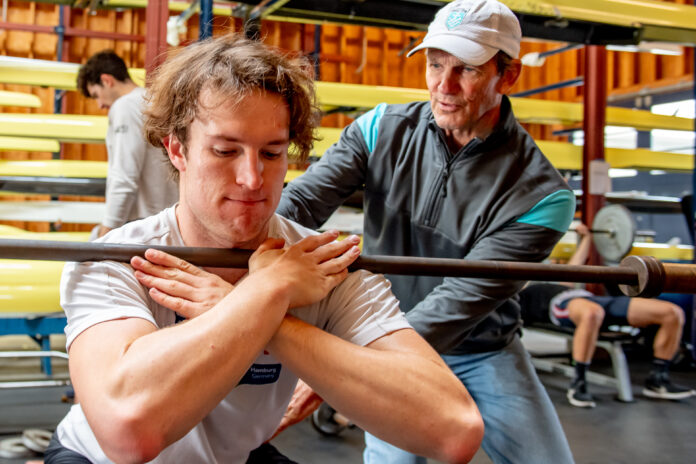
Tim McLaren assists with weightlifting at the United States Olympic Training Center in Oakland, California. Photo by Ed Moran.
BY BILL MANNING PHOTO BY ED MORAN
The hardest time for coaches is typically when their athletes are away. Coaches crave control but lack it when rowing is out-of-season and during vacation periods. These times of year often make or break competitive seasons. Coaches need to guide their athletes to behave advantageously when away to produce healthier, happier athletes, increased speed, and better racing results.
The most valuable vacation period coaching is telling athletes to rest, recover, and recuperate. The more rowing done during the school year the more important it is to take time off when possible. Rarely does it serve a young junior well to row sweep four seasons a year. Individual needs do vary. A university athlete training seriously for 10 months needs time off during the summer while a scholastic athlete rowing only the spring season can easily row all summer long.
The break is often needed more mentally than physically and coaches must respect this. Sometimes they do their athletes the greatest service by simply leaving them alone for a period. If there is a niggling injury, the kind that interferes with rowing but doesn’t stop an athlete, prioritize sorting it out. Some athletes resist scaling back their training for fear of falling behind. The more experienced coach gives permission for this by making it clear that good health comes before fitness and is necessary for long-term success.
Coaches determine how competitive athletes behave with the incentives they create. By testing their fitness with a planned running race when they return they will have done more running. It’s the same with the erg, up to a point. Having a fit group in September that’s burned out on the erg in October is a short-term gain with tremendous long-term cost.
Time away also encourages greater athleticism and allows rowers to develop new skills without fear of failure. Emphasize the fun of these activities. Create a sculling regatta for September to encourage small-boat skills. Similarly, let it be known that for the first three weeks of the new year everyone will row the opposite side and you’ll get more versatile athletes. Encourage non-specific training too—running, triathlons, biking, or hiking.
The most valuable coaching encourages rowers to attack their weakness while away rather than merely building upon their strengths. All of us prefer to work on our strengths. It’s easier doing so even when the work is hard. The gains from making our strengths marginally better are nowhere near as significant as improving a weakness. Coach the weak to build power, the tight to expand their mobility, the stragglers to get fit. The confidence athletes gain by improving their weakness is as beneficial as the improvement itself.
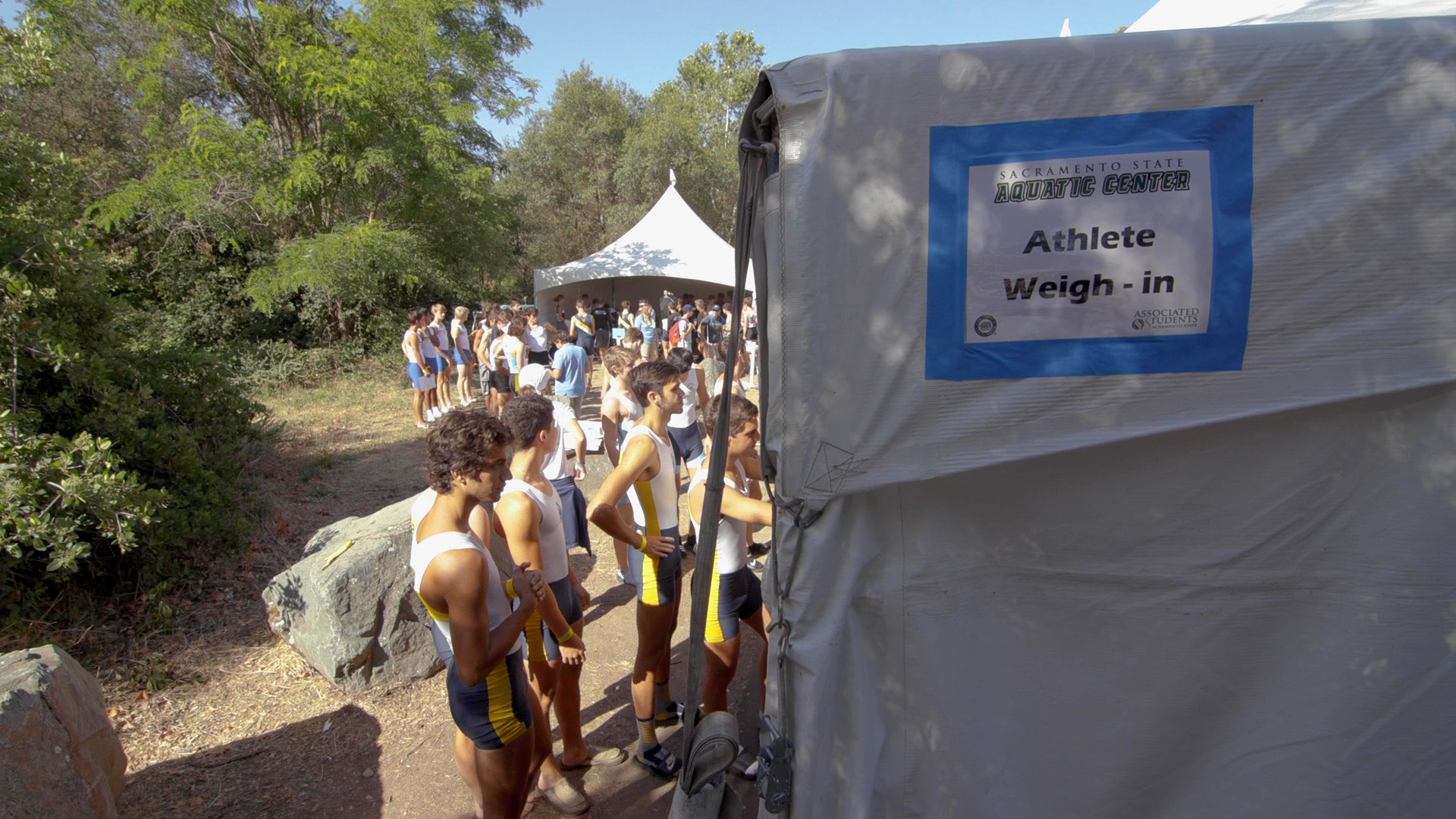
USRowing has announced the end of youth lightweight racing at USRowing-run regattas.
The announcement comes after years of debate over whether or not it is safe for youth athletes to manage their weight.
“While we understand this may be disappointing to some, the health and well-being of our youth athletes is our primary concern,” read the USRowing release. “As we thoroughly considered the subject, the health risks of managing weight for developing adolescents is a dangerous practice that we cannot support. Most international rowing federations, including World Rowing, do not offer youth lightweight events at their championships. Beginning in 2022, this will be USRowing’s policy as well.”
The policy affects several major regattas including the USRowing Youth National Championships and USRowing’s Youth Regional Championships.
It also changes the rules for coxswains completely removing the requirement for coxswains to weigh in and carry supplemental weight should they not make minimum weight at youth events. As USRowing points out, the move removes scales from USRowing-hosted youth regattas entirely.
The release goes on to state that USRowing will focus on grouping athletes by age and expanding categories based on that metric—rather than weight—citing the protocol established in 2020 which “showed that nearly 75 percent of lightweight participants fell into the under 17 age category” as the catalyst for the decision.
“In 2021, we introduced several U17 events to the USRowing Youth National Regatta, and we will be formally integrating both U17 and U15 opportunities into the national and regional regattas in 2022. More information on specific offerings will be available soon,” read the release.
Lightweight rowing is not completely banned, however, with the frequently asked questions section of the statement including details on instances when youth lightweight rowing might take place.
“USRowing will continue to sanction youth lightweight events for regatta organizers who choose to include youth lightweight categories. However, it is our strong recommendation that a robust lightweight protocol is created under the guidance of medical experts to ensure lightweight athletes are natural lightweights.”
Lucerne, SWITZERLAND,NZL LM1X Grant DUNCAN, eating a Banana, at the 2007 FISA World Cup, Lucerne, on the Rotsee Lake, 14/07/2007 [Mandatory Credit Peter Spurrier/ Intersport Images] , Rowing Course, Lake Rottsee, Lucerne, SWITZERLAND.
BY NANCY CLARK PHOTO BY PETER SPURRIER
Among athletes, turning vegan (or vegetarian) is not a passing fad.Given that the most popular ages for embarking on a vegan lifestyle are 19, 20, and 21, many college athletes are asking me how to eat a meatless sports diet.
First, I want to understand why they are choosing to cut out animal-based foods. The standard reasons are:
1. Vegan and vegetarian diets tend to be healthier than a diet based on burgers and bacon. Indeed, plant-based meals with beans, veggies, and whole grains are nutrient-dense, fiber-rich, and abundant in healthful phytochemicals and healthy fats. (Yet vegan diets are not always healthier. Coke, Oreos, Skittles, Doritos are vegan-friendly….)
2. Vegans/vegetarians are leaner than omnivores, so some athletes embark upon a vegan lifestyle in hopes of losing weight. That might happen if your vegan/vegetarian diet coincides with limiting your intake of calories. Knocking off 300 calories of ice cream and replacing it with 100 calories of berries creates a significant calorie reduction.
3. Plant-based diets address concerns about animal rights and the environment. Hence, vegan/vegetarian diets appeal to animal lovers and folks who want to help save the planet. Reducing animal agriculture is one small way to curb global warming (and every little bit helps). But according to Frank Mitloehner, a professor and air-quality specialist at the University of California, Davis, industry and transportation are far bigger polluters—as is wasted food. (Forty percent of the food we produce never gets to the table.) This podcast with Dr. Mitloehner offers science-based climate-change facts:
4, Though not verbalized as a reason to go vegan, meatless diets, unfortunately, are a popular way for athletes with anorexia to cut out chicken, beef, fish, eggs, dairy… to the point they are living on little more than fruits and veggies. Eating disorders can change healthy vegan meals into diets deficient in not only protein but also many nutrients, including iron, calcium, zinc, B-12, vitamin D, iodine, and omega-3 fats. Within a few months, good health can dwindle into injuries, hair loss, low energy, and poor athletic performance.
Considerations when building a vegan sports diet
The busy lifestyle of vegan athletes can create nutrition challenges. For example, when eating on the run, vegans may find Oreos are more readily available than, let’s say, roasted chickpeas. Grab-and-go snacks of just a bagel or a banana should get balanced with some protein. But is hummus or soy milk readily available? All this means vegan athletes have to be responsible and plan ahead.
When listening to my vegan/vegetarian clients, I often hear “red flag” statements that signal misinformation. Let’s take a look at some common misconceptions and correct some myths related to vegan/vegetarian sports diets.
“Carbs” are fattening, a waste of calories? False!
Plants are carbs! While you want to limit nutrient-poor carbs (such as Frosted Flakes, Pop-Tarts, ramen), wholesome carbs (preferably called “grain foods”) should be the foundation of every meal to fuel muscles fully. Athletes who train one to three hours a day can easily end up with needless fatigue if they try to exist on fruit and salads. Grains (and all carbs) are NOT inherently fattening. Excess calories of any food can be fattening.
As a vegan/vegetarian athlete, you would be wise to eat grains (such as oatmeal, whole wheat bread, brown rice) as the foundation of each meal/snack. Combine them with a colorful assortment of fruits and/or vegetables for more muscle fuel, and of course, a dose of protein.
Lunchtime salads are a healthy vegan meal? Sometimes.
While salads can be nutrient-rich, they can also be protein- and carb-poor—as well as high in calories, since a “little bit” of olive oil on a big salad ends up being a lot of dressing. Filling up on calories from fat will not refuel depleted muscle glycogen. Vegan athletes could refuel their muscles better with a grain-protein combination, such as a hummus wrap or beans and rice.
Quinoa can be the “protein” in a vegan meal? No!
Quinoa is reputed to be a protein-rich grain, containing all the essential amino acids needed to build muscle. It is not a stand-alone protein-rich food. If you compare quinoa to other grains, you’ll see it offers only six grams of protein per 200 calories, similar to rice (four grams), and less than pasta (seven grams). Most athletes should aim for 15 to 25 grams of protein at each meal. That means you’ll want to add more than just quinoa to your salad. How about tofu? Beans? Lentils?
Almond milk is a replacement for dairy milk? No way!
Almond juice (it is not milk) has far fewer nutrients than dairy milk. Milk’s eight grams of high-quality protein is life-sustaining. The one gram of low-quality protein in almond beverages is not. Soy or pea milk are acceptable dairy-free alternatives to cow’s milk.
Soy causes cancer and man boobs? Wrong.
The latest research indicates soy is cancer-preventive and is safe— even for women with breast cancer. As for man boobs, the one case study about unusual male breast development refers to a person who routinely drank three quarts of soy milk a day. That is a lot of soy milk. For the latest soy updates, enjoy this podcast:
Protein bars and powders can replace real foods? Not really.
Protein-rich foods are preferable to highly processed bars and shakes. Nutrients in natural foods interact synergistically Instead of yet another bar or shake for a meal or snack, how about cereal + (soy) milk, crackers + hummus, or banana + nut butter? Aren’t these real foods more in keeping with the spirit of veganism?
Sports nutritionist Nancy Clark, M.S., R.D., counsels both casual and competitive athletes in the Boston area (Newton, Mass.; 617-795-1875). Her updated Sports Nutrition Guidebook (2019) can help optimize your eating. Visit www.NancyClarkRD.comfor information about appointments, books, and teaching materials.
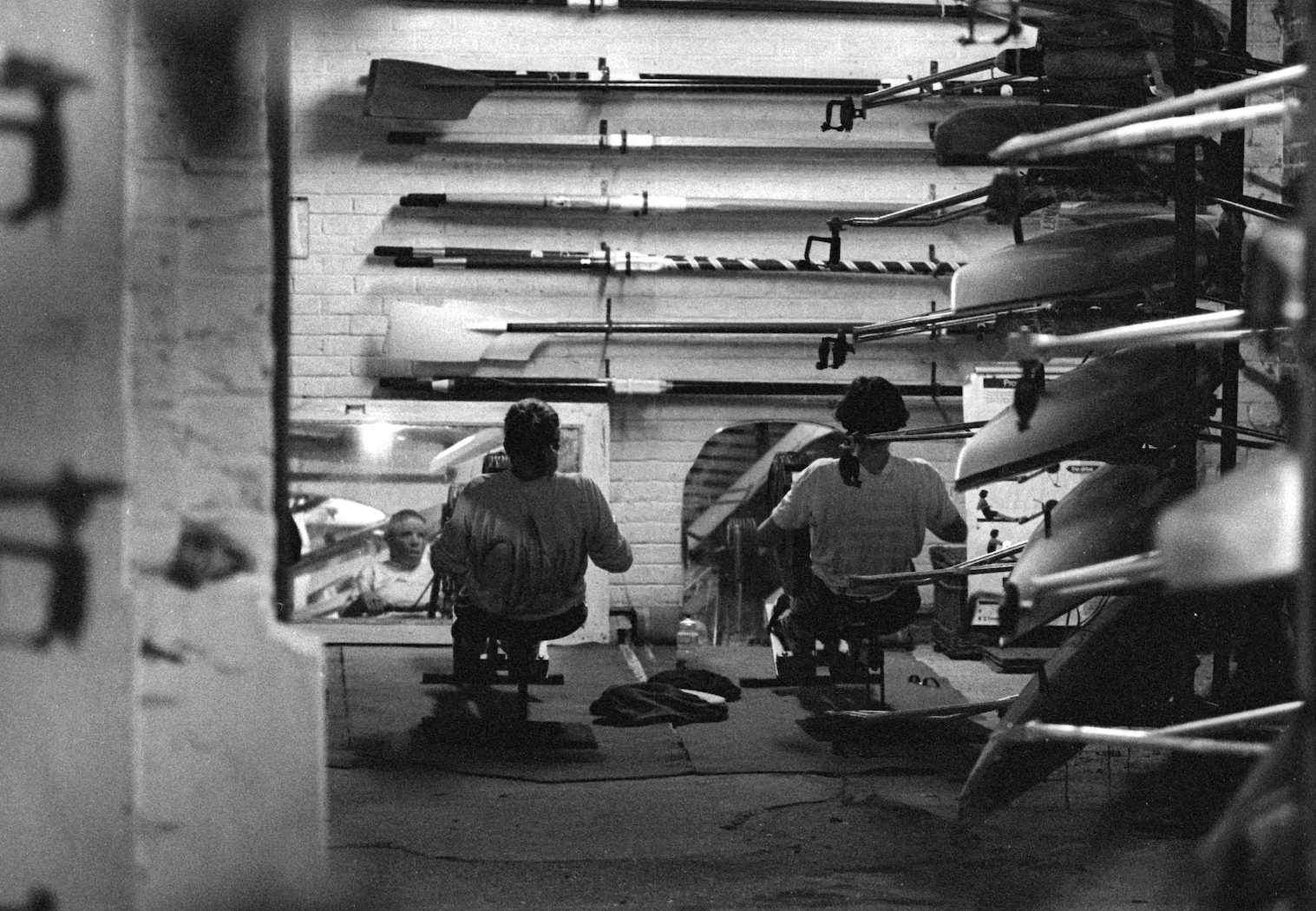
Hammersmith. London. General Views, ergos session at the back of Furnivall Sculling Club, Boathouse, 1987 Women's Head of the River Race. Raced over the Championship Course [Mortlake to Putney] [Mandatory Credit; Peter Spurrier/Intersport-images] 1987 Women's Head of the River Race, London, UK, Concept Ergometer, Erg, Ergo,
BY COLLEEN SAVILLE PHOTOS BY PETER SPURRIER, ED MORAN
I recall once reading something pinned to a boat-bay bulletin board that struck me. It was a single piece of paper that, in a burst of wisdom, said: “Under pressure, we don’t rise to the occasion, we sink to the level of our training. That is why we train so hard.”
It turns out it’s a quote attributed to an anonymous Navy SEAL, someone who undoubtedly knows a thing or two about what it means to perform under pressure. It struck me because it was different. Unlike so many inspirational quotes hung in boat bays and locker rooms around the world about the promise of infinite possibility and the magic of limitlessness, this felt so reductive and simple. The secret to performing better under pressure is to be under pressure, to run to and through it rather than away from it.
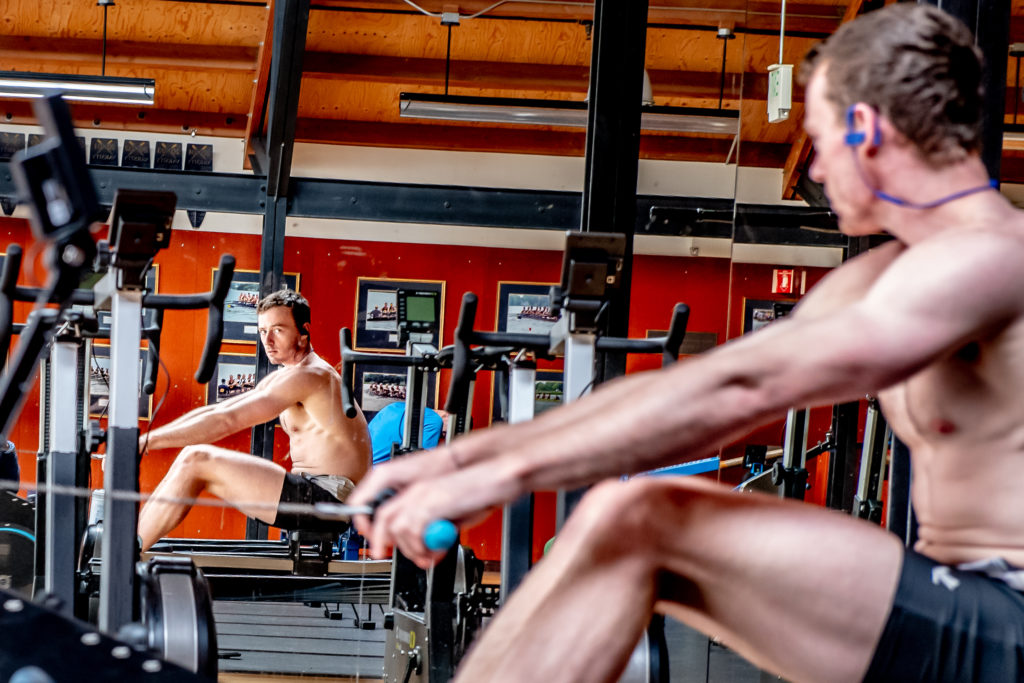
For rowers, the ability to perform under pressure is as important on the water in a team boat as it is off the water on the erg. As I sat down to write about erg test-prep strategies from some of rowing’s most successful athletes, the notion of embracing pressure came to life through their stories of training and testing.
Erg testing is an inevitable part of rowing, and from their experience, I wanted to understand how one silences the voice that says, “Why aren’t I faster on the erg? Is this split maintainable? Will I set a personal record (PR) today?” And what to do when that voice becomes even louder on test day, when the pressure is heightened because the stakes are high.
Erg testing is an inevitable part of rowing, and from their experience, I wanted to understand how one silences the voice that says, “Why aren’t I faster on the erg? Is this split maintainable? Will I set a personal record (PR) today?”
From youth athletes preparing for their first 2K to masters rowers pushing for their next PR, read on to hear U.S. national teamers Brooke Mooney, Clark Dean and Christine Cavallo offer their expert advice on how to thrive come test day. While there’s lots to consider, rising to the top are focus, trust in the process, repetition, and a killer playlist.
Clark Dean kindly agrees to speak with me on his first (virtual) day back at Harvard University, during a short slot between classes and general workload. Dean is currently staying at his home in Sarasota, Fla., having returned from the National Team Training Center in Oakland, Calif. After news broke that the Tokyo Olympics would be postponed to 2021 because of the Covid-19 pandemic, it was decided that the training center had to close.
At just 20 years old, Dean was the youngest rower at camp by far, with the next youngest rowers approximately 23 or 24 years old, and the majority in their late 20s. This time last year, Dean raced in a straight four at the 2019 world championships in Ottensheim, Austria, where he helped qualify the American boat for Tokyo. Dean was on his way to making a real run for a spot in either the four or the eight, knowing that final decisions on lineups would have been made in June 2020.
Of course, the world is different now, and rather than ask him about it, I choose to focus on the topic at hand: erg-test strategies. But I feel for him and admire his genuine positivity that so naturally comes through the phone.
I start off by confirming Dean’s 2,000-meter PR, which he earned in February 2019 at Harvard: 5 minutes 44 seconds. Did I mention he’s only 20 years old? “That was coming off the back of a winter indoors,” he tells me, “and a really good, solid block of training. As I was getting closer to test day, I was becoming more and more excited to see what I could do, and then it turned out to be almost a five-second PR at the time. It was a great way to wrap up the indoor season.”
I ask Dean how he prepared for that particular test, which he considers to be his most memorable to date. What did the weeks, hours and minutes look like leading up to it, and what is his approach to test preparation in general? He is quick to respond that it depends on the type of erg test, but there are tried and true tactics he always comes back to.
“The week leading up to the test, you’re going to want to feel out race pace and get a sense of how comfortable vs. uncomfortable you will be. And then 24 hours out, take it easy and stretch. The day of, even if it’s a morning test, I wake up no fewer than three hours before. Ideally, you’re waking up naturally and can avoid waking up super early.”
What about his food rituals?
“Do things you’re comfortable with,” he says. “I know a ton of people who, on the day of a test, will try weird diet things or drink 10 times more water than they typically do. At the end of the day, you want to do what you’re most comfortable with and what you do most often.”
In terms of race strategy, Dean says that while every erg test is a little different, his general pattern is to start each piece by taking some strokes under his goal average split, typically for the first 10 seconds (or 15-20 seconds depending on his adrenaline), and then lengthen into his base pace.
“I shoot for a split or two above what I want my final average split to be. As the piece goes on and it starts getting tough, I bring it down little by little, usually starting at about the 1K-meter mark. I always sprint 100 meters or 150 meters earlier than I want to.
“So often you hear people say, ‘I wish I had sprinted earlier.’ At all levels of the sport people say that, and I think you know you have paced a piece correctly if you finish your sprint and say, ‘Wow, if there had been 100 more meters I would’ve just been off my goal.’ That’s the perfect way to pace it. It’s rarely going to happen that way, but that’s how I approach the second half of pieces.”
I suspect that University of Washington alumna and current U.S. national-team member Brooke Mooney would agree with Dean’s philosophy on sprinting. Mooney grew up with cross-country ski trails in her backyard in Peru, Vt. A talented sprinter, she was a member of New England’s junior national Nordic ski team and became a well-known name on the eastern ski circuit because of her success on both the national and international stage.
In high school, Mooney used rowing to cross-train for skiing, until her senior year when she officially joined the varsity rowing team. The switch eventually would land her a spot on the women’s rowing team at the University of Washington, one of the top rowing programs in the nation, and in December 2018, an invitation to join the women’s national team in Princeton, N.J.
For those keeping score, at the 2019 World Rowing Indoor Championships in Long Beach, Calif., Mooney finished second only to the Ukrainian Olena Buryak, who is the fastest woman indoor rower in the world. That means that in Mooney’s first year on the national team she posted the fastest 2,000-meter time among her 17 other teammates who entered the senior open women’s event.
Before I ask Mooney about that particular day, I want to know more about how elite skiing has helped her as a rower.
“I started learning about my heart rate (HR) and HR training as an eighth-grader,” she tells me. “I did years of it before going to college, so I came in with an understanding of what HR means in relation to training, what different workouts mean intensity-wise. My background helped me understand rowing training cycles.”
Mooney tells me about her preparation leading into the indoor championships last year.
“Two weeks before, the team started doing some 500-meter pieces at our 2,000-meter goal split. The week of the championships, we started doing some 2,000-meter prep at lower stroke rates. The goal with that type of workout is to mentally prepare for a negative split strategy on test day. In that sense, all of the prep is done weeks before.
“The week of the test, I try to stay in my HR zone and focus on sleeping and eating well. I try not to stress about anything in particular, because honestly, at that point, the training is done. You could negatively affect your training if you’re not sleeping, for example, but if you stick to the training plan, your ability at that point is predetermined.”
I ask Mooney about her approach to test day, knowing that the hours leading up to the start are some of the toughest to get through mentally.
“Ideally, if I have enough time, I’ll wake up and have some coffee and water, and try to go for a walk to get moving. If I can ease my mind by listening to music or watching TV, I will do that. In 2019, we had so much time before the race, which meant there was a lot of sitting around. It’s really just about finding anything to ease my mind. Quiet places to be by myself, or even just playing a card game with teammates. Anything to distract you; I think that’s really important.”
I muse on the word distraction for a moment. There is indeed strategy in distracting oneself from the pressures of testing, but what to do when the testing environment itself is a massive distraction? Yes, I’m talking about the insanity that is an indoor erg championship–the crowds, the noise, the giant screens, the pace boats, the crowds watching your pace boat on the giant screens. Essentially everything that makes these events both thrilling and daunting in equal measure.
Who better to address this topic than Christine Cavallo, who has set a few world records under these circumstances. In 2013, Cavallo set the junior women’s lightweight 2,000-meter world record at the C.R.A.S.H.-B. Sprints in Boston, Mass., where she finished in 7:05.7. She then went on to set a new world record in 2018 at the first World Rowing Indoor Championships in Alexandria, Va. On that day, Cavallo finished in 6:54.1, taking 0.6 off the previous record set in 2010 by South African Ursula Grobler.
I ask Cavallo what made that day in 2018 so special to her, beyond the outcome?
“I had done so much training,” she tells me. “By that time my ‘how to’ book on how to do a 2K was so robust, and for the first time in my life I had the bandwidth to breathe, relax, and be in the moment. By that point I got to a place where a 2K, done right, would be a 6:54. My backup plan was to do whatever it took to go under seven minutes.”
I ask her about the indoor championship environment and how she has managed to thrive in these challenging settings?
“When I was in Agganis Arena [at C.R.A.S.H.-B.], it was super dry. They had bug-spray canisters filled with water and were creating artificial humidity. I did really badly. I was about 10 seconds off of my PR and was coughing up blood at the end, thinking, ‘What is going on?’ The first time you go to one of those races, it’s going to be an experiential piece in addition to a 2K. If you want to do well at an erg race, you need to participate in at least two.”
In terms of preparation, Cavallo’s advice is to rehearse your race plan by doing a “2K walkthrough” on the erg.
“I’ll rehearse my opening 15 strokes and settle, knowing how important that settle is, especially in those arenas. The fly-and-die is real, even if you get to the split you want to be at but you’re not calming your nervous system and your breathing. You’ll pay for it in the third and fourth 500 meters, so it’s a lot of focus around staying calm.
“Linda Murray coxed me in 2018. The whole race plan on one side of a notecard was, ‘Breathe, calm, breathe, calm. Be at your split by 1,750 meters to go. Hold it. Breathe, calm.’ And then in the middle 200 meters, I let myself come up a bit as a mental break. This was from about 1,100 meters to 900 meters to go. Then 850 meters onward, it’s drop, drop, drop.
“I always pick a sweet spot in the second 1K and give whoever is coxing me a pretty aggressive one-liner for them to say to me. It’s Game of Thrones-level. From there, the nervous system I calmed down in the first half of the race is ready to go, and it’s going now. That’s the second half of my race: an absolute hunt for decimal points on my average split.”
I adjust my line of questioning just slightly to see if Cavallo is willing to share her Game of Thrones-level mantra. No such luck. Some things you just need to keep close to the chest. Only Cavallo, Linda Murray and that notecard will ever know what was said in 2018 on that record-setting day.
Knowing Cavallo has been at this a while, I ask her about any pre-test rituals. Like Dean and Mooney, she emphasizes the need for a solid playlist. “Playlist has to be there,” she says. “Has to be on point.”
Cavallo may not have shared her race mantra with me, but in our final few minutes she tells me something I’m sure junior rowers everywhere will take note of.
“The night before [a test] I have a ritual. It started in 2011 when I lost C.R.A.S.H.-B., and the girl who won mentioned she had eaten a sweet potato the day before. I thought, ‘Huh, interesting.’ That day she won, and I got fourth, and you better believe from then on out I’ve eaten a sweet potato every night prior to an erg race. It’s a really good high glycemic sugar your body can use as power. And I haven’t lost at C.R.A.S.H.-B. since.”
Erg tests will always be an inevitable part of competitive rowing. However, smart training, proper rest, adaptability and a sweet potato or two can do wonders in reframing the pressures of test day as just another opportunity to get faster.
Caversham, Nr Reading, Berkshire.
Coxswain, Henry FIELDMAN, Olympic Rowing Team Announcement morning training before the Press conference at the RRM. Henley.
Thursday DATE}
[Mandatory Credit: Peter SPURRIER/Intersport Images]
BY GEORGE KIRSCHBAUM PHOTO BY PETER SPURRIER
The role of coxswain comes with great responsibility and with that responsibility comes great pressure. We are not supposed to let on when we feel it, but inevitably we will.
The question is, What do you do when you aren’t feeling your most confident, when the seeds of doubt creep in and you question whether you are capable of doing the job?
First, remember that everyone goes through periods of self-doubt. The way to head off these moments is to start learning as much as you can about the sport, and to never cease the learning process. Knowledge is power, and that knowledge gives you the basis for acting.
Sometimes the action you take leads to success, sometimes to less than desired outcomes, but it is always a learning experience, and that learning experience is wisdom. That wisdom and experience is what gives you the self-sustaining confidence you need when things get tough.
Don’t be afraid to take chances or make mistakes. If you are unsure, turn to a trusted coach, coxswain, or other mentor for advice. Ask questions and think through the answers carefully.
Stay positive and know you’ll have ups and downs. Just remember to keep your bow pointed in the right direction.
STORY BY ED MORAN PHOTOS BY ED MORAN AND PAT KINGTON
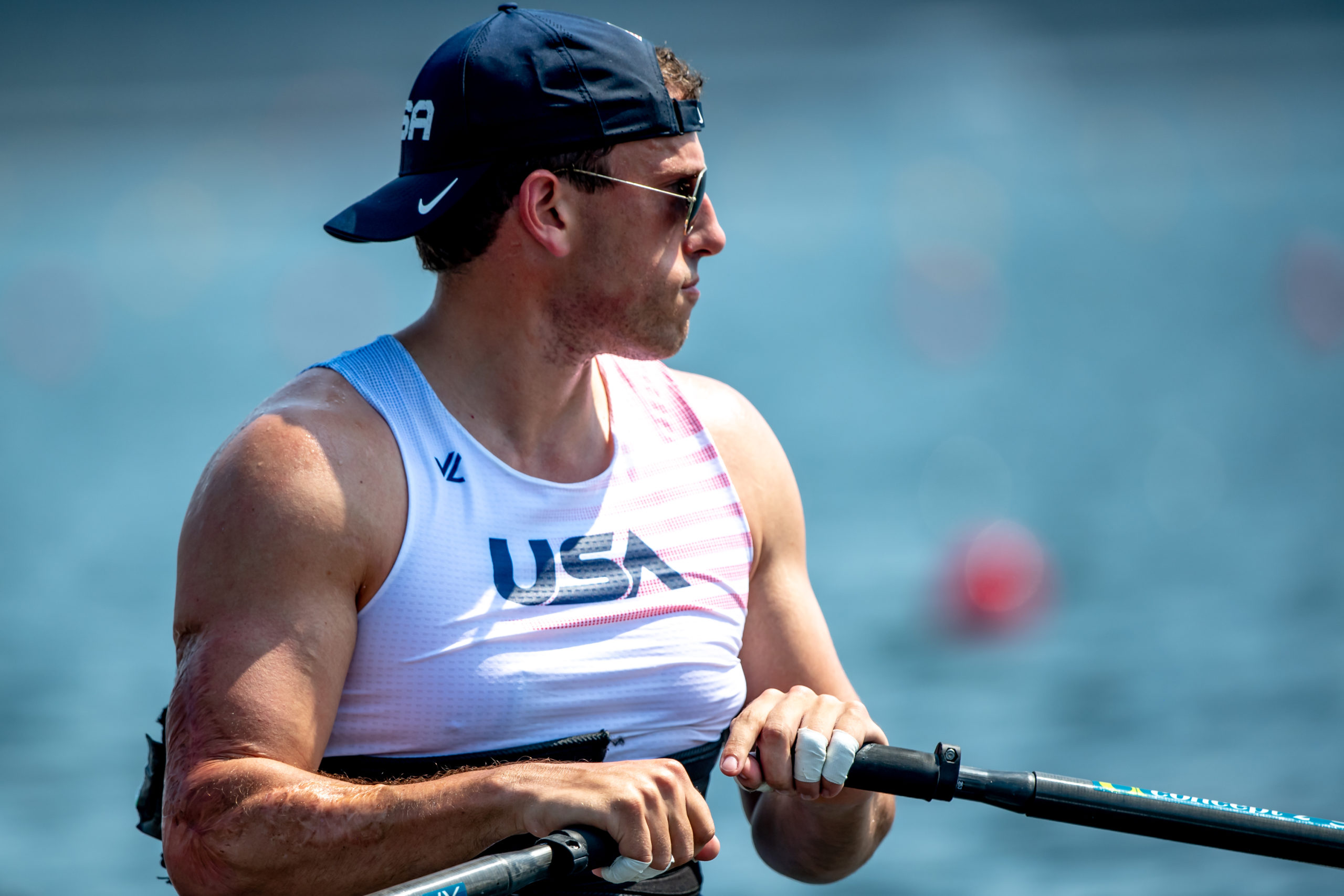
Blake Haxton has been racing to win a Paralympic medal since 2014, and though he has made the final multiple times in the men’s PR1 single in international competition, the podium has always been just beyond his reach.
It took just two years on the world Paralympic canoe scene to accomplish that goal.
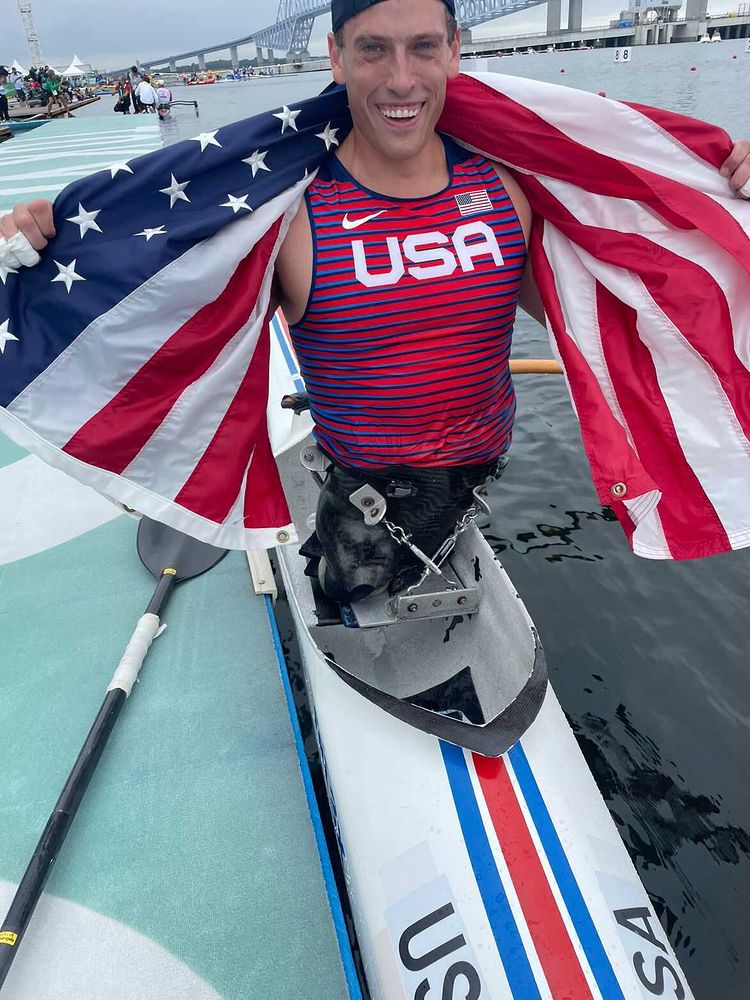
Haxton, who began competing in Paralympic canoe sprint racing in 2019 when he came to the conclusion that his physical limitations in rowing would not fully allow him to win a medal, achieved his goal Saturday at the Tokyo Paralympic Games.
Haxton won silver in the men’s Va’a single 200-meter VL2 Paralympic Canoe Sprint final on the Sea Forest Waterway Saturday morning. Haxton, who finished fourth in the men’s single in Rio in 2016, finished just behind Brazil’s Fernando Rufino de Paulo.
“It’s hard to believe, really,” Haxton said after being awarded his medal. “It’s been a hard few years, and I’m so grateful for the support of my family and friends. It’s such a fast field I feel so privileged to have made it.”
Haxton, a double amputee, could never really vie for a medal performance in rowing because the rules that govern para-rowing in his physical classification enable athletes who have legs a competitive advantage because they are able to achieve a greater stroke length.
But Haxton has continued to try and became a two-sport Paralympic athlete to go after his ultimate goal of winning a medal. Haxton just missed qualifying for the event in the Para Canoe Sprint World Championships in 2019. He then won a spot in the Tokyo Games this spring at the last chance qualification regatta in Hungary.
He is the only American two-sport athlete competing in the Toyko 2020 Games and placed fourth in the B-final, 10th overall, on Aug. 28 in the men’s PR1 single.
In three days of competition, Haxton finished second in his opening heat with the second-fastest time and then recorded a Paralympic best time of 54.576 in the semifinal. Rufino de Paulo eclipsed that time in the final in 53.077.
“It’s been a long trip through the two sports, and I wouldn’t be here without the people I’ve got back in Columbus,” Haxton said.
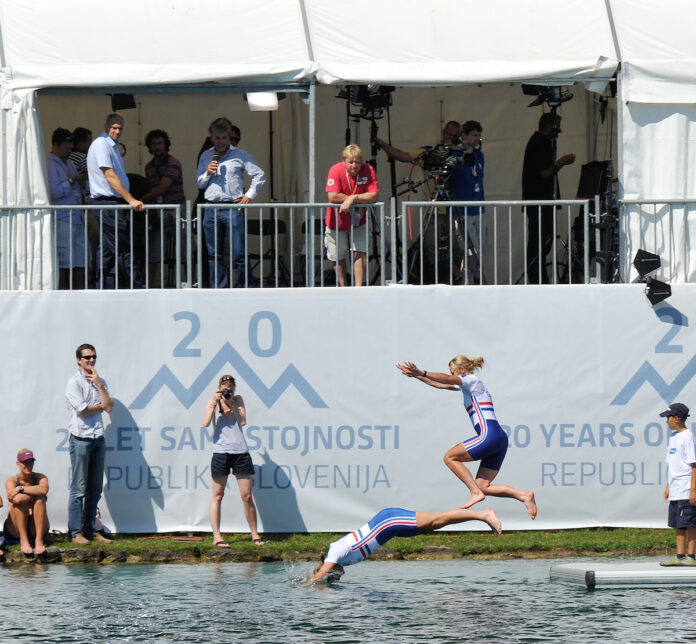
Bled, SLOVENIA. GBR W2X. Bow Anna WATKINS and Katherine GRAINGER, Gold medalist Women's double sculls final at the 2011 FISA World Rowing Championships, Lake Bled. Saturday 03/09/2011. Taking a swim before the medal ceremony. [Mandatory Credit; Peter Spurrier/ Intersport Images]
BY JOSH CROSBY PHOTO BY PETER SPURRIER
I struggle with sitting still. As an active person, my vacations are usually adventure-filled, and success is measured by how tuckered out I am after running alongside the Seine or hitting the surf of San Juan rather the amount of R&R I get. It’s the same when it comes to the beach or the pool. I’m not a lounger. I like to jump in the water and throw the kids around or use it as a chance to get in a short, lung-busting, lap swim. Why not? If you’re a fan of swimming, then you know the benefits—full body, low-impact, cardio and strength conditioning. If you’re not quite as familiar with it, it’s never too late to learn. Your local pool will surely have some beginner classes to get you ready for the below workout. It’s designed to be done at almost any ability level and can be completed in under 30 minutes. Intensity and rest time can be adjusted to get you across the finish line. Most pools are 25 yards or meters long. Find out your pool’s distance but keep it simple and swap out yards for meters when it comes to the prescribed distances.
Warm-Up: Easy swimming for 200 meters with a focus on the basics. Feel free to break it up into smaller distances with short rest periods in-between. Focus on reaching out with arms toward the far wall, not the side of the pool. Watch the black line on the bottom of the pool and keep your head, torso, and toes parallel to it. Rotate with the core as you reach for the water. Keep the legs moving with a strong, steady kick generated from the hips. This is the technique you will want to carry into and throughout your workout.
Workout:
Set 1: 4 x 100 meters with 30 seconds rest
First 100 meters easy; second 100 meters medium; third 100 meters medium; fourth 100 hard. Break for two to three minutes. Repeat once if feeling good. If not, move on to the next set.
Set 2: 4 x 50 meters with 20 seconds rest
First 50 meter easy; second 50 medium; third 50 medium; fourth 50 hard.
Set 3: 1 x 100 meters all out.
Rest 30 seconds and then do 50 meters all out. Cool down for 200 meters easy, mixing in some breast and backstroke to move the muscles in a different way. Keep track of your times for the 100s and 50s. This will be great for future reference and motivation.
Take a thousand people from all walks of life and of all ages and test their physical performance. The result will show that people achieve peak strength and endurance between 25 and 30.
After that window, performance declines steadily, though it can be prolonged by training appropriately. Despite advancing years, many rowers have continued to perform at the highest level, including Sir Steven Redgrave of Great Britain, Ekaterina Karsten of Belarus, and Olaf Tufte of Norway.
Eventually, every high-performance athlete loses the motivation to train and begins slowing down because of injuries, other interests, or the demands of family and work.
This is to be expected, but at some point we will all reach the so-called “limit for functional impairment in everyday life”– the point when our capacities have so far deteriorated that we need help to continue to survive.
Although this is the normal course of life, it is up to each one of us to delay reaching this limit. Numerous studies show that physical training is the best way to maintain our abilities. Being fit keeps us healthier and happier, a fact that can be used as a rowing recruiting tool.
The power of rowing to enhance fitness not only will attract new members but also will strengthen our clubs and enrich club life.
When embarking on a training program, rowers must assess how healthy they are, how much time they wish to devote, and whether their goals are realistic. That will partly determine the right level of training. It is not smart to buy an ergometer and begin training every day for long hours only to get demotivated quickly and lose interest.
A proper training group is a huge help, and this is where clubs come in. Club members, coaches and facilities offer a wide array of opportunities for engagement and improvement. As mentors, coaches can help members set appropriate long- and short-term goals as well as strategies for achieving those goals, whether focused on health, recreation, or competition.
Done properly, rowing has a very low injury rate, can be enjoyed by a wide variety of people, offers experiences in the outdoors, builds teamwork, and can be learned and practiced at any age.