Home Blog Page 152

No. 1 Rowing’s I Eight named Big 12 Boat of the Week

STORY AND PHOTO COURTESY UNIVERSITY OF TEXAS ATHLETICS

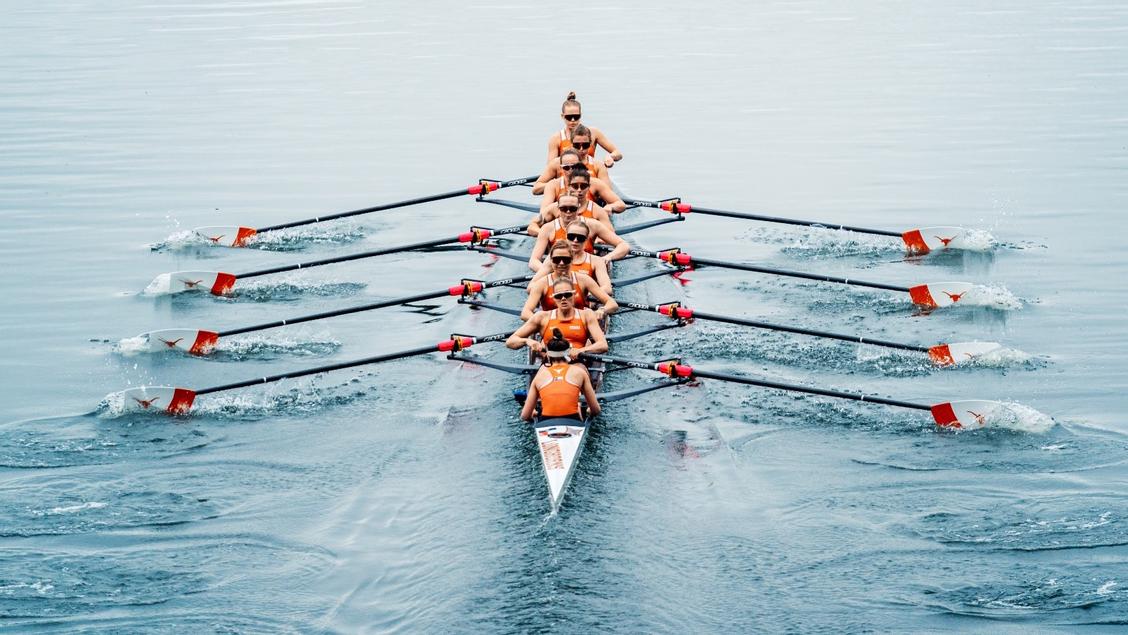
IRVING, Texas – No. 1 Rowing’s First Eight earned Big 12 Boat of the Week honors, the conference announced on Wednesday. The Longhorns collected the weekly award after defeating No. 11. Michigan by over 11 seconds on Lady Bird Lake on Saturday.

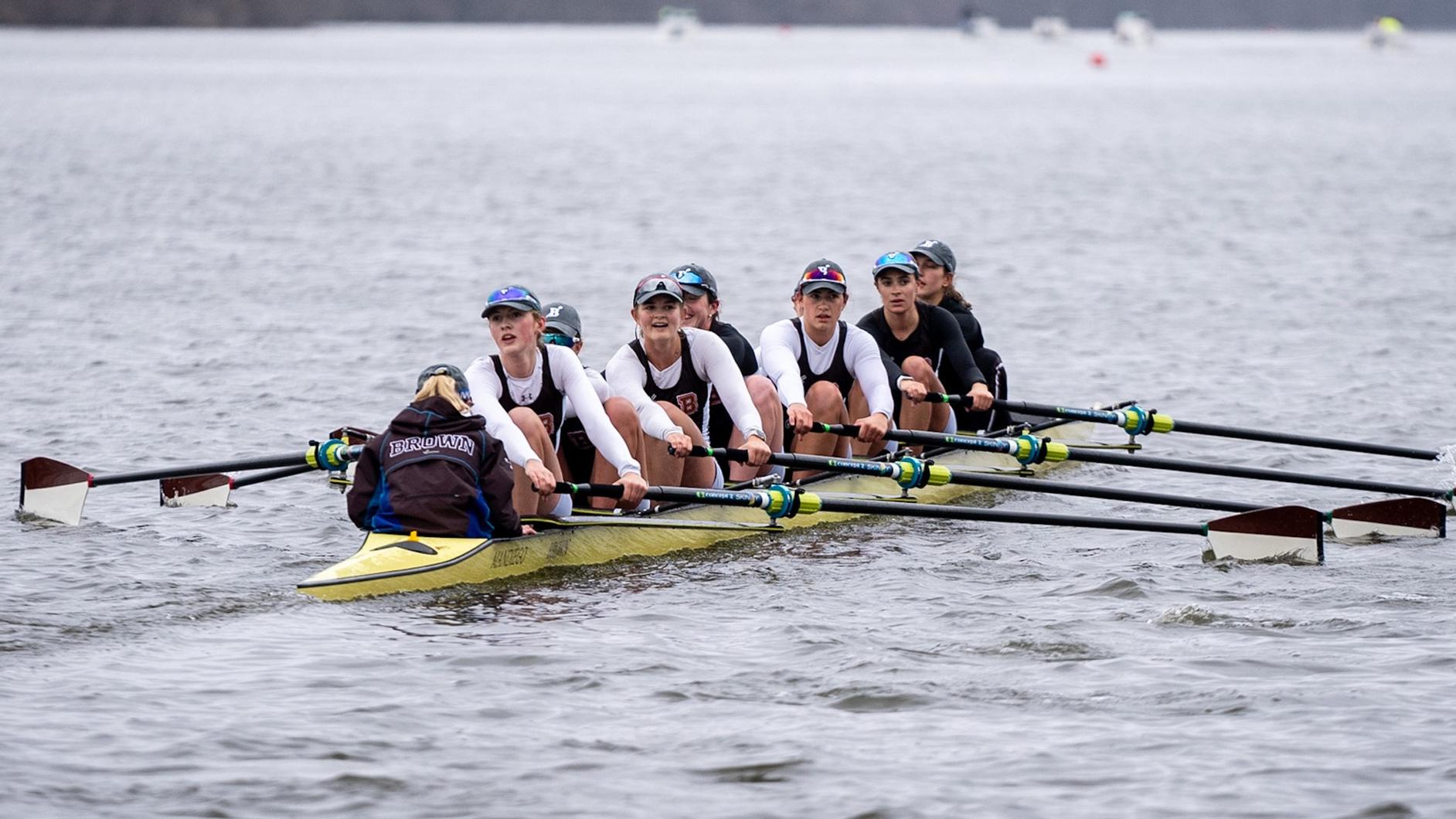
2023 I Eight vs. MichiganRacing in ideal conditions with good water and no flow and a two to eight mile per hour headwind, the Longhorns squared off with Michigan in head-to-head competition for the third-straight year and the first time ever in Austin.

Michigan’s I Eight challenged Texas early, but the Longhorns were able to take command by the midway point of the 2,000-meter course and extend the lead through the remainder of the race, winning with a time of 6:10.738 to top the Wolverines, who crossed the line in 6:21.922.

The win helped complete a Longhorn sweep of four races over the Wolverines in UT’s first home race on Lady Bird Lake in seven years.

Texas’ I Eight featured senior coxswain Rachel Rane, as well as graduate student Kaitlin Knifton, fifth-year Susanna Temming, junior Anna Jensen, senior Etta Carpender, senior Sophia Calabrese, junior Samantha Schalk, graduate student, Kelsey McGinley and junior Amber Harwood.

The victory extended the Texas I Eight’s unbeaten streak to 22 consecutive races with a head-to-head record of 76-0 within those races since the streak began at the start of the 2021 season. The mark includes a 54-0 record against teams ranked in the CRCA Top 20.

Next up, Texas will head east to square off with No. 3 Yale and No. 4 Princeton in New Jersey on Saturday, April 22 with racing beginning at 9:30 a.m. CT. The Horns will then race No. 10 Virginia in Earlysville, Va. for the final regular season contest before Big 12 Championships.

Huskies Ready For Cal Dual & Title IX Celebration Regatta

PHOTO AND STORY COURTESY UW ATHLETICS

The Washington men’s and women’s rowing teams return to action this Saturday, April 22, as the Huskies play host for the annual Washington-California Dual, as well as the Title IX Celebration regatta.
 
Racing on Montlake Cut begins at 8:00 a.m., with the first UW-Cal Dual race scheduled for 9:00 a.m. The regatta will be streamed live at GoHuskies.com/live.
 
The UW-Cal Dual, first contested by the men in 1903 and by the women in 1977, is the oldest and most significant collegiate rowing rivalry in the western United States. This year, the dual pits the No. 1-ranked Cal men vs. No. 3 UW, while on the women’s side, the Huskies are ranked No. 6, one spot ahead of No. 7 Cal.
 
In addition to the dual, Washington will also celebrate the 50th anniversary of the passage of Title IX with a juniors and masters regatta. After the races, and after the UW-Cal awards are presented, the women’s team will dedicate a new racing shell named after long-time UW athletics administrator Catherine “Kit” Green.
 
Here’s a schedule:
 
Title IX Regatta 
8:00 a.m. – Women’s Masters 8+ Heat 1
8:05 a.m. – Women’s Masters 8+ Heat 2
8:10 a.m. – Women’s Juniors 8+ Heat 1
8:15 a.m. – Women’s Juniors 8+ Heat 2
8:20 a.m. – Women’s Masters 4+ Heat 1
8:25 a.m. – Women’s Masters 4+ Heat 2
8:30 a.m. – Women’s Juniors 4+ Heat 1
8:35 a.m. – Women’s Juniors 4+ Heat 2
 
Washington-California Dual
9:00 a.m. – Men’s Freshman 8+
9:12 a.m. – Women’s Novice 8/Women’s Fourth Varsity 8+
9:24 a.m. – Men’s Fourth Varsity 8+
9:36 a.m. – Women’s Third Varsity 8+
9:48 a.m. – Men’s Third Varsity 8+
10:00 a.m. – Women’s Varsity 4+
10:12 a.m. – Men’s Second Varsity 8+
10:24 a.m. – Women’s Second Varsity 8+
10:39 a.m. – Men’s Varsity 8+
10:54 a.m. – Women’s Varsity 8+
 
11:30 a.m. – UW-Cal Awards Ceremony (at Conibear Shellhouse)
12:00 p.m. – Kit Green Shell Dedication Ceremony
 
The Washington-California men’s varsity eight dual series dates back to 1903, with 110 meetings between the two schools. At stake is the Schoch Cup, named after Delos Schoch of Washington’s class of 1936. Washington holds a 76-33-1 record in the dual meeting, having won the last three in a row prior.
 
Washington’s second varsity eight series with Cal dates back to 1939, with the UW winning 52 of 76 races. The UW’s freshman eight race began in 1939, with Washington wining 60 of 79 races.
 
After the 2020 season was canceled, the teams met as a part of the Windermere Cup/Opening Day Regatta in 2021, when the UW men won four out of five races, taking the victory in the first, second and fourth varsity eights and the varsity four, while Cal won the third varsity eight race. Last year in Berkeley, Cal won four of five men’s races, with UW winning in the freshman eight.
 
Washington and California have a women’s varsity eight rivalry that dates back to 1977. The Huskies will race for a chance to retain the Simpson Cup, which was donated by longtime Washington supporters Hunter and Dottie Simpson, whose daughter Anne rowed at Cal. Washington leads the series 25-20, and at one point won 22 of 23 races from 1981-2003. The Huskies’ broke the Bears’ six-year stream in the varsity eight win a win in 2021 and then won again last year in Berkeley. California had won 15 of the previous 16 varsity eight dual races.
 
The second varsity eight series against California began in 1975, with Washington winning 31 of 42 races. The Golden Bears won in 2004, snapping an 11-race UW win streak that was the Huskies’ longest in the series.
 
In 2021, as a part of the Opening Day Regatta, Washington’s women won four out of five races vs. the Golden Bears. Washington won the first, second and third varsity eights, as well as the varsity four, while Cal won the novice eight race. Last year in Berkeley, the UW won women four of five races, with Cal winning the varsity four.
 
Following the Cal Dual, the Huskies will have two weeks to prepare for the 2023 Windermere Cup/Opening Day Regatta, including Twilight Sprints on Friday, May 5, and the full regatta on May 6. This year, the UW welcomes men’s and women’s crews from Australia.

Gold Rush on Final Day at Pan American Games Qualification Regatta

PHOTO AND STORY COURTESY USROWING

The U.S. swept all four of its races Wednesday at the 2023 Pan American Games Qualification Regatta in San Pedro de la Paz, Chile, winning three gold medals and qualifying four boats for the Pan American Games, pending United States Olympic & Paralympic Committee approval, in the process.

The women’s single sculls, men’s single sculls, and women’s double sculls all won gold medals in their A final races, while the men’s double sculls won the B final to finish seventh overall and qualify for the Pan American Games.

In total, the U.S. won eight medals and qualified 11 boats for the Pan American Games over the five-day regatta. The U.S. also is in line to receive a bid in the men’s quadruple sculls once the qualification spots are finalized. COPARE will confirm all qualification spots no later than April 21.

In today’s final of the women’s single sculls, Grace Joyce (Northfield, Ill./University of Wisconsin/Craftsbury Green Racing Project) held off a late charge from Chile’s Antonia Abraham to win the gold medal and qualify for the Pan American Games. Canada’s Alizee Brien got off the line in first place, with the U.S. sitting in a tight race for second as the scullers reached the 500-meter mark. Joyce made her first move, grabbing at slight lead 750 meters into the race, and then extended her lead to a length over Brien at the halfway point. Joyce continued to lead coming into the final 500 meters as Abraham passed Brien and began her attempt to chase down the U.S. sculler. At the line, Joyce clocked a 7:46.33 to outlast Abraham by 0.55 seconds. The Chilean finished with a time of 7:46.88. Brazil’s Cardoso Beatriz captured the bronze medal in a 7:54.14, as Brien fell to fourth.

“This morning, I really worked to focus in on my race plan, stay internal, and not be shaken by the other competitors’ fast first quarter,” Joyce said. “I felt confident through the race, and I was happy with my execution. I’m walking away happy with my performance and eager to get back to make the changes necessary to be faster for the Pan American Games in October. I am beyond hyped to have qualified for the Pan Am Games in the single.”

In the men’s single sculls, Jacob Plihal (Vashon Island, Wash./Northeastern University/Craftsbury Green Racing Project) used a strong sprint to track down Brazil’s Lucas Ferreira to win the gold medal and a spot at the Pan American Games. Plihal got off the start in fifth but sat in a virtual dead heat for third, less than a half-length off the top position, at the 500-meter mark. Plihal was still in a tight, three-way battle for second place, about a length behind Ferreira, as the scullers reached the midway point. That’s when Ferreira and Plihal began to get separation from the rest of the field. Ferreira continued to lead coming into the final 500 meters, but Plihal was gaining ground quickly and broke through in the sprint to win by about a length. Plihal finished with a time of 7:00.43, with Ferreira taking second in a 7:03.58. Mexico’s Juan Jose Flores finished third in a 7:08.37.

“The race today was a great battle,” Plihal said. “It seemed like I was pretty close to Lucas off the line, but he built out an early lead. Based on earlier races, I assumed a lot of the guys would be quick off the line, so I wanted to just stay focused on the middle part of the race and claw back into the mix and push away. I saw that I was within striking distance coming into the last 250 meters, so I brought the rate up a bit and was able to work through Lucas by the line. I’m stoked to have qualified to race in the Pan Am Games for 2023. This event was the first time I have been able to race the single internationally for the USA, and having the opportunity to race guys like Lucas, Bruno (Cetraro), and Juan Jose was great. I’m excited to have a rematch later this year and run down the track with these guys again.”

The women’s double sculls crew of Madeleine Focht (Long Beach, Calif./California State University, Long Beach/Long Beach Rowing Association) and Veronica Nicacio (Vancouver/Vancouver Lake, Wash./University of Portland/ARION) won the gold medal ahead of Chile to earn a spot at the Pan American Games.

“We executed our race like it was our last,” Focht said. “We came in swinging, pressed hard in the front end, and held them off. So much excitement to return to Chile for the Pan American Games. I feel so thankful to be a part of this team and get to do it all again.”

Chile’s Melita Abraham and Victoria Hostetter took the early lead before the U.S. boat inched into the top spot as the crews entered the second quarter of the race. Focht and Nicacio pulled out to a half-length lead at the midway point. The Chileans tried to make a move just after the 1,000-meter mark, but the U.S. was able to meet that challenge and extend the advantage to a length with 500 meters to go. Abraham and Hostetter made one last charge to try to challenge Focht and Nicacio, but the U.S. held strong to win by three-quarters of a length. The U.S. won gold in a time of 7:01.09, with Chile taking silver in a 7:02.47. Canada finished third in a 7:12.35.

“We wanted to get out and establish that early lead and hold on until the end, which was what we were able to do,” Nicacio said. “We are excited to return in October and will work to gather even more speed. A lot can happen before then, and I am looking forward to a solid next training block. I feel so blessed to have had this opportunity and am grateful for all the support we’ve had along the way. It’s not about the medals; it’s about the journey, and I am grateful to take what I learned and keep growing.”

In the B final of the men’s double sculls, Luke Rein (Barrington, R.I./College of Charleston/Penn AC) and Casey Fuller (Newtown, Conn./Fairfield University/Saugatuck Rowing Club) won the race to finish seventh overall and qualify for the Pan America Games. The duo inched ahead of Paraguay and Brazil during the second quarter of the race to build a half-length lead at the midway point. Rein and Fuller extended their advantage during the third 500 meters and held a length lead going into the final quarter of the race. The U.S. duo crossed the finish line in a 6:35.34 to win the race ahead of Brazil’s Batista Joao and Almeida Marcelo, who finished second in a 6:36.91. Venezuela finished third.

Click here for complete coverage of the event, and click here for a look at rowing’s qualification procedures for the 2023 Pan American Games.

The 2023 Pan American Games are scheduled to take place October 20-November 5, with the rowing events being contested October 21-25 in San Pedro de la Paz, Chile.

USRowing would like to thank Filippi Lido, the Official Boat Supplier for the U.S. Senior, Under 23, and Para Rowing National Teams. Under the agreement, Filippi is providing USRowing a fleet of boats for international competitions including the World Rowing Cup regattas, World Rowing Under 23 Championships, World Rowing Championships, Olympic Games, and Paralympic Games, as well as a domestic training fleet for the USRowing Training Center.


Peter Spurrier: 1945-2023

STORY BY CHIP DAVIS
PHOTOS BY LISA WORTHY

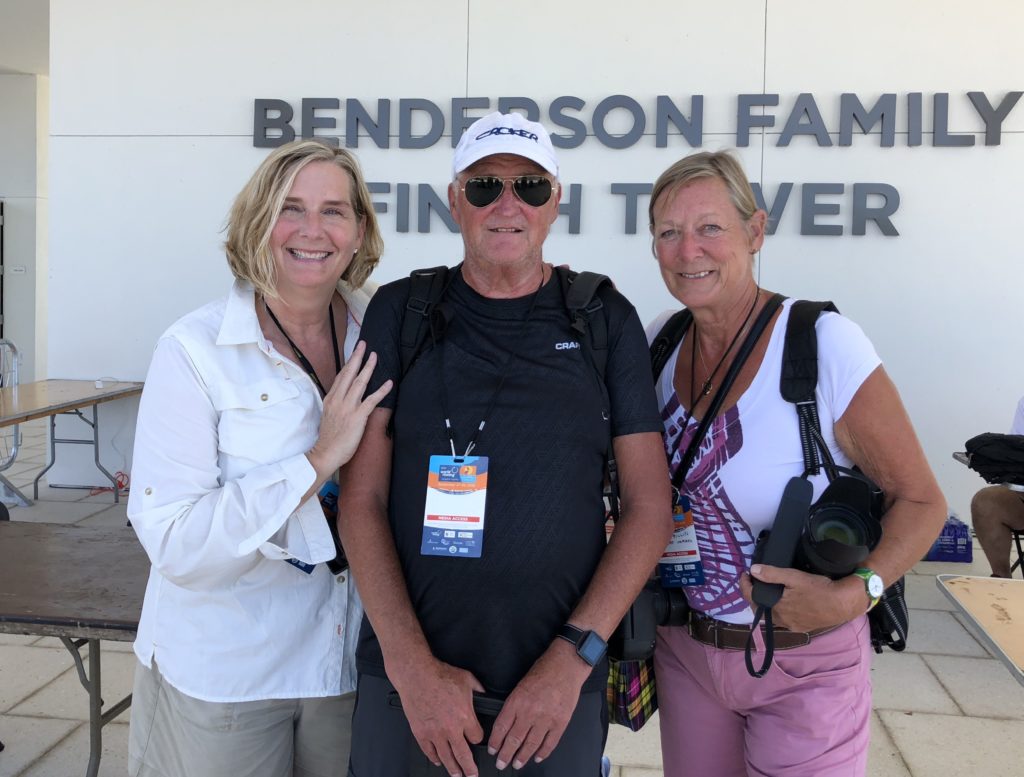
Peter Spurrier—perhaps the world’s best rowing photographer, and certainly the most prolific—died Tuesday, April 18, after suffering a heart attack. He was 77.

His work appeared in publications around the globe and in Rowing News beginning in 1996. His gorgeous images, informed by his passion for the sport, have adorned nearly every issue since, and over the years, he became not only a valued and indispensable colleague but also a dear friend.      

Peter was born and grew up in England and began rowing and “taking snaps” as a teenager. A chance encounter in 1981 landed him in Mike Spracklen’s launch while he was coaching Steve Redgrave, and for the next 40-plus years much of the world’s views of rowing were seen through Peter’s lens.       

The way Peter became associated with Rowing News—his gentle handling of our mistake—illustrates his kind and unassuming nature. When the sponsor of an Olympic rower we were featuring gave us a terrific photo, we ran it on the cover. Unfortunately, it wasn’t the sponsor’s photo to give; it was Peter’s.

Realizing we were young rowers finding our way in publishing, instead of a fee, he agreed to an assignment, and thus began our relationship, the longest-running with a contributor. He won awards, including the British Association of Rowing Journalists’ Journalist of the Year, and was quiet, humble, and generous with his skills. Respected and popular among his peers, Peter didn’t hesitate to help others develop their craft. The cover image of Aquil Abdullah’s 2002 biography A Perfect Balance was shot by Chris Milliman while he was at Rowing News using a perspective technique Peter had just taught him at the Henley Royal Regatta, where it was taken.       

This year, Peter was planning a photo feature to celebrate the magazine’s 30th anniversary by showcasing some of his best pictures. Peter’s archive of rowing images (www.intersport-images.com), as well as his photos of rugby, cricket, and other sports, are his lasting legacy.  He is survived by three adult children (two daughters and a son) and his partner Karon Phillips, whom he met through a fellow photographer in 2007 and had been with ever since.

At a later date, his ashes will be spread at Henley. 

2023 Women’s Sprints Poll #2

Rank1VPoints
1Brown1.19
2Syracuse1.75
3Harvard-Radcliffe3.13
4Rutgers4.25
5Columbia5.25
6Boston University6.50
7Northeastern6.71
8Drexel8.31
9Dartmouth8.71
10Cornell10.56
11URI10.75
12Michigan State11.00
13UMASS12.00
14Temple12.13
15Georgetown13.00
16Boston College14.38
17Colgate16.25
18Marist16.44
Rank2VPoints
1Brown1.13
2Syracuse1.88
3Harvard-Radcliffe2.81
4Rutgers4.13
5Boston University5.69
6Columbia6.06
7Northeastern6.38
8tDartmouth8.82
8tMichigan State8.88
8tDrexel9.56
11URI10.69
12Cornell10.88
13Temple11.63
14UMASS12.88
15Boston College13.31
16Georgetown14.44
17Colgate16.31
18Marist16.56
RankV4 “A”Points
1Brown1.13
2Syracuse1.88
3Harvard-Radcliffe3.19
4Rutgers3.88
5Northeastern5.44
6Columbia6.19
7Boston University6.63
8tMichigan State8.31
8tDartmouth9.12
10Drexel10.63
11URI10.69
12Cornell10.81
13Boston College12.13
14UMASS12.38
15Georgetown13.19
16Temple13.38
17Colgate16.33
18Marist16.56
Rank3V8Points
1Brown1.00
2Syracuse2.75
3Northeastern4.58
4Rutgers4.75
5Columbia4.83
6Harvard-Radcliffe5.08
7Boston University6.85
8Michigan State8.33
9Dartmouth8.38
10Drexel8.42
11Cornell10.00
12URI11.50
13Temple12.00
14UMASS12.17
15Boston College12.67
RankV4 “B”Points
1Brown1.08
2Syracuse1.83
3Rutgers3.00
4Harvard-Radcliffe4.69
5Columbia5.58
6Boston University5.85
7Northeastern6.08
8Michigan State8.18
9Cornell8.91
10tURI9.17
10tTemple9.45
12Boston College10.58
13Georgetown10.67
14Colgate12.58
Rank4V8Points
1Brown1.00
2Rutgers2.67
3Syracuse2.89
4Northeastern3.78
5Columbia4.89
6Michigan State5.00
7Boston College6.11
RankV4 “C”Points
1Brown1.10
2Michigan State4.11
3Rutgers2.56
4Syracuse2.22
5Temple4.22

U.S. Wins Two Medals on Tuesday at Pan American Games Qualification Regatta

PHOTO AND STORY COURTESY USROWING

The U.S. won two medals Tuesday at the 2023 Pan American Games Qualification Regatta in San Pedro de la Paz, Chile. The women’s four took home the silver medal, while the lightweight women’s double sculls took home the bronze medal. Both crews secured their spots at the Pan American Games, pending United States Olympic & Paralympic Committee approval, as did the men’s four and lightweight men’s double sculls.

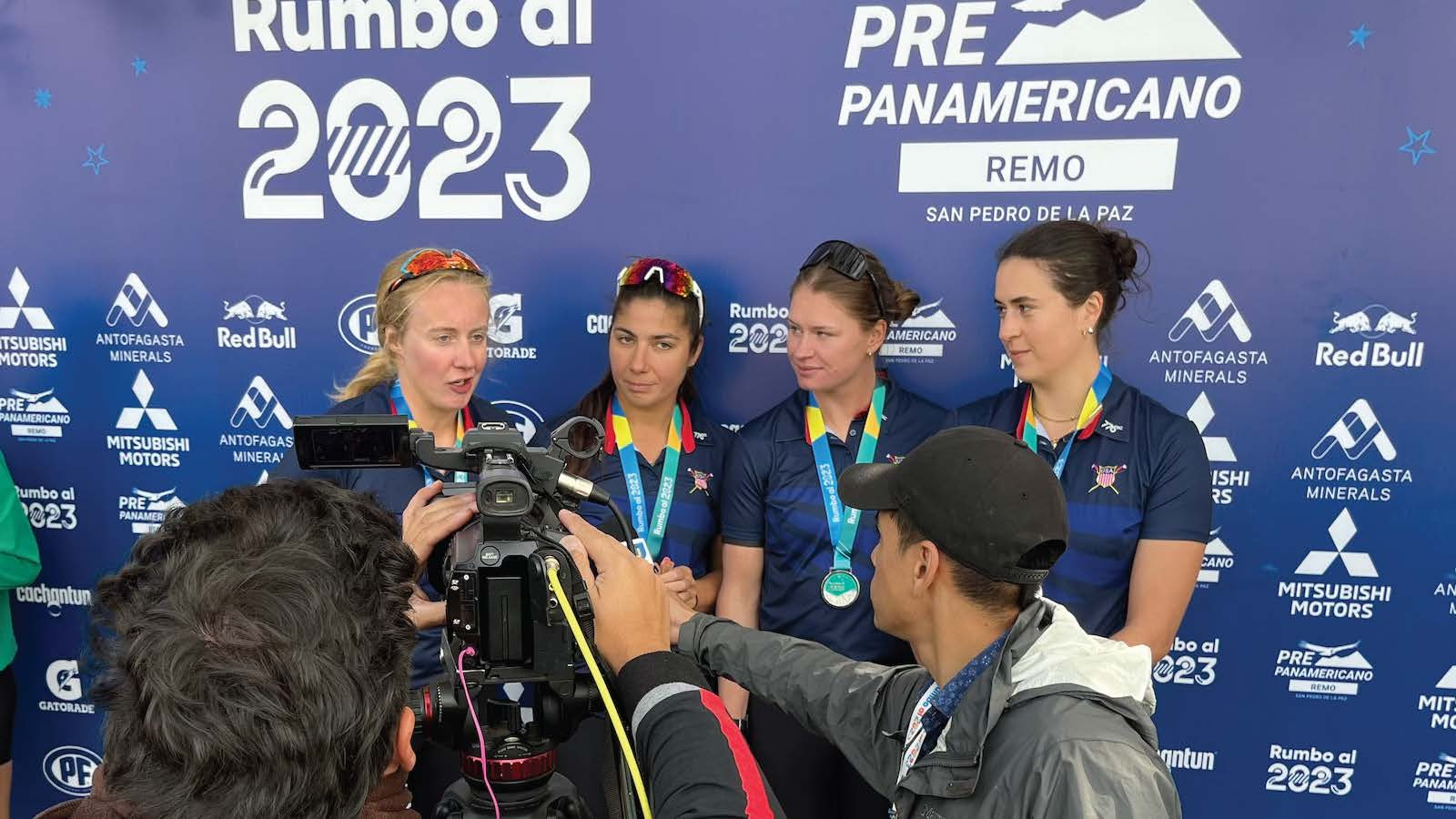
The women’s four of Isa Darvin (Madison, Wis./University of Wisconsin/Penn AC), Hannah Paynter (Lyme, Conn./Princeton University/ARION), Cristina Pretto (Prospect, Conn./Trinity College/Penn AC), and Lauren Miller (St Cloud, Minn./University of Minnesota/ARION) won the silver medal behind Chile to secure a spot in the Pan American Games this October. Chile won the race by just over three seconds, clocking a 6:31.81 to take home the gold medal. The U.S. finished second with a time of 6:35.04, more than three seconds ahead of Mexico, which crossed the line in a 6:38.44. Darvin and Pretto also won the silver medal in the women’s pair earlier this week.

“We had a really great piece in yesterday’s repechage, so today was all about repeating the execution and taking bigger risks,” Paynter said. “We capitalized on the fast conditions in the first 750 meters, found a powerful rhythm across the next 500 meters, and in the last 750 as the water got rough, we brought our focus down to the leges and out-to-blade timing. I feel extremely proud of this boat for coming together in such a short time and finding exciting speed. I’m confident we will be able to build on our performances here come October.

“I am extremely grateful for the opportunity to race for Team USA and to collaborate with athletes from so many high-performance groups. The energy has been infectiously positive and fierce, so I can only imagine the kind of atmosphere we’ll get in October.”

Elizabeth Martin (Lexington, Mass./Massachusetts Institute of Technology/Riverside Boat Club) and Mary Wilson (Laurens, S.C./Duke University/Vesper Boat Club) won the bronze medal in the lightweight women’s double sculls. In what was a tight, three-way race at the head of the field, Chile’s Antonia Liewald and Isidora Niemeyer held a 0.40-second lead on Argentina’s Sonia Baluzzo and Evelyn Silvestro at the midway point before slowly inching away over the back half of the race. Chile crossed the finish line in a 7:11.77 to win the gold medal, with Argentina crossing in a 7:13.24 to take the silver medal. Martin and Wilson pulled away from Brazil over the final 1,000 meters to win the bronze medal in a 7:13.48, securing a spot at the Pan American Games.

“We had a great race today and executed our race plan exactly as we wanted to,” Martin said. “(We) had the fastest second half of the race out of the field, which was a focus for us. It was really fun to be in such a competitive field and have close races. We’re really excited to come back here in October. We’re a new combination and are excited to get some more good training and time in the boat together in the next six months.”

In the men’s four, Ezra Carlson (Eureka, Calif./University of Washington/Craftsbury Green Racing Project), Alexander Hedge (Morristown, N.J./Columbia University/Craftsbury Green Racing Project), Cooper Hurley (Andover, Mass./University of Delaware/Penn AC), and Nicholas Ruggiero (Haddonfield, N.J./University of Delaware/Penn AC) finished fourth, just missing a medal but securing a spot in the Pan American Games. Cuba won gold in a 5:58.06, with Uruguay finishing two second back in a 6:00.05. Chile won the bronze medal, posting a time of 6:01.21, with the U.S. crossing in a 6:02.82. Carlson and Hedge have qualified for the Pan American Games in two events, winning gold in yesterday’s men’s pair final.

Sean Richardson (Beverly, Mass./University of Massachusetts/Riverside Boat Club) and Alex Twist (Boston, Mass./University of Puget Sound/Riverside Boat Club) won the B final of the lightweight men’s double sculls to qualify for the Pan American Games. Richardson and Twist jumped out to the lead early in the race, building nearly a five-second advantage in the first 1,000 meters, and were never challenged. Richardson and Twist clocked a 6:34.29 to win the race ahead of Cuba’s Osvaldo Perez Cruz and Jose Perez Benitez. Peru finished third.

The two U.S. single scullers raced in the semifinals Tuesday, with both advancing to the finals.

Racing in the second semifinal of the women’s single sculls, Grace Joyce (Northfield, Ill./University of Wisconsin/Craftsbury Green Racing Project) won by a length of open water to move on to tomorrow’s A final. Joyce got off the line in second position behind Canada’s Alizee Brien before moving into the lead in the second 500 meters. Joyce held about a half-length lead at the midway point of the race. Brien made her push just after the 1,000-meter mark, but Joyce was able to respond and moved away from the Canadian as the scullers approached 500 meters to go. Joyce crossed the line in a 7:53.53, finishing 4.65 seconds ahead of Brien’s 7:58.18. Cuba’s Ana Laura Jimenez finished third in an 8:16.90. Brazil’s Cardoso Beatriz won the first semifinal in a 7:53.75, with Chile’s Antonia Abraham finishing second in a 7:59.61. Paraguay’s Alejandra Alonso finished third to also advance to the final. The six scullers will race for the medals on Wednesday. Joyce won a silver medal in the women’s quadruple sculls on Monday.

In the men’s single sculls, Jacob Plihal (Vashon Island, Wash./Northeastern University/Craftsbury Green Racing Project) finished second in the first of two semifinals to move on to tomorrow’s race for the medals. Brazil’s Lucas Ferreira and Canada’s Andrew Hubbard took the early lead, with Plihal, who raced in the final of the men’s quadruple sculls on Monday, battling Cuba’s Yoelvis Hernandez for third position. Ferreira pulled out to a length lead on Hubbard 750 meters into the race, with Plihal pulling away from Hernandez as the crews approached the halfway point. Plihal continued his move during the third 500 meters, coming up even with Hubbard at the 1,250-meter mark before taking a length on the Canadian in the next 250 meters. At the line, Ferreira took first by about a length in a 7:06.20, with Plihal taking second by a length in a 7:09.61. Hubbard finished third to also advance to the A final. In the second semifinal, Mexico’s Juan Jose Flores clocked a 7:05.88 to win the race by 1.64 seconds over Chile’s Felipe Cardenas. Cardenas finished with a time of 7:07.52. Uruguay’s Bruno Cetraro finished third in a 7:08.24 to claim the last spot in the A final.

In addition to the single sculls, the two U.S. double sculls will be racing in tomorrow’s finals.

After finishing second in their heat of the women’s double sculls, Madeleine Focht (Long Beach, Calif./California State University, Long Beach/Long Beach Rowing Association) and Veronica Nicacio (Battle Ground, Wash./University of Portland/ARION) came back to win their repechage on Sunday to move on to the A final. Focht and Nicacio will take on crews from Chile, Canada, Cuba, Mexico, and Argentina in the race for the medals. Chile’s Melita Abraham and Victoria Hostetter and Canada’s Caroline DePaiva and Kristen Siermachesky were the two heat winners. Focht and Nicacio already qualified for the Pan American Games earlier this week, winning a silver medal in the women’s quadruple sculls on Monday.

The men’s double sculls tandem of Luke Rein (Barrington, R.I./College of Charleston/Penn AC) and Casey Fuller (Newtown, Conn./Fairfield University/Saugatuck Rowing Club) finished third in the repechage and now will race in the B final with Pan American Games’ qualification on the line. Rein and Fuller, who finished sixth in the men’s quadruple sculls’ final on Monday, will race against Paraguay, Peru, Brazil, and Venezuela in the B final, where a top two finish would qualify them for the Pan American Games.

Wednesday’s racing will be streamed live on the Panam Sports Channel. 

In total, the U.S. has 12 boats competing in the five-day regatta. Click here for complete coverage of the event.

Click here for a look at rowing’s qualification procedures for the 2023 Pan American Games. The 2023 Pan American Games are scheduled to take place October 20-November 5, with the rowing events being contested October 21-25 in San Pedro de la Paz, Chile.

USRowing would like to thank Filippi Lido, the Official Boat Supplier for the U.S. Senior, Under 23, and Para Rowing National Teams. Under the agreement, Filippi is providing USRowing a fleet of boats for international competitions including the World Rowing Cup regattas, World Rowing Under 23 Championships, World Rowing Championships, Olympic Games, and Paralympic Games, as well as a domestic training fleet for the USRowing Training Center.
U.S. Wins Three Medals on Monday at Pan American Games Qualification Regatta

PHOTO AND STORY COURTESY USROWING

The U.S. won three medals Monday at the 2023 Pan American Games Qualification Regatta in San Pedro de la Paz, Chile. The men’s pair took home the gold medal, while the women’s pair and women’s quadruple sculls took home silver medals. All three crews secured their spots at the Pan American Games, pending United States Olympic & Paralympic Committee approval.

Ezra Carlson (Eureka, Calif./University of Washington/Craftsbury Green Racing Project) and Alexander Hedge (Morristown, N.J./Columbia University/Craftsbury Green Racing Project) controlled the final of the men’s pair, winning the gold medal by open water and securing their spot for the Pan American Games. Carlson and Hedge led Uruguay’s Martin Zocalo and Leandro Rodas by about a half-length at the midway point of the race before pulling away over the second 1,000 meters.

“Alexander and I were able to put together a couple of good races down the course here. We expected the boats in the final to be fast off the blocks, and we just stayed very internally focused,” Carlson said. “We did a good job of controlling the pace through the middle 1,000 meters, which allowed us to respond to some quick crews in the last 500 and hold our lead through the line. Definitely a good step for us going into the rest of the year.”

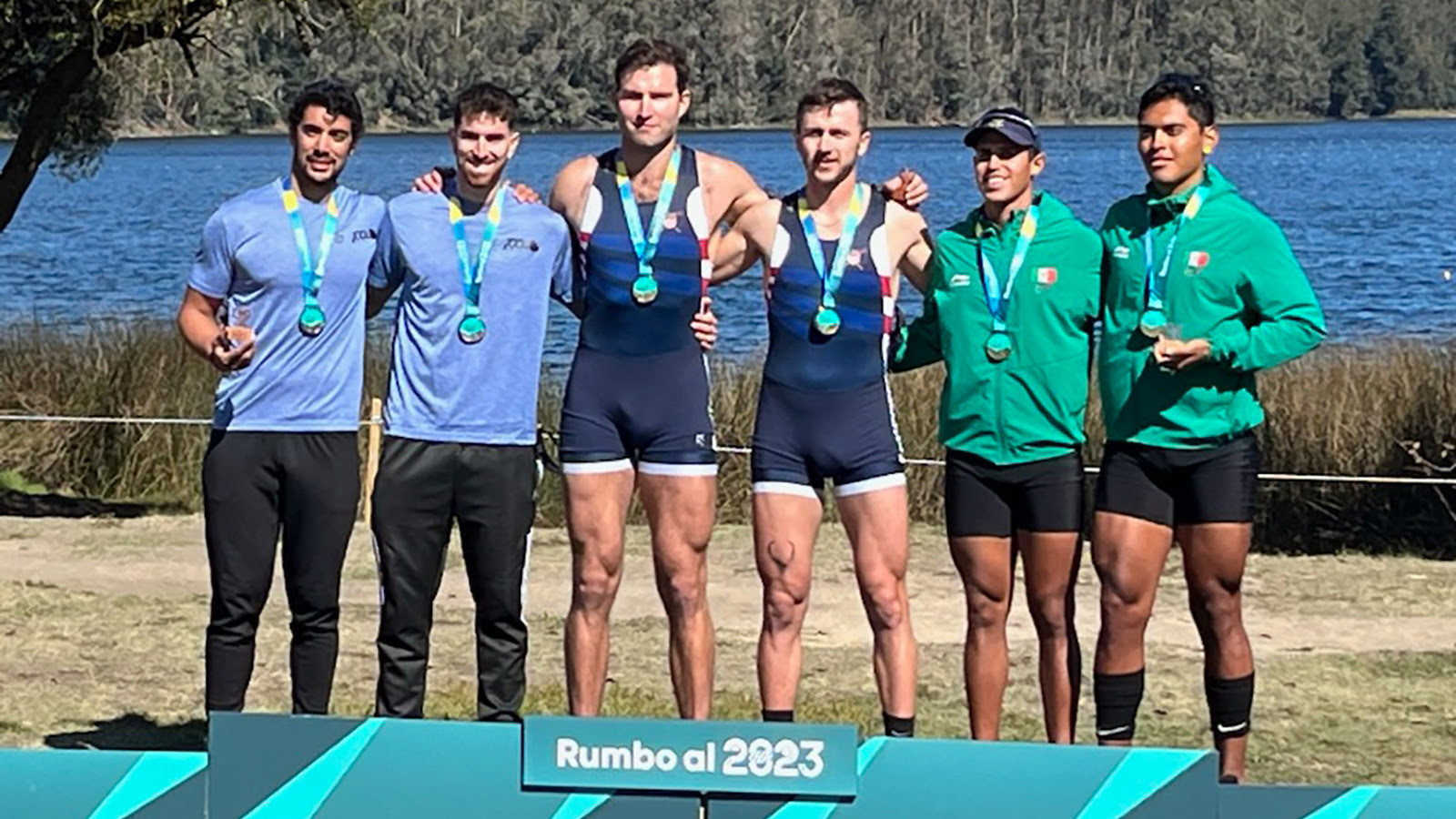
The U.S. duo clocked a 6:49.32 to finish 3.39 seconds ahead of Uruguay. Mexico’s Hugo Reyes and Jordi Gutierrez finished third in a 6:55.21.

“I’m happy to have qualified the boat for the games this fall,” Carlson said. “I had fun racing the other crews here and the event has been well run. I think the Pan American Games has been an undervalued event that offers very good racing opportunities. My focus now is on making the team for the world championships and preparing to race for the Olympic qualification spots up for grabs at the world championships this summer.”

In the women’s pair, Isa Darvin (Madison, Wis./University of Wisconsin/Penn AC) and Cristina Pretto (Prospect, Conn./Trinity College/Penn AC) finished second in the final to qualify for the Pan American Games. Chile’s Antonia Zanetta and Antonia Pichot got off the line quickly, establishing the early lead over the U.S. and Canada’s Kailani Marchak and Olivia McMurray. During the second quarter of the race, Canada and the U.S. overtook Chile and pulled away from the rest of the field. Marchak and McMurray continued to extend their advantage over the back half of the race, winning with a time of 7:33.32. The U.S. took the silver medal in a 7:39.83, with Mexico’s Lilian Armenta and Maite Arrillaga overtaking Chile for third.

The women’s quadruple sculls crew of Grace Joyce (Northfield, Ill./University of Wisconsin/Craftsbury Green Racing Project), Katherine Horvat (Philadelphia, Pa./Yale University/ARION), Madeleine Focht (Long Beach, Calif./California State University, Long Beach/Long Beach Rowing Association), and Veronica Nicacio (Battle Ground, Wash./University of Portland/ARION) also won a silver medal, qualifying for the Pan American Games. Chile took the early lead, with the U.S. boat settling into second position. At the midway point, the host country had built a four-seat lead on the U.S. boat, which had open water on the rest of the field. At the finish, Chile had won the race by a bit of open water in a 6:39.14, with the U.S. clocking a 6:42.65. Brazil took third in a 6:52.11.

“It was truly a barn burner of a race against Chile but an absolute honor to race against them on their home course,” Focht said. “I felt we executed our plan great; and being our first time racing together in the quad, we definitely gave it all we’ve got. No words can describe how excited I am for the Pan American Games and to represent my country for the first time. I feel like it’s just only the beginning for us, and we’ll come back even stronger. Right now, everything at this point is just gravy.”

In the men’s quadruple sculls, Casey Fuller (Newtown, Conn./Fairfield University/Saugatuck Rowing Club), Luke Rein (Barrington, R.I./College of Charleston/Penn AC), Mark Couwenhoven (Parkton, Md./University of Maryland – Baltimore County/Penn AC), and Jacob Plihal (Vashon Island, Wash./Northeastern University/Craftsbury Green Racing Project) finished sixth in the final. Cuba led Uruguay at the 1,000-meter mark before Uruguay was able to move out in front over the second half of the race. Uruguay won the race with a time of 5:52.81, with Cuba finishing second in a 5:55.14. Chile finished third in a 5:55.43, just 0.02 seconds ahead of Mexico. The U.S. finished sixth with a time of 6:02.26. While only the top five finishers officially qualified for the Pan American Games on Monday, Chile, as the host-country, was already guaranteed a spot in the event, and the U.S. is in line to receive a bid once the qualification spots are finalized.

The lightweight men’s double sculls tandem of Sean Richardson (Beverly, Mass./University of Massachusetts/Riverside Boat Club) and Alex Twist (Boston, Mass./University of Puget Sound/Riverside Boat Club) finished fourth in the second of two semifinals and will race in tomorrow’s B final with Pan American Games’ qualification on the line. The duo sat in fourth position at the 1,000-meter mark but was unable to challenge for the third qualification spot during the back half of the race. Argentina’s Alejandro Colomino and Pedro Dickson won the race in a 6:38.83, with Chile’s Cesar Abaroa and Heber Sanhueza finishing second in a 6:39.85. Uruguay finished third with a time of 6:40.65. The U.S. clocked a 6:45.36. Richardson and Twist will take on crews from Nicaragua, Peru, Cuba, Paraguay, and Guatemala in the B final and will need a top-three finish to qualify.

In the repechage of the women’s four, Darvin, Hannah Paynter (Lyme, Conn./Princeton University/ARION), Pretto, and Lauren Miller (St Cloud, Minn./University of Minnesota/ARION) took home the victory to advance to tomorrow’s final. With four to advance, the U.S. boat held nearly a two-second lead at the halfway point before extending its advantage over the back half of the race. The U.S. crossed the finish line in a 6:39.36, 4.45 seconds ahead of Canada’s time of 6:43.81. Brazil and Argentina took the other two qualifying spots. The four boats will face heat winners Mexico and Chile in the final.

In the repechage of the men’s four, Carlson, Hedge, Cooper Hurley (Andover, Mass./University of Delaware/Penn AC), and Nicholas Ruggiero (Haddonfield, N.J./University of Delaware/Penn AC) finished third behind Cuba and Chile to advance to the final. Chile led for the first half of the race before Cuba moved into the top position in the second 1,000 meters. Cuba won with a time of 6:04.85, followed by Chile in second in a 6:07.89. The U.S. finished third in a time of 6:08.86. Mexico claimed the last spot in the final. The four crews will join heat winners Argentina and Uruguay in the race for the medals.

In addition to the two fours racing in tomorrow’s A finals and the lightweight men’s double sculls racing in tomorrow’s B final, the U.S. lightweight women’s double sculls will be racing for medals and looking to officially lock down a qualifying spot for the Pan American Games on Tuesday.

Elizabeth Martin (Lexington, Mass./Massachusetts Institute of Technology/Riverside Boat Club) and Mary Wilson (Laurens, S.C./Duke University/Vesper Boat Club) finished second in their heat Monday to advance directly to the final. Martin and Wilson will take on Argentina, Chile, Brazil, Peru, and Mexico in the race for medals. Argentina’s Evelyn Silvestro and Sonia Baluzzo and Chile’s Isidora Niemeyer and Antonia Liewald were the two heat winners. With nine total crews qualifying for the Pan American Games in the event, all six boats in the lightweight women’s double sculls final will punch their tickets once they cross the finish line.

Tuesday’s racing will be streamed live on the Panam Sports Channel. 

In total, the U.S. has 12 boats competing in the five-day regatta. Racing concludes on Wednesday with finals in the men’s and women’s single sculls and double sculls. Click here for complete coverage of the event.

Click here for a look at rowing’s qualification procedures for the 2023 Pan American Games. The 2023 Pan American Games are scheduled to take place October 20-November 5, with the rowing events being contested October 21-25 in San Pedro de la Paz, Chile.

USRowing would like to thank Filippi Lido, the Official Boat Supplier for the U.S. Senior, Under 23, and Para Rowing National Teams. Under the agreement, Filippi is providing USRowing a fleet of boats for international competitions including the World Rowing Cup regattas, World Rowing Under 23 Championships, World Rowing Championships, Olympic Games, and Paralympic Games, as well as a domestic training fleet for the USRowing Training Center.

Setting SMART Goals

Munich, Germany, Thursday, 11/08/22, 12:29:39, GBR LW2X, CRAIG Emily and GRANT Imogen Stroke, at the start,2022 European Rowing Championships, Munich Olympic Regatta Course, [Mandatory Credit; Peter SPURRIER/Intersport Images]

BY MARLENE ROYLE
PHOTO BY PETER SPURRIER

The new racing season is upon us. Personal improvement relies on a sound training program, skilled coaching, and achievable goals. An effective way to create goals is to use the SMART method: Specific, Measurable, Attainable, Relevant, and Timely.

Smart goals are effective goals that help move your training and performance in a positive direction.
Be Specific. Your goals must state specifically what’s to be accomplished. They must be clear and understood: “My goal is to improve my 2K erg score by 10 seconds.”

Be Measurable. Your goals must be measurable so you can tell if you’re making progress. To track your progress, you’ll have to repeat 2K erg trials regularly to achieve a new time.

Be Attainable. Your goals should be realistic and attainable. Improving your erg score could take roughly one second per 500 meters per month. To improve by 10 seconds in a season may require two to three months of dedicated training.

Be Relevant. Your goals must be relevant to your particular interests, needs, likes, dislikes, and abilities. Improving your 2K erg time is relevant to making the first-varsity boat. If this is part of selection and important to you, it’s very relevant to the outcome of the season.

Be Timely. Your goals must have a time line for completion. If your goal applies to this season and the selection of the first varsity for your championship event, that’s a deadline. Your goal can extend to later in the year or next season. It depends on your goal and how long you think you need to achieve it.

The key point is that your goal should be meaningful to you and that you’re willing to work toward it.