

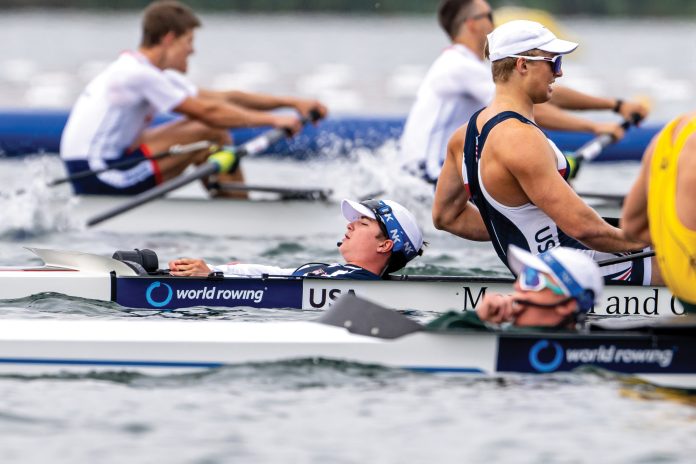
Almost every rower and coxswain has heard the call “Pull the boats together and switch!”
Seat racing is one of the highest-pressure situations coxswains can find themselves in during practice, and it’s important to be prepared to perform on these days. There can be a lot on the line, including the final seats for a championship regatta.
To continue reading…
This article is exclusively for Rowing News subscribers. For as little as $5 a month, you can get access to the best quality, independent reporting on all the issues that matter to the North American rowing community.
Already a subscriber? Login
Regardless of how your coach runs selection, your primary job as the coxswain is to race the boat well and ensure that the pieces are fair. It’s crucial that you steer well, adhere to rates, and assist with accurate data collection.
The basics are straightforward: Know the plan. If your coach expects the same rates for each piece, know what rate variance, if any, is acceptable. The importance of holding rate cannot be understated; if the boat is over or under rate, the data collected may not be valid.
Make sure you are clear on the calls to start and stop. Practice some of the CoxBox and SpeedCoach functions during lower-stakes practices so you can act quickly and leave your hands on the steering as much as possible when the time comes.
If pieces are being timed simultaneously by your coach and by your GPS, clarify whether you are stopping on the coach’s call or running the piece until the GPS has ended. Just as on race day, you never want to stop before the line.
If your team allows coxing during seat racing, it’s a great opportunity to practice your race-day calls. Speak with your coach beforehand to establish the level of similarity he or she is looking for between pieces. It’s important to know if you have full authority to race the piece at your discretion.
For silent seat racing, you have a terrific opportunity to observe how the boat moves and the way different rowers on the team influence the feel and pace of the shell. It’s also a good time to focus on your steering.
If you’re on a buoyed course, you can practice precisely where you like to look to keep the boat straight between the lines. If you’re not on a buoyed course, watch the way your tiny adjustments affect the boat. Assess your line and any stationary points of reference as you go within a piece, and once you’ve crossed the finish line, you can even turn your head to check your wake to see how your steering looks. If you have your steering dialed in, you have the gift of a day simply to observe the rowing and develop your boat feel.
There’s also the matter of your own seat racing. If you’re part of a program that does coxswain seat races, you already know that you need to seize the chance when it comes. As is the case for rowers, you may get only one switch to demonstrate your abilities in a particular crew.
If you’re switched on the water, take a deep breath and get yourself and your equipment situated. If there’s time, take a moment and speak to your stroke or bow seat to get a pulse on the boat and what they’ve been working on.
Most important, trust yourself and don’t let the pressure of the moment get to you. You earned yourself the opportunity.
