

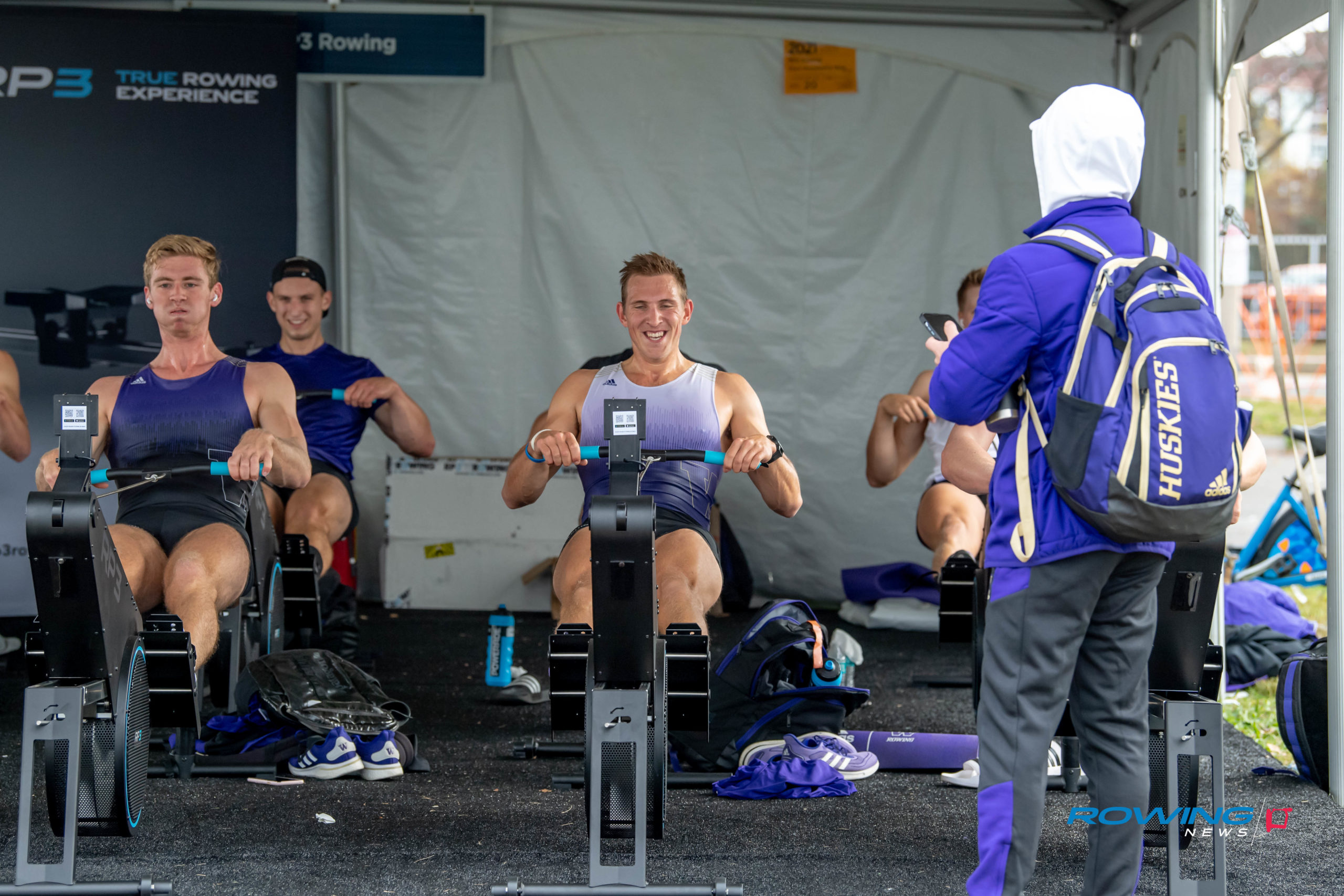
BY BILL MANNING | PHOTO BY ED MORAN
To continue reading…
This article is exclusively for Rowing News subscribers. For as little as $5 a month, you can get access to the best quality, independent reporting on all the issues that matter to the North American rowing community.
Already a subscriber? Login
Erg tests are ubiquitous in competitive rowing, but not all erg tests are valuable. Useful tests are ones done for a clear and accepted reason, fit the experience and capabilities of the athletes, and are backed with a solid understanding of the erg and rowing fitness.
Begin with a specific purpose for testing and communicate this to your athletes. The test should align with your priorities because it will incentivize certain behaviors. There are many valid reasons to test, including motivating athletes to train, monitoring the impact of training, building camaraderie, informing selection, college recruitment, National Team submission, and rehearsing the stress of race day.
All tests have more value if your rowers know why they’re being tested. Understanding the benefits of the test for the individual and the team creates greater buy-in. Bad, but frequently employed, reasons for testing include punishment, frustration, or because the coach doesn’t know what else to do (as in the “surprise” erg test).
There is no ideal erg test for everyone. Who is being tested should inform how to test. The test should be appropriate for the age and level of the athlete. Most young rowers do not have sufficiently developed posture and core strength to erg well for more than a couple of minutes.
For the youngest athletes, a timed run is more useful, as it reveals fitness, athleticism, and competitiveness better than flailing about on a rowing machine. For those slightly older, keep the test short. Assigning a test that becomes merely about survival does not mimic the demands of racing; in sport, tests should measure how well one does something, not just whether one can finish the job. An “Hour of Power” for high-schoolers is coaching malpractice. Be careful as well with mature athletes. One can go deep into the pain cave only so often and so regularly before recovery becomes compromised dangerously.
If discovering the maximum ability of your rowers is the goal, time must be devoted specifically to preparing and tapering for the test. Training must be sacrificed; otherwise, it’s not a full and honest measure of their capabilities.
To get the most accurate accounting of each athlete, do a test three times. Athletes learn from repetition and should be given the opportunity to repeat a test. In my experience, 65 percent will improve with their second test, 20 percent will improve with a third test, and after that, many regress, and few improve.
While 2,000 meters may be the most specific test for racing, to get the most accurate assessment of each athlete’s physiological makeup, do different tests either together or independently: a short one to measure aerobic power (100 meters); a specific one for rowing fitness (2K); and a longer one, possibly a run, to gauge aerobic fitness (6K).
Rate caps or a higher drag factor emphasize power per stroke rather than pure aerobic fitness and can be easier for less skilled athletes. Careful consideration of the body strength of your rowers and awareness of the drag factor are essential. Do not go heavy for long. Either let them spin the wheel to show their fitness or go shorter and lower to gauge their power output.
Similarly, weight-adjusted erg tests can level the playing field for smaller athletes. If weight-adjusting, a good way to determine rank is to take the average of the raw time and the weight-adjusted time. For younger, growing athletes or any athlete who is better off not being weighed publicly, a track workout or timed run provides all the information of a weight-adjusted erg test without using a scale.
An erg test is inherently an individual endeavor but also can build unity as a shared challenge. If it’s all about rewarding the best, then do distance tests (2K, 6K) and let the fastest athletes enjoy the recognition of finishing before their peers. If building a cohesive team is valued, do timed tests so everyone finishes together and nobody is publicly, and probably embarrassingly, last to finish. The split and/or meters covered still provide all the information you need without demoralizing anyone.
Erg tests should be as useful as they are common. Remember: the test you choose incentivizes certain behavior. And keep the test age-appropriate to maximize the benefits.
