

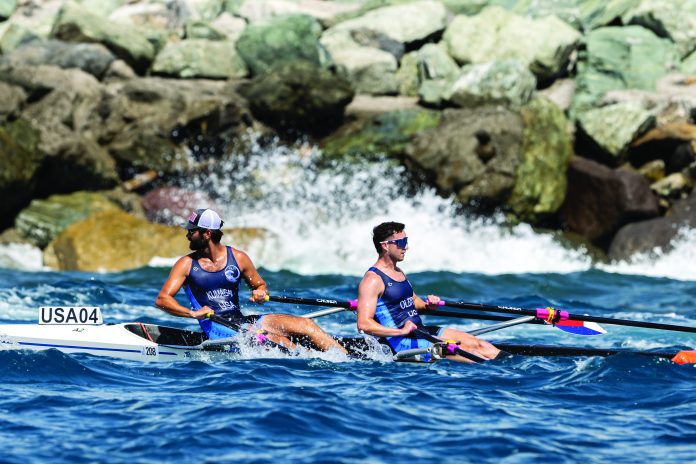
Training and racing in rough water are part of rowing.
To continue reading…
This article is exclusively for Rowing News subscribers. For as little as $5 a month, you can get access to the best quality, independent reporting on all the issues that matter to the North American rowing community.
Already a subscriber? Login
First, through coaching and drills, master stability, bladework, and power application on calm water. Over time, progress to maintaining your form in various degrees of difficult wind and waves.
Practicing in challenging water conditions will elevate your skill level, especially if you compete and train on water that is typically flat. The smaller the boat you’re in, the more refined your technique needs to be.
A major faux pas in bad water is tightening your shoulders, arms, and hands; the chop then travels to your upper body and disrupts your stability. Keep as light a hold on the oar handle as possible to allow the blades to stay at the proper depth during the drive and help you feel the water.
Loose shoulders let the arms absorb hitting the top of a wave, catching an edge, or adjusting the blade height on the recovery.
After the release, be sure to lower the oar handles enough to clear the waves and carry the oars higher off the water during the recovery. Practice plenty of rowing with the blades off the water and tapping drills or strokes on the square to improve balance. Keep the entry light and intentional so you can feel the blade set before you drive.
When waves are of varied height and amplitude, the blade can miss the water, forcing you to hold your balance until the blade gets back in the water. Be patient and focus on placing the next entry.
Gaining experience in adverse situations (as long as they’re safe) will provide the lessons for learning to work with the water.
