

STORY BY DOCTOR ROWING / ANDY ANDERSON
To continue reading…
This article is exclusively for Rowing News subscribers. For as little as $5 a month, you can get access to the best quality, independent reporting on all the issues that matter to the North American rowing community.
Already a subscriber? Login
It doesn’t take much imagination to envisage the hardships and horrors that Ukrainians are undergoing. Nearly every night we see coverage of another village bombed, another apartment block in a major city left in rubble. Putin’s aggression doesn’t spare anyone or anything.
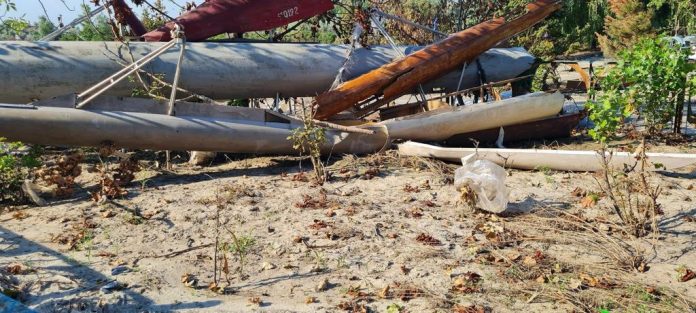
Ruslan Kireev, a rowing coach from the Ukraine, sent photos of the destruction that has been wreaked upon boathouses in Kherson and Odessa, the former on the Dnieper River, the latter on the Black Sea. Both have been strongholds of rowing. While there are certainly more important things than rowing, people need to have hope that daily life will return to normal, that one day kids, men, and women will be able to restart their lives.
Sean Colgan, American Olympian in 1980, has been close to Ukrainian rowing ever since those boycotted Olympics. He is organizing a relief effort for rowing in Ukraine.
“They have nothing left,” he told me. “No boats, oars, or ergs. I’ve asked four other members of the 1980 U.S. men’s eight to help collect equipment, used or new, so that we can ship it to the Ukraine.”
They can rebuild their boathouses, but there’s no way for them to get equipment. Sean and his Colgan Foundation have offered to pay to ship in containers whatever they can collect.
“There’s not a great rush. They are usually frozen in until April,” he said.
But now is the time to look through our boathouses and see what we can part with.
As of this writing, the collection and shipping details are being worked out. Bruce Ibbetson, stroke of the 1980 eight, will coordinate in Southern California; Brian Colgan, Sean’s brother, will work in Florida; Mike Hess and the Pocock Center will handle Seattle. Boston and Philadelphia are in the process of finding a coordinator.
The roots of involvement with Ukraine go back to the 1980 Olympics, which were slated to be held in Moscow. When the U.S. boycotted because of the USSR’s invasion of Afghanistan, the pre-Olympic regattas took on much more importance. The U.S. sent a full team to Lucerne, and hopes were high that we could defeat the Soviets and East Germans.
But the Soviet eight didn’t show up at the regatta; it was said that they had failed drug testing and didn’t want to be embarrassed with disqualification. That USSR eight was composed of four oarsmen from Minsk, Belarus, and four from Kiev, Ukraine. The way our guys saw it, they ducked Lucerne and won a bronze in Moscow, where they were unlikely to be drug-tested.
Ten years later, Colgan and Ibbetson organized a reunion regatta in Moscow—U.S. vs. USSR alums. The U.S. won decisively. Sean’s father, Chuck Colgan, a longtime regatta and club official, managed that trip. The guys from the Soviet boat complained: “Well, of course; we didn’t have access to training equipment,” because once they were not on the official squad, they had no place to row. So Colgan bought four ergs and sent two to Minsk and two to Kiev. The next year, at the 1991 Miami World Masters Regatta, the U.S. beat them again.
By 1994, with the world championships in Indianapolis, Colgan organized and paid for the Ukrainians to come to Philadelphia to train. Same for ’95 and ’96, before the Atlanta Games.
Fast forward: With their country under siege, Colgan searched his database to find the Ukrainians and paid for their training base in 2022. Sean has helped them come to the last two Head of the Charles regattas, and he will continue his support. Suspecting there might be many others of like mind, Sean initiated this latest effort.
Watch RowingNews.com and the Rowing News Instagram account for updates on where and when to take equipment. I’m finding a few sets of oars and ergs. How about you?
