Home Blog Page 37

Henley Royal Regatta Adds New Women’s Race

Henley womens race
Photo by Benedict Tufnell | Henley Royal Regatta


Henley Royal Regatta has added The Bridge Challenge Plate, an additional women’s race, as the regatta works towards gender parity on the Thames.

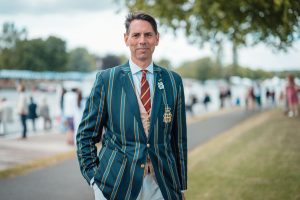
“The Bridge Challenge Plate is a significant step forward in broadening opportunities for female competitors at Henley Royal Regatta,” remarked Richard Phelps, Chair of Henley Royal Regatta. “It fills a vital gap in our competition structure, providing a platform for Intermediate Women’s crews to compete at the highest level for their category. This new event complements our efforts to increase entries in five existing Women’s events and reflects the Regatta’s commitment to inclusivity, gender parity, and maintaining the highest competitive standards.”

Richard Phelps
Photo of Richard Phelps by Benedict Tufnell | Henley Royal Regatta

The Bridge Challenge Plate is the first event in the history of HRR in the intermediate category. It’s designed for crews below the top level, Premier category, but above the Club and Student categories.

“This event addresses a specific gap in our offering for female competitors,” said Phelps. “Since 2017, we’ve introduced six new women’s events, creating opportunities for growth across all levels. Adding this Intermediate event is the next logical step in ensuring sustainable and balanced progression for female rowers. Our approach to gender parity focuses on thoughtful, incremental changes to ensure quality competition and lasting progress.”

The Bridge Challenge Plate will see its inaugural race in 2025, and the regatta staff don’t expect to see major changes to the racing schedule.

“We expect the introduction of The Bridge Challenge Plate to be easily accommodated within the 2025 schedule, especially with a projected decrease in entries to The Remenham Challenge Cup [open women’s eights],” stated Phelps. “This addition responds to a remarkable growth in demand and talent within women’s rowing – we saw twice the number of female entries in 2023 than 2019.”

Canisius University to Compete at Six Spring Regattas

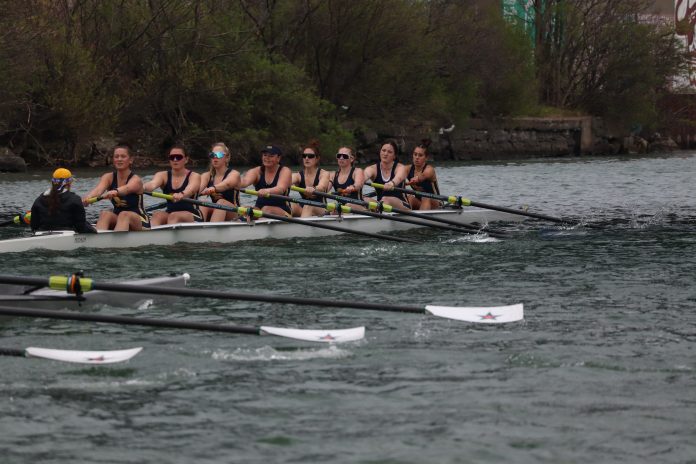
Canisius rowing schedule 2025
Photo by Max Sacco.


The Golden Griffins head women’s rowing coach Matt Cosmann has released the 2025 spring schedule which will begin with a home regatta against Mercyhurst on Saturday, April 6.

“We had a good fall,” said Cosmann. “It was my first fall as the head coach. I’ve been with the team for five years. I was the assistant, and I stepped into the head coaching role. It was probably our best fall in the past five years. We did a good job against Robert Morris and George Mason. Our second varsity and our novice eight beat George Mason and Robert Morris’s 2vs and our novices had just learned how to row a month before.”

Following the season-opener, Canisius will travel to Cherry Hill, N.J. for the Knecht Cup, to be held April 12-13. Before the MAAC Championship in May, the Golden Griffins will compete at the New York State Championship, the Sacred Heart Invite, and the Black Rock Cup.

“I’m expecting Jacksonville and Marist to be fast,” remarked Cosmann. “In the last few years Sacred Heart got a new head coach [Lucas Wilhelm] and he’s done a phenomenal job growing the program. What they’ve done over the past three years is a model here at Canisius and I know they’re focused on trying to win. When I look at the rest of the conference, it’s very much wide open. We will be competitive with those three teams if we work hard over the next four months.”

This year the team will not be leaving the state of New York for a winter training trip, opting to put resources towards the purchase of a new hull. Instead, the Golden Griffins will be spending time on the erg, in the weight room, and in the tanks.

“It gets a little cold in Buffalo and we take the docks out for the winter,” said Cosmann. “What’s kind of new this year is the team is using the CrewLAB app to hold each other accountable and have been crushing it. They’ve been putting in a lot of time on the ergs so far. They’re doing a three-day-a-week lift at this local gym called Nickel City Athletics. All of the women who are local have been showing up every single day.”

The program rows out of West Side Rowing Club in Buffalo and last year they were able to get the docks in by the last weekend in February. Cosmann and the coaching staff hope to stay on that timeline, if not a little earlier.

“If we can get them in sooner, we’ll do that,” stated Cosmann. “I don’t like to live on the erg. Obviously, the erg is great. It’s a good way to get in shape, stay fit, work hard, and all that fun stuff, but we’re not going to the MAAC erging Championships we’re going to the MAAC Rowing Championships, so I like us to row and get on the water. We have a really fresh feel on the team and it’s the biggest group we’ve had in my time here. We have a lot of positive things heading into the spring.”

Legenzowski Joins Big Green as Assistant Coach

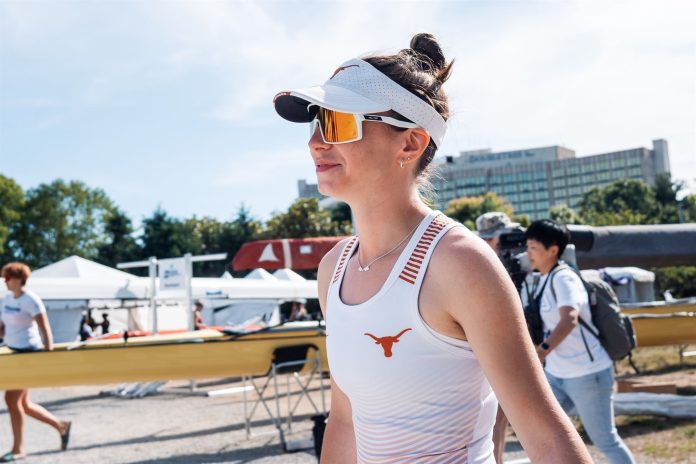
Carly Legenzowski dartmouth coach
Photo courtesy of Texas Longhorns.


Carly Legenzowski, three-time NCAA Champion with the Texas Longhorns, has joined the Dartmouth women’s rowing coaching staff under the guidance of head coach John Graves and assistant Kendall Brewer.

Legenzowski comes to Dartmouth after she was a coxswain at Texas from 2021-2024, winning NCAA titles in 2021, 2022, and 2024.

“I was a volunteer at Texas in 2021 when she was a freshman,” recalled Graves. “Dave O’Neill [Texas head coach] was coaching me and I was training alongside the team. It was a unique set-up where Carly would go out in a coxed four and I would be in a single and we would train together so that’s how I knew her initially. I got the chance to coach her this past summer on the U.S. Under-23 National Team.”

The four which Carly coxed last summer went on to win a silver medal at the World Rowing Under-23 Championships.

“I consider Dave to be the best coach in NCAA rowing and being around that team and seeing how they operate was very informative for me—Carly and I both have huge respect for him,” remarked Graves. “Coming in as a head coach at Dartmouth, I have taken a lot of my experiences to incorporate them into the team and the culture that we’re building here. Watching the way that Carly ascended into the first varsity boat at Texas and them winning a national championship last year—it was cool to see her grow into that role. The chance to add some of that experience to this team is in line with what we’ve been doing this last year.”

Legenzowski brings an impressive resume including four-time Big 12 Champion and 2024 First Team All-American.

“It’s a credit to the current team and the work they’ve been putting in that Carly felt like this was an exciting opportunity for her,” said Graves. “As the team is becoming more ambitious to take the next step to getting Dartmouth back to NCAAs, Carly’s experience with Texas at NCAAs, coupled with Kendall Brewer’s experience rowing at Michigan, means we have a staff that can help guide the way in that regard.”

Jeff Powell Appointed New CEO for Rowing Canada

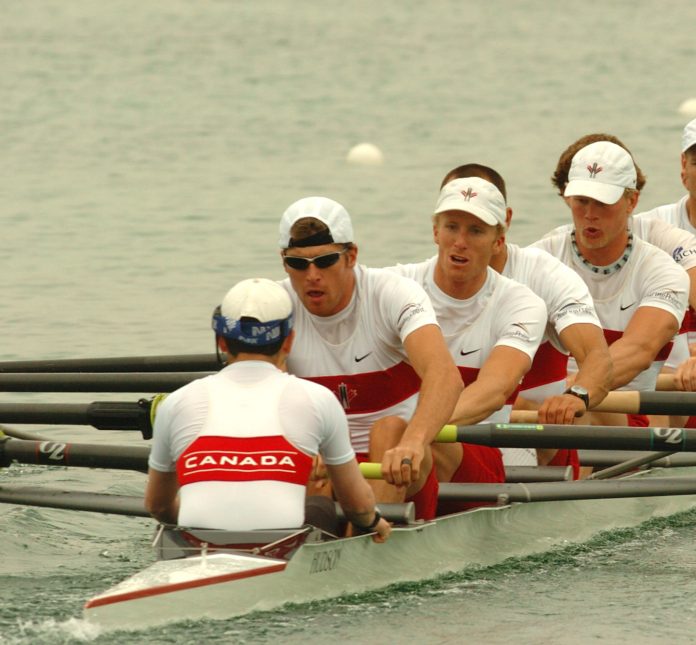
Jeff Powell stroking the Canadian men's eight to victory at the 2004 World Rowing Cup in Munich, when Canada was the two-time defending world champion in the men's eight. Photo: Peter Spurrier, Intersport Images, www.intersport-images.com


Rowing Canada announced the appointment of Olympic oarsman Jeff Powell as the next CEO of Canada’s national governing body for the sport. Powell won two World Rowing Championships in the men’s eight and is a former Canadian National Team coach.

“I am tremendously excited to return more fully to the sport and the organization that has been such an enormous part of my life,” said Powell. “I look forward to working with Canada’s rowing community to support the sport we all care about and to focus on building a strong and connected future together.”

Canada failed to qualify a men’s crew for the Paris Olympics and hasn’t raced a men’s eight in the Olympics since 2012. The women’s eight won silver in Paris and the women’s lightweight double—the only other Canadian crew to qualify—finished eighth. Jacob Wassermann was Canada’s lone Paralympic competitor in Paris.

“As we continue to evolve our strategic direction and build upon the great legacy and potential of our sport, we are confident Jeff will help elevate and strengthen our organization and our rowing communities,” said Michael Bryden, Chair of the RCA Board of Directors.

“He’s a man of high drive, high standards, and very confident in implementing his ideas. He will piss off many people and this is exactly what the organization needs,” said Powell’s teammate Adam Kreek. “He has the hard edge of a high performer and is willing to lean into conflict.”

Powell returns to rowing from the Canadian Sport Centre Manitoba, where he was CEO. He replaces Terry Dillon, who resigned June 30, and will succeed interim CEO Jennifer Fitzpatrick on February 3, 2025.

Henley Royal Regatta adds Five Stewards for 2025

henley royal regatta stewards
Photo courtesy of Henley Royal Regatta.

Henley Royal Regatta has added Grace Prendergast, Gerritjan Eggenkamp, Cameron Nichol, Elise Sherwell, and William Stonor as new Stewards for 2025.

Prendergast will bring her experience racing for New Zealand. At the Tokyo Olympics she won gold in the women’s pair and silver in the women’s eight. She is also a five-time World Champion and a 15-time national champion. She is currently a consultant at The Search, which specializes in finding leaders in the people, talent, and marketing spaces.

“Henley was always a highlight of my year as a rower and has continued to play a special part in my life since retiring from professional rowing,” Prendergast told the HRR communications team. “It is a massive honor to have been made a Steward and a privilege to join a group of people who I have looked up to for years.”

Eggenkamp first competed internationally as a Dutch rower at the 1993 Junior World Championships. In 2002 he became the first Dutch rower to race at the Boat Race, with a seat in the winning Oxford crew. Eggenkamp competed at five World Championships on the Dutch Senior Team and two Olympics. He was a member of the men’s eight that won Olympic silver in Athens in 2004.

He serves as a partner at private equity fund Avedon Capital Partners. Eggenkamp is on the World Rowing Executive Committee, and since September of 2018, he has been the Treasurer.

Along with Prendergast and Eggenkamp, Nichol joins the new Henley Stewards as an Olympian for Great Britain, a two-time World Championship silver medalist, founder of RowingWOD, and a medical doctor. He serves as an NHS partner general practitioner at Runnymede Medical Practice as a general practitioner at Prime Health.

“I’m incredibly proud, grateful and humbled to be asked to serve as a Steward,” remarked Nichol. “The Regatta, and rowing itself, hold a special place in my heart and I commit to giving my very best to the rowers, the members and everyone attending. I can’t wait to contribute to the next chapter of HRR.”

Another rower for Team Great Britain, Sherwell, competed with Thames Rowing Club, Leander Club and Thames Valley Skiff Club. She was on team GB for 12 years and competed in three Olympics. In 2004 and 2008 she won Olympic bronze medals. She has also won bronze at two World Championships. Sherwell is an avid cycler. She is currently an associate solicitor for a commercial property team in Chichester, England.

“Henley is one of the biggest regattas in the world and to be a part of it (forever) is something my younger rowing self would have never thought would be possible,” said Sherwell. “Rowing was everything to me when I was in my 20s and to be able to spend time back in that world with some of my best friends and incredible teammates is going to be fantastic! Sport has given me so much over the years, now it is time to give back.”

Stonor, 8th Baron Camoys, is a hereditary peer and a Conservative member of the House of Lords. His relative Thomas, 3rd Baron Camoys, was a member of the town of Henley when the Regatta was introduced in 1839. William will be the eighth Stonor to serve as a Steward.

Lenny Peters Cup to Feature Team USA Versus the World

lenny peters cup
Photo by Phil Planes.

Bringing world-class racing to North Carolina, the Lenny Peters Cup, to be held Saturday, April 12, 2025, will involve a Ryder Cup-style sculling format in which U.S. senior national team athletes will go head-to-head against national and Olympic team rowers from around the world.

Triad United Rowing Association, which rows on Oak Hollow Lake in High Point, North Carolina, hosts High Point Autumn Rowing Festival in the fall and North Carolina Rowing Championships in the spring, and has invited international crews to the Festival Park Course in the past. This is the first time USRowing has gotten involved.

“In the fall we had Oxford and Ukraine come out and race some of the local universities such as Duke, High Point, and Old Dominion,” said head Triad United head coach Gene Kininmonth. “Casey Galvanek came to watch this fall, was impressed, and gave some good feedback to USRowing about what we’re doing here. From there I had a call with Josy Verdonkschot to explore how we could get some national team rowers down here to compete against foreign competition. We hashed out that sculling might be the area we could have the most impact. From here we came up with the Ryder Cup format.”

Galvanek, the 2024 Rowing News Coach of the Year, coached the U.S. men’s four to a gold medal at the 2024 Olympics in Paris. Verdonkschot serves as USRowing’s Chief High Performance Officer.

“Josy will select the top four male and four female scullers to represent the U.S. team based on Speed Order in the spring,” said Kininmonth. “I’ve been sending out invitations to scullers around the world who won medals at the Paris Olympics. We will do a draw a couple of days beforehand to see which scullers from around the world have a race against U.S. scullers. Based on that there will be eight races for eight points. The US men’s and women’s quads will race against the top four scullers from overseas for four points each. We will also do two mixed quad races.”

This year’s racing will feature a one-day format. In the future there may be room to expand the regatta to multiple days to allow for more competition.

“It’s in conjunction with the North Carolina Rowing Championships and we already get more than 1,000 rowers coming in for that and 2,000-3,000 spectators,” said Kininmonth. “We will have a packed house. It’s a good thing for the sport of rowing to have people cheer on our U.S. rowers here in the United States and not just watch them on TV as they race in Europe.”

Kininmonth, along with USRowing, hopes the event can bring attention to sculling and small boat racing in the United States such that the public will be able to recognize the nation’s top scullers.

“If we can put a spotlight on sculling and get people interested in that I think we may see an American standing on the top of the podium at the Olympics one day,” said Kininmonth. “If we can do that, it puts a huge spotlight on our sport in the U.S.—when you get a face and a name to the sports. It was really amazing and wonderful that our men’s four won and our men’s eight got a bronze in Paris, but if you asked anybody on the street to name one person in one of those boats they couldn’t. This is a small step in that direction.”

CURRENT ISSUE OF THE MAGAZINE


USRowing loses SRAA, IRA and their regattas

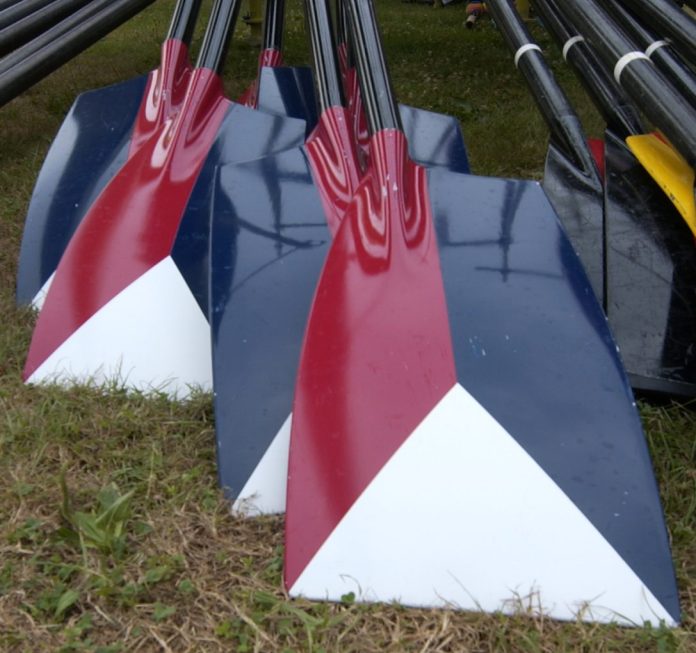
USRowing blades resting on the boat rack, Photo Peter Spurrier/Intersport Images email images@intersport-images.com


Some of the biggest rowing organizations in the U.S. are leaving USRowing because of new membership requirements imposed by the national governing body.

The Scholastic Rowing Association of America, which has run “Scholastic Nationals” since 1935, announced in early December that it will not be renewing its organization membership with USRowing and will not require participating schools and individual athletes to be USRowing members to row in the regatta. Last year, 2,597 rowers competed at the SRAA regatta.

In November, the stewards of the Intercollegiate Rowing Association, the largest collegiate rowing organization and host of the IRA national championships and four other regattas that serve 4,000 collegiate rowers altogether, voted to leave USRowing.

Rowing News has learned that at least six other rowing associations that administer leagues and hold championship regattas—as well as the Head of the Charles, with 11,000 competitors—are considering leaving USRowing over new insurance, membership, and coaching-certification requirements.

USRowing reports a current membership of over 77,000, down from a pre-Covid membership of over 93,000.

USRowing announced the new requirements in a June enewsletter after most coaches and programs had finished rowing for the school year.

In a statement to Rowing News, USRowing CEO Amanda Kraus said, “We will be implementing universal coaching standards that align with our mission to steward, strengthen, and grow American rowing and meet requirements from both the United States Olympic & Paralympic Committee and the U.S. Center for SafeSport.”

New USRowing requirements for coaches include completing online courses, showing proof of CPR, AED, and first-aid certifications, and completing three continuing-education credits.

As of January 1, 2025, all individuals who coach at USRowing member clubs or attend regattas hosted or sanctioned by USRowing as a coach must have at least Level I certification from USRowing. For Basic members, Level I certification is $99, USRowing.org states; for Championship-level members, it’s free. For Level II certification, the website confuses with two fees—$250 and $280.

Rowing programs in scholastic and youth leagues are often run by volunteers whose greatest challenge is attracting and retaining qualified coaches willing and able to do the job for what is often low pay.

Leslie Pfeil, president of the Philadelphia Scholastic Rowing Association, says that every year, for want of a coach, at least one member program either ceases to exist or is saved at the last minute. Many have completed required background checks and complied with local laws and the abuse-prevention policies of their various schools. For them, USRowing’s additional requirements, Pfeil said, are “burdensome.”

“Most scholastic coaches have other full-time jobs and many are teachers,” said Pfeil. “This is unlike many club coaches, and we can see why the new requirements are appropriate for clubs, but not appropriate for schools.”

PSRA’s member organizations come from four different states with four different sets of laws

“They don’t seem to understand we’re all different,” said Pfeil, of the various kinds of organizations that make up youth and scholastic leagues.

Pfeil and her fellow youth and scholastic organizers went to USRowing with their concerns, such as the $30 background-check fee from USRowing’s designated vendor, when many have had other background checks already. Counterproposals made in October by the scholastic groups were rejected by USRowing, Pfeil said.

The Virginia Scholastic Rowing Association (VASRA) follows state laws that differ from those of other states and take precedence over the rules of amateur sport organizations.

“Our school districts found some clauses to exceed what they are willing to cede,” said VASRA president Dorothy Lazor of the SafeSport policy requirements. “It’s a non-starter.”

“We recognize that new standards can be an adjustment and we remain dedicated to supporting our members in this transition,” Kraus said in her statement.

Kraus and USRowing Executive Director Rich Cacioppo have offered additional meetings, said Pfeil. Cacioppo did not return a call seeking comment.

Pfeil, who has spent “so much time researching statutes and talking to lawyers and a judge,” said she does not see the value of further meetings. “We tried to give feedback. We didn’t really get very far with it.

“It’s hard for me, because I’m just trying to convey information to our members and let them make their own decisions about what to do as far as USRowing membership goes.”

In June, in response to the displeasure of college coaches with the new coaching-certification mandate and other requirements for membership, USRowing’s Chris Furlow hosted a webinar in which he spoke and coaches could only listen. Pointed questions posted by viewers went unanswered.

“Feel free to type questions in,” said Furlow during the one-way webinar. “We’ll either answer them as we see them if we think they’re relevant or at the end we’ll answer as many questions as possible.” Furlow did not return a call from Rowing News seeking comment.

Many rowing programs have sufficient safeguards and policies in place, but others do not. Tragedies like the deaths in Orlando of two middle-school boys whose coach reportedly took them out in thunderstorm conditions in 2022 and the sexual-abuse crimes that sent Kirkland Shipley, a girls’ rowing coach at Walt Whitman High School in Bethesda, Md., to prison, happen when rowing programs lack adequate safeguarding systems. As the Aspen Institute’s Project Play states, when it comes to youth sports, “the United States is programs-rich and systems-poor,”

“Like many sports, we continue to face safeguarding challenges, including reports of child abuse and neglect, unsafe practices, and negative team cultures,” Kraus said. “As of mid-November this year, USRowing and SafeSport have received 164 allegations filed against 94 organizations–over seven percent of all organizations. An audit conducted this summer also showed nearly 40 percent of youth club and scholastic programs had expired or missing background checks for coaches.”

The U.S. Center for SafeSport is the nonprofit entity established by Congress to address gaps in youth-sports safeguarding and to prevent the abuse that can occur when such gaps exist. It was designed for amateur sports programs that operate independently and lack the resources of school districts and universities.

The rowing community was appalled when Conal Groom, now on the SafeSport suspension list, was able to continue coaching minors when he was believed by many to have abused others.

There have been times, however, when SafeSport has been weaponized by disgruntled athletes and their families to “get back” at coaches. At least one rowing coach was placed on the SafeSport banned list only to be removed after further investigation.

(Rowing News inquired about one such erroneous listing and, after being referred by USRowing staff to SafeSport, and back to USRowing by SafeSport, the coach’s name fell off the list without explanation.)

USRowing’s new requirement that all member organizations adopt SafeSport policies poses a problem for rowing programs that are part of bigger entities that already have comprehensive abuse-prevention and reporting policies. SafeSport requires that participating organizations delegate authority to it, but universities have a non-delegable duty to ensure compliance with Title IX and report/resolve instances of misconduct.

The insistence by USRowing that varsity collegiate programs can adhere to USRowing’s SafeSport requirements for organizational membership, as well as the demand that all coaches be certified, is not playing well with coaches and the universities that employ them (the source of 100 percent of USRowing’s Olympic rowers in Paris, they point out).

An attorney from a university with a varsity rowing program (who was not authorized to give quotes for attribution) told Rowing News, “The schools will certainly not agree,” citing non-delegable duty specifically. The handling and reporting of allegations of sexual misconduct is “a very touchy subject,” the attorney added.

“It’s not that we’re against SafeSport or anything like that, it’s just the way it’s being handled,” said SRAA board member Dennis Smith.

“The arrogance factor is beyond comprehension,” said Gary Caldwell, the now-retired longtime IRA commissioner, rowing coach, and former USRowing board member who has worked on insurance, compliance, and membership issues on behalf of collegiate rowing for decades.

As the national governing body of the sport, USRowing is also the de facto insurance agency for rowing. Because of recent efforts by USRowing to make rowing safer, the association has gone from being told by its insurance carrier that it might stop offering coverage to having multiple carriers interested in serving USRowing.

Insurance costs have skyrocketed in recent years, and members of small clubs can pay more in insurance—$80 each, in one case—than they do for USRowing membership, which varies from free to $1,000 across 10 categories (Basic is $20, Championship is $65 for new members, $55 for those renewing). A smaller pool of member organizations participating in USRowing’s insurance program could lead to even higher rates.

“We were very specific about the way we worded it,” said Laura Kunkemuller, who recently succeeded Caldwell at the IRA, about leaving USRowing.

“We will not require our member organizations to be members of an outside organization to participate in the national championship or the qualifying regattas that we run. Every program needs to decide for itself whether or not being a member of USRowing is beneficial to them or makes sense based on what it is that they are trying to accomplish within their program.”

“Nobody is against USRowing; they just want to make their own decisions,” said Pfeil of the growing discord around USRowing’s new requirements. “I’ve never seen it so widespread, so unified.”