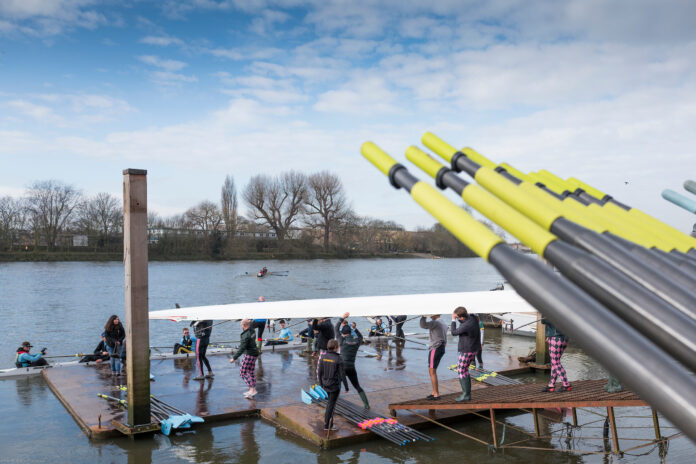
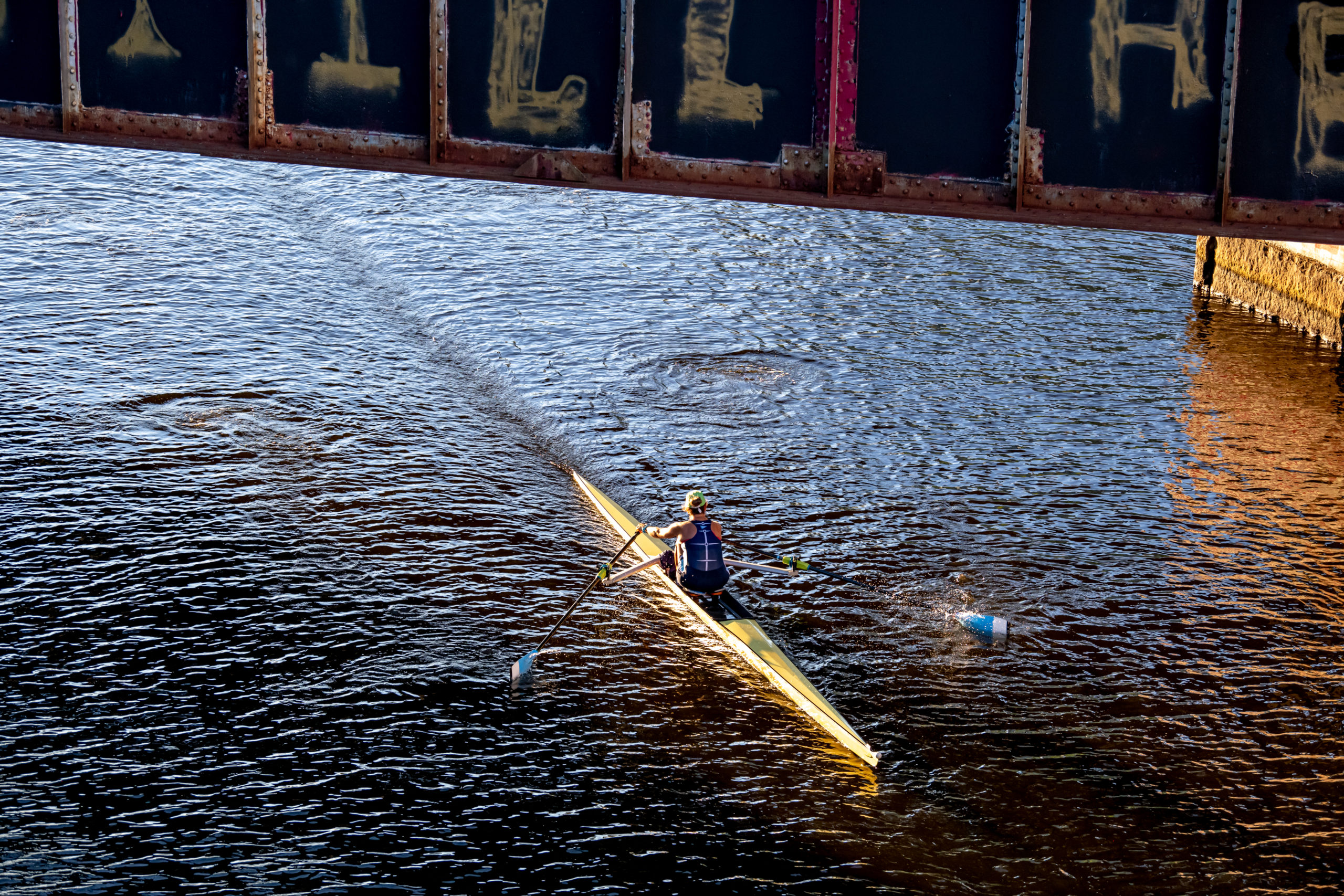
Hammersmith. London. United Kingdom, Hammersmith. London. General View, "Oar Handles", Furnivall SC, 2018 Men's Head of the River Race. Championship Course, River Thames, 2018 Men's Head of the River Race. , Championship Course, Putney to Mortlake. River Thames,
Sunday 11/03/2018
[Mandatory Credit:Peter SPURRIER Intersport Images]
LEICA CAMERA AG LEICA Q (Typ 116) 1/2500 sec. 28 mm f.3.5 200 ISO. 42.5MB
BY RICH DAVIS PHOTO BY PETER SPURRIER
We all look forward to the resumption of races in the months ahead. Before racing, it is wise to diminish the workload according to how competitive you expect the competition to be. In general, this reduction takes place several days before each race. Earlier in the season, incorporate more taxing workouts into the routine, During racing season, lighten your training while emphasizing speed work, the different phases of a race, starts and rate shifts.
Getting proper sleep is critical during racing season for athletes of any age, whether you are sculling or in a sweep boat. It is especially important on the “night before the night before” a race. Athletes typically don’t sleep well before a big race, so the extra rest can make a difference.
As your rate goes up, be sure you know and have time to practice the stroke rate you plan on hitting during the race. Establishing a pre-race routine also helps with preparation. This could include running through possible scenarios that might occur during a race, although ideally you would have practiced these on the water beforehand. Make a regular practice of visualizing perfectly executed races, always with you coming out on top!
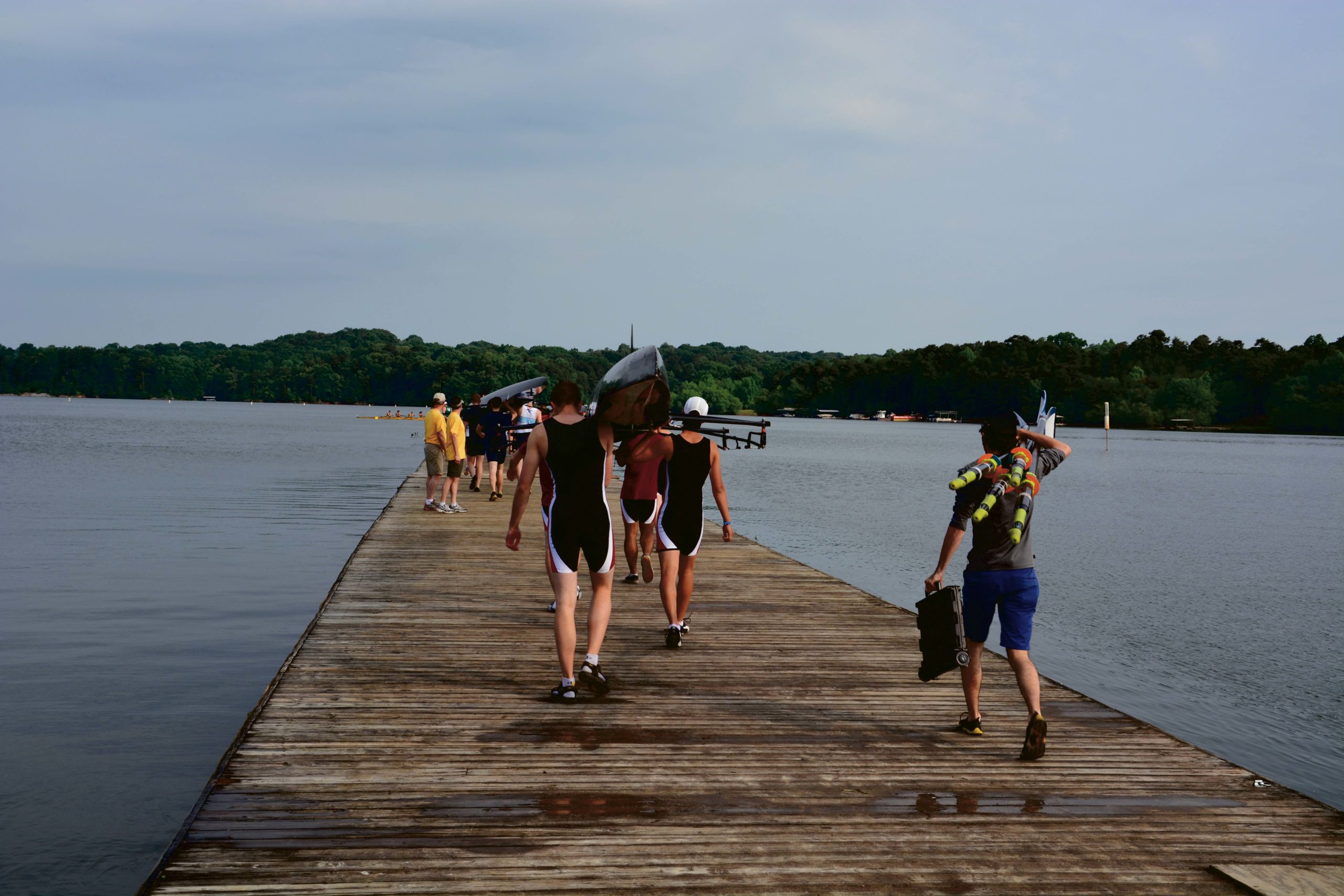
The American Collegiate Rowing Association announced that the 2021 ACRA championship will be held in Oak Ridge, Tenn., May 21 to 23. The move is a departure from Lake Lanier in Gainesville, Ga., a course built for the 1996 Olympic rowing events and where the championship has been held uninterrupted since 2011. The 2021 regatta will be Oak Ridge’s second time hosting the championship, the last being 2009.
Cameron Brown, president of the ACRA and the men’s head rowing coach at Orange Coast College, said that while Lake Lanier has served well over the years, opening up to bid was appealing for several reasons.
“We decided to make the move in part to test the waters, to see what the current rowing-venue landscape is like. One of the biggest motivating factors for us was the cost of the regatta and cost of travel for attendees. We got bids from four or five different venues from around the country, and after reviewing each carefully, decided that Melton Lake was the best option for us.”
Because the ACRA is composed of self-funded club rowing organizations, one of the biggest challenges athletes face is covering the cost of race-related travel.
“The cost of travel,” Brown says, “especially for teams from the West Coast and Northeast is a significant factor. And so even though Oak Ridge is still quite a big trip for those teams, it seems like the cost of attendance should be a little easier for them.”
The course itself is also highly functional, with long, dedicated warmup areas and a seven-lane buoyed race course. In addition, Melton Lake will be closed to all other boat traffic during championship weekend, thereby eliminating wake from leisure boats. For a regatta that has historically fallen on Memorial Day weekend, this is key. “It’s a huge advantage for Melton Lake,” Brown says.
After a canceled 2020 season because of COVID-19, Brown is more enthusiastic than ever about what is to come.
“I want people to really experience the regatta. In 2019, we had 1,700 athletes and over 75 programs. It’s a big championship, and the level of racing at the top is really quite high. You can ask any ACRA head coach, Who will be at the medals stand? and I don’t think any of them can give you an answer with certainty. That’s not the case with every regatta. It makes it fun and exciting, and that’s what I would encourage people to pay attention to. That’s why we race. Our goal is to bring that experience to our athletes and spectators in Oak Ridge.”
By the end of the 2019 rowing season, New Zealand’s Emma Twigg had more than accomplished what she felt she needed to do in the run-up year to the Tokyo Olympics.
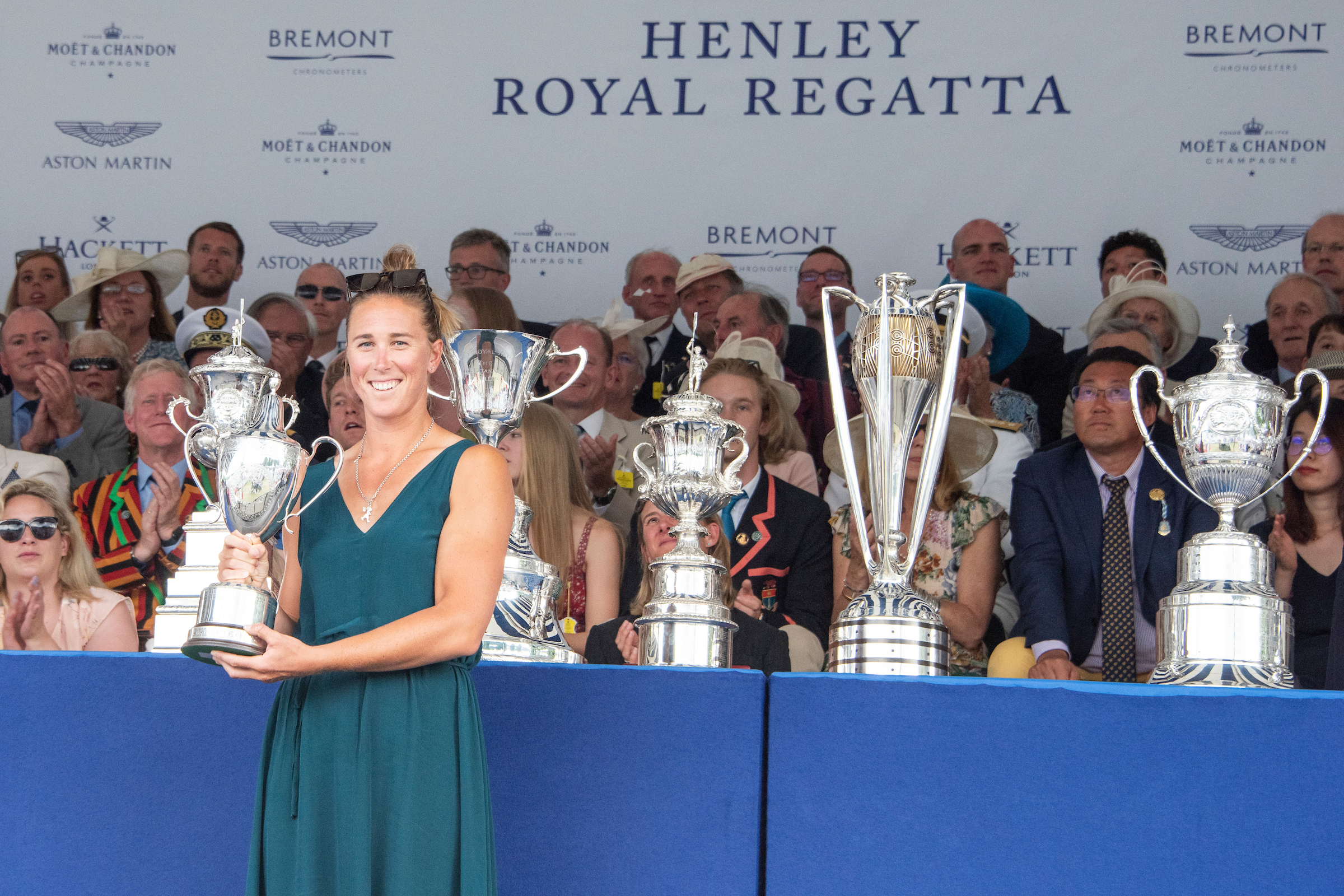
With wins in World Cups II and III, the Henley Royal Regatta, and a second-place finish at the world championships, Twigg traveled to Boston to cap the season with a top-five finish at the Head of the Charles, and a win in the Gold Cup Sprints in Camden, N.J., the next week.
It was a much better place than where she was the season before the 2016 Games in Rio, when a year after going undefeated and winning the 2014 world championship, she took time away from the New Zealand national team to train on her own and begin work on a graduate degree in Europe and was told she could not row for her country.
She hoped to race in the 2015 season, but because she went abroad to study for a master’s degree in the FIFA International Masters in Management, Law and Humanities of Sport program, Rowing New Zealand ruled her ineligible for a place on the team.
Twigg trained on her own while completing the course, but there was no season of international competition during which to prepare, and because New Zealand did not qualify for the women’s single at the 2015 world championships, she had to race in the Final Olympic Qualification Regatta to earn a place in Rio. Twigg never felt she had built the foundation she needed to be her best.
She reached the final, but missed the medals stand, narrowly finishing fourth for the second consecutive Olympics, and left Rio convinced she was done with the sport. But after moving to Switzerland for a job with the International Olympic Committee, Twigg worked on the IOC staff at the 2018 Winter Games and rediscovered her desire to be an elite athlete, to race at the highest level possible, and she decided to return to rowing and aim for Tokyo.
In November 2019, after a full season of successful racing, Twigg was back home in New Zealand and feeling in control with nine months to go to the Tokyo Games.
And then Covid-19 applied the brakes.
“I felt like my 2019 season exceeded my expectations,” Twigg said. “After having had two years of no rowing, I was pleasantly surprised by how my season ended up, and to top it off with a Gold Cup win was pretty cool. So I was feeling confident about this year and our summer leading into the [2020 spring] Europeans. I had a great summer and was really looking forward to some international racing again. But I just didn’t get to do it.”
Today, Twigg is back where she was 12 months ago–nine months from her fourth Games, and training at home for the coming season. She had already been picked to represent New Zealand last January, and it is fully expected she will be named New Zealand’s women’s single sculler again during the 2021 selection.
While training behind New Zealand’s closed borders, she is making the most of it, and for the first time in her career, training with her Kiwi teammates. The experiences of the past year have also been as much about personal growth and introspection as training for another racing season, and the 2021 rescheduled Games now have a different meaning.
During her lockdown training, Twigg also has been enjoying life. She is spending more time with friends and family, touring New Zealand, and leveraging her status as a popular athlete to promote social equality. She is talking openly about her January marriage to her wife, Charlotte, and her desire to be an advocate and role model for the LGBTQ+ community.
“You can’t go through a pandemic, or a situation like this, and not have your perspective changed. It certainly reinforces the reasons I row, which is as much about inspiring people and doing my part as an athlete with a profile as it is about trying to win medals and claim the glory.
“You can’t go through a pandemic, or a situation like this, and not have your perspective change. It certainly reinforces the reasons I row, which is as much about inspiring people and doing my part as an athlete with a profile as it is about trying to win medals and claim the glory.”
-EMMA TWIGG
“This period of time–and the thought that there could still not be a Games next year–reinforces the reasons I get up in the morning to train. I love the sport, I love what sports can do for the world and different communities, and I really want to make the most of the time I have left.
“Obviously, it will be devastating if we don’t go to Tokyo, but at the same time, if you look at the hurt and the harm that is going on around the world, it really makes me appreciate what we have here at home in New Zealand and admire the circle of people on my team and my family and friends.”
Olympic Journey
Twigg’s quest to stand on an Olympic podium began when she was a junior athlete in 2003 in the women’s eight at the junior world championships. She rowed again on the junior squad in 2004, but began to emerge as one of the top women single scullers in the world in 2005. She finished fourth in the single at the under 23 world championships, and then won the event at the World Rowing Junior Championships in Brandenberg, Germany, that same summer.
She raced in her first Olympics at the 2008 Games in Beijing, where she finished third in the B final (ninth overall). She won her first medal, a bronze, at the world championships in 2010. The next year, she took bronze again on Lake Bled, Slovenia, and qualified in the single for New Zealand for the London Games.
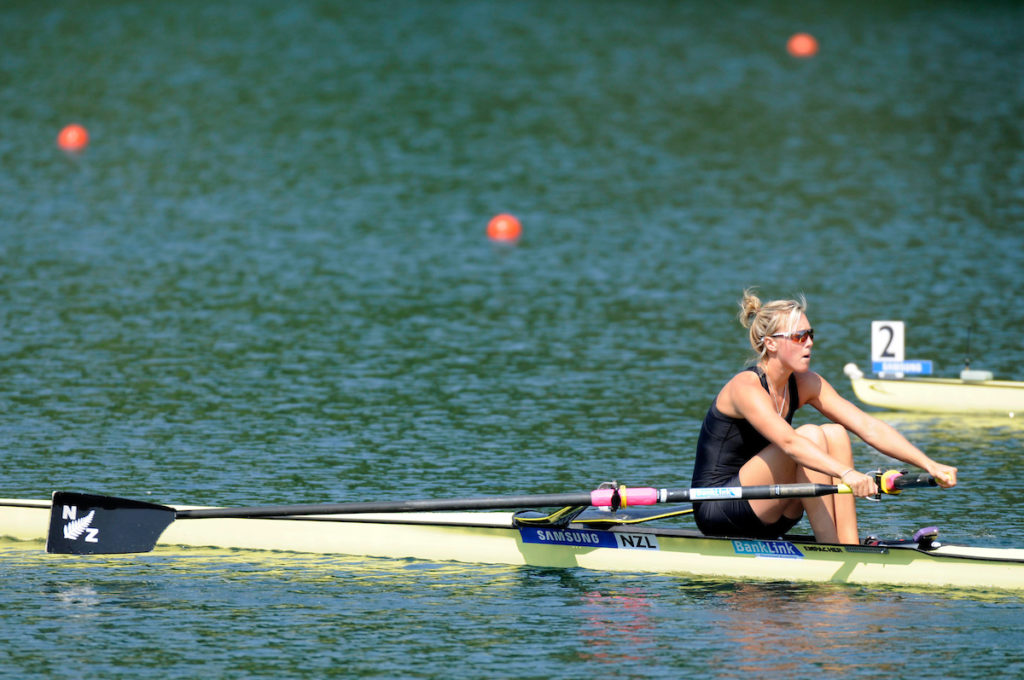
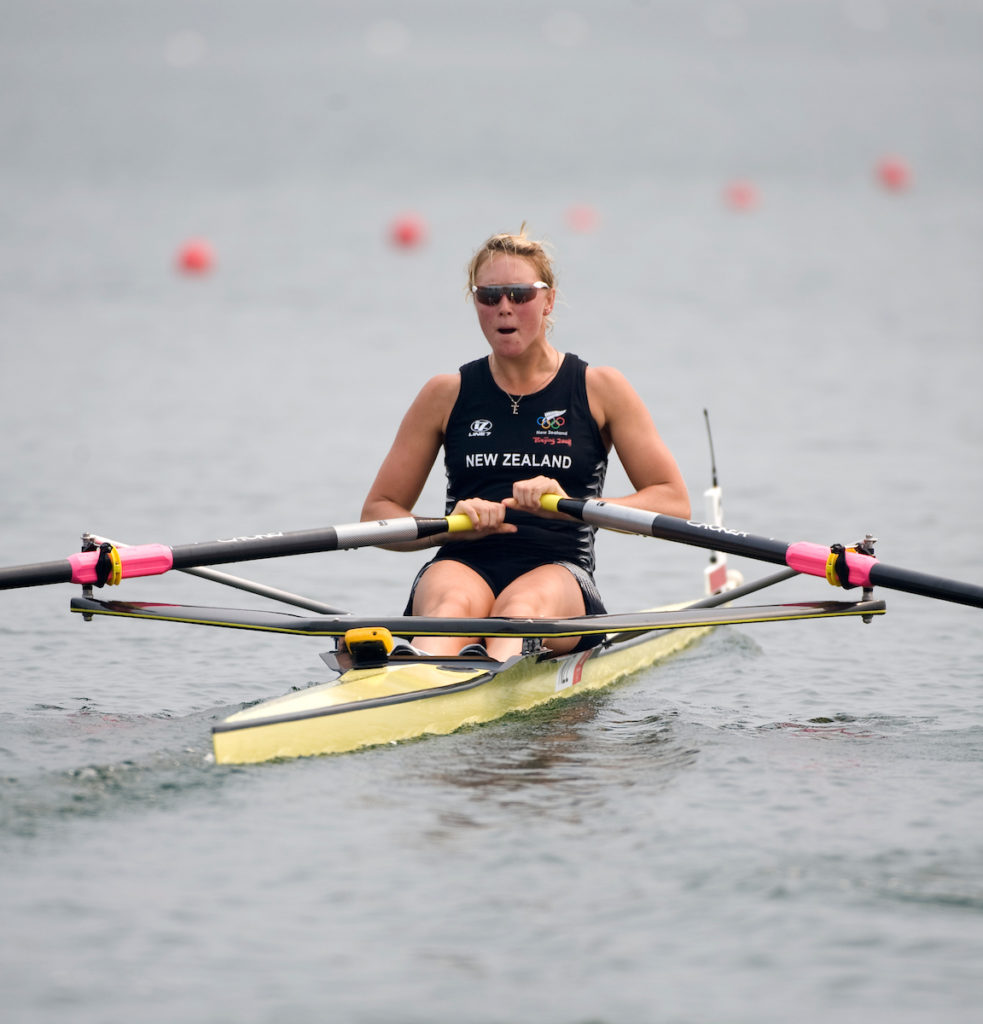
Emma Twigg at the 2008 Olympics.
In London, Twigg finished fourth. At the start of the 2016 cycle, Twigg took second at the 2013 world championships, and then came back for the 2014 season and dominated. She won all three world-cup events and then topped her undefeated season with a gold medal at the 2014 world championships.
After that year, Twigg, seeking a change before the next Olympics, enrolled in the FIFA master’s program, and could not compete for a spot on the New Zealand team the following season. After earning a place in 2016 at the Final Olympic Qualification Regatta, in Lucerne, Switzerland, Twigg went to Rio, and finished fourth again. Dejected, she retired and went to work for the IOC.
Pandemic Interruption
With her passion for the sport and racing “reignited” at the 2018 Winter Games, Twigg made plans to race during the 2019 season and was hoping to build a foundation for competing for a podium spot in Tokyo. Her efforts took her back to the top of the contenders’ pile. But Covid iced Twigg’s training and racing plans for the 2020 Olympic year when FISA canceled the international racing schedule, followed by the Olympic postponement.
As uncontrollable community spread began overwhelming hospital systems around the world, New Zealand, an island nation, had already closed its borders and shut down the country entirely. Its stated policy was not one of containment, but elimination. On March 26, the government ordered residents to stay inside. Only essential workers were allowed to leave home.
With closed borders and a six-week complete lockdown, new cases of Covid-19 declined rapidly, and New Zealand began easing stay-at-home restrictions while keeping its borders closed. By May, the country had effectively ended community spread, and on June 8, the government moved to a level-one alert from the level-4 shutdown, and on-water training resumed.
When it became clear that the Covid-19 outbreak was going to force postponement of the 2020 Games until 2021, Twigg reset her schedule and settled in for another year of training. The Tokyo Games would be her fourth, and Twigg, 33, still planning on competing, took it in stride.
“I had planned on doing another season after Tokyo, with a little bit of a break afterward. I had some pretty cool things planned for the end of this year. In terms of the impact on my life, it wasn’t huge. But as the lockdown progressed, it became a reality that we were over a year away and that we were looking at a Games that, even now, are still are pretty uncertain.
“There was definitely a period during that lockdown time when I was really struggling to motivate myself, but, luckily, our country has done a great job of containing the virus, and we were back on the water within six weeks or so, which was huge because the lockdown certainly taught me that I was not a big fan of the erg. I loved to row and I loved to be on the water, so getting back in the boat was pretty awesome.
“Since then, I’ve just sort of built back into things and restructured this year, and next year I hope I’ll be better off in the long term.”
Twigg, who has never trained in New Zealand through the winter, has been surprised by how pleasant the weather can be.
“I had all these visions of it being freezing cold and windy and pretty miserable. But to date, we’ve had some really nice weather, and I’ve quite enjoyed the flat water we sometimes get.”
In fact, she was enjoying conditions so much that when the rest of the national team took a four-week break, she stayed and continued training with Mahe Drysdale.
“Mahe and I decided we would take our break a little bit later in the year. So that was also nice, just the two of us training out of the national training center. But now we’ve got the full squad back, and that time apart has made me realize that what we’ve got going is pretty awesome in terms of having training partners and having girls pushing me every single day and making it a competitive environment, because when you are trying to do things by yourself, it can be a little bit taxing on the motivation.”
Twigg has also been enjoying everyday life and her marriage. Her frequent posts on Instagram reflect her desire to take a step back from training and, well, just have fun. She has posted images of herself from her backyard, where she’s dancing, from a golf driving range with family, and from the stunning vistas she has visited. Her posts also reflect her resolve to use her celebrity to be a voice for gay athletes and to support social-justice causes.
“It’s been an organic thing, something over time. I’ve realized the impact athletes can have. Even if it’s just one or two people who are touched in a positive way by what I say or do, that would be a win for me.
“It has taken a long time to be comfortable talking about my sexuality openly. I wanted to be known as Emma the amazing rower before I was Emma the gay rower. Now, coming back to the sport, I feel like I can have a real impact on some people’s lives and bring awareness to what I have thought as being really normal, but I know isn’t for many people around the world.”
Looking Ahead
If Twigg began her push for another Olympics with a sense of unaccomplished dreams, it’s not apparent in how she talks now about Tokyo and her fourth attempt at reaching the medal stand.
“It’s just another step in the story really,” she said. “My career has been full of ups and downs. I’ve also had some very high highs as well, and a lot of success, and I can look back now with a lot of pride, which I couldn’t a few years ago.
“I was really looking forward to this one, especially since I had spent some time working in Europe at the International Olympic Committee. I have a huge bunch of friends over there who are working tirelessly to put these Games on, and I know the amount of effort that has gone into it from their side.
“So seeing it from a different perspective, and a different way, has excited me to go over and compete and to link up with all of them and also to continue doing what I love doing.
“The time off after the Rio Games, and the result, made me realize that it’s not about the medals. Don’t get me wrong: It would be an amazing feeling to be at the top of the podium, but at the same time, what I didn’t appreciate was the journey and being able to get up daily, to try to be better, and to do something I love. I know that it’s a very limited time in my life.
“The time off after the Rio Games, and the result, made me realize that it’s not about the medals. Don’t get me wrong: It would be an amazing feeling to be at the top of the podium, but at the same time, what I didn’t appreciate was the journey and being able to get up daily, to try to be better, and to do something I love. I know that it’s a very limited time in my life.”
-EMMA TWIGG
“If Tokyo means that I achieved my dream of an Olympic medal, then awesome. But also, at the same time, just being there and experiencing it is a different perspective for me.”
And if Tokyo doesn’t happen?
“It’s a bridge I’ll cross when I come to it. If I wake up in the morning and still believe I can be better and stronger and want to keep doing it, then I don’t see why I couldn’t stay through the next cycle.
“I look at Sanita Puspure [2018 and 2019 world champion], who is 39, and what she has done in her late 30s. Historically, there have been many examples of women in their mid- to late 30s being successful at that level.
“I really don’t see age as a barrier. It’s got to be something that I still see value in, and I still love and can support my family with. There’s a whole number of things, but one thing this year has taught me is you can’t predict anything.”
Don’t give up trying to help this rower. Athletes who are seemingly unable to change typically have trouble breaking bad habits or unconscious patterns. Sometimes they don’t understand what their coach is telling them. Or it could be as simple as their not being able to hear the coach in practice.
That being said, there are things you can do to hasten change. Switching problematic athletes to their opposite side will force them to learn the stroke all over again. You could also assign such rowers to another coach in a lower boat, one who might be able to explain things in a way the athlete better understands. Sending athletes to a lower boat might also motivate them to make the changes they need.
From my perspective, there is no better tool than filming in getting athletes to understand a technical change. First, you will need to make sure that they are seeing what you see on the screen. From there, you can use slow motion to compare what they are doing with the other rowers in the boat. Then have your athletes sit on the erg and manually show the exact positions you’d like to see them in during the various points of the stroke.
Simply taking the time shows that you want them to row well. If they are aware of that, they are more likely to want to come through for you.
Plovdiv BULGARIA. 2017 FISA. Rowing World U23 Championships.
Hudson Boats, "Foot Stretcher and Shoes",
Friday Boat Area. Boat Racks Pontoons.
08:53:05 Friday 21.07.17
[Mandatory Credit. Peter SPURRIER/Intersport Images].
STAFF REPORTS PHOTO BY PETER SPURRIER
Hudson Boat Works and Craftsbury Outdoor Center’s Green Racing Project have formed a performance partnership.
The partnership will give the Green Racing Project access to Hudson products and support.
“For us, HUDSON reflects many of our values. We’re looking to build unique, creative athletes that still rise to the international standard in their own way” Coach Steve Whelpley states. “HUDSON is at a point now where they are innovating for our sport at the same time as they produce a high-quality product on a day-to-day basis. I look at their USP rigger and finally see a rigger that rivals the integrated use of carbon fiber in many other sports like cycling and sailing.”
“No matter what anyone says, at the end of the day it’s all about the athlete,” Atlantic Sales Manager Matt Muffelman says. “We are beyond excited to support the Green Racing Project and the overall development of current and future athletes that look to further their competitive careers at Craftsbury.”
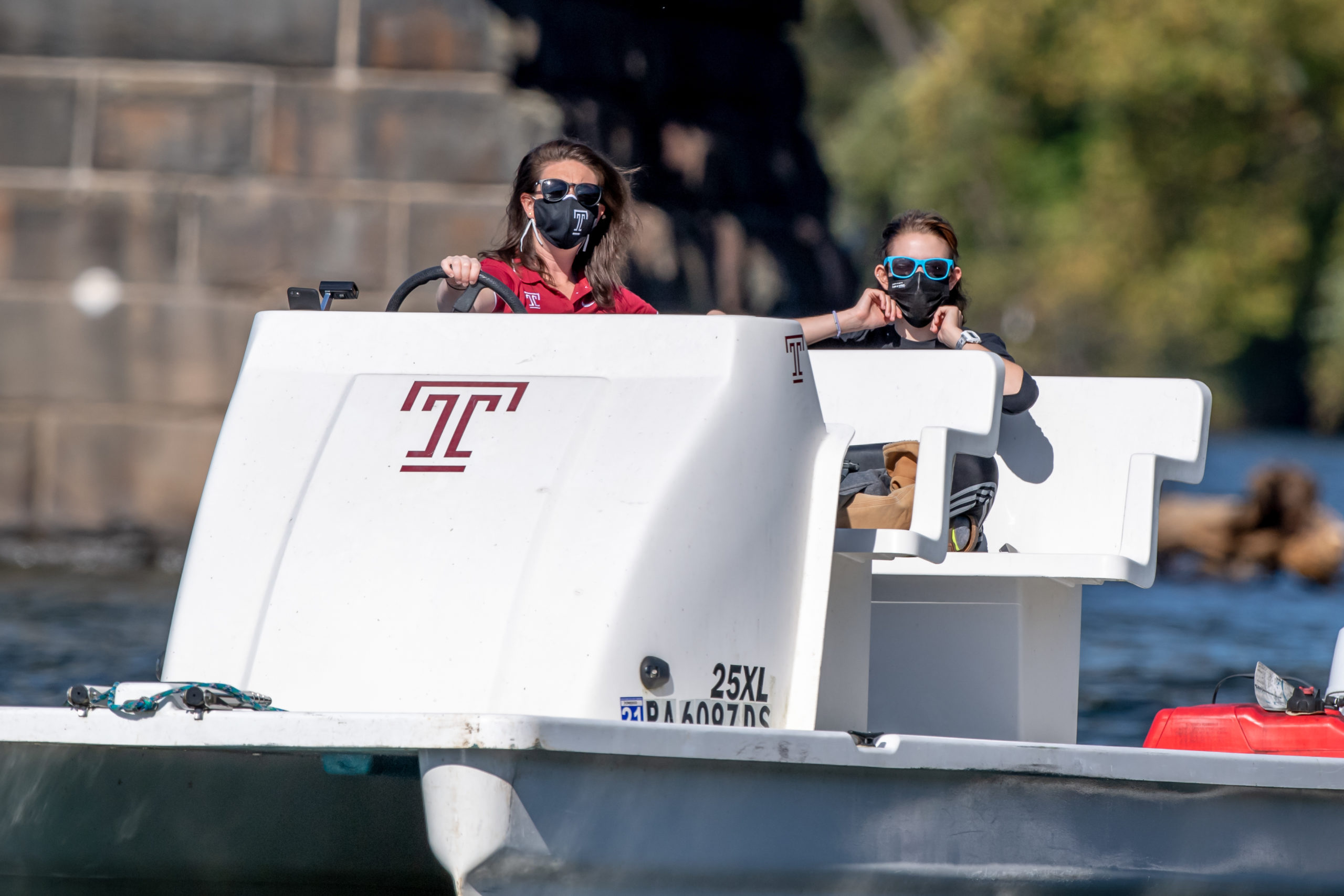
Temple University recently added two new coaches to the Owls coaching staff. Anastasia (Stacey) Price comes to Temple from Jacksonville, where she earned four consecutive conference championships and made multiple appearances at the NCAA rowing championships as an athlete and coach.
Breanne (Bre) Fitzsimmons has been a coach for nearly a decade, including eight years at Row New York.
“I am thrilled to welcome Anastasia Price and Breanne Fitzsimmons to Temple women’s rowing,” said Owls head coach Rebecca Grzybowski. “They are both proven leaders with contagious energy and enthusiasm who will help us continue to drive our program forward.”
New Zealand oarsman Robbie Manson has retired from rowing.
Manson, known as one of the fastest single scullers in rowing history, made the announcement via Instagram and Rowing New Zealand.
“After rowing for the last 15 years, I’ve decided it’s time for me to take an indefinite break and experience life on the outside,” Manson said. “I’m very proud of what I have achieved with the sport that I love, it was far more than I ever dreamt possible. The friends I’ve made, the places I’ve been and the experiences I’ve had are what has made this journey so special and worthwhile.”