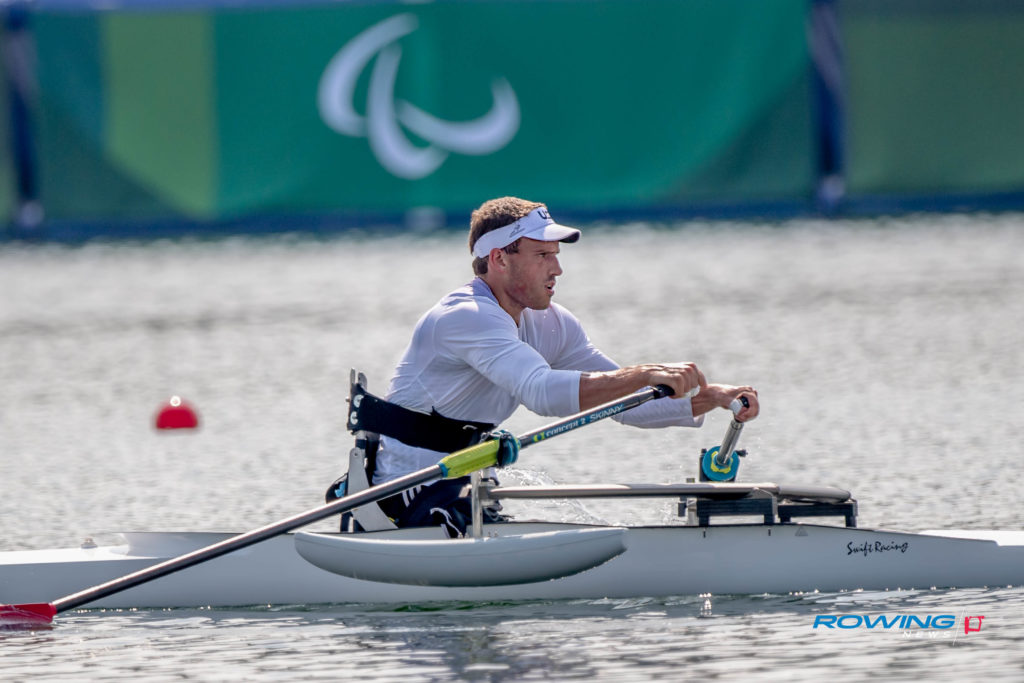
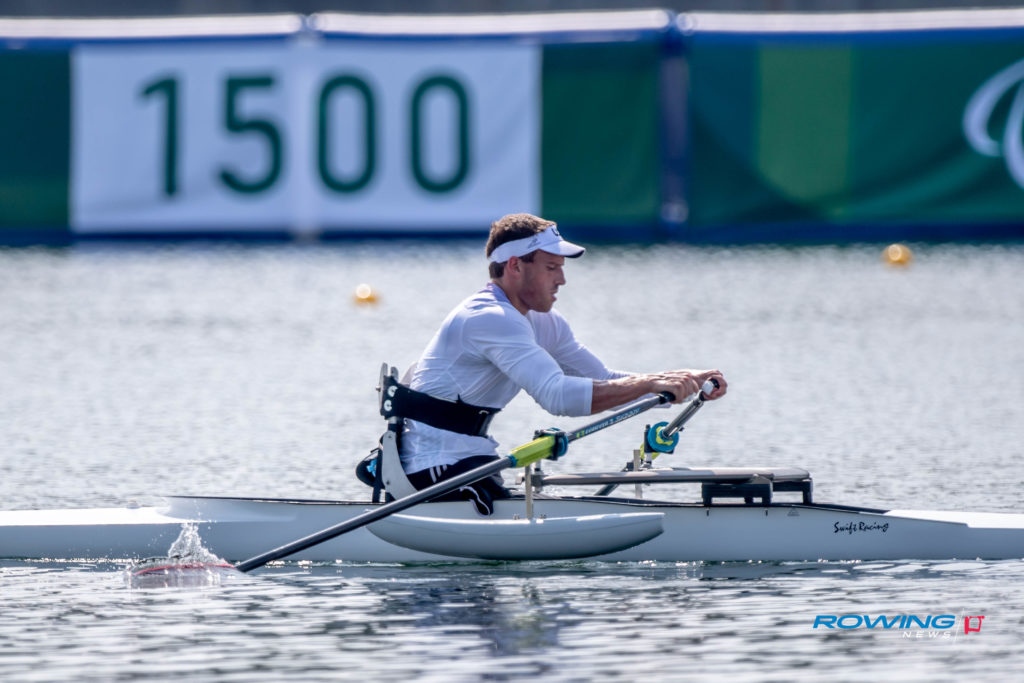
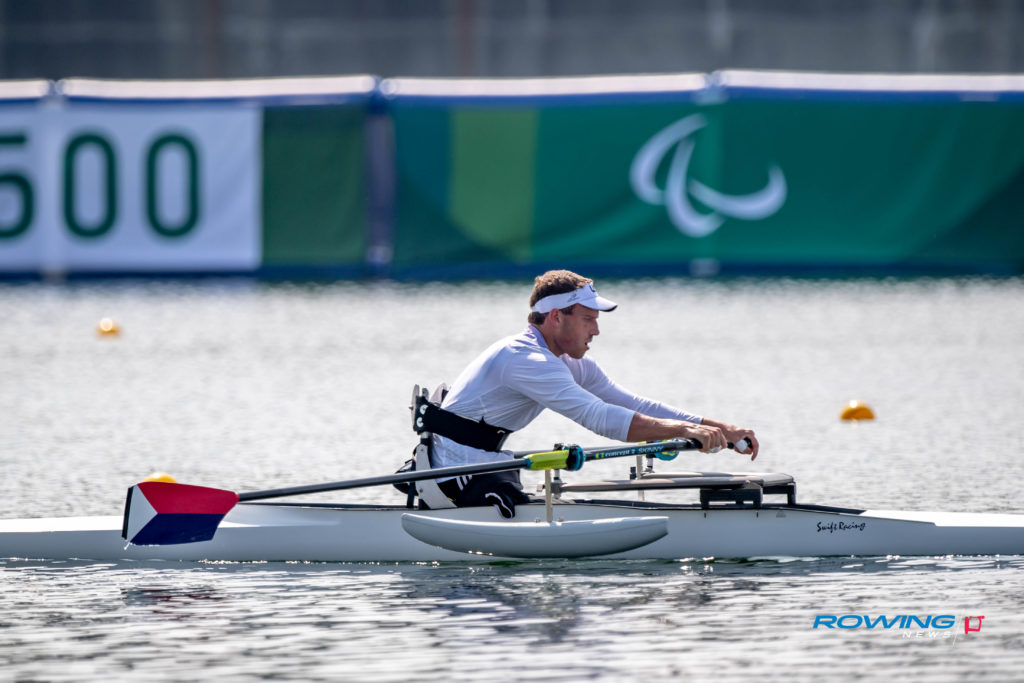
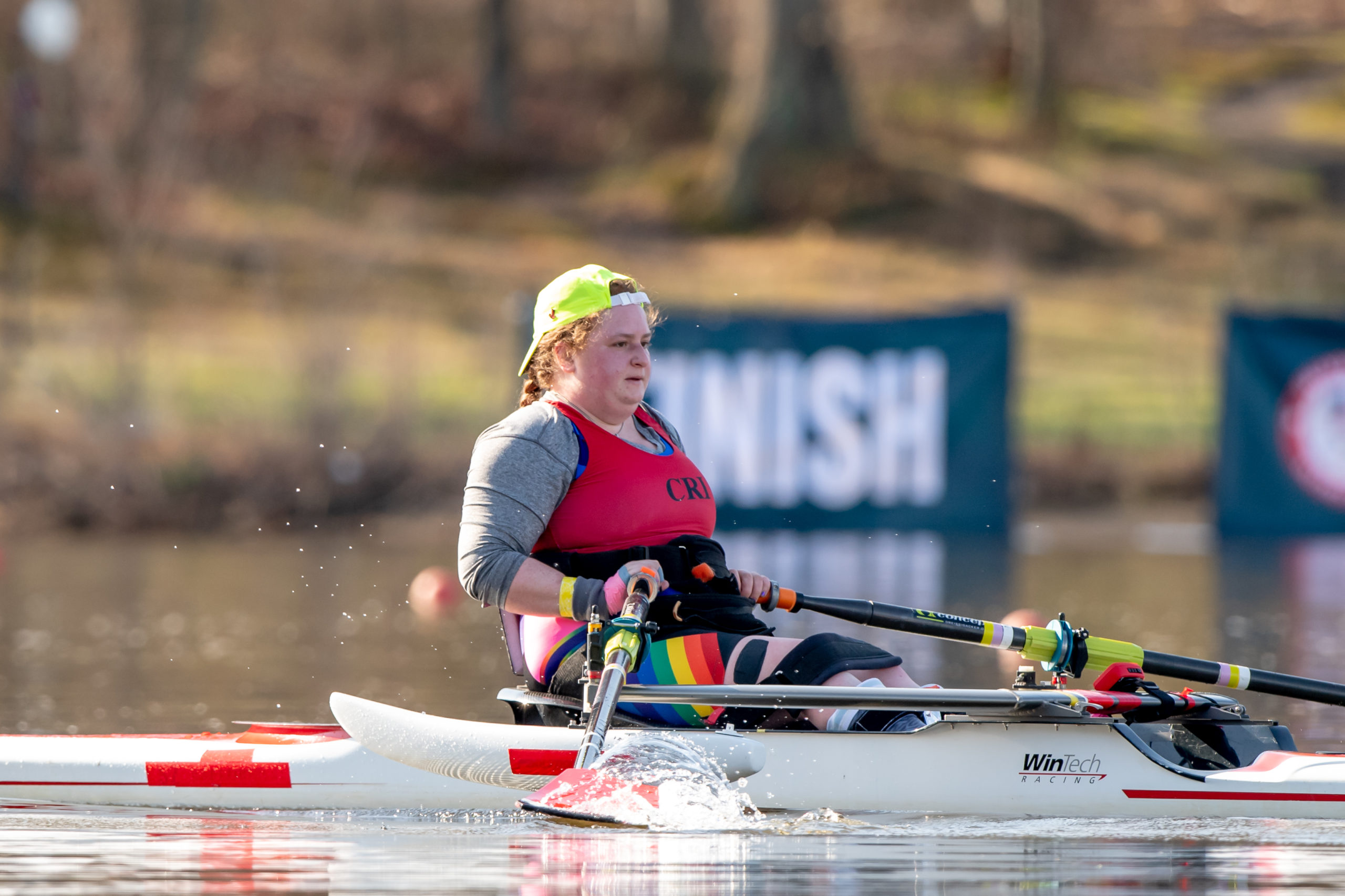
As we plan to return to rowing on the water, we must prepare our boats properly.
After safety checks, the next thing to check is rigging. Rigging needs to be set so that athletes have the most fun–whether improving technique, achieving the highest speed, or simply enjoying rowing on the water. Rigging is the start of all this, and we need to know the numbers we’re looking for when measuring our equipment.
Let’s make this easy by using as a starting point a proven measurement for all athletes that can be fine-tuned for the individual rower–the “zero number.”
Oarlock height is a good example. In sculling, we need to decide two things: the vertical distance between the oarlock and the seat; and the difference between the starboard and port oarlock.
Use 17 centimeters as the zero number for lightweight rowers, and 18 cm. for open-weight rowers (measured on the starboard oarlock), and one centimeter for the difference between oarlocks.
Now watch athletes rowing on the water to see whether you need to fine-tune for height, weight, limb length, skill level, and boat design.
The zero numbers for scull measurements are trickier because there are more factors to be considered, particularly blade type and performance level. Here are recommended overall lengths in centimeters for sculls with the most commonly used blades:
Blade Type/ Skill Level
COMP, ER
APEX, Arrow, Big Blade, Slick, Smoothie Plain Edge
FatBlade
International
286
288
280
National
285
287
278
Club
281
285
276
Masters
279
283
274
The zero number for span is 160 centimeters. The inboard length should be set according to the span and is calculated by this formula: Inboard = Span/2 +8 cm. ±1 cm.
Fine-tuning for individual athletes follows these principles:
* If the load is too high or too low, increase or decrease the inboard length within the limits of the above-mentioned formula, or decrease or increase the overall length of the oar.
* If the stroke is too short or too long, decrease or increase the span.
The process of fine-tuning should be done always by changing only one variable at a time so that changes as experienced can be attributed clearly to a particular factor. Also, one should be certain about what criteria will be used to evaluate a change.
For example, changing the overall length of the scull can have different effects. The rower may be able to sustain a higher stroke rate over a longer time, and therefore increase race speed, but it will be more difficult to balance the boat, and more technical skill will be needed to maintain a high speed at low stroke rates. While a competitive rower may like the change to a shorter scull, a beginner or recreational rower may not.
Fine-tuning is a long and ongoing process that can be compared to riding a bike, which requires changing gears constantly in hilly and windy conditions. We need to monitor the effect of rigging changes and fine-tune based on solid zero numbers in accord with conditions on the water.
TOKYO, JAPAN – Coming into the final day of racing at the Tokyo 2020 Paralympic Games, a few storylines highlighted before and during the preliminary racing were set up to unfold in the Sunday finals.
Three of the biggest were the potential showdowns between some of the most accomplished crews in the regatta.
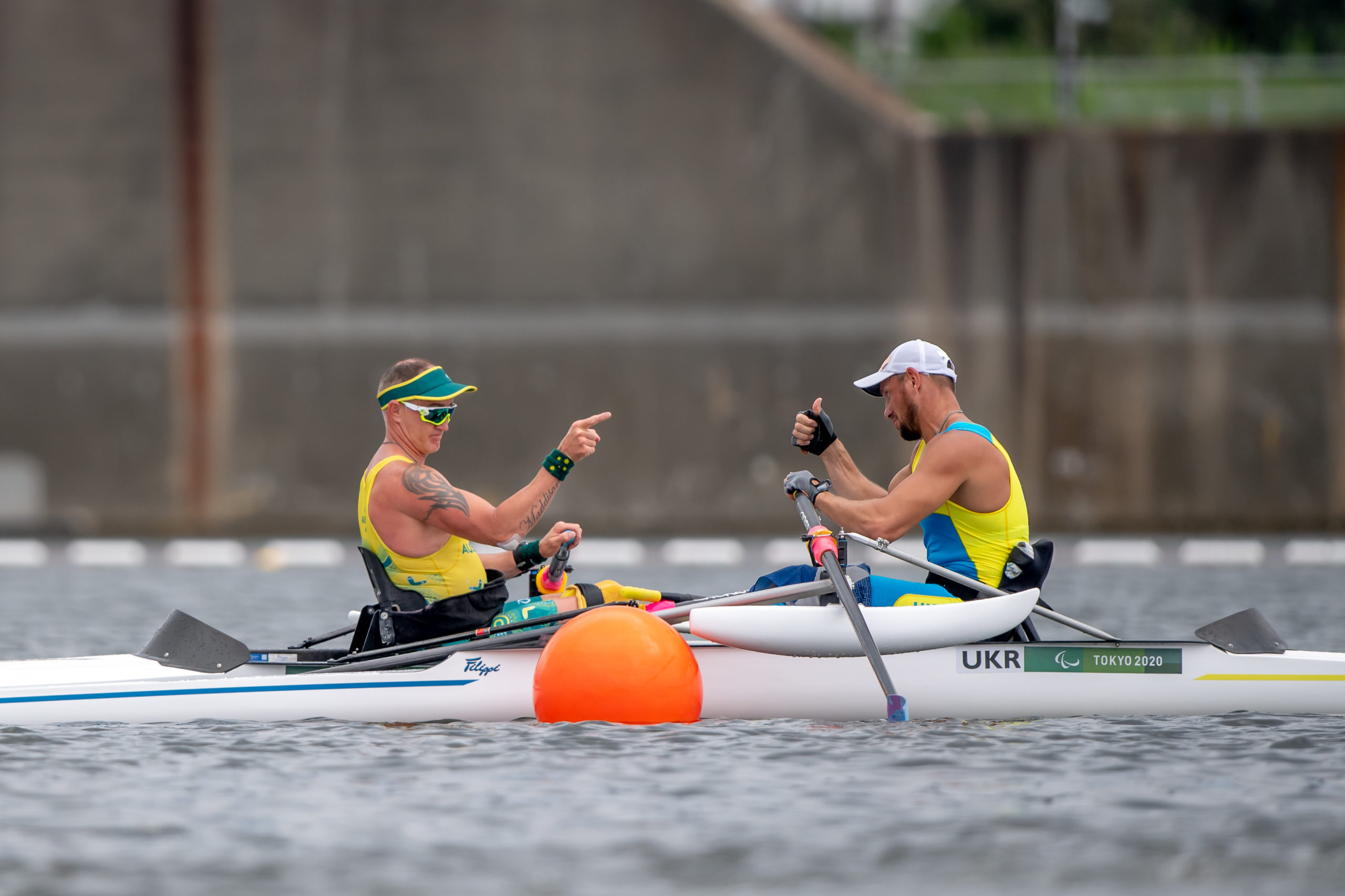
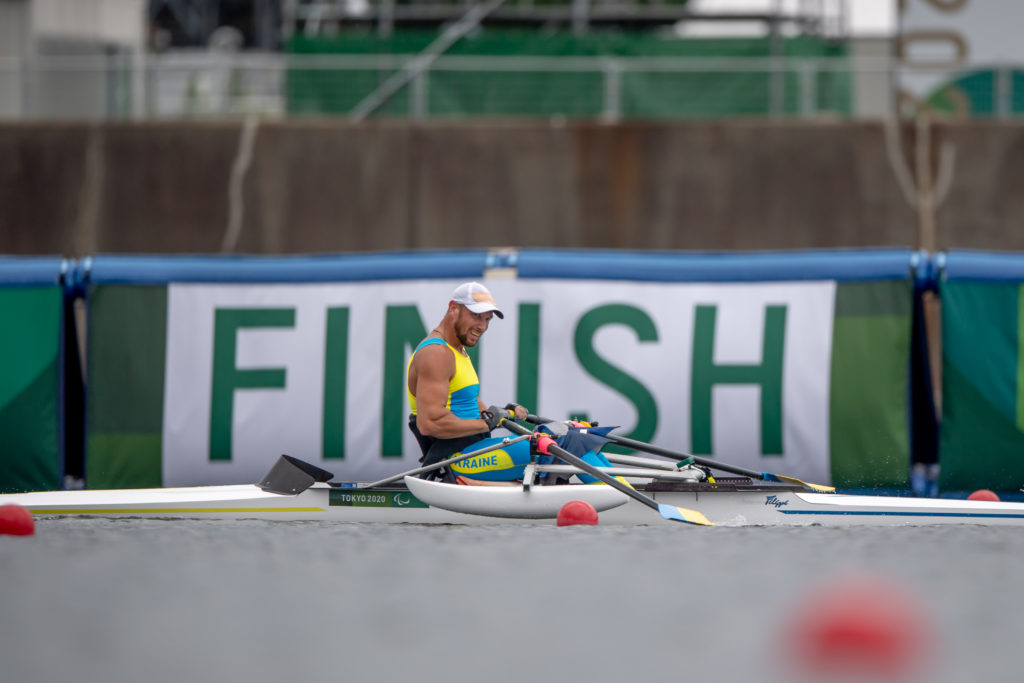
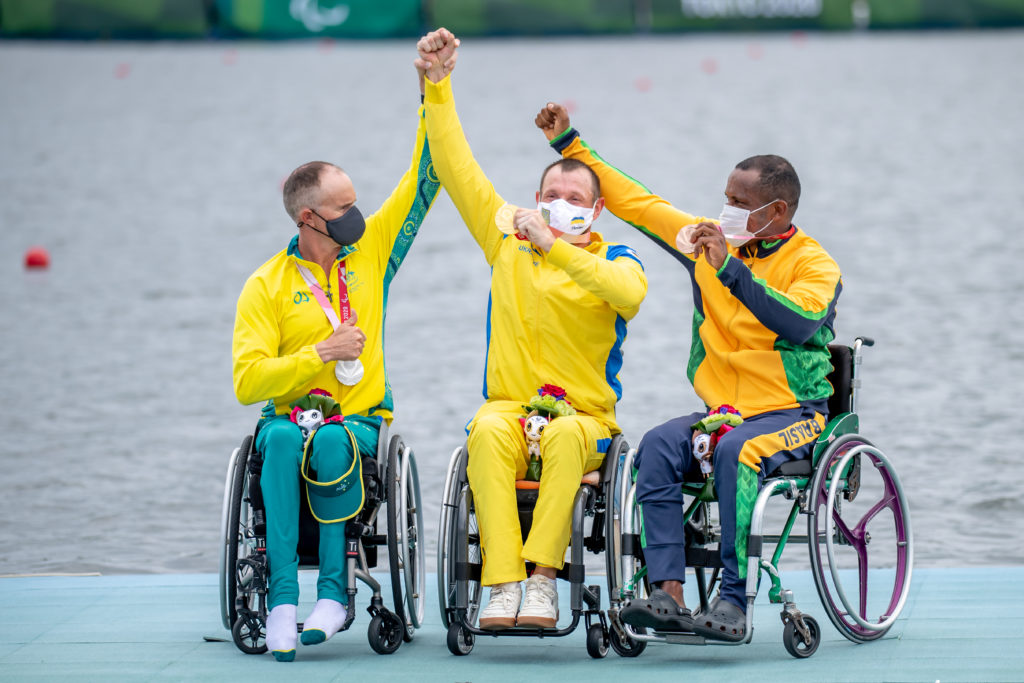
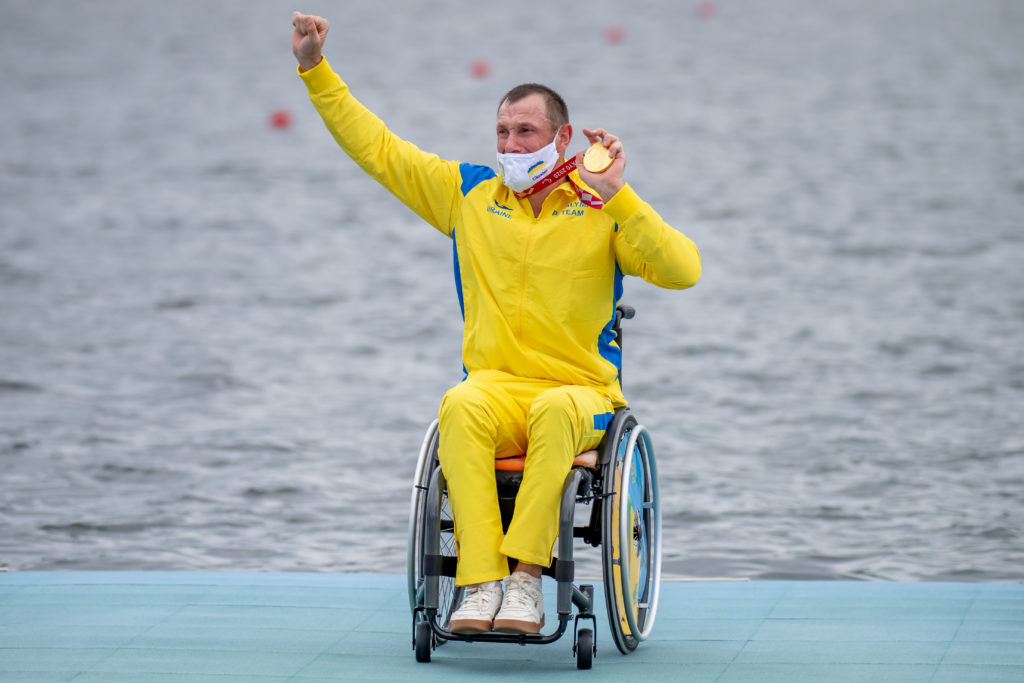
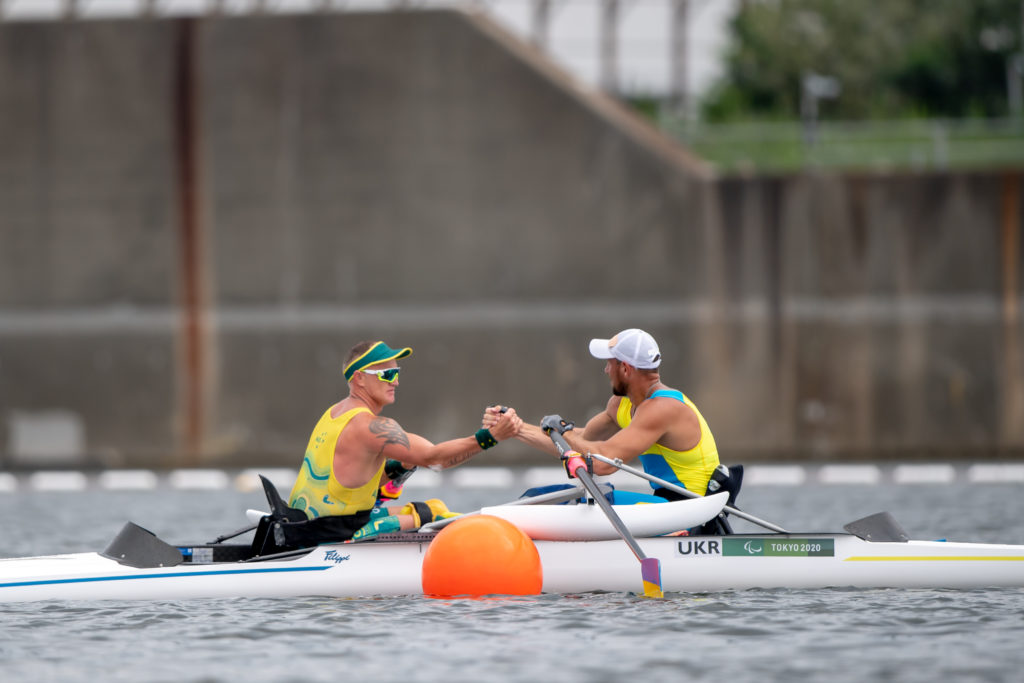
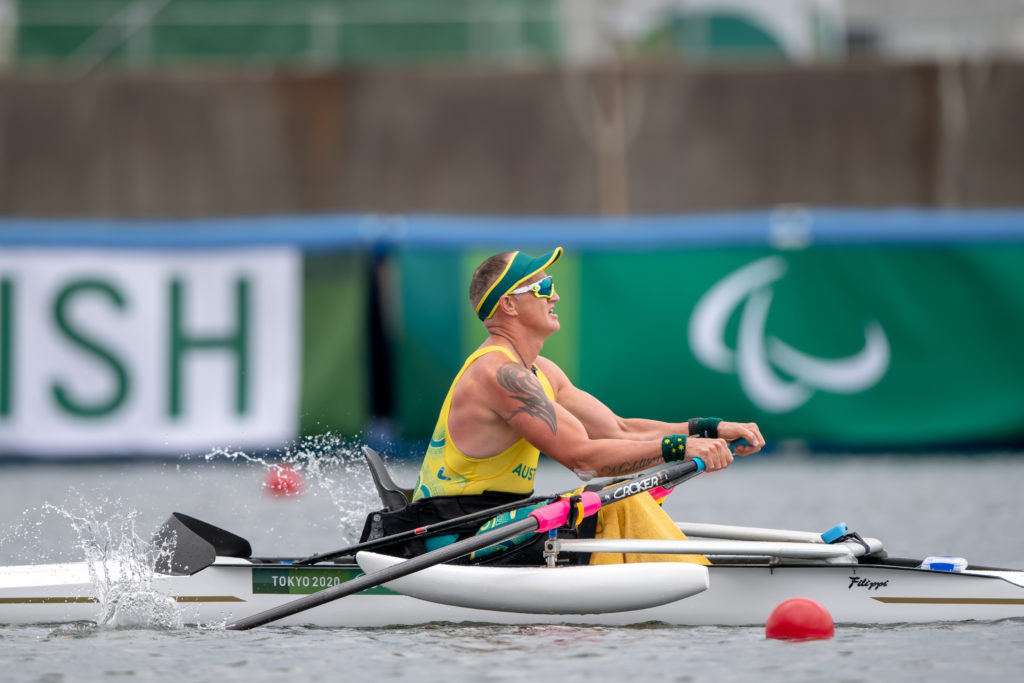
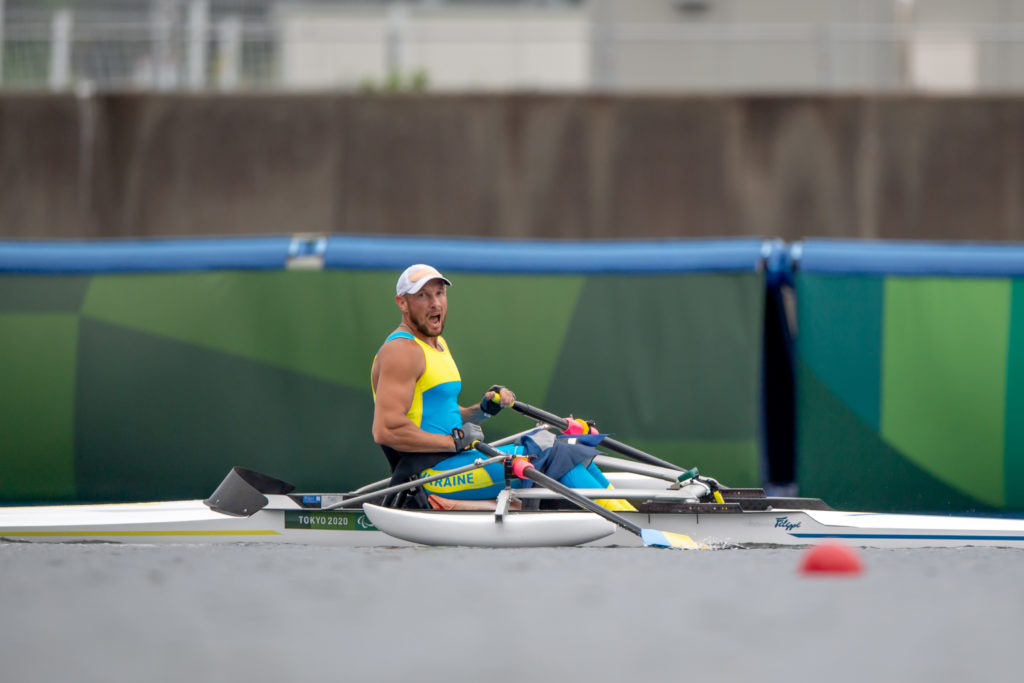
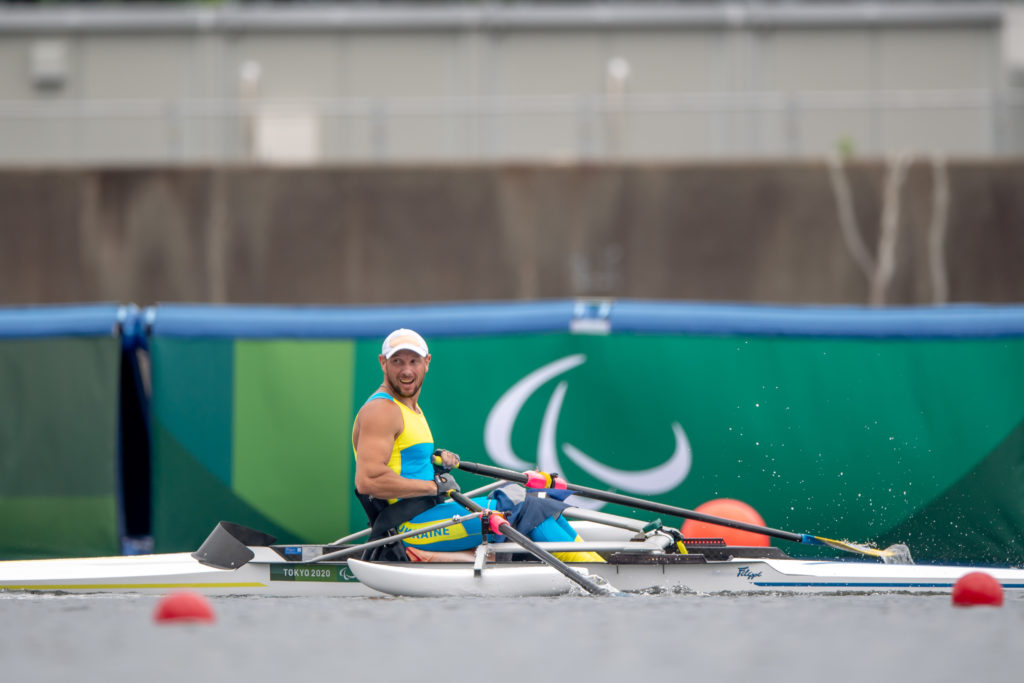
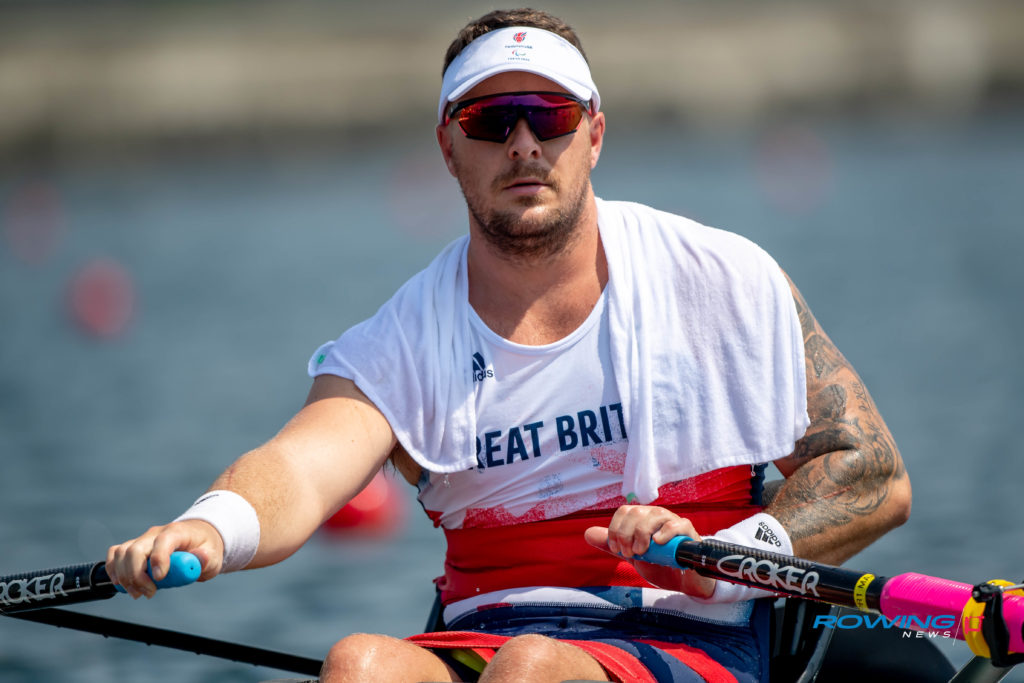
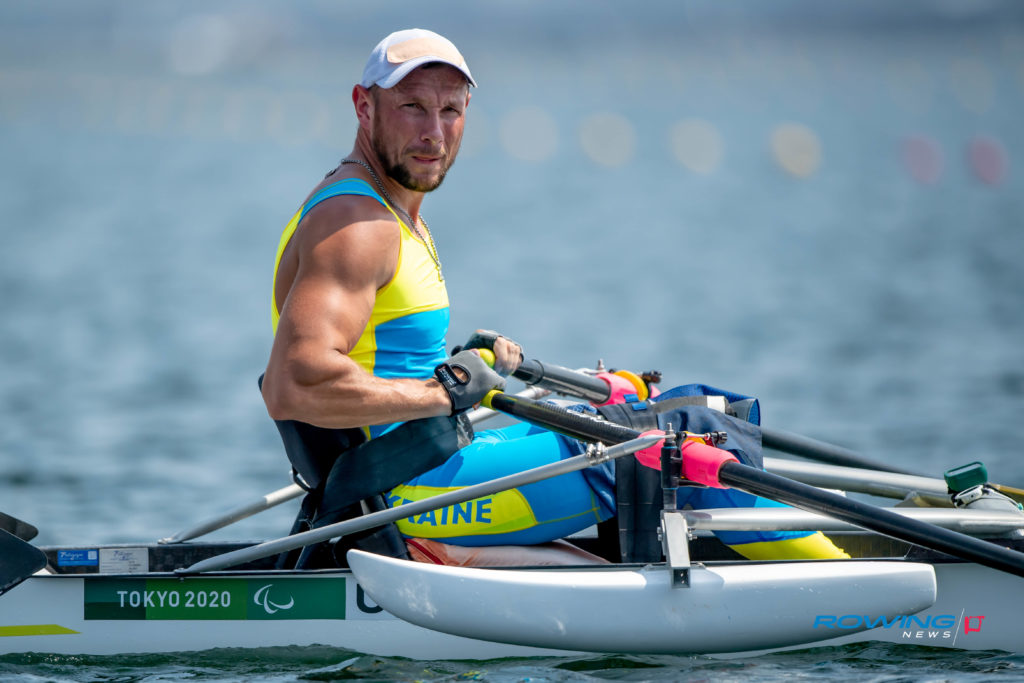
Another gold medal race between men’s single scullers Roman Polianskyi of Ukraine and Erik Horrie of Australia, the 10-year streak the British mixed coxed four brought with them to the Sea Forest Waterway and the challenge that had been mounted against them by the U.S. four for the last six years, and, finally, the British mixed double’s attempt to repeat as Paralympic champions were most prominent among them.
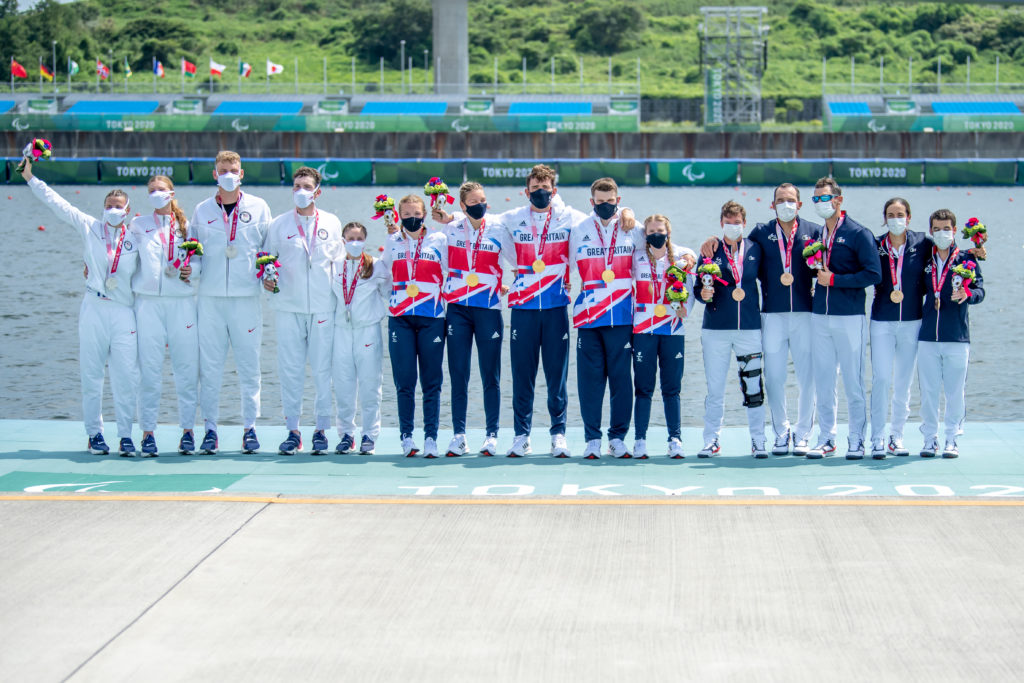
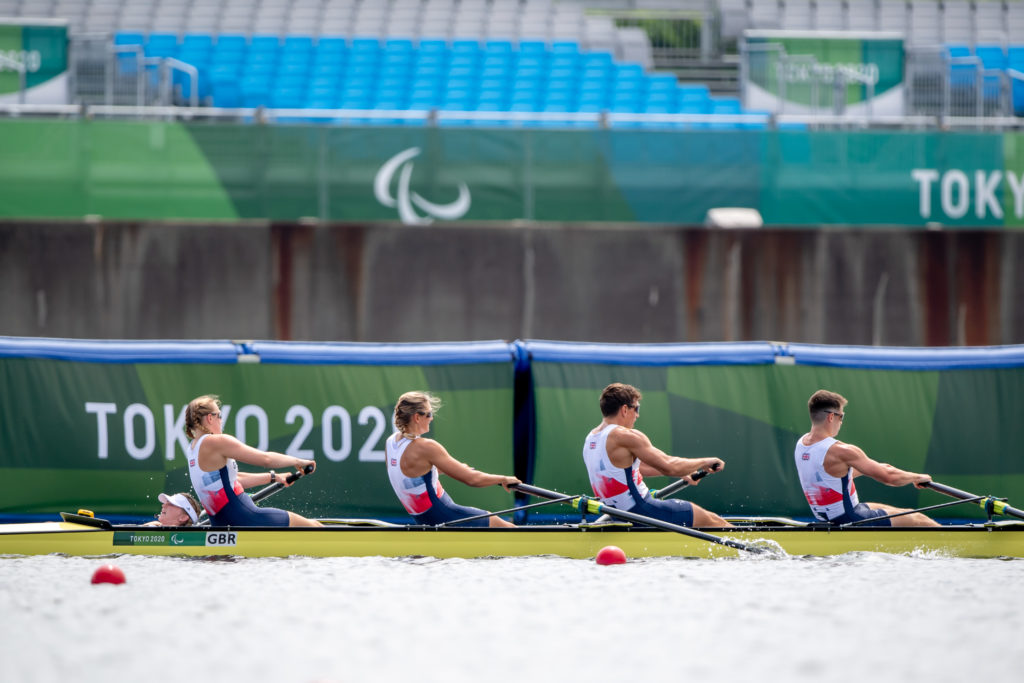
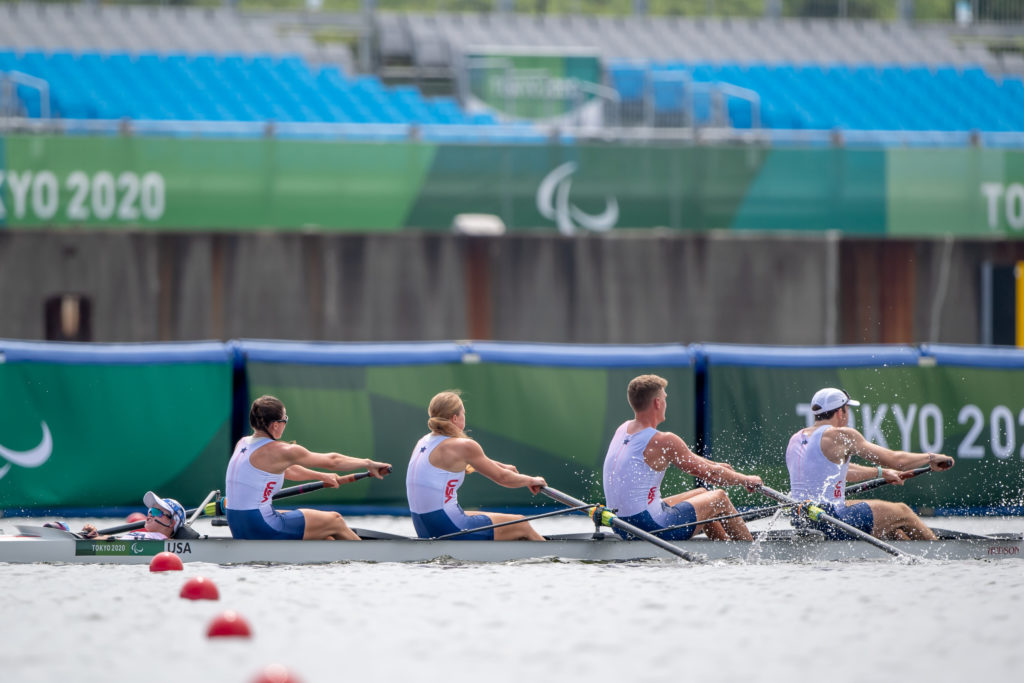
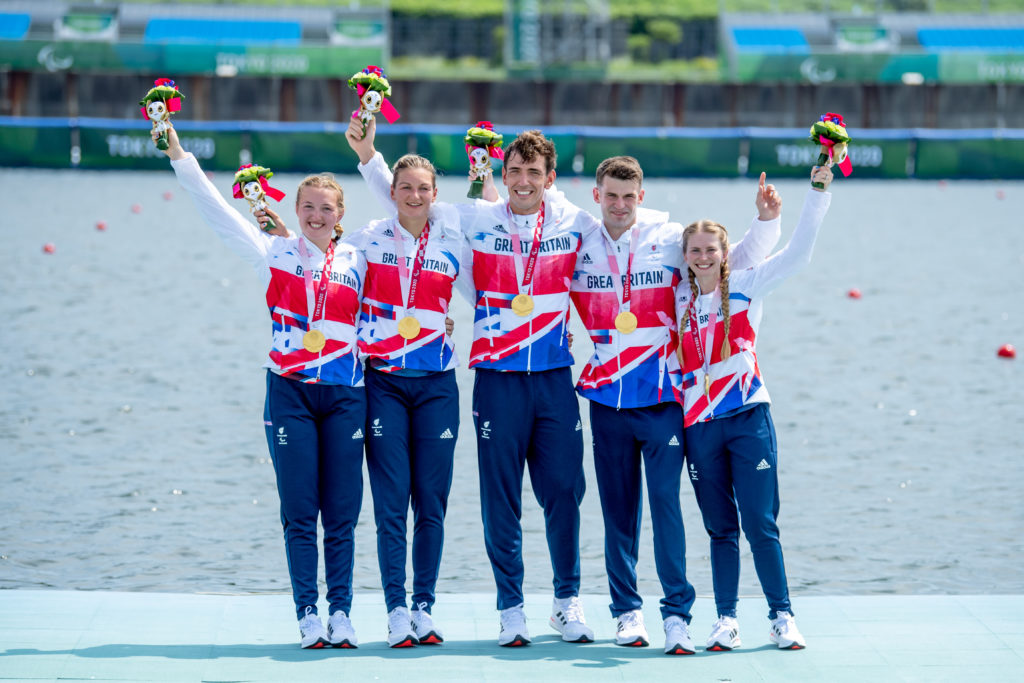
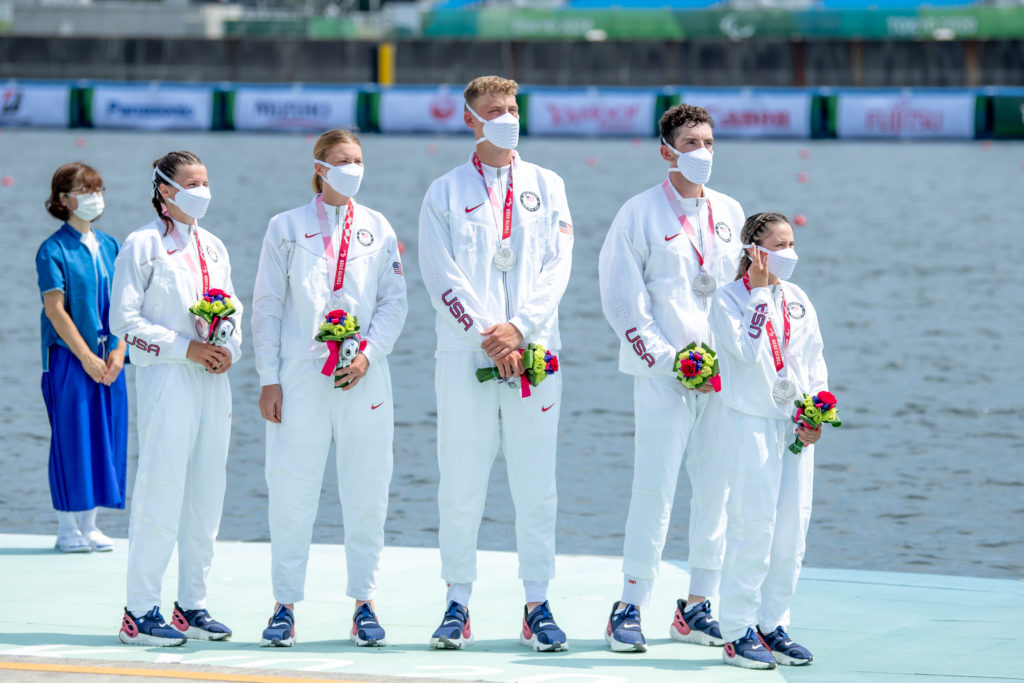
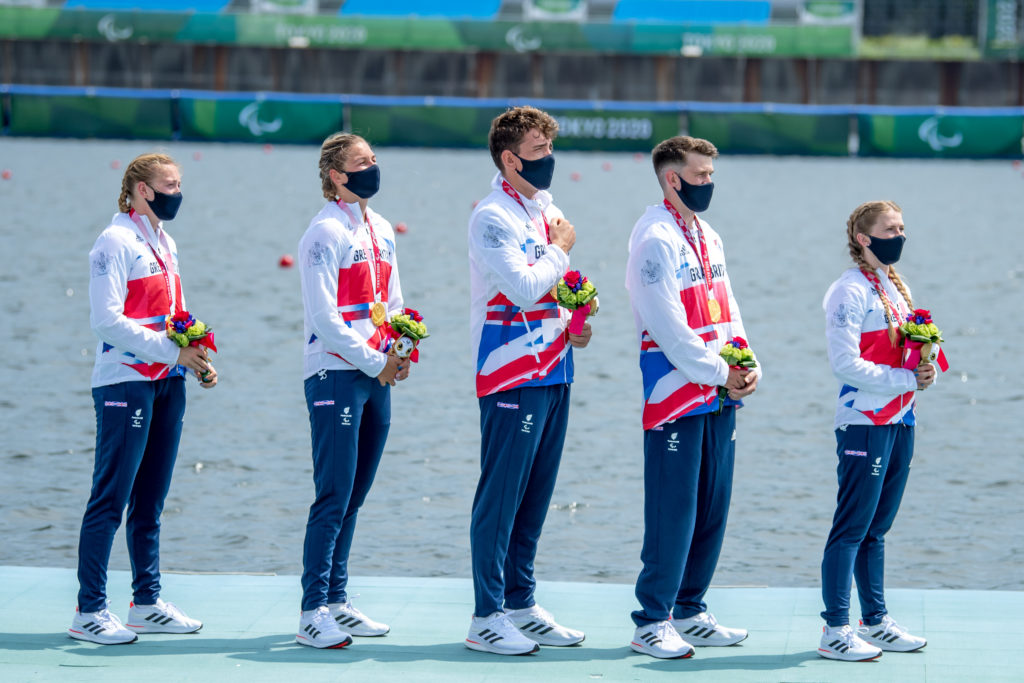
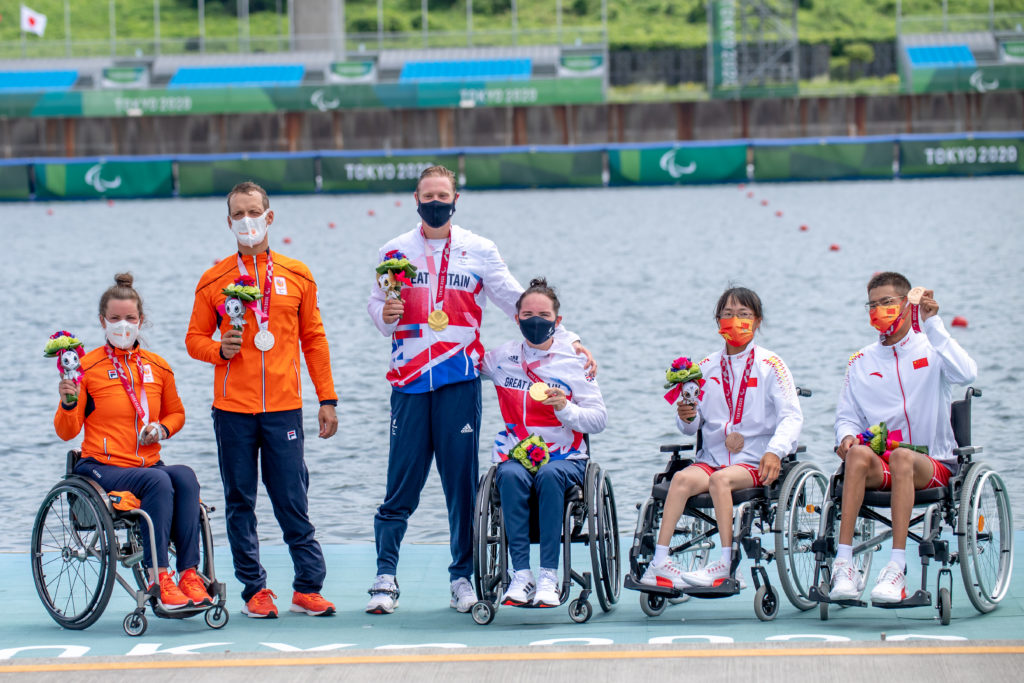
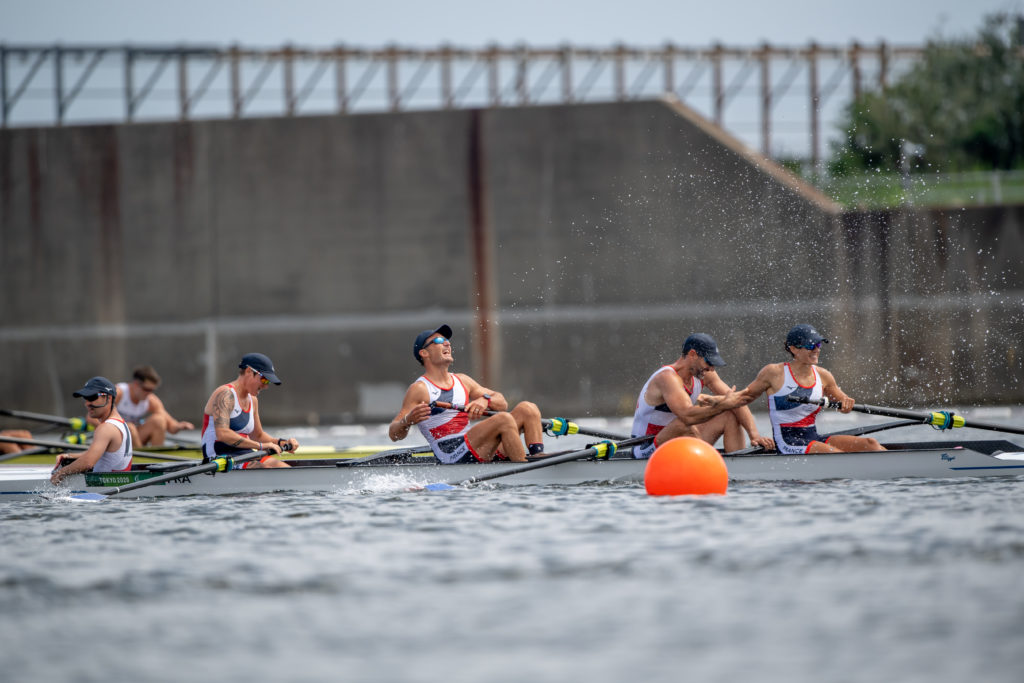
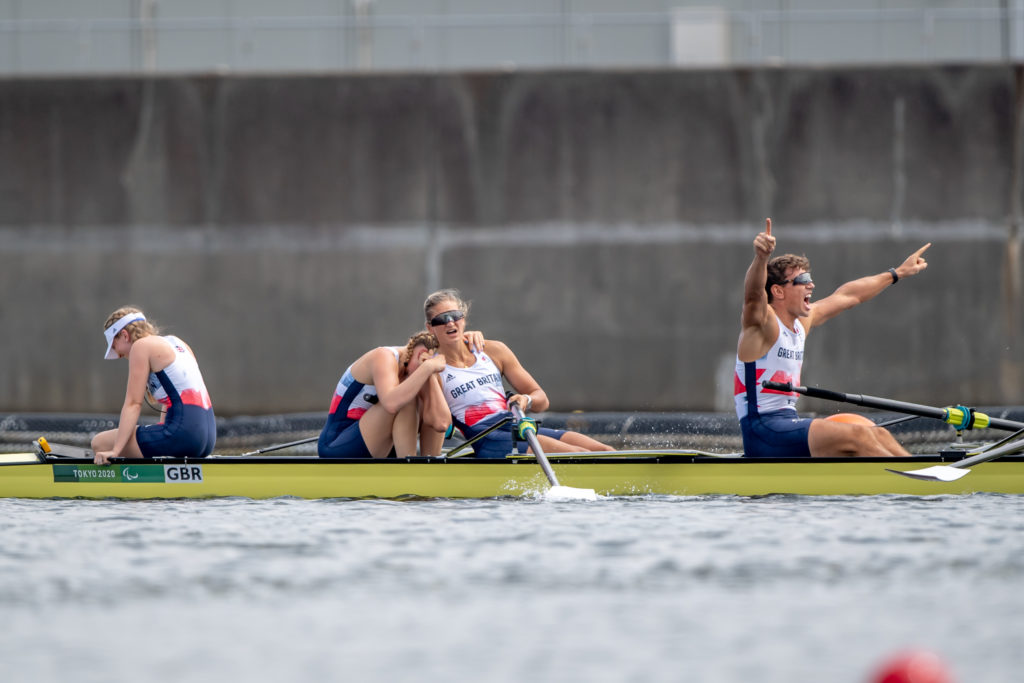
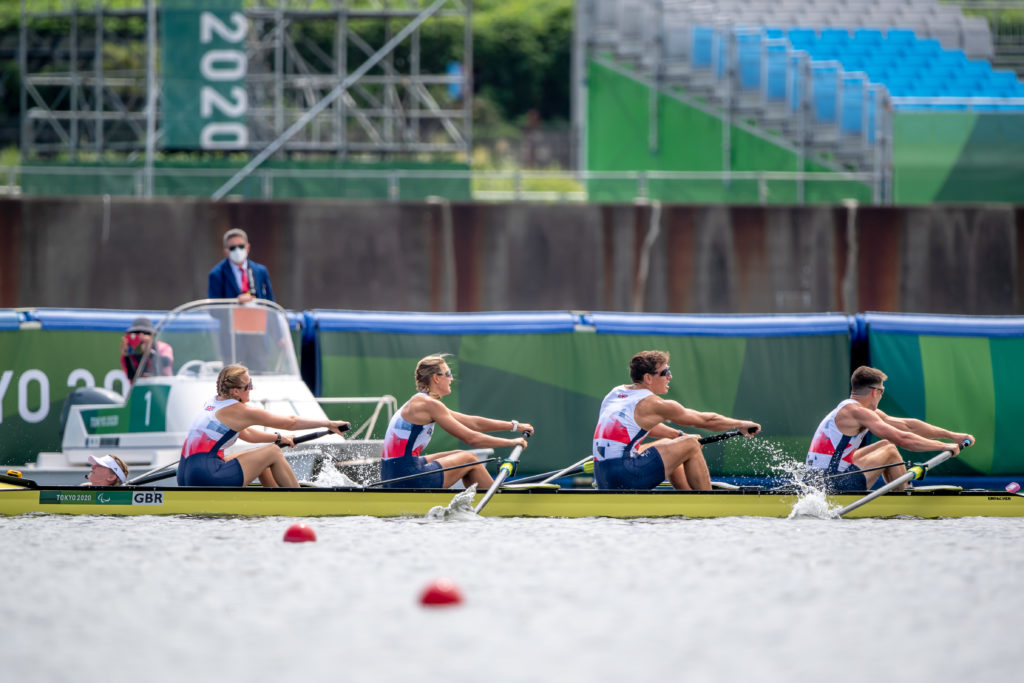
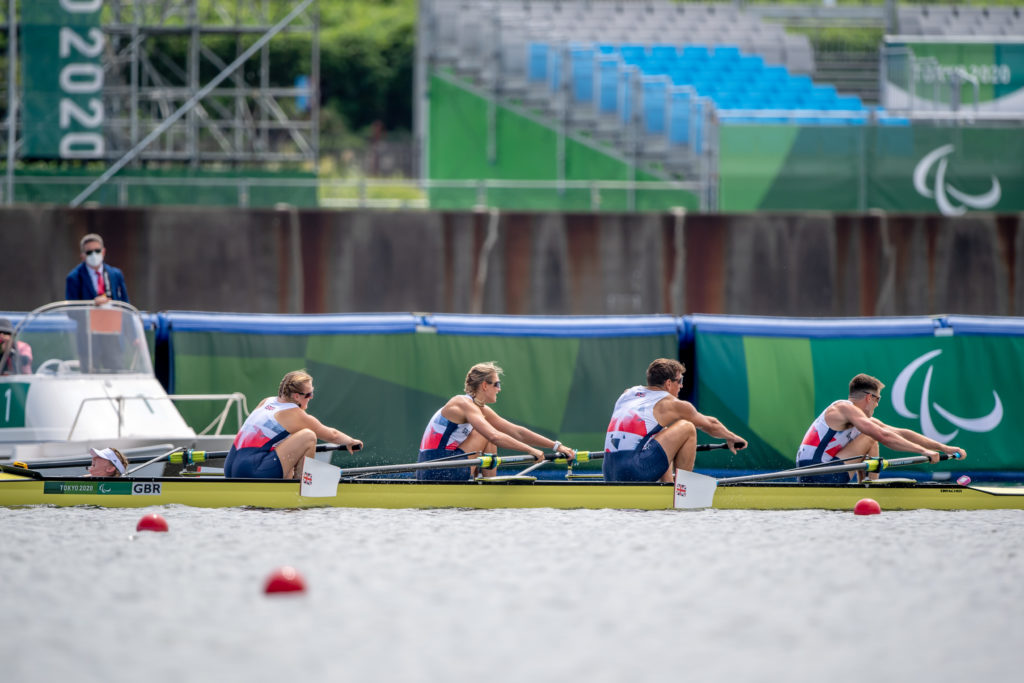
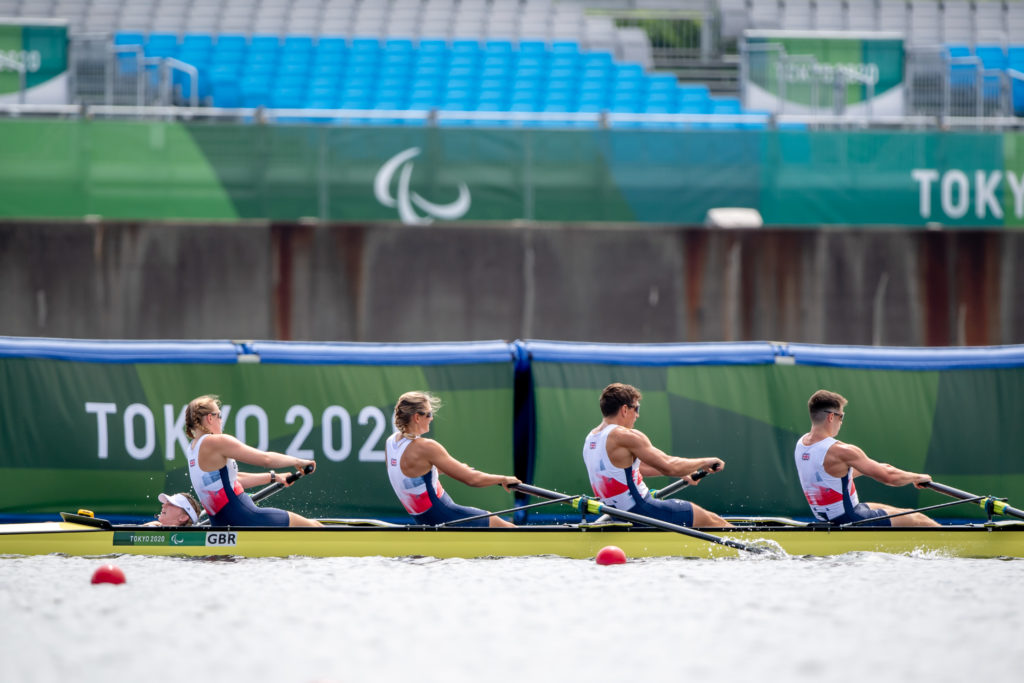
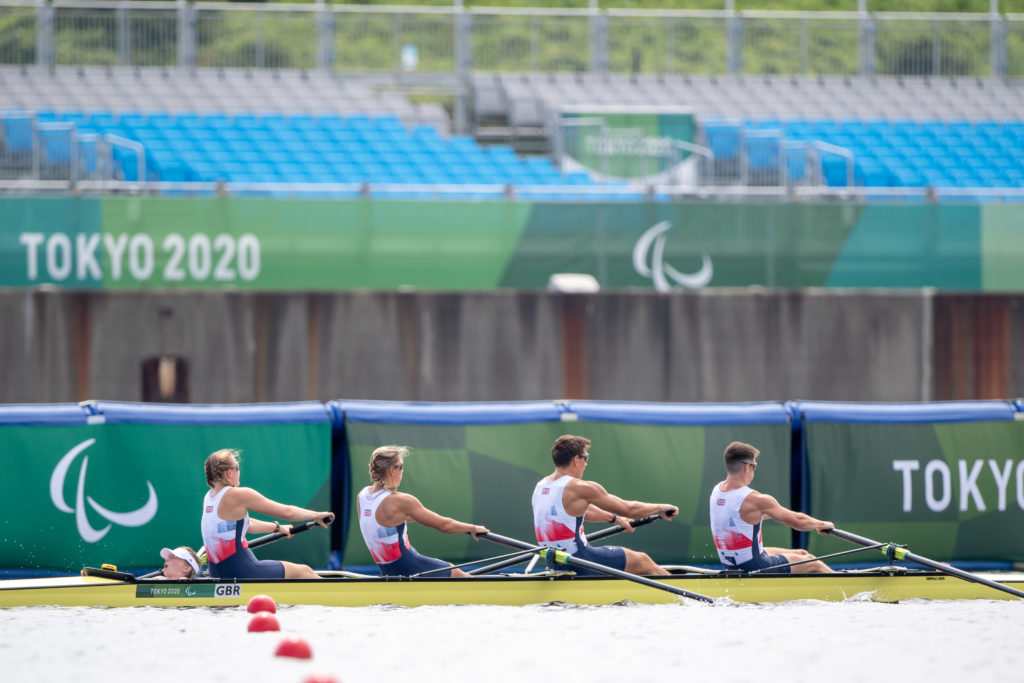
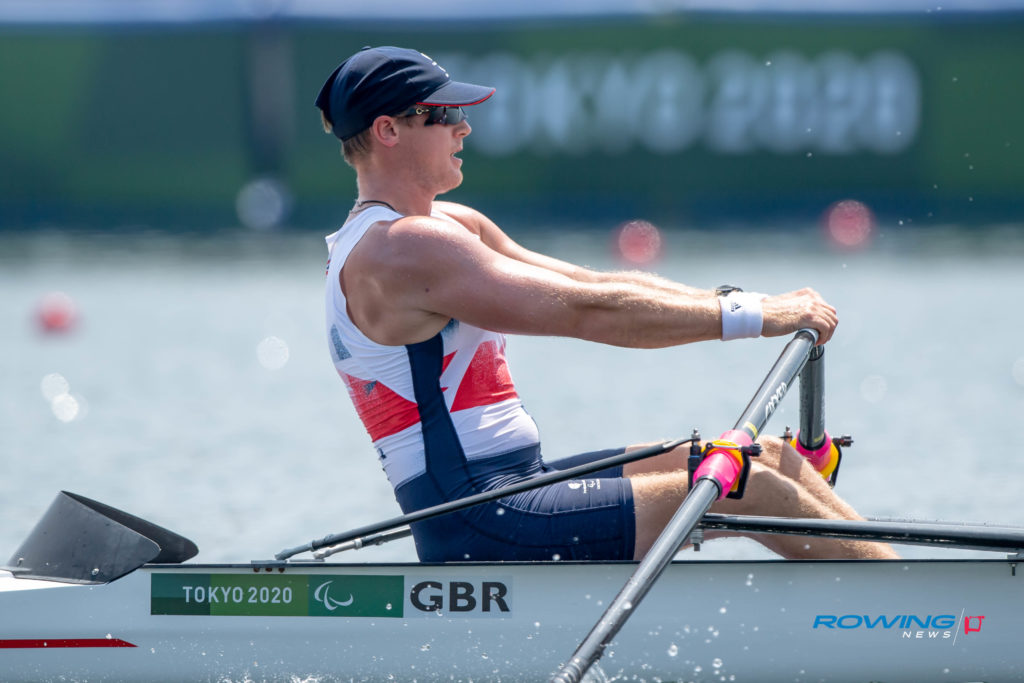
In the end, it was the reigning champions that prevailed in a show of force. The British won both their events, and the U.S. added another silver to the pile they have amassed since the first time the two crews met at the 2014 World Rowing Championships in Amsterdam.
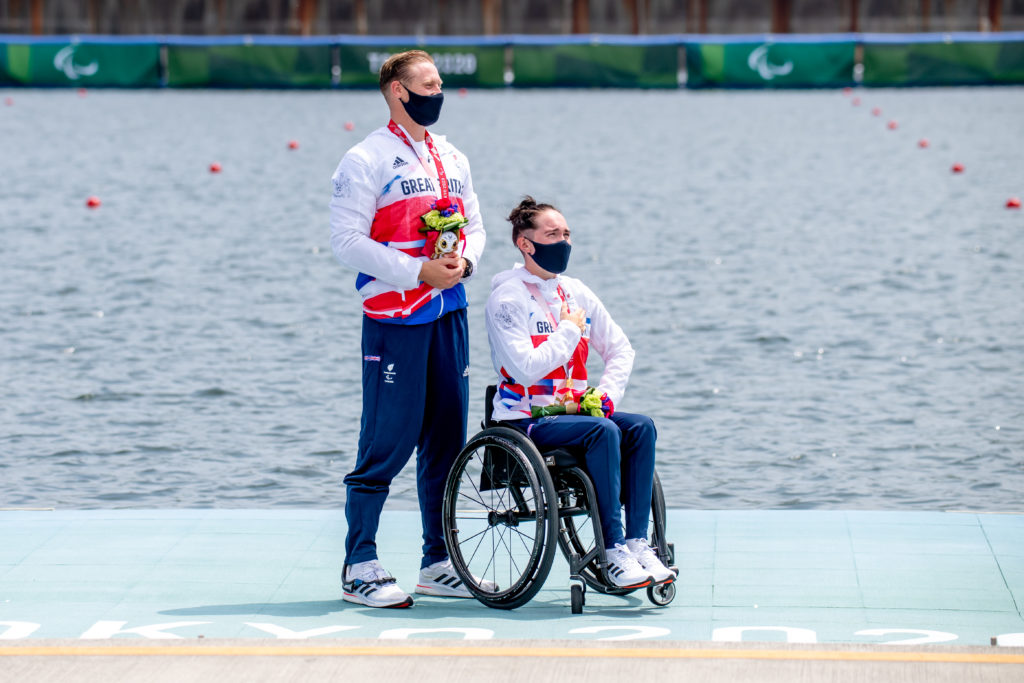
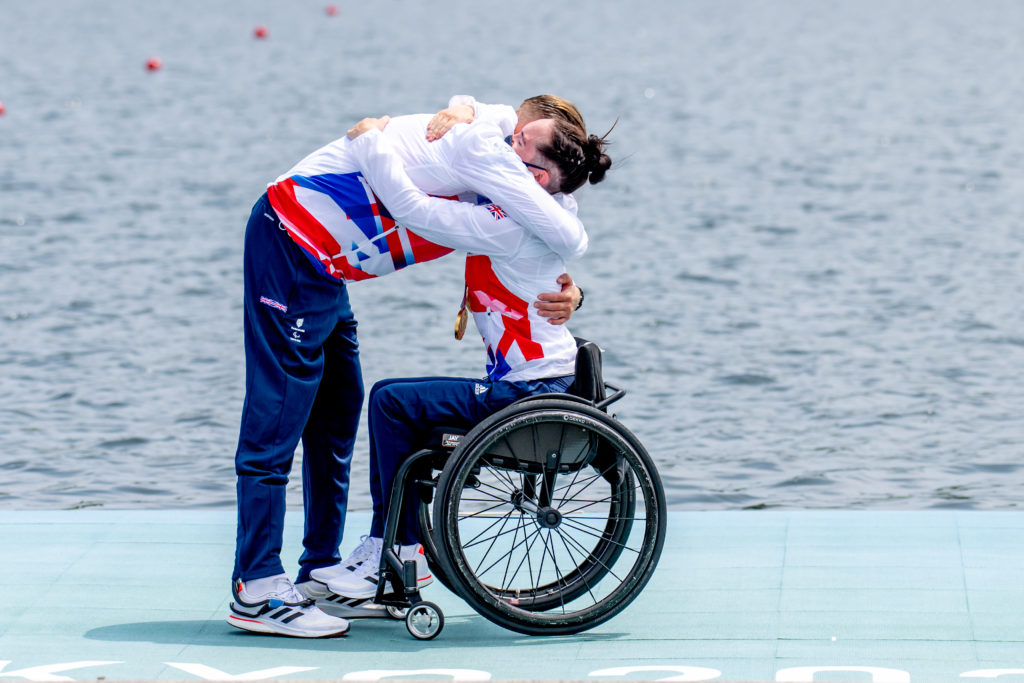
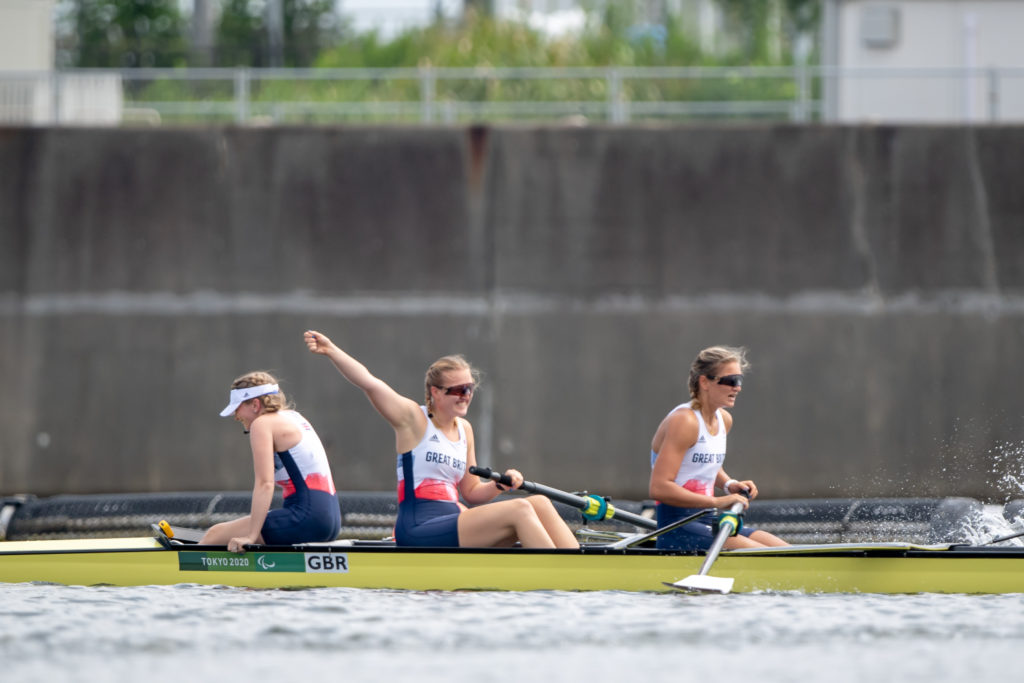
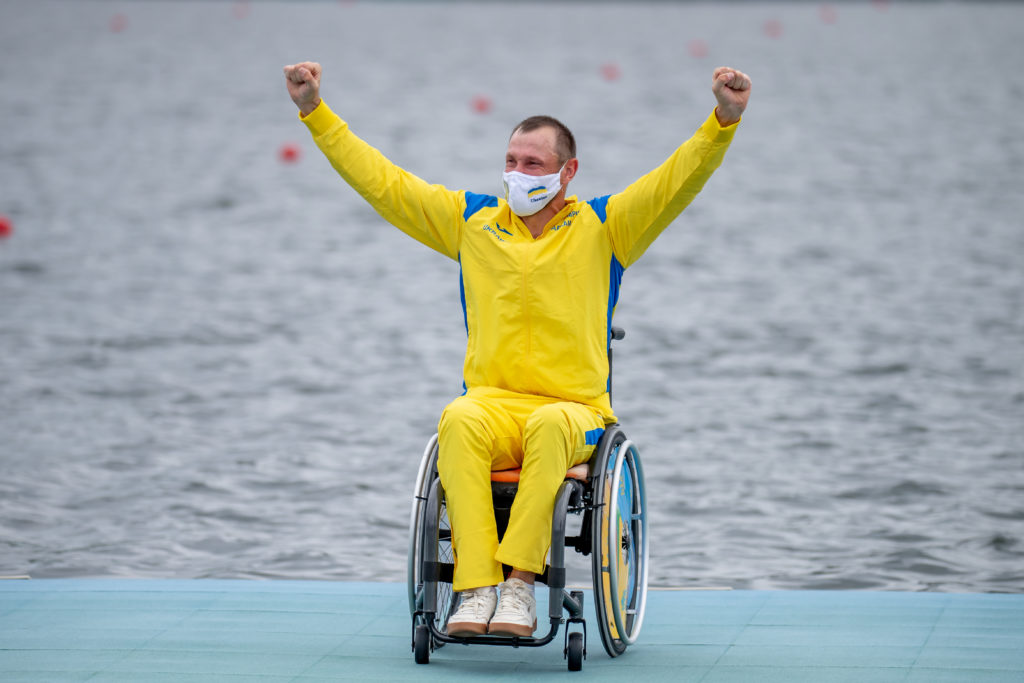
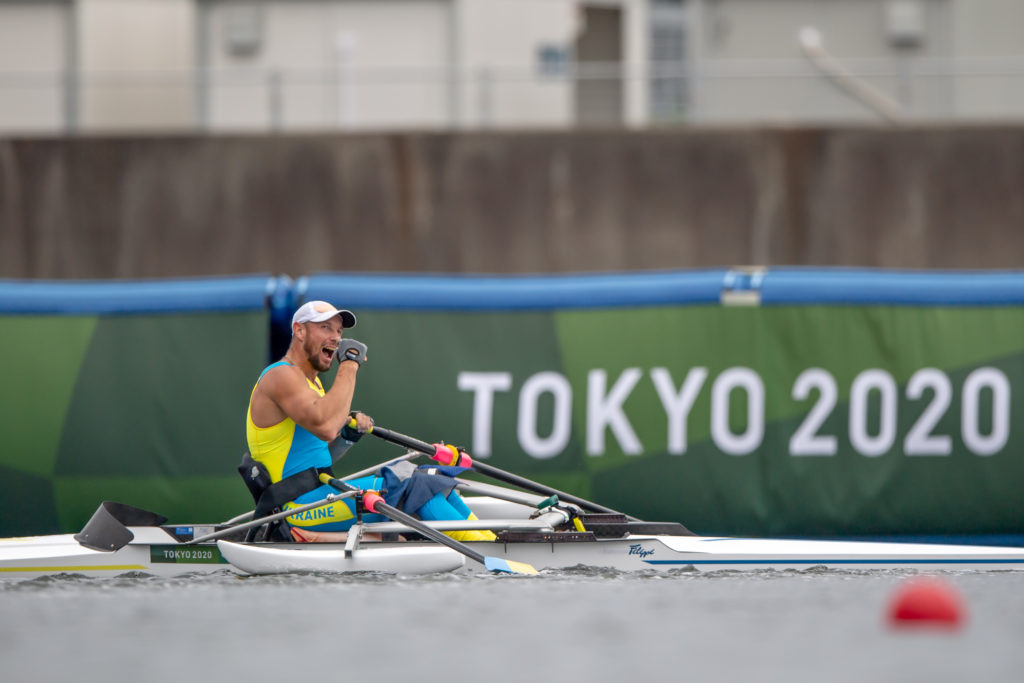
Polianskyi held onto his crown and the U.K. double, dominant on the Paralympic scene since 2015, added a second consecutive gold medal to their trophy case.
“That’s 11 years unbeaten now for us, incredibly tough.” said James Fox, the only returning member of the 2016 PR3 mixed coxed four championship boat. “We’re incredibly tough on ourselves. We’re always pushing the standards.
“People always talk complacency with us, and it’s just not an option for us,” he said. “We’re tough on ourselves, we’re always pushing the pace. That’s part of the reason we can go out and do pieces like that.
“We’re just so happy to be a part of this. We’ve got a bit of momentum with the Paralympic four starting in 2010, and this goes out to all our ancestors I guess,” Fox said noting the streak started at the 2010 World Rowing Championships in New Zealand and carried through the London Games, then Rio, and now this current cycle.
“We’re talking London Paralympics, Rio, my crewmates there, and now we’re carrying it on. Now, may it last.”
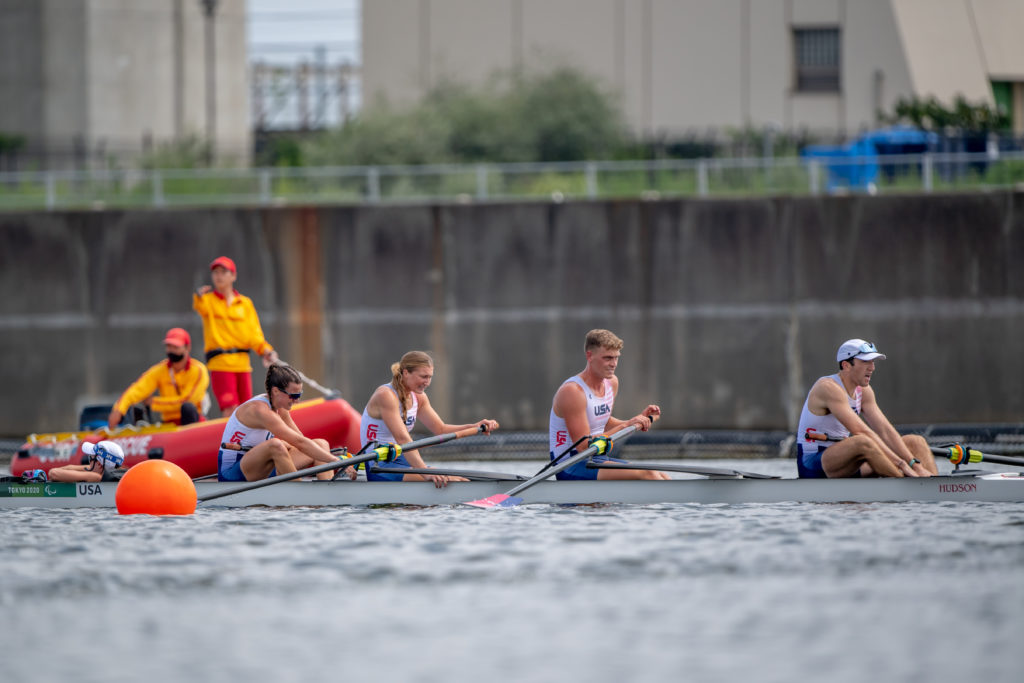
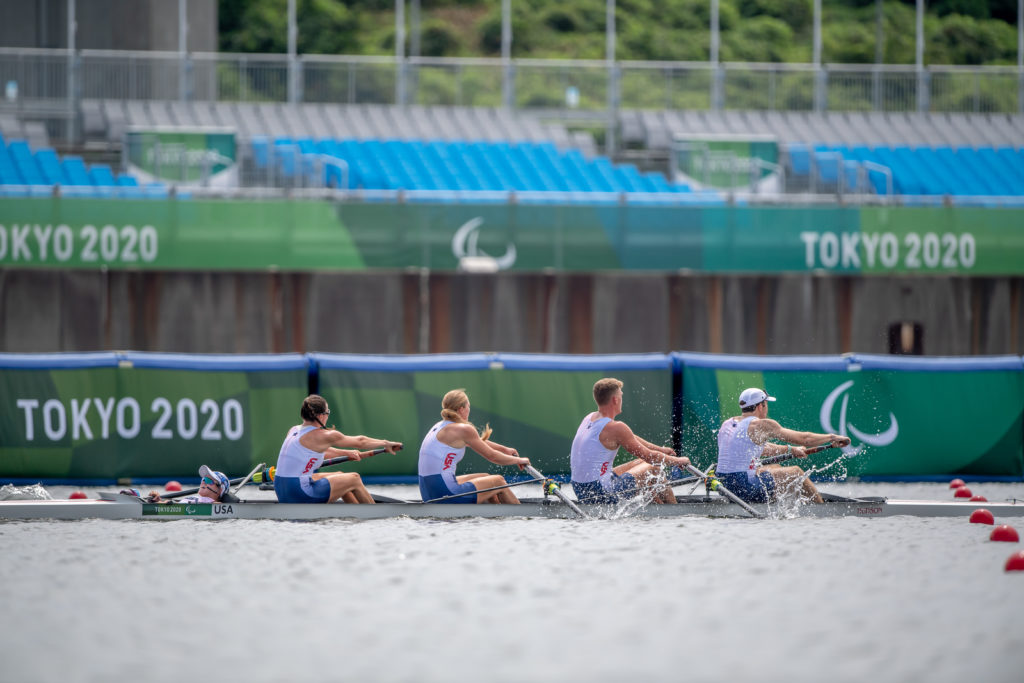
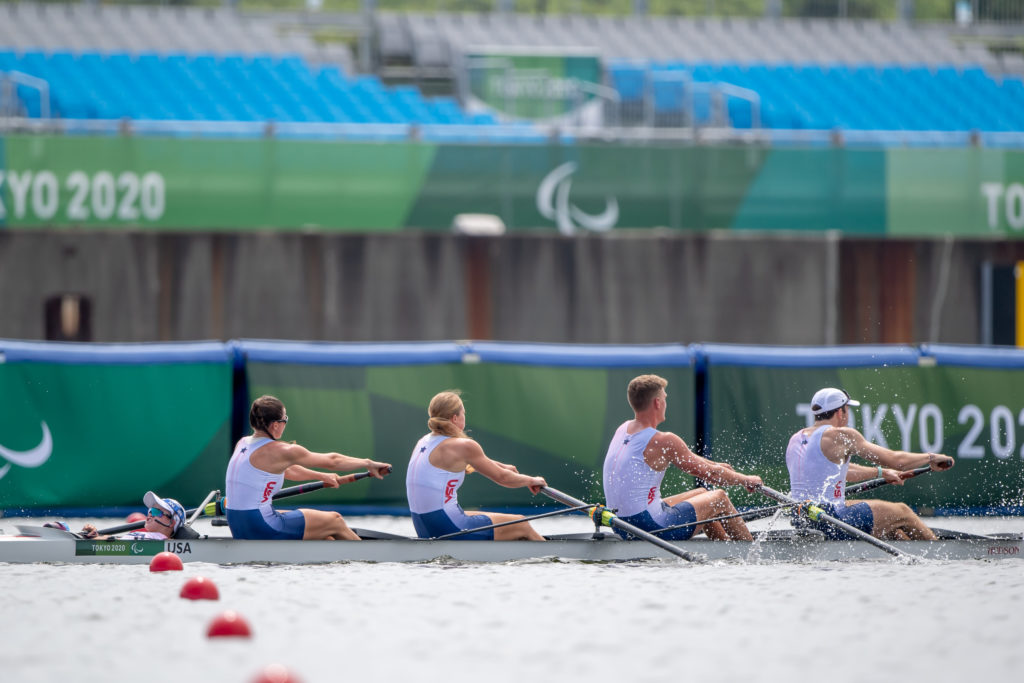
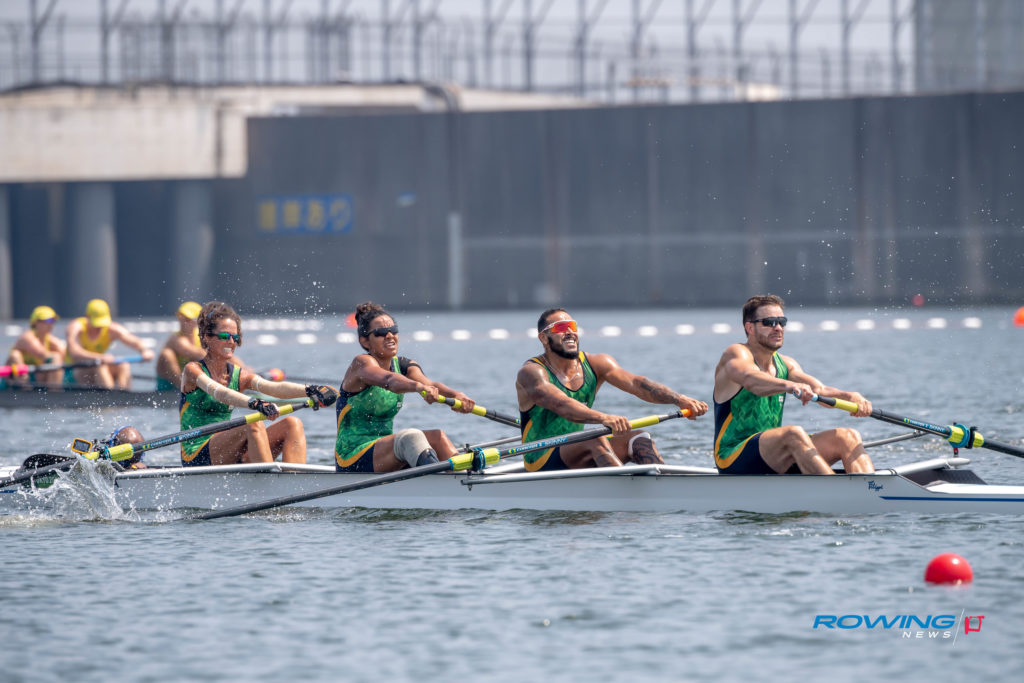
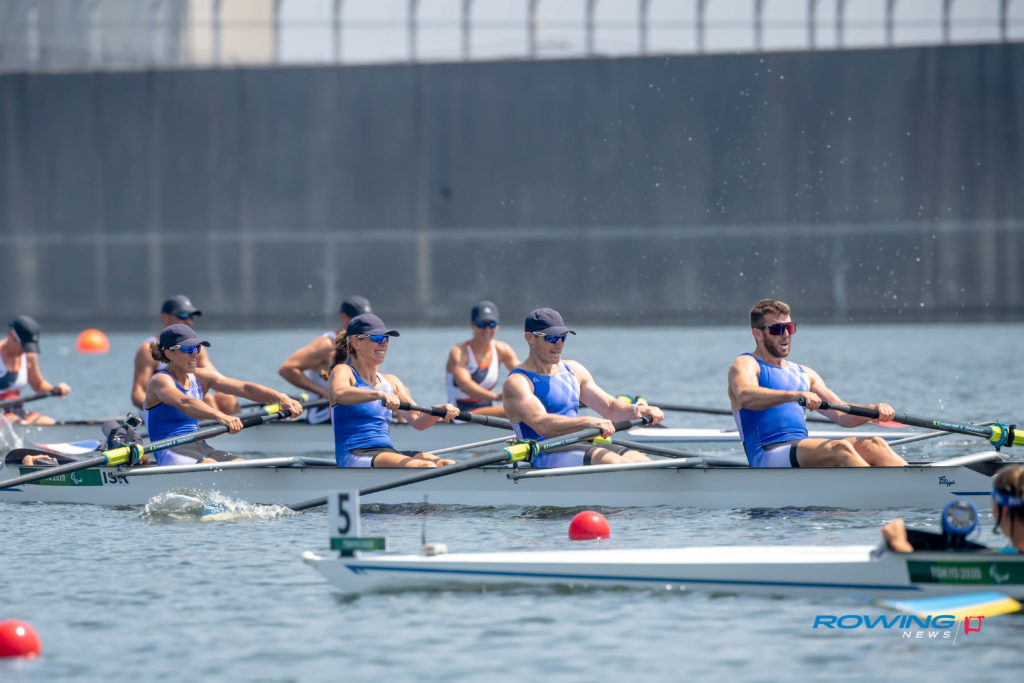
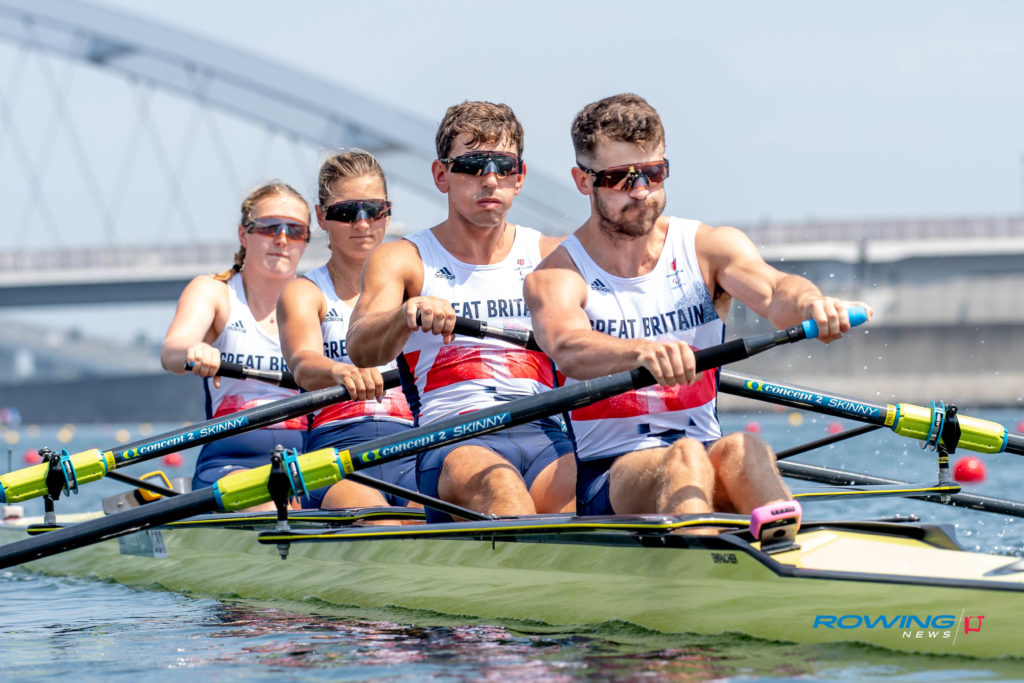
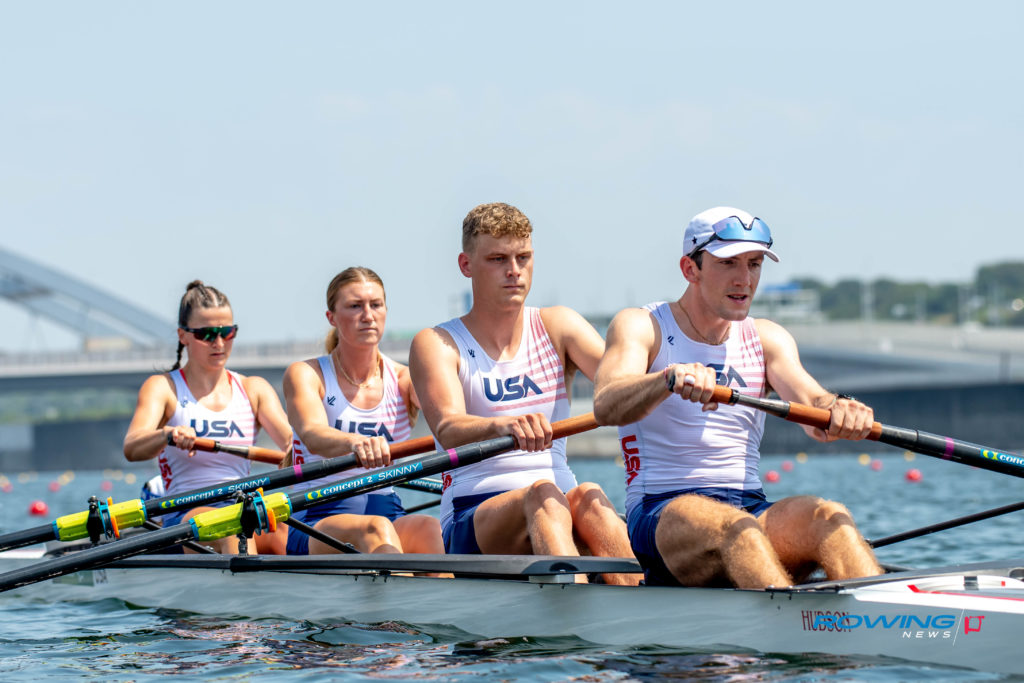
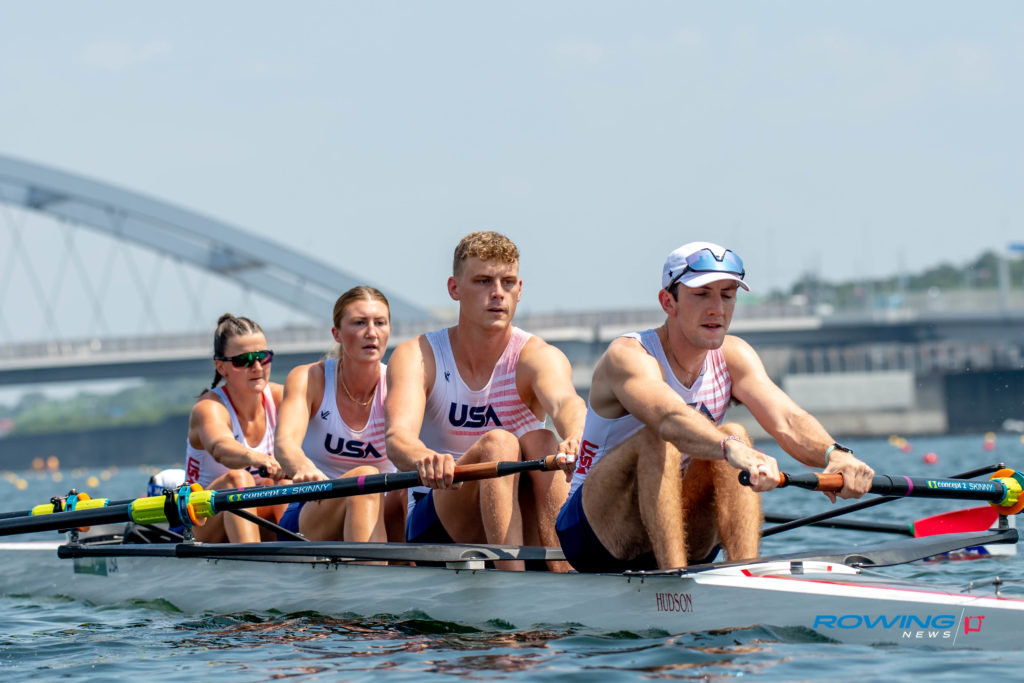
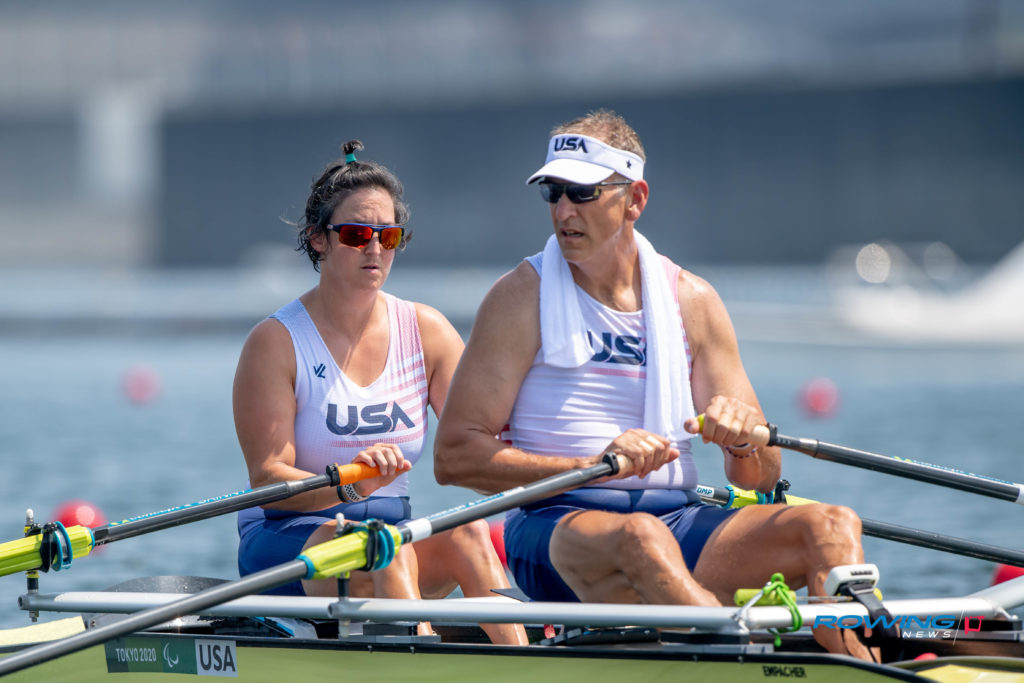
The U.S. crew hung with the British off the start and through the first 500 meters, but the Brits began inching away, eventually compiling an open water lead and finishing more than 10 seconds ahead with a time of 7:09.08 to the United States’ 7:20.13.
While it was another silver medal for the American squad, there were no signs of regret.
“Yeah, I think we’re really happy with our performance,” said John Tanguay. “Being the only U.S. rowing Olympic or Paralympic team to medal. I’d say it’s an accomplishment in itself and we represented our country well,” he said.
“It feels good,” said Dani Hansen, who has been part of the silver streak and the only returning 2016 Paralympian in the crew. “It’s an accomplishment to bring back a medal for the U.S. We’re really pumped. We put a lot into it and we’re happy that we came out like this. It’s awesome.
“I mean, I think the one thing you can do when you come here, despite the past, is to put everything you can on the water,” she said. “And if you’re capable of doing that, which is already difficult then you can feel proud of yourself and I think all of us did that today. I’m really proud of us as a team, and I think we did really well.”
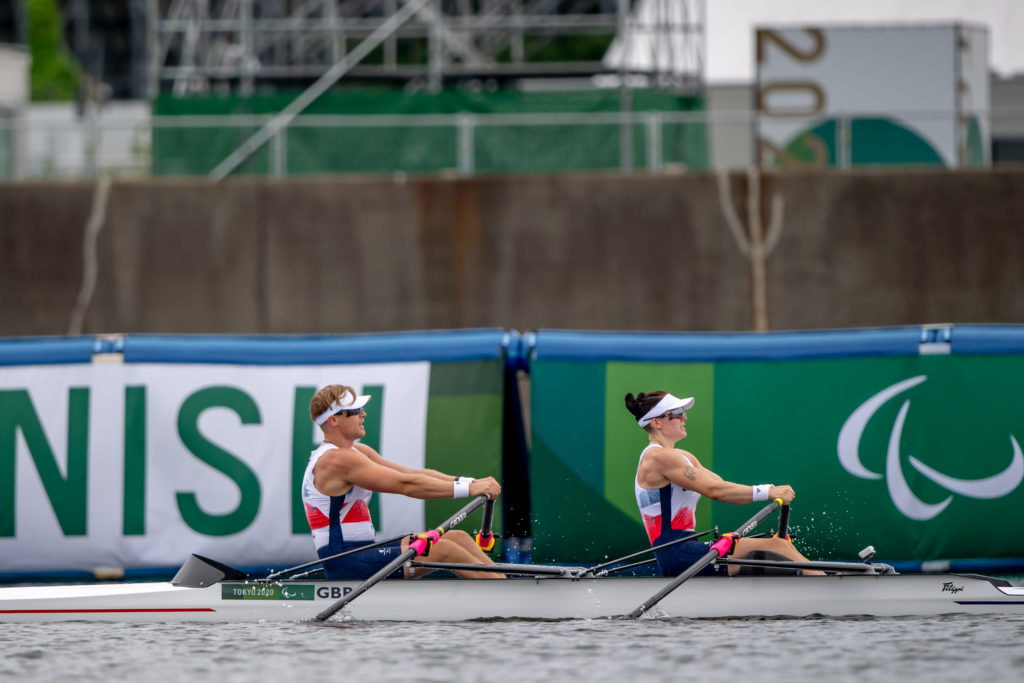
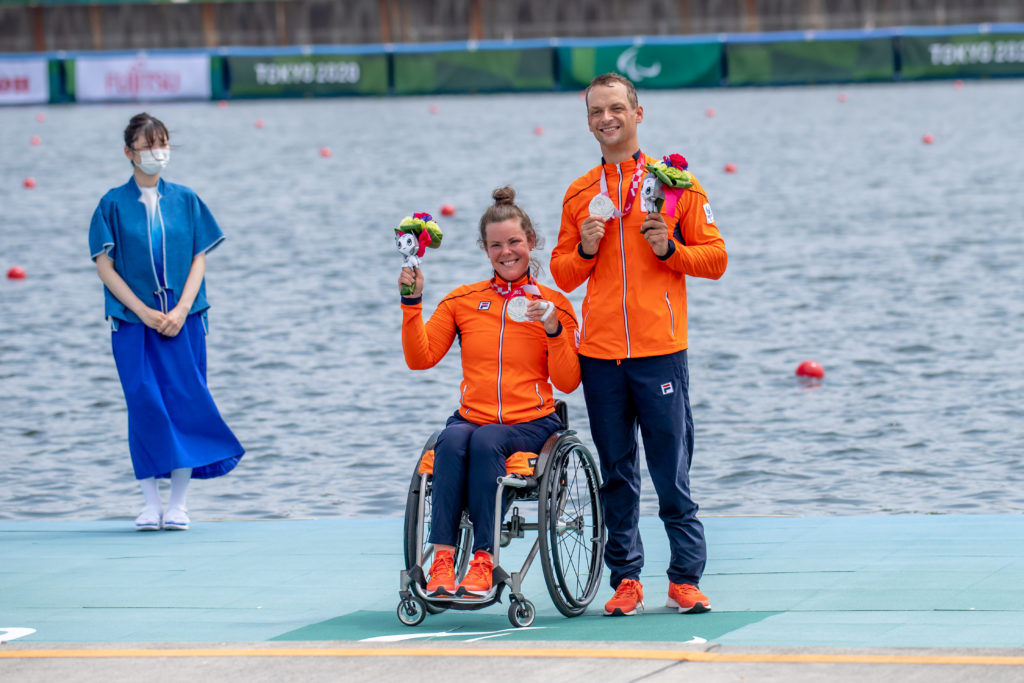
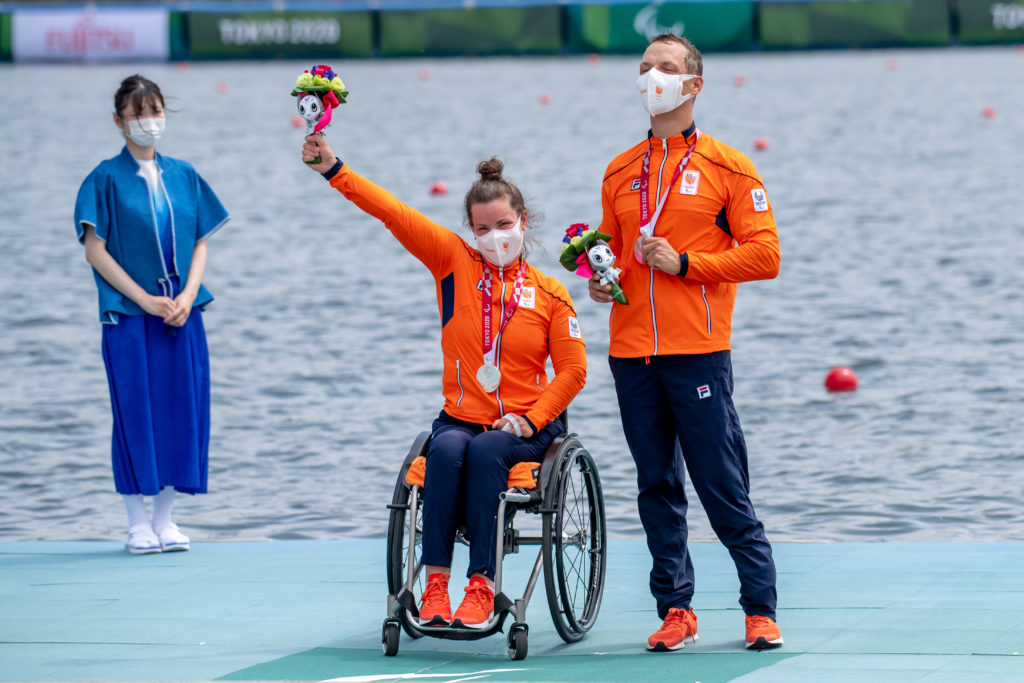
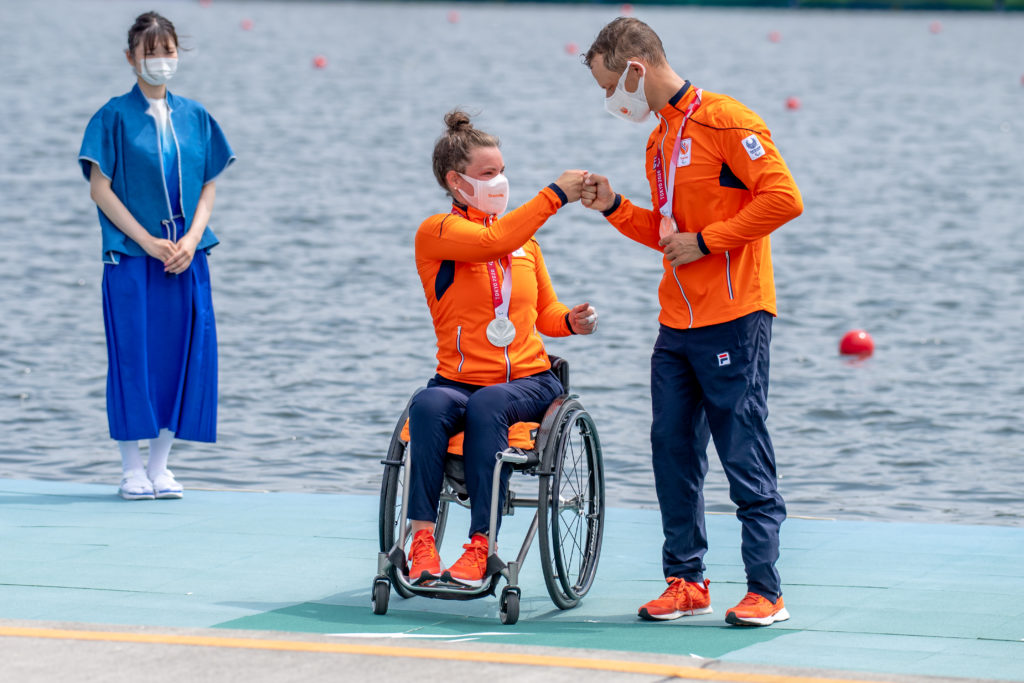
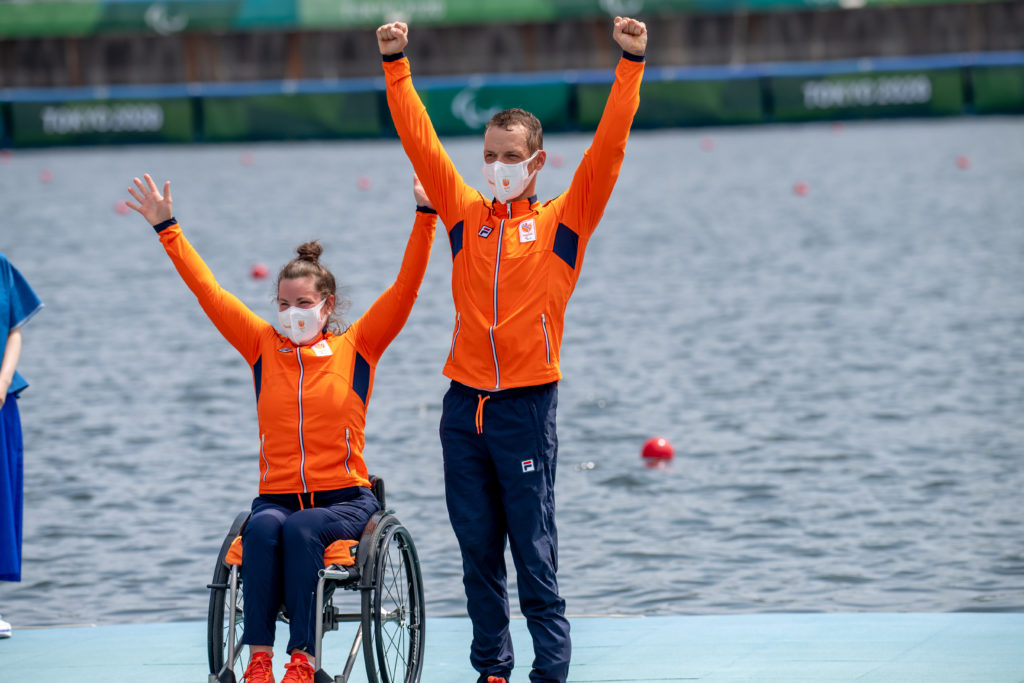
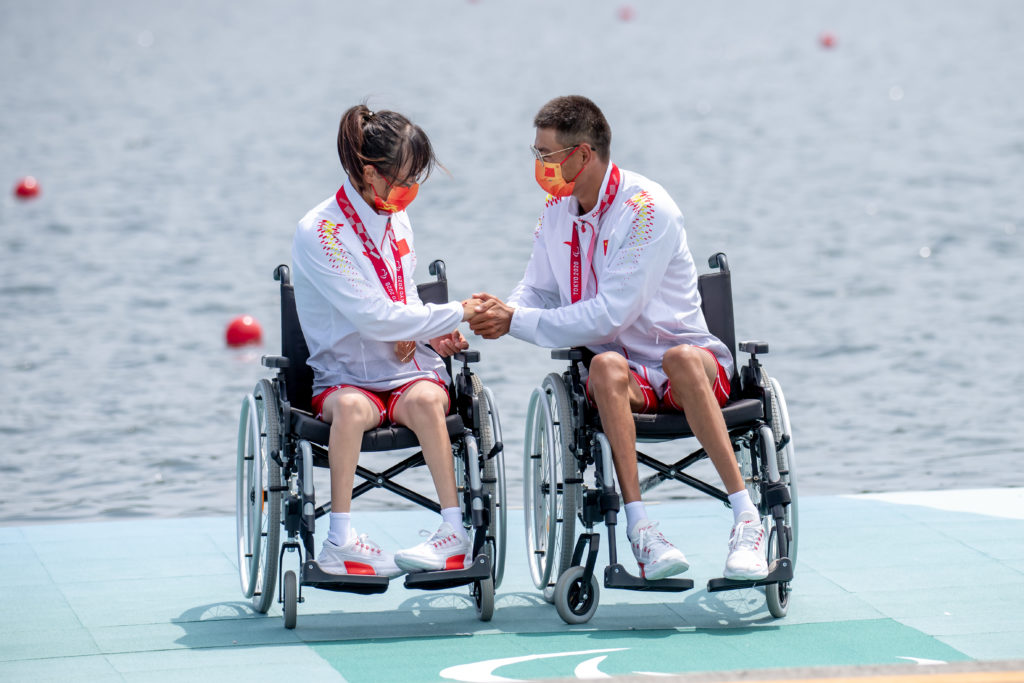
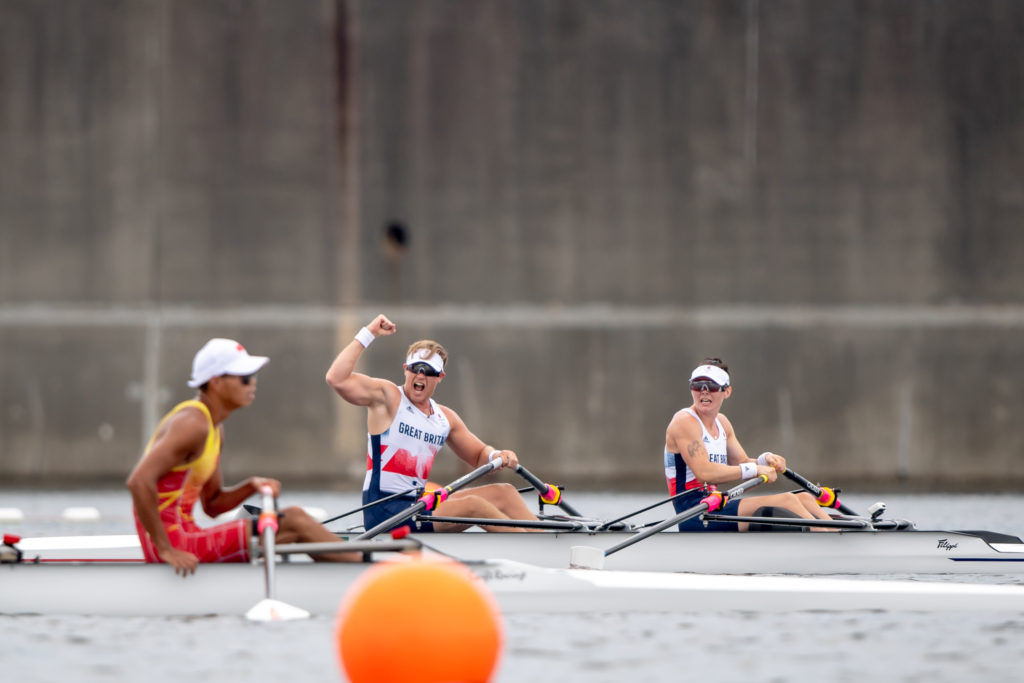
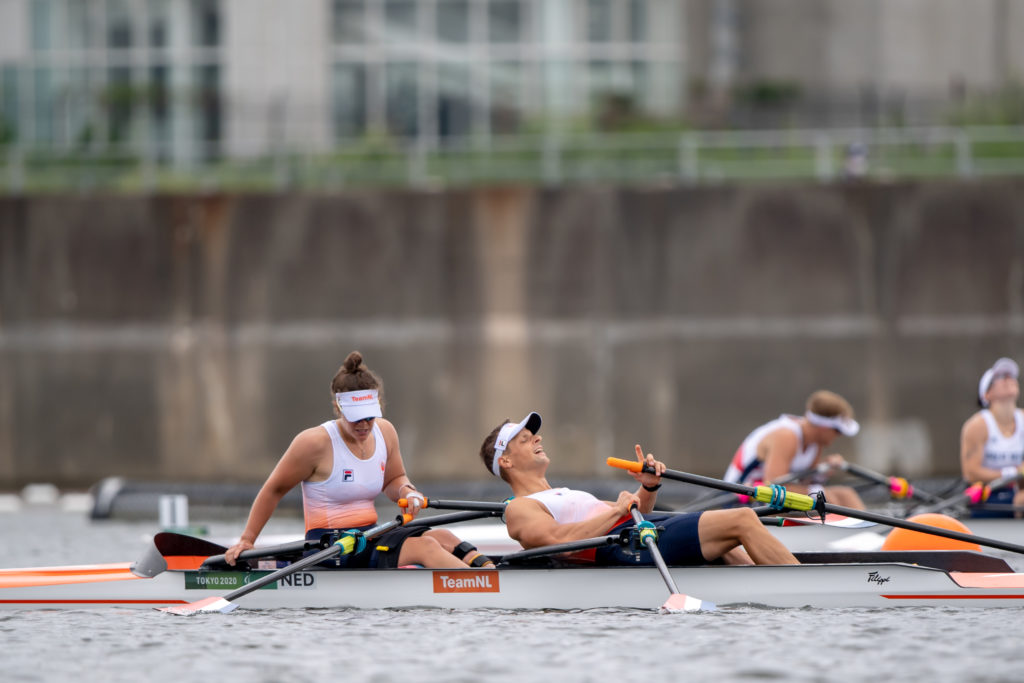
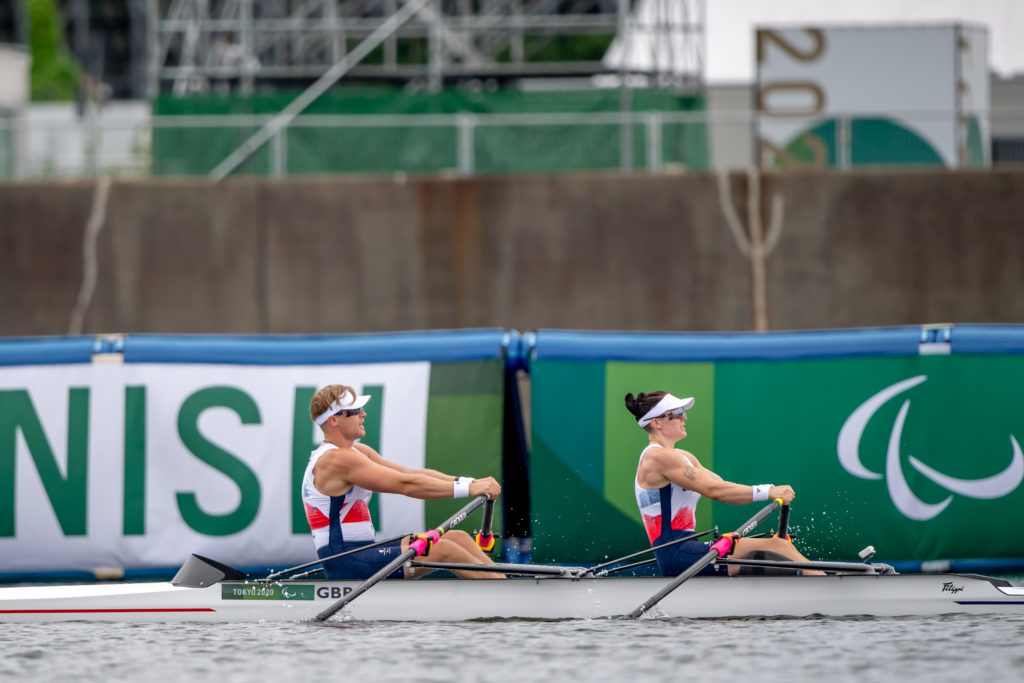
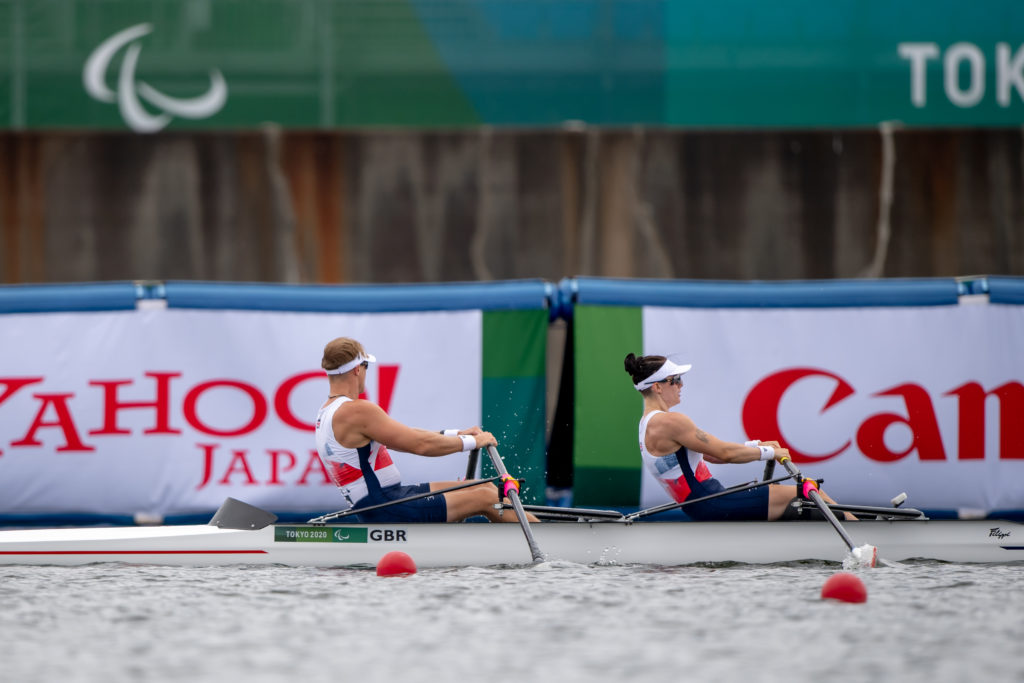
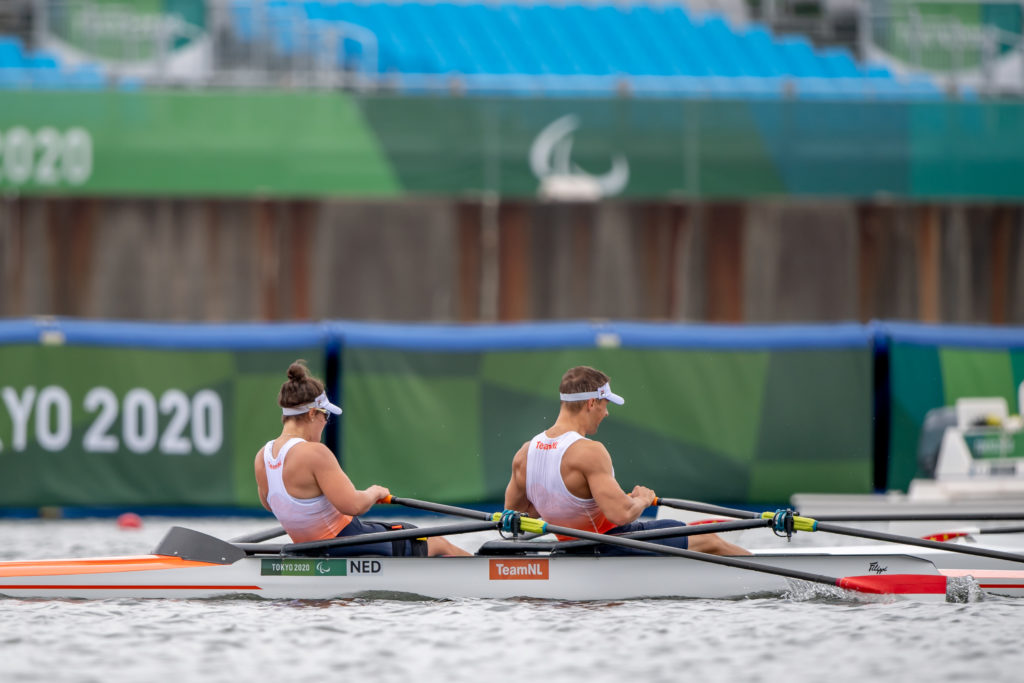
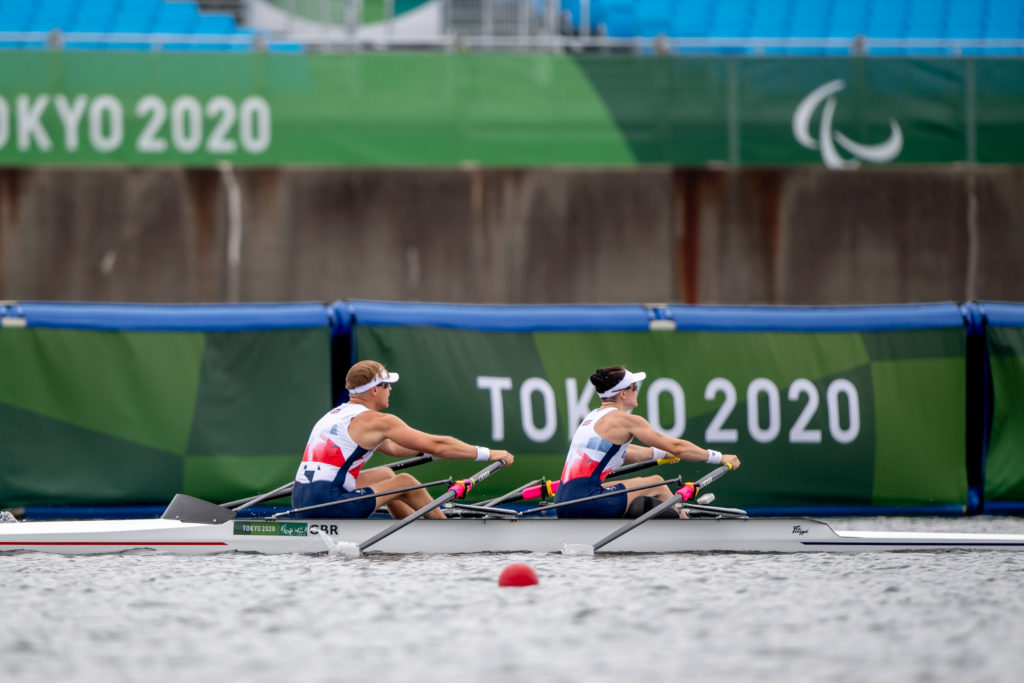
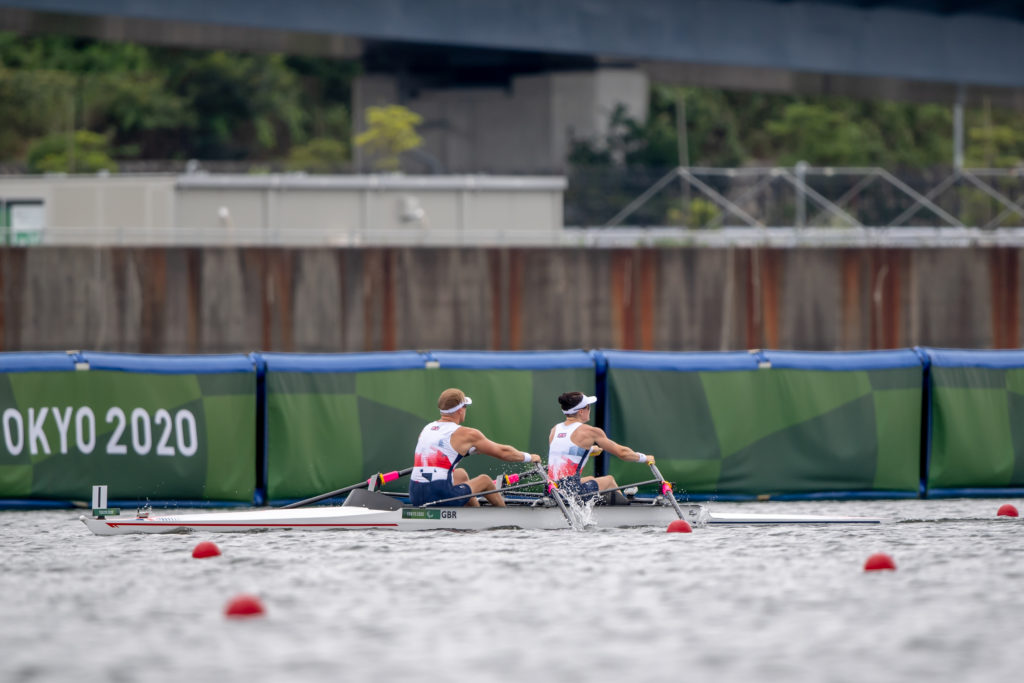
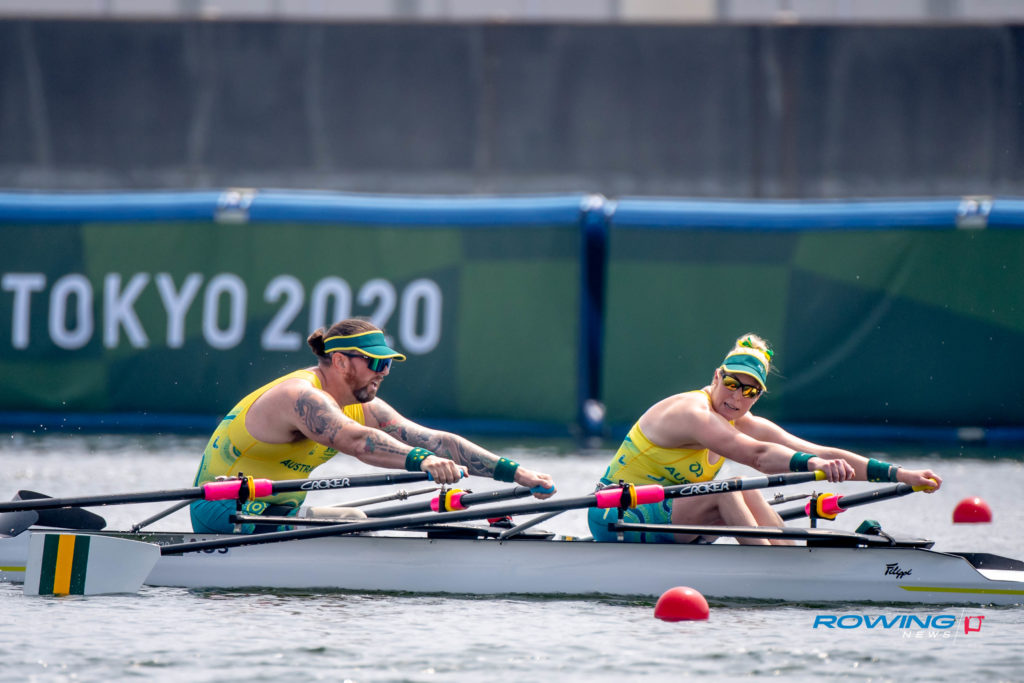
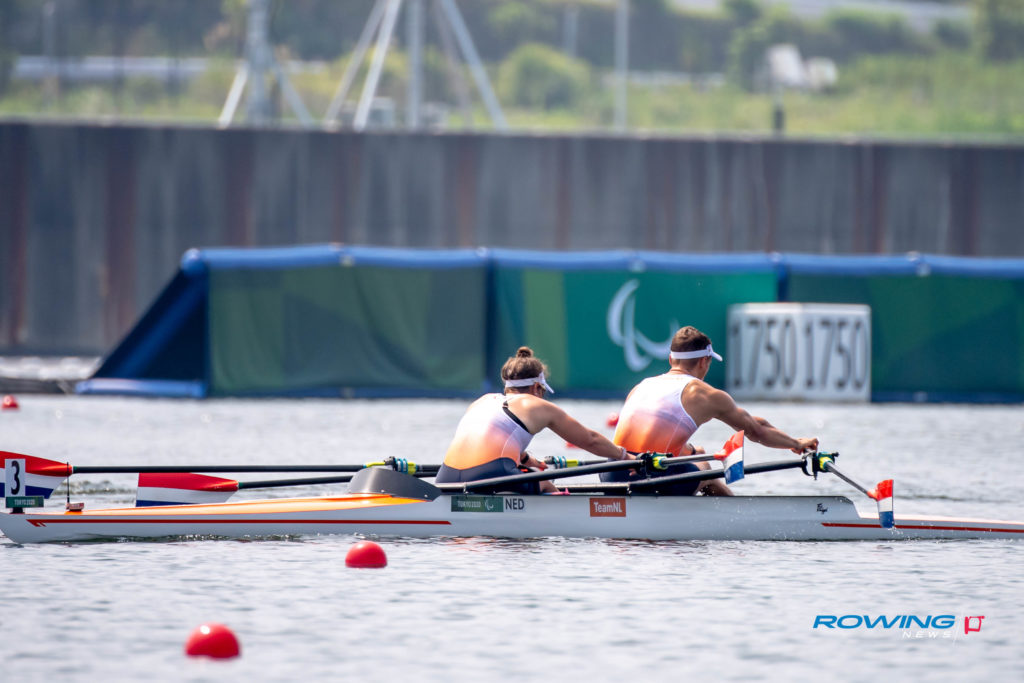
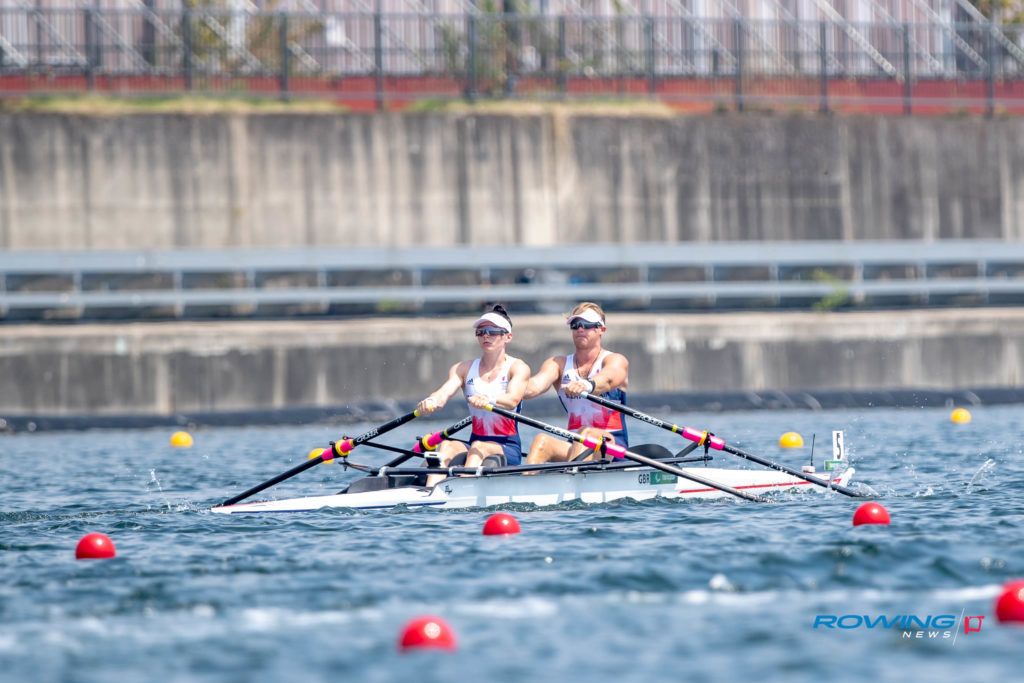
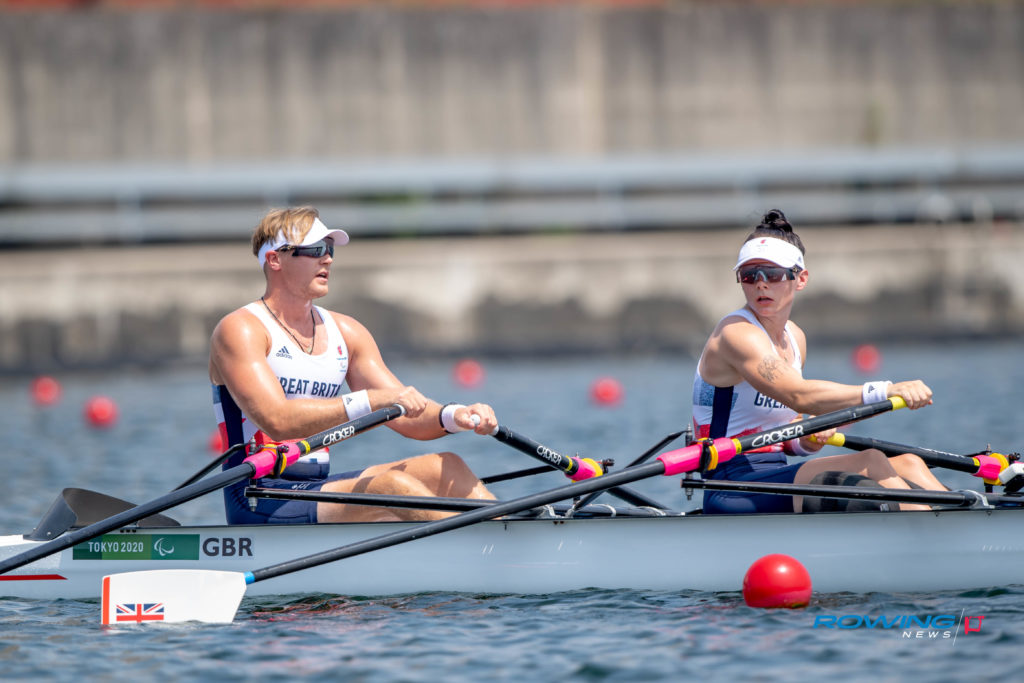
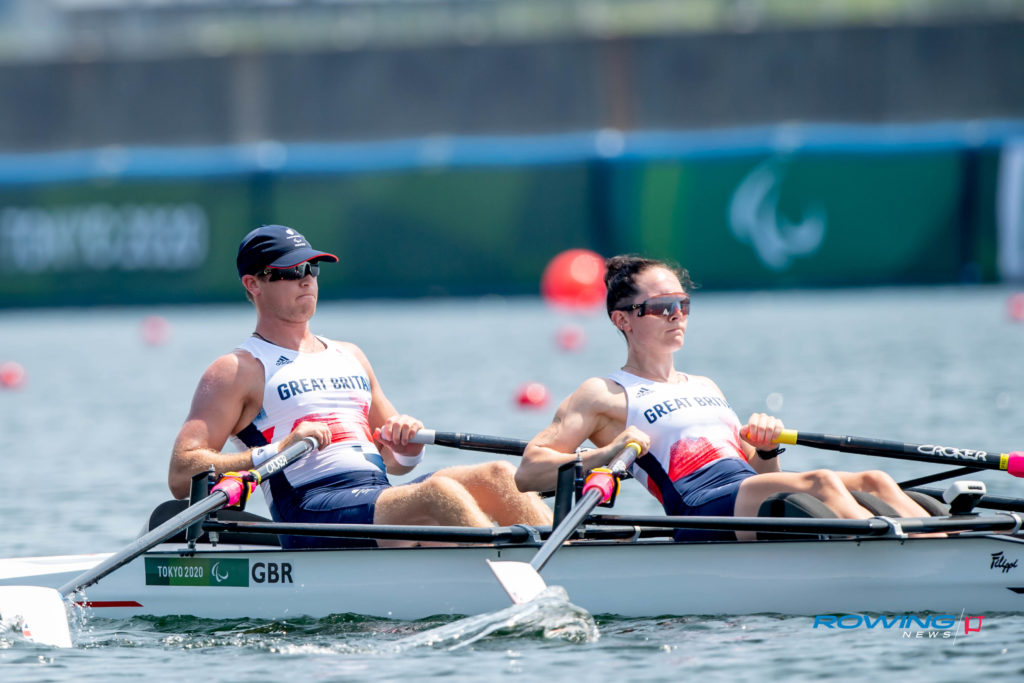
Rowing in the final before the fours was the British PR2 mixed double of Lauren Rowles and Laurence Whiteley. They are the defending world and Paralympic champions who have dominated the event since 2015. The Dutch and Chinese fought through to the final 500 meters in first and second, while the British lagged behind in third from the start, but it was the Brits who pushed through and won.
Asked later about falling behind at the start Rowles and Whiteley just shrugged it off and suggested it was part of their race plan.
“So it was a case of ‘okay, let them go. Let them race each other, then,” Whiteley said. “We’re just going to sit and do our own thing and trust it’ll come back and it did.
“It can be a very difficult thing to do so big props to Lauren for keeping the rhythm, keeping the boat where it needed to be. We knew they’d be quick out the blocks and that’s okay,” he said.
Added Rowles: “It’s not about who leads in the first 1,500-meters, to the 1,900-meters, it was about who came in first, and that was always going to be us, so we just kept building in pace.
“You know, like to the 500-meters people were probably getting a little nervous at home,” she said. “Sorry for getting everyone’s nerves up but we knew if we built through we were just going to get stronger and stronger through that field.”
While some of the biggest pre-race drama was centered on those two events, the first two finals of the morning were equally intriguing.
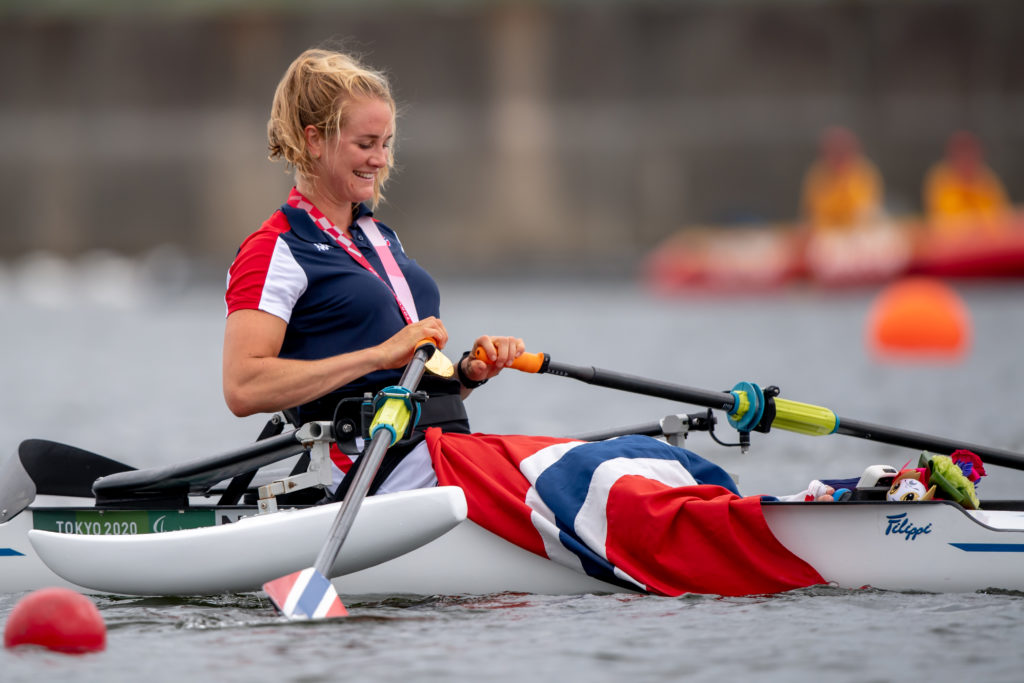
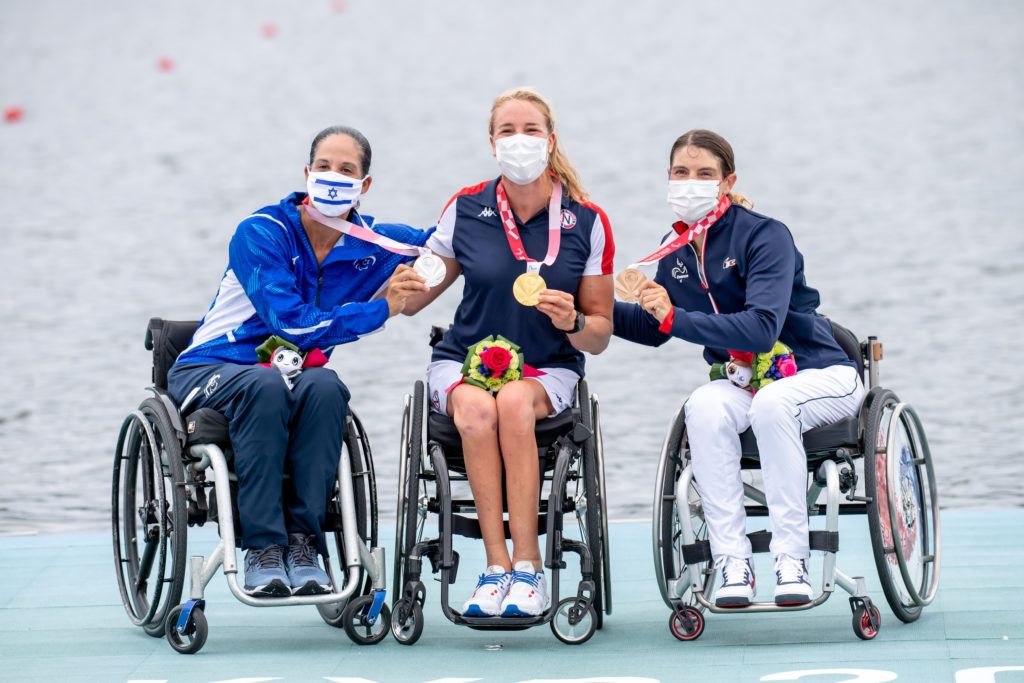
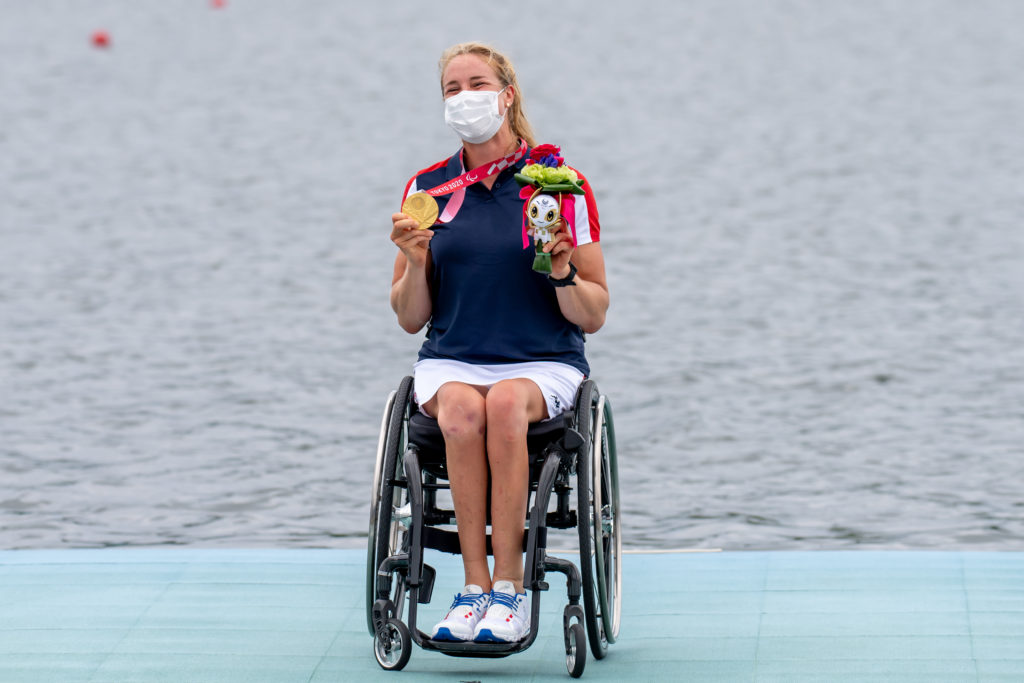
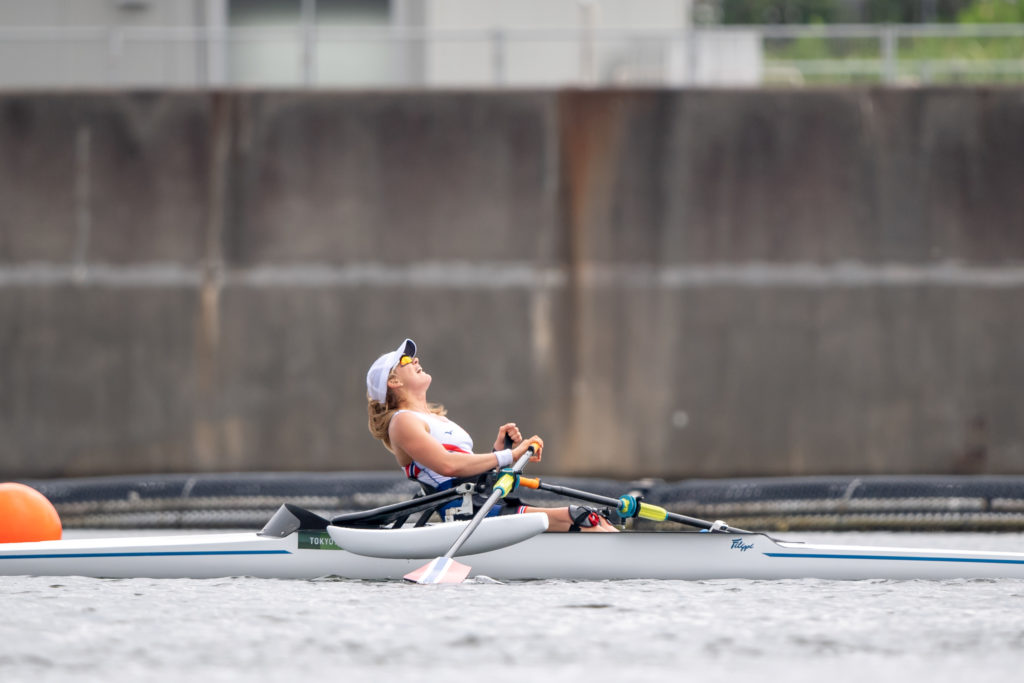
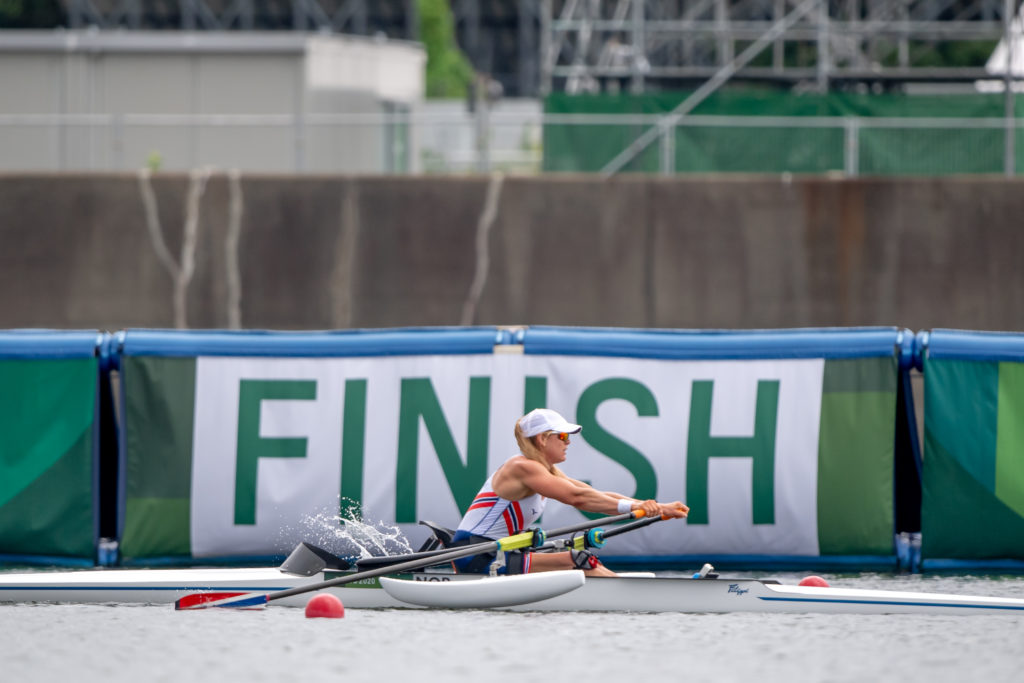
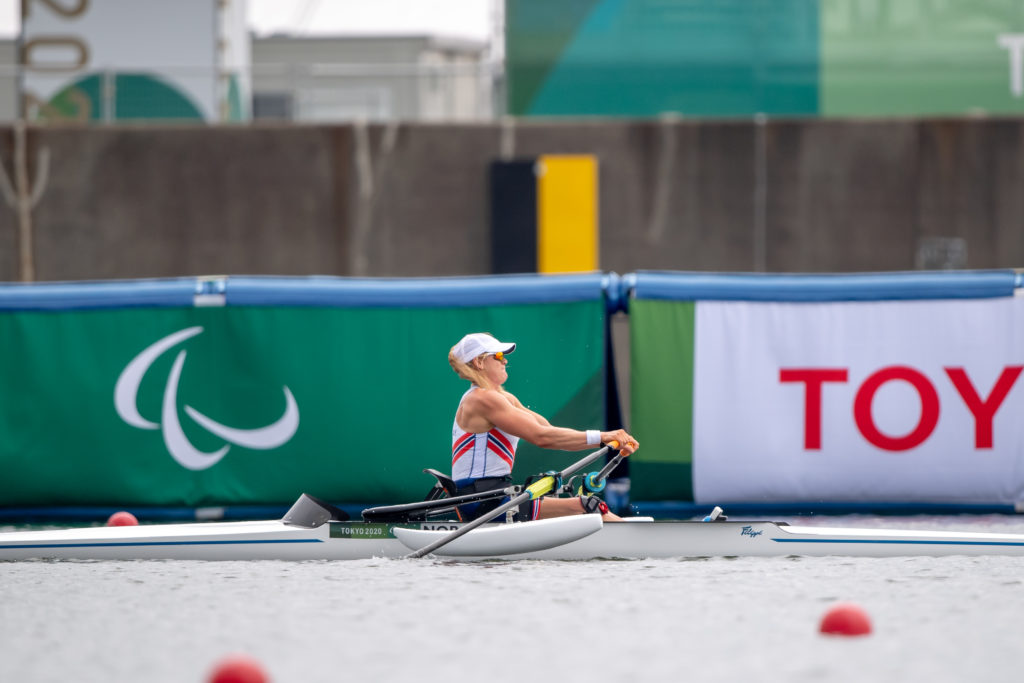
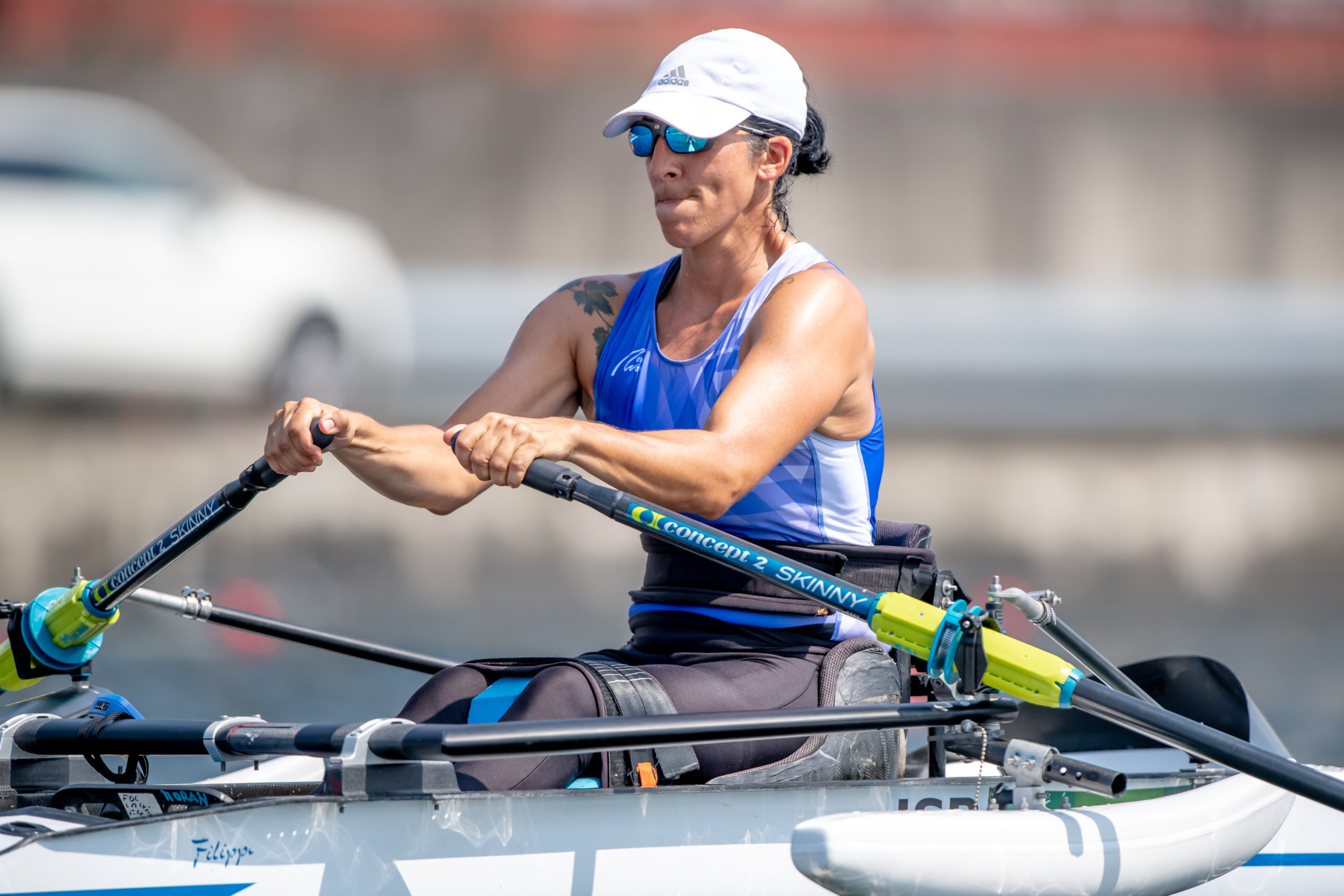
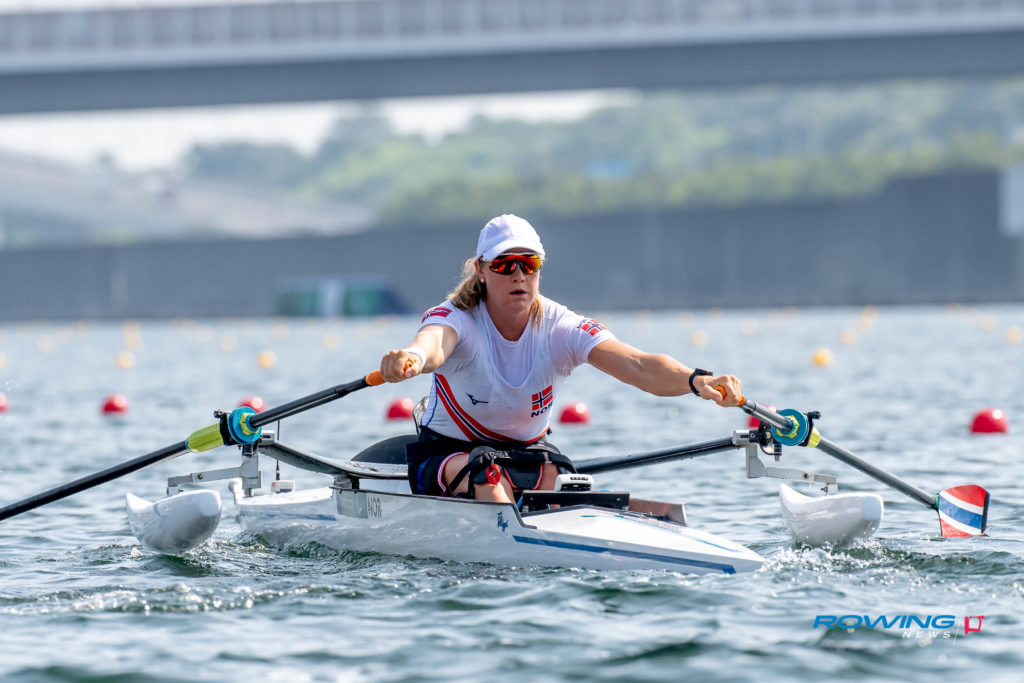
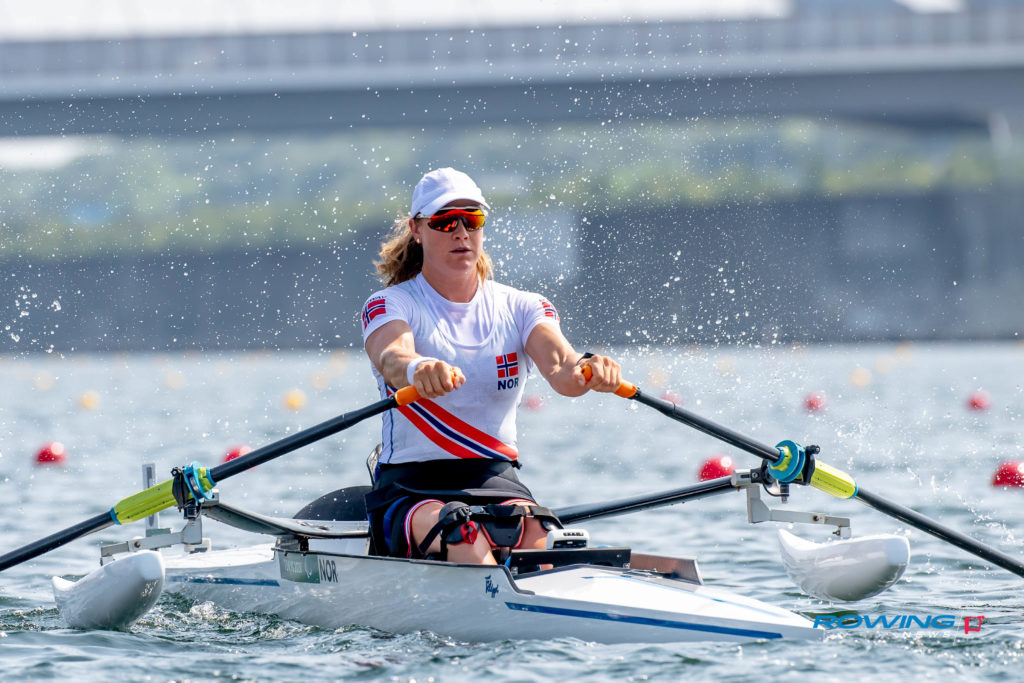
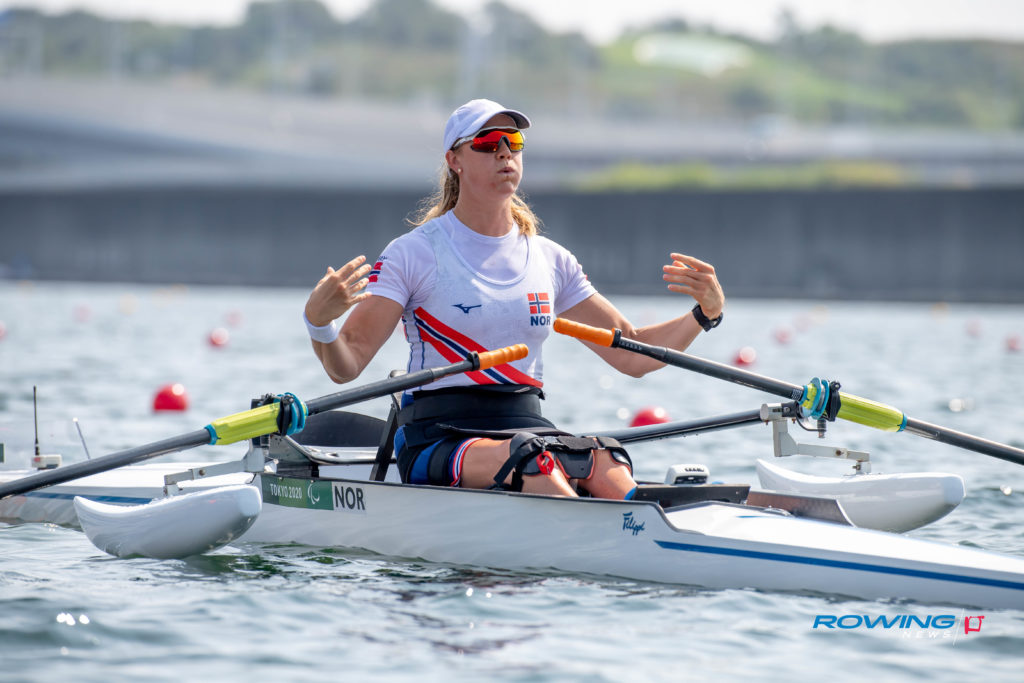
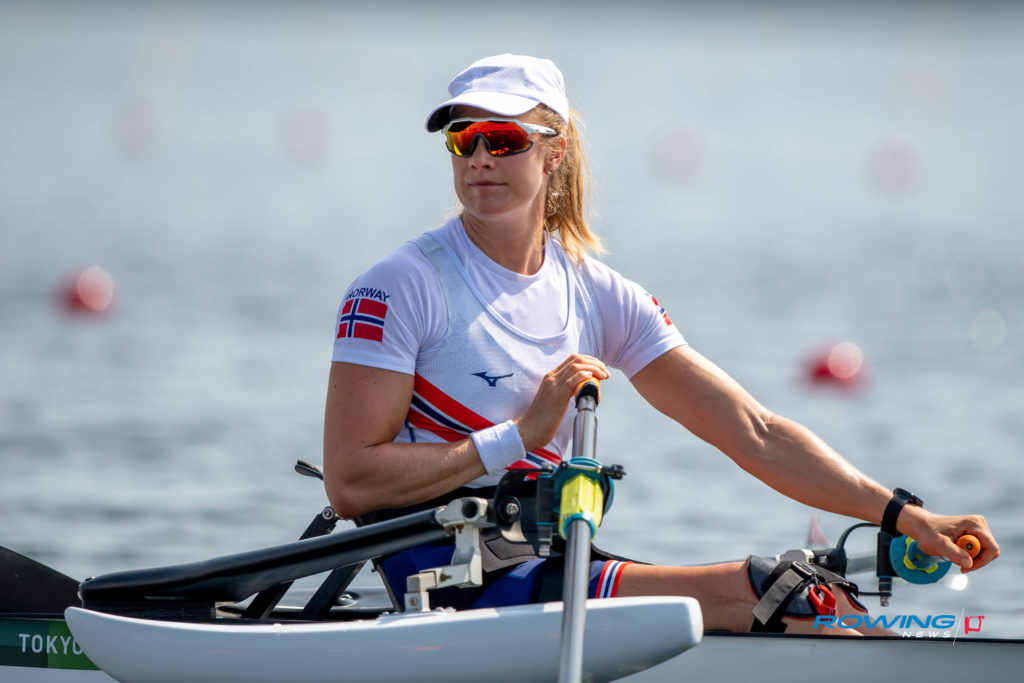
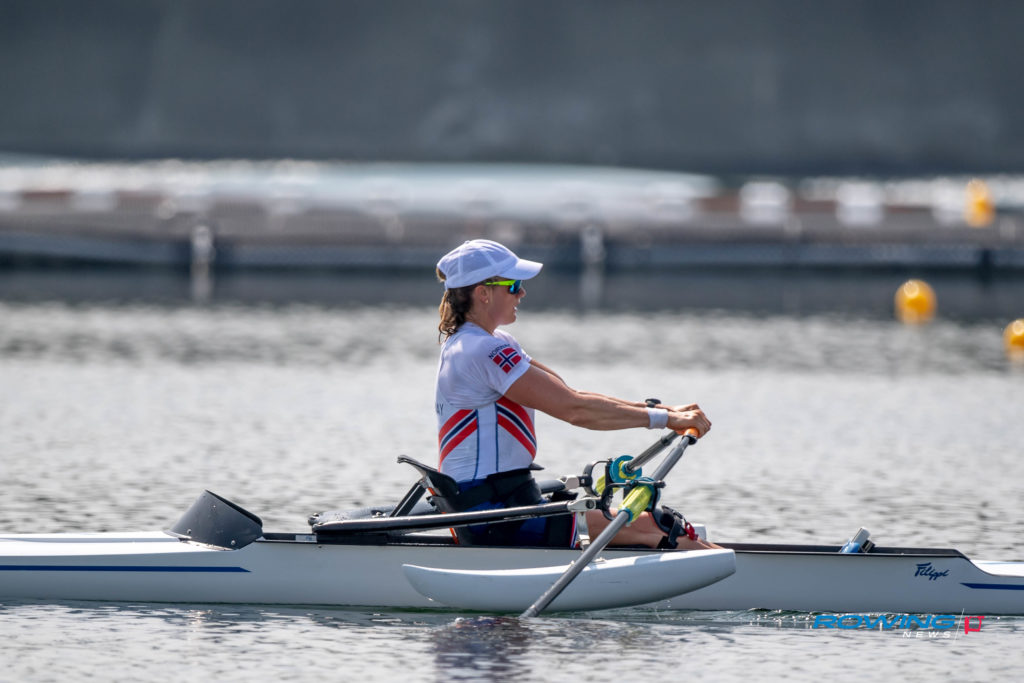
Birgit Skarstein of Norway has been the gold standard in the women’s PR1 single, especially since the event was changed from a 1000-meter race to a 2000-meter race, but she had not won a Paralympic medal and finished fourth in Rio.
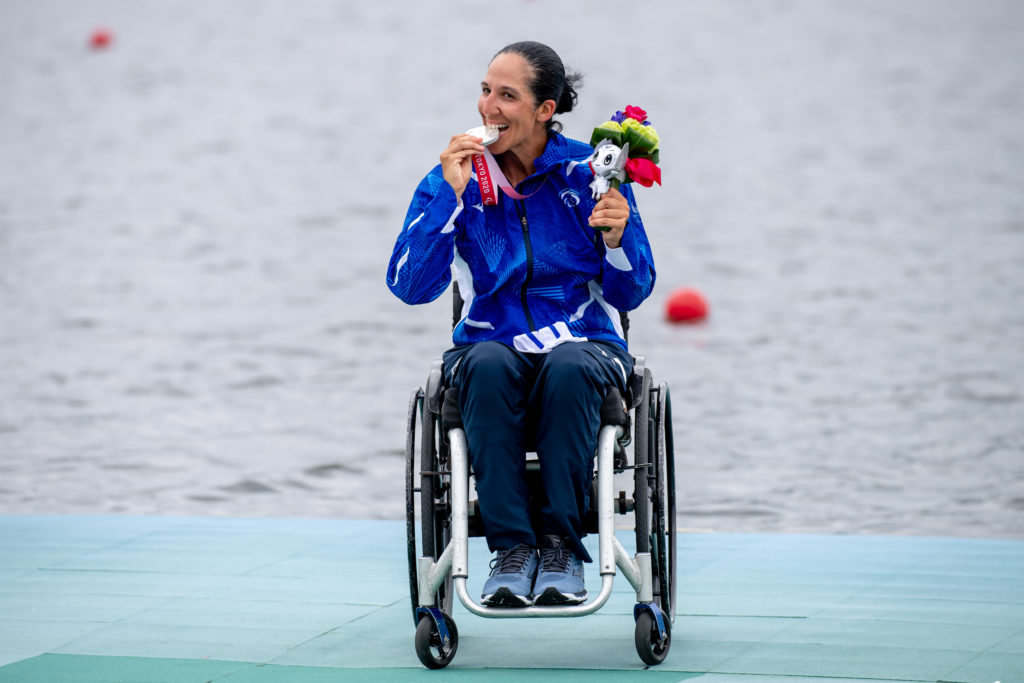
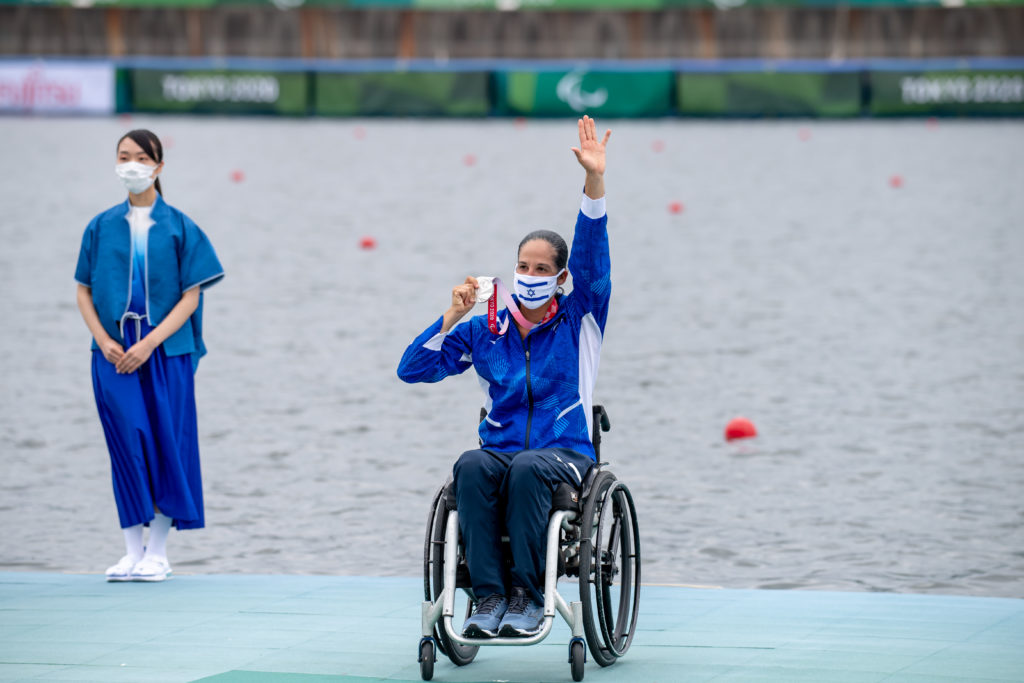
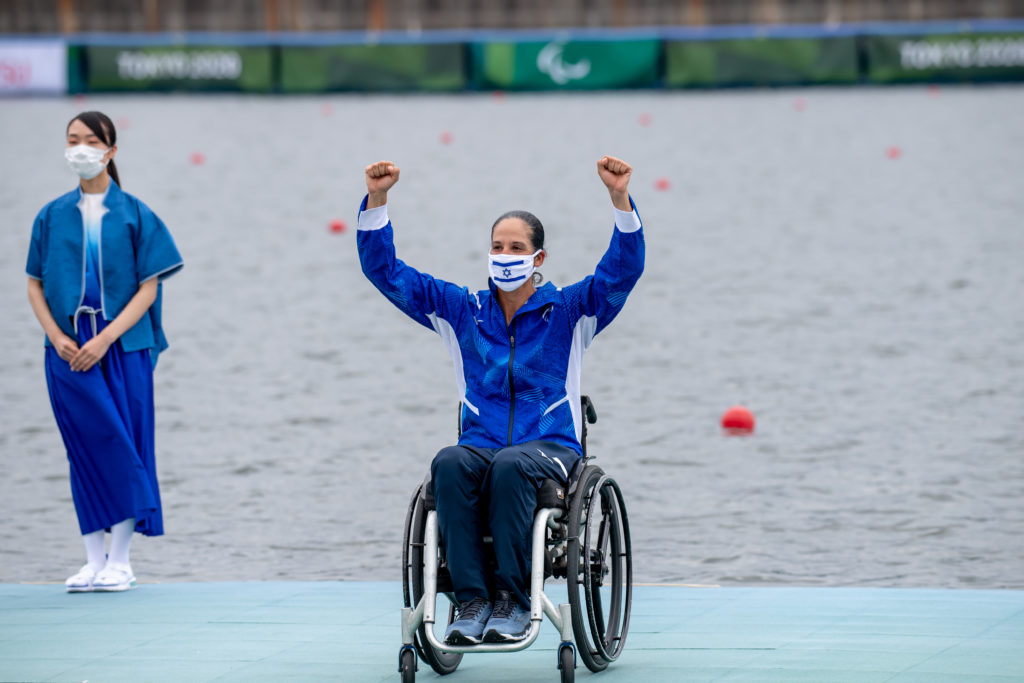
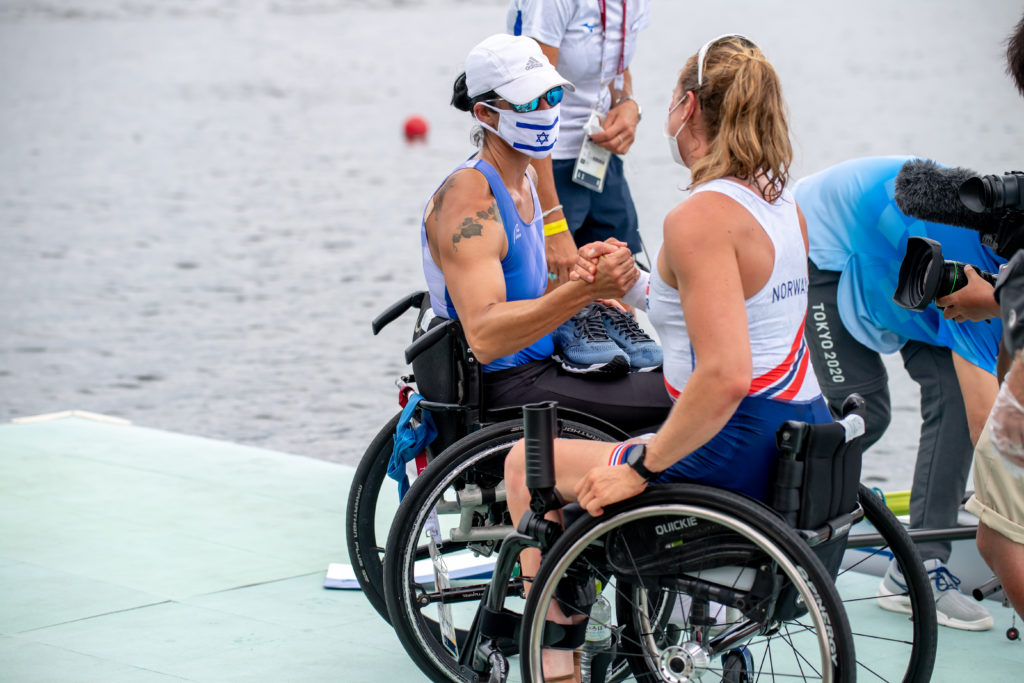
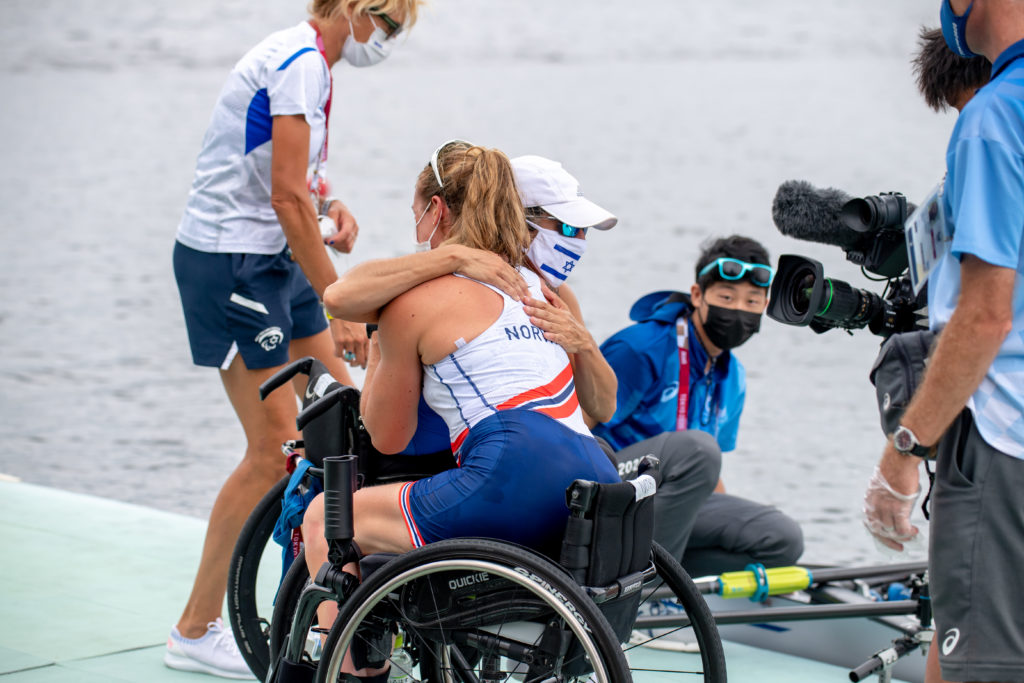
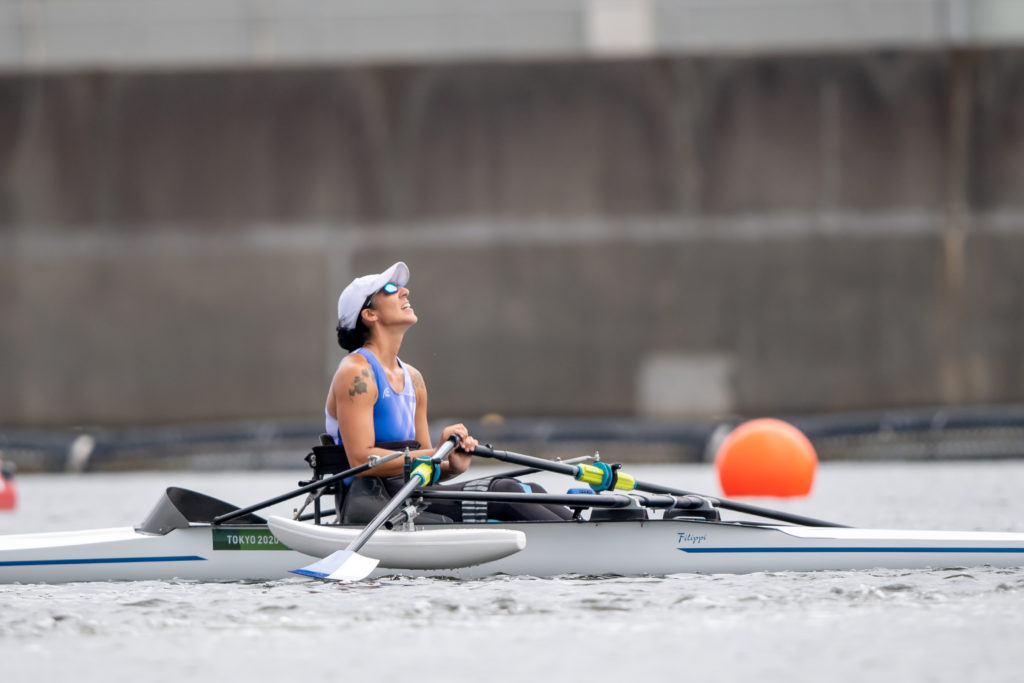
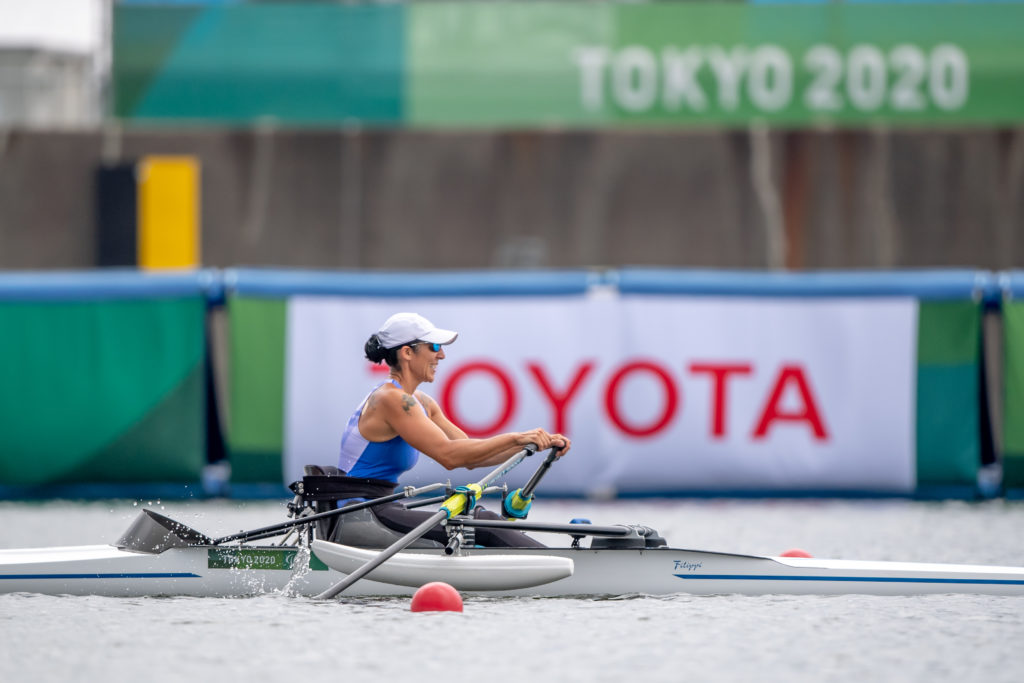
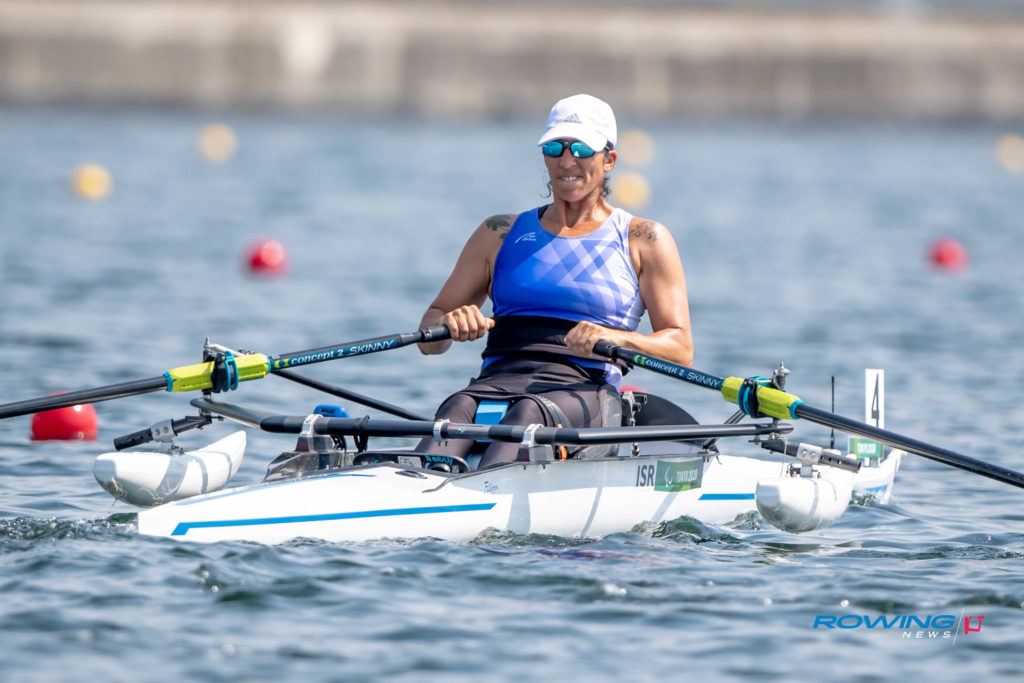
Her biggest challenge was going to come from Israel’s Moran Samuel, who is always a favorite to reach the podium and holds a bronze medal from 2016. Samuel won her first heat, but was relegated to the rep because of an equipment infraction and had to race an extra day.
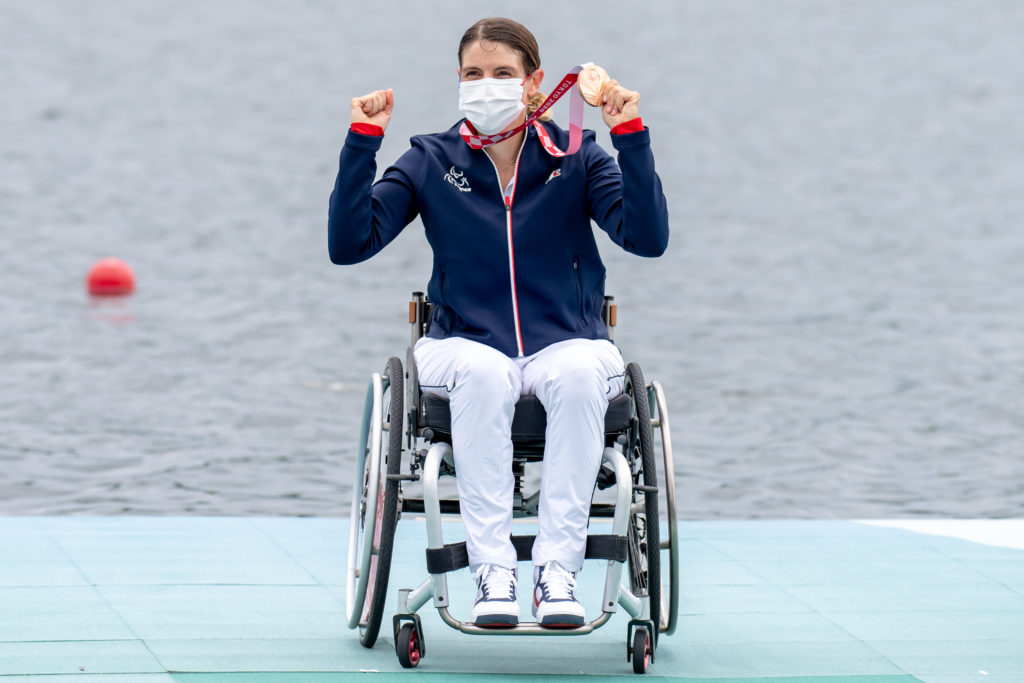
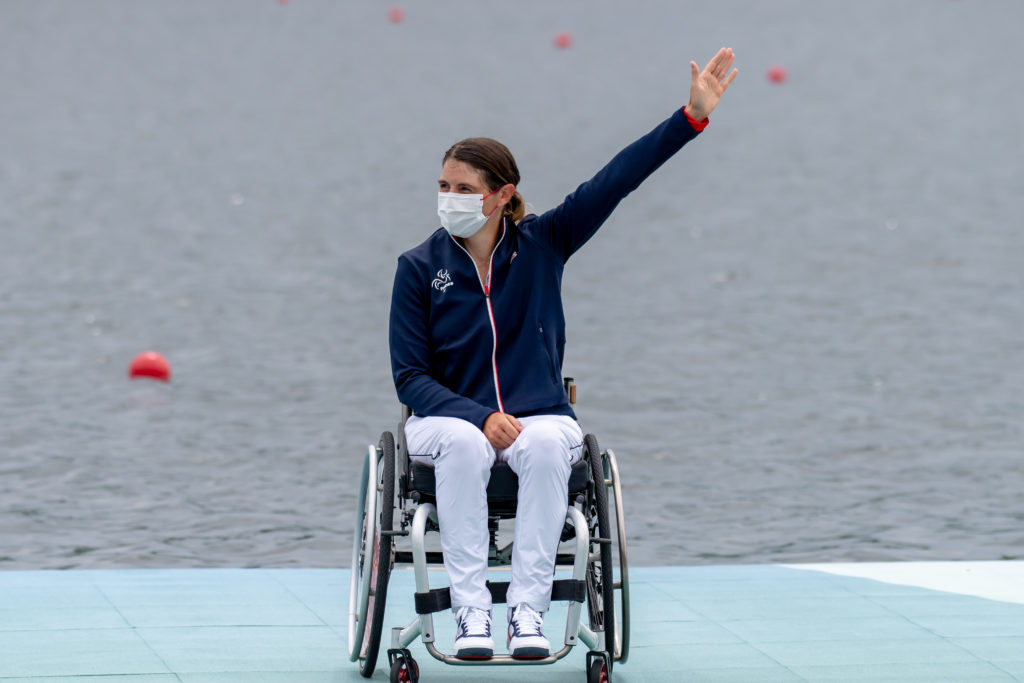
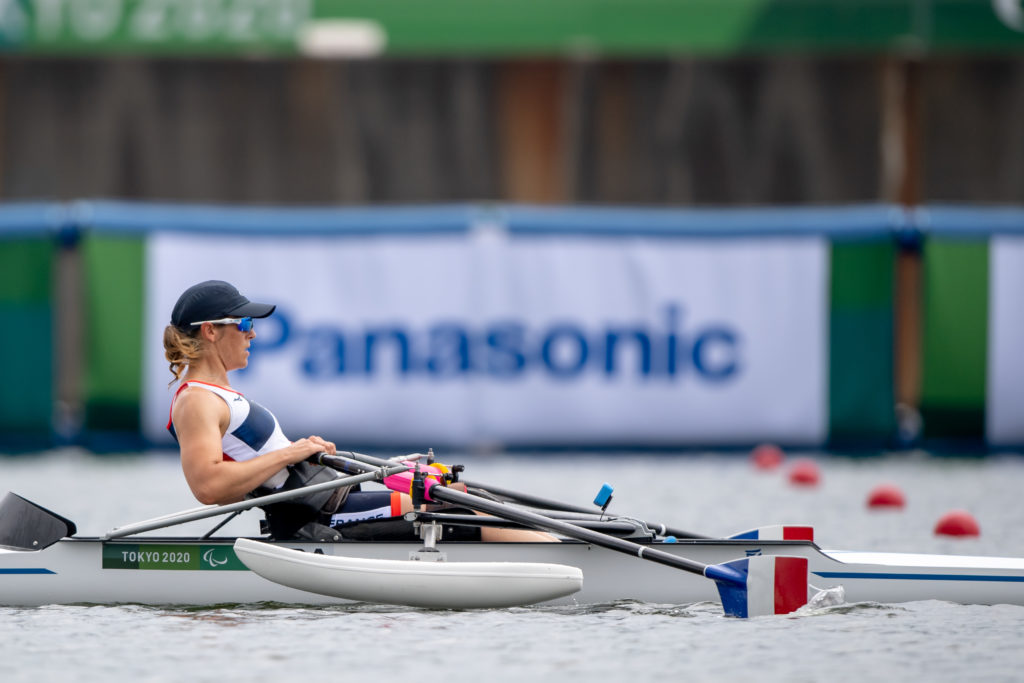
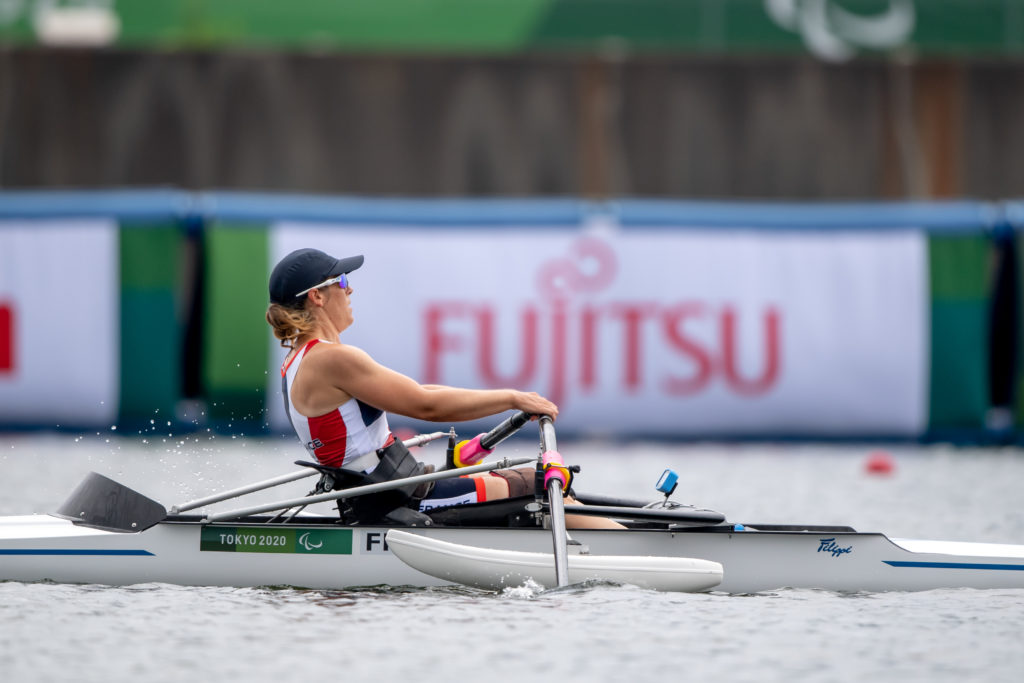
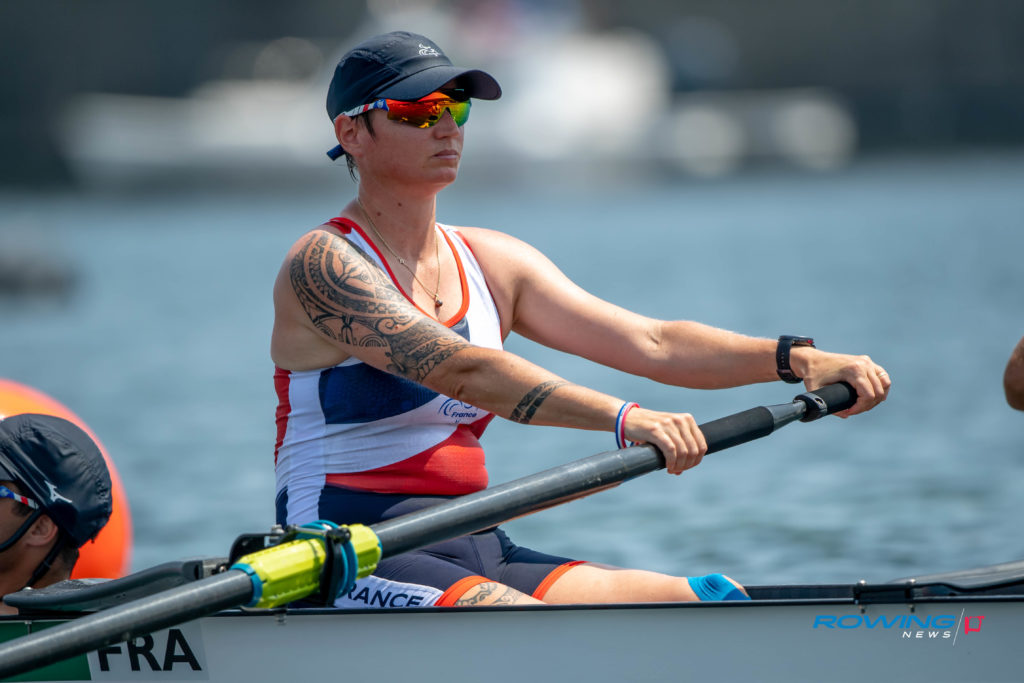
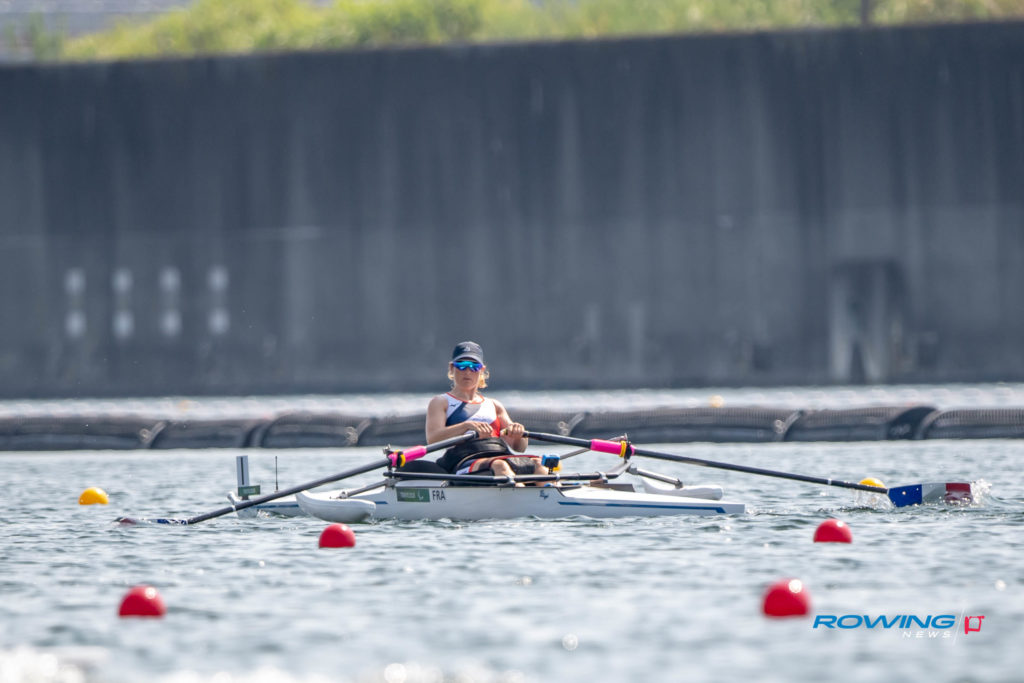
But she held close to Skarstein through half of the race before the Norwegian pulled away and won with an open water lead. Nathalie Benoit of France took bronze.
While it was not a gold medal, Samuel was later quoted saying in a radio interview that she had promised her two children that she was going to bring home a medal.
“I promised my children that mom would be coming home with a medal,” Samuel said. “It was a tough morning in the rowing site, with winds that wanted to prevent us from breaking a world record, but it was a good race with a good result.”
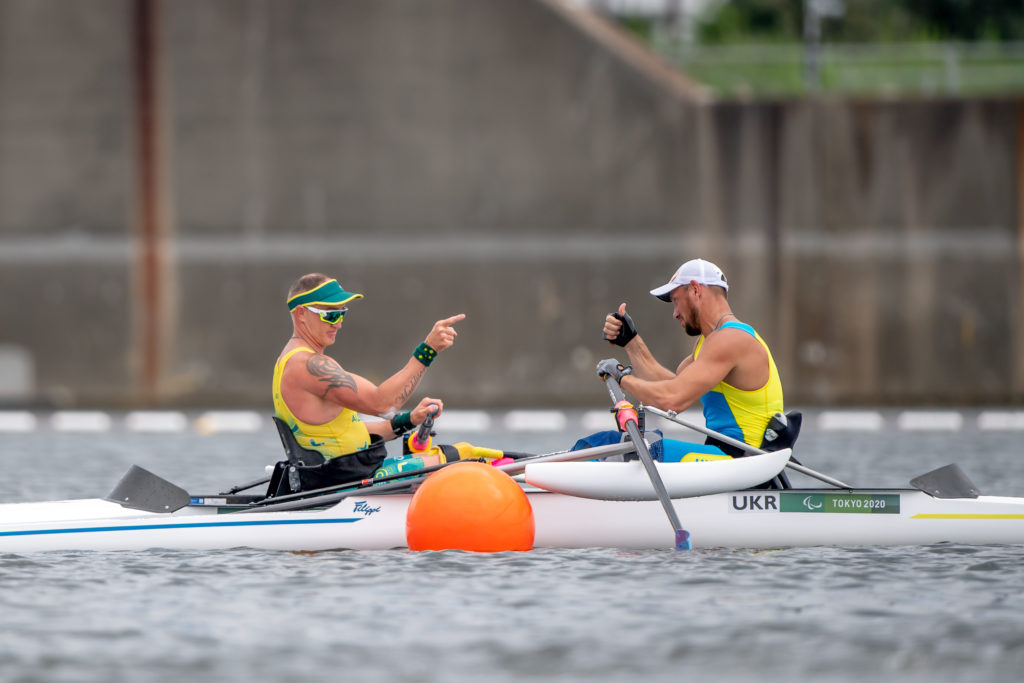
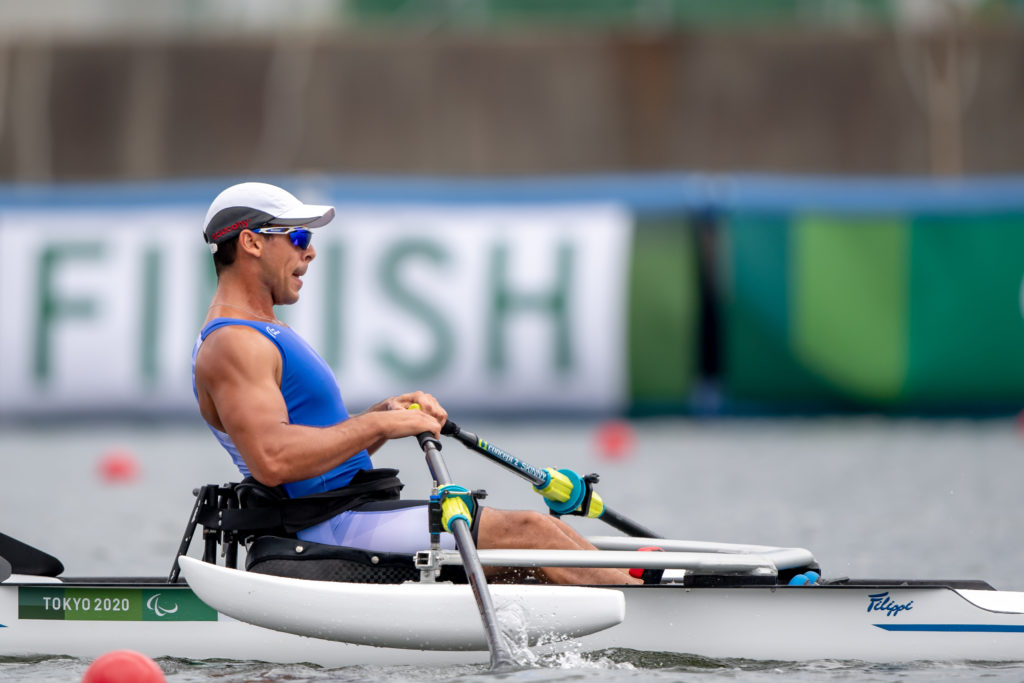
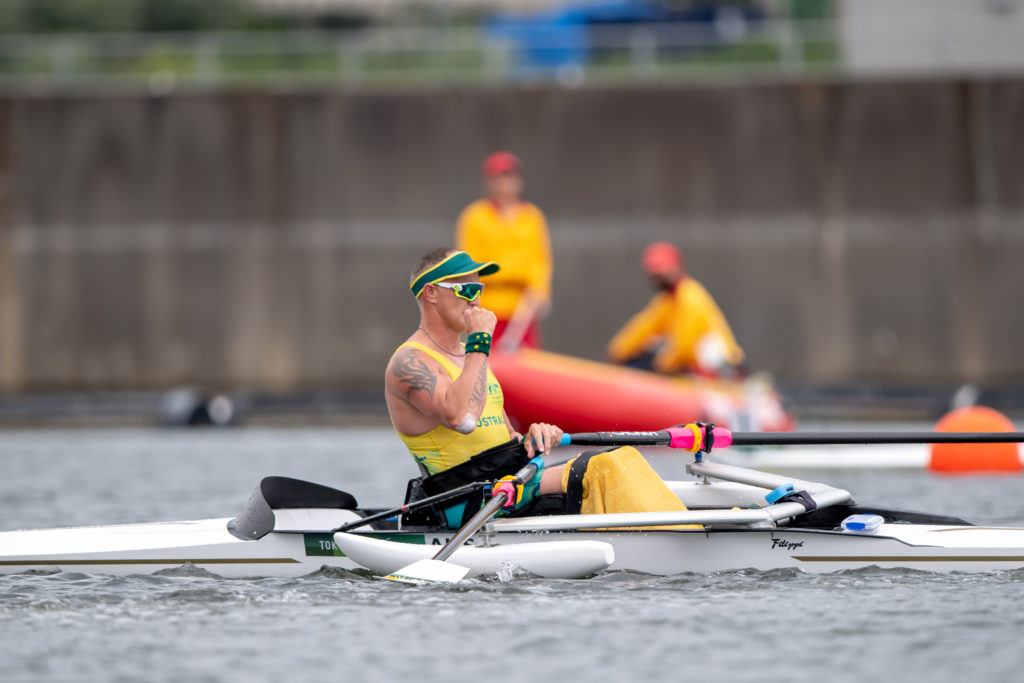
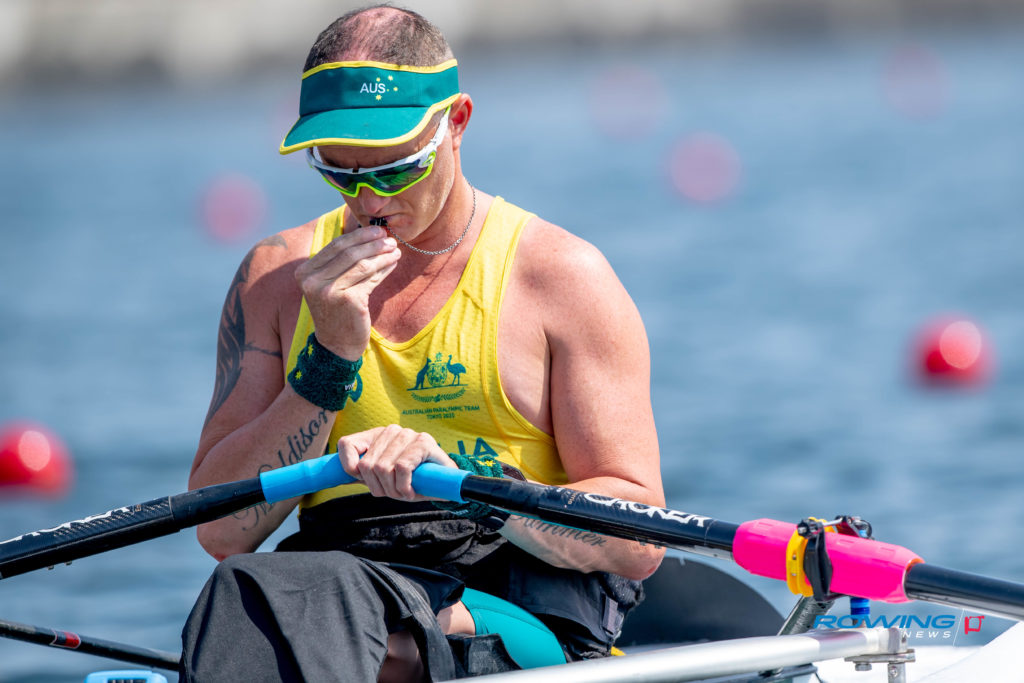
In the men’s single, the row-off was bound to be between Horrie and Polianskyi. The Ukraine sculler beat Horrie in Rio, but Horrie won both the 2017 and 2018 World Rowing Championships. Polianskyi, returned the favor in 2019 and won in Austria at the World Rowing Championships.
But the two had not rowed against each other until now.
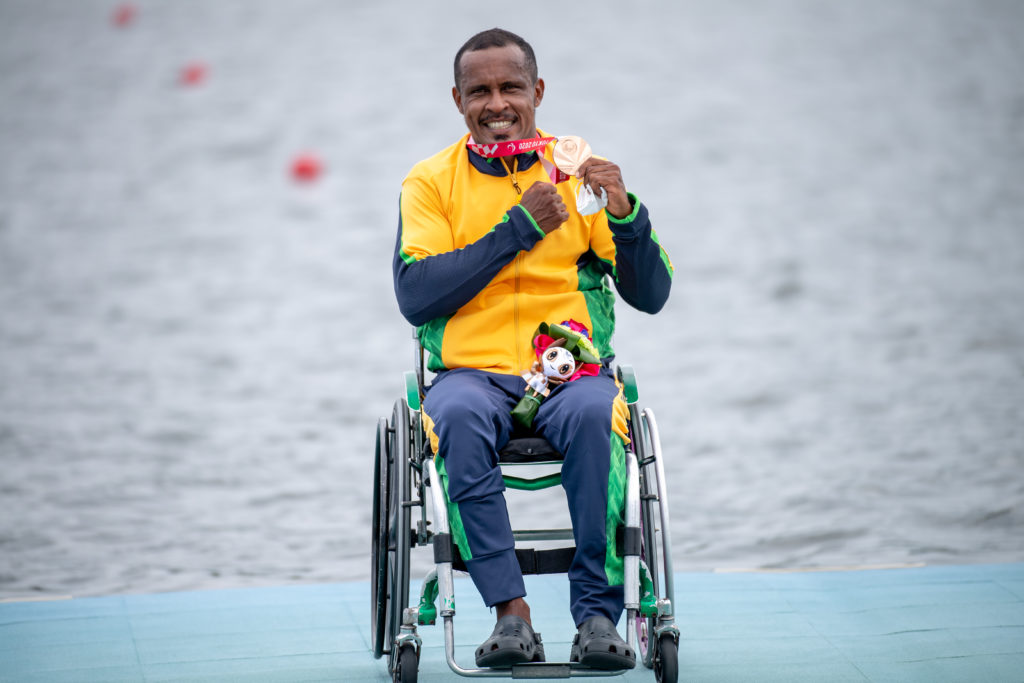
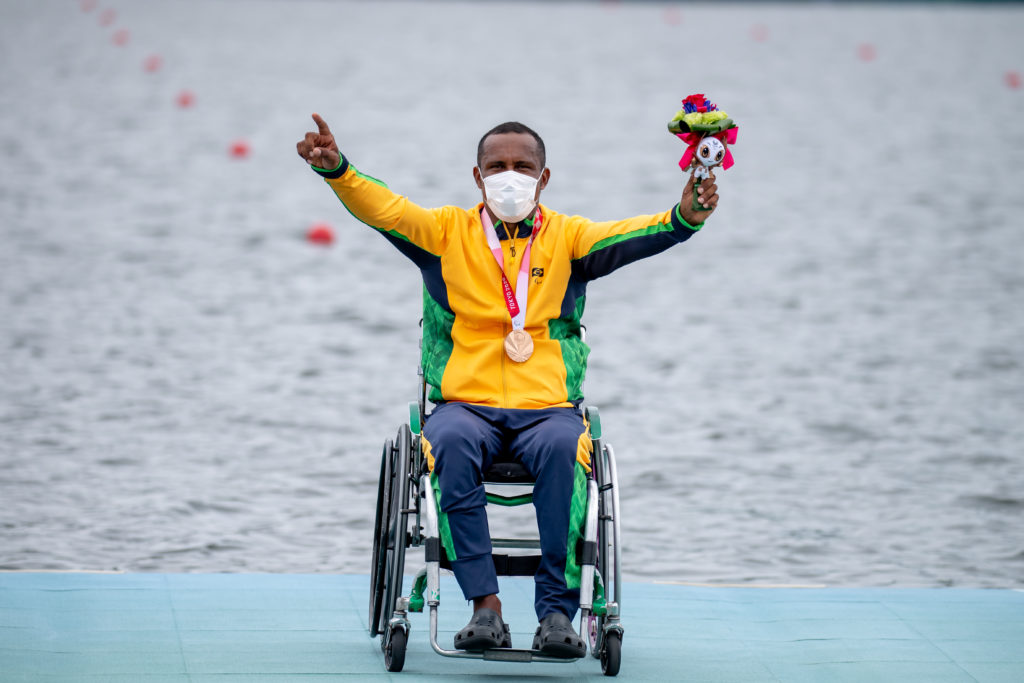
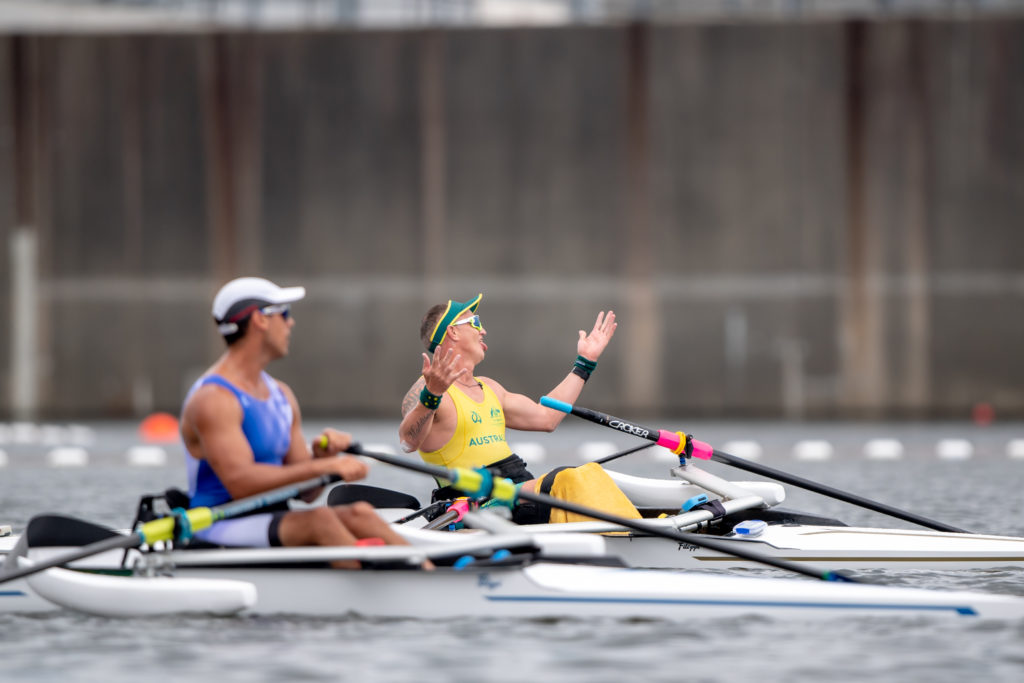
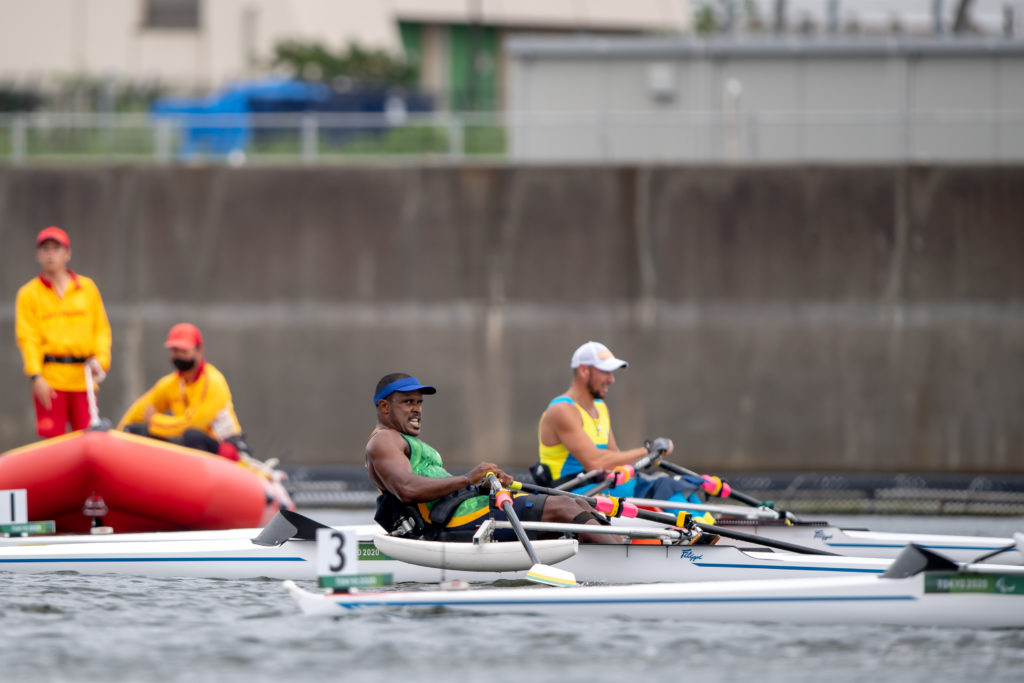
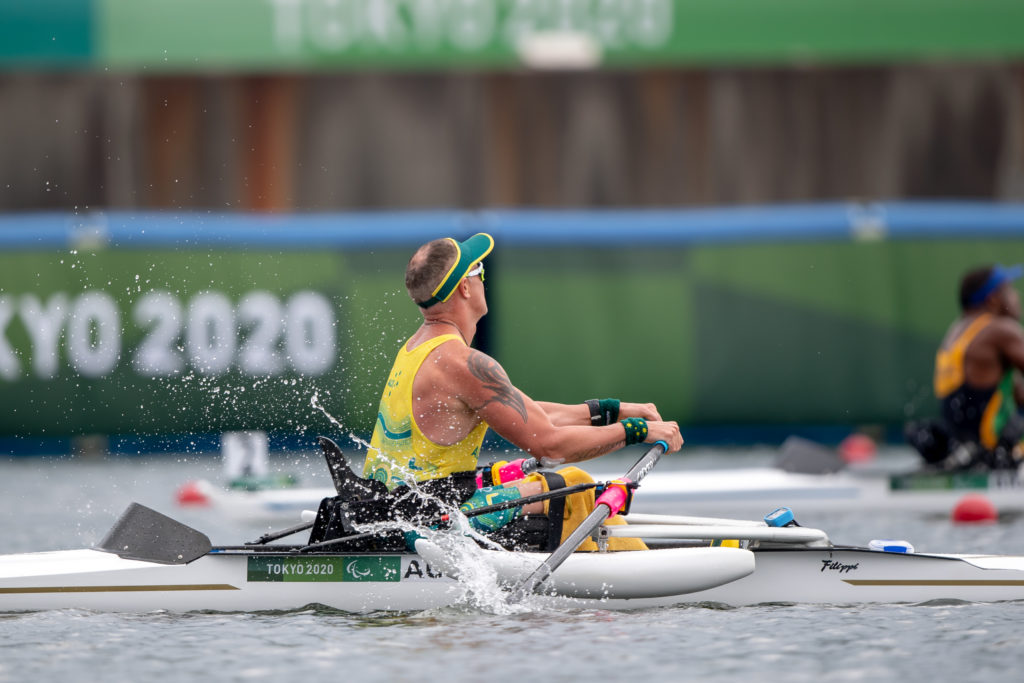
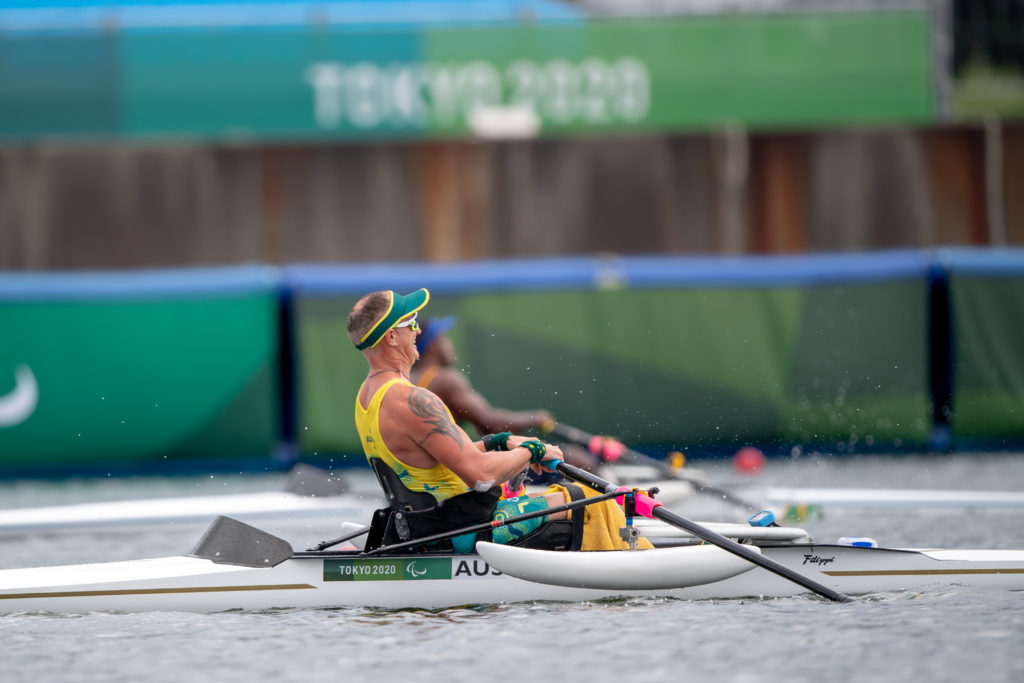
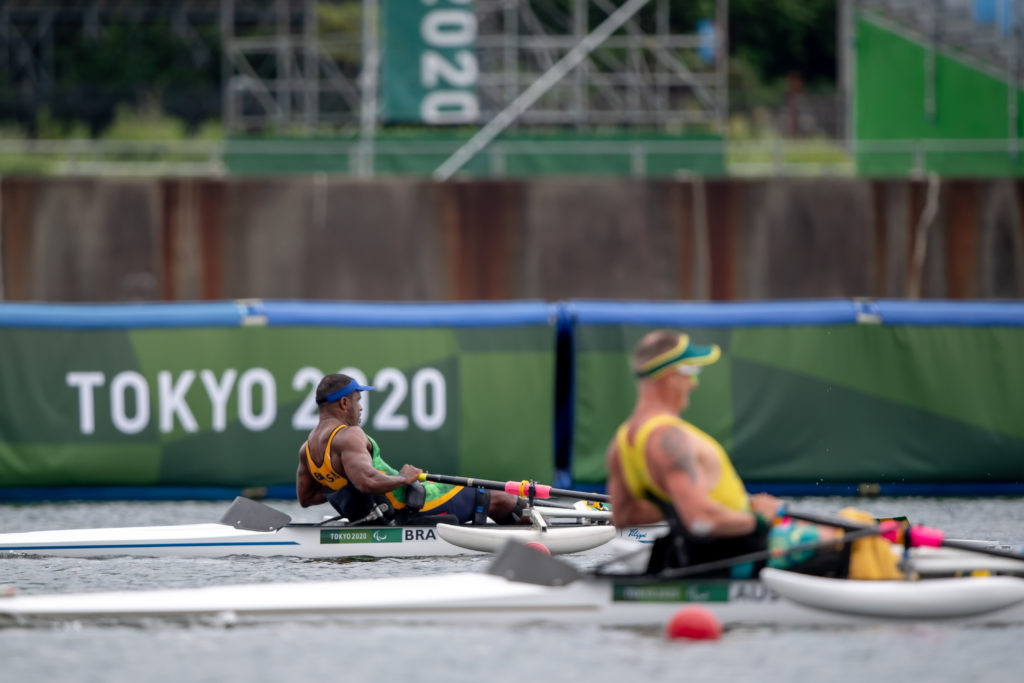
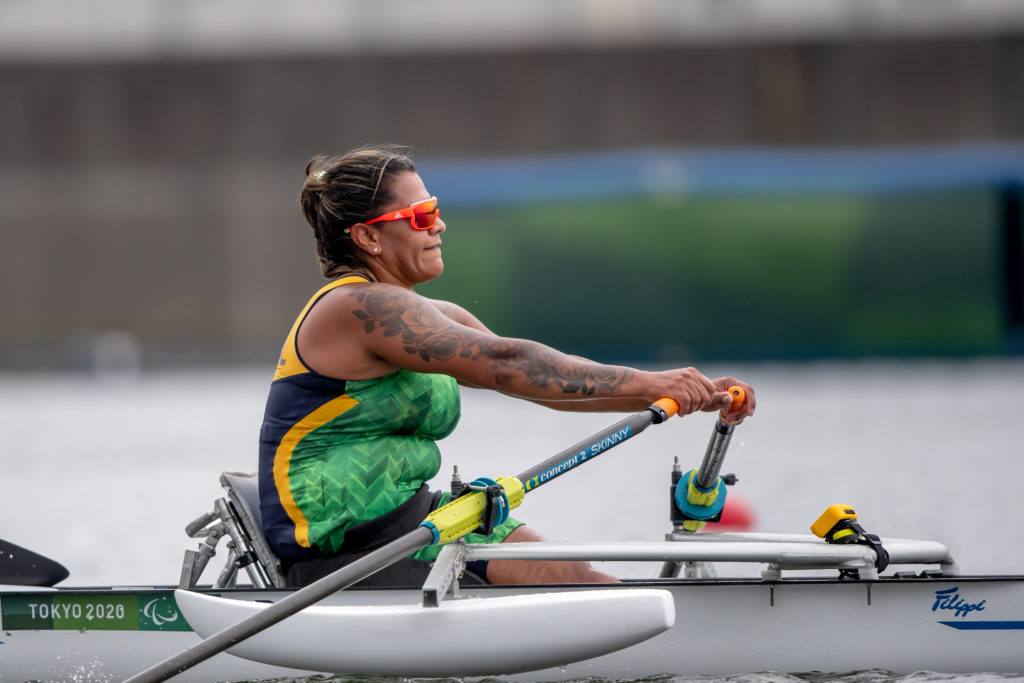
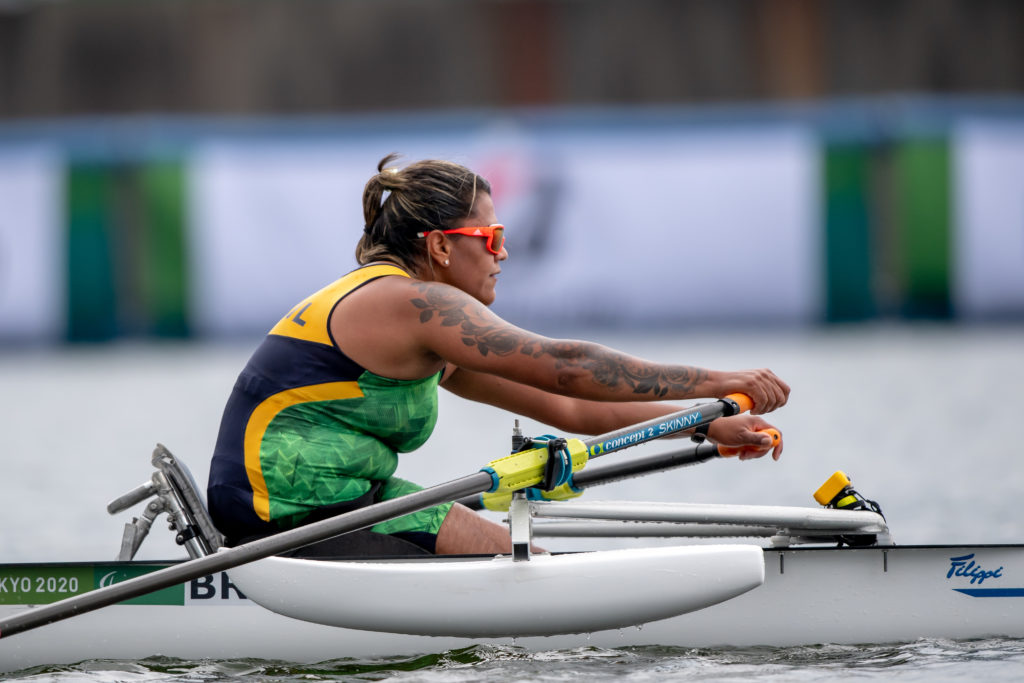
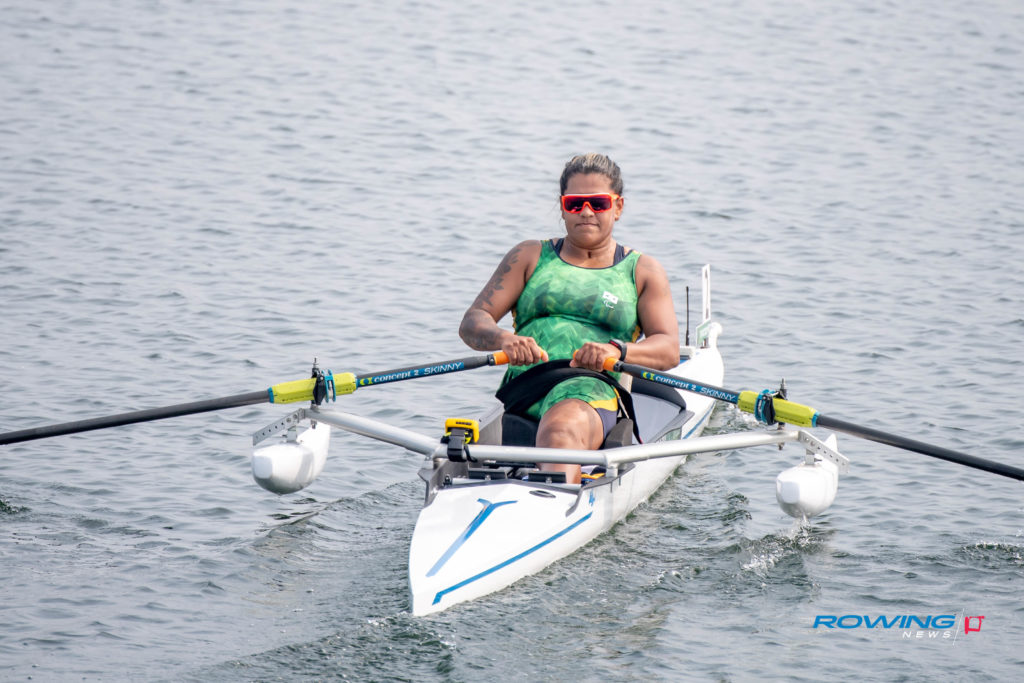
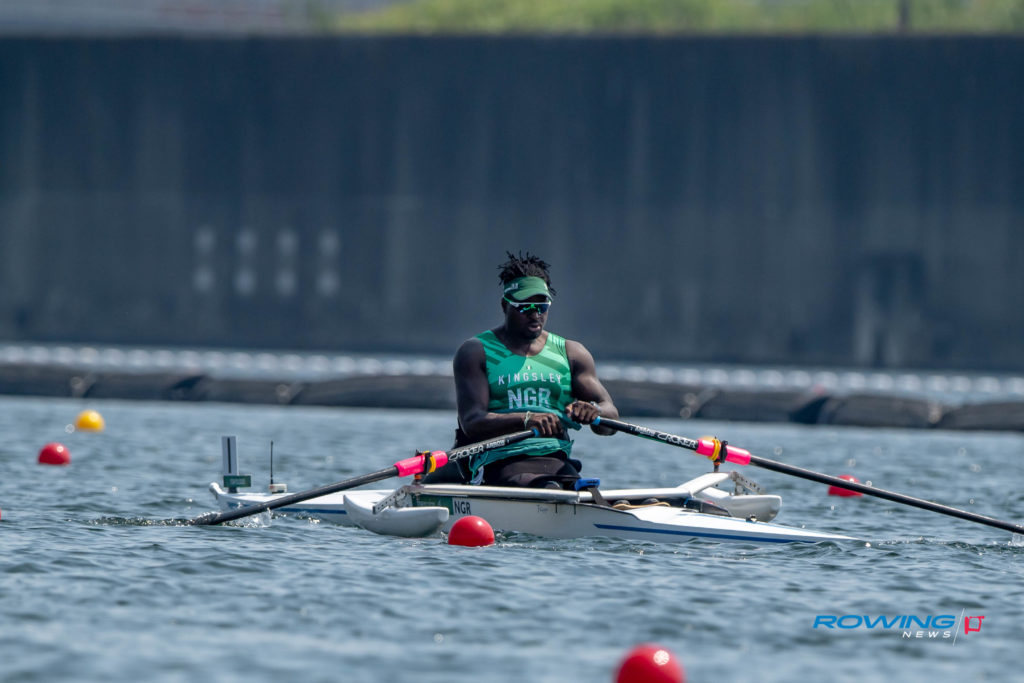
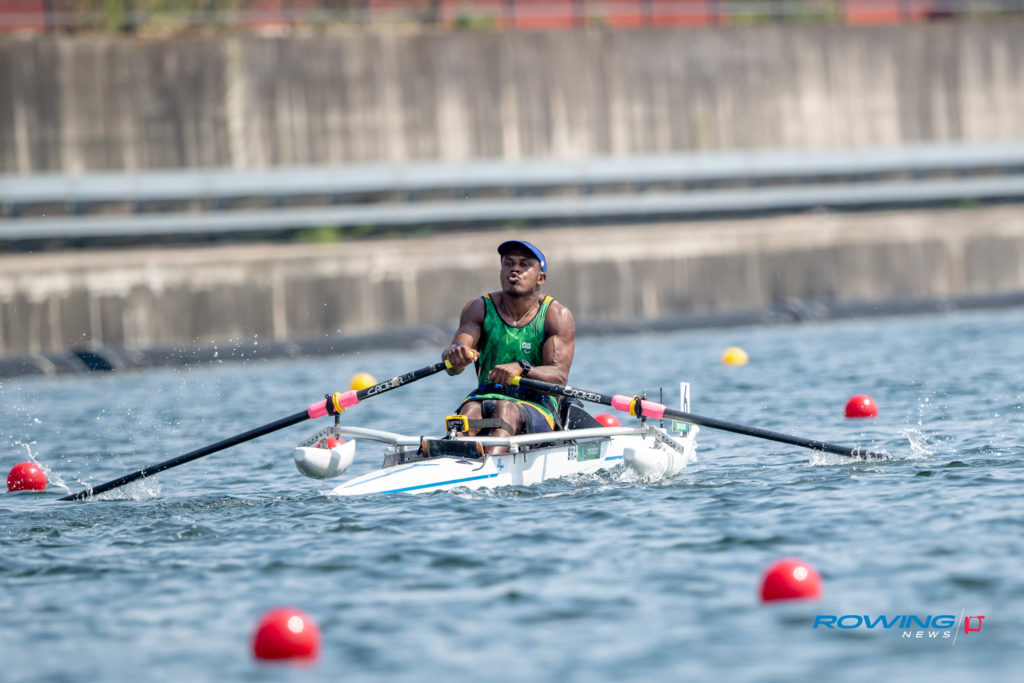
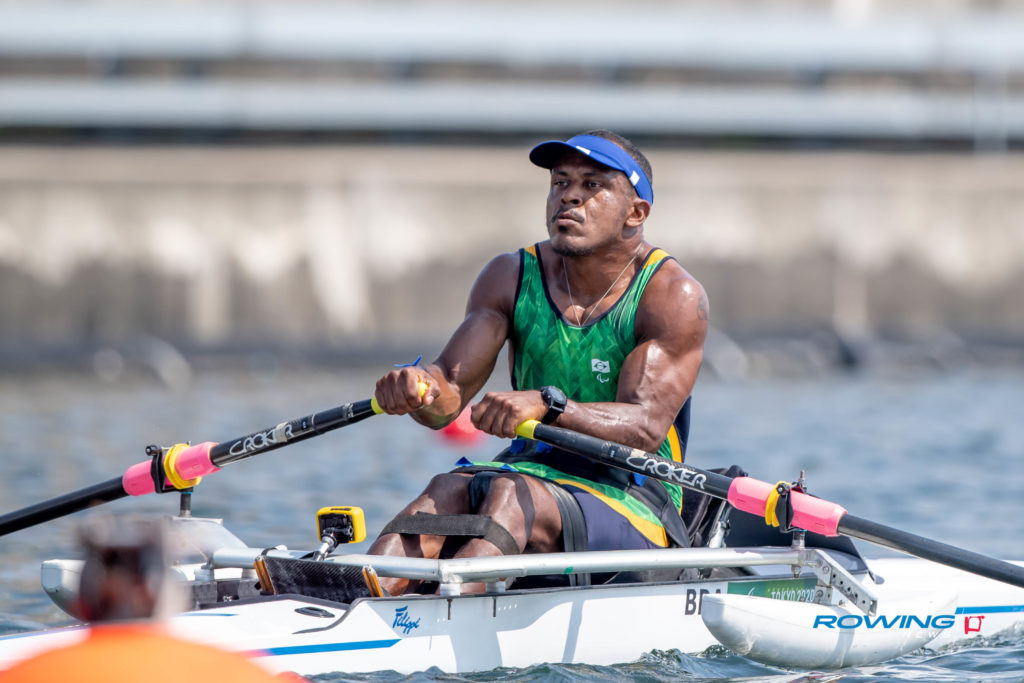
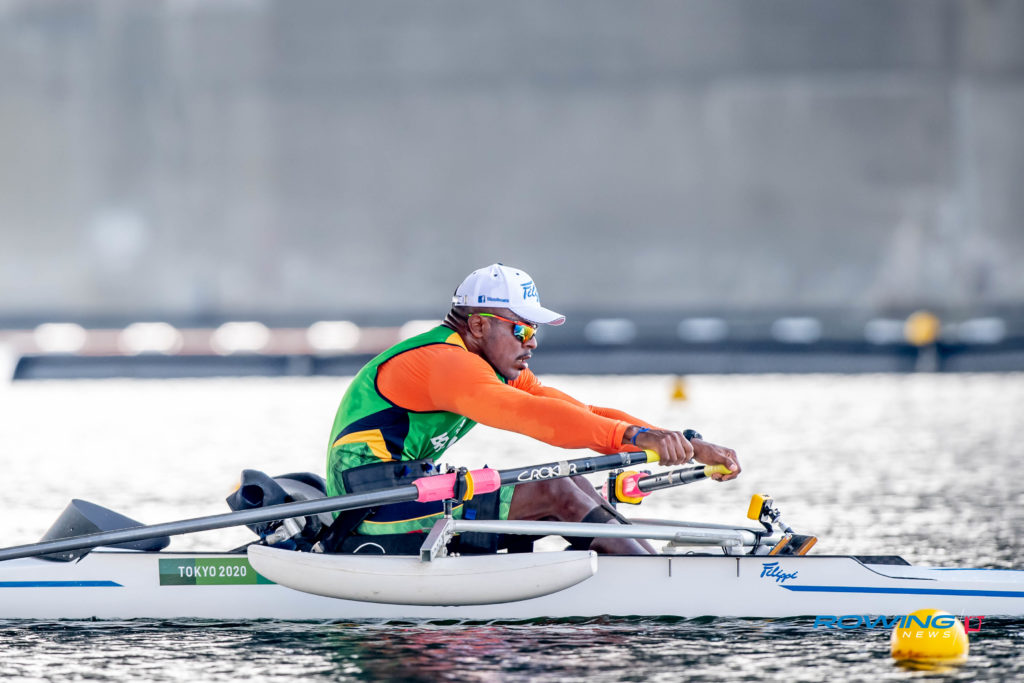
Polianskyi led from the start and finished with an open water lead. But the biggest fight in the final was for silver between Horrie and Brazil’s Rene Campos Pereira.
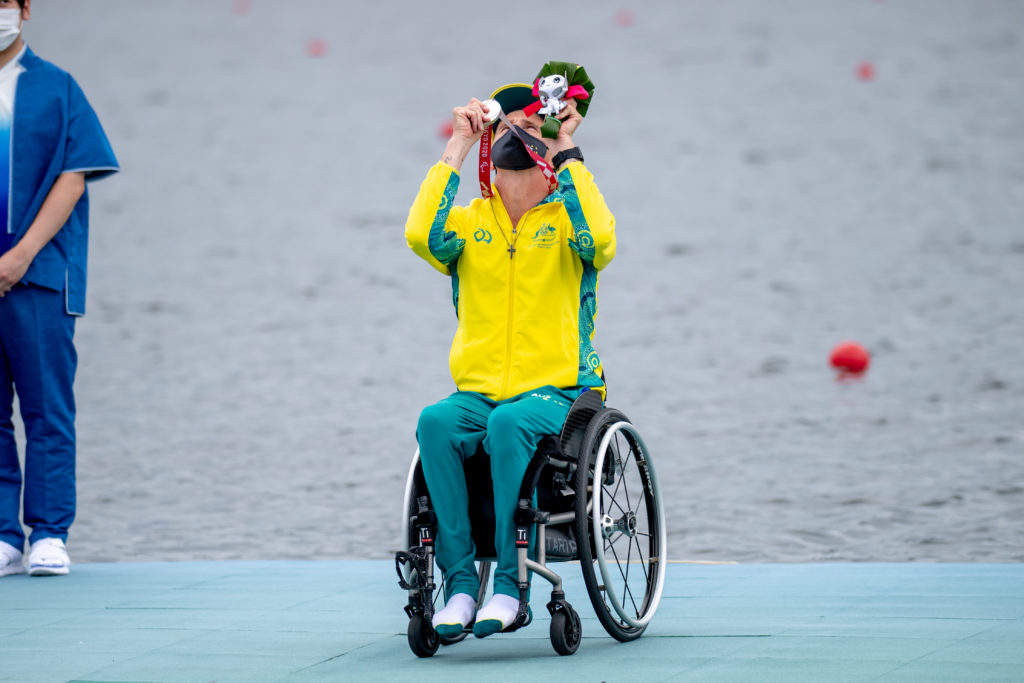
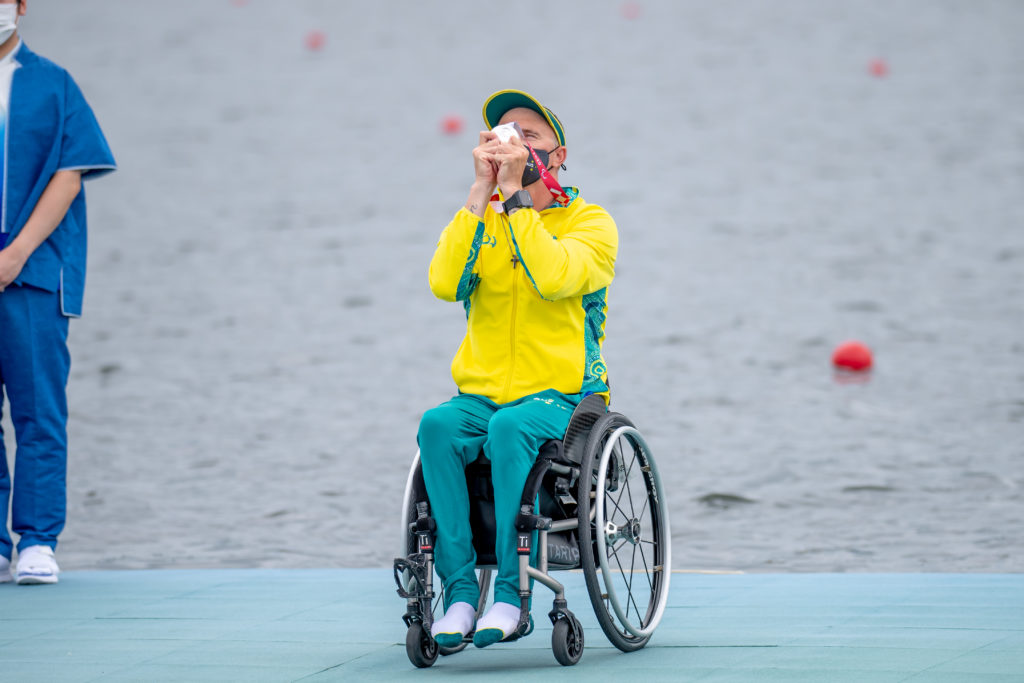
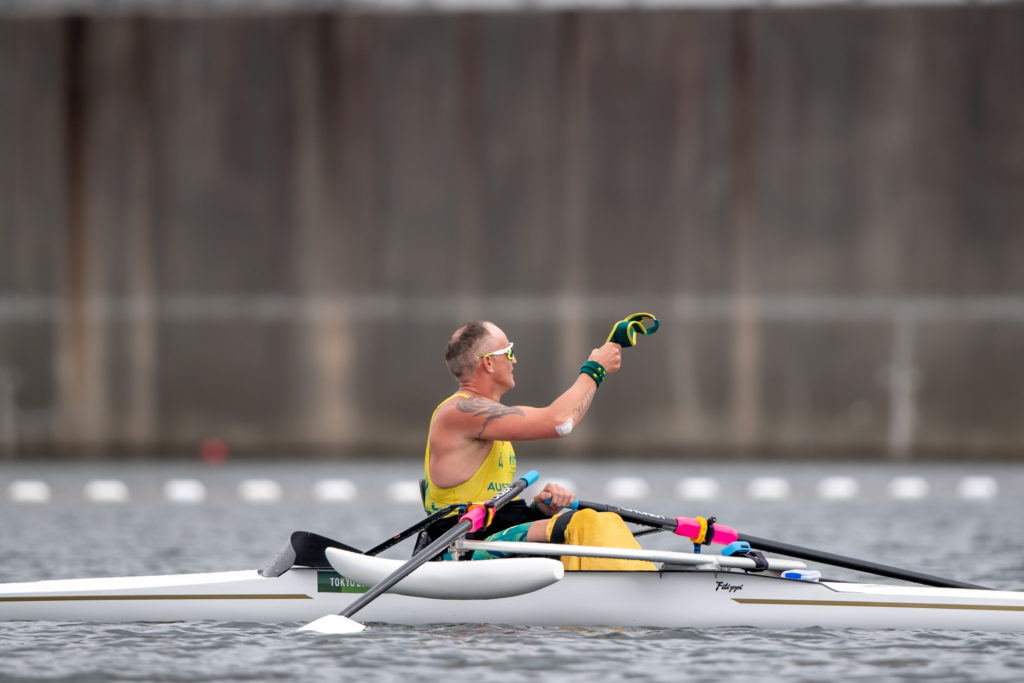
Horrie held and reached the line first earning a silver medal but Campos Pereira held third and made the podium with bronze. Horrie later said that, like Samuel, he was planning on bringing his medal home to his children.
“I’ve got the three kids and now there’s a silver each,” Horrie was quoted saying in a news report. “This one means a little bit more to me because it’s my son’s [Luigi] ninth birthday today. “He was born when I was in London at my first Paralympics, so this one certainly means a lot. I hope this medal will show him what the sacrifice is all for, and hopefully shows the kids never to give up and to believe in yourself,” Horrie said.
For the three American crews in the B finals, it was tenth overall across the board.
In the opening race of the final day of the Games, Hallie Smith finished fourth in her final of the women’s PR1 single with a time of 13:55.87. Kim Sejeong of the Republic of Korea took the first place position in the event finishing seventh overall 1:37.04 ahead of Smith.
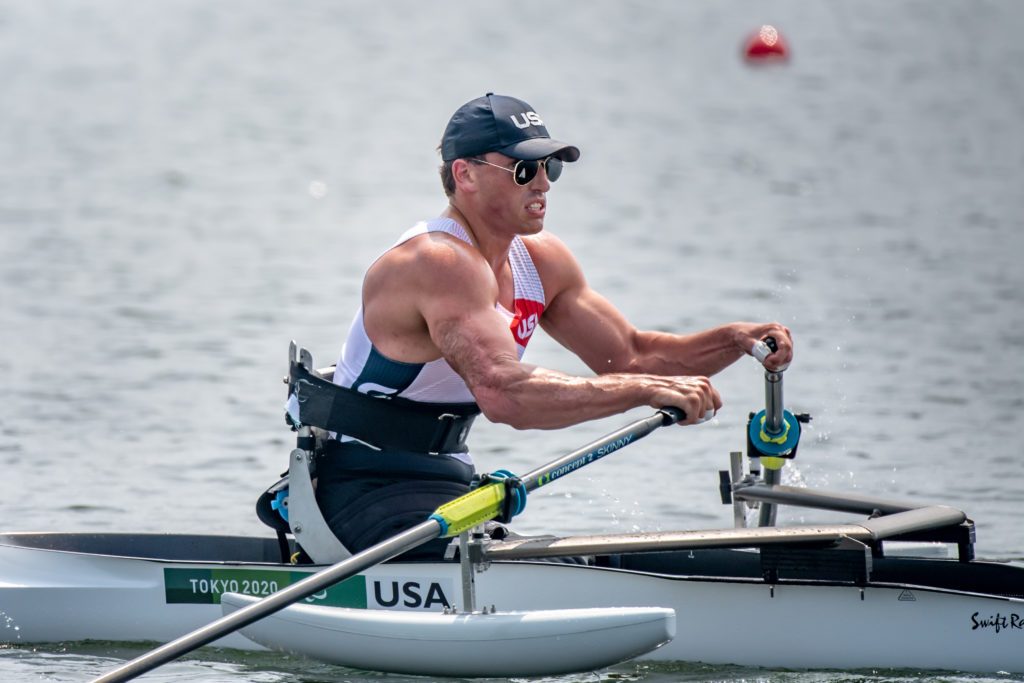
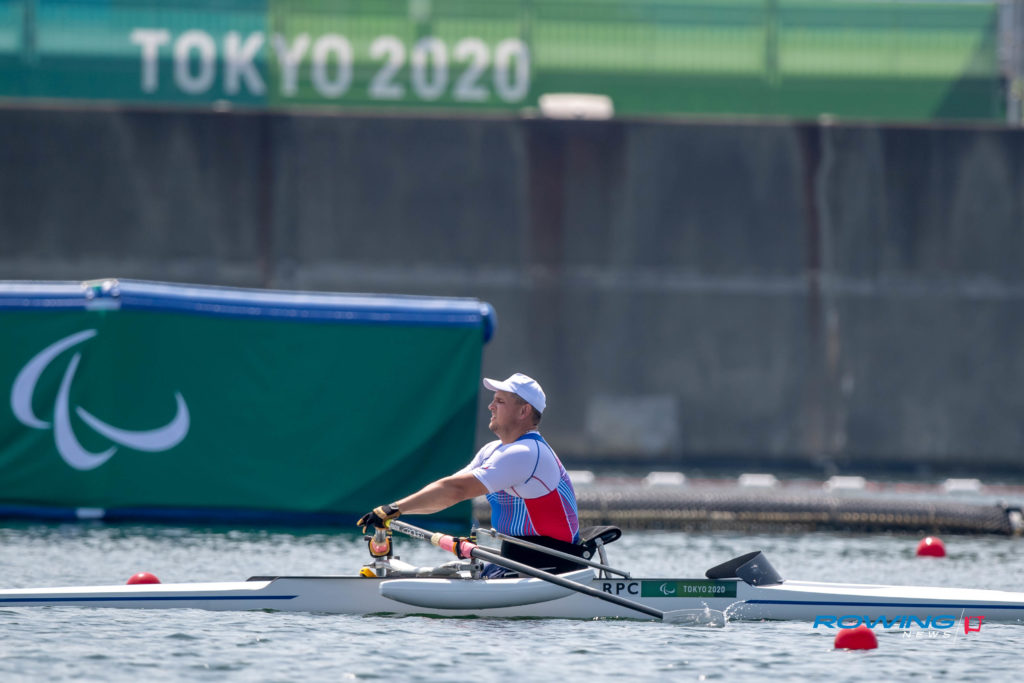
It was a similar case for United States two-sport Paralympian Blake Haxton who also finished fourth in the men’s PR1 single earning the tenth overall slot for the regatta. Haxton will race in the VL2 Paracanoe event in Tokyo next week.
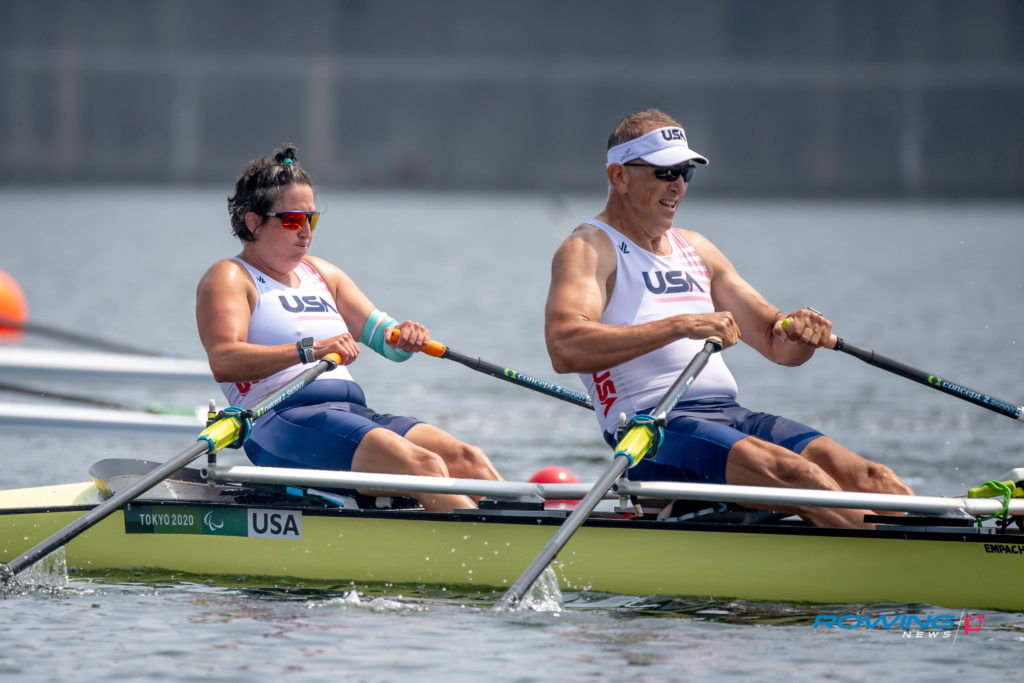
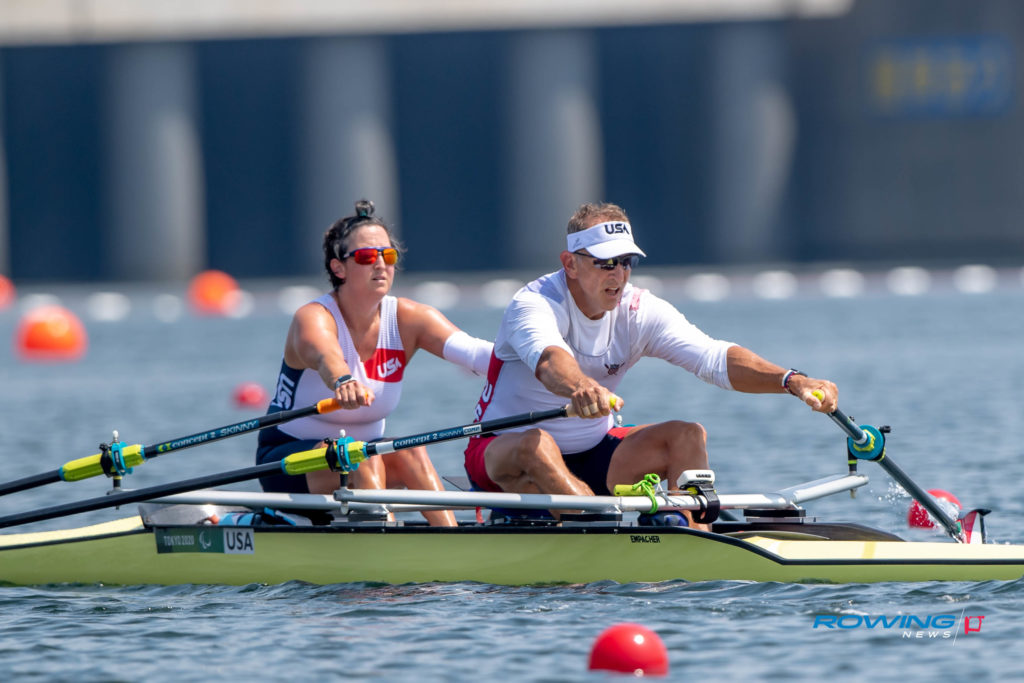
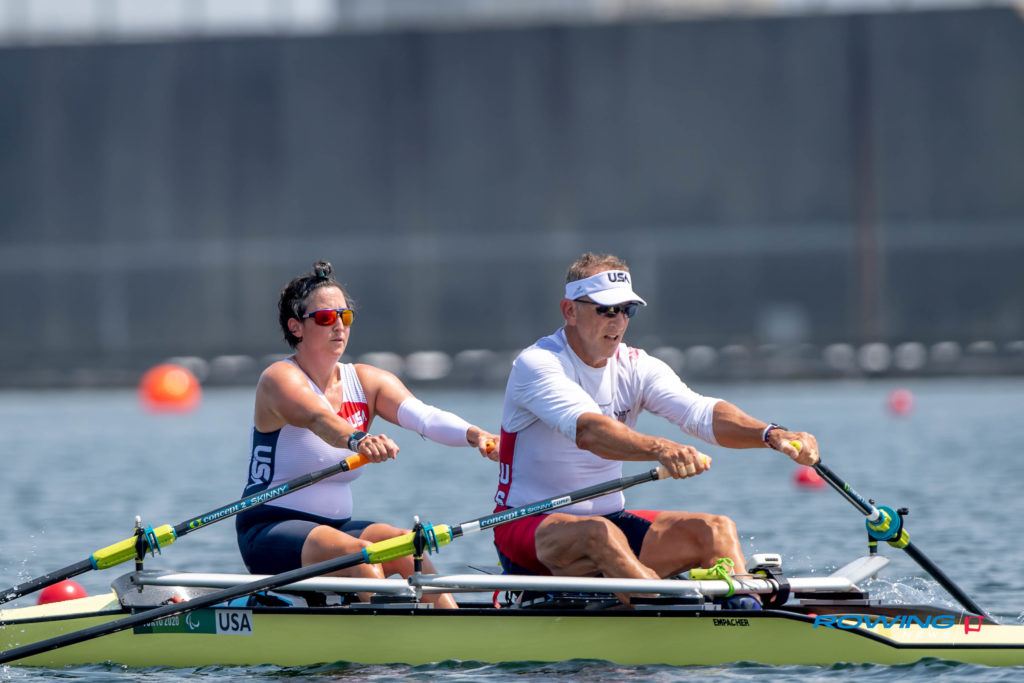
For the PR2 mixed double entry of Russell Gernaat and Laura Goodkind, they too kept in line with Haxton and Smith and placed fourth in their B final finishing tenth overall.
“It’s a packed field, a lot of competition,” said Gernaat. “Brazil and Australia beat us by like 20 seconds [at the 2019 world championships], but not today, not yesterday. We’ve really closed that gap. So I feel good about our racing overall, we’ve come a long way and still looking for more improvement. I definitely want to go to France [for the 2024 Paralympic Games] and see if we can put a bid in for a medal.”
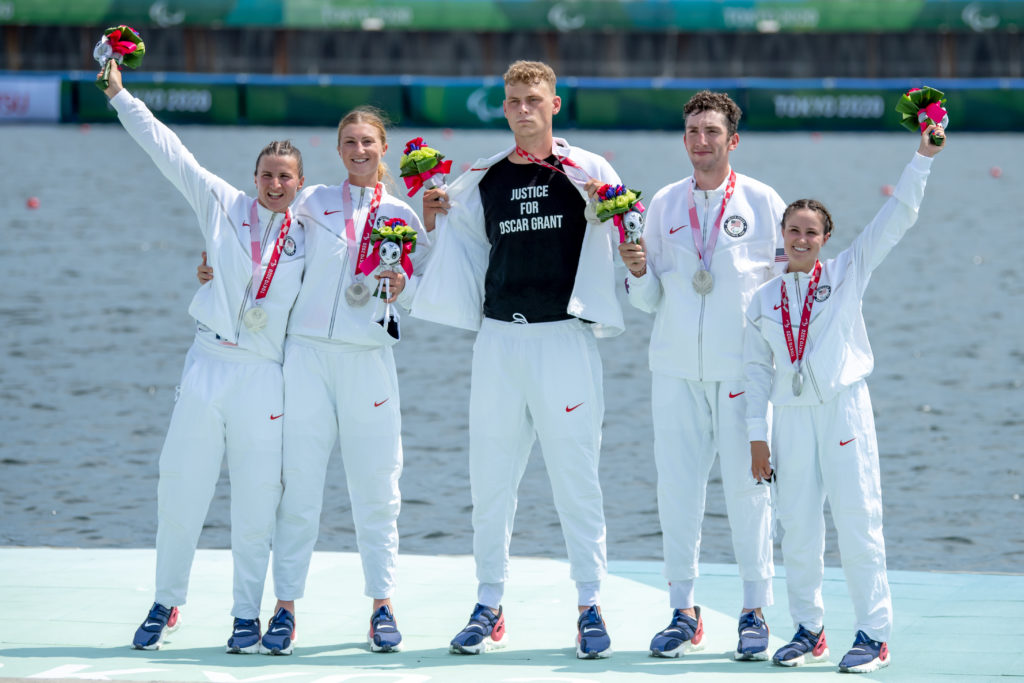
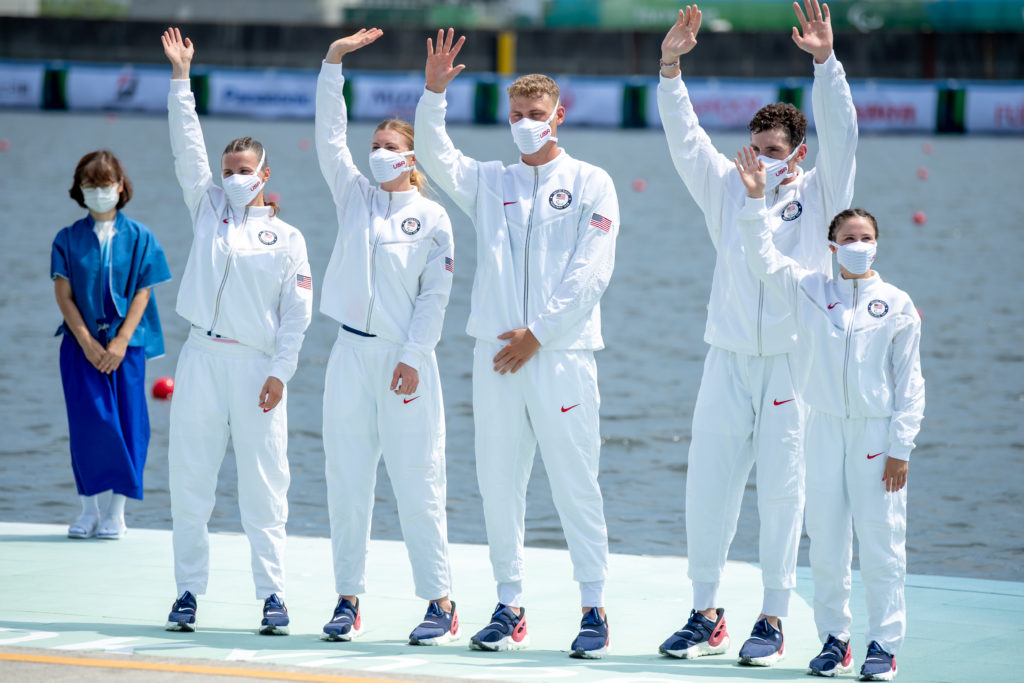
TOKYO, JAPAN – United States Paralympic rower Charley Nordin took a moment during the medals ceremony at the Tokyo Paralympics Sunday afternoon to protest the shooting death of a Black man by a transit police officer on News Years’ Day 2009.
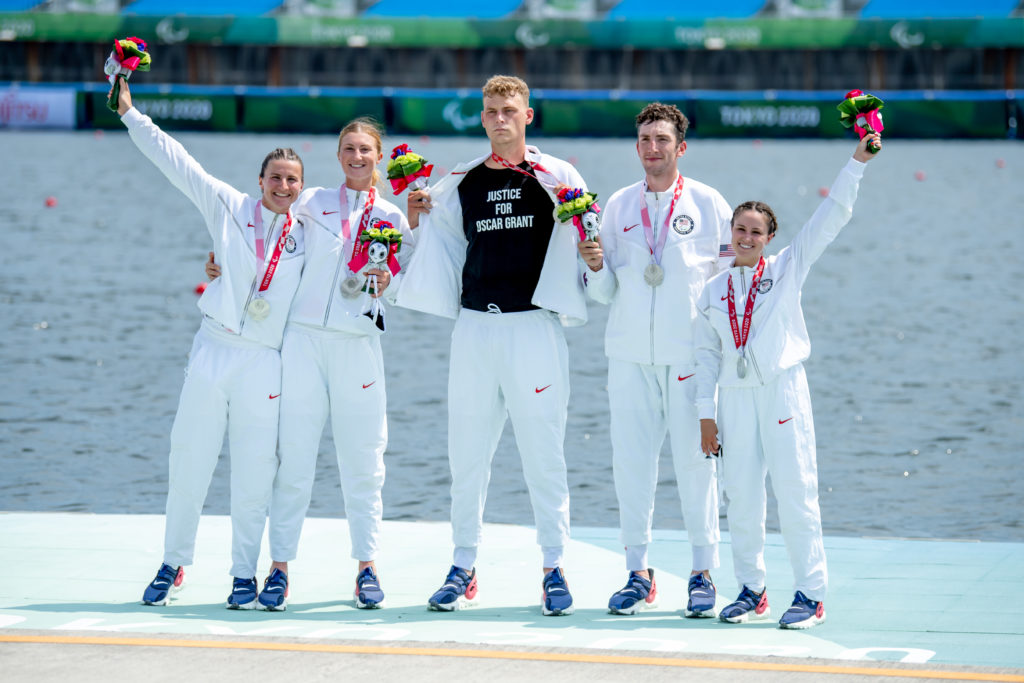
Sunday, just after being awarded a silver medal at the Tokyo2020 Paralympics, Nordin, while standing with his teammates and holding flowers after medals were awarded, and the British national anthem had concluded, unzipped his podium jacket and revealed a black T-shirt that read, “Justice for Oscar Grant.”
Later, while meeting the media in the post-race media mix zone, Nordin, a Bay Area native said the Grant case struck close to home and he wanted to bring attention to the case.
“Oscar Grant was murdered,” Nordin said. “The police officer that shot him while he was handcuffed, facing down only served 11 months. It’s not justice. It’s representative of a corrupt system in America that has been oppressing and murdering minorities for all of our history and I wanted to raise awareness to that,” he said.
“Being from the Bay Area, it hit especially close to home and, yeah, I just wanted to show Oakland that I’m still here for them and I’m still representing them, and that there hasn’t been justice, and that his name deserves to be known.”
While Nordin stood with the shirt visible, his teammates beamed in the spotlight of the Paralympic celebration. Asked later if they were aware of Nordin’s intended action, boatmate John Tanguay said they were.
“We’re all one hundred percent behind Charley in this. So, we also support him.”
So is the United States Rowing Association. In a statement sent to Rowing News, USRowing CEO Amanda Kraus said: “We’re incredibly proud of Charley Nordin and the rest of his crew that captured the silver medal yesterday at the Tokyo Paralympics. Charley used the medal ceremony as an opportunity to express his views and USRowing stands fully behind his right to protest just as we support all of our athletes’ freedom of expression.”
The case, while over a decade old, was thrust back into the spotlight Aug. 19 when the California Department of Justice announced it was opening an investigation into the shooting of 22-year-old Oscar Grant, as he lay face down on a platform at the Fruitvale BART Station in Oakland, California.
Johannes Mehserle, the officer who shot Grant, was found guilty of involuntary manslaughter in July 2010 and served 11 months in county jail. A second BART police officer, Anthony Pirone, was not charged in the shooting but was fired from the department after an internal investigation.
It is his role in Grant’s death that is the subject of the review and comes at the request of Grant’s mother, Wanda Johnson, the BART Board of Directors, the Justice 4 Oscar Grant Coalition, and several other local community leaders.
Rowing News contacted the United States Olympic and Paralympic Committee (USOPC) for comment. There has been no immediate response.
Olympic protests have been in the news this summer and have been the subject of discussion by both the USOPC and the International Olympic Committee in advance, and during the Tokyo2020 Games.
And there have been protests.
The IOC launched an investigation into a protest by Raven Saunders, 25, a U.S. shot-putter who won silver at the Tokyo Olympics.
Saunders raised her hands and crossed them in an X while posing for a photo on the medal podium. Moments later, U.S. fencer Race Imboden who won bronze in a separate venue appeared to flash a circled X on his hand while receiving his medal.
She told the New York Times that a group of Team USA athletes designed a plan to use the X symbol as their way of protesting.
An openly gay and Black woman Saunders has said that the X is meant to represent “the intersection of where all people who are oppressed meet.”
The IOC Olympic Charter Rule 50 that, until recently, barred athletes from participating in “political, religious or racial propaganda” was revised in July.
The rule now allows athletes to protest in a non-disruptive demonstration to “express their views,” while on the field of play, but not during competition or on the podium.
Following Saunders’ protest, the USOPC determined that Saunders’ action did not violate its rules.
In a statement sent to Reuters, the USOPC said Sunders did not break any rules, saying “Raven Saunders’ peaceful expression in support of racial and social justice” and was respectful of her fellow competitors and as such did not violate the USPOC rules related to demonstrations.
TOKYO, JAPAN – Israeli Paralympic single sculler Moran Samuel was preparing to rest Saturday after finishing first in her opening heat at the Tokyo2020 Paralympic Games Friday morning.
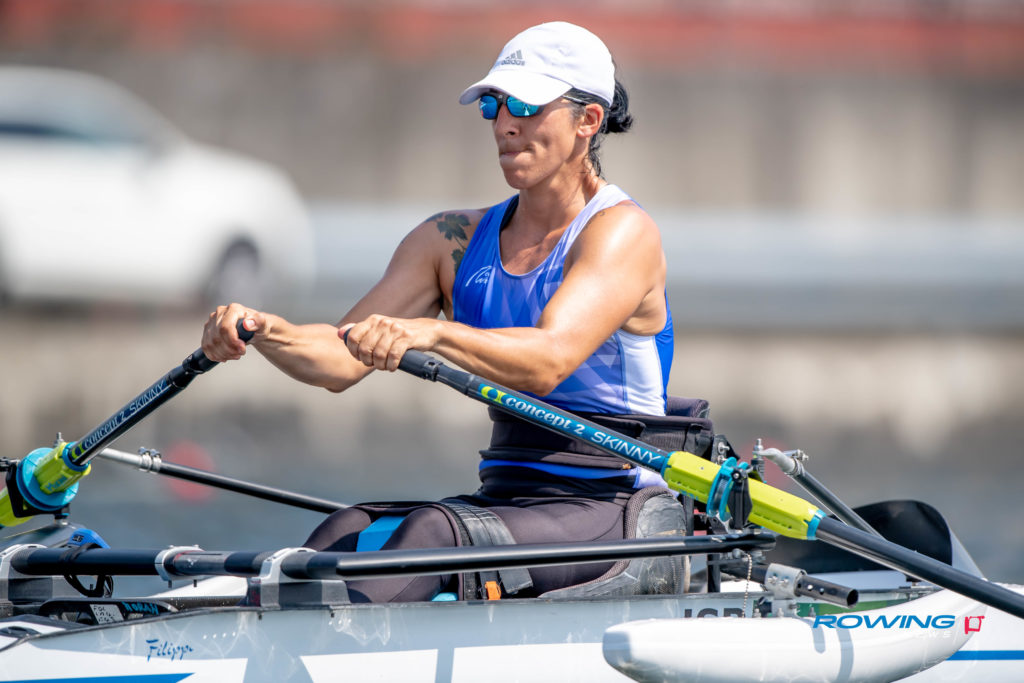
That was until later in the afternoon when she was notified that regatta officials had flagged an adjustment she had made in her PR1 singles’ fixed seat. World Rowing rules state that there can be no movement in a para singles’ seat, and the backrest on Samuel’s boat was observed to have the ability to be flexible and move.
After a hearing Friday afternoon, World Rowing relegated the 2016 bronze medalist to last place and placed her in an outside lane in the second of the PR1 women’s repechage Saturday morning.
It was not something Samuel was expecting or was prepared for. But without giving much thought to the problem other than fix the seat and get it inspected and approved for competition, Samuel went back to the start line on the Sea Forrest Waterway Paralympic racecourse and just did her race over again—winning for the second time—and advancing into the Sunday final without further question.
“In terms of my mental abilities, I think that there’s an opportunity to prepare for everything and I think that one of the most important qualities of athletes is to be able to put aside whatever is irrelevant is not going to help you perform,” Samuel said.
“So, in life and also in sport, I always try to look forward and put the past behind me. When it was announced that I cannot compete in the way I competed in the last few, and that I need to do some fixing of the chair, I accepted it for what it was, and I just have to put it behind and concentrate on what I came here to do.
“My goals and my performance,” she said. “I’m sure that maybe in 48 hours all the feelings will come. But for now, I’m just focused on my mission.”
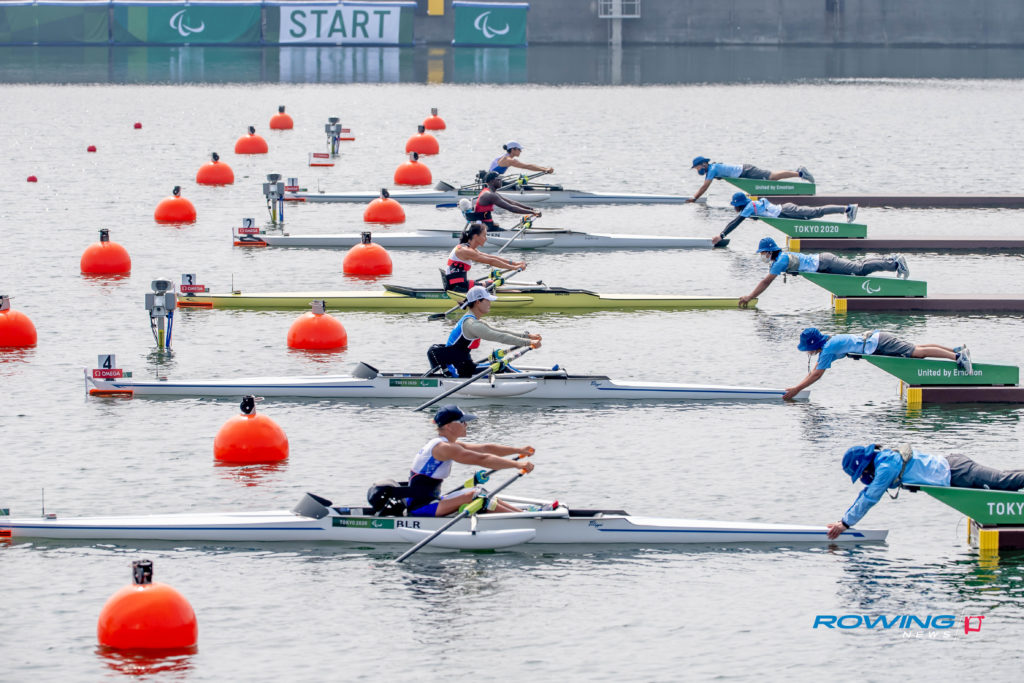
Samuel was among 12 crews that moved from the Saturday reps and into the finals, in what will be the complete conclusion of the rowing events of Tokyo2020. Races were contested in two heats each of the men’s and women’s singles, the mixed doubles, and the coxed mixed fours.
The U.S. had three crews in the hunt Saturday, but none advanced into a medal round race and will instead contend for places 8 through 12 in the B finals Sunday morning.
As it has been for both the Olympic and Paralympic rowing events the conditions consisted of cross winds early, head winds late, and blistering heat and humidity. But it did nothing to quell the level of competition with hard-fought racing the length of the 2000-meter course.
In the case of Samuel’s heat, she was clearly in control from the start, leaving the fight to be among the women behind her for the second advancing spot. “It was a little bit easier than yesterday in terms of conditions. The wind was not as strong as it was yesterday so for me it was easier to row and just prepare myself for tomorrow. I feel good with the result, of course.”
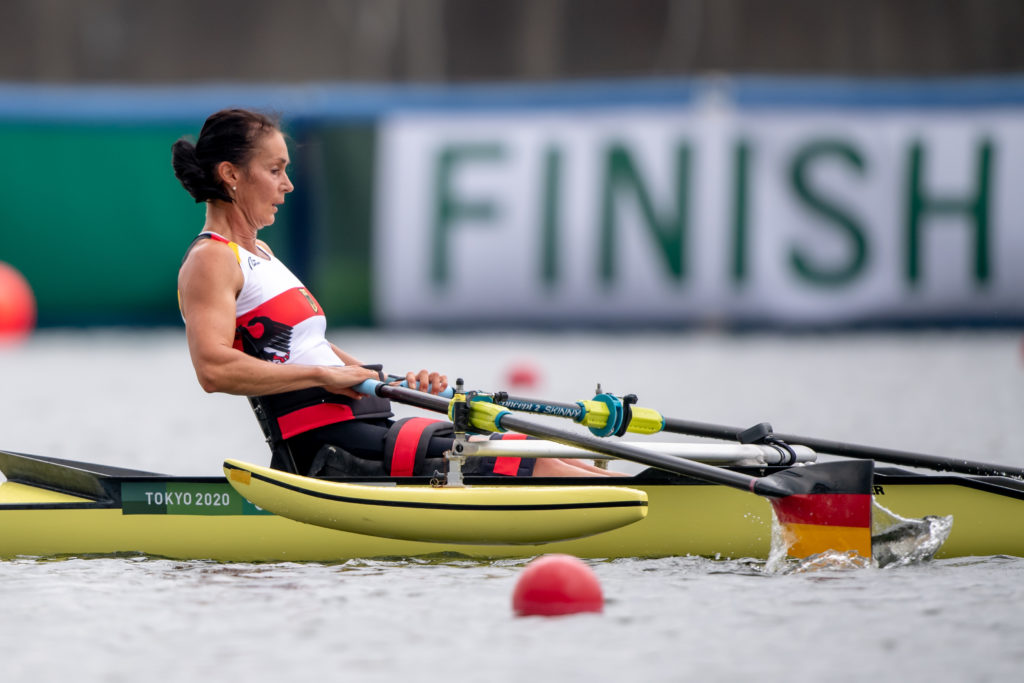
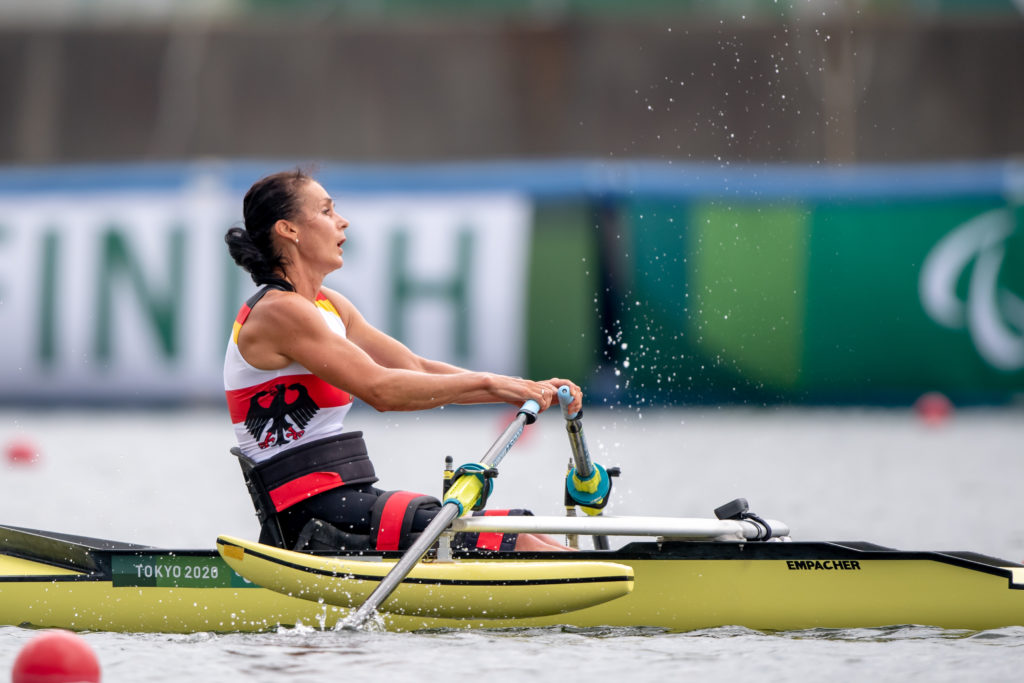
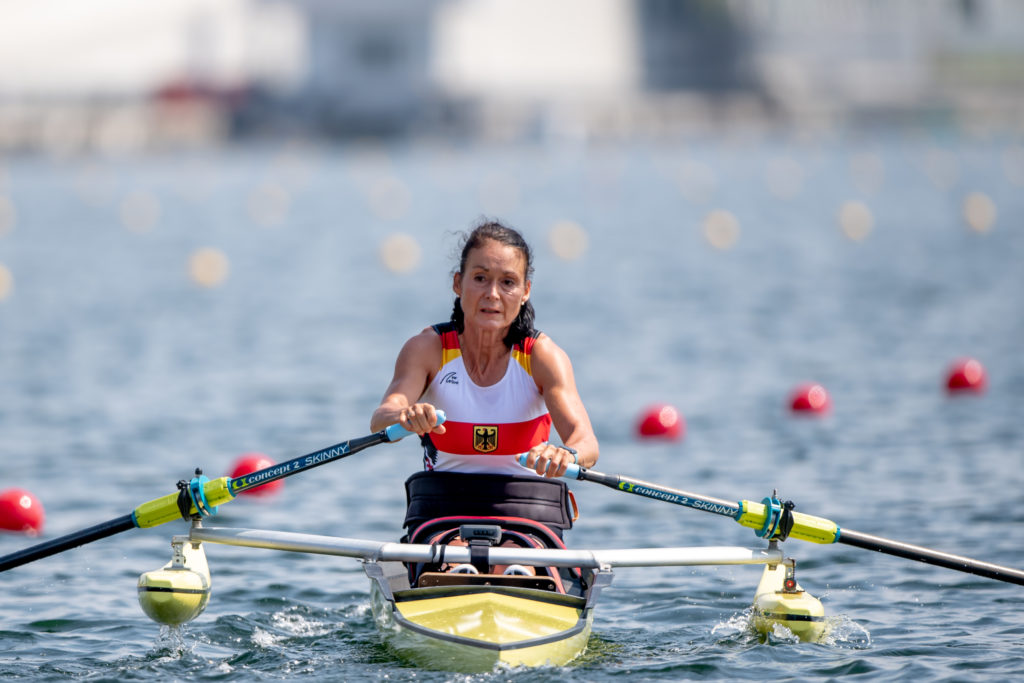
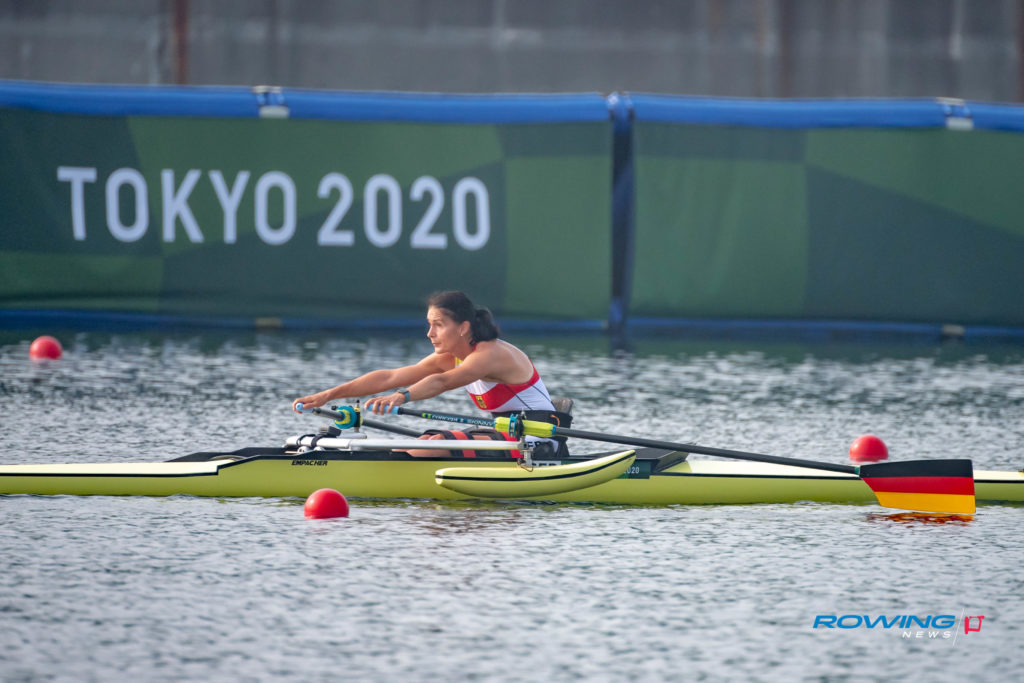
Advancing second in that heat was 53-year-old Sylvia Pille-Steppat of Germany, a former marathon runner who was afflicted at 35 with multiple sclerosis. After losing the use of her legs, Pille-Steppat turned to rowing and has been chasing a dream of racing in the Paralympics since. This is her first Game after just missing out on qualification in 2016.
“To compete at a Paralympics is one of my biggest dreams,” Pille-Steppat said in 2018. “So, I was very upset when I missed the qualification for Rio although it was very close. I was really hoping to compete at Rio because I thought it was my last chance to do it as I have a progressive disease. But I continued training and even got faster.”
“It was good,” Pille-Steppat said about Saturday’s racing. “I was aiming to reach final-A so I’m quite happy. It was fine today. The conditions were better, and the wind was not so strong, so it was okay. I knew Israel was stronger than me, so she was first, and to keep in second place was good,” she said.
“I hope I get some rest today and I go to sleep very early so I’m fresh tomorrow. It’s a new day and a new chance, a new race.”
In the women’s single heat that led the day, Nathalie Benoit of France led off the start of the first, and within about 300 meters she had a clear lead, and by 500 meters, had open water over second-place Claudia Cicero Sabino of Brazil. The two easily landed the two finals spots available. Benoit set a new Paralympic best time in the process with a time of 10:56.23.
Rowing that rep for the U.S. was Hallie Smith, who finished fourth and will row the B final Sunday.
“I would have liked to make the A final, but I felt I rowed a better race today than yesterday and I’m looking forward to a good competition tomorrow,” Smith said.
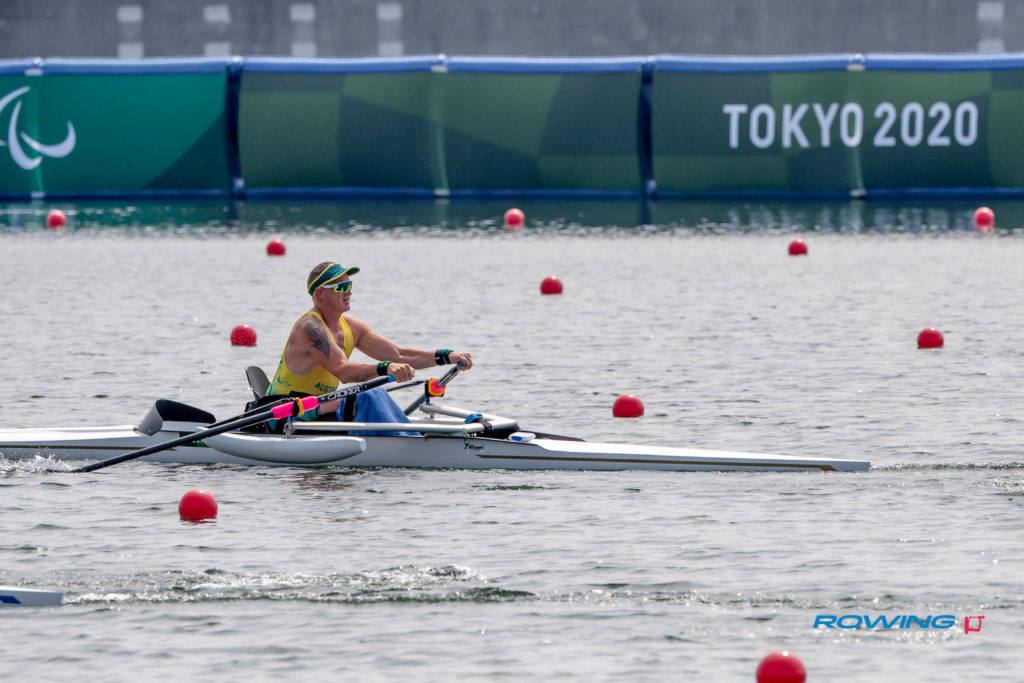
For the men’s PR1 single, Erik Horrie, made his mark and won his repechage handily and landed a Paralympic best time of 9:20.61.
Horrie was defeated in the heat yesterday by Rene Campos Pereira but will have a chance to race the Brazilian again tomorrow.
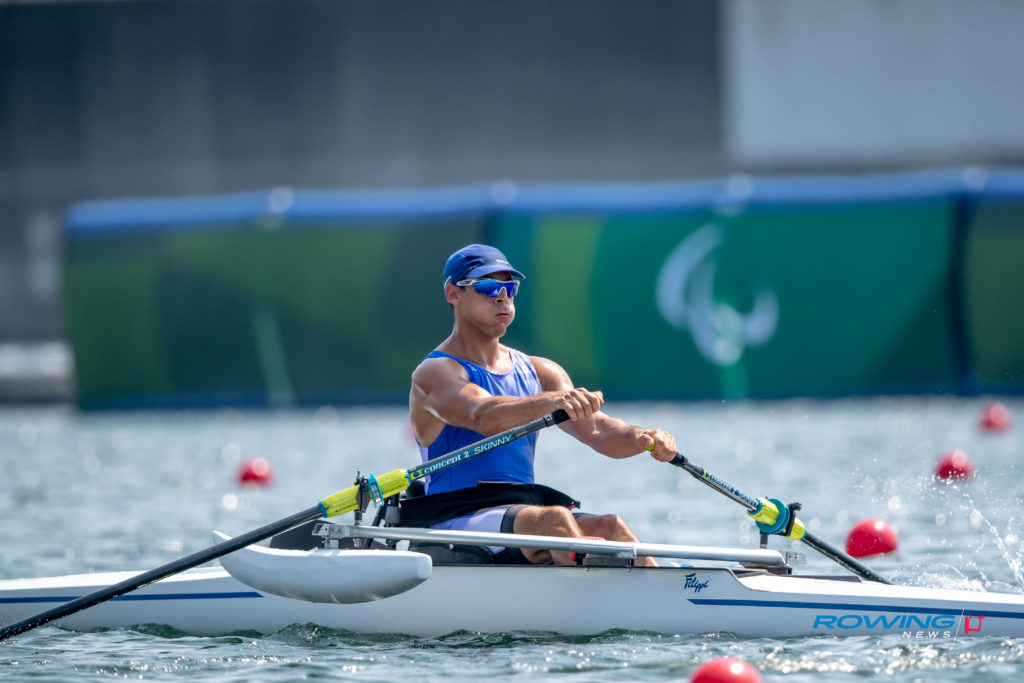
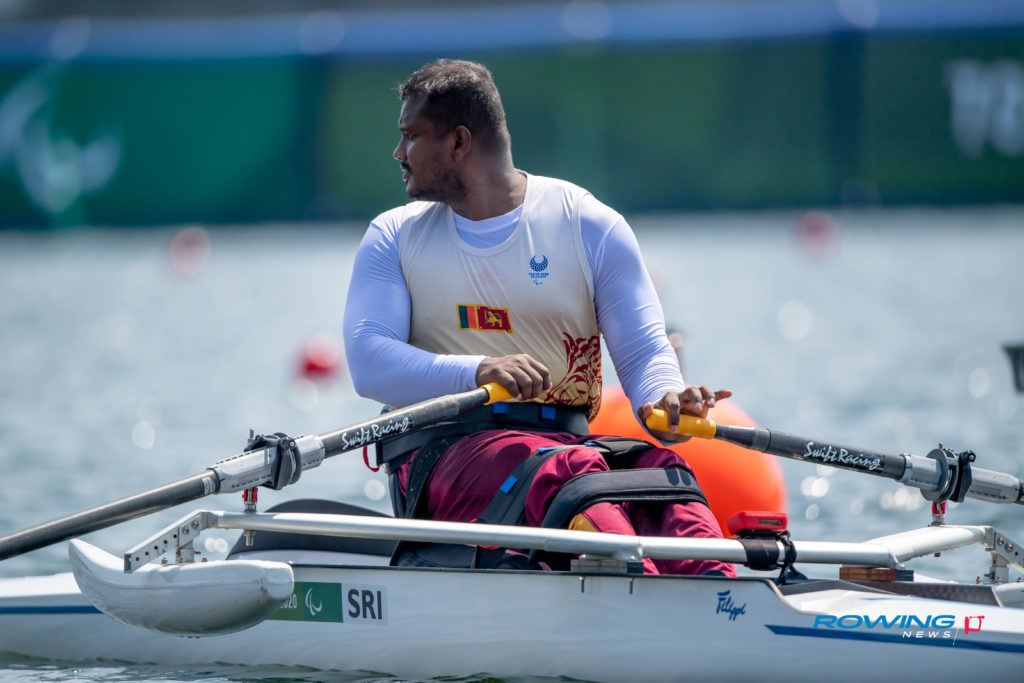
The two will be joined by Shmuel Daniel, Benjamin Pritchard, Javier Munoz Reja, and Roman Polianskyi. Mahesh Priyamal Jayakody, who is the first-ever Paralympic rower at the Games for Sri Lanka, rounded out the second repechage in sixth.
Finishing in fourth was U.S. men’s sculler Blake Haxton, who will row in the B final, take a short break and then report back to the Sea Forrest Waterway to compete in the Paralympic Canoe Sprints.
“It never feels good to get beat, and nobody comes to the Paralympics with dreams of the B final, but all in all I rowed a pretty good piece and did about all I could out there,” Haxton said. “I don’t think there is anything I could’ve done that would have put me in contention, and am satisfied with the work I’ve put in to make it this far.”
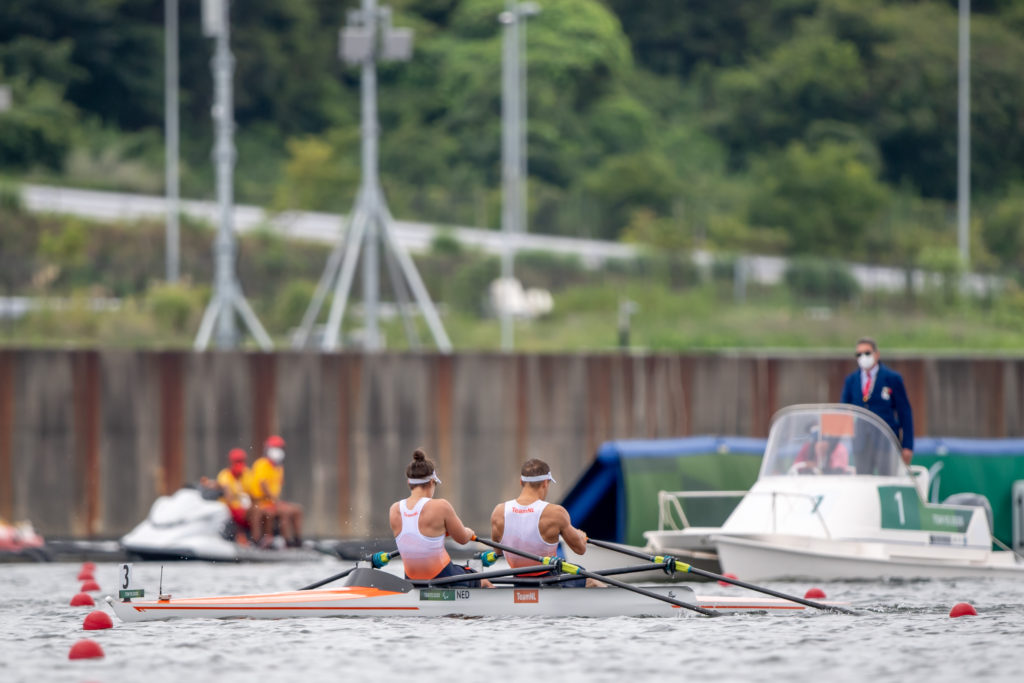
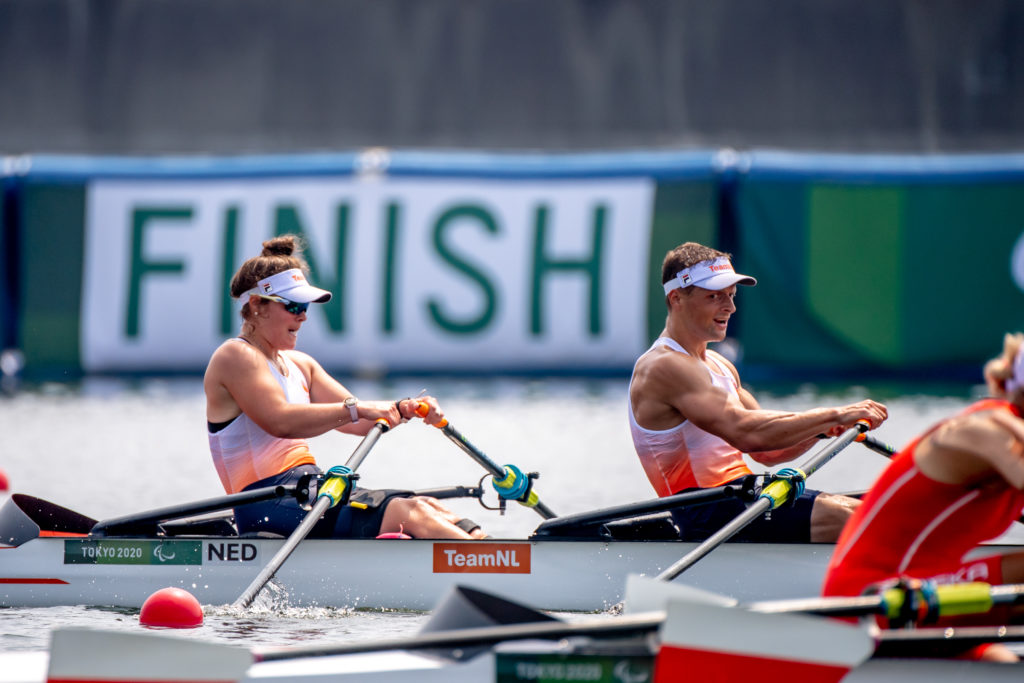
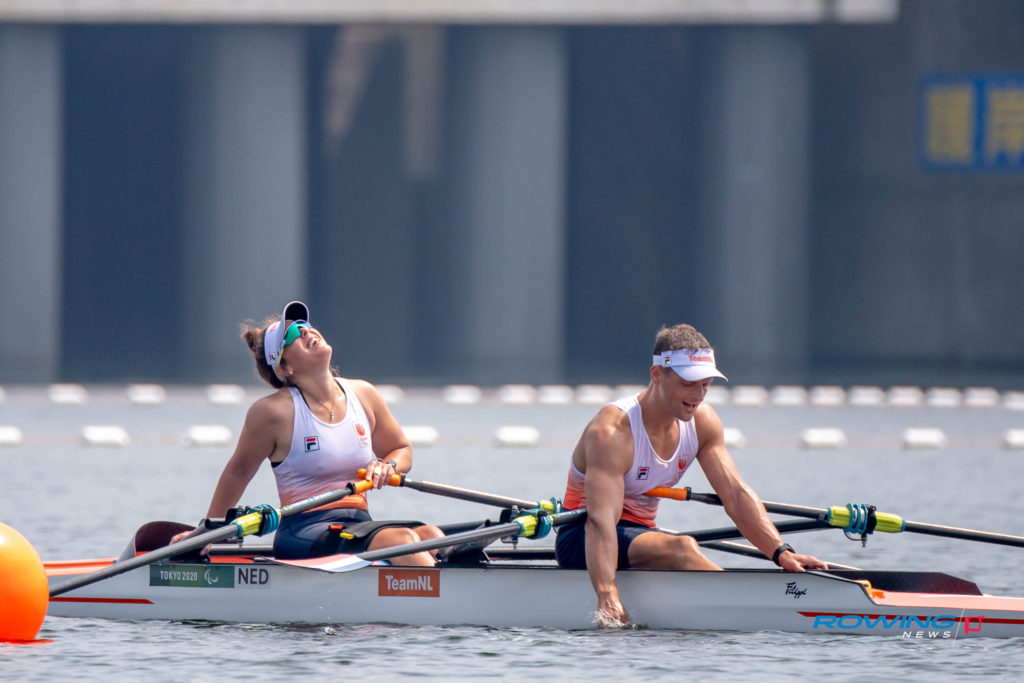
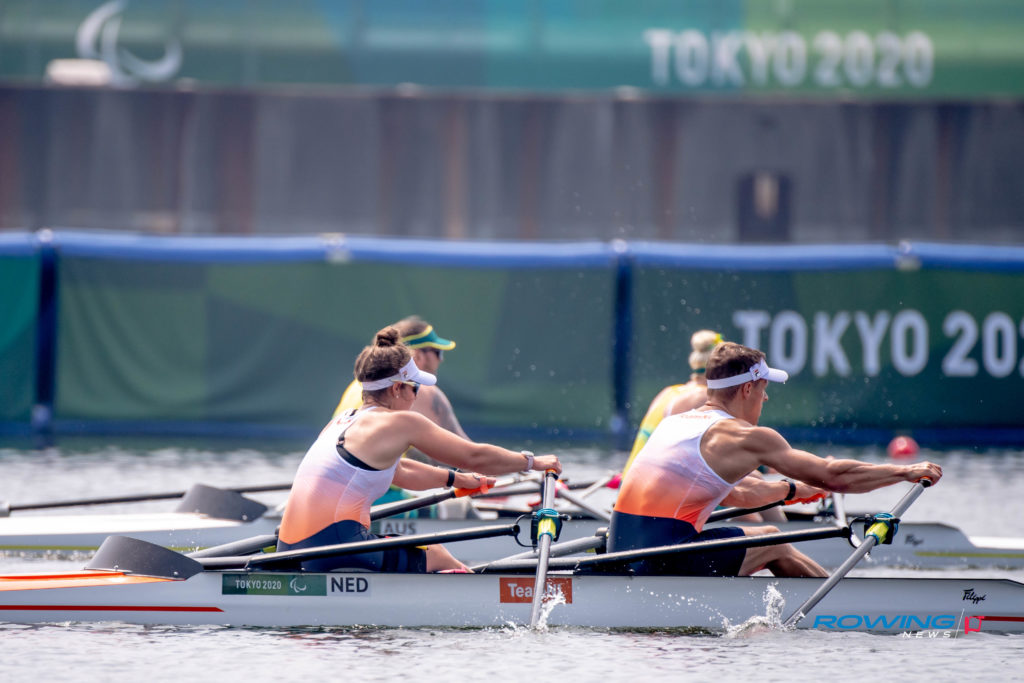
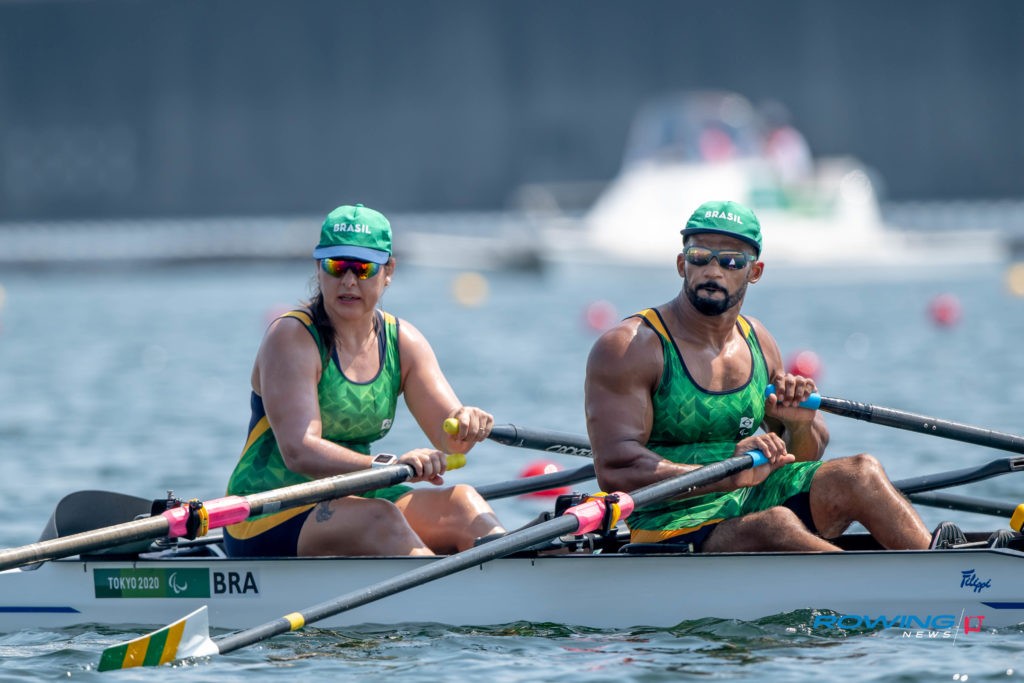
In the first of two mixed doubles reps, it was the Dutch who led for most of the race and, in the end, won.
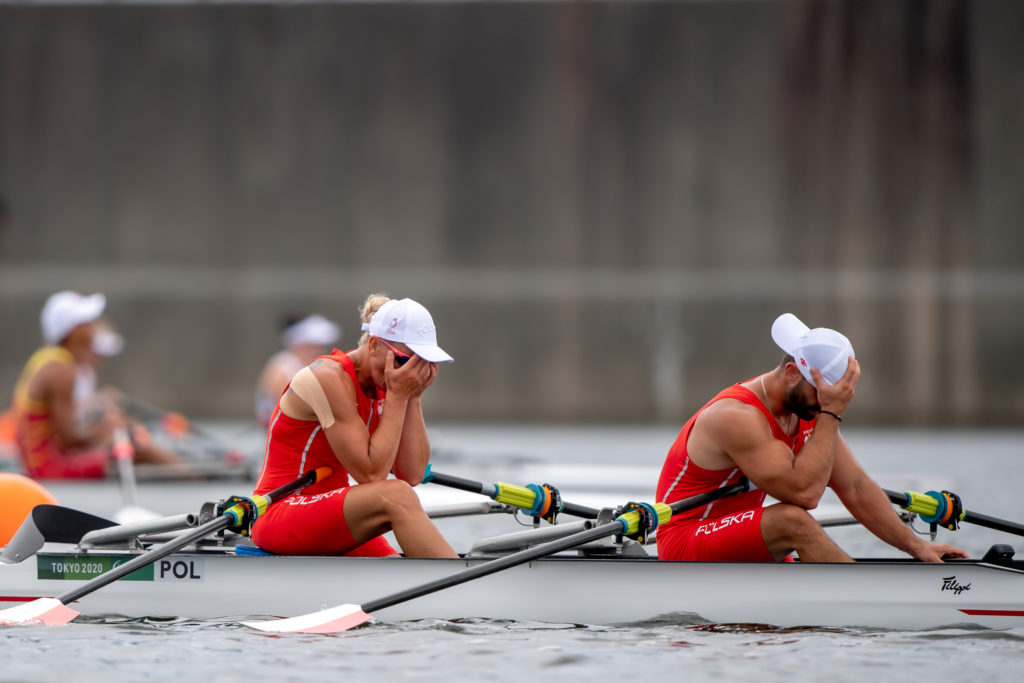
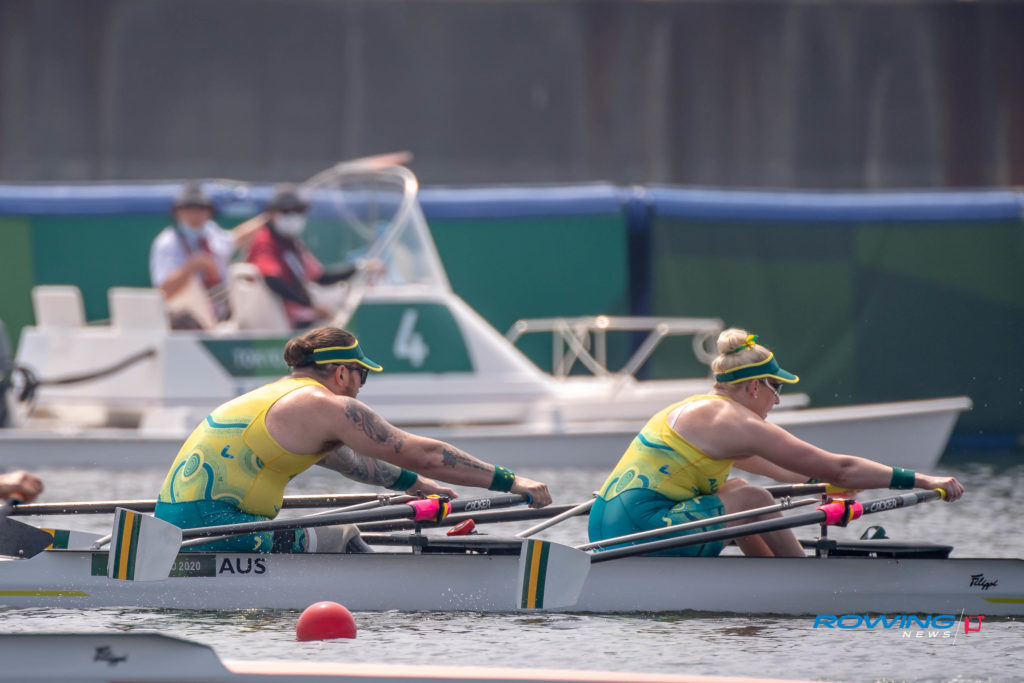
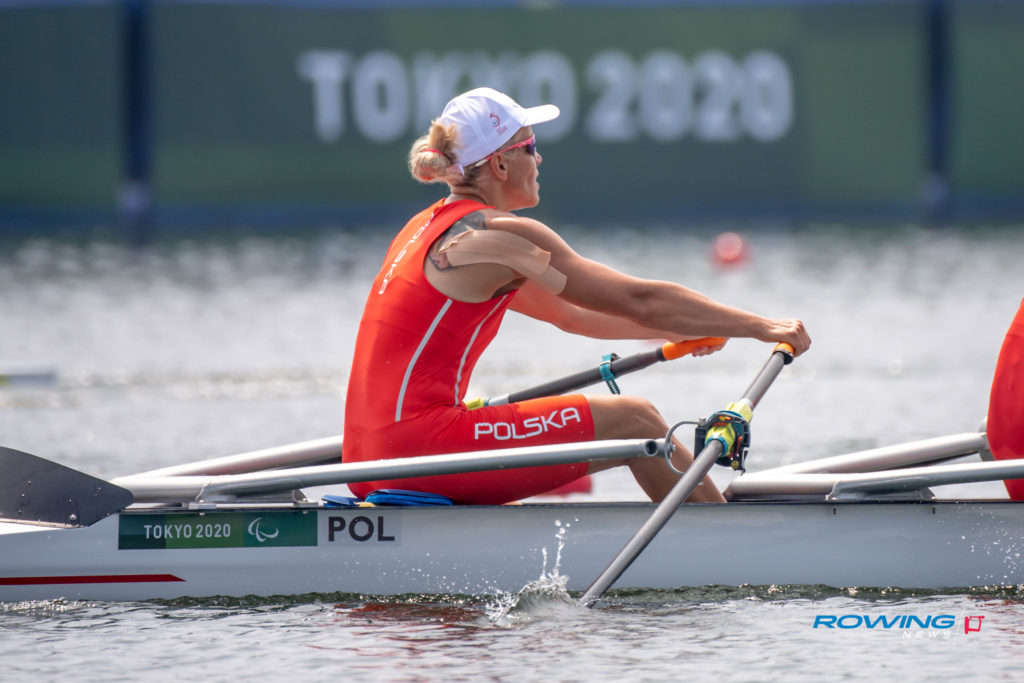
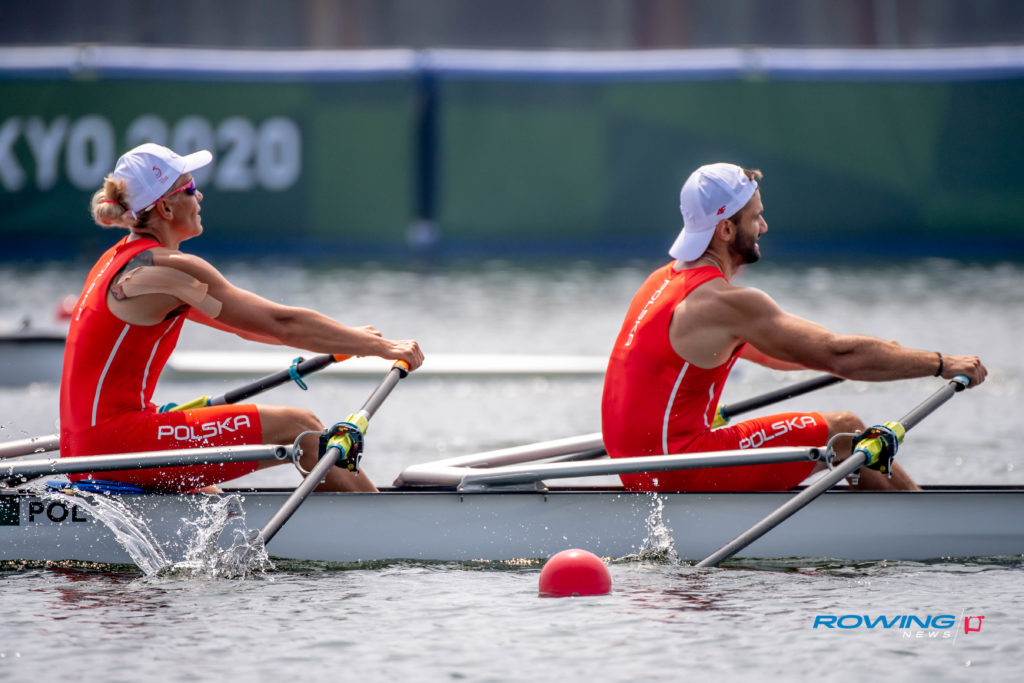
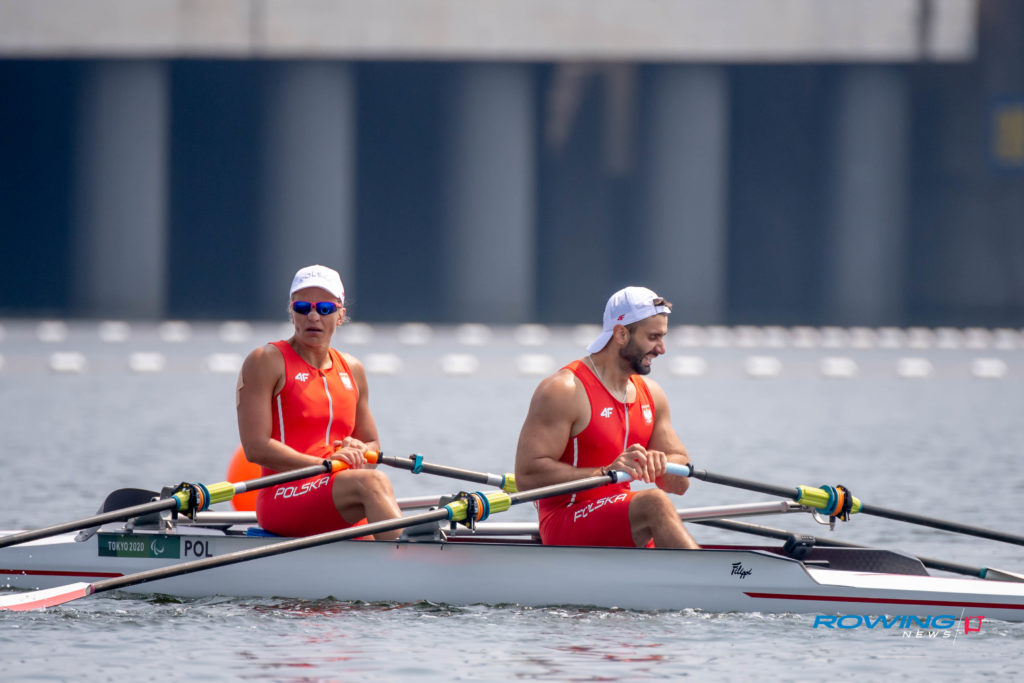
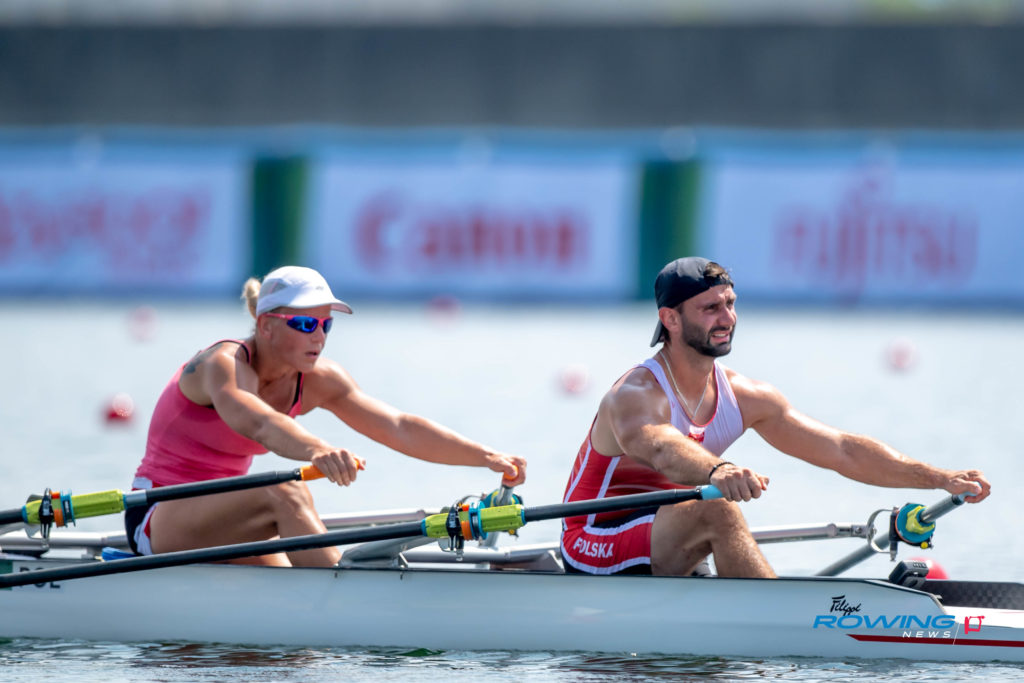
But the excitement in the race came from a nasty boat-stopping crab from the Polish crew which opened the door for the Australians to take briefly take the second-place spot. Poland wouldn’t be outdone, however, and finished the race in second place and earning a spot in the A final, overcoming the setback.
“We have to work for every stroke,” said Dutch bow Annika van der Meer. “And there are no guarantees for anyone in the final tomorrow. Everyone is going to go in there and want to win a medal. Everyone is going to work for it.”
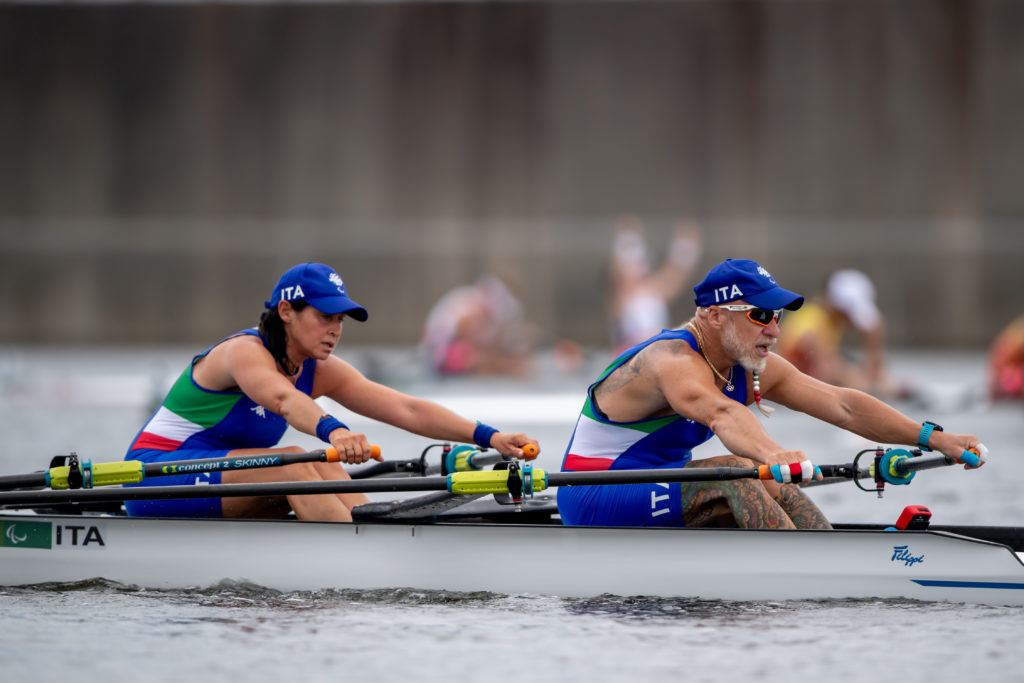
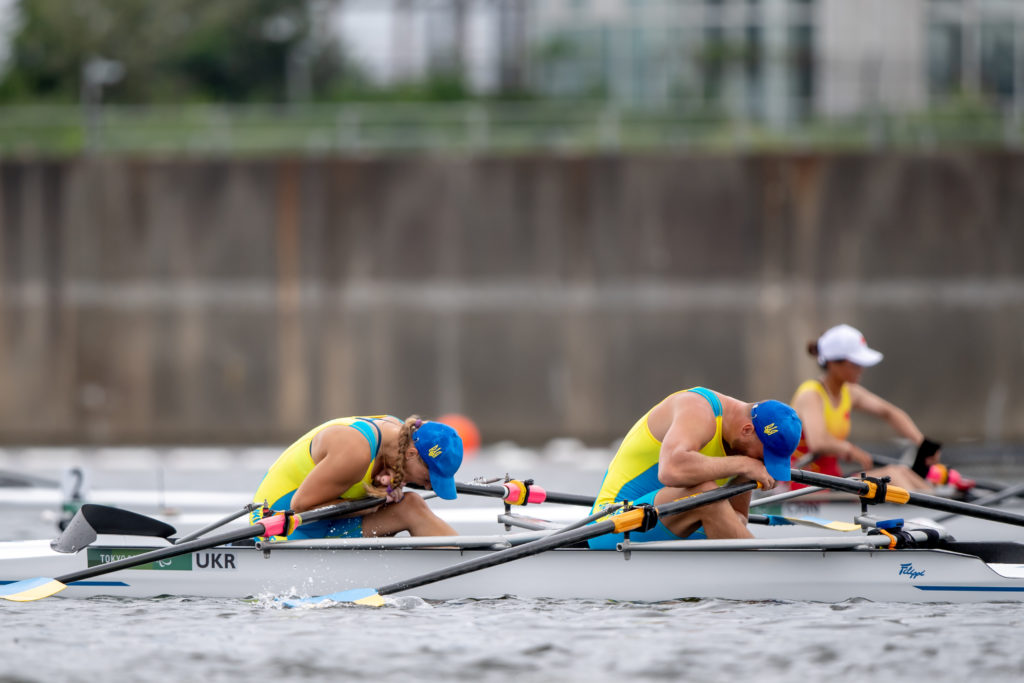
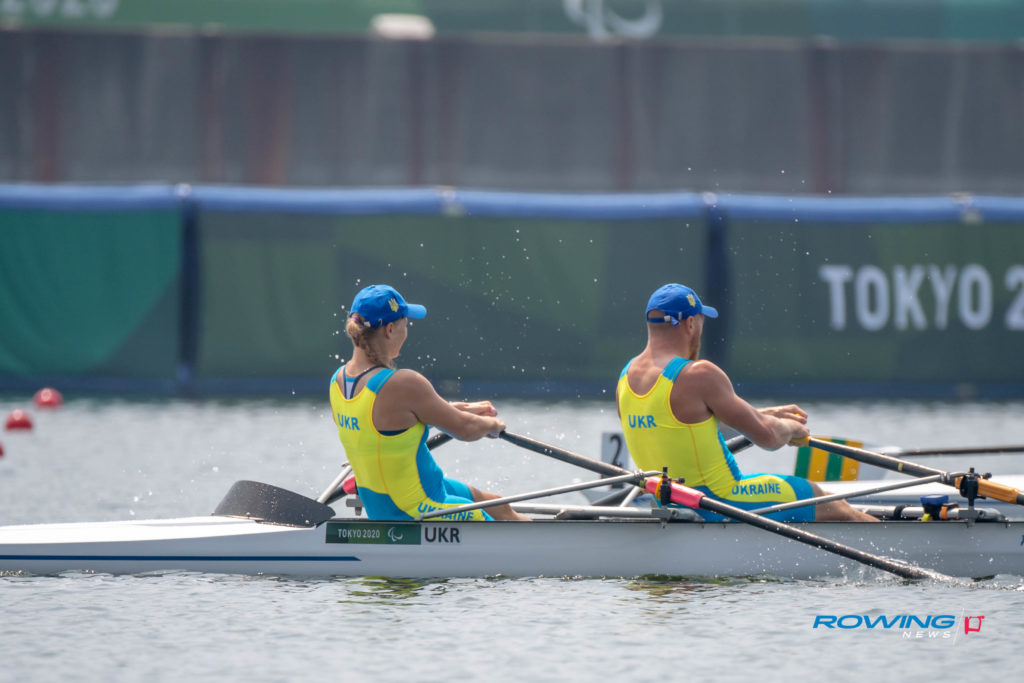
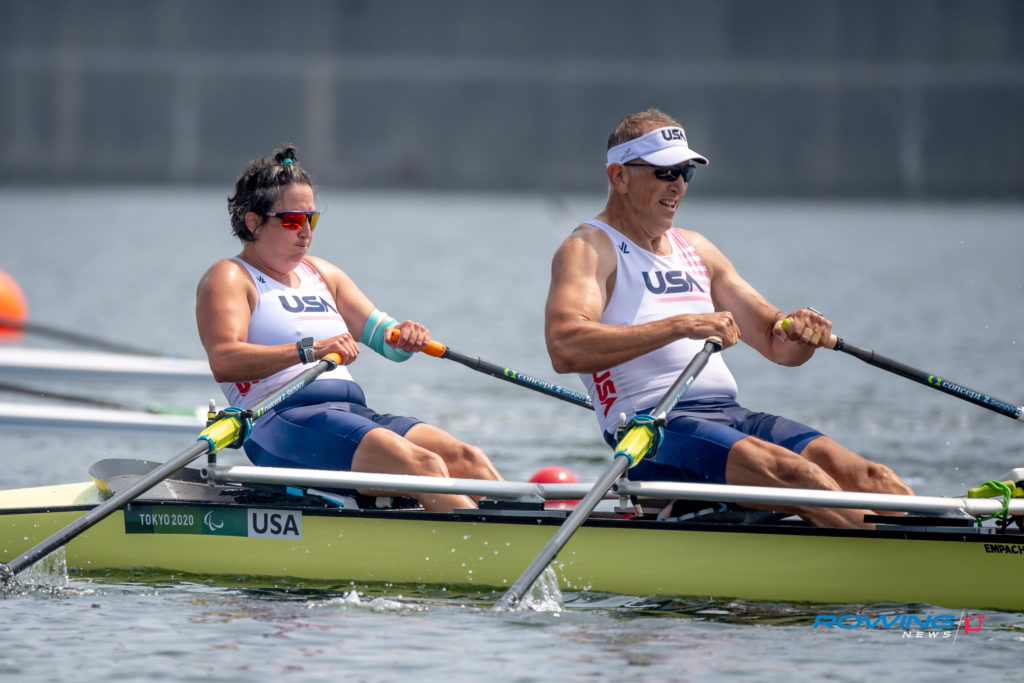
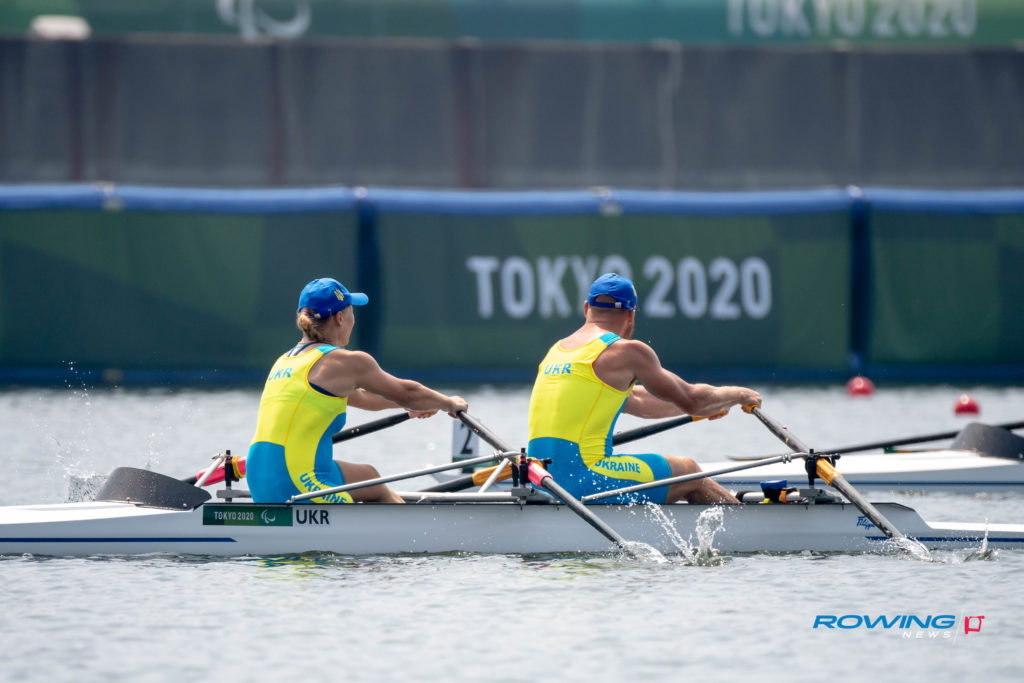
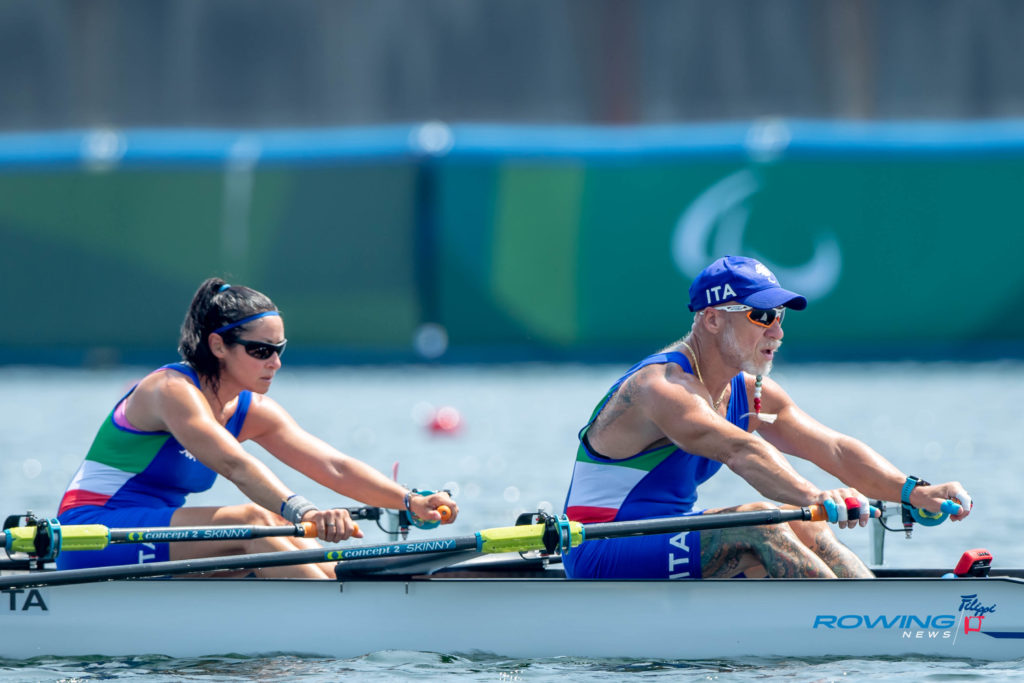
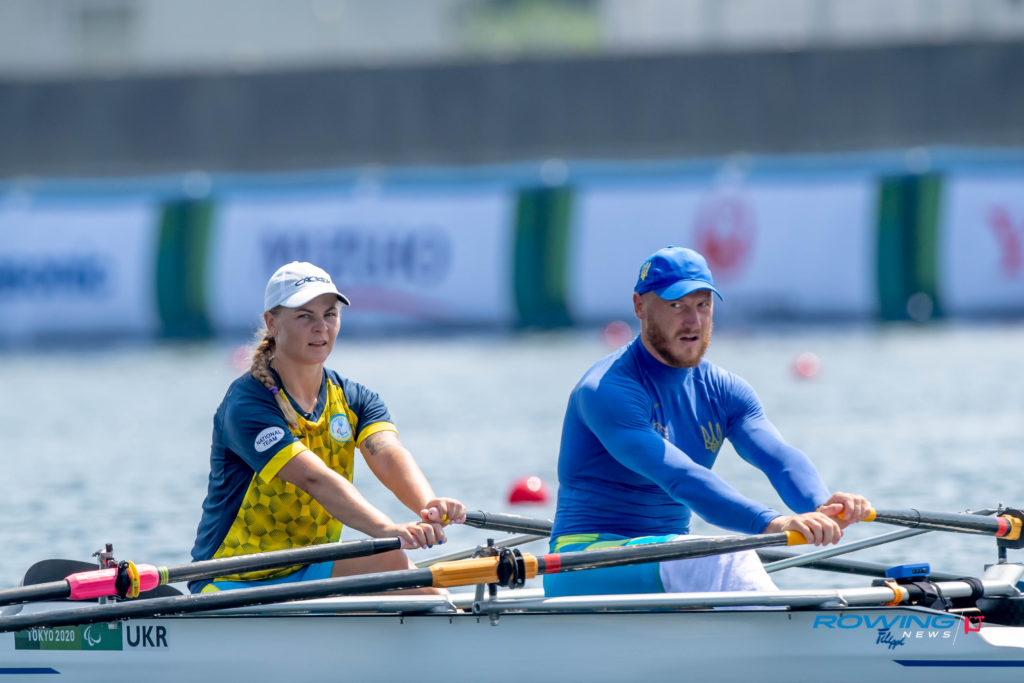
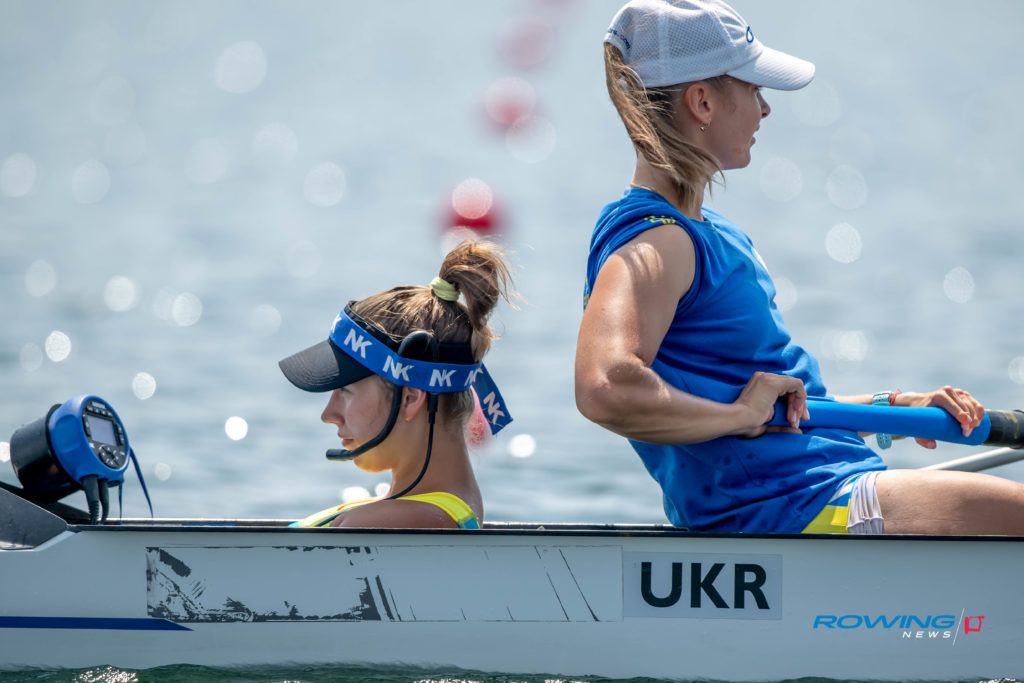
In the second repechage, Ukraine and Italy took the remaining two finals spots. The U.S. entry of Laura Goodkind and Russell Gernaat finished fourth and will row in Sunday’s B final.
“Actually, it was a really good race,” said Gernaat. “I think one of the things that we’re happy about is some of those boats, like the Ukraine and Brazil, beat us in Austria at the world championships in 2019, and today it wasn’t quite that gap.
“We put down a very reasonable time on the course in the headwind and we feel like, ultimately, it could have been a little bit better, but still just really happy with how it all turned out,” he said.
“It’s great to be racing against other nations rather than our coach’s imagination and making up boats,” Goodkind added. “To have that experience live and in-person and have these Games still being held is really cool.”
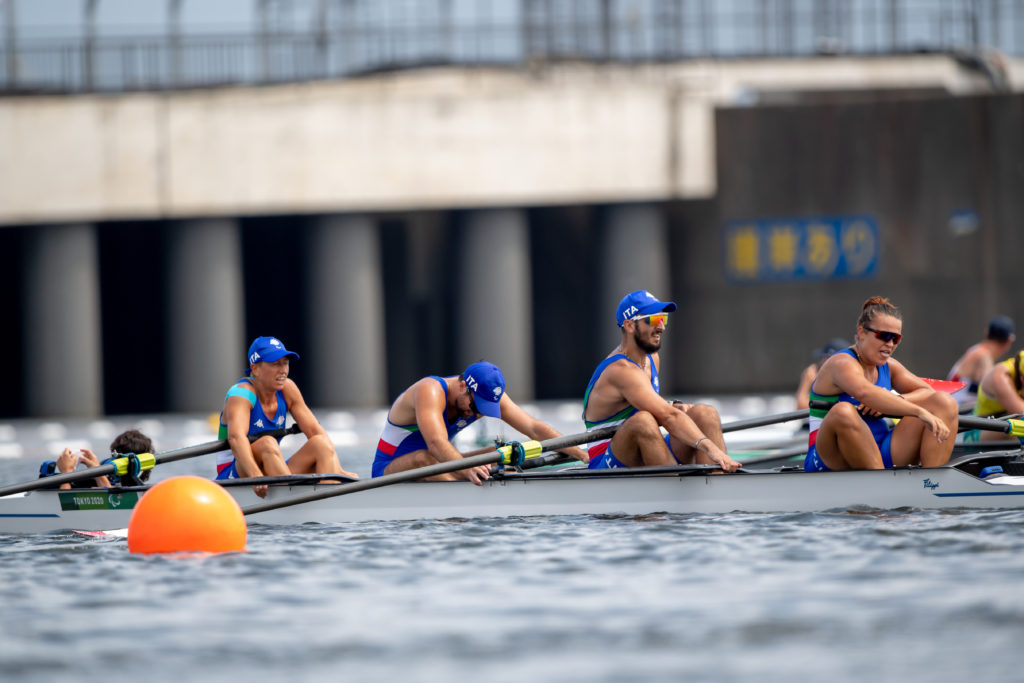
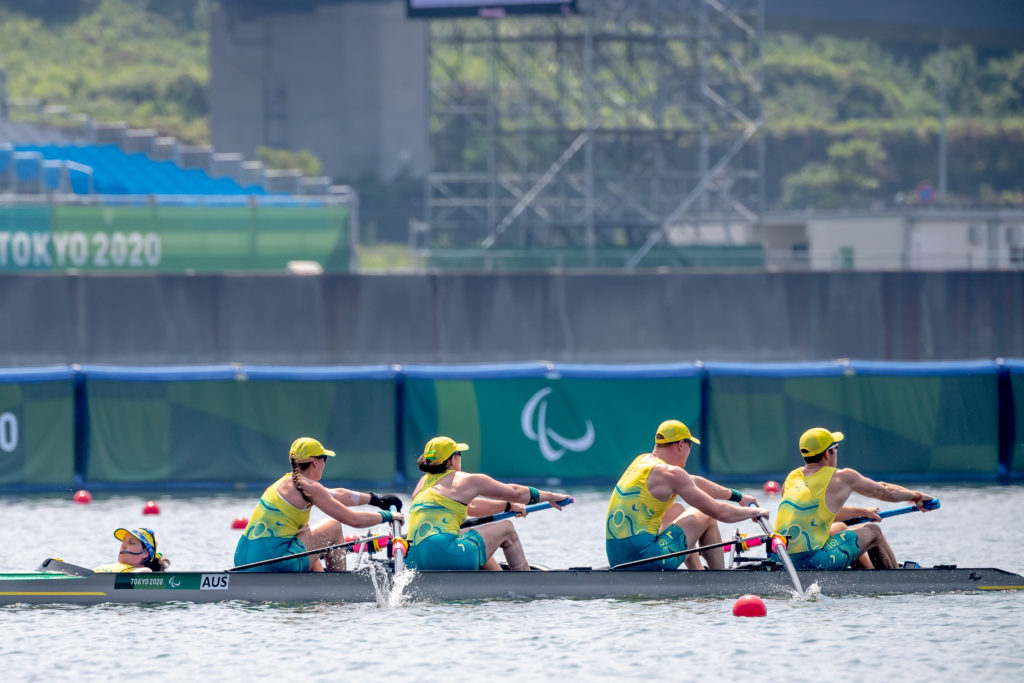
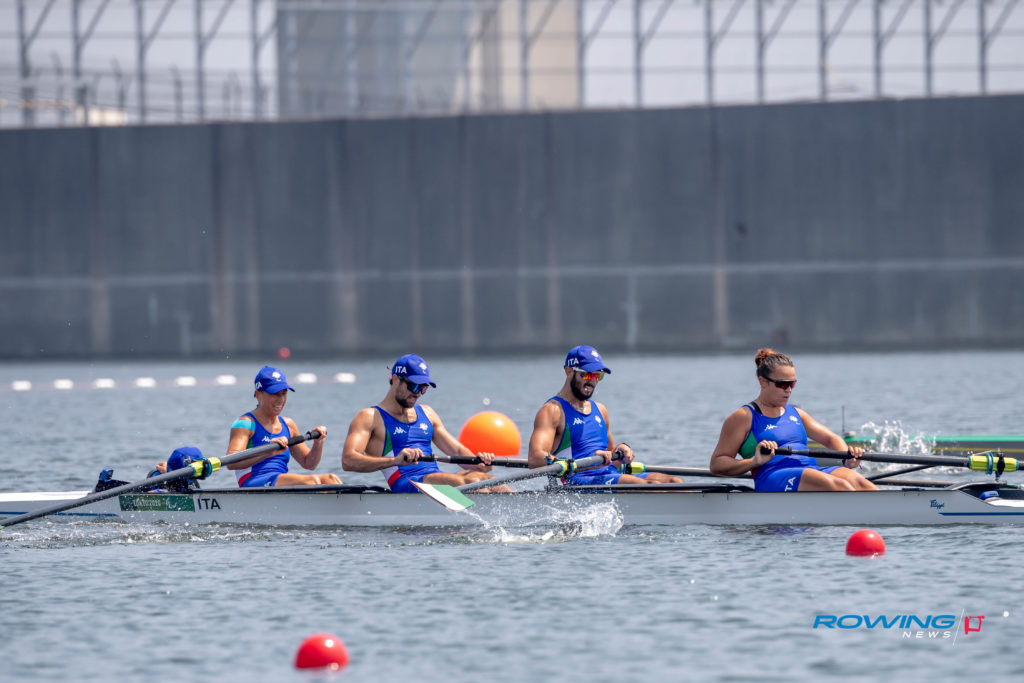
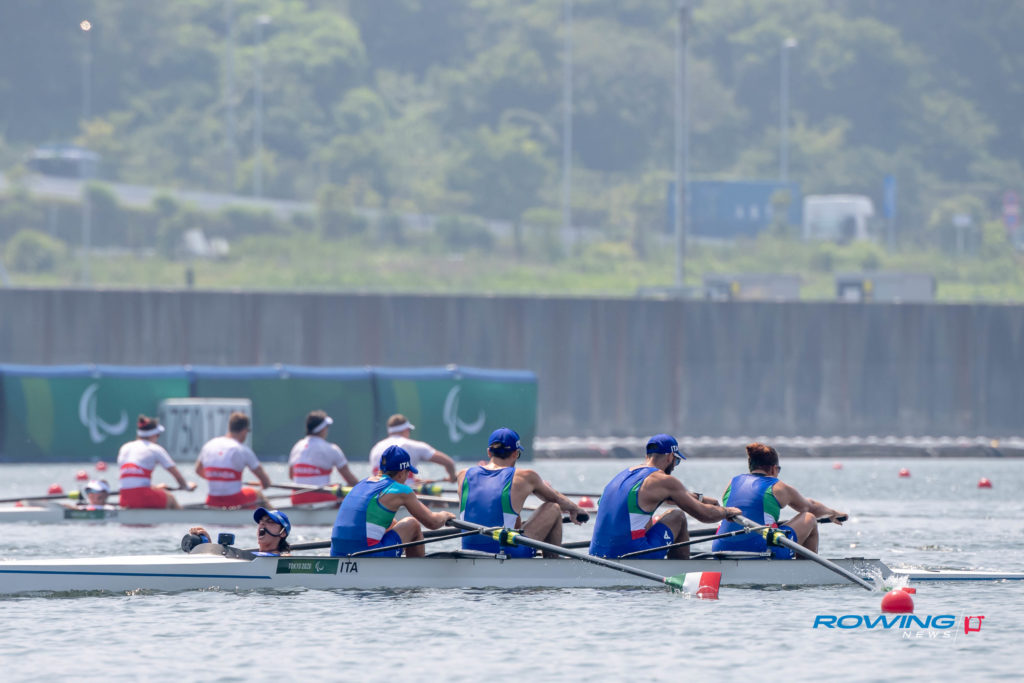
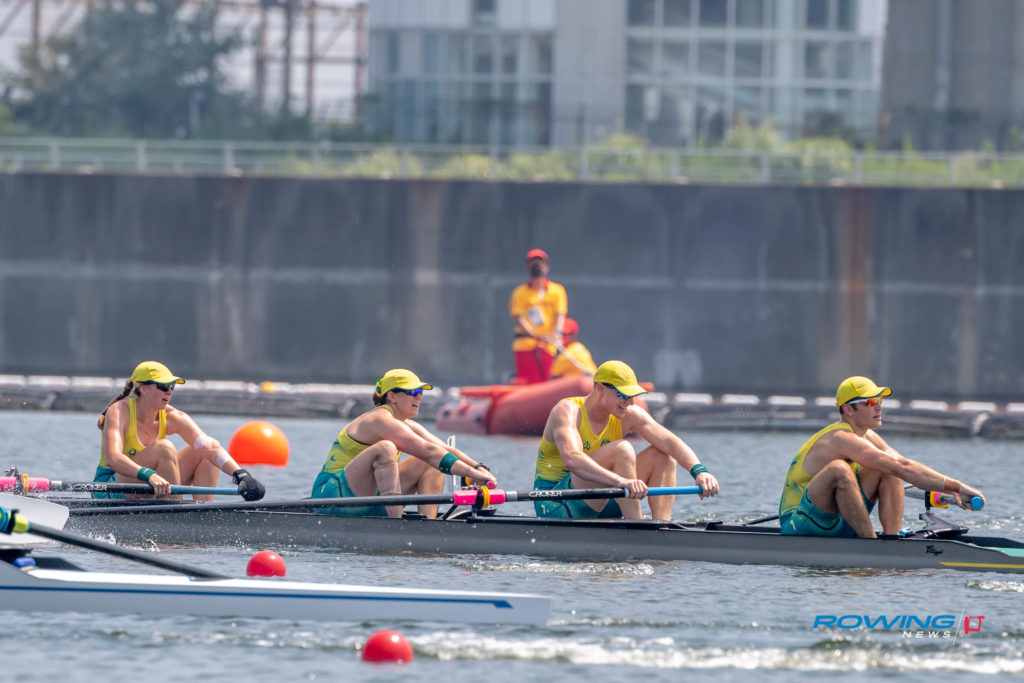
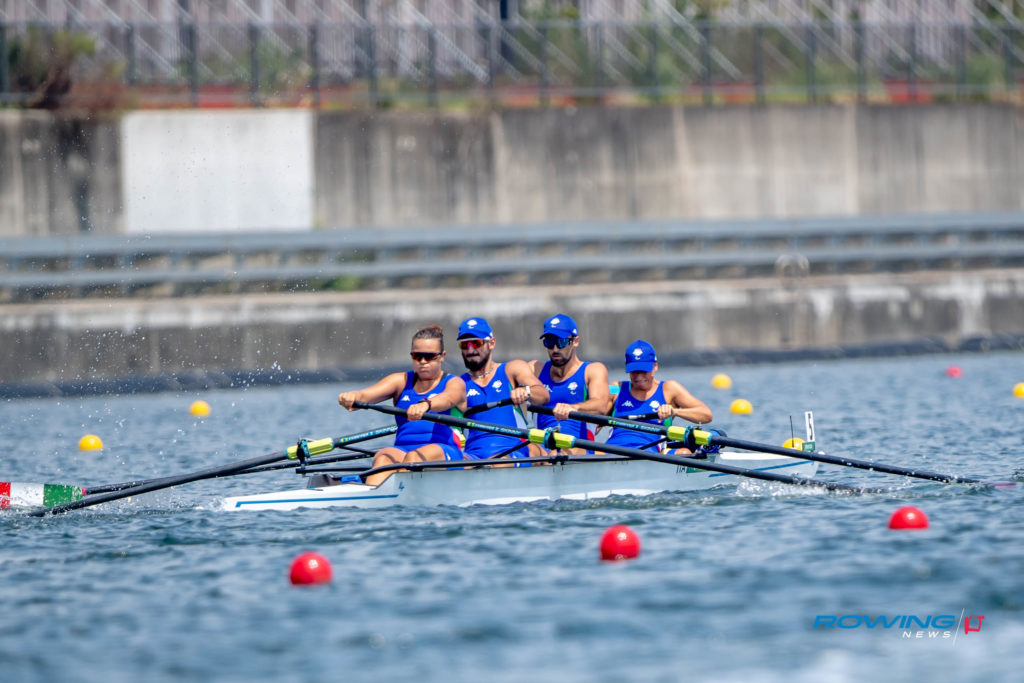
In the first mixed coxed four repechage, Italy and Australia battled it out down the course with Italy leading until about the 1,750-meter mark when the Australians began sprinting and powered through the Italians.
“It felt really good,” said coxswain Renae Domaschenz. “We’re really pleased. Being able to execute our plan, being able to read the conditions well, be patient, and find the right moment to just squeeze out a little bit more than we did yesterday.
“We haven’t spent much time together this year, so our motivation is to, each day, get a little bit stronger, a little bit cleaner and I feel like we’re doing that as a crew which is awesome. “Find a little bit more speed, be a little bit stronger, a little bit cleaner. In the A final anything can happen. Let’s give it a good Aussie crack.”
In the second repechage, the French crew walked away with the first-place finish while Israel defeated the crew from Ukraine in the last 250 meters to take the second qualifying spot.
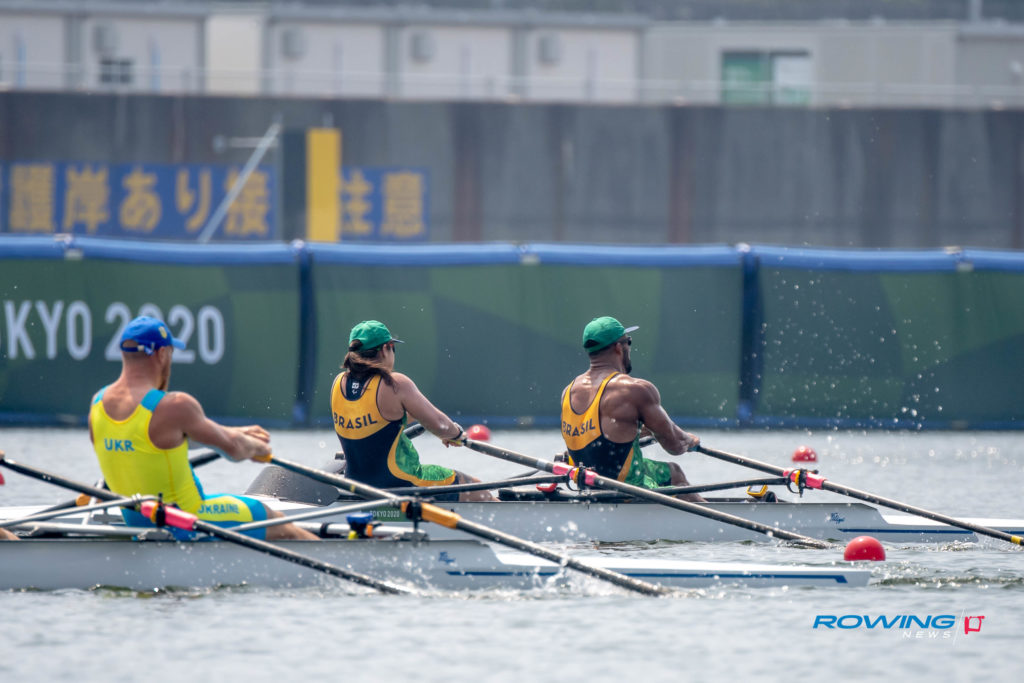
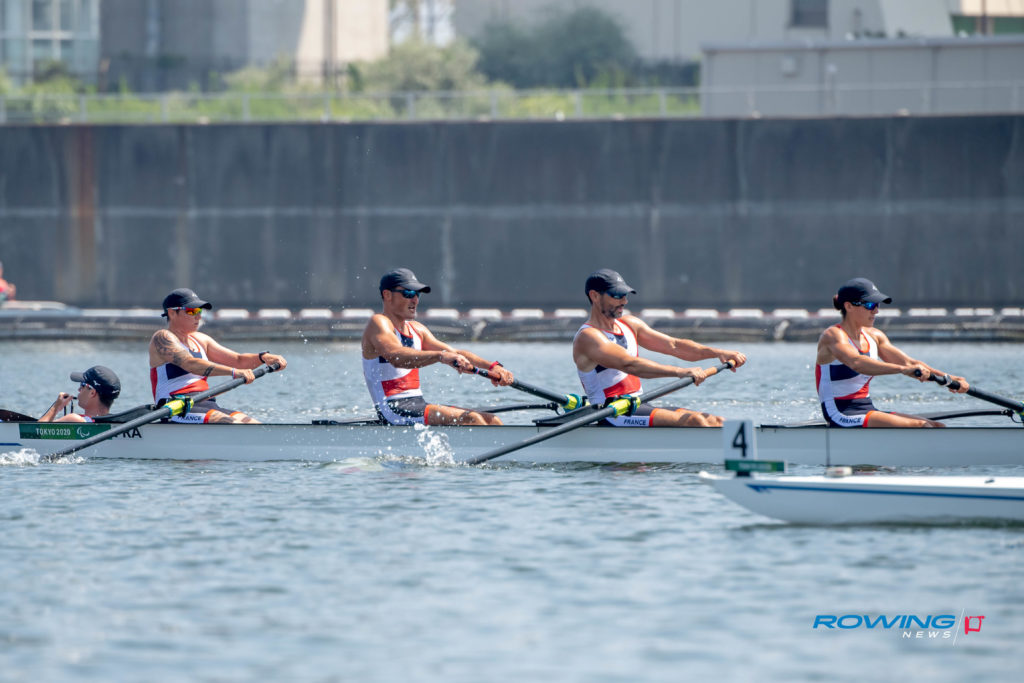
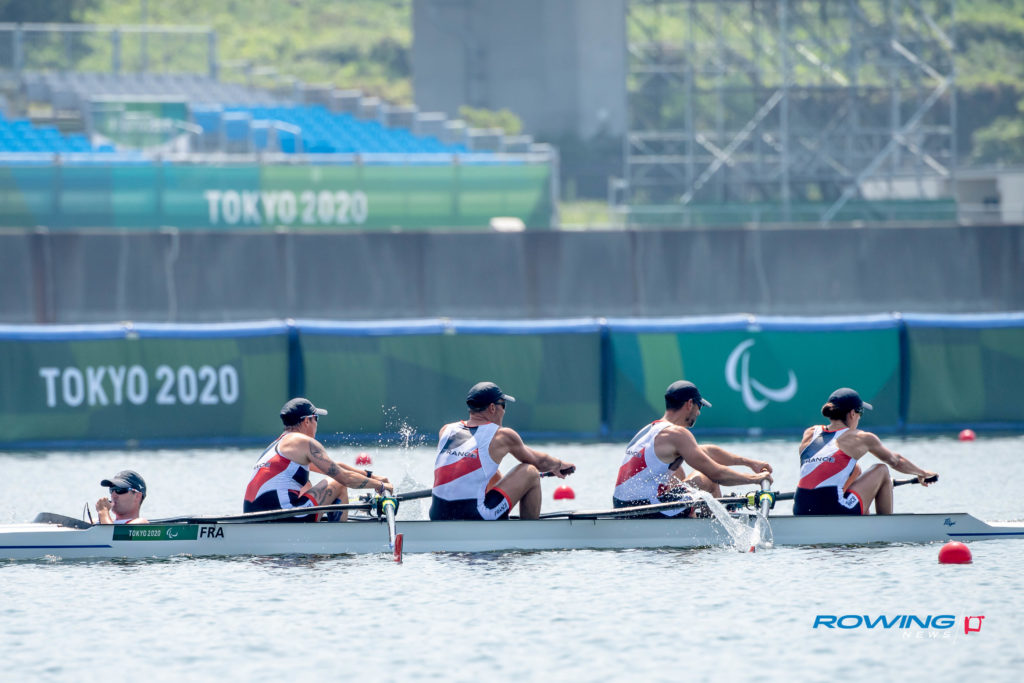
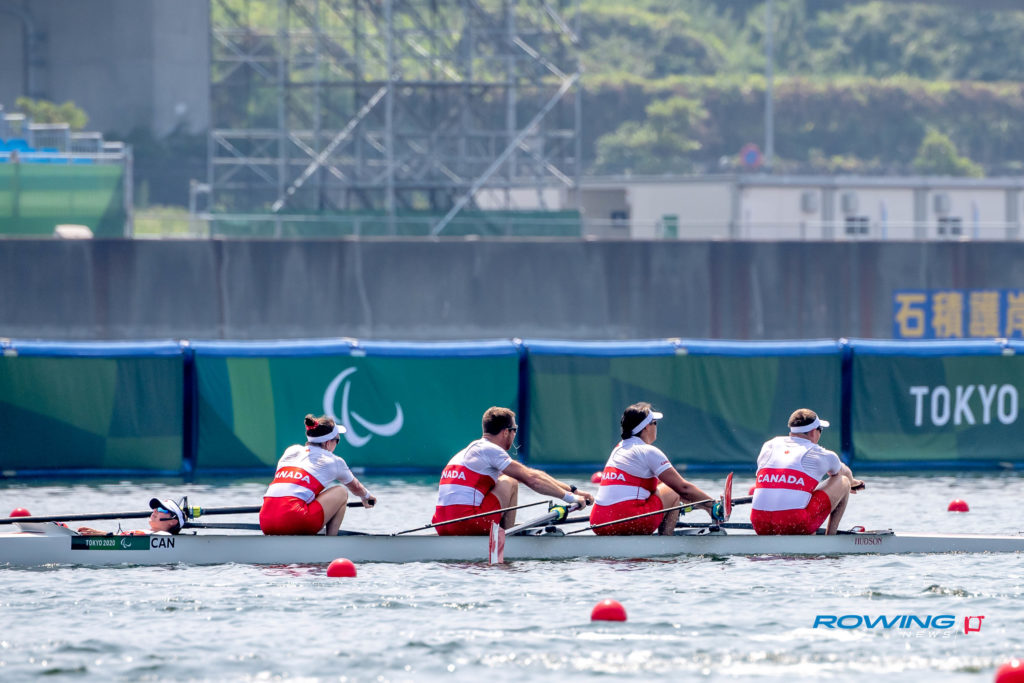
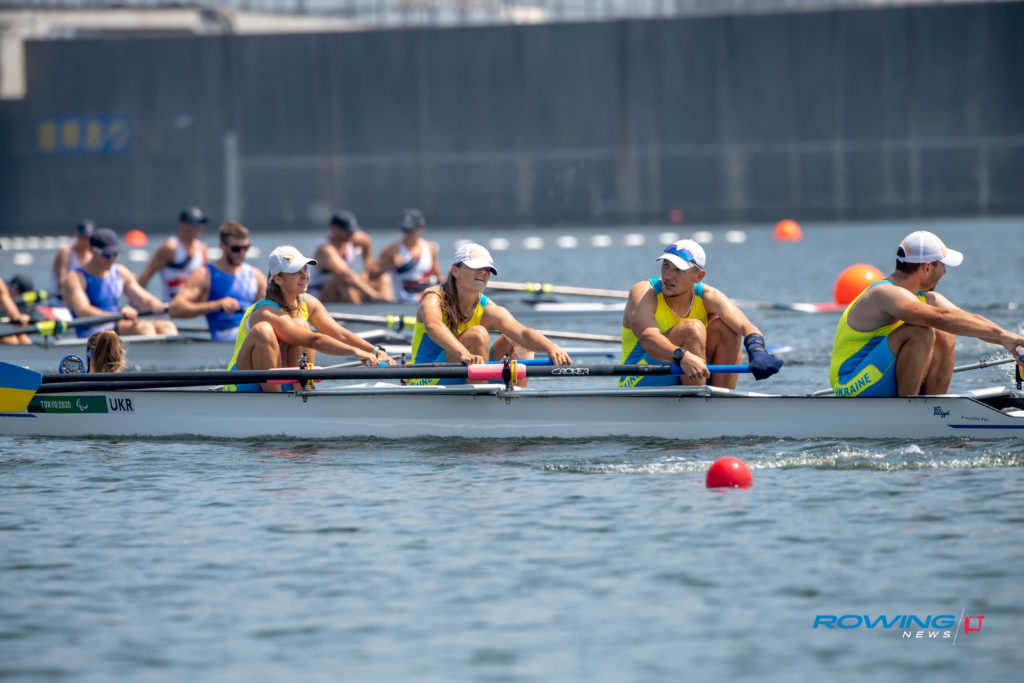
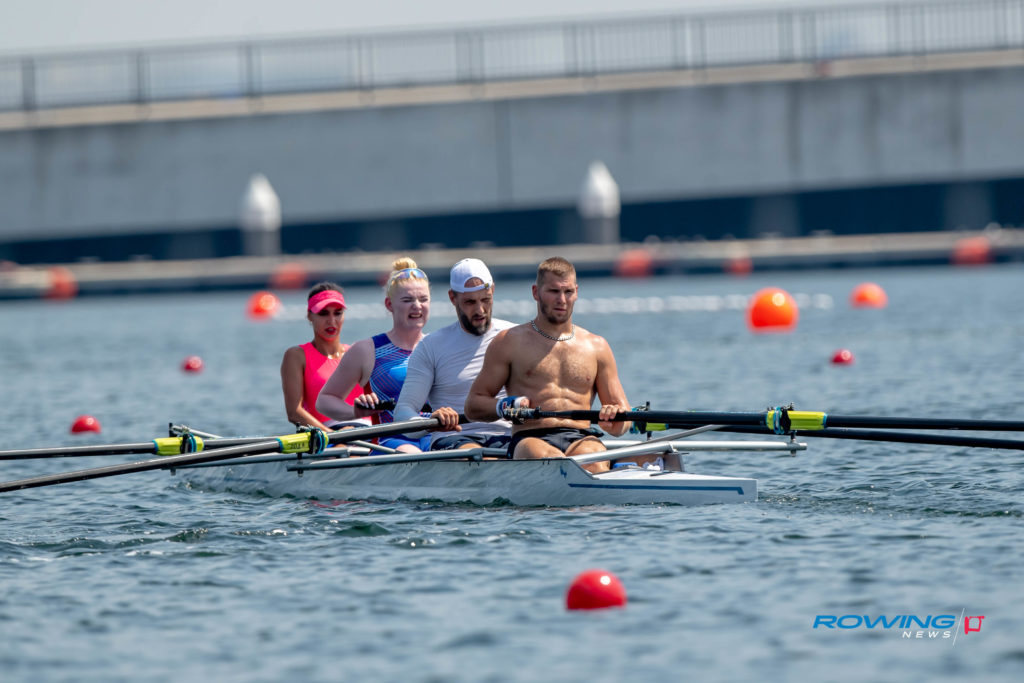
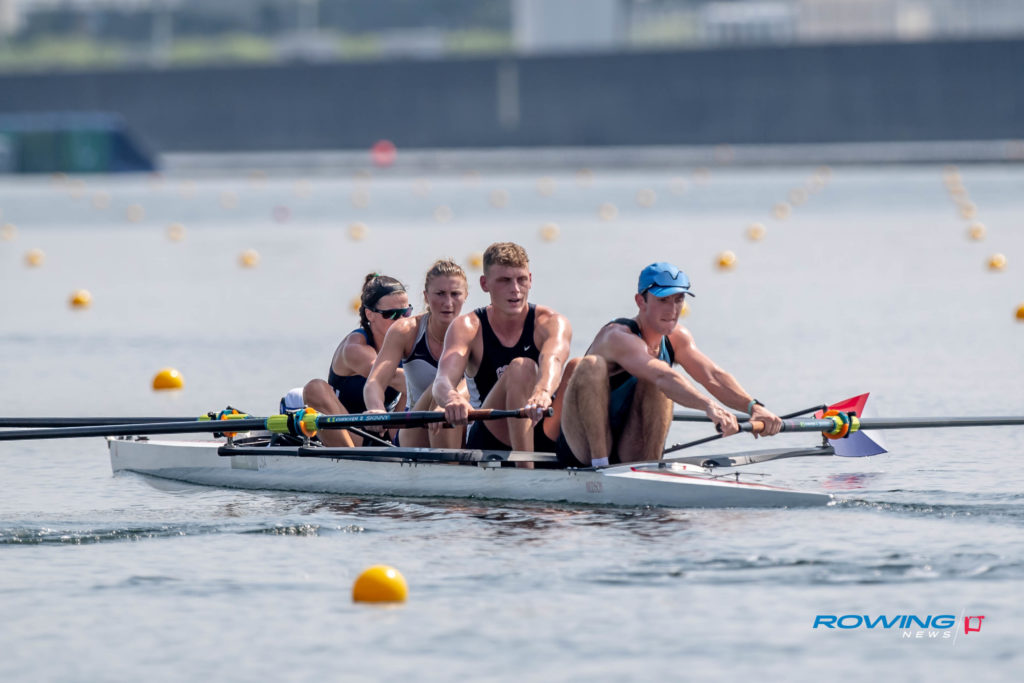
TOKYO, JAPAN – The battle between Britain and the United States PR3 mixed coxed fours picked up exactly where it left off five years ago in Rio—with the two crews establishing themselves as the boats to beat to the podium come finals day at the Tokyo Paralympics Sunday.
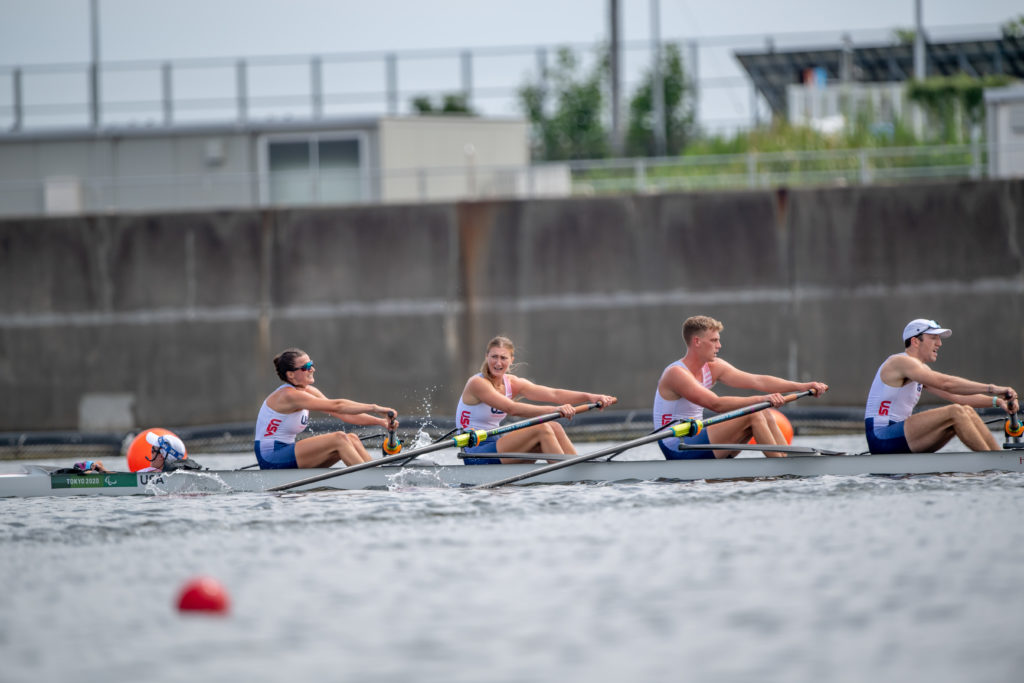
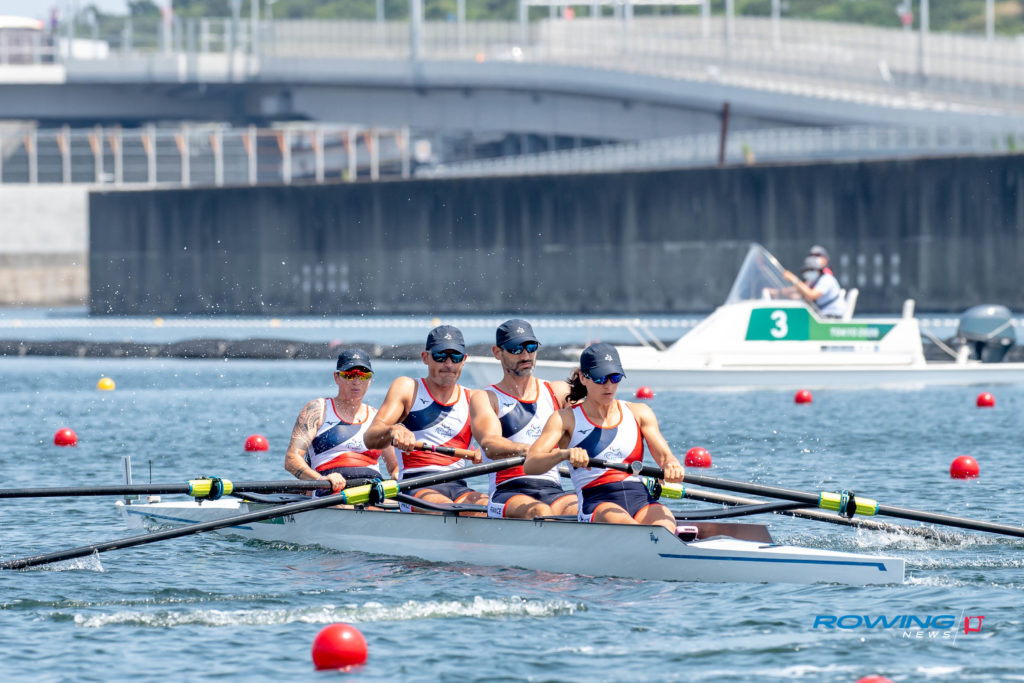
Racing in separate heats Friday, the U.S. and the U.K. crews finished ahead of the field by significant margins, trading Paralympic Games’ best times along the way. Rowing in the first heat, the U.S. finished first and set the new time standard for the Paralympic event, clocking in with a 7:19.97.
Not to disappoint expectations that the U.S. and the Brits will be vying for the title once again, the British four also won their heat and upped the U.S. time with a 7:09.44 – a new, new best time.
The U.S. four was one of four American crews that began their Tokyo2020 medal quest on the first day of racing on the Sea Forest Waterway Paralympic rowing venue Friday.
In addition to the mixed coxed four, the U.S. had athletes competing in the men’s and women’s singles and the mixed double. Of those crews, only the four advanced directly to the Sunday final.
The remaining three crews will race Saturday in the reps and attempt to gain a slot in the Sunday medal races.
“It’s encouraging to go out and put a good speed down,” said Charley Nordin, who is rowing in three-seat in the four. “We’re looking forward to the final. I think we’re pretty happy with how things went and we’re just going to stay focused, stay relaxed.
“I think it went well,” he said. “It’s a dream come true to have the opportunity to race at the Paralympics. There were a lot of fast crews out there and it was an honor to get to race against them and show our best.”
For the British, there is more than just a Paralympic title to defend. The U.K.’s para four has not been defeated in 11 years in world championship and Paralympic racing.
“The world championships we do are important, we train for them every year, and we peak for them,” said James Fox, the only returning Paralympian in the crew. “But there is nothing like the Paralympic Games, and if we get three world championships over the last four years and not get that final one, it would have felt like a loss.
“It’s ours to win,” he said. “If we win here on Sunday, it will be 11-years being unbeaten in this four. We’ve got a target on our back, we can’t ignore that. But it’s ours to win.”
Starting the day was women’s single sculler Hallie Smith, who finished in sixth in her heat and will race again Saturday. “Competing again almost felt like getting back to normal,” Smith said.
“I usually race these women once a year, so not doing so last year added to how wrong things felt. It was really great to race again after all this time,” she said. Rowing in her heat and winning the only direct slot to the finals was defending champion Birgit Skarstein, of Norway.
“You never think that you can really relax, but I figured at 1,000 meters I could take down the stroke rate,” Skarstein said. “You always have to be aware that anything can happen, and the race is never finished until you cross the finish line.”
Skarstein will get the chance to rest and recover Saturday while the rest of the field sorts itself out. In the second heat, 2016 bronze medalist Moran Samuel of Israel finished in first place. Hours later World Rowing announced that she has been relegated to last place in the heat and she will now have to row in the reps in order to reach the final.
In its official communication, World Rowing noted that race officials noticed that Samuel’s boat had “movement in the backrest of the seat,” and ruled it was an innovation to her equipment that had not been reported or inspected to determine if it was in line with rules governing PR1 fixed seat requirement.
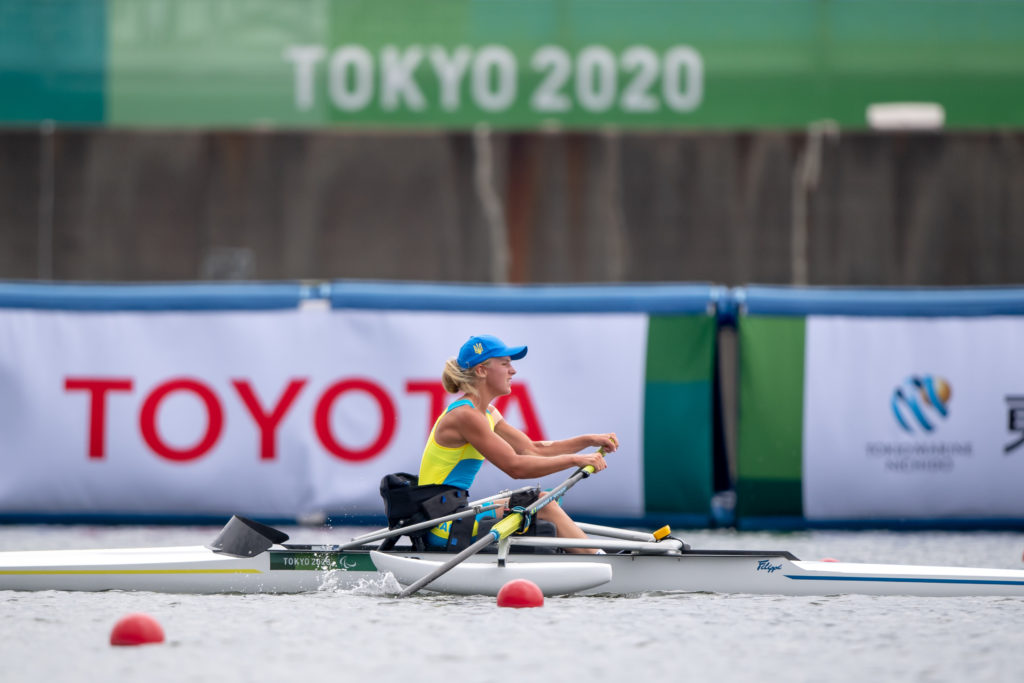
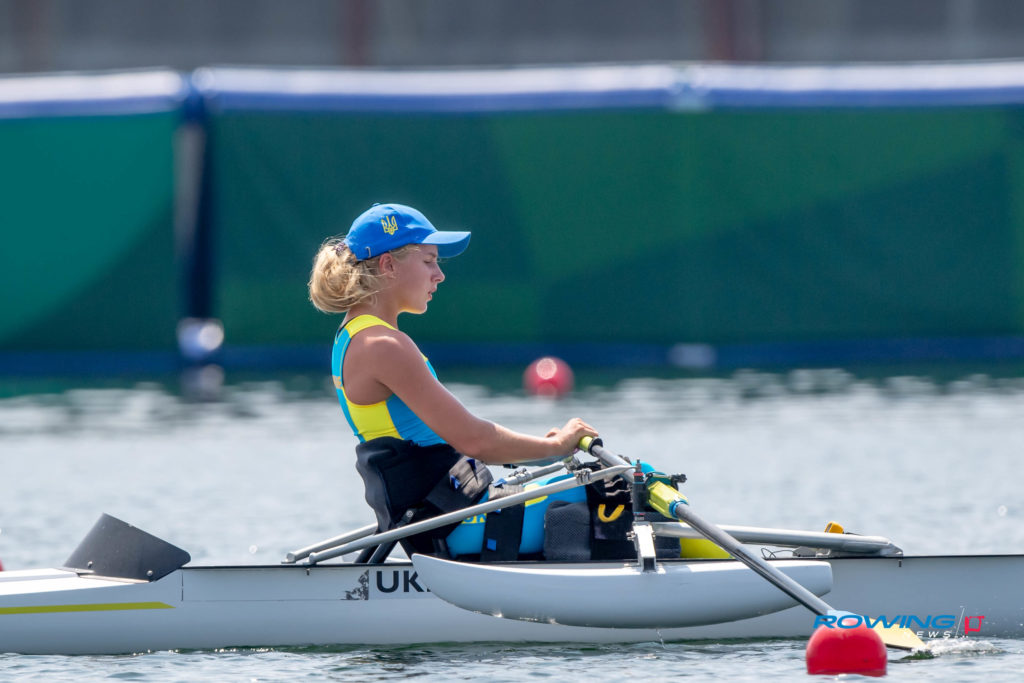
Samuel has been notified that the seat must be altered before racing Saturday. In her place, second-place finisher Anna Sheremet of Ukraine was advanced to the Sunday final.
Next to race was men’s single sculler and 2016 Paralympian Blake Haxton. Haxton went up against defending 2016 champion Roman Polianskyi, who won and advanced into the final. Haxton will attempt to advance into the final from the rep Saturday.
“Never a great feeling to wind up fifth in the heat, but not a terrible row overall,” said Haxton. “We’ll be back in the rep tomorrow. So top to bottom, not a bad day.”
Going to the line for the U.S. after Haxton was the PR2 mixed double with Russell Gernaat and Laura Goodkind. The U.S. pair finished fifth and will also hope to advance through the Saturday reps.
“We had a plan to go out early and go to the bridge and see where everyone was sitting,” said Gernaat. “We were in the heat with Great Britain, we knew that they’re the fastest boat out there.”
“We’ve got a big race tomorrow because we want to try and make the A final and we’re looking forward to being able to do that—squeeze our way in there,” Gernaat said.
Racing begins at 9:30 a.m. JST on the Sea Forest Waterway Saturday.
TOKYO, JAPAN – The long Covid-extended wait to get the chance to race for a Paralympic medal is finally over for the crews that have gathered in Tokyo at the Sea Forest Waterway Paralympic rowing course.
On a scorching hot and hazy morning Thursday, crews made their final preparations and took their last practice strokes before racing begins Friday morning.
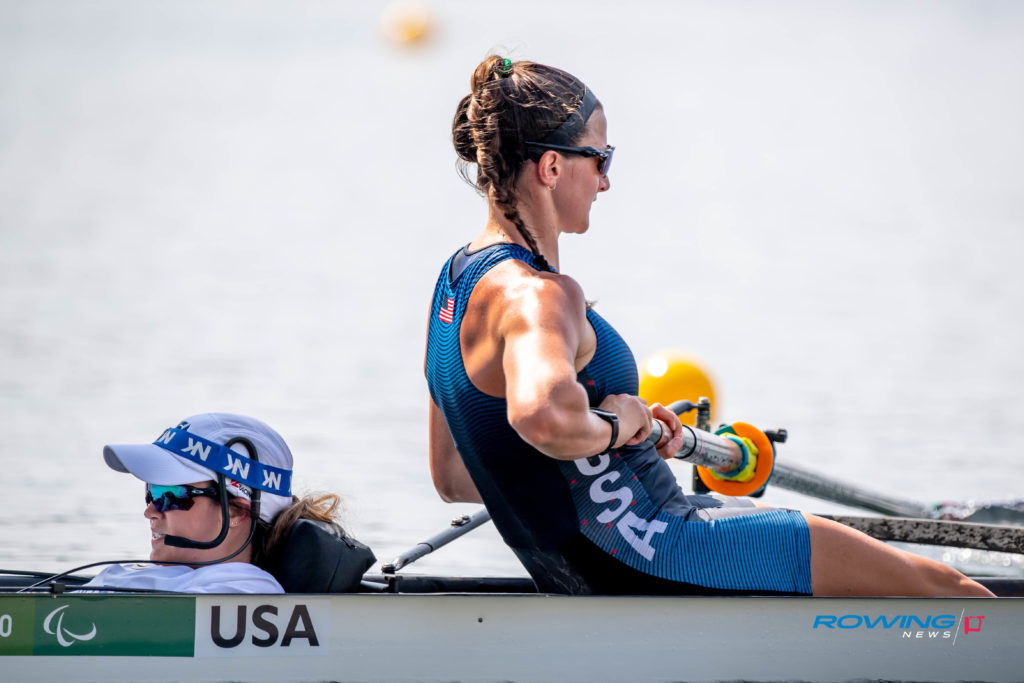
“It feels very good to get going,” said Dani Hansen who is rowing in the U.S. mixed coxed four in her second Paralympics. Hansen is the only returning Paralympian in the U.S. crew that is chasing the boat’s first win at either the world championships or Paralympics after a six-peat of silver medals.
“Everything here is as expected,” Hansen said. “I feel like we’ve prepared the way we should have. And no, it doesn’t feel like five years since Rio, it feels more like ten. This is a different age for sure.”
The U.S. coxed four is one of four that will be competing here, including the men’s and women’s singles and the mixed double. Like Hansen, this will be men’s single sculler Blake Haxton’s second Games and yesterday said he was just as eager to begin racing.
“I’m looking forward to getting after it,” Haxton said. “We’ve been here long enough that I feel pretty well adjusted and the racing will be fast. It really does feel like it’s been five years, which I was not expecting.”
Haxton said the worst part about the extended cycle, caused by the year-long Pandemic delay, was never knowing if he would actually see this day. “It was just the uncertainty of whether it would happen it all,” he said.
But now it is going to happen, beginning Friday morning with heats and continuing through Sunday with finals. While race is happening on Tokyo time, the racing is being broadcast in the U.S. tonight.
The Tokyo Paralympic rowing events will take place over three days between Aug. 27 and Aug 29.
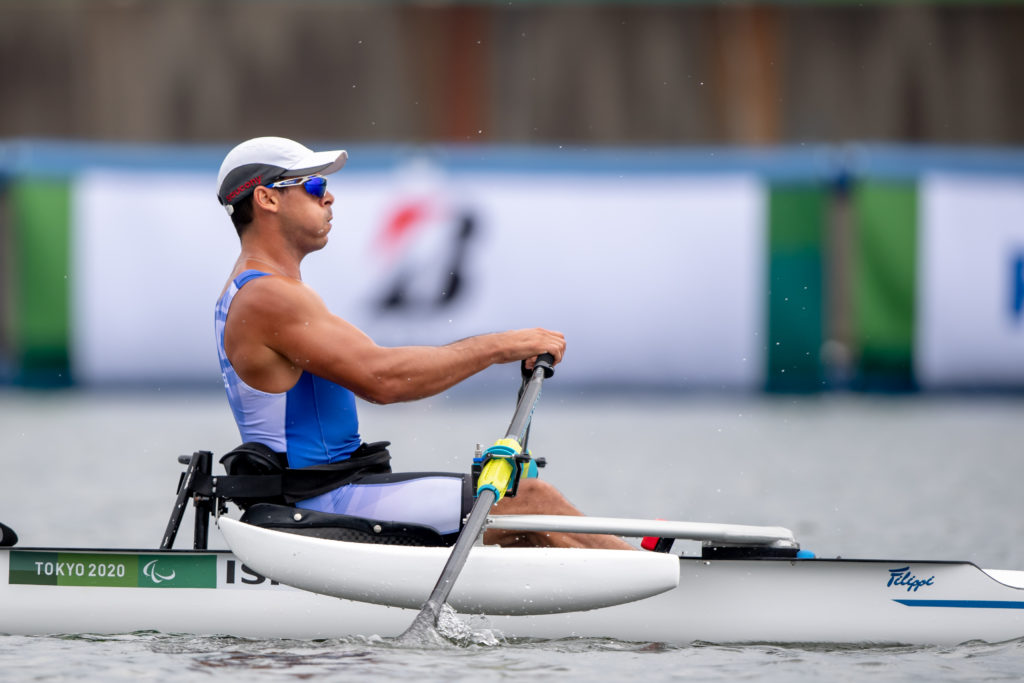
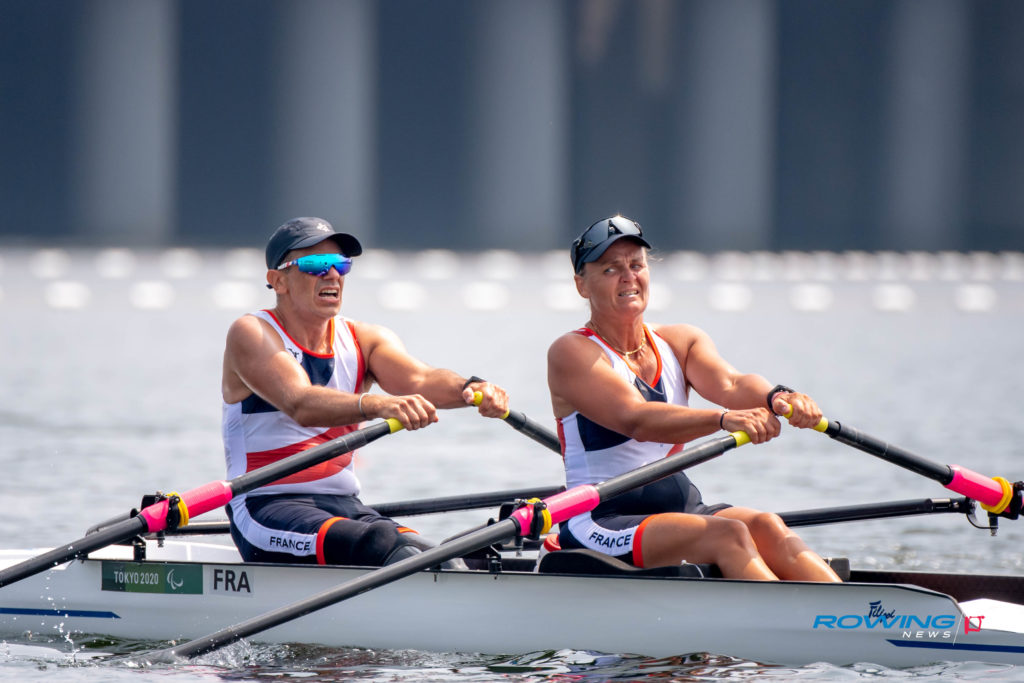
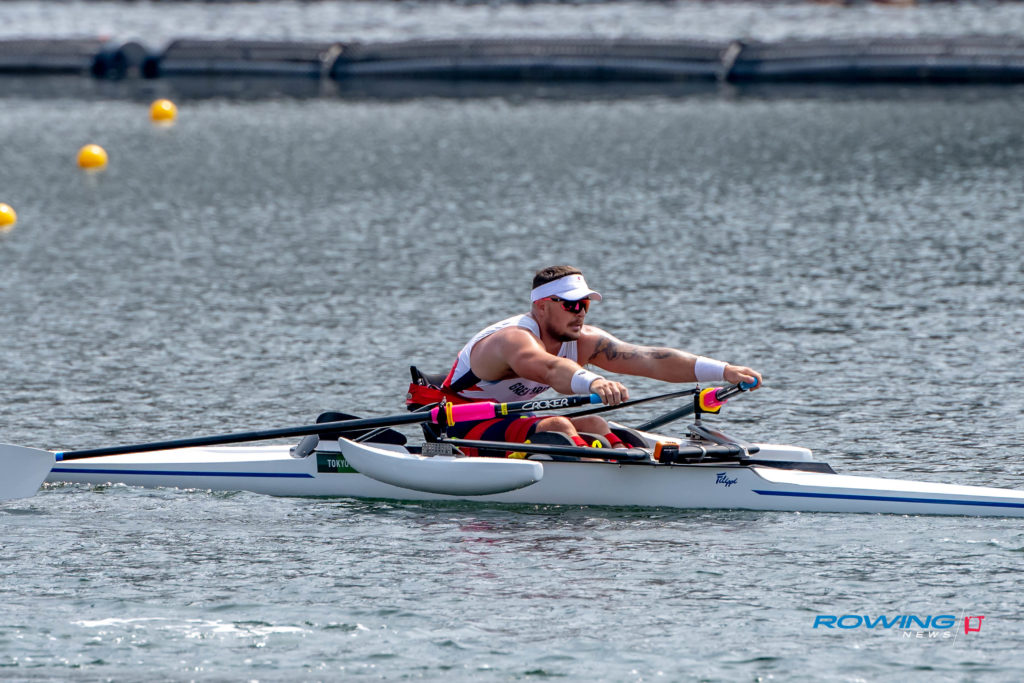
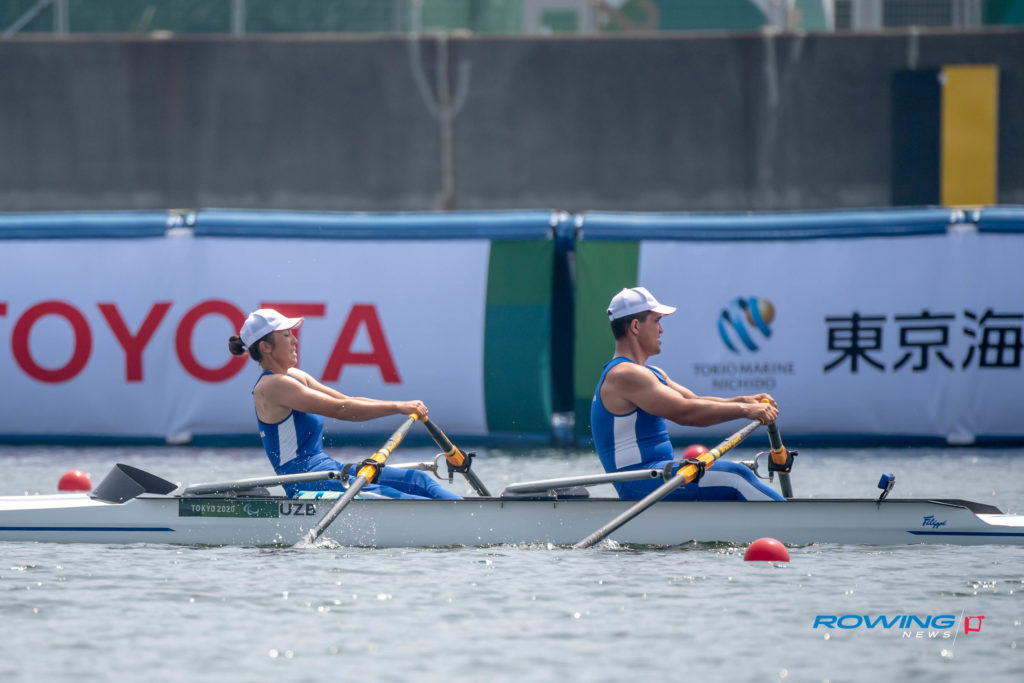
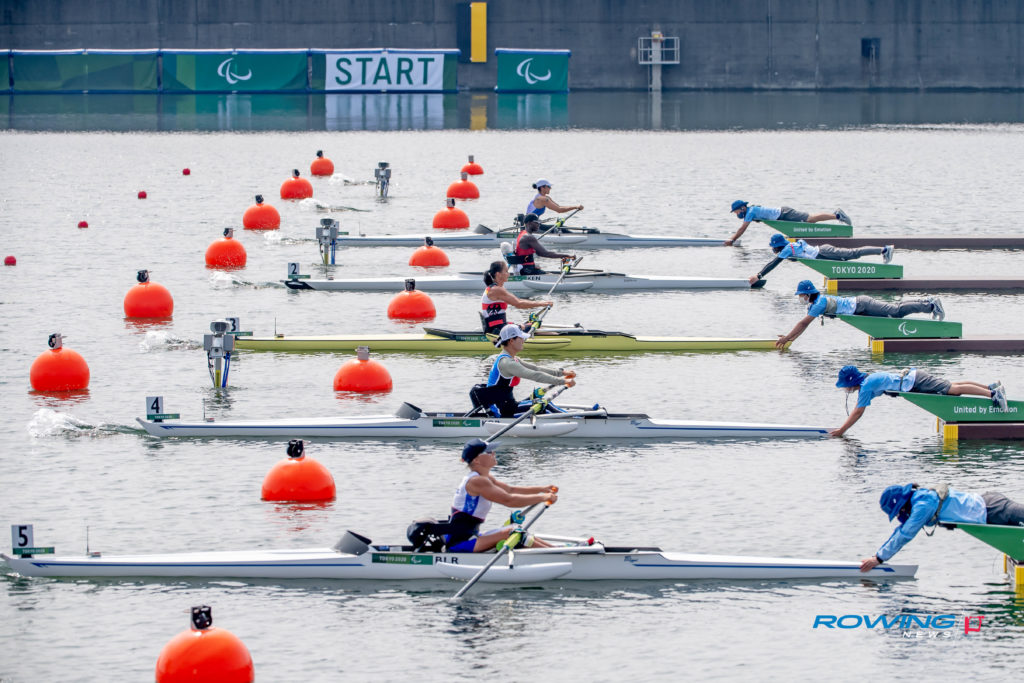
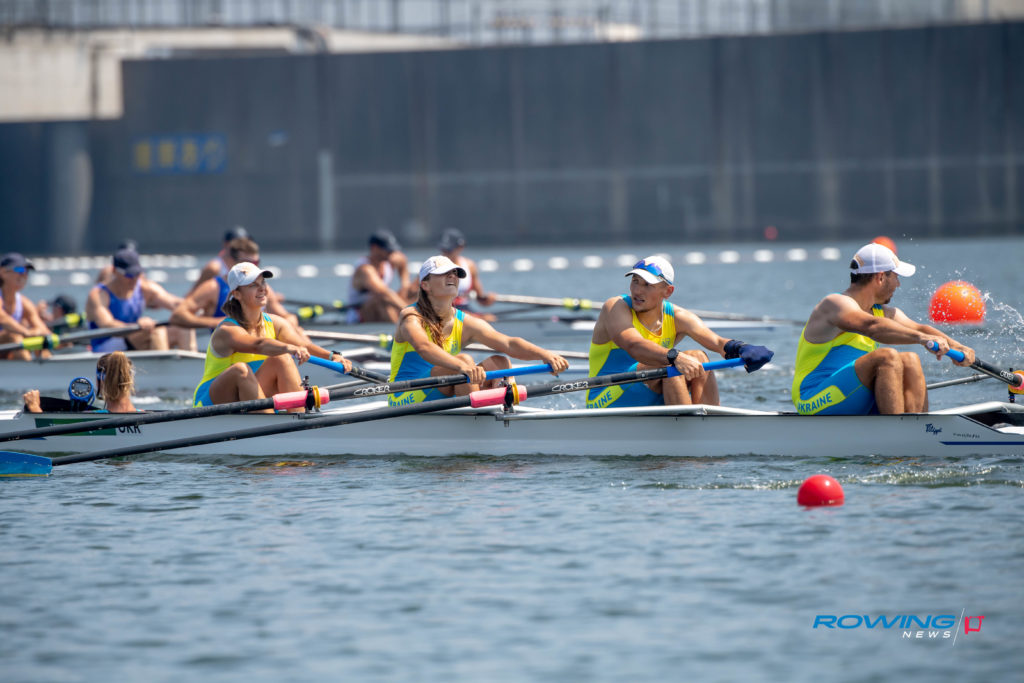
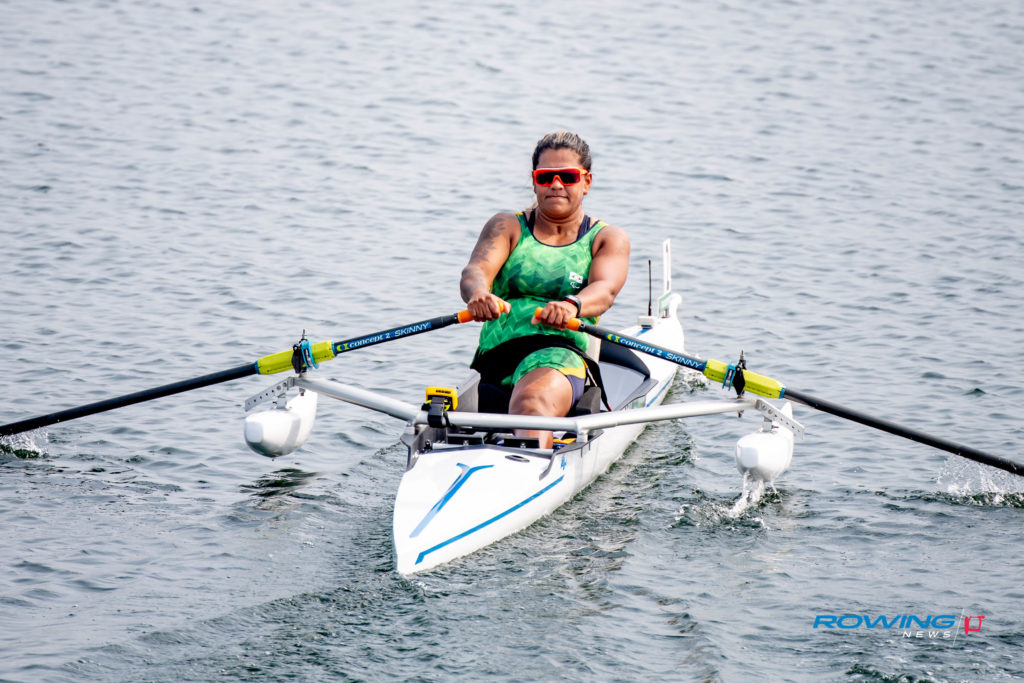
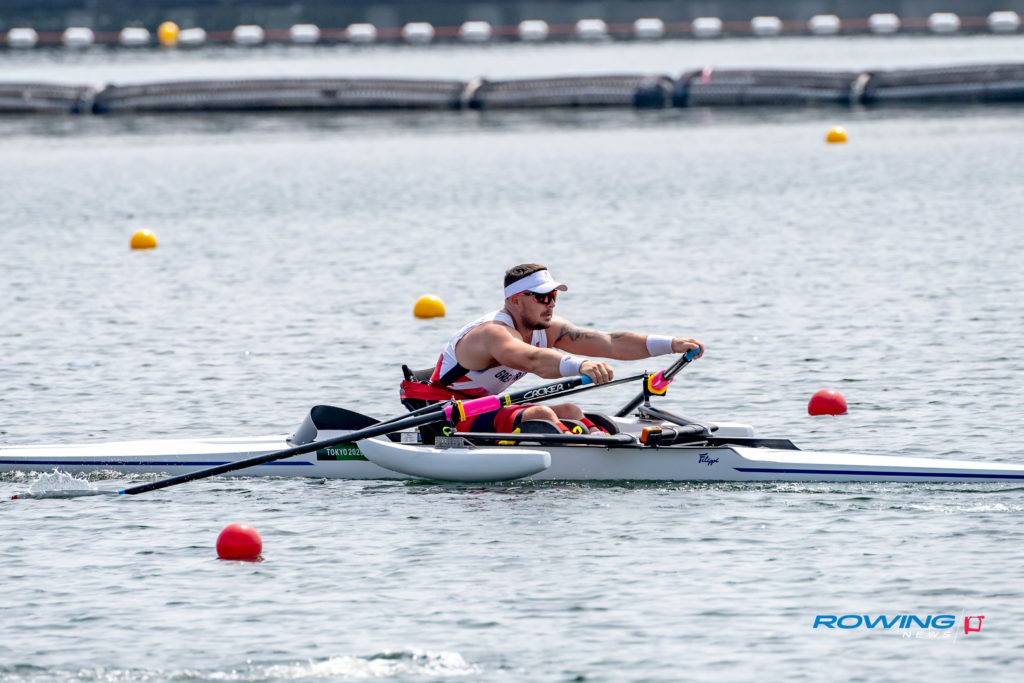
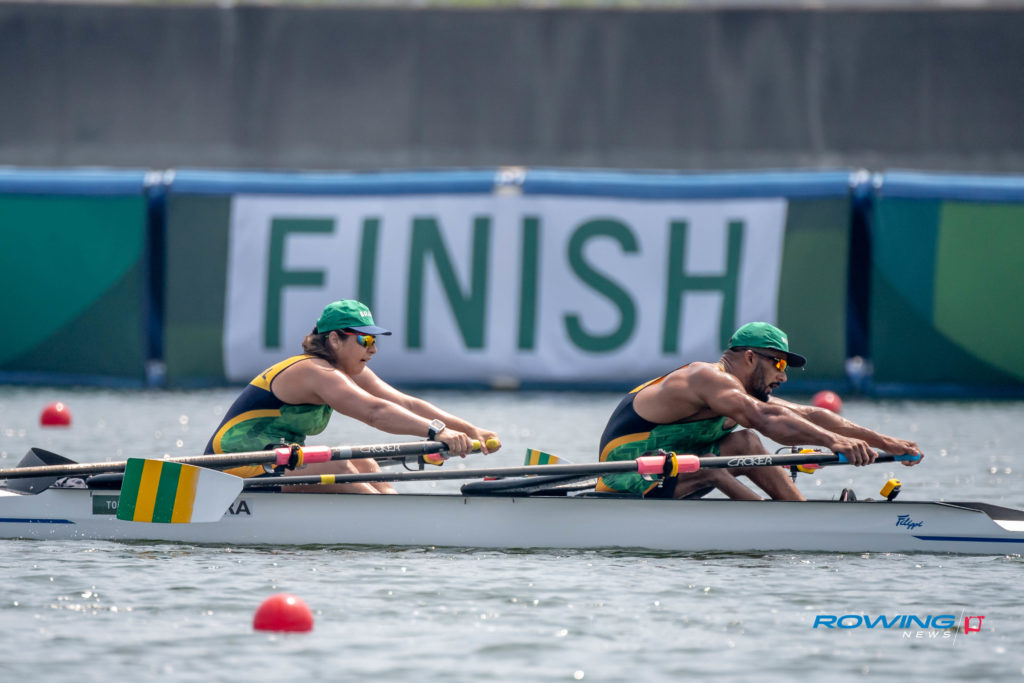
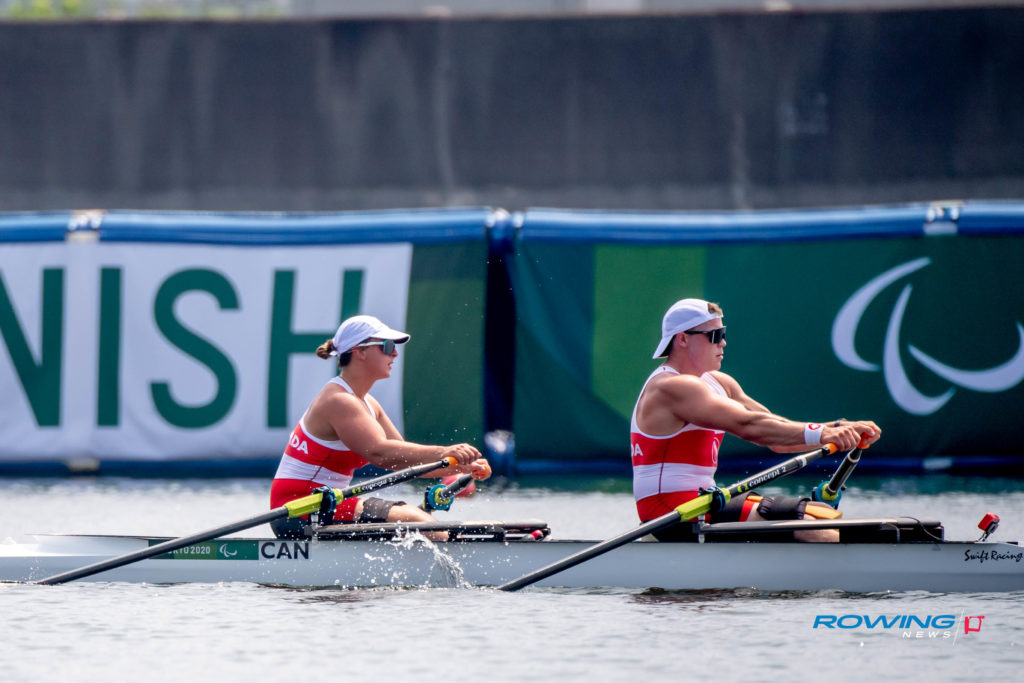
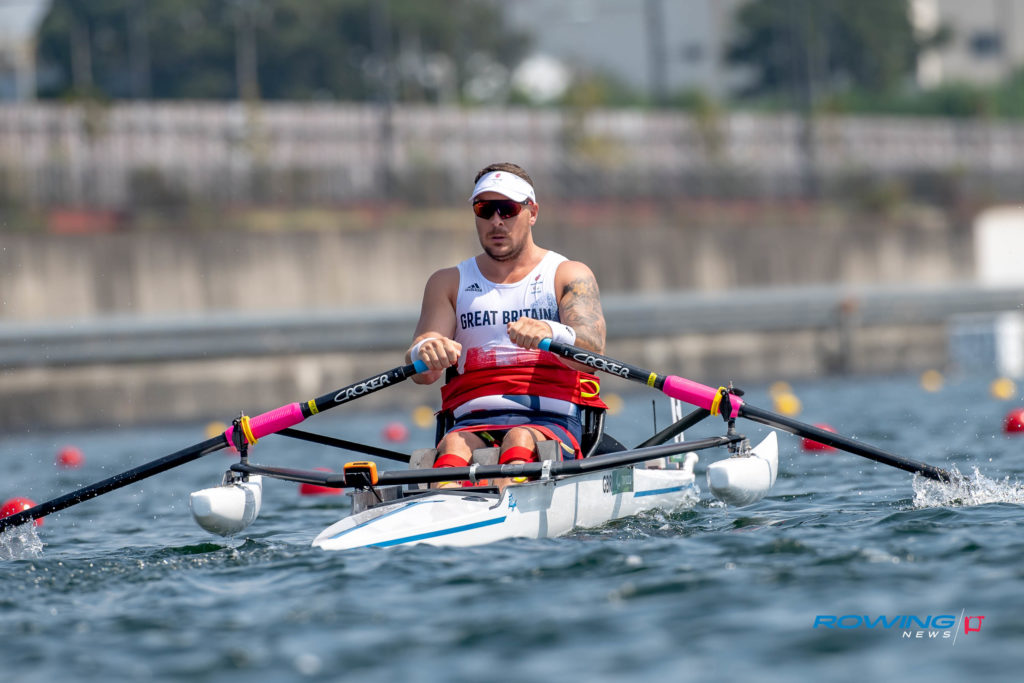
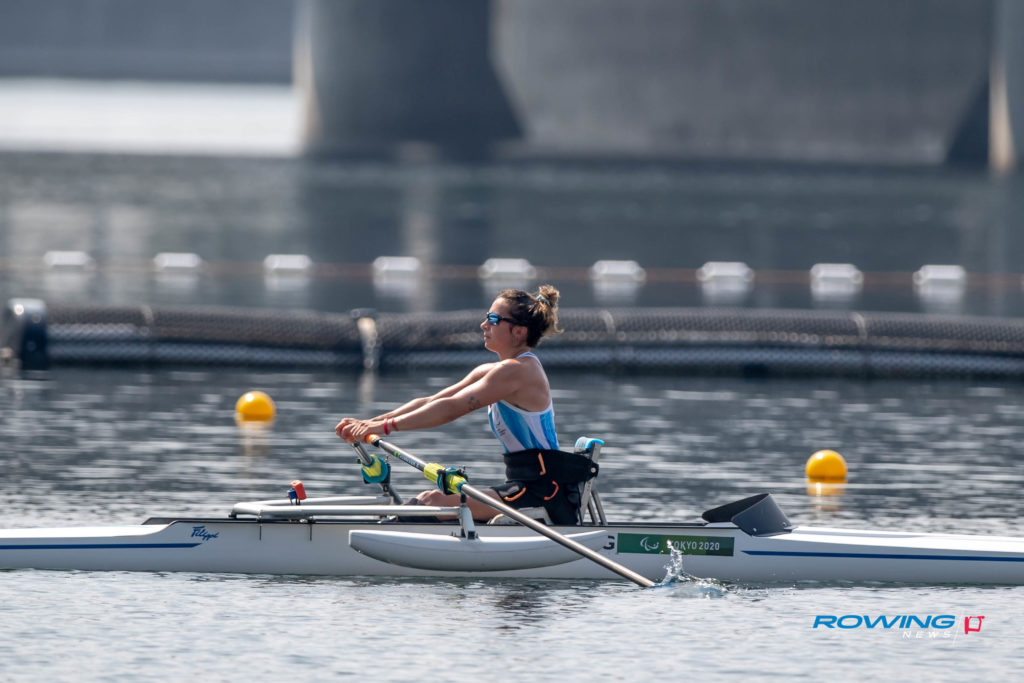
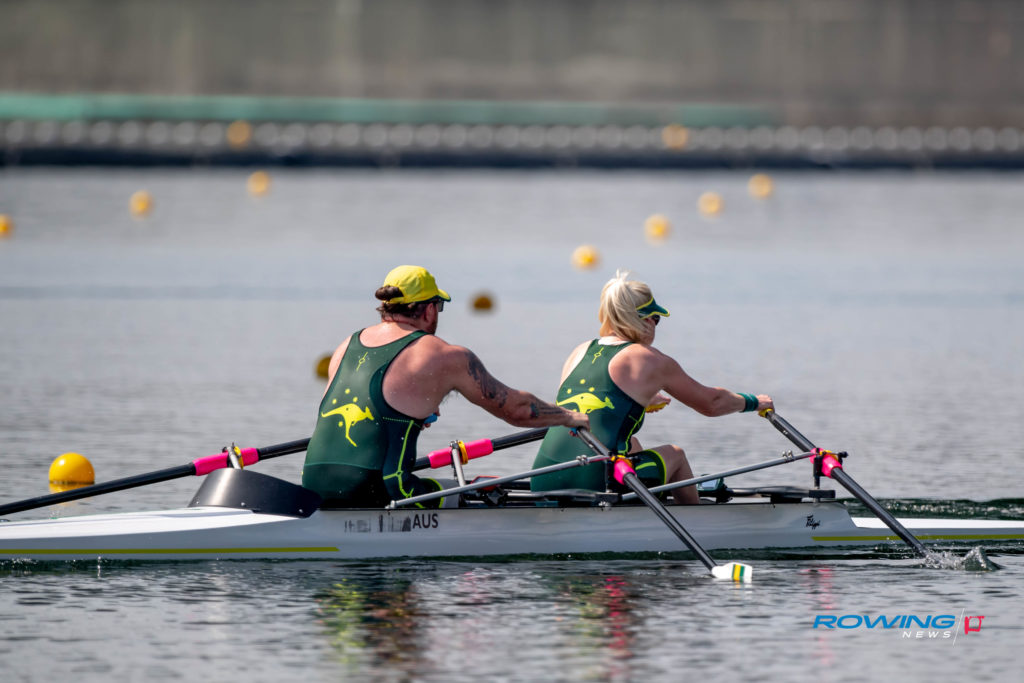
There are four events. They include the PR1 (formerly arms and shoulders) men’s and women’s singles, the PR2 (formerly trunk and arms) mixed double, and the PR3 (formerly leg, trunk and arms) mixed four with coxswain.
The U.S. will have crews in all four events.
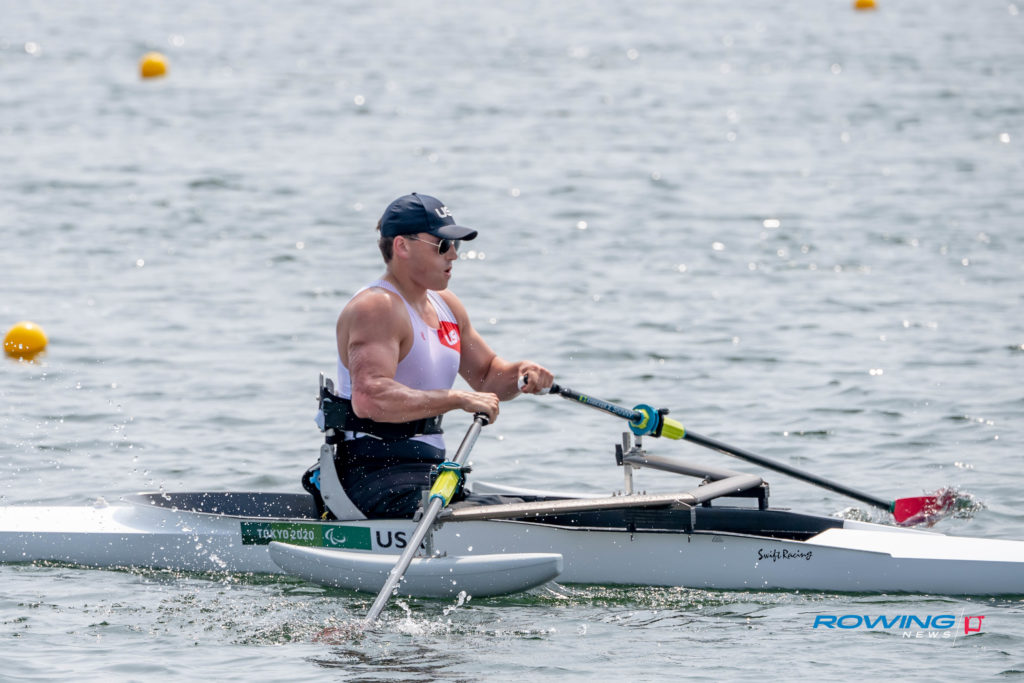
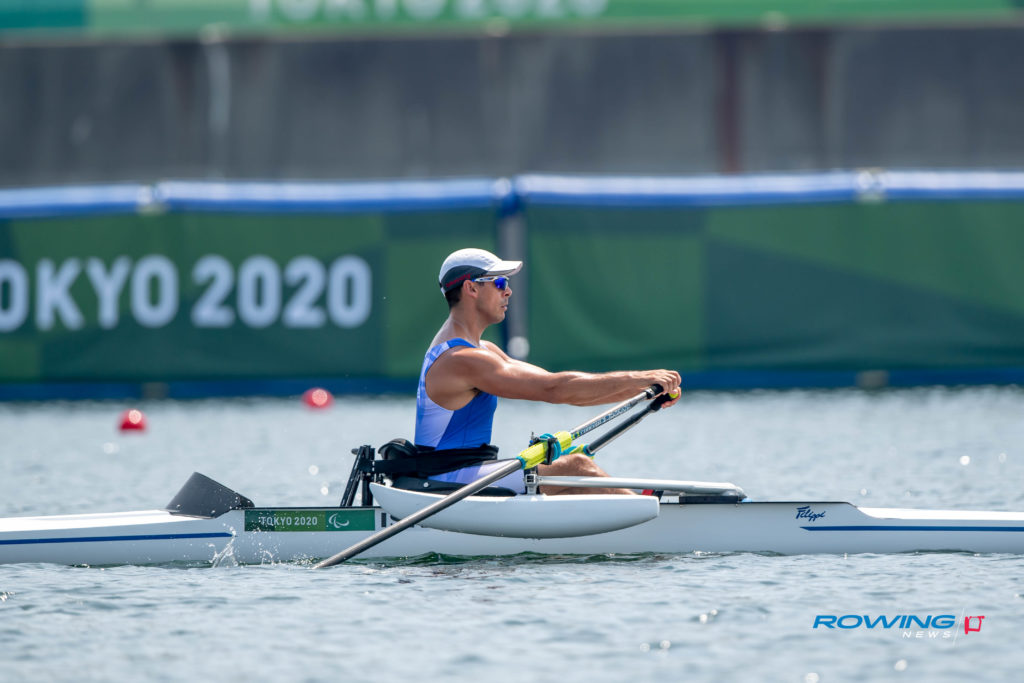
PR1 Men’s Single
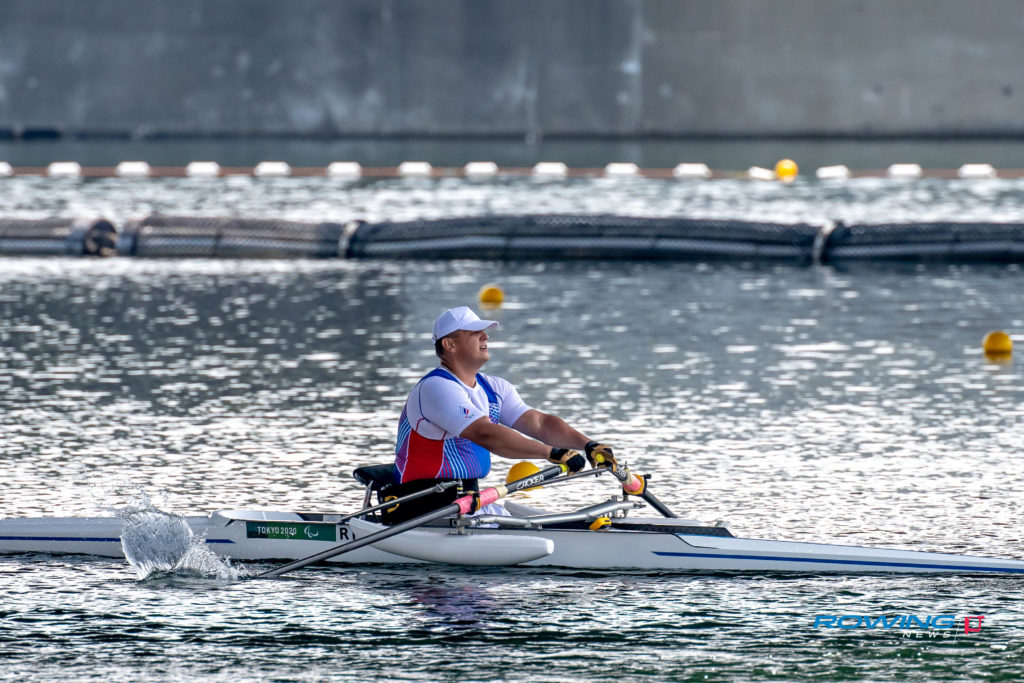
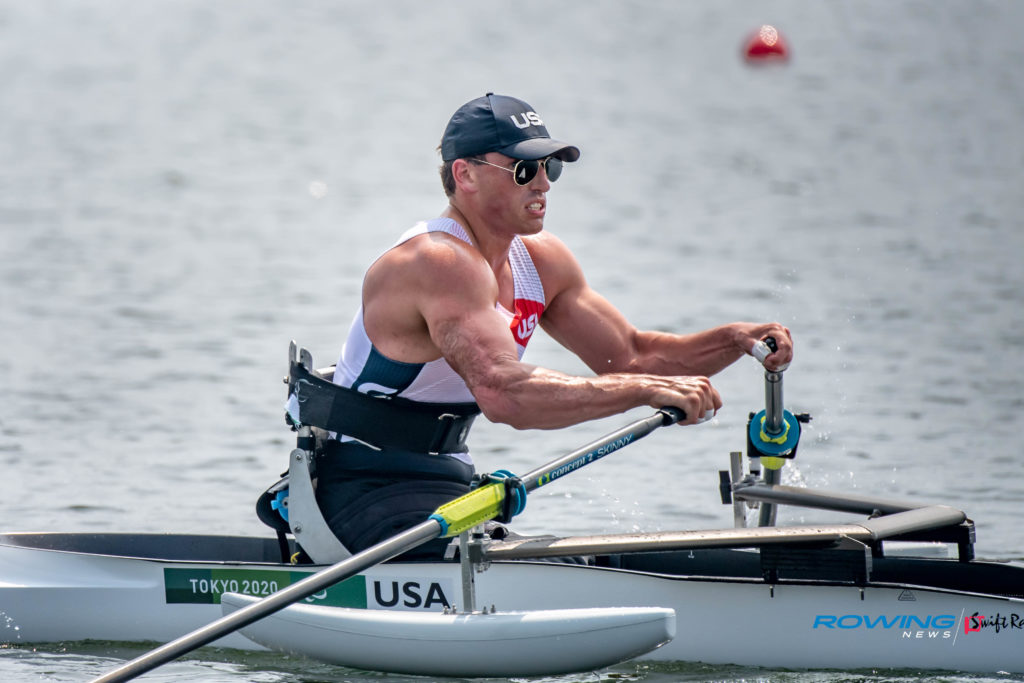
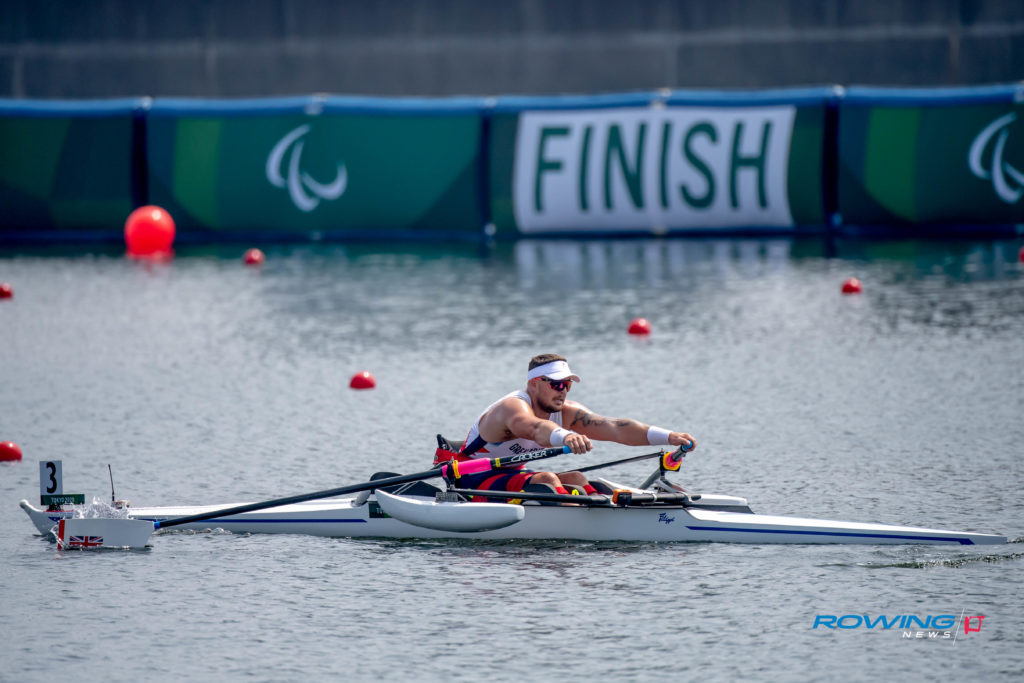
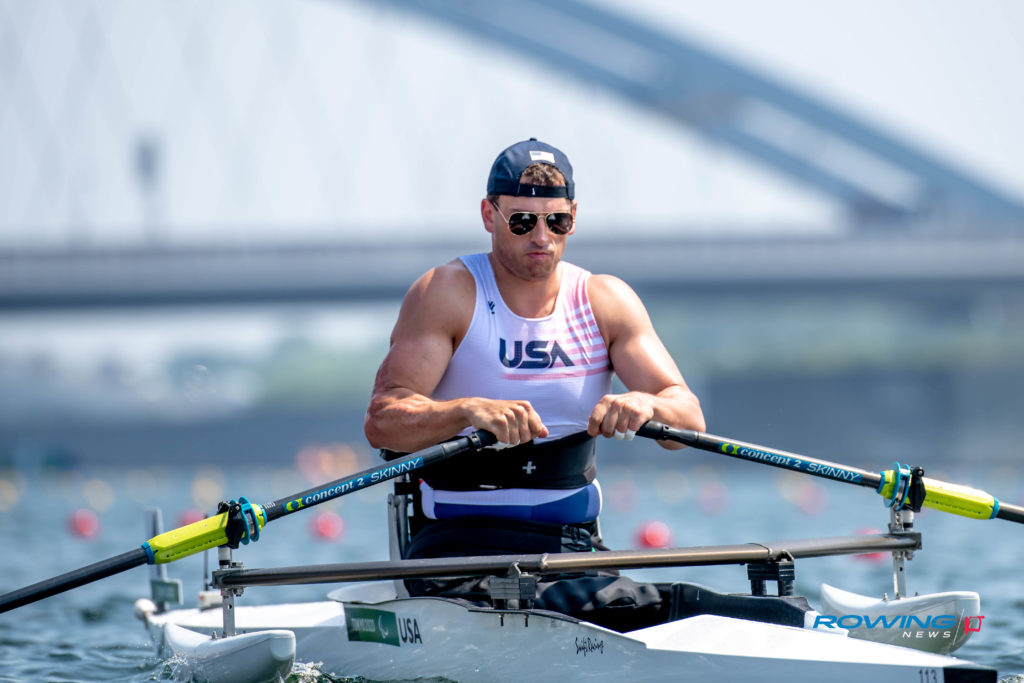
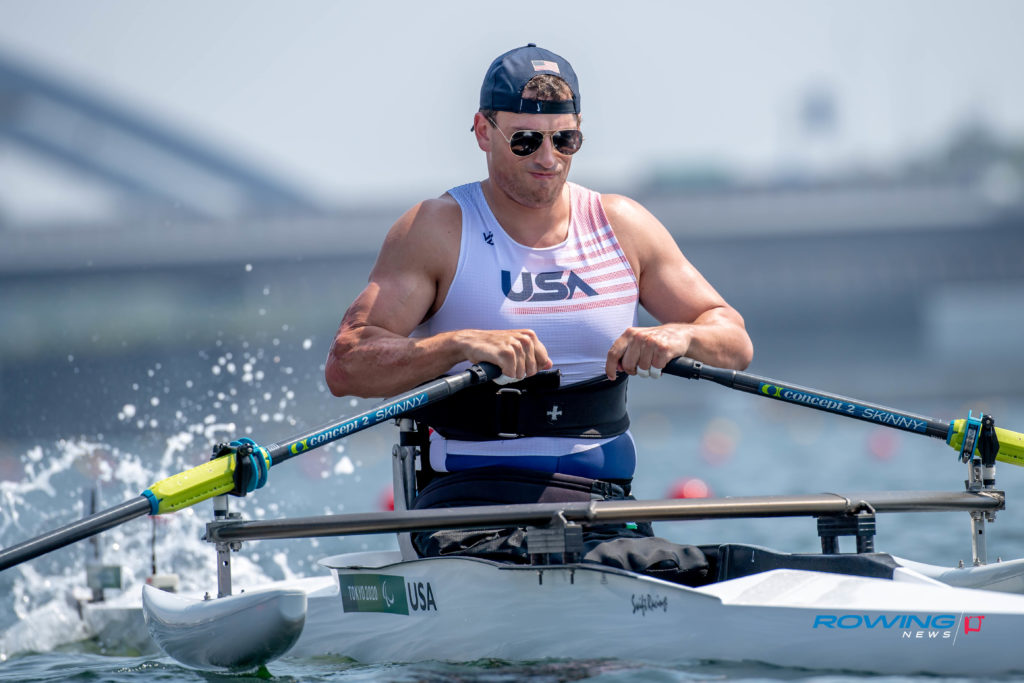
Blake Haxton will represent the U.S. in this event for the second time. Haxton finished fourth in the event in 2016. He qualified the boat class for the U.S. at the 2019 World Rowing Championships when he finished seventh, winning the B final.
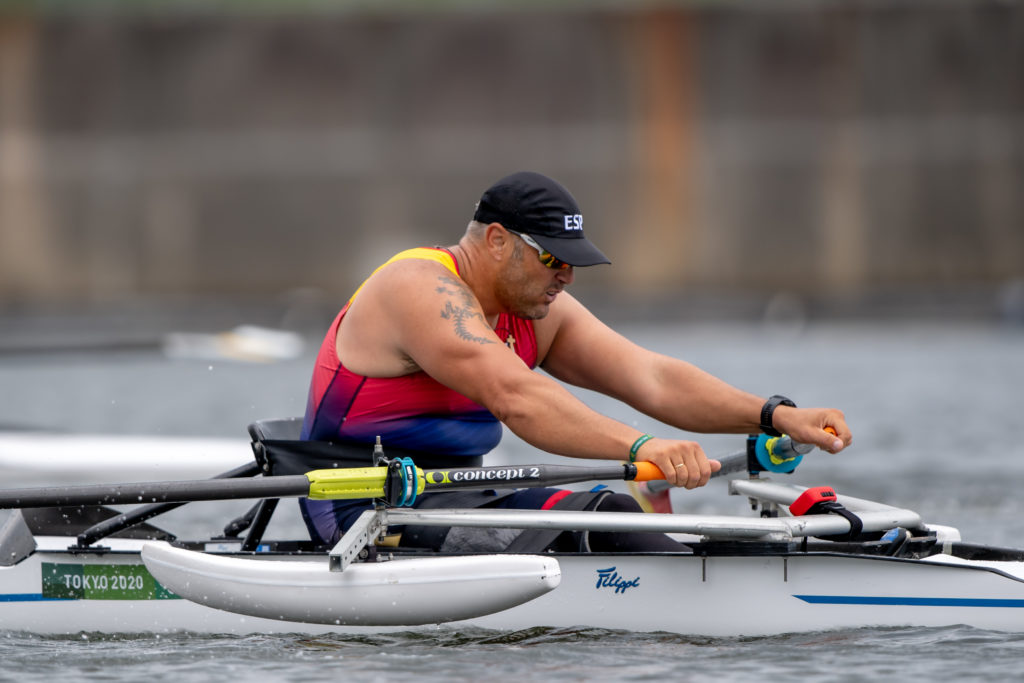
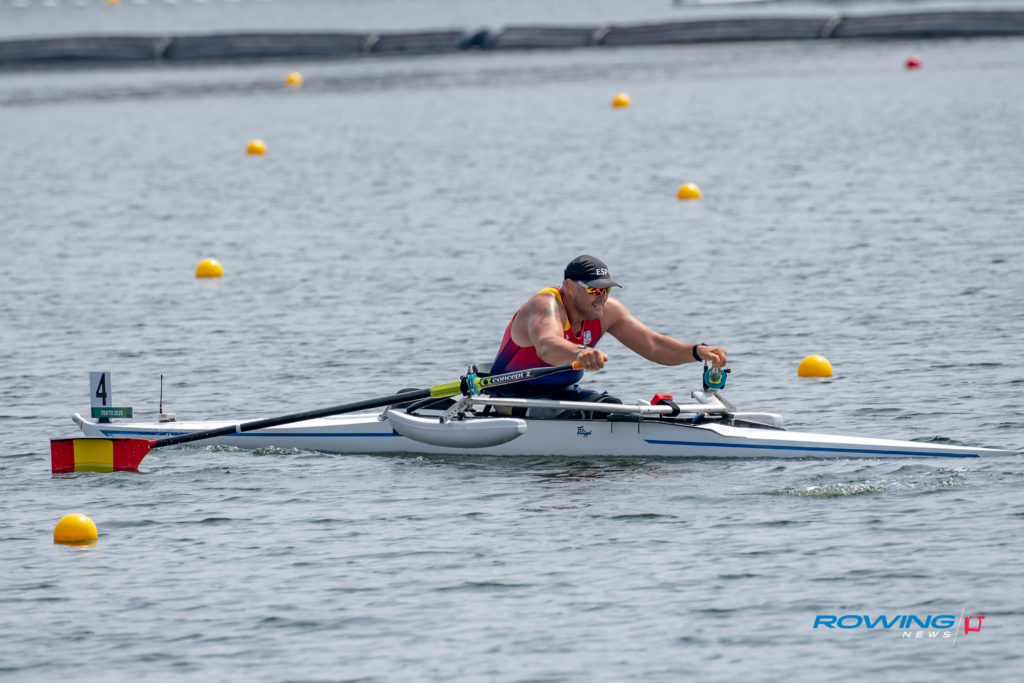
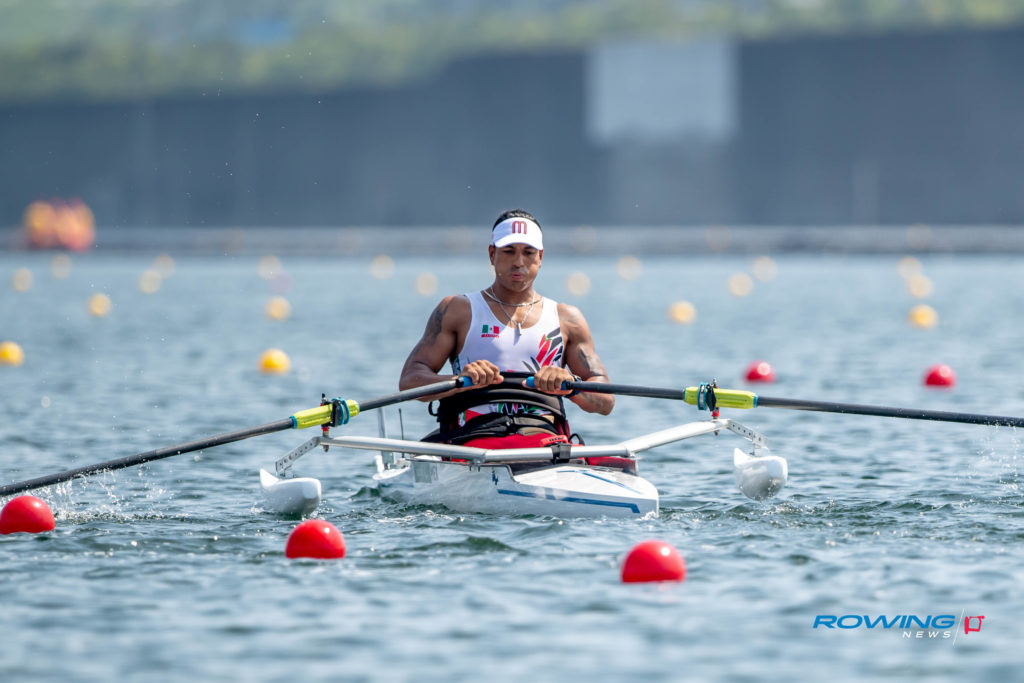
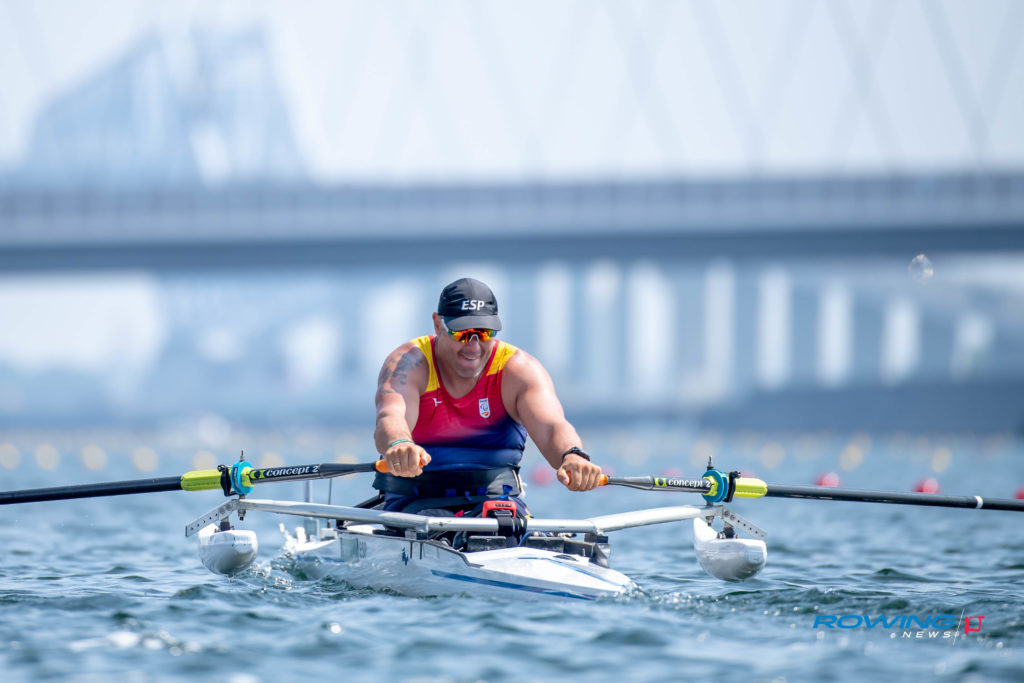
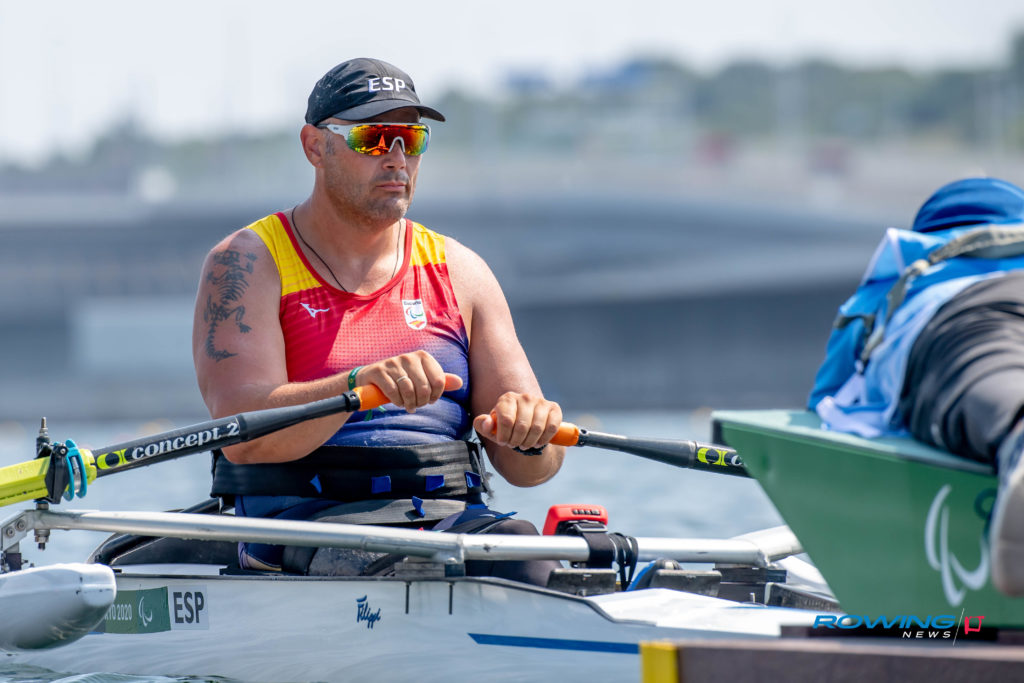
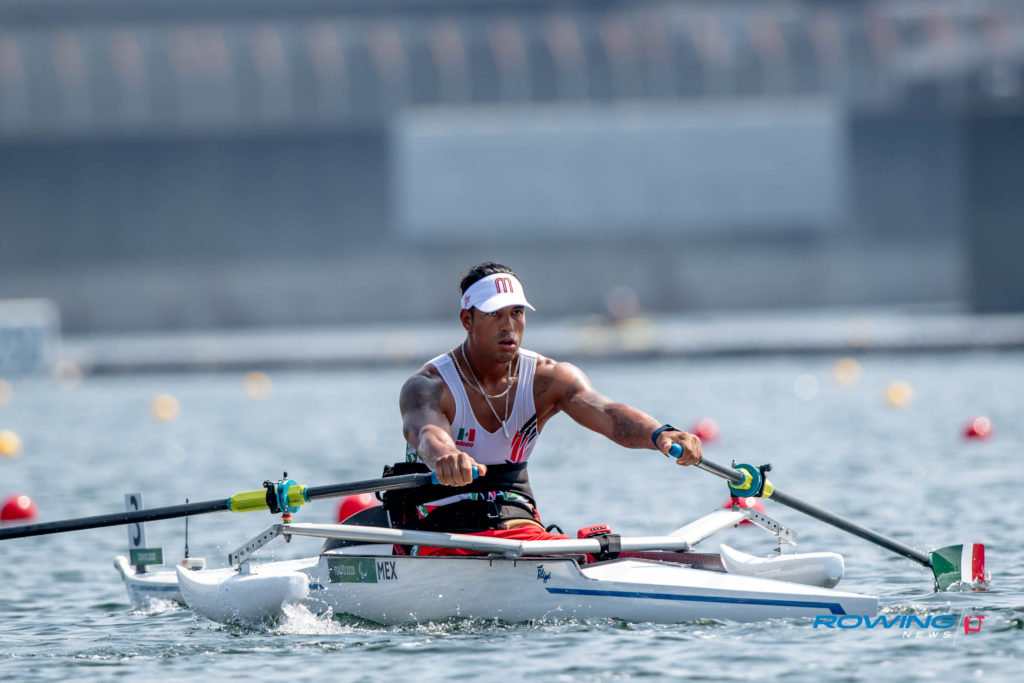
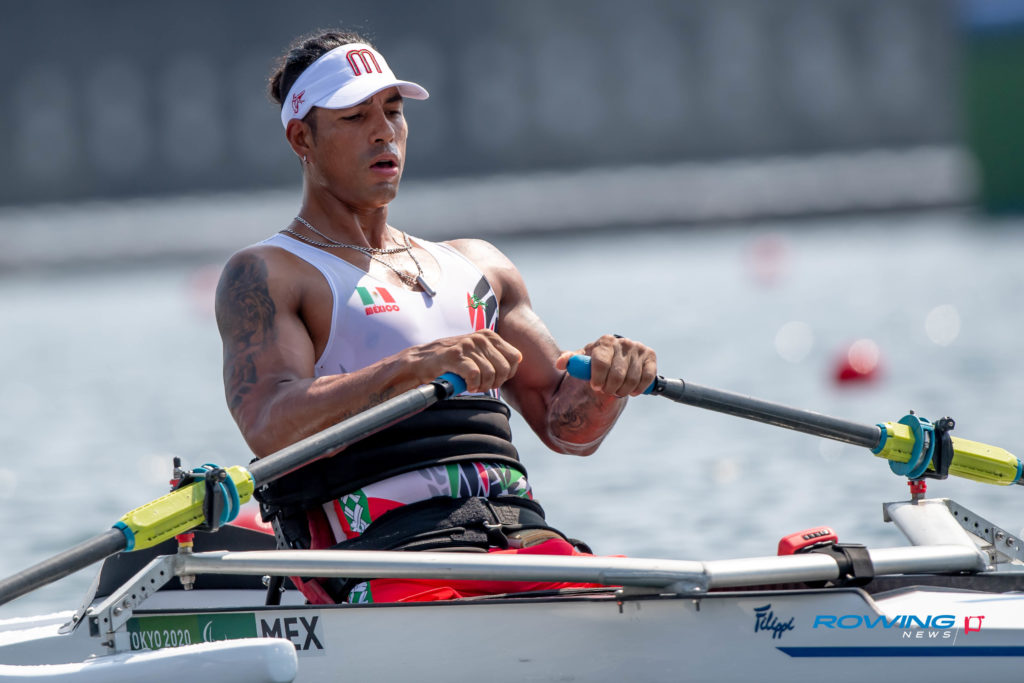
The top qualifying countries in 2019 were Ukraine, Russia, Australia, Great Britain, Brazil, and Israel. Germany qualified at the Final Paralympic Qualification Regatta in May. Also qualified through the Continental Qualification Regattas are Spain, Nigeria, Sri Lanka, and Mexico.
The defending Paralympic Champion is Australia’s Erik Horrie.
PR1 Women’s Single
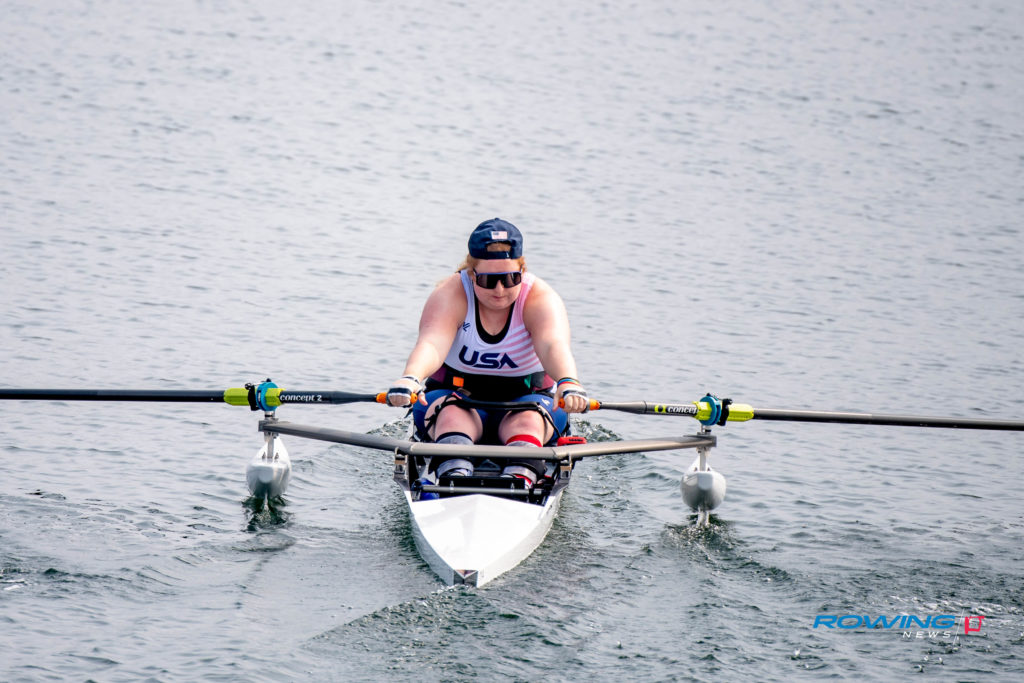
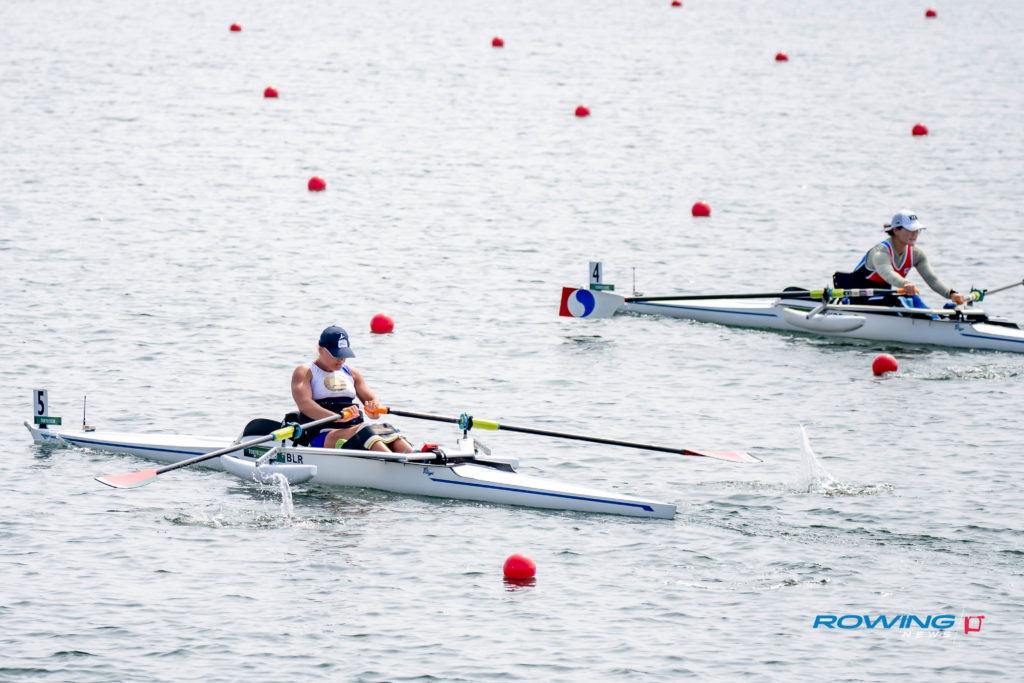
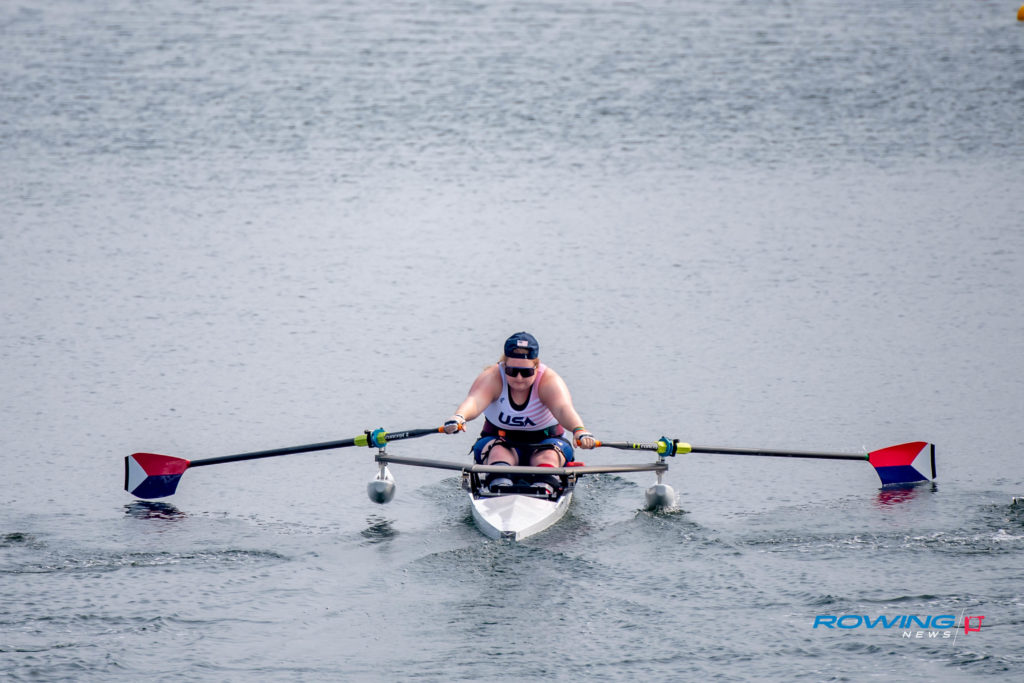
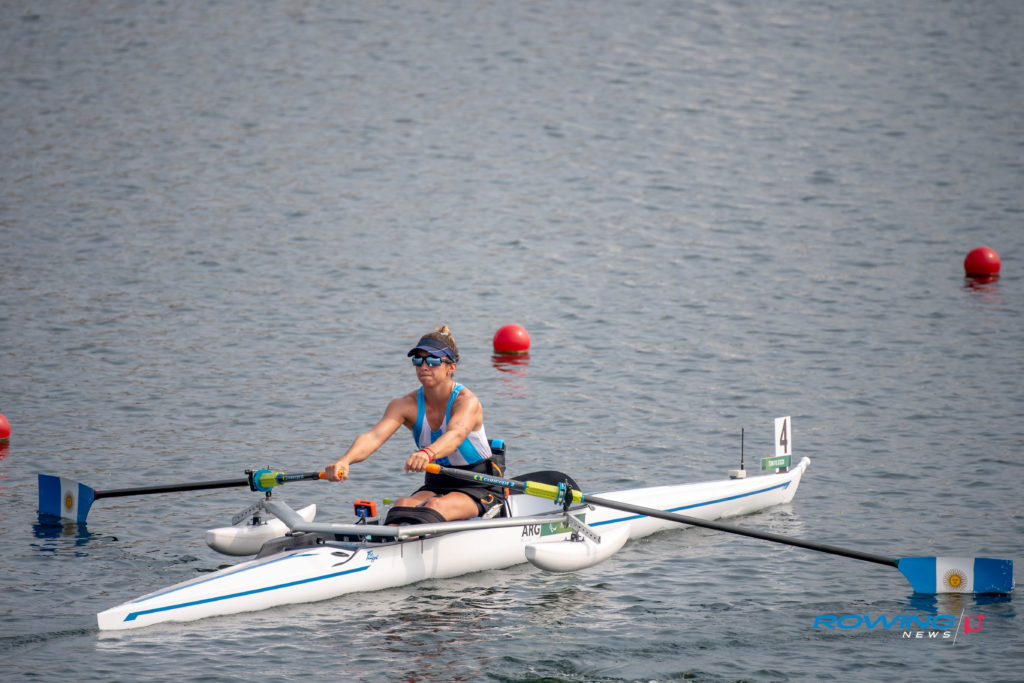
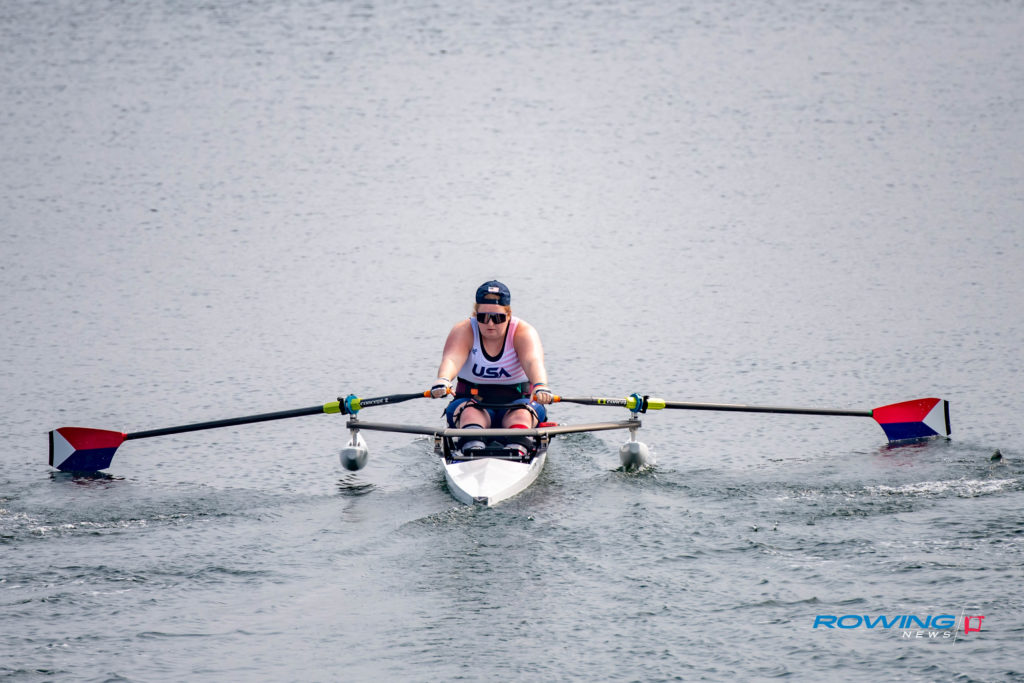
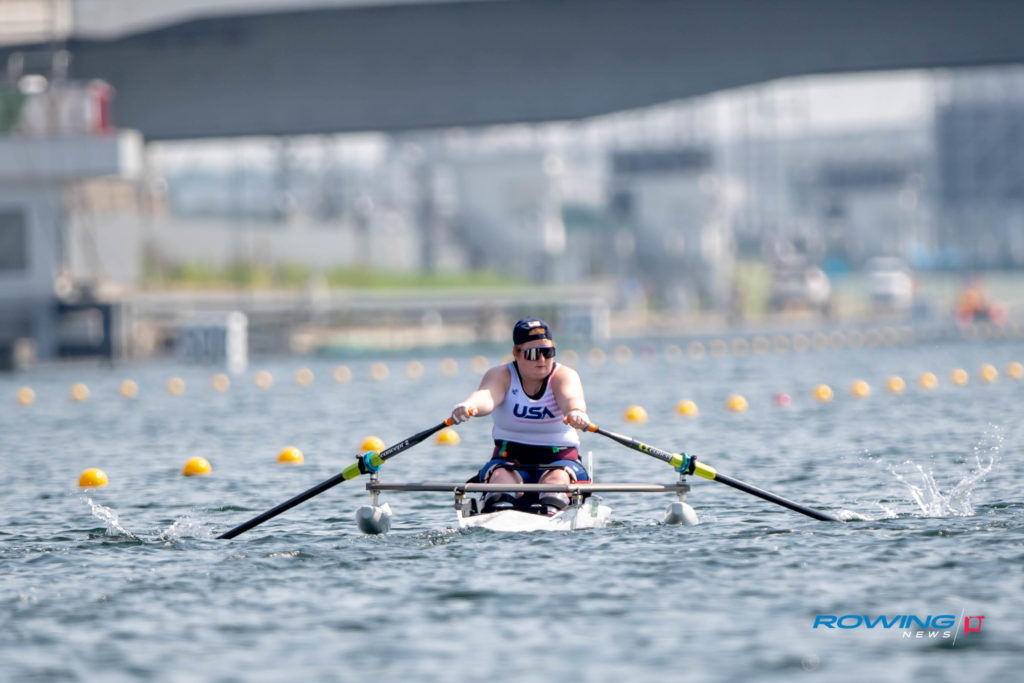
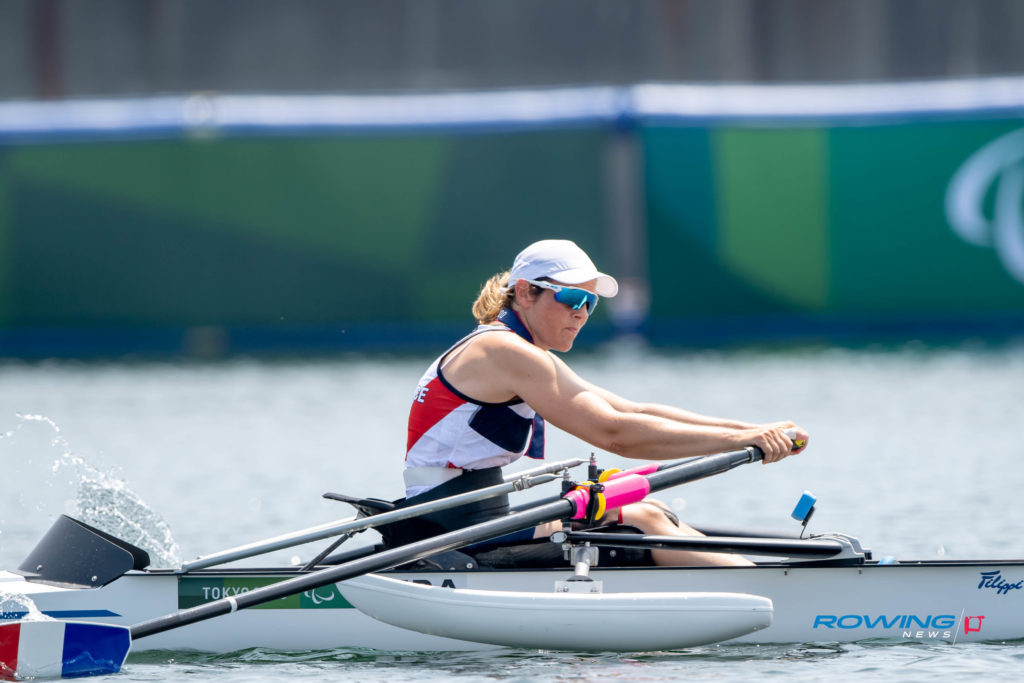
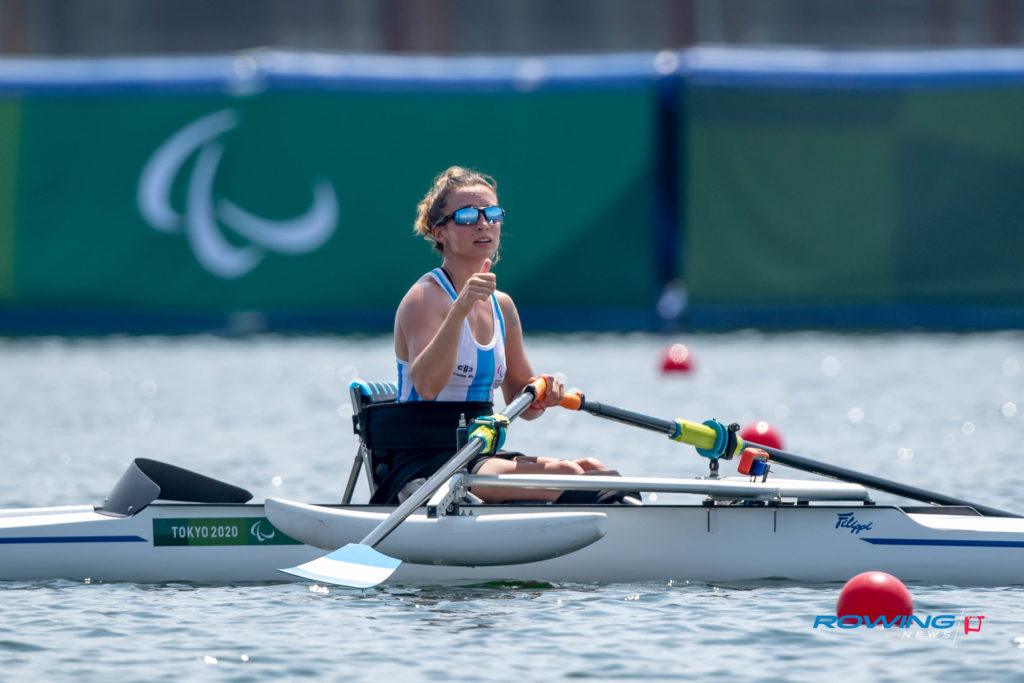
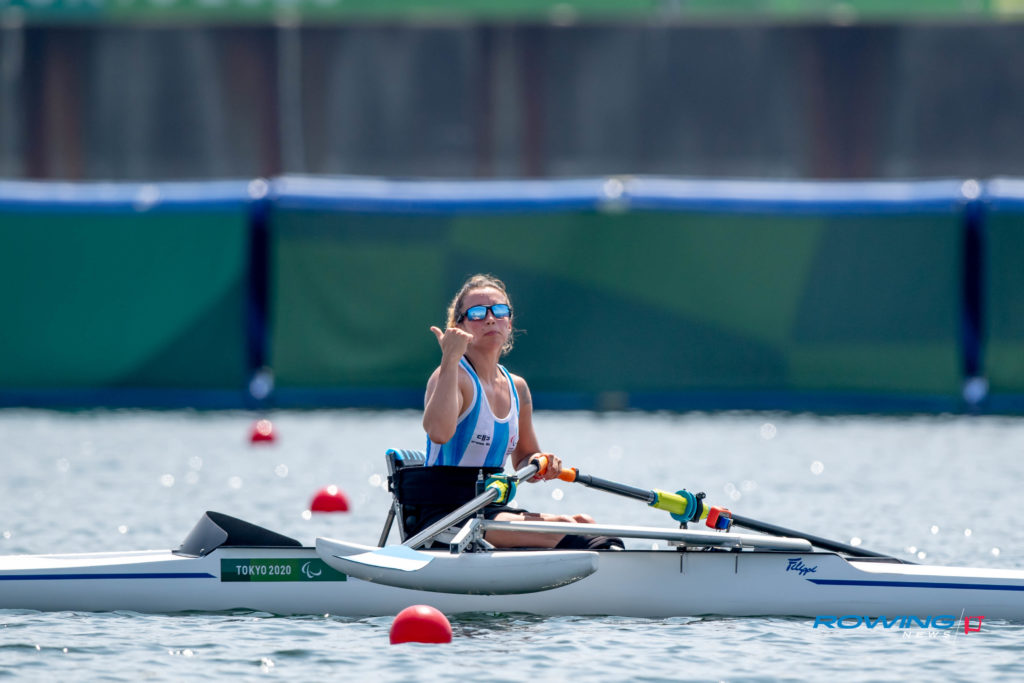
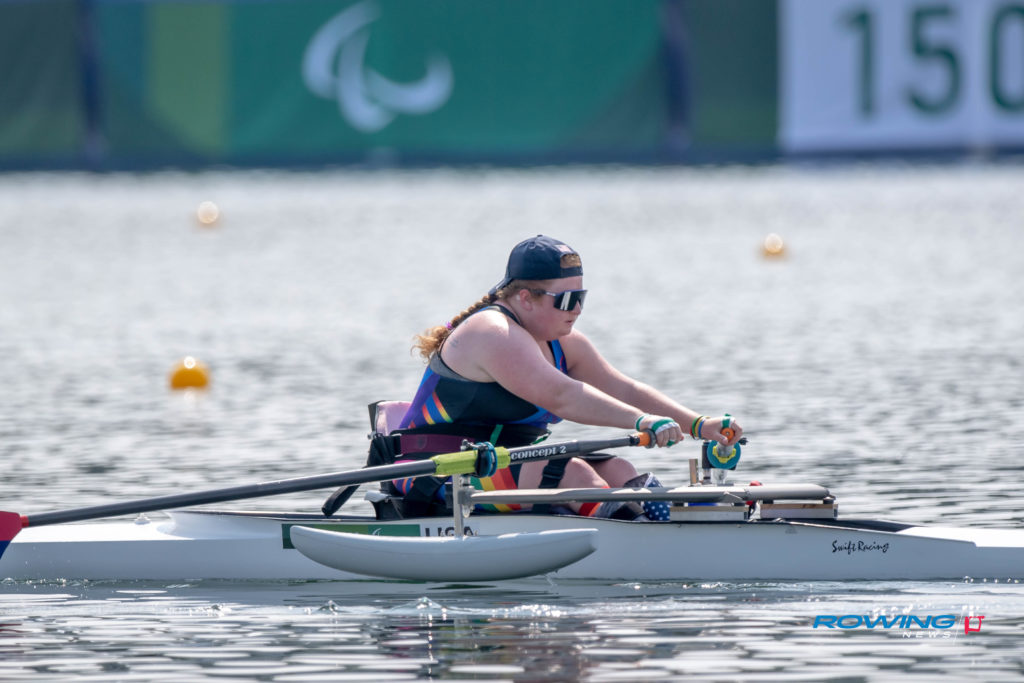
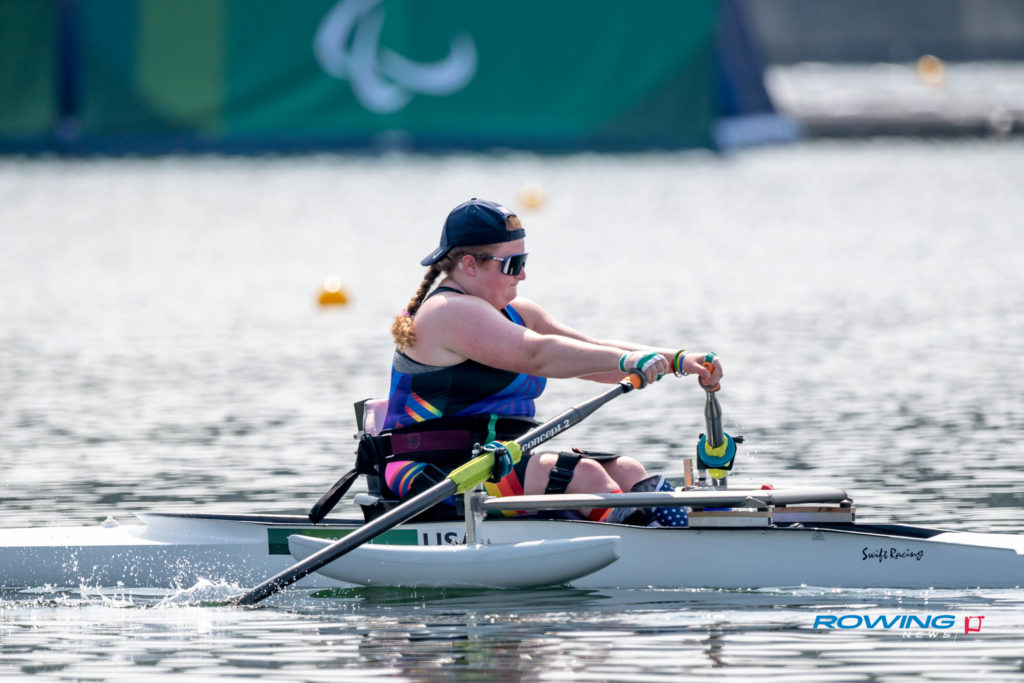
The U.S. will be represented in the event by Hallie Smith. It is her first Paralympic Games and her fourth U.S. national team. Smith won bronze in the event at the 2018 World Rowing Championships. Hallie qualified the boat class for the U.S. at the 2019 World Rowing Championships, finishing sixth.
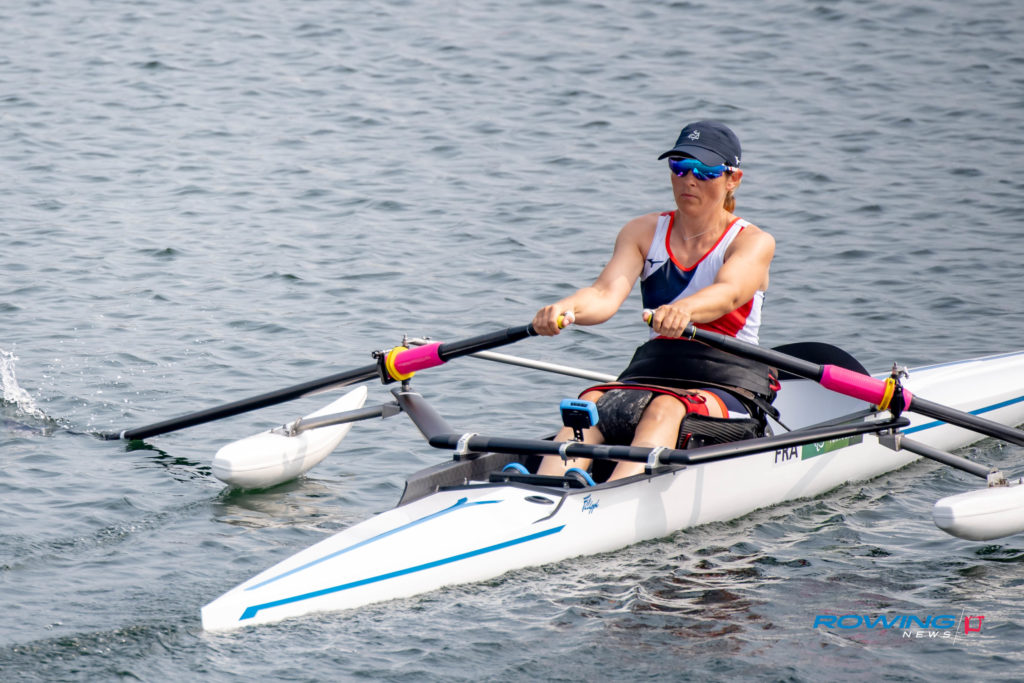
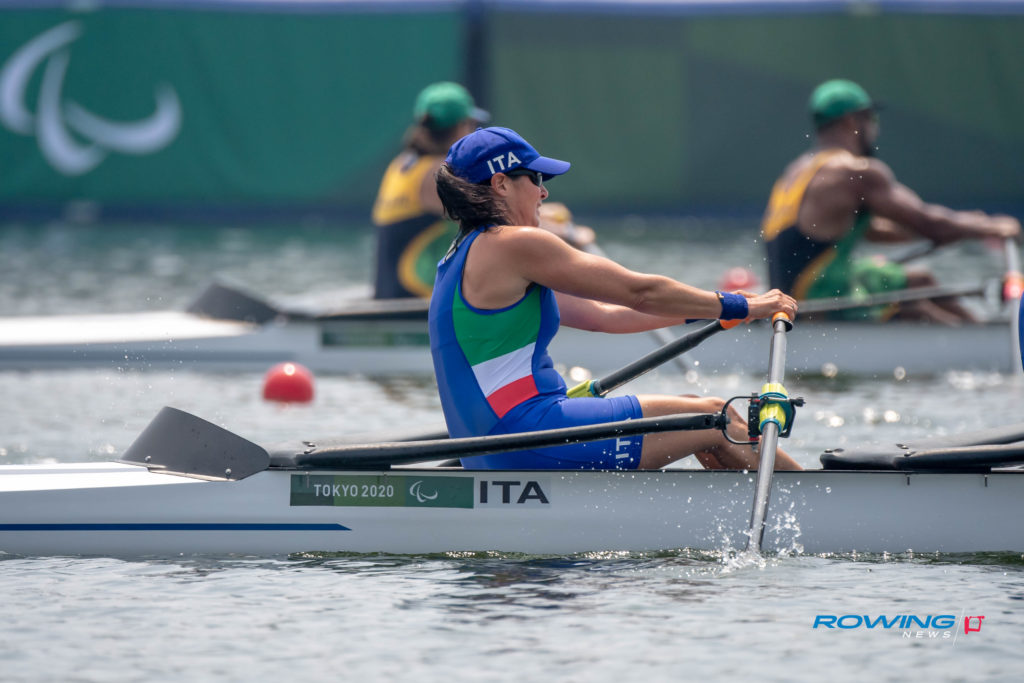
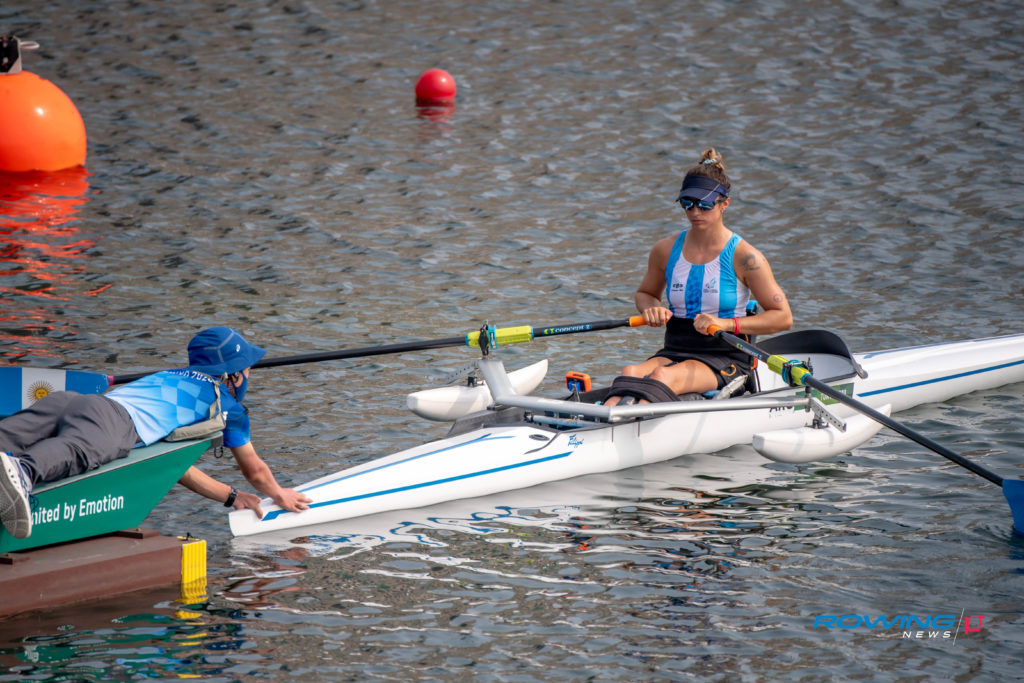
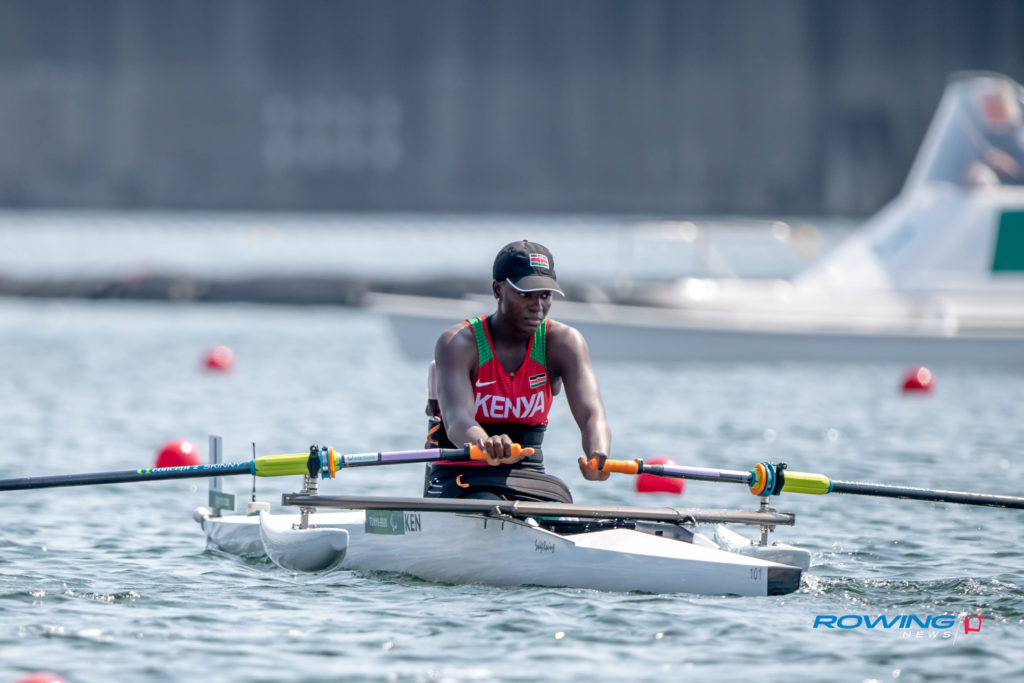
The top qualifying countries from 2019 are Norway, France, Israel, Ukraine and Germany. Brazil claimed the final position for Tokyo at the Final Paralympic Qualification Regatta in May. Also qualified through the Continental qualifiers are Belarus, Kenya, Japan, and Argentina.
PR2 Mixed Double
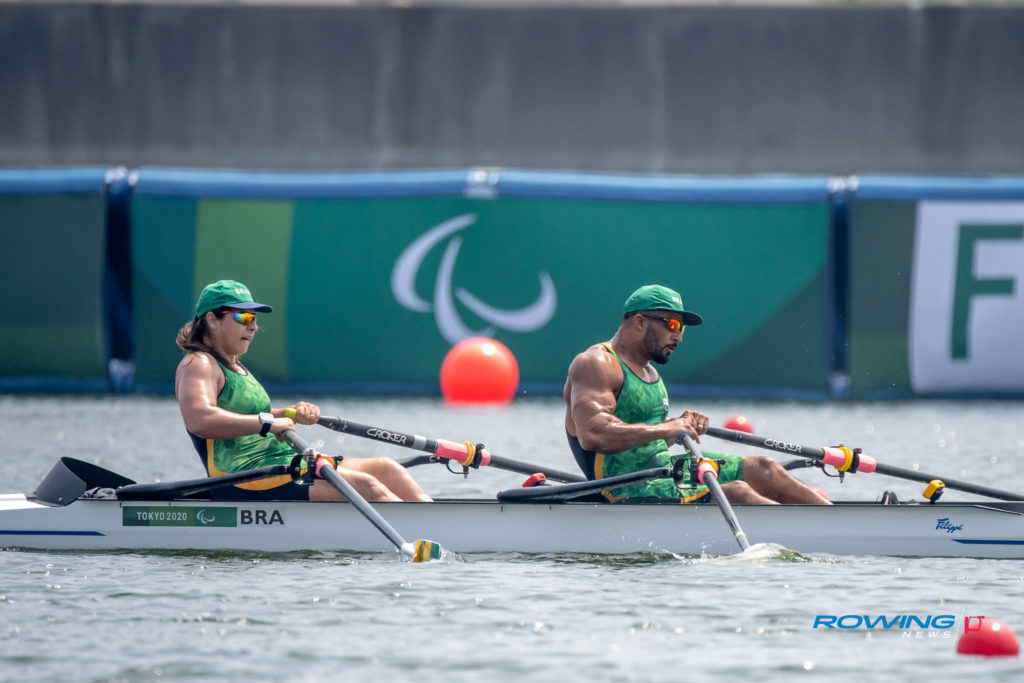
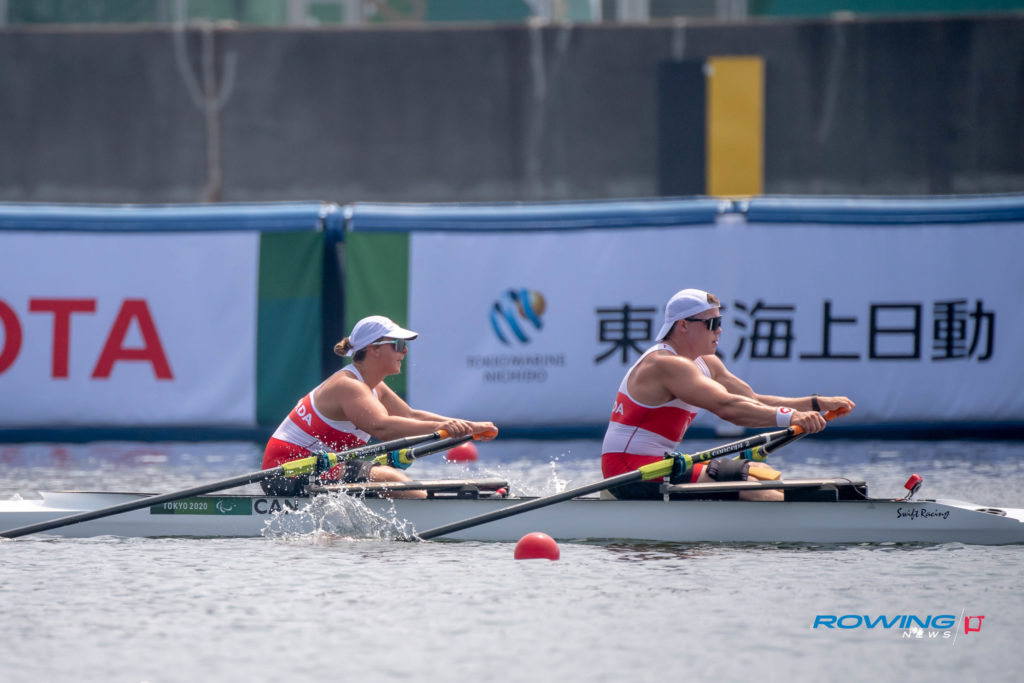
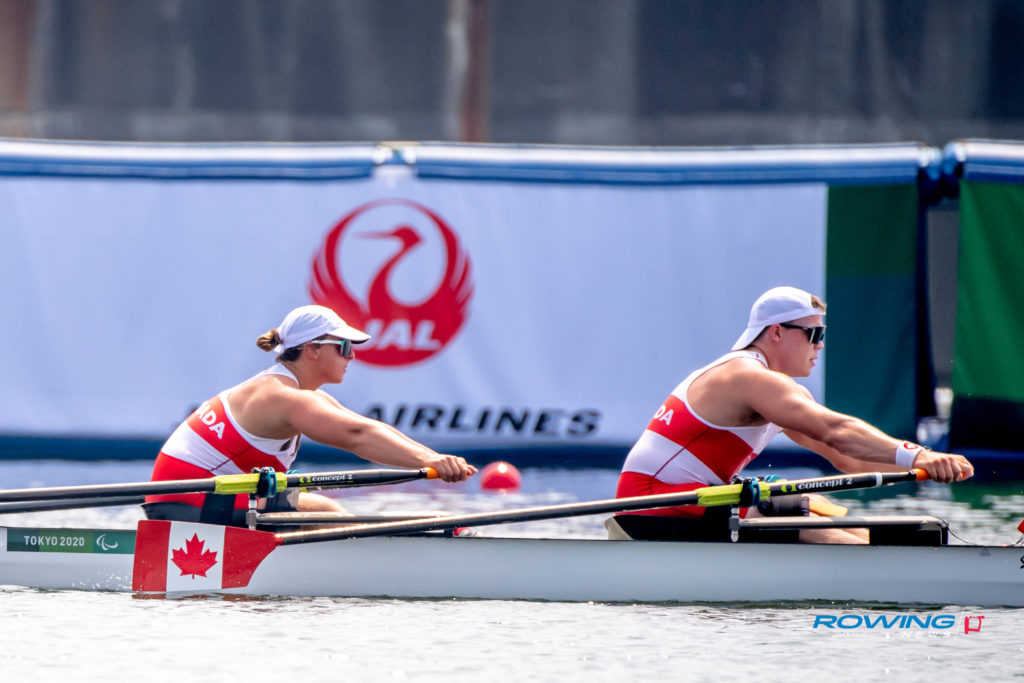
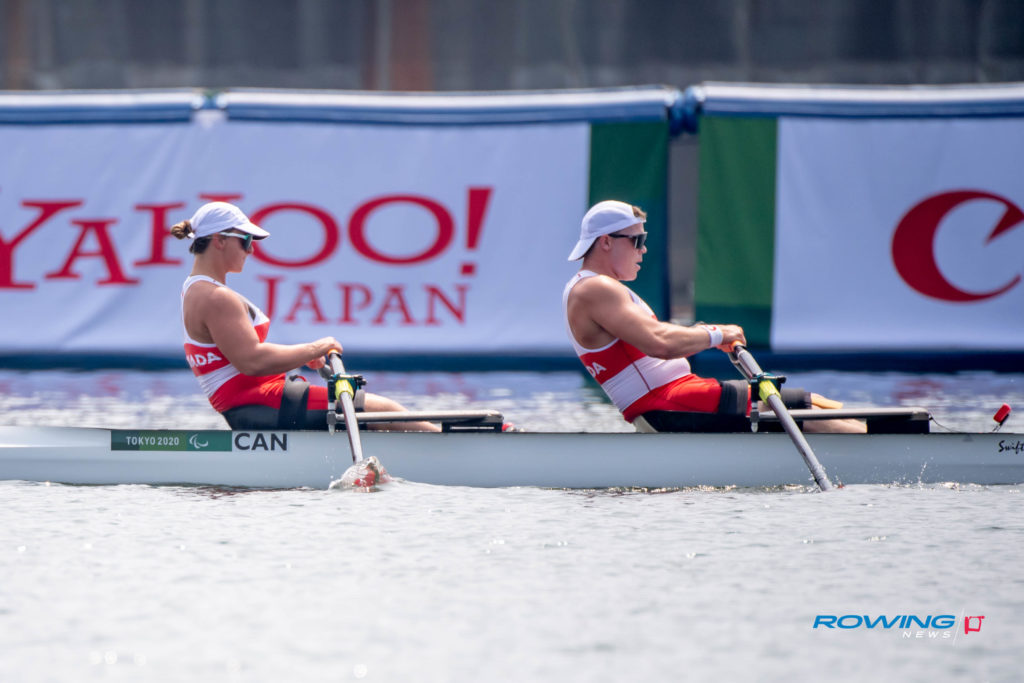
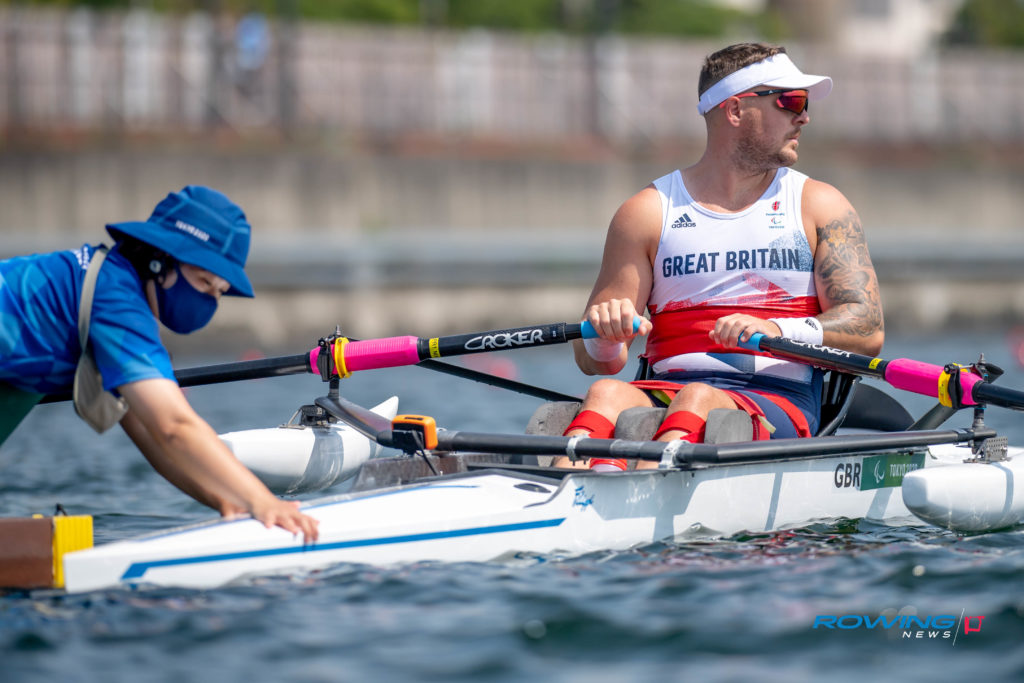
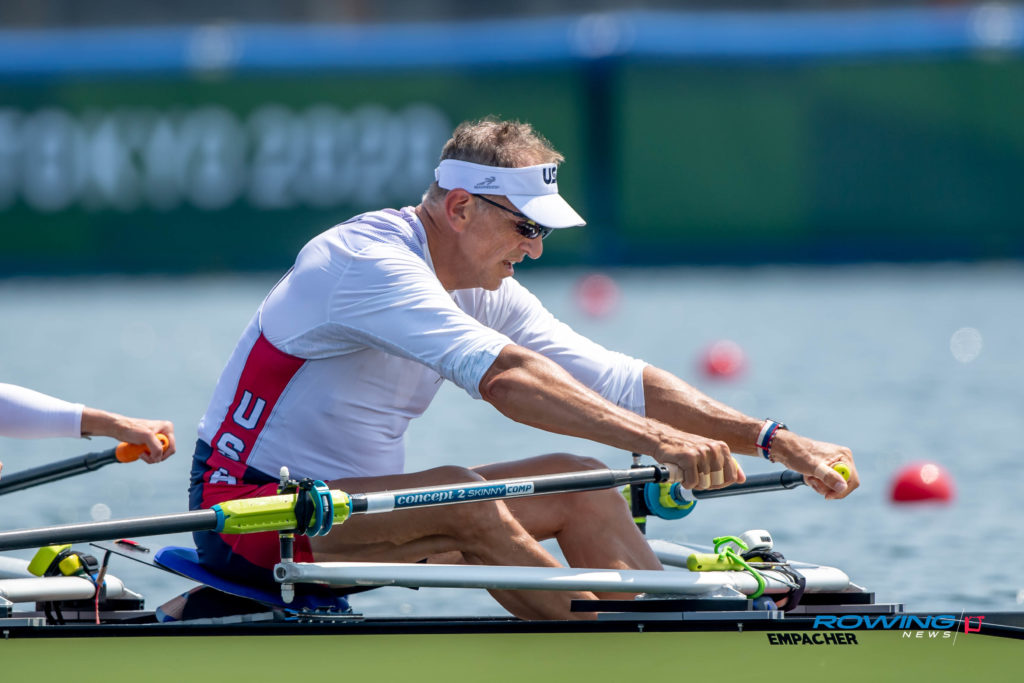
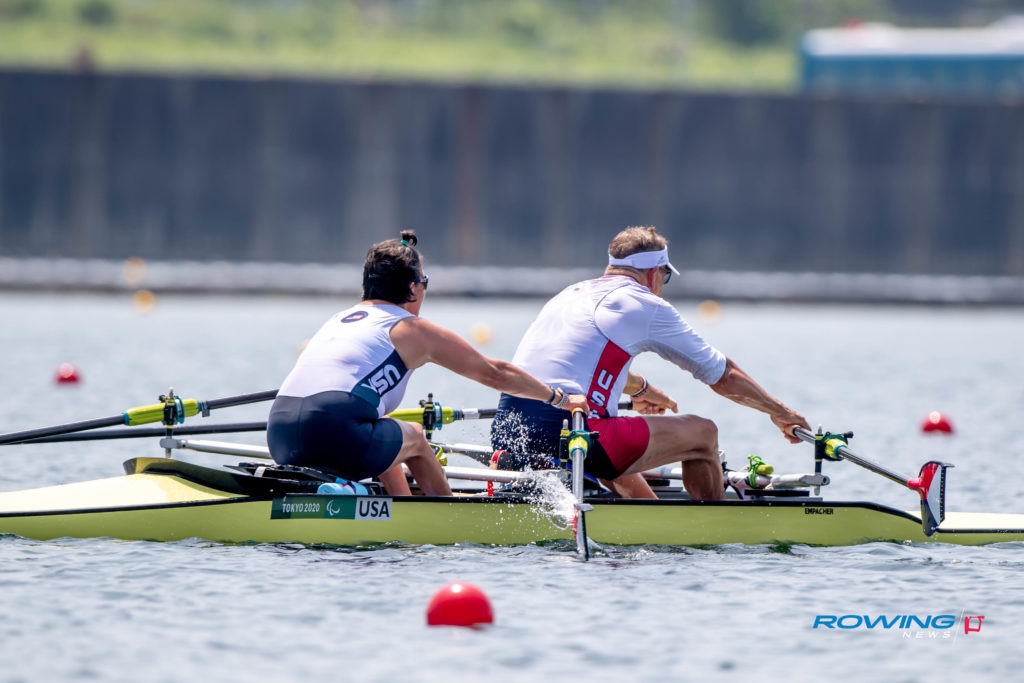
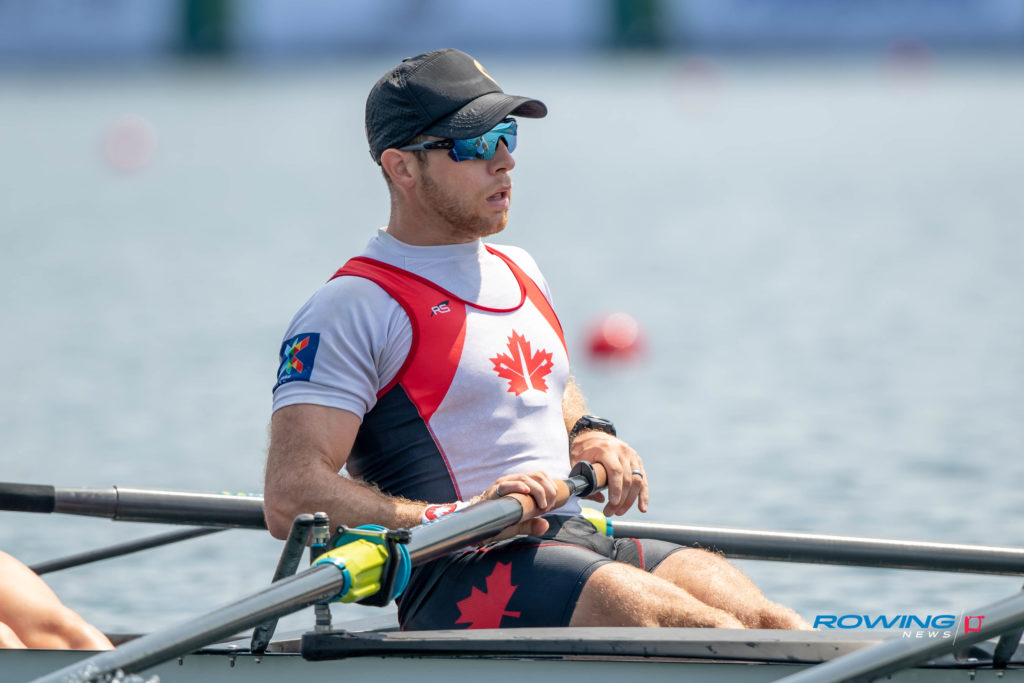
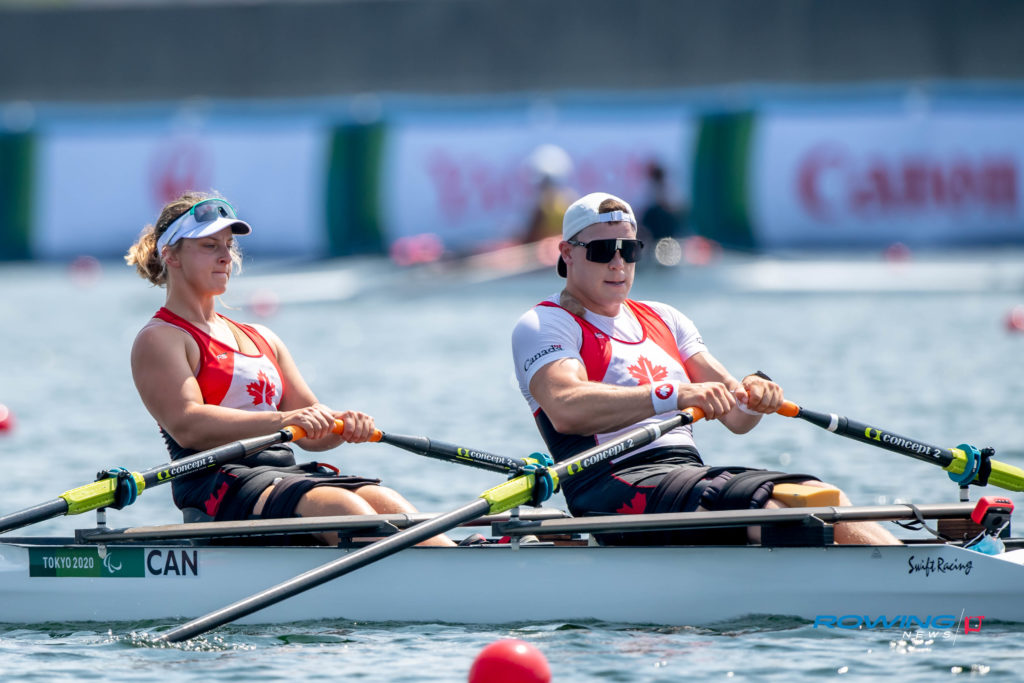
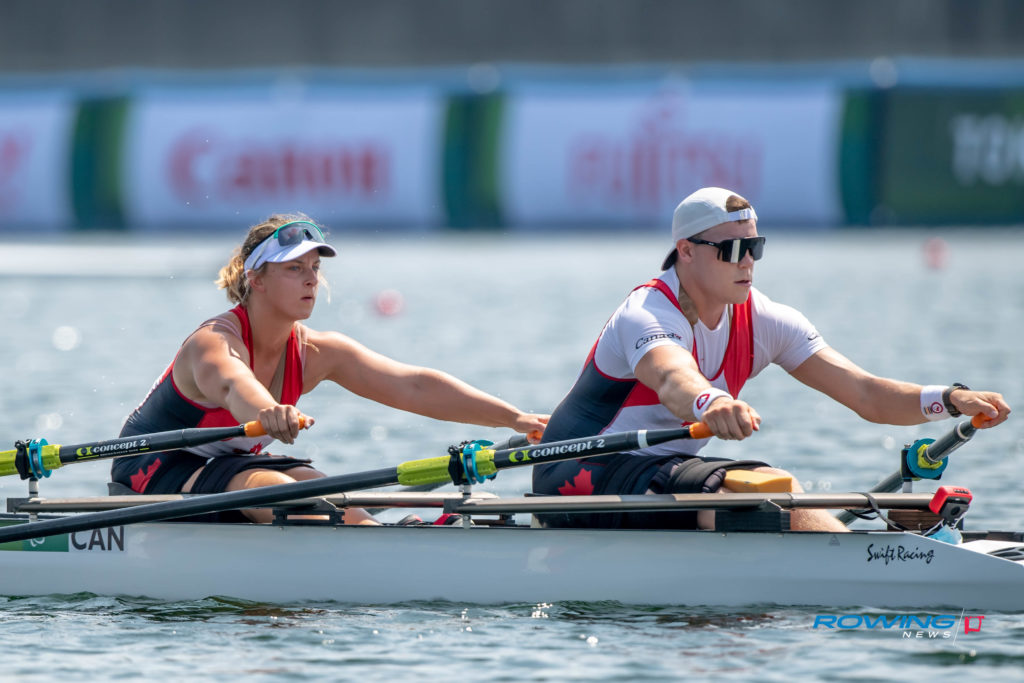
The U.S. will be represented by Russell Gernaat and Laura Goodkind. This will be Gernaat’s first Paralympics and his second national team. Goodkind is a returning Paralympian. She finished 10th in the event in 2016. Great Britain is the reigning Paralympic Champion.
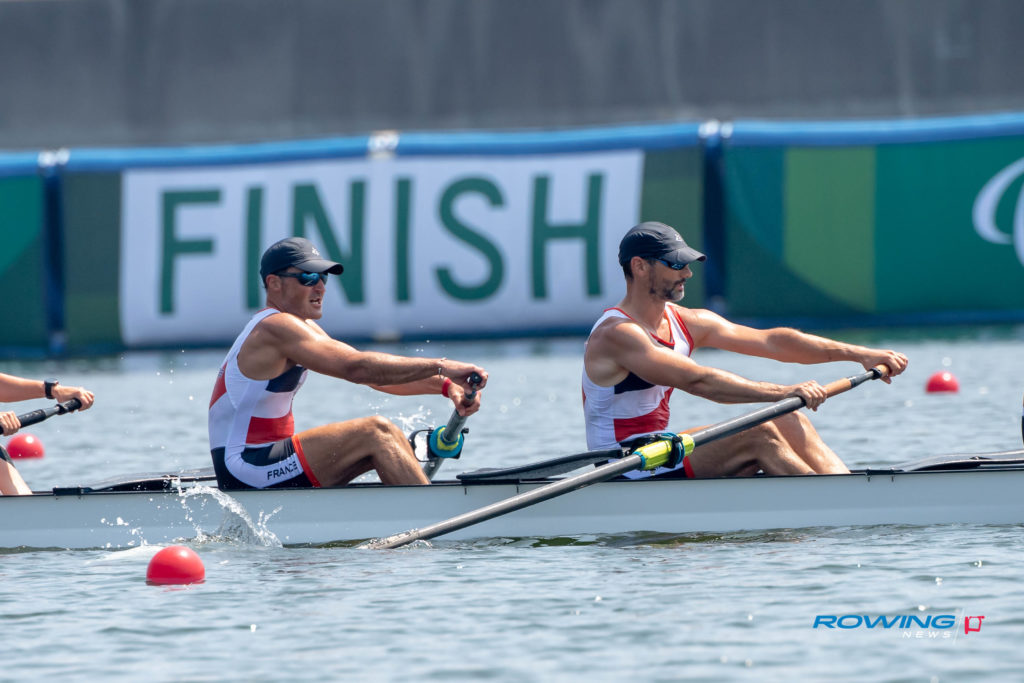
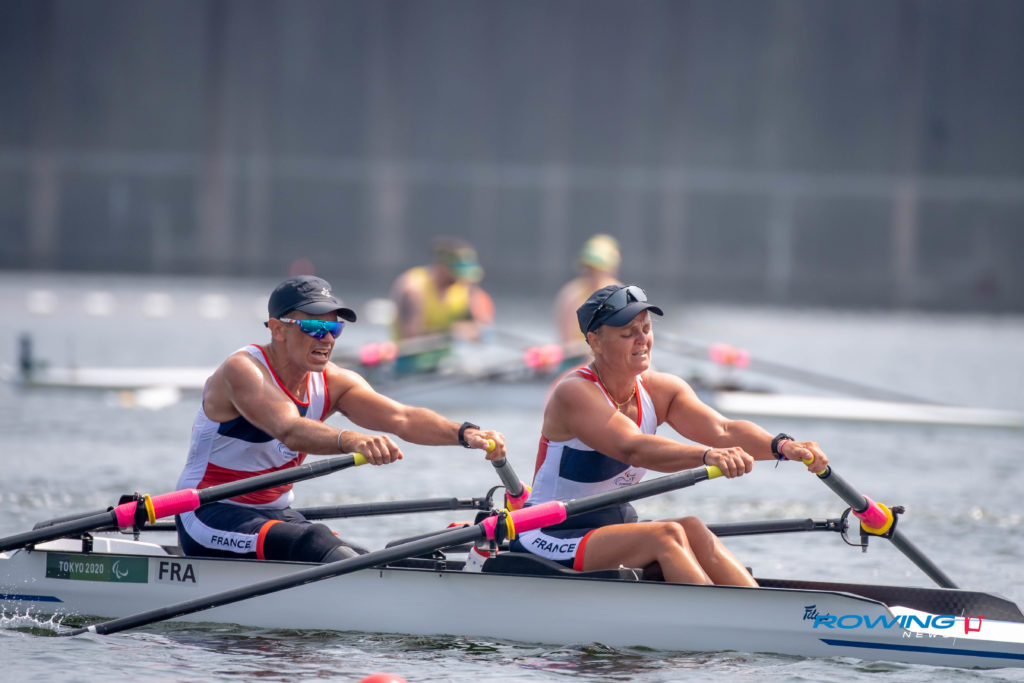
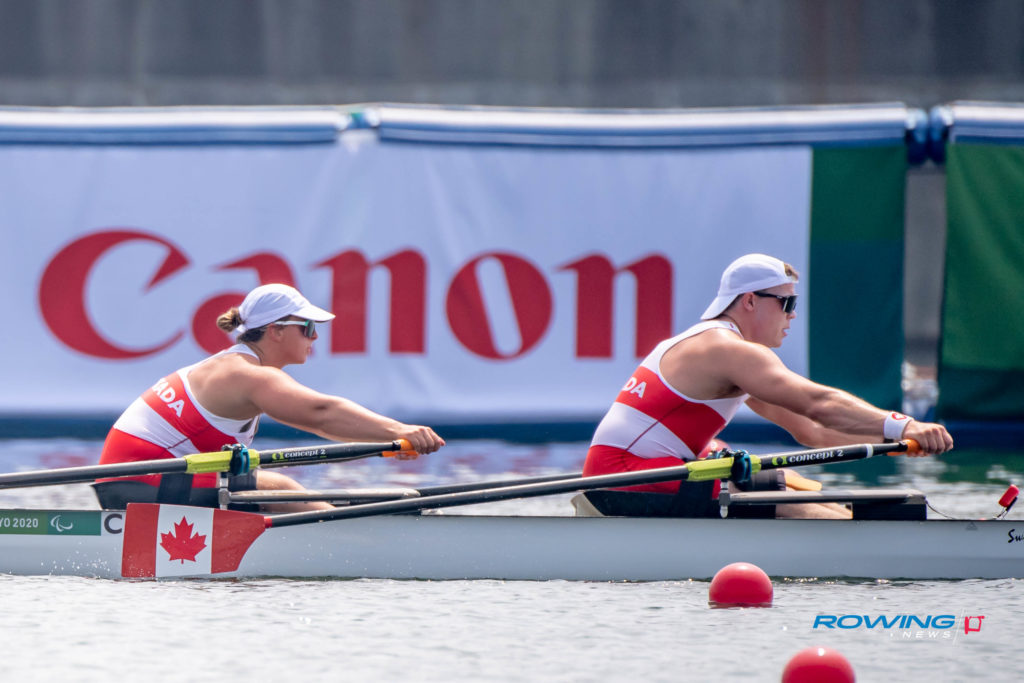
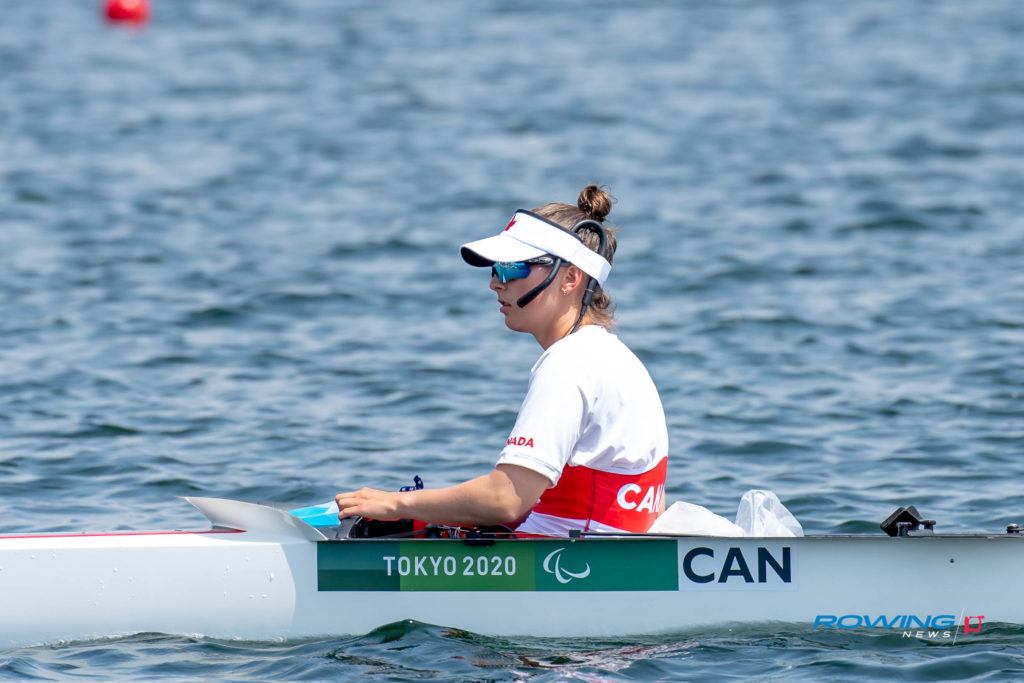
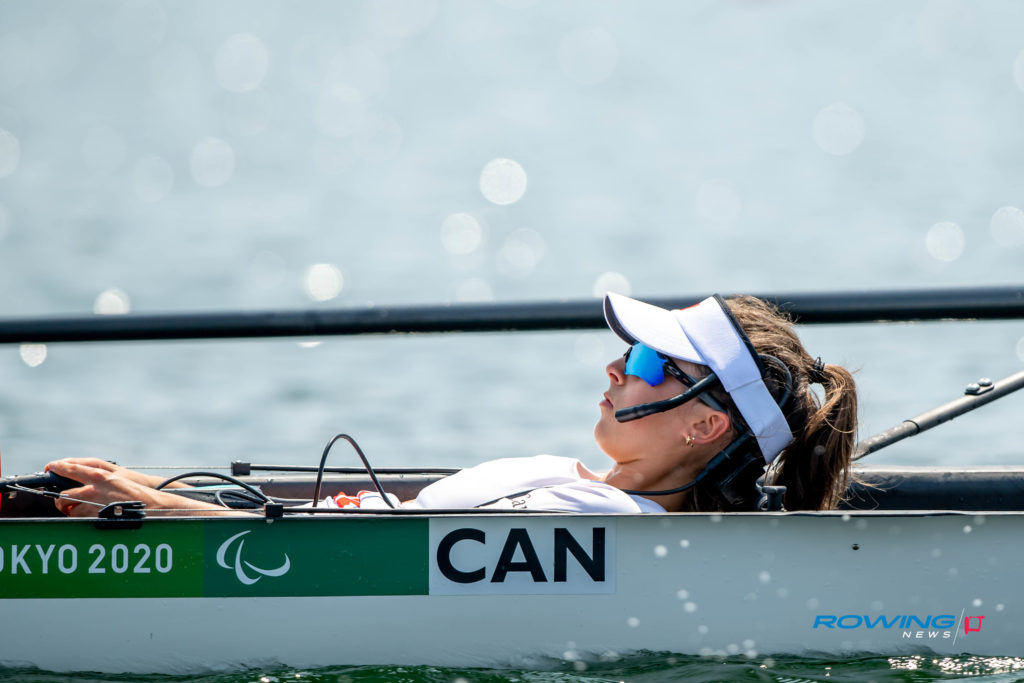
Gernaat and Goodkind qualified their boat class at the 2019 World Rowing Championships, finishing eighth. The other top qualifying countries are Great Britain, The Netherlands, France, Ukrain, Brazil, Poland and China. Italy and Australia qualified crews at the Final Paralympic Qualification Regatta. Added to the lineup through Bipartite Commission nominations are Canada and Uzbekistan.
PR3 Mixed Coxed Four
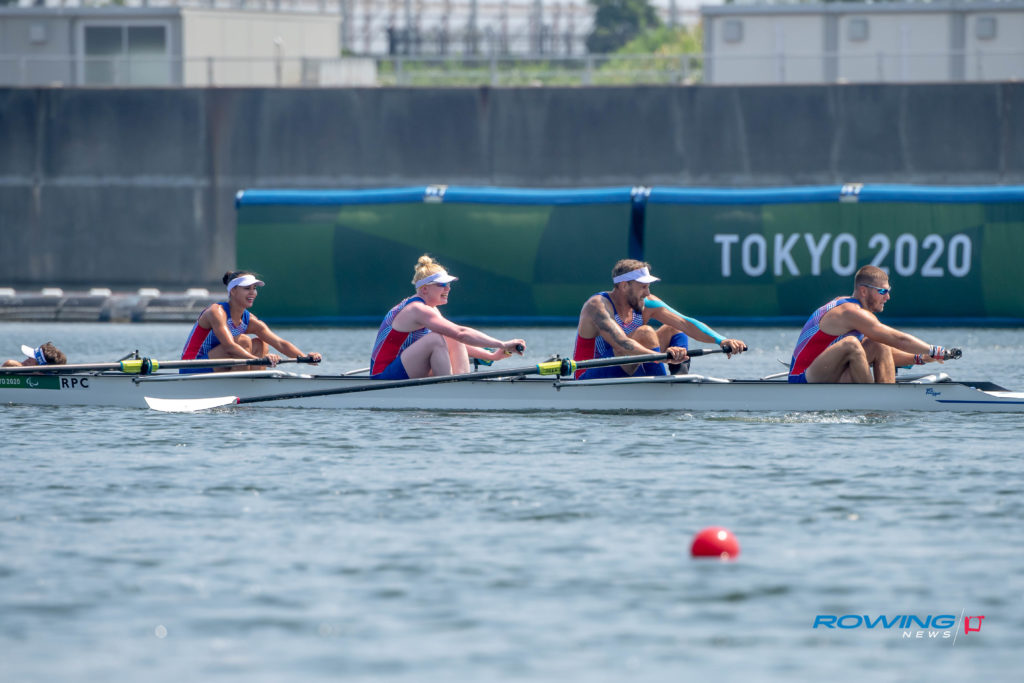
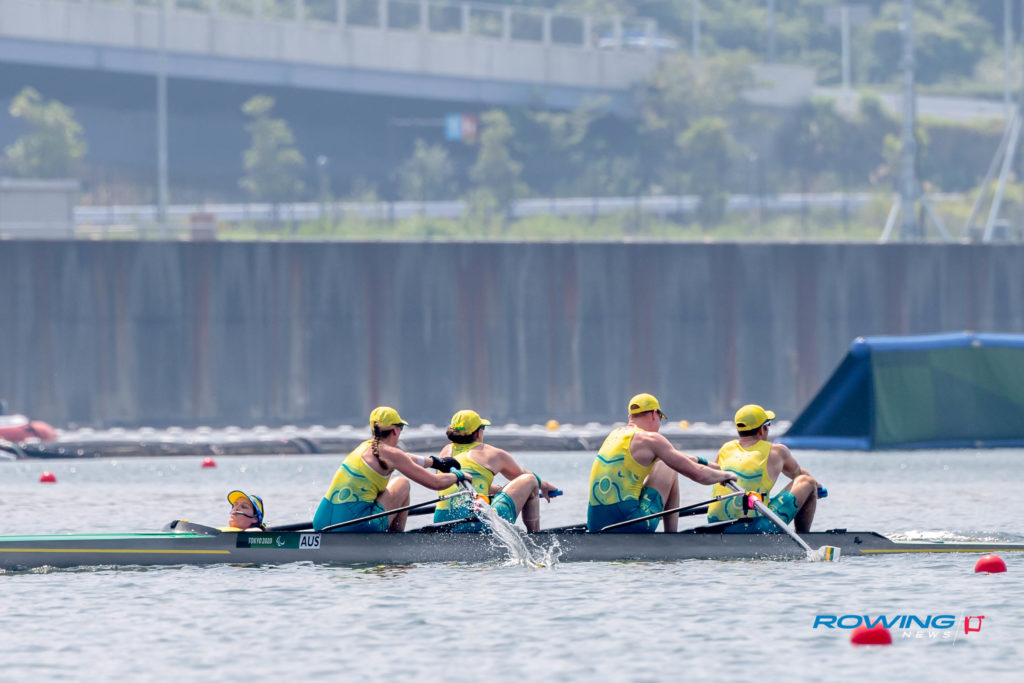
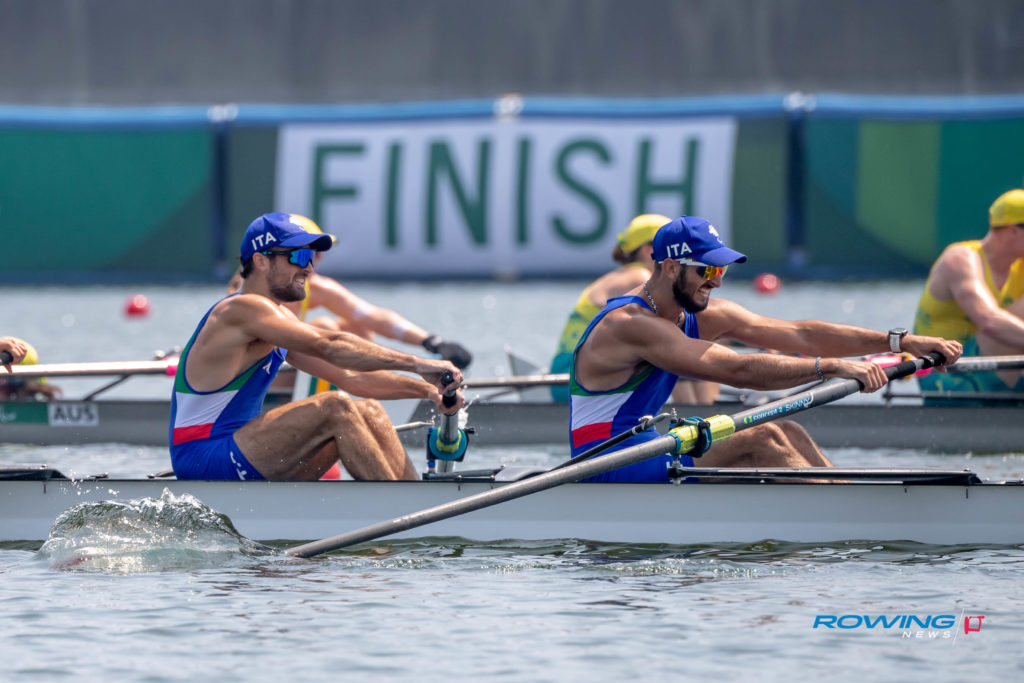
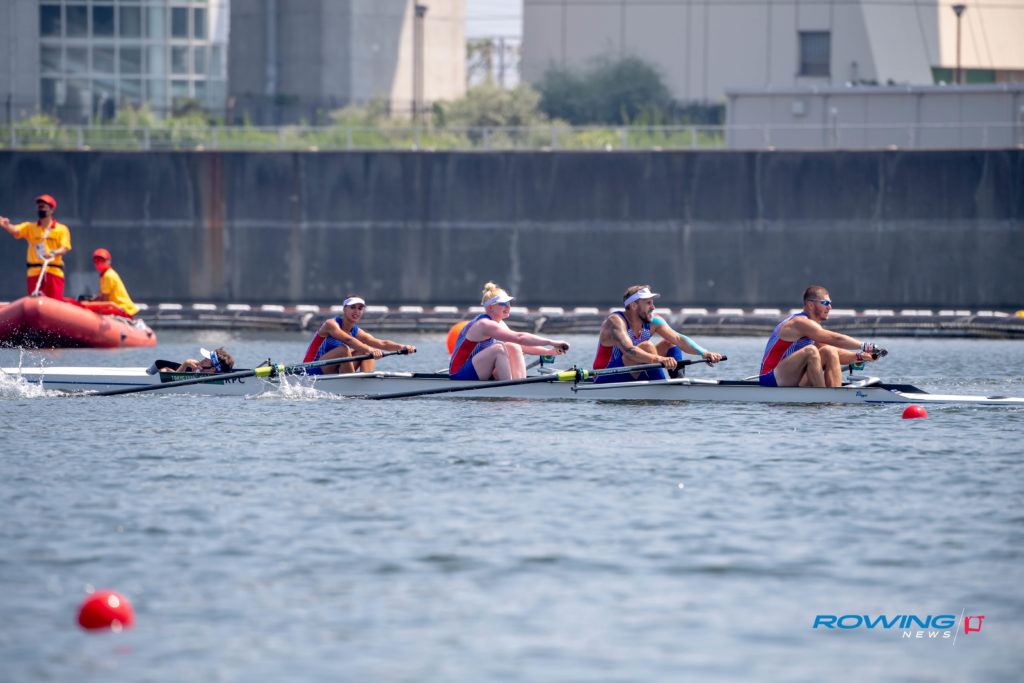
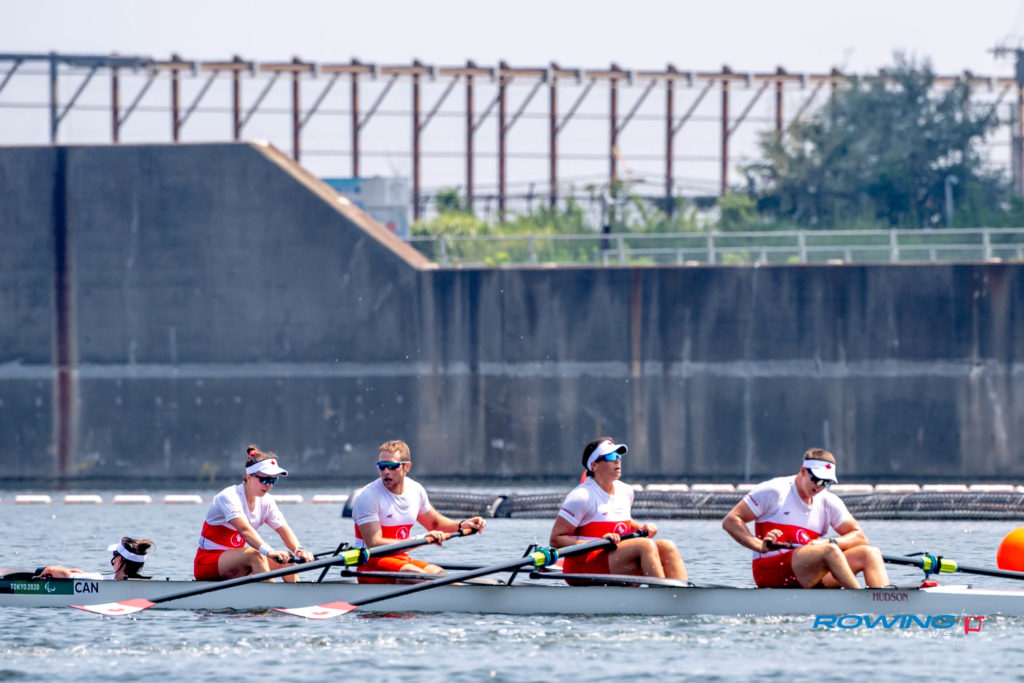
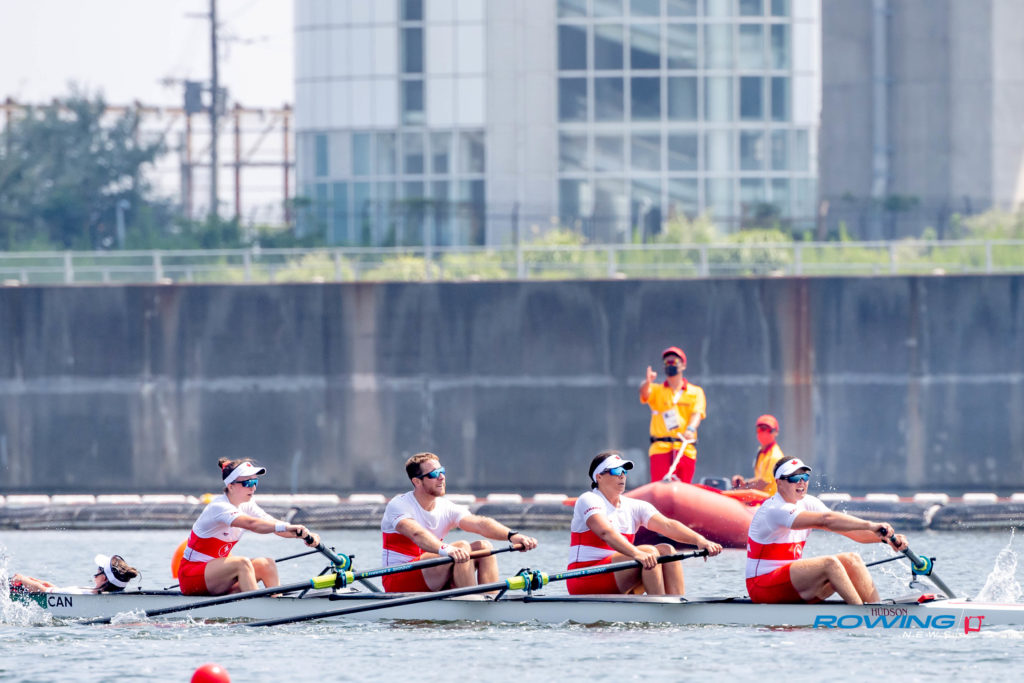
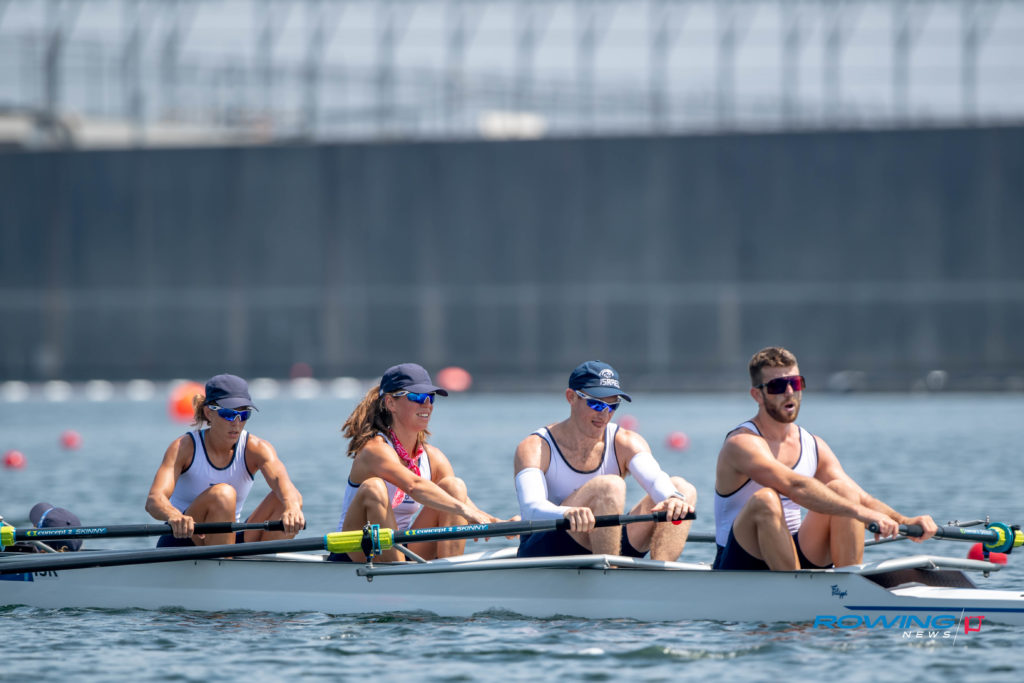
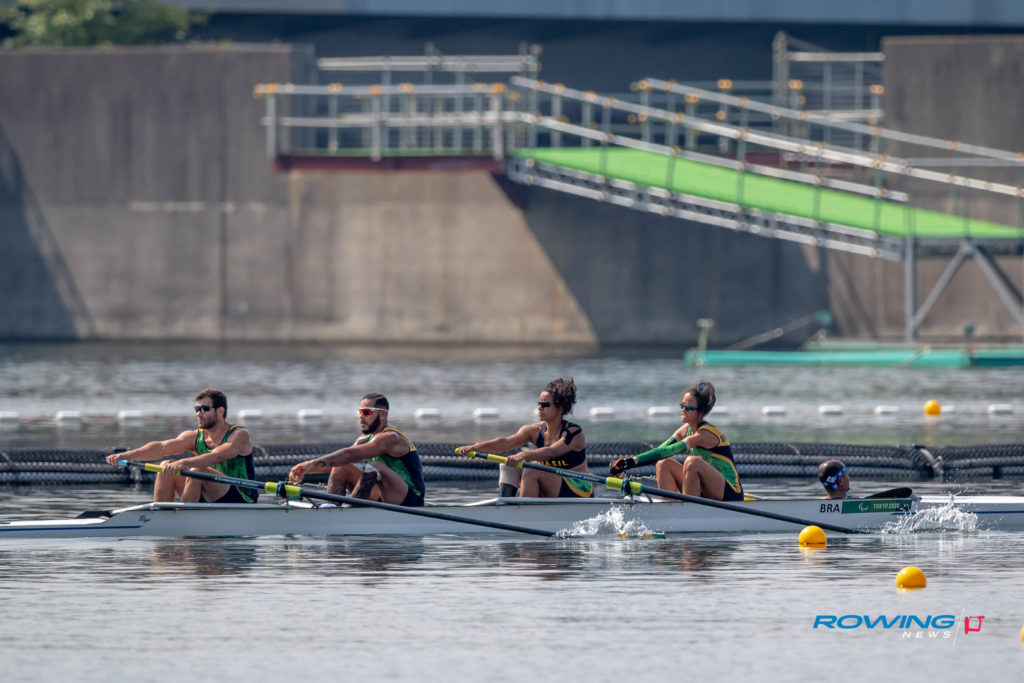
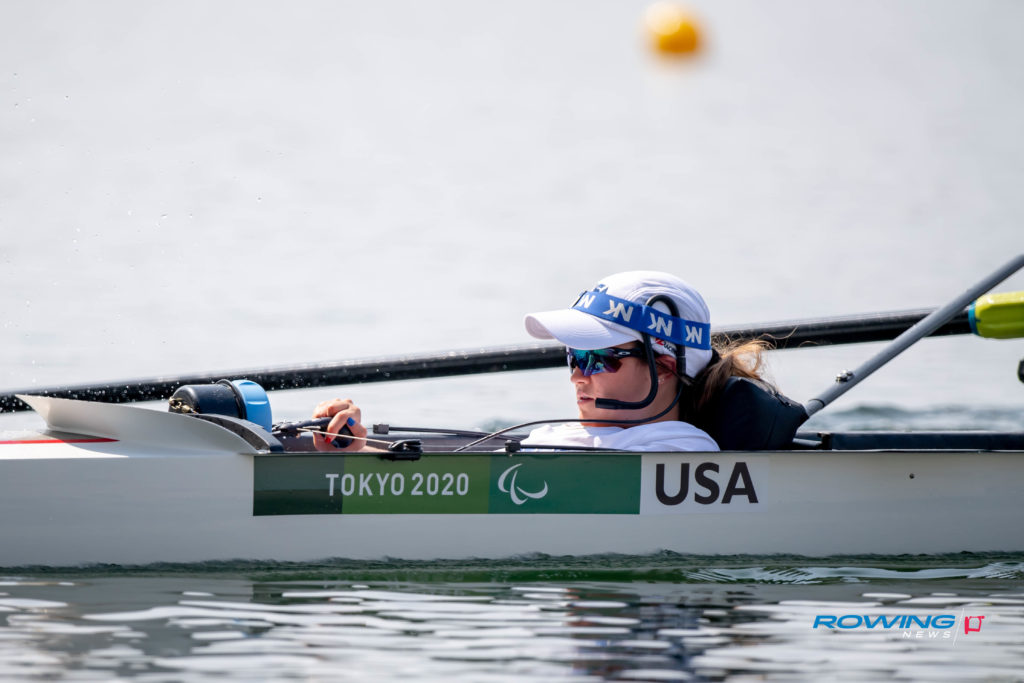
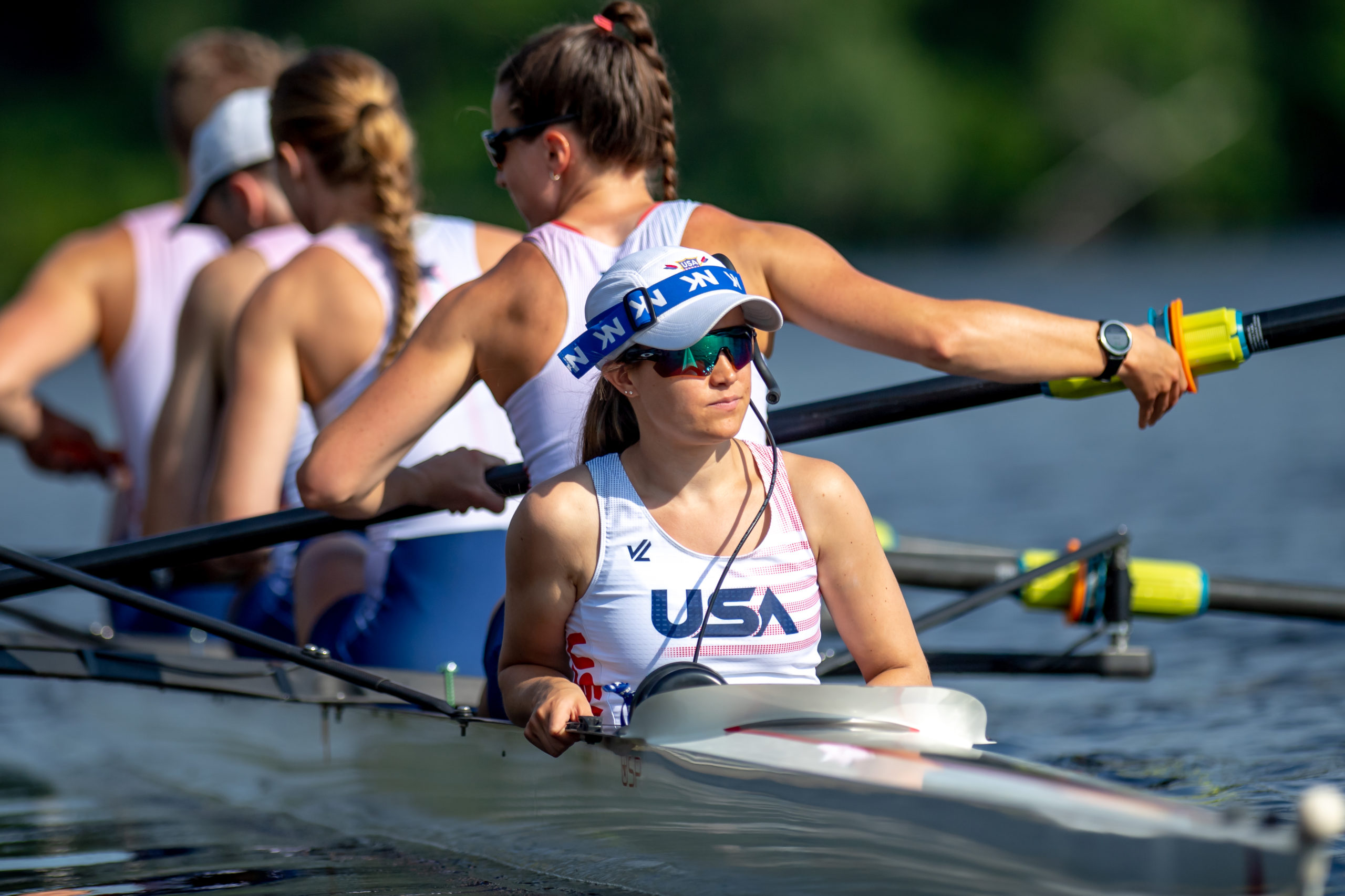
The U.S. earned a silver medal in the event in 2016, finishing behind Great Britain. Rowing for the U.S. are coxswain Karen Petrik, Charley Nordin, John Tanguay, Dani Hansen, and Allie Reilly.
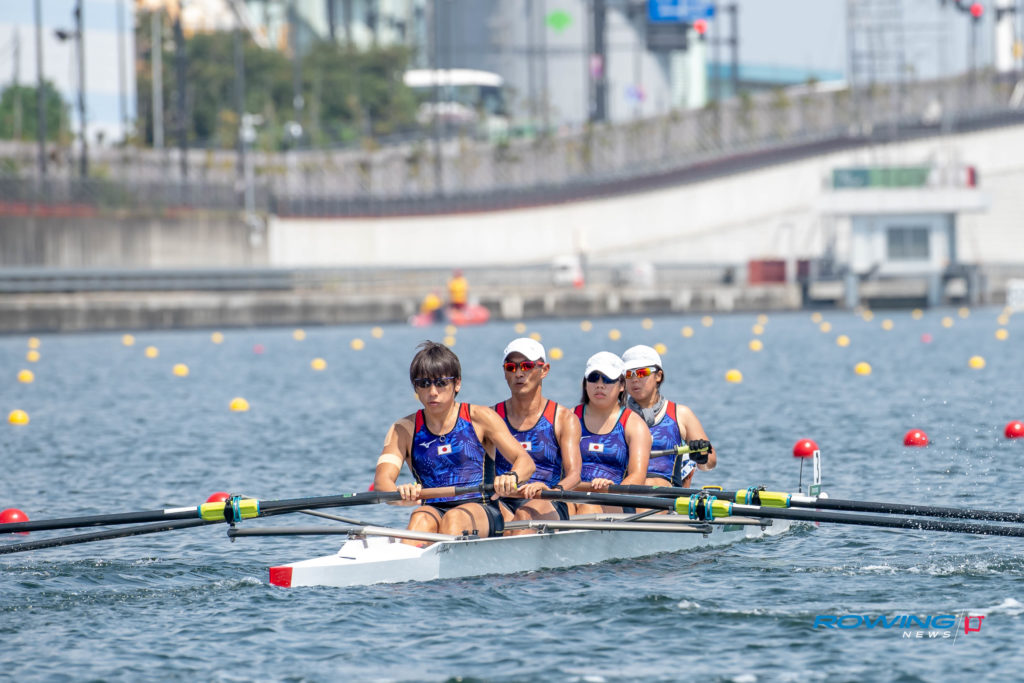
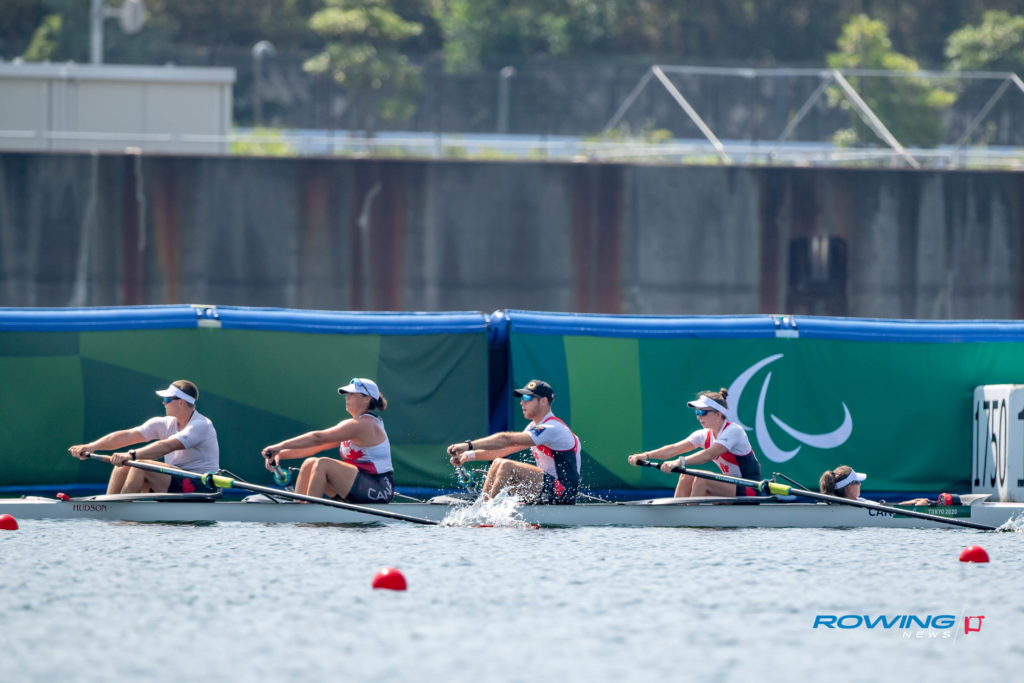
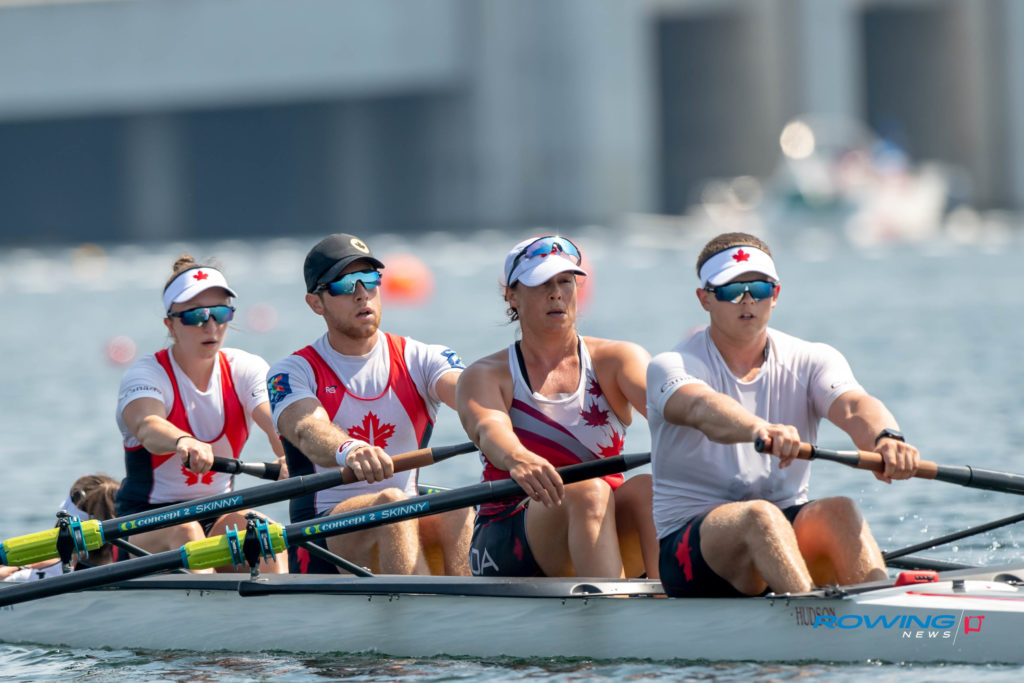
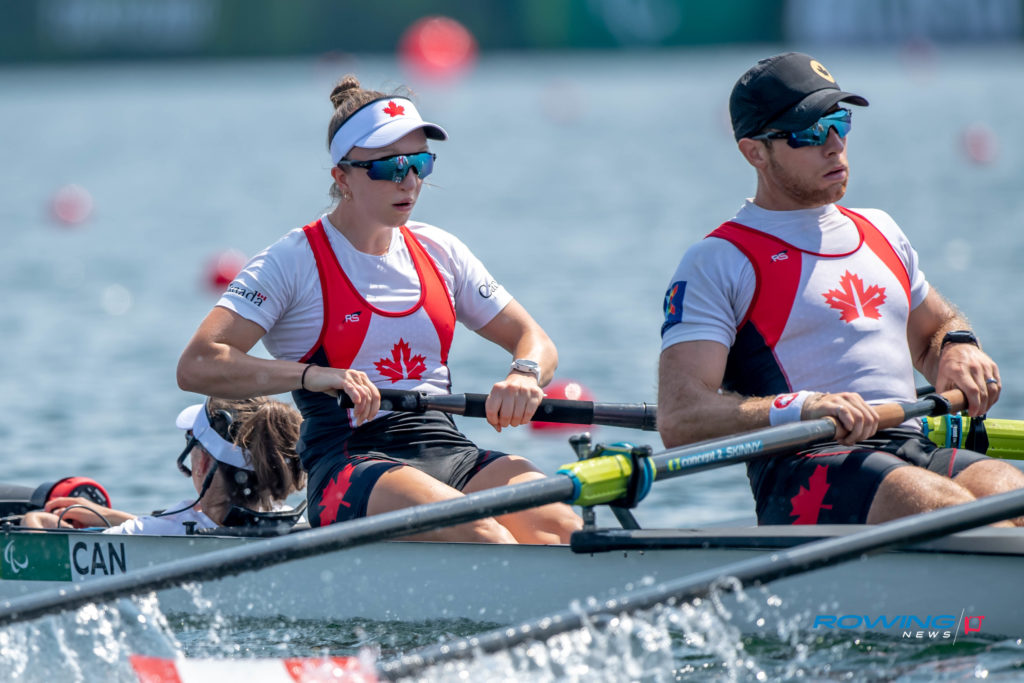
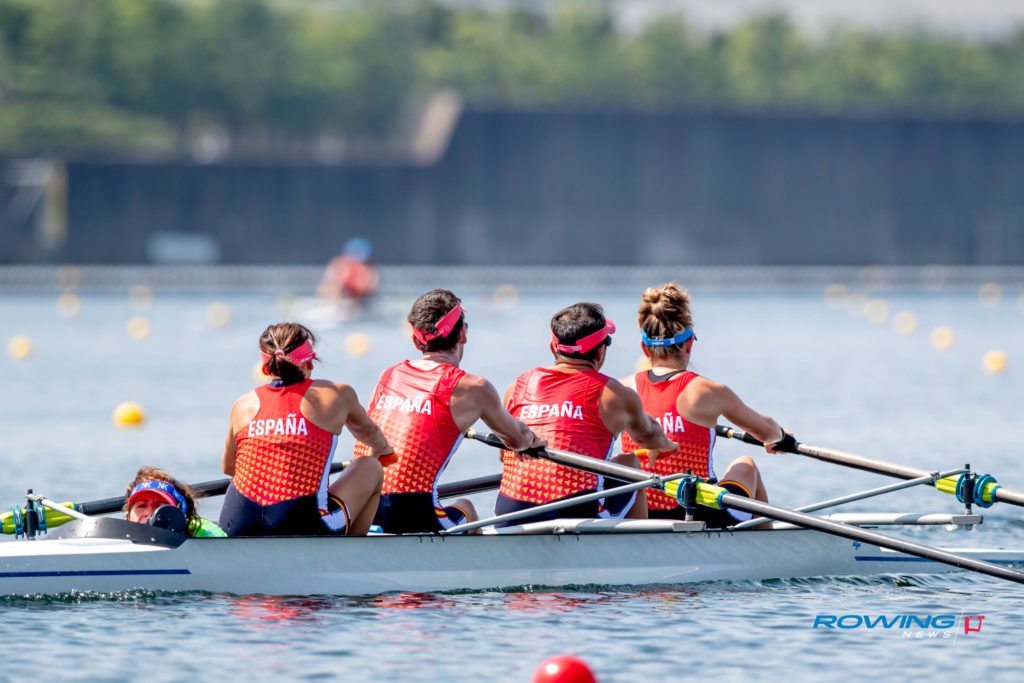
All five athletes were in the crew that qualified at the 2019 World Rowing Championships. Hansen is the only returning Paralympian. The top qualifying crews at the world championships were Great Britain, the U.S., Italy, Australia, Russia, and Israel. Canada and Brazil qualified crews at the Final Paralympic Qualification Regatta. Added to the lineup through Bipartite Commission nominations are Japan and Spain.
One morning in 2014 Smith woke up on her bedroom floor. She had just had a seizure. She went to the emergency room where she endured more seizures. Her hip and ankle joints began to painfully lock up. Her condition was a mystery to everyone.
In the lead up to her seizure walking had become more and more difficult for Smith. She began to walk with her feet turned inward and on the tip of her toes. She wasn’t sure what was happening. The trip to the emergency room sent Smith looking for answers.
Those answers came from the Mayo Clinic. Smith was diagnosed with hereditary spastic paraplegia – a genetic disorder that causes progressive weakness and spasticity in the legs. Doctors told Smith she’d never walk again. The diagnosis was devastating.
“I was told at the Mayo Clinic that I wouldn’t walk again, and because I was going to be in Minneapolis for the next week, we went to the Mall of America. There, I just cried, because I was overwhelmed, overstimulated, and it had taken a few hours to hit me—I was not going to walk again.”
Nevertheless, Smith continued her studies and was graduated from college in 2015. A year later, while working out at the MedStar National Rehabilitation Hospital in Washington, D.C., Smith was approached by Patrick Johnson, coach of the hospital’s rowing team, who invited her to see what rowing is like and whether she was any good.
“I turned out to be pretty good at it pretty quickly,” Smith said.
Only two weeks after beginning to row, Smith captured first in the MidAtlantic Erg Sprints with a time of six minutes, 33 seconds, in the 1,000 meters. The result encouraged the novice rower to see what she could do in the sport.
“At the time, I had just gotten out of college and didn’t have a job, so I was going to practice on weekends and a couple of times during the week. I can’t believe I got hooked during erging season, of all times.”
Six weeks into her rowing career, she hit the USRowing elite standard time.
“My coach was, like, ‘You’re one of three or four women in the U.S. who have hit this standard.’ And from then on, my sights were set on the Paralympics.”
While training and competing, Smith relied on the encouragement of her parents, Joe and Vicky Smith. When she was rowing in D.C., Joe Smith attended every race.
“I used to compete on Saturdays, and my dad would always have a conference call, so he would take it at the boathouse where my races were, and he’d put himself on mute to come cheer for me, and then go back to his call. Which was really wonderful.”
Smith moved to Boston and was making substantial progress when the pandemic struck, bringing her training to a halt and forcing the postponement of the Paralympics.
“It was definitely difficult, especially because I am immuno-compromised,” Smith said, “so I actually did not go on the water at all in 2020. I had teammates who were going out carefully—you know, masks and all that stuff—but my coaches and I felt it wasn’t safe for me.”
Smith had to train alone at home. Like many athletes, she had to scramble to find workout equipment and routines that could be done down the hall instead of down the road.
“I was able to keep in shape. I expanded my home weightlifting equipment and changed my weightlifting style—more reps with lighter weights. But through 2020 it was mostly a mental game.”
A year spent just erging without seeing teammates, coaches, and family took its toll. Smith, who was used to gliding through the water at top speed, felt stagnant.
“It was tough to stay motivated. Not only was I not on the schedule I had in mind but also I was inside on the erg every day instead of out on the water. And not seeing my teammates—even though I’m in a single, being able to see people, even in passing, makes a difference.”
As she always has, Smith persisted.
“We’ve been ramping up training. It’s so good to be back on the water as well, It’s helped my overall mental health, not just my rowing mindset. Just being on the water makes me happy.
“I’m not letting any uncertainty creep into my mind because I need to be fully focused, eyes on the prize right now. My big dream is to make it onto that medal stand.”