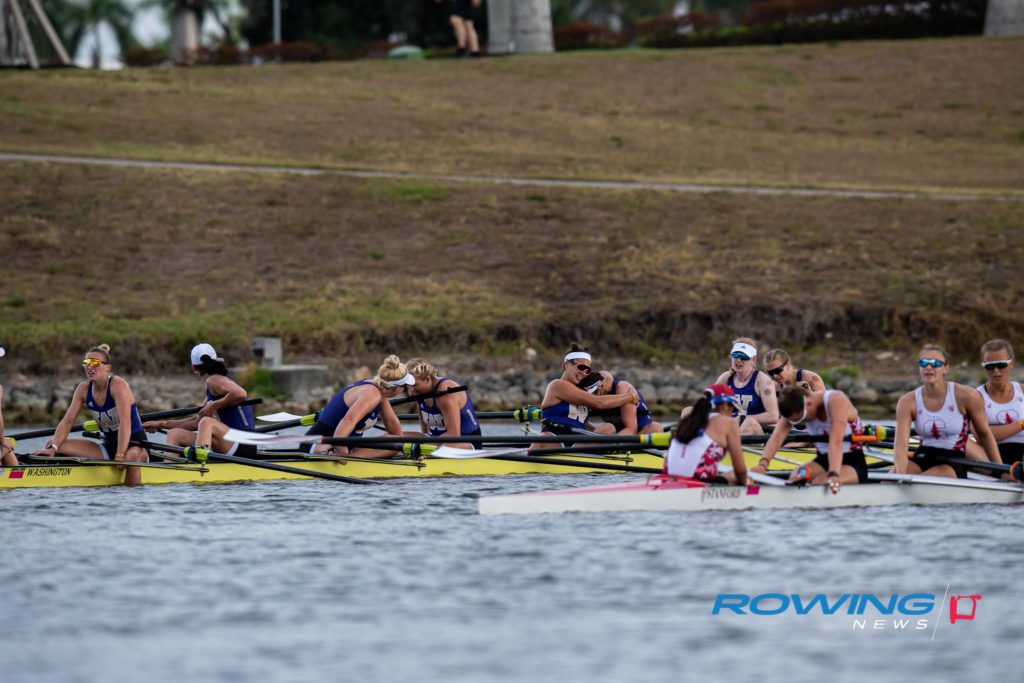
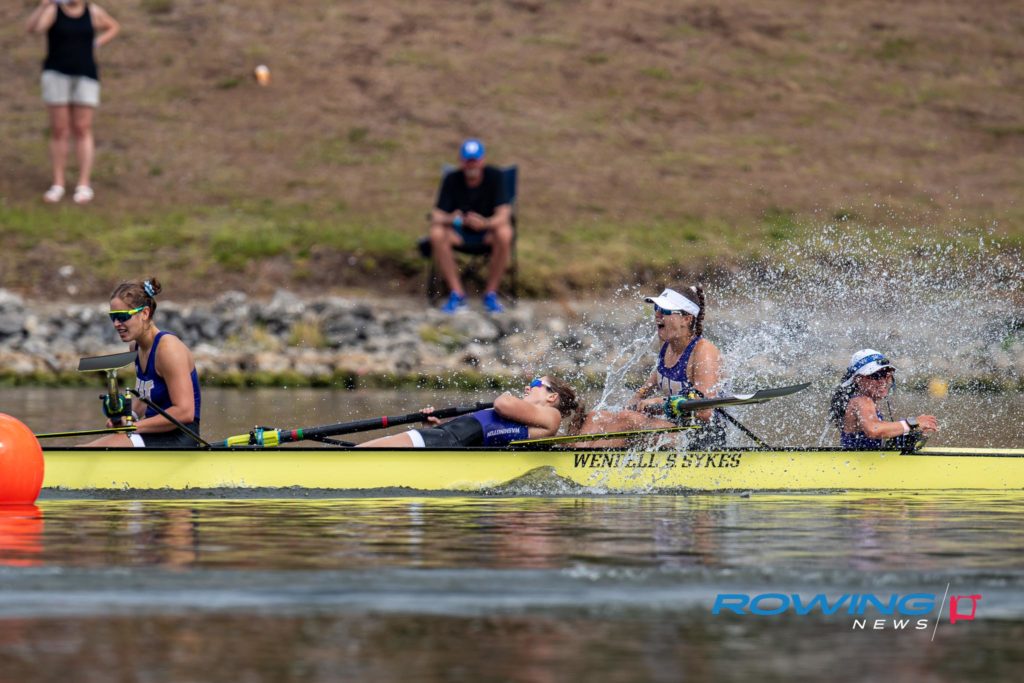
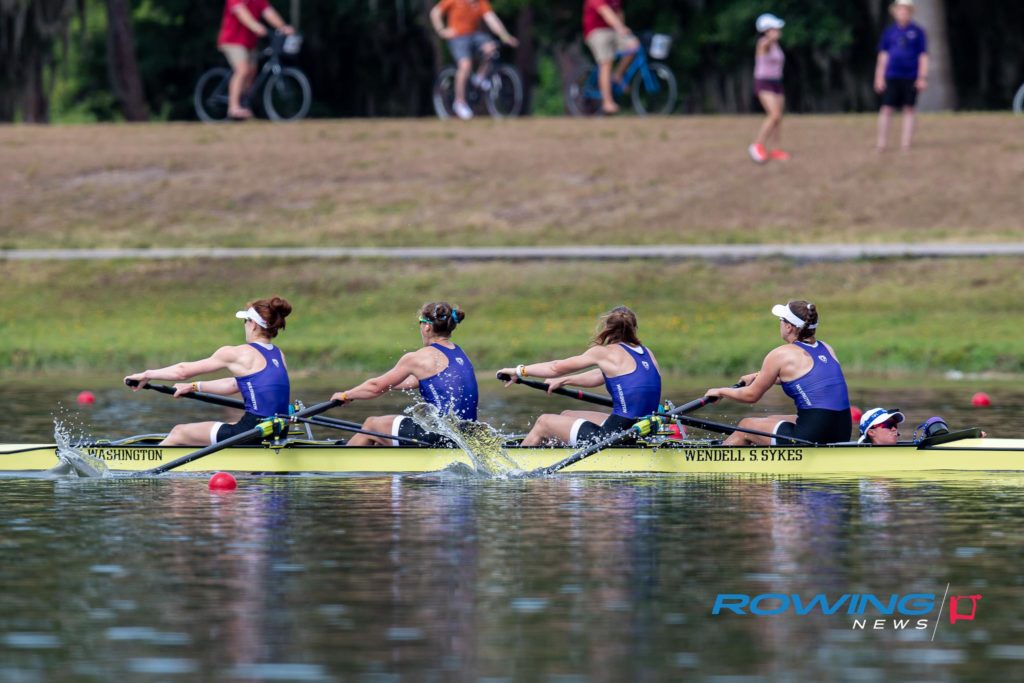
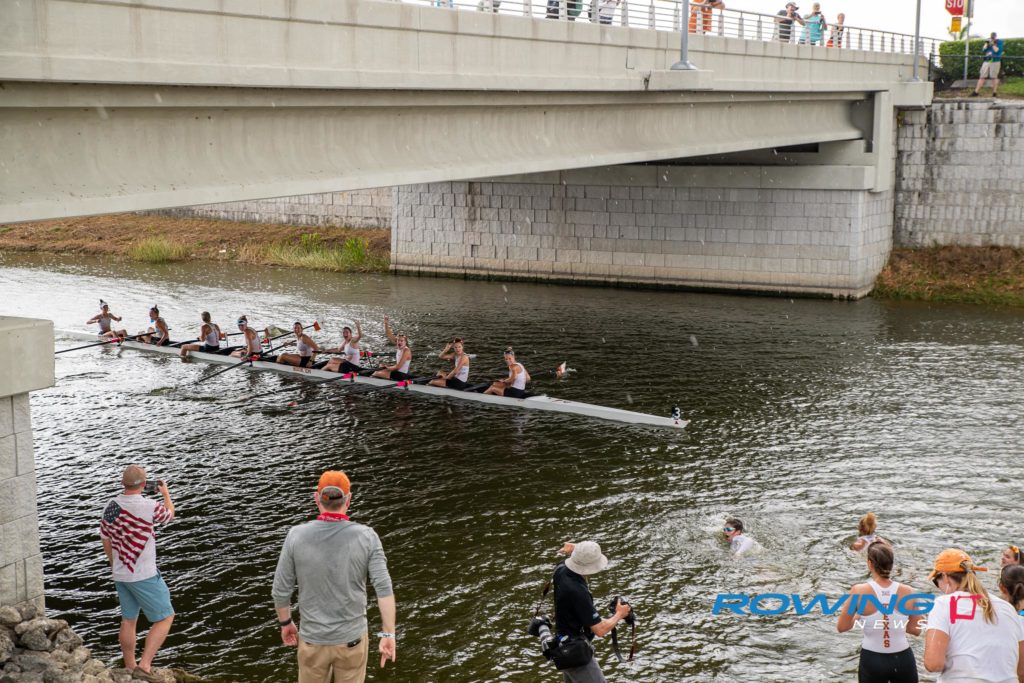
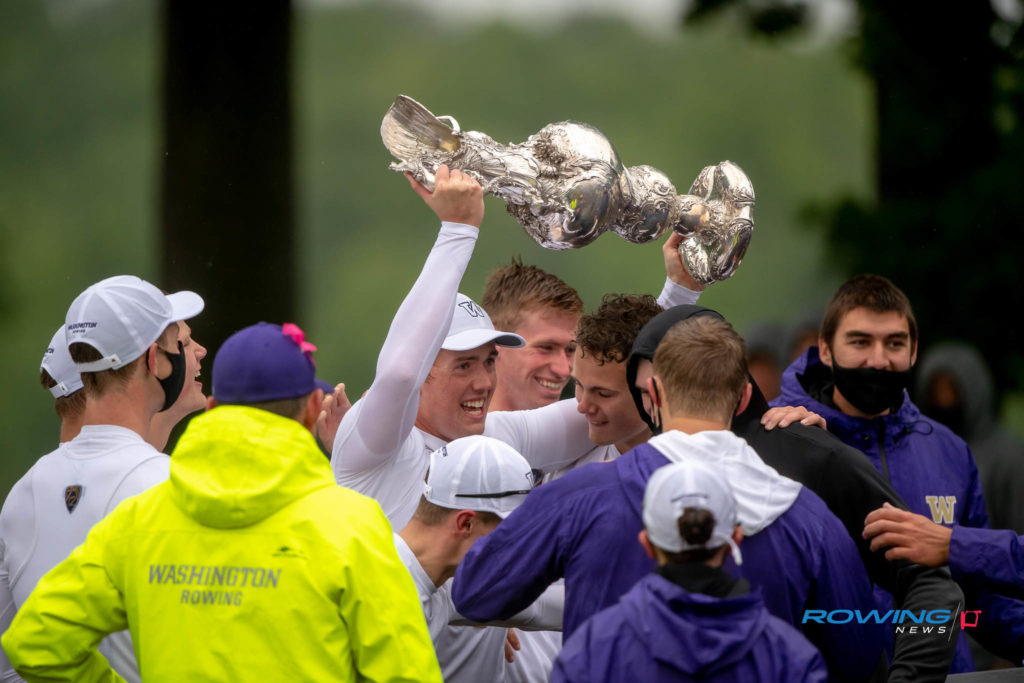
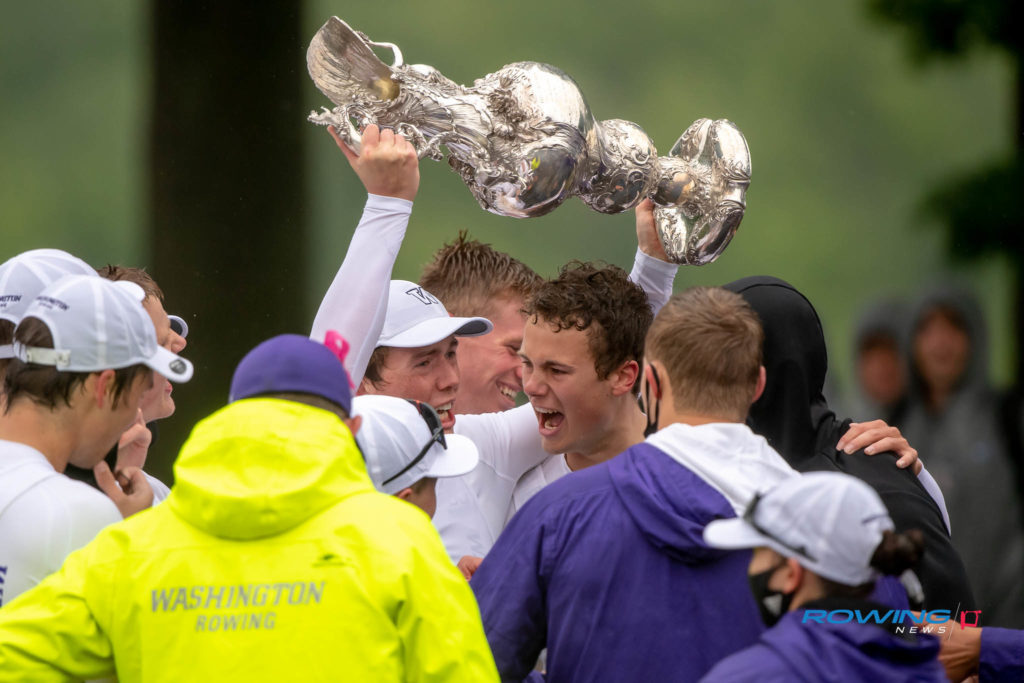
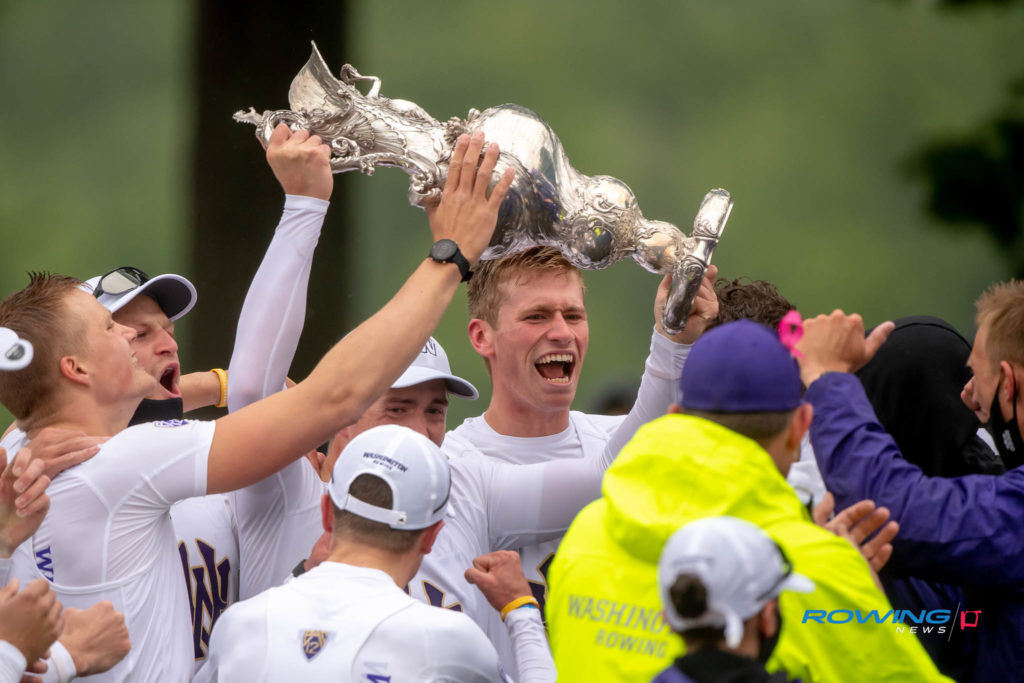
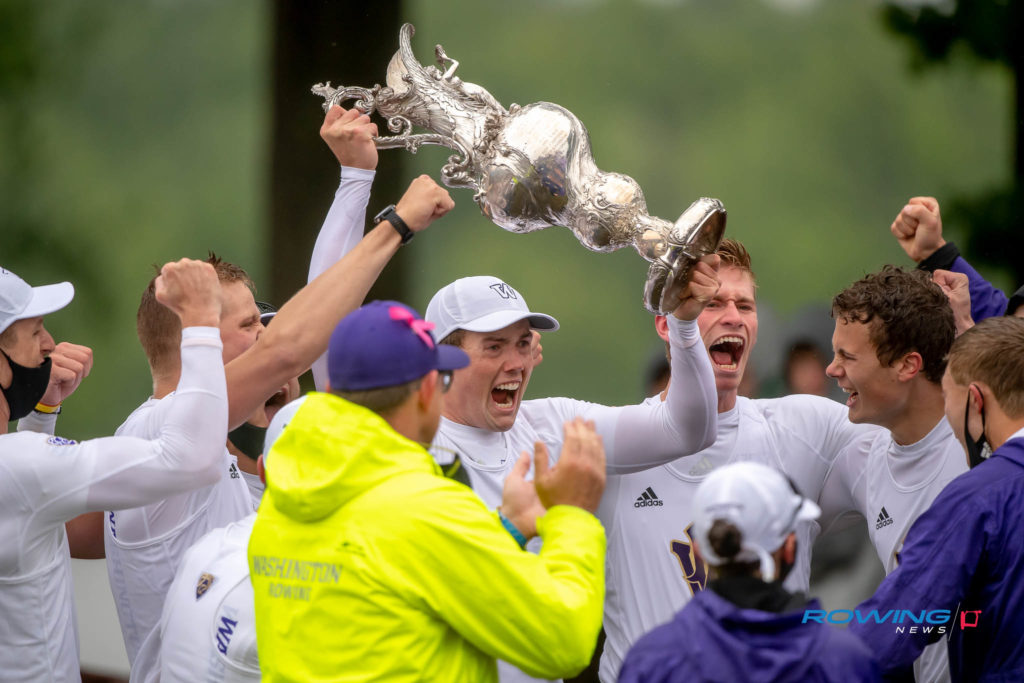
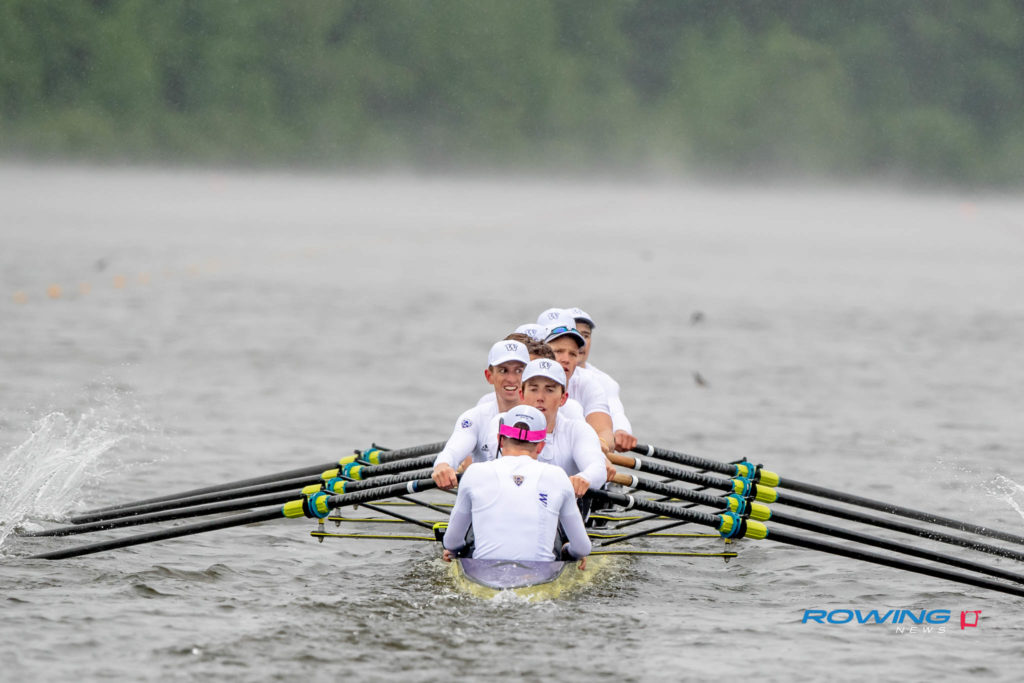
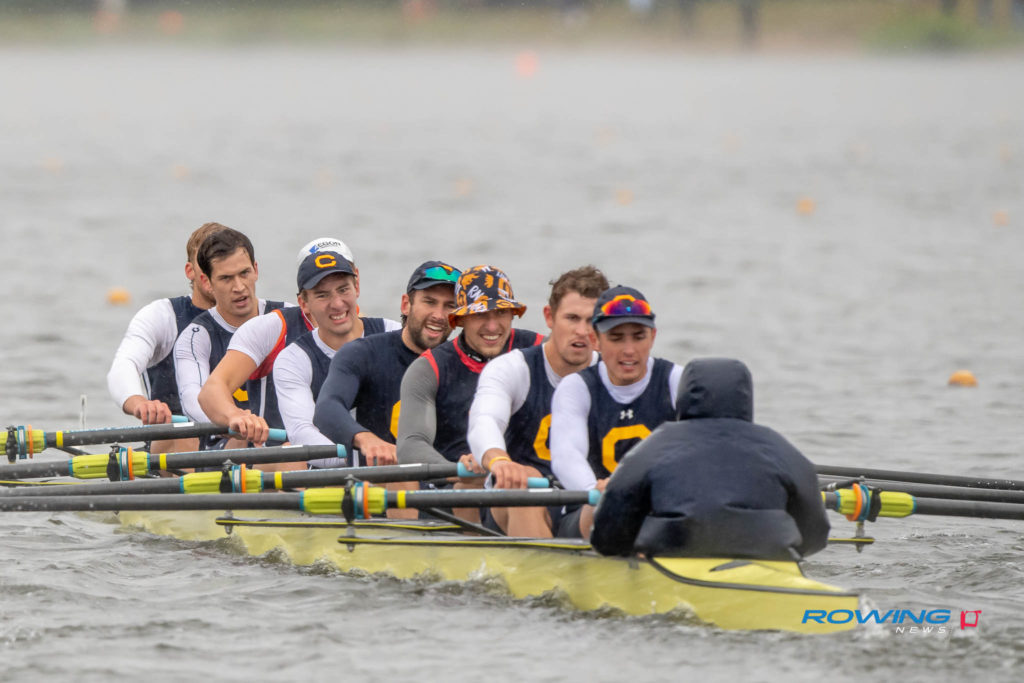
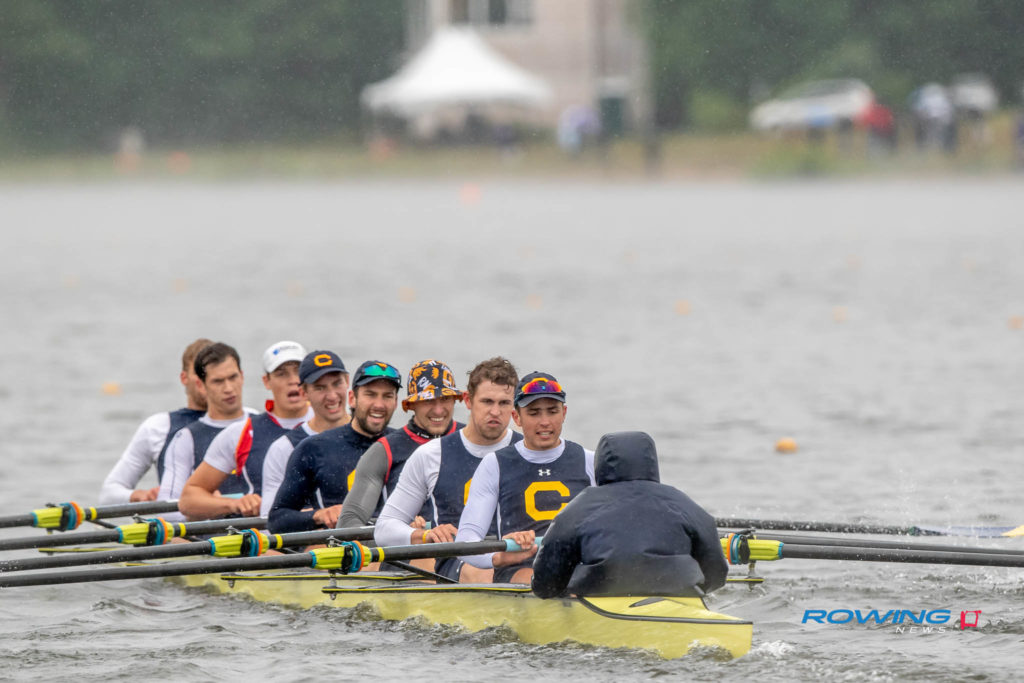
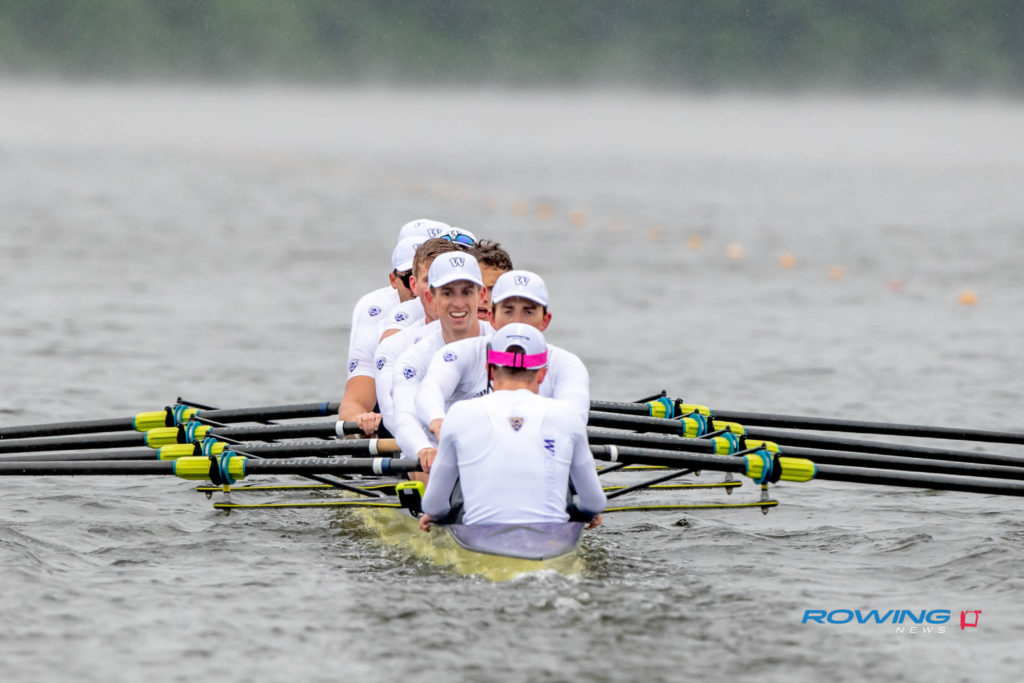
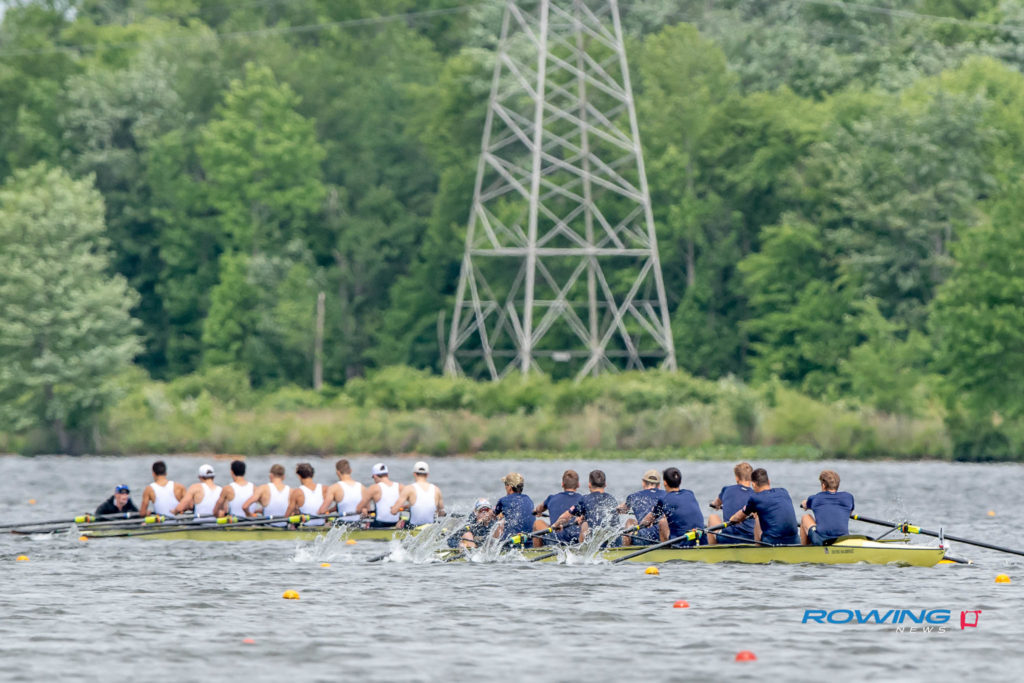
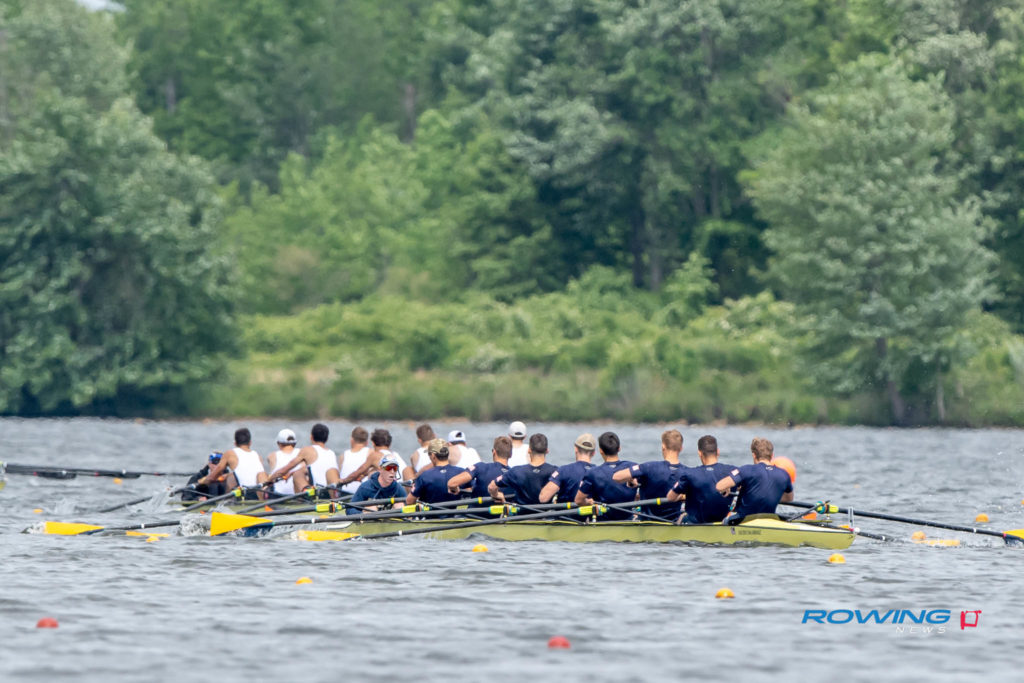
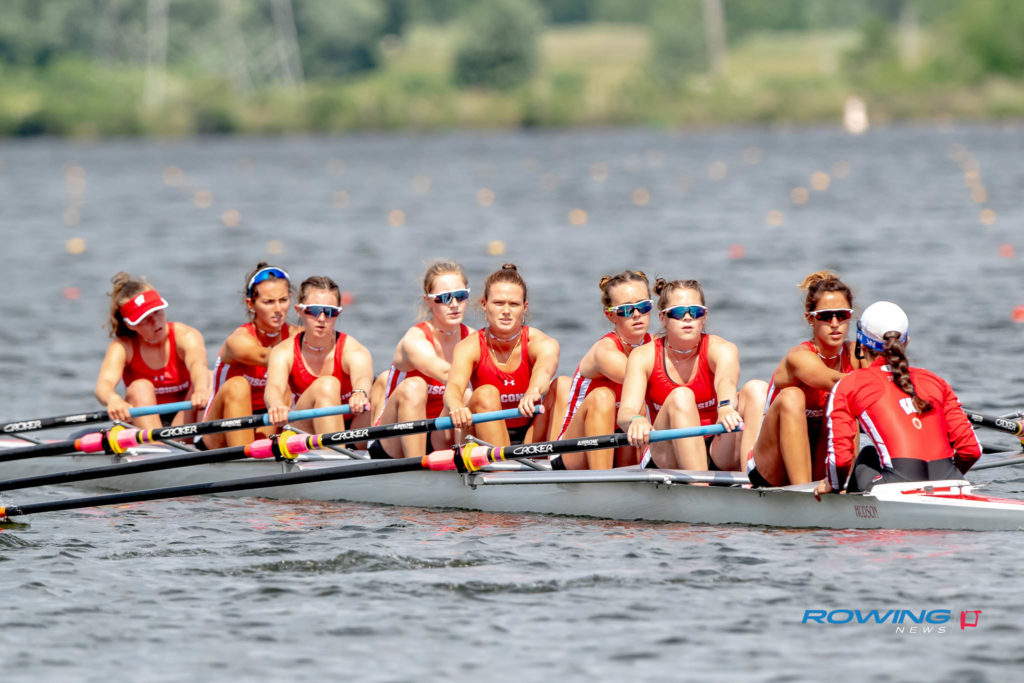
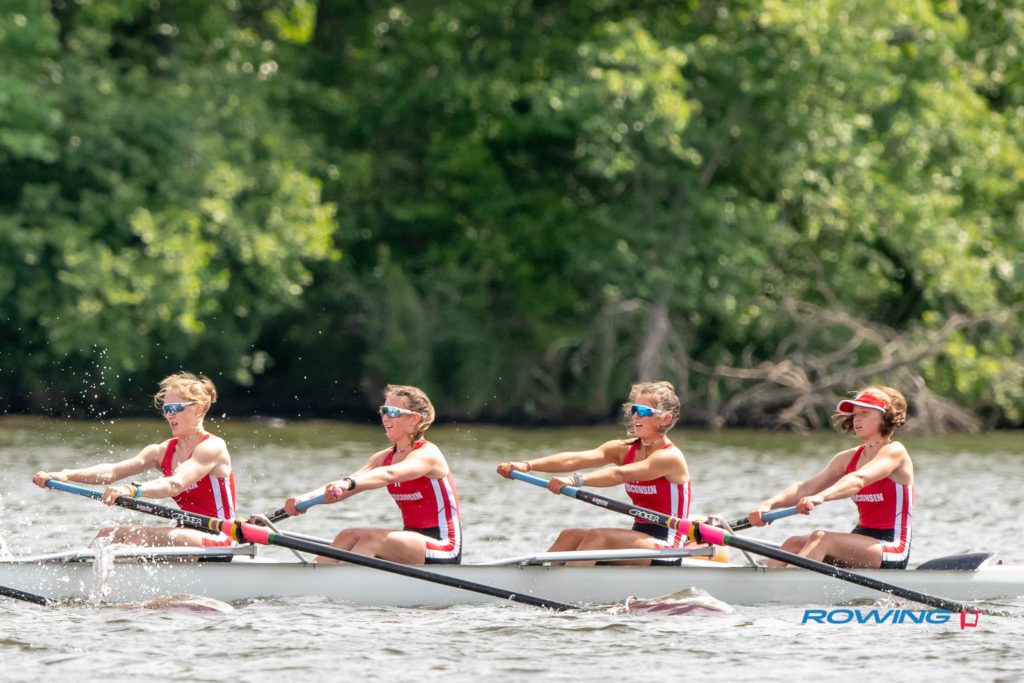
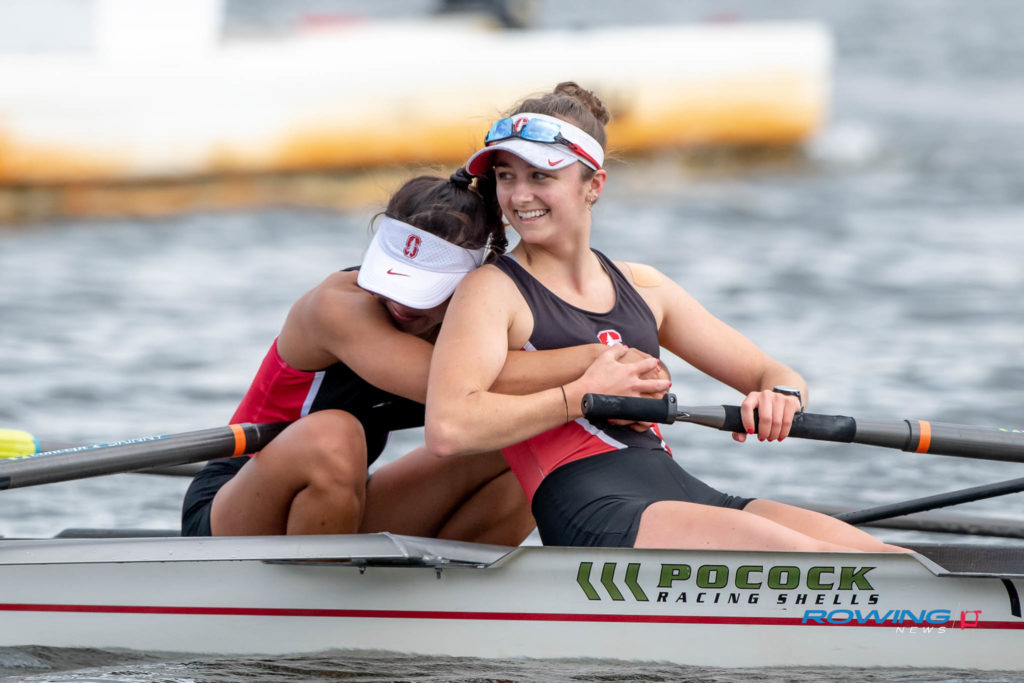
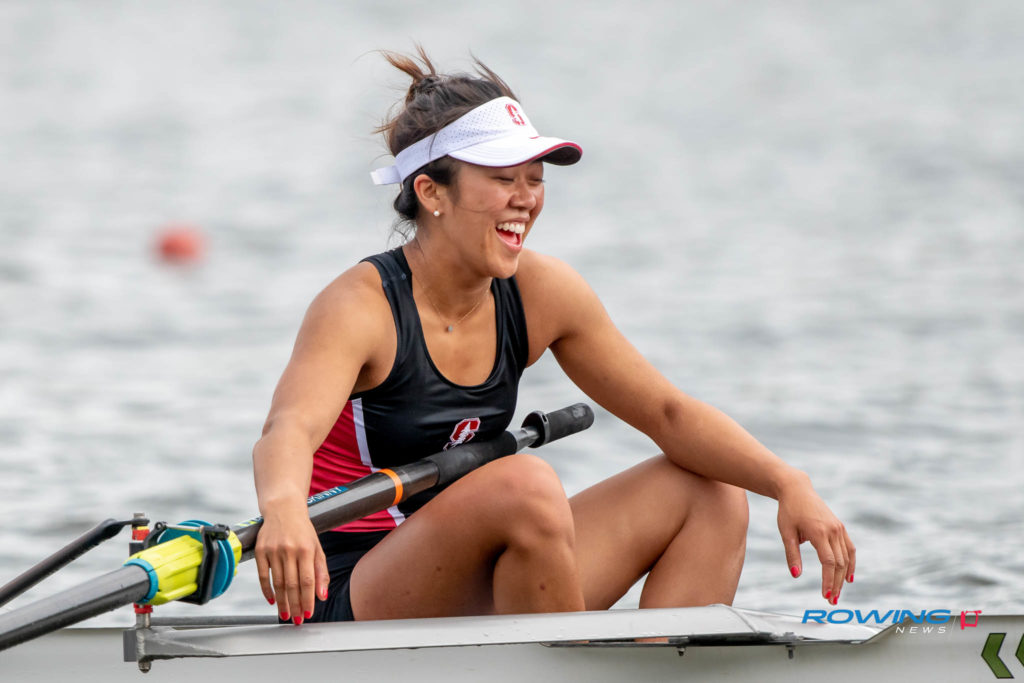
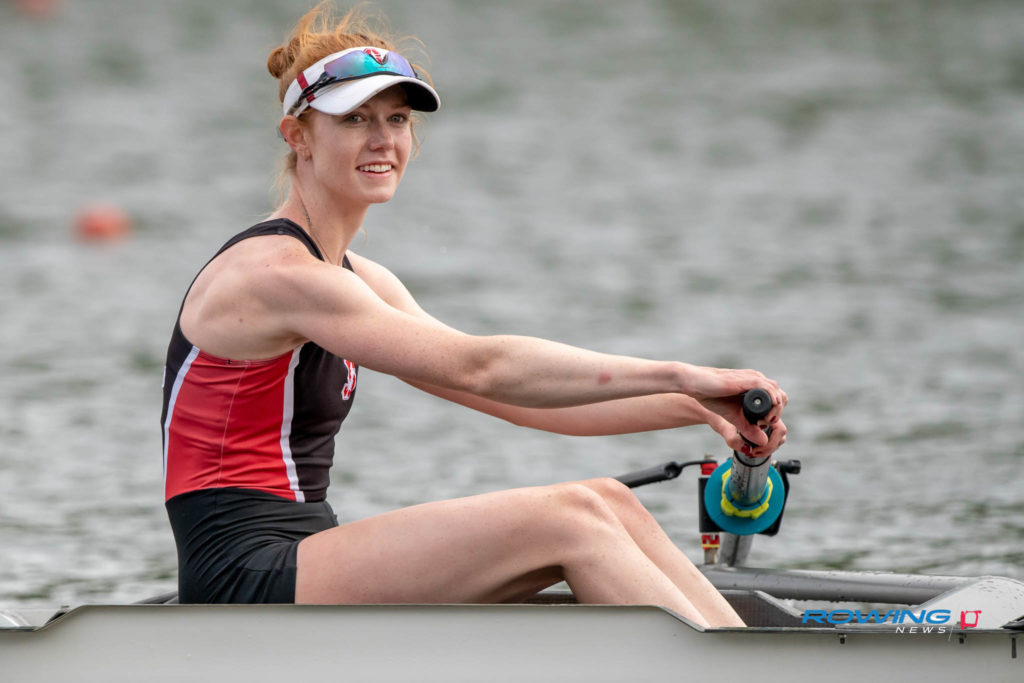
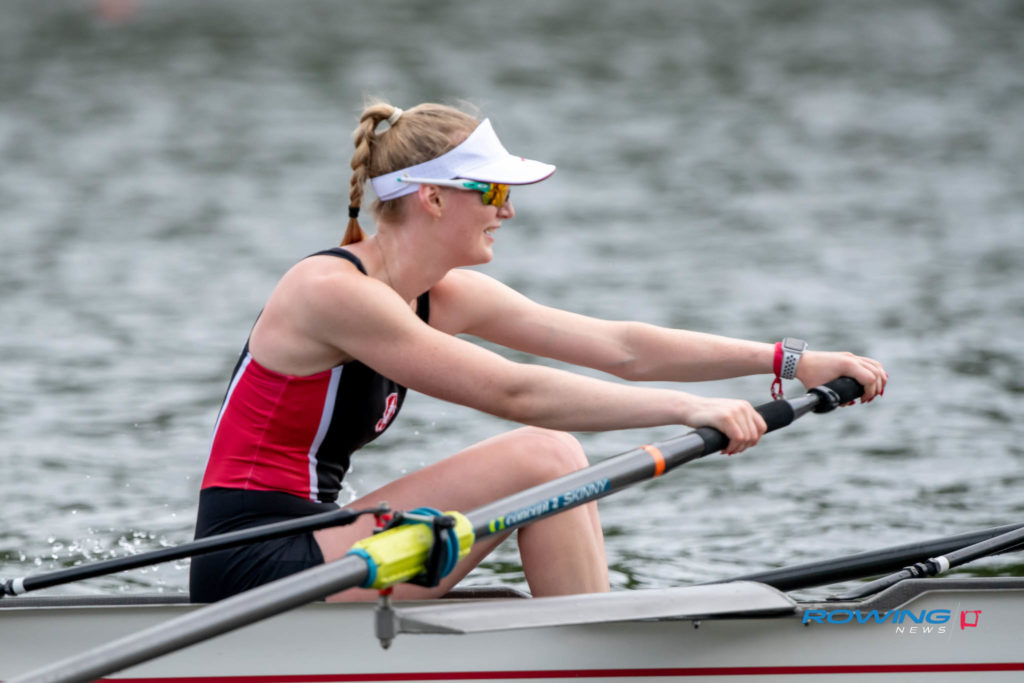
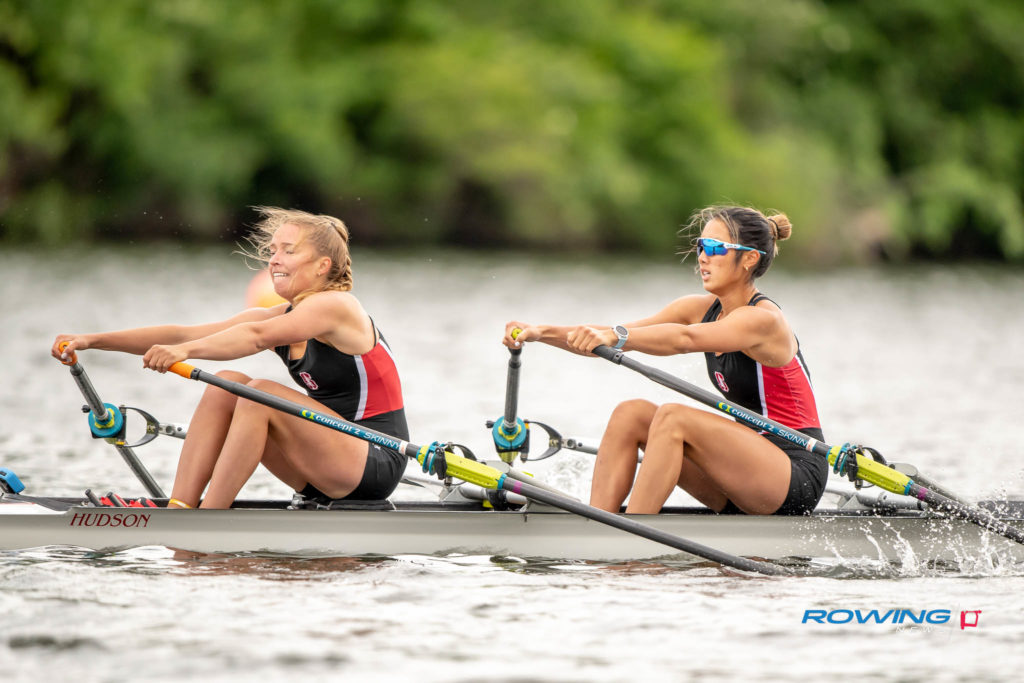
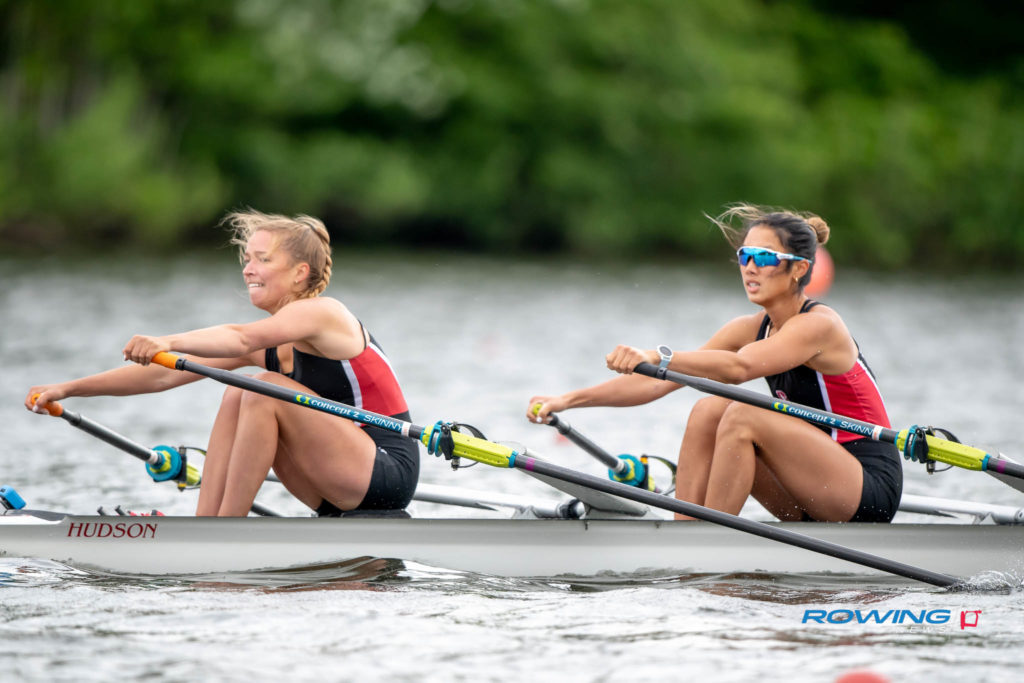
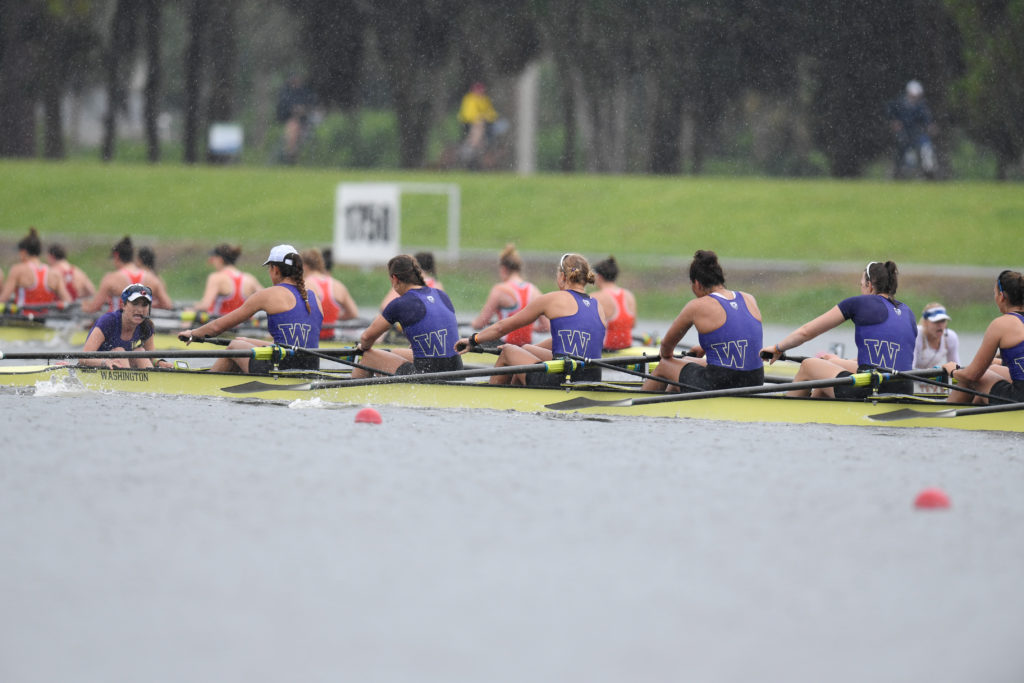
At almost the same time an announcement was broadcast to the athletes and coaches at Nathan Benderson Park to clear the launch area due to the possibility of lightning, a tweet went out from the University of Washington’s rowing account that read: “One race to go for Washington. Through 2 races, UW has 66 points; Stanford 63; and Texas 60. The winner of the V8+ grand final gets 66, second place gets 63, etc.”
With only the DI first eight grand final left in the regatta, all crews were forced off the water to await the passing storm.
It was the ultimate cliffhanger.
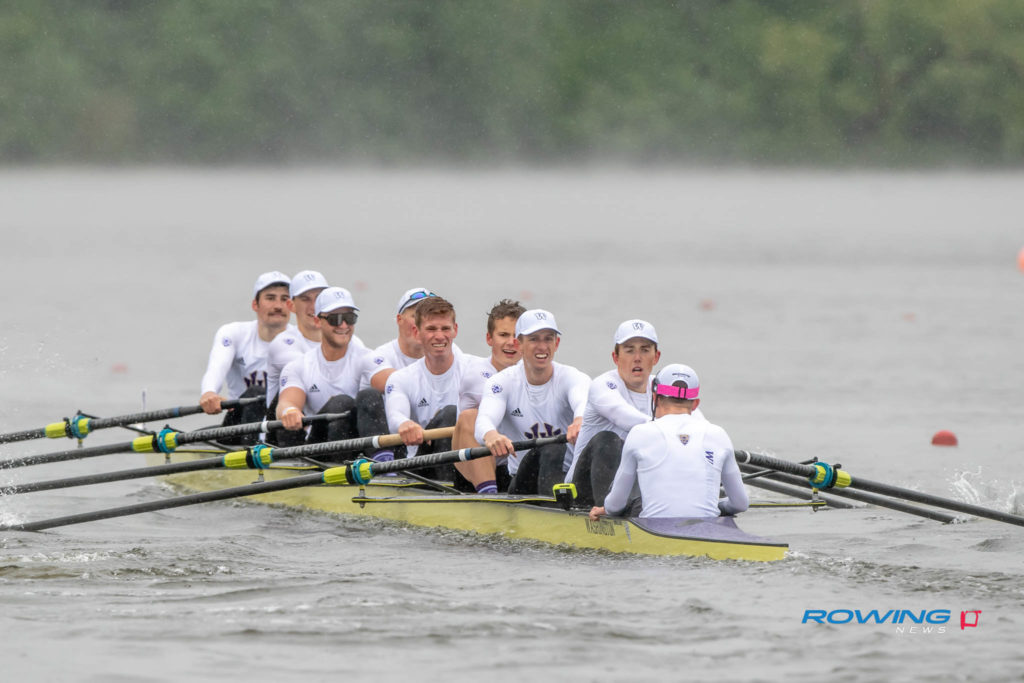
After a morning of Husky dominance, Washington would need only a victory in the grand final and the points trophy would be theirs. But the delay threatened to interrupt their momentum.
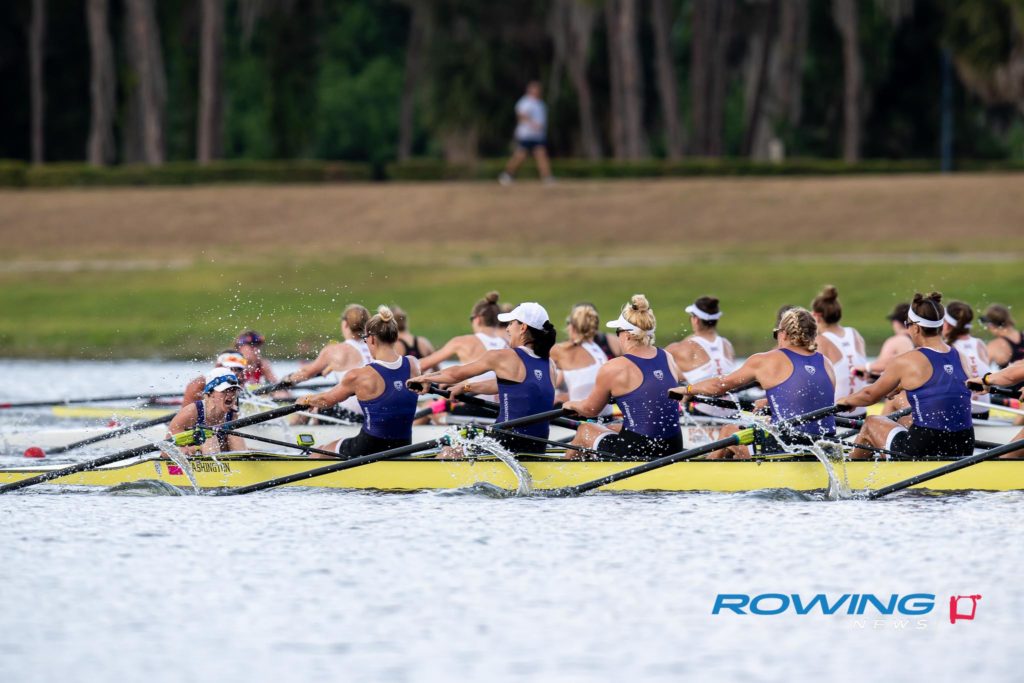
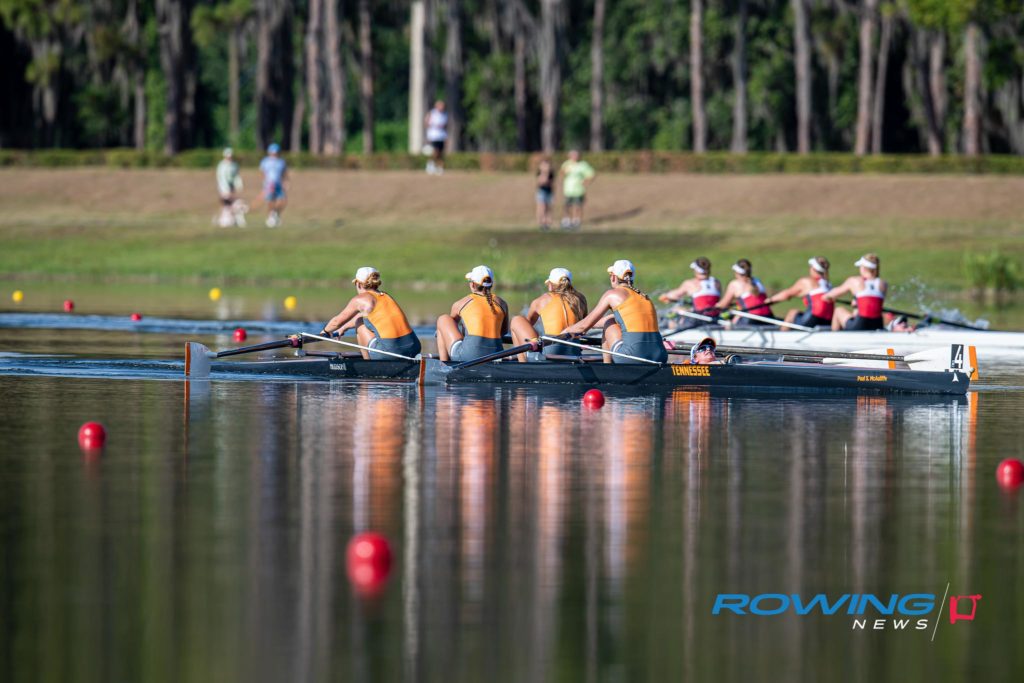
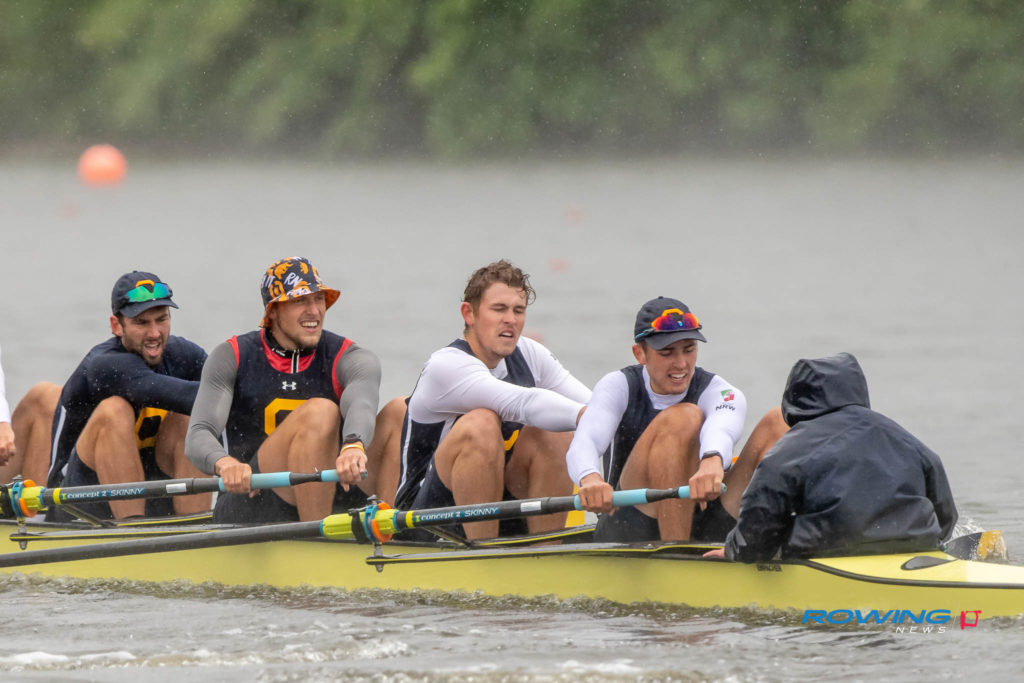
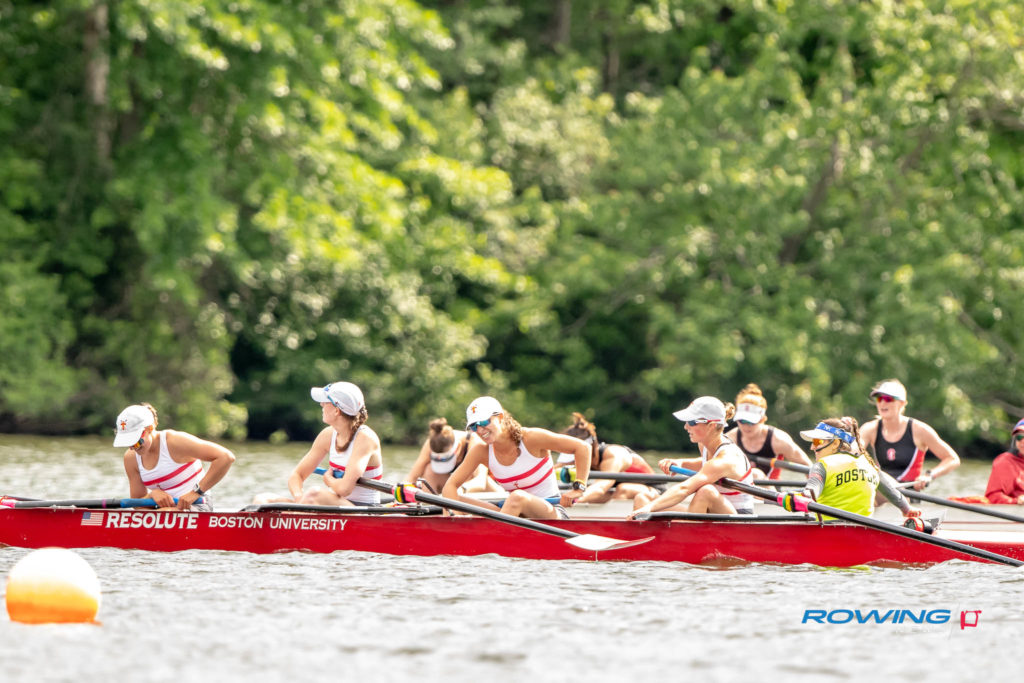
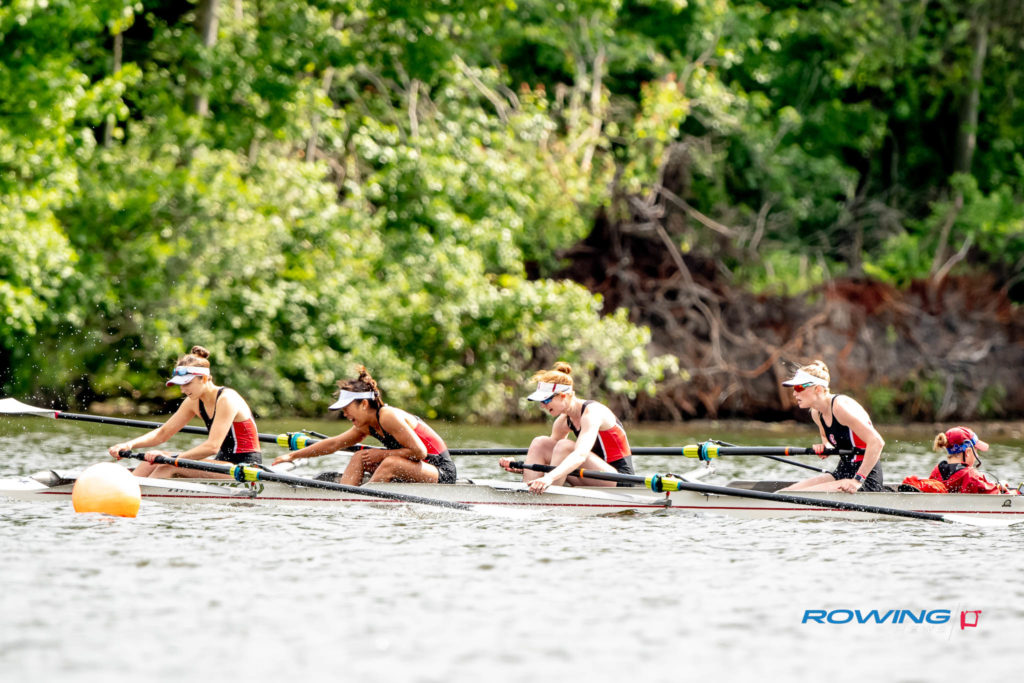
Nearly two hours later, the crews returned to the starting line, and, with a slight headwind, the racing resumed. Michigan lead early, then it was Stanford that took control and seemed well-positioned to win.
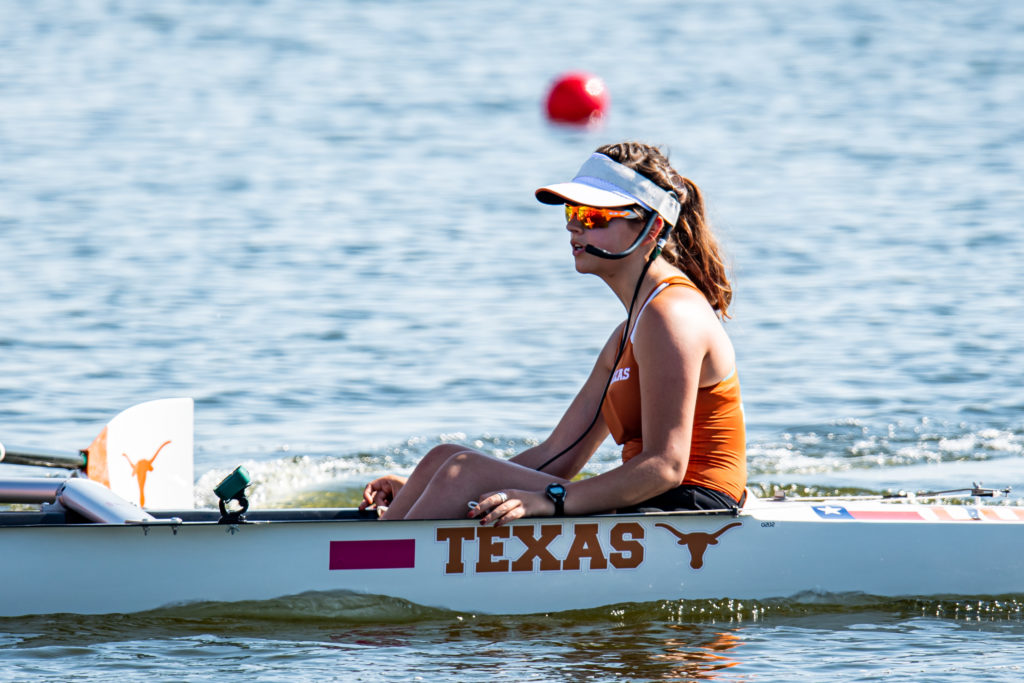
The University of Texas, however, had other plans.
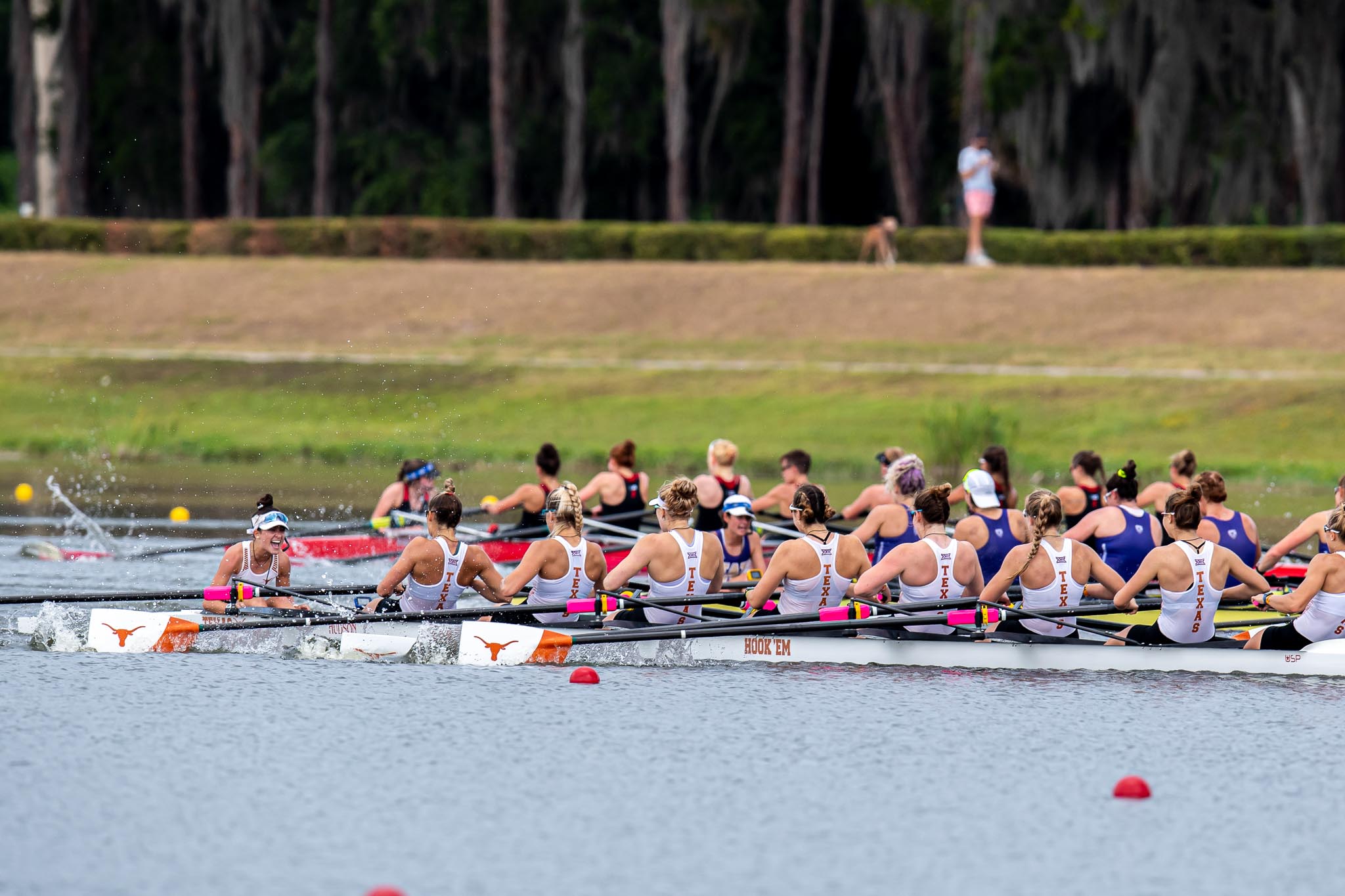
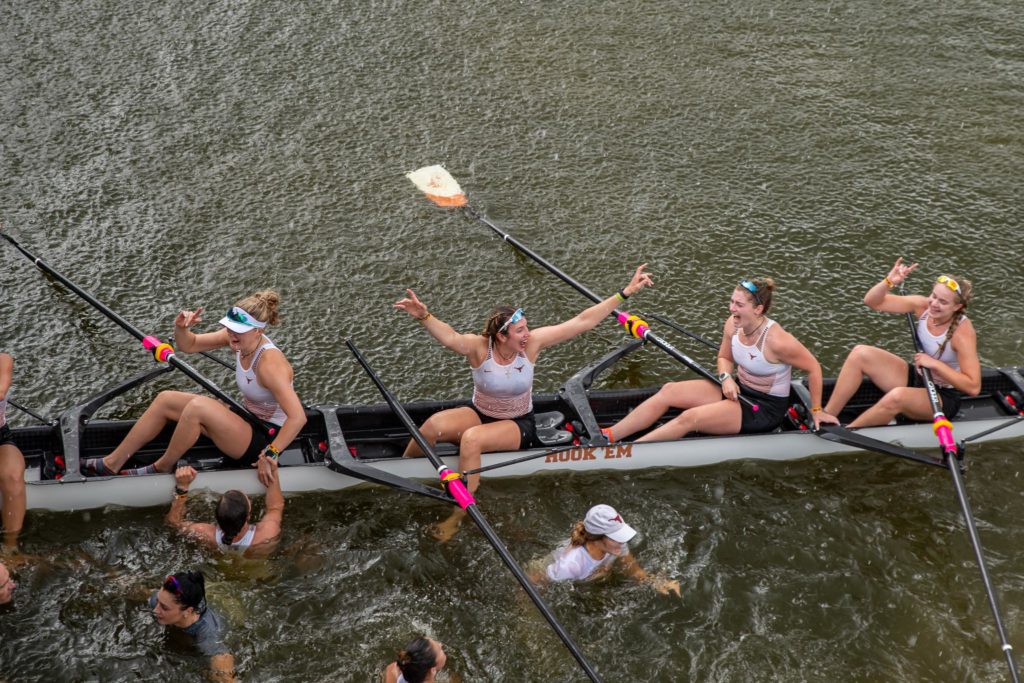
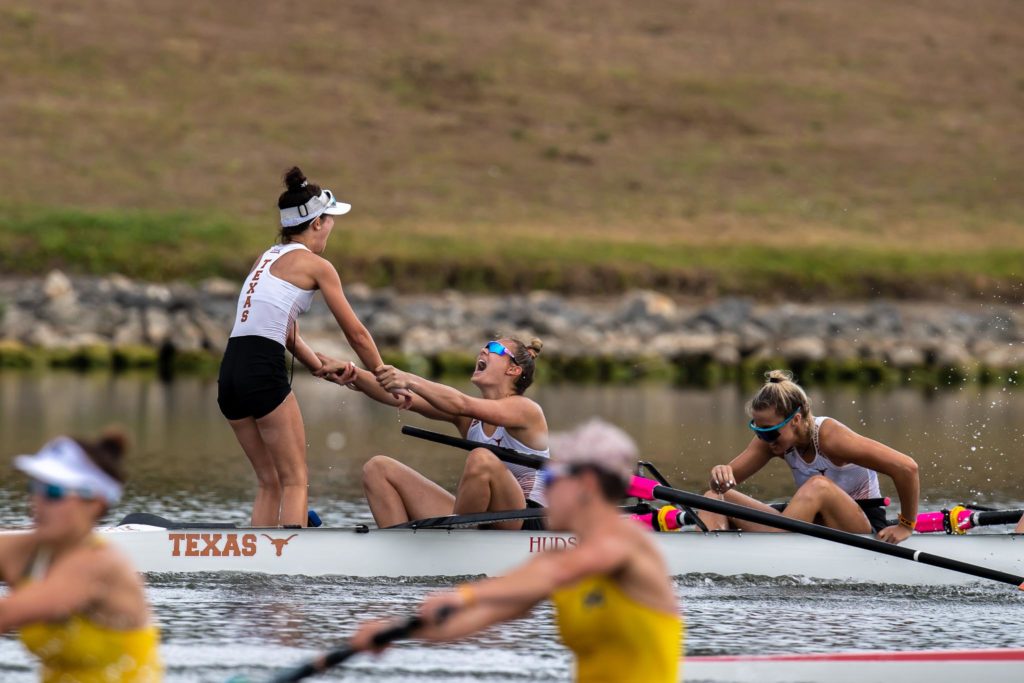
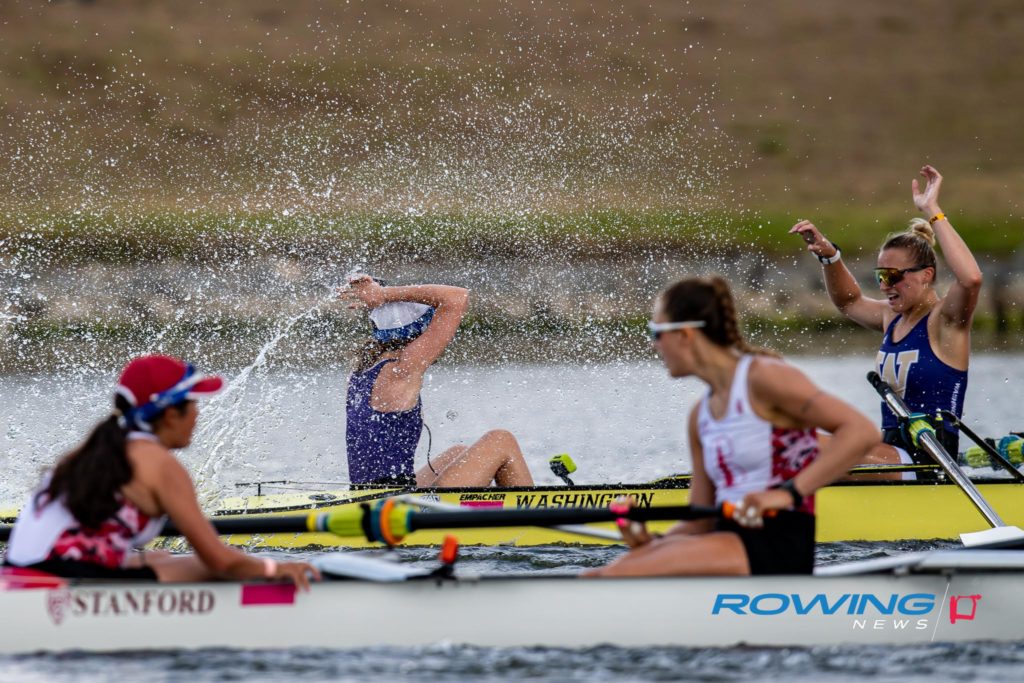
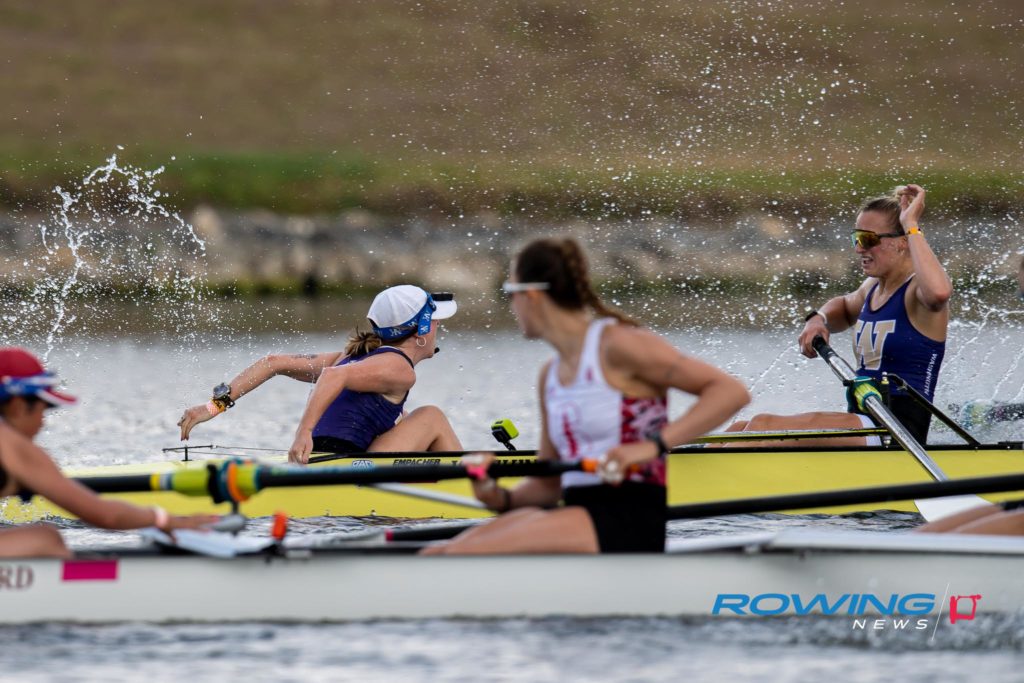
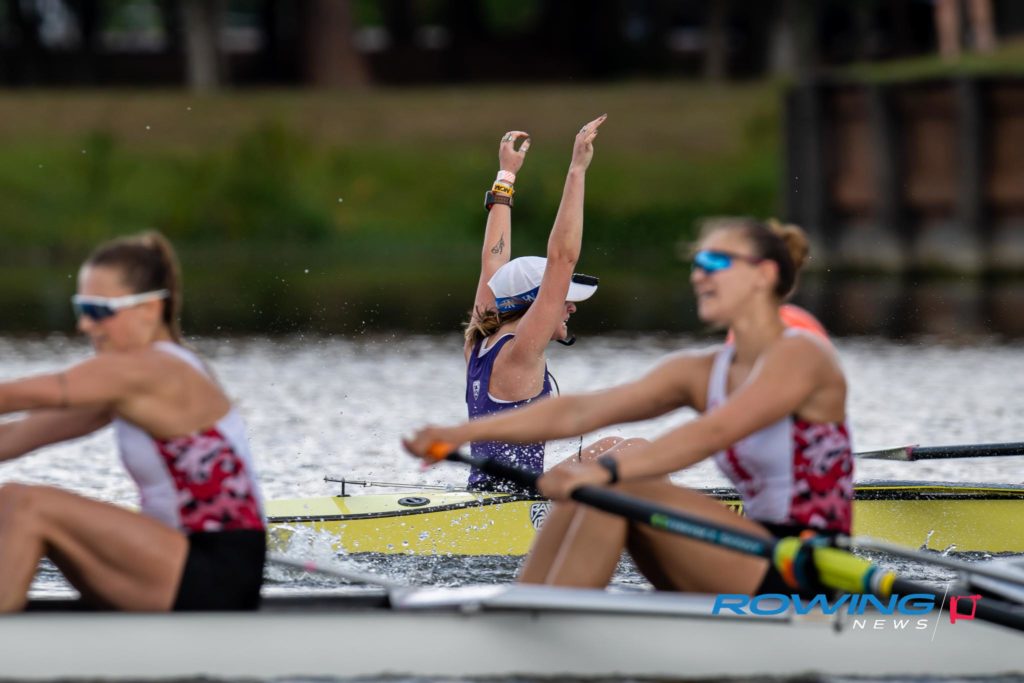
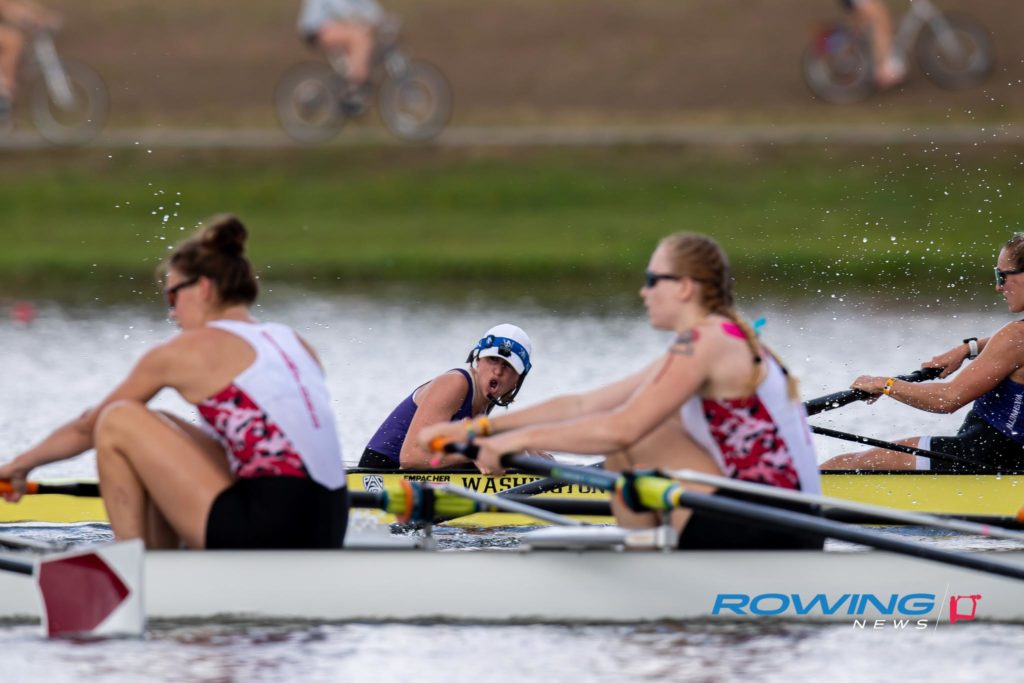
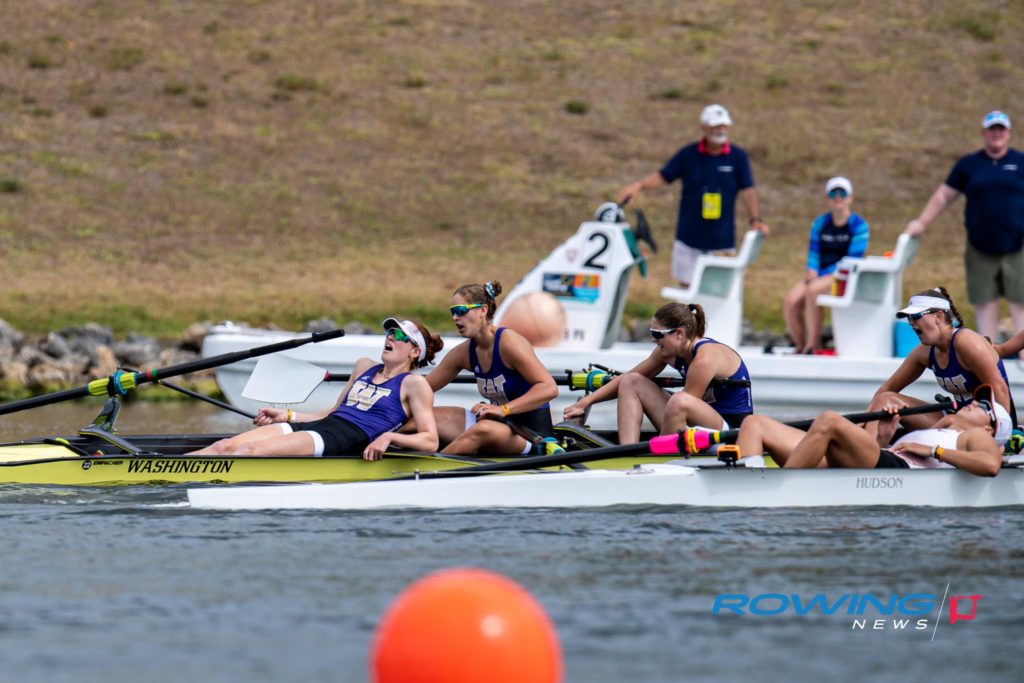
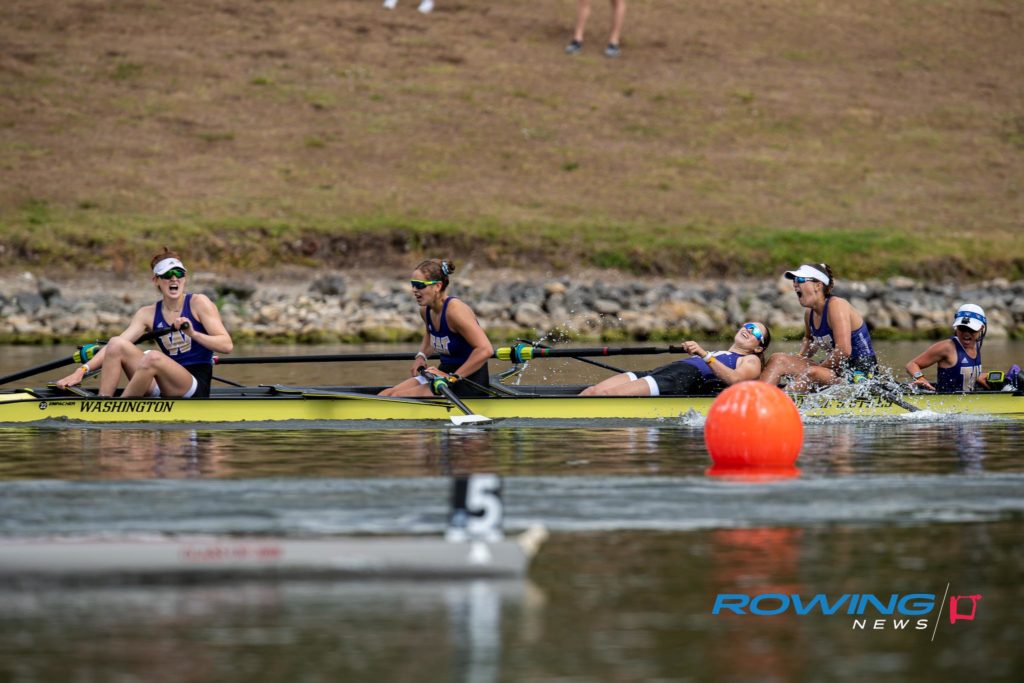
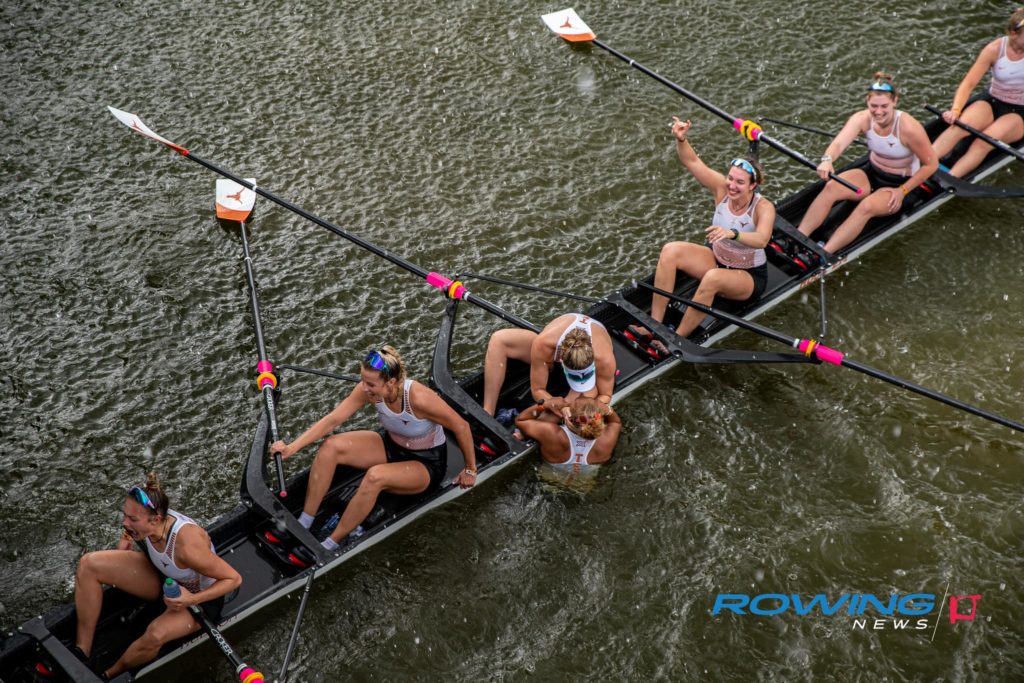
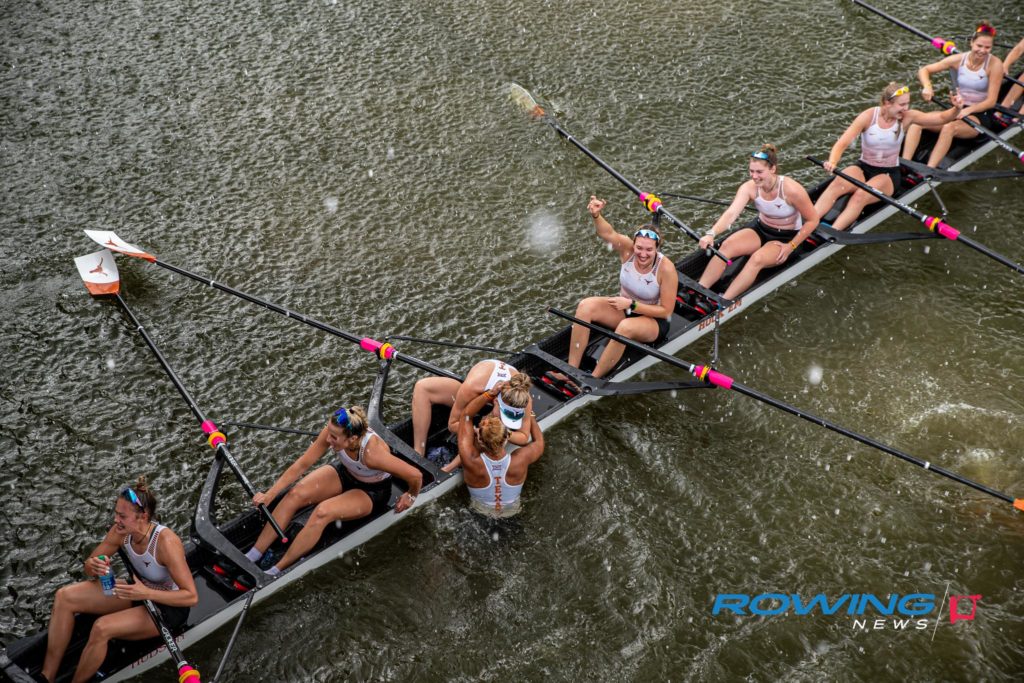
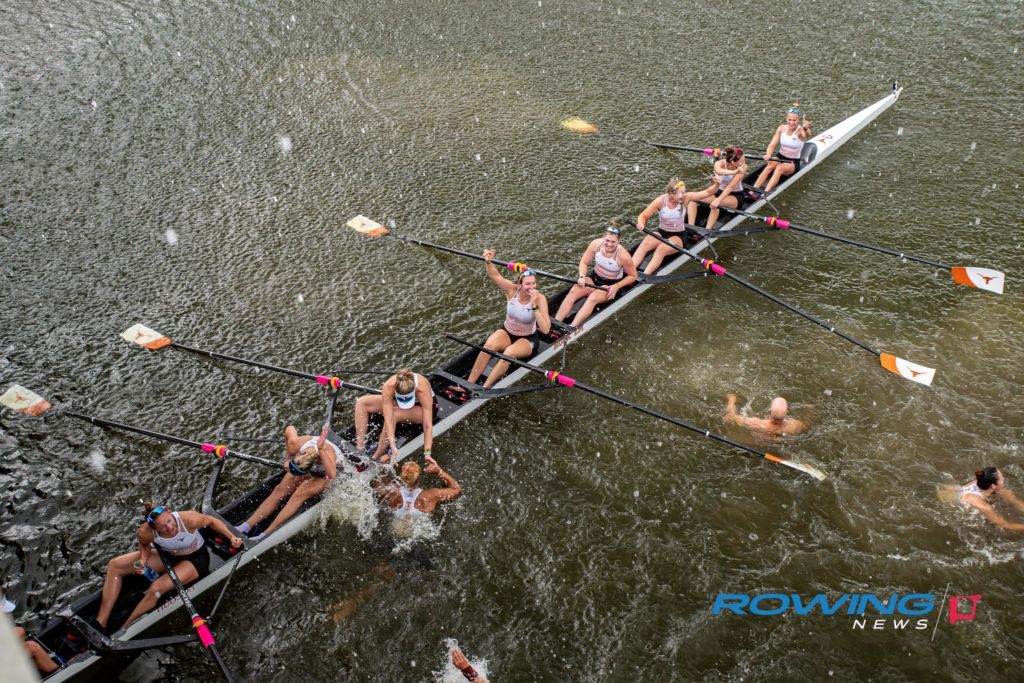
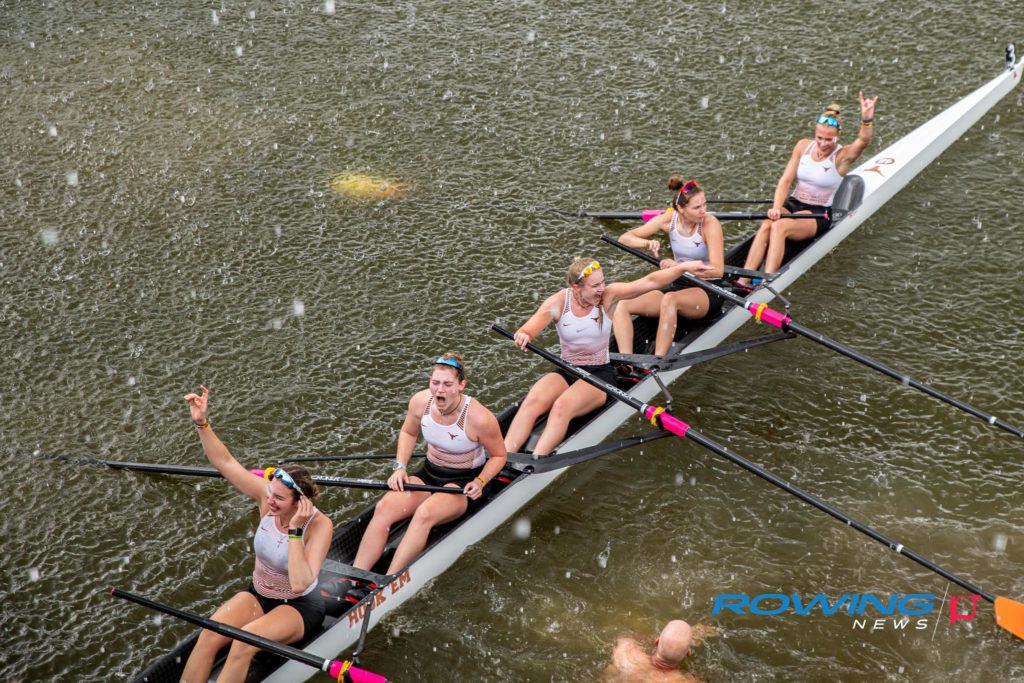
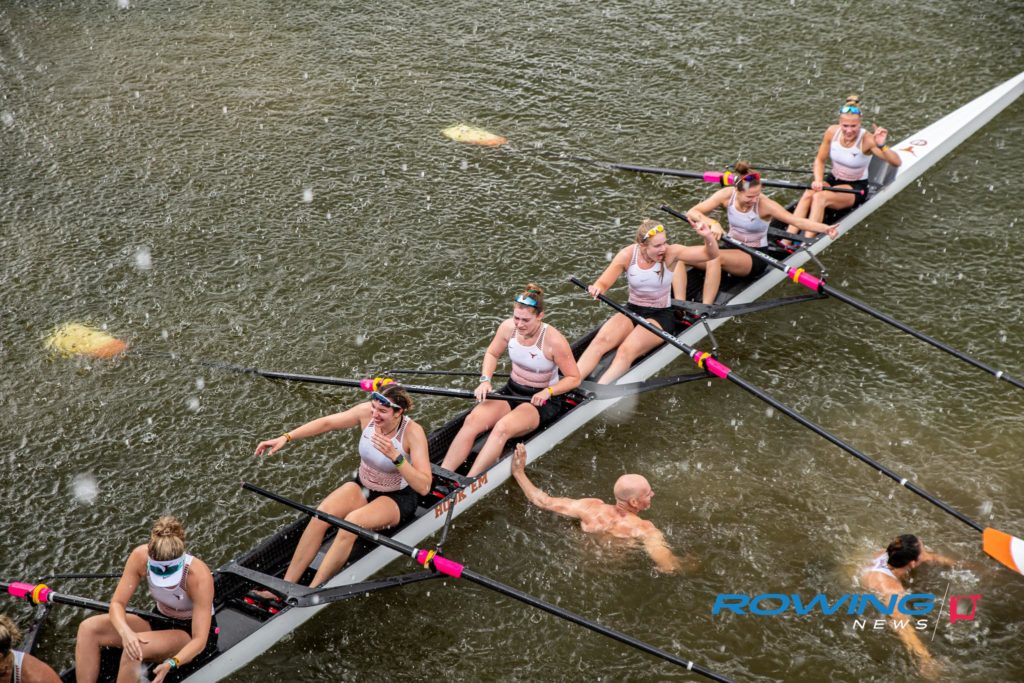
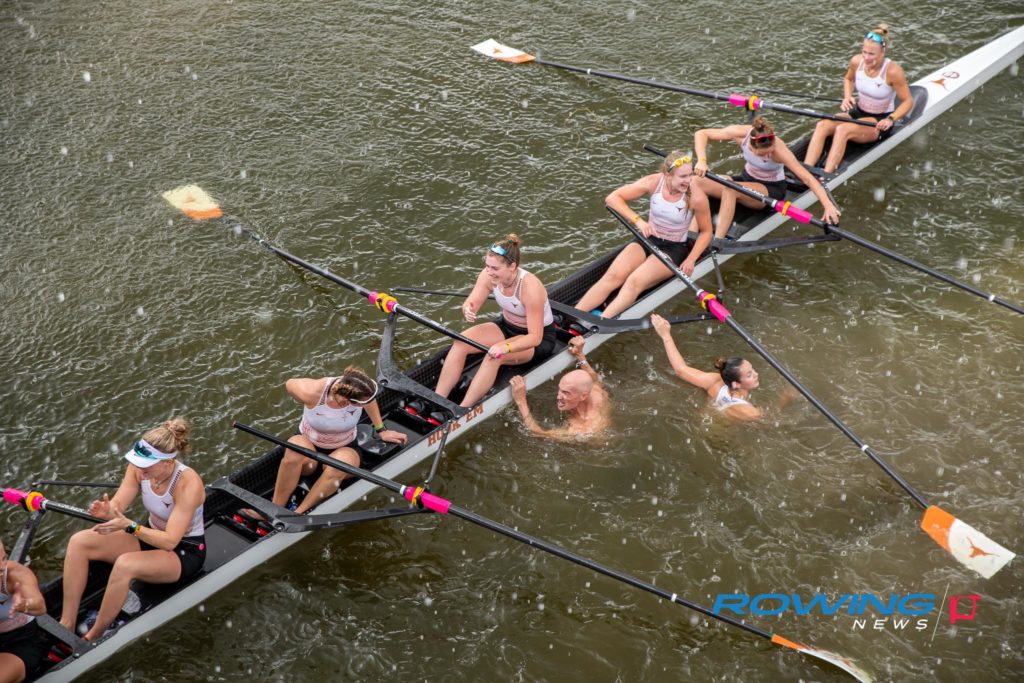
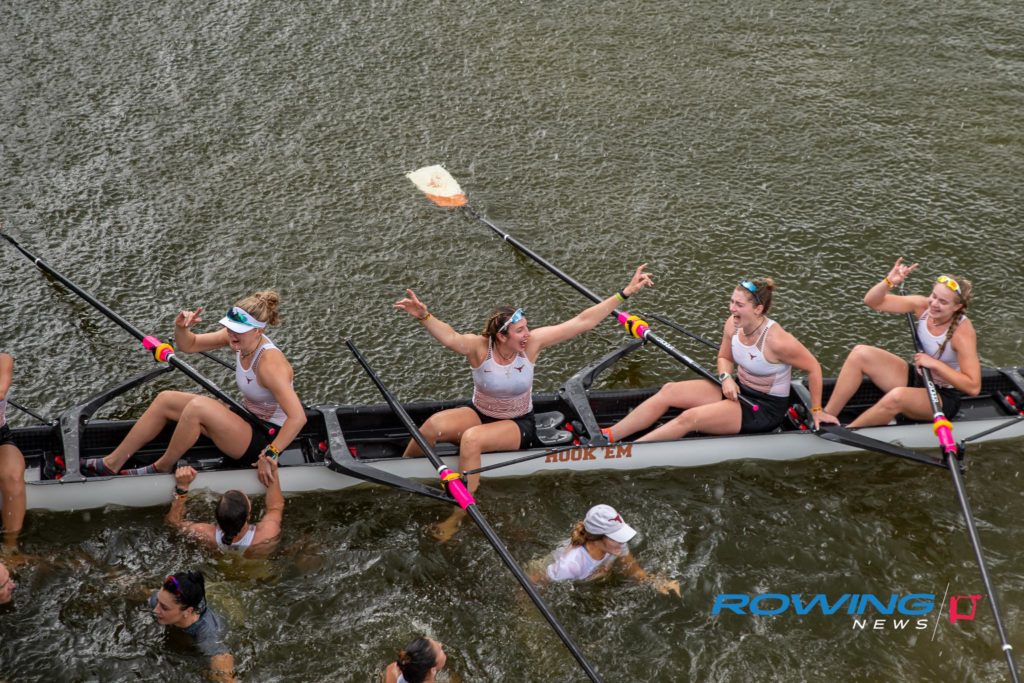
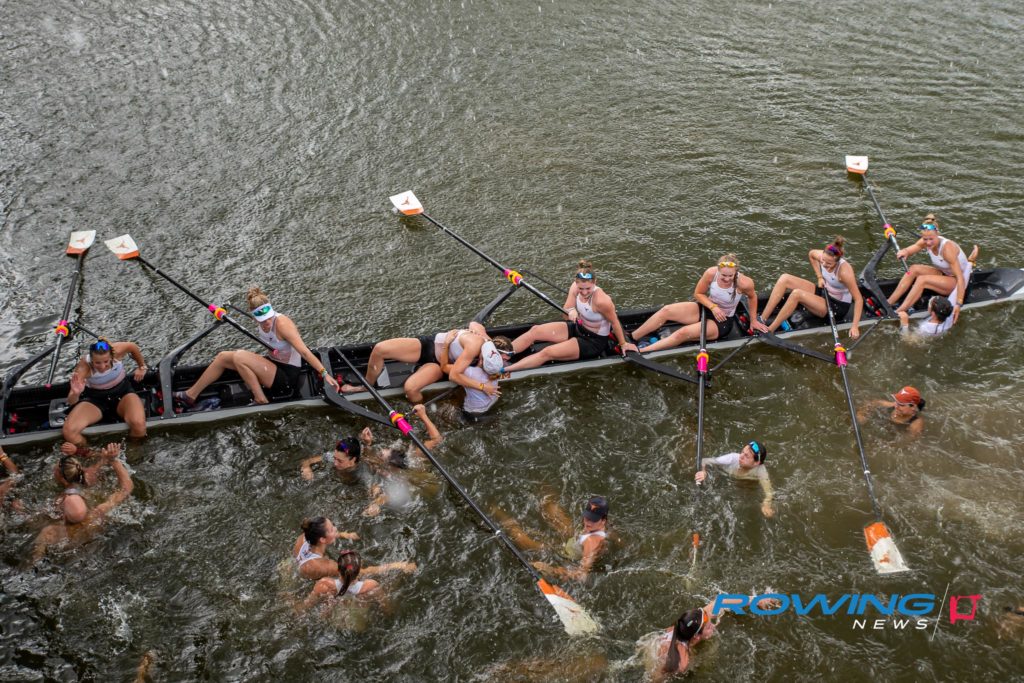
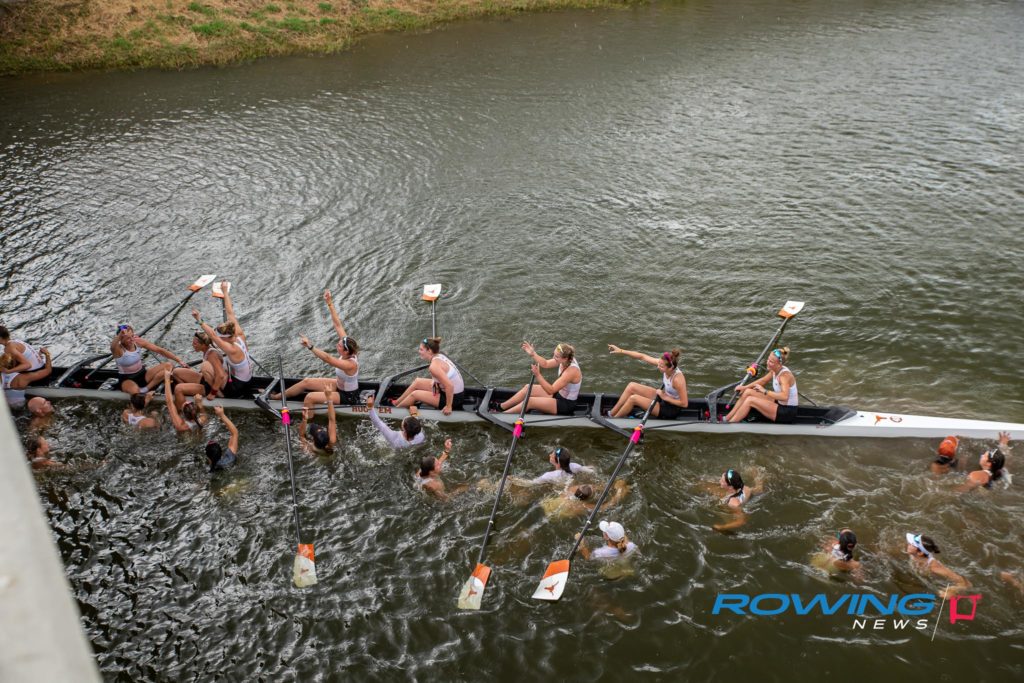
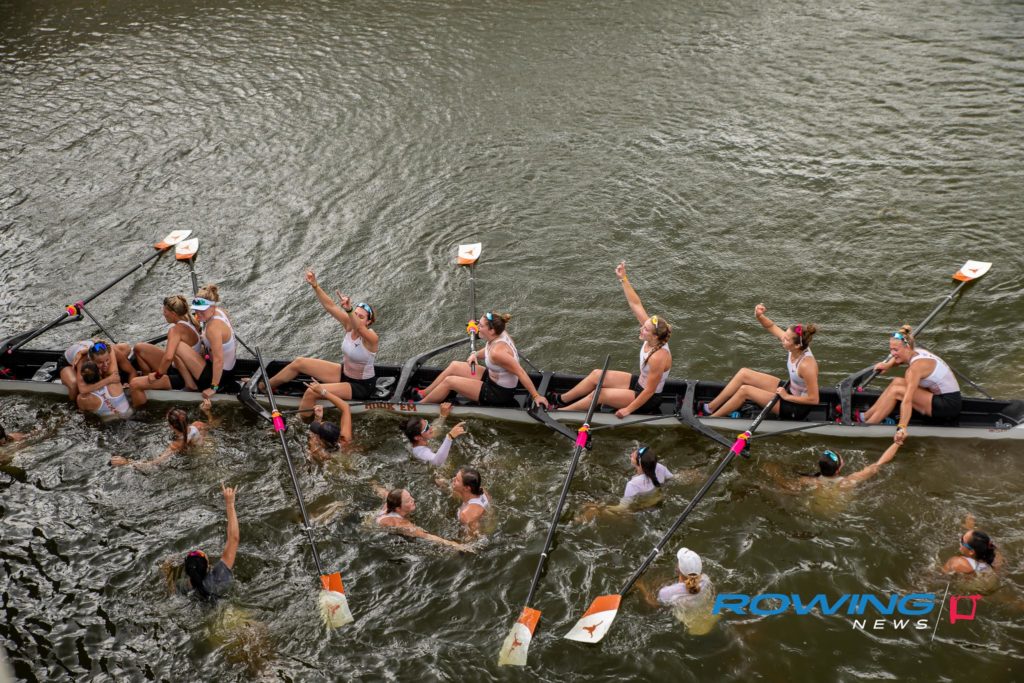
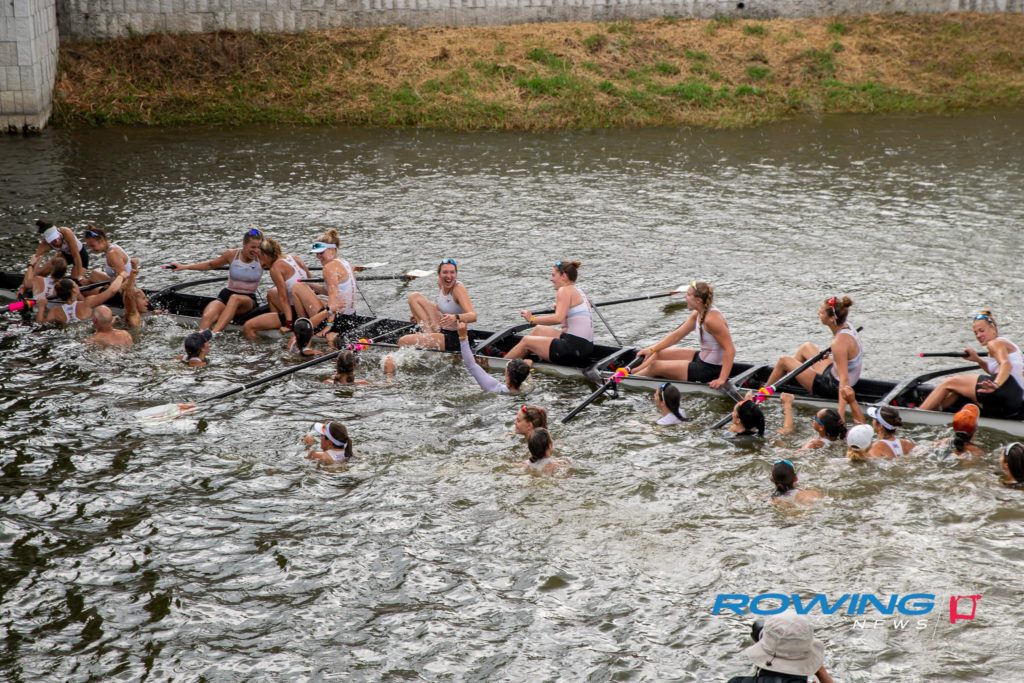
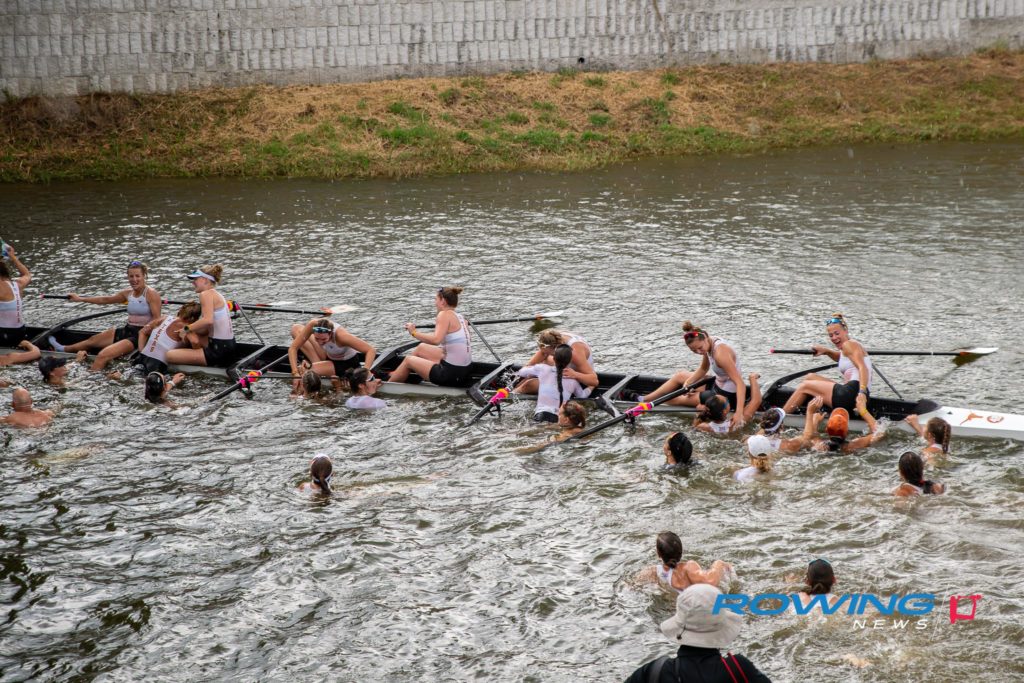
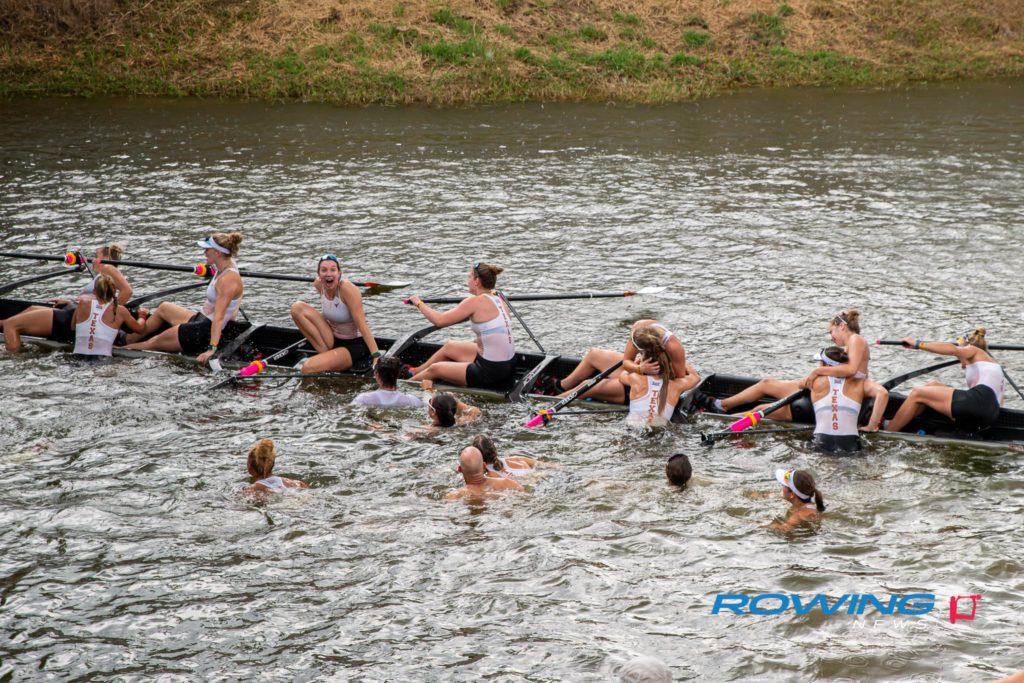
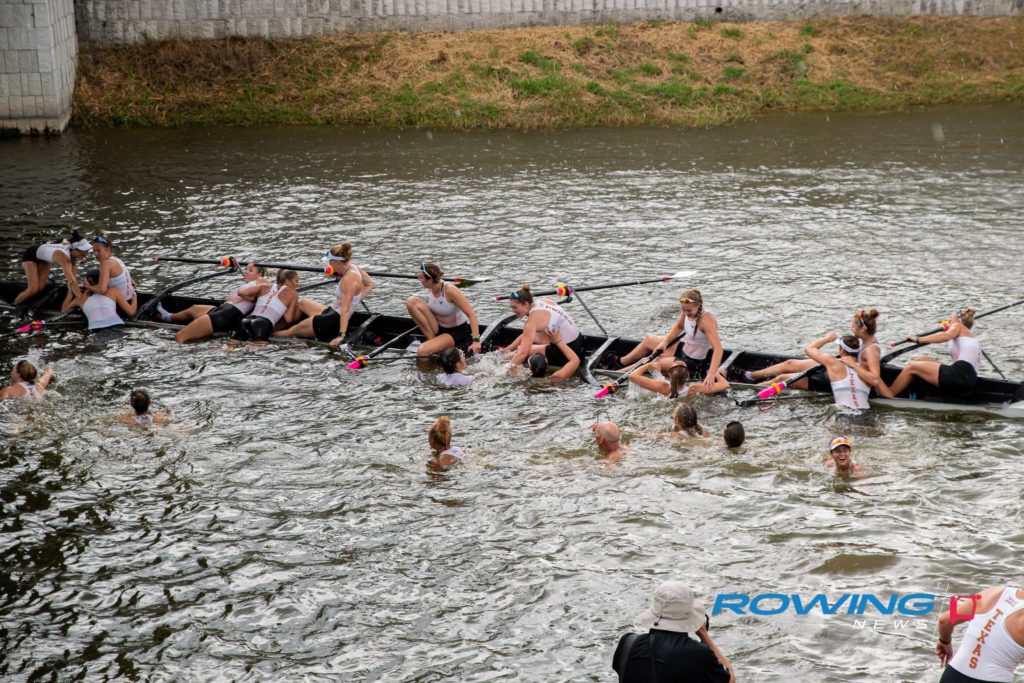
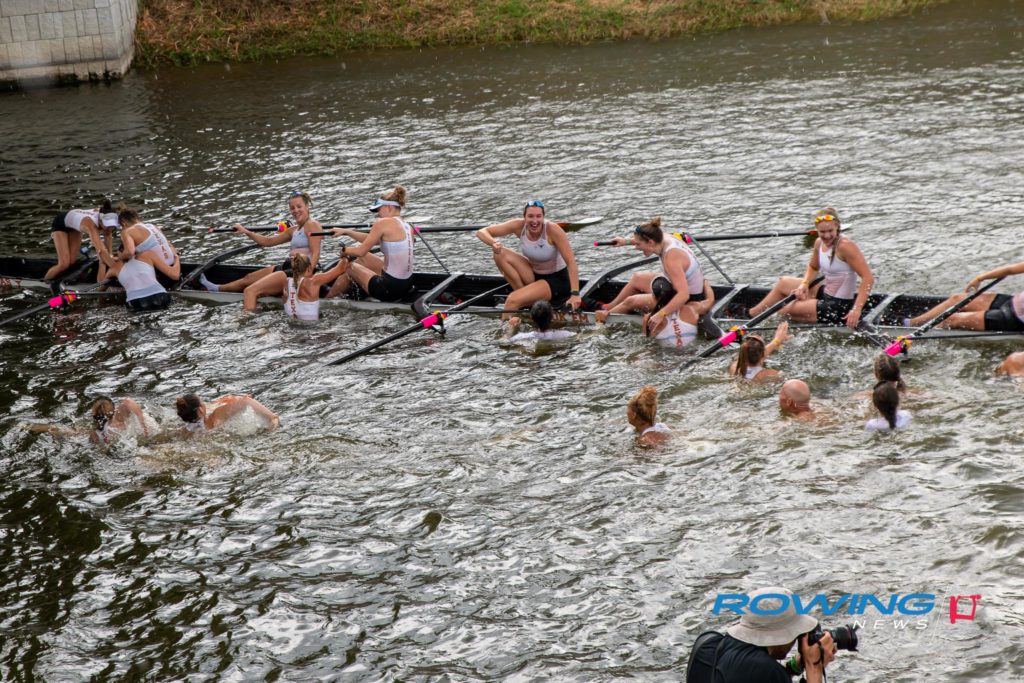
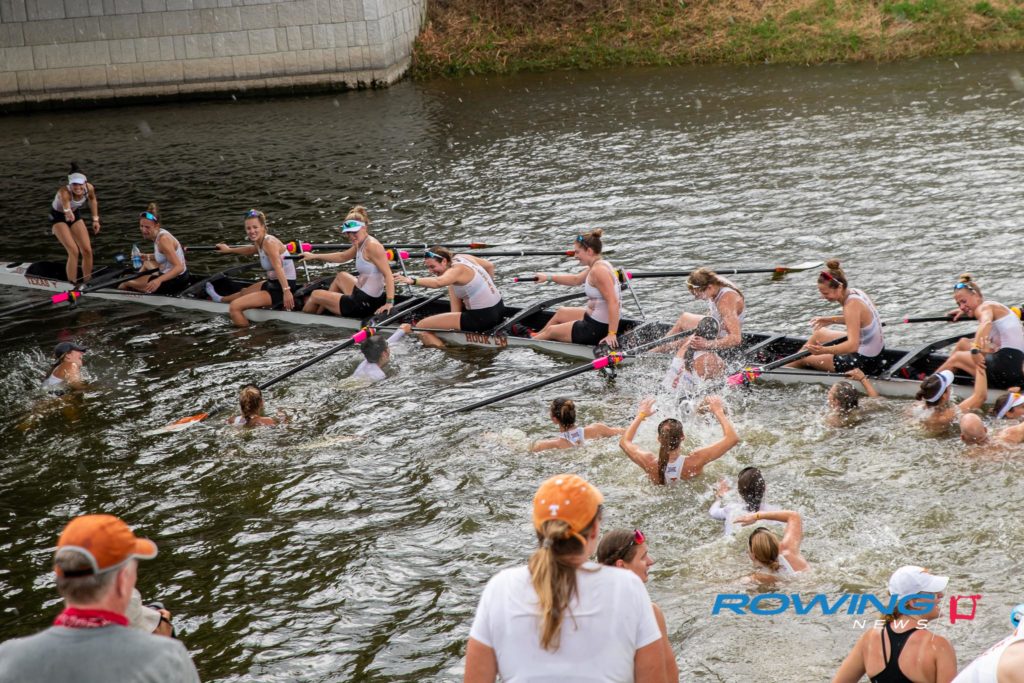
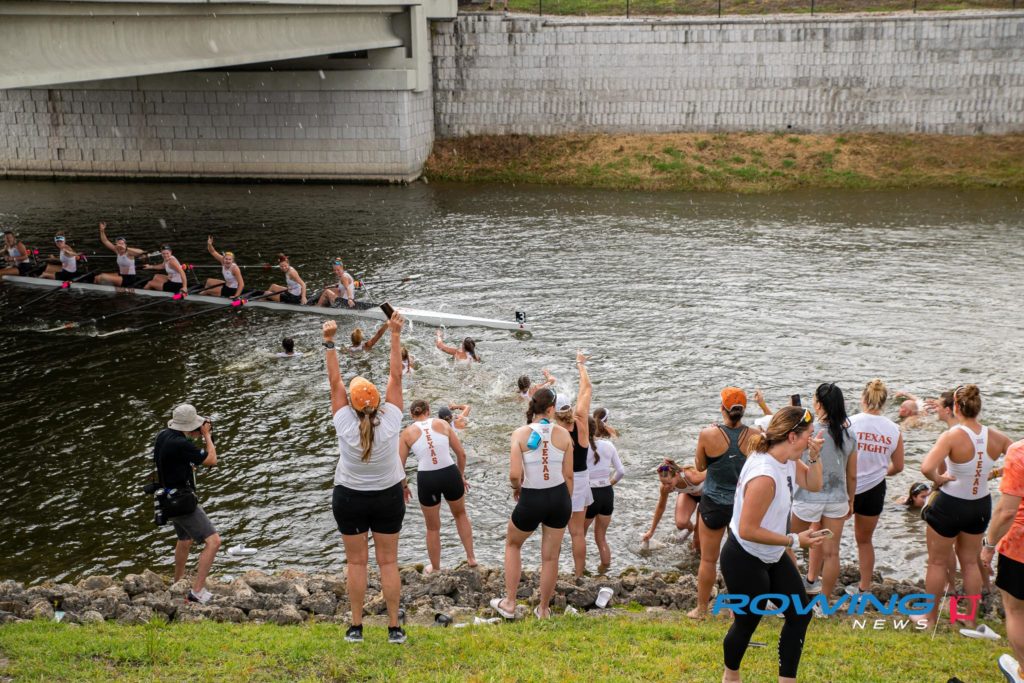
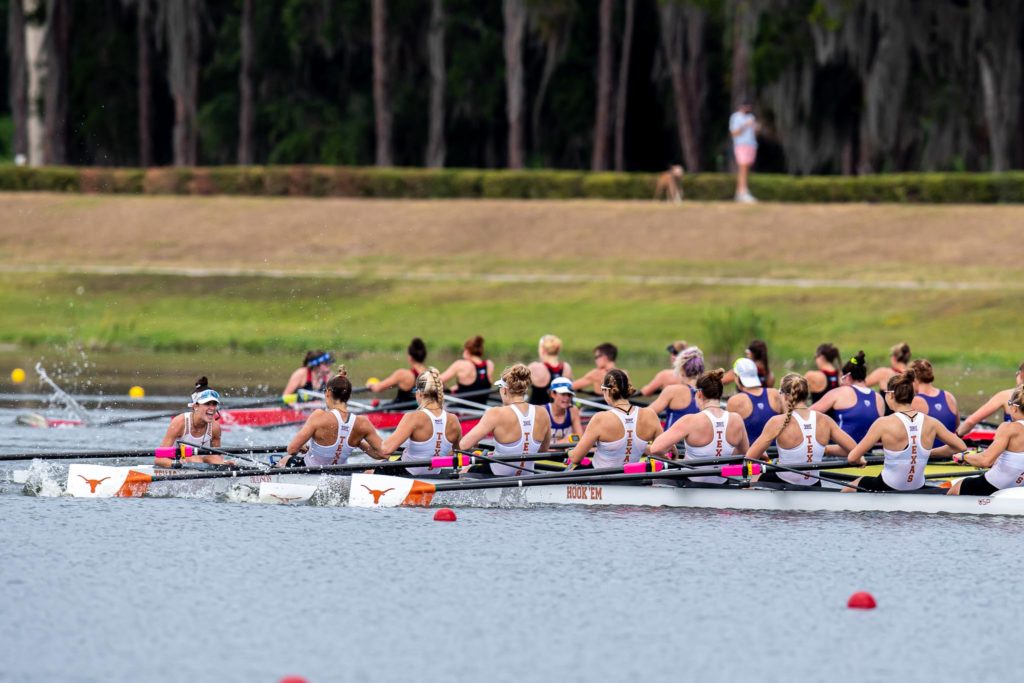
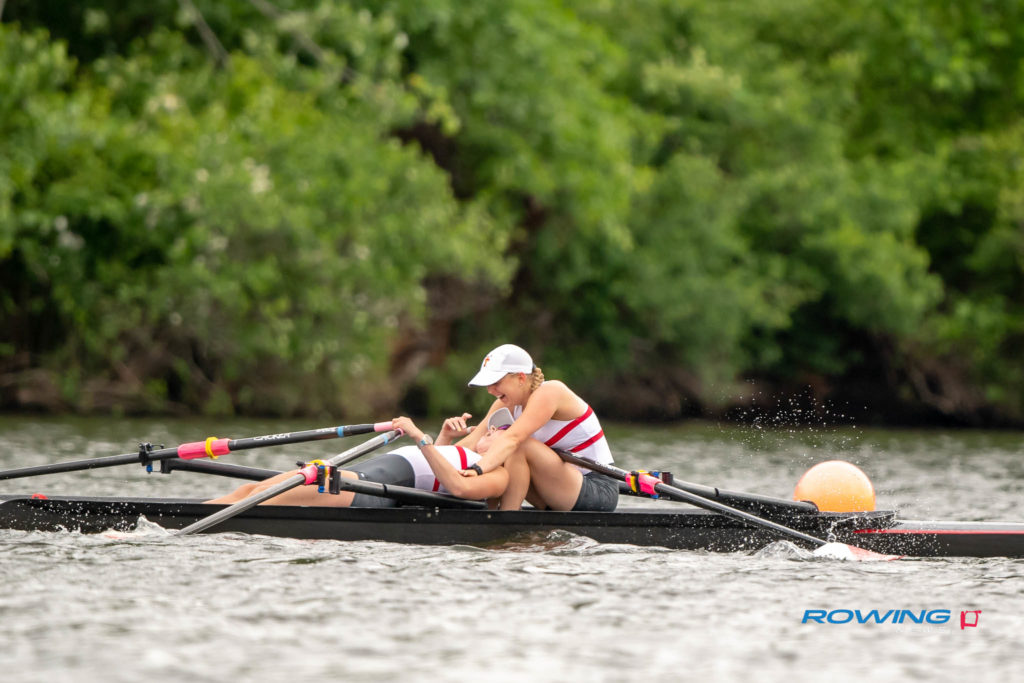
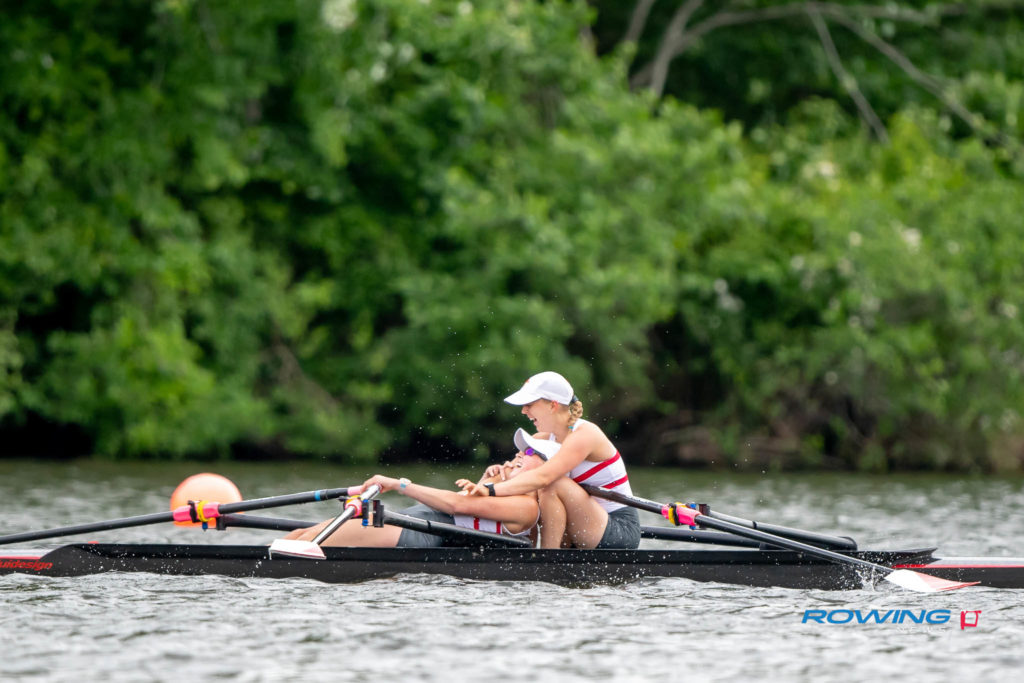
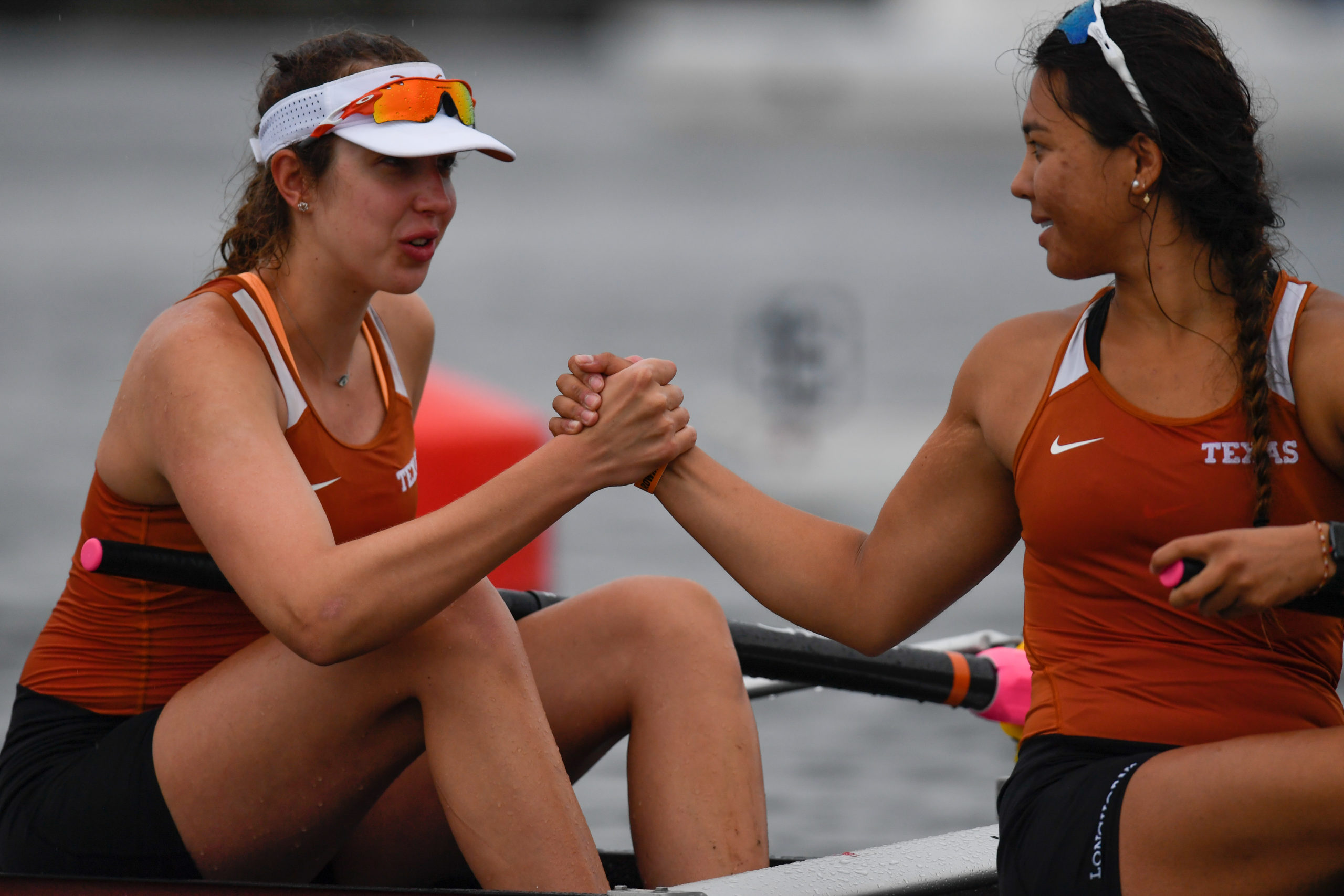
At 5:32.6 seconds into the race, announcer Mary Whipple said “It’s still Stanford in the lead, but here comes Texas,” and before the clock reached six minutes, Texas had taken control. In the last twenty strokes of the 2021 NCAA Women’s Rowing Championships, the Longhorns secured their victory.
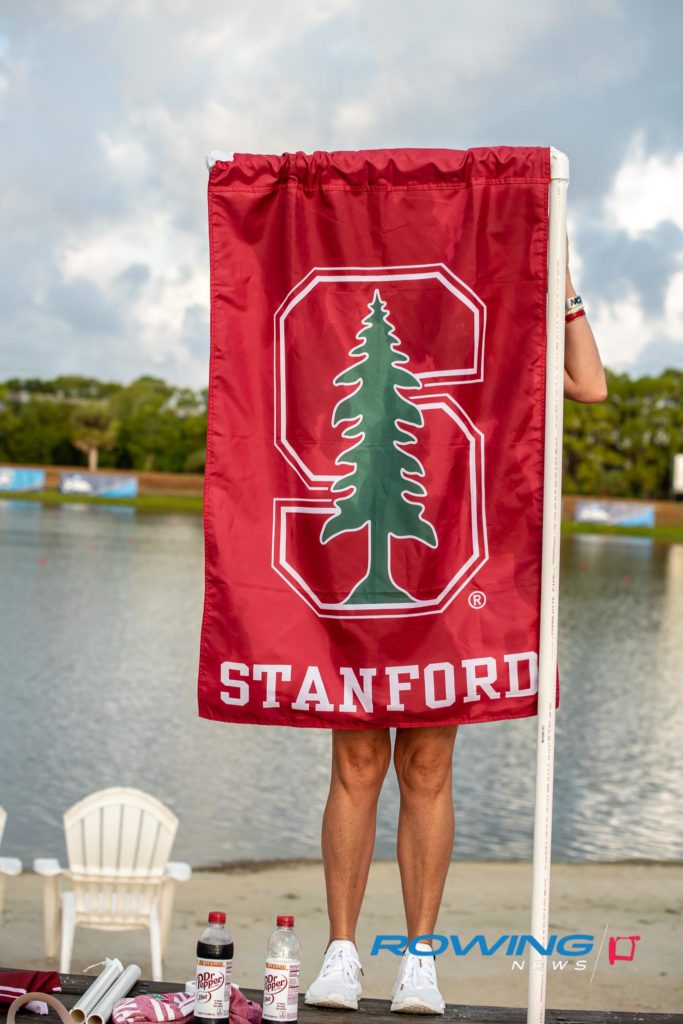
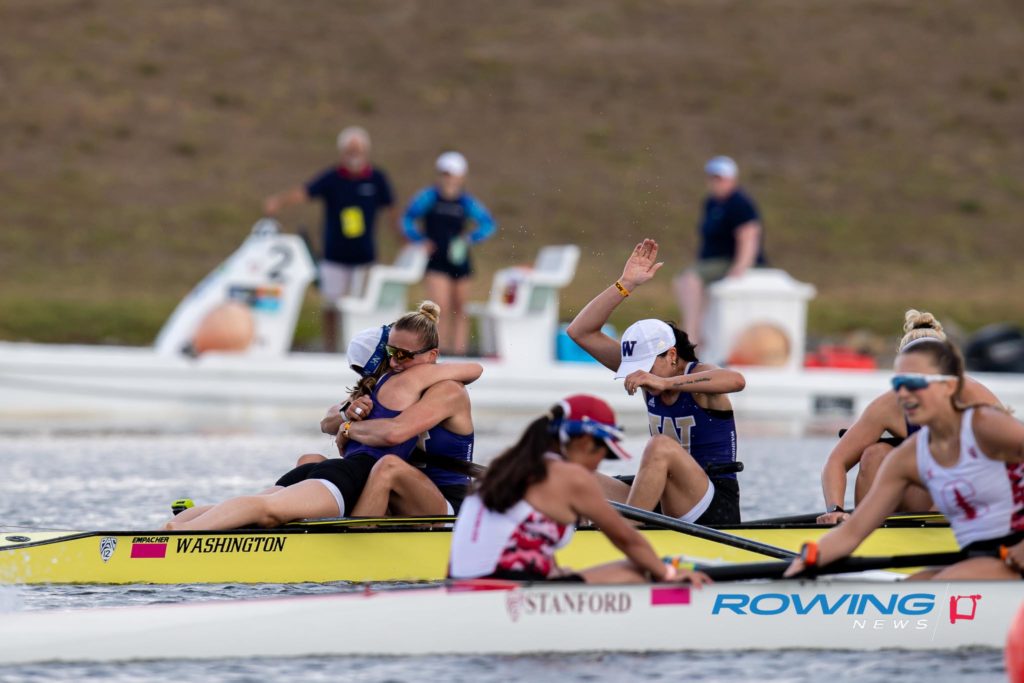
With that victory came 66 points and when coupled with Stanford’s second-place finish it created a three-way tie between The University of Texas, Stanford, and the University of Washington in the final team standings.
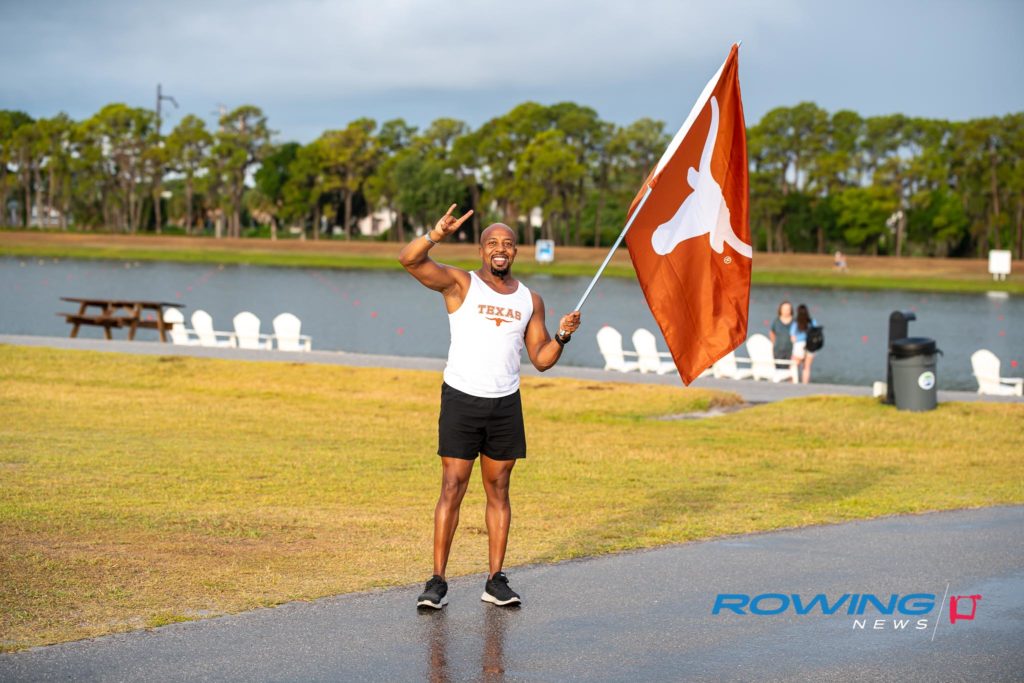
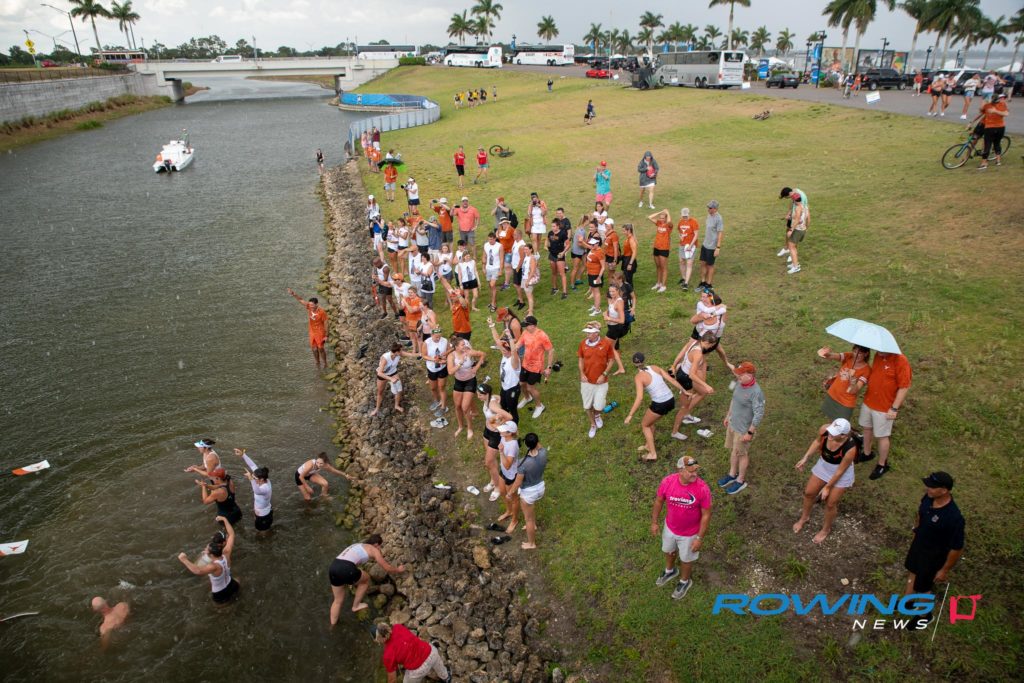
In the event of a tie, the winner of the first eight grand final becomes the national champion. And so the day belonged to Texas.
“As I was finishing grad school, I remember Texas Rowing’s first team members standing in front of Gregory Gym, stopping women students who looked athletic, asking them if they’d ever tried rowing,” University of Texas President Jay Hartzell said on Twitter. “From that start in 1997 to national champs in 2021. Remarkable! Hook ‘em!”
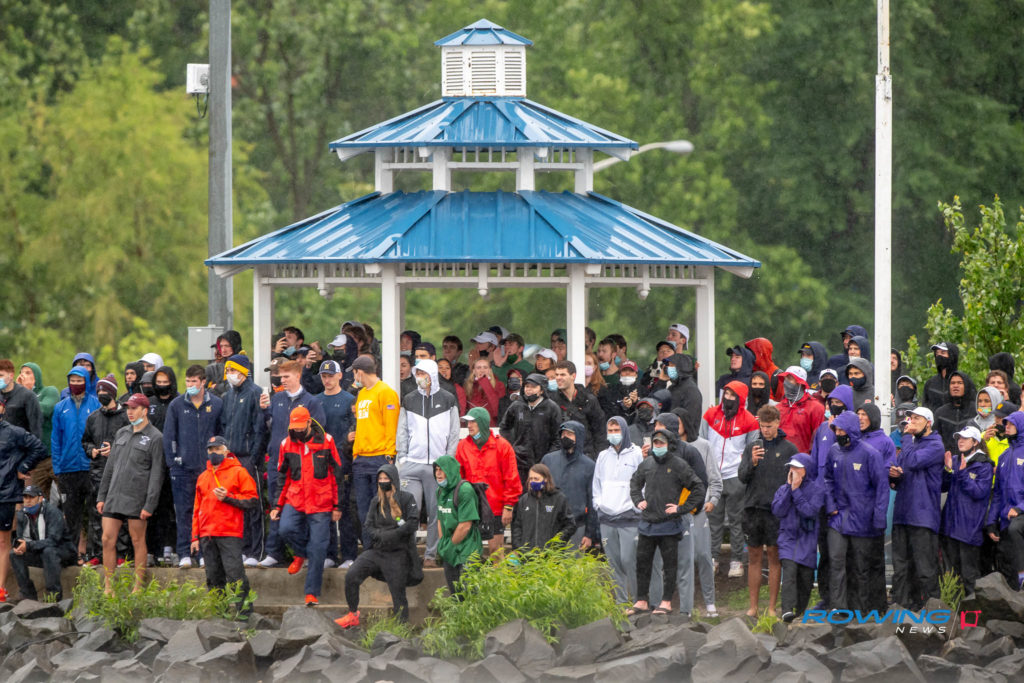
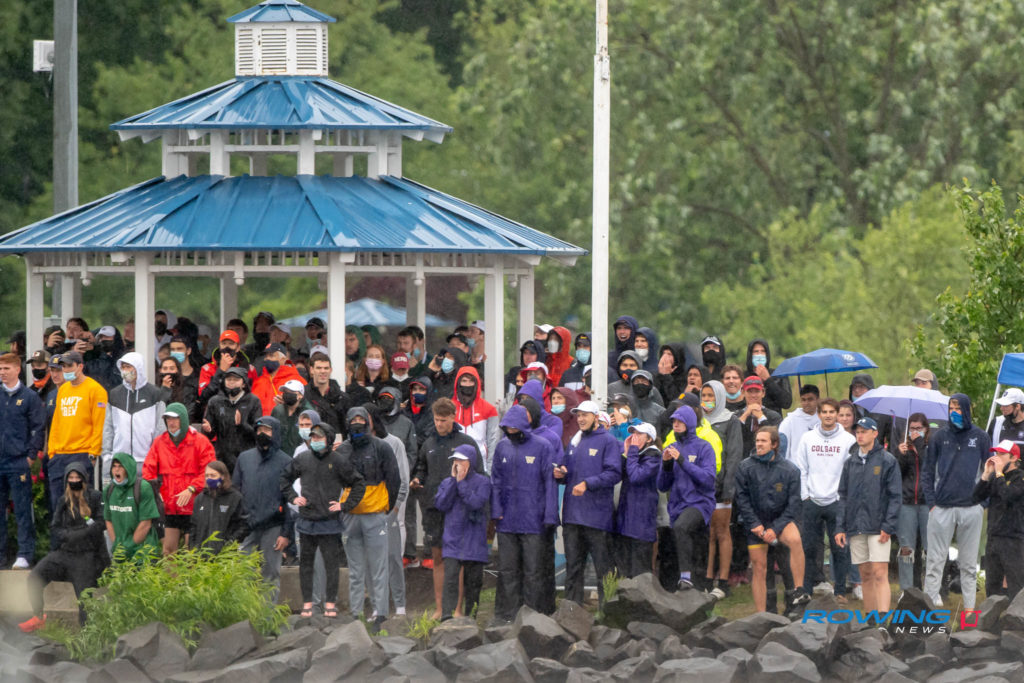
Texas’ first national title victory is set against the backdrop of the pandemic and the challenges that came with it. On Sunday afternoon, as the eights came down the course, the hardships that the athletes had endured seemed to have vanished as spectators and teams cheered for the crews as they barreled towards the finish line.
Despite the weather delays and lingering Covid precautions, Sunday’s racing was a triumphant celebration for all crews.
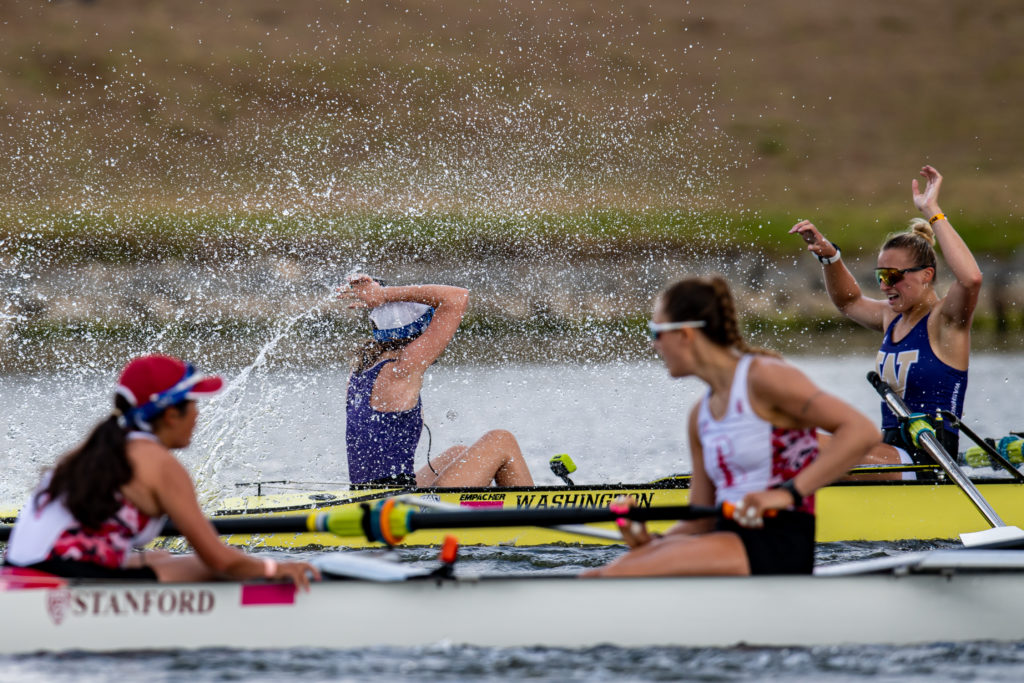
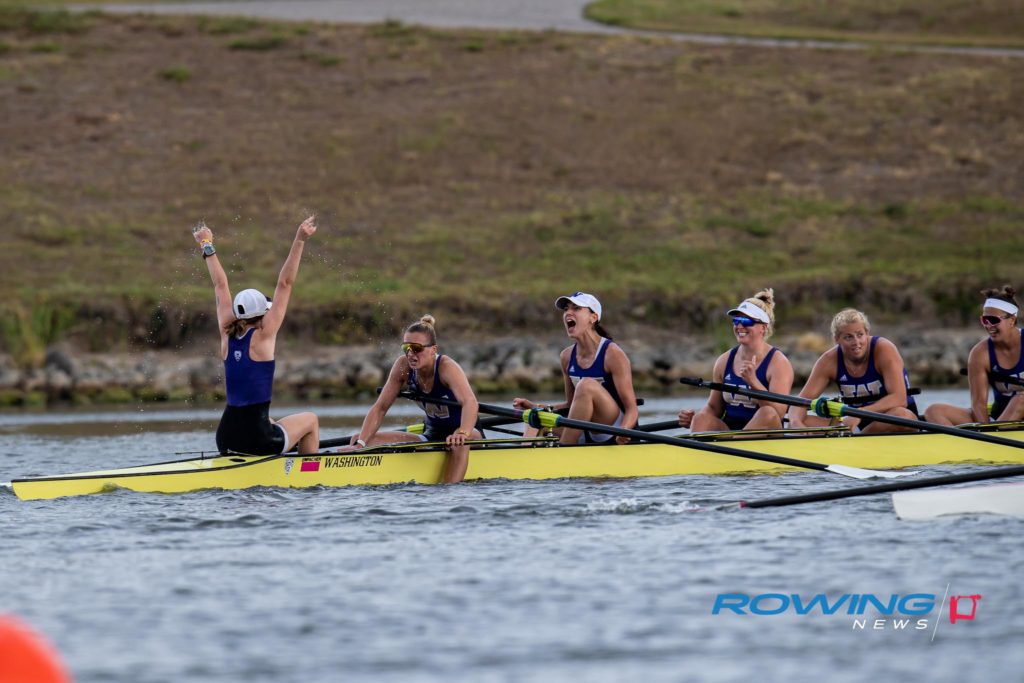
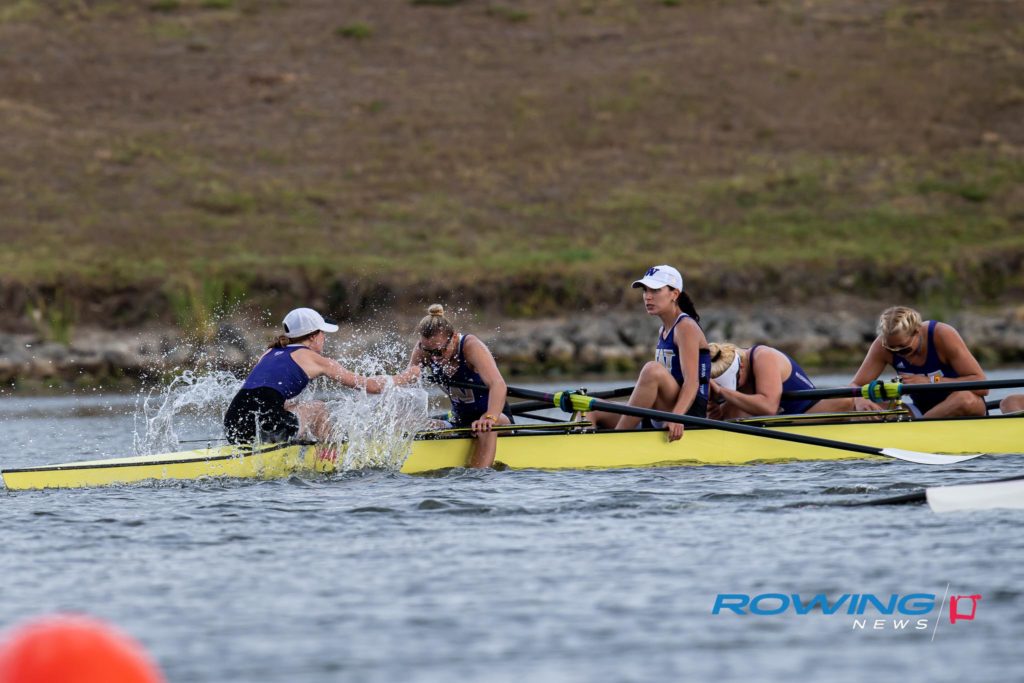
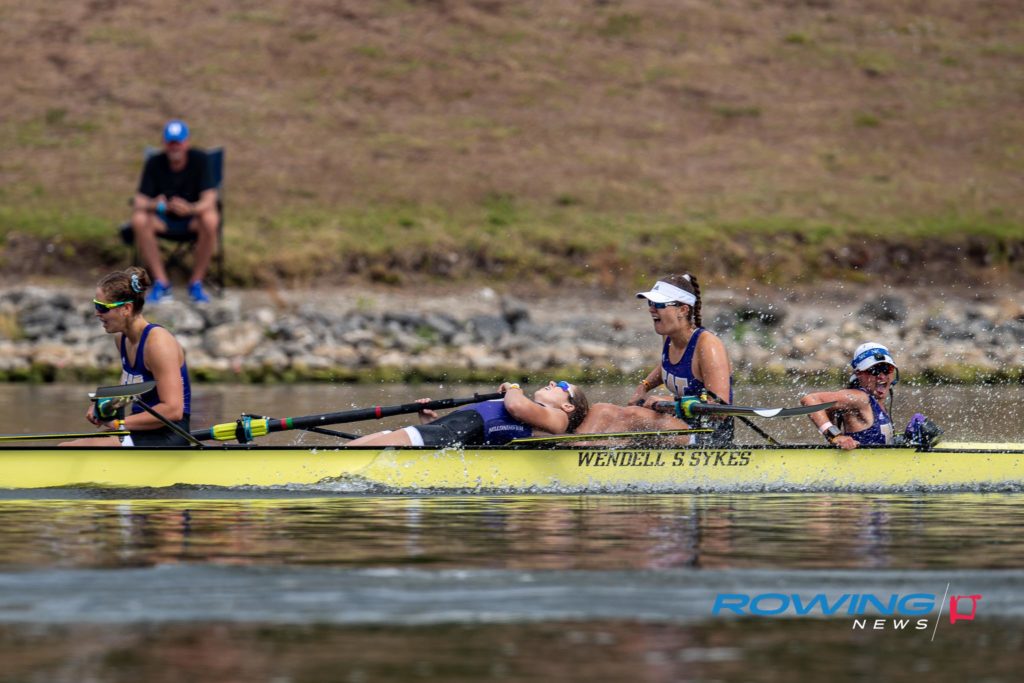
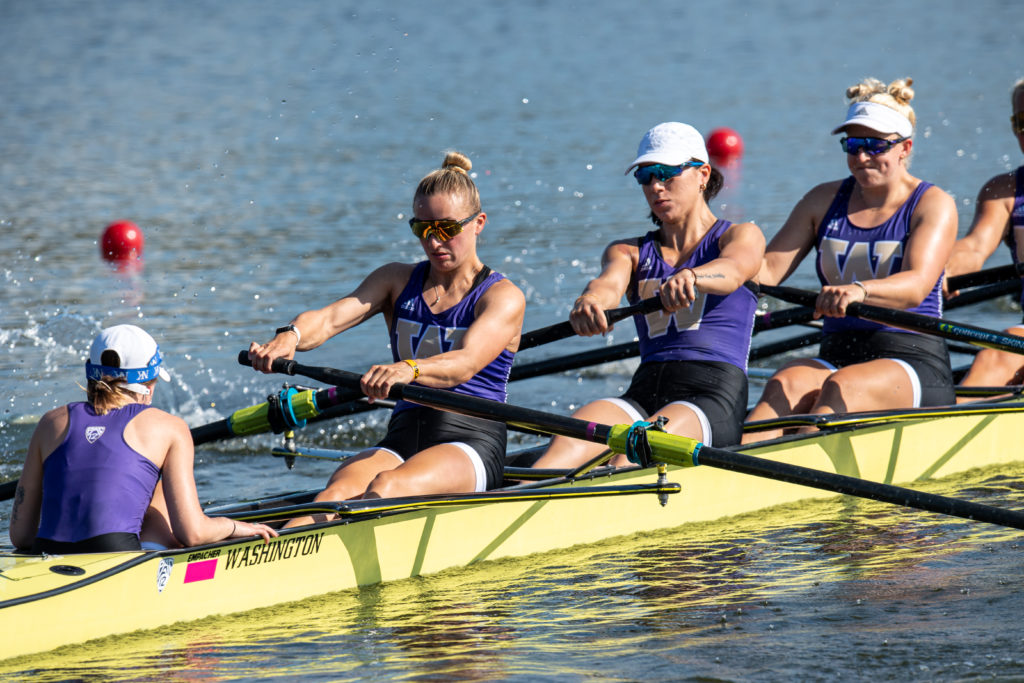
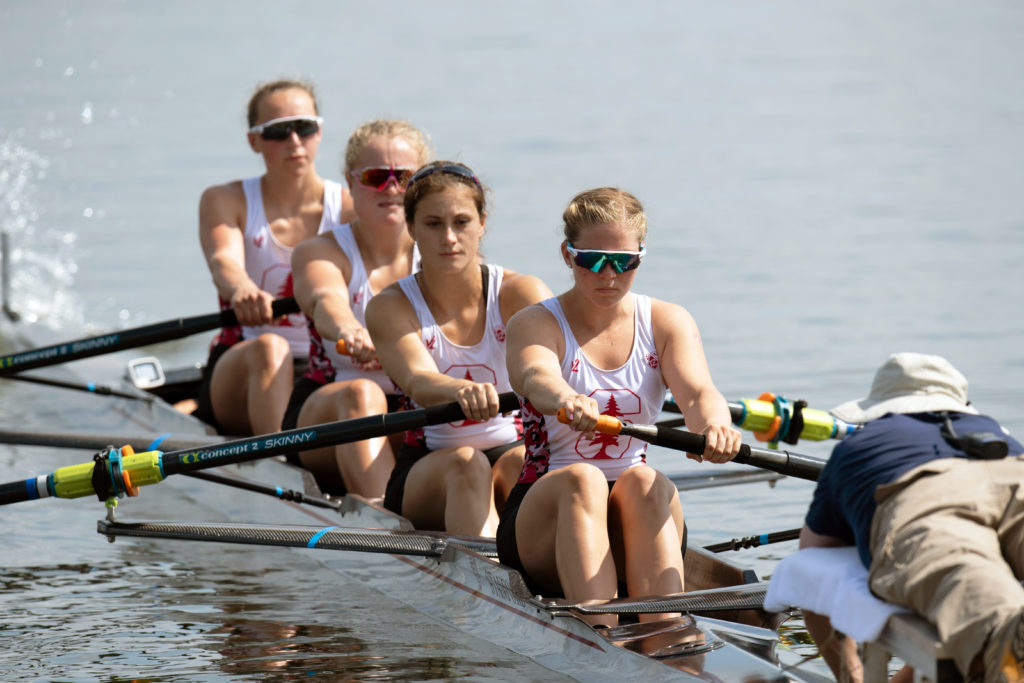
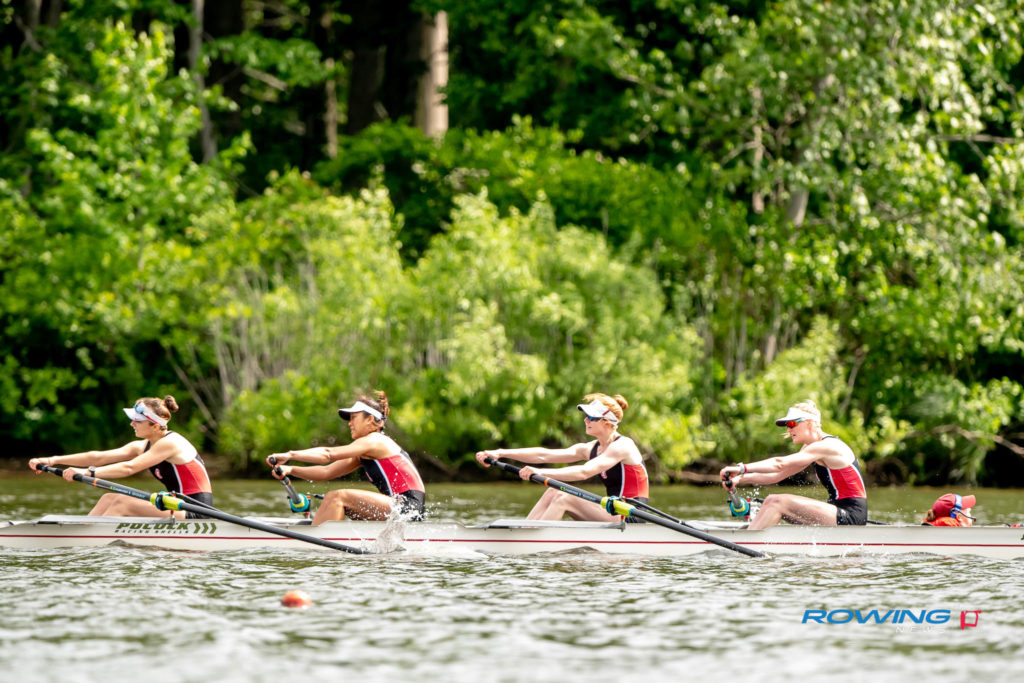
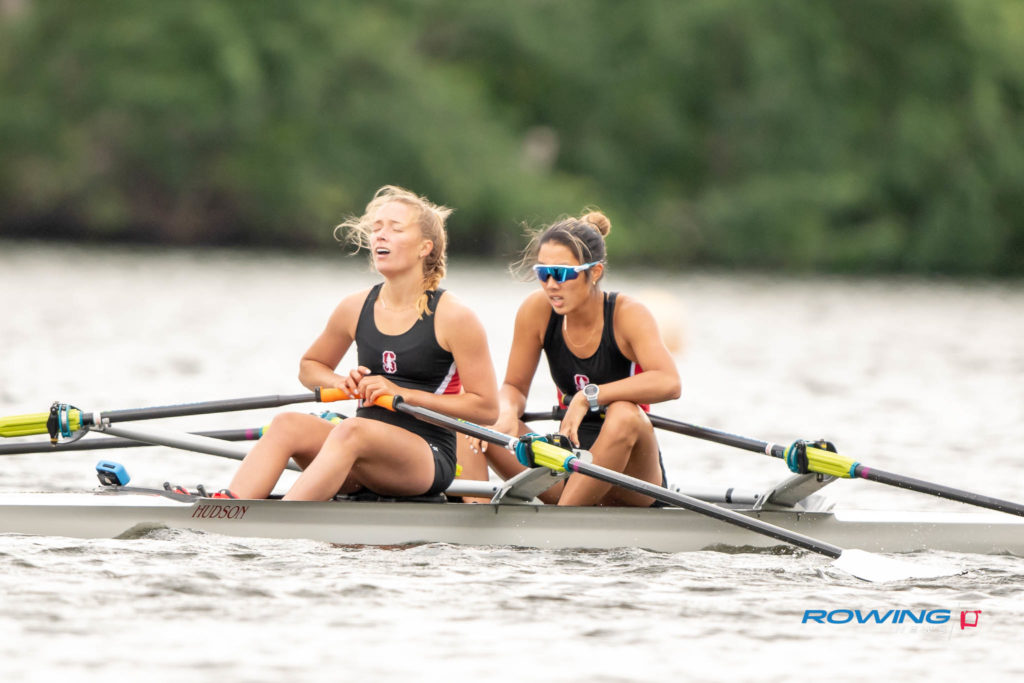
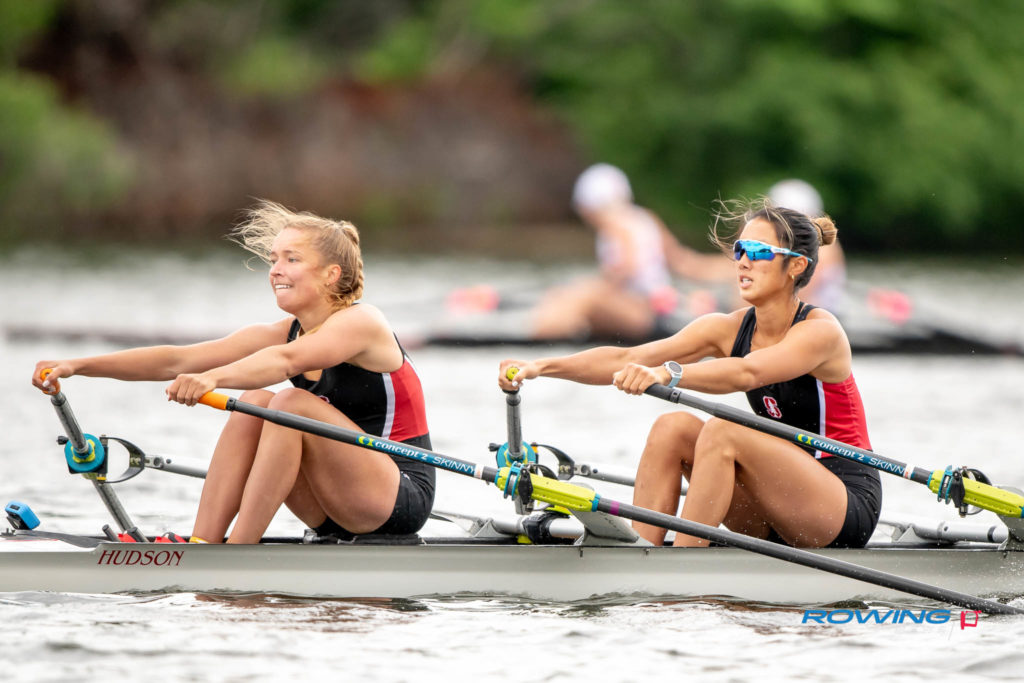
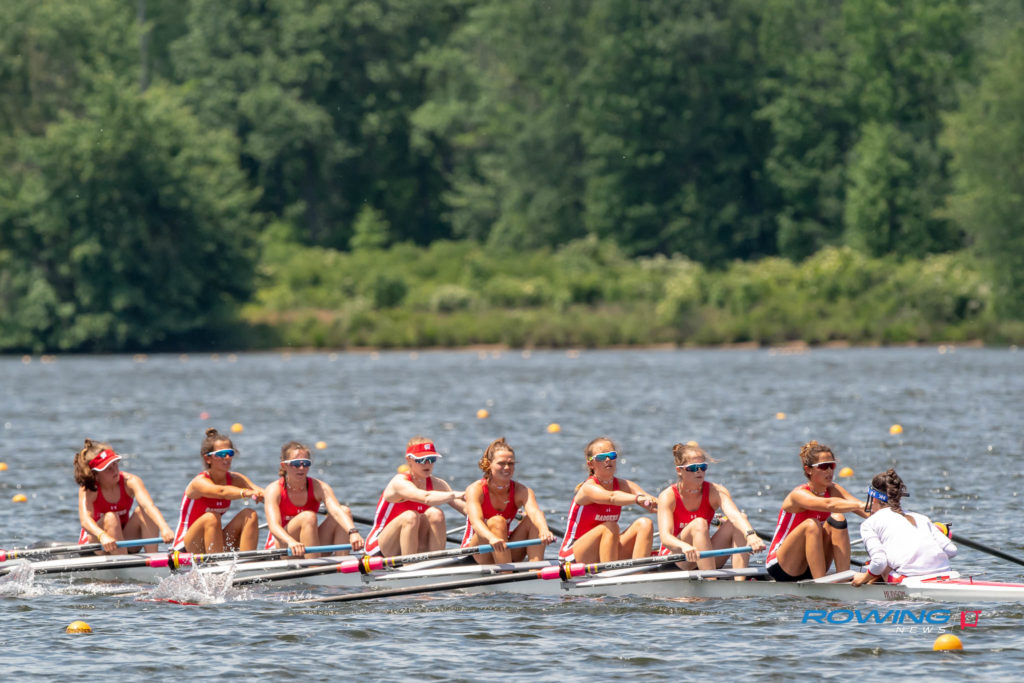
Stanford and the University of Washington who ultimately came in second and third in the final team standings put up solid results throughout the event. Stanford pulled off three second-place finishes in the DI four, second eight, and eight. Washington finished first in both the DI second eight and the four.
“I’m really proud of the effort of all three of our boats,” said Washington’s head women’s rowing coach Yas Farooq “At end of day, the varsity eight race should be what determines the national championship.”
And it wasn’t just the top-three teams that had reason to celebrate.
Southern Methodist University, just a few hundred miles north of the University of Texas, in their first appearance on the national stage, won the DI first eight C final and took second behind Brown in the second eights petite final finishing 11th in the final team standings.
On Friday, The Mustangs lost by less than two-tenths of a second in the DI first eight rep narrowly missing a place in the DI first eight A/B semifinal.
“They did great,” SMU head women’s rowing coach Kim Cupini, said. “They [the athletes] kept really focused and did everything right. The first eight had a heartbreak losing to Syracuse to make the A/B so they were a little bummed about that but they come out and did awesome getting 13th which was the highest they could get.”
“They did great. They [the athletes] kept really focused and did everything right.”
-Kim Cupini
For Cupini, the NCAA Championship represents an opportunity to put SMU on the map.
“It was a huge jump for us. I just looked at the 2016 AAC’s results [the American Athletic Conference Championships] SMU was dead last in every single boat by a lot of seconds so the program has sincerely gone from being one of the worst teams in the country to here. I think this is just the beginning.”
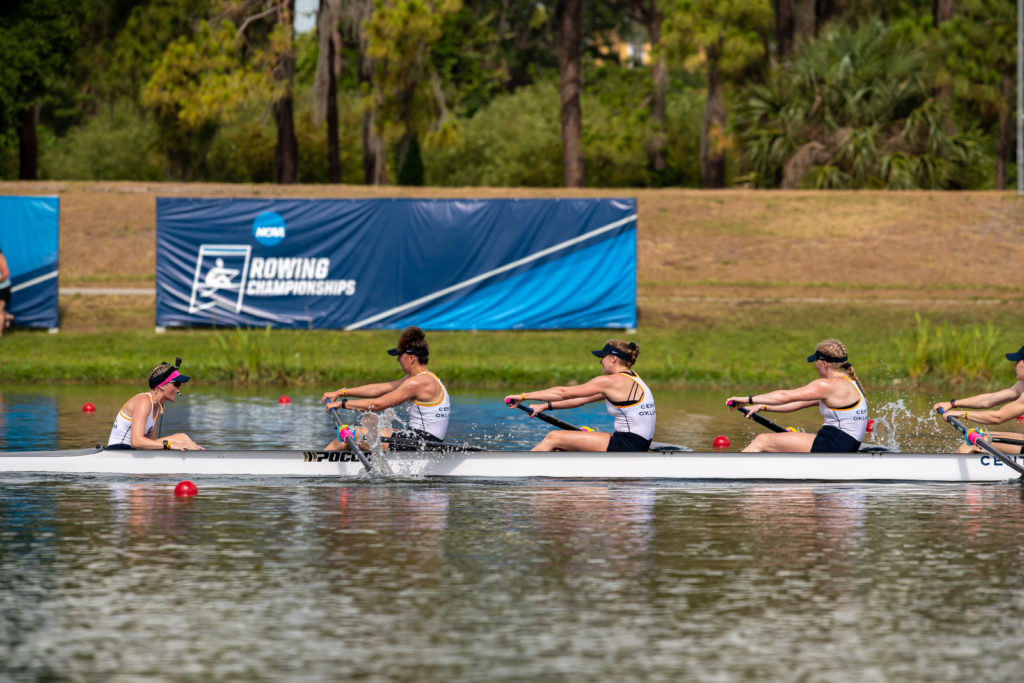
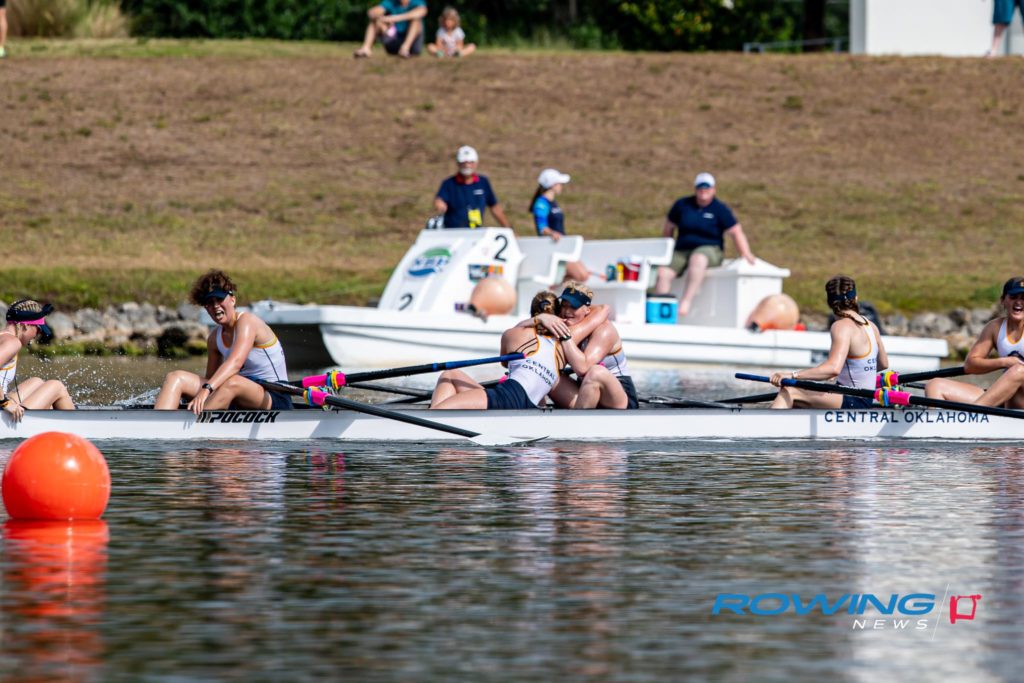
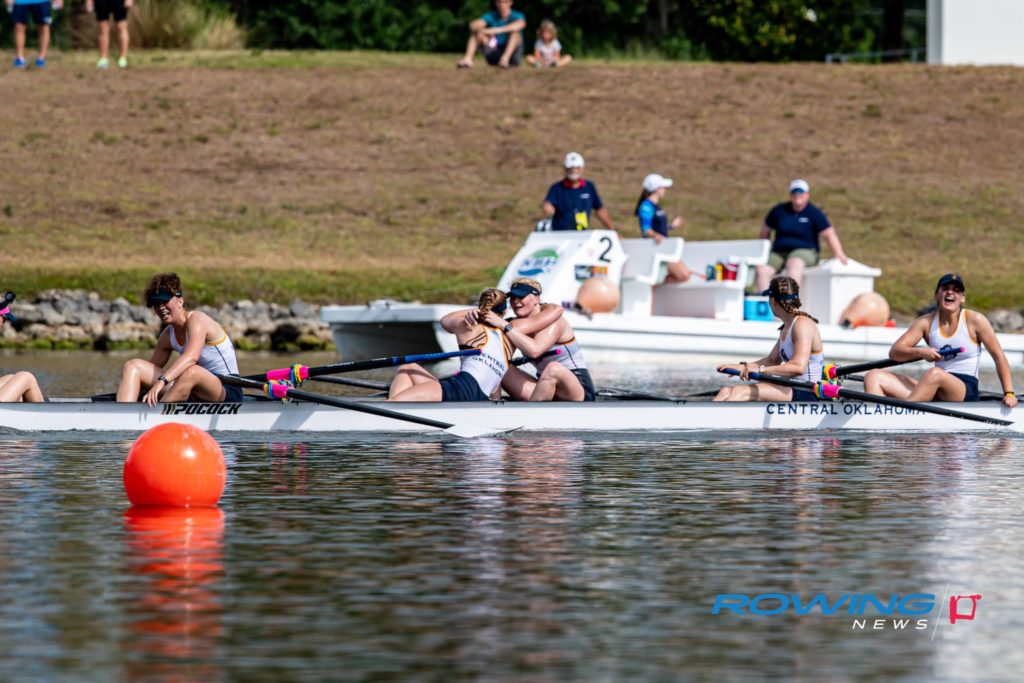
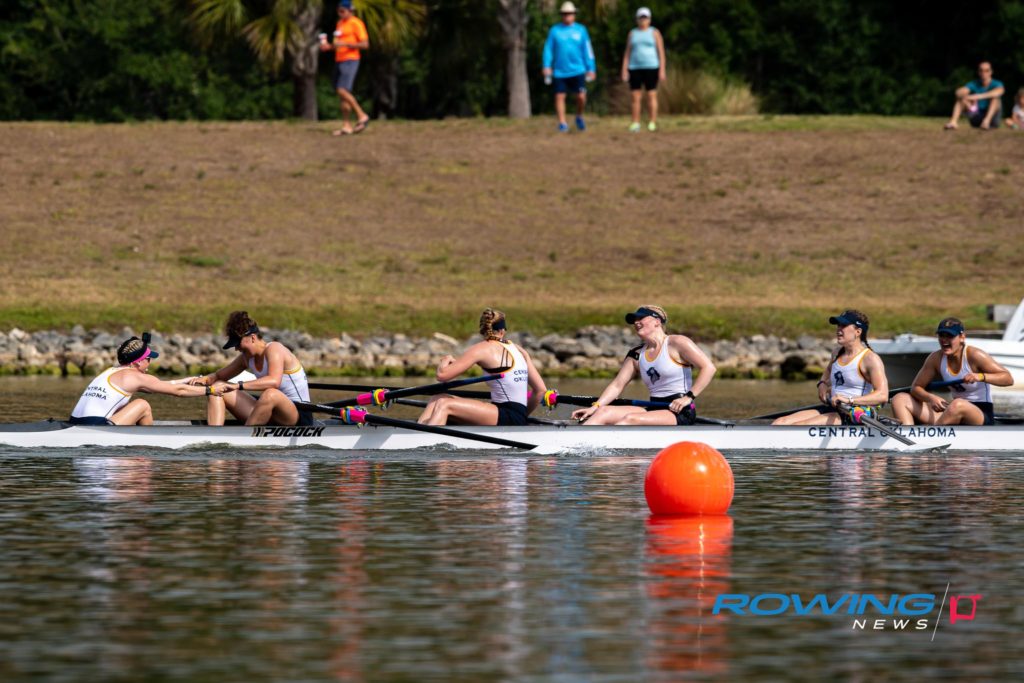
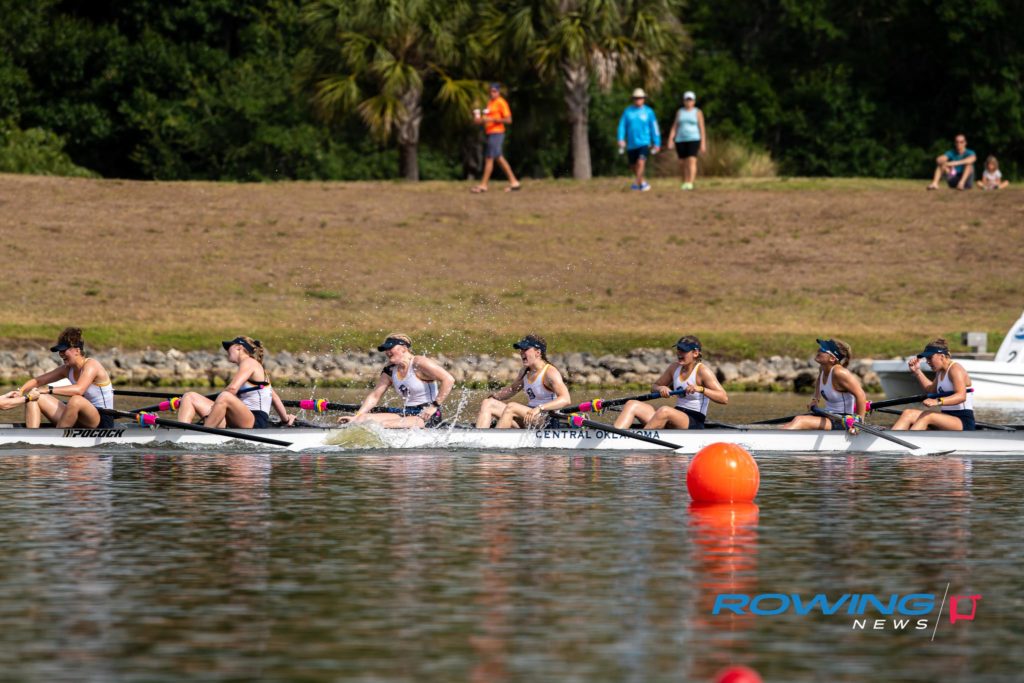
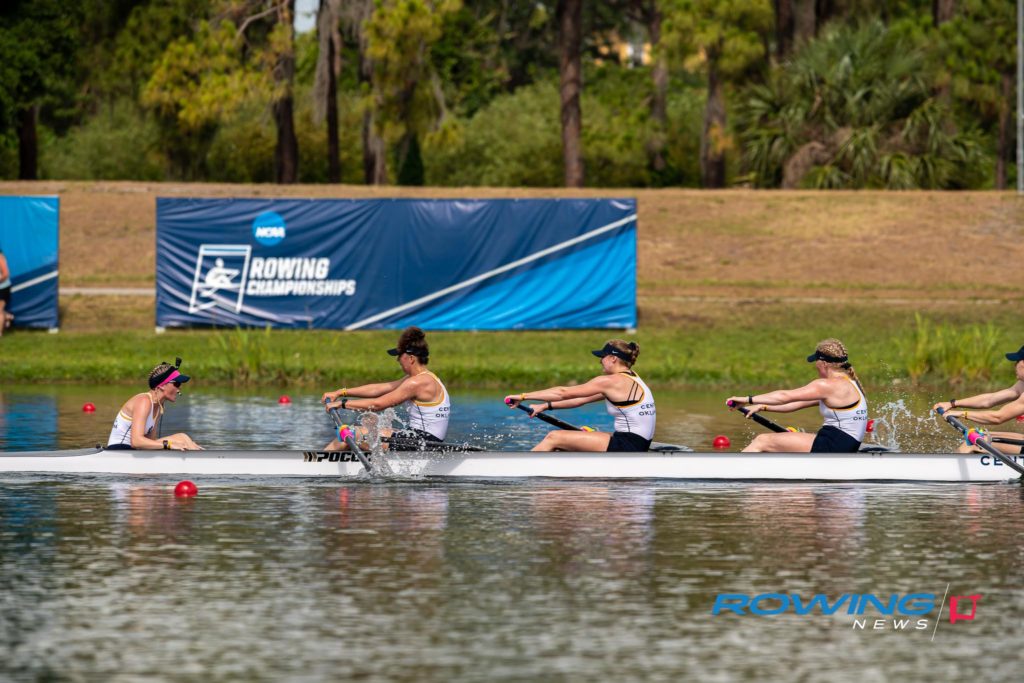
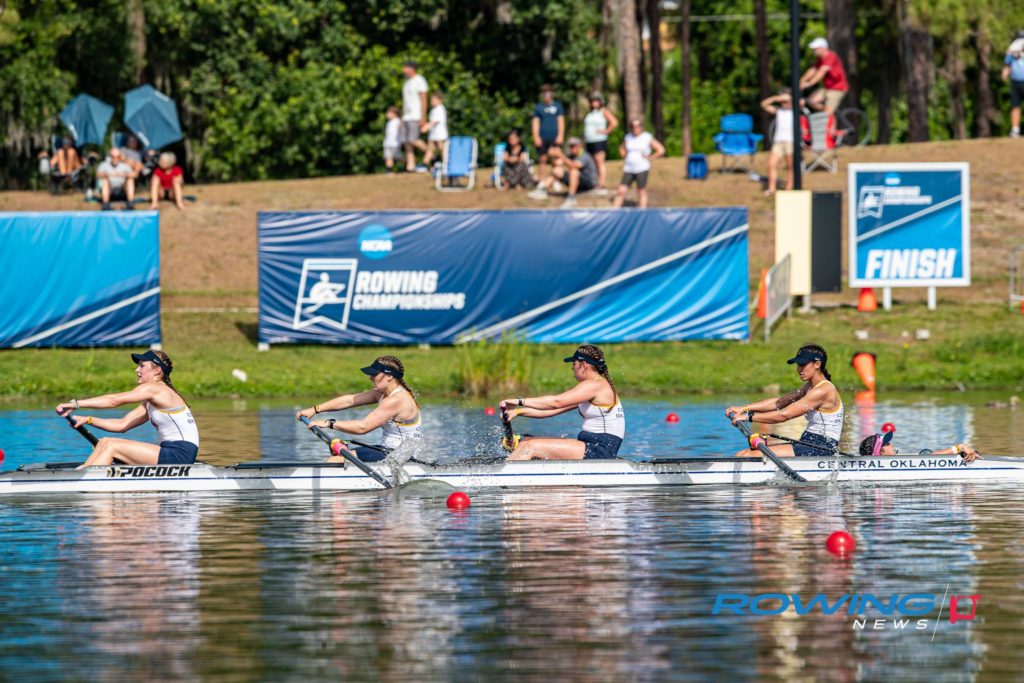
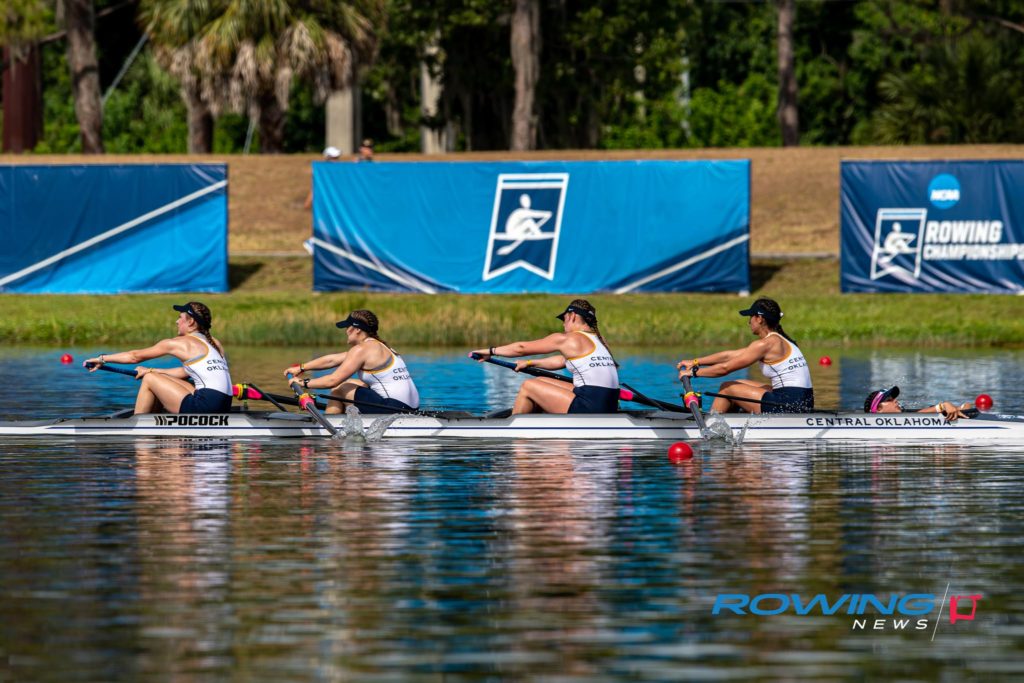
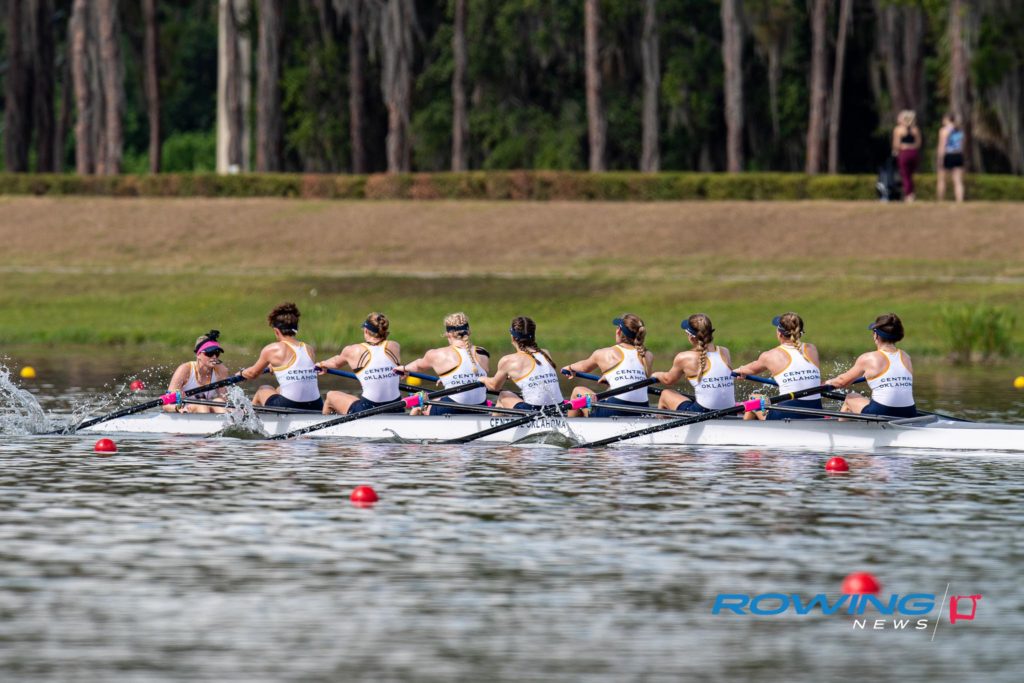
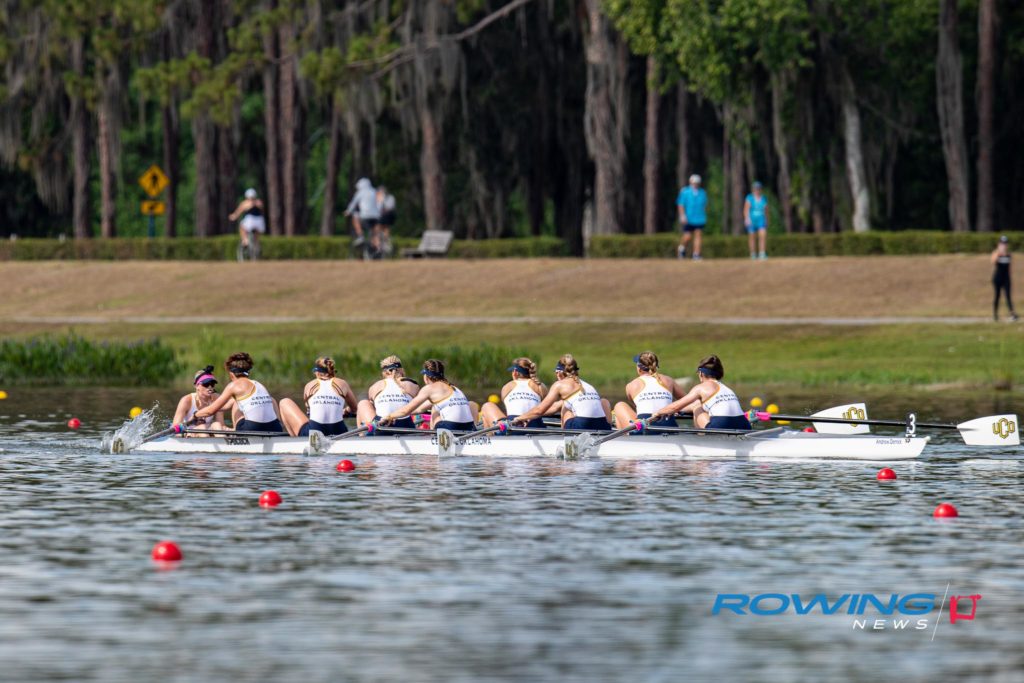
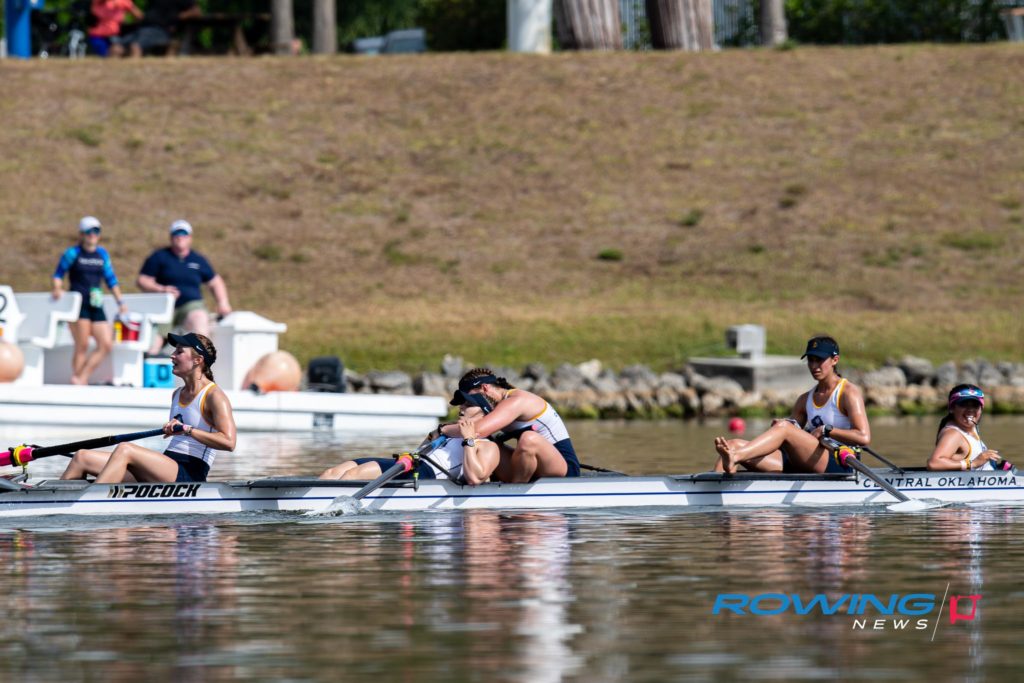
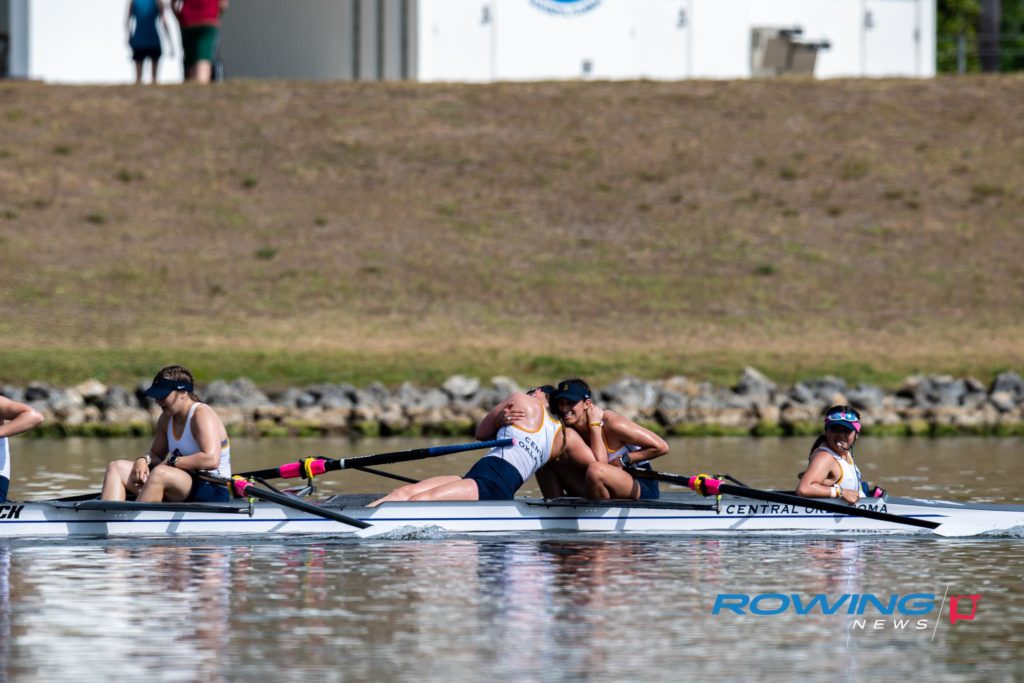
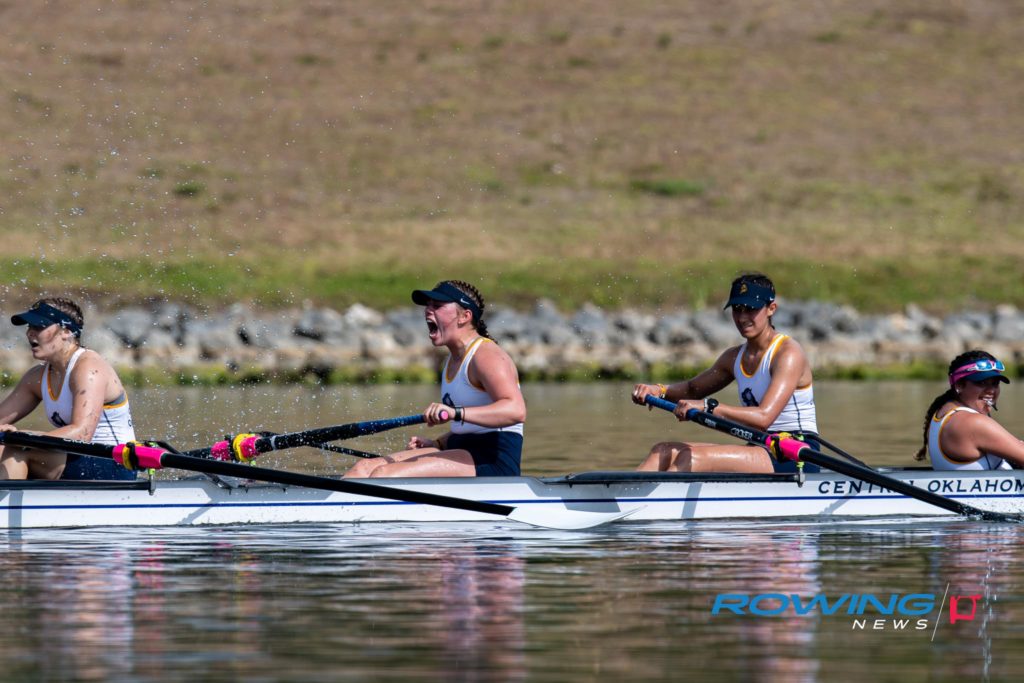
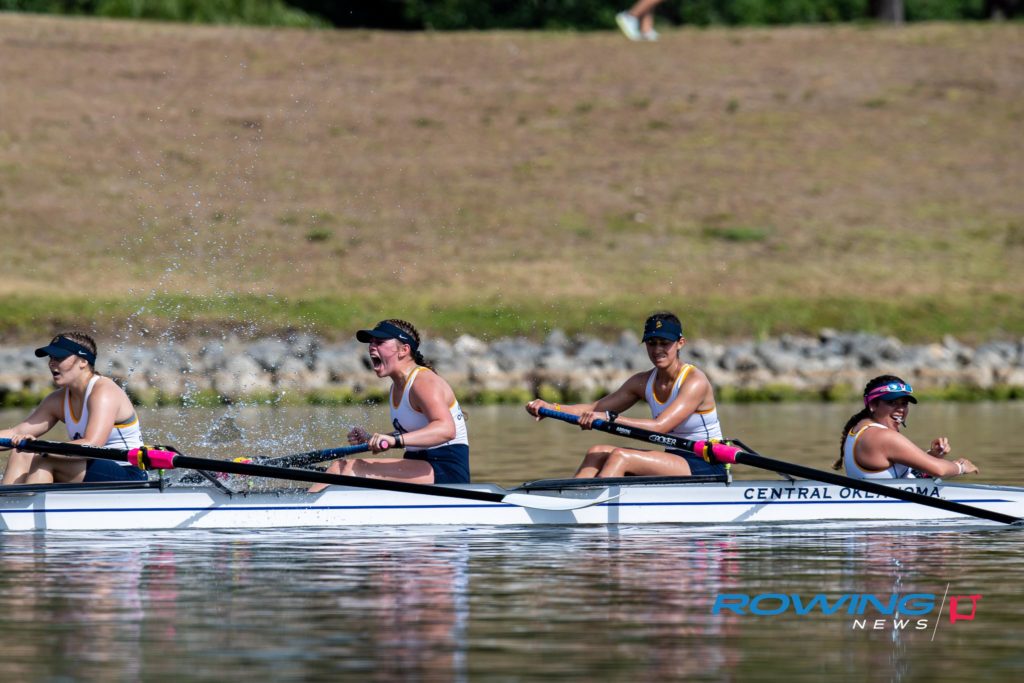
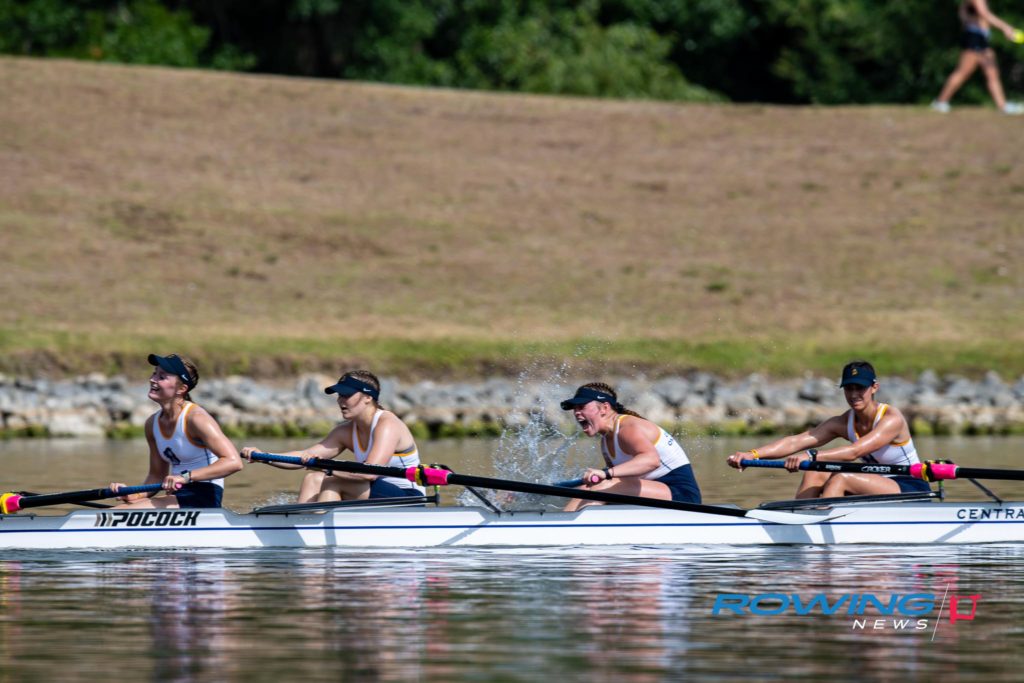
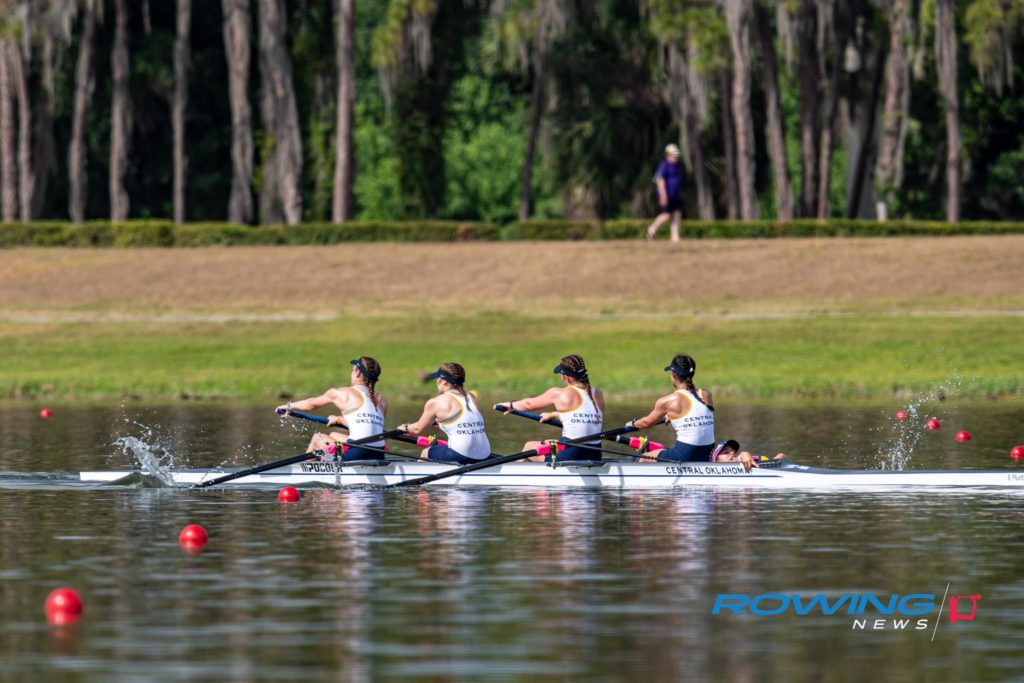
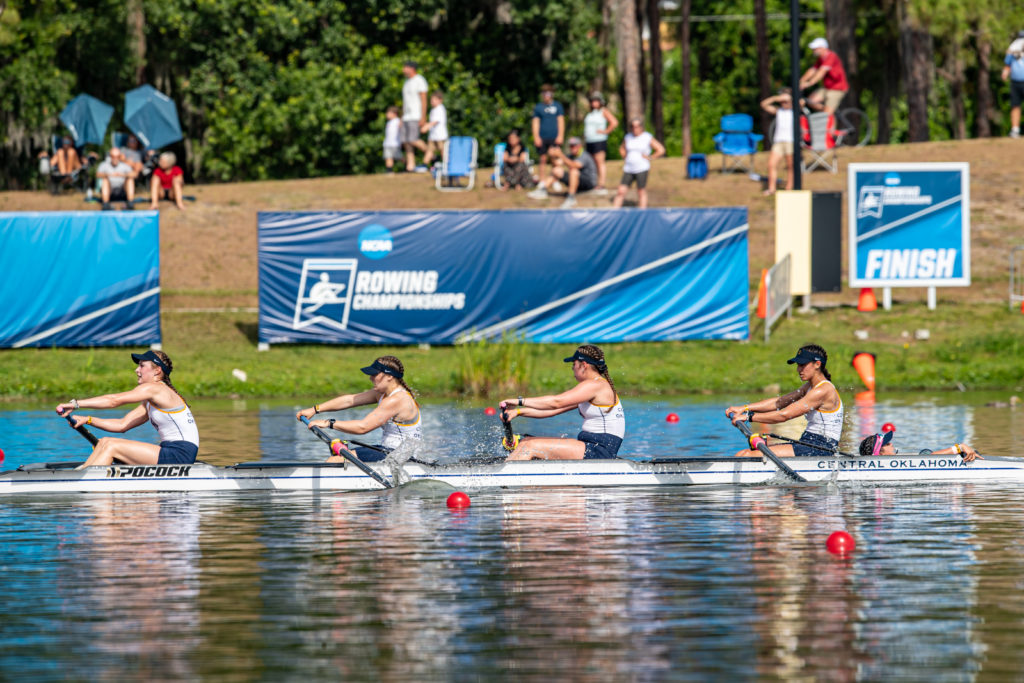
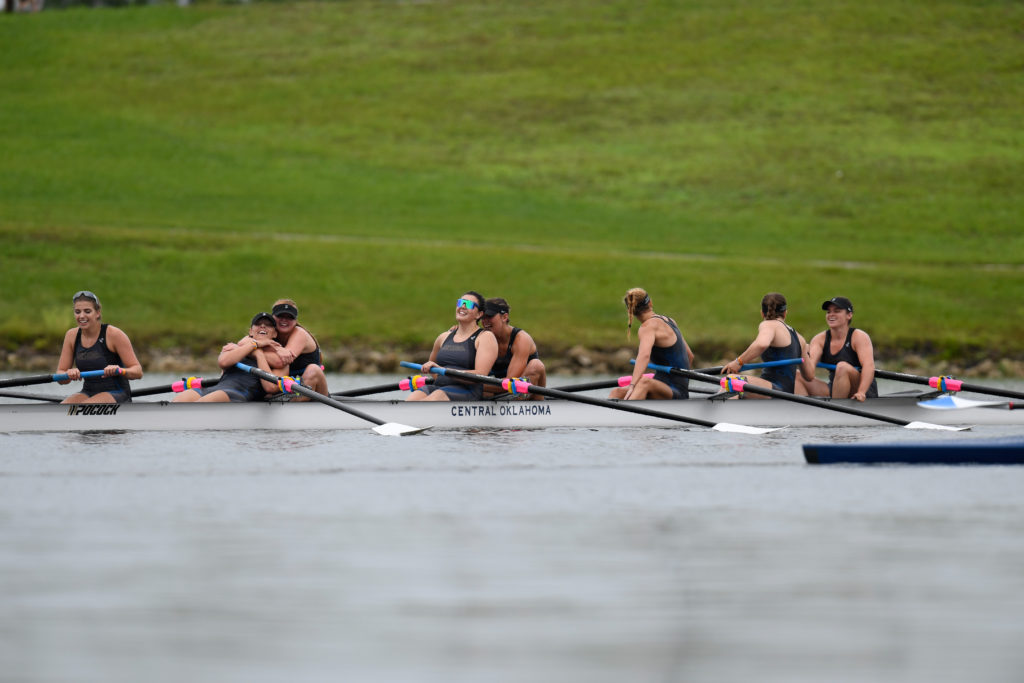
For the DII Championship, the University of Central Oklahoma went into finals poised to defend their national title after a flawless performance on Friday earning the Brochos a direct path — including a rest day on Saturday — to the grand final in both the DII eight and four.
“Everyone was feeling good,” head women’s rowing coach Brian Ebke said. “It’s a lot of regatta with not as much racing so I think everyone was really ready to race and itching to get out there after six days of doing our routine.”
“One of the cool things about the NCAA is that it’s a team championship so it’s not just about individuals. We have our individual boat meetings but right when we got to the course today we pulled the whole team together and said ‘hey, you build up and support the four and you build up and support the eight and cheer for each other and send positive thoughts. You’re not going to win without the other boat so let’s go win together.'”
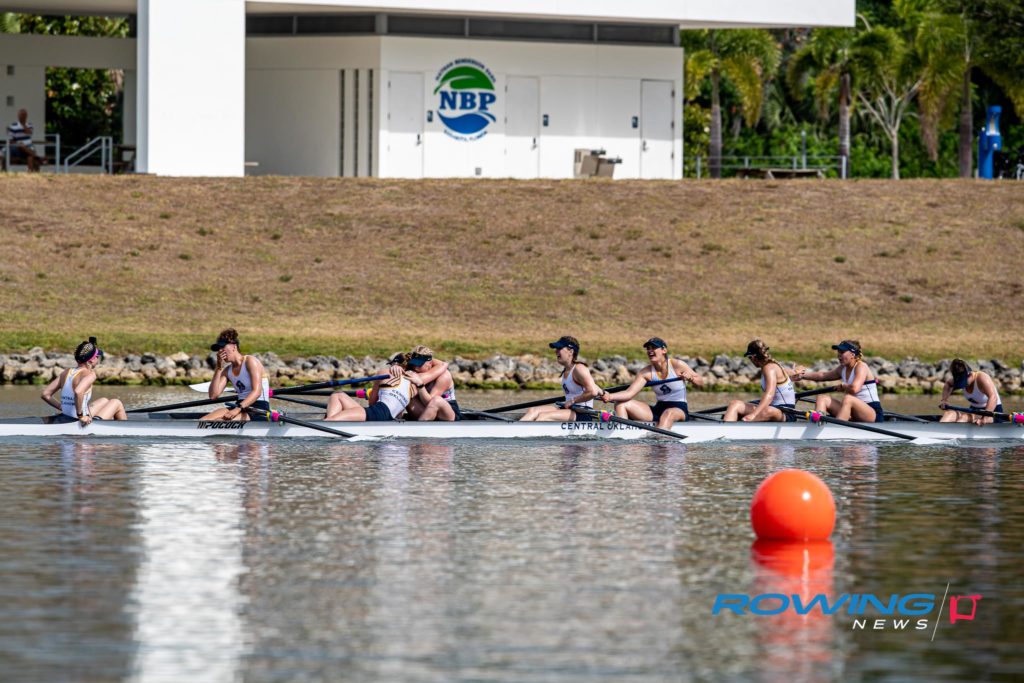
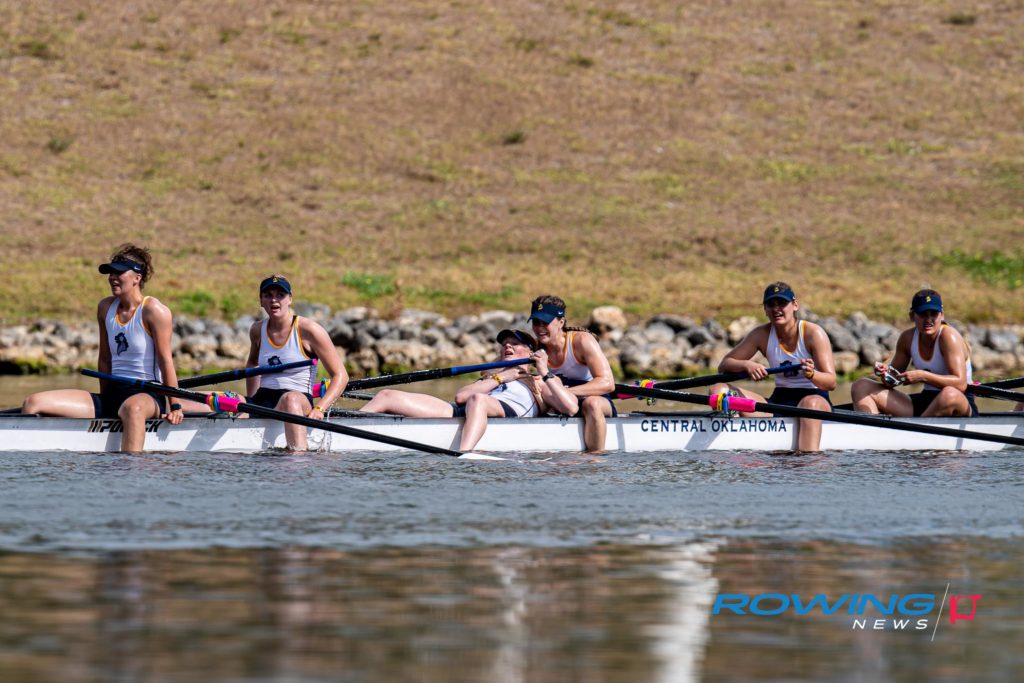
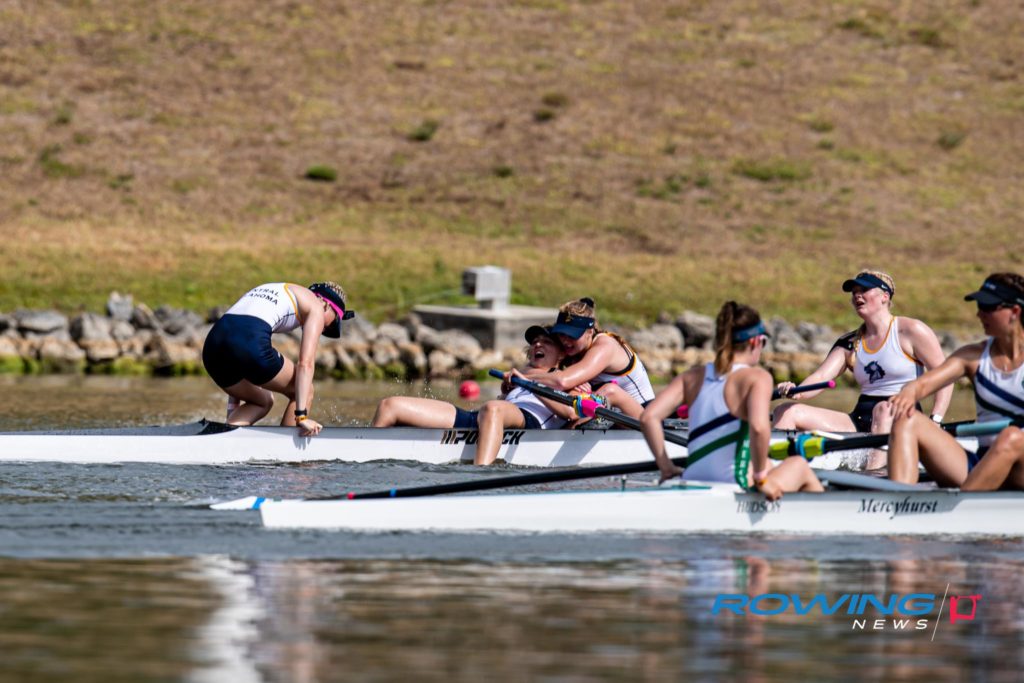
The cohesive demeanor paid off for the Bronchos in the form of a third straight national title.
In the DII eight, UCO defeated runner-up Mercyhurst by a commanding 14-second lead.
“Central Oklahoma is just going to light this lane on fire,” Whipple said as the crew came down the course.
Florida Tech came in behind Mercyhurst with a time of 6:59.295 in the intimate three-boat final.
For many athletes racing in today’s event, including UCO six-seat Shelby Wackerly, the race will mark the end of their college career, the nostalgia amplified by a year of lost racing due to the pandemic.
“As a senior, I am obviously a bit sentimental. Five years just really doesn’t feel long enough,” Wackerly, said after their heat on Friday. “I am so proud of this team and how hard we have worked to get here. There is something so special about this program and what we have accomplished, I am so grateful to have been a part of it.”
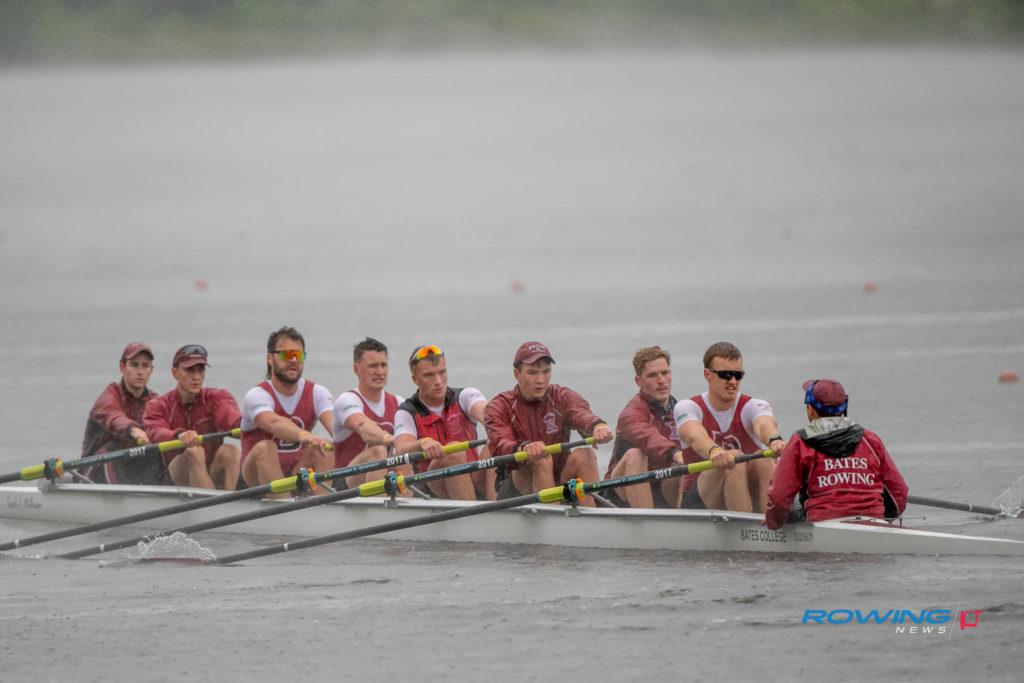
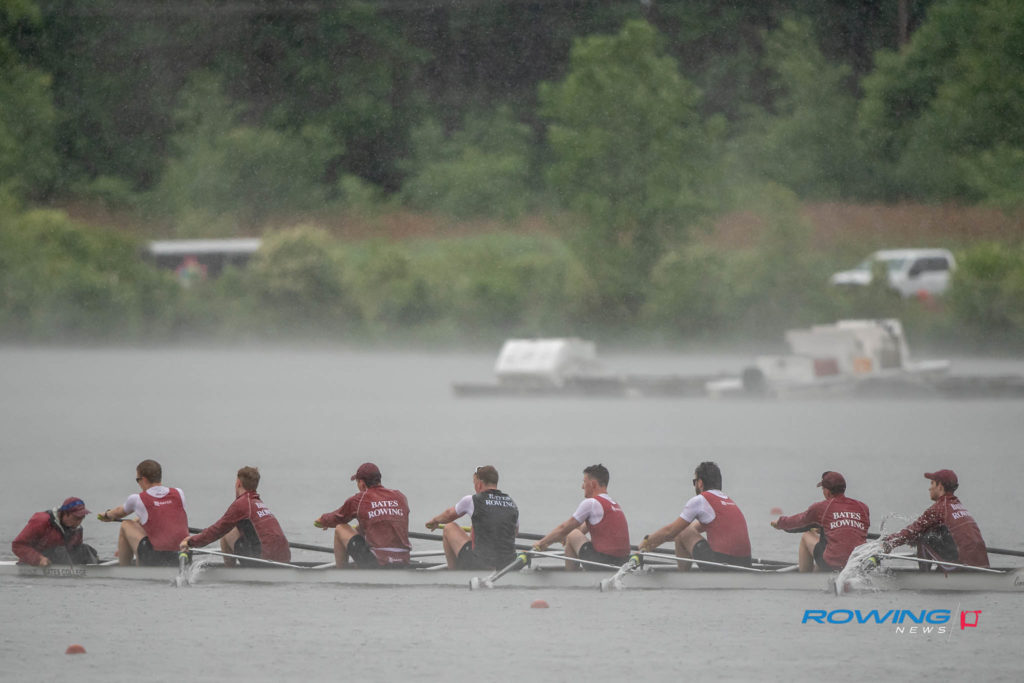
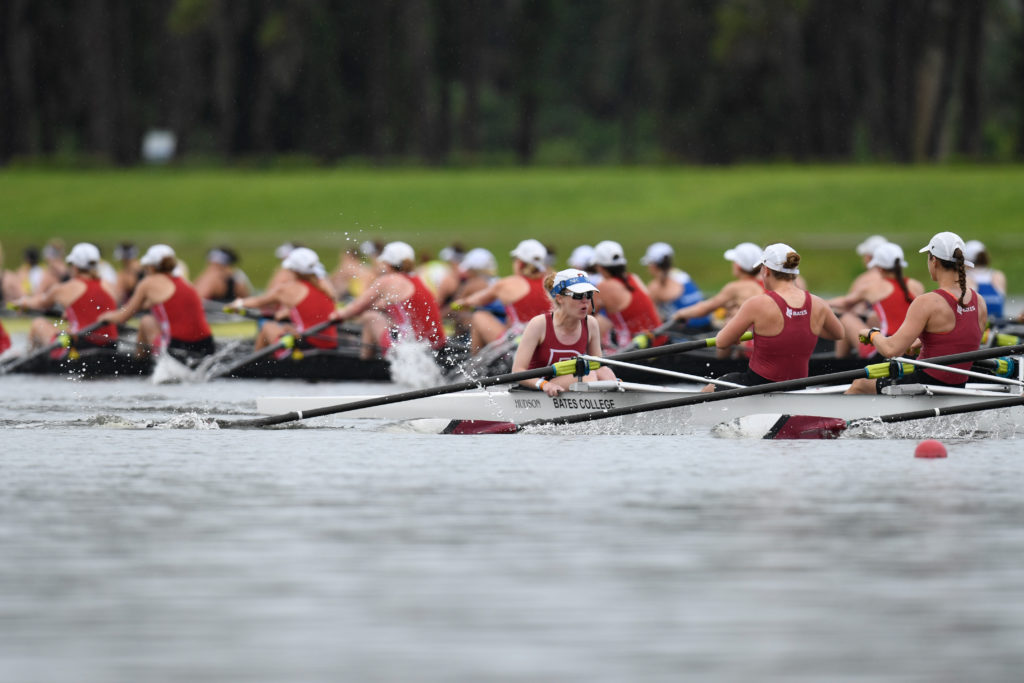
For the fourth time in a row the Lewiston, Maine college has captured an NCAA title.
“Congrats to our Bobcat women on another dominant performance at NCAA DIII rowing championships,” Bates President Clayton Spencer said on Twitter. “Incredibly poised and powerful showing by our first boat! Go Bobcats!”
Congrats to our Bobcat women on another dominant performance in @NCAADIII rowing championships.
The Bates crews swept the DIII races earning the title of national champion in the first and second eights scoring the maximum 42 team points.
The DIII competition was not the only historic racing to take place in Sarasota today.
When Brittany Hill, true freshman and five-seat of the Alabama first eight, approached the starting line of today’s A/B semifinal she and her teammates were also making history.
This year’s event marks the first time the University of Alabama has competed for the national title.
“Everybody is just so excited, we’ve been putting in the work all year and to finally be here is the best feeling,” Hill said. “Our saying this weekend has been ‘nothing to lose, everything to gain.’ We know it is big to be here for the first time in our program’s history, and we are here to show everybody what Alabama is about.”
On the nearly flat water with the sun overhead, the Crimson Tide would go on to finish fifth at Nathan Benderson Park earning a spot in tomorrow’s DI first eight petite final.
“The semi today was a solid race, we really put it all out there and had fun while doing it. From the first stroke, you could really feel how bad we wanted it, and that’s what every race has been focused on,” Hill said.
Hill attributes the success Alabama has found in their first NCAA experience to coaches and reliable teammates.
“We wouldn’t be here without our amazing coaching staff who have pushed us to be our best and continuously proven to us that it isn’t about your height or your experience, it’s all about how hard you are willing to push your body for 2000 meters,” Hill said. “As a freshman in the first eight event you would think it would seem intimidating, but the girls I get the privilege of rowing with every day are so strong and always have each other’s backs.”
The crews that have been consitently putting up wins continued to do so today setting the stage for finals tomorrow.
Despite a breakage that caused the second DI A/B first eight semifinal to take place before the first, the University of Texas once again found themselves in the top spot confirming their place in the DI first eight grand final.
In the second DI A/B first eight semi, Stanford bested the University of Washington by two seconds and posted the fastest time of the day overall. The Cardinal will join the Huskies, the Longhorns, Rutgers, Michigan, and Virginia in tomorrow’s premier race.
The results were similar in the DI fours A/B semi with Texas and Stanford winning their events. The two crews will join Ohio State, Washington, Michigan, and Virginia in tomorrow’s DI fours grand final.
In the only two DII races of the day, Florida Tech won both the Division II eights and fours reps. They will join the University of Central Oklahoma and Mercyhurst in both of tomorrow’s DII grand finals.
Racing on the final day of the 2021 NCAA Women’s Rowing DI, DII, and DIII Championships will begin tomorrow at 8:12 a.m. A full list of results can be found here. The live stream can be found here.
“Having the petite final tomorrow as our last race of the season, the only goal here is to go out and be as fast as possible and push ourselves to our limits and then go even further. Coach Putyrae said to us today ‘tomorrow is a pain contest,’ and we are so ready for it,” Hill said.
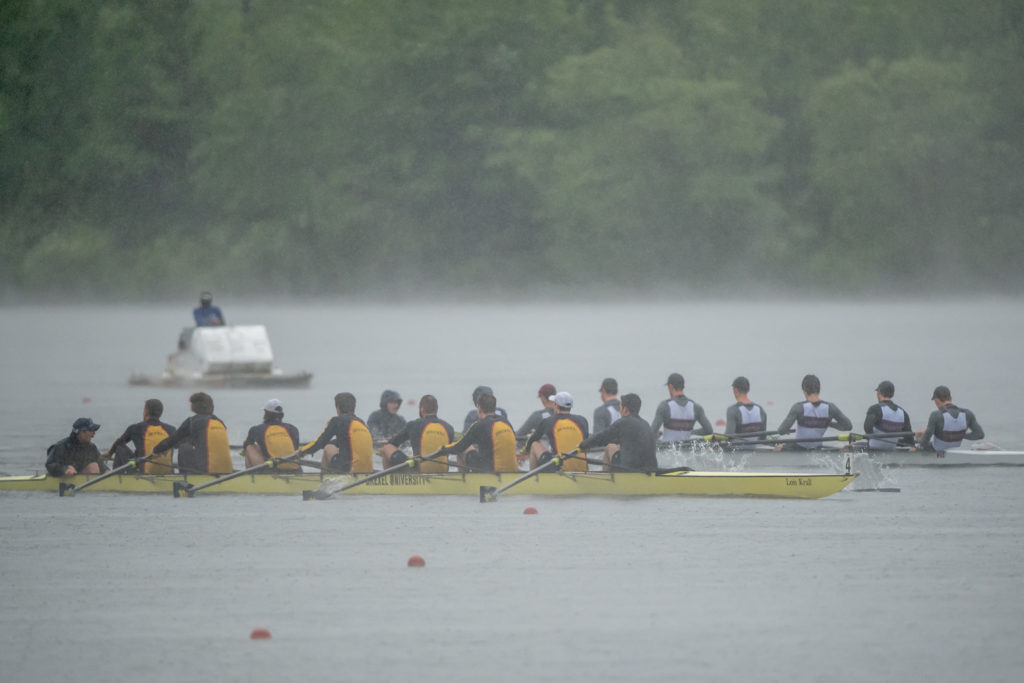
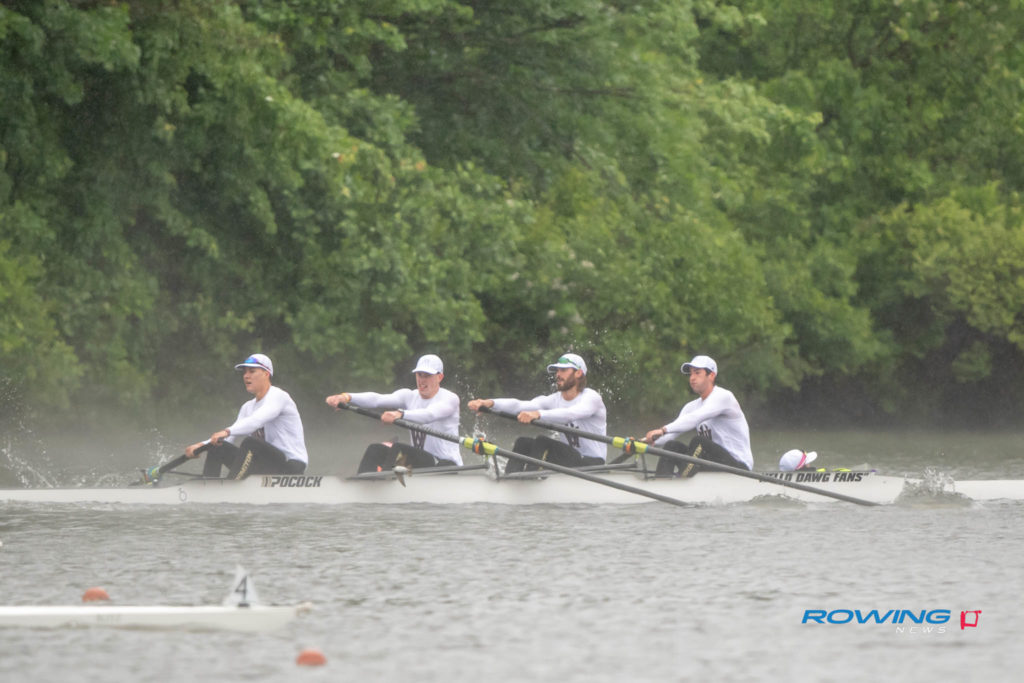
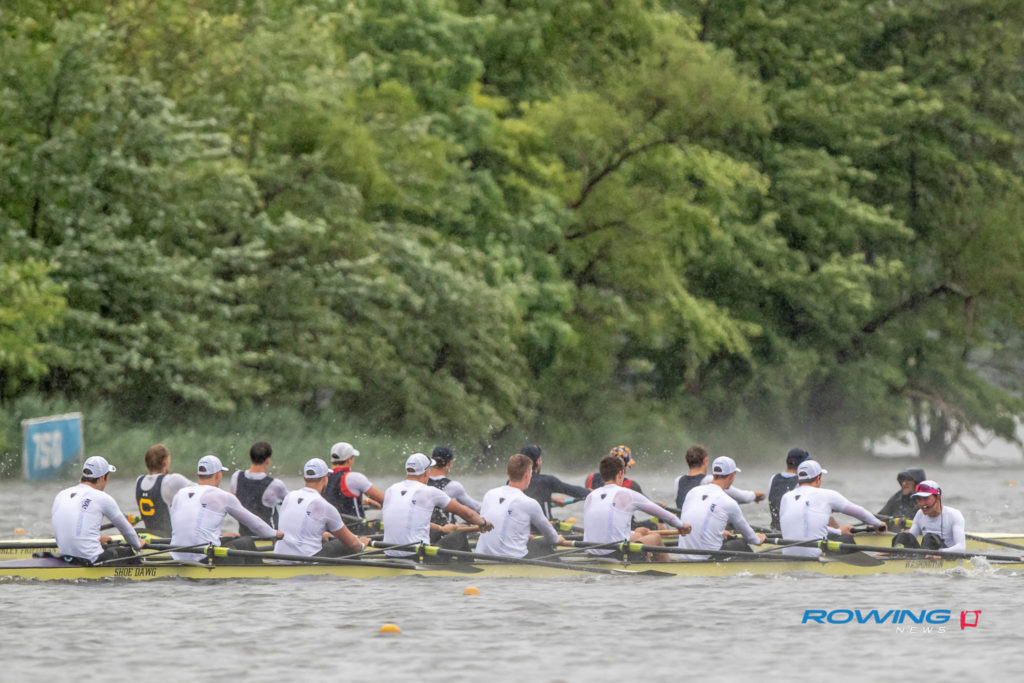
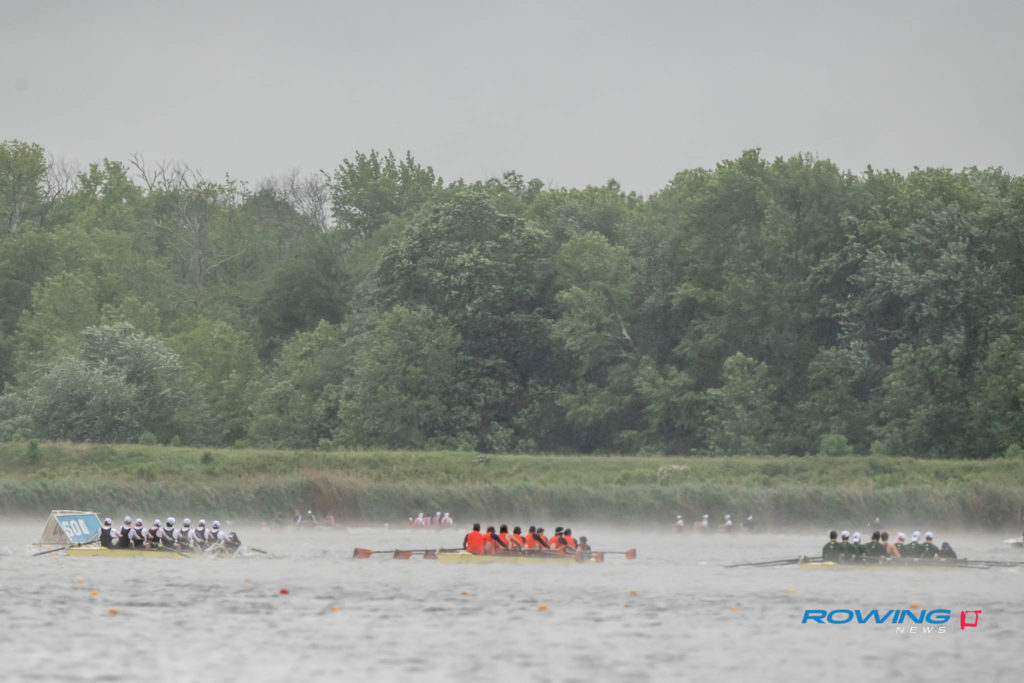
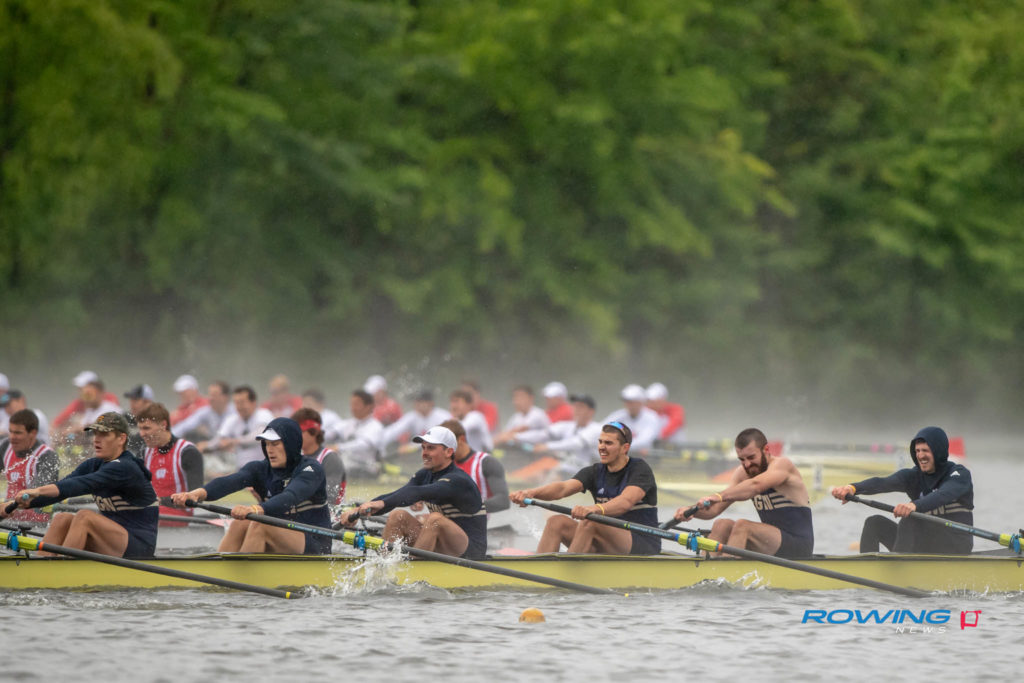
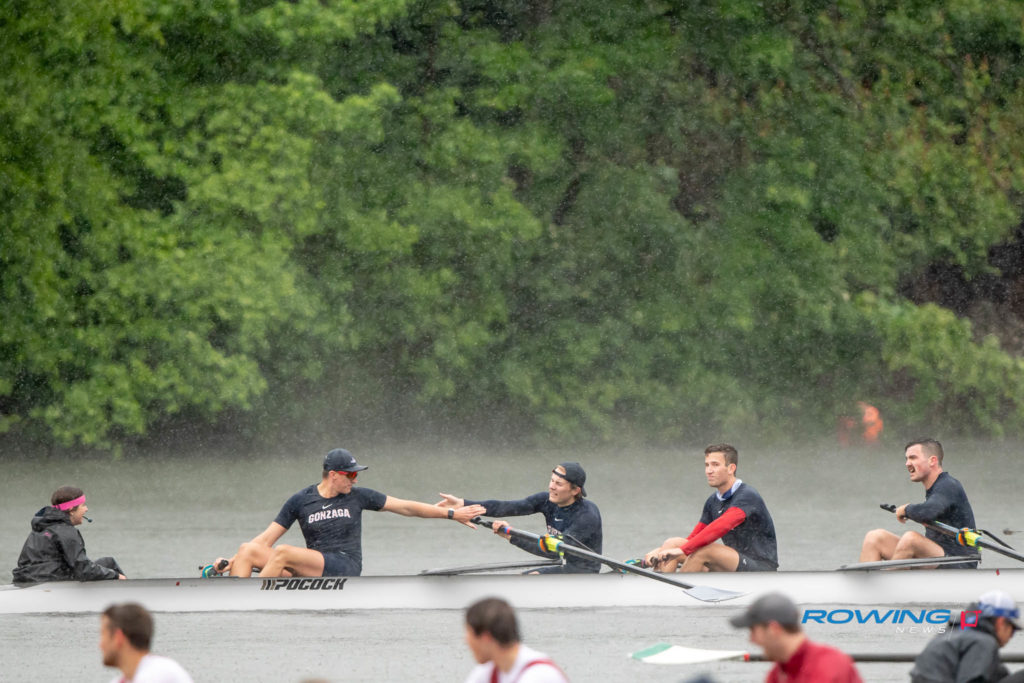
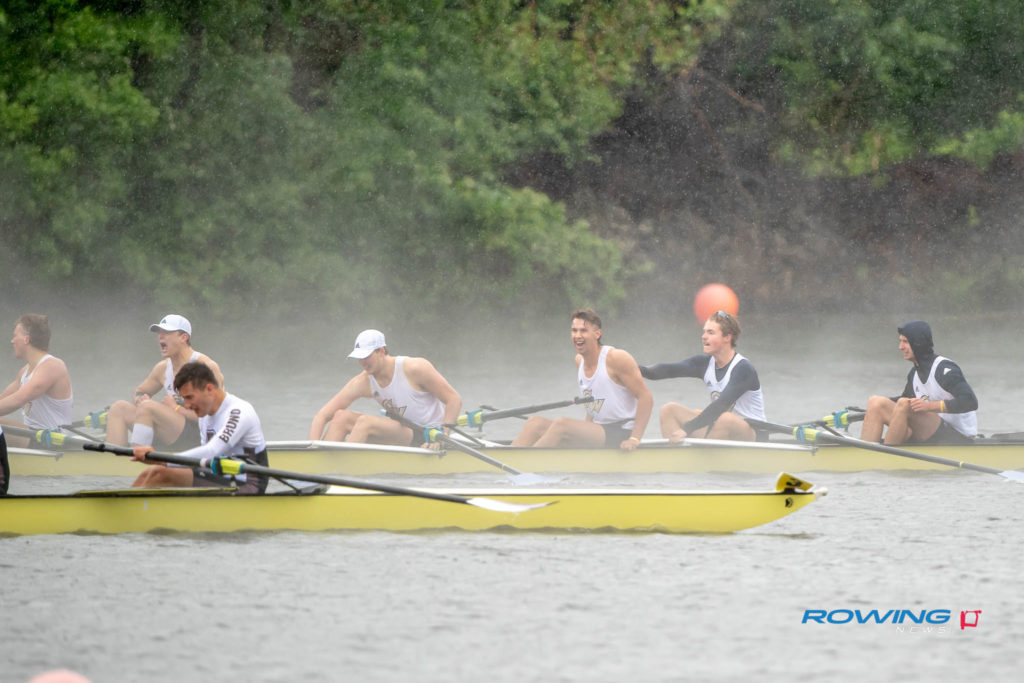
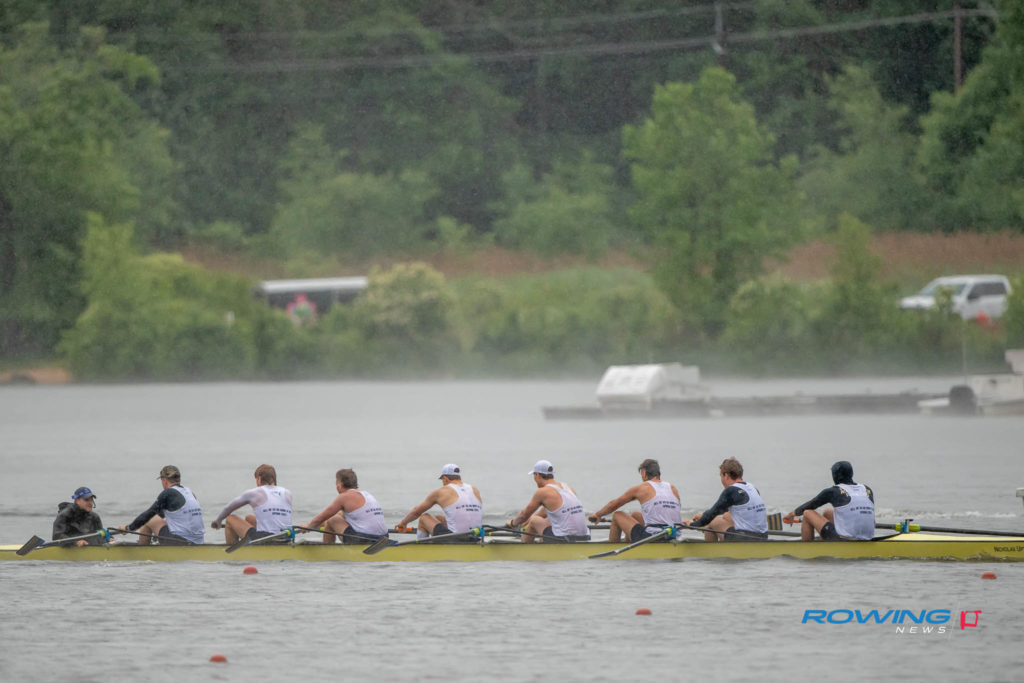
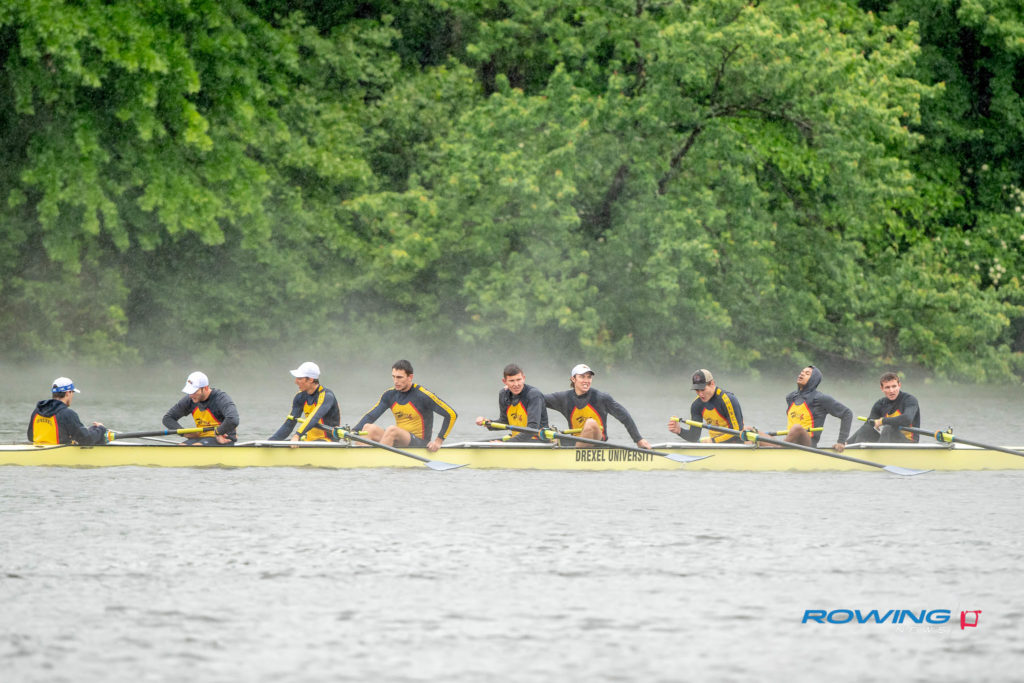
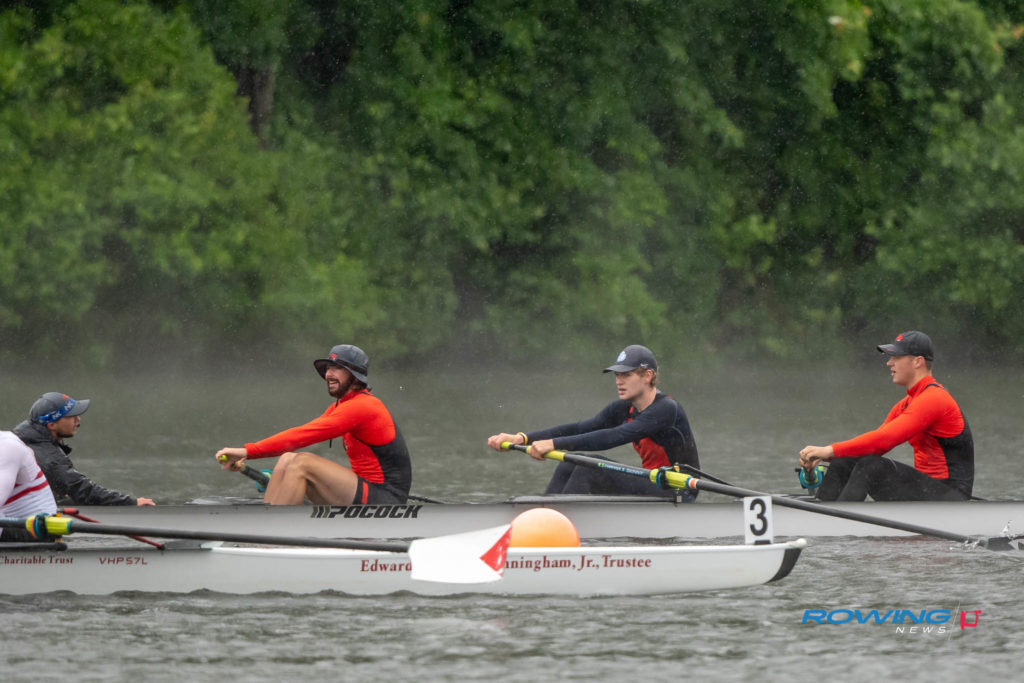
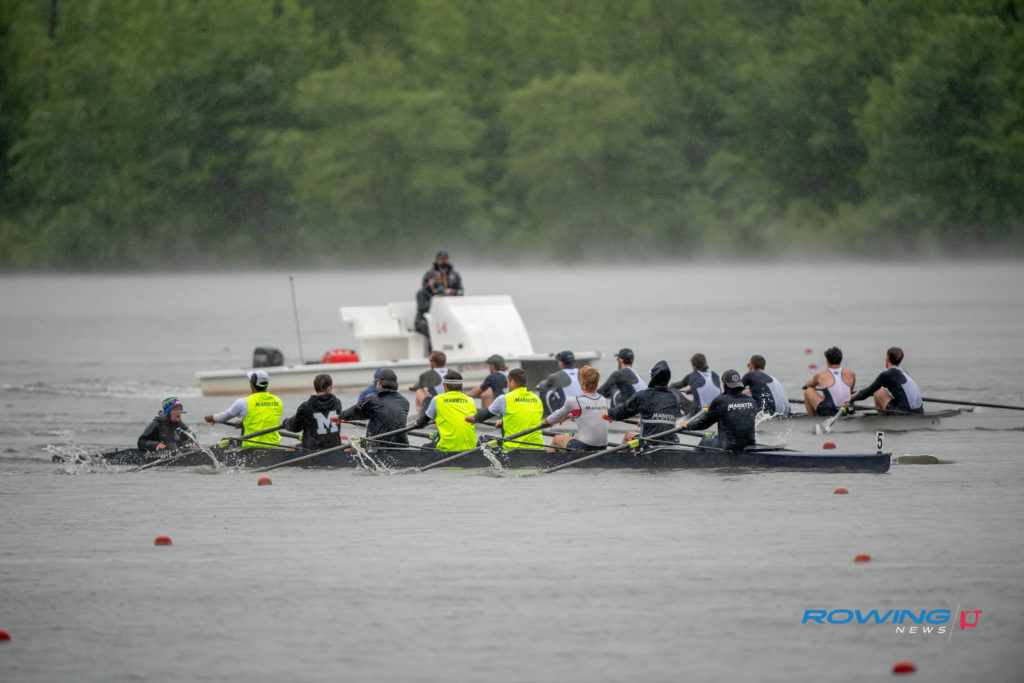
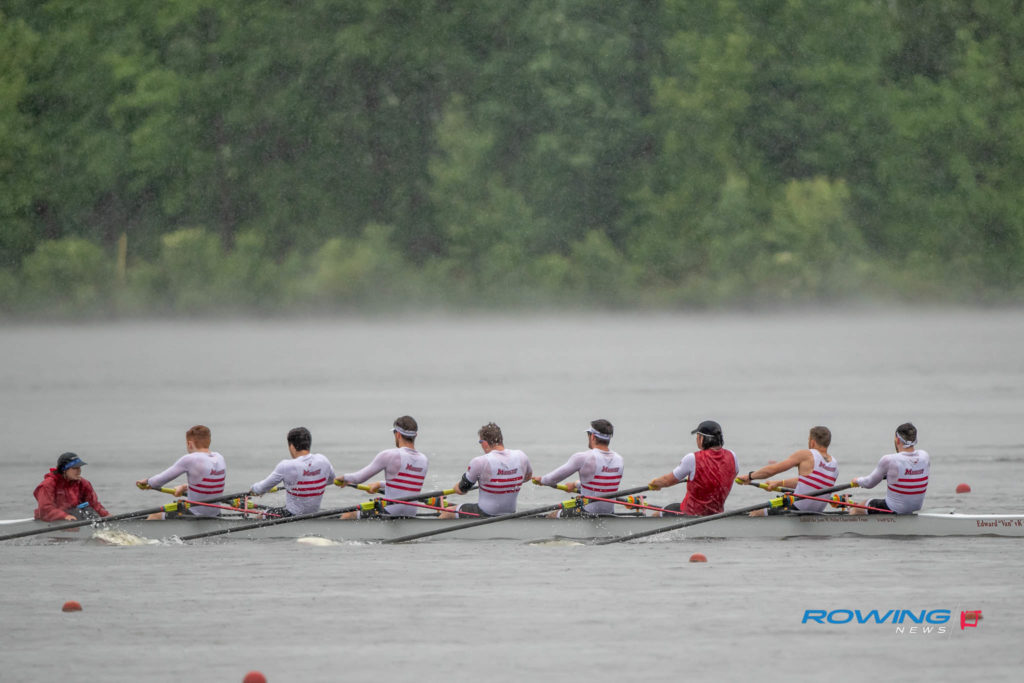
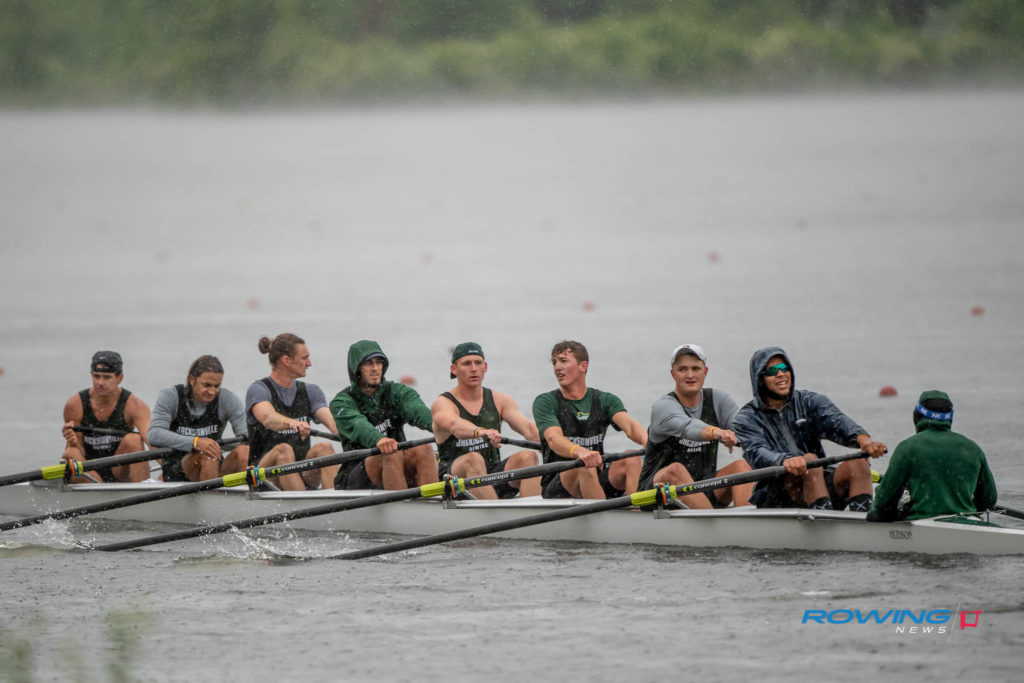
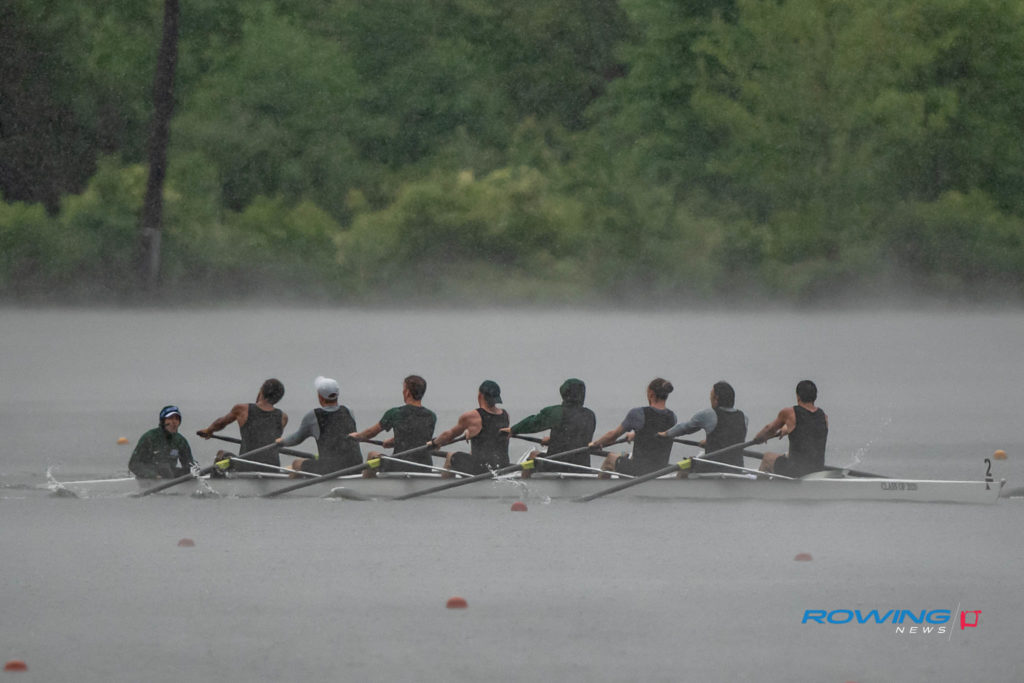
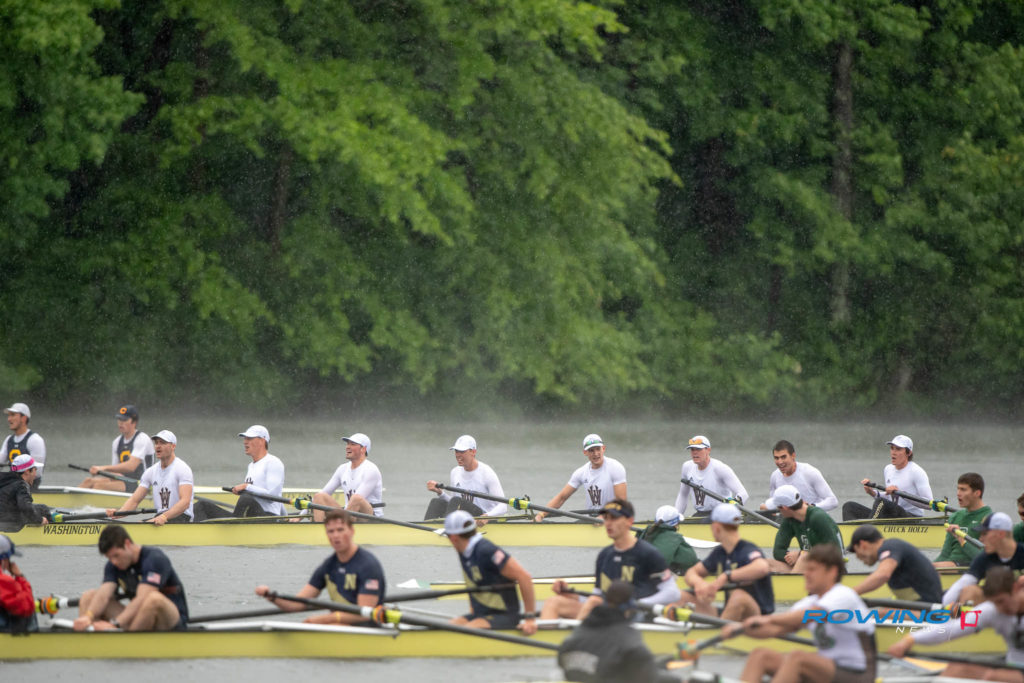
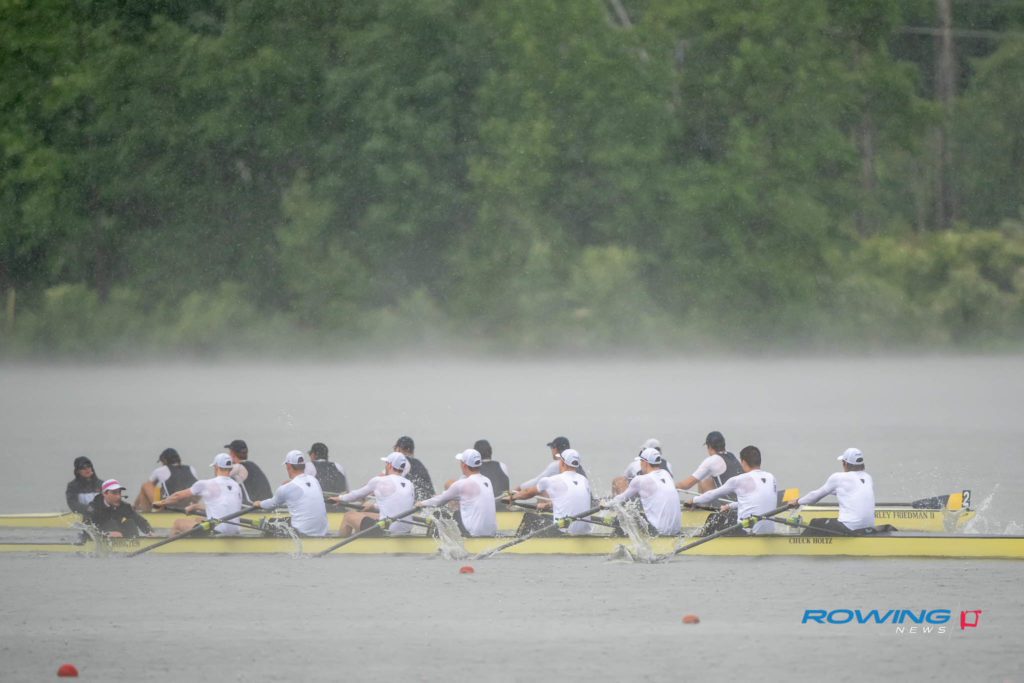
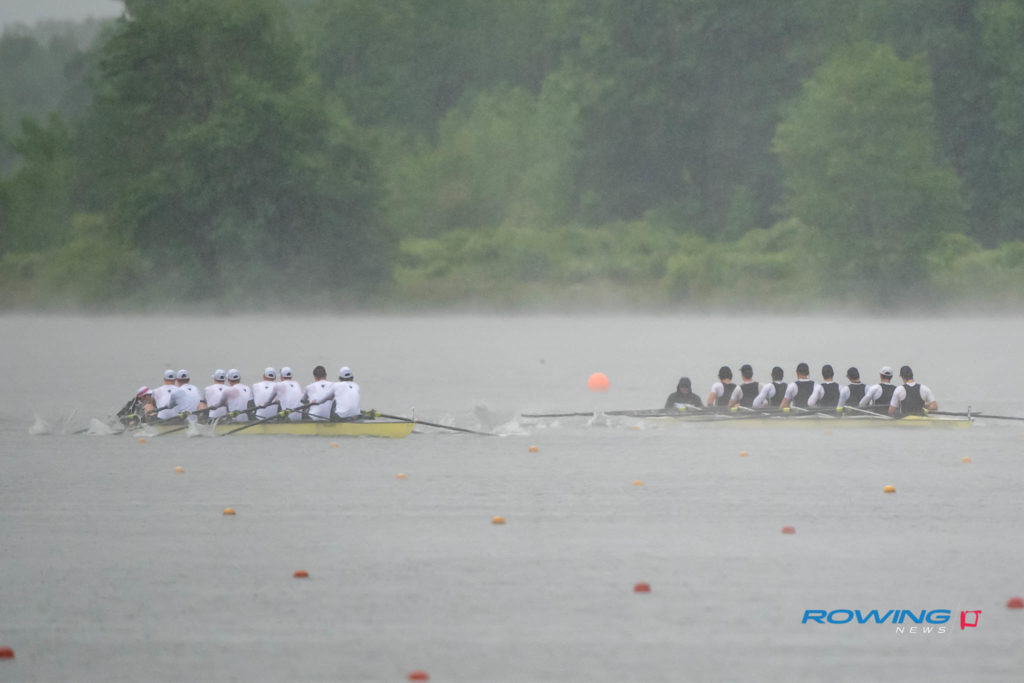
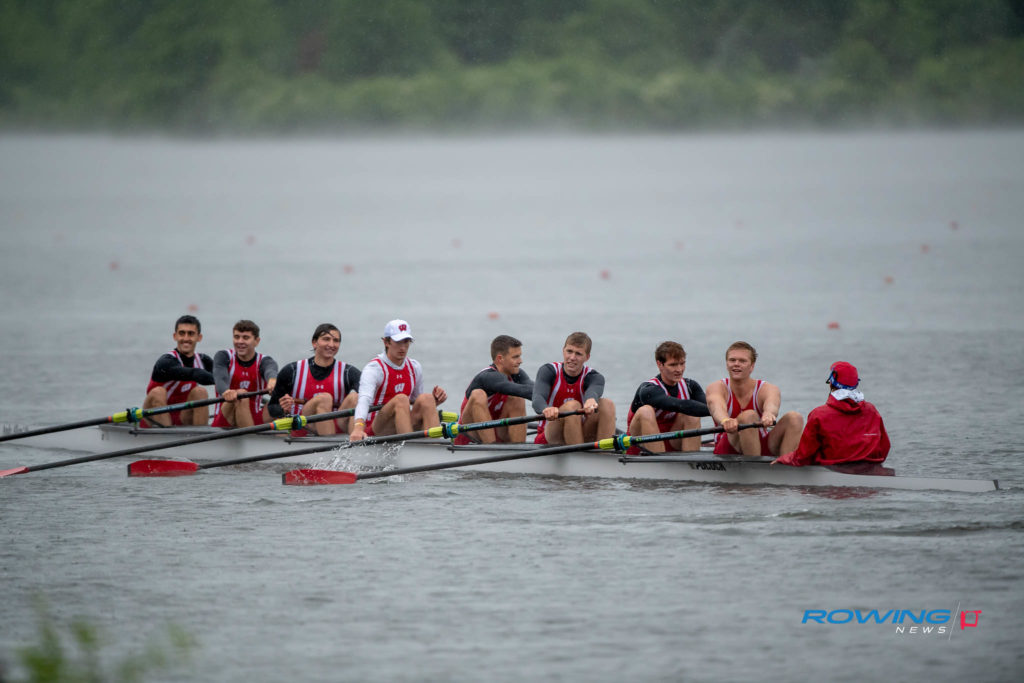
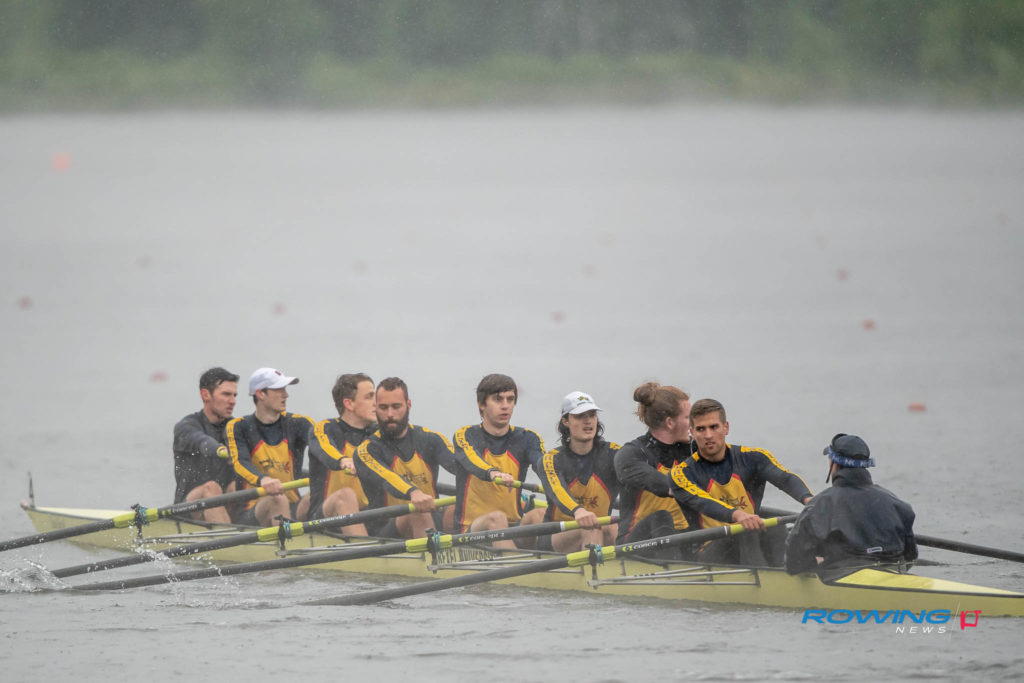
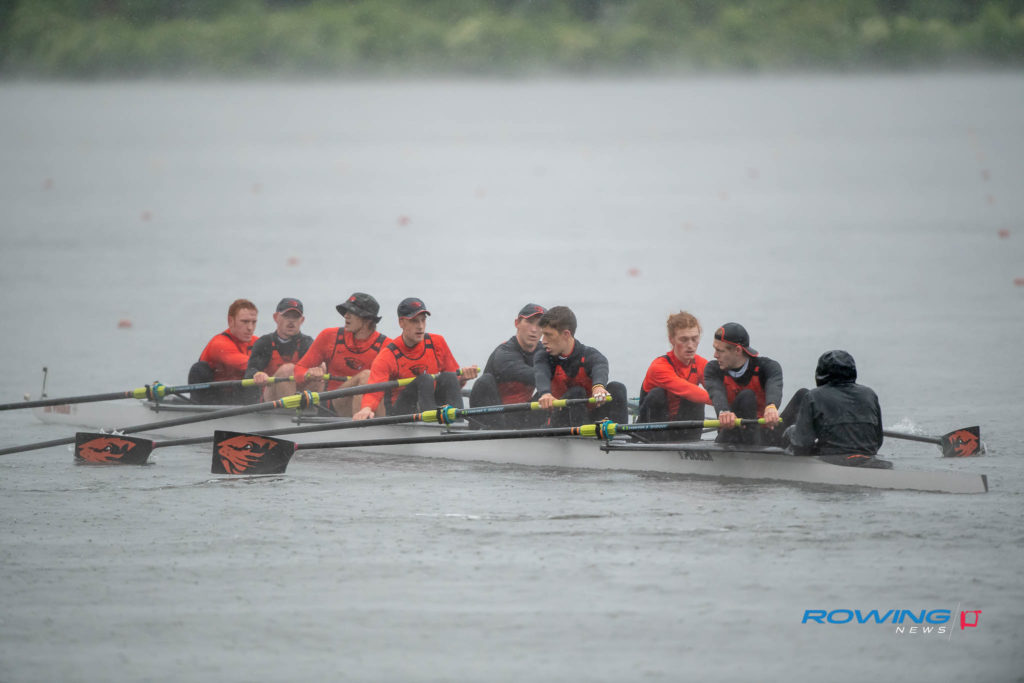
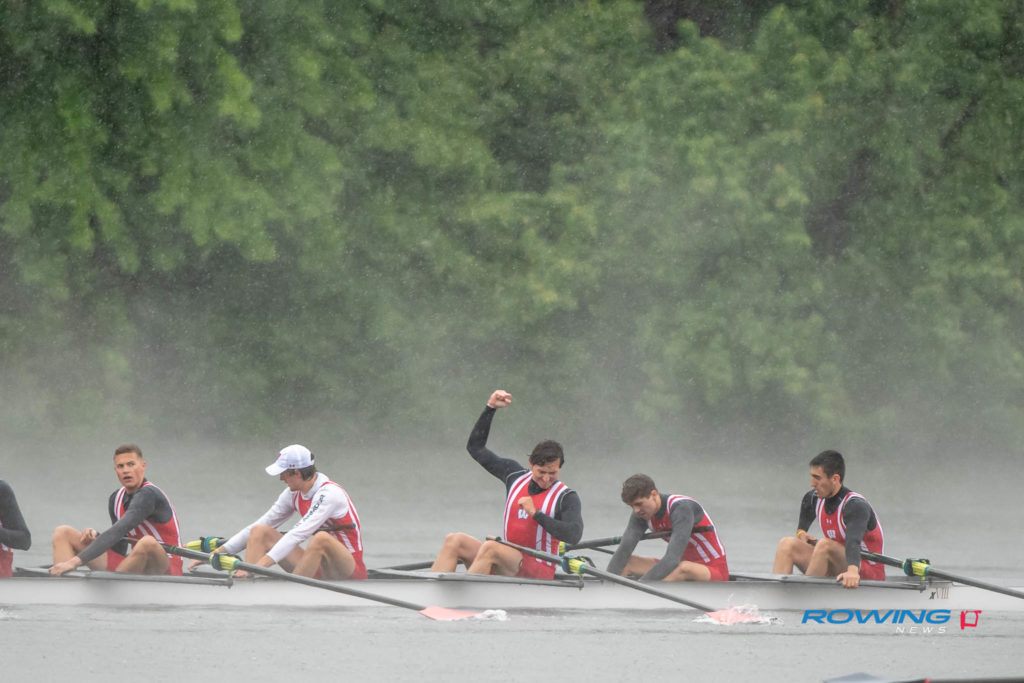
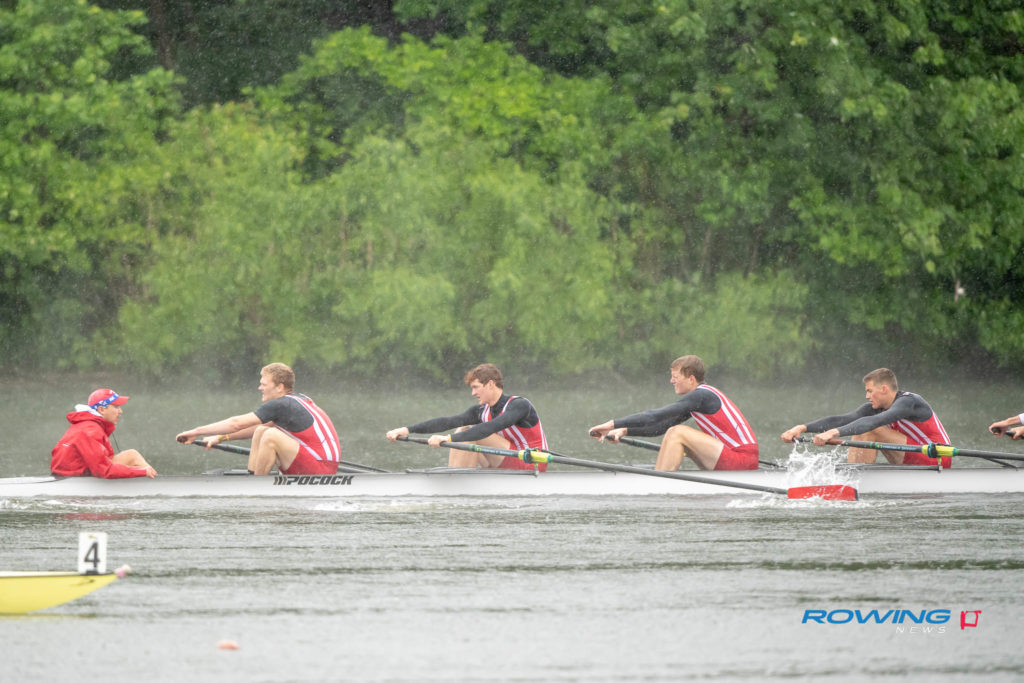
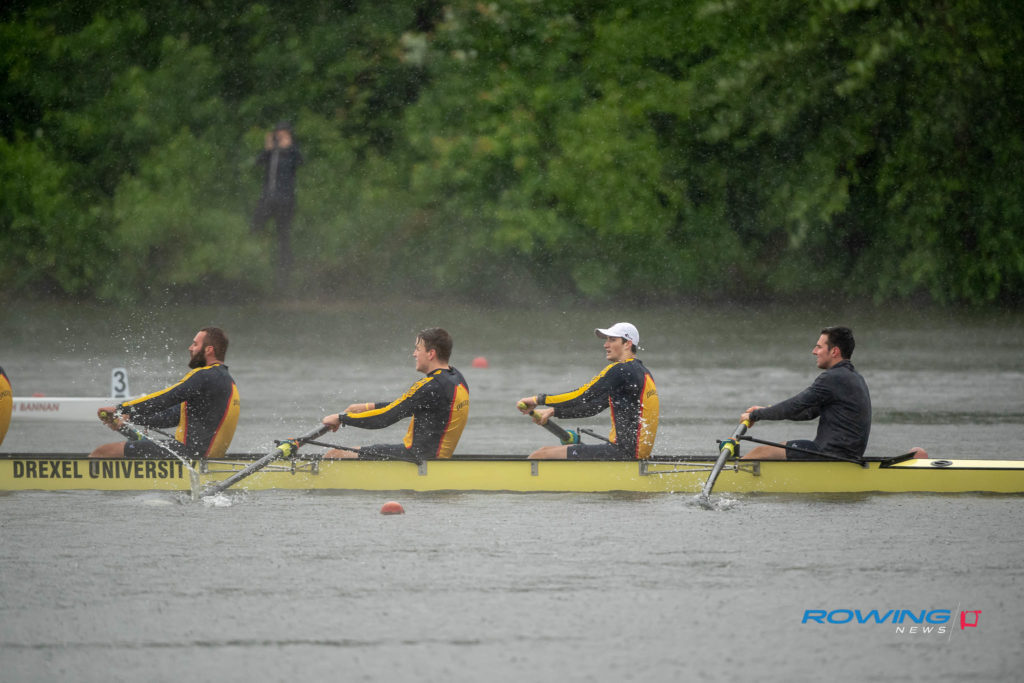
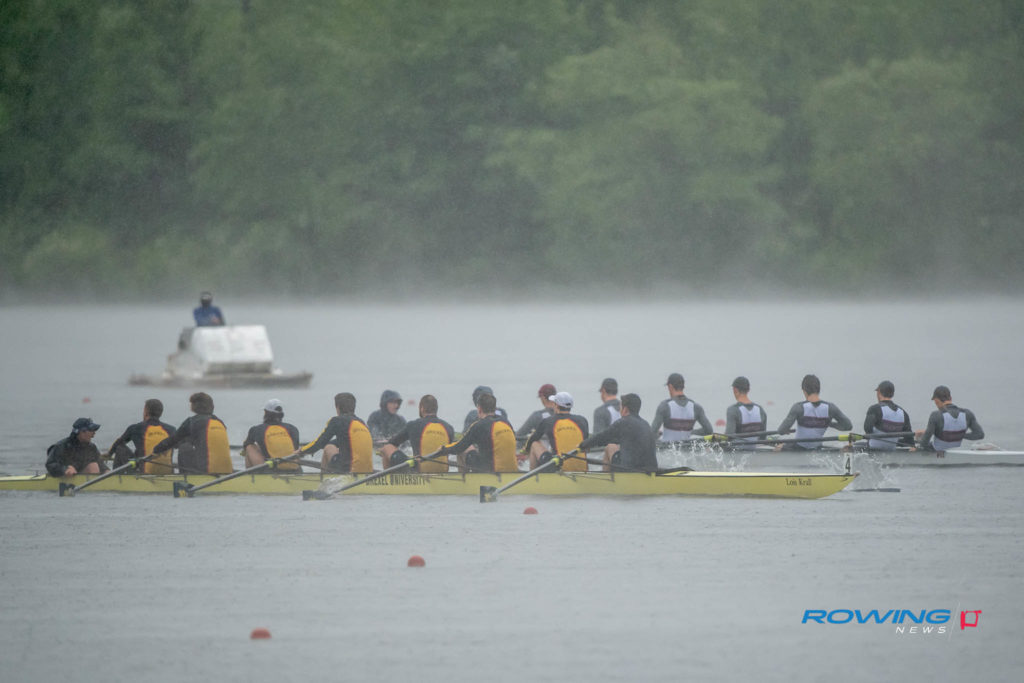
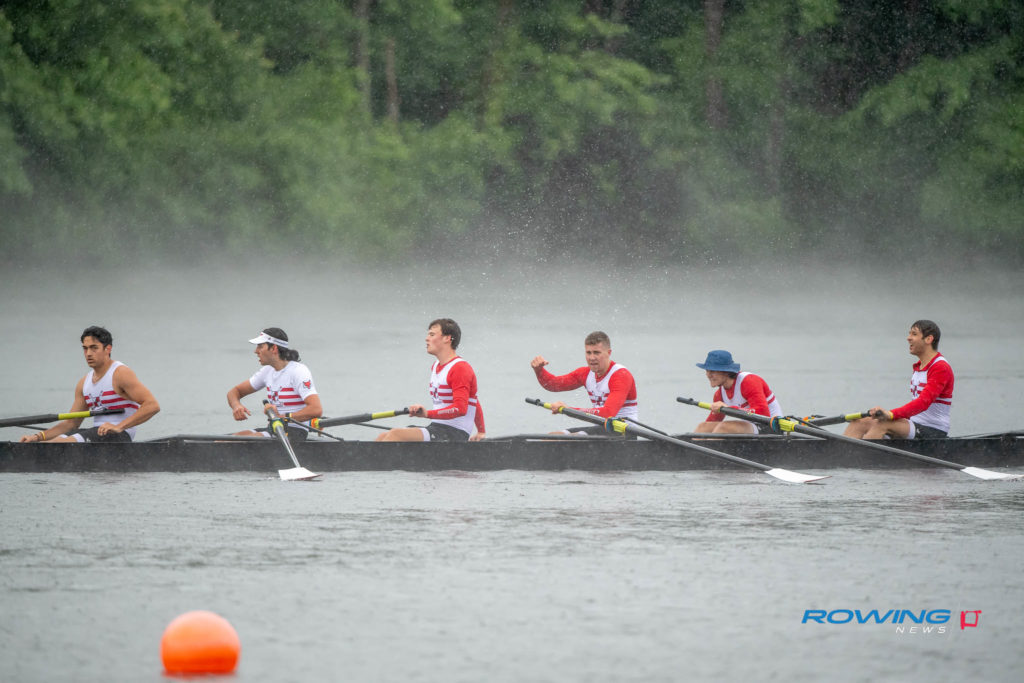
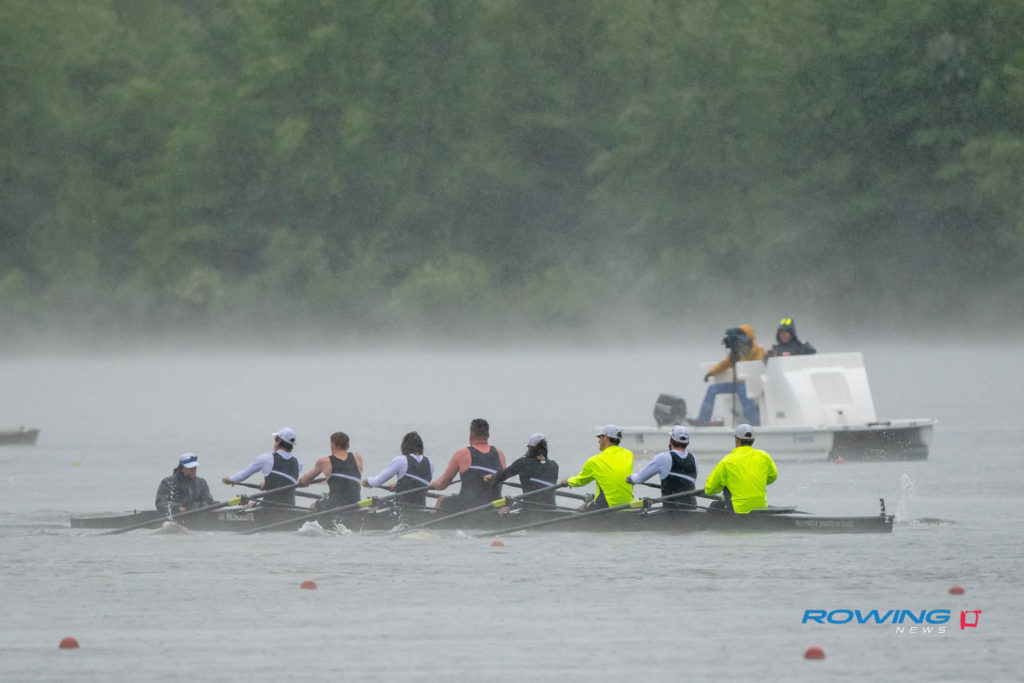
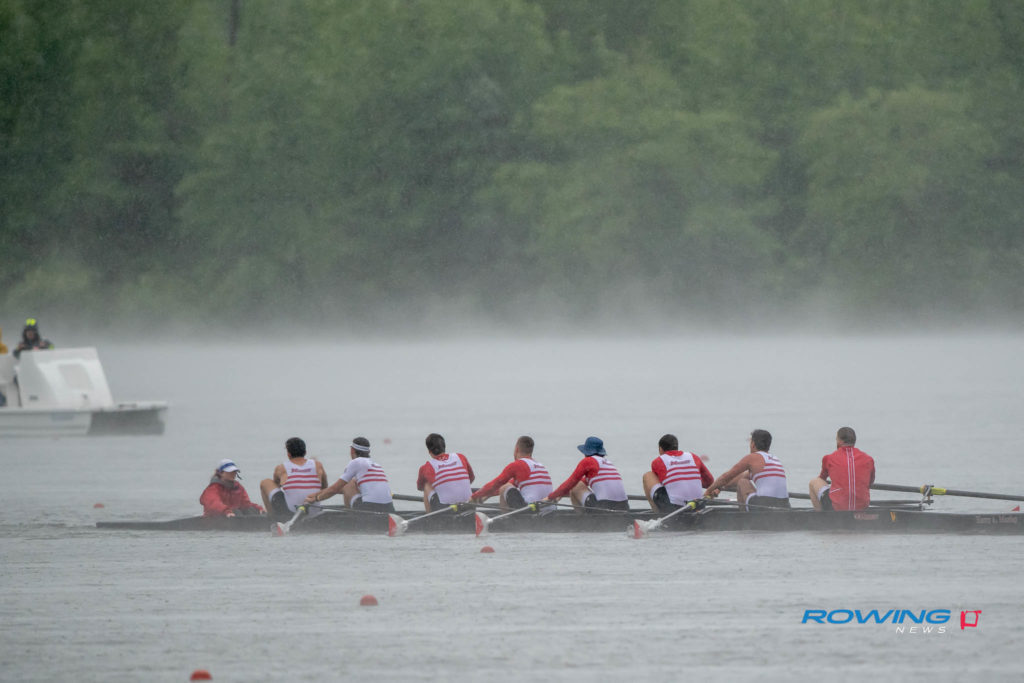
All through Saturday morning, a cold, wind driven, rain flew straight into the faces of the athletes coming down the course on Mercer Lake. Combined with the fog rising off the warmer spring water, it was nearly impossible to see the crews until they neared the final 500-meters and began to charge through to the finish.
The conditions had been like that since Friday afternoon when one of the largest fields of eights went to the start platform for the semi-finals of the 2021 Intercollegiate Rowing Association Championship.
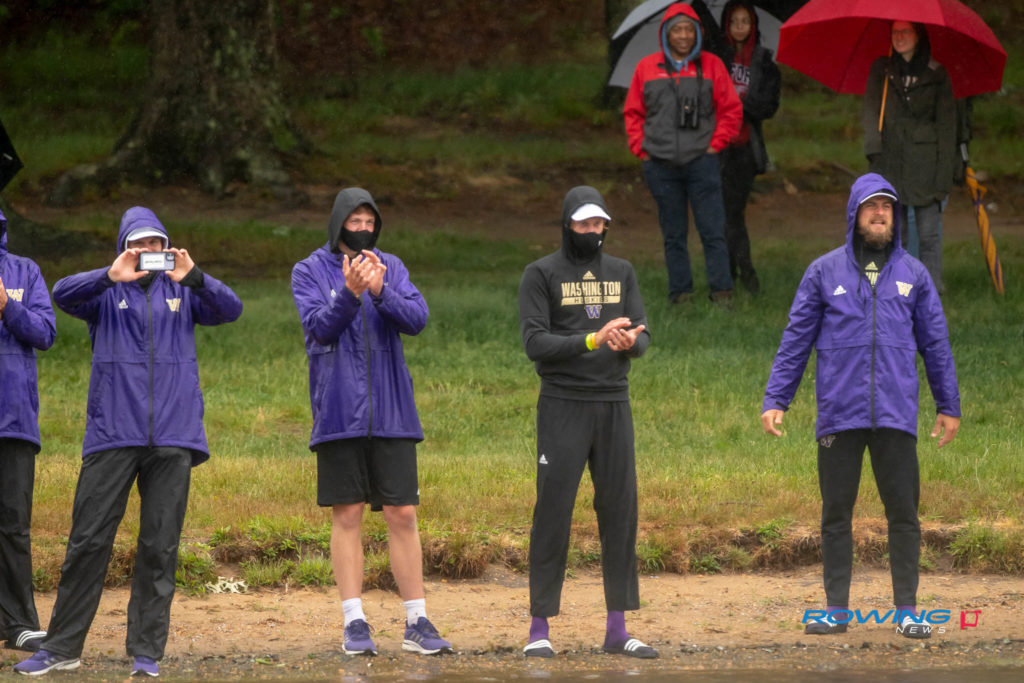
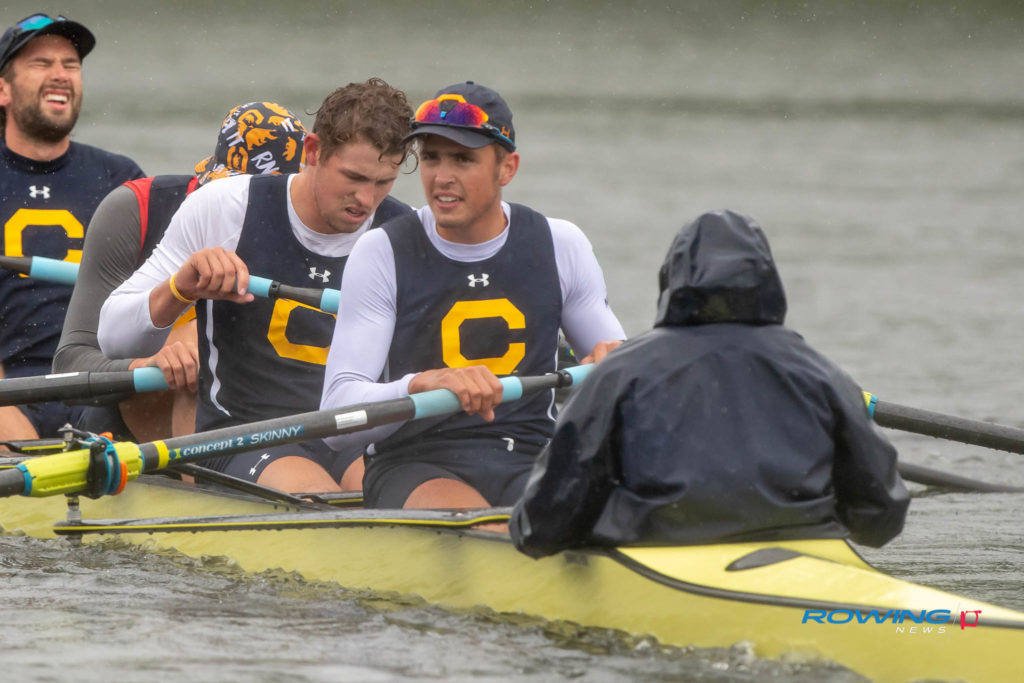
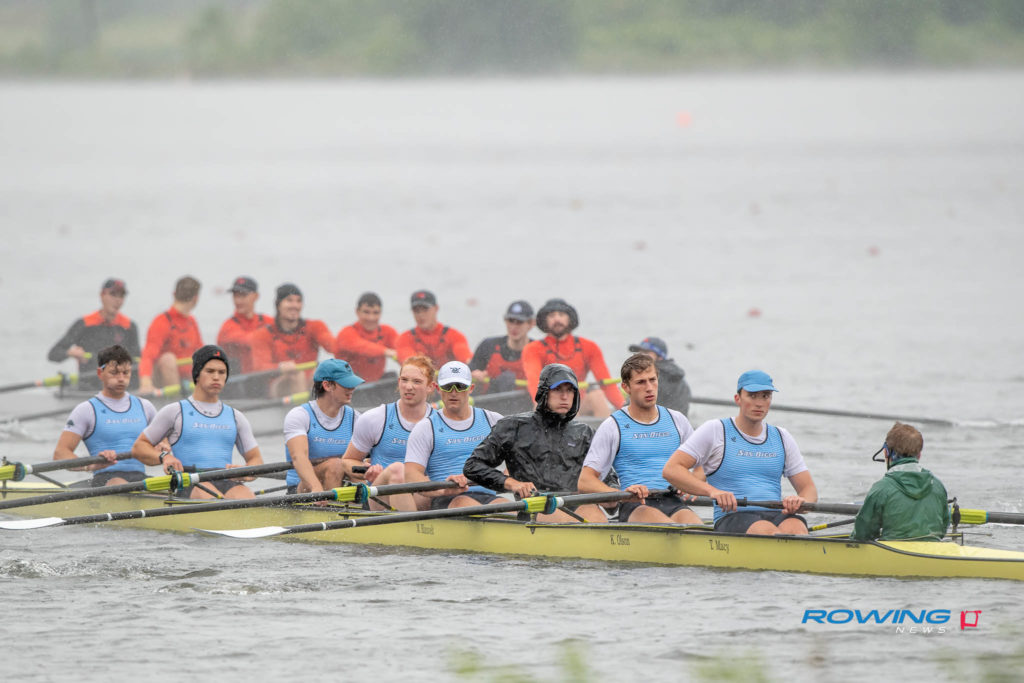
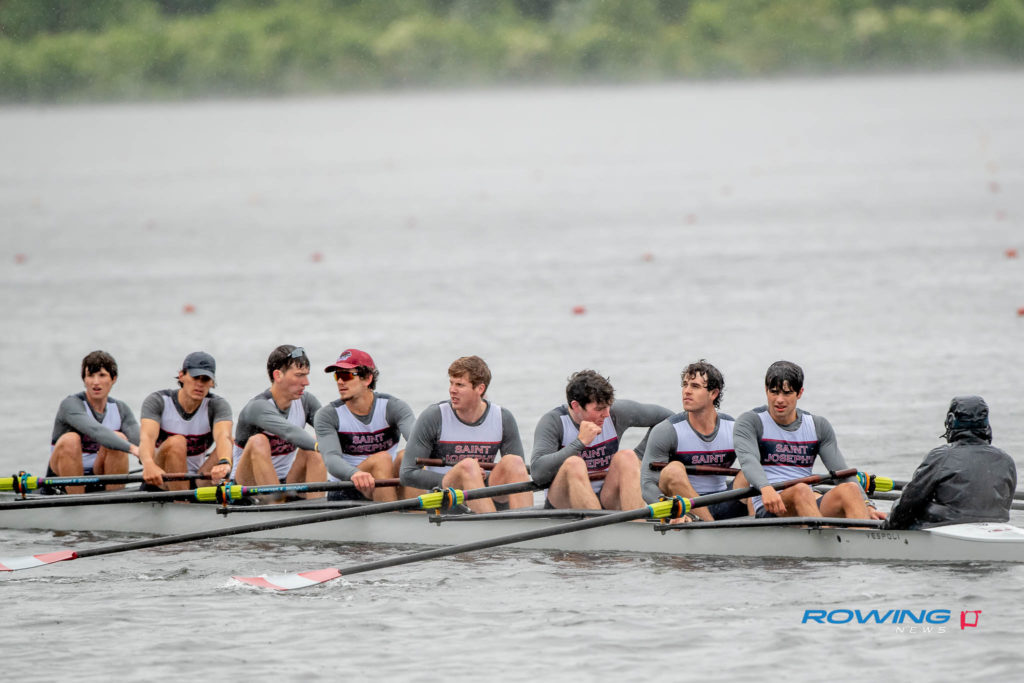
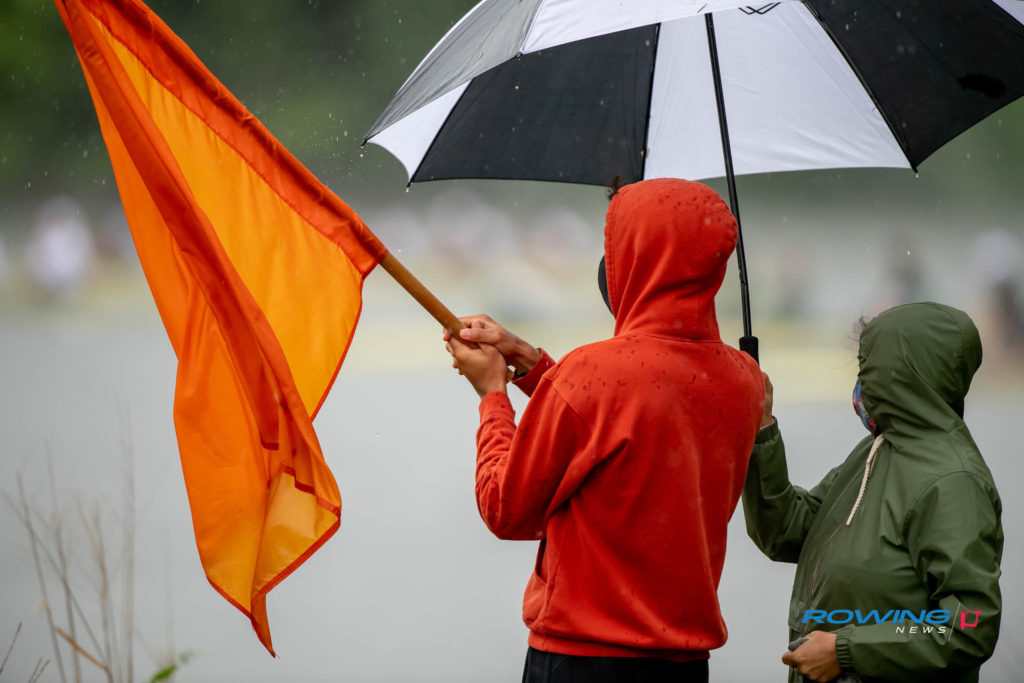
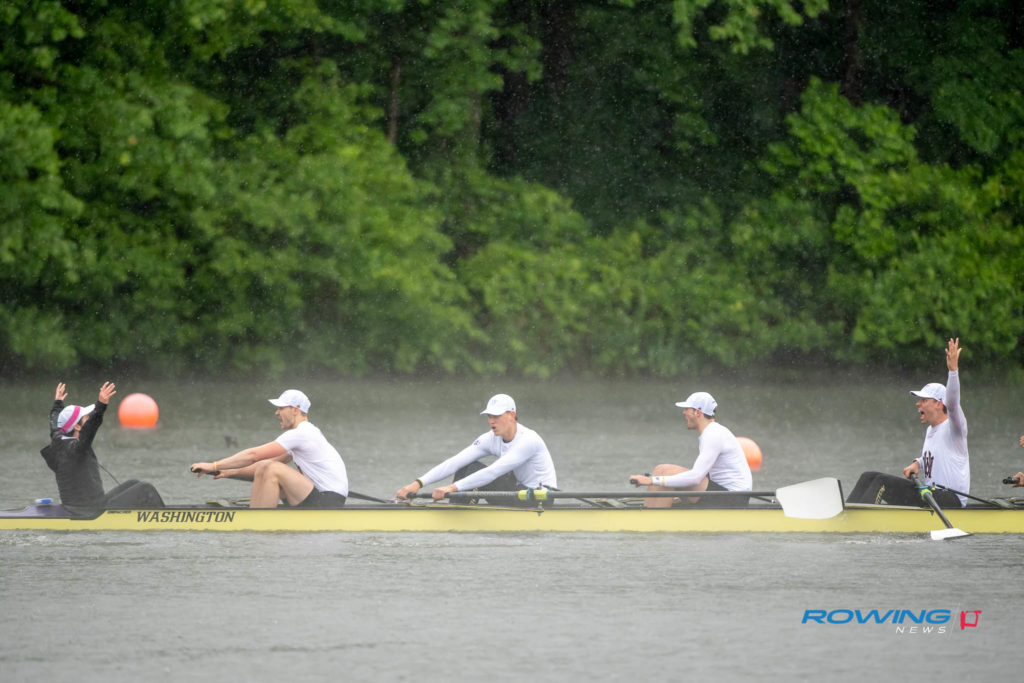
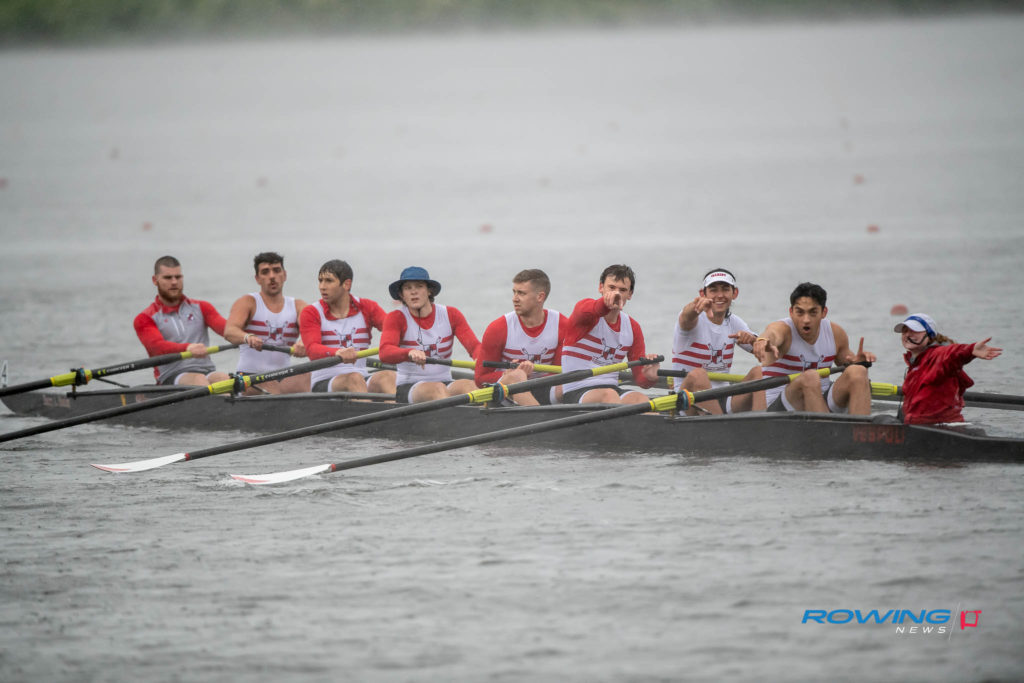
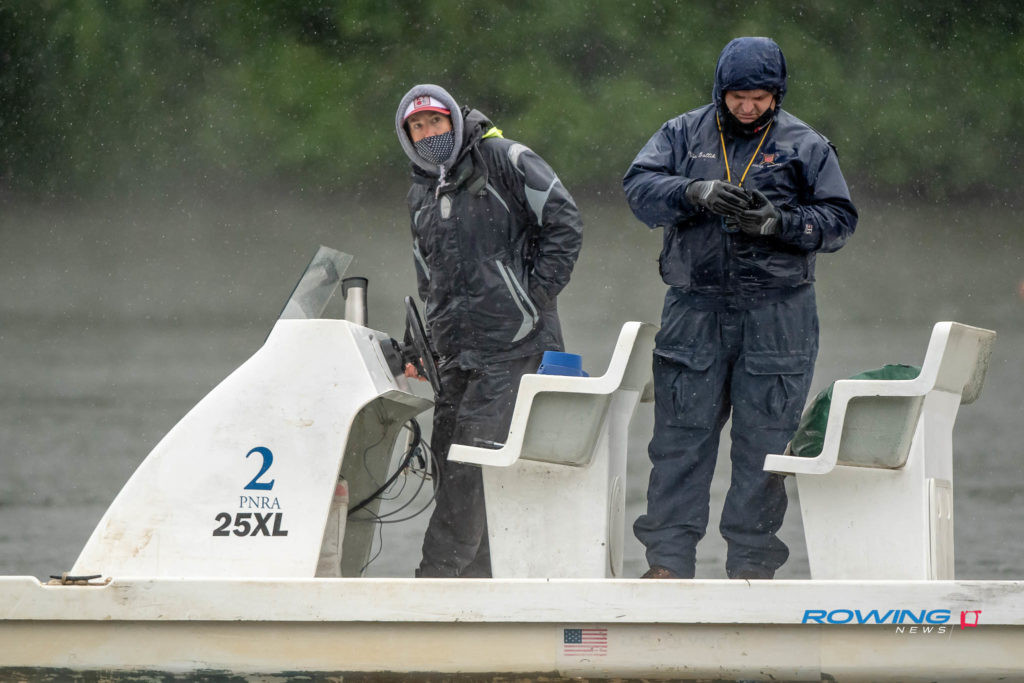
There was every reason for the hundreds of athletes to be unhappy. They were soaked through to the skin, coxswains were having a hard time keeping their bows pointed down the course and locked onto the start, with wind gusting from the side and the boats bobbing up and down in waves that washed over the gunnels.
They were anything but.
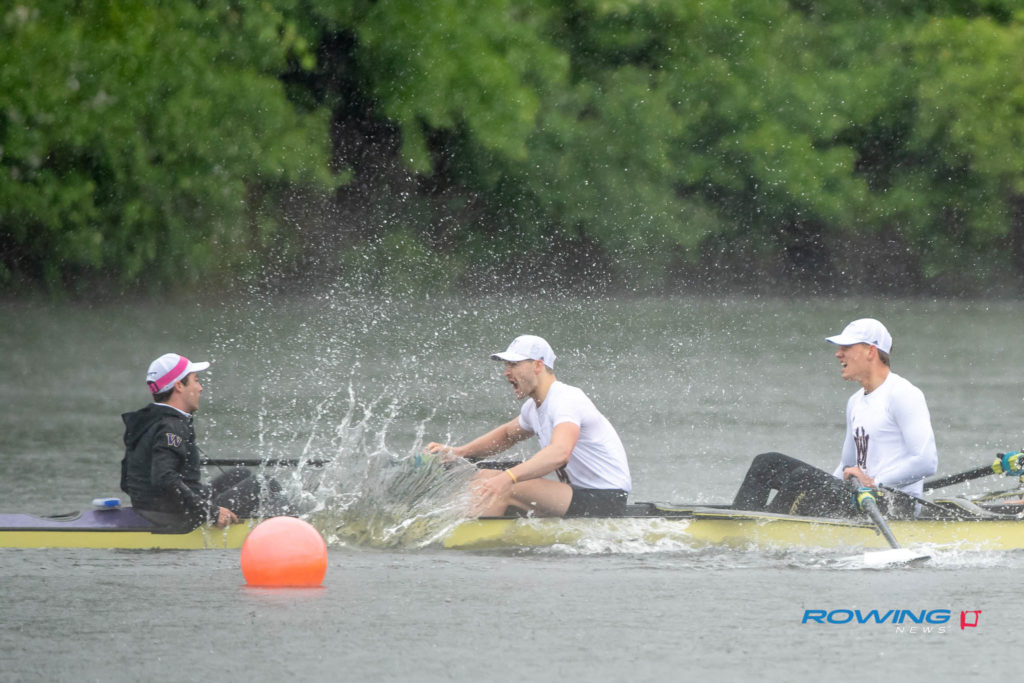
In every race, from the semifinals, through the finals, the joy of racing, of sharing an event and a moment, that was at first not to be, was clearly what those athletes were feeling. It was not the cold. The wind. The rain.
While they sat waiting to start, they banged their gunnels, shouted encouragement to each other — to the athletes in the boats next to them — and then raced.
There could not have been a more fitting end to the long, hard, months of Covid lost seasons, isolation, Zoom classes, and uncertainty, than what took place in Mercer County Park, in West Windsor, New Jersey Friday and Saturday at the IRA Championship.
It was, without question, not the championship it is in normal times, with rosters depleted by students who could not be at school, or with entire powerhouse teams absent because of the havoc the Pandemic has caused.
But it was nonetheless an historic IRA, a true celebration of sport and camaraderie, and all taking place in the worst of weather conditions.
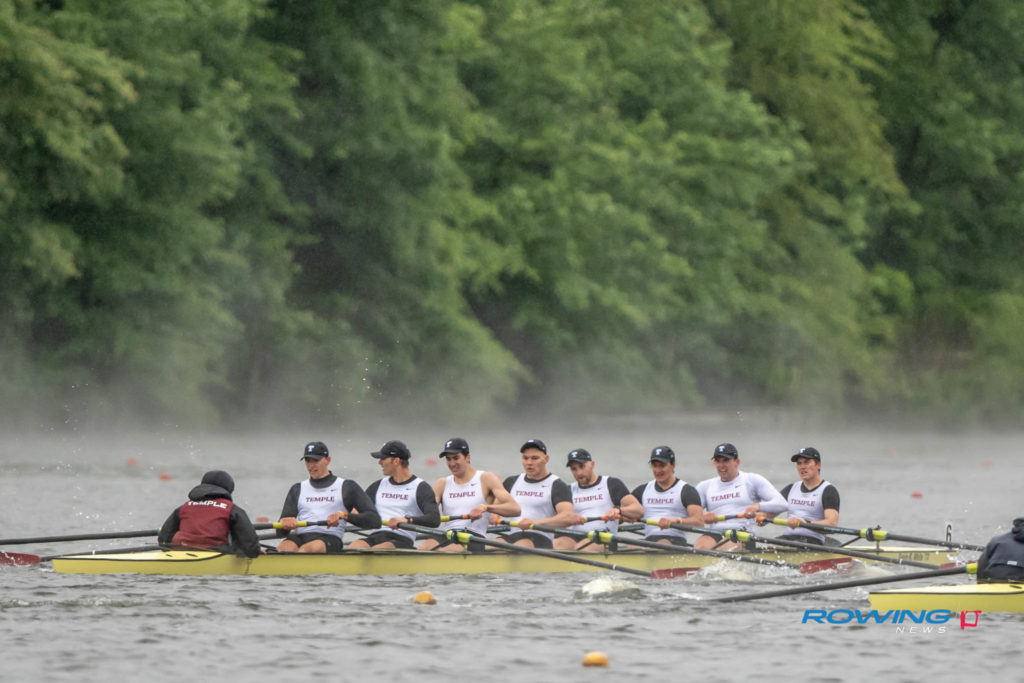
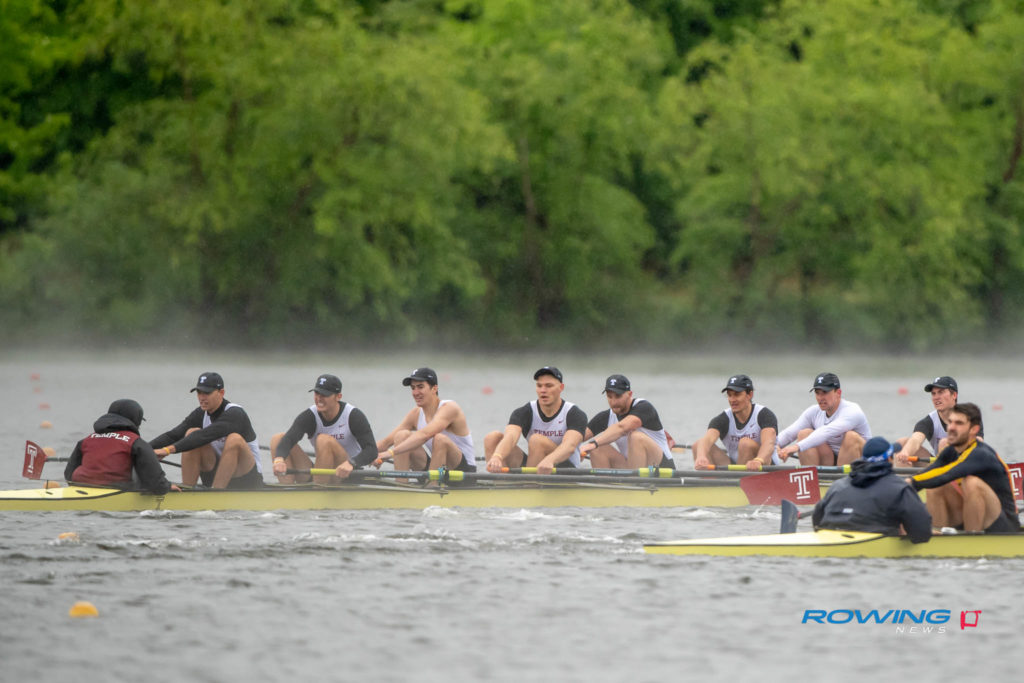
“The anxiety all went away once we were on the water,” said Temple University senior George Torvik, who rowed in Temple’s third varsity eight. “It feels like home out there.”
And so it seemed to every athlete and coach.
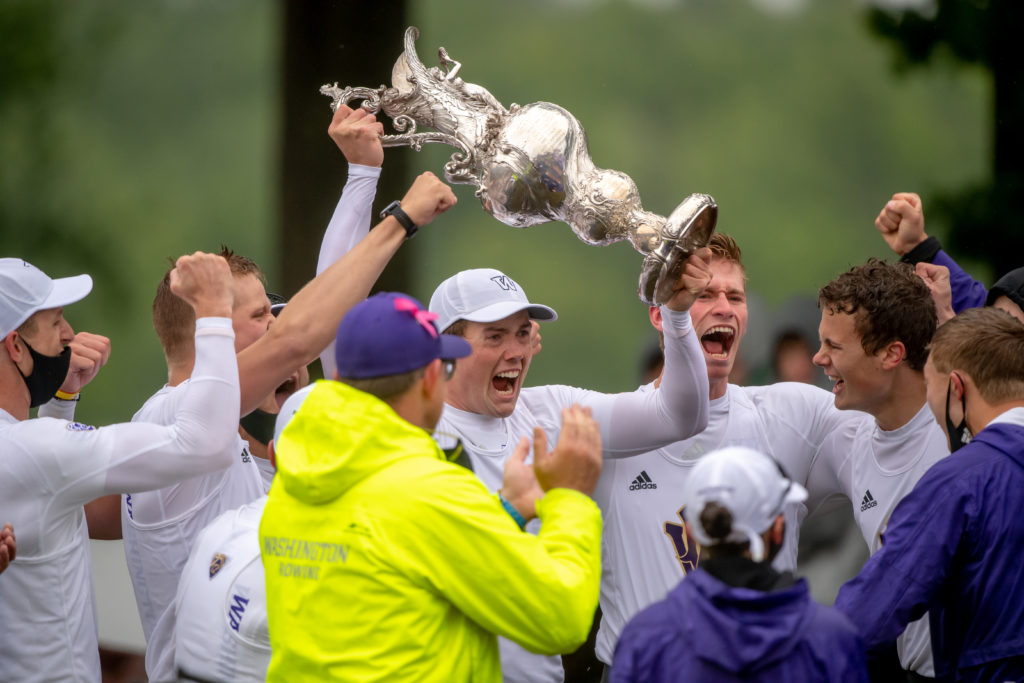
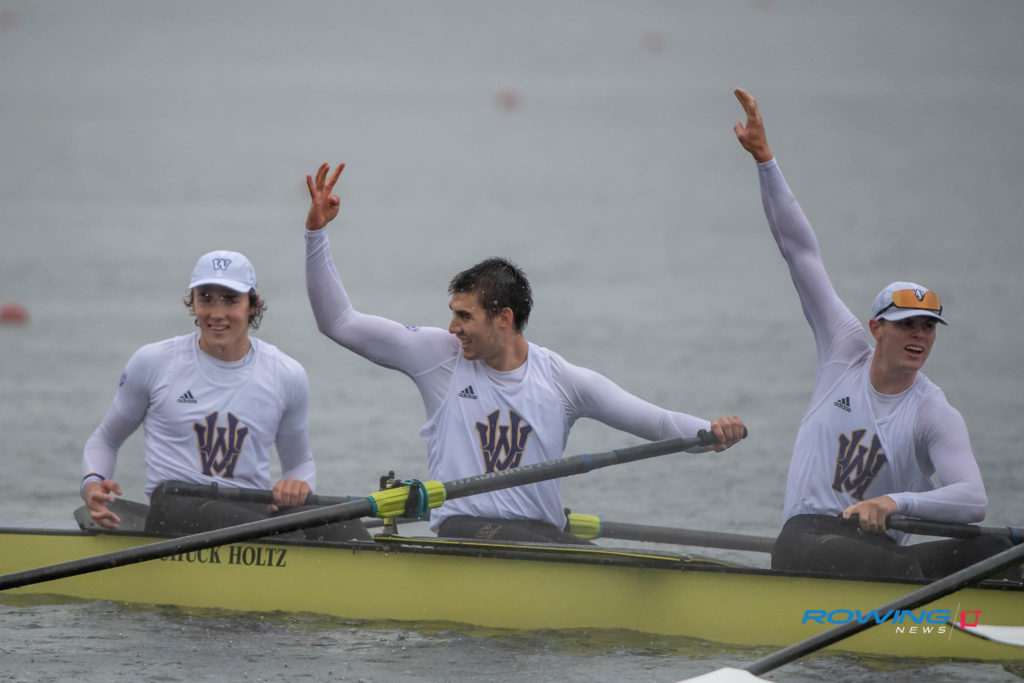
From the Varsity Challenge Cup and Ten Eyck Trophy winner University of Washington, to Torvik’s Temple teammates who worried that their team would even be able to compete because of a positive Covid test result among one of the students, being at the IRA this weekend was worth every minute in the rain.
And every Covid precaution.
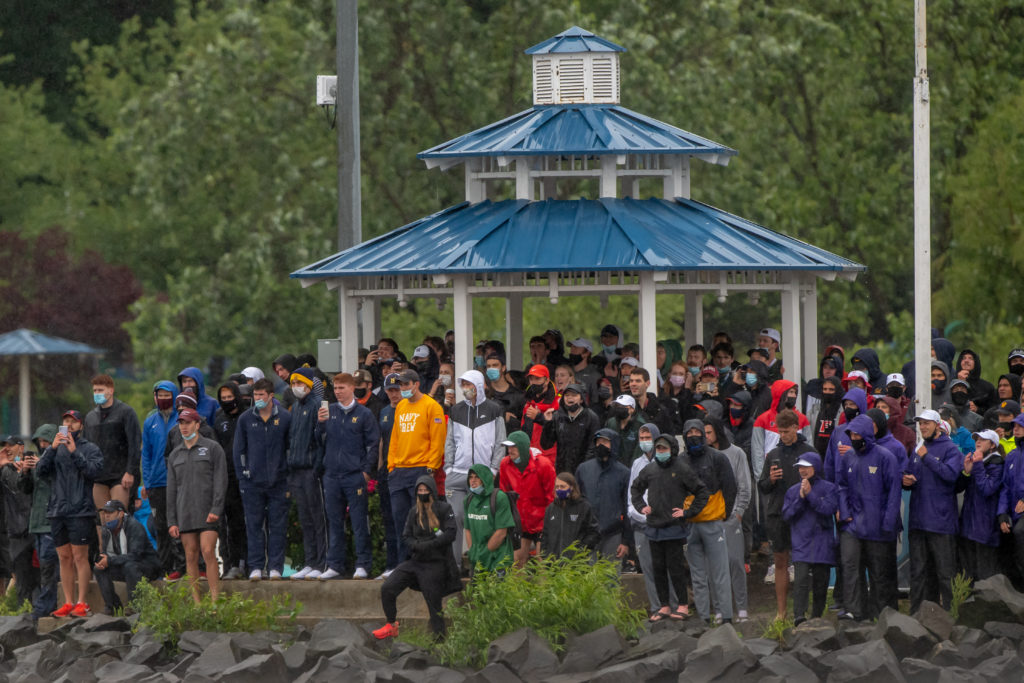
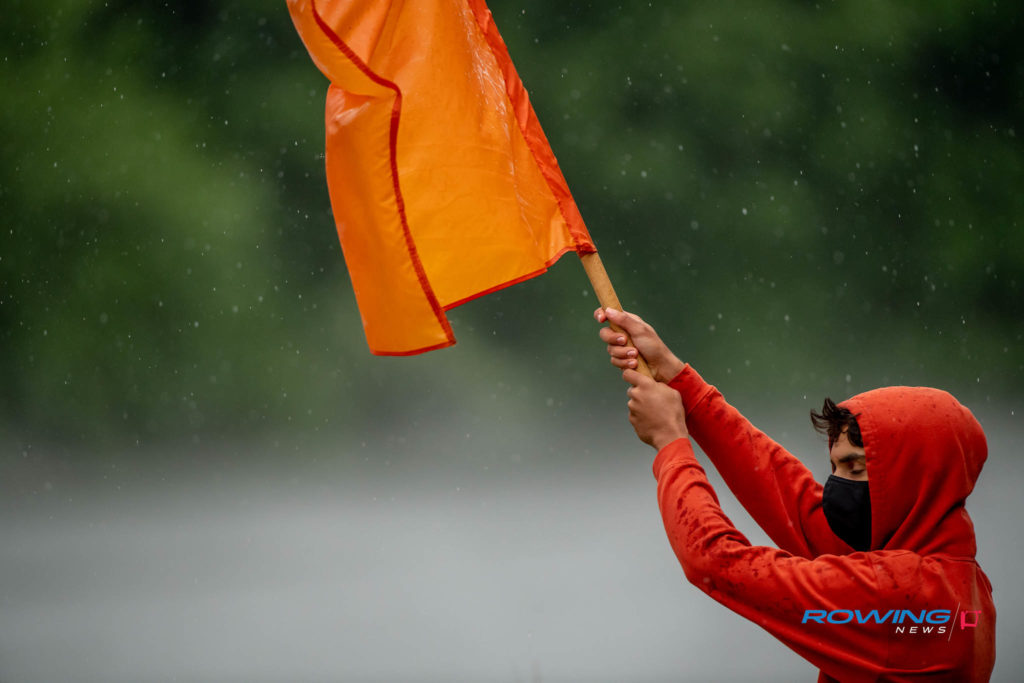
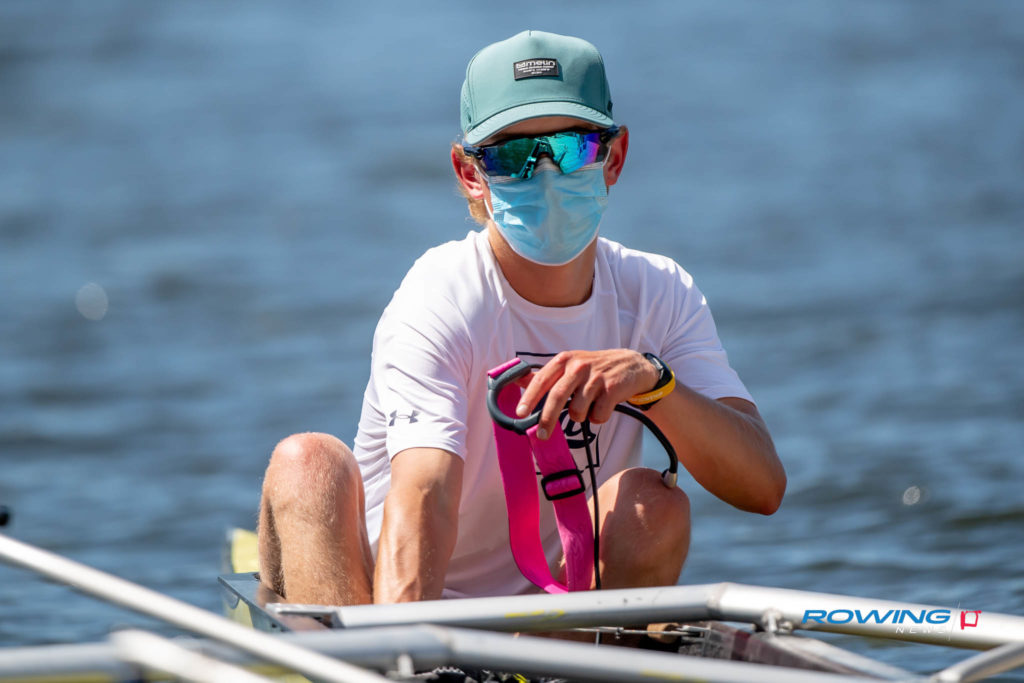
Spectators were banned. Alumni tents were banned. There were no vendors. No big screen broadcasts, and masking was mandatory on the venue. But it did not detract from the racing or the celebrations and camaraderie.
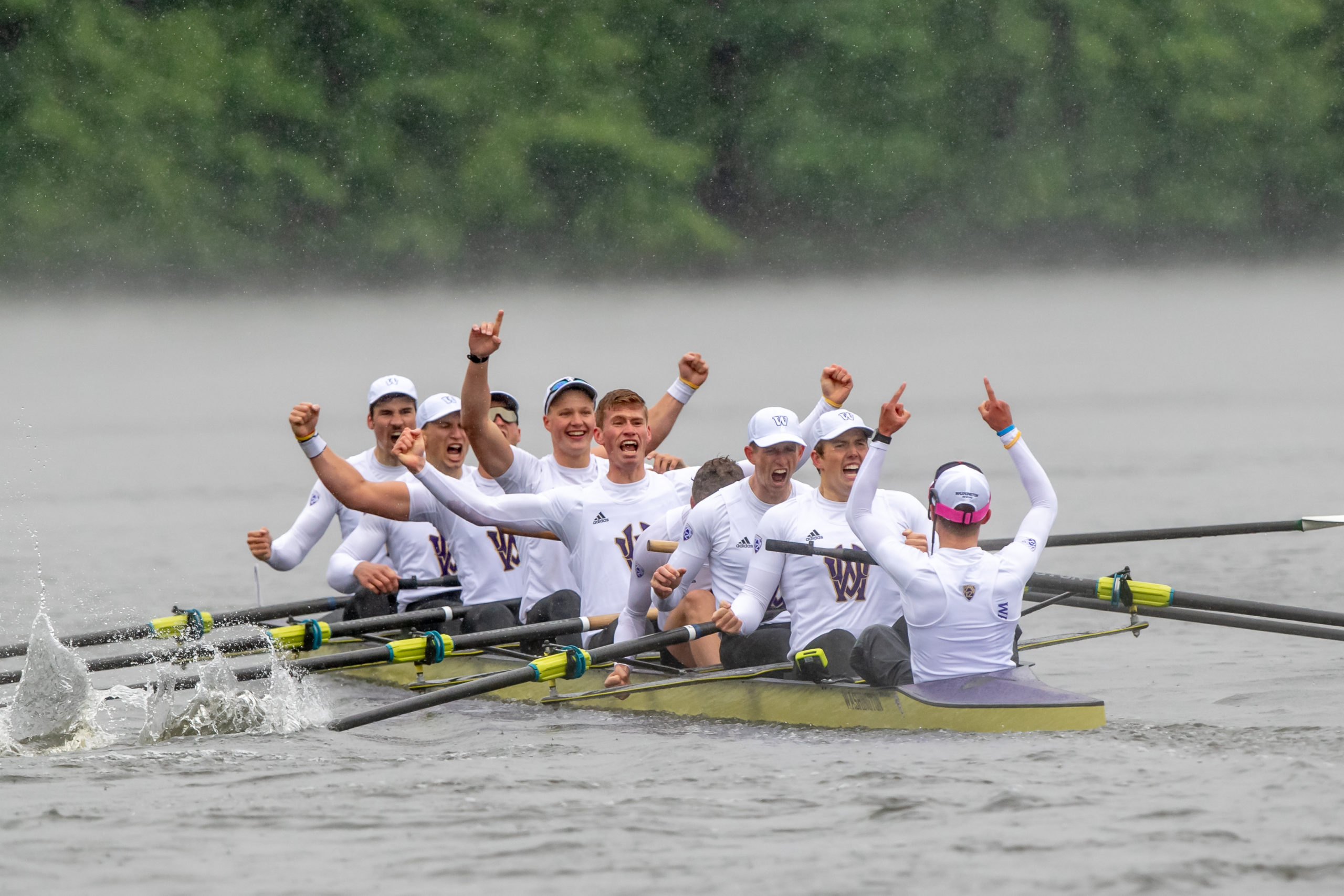
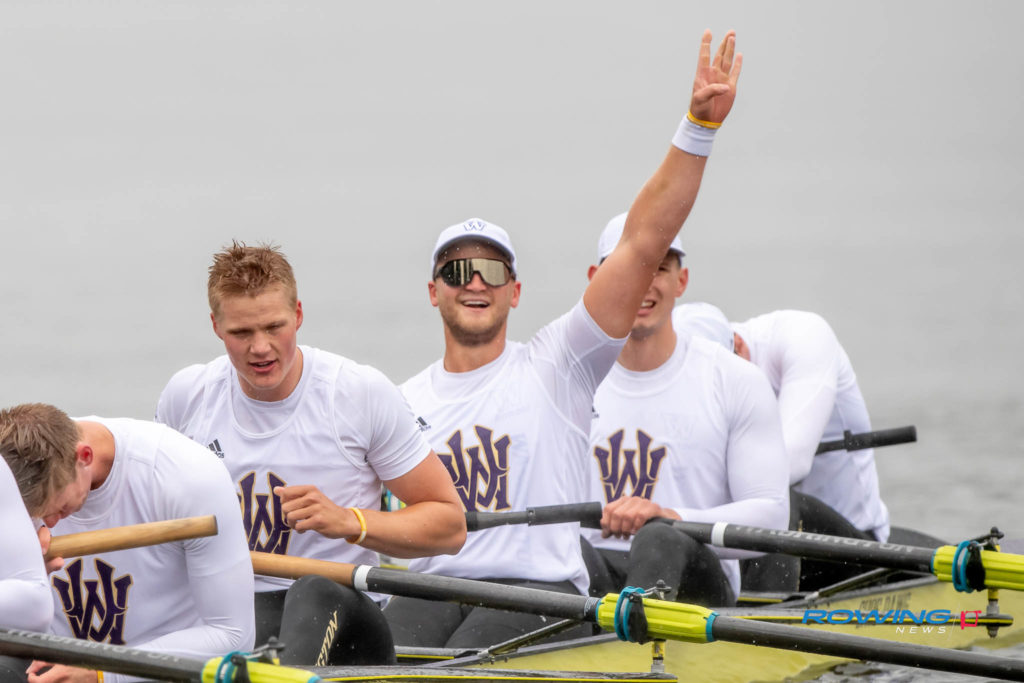
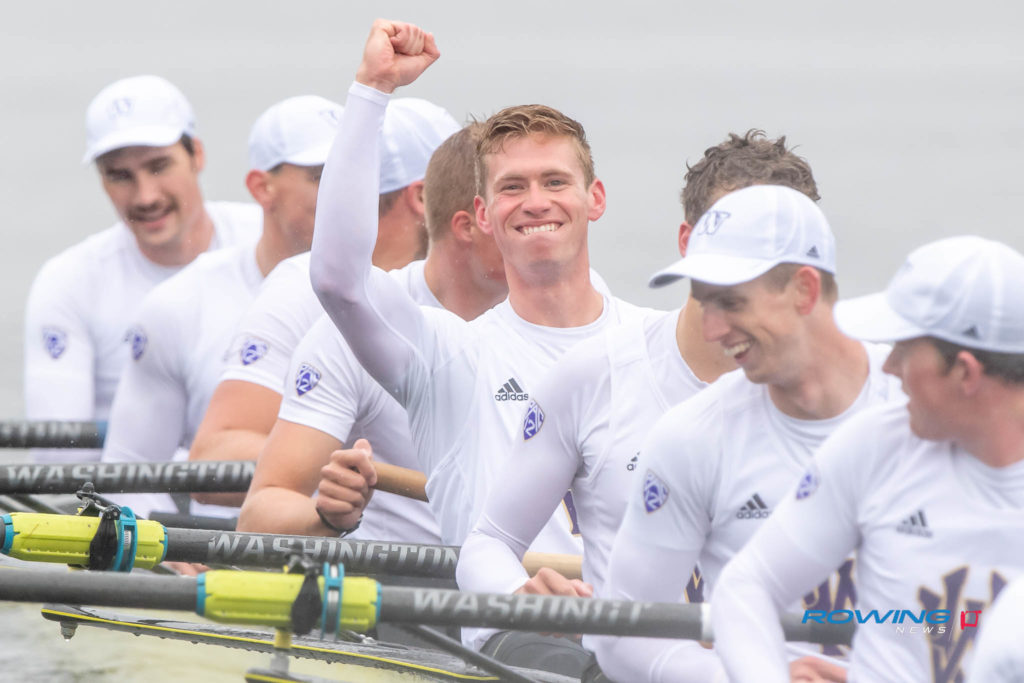
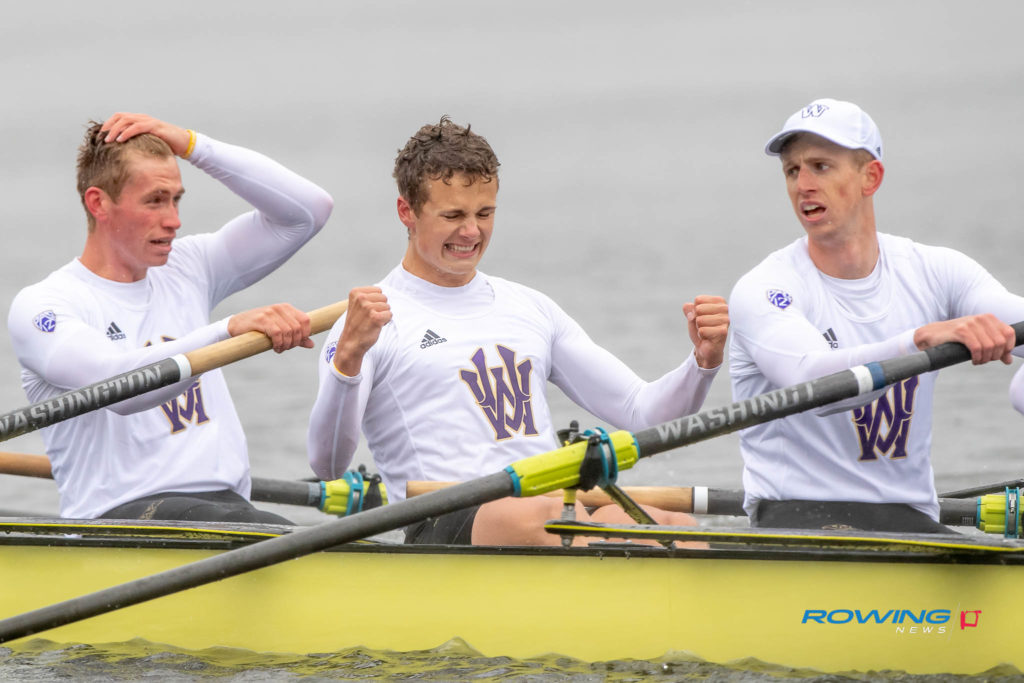
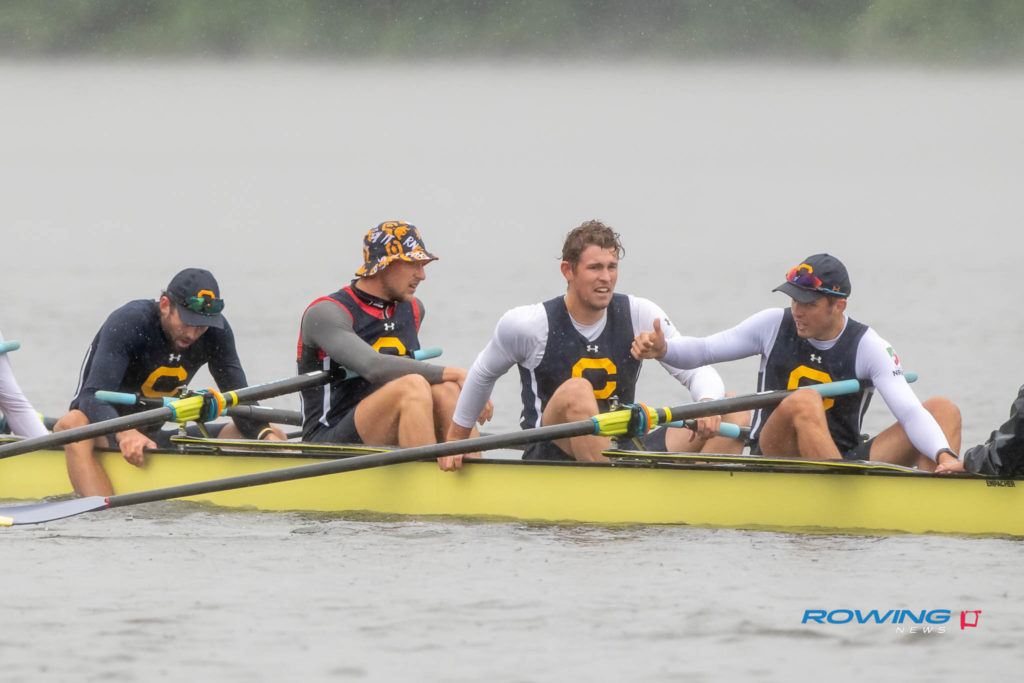
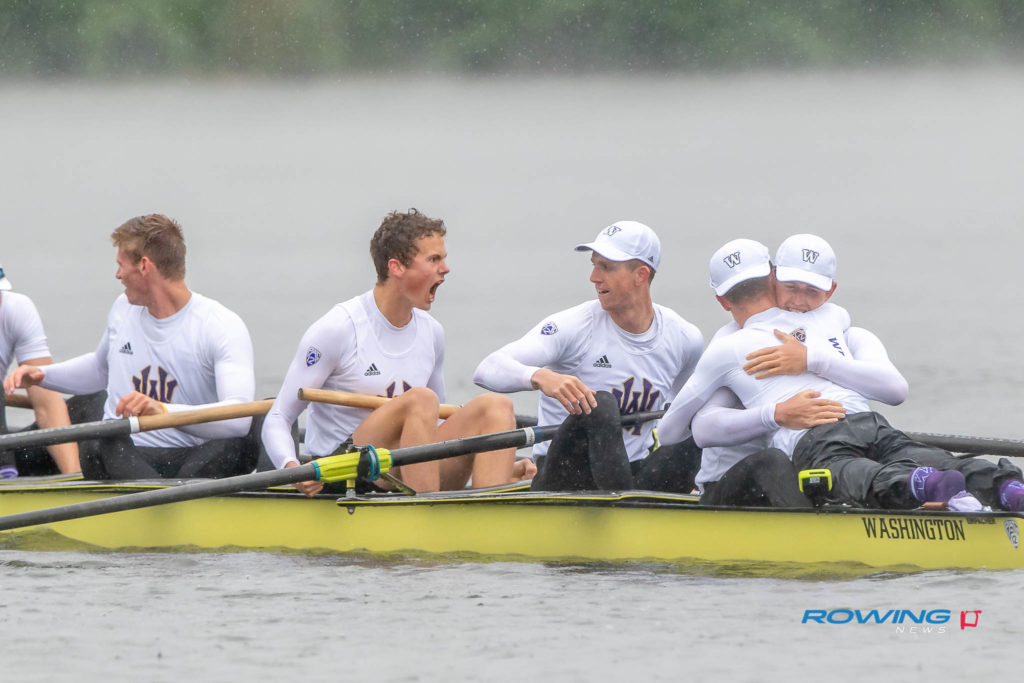
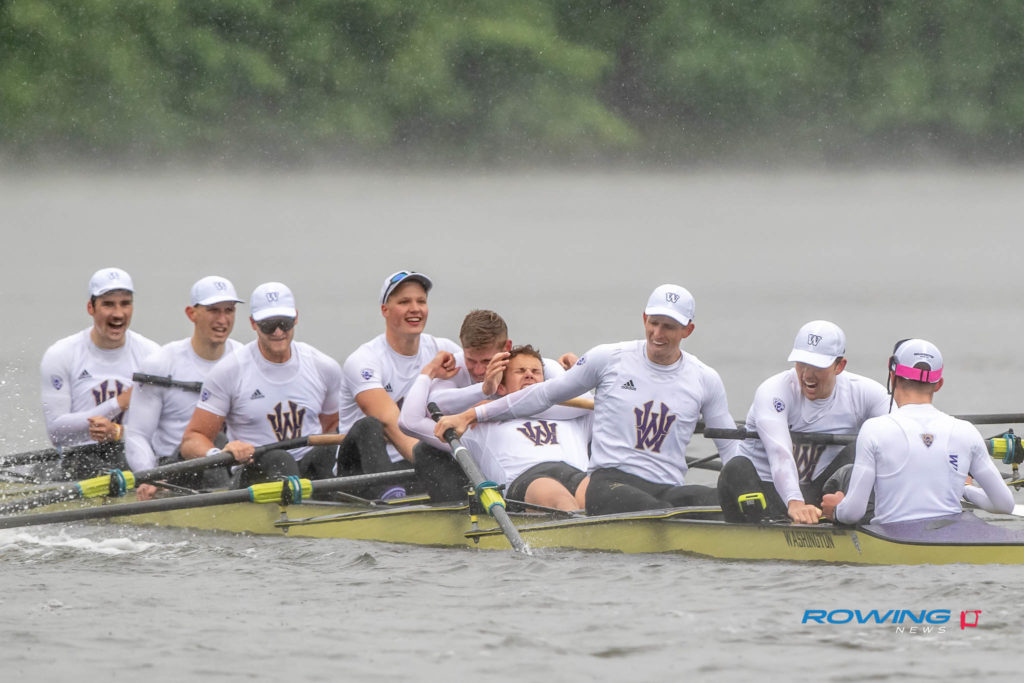
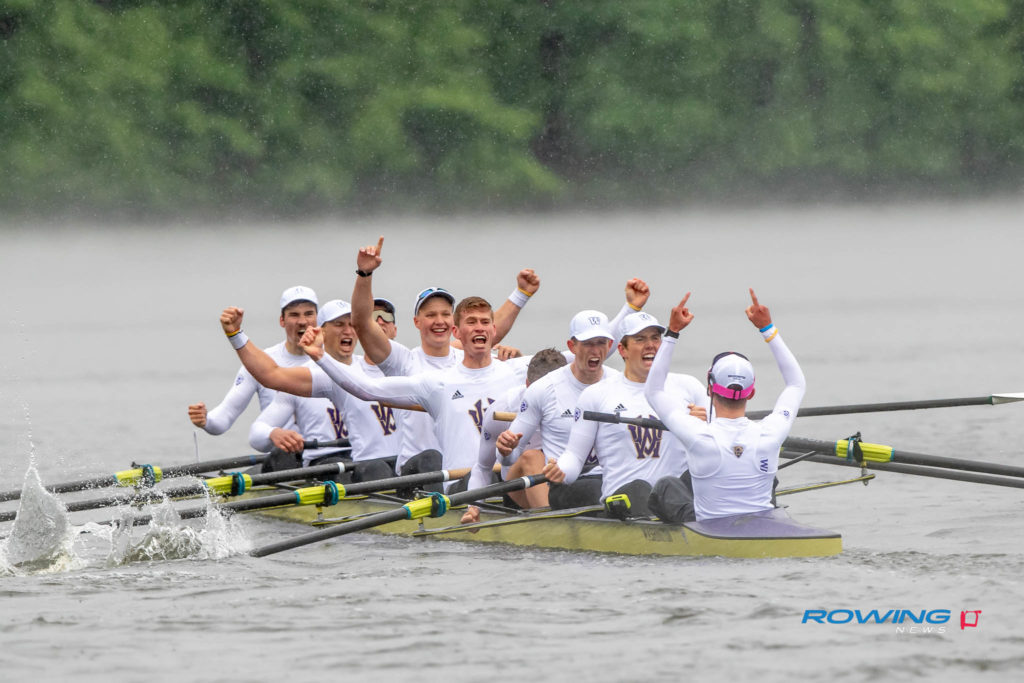
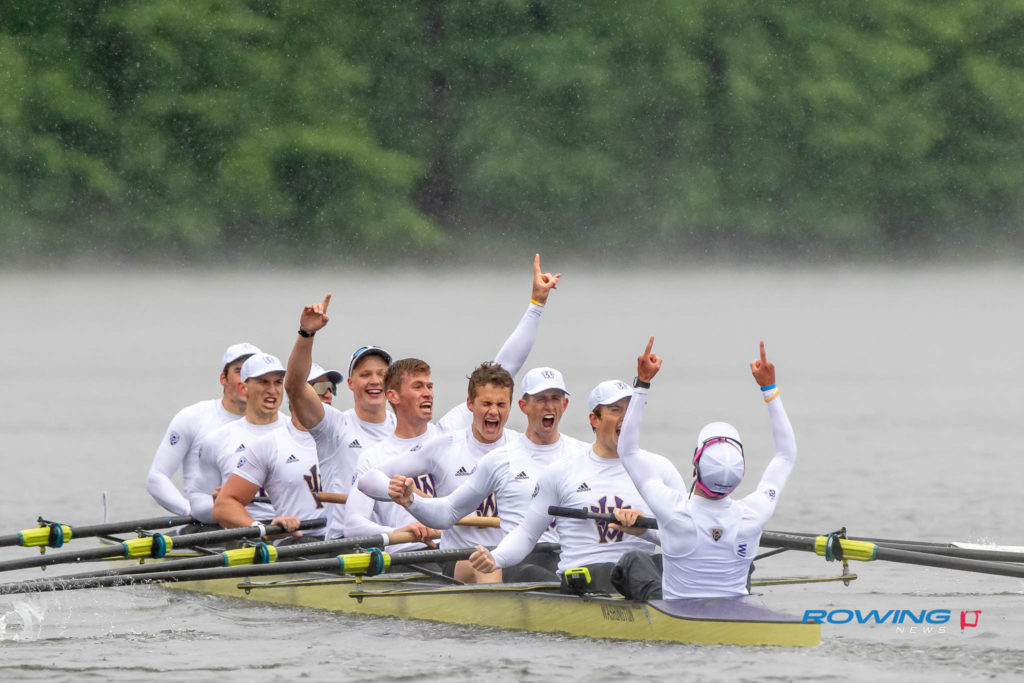
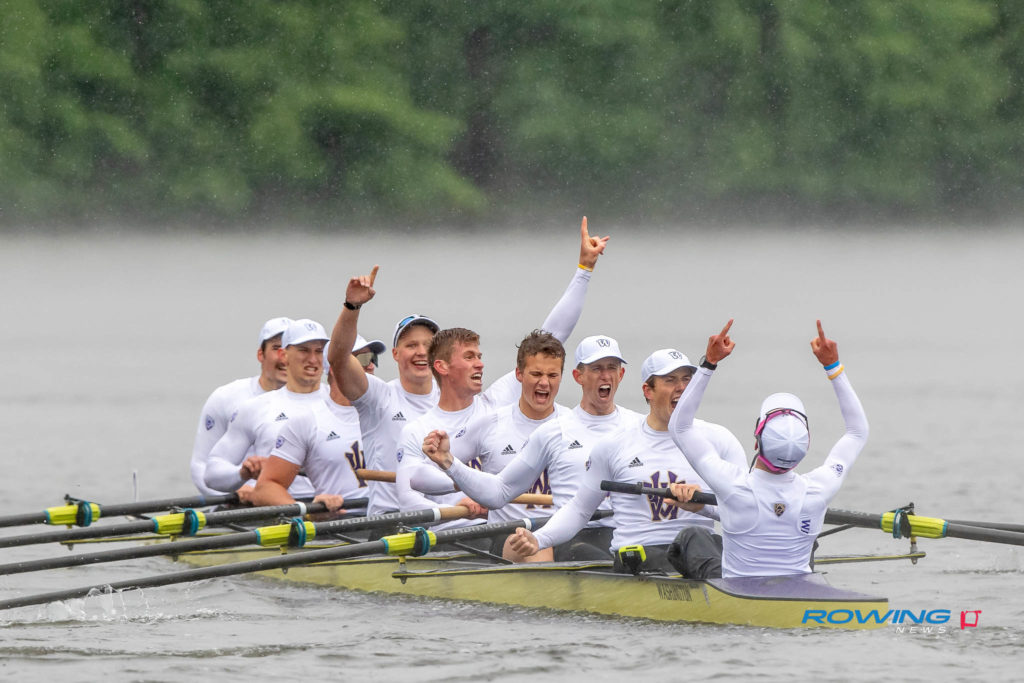
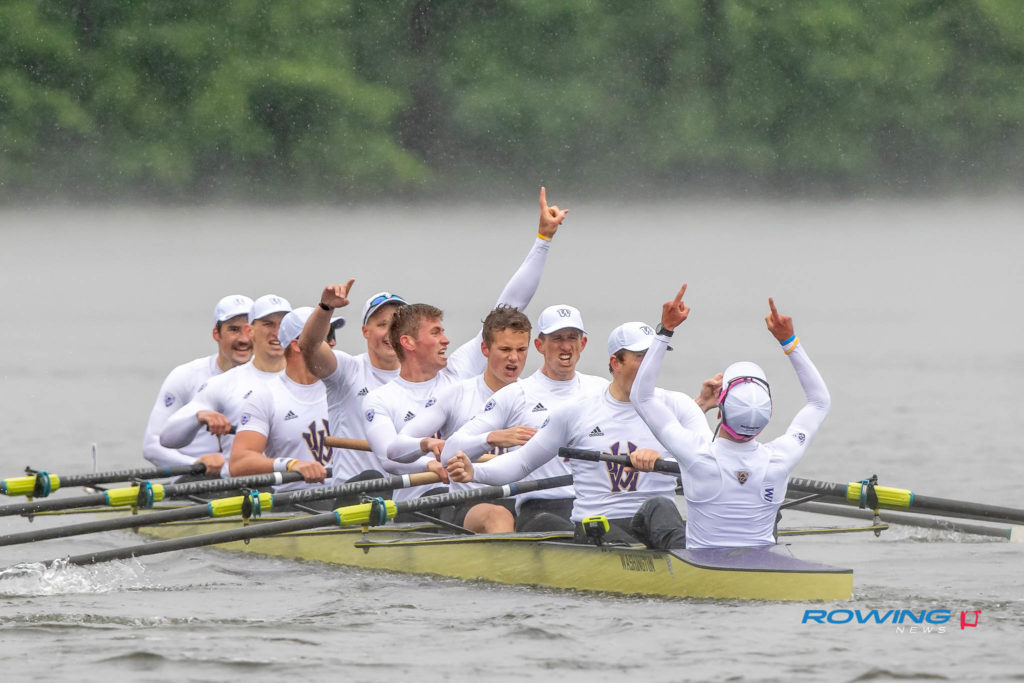
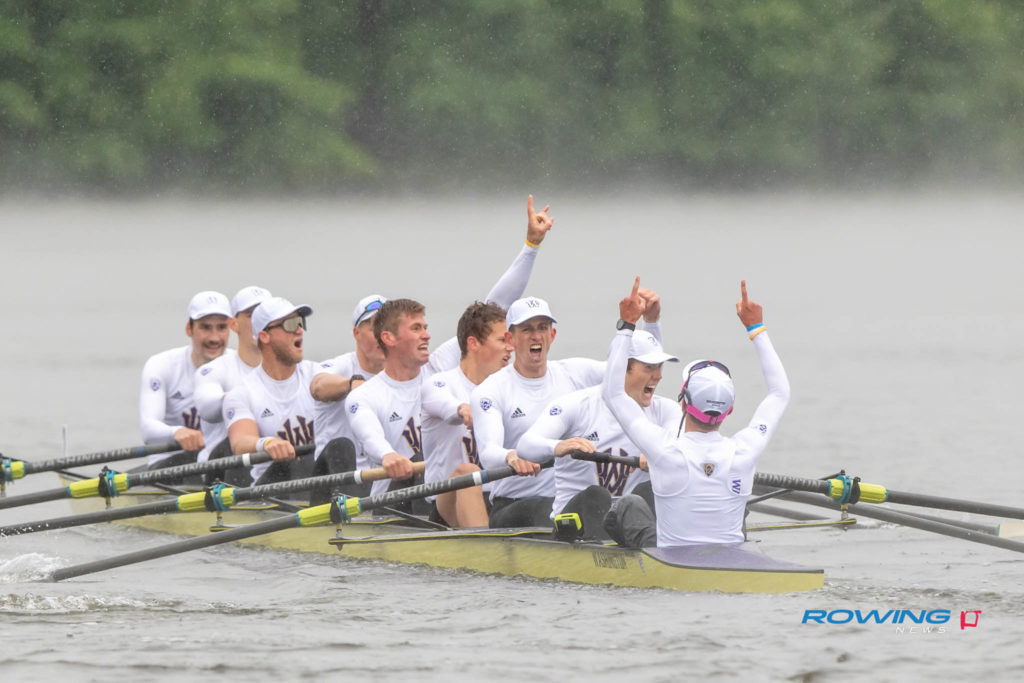
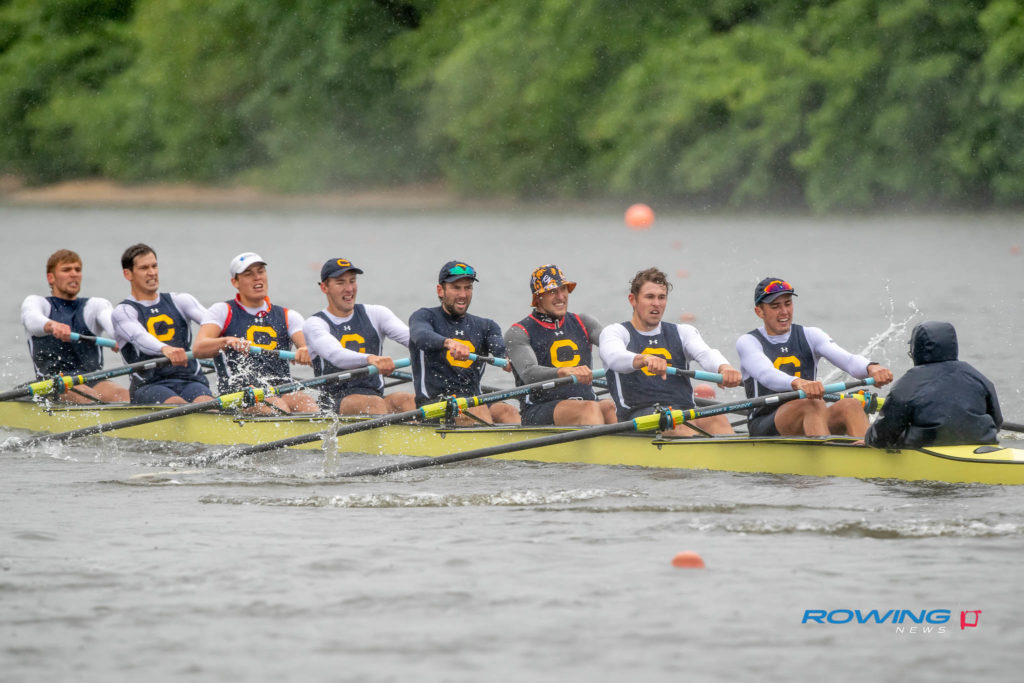
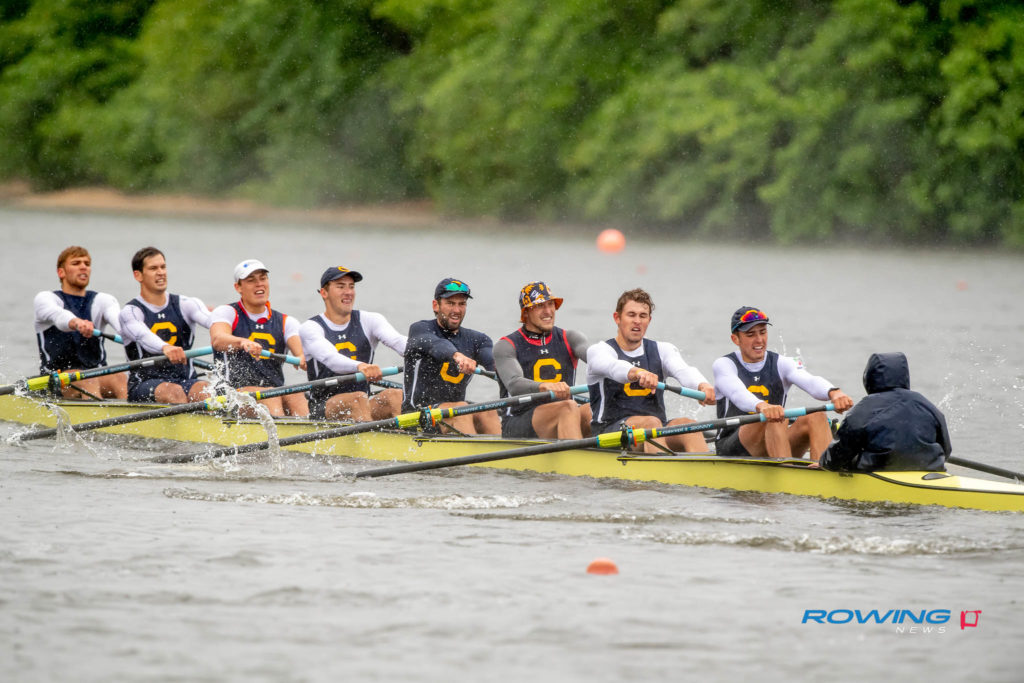
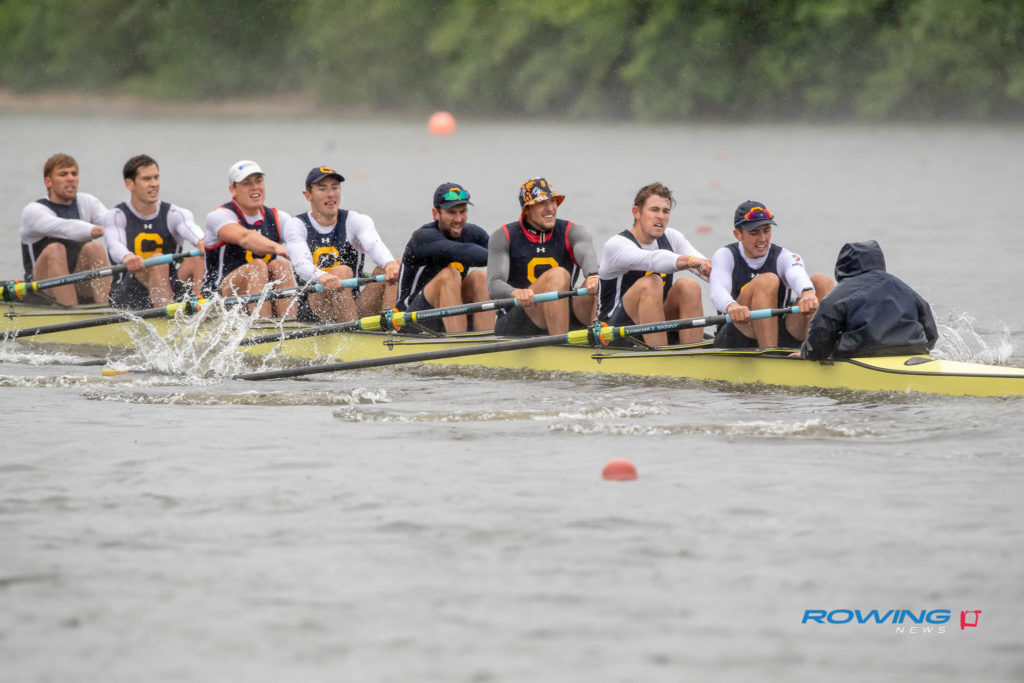
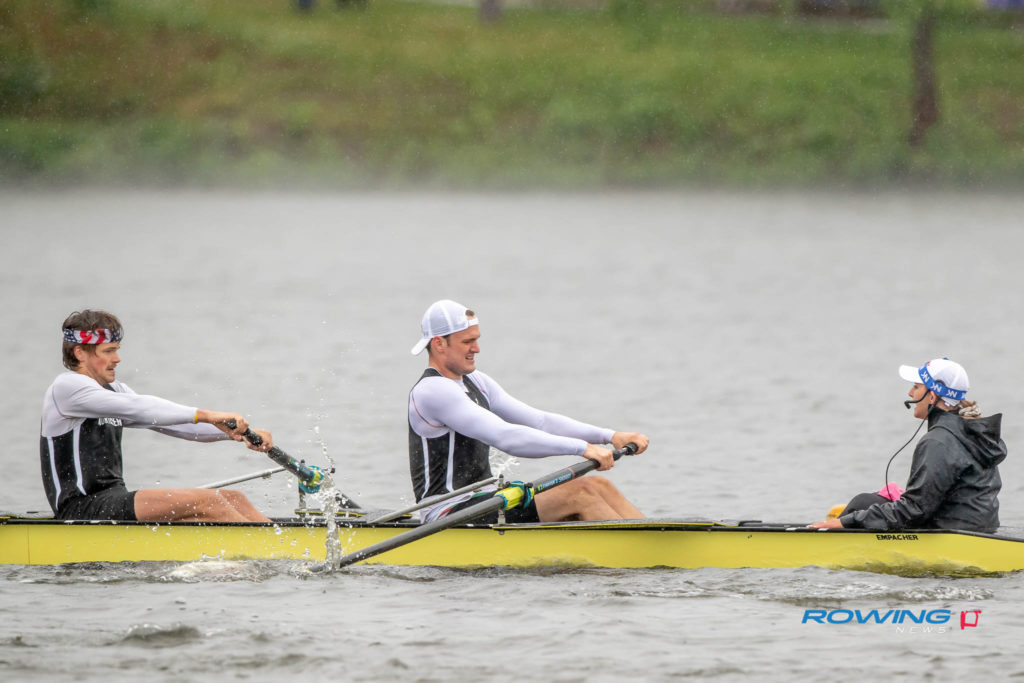
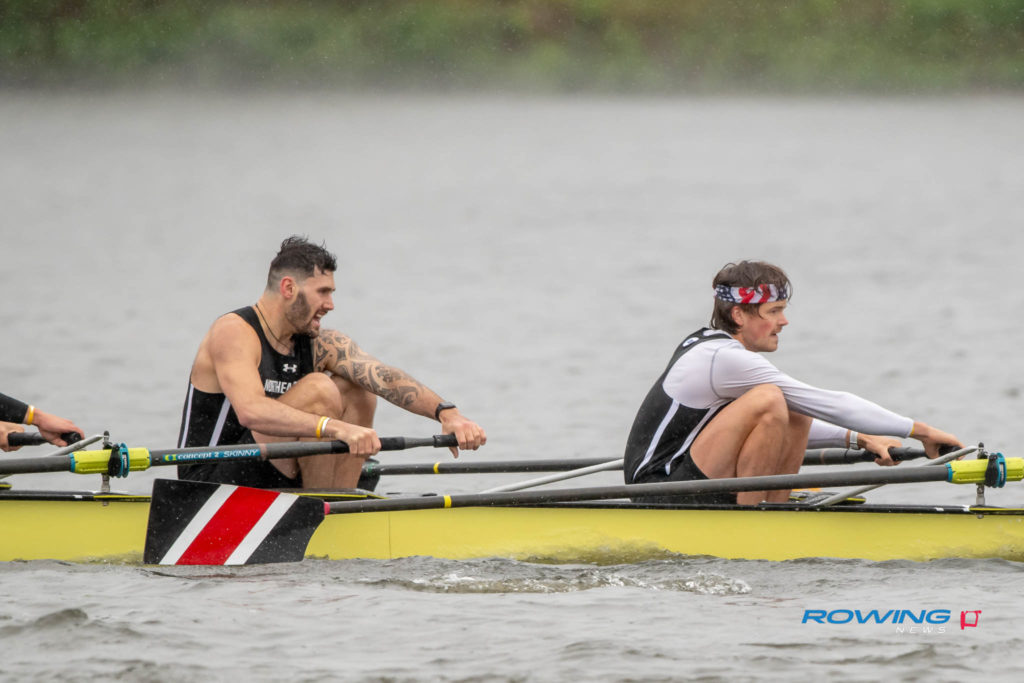
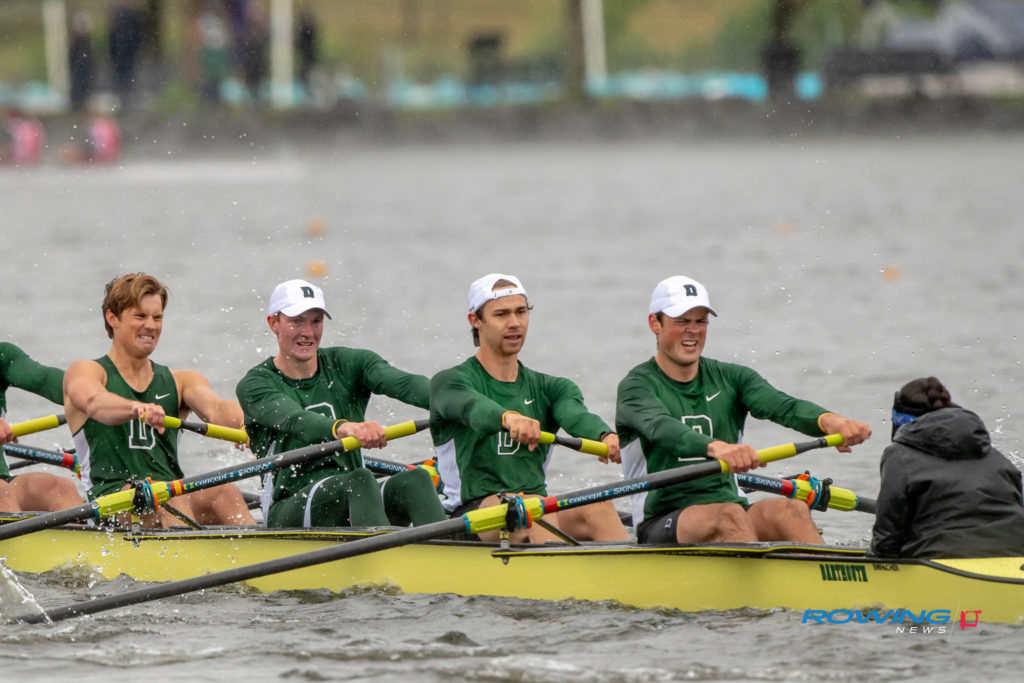
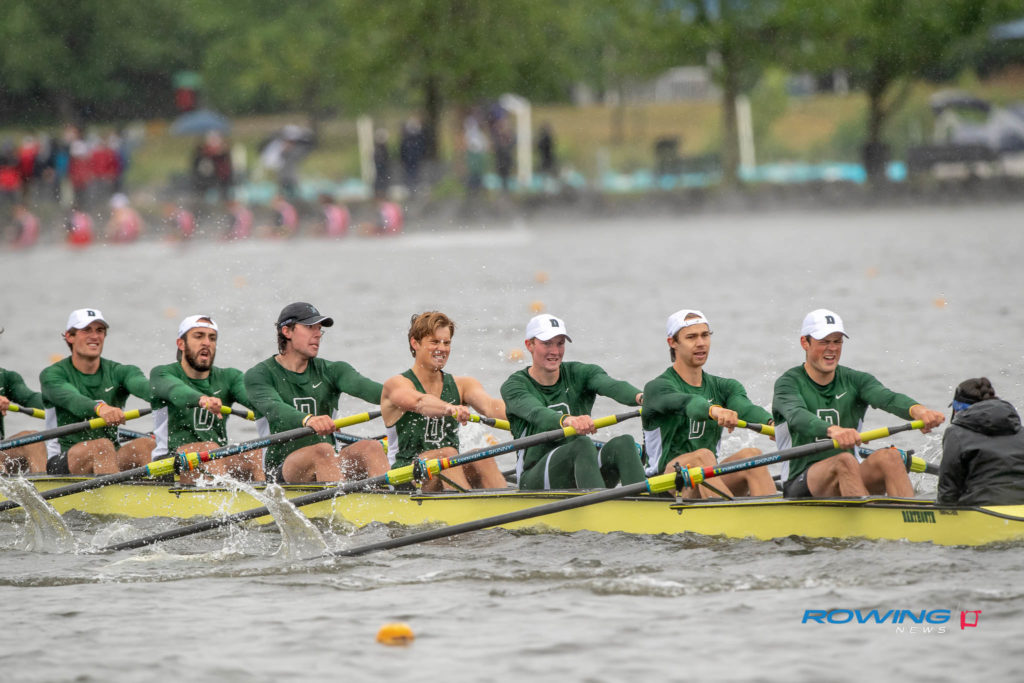
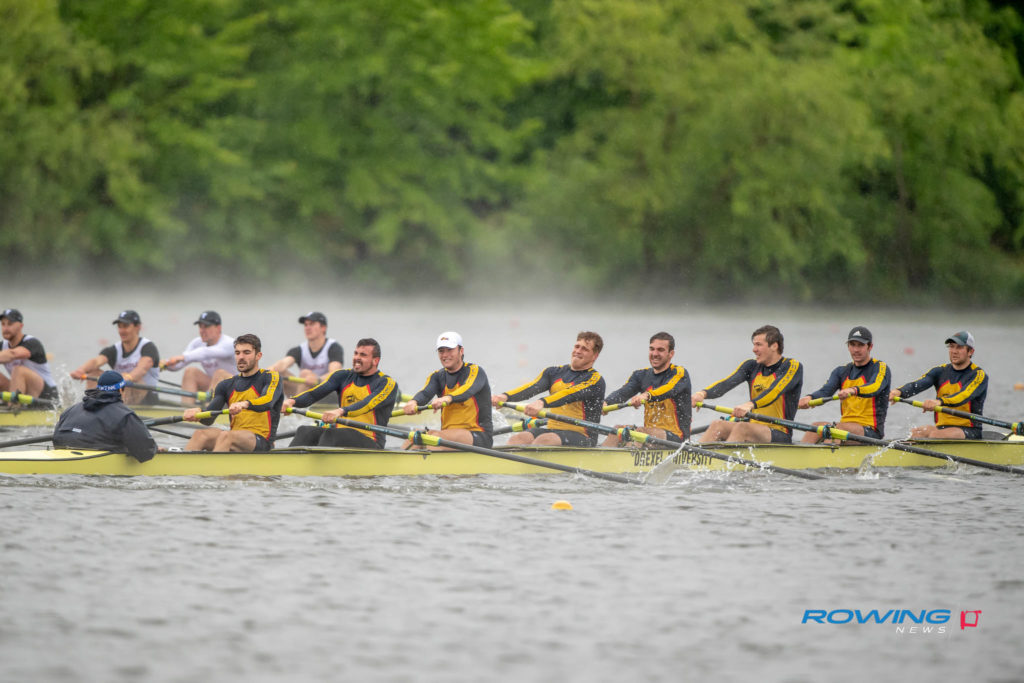
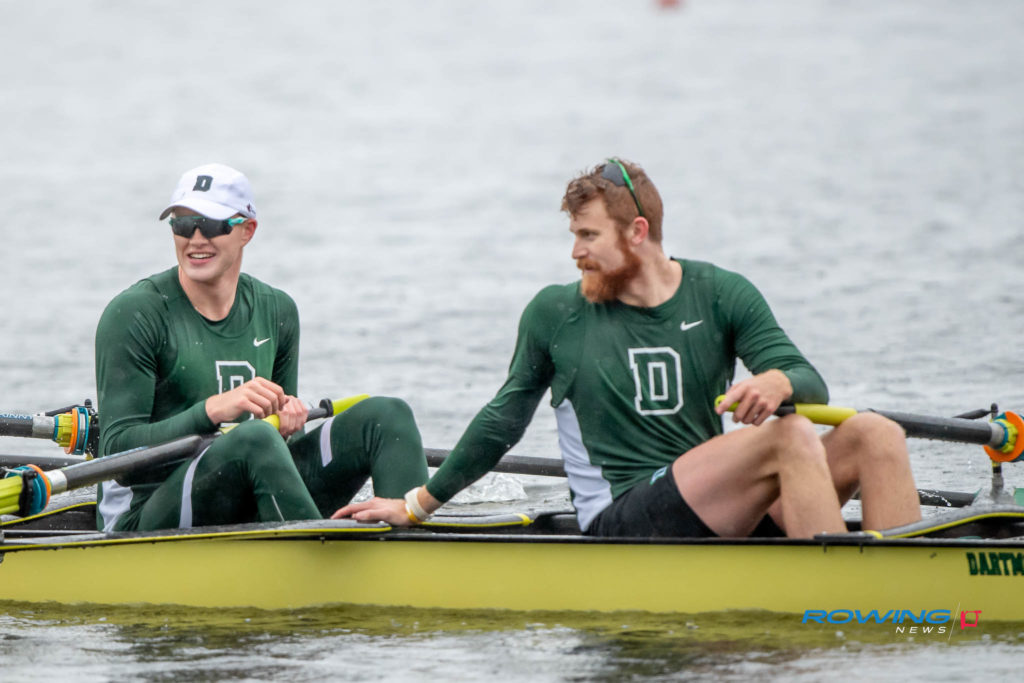
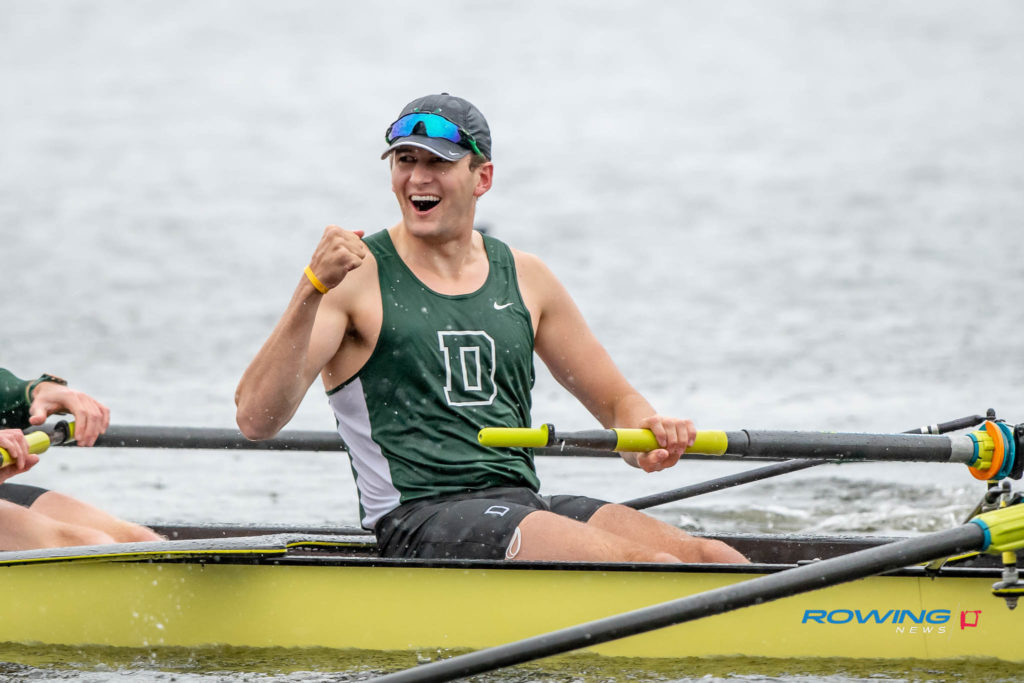
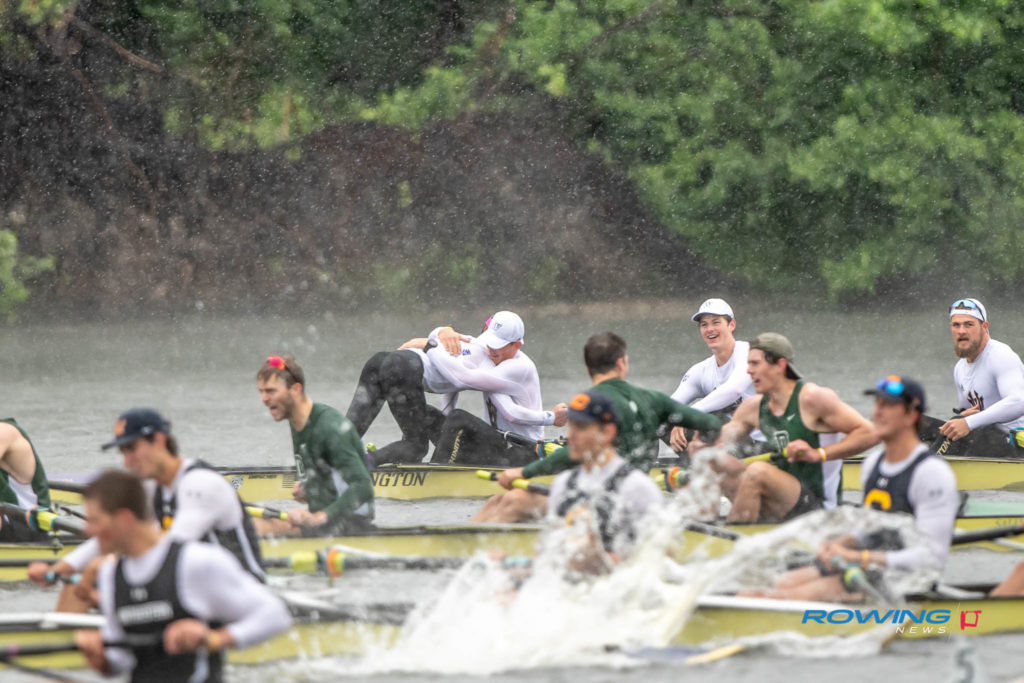
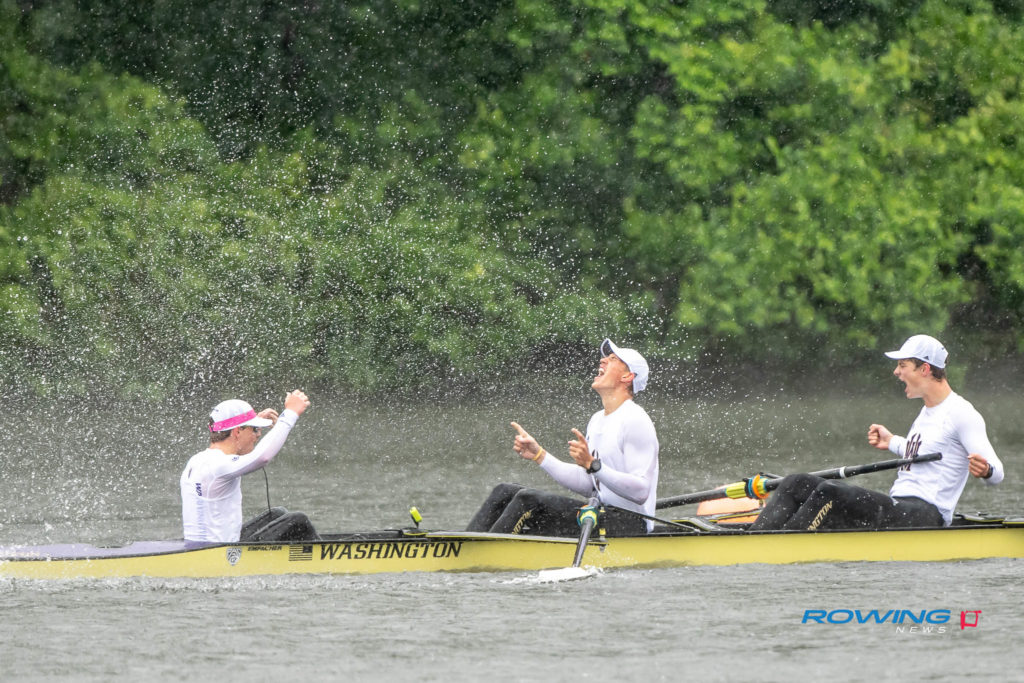
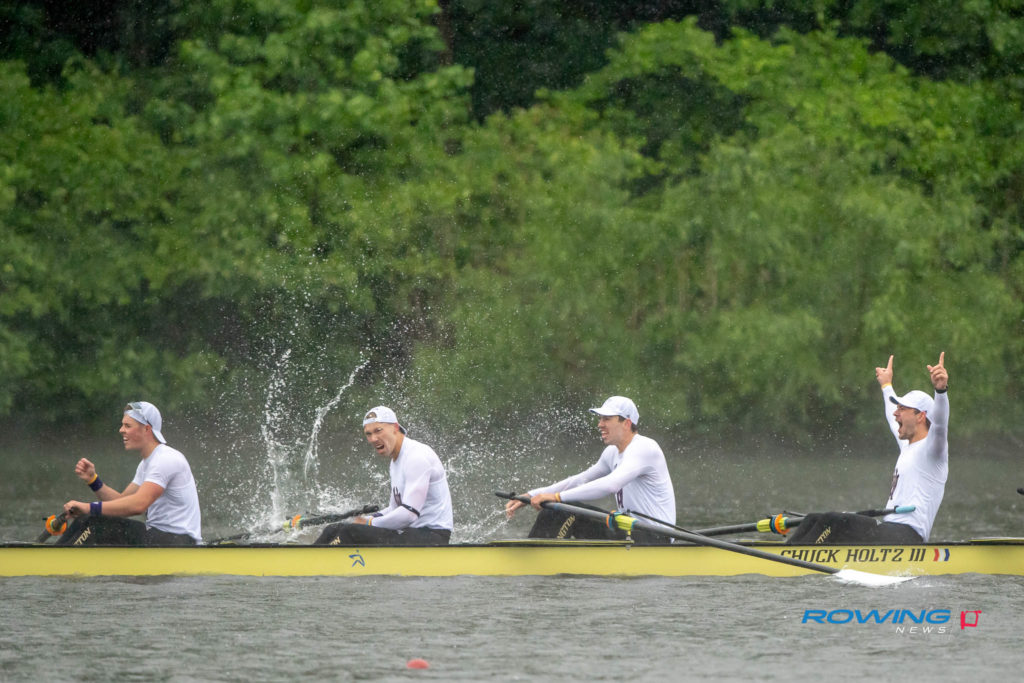
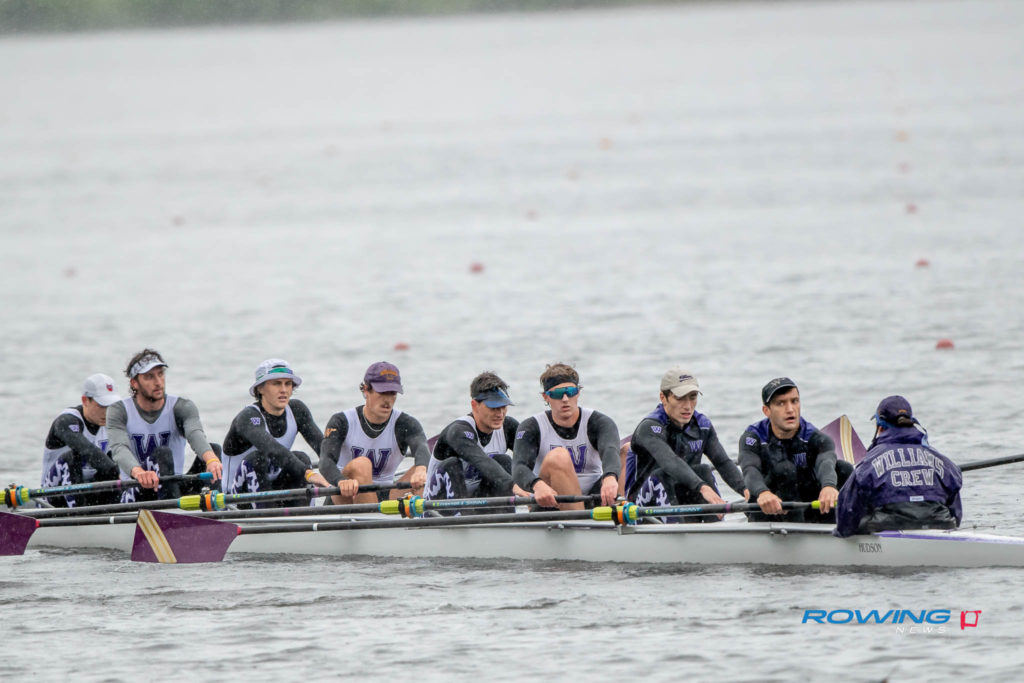
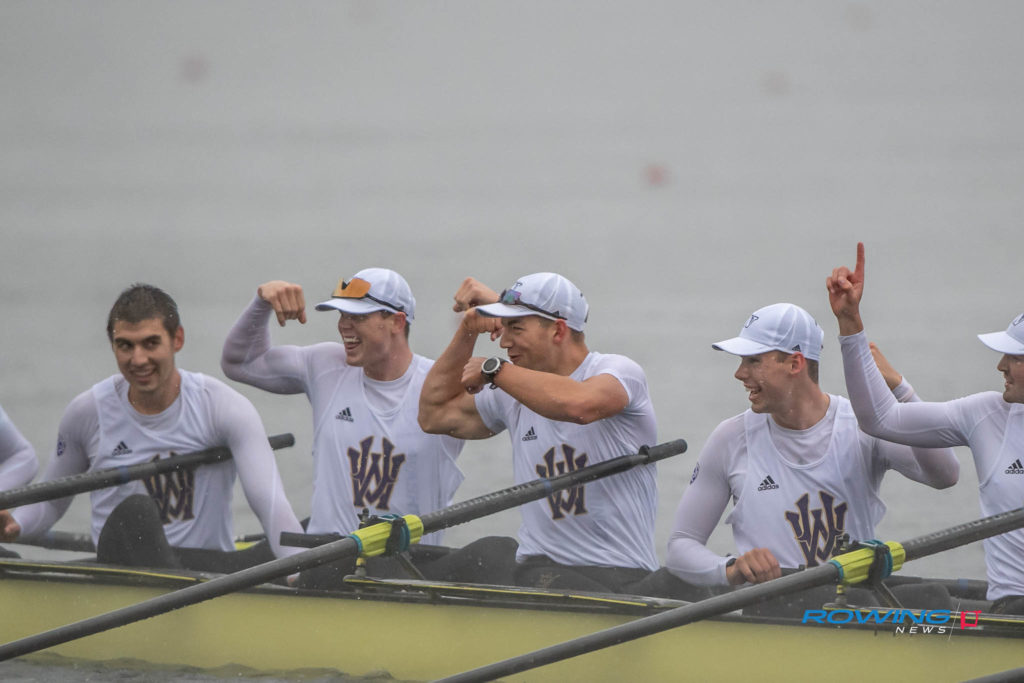
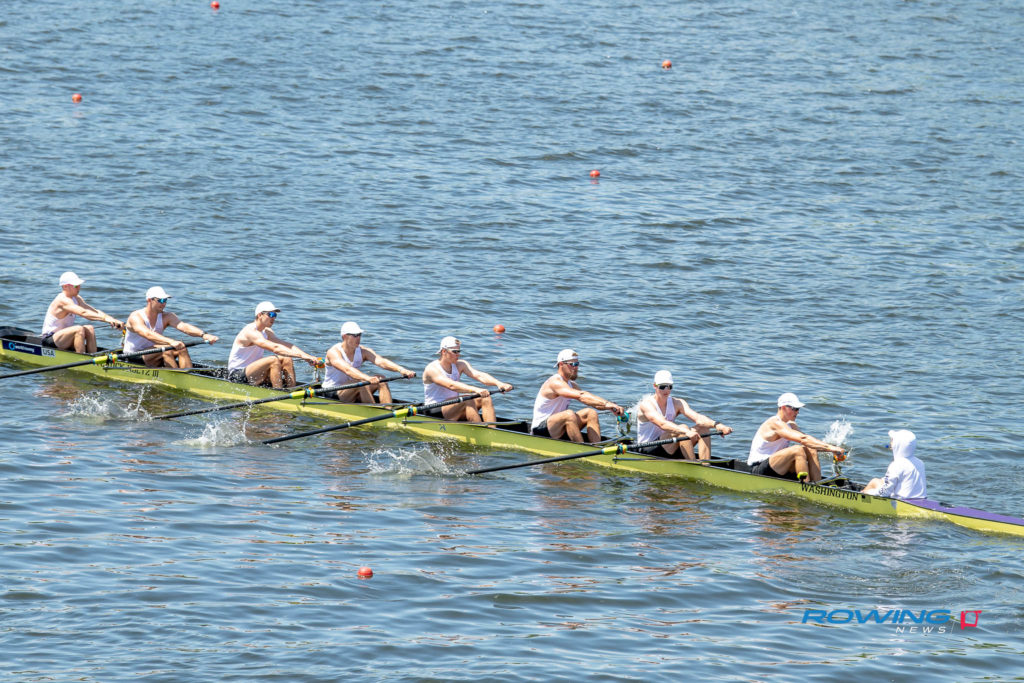
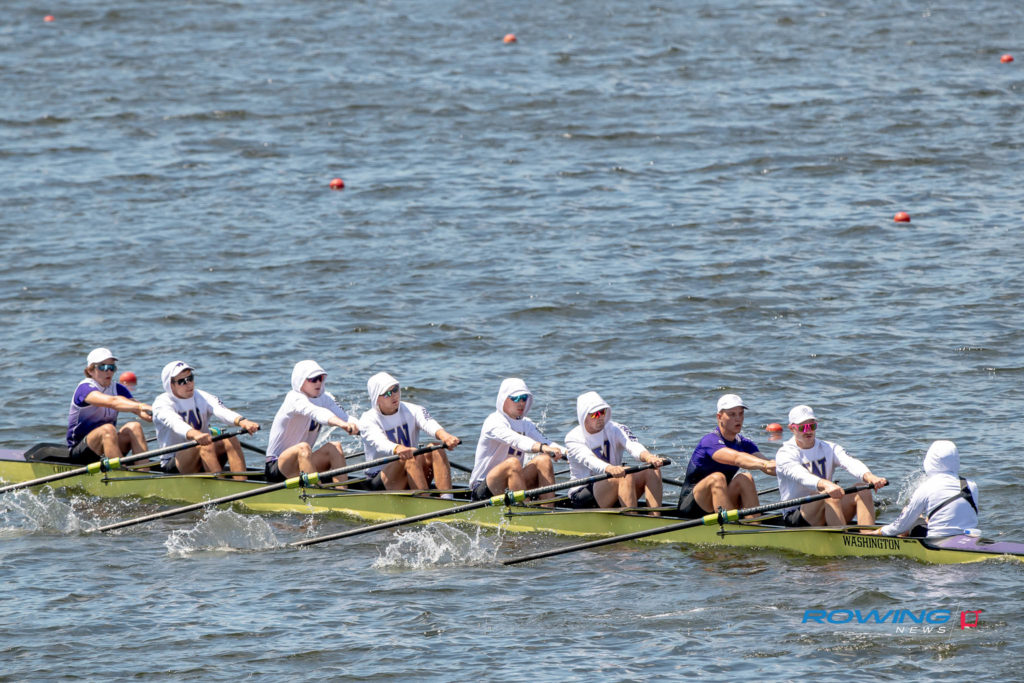
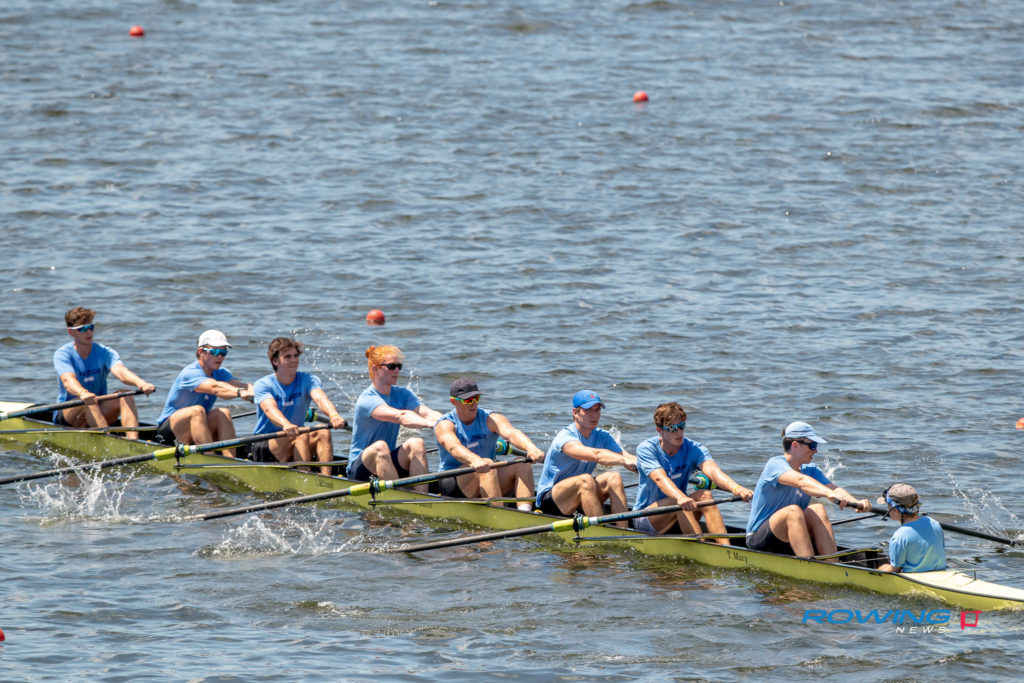
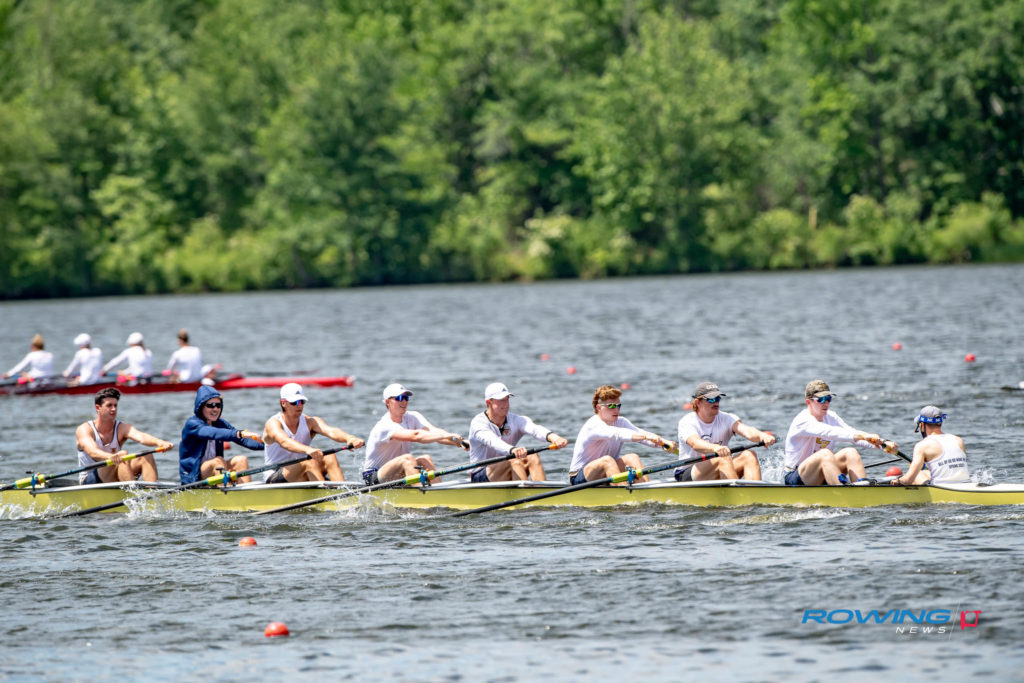
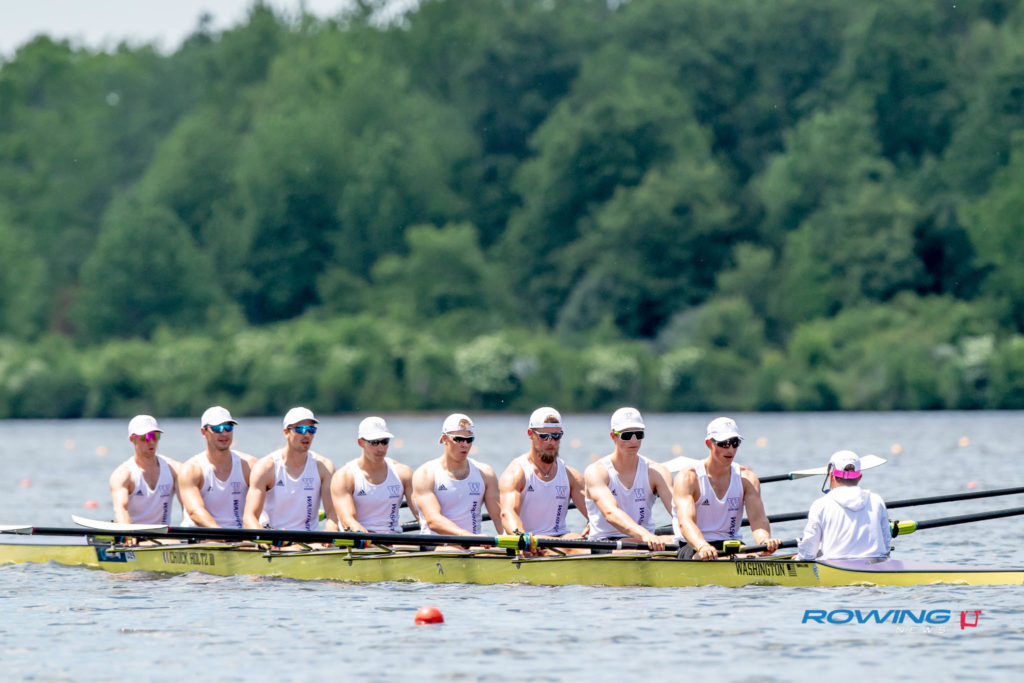
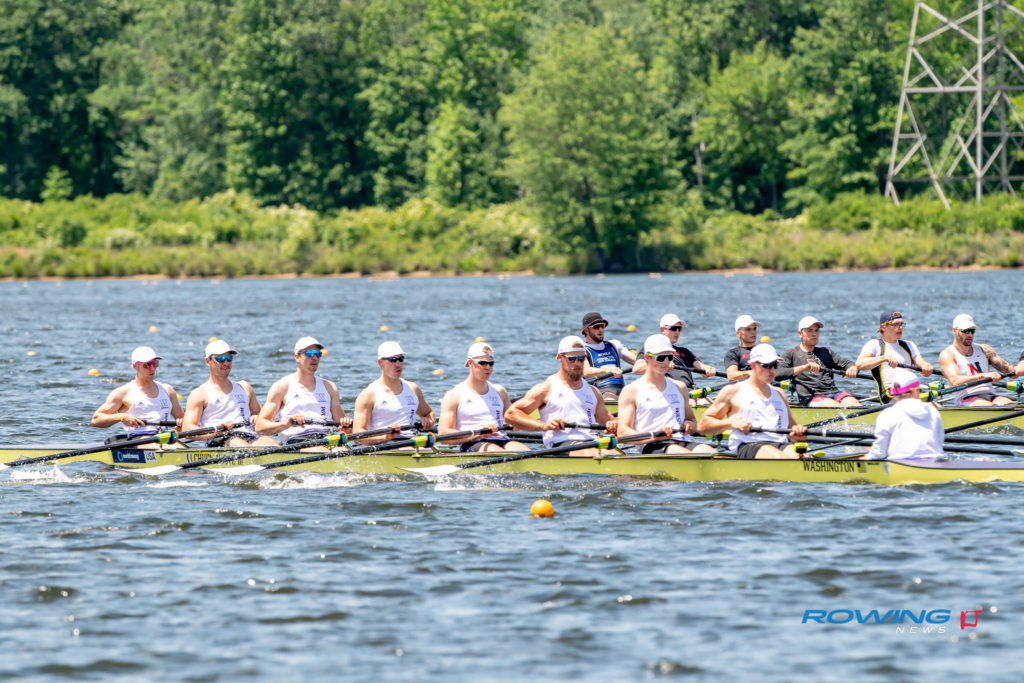
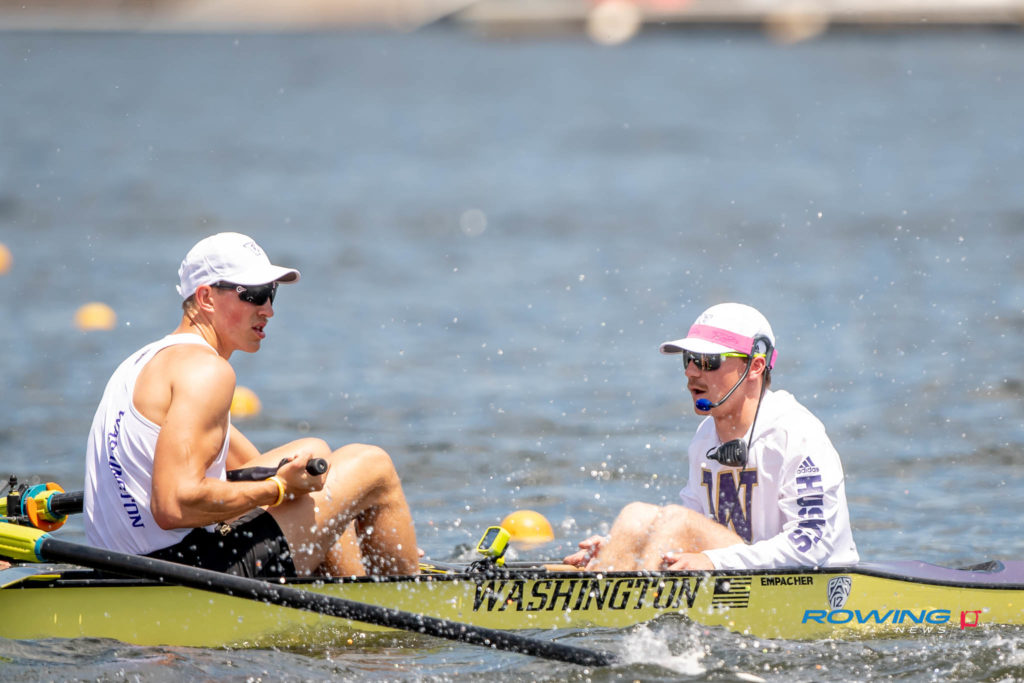
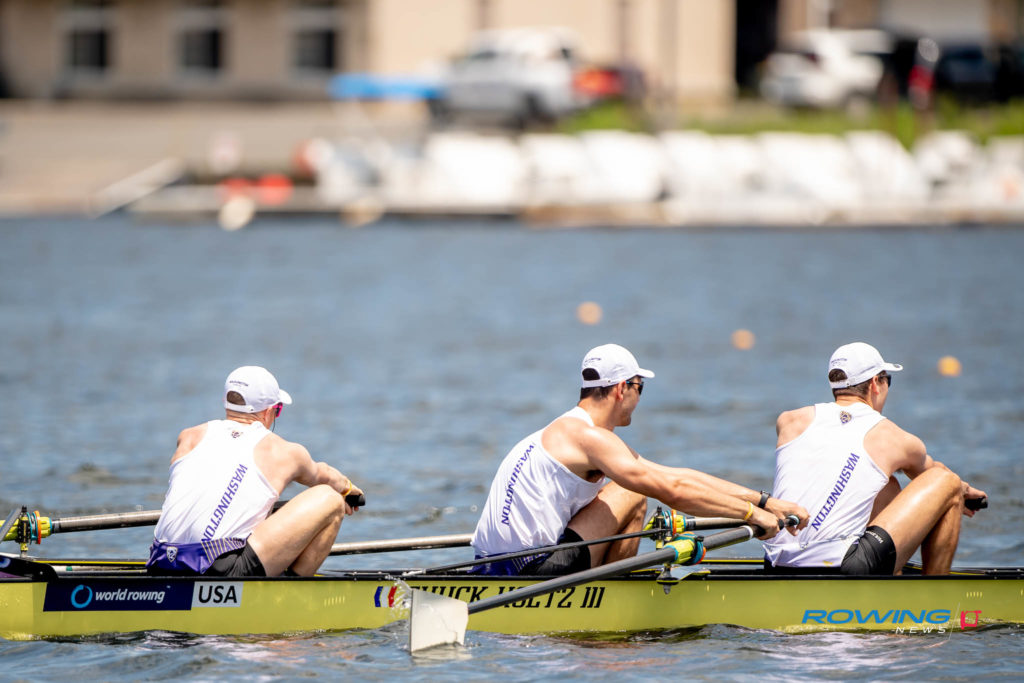
As far as the racing goes, Saturday belonged to the University of Washington, which took home the Varsity Challenge Cup, won four finals and amassed 360 total points. Washington was followed in second by the University of California in both points (344) and the top varsity grand final, and by Dartmouth College, third in points (340) and in the Challenge Cup final.
Dartmouth was one of the top performers both days, finishing second to Washington in the time trial, and sweeping all three of their semifinals Friday afternoon to gain those respective top final races.
For Washington, which has placed second to Yale University the previous three years the regatta was contested, the victory was rewarding, even if Yale was among the crews not present this year.
It was especially so for two students who stayed in school for a fifth year for another chance at an IRA championship.
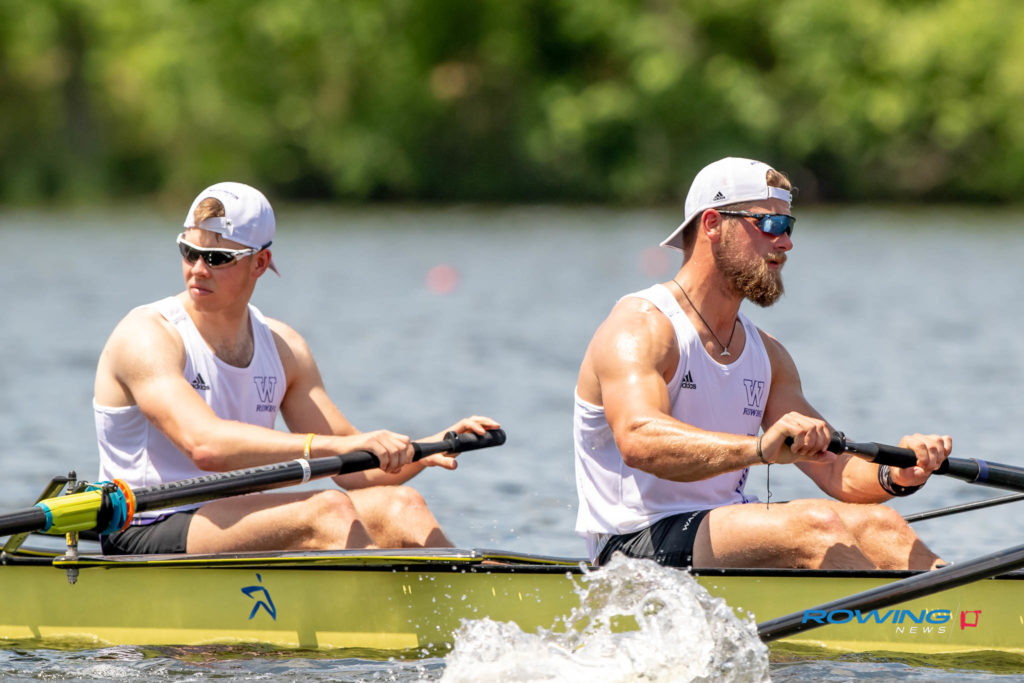
“It’s unbelievable,” said Samuel Halbert, of Redmond, Washington, who is one of those fifth-year athletes. “I came back and had to give it one more shot. To finally do it. This is my third year in the varsity eight, and I’ve fallen short twice in a row. To finally pull through and get it. It’s incredible.
“Luckily, all the guys were really committed to this, right away,” he said. “We were all pulling together, training together, even during quarantine. We pushed it, and once the season started, the battle after that wasn’t the self-motivation, it was more the battling the Covid, and the logistics of that. And this whole year we didn’t have one single case,” he said.
“For the year and a half, we have had, this is incredibly rewarding,” said head coach Michael Callahan. “These are incredibly dedicated student-athletes, and they have been the whole time. What we challenged them to do lifestyle-wise, and training-wise, was something,” he said.
“We almost didn’t know if we could do it. Asking young people to entirely change their lifestyle, move back to campus, and train all year with uncertainty, is difficult.
“But we had no Covid interruption at all, none. The first thing we wanted to do was defeat Covid, and the second thing was to really enjoy the process. You had to be ready for it to be taken away from you again,” he said.
“A couple of years ago, in 2019, we kind of felt like we were just looking for results and we had to get back to enjoying the journey of it, which is kind of cheesy, but I think that’s what this was. Just enjoy the camaraderie. As a coach, I think this is the most rewarding path I’ve had, And I hope [the student-athletes] feel the same way. It’s just really, really special.”
Even without a full field of the top contenders of the past.
“Absolutely. The IRA didn’t have Harvard and Yale for many, many years. And I know that [Yale head coach Steve Gladstone] when he won in those years, he cherished those. That was out of our control. What was in our control was our boat speed and making it a special team – our own strokes and our own gunnels. So, we focused on that.”
Callahan also felt that because of the circumstances — of being grounded with the rest of the world — that this IRA was significantly historic and a testament to rowing and the crews that came to race.
“You have to commend all these students here,” he said. “Everyone has had to make a choice to be with their teams, in their dorms doing Zoom classes. That’s a testament to rowing.
“There was a challenge there and we persevered. That’s what rowing teaches us. That’s exactly what we want the sport to be and here we are as a camaraderie of intercollegiate rowers coming together and having a race.”
Of those who should be credited for this weekend taking place, IRA Commissioner Gary Caldwell is high among them. Caldwell worked tirelessly with the IRA Stewards to rally the schools to come and then helped draw up the covid mitigation and regatta details plan so the event could take place.
In the end, Caldwell said he experienced grateful coaches, athletes, and officials.
“Well, I think that pretty uniformly, the word I use is grateful, and I think that’s how pretty much everybody feels,” he said. “I haven’t had a single negative conversation with a coach who thought that we made decisions that were not in the best interest of his or her athletes.
“Even with the bad weather yesterday, watching people come off the water, kids were really happy with the opportunity to race. I watched all the races [Friday] except two, and although the conditions up at the starting line were pretty gnarly, boats were coming off the water dry, and the level of racing was pretty outstanding. You can’t ask for more given the weather conditions.
“Wandering around the athlete area it’s pretty clear that people were pumped.”
There were few surprises on the first day of competition at the 2021 NCAA Women’s Rowing Championships at Nathan Benderson Park in Sarasota, Florida.
No surprises doesn’t change the fact that crews are racing for a national championship title and anything can happen with such a vast field of competitors and multiple days of racing.
“The NCAA Championship can be a real grind, with some tough racing three days in a row. It feels good to have accomplished what we needed to do on day one,” said Texas head coach Dave O’Neill. “This was the first NCAA Championship race for much of our team, and I’m really impressed with how everyone handled everything.”
“All of our boards raced exactly to plan,” O’Neill said. “It’s now all about preparing for the next step.”
In the DI women’s first eight event, Texas and Washington won their heats with times of 6:15.586 and 6:14.372, respectively.
The same was true of the DI second eight events with Texas and Washington also winning their heats.
In the four DI four events, Texas, Washington, Stanford, and Ohio State were the winners of their heats with Washington posting the fastest time of the four winners.
The DII races of the day led with the Edmond, Oklahoma-based University of Central Oklahoma, and defending champs putting on a commanding performance winning their heats in both the four and the eight with the fastest times for both in the DII competition.
“We were so internal the entire race, which is something we’ve focused on all season. It felt relaxed and strong, which was exactly how we wanted to race today,” Central Oklahoma senior Shelby Wackerly said. “After today’s race, I am even more excited to go out on Sunday and throw down an even faster time. Having not raced any of the crews that are here this season, it was nice to get a feel for what we’re up against.”
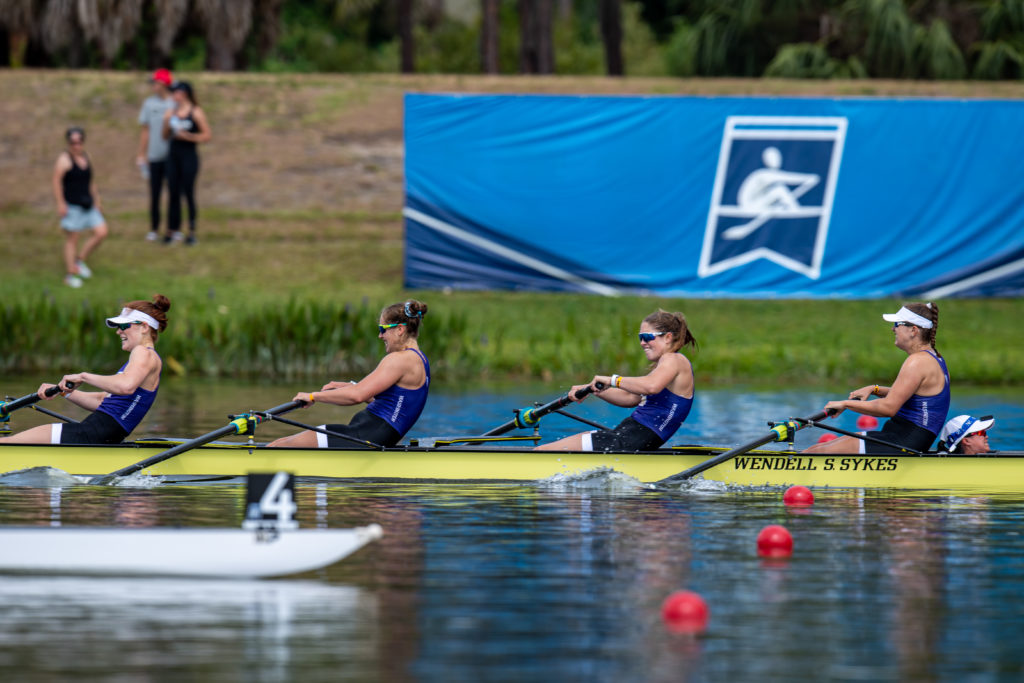
Bates College had the fastest results of the DIII first eight and second eight events. In tomorrow’s first eight grand final the Bobcats will race Wesleyan, Ithaca, and Hamilton. The same crews with face off in the second eight grand final.
Saturday’s racing will include semifinals, reps, and the DIII finals — but not every crew will race as some crews have advanced directly to Sunday’s final.
“We are grateful for the rest day, and we plan to use it to gain even more speed,” Wackerly said. “It’s reassuring that all of us feel like we still have that extra nitrous we haven’t tapped into yet. We’re ready and we’re excited.”
Racing at Nathan Benderson Park will begin tomorrow at 8:12 a.m. A schedule and results can be found here. The live stream can be found here.
The same day that Princeton University women’s lightweight rowing team was ranked number one in the country for the first time in their history, the entire season was canceled.
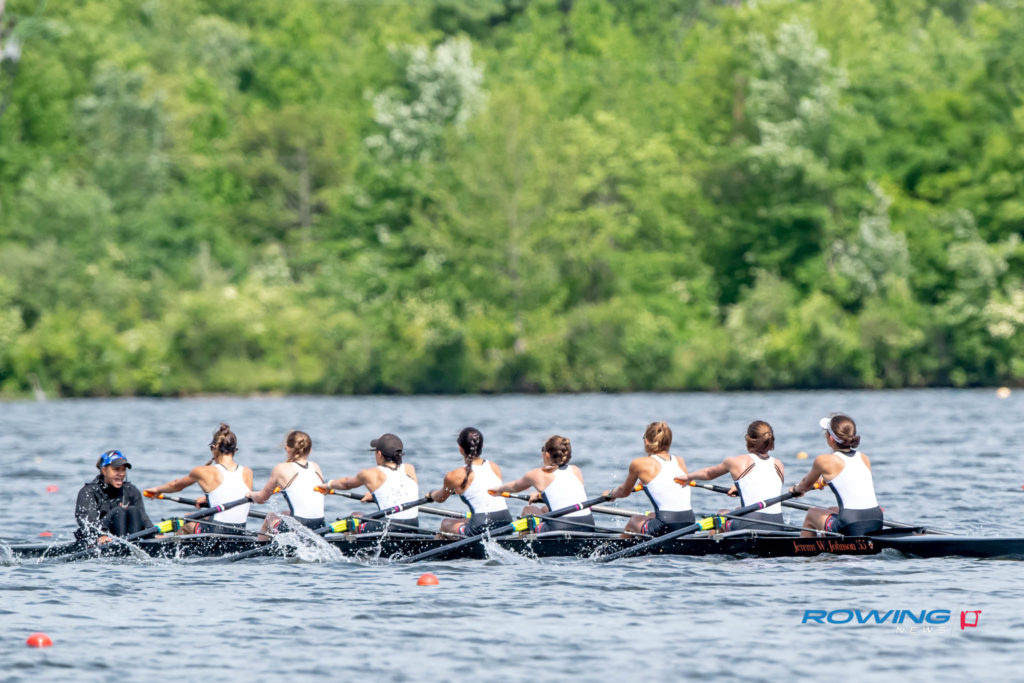
Today — more than a year later — Isabelle Chandler, four-seat of the Princeton women’s lightweight eight, stood with a first-place medal dangling around her neck that her team won at the Intercollegiate Rowing Association Championship Friday.
“From the day that our season got canceled last season, our coach told us we were training for IRAs 2021,” said Chandler.
“I’m so grateful that we got this chance,” added Chandler’s teammate, Lauren Sanchez. “And so grateful for this team and all the work they put in. The training through uncertainty was really tough, but we’re tough girls. We’re really proud of the end product.”
Princeton’s win came on the first day of the 2021 IRA National Championship Regatta. In a normal year, the lightweight championship races would have been rowed on the same day as the men’s heavyweight events.
But this is no ordinary year, and no ordinary IRA Championship. Rescued from months of canceled races, the 2021 IRA was shortened to two days, with time trials for the men’s heavyweight events taking the place of heats, and the lightweight events slated for straight finals rowed on the first morning of the regatta.
And they were the highlight of the day.
After a morning that was mostly warm and calm, the lightweights rowed to the line under a building wind that made conditions challenging. But it was not enough to stall the event and the lightweight championship got started with a win in the double for Boston University, followed by victory for Standford University in the four.
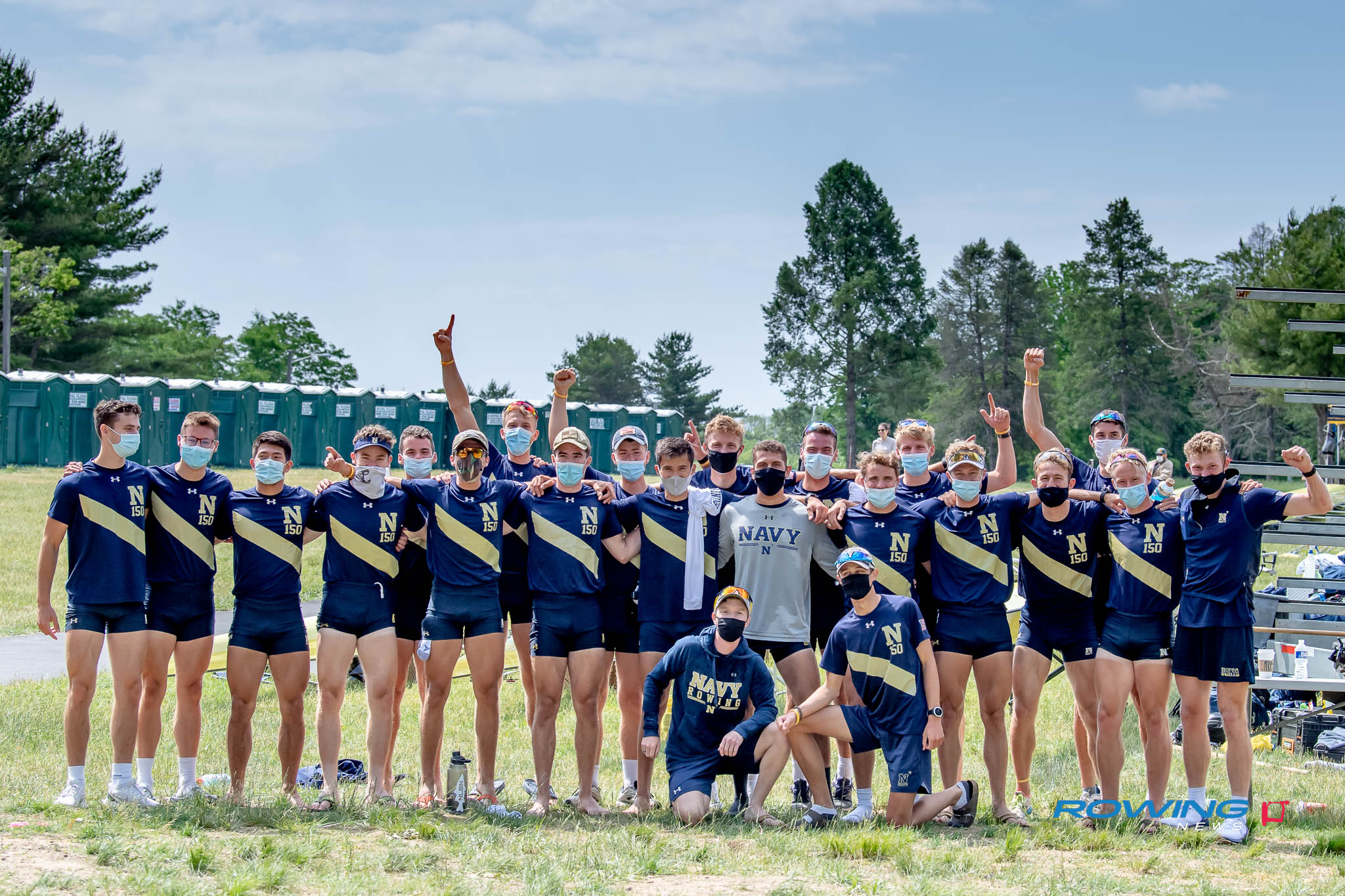
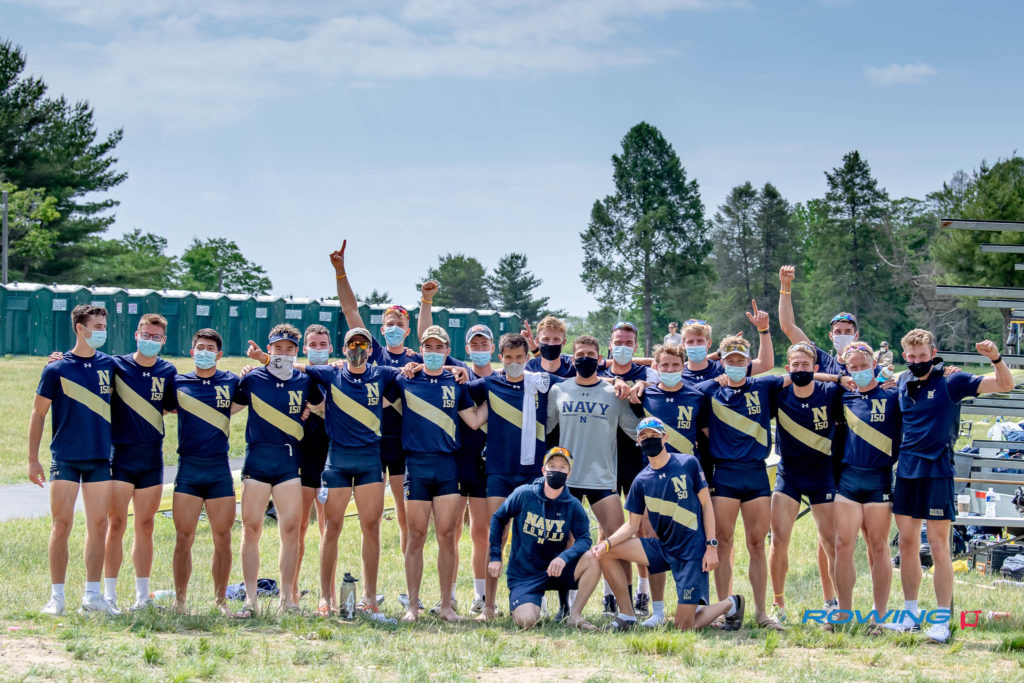
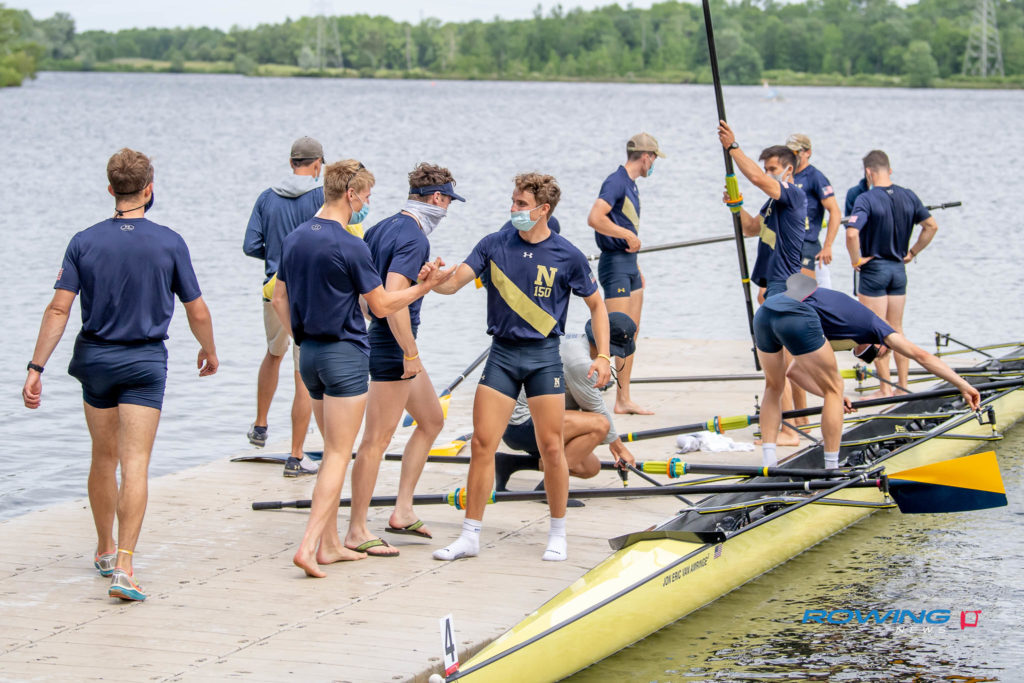
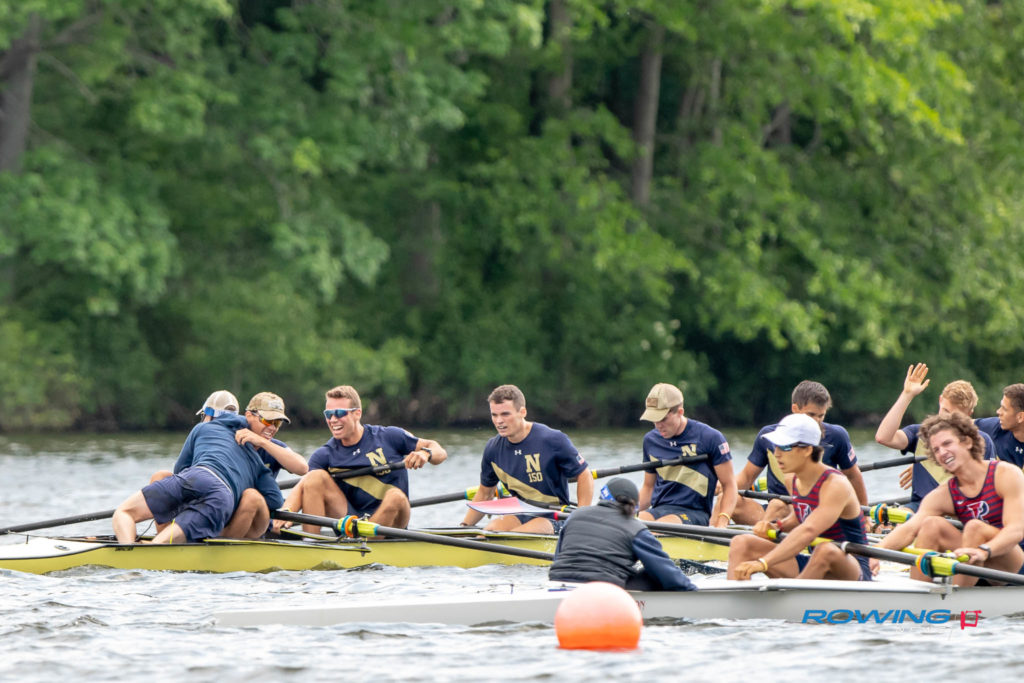
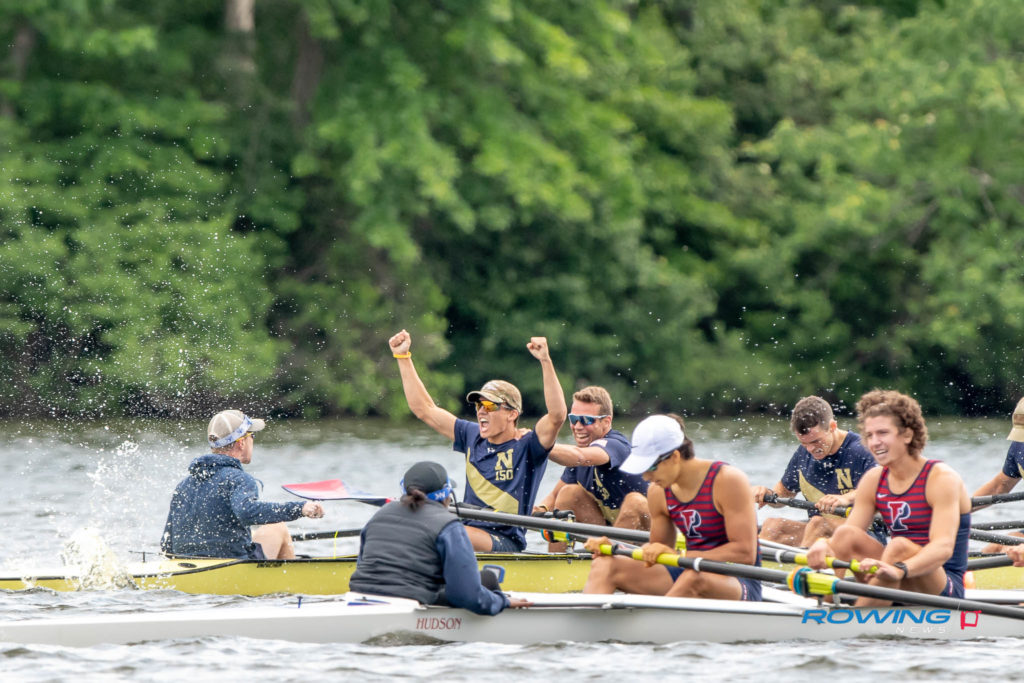
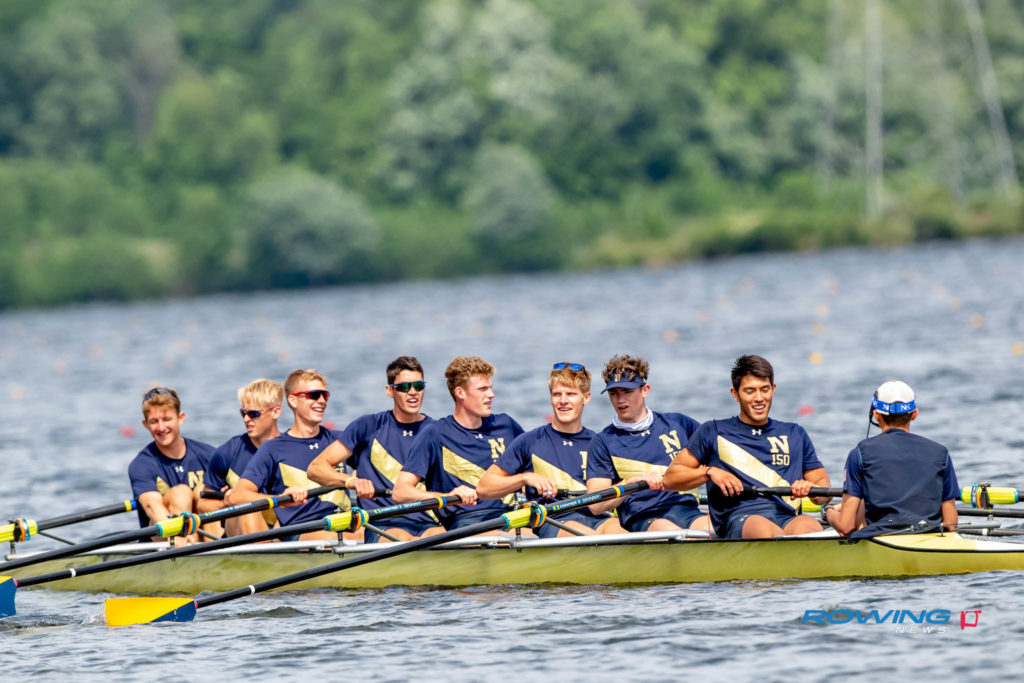
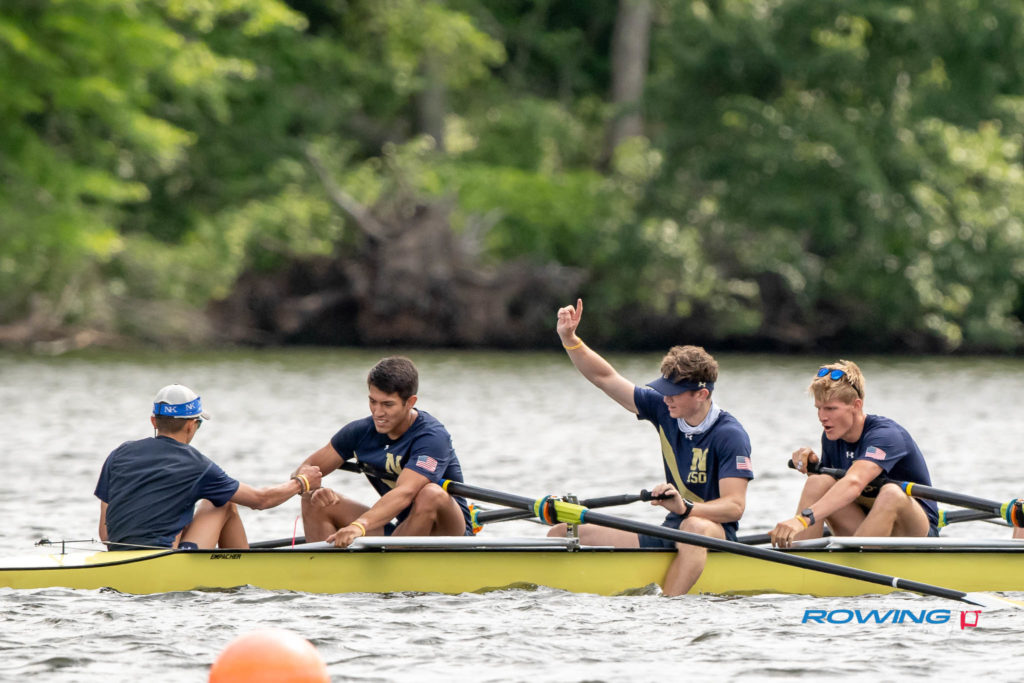
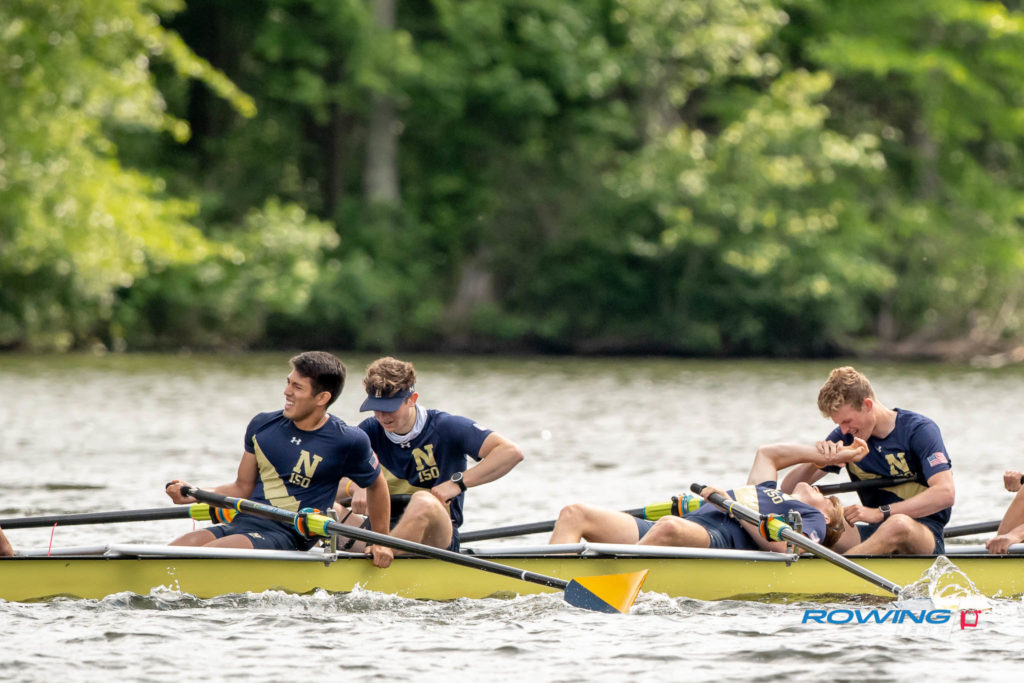
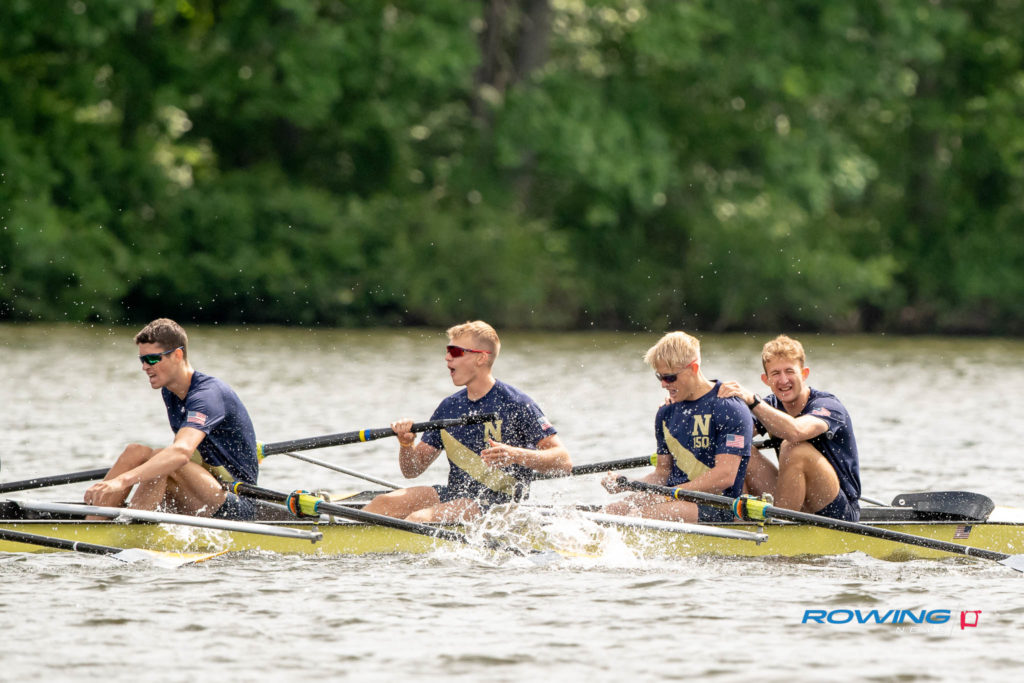
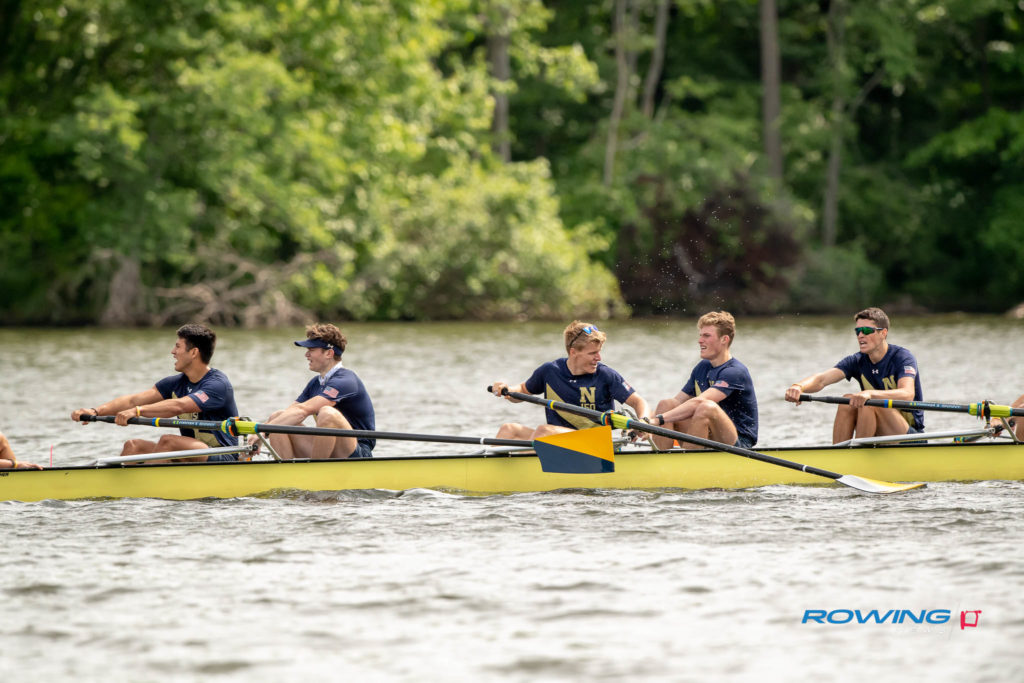
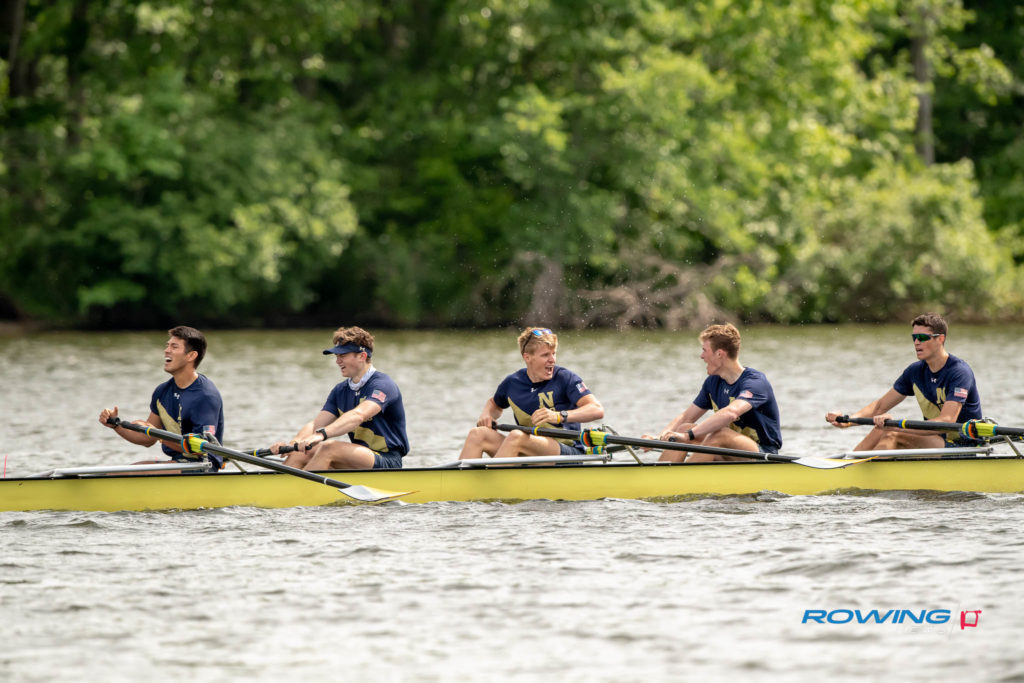
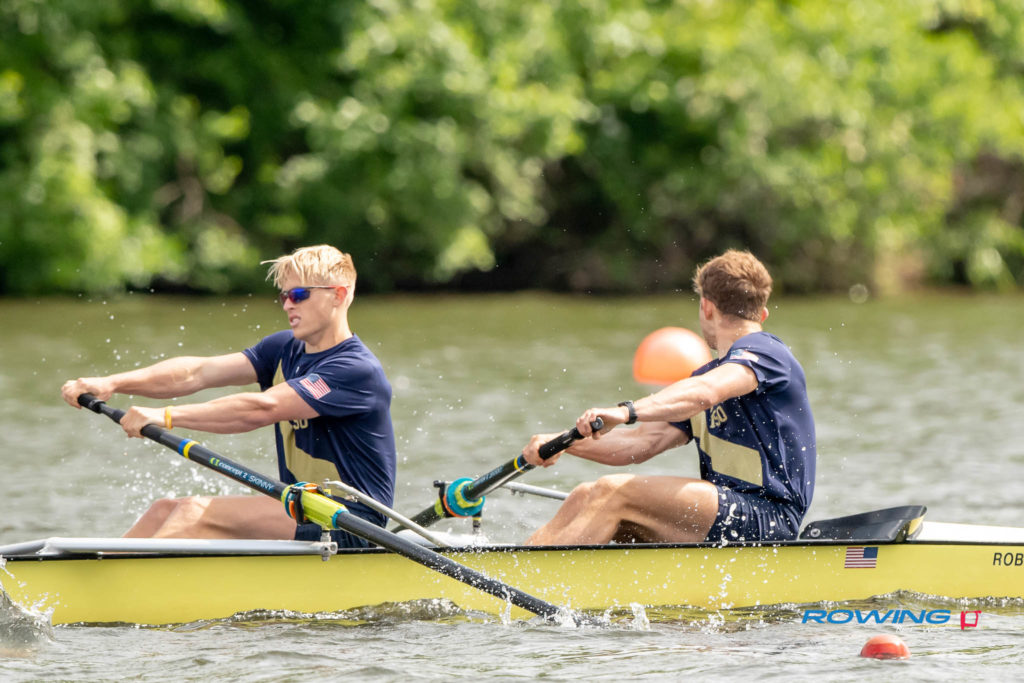
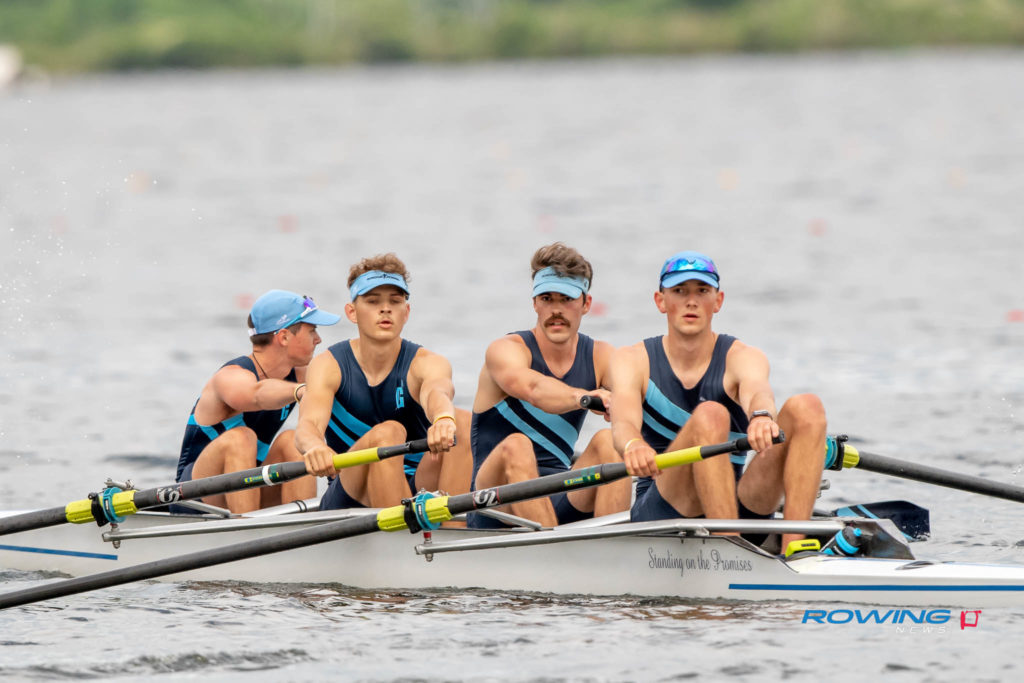
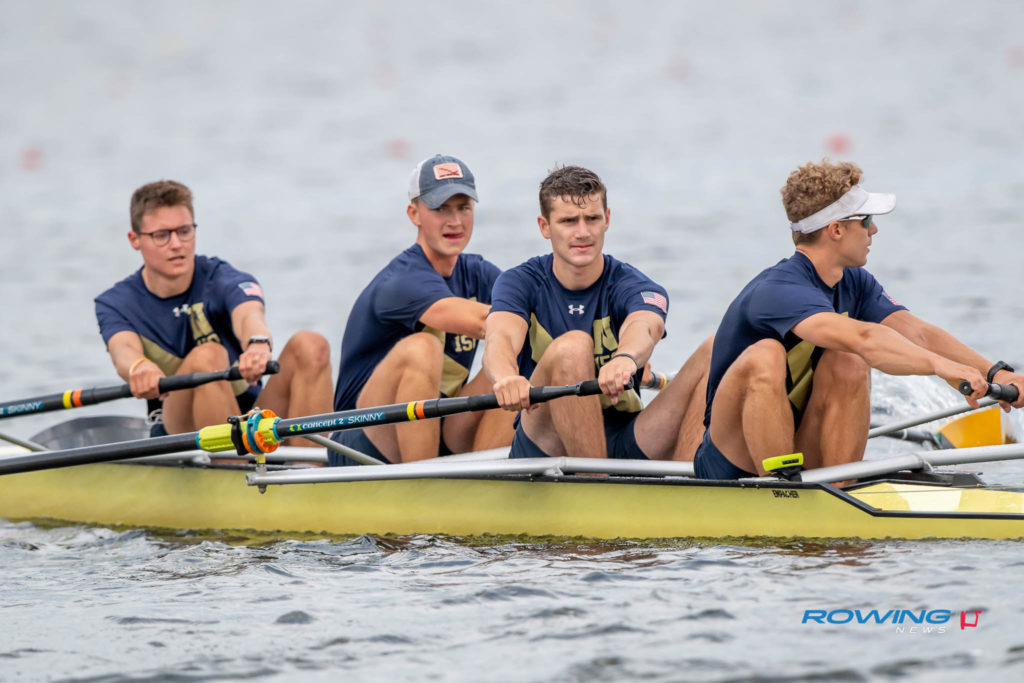
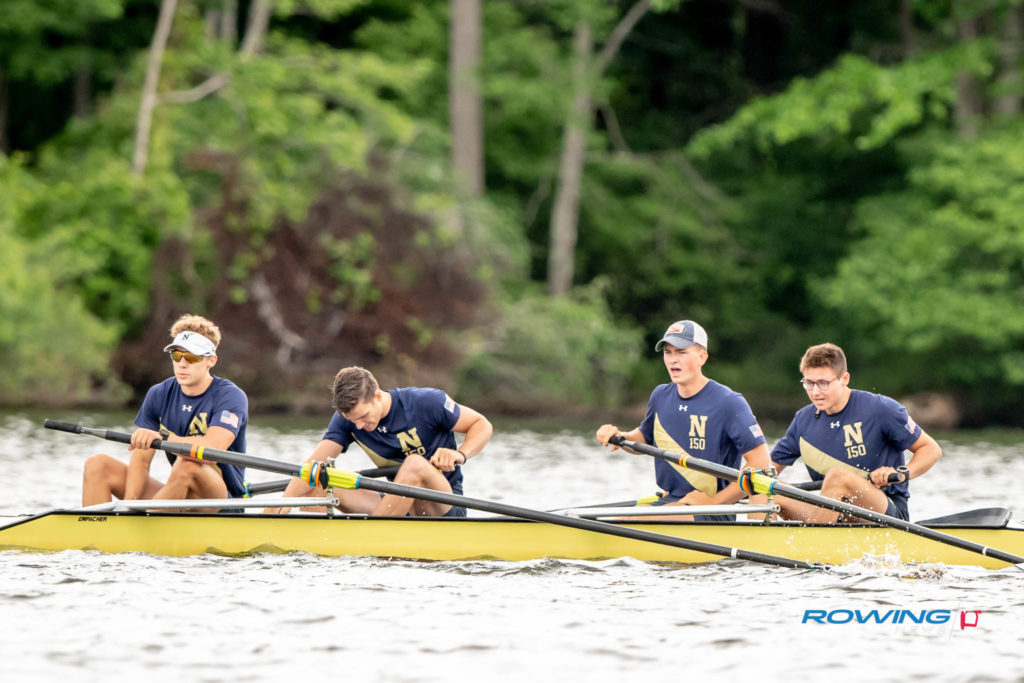
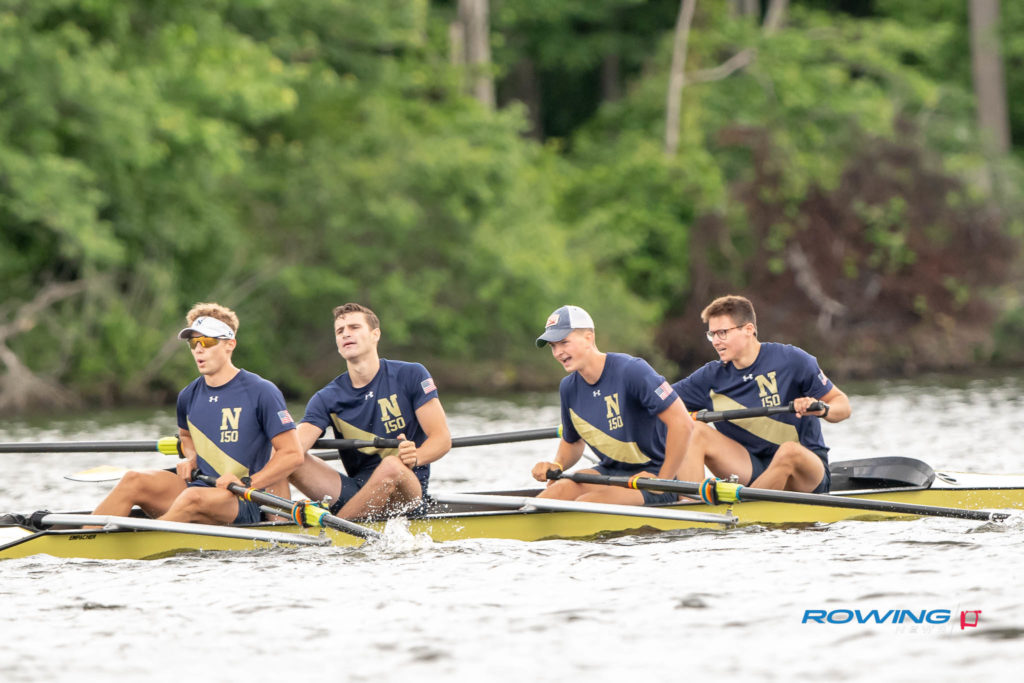
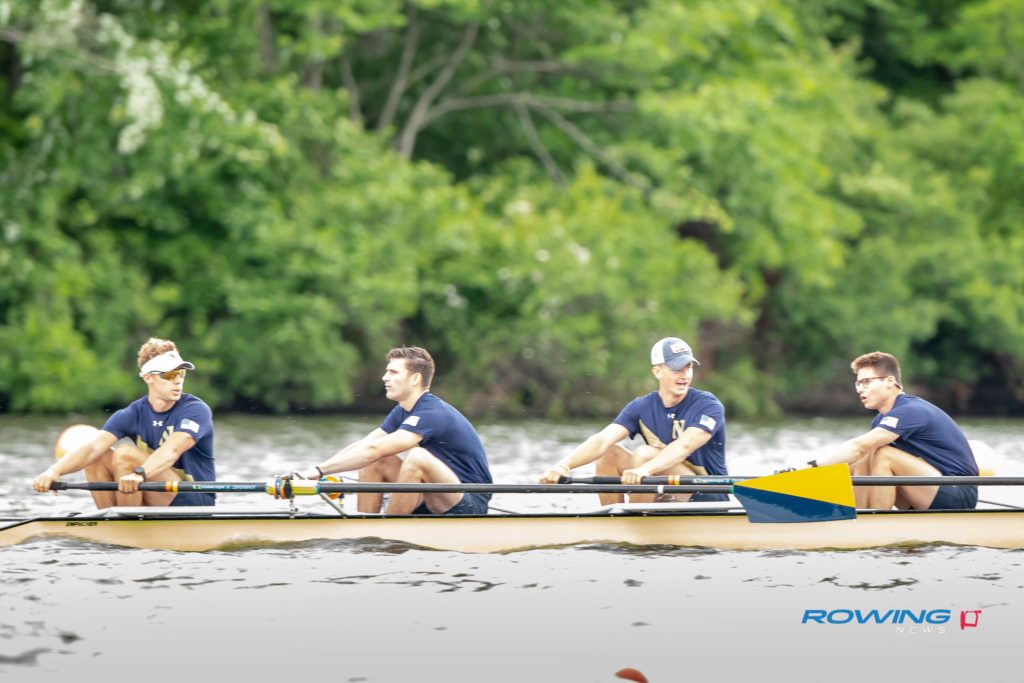
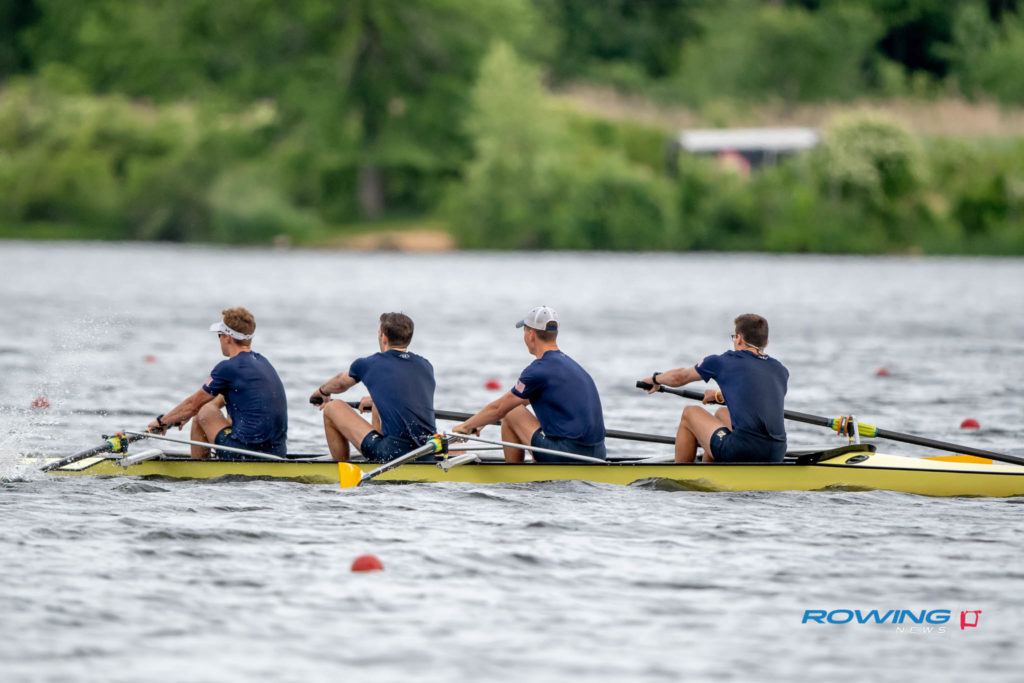
In the men’s racing, the United States Naval Academy was a dominant force, taking gold in all three events, the varsity eight, second eight and varsity four.
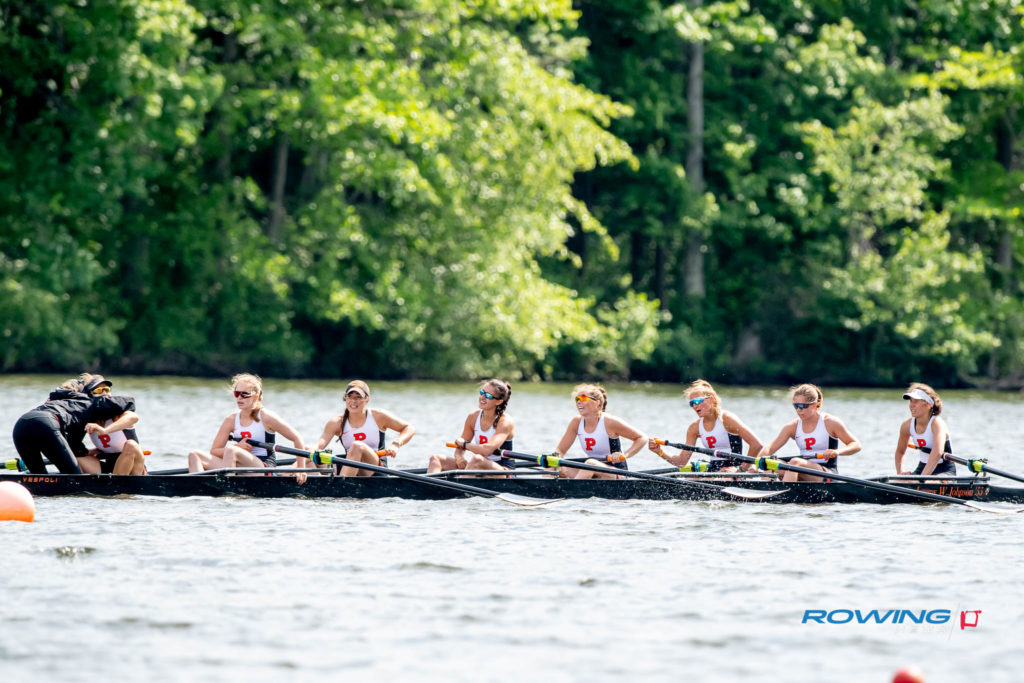
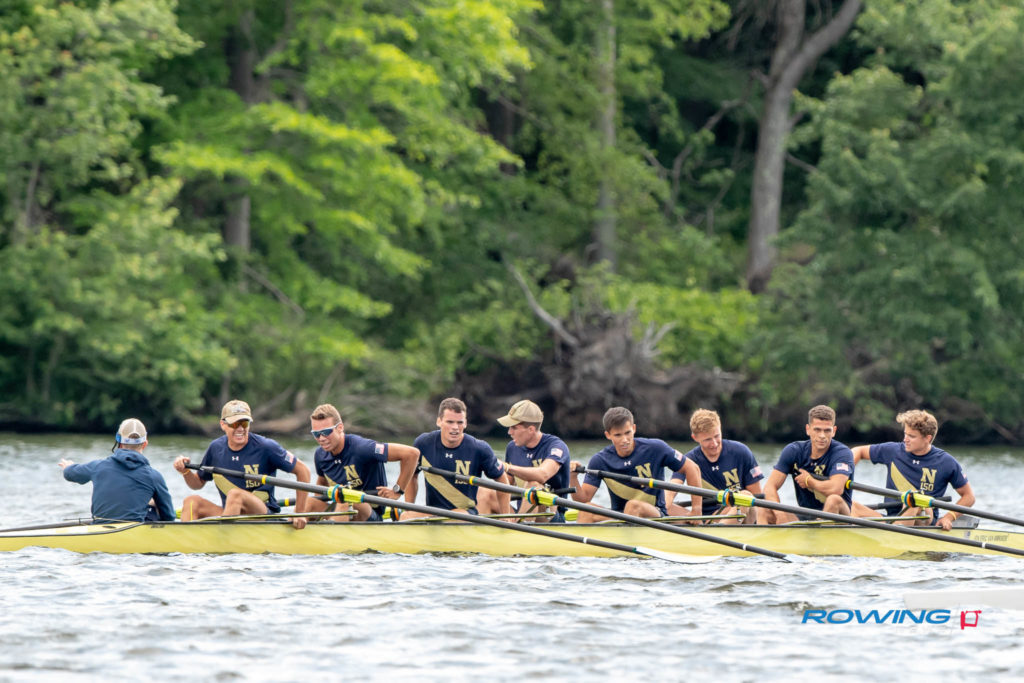
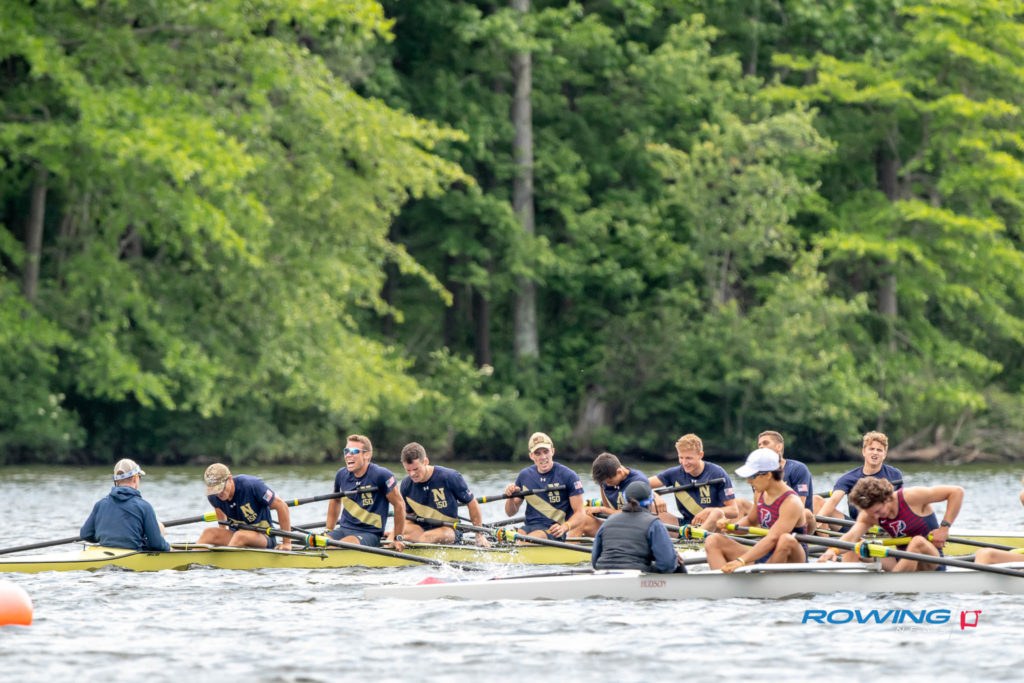
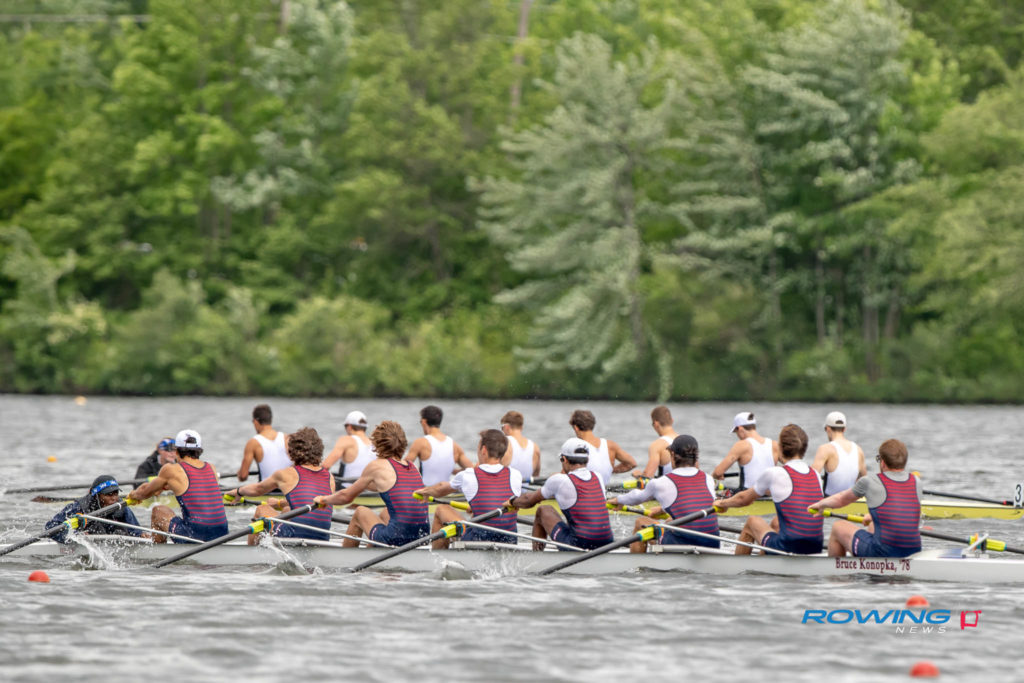
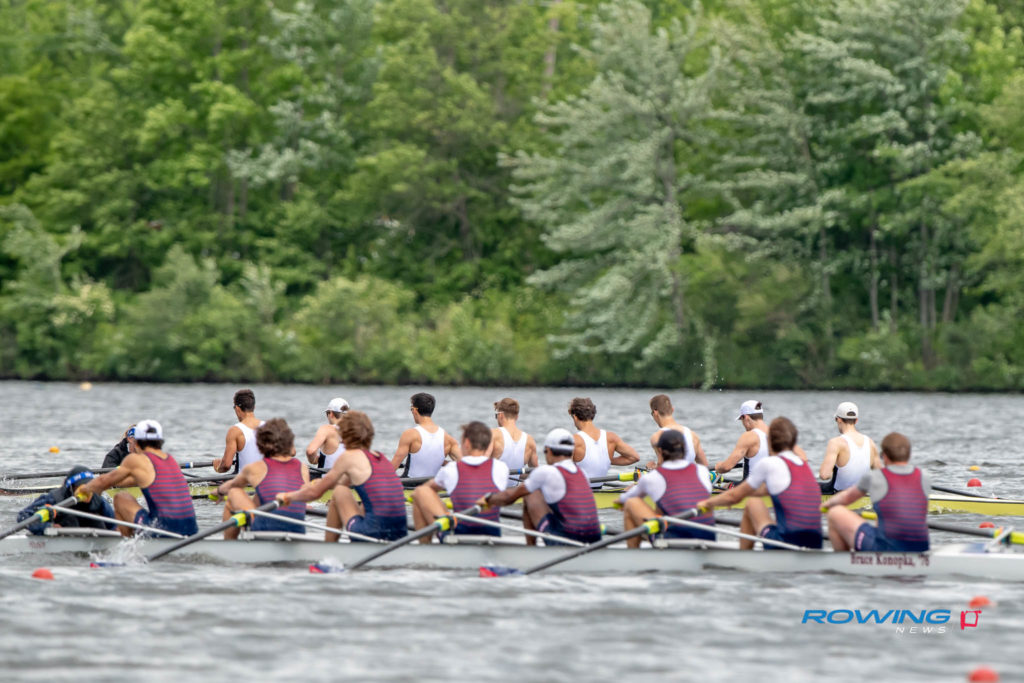
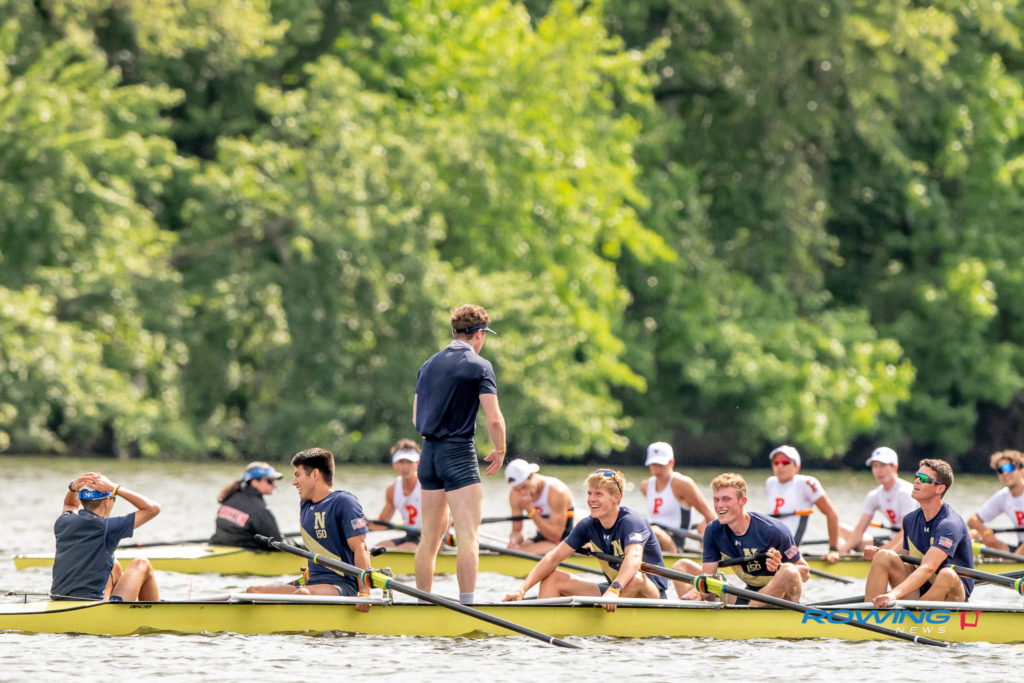
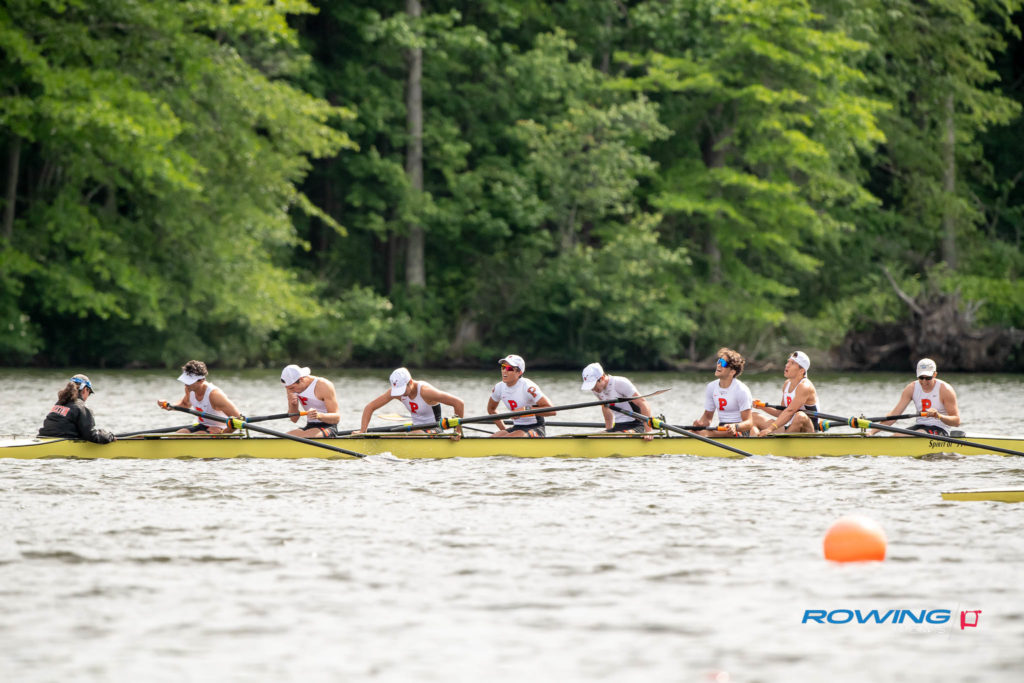
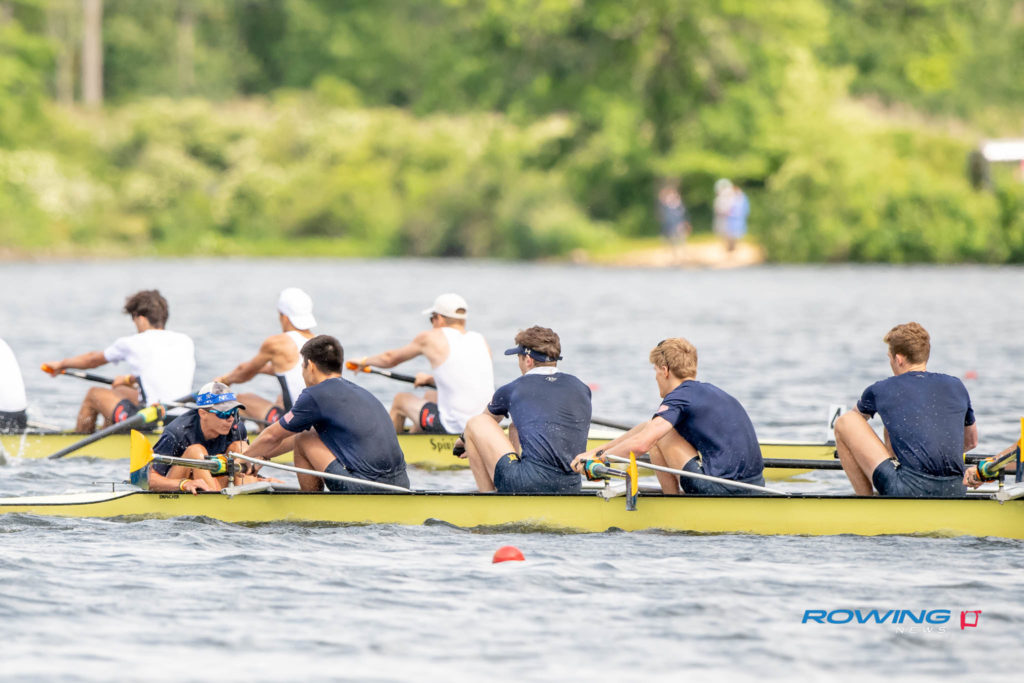
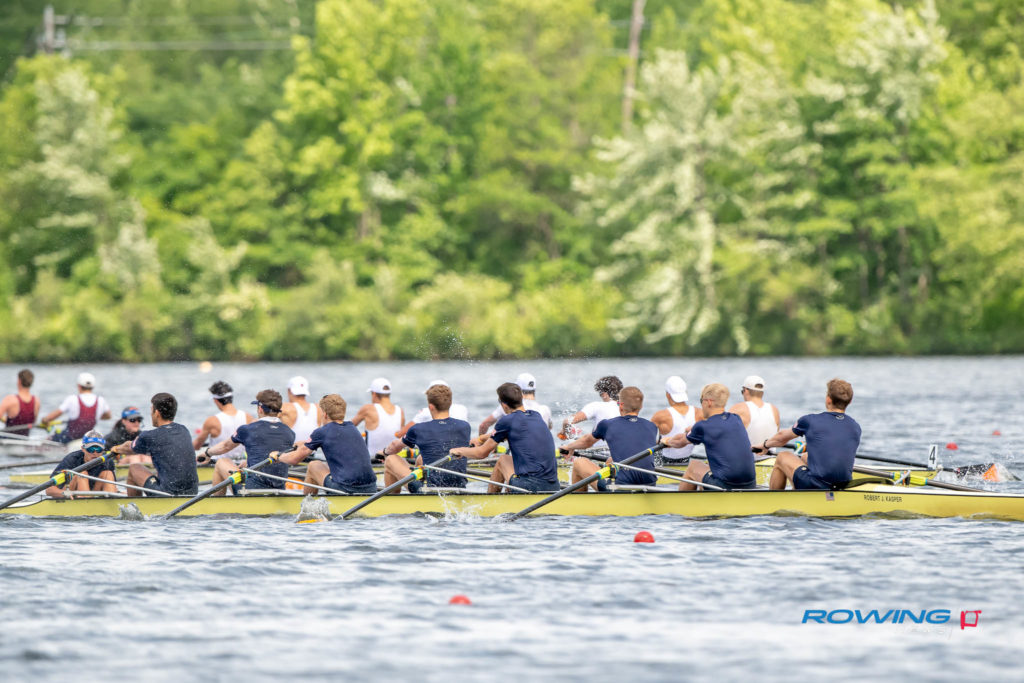
In the premier lightweight eight event, Navy lead in the last 500 meters, but the University of Pennsylvania gained and was within striking distance. Navy looked somewhat out of steam down the final stretch but managed to hold their lead for the win with a 2.6-second margin.
The victory sealed the sweep for Navy head coach Shawn Bagnall. The Midshipmen gave credit to their coaches who helped them prepare for and excel in the rough conditions.
“Our mantra throughout our training this camp has been diligent in preparation and savage in execution,” said Navy Coxswain Jack Ransick, “and I think we went out there today and did that.”
Coach Bagnall pointed to his team’s discipline and technique for why they excelled in the high winds.
“Given the conditions, I feel like all three boats really rose to the occasion. We attacked the headwind,” said Bagnall. “We felt that staying long and staying composed in those conditions was going to be important today. And I think all three boats went out and nailed it.”
Delving into the tactics on the water, Bagnall said he knew every team would be taking different approaches to overcome the wind, but the key for his rowers was to stay locked in on their own boat.
“[The strategy] For us was to stay composed and internal in what we were doing. Not to look left and right and watch other crews and what they were doing, and then deviate from our plan. We truly stayed internal and focused on our mission and our race plan,” said Bagnall.
That internal focus that Bagnall mentioned was needed after Navy’s varsity eight fell behind early. Princeton set a blistering pace out of the gate, and Navy had to keep their heads and trust their strategy would win over the full 2,000 meters. It was even more challenging for Navy as Princeton dropped off and the University of Pennsylvania came roaring up to within a half-length of the lead in the last 500 meters.
Bagnall said his team had to be ready for high-level competition from Penn and Princeton, but once again, his rowers’ preparation was the difference-maker.
“We knew it was going to be a hard-fought battle with those two teams [Princeton and Penn] all the way down the racecourse. So, it was a little nerve-wracking there, but I had confidence in our preparation.”
All the hours of training culminated in a title for Navy, and Rinsick put all the emotion of the last year into words.
“It’s a really big moment for me—a really big moment for all my guys. We had a lot of confidence going into the 2020 season, which we all lost. So, it’s really special and a true honor to be out there and be able to win that race today. It’s a true honor to be on the team, to be on 150, and to bring that cup back to Annapolis.”
Following the morning championships, the regatta focus was the semifinals — and the weather.
There was some talk that the building winds and coming rain would force the regatta to either go straight to finals with seeding dependent on the results from the time trials. But the decision was to race the schedule as it had been set and stick with finals Saturday morning.
It was a long two hours of racing with driving rain and cold winds making the conditions on Mercer Lake unpleasant. All of the eight semifinals were run, but it was decided to forego the semifinal for the fours and seed them to the championship from the time trials results.
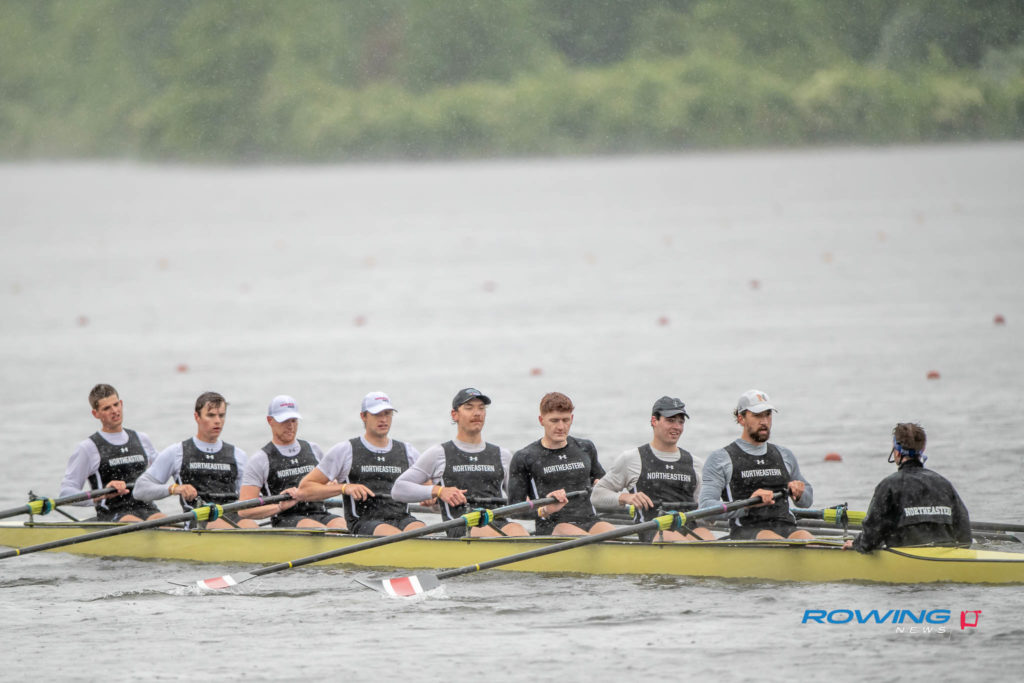
If the same had been done for the eights, the time trials results would have been sufficient. Eleven of the top 12 crews from the morning earned spots into the finals from the results of the semifinals, with Washington, Dartmouth, Stanford, California, Syracuse, and Northeastern going to the men’s varsity eight grand final.
The schedule for tomorrow’s racing can be found here the live-stream link here, and the results here.
The 2021 NCAA Women’s Rowing Championships along with the 2021 Intercollegiate Rowing Association National Championships begin Friday.
At NCAA’s, the women’s Division I, II, and III national titles are up for grabs at Nathan Benderson Park in Sarasota, Florida. Racing will start at 8:12a. A full schedule can be found here.
In West Windsor, New Jersey, the first race of the 2021 IRA Championship will begin at 7:00a. The full schedule can be found here.
Both events will be live-streamed. The NCAA live-stream can be found at this link. IRA here.
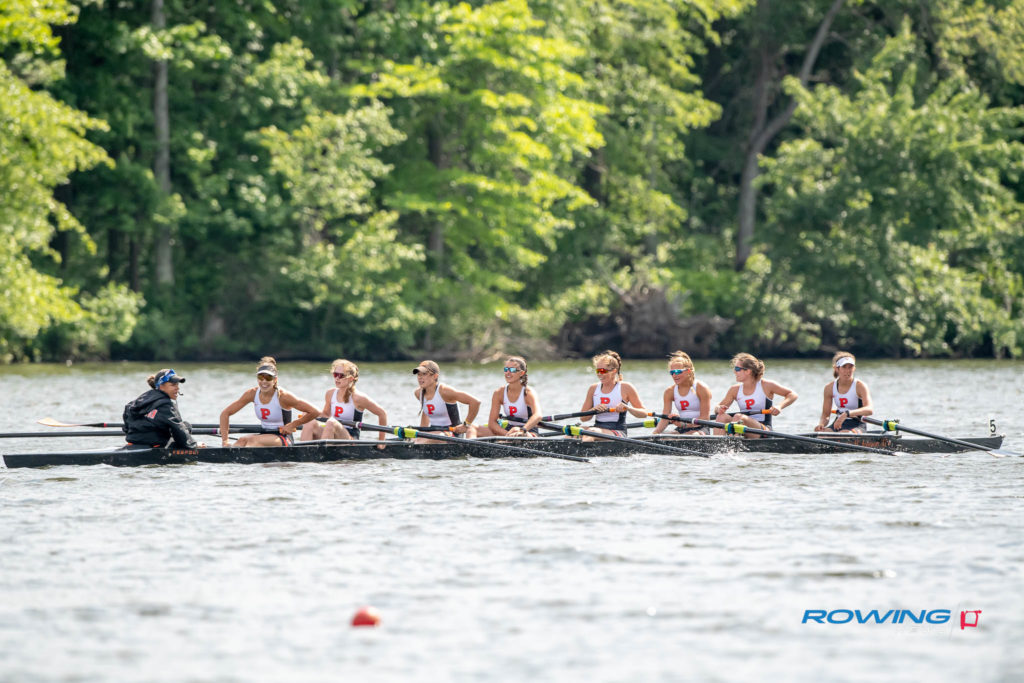
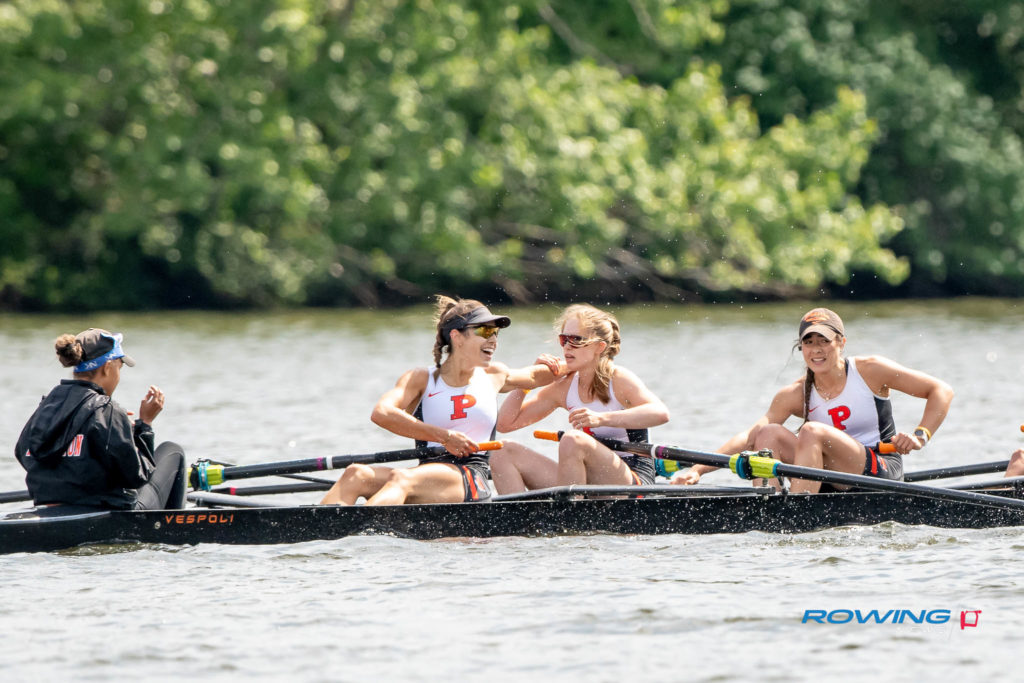
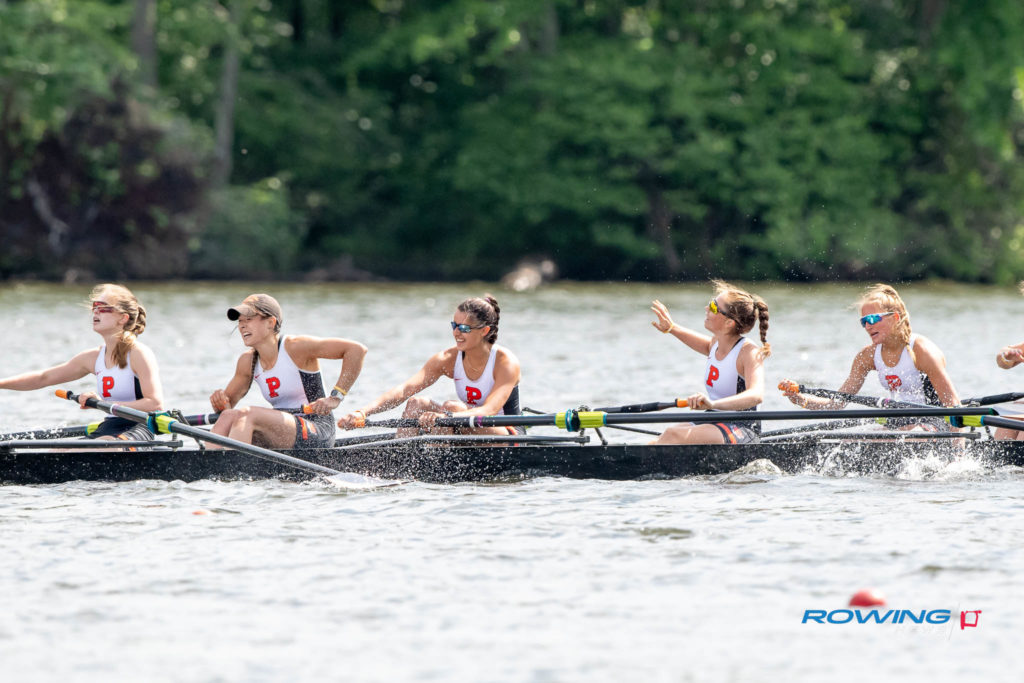
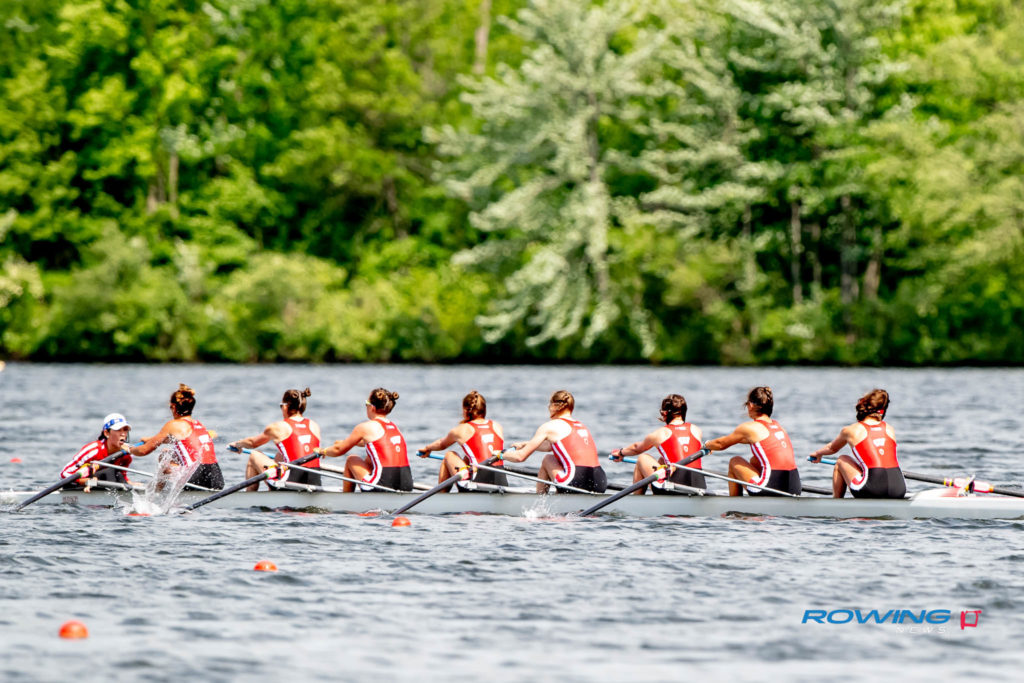
BY LUKE REYNOLDS PHOTO BY SPORTGRAPHICS/LISA WORTHY
For the women’s rowing squad at the University of Texas, every day is to be treated as if it were the NCAA championship.
Now, with the 2021 NCAA Women’s Rowing Championships 24 hours away, the team is set to “treat NCAA’s like it’s every other day.”
“If we can treat some Tuesday in February with the same sort of focus and determination as we would NCAA’s then when we get to NCAA’s we literally don’t have to do anything differently than we do throughout the year,” head coach Dave O’Neill said.
“On Sunday morning I’ll just put on the whiteboard ‘1 x 2k at max, open stroke rate.’ Then it’s just ‘OK, let’s go do it.’”
The top-seeded Longhorns’ approach to the event will be put to the test on Friday at Nathan Benderson Park in Sarasota, Florida with the University of Washington looking to defend its national title after narrowly defeating Texas in the 2019 NCAA Women’s Rowing Division I Championship. The Huskies bested Texas by less than seven-tenths of a second in the varsity eight grand final in 2019.
The University of Washington racing at the 2018 NCAA Women’s Rowing Championship.
The pressure of this year’s top seed along with the close margins of the 2019 campaign has not seemed to penetrate Texas’ psyche, however.
“We’ve been pretty relaxed all year long,” O’Neill said. “We focus on what we can control and it’s all about staying all within our team and focusing on Texas. We decided ‘let’s just relax and be cool all fall long.’ We did zero erg testing in the fall and I think we only recorded one erg workout so it was intentional on our part that we’re just going to train and row… The rowing part is the fun part.”
For the defending Division II champs, the University of Central Oklahoma, this year’s event will be the culmination of months of successful training thanks to a positive spirit possessed by the athletes.
“The team is feeling good,” head coach Brian Ebke said. “We’ve had a few good weeks of training since conference championships and it’s really exciting to be in championship racing after everything we’ve been through all year. It’s a fun part of the season.”
“The athletes have been excited to work hard so it’s kind of been easy to have a positive and productive training environment. I felt like that before conference championships and even more so after.”
“The athletes have been excited to work hard so it’s kind of been easy to have a positive and productive training environment. I felt like that before conference championships and even more so after.”
-Brian Ebke
The Bronchos will be racing against Embry-Riddle (Florida) in the heats on Friday in the eight and against Florida Tech in the four.
On the Division III side, Bates College earned the automatic qualifier from the New England Small College Athletic Conference Championship and is the three-time reigning Division III champion. They will race against Ithaca, Washington College, Hamilton, Pacific Lutheran, and Wesleyan.
Bates College at the 2018 NCAA Women’s Rowing Championship.
“We have five boats who have put in work all season for these two boats to race,” Bates assistant coach Carly Abarbanel told the Bates Bobcast podcast. “That just goes to show how deep this team is and how special this team is. I’m pretty excited to see what happens.”
For heat sheets, results, and more information click here.