Home Blog Page 215

A Tribute to a Pioneer of Women’s Rowing: Carie Graves, 1953 – 2021

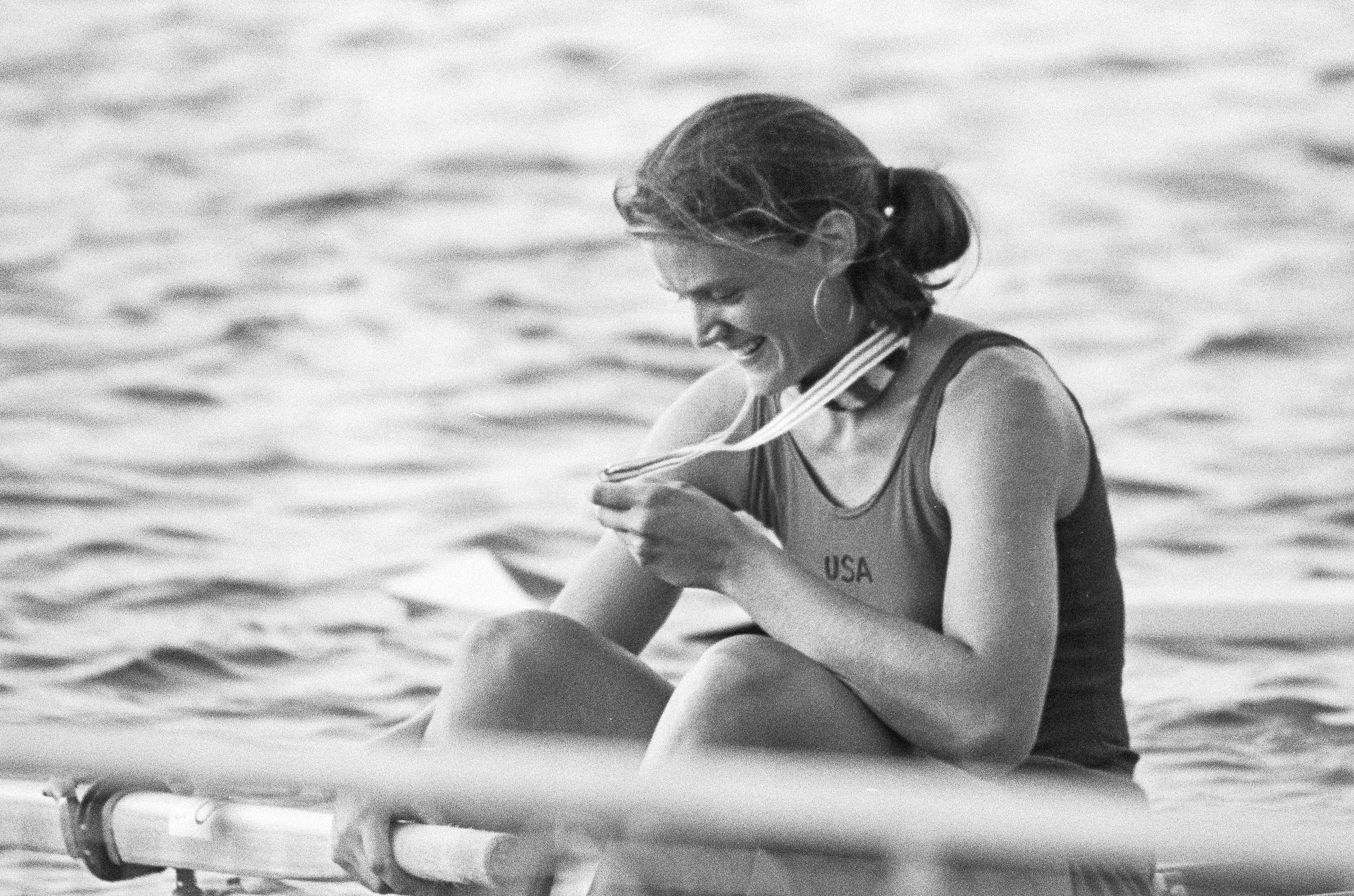
Nottingham. United Kingdom. USA W8+, Carrie GRAVES, looks at her World Championship medal,1975 FISA World Rowing Championships, National Water Centre, Holme Pierrepont Country Park . Opening Ceremony. Trent side and County Offices. 24 to 30 August 1975. [Mandatory Credit. Intersport Images}.

BY ED MORAN
PHOTO BY PETER SPURRIER

VIDEO BY ADAM REIST

Author Dan Boyne had known Carie Graves casually while Graves was the head women’s coach of Harvard-Radcliffe crew and Boyne was just beginning a new job teaching sculling at Harvard’s Weld Boathouse.

They did not spend a lot of time in that shared space as Graves left Harvard to coach at Northeastern University just after Boyne started, but it was just enough for Boyne to get to know Graves a little. What he remembers of that time was he knew that Graves had rowed on many successful collegiate and international crews, and had won gold and silver medals, but that none of that pushed through what Boyne describes as a modest “midwestern veneer.”

It wasn’t until Boyne was prodded to begin research of a 1975 crew Graves rowed on that was coached by legendary Harvard men’s coach Harry Parker, and had won a silver medal at the world championships. What began as opening research into a possible book idea, ended up becoming the driving force of The Red Rose Crew, the story of that 1975 crew and written by Boyne.

“I had known her for several years before I began to interview her for that book idea,” Boyne recalled. “We knew each other through mutual friends, but the thing that struck me was, I never knew all of her accolades, all of her stories, all of her accomplishments in rowing because she never carried herself that way.”

So, when Graves began opening up, and the story of her accomplishment tumbled out, Boyne knew he had to write about her and her 1975 crew. 

“She was just modest and unassuming,” Boyne said. “I knew she had been in gold medal boats, and silver medal boats, but I really didn’t know her. So, when I went up with my tape recorder to Northeastern and she started telling her stories, I was bowled over. And I knew I had to do this story. 

“As a reporter, you get this tingly feeling, and I felt ‘Oh my God, I’ve got to do this. This is incredible,’” he said. “All the women of that crew were that way, actually, but probably the most modest, or unassuming was Carie in terms of how much she had accomplished and how little people really knew.”

What few people did know about Graves was that from the moment she found rowing as a walk-on sophomore at the University of Wisconsin, Carie Graves had been a pioneer for women in the sport, piling up achievements leading other women into competition as both a teammate and coach.

Graves passed away Sunday due to complications from Alzheimer’s disease. She was 68.

“She was a unique combination of traits,” Boyne said. “One reason we hit it off was we were both born in Wisconsin, so she had the Wisconsin quality – the kind of unassuming way that you don’t get on the East Coast. She just had this very unassuming, midwestern, modesty. And yet behind it was this super competitive intensity. There was an intensity there that was beneath the veneer of this modest Midwesterner.”

Born in Madison, Wisconsin, Graves began rowing Wisconsin in the fall of 1973. Two years later she would help lead the Badgers to a national championship in 1975.

Graves made her first U.S. team that same year, as stroke of the silver-medal winning eight that would become known as the “Red Rose Crew,” and the subject of Boyne’s book.

She would go on to win two more world championship silver medals in the women’s eight in 1981 and 1983 and in both 1981 and 1984 she was honored by the United States Olympic Committee as rowing’s Female Athlete of the Year. 

Her achievements as an Olympic athlete include two medals – bronze in the 1976 U.S. women’s eight in the first Games that women were allowed to compete in the sport, and gold in the 1984 Games in Los Angeles. 

“Carie was a rowing idol being in the ‘84 eight and all, but it was really C.R.A.S.H.-B.’s that made her even more of an inspiration to me,” Linda Muri said.

“When I was competing [at Worlds], there weren’t a lot of masters women at C.R.A.S.H.-B.’s compared to the number of men. But there was Carie, retired from the Olympics and Worlds on the water competition, training hard and throwing down some amazing times. I thought that it was important to show the next generation that we could stick with the erging and competition just like she was showing me.

“Carie’s races were always crowd-pleasers. You knew it was going to be a great race when you saw Carie and Anna Bailey (UK) side by side. And if you’re enough of a badass like Carie, you can wear your reading glasses on a chain while crushing out another winning 2k and no one will bat an eye. We lost a great one with Carie.”

Her contributions to women’s rowing did not end when she finished her competitive career. Graves’s career as a head coach included a list of firsts that began when she was named head coach for Harvard-Radcliffe.

Graves coached Harvard-Ratcliffe from 1977 to 1983 and after earning a master’s degree of education in administration, planning, and social policy at Harvard University, she spent the next 10 years as the head women’s coach at Northeastern University.

During her time at Northeastern, Graves led the team from club status to varsity in 1990 and guided the varsity eight to a berth at the first-ever NCAA Women’s Rowing Championships in 1997. In 1998, Graves led her varsity eight to its second consecutive NCAA Championship appearance and a fourth-place finish.  

Following Northeastern, Graves was named the head coach for the University of Texas and is credited with building the program from the ground up. She led Texas to its first-ever NCAA Championship appearance during the 2002-03 season. 

Her crews won four consecutive Big 12 Rowing Championships from 2009-2012, including the inaugural championship in 2009, and she was selected by her peers as the 2012 Big 12 Conference Coach of the Year. 

She retired from coaching in 2014. 

Texas won its first national championship this past spring under the guidance of current head coach Dave O’Neill, who credits that foundation of the culture and base of the Longhorn team to Graves.

“Carie Graves was true pioneer and legend in our sport,” O’Neill said Monday. “Her athletic achievements were outstanding, but her greatest gift was her kindness and helpful nature that elevated us all. 

“My relationship with Carie went back to the early ’90s when both of us were coaching in Boston. I was just starting in my career, and there were numerous times she went out of her way to offer assistance and guidance. I was astounded that such an icon could be so generous, and I’m forever grateful for her support,” O’Neill said.

“All of us associated with Texas Rowing are greatly appreciative of everything she did for this program. She built this team from scratch and created the first successful Division I rowing team in Texas. Her leadership and influence were enormous, and she will be missed by everyone who worked with her.”

Graves is a two-time inductee into the National Rowing Foundation Hall of Fame. In 1984, she was selected as a member of the 1984 Olympic gold-medal crew. In 1991 Graves was honored by the Hall of Fame, when she was inducted as a member of the 1980 Olympic Team. 

During her time on the U.S. national team and as a collegiate coach, Graves is remembered as a fierce competitor and as a friend.

“Carrie was a relentless competitor and a true icon of our sport,” said fellow Olympian and former U.S. men’s team coach, Mike Teti. “She was an inspiration and my first hero in Rowing. I will always cherish her friendship and will miss her.”

Savoring Those Precious Quieter Moments

FROM THE EDITORIAL BOARD
PHOTO BY
ED MORAN

Every rower who has ever laid hands on a pair of oars has a handful of moments that defines their rowing career. For some, it’s a race that captured the essence of their hard work and distilled it into a stellar performance. For others, it’s a season when they walked into the boat bay on the first day of practice and emerged on the last day a completely different person. 

These are the moments that define rowing careers. But there are other kinds of moments that we rowers experience—quieter, more subtle moments. 

Such as the time when you sat on the bank of the Tennessee River with your teammate and best friend, legs dangling over the water, and you grappled with the fact that signs—much like the red and orange leaves floating underneath you—were pointing toward change. 

And the time when you and your teammates strapped oars to the roof of a car and drove to ACRAs, all the while hoping that the bald tires could handle the heat and humidity in Georgia in May. Your coxswain—squeezed into the middle seat—was as tolerant as ever. 

What characterizes these moments is not the overwhelming rush of accomplishment or wash of relief when practice is over. It’s the comfort of knowing that someone is there, next to you, and cares about you as much as you care about them—whether or not you realize it at the time. 

Indeed, what all these memorable moments share is people. Our sport is defined by many things—technique, strength, power, hard work, endurance, sacrifice—but the thread that ties rowers to the sport ultimately is each other. 

This fall, as regattas roared back to life with the same energy and passion as before the pandemic, they reunited us and brought back that comforting feeling of ritual, tradition, and camaraderie. 

They reminded us that our wins and losses, though important, are temporary. Instead, it’s the bonds we build as friends and teammates that really matter and will endure far longer than the gleam of any medal.

In this year’s “Best Of” edition, we celebrate a wide range of accomplished members of the rowing community—athletes, coaches, officials, and event organizers— whose extraordinary performance during an extraordinary time makes them and what they achieved even more so.

As we rowers march toward erg season, let’s take care of each other and remember those precious quieter moments spent together, sisters and brothers-in-oars. 

Are You Ready For Some Football?

BY LUKE REYNOLDS
PHOTO BY DAVE ADAMSON

The first year of competitive rowing is crucial. The fundamentals of rowing—arms, body, legs, legs, body arms—are instilled in athletes the moment they cross the boathouse threshold. 

For many, the novice year is also fun, memorable, and life-changing. My novice year was like that. Our novice coach was tough and could be intimidating to us unruly 14- to 16-year-olds (rightfully so!). 

One practice, our coach put on his tennis shoes to join us for a workout. As we traveled along the river passing medicine balls down the line, we were filled with wonder. Could this be a break from seemingly endless tough workouts on the erg? Are we going to have a practice that’s fun? 

The answer became clear as soon as we lanky rowers-in-training arrived at a park that soon transformed into a training ground. The monkey bars became pull-up bars; the grassy field, a place for ladder sprints; the park benches, props for jump squats. It was a challenging workout that will not leave my memory any time soon (the mere thought makes my legs sore). 

Another practice began in a similar manner. On a brisk morning in late November, while we sat in our stretching circle hoping none of our teammates would be late, our revered coach emerged again in tennis shoes. 

As we prepared for another trip to “hell park,” a football suddenly appeared. Instantly, the mood brightened, and what we thought would be a normal Saturday-morning practice became a fun practice. Relief and joy filled the air. 

A soccer field a few miles from the boathouse served as our gridiron, and while the football we played was an embarrassment to the sport, it was a welcome break from our training that solidified the bonds our team had gained from learning a new sport together. 

 Good coaches will take the temperature of their teams and realize the need for rest, but great coaches will turn the occasion for rest into a memory that will make rowers fall further in love with the sport. 

As coaches and athletes prepare for the winter break, let’s take a moment to bolster and enjoy the bonds among everyone in the boathouse. There’s a time for that 6K test but a time also for a game of football.

The Workout:

The number of ways to make practice fun is unlimited and includes erg relays and on-the-water challenges. If you want to take a day off the water and away from the erg, however, consider soccer, capture the flag, dodgeball, or some other activity that makes practice fun and funky before winter break. 

2-mile jog away from the boathouse

1 to 2 hours of unabashed fun

2-mile jog back to HQ

Terhaar Announces Split with USRowing

Poznan, POLAND, 22nd June 2019, Saturday Morning, USA Women’s Sweep Coach, Tom TERHAAR, Views Boat Park, FISA World Rowing Cup II, Malta Lake Course, © Peter SPURRIER/Intersport Images, 08:03:52 08:03:49

STAFF REPORTS
PHOTO BY PETER SPURRIER

After 21 years—including a streak of 11 consecutive world and Olympic titles in the women’s eight from 2006-2016—Tom Terhaar will step down from his post as U.S. women’s national team head coach.

“While I did not have much time with Tom since beginning in my role last year, I enjoyed the opportunity to meet him and know that he will be missed,” said USRowing CEO Amanda Kraus. “We certainly wish him all the best in his new role at Columbia and hope our paths cross on the Harlem River.” 

Terhaar will be taking over as the director of rowing at Columbia University following his departure from USRowing.

“I am extremely excited to take on this new challenge with the student-athletes, coaches, administration, and the alumni of Columbia University. I look forward to continuing the proud tradition of Columbia’s achievements while helping to build new successes in the future,” Terhaar said.

Read the full release from USRowing here.

First, Do No Harm

STAFF REPORTS
PHOTO BY ED MORAN

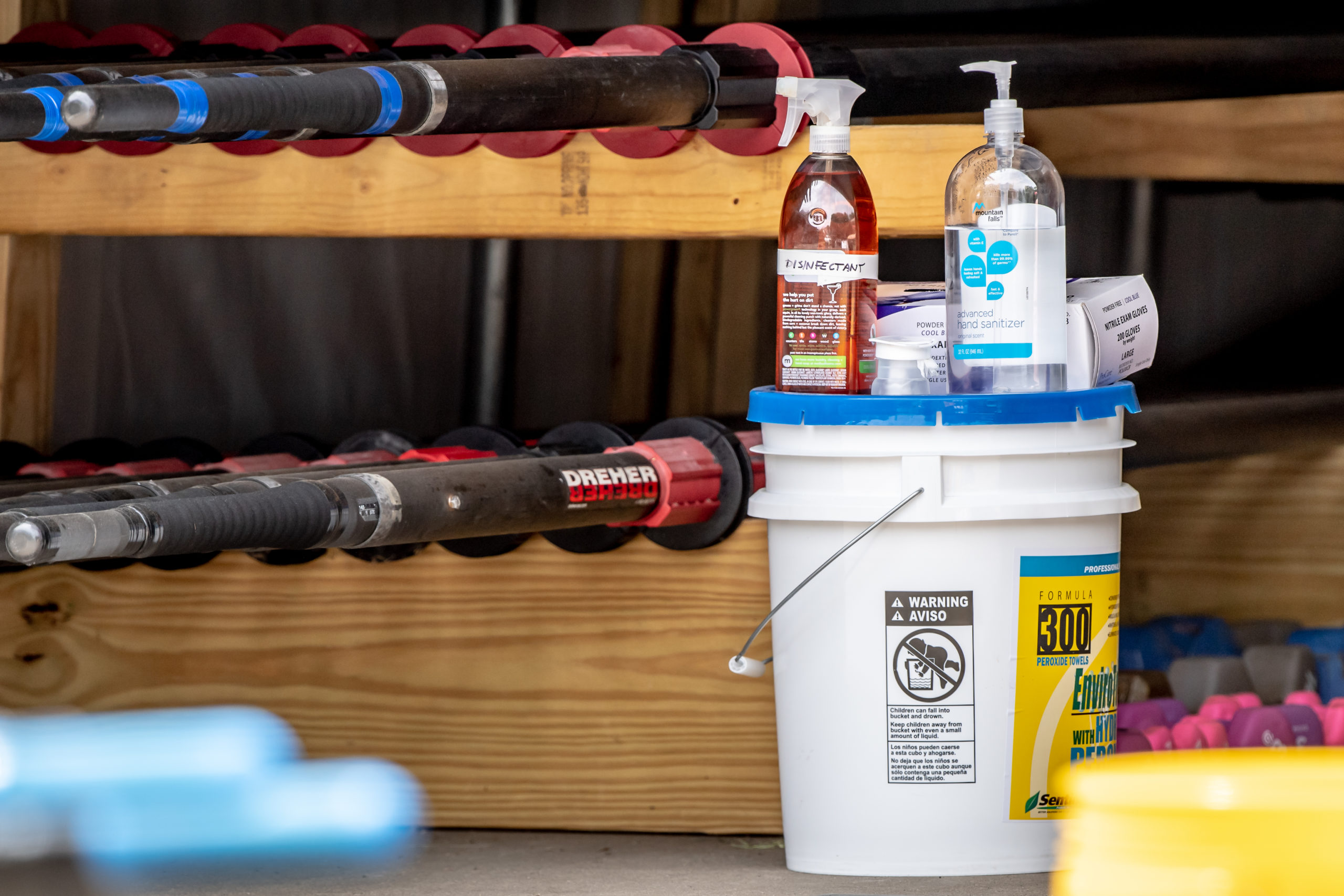
Experts are concerned about educational institutions’ reactions to the latest wave of Covid infections. While colleges with significant rowing programs including Princeton, Middlebury, and Cornell make adjustments like switching to online exams and early departures for the holidays at end of fall semesters, there is concern for the overall well-being of student-athletes.

“I am worried about student mental health in places that might become really restrictive in the face of a new variant,” Shira Doron, an attending physician and epidemiologist at Tufts Medical Center and an associate professor at Tufts University School of Medicine told the Boston Globe.

IRA commissioner Gary Caldwell, who worked to pull off last year’s successful and safe regatta, knows the value of students being able to continue rowing, with appropriate precautions, through the ongoing pandemic.

“The most common refrain we heard from athletes and coaches at last spring’s IRA championships was how grateful they all were for the steps toward a return to normalcy that rowing provided on a daily basis,” Caldwell told Rowing News. “Athletes reported sleeping better, and how wonderful it was to be back as part of a team, with the previous months’ social isolation especially over the winter as a huge downer.”

The American Academy of Pediatrics reminds schools that Covid-19 policies are intended to mitigate, not eliminate, risk and that school-supported programs are fundamental to development and well-being.

Virginia Set to Race Nearly Half of the Top 20 Crews in 2022

BY STAFF REPORTS
PHOTO BY SPORTGRAPHICS

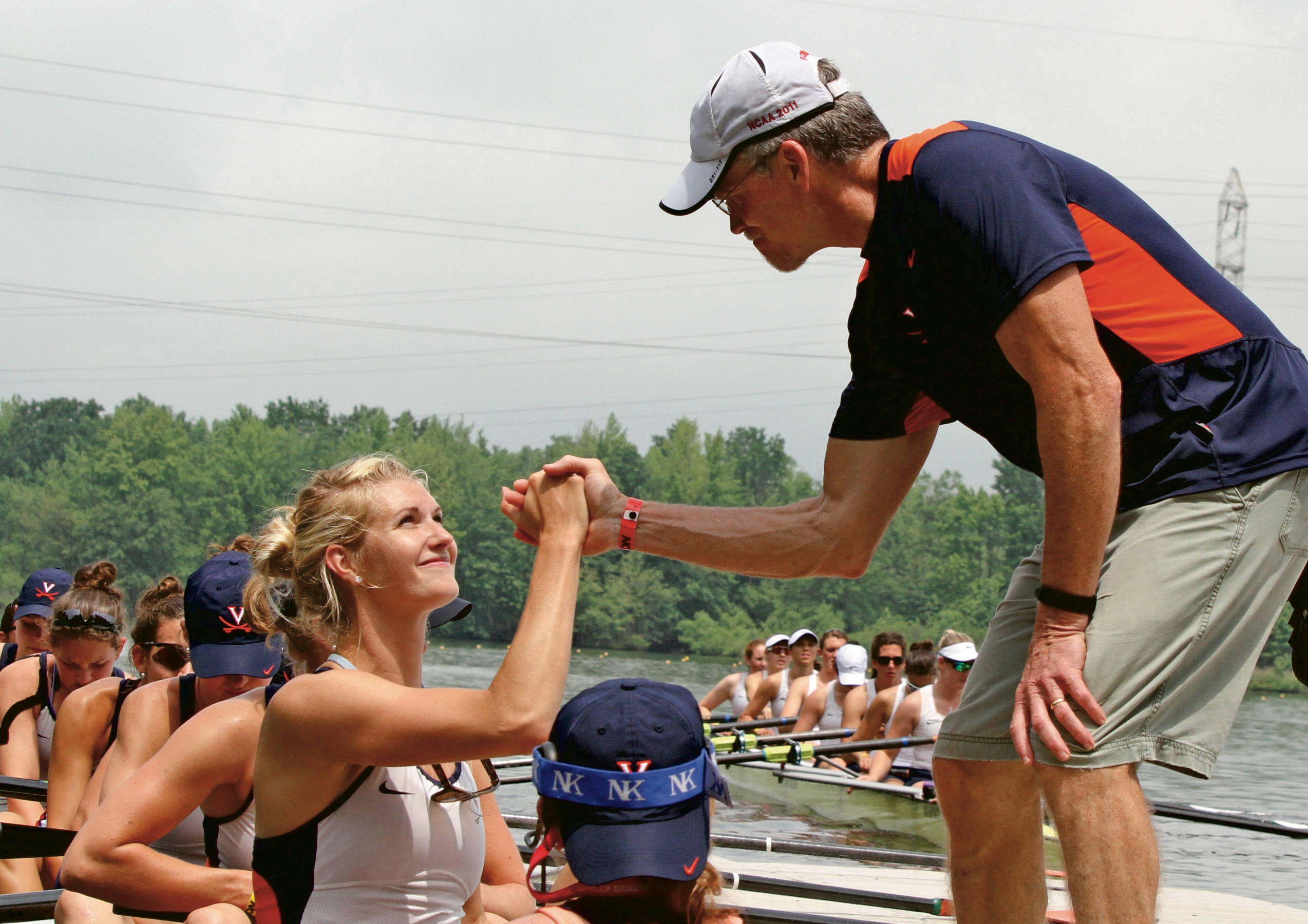
The University of Virginia announced its 2022 spring schedule Wednesday, December 15.

The Cavaliers will race at least eight of the top-20 crews in Division I over six dates, starting March 26 at the UVA Invite, on the Rivanna Reservoir before the season-ending May 27-29 NCAA Championships in Sarasota-Bradenton, Fla.

Virginia—which placed fifth at the 2021 NCAA Championships—will seek its 21st ACC conference championship title in 22 years May 13-14, in Clemson, SC.

“We are very much looking forward to an exciting and very challenging schedule in the spring of 2022 where we compete with many of the top teams in the country,” said Virginia head coach Kevin Sauer.

Virginia races North Carolina, Tennessee, and the Univesity of Central Florida at home before traveling to Columbus, Ohio for ACC/Big Ten Dual against Ohio State and Michigan on Saturday, April 2.

They will also travel to the Big Ten Invite, April 16-17 in Sarasota-Bradenton, Fla. April 16-17, and to the Longhorn Invite in Austin, Texas, Saturday, April 20 where they’ll face defending national champion Texas.

The Cavalier women won the 2010 and 2012 NCAA Rowing Championships and have won team trophies (top four) 11 times and finished in the top five 17 times.

Cold Case

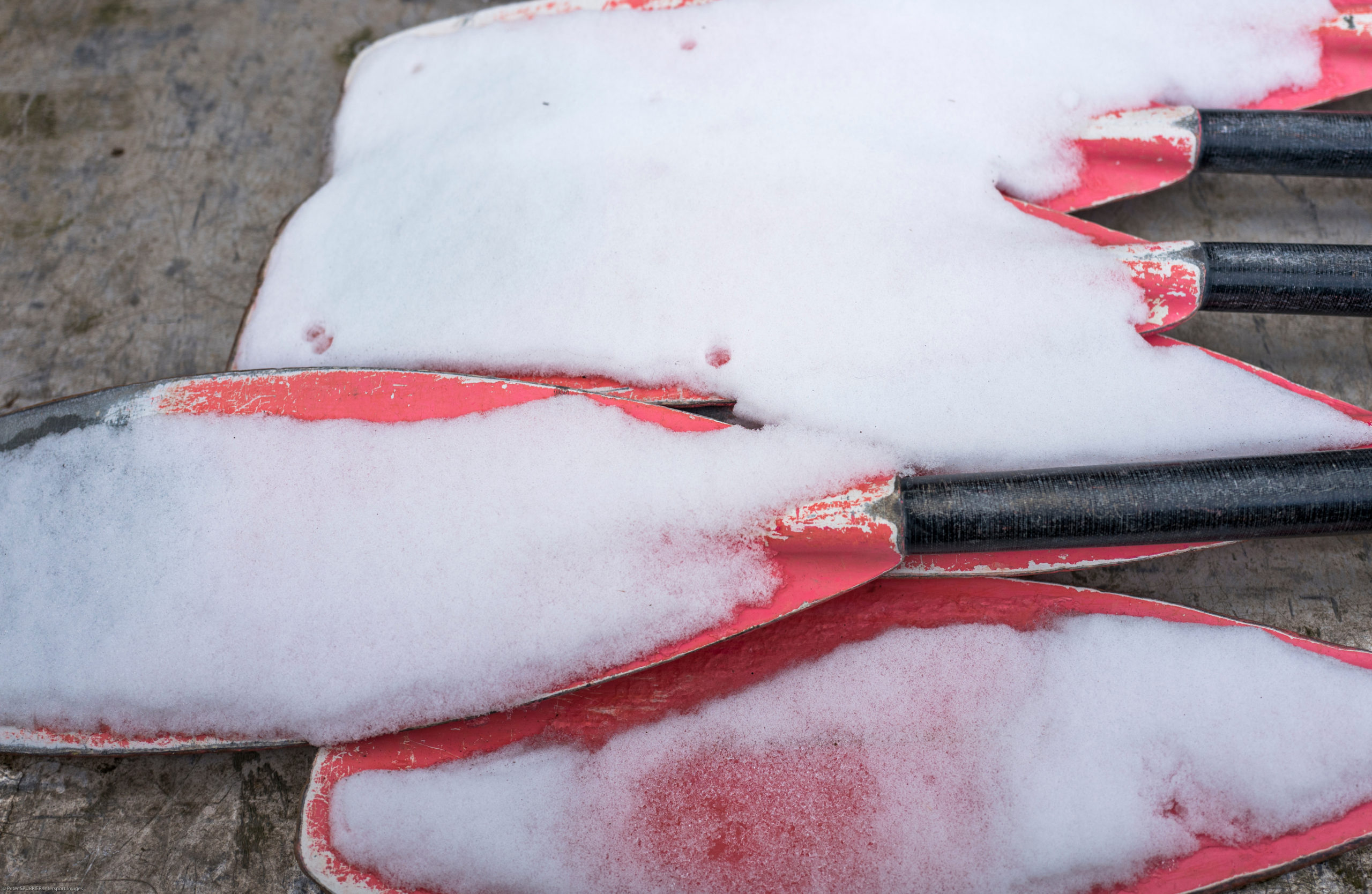
Putney Greater London. United Kingdom, Snow coving Westminster School. Tideway Week, Putney Hard, Championship Course, Putney to Mortlake. River Thames, Monday 19.03.18 [Mandatory Credit:Peter SPURRIER/Intersport Images]

BY LUKE REYNOLDS
PHOTO BY PETER SPURRIER

There’s been a photo circulating among rowers on Instagram and other social media of an Empacher four cutting through a frozen lake. 

At first glance, the photo is gorgeous. Four capable rowers flanked by ice with a clear line of water from where they’d been. The symmetry is striking. 

Considered further,  however, every rower should wonder: Why were these athletes on a frozen lake? 

https://www.instagram.com/p/CVdSIGMMaD7/?utm_medium=share_sheet

Let’s give them the benefit of the doubt and assume they were there only for a few minutes just for a photo and had done everything possible to make sure that if something went wrong, they’d be safe. And let’s disregard the damage from using a shell as an icebreaker. 

Still, the message remains the same: Don’t do what they did!

Cold water is one of the greatest dangers rowers face, and Rowing News has dedicated numerous columns to the subject over the years, including, just recently, “Cold-Water Wisdom (Or, Don’t Be Foolish).”

The headline is apt. According to the Centers for Disease Control, hypothermia can occur when the water temperature reaches 70 degrees. At the time I write this in late October, the Connecticut River, only a few miles from our office, stands at around 55 degrees. 

This is not to say that rowers should not train when the water temperature falls below 70 degrees—that would be nearly impossible. Rather, rowers should take extra precautions when the weather turns and temperatures drop. Some recommendations from Rowing News safety columnist Margot Zalkind:

  • Row with a launch. It can pull you out of the water, get you back to the boathouse fast, even fetch your boat. Throwing you a PFD can take time. If you row during the winter months, wear an inflatable life jacket. 
  • If you row without a launch, row with a buddy, who can help you get back into your boat, give you a dry shirt, and help if you become disoriented because of hypothermia.
  • Carry a cell phone in a waterproof container. Call for help before you become so cold that you can’t. If you’re going to call for help, make sure you know where you are, which means identifying specific locations onshore to help rescuers find you. Telling 911 that “you are at the 1,500-meter mark” is not helpful, but knowing a street name or number, a building, or major landmark is.
  • If your cell phone is not operable on the water (and even if it is), carry a sound-making device–a whistle, horn, something loud enough so someone onshore notices. A whistle in the middle of a large river is not enough. 
  • A logbook is helpful, but only if someone is checking it. If you are the last/only person on the water, it may be hours or even days before someone checks the book. Don’t rely on it unless you know that someone will come looking for you if you don’t sign back in.

It’s axiomatic that rowers will train through tough conditions—a charming part of our sport—but don’t risk your life just to get in a few extra meters. 

Did the Pandemic Drive Down Erg Scores?

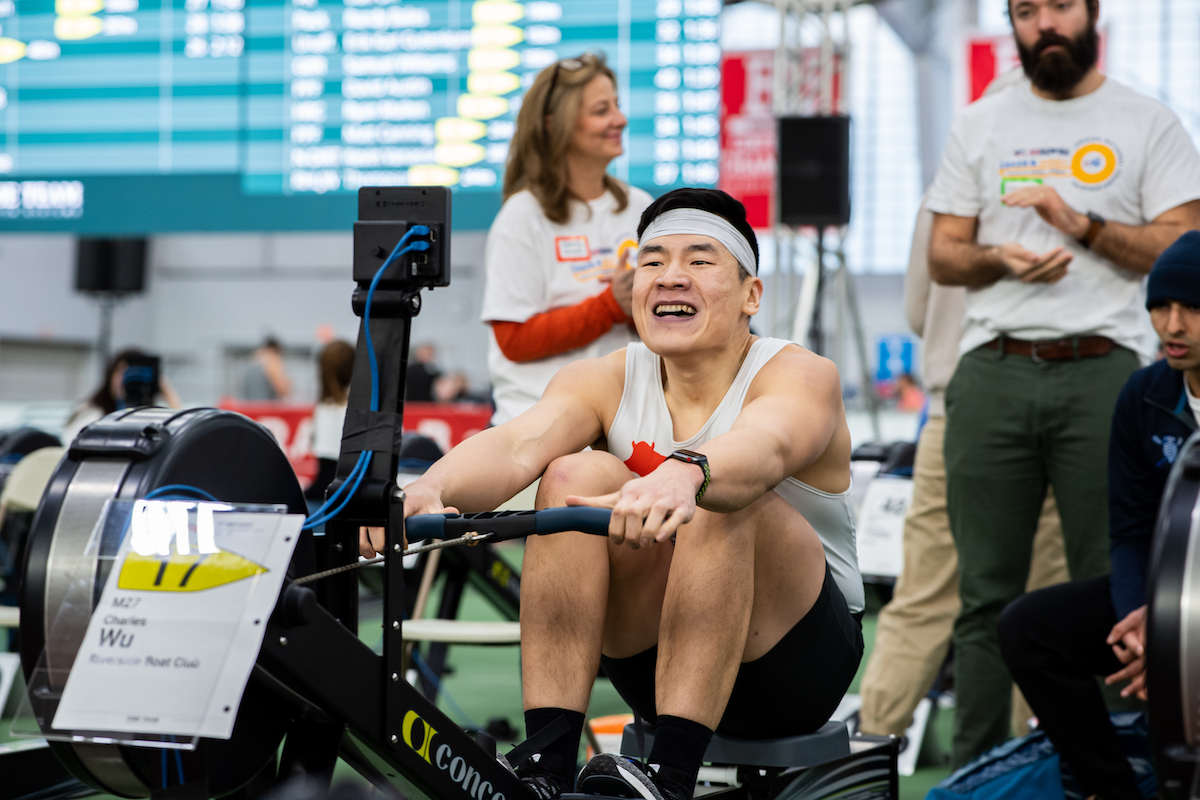
Racing at the 2020 C.R.A.S.H.-B's is underway. Photos by Lisa Worthy.

BY COLLEEN SAVILLE
PHOTO BY LISA WORTHY

A recent Harvard Business Review article about leadership in the Covid era said the “second wave” will require a renewed sense of personal resilience. The piece resonated with me because the qualities of resilience–strength under pressure, a willingness to move through it rather than around it, and the ability to rebound quickly–are inherent to us rowers.

It’s been a tough year for rowing. Beyond the postponed Olympics, one of the most difficult adjustments was shifting from training as a team to training in isolation. Only recently have most teams been permitted to train in small groups, masked and six feet apart. This kind of independent training requires extraordinary self-discipline and motivation, since you’re accountable only to yourself.

 Without any real races this year, virtual events–from the first-ever virtual Head of the Charles, to the USRowing Virtual Summer National Championships and USRowing Virtual Fall–helped fill the void by providing rowers of all ages and categories opportunities to test their relative speed on the erg. True, nothing can replace live competition in rowing, but in addition to bread baking, puzzle solving, and TikTok dancing, indoor rowing went viral this year as the next best thing.

In fact, when the pandemic struck in early March, rowers turned to the erg and broke records like never before. In just 75 days, 131 new records were shattered across the world. And while some athletes focused solely on logging meters during isolation training, those aware of world records within reach went for it. Notable among them: Isaiah Harrison, who at age 16 now owns 12 indoor-rowing world records for his age group–from 500 meters to the marathon–most of which he broke during lockdown.

Is Covid why rowers have been setting so many personal records on the erg? 

“You’re going to see a lot of people, whether they like it or not, spending more time on the erg” said Chris Chase, director of youth rowing and coaching development at USRowing. “And virtual events like Rower’s Choice make it captivating. They make a lot of it live and hold everyone’s attention by keeping the pieces short and exciting. It’s what rowing is going to have to do to adapt.”

That’s especially true of junior rowers, who have been deprived of the ability to race and post results.

“These kids have been forced to adapt,” Chase said. “What can they send to a college coach to get recruited? An erg score and a picture of them in a single. We can sit around and cry about it, but rowers persevere. They’re still showing up at the boathouse and saying, ‘Coach, put me in a single.’ More college coaches have learned that if you’re fast in a single, odds are you’ll be fast in an eight.”

Yaz Farooq, head coach of the University of Washington women’s rowing team, says the Huskies’ fall season was far from normal but trended in the right direction.

 “People came back in various states, and there was no judgment about it. We realized that everyone had faced unique challenges and we were going to pick up where we were at that moment and move forward. 

“We did our annual September 6K erg test, and the results were pretty much all over the place. My thinking was, ‘We’re just going to build upon this.’ Then in November, we had the highest percentage of PRs we’ve ever had. It was an unbelievable day of performance. And we did not do more erging than usual in preparation.

“The biggest difference was that all of our training on the water was in the single. We had permission to go into larger boats by household, but I just decided we were going to commit to the single, and that’s what we did.”

The Washington women began the season with a wide range of experience in the single, but by the end “it was like birds in a flock changing direction simultaneously,” Farooq said. She attributes the increase in PRs to the Huskies’ time in the singles and their insistence on maintaining community, despite the logistical challenges.

“We approach the ergs as a collaborative endeavor. Everyone is there to support one another, to help their teammates go as fast as they possibly can. Throughout the fall, I noticed that people were making amazing progress on the erg, exponential growth. 

 “When we were erging in the stadium, we had this wonderful sense of community. On the last day of practice, when people were preparing for final exams, our athletes asked us to open the stadium. They could have erged at home. But they asked if they could be let into the stadium to erg, just so they could be with one another.”

Eric Catalano, executive director of Saratoga Rowing Association and head coach of the girls varsity, said erg scores may be going down for people who want to submit erg scores but not necessarily in general.

“Very self-motivated people are the ones who have the ambition to compare themselves to others across the country, but that’s not the norm.”

Gordon Getsinger, head coach of the girls varsity at the Saugatuck Rowing Club in Westport, Ct., says erg scores have held steady.

“Kids are able to maintain times pretty close to their PRs, but overall a lot fewer kids are PRing right now. There’s a very small minority who are able to thrive, whether they have people around them or not.

“Being a part of something is really important to these high school kids. They know that they’re going to be on a winter-training Zoom from 3:30 to 5:30 p.m. every day. It creates a space where they’re a part of something bigger than themselves, and they know that as long as you work hard, you’re going to feel good afterward.”

Steve Whelpley, a former U.S. senior national-team rower and head coach of the Green Racing Project in Craftsbury, Vt, is an elite rower who’s also familiar with junior and collegiate rowing.

“Everyone is finding refuge in working out right now, but only those who have a good setup and vision are achieving PRs–those whose goals are clear and who have found a way to keep stress levels low.

 “The Covid training situation is not ideal for a lot of people, physically or emotionally. And so yes, some will improve, but those are people who were ripe for improvement regardless. It’s kind of sink or swim. Or maybe float or swim. Either people are treading water and maintaining through community, which is hugely positive, or the really persistent are crushing the erg because it’s the only thing you can crush right now.”Harvard Business Review is right: The second wave requires resilience. But more than that, it reminds us rowers of the power of community–six feet apart, 10 feet apart, by Zoom or otherwise. “If you want to go fast, go alone,” the African proverb says. “If you want to go far, go together.” Yes, we all want to go fast right now, and if you can, you should. But maybe treading water for a moment–together–is an achievement just as great.